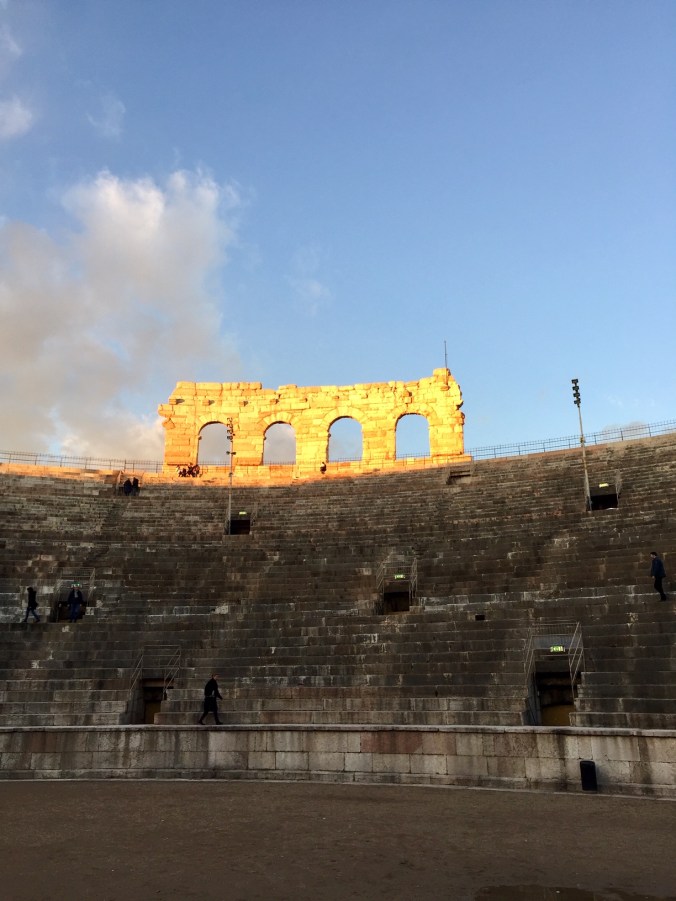
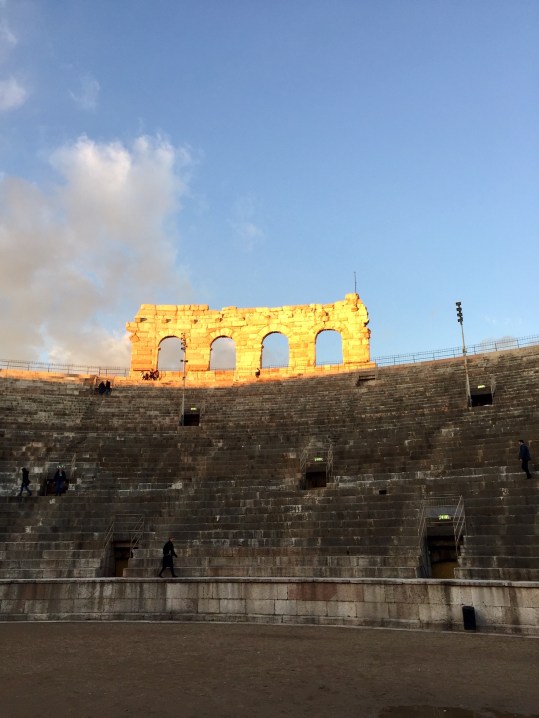
I just returned to Florence from a trip up north to Verona and Milano. This is not an exhaustive post (I’m sure that is good news for once!) on the subject, but I wanted to share what the amphitheater looks like from inside. It is on my to do list to attend an opera in this venue some summer soonish.
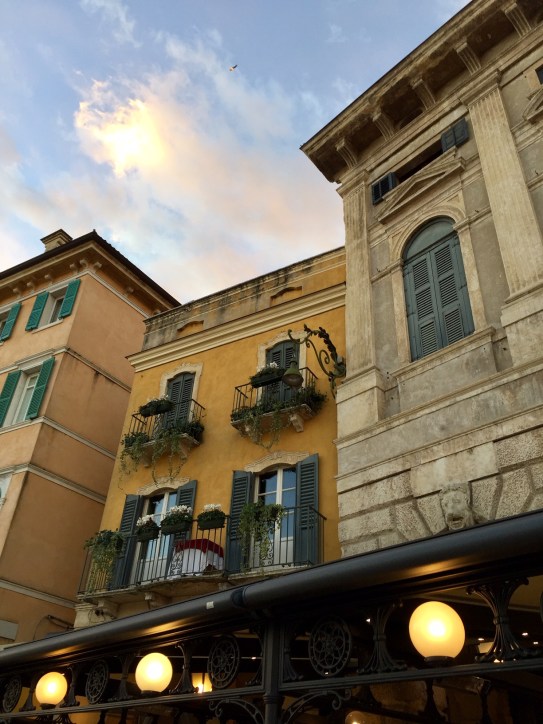
What a lovely small city is Verona. I understand why Shakespeare chose it as his setting for Romeo and Juliet!
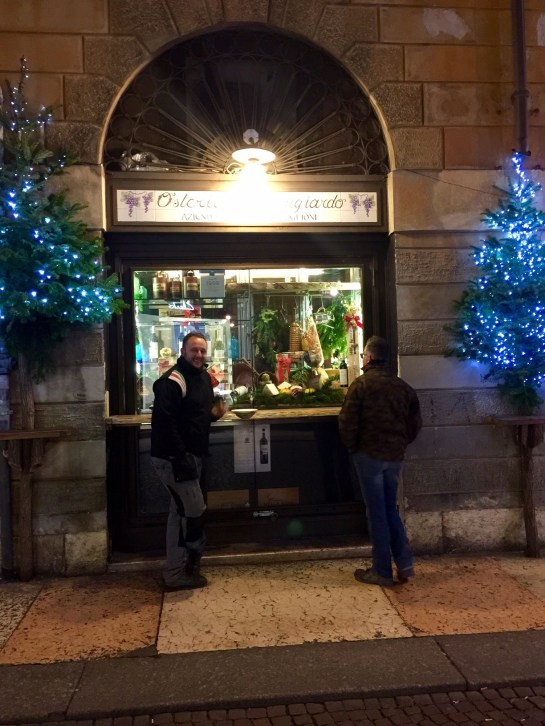
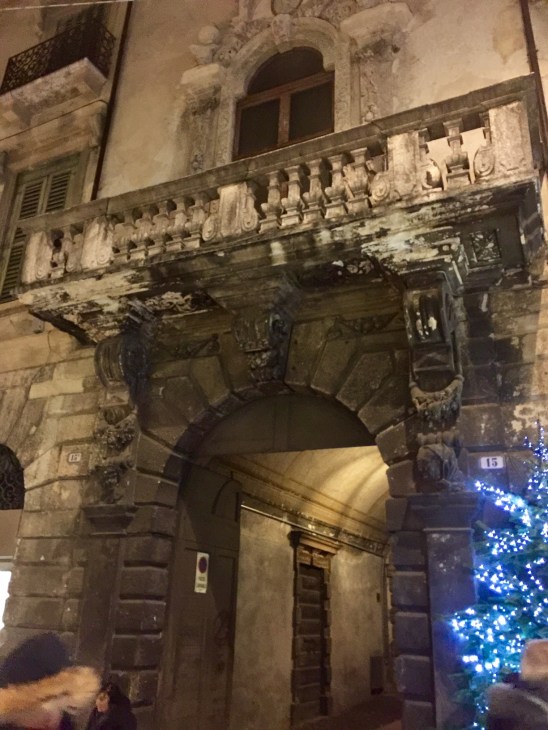
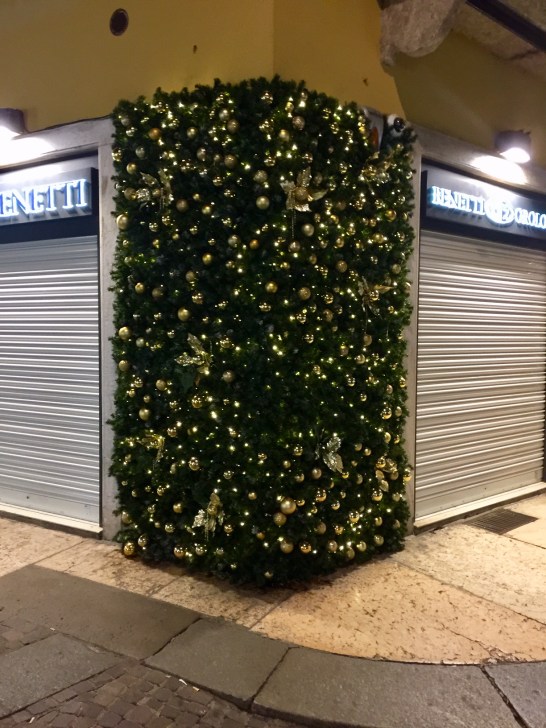
I had the good fortune to spend a few days in Verona recently and the city was all decked out for Christmas.
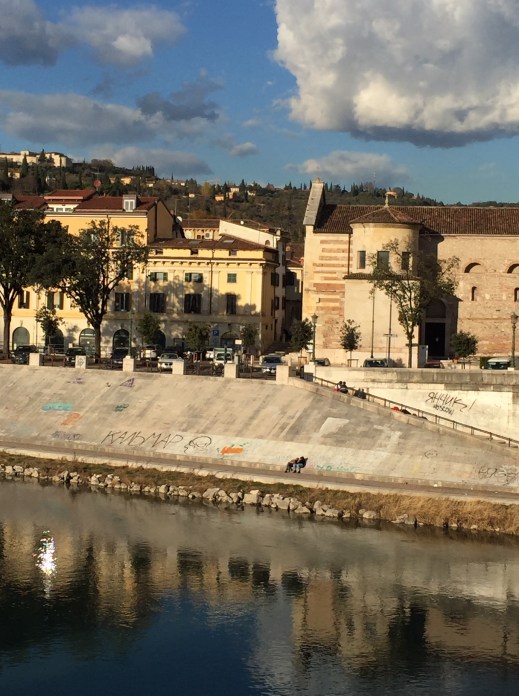
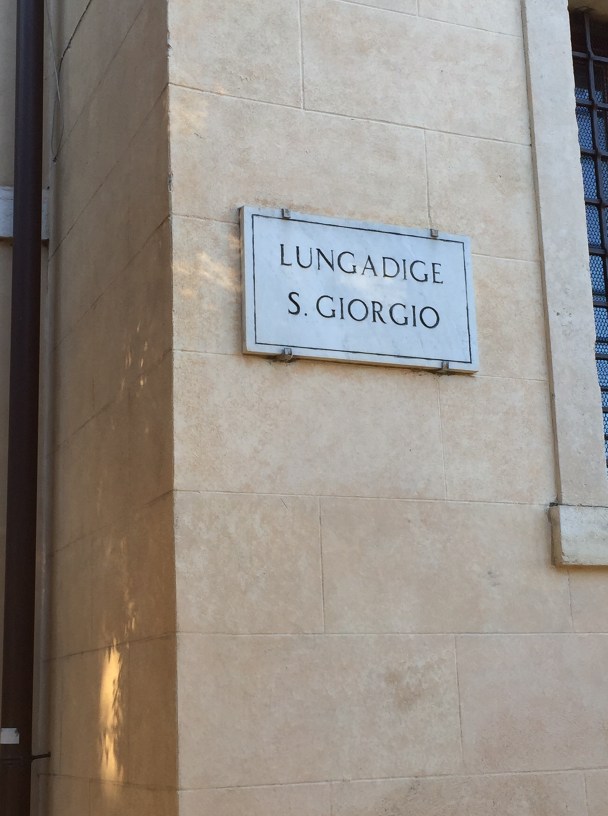
To begin, here is our home away from home, with a beautiful terrace next to the Adige River. A large persimmon (cachi in Italiano) tree attracted many local ucelli!
Here are some of my favorite pictures:
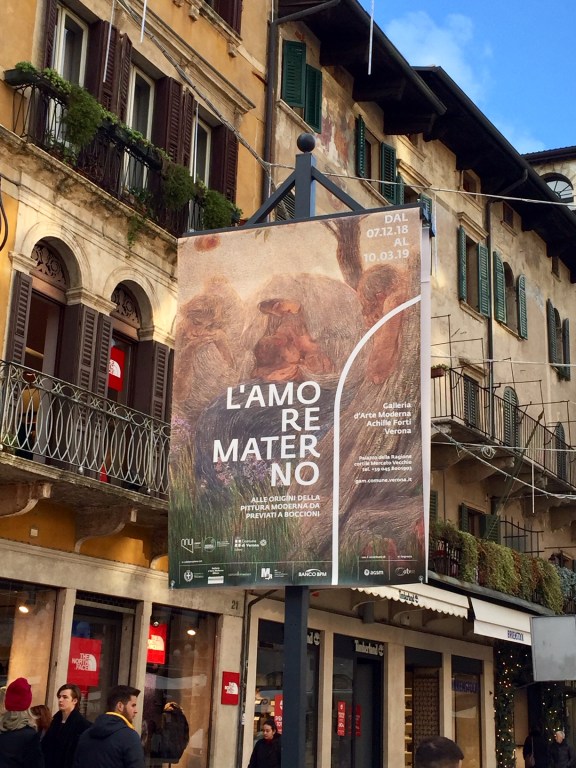
L’amore materno–Mother Love
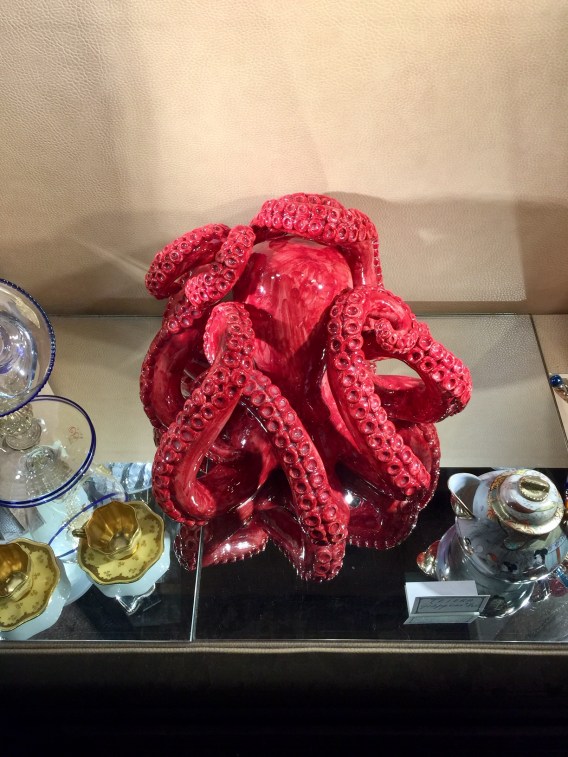
I love a decorative octopus!
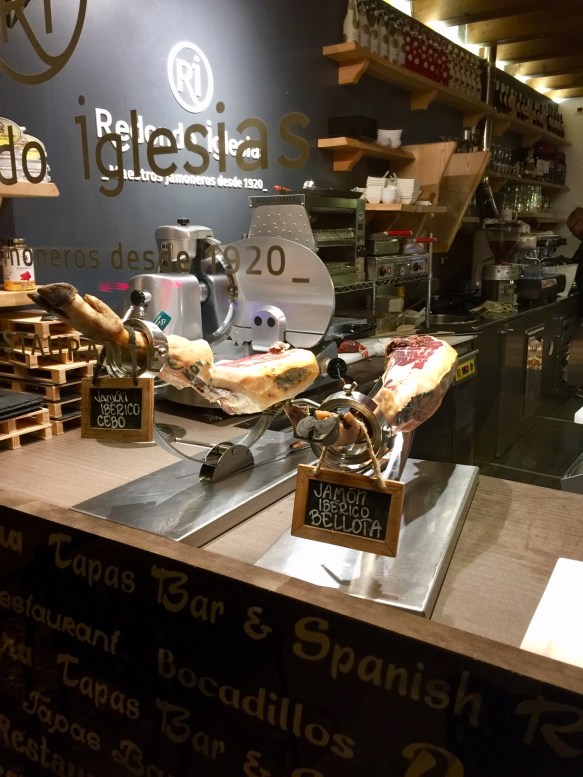
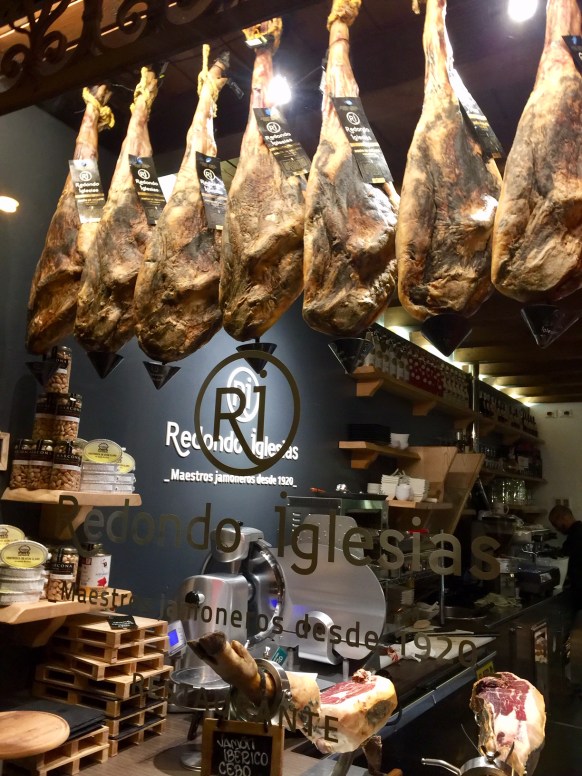
Check out the foot still attached to this prosciutto! OMG!
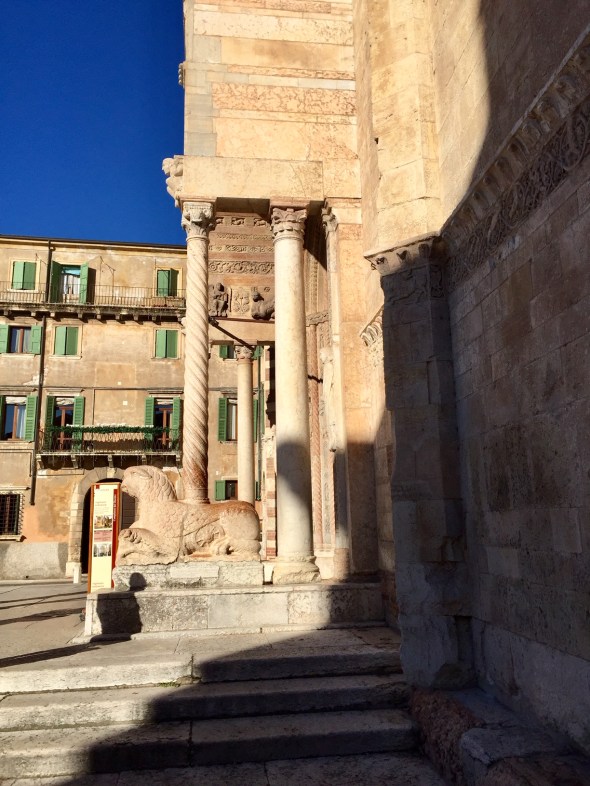
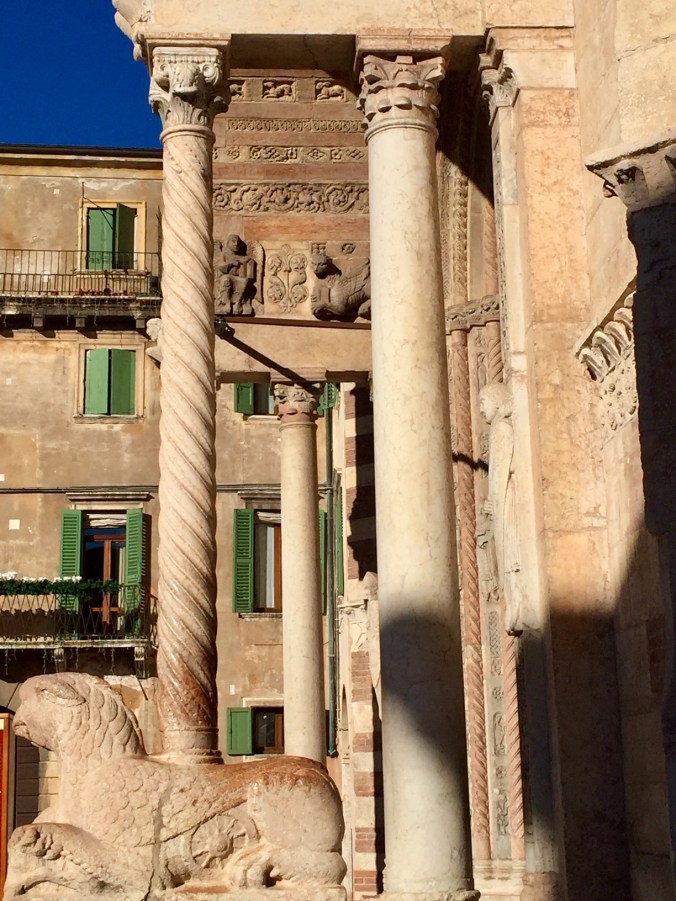
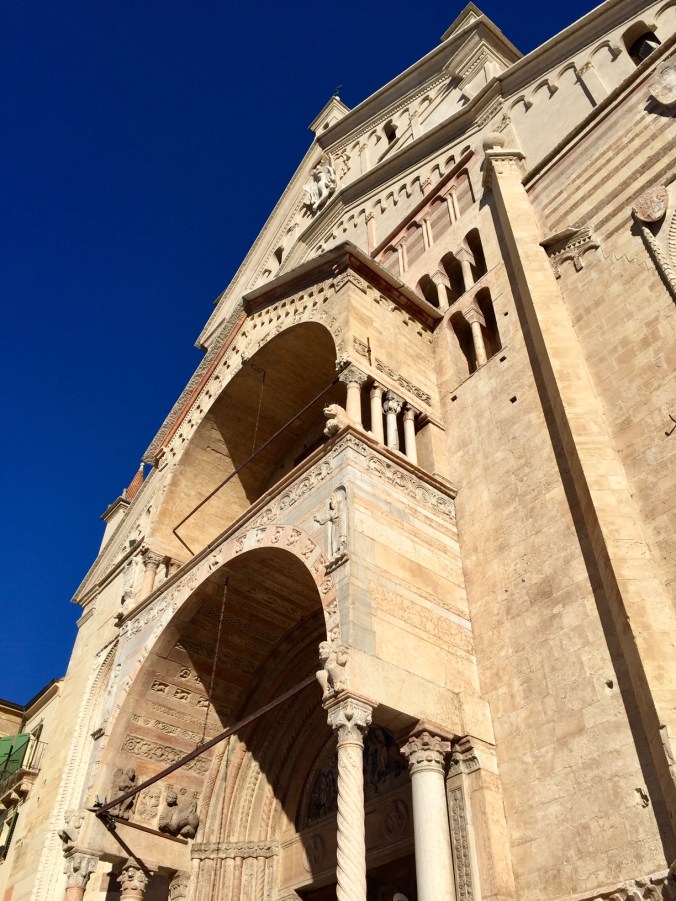
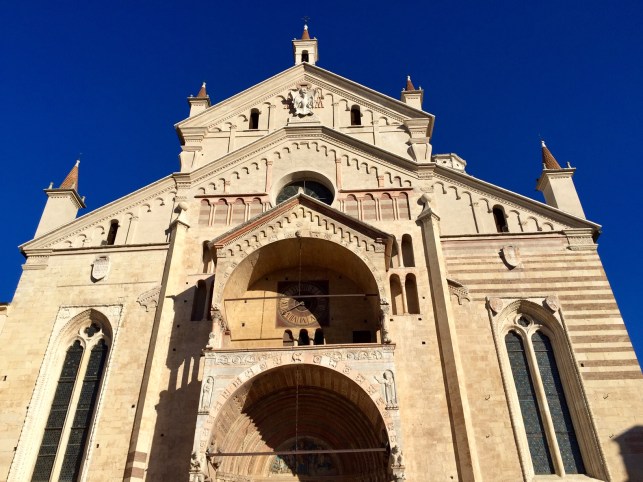
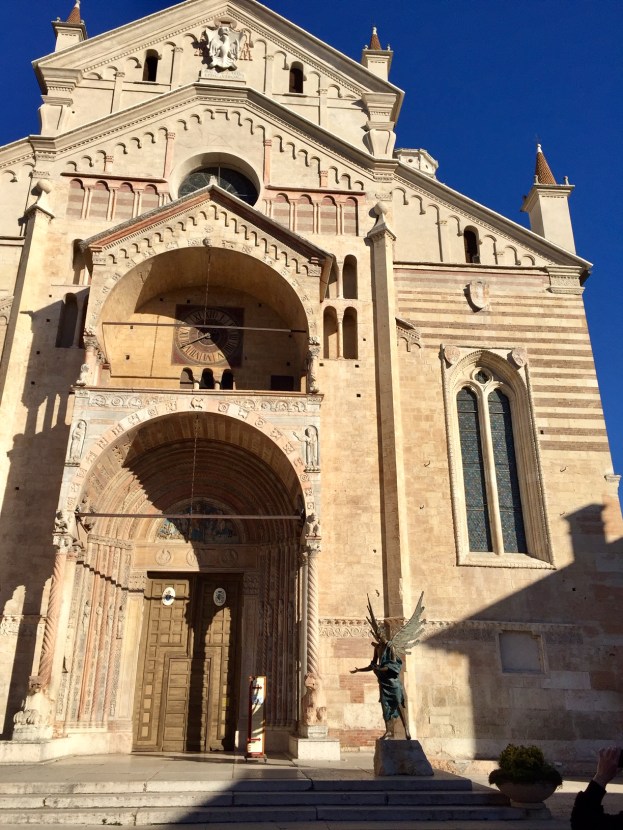
Verona’s magnificent Duomo below:
The bell tower:
The apron front of the facade reminded me of church architecture in Lucca.
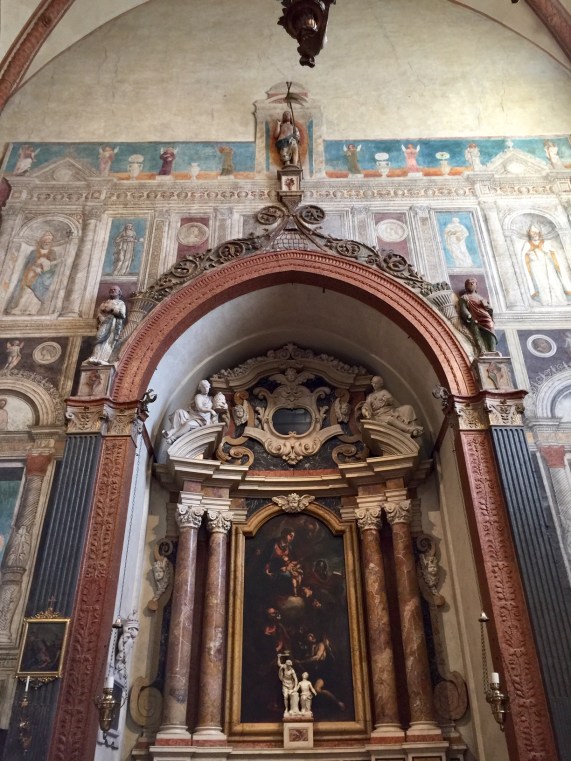
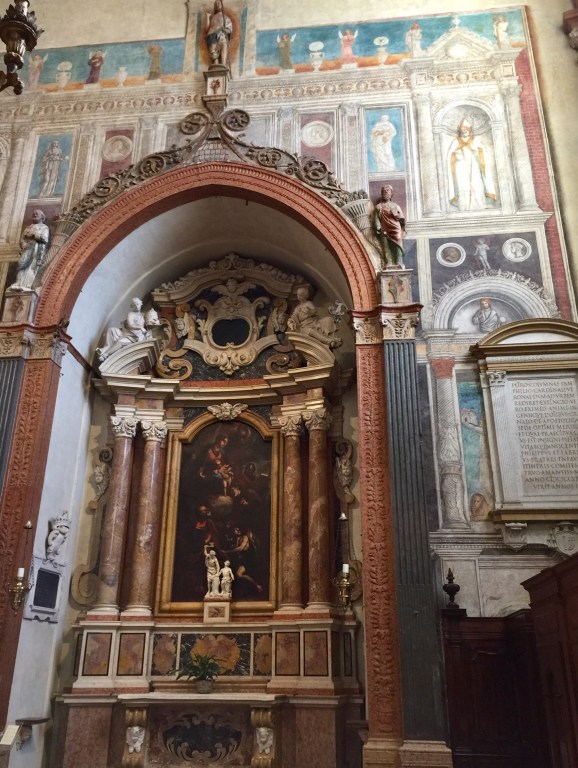
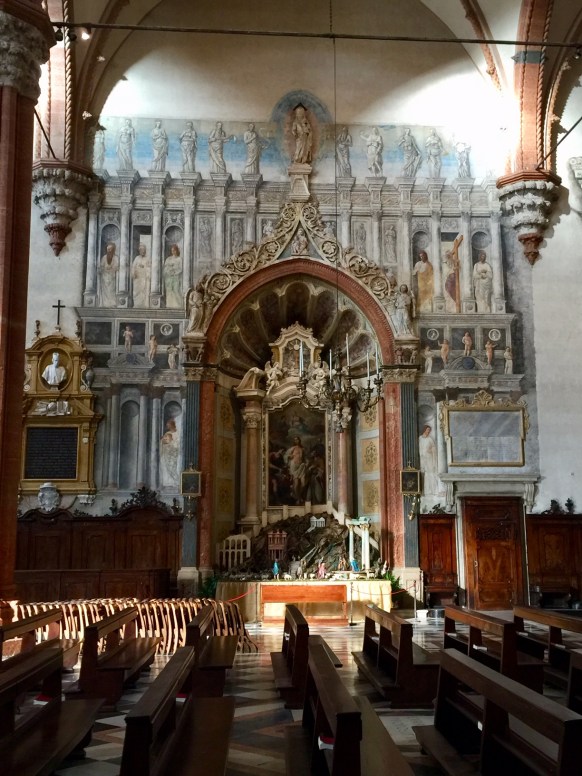
The altar below is painted and has matching sculptures in front. I’d never seen anything like this before.
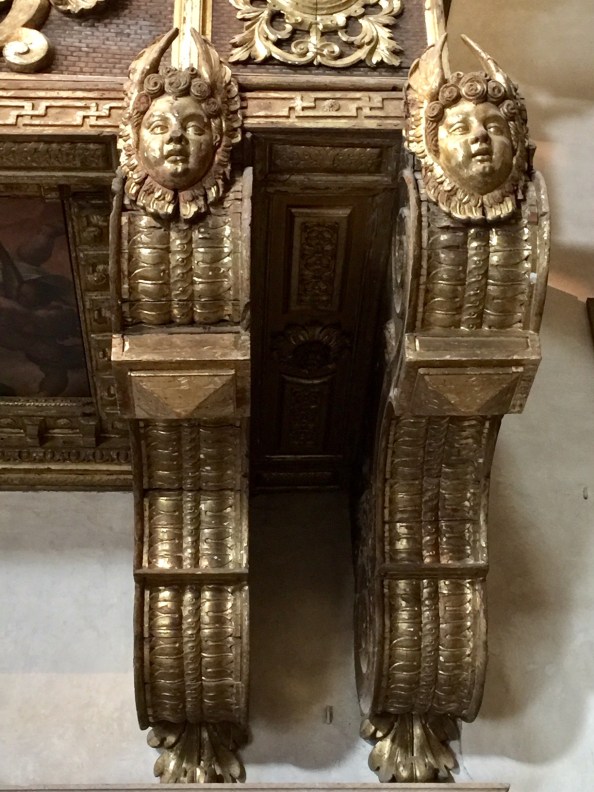
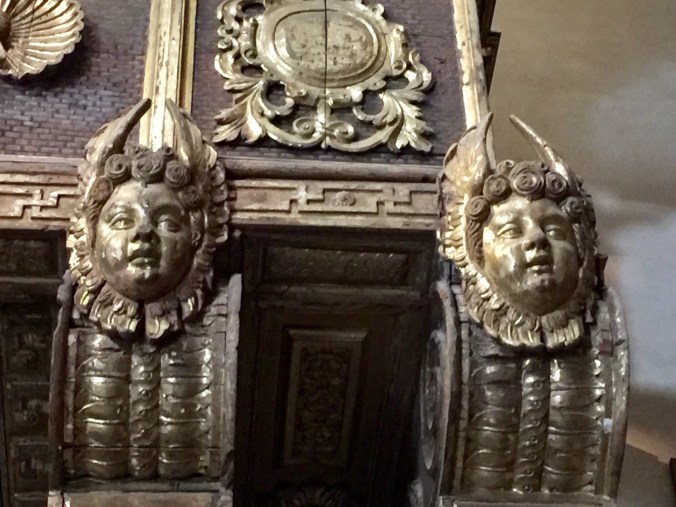
The altar below beckons from across the church. Such lavish gold, again, I’ve never seen anything quite like this and I’ve seen a lot of altars in my day. I love that Italy is always surprising me.
See what I mean below:
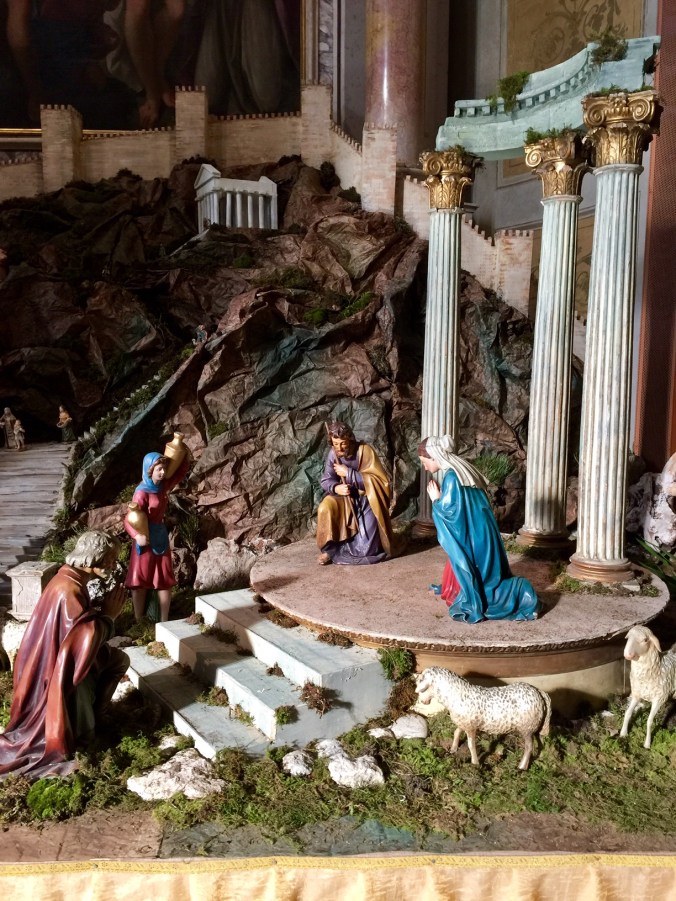
The ubiquitous December creche scene: the figure of the baby Jesus will not appear until midnight of the 25th.
I guess the placard below is for those sinners who don’t remember or know how to confess.
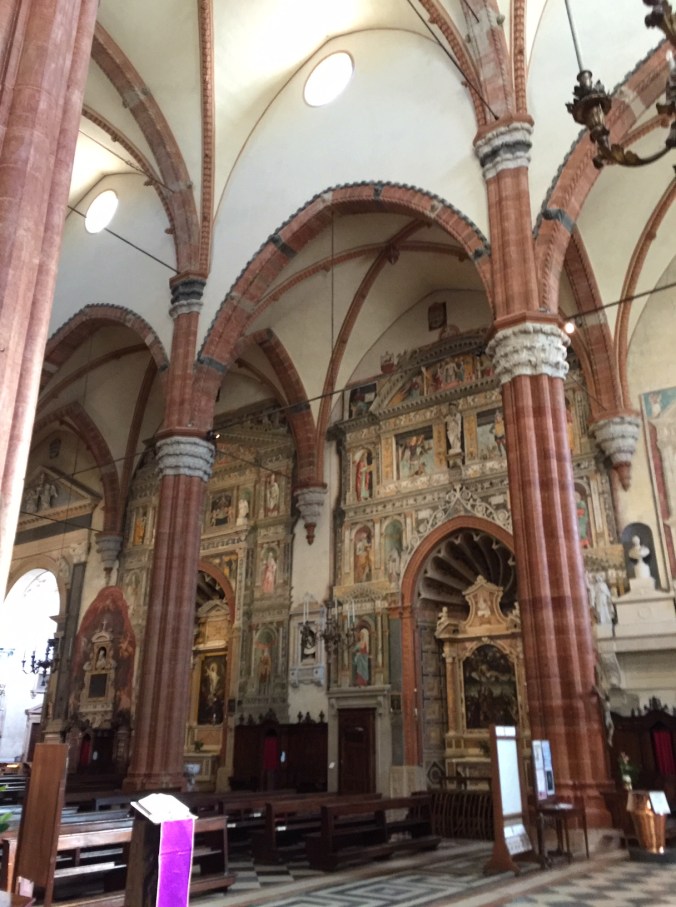
These pictures are from the interior of the duomo in Verona. It is a beautiful church. Verona was obviously a wealthy city during the Renaissance and after, as it still is today.
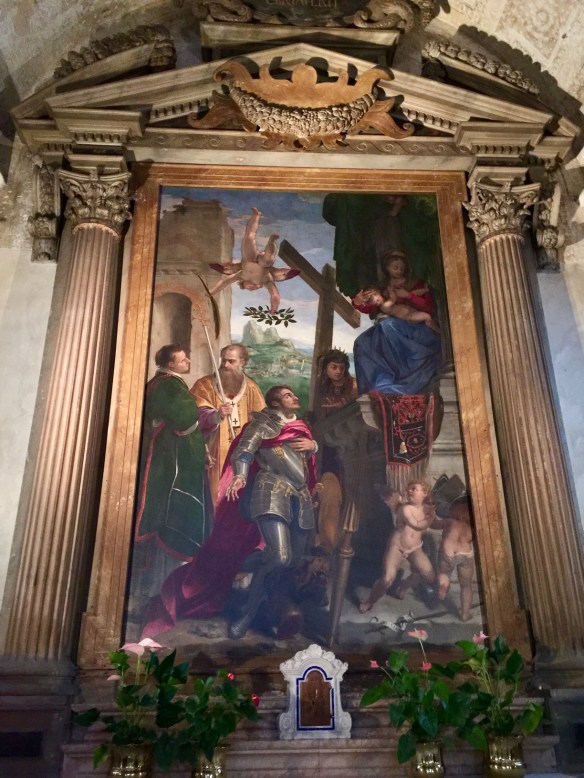
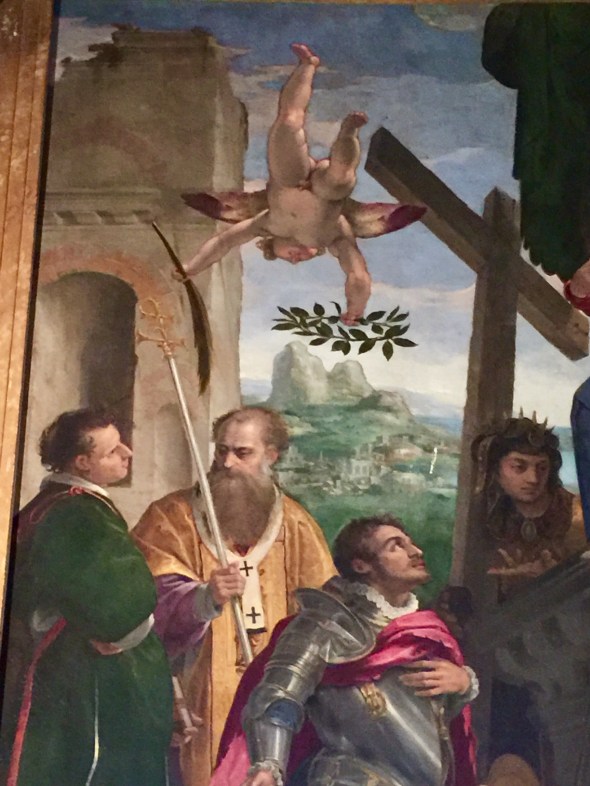
I’ve looked at a lot of paintings in my day, but I’ve never seen such a foreshortened putto flying in from this angle, to crown with laurel the knight in armor.
While this sculpted doorway below looks to be monumental, it was actually at my eye level on a wall in the duomo, and measured about 12 inches tall.
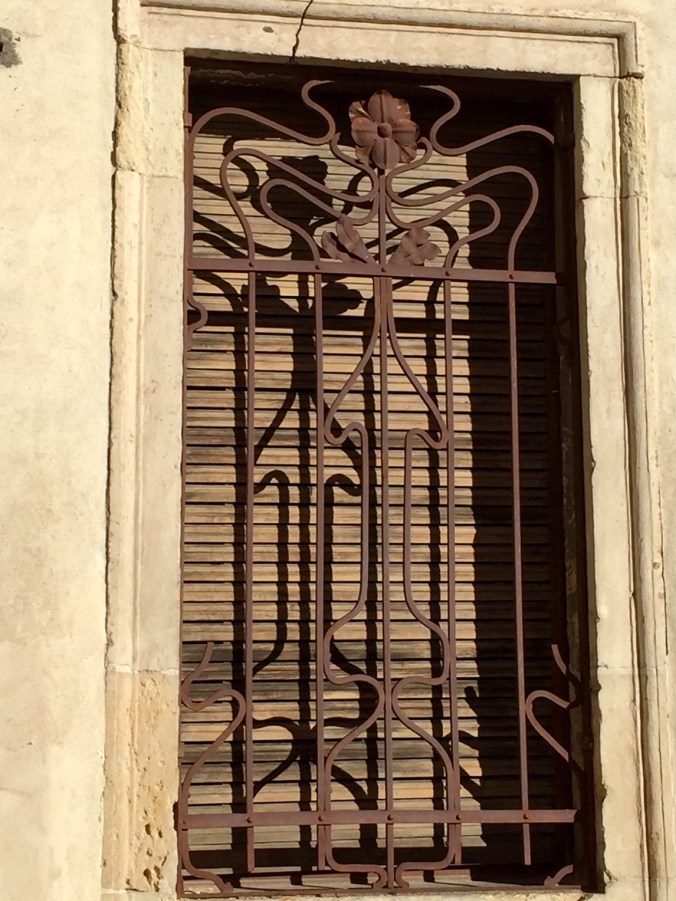
Back out in the lovely streets of Verona, I admired this art nouveau wrought iron in a window. It’s unusual for Italy and I love it.
Below is the gorgeous facade of the duomo.
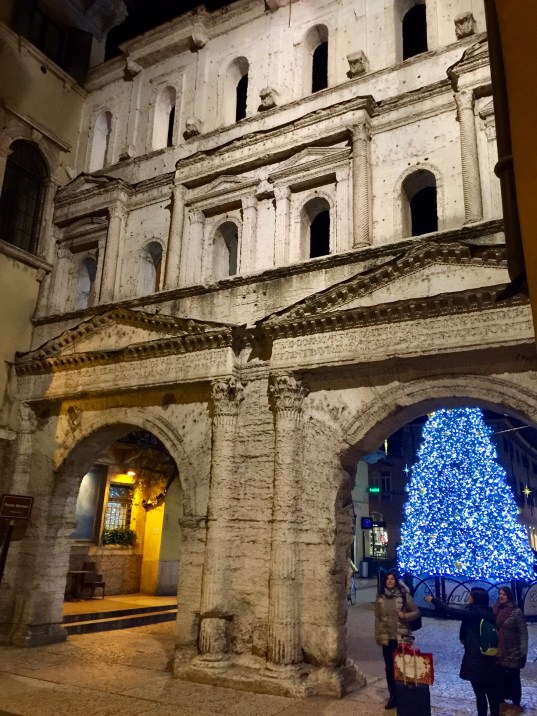
There are Roman ruins on the hillsides in Verona. I took this picture to remind me of this new (to me) fact: I want to go back and see more of the town.
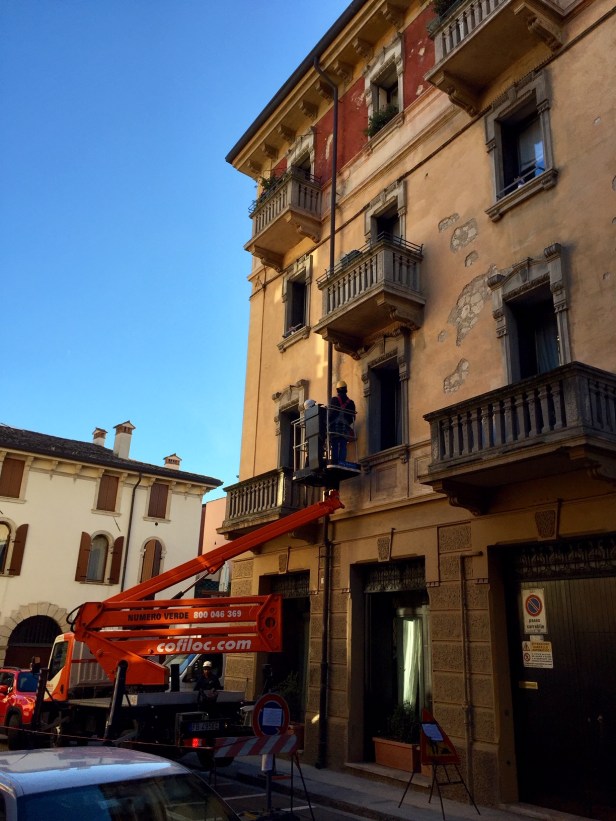
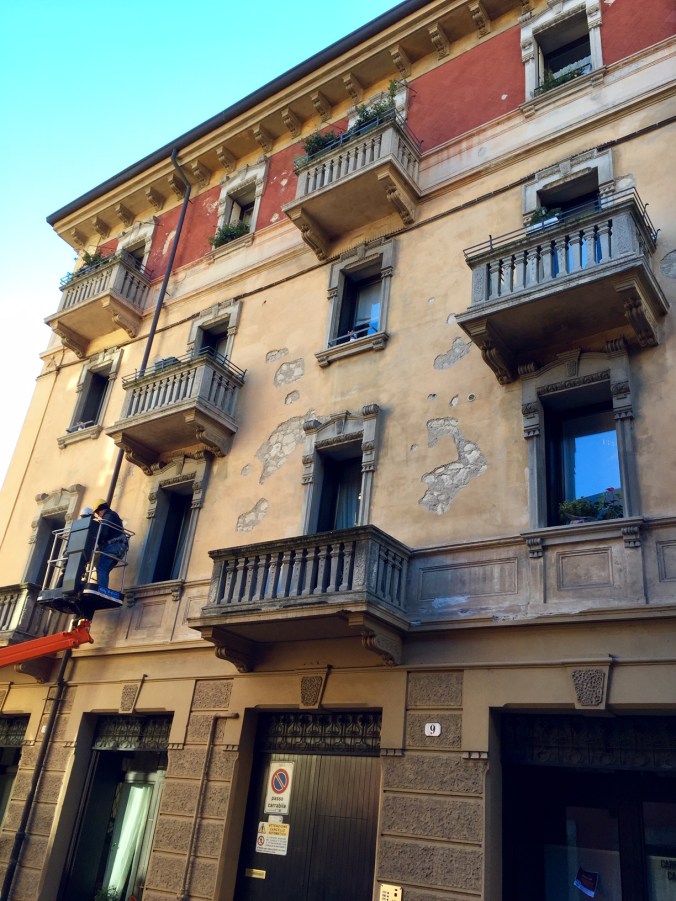
The facade below is getting some TLC.
Walking along on the sidewalk along a wall, there are death notices posted. I find these fascinating.
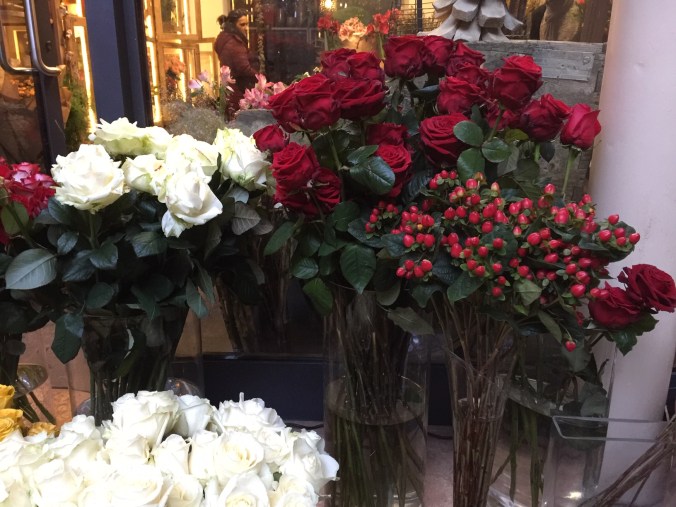
Flower shops are magnets to me:
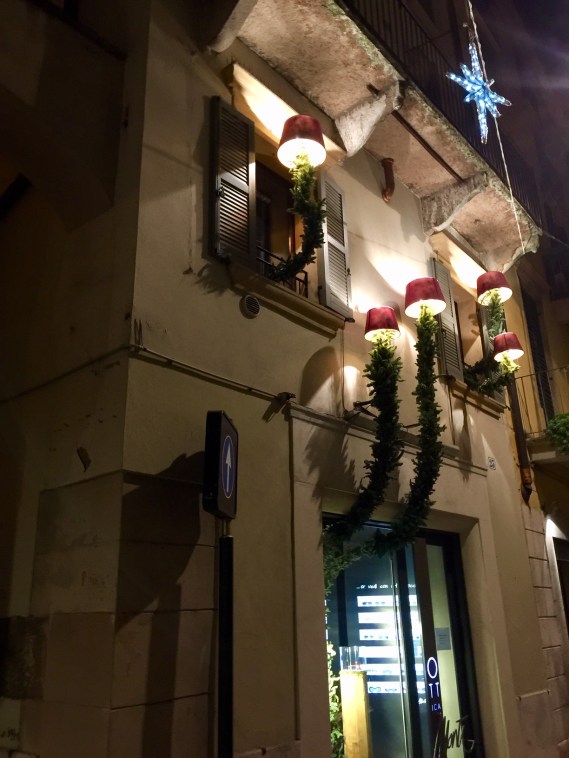
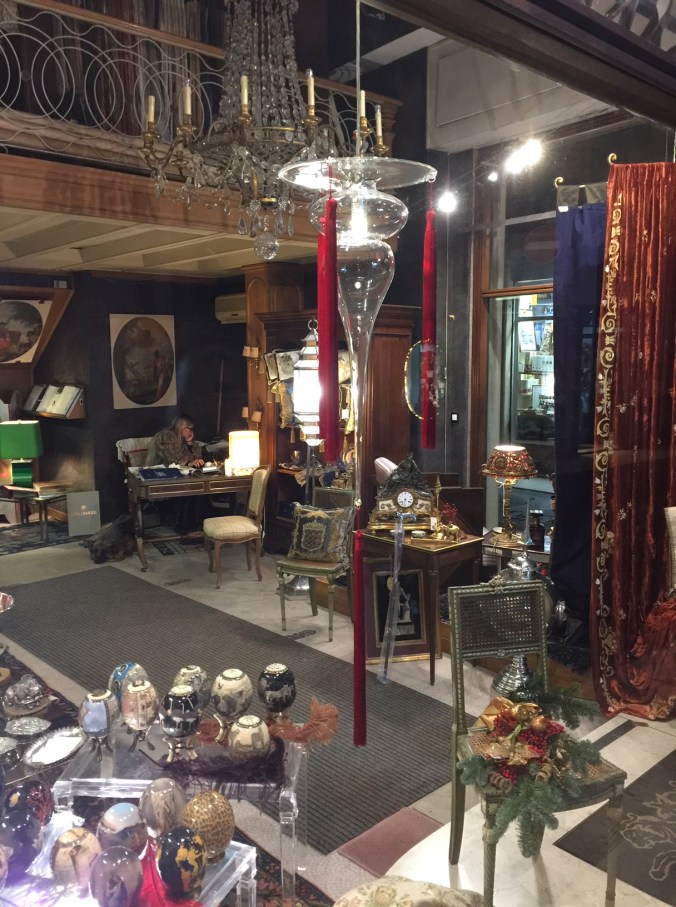
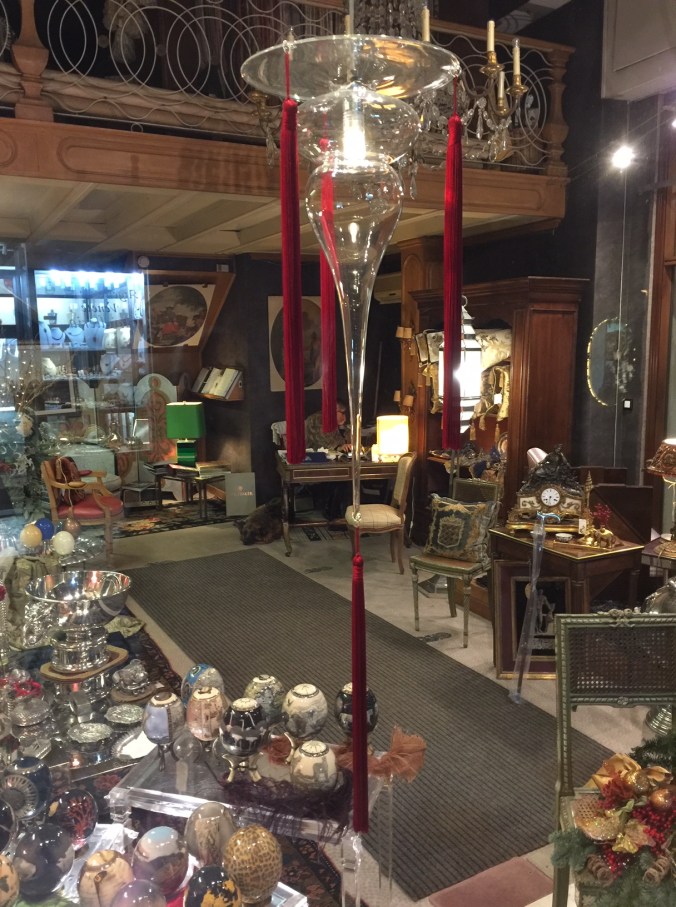
I am obsessed with this crystal lamp with the red tassels. Obsessed.
Obsessed I tell you!
Finally, the end. A shout out to my girl, Jenny, for being an awesome traveling companion. More to come, I am sure!
Oh, and p.s., I have a few more Verona posts coming, including Giardino Giusti. Watch this space!
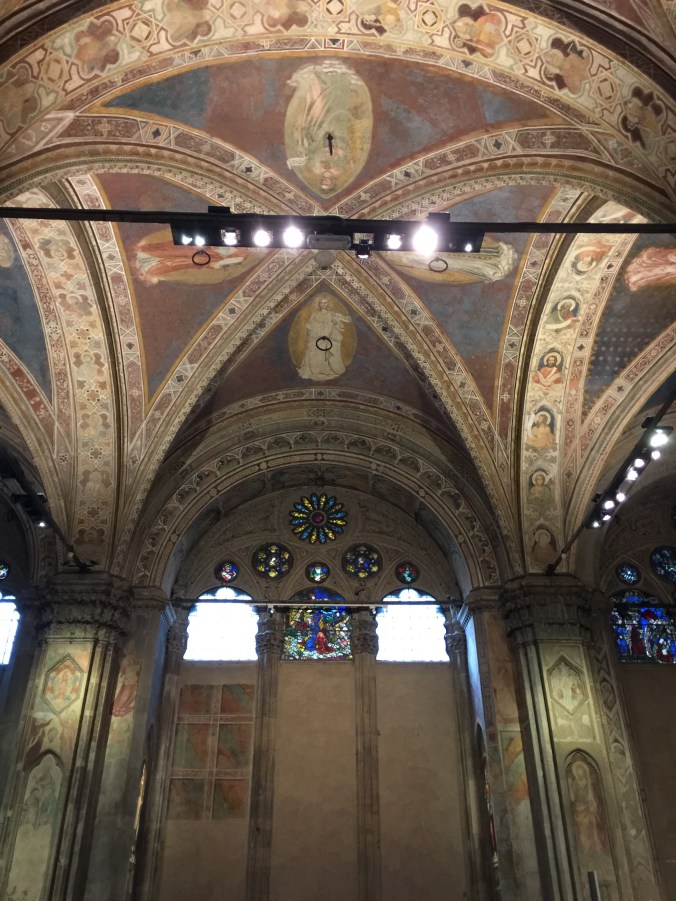
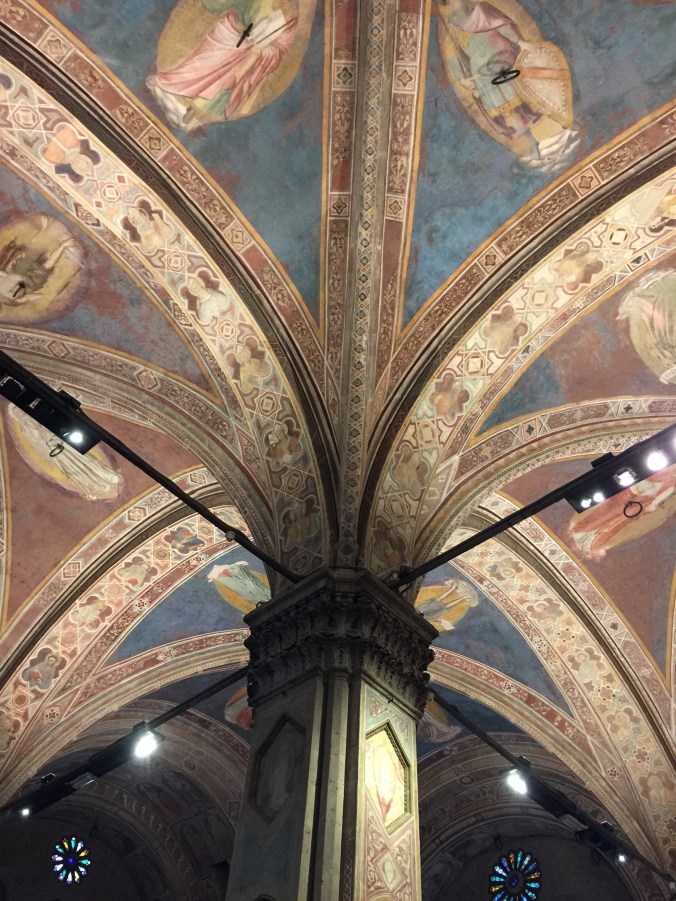
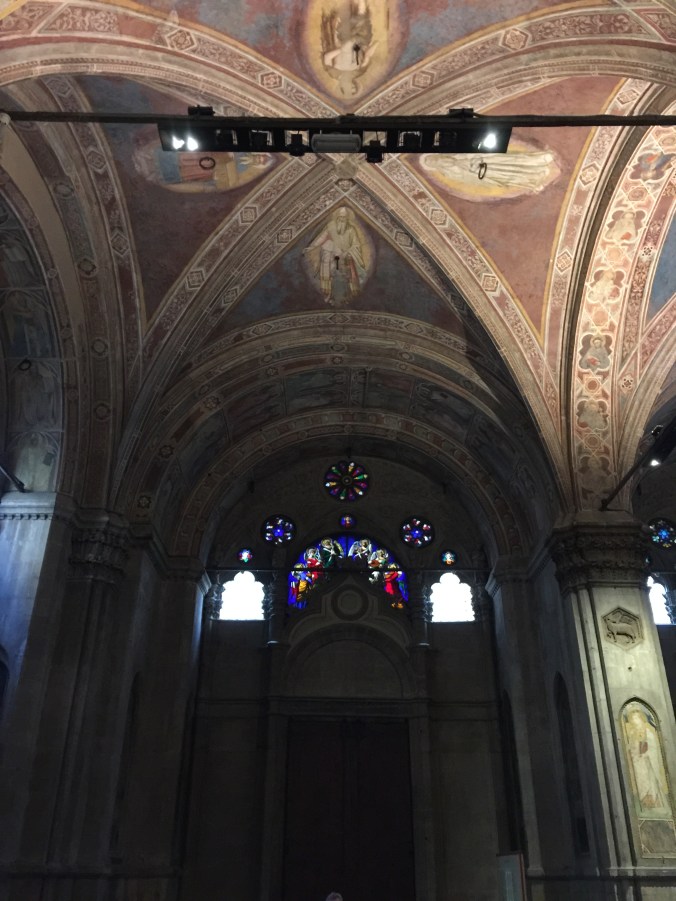
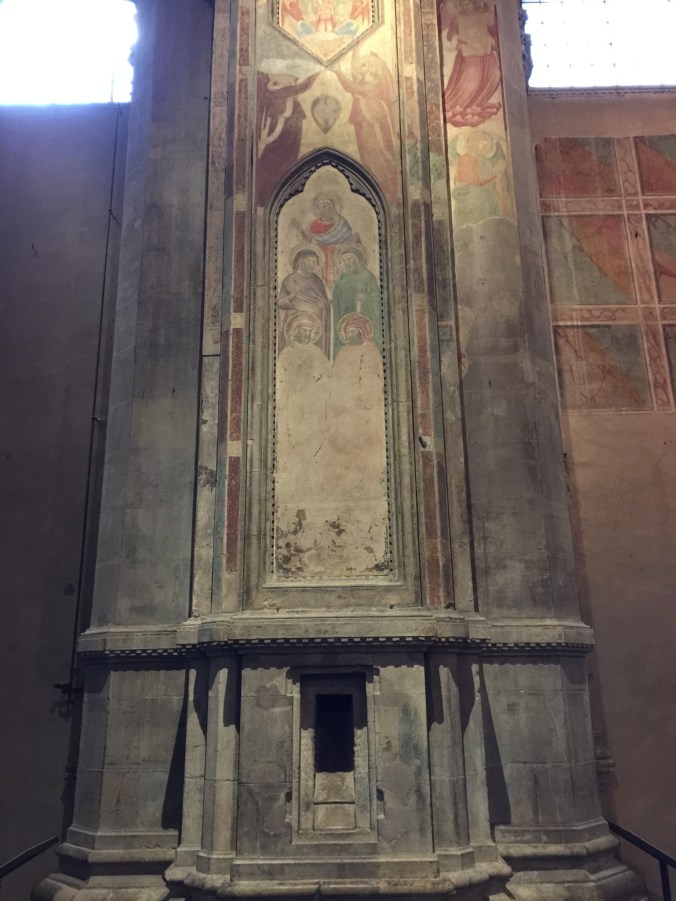
A while back I took the opportunity to pay a visit to the famous Florentine church, built in a former granary. It is opulent and lovely.
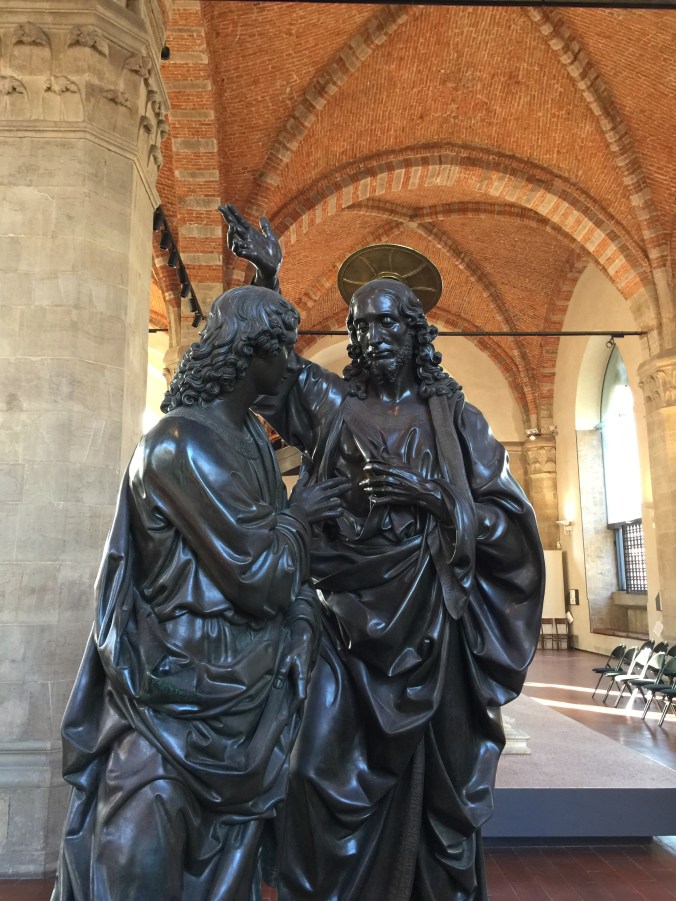
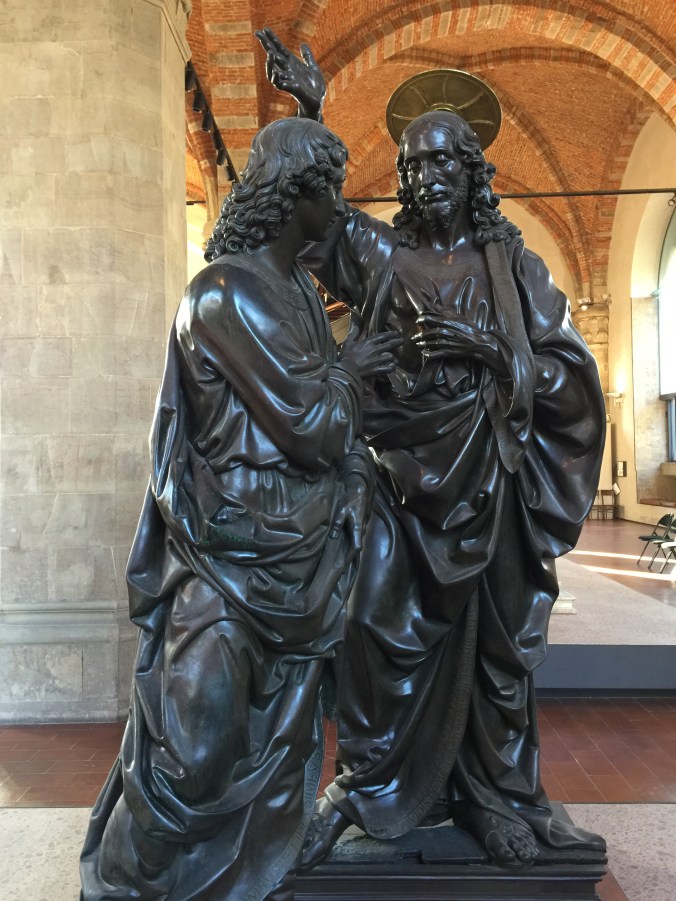
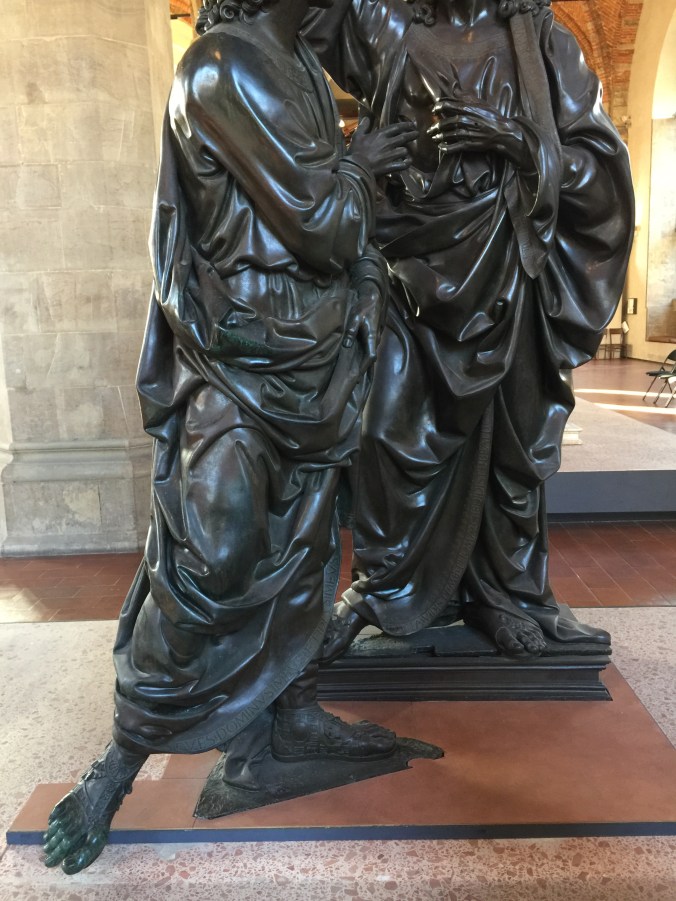
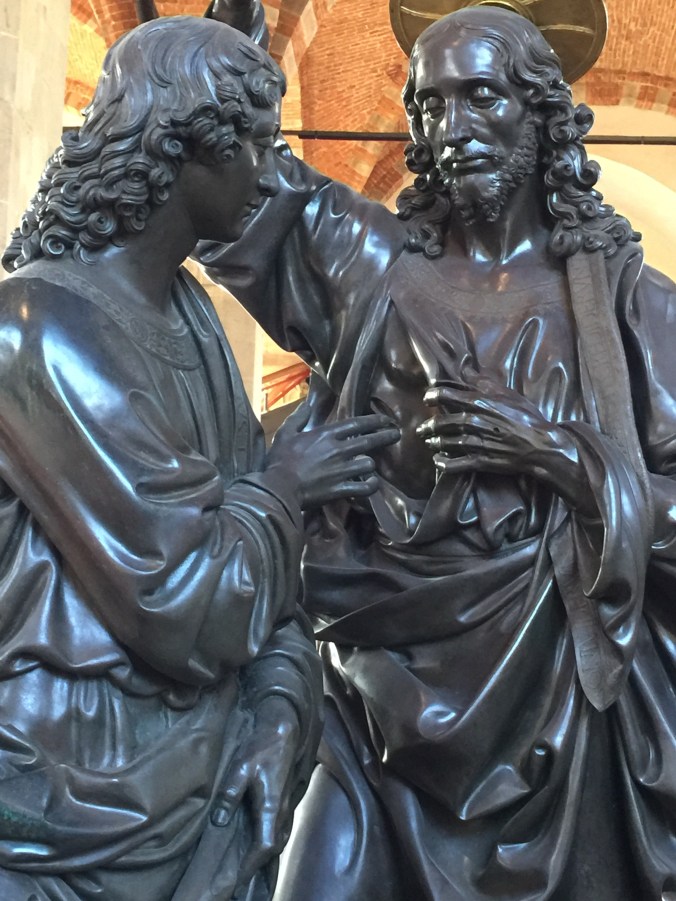
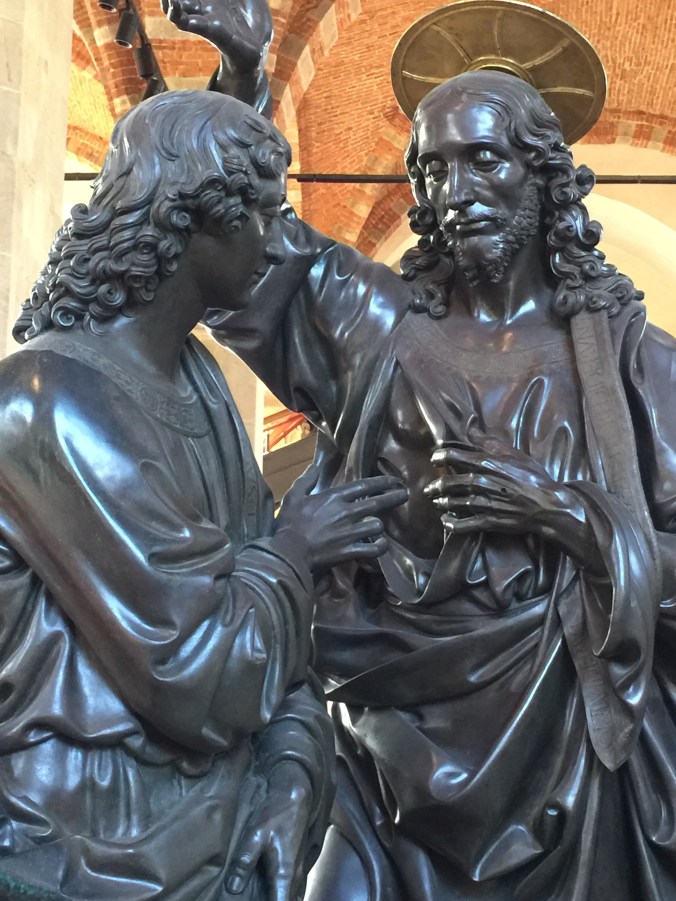
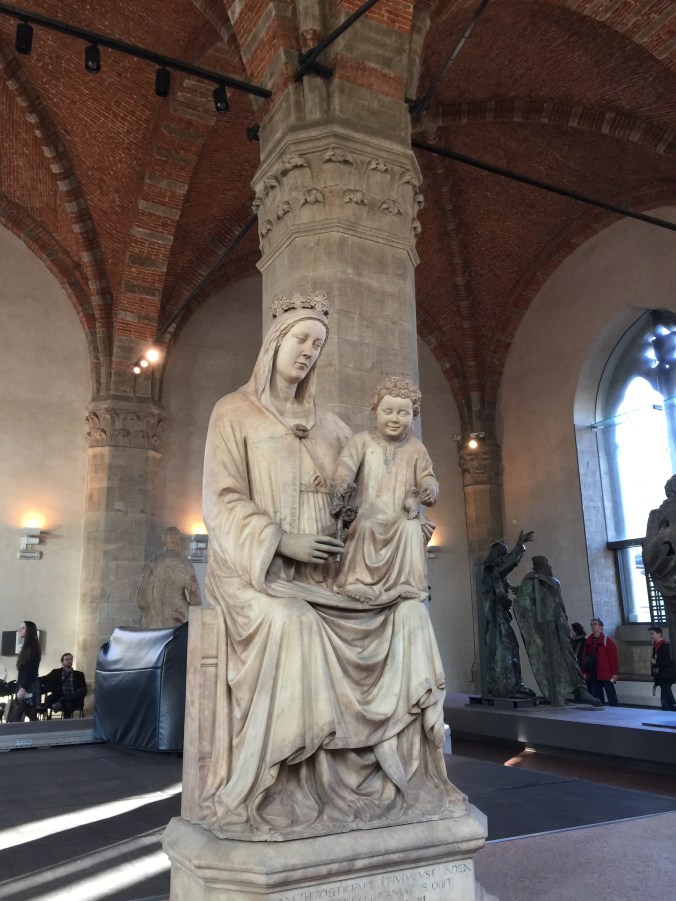
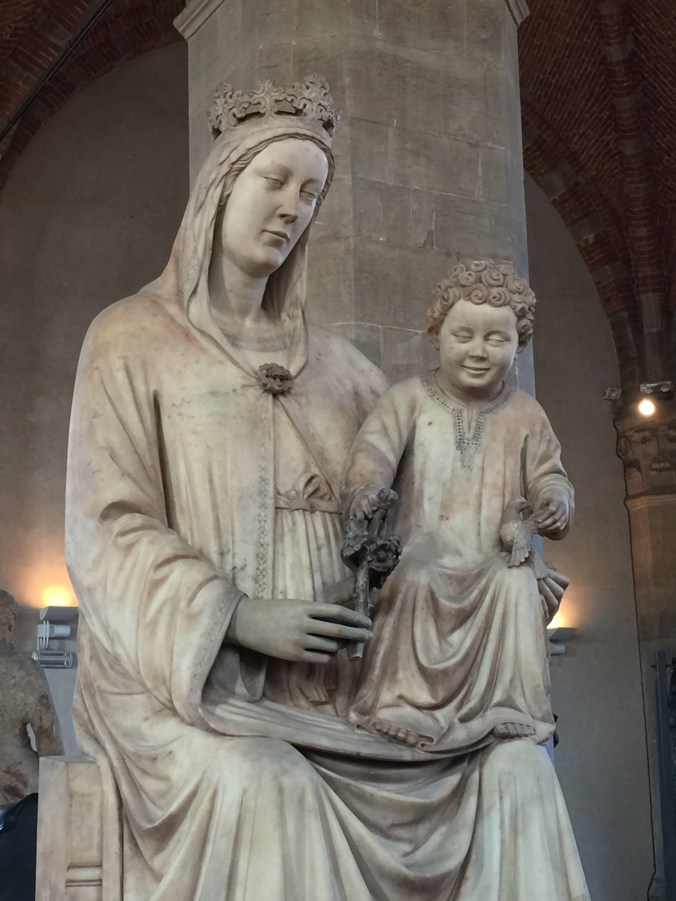
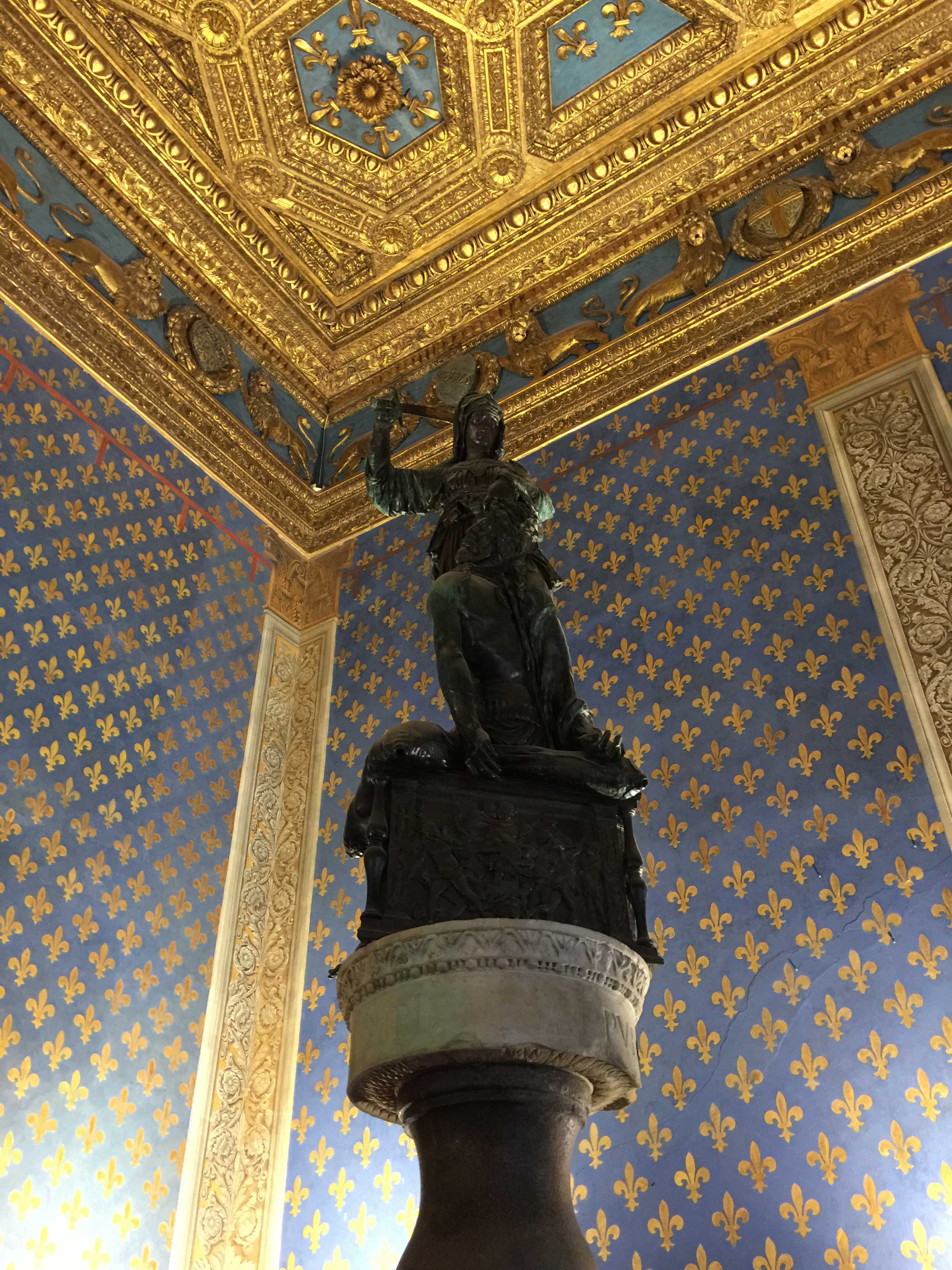
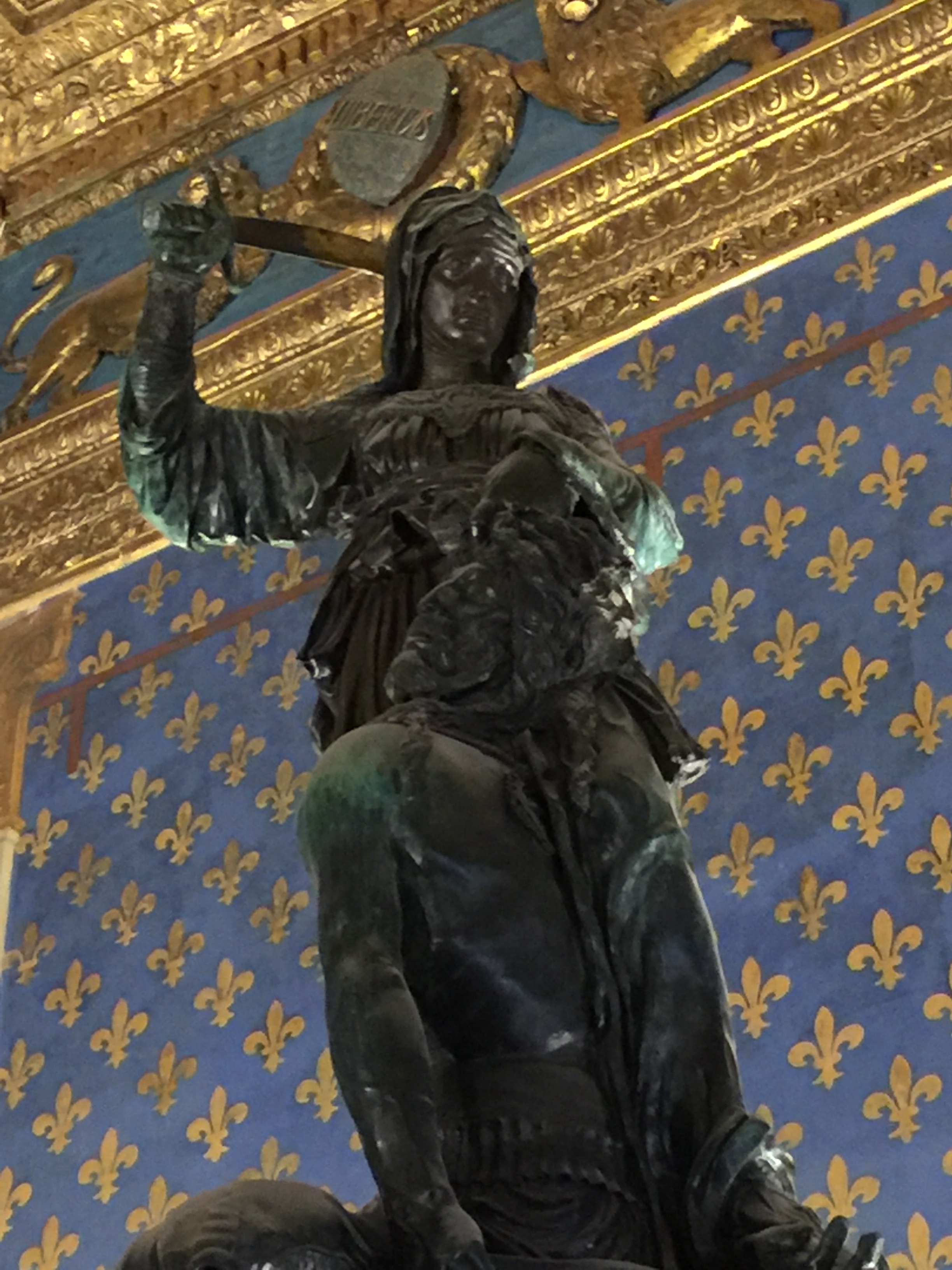
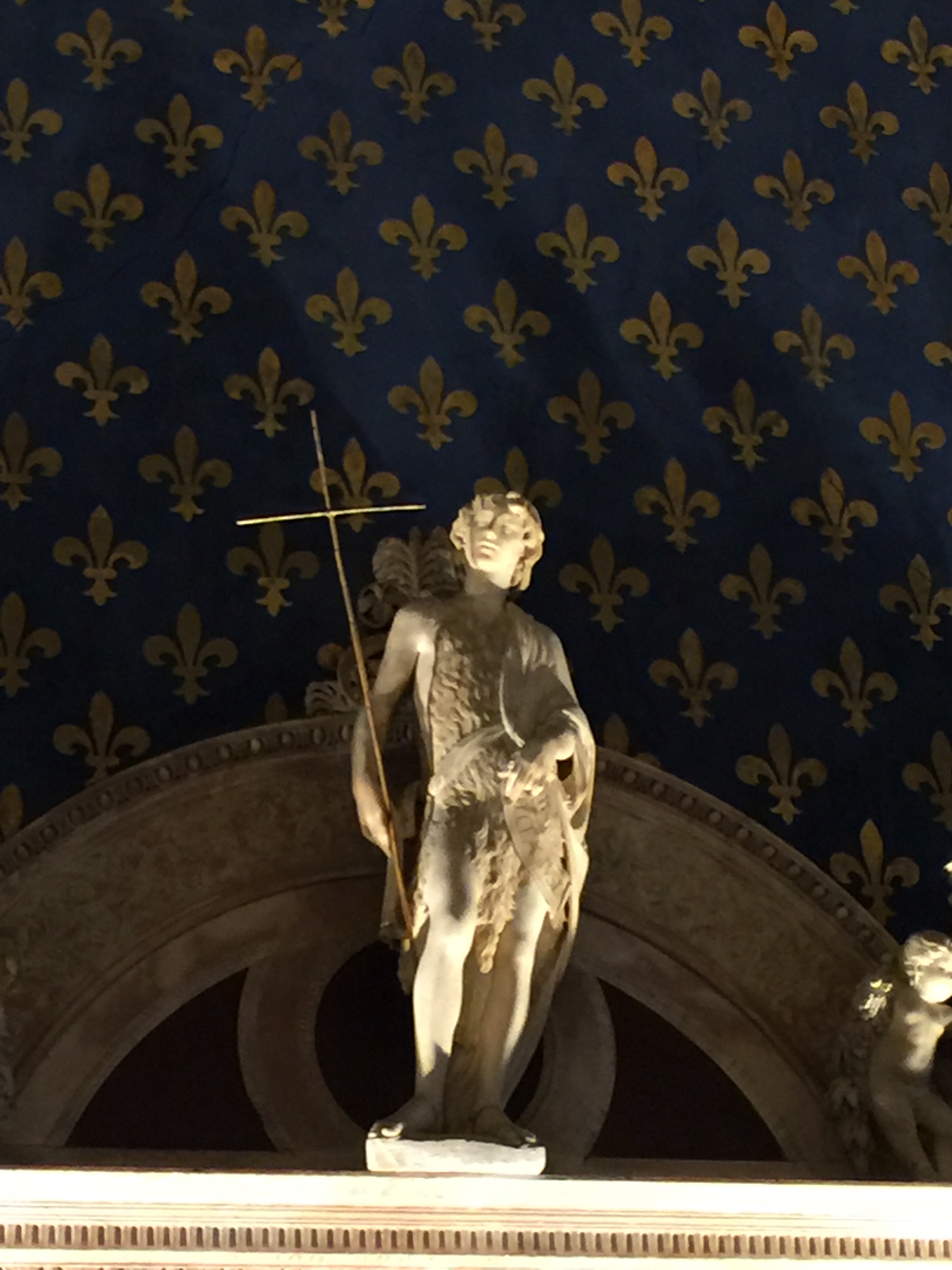
Above the church is a museum where all of the significant Renaissance sculptures originally placed in niches on the 4 facades of the church are now housed. Copies of these grand works are now in the niches on the building’s facade.
Here are some of the original works:
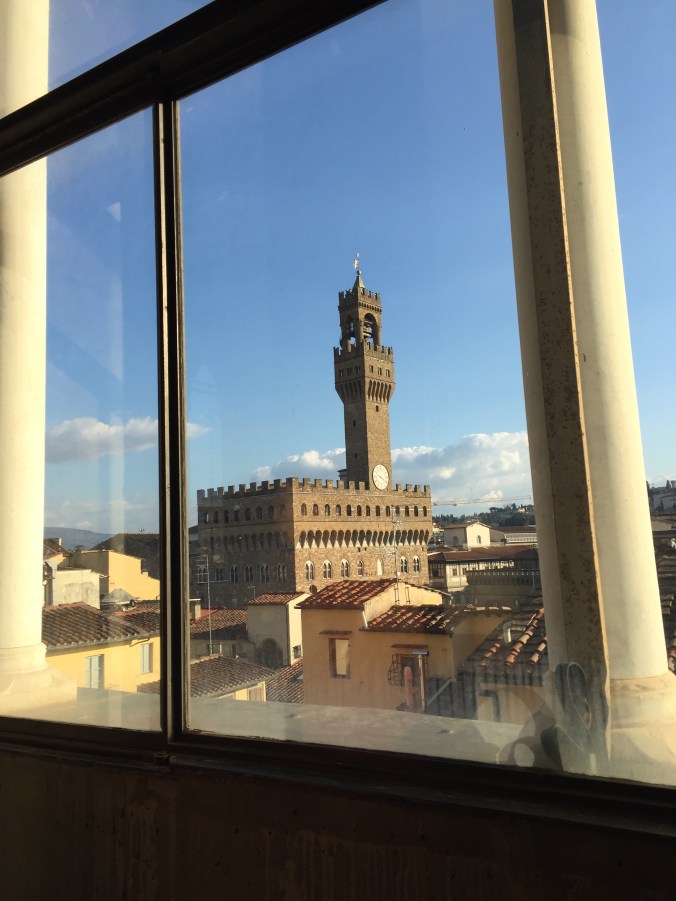
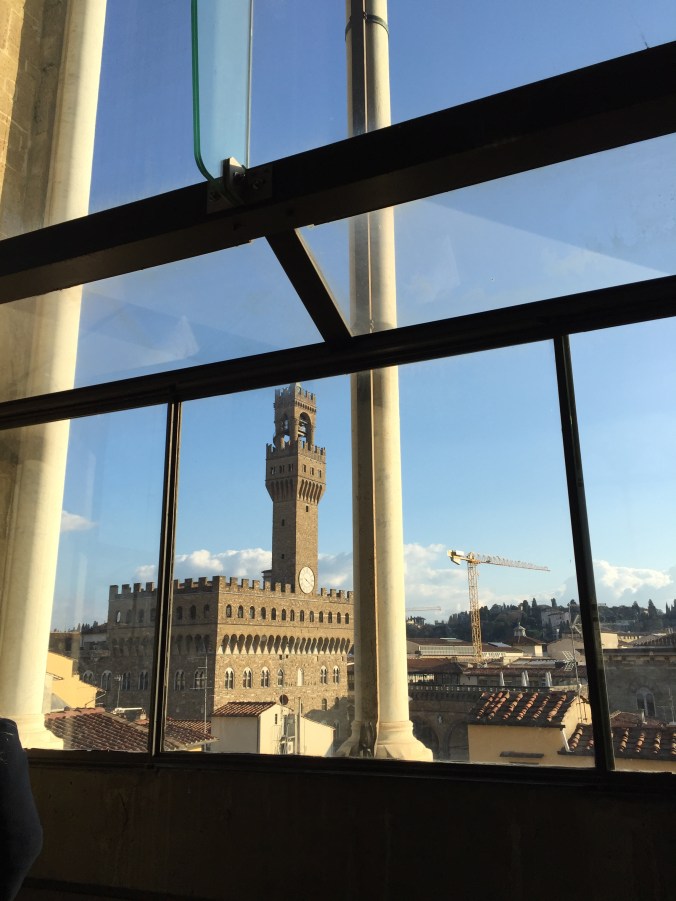
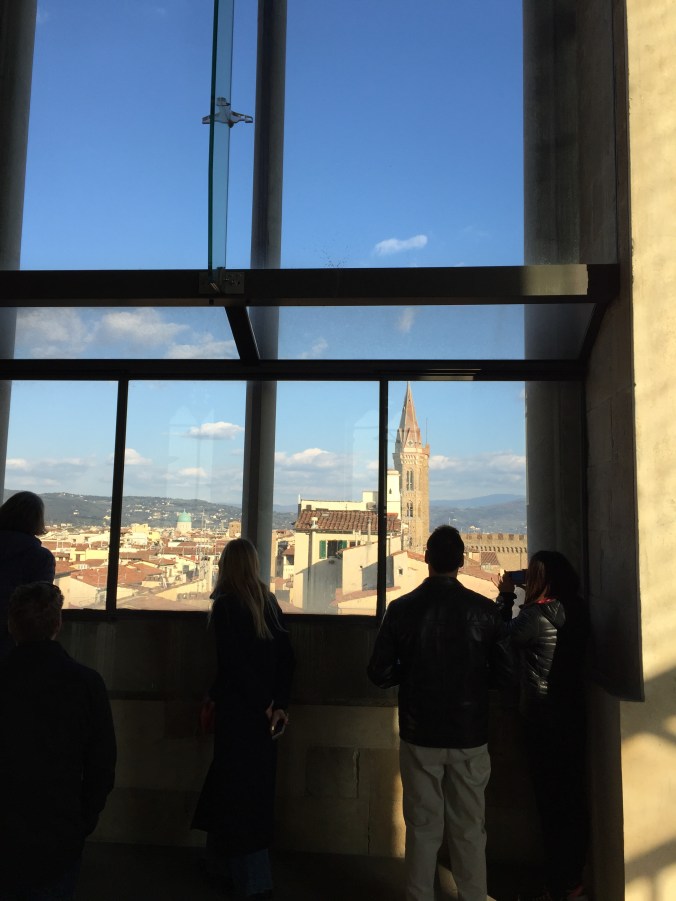
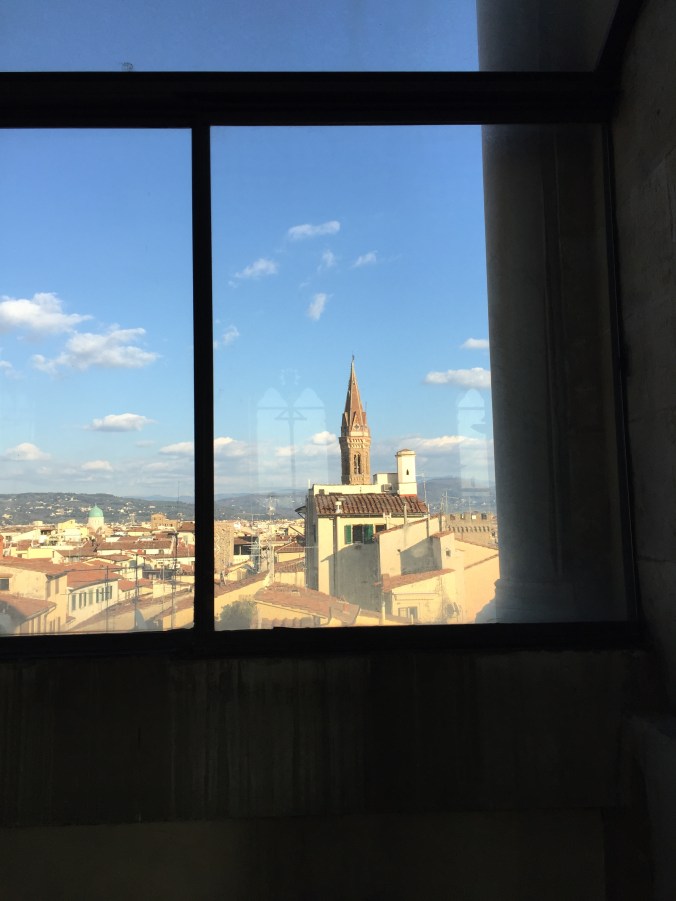
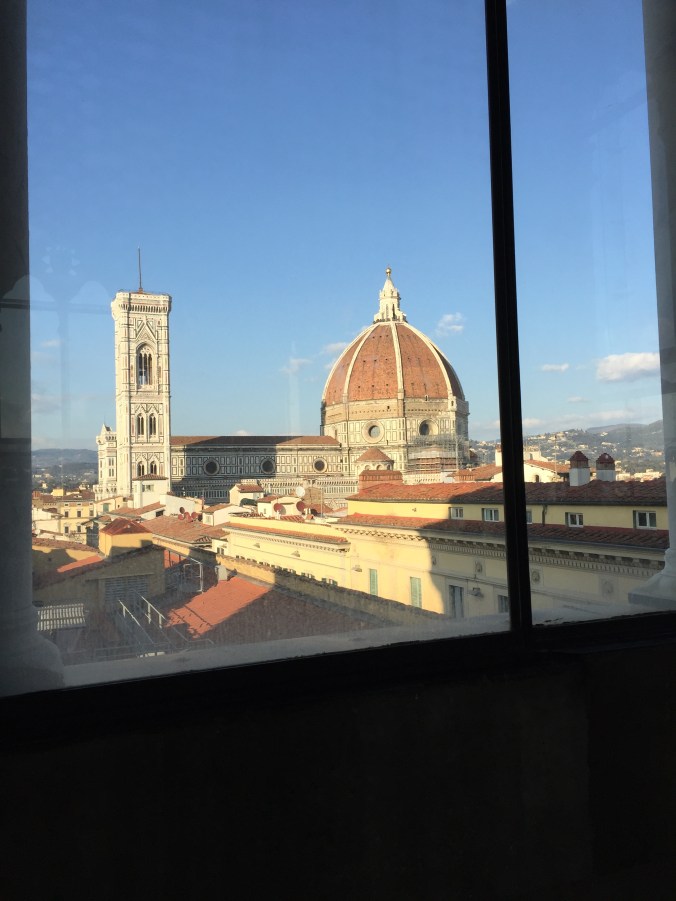
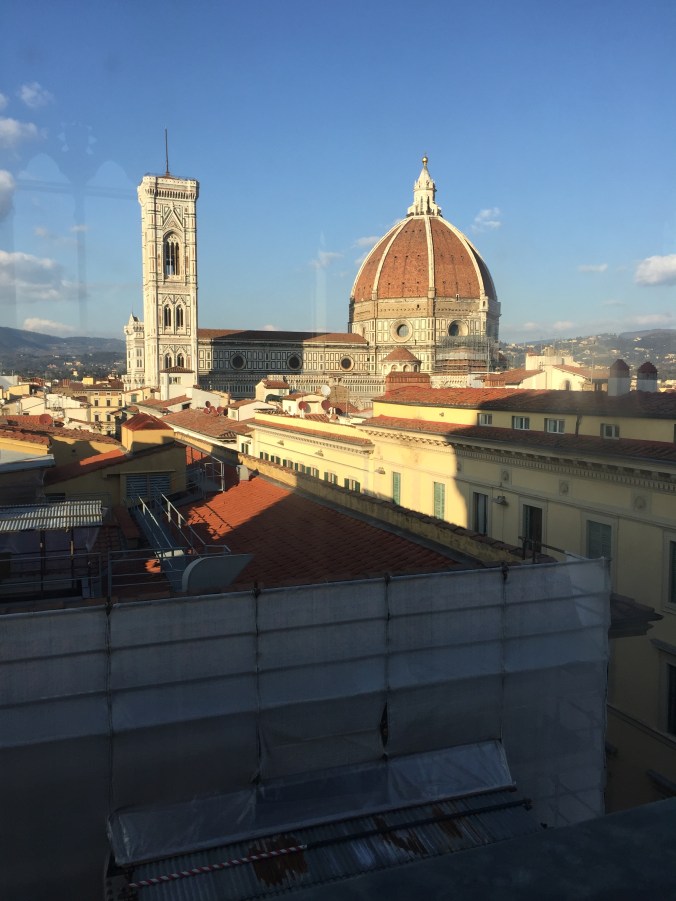
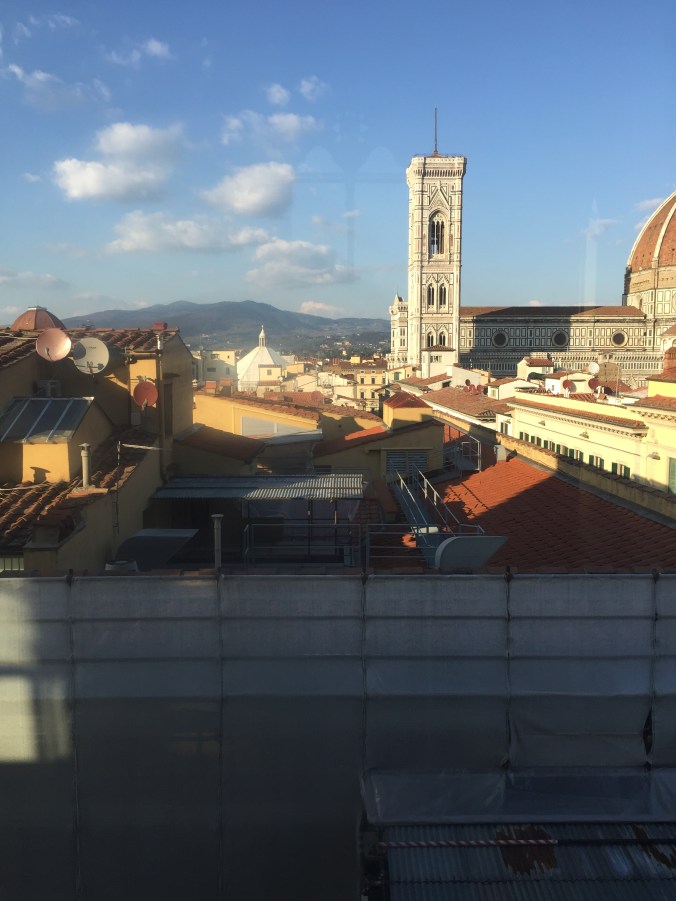
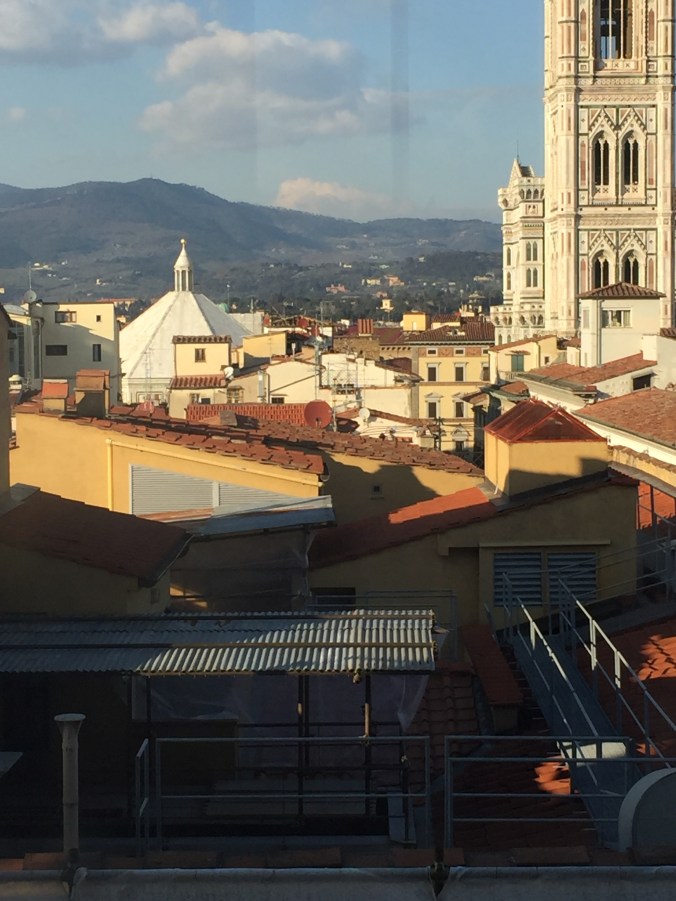
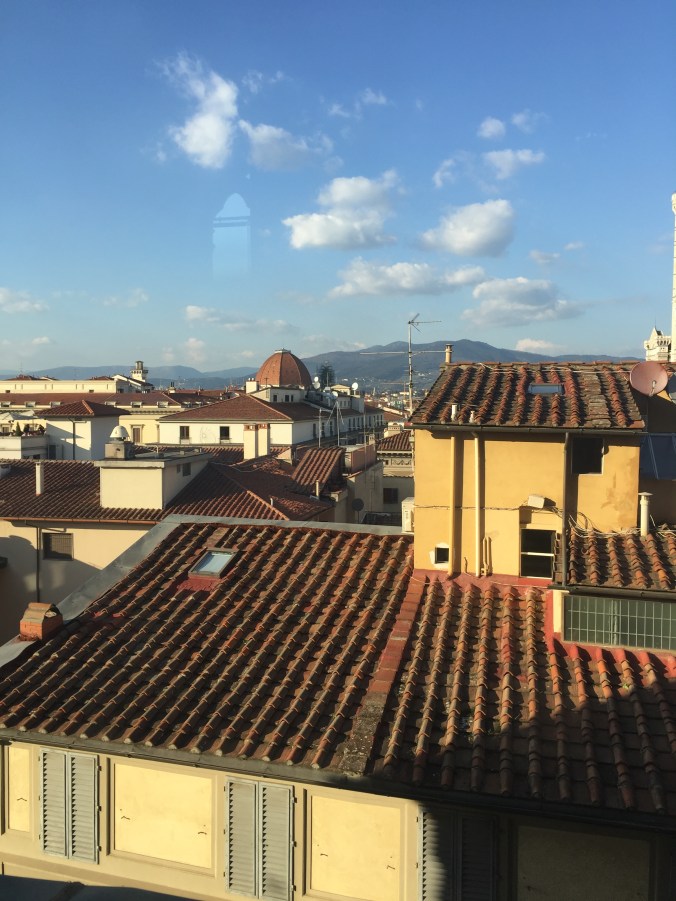
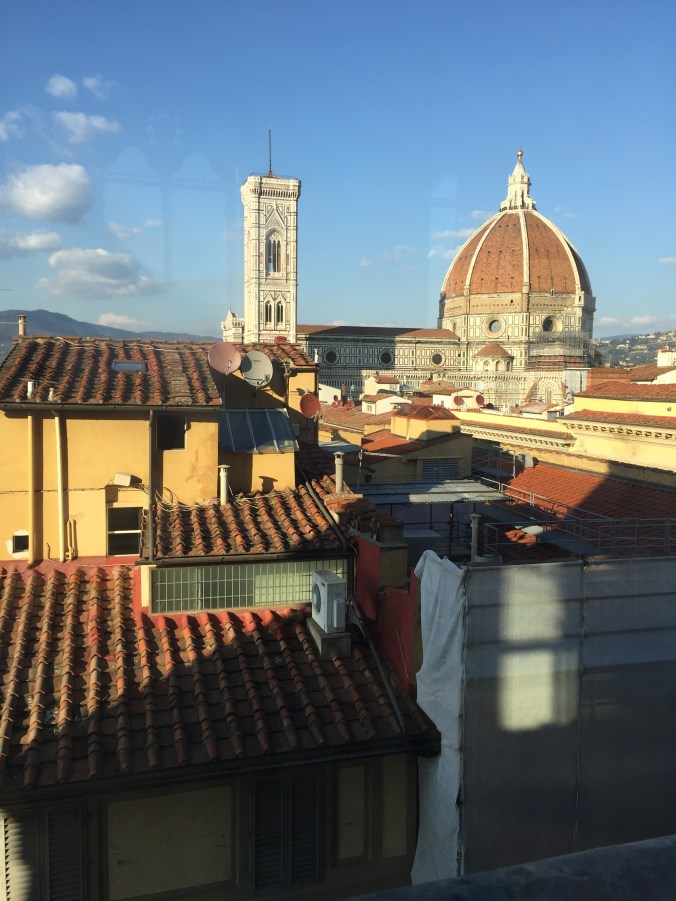
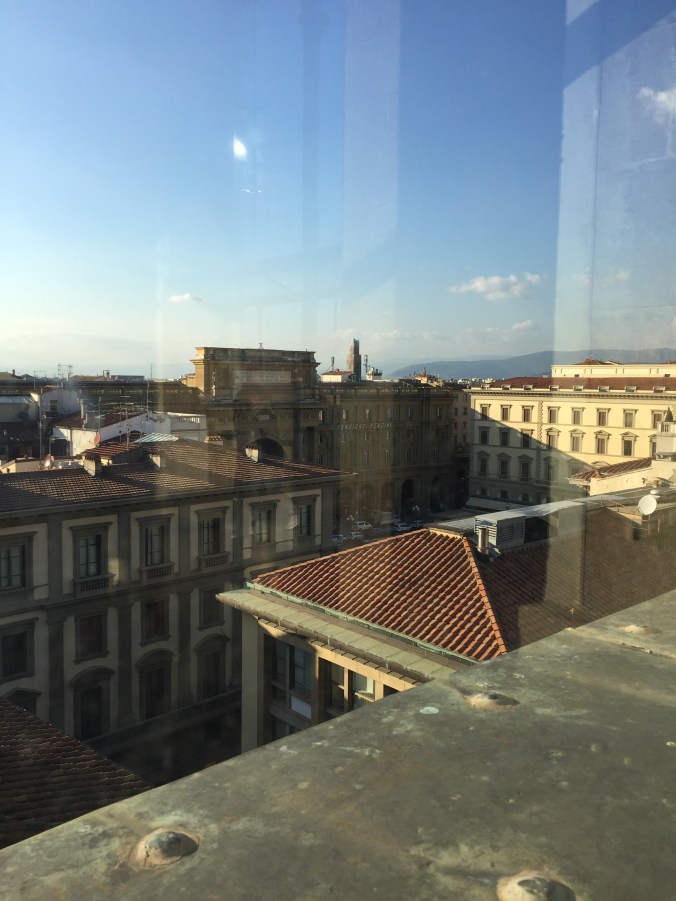
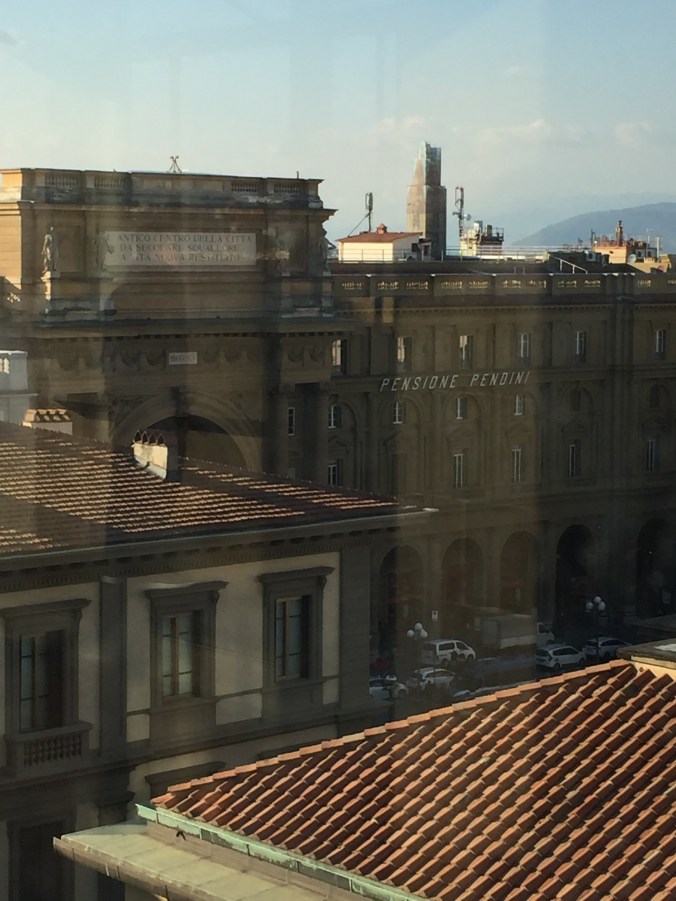
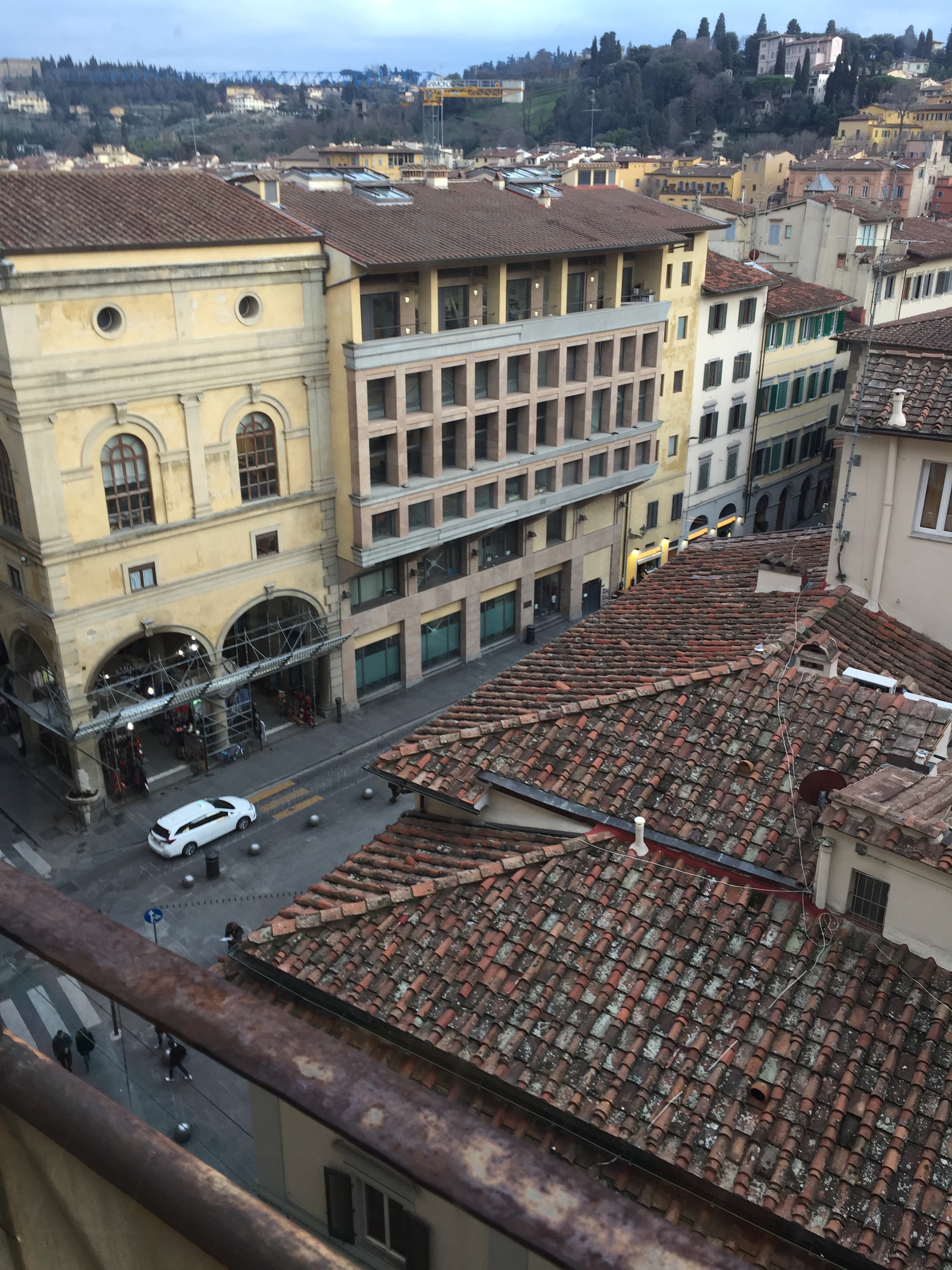
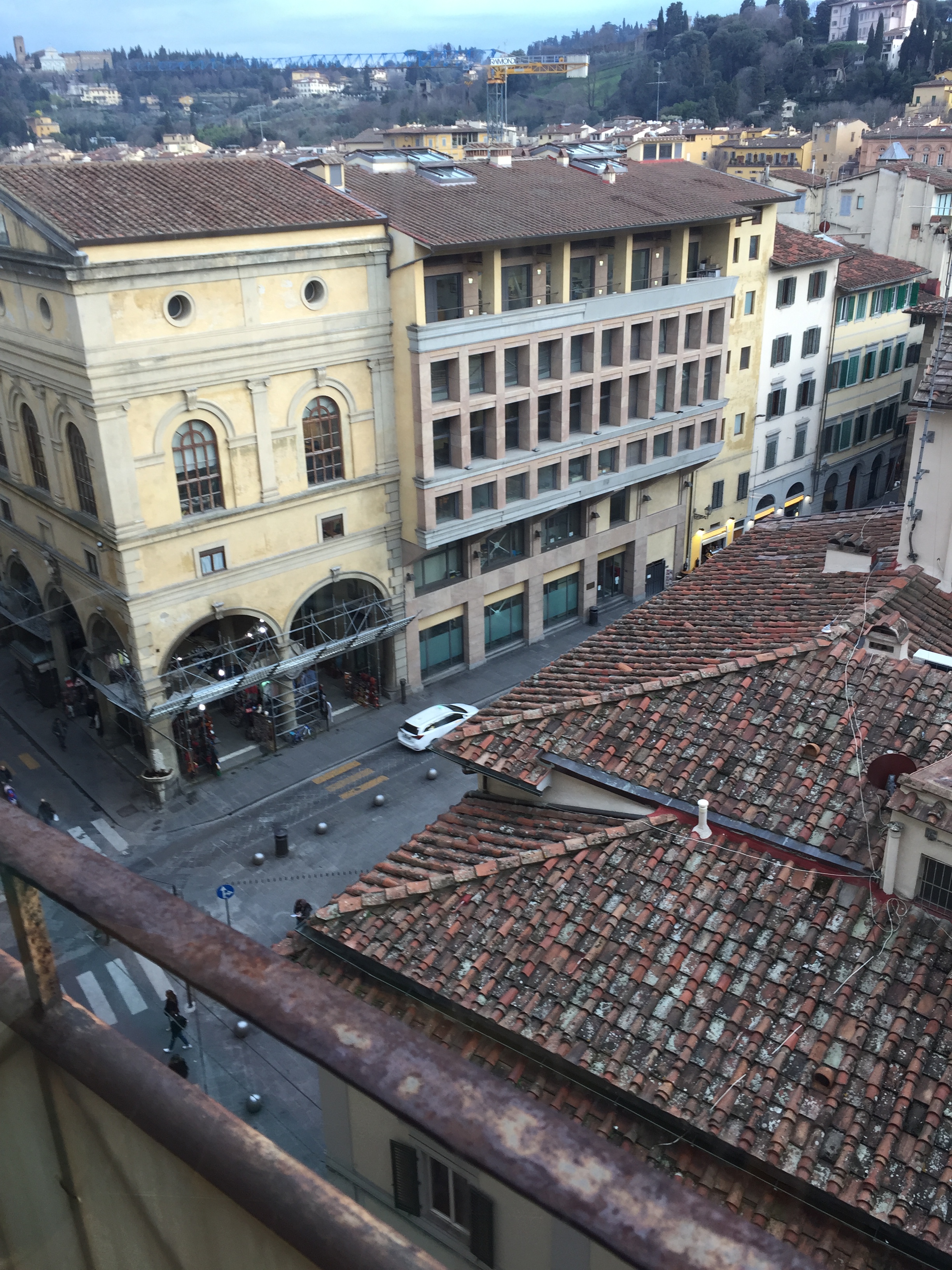
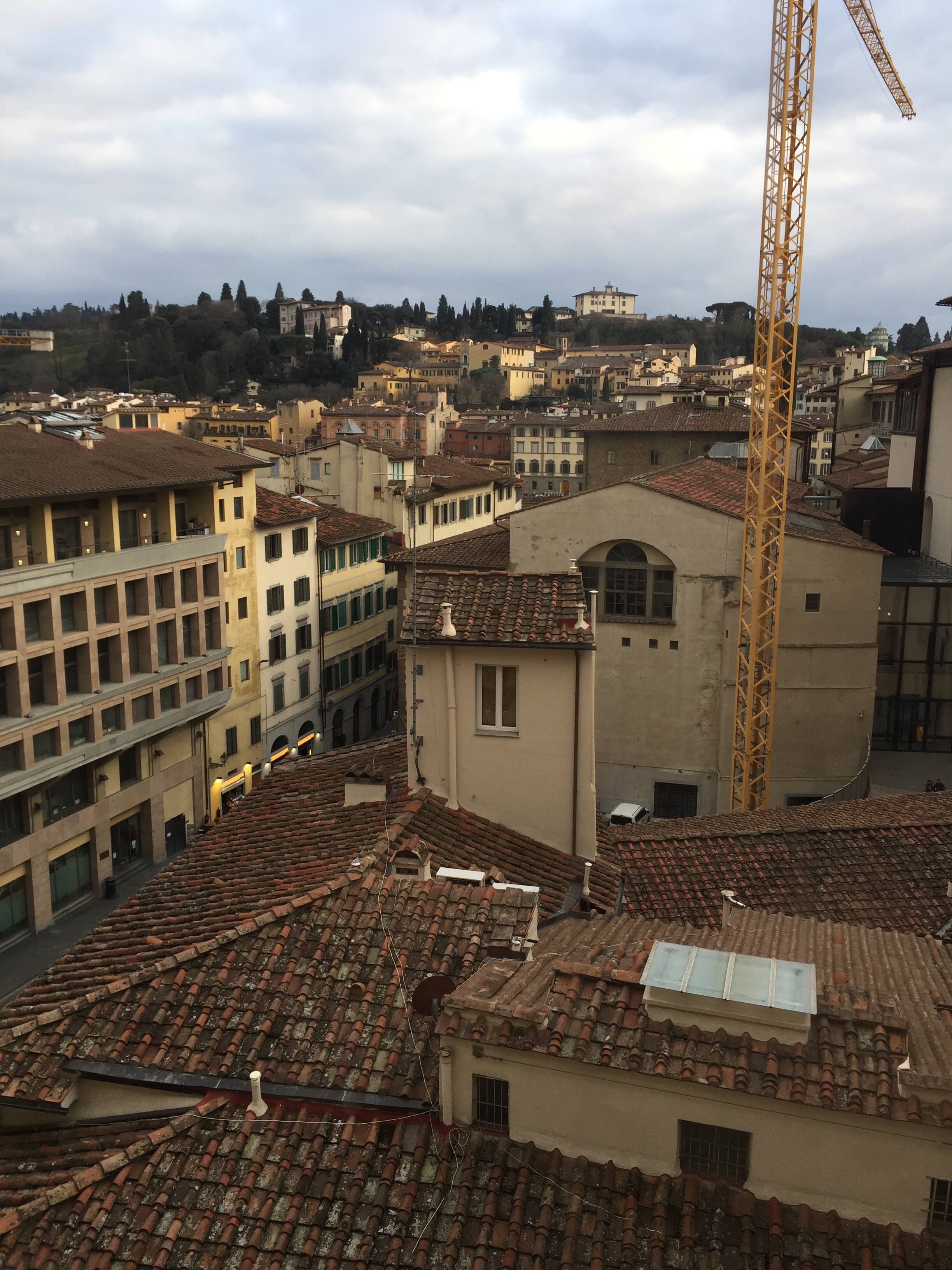
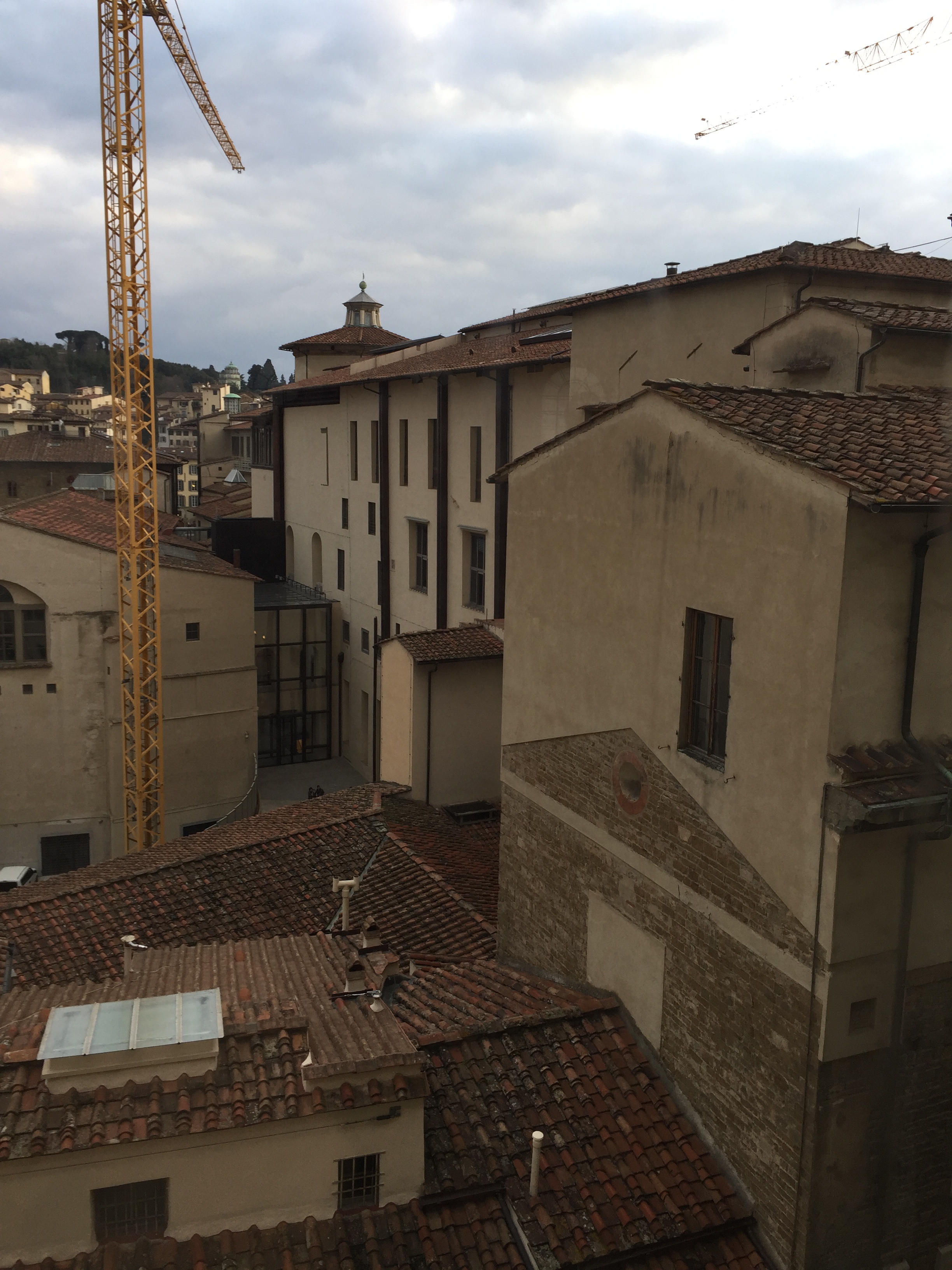
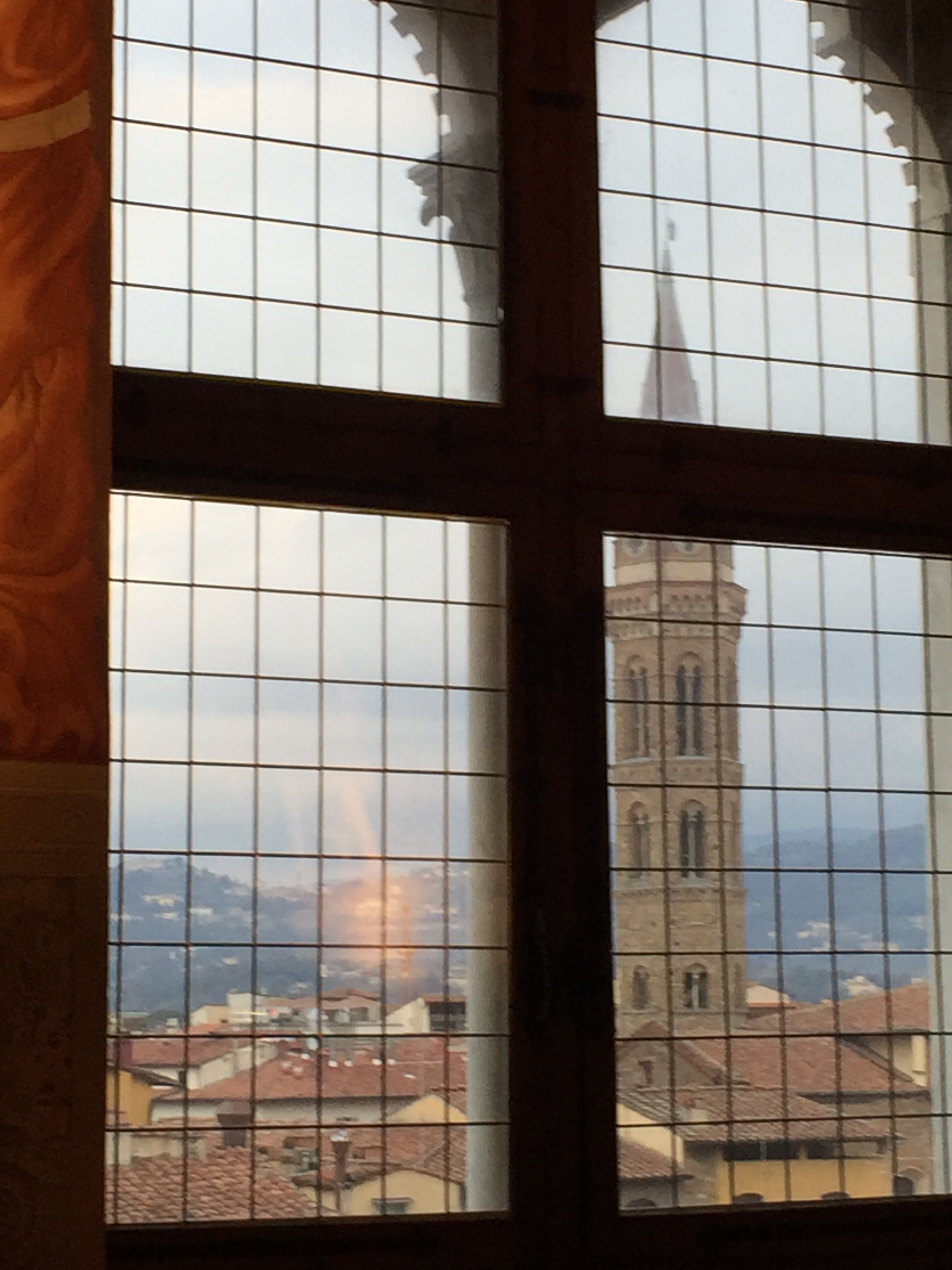
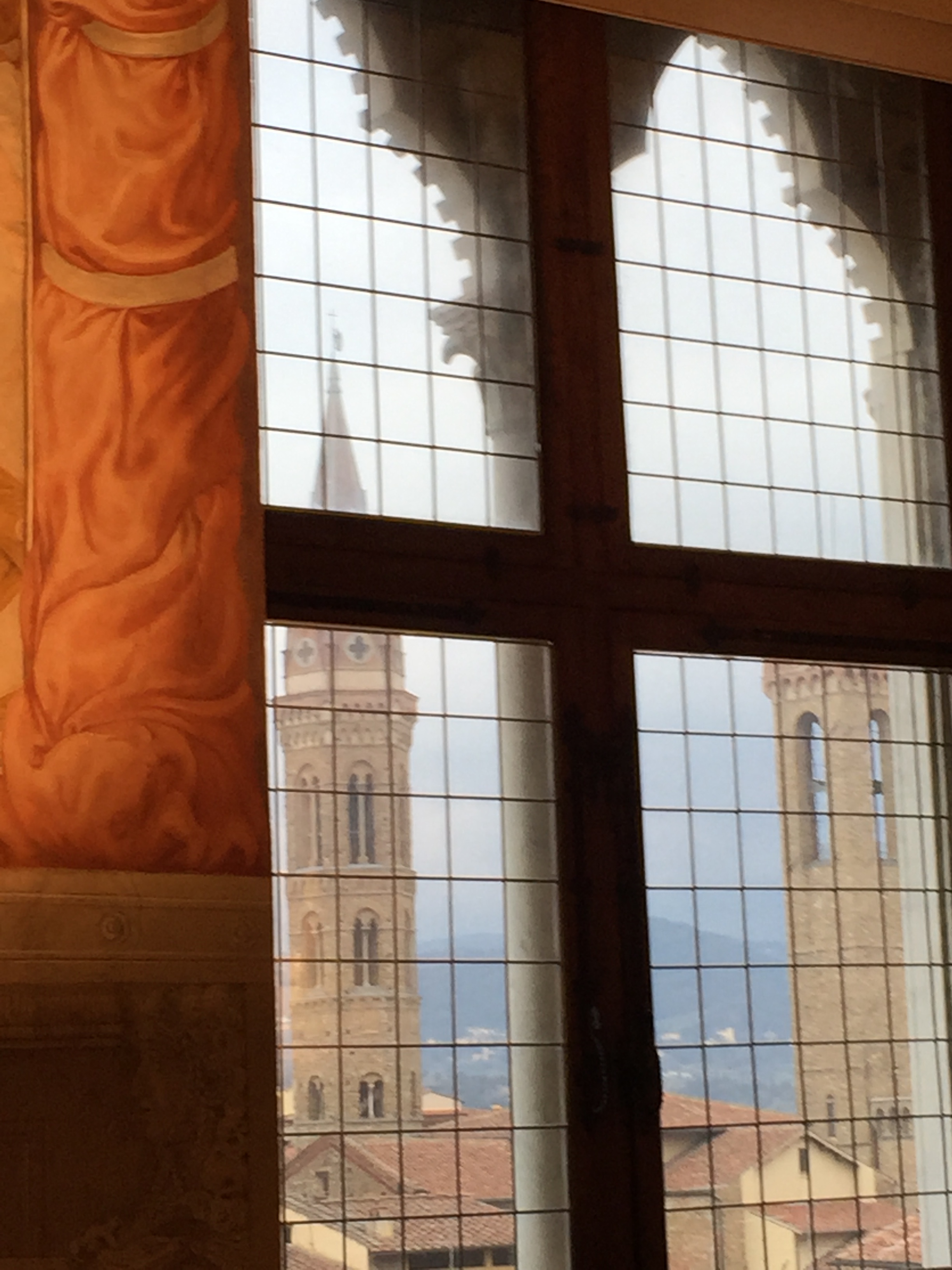
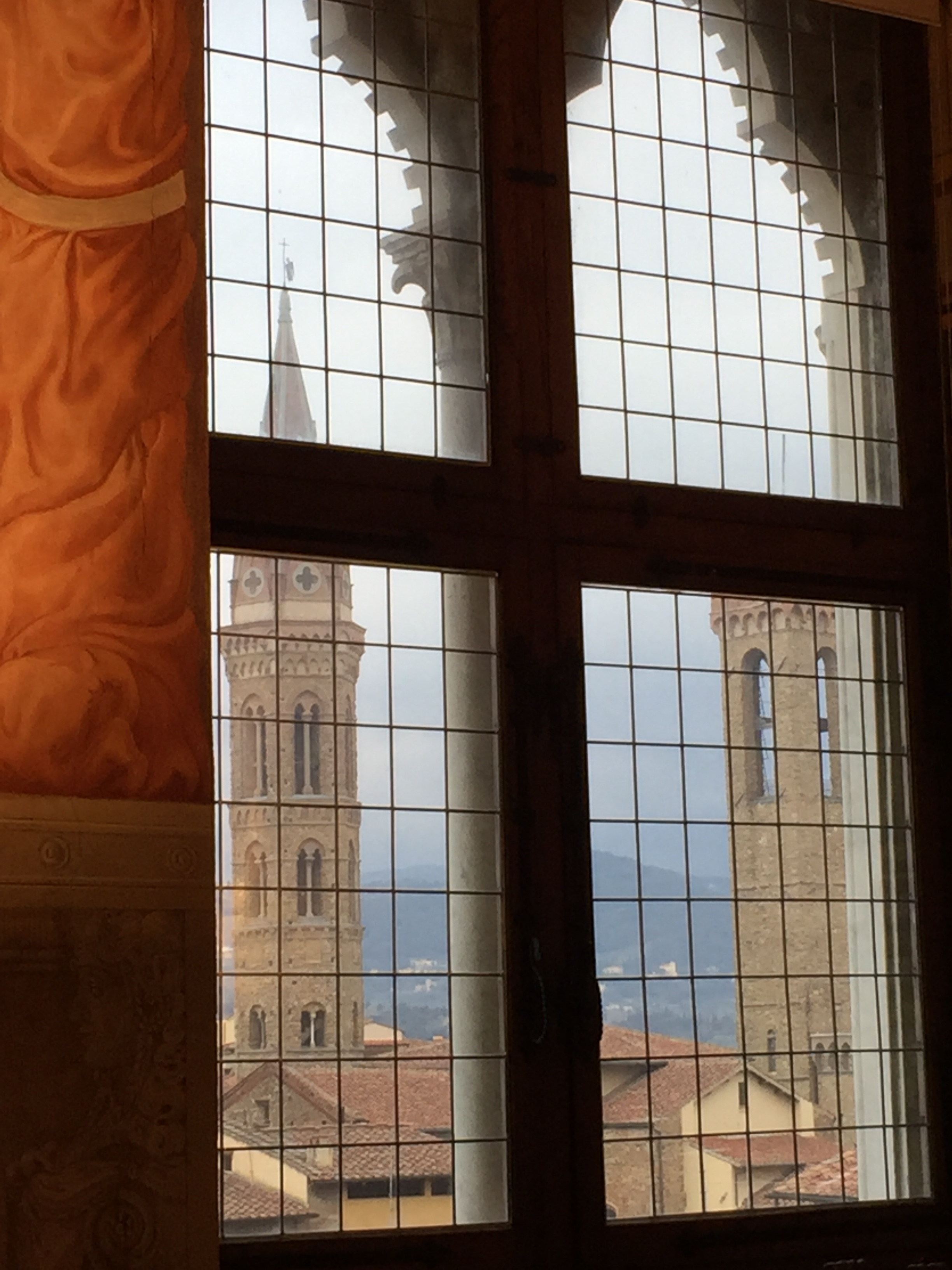
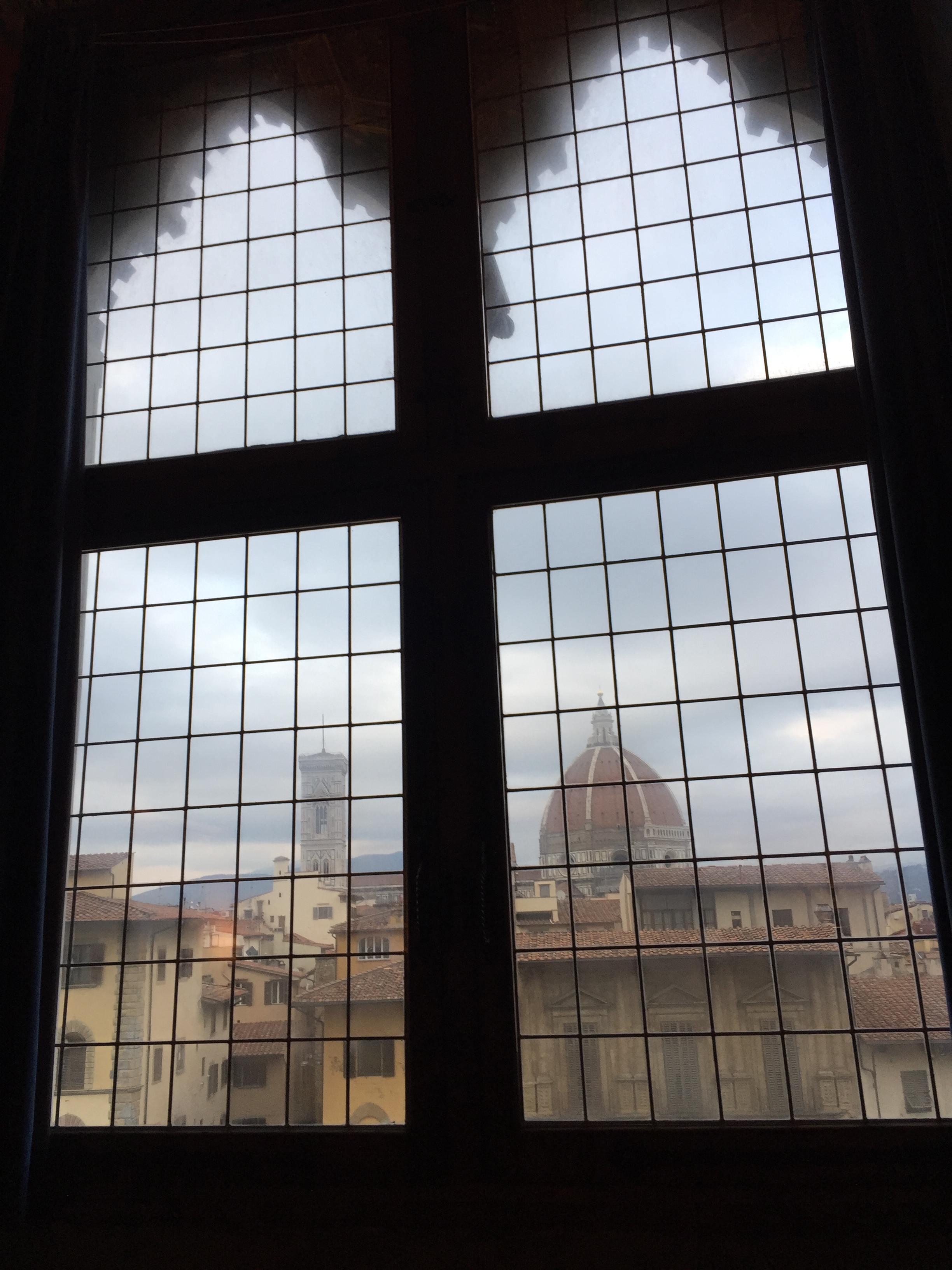
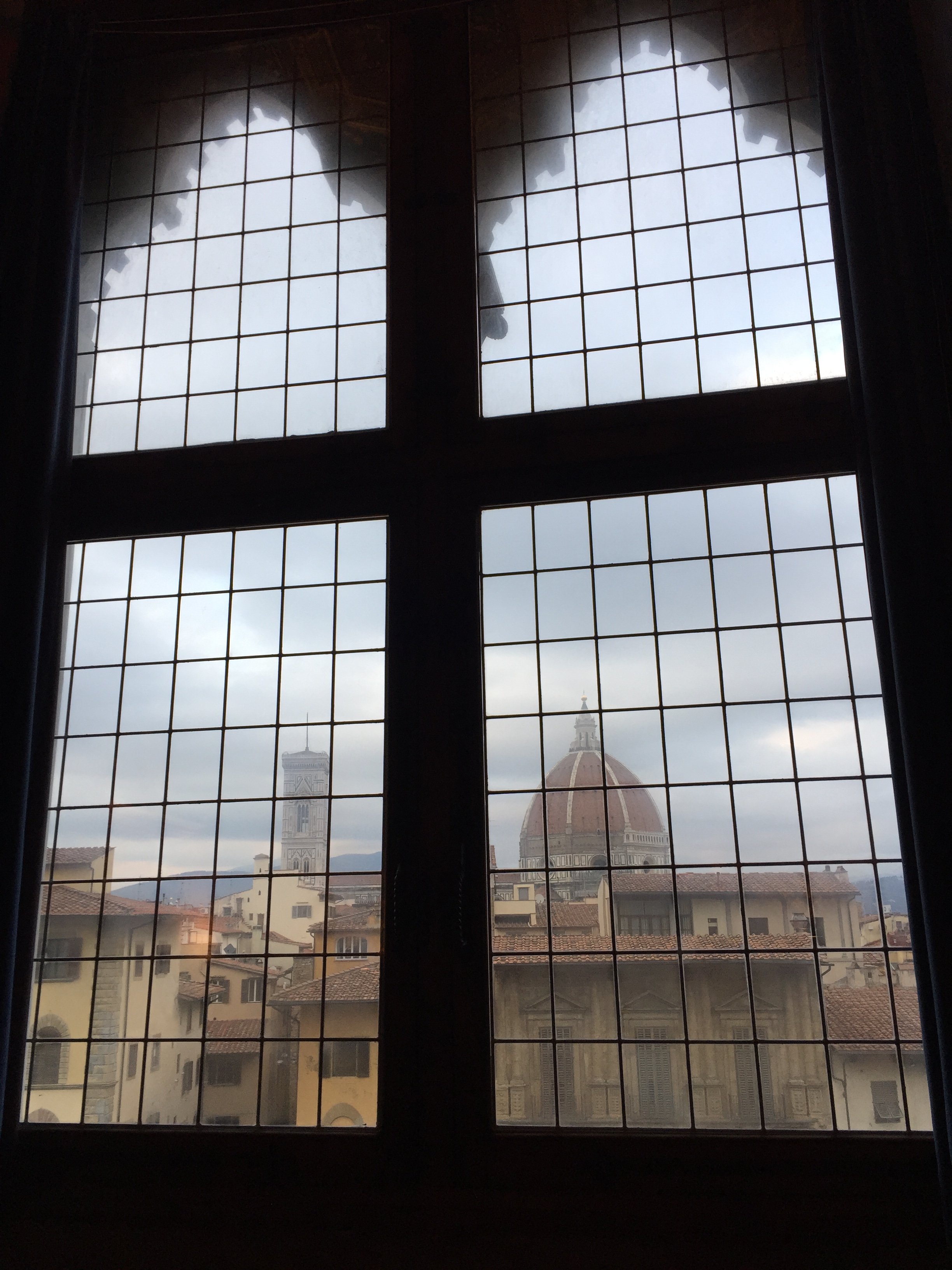
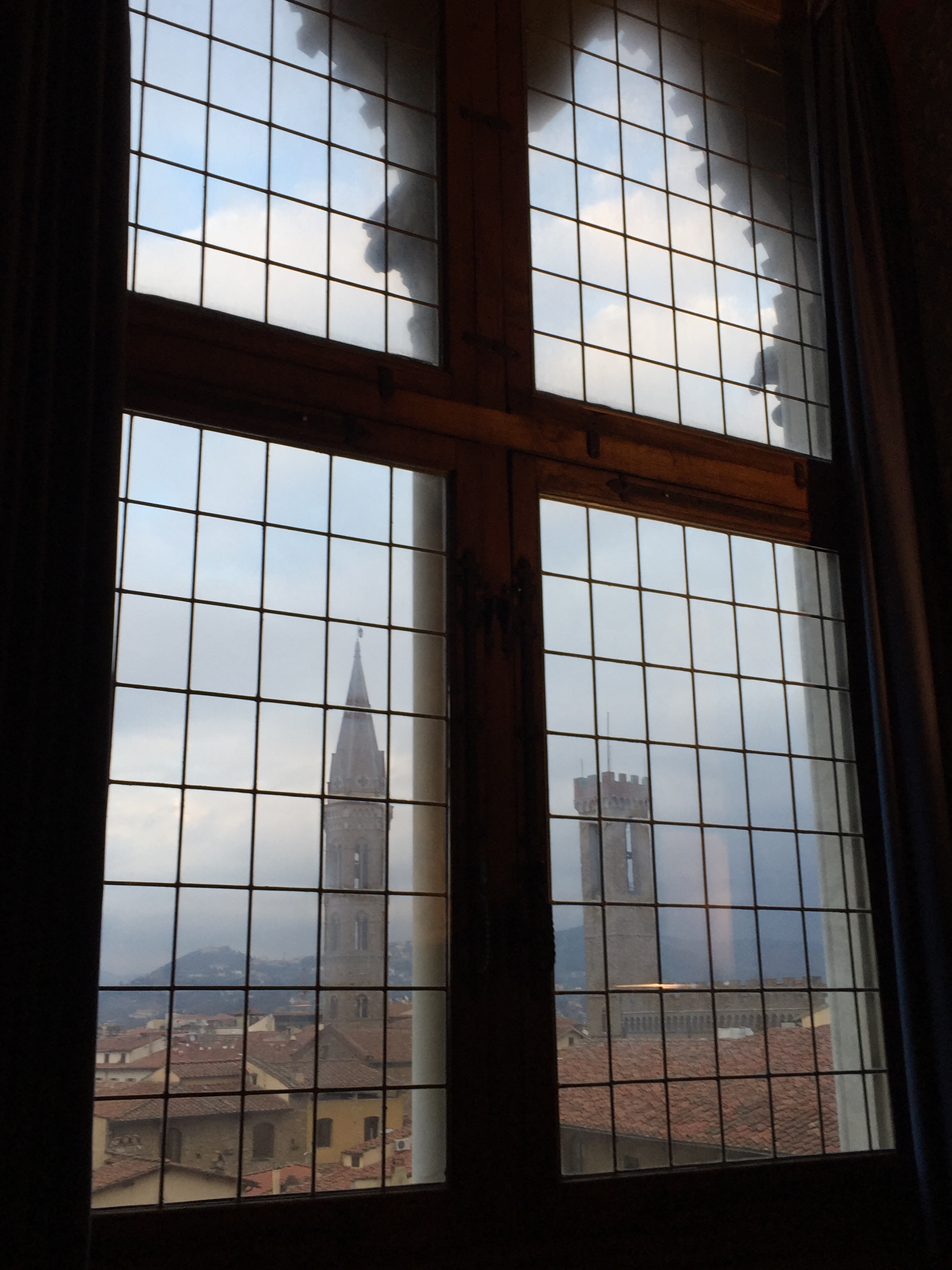
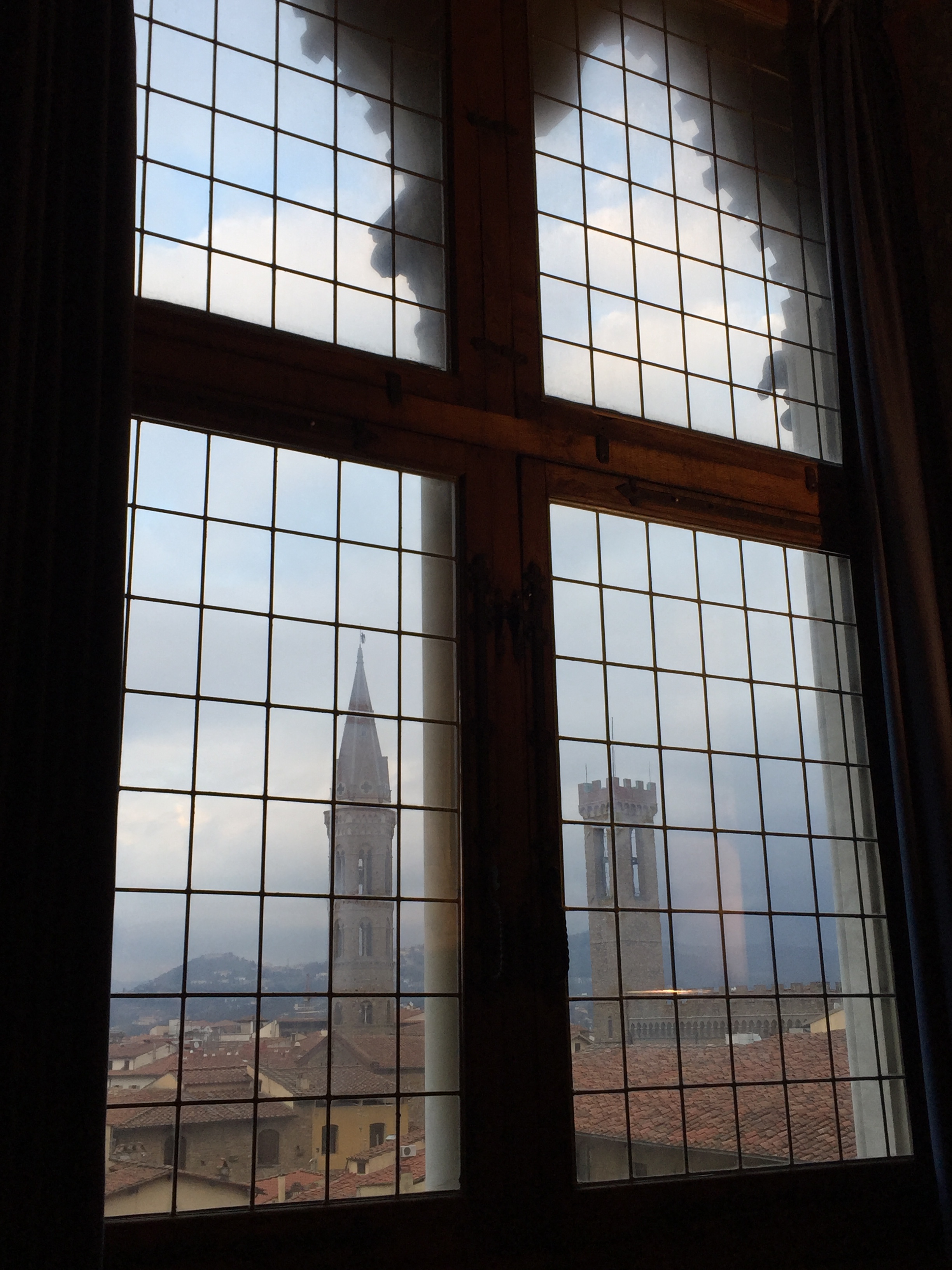
The views of the city from the 2nd floor of Orsan Michele are pretty amazing.
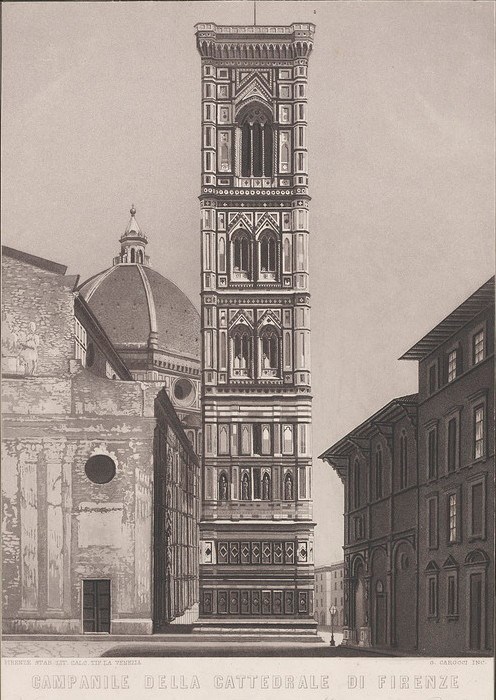
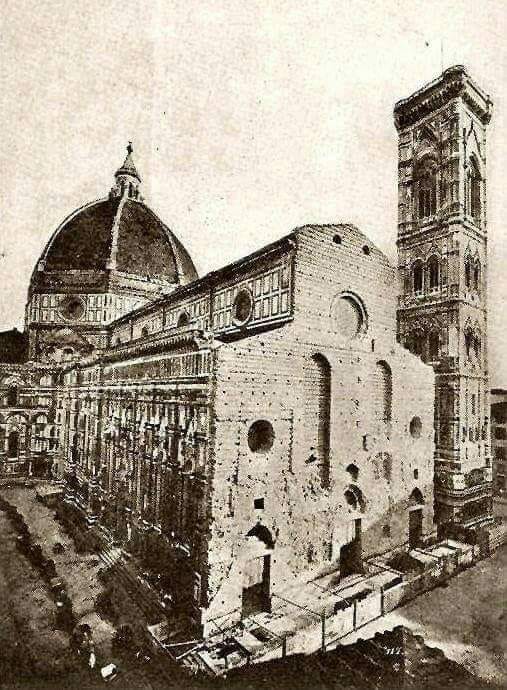
Here are wonderful images of how Florence looked as late as 1870s:
The façade was then left bare until the 19th century. In 1864, a competition held to design a new façade was won by Emilio De Fabris (1808–1883) in 1871. Work began in 1876 and was completed in 1887. This neo-gothic façade in white, green and red marble forms a harmonious entity with the cathedral, Giotto’s bell tower and the Baptistery, but some think it is excessively decorated. The whole façade is dedicated to the Mother of Christ.
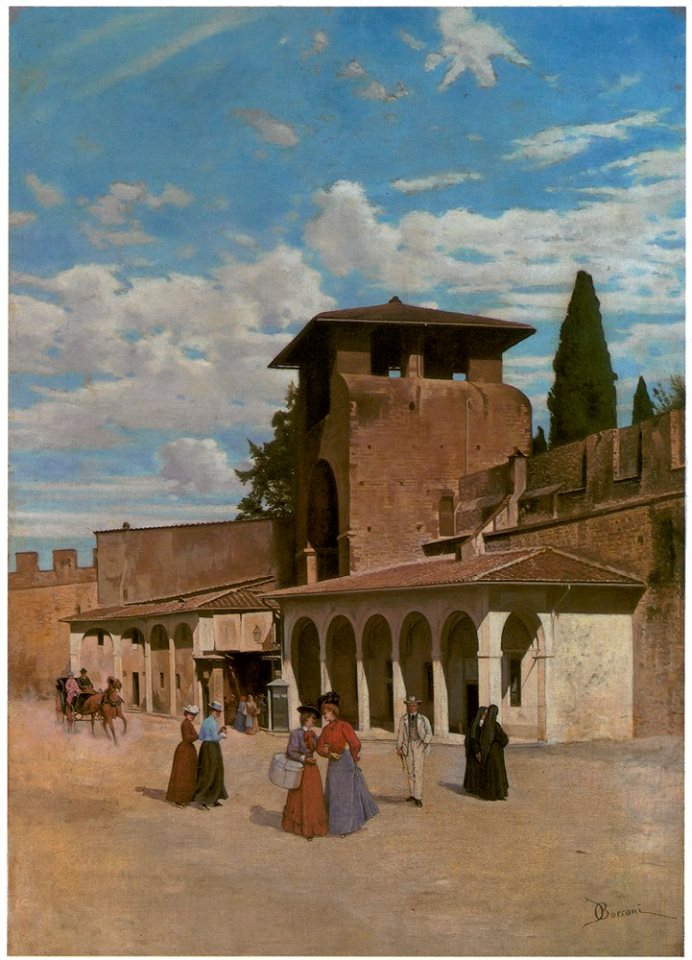
This is an oil painting of La Porta di San Gallo by Odoardo Borrani, c. 1880. I admire it for its flavour and for showing us how the medieval walls around Florence still looked.
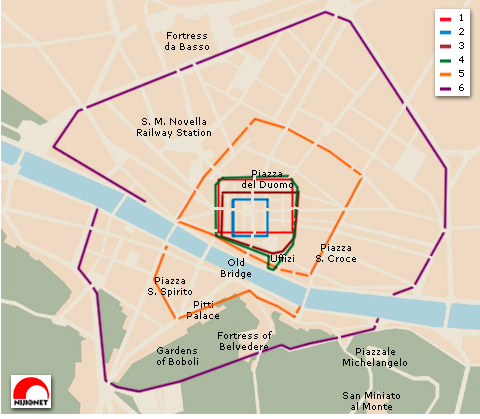
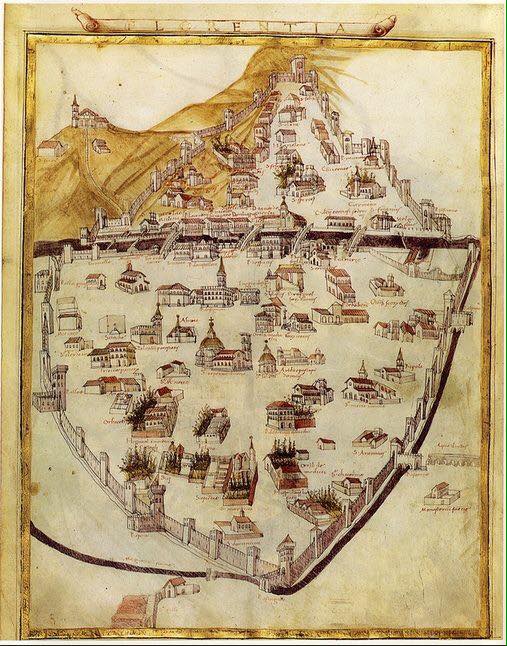
The city walls surrounding Florence were widened and rebuilt many times over the millennia .
In the 2nd century A.D. Florence had 10,000 inhabitants and was surrounded by a 1st wall
2. After the fall of the Western Roman empire, the city suffered deeply and in the 6th century it had only 1000 inhabitants: a 2nd city wall was built, protecting a smaller area than the earlier Roman one.
3. Florence flourished again, and, at the beginning of 10th century the city was surrounded by a wider 3rd wall, which for the first time extended itself to the river Arno.
4. The building of the 4th wall was begun in 1078: Florence was a 20,000 inhabitants city and the Duke of Tuscany had moved his capital from Lucca to Florence. The new city walls surrounded also Piazza del Duomo, but the quarters of Oltrarno remained still unprotected.
5. In the years 1173-1175, the city built a 5th city wall: for the first time a defence wall was built also in Oltrarno, due to the increasing importance of the dwellings around the churches of San Felice, San Jacopo in Soprarno and Santa Felicita. Three city gates were built in Oltrarno (near today’s Piazza San Felice, Costa de’ Magnoli and Piazza Frescobaldi), but a real stone wall was not built: the protection consisted of palisades connecting the gates and houses whose outer façades were built without windows in order to offer more protection.
6. A 6th wall was planned by at least 1284 (possibly under direction of Arnolfo di Cambio). These walls enclosed a very wide area and protected the whole city with all its newer and outer dwellings. The gates were 35 meters tall, and were decorated with religious frescoes (the Madonna and Saints); originally, on the square in front of each gate was also a statue of a famous Florentine writer or poet. The building of the walls was completed in 1333 – and finally the quarters of Oltrarno received a complete protection. In 16th century, the city prepared to face the army of the German emporer, Charles V, and in 1530 new fortifications were added around San Miniato al Monte. After that, Grand-duke Ferdinando I commissioned Bernardo Buontalenti to build a fortress; it was completed in the years 1590-1595 near the gate of San Giorgio and was named Fortress of Santa Maria, but became rapidly known as Fortezza Belvedere.
Between 1865 and 1871 Florence was provisory Capital of Italy: the city walls were demolished in order to build the new ring road. Only the walls in Oltrarno survived, with all their towers.
In 1998 a part of the wall between the gate of Porta Romana and Piazza Tasso has been restored and opened to visitors.
The moon shone brightly last night (which was Thanksgiving night, in the United States) over the Renaissance city.
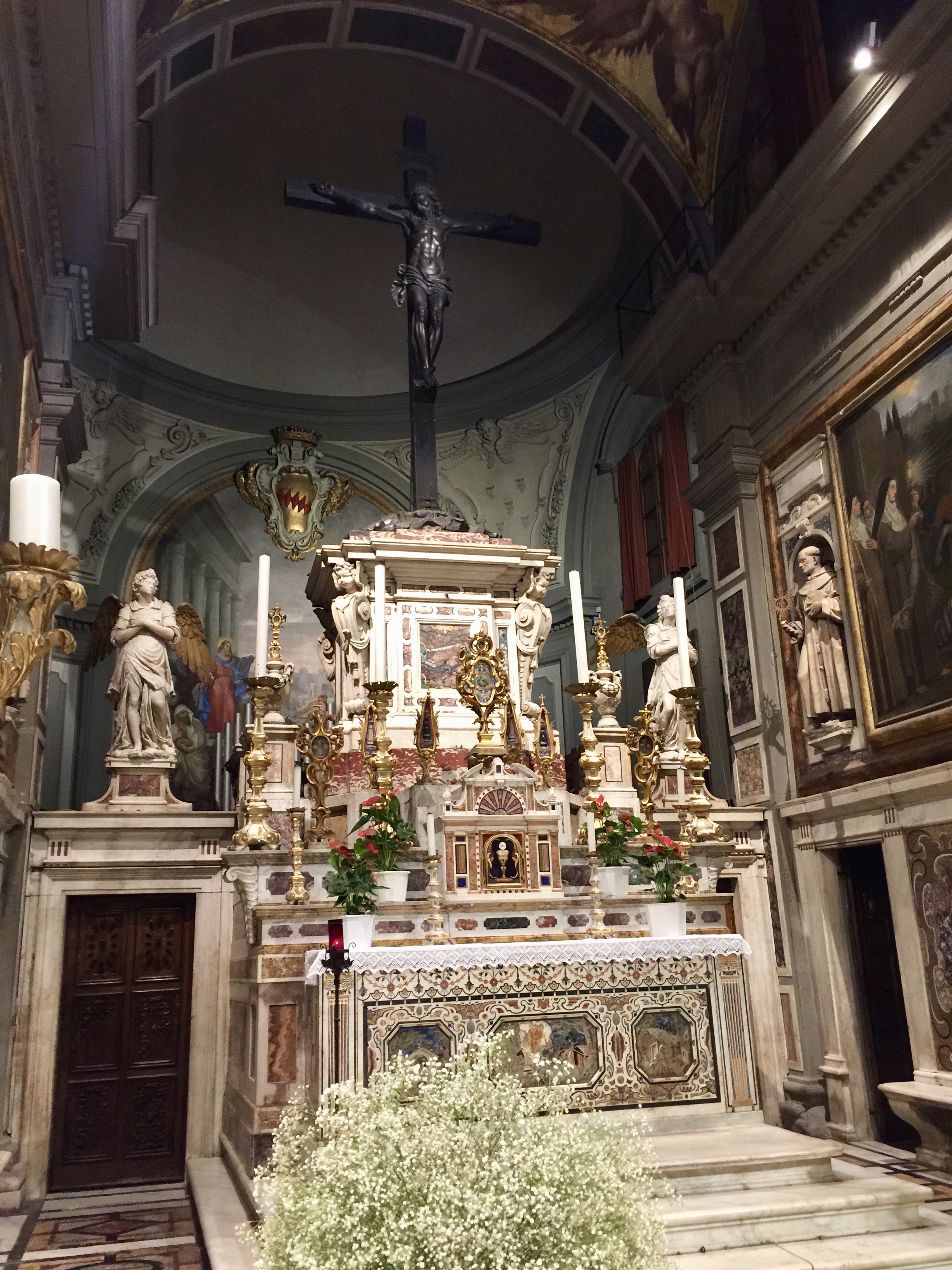
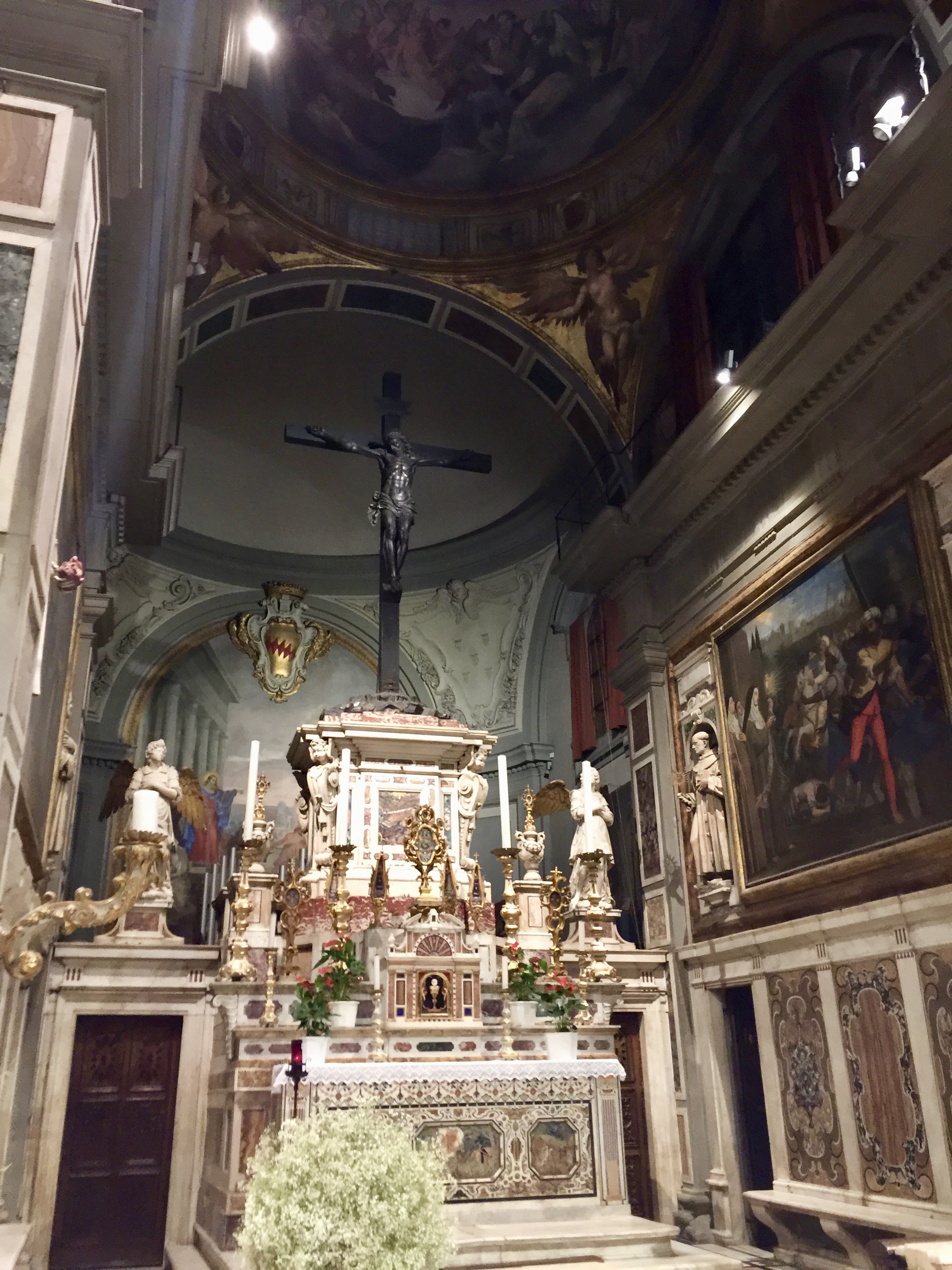
Earlier today I posted about a concert I once heard at the Franciscan church called Ognissanti. As luck would have it, I had the chance to spend some time last night admiring the interior of the church when it was beautifully lit up in the early evening.
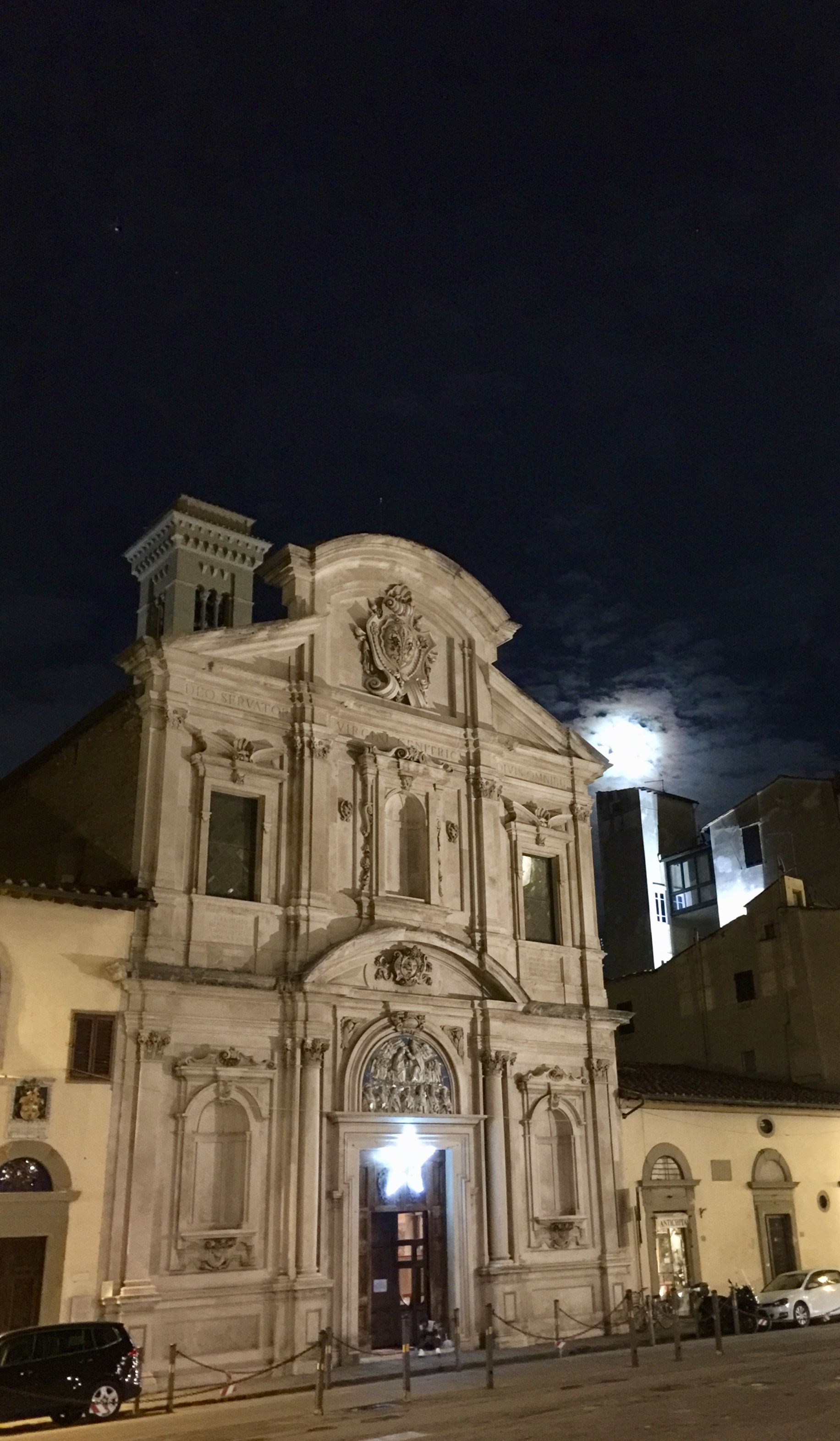
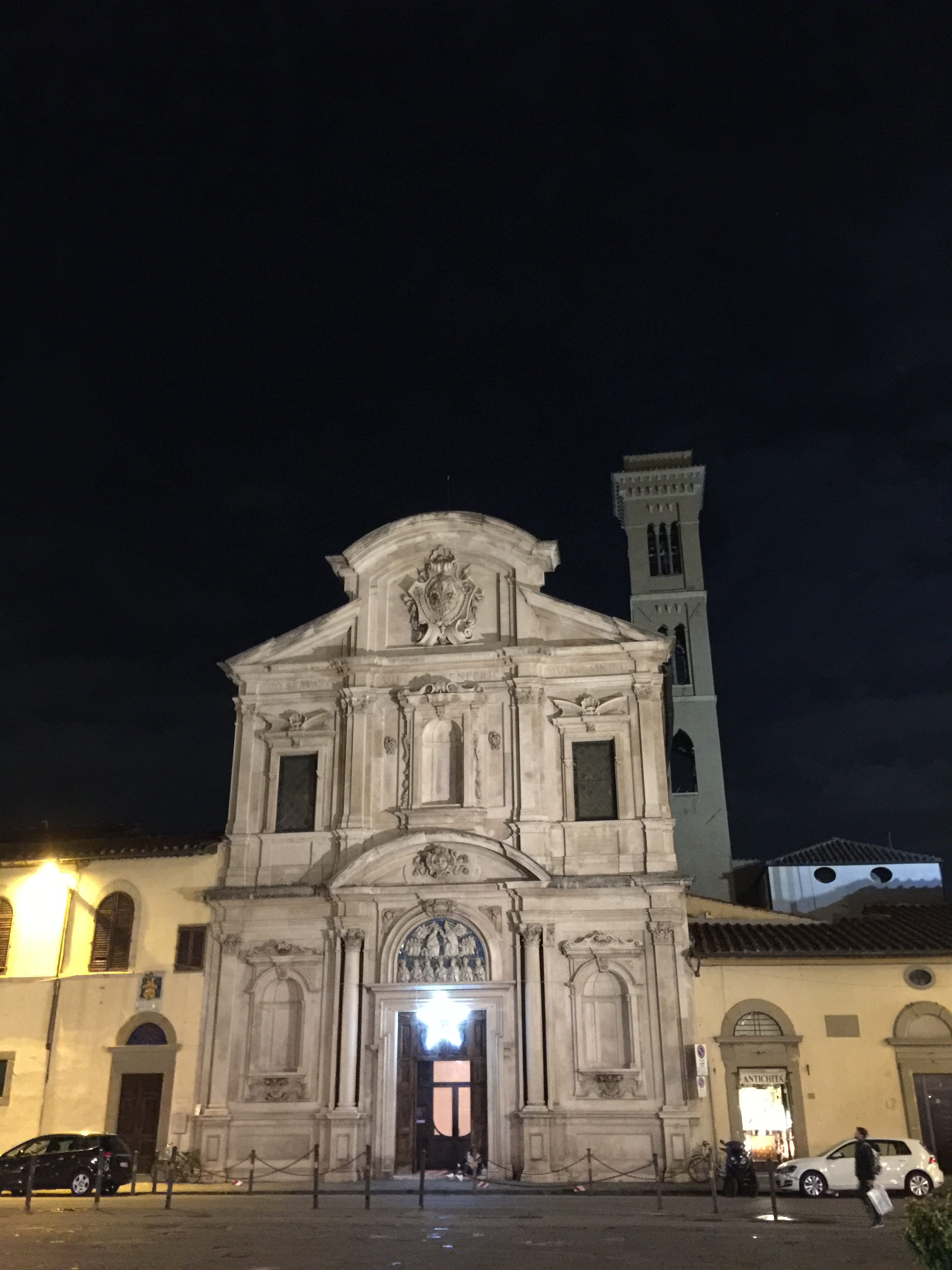
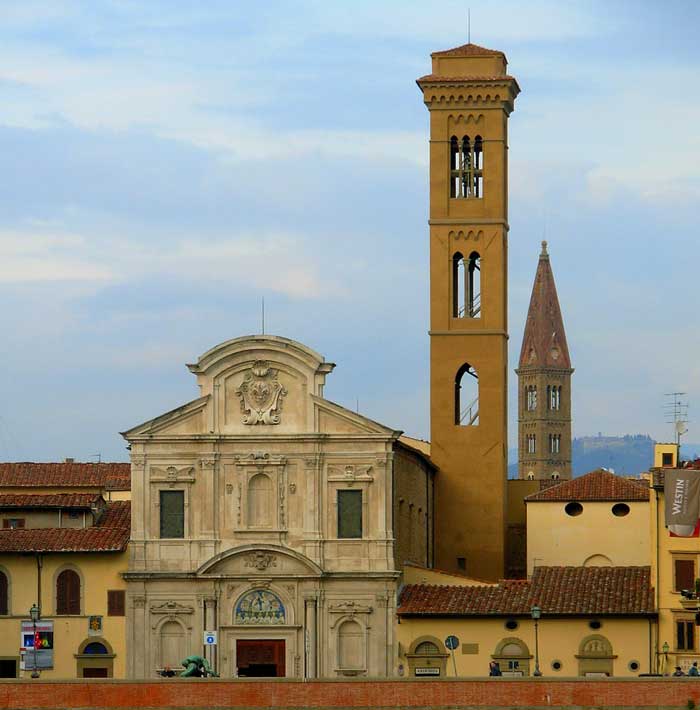
Ognissanti has a harmonious Baroque facade, as seen from the piazza that separates it from the Arno river. The chiesa was originally built in the 1250s by the Umiliati, but it later became a Franciscan church. It was renovated c. 1627 in the Baroque style, by architect Bartolomeo Pettirossi.
Here’s how it looks in the daytime:
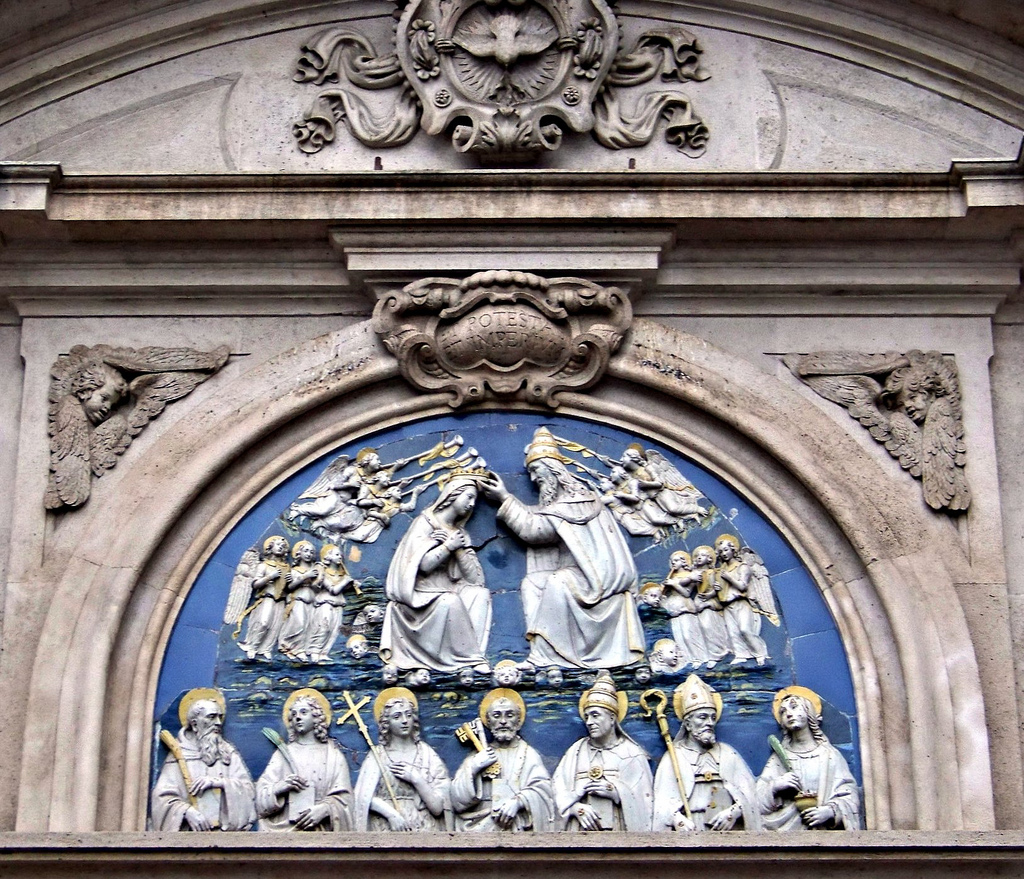
In 1637 the church was given this façade, based up designs by Matteo Nigetti. Fortunately, the glazed terracotta lunette depicting the Coronation of the Virgin and placed over the central doorway was conserved. While the lunette resembles the work of Luca Della Robbia, it is now attributed to Benedetto Buglioni. Buglioni was almost the only artist working in the glazed terra-cotta style made famous by the Della Robbia workshop after that enterprise ended.
Ognissanti was among the first examples of Baroque architecture to penetrate this Renaissance city. Its two orders of pilasters enclose niches and windows with elaborate cornices. The campanile, of late 13th and early 14th-century construction, sits back from the front of the church, on the east side.
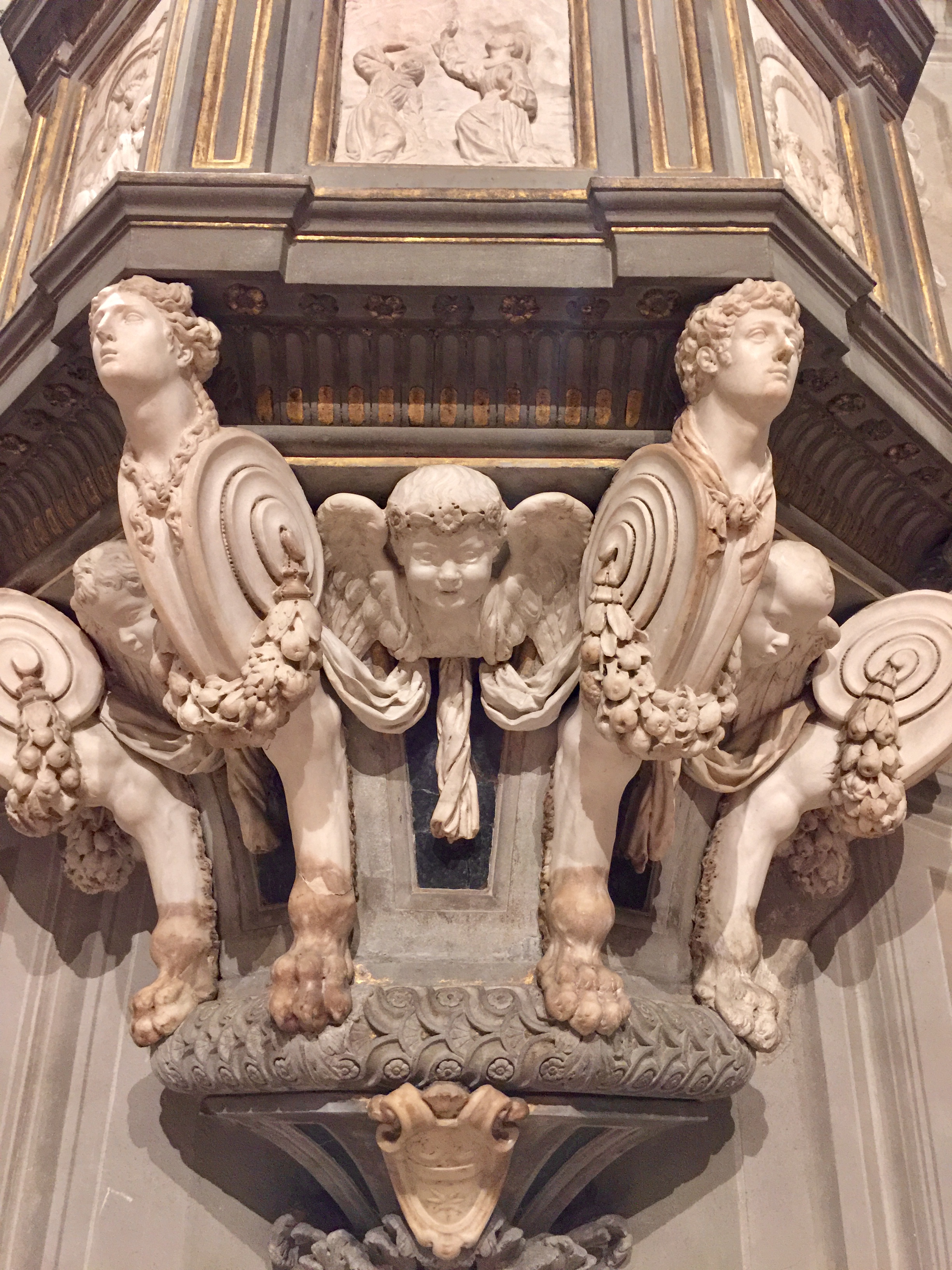
The church’s interior is equally grand and richly ornamented. It received the same Baroque style remodeling as the exterior in the early 17th-century, when the apse was rebuilt with a pietre dure high altar and, later, in 1770, the incredible sotto in su perspective painting was added to the vaulted nave ceiling.
To start with the perhaps the most important aspect of this venerated church, we turn to Giotto’s celebrated Madonna and Child with Angels (c. 1310), which was painted for the high altar of this church.
This outstanding painting by Giotto was completed in Florence. Today, if you wish to see the masterpiece, you will find it in the collection of the Uffizi. Giotto’s capolavoro is not only one of the finest works in the Uffizi, but it shows the exact moment when painting in Italy turned from Gothic to a proto-Renaissance style.
In the Uffizi galleries, Cimabue’s celebrated altarpiece (above), which was created for the same type of setting and dealing with the same subject matter as Giotto’s altarpiece, one can witness the changes in artistic approach.
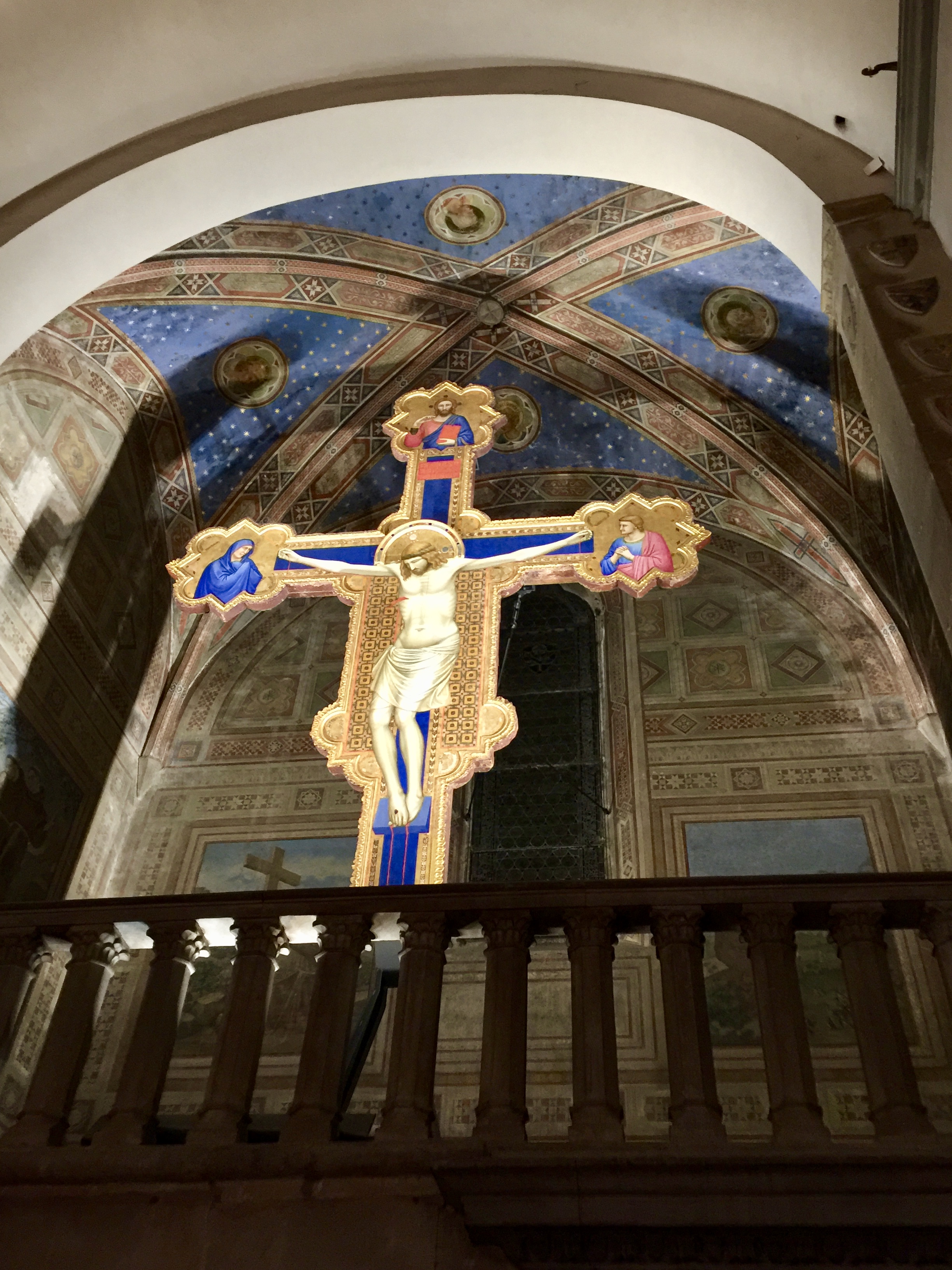
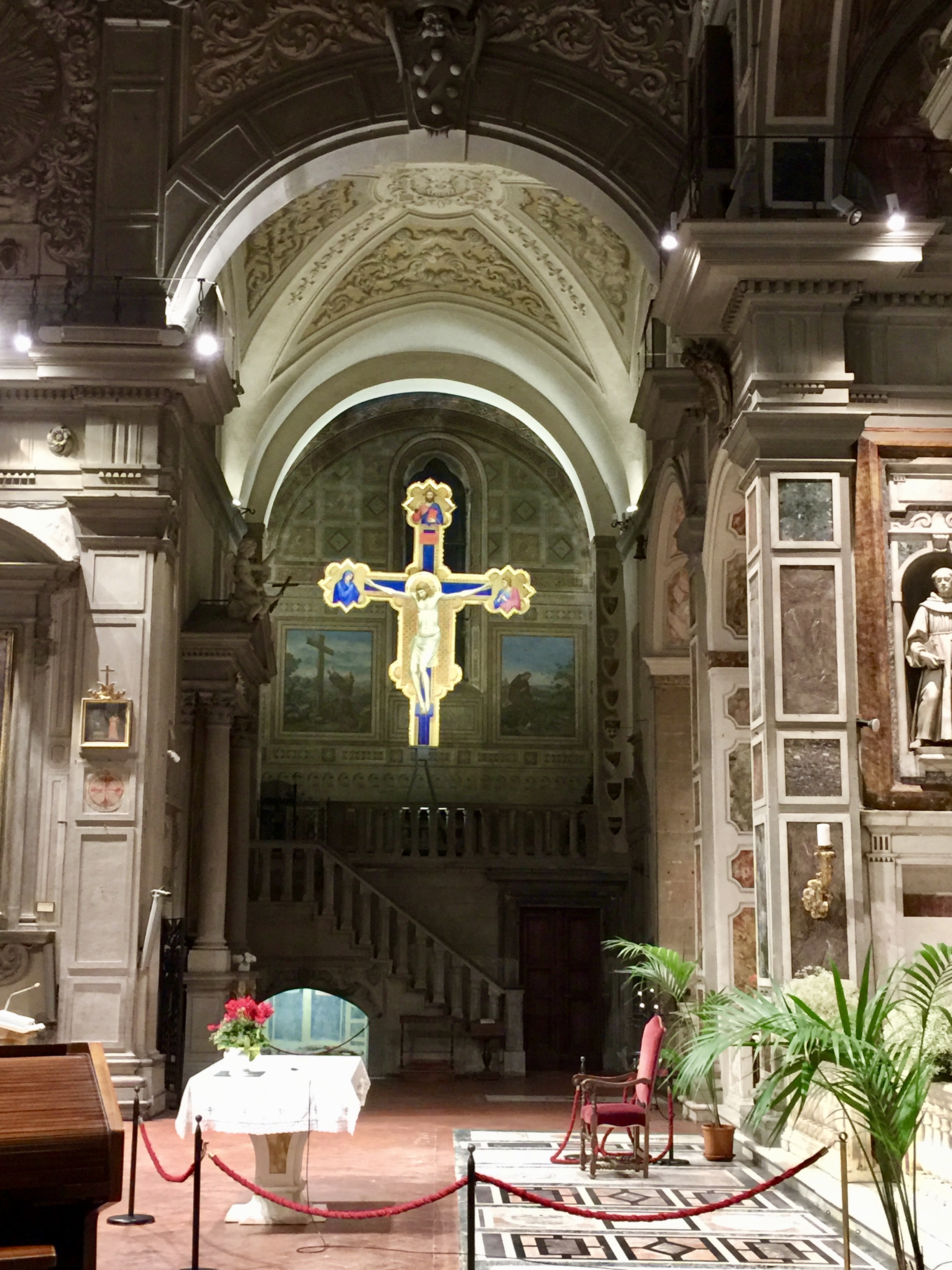
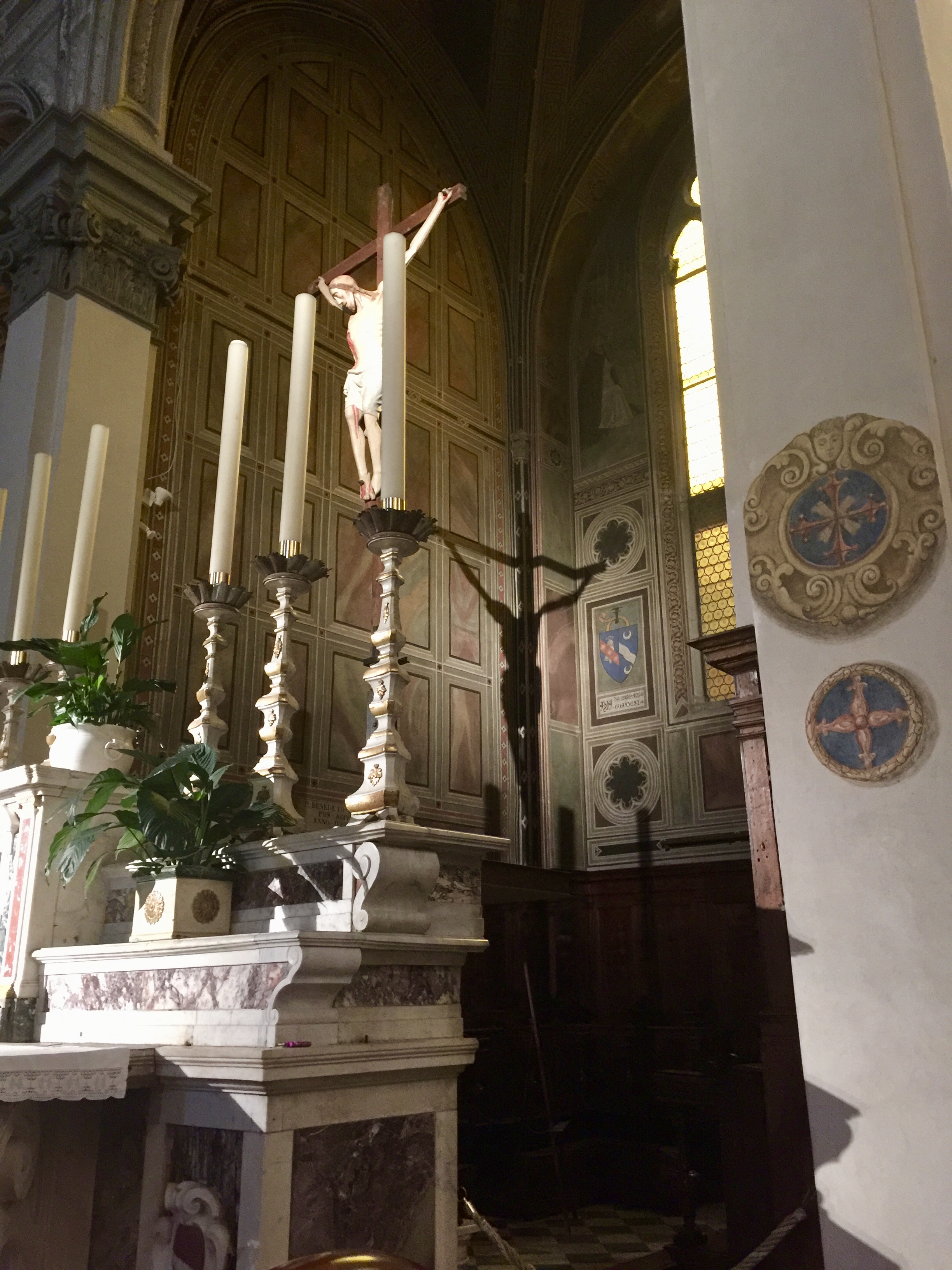
But, although the Ognissanti is missing its famous and beautiful altarpiece, it is fortunate to have another work now attributed by Italian scholars to Giotto: the large crucifixion. Giotto painted this large-scale (15 feet tall) cross c. 1315 for the Umilati friars who then held this church.
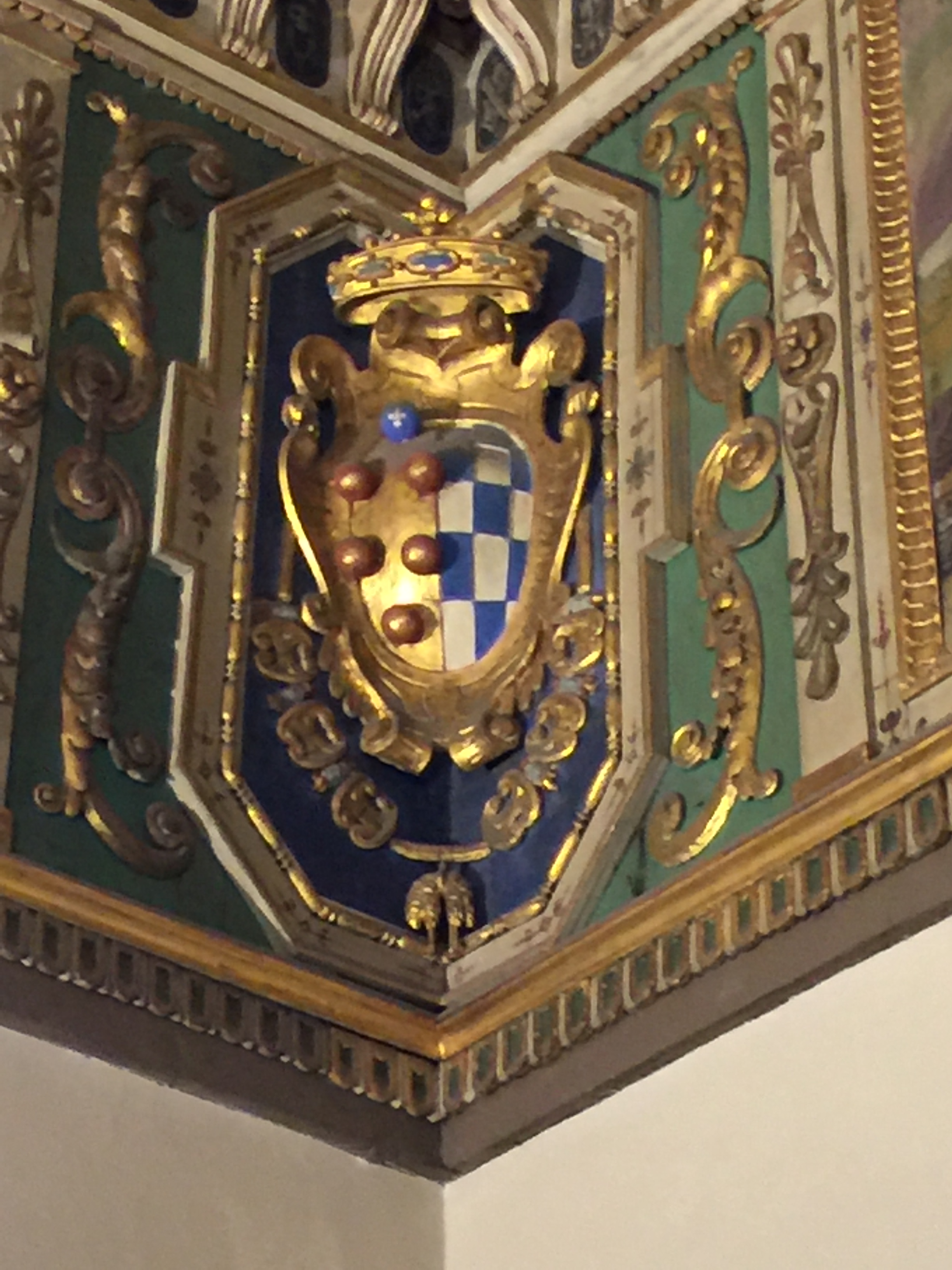
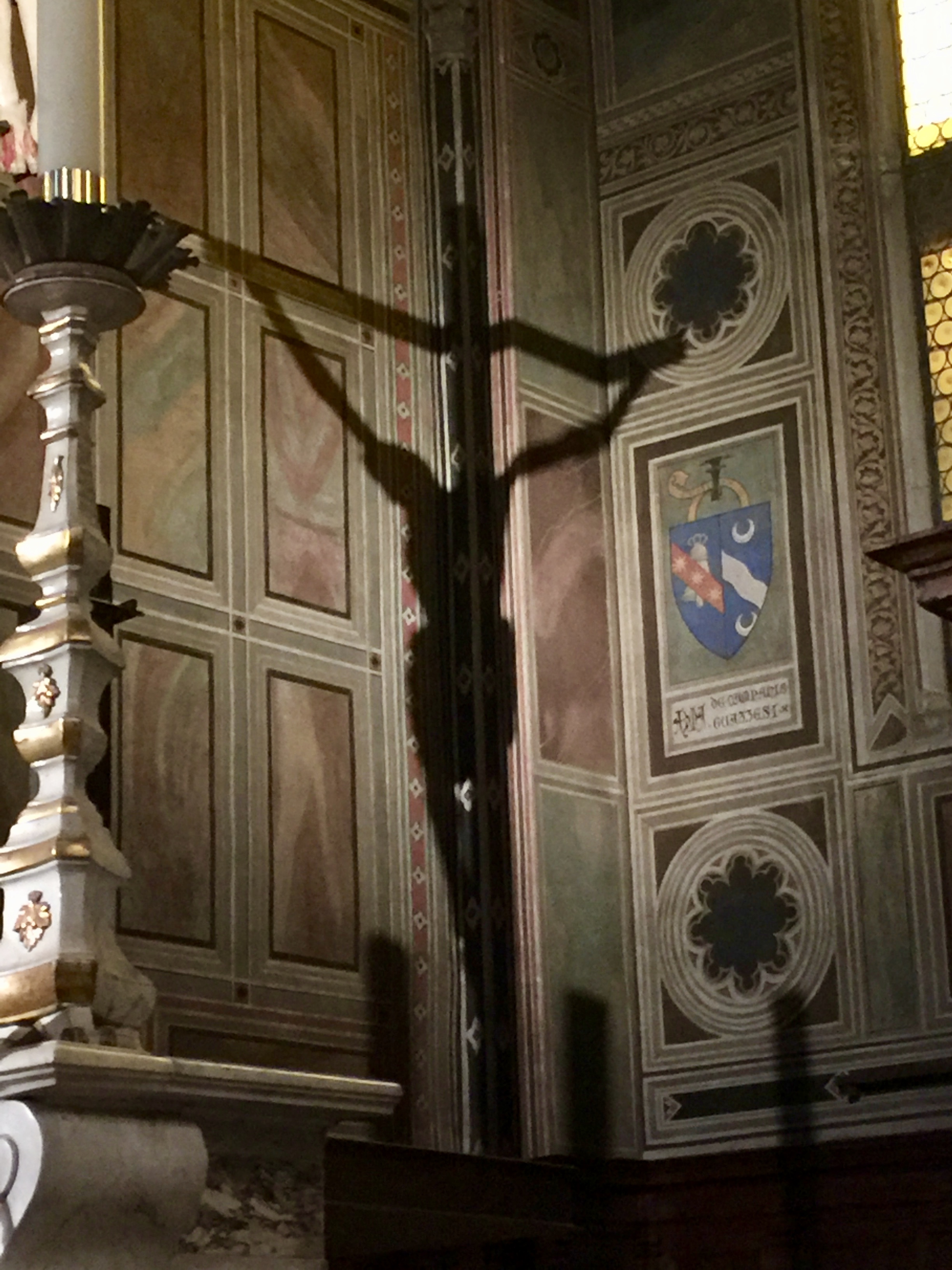
The Crucifixion is displayed under the Medici coat of arms in the left transept of the church.
Only recently was this Crucifixion recognized as a work by Giotto. For decades it sat, unappreciated, in the storerooms of Ognissanti. There was a rumor that it was by Giotto, but no one was certain. But then, it was restored!
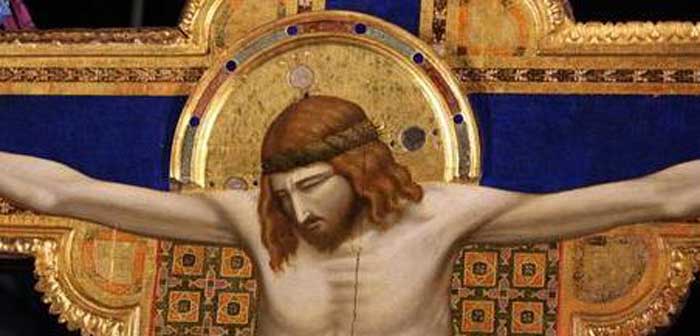
The restoration of Giotto’s Ognissanti Crucifix was started by Paola Bracco in 2002. The majestic tempera on panel, now believed to have been painted by Giotto and his workshop around 1310-1320, had been sadly neglected for centuries. Kept in the sacristy of the church of Ognissanti, it was rarely seen and the vigorous modelling of the flesh tones of the figures, and the many precious details of the pictorial surface, were hidden by layers of varnish from previous “restorations” and centuries-old grime.
Fortunately, this monumental work is now back in the Florentine church, after a careful 8-year restoration.
In the Crucifix (painted in egg tempera), Christ is represented as Christus patiens, suffering, about to expire. The tension in the muscles of the arms is treated with delicacy, and the ashen flesh colors are very impressive. The body hangs on a very decorative Cross, an overflowing mosaic of starred crosses, squares and ellipses. The ‘beams’ of the Cross are painted in bright, but deep and intense blue, the precious lapis lazuli inlaid with greater or lesser amounts of lead white, as in the sloping pedestal to which Christ’s feet are pinned (by a single nail). The blue is crossed by thin red lines, cinnabar blood with more purplish glazes. On the forehead are a few drops of “pure red lacquer,” the color of blood, which springs from Christ’s flesh in response to the crown of thorns.
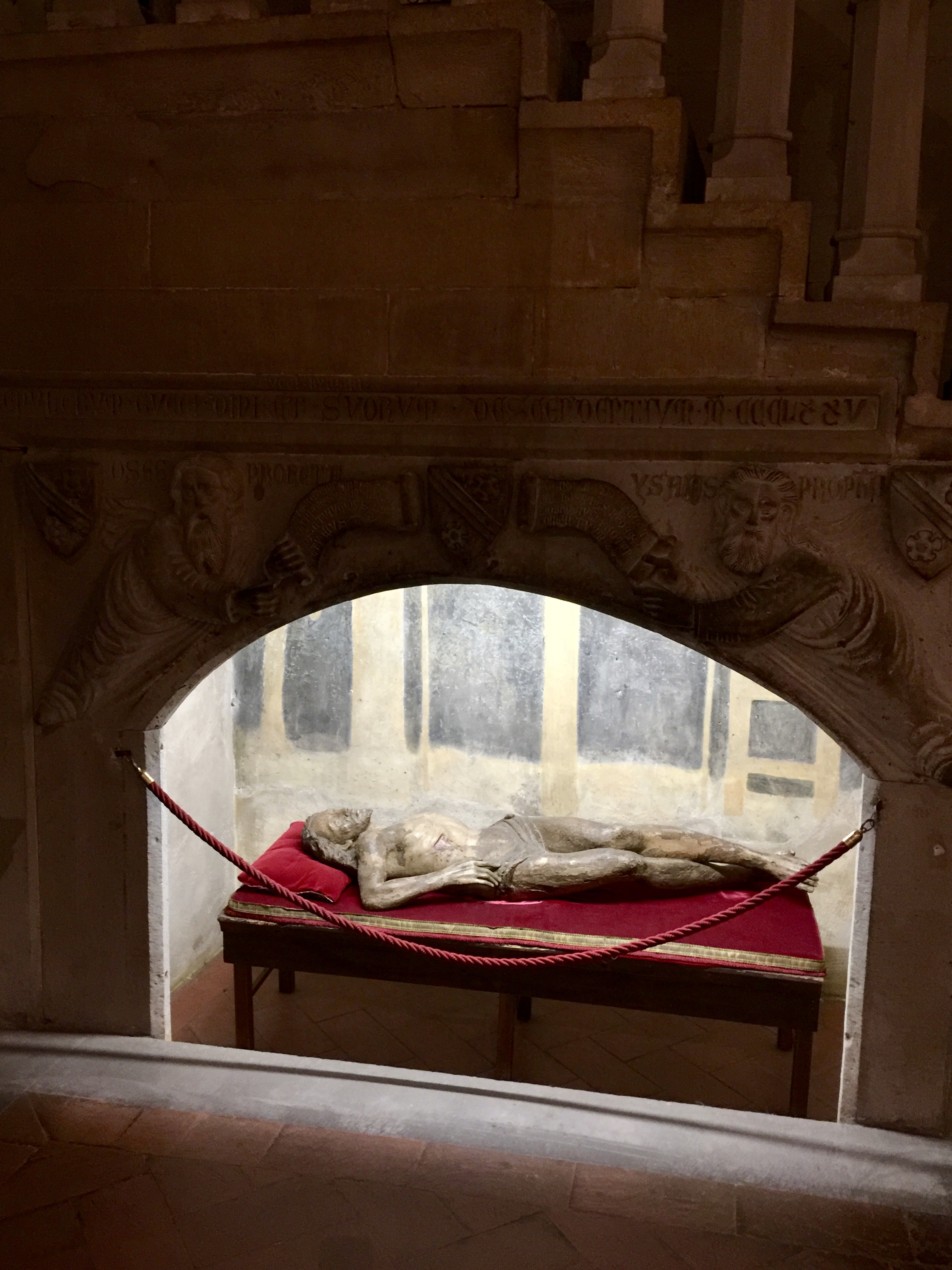
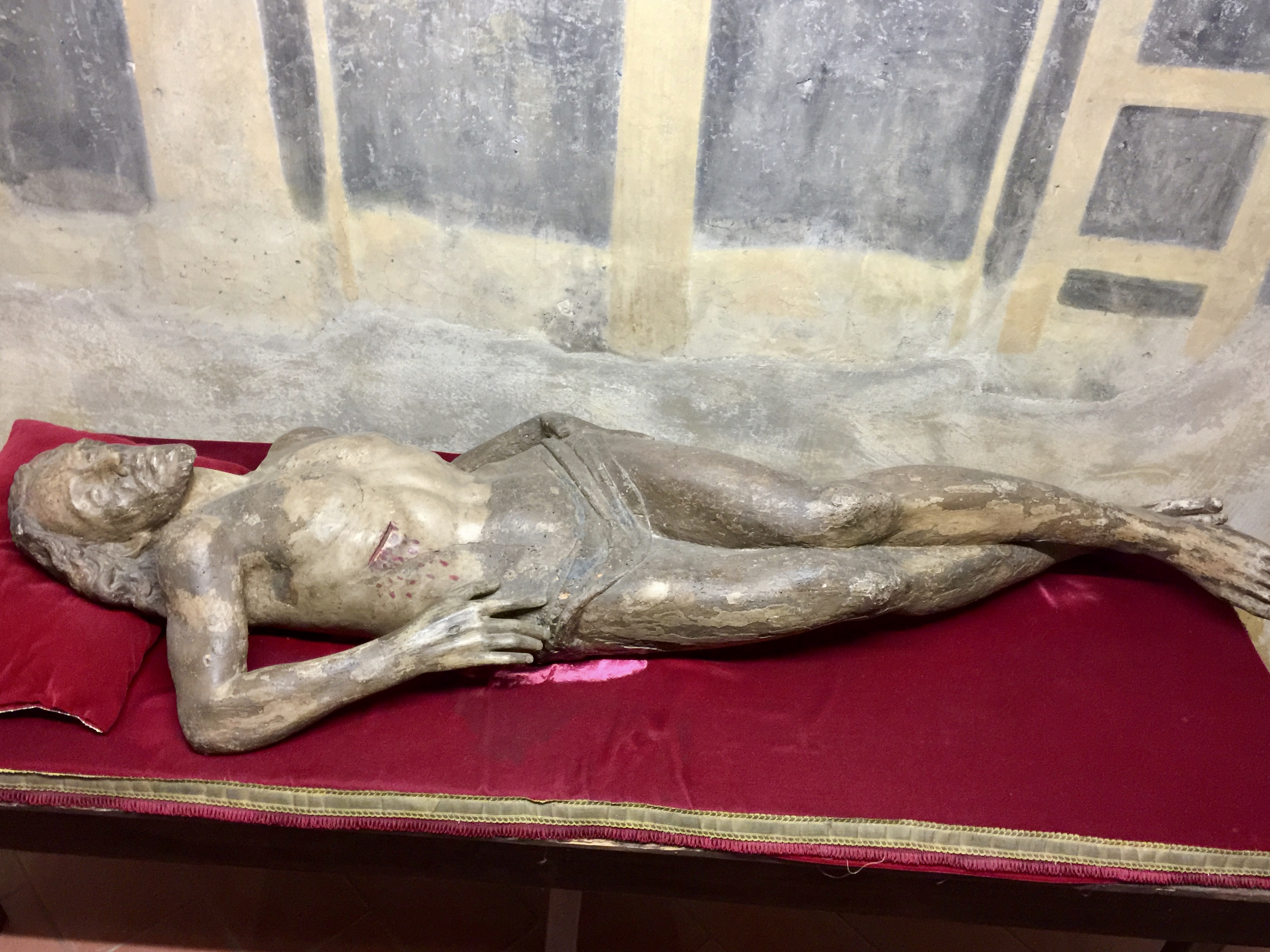
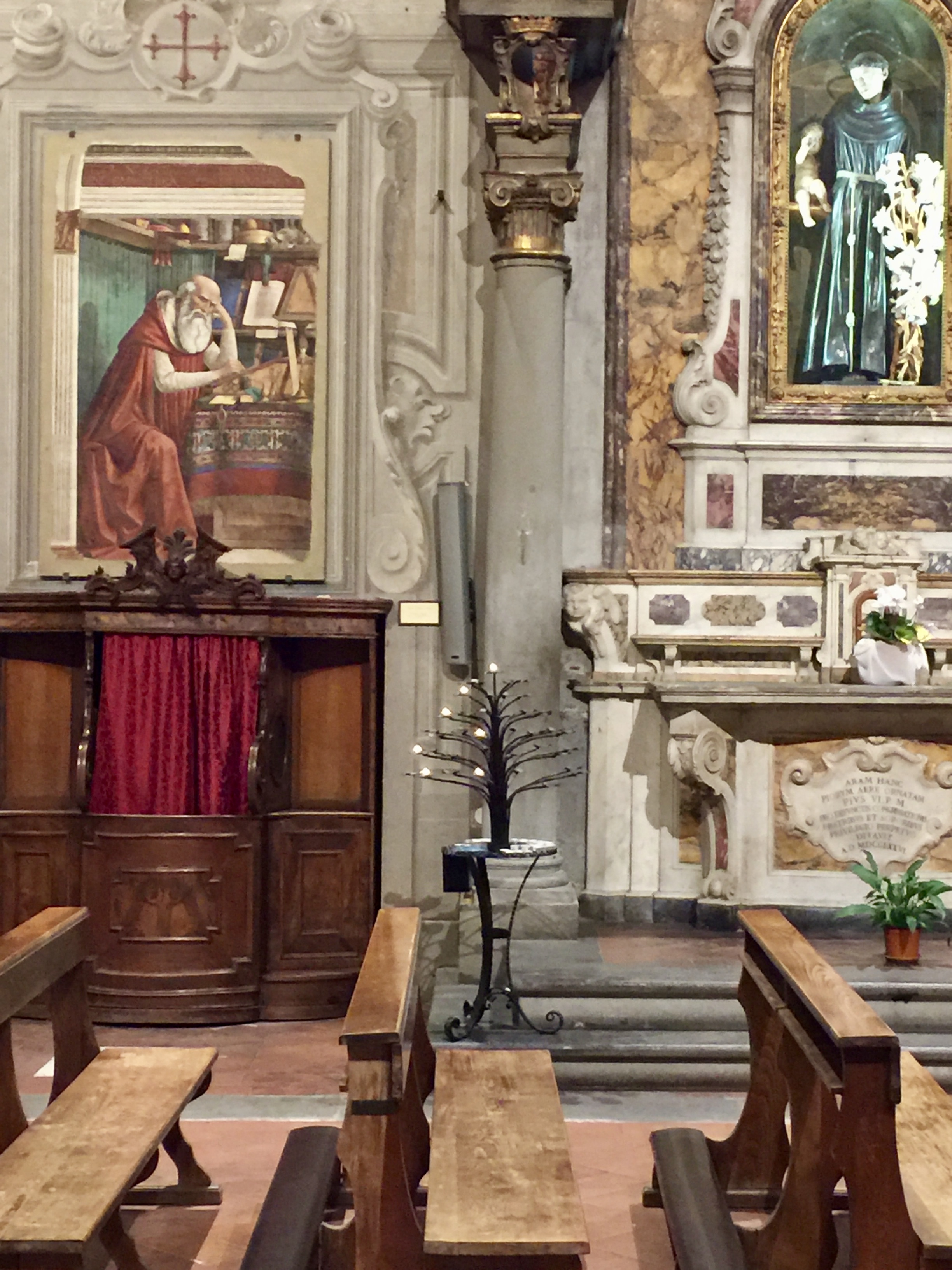
Here are some other fascinating artifacts from Ognissanti:
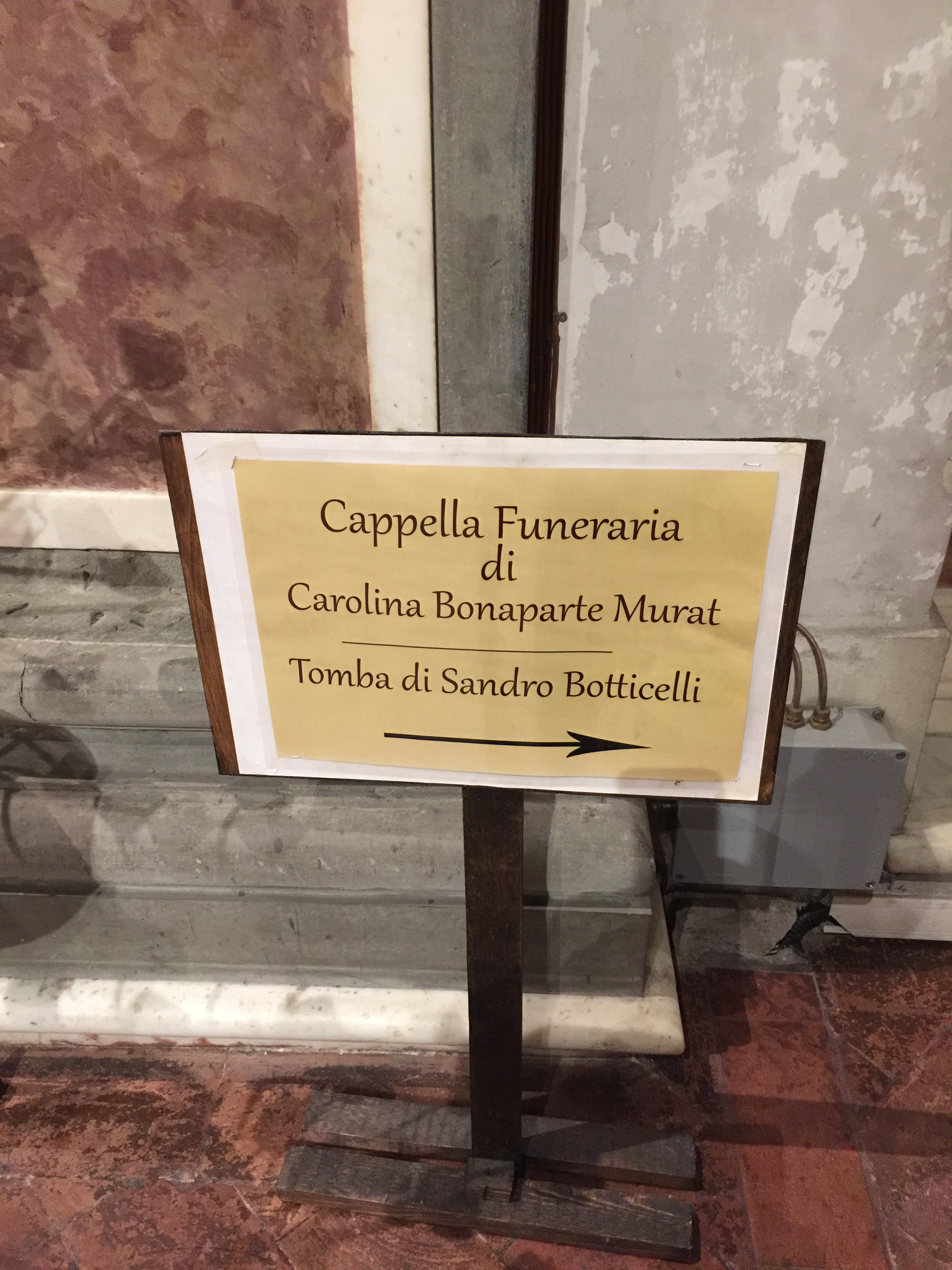
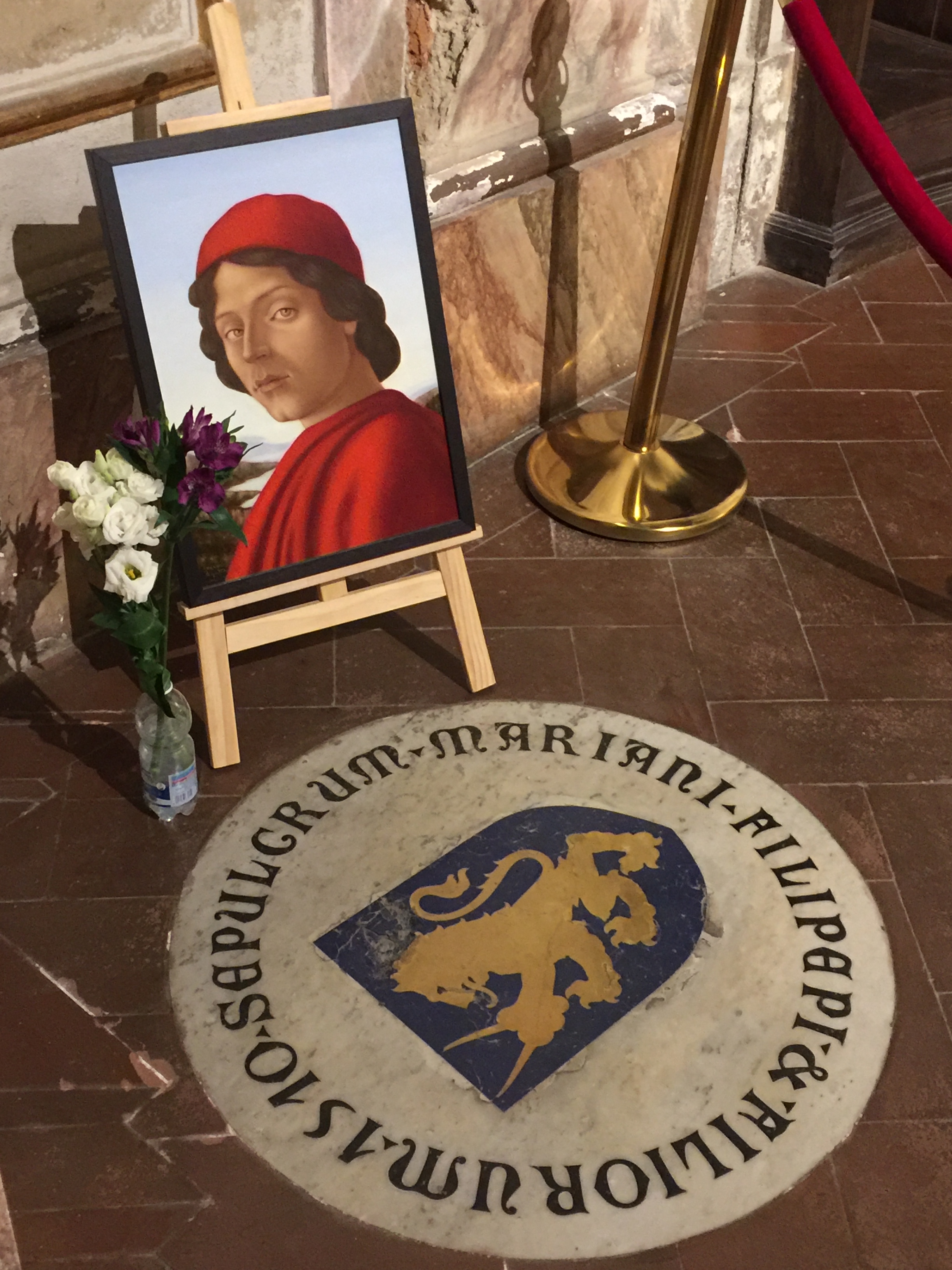
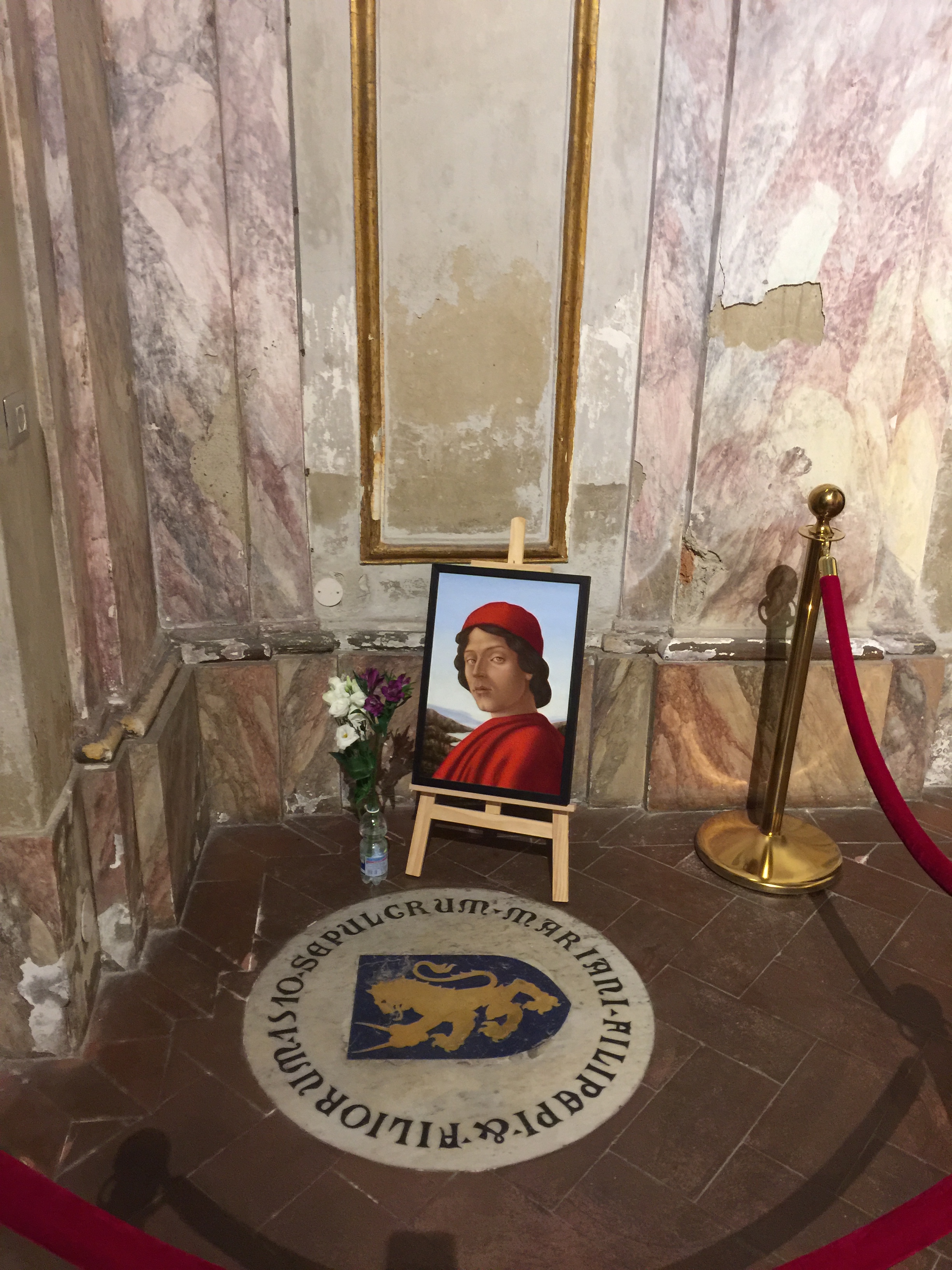
Last night I discovered that Sandro Botticelli is buried within the church, near his beloved Simonetta Vespucci.
Botticelli who is buried in the church near his beloved, Simonetta Vespucci.
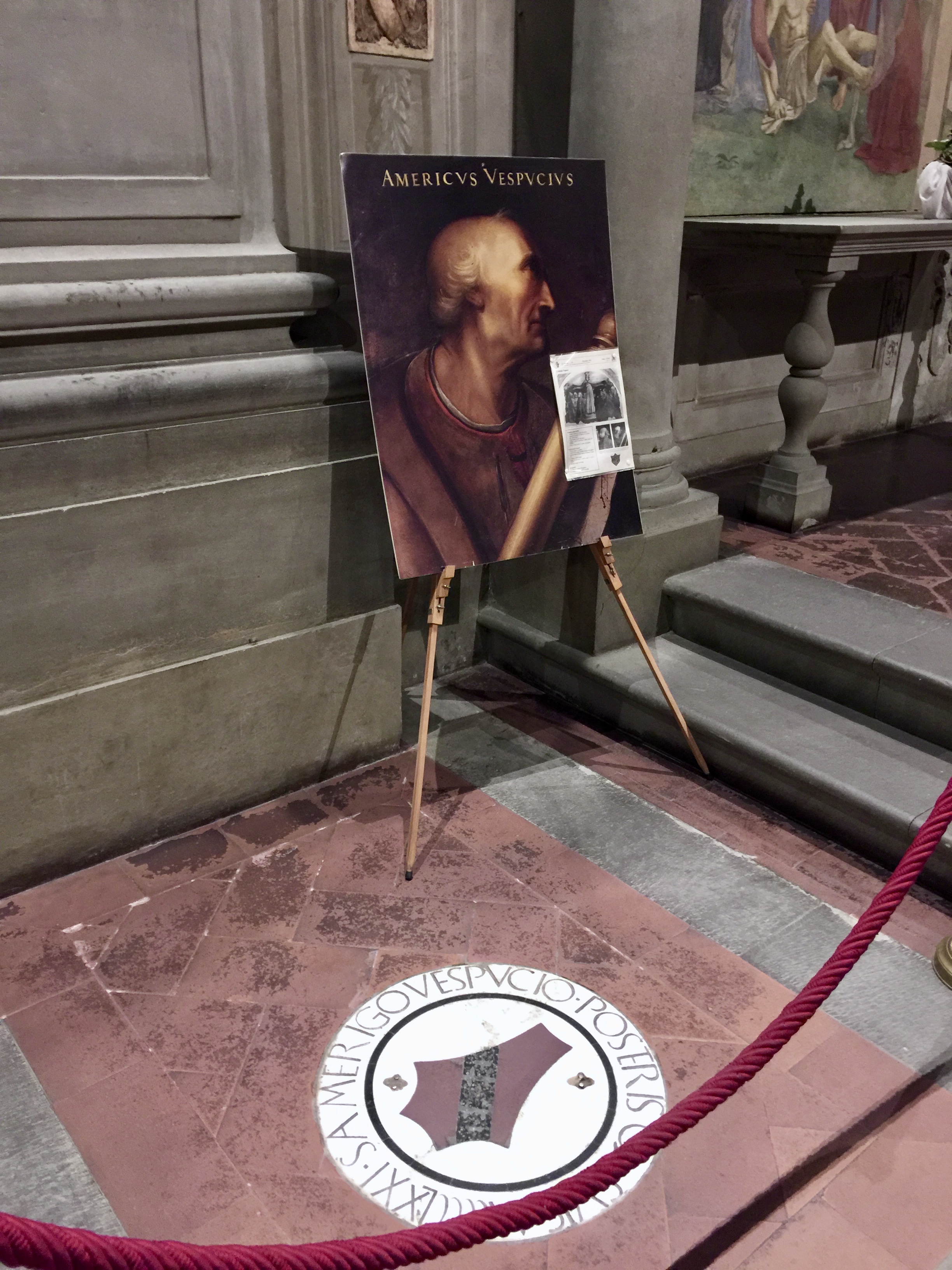
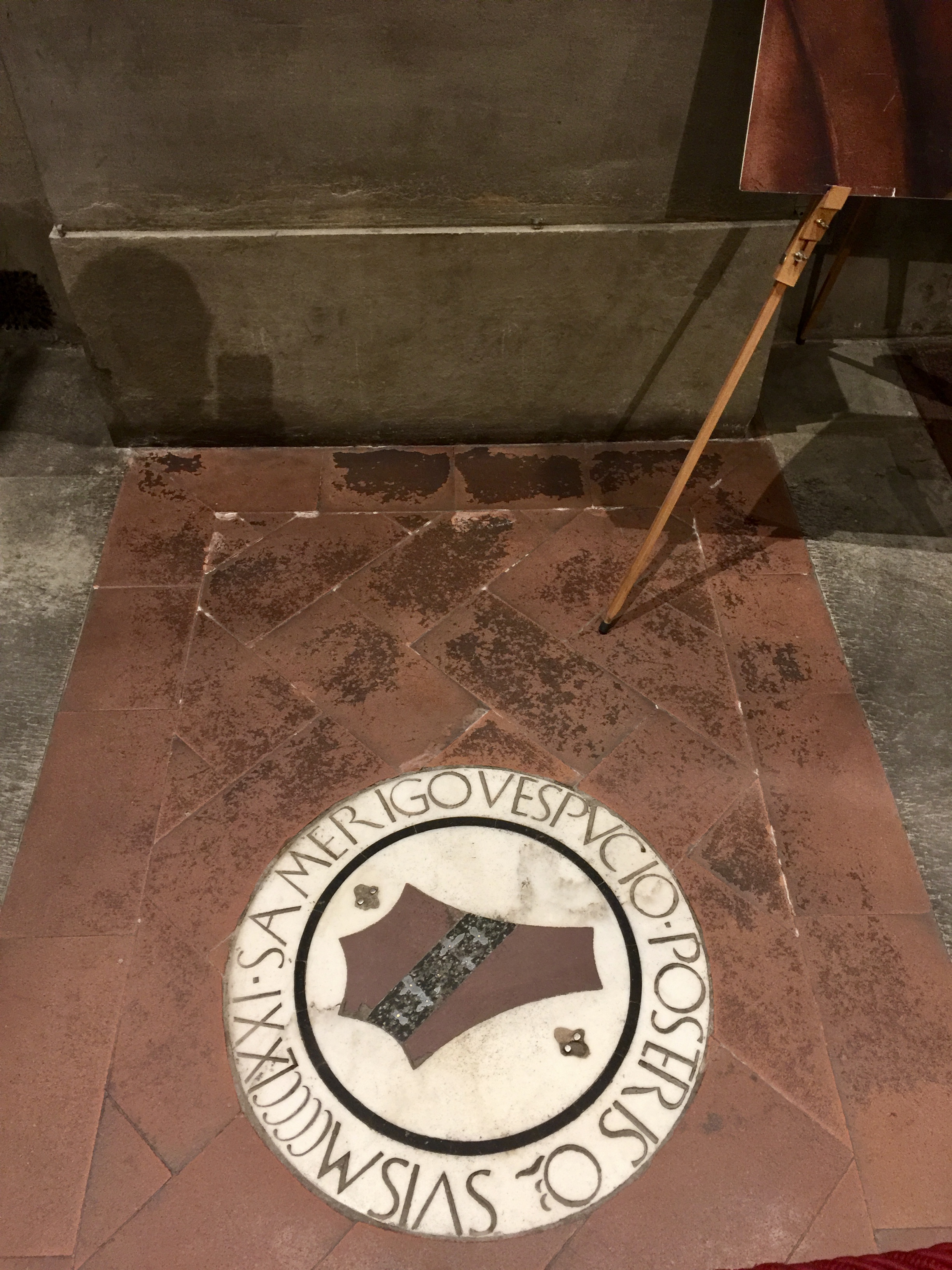
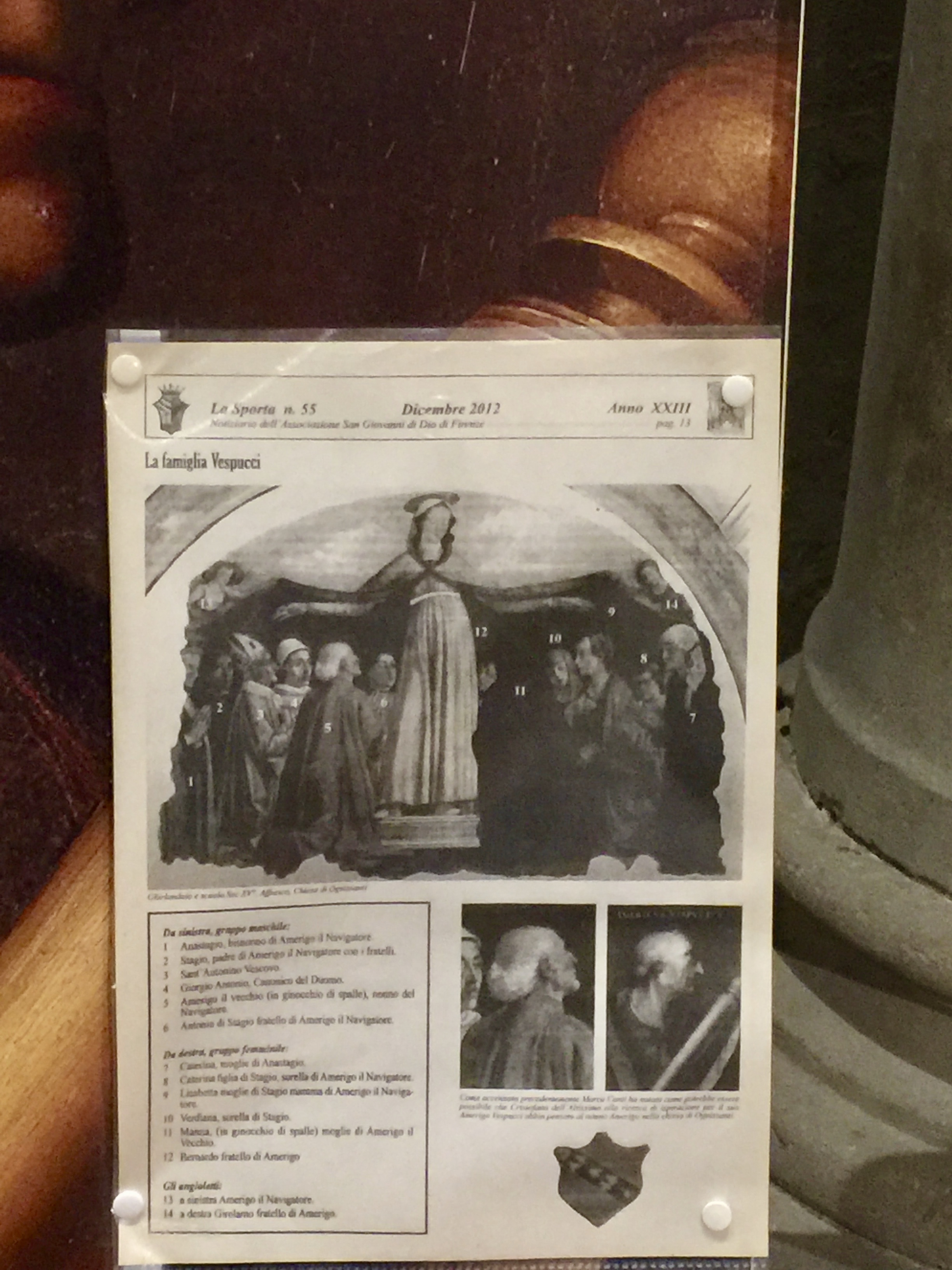
Amerigo Vespucci is also interred here:
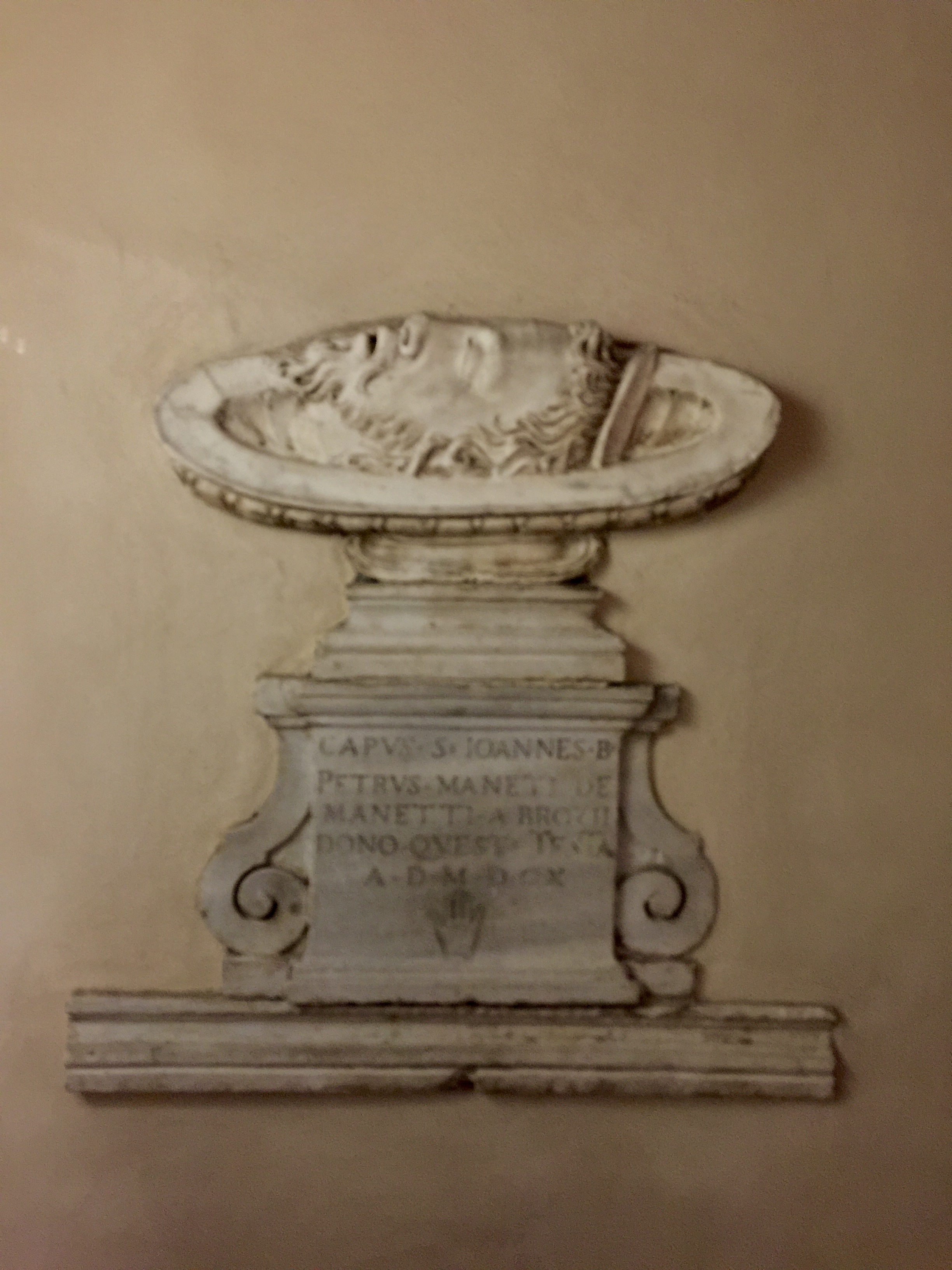
Here’s an unusual funerary monument found within the church. I am not certain whose head this portrays…
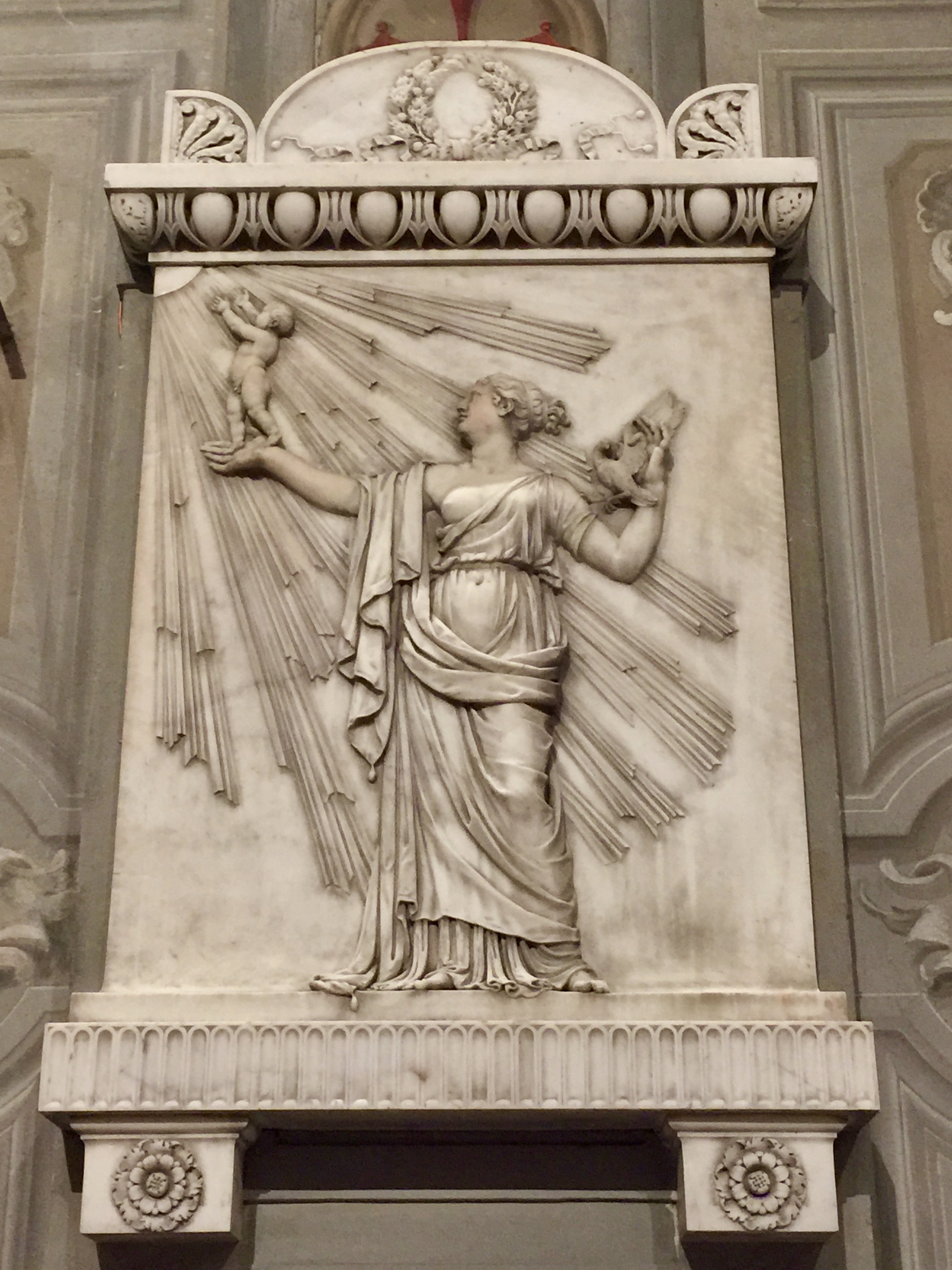
And I end this long post with a photo of a significant Neoclassical funerary monument, found within the center of this important church.
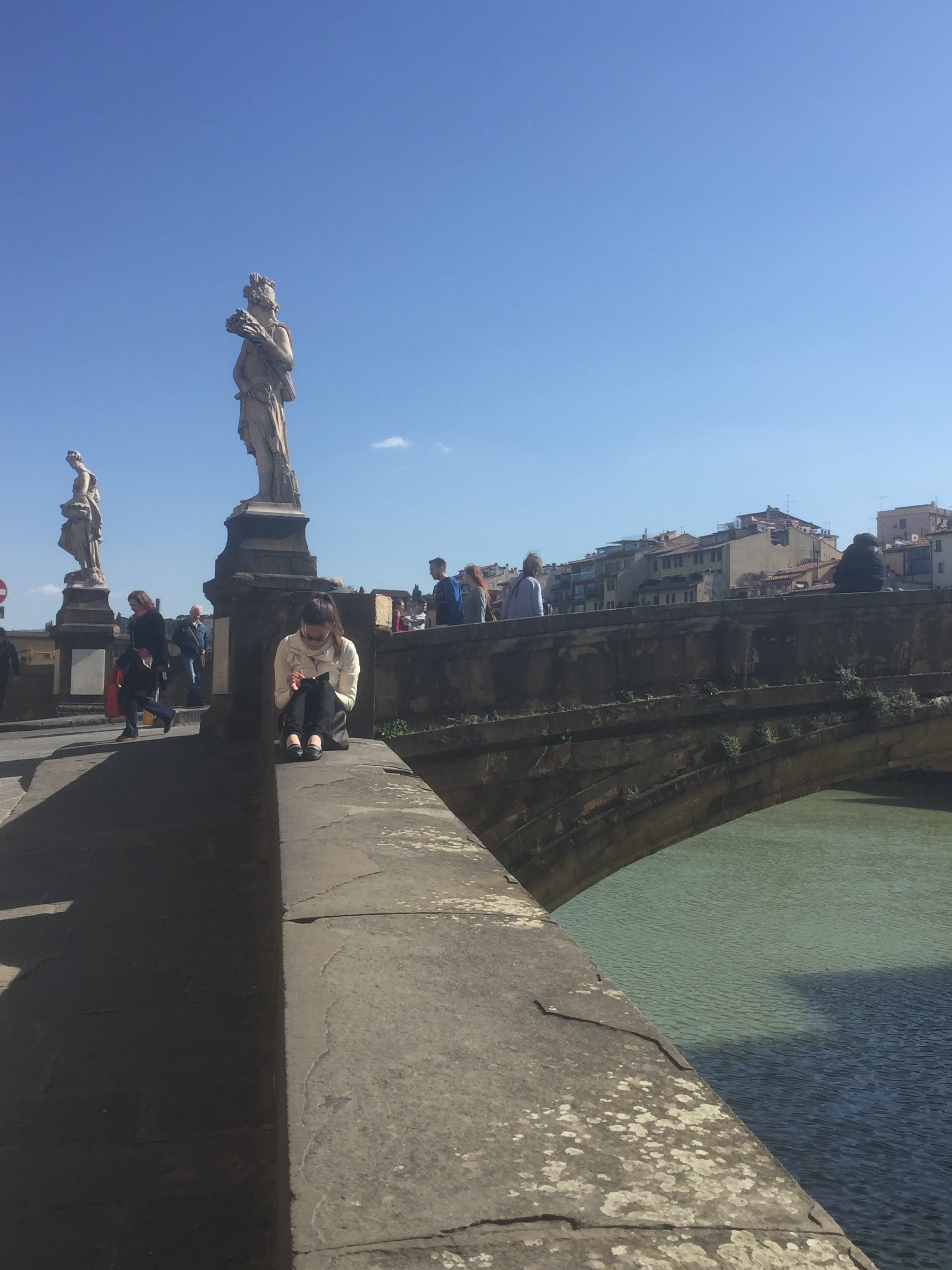
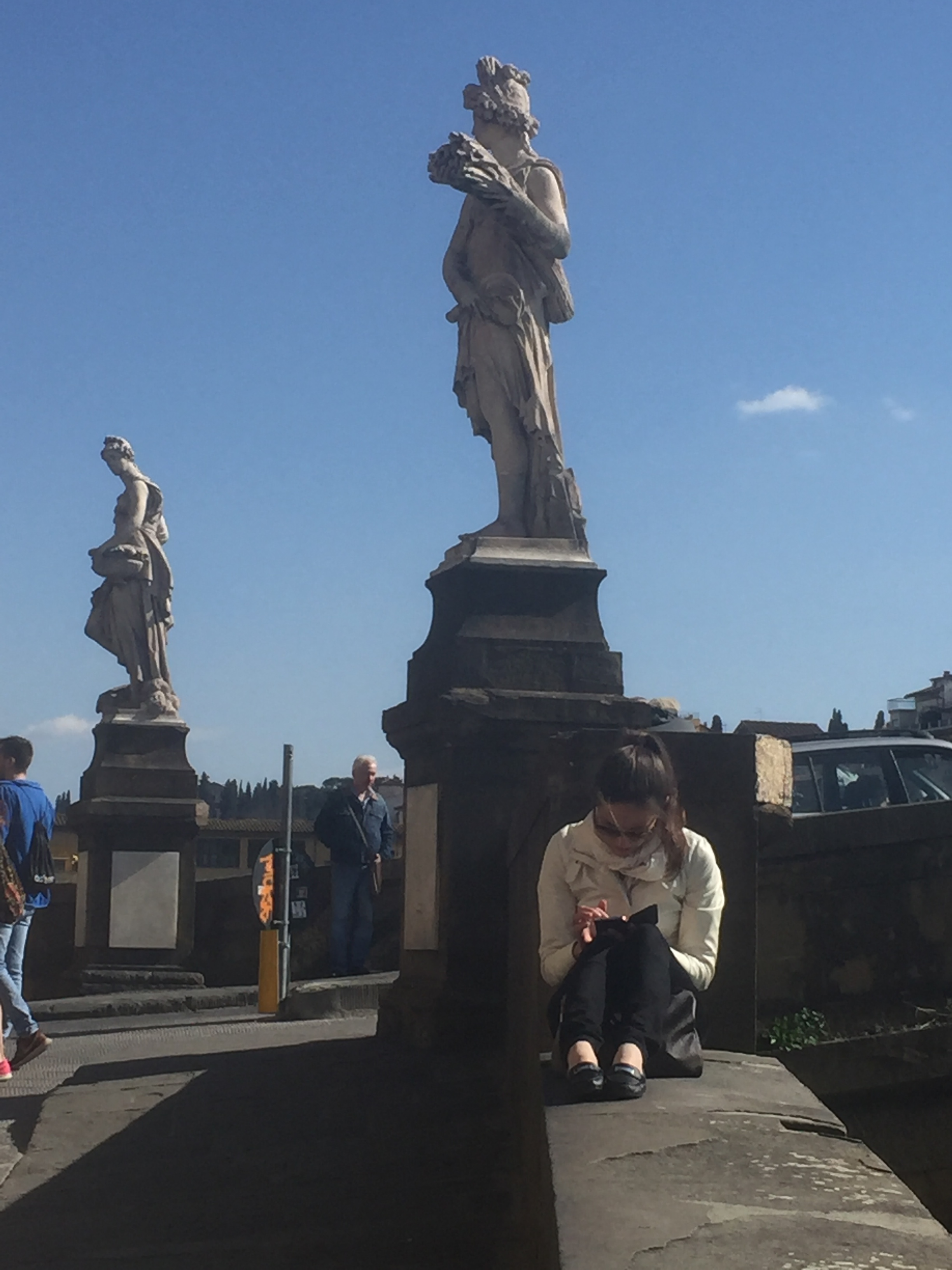
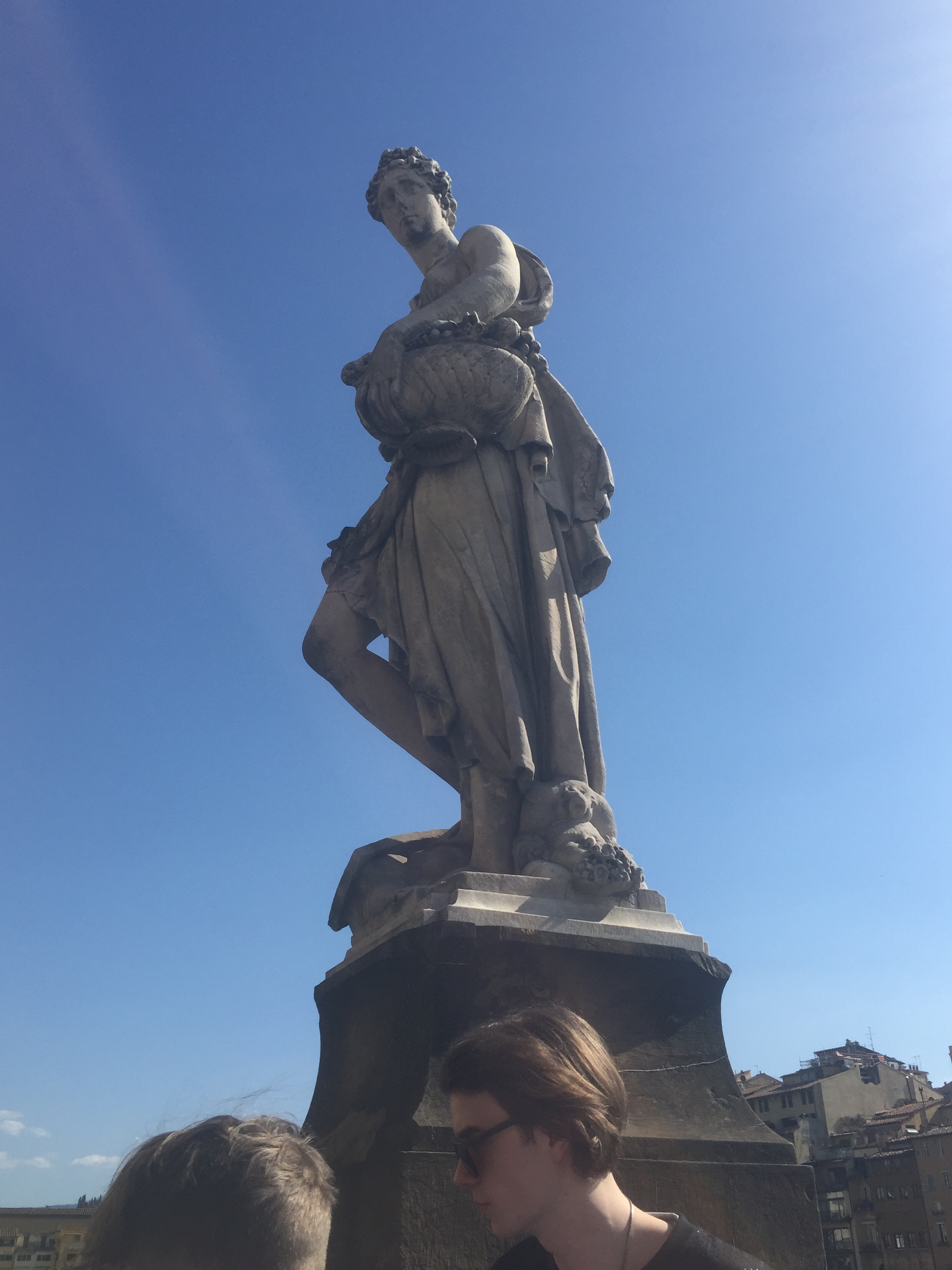
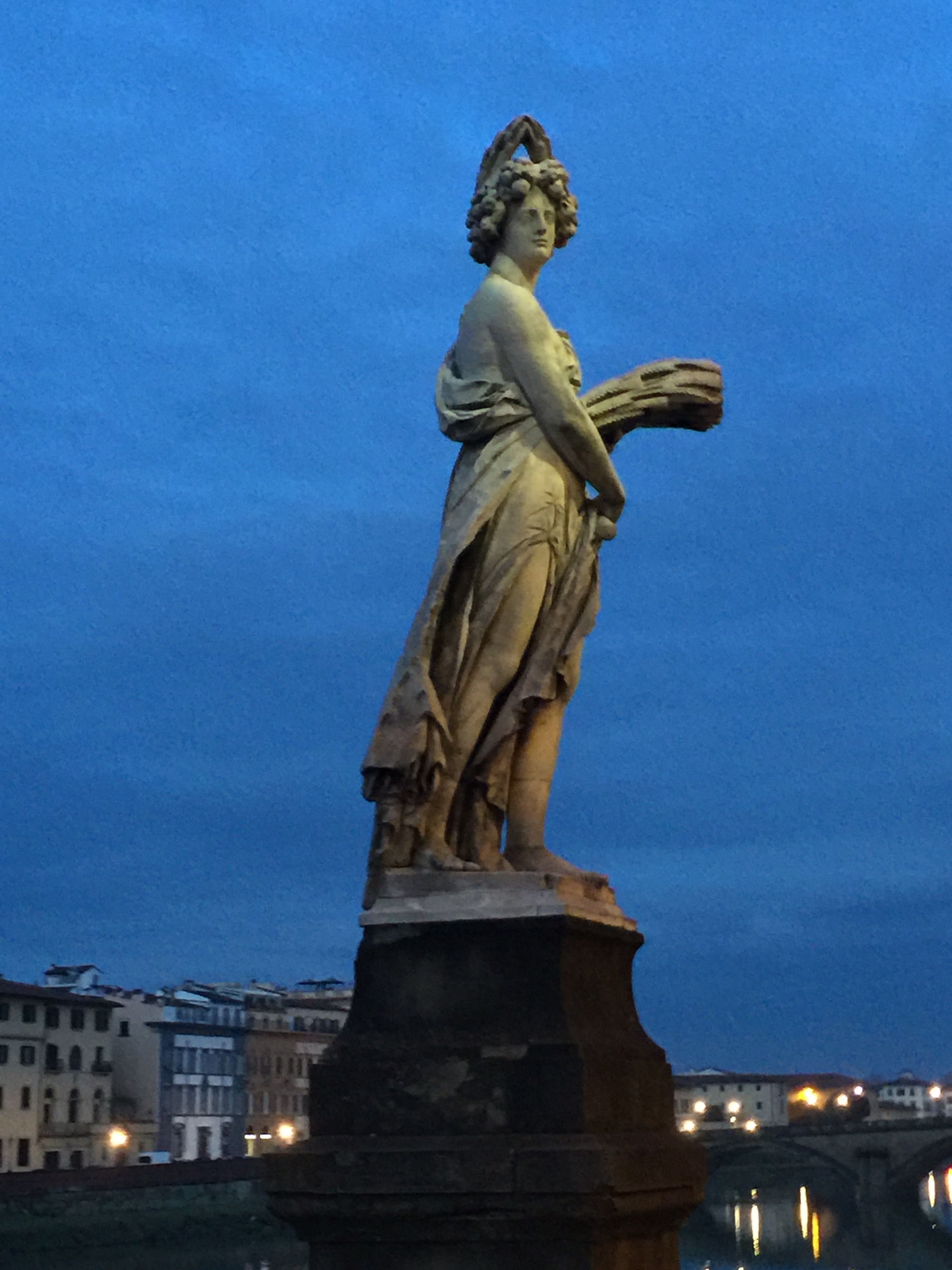
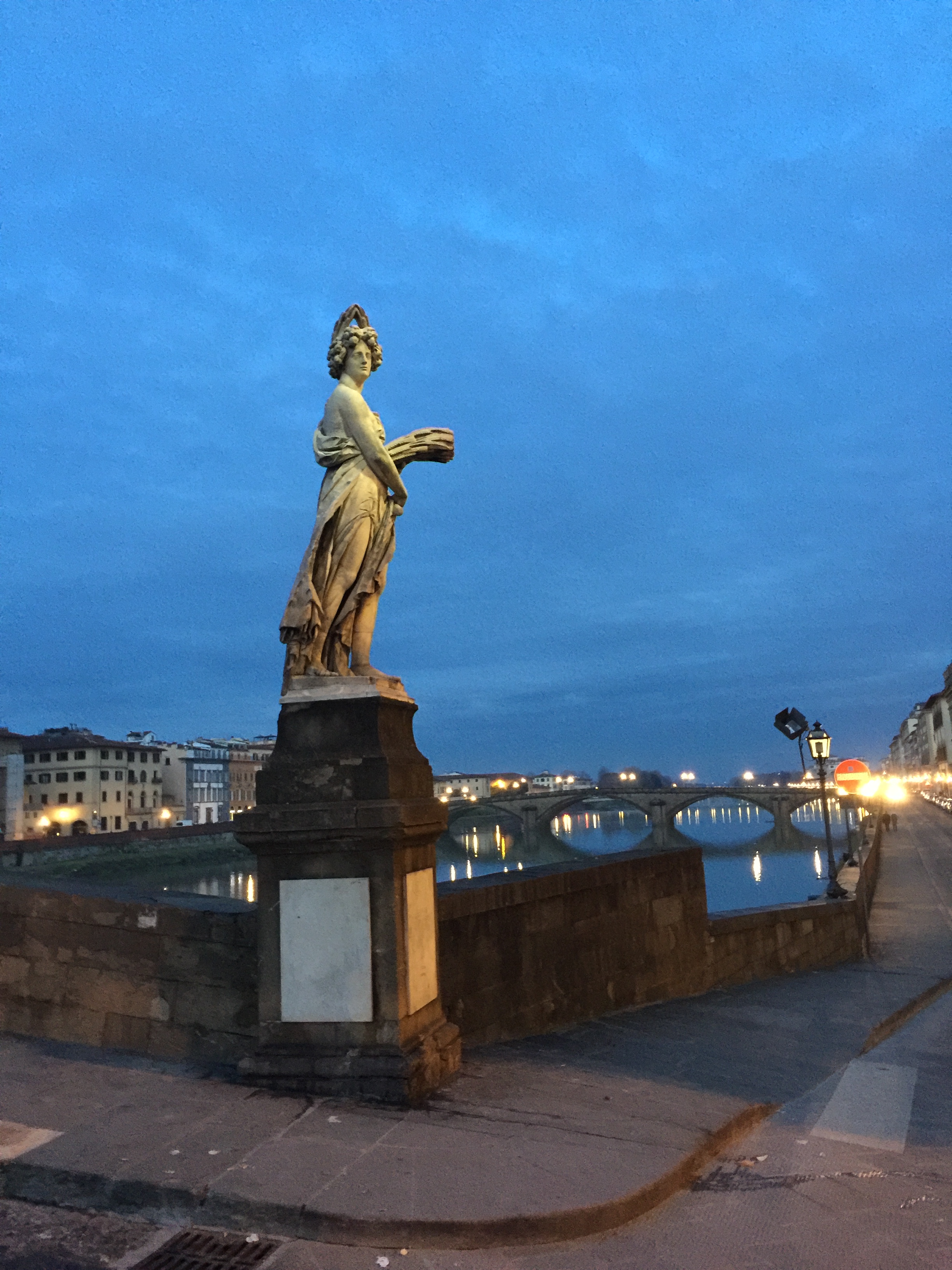
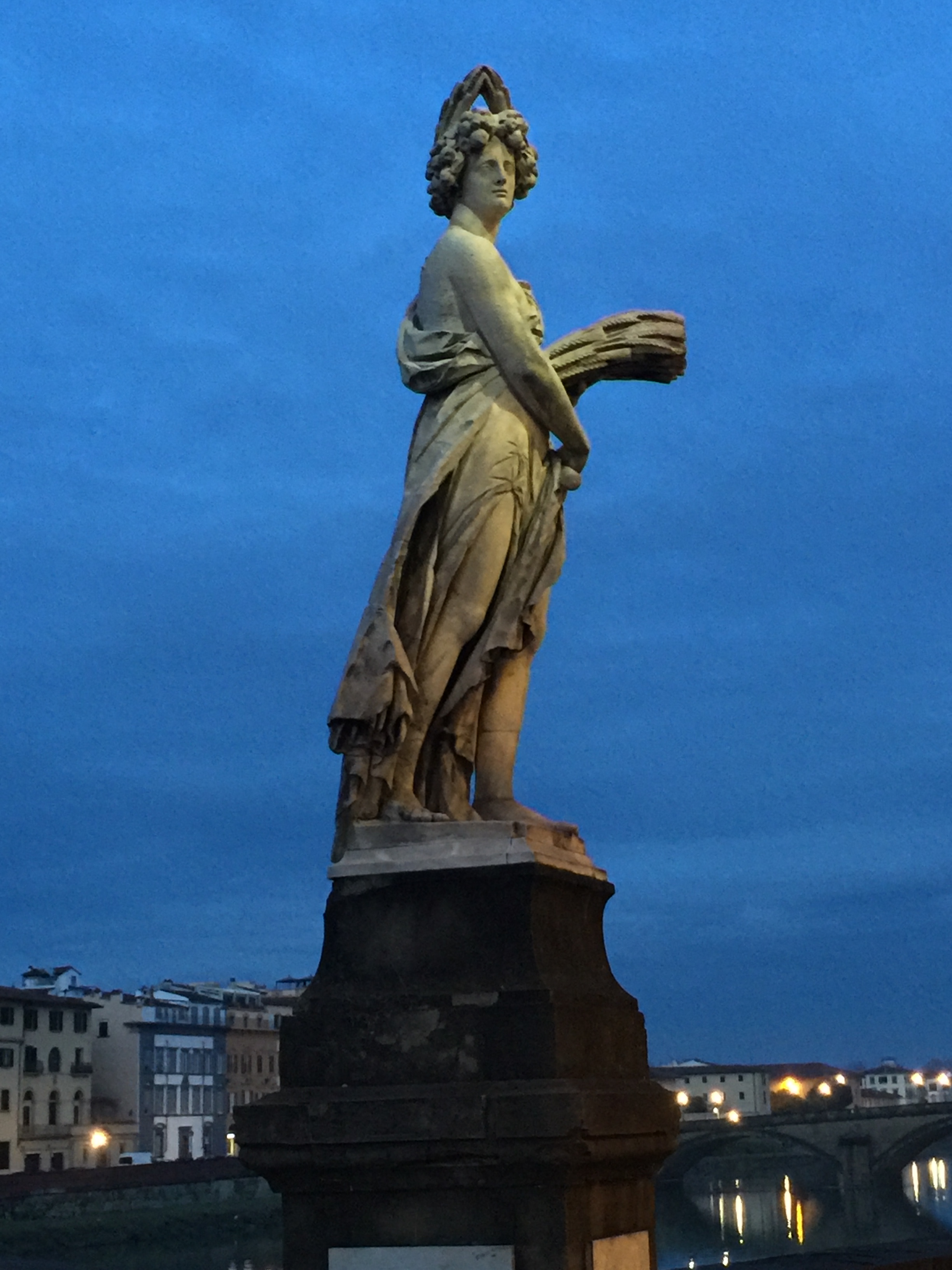
Interestingly, these 4 statues (only 2 of the 4 are in my pictures above) were sculpted to celebrate the marriage between Cosimo II de’ Medici and Maria Maddalena of Austria in 1608.
Even more interestingly, they were originally intended to be placed in niches or against a wall in the giardino of Villa Corsini al Prato in Florence. They were not designed to be seen in the round, but in the round they have always been on the bridge.
The following artists were commissioned to create: Primavera by Pietro Francavilla; L’estate e L’autunno by Giovanni Caccini; and L’inverno by Taddeo Landini.
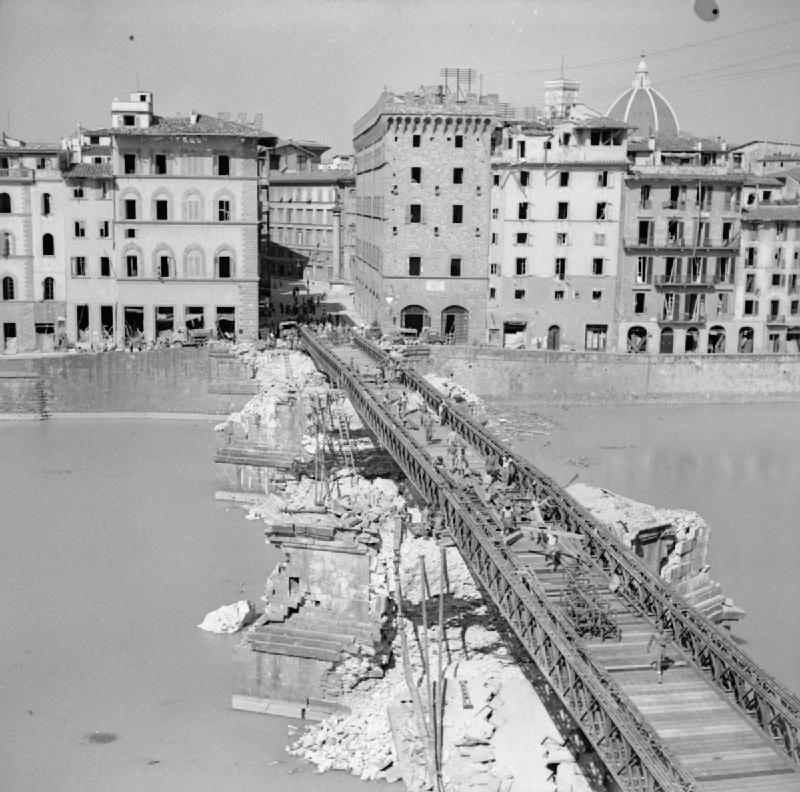
On the night between 3 and 4 of August 1944, the bridge was destroyed by retreating German troops on the advance of the British 8th Army. A Bailey bridge was built for temporary use by the Royal engineers.
The Renaissance replica bridge was constructed in 1958 with original stones raised from the Arno or taken from the same quarry, under the direction of architect Riccardo Gizdulich and engineer Emilio Brizzi.
Miraculously, the statues were more or less intact and returned to the replacement bridge upon its completion. Only the head of Primavera was missing. The missing head was recovered from the bed of the Arno in October 1961 and added to the sculpture we see today.
The cleaning, which will involve the Istituto Lorenzo de’ Medici, will include ridding the statues of the layers of soot that has settled on them over the years and treating the works with a waterproof layer to protect them from further damage by atmospheric agents.
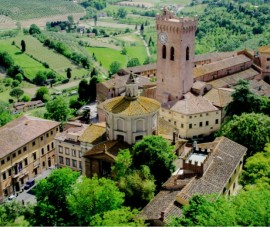
Want to see a darling hill town in Tuscany? Then head for the hills! Get yourself to San Miniato, a very lively and attractive hill town near Pisa, famous for the white truffles found in the surrounding area.
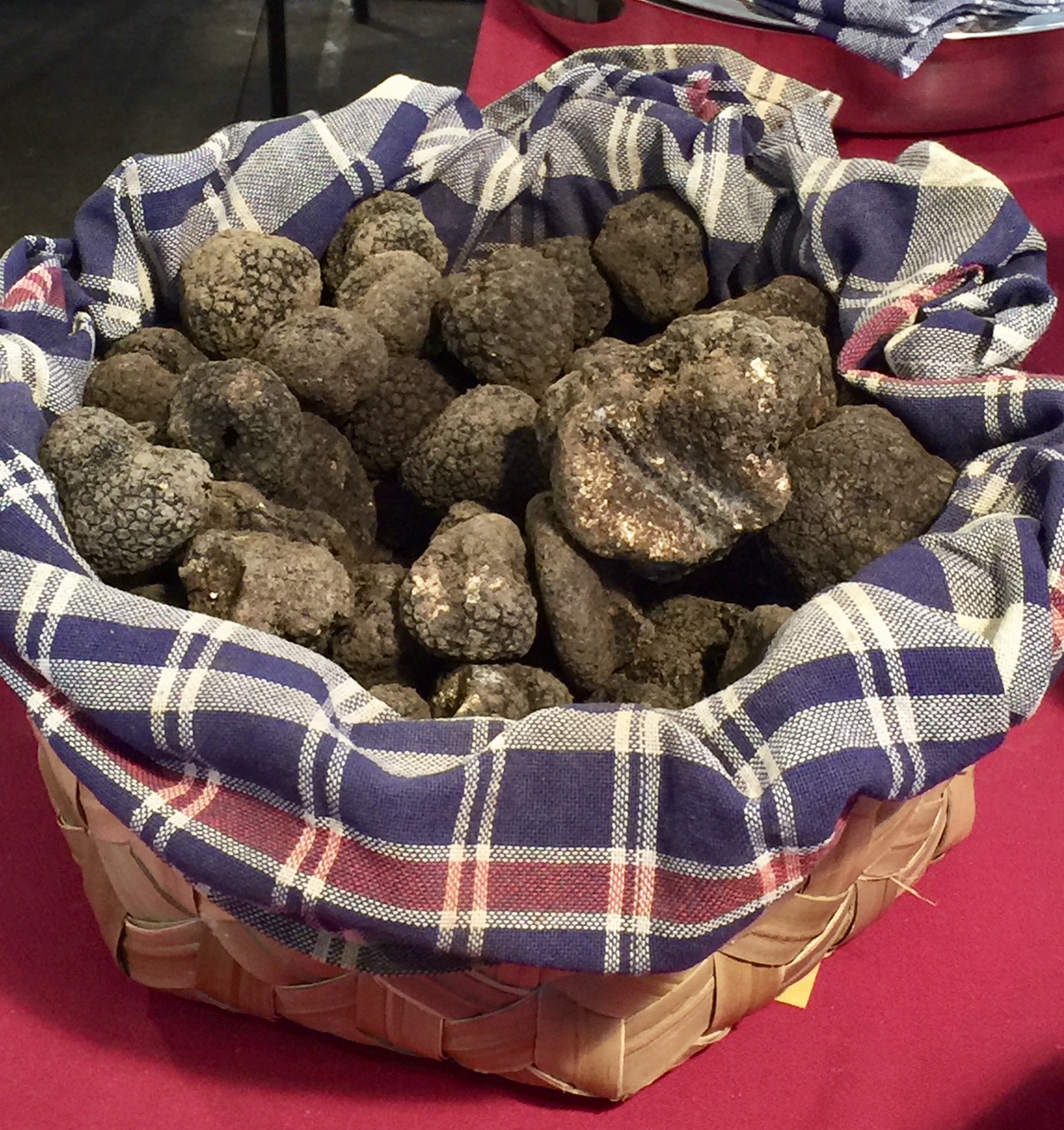
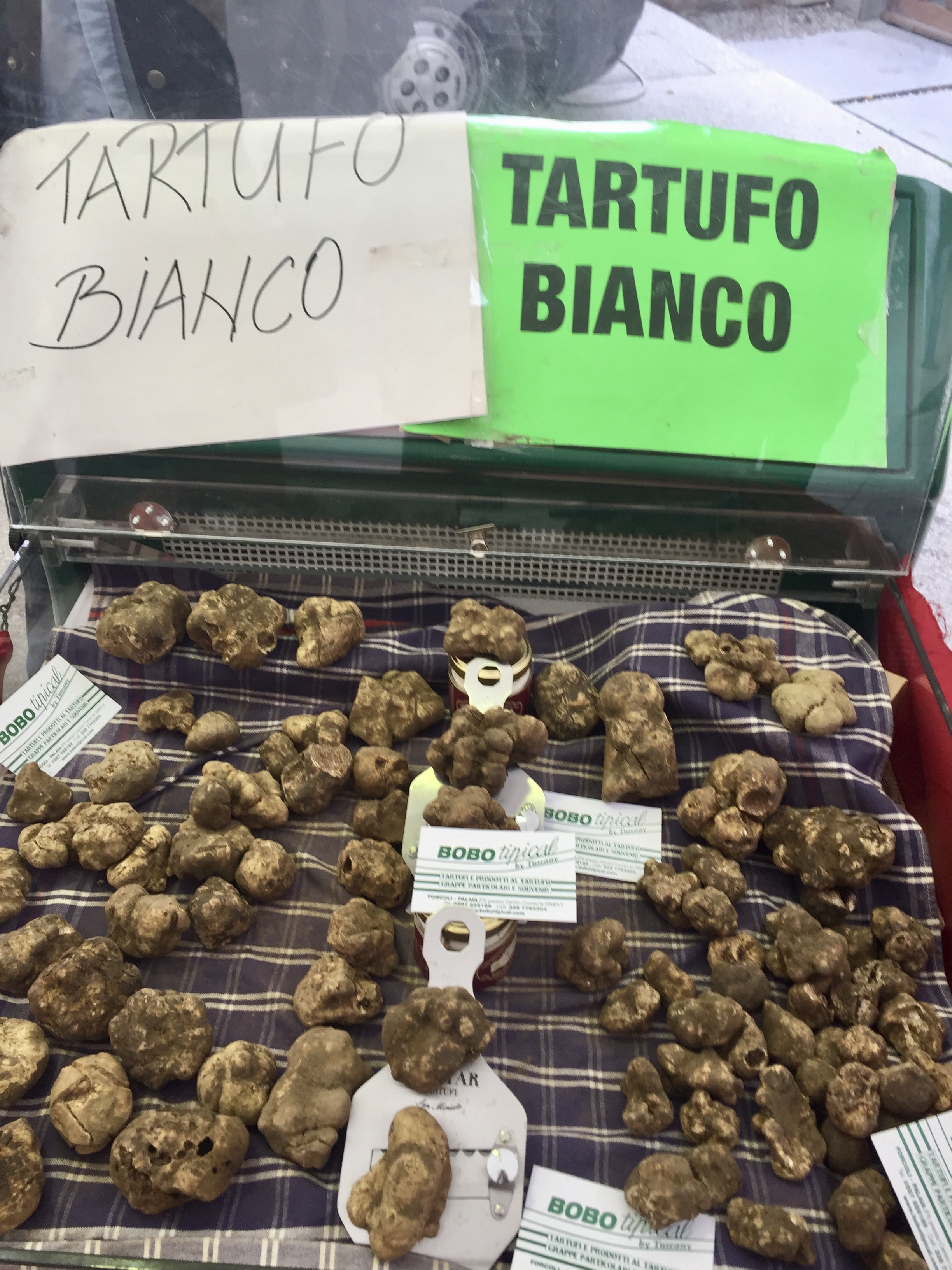
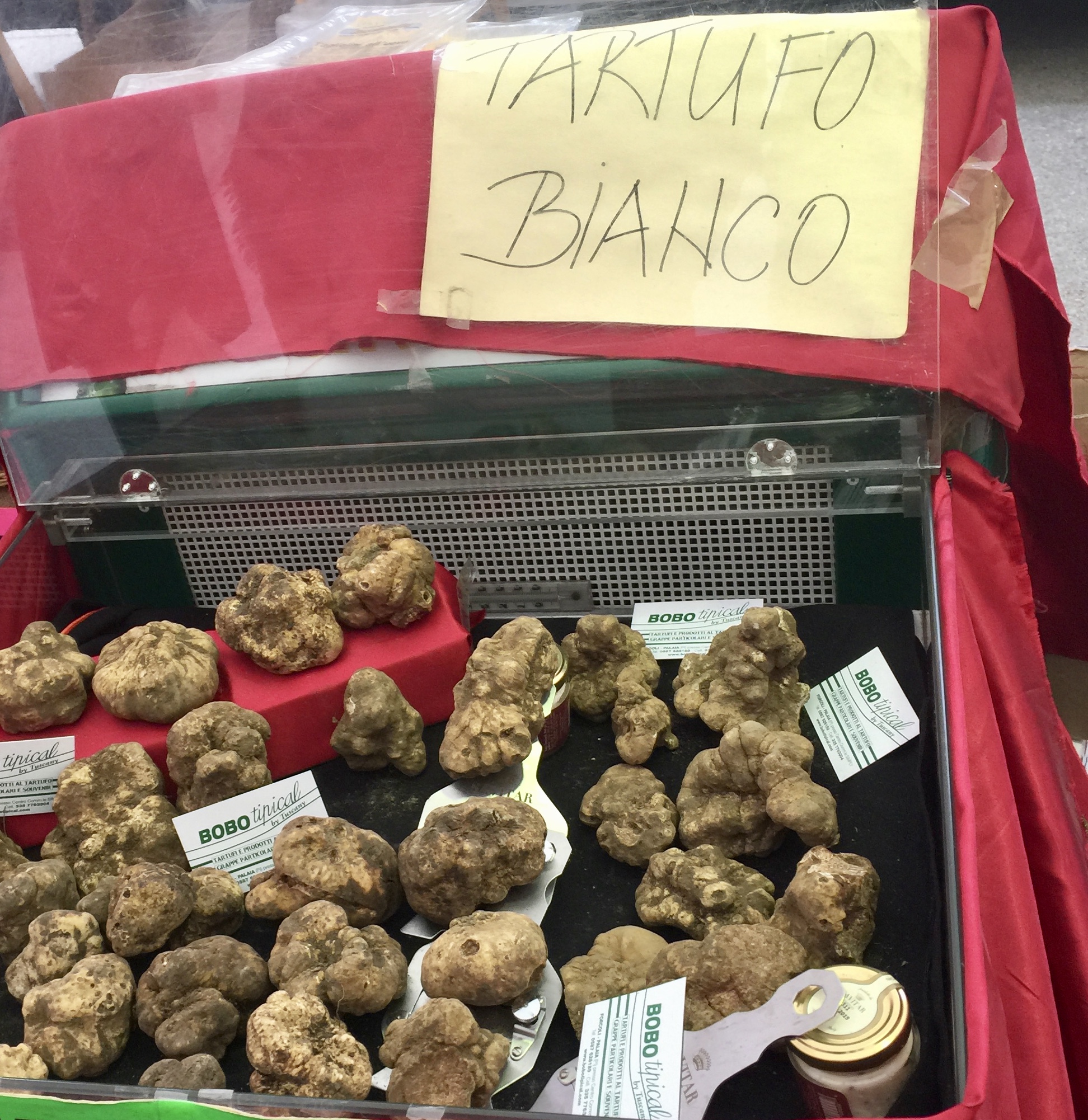
Want to see truffles? The famous tartufo aren’t very pretty, but oh my goodness, do they taste good in Italian cuisine! Here’s a basket full of them:
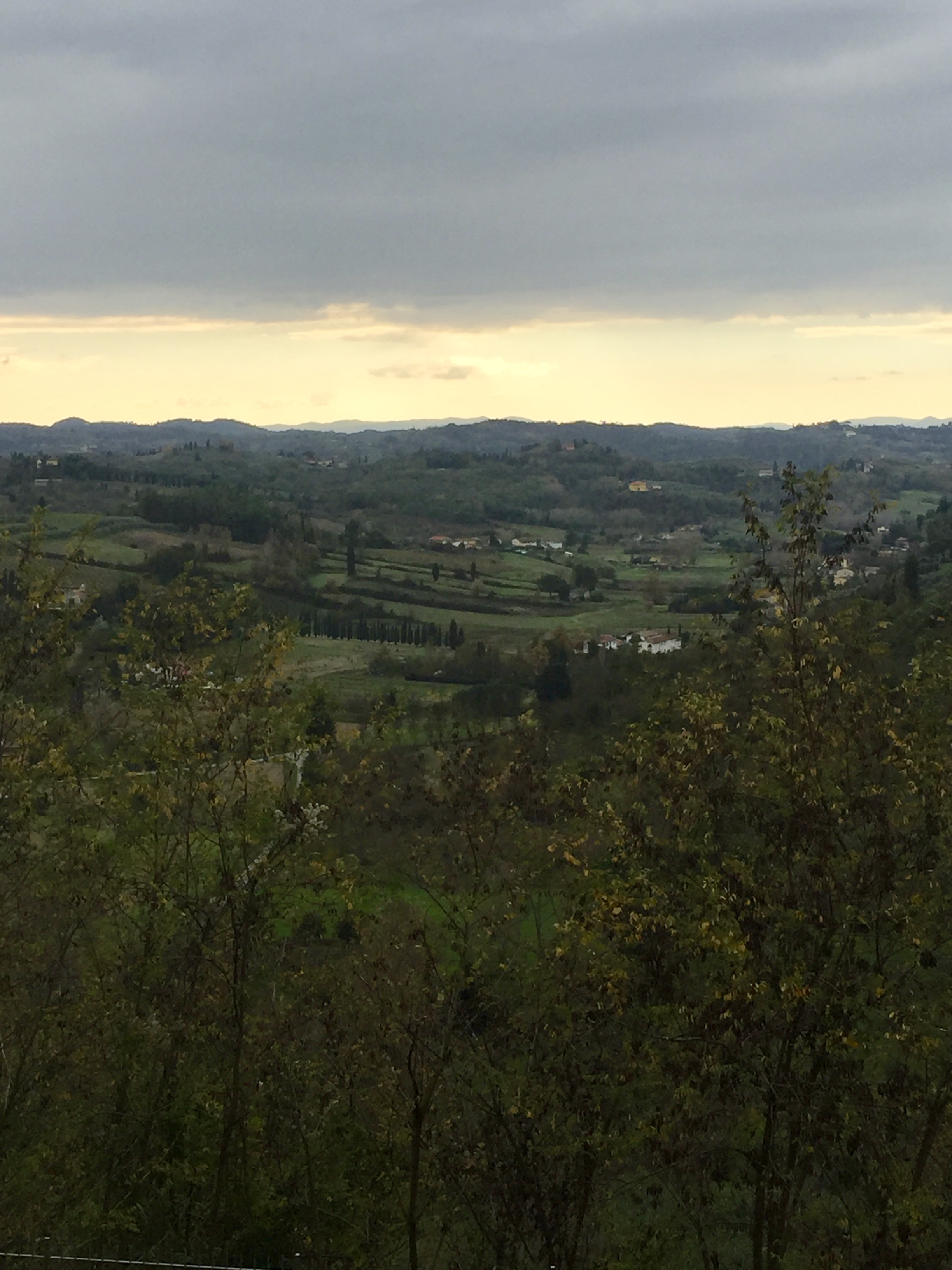
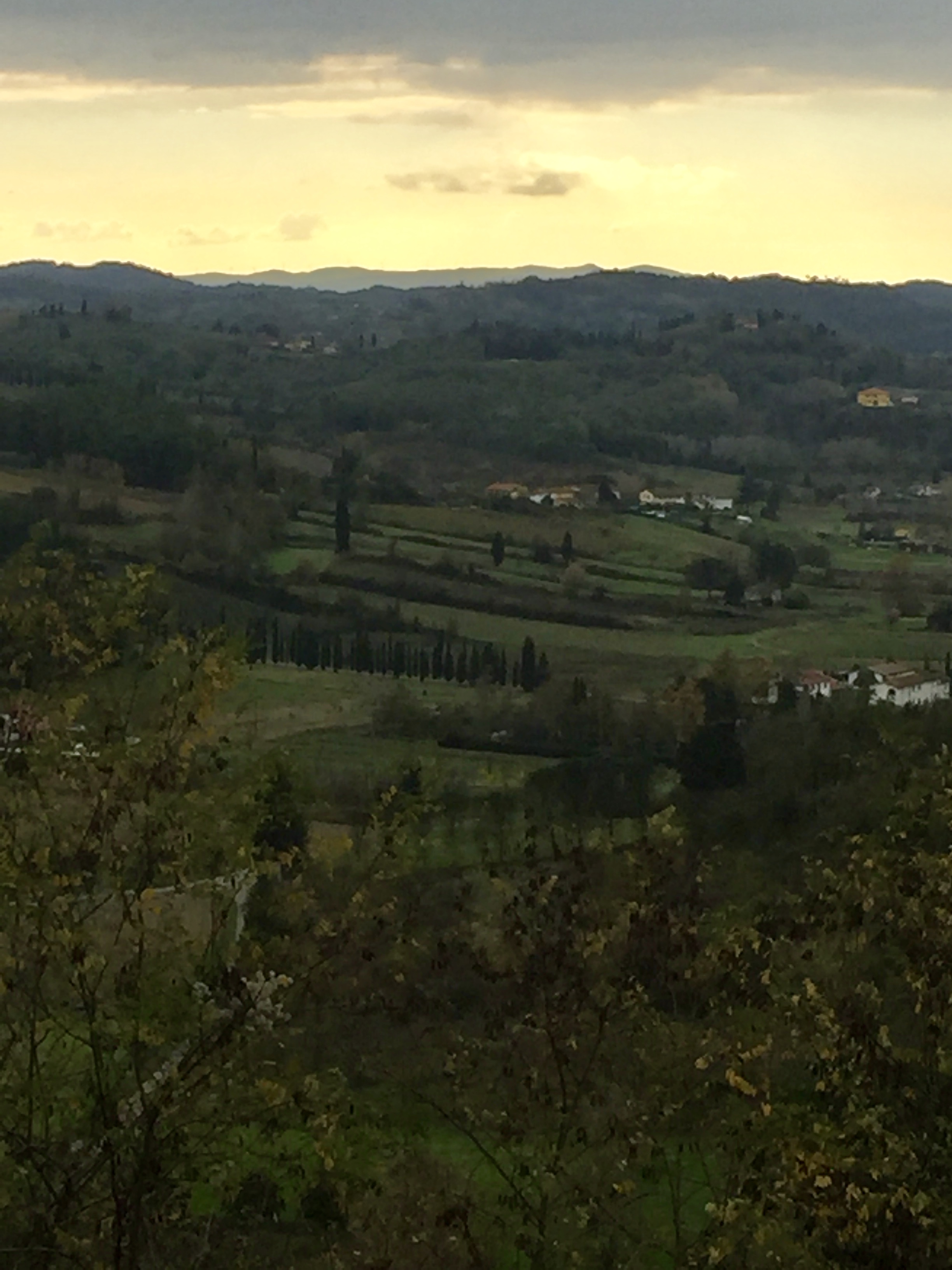
I visited San Miniato yesterday, 17 November, during the annual truffle sagra held by the town. Fall has definitely arrived in Tuscany and it was cold and overcast. It almost makes me wistful about the heat of last July. Almost. The next 2 pictures capture the weather as well as the beautiful vistas as seen from San Miniato of the beautiful Valdarno.
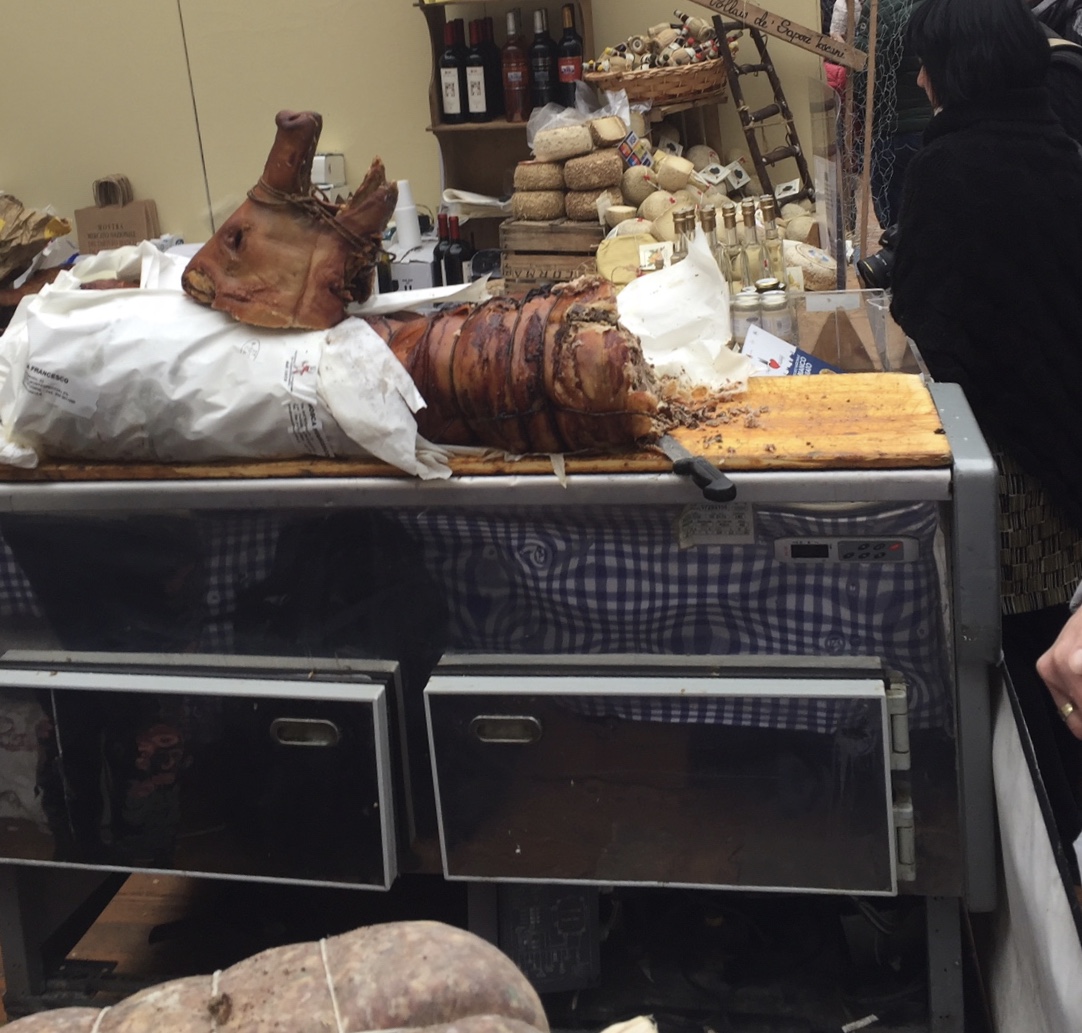
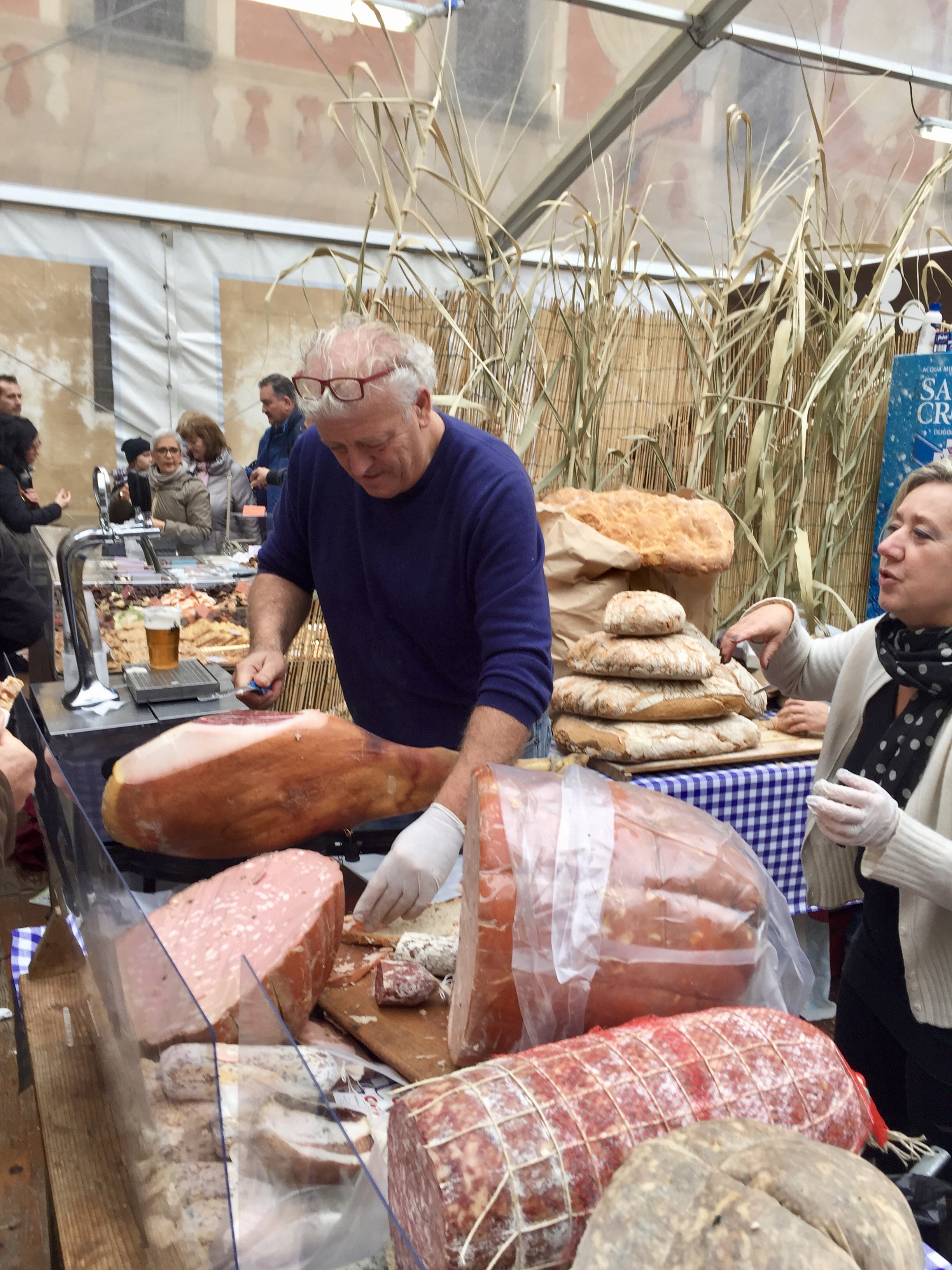
The truffle festival also features artiginale production of prosciutto, and there were lots of pork products on show, to taste, to purchase, and you could even buy specialized equipment for the home to slice the hams. All shown below:
But the truffles are the raison d’être: The festival San Miniato hosts every November is devoted to the gastronomically precious white truffle found locally. The white truffle is more highly valued than the black truffles found in Umbria and the Marche, and commands very high prices, reflected in the cost of restaurant dishes that incorporate truffles. In 1954 a record-breaking truffle found close to the nearby village of Balconevisi weighed in at 2,520 grams (5.56 lb) and was sent to the United States of America as a gift for President Dwight D. Eisenhower.
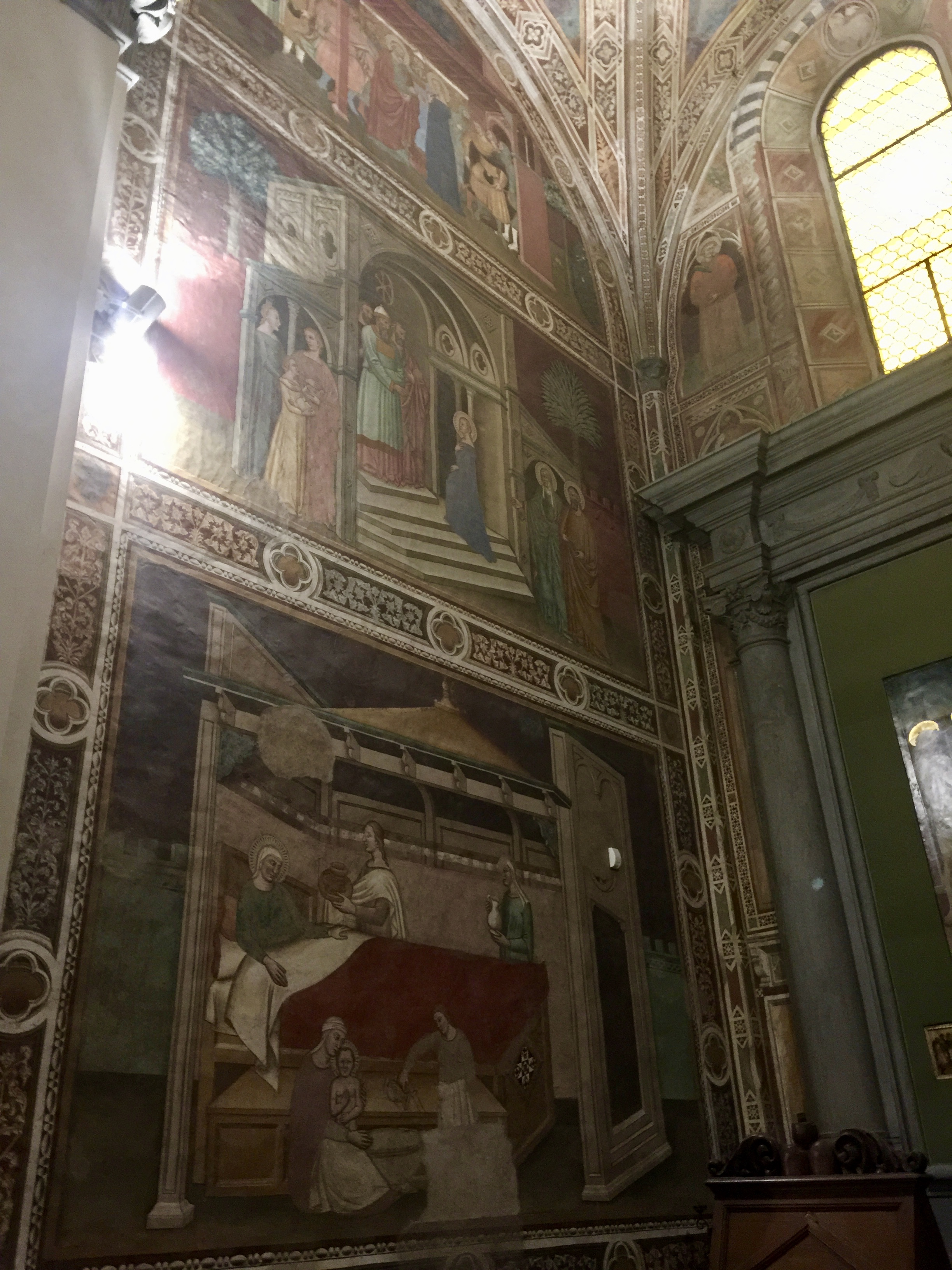
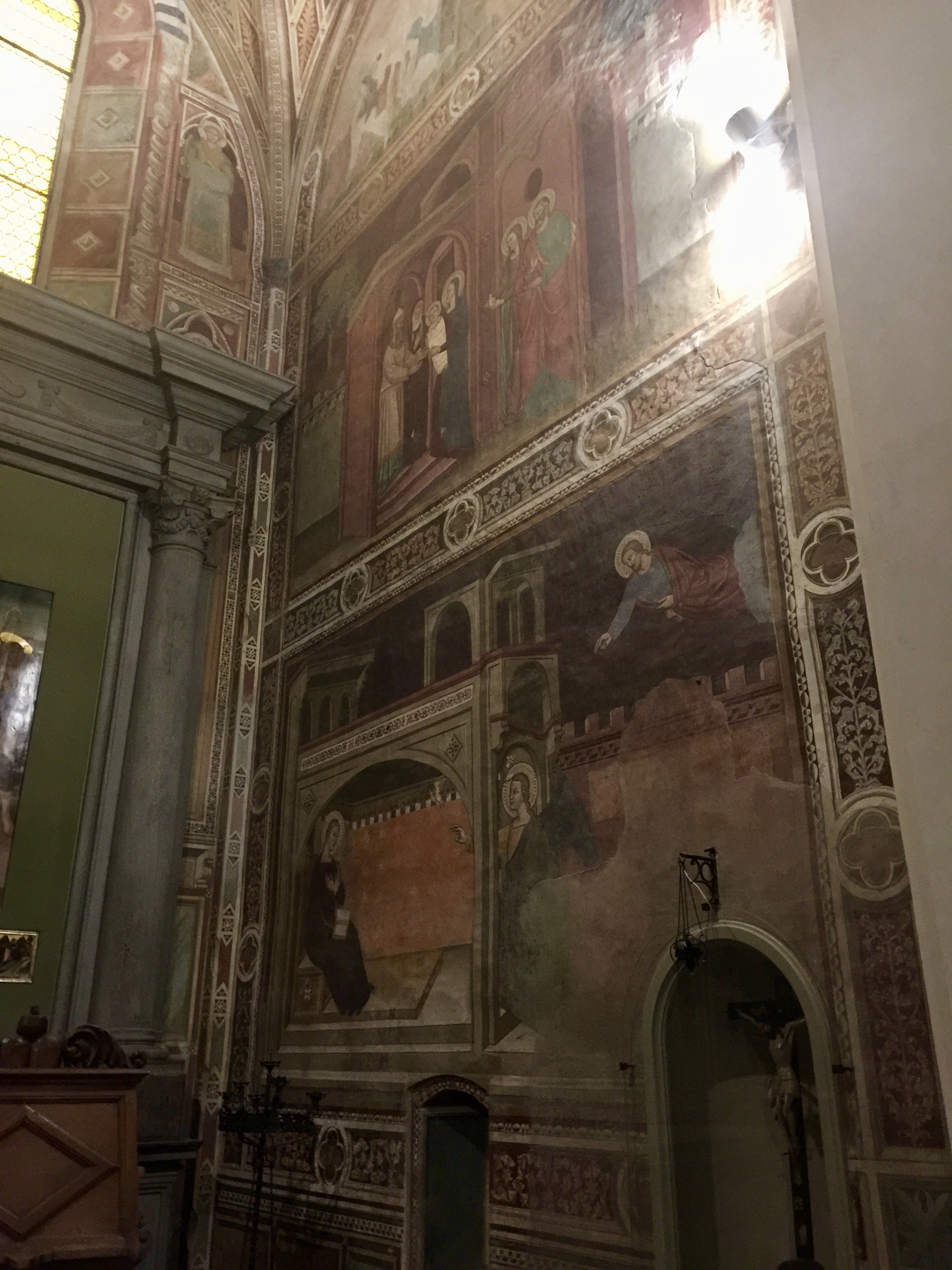
But even if you aren’t a fan of truffles or hams, there is still much to enjoy about this little gem of a town. For example, there is a lovely church with important Quattrocento frescoes:
The ceiling and upper sections of the basilica walls are painted with trompe’oeil marble architecture:
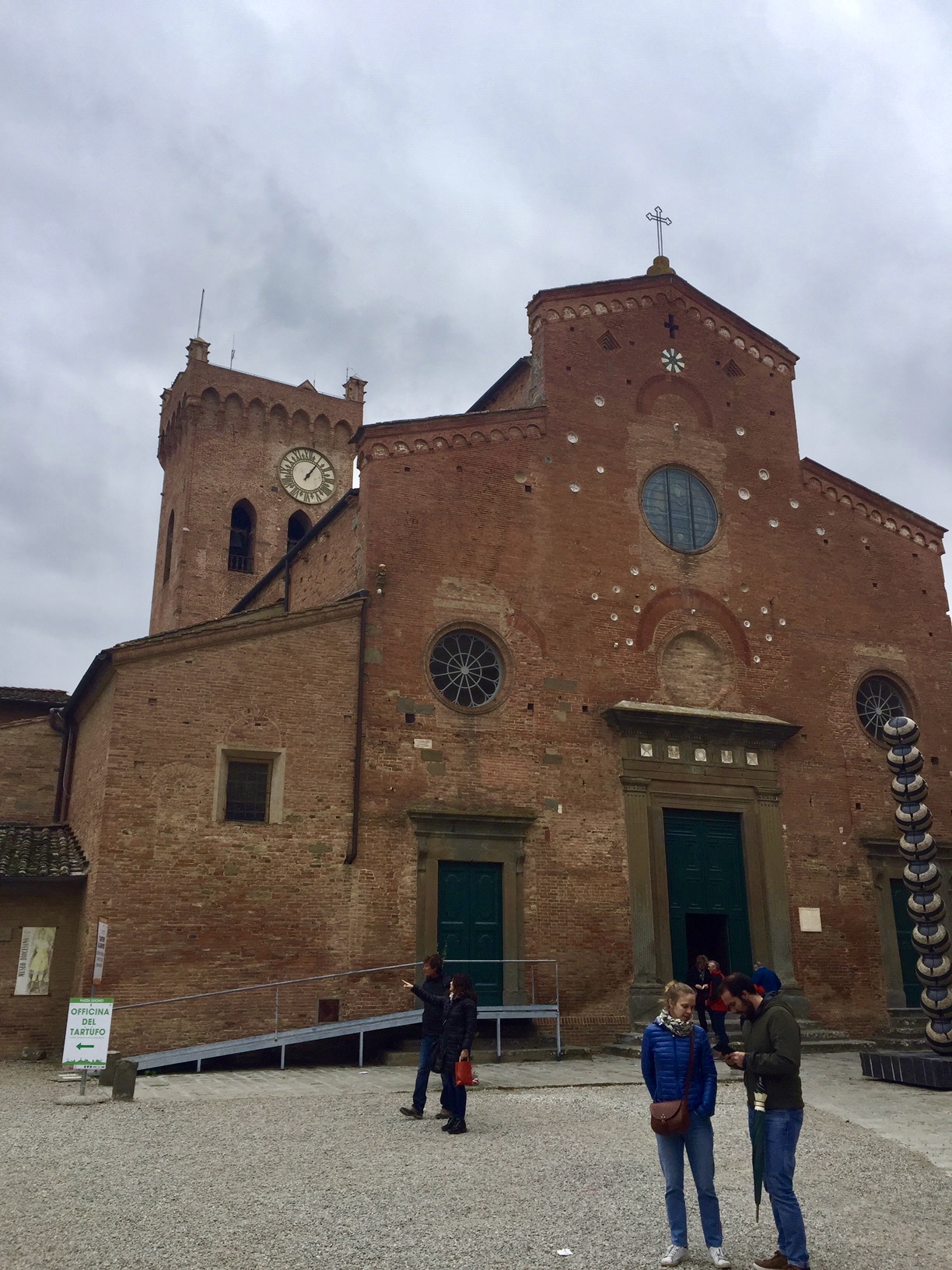
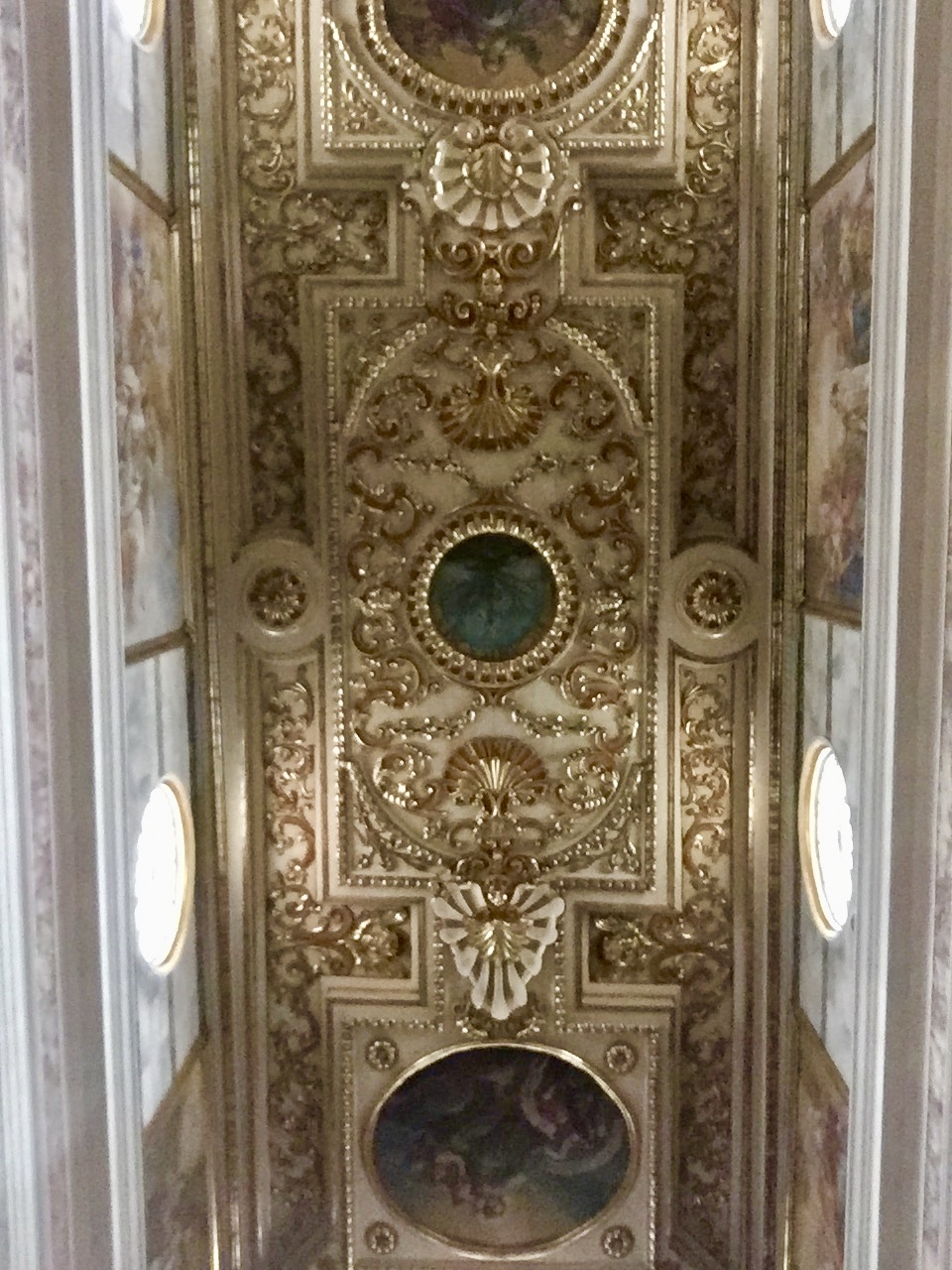
And the town’s Duomo has a simple Tuscan facade which doesn’t prepare you for the opulent interior filled with porphyry marble columns and a gorgeous, gold leafed ceiling:
The Duomo is dedicated to both Sant’ Assunta and Santo Genesio of Rome. It was originally a Romanesque building, but it has been remodelled several times and exhibits Gothic and some Renaissance arcchitectural elements. The façade incorporates a number of colorful majolica bowls. The interior has Latin cross plan with a central nave with two side aisles. The cathedral’s campanile, a fortification annexed in is called the Matilde Tower and features an asymmetrical clock. Very charming.
In medieval times, San Miniato was on the via Francigena, or the main connecting route between northern Europe and Rome. It also sits at the intersection of the Florence-Pisa and the Lucca-Siena roads. Over the centuries San Miniato was therefore exposed to a constant flow of friendly and hostile armies, traders in all manner of goods and services, and other travelers and pilgrims from near and far.
Archaeological evidence indicates that the site of the city and surrounding area has been settled since at least the paleolithic era. It would have been well known to the Etruscans, and certainly to the Romans, for whom it was a military post called “Quarto.”
The first mention in historical documents is of a small village organized around a chapel dedicated to San Miniato built by the Lombards in 783. By the end of the 10th century, San Miniato boasted a sizeable population enclosed behind a moat and protected by a castle built by Otto I.
In 1116, the new imperial vicar for Tuscany, Rabodo, established himself at San Miniato, supplanting Florence as the center of government. The site came to be known as al Tedesco, since the imperial vicars, mostly German, ruled Tuscany from there until the 13th century.
During the late 13th-century and the entire-14th century, San Miniato was drawn into the ongoing conflict between the Ghibelline and Guelph forces. Initially Ghibelline, it had become a Guelph city by 1291, allied with Florence and, in 1307, fought with other members of the Guelph league against the Ghibelline Arezzo.
By 1347 San Miniato was under Florentine control, where it remained, but for a brief period from 1367-1370 when, instigated by Pisa, it rebelled against Florence, and for another brief period between 1777 and 1779 during the Napoleonic conquest. It was still part of the Grand Duchy of Tuscany when the Duchy was absorbed into the newly formed Kingdom of Italy in 1860.
The first walls, with defensive towers, were thrown up in the 12th century during the time that Italy was dominated by Frederick Barbarossa. Under his grandson, Frederick II, the town was further fortified with expanded walls and other defensive works, including the Rocca and its tower.
The city is enclosed within a well-preserved medieval precinct. Main landmarks include:
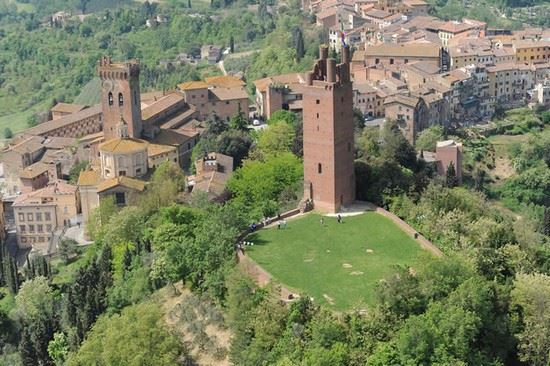
The Tower of Frederick, built by Frederick II in the 13th century on the summit of the hill at an elevation of 192 metres (630 ft), overlooking the entire Valdarno.
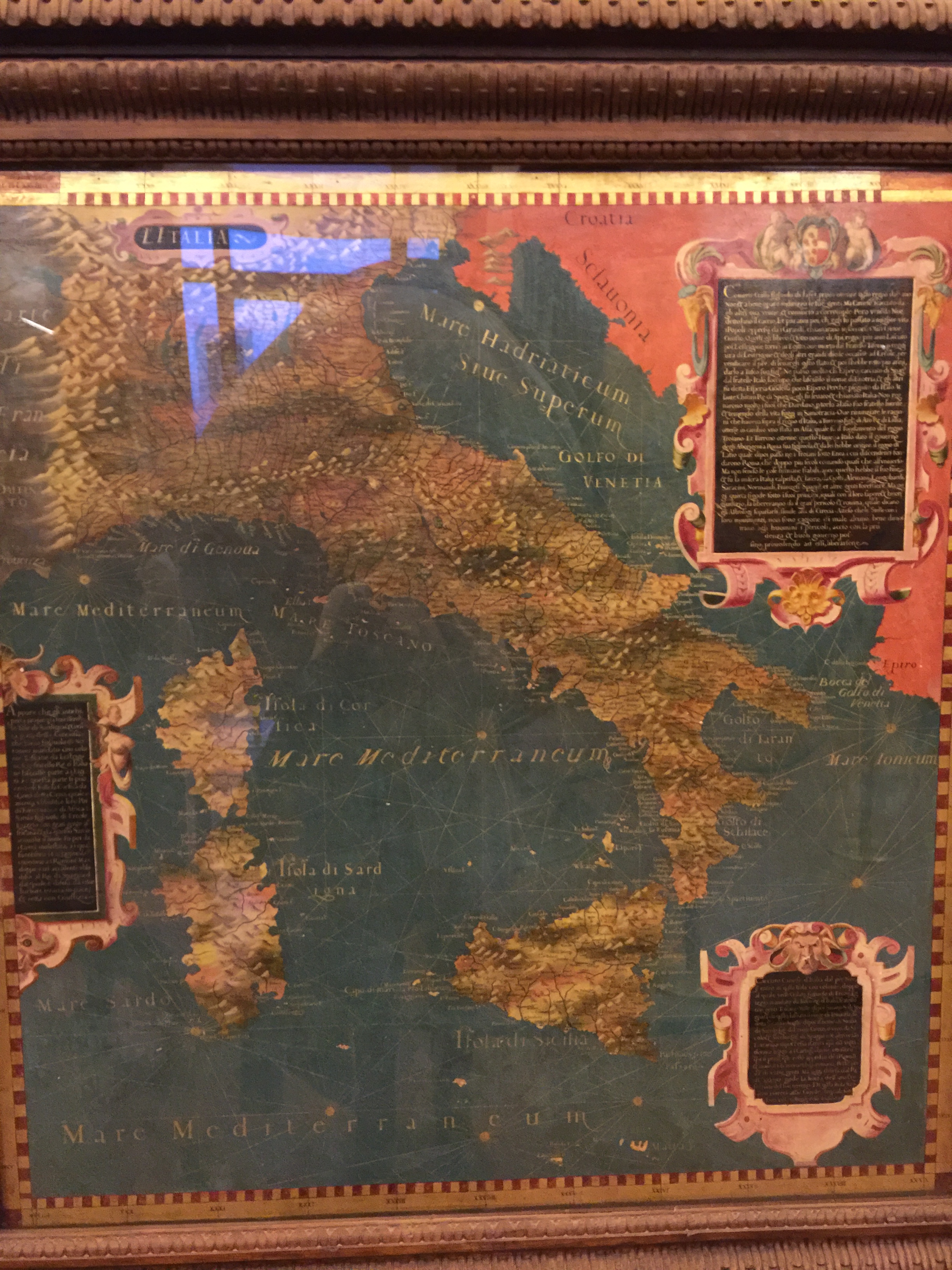
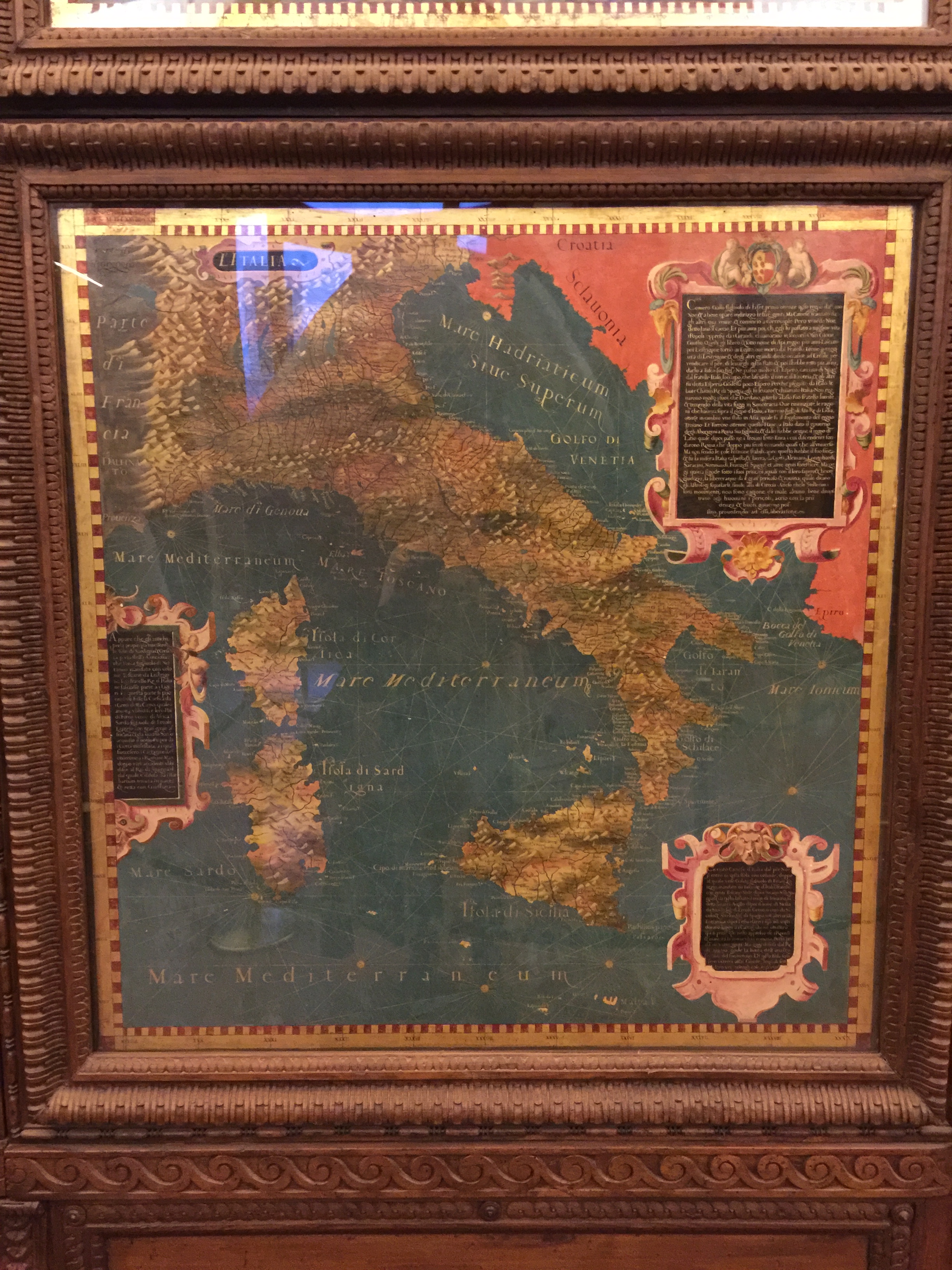
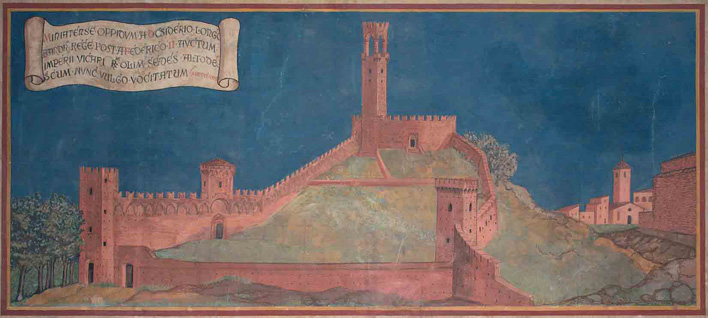
I love the frescoes showing all the parts of the Italian peninsula in the corridors of the Vatican. Interestingly enough, the tower and San Miniato is among them:
During World War II the tower was destroyed by the German army to prevent the Allies from using it as a gun sighting tower, but was reconstructed in 1958 by architect Renato Baldi.
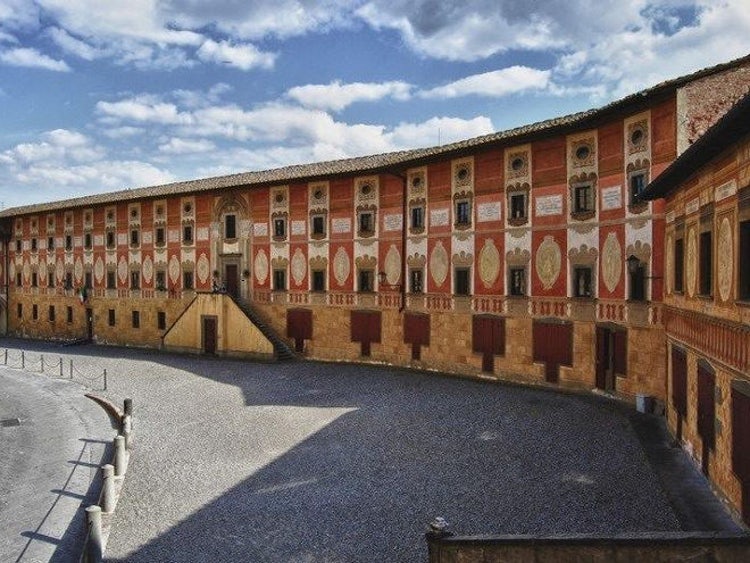
The remarkable Seminary, located in the central, unusually shaped Piazza della Repubblica, has a unique and spectacular set of frescos decorating the outside. as you can see in this photo and in my video taken yesterday:
If you can’t get to San Miniato yourself, at least you can enjoy this great Youtube video of the town filmed with the help of a drone.
It finally happened. I snapped, and needed to get to the asylum asap!
Actually, I’m kidding. But for a while yesterday I thought I might lose my marbles. I was joining a very sophisticated Florentine educational institution for a guided tour of the old grounds of Florence’s historic psychiatric hospital and it seemed as if fate was against my plan. (Maybe she thought they would keep me if I got there?). It took 2 buses and a taxi to get me to a place I could have walked to easier and faster. I made it just in time to join the tour. Live and learn; next time I’ll walk.
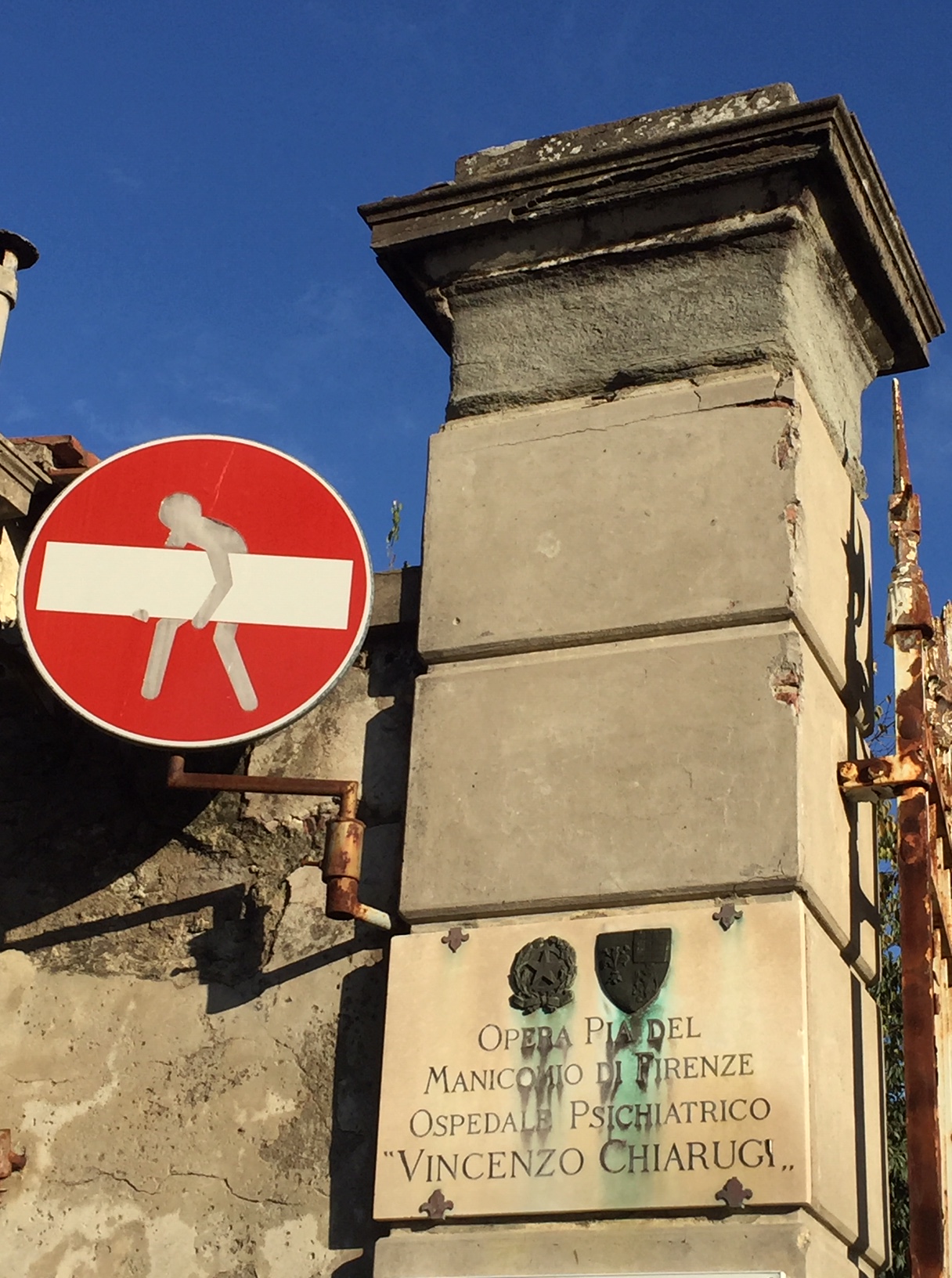
So, the place: as you can see in the plaque above, I was about to enter the Manicomio di Firenze, ospedale psichiatrico. Founded by Vincenzo Chiarugi, the psychiatric hospital was opened in 1890 (an earlier hospital was on Via San Gallo).
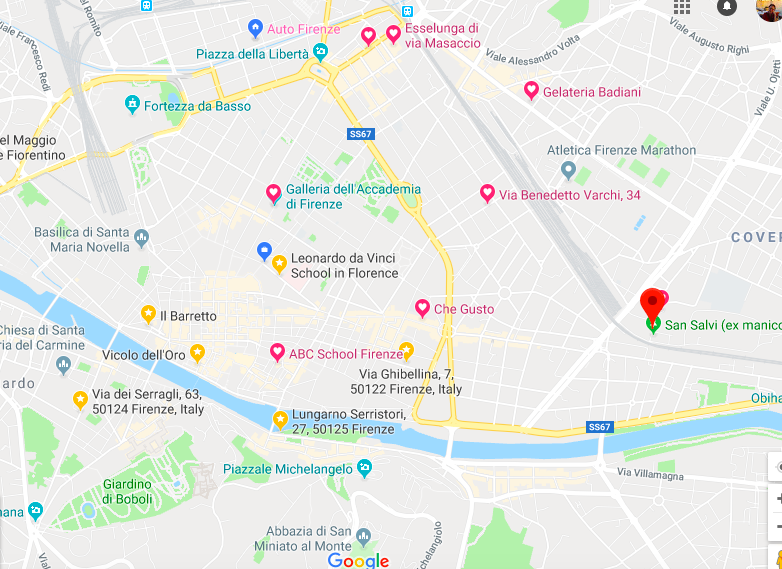
Almost 100 years later, in 1968, this hospital located on Via di San Salvi #12, was shuttered. The city has been attempting to refill the site with various cultural and non-profit organisations ever since. It would be a shame not to use this large campus, composed of 32 hectares and housed in 20 buildings, for something. It is prime property on the outer eastern edge of the city. You can find it with the big red pin below:
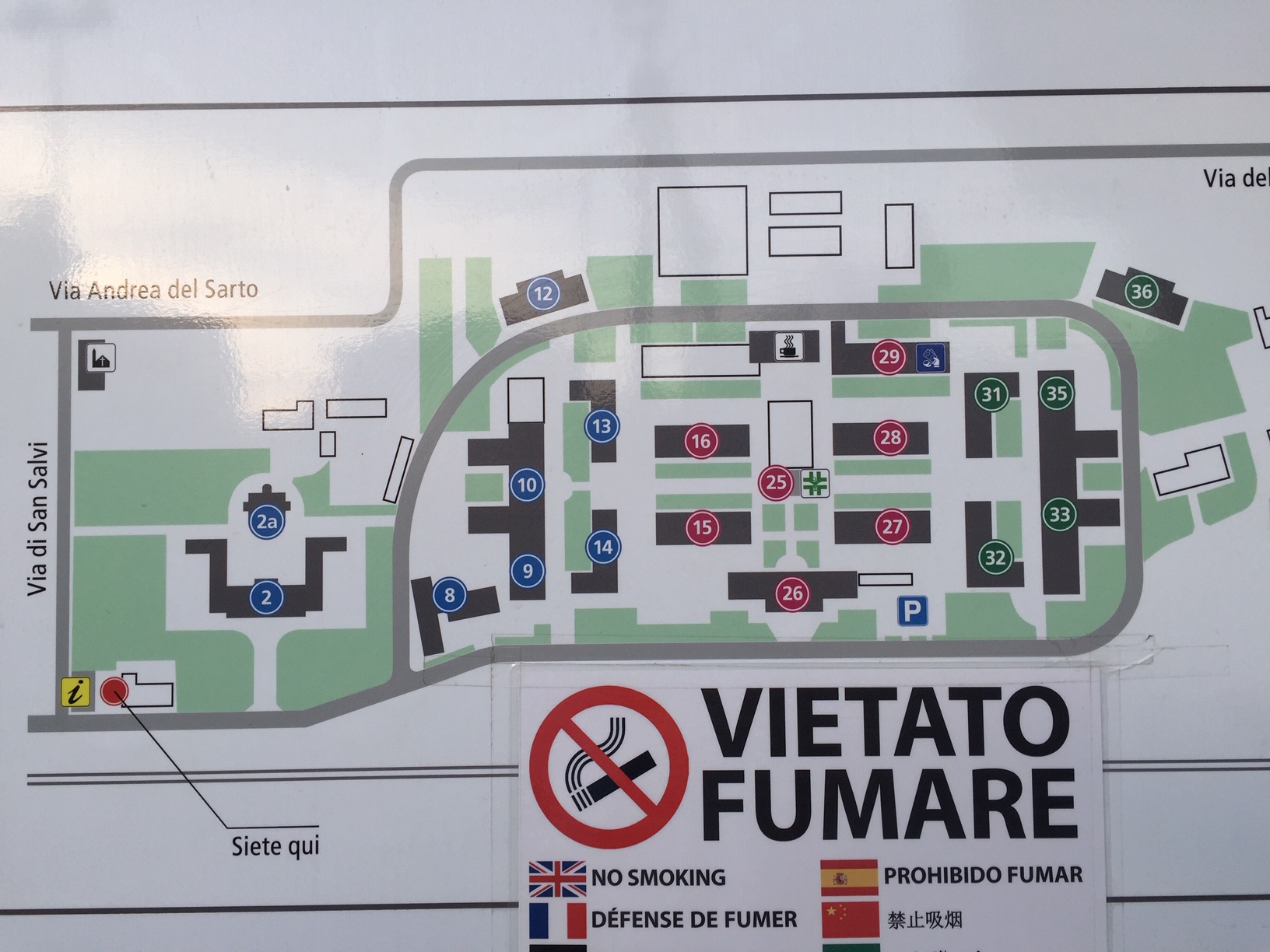
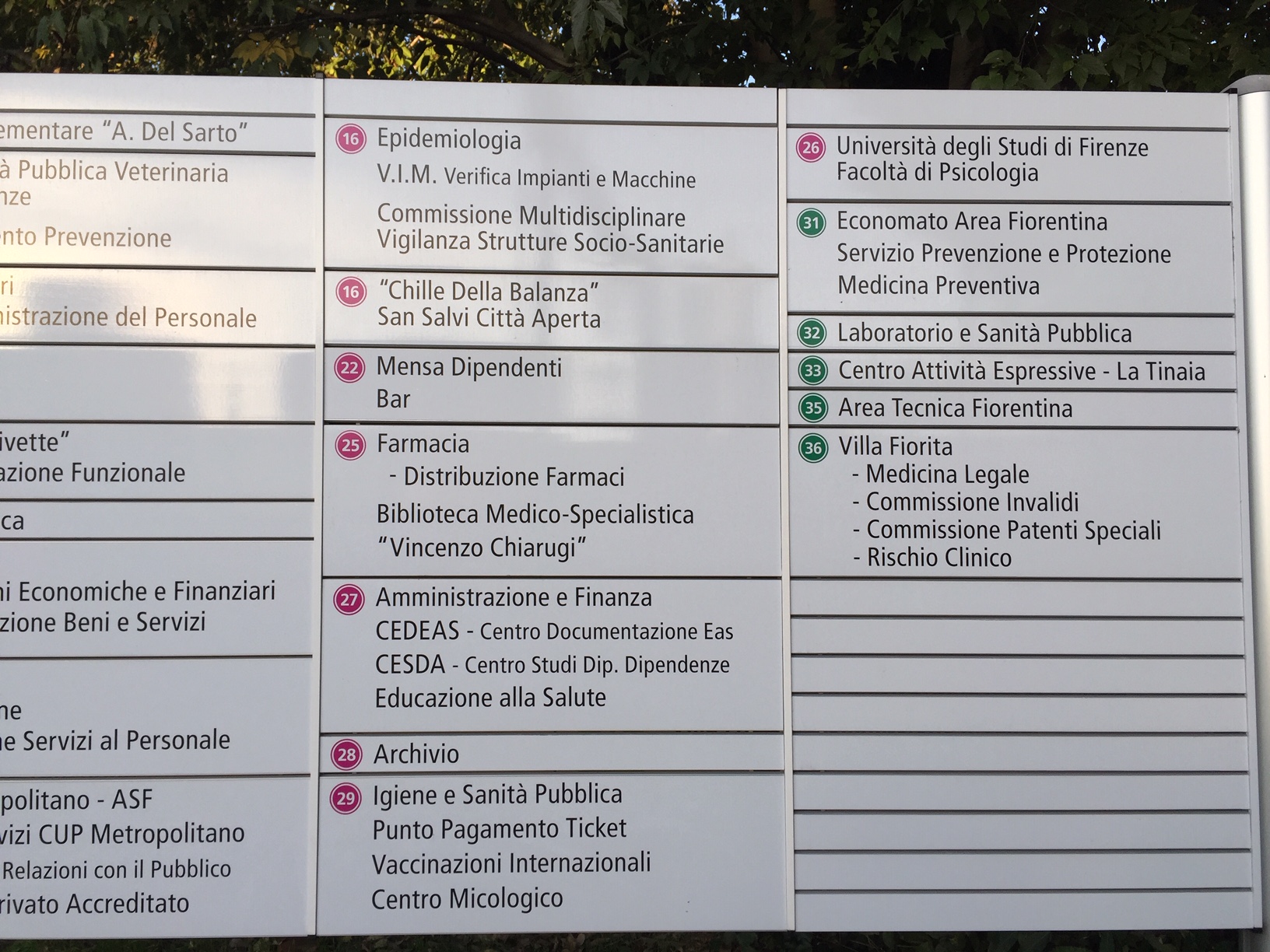
Below is a map of the San Salvi grounds, showing how the buildings are laid out and a key to how they are/will be used:
Here’s how the guided tour was advertised to an erudite audience:
“Come with us to walk along the tree-lined avenues of (hospital) San Salvi, a unique place immersed in the city and at the same time quite isolated. Here, in what was once a very active psychiatric hospital– the “crazy” poet Dino Campana was here for a while–as well as important and respected people involved with the field of psychiatry. Today – among the various cultural associations that have a home here – La Tinaia cooperative and the Chille della Balanza theatrical group make it a social and artistic destination, thanks to shows, events and meetings.”
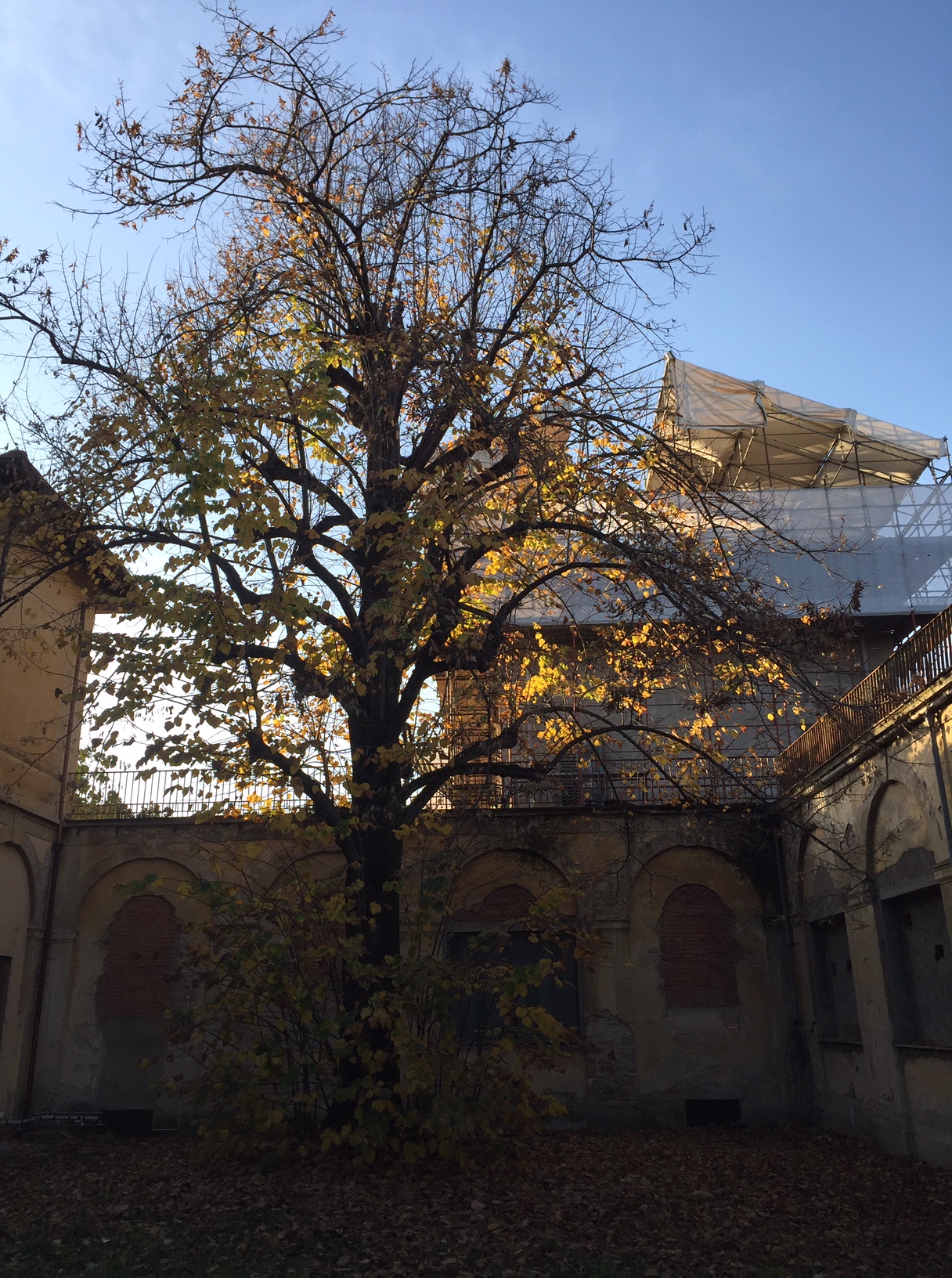
Yesterday was a beautiful fall day in Florence, following a week of continual rain, and we viewed the campus in this amazing autumn sunlight:
Two well-known Italian photographers, Carla Cerati and Gianni Berengo Gardin, documented, in chilling photographs, the story of San Salvi and its inmates, with “harsh images of women and men prisoners, jailed, bound, punished, humiliated, reduced to suffering and need.” If you Google Manicomio Firenze, you can find vintage photographs of the hospital and the patients. It was gruesome.
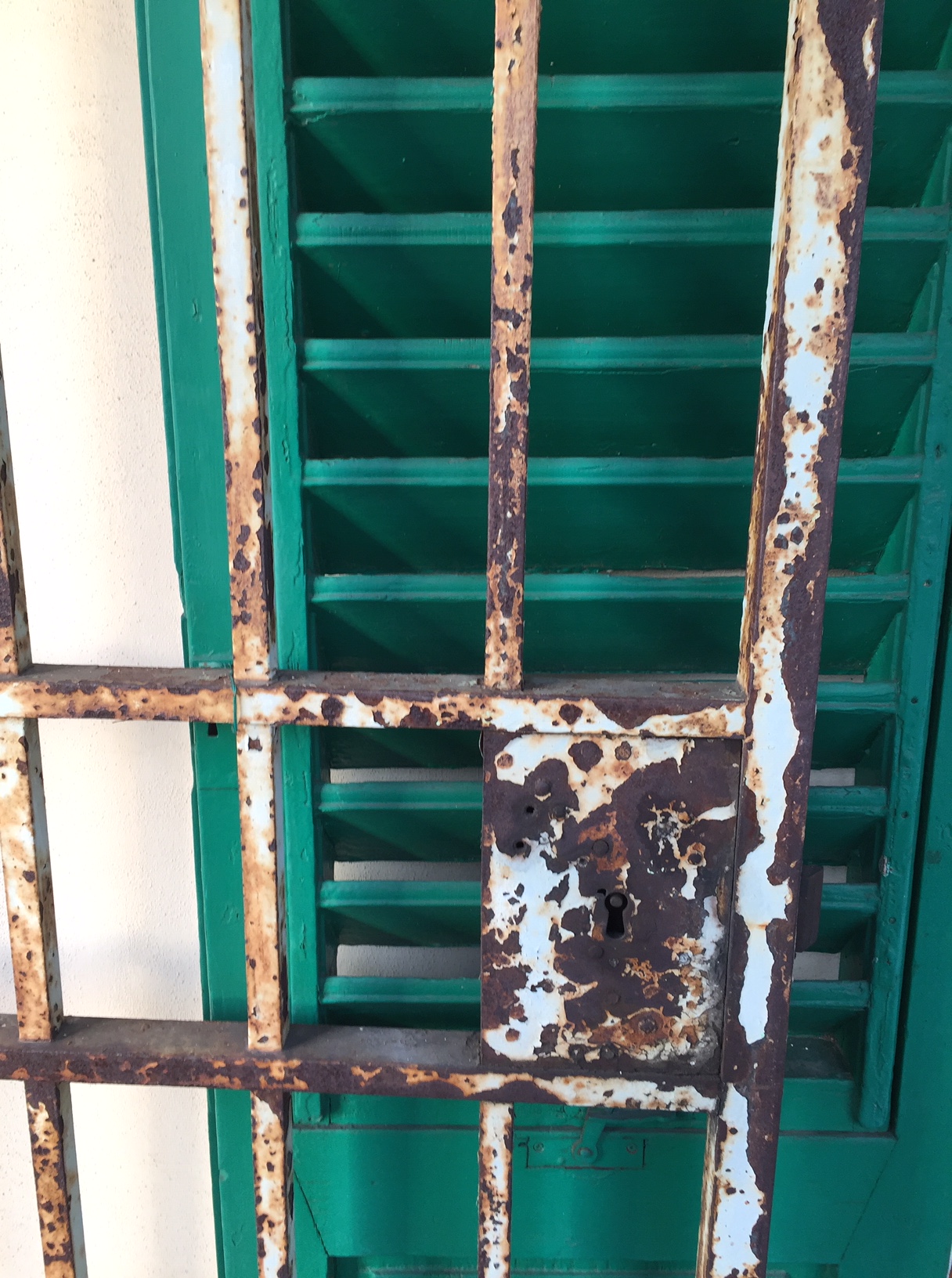
As I was leaving the campus, this old rusted iron gate seemed to sum up the history of the place for me. The key hole especially records the memory of patients locked in.
























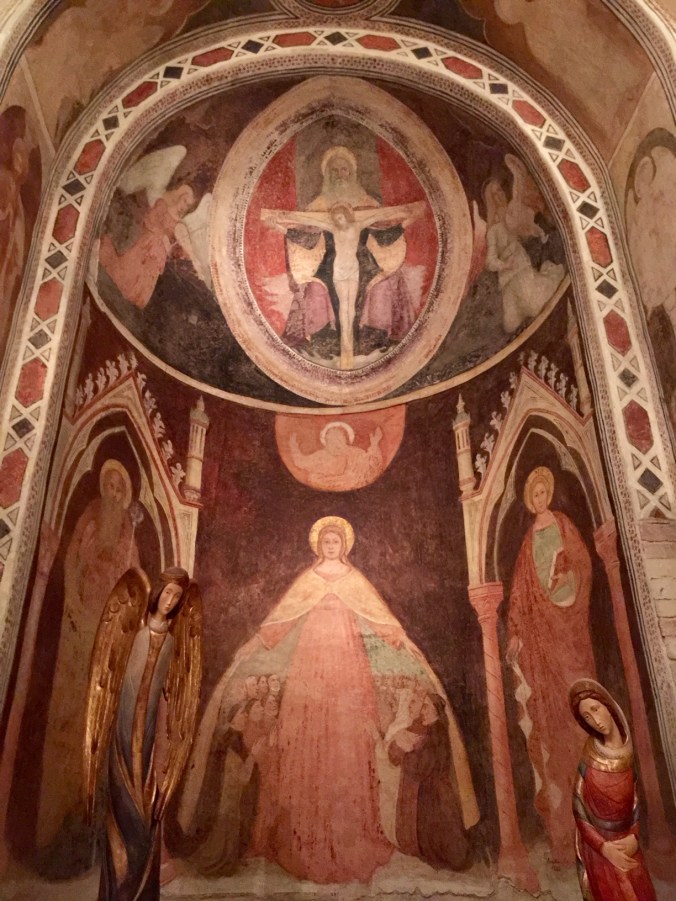
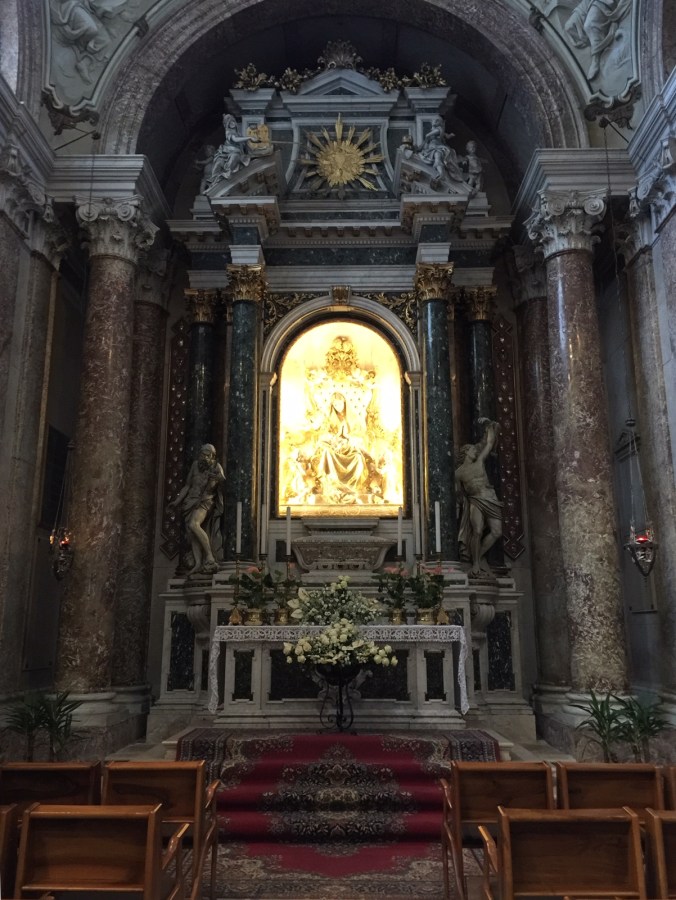

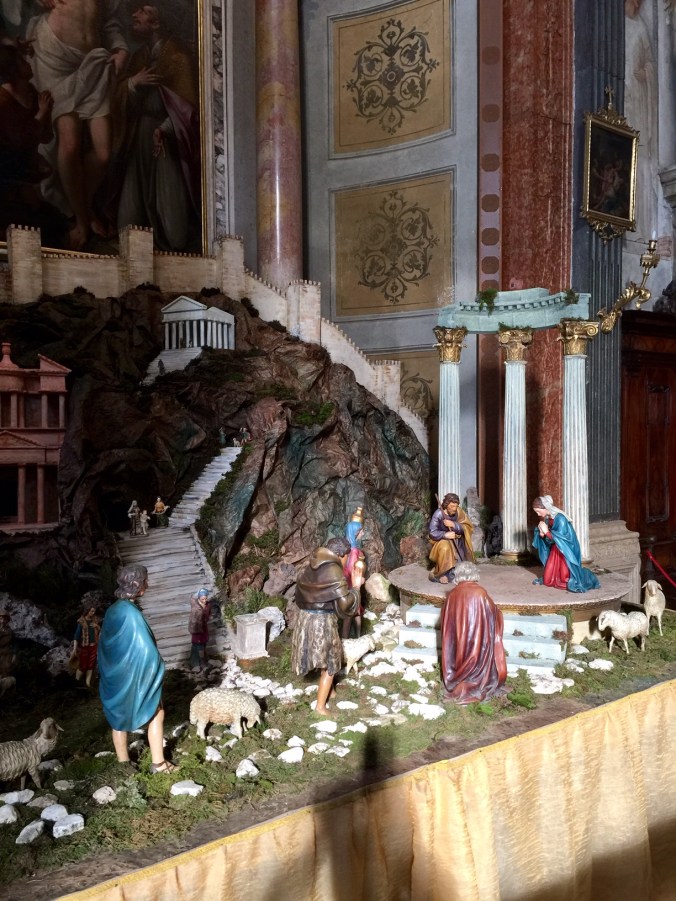
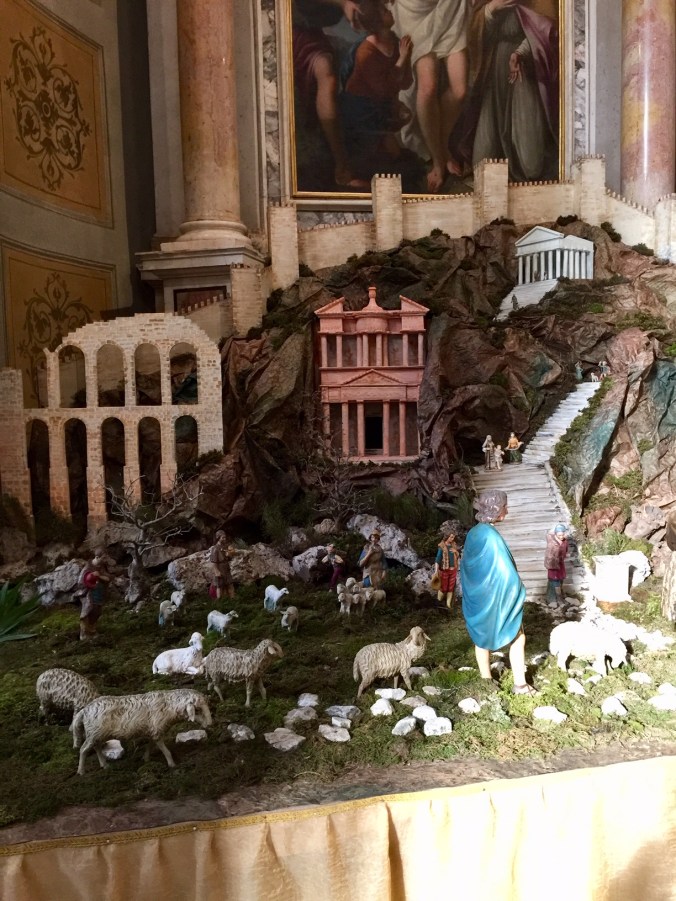












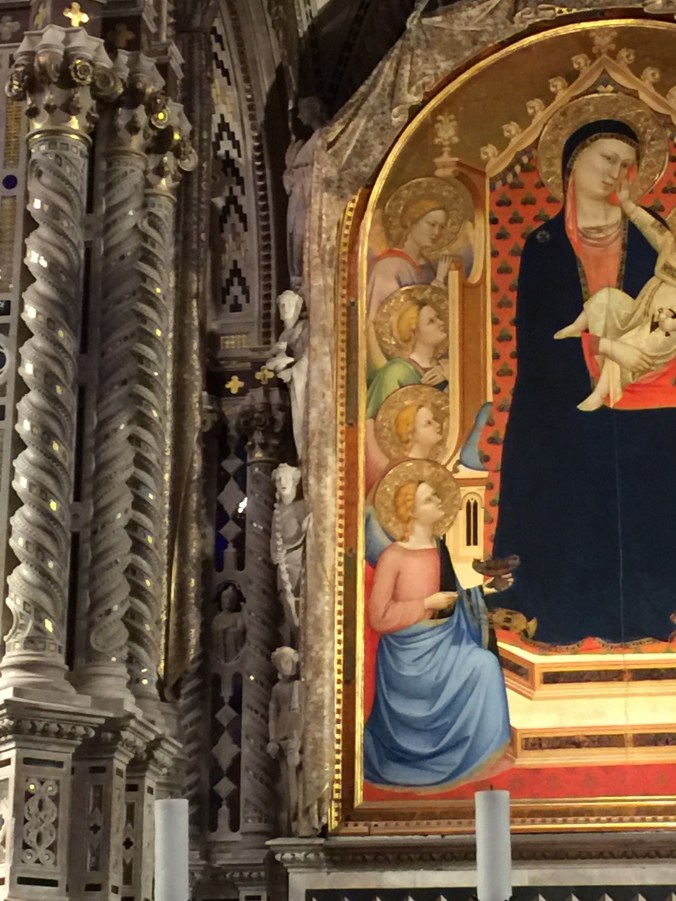
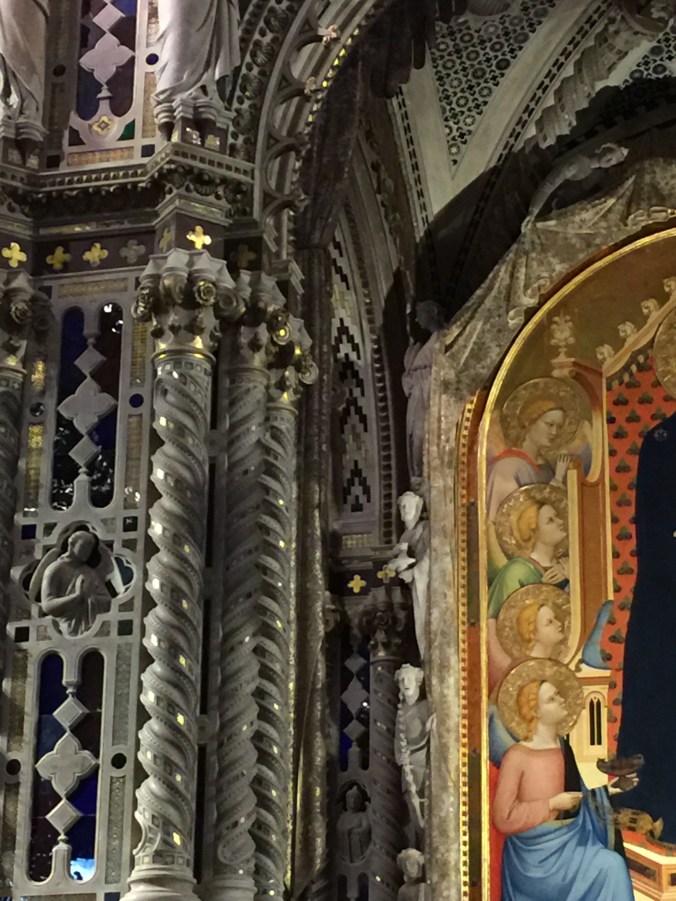



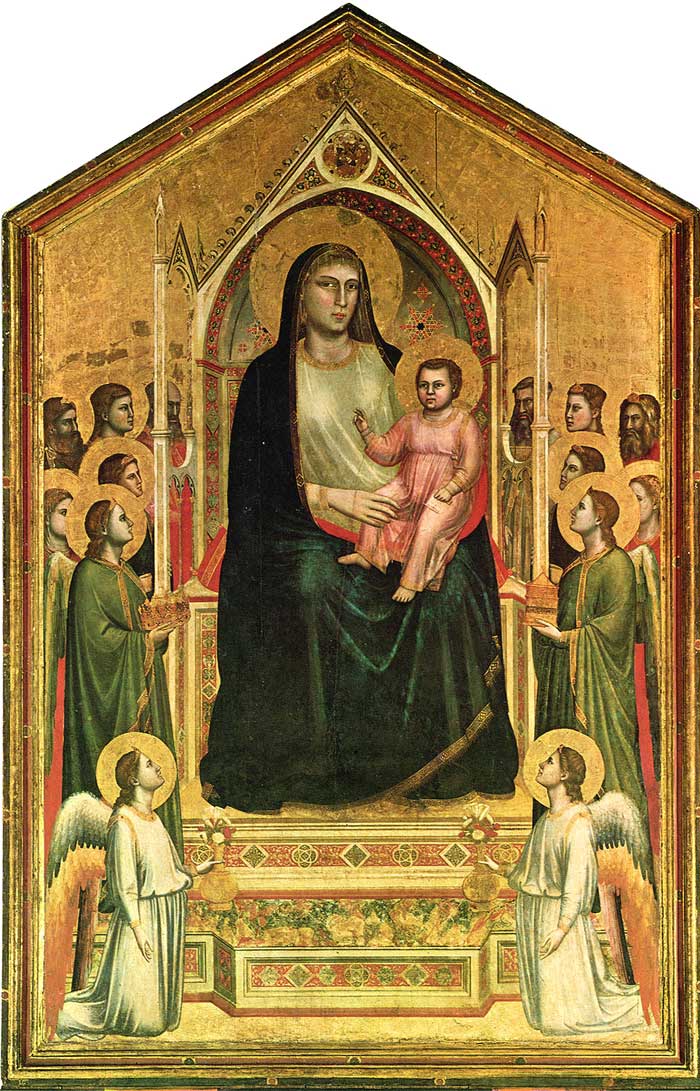
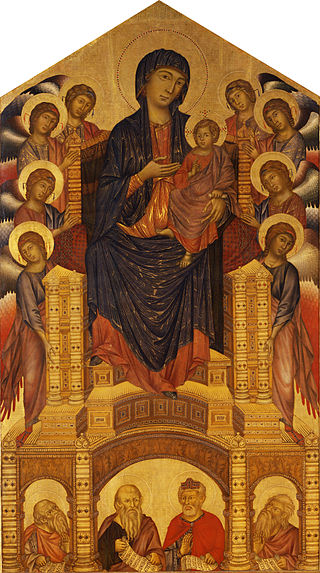 In the Uffizi galleries, Cimabue’s celebrated altarpiece (above), which was created for the same type of setting and dealing with the same subject matter as Giotto’s altarpiece, one can witness the changes in artistic approach.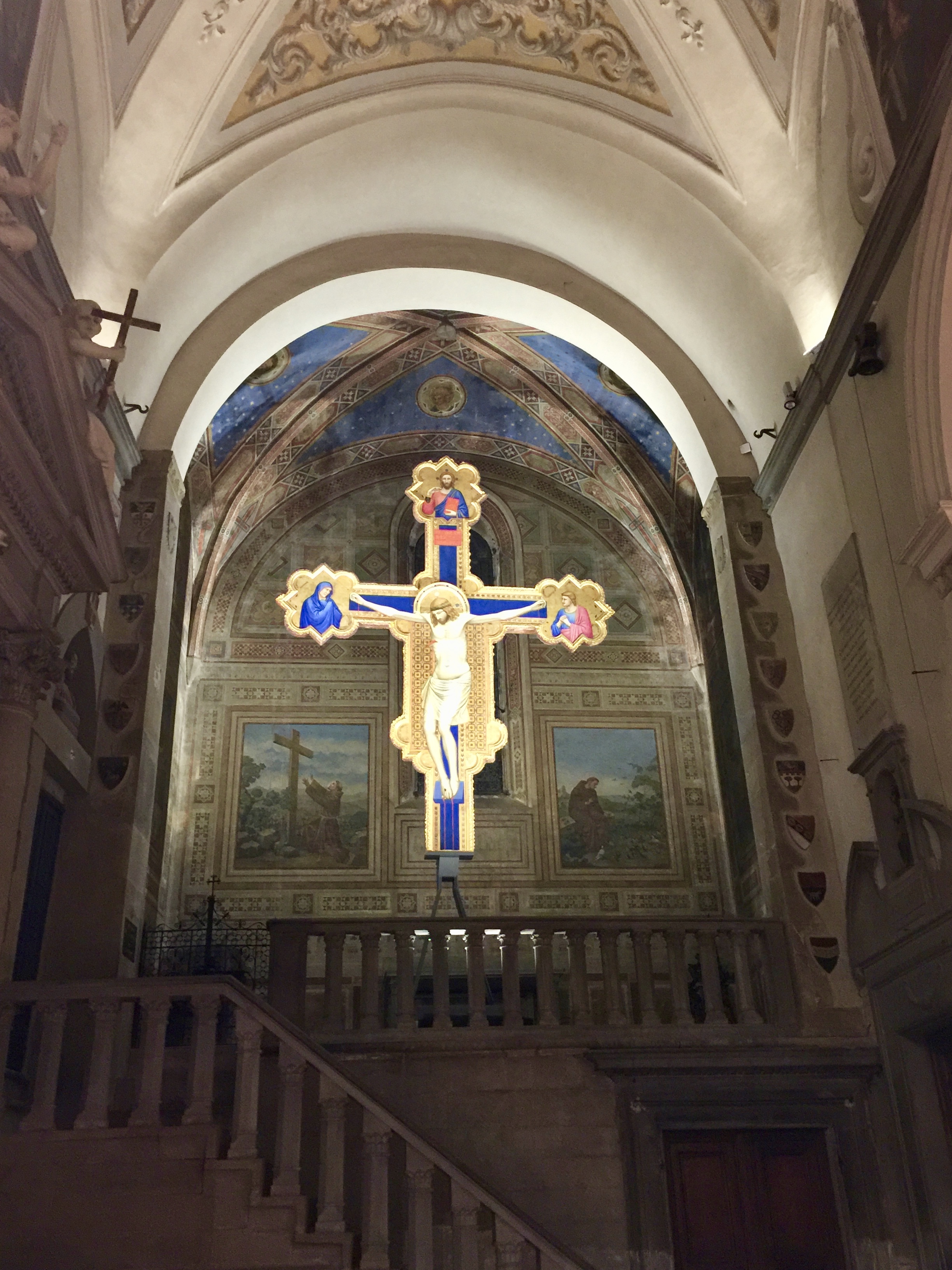


 get back, lauretta!
You must be logged in to post a comment.