Pisa, all but destroyed during WWII

SEPTEMBER–NOVEMBER 1944

The disappearance of its priceless artworks aside, Florence had been far more fortunate than Pisa. The Tuscan capital had lost a great number of medieval structures, but Florence and its citizens were alive.

In contrast, the city of Pisa—or what was left of it—was ghastly and quiet. War had emptied the streets and piazzas. While Deane Keller focused on saving Pisa’s Camposanto, his overarching concern was restoring life to the city itself.

U.S. Fifth Army troops battled the Germans for six weeks before liberating the city on September 2. Allied bombers had done their work well; the devastation had rendered the city largely uninhabitable.

Even then, German long-range artillery pounded the city for an additional three weeks. As Keller noted in his report, little remained undamaged: “Thirty-eight of her monumental churches exhibited major war damage; eight of her secular buildings of monumental importance suffered severely; numerous houses dating back to the Renaissance times were hurt . . . this in addition to the loss of her bridges, railroad station and other public utilities.”

Keller had other responsibilities in Pisa besides the Camposanto. The nearby Leaning Tower had been closed due to an accumulation of water that some thought might threaten the foundation. The water proved more of a nuisance because of the horrid smell than any structural problem. After arranging for the water to be pumped out, and rerouting traffic away from the building, he reopened the Leaning Tower to the public. It became an instant attraction for soldiers.

Well aware of Pisa’s reputation as a center of learning, Keller put his knowledge of academic life to good use by jump-starting the university. “Without the University the town has no economic future at all let alone its importance as an intellectual center. All its factories and industries are destroyed.” It took two months to locate the faculty, remove mines that the Germans had placed throughout the university’s buildings, and return to its library books that had been stored off-site for safekeeping.

On November 25, General Hume returned to Pisa and hosted a ceremony celebrating the reopening and the enrollment of some six hundred students. The city’s key institution was operational. The dead city Keller had encountered when he first arrived started to resuscitate.

Edsel, Robert M.. Saving Italy: The Race to Rescue a Nation’s Treasures from the Nazis (p. 204). W. W. Norton & Company. Kindle Edition.


The bombing of Pompeii, 1943, on the anniversary of eruption of Mt. Vesuvius.

Things didn’t go so well for Italy’s artistic treasures at the beginning of the Allied invasion.  To wit:

No one wanted another embarrassing incident, such as the recent bombing of Pompeii. The Allies had flown at least eleven missions, dropping 156 bombs on suspected German command posts around the ancient archaeological site. This accomplished little beyond killing Pompeii’s dead, again and again. The southern portion of the site lay in rubble; the Pompeii Antiquarium was “half demolished” with “serious losses to the collection.” Adding irony to insult, the date of the first Allied raid—August 24—marked the 1,864th anniversary of the devastating eruption of Mount Vesuvius.

Edsel, Robert M.. Saving Italy: The Race to Rescue a Nation’s Treasures from the Nazis (pp. 61-62). W. W. Norton & Company. Kindle Edition.

Palermo, December 1943

The daily life in Palermo of a Monument Man, described in a letter sent home:

It’s a curious city of poverty & plenty, breadlines & marvelous pastry cakes, telephone wires strung by the Signal Corps on the heads & outstretched arms of marble saints, mounds of uncleared rubble in alleys, bombed Baroque churches, hot roasted chestnuts, walnuts, almonds & oranges, salvage dumps & hospitals, blackouts & bomb shelters. The things which effect [sic] life most are the lack of glass—most windows were shattered, shortage of water (I have to fill my helmet & wash in it morning & night), constant G.I. food (all restaurants are off bounds) & the cold (one is never quite warm).

Edsel, Robert M.. Saving Italy: The Race to Rescue a Nation’s Treasures from the Nazis (pp. 59-60). W. W. Norton & Company. Kindle Edition.

The streets are alive with undercurrents of history: Buondelmonti Tower.

All you have to do is stop from time to time, then you will receive the currents.

IMG_4021

In the past 6 months, I’ve said this over and over:  “I walk by this landmark…several times a week, a day, a month” and it’s true, I do.  In Florence, every inch of earth is covered or filled with history.

About a block from where I live stands this medieval tower, the Torre dei Buondelmonti, from 12 or 13th century.  I use the alley way beside it at least daily. I always admire this tower, as I walk by.

IMG_4022

It’s so tall and the streets of Florence are so narrow that it is hard to get the tower in one shot.

IMG_4023


180px-Torre_dei_buondelmonti_1450pxtorre_dei_buondelmonti_011

Torre_dei_buondelmonti,_01

This appearance of this antique tower is very faithful to the 
original 13th century appearance. On the ground floor there
is an opening with a double arch, while on the upper floors 
there are five high and narrow windows of different sizes.

The ground floor exhibits a slight use of rusticated ashlar masonry, known in Italian as bugnato; this is among the first examples 
of its use in Florence. At the top there is a stone filaretto,
while the topfloor has a simpler brickwork. The tower's left
side, facing the alleyway called the Chiasso delle Misure,
originally had two doors and a window, which were enclosed
at later revision.

In the 14th century, the Buondelmonti family moved from the location of this tower on Via delle Terme, to the newer Palazzo Buondelmonti in Piazza Santa Trinita.

The feud between the Buondelmonti and other Florentine aristocratic families is well known.  The famous wedding that ended in Buondelmonti bloodshed took place not 5 minutes away, near the Ponte Vecchio in a particular event during the Guelf and Ghibelline conflicts. In 1215, during a banquet celebrating the ennoblement of a young Florentine, one of the guests, Buondelmonte de’ Buondelmonti, stabbed a rival in the arm. In restitution for the injury and dishonor, the elders decided that young Buondelmonte should wed a girl from the Amidei family. That arranged, the Amidei and Buondelmonti families arranged an engagement ceremony, where Buondelmonte was to publicly pledge troth to the Amidei girl. With the Amidei assembled in the piazza, the young Buondelmonte man rode past the Amidei, and instead asked for the hand of a girl from the Donati family, members of the Guelf faction.

Furious, the Amidei and allies plotted revenge. They debated whether they should scar Buondelmonte’s face, beat him up, or kill him. Mosca di Lamberti took the floor and argued that they should kill him at the place where he had dishonoured them. His famous words, ‘cosa fatta capo ha‘, were recorded in Dante’s Inferno and an earlier chronicle known as Pseudo-Latini. On Easter morning, on his way to marry the Donati girl, as Buondelmonte crossed the Ponte Vecchio, he was waylaid by the Amidei and their allies, and murdered. The Buondelmonte murder and its associated clan rivalry became the legendary origin of the Guelf and Ghibelline conflict in Florence.  For more, see https://en.wikipedia.org/wiki/Amidei


Isola Tiberino, Roma

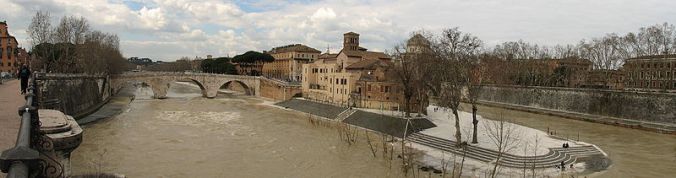
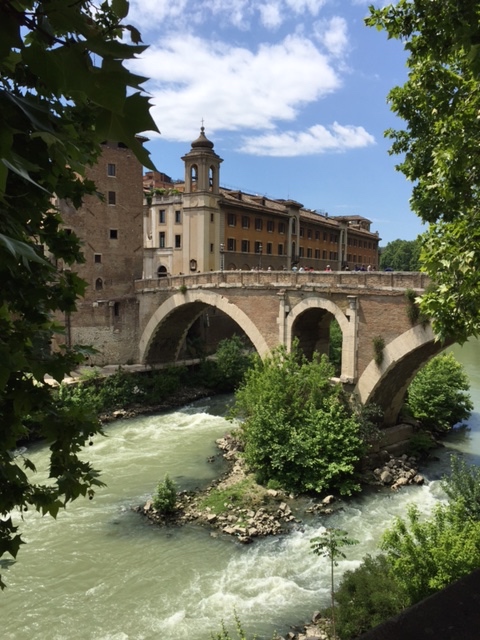
If you like to stroll along the banks of the Tiber River, as I do when the weather is fine, you’ll eventually encounter the small river island known as Isola Tiberino.

800px-Tiber_island_panorama

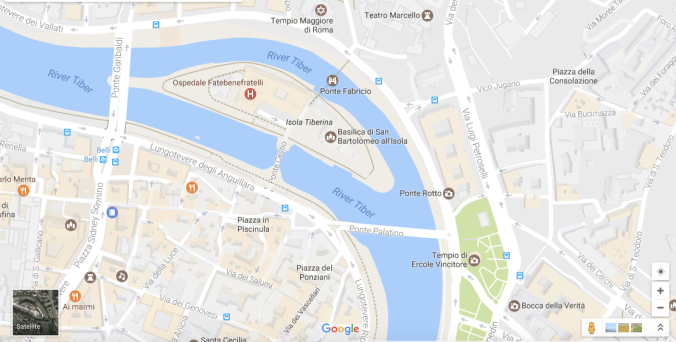
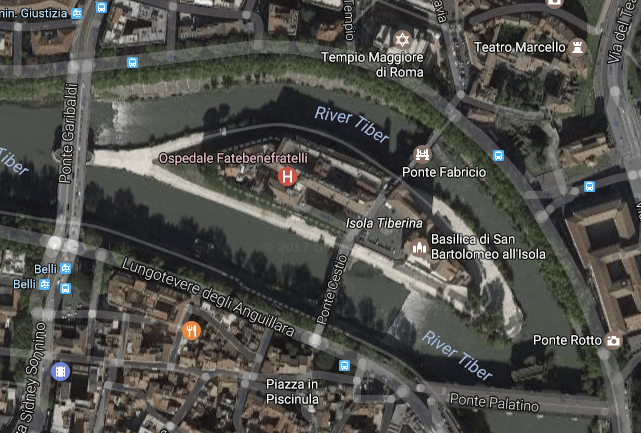
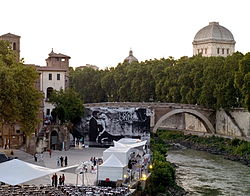
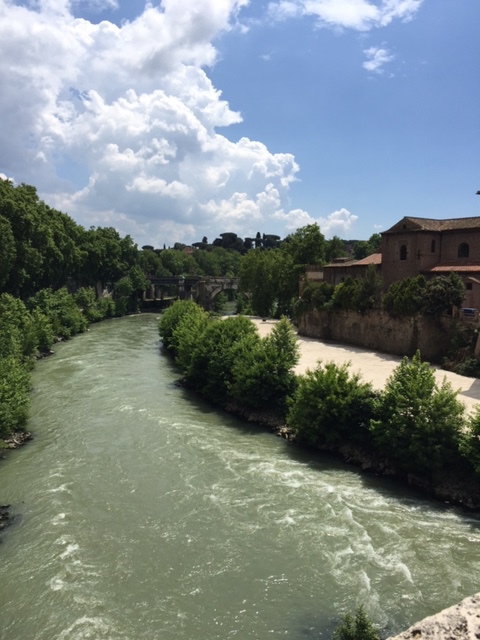
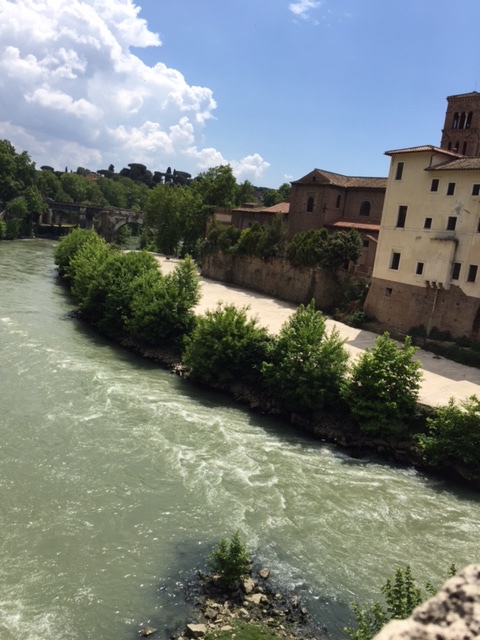
The Tiber Island is the only island in the southern bend of the Tiber river. The purposely boat-shaped island is approximately 270 metres (890 feet) long and 67 metres (220 feet) wide.  It is  and has been connected with bridges to both sides of the river since antiquity.

Screen Shot 2017-05-10 at 12.13.08 PM.png

In antiquity, an ancient temple of Asclepius, the Greek god of medicine and healing, was built on the island.

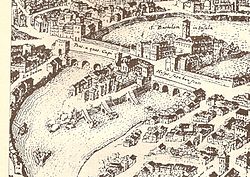
Ancient sources say there was a great plague in Rome in 293 BC and the Senate consulted the Sibyl who instructed them to build a temple to Aesculapius. The Senate sent a delegation to Epidauros to obtain a statue of the deity. As instructed, the delegation went on board a ship to sail out and obtain a statue.

Screen Shot 2017-05-10 at 12.39.49 PM.png

They obtained a snake from a temple and put it on the ship. It immediately curled itself around the ship’s mast, which was deemed as a good sign by them. Upon their return up the Tiber river, the snake is said to have slithered off the ship and swam onto the island. They believed that this was a sign from Aesculapius, a sign which meant that he wanted his temple to be built on that island.

This location may have been chosen for the Aesculapius Temple because it was separate from the rest of the city, which could help protect whoever was there from plague and illnesses.


250px-Tiber_Island


250px-Cinema_ile_Tiberine_Rome


250px-Tiber.island.church.rome.arp

The island eventually became so identified with that temple, that it was modeled to resemble a ship as a reminder of how it came to be. The Romans added travertine facing by the banks to resemble a ship’s prow and stern, and erected an obelisk in the middle to symbolizing the vessel’s mast. Walls were put around the island, and it came to resemble a Roman ship. Faint vestiges of Aesculapius’ rod with an entwining snake are still visible on the “prow”.

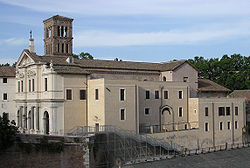
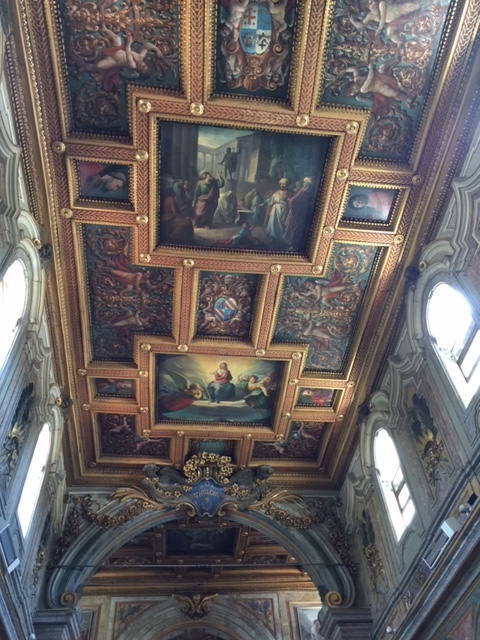
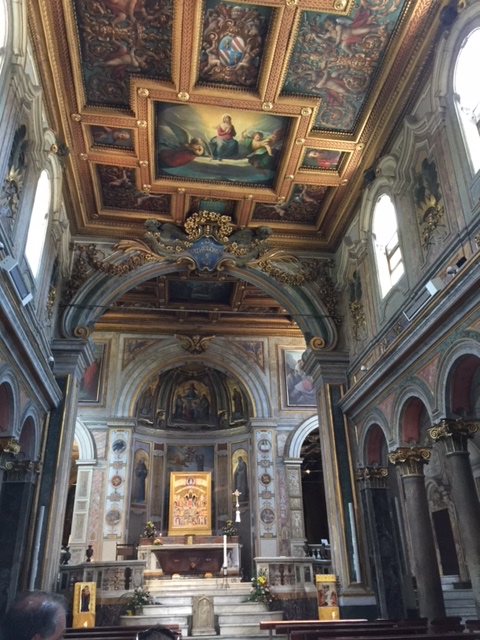
In 998 San Bartolomeo all’Isola (with a different original name) was built over the Aesculapius temple’s ruins on the eastern side (downstream end) of the island.


IMG_2876


The island is still considered a place of healing because a hospital, founded in 1584, was built on the island and is still operating. It is staffed by the Hospitaller Order of St. John of God or “Fatebenefratelli”. The hospital was built on the western half of the island.

IMG_2877

IMG_2884


Interior ceiling and apse of the Basilica di San Bartolomeo:

IMG_2880IMG_2881


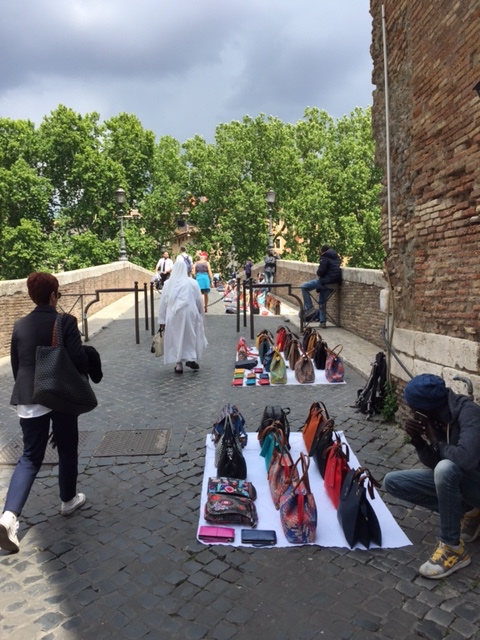
Today the island is a popular place to stroll on a fine day, to dine in the couple of trattorie, or to have an ice cream.  African hawkers of knock-off goods line the 2 bridges, selling their wares until officials come along.

IMG_2883

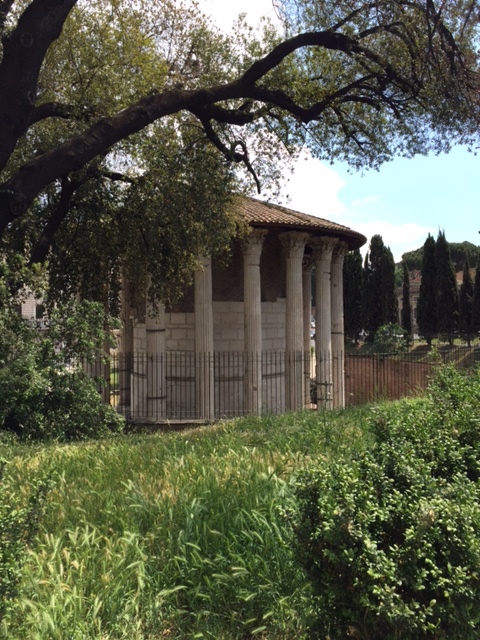
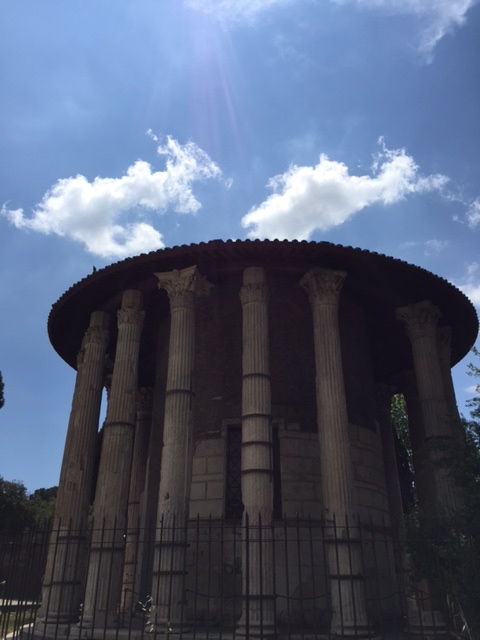
2200 year old Roman temple, Hercules Olivarius

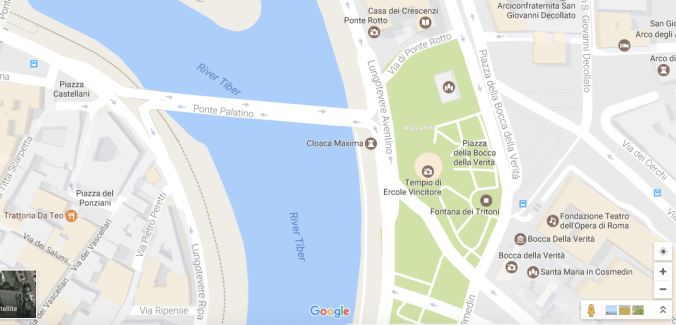
There’s a beautiful, small, round Roman temple not far from the banks of the Tiber River that seems to get no love.
IMG_2885
Screen Shot 2017-05-09 at 7.54.56 PM.png
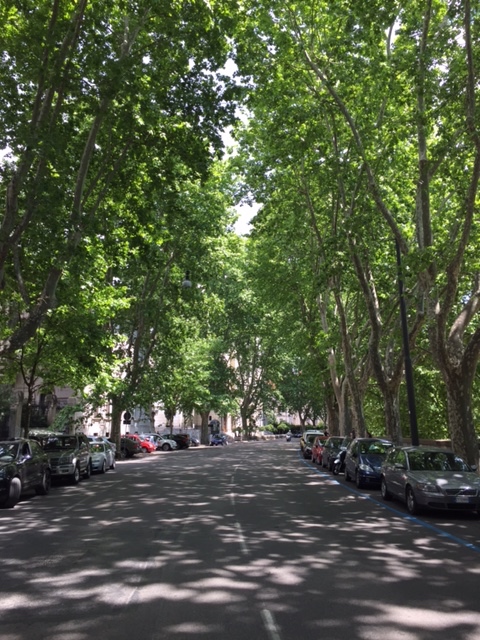
But, I love it!  I took a long walk today along the Rome side of the Tiber, under the beautiful plane trees.  The street looks like this:
IMG_2874
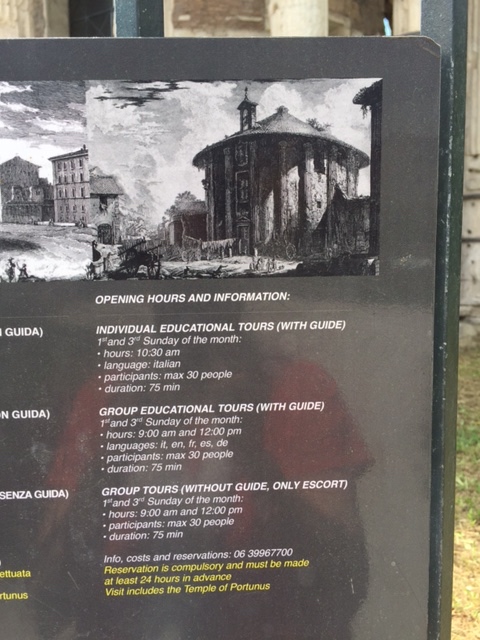
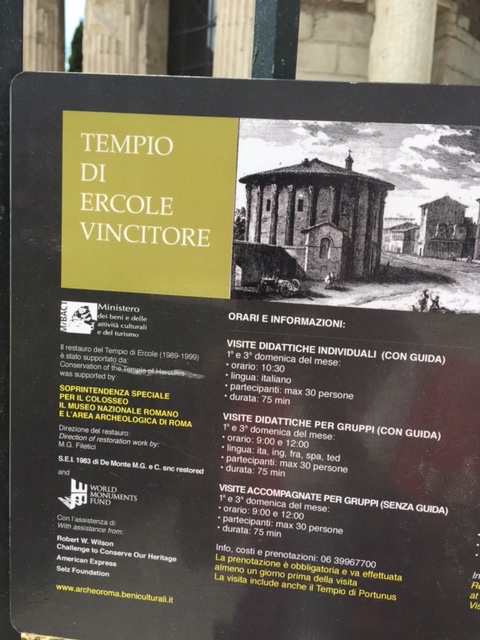
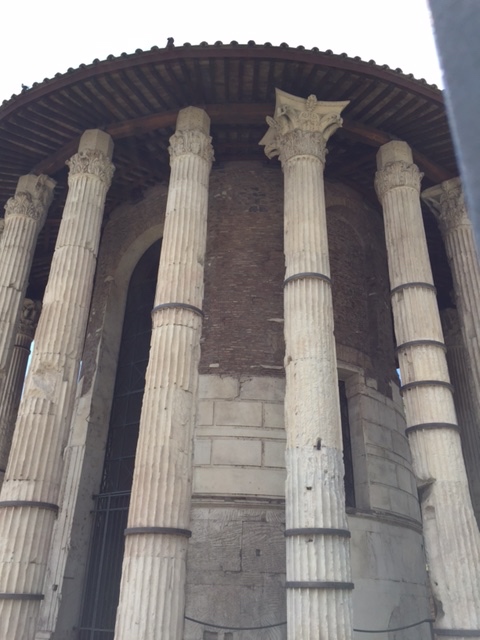
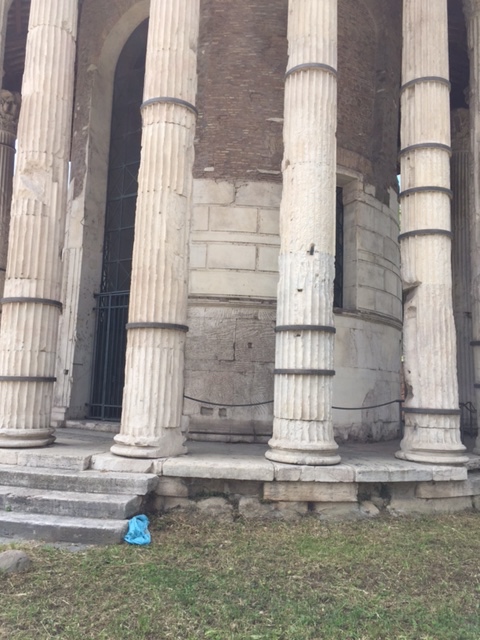
The temple I love is the Temple of Hercules the Victor (Italian: Tempio di Ercole Vincitore). It dates to the later 2nd century BC, consisting of a circular cella within a concentric ring of twenty Corinthian columns. These elements supported an architrave, which has disappeared.
The original wall of the cella, built of travertine and marble blocks. The temple is the earliest surviving marble building in Rome.
IMG_2887
IMG_2888
IMG_2889
IMG_2890
IMG_2891


Oh, the places you’ll build! Hadrian’s Villa,Tivoli

Sometimes you just need some space for yourself.
Especially if you need to get away from the hustle and bustle of running an Empire.  This is really important when you feel you are not appreciated by those you rule.  Ungrateful is what they are.
images-3
That’s exactly the position Hadrian found himself in, so he built the modest little Villa Adriana (at Tivoli, near Rome) for himself.
images-2
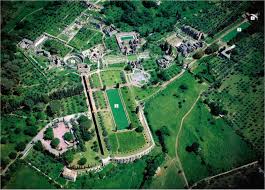
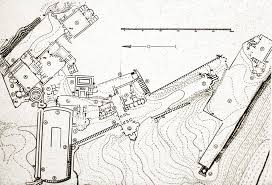
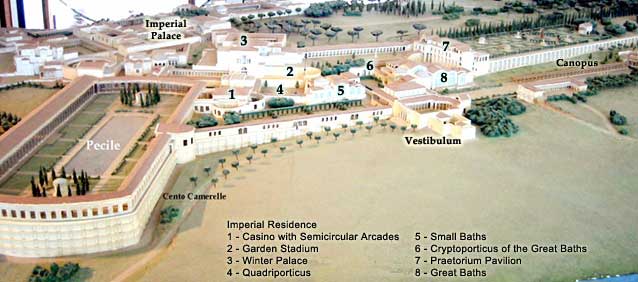
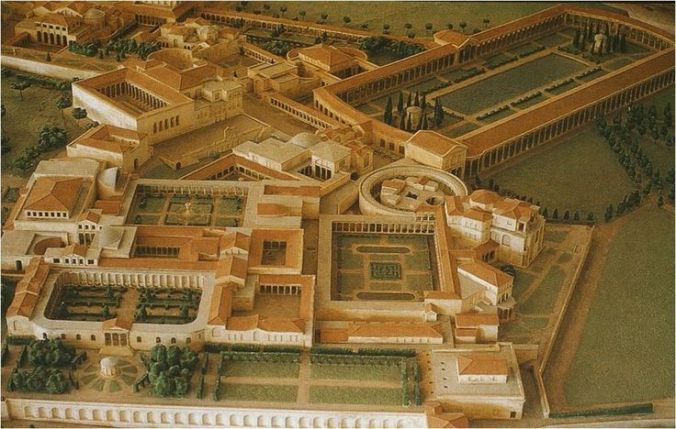
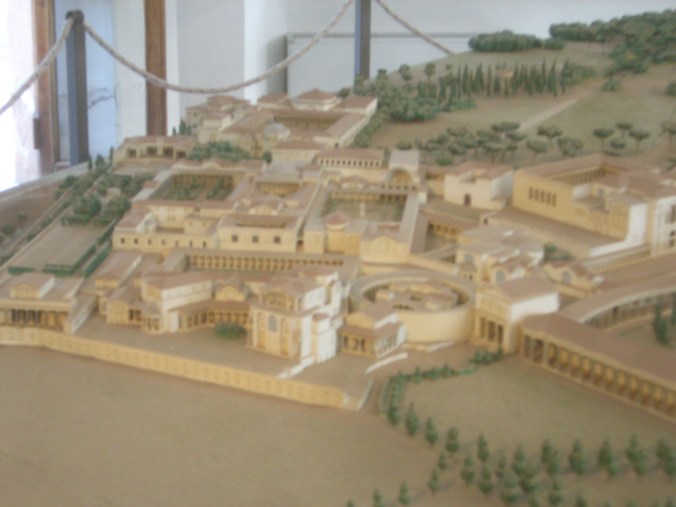
Well, I understate it a bit: his villa was an exceptional complex of classical buildings created in the 2nd century A.D.. Hadrian’s villa combined the best elements of the architectural heritage of Egypt, Greece and Rome as Hadrian attempted to build himself an ‘ideal city,’ albeit in the country, as his personal retreat.
Representation of the West-side of Hadrian's Villa
The villa was a sumptuous complex of over 30 buildings, covering an area of at least 100 hectares (c. 250 acres), maybe even 300 hectares. Although Hadrian’s Villa is a Unesco world Heritage Site, much of it remains unexcavated.
images-4
Hadrian’s choice of an imperial palace outside Rome, instead one of the several palaces in the city, was probably influenced by the miserable relations he had with the senate and the local Roman aristocracy!
25ac4f3298254a6923fb1663b70a39b7
Hadrian was born in Spain, just like his predecessor Trajan, and the senate and the local aristocracy had trouble coming to terms with another provincial on the imperial throne.
VirtualHadriansVilla_IDIALab_Login

The way Hadrian had assumed power only reinforced their opposition to him. Trajan adopted Hadrian on his deathbed; this was immediately cast in doubt, and when four military leaders, all Roman aristocrats who had been close to Trajan and hence possible contenders for the throne, were assassinated immediately after Trajan’s death, the senate immediately suspected Hadrian of having ordered the killings.

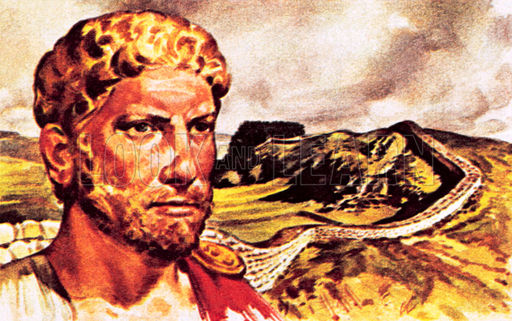
The Roman Emperor Hadrian and Hadrian's Wall

Hadrian didn’t return to Rome until eleven months after Trajan’s death, and denied any wrongdoing, but his relationship with the senate never recovered from the crisis. As a consequence Hadrian stayed very little in Rome. He travelled extensively throughout most of the empire in two prolonged periods, in 121-125 CE and in 128-134 CE, and when in Italy he avoided Rome.  You see him in the picture above with a representation of his famous wall, built wherever he felt it was needed in his Empire.

Representations of Hadrian's Villa site maps 1

When he absolutely had to be in Rome, he had his villa in Tivoli. Located some 28 km E. of Rome, Tivoli stood on a hillside, surrounded by two minor tributaries to the Aniene.  Thus Tivoli and the villa were easily reached from Rome by land via the Via Tiburtina and by boat on the Aniene, which was navigable at the time.

While I still don’t have access to my pictures from my camera, here’s what I can post until I get them.

In fact, to show off his tastes and inclinations, Hadrian reproduced inside this residence the places and monuments that had fascinated him during his innumerable travels.

images-4

IMG_2726

IMG_2727

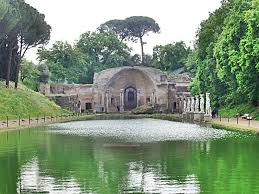
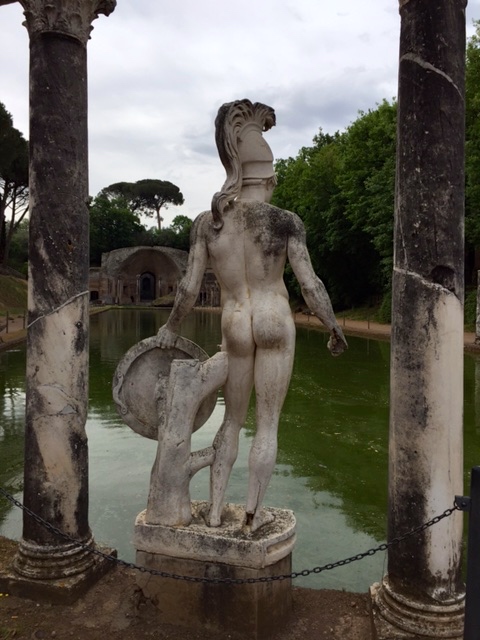
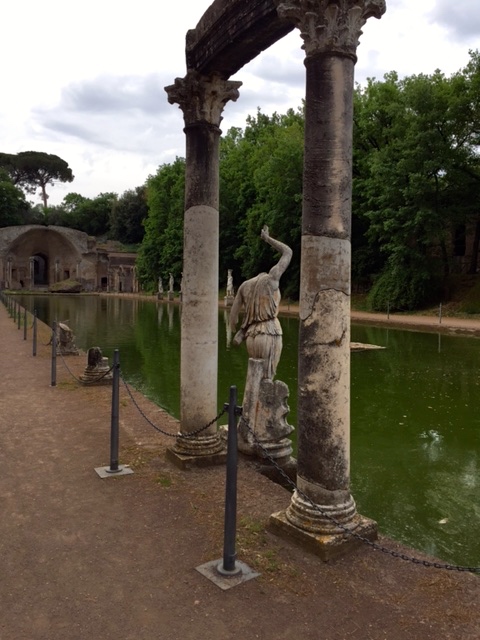
Then there is the Canopus, a long water basin embellished with columns and statues that culminates in a temple topped by an umbrella dome.