La belle Paris!

It’s been a few years since I’ve been in this elegant beautiful capital and I’ve missed her! Just arrived last night and spent a fun day revisiting old haunts.  More to come!

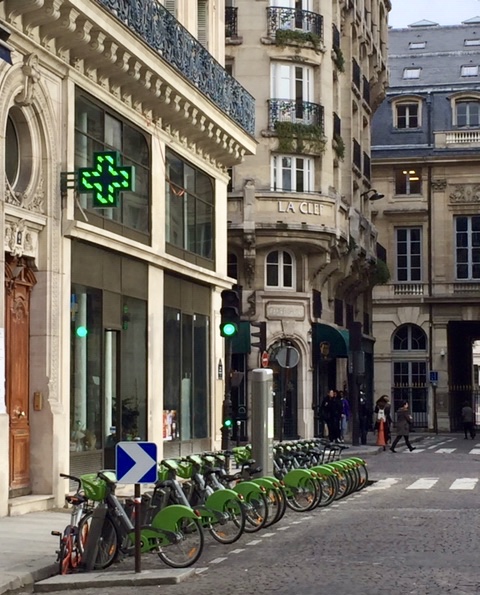
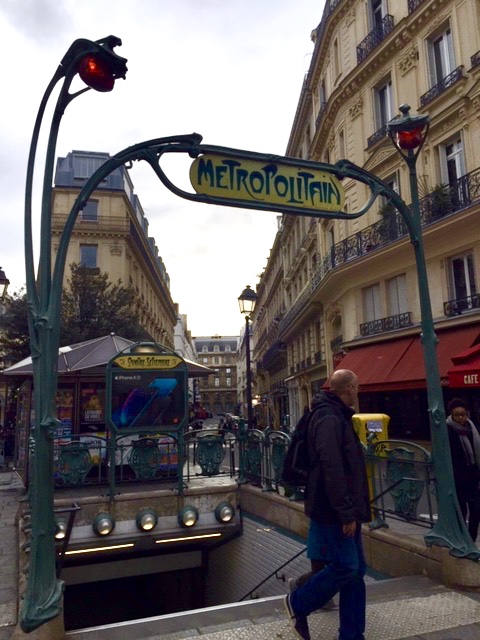
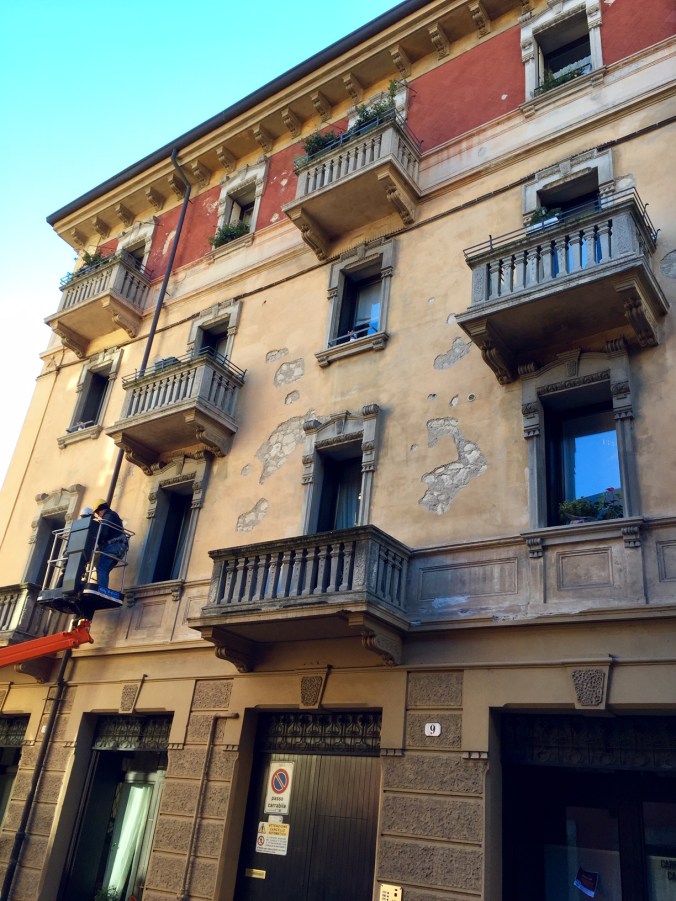
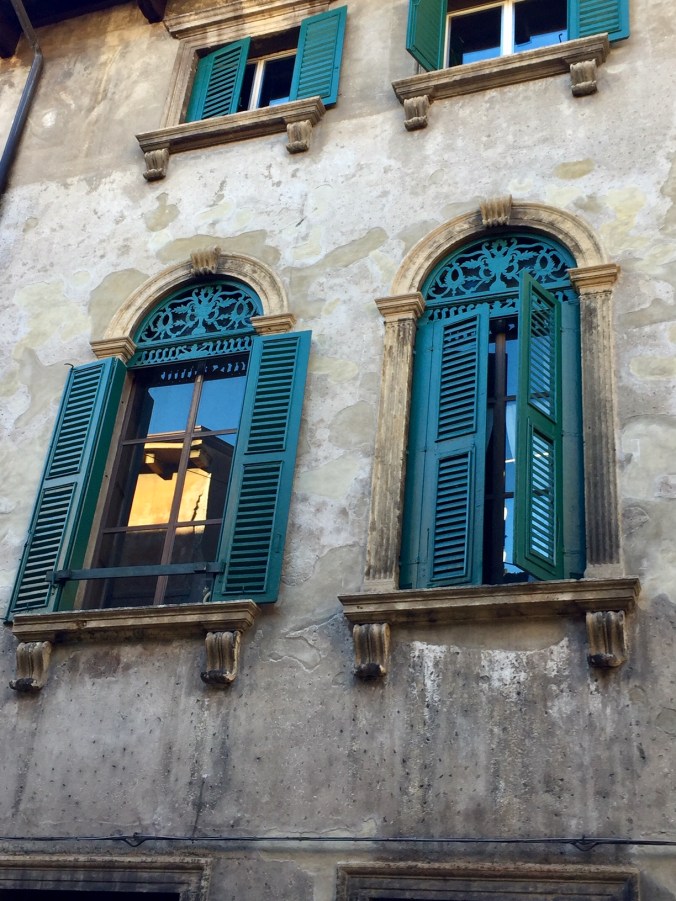
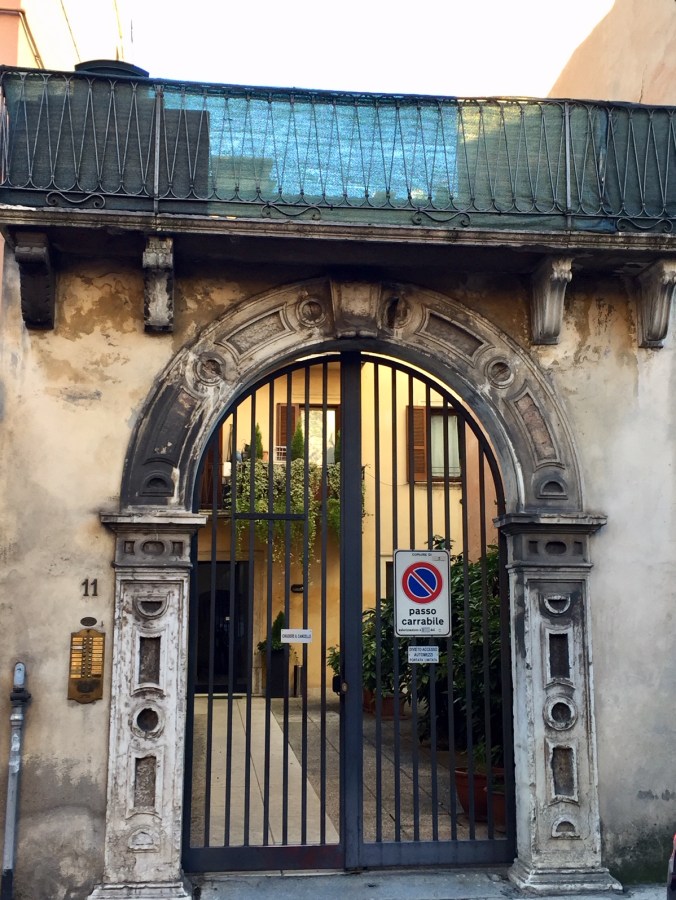
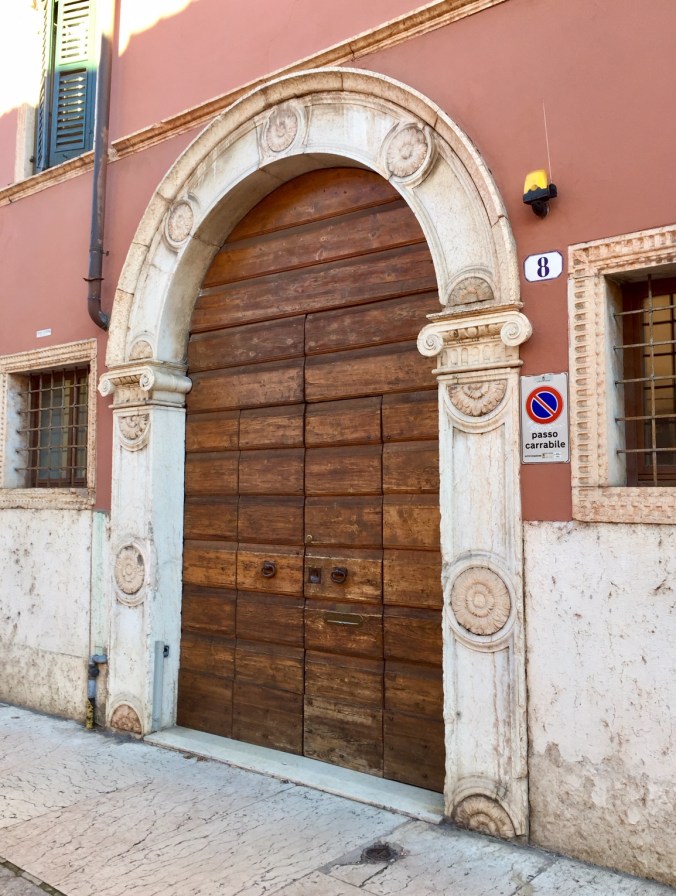
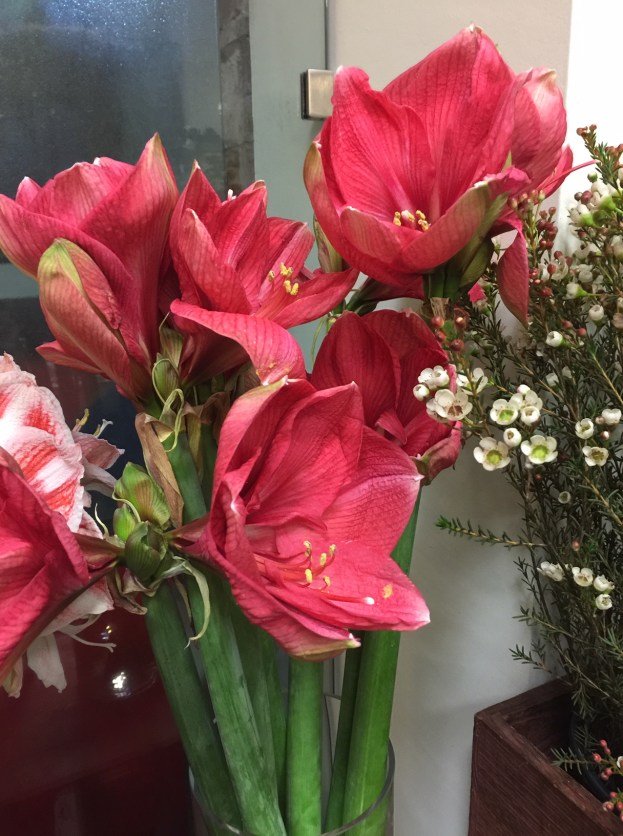
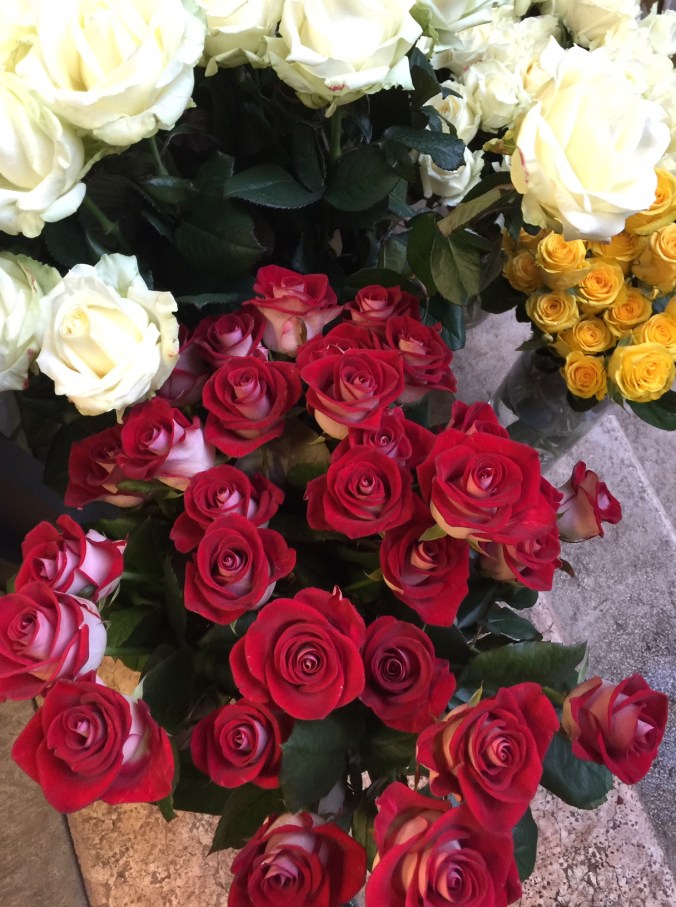
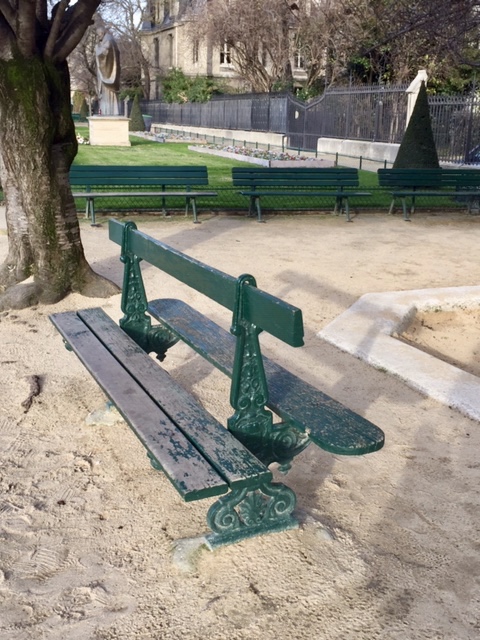
Green is the color of the best shots of the day:
fullsizeoutput_87c


fullsizeoutput_85b


fullsizeoutput_856


fullsizeoutput_87b


So, what’s new in gay Paree?

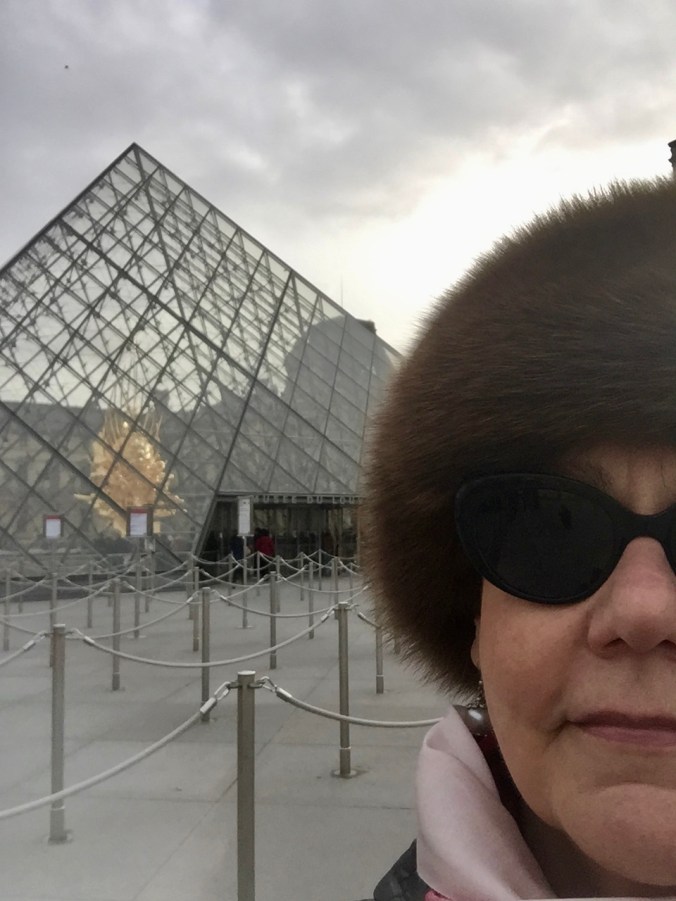
Well, the I.M. Pei Louvre Pyramid has a gold throne floating inside:
fullsizeoutput_864

It’s the Throne by Kohei Nawa, exhibited from July 2018 – January 14, 2019.

A monumental floating throne by the sculptor Kohei Nawa. As part of “Japonismes 2018: Souls in Resonance,” the pyramid of the Louvre will house a monumental sculpture by Kohei Nawa, beginning in the month of July 2018 and running through 14 January 2019.  The work, inspired by the shapes and origins of the chariots used in the Orient during religious festivals, is a combination of the art of gold leaf gilding, which dates back to Ancient Egypt, and the latest 3D modeling techniques.

fullsizeoutput_886

This 10.4 meter-high monumental sculpture will float in the middle of the Louvre Pyramid for six months, in order to question the notions of power and authority that have been perpetuated in the past, and to question the future that awaits us.

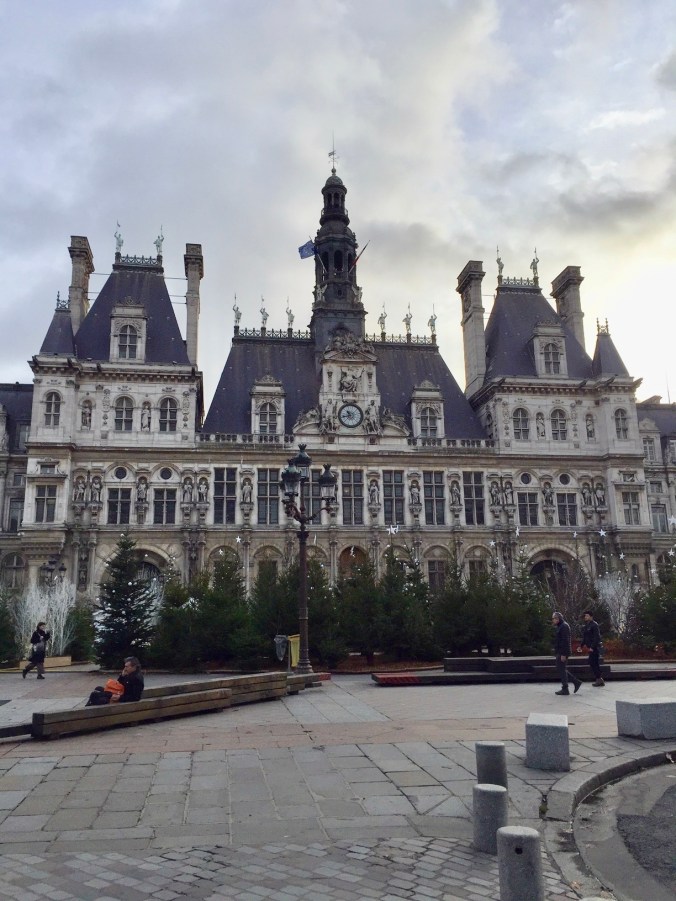
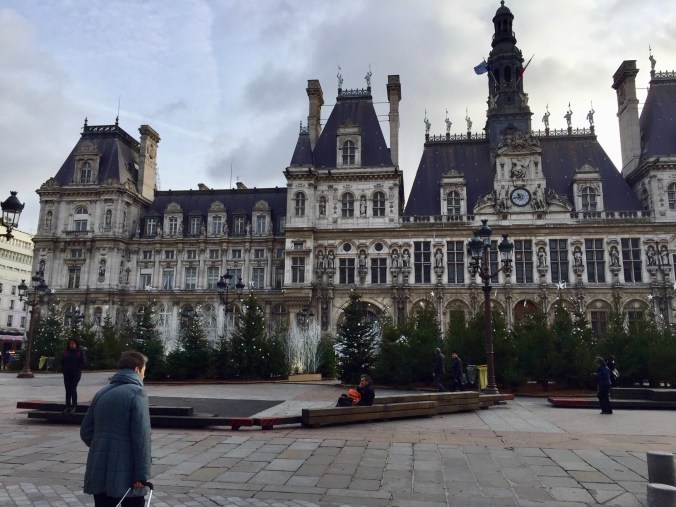
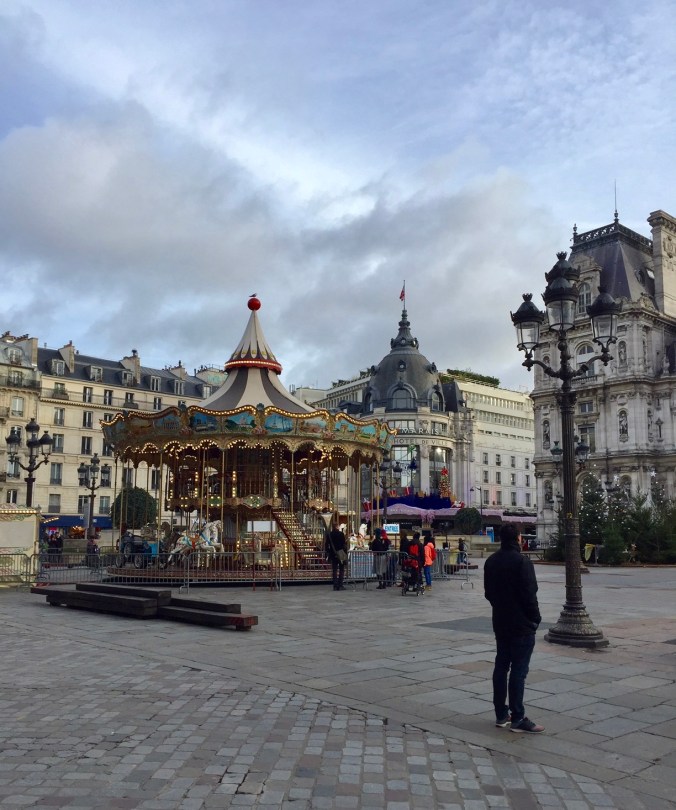
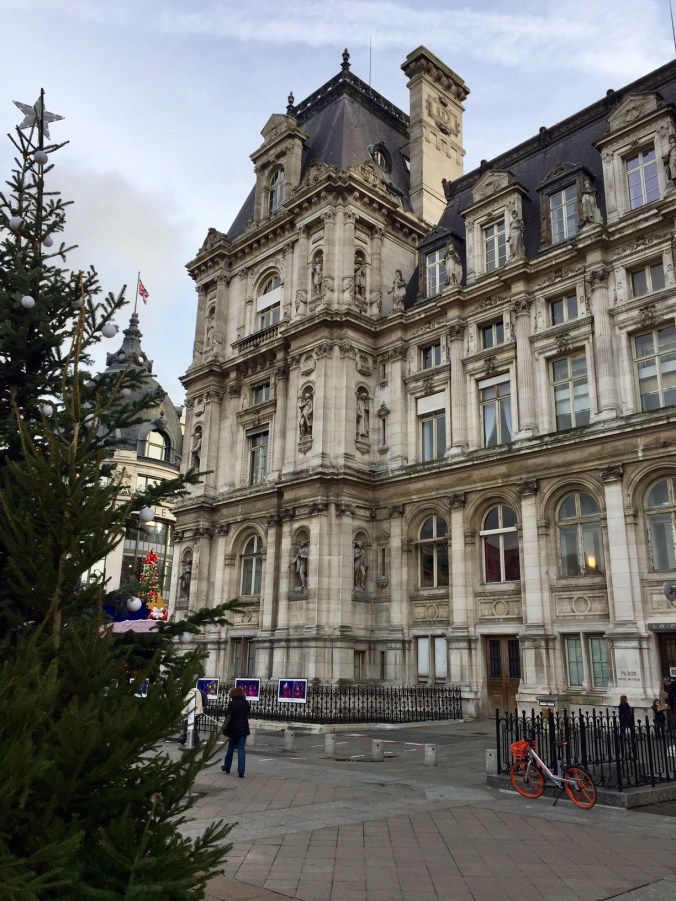
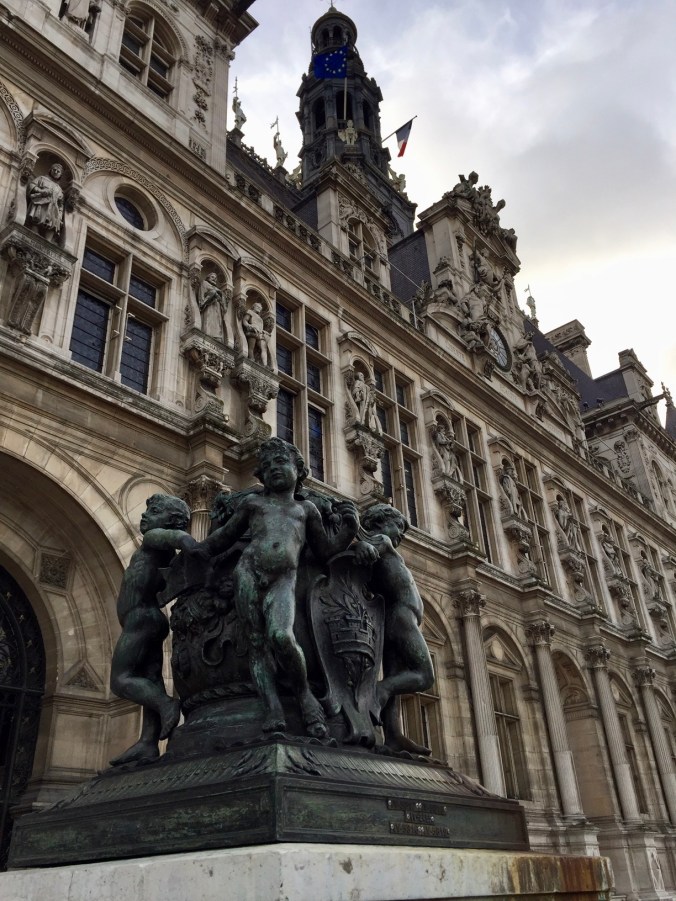
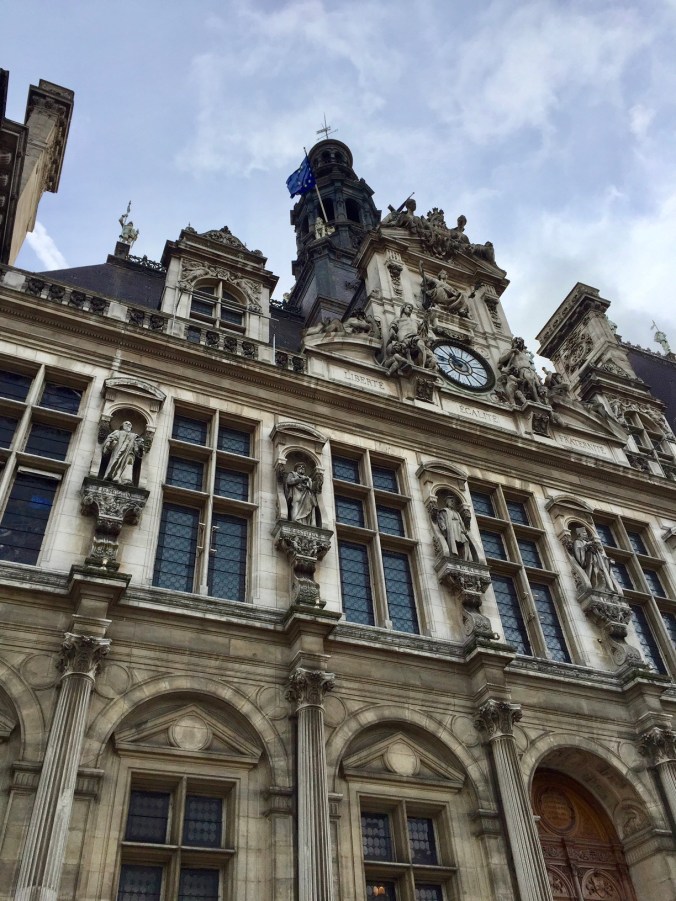
Place de l’Hôtel-de-Ville; no other city hall ever looked so good! I am still a sucker for great Neoclassical sculpture:
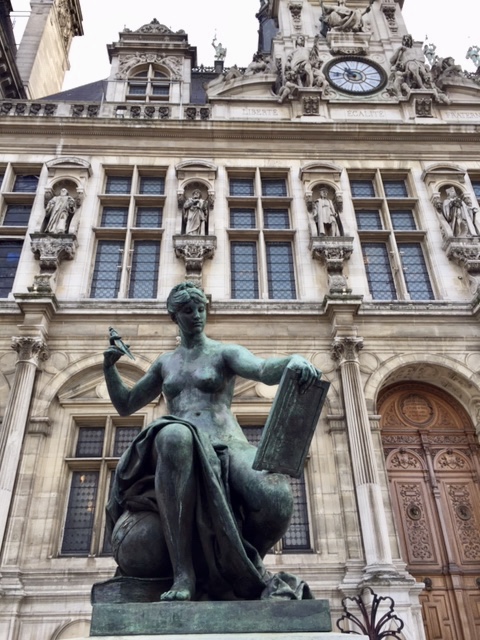
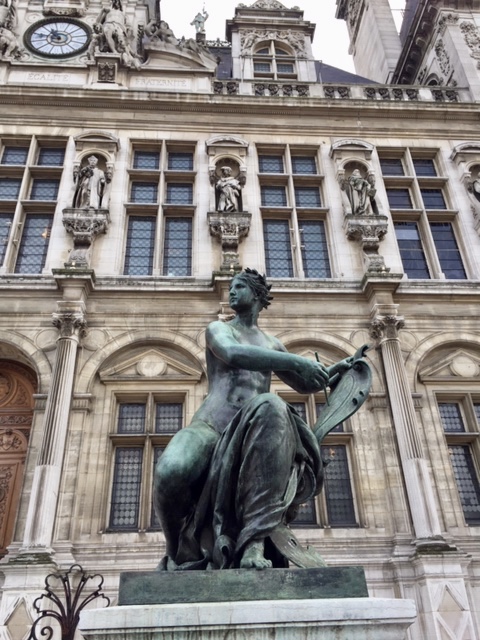
fullsizeoutput_885fullsizeoutput_884

fullsizeoutput_89ffullsizeoutput_8a1fullsizeoutput_8a2fullsizeoutput_8a4fullsizeoutput_8b7fullsizeoutput_8b6fullsizeoutput_8b5fullsizeoutput_8b4fullsizeoutput_8b3


Strolling through the city I saw this fashion photo in a vitrine; the best way to ride a horse is in your pink silk taffeta ballgown!  I wish I had known that growing up on the back of my horse!
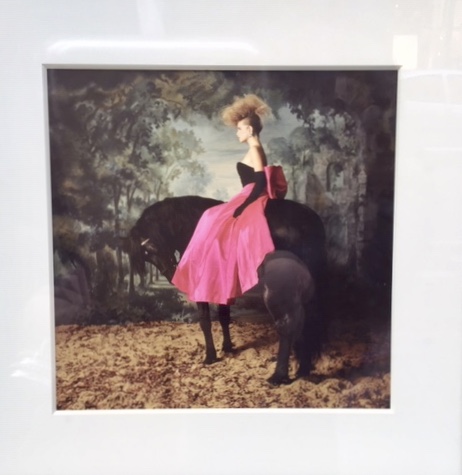
fullsizeoutput_880


Not far from city hall I wandered by Place Louis Aragon.
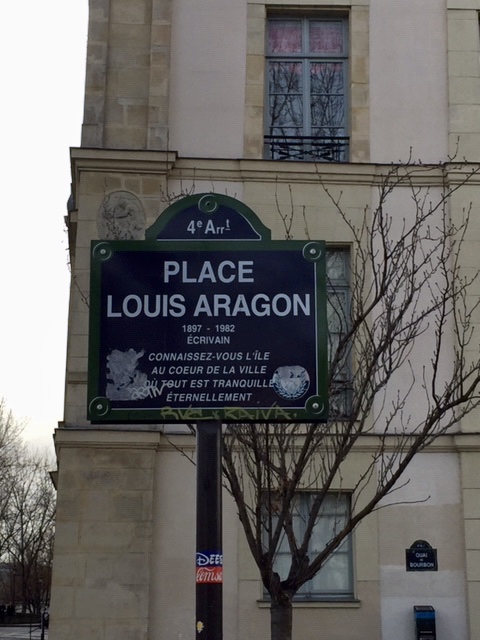
fullsizeoutput_87f

I was intrigued by the inscribed lines speaking of a tranquil island.

Connaissez-vous l’île
Au cœur de la ville
Où tout est tranquille
Éternellement


In English:

Do you know the island

In the heart of the city

Where everything is quiet

Eternally

I looked Louis Aragon up when I got back to my hotel:  Louis Aragon (1897 – 1982) was a French poet and one of the leading voices of the surrealist movement in France. Place Louis Aragon is located at the tip of Ile Saint-Louis, near Quai de Bourbon, with amazing views of the cathedral of Notre Dame and the Seine This small but extraordinarily located square is close to the apartment of Aurelian, where in Aragon’s novel of the same name the hero lived.


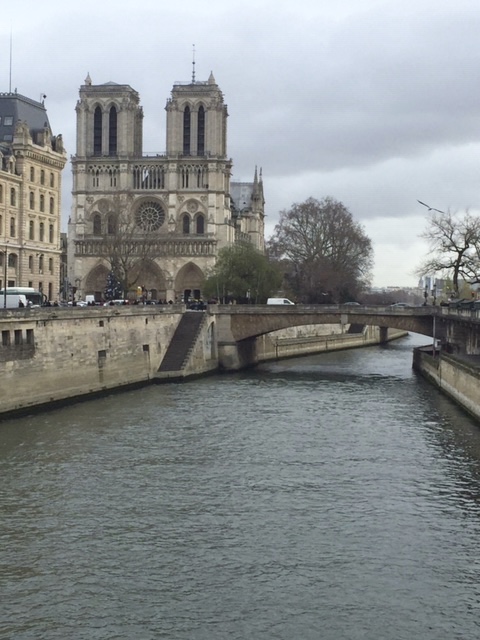
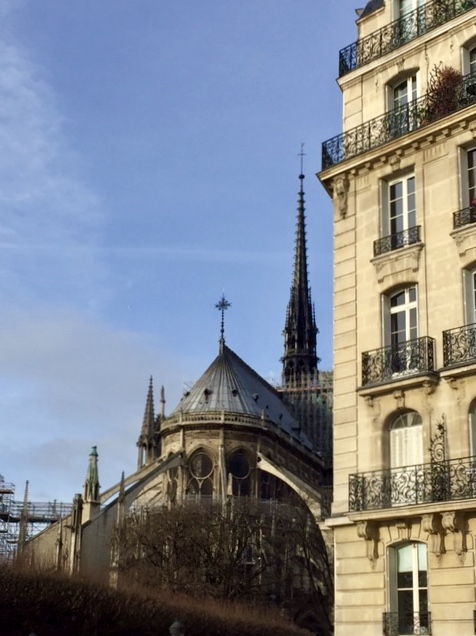
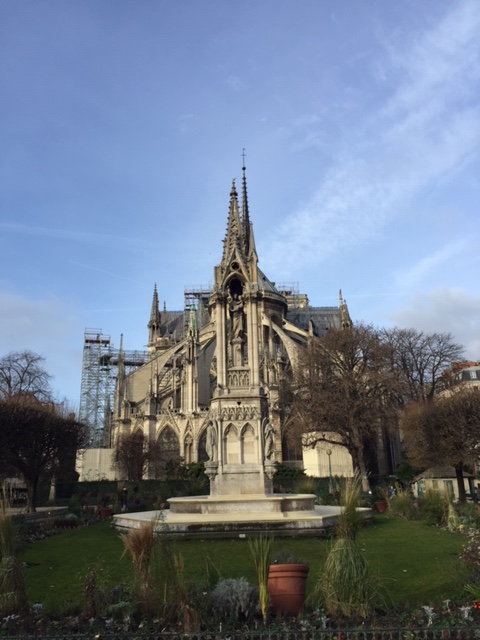
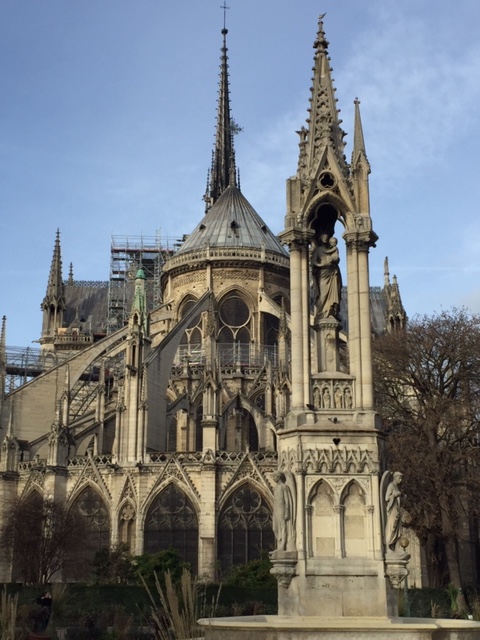
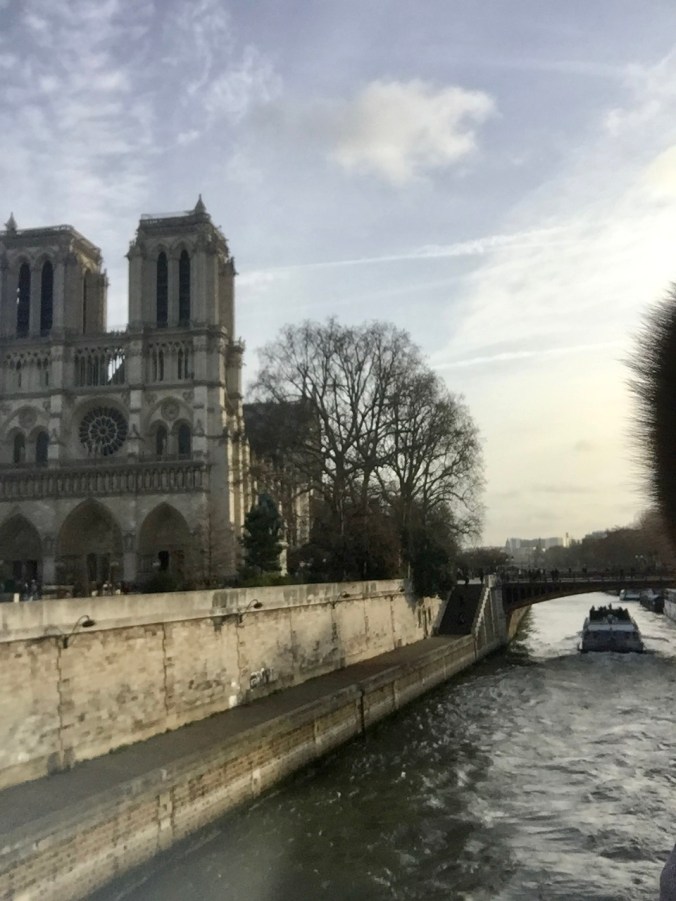
The apse end of Notre Dame begins to beckon:
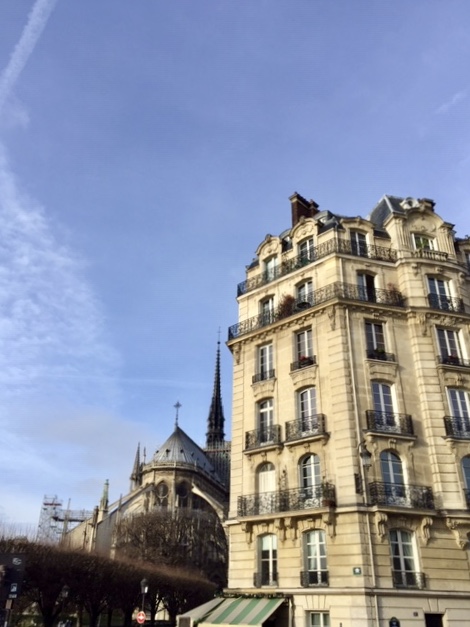
fullsizeoutput_87e


I spy the famed flying buttresses!

fullsizeoutput_87d


IMG_3951


IMG_3952


Once a garden designer, always a garden designer.  I was interested to see that the gardeners here had tied up the ornamental grass plants.  That must mean that the grasses don’t winter kill in Paris (they do in Colorado where my garden is), so they want to maintain the foliage.  Who knew?!
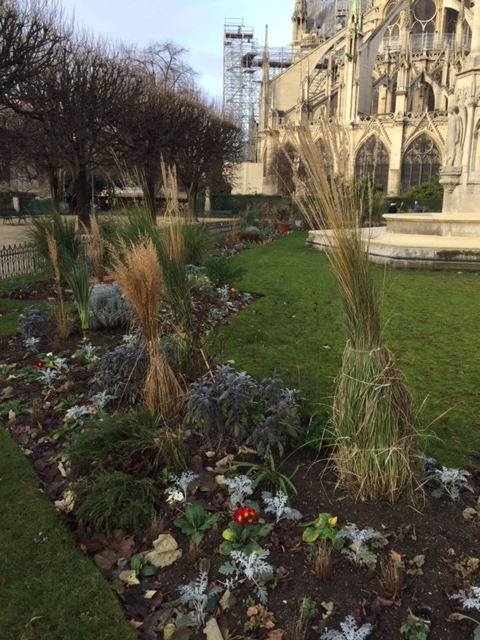
IMG_3954


Walking along the Seine and rounding Notre Dame from the back to the front, I saw other gardens with roughly-cut and crudely crafted structures for plants to climb. These came as a surprise in Paris, where everything is so formal and structured.
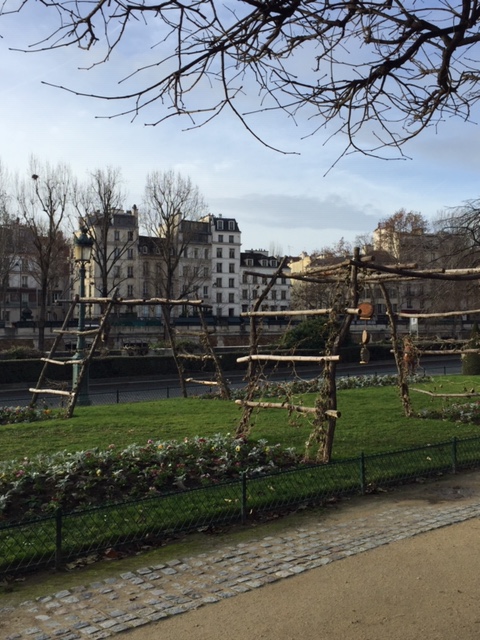
IMG_3957


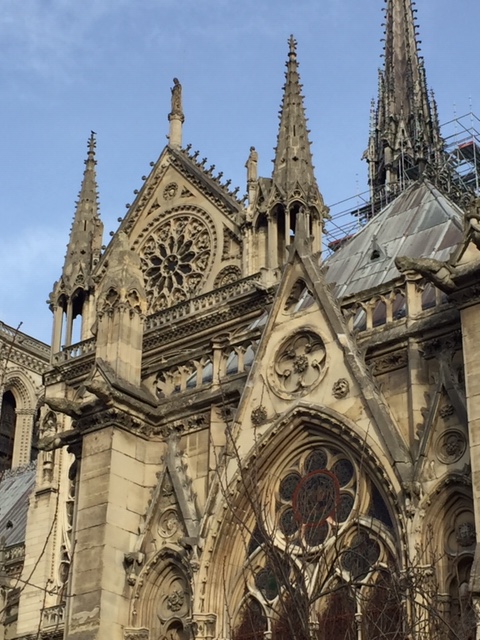
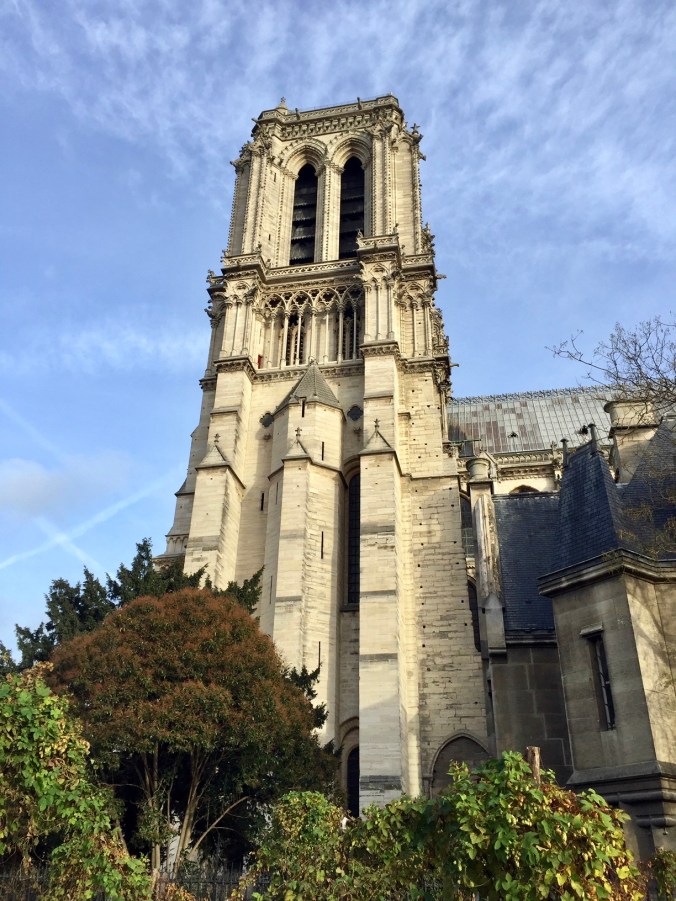
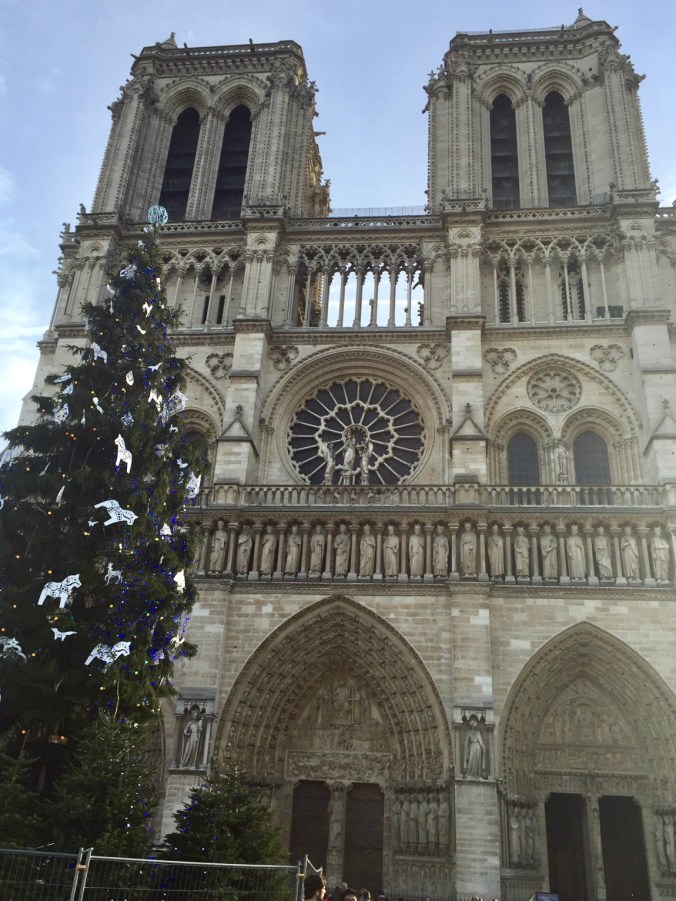
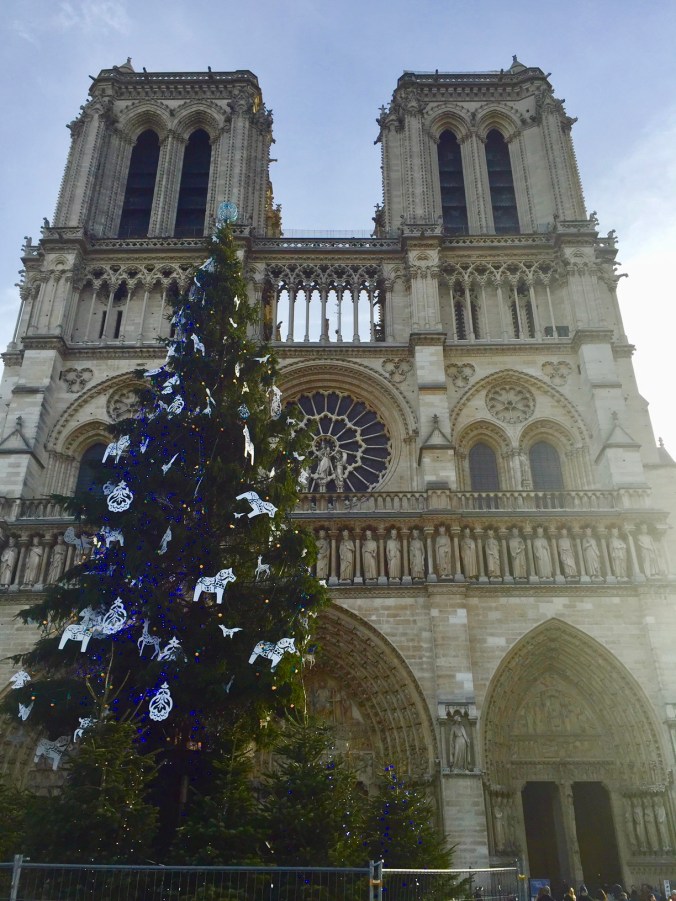
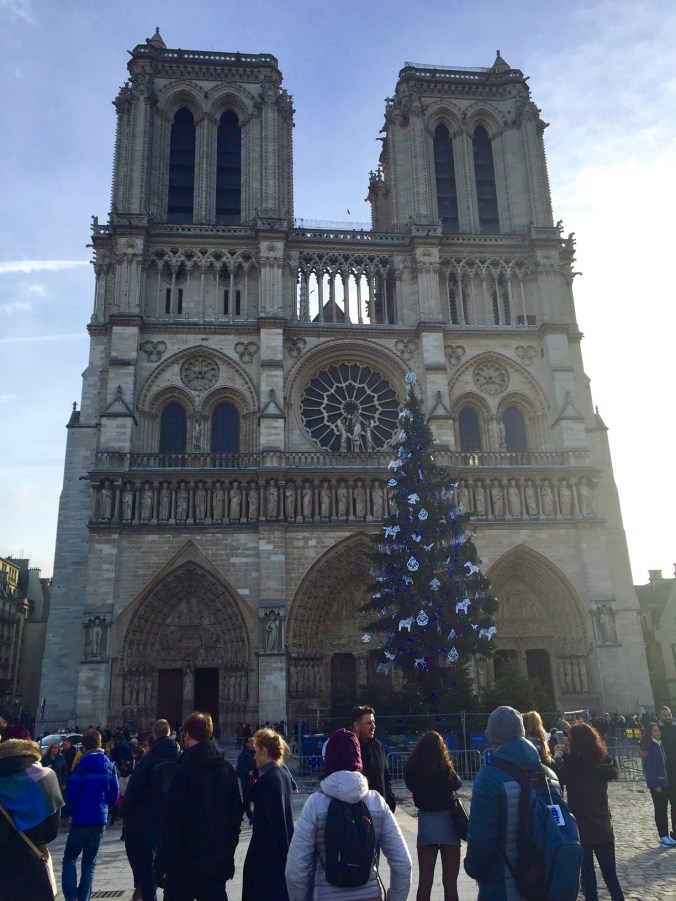
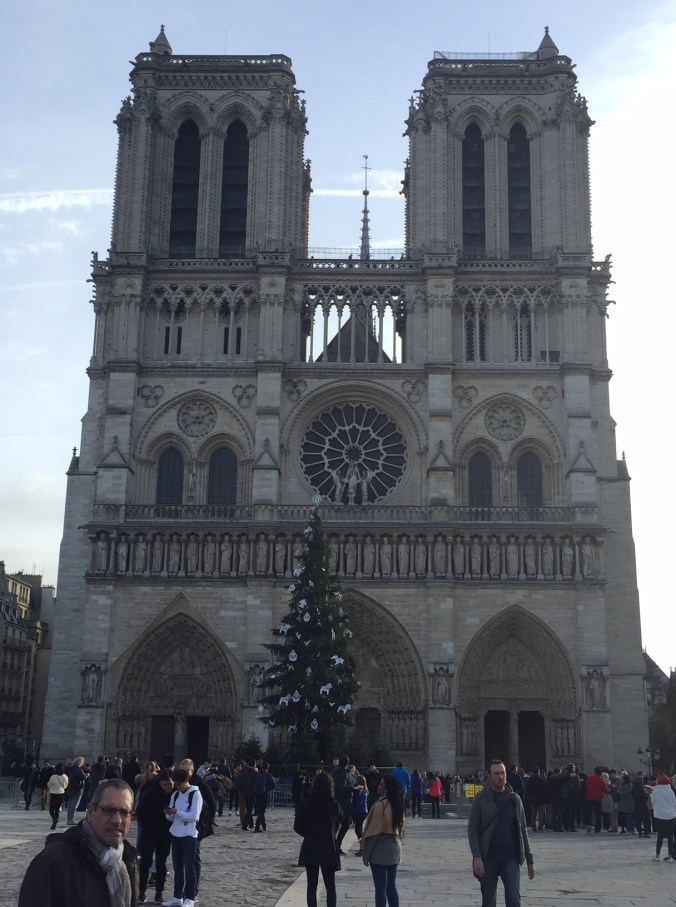
I’m going to post the next few pix of Notre Dame in silence.  This beautiful, iconic building needs nothing from me:
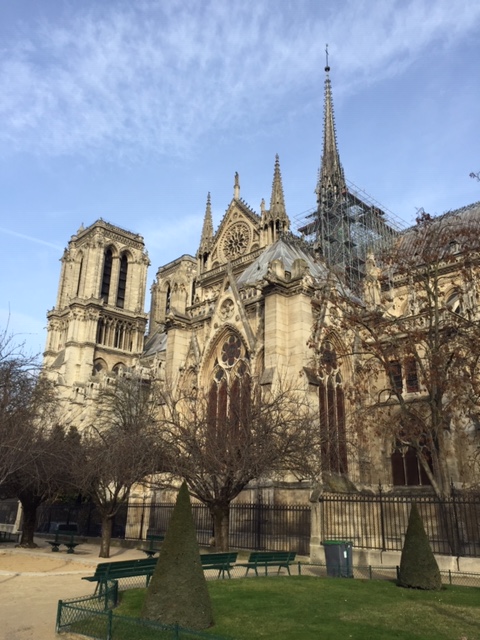
IMG_3958


IMG_3959


fullsizeoutput_895


fullsizeoutput_896


fullsizeoutput_8a5


fullsizeoutput_8a6

fullsizeoutput_8a7fullsizeoutput_8a8IMG_3974


fullsizeoutput_87b

fullsizeoutput_8af


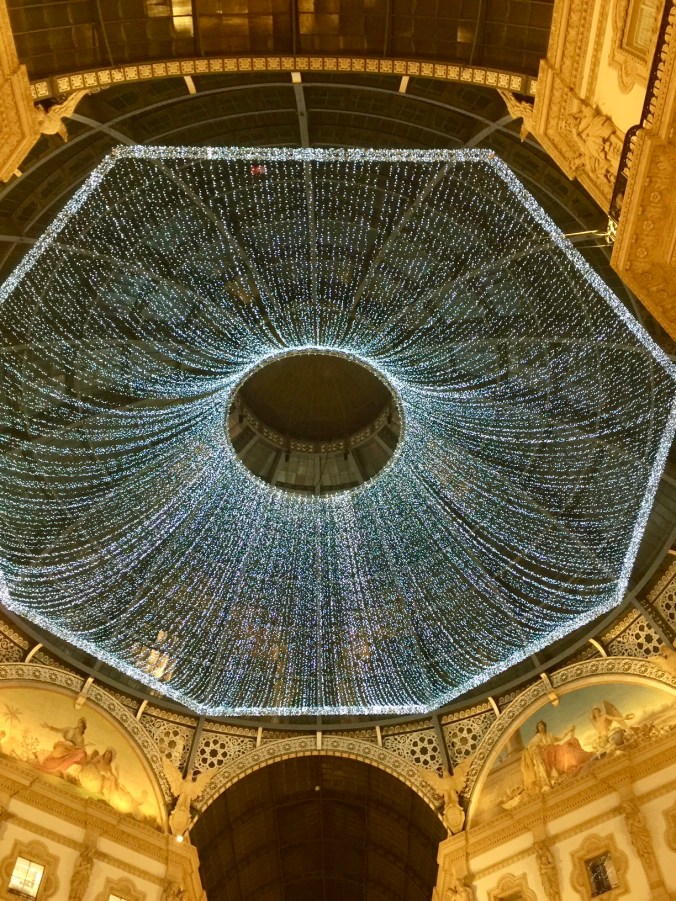
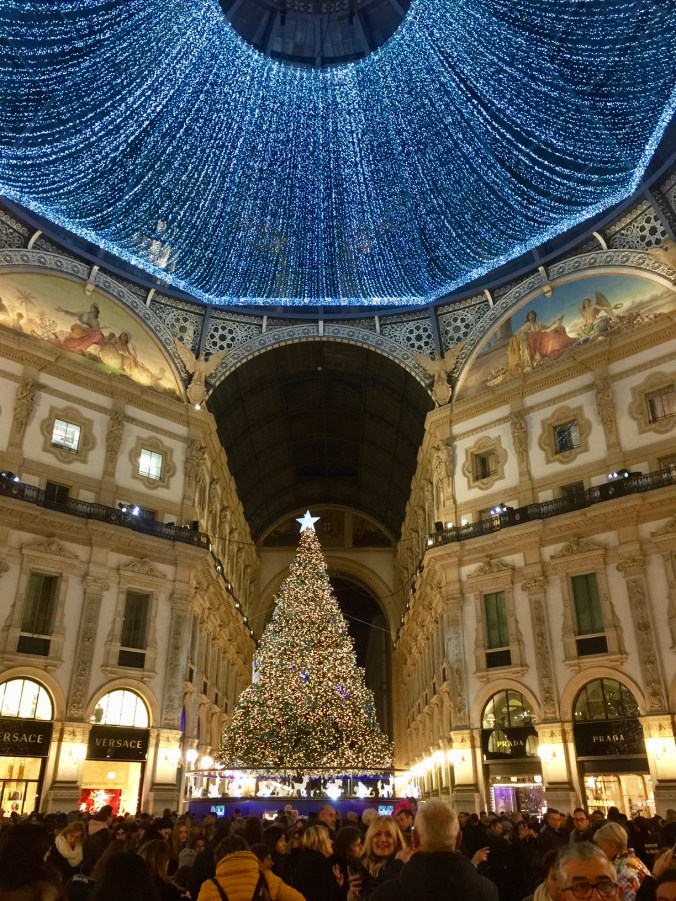
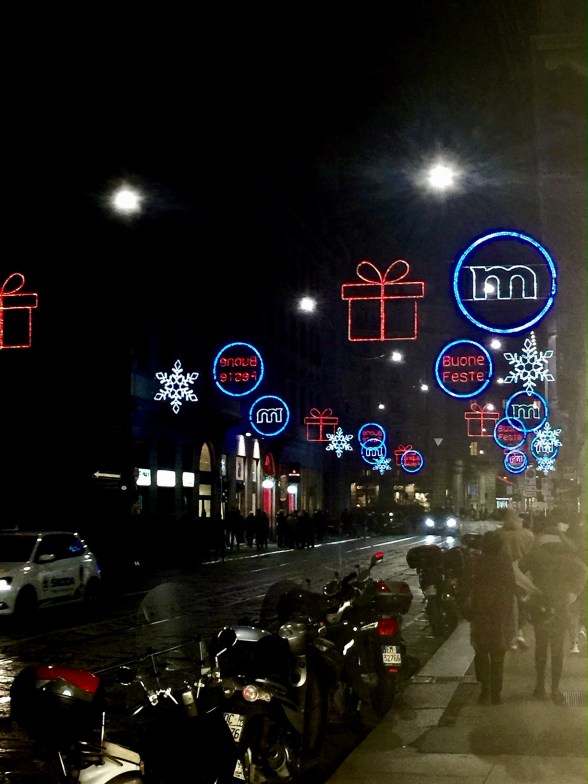
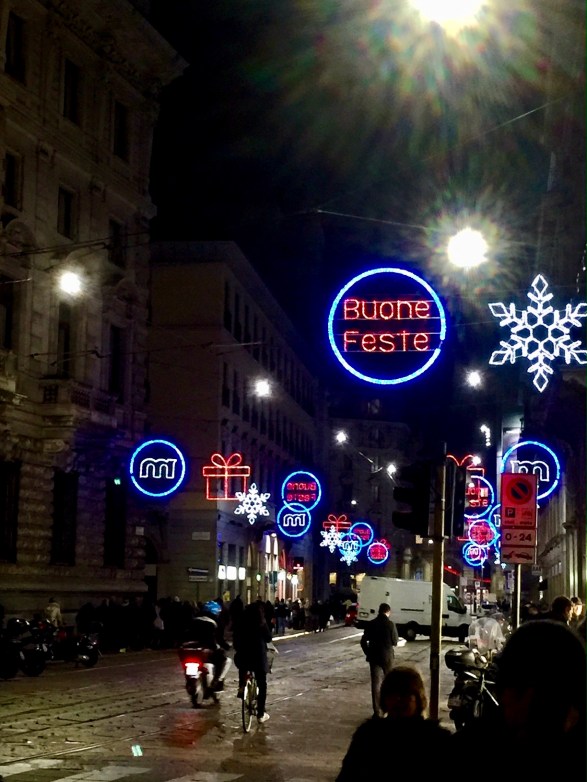
Milano, dicembre 2018; ready for Christmas

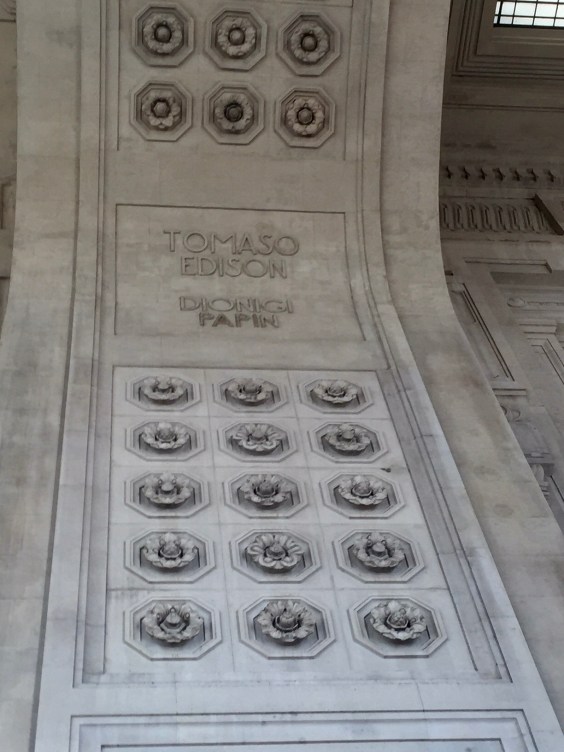
Arrived in Milan from Florence and admired the fabulous Milanese train station.  It always awes me.

It was fun to see American Tomaso Edison inscribed as one of the world’s great minds.

fullsizeoutput_7f0


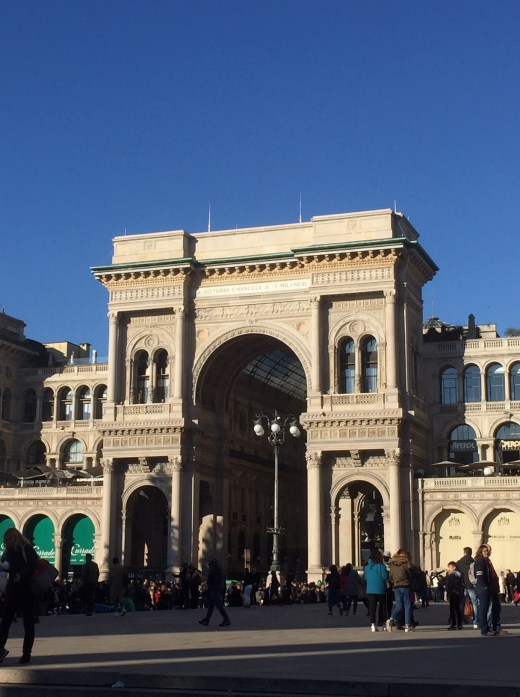
No time to linger: places to see, people to avoid (crowds that is!). Here’s the archway leading to the Galleria Vittorio Emmanuel; I’ll be back to admire the Christmas decorations when the sun sets.  See below.

IMG_3280
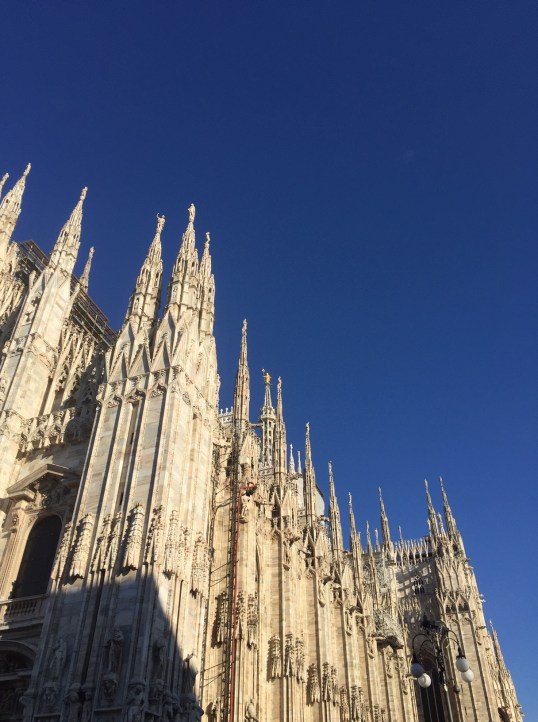
A quick glance of our first stop: il Duomo. We bought our tickets and got in line to wait for our turn to enter the cathedral and then climb to the roof.

IMG_3277
I’ll talk about the duomo in a separate post, coming soon.

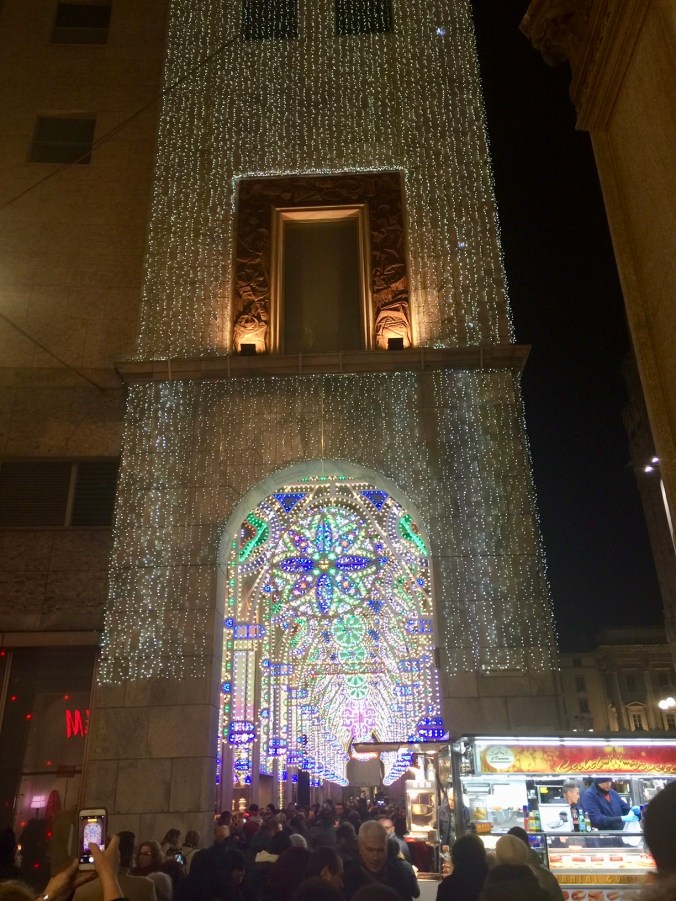
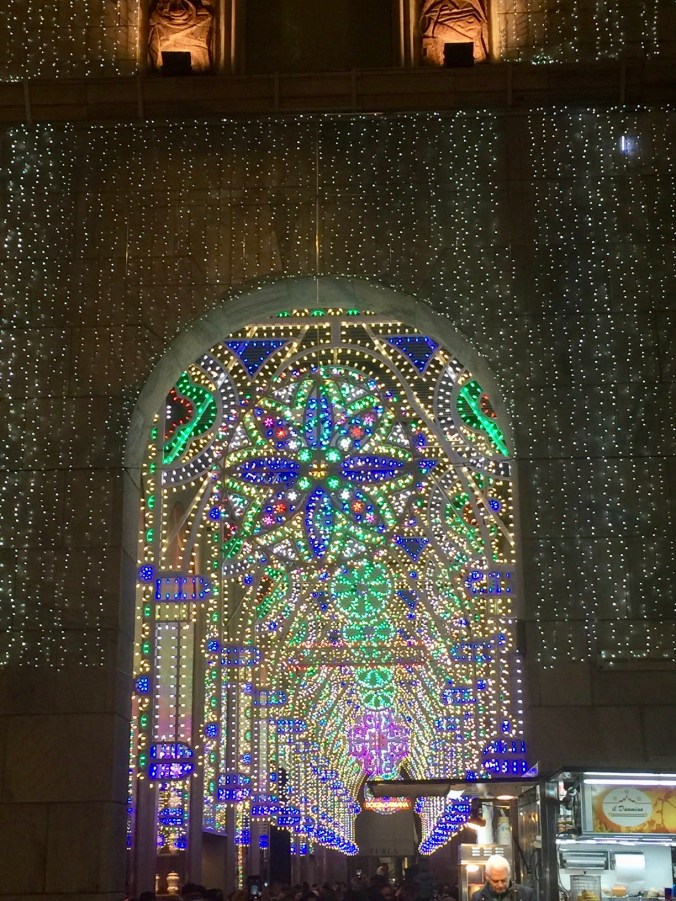
So, the duomo took up the entire afternoon and the sun set.  Back into the Galleria to admire the amazing Christmas decorations.


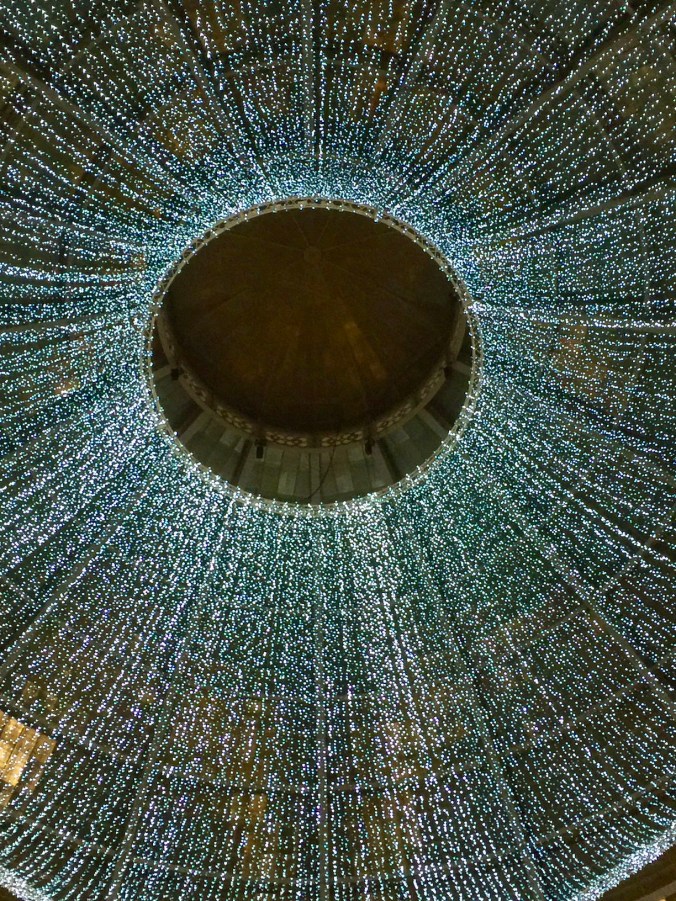
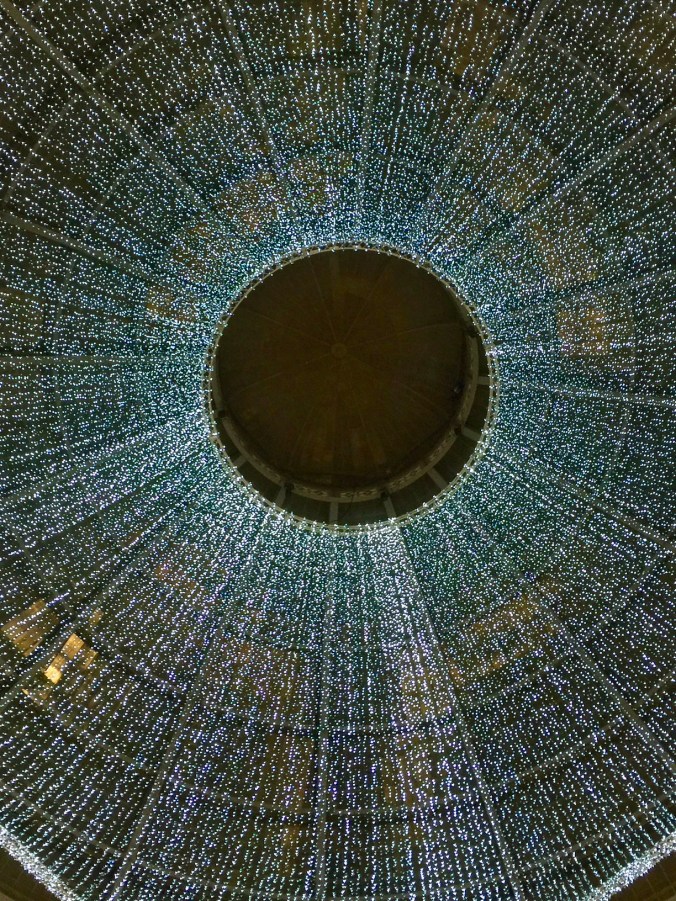
Absolutely spectacular! Milan knows how to play up its strong points!

fullsizeoutput_83d


fullsizeoutput_83f


fullsizeoutput_840


fullsizeoutput_841


IMG_3397


fullsizeoutput_842


fullsizeoutput_843
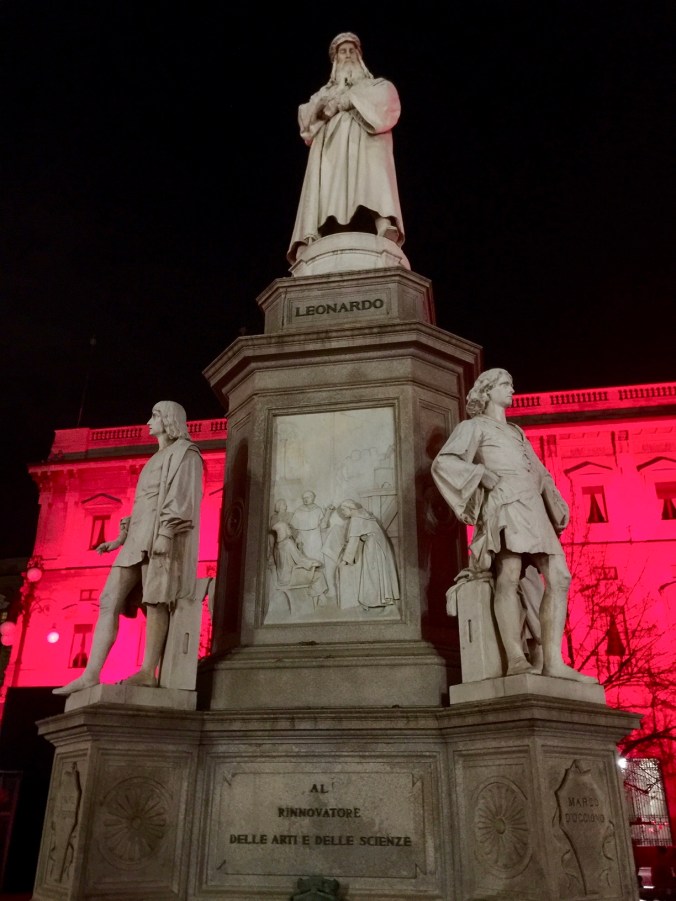
Milano plays host to one of the great Florentine artists: Leonardo da Vinci.

fullsizeoutput_844


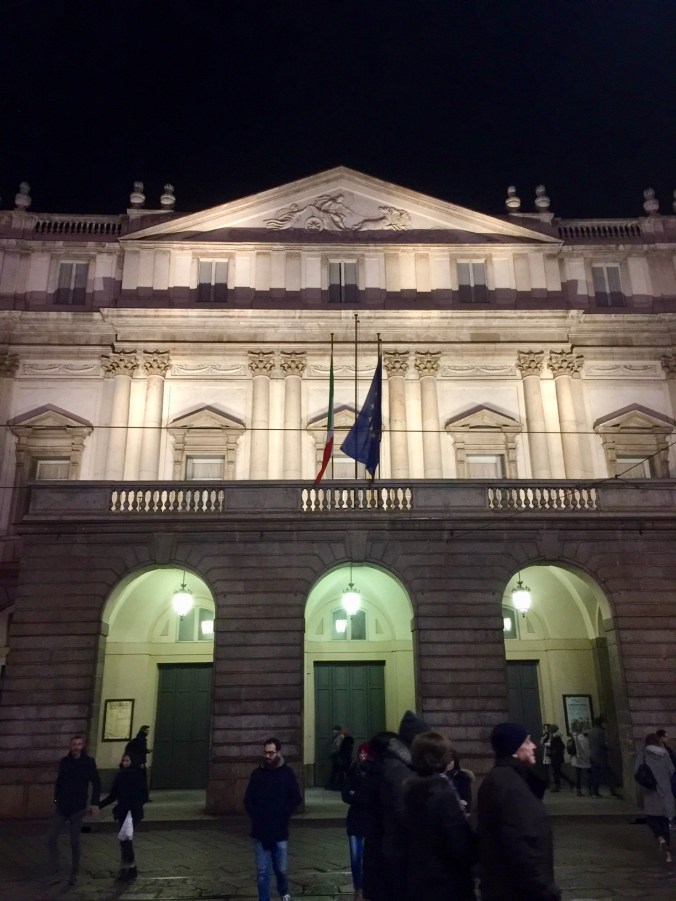
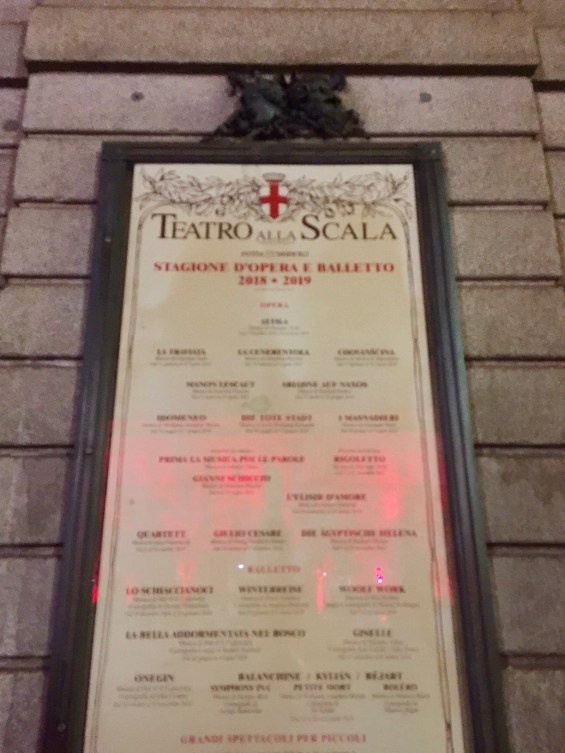
La Scala is nearby to add its gravitas:

fullsizeoutput_845


fullsizeoutput_846


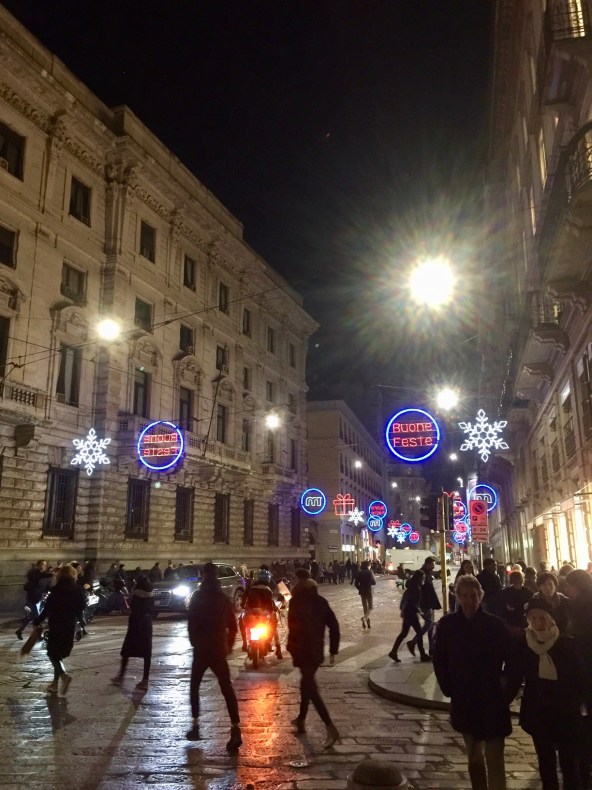
The downtown streets of Milan have a modern Christmas vibe:

fullsizeoutput_847


fullsizeoutput_84a

fullsizeoutput_848

 
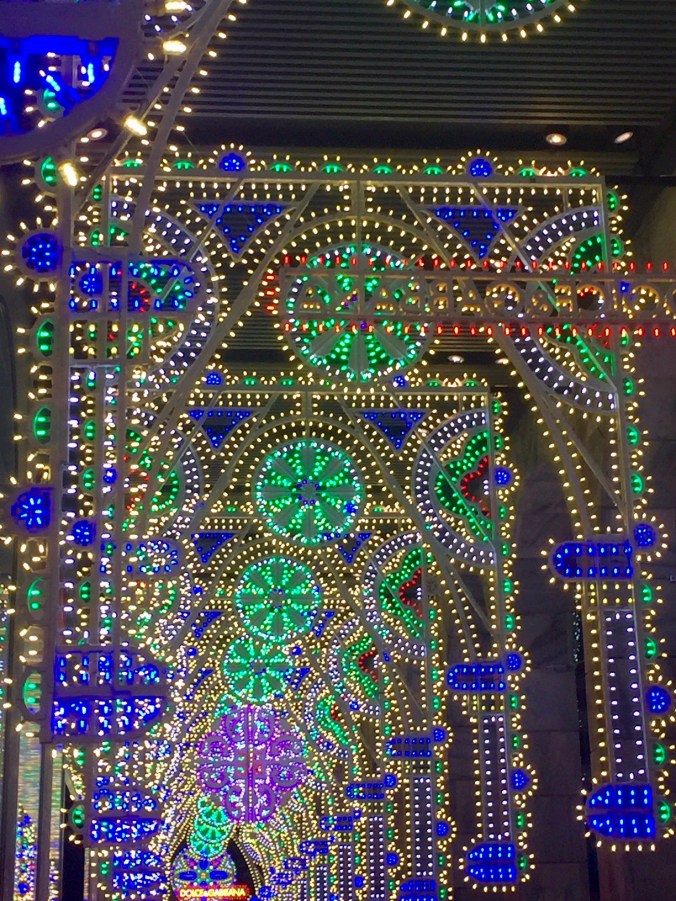
Back inside the Galleria, we approach the Dolce and Gabbana store, all lit up and no place to go.  D&G has no need to go anyplace: the crowds throng to it!


fullsizeoutput_84b


fullsizeoutput_84c


You can see D & G’s neon sign at the end of these over-the-top decorations.

fullsizeoutput_84e

See it?

And that’s how Milano preps for Xmas!


Verona, Italy in December

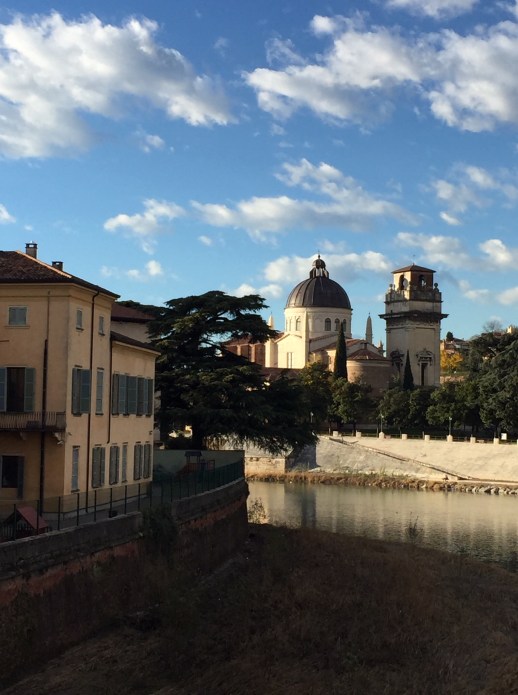
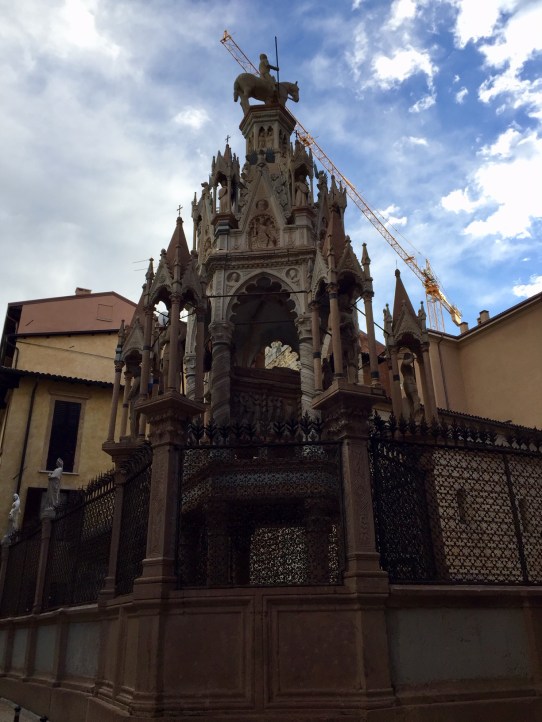
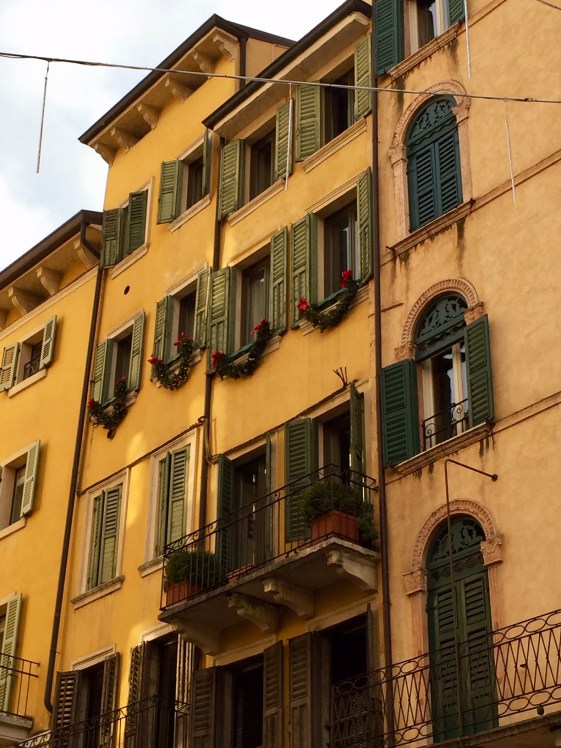
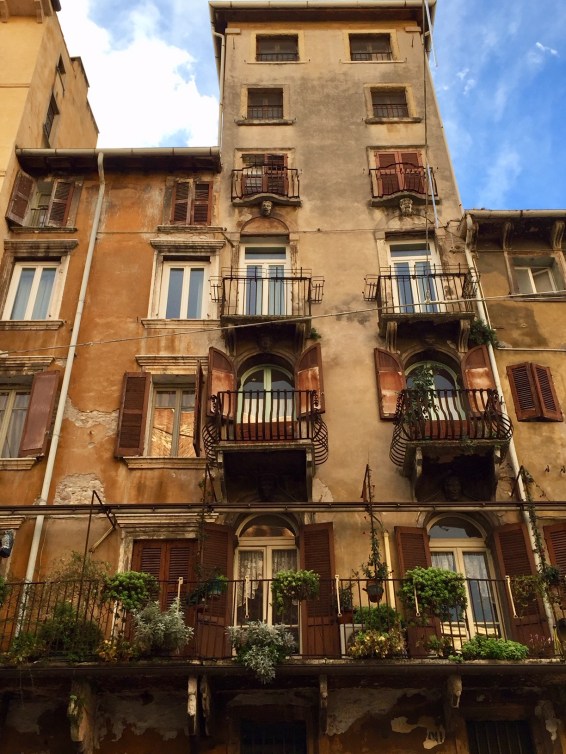
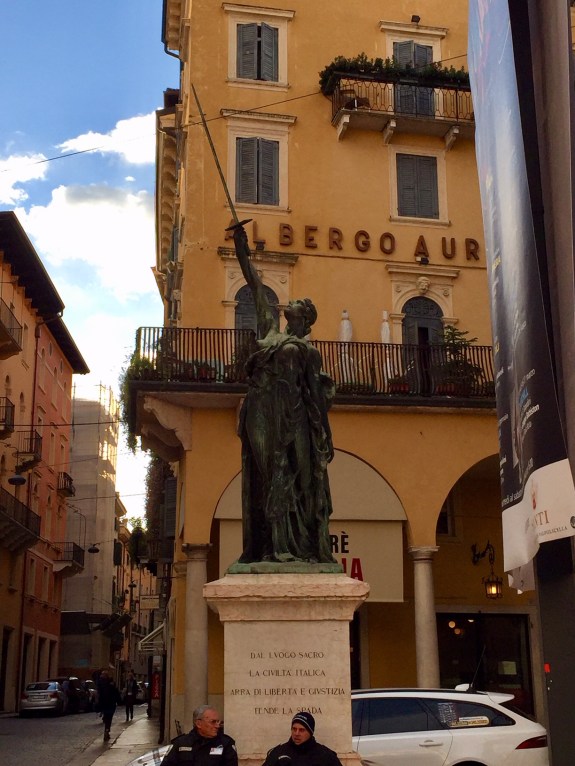
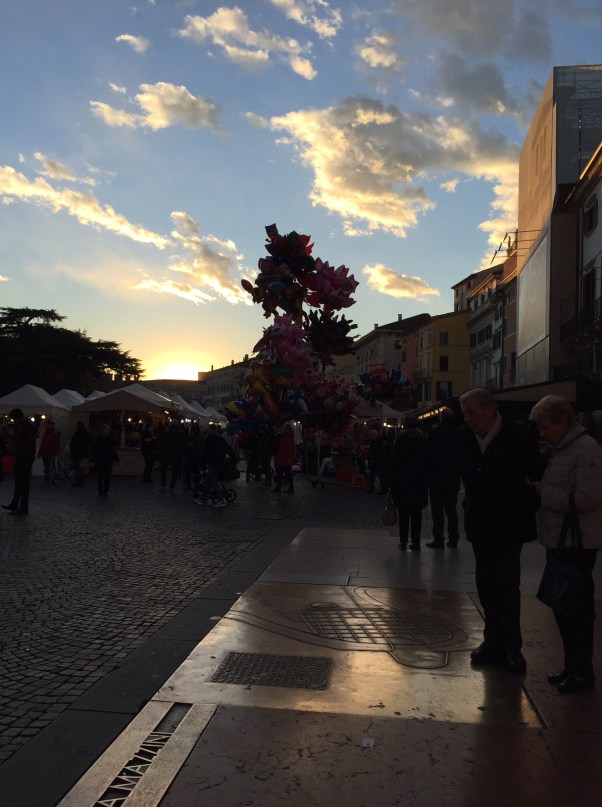
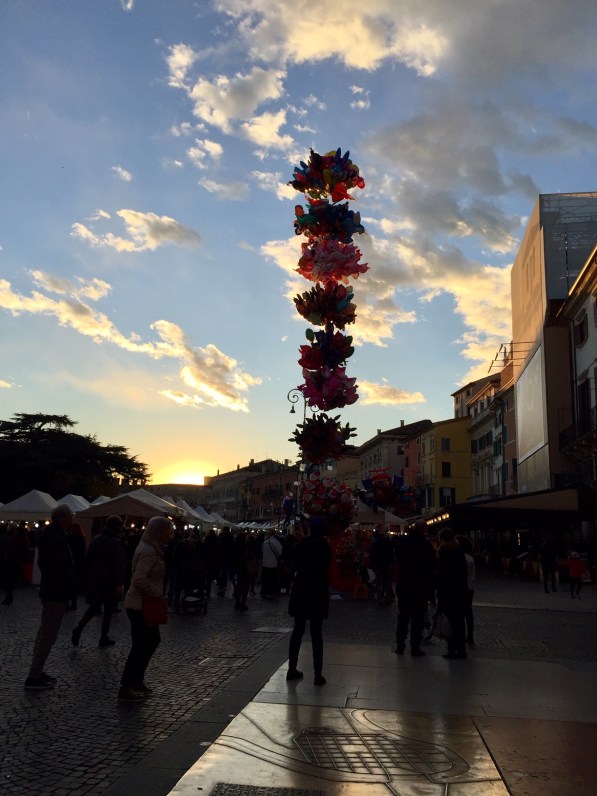
What a lovely small city is Verona.  I understand why Shakespeare chose it as his setting for Romeo and Juliet!

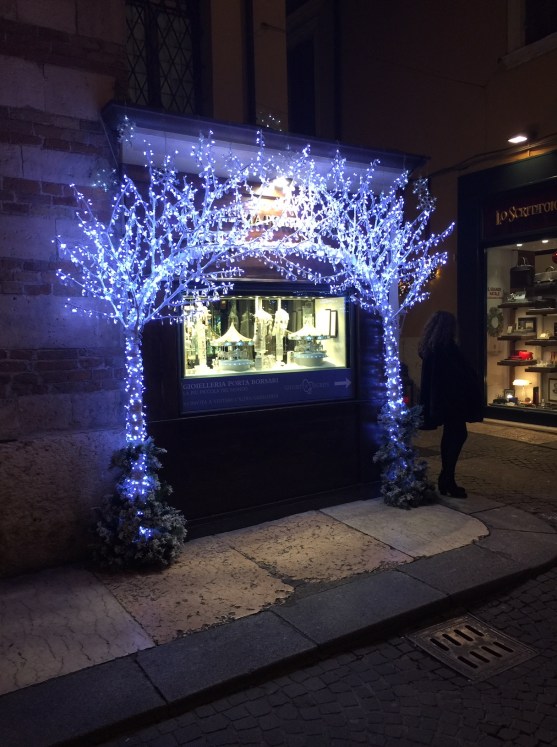
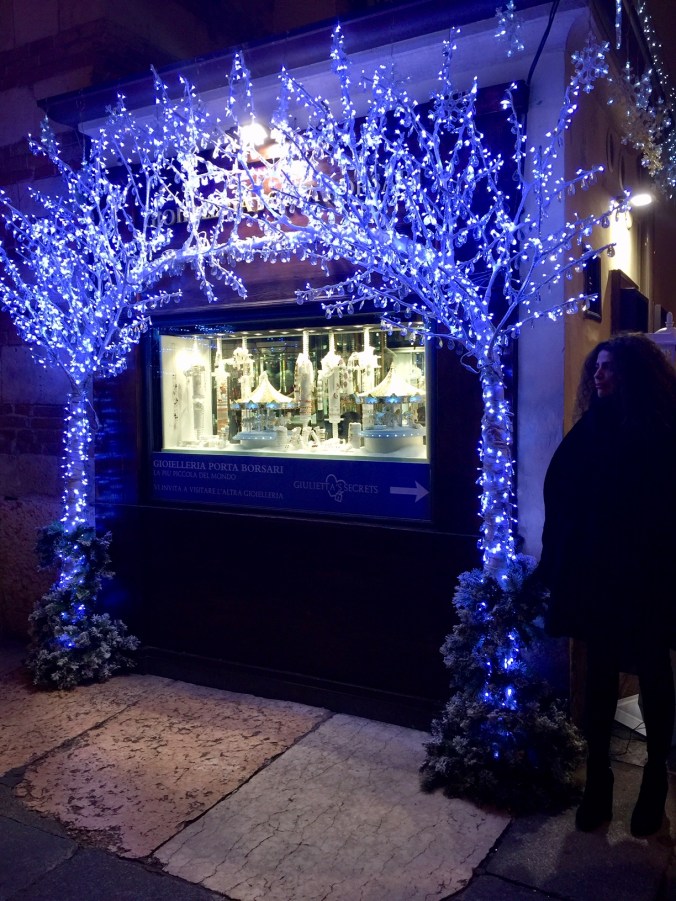
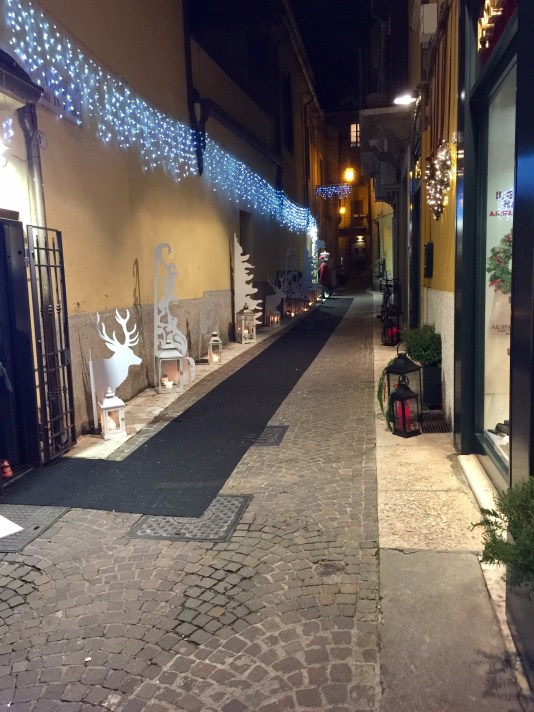
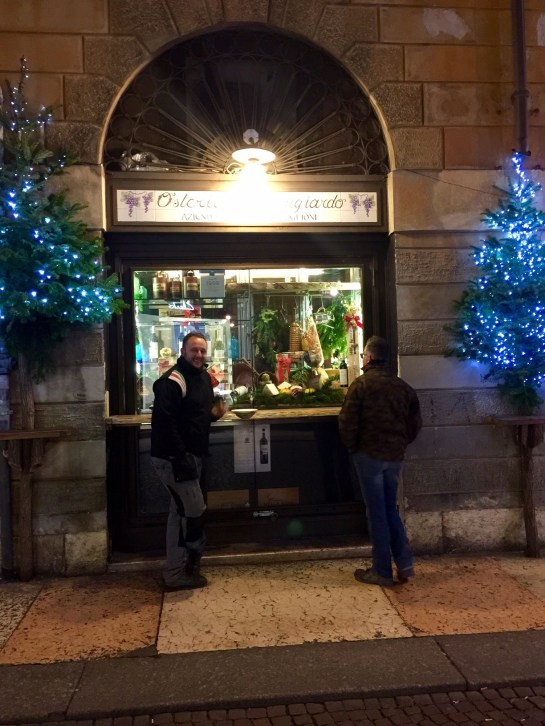
I had the good fortune to spend a few days in Verona recently and the city was all decked out for Christmas.

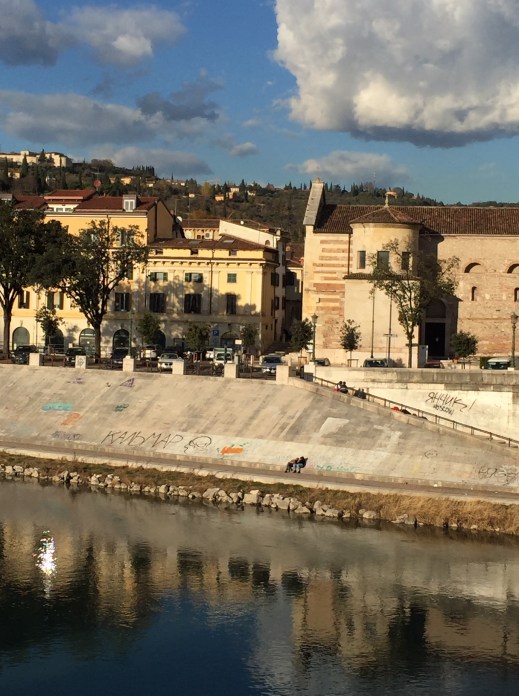
To begin, here is our home away from home, with a beautiful terrace next to the Adige River.  A large persimmon (cachi in Italiano) tree attracted many local ucelli!


Here are some of my favorite pictures:

IMG_3463


IMG_3464


IMG_3465


IMG_3467


IMG_3469


IMG_3470


IMG_3471


IMG_3472


IMG_3474


IMG_3475


IMG_3478


IMG_3479


IMG_3480


IMG_3481


IMG_3482


IMG_3483


IMG_3484

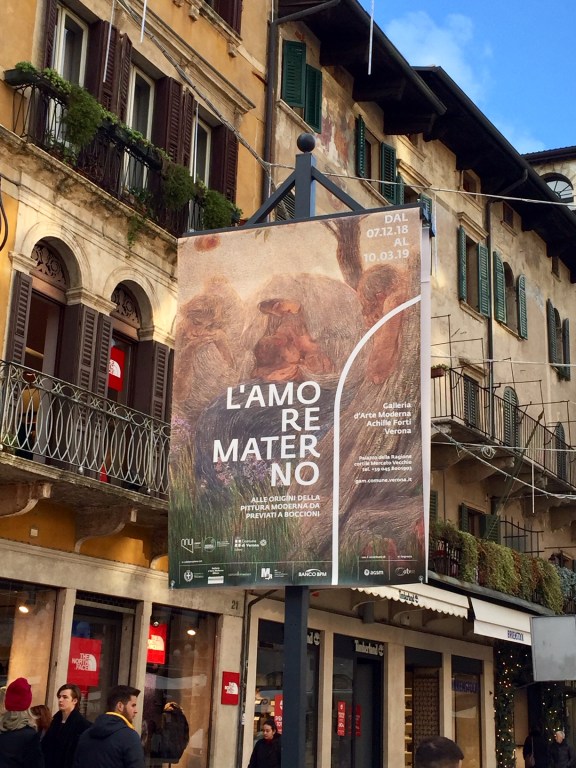
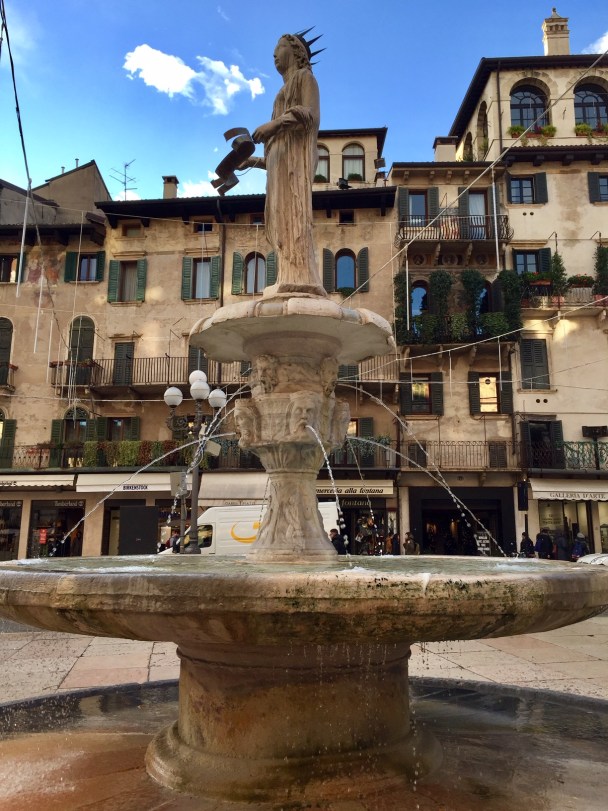
L’amore materno–Mother Love


IMG_3485


IMG_3486


IMG_3487


IMG_3488


IMG_3489


IMG_3491


IMG_3494


IMG_3495


IMG_3496


IMG_3497


IMG_3500


IMG_3503


IMG_3506


IMG_3507


IMG_3508


IMG_3510


IMG_3511


IMG_3512


IMG_3513


IMG_3514


IMG_3517


IMG_3519


IMG_3520


IMG_3522


IMG_3524


IMG_3525


IMG_3526


IMG_3527


IMG_3532


IMG_3535


IMG_3536


IMG_3537


IMG_3538


IMG_3540


IMG_3541


IMG_3542


IMG_3543


IMG_3544


IMG_3548


IMG_3552


IMG_3556


IMG_3557


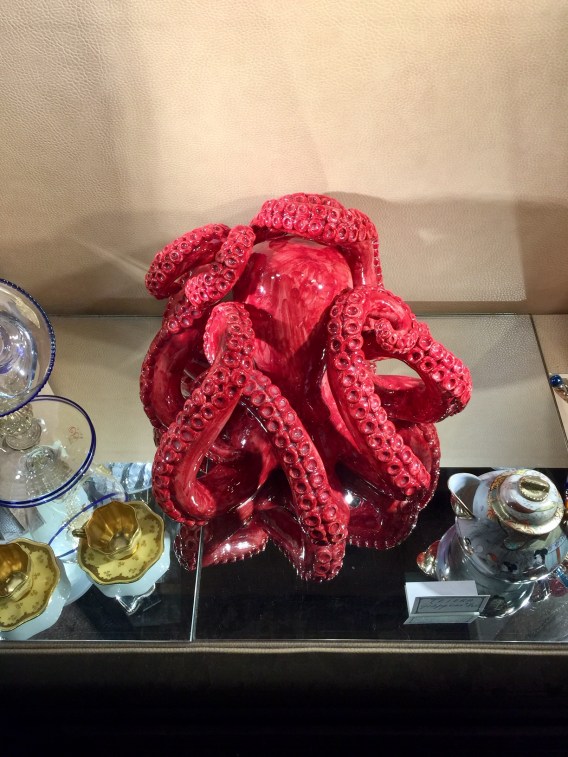
I love a decorative octopus!

IMG_3559


IMG_3560


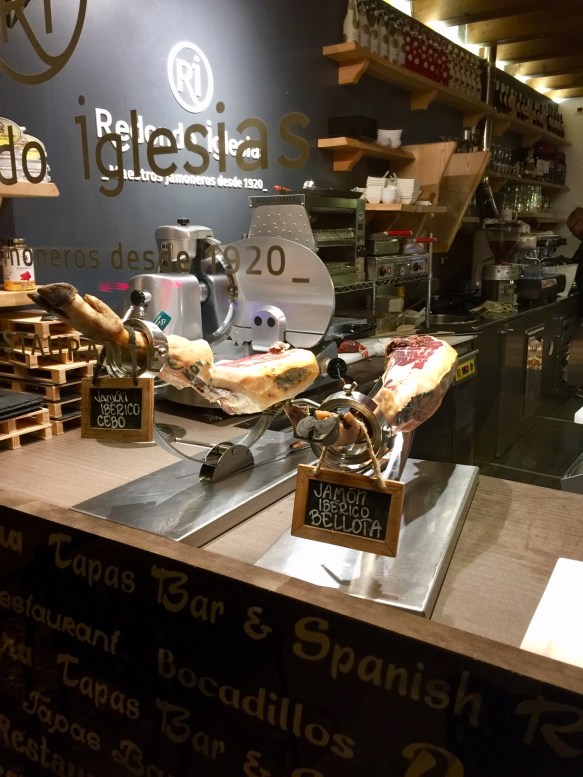
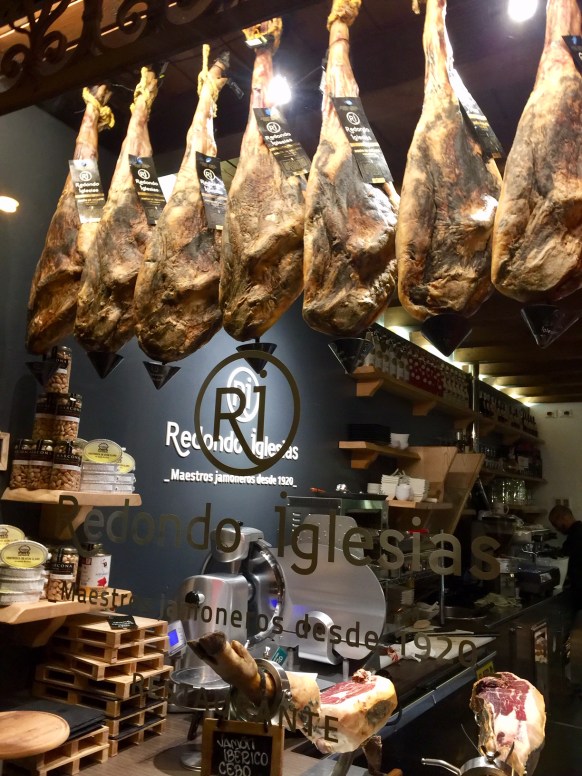
Check out the foot still attached to this prosciutto!  OMG!

IMG_3561


IMG_3562


IMG_3563


Verona’s magnificent Duomo below:

IMG_3573


The bell tower:IMG_3569


The apron front of the facade reminded me of church architecture in Lucca.

IMG_3570


IMG_3571


IMG_3572


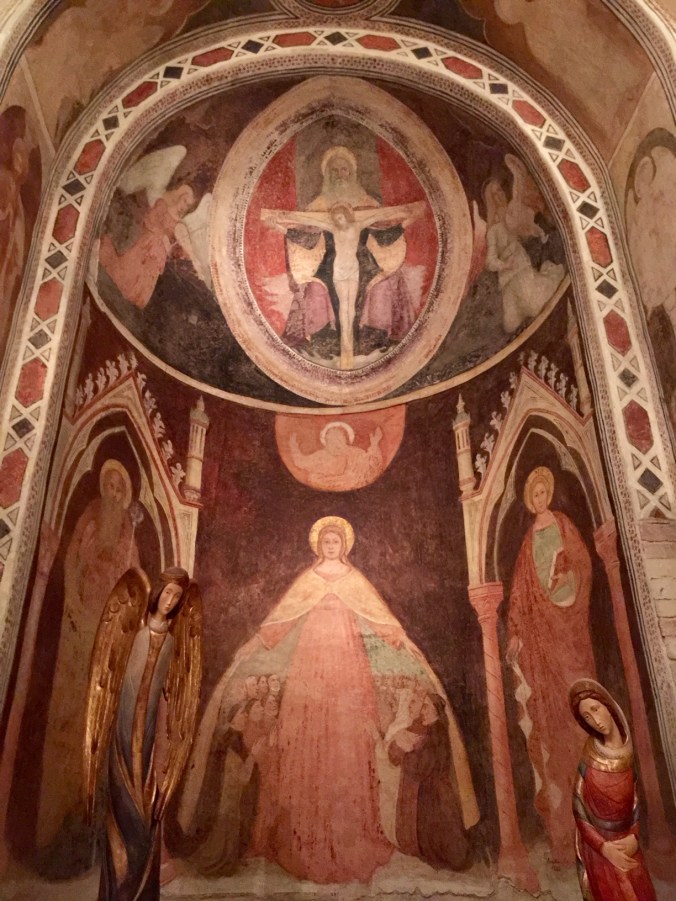
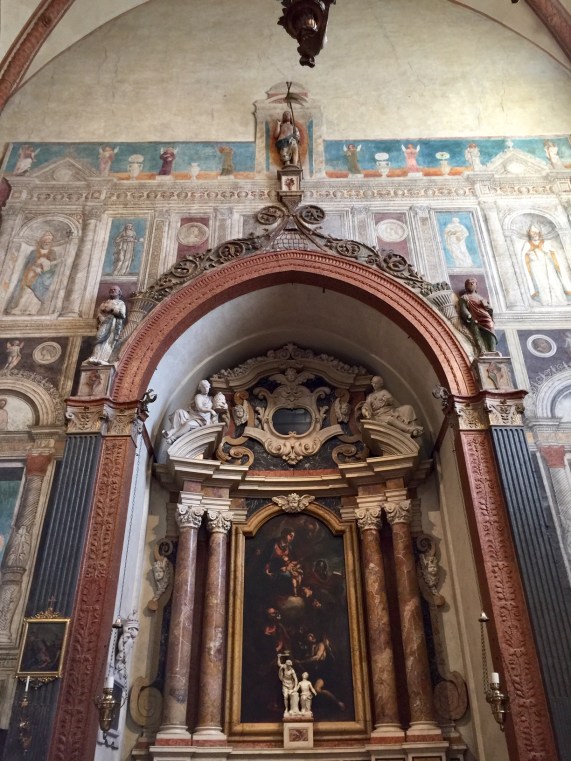
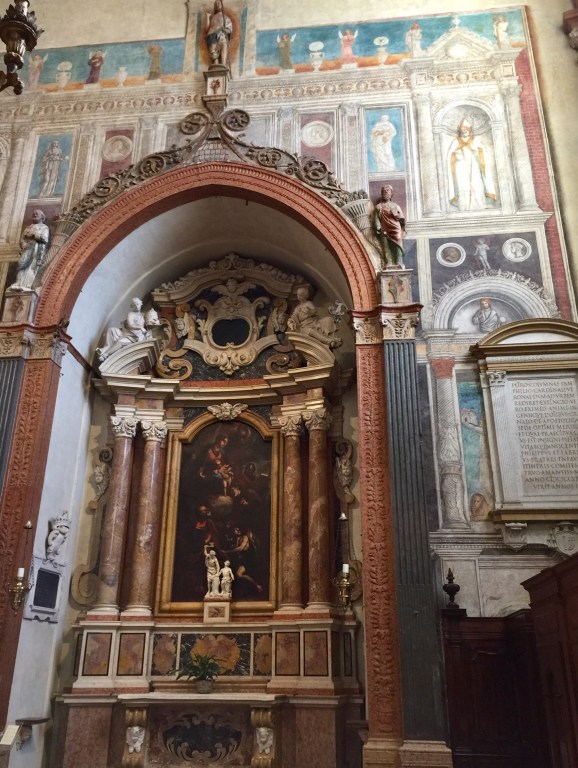
The altar below is painted and has matching sculptures in front.  I’d never seen anything like this before.

IMG_3577


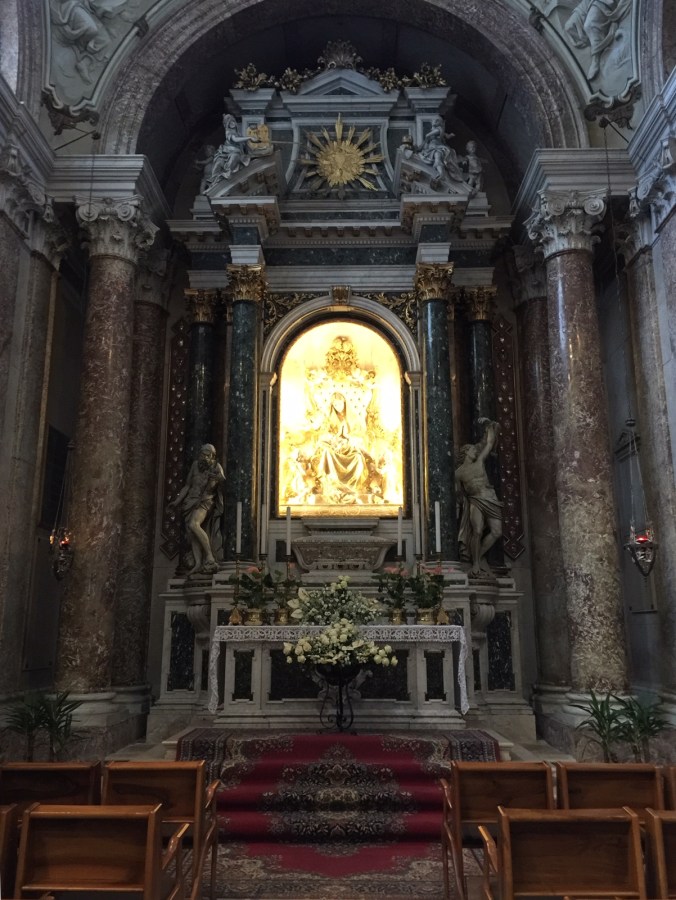
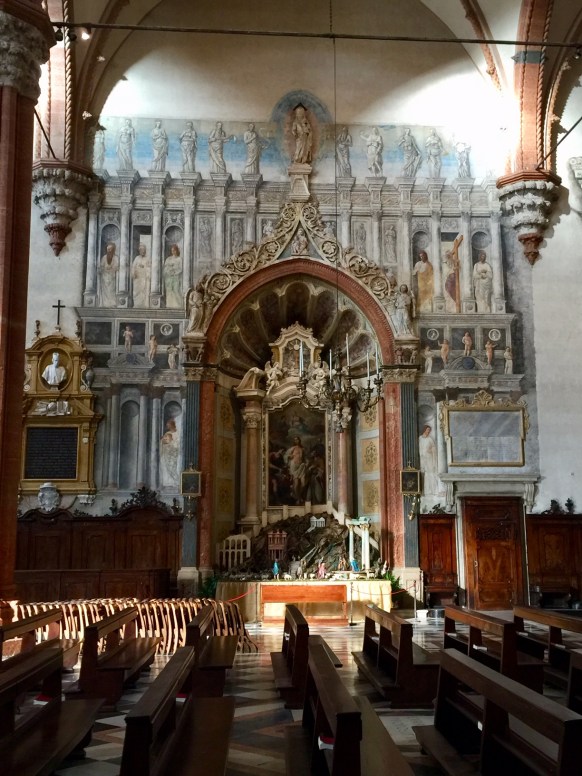
The altar below beckons from across the church.  Such lavish gold, again, I’ve never seen anything quite like this and I’ve seen a lot of altars in my day.  I love that Italy is always surprising me.

IMG_3578

See what I mean below:

IMG_3579


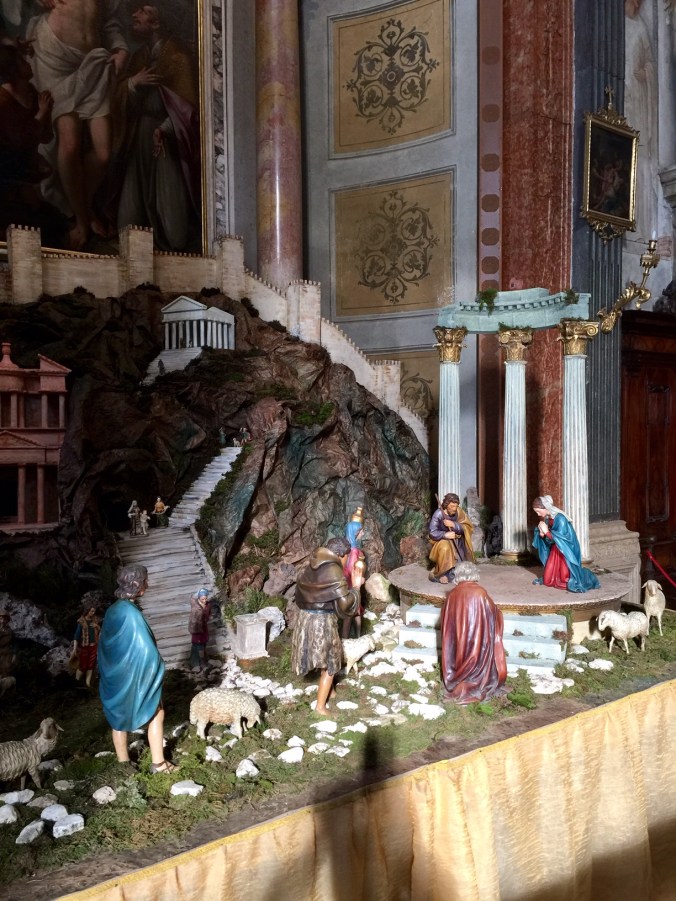
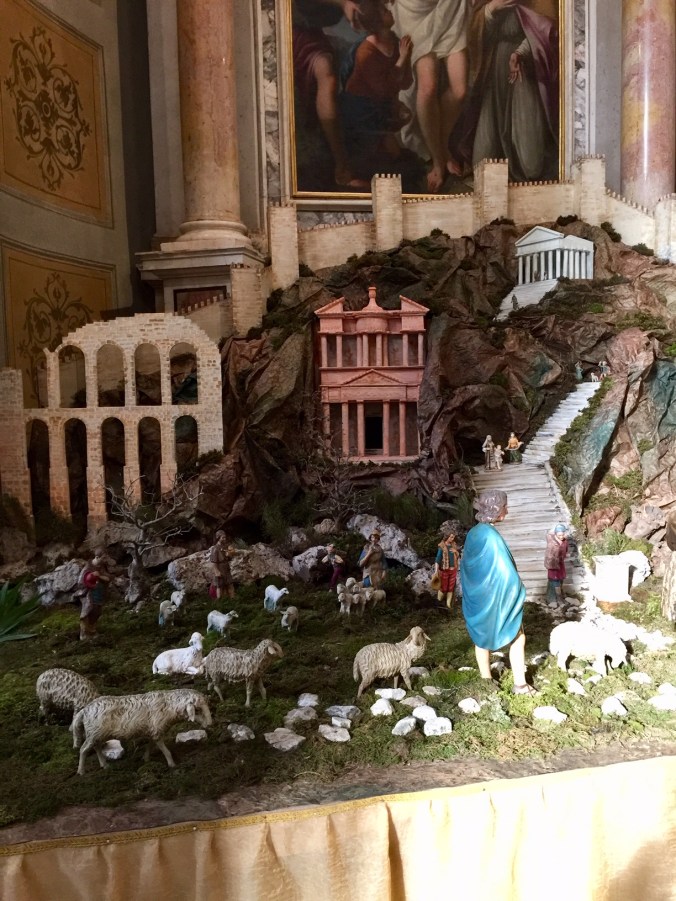
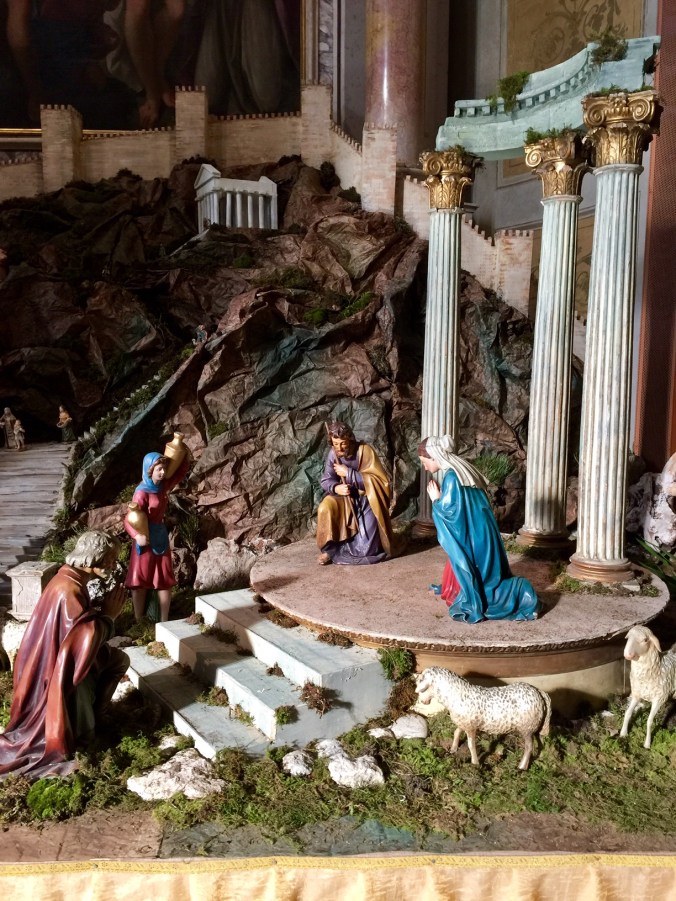
The ubiquitous December creche scene: the figure of the baby Jesus will not appear until midnight of the 25th.

IMG_3580


IMG_3581


IMG_3582


I guess the placard below is for those sinners who don’t remember or know how to confess.

IMG_3583


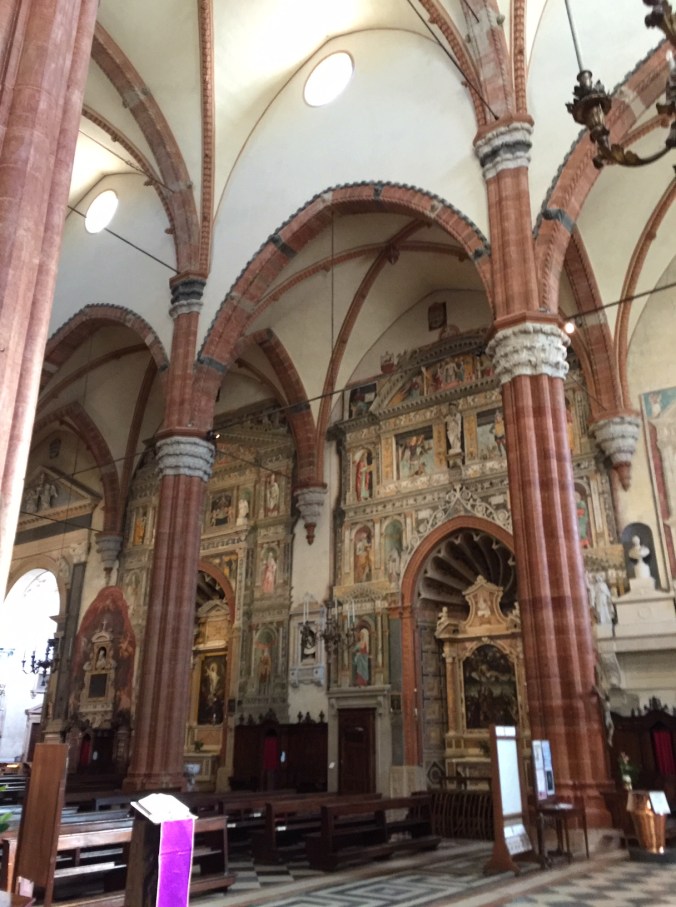
These pictures are from the interior of the duomo in Verona.  It is a beautiful church.  Verona was obviously a wealthy city during the Renaissance and after, as it still is today.

IMG_3584


IMG_3585


IMG_3588


IMG_3589


IMG_3590


IMG_3591


IMG_3592


IMG_3593


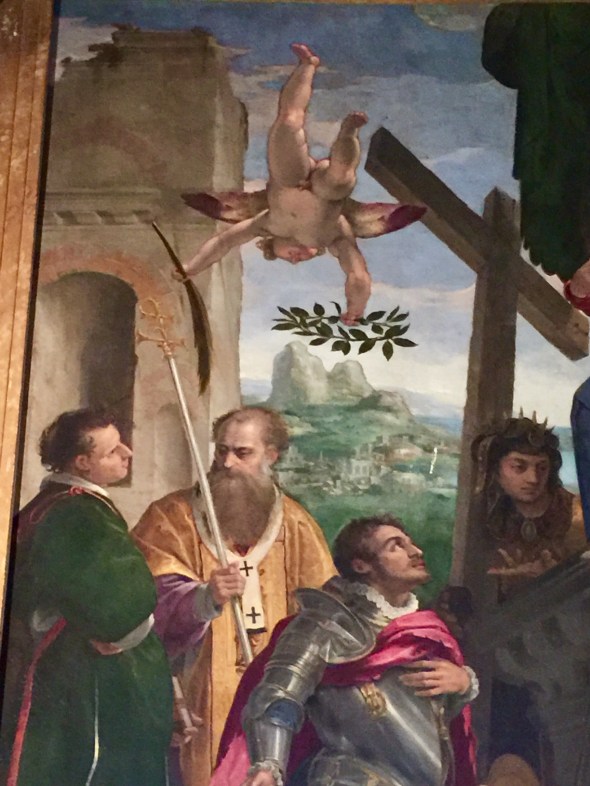
I’ve looked at a lot of paintings in my day, but I’ve never seen such a foreshortened putto flying in from this angle, to crown with laurel the knight in armor.

IMG_3594


IMG_3595


While this sculpted doorway below looks to be monumental, it was actually at my eye level on a wall in the duomo, and measured about 12 inches tall.

IMG_3596


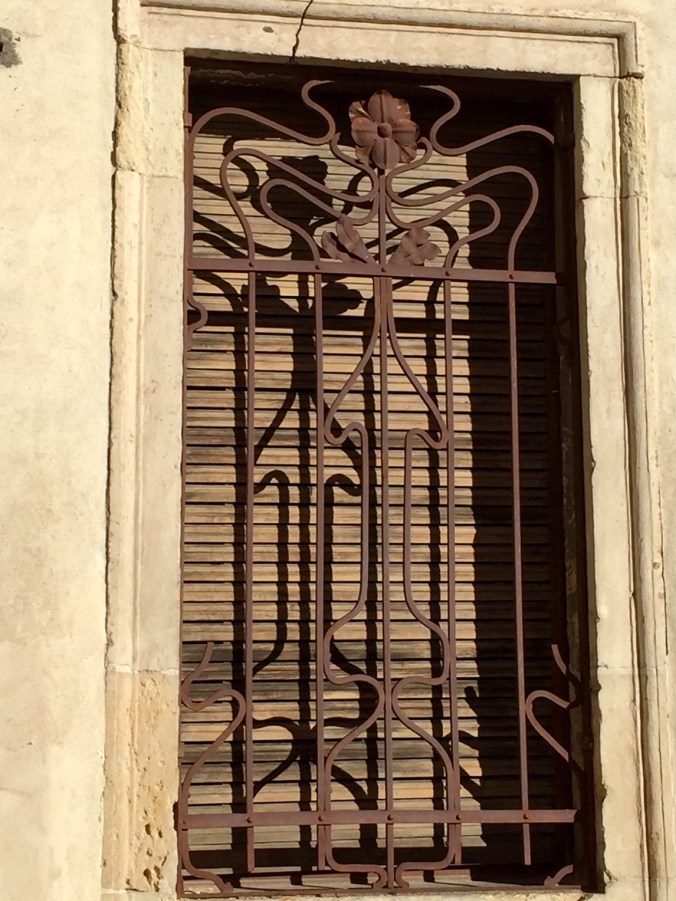
Back out in the lovely streets of Verona, I admired this art nouveau wrought iron in a window.  It’s unusual for Italy and I love it.

IMG_3597


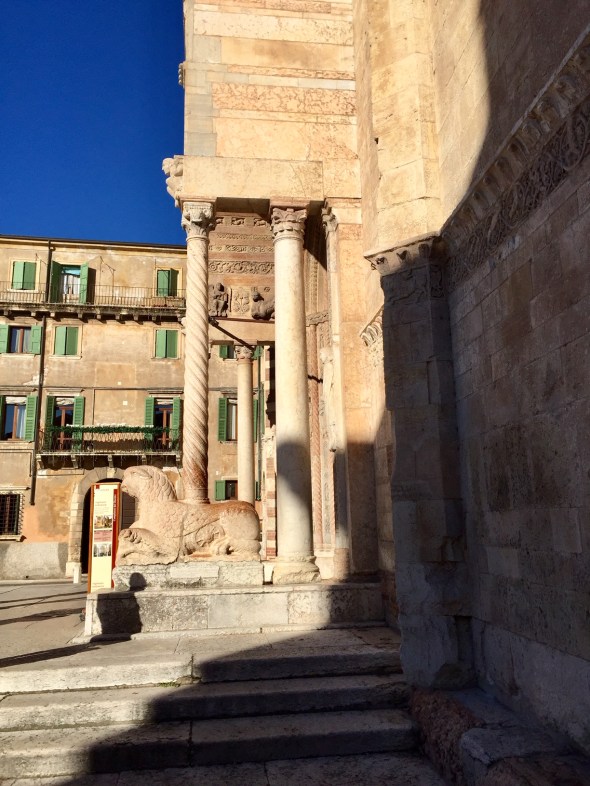
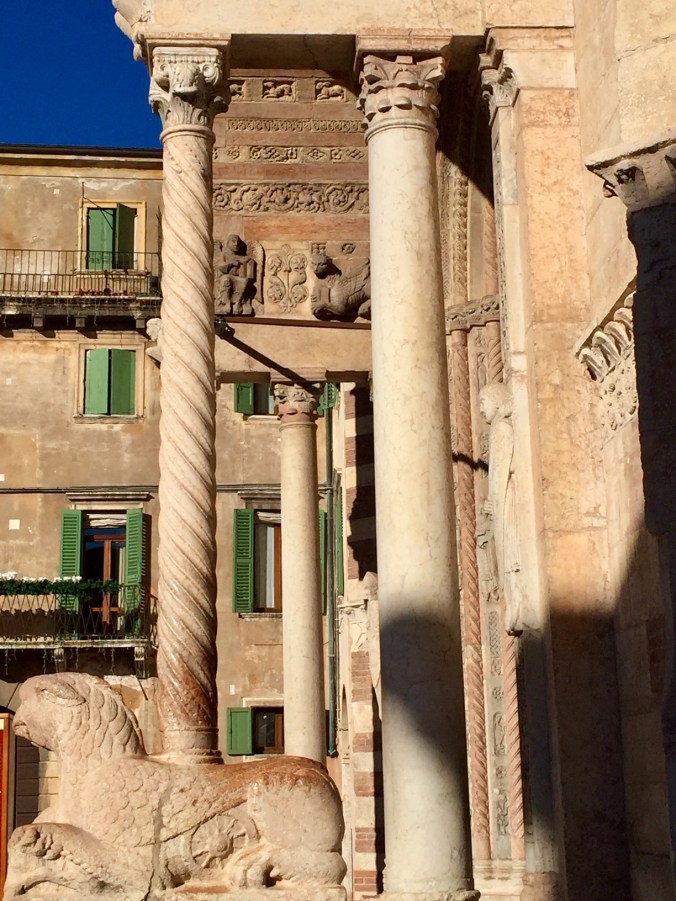
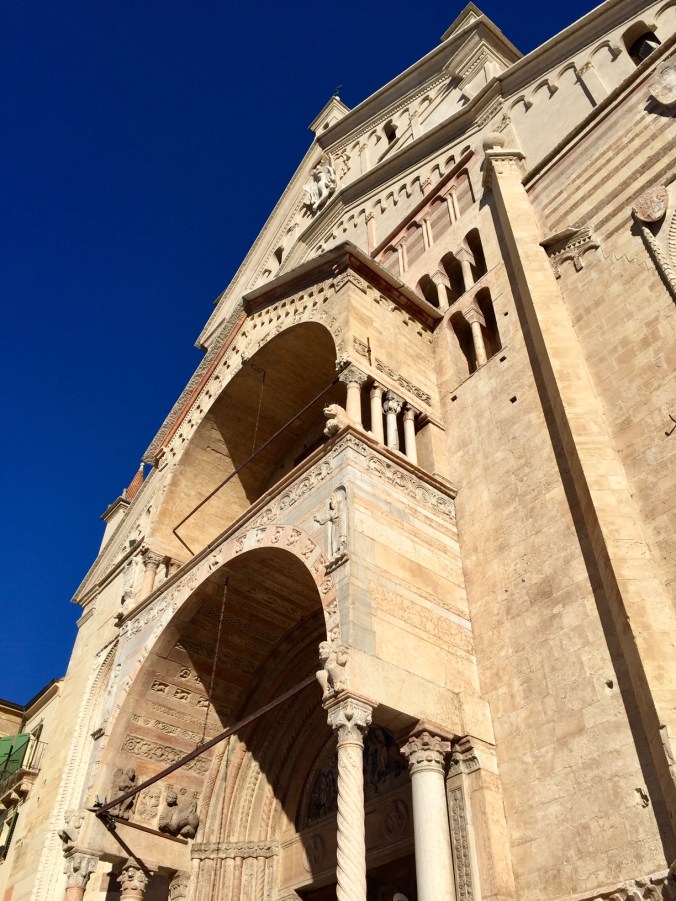
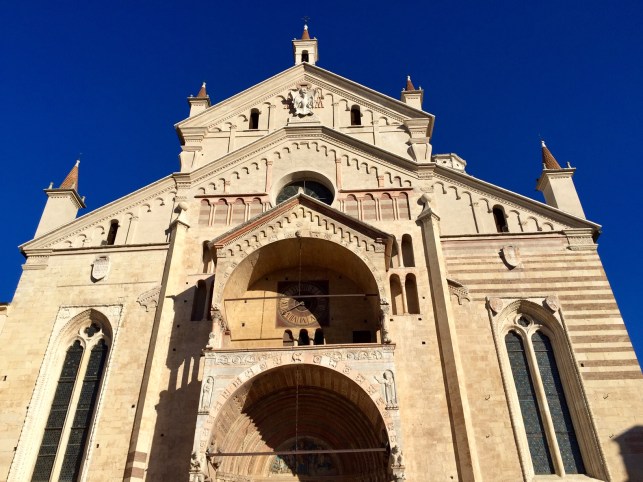
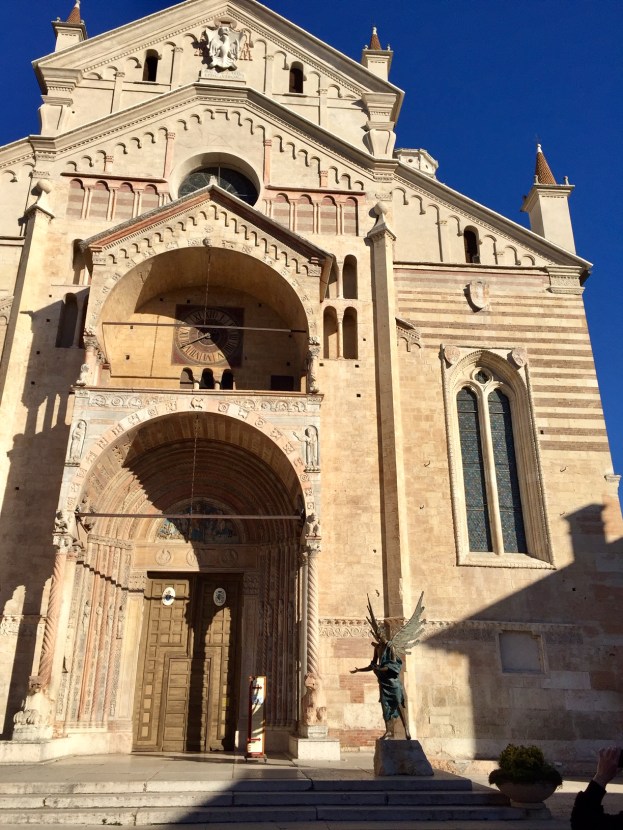
Below is the gorgeous facade of the duomo.

IMG_3598


IMG_3599


IMG_3600


IMG_3604


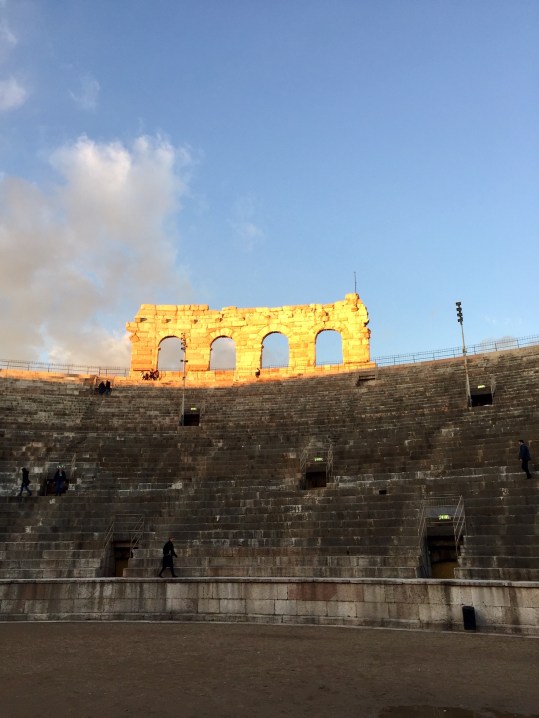
There are Roman ruins on the hillsides in Verona.  I took this picture to remind me of this new (to me) fact: I want to go back and see more of the town.

IMG_3607


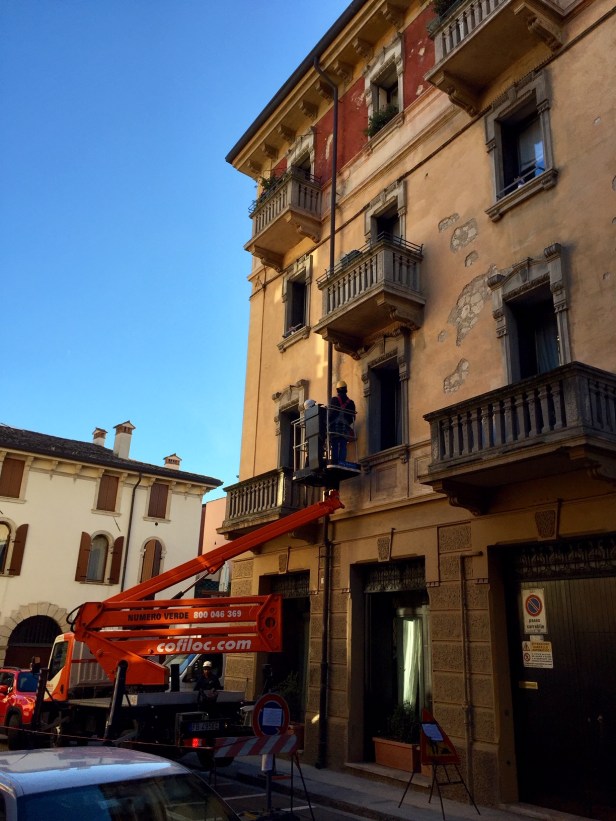
The facade below is getting some TLC.

IMG_3608


IMG_3609


IMG_3610


IMG_3611


IMG_3612


IMG_3615


IMG_3616


IMG_3617


IMG_3618


IMG_3619


Walking along on the sidewalk along a wall, there are death notices posted.  I find these fascinating.


IMG_3700


IMG_3702


IMG_3705


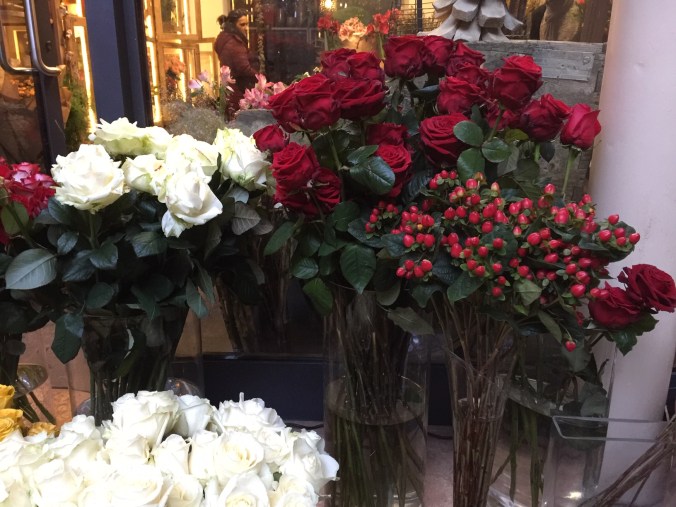
Flower shops are magnets to me:


IMG_3707


IMG_3713


IMG_3714


IMG_3715


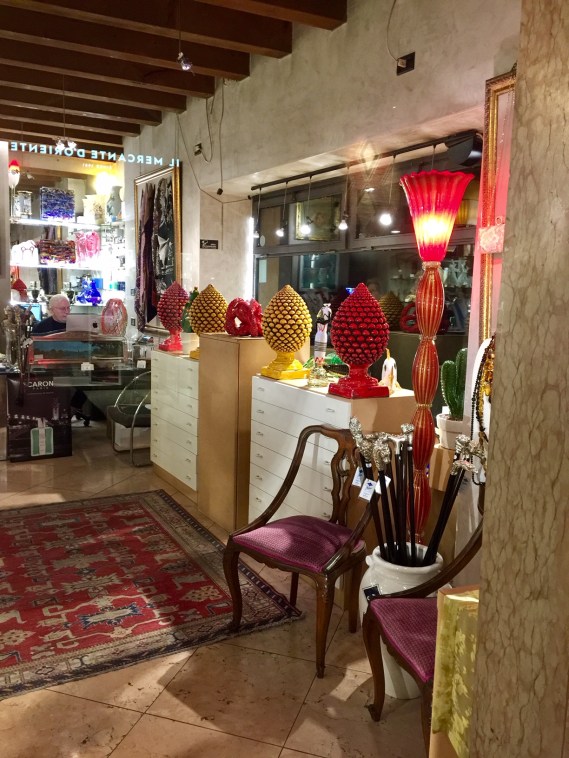
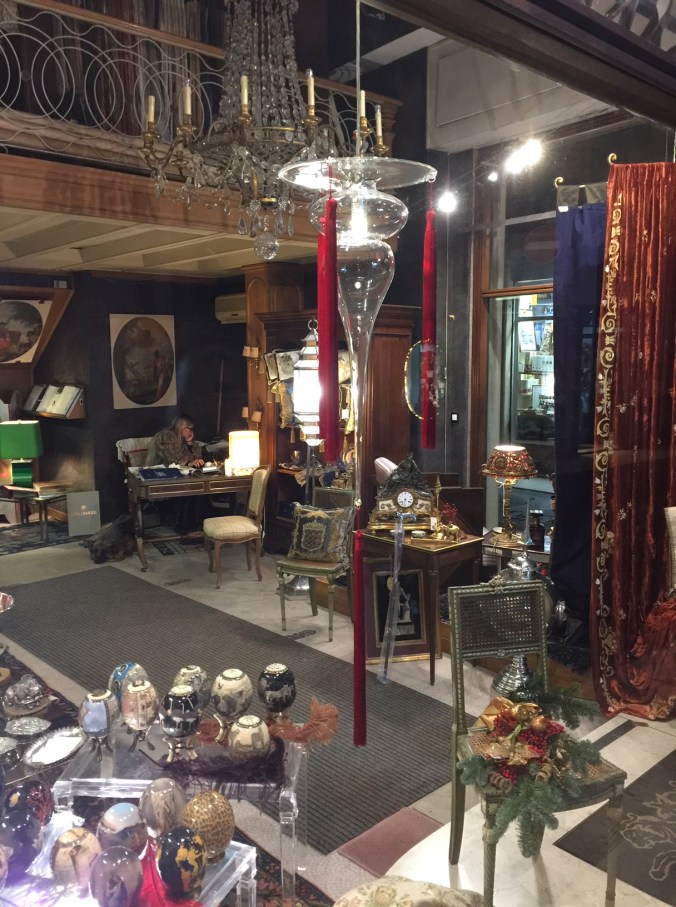
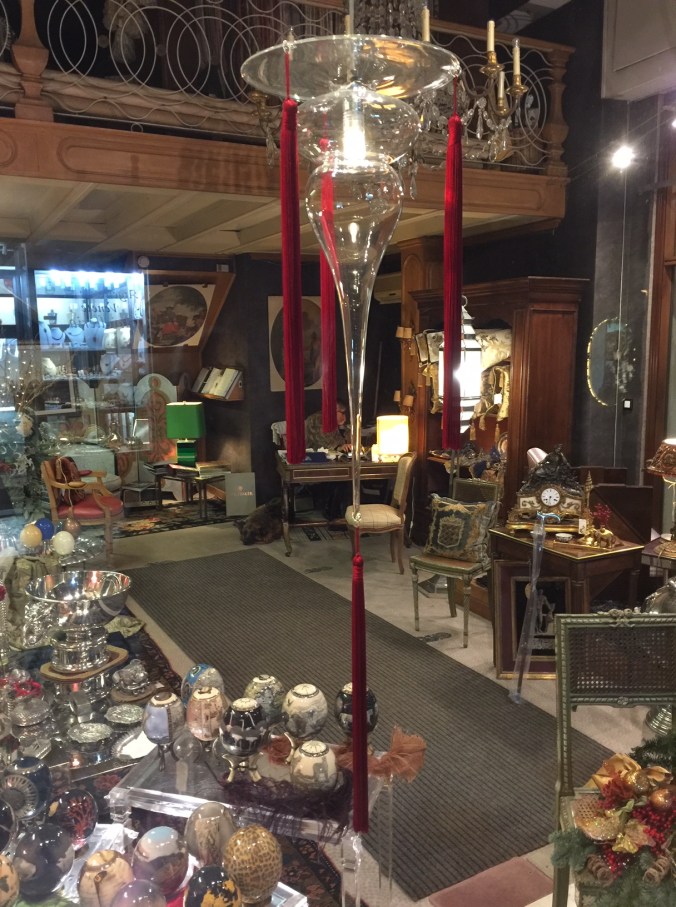
I am obsessed with this crystal lamp with the red tassels.  Obsessed.

IMG_3716


Obsessed I tell you!

IMG_3717


Finally, the end.  A shout out to my girl, Jenny, for being an awesome traveling companion.  More to come, I am sure!

Oh, and p.s., I have a few more Verona posts coming, including Giardino Giusti.  Watch this space!


The Bridal Chamber frescoes, Andrea Mantegna


fullsizeoutput_75b

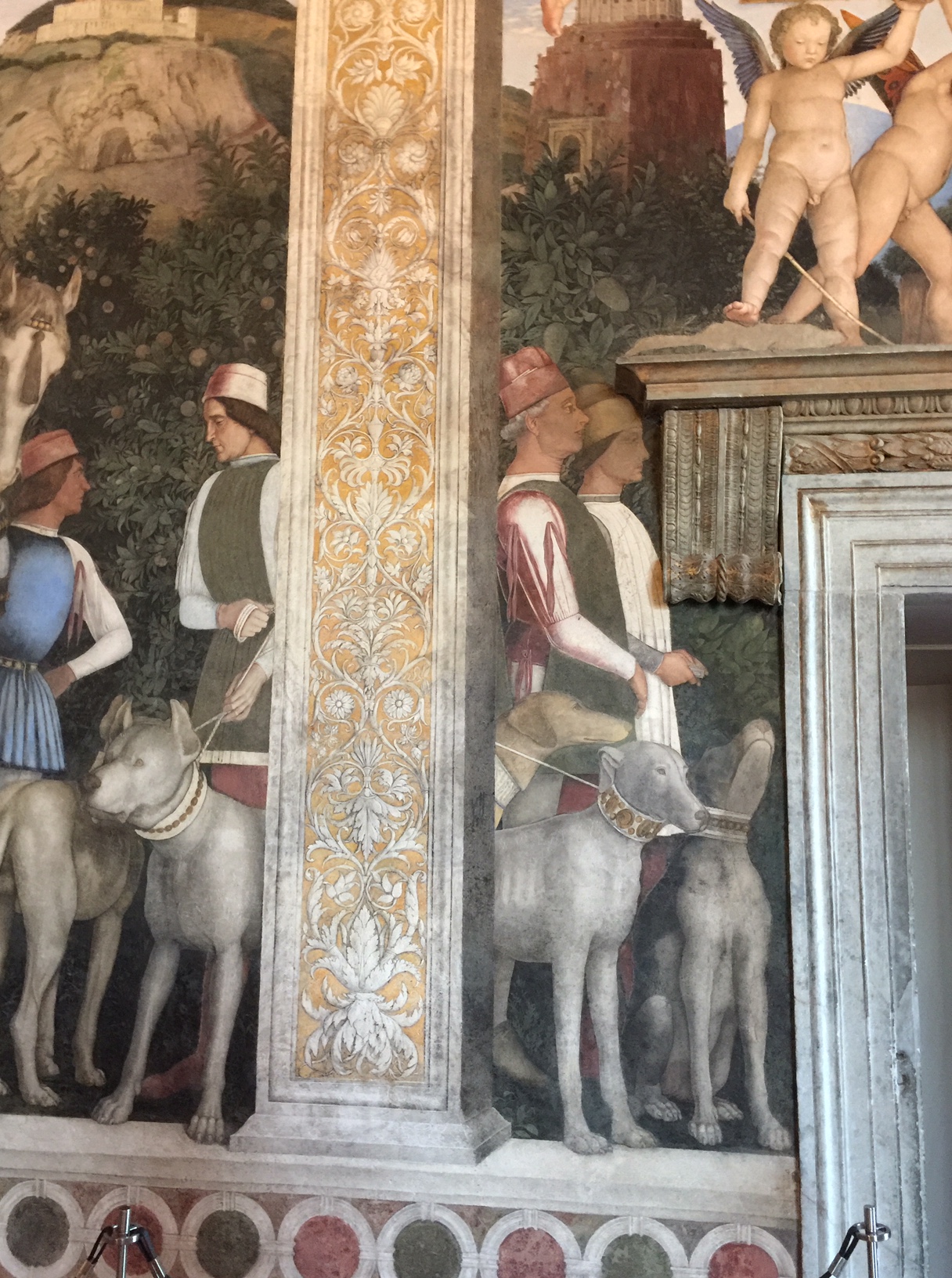
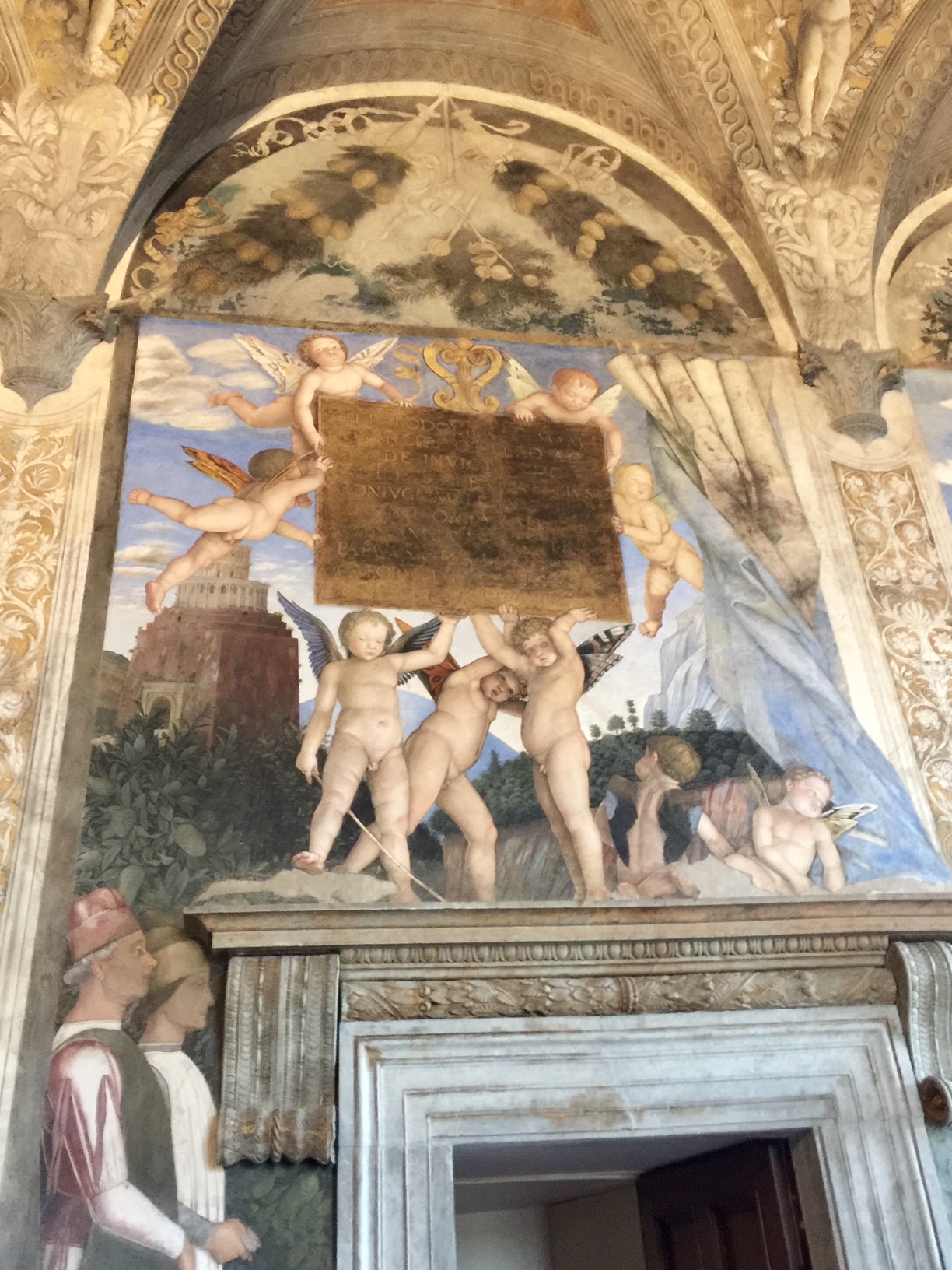
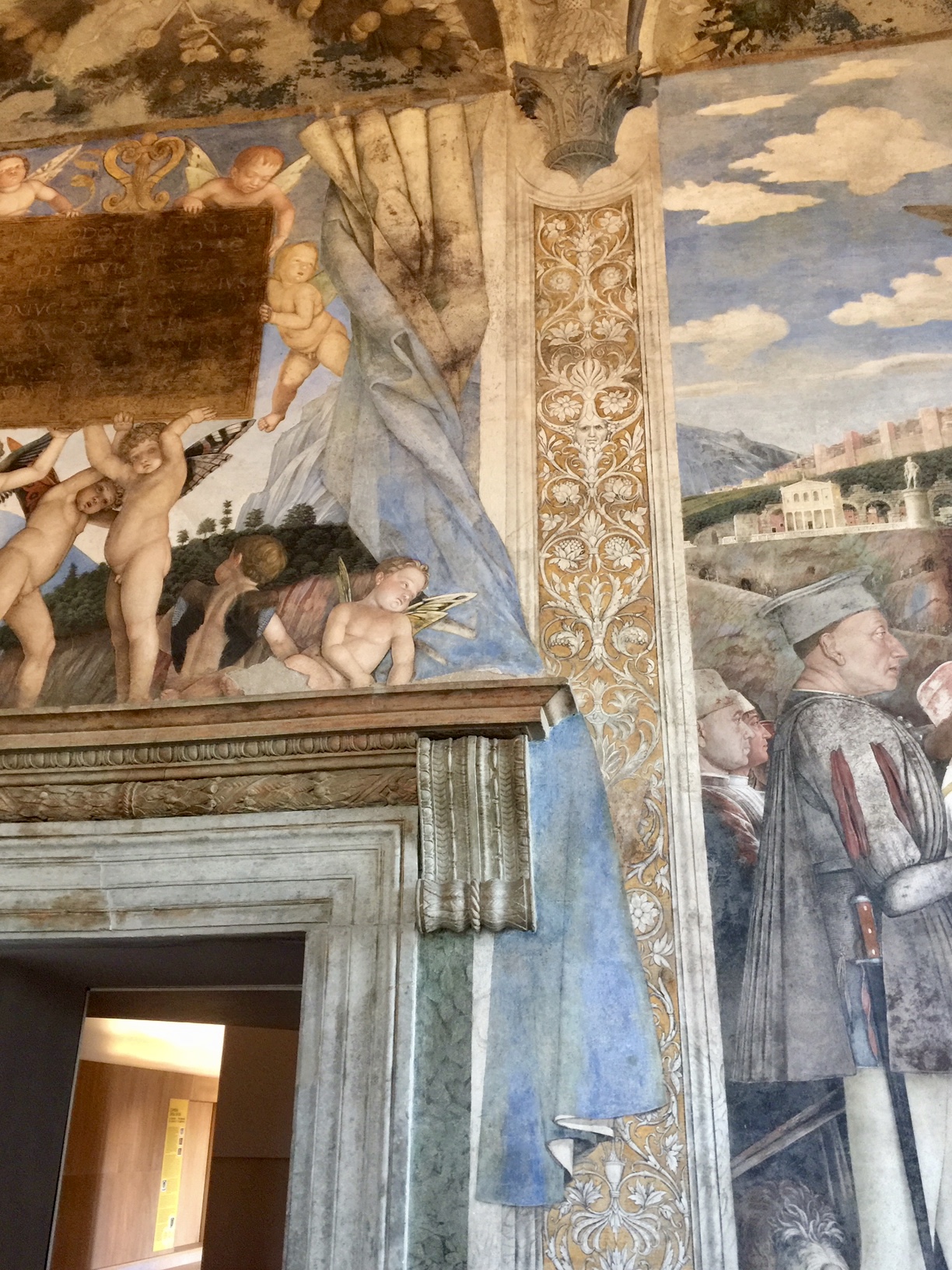
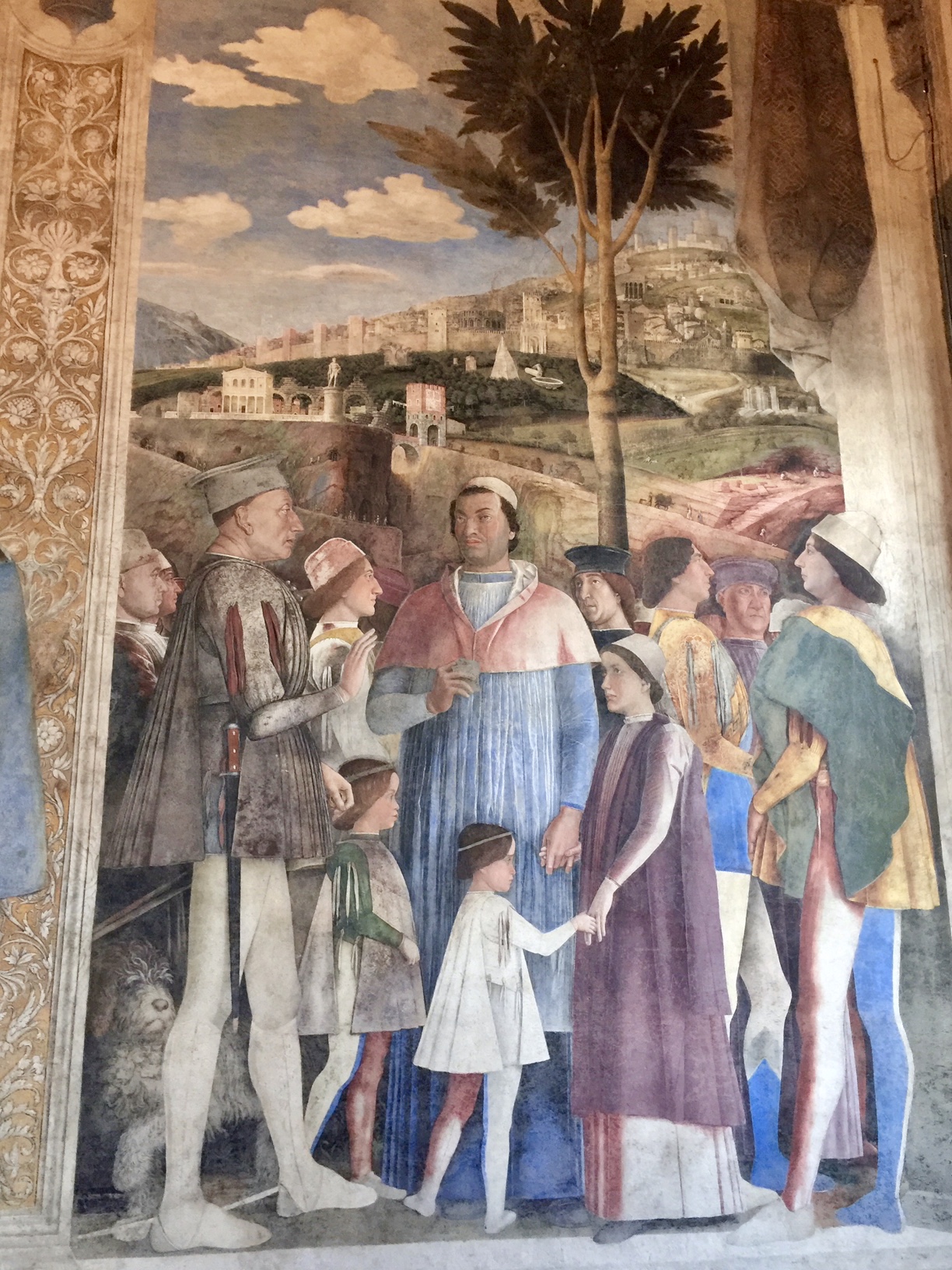
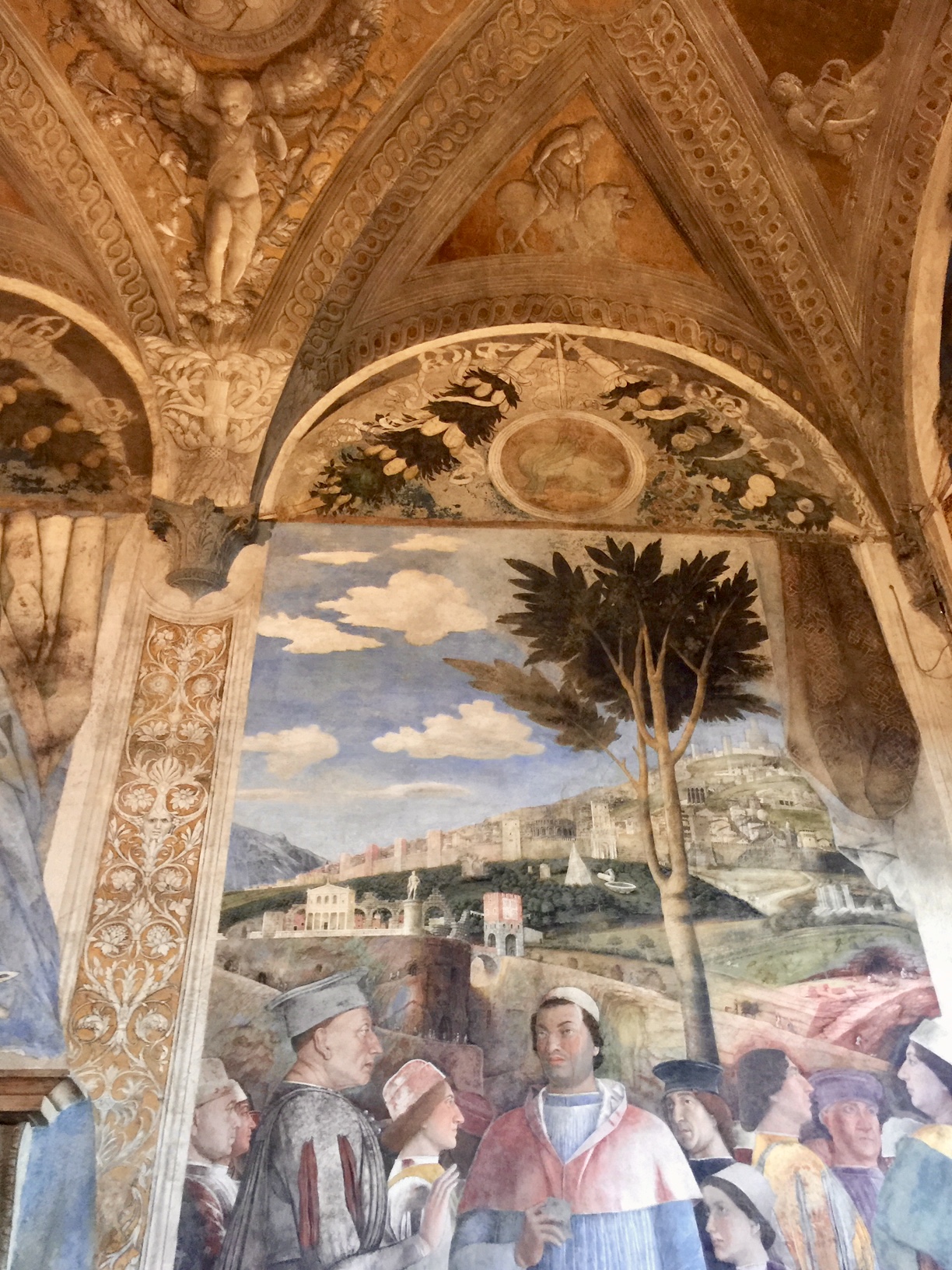
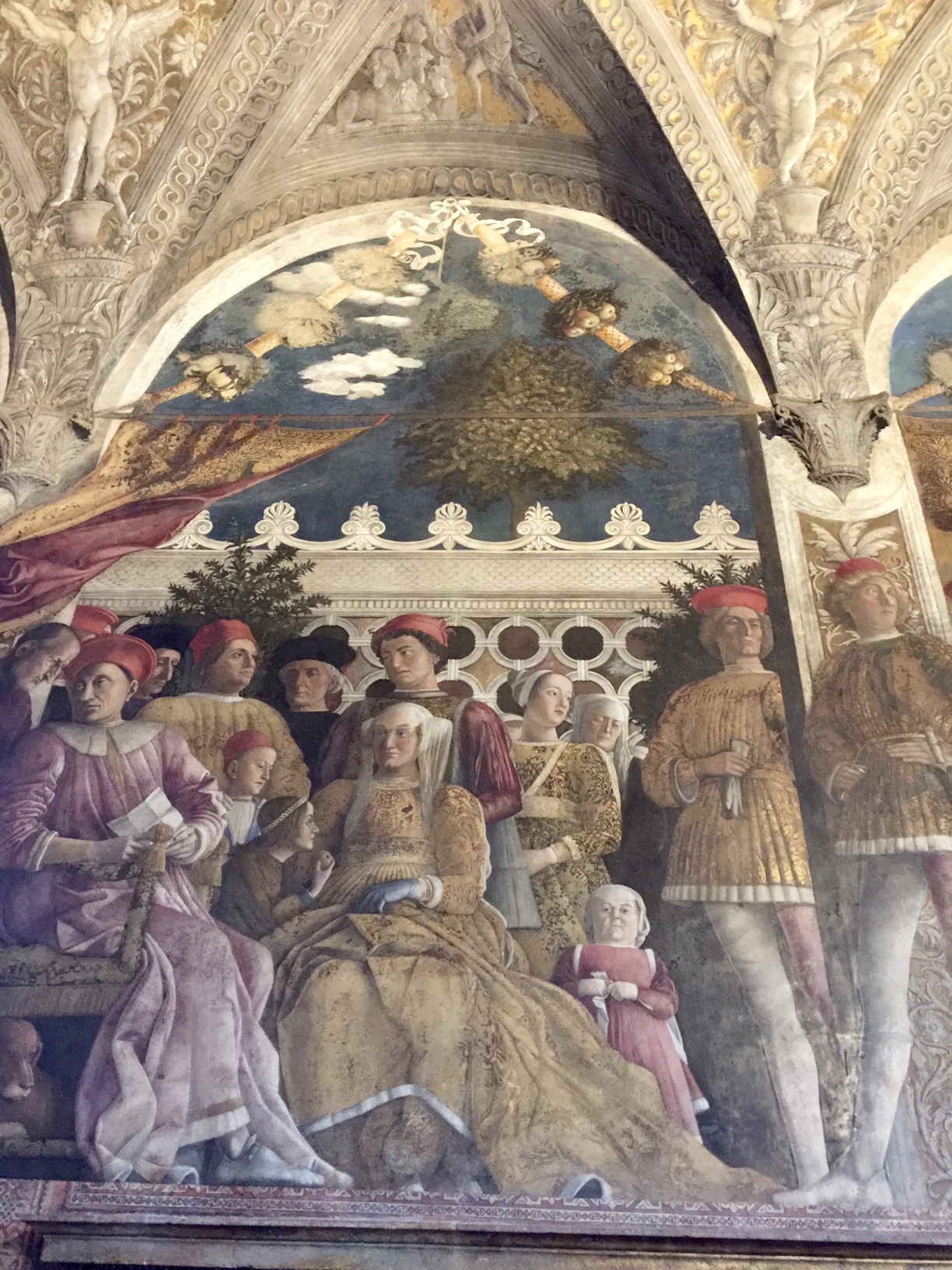
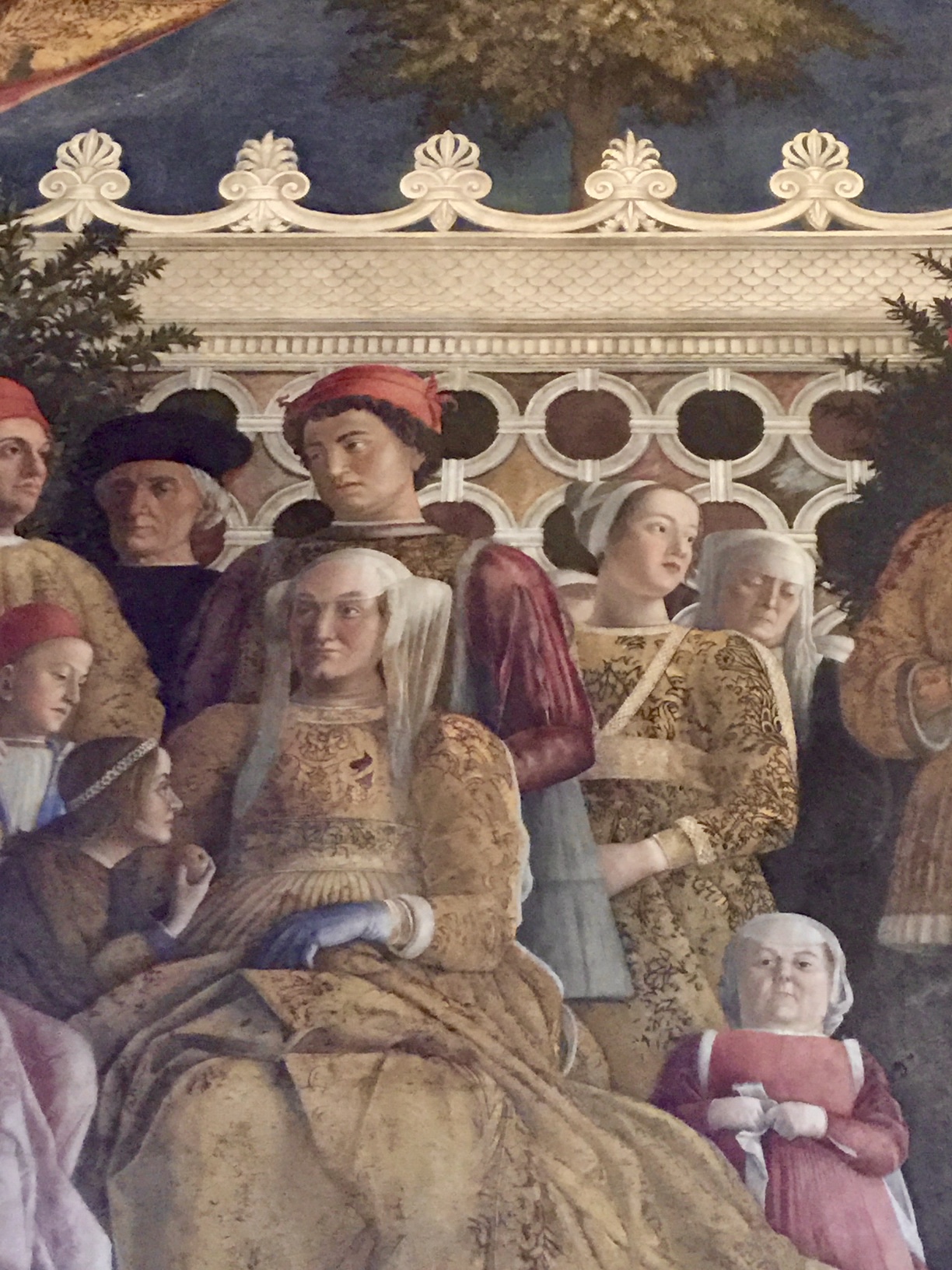
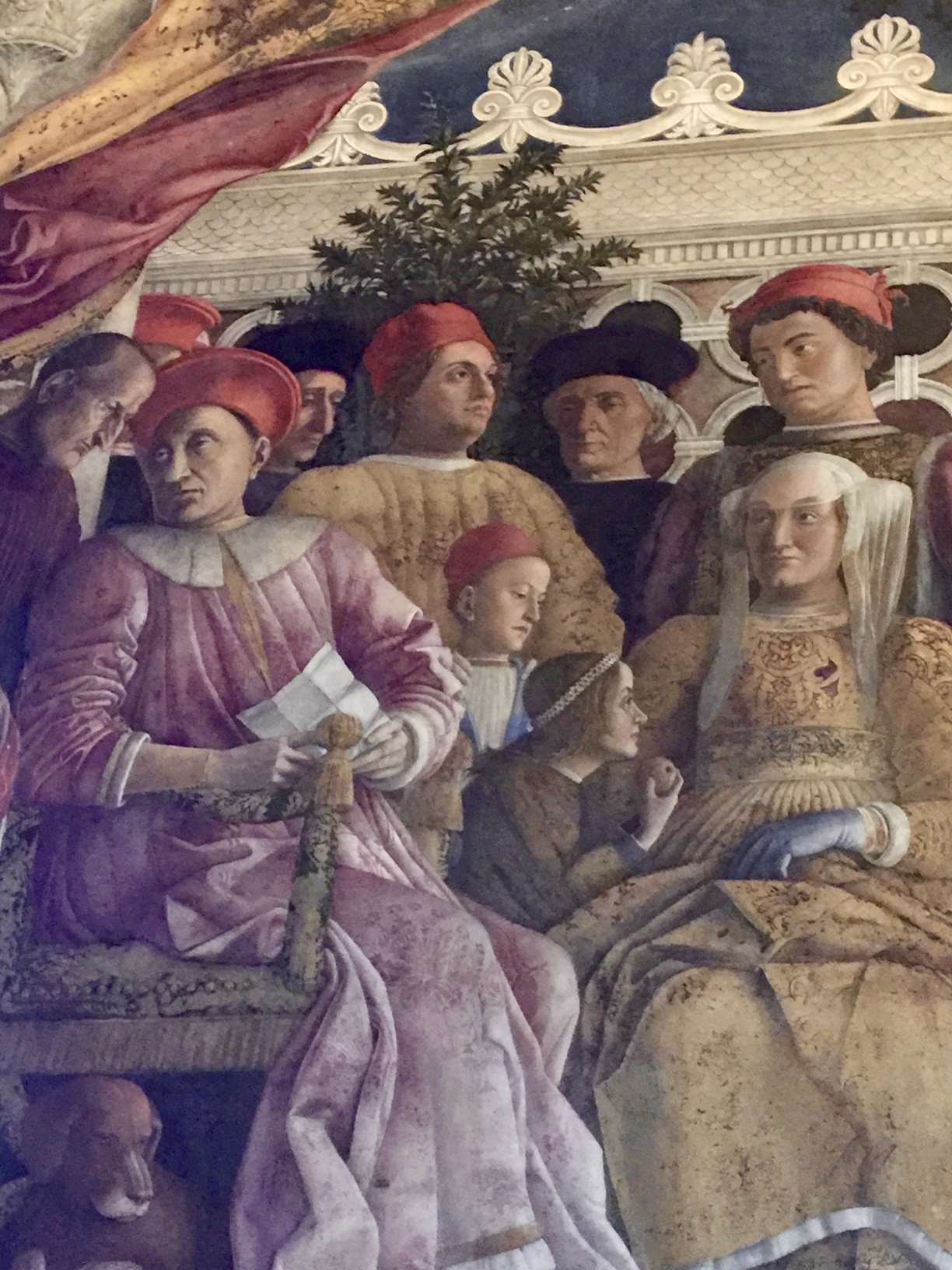
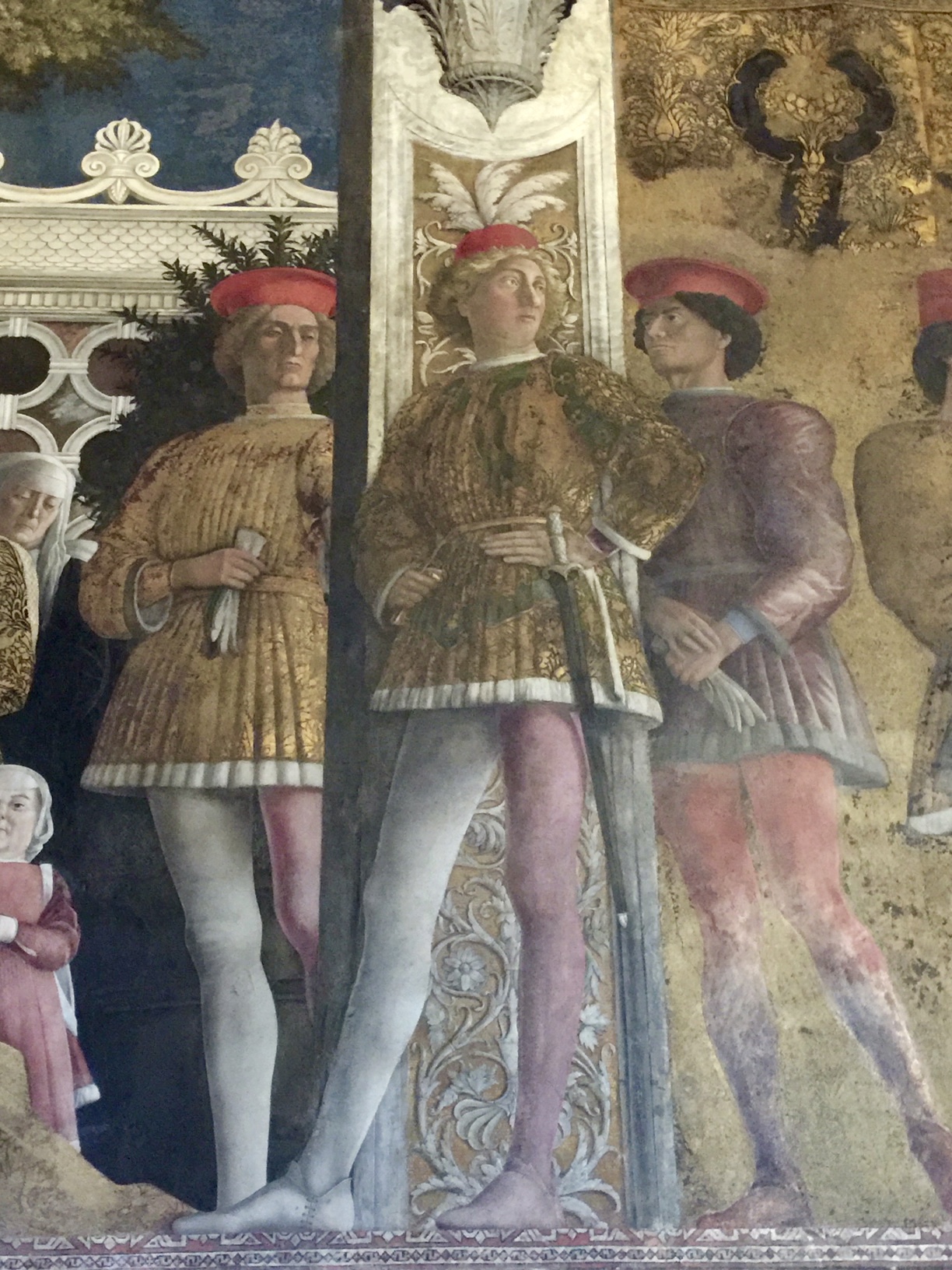
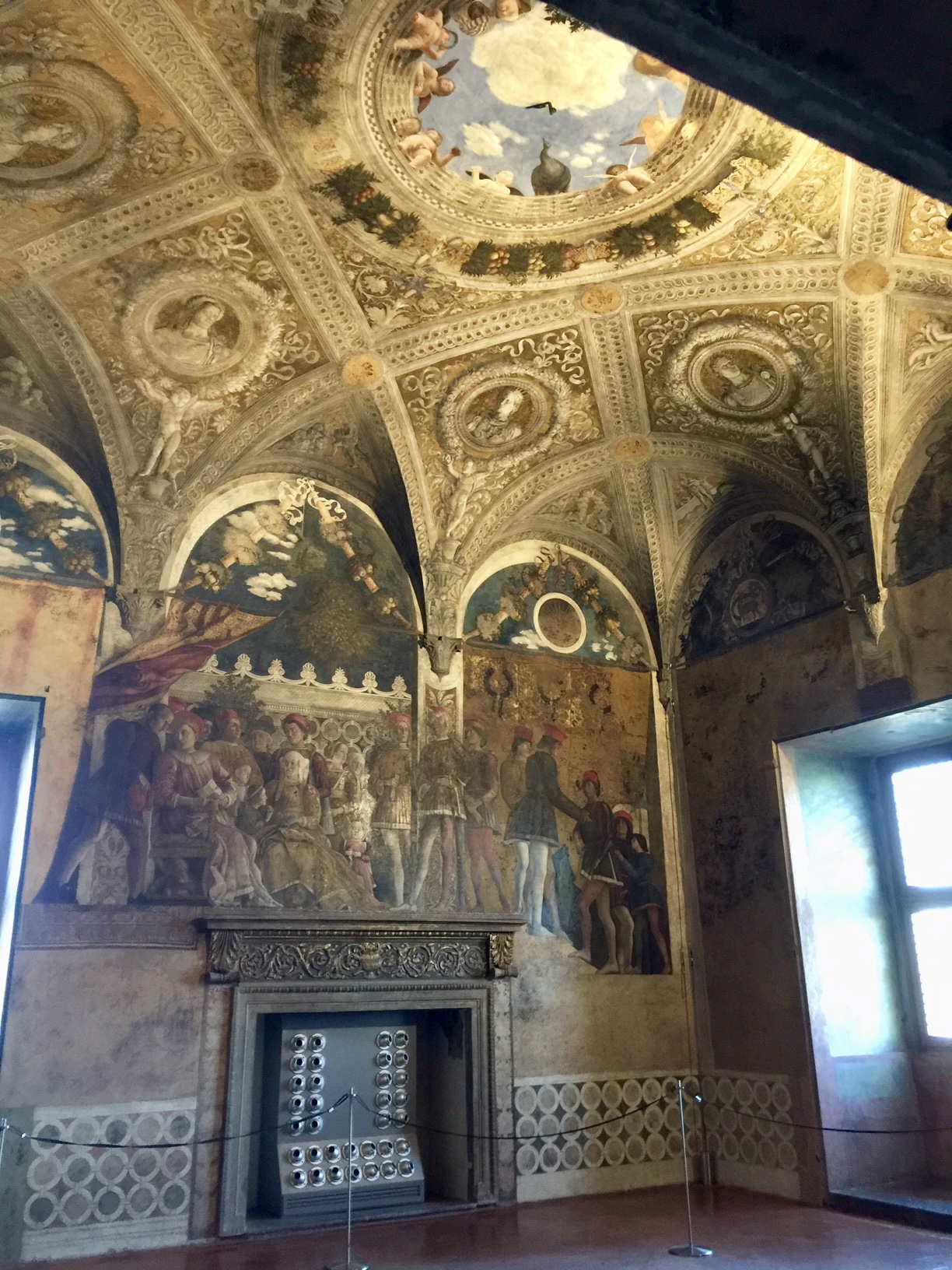
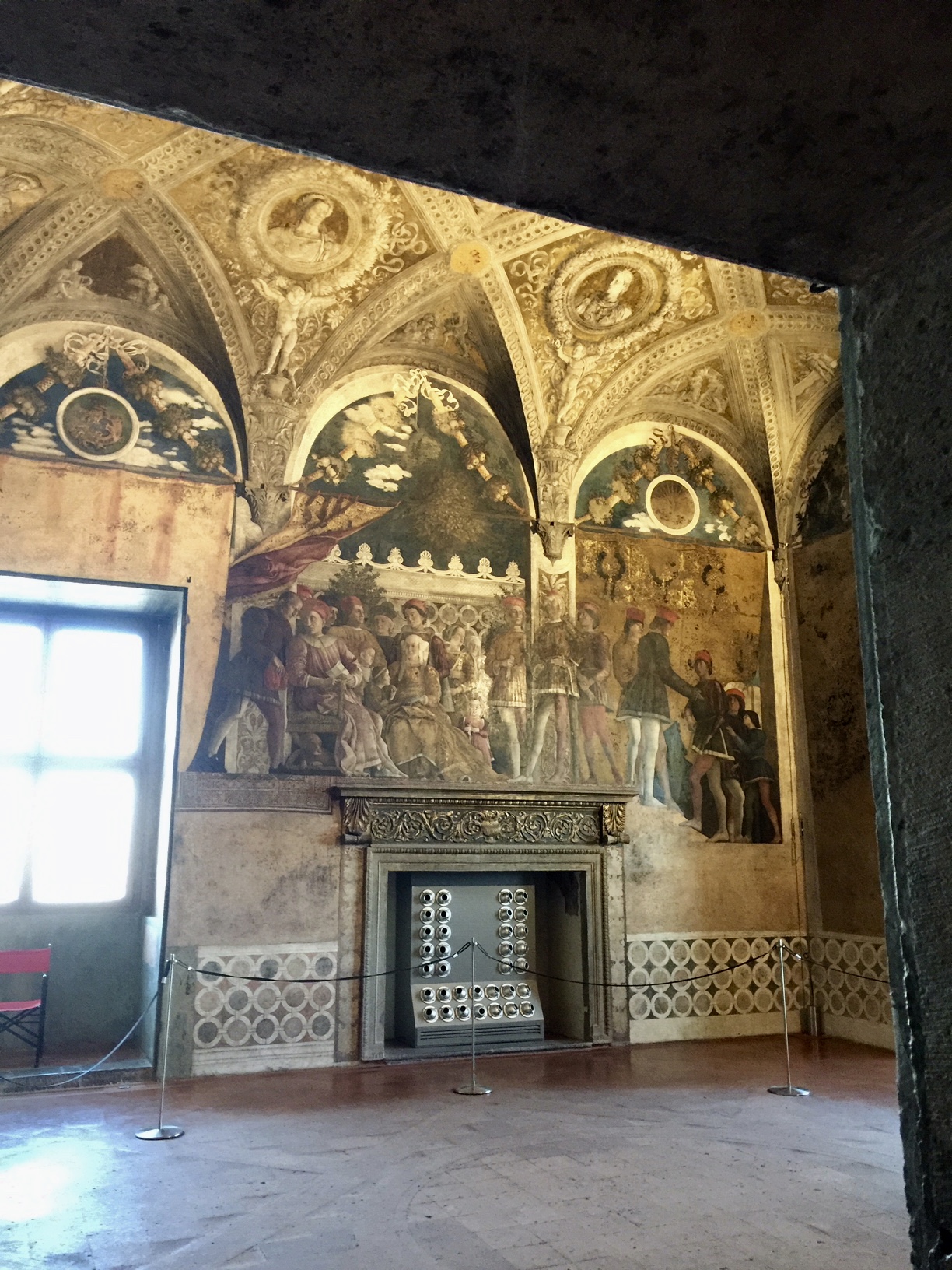
One of the two most enchanting places I have ever been is in the Bridal Chamber of the Palazzo Ducale in Mantua, Lombardy, Italy.  I won’t share my other top most favorite place here, but I will tell you it is a Renaissance room of about the same size somewhere in Tuscany and was painted by Benozzo Gozzoli.  

But recently in Mantua, I found Andrea Mantegna’s Cameral degli Sposi, and I fell in love. Again. I knew it would happen.

It was December and I was alone in this beautiful chamber, with time to study the details to my heart’s content.  I took about a million photos and I am sharing them here. 

Let’s start with a video:


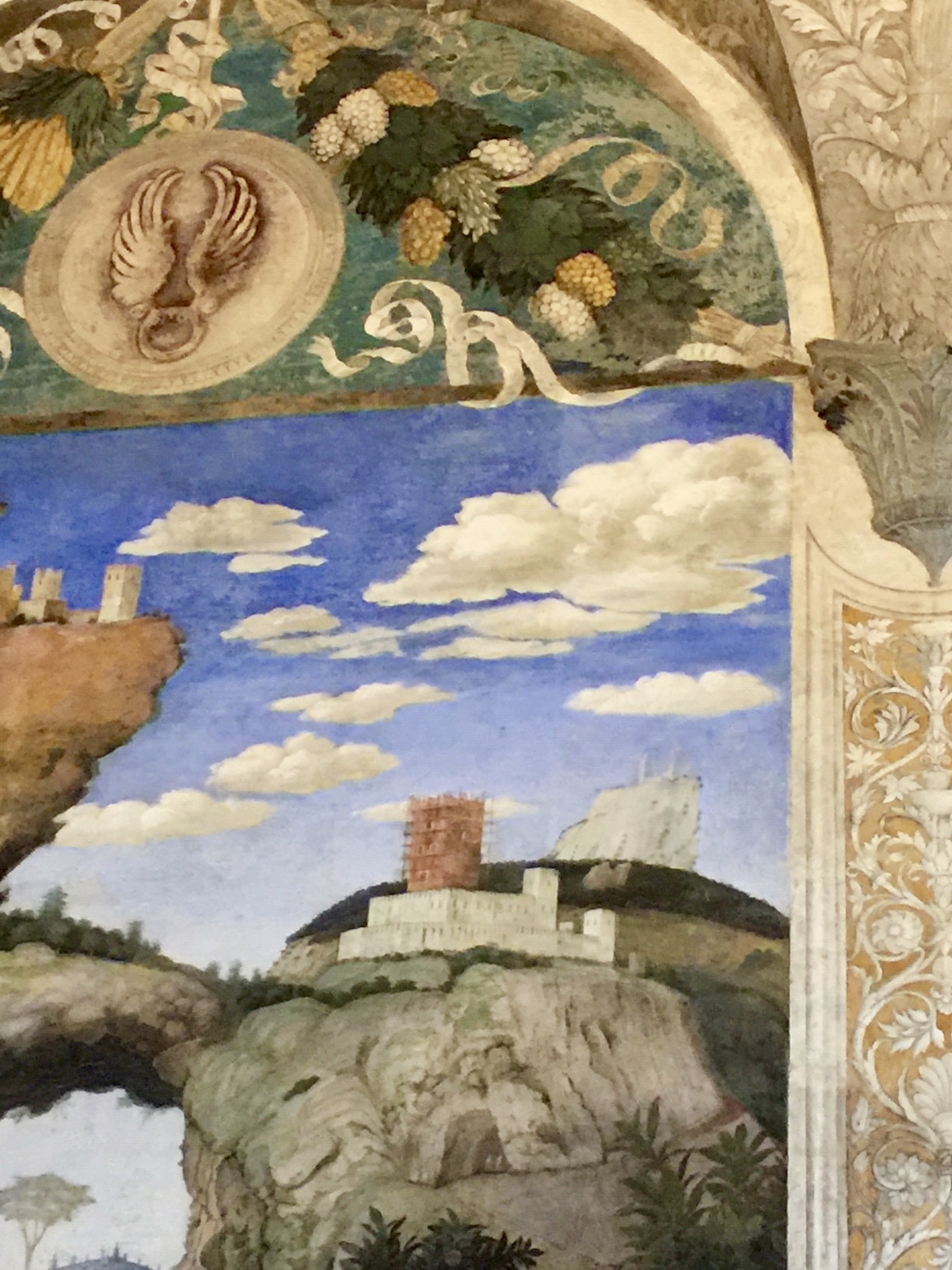
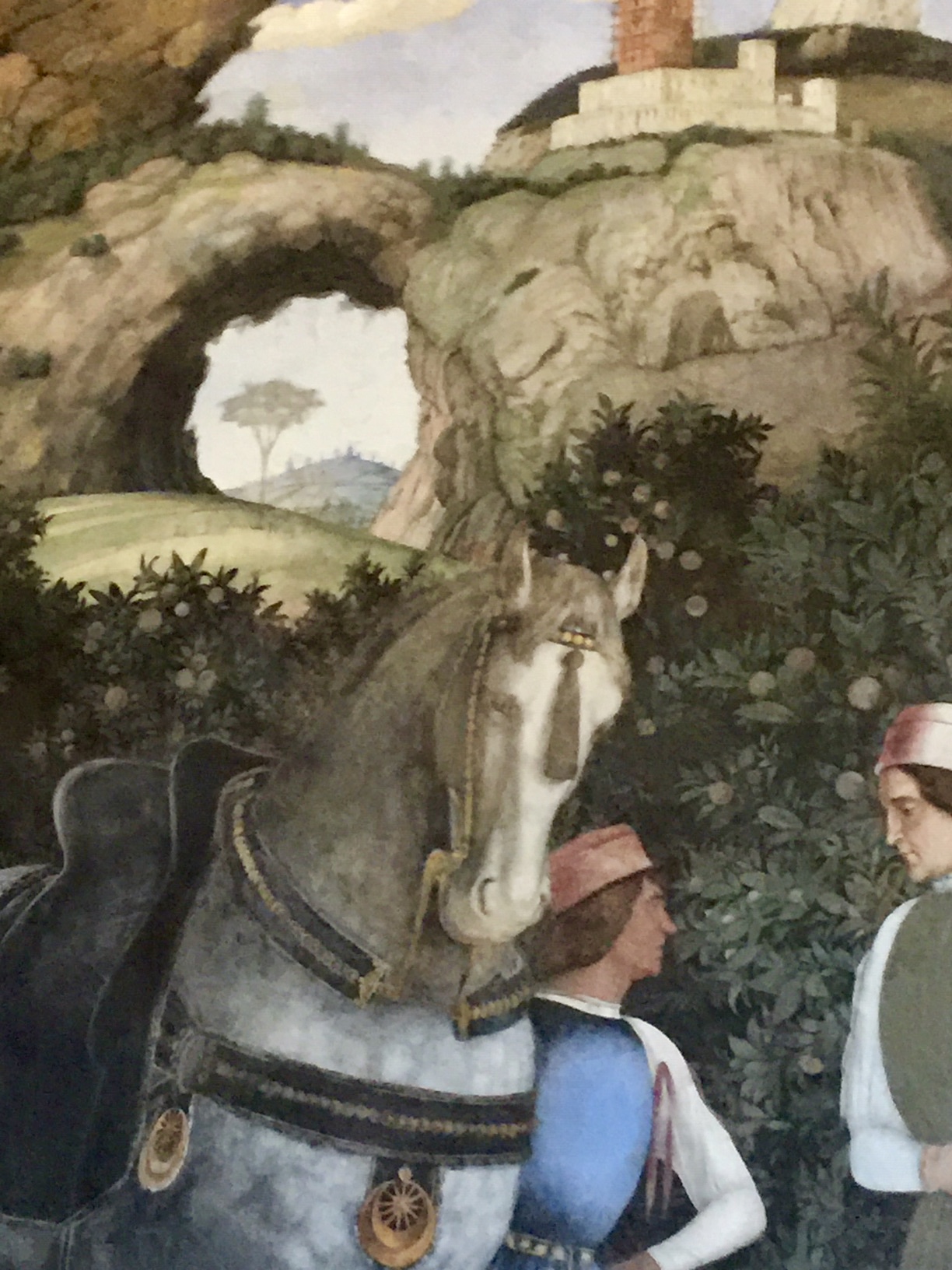
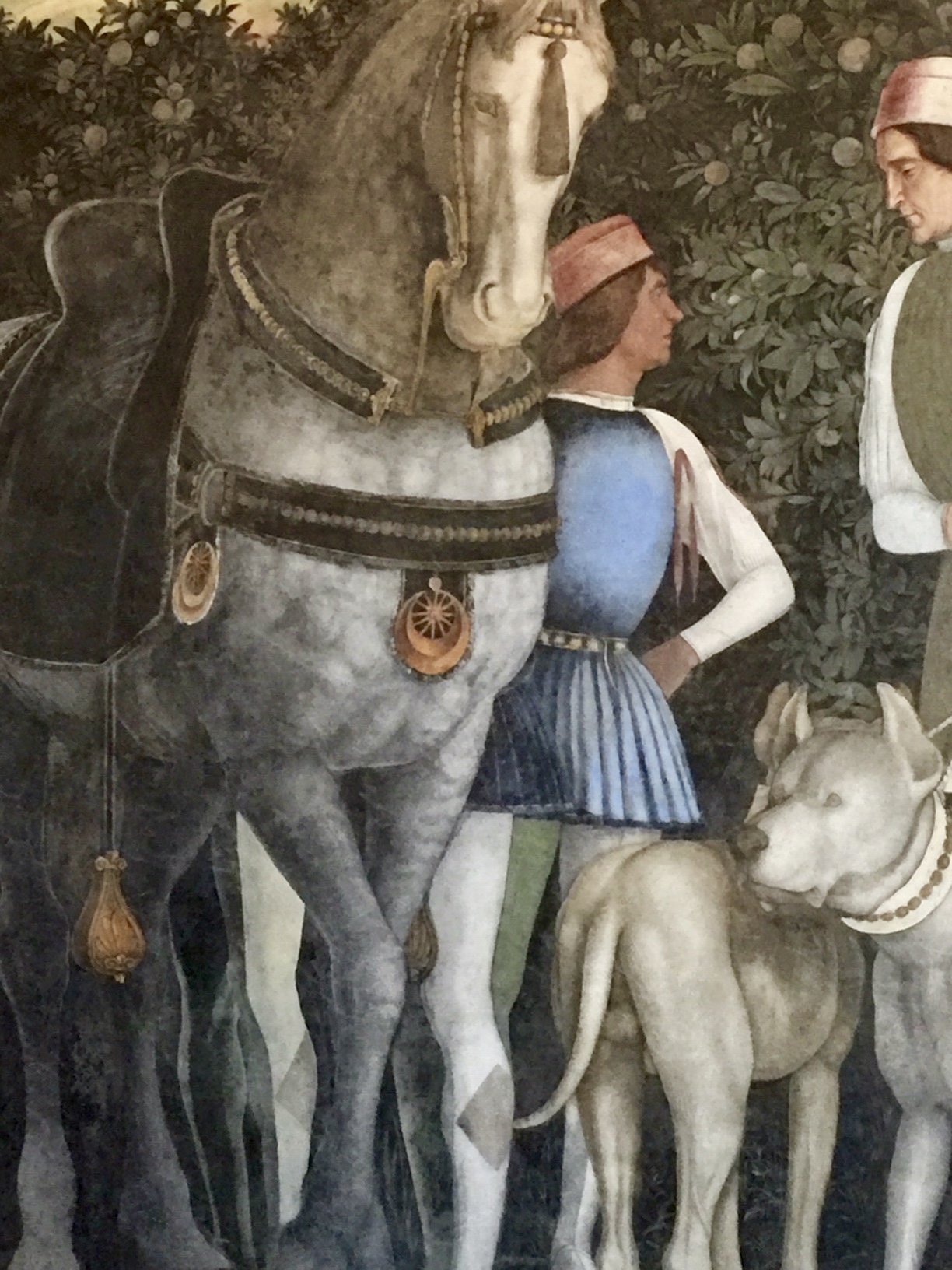
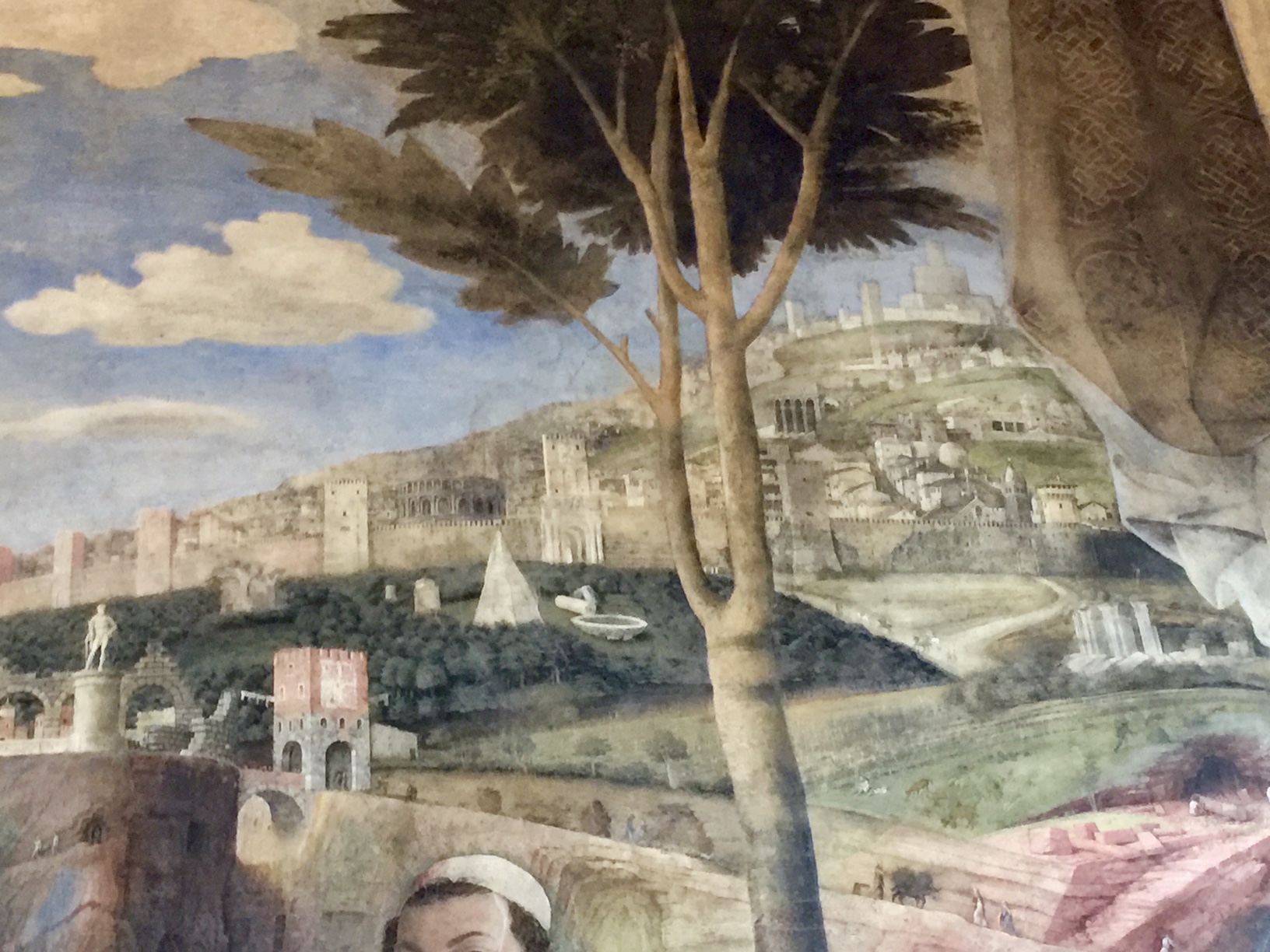
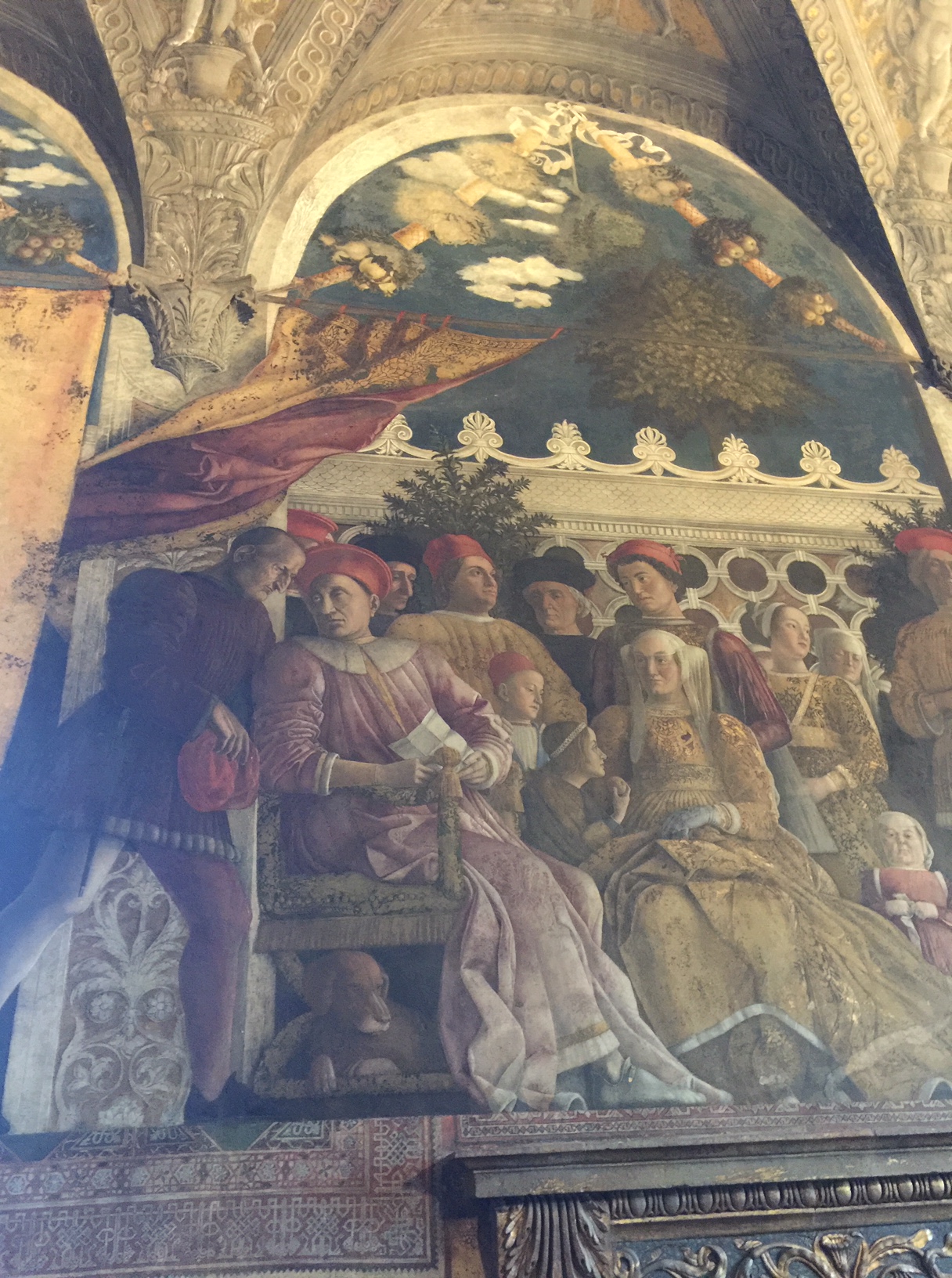
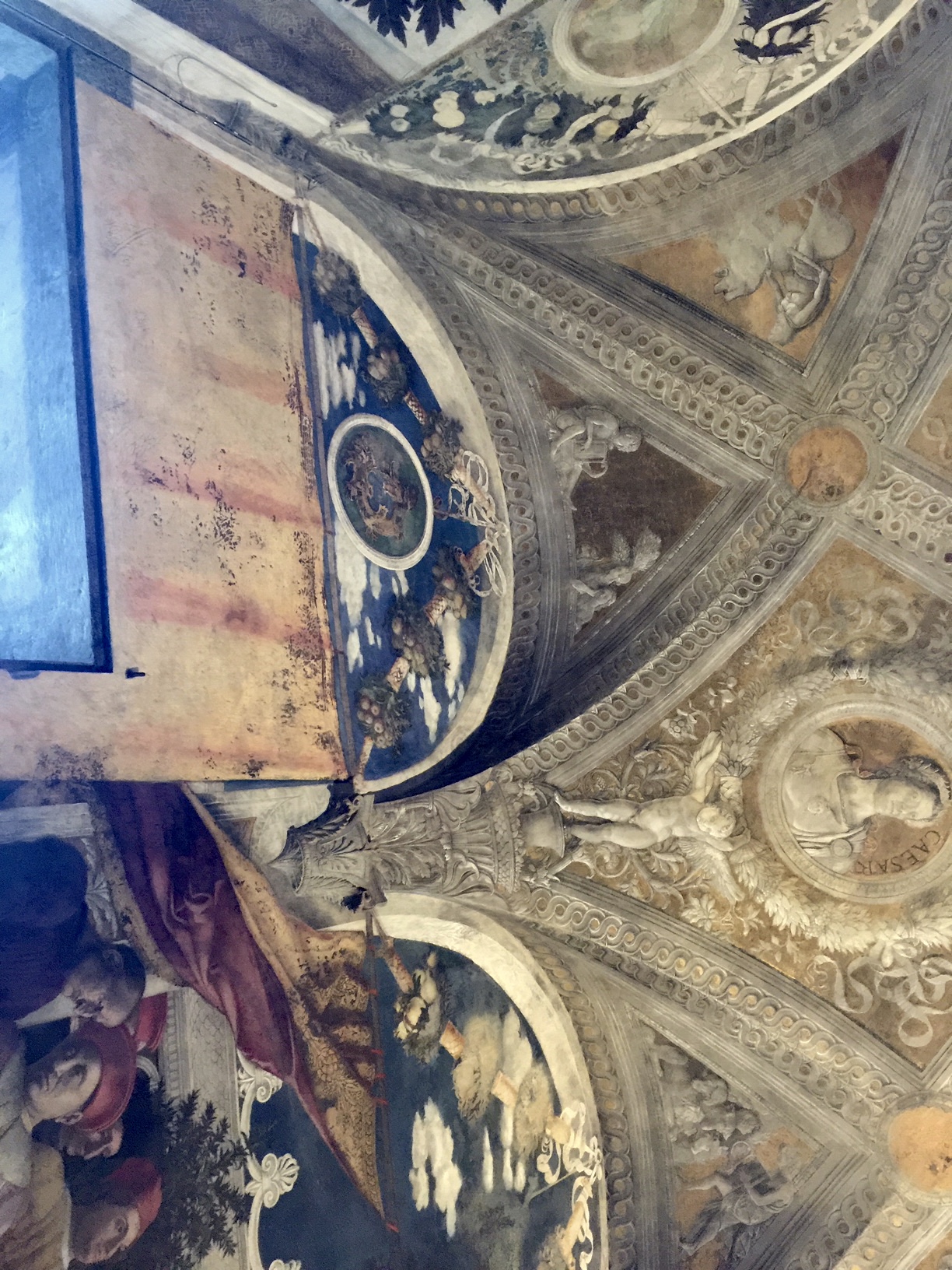
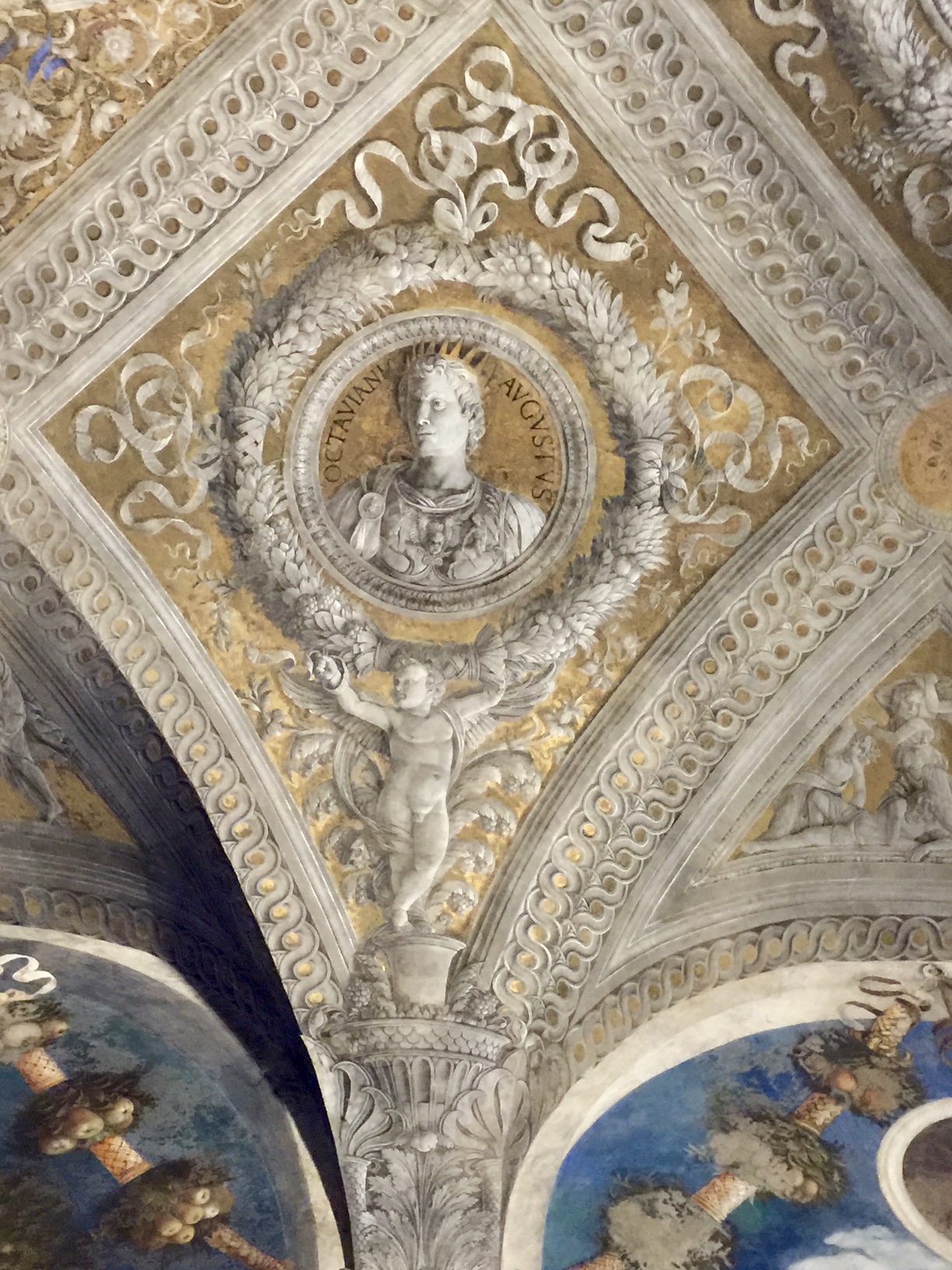
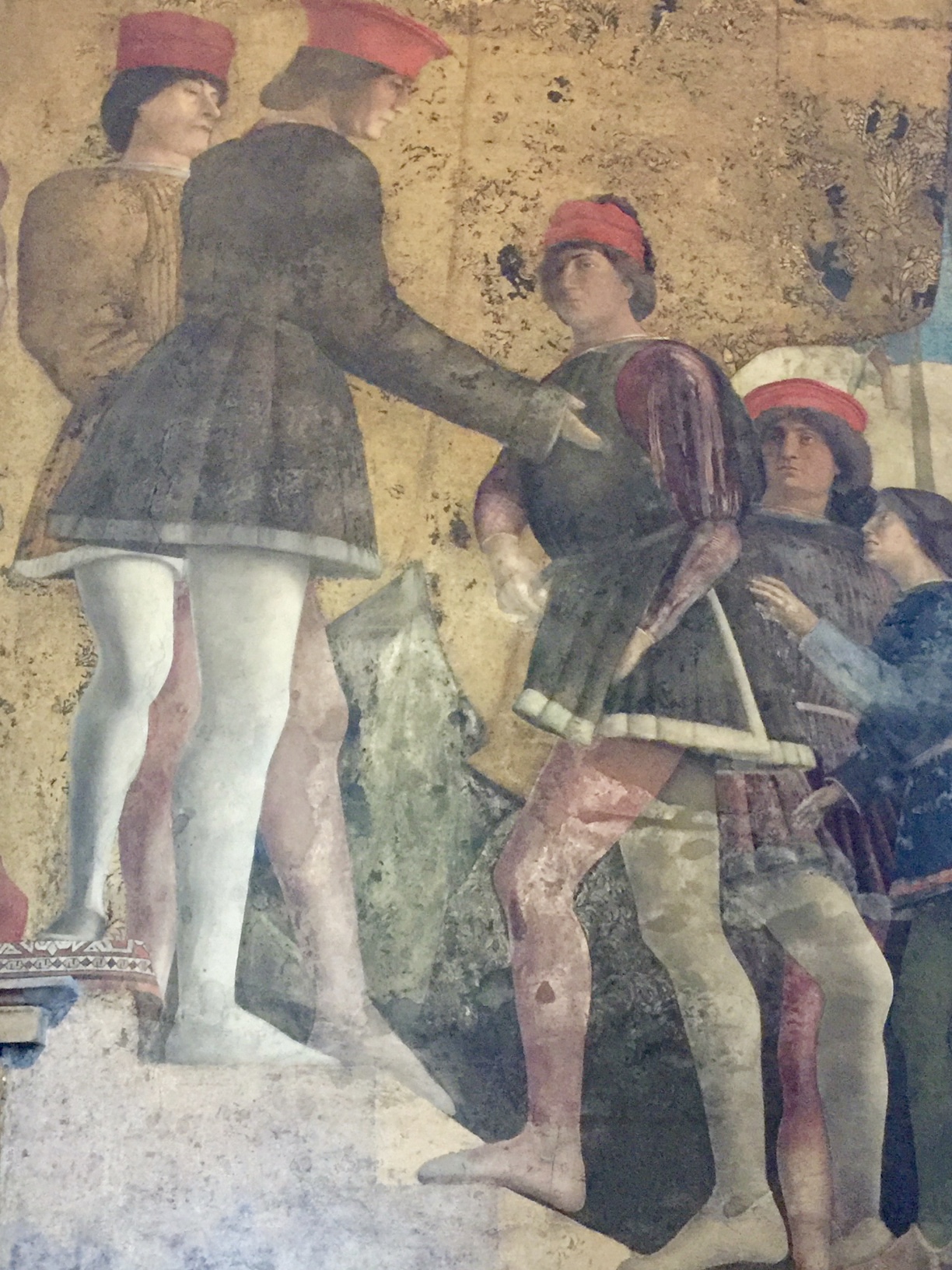
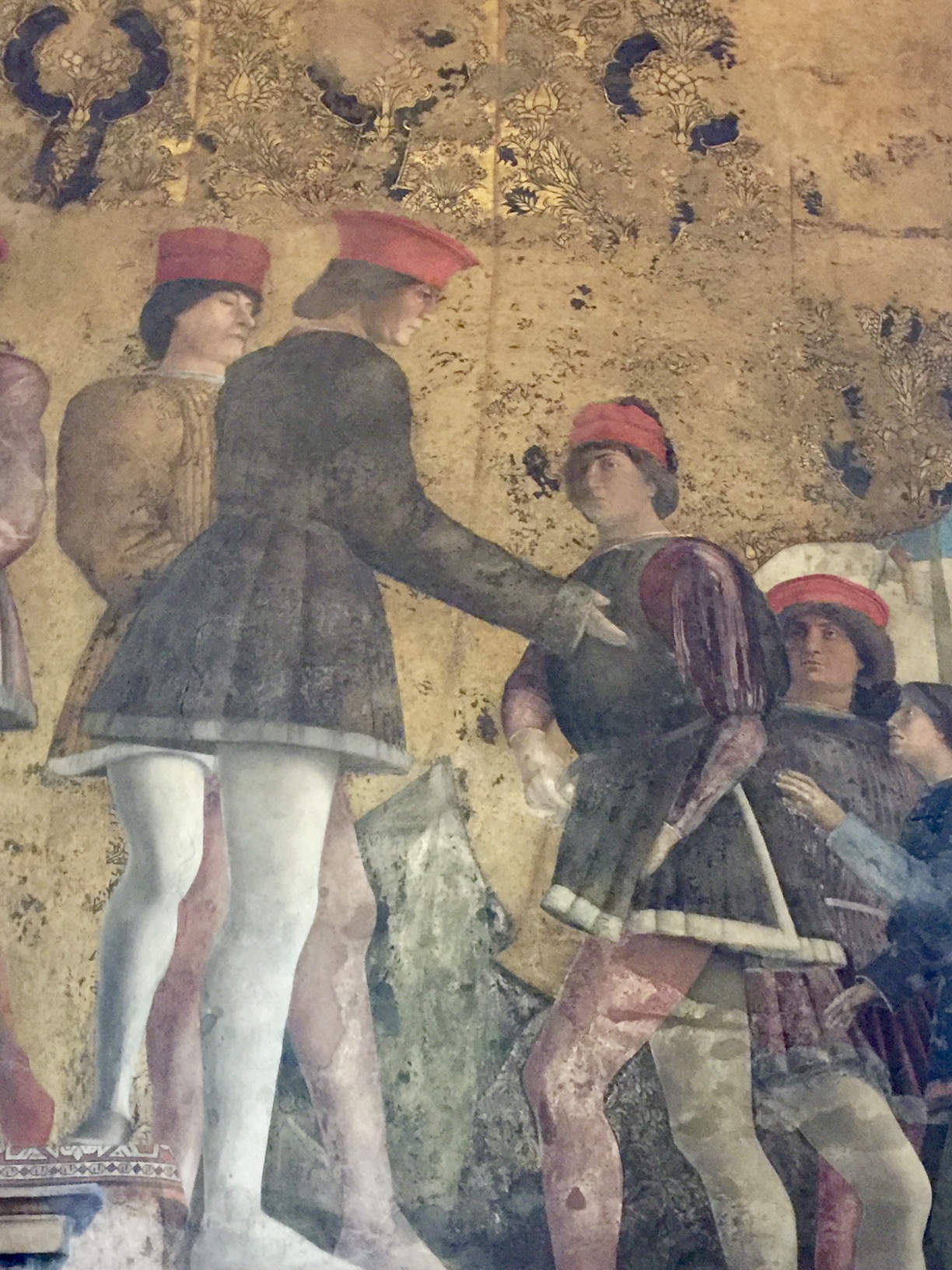
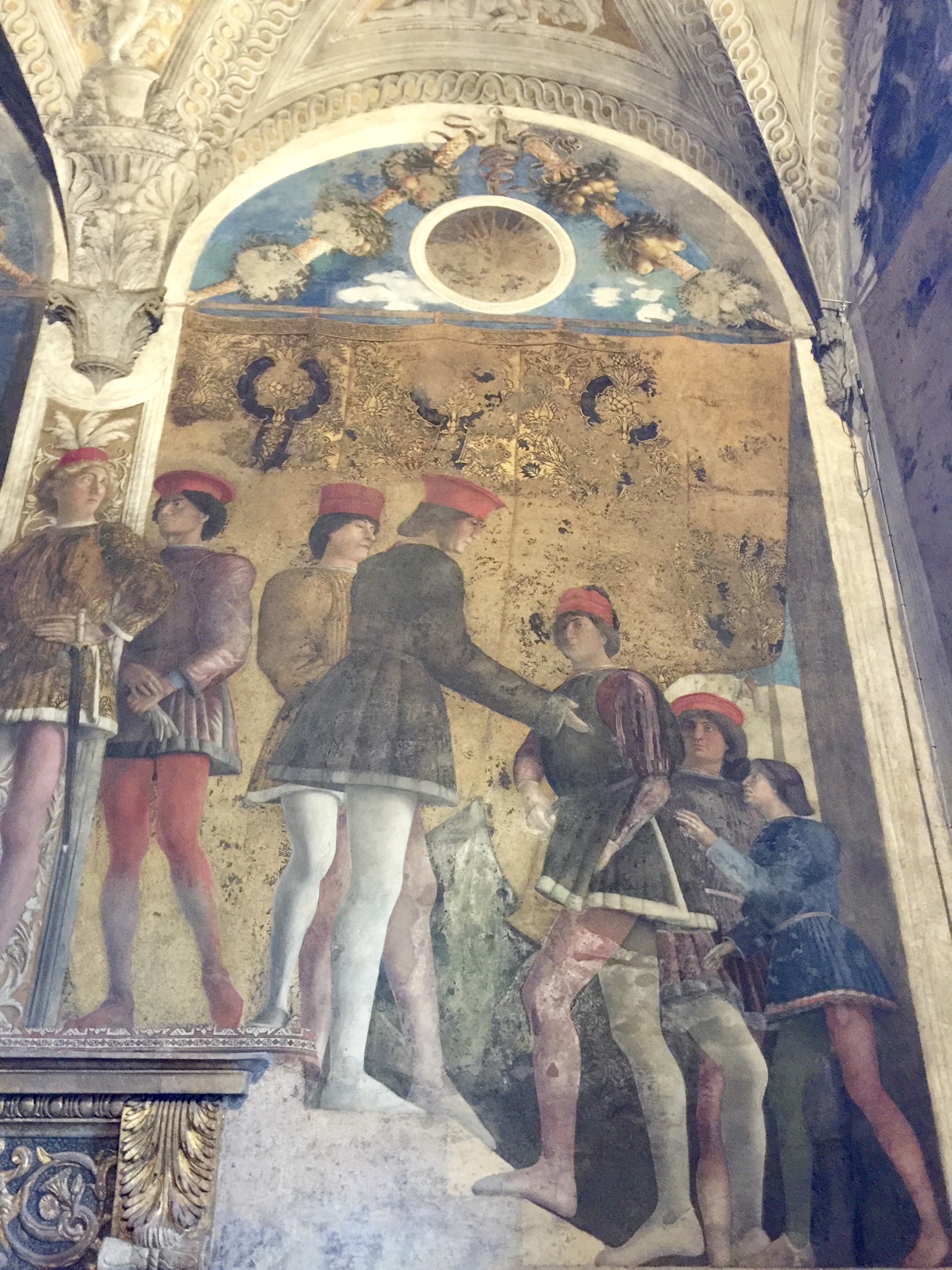
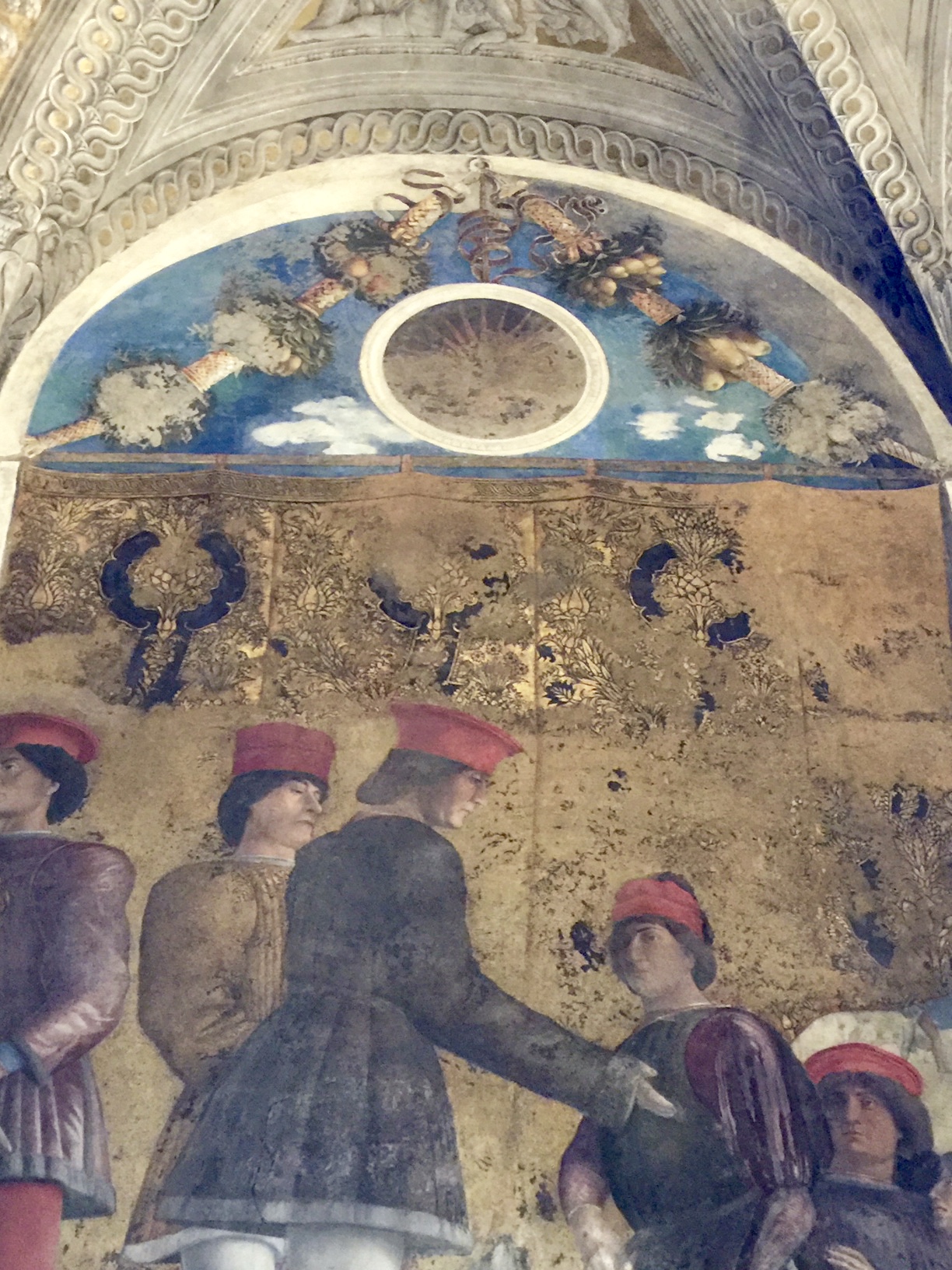
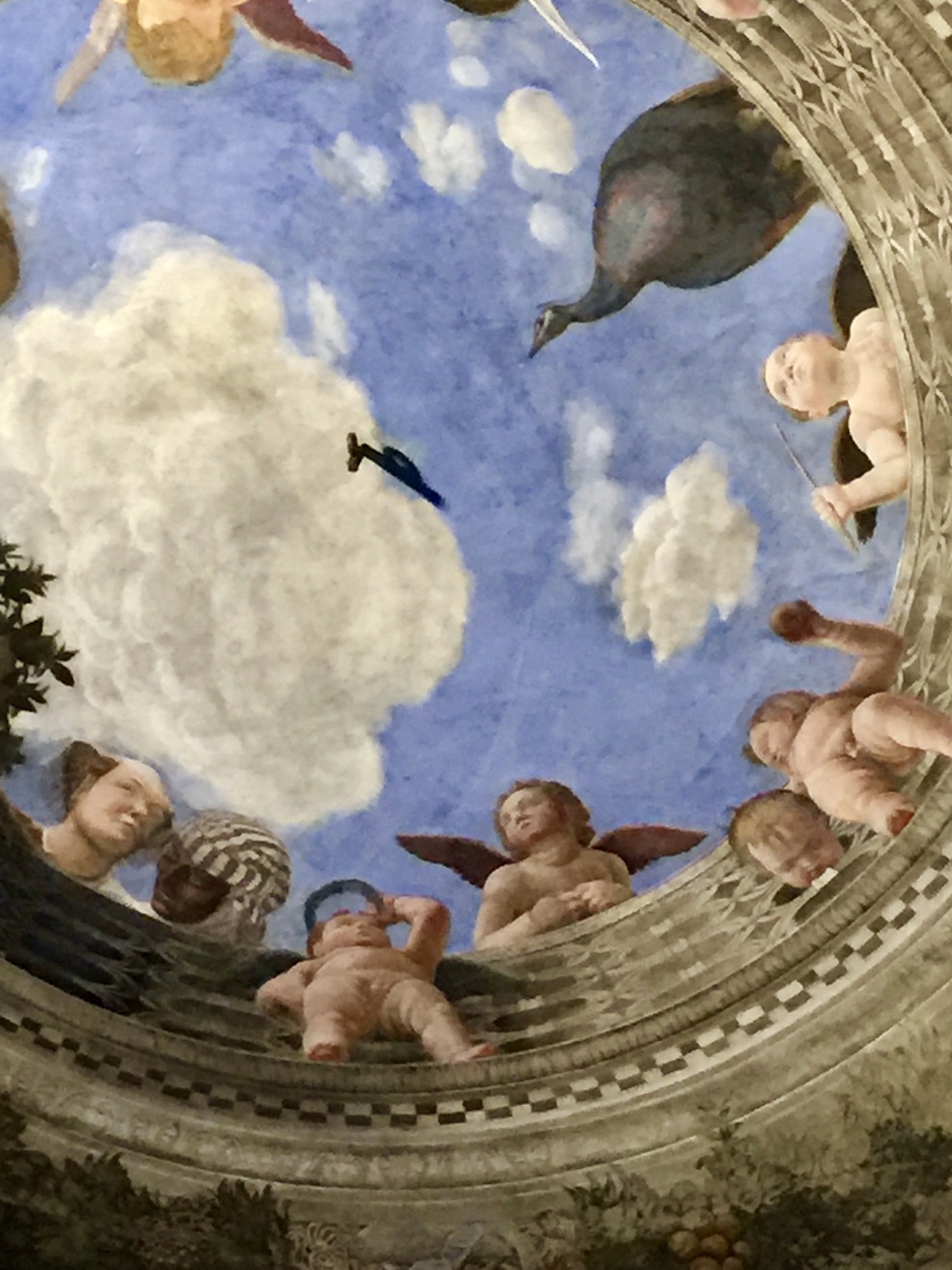
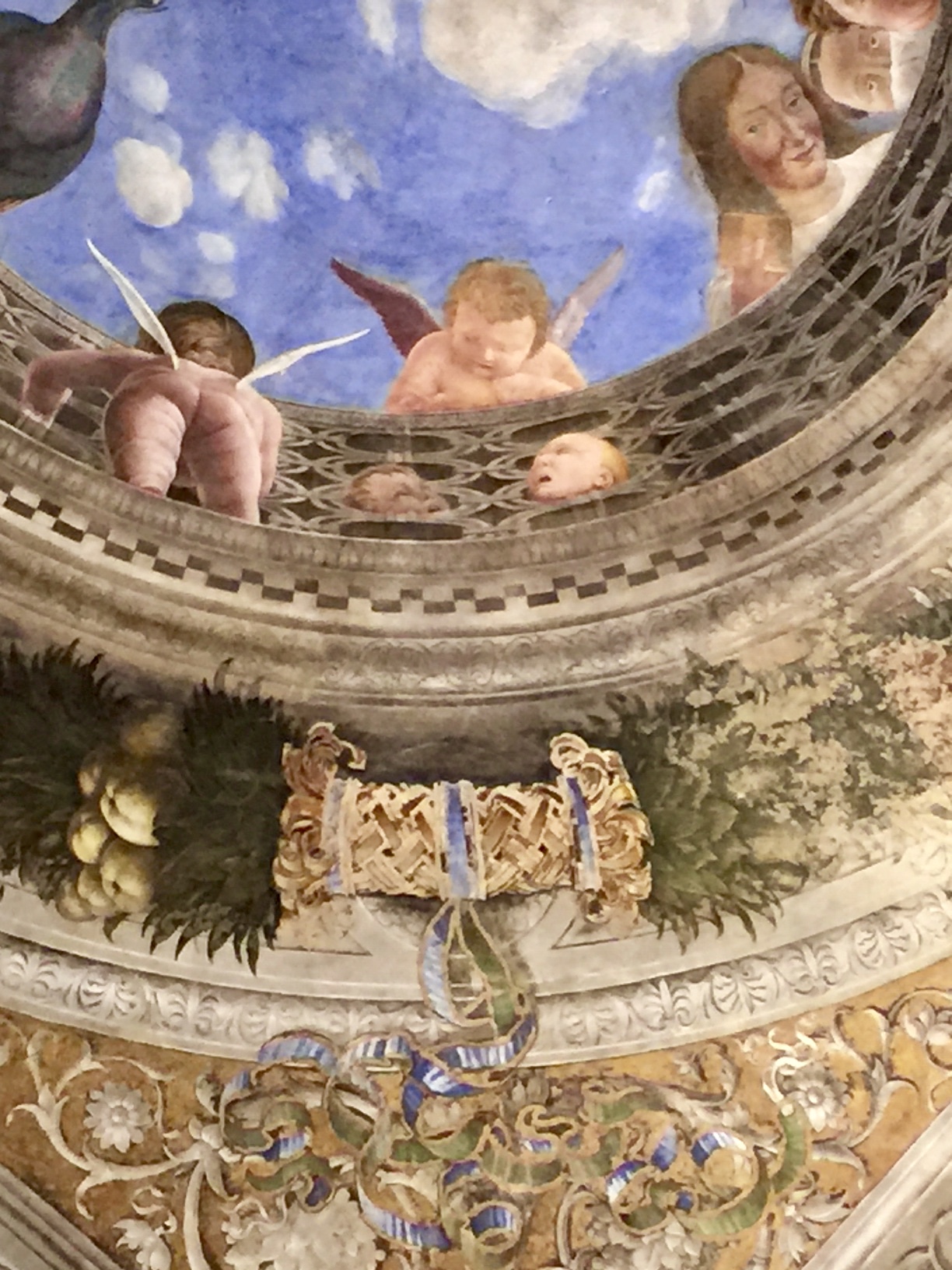
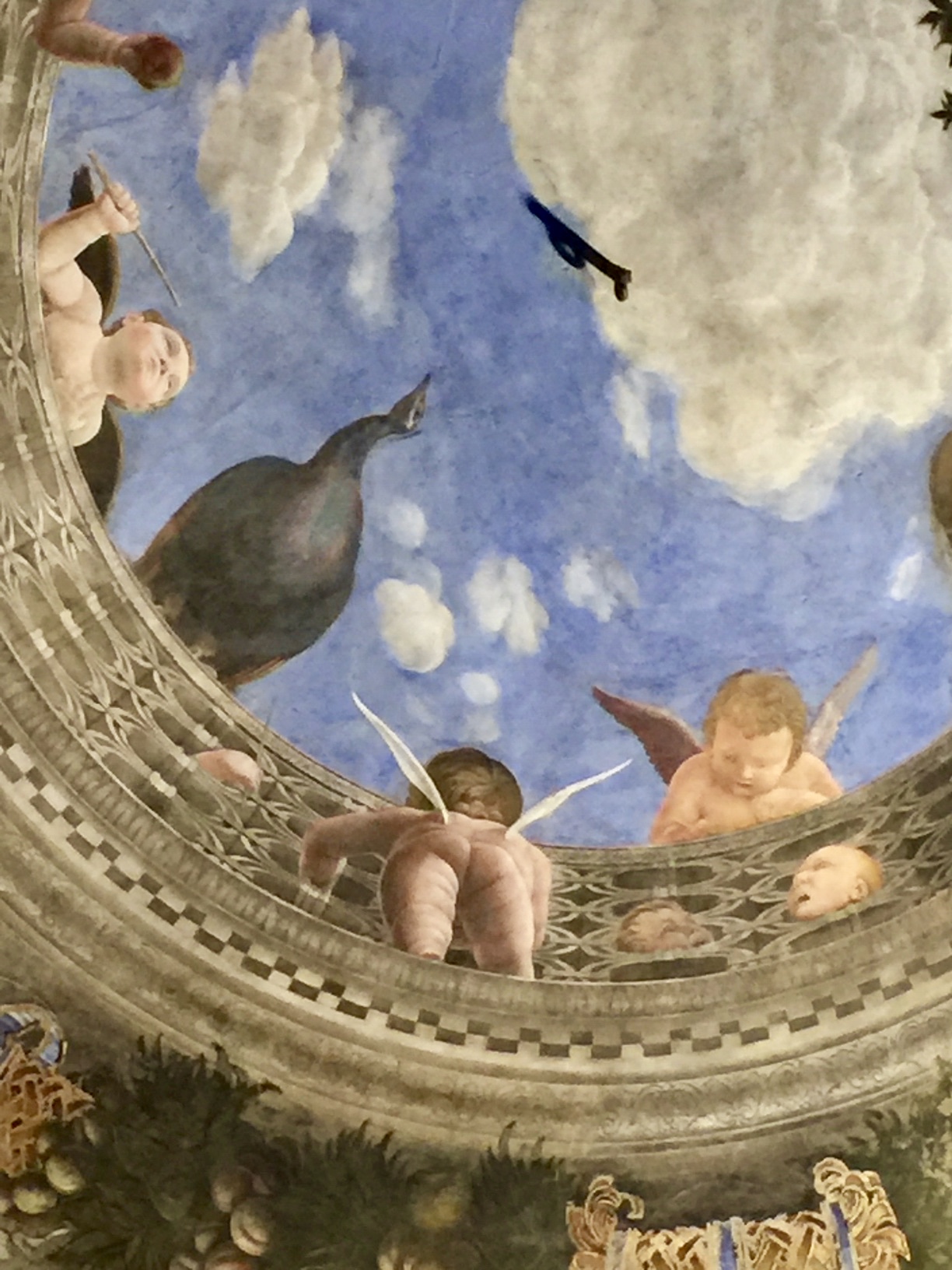
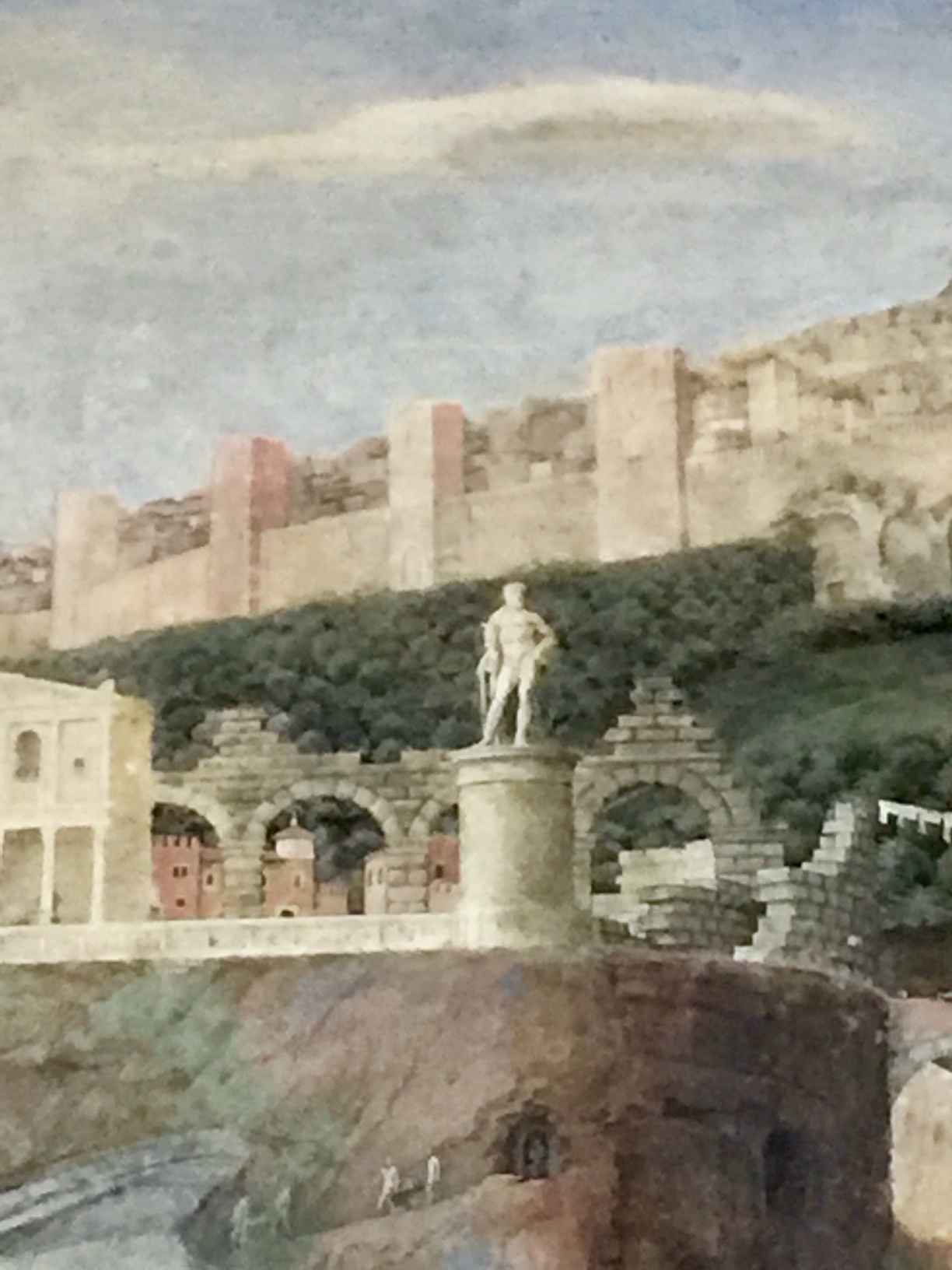
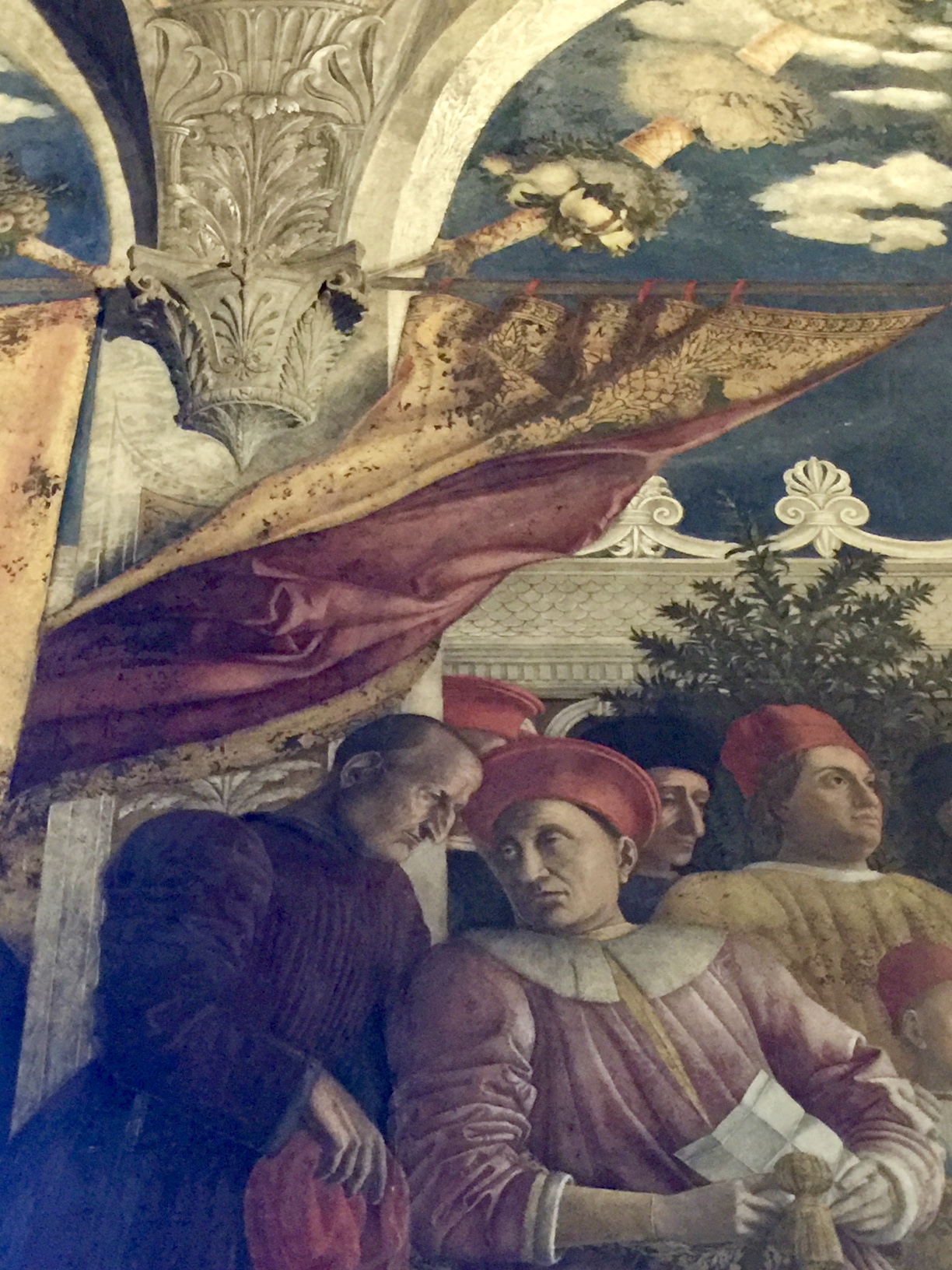
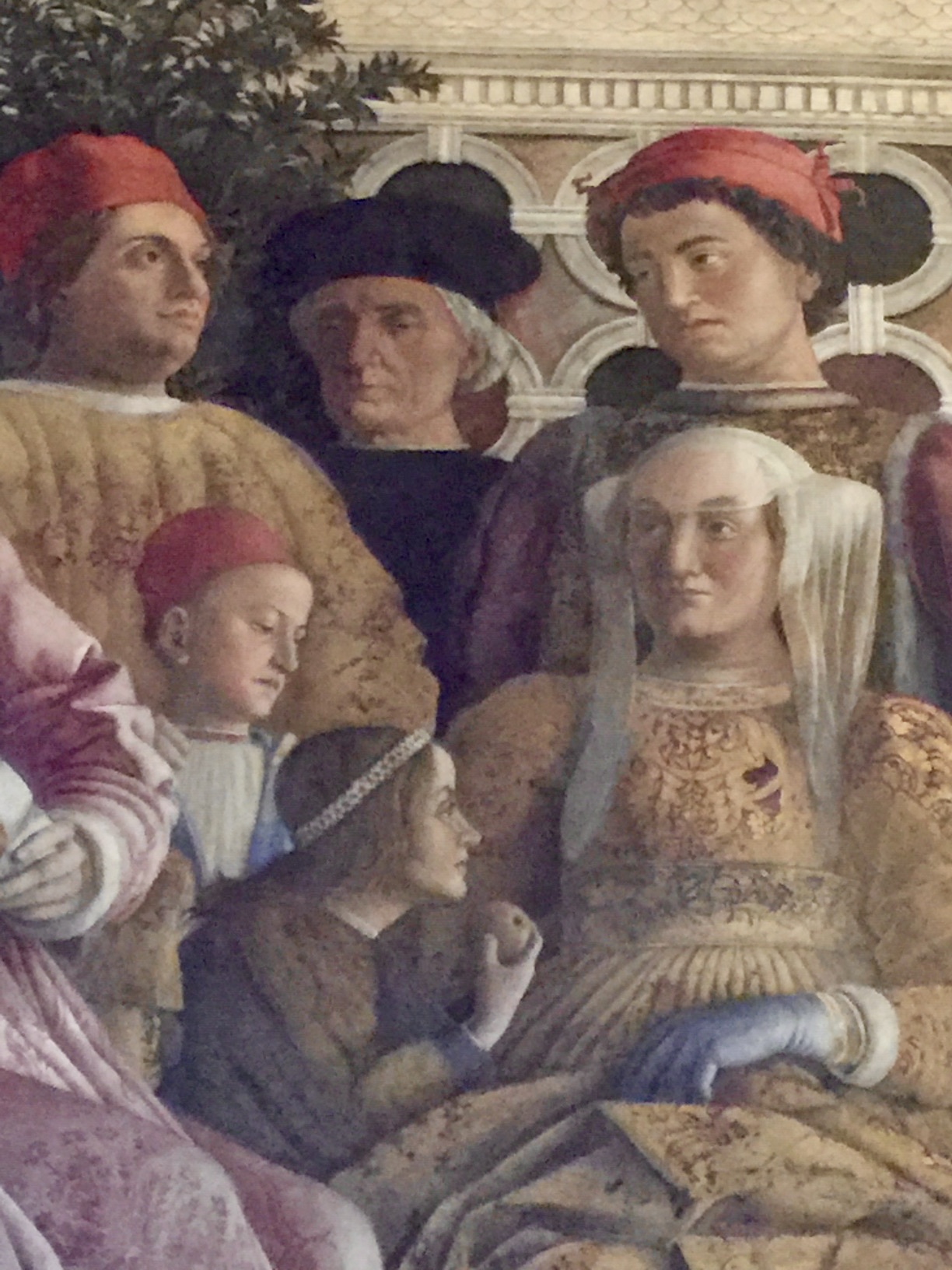
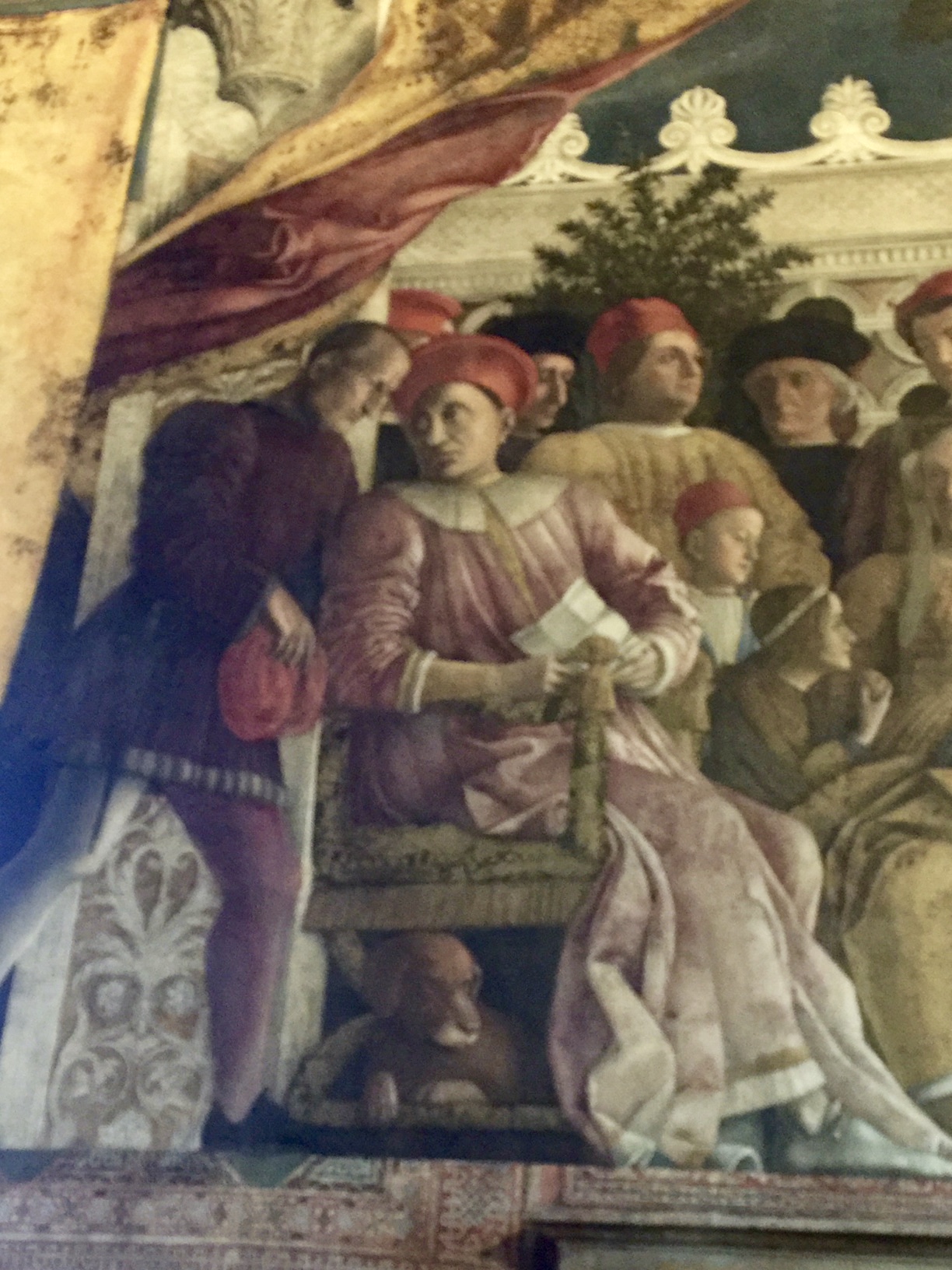
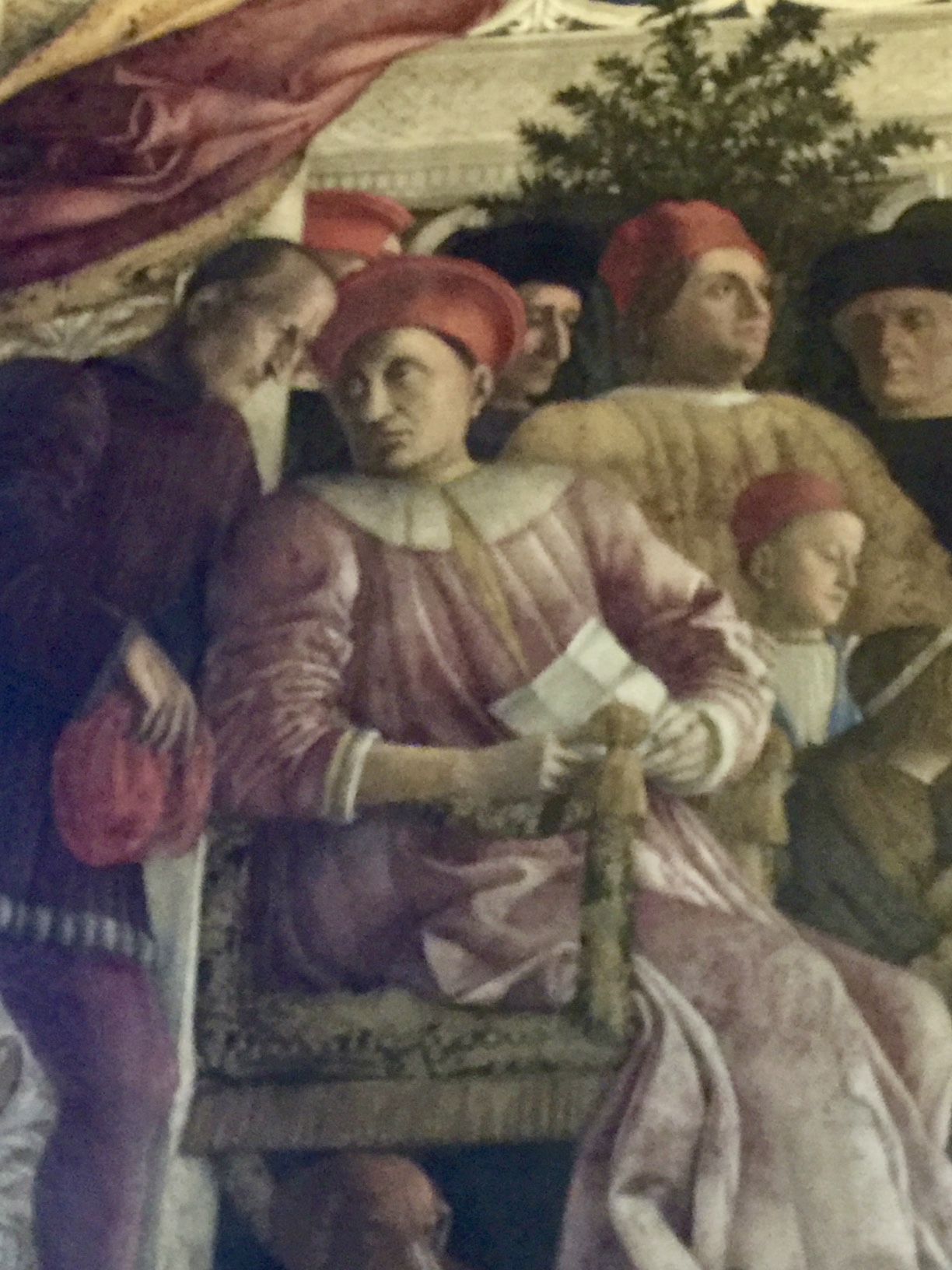
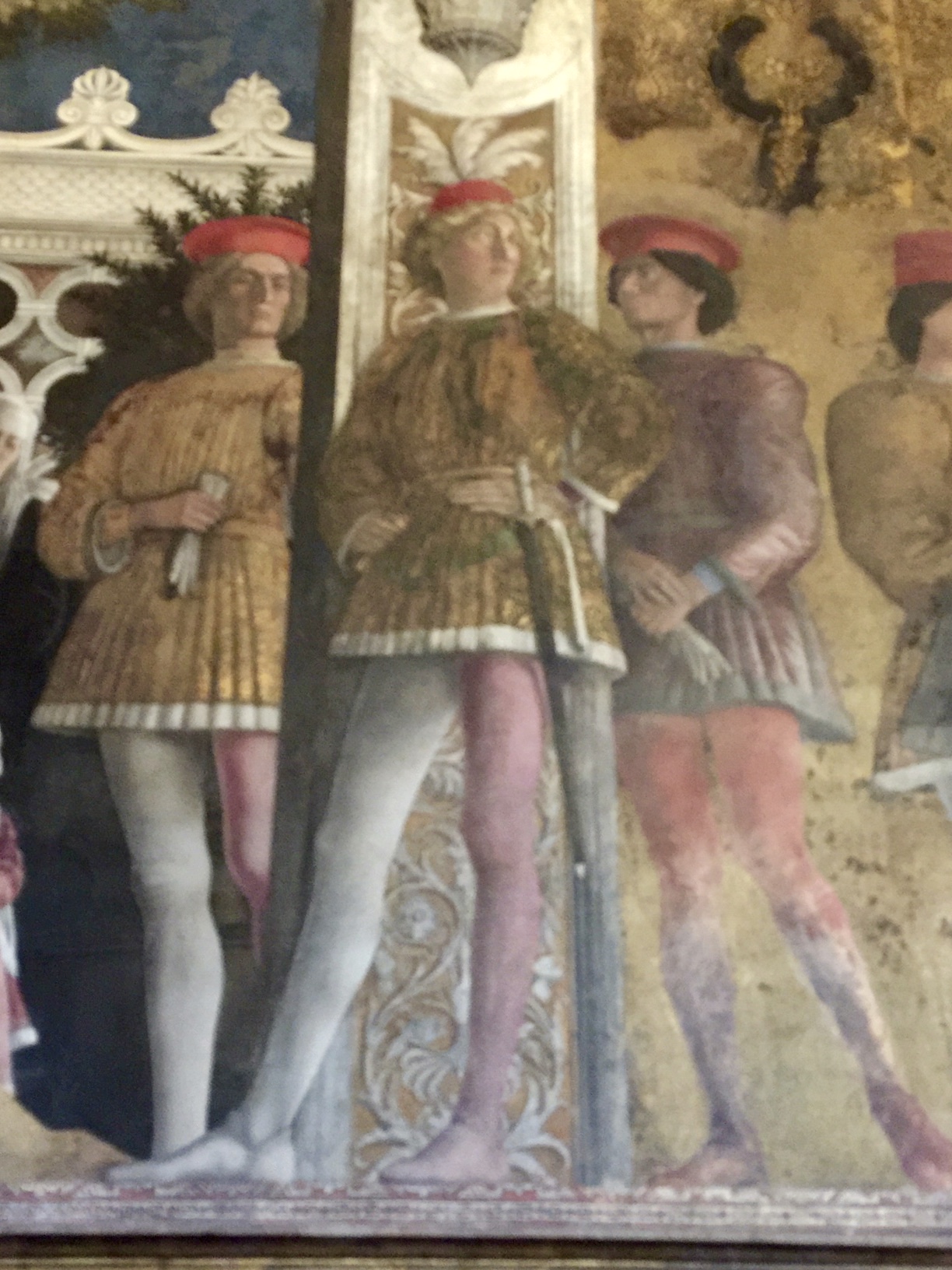
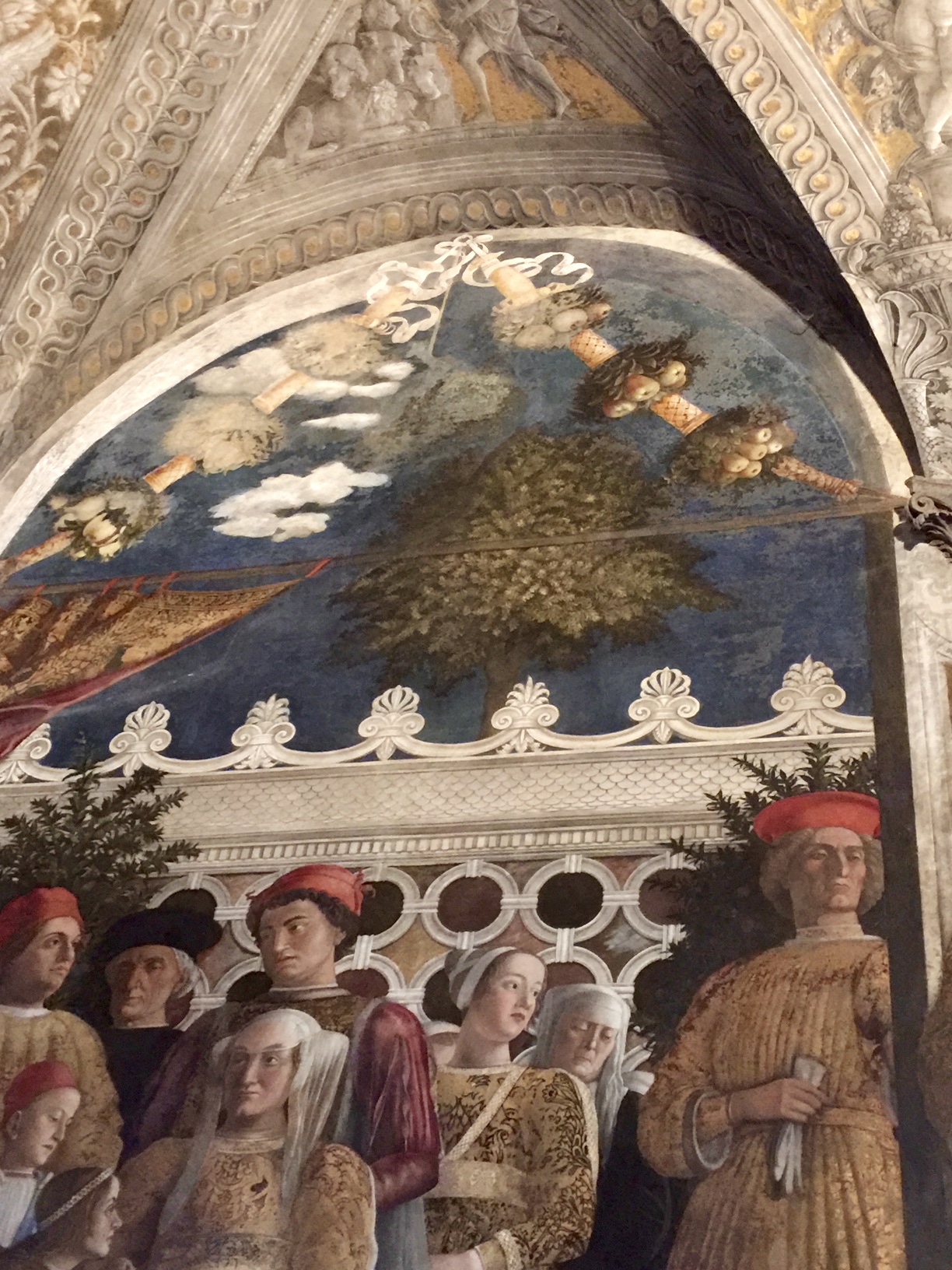
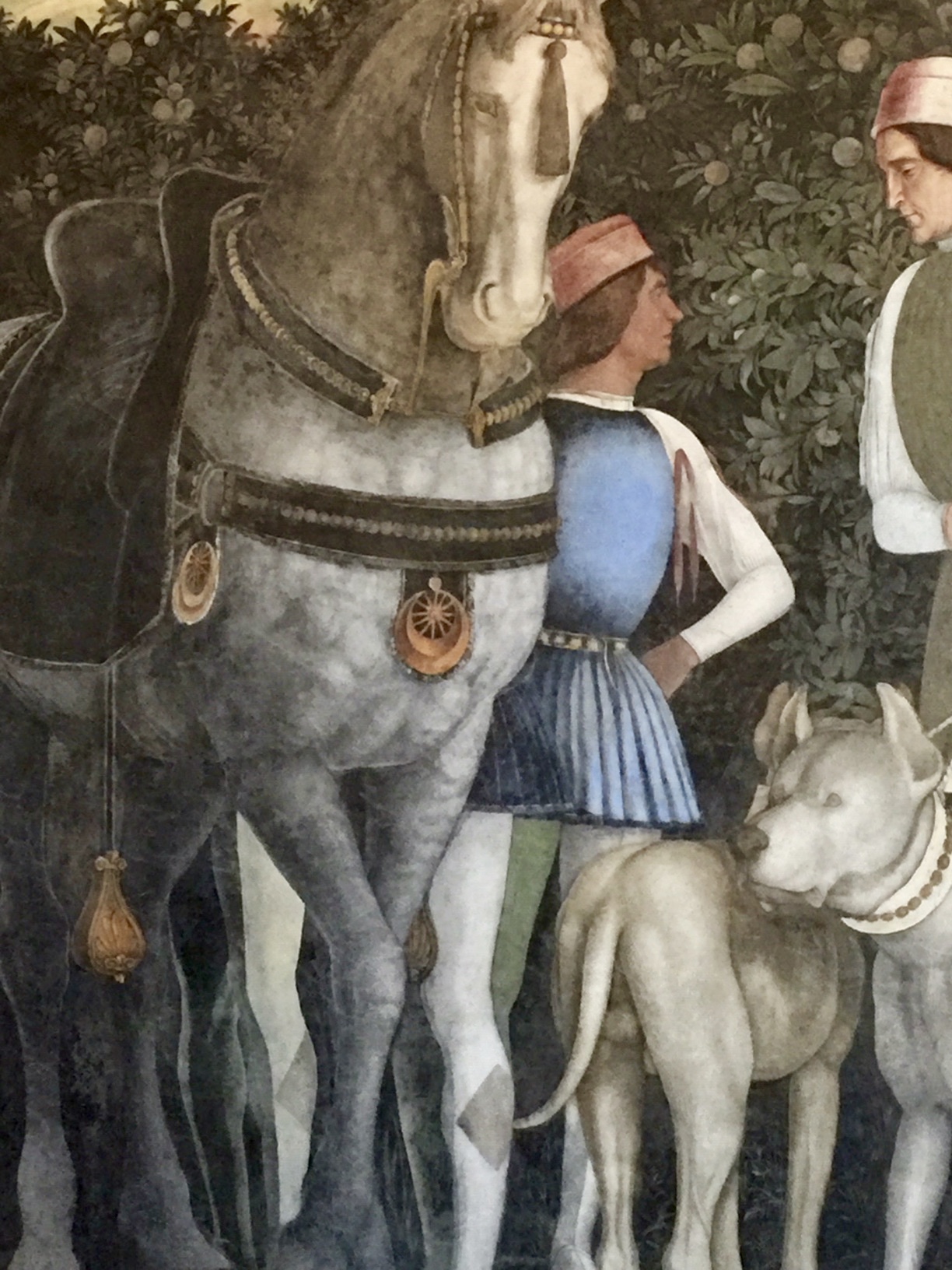
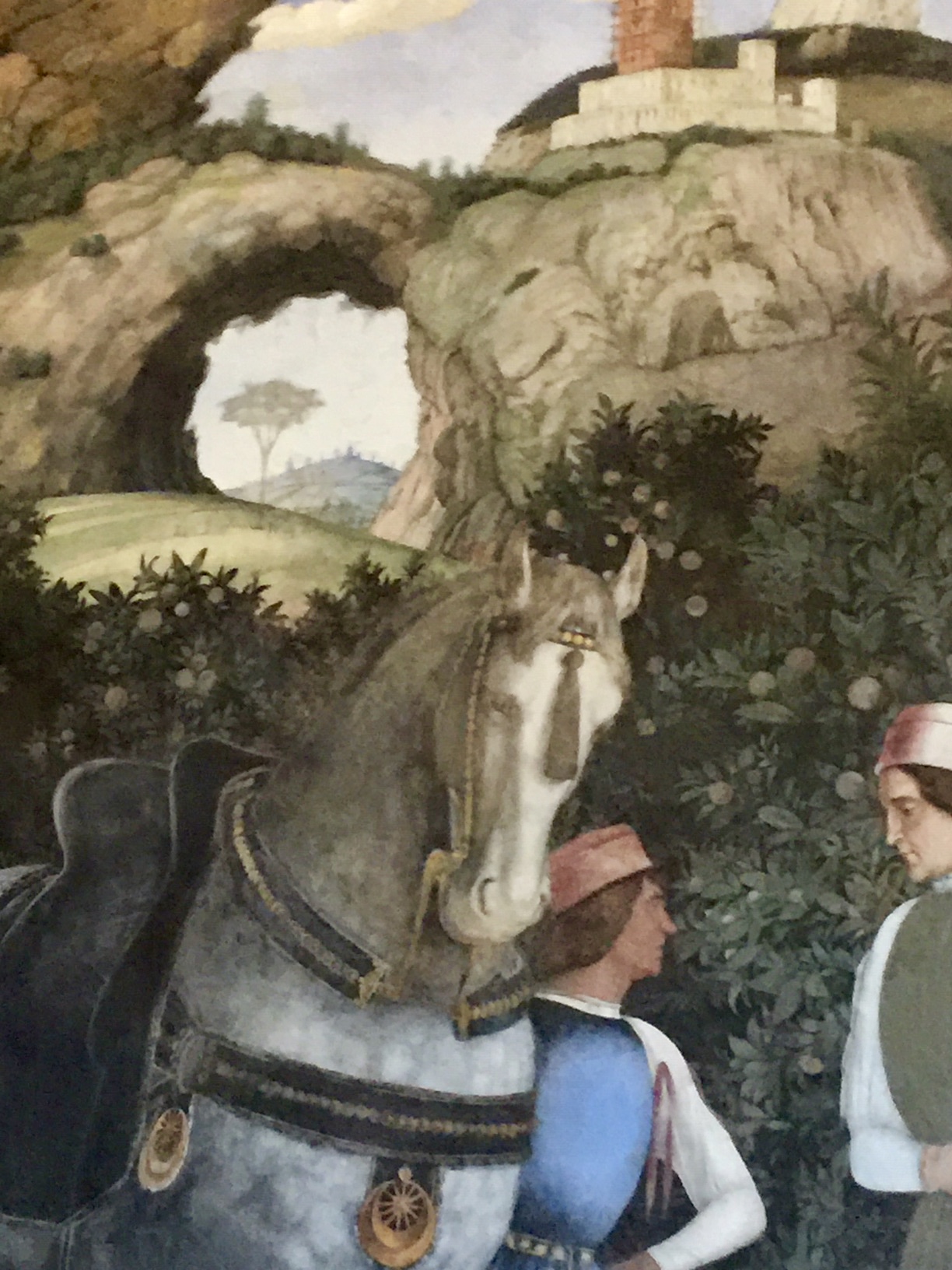
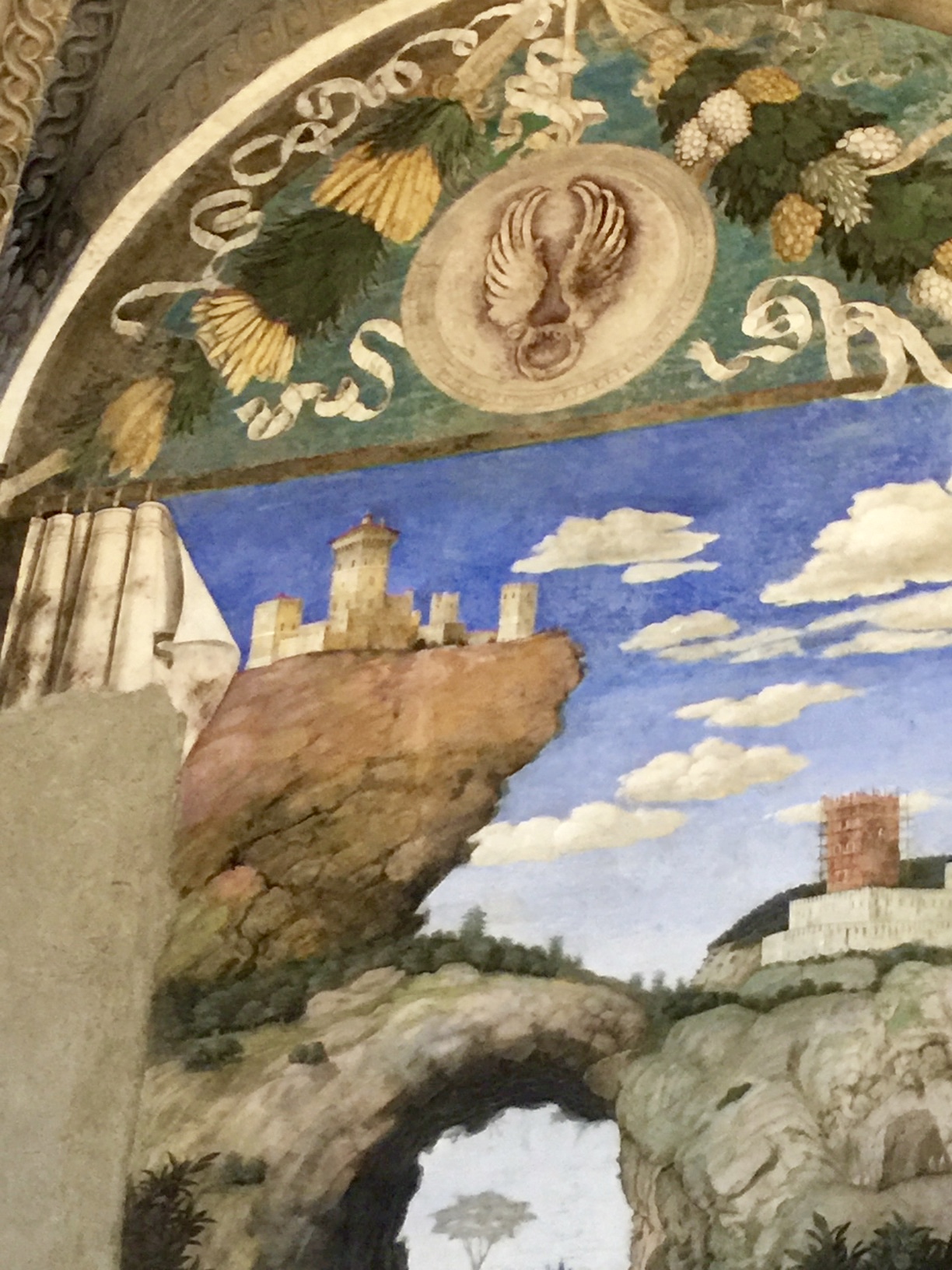
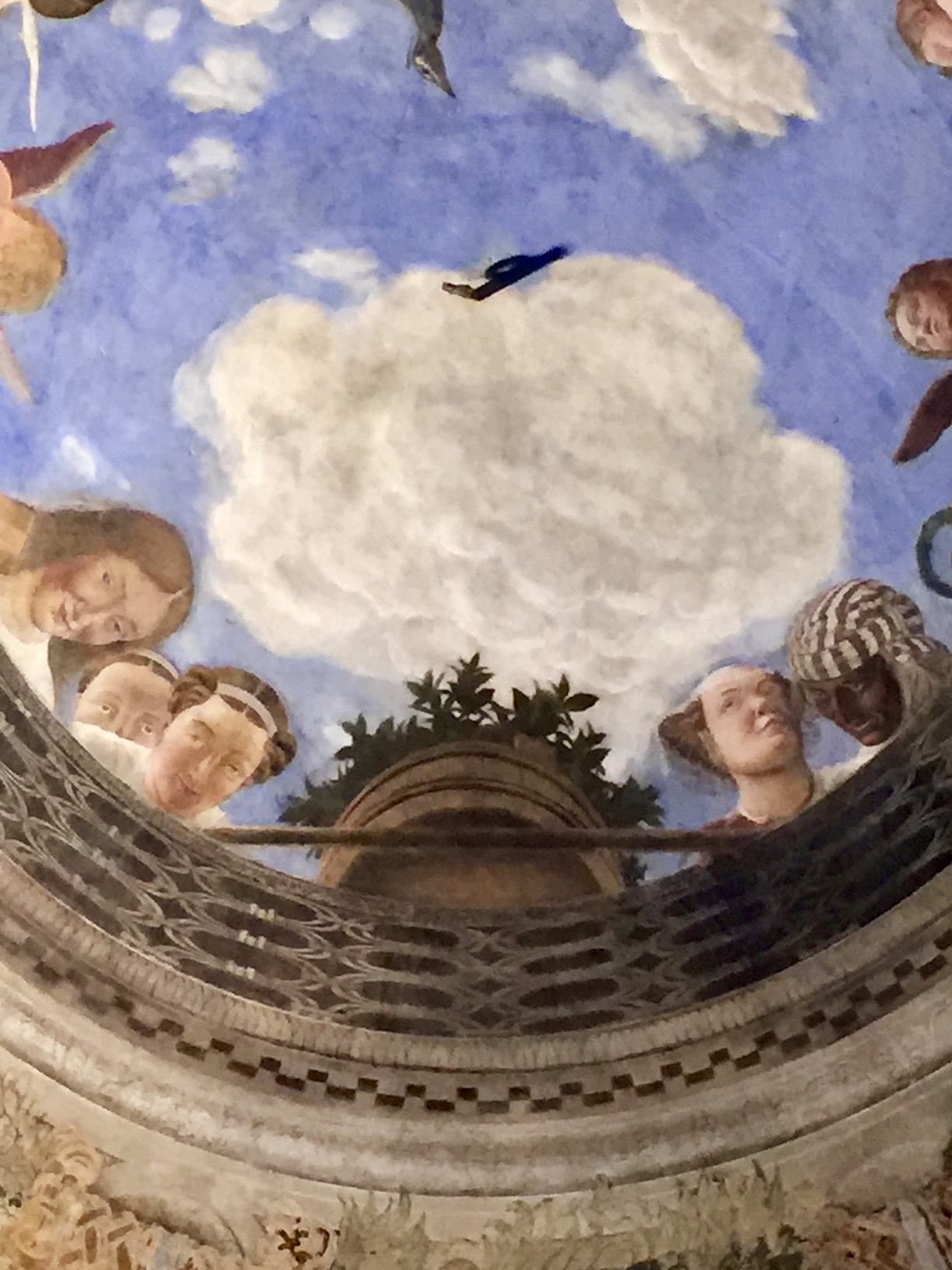
I’m not even going to talk about the paintings, except to say that they –the 4 walls and the amazing ceiling– were frescoed by Andrea Mantegna  between 1465 to 1475.  Mantegna’s painted scheme creates an illusionistic space, as if the chamber was a loggia with three openings facing country landscapes among arcades and curtains. The painted scenes portray members of the Gonzaga family.

But, for once, that is all I will say with words.  My million photos will become this post. If you can get to Mantua, DO SO!


fullsizeoutput_729


fullsizeoutput_72a


fullsizeoutput_72b


IMG_3791


fullsizeoutput_730


fullsizeoutput_731


fullsizeoutput_732


fullsizeoutput_737


fullsizeoutput_73a


IMG_3797


fullsizeoutput_740


fullsizeoutput_741


fullsizeoutput_748


fullsizeoutput_74e


fullsizeoutput_754


fullsizeoutput_756


fullsizeoutput_757


fullsizeoutput_758


fullsizeoutput_759


fullsizeoutput_75a


Va bene, it’s time to look up:

fullsizeoutput_75b


fullsizeoutput_75c


fullsizeoutput_75f


fullsizeoutput_761


fullsizeoutput_78b


fullsizeoutput_78c


fullsizeoutput_78d


fullsizeoutput_78e


fullsizeoutput_792


fullsizeoutput_793


fullsizeoutput_794


fullsizeoutput_795


fullsizeoutput_79a


fullsizeoutput_726


fullsizeoutput_725


fullsizeoutput_724


fullsizeoutput_72b


fullsizeoutput_72a


fullsizeoutput_729


fullsizeoutput_728


fullsizeoutput_727


fullsizeoutput_722


fullsizeoutput_71f


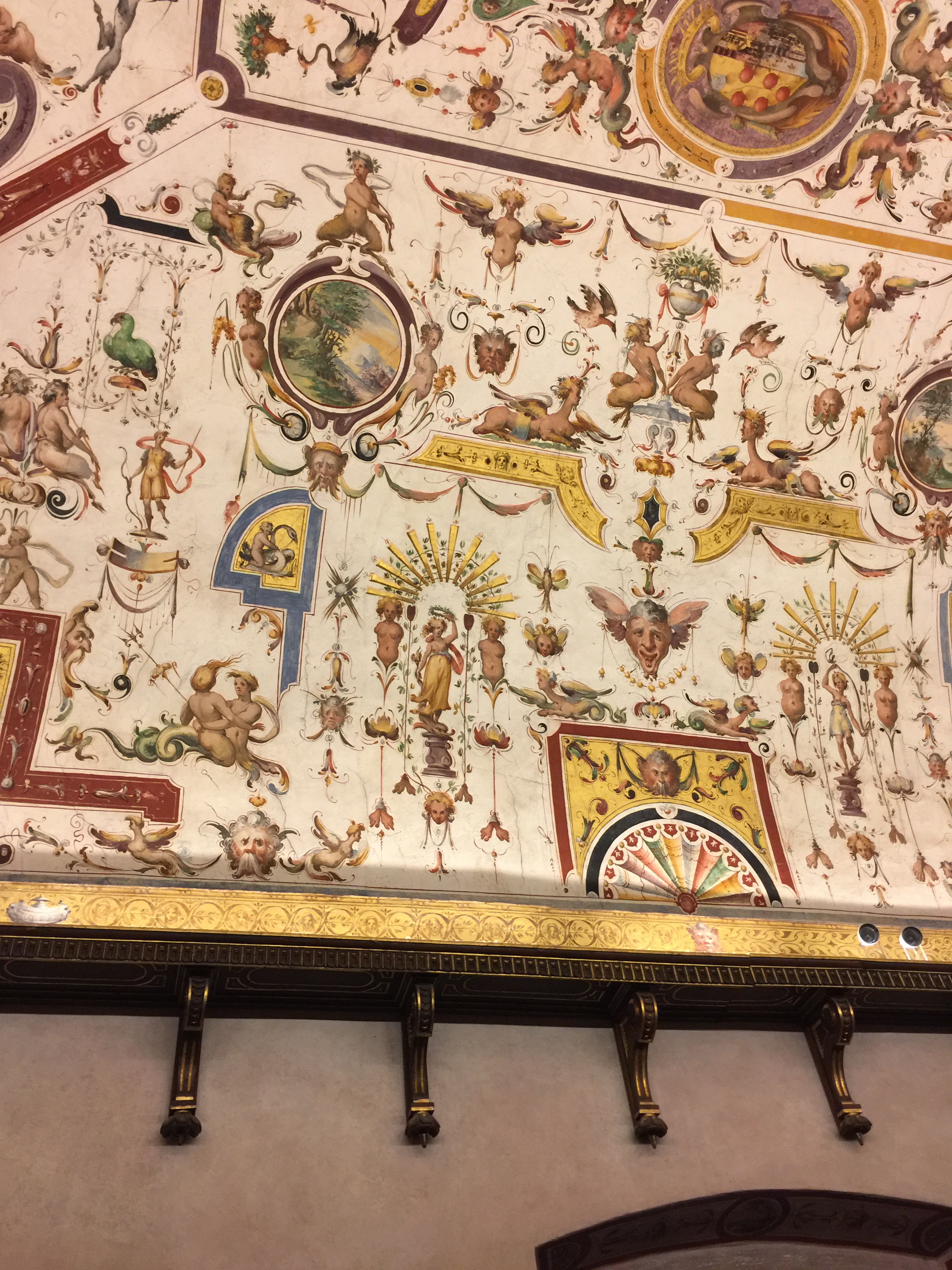
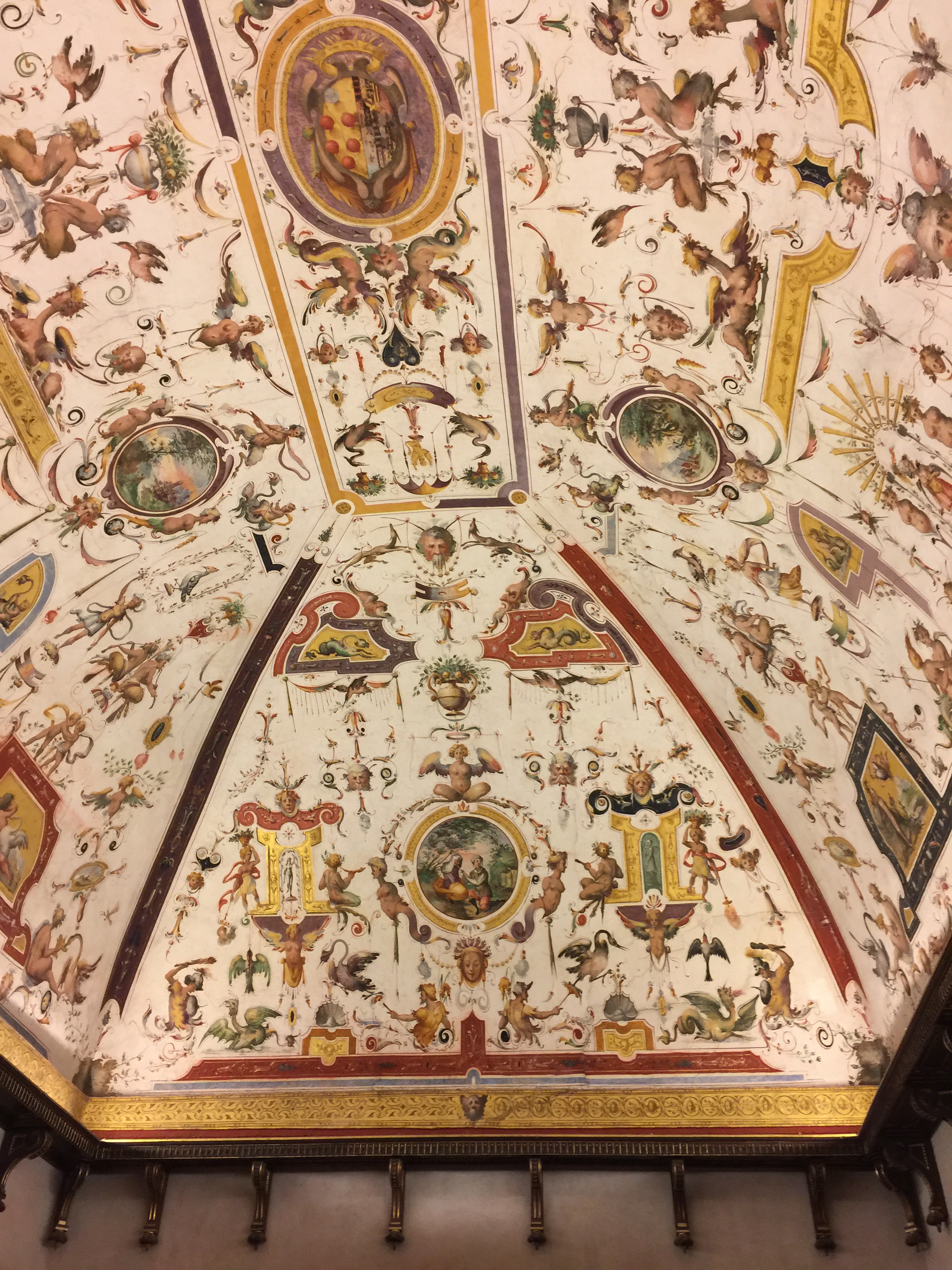
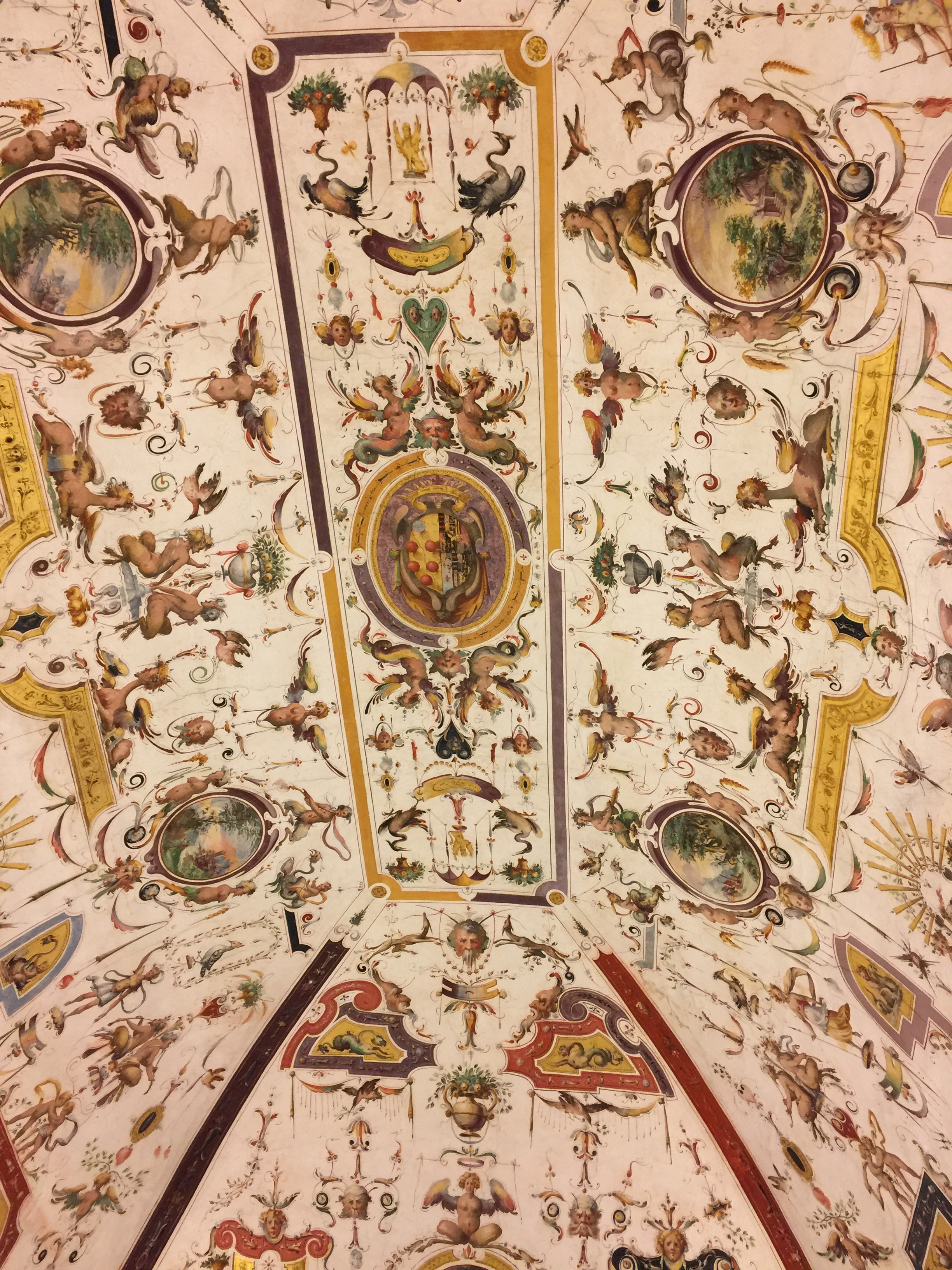
Executed between 1465 and 1474, the room, which is entirely painted, shows the marquis, Lodovico, going about his courtly business with family and courtiers in tow in impressive 3D. Painted naturalistically and with great attention to perspective, the arched walls appear like windows on the courtly world – looking up at the Duke’s wife Barbara, you can even see the underside of her dress as if she’s seated above you. Most playful of all though is the trompe l’œil oculus featuring bare-bottomed putti (cherubs) – the point of view is quite distastefully realistic in places – balancing precariously on a painted balcony, while smirking courtly pranksters appear ready to drop a large potted plant on gawping tourists below.


Orsan Michele, Firenze

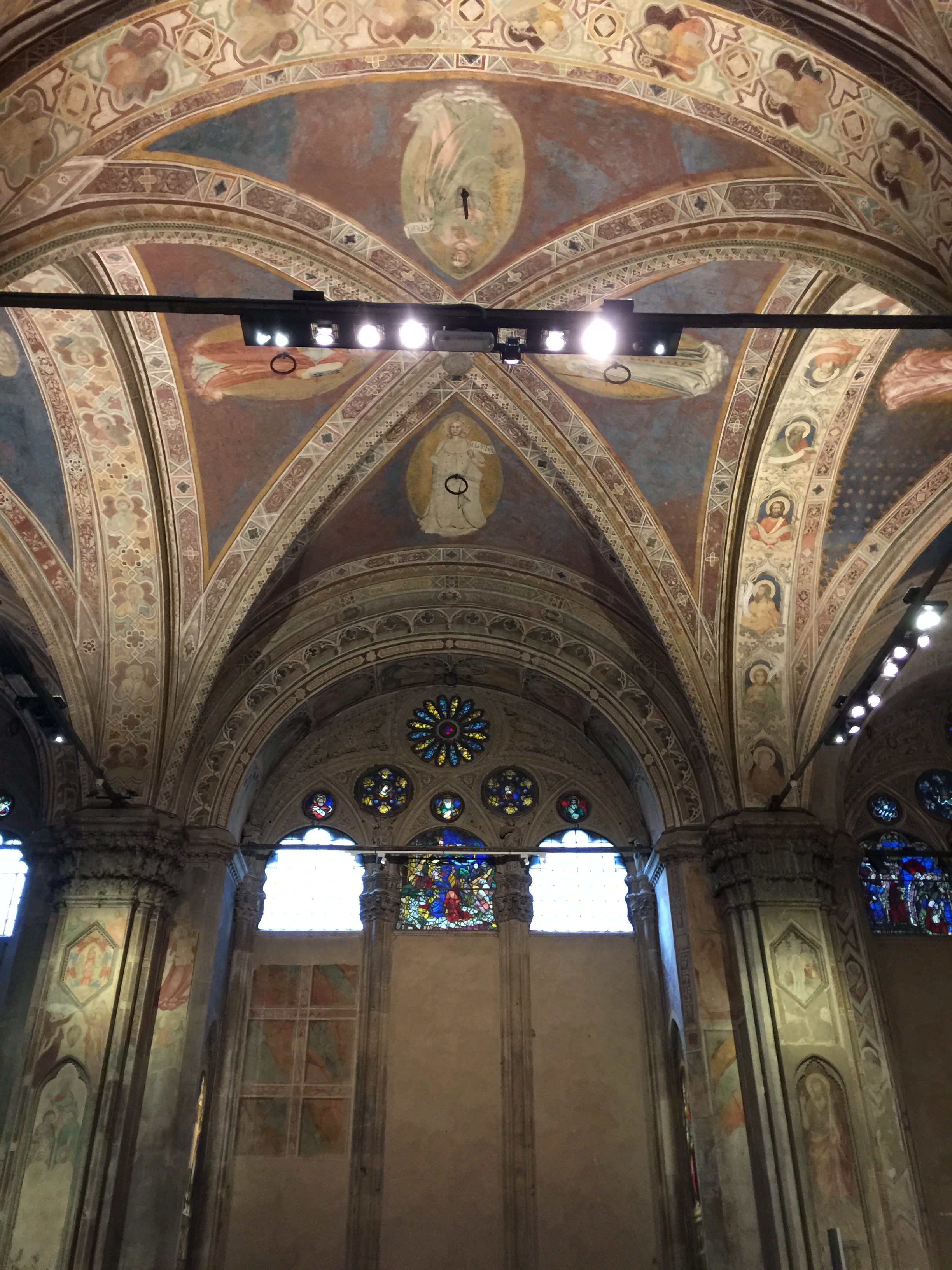
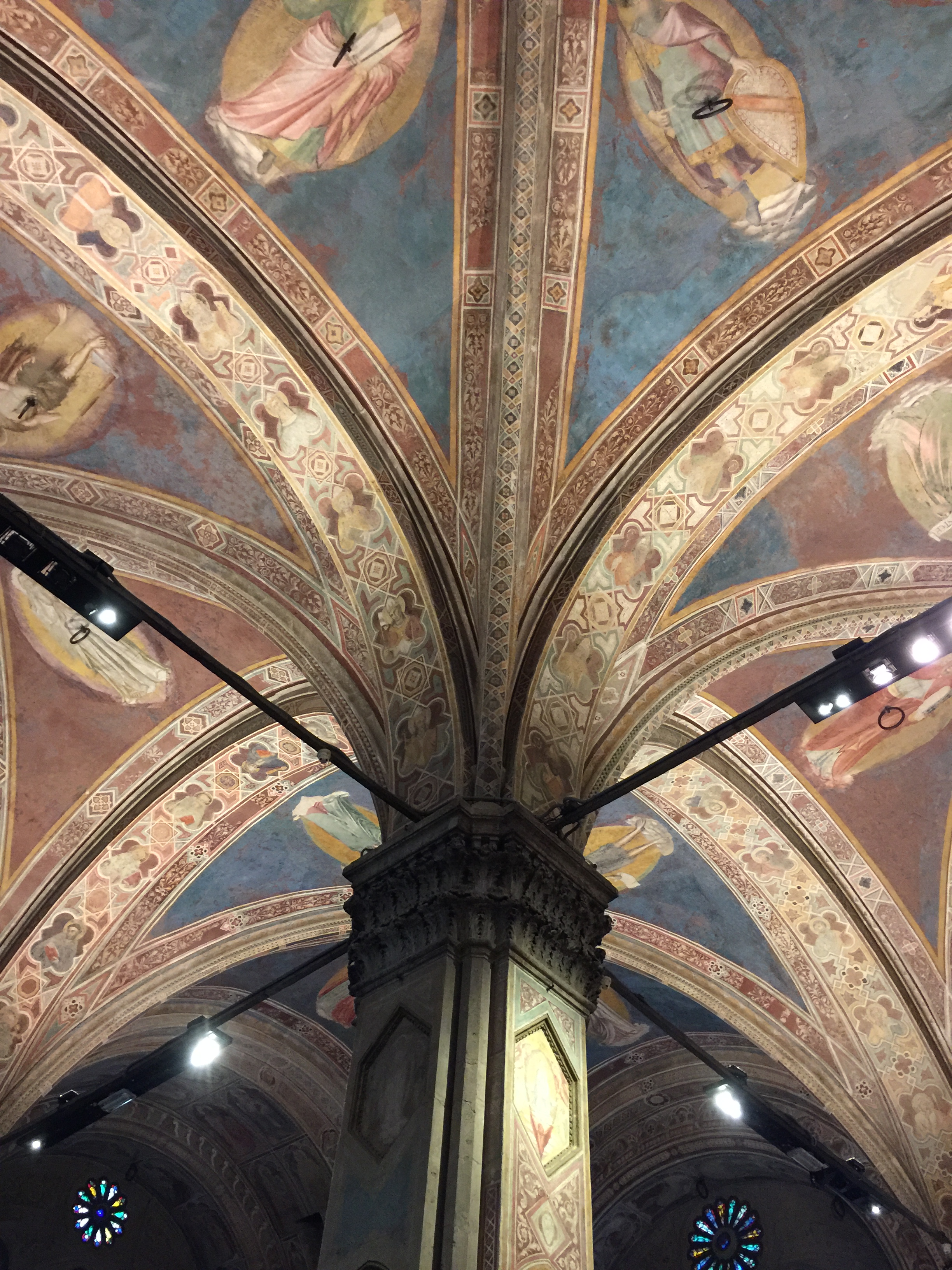
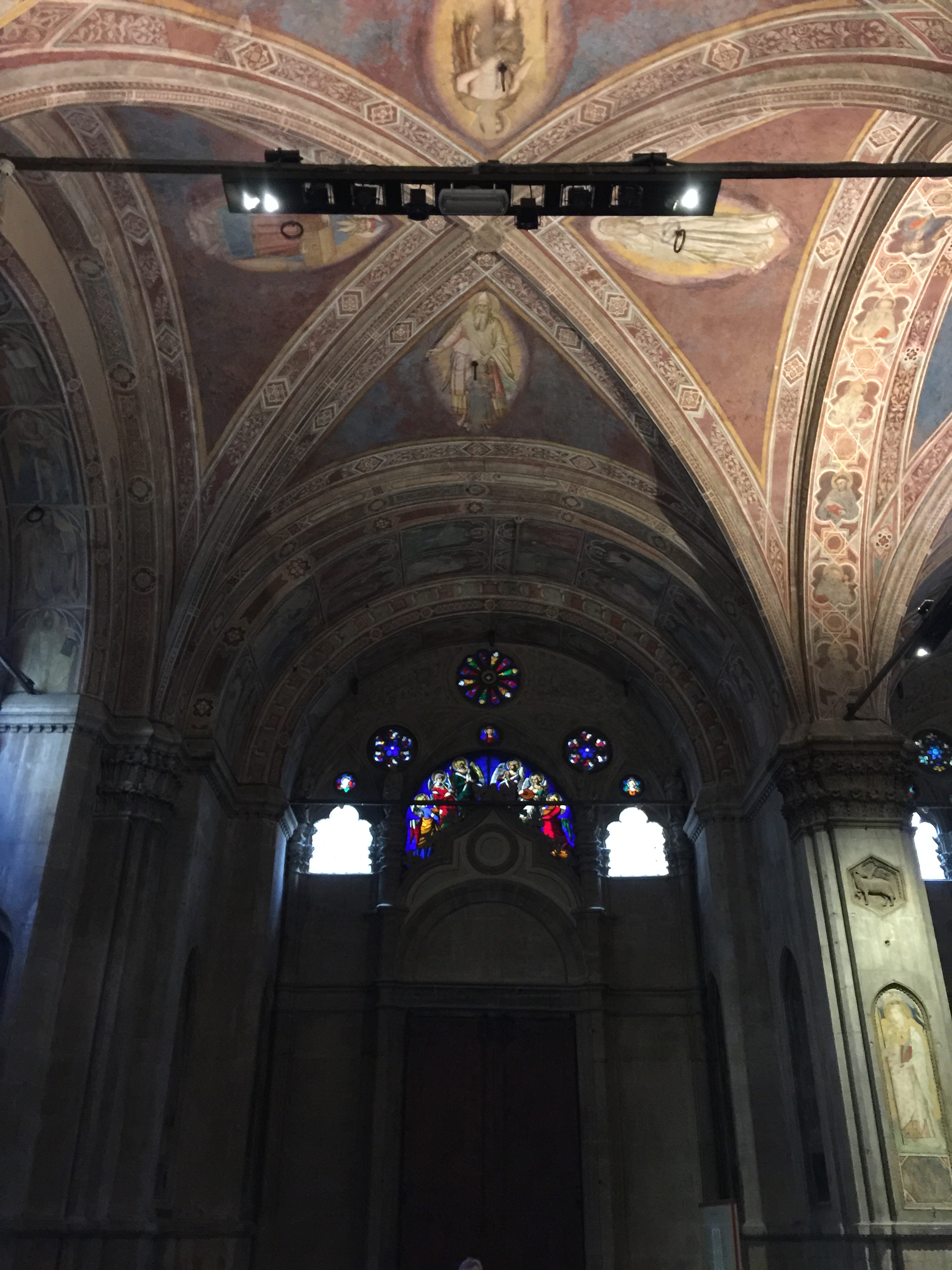
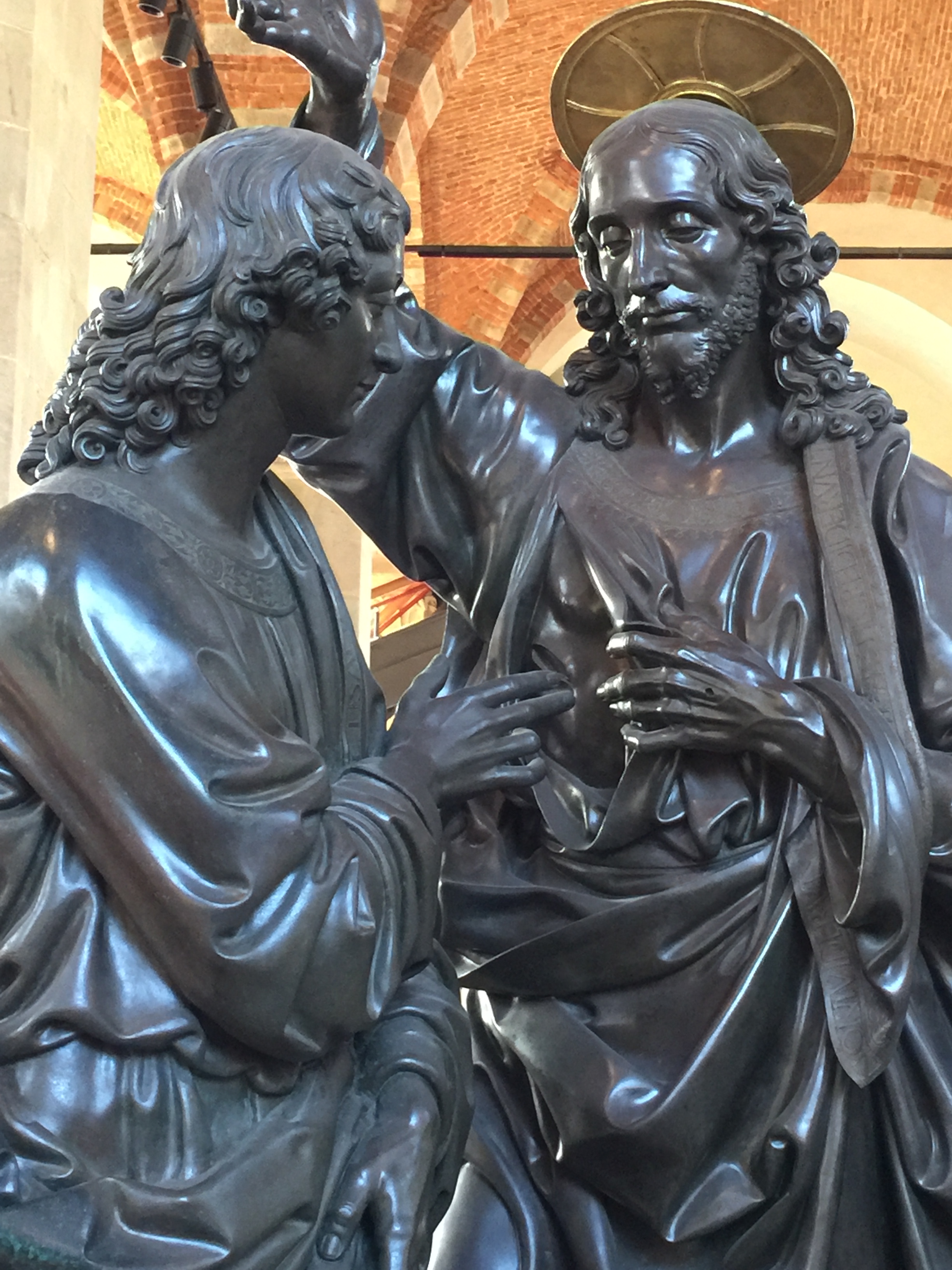
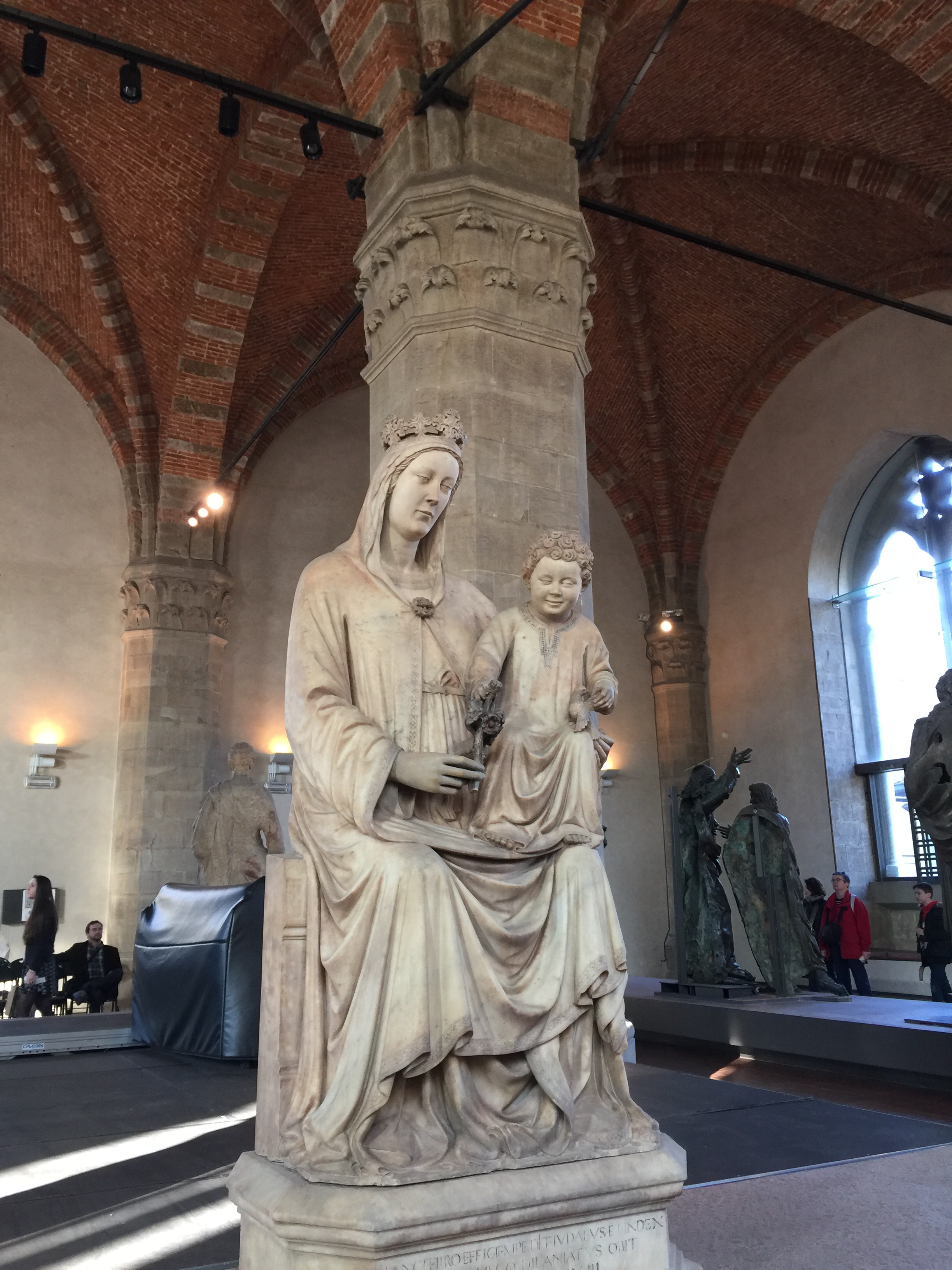
A while back I took the opportunity to pay a visit to the famous Florentine church, built in a former granary.  It is opulent and lovely.

IMG_0570IMG_0571IMG_0572IMG_0573IMG_0574IMG_0575IMG_0576

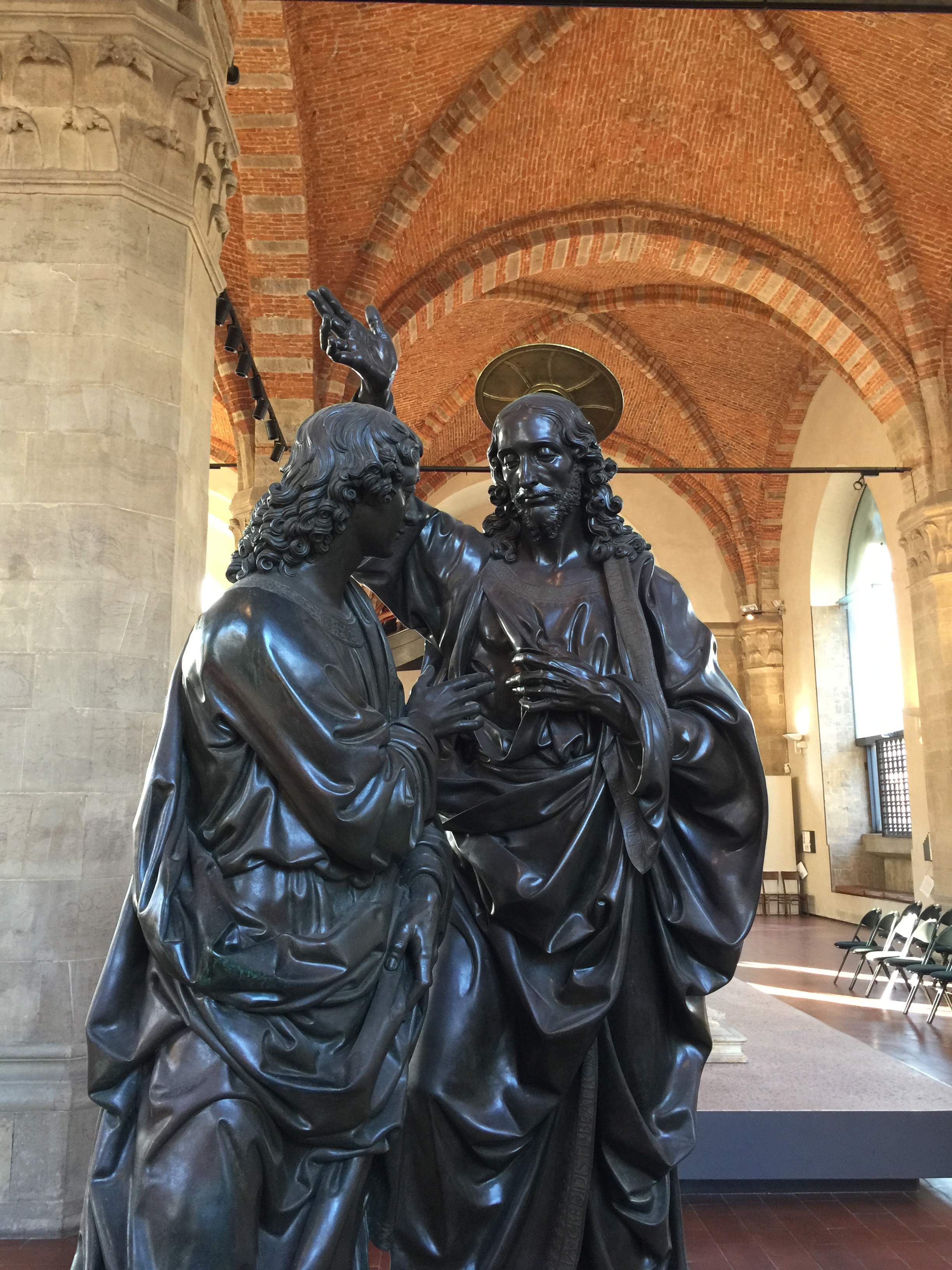
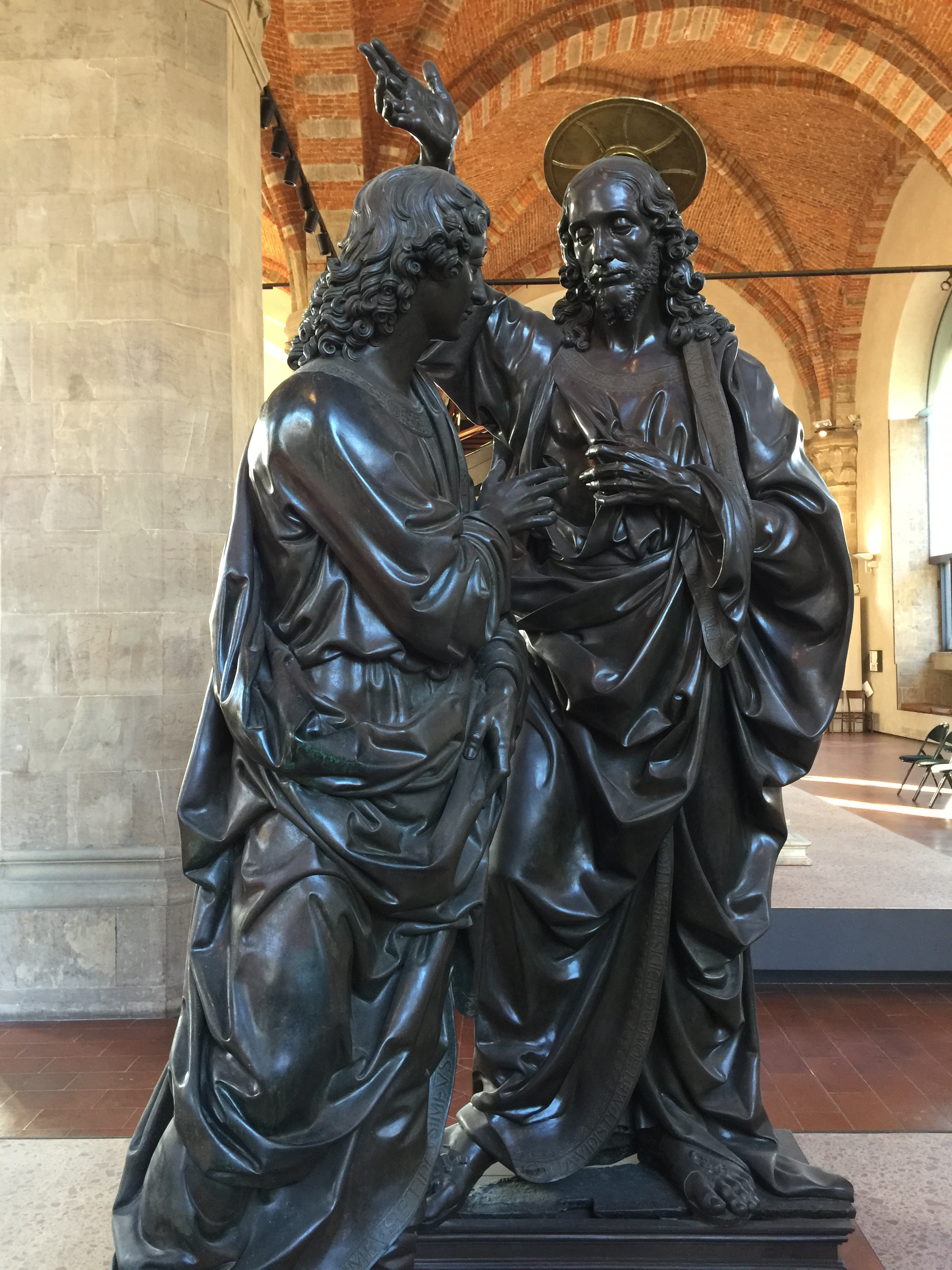
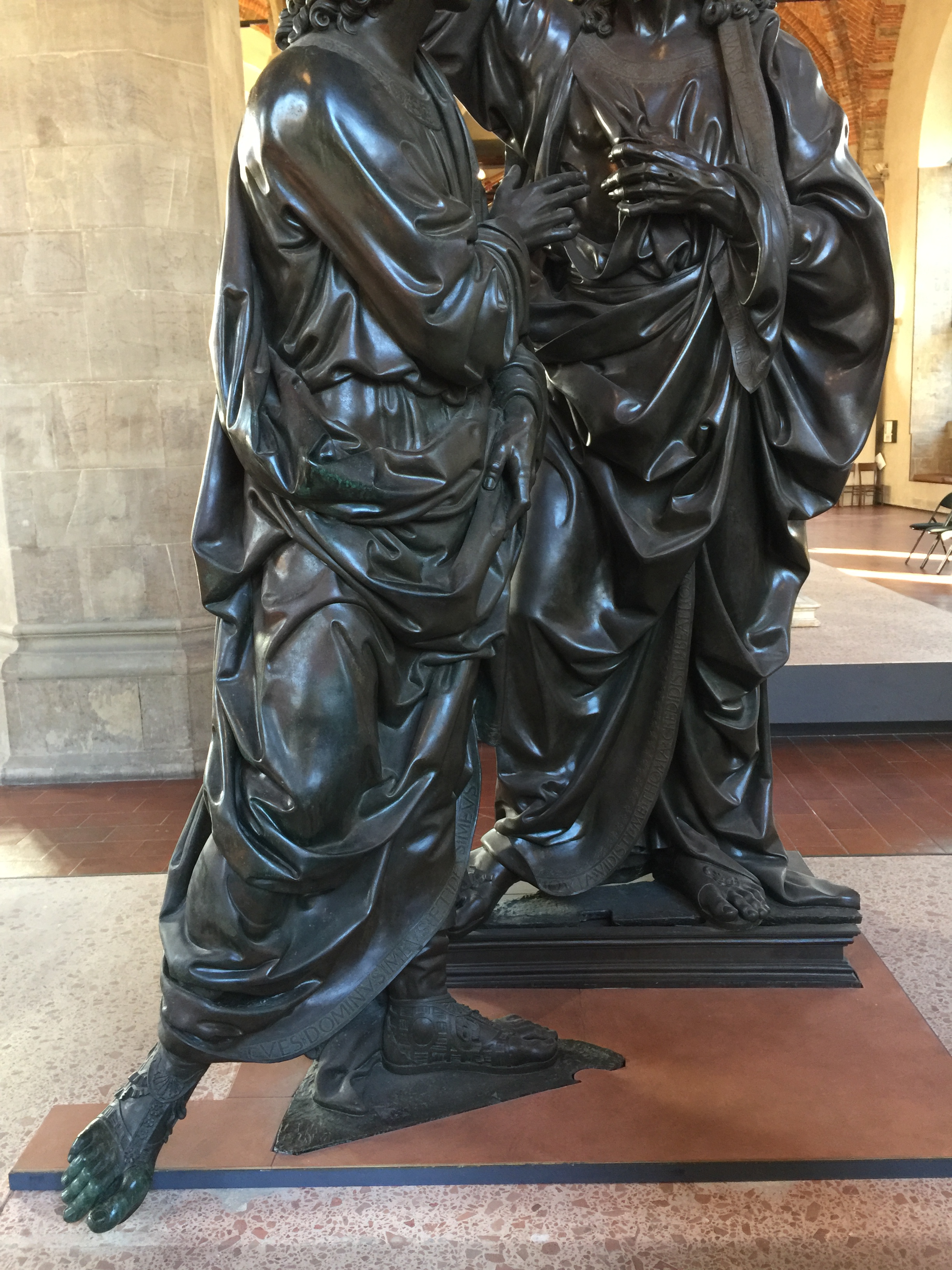
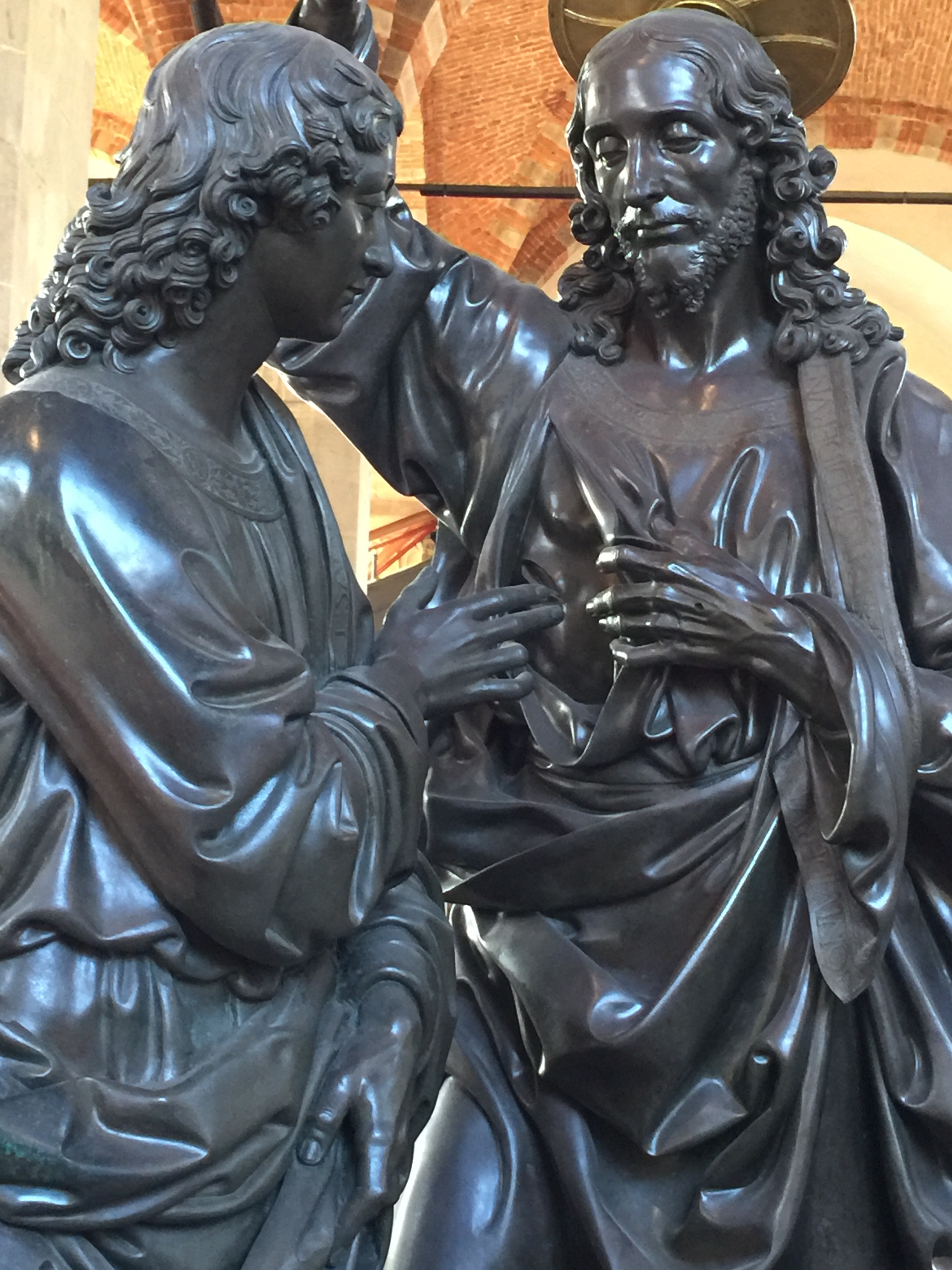
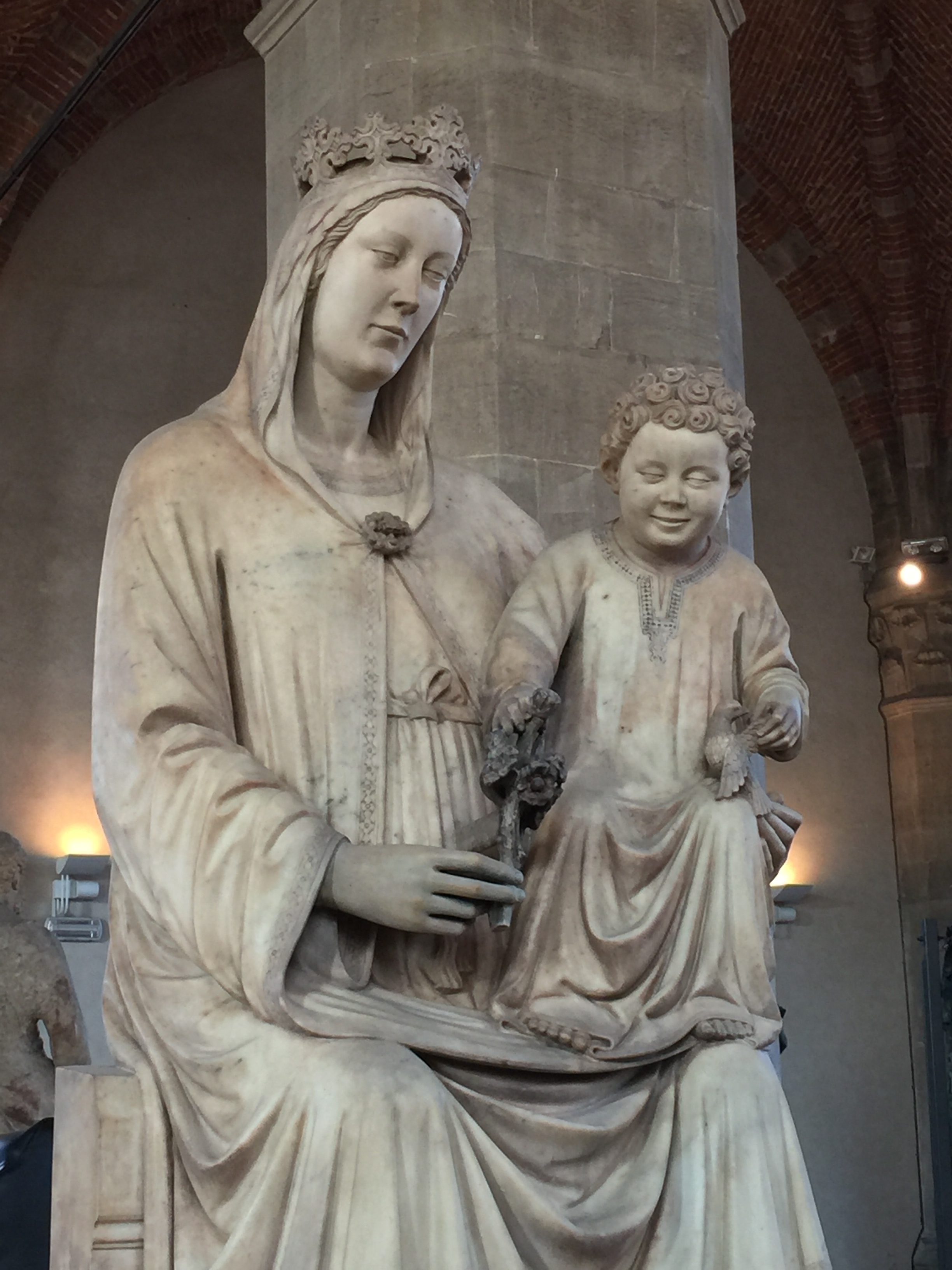
Above the church is a museum where all of the significant Renaissance sculptures originally placed in niches on the 4 facades of the church are now housed.  Copies of these grand works are now in the niches on the building’s facade.

Here are some of the original works:

IMG_0577IMG_0579IMG_0580IMG_0581IMG_0582IMG_0583IMG_0584

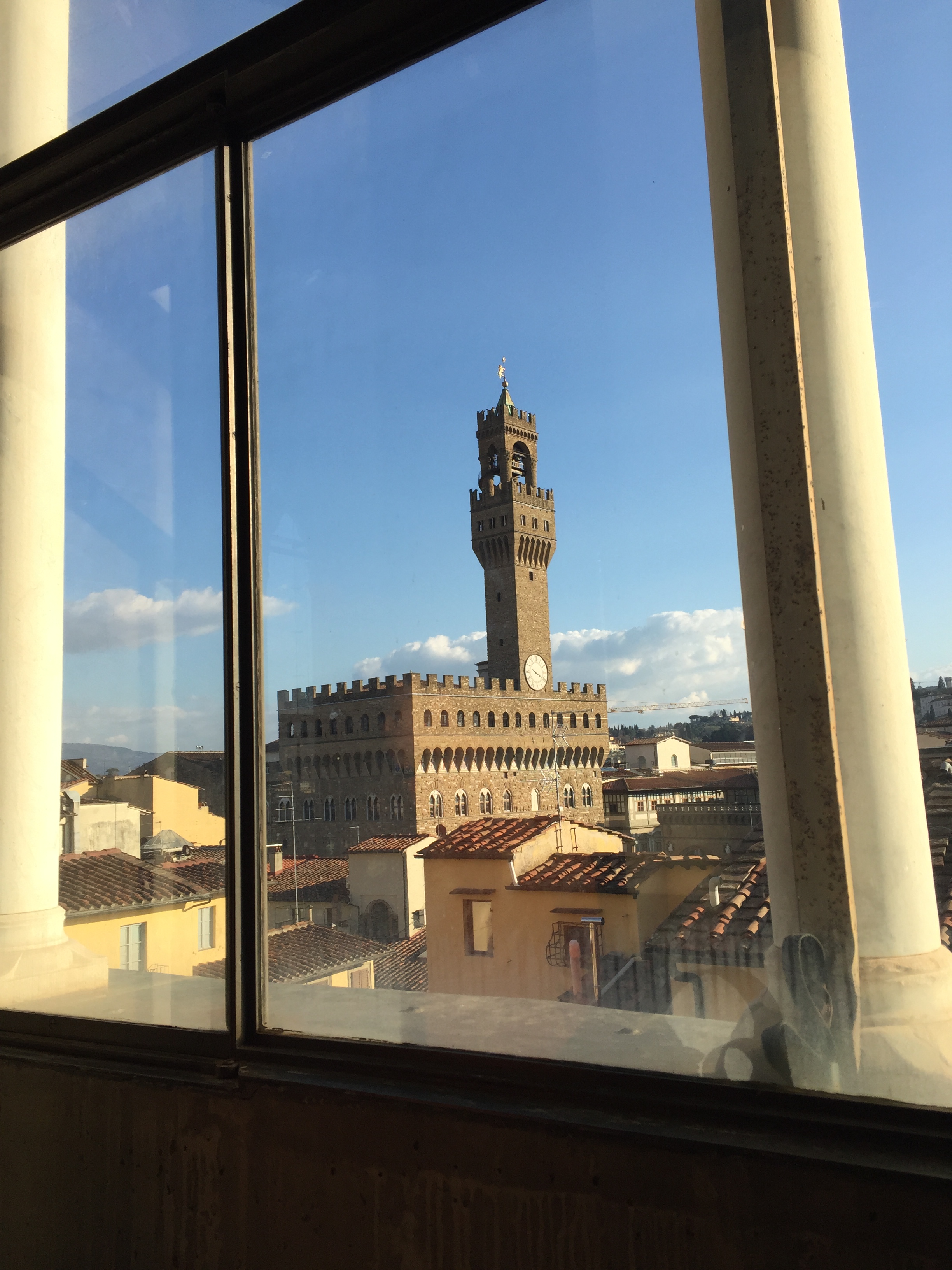
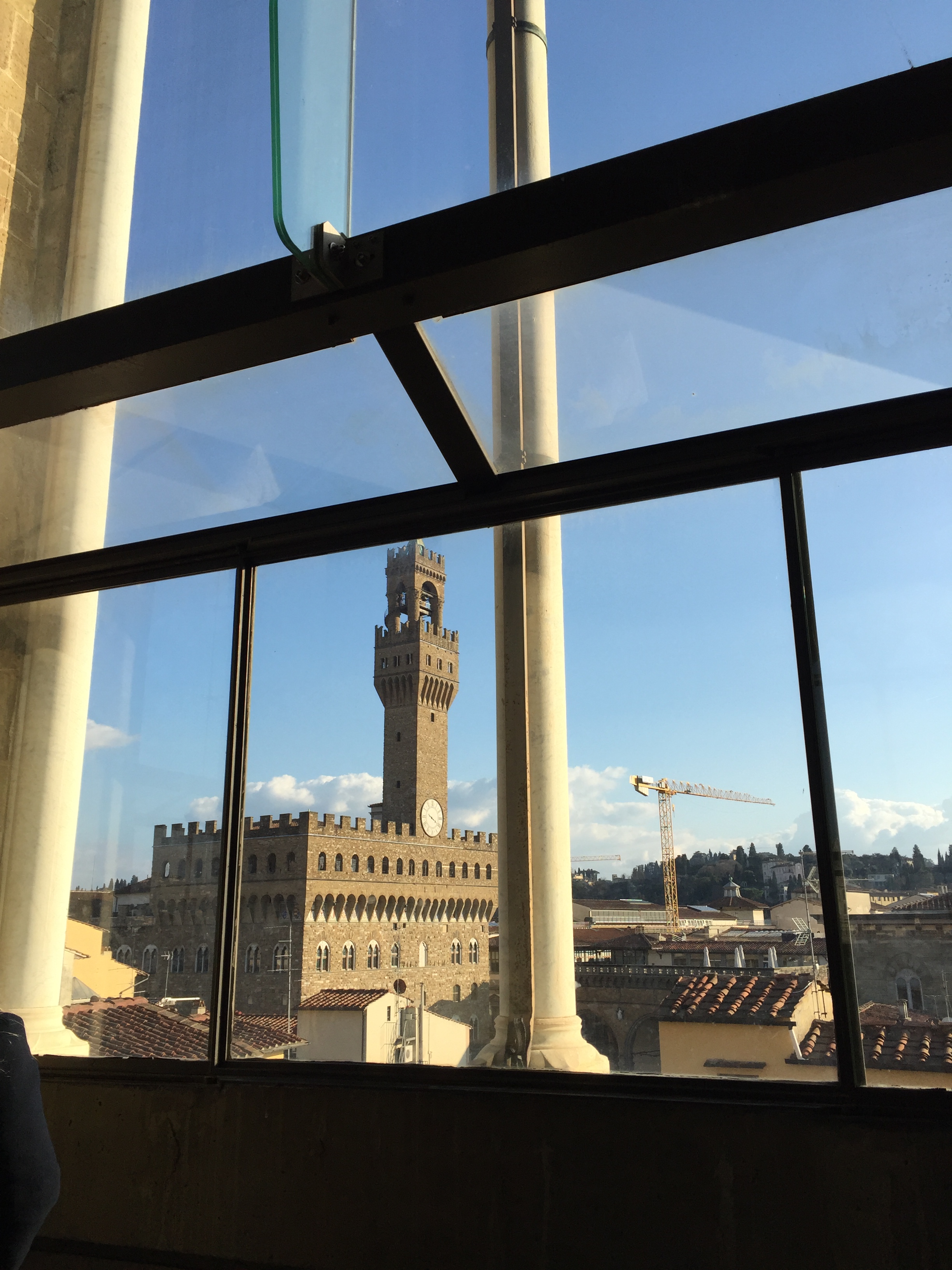
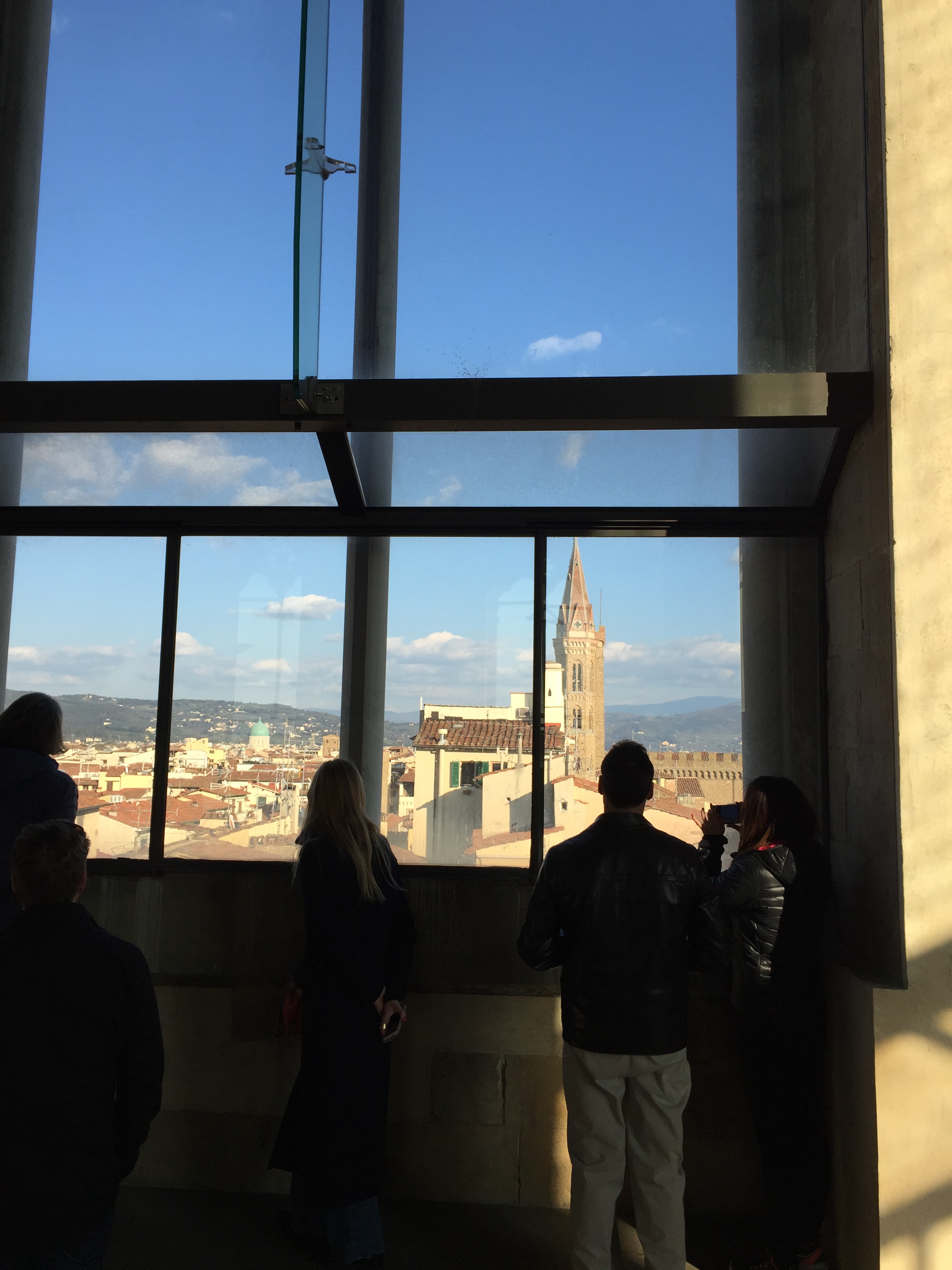
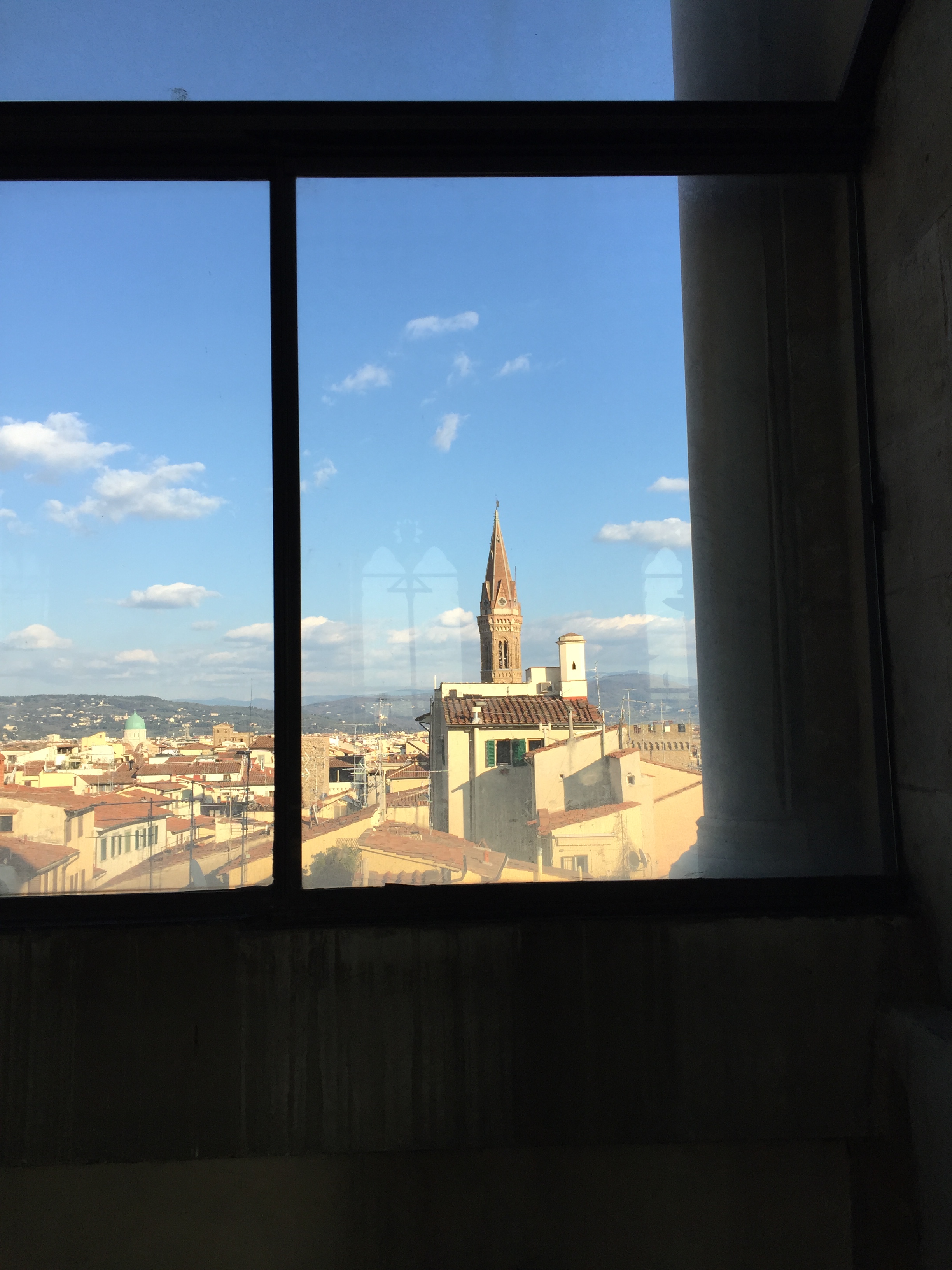
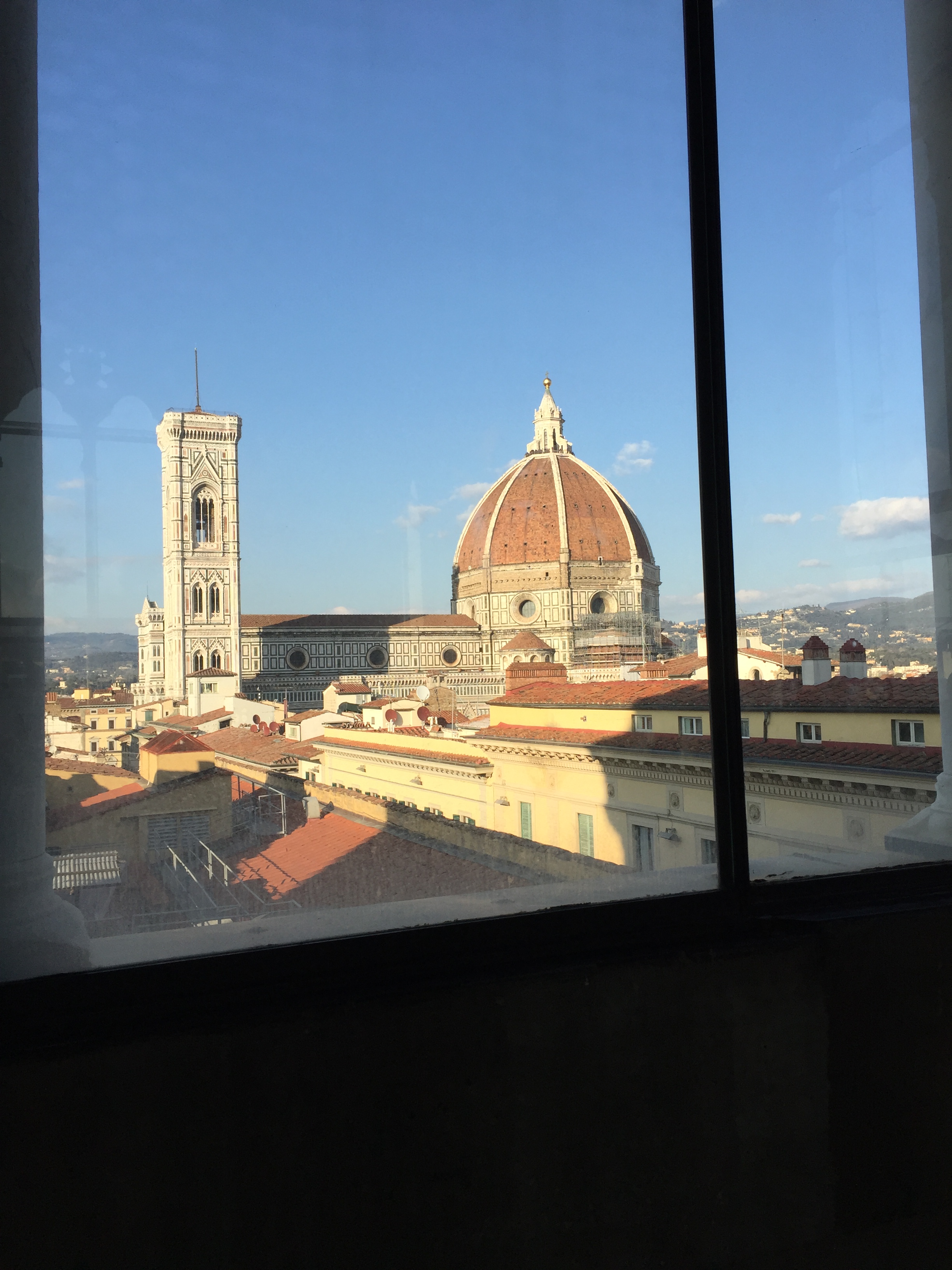
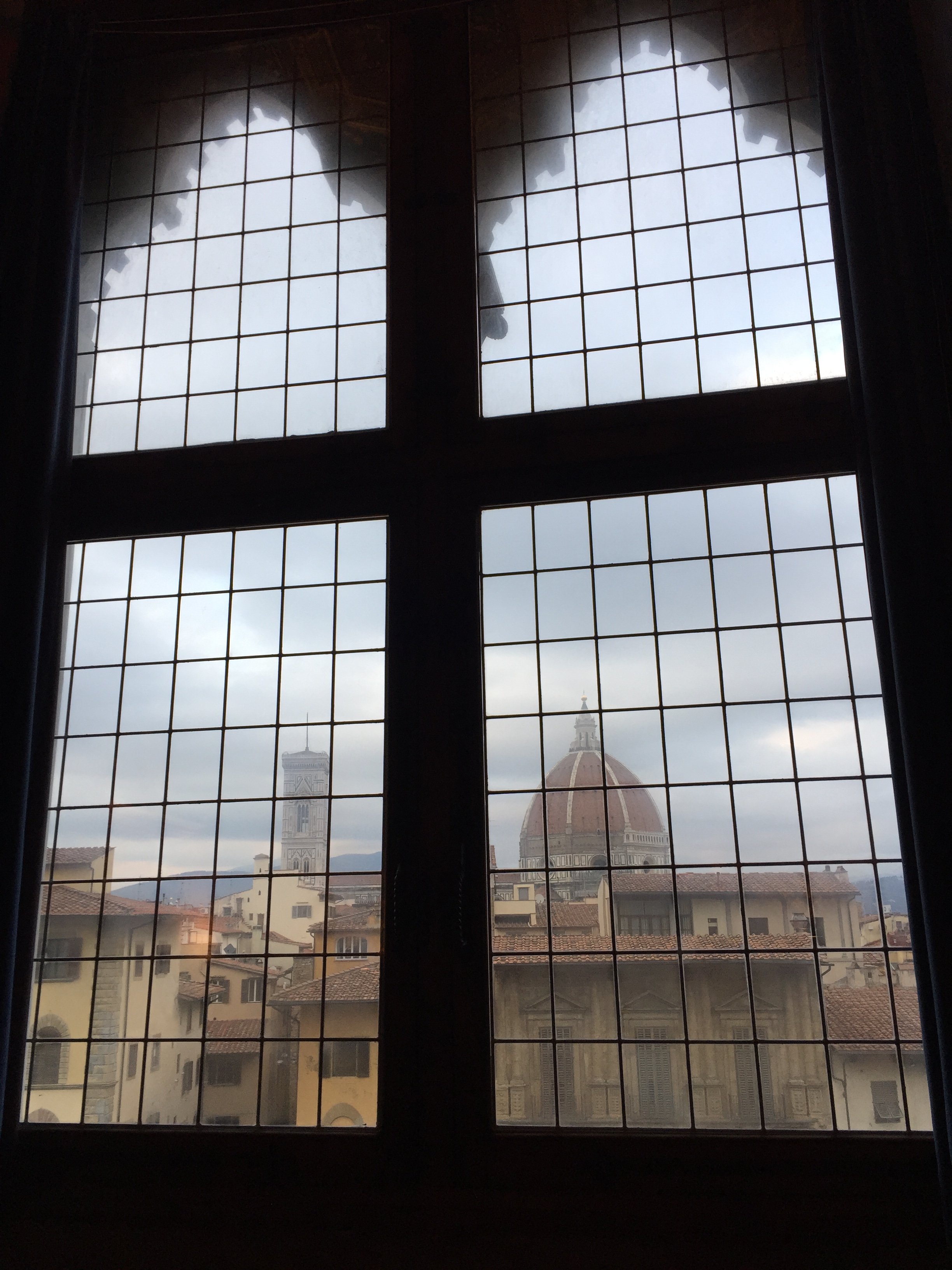
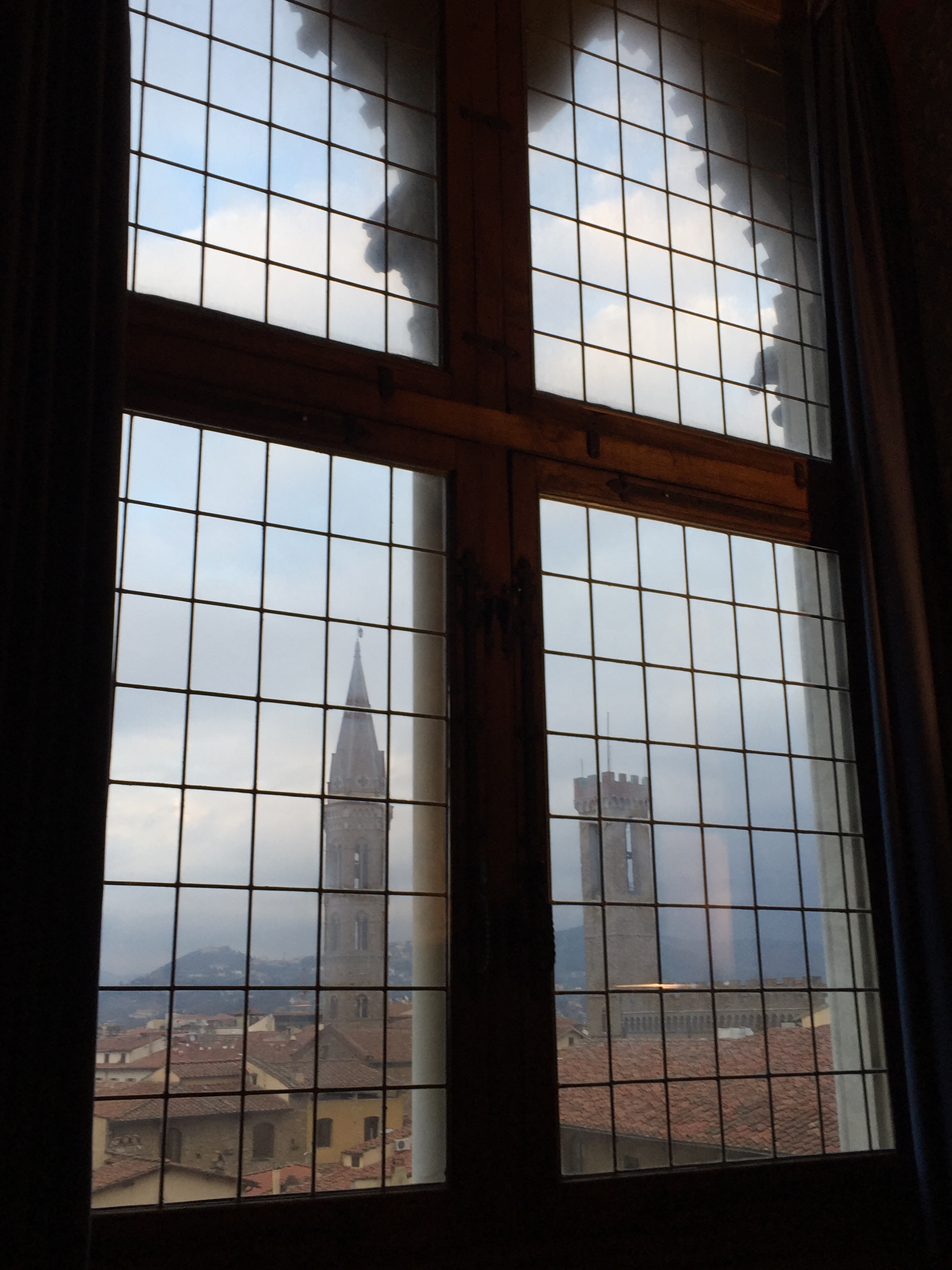
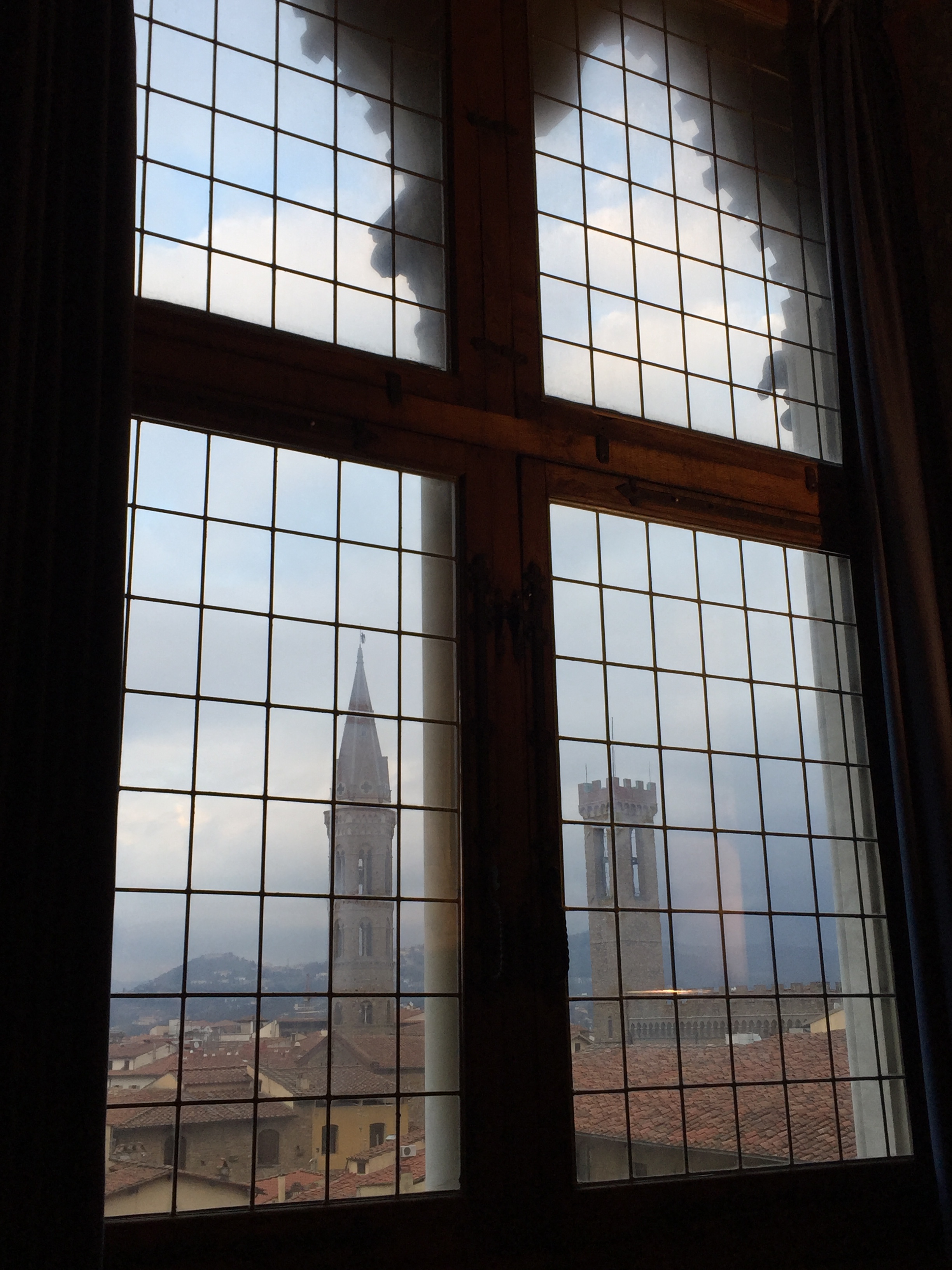
The views of the city from the 2nd floor of Orsan Michele are pretty amazing.

IMG_0585IMG_0586IMG_0587IMG_0588IMG_0589IMG_0590IMG_0591IMG_0592IMG_0593IMG_0594IMG_0595IMG_0596


IMG_0599

19th century Florence

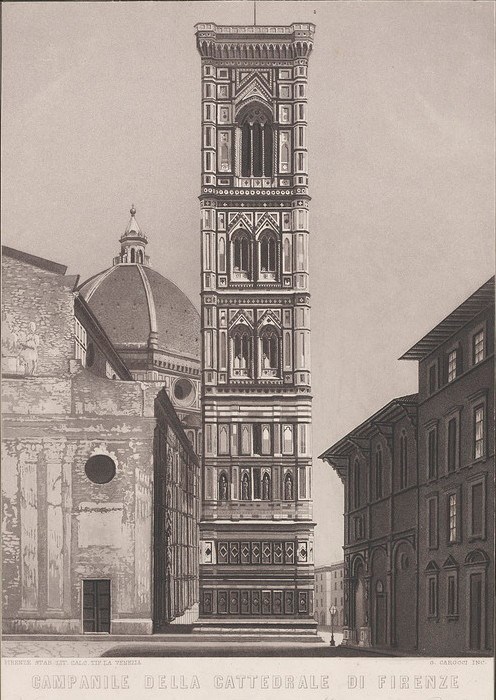
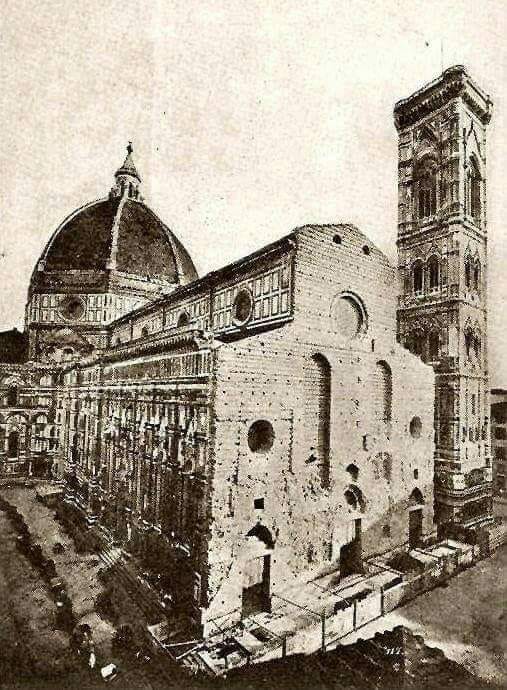
Here are wonderful images of how Florence looked as late as 1870s:


44231988_1428049683993998_8824080832995000320_n

The façade was then left bare until the 19th century.
In 1864, a competition held to design a new façade was won by Emilio De Fabris (1808–1883) in 1871. Work began in 1876 and was completed in 1887. This neo-gothic façade in white, green and red marble forms a harmonious entity with the cathedral, Giotto’s bell tower and the Baptistery, but some think it is excessively decorated. The whole façade is dedicated to the Mother of Christ.


44044647_864736390582929_3893954475974459392_n

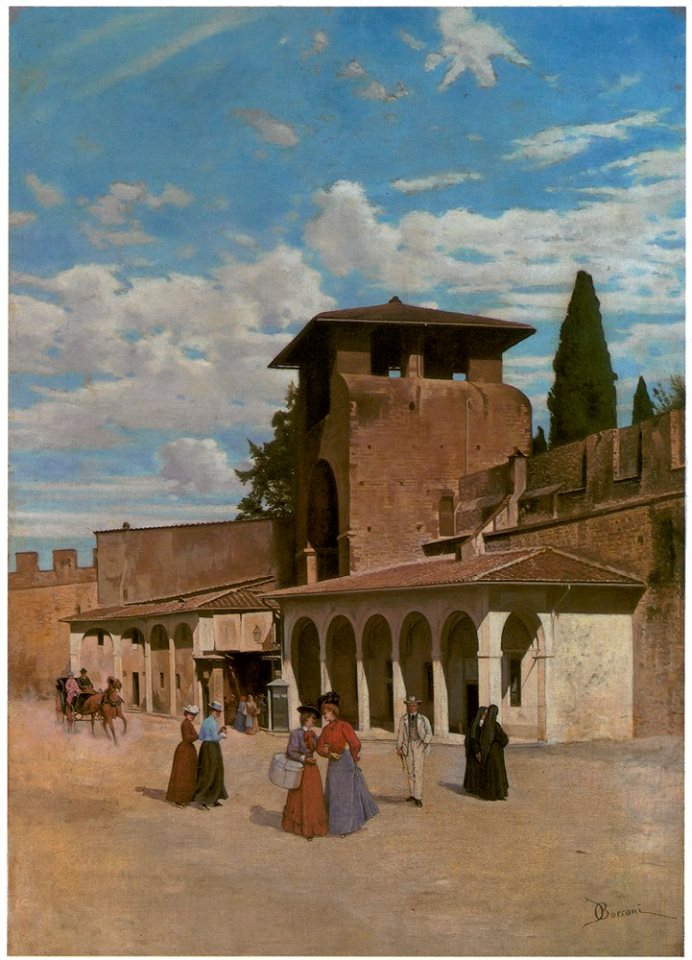
This is an oil painting of La Porta di San Gallo by Odoardo Borrani, c. 1880.  I admire it for its flavour and for showing us how the medieval walls around Florence still looked.   

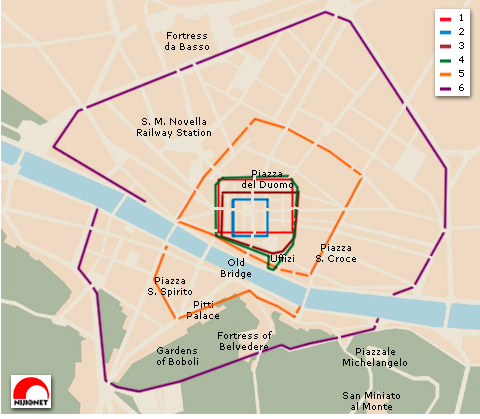
The city walls surrounding Florence were widened and rebuilt many times over the millennia .

Screenshot 2018-10-17 at 15.04.27

  1. In the 2nd century A.D. Florence had 10,000 inhabitants and was surrounded by a 1st wall

2. After the fall of the Western Roman empire, the city suffered deeply and in the 6th century it had only 1000 inhabitants: a 2nd city wall was built, protecting a smaller area than the earlier Roman one.

3. Florence flourished again, and, at the beginning of 10th century the city was surrounded by a wider 3rd wall, which for the first time extended itself to the river Arno.

4. The building of the 4th wall was begun in 1078: Florence was a 20,000 inhabitants city and the Duke of Tuscany had moved his capital from Lucca to Florence. The new city walls surrounded also Piazza del Duomo, but the quarters of Oltrarno remained still unprotected.

5. In the years 1173-1175, the city built a 5th city wall: for the first time a defence wall was built also in Oltrarno, due to the increasing importance of the dwellings around the churches of San Felice, San Jacopo in Soprarno and Santa Felicita. Three city gates were built in Oltrarno (near today’s Piazza San Felice, Costa de’ Magnoli and Piazza Frescobaldi), but a real stone wall was not built: the protection consisted of palisades connecting the gates and houses whose outer façades were built without windows in order to offer more protection.

6.  A 6th wall was planned by at least 1284 (possibly under direction of Arnolfo di Cambio). These walls enclosed a very wide area and protected the whole city with all its newer and outer dwellings. The gates were 35 meters tall, and were decorated with religious frescoes (the Madonna and Saints); originally, on the square in front of each gate was also a statue of a famous Florentine writer or poet. The building of the walls was completed in 1333 – and finally the quarters of Oltrarno received a complete protection.
In 16th century, the city prepared to face the army of the German emporer, Charles V, and in 1530 new fortifications were added around San Miniato al Monte. After that, Grand-duke Ferdinando I commissioned Bernardo Buontalenti to build a fortress; it was completed in the years 1590-1595 near the gate of San Giorgio and was named Fortress of Santa Maria, but became rapidly known as Fortezza Belvedere.

Between 1865 and 1871 Florence was provisory Capital of Italy: the city walls were demolished in order to build the new ring road. Only the walls in Oltrarno survived, with all their towers.

In 1998 a part of the wall between the gate of Porta Romana and Piazza Tasso has been restored and opened to visitors.

Facciata del Duomo in costruzione, 1871 circa.

Ognissanti, Firenze

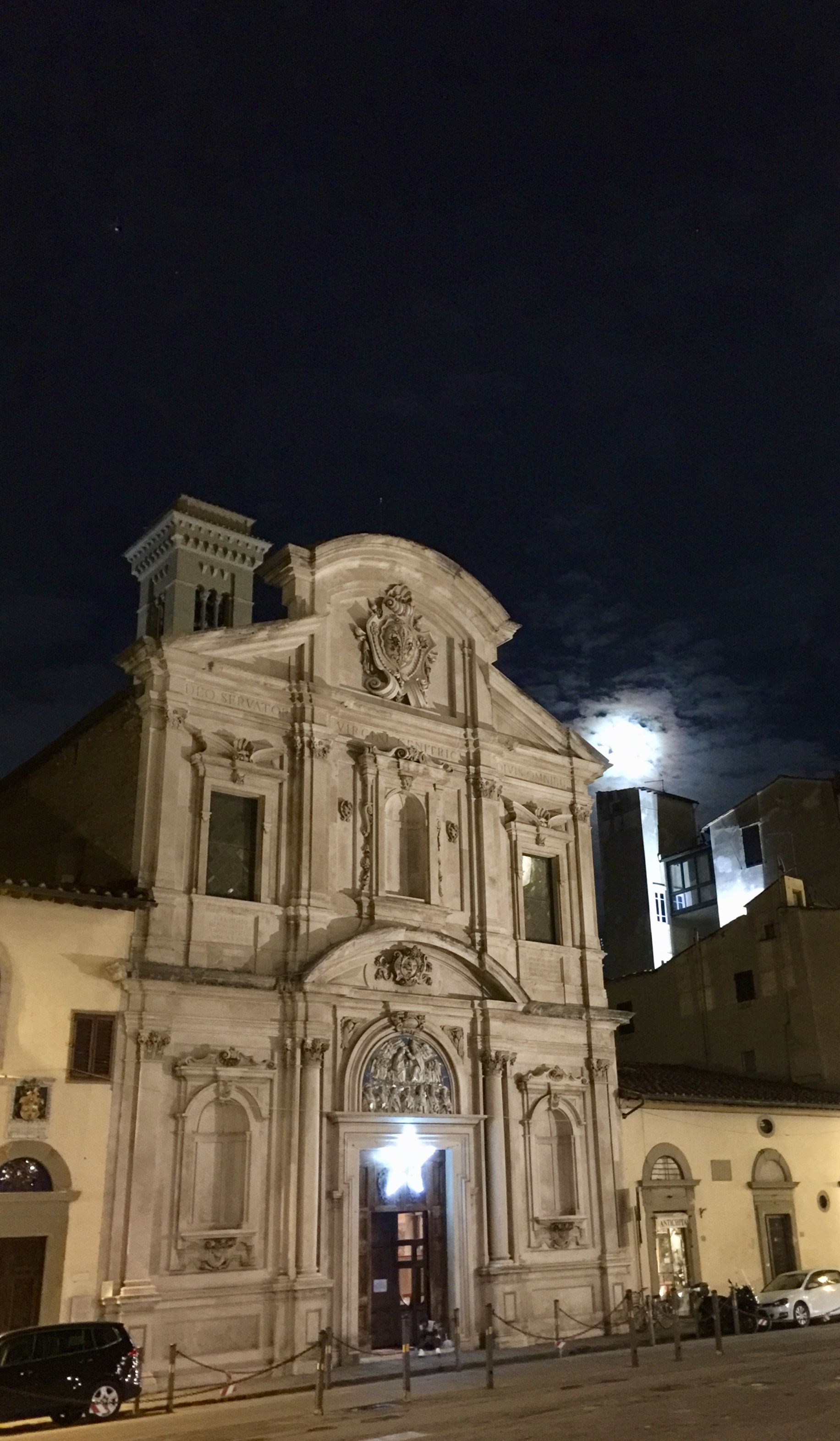
The moon shone brightly last night (which was Thanksgiving night, in the United States) over the Renaissance city.

fullsizeoutput_674

Earlier today I posted about a concert I once heard at the Franciscan church called Ognissanti.  As luck would have it, I had the chance to spend some time last night admiring the interior of the church when it was beautifully lit up in the early evening.

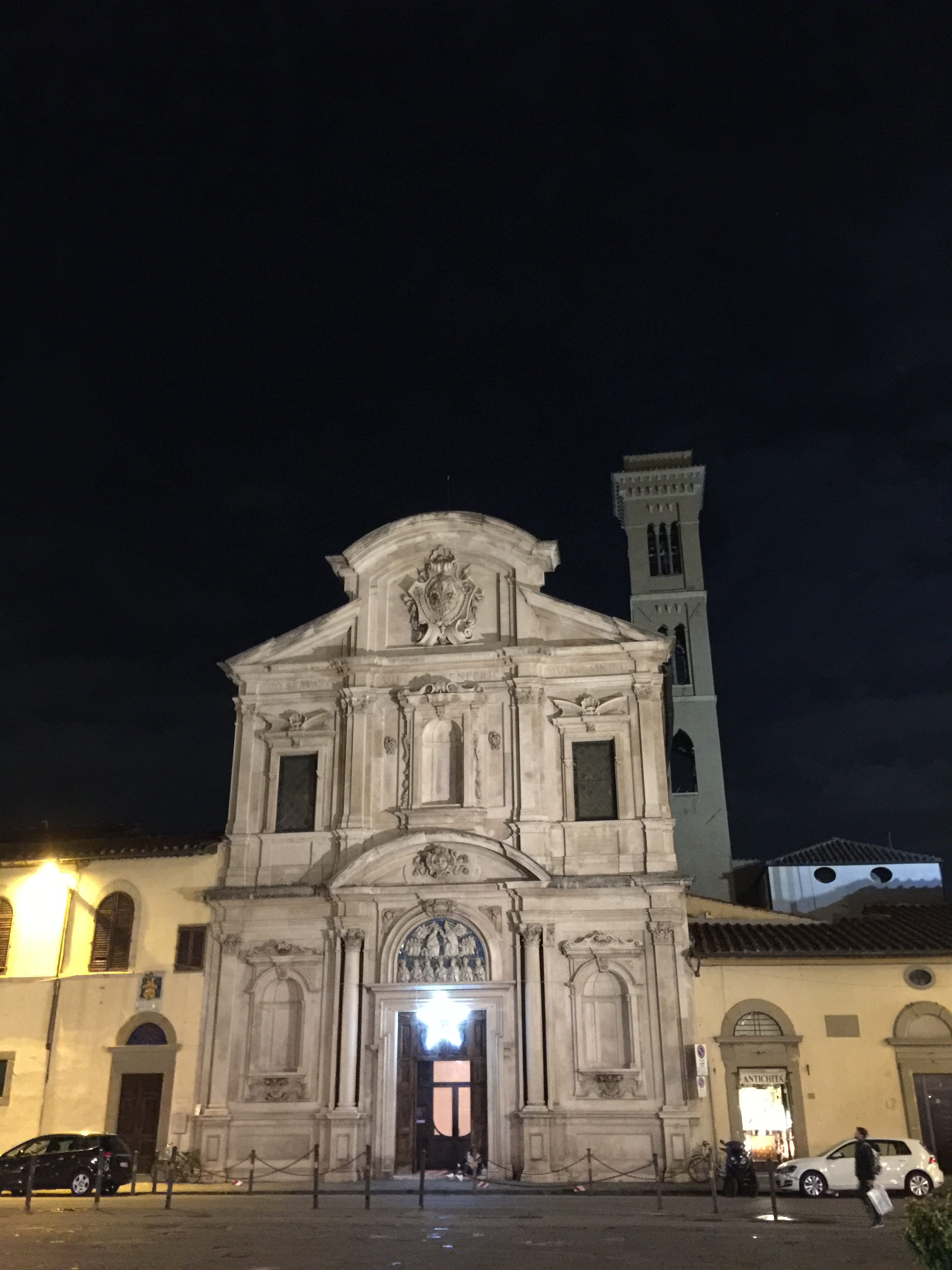
IMG_3023

Ognissanti has a harmonious Baroque facade, as seen from the piazza that separates it from the Arno river. The chiesa was originally built in the 1250s by the Umiliati, but it later became a Franciscan church.  It was renovated c. 1627 in the Baroque style, by architect Bartolomeo Pettirossi.

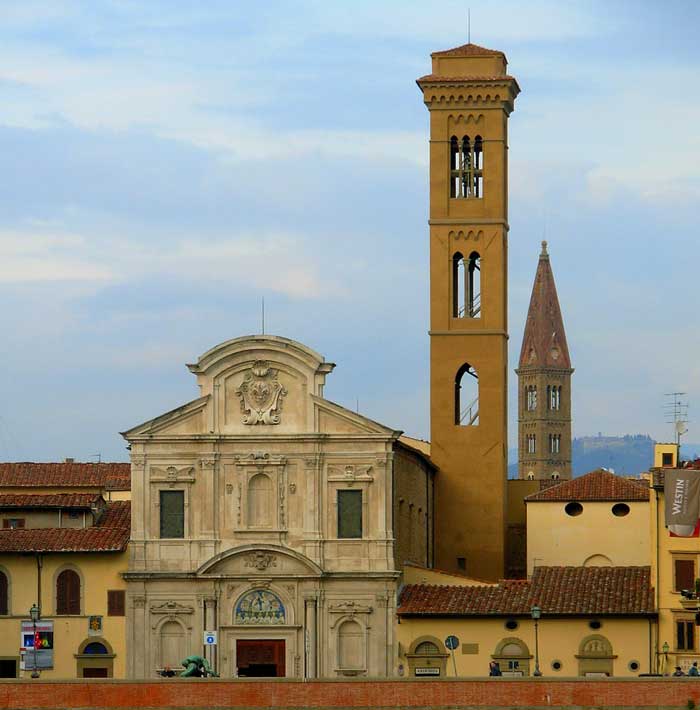
Here’s how it looks in the daytime:
ognissanti700

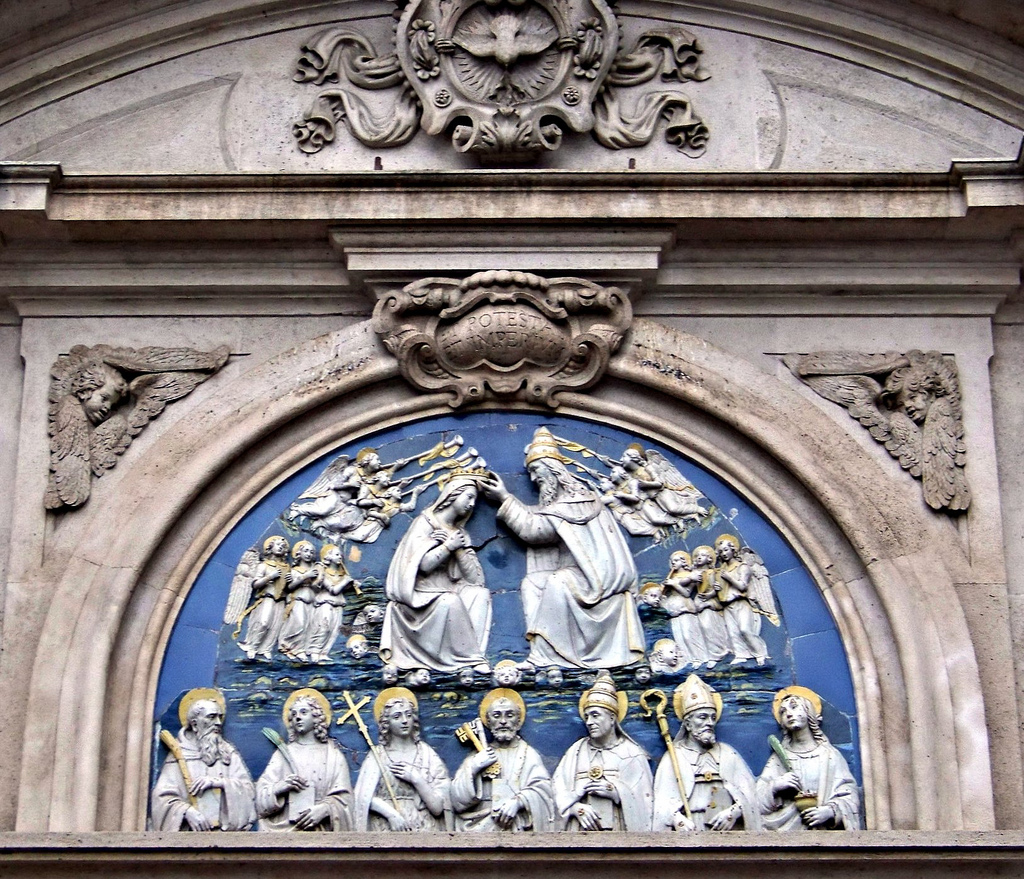
In 1637 the church was given this façade, based up designs by Matteo Nigetti. Fortunately, the glazed terracotta lunette depicting the Coronation of the Virgin and placed over the central doorway was conserved. While the lunette resembles the work of Luca Della Robbia, it is now attributed to Benedetto Buglioni. Buglioni was almost the only artist working in the glazed terra-cotta style made famous by the Della Robbia workshop after that enterprise ended.

5171953494_dab769d8cb_b

Ognissanti was among the first examples of Baroque architecture to penetrate this Renaissance city. Its two orders of pilasters enclose niches and windows with elaborate cornices. The campanile, of  late 13th and early 14th-century construction, sits back from the front of the church, on the east side.

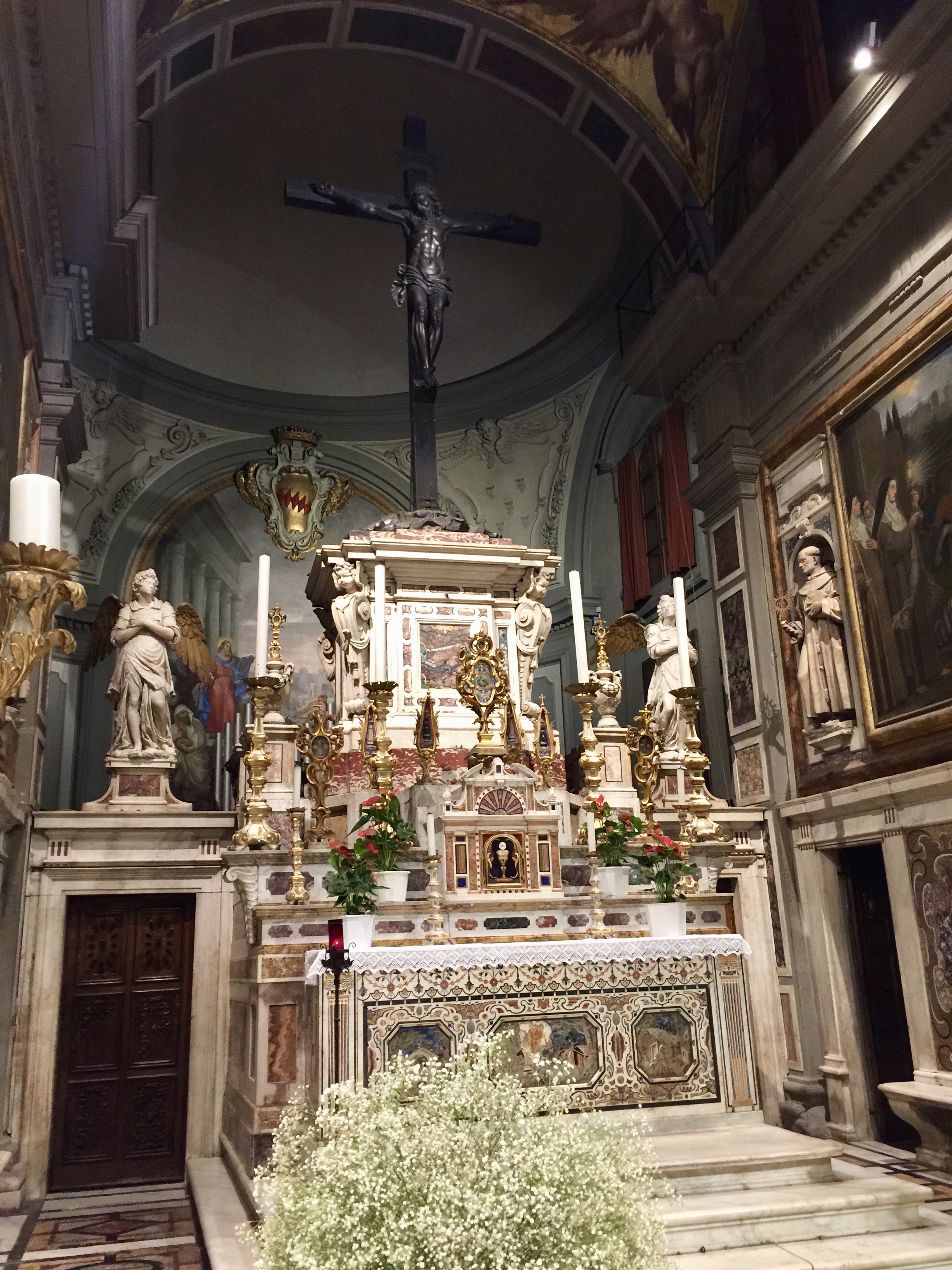
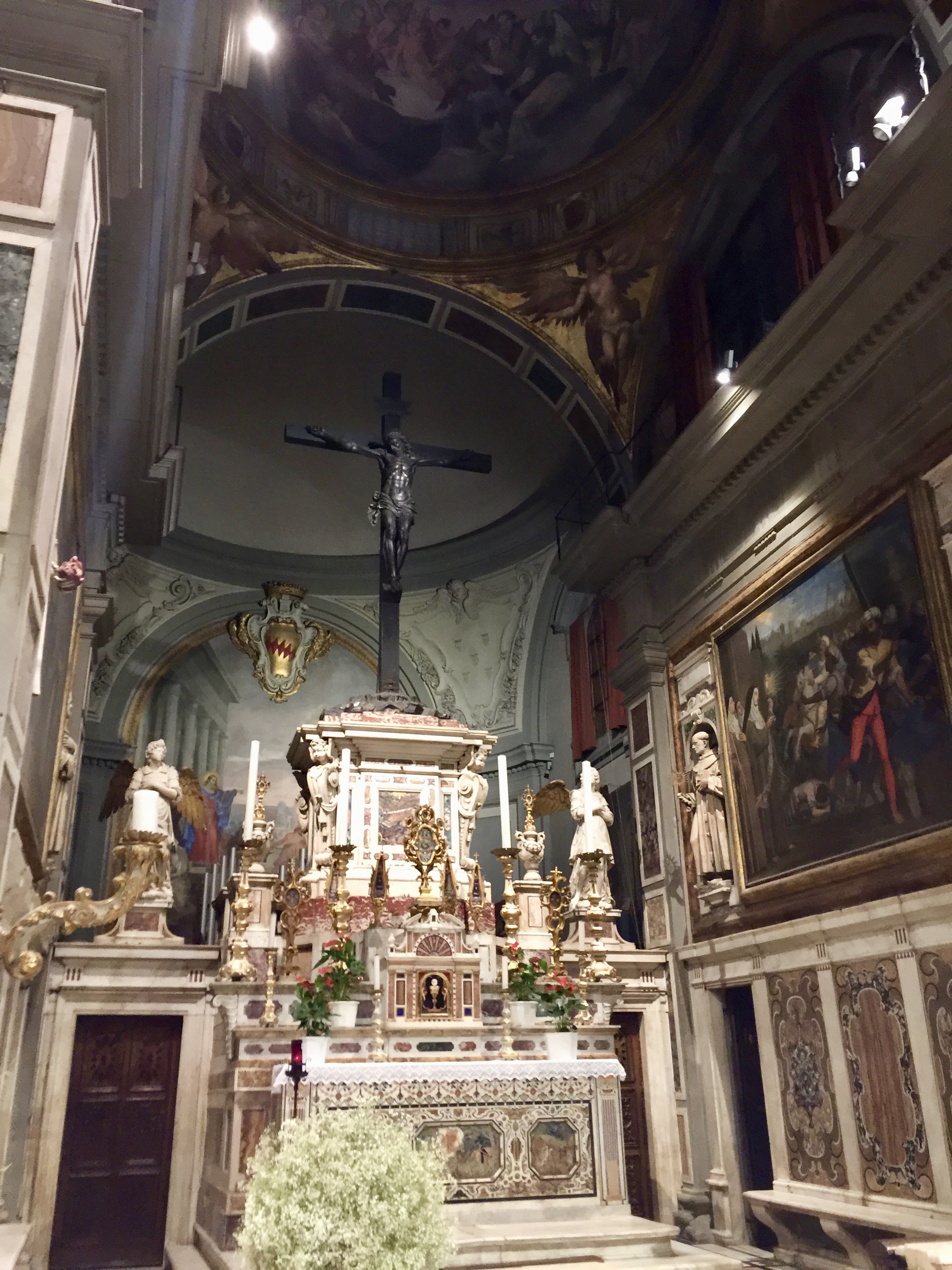
The church’s interior is equally grand and richly ornamented.  It received the same Baroque style remodeling as the exterior in the early 17th-century, when the apse was rebuilt with a pietre dure high altar and, later, in 1770, the incredible sotto in su perspective painting was added to the vaulted nave ceiling.

fullsizeoutput_68a

fullsizeoutput_679

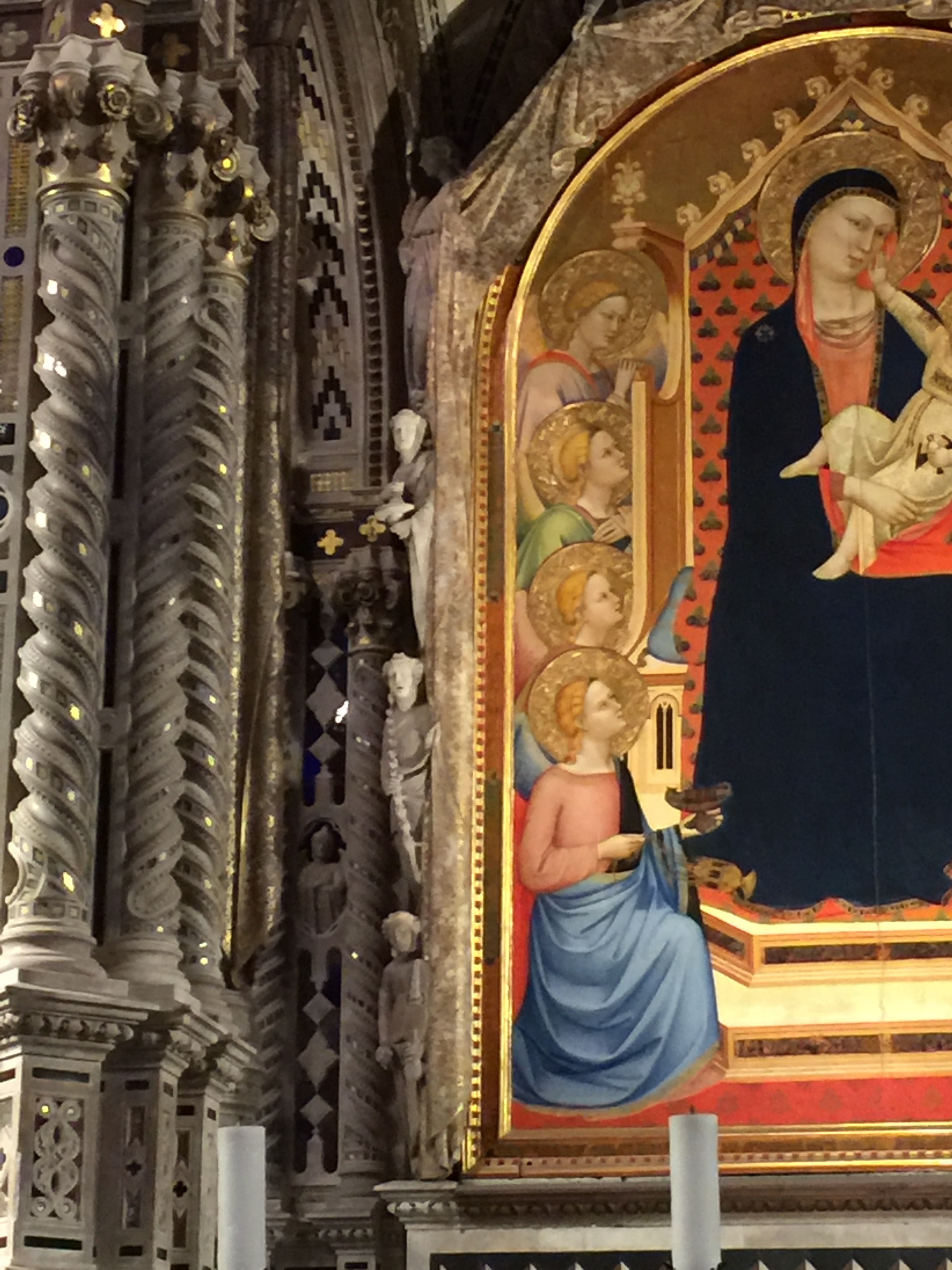
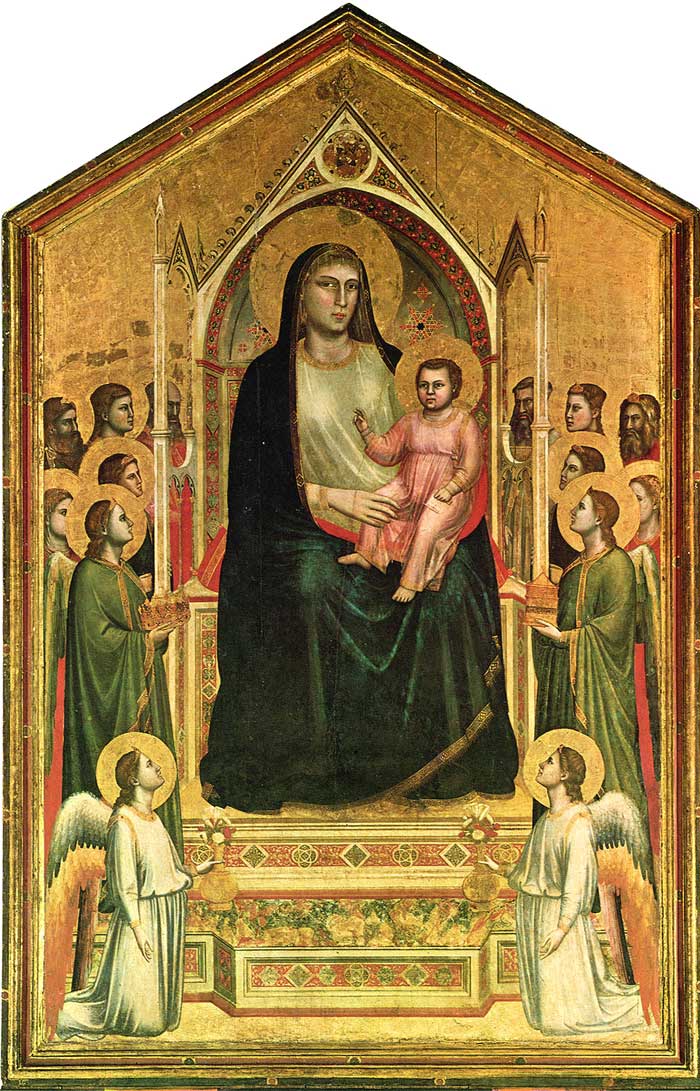
To start with the perhaps the most important aspect of this venerated church, we turn to Giotto’s celebrated Madonna and Child with Angels (c. 1310), which was painted for the high altar of this church.

ognissantimadonna700

This outstanding painting by Giotto was completed in Florence. Today, if you wish to see the masterpiece, you will find it in the collection of the Uffizi.  Giotto’s capolavoro is not only one of the finest works in the Uffizi, but it shows the exact moment when painting in Italy turned from Gothic to a proto-Renaissance style.

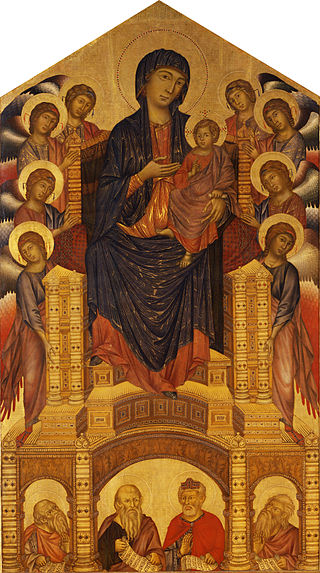
Cimabue_-_Maestà_di_Santa_Trinita_-_Google_Art_Project  In the Uffizi galleries, Cimabue’s celebrated altarpiece (above), which was created for the same type of setting and dealing with the same subject matter as Giotto’s altarpiece, one can witness the changes in artistic approach.

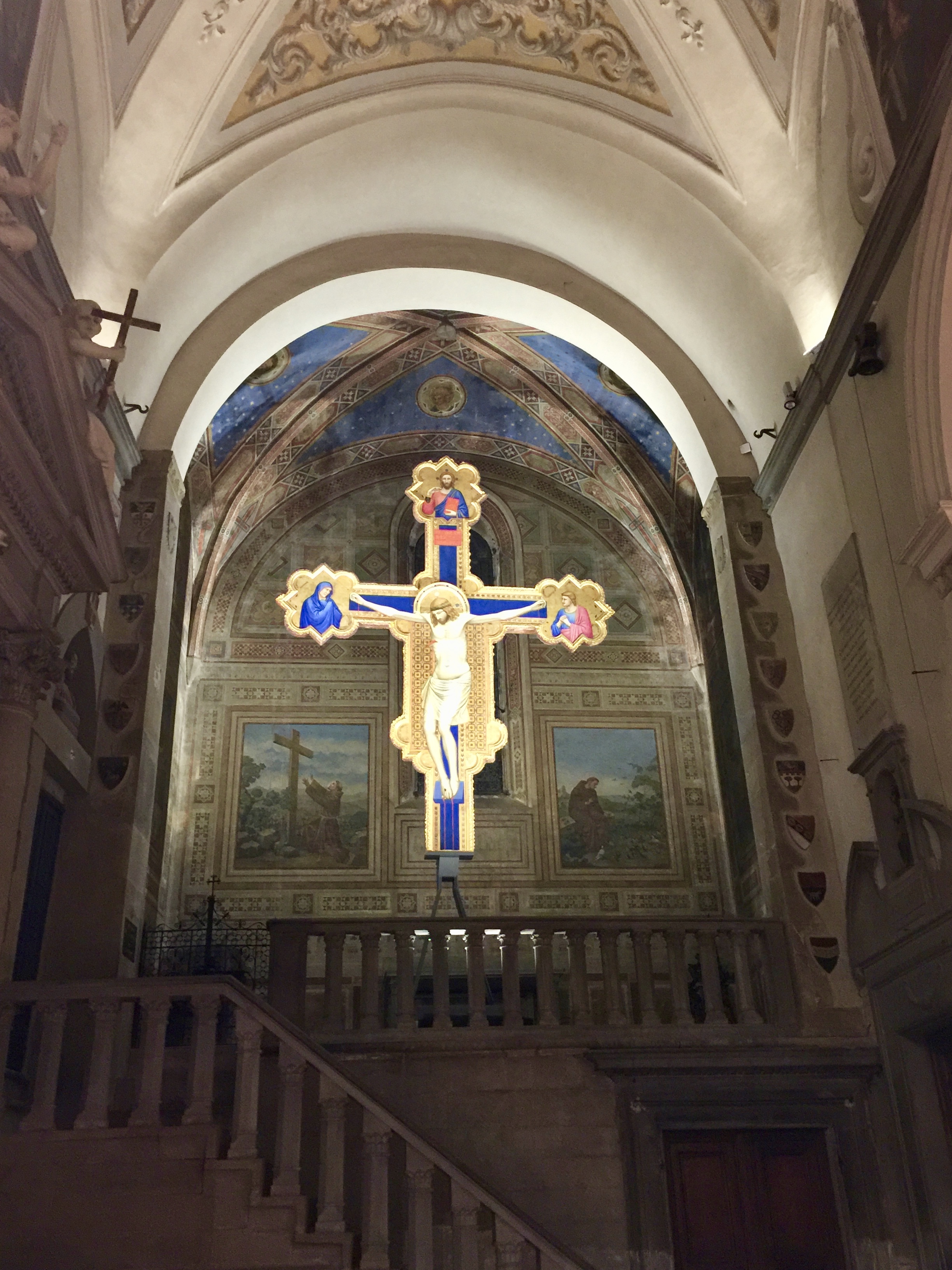
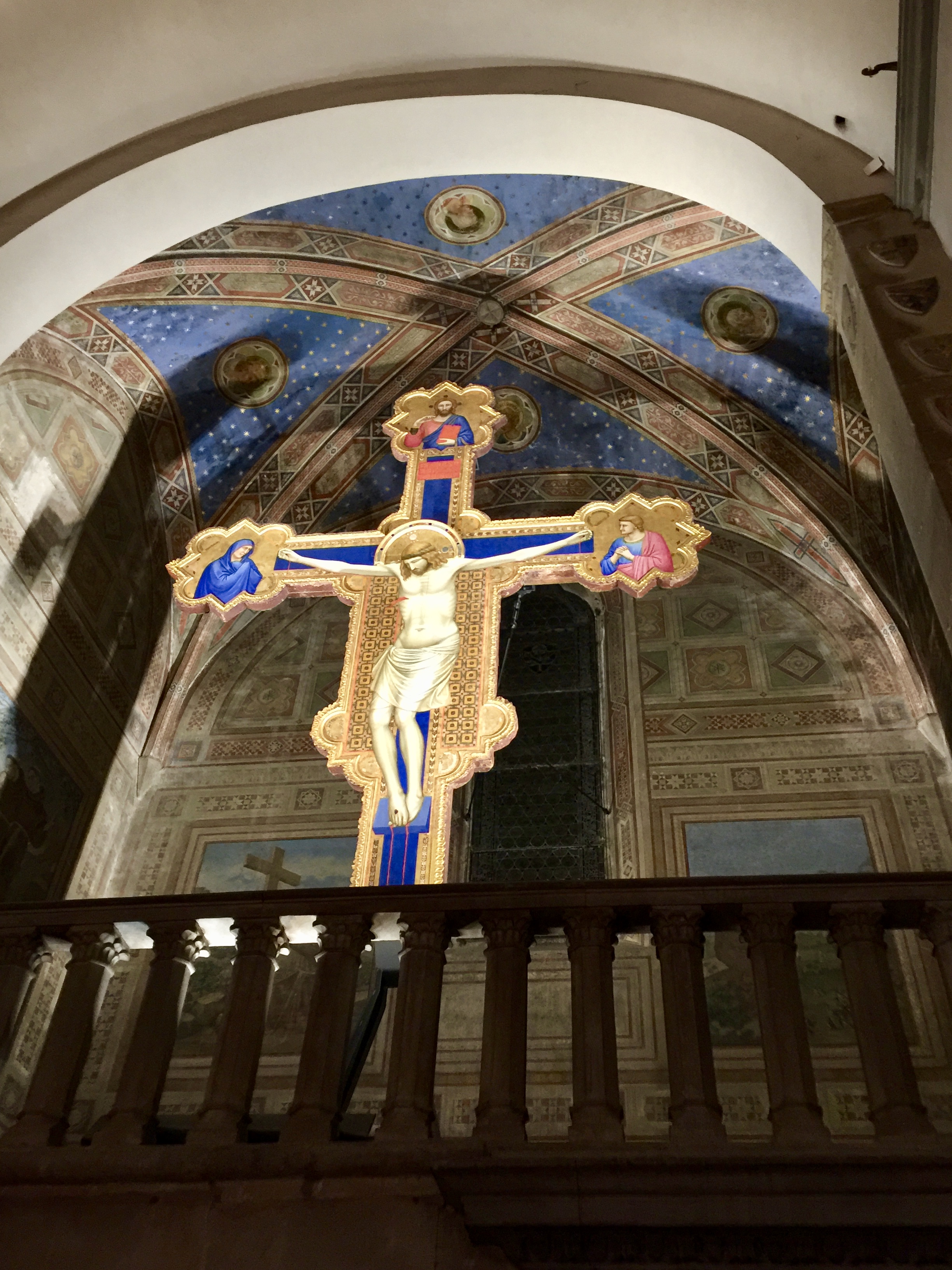
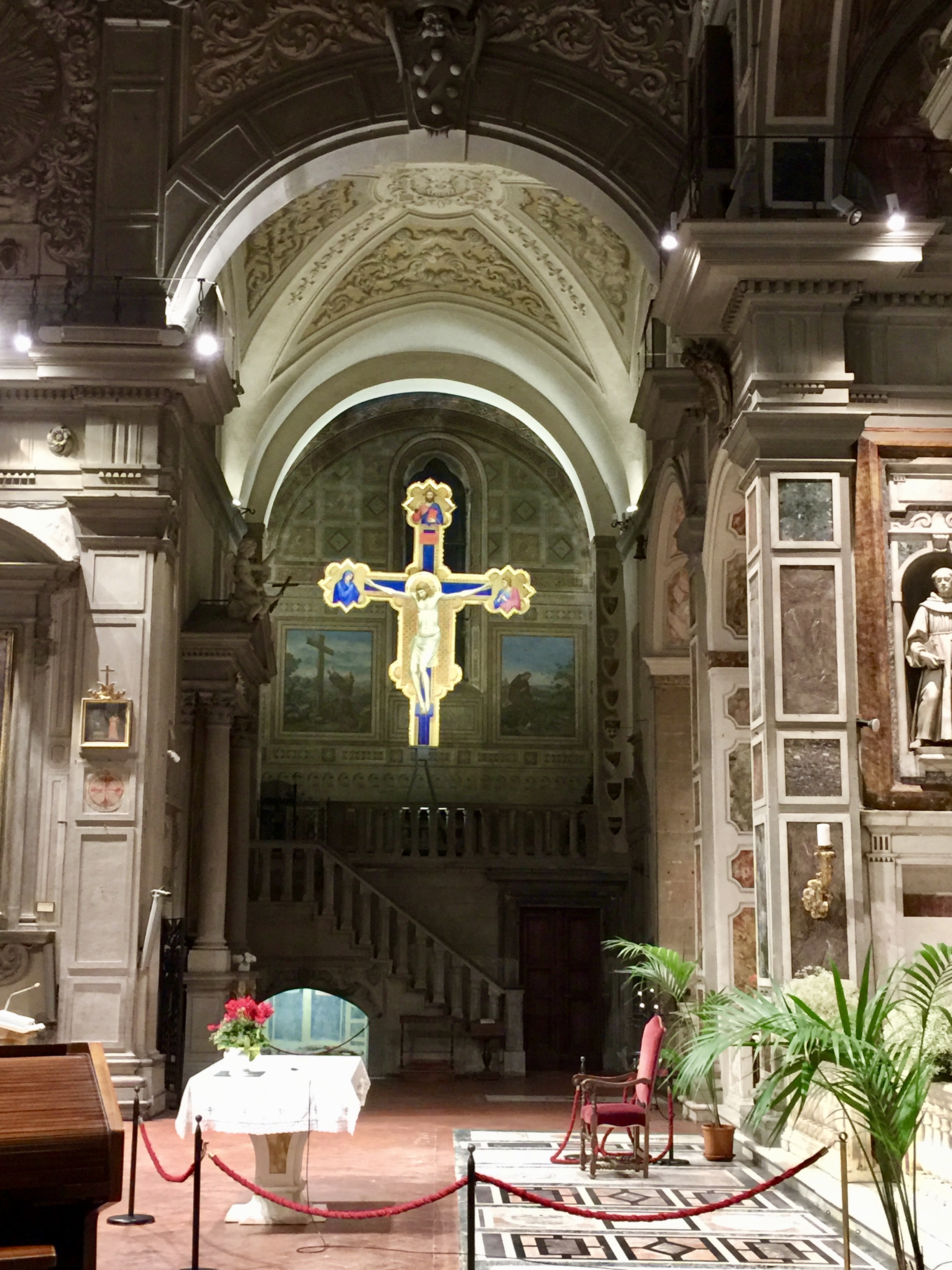
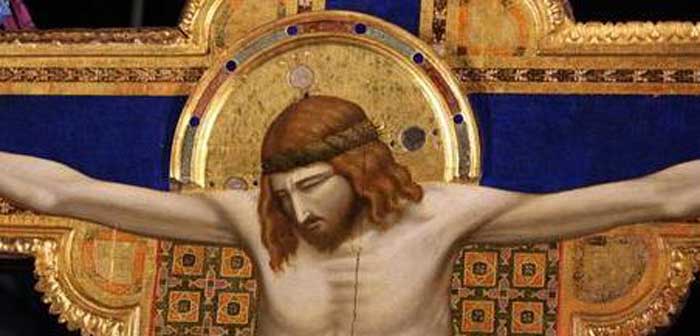
But, although the Ognissanti is missing its famous and beautiful altarpiece, it is fortunate to have another work now attributed by Italian scholars to Giotto: the large crucifixion. Giotto painted this large-scale (15 feet tall) cross c. 1315 for the Umilati friars who then held this church.

fullsizeoutput_67bfullsizeoutput_683

The Crucifixion is displayed under the Medici coat of arms in the left transept of the church.

fullsizeoutput_68e

Only recently was this Crucifixion recognized as a work by Giotto. For decades it sat, unappreciated, in the storerooms of Ognissanti. There was a rumor that it was by Giotto, but no one was certain.  But then, it was restored!

The restoration of Giotto’s Ognissanti Crucifix was started by Paola Bracco in 2002. The majestic tempera on panel, now believed to have been painted by Giotto and his workshop around 1310-1320, had been sadly neglected for centuries. Kept in the sacristy of the church of Ognissanti, it was rarely seen and the vigorous modelling of the flesh tones of the figures, and the many precious details of the pictorial surface, were hidden by layers of varnish from previous “restorations” and centuries-old grime.

Fortunately, this monumental work is now back in the Florentine church, after a careful 8-year restoration.

crucifixognissanti700

In the Crucifix (painted in egg tempera), Christ is represented as Christus patiens, suffering, about to expire. The tension in the muscles of the arms is treated with delicacy, and the ashen flesh colors are very impressive. The body hangs on a very decorative Cross, an overflowing mosaic of starred crosses, squares and ellipses. The ‘beams’ of the Cross are painted in bright, but deep and intense blue, the precious lapis lazuli inlaid with greater or lesser amounts of lead white, as in the sloping pedestal to which Christ’s feet are pinned (by a single nail). The blue is crossed by thin red lines, cinnabar blood with more purplish glazes. On the forehead are a few drops of “pure red lacquer,” the color of blood, which springs from Christ’s flesh in response to the crown of thorns.

Here are some other fascinating artifacts from Ognissanti:

fullsizeoutput_67cfullsizeoutput_680fullsizeoutput_681fullsizeoutput_682fullsizeoutput_684fullsizeoutput_686fullsizeoutput_689fullsizeoutput_68b

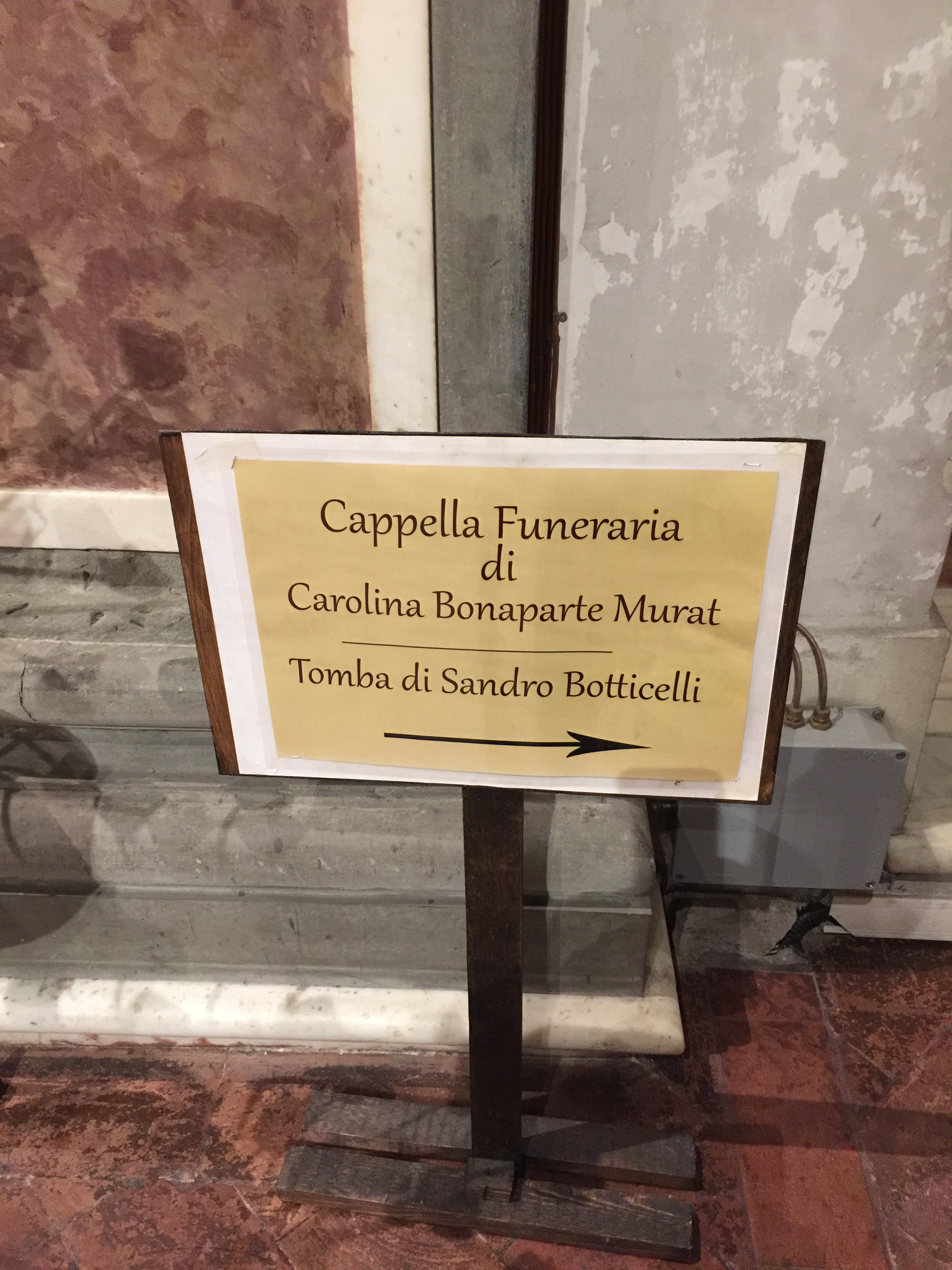
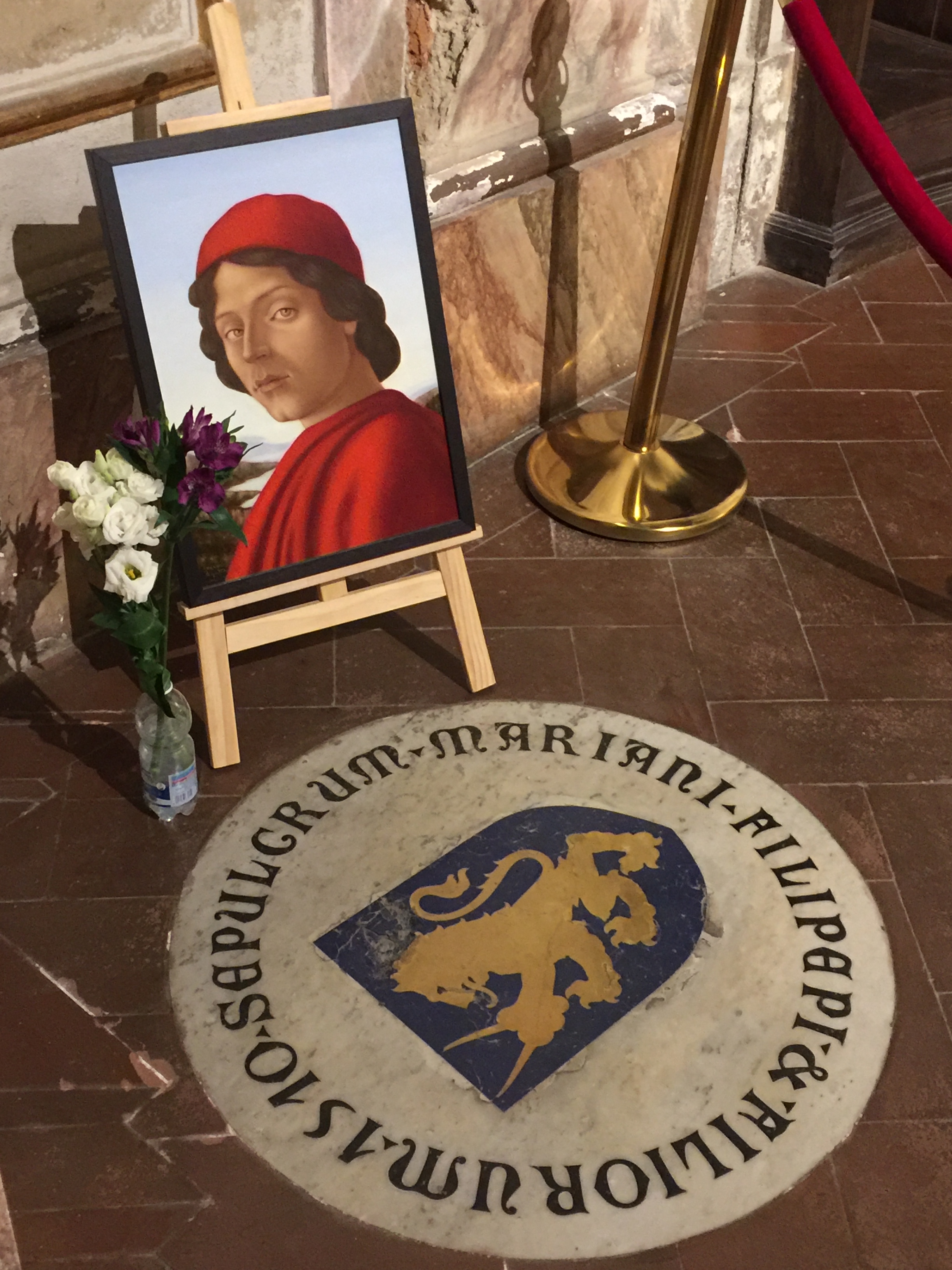
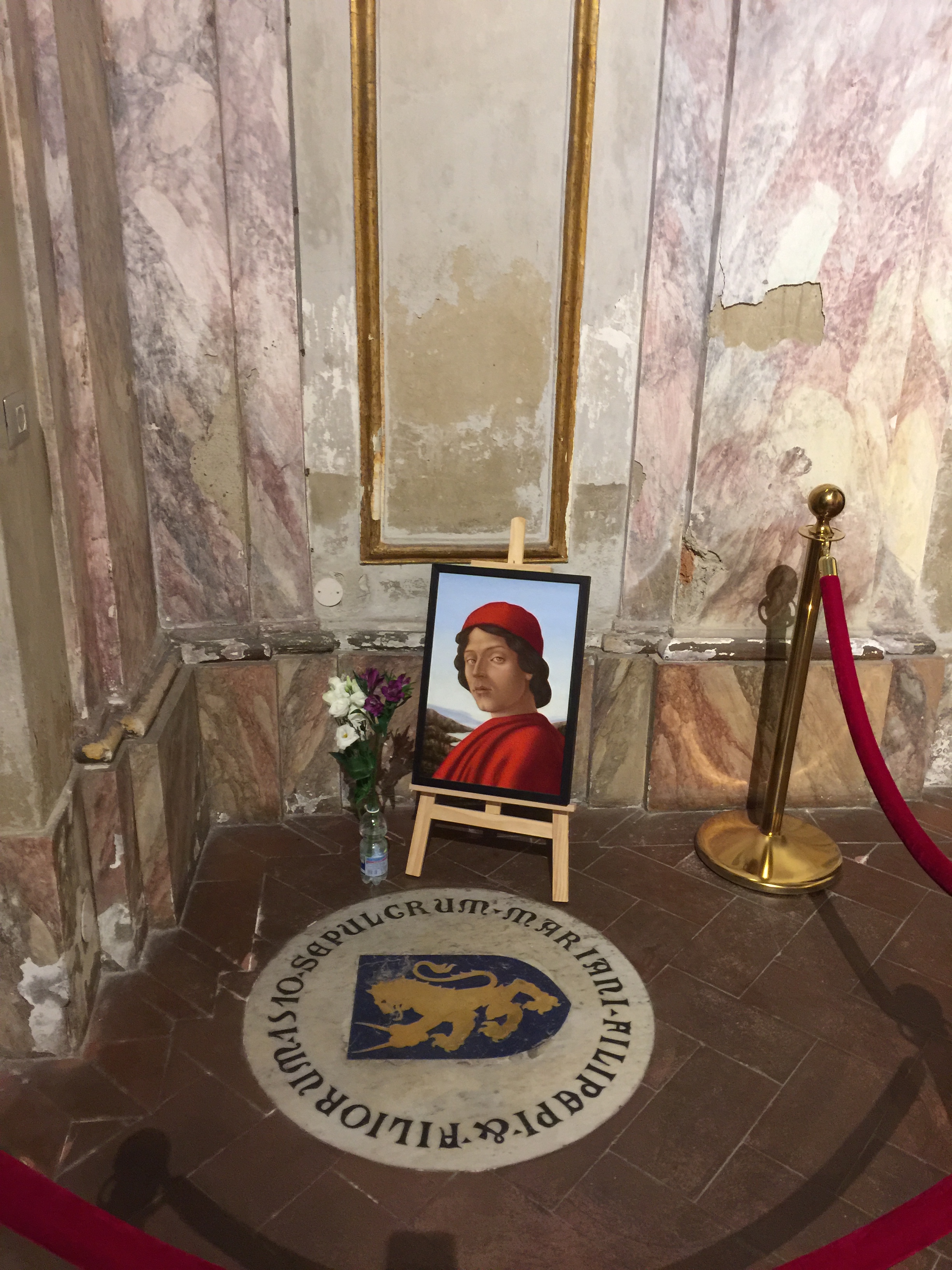
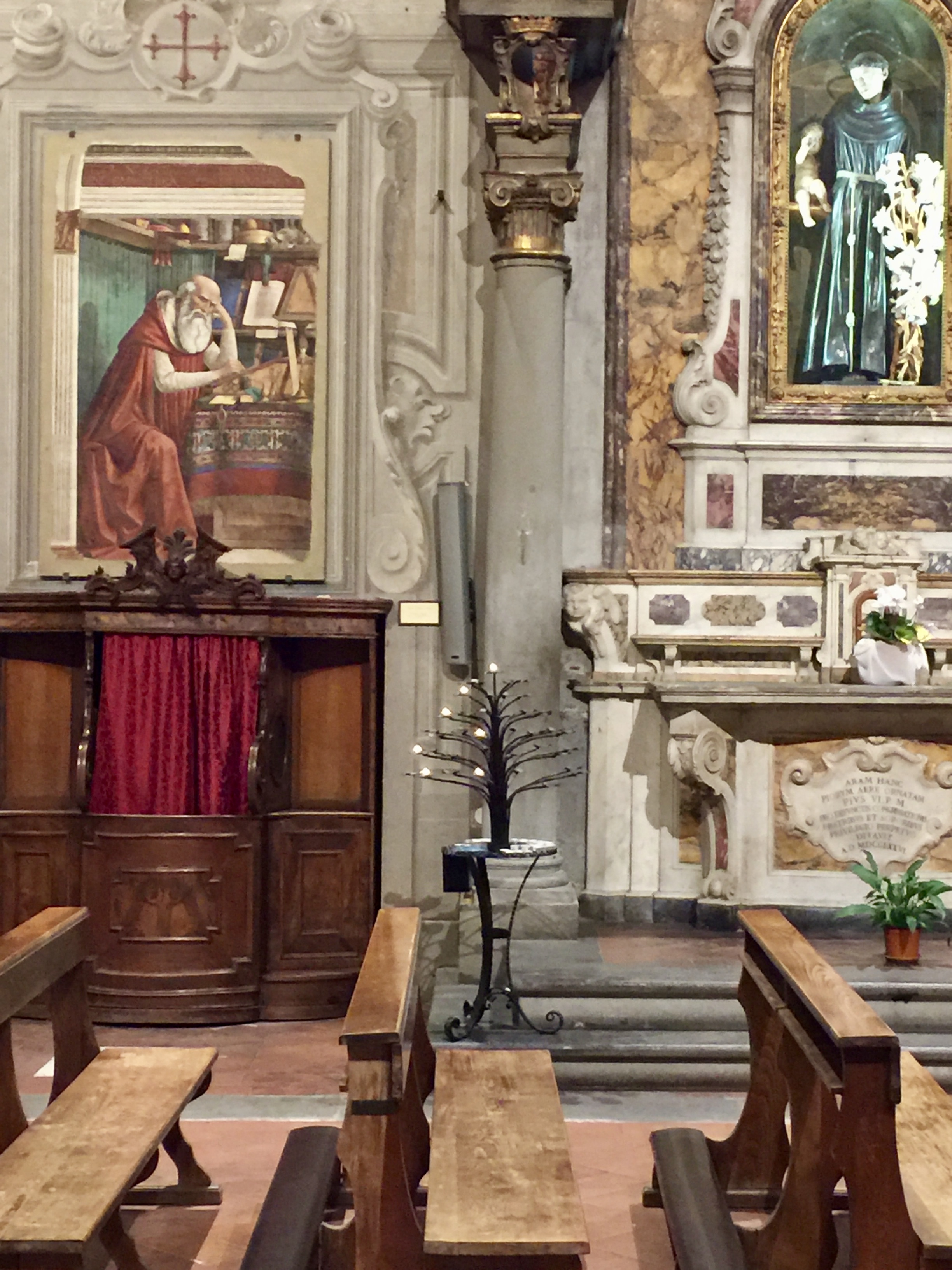
Last night I discovered that Sandro Botticelli is buried within the church, near his beloved Simonetta Vespucci.

IMG_3047IMG_3049IMG_3051

Botticelli who is buried in the church near his beloved, Simonetta Vespucci.

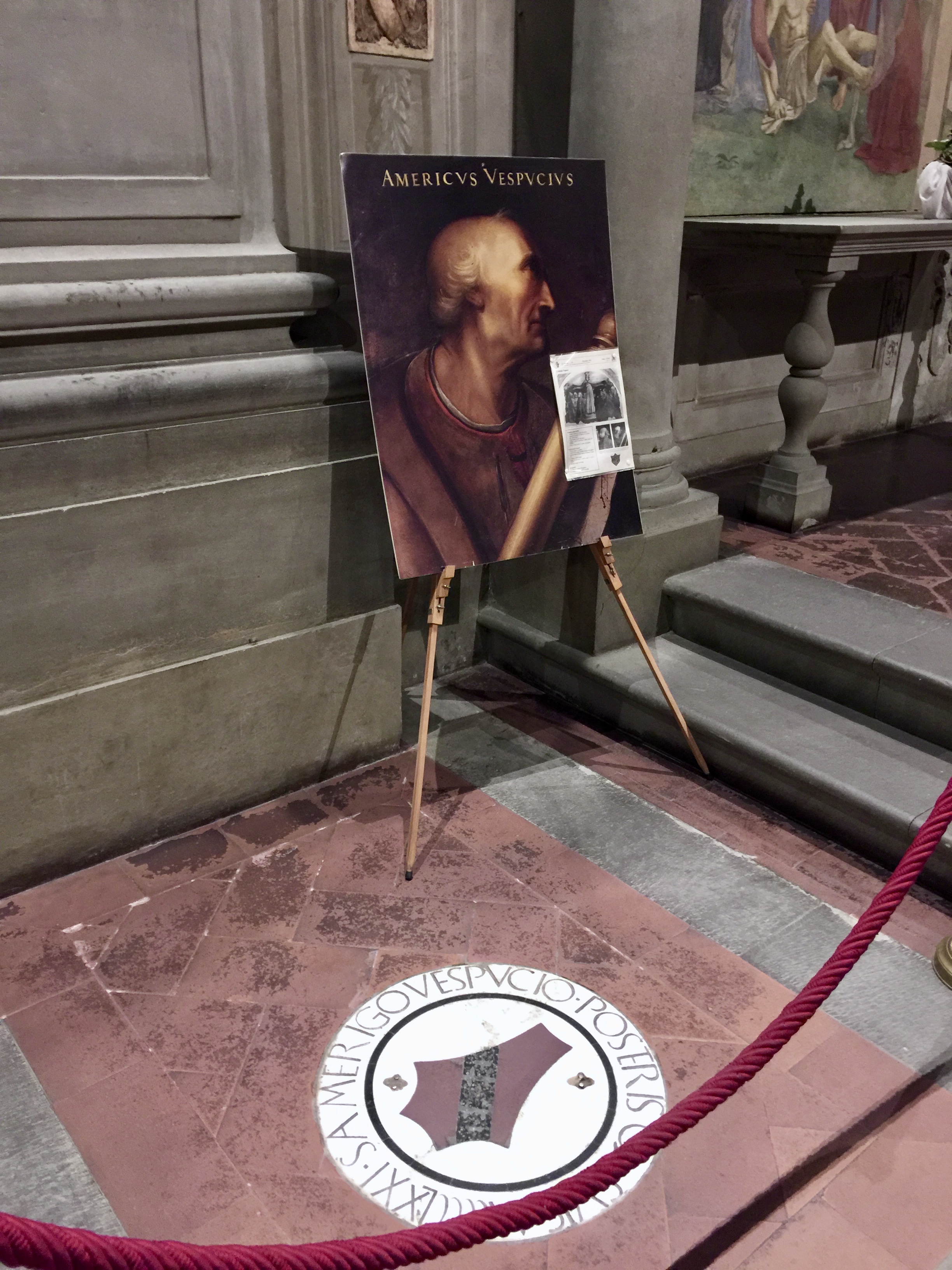
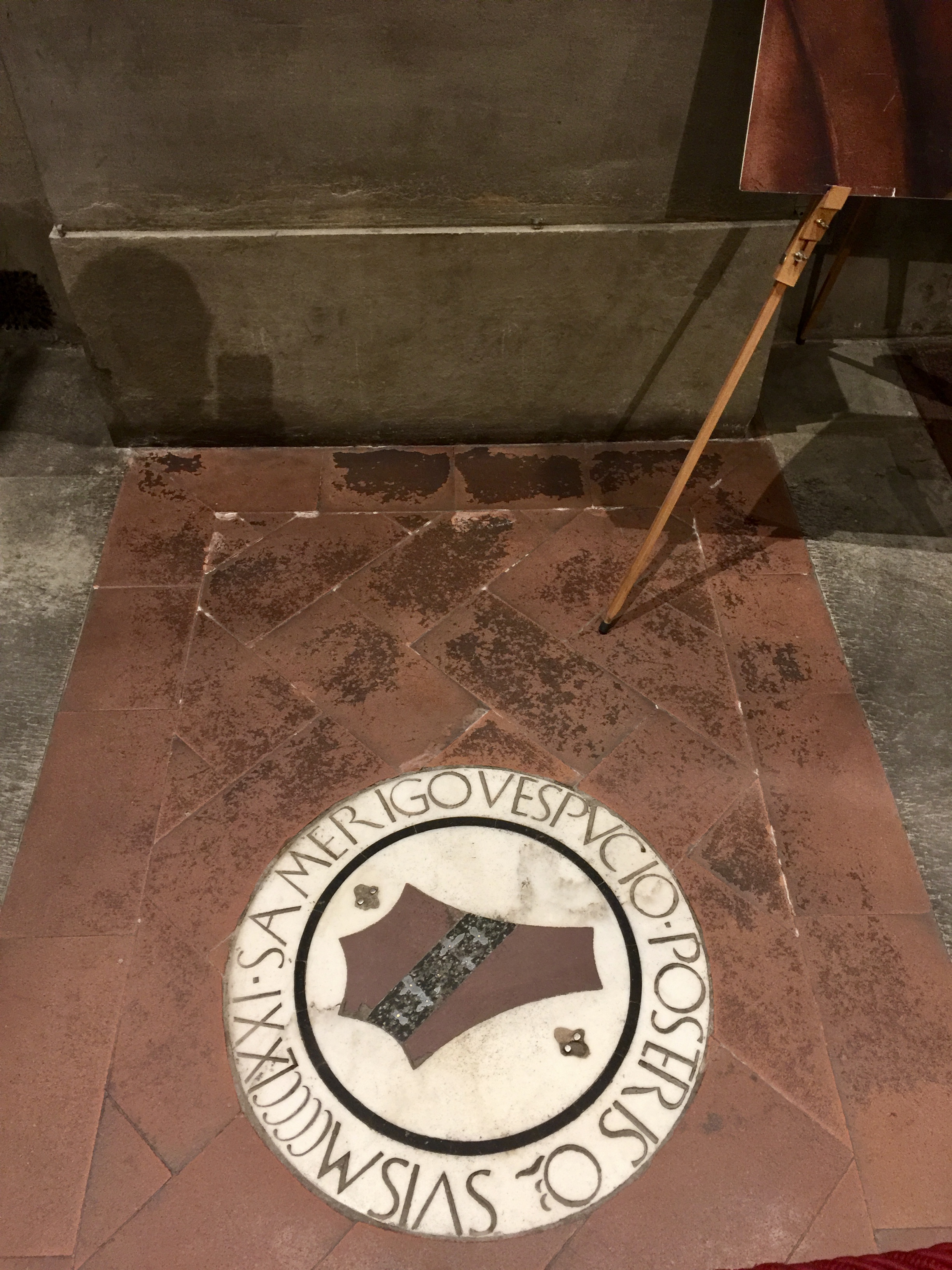
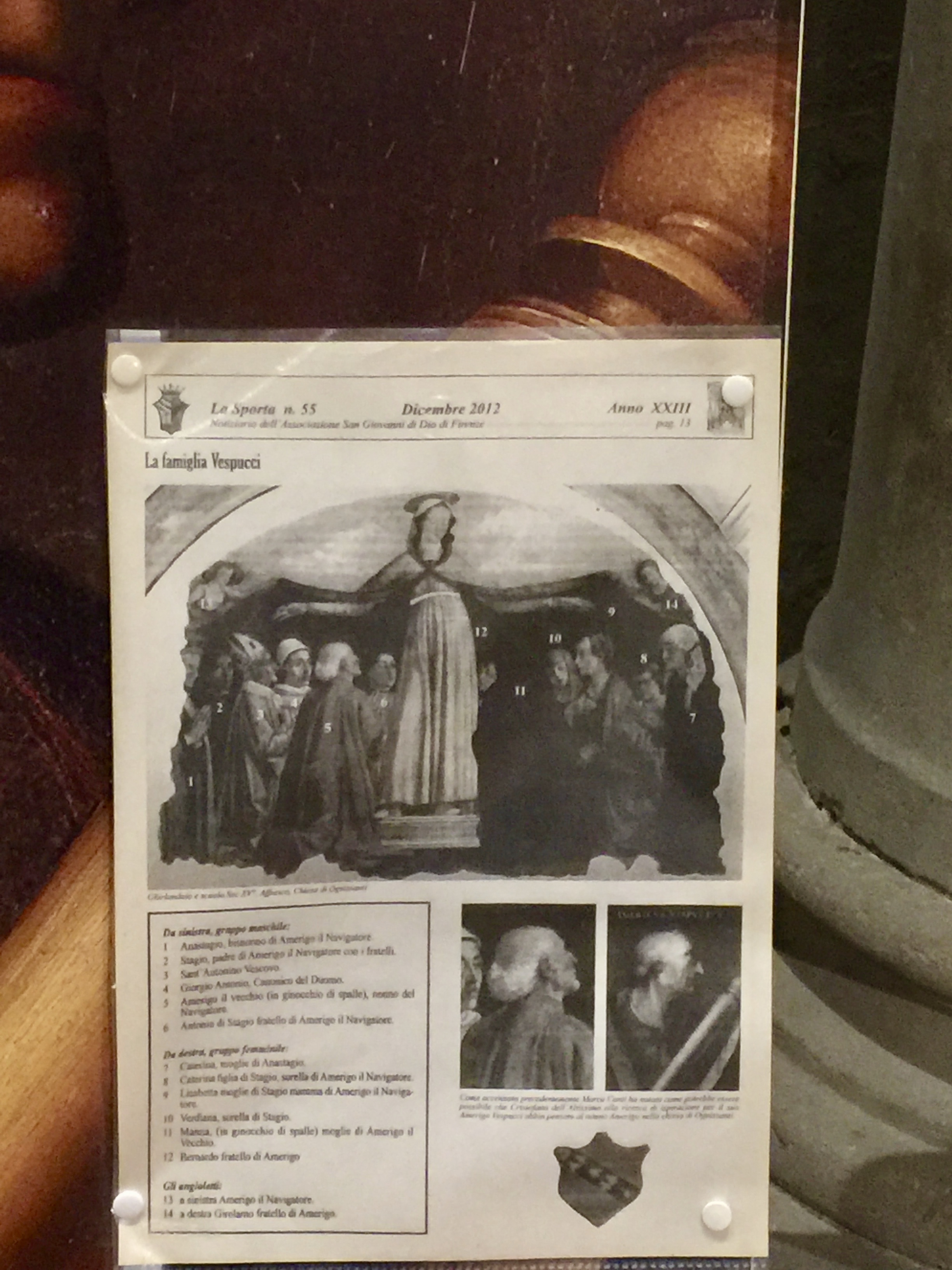
Amerigo Vespucci is also interred here:

fullsizeoutput_695fullsizeoutput_694fullsizeoutput_696

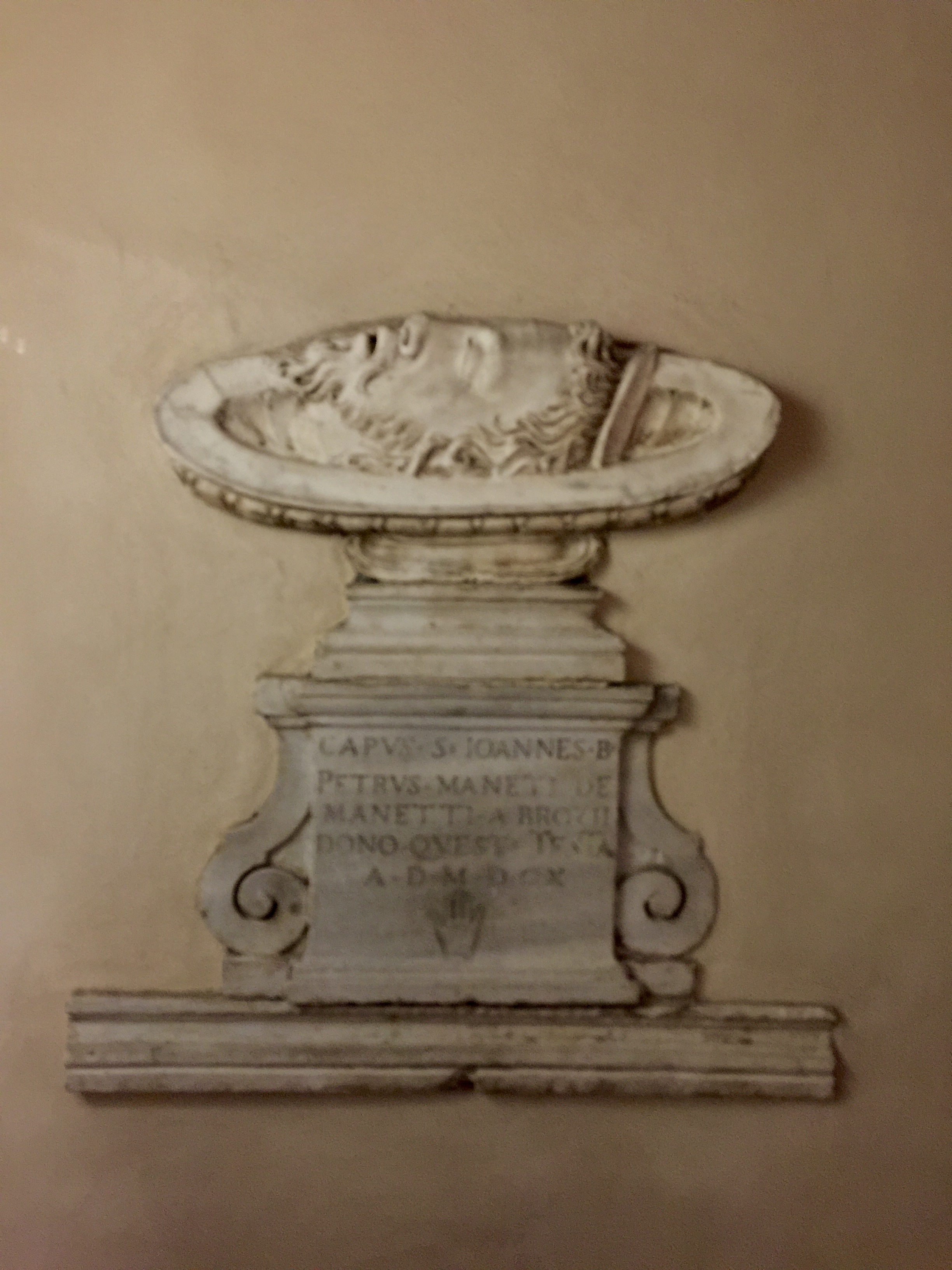
Here’s an unusual funerary monument found within the church.  I am not certain whose head this portrays…

fullsizeoutput_68cfullsizeoutput_690fullsizeoutput_693

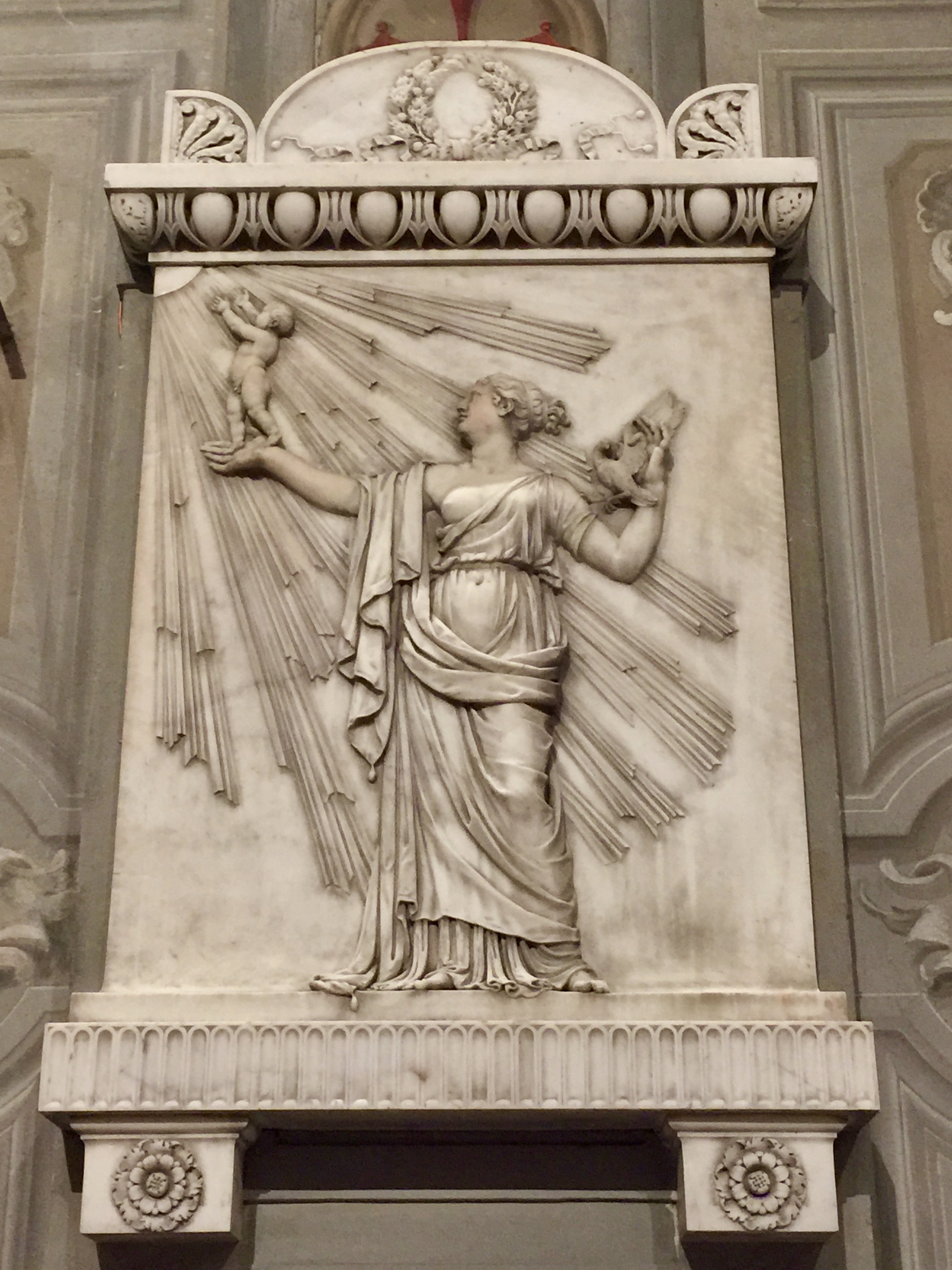
And I end this long post with a photo of a significant Neoclassical funerary monument, found within the center of this important church.

fullsizeoutput_675

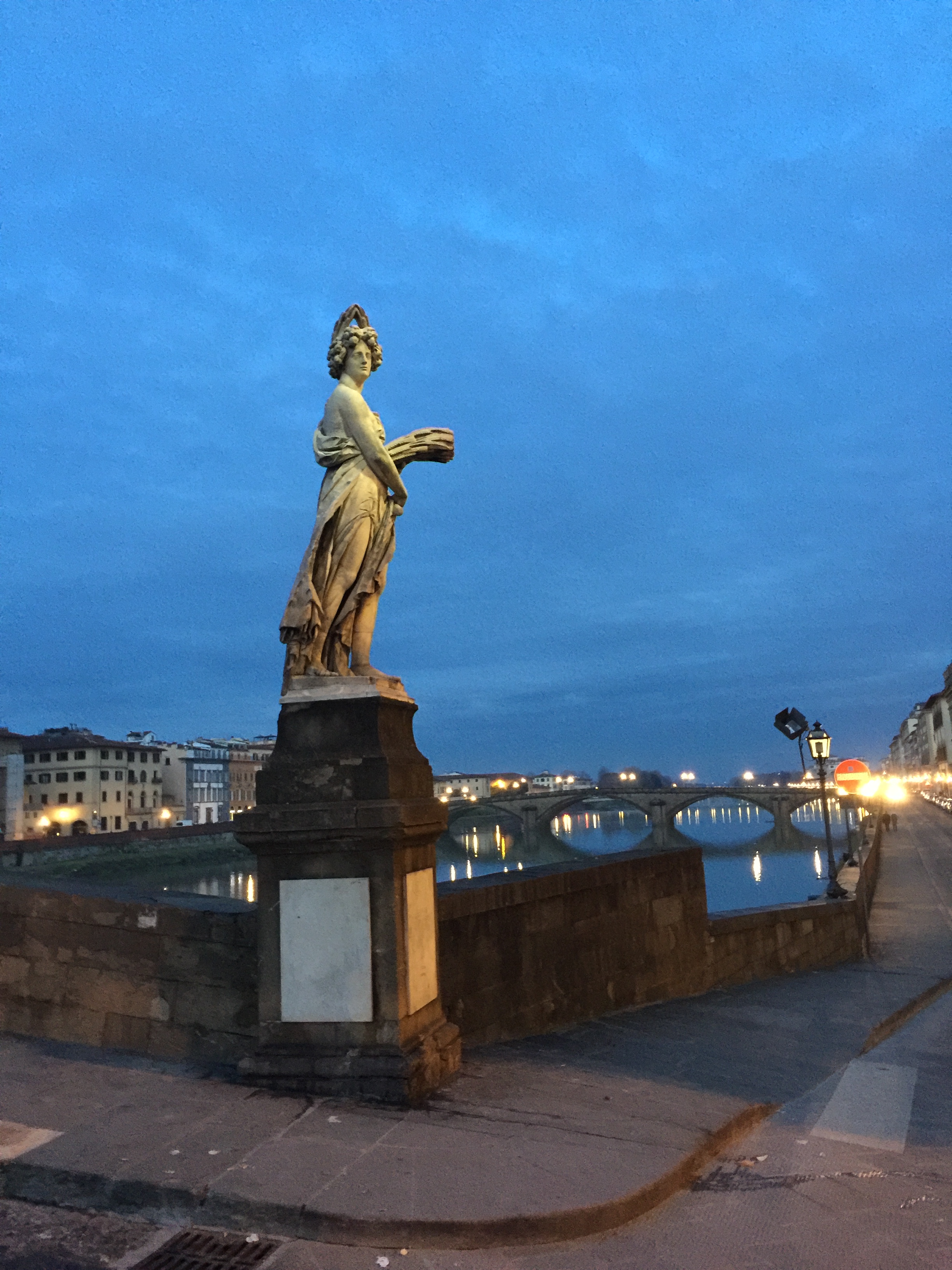
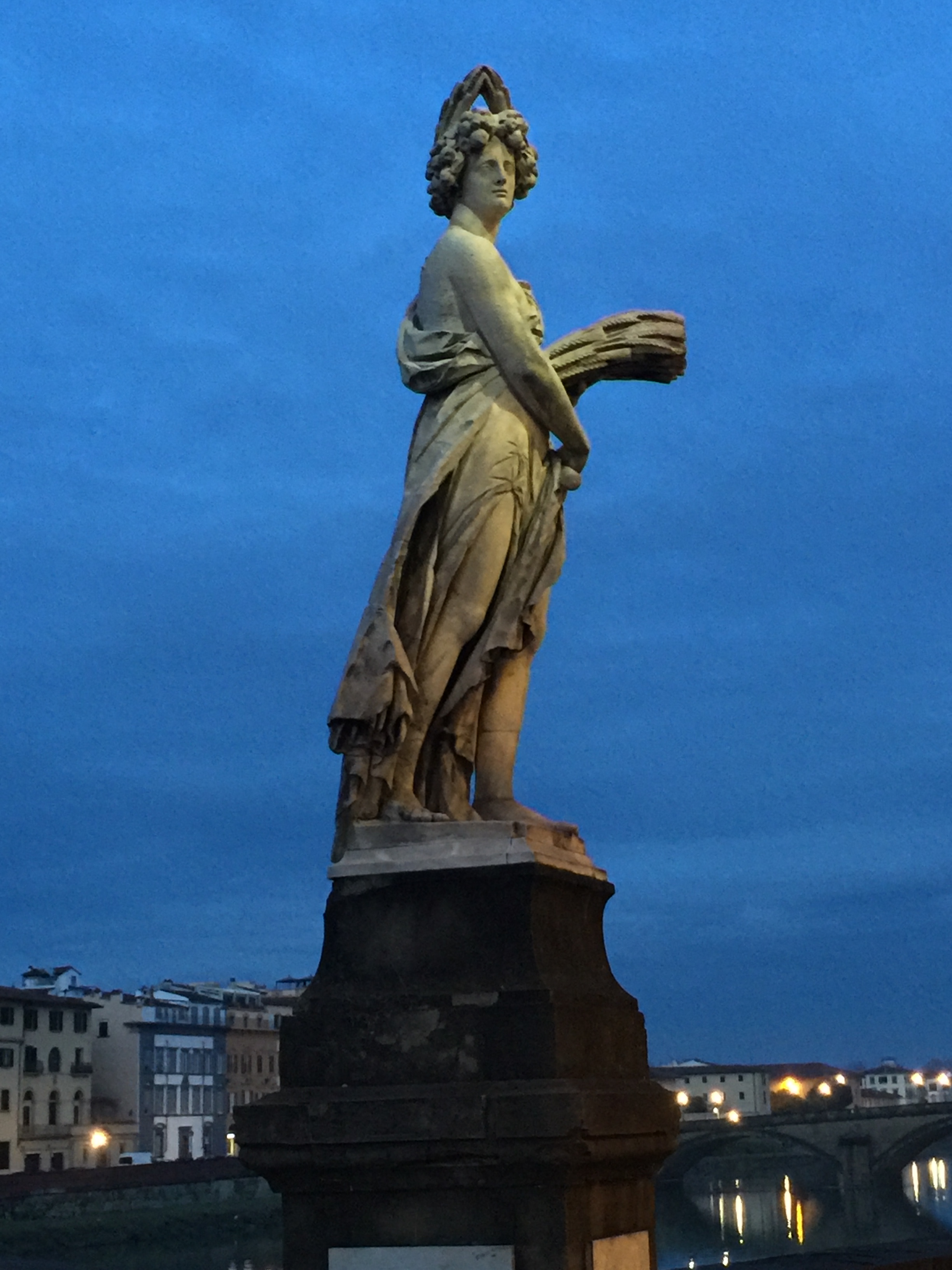
The 4 Seasons sculptures on Ponte Santa Trinita, Firenze, will get a cleaning

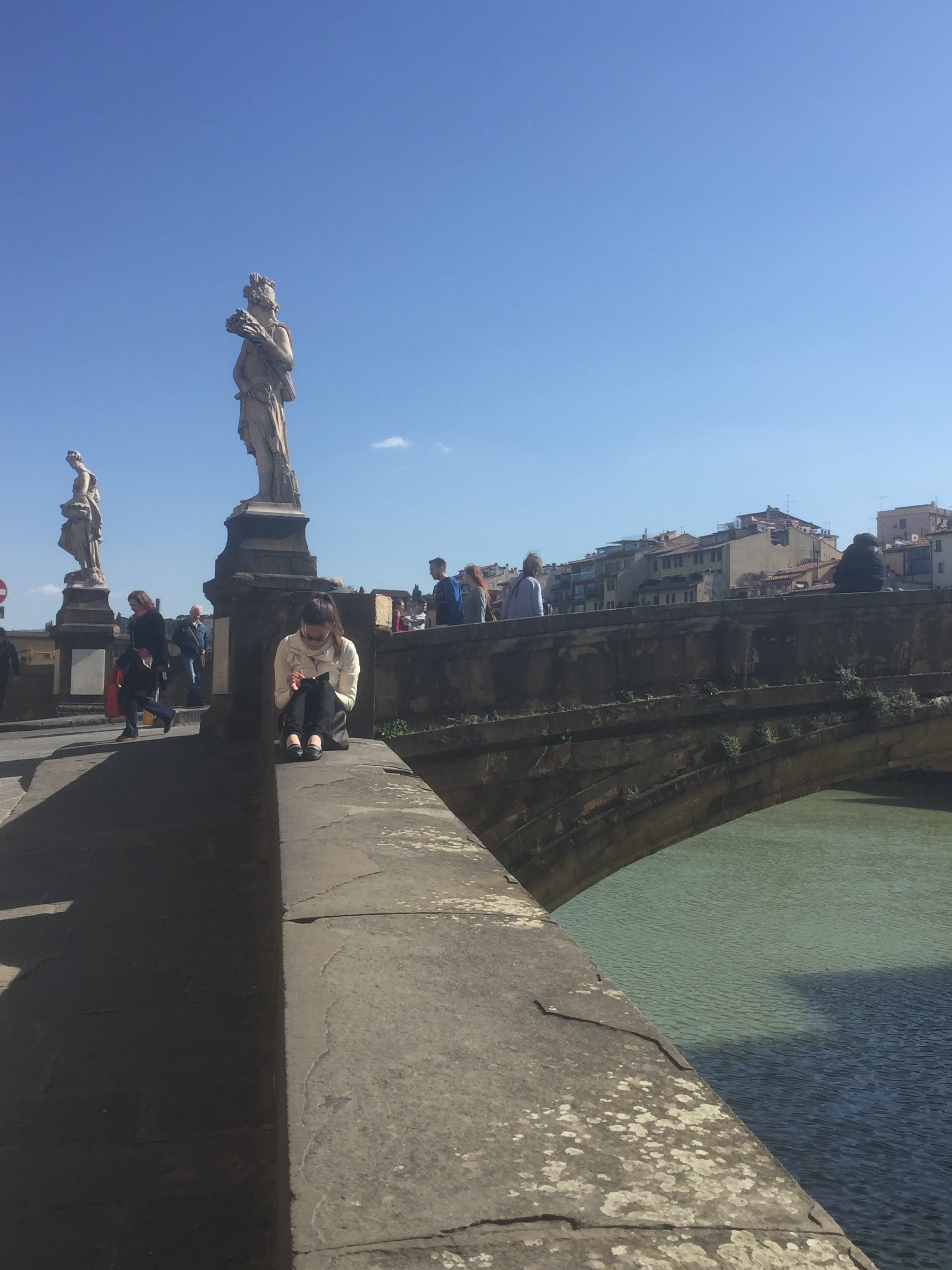
The iconic statues of the 4 seasons on the Ponte Santa Trinita are going to get cleaned up soon.  Florence has announced (http://www.theflorentine.net/news/2018/07/ponte-santa-trinita-statues-cleaning/) that the sculptures need some TLC.

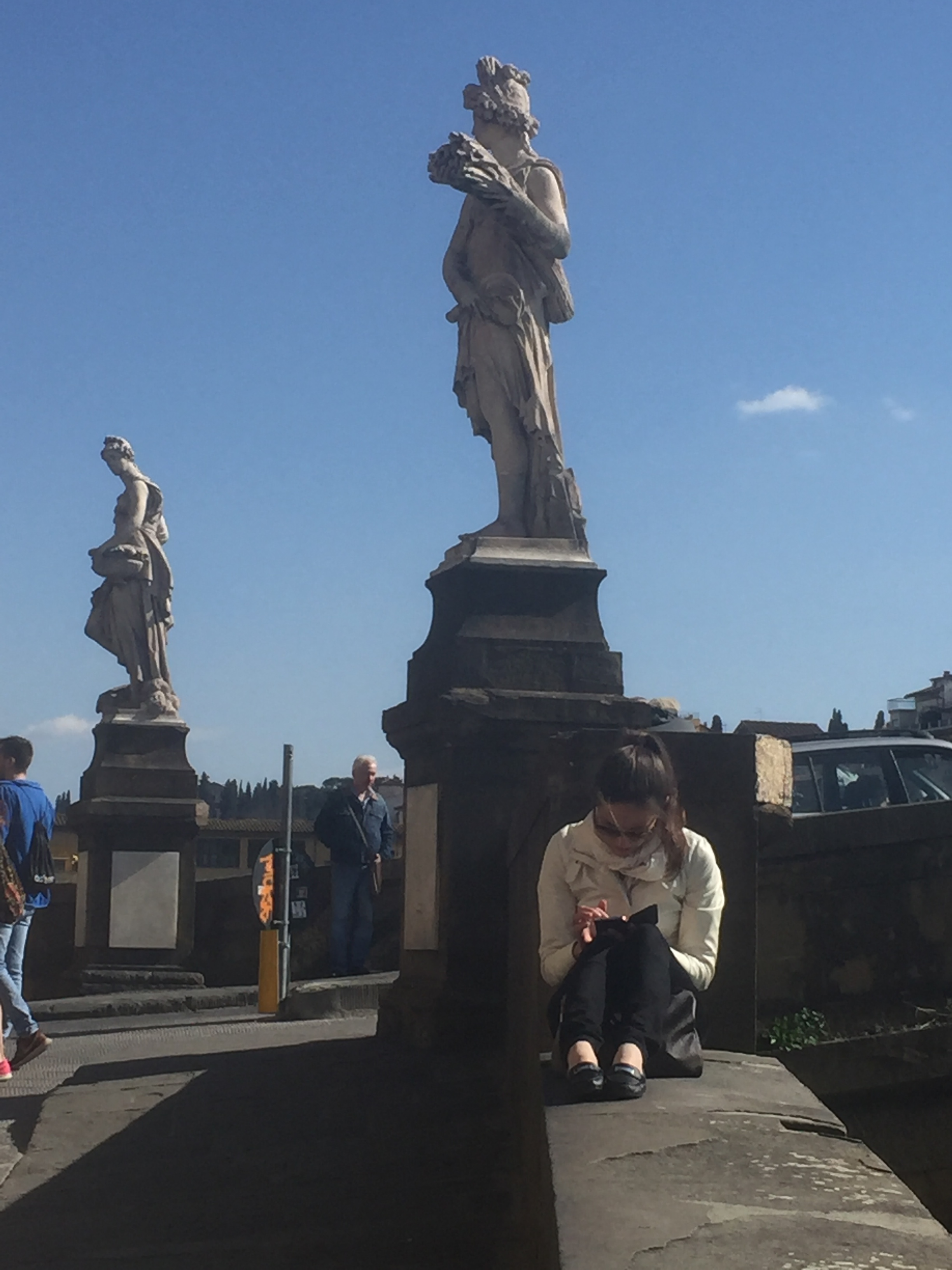
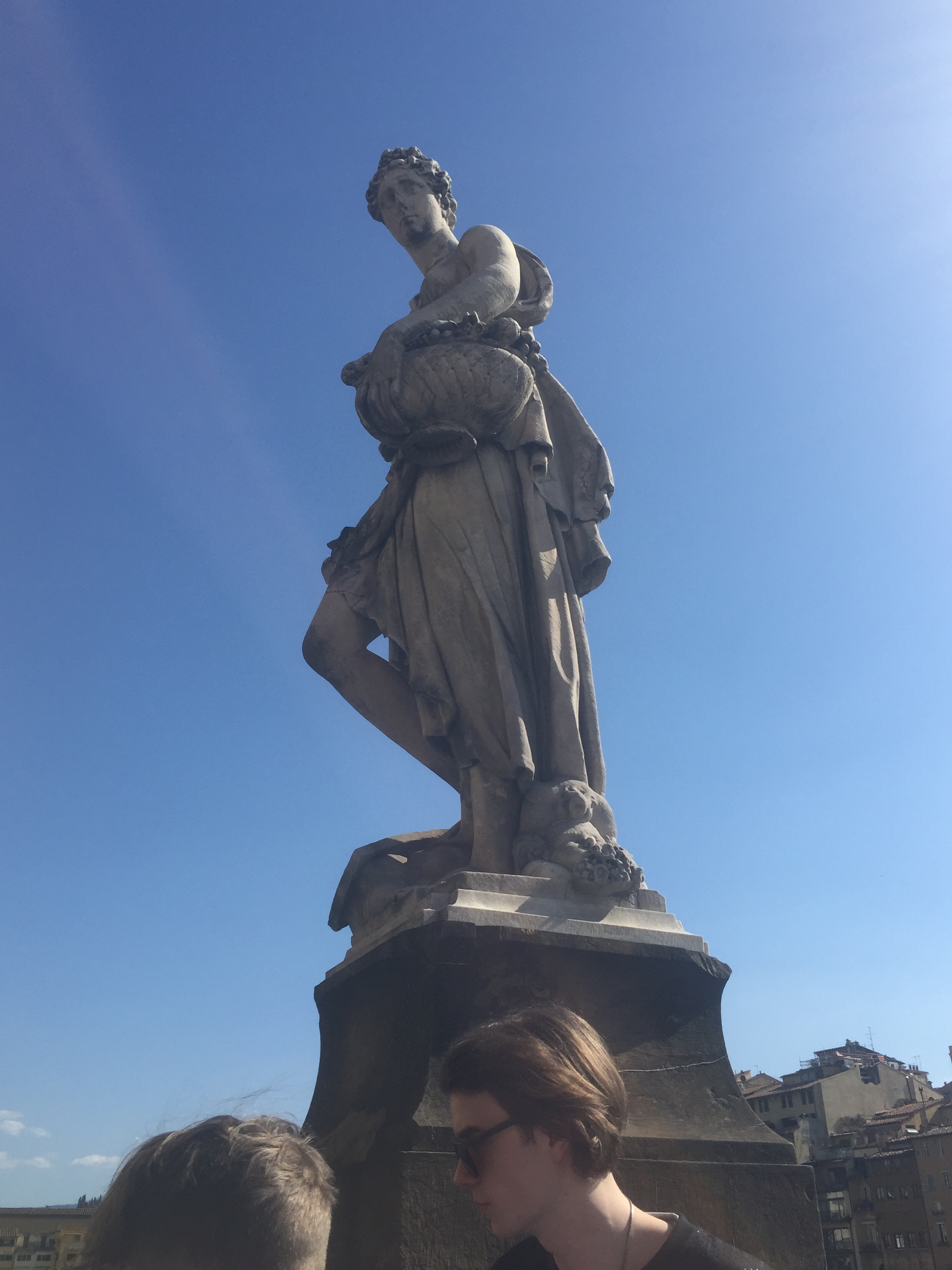
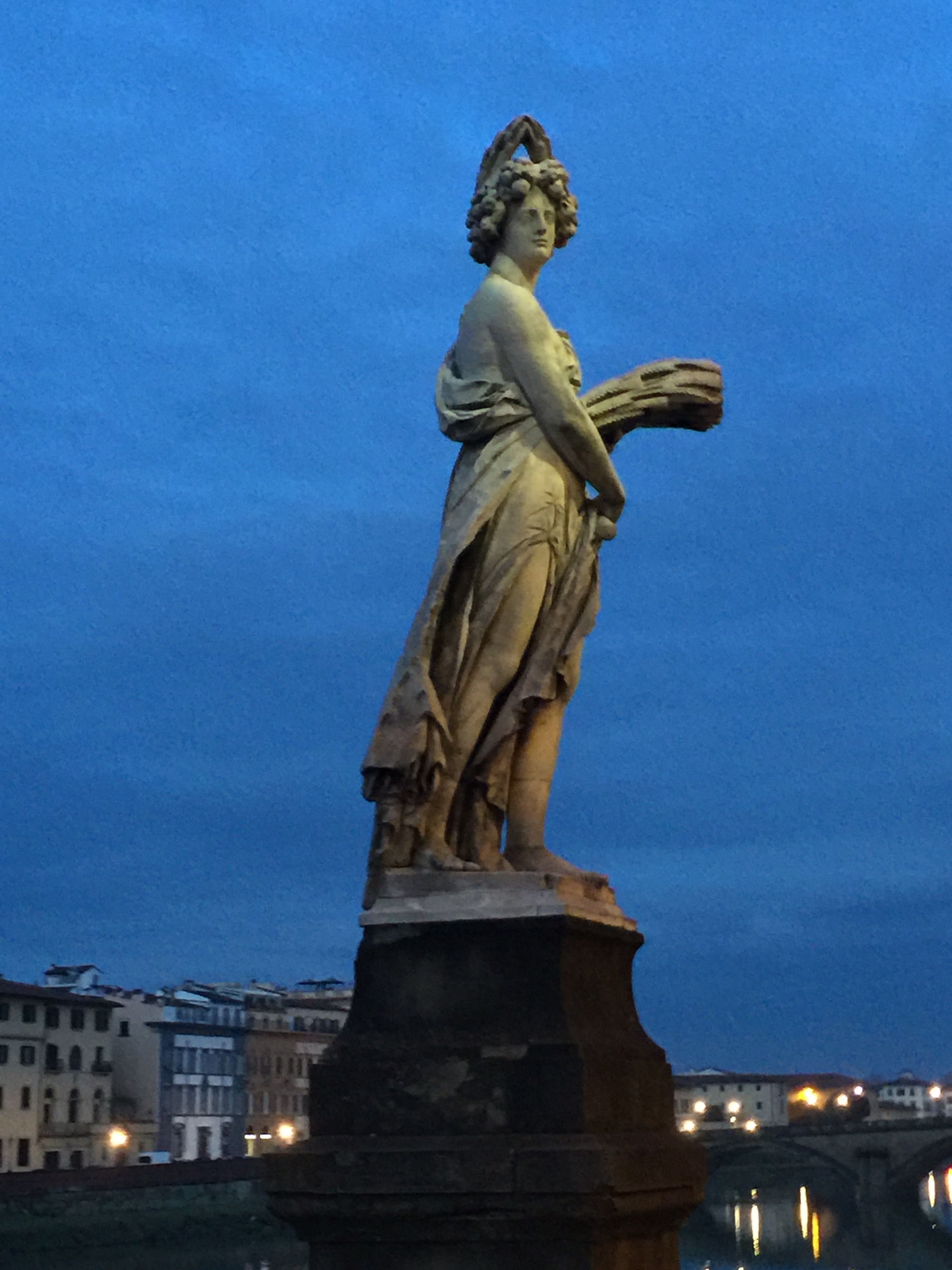
IMG_1251IMG_1252IMG_1254

Interestingly, these 4 statues (only 2 of the 4 are in my pictures above) were sculpted to celebrate the marriage between Cosimo II de’ Medici and Maria Maddalena of Austria in 1608.

Even more interestingly, they were originally intended to be placed in niches or against a wall in the giardino of Villa Corsini al Prato in Florence.  They were not designed to be seen in the round, but in the round they have always been on the bridge.

The following artists were commissioned to create: Primavera by Pietro Francavilla; L’estate e L’autunno by Giovanni Caccini; and L’inverno by Taddeo Landini.

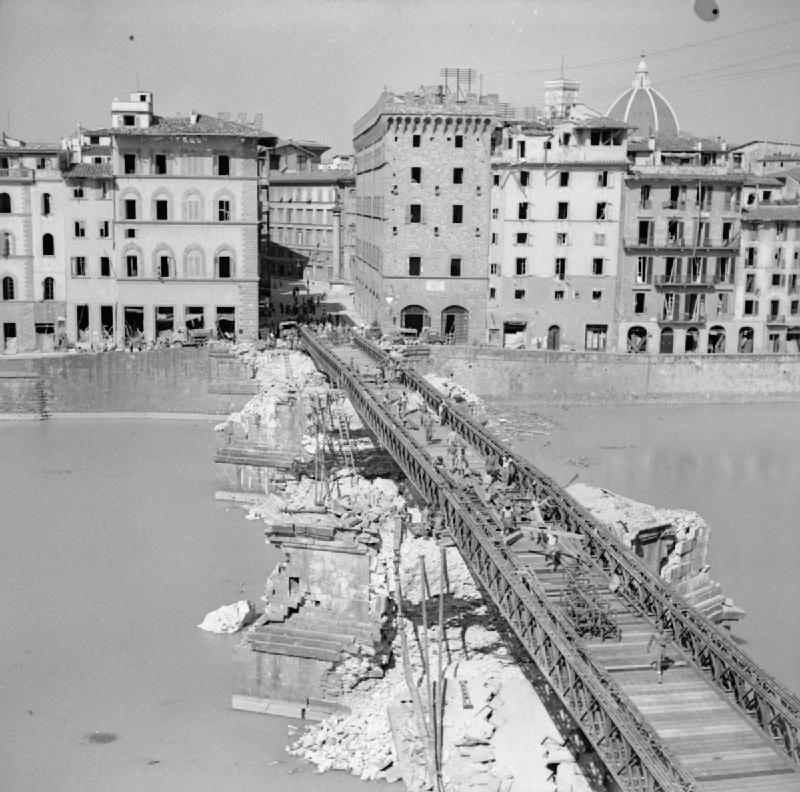
On the night between 3 and 4 of August 1944, the bridge was destroyed by retreating German troops on the advance of the British 8th Army. A Bailey bridge was built for temporary use by the Royal engineers.

The_British_Army_in_Italy_1944_NA17848


The Renaissance replica bridge was constructed in 1958 with original stones raised from the Arno or taken from the same quarry, under the direction of architect Riccardo Gizdulich and engineer Emilio Brizzi.

Miraculously, the statues were more or less intact and returned to the replacement bridge upon its completion.  Only the head of Primavera was missing. The missing head  was recovered from the bed of the Arno in October 1961 and added to the sculpture we see today.

IMG_1251


The cleaning, which will involve the Istituto Lorenzo de’ Medici, will include ridding the statues of the layers of soot that has settled on them over the years and treating the works with a waterproof layer to protect them from further damage by atmospheric agents.


IMG_0286IMG_0285IMG_0287