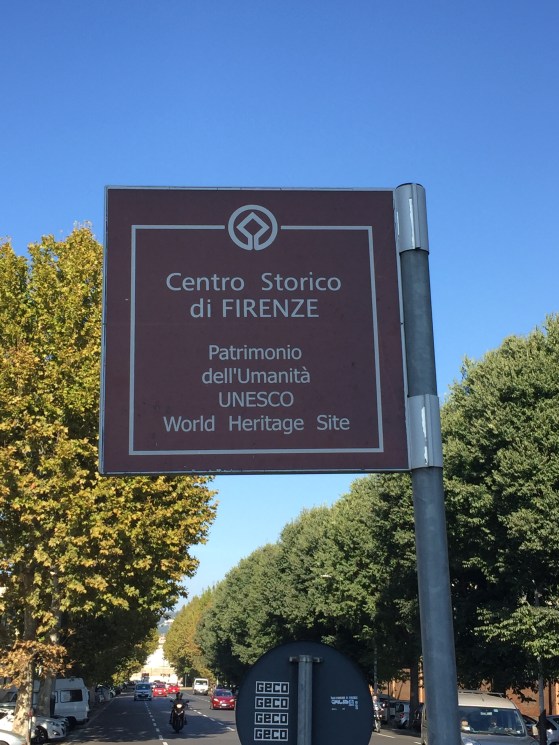
Go get truffled! San Miniato, Tuscany

Want to see a darling hill town in Tuscany?  Then head for the hills! Get yourself to San Miniato, a very lively and attractive hill town near Pisa, famous for the white truffles found in the surrounding area.

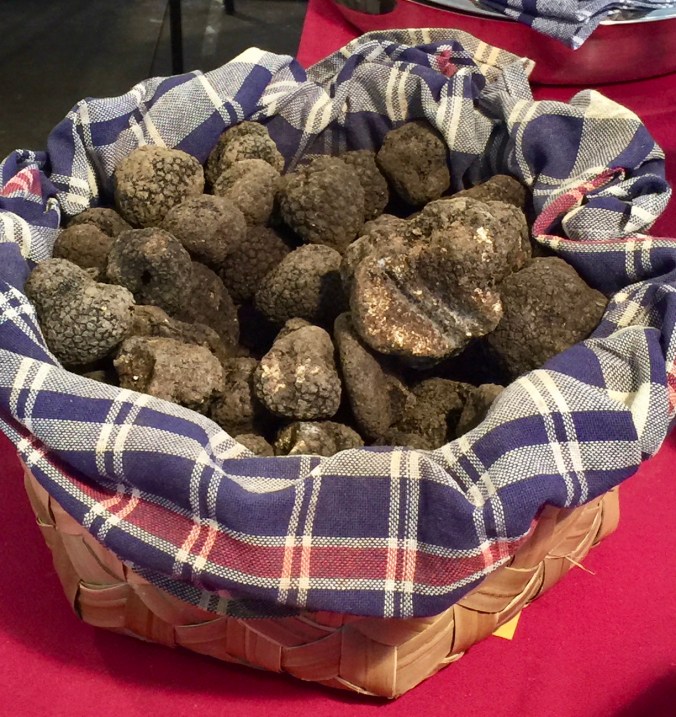
Want to see truffles? The famous tartufo aren’t very pretty, but oh my goodness, do they taste good in Italian cuisine! Here’s a basket full of them:

fullsizeoutput_61bfullsizeoutput_626fullsizeoutput_625

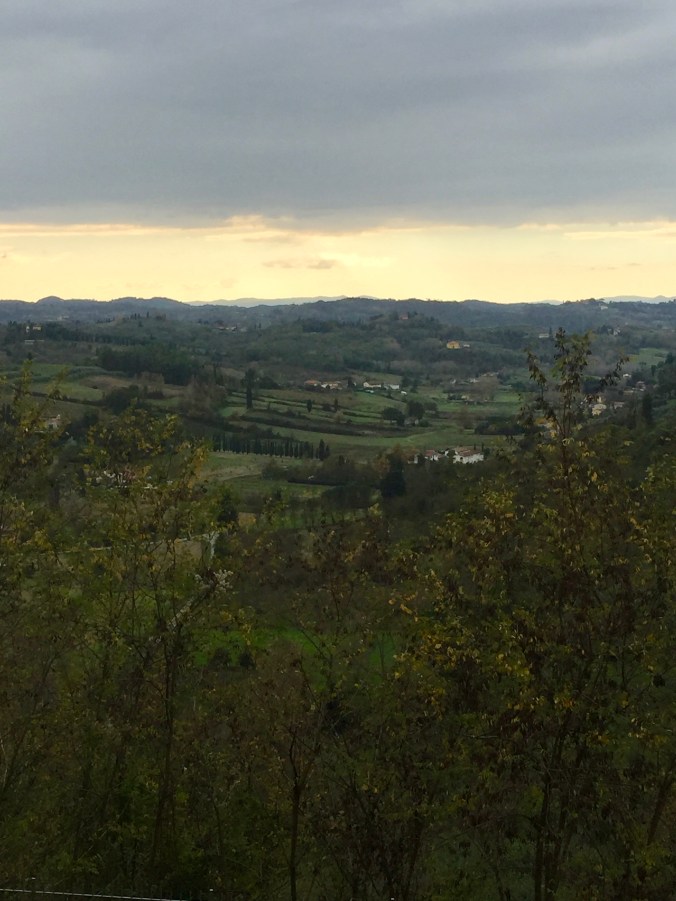
I visited San Miniato yesterday, 17 November, during the annual truffle sagra held by the town.  Fall has definitely arrived in Tuscany and it was cold and overcast.  It almost makes me wistful about the heat of last July.  Almost. The next 2 pictures capture the weather as well as the beautiful vistas as seen from San Miniato of the beautiful Valdarno.
fullsizeoutput_62bfullsizeoutput_62a

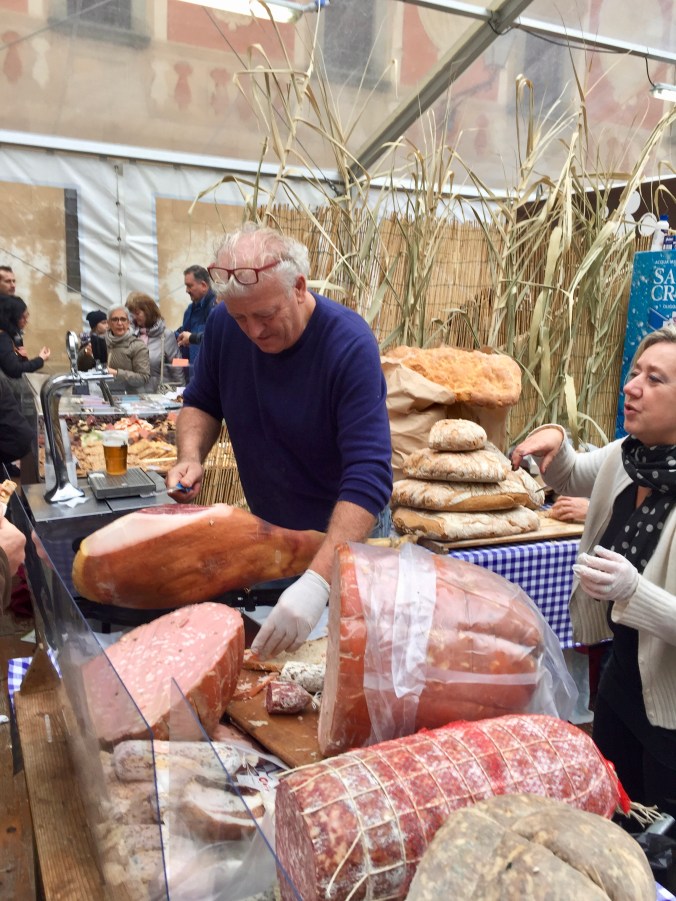
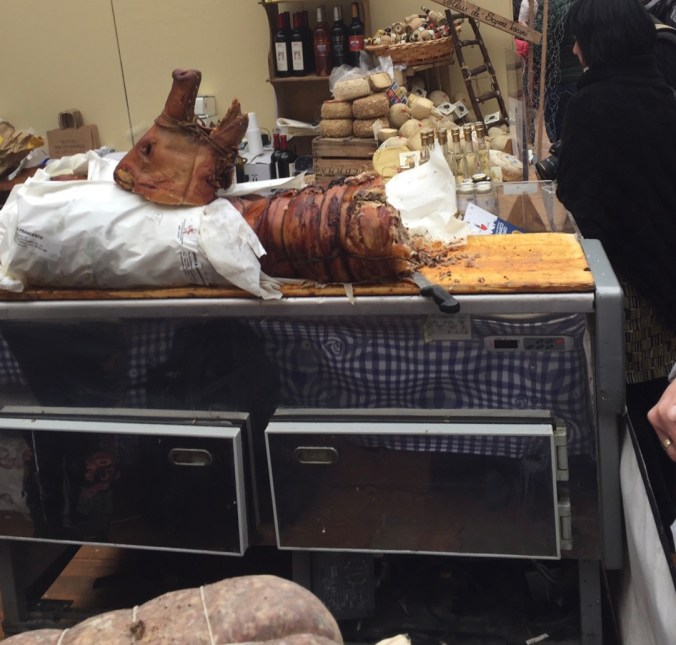
The truffle festival also features artiginale production of prosciutto, and there were lots of pork products on show, to taste, to purchase, and you could even buy specialized equipment for the home to slice the hams.  All shown below:
fullsizeoutput_622fullsizeoutput_61f


But the truffles are the raison d’être:  The festival San Miniato hosts every November is devoted to the gastronomically precious white truffle found locally. The white truffle is more highly valued than the black truffles found in Umbria and the Marche, and commands very high prices, reflected in the cost of restaurant dishes that incorporate truffles. In 1954 a record-breaking truffle found close to the nearby village of Balconevisi weighed in at 2,520 grams (5.56 lb) and was sent to the United States of America as a gift for President Dwight D. Eisenhower.

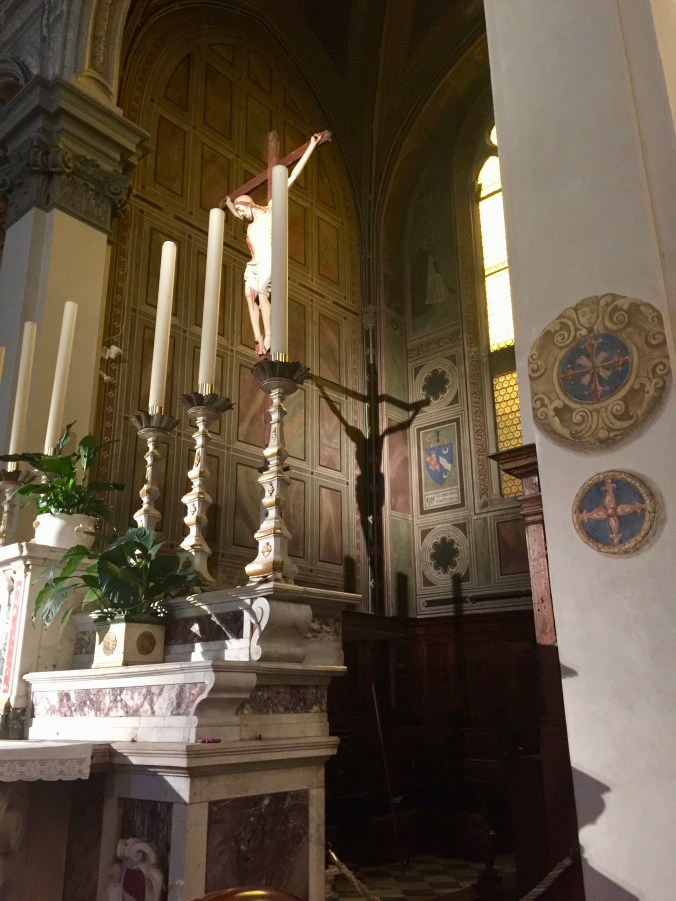
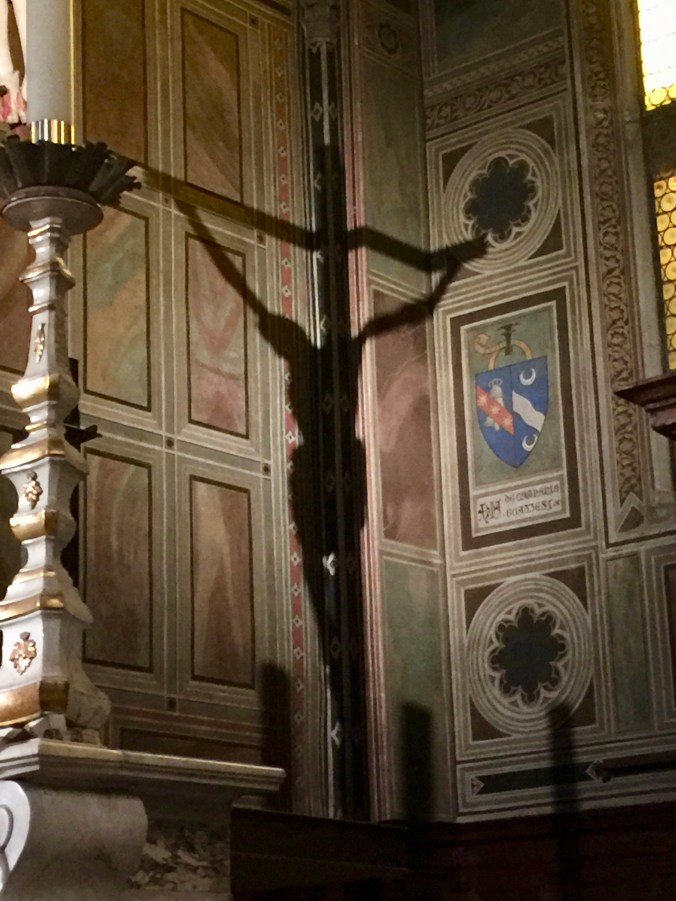
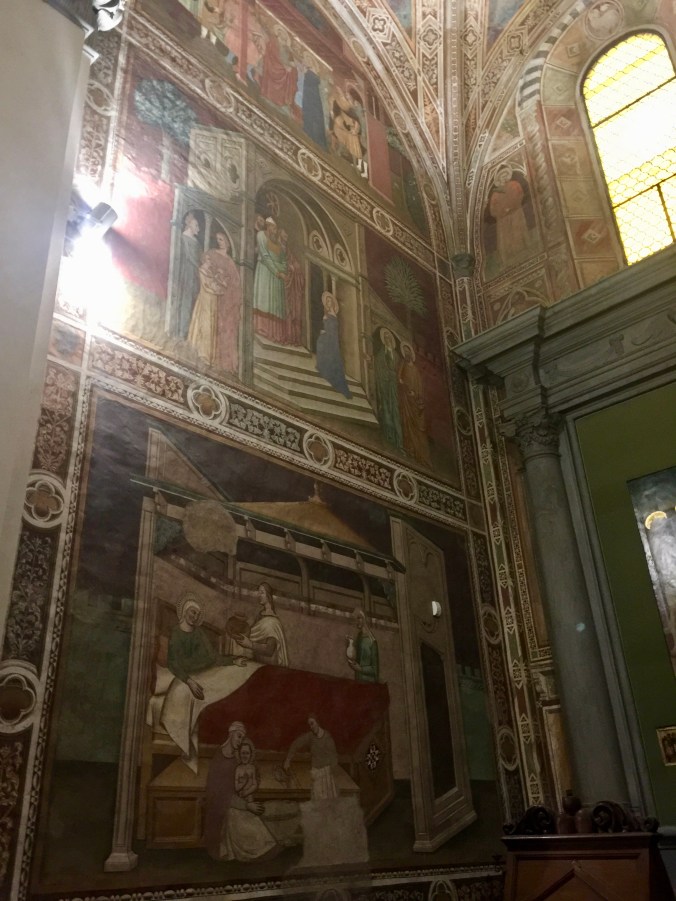
But even if you aren’t a fan of truffles or hams, there is still much to enjoy about this little gem of a town. For example, there is a lovely church with important Quattrocento frescoes:
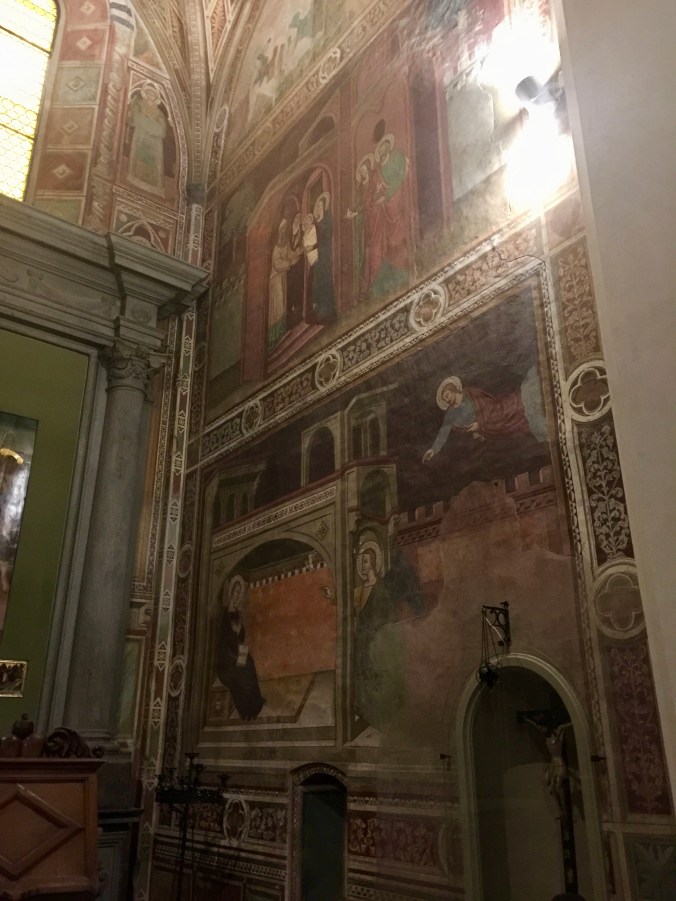
fullsizeoutput_635fullsizeoutput_634fullsizeoutput_633fullsizeoutput_632


The ceiling and upper sections of the basilica walls are painted with trompe’oeil marble architecture:

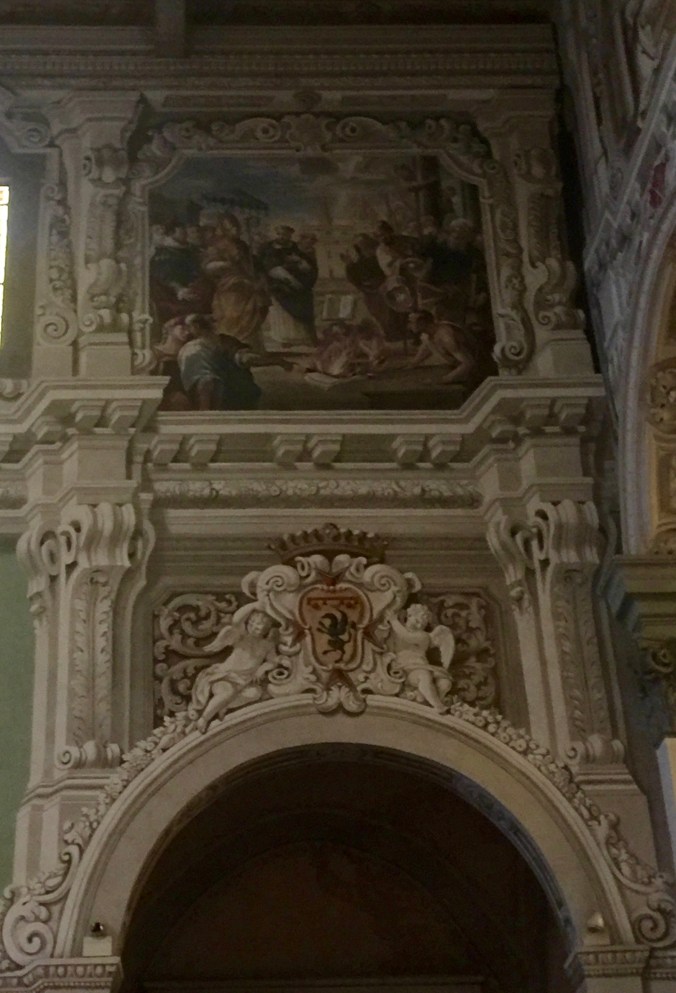
fullsizeoutput_630

fullsizeoutput_62f


And the town’s Duomo has a simple Tuscan facade which doesn’t prepare you for the opulent interior filled with porphyry marble columns and a gorgeous, gold leafed ceiling:

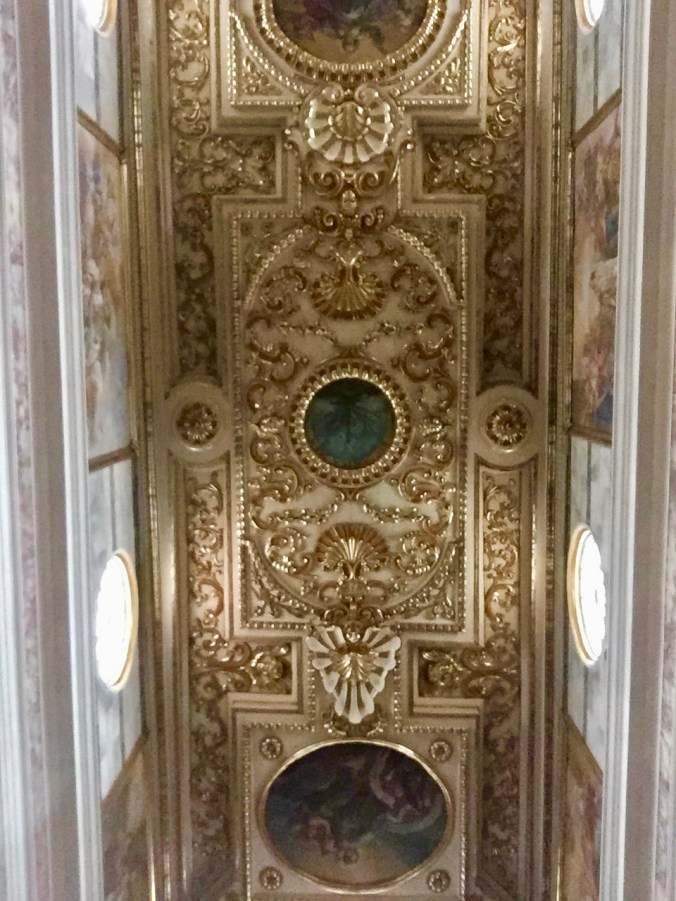
fullsizeoutput_61dfullsizeoutput_61c
The Duomo is dedicated to both Sant’ Assunta and Santo Genesio of Rome. It was originally a Romanesque building, but it has been remodelled several times and exhibits Gothic and some Renaissance arcchitectural elements. The façade incorporates a number of colorful majolica bowls. The interior has Latin cross plan with a central nave with two side aisles. The cathedral’s campanile, a fortification annexed in is called the Matilde Tower and features an asymmetrical clock. Very charming.

In medieval times, San Miniato was on the via Francigena, or the main connecting route between northern Europe and Rome. It also sits at the intersection of the Florence-Pisa and the Lucca-Siena roads. Over the centuries San Miniato was therefore exposed to a constant flow of friendly and hostile armies, traders in all manner of goods and services, and other travelers and pilgrims from near and far.

Archaeological evidence indicates that the site of the city and surrounding area has been settled since at least the paleolithic era. It would have been well known to the Etruscans, and certainly to the Romans, for whom it was a military post called “Quarto.”

The first mention in historical documents is of a small village organized around a chapel dedicated to San Miniato built by the Lombards in 783. By the end of the 10th century, San Miniato boasted a sizeable population enclosed behind a moat and protected by a castle built by Otto I.

In 1116, the new imperial vicar for Tuscany, Rabodo, established himself at San Miniato, supplanting Florence as the center of government. The site came to be known as al Tedesco, since the imperial vicars, mostly German, ruled Tuscany from there until the 13th century.

During the late 13th-century and the entire-14th century, San Miniato was drawn into the ongoing conflict between the Ghibelline and Guelph forces. Initially Ghibelline, it had become a Guelph city by 1291, allied with Florence and, in 1307, fought with other members of the Guelph league against the Ghibelline Arezzo.

By 1347 San Miniato was under Florentine control, where it remained, but for a brief period from 1367-1370 when, instigated by Pisa, it rebelled against Florence, and for another brief period between 1777 and 1779 during the Napoleonic conquest. It was still part of the Grand Duchy of Tuscany when the Duchy was absorbed into the newly formed Kingdom of Italy in 1860.

The first walls, with defensive towers, were thrown up in the 12th century during the time that Italy was dominated by Frederick Barbarossa. Under his grandson, Frederick II, the town was further fortified with expanded walls and other defensive works, including the Rocca and its tower.

The city is enclosed within a well-preserved medieval precinct. Main landmarks include:

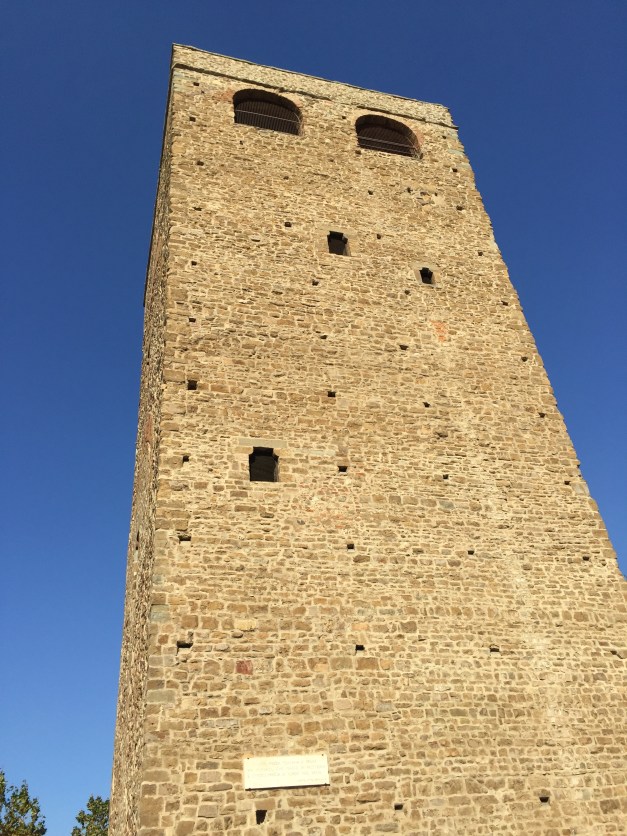
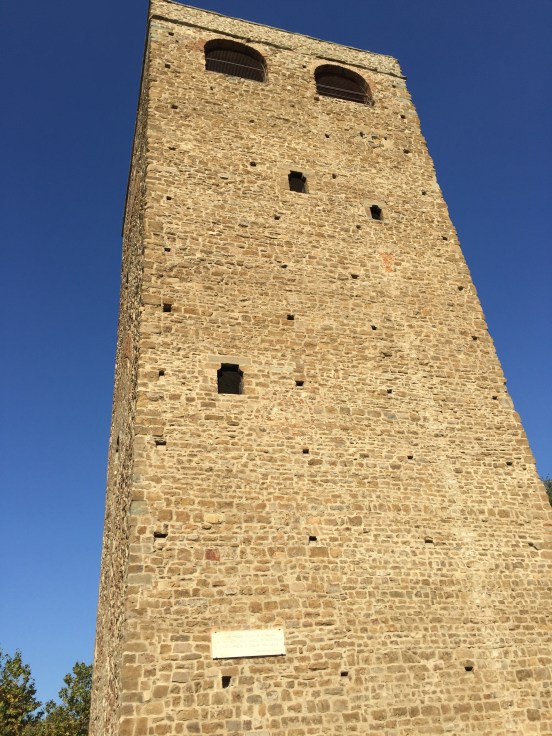
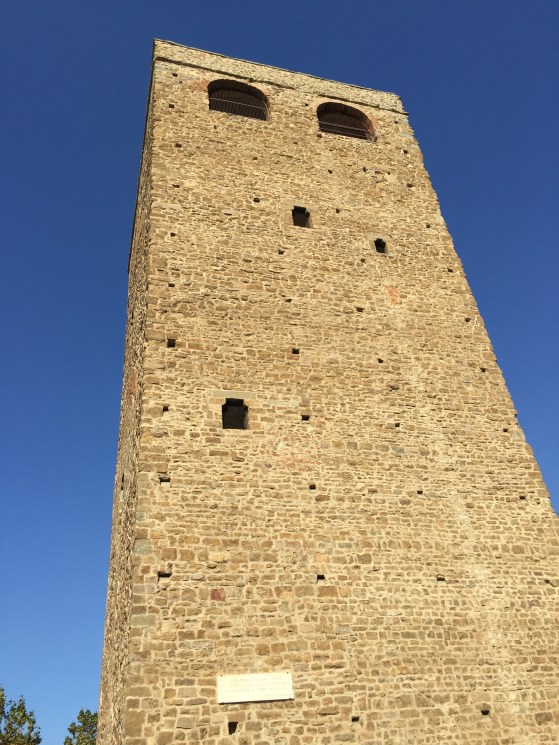
The Tower of Frederick, built by Frederick II in the 13th century on the summit of the hill at an elevation of 192 metres (630 ft), overlooking the entire Valdarno.
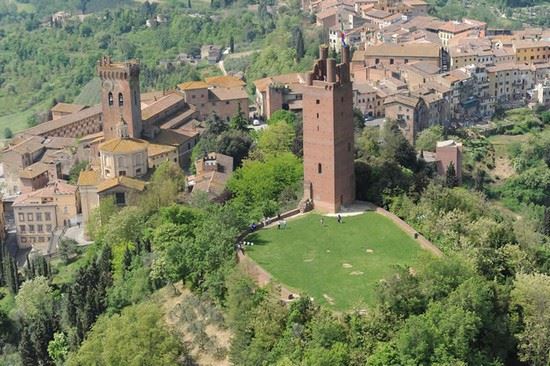
95478_la_torre_di_federico_secondo_san_miniato


I love the frescoes showing all the parts of the Italian peninsula in the corridors of the Vatican.  Interestingly enough, the tower and San Miniato is among them:
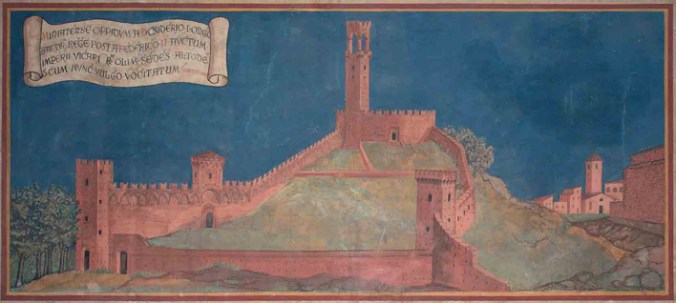
federico_II

During World War II the tower was destroyed by the German army to prevent the Allies from using it as a gun sighting tower, but was reconstructed in 1958 by architect Renato Baldi.
The remarkable Seminary, located in the central, unusually shaped Piazza della Repubblica, has a unique and spectacular set of frescos decorating the outside. as you can see in this photo and in my video taken yesterday:

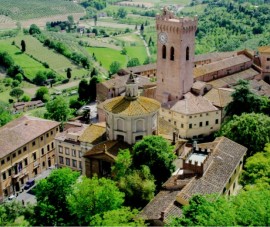
san-miniato


san_miniato_view_10-11_0


If you can’t get to San Miniato yourself, at least you can enjoy this great Youtube video of the town filmed with the help of a drone.
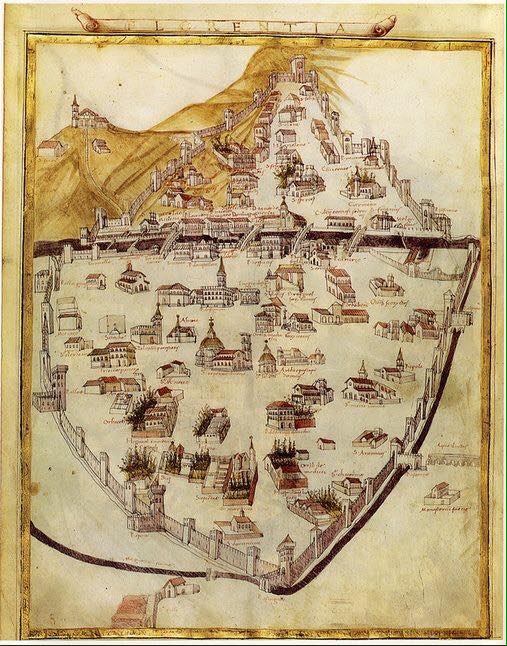


I finally go to the insane asylum

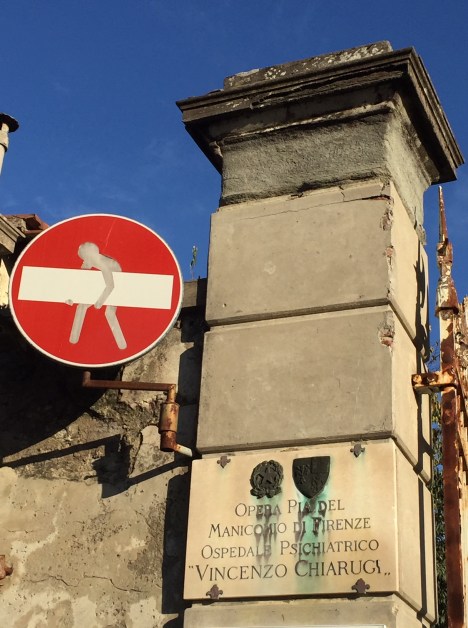
It finally happened.  I snapped, and needed to get to the asylum asap!

IMG_2860.JPG

Actually, I’m kidding.  But for a while yesterday I thought I might lose my marbles.  I was joining a very sophisticated Florentine educational institution for a guided tour of the old grounds of Florence’s historic psychiatric hospital and it seemed as if fate was against my plan.  (Maybe she thought they would keep me if I got there?). It took 2 buses and a taxi to get me to a place I could have walked to easier and faster. I made it just in time to join the tour.  Live and learn; next time I’ll walk.

So, the place: as you can see in the plaque above, I was about to enter the Manicomio di Firenze, ospedale psichiatrico. Founded by Vincenzo Chiarugi, the psychiatric hospital was opened in 1890 (an earlier hospital was on Via San Gallo).

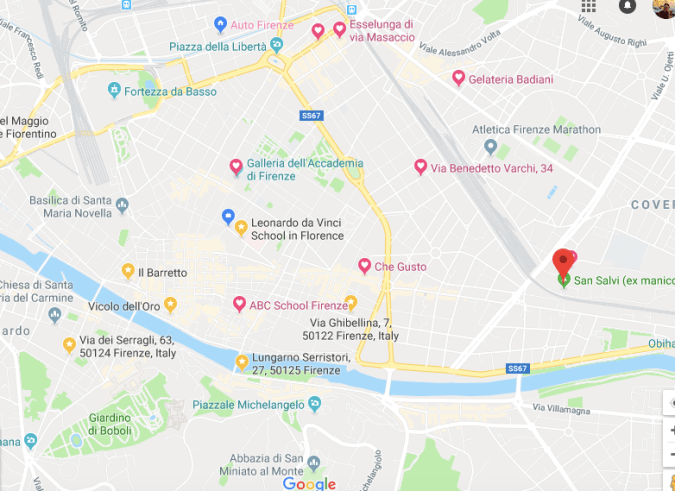
Almost 100 years later, in 1968, this hospital located on Via di San Salvi #12, was shuttered.  The city has been attempting to refill the site with various cultural and non-profit organisations ever since.  It would be a shame not to use this large campus, composed of 32 hectares and housed in 20 buildings, for something.  It is prime property on the outer eastern edge of the city. You can find it with the big red pin below:

Screenshot 2018-11-11 at 12.42.54

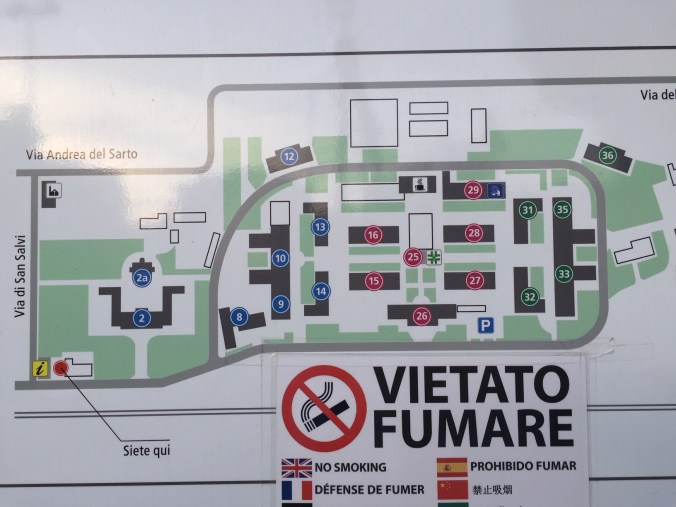
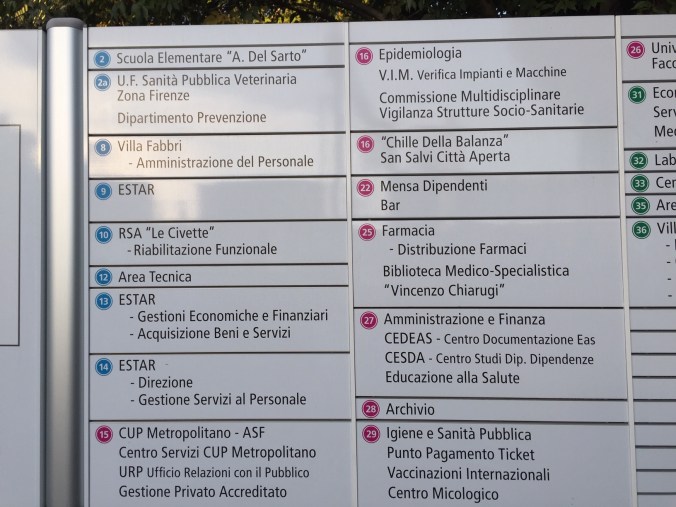
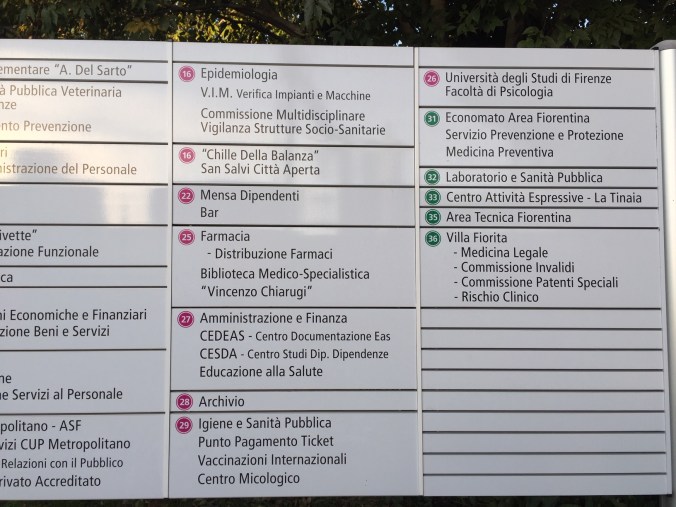
Below is a map of the San Salvi grounds, showing how the buildings are laid out and a key to how they are/will be used:

IMG_2864IMG_2865IMG_2866

Here’s how the guided tour was advertised to an erudite audience:

“Come with us to walk along the tree-lined avenues of (hospital) San Salvi, a unique place immersed in the city and at the same time quite isolated. Here, in what was once a very active psychiatric hospital– the “crazy” poet Dino Campana was here for a while–as well as important and respected people involved with the field of psychiatry.   Today – among the various cultural associations that have a home here – La Tinaia cooperative and the Chille della Balanza theatrical group make it a social and artistic destination, thanks to shows, events and meetings.”

Yesterday was a beautiful fall day in Florence, following a week of continual rain, and we viewed the campus in this amazing autumn sunlight:

IMG_2863IMG_2862

Two well-known Italian photographers, Carla Cerati and Gianni Berengo Gardin, documented, in chilling photographs, the story of San Salvi and its inmates, with “harsh images of women and men prisoners, jailed, bound, punished, humiliated, reduced to suffering and need.” If you Google Manicomio Firenze, you can find vintage photographs of the hospital and the patients.  It was gruesome.

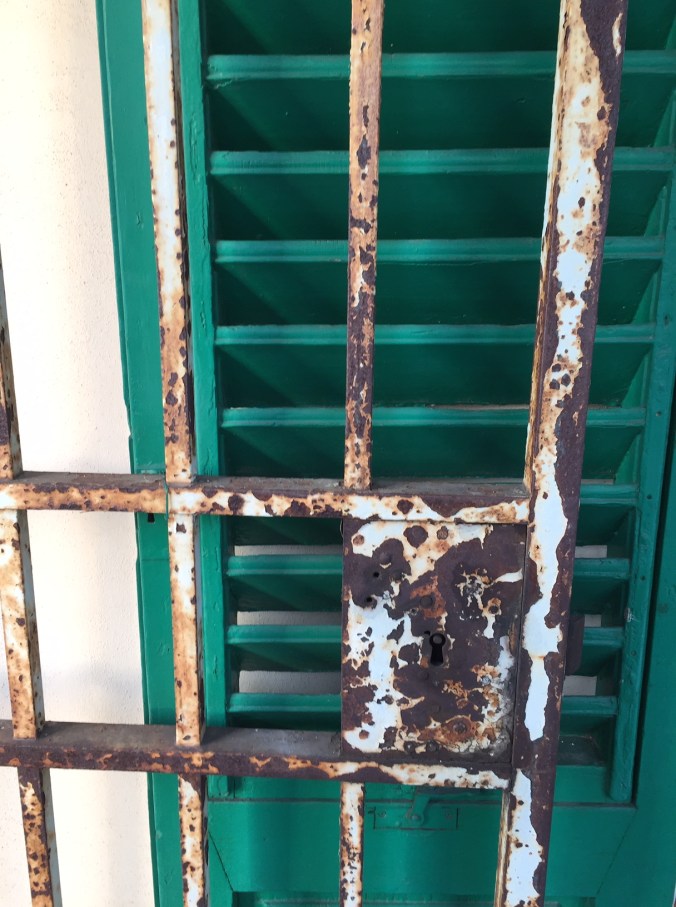
As I was leaving the campus, this old rusted iron gate seemed to sum up the history of the place for me.  The key hole especially records the memory of patients locked in.

IMG_2867


Climbing the (Medieval) walls in Florence

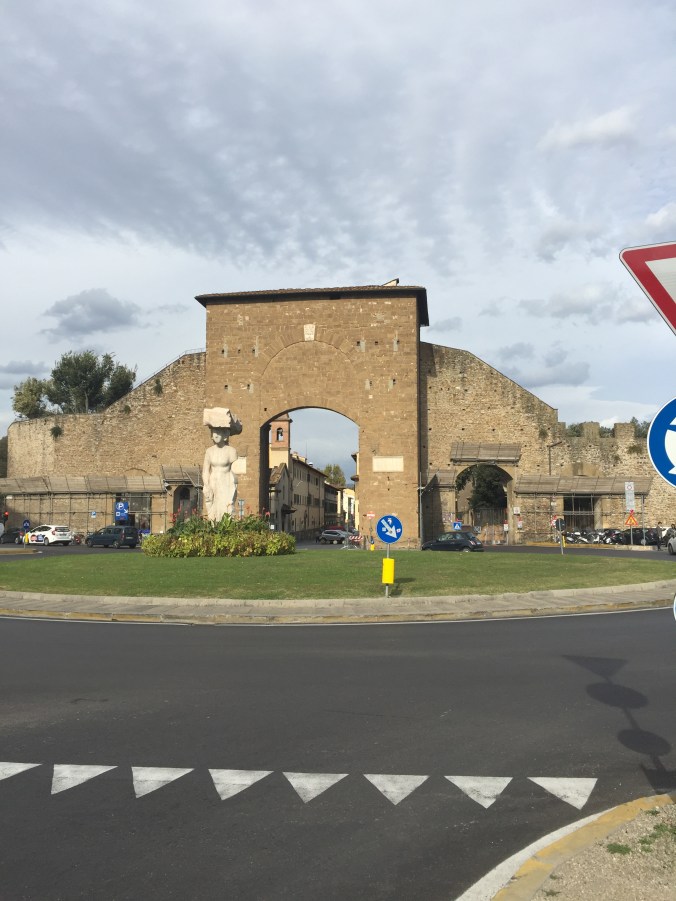
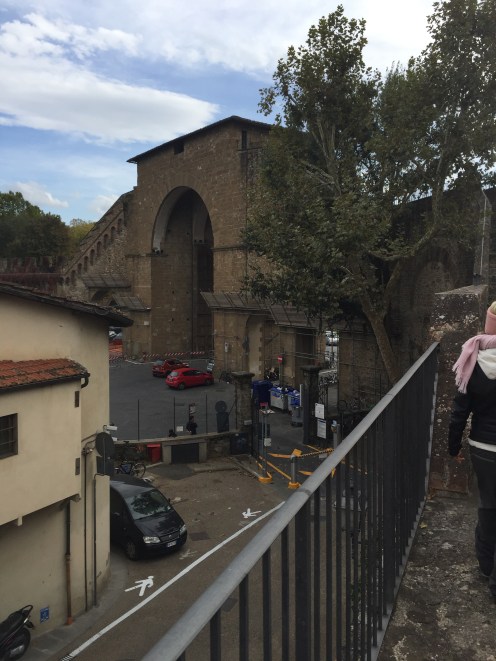
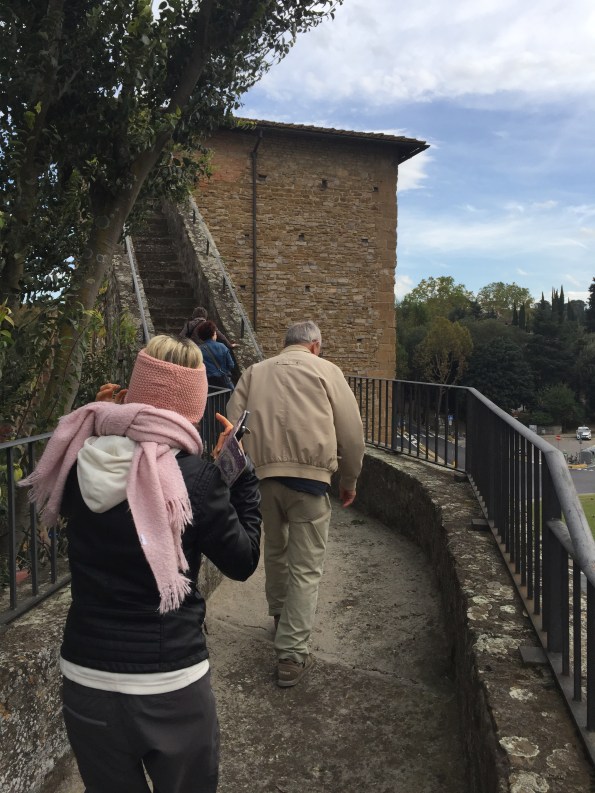
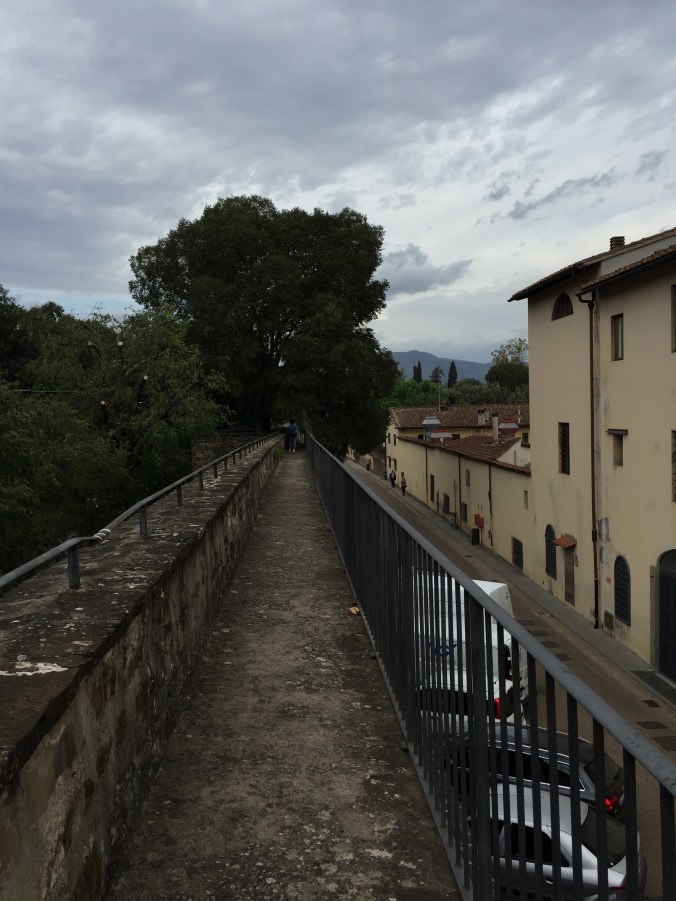
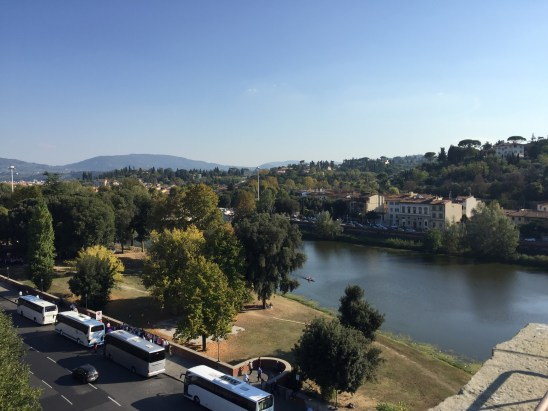
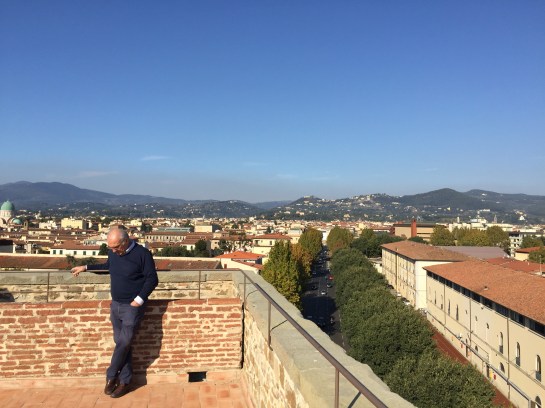
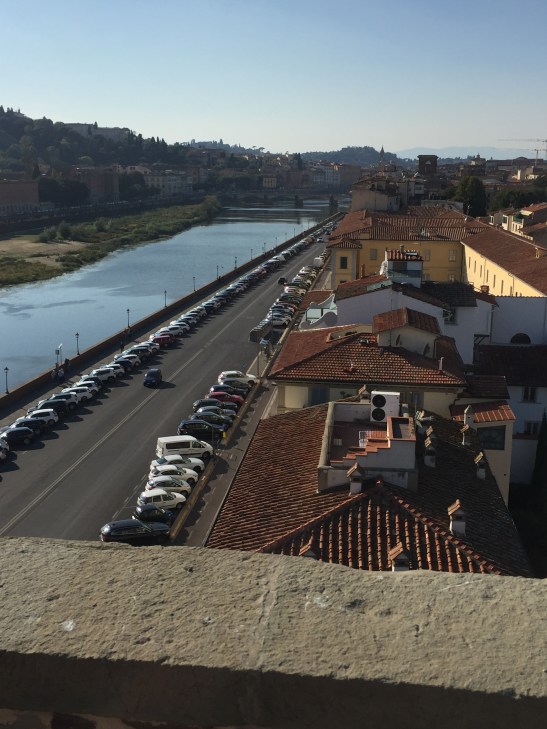
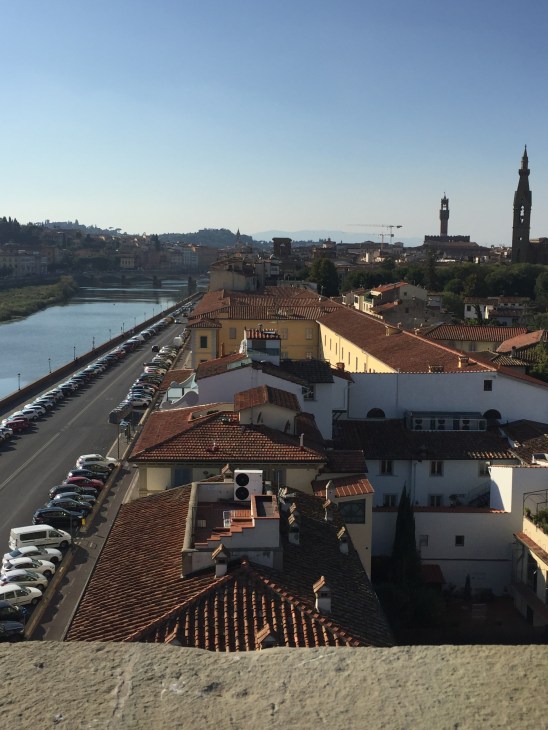
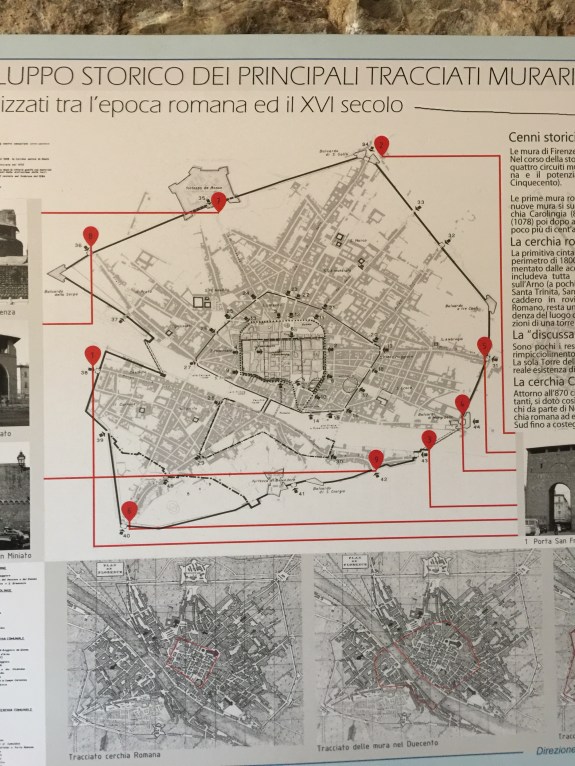
Last Saturday, October 27, 2018, I had the chance to join some urban trekkers and climb the Medieval walls in the Oltrarno.  We had as our goal, the Porta Romana, one of the remaining Medieval gates to the city.  When people wanted to go to Rome from Florence centuries ago, they left Firenze by this gate.

It must have been a welcoming site when returning to fair Firenze.  La Porta Romana told you you were home.

IMG_2690

The picture above shows the Porta Romana from outside the walls, looking into the city.  Our goal was to climb into the gate and see the room inside the very top of this picture.

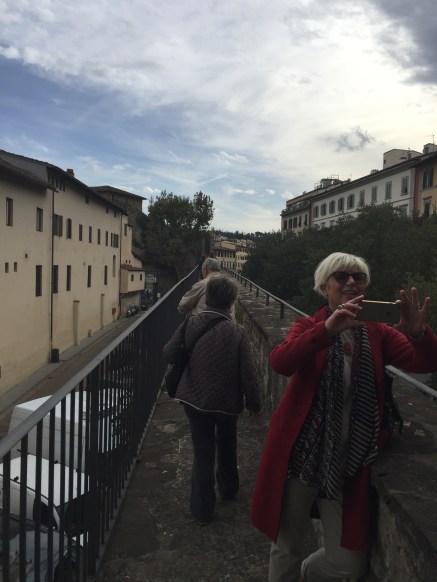
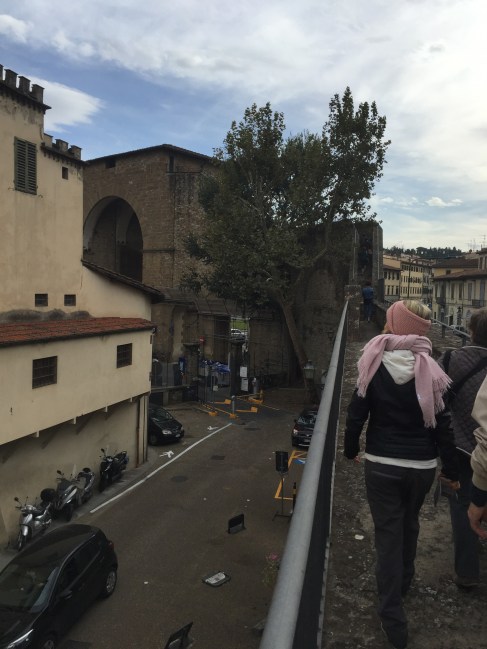
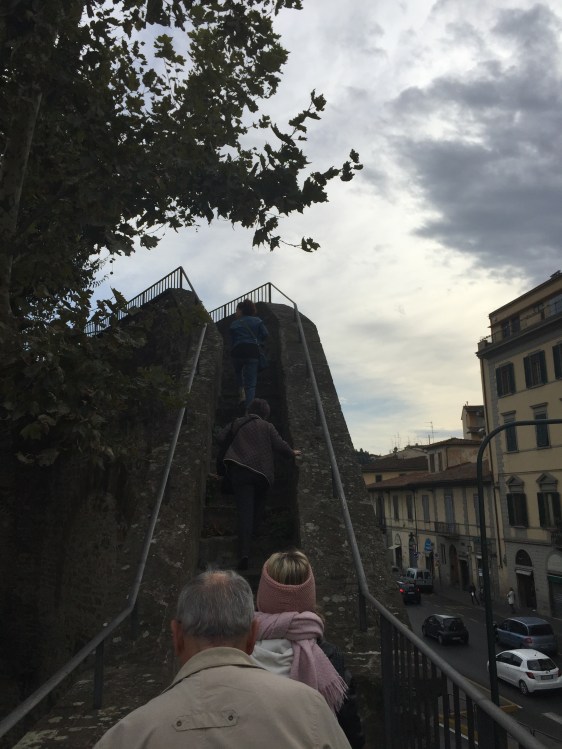
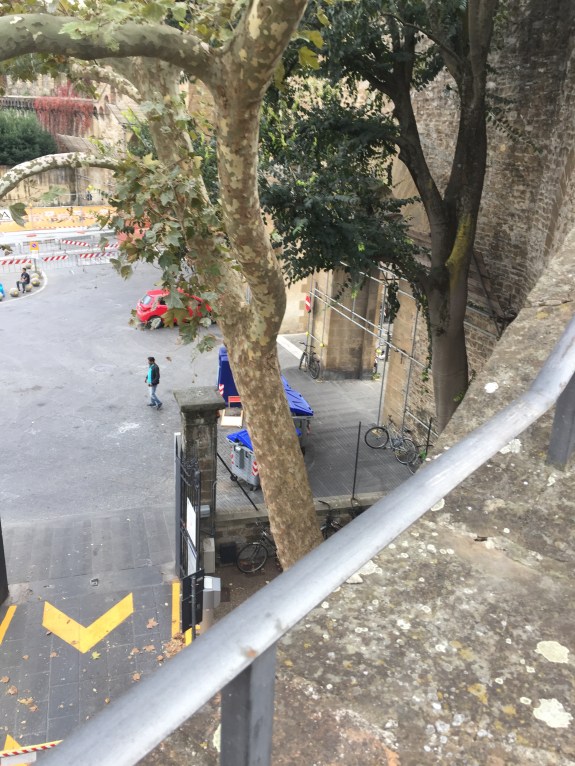
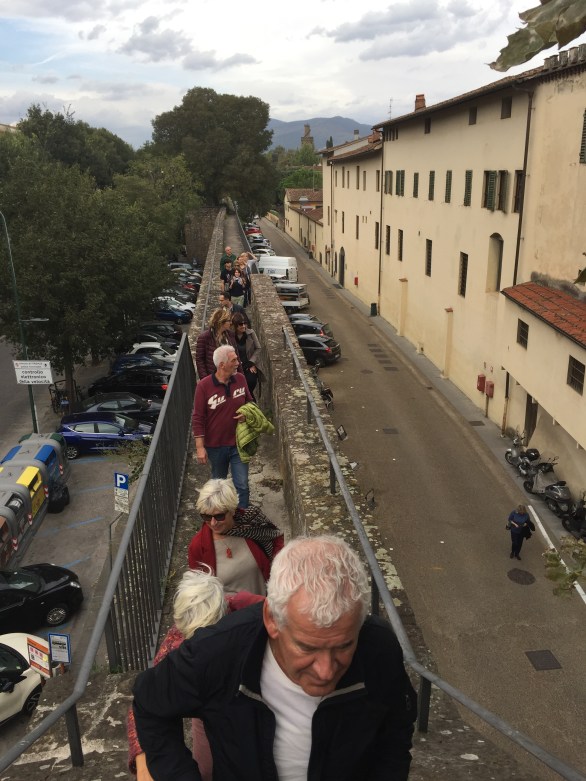
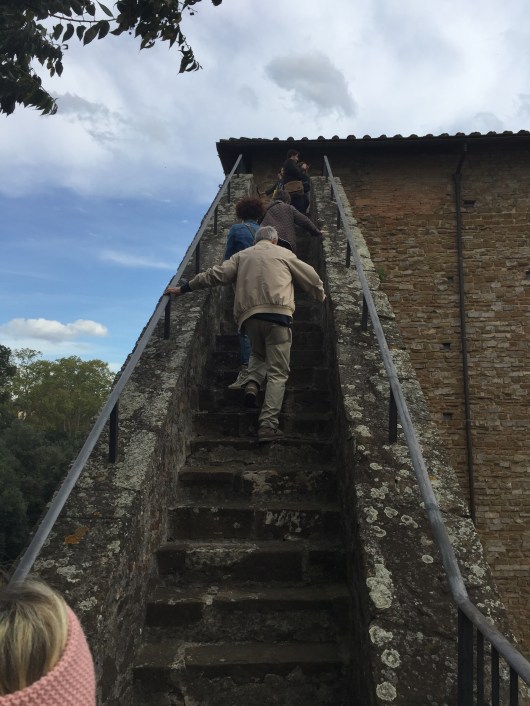
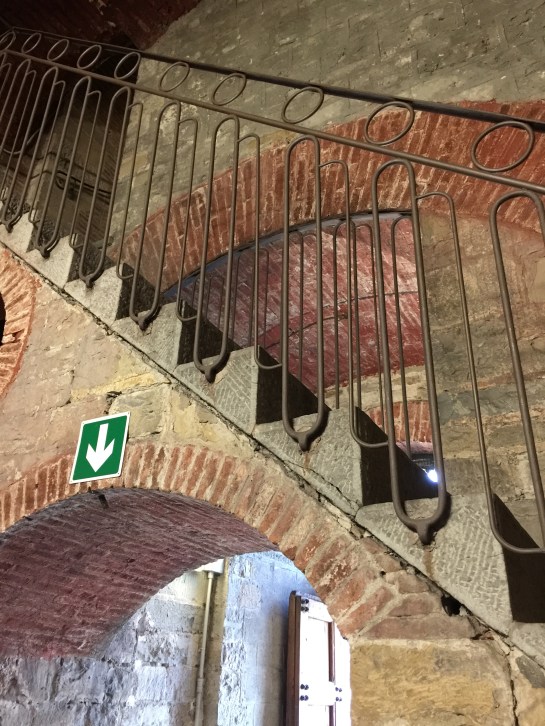
First things first: we climbed up a metal stairway about 500 yards away from the gate and walked along the top of the walls.


IMG_2699

IMG_2701IMG_2702IMG_2703

IMG_2705IMG_2706IMG_2707IMG_2708

IMG_2710IMG_2711IMG_2712IMG_2713IMG_2714

IMG_2715IMG_2717IMG_2718IMG_2738IMG_2739IMG_2740IMG_2741IMG_2742IMG_2743IMG_2744IMG_2745

IMG_2748IMG_2752IMG_2753

A new angle on an old Duomo

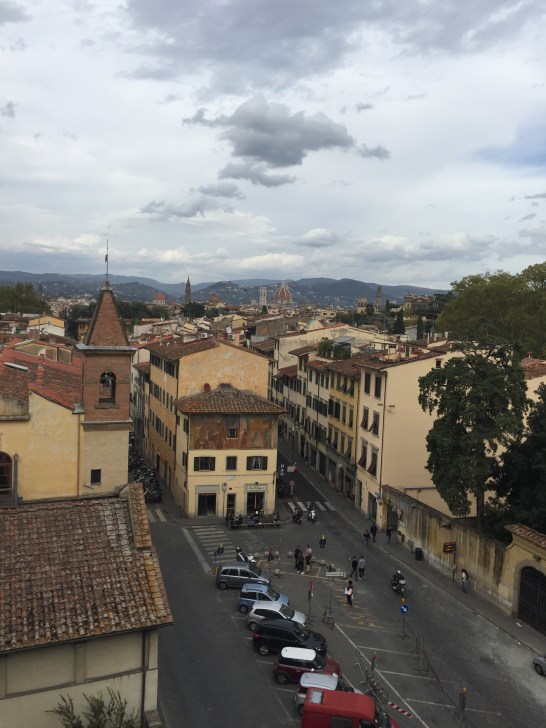
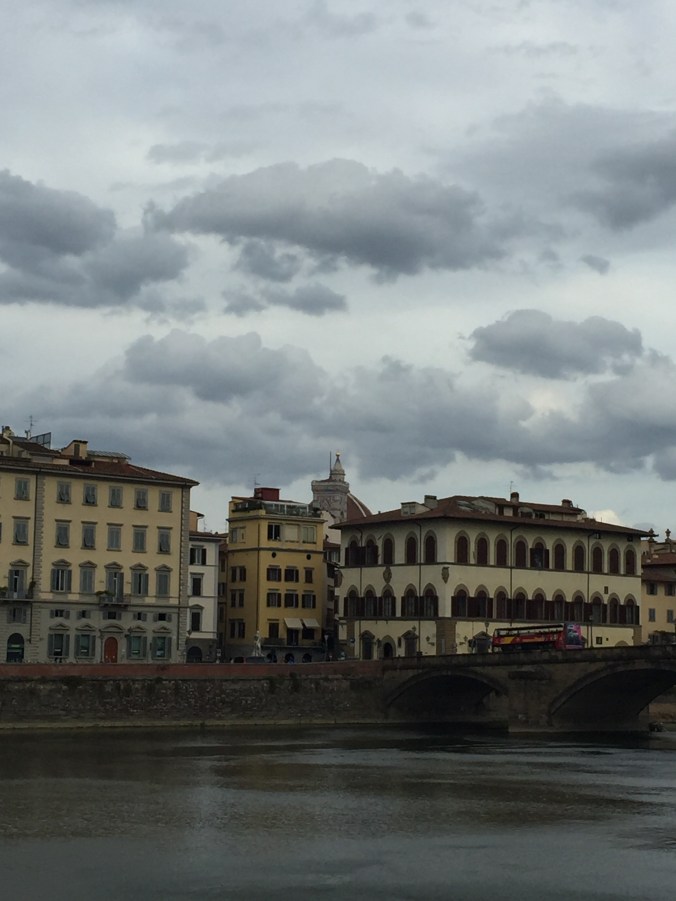
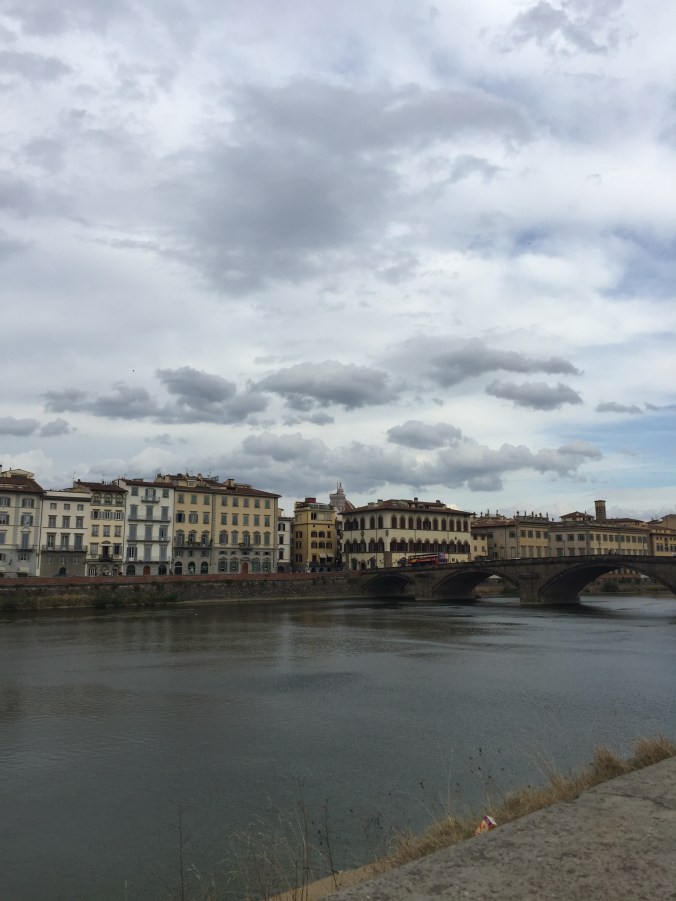
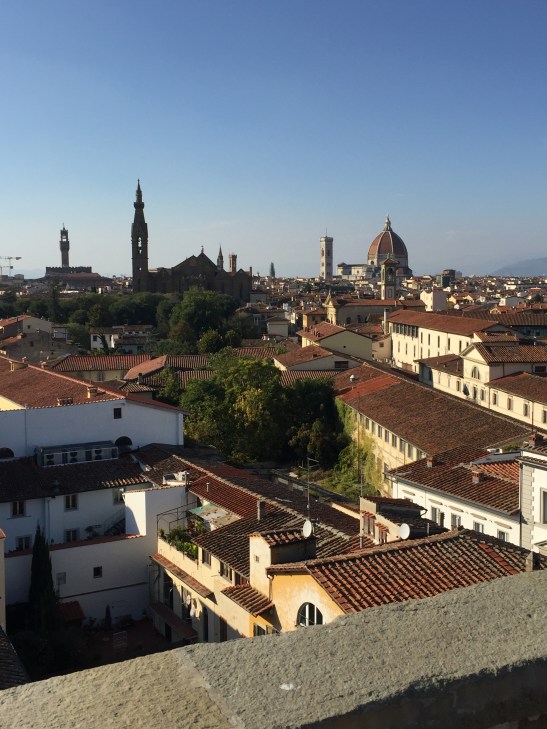
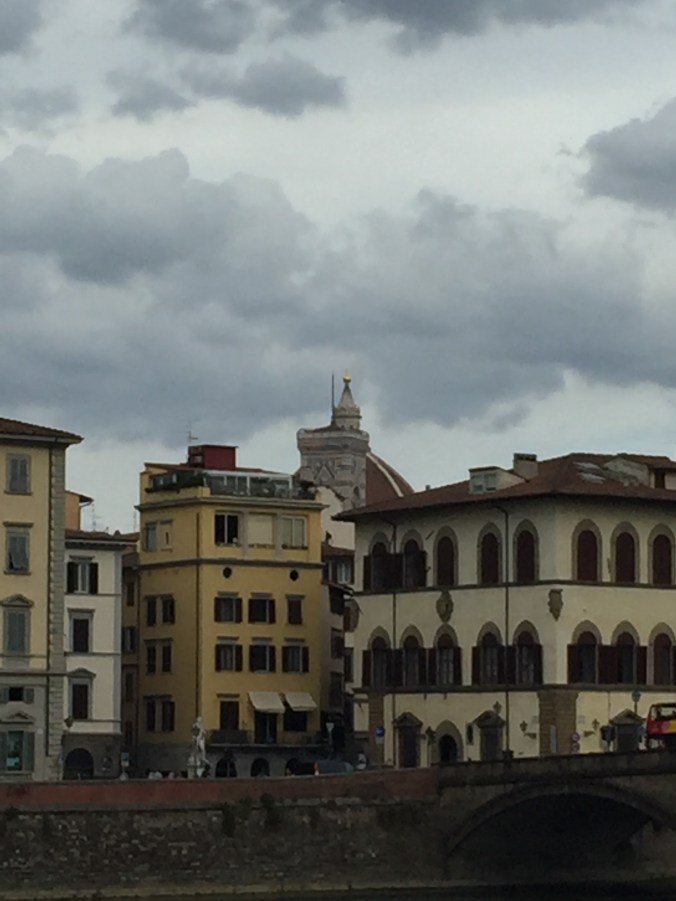
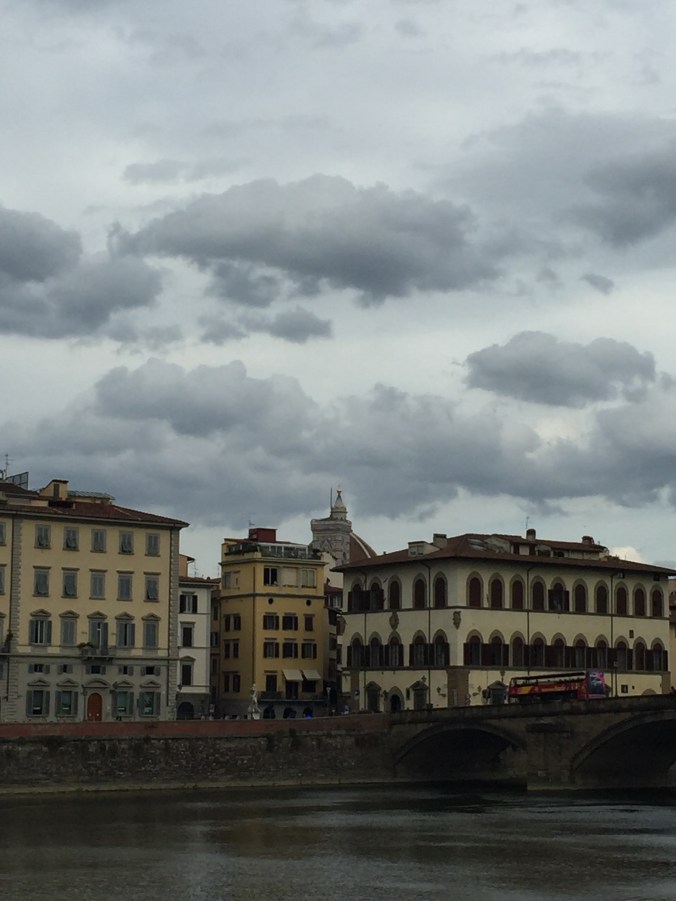
Strolling along the Lungarno in the Oltrarno today, I noticed Giotto’s campanile and Brunelleschi’s dome from a completely new angle.  The clouds and unsettled sky-scape only added to the drama (apparently a cold front is making its way into Tuscany this weekend, putting an end to our beautiful Indian summer.  It was 70 degrees today and many Italians were dressed in hats, scarves, and puffy coats to chase away the chills.  I was in short sleeves and was still too warm :-)).

IMG_2793IMG_2794IMG_2792IMG_2795

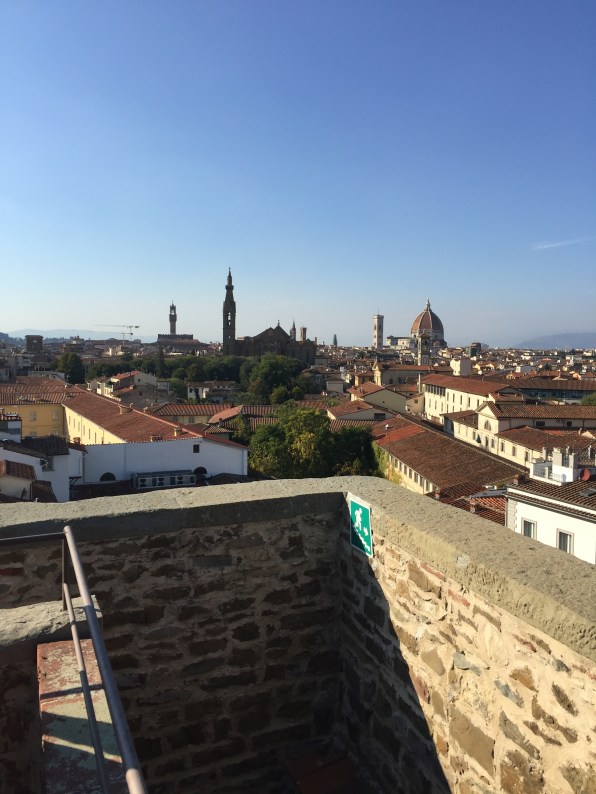
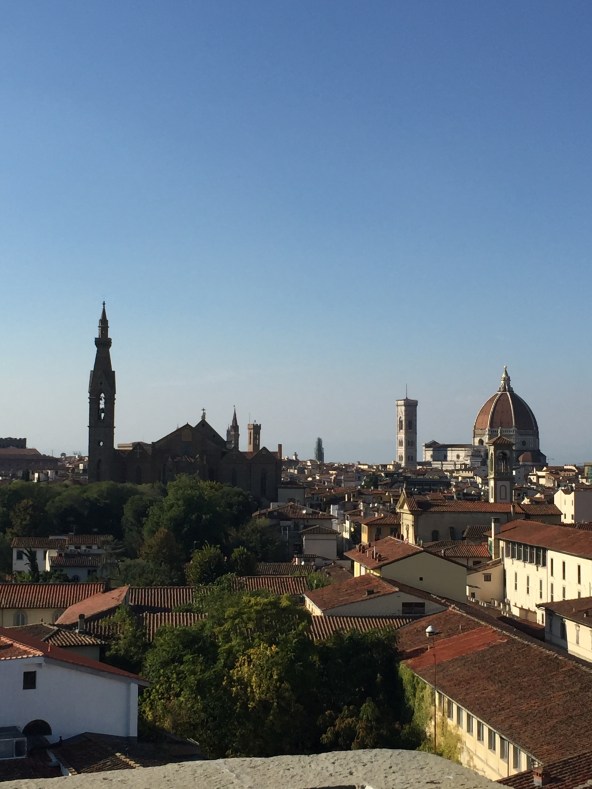
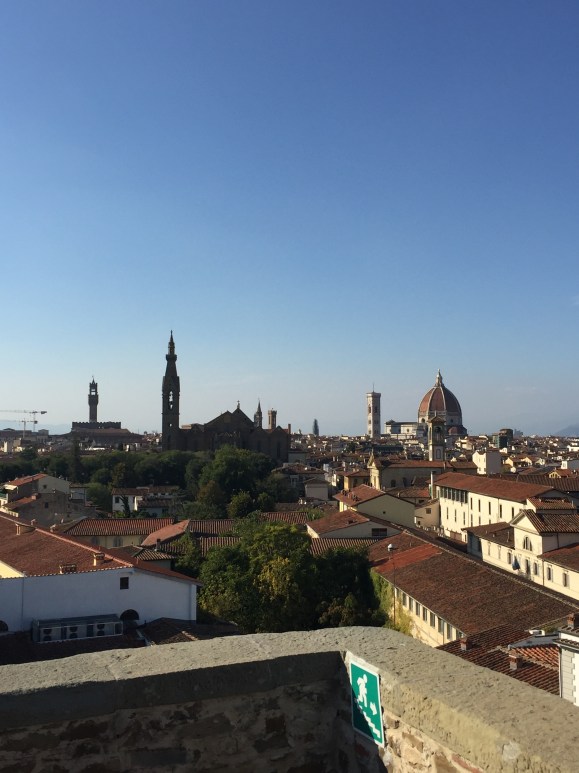
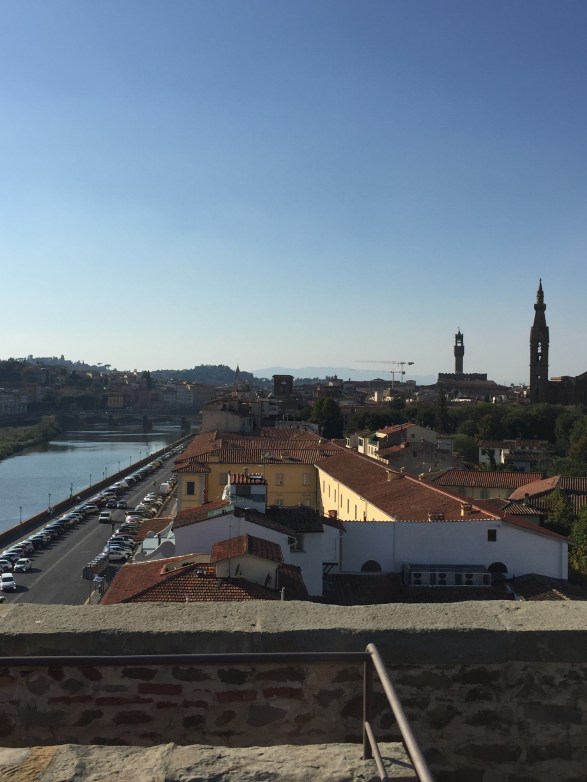
Florence in 360 degrees, shot from La Torre della Zecca

ADVISEMENT: THIS POST IS UNDER CONSTRUCTION.  IT MAKES LITTLE SENSE NOW, I’LL REPOST IT WHEN IT IS FINISHED.  GRAZIE!


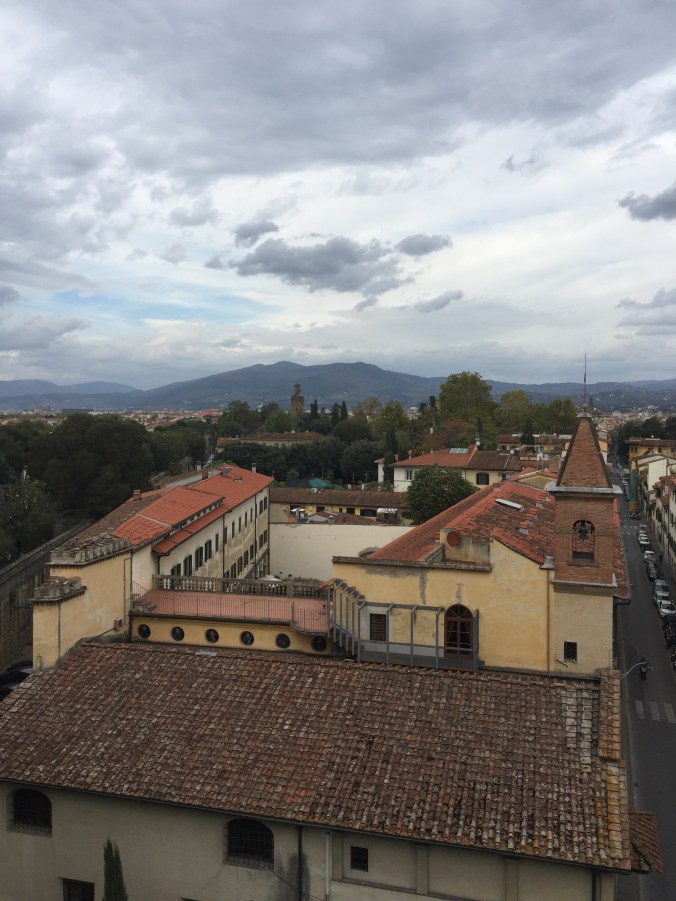
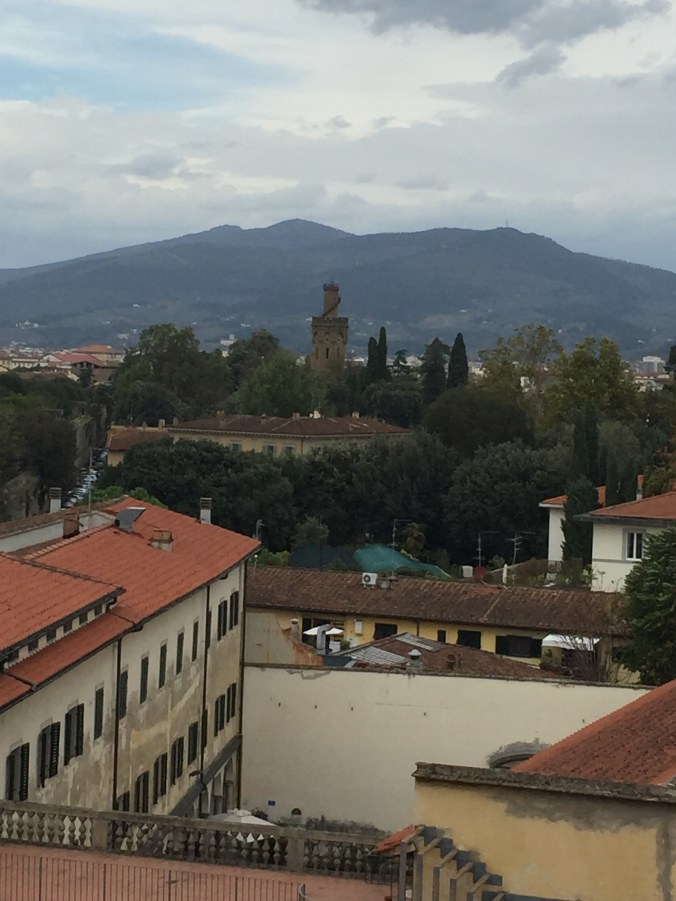
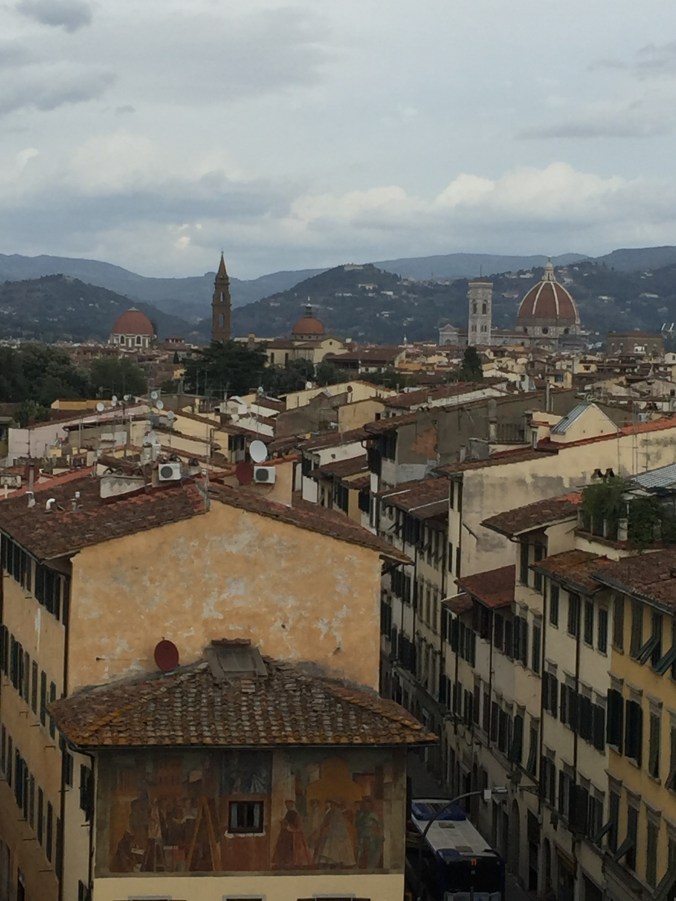
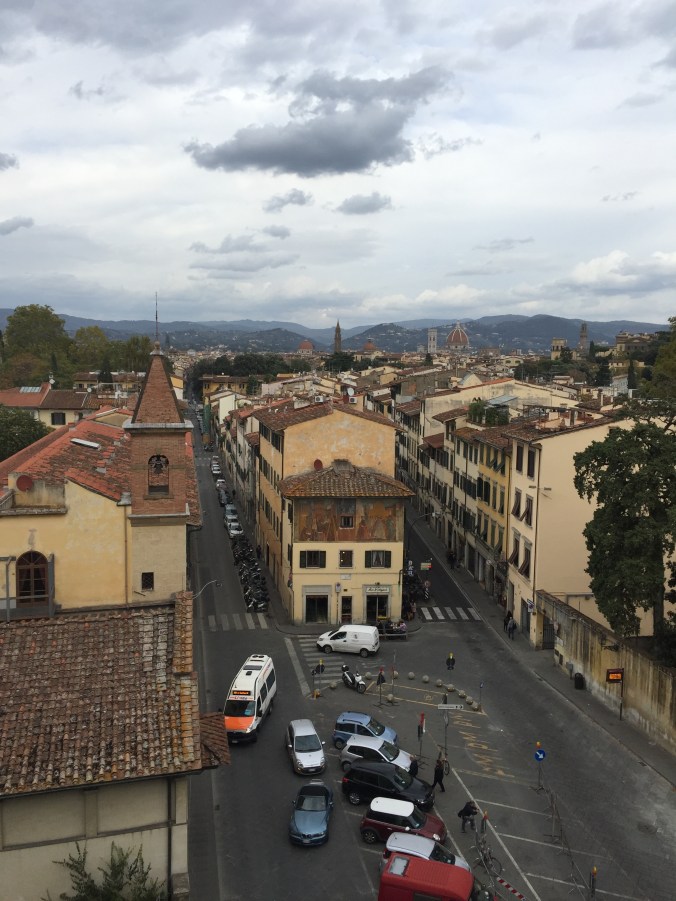
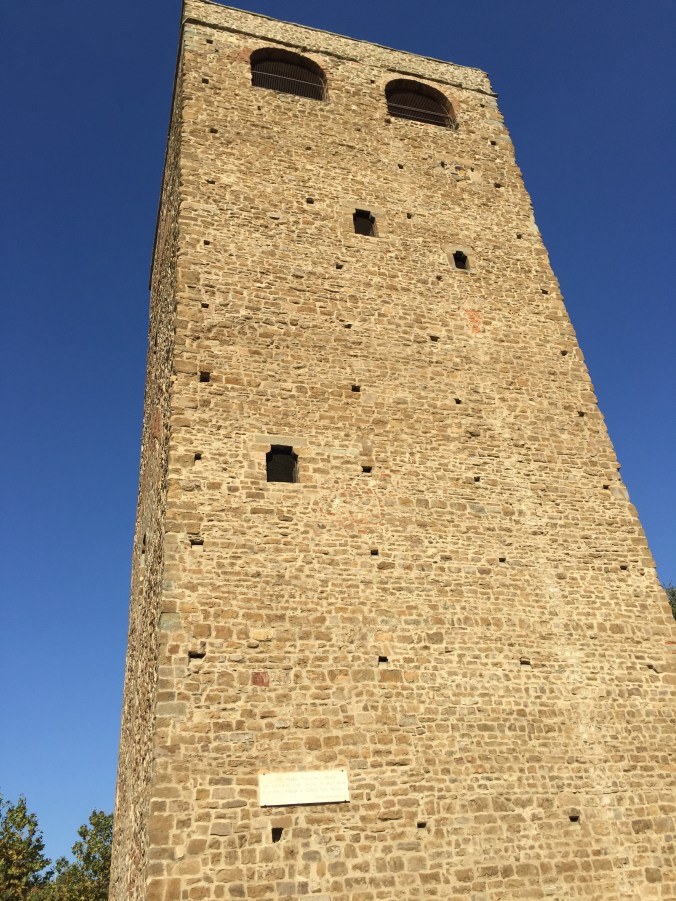
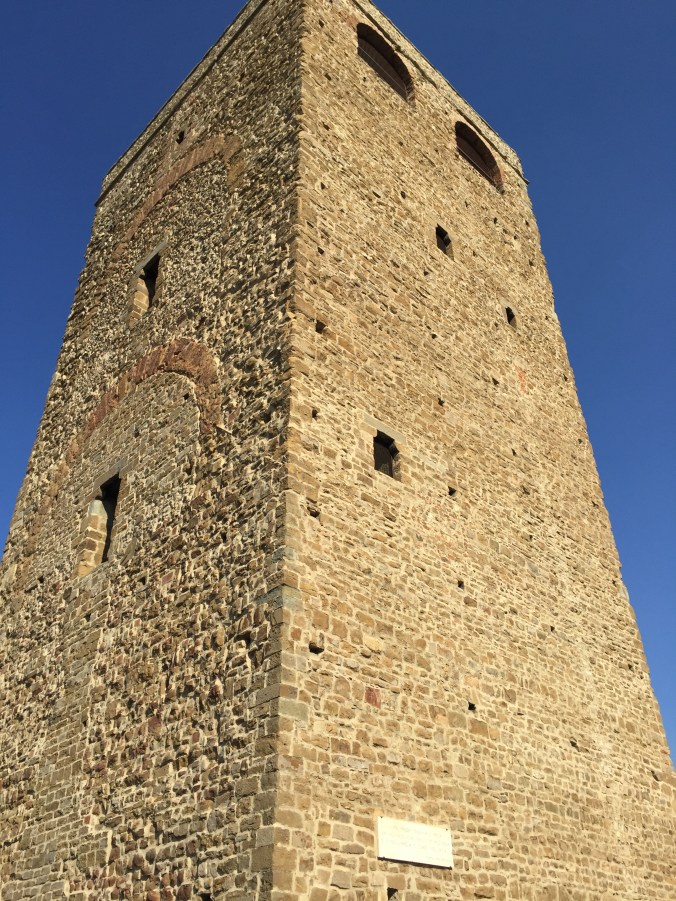
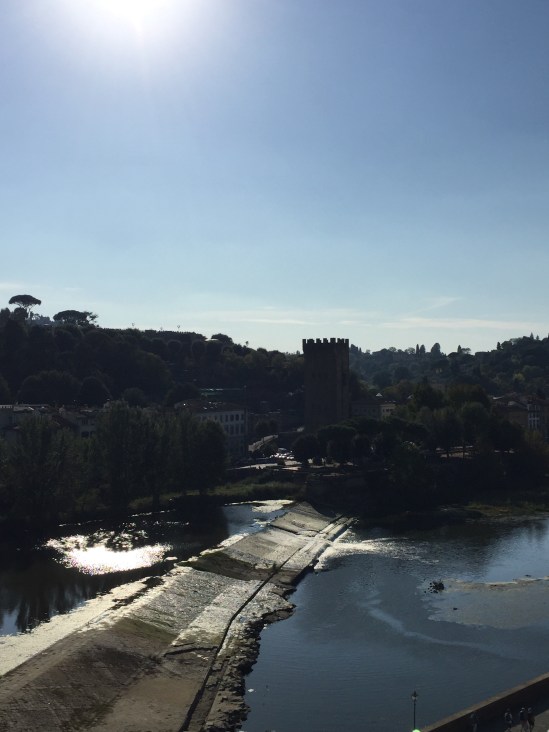
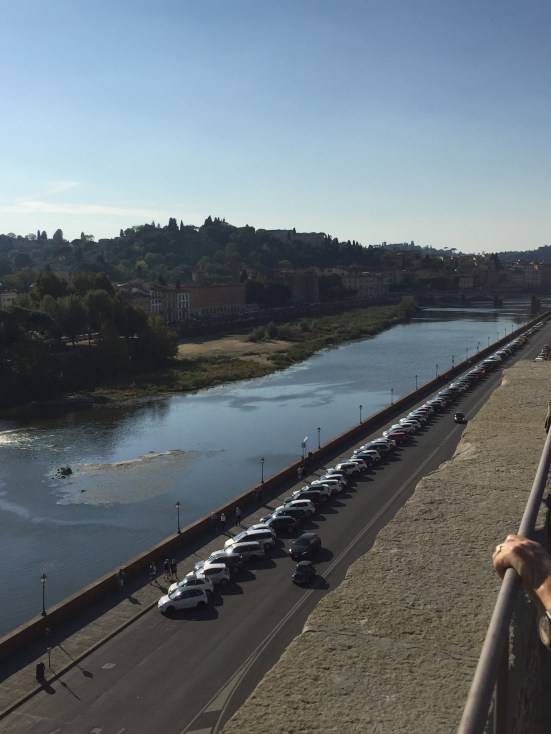
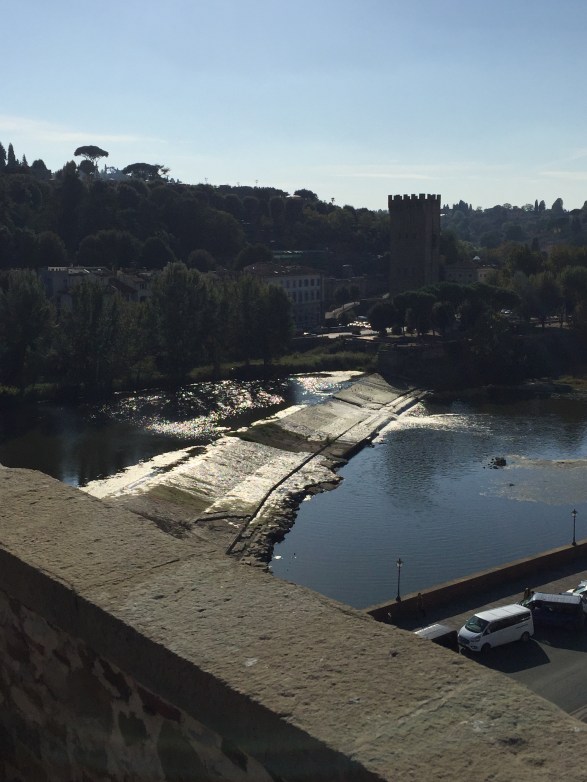
On a perfect autumn Saturday in Florence (20 Ottobre to be exact), I had the immense pleasure of climbing up inside La Torre della Zecca, located next to the Arno river and near the San Niccolo bridge.  From the top of the tower, I filmed Florence in all its 360 degree glory!


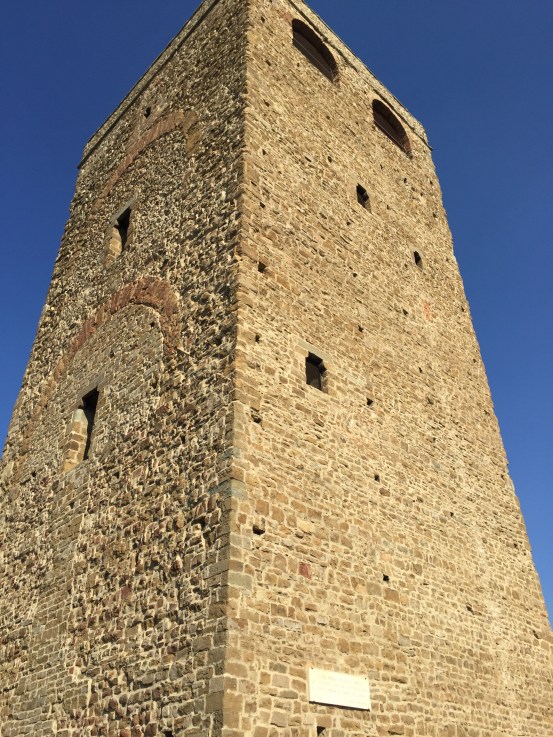
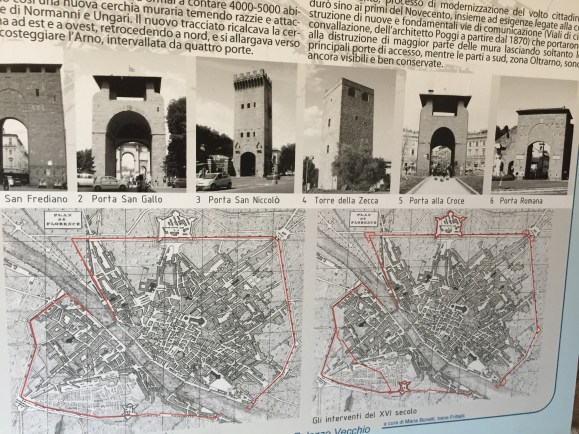
La Torre della Zecca (Mint Tower) was built as the gate to the medieval city. This monumental tower served to close the city off from the river Arno to the east and was thus known as a torre terminale.  It is now lies isolated in the middle of a junction on the viali di Circonvallazione in Piazza Piave, near the Lungarno della Zecca Vecchia.

IMG_2593

Above and below is how the Torre appears today.

IMG_2585IMG_2579IMG_2580

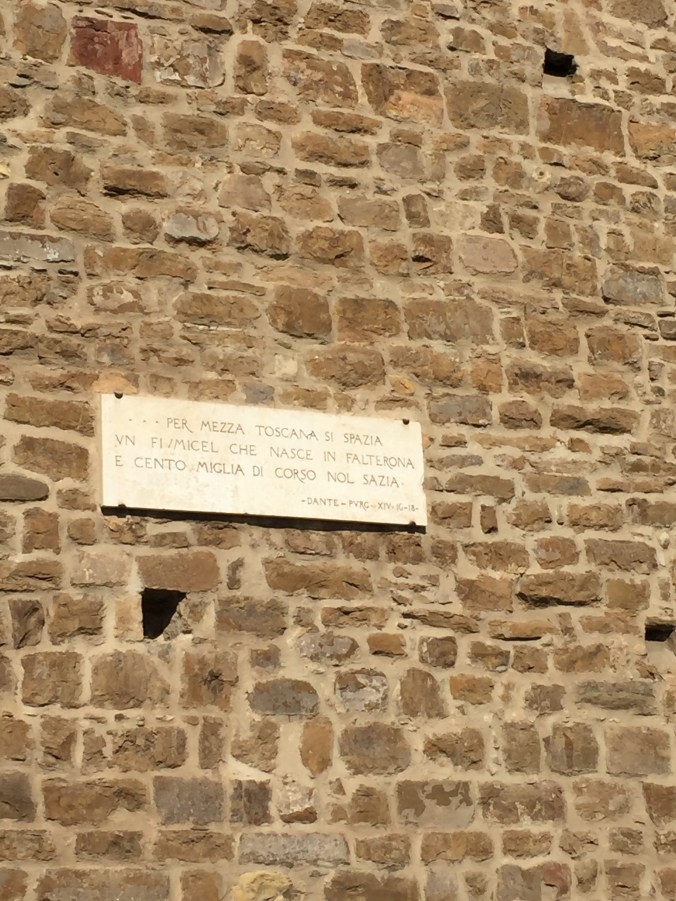
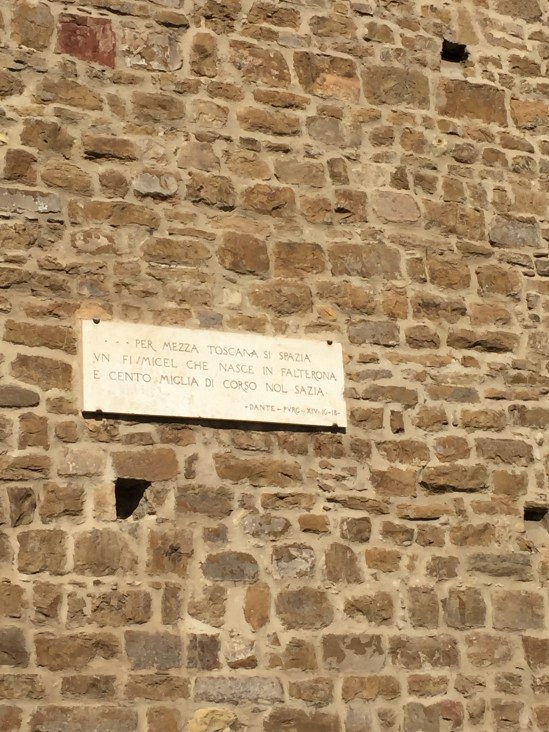
It has its own Dante inscription on a plaque.


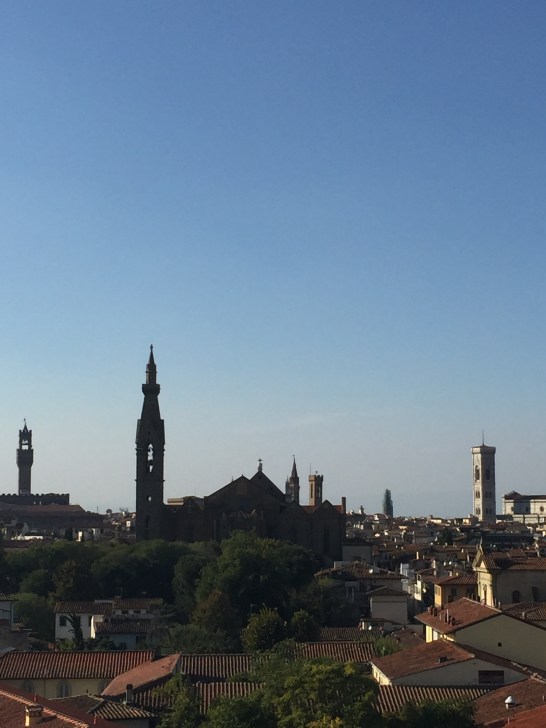
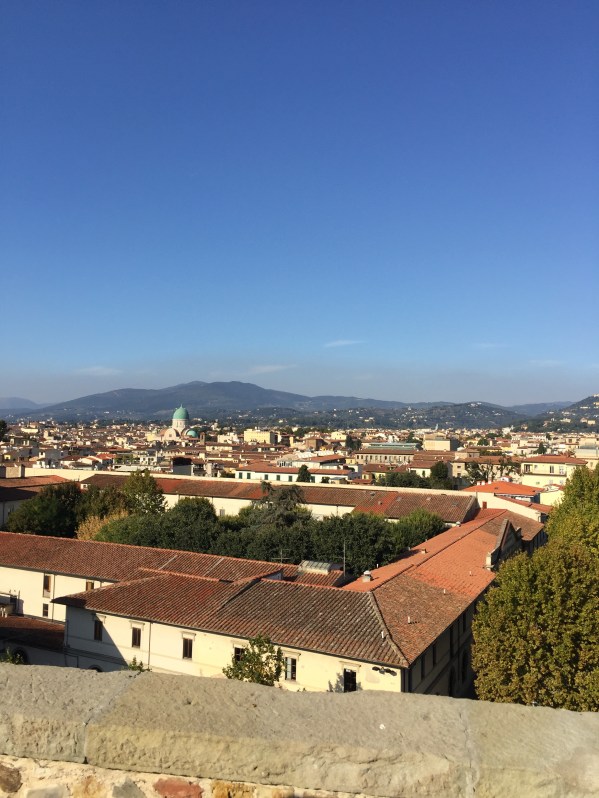
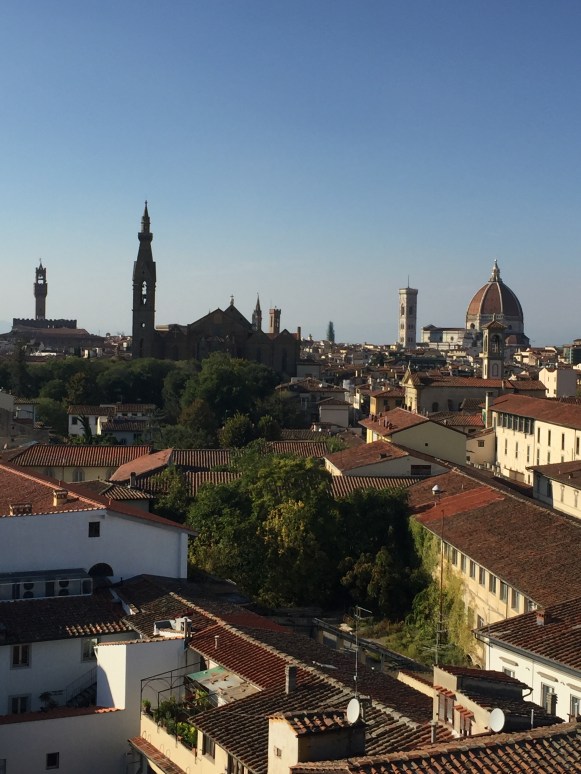
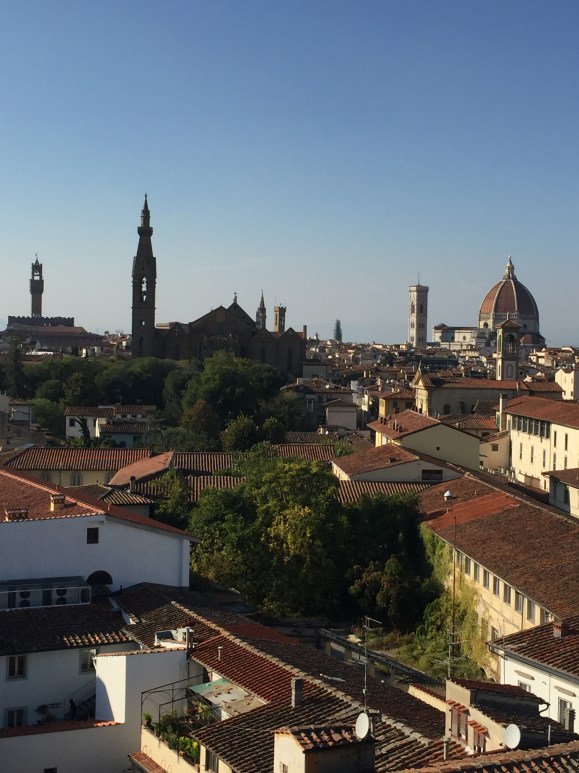
The views from the top of the tower are magnificent!

IMG_2649

You’ve never seen Santa Croce from the back like this unless you too climbed up this tower.

IMG_2650

From Italian wikipedia we discover: Prima dell’edificazione, nelle immediate vicinanze, dei mulini della zecca, la struttura era indicata come torre della notomia, o torre dell’osservazione. Ai primi del Cinquecento, l’edificio era anche conosciuto come torre di San Francesco, data la vicinanza dell’omonimo convento e ospedale.
Loosely translated, this says: Before construction, in the immediate vicinity of the mint mills, the structure was referred to as a tower of the notomia, or observation tower. In the early 16th century, the building was also known as the Tower of San Francesco, because it was close to a convent and hospital bearing that name.


Looking south, I spied the Piazzale Michelangelo, with the monumental bronze replica of Michelangelo’s David.  You can make it out in the next 2 photos.


IMG_2651

fullsizeoutput_50b


IMG_2652

fullsizeoutput_50c


Looking southeast:

IMG_2637


Here is Fiesole in the background:

IMG_2638


IMG_2639IMG_2640IMG_2641IMG_2642IMG_2643IMG_2644


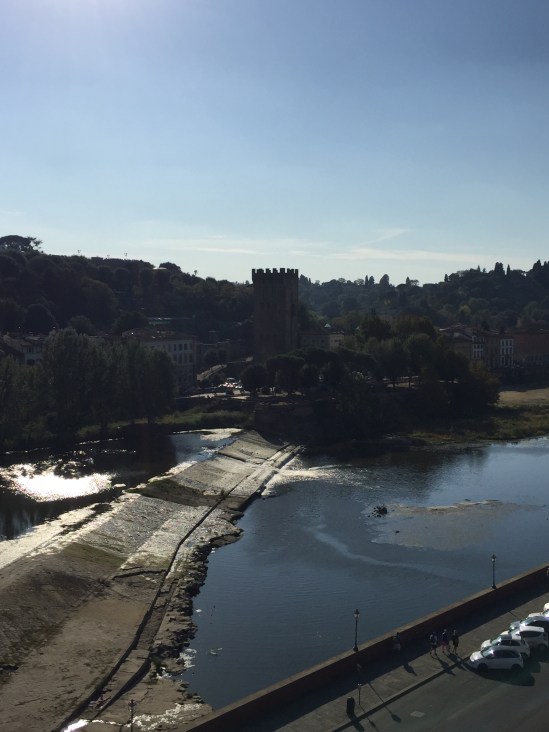
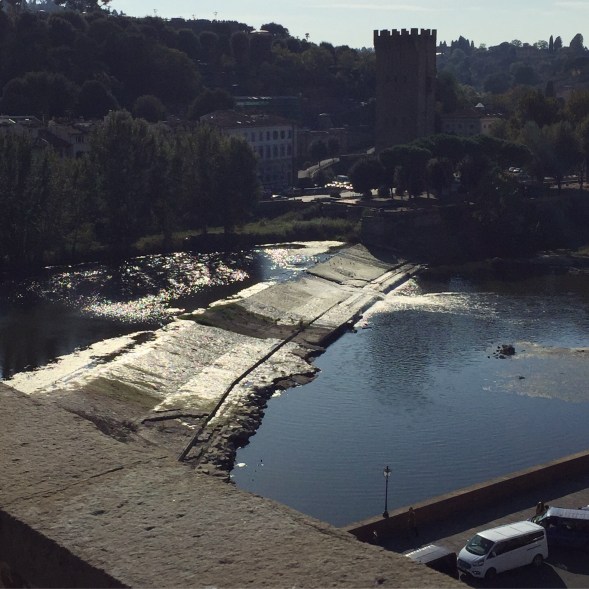
La Porta di San Niccolò, across the Arno, has never looked more beautiful than how she looks from the Torre della Zecca!

IMG_2645IMG_2646IMG_2647

IMG_2579IMG_2580IMG_2583IMG_2584IMG_2585


IMG_2593IMG_2595IMG_2596IMG_2597IMG_2598IMG_2599IMG_2600IMG_2605

IMG_2614IMG_2615IMG_2616IMG_2617

IMG_2621IMG_2622IMG_2623IMG_2624IMG_2625IMG_2626IMG_2665IMG_2627IMG_2628IMG_2629IMG_2630


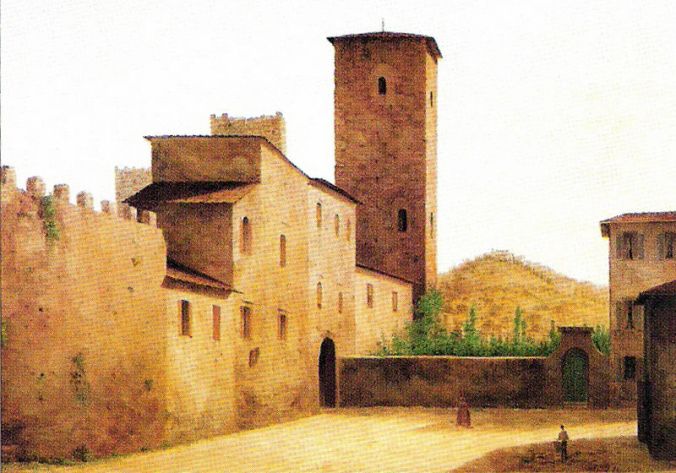
800px-View_of_Ancient_Florence_by_Fabio_Borbottoni_1820-1902_(35)La torre prima della demolizione delle mura, dipinta da Fabio Borbottoni nell’Ottocento


800px-Villa_la_vedetta,_vista_06_torre_della_zecca,_sinagoga


La torre fu eretta a protezione del mai eseguito ponte Reale (progettato negli anni precedenti alla disastrosa alluvione del 1333, e così intitolato in onore di Roberto d’Angiò) e a difesa della parte della cerchia di mura che insisteva in questo tratto, a costituirne il termine sull’Arno. In origine, la torre doveva essere posta proprio sull’argine del fiume, come testimoniato anche dalla quattrocentesca mappa della Catena, dalla cinquecentesca pianta del Buonsignori e dall’ottocentesco catasto generale lorenese.

The tower was erected to protect of the never built ponte Reale (projected in the years preceding the disastrous flood of 1333 and named in honour of Robert of Angio) and to defend some parts of the wall che was built in this quarter, to construct the end of the walls on the Arno.

In origins, the tower had to be part of the argine of the river, as a testament also of the 1400s map of the Catena, from the 1500s plan of Buonsignori e of the 1800s Lorena General Catasto

In età laurenziana, la torre della notomia costituiva, insieme all’adiacente torre della giustizia, una delle due torri della munizione della Repubblica Fiorentina. L’arsenale ospitava armi, attrezzi, ma soprattutto esplosivi: la polvere da sparo era depositata nella stanza più alta, mentre l’umidità dei sotterranei concorreva alla conservazione del salnitro. Fra il 1495 ed il 1498, i magazzini vennero ulteriormente ampliati con l’aggiunta di una rimessa per le artiglierie e di una fonderia pubblica. Questo intero, articolato complesso formava la cosiddetta cittadella vecchia, quell’arce notomiae che sbarrava, insieme alla pescaia di San Niccolò, il passaggio sul fiume.[1]

In the Laurentian age, the tower of the terminus was built, together with the adjacent tower of justice, one of the 2 towers of the munition of the Florentine Republic. The Arsenale hosted the army, tools (machinery), but above all explosives: gunpowder was store in the highest room, while the humid of the underground contributed to the conservation of the saltpeter.
Between 1495 and 1498, the storage was amplified with the addition of a garage for artillery and a public foundry. This whole complex formed the so-called old citadel, that notorious arcs that barred, along with the fishery of San Niccolò, the passage on the river.

Nel 1526, l’ingegnere militare spagnolo Pietro Navarro propose che la torre “si abbasse et ingrossasse”, come riportato anche da Niccolò Machiavelli in una sua relazione sullo stato delle fortificazioni della città. Nel 1532, scapitozzata, fu incorporata su progetto di Antonio da Sangallo il Giovane nel baluardo di Mongibello, un bastione a sua volta collegato a gore, mulini e ad altri edifici che formavano in questa zona un tipico agglomerato. Tale progetto era stato voluto dal nuovo duca, Alessandro de’ Medici, per migliorare le difese della capitale, dopo il rischioso episodio dell’assedio di Firenze.

In 1526, the military engineer, the spaniard Pietro Navarro propose that the tower “get down and get bigger” as reported by Machiavelli in his reaction on the state of the fortifications of the city.
In 1532, scapitozzata, was incorporated on a project by Antonio da Sangallo the Younger in the bulwark of Mongibello, a bastion of his bastion in turn connected to gore mills and other buildings that formed a typical cluster in this area. This project was wanted by the new duke, Alessandro de ‘Medici, to improve the defences of the capital, after the risky episode of the siege of Florence.

Con l’arsenale trasferito nella fortezza da Basso, nella seconda metà del Cinquecento la torre rimase a protezione dei vicini mulini della zecca nuova, da poco aperti, e dai quali finì per prendere il nome. Fino ad allora, l’officina era stata sita nei pressi di Palazzo Vecchio, più precisamente sotto la loggia della Signoria, lì dove i magli del conio potevano essere azionati dall’acqua del torrente Scheraggio, che correva lungo via della Ninna.
With the arsenal moved to the fortress da Basso, in the second half of the 1500s, the tower remained a protection of the nearby mills of the new mint, a little open, and gave it its name. Finally, the office was sited near the Palazzo Vecchio, more precisely under the Loggia of the Signoria; it was there where the coins of the coin could be operated by the water of the stream Scheraggio, which ran along Via della Ninna.

Verso la fine del Settecento, l’architetto Gaspare Paoletti realizzò sulla sommità della torre un complesso sistema idrico che alimentava le fontane dei giardini di villa La Mattonaia, raccogliendo le acque del fiume e convogliandole in una lunga tubatura dislocata sulle antiche mura.

Nel corso dei lavori di ingrandimento della città di Firenze, progettati da Giuseppe Poggi, la torre fu isolata e posta a traguardo dei viali di Circonvallazione, mentre nella zona venivano condotti numerosi espropri sulla base delle perizie redatte da Felice Francolini nel 1868. Nel 1901, la torre appariva nell’elenco redatto dalla Direzione Generale delle Antichità e Belle Arti, venendo indicata quale edificio monumentale da considerare patrimonio artistico nazionale.
Finally at the end of the 1700s, architect Gaspare Paoletti realised on the summit of the tower a complex system water supply that fed the fountains of the Villa La Mattonaia gardens, collecting the waters of the river and conveying them in a long pipe spread over the ancient walls.

Curing the course of work for the expanding city, projected by Giuseppe Poggi, the tower was made more isolated and placed at the end of the avenues of the Circonvallazione, while numerous expropriations were carried out in the area on the basis of the surveys drawn up by Felice Francolini in 1868.In 1901, the tower appeared in the list drawn up by the Directorate General of Antiquities and Fine Arts, being indicated as a monumental building to be considered a national artistic heritage.
Alla metà del Novecento, alcuni ambienti furono occupati da un circolo ricreativo per alcuni anni.

In the mid 1900s, some circles were occupied by a recreational club for a few years.

Descrizione[modifica | modifica wikitesto]
La lapide dantesca. The Dante inscription
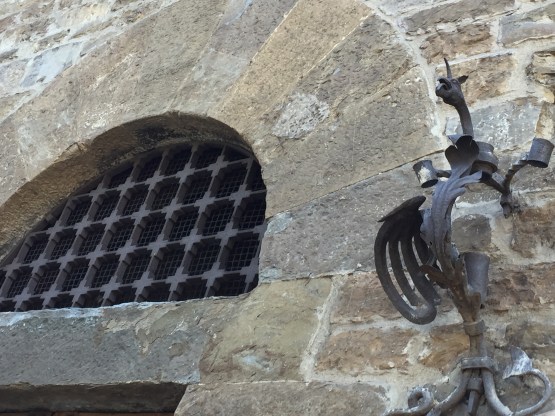
All’esterno la torre si presenta semplice e massiccia, con alcune piccole feritoie, e priva del coronamento merlato. Sul lato che guarda alla città è la porta d’accesso, con al lato un portabandiera in ferro di fattura novecentesca, mentre sul lato che prospetta verso l’Arno è posta una targa con alcuni versi di Dante dedicati al fiume.

Outside the tower is simple and massive, with some small iron loopholes, and lacks a crenellated crowning. On the side that looks to the city is the access dore, on the side an iron flag holder from of the 20th century, while on the side facing the Arno is a plaque with some verses of Dante dedicated to the river.
Rimosso da tempo il tetto cinquecentesco, l’ultimo piano dell’edificio presenta un’ampia terrazza, dalla quale si gode il panorama dell’intera città.
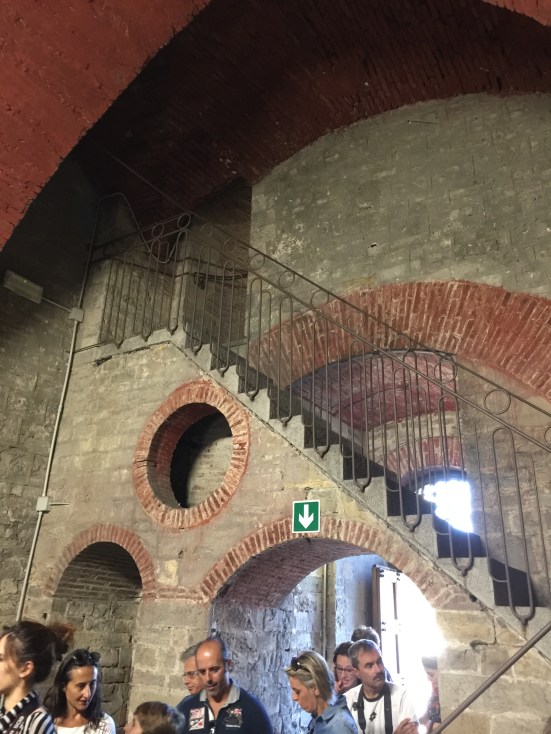
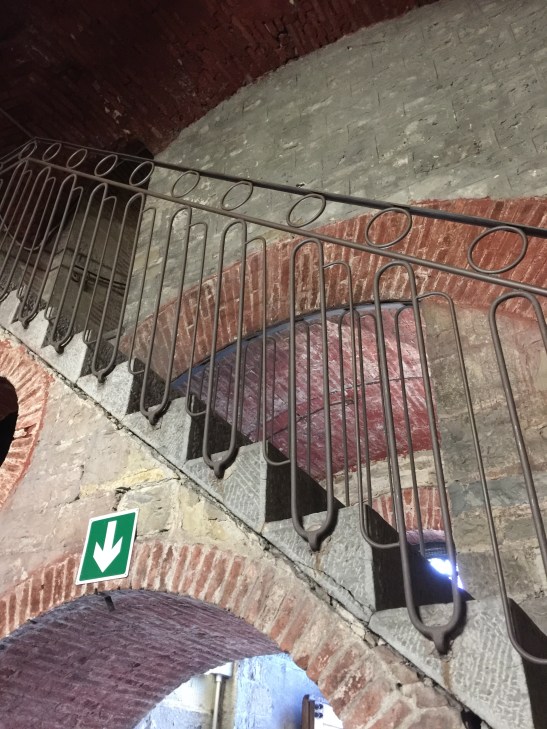
All’interno sono presenti ambienti voltati, connessi da strette scale in pietra, un tempo ad uso dei custodi dell’arsenale. Nei piani sotterranei si dipartono stretti corridoi fognari, anch’essi coperti da volte, uno dei quali passerebbe, secondo la tradizione, sotto il fiume, consentendo di raggiungere la sponda opposta. Del vecchio circolo ricreativo resta un bancone in pietra abbandonato.
La torre, restaurata fra il 2013 ed il 2016, è oggi aperta al pubblico.[2]
The 16th century roof has been removed for some time, the top floor of the building has a large terrace, from which one can enjoy the view of the entire city.

Inside there are vaulted rooms, connected by narrow stone stairs, once used by the arsenal custodians. In the underground floors, narrow sewage corridors, also covered by vaults, one of which would pass, according to tradition, under the river, allowing you to reach the opposite bank. Of the old recreational club there is an abandoned stone counter.

The tower, restored between 2013 and 2016, is now open to the public.


Villa Peyron, Fiesole

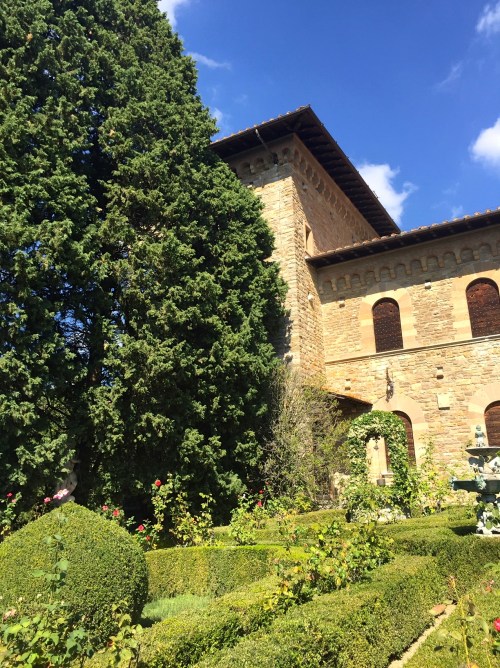
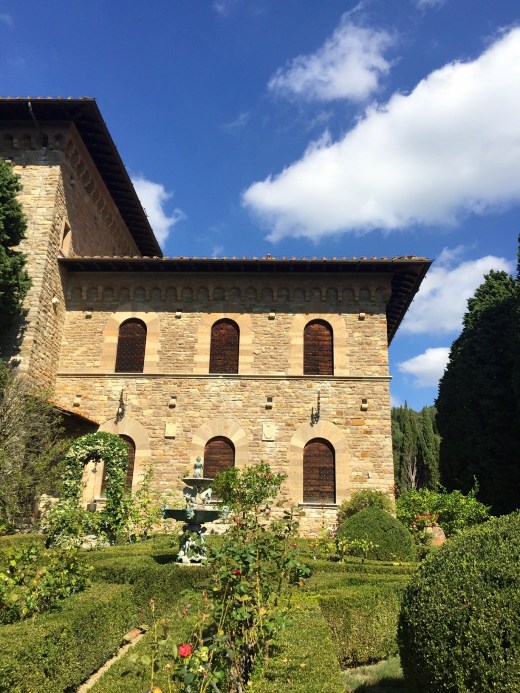
Oh, Villa Peyron!  How lovely you are, sitting in your pretty setting high above Florence!

IMG_2071


Situated in a beautiful position up in the hills around Fiesole, one can view both Florence and Castel di Poggio from the Villa.

IMG_2065

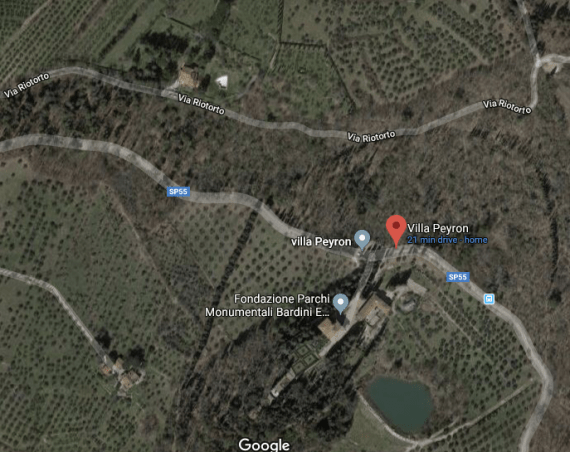
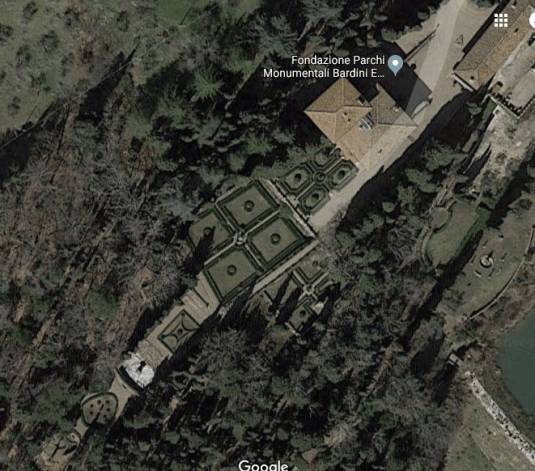
The Villa Peyron is a large complex, with buildings, formal gardens, and the surrounding olive groves. The villa is located in the woods named Il Bosco di Fonte Lucente, named after a spring above the villa

Screen Shot 2018-09-27 at 1.05.55 PM

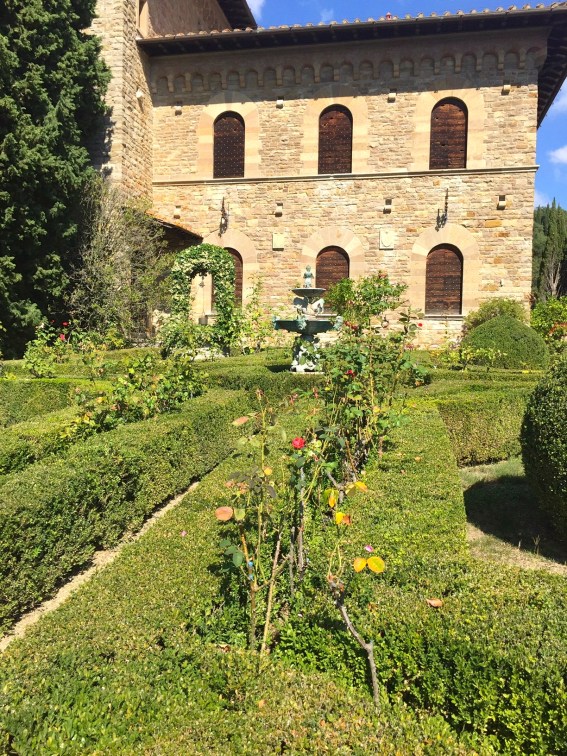
The spring is said to supply the water necessary to work the many fountains in the garden and park, although I will say that the fountains weren’t working when I was there recently. Even without the fountains, the gardens are beautiful.

IMG_2115

IMG_2117

It is likely that the villa itself was built on top of Etruscan ruins, traces of which can be seen in the underground chambers and in the immediate surroundings; there are, for example, antique stones in the walls found in the forests around the villa.

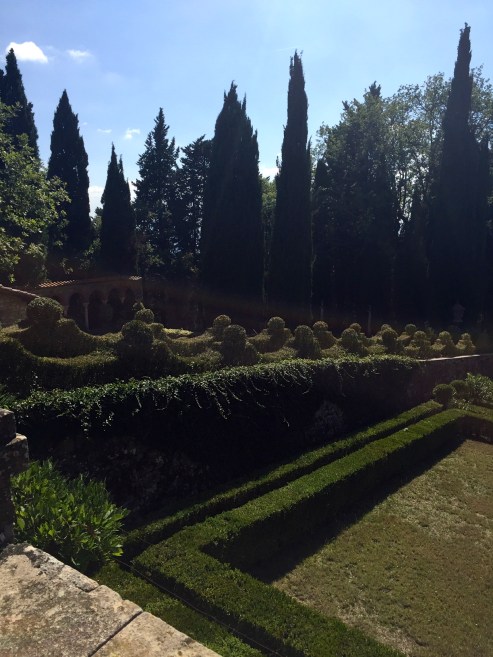
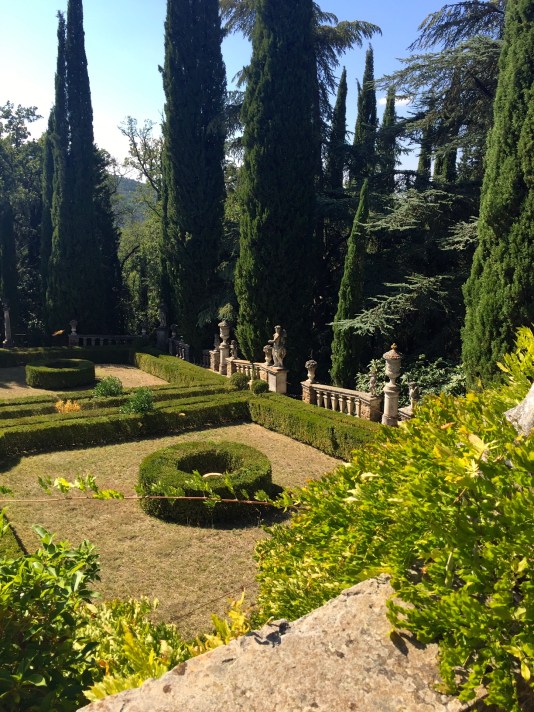
The garden is built on three terraces that slope southwards and has a wooded parterre parallel to the villa.

Screen Shot 2018-09-27 at 1.08.38 PM

What we see today bears nothing harking back to the Etruscans, but of course the villa has been subjected to a series of renovations and transformations over many centuries.

In the late 19th century, the Florentine architect, Ugo Giovannozzi (1876-1957), gave the villa its current appearance, working for Peyron family members who envisioned a very grand villa.

IMG_2100


IMG_2088

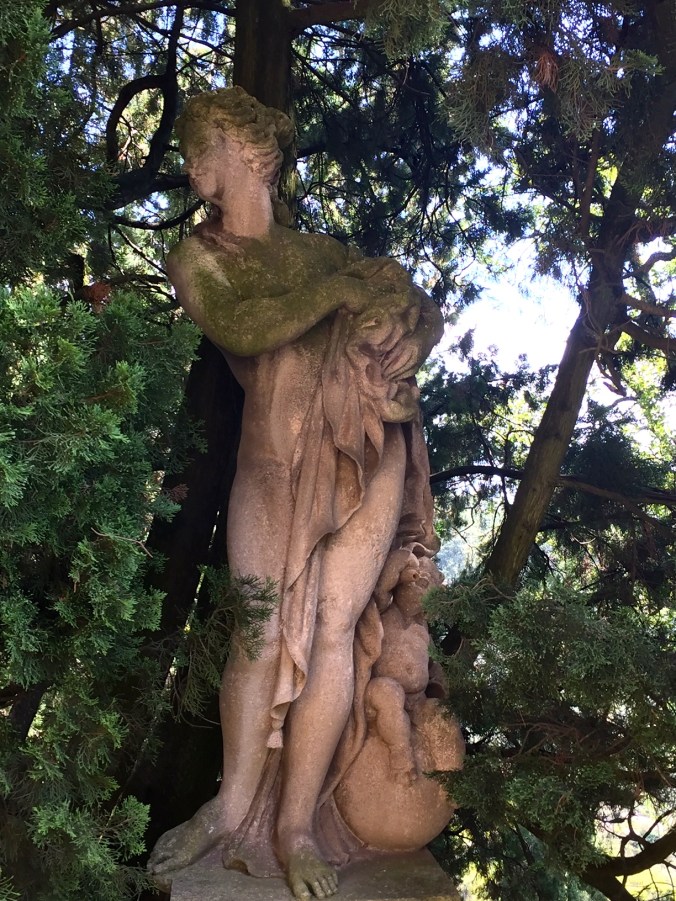
There’s a lot of statuary placed throughout the villa grounds; these sculptures come from the Venetian villas of the Brenta. These prestigious works were installed to take the place of those which were destroyed during World War II.


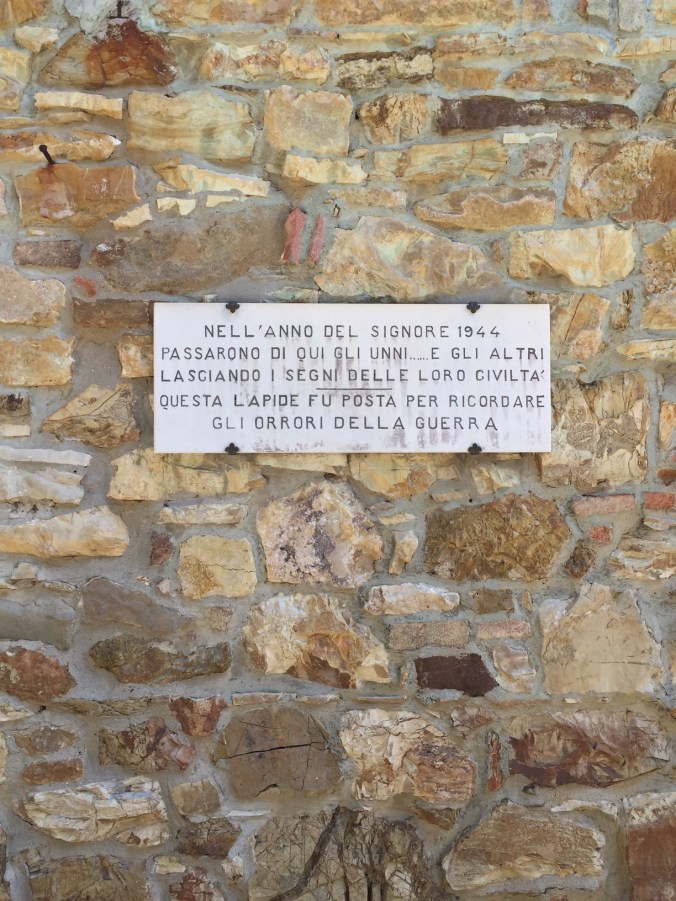
In fact, a plaque is installed on a building near the entrance to the villa grounds, which speaks to the horrors of war.  During WWII, the villa was requisitioned by the high German command. Later it was occupied by the Allies who also installed a military hospital there. (I can’t help thinking of the film, The English Patient.)

IMG_2054

You might say that some of the minor horrors of war were even clearly imprinted on this villa. When Paolo Peyron returned to his home after the war, it was a very bittersweet homecoming: all the objects that  Peyron had tried to save by hiding them in a room in the farmhouse were destroyed and scattered in the garden. Paintings and gilded frames were mockingly attached to olive trees; furniture was smashed; rare books, incunabula and prints of Piranesi, inherited from his father’s library, lay on the ground in the open, irremediably spoiled by the rain.

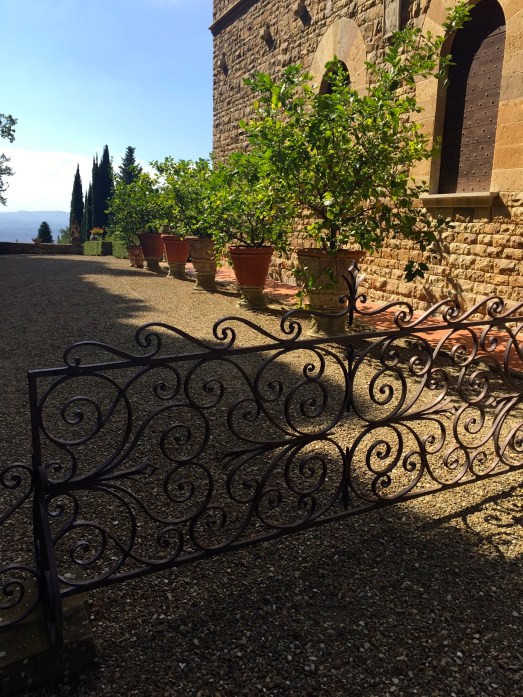
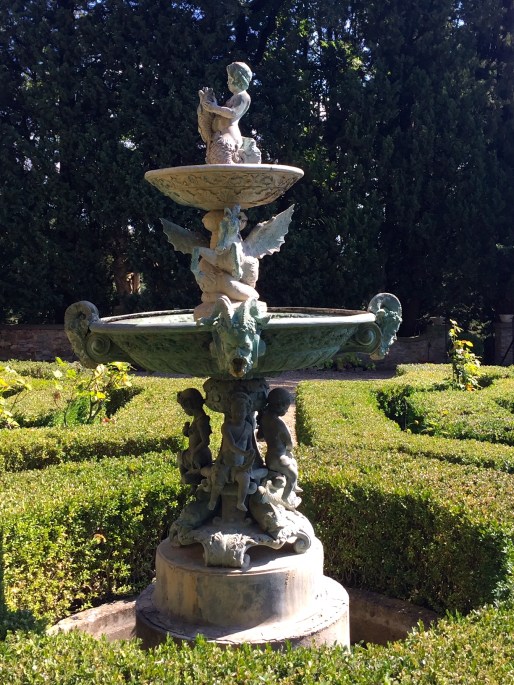
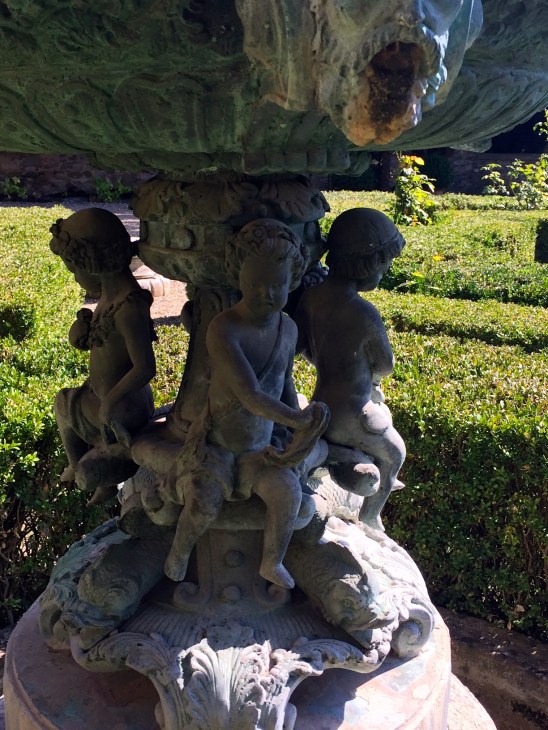
And now I will stop talking and simply place the photos of this beautiful locale on my post.  Enjoy!

IMG_2105


IMG_2104


IMG_2106


IMG_2103


IMG_2101


IMG_2100


IMG_2097


IMG_2096


IMG_2092


IMG_2080


IMG_2079


IMG_2072


IMG_2071


IMG_2068


IMG_2056


IMG_2058


IMG_2064


IMG_2062


IMG_2060


IMG_2059

This gorgeous villa, open for visits, lies just beyond Fiesole.  It’s an easy trip by Ataf bus (#7) from Florence to Fiesole, and catch a connecting bus #47.  The #47 is unreliable (it has only 3 runs on Sundays, for example, and they are all in the morning).  But you can do what I did, and take a taxi to the Villa from Fiesole.

IMG_2059


IMG_2058


IMG_2057


IMG_2056


Fortezza da Basso, Firenze

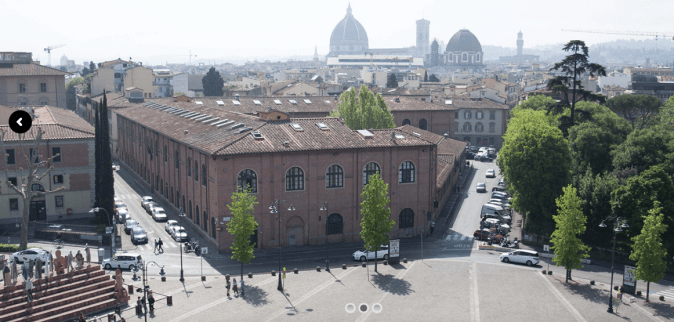
The Fortezza da basso is a key Florentine monument, but it is almost always overlooked because, let’s face it, it ain’t pretty.  Loving the history of Florence, I jumped at a recent opportunity to tour the inside of the fortress.  I’ll talk about that below.

IMG_1602


The fort’s purpose was not to enchant or entertain, as were so many key monuments built from the medieval period moving forward. The fort’s purpose was to protect the city by blocking and intimidating any evil-doers who might be planning to take Florence in a coup of some sort. And this meant both from without and from within the city.

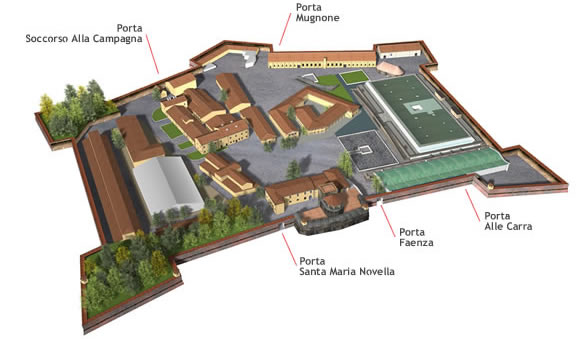
fortezza_1_original-2fortezza-porte-corpotesto

The fort served these functions well, and Florence was never attacked after it was built.   Of course, the fort wasn’t the only reason Florence was left alone.  But the huge benefit of that fact is that the fort is largely intact for us to study and admire.
Today the imposing fort has a much softer, more elegant use; I’ll talk about that later.
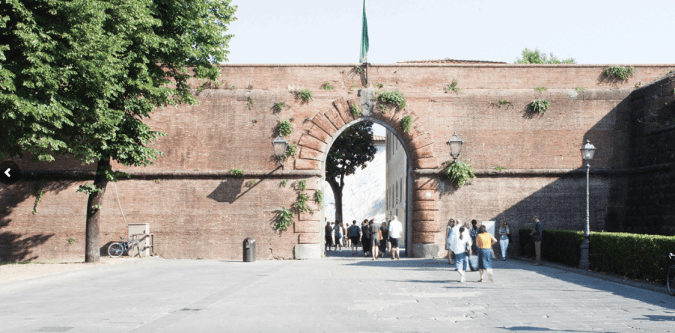
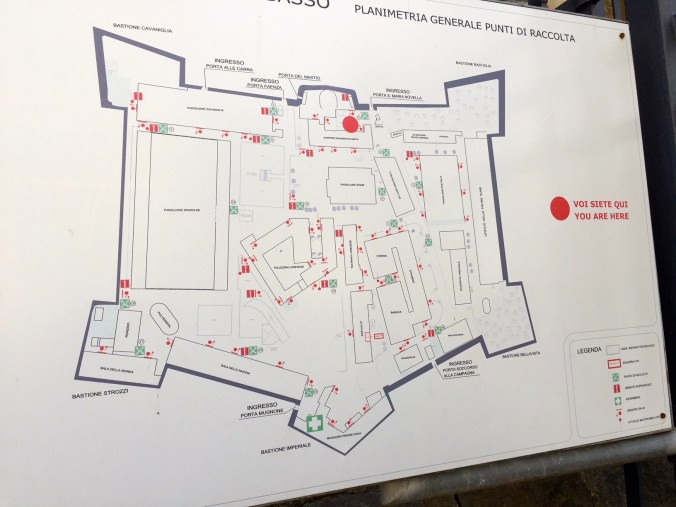
In the following picture,  you see one of the fort’s 5 entrances, the Porta Sta. Maria Novella, which is where I entered to begin my guided tour.

Screen Shot 2018-09-16 at 12.59.39 PM


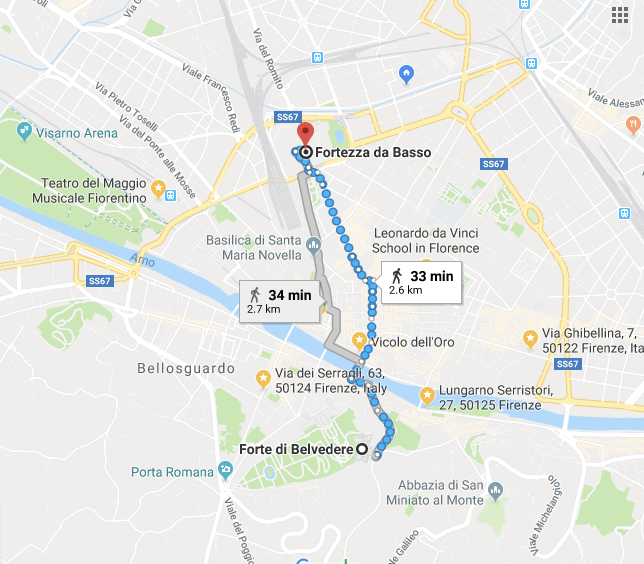
The official name is Fortezza di San Giovanni Battista (Saint John the Baptist, who was/is the patron saint of Florence). The more common name, Fortezza da basso, means in English “the fortress from below,” which indicates that the fort has a counterpart higher up.  And, indeed it does: the Forte di Belvedere (fort with a beautiful view) sits high up on a hill to the south of Florence. You can see the location and relationship of both forts here:

Screen Shot 2018-09-16 at 1.09.44 PM


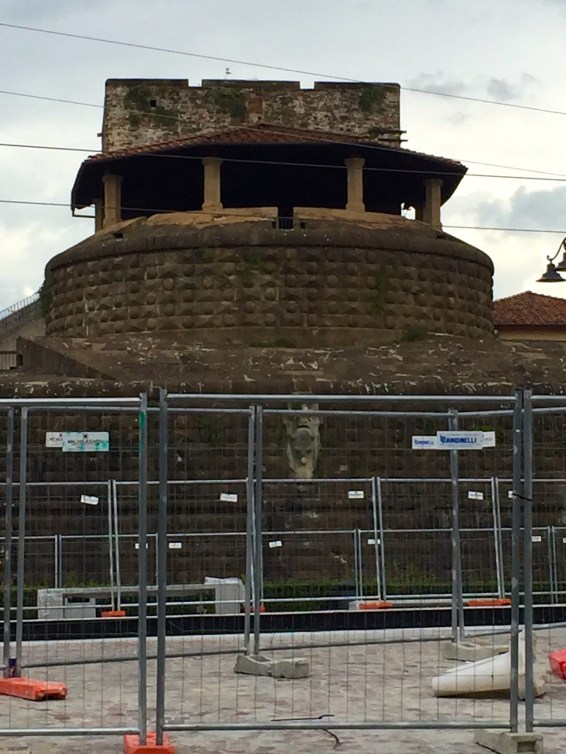
The fort is a very impressive military construction with tall, thick and strong walls,  dominated by a gloomy, massive tower. The tower here is not like those that are found on other major Florentine buildings. Towers were usually quite tall, and the fort’s tower is relatively short and squat.

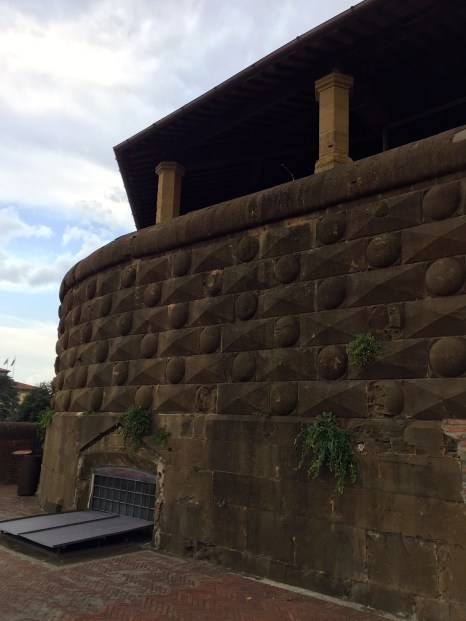
The Fortezza appears like a cyclopic building with powerful bastions bristling with turrets, and full of narrow walkways, parapet walks and secret passages. The massive, extensive walls surrounding the fort are occasionally relieved with projecting stone ashlars, some of which are accented with round discs.

IMG_1599

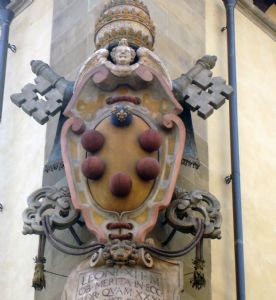
It is theorized that these discs might be a reference to the Medici coat-of-arms, with the 5 balls.

balls

The sophisticated military construction of the fort is a splendid example of the celebrated fortresses built by the Sangallo family. Florence’s Fortezza da Basso was built in record time in 1534, after the return to power in Florence of the Medici family after the dramatic seige of 1529-30.

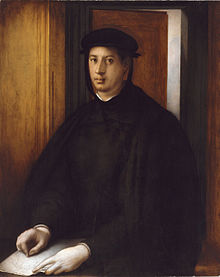
The Fortezza was designed by Antonio da Sangallo the younger, with the help of Pierfranceco da Viterbo, for Alessandro de’ Medici, the Duke of Florence. And, while it might not be the most beautiful structure in Florence, it is the largest historical monument in the city.

220px-Jacopo_Pontormo_056 Duke Alessandro de’ Medici


The Fortress, which was inserted into the 14th-century walls of Florence, was built under the growing threat of turbulent political upheavals. It was one of the very first Italian “citadels” and seems rather to have been built as a protection against the city’s inhabitants than from its external enemies.
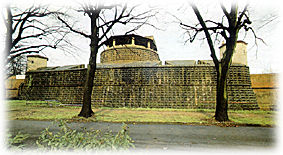
bastions of the Fortezza da Basso
View of the bastions of the Fortezza da Basso


Here are some of my pictures from within the walls of the fortress and leading up to the watch tower on the south side of the former military base:

IMG_1583IMG_1581

IMG_1576IMG_1577IMG_1578

Below are the stairs that lead up to the watch tower:

IMG_1579


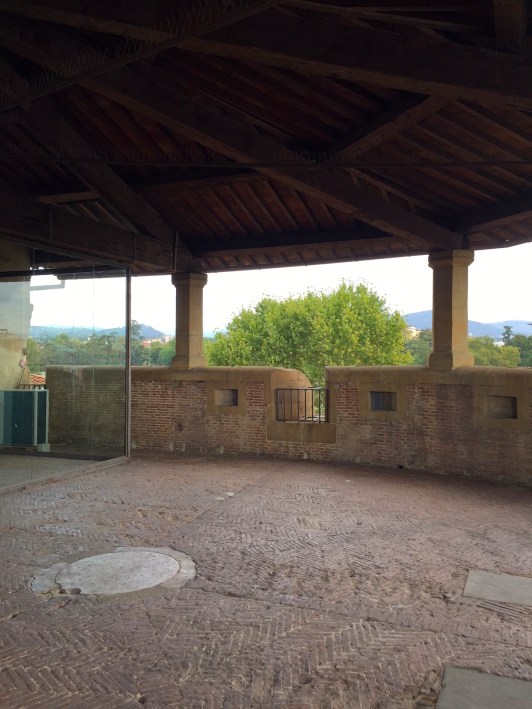
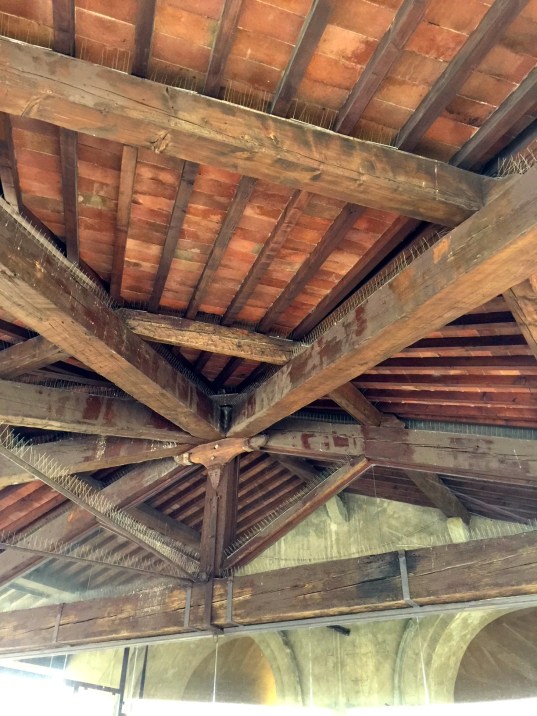
The next 3 pictures are taken from inside the tower:

IMG_1588IMG_1590IMG_1591


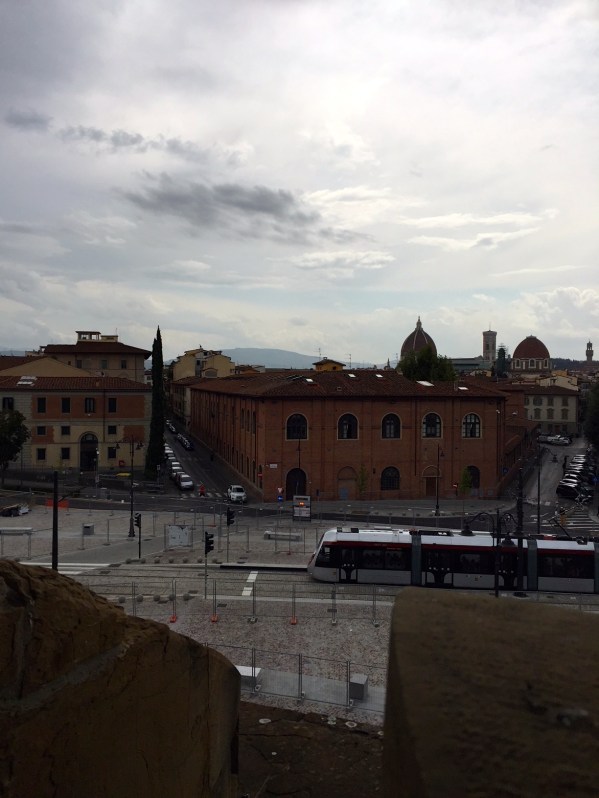
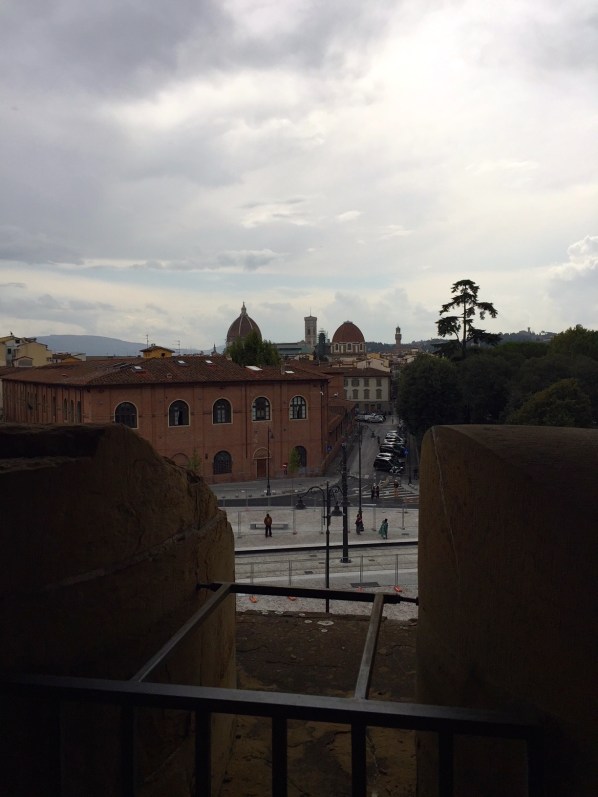
And here are the views of Florence as seen from inside the watch tower:

IMG_1597IMG_1595IMG_1592IMG_1589


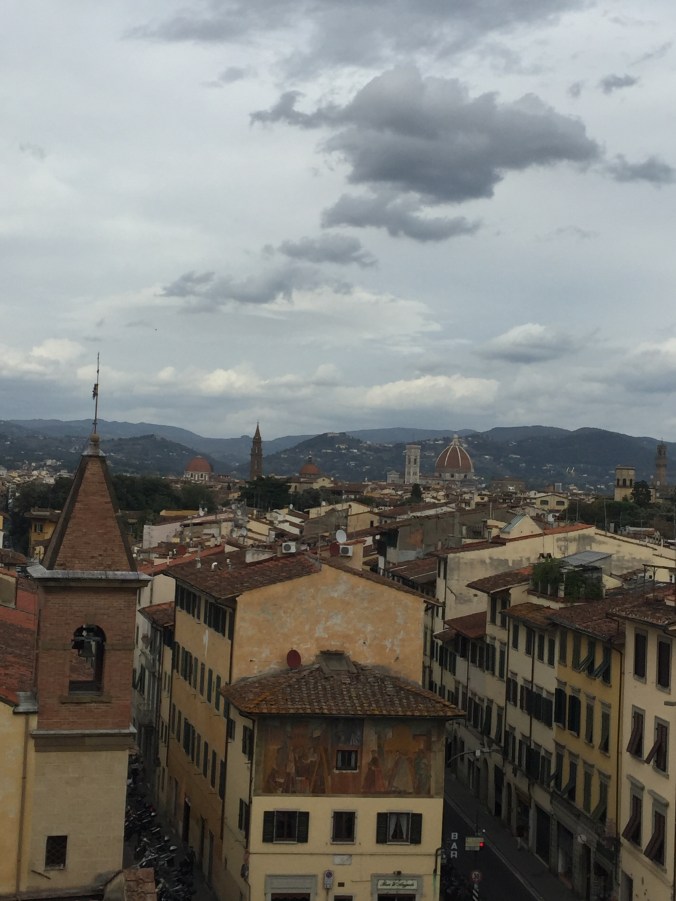
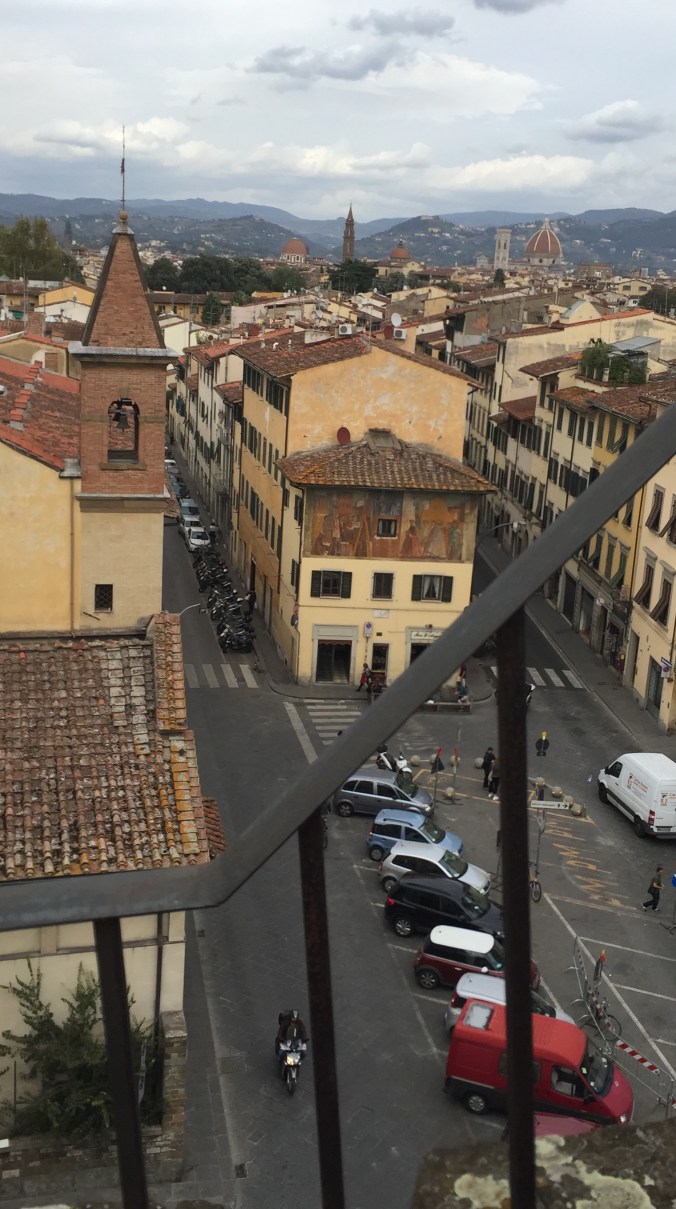
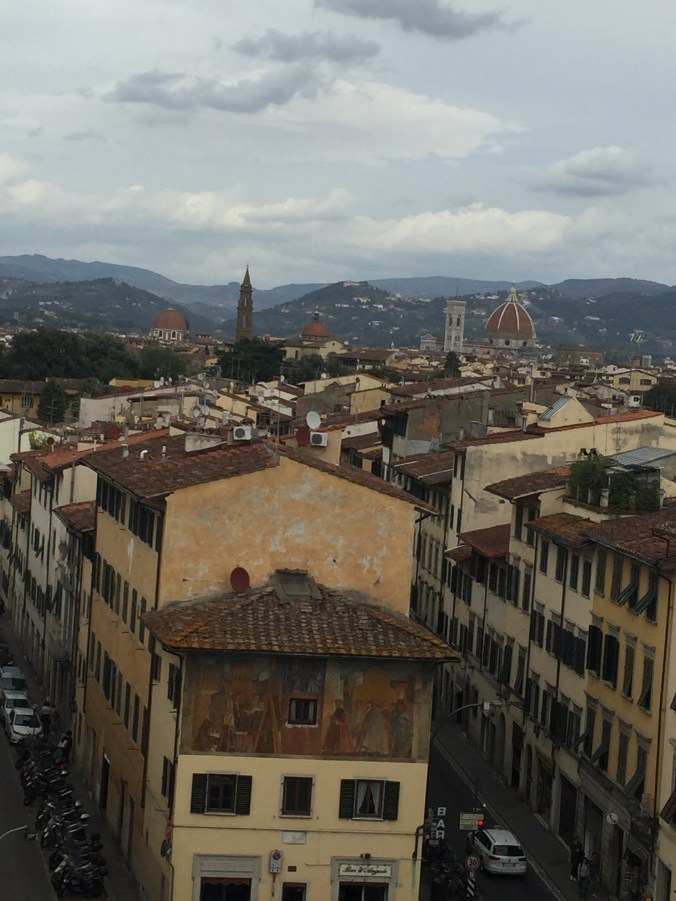
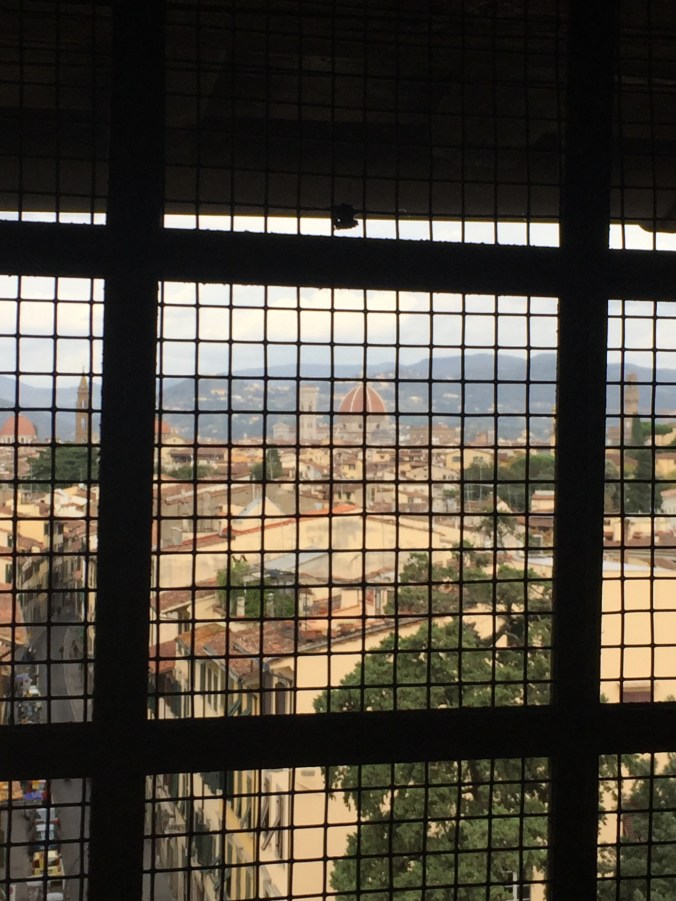
Once again, I was struck by just how small the city really is.  It is so obvious from way up high (not that this tower is that tall); the domes of San Lorenzo and the Duomo seem just a stone’s throw away.

Screen Shot 2018-09-16 at 1.00.11 PM

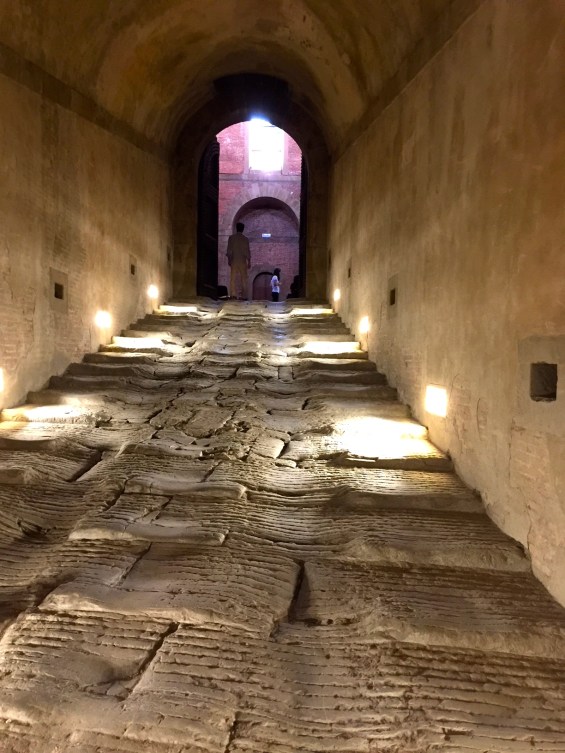
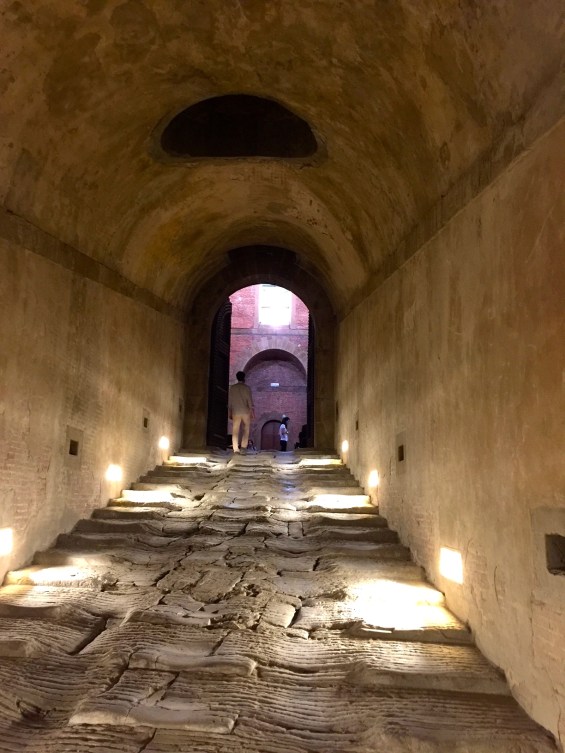
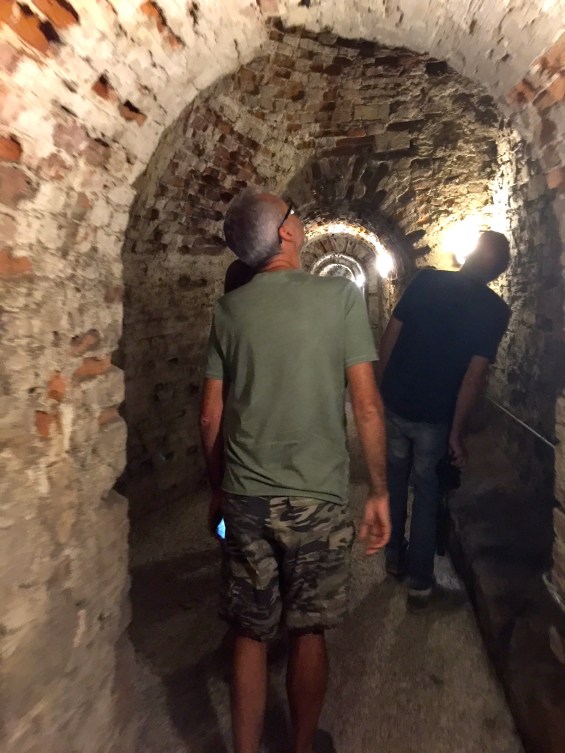
The guided tour of the tower was an incredible treat, but perhaps even more amazing was the fact that we also got to go under the fortifications of the south wall.  This Florentine fortress has its secrets and its curiosities. The most important ‘mystery’, yet to be verified and fully discovered, is a gallery which allegedly runs along the perimeter.  There is also the tunnel in a state of partial abandonment, which was used by defenders to counter enemy attacks. Legend has it that there is a secret passage from the gallery of Fortezza da Basso that crosses the city underground and leads to the Forte di Belvedere. Who knows, but I find that idea to be ludicrous.

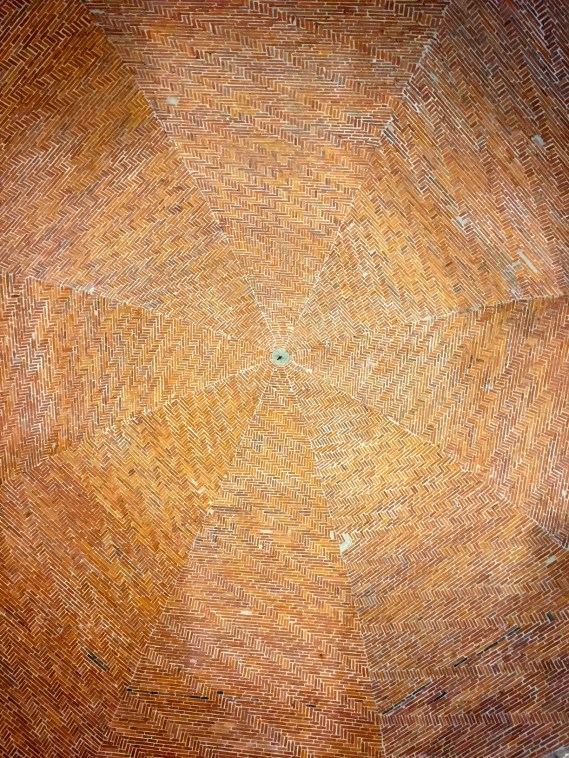
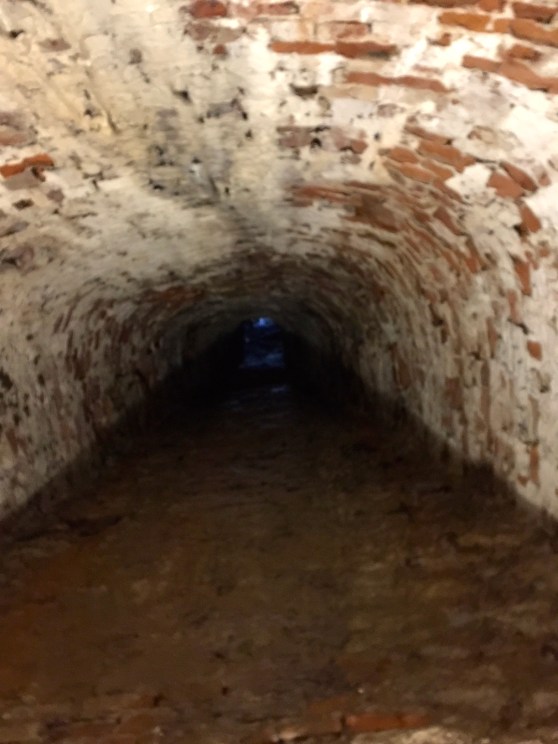
As a part of my guided tour, we got to visit the tunnels below.  This is an amazing fact; almost no one in the general public has seen this area. Here are my photos from our tour down below:

IMG_1573IMG_1572IMG_1566IMG_1561IMG_1558

The next 2 pix are looking up from the tunnel to light shafts:

IMG_1567IMG_1571

Another interesting curiosity about the fortress has to do with the later Grand Duke, Pietro Leopoldo, who knew about the American scientist, Benjamin Franklin, and his  theories. This duke and Franklin were contemporaries. Franklin’s studies made a huge contribution to the study of meteorology and electricity, and his invention of the lightning rod was noted by the duke. Not surprisingly, the Grand Duke wanted to protect his buildings in Europe, and in particular those with major stores of gunpowder. So he used Franklin’s recommendations and installed lightening rods.

Since 1967, Fortezza da Basso has been used as an exhibition center and, as such, it hosts a large number of Florence trade shows and conferences. The former military base is spread out over about 100,000 square meters, and about half of them are covered.

IMG_1556

Nowadays the Fortress is used for all of the most important Florentine exhibitions and fairs (from Pitti Immagine to the International Exchange of Congress Tourism, Florence Gift Mart to Eurocamper, the International Exhibition of Crafts to Prato Expo, etc.).
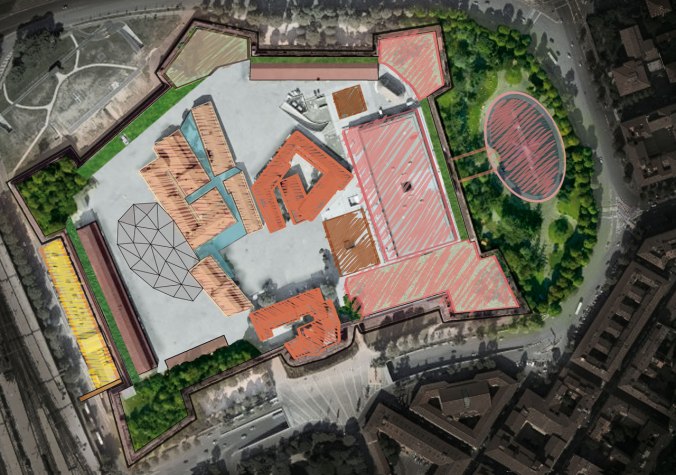
Built on three floors, the modern pavilion that is usually used for these events was designed by architect Pierluigi Spadolini and inaugurated in 1977. Standing in the center of the great square inside the Fortress, the Pavilion is surrounded by ancient buildings that are gradually being restored: the Theatrino Lorenese, the Palazzo delle Nazioni, the Arsenal. Also, ever since the 1966 flood, the large buildings on the southern side have hosted the restoration Laboratories of the Opificio delle Pietre Dure.

FORTEZZA_DA_BASSO2