A sliver of the Duomo visible from my classroom. I never tire of this building!


A sliver of the Duomo visible from my classroom. I never tire of this building!
The Duomo shimmers in the late October sunshine.
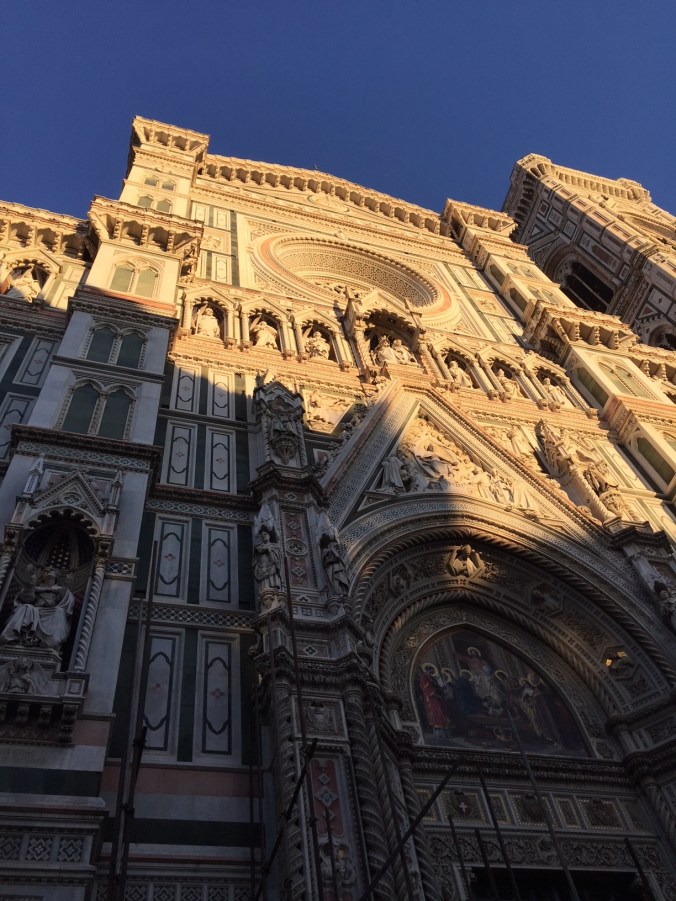
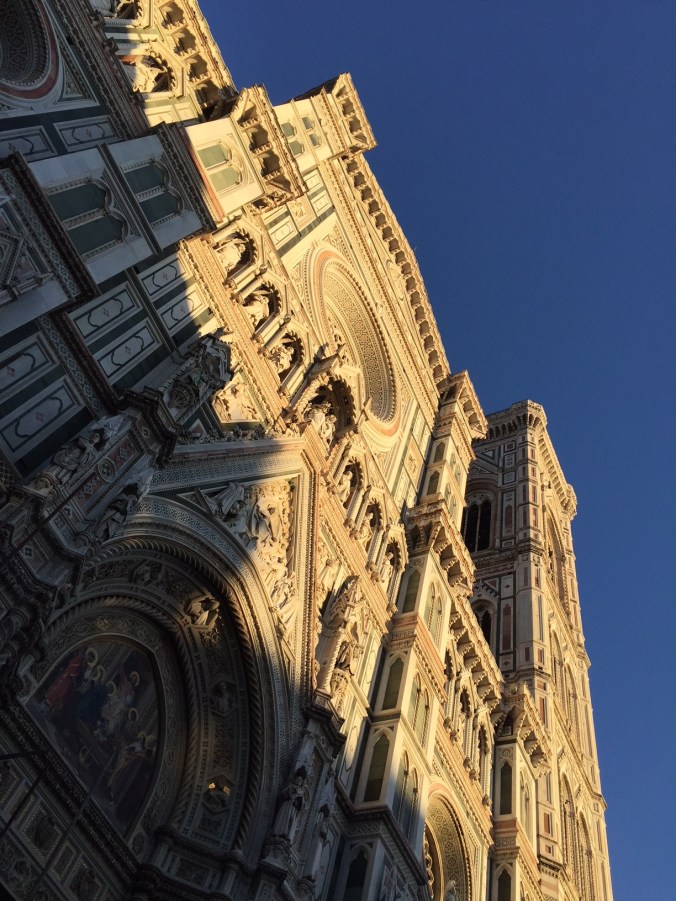
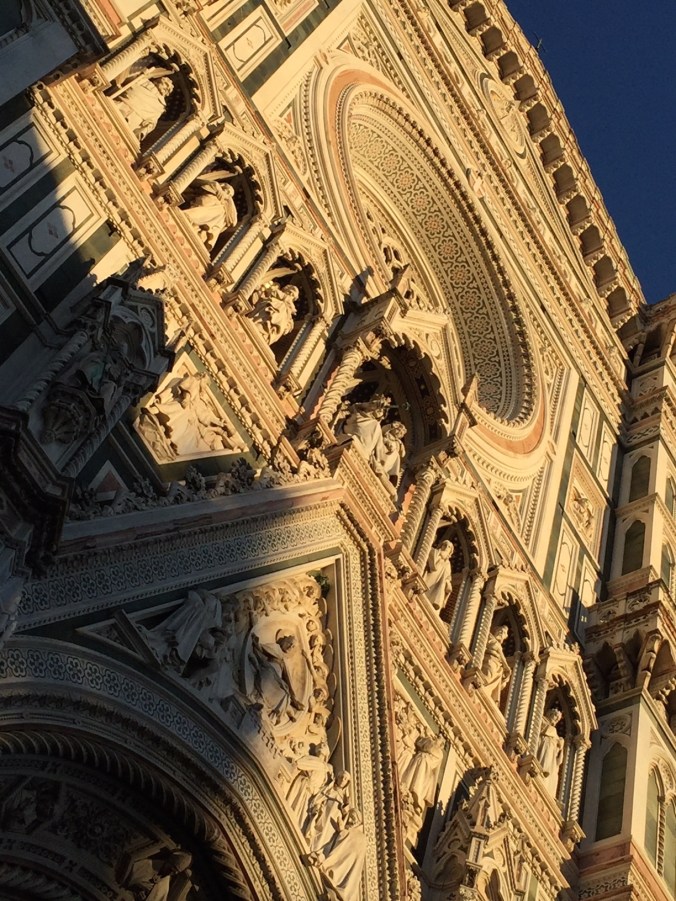
Ciao! Giotto’s campanile.
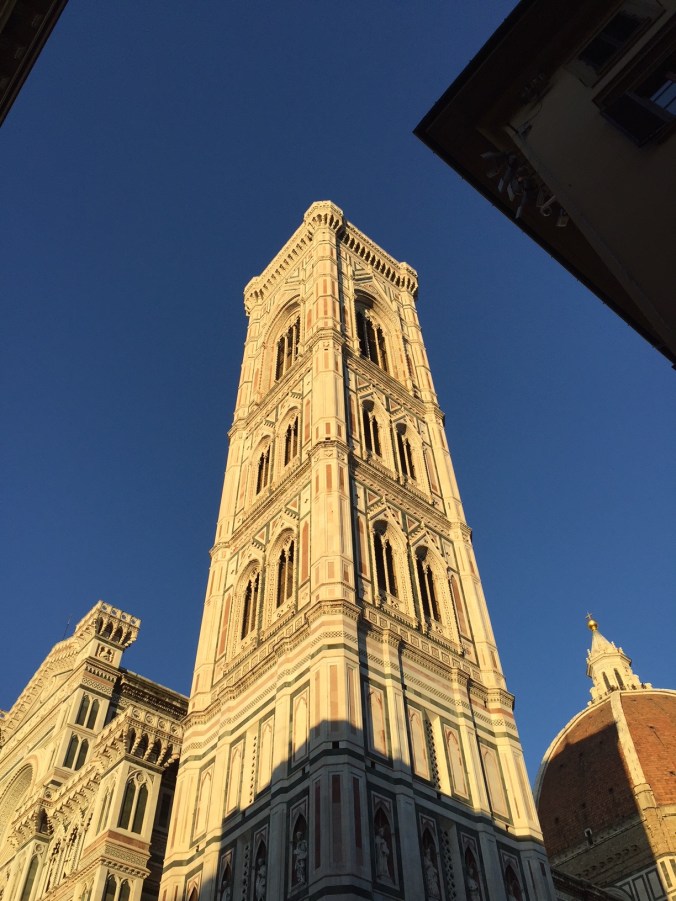
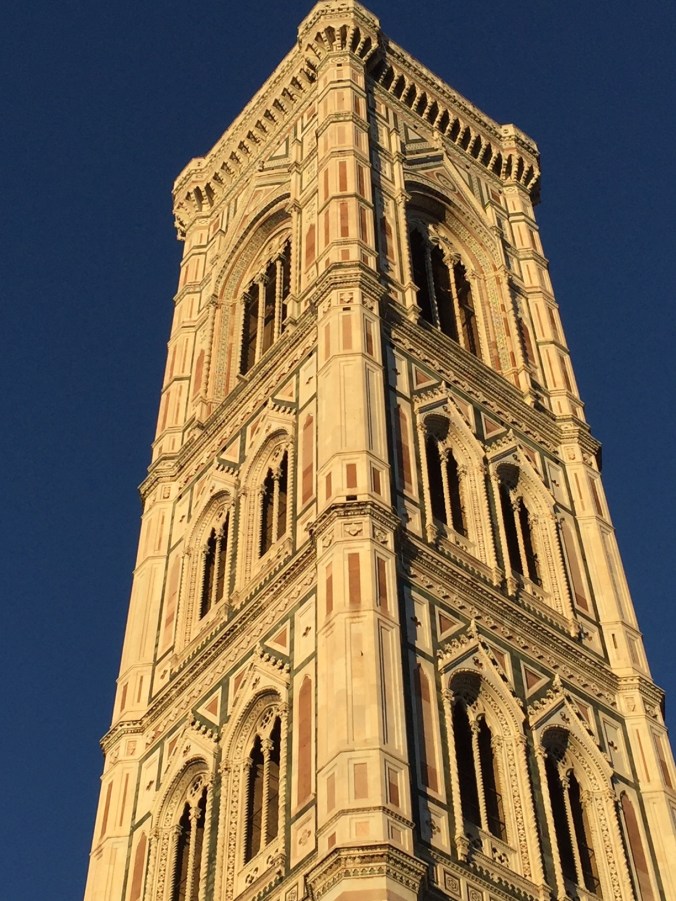
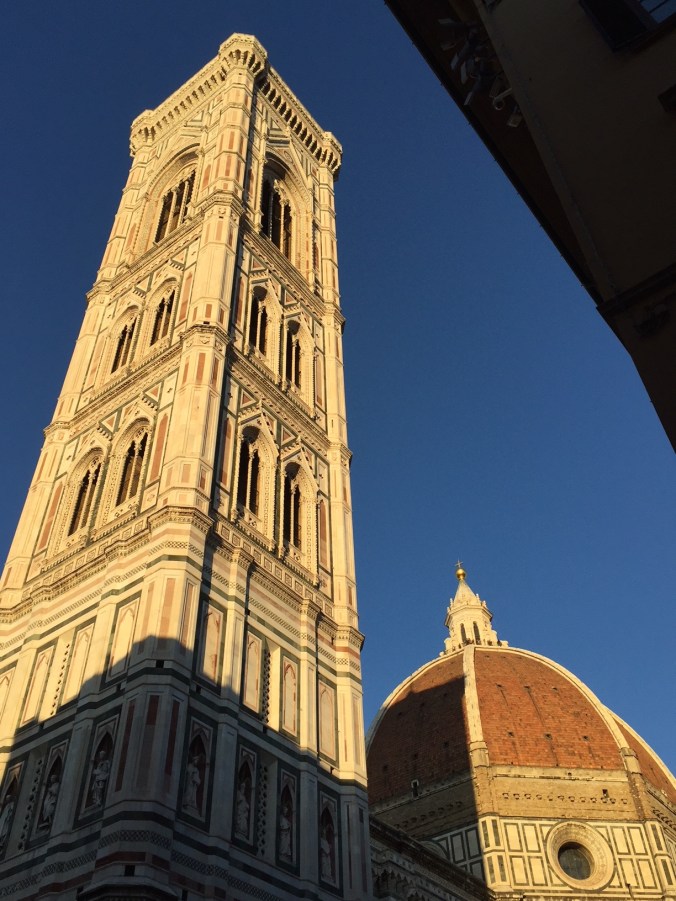
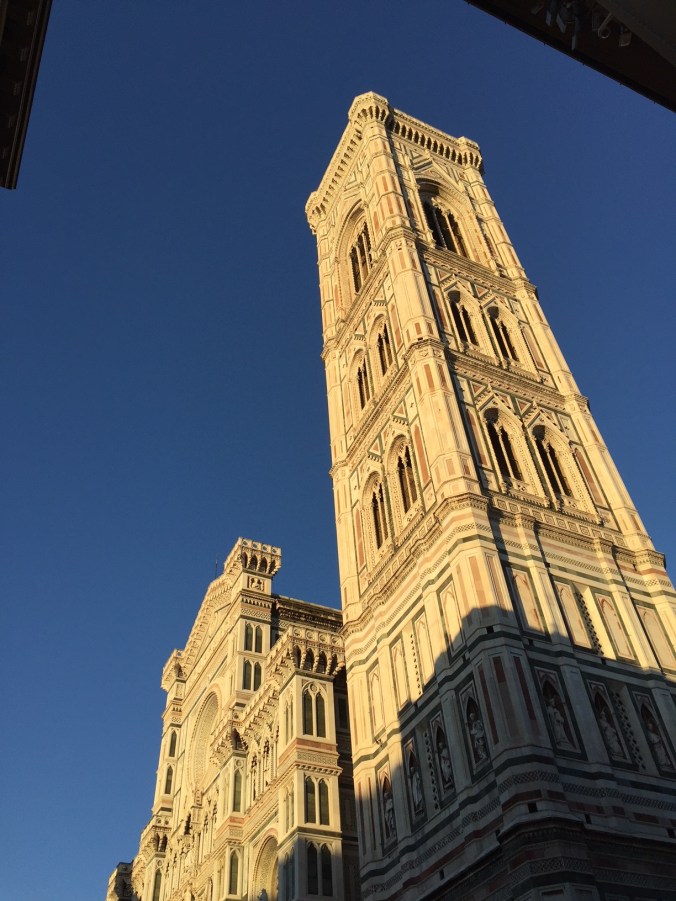
And, how about that Palazzo Vecchio?!!
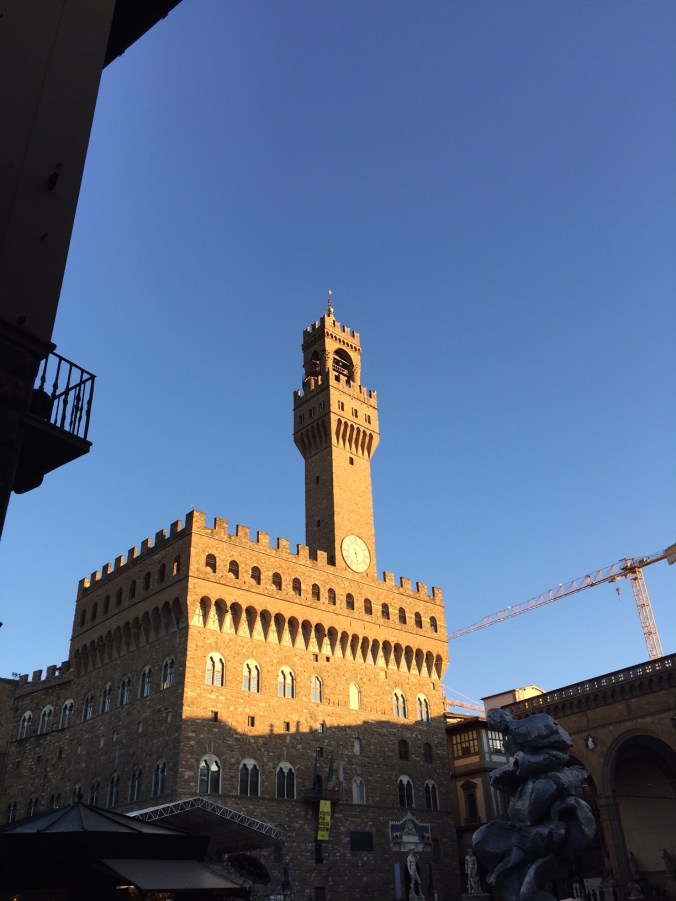


Fantastico!
Glorious!
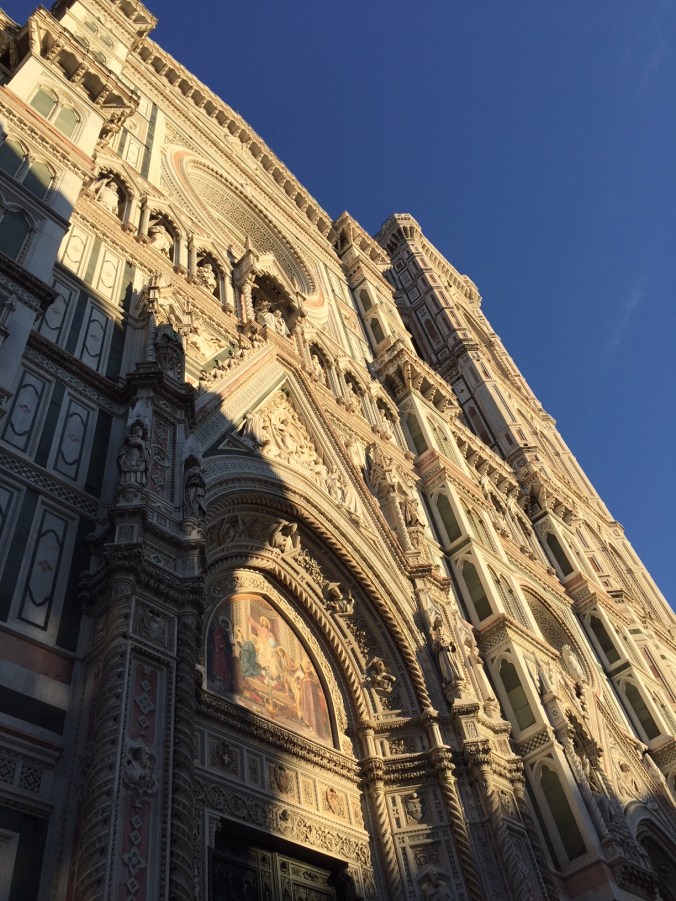
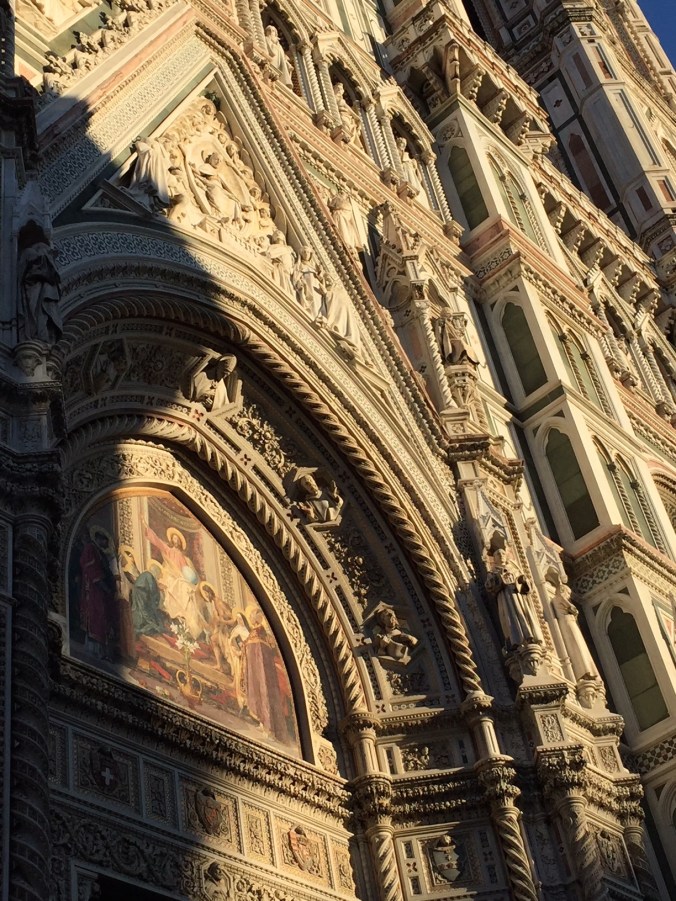
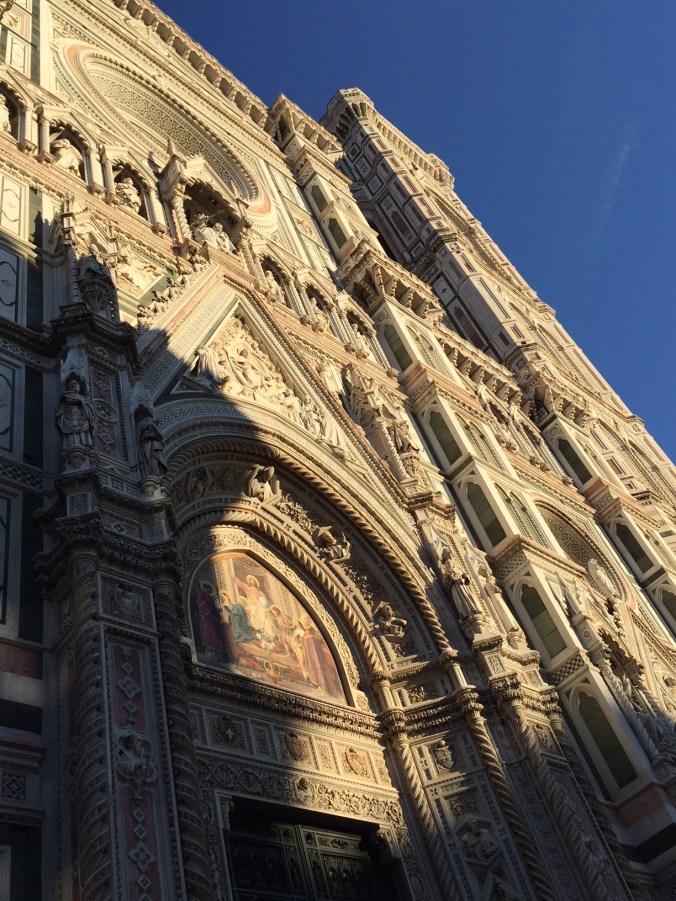
The highlights and shadows on the facade are truly stunning!
Here’s how an architect in Florence advertises her office. Pretty beautiful, no?

It’s clearly a class act!!

A while back I posted about this inscription on the arch on the south end of the 19th century Piazza della Repubblica. I’ve just come across additional info and wanted to update:
The inscription reads “L’antico centro della città da secolare squallore a nuova vita restituito,”
Translated to English says: “The old center of the city restored to new life after centuries of squalor.”
Isodoro del Lungo, a city councilor, wrote the inscription especially for the Arcone.
I sometimes feel as though I have run out of superlatives. I think I’ve used all of the big words that I know so many times in describing this miraculous land, that there’s nothing left.
And then there is Sirmione del Garda. I guess I’ll just start from scratch and use them all over again!

First, a map. Lake Garda, located in northern Italy (in the province of Brescia, in Lombardy) is the largest of the lakes in Italy and has a very peculiar, vertical shape.


And then, at the middle of the southern end of lake is a peninsula of land, also essentially vertical. At the north end of the peninsula is the charming village of Sirmione.

Sirmione is one of the most popular towns of all on the beautiful Lake Garda, with thousands of visitors flooding in each day to view the picturesque peninsula. Amazingly to me, it may not be the best known place to stay for a lake holiday in Italy, but with its castle and Roman ruins, not to mention its contemporary little village, it should be, because its got something for everyone.
We know that Sirmione has been settled since the Stone Age, with early finds showing that there probably was a small village of fishermen living in houses on stilts along the banks of Lake Garda.
Starting from the 1st C. BC, this area became a favorite resort for rich families coming from Verona, then the main Roman city in NE Italy. The poet Catullus praised the beauties of Sirmione and spoke of a villa he had there.
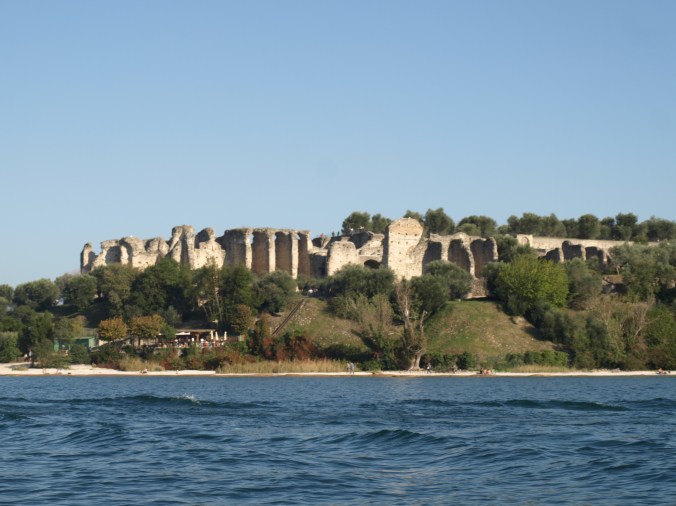
Rich Romans, for example, built holiday villas on the end of the peninsula, and one still exists: the so-called Grotte di Catullo. On the furthest point of the peninsula are these extant ruins of a patrician Roman villa. It was no doubt constructed for some rich family and includes a 3-story building, dating to c. 150 AD.
Although this extensive ruin goes by the popular name of the “Grotto of Catullus,” it is neither a grotto nor was Catullus still living (he died in 54 BC) when the villa was built. Today there’s a small museum at the site. The ruins are the most striking example of a Roman private edifice discovered in northern Italy, and had a rectangular plan and measured 167 x 105 m.
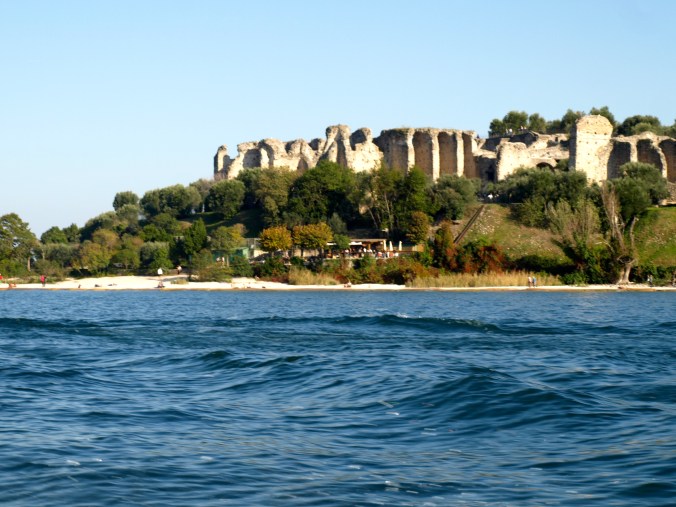
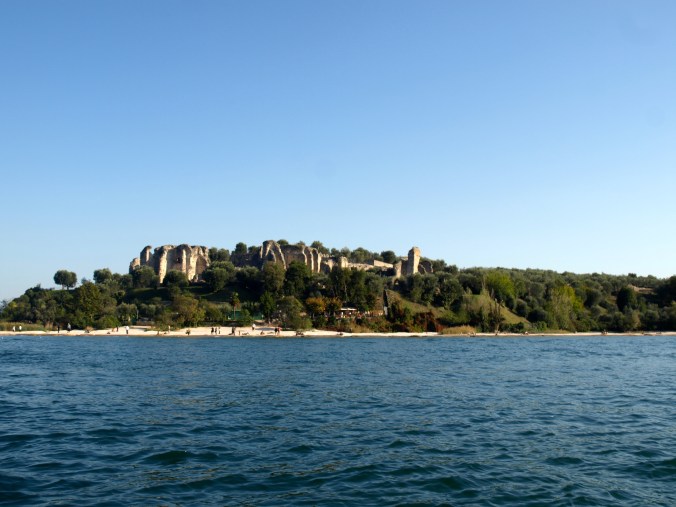
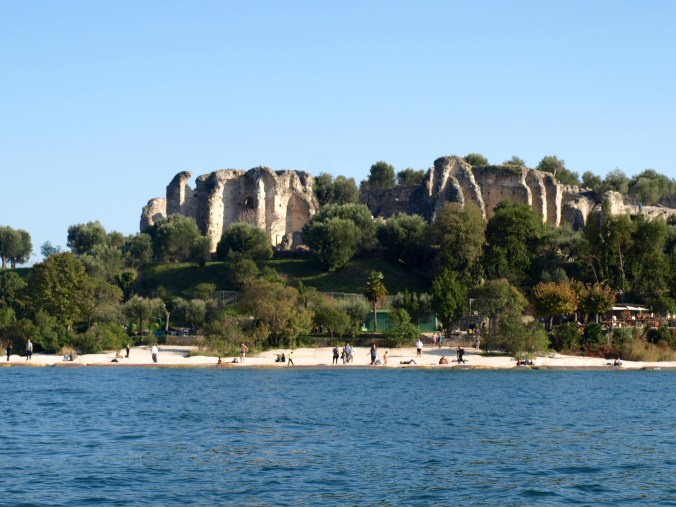
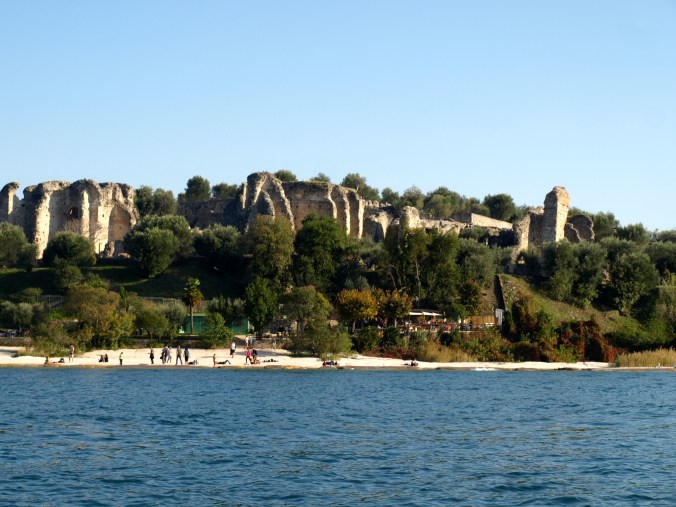
Moving forward in time, by around the year 1000, Sirmione was probably a free comune, but fell into the hands of the Scaliger by the early 13th century.
Since the town occupies such an important strategic point, the penisula was continually engulfed in the always turbulent (and sometimes hideous) history of northern Italy. It was invaded numerous times after the fall of the Roman Empire, was subject to the conflicts involved in the expansion of the Lombards, and was the site of the intricate struggles between the Guelphs and the Ghibellines in the Middle Ages).
The last of those struggles left Sirmione with its major landmark: the Scaliger Castle (its proper name is the Rocca Scaligera.)
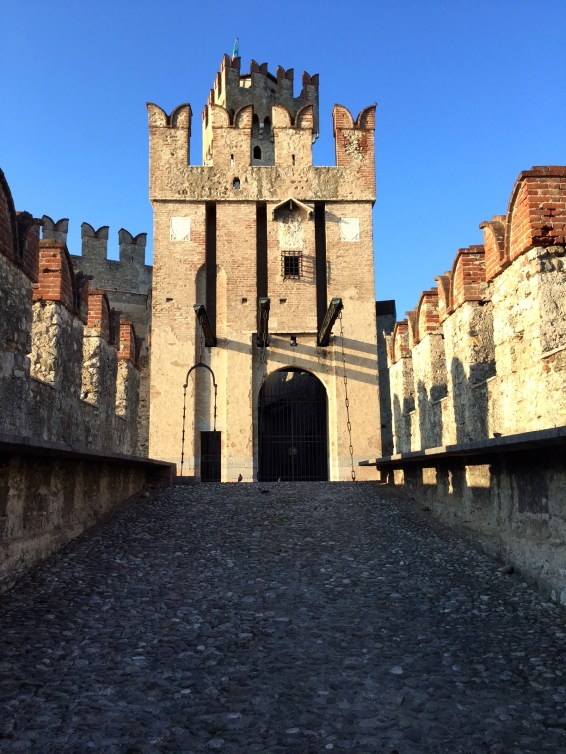
The Scaliger Castle is surrounded by water–as if in Venice– and was built in the late 12th century as part of the defensive network surrounding nearby Verona. By this time, Sirmione was home to the so-called heretical Cathars, who were to be driven out during the Guelph/Ghibelline struggle. In fact, 2,000 of the Cathars were burned at the stake in the Arena in Verona.
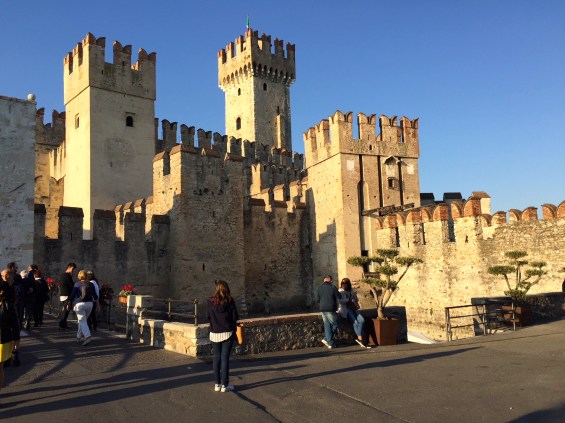
The Scaliger castle provides a rare example of medieval port fortification, and was used by the Scaliger fleet. The complex was started in 1277 by Mastino della Scala.
The walls on the inside were finished with plaster with graffiti, simulating blocks of stone.
The castle stands at a strategic place at the entrance to the peninsula. It is surrounded by a moat and it can only be entered by two drawbridges. The castle was established mainly as a protection against enemies, but also against the locals.
The main room houses a small museum with local finds from the Roman era and a few medieval artifacts.
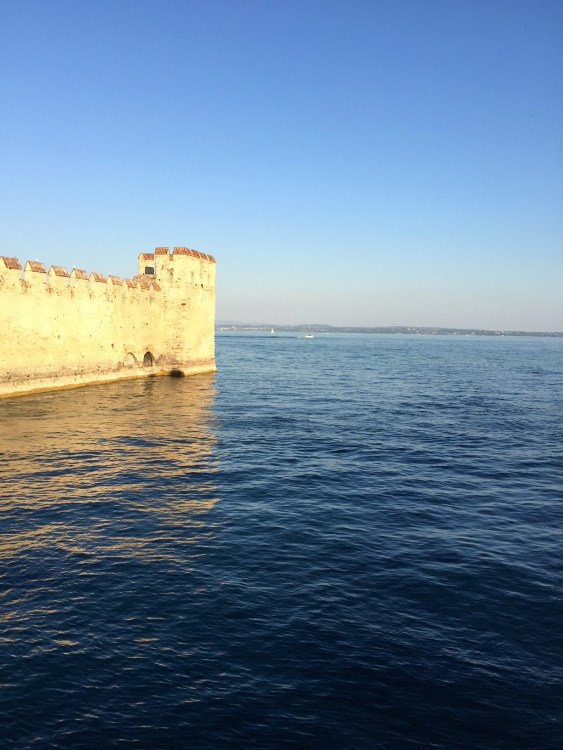
Below are shots of the extensive castle complex taken from the lake:
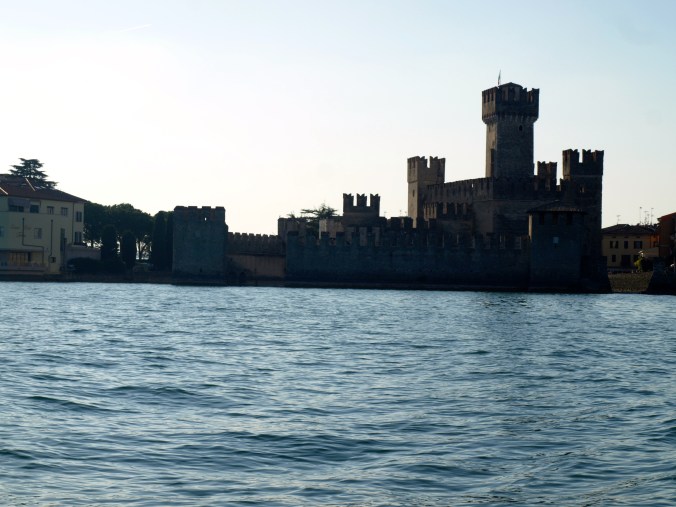
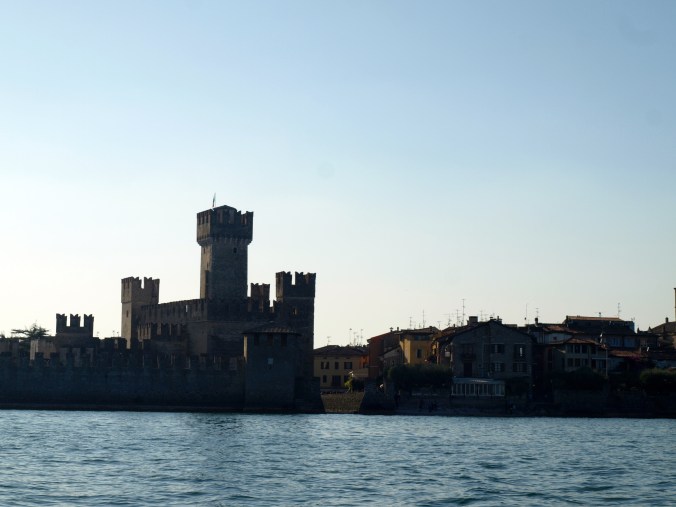
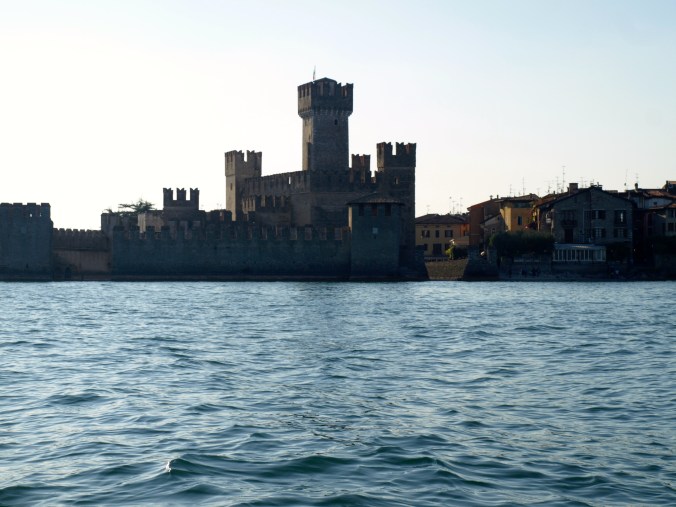
The castle was maintained and extended as the Veronese sought to safeguard the area from its Milanese rivals. Later Sirmione was under the control of the Venetian inland empire from 1405 until the end of the 18th century. It was acquired by the Habsburg Empire in 1797. It became a part of the Kingdom of Italy in 1860.
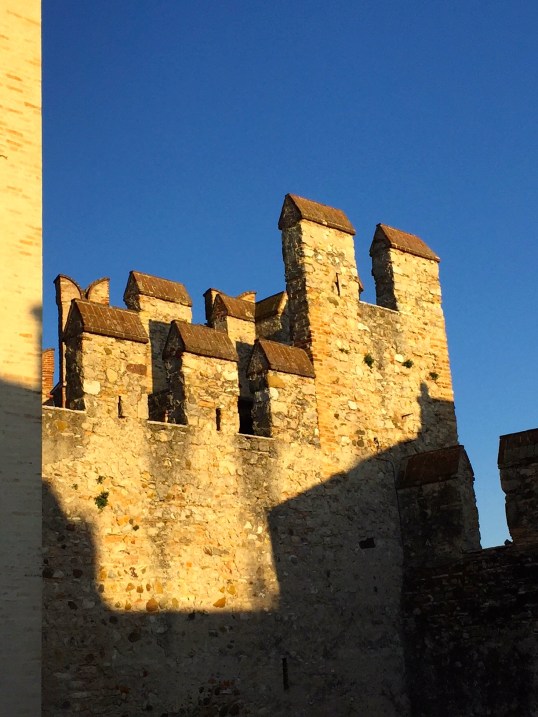
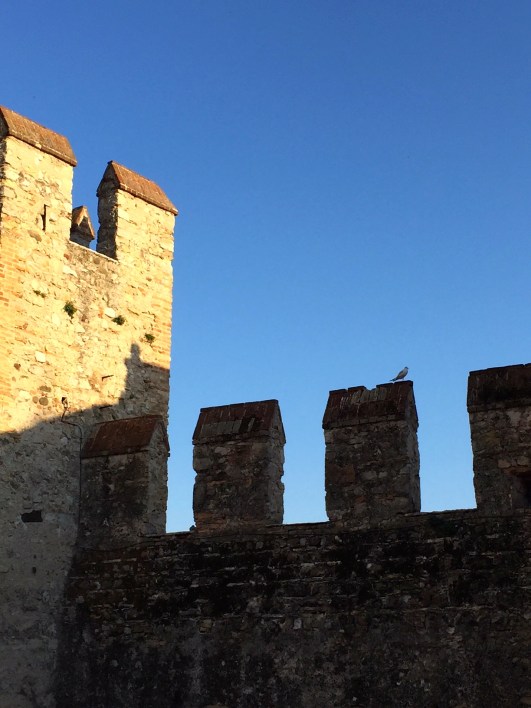
In the castle complex, we have the typical Ghibelline swallowtail merlons and the curtain-walls (with three corner towers) in pebbles alternating with two horizontal bands of brick courses.
Although its strategic position in the southern end of the lake, and the defensive qualities of the peninsula, meant that it was of military importance over the years. But the beauty of the setting also meant that it was – and still is – a popular place for recreational destination. After the fall of the Venetian Republic, Sirmione was more sedate and its fortunate citizens were able to concentrate their focus on the fruit orchards, olive groves, and lake fisheries.
Here are just a few pictures of the pleasures of the amazingly picturesque village itself:
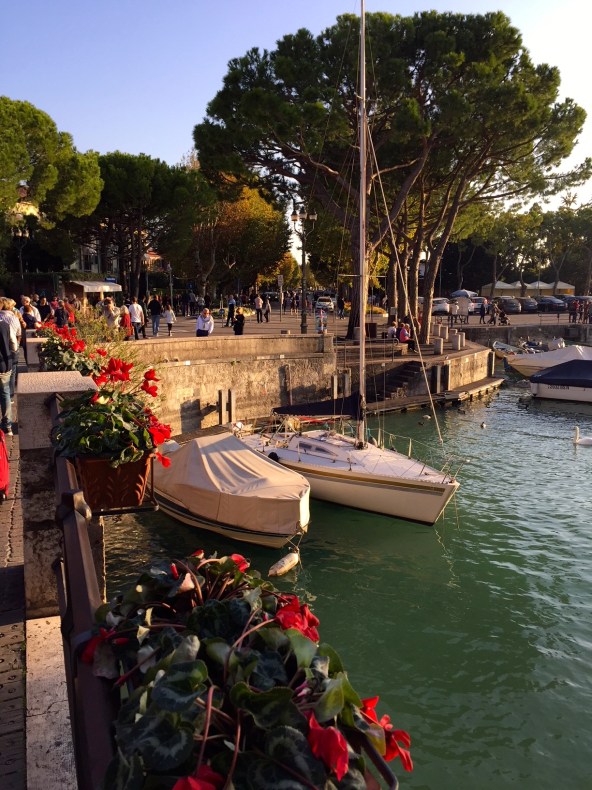


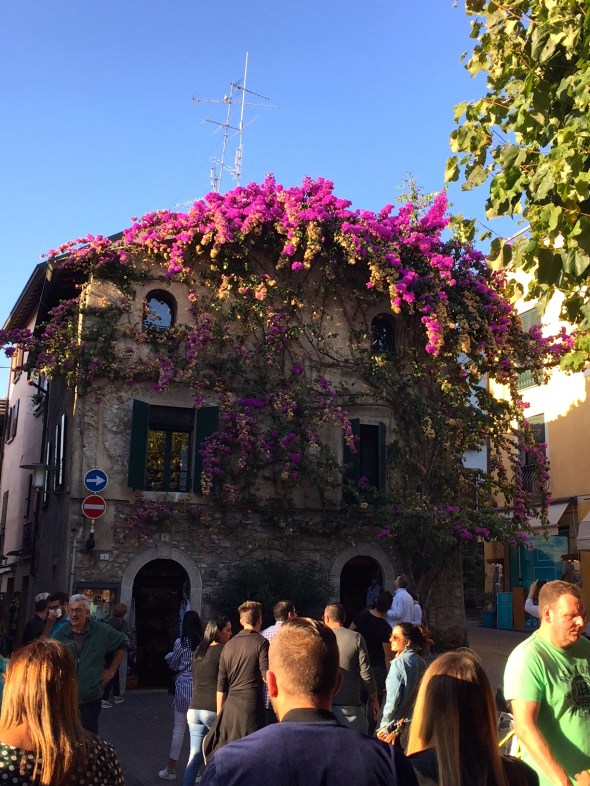
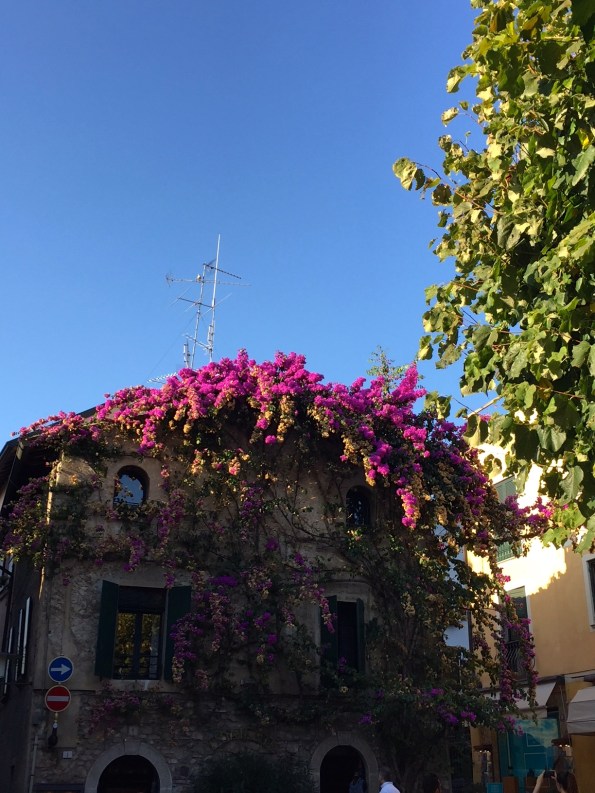
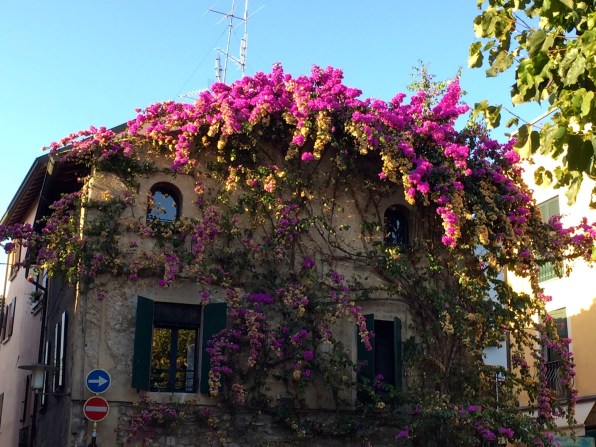
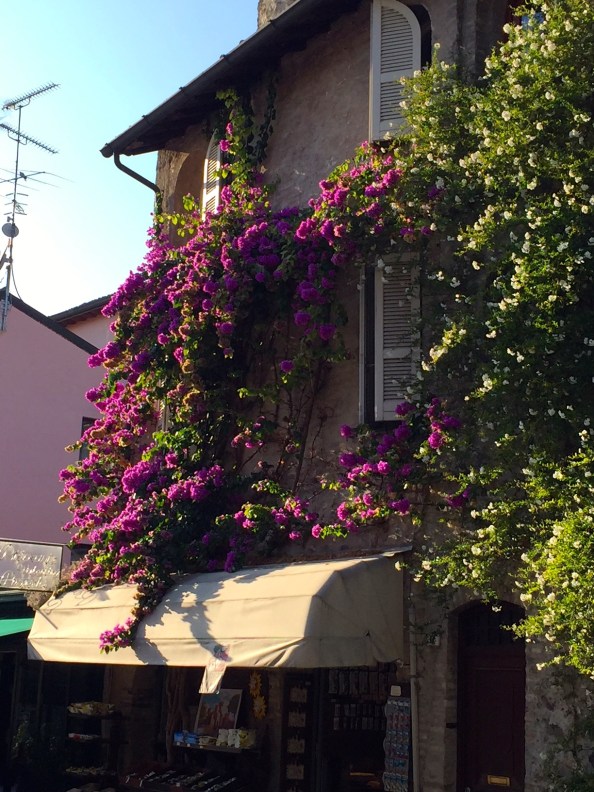
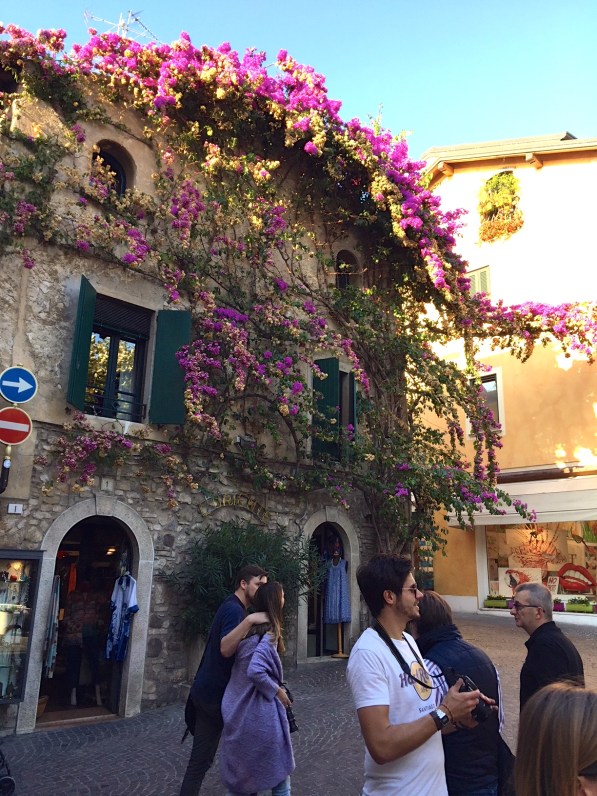
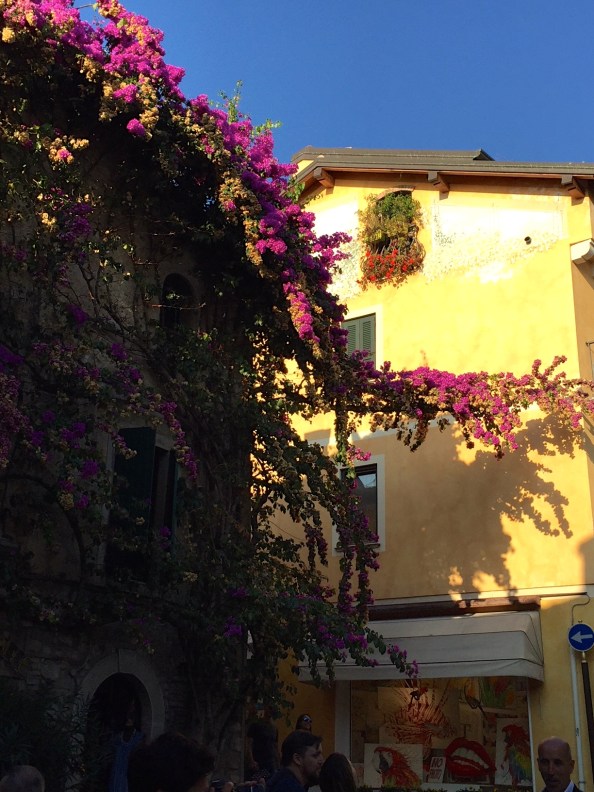
As if Sirmione wasn’t already blessed enough with an amazing location, it also has thermal baths. The town is famous for these thermal springs. The Terme di Catullo uses the water that bubbles out of Lake Garda on the northeast shoreline area.
In the late 19th-century, a diver managed to insert a metal pipe into a rock near the underwater hot-springs, and this allowed the diversion of the naturally heated water to the northern end of the peninsula. At that time, it was also discovered that the Roman Period inhabitants had already discovered and diverted (also through metal pipes) the thermal springs, and in fact, the so-called Grotto of Catullus may have been a bathhouse, not a villa. At any rate, the thermal water, which is mineral rich and naturally heated to 70 degrees Centigrade when it leaves the underwater rock, is now used for health treatments in two of the thermal baths and spas on the peninsula.
If you look hard, you can see the bubbles coming up through the water. I was on a boat and we were hovering over the underwater hot springs:

And finally for today, the Villa owned by Marie Callas:


What are you waiting for? Go to Sirmione!
I walk by or through the Piazza della Repubblica in Florence at least once a day, sometimes many more times.
On a particularly fine day, such as today about noon when I took this picture, (I mean, look at that blue sky! and this photo wasn’t photoshopped, I promise!) the inscription above the impressive arch on the south end of the piazza stands out and demands to be noticed.

Translated, it tells us: The ancient center of the city / restored from age-old squalor / to new life.
The context for this bold announcement is that both the arch itself and the inscriptions speak to the 19th century re-ordering of this remarkable and very hallowed city space.


By the medieval period, the area looked something like this (Piazza del Mercato Vecchio, by Giovanni Stradono (Palazzo Vecchio, Sala di Gualdrada):

What was once a Roman forum was now a commercial center of the city, serving as a lively meeting place and home to the market. Like other Italian towns, Florence developed certain city spaces intended for precise functions; the Piazza del Duomo, for example, was where religious affairs took place and another key area in the city, known then as the Piazza del Comune, (now known as the Piazza della Signoria), was for political and civic affairs.
We know what the area looked like thanks to contemporary prints, paintings, and drawings owned by the Museo di Firenze com’ era. Later painters, such as Telemaco Signorini, depicted with melancholy the old part of town that soon disappeared.

Now, we fast forward to the 19th century.

Unfortunately, a plentiful number of works of art and architectural fragments were sold through the antiquarian market. Only some of them could be saved for the Museo nazionale di San Marco. Other fragments allowed the founding of the likes of the Museo Bardini and the Museo Horne. Vasari’s Loggia del Pesce, which had been a part of the market area for 400 years, was fortunately saved. It was dismantled and reassembled in the Piazza dei Ciompi. It is still there today, out of context of course, but at least it exists.
In September of 1890, with many of the future palazzoni building sites still empty, the Piazza della Repubblica was formally inaugurated. The palazzi that rose in the new square followed the eclectic fashion of the time and were planned by well-known architects including Vincenzo Micheli, Luigi Buonamici, Giuseppe Boccini.
Following the transformation, the square became a kind of recreational center for the town; it was built up with the refined palaces, luxury hotels, department stores and elegant cafes, including the Caffe’ delle Giubbe Rosse where famous scholars and artists met and debated (argued).
So, now we return to the arch, which was meant to be a triumphal arch, designed by Micheli and inspired by the Roman monuments in Rome as well as by the most courtly Florentine Renaissance architecture. The decorative elements of the arch veer far from Roman or Renaissance models. The proclamation on the arch, with which I started this post, is said to have been taken from a literary source, possibly by Isidoro del Lungo.
I often think Italy is too popular for her own good. When I pass through the piazza del Duomo in the middle of the day, on a nice day I can barely move through from the sheer numbers of tourists. The trash trucks and street washers (a type of vehicle) travel up and down the streets all of time, picking up after the people.
On the flip side, Italy reacts in general to the immense tourist population by constantly opening new sites to appeal to them. As someone who has visited Italy a lot over the past 30 years, I am constantly amazed when I learn new archaeological sites, for example, are newly available to be visited. As below.
And she said Amen and Hallelujah.**


** Paul Simon, “you can call me Al”
Yesterday I had the great pleasure of attending a performance of La Boheme at Florence’s ultra modern opera house. It was a fabulous experience!

Soon I’ll post about the performance, but for now I want to focus on the building itself.

Unusual for an Italian city, the new opera house complex includes green space.


 ‘
‘
Florence is, of course, the city where opera was born in 1597 and where opera has been performed in numerous venues including, for many years, a functional but ungainly theater called the Teatro Comunale. When Matteo Renzi was mayor of Florence from 2009 to 2014, among his projects was this new opera house and concert hall, not far from the Teatro Comunale.
Renzi, who became prime minister of Italy at the age of 39, was an audacious and controversial leader, but there is no denying that he effectively set the national discussion on a new course.
Before Renzi became Prime Minister, some laws were passed that tried to reform arts funding and administration in Italy. These laws require, in exchange for federal money, more administrative control from Rome of some of the fondazioni—the entities that run the 14 important theaters in Italy that present opera.

The New Florence Opera House, is one of the most innovative in all of Europe. After years of deliberating the need to provide Florence, and its renowned opera festival Maggio Musicale Fiorentino, with a modern venue, at last this new complex took shape.
The complex is comprised of three large and spacious halls: the opera hall, built with special walls that direct soundwaves towards the audience without echoing; the concert hall which holds 1000 seats; and the spectacular rooftop amphitheater, which offers 2000 outdoor seats with an captivating panoramic view of the city.

With its stark, modern structure and cutting-edge technologies, the new opera house is one of the most modern opera houses in the world, uniting modernity and antiquity, vision and tradition, in the city that gave birth to the first opera in the 1600s.


For this reason the opera house is open and accessible to the public during daytime hours. The bookshop and café will be always open and families can go for a walk, wander among the fountains, or meet with friends on the grounds.
The project was undertaken by the Presidenza del Consiglio dei Ministri with funds made available (150 million Euro grant) for the celebration of the 150th anniversary (in 2011) of the unification of Italy and with contributions from the Regione Toscana and the city of Florence. A 255 million Euro public investment partially financed the ambitious project of the New Florence Opera House which represents.
The theater also boasts one of the most technologically advanced scene-changing mechanisms in the world that enables rapid scenography changes so as to allow even multiple and simultaneous performances in the same day, increasing the theater’s potential.
Credits
Presidenza del Consiglio di Ministri
Executive Officer Dr. Elisabetta Fabbri (Architect)
Project Manager Dr. Giacomo Parenti (Engineer)
Director of Works Dr. Giorgio Caselli (Architect)
Contractors A.T. I : S.A.C Spa e I.G.I.T Spa
Project Coordinator Dr. Angelo Reale (Engineer)
Executor Co-ordinator of the project and its operative phases Dr. Angela Ranieri (Engineer)
Design
Architects Studio A.B.D.R – Roma
Structural Design Italingegneria – Roma
Systems Design Enetec – Roma
Consultants
Acoustics Müller – BBM Monaco
Stagecraft Biobyte
In Florence, I believe, one of the problems is that despite the city’s history with opera, it is not widely popular with local people and with the millions of visitors who come here for days of intensive touring of museums full of the masterpieces. And with the old and new theaters slightly out of the heart of tourist traffic, no one walks past them as part of a stay here.
Construction on the new theater (based on designs by Paolo Desderi) began in 2009 and it was inaugurated on December 21, 2011 so that it could be said to have opened in the year of the 150th anniversary of the Unification of Italy. It was quickly closed after one concert as it was nowhere near complete. It has had a couple of more “openings” and its official one was on May 10, 2014.
 get back, lauretta!
You must be logged in to post a comment.