
Architecture
Firenze
Basilica Santo Spirito, Firenze
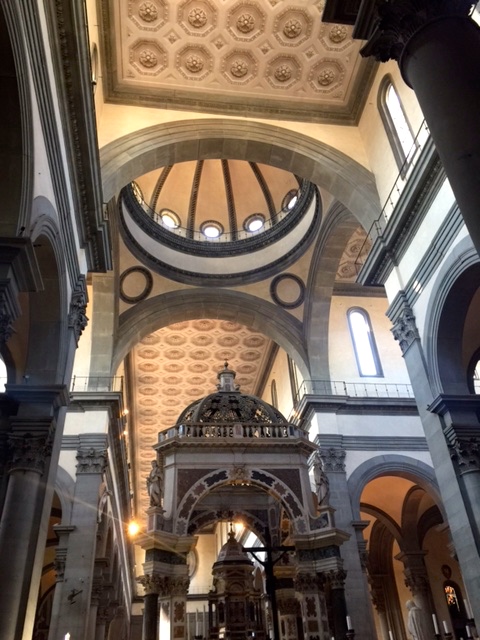
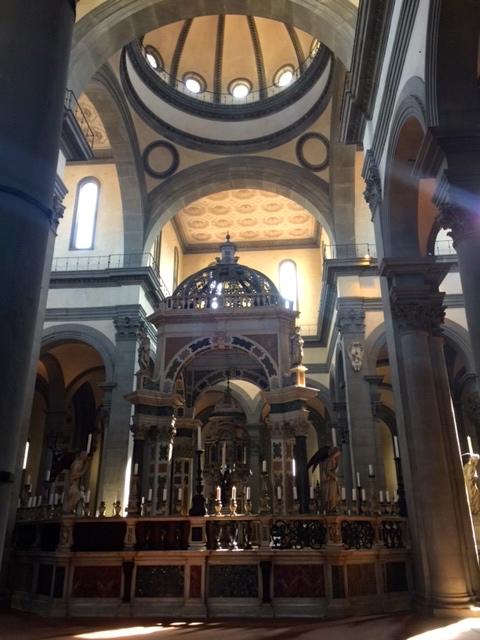
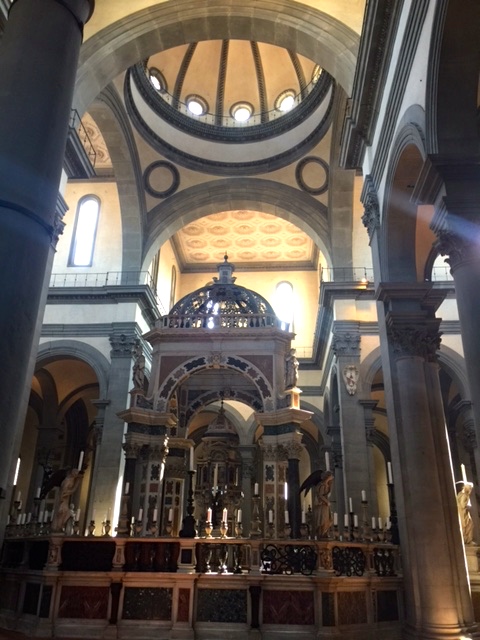
Brunelleschi, Michelangelo and many other important artists have major works within this Renaissance architectural masterpiece in the Oltrarno that is so easy to miss. The church’s facade is so unimposing, it is almost invisible.
But step inside and behold: Brunelleschi’s lovely basilica.

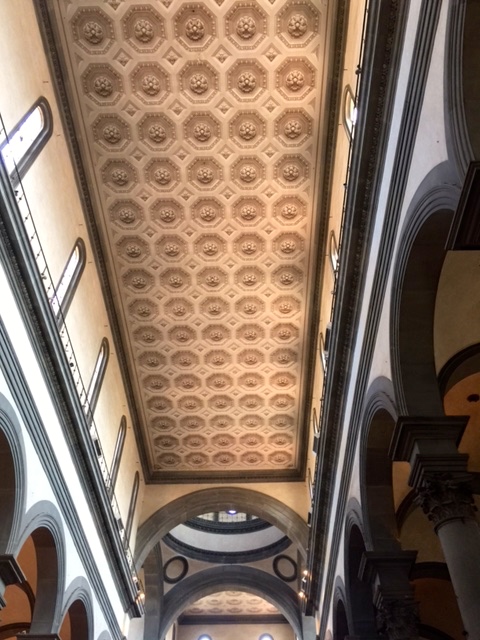
Brunelleschi began designs for this interior as early as 1428. The first pillars to the building were delivered in 1446, ten days before his death. After his death, his plans for the church were carried on by his followers Antonio Manetti, Giovanni da Gaiole, and Salvi d’Andrea; the latter was also responsible for the construction of the cupola.
Unlike the Basilica of San Lorenzo, where Brunelleschi’s ideas were thwarted, his designs were carried through here with some degree of fidelity, at least in the ground plan and up to the level of the arcades.
The Latin cross plan was realized and the contrast between the nave and the transept, that caused such difficulty at S. Lorenzo, was here also avoided. The side chapels, in the form of niches, all the same size and 40 in number, run along the entire perimeter of the basilica.
Brunelleschi’s facade was never built and left blank. In 1489, a columned vestibule and octagonal sacristy, designed by Simone del Pollaiolo, known as Il Cronaca, and Giuliano da Sangallo respectively, were built to the left of the building. A door was opened up in a chapel to make the connection to the church.
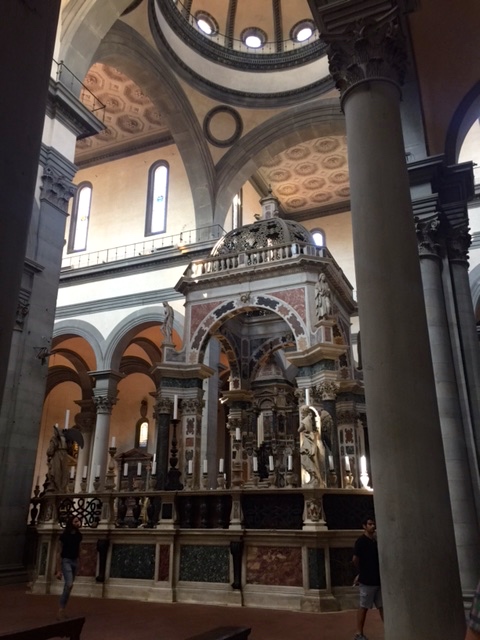
Dominating the interior of the basilica is a Baroque baldachin with polychrome marbles, by Giovanni Battista Caccini and Gherardo Silvani, and placed over the high altar in 1601.
The church remained undecorated until the 18th century, when the walls were plastered. The inner façade is by Salvi d’Andrea, and has still the original glass window with the Pentecost designed by Pietro Perugino. The bell tower (1503) was designed by Bacio d’Agnolo.
The exterior of the building was restored in 1977-78.

The Augustinians had begun building the church and the convent in 1252. It was originally dedicated to Mary, All Saints and the Holy Spirit, changing by the end of the century to Mary, the Holy Spirit and Matthew.
The churches and convents of various mendicant orders were constructed with the financial support of the commune; the same is true for Santo Spirito beginning in 1267, and then again from 1292 to 1301.
The convent of S. Spirito became a center of scholarly activities and was recognized as Studium Generale of the Augustinian order in 1284. The first Rule and Constitutions of the Augustinians were approved in 1287 by the general chapter of the order that was held in Florence.

Santo Spirito was associated with the early humanism in Florence. One of the groups, led by Bocaccio, gathered there in 1360s and 1370s. Upon his death in 1375, Bocaccio bequeathed his library to the convent.
In the 1380s and early 1390s another circle of humanists met daily in the cell of Luigi Marsili (1342–94). Marsili had studied philosophy and theology at the Universities of Padua and Paris. He came into contact with Petrarch at Padua in 1370 and later became a friend of Bocaccio. This group included Coluccio Salutati (1331-1406), Chancellor of Florence from 1375. He soon became the central figure of the circle.
The most important of Salutati disciples was Leonardo Bruni (1370-1444), a future Chancellor of Florence. Another member of the circle was Niccolo de’ Niccoli, a humanist and an associate of Cosimo de Medici.

It was after the Florentine victory over the Milanese in 1397 during the second Milan war on the feast day of Saint Augustine (28 August), that the Florentine signoria decided to rebuild this church to honor the saint, and placing it under the patronage of the city.
Despite this decision, nothing much happened until 1434, when the operai retained the services of Filippo Brunelleschi. Work on the new church progressed slowly until March 1471. During the Descend of the Holy Spirit sacra rappresentazione organized by the laudese in honor of the visit of Galeazzo Maria Sforza the old church caught fire and was heavily damaged, together with parts of the convent.

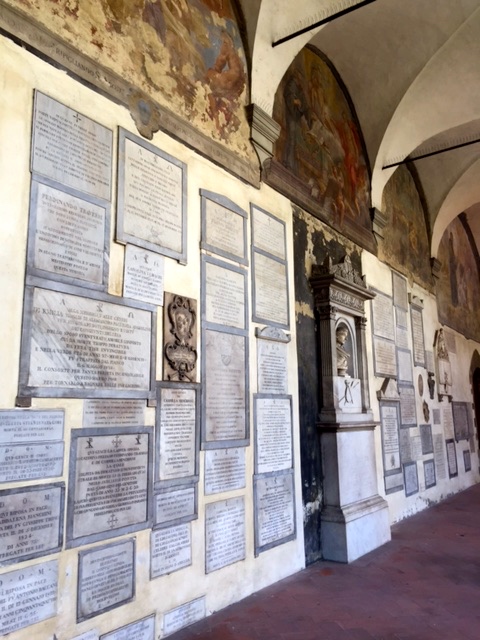
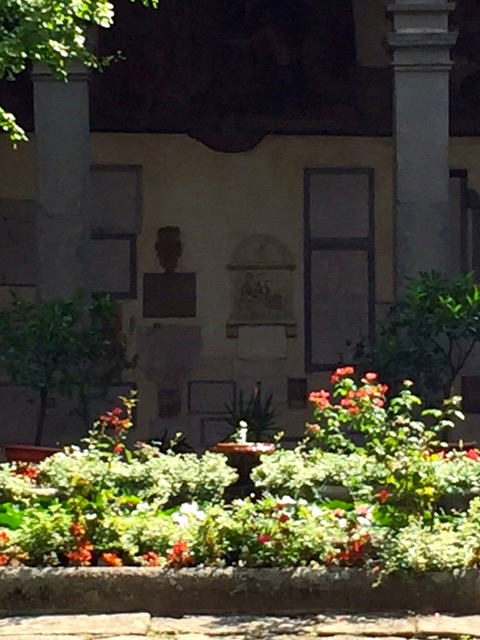
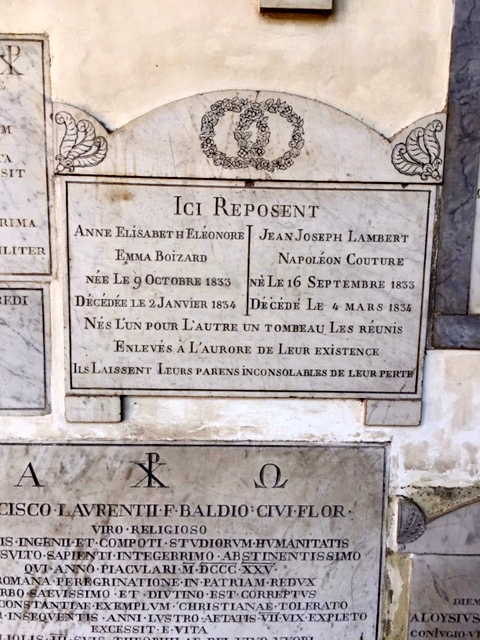
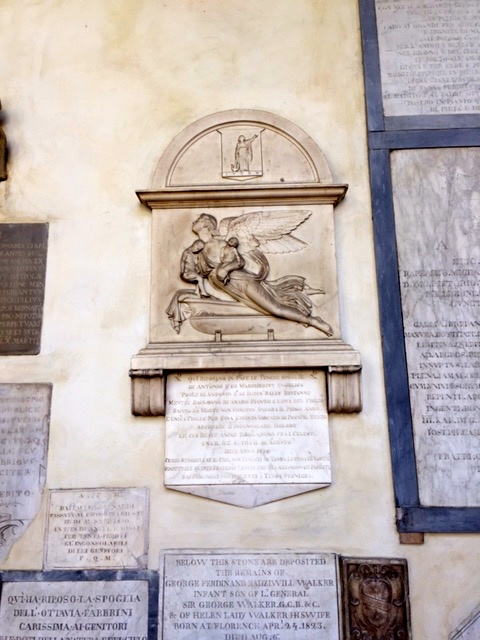
The walls of the cloister to the left of the basilica are lined with tombstones from all nationalities and eras.

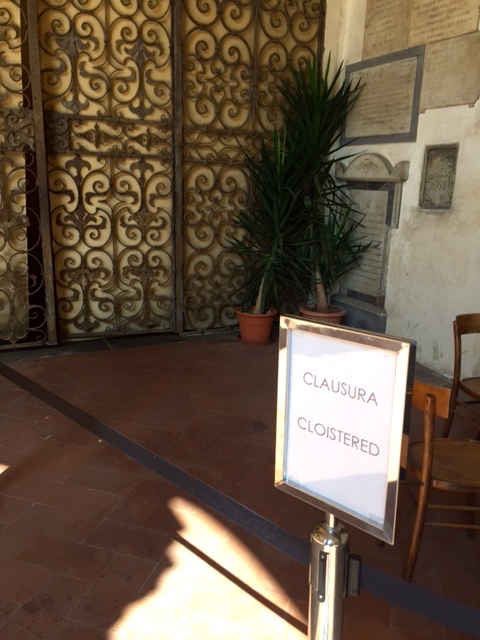
The convent attached to Santo Spirito has two cloisters; they are known as the Chiostro dei Morti (cloister of the dead) and Chiostro Grande (Grand Cloister). The former takes its name from the great number of tombstone decorating its walls, and was built c. 1600 by Alfonso Parigi. The latter was constructed in 1564-1569 by Bartolomeo Ammannati in a classicistic style.
The former convent also contains the great refectory (Cenacolo di Santo Spirito) with a large fresco portraying the Crucifixion over a fragmentary Last Supper, both attributed to Andrea Orcagna (1360–1365). It is one of the rare examples of Late Gothic Art which can still be seen in Florence.
The room also boasts a collection of sculptures from the 11th-15th centuries, including two low reliefs by Donatello, a high relief by Jacopo della Quercia (Madonna with Child) and two marble sculptures by Tino da Camaino (1320–1322).
The central courtyard of the cloister is lovely and green.


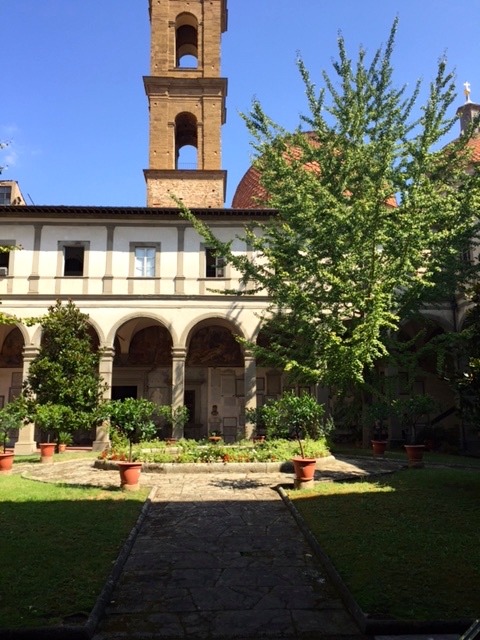
The bellower, as seen from within the cloister.
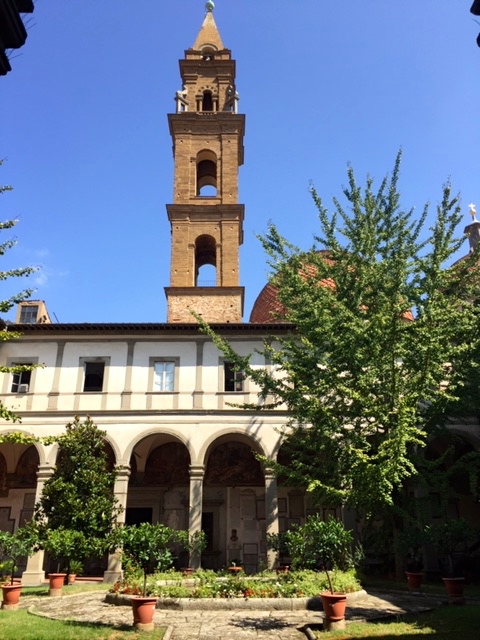
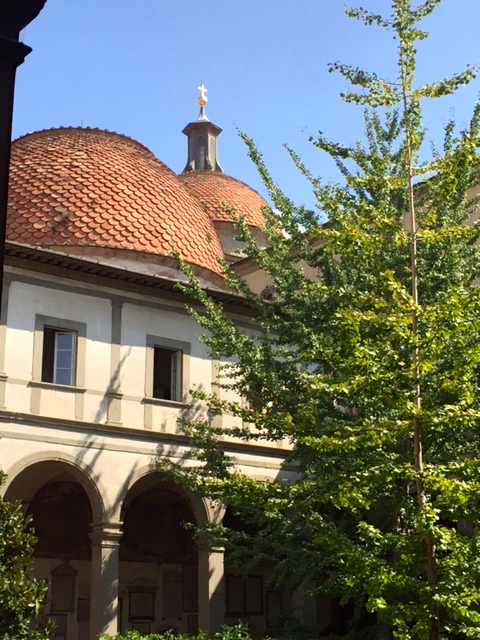
A fountain graces the center of the garden within the cloister.
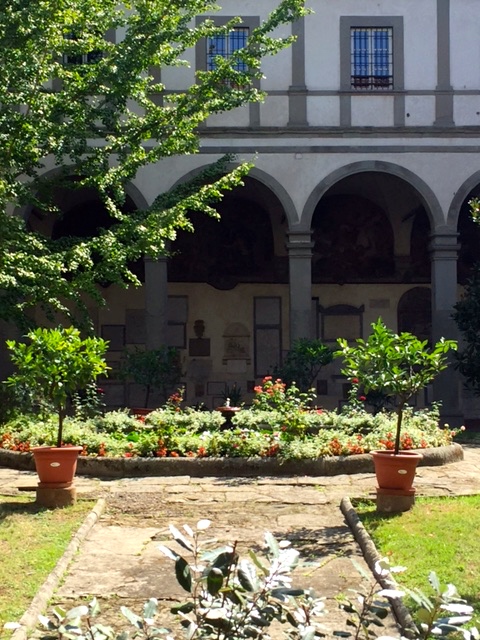
One of the hundreds of tombstones within the cloister walls.
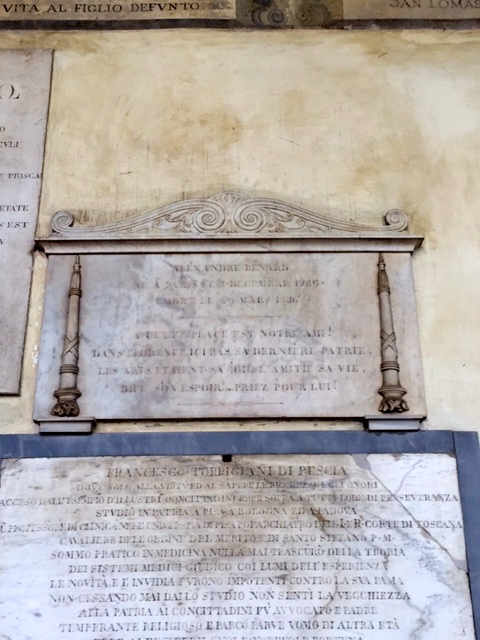
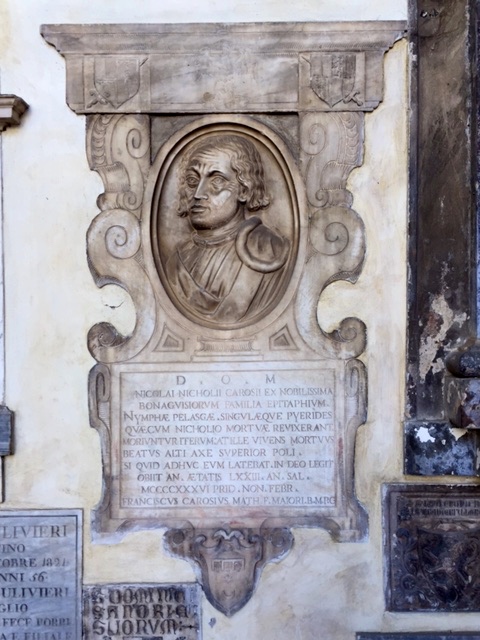
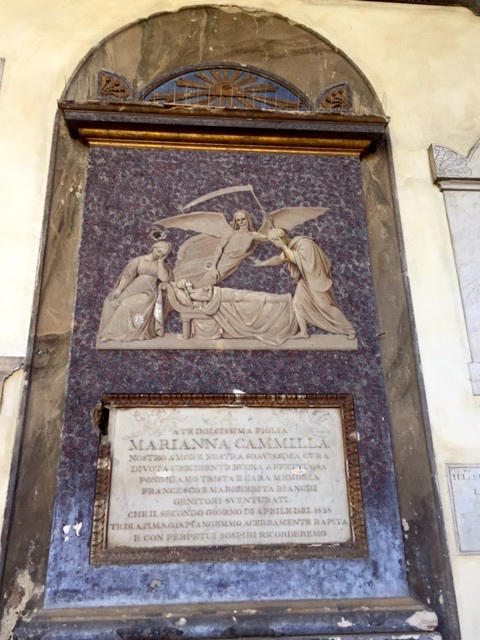
Michelangelo’s Crucifix

The young Michelangelo was allowed was allowed to make anatomical studies of the corpses coming from the convent’s hospital; in exchange, he sculpted this wooden crucifix, which was originally placed over the basilica’s high altar. Today the crucifix is in the octagonal sacristy that can be reached from the west aisle of the church.
Frescoes Crucifixion and The Last Supper were painted by Andrea Orcagna and his workshop in the 1360s.
Florence from above
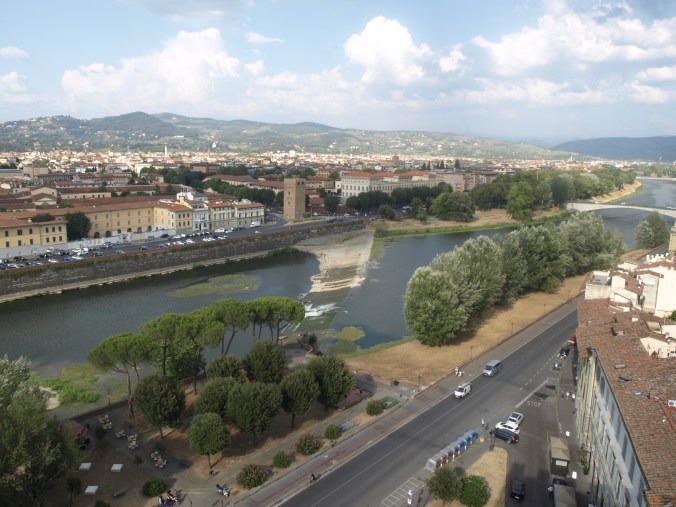
If you decide to climb the medieval Torre di San Niccolo in Florence, you will have a 360 degree view that is hard to believe.
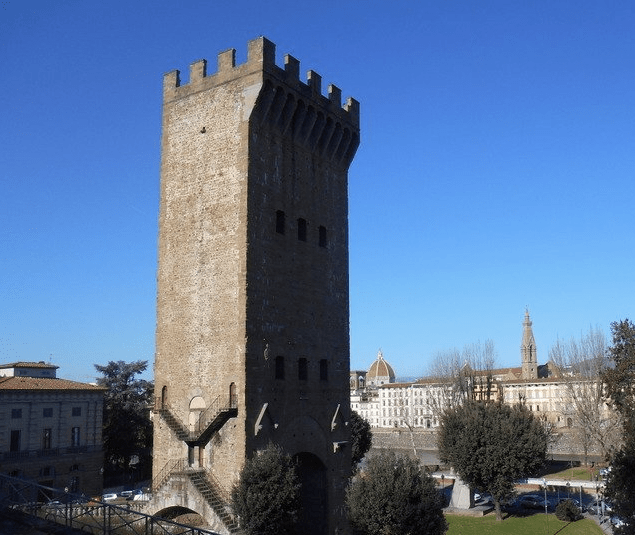
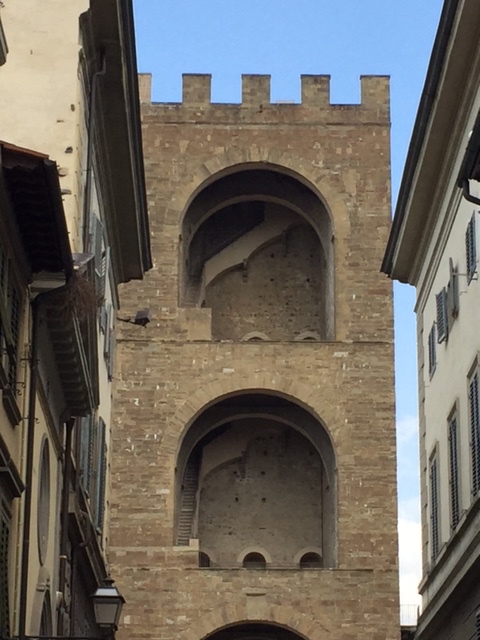
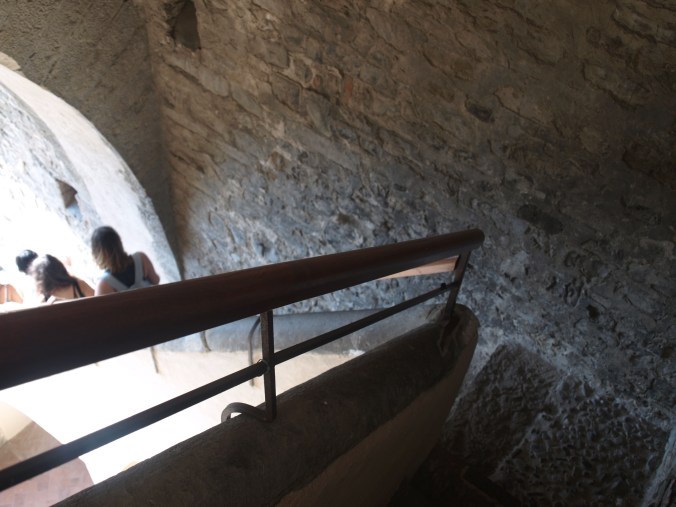
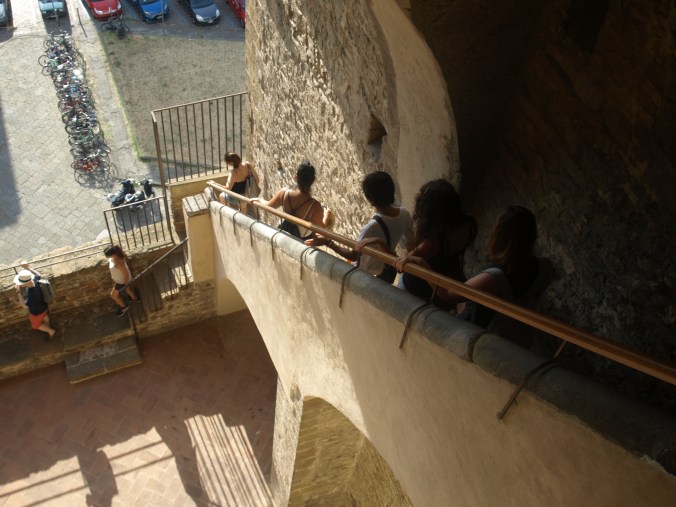
You can see some of the steps criss-crossing the upper part of the tower in the photo below. The steps are houses in that whitish diagonal shape. And in the lower portion of the tower below, you can see additional steep stone steps along the left side of the tower wall. I know, for I climbed all 161 steps to the top 2 days ago!
It was well worth the trouble, even in the 97 degree heat! And that is saying something.
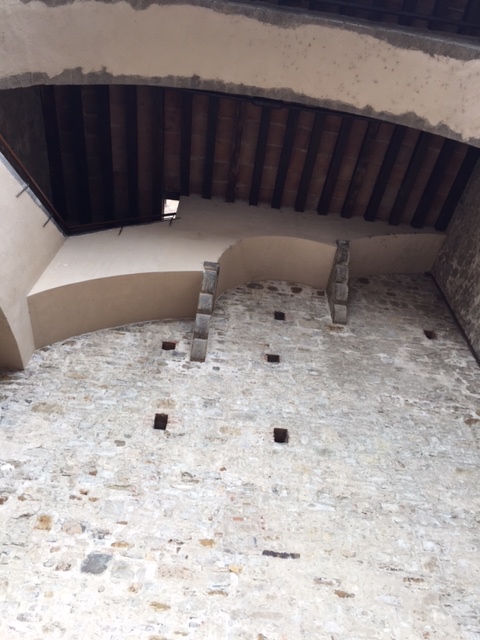
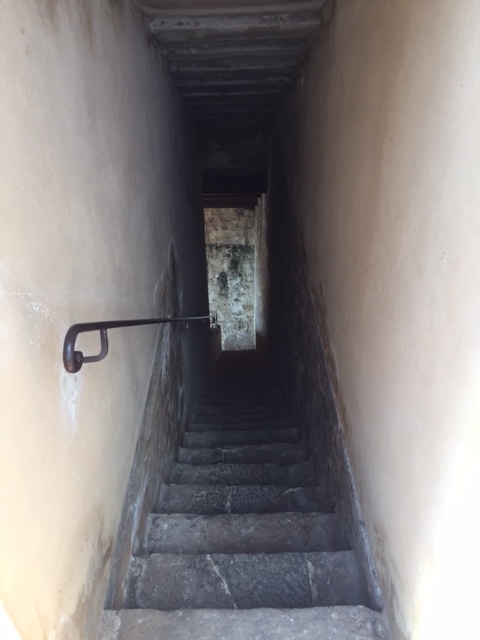
Here are a few more shots of the stairways:
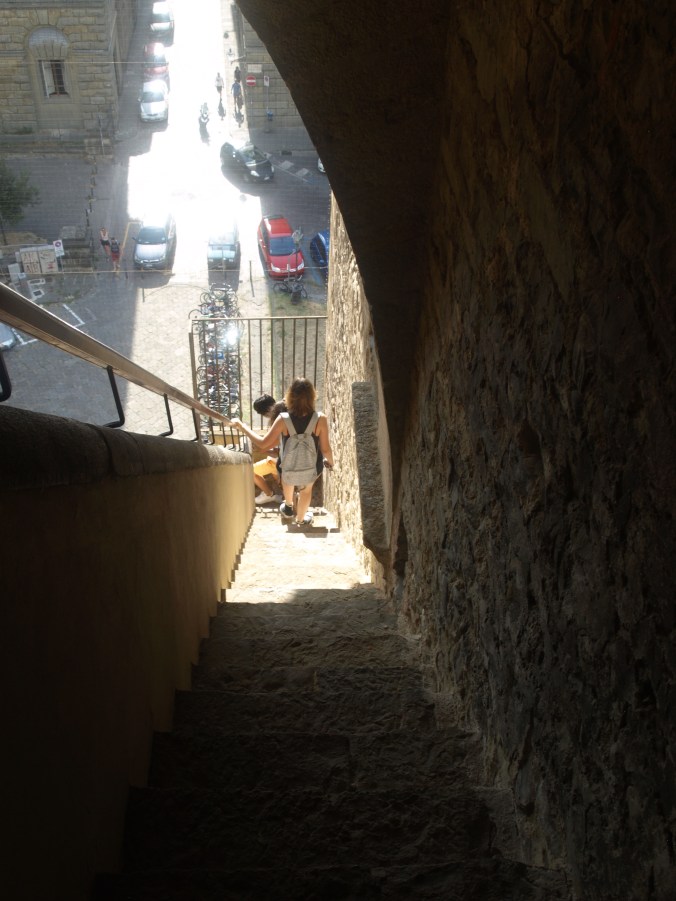
OLYMPUS DIGITAL CAMERA
OLYMPUS DIGITAL CAMERA
OLYMPUS DIGITAL CAMERA
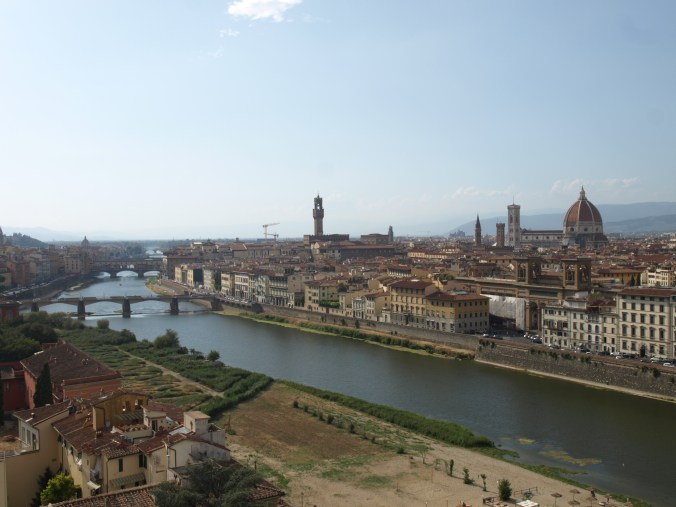
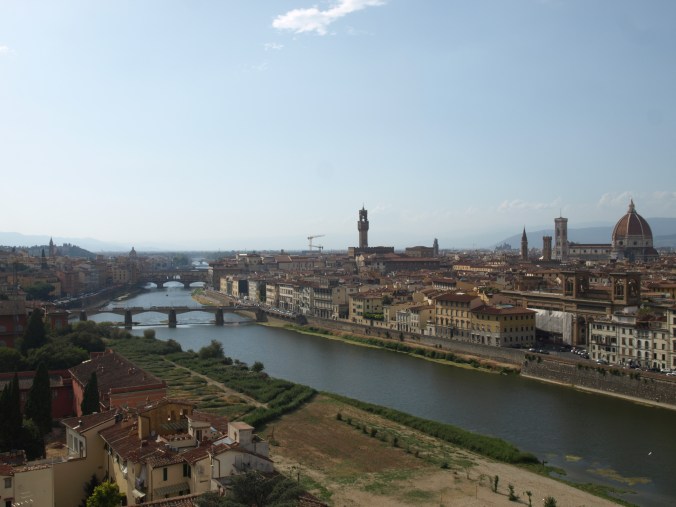
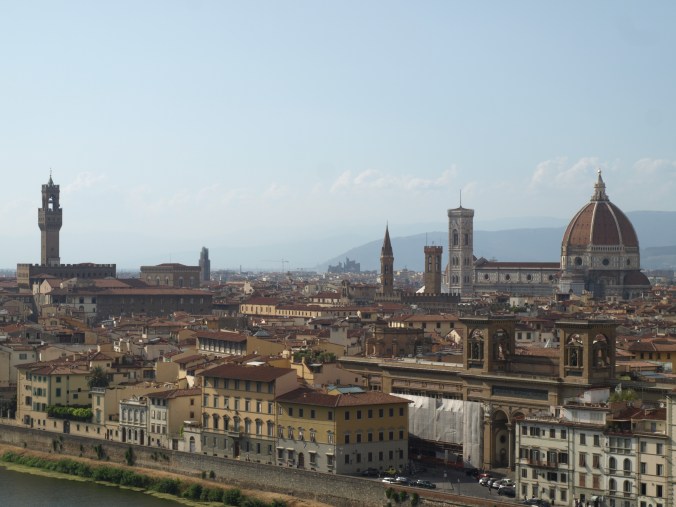
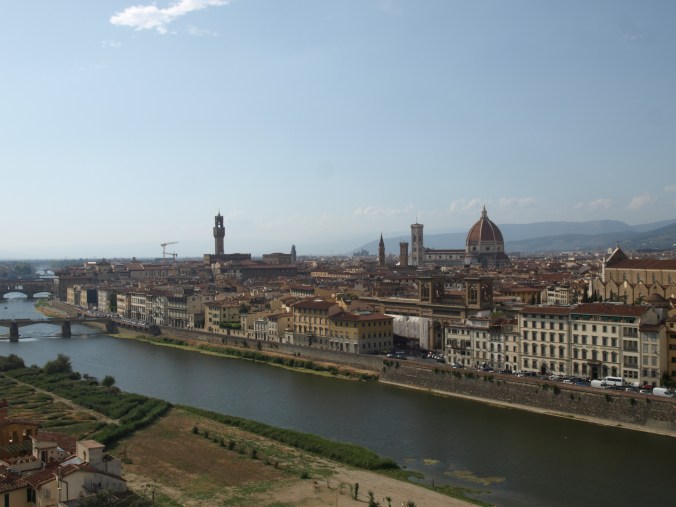
So, once at the top, let’s see what you can see!
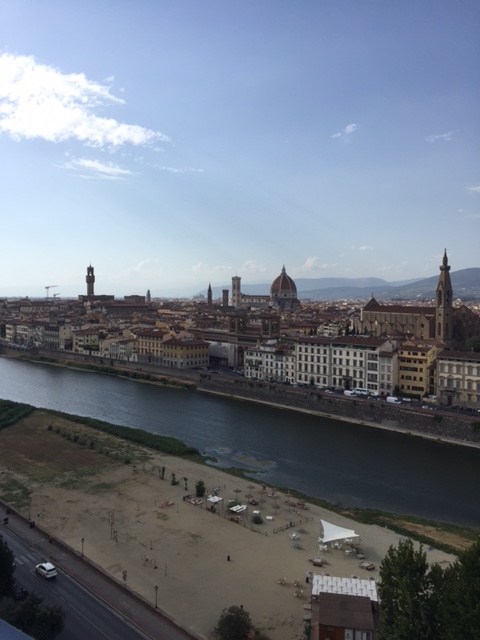
Ciao! Firenze! You are looking mighty fine!
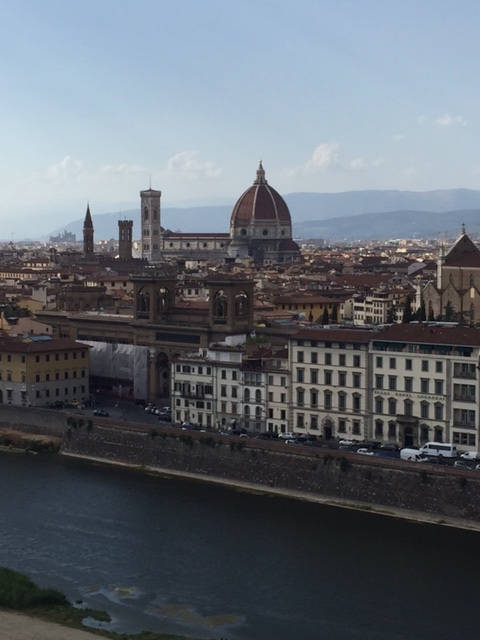
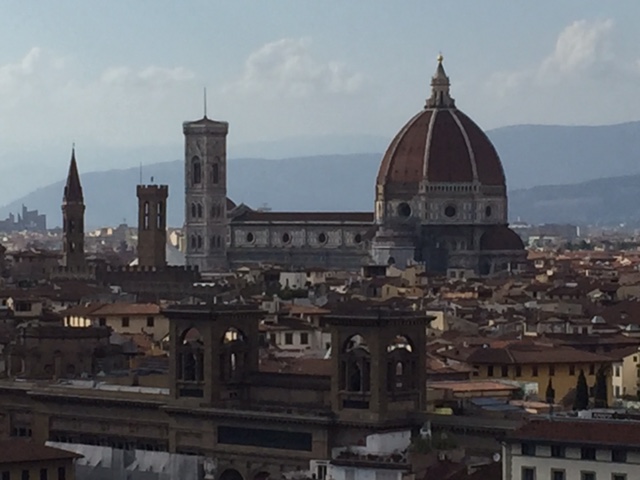
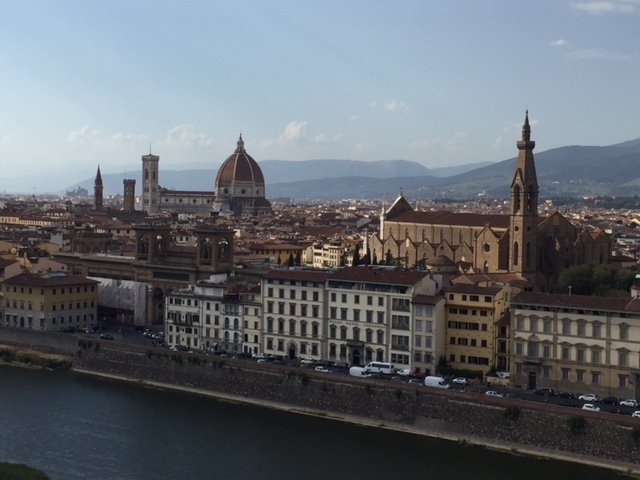
Hello Santa Croce above.
OLYMPUS DIGITAL CAMERA
OLYMPUS DIGITAL CAMERA
OLYMPUS DIGITAL CAMERA
OLYMPUS DIGITAL CAMERA
OLYMPUS DIGITAL CAMERA
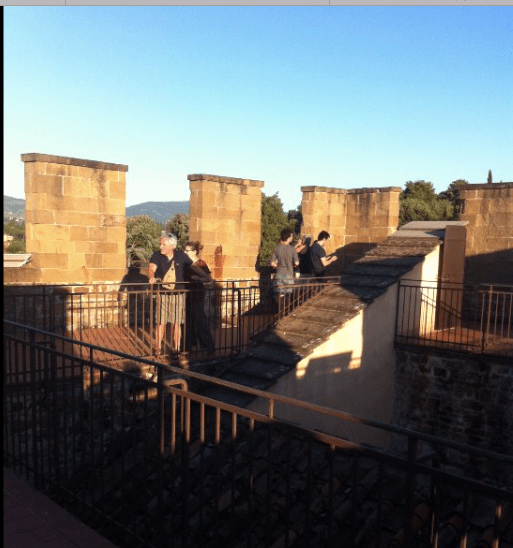
You can walk all around the top of the tower, taking pictures between the crenellations
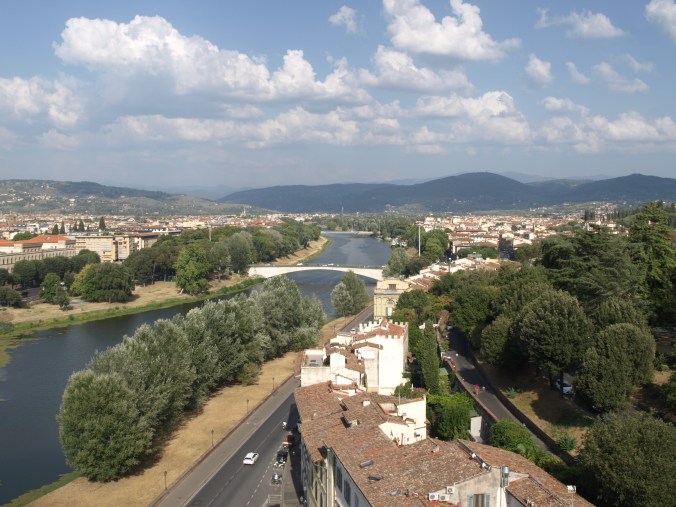
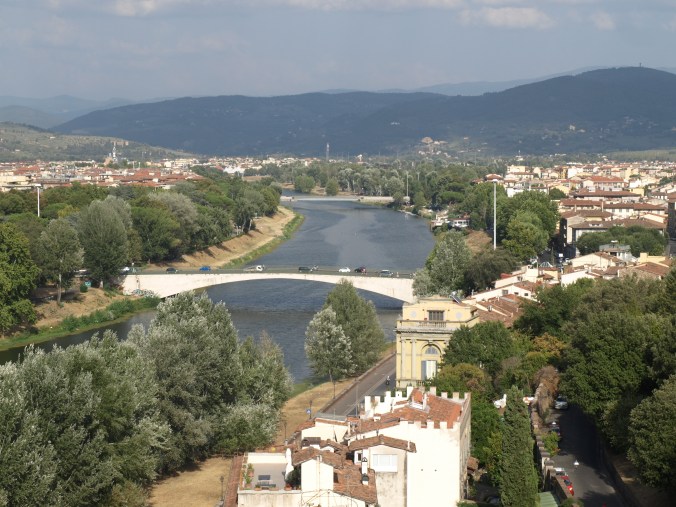
Now, let’s look to the east and a bit north of the tower:
OLYMPUS DIGITAL CAMERA
OLYMPUS DIGITAL CAMERA
OLYMPUS DIGITAL CAMERA
OLYMPUS DIGITAL CAMERA
OLYMPUS DIGITAL CAMERA
OLYMPUS DIGITAL CAMERA
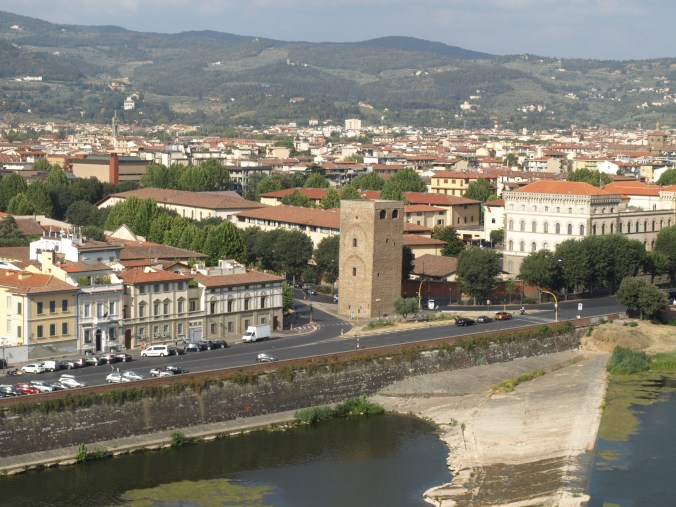
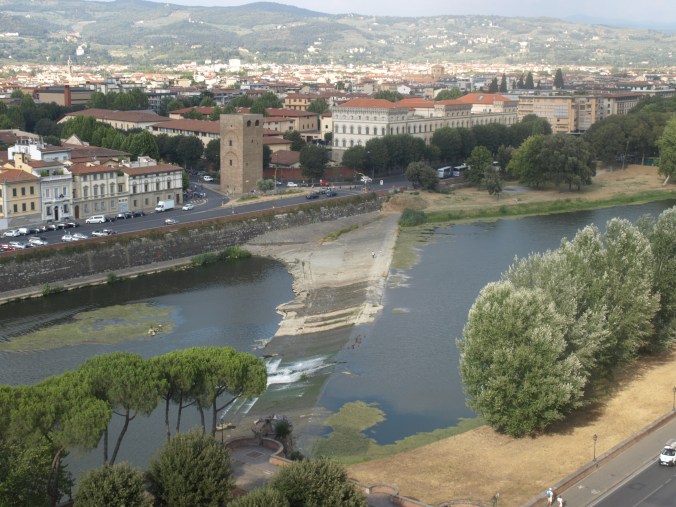
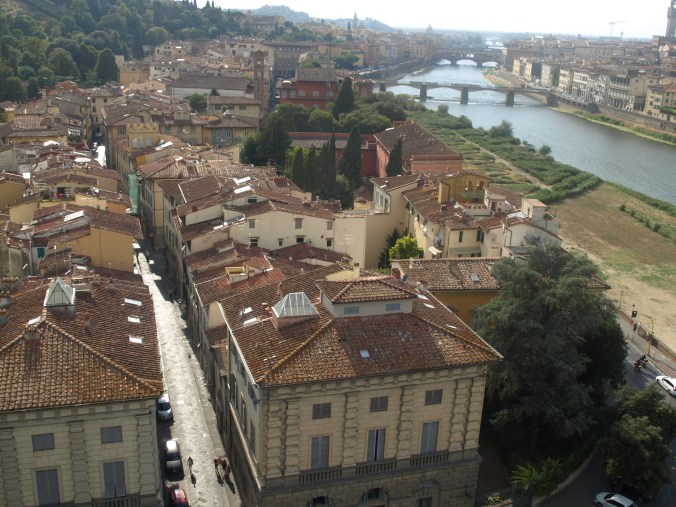
Directly to the west of the tower is this section of the city: San Niccolo.
OLYMPUS DIGITAL CAMERA
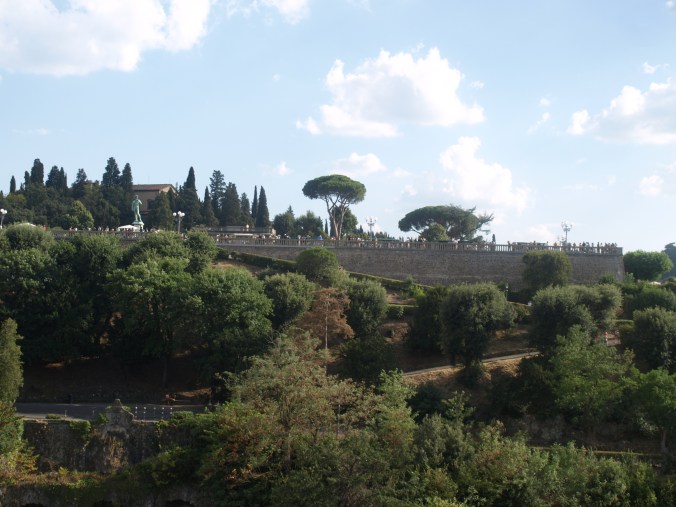
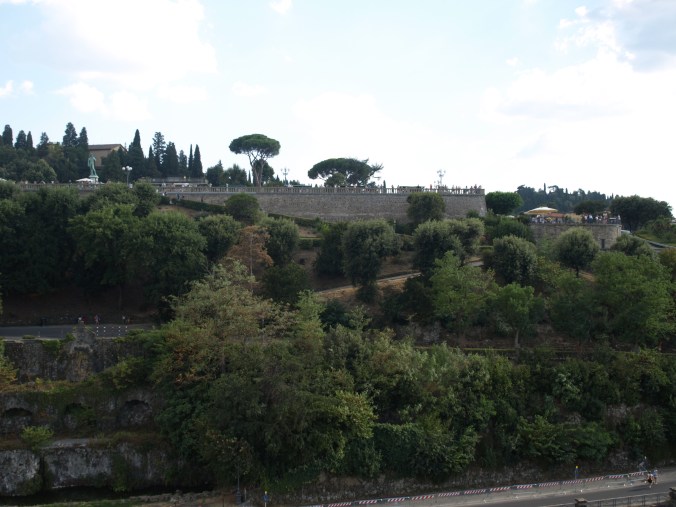
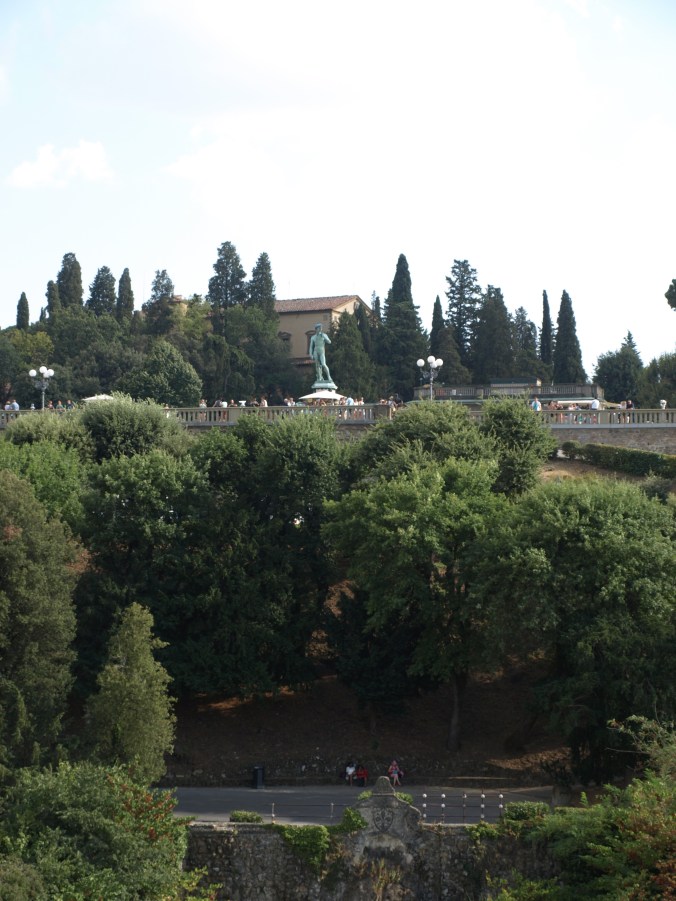
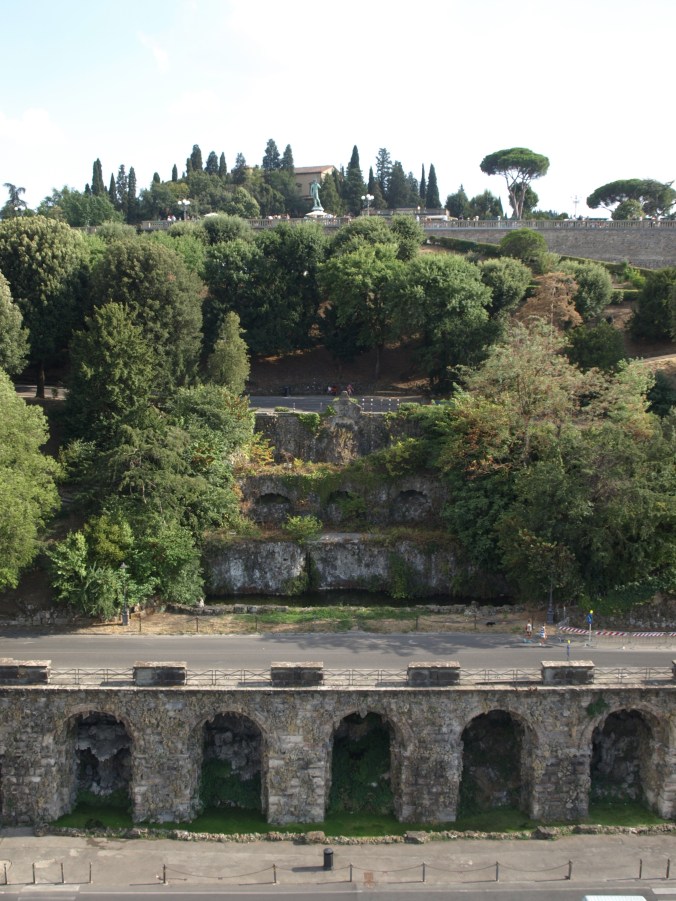
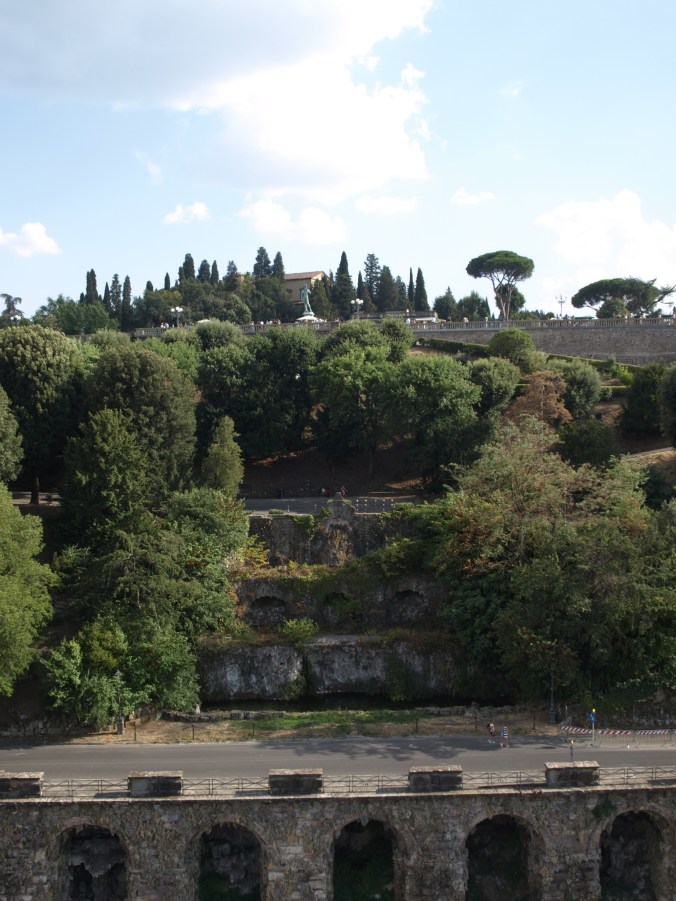
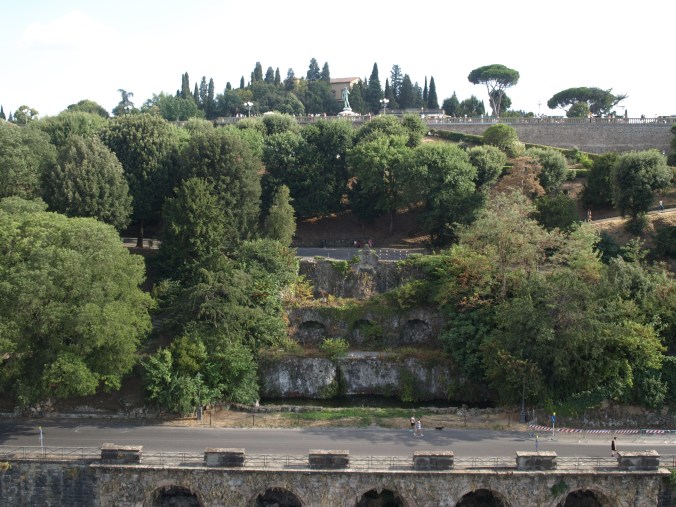
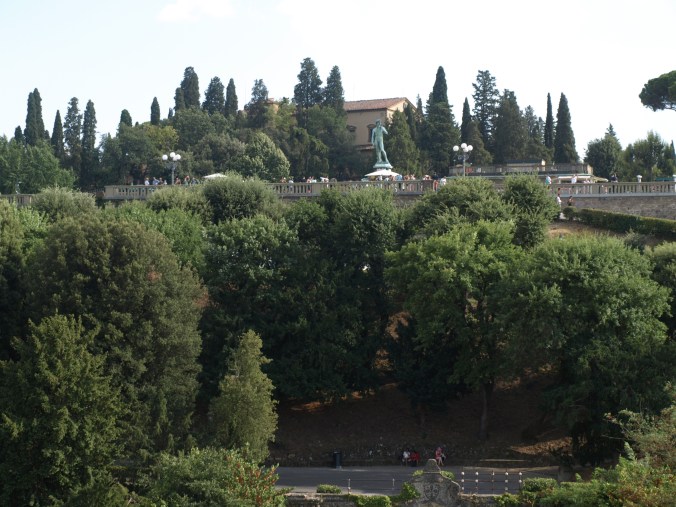
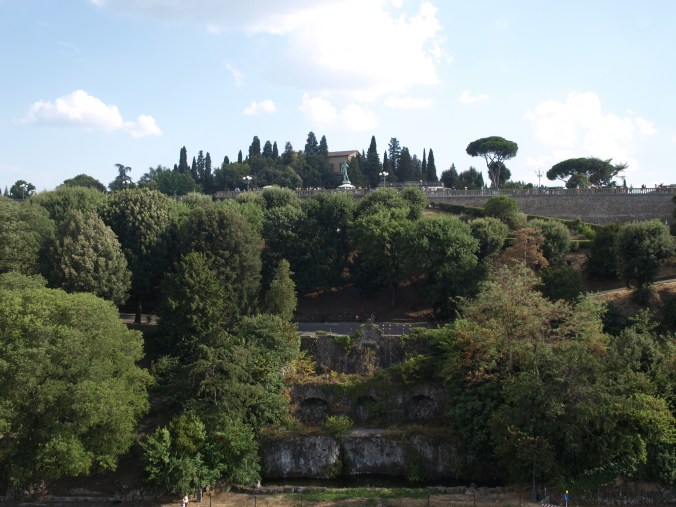
Now, let’s have a look to the south from the tower. Piazzale Michelangelo!
OLYMPUS DIGITAL CAMERA
OLYMPUS DIGITAL CAMERA
OLYMPUS DIGITAL CAMERA
OLYMPUS DIGITAL CAMERA
OLYMPUS DIGITAL CAMERA
OLYMPUS DIGITAL CAMERA
OLYMPUS DIGITAL CAMERA
OLYMPUS DIGITAL CAMERA
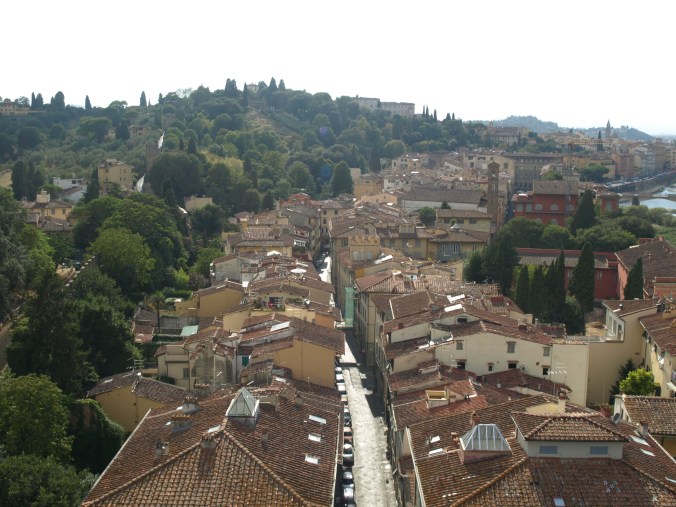
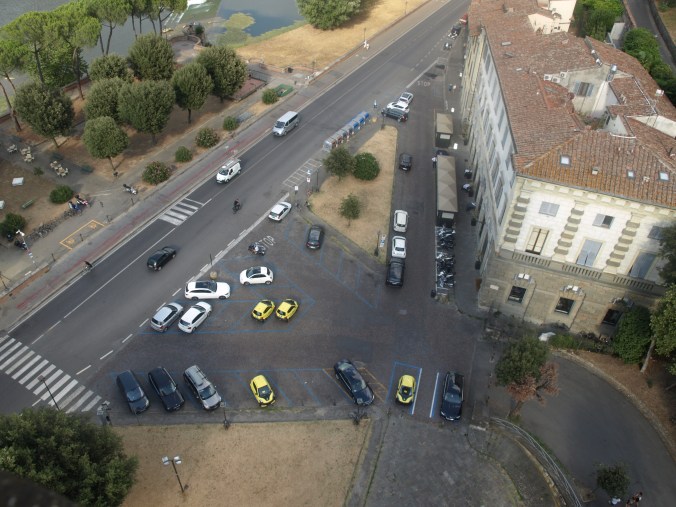
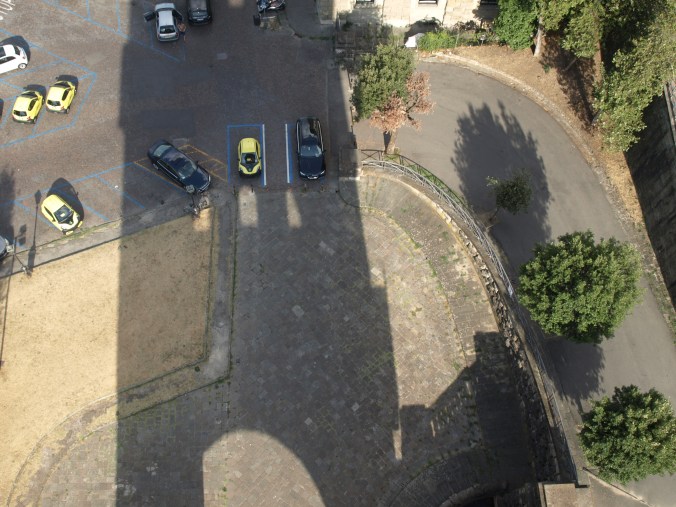
And, why not a few shots straight down?
OLYMPUS DIGITAL CAMERA

OLYMPUS DIGITAL CAMERA
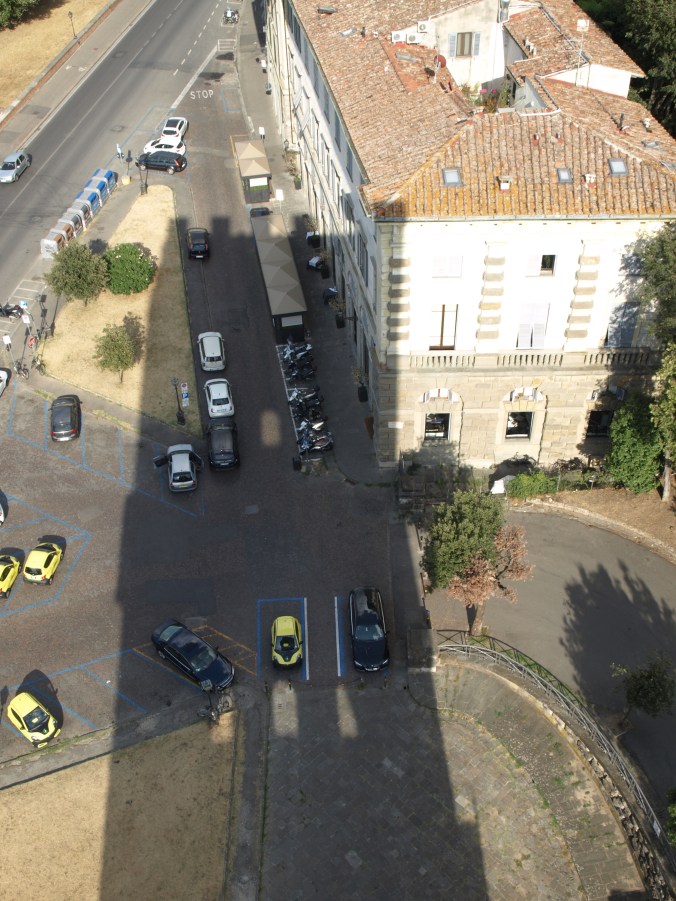
OLYMPUS DIGITAL CAMERA
OLYMPUS DIGITAL CAMERA
And one more look to the west:
The tower is nice at night too:
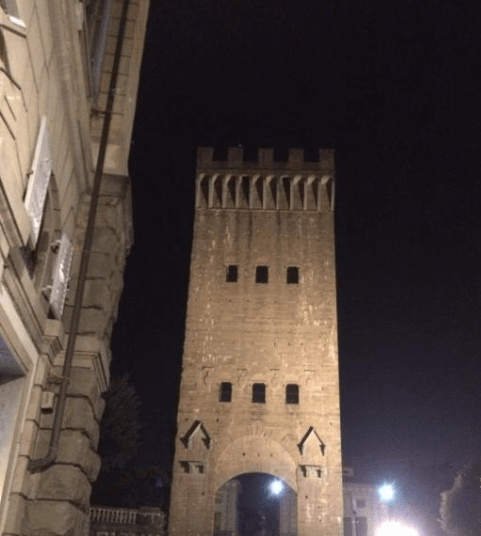
Torre di San Niccolo, Florence
See that beautiful Medieval tower with the crenellation? It’s the Torre di San Niccolo and sometimes, in the summer, it is possible to climb to its very top. Today was one of those times!
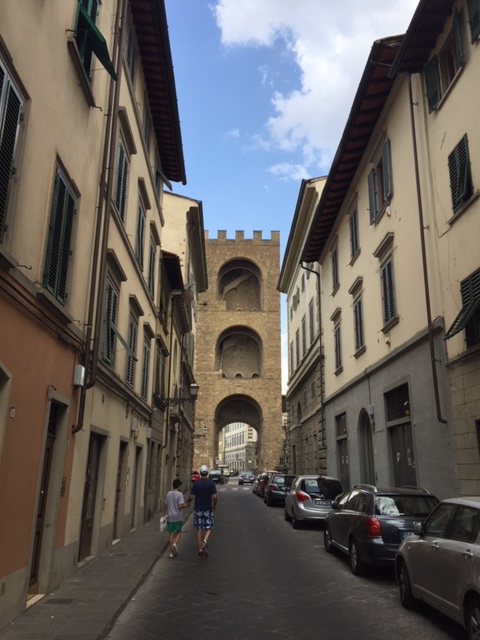
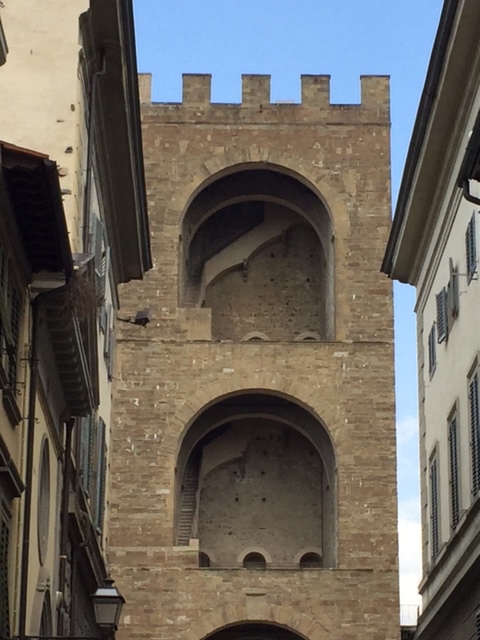
As I approached the Torre, walking from the center of Florence towards the east on Via San Niccolo, the tall fortification towered above the streets, against a beautiful azure sky filled with cumulus clouds.
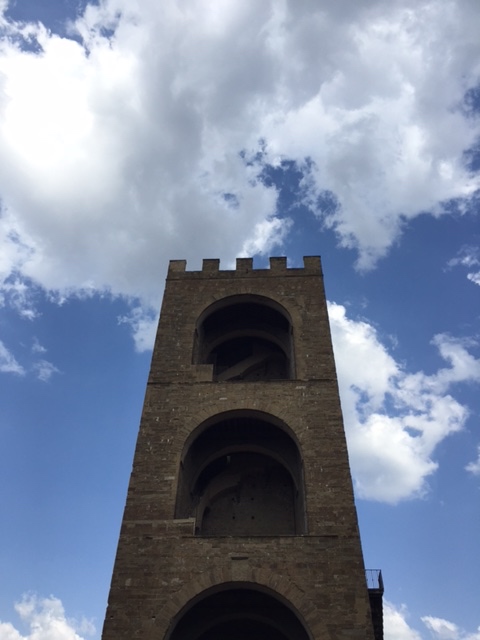
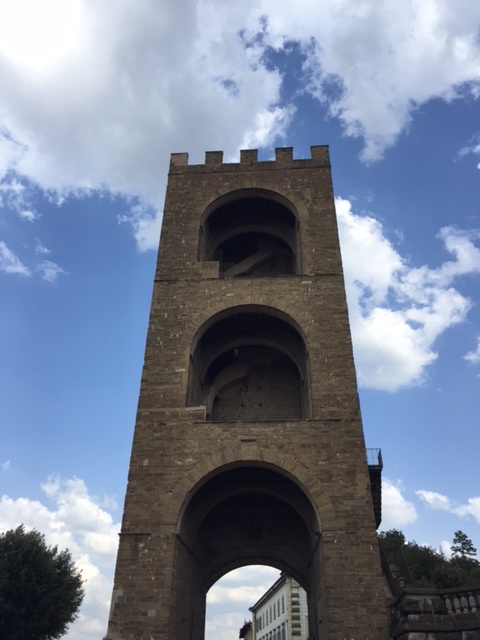
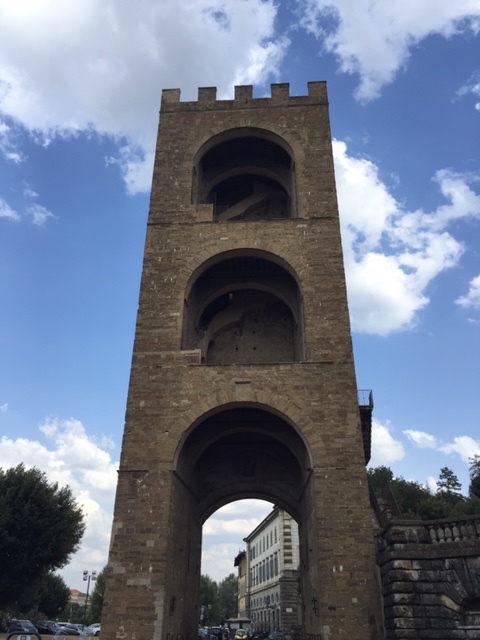
Here’s the tower in all its glory:

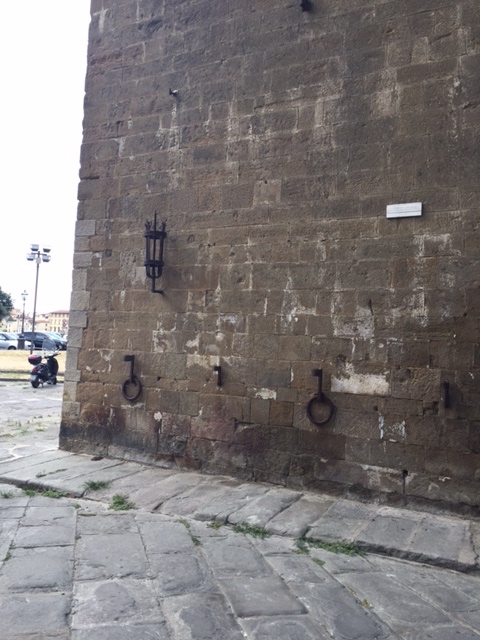
Walking through the tower, which was one of the major gateways in the walls that once surrounded all of Florence, I noticed the marker showing the height to which the Arno flooded in 1966.
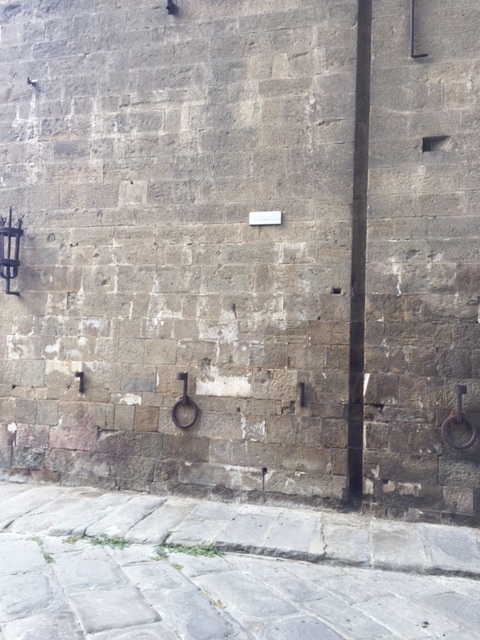
The Arno rose to the level of the white rectangle on the wall below. Standing where I was when I shot this photo, I would have been 15 feet under water.
If this were any time period prior to the mid-19th century, upon approaching Florence from the east, one would encounter this gateway. It projects strength and some beauty, with a few sculptural details:
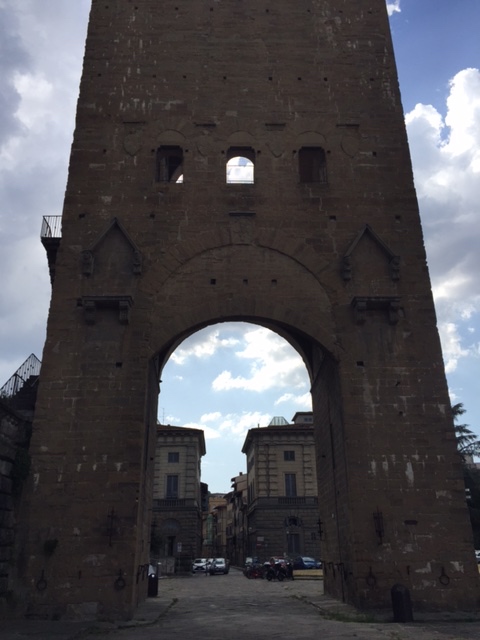
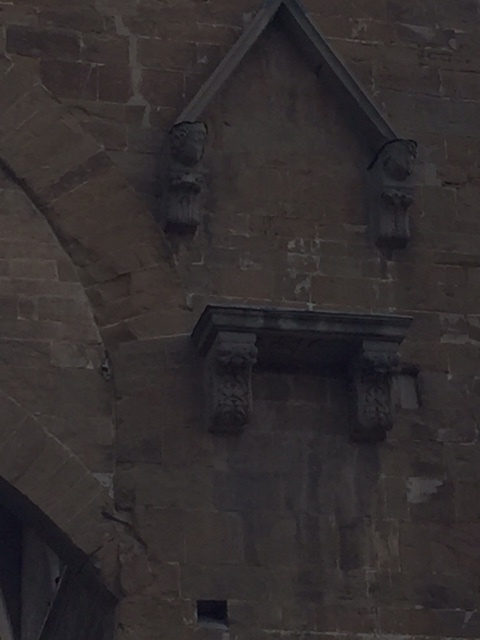
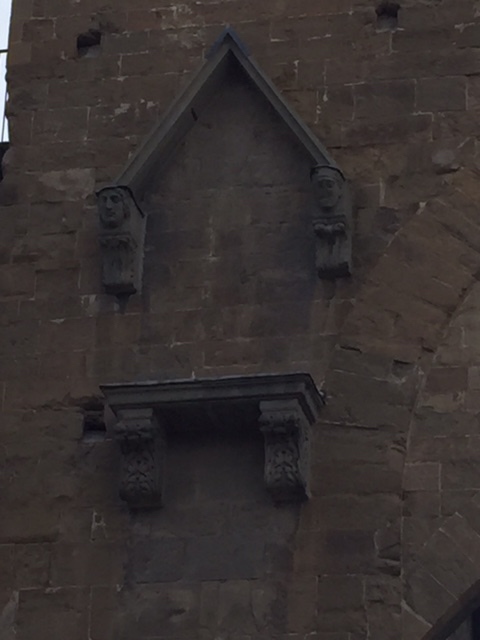
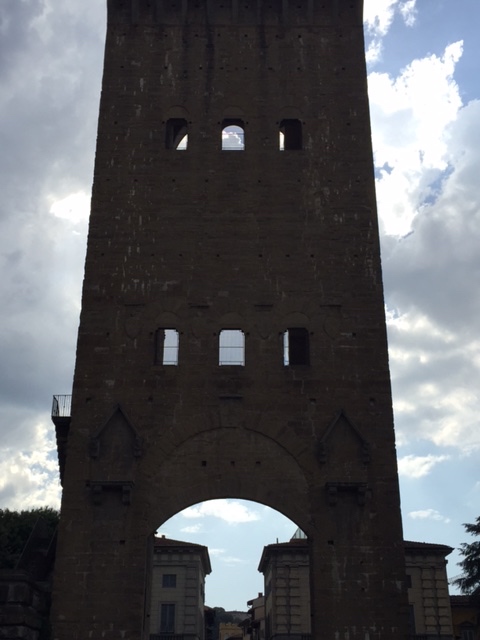
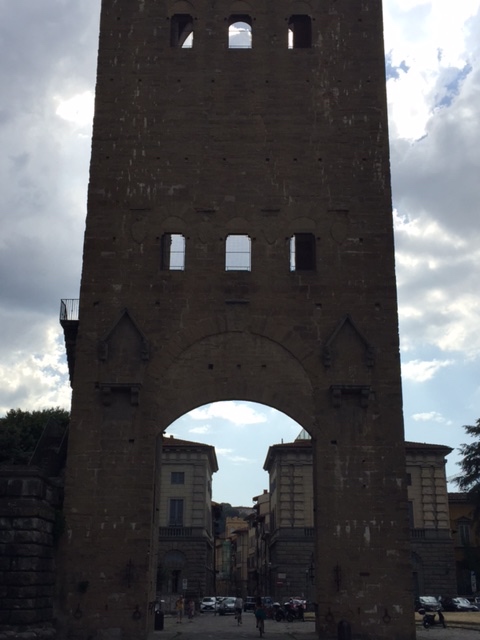
Belos is a picture of the tower from the south side. This is how you enter the tower today.
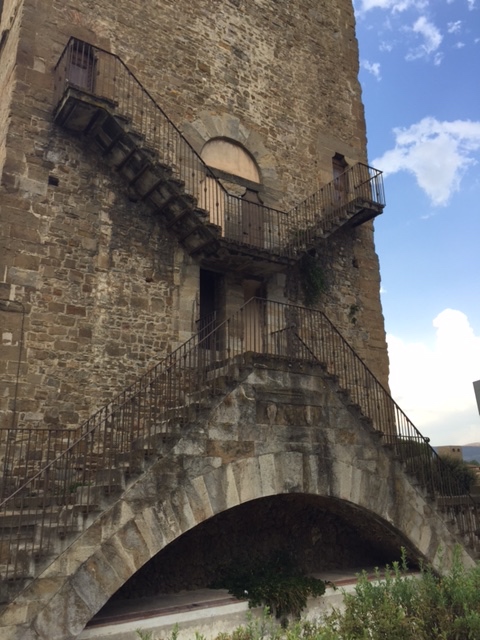
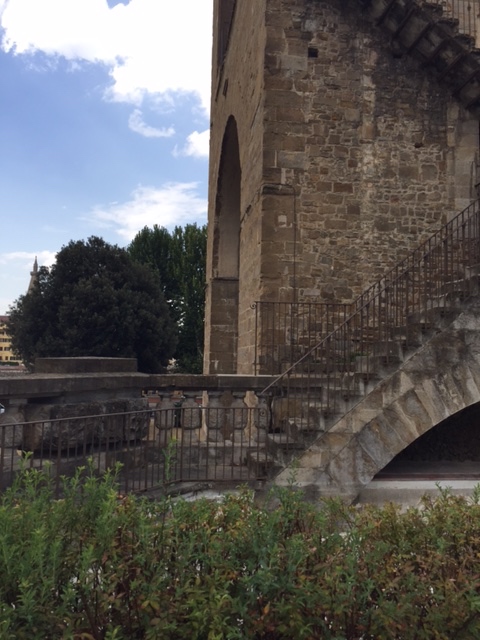
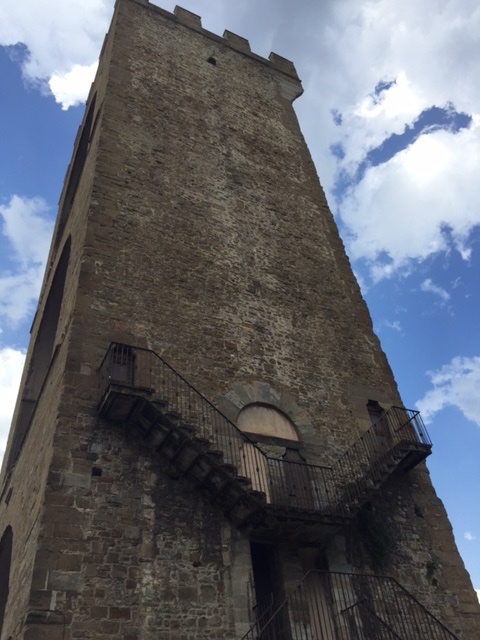
Northern (exterior) façade

From Wikipedia we learn: The tower and its gate were elaborated in the designs of Arnolfo di Cambio for circumferential walls around Florence. These walls were, in the main, destroyed in the 19th century as a project of urban renewal, Risanamiento, in part led by Giuseppe Poggi. This tower was spared, in part because of its panoramic view of the city.
There are 160 steps to the summit.
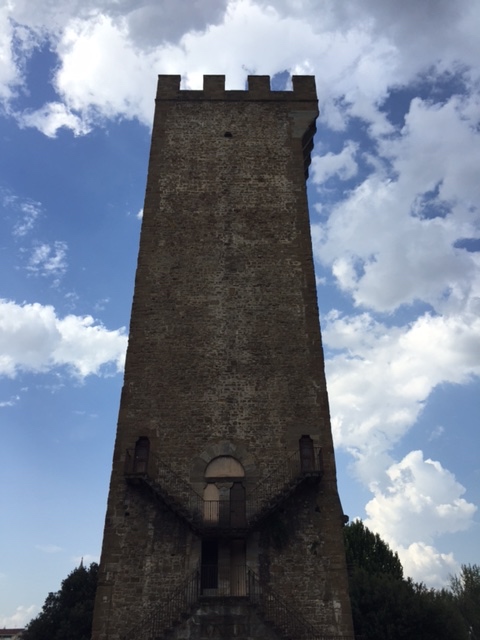
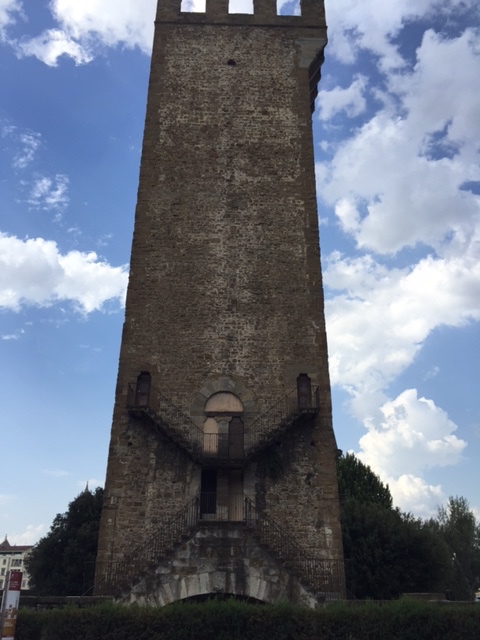
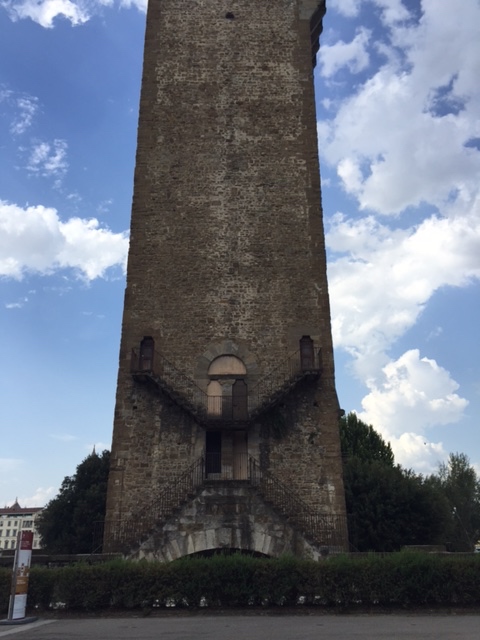
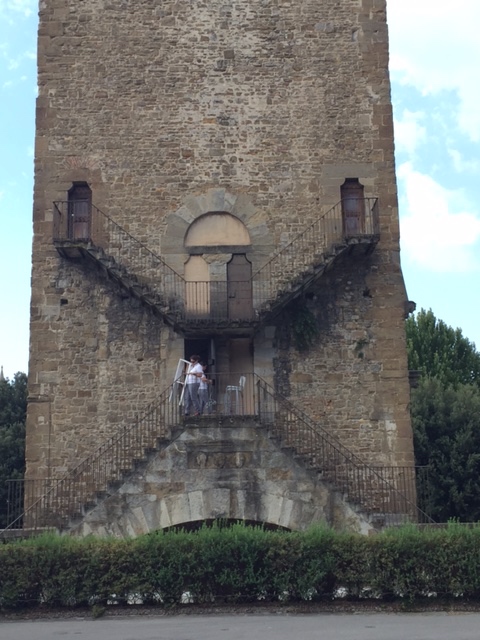
And, away we go.
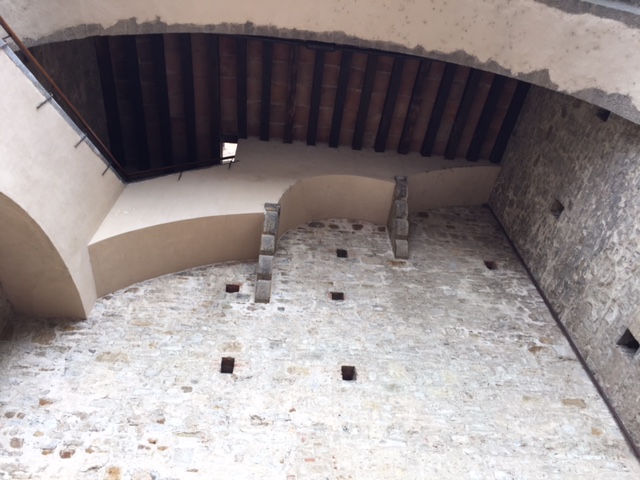
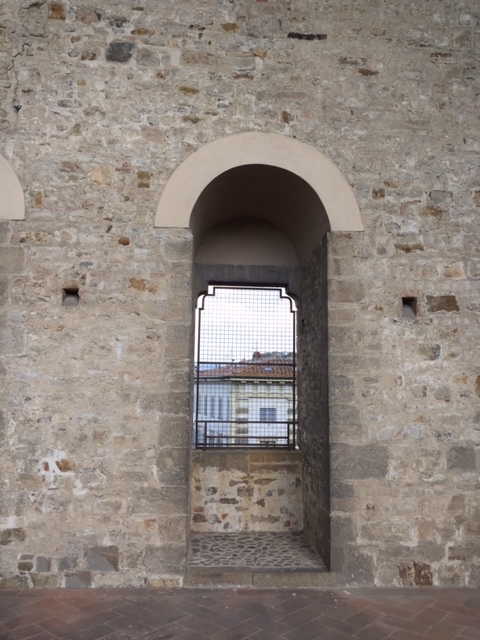
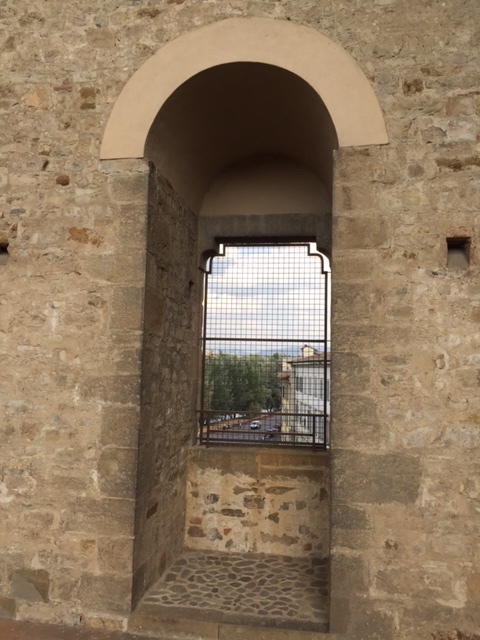
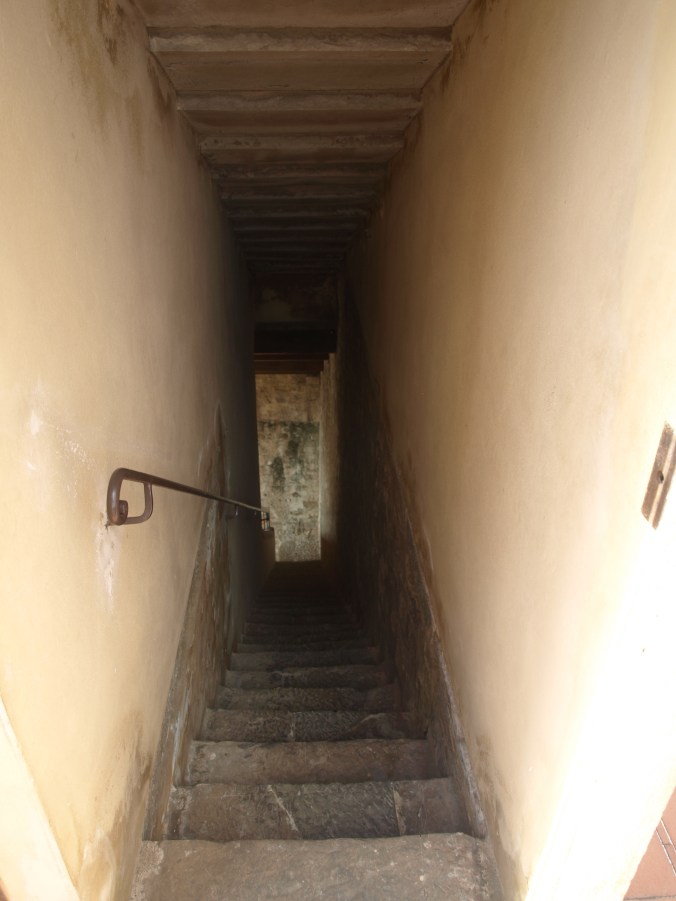
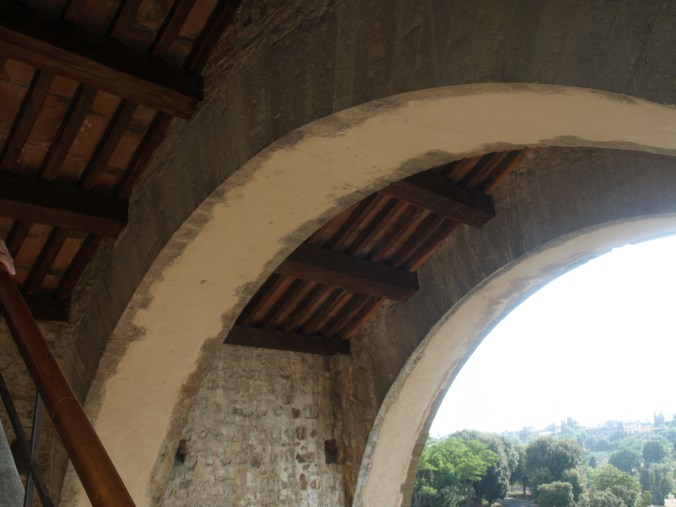
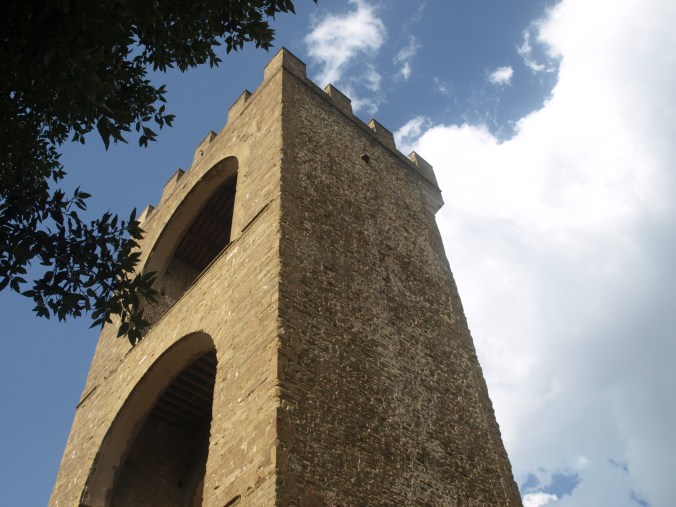
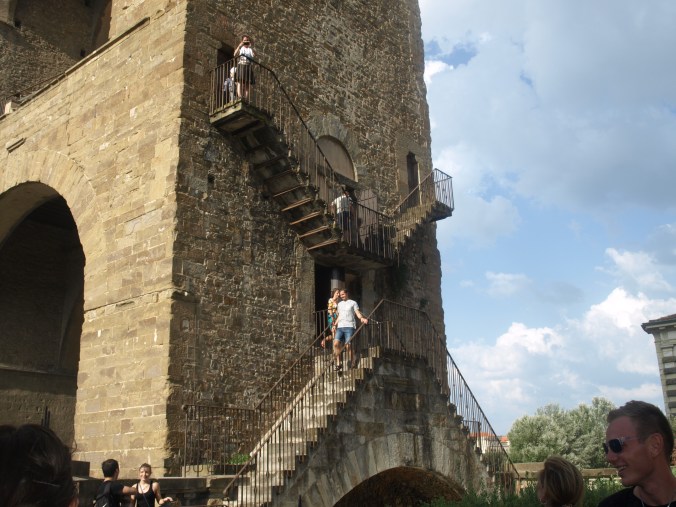
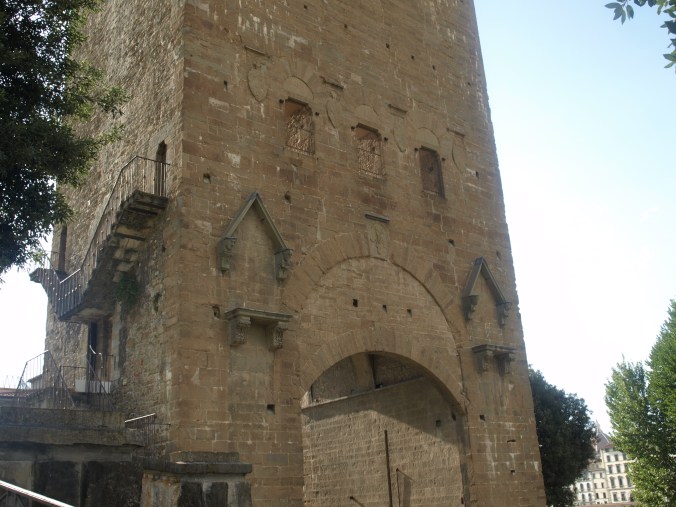
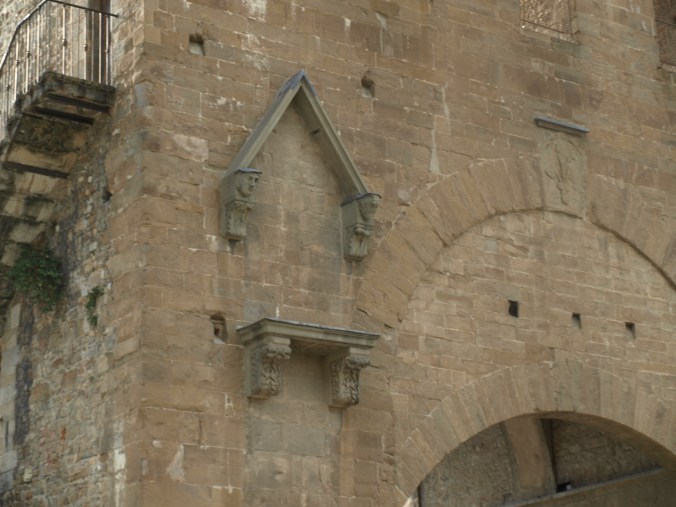

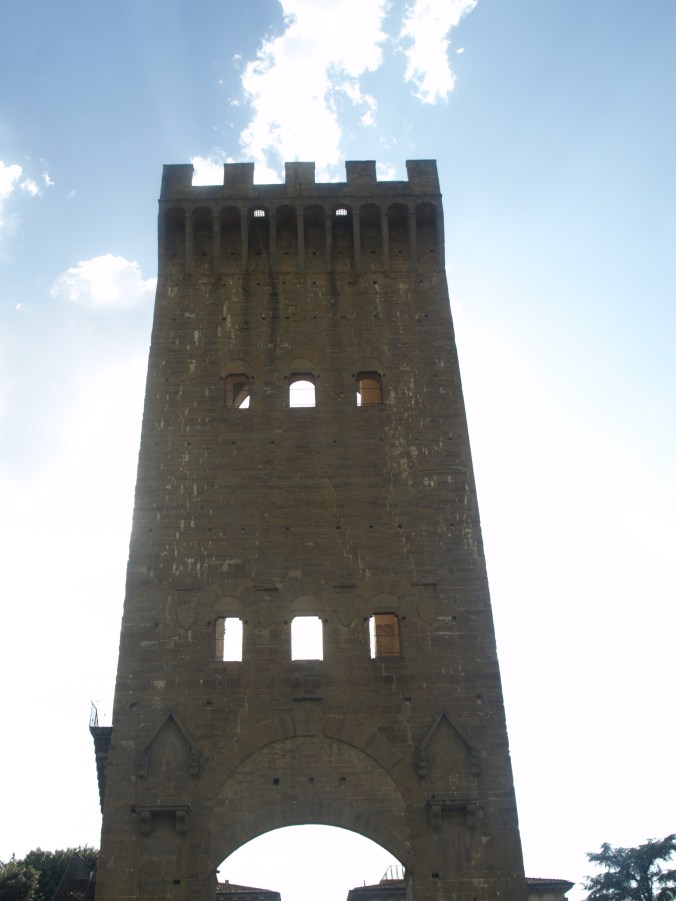
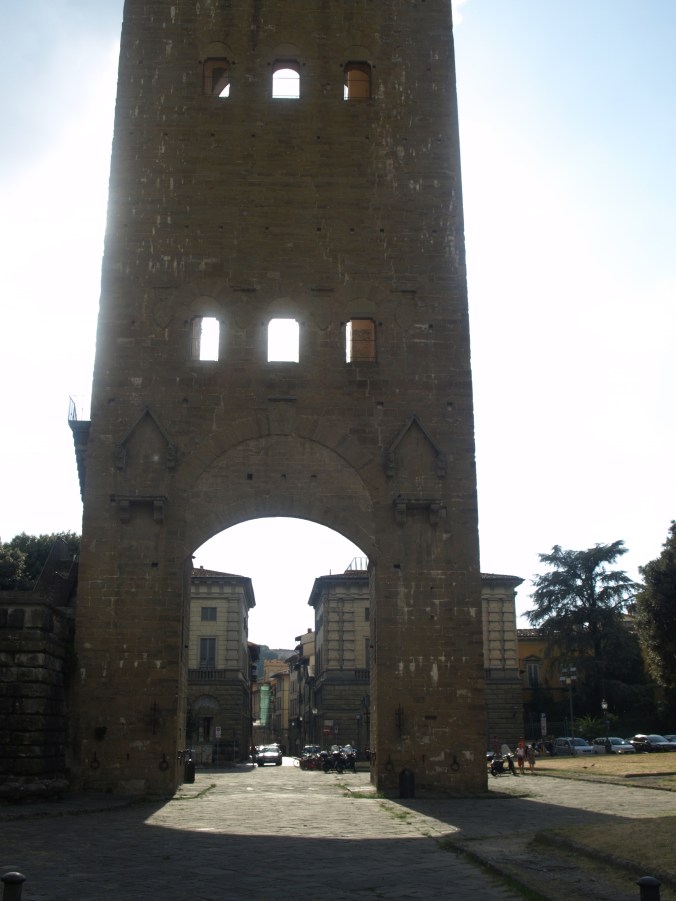
The views from the top of the tower are spectacular. I’ll be posting them soon.
Remember.
On this date in 1944 the retreating Nazi troops were leaving Florence in advance of the Allies arrival up the Italian peninsula. The retreating Germans did everything they could to wreak havoc for the Allies, destroying communication channels and destroying every bridge over the Arno, with the exception of the Ponte Vecchio.
In this picture below you see the destroyed Ponte Santa Trinita, with the Ponte Vecchio blessedly still in situ.

Here’s a heartbreaking overview of the Lungarno in the Oltrarno, next to Ponte Vecchio.

Naturally many Florentines were displaced from their homes and some were allowed to take shelter inside the Palazzo Pitti and the Boboli Gardens, where temporary beds were set up, as below.


To remember those dark days, La Compagnia delle Seggiole will perform portions of Benjamin Britten’s “War Requiem,” tonight in the Piazza outside the Pitti. The Requiem was written to celebrate the reconstruction of the Gothic cathedral of Coventry. Entrance is free.
Random Florence
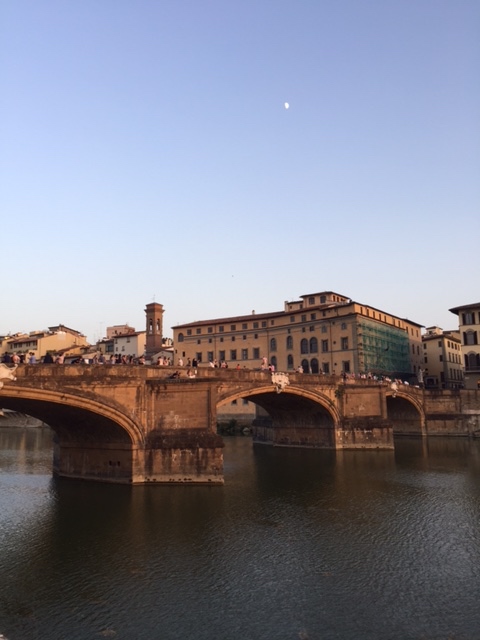
See the moon above the gorgeous Ponte Santa Trinita?
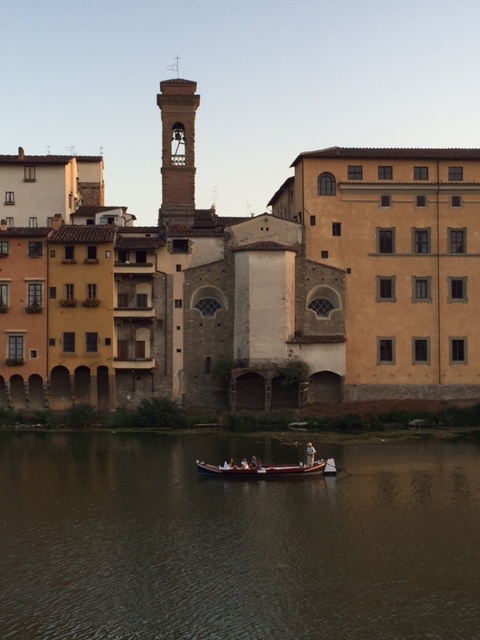
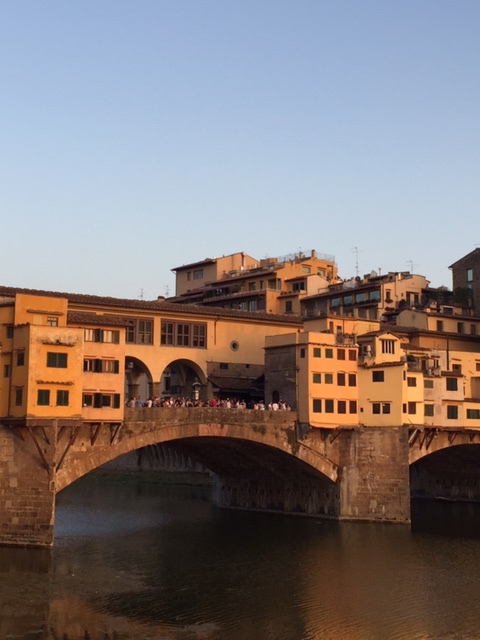
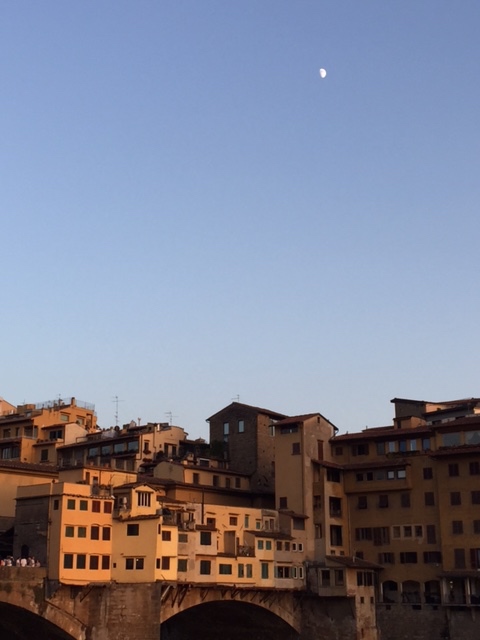
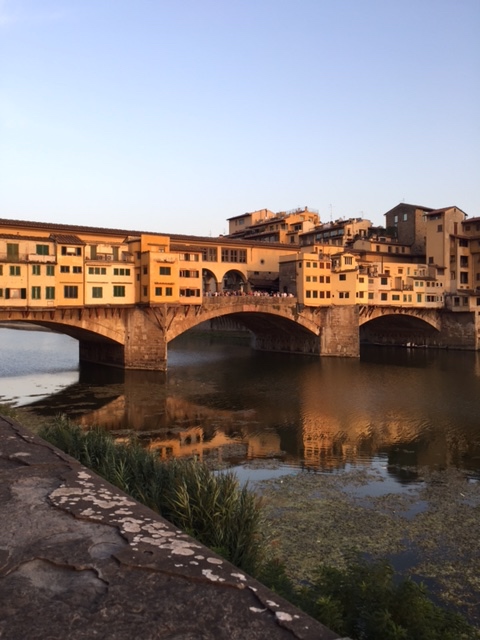
The moon over the Ponte Vecchio.
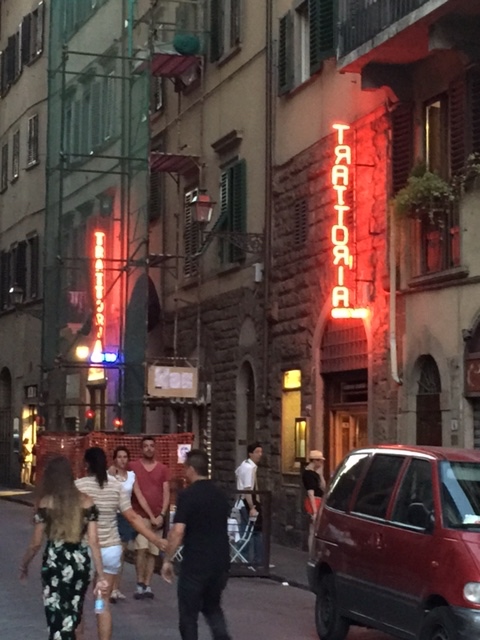
Random street shot. I love any neon sign registering “trattoria.” You know good things are on offer inside.
Ciao, Palazzo Vecchio!
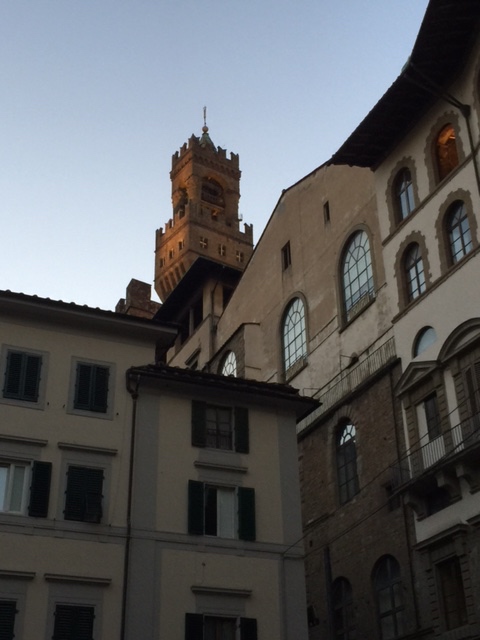
The medieval tower of San Nicolo


Palazzo Farnese, Roma
The French Embassy: I made a quick trip to Rome this past week to visit the Palazzo Farnese, a reservation made several months ago. You have to reserve early and provide lots of personal information if you want to pay a visit to the French Embassy in Italy!
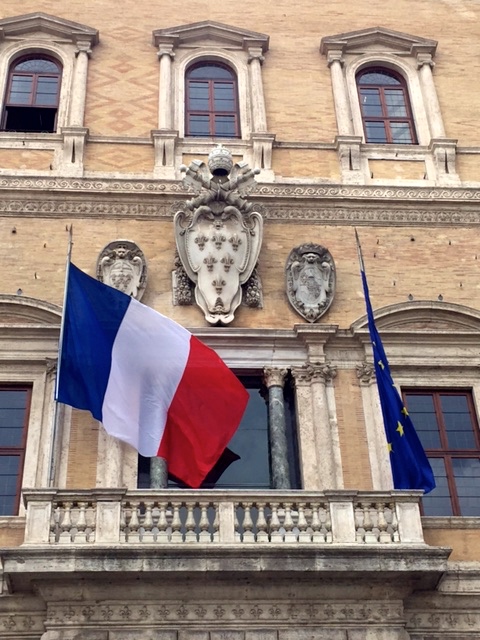
Today the Palazzo is owned by the Italian Republic. In 1936 an arrangement was made with the French to house their embassy for 99 years at the high cost of $1.00 per annum. The Italians have a similar arrangement in Paris.
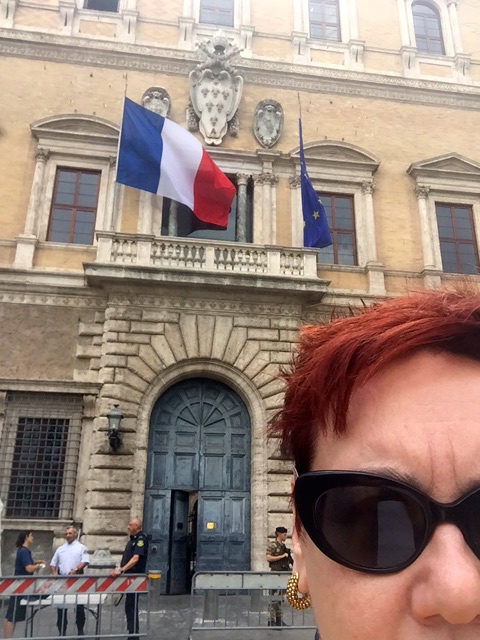
See those men behind me? They are there to make sure only authorized people enter the Embassy. Trust me, they do a good job! Even with my reservation, I almost wasn’t let in (it seems they needed my actual passport, not just a photocopy that serves me in 99.9% of cases….ummmm… I won’t be making that mistake again).
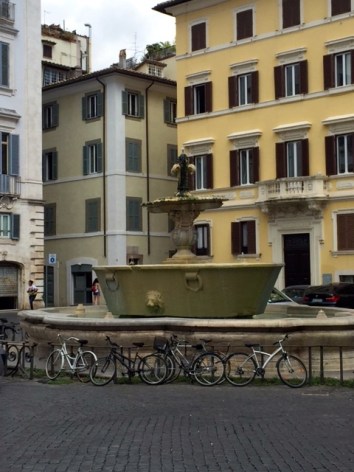
This pair of matching fountains stand symmetrically in front of the Palazzo.
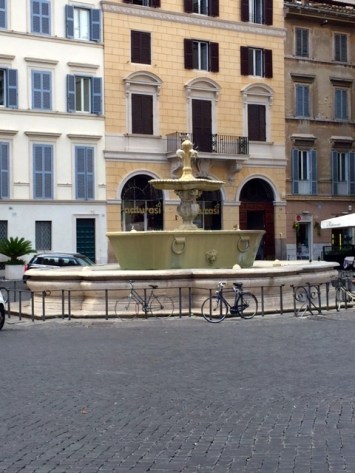
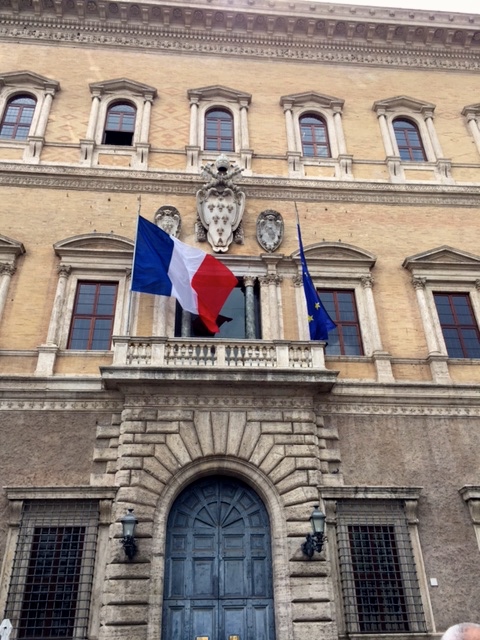
I was there as an art lover, of course, scheduled to take a tour in Italian of the many beautiful objets that adorn the fabulous palace. Chief among them being the fabulous frescoes by Carracci!
But, before moving to the frescoes, let’s look at the incredible building!
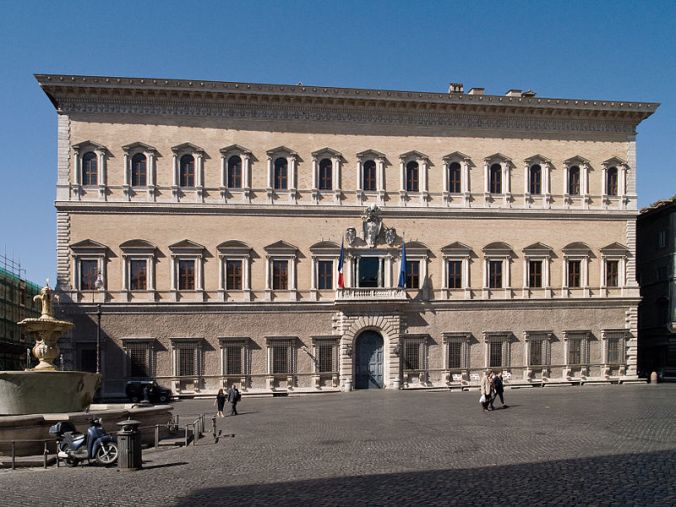
Above is an overview of this very important Renaissance palazzo, located in a prime area of central Rome. First designed in 1517 for the Farnese family, the building expanded in size and conception to designs by Antonio da Sangallo the Younger when Alessandro Farnese became Pope Paul III in 1534.
The palazzo’s construction involved some of the most prominent Italian architects of the 16th century, including Michelangelo, Jacopo Barozzi da Vignola and Giacomo della Porta.
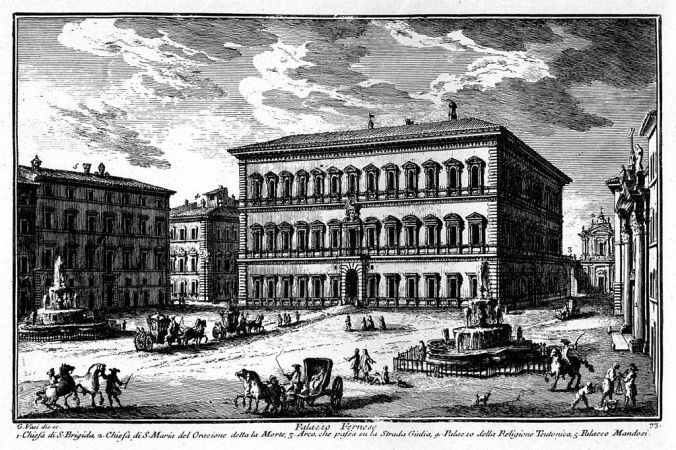
Above is an engraving of the Palazzo with the two matching fountains.
Let’s talk frescoes!
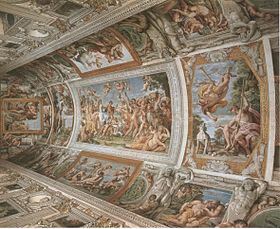
Several of the palazzo’s main salons were painted with elaborate allegorical programs including the Hercules cycle in the Sala d’Ercole or the Hercules Room; the “Sala del Mappamondo” or The Room of Maps; and the well known The Loves of the Gods (1597–1608) by the Bolognese painter Annibale Carracci.
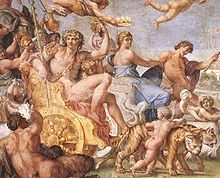
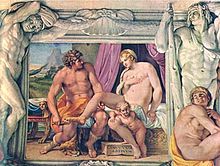
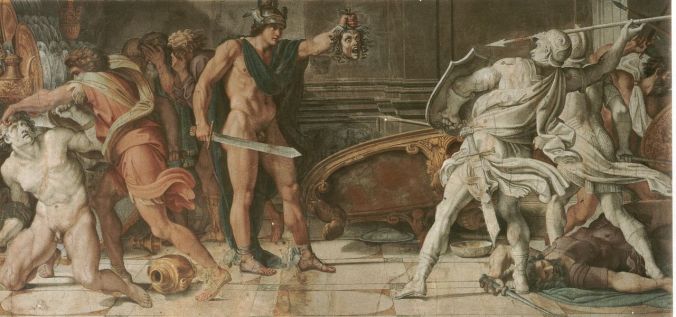

In 1595, Annibale and Agostino Carracci had traveled to Rome to begin decorating the Palazzo with stories of Hercules, appropriate since the it housed the famous Greco-Roman antique sculpture of the hyper muscular the so-called Farnese Hercules.
Annibale developed hundreds of preparatory sketches for the major work, wherein he led a team painting frescoes on the ceiling of the grand salon with the secular quadri riportati of The Loves of the Gods.
Although the ceiling is riotously rich in illusionistic elements, the narratives are framed in the restrained classicism of High Renaissance decoration, drawing inspiration from, yet more immediate and intimate, than Michelangelo’s Sistine Ceiling as well as Raphael’s Vatican Logge and Villa Farnesina frescoes.
Throughout the 17th and 18th centuries, the Farnese Ceiling was considered the unrivaled masterpiece of fresco painting for its age. They were not only seen as a pattern book of heroic figure design, but also as a model of technical procedure; Annibale’s hundreds of preparatory drawings for the ceiling became a fundamental step in composing any ambitious history painting.
The lucky French, to occupy this magnificent building!
Obama in Milan
Not a new picture, but a great one:

 get back, lauretta!
You must be logged in to post a comment.