VENICE PINK paper design by Giulio Giannini e Figlio
Hand printed paper cm 50×70, pink flowers in the vase.
Xilography by Eleonora Gallo reproducing ancient Italian regional motifs

VENICE PINK paper design by Giulio Giannini e Figlio
Hand printed paper cm 50×70, pink flowers in the vase.
Xilography by Eleonora Gallo reproducing ancient Italian regional motifs
Late last week I had the great pleasure of visiting Prato with a new friend who was born and raised there. There is nothing like visiting a lovely small Italian town with someone who knows their way around. My friend showed me things I would have found on my own!


I wrote a post on the Duomo of Prato, where I discussed the architecture and sculpture. The Duomo is such a rich repository of masterworks that it needs several posts. Today I will deal only with the Far Fillips Lippi frescoes created between 1452-66.
Let’s start with this basic premise: these paintings are gorgeous and in excellent condition! I have waited an art historian’s lifetime to see them and they did to disappoint.
This is the apse end of the basilica in all of its glory. The Far Fillipo Lippi frescoes are in the chapel in the center:

These frescoes show the master, Fra Filippo Lippi, at his finest. They were produced slowly and sporadically between 1452 and 1466.
The enormous scale of the choir, and consequently the painted subjects, were a far cry from the intimacy of the Brancacci Chapel. The cycle has been restored recently, revealing powerful yet sensitive images produced with verve and facility during a late period in Lippi’s development.
The Prato frescoes were both an artistic and a physical challenge for the aging painter, and, particularly in the large scenes on either side of the choir with stories of St John the Baptist and St Stephen, scholars believe that a significant share of the execution may be attributed to workshop assistants.
Below: View of the chapel filled with the fresco cycle


South Wall
Below: overview of the right (south) wall of the main chapel

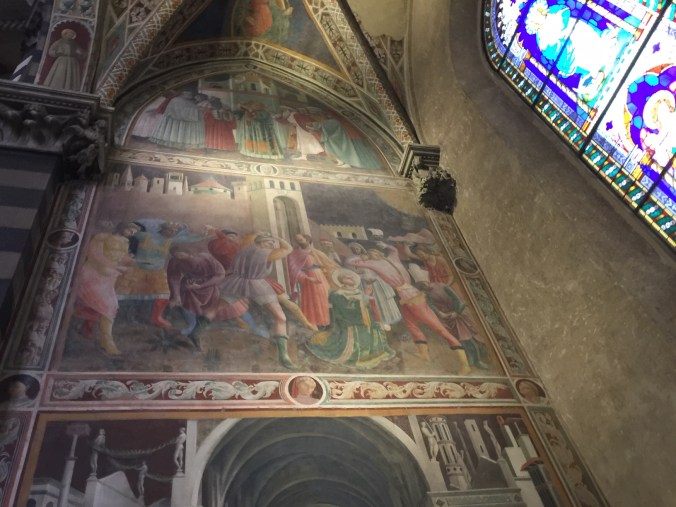
Beginning at top, coming down, we begin with “The Birth and Naming St John”
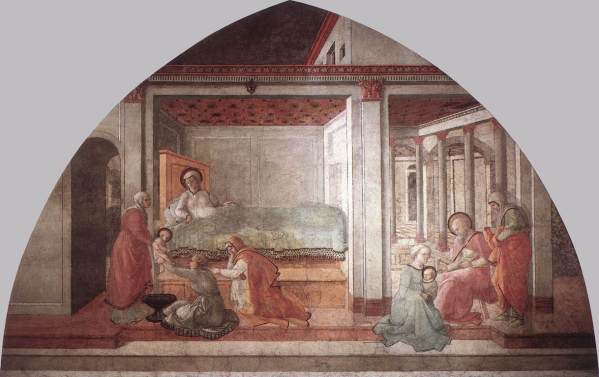
The Birth and Naming St John (detail)

The 2nd fresco down from the top: “St. John Taking Leave of His Parents”
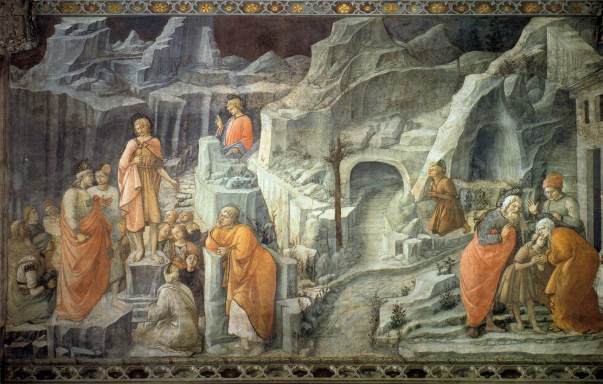
St. John Taking Leave of his Parents (detail)

St. John Taking Leave of His Parents (detail)

Third scene down from the top: Herod’s Banquet

Herod’s Banquet (detail)
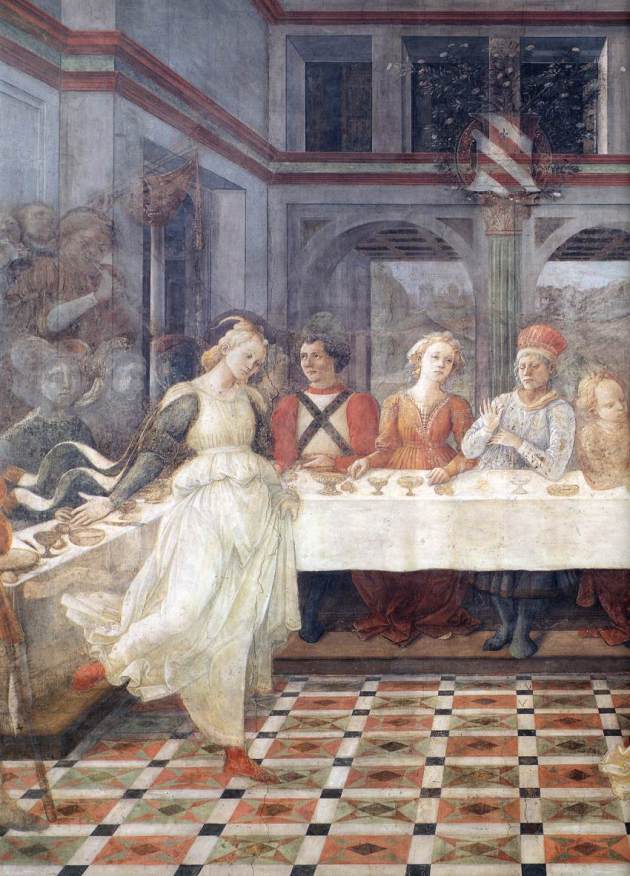
Herod’s Banquet (detail)
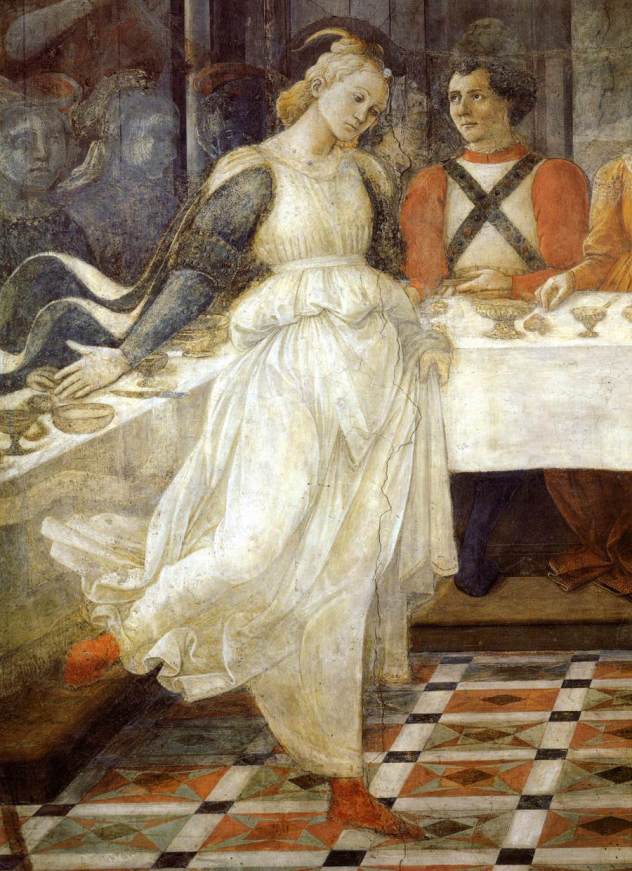
Herod’s Banquet (detail)

Herod’s Banquet (detail)

Herod’s Banquet (detail)

The Beheading of John the Baptist, scene to the far left of the main fresco

North Wall:
View of the left (north) wall of the main chapel
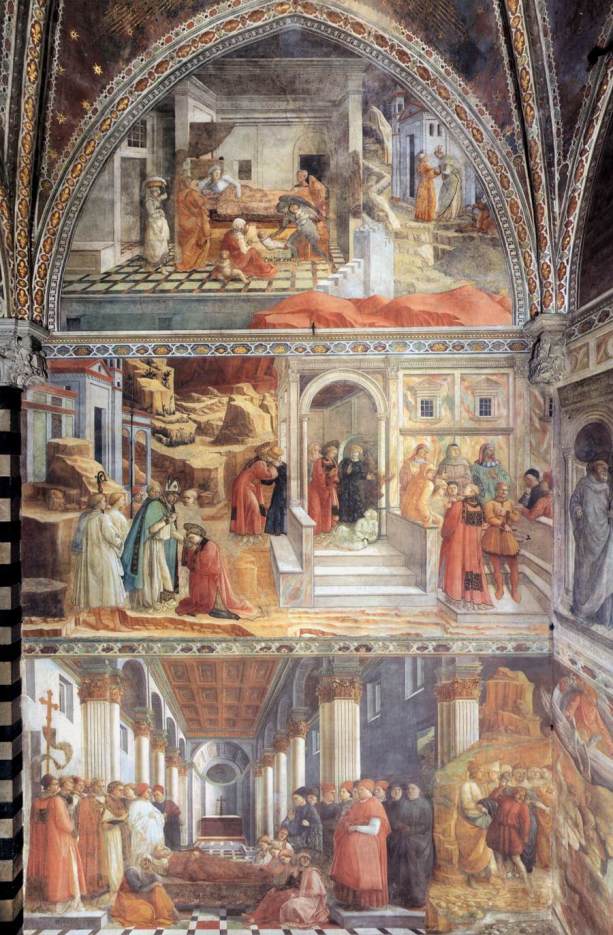
Beginning at top of fresco on North wall: St Stephen is Born and Replaced by Another Child

St Stephen is Born and Replaced by Another Child (detail)

St Stephen is Born and Replaced by Another Child (detail)

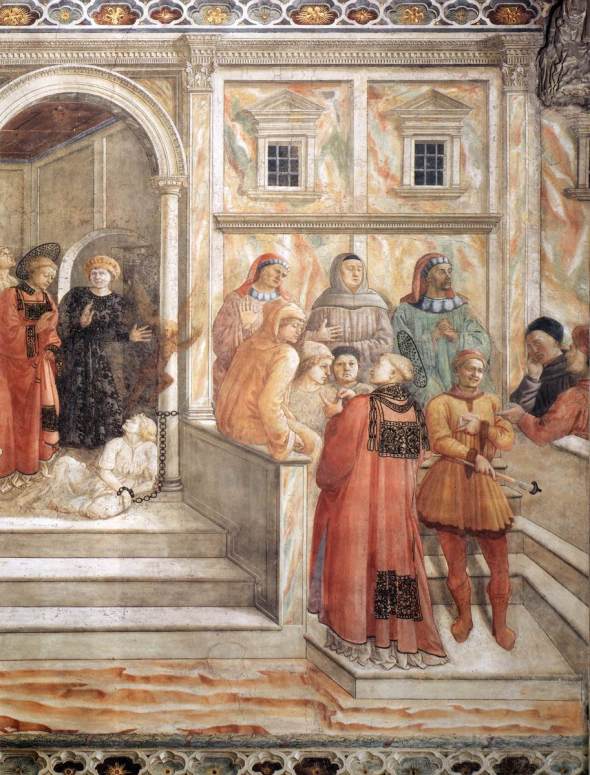
2nd Fresco down from top, The Disputation in the Synagogue
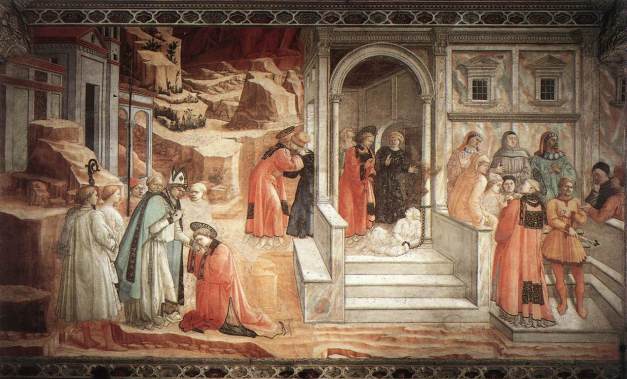
The Disputation in the Synagogue (detail)
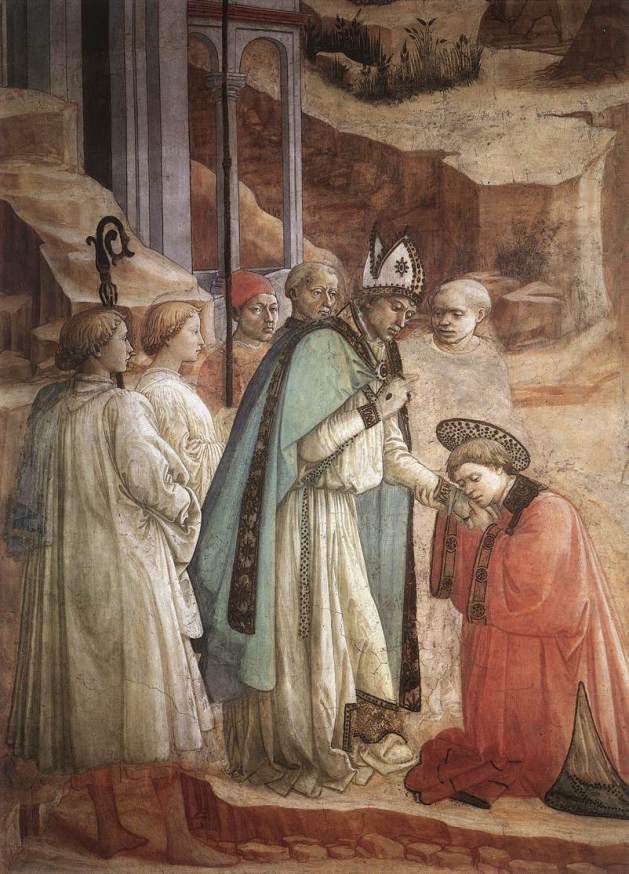
The Disputation in the Synagogue (detail)

The Disputation in the Synagogue (detail)

The Disputation in the Synagogue (detail)
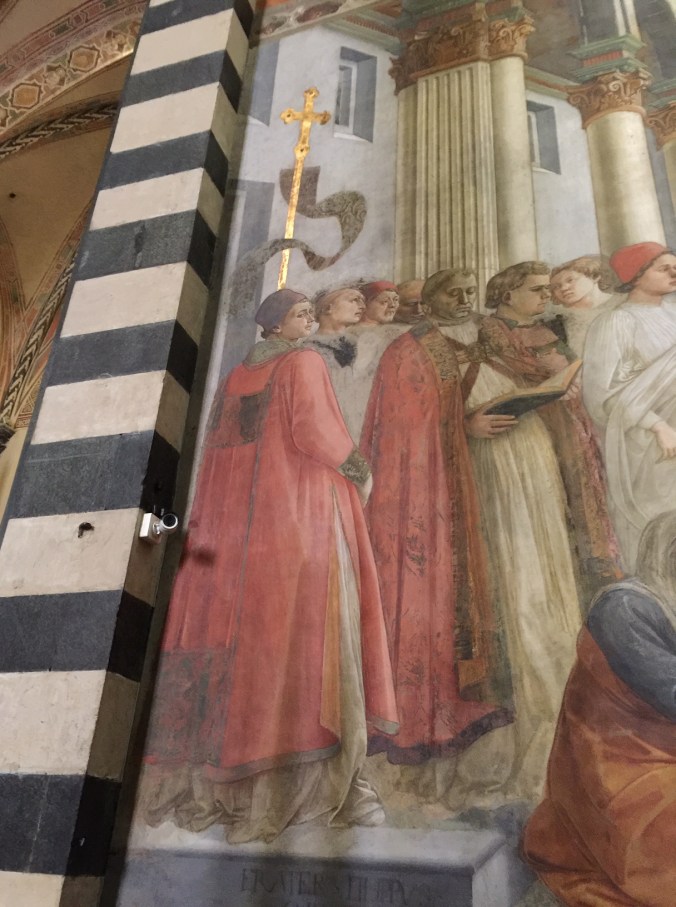
Third fresco down from the top: The Funeral of St Stephen
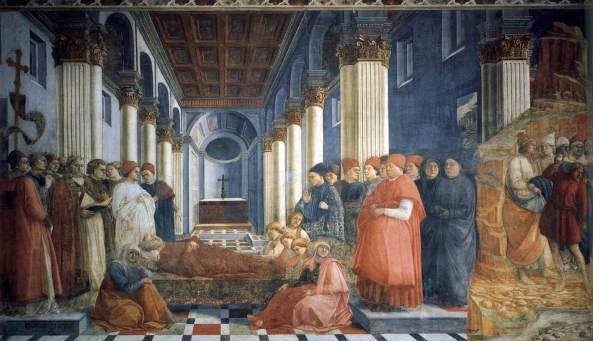
The Funeral of St Stephen (detail)
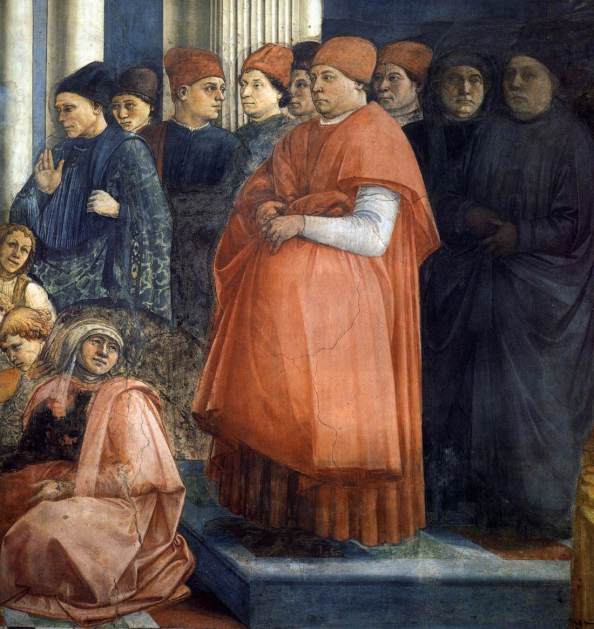
The Funeral of St Stephen (detail)

The Funeral of St Stephen (detail)

The Funeral of St Stephen (detail)
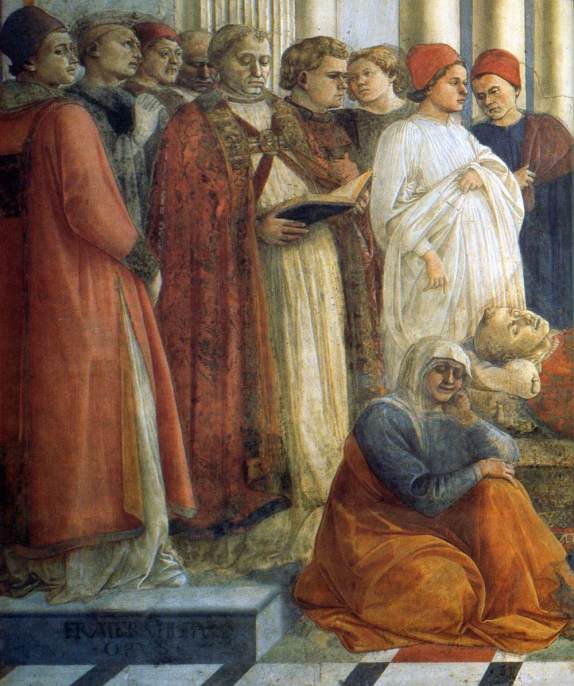
The Funeral of St Stephen (detail)

Scene to the far right of the main fresco: The Martyrdom of St Stephen

St Alberto of Trapani

St Alberto of Trapani

Allora, I have shown you the main paintings within this fresco cycle and explained the location. Now let me simply share the pictures I took with my phone. My phone was never pointed at anything more beautiful…and that is saying something!


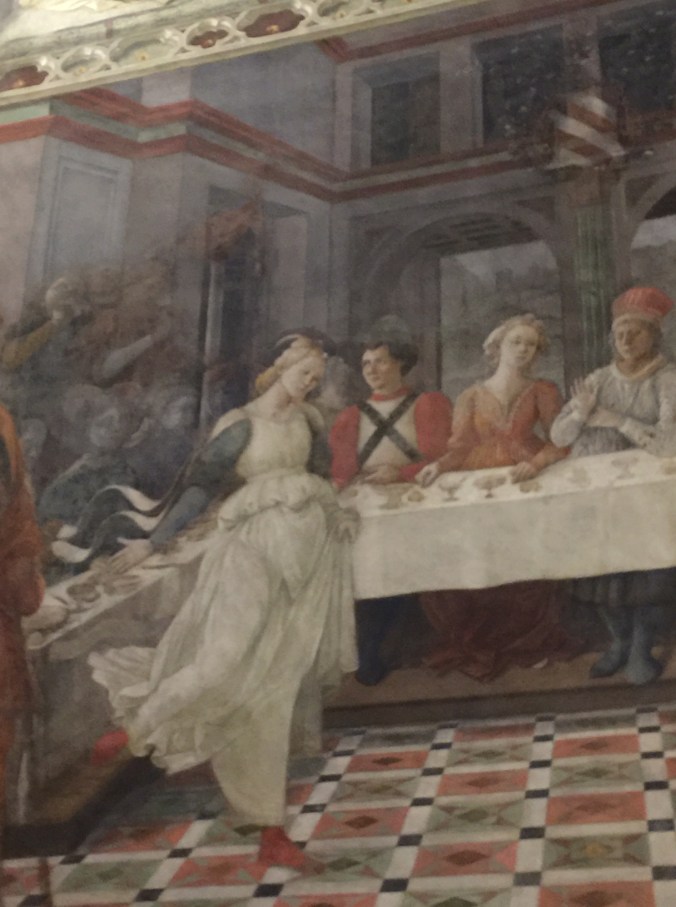
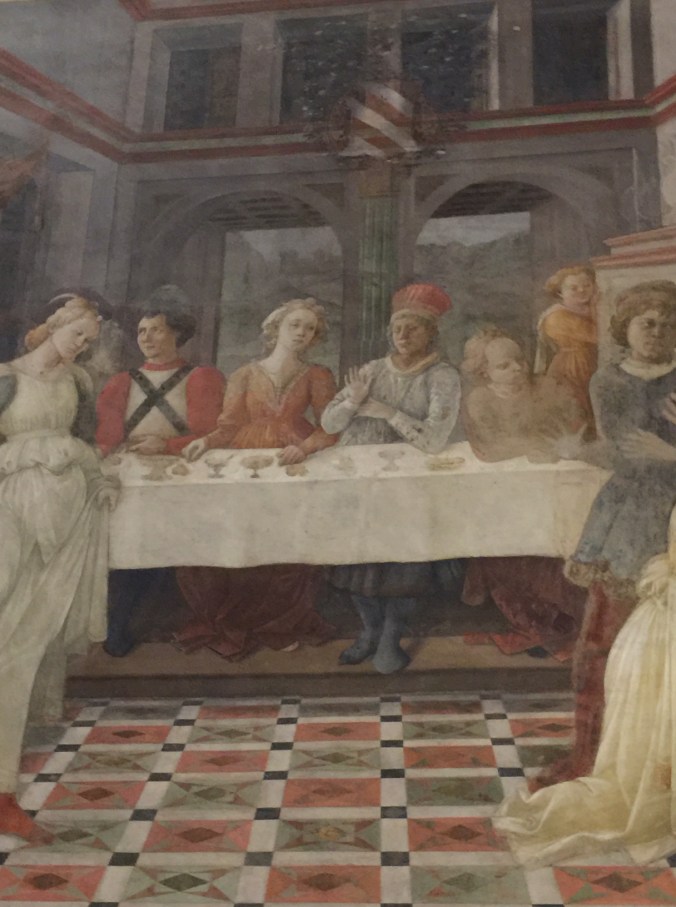


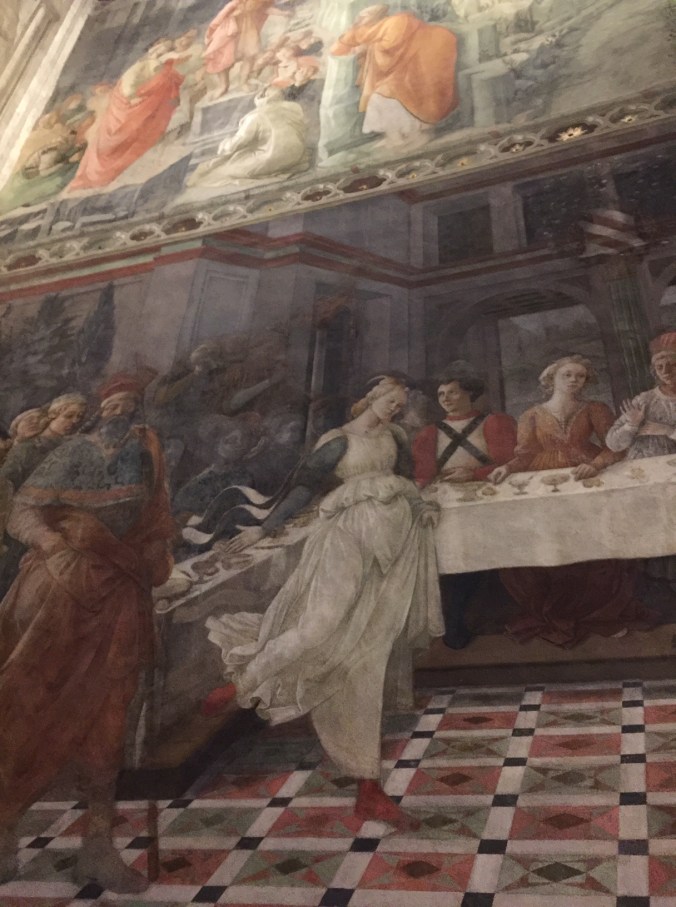


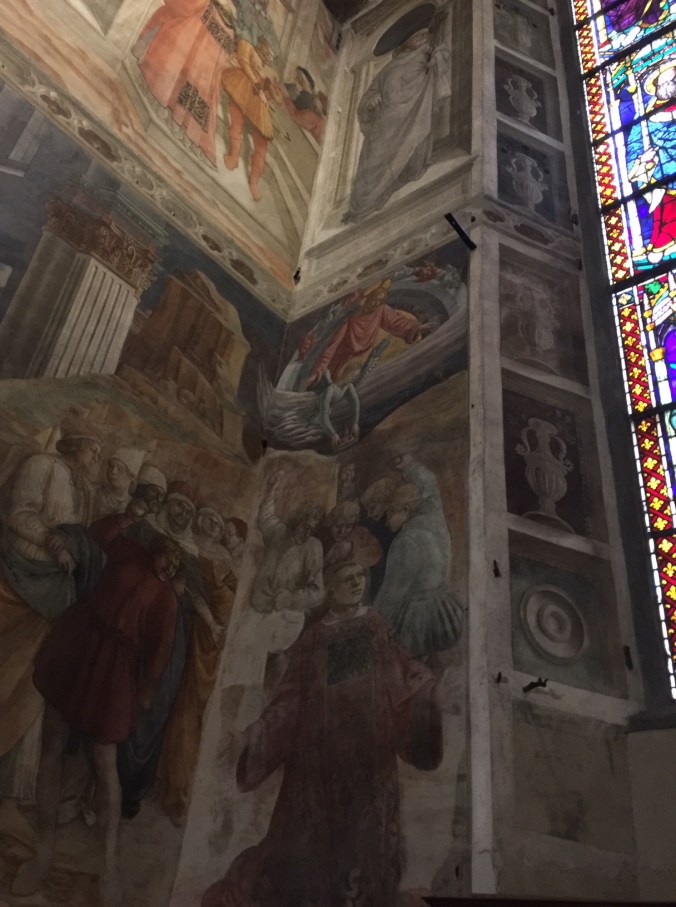
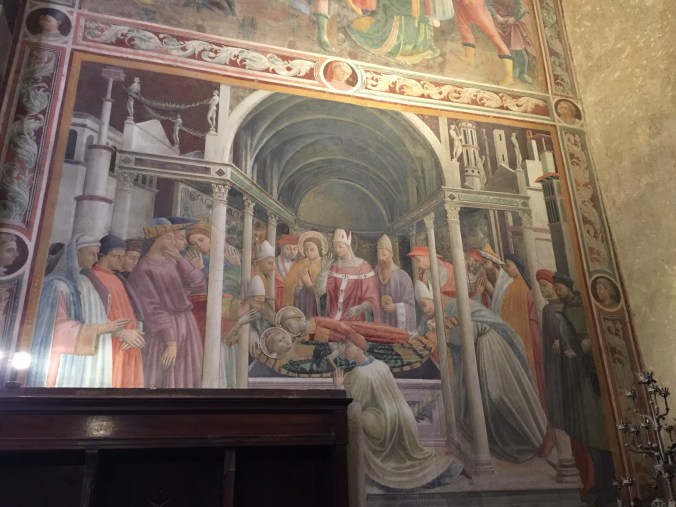



But is this how you would want your hair to look in a painted portrait? I don’t know what the sitter or the artist were thinking!!

ABRUZZO ROSSO

Hand printed paper cm 50×70, red peacock on ivory background. Xylography by Eleonora Gallo reproducing ancient Italian region motifs.
It was recently announced that the Vasari Corridor will open again in 2021. Until then, and for those who have never seen this great hallway filled with self-portraits of hundreds of artists, here is a great video that takes you through the entire corridor in a very fast pace.
Also, see here:
Yesterday I had the chance to see the Carnevale parade in Pietrasanta. I want to add a short note on the town itself.

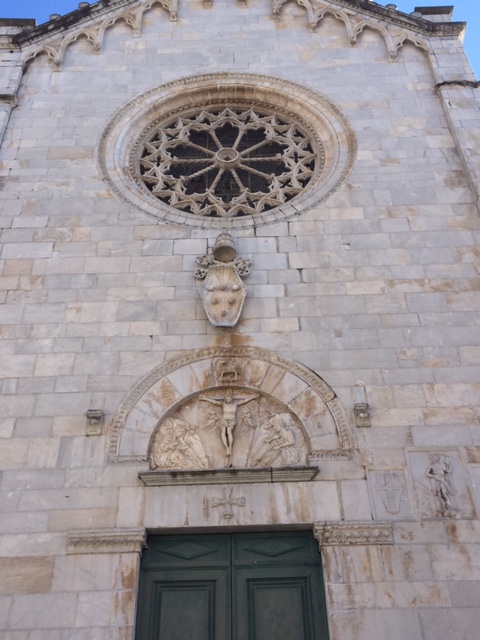
Above and below are picture of Pietrosanta’s duomo. A service was ongoing when I stopped inside. It is actually a pretty rare event that I find a service going on in the many churches I visit throughout this country. Who’d a thunk it?
It was nice to observe. And, il duomo is quite wonderful, filled with interesting paintings and sculptures.



As ever, the simple local bars serve cappuccino to die for. Starbucks, eat your heart out.


The deconsecrated church of Sant’ Agostino today serves Pietrasanta and environs as a beautiful exhibition space for local artists. I first had the pleasure of joining my dear friend, Grayce Murabito and her friend, the actor Eddie Albert (was in Roman Holiday), in viewing an exhibition there about 35 years ago. I hadn’t been back until yesterday. Somewhere I have photos of lovely Grayce standing in front of the sign advertising the exhibition of her husband’s works: the painter and sculptor, Rosario Murabito.
(The church itself is fascinating: Built in the 14th century, it was annexed to the convent and the ospedale dei Mercanti. The façade recalls architectural and sculptural decoration of the Cathedral of San Martino di Lucca. There are numerous tombstones on the floor and sections of fresco cycles from the 14th-15th centuries. The former church was deconsecrated before the mid 1980s, and has subsequently been used for temporary exhibitions, especially in the summer months. For information you can contact the “Russo” cultural center, in via sant’Agostino 1, call 0584.795500 or visit the website http://www.museodeibozzetti.it. See also www.comune.pietrasanta.lu.it and official page http://www.facebook.com/comunedi.pietrasanta?fref=ts )

Romano Cosci, painter and sculptor, was born near Lucca in 1939. He was trained in the fifties in the stimulating atmosphere of the sculpture workshops and the art foundries of Pietrasanta (where he worked and lived) under the guidance of artists – prestigious artisans like Leonida Parma and Ferruccio Vezzoni and had as a teacher and friend Pietro Annigoni. Until 1986 he taught pictorial disciplines in the artistic high schools of Carrara and Grosseto. His work, with equal parts of talent and poetry, make use of an extraordinary range of expressive media, passing through fresco, marble, bronze, terracotta, mosaic and every other kind of 2-d design. He died in 2014.
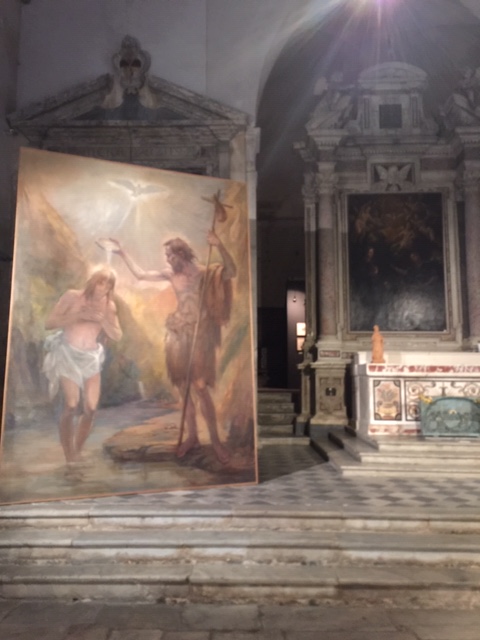


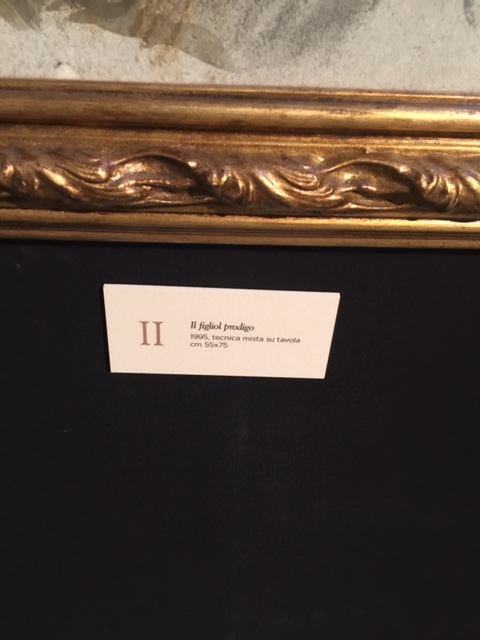
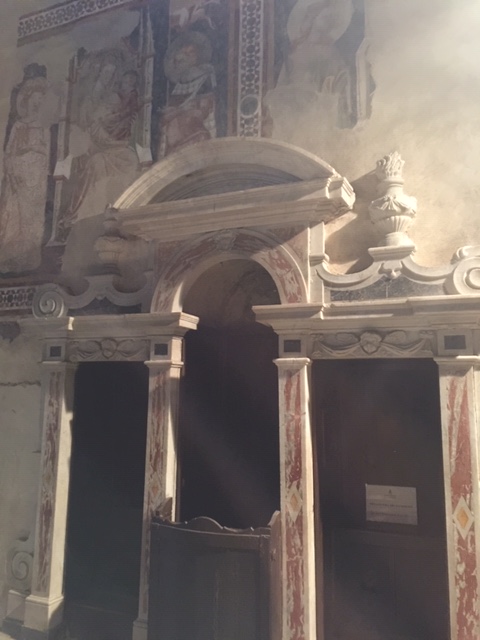


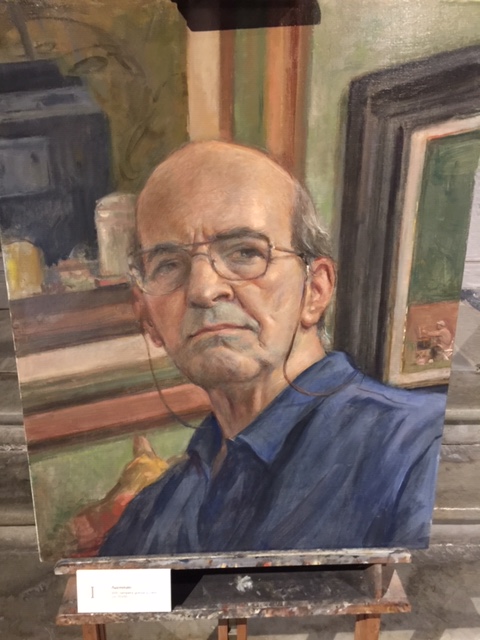
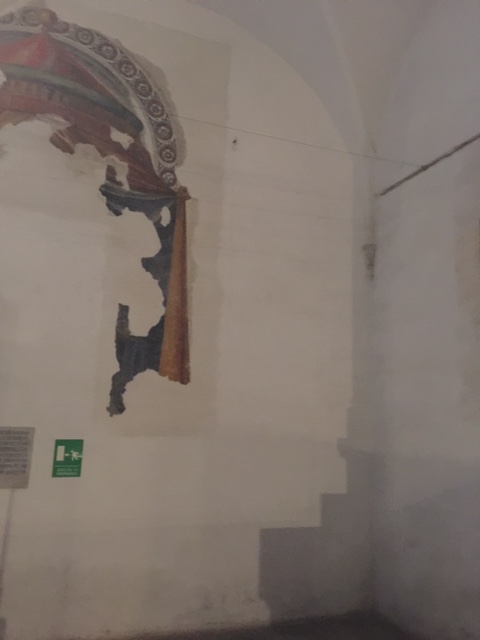

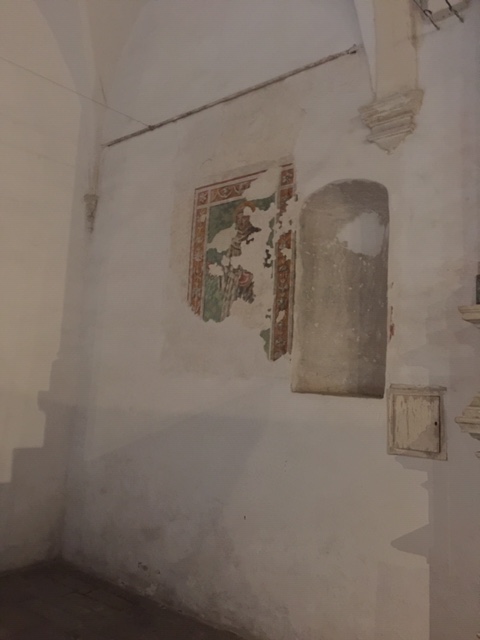

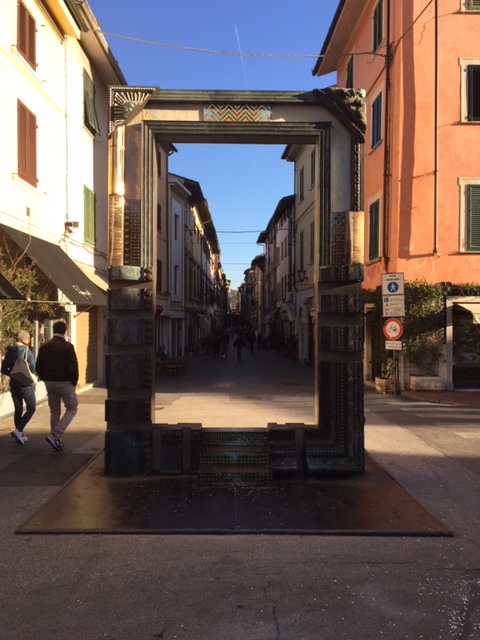
A couple other views of lovely Pietrasanta:


Last month found me climbing the millions of steps to the top of the Florence cathedral dome. Wow, what a hike and what an incredible view from the top!
One of the many treats of that worthwhile climb is the opportunity to see the Vasari frescoes of the Last Judgement, that adorns the interior of Brunelleschi’s magnificently engineered dome. This post is dedicated to the Vasari paintings.


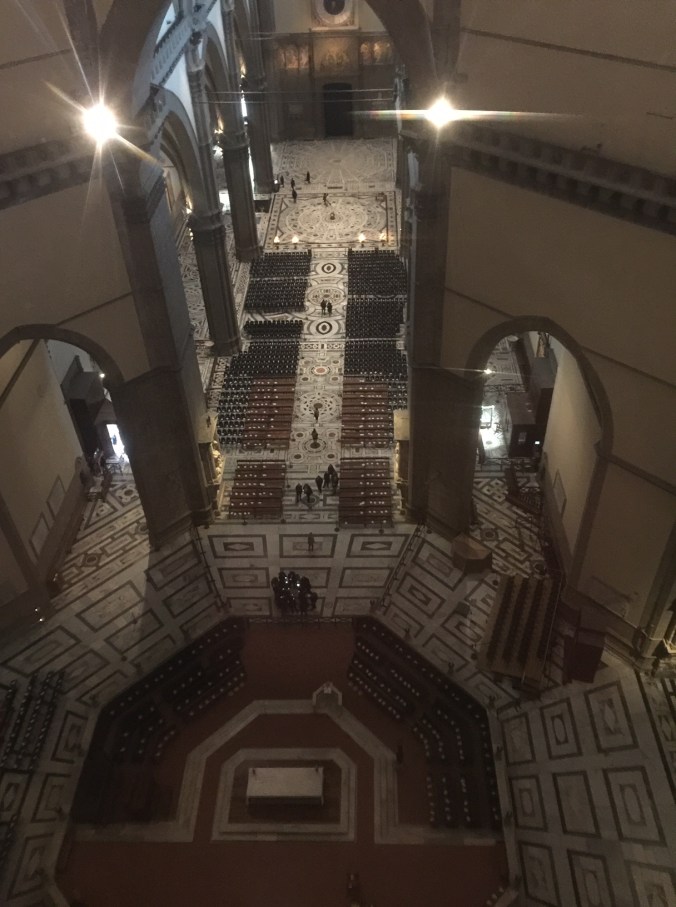


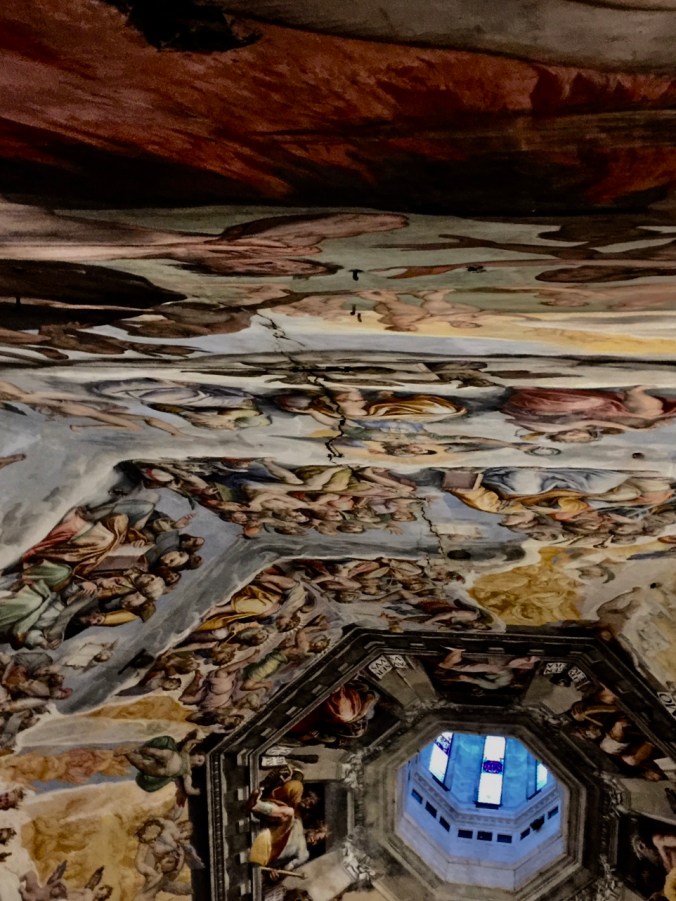


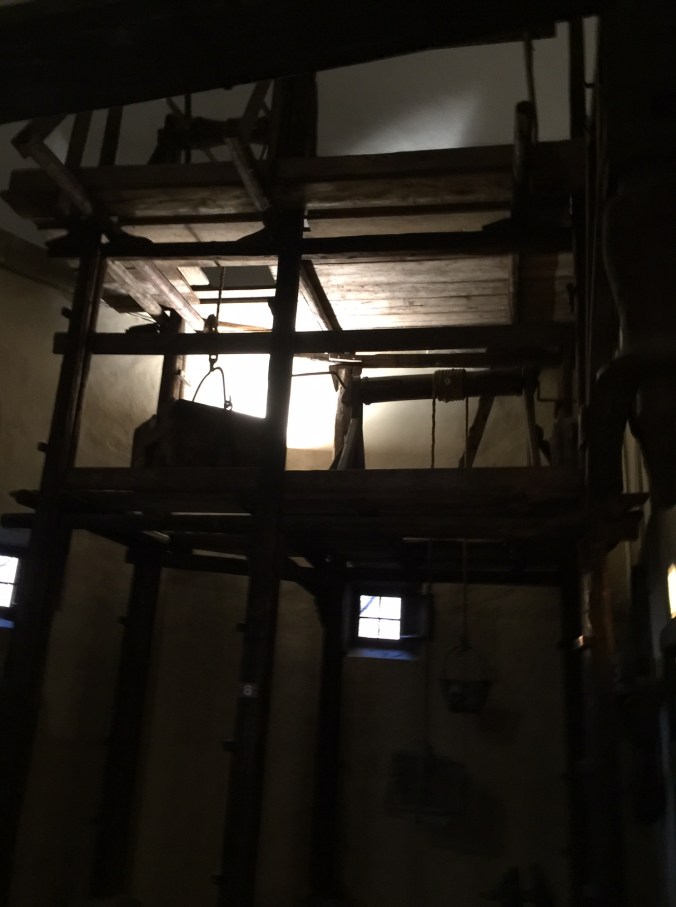

My birthday was last month and I marked it in a big way this year. A fellow-January birthday girl and I got tickets to climb to the top of the Florence cathedral dome. It is a bit of a hike. You climb up more than 1200 steps, many very steep, and, even in January, the stairways are crowded. It was worth every step!
You must be very careful on these stairways, some narrow, some steep, some filled with people going down while you are going up. I was very, very careful, bc who wants to fall on a stairway from the roof of the duomo?
This post covers the exterior, a separate post is coming soon on the interior of the dome.
So, the first stopping place is the terrace level below the dome, as seen here:


The views, even from this lesser level, are outstanding! There’s the dome of San Lorenzo:


Beguiling views of the baptistry:


So, as I said, I was extremely careful as I climbed up the duomo stairways. And then, 2 days later, I missed a step on a small stairway in my apartment building, lost my balance and twisted my ankle. And I’ve been laid up ever since! I finally got an X-ray and nothing was broken, thank goodness, but the ligaments were torn, so we think.
Anyway, feeling sorry for myself with my foot elevated for several weeks, I haven’t felt like talking about the dome climb. I am almost back to walking well by now, and this is my post to celebrate that fact!

Above and below, shots of the January skies over Florence:

Ahoy down there!


Looking to San Lorenzo: when I’m high up above Florence I realize again how small this city really is!

Looking toward Fiesole:

Looking up and thinking: “can I climb that many more steps to get up there?” Not completely convinced.


The quality of the sculptural details at this height was amazing to me. The architects and sculptors could have been excused for skimping on details: I mean, how many people will ever see the work from close-up?

But they skimped on nothing:


So, okay, chicken, let’s keep climbing. You made it this far. So, up we go, and the climb got more severe:


This sweet woman encouraged me every step of the way, which was a lot of steps!

Above: Looking south, way across Florence, we see Forte Belvedere with its tower:


Below: looking across Florence to San Minato al Monte:

Looking over to the synagogue with the green dome:

Looking towards Santa Croce:
O

In the middle ground, the Bargello and Badia:
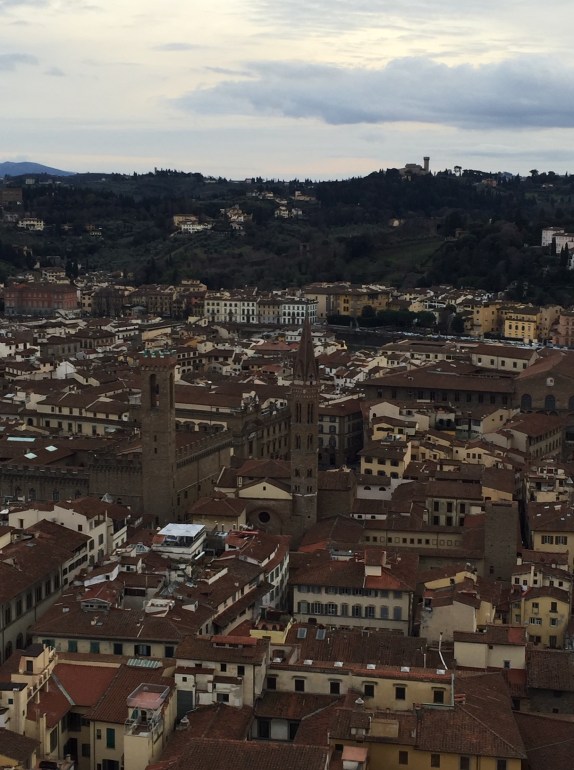


Looking toward the Mercato Centrale, with the green roof:

San Lorenzo with train station in background:


Looking way across town to the church of Santa Maria Novella:


Another shot of San Lorenzo with its entire complex shown:


Orsan Michele in foreground, Palazzo Pitti in front of forest (Boboli Gardens).


Below: looking to Piazza della Repubblica:


Below: details inside the Giardino Boboli:


You have to play this to believe it! Japanese woodblock print, a painting by Van Gogh, and 2 paintings by Millet! Art and agriculture together at last.
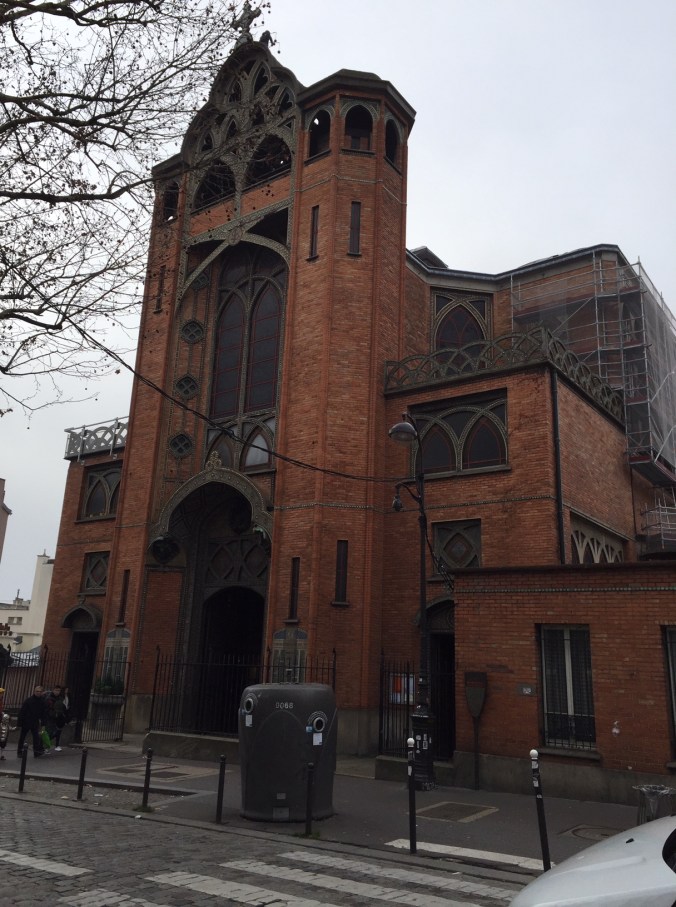
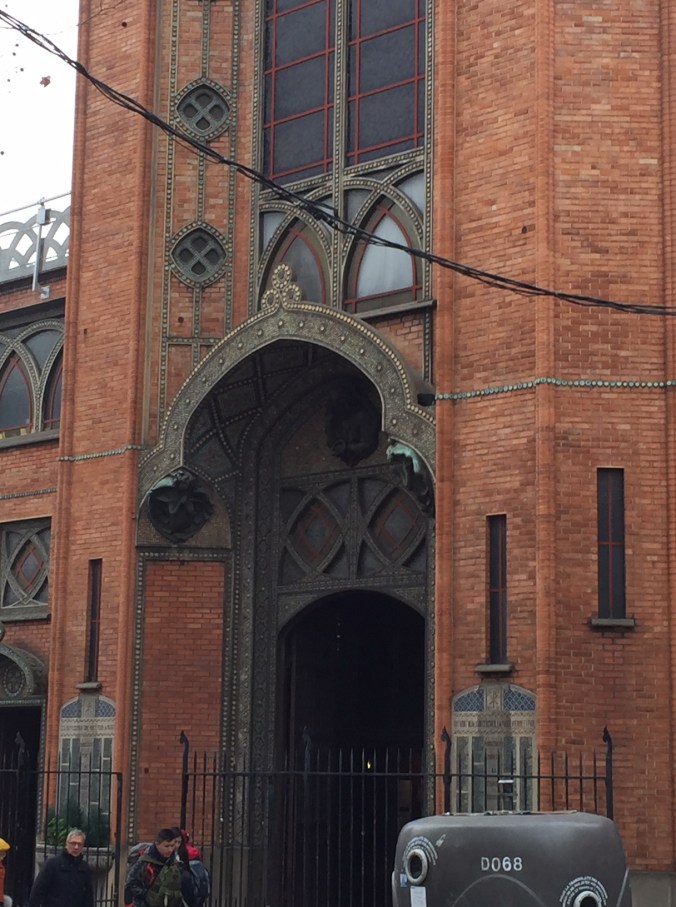
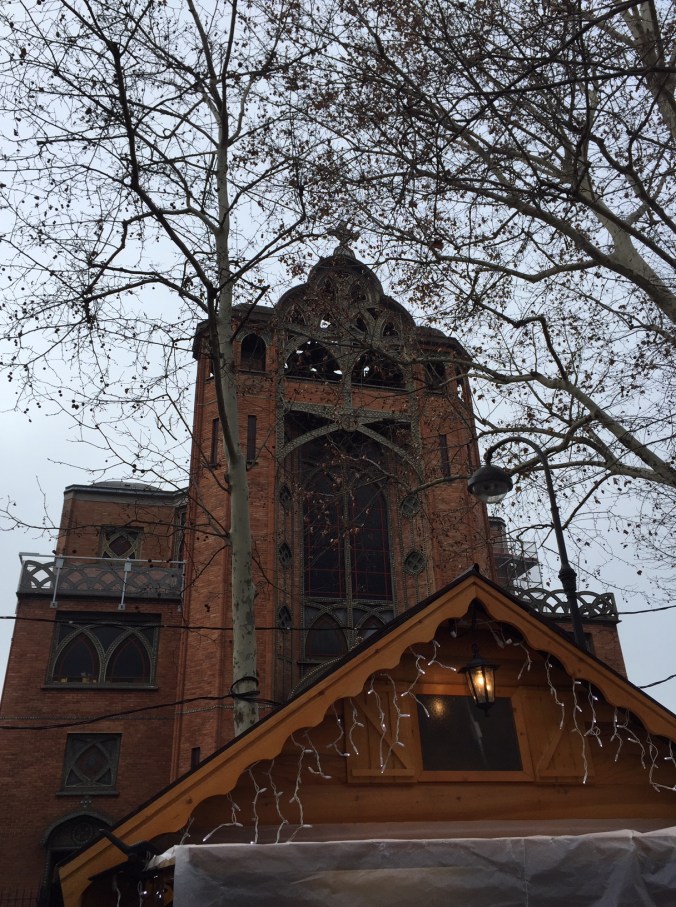
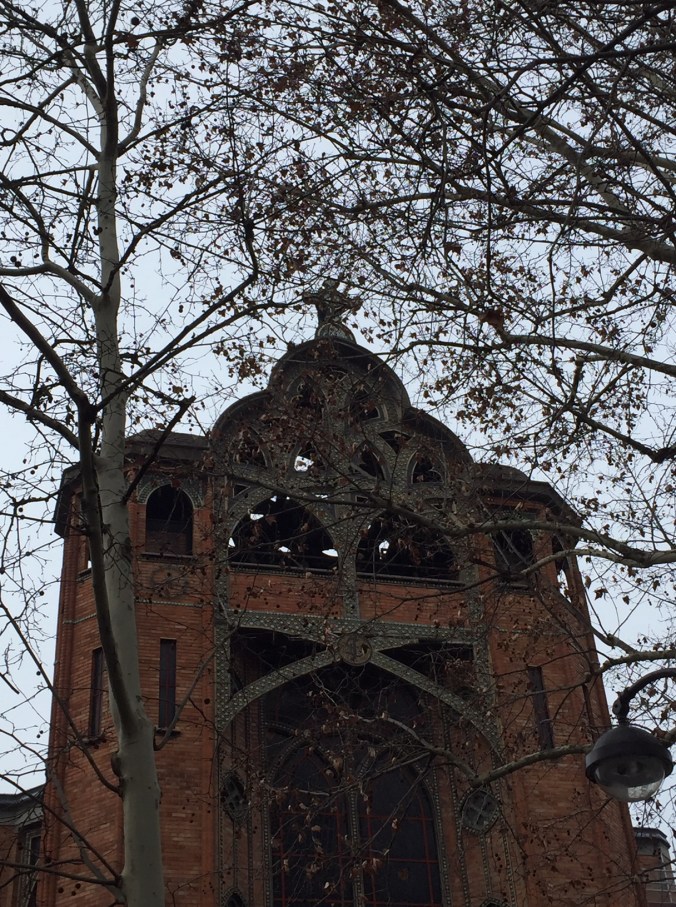
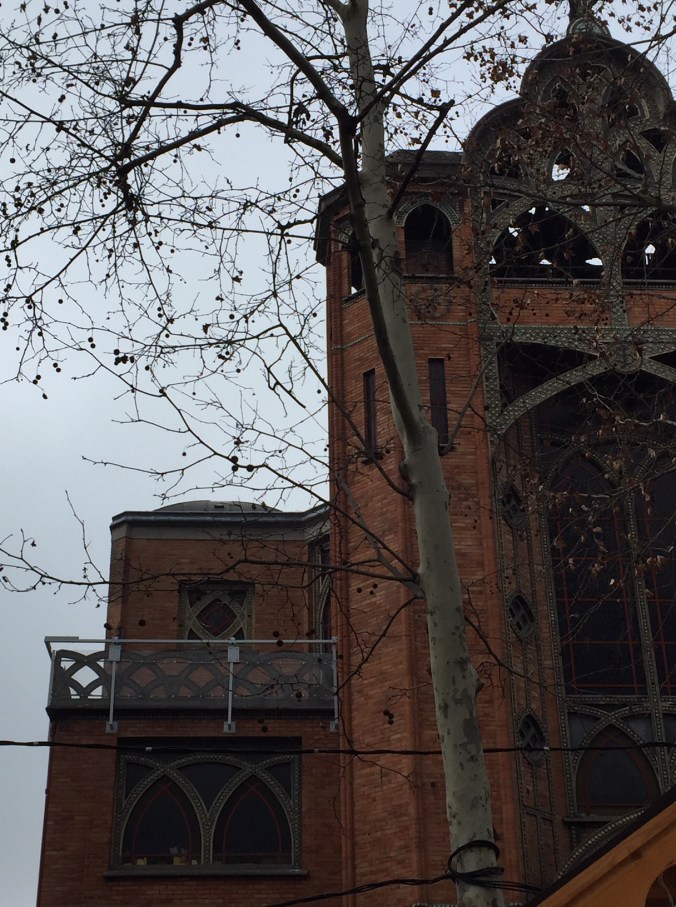
There’s a beautiful church in Montmartre that was a revelation (ha ha) to me on my recent visit in Paris. Here it is: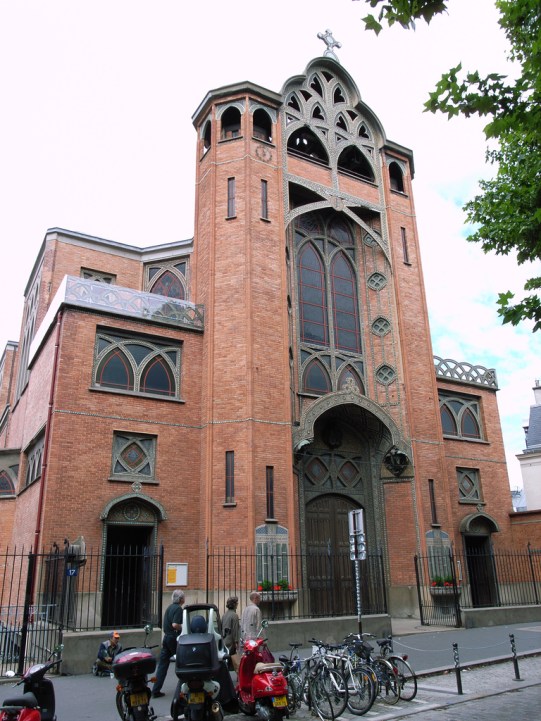
The church is Saint Jean de Montmartre.

I think it is fair to say I’ve spent a lot of time visiting churches, to study Renaissance architecture, sculpture, and paintings. But, this church in Montmartre was the first ever Art Nouveau church I’ve ever seen and it was as lovely as it was interesting.

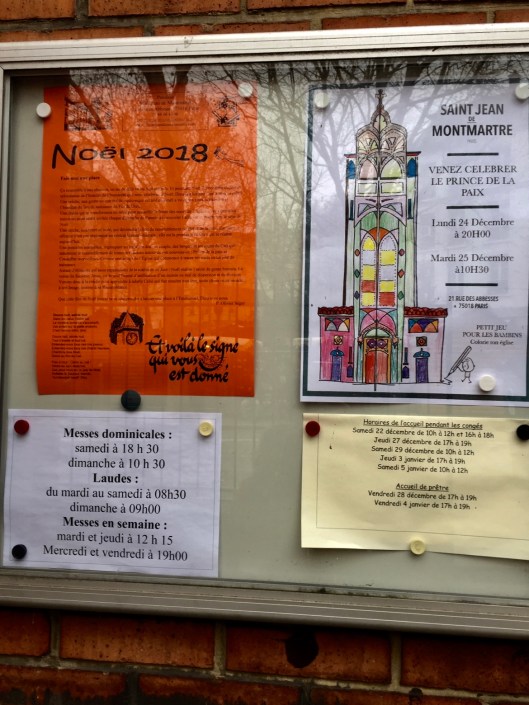
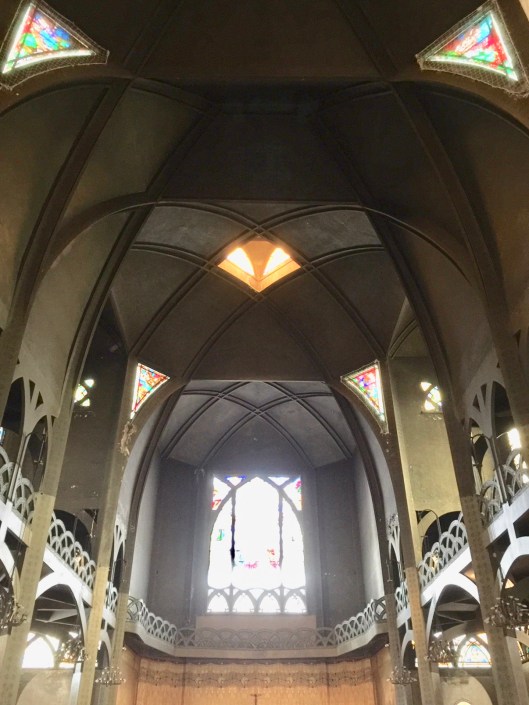
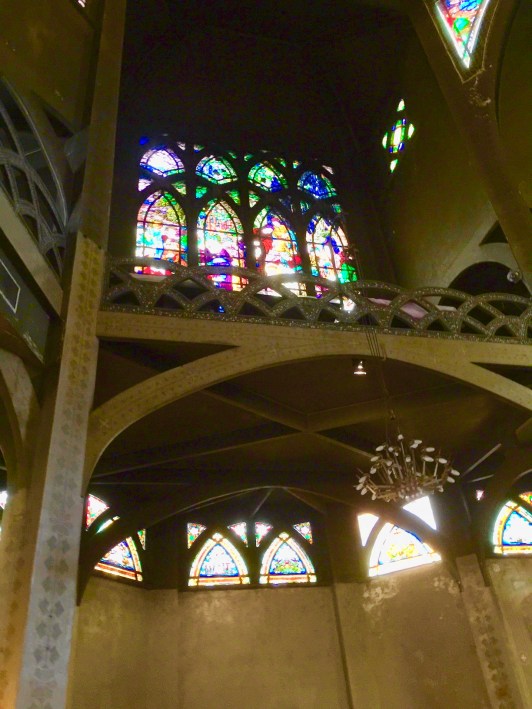
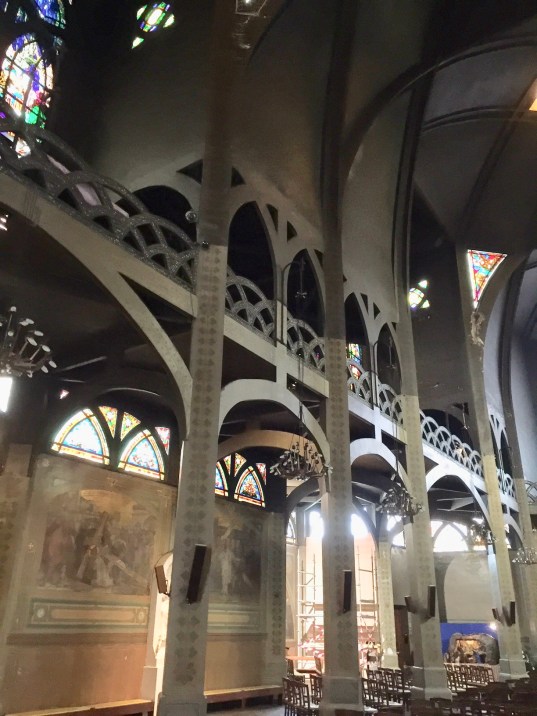
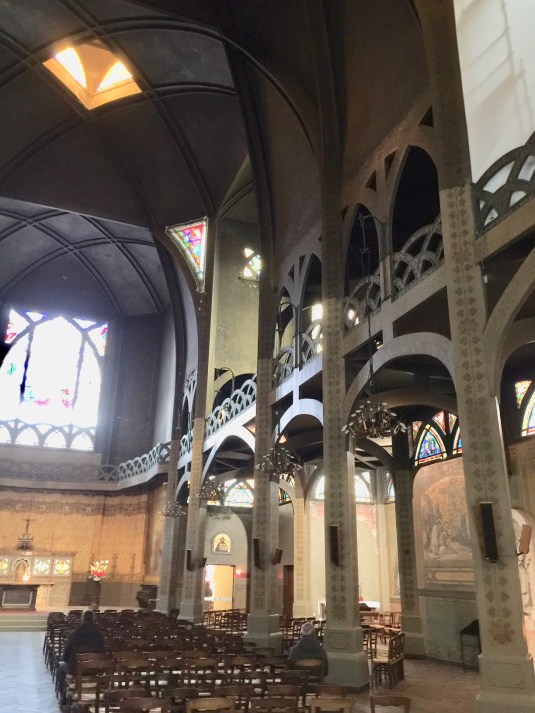
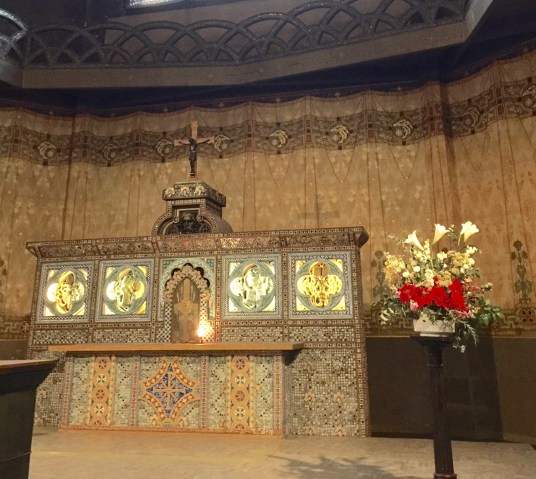

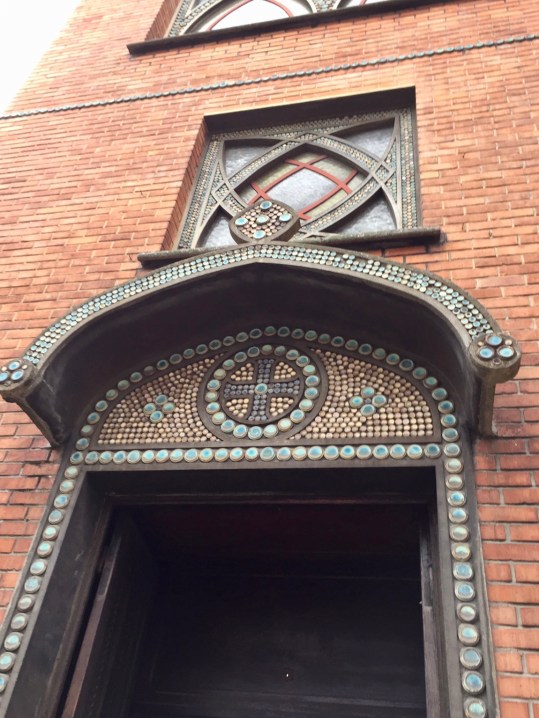
So, here’s what Wikipedia shares about this interesting church:
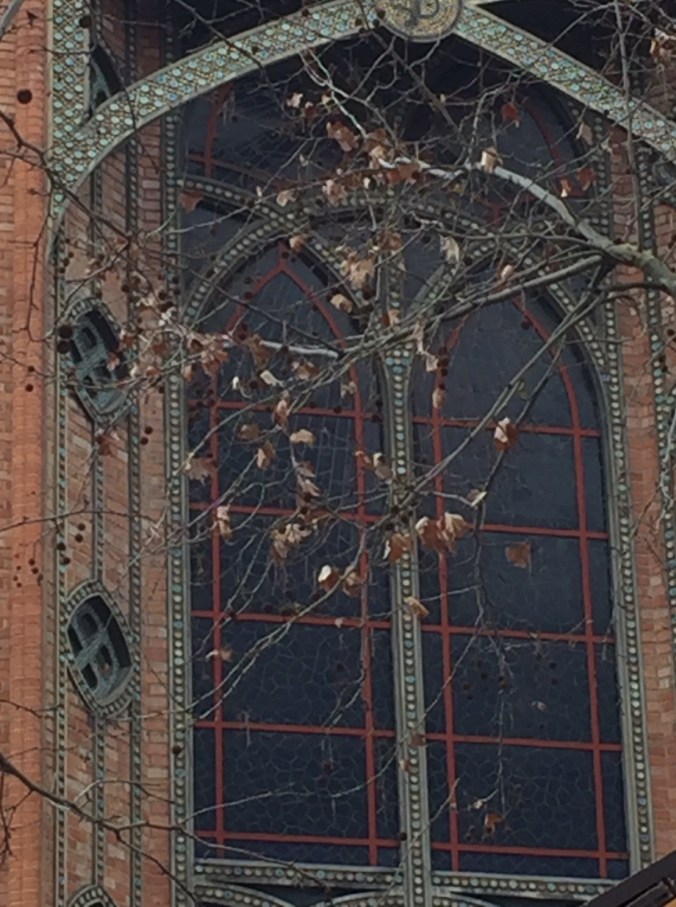
The Church of Saint-Jean-de-Montmartre is located at 19 Rue des Abbesses in the 18th arrondissement. Situated at the foot of Montmartre, it is notable as the first example of reinforced concrete in church construction. Built from 1894 through 1904, it was designed by architect Anatole de Baudot, a student of Viollet-le-Duc and Henri Labrouste. The brick and ceramic tile-faced structure exhibits features of Art Nouveau design while exploiting the superior structural qualities of reinforced concrete with lightness and transparency. The Art Nouveau stained glass was executed by Jac Galland according to the design of Pascal Blanchard. Interior sculpture was by Pierre Roche.
The reinforced concrete structure followed a system developed by the engineer Paul Cottancin. Construction was attended by skepticism over the properties of the new material, which violated rules laid down for unreinforced masonry construction. A lawsuit delayed construction, resulting in a demolition order that was not resolved until 1902, when construction was resumed.
There is a guided tour of the church on every fourth Sunday of the month at 4:00 PM.
The Church of Saint-Jean-Montmartre was commissioned by Montmartre priest Father Sobbeaux. The population of the town was growing and the only other abbey church, Saint-Pierre de Montmartre was too small. Saint-Pierre de Montmartre was located at the top hill of Montmartre, and could only serve those living up there. The new church was part of Fr. Sobbeaux’s personal mission to evangelize the population of the lower part of the hill, and he was responsible for raising all the funds for construction.
Using reinforced concrete on Saint-Jean-de-Montmartre resulted in the church being quite ahead of its time and, and building codes had not caught up yet. Cottancin’s system was so new and revolutionary, it was difficult for people to believe the structure would actually stand. Even other architects opposed the plan, and believed it would collapse.
The church was built in ten years, the reason for it taking so long was because construction had to be stopped as a result of a lawsuit filed in 1898 due to ” non-conformity of town planning”.
Next came an order for the demolition of the building. This resulted in the performance of innumerable tests to ensure the structural integrity of the building. To save the church, Baudot and Sobbeaux set up technical demonstrations. They recreated the pillars and flagstone floor in the garden of the church to prove the strength and stability of the building. This demonstration reassured the skeptics and the order for the destruction of the church was lifted.
Saint-Jean-de-Montmartre is the first religious building to be made from concrete, understandably there was some concern over the aesthetic qualities of the material. The red brick facade, is used for decoration as well as additional support an insulation. The exterior is also embellished with geometric designs made from multicolored sandstone pearls. Saint-Jean-de-Montmartre is in the architectural style art nouveau, one of the few Parisian churches in this style.[6] The theme of the exterior and interior design is based off the writings of St. John- The fourth Gospel and the Apocalypse.
 get back, lauretta!
You must be logged in to post a comment.