The monastery of San Marco, which stood just two blocks north of the Palazzo Medici, had been founded in the thirteenth century. However, it had been completely renovated and considerably expanded by Lorenzo the Magnificent’s grandfather, Cosimo de’ Medici in the 1450s.
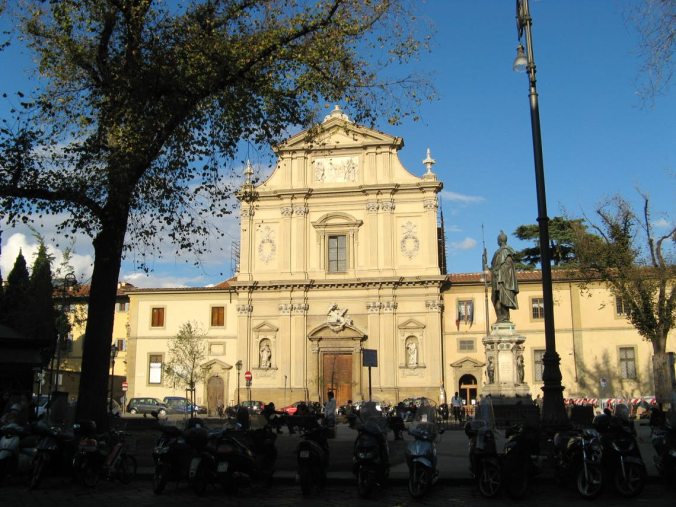
Cosimo had used his favourite architect Michelozzo Michelozzi, and incorporated the work of the resident monk Fra Angelico, one of the great early Renaissance artists.
Michelozzi would be responsible for some of the finest early Renaissance architecture in Florence, including the renovation of the Palazzo della Signoria and the design of the Medici villa at Careggi.
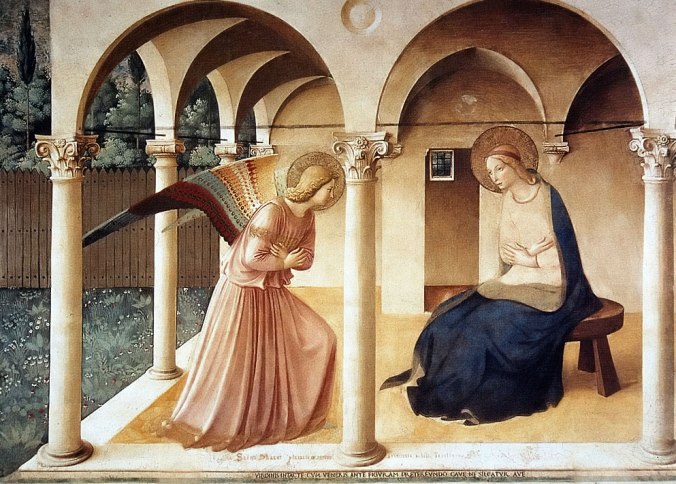
For his part, Fra Angelico’s ethereal paintings would heavily influence Michelangelo, whose depiction of God’s finger passing on life to Adam in the Sistine Chapel was directly inspired by the artist-monk.
The work of Fra Angelico and Michelozzi came together at San Marco in the delightful shaded San Antonio cloister, whose delicate pillars and colourful frescoes enclosed a tranquil green garden in the midst of the monastery.
Cosimo de’ Medici had undertaken the renovation of San Marco late in his life, intending it as absolution for the sin of usury, which had enabled him to accumulate his fortune as a banker. Yet there had also been a less manifest reason for Cosimo’s benevolence, one that explained why in particular he chose to lavish his wealth on San Marco, rather than other similarly prestigious monasteries in the city.
Before the 1433 coup which had removed Cosimo from power in Florence, almost costing him his life, he had managed in the nick of time to transfer secretly to San Marco a large quantity of the funds held in the Medici bank in Florence.
After Cosimo’s banishment into exile, his enemies had raided all Medici premises, as well as those of known supporters, but had been unable to discover the whereabouts of these funds, which had been held on trust, without a word, by the monks at San Marco.
In consequence, Cosimo had spared no expense on the rebuilding of San Marco, which eventually cost 30,000 florins – an unprecedented sum at the time.
The monastery had been furnished with a library, together with many hundreds of religious manuscripts, intended for public use – the first lending library in Europe.
Instead of the usual communal dormitory, each monk was assigned his own cell, many of which contained frescoes painted by Fra Angelico and his assistants. These were mainly portrayals of angels and biblical scenes.
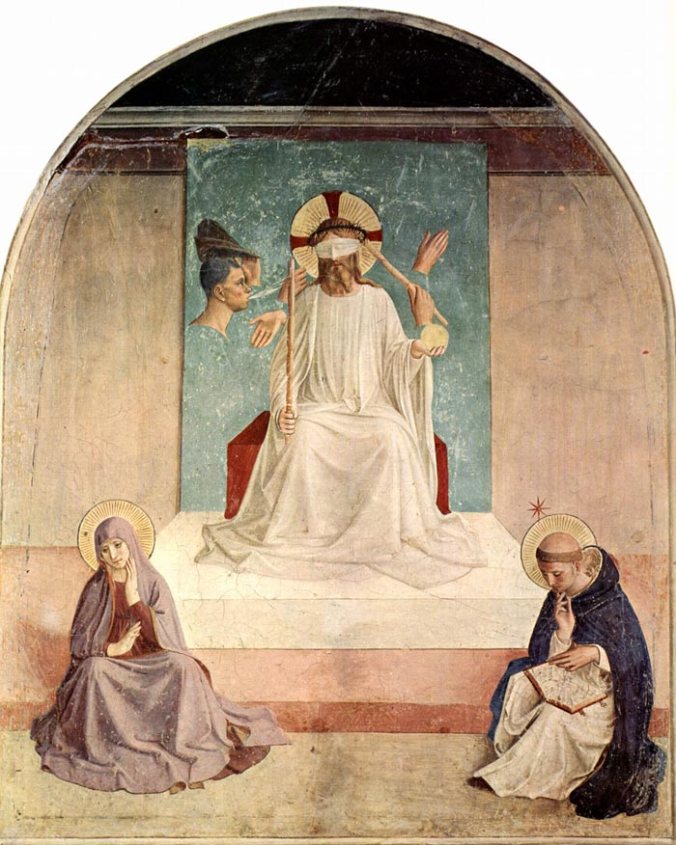
A special double cell, sumptuously frescoed, had been created for Cosimo’s personal use, to which he would often retire for periods of contemplation.
However, he had taken a more active role in the creation of the gardens across the street from San Marco: as a man who delighted in retiring to the countryside, he had done his best to create a pastoral space here within the walls of the city. These gardens would in turn become a favourite spot of Lorenzo the Magnificent, who began decorating the shady spaces with pieces of ancient classical sculpture.
.
Strathern, Paul. Death in Florence: The Medici, Savonarola, and the Battle for the Soul of a Renaissance City, Pegasus. Kindle Edition.
\



 get back, lauretta!
You must be logged in to post a comment.