Un concerto in Fiesole

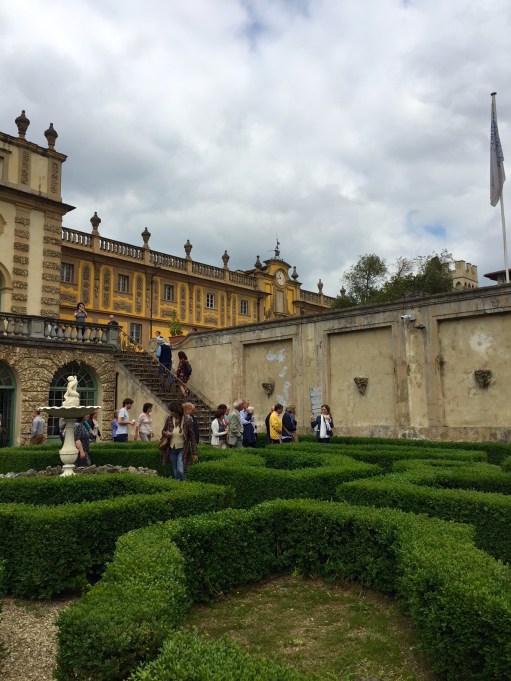
On a recent beautiful weekend, I had the chance to visit Villa Salviati, a gorgeous locale in the hills outside of Florence.  Singers from a Florentine operatic school performed in the main building’s cortile.  It was so beautiful and here’s a sample.


Villa Salviati

VillaSalviati

Villa Salviati is home to the Historical Archives of the European Union, a unique resource for researchers at the EUI and far beyond.

By housing the European Union archives, the long international tradition of this villa is continued. Over the centuries this villa had Italian, French, Swedish and American owners.

The estate has naturally strong ties to Florence as well, as the original owners, the Salviati family, wealthy wool merchants and bankers, were in the 15th century closely connected to the Medici that held great power and influence in the city.

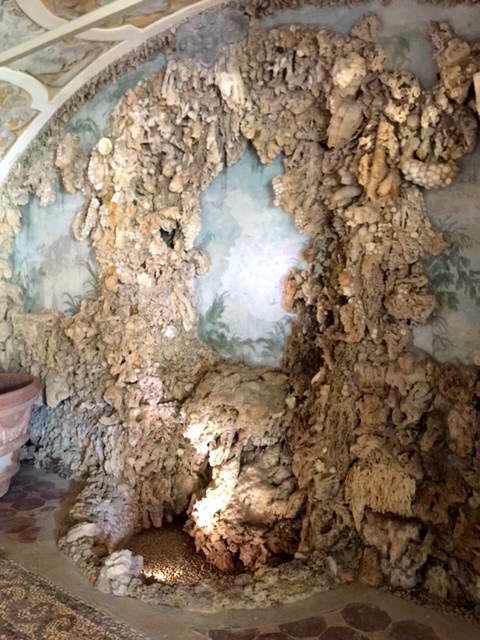
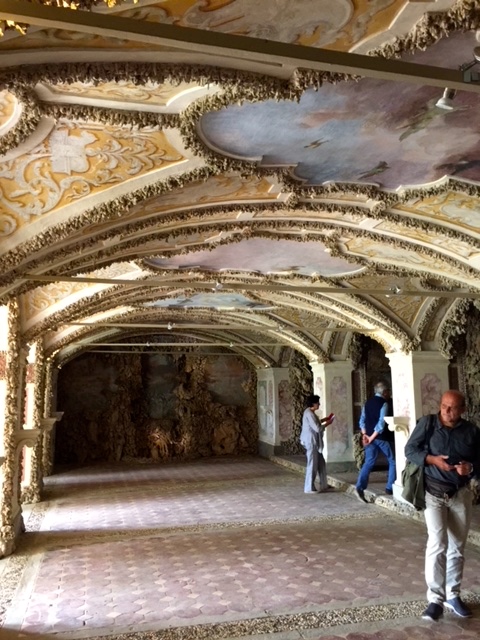
The Salviati family’s fortune grew and they went on to add grottos to the site which still stand today. The grottos are made up of frescoes and elaborate stonework that hark back to an era of affluence.

https://www.eui.eu/ServicesAndAdmin/LogisticsService/EUICampus/VillaSalviati

Can you imagine: art history taught without art images!!

It is hard now to imagine a world in which reproductions of paintings were scarce ([Charles Eliot] Norton taught his art history classes [at Harvard] without them) and in which cities rarely had public collections of paintings (those that did exist contained almost no original Italian works).

Americans, for the vast majority of whom travel to Europe was prohibitively time-consuming and expensive, got their first introductions to Italian art by reading.

Berenson would aspire to follow Charles Eliot Norton in being, not only a lover of art and a bibliophile, but a friend of writers and a literary man.

Norton was close to John Ruskin, one of the English writers most responsible for the new view of Italian art that emerged among certain writers in the mid-nineteenth century.

Rachel,Cohen. Bernard Berenson (Jewish Lives) (p. 42). Yale University Press. Kindle Edition.


Villa Salviati

IMG_8979

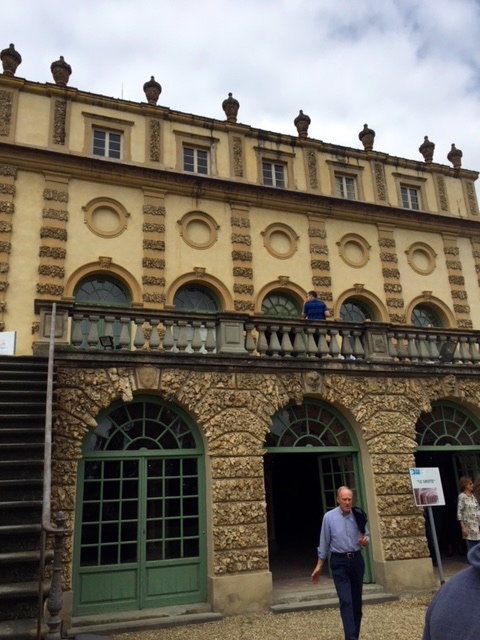
A couple of weekends ago, I had the pleasure of visiting a famous villa in Fiesole, the Villa Saliviati.

IMG_8980

IMG_8978

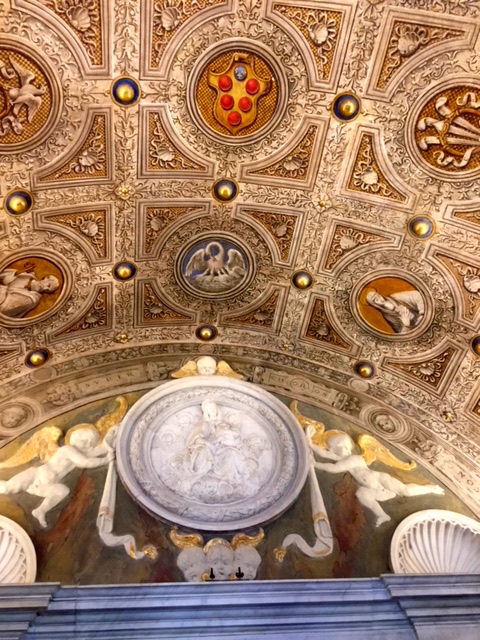
Of course the villa has its own (gorgeous) chapel; here is a detail of the ceiling:

IMG_8965


And the villa also has a grotto:

IMG_8972IMG_8973


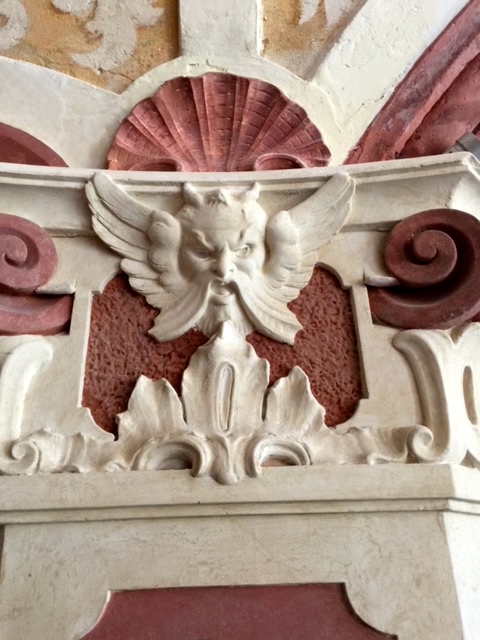
There is a lot of interesting interior detailing:

IMG_8971


So, now you’ve seen my pictures, let’s get some info from Wiki on the Villa:
From Wikipedia, the free encyclopedia.

History [ edit | wikitesto change ]

In the 14th century, the castle of the Montegonzi was built on this property land already belonged to the Del Palagio. In 1445, Arcangelo Montegonzi sold it to Alamanno Salviati , the man who introduced the cultivation of salamanna and jasmine grapesin Tuscany.


Alamanno commissioned Mielcozzian workers to reduce the castle to a villa, with a garden and woods . In 1490, the nephews of Alamanno, dividing their uncle’s assets, and gave the villa to Jacopo, who was related to Lorenzo de ‘Medici.


In 1493, new, considerable renovations were undertaken, to which perhaps Giuliano da Sangallo took part and which lasted about a decade.


Giovan Francesco Rustici also took part in the works. Between 1522 and 1526 he created for the villa a series of terracotta roundels with mythological subjects (such as Apollo and Marsyas or Jupiter and Bellerophon ).

Today the Villa’s  Limonaia is the the headquarters of the Historical Archives of the European Union.

In 1529, the house was sacked by the anti-cult faction and between 1568 and 1583 Alamanno di Jacopo Salviati and his son Jacopo further enlarged and embellished the villa, with the gardens ( 15701579 ) and the buildings that border the northern border and create a scenic backdrop connected to the villa.

New Year’s eve, 1638, was an event to remember. That evening, in this villa, the severed head of the lover of Caterina Canacci, was brought to the villa, hidden under the linen that the wife of Salviati, Veronica Cybo, sent him weekly.

The villa then passed to the AldobrandiniBorghese and on December 30th 1844 it was bought “with a closed gate” (ie with all the furnishings) from the Englishman Arturo Vansittard.

Then came the tenor Giovanni Matteo De Candia aka Mario, who lived there with his wife, the soprano Giulia Grisi , the Swedish banker Gustave Hagerman and finally, in 1901, the Turri.

The grotto: 

During the WWII, the grotto was used as the post of an allied command: Lensi Orlandi recounted the memory of nocturnal visits of “kind and rich Florentine, often mature matrons”, who “crossed the threshold of those rooms to give honor to the admired winners” [2 ] .

There followed a long semi-abandonment, in which the villa was not accessible even to scholars (he visited Lensi-Orlandi in 1950, but could not Harold Acton in 1973 ).

In 2000 the monumental complex, together with its gardens, was purchased by the Italian Government to be destined for the European University Institute , which made it the seat of the Historical Archives of the European Union ; one can mention, among the various documents contained in them, the personal papers of the founding fathers, such as Alcide De Gasperi , Paul-Henri Spaak , Altiero Spinelli and Ernesto Rossi .

The end of the renovations took place in October 2009 and on December 17, 2009 the President of the Republic Giorgio Napolitanoinaugurated the Historical Archives of the European Union .

This villa was in communication with Villa Emilia (which was higher up) – which in ancient times was a convent of Cistercian nuns suppressed in 1453 – through an underground gallery : hence the other name with which the villa is known, “del Ponte at the Badia “.

Architecture [ edit | wikitesto change ]

The courtyard

The main body of the villa reveals its military origins, especially in the two crenellated turrets, in the corner, and in the crowning with the walkway on corbels , very similar, for example, to that of the villa of Careggi . It is made up of two adjacent buildings, but with similar architectural features: the east one is more massive and tall, the west one is of smaller volume and height.

The building is arranged around the central courtyard, portico on three sides with columns in pietra serena with Corinthian capitals ;the entablature towards the inside is decorated with graffito friezes, with the rounds of the Rustici inserted into this strip in correspondence with the round arches.

The interiors are often covered by vaulted , barrel and cross vaults .

Gardens [ edit | wikitesto change ]

The gardens

You get to the south facing of the villa through a long cypress avenue that once led to the Via Faentina and that after the construction of the railway was modified, creating a passage on it.

The Italian garden , in front of the villa, is built on three terraces at different levels and, although it is being restored, it is made up of geometric flower beds in boxwood with flowery essences. The property is then surrounded by a large English park , where there are, among other things, a bamboo grove, two ponds and, scattered here and there, various items of furniture, such as statues, temples, caves, fountains, pavilions and more.

Villa Salviati , or villa of the Ponte alla Badia , is located along the homonymous street near via Bolognese in Florence , [1]


Palma Bucarelli

Palma Bucarelli (1910 –  1998) was an Italian arts administrator, the director of the Galleria Nazionale d’Arte Moderna (GNAM) in Rome from 1942 to 1975.
853cde6a-e421-11e3-8e3e-8f5de4ddd12f

Early life

Palma Bucarelli was born in Rome. She earned a degree in art history at the Sapienza University of Rome.[1]

Career

As a young art historian she worked at the Galleria Borghese and in Naples. During her thirty-three years as head of the Italian National Gallery of Modern Art, Bucarelli was responsible for protecting the gallery’s collections from damage while it was closed during World War II; she arranged to place paintings and sculptures in historic buildings including the Palazzo Farnese and Castel Sant’Angelo.[2] She was one of the Italian delegates to the First International Congress of Art Critics, held in 1948 in Paris.[3]

13790

After the war, she oversaw such events as exhibitions of works by Pablo Picasso (1953), Piet Mondrian (1956), Jackson Pollock (1958), Mark Rothko (1962), and the Gruppo di Via Brunetti (1968). She defended controversial works such as Piero Manzoni‘s ‘”Merda d’Artista” and Alberto Burri‘s “Sacco Grande” (1954).[1] Her strong support for abstract and avant-garde works made international headlines in 1959, when she was accused of a bias against figurative art in a public debate.[4] In 1961 she was in the United States, where she gave a lecture in Sarasota, Florida[5] and attended the opening of a major exhibit on Futurism at the Detroit Institute of Arts.[6]

Personal life

Palma Bucarelli married her longtime partner, journalist Paolo Monelli, in 1963. She died in Rome in 1998, from pancreatic cancer, aged 88 years. Her personal collection of art was donated to the National Gallery. Her famously elegant wardrobe was donated to the Boncompagni Ludovisi Decorative Art Museum in Rome. A street near the GNAM was renamed in her memory.[2] The Gallery mounted a show about her influence, “Palma Bucarelli: Il museo come avanguardia”, in 2009.[7]

palma-bucarelli

References

  1. ^ Jump up to: a b Lucia Livia Mannella, “Palma Bucarelli” Vogue Italia Encyclo.
  2. ^ Jump up to: a b “Palma Bucarelli” Dictionary of Art Historians.
  3. Jump up ^ Denys Sutton, “The First International Congress of Art Critics” College Art Journal 8(2)(Winter 1948): 130.
  4. Jump up ^ Paul Hofmann, “Art Impartiality Pledged by Italy” New York Times (March 7, 1959): 43.
  5. Jump up ^ “Italian Art Expert’s Talk is Tonight” Tampa Bay Times (9 November 1961): 13. via Newspapers.comopen access publication – free to read
  6. Jump up ^ Kathie Norman, “VIPs Impressed” Detroit Free Press (17 October 1961): 17. via Newspapers.comopen access publication – free to read
  7. Jump up ^ Laura Larcan, “Un Direttore di nome Palma Bucarelli, la Guggenheim di Roma” la Repubblica (26 June 2009).


https://en.wikipedia.org/wiki/Palma_Bucarelli

Florence, an open-air museum and a protected UNESCO site

I think it is always worth reminding ourselves that Florence, the Renaissance city, is one of the most beautiful and visited art cities in the world. It is truly an open-air museum, placed in the UNESCO’s World Heritage List in 1982. Let’s make a quick rundown of some of the major sites within the city.

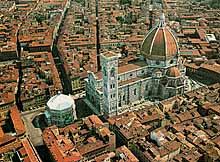
Piazza Duomo is the religious centre of the city, featuring the Cathedral of Santa Maria del Fiore and the majestic Brunelleschi’s Dome, Giotto’s Bell Tower, and the Baptistery of St. John the Baptist, with its world renowned bronze doors.
ub
The square is surrounded by wonderful palaces, such as the Archbishop’s Palace, the 14th-century Loggia del Bigallo and the recently renovated Museo dell’Opera del Duomo (Museum of the Works of the Cathedral) which recreates the original feeling of the 14th-century façade according to the first project by Arnolfo di Cambio with great technical virtuosity.

The absolute masterpiece housed within the Museo dell’ Opera is the Deposition (or Pietà) sculpted by Michelangelo for his own grave.

250px-Pieta_Bandini_Opera_Duomo_Florence_n01

In the sculpture, Nicodemo, represented at the top centre, has Michelangelo’s facial features. Some parts of this marble sculpture are unfinished, as Michelangelo often did in order to witness the spirit struggling to break free from block of stone. In 1555, in an outburst of rage, the same artist partially damaged his own sculpture with a hammer.

Piazza della Signoria is the heart of the socio-political life, as well as the seat of civil power with Palazzo Vecchio (previously known as dei Priori and della Signoria). The square hosts important works of art such as the equestrian monument of Cosimo I de’ Medici, by Giambologna. Next to the palace, you can admire the fountain of Neptune by Bartolomeo Ammannati, also called the ‘Biancone’ due to the huge white marble statue of the sea god at the centre of the fountain, riding in a chariot roomed by four horses.

In front of the main entrance of Palazzo Vecchio, you will find copies of two sculptures by Donatello: Marzocco (the lion symbolising the city of Florence) and Judith Beheading Holofernes, in addition to a copy of the David by Michelangelo, whose original statue is preserved inside the Galleria dell’Accademia (Gallery of the Academy of Florence). Next to David, the statue of Hercules and Cacus by Baccio Bandinelli, symbolises strength and ingenuity prevailing over evil.

On the right, facing Palazzo della Signoria, you will find the Uffizi Gallery, one of the most important museums in the world, which once hosted the offices and the state archives of the Grand-Duke. The museum boasts an incomparable collection of Italian and European art from the 13th century on.

In addition to masterpieces by Cimabue, Giotto, Masaccio, Botticelli, Leonardo, Piero della Francesca, Michelangelo, Raphael, Titian, Caravaggio, Dürer, and many others, there is also a remarkable collection of ancient sculptures.

The Vasarian Corridor is a spectacular elevated enclosed passageway, connecting Palazzo Vecchio with Palazzo Pitti and offering, from above Ponte Vecchio, a breath-taking view on monuments and on the Arno with its bridges. The corridor hosts a collection of self-portraits, in addition to an important 17th and 18th-century collection of paintings.
The Galleria dell’Accademia hosts the highest number of sculptures by Michelangelo, such as the Prisoners, St. Matthew and the famous David, in addition to important paintings from the second half of 13th century to the end of 16th century, as well as the Musical Instruments Museum.

The National Museum of the Bargello, located inside a palace built in mid-13th century for the Capitano del Popolo (Captain of the People), boasts some of the most important statues of the Renaissance by Ghiberti, Donatello, Verrocchio, the Della Robbia family, Michelangelo, Giambologna, and others. Do not miss the prestigious collections of little bronze statues, maiolica, wax models, enamels, medals, ivory, tapestry, furniture, seals and textiles coming from the Medicean collections or donated by private collectors.

Palazzo Pitti, with its wonderful Boboli Gardens, represents one of the most important monumental complexes with its museums – the Palatine Gallery, the Monumental Apartments, the Silver Museum, the Modern Art Gallery, the Costume Gallery, the Porcelain Museum and the Carriages Museum.

Among the most representative testimonies of the Florence Renaissance, the city boasts some masterpieces planned by Filippo Brunelleschi (in addition to his world renowned Dome) – the Ospedale degli Innocenti (Hospital of the Innocents) and the two churches of San Lorenzo and Santo Spirito – and by Leon Battista Alberti – the façade of the Santa Maria Novella church and Palazzo Rucellai.
Piazza della Repubblica is the “élite square” of the city, with its great historic cafés and 19th-century buildings. The historic centre of Florence is a shopping and entertainment paradise, with the most famous fashion designer boutiques, traditional handicraft workshops, historical markets and typical restaurants, as well as American bars, lounge bars and discos.
Do not miss the churches of San Miniato al Monte, Santa Croce and Santa Maria Novella, as well as the great masterpieces of Italian 20th -century architects, such as the Central Railway Station of Santa Maria Novella and the Artemio Franchi football stadium, respectively by Giovanni Michelucci and Pier Luigi Nervi.

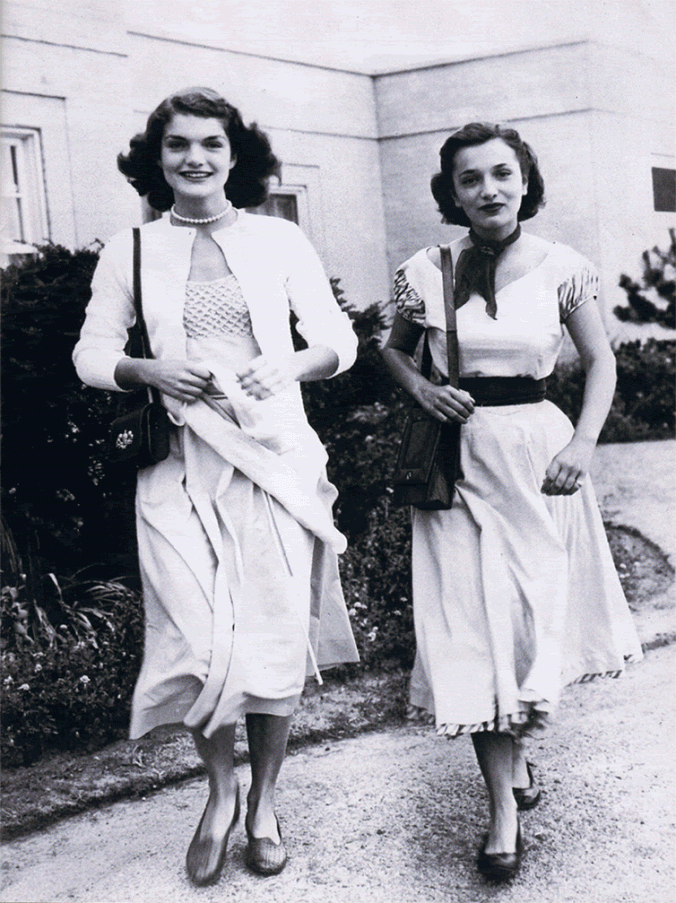
Jacquie and Lee Bouvier meet Bernard Berenson in Florence in 1951

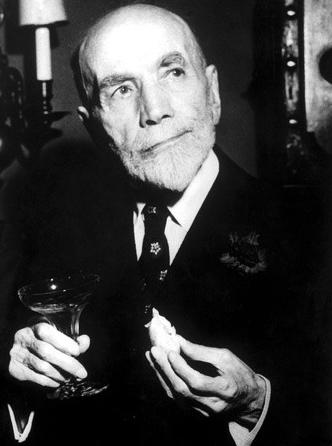
This is just something I never would have believed had happened, but it apparently did. It is discussed in a very interesting book on Berenson by Rachel Cohen, which I quote below. Lee Radziwill left her impression of the sophisticated but very much older Berenson:

“Nicky Mariano [Berenson’s amour and assistant) was sometimes jealous…of Berenson’s flirtations and affairs and of the great many women who made up what she called ‘B.B.’s Orchestra.’ “

In fact, as he aged, Berenson’s seductive power became somewhat legendary. Lee Radziwill (Lee Bouvier when she visited Berenson in 1951 with her sister, who became Jacqueline Kennedy Onassis) still thought of Berenson as “one of the most fascinating men I ever knew,” sixty years later. She compared his powerful appeal to Jawaharlal Nehru’s: they were “seductive mentally, rather than physically.”

a444d42333169cf1f775db03c2931889

Berenson’s catalog of mistresses and of epistolary romances, like all his other collections, was exhaustive. He had first found both sexual tolerance and a large network of youthful romantic friendships with women and men in bohemian and Edwardian circles, and among the expatriates in Italy.

berensimg1

In the years of his maturity, he found a similar atmosphere among his mistresses and flirtations in the aristocratic milieu of the European art world. Berenson adored, and was adored by, titled women, and he was interested in beauty wherever he saw it. Attractive young women who visited I Tatti were regularly surprised by his physical attentions.

After WWII…Berenson nce again he appeared to be a magician. There were those who found his presence staged, but others felt that even to be near him was a magical experience.

The young sisters who became Jackie Kennedy and Lee Radziwill wrote to their mother of visiting Berenson in the summer of 1951 and of how they saw him approaching through the woods at I Tatti. Berenson sat down and immediately began to speak to them of love, distinguishing between people who are “life-enhancing” and “life-diminishing.”

“He is a kind of god like creature,” they wrote. “He is such a genius, such a philosopher, such a pillar of strength and sensitivity, and such a lover of all things. He is a man whose life in beauty is unsurpassable.”

Rachel,Cohen. Bernard Berenson (Jewish Lives)  Yale University Press. Kindle Edition.


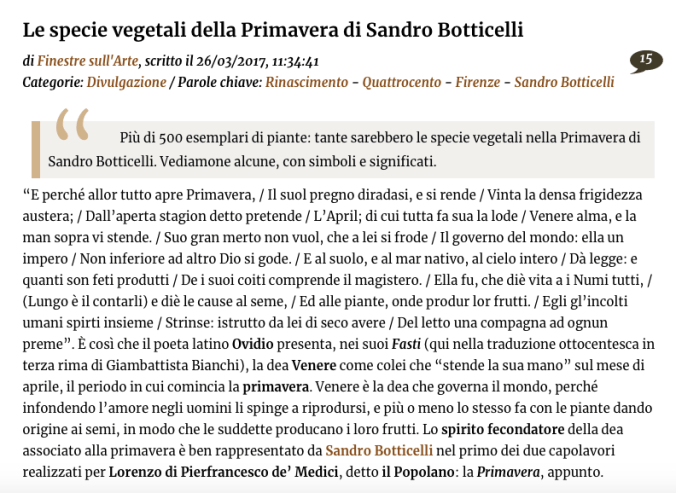
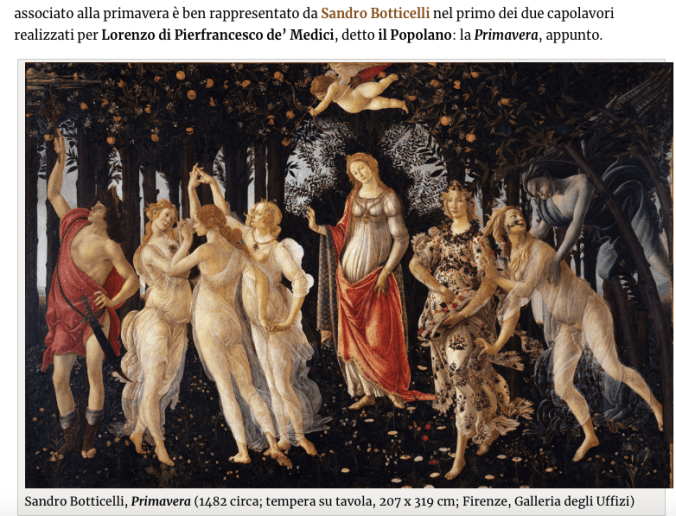
Botticelli’s plant world

Screen Shot 2018-05-14 at 10.29.30 AMScreen Shot 2018-05-14 at 10.28.43 AM

conservato agli Uffizi, non faccia accenno al fatto che Botticelli vi ha rappresentato centinaia di esemplari tra fiori, arbusti, erbe, alberi e vegetali in generale. Una così cospicua presenza di piante risponde a diverse esigenze: la prima è ovviamente circoscrivere il periodo dell’anno oggetto dell’opera, perché le specie rappresentate da Botticelli, com’è lecito immaginare, fioriscono, crescono e germogliano tutte in primavera. La seconda è suggerire rimandi simbolici: in tal modo si spiega, per esempio, la presenza degli alberi d’arancio che sì presentano le loro zagare, i fiori bianchi tipici degli agrumi, ma sono anche carichi di frutti, quando è noto che l’arancio dà i suoi frutti verso la fine dell’autunno. L’arancio è infatti un emblema mediceo: facile comprendere perché se si conosce la denominazione latina citrus medica, che oggi designa scientificamente il cedro ma che anticamente, almeno secondo il botanico ottocentesco Giorgio Gallesio, era utilizzata per indicare anche l’arancio. Inoltre, l’agrume è anche simbolo di matrimonio, perché secondo la mitologia antica la dea Giunone avrebbe donato al marito Giove piante d’arancio come dote nuziale. Se peraltro si prende per buona la pur discussa datazione che vorrebbe la Primavera dipinta nel 1482, la realizzazione dell’opera cadrebbe nell’anno del matrimonio tra Lorenzo di Pierfrancesco de’ Medici e Semiramide Appiani.

https://www.finestresullarte.info/659n_specie-vegetali-della-primavera-di-sandro-botticelli.php

Palazzo dei Pittori, my new neighbor

My new apartment is right across due viale from the very handsome Palazzo dei Pittori.  The palazzo and I are separated by 2 viale or boulevards and one stream (the Mugnone), and I always admire the facade of the palazzo whenever I gaze across this space.  There is nothing blocking my view except some beautiful green trees and a stream, and two grand-scale viali or boulevards.  The Palazzo provides a gorgeous backdrop!

Here is a Youtube video about the palazzo and its current iteration.

And here is some background info garnered from the web on this fine structure:
 
On Saturday May 16th, 2016, the beautiful Palazzo dei Pittori  reopened to the public – on the occasion of the 150th anniversary of Florence Capital – a building that has always fascinated and intrigued Florentines and others. The president of the culture commission of the Municipality participated in the event.

The building, intended for the studies of artists, has always been called “Palazzo dei Pittori” and located on the southern bank of the Mugnone stream, today Viale Giovanni Milton, at numbers 47 and 49.

The building was commissioned by an English painter named Lemon who was living in Florence. It was designed by the architect and engineer Tito Bellini and built in the 2nd half of the 19th century to host artists of various nationalities including English, German, Russian, Swiss and also Italians, all of whom created art during the time that Florence was the capital of Italy (1860-1865).

The Palazzo dei Pittori itself was built during the “Umbertino period,”  with its large spaces and austere decoration.

From its construction to the present day, there have been many well and lesser known artists who have worked in the palace, including the Sicilian sculptor Domenico Trentacoste, the Macchiaiolo painter Egisto Ferroni, Giovanni and Romeo Costetti, the sculptor Giuseppe Graziosi and many others.  It was also home to a prestigious school of painting called the “Florentine School of Painting,” directed by professors Giuseppe Rossi and Alberto Zardo.

Other creative artists also worked in this atelier, including poets and writers such as Gabriele D’Annunzio and Mario Luzi.

This is therefore a place that houses an important but forgotten past, vaguely mysterious, waiting to be discovered.

http://www.palazzodeipittori.it


Palazzo Davanzati and Elia Volpi

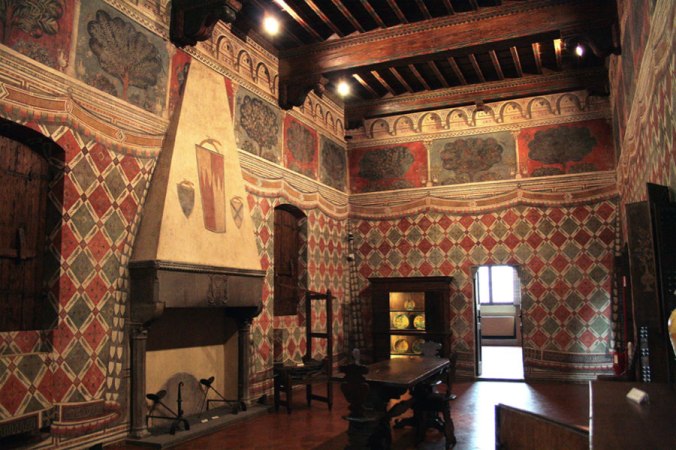
One of my favorite places in Florence is the Palazzo Davanzati. One look at one of the rooms in the palazzo will show you why I love it.  I visited it on my very first trip to Florence, almost 40 years ago.  It hasn’t changed one bit, except maybe it is even better now with more didactic info available.

11


We have the art dealer, Elia Volpi (1858–1938), to thank for having saved the Palazzo as it appears today.  In Florence, Volpi is known as the “father” of the Museum of the Old Florentine House in Palazzo Davanzati, as he was responsible for restoring the building and turning it into a private museum in 1910.


e07783b5edc1fcaea3ad2a886e8bc82a47b96f


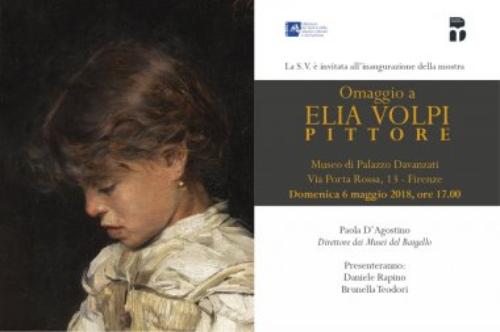
Now the museum, on via Porta Rossa, is opening its “Homage to Elia Volpi the Painter” exhibition, which offers the chance to discover a lesser-known side of the illustrious collector and antiquarian, that is, to see him as an artist.

11


Volpi trained at Florence’s Academy of Fine Arts. The current exhibition focuses on his training and the paintings he produced from the 1870s through the 1890s, with examples of his sketches and finished paintings, mostly in pristine condition.  All of these works have been donated to the museum from private collections.

Volpi’s sketches are testament to his studies of the Italian Renaissance masters and, along with the male nudes, show off the early artistic skills of a young Volpi.

The paintings demonstrate his broad range; during the 1880s he explored church scenes before concentrating on the subjects and style of the Macchiaioli and more contemporary artists such as Francesco Gioli and Niccolò Cannicci.


The show also includes a multimedia section featuring a video that focuses on the artist’s personal life and a touch-screen panel with photographs that demonstrate the creation of the museum.


The exhibition is open from May 6 to August 5 in the Palazzo Davanzati Museum.


The source of this info comes from:

http://www.theflorentine.net/art-culture/2018/05/elia-volpi-exhibition-palazzo-davanzati/