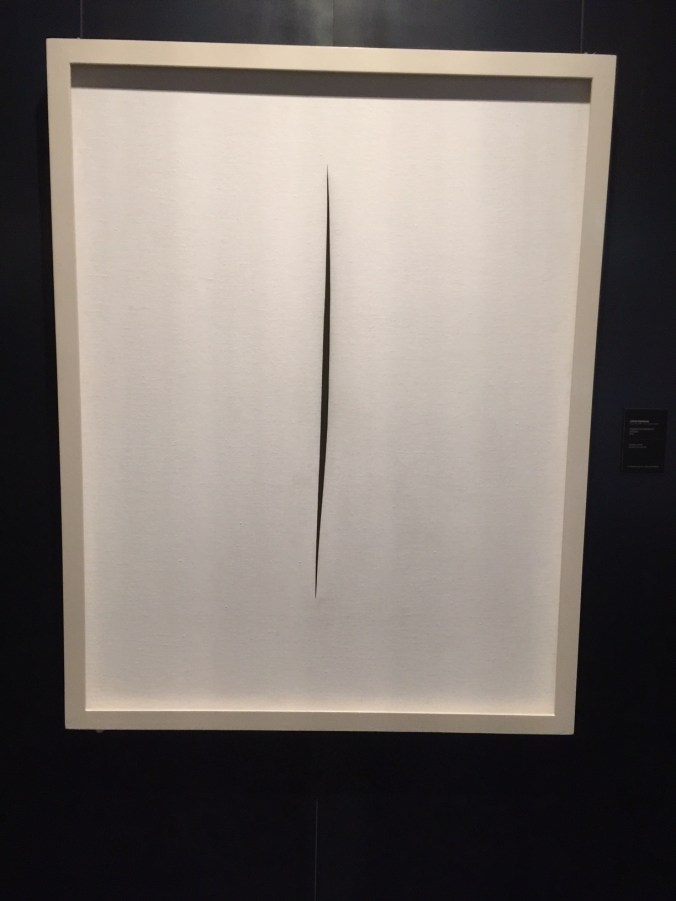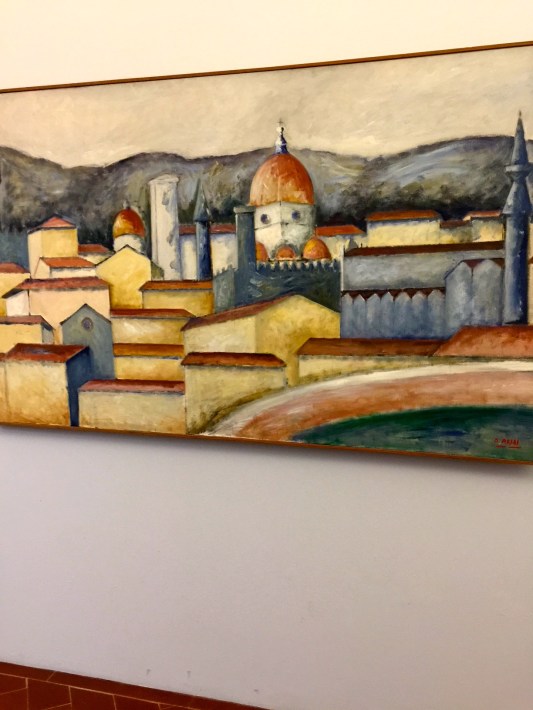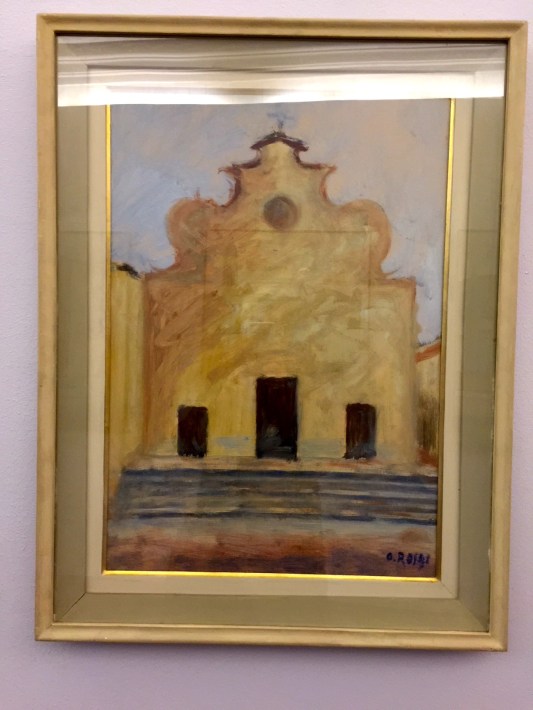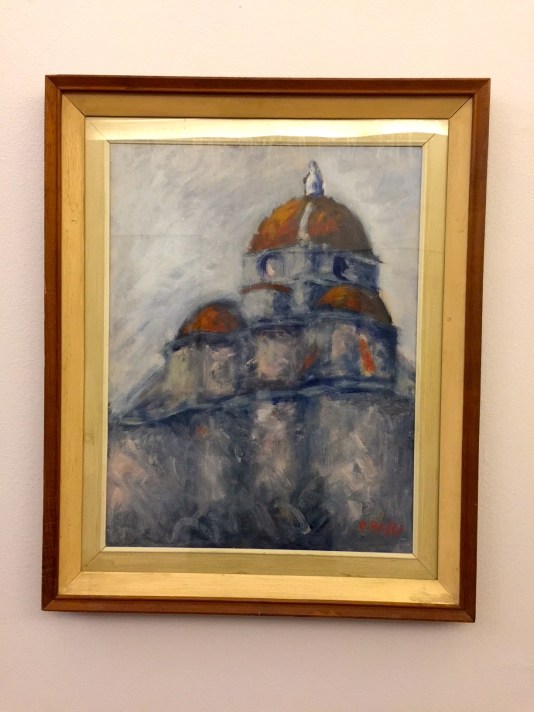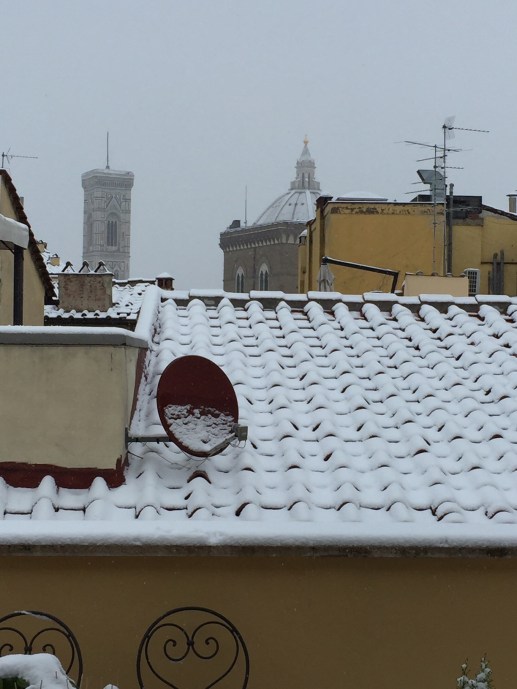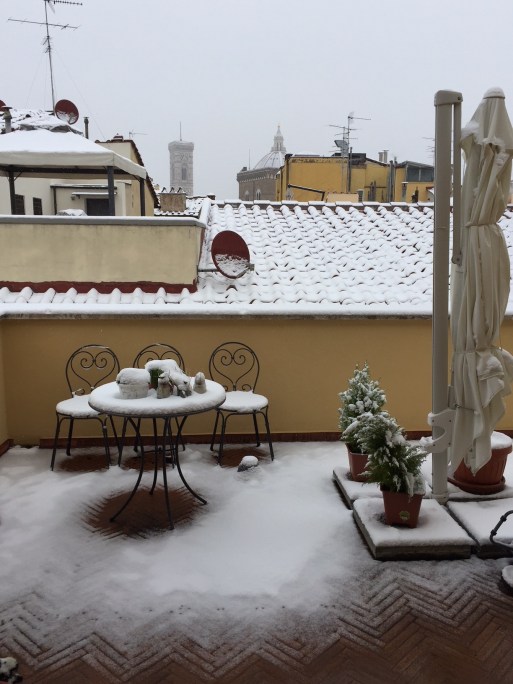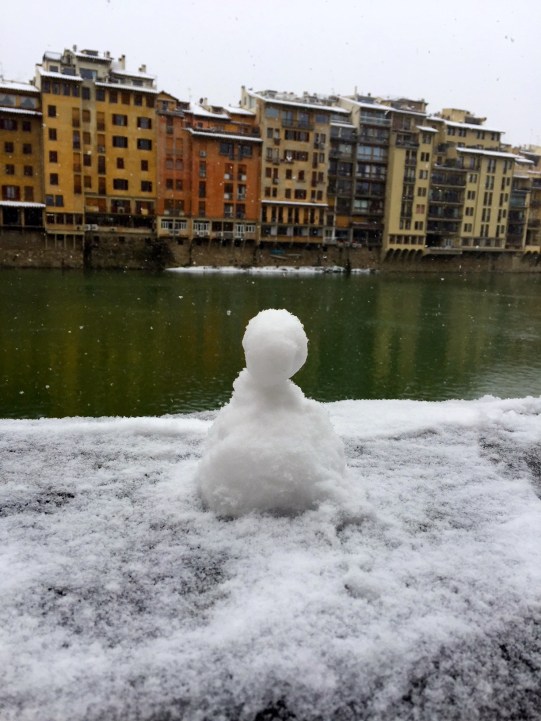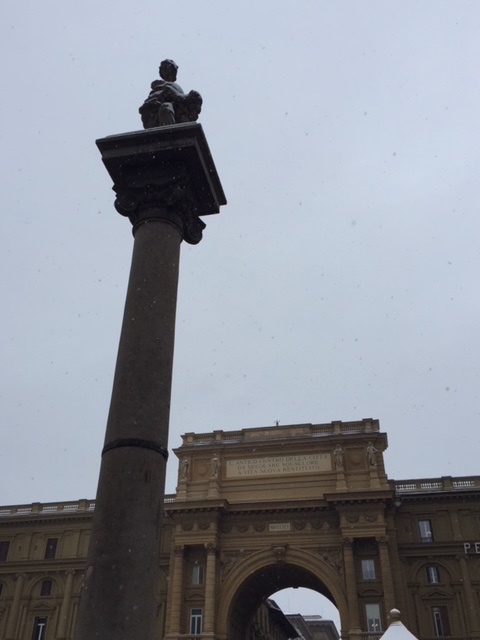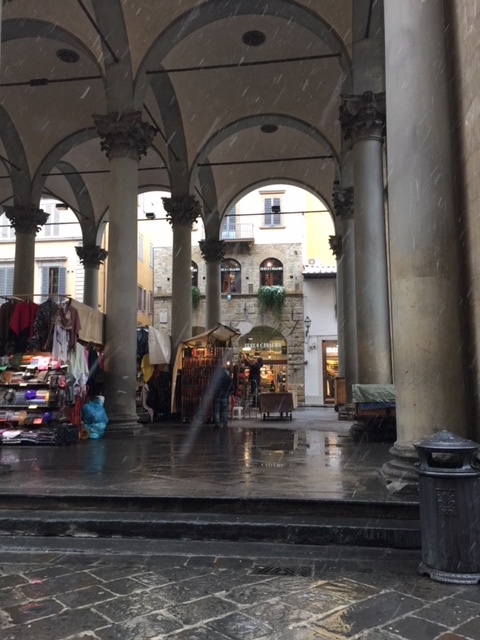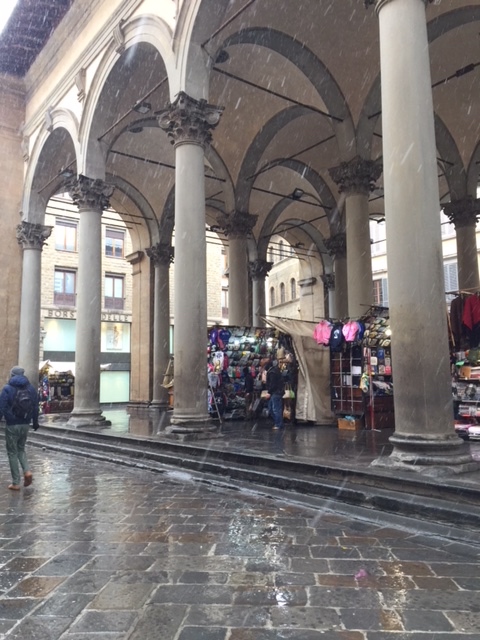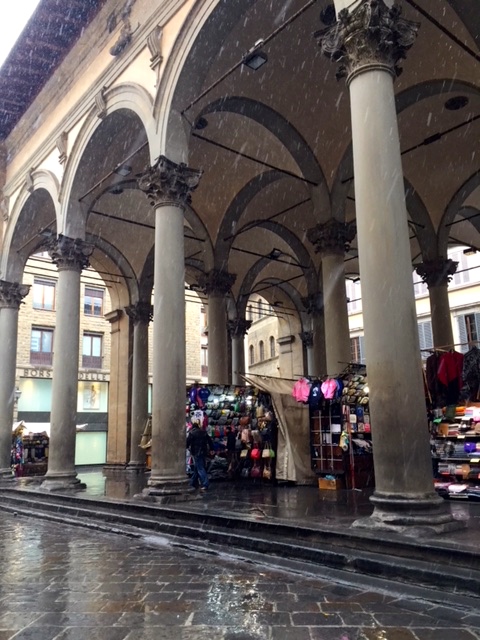
Yesterday, Museo di Novecento, Florence

IMG_8168

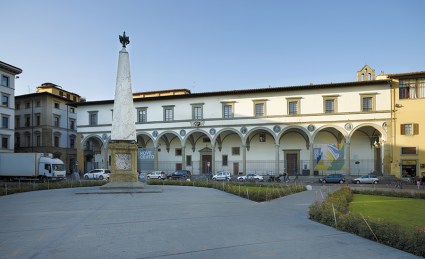
Florence and the twentieth century: a stormy relationship between love and hate, rich in avant-garde art, and full of controversy. The city of the Renaissance during this period is represented in the Museo Novecento (20th Century Museum), which opened in 2014, in Piazza Santa Maria Novella.

IMG_8169IMG_8171

The museum is housed in the Hospital of St. Paul, which was founded at the beginning of the 13th century as an area of ​​refuge for pilgrims and the poor.

Ex-Hospital of San Paolo in Firenze, piazza Santa Maria Novella

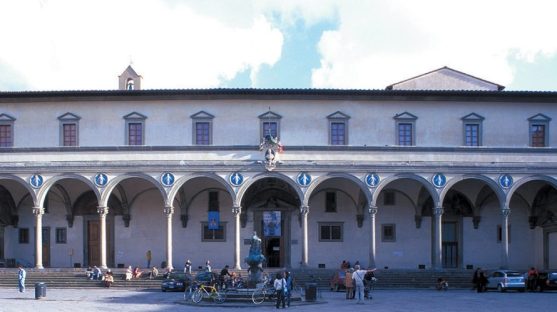
The building was expanded in the later 15th century. The construction of the front porch was assigned to Florentine architect Michelozzo, although for a long time it was thought that it was actually built by Filippo Brunelleschi, because of its similarity to his famous Loggia of the Hospital of the Innocents in Piazza Santissima Annunziata, seen below:

832-land_0-loggiato_panoramica2


The museum houses an interesting collection of 20th century art.

IMG_8172

In 1588, under Grand Duke Ferdinand I, the Hospital of St. Paul became a place to accommodate convalescents who came from hospitals in Florence.

In 1780 the building’s function was altered by Leopold Lorraine as a place to provide education for poor girls, and therefore became known as the Leopoldine Schools. After World War II it was converted into a school. Now, after a long restoration, the complex houses the 20th Century Museum in Florence.

Museo-Novecento-Avatar-01

After the Arno River’s devastating flood in 1966, much of Florence’s artistic heritage was damaged. The art critic Carlo Ludovico Ragghianti launched an appeal to artists from all over the world to endow the city with their works of art. Two hundred artists responded to the call.

At the time the art was donated to the city, there was no real home for them. Many works of art remained behind closed doors in municipal depositories for years awaiting a suitable location. These works are thus considered the first original nucleus of the Museum.

IMG_8160


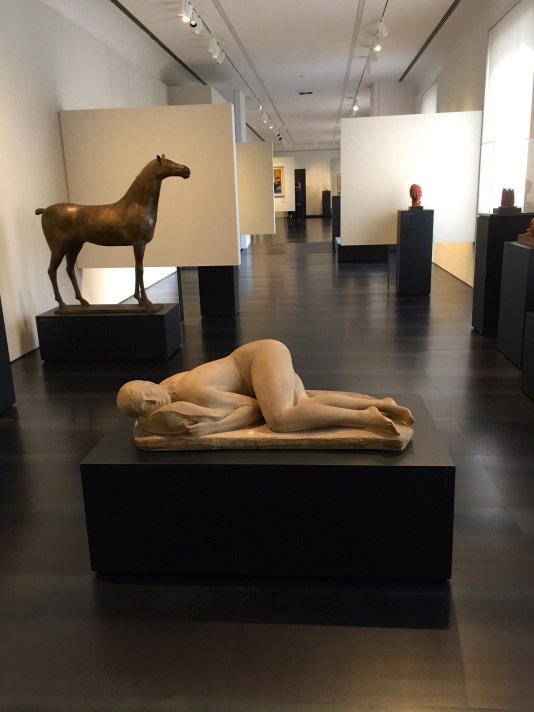
Today the halls of the Museum contains paintings and sculptures, art films, the works of the Maggio Musicale Fiorentino, and displays devoted to electronic music. Among the artists on display permanently are De Chirico, Morandi, Emilio Vedova and Guttuso, Ottone Rosai, as well as Florentine sculptors such as Antonio Catelani, Daniela Di Lorenzo and Carlo Guaita.

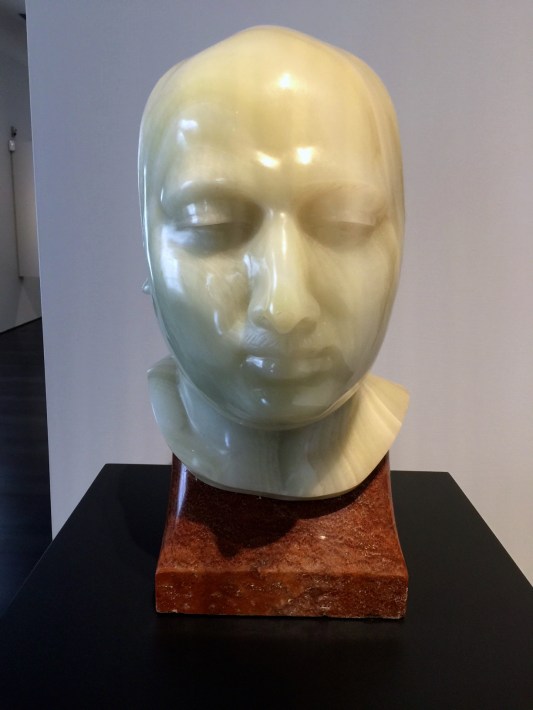
When I was at the museum yesterday, I took pictures of some of the most interesting (to me) artworks.  For example, I enjoyed these images of Florentine landmarks:

IMG_8165IMG_8166IMG_8167


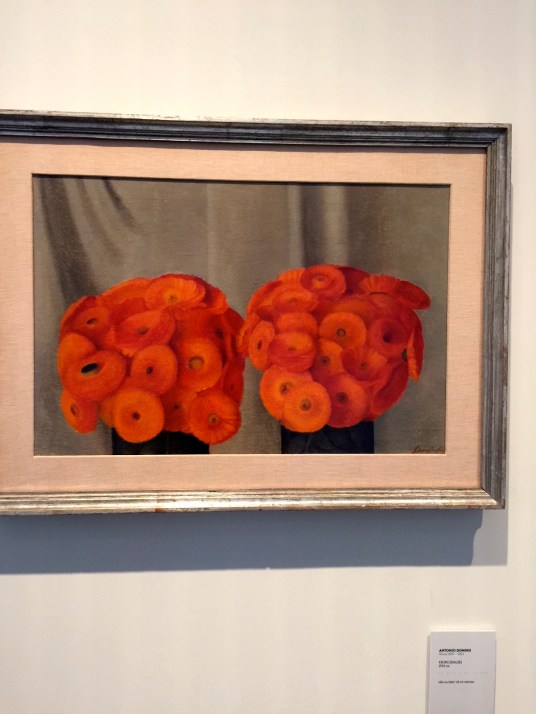
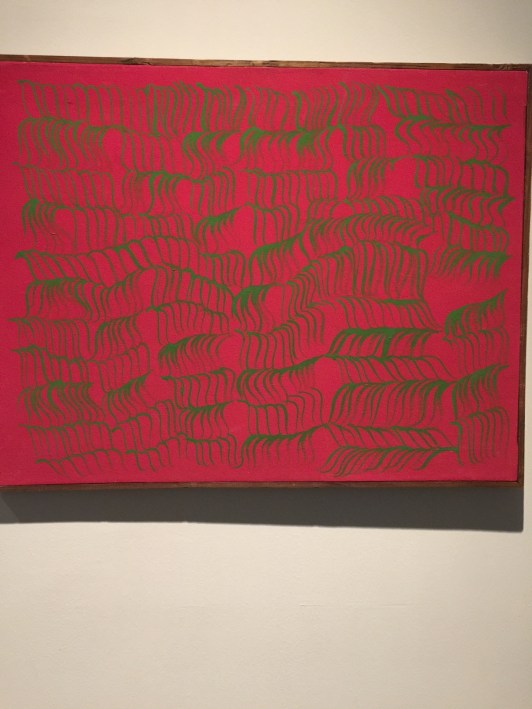
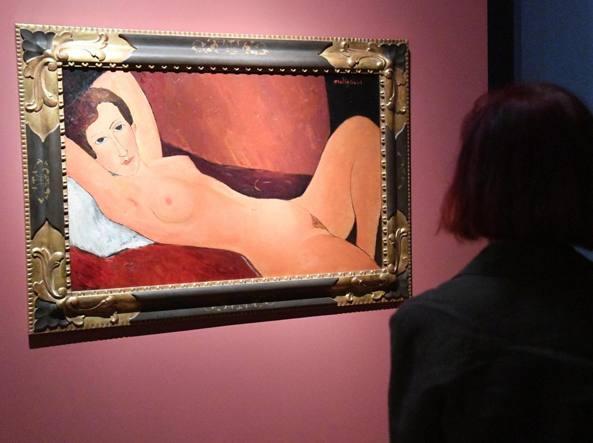
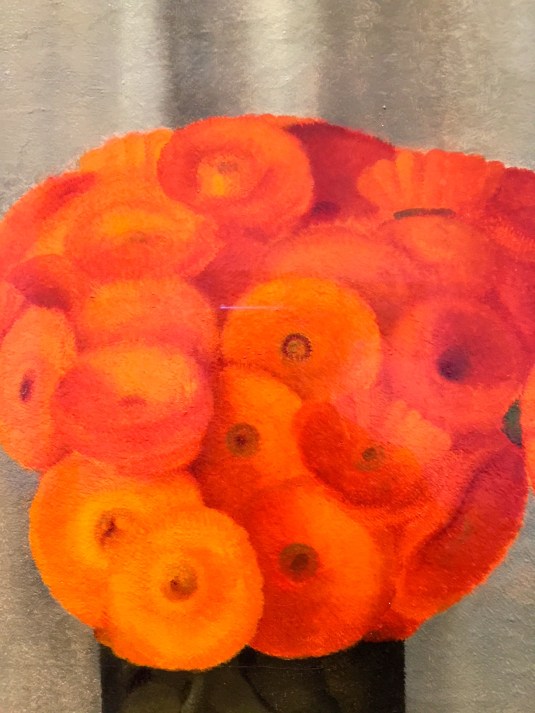
And was stopped in my tracks upon encountering this painting.  It felt so fresh in comparison to all the other works in the museum.

IMG_8158

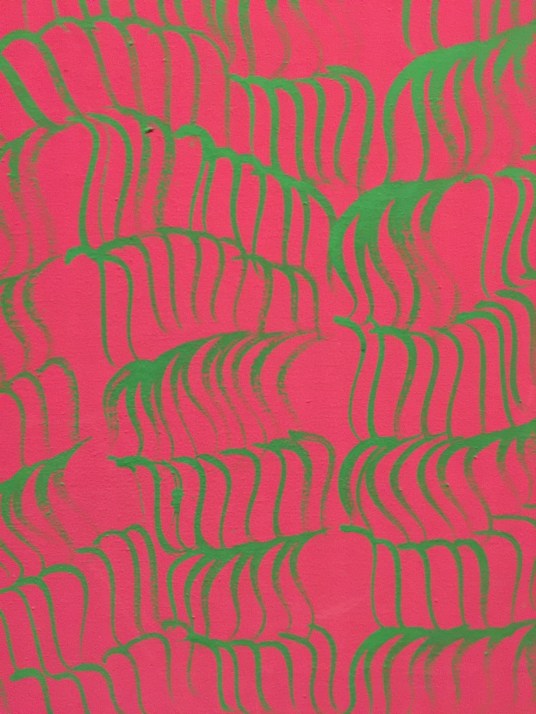
Here’s a close-up:

IMG_8159

If you are visiting Florence and need a break from Renaissance madonnas, you might find some relief at the Museo Novecento.

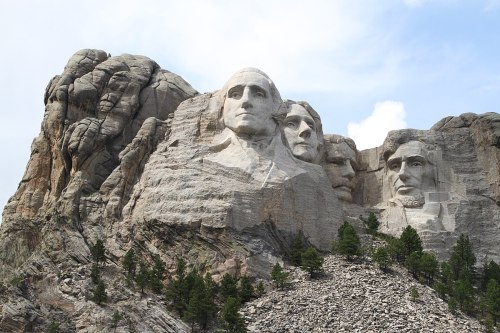
A Mt. Rushmore type monument fantasized by Michelangelo for the mountains of Carrara

1200px-MtRushmore

Michelangelo had a vision:

One day when he was high up in the mountains above the town of Carrara, looking down at the peaks and valleys below and the Mediterranean in the distance beyond, ‘he formed the wish to make a colossus, that would be visible to mariners from afar.’ In other words, Michelangelo wanted to carve a chunk of mountain into a human figure.

One guesses, though the subject is not described, that he had in mind a naked male body. He was inspired to this reverie by ‘the available mass of rock, which could be carved most conveniently’, and by the desire to emulate – not to say outdo – the ancient Greeks and Romans, who, he would have known from reading Pliny, had created several gigantic statues.

Obviously, however, this project was impossible. No patron would pay for it, no one was likely to want it – even the sailors who would gain at fantastic expense a possibly useful landmark.

With the available workforce and technology, it was wildly impractical. Even with modern power tools, such mountain carving is a difficult and lengthy process. A memorial to the Native American warrior Crazy Horse begun in the Black Hills of Dakota in 1948 has still not been completed.

However, Michelangelo was strangely reluctant to give this dream up. ‘He certainly would have done it if he had had enough time,’ the Condivi Life insisted, apparently directly quoting the words of Michelangelo. Then, slipping into the first person, Condivi added, ‘Once I heard him complain sadly about this.’ Another decade later, now verging on ninety,

Michelangelo repeated much the same regret to Calcagni: ‘This was, he said, a madness that came over me, but if I could have been sure of living four times longer than I have lived, I would have taken it on.’ That casual estimate puts the period necessary for the completion of the figure carved from the mountain at over three hundred years.

It is tempting to speculate on why he found this wild idea so hard to abandon, so that the thought of it still filled him with sadness half a century later. The reason must have been that the unexecuted man-mountain was emblematic of two things. It stood for all the ambitious schemes, among them the tomb of Julius itself, that were never completed or only in a much reduced manner. And, perhaps even more, the colossus at Carrara represented a project that was his idea alone, not something done at the instigation of a powerful patron, some swaggering gran’ maestro.

Michelangelo’s urge to take control of every aspect of the creative process is one of the traits that make him seem modern. Eventually, he was to make important works just because he wanted to, for people he loved. However, they were on pieces of paper, not carved out of Apuan Alps.

Gayford, Martin. Michelangelo: His Epic Life (pp. 211-212). Penguin Books Ltd. Kindle Edition.
 

The virtues of a painting, according to Leonardo


aHR0cDovL3d3dy5saXZlc2NpZW5jZS5jb20vaW1hZ2VzL2kvMDAwLzAxNi82NDIvb3JpZ2luYWwvbW9uYS1saXNhLmpwZw==

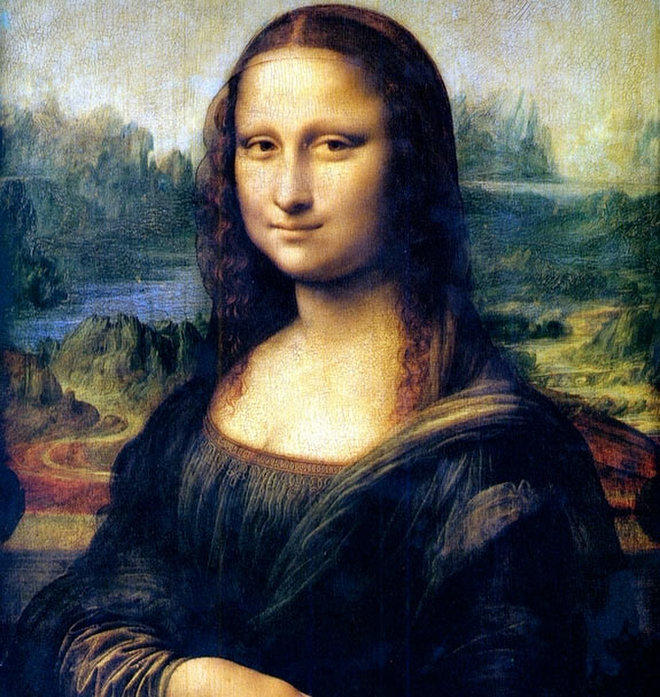
The Mona Lisa was, when finally completed, a supreme demonstration of what, in Leonardo’s view, painting could do: create misty distances, delicate colours, soft naturalism, convey the mysteries of human emotion through facial expression and, in the vast landscape behind Lisa, provide a mirror of the cosmos: ‘sea and land, plants and animals, grasses and flowers, all enveloped in light and shade’.

Gayford, Martin. Michelangelo: His Epic Life (p. 187). Penguin Books Ltd. Kindle Edition.
Would you be surprised to know that Leonardo was a snob?

He was, when it came to his assessment of the forms of art, from highest to lowest.

For example, among the different varieties of sculpture, Leonardo believed stone-carving (which is what Michelangelo preferred as his medium) to be the lowest form: messy, unpleasantly physical, plebeian (a snobbish view that echoes Lodovico Buonarroti’s): The sculptor in creating his work [he wrote] does so by the strength of his arm and the strokes of his hammer by which he cuts away the marble or other stone in which his subject is enclosed – a most mechanical exercise often accompanied by much perspiration which mingling with grit turns into mud. His face is smeared all over with marble powder so that he looks like a baker, and he is covered with a snow-storm of chips, and his house is dirty and filled with flakes and dust of stone.

hqdefault

How different is the painter’s lot. ‘The painter’ – for whom, read Leonardo himself – ‘sits in front of his work at perfect ease. He is well dressed and moves a very light brush dipped in delicate colour.’

images-4

It is easy to imagine him discoursing with complete confidence on such matters while Michelangelo, wearing sober black, stood – in a phrase from one of his earliest poems – ‘burning in the shadows’ with irritation.


Gayford, Martin. Michelangelo: His Epic Life (pp. 183-185). Penguin Books Ltd. Kindle Edition.
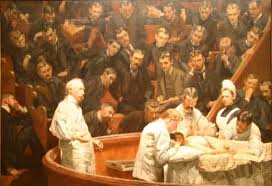
Why/how did dissecting corpses begin in Renaissance Italy? And what were the ramifications?


The analysis of the interior of the human body by dissection was one of the most extraordinary steps forward in knowledge taken in that supposedly backward era, the Middle Ages. The historian of medieval science James Hannam has described it as ‘one of the most surprising events in the history of natural science’.

images-3 Thomas Eakins, 1889

There had been a powerful taboo against the cutting up and examination of dead bodies in almost every previous culture.

Classical knowledge of anatomy, as laid out in the writings of the ancient medical authority Galen, was largely based on the examination of dead animals, particularly pigs and apes.

Neither Roman nor Islamic regulations allowed the dissection of human corpses. Like several of the innovations that shaped modern life, this began in medieval Italy. (The invention of spectacles is another example.)

The first recorded dissections took place in the medical faculty of the great University at Bologna in the early fourteenth century. The teacher would expound from a lectern while assistants sliced up the cadaver of an executed criminal and the audience looked on from benches around.

This was probably the kind of dissection that Ghiberti advised artists to attend. The dissections that Michelangelo told Condivi about were clearly private, ad hoc affairs in which the artist was not just an observer but an active investigator. Michelangelo was one of the first artists to do this, but there was a precedent.

According to Vasari, Antonio del Pollaiuolo ‘understood about painting nudes in a way more modern than that of previous masters, and he dissected many bodies to view their anatomy’.

However, getting the necessary specimens – dead bodies that no one minded being cut up – was far from easy. Even a celebrated anatomist such as Andreas Vesalius (1514– 64), half a century later, admitted to resorting to grave-robbing, quickly flaying the skin off a dead woman so her relatives wouldn’t be able to recognize her, and – in a particularly macabre scientific mission – at dusk secretly retrieving the singed limbs of a criminal who had been burnt at the stake.

Gayford, Martin. Michelangelo: His Epic Life (p. 153). Penguin Books Ltd. Kindle Edition.


Roma

In this episode of the quite good PBS series “Dream of Italy,” you will shop in food markets, cook with a professional, admire some of Rome’s many architectural masterpieces, learn to create mosaics, appreciate gelato, meet a renowned street artist and dance in a quadrille.  Whew, that’s a lot! But it’s an enjoyable video.