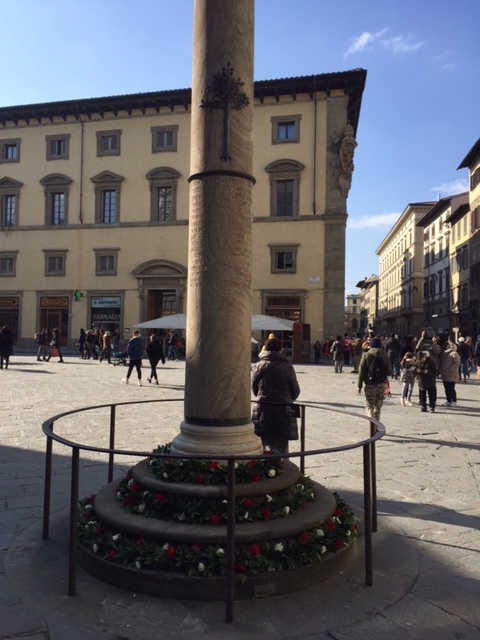
Flowers at the base of the Column of Saint Zenobius, Florence

The Colonna di San Zanobi is a monumental marble column, surmounted by a cross above a crown of fire, located just north of the Baptistery of San Giovanni in Florence.
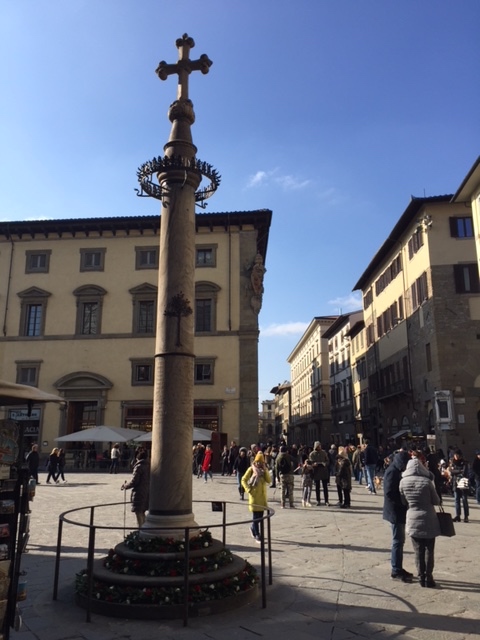
IMG_7547

The column was placed to memorialize a miracle by the former Florentine Bishop, who had died circa 430. In the 9th-century, San Zenobi’s remains, held in an urn, were being transferred from the church of San Lorenzo to the then Cathedral of Santa Reparata (later enlarged and renamed as Santa Maria del Fiore or, il Duomo).
IMG_7546

It’s hard to believe today, but in the 9th century, the church of San Lorenzo was outside the fortified city walls of the town. The move was prompted because anything outside the city was was under threat of Hungarian invasions.

IMG_7546

As the remains were being moved, tradition holds they brushed against an elm tree that grew in the spot where the column now stands.  It happened in winter, when the tree of course was leafless.  However, by being brushed by the relics of the saint, the tree miraculously became leafy.

So every year I Fiorentini celebrate this miracle of San Zanobi on January 27, and decorate the base with flowers and greenery in his honor.  I happened to walk past the monument today, and the flowers are still fresh.  I wonder how many people even notice!

IMG_7544IMG_7545

It is not known when the column was erected, but it was in place by the year 1333. The column has a metal tree image affixed, which you can see in the photo below.

IMG_7546

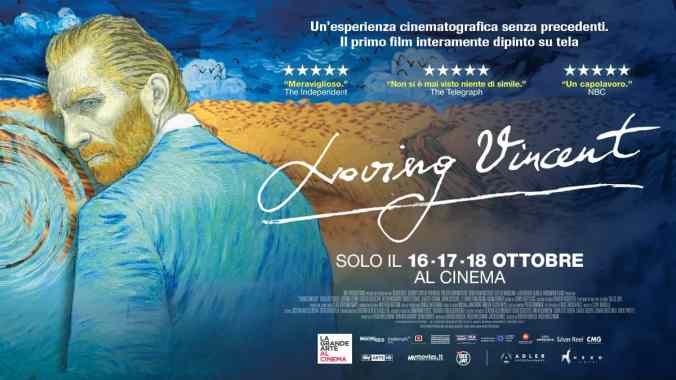
“Loving Vincent” van Gogh

LovingVincent_1200x675


Watched this film on Amazon last night and it is quite something.  I enjoyed it as a novelty, and as a bonus, I feel like I am caught up to speed on the latest van Gogh scholarship.  I mean, I didn’t know that scholars are now thinking that his death was an accident, not a suicide.

The film is unique in that it was created by more than 100 artists who painted every frame.  It is very interesting to watch van Gogh’s brushstrokes and swirls seemingly come to life throughout the film.

sc-mov-loving-vincent-rev-1011-20171010

Loving Vincent has been nominated for Best Animated Feature Film in the 2018 Academy Awards.


If you want more info on how the film was created, here’s a great link.  The text below comes from the Chicago article.

https://www.chicagoreader.com/chicago/loving-vincent-van-gogh-dorota-kobiela-hugh-welchman/Content?oid=32696545

Tampering with an artist’s memory can be dangerous business: In 2011, Gregory White Smith and Steven Naifeh published Van Gogh: The Life, an acclaimed biography arguing, among other things, that the Dutch painter’s gunshot death in July 1890, in the French town of Auvers-sur-Oise, was no suicide, as scholars had agreed for years, but homicide at the hands of a local bully.

The blowback from Van Gogh fans and art historians was severe. “Many [of these scholars] had done years of research and writing that was deeply embedded in the old narrative,” the authors explained in a Vanity Fair article three years after the book appeared.

“They didn’t just disagree with our new reading; they were enraged by it. . . . [One] specialist, with whom we shared a stage at the opening of a Van Gogh exhibition in Denver, was so choked with indignation that he refused even to discuss the subject when the audience raised it.”

Everyone knows that Van Gogh killed himself in despair, because—well, why? Because it was in that Irving Stone novel, Lust for Life, and the Hollywood movie that Vincente Minnelli made out of it? Loving Vincent, the first Van Gogh biopic since the homicide theory surfaced, dives into the mystery surrounding the painter’s death. This extraordinary animation, created by a team of 115 artists who hand-painted every one of its 65,000 frames, brings to life many of the people Van Gogh painted during his last years in France—foremost among them young Armand Roulin, whose family befriended Van Gogh during his year-long stay in Arles. One year after the artist’s death, Armand is recruited by his father, Joseph, to track down Van Gogh’s brother, Theo, and place in his hands an unsent letter from Vincent that has just turned up. Armand’s journey leads him to Paris, where he learns that Theo has died too, and then to nearby Auvers, where he questions the townspeople about Vincent and, from their variously colored memories, tries to reconstruct how and why the artist died.


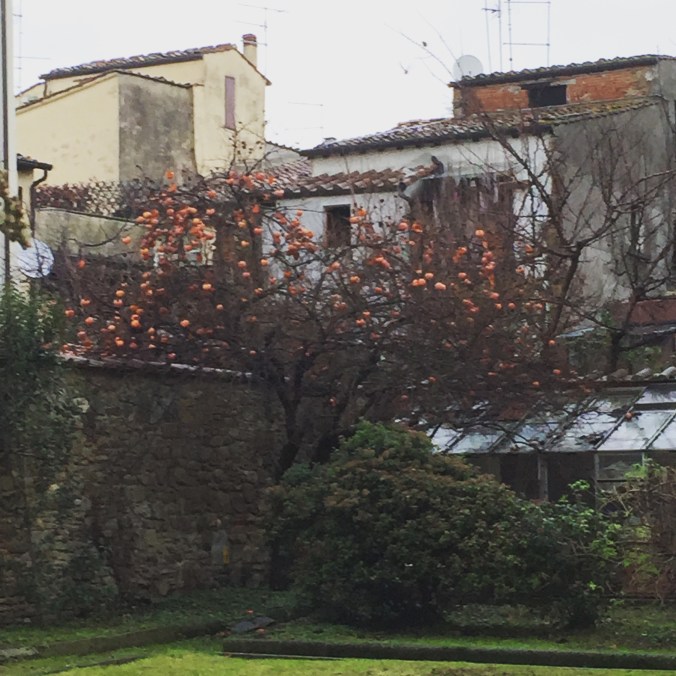
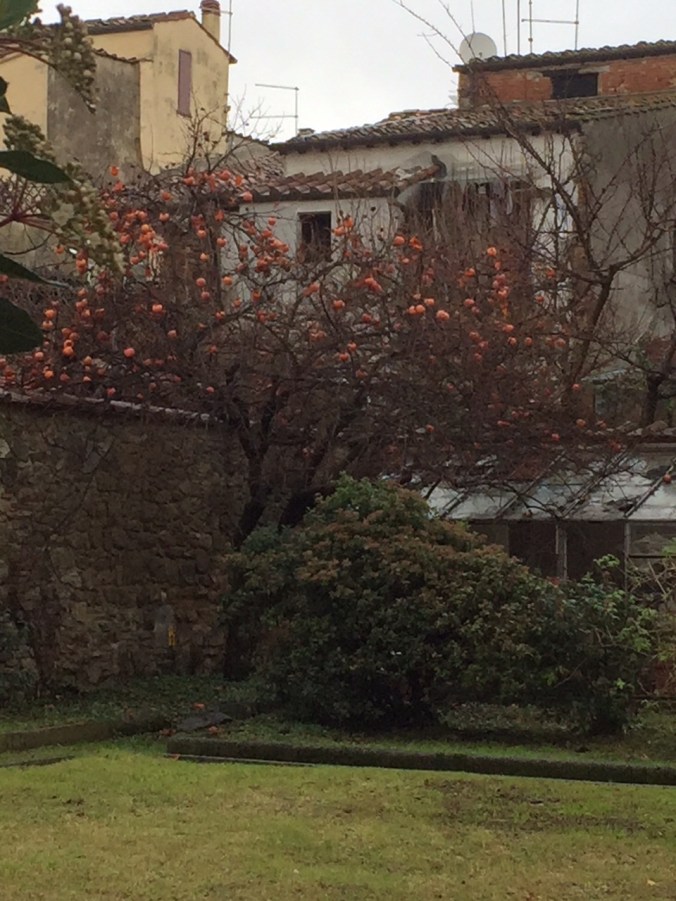
Persimmons in Arezzo

I love a pretty garden, even in the winter.  I was in Arezzo recently and paid a visit to the Vasari Casa museum.  If you know Vasari’s monumental book on Italian artists (the first of its kind, published in the 16th century), you know how important he is for more or less beginning the field of art history.  As such, he is sort of my patron saint, with lower case letters.

IMG_7190IMG_7158IMG_7159IMG_7160IMG_7161

So I was delighted to visit Vasari’s home in Arezzo, and ponder how it was his refuge from the busy life he led in Florence. But, as often happens for me, while I found his modest palazzo to be interesting for it’s structure and fresco decorations (much of it Vasari himself), it was the garden that drew me like a magnet.

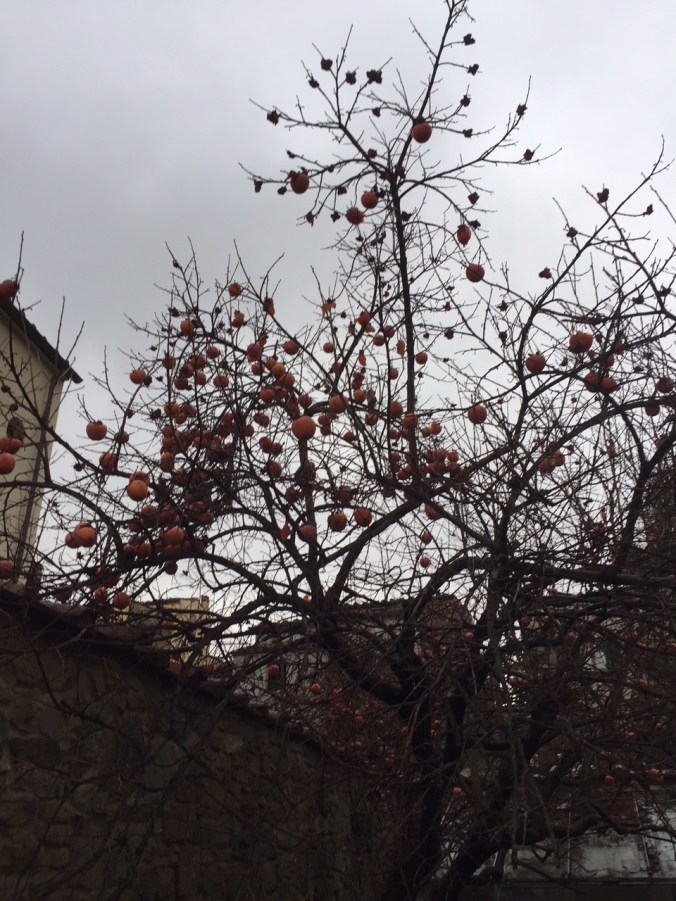
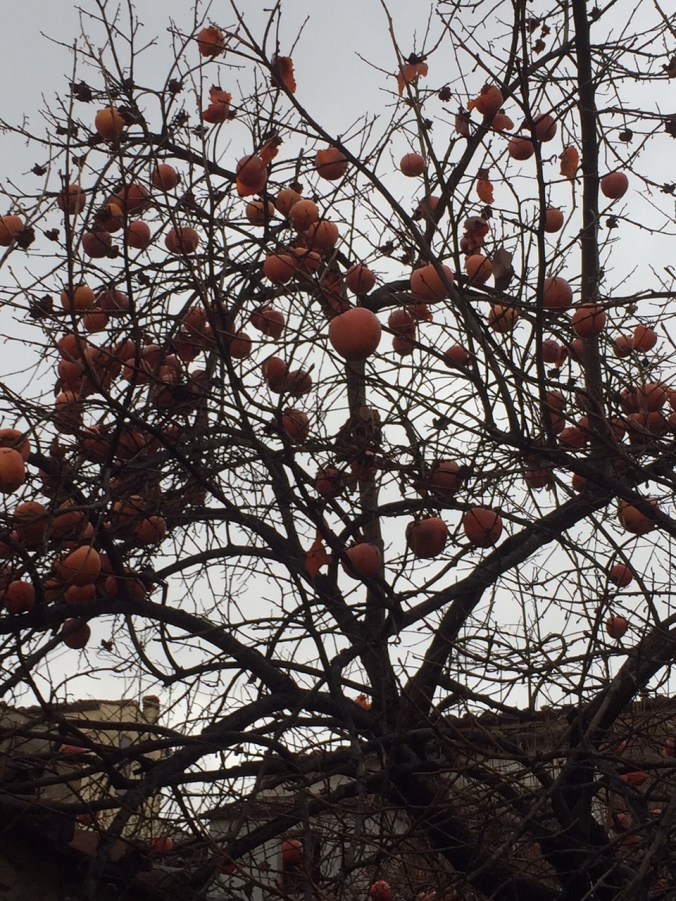
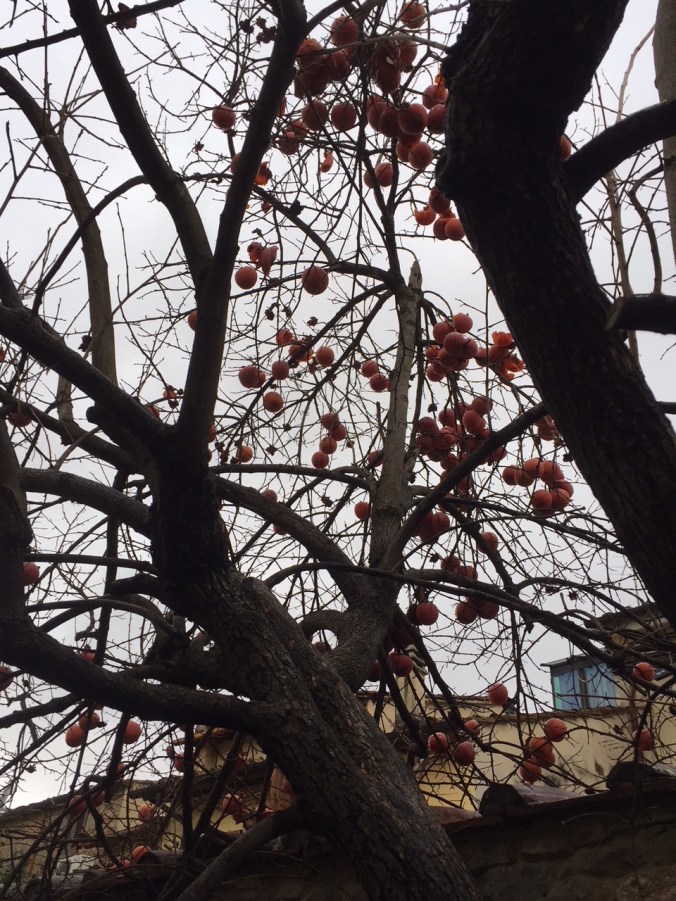
And in his garden I spied this beautiful, ancient persimmon tree.  I love how the tree looks without any leaves: only brown bark, branches, and the fruit that look like Christmas decorations.

Extraordinary Florentine views

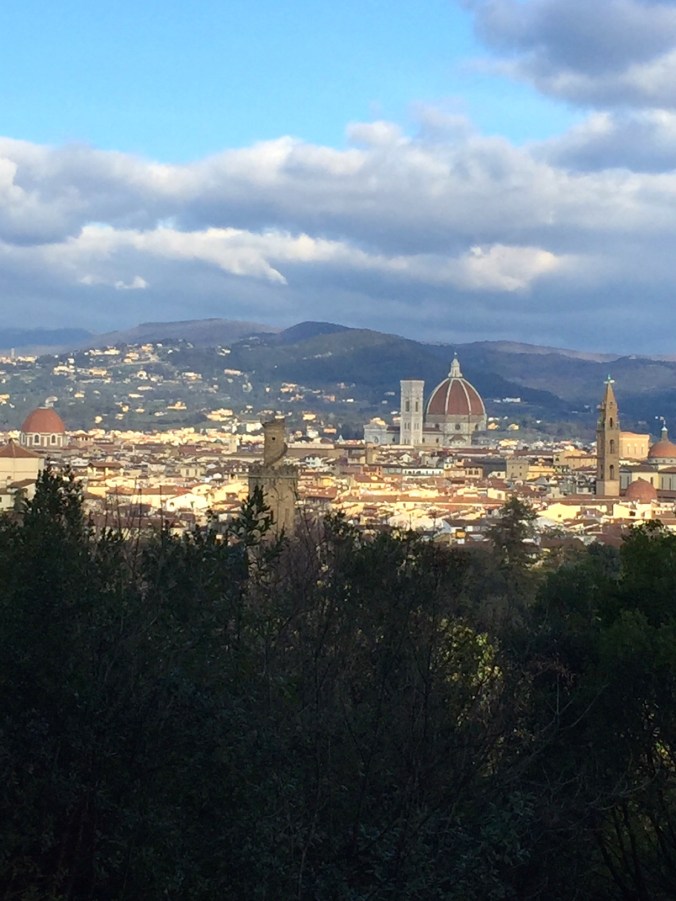
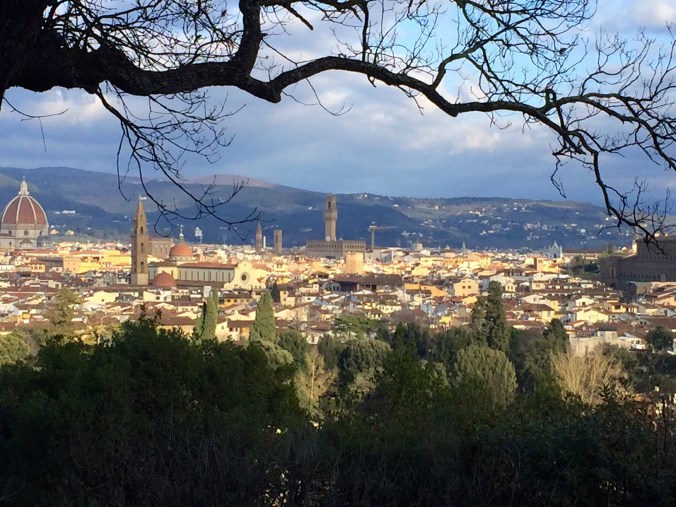
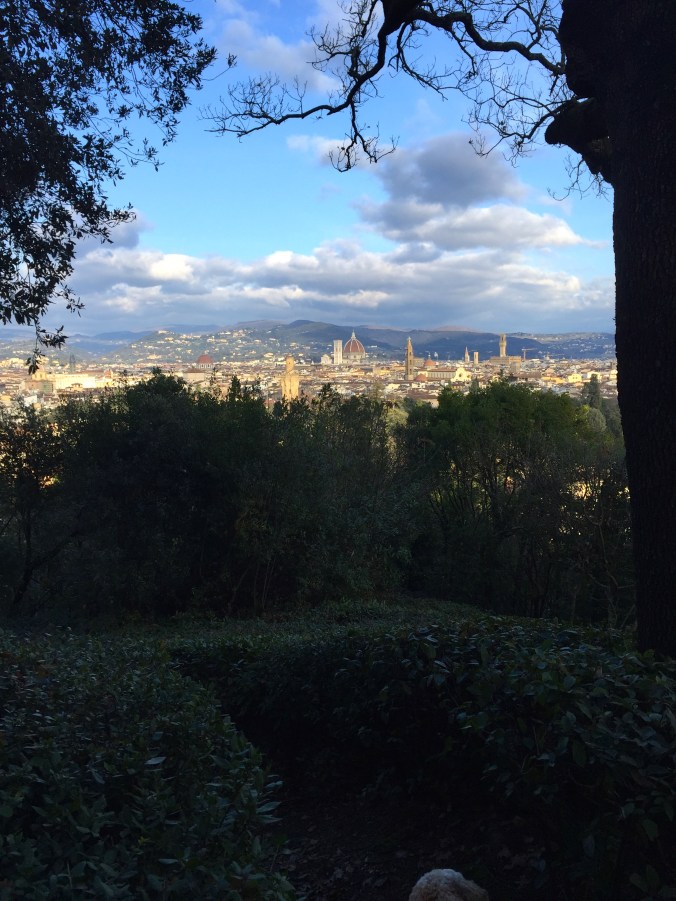
Yesterday I had the immense pleasure of being with some new friends who showed me their garden in Florence, and as we climbed the hill behind their home, the most amazing vistas of the city came into view.  Behold!

IMG_7349


Below is a sweeping view from the Palazzo Pitti on the right to the dome of the Duomo on the left.

IMG_7350


The city of Oz has nothing on Florence! Florence looks like a magical wonderland in the  picture below! I mean, just look at it!

IMG_7348

It is known that the American painter, John Singer Sargeant, was on this promitory to see the sweeping views of Florence and it is said that long before that, Leonardo purportedly  studied this view as he developed his famous technique of sfumato.  And, to top it off, the hill is topped by the foundation of a chapel that was never constructed, because Roman ruins were found just below the surface of the ground.

It would take at least two lifetimes to take in the wonders of Florence.