Sirmione del Garda, Italy; from Roman ruins to the villa owned by Maria Callas

I sometimes feel as though I have run out of superlatives.  I think I’ve used all of the big words that I know so many times in describing this miraculous land, that there’s nothing left.

And then there is Sirmione del Garda.  I guess I’ll just start from scratch and use them all over again!

Lake_Garda_-_View_from_Monte_Baldo

First, a map.  Lake Garda, located in northern Italy (in the province of Brescia, in Lombardy) is the largest of the lakes in Italy and has a very peculiar, vertical shape.

170px-Lago_di_Garda_venti    Lake_Garda_Sirmione_map


And then, at the middle of the southern end of lake is a peninsula of land, also essentially vertical.  At the north end of the peninsula is the charming village of Sirmione.


data=blKwDyaKGKrSac2mGBnnETVHgqS6zKAjeYJJfsxJPvoTz1-a9Dx3h_38yASb4v0icifDUNnkOdyB0VerNyCLRFSTEDEQJHvGBuTk67VARVV0QXSuqARWY1VOH68b7OONAVZJhaKmkHxz0V8jSmtUWrZKo13tEhi_r4oIS0rrWjfIfeagFPwSW


Sirmione is one of the most popular towns of all on the beautiful Lake Garda, with thousands of visitors flooding in each day to view the picturesque peninsula. Amazingly to me, it may not be the best known place to stay for a lake holiday in Italy, but with its castle and Roman ruins, not to mention its contemporary little village, it should be, because its got something for everyone.

We know that Sirmione has been settled since the Stone Age, with early finds showing that there probably was a small village of fishermen living in houses on stilts along the banks of Lake Garda.

Starting from the 1st C. BC, this area became a favorite resort for rich families coming from Verona, then the main Roman city in NE Italy.  The poet Catullus praised the beauties of Sirmione and spoke of a villa he had there.

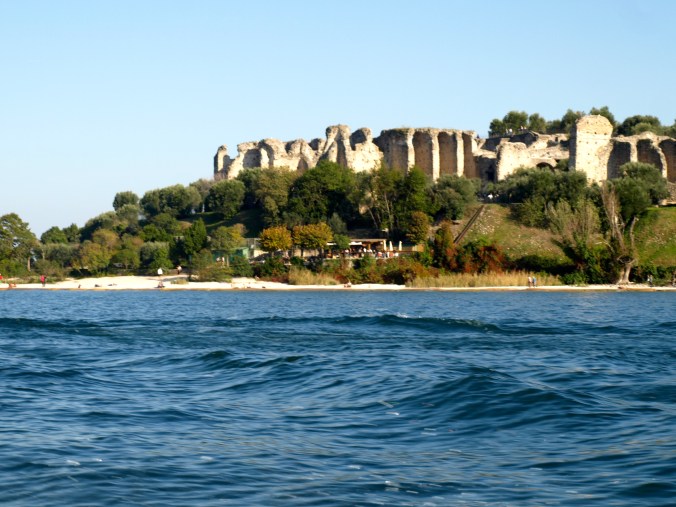
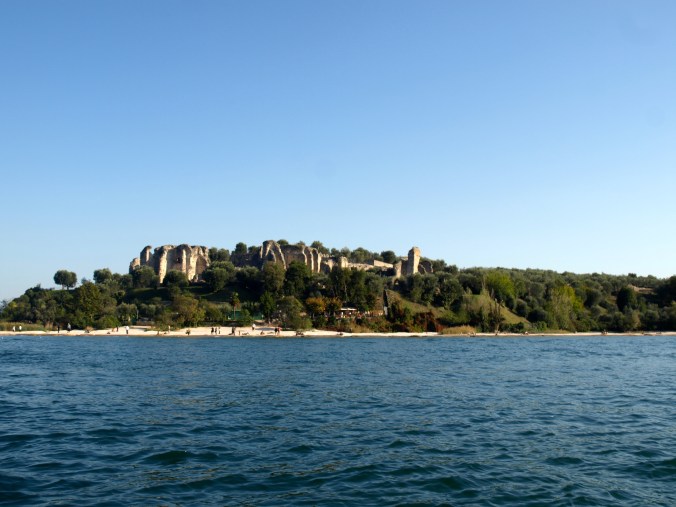
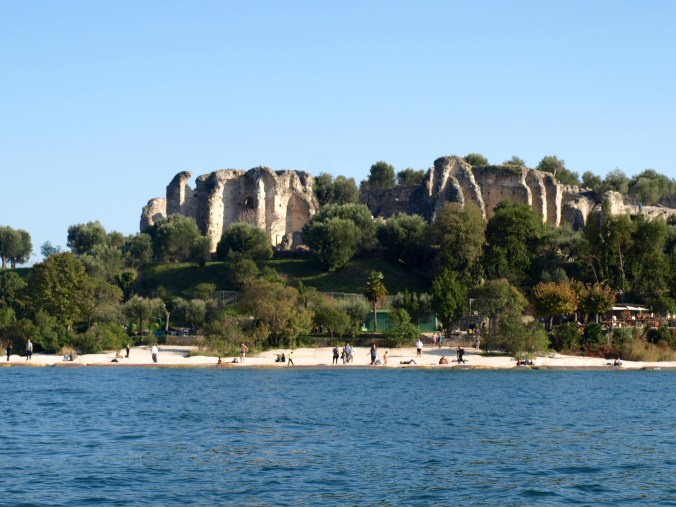
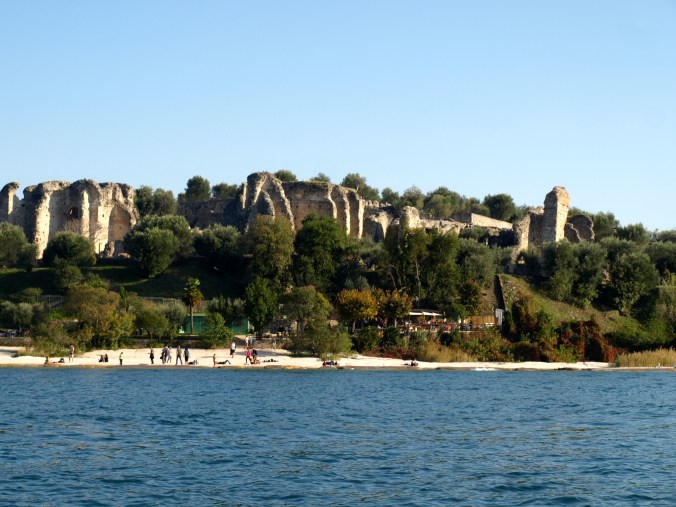
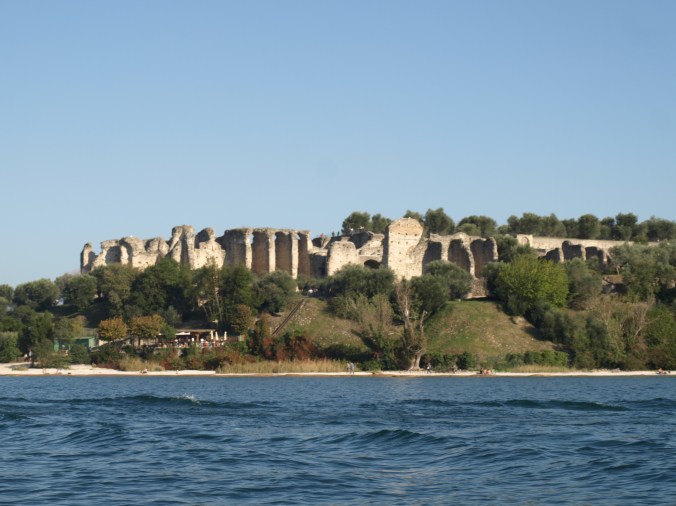
Rich Romans, for example, built holiday villas on the end of the peninsula, and one still exists: the so-called Grotte di Catullo.  On the furthest point of the peninsula are these extant ruins of a patrician Roman villa.  It was no doubt constructed for some rich family and includes a 3-story building, dating to c. 150 AD.

Although this extensive ruin goes by the popular name of the “Grotto of Catullus,”  it is neither a grotto nor was Catullus still living (he died in 54 BC) when the villa was built.  Today there’s a small museum at the site. The ruins are the most striking example of a Roman private edifice discovered in northern Italy, and had a rectangular plan and measured 167 x 105 m.
OLYMPUS DIGITAL CAMERA


OLYMPUS DIGITAL CAMERA


OLYMPUS DIGITAL CAMERA


OLYMPUS DIGITAL CAMERA


OLYMPUS DIGITAL CAMERA


Moving forward in time, by around the year 1000, Sirmione was probably a free comune, but fell into the hands of the Scaliger by the early 13th century.

Since the town occupies such an important strategic point, the penisula was continually engulfed in the always turbulent (and sometimes hideous) history of northern Italy.  It was invaded numerous times after the fall of the Roman Empire, was subject to the conflicts involved in the expansion of the Lombards,  and was the site of the intricate struggles between the Guelphs and the Ghibellines in the Middle Ages).

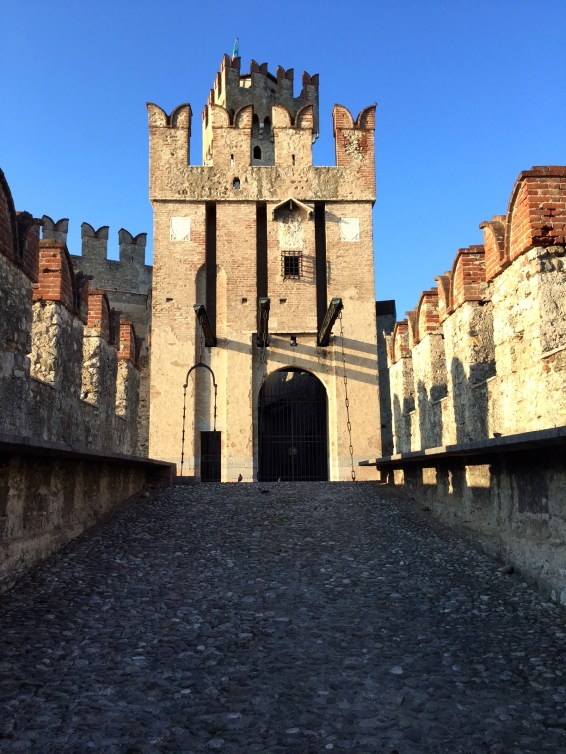
The last of those struggles left Sirmione with its major landmark: the Scaliger Castle (its proper name is the Rocca Scaligera.)
IMG_5758

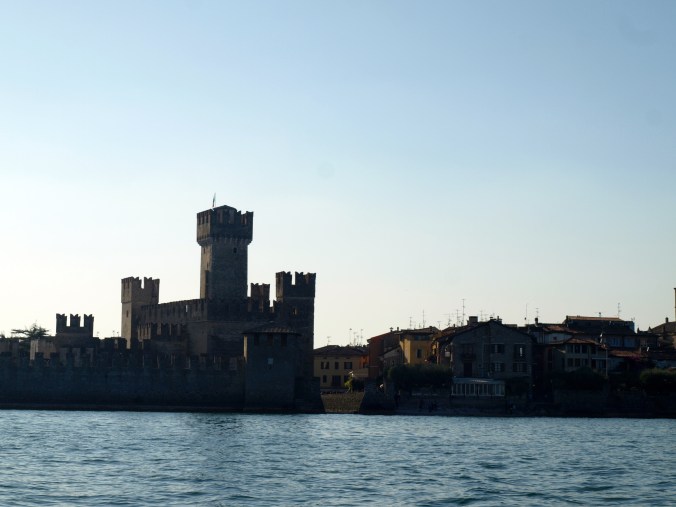
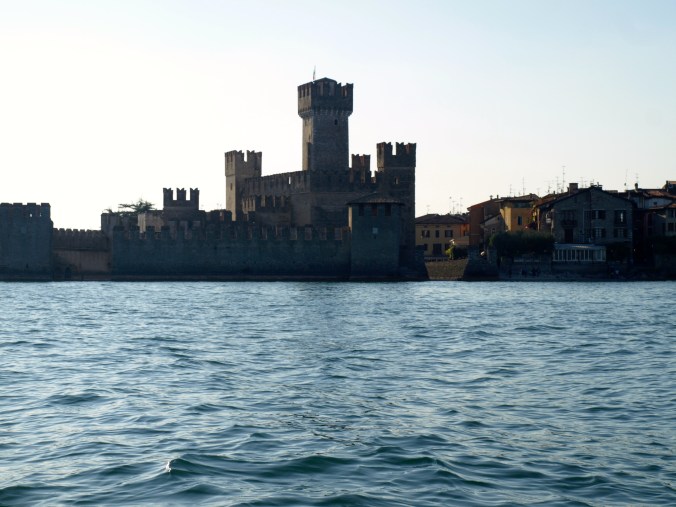
The Scaliger Castle is surrounded by water–as if in Venice– and was built in the late 12th century as part of the defensive network surrounding nearby Verona.  By this time, Sirmione was home to the so-called heretical Cathars, who were to be driven out during the Guelph/Ghibelline struggle.  In fact, 2,000 of the Cathars were burned at the stake in the Arena in Verona.
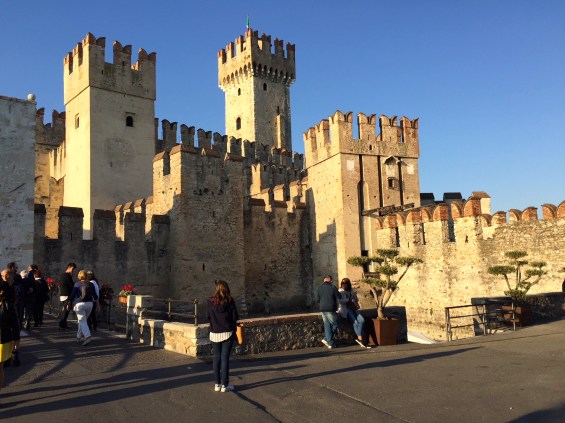
IMG_5756


The Scaliger castle provides a rare example of medieval port fortification, and was used by the Scaliger fleet.  The complex was started in 1277 by Mastino della Scala.

The walls on the inside were finished with plaster with graffiti, simulating blocks of stone.

The castle stands at a strategic place at the entrance to the peninsula. It is surrounded by a moat and it can only be entered by two drawbridges. The castle was established mainly as a protection against enemies, but also against the locals.

The main room houses a small museum with local finds from the Roman era and a few medieval artifacts.
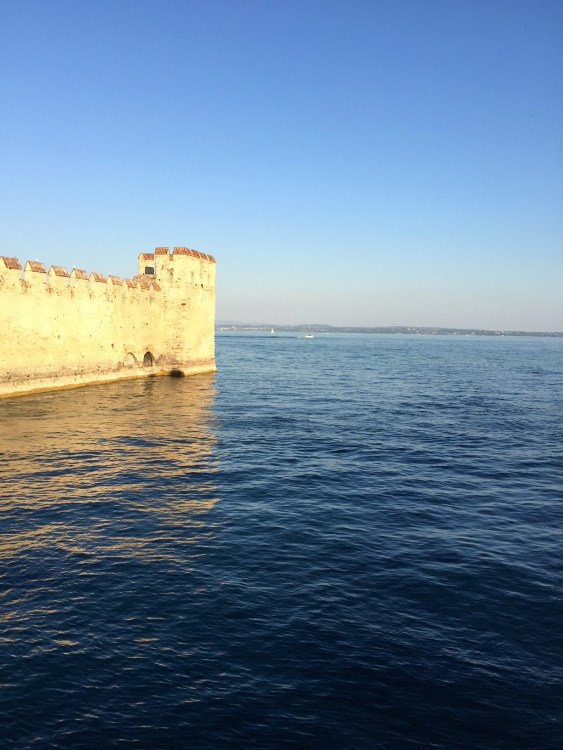
 

IMG_5760


Below are shots of the  extensive castle complex taken from the lake:
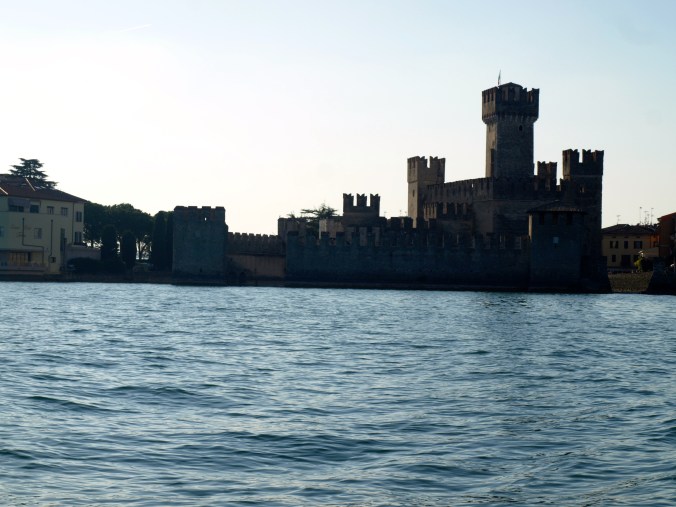
OLYMPUS DIGITAL CAMERA


OLYMPUS DIGITAL CAMERA


OLYMPUS DIGITAL CAMERA


The castle was maintained and extended as the Veronese sought to safeguard the area from its Milanese rivals.  Later Sirmione was under the control of the Venetian inland empire from 1405 until the end of the 18th century.  It was acquired by the Habsburg Empire in 1797.  It became a part of the Kingdom of Italy in 1860.

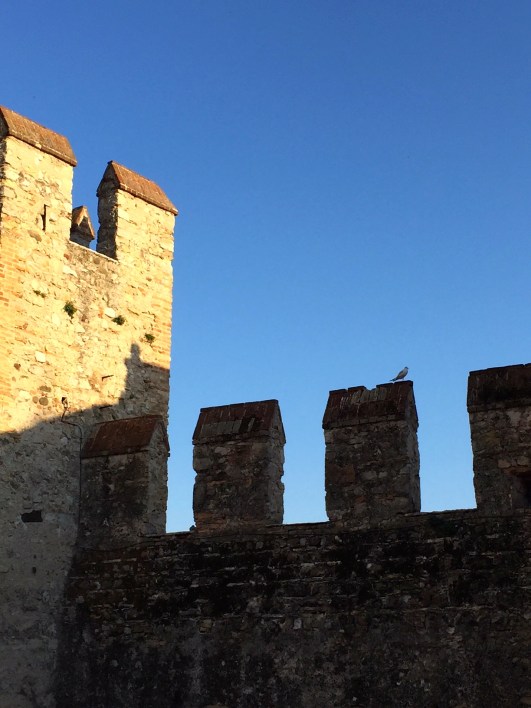
In the castle complex, we have the typical Ghibelline swallowtail merlons and the curtain-walls (with three corner towers) in pebbles alternating with two horizontal bands of brick courses.
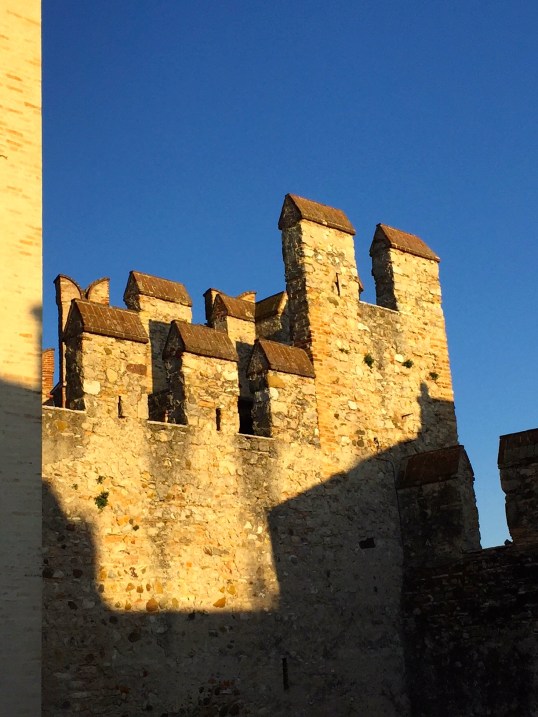
IMG_5752


Although its strategic position in the southern end of the lake, and the defensive qualities of the peninsula, meant that it was of military importance over the years. But the beauty of the setting also meant that it was – and still is – a popular place for recreational destination. After the fall of the Venetian Republic, Sirmione was more sedate and its fortunate citizens were able to concentrate their focus on the fruit orchards, olive groves, and lake fisheries.
IMG_5753

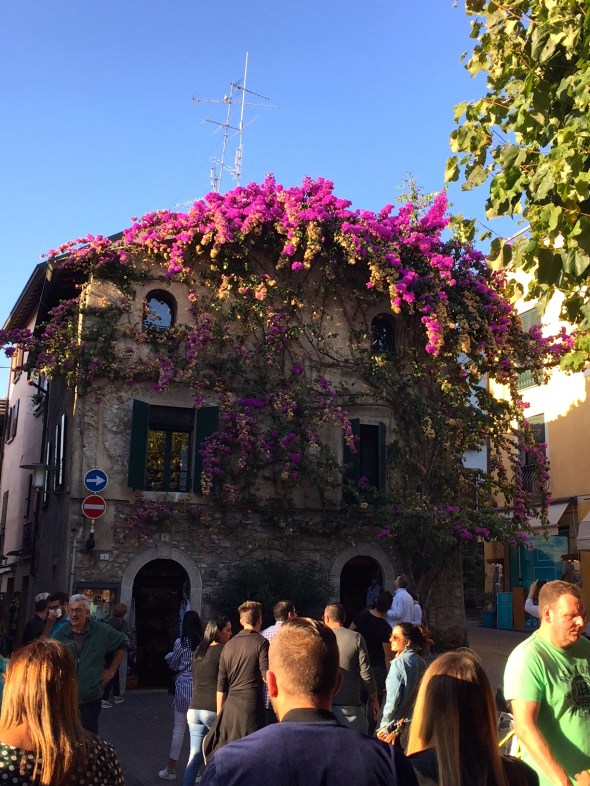
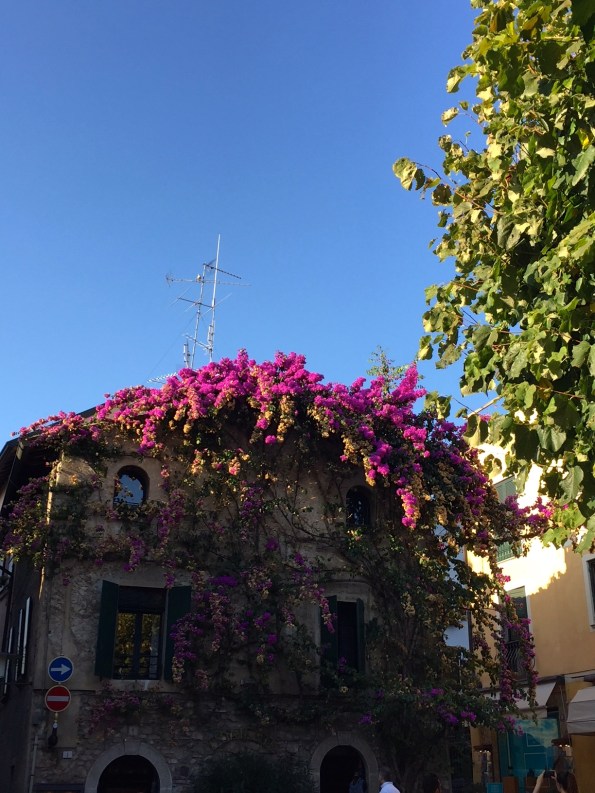
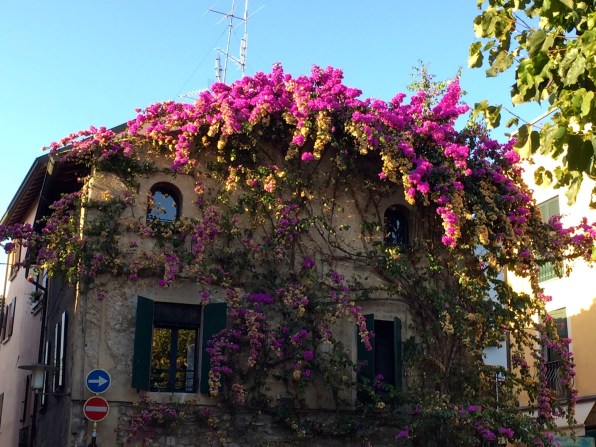
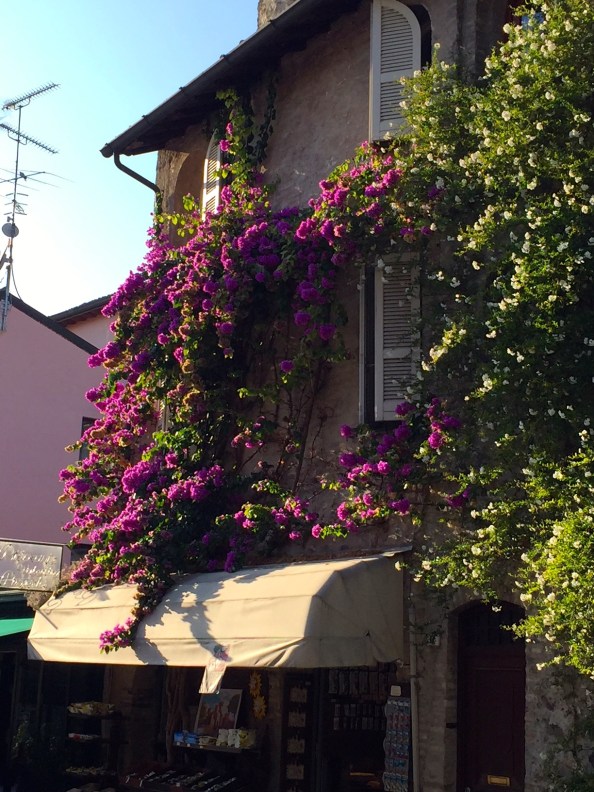
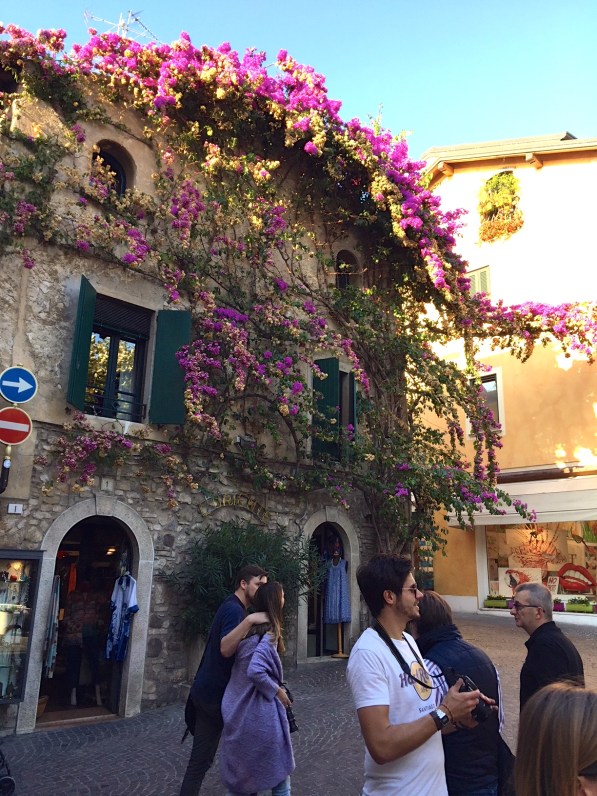
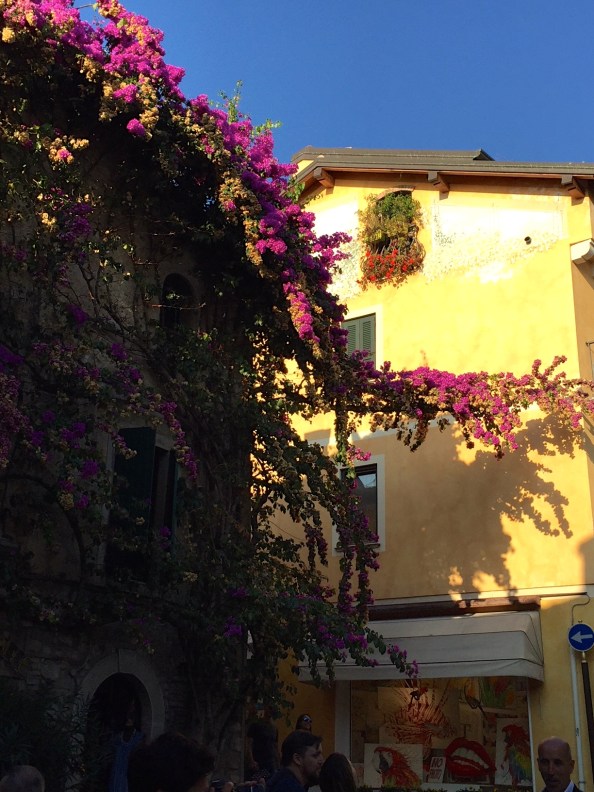
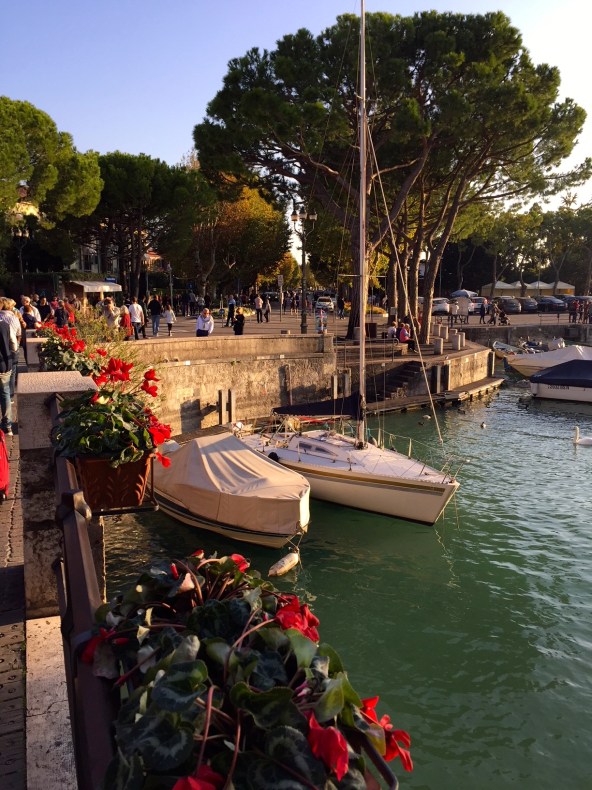
Here are just a few pictures of the pleasures of the amazingly picturesque village itself:
IMG_5754


IMG_5733

IMG_5734


IMG_5735


IMG_5736


IMG_5738


IMG_5739


IMG_5740


IMG_5741


As if Sirmione wasn’t already blessed enough with an amazing location, it also has thermal baths. The town is famous for these thermal springs.  The Terme di Catullo uses the water that bubbles out of Lake Garda on the northeast shoreline area.

In the late 19th-century, a diver managed to insert a metal pipe into a rock near the underwater hot-springs, and this allowed the diversion of the naturally heated water to the northern end of the peninsula.  At that time, it was also discovered that the Roman Period inhabitants had already discovered and diverted (also through metal pipes) the thermal springs, and in fact, the so-called Grotto of Catullus may have been a bathhouse, not a villa. At any rate, the thermal water, which is mineral rich and naturally heated to 70 degrees Centigrade when it leaves the underwater rock, is now used for health treatments in two of the thermal baths and spas on the peninsula.

If you look hard, you can see the bubbles coming up through the water.  I was on a boat and we were hovering over the underwater hot springs:

OLYMPUS DIGITAL CAMERA


And finally for today, the Villa owned by Marie Callas:

images-2

images-3

What are you waiting for?  Go to Sirmione!


Piazza della Repubblica

I walk by or through the Piazza della Repubblica in Florence at least once a day, sometimes many more times.

IMG_5639

On a particularly fine day, such as today about noon when I took this picture, (I mean, look at that blue sky!  and this photo wasn’t photoshopped, I promise!) the inscription above the impressive arch on the south end of the piazza stands out and demands to be noticed.

IMG_5640

Translated, it tells us: The ancient center of the city / restored from age-old squalor / to new life.

The context for this bold announcement is that both the arch itself and the inscriptions speak to the 19th century re-ordering of this remarkable and very hallowed city space.

The square looks like this today:


But, originally, this key area of Florence was created by the Romans when the town was a mere Roman camp.  We think it then looked something like this:

Museo_Firenze_com'era,_plastico_Florentia_3


By the medieval period, the area looked something like this (Piazza del Mercato Vecchio, by Giovanni Stradono (Palazzo Vecchio, Sala di Gualdrada):

As you can see, the former Roman forum area was by now densely inhabited.  The city had grown and urban crowding led to tenements with ever rising floors, including the tower houses for which the city was once famous (case di torri in Italian).

What was once a Roman forum was now a commercial center of the city, serving as a  lively meeting place and home to the market.  Like other Italian towns, Florence developed certain city spaces intended for precise functions; the Piazza del Duomo, for example, was where religious affairs took place and another key area in the city, known then as the Piazza del Comune, (now known as the Piazza della Signoria), was for political and civic affairs.

We know what the area looked like thanks to contemporary prints, paintings, and drawings owned by the Museo di Firenze com’ era. Later painters, such as Telemaco Signorini, depicted with melancholy the old part of town that soon disappeared.

800px-Telemaco_Signorini,_Mercato_Vecchio_a_Firenze_(bozzetto)_1881-83_16x28,5_cm

Now, we fast forward to the 19th century.

It was decided that the square needed to be completely refigured, and that required the complete destruction of the city fabric, including warrens of zig-zagging old streets and buildings, both proletarian and aristocratic. Lost forever were some medieval towers, churches, the corporate seats of the city’s guilds, a few palaces of noble families, as well as craftsmen’s shops and residences.  On the positive side, the physical place and the idea of the ghetto were also demolished.
The politicians who envisioned what became the Piazza della Repubblica, sold their radical ideas as a part of the new city planning required when Florence became the capital of the new Italy from 1865 to 1871.  They determined that this unsanitary old section of the city was best completely removed. In fact, ironically, the particularly intense building activity in this Piazza took place between 1885 and 1895, well after the capital had been moved to Rome.
But it was in this period, known as the Risanamento in the 19th-century terminology (or,  the sventramento or ruining, by detractors), that this large part of the city center was demolished and rebuilt into the piazza as it exists today.

Unfortunately, a plentiful number of works of art and architectural fragments were sold through the antiquarian market.  Only some of them could be saved for the Museo nazionale di San Marco.  Other fragments allowed the founding of the likes of the Museo Bardini and the Museo Horne.  Vasari’s Loggia del Pesce, which had been a part of the market area for 400 years, was fortunately saved.  It was dismantled and reassembled in the Piazza dei Ciompi. It is still there today, out of context of course, but at least it exists.

In September of 1890, with many of the future palazzoni building sites still empty, the Piazza della Repubblica was formally inaugurated. The palazzi that rose in the new square followed the eclectic fashion of the time and were planned by well-known architects including Vincenzo Micheli, Luigi Buonamici, Giuseppe Boccini.

Following the transformation, the square became a kind of recreational center for the town; it was built up with the refined palaces, luxury hotels, department stores and elegant cafes, including the Caffe’ delle Giubbe Rosse where famous scholars and artists met and debated (argued).

So, now we return to the arch, which was meant to be a triumphal arch, designed by Micheli and inspired by the Roman monuments in Rome as well as by the most courtly Florentine Renaissance architecture.  The decorative elements of the arch veer far from Roman or Renaissance models.  The proclamation on the arch, with which I started this post, is said to have been taken from a literary source, possibly by Isidoro del Lungo.


A Room with a View, still ravishing after all these years.


The ravishing film, of course, was based upon the book of the same title by E.M. Forster.  The book is a lovely read, but honestly, I think Where Angels Fear to Tread by the same author and on the same period is far better.


In 1985, A Room with a View was nominated for eight Academy Awards, including Best Picture and Best Director.  The film won three awards, for Jhabvala’s adaptation of Forster’s novel, for Best Costume and for Best Production Design.
A Room With a View was also voted Best Film of the year by the Critic’s Circle Film Section of Great Britain, the British Academy of Film and Television Arts, the National Board of Review in the United States and in Italy, where the film won the Donatello Prize  for Best Foreign Language Picture and Best Director.
US director James Ivory awarded with the 'Fiorino d'Oro', Florence, Italy - 05 Oct 2017
22196188_1699375533430051_2633005952246625126_n22196209_1699375550096716_7345193732756508899_n

Kindred spirits

cropped-21767943_10155871607471318_334486059363085891_n.jpg


I can’t get the lovely lyrics of “Mi Chiamano Mimi” from Puccini’s La Boheme out of my mind since I saw the opera last weekend.  It feels like Mimi and I share the love of beautiful things:

“Yes, they call me Mimi, but my true name is Lucia.

I love all things that have gentle sweet smells, that speak of love, of spring,
of dreams and fanciful things,

Those things that have poetic names, do you understand me?”


21767943_10155871607471318_334486059363085891_n

Italy’s immense appeal

I often think Italy is too popular for her own good.  When I pass through the piazza del Duomo in the middle of the day, on a nice day I can barely move through from the sheer numbers of tourists.  The trash trucks and street washers (a type of vehicle) travel up and down the streets all of time, picking up after the people.

On the flip side, Italy reacts in general to the immense tourist population by constantly opening new sites to appeal to them.  As someone who has visited Italy a lot over the past 30 years, I am constantly amazed when I learn new archaeological sites, for example, are newly available to be visited.  As below.


A culture of beauty

The Italian culture loves beauty, depends on beauty, is addicted to beauty. The single word to describe all good things, whether they mean great, terrific, wonderful, marvelous, fantastic, satisfying, or well done, is bello.

The roots go way, way back.

Even the Etruscans, the people who occupied the peninsula between the Arno (Florence) and Tiber (Rome) Rivers in the first millennium B.C. before they were ultimately conquered and wiped out by the Romans toward the end of that period, were lovers of beauty. Visit the Etruscan museum at the Villa Giulia in Rome and you will see their civilization, taken whole from the many burial grounds they left behind. There are perfume bottles, containers for makeup, rings that went into hair, and large baskets into which all the combs, brushes, ointments, and powders were put in an effort to please the gods, to make themselves beautiful in the eyes of the deities so that the beauty of their bodies would reflect the beauty of their souls.

bf7c69fe98c332e83dac325df4503559--ancient-artifacts-bronze-sculpture

And that’s how it stood until Judaism and then Christianity came along to break the connection between outer magnificence and inner purity. The one no longer had anything to do with the other.

Epstein, Alan. As the Romans Do: The Delights, Dramas, And Daily Diversio (pp. 75-76). HarperCollins. Kindle Edition.

Mimi

Giacomo Puccini’s famous opera, La Boheme, is packed with fantastic arie, like the one Mimi sings: “Mi chiamano Mimi.”  When Rodolfo reveals to her that he has fallen in love, he wants to know all about her. He asks her to tell him something about her. Mimi’s reply begins by telling him she is called Mimi, but her true name is Lucia.

The English translation is as follows:

Yes, they call me Mimi
but my true name is Lucia.
My story is short.
A canvas or a silk
I embroidery at home and outside…
I am happy happy and at peace
and my pastime
is to make lilies and roses.
I love all things
that have gentle sweet smells,
that speak of love, of spring,
of dreams and fanciful things,
those things that have poetic names …
Do you understand me?
They call me Mimi,
I do not know why.
Alone, I make
do by myself.

I do not go to church,
but I pray a lot to the Lord.
I stay all alone
there in a white room
and look upon the roofs and the sky
but when the thaw comes
The first sun, like the
first kiss, is mine!
Buds in a vase…
Leaf and leaf I spy!
That gentle perfume of a flower!
But the flowers that I make,
Alas! no smell.
Other than telling you about me, I know nothing.
I am only your neighbor who comes out to bother you.


You can listen to a diva perform it here:

The Italian lyrics are as follows:

Si. Mi chiamano Mimì
ma il mio nome è Lucia.
La storia mia è breve.
A tela o a seta
ricamo in casa e fuori…
Son tranquilla e lieta
ed è mio svago
far gigli e rose.
Mi piaccion quelle cose
che han sì dolce malìa,
che parlano d’amor, di primavere,
di sogni e di chimere,
quelle cose che han nome poesia…
Lei m’intende?
Mi chiamano Mimì,
il perché non so.
Sola, mi fo
il pranzo da me stessa.
Non vado sempre a messa,
ma prego assai il Signore.
Vivo sola, soletta
là in una bianca cameretta:
guardo sui tetti e in cielo;
ma quando vien lo sgelo
il primo sole è mio
il primo bacio dell’aprile è mio!
Germoglia in un vaso una rosa…
Foglia a foglia la spio!
Cosi gentile il profumo d’un fiore!
Ma i fior ch’io faccio,
Ahimè! non hanno odore.
Altro di me non le saprei narrare.
Sono la sua vicina che la vien fuori d’ora a importunare.

Puccini’s La Bohème

Wow!  I’ve seen some live performances and heard some music in my life, but last Saturday in Florence was very special.

firenze

The Opera di Firenze mounted a true spectaclo. One of the finest orchestras in Italy, the sonorous Orchestra del Maggio Musicale Fiorentino, is directed by Ivan Ciampa (my Italian teacher says the Florentine orchestra is second only to that of La Scala in Milano.  My teacher has never led me astray) provided the rich, beautiful music, while the company performed the libretto.

La Bohème, the opera in four acts composed by Giacomo Puccini.

images-7             170px-Puccini7

autografo1


The world premier of this beloved opera was in 1896 in Turin, conducted by none other than Arturo Toscanini.

$_35       Toscanini Conducts


(btw, in 1946, 50 years after the opera’s premiere, Toscanini conducted a performance of it on radio with the NBC Symphony Orchestra;  this performance was eventually released on records and on compact disc and is the only recording of a Puccini opera by its original conductor.)

La bohème went on to become part of the standard Italian opera repertory and is one of the most frequently performed operas worldwide.

1486842986005


The opera this fall in Florence was directed by Bruno Ravella and the stage sets were designed by Tiziano Santi.  Santi’s scenes tend to suggest rather than literally depict the French environments with a system of small, open and slightly distorted stage boxes.

The story unfolds in a traditional way,  and for me, the most captivating moments were in the large choral scenes suggesting Paris’s Latin Quarter in the 1840s.  The opera choir is sensational and delights the audience through their singing and choreography.  A favorite scene is when Musetta sings of her romances on a swing like a cabaret performer.  One stark but moving scene is between the two lovers in their duet “O soave fanciulla.” They stand on the proscenium in front of a dark mesh-looking screen, on which are projected snowflakes.  The young people seem distanced from the rest of the world, caught up in their isolated sphere.

Also surprising and delightful is the projection of light to resemble a carpet of flowers which accompanies “Sì, mi chiamano Mimì.”

The cast is composed of many young performers.

images-6

Benjamim Chou reprises the role of Marcello; according to the same critic above, who wrote that Chou’s Italian accent is not perfect.  Angela Nisi plays Musetta. Goran Jurić takes the part of Colline and Andrea Vincenzo Bonsignore provides Schaunard. William Hernandez plays Benoit and Alessandro Calamai is Alcindoro. Carlo Messeri reprises Parpignol.

Matteo Lippi performs Rodolfo and opposite him shines the key role of Mimi, reprised by Maria Mudryak.  Of her superb performance, an Italian critic wrote (I’ve translated it):

The young soprano draws a flurry of flattery and fragile, in line

with tradition,  through a voice with a burning stamp, which is

intensified especially in the centers

and in the acute register. Such voice material allows the interpreter

to face the part with the right glance and an enviable security.

Shee only misses a variety of accents and phrasing to make the character really

remarkable.


I guess the talented soprano should practice her Italian; kinda like me!  The only thing, alas, that she and I have in common.

unnamed-10-2-e1505547872787

At 23,  soprano Maria Mudryak’s singing career has already brought her to the world’s great stages, to sing some of the most enviable roles in the operatic repertoire. Her training started early, with a move to Italy at the age of 10; she soon joined the children’s chorus of the Teatro alla Scala, and was later accepted into the Conservatory Giuseppe Verdi in Milan at just 14. She made her professional debut as Susanna in Le nozze di Figaro in Genova, and has since filled her seasons with performances of Adina (L’elisir d’amore), Musetta (La bohème), Marie (La fille du régiment) and Violetta (La traviata).

Here you can get a sense of Mudryak (n.b. the videos are not from Florence’s La bohème).


IMG_5558IMG_5559IMG_5560IMG_5561IMG_5562IMG_5563IMG_5555

Al termine della recita il pubblico elargisce grandi ed entusiastici applausi a tutti gli interpreti e al direttore. 

Teatro del Maggio – Passione Puccini
LA BOHÈME
Opera in quattro quadri di Giuseppe Giacosa e Luigi Illica
Musica di Giacomo Puccini

Mimì Maria Mudryak
Musetta Angela Nisi
Rodolfo Matteo Lippi
Marcello Benjamin Cho
Schaunard Andrea Vincenzo Bonsignore
Colline Goran Jurić
Benoit William Hernandez
Alcindoro Alessandro Calamai
Parpignol Carlo Messeri
Sergente dei doganieri Vito Luciano Roberti
Un doganiere Nicolò Ayroldi

Orchestra, Coro e Coro delle voci bianche del Maggio Musicale Fiorentino
Direttore Francesco Ivan Ciampa
Maestro del coro e del coro delle voci bianche Lorenzo Fratini
Regia Bruno Ravella
Scene Tiziano Santi
Costumi Angela Giulia Toso
Luci D. M. Wood
Nuovo allestimento del Teatro del Maggio Musicale Fiorentino

And, just for fun:

La_Boheme_poster_by_Hohenstein