https://quintessenceblog.com/the-rejuvenation-of-richard-ginori/
I want it all. Is that wrong?



Telemaco Signorini (1835 – 1901) was an Italian artist who belonged to the group known as the Macchiaioli. He painted this lovely, impressionistic painting of his daughter Fanny in 1885.
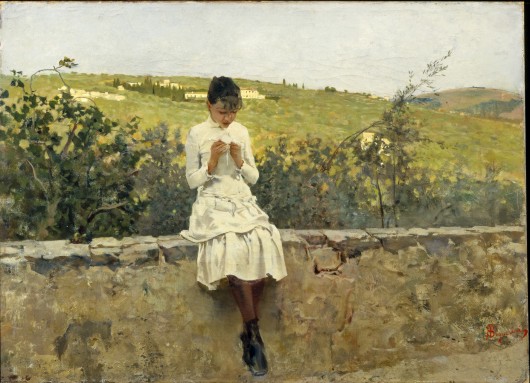
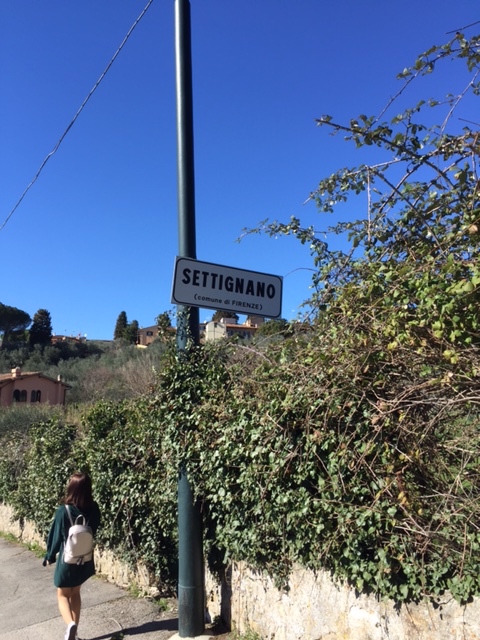
The walls running through Settignano look exactly the same today. I love the everyday, slice-of-life aspect of this painting, which puts me immediately in Settignano, then or today.
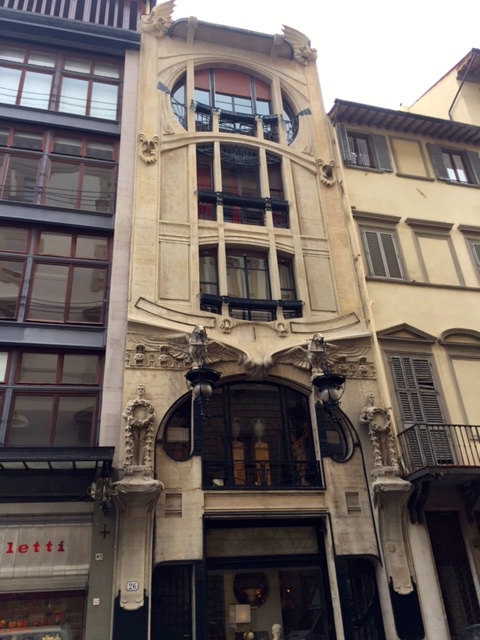
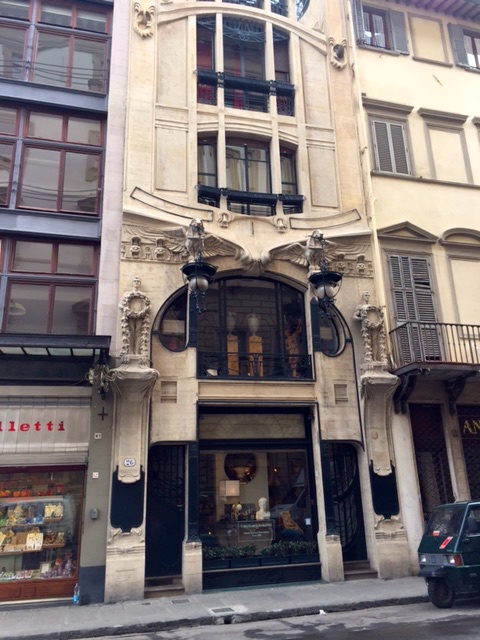
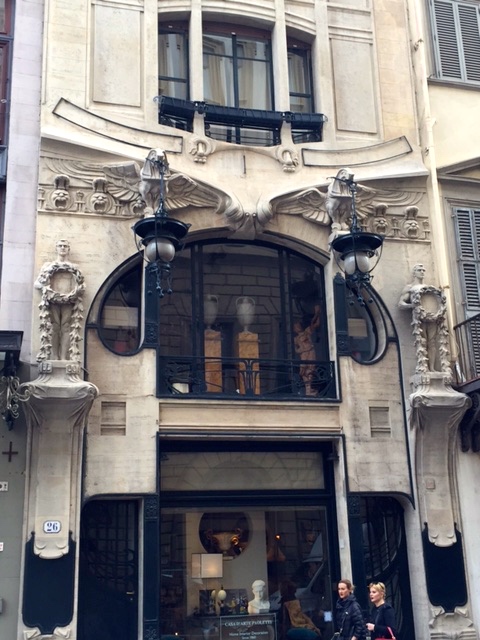
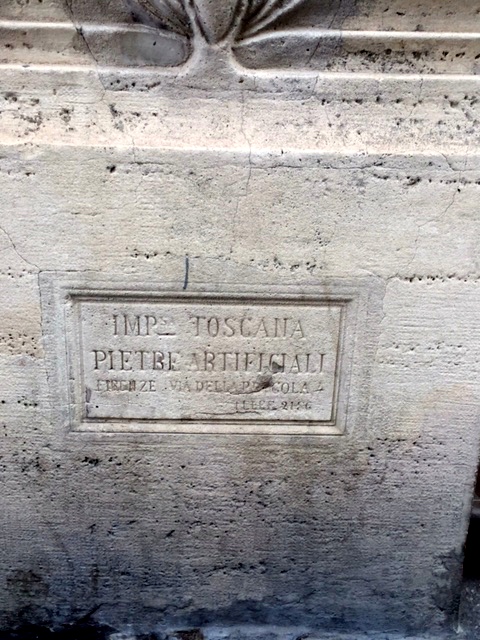
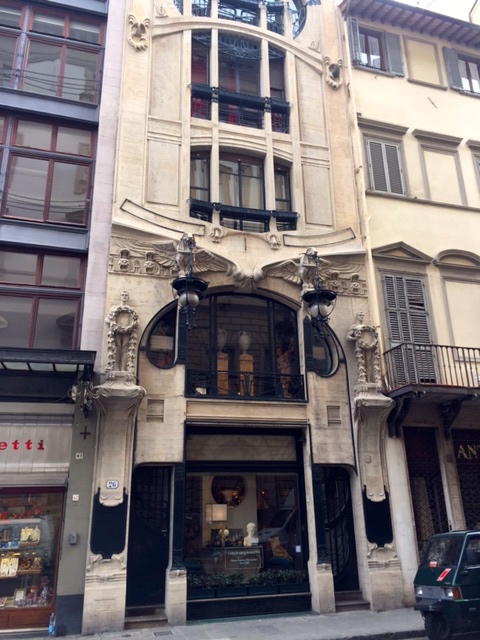
I’ve never seen Art Deco in Florence before spotting this amazing building today. It is a perfect townhouse design, snuggled in among the typical architecture of Florence.
Well, it turns out that he wasn’t poor at all!
If you read about the life of this tormented artist, you will soon discover that he lived like a miser and lamented his poverty, among many other things. While this image perfectly aligns with our modern-day notion of a struggling artist, the truth is, Michelangelo achieved riches. In fact, he was one of the richest men of his time. So, at least some of his misery he wallowed in was chosen. What modern psychotherapist wouldn’t love to work with the great artist?!
In his book, The Riches of Michelangelo: How a Great Artist Deceived the Papacy, author Robert Hatfield reveals from his extensive research, the vast sums that Michelangelo earned over his lifetime, and how he wisely chose to invest his money in real estate, both in Florence and in Settignano.

I’m certainly not a psychologist, but even I can see that Michelangelo had daddy issues. He and his father had a rocky relationship at best, and from what I’ve read, it would seem that Michelangelo was always trying to please his father, even hoping to restore the Buonarroti family to its former, lost, patrician status. The artist purchased property around his family’s ancestral home in Settignano, which not only was a wise financial investment, but also revealed the artist’s consistent efforts to please his father.
The following paragraphs are taken from this fine article in The Florentine:
http://www.theflorentine.net/art-culture/2006/03/behind-the-agony-and-the-ecstacy/
“In 1508, using money that he had earned as a sculptor, together with what he expected to receive for the Sistine Ceiling, Michelangelo purchased three houses on via Ghibellina, core of the present Casa Buonarroti. His father and brothers, who had been renting a house in via San Procolo, promptly moved in. Michelangelo did some improvements in 1514 and purchased a fourth adjacent house.
“He joined his relatives when he returned to Florence in 1516, and things would have continued comfortably if only they had shared Michelangelo’s penchant for thriftiness. In 1523, because they failed to repay what he had loaned them, Michelangelo forced his father and brothers to cede to him their rights to t he entire Buonarroti family estate and make him the sole owner.
“Michelangelo’s father became hysterical, and together with his other sons promptly departed from via Ghibellina. Michelangelo moved out a year later and put the property up for rent. It was Michelangelo the Younger, son of Michelangelo’s nephew and heir, who nearly a hundred years later transformed the property into the Casa Buonarroti as it stands today.
“Michelangelo, acting through agents, acquired several farms to the south and west of Florence between 1506 and 1549, but his prime interest was the Buonarroti’s ancestral home south of Settignano, which had been in their possession since the fourteenth century.
“For fifty-five years, between 1507 and 1562, he steadily increased the size of the estate until he owned an unbroken sweep of land running down the hill as far as Rovezzano. It was approximately three-quarters of a kilometre long and measured a half kilometre at its widest point. The main house, now Villa Michelangelo, stands on the original part of the property, and although the villa has been altered in recent centuries, a few of its architectural features, such as the front loggia, probably date from Michelangelo’s lifetime.
“To the south is a property today called La Porziuncola (it was known as Scopeto in 1515 when Michelangelo bought it), which became Eleonora Duse’s home in 1902. A stroll down via Capponcina will take you past these villas and all along the western border of the former Buonarroti estate.
“Take the #10 bus, get off at Fermata 17, walk straight ahead, turn right into via Capponcina and continue down the hill. For a panoramic view, walk through Settignano and turn right into via Rossellino. When you are within a stone’s throw of Villa Gamberaia, look west and you’ll see Villa Michelangelo (with a squat white tower) on the crest of the hill in the middle distance.
“In 1534 Michelangelo left for Rome and never returned to Florence. Two years earlier he had bought the house in Rome where he’d lived and worked, on and off, since 1513. Located across from S.Maria del Loreto, it was demolished in 1902 to make way for the Vittorio Emanuele II monument, but the courtyard façade is believed to survive, reconstructed near Porta San Pancrazio on the Janiculum.
“Michelangelo died in February 1564. His house was found to be bare but for two beds, glasses, three barrels (two empty), twenty-four shirts, mostly old, a few of his own works of art and one horse, the latter a surprising luxury since most people rode around town on a mule. But what was discovered in his bedroom was even more mind boggling – a locked and sealed chest containing 8,289 gold ducats, a tidy sum to keep around the house, equal to about 66 pounds of solid gold in present terms.
“The fortune in cash, credit and property that Michelangelo’s nephew Lionardo inherited was enormous, greater than that amassed by any other artist up to that time. According to Hatfield’s calculations, Michelangelo’s salaries were staggeringly high. Moreover, he demanded, and got, huge advances. While he was engaged on the Laurentian Library, Clement VII paid him the equivalent of $600,000 a year.
“During the decades when he was working on the tomb of Julius II, which he never finished, the equivalent of millions of dollars flowed into his pocket. Hatfield neatly sums it up when he points out that Michelangelo’s lifetime earnings equalled five and a half times the value of the mid-16th-century Palazzo Pitti.”
A perfect day in spring. The temperature warm enough that not even a sweater is needed, the sun bright, the sky blue, the birds singing (I never hear this sound in Florence herself, not enough trees and too urban), the views majestic.
Settignano = the perfect day trip.
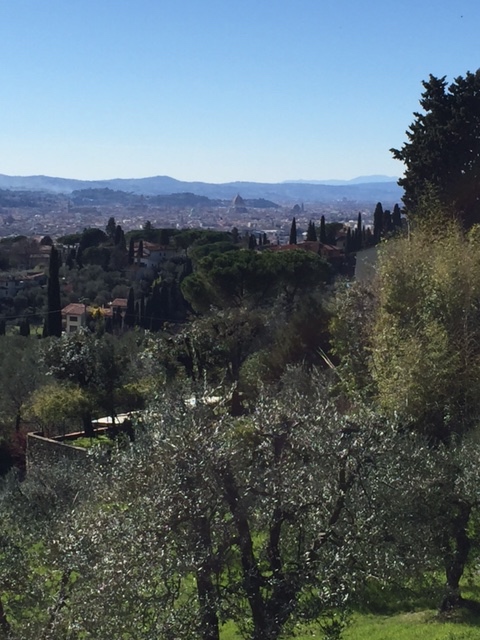
Florence, with her unmistakable dome, as seen from the hilltops of Settignano.
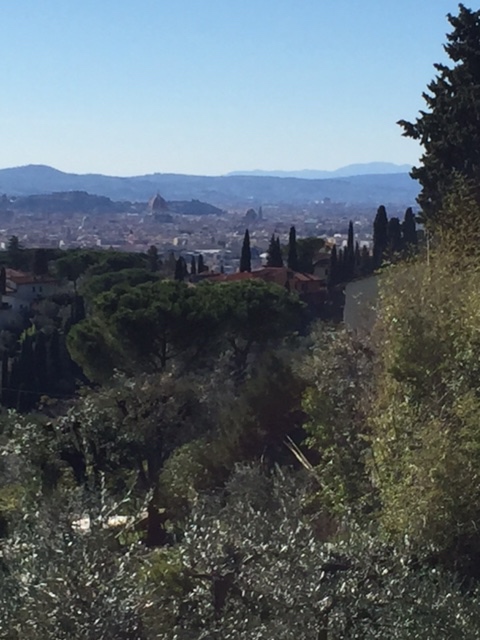
Back in piccola, picturesque, Settignano.
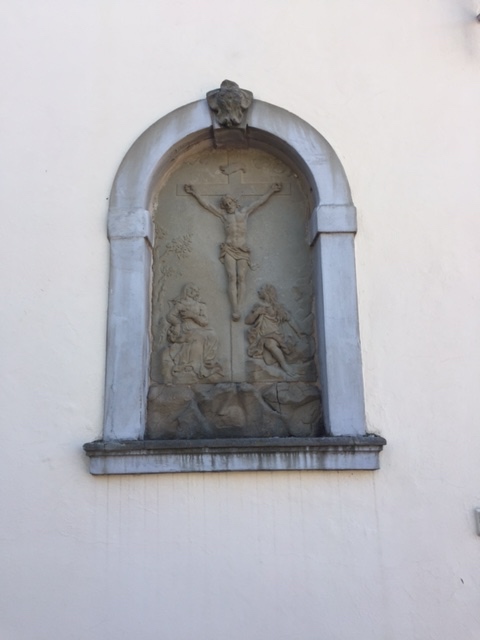
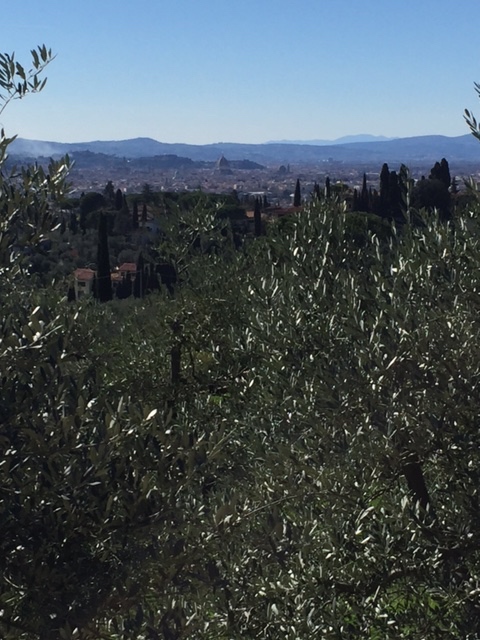
Settignano is a picturesque frazione ranged on a hillside just northeast of Florence, Italy, easy to get to by bus from San Marco (#10). With spectacular views, Settignano has attracted visitors for generations.
The little borgo of Settignano carries a familiar name for having produced three sculptors of the Florentine Renaissance, Desiderio da Settignano and the Gamberini brothers, better known as Bernardo Rossellino and Antonio Rossellino. It’s a rather romantic to think we are following in the footsteps of inspiring artists who walked these tiny, bendy streets.
The young Michelangelo lived with a sculptor and his wife in Settignano—in a farmhouse that is now the “Villa Michelangelo”— where his Michelangelo’s father owned a marble quarry.
In 1511, another sculptor was born there, Bartolomeo Ammannati.
It is rather amazing to consider that the marble quarries of Settignano produced this amazing series of sculptors.
But it was not only Renaissance sculptors who lived here; the Italian poet, writer and prince Gabriele D’Annunzio called this place home for a while. In 1898, d’Annunzio purchased the trecento Villa della Capponcina on the outskirts of Settignano, in order to be nearer to his lover Eleonora Duse, at the Villa Porziuncola.
The American humorist, Mark Twain, stayed here at Villa Viviani for the good part of a year in 1892-1893. Twain was very productive here, writing 1,800 pages including a first draft of Pudd’nhead Wilson. Twain said of Settignano: it “affords the most charming view to be found on this planet, and with it the most dreamlike and enchanting sunsets to be found in any planet or even in any solar system.” High praise indeed!
In fact, the borgo has Roman remains which claim connections to Septimius Severus, in whose honor a statue was erected in the oldest square in the 16th century. Unfortunately, the statue was destroyed in 1944.
It is known that this area was inhabited long preceded the Roman emperor.
During the Medieval and Renaissance periods, Settignano was a secure refuge for members of the Guelf faction of Florence.
Giovanni Boccaccio and Niccolò Tommaseo both appreciated its freshness, amidst the vineyards and olive groves that are the preferred setting for even the most formal Italian gardens.
Near Settignano are the Villa Gamberaia, a 14th-century villa famous for its 18th-century terraced garden, and secluded Villa I Tatti, the villa of Bernard Berenson, now a center of Italian Renaissance studies run by Harvard University.
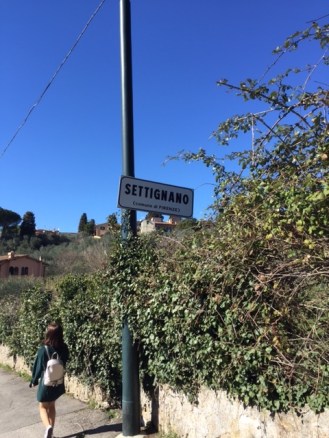
If you’ve come by bus from the centre of Florence, you’ll be dropped off right in the piazza next to the post office. Head down via della Capponina, which is to the right of the church entrance. A handsome street with pot plants and high walls, it will take you down to an intersection where you can turn left on via del Pianerottolo and wander another pretty street with views overlooking the hills and Florence’s southern neighborhoods. You will pass down towards the town cemetery, past olive groves and rampant blackberry bushes to the cypress-lined park, where you’ll see the sign for the hiking trail. If you’re the hiking type, you can also get to Settignano by hiking from Fiesole over Montececeri (or vice versa). The Sentiero degli Scalpellini follows in the footsteps of the stone-cutters who carved blocks of pietra serena and pietra forte for Florence’s palazzi and streets. It’s a walk of over 6 km that climbs over Montececeri, where Leonardo da Vinci tested his flying experiments. In la primavera, you might spot wild asparagus.
And if you want to experience this romantic view of Florence twinkling below that Twain would have seen, head down from the main piazza, on via Simone Mosca, a 2 minute walk away, for a great panoramic spot.
Settignano’s main square, Piazza Tommaseo, has all the essentials: a church, a post office, a bar, a tabacchi, an alimentari, and an enoteca.
At least the scaffolding has been erected on Ammannati’s sculptural monument.


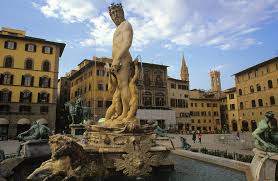
Ammannati’s huge white marble statue of Neptune, surrounded by rearing seahorses and frolicking bronze satyrs, towers over visitors to Piazza della Signoria. Despite its imposing character and lavish design, Bartolomeo Ammannati’s Fountain of Neptune has not always been well received. Almost as soon as it was unveiled on December 10, 1574, it was criticised by Florentines as a waste of marble: “Ammannato Ammannato, quanto marmo hai sciupato!” residents are said to have chanted.

Now, however, 1.5 million euro was being spent to restore the fountain, once considered barely worth the raw materials used to create it. The money, donated by Salvatore Ferragamo SpA thanks to the Italian Art Bonus legislation that promotes cultural patronage through tax breaks, will finance a new pump system, allowing water to circulate through the fountain for the first time in years. The donation also goes towards repairing the damaged marble, returning it to its original white brilliance. The restoration project is set to take just over two years; the plan is to unveil the fountain anew on December 10, 2018, the same day it was originally unveiled in 1574.
In 1559, Cosimo I de’ Medici launched a competition to design the first public fountain in Florence. This followed technical innovations in the water systems of the city and the construction of a new aqueduct. The figure of Neptune, god of the sea, is likely to have been chosen to symbolise Florence’s maritime prowess at the time. It was said that the sculpted Neptune’s face, fierce and bearded, actually resembled that of the Grand Duke Cosimo himself.
Baccio Bandinelli, who had recently worked on the Hercules and Cacus statue also in Piazza della Signoria, was chosen for the commission, but managed to complete only the design before he died. Ammannati was drafted in to take over the job, much to the annoyance of competitor Benvenuto Cellini, who wrote a satirical poem expressing his pity for the marble in Ammannati’s hands.
It was hoped that the fountain would be completed in time for the wedding procession of Francesco I de’ Medici and Joanna of Austria in 1565, which was to pass through the piazza, but a series of unfortunate events—“porcherie” as Ammannati described them in his letters to the Duke—delayed the completion date again and again. The arrival of the marble, from the quarries of Seravezza and Carrara, was postponed many times; when it finally did arrive, the marble cutter damaged it so much that it could not be used. As a result, for the wedding ceremony Ammannati had to cobble together the horses and river gods out of painted stucco, which promptly disintegrated in the water.
When the statue was completed in 1574, it was greeted by Florentines with a mixture of amusement and bewilderment. It certainly wasn’t the fearsome emblem of Florentine might that had been intended. The statue of Neptune was swiftly dubbed Il Biancone (“the white giant”), a nickname still used now with a certain affection. Residents decided to wash clothes and inkpots in the basin almost as soon as the fountain was unveiled, and still today we can read the plaque dated 1720 on the wall of the Palazzo Vecchio, which forbids such irreverent activities. The sculptures have been vandalised many times over the years, most recently in 2005.
Perhaps the new restoration project for the Fountain of Neptune will bring with it a fresh respect for this late Renaissance monument. Let’s hope these works do not face the same delays as those of the poor Ammannati, and that the fountain will be ready for our appraisal by the end of 2018.
This article is largely taken from:
http://www.theflorentine.net/art-culture/2016/07/new-life-neptune-fountain/
 get back, lauretta!
You must be logged in to post a comment.