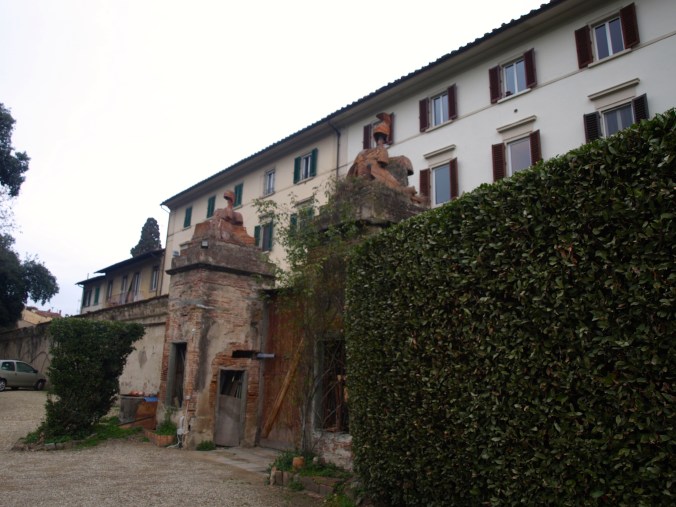
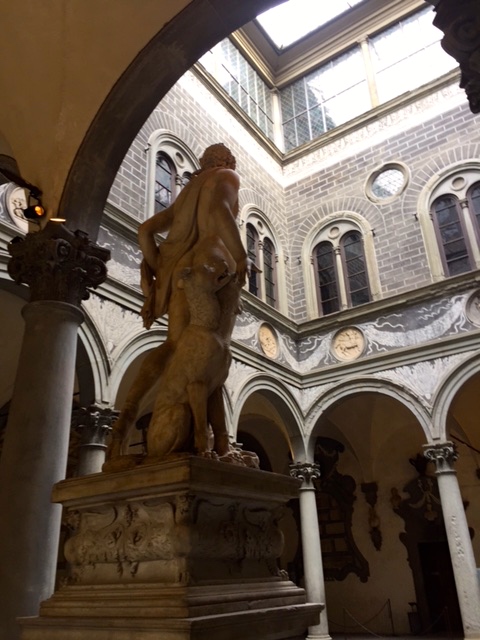
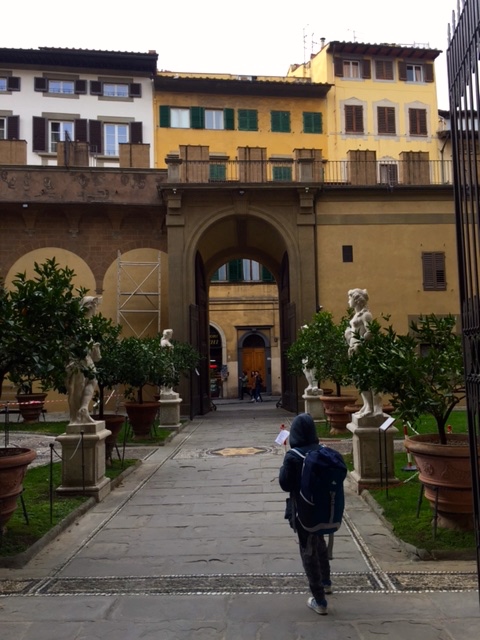
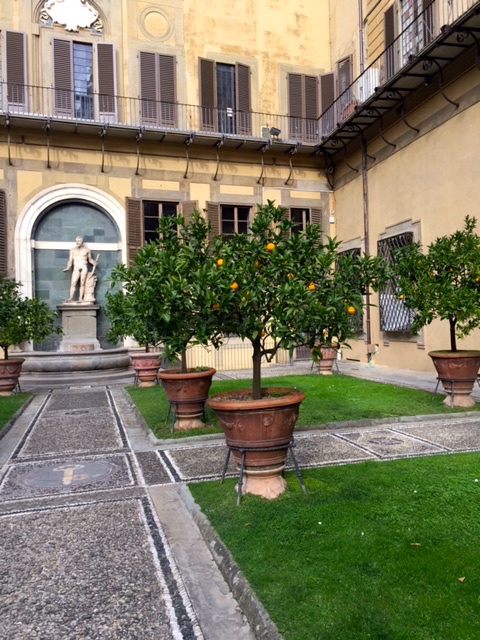
I live in the house where Bartolomeo Ammannati lived and died.

You must pardon my astonishment, but my mind is blown!
images-2

Bartolomeo Ammannati (1511 – 1592), was the Italian architect and sculptor, who is perhaps best known today for his giant Fontana del Nettuno on the Piazza della Signoria in Florence.  Ammannati was born at Settignano, near Florence, and studied with Baccio Bandinelli and Jacopo Sansovino. He carved statues for various Italian cities during the 1530s and 40s.


Although he is best known to us as a sculptor, during his lifetime he was more known for his architecture. He was called to Rome in 1550 by Pope Julius III on the advice of fellow-Florentine, the architect and art historian, Giorgio Vasari. Ammannati’s most important work in Rome was in collaboration with Vasari and Giacomo da Vignola on the villa of Pope Julius, the Villa Giulia (begun 1551).

He also worked in Lucca. We know he assisted Jacopo Sansovino  on the design of the Biblioteca Marciana, in Venice, which closely imitated the style of Michelangelo.

Cosimo de’ Medici (Cosimo I) brought Ammannati back to Florence in 1555; he was to spend almost all of his remaining career in service to the Medicis. His first commission was to finish the Laurentian Library, begun by Michelangelo. Ammannati interpreted a clay model sent him by Michelangelo in 1558 to produce the especially impressive staircase, leading from the vestibule into the library proper.

Ammannati’s masterpiece in Florence is the Palazzo Pitti, where, beginning in 1560 (and through 1570), he enlarged the basic structure by Filippo Brunelleschi, designing a courtyard and facade opening onto the Boboli Gardens. The facade overlooking the courtyard is very unusual in its heavily rusticated (rough-hewn) treatment of successive levels of Doric, Ionic, and Corinthian attached columns. At the Pitti Palace, this rustication provides an appropriately rural yet impressive backdrop for the gardens.


220px-boboli-gardens-from-palazzo
Garden entrance of the Ammannati Courtyard in the Pitti Palace.

Ammannati was named Consul of Academia delle Arti del Disegno in Florence, which was founded by the Duke Cosimo I in 1563.


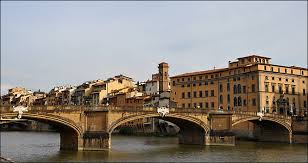
In 1569, Ammanati was commissioned to build the Ponte Santa Trinita, a bridge over the Arno River.
images-3

The bridge’s three arches are elliptic, and though very light and elegant, it has survived even when floods had damaged other Arno bridges at different times. Santa Trinita was destroyed in 1944, during World War II, and rebuilt in 1957.
220px-fountains_of_neptune

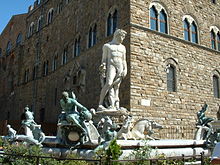
Ammannati designed what is considered a prototypic mannerist sculptural ensemble in the Fountain of Neptune (Fontana del Nettuno), prominently located in the Piazza della Signoria in the center of Florence. The commission was originally given to the aged Bartolommeo Bandinelli; however when Bandinelli died, Ammannati’s design bested the submissions of Benvenuto Cellini and Vincenzo Danti and Ammannati was awarded the commission.

From 1563 and 1565, Ammannati and his assistants, among them Giambologna, sculpted the block of marble that had been chosen by Bandinelli. He took Grand Duke Cosimo I as model for Neptune’s face. The statue was meant to highlight Cosimo’s goal of establishing a Florentine Naval force. When the work on the ungainly sea god was finished, and sited at the other corner of the Palazzo Vecchio of Michelangelo David statue, the then 87-year-old irascible elder sculptor, is said to have scoffed at Ammannati that he had ruined a beautiful piece of marble, with the ditty: “Ammannati, Ammanato, che bel marmo hai rovinato!”


Ammannati continued work on this fountain for a decade, adding around the perimeter a cornucopia of demigod figures: bronze reclining river gods, laughing satyrs and marble sea horses emerging from the water.

In 1550 Ammannati married Laura Battiferri, an elegant poet and an accomplished woman. In his old age, Ammannati was strongly influenced by the Counter-Reformation philosophy of the Jesuits. He repudiated his earlier nude sculptures as lustful, and he designed several austere buildings for the Jesuits.


He died in Florence in 1592.  In my apartment!!
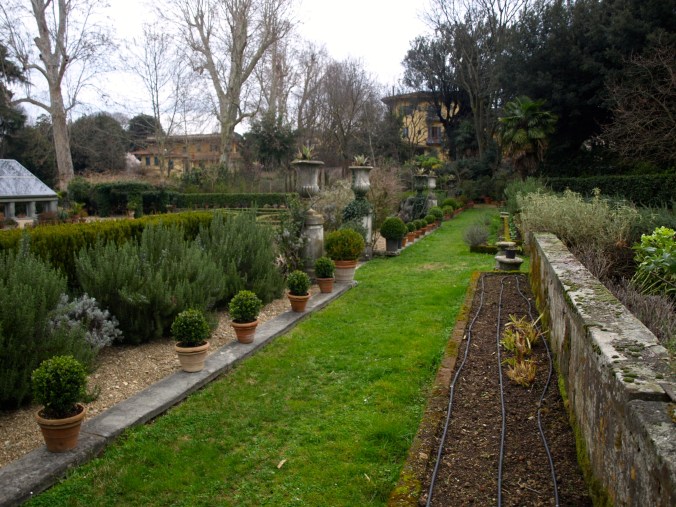
Giardino Torrigiani, Firenze, 4 Marzo 2017

Gardens, with their shady trees, fragrant flowers, and peaceful lanes, have always served as a counterpoint to the narrow, crowded streets of Florence’s city center. During the Renaissance, a new form of garden-design arose, heavily influenced by classical models from Roman villas. Florence, and its surrounding area, is a garden-enthusiasts’ paradise, boasting numerous Renaissance-style gardens, along with examples of 16th-century and English-style designs.

OLYMPUS DIGITAL CAMERA

OLYMPUS DIGITAL CAMERA


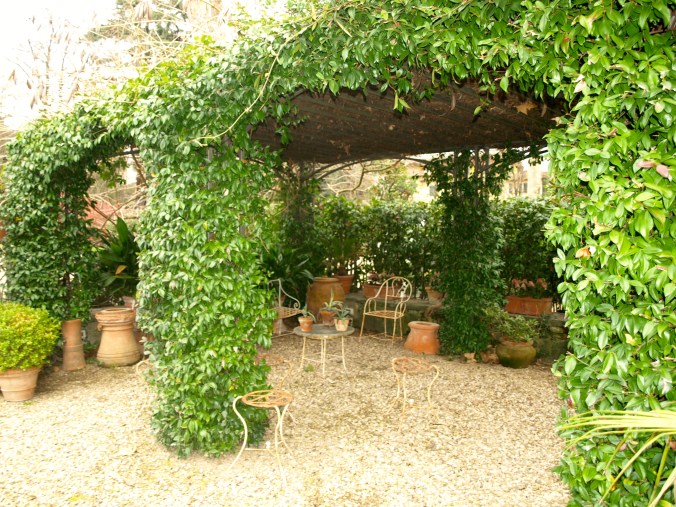
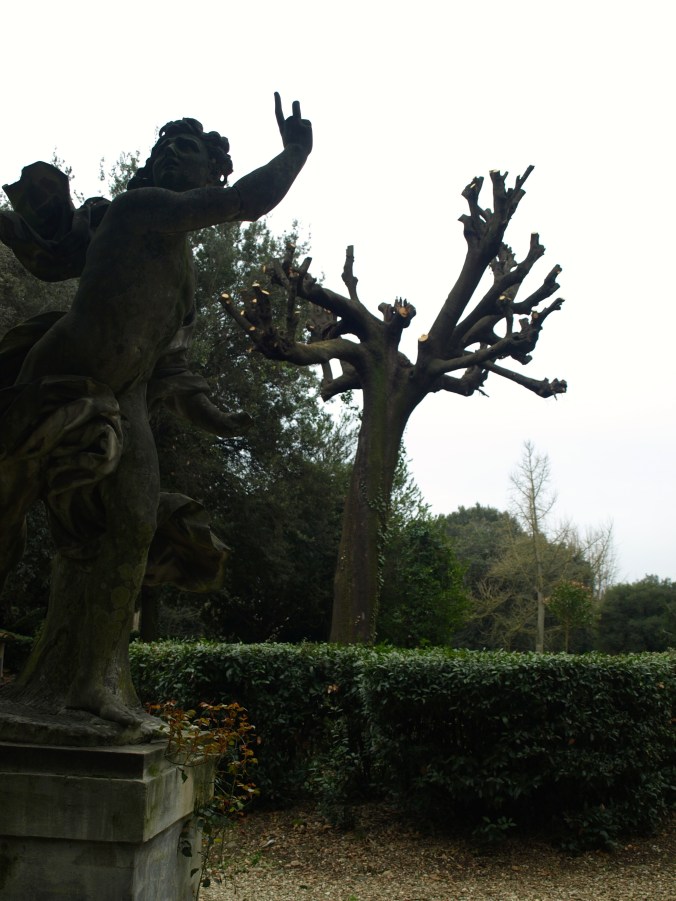
Hidden behind a set of high Oltrarno walls, is the Torrigiani garden, the largest private garden within city walls in Italy.

OLYMPUS DIGITAL CAMERA

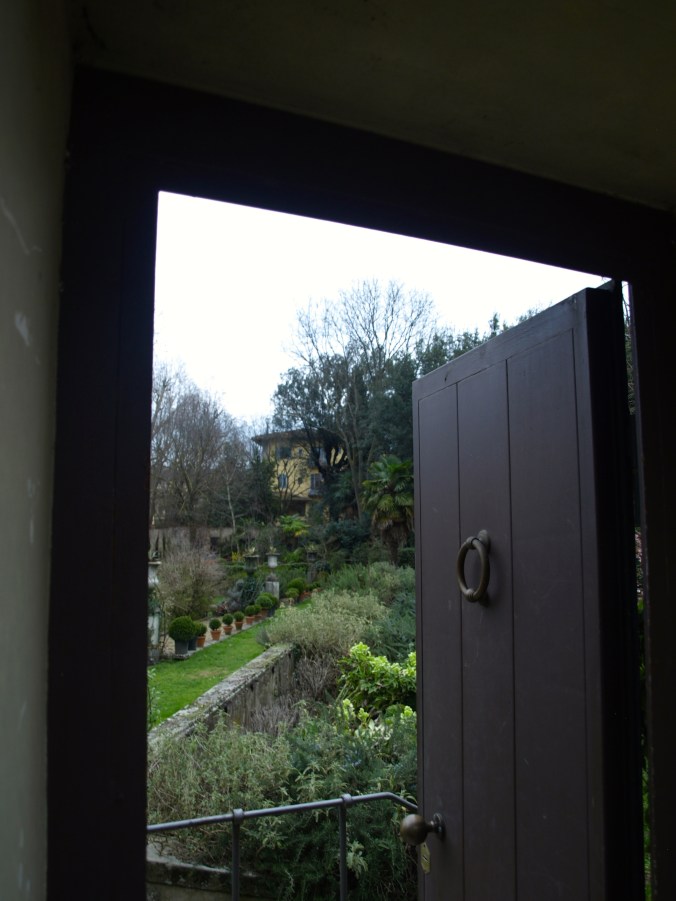
A small entrance to a secret garden


Originally planted by the founder of the Italian Botanical Society – the world’s oldest – the garden still has an uncommonly wide variety of trees, especially exotic species, in keeping with its 19th century “English Landscape” style.

OLYMPUS DIGITAL CAMERA

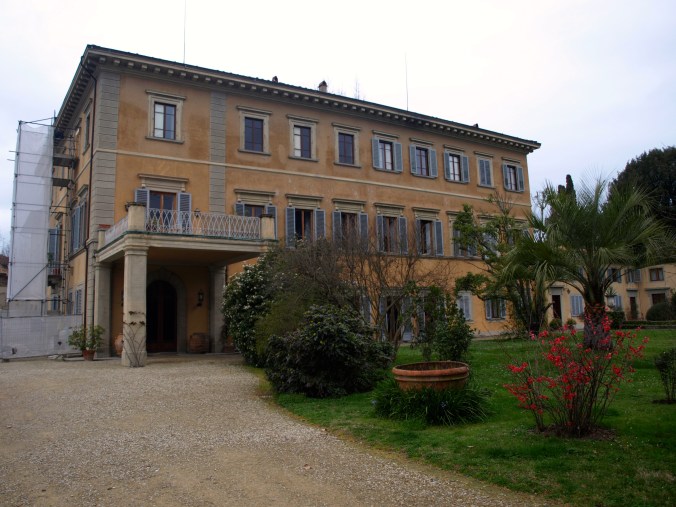
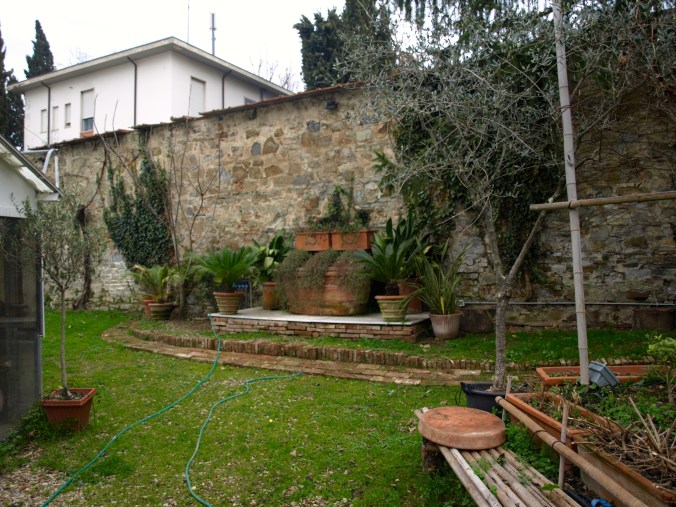
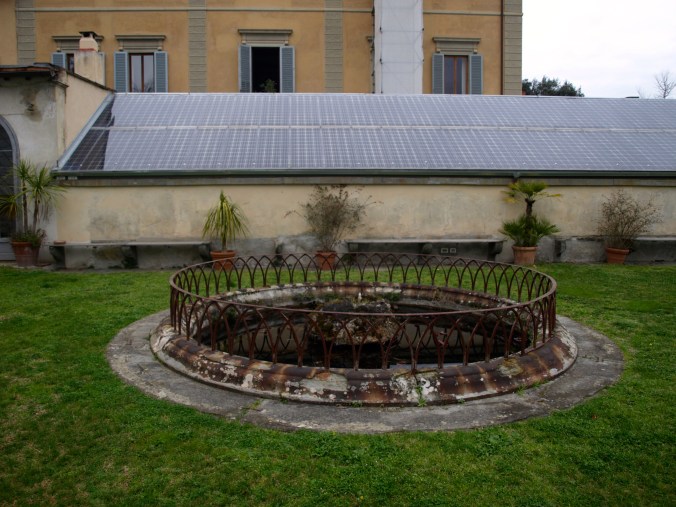
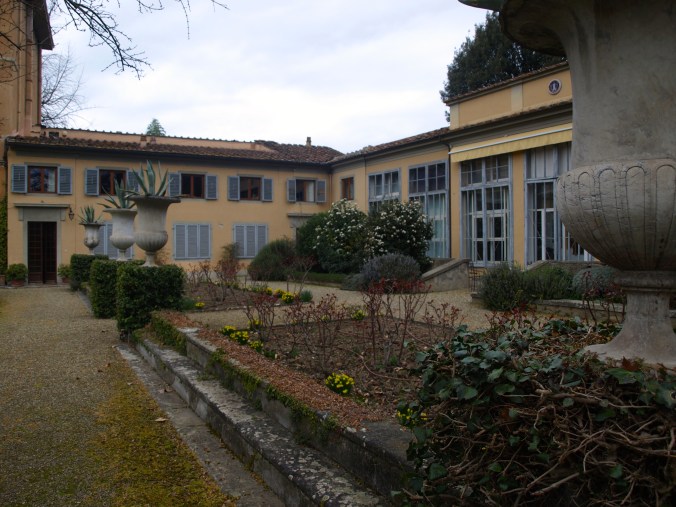
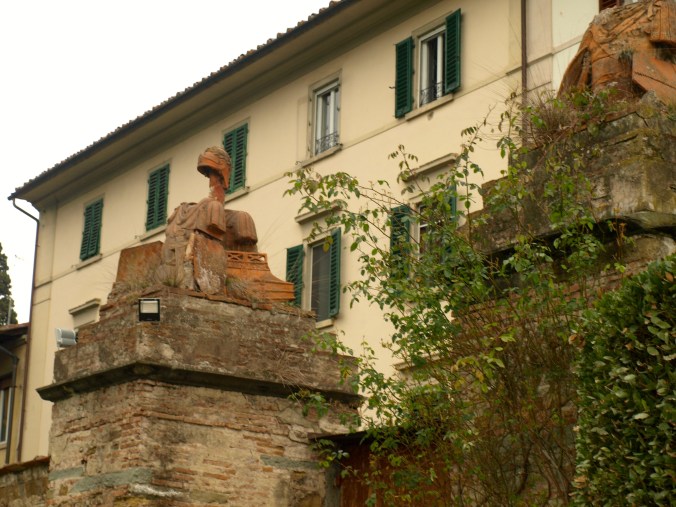
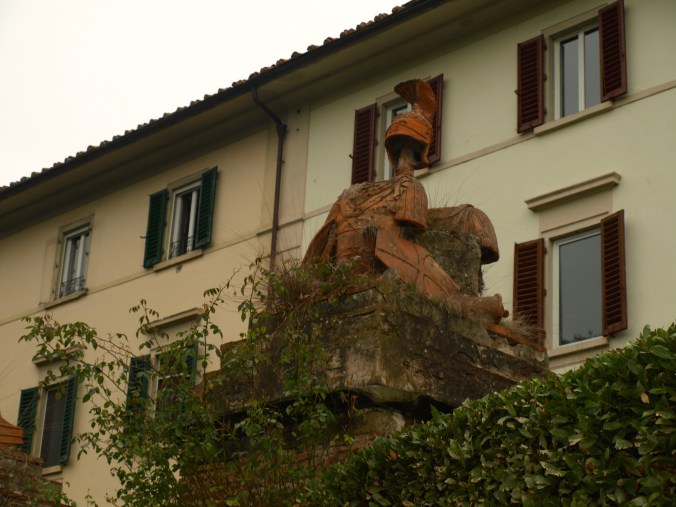
One of the several palazzi on the property

OLYMPUS DIGITAL CAMERA

OLYMPUS DIGITAL CAMERA

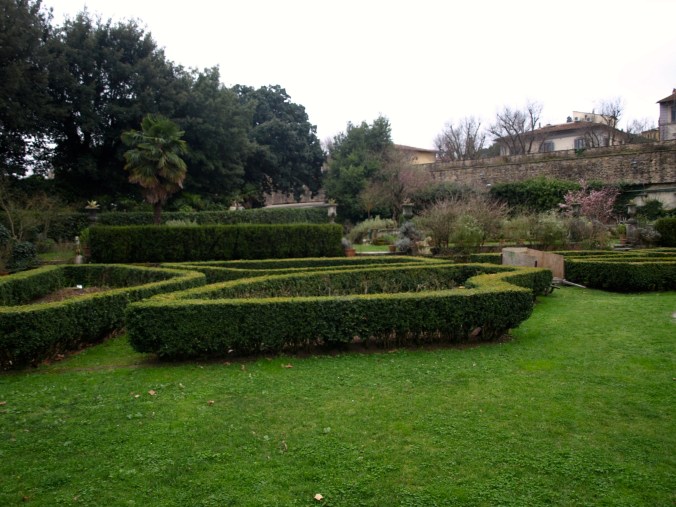
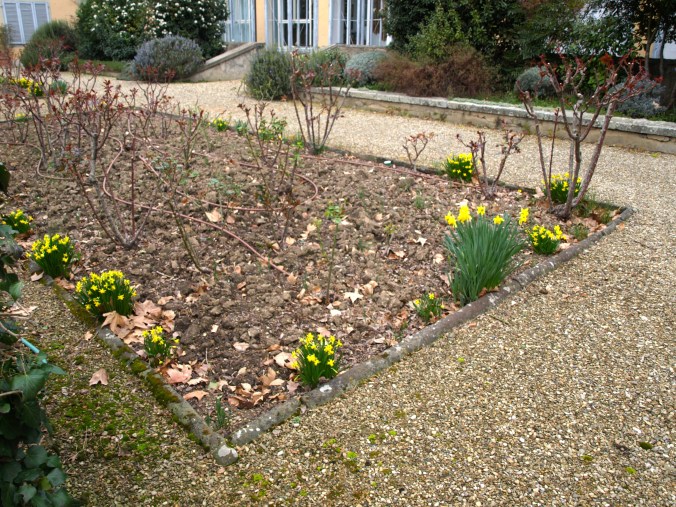
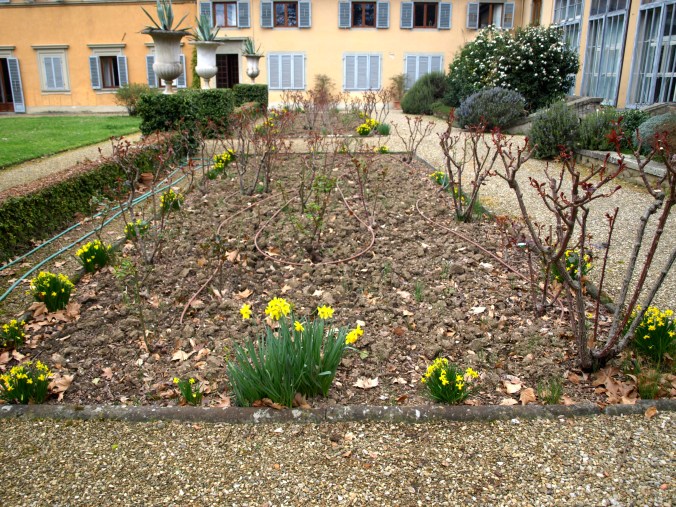
Rose bushes surrounded by clipped box

OLYMPUS DIGITAL CAMERA

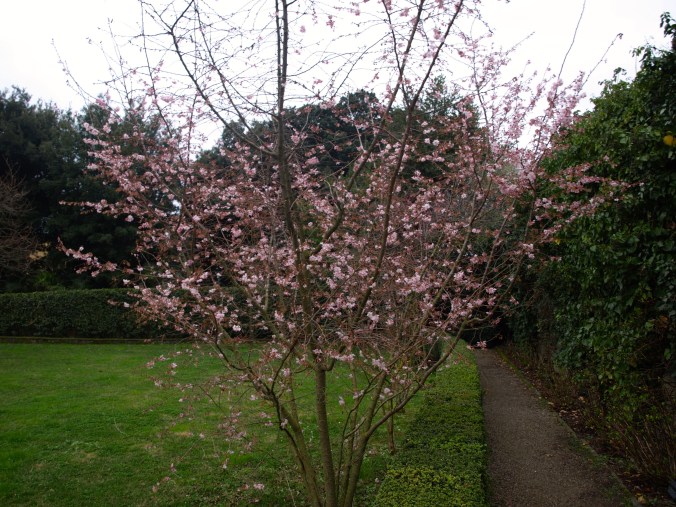
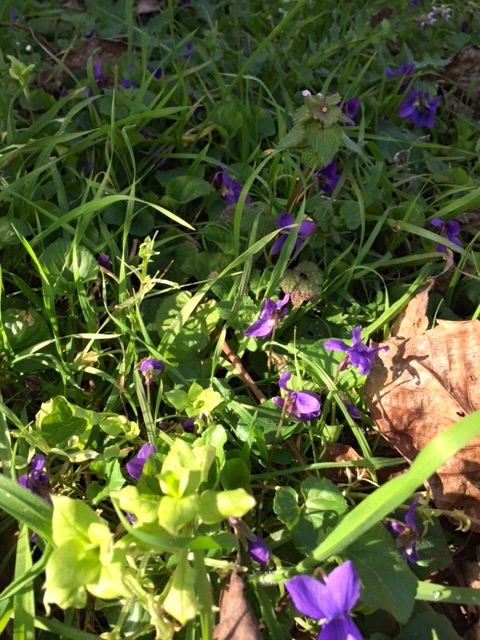
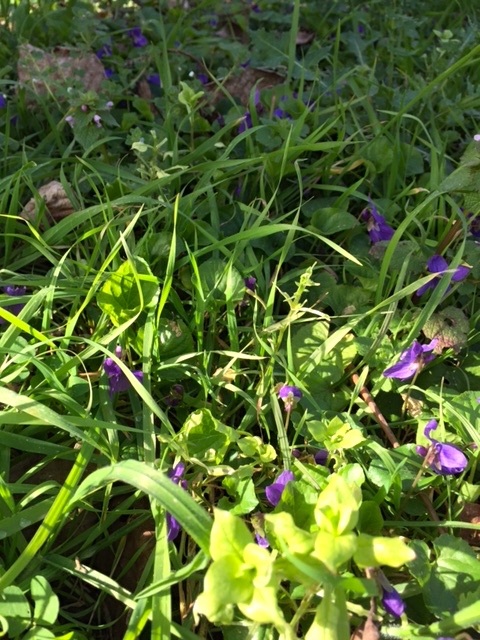
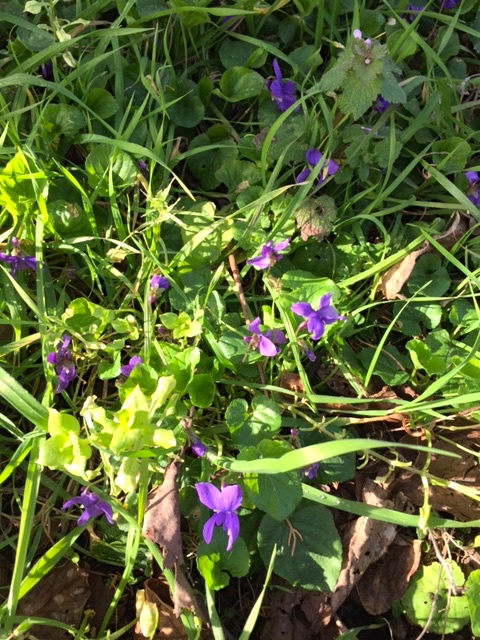
Even in early spring, shrubs were blooming.

OLYMPUS DIGITAL CAMERA

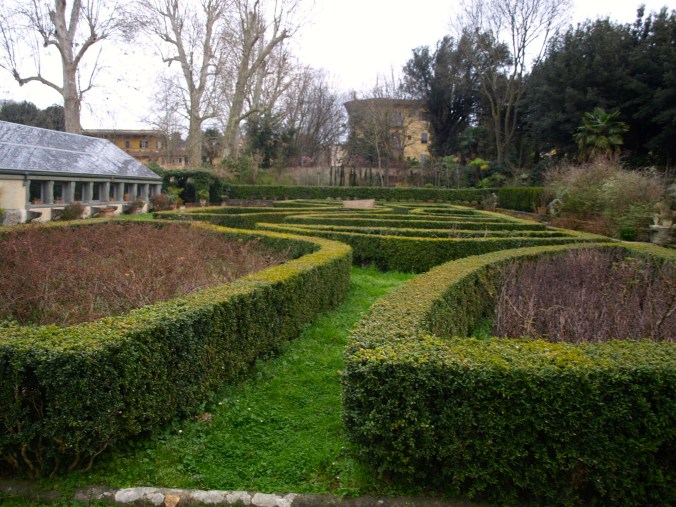
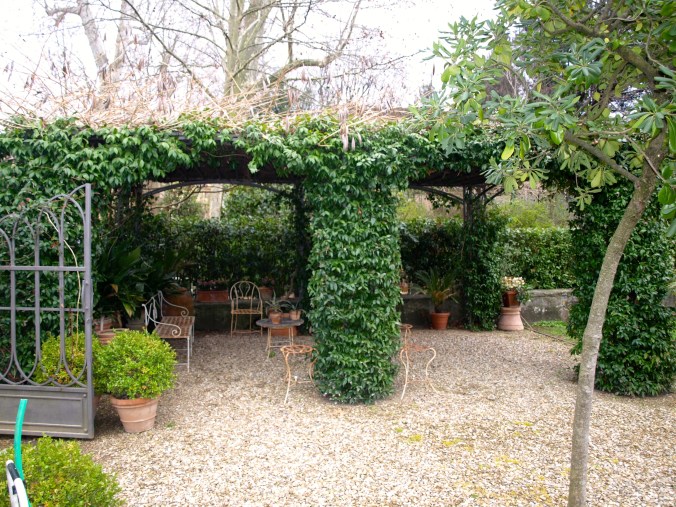
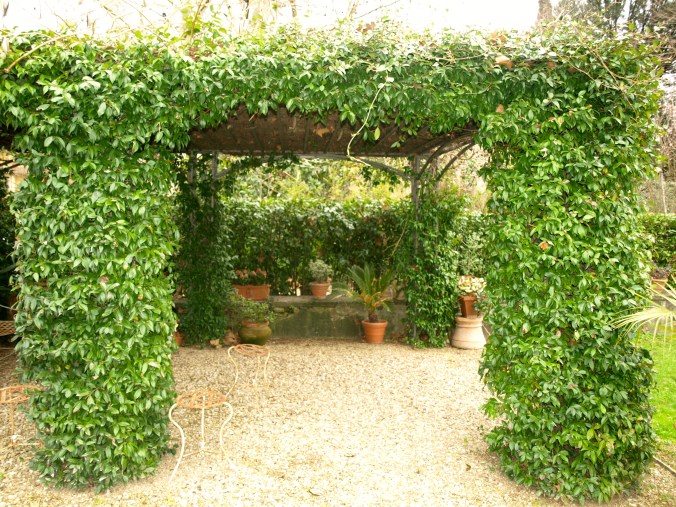
Many small vignettes fill the garden as well


Giardino Torrigiani feels somewhat mysterious, and was, in fact, laid out as an initiation path with secret Masonic symbolism. It includes Gothic follies and the recurring theme of research and enquiry. There is no secret, however, in the dedication to the art and sciences, which are still the owners’ guiding principles, as the Torrigiani garden encloses a successful commercial nursery and regularly hosts lectures on the arts and gardening.

OLYMPUS DIGITAL CAMERA

OLYMPUS DIGITAL CAMERA

OLYMPUS DIGITAL CAMERA

OLYMPUS DIGITAL CAMERA

OLYMPUS DIGITAL CAMERA

OLYMPUS DIGITAL CAMERA

OLYMPUS DIGITAL CAMERA

OLYMPUS DIGITAL CAMERA

OLYMPUS DIGITAL CAMERA

OLYMPUS DIGITAL CAMERA

OLYMPUS DIGITAL CAMERA

OLYMPUS DIGITAL CAMERA

OLYMPUS DIGITAL CAMERA

OLYMPUS DIGITAL CAMERA

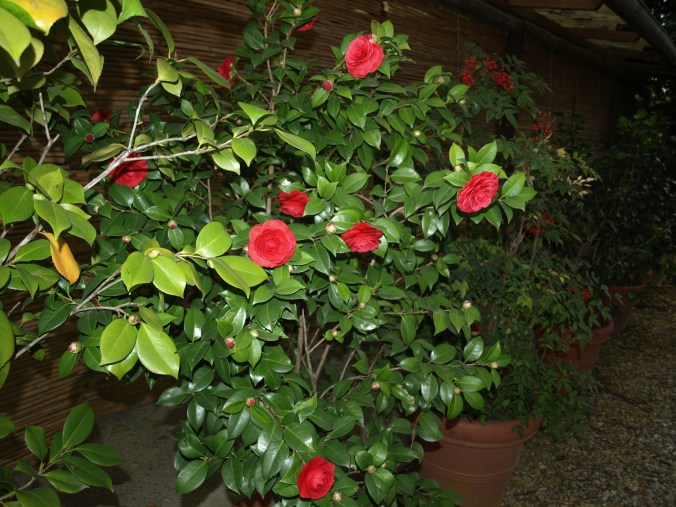
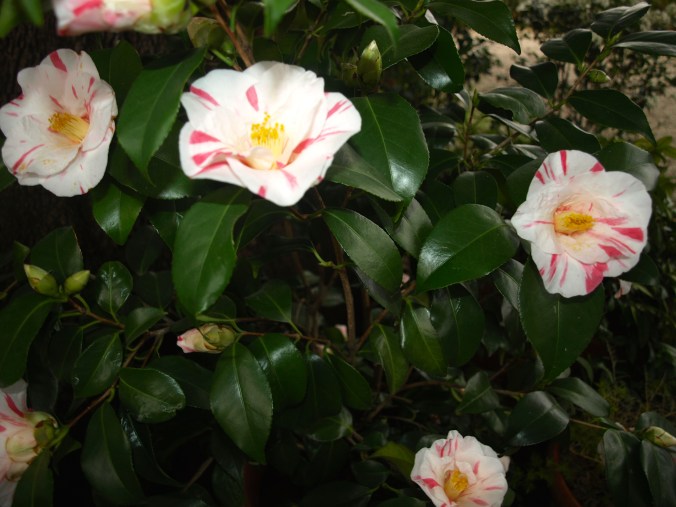
Lovely camellias

OLYMPUS DIGITAL CAMERA

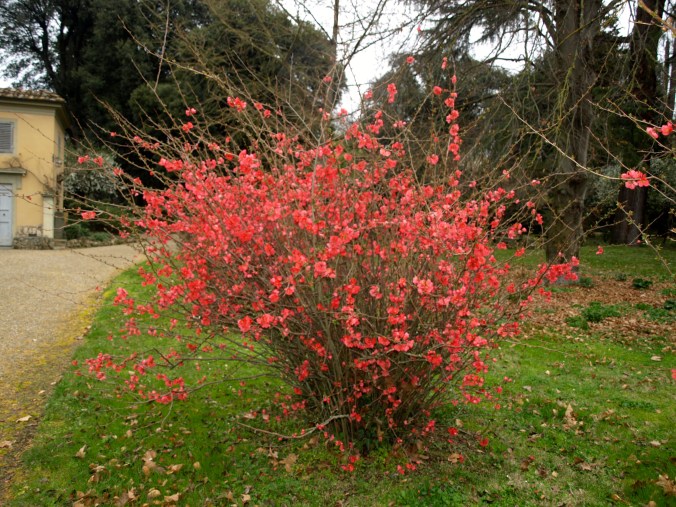
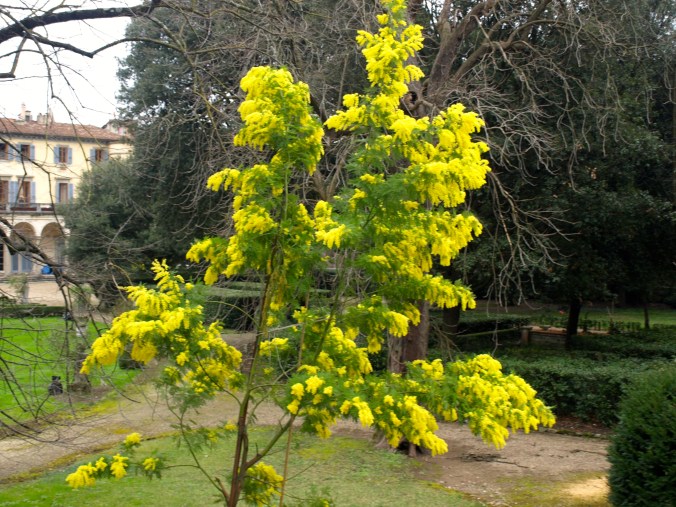
Shots of bright yellow and neon coral spiced the garden yesterday, as the mimosa and quince shrubs were in full bloom.

OLYMPUS DIGITAL CAMERA

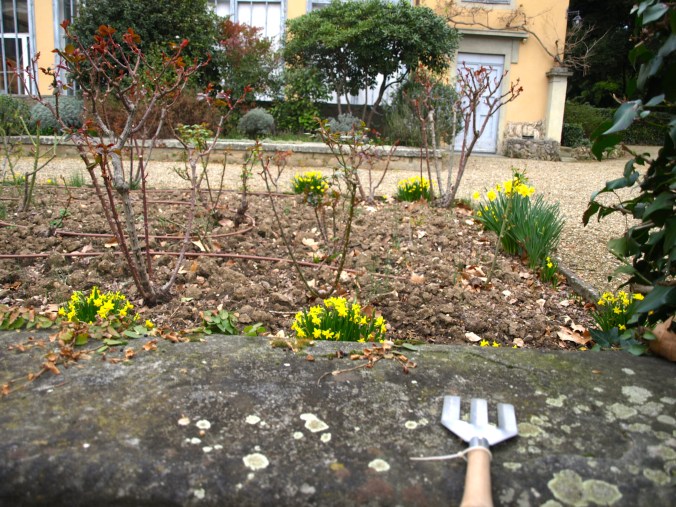
A few hearty narcissi nodded their happy, yellow heads in the spring sunlight.

OLYMPUS DIGITAL CAMERA


Magnificent urns filled with sculptural aloe graced one section of buildings.

OLYMPUS DIGITAL CAMERAOLYMPUS DIGITAL CAMERAOLYMPUS DIGITAL CAMERA

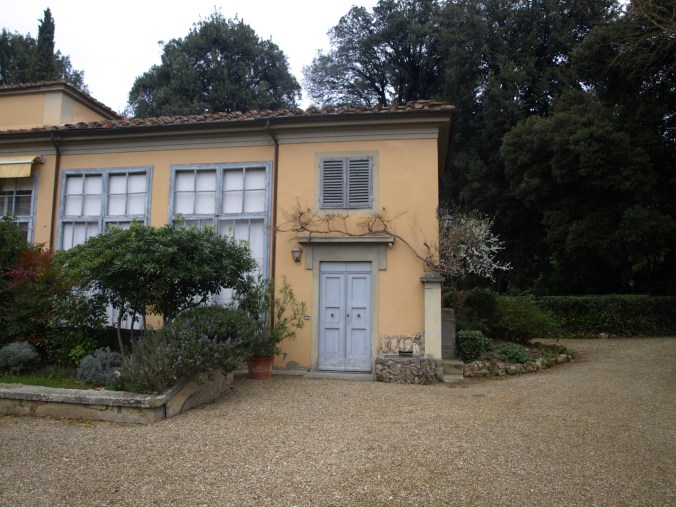
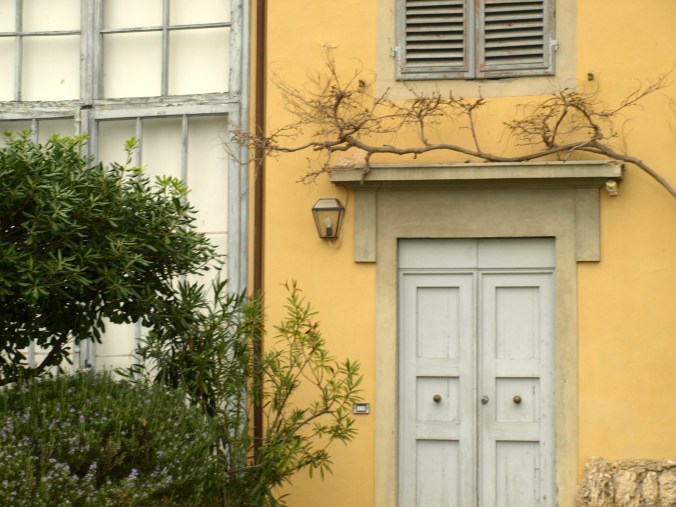
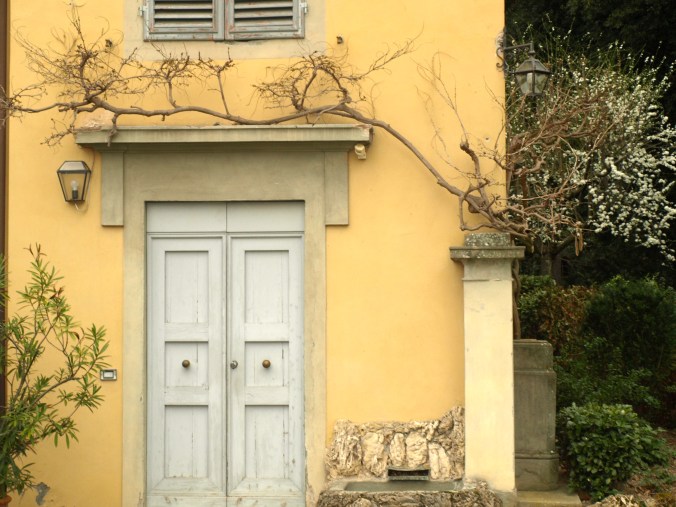
There were many spots to hone in on, but this door, topped with a wisteria vine, was my favorite.


OLYMPUS DIGITAL CAMERAOLYMPUS DIGITAL CAMERA

I hope to return to the garden later this spring when the wisteria is in bloom.

OLYMPUS DIGITAL CAMERAOLYMPUS DIGITAL CAMERAOLYMPUS DIGITAL CAMERA

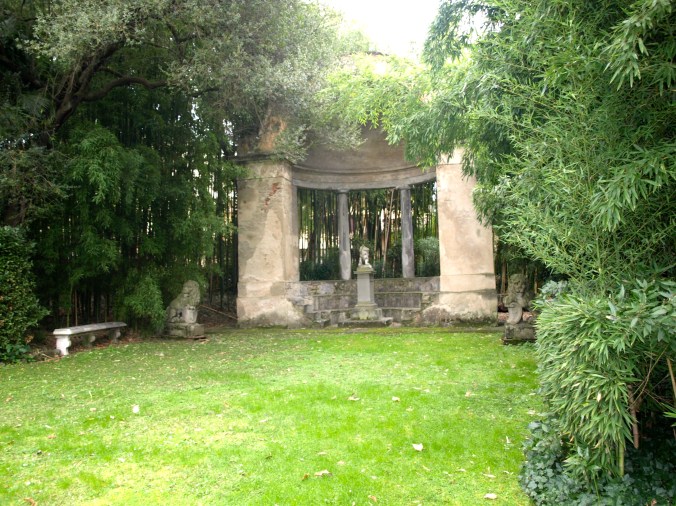
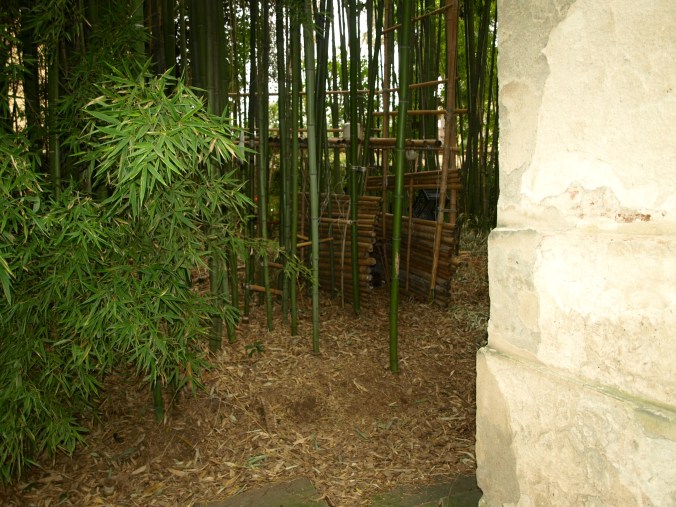
Yes, there is a bamboo grove.

OLYMPUS DIGITAL CAMERA


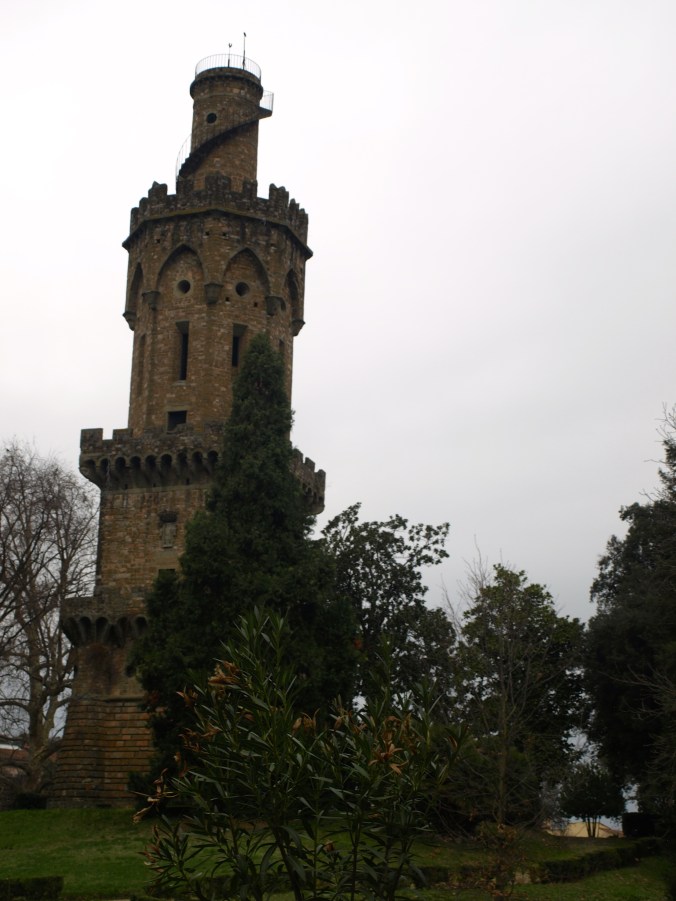
The piece de resistance, the tower:

OLYMPUS DIGITAL CAMERAOLYMPUS DIGITAL CAMERAOLYMPUS DIGITAL CAMERAOLYMPUS DIGITAL CAMERAOLYMPUS DIGITAL CAMERA

OLYMPUS DIGITAL CAMERAOLYMPUS DIGITAL CAMERAOLYMPUS DIGITAL CAMERAOLYMPUS DIGITAL CAMERA

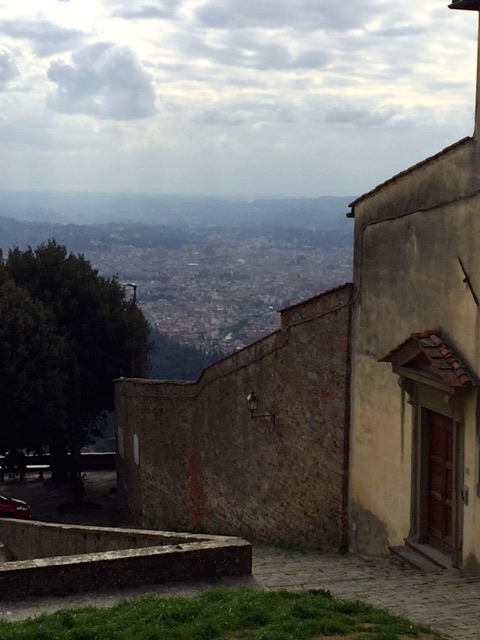
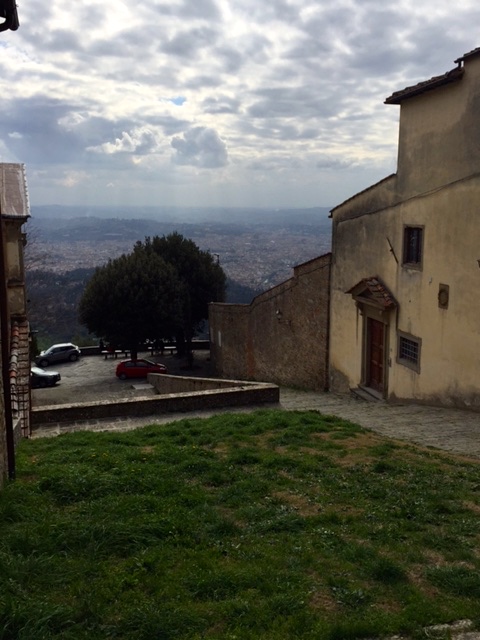
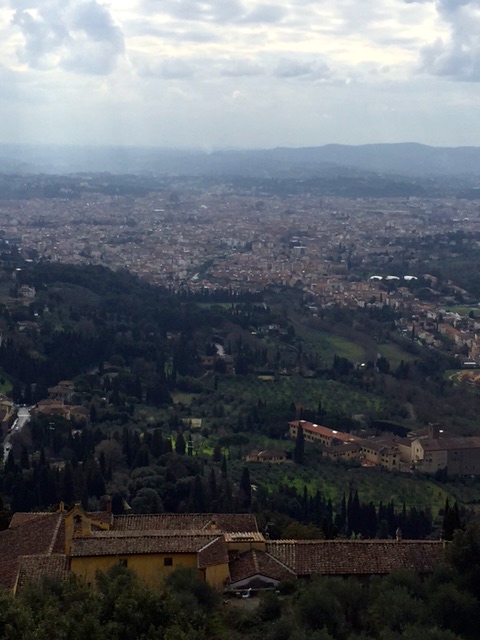
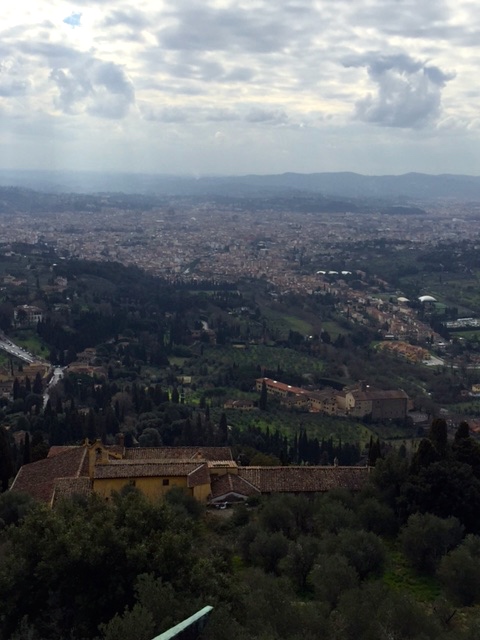
Fiesole in la primavera!

img_1041

Bella Fiesole!

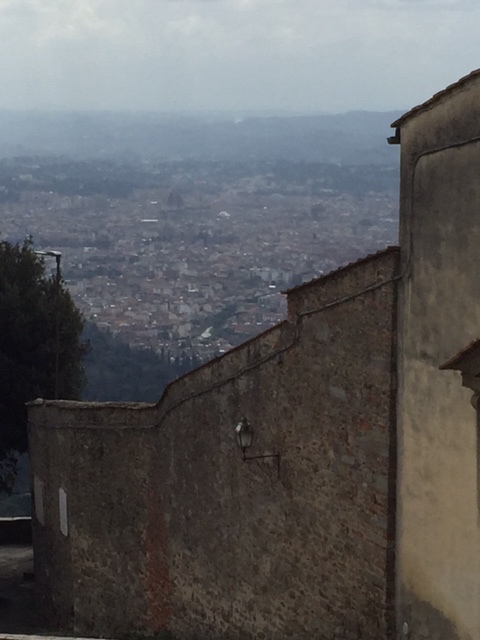
For there below us Florence was laid out like a glittering carpet of gold, wrought by

a thousand Persian infidels. The Duomo was now no tiger sentinel, but a warm

copper bell, the Arno a twisting ribbon of gilt. A city of fable and

infinite beauty in the brand-new light of the day. **

img_1020

Fiesole was well established as an Etruscan stronghold in the 8th century BC, until the Romans were finally able to dominate, building a thriving town of their own over the remains.

For centuries it existed as a powerful rival to Florence, until once again it was subdued and its ruling nobles were forced to take up residence within the walls of the conquering city. In the 14th century, it became known as the new living quarters for the rich and famous Florentines looking for new territory to build their villas surrounded by cypress trees and spectacular gardens.

The hillside looms 295 meters above Florence, offering a special and stunning panorama of the Renaissance city. The city contains its historical museums, gardens & villas, picturesque streets, churches, trails and parks.

img_1042img_1043

img_1045

The Roman Theatre
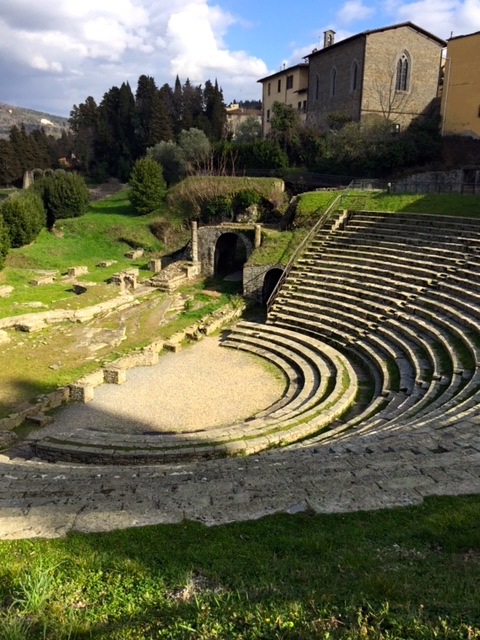
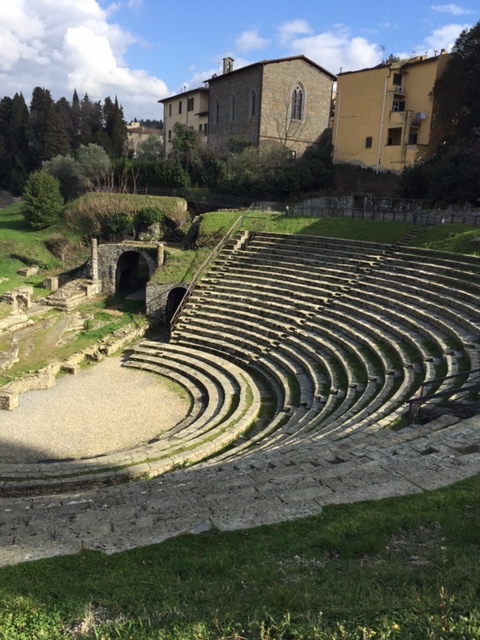
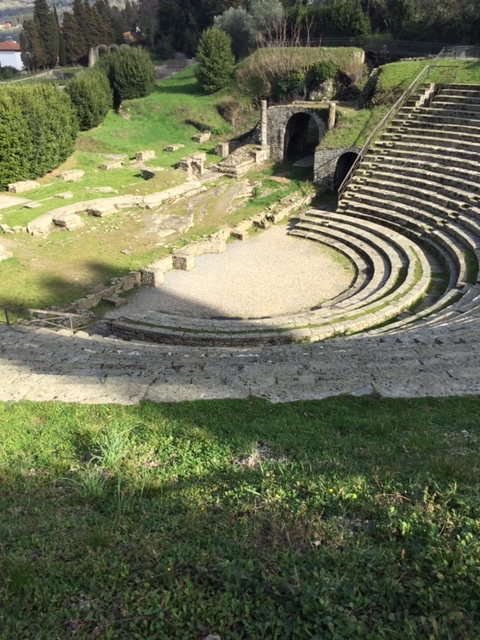
Built into the natural rocks of one of the Fiesole’s hills, the Roman theatre has been extensively restored and still remains one of the best preserved buildings in Fiesole. It was built shortly after the reoccupation of the site in the first century BC and was situated along the Cardo, one of the Roman town’s main streets that led to the forum.
The best seats in the house, situated near the orchestra and tribunalia arcades were reached by a series of vaulted passages that ran under the cavea or rows of seats. Several flights of stairs that ran up through the cavea could be used for seating elsewhere. Each stairway consisted of three flights of ten steps. The original rightside staircase of the theatre are still visible today.
Only the foundations of the frons scenae or stage area remained. These are sufficient to show the three doors, actors used to access the stage. The most interesting area of the backstage is a semi circular room that would have been used to operate the mechanism that opened the theatre’s curtain.
The theatre was redecorated in the third century AD. Only a few fragments of the ornamentation of the multicoloured orchestra mosaics remains as well as marble reliefs of mythical scenes and deities, preserved in the site’s museum.
img_1046img_1047img_1044

img_1032img_1033img_1035img_1037img_1038img_1039img_1040

The mystical beauty of Fiesole, less than 10 km outside of Florence, encompasses centuries of history and it is amazing well preserved. Largely unknown by many, this small town hides a wealth of surprises: the massive stones that make up the Etruscan walls, the remains of Roman baths, the green hilltop where Leonardo da Vinci first experimented with the concept of flight, and the Roman amphitheater that still serves as a stage for the EstateFiesolana summer events. The small city center is home to a wide range of historical sites, churches and parks.

img_1020img_1021img_1022img_1023img_1024img_1028img_1029img_1031

img_1018img_1019

**Fiorato, Marina (2010-03-30). The Botticelli Secret (Reading Group Gold) (Kindle Locations 799-801). St. Martin’s Press. Kindle Edition.

It’s a miracle you never even noticed.

img_0659


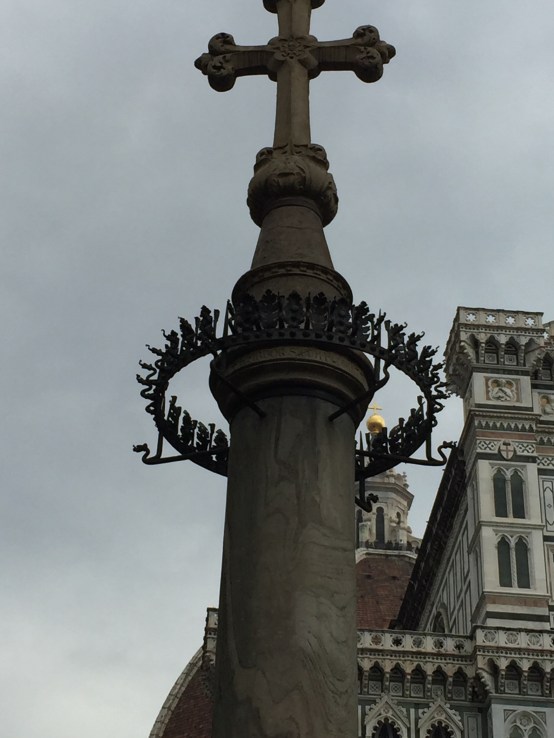
When walking through the Piazza del Duomo, most visitors walk right past a white marble column on a base of three stairs, just to the north of the Baptistry. The column is topped with bronze and capped by a cross.


img_0661

Overwhelmed by the magnificence of the other monuments in the square, few people give the column more than a passing glance.

But, once upon a time, a miracle supposedly took place on this very hallowed spot.

I first noticed this column myself, although I’ve walked through this piazza at least a zillion times, last January 27th.  It was the flowers that attracted my attention. Red and white bedding plants surrounded the base.

images-12

I thought it was just a post-Christmas attempt to liven the place up.  Boy, was I wrong. I suspect pretty much everything I take for granted in Florence has a deeper significance.  It is my mission to uncover some of them.  Mission accepted!

It turns out that every year on January 27, Florentines commemorate the anniversary of a particular miracle by decorating the base of the column with flowers and greenery.

images-12

The miracle was this: supposedly in 429 CE (although some scholars say it was much later, probably in the ninth century), the relics of the much loved and venerated first bishop of Florence, San Zanobi (337-417 CE),  were transferred from the Church of San Lorenzo where he had been buried, to the new cathedral, the Church of Santa Reparata (the remains of which can still be seen today under the Duomo).

As the procession moved from borgo San Lorenzo into what was then the open field of Piazza San Giovanni, the bier brushed against the leafless winter branches of an elm tree. At that mere touch, the tree is said to have burst into bloom. Hence, the bronze relief on the column represents a tree in full leaf. Above it, the now fairly indecipherable Gothic script recounts the wondrous story.

So, who was Zenobius? Born into a noble Florentine family, Zenobius was the first in his family to become a Christian. Once ordained as a priest, his fame as a preacher soon spread. Pope Damasus I (366-86 CE) called him to Rome and, among other missions, sent him to Constantinople.

After the pope died, Zenobius returned to Florence and was made the city’s first bishop. He evangelised the city and surroundings, including Scandicci (he was named its patron saint in 1983). Renowned for his great humility and charity, he was known as the Apostle of Florence.

He is also said to have performed many miracles, including one in which he resurrected the dead child of a French pilgrim. This event is recorded on a plaque in Latin on the wall of Palazzo Valori-Altoviti in borgo degli Albizi, where the miracle is said to have occurred.

The saint’s relics now rest inside the Duomo in an urn inside a silver shrine, a masterpiece made by Lorenzo Ghiberti, the sculptor responsible for the ‘Gates.’
It is uncertain whether the trunk of the famous reblooming tree was used to make the cross currently found in the Church of San Giovannino dei Cavalieri in via San Gallo or whether the Maestro del Bigallo used it for his painting of Saint Zenobius with saints Eugene and Crescentius, today housed at the Museo dell’Opera del Duomo. Not surprisingly, many other artists depicted episodes from the life of the saint, including Sandro Botticelli, whose paintings of Zenobius grace the walls of the National Gallery in London and the Metropolitan Museum of Art in New York.

The original marble column was destroyed by the flood in 1333 and replaced in 1334; the inscription was added in 1375. In 1501, the cross fell to the ground and shattered. The replacement column has benefited from public policy since the area surrounding the Duomo was made into a pedestrian zone in October 2009.

In May 2012, the landmark was restored through the Florence I Care (FLIC) project, a public-private partnership to preserve not only the cultural heritage of Florence but also some of its important buildings. The restoration, paid for by a private company, took three months and cost 20,000 euro. It required a series of delicate operations to remove the effects of centuries of exposure to soot and smog.

After you find the column, look up above the central doorway of the Duomo.

images-10

You will see a statue of an elderly man with a beard, dressed in bishop’s vestments and mitre and holding a crook. That is San Zanobi, seemingly keeping an eye on his column.

Italic script

This is obviously in Italic script.

This isn’t.

But what is it, exactly, and where did it come from?

images-3

Well, like so many of the great things in life, it comes from Renaissance Italy.  Its influence was pervasive and all modern fonts are based upon it.

Italic script, also known as chancery cursive, is a semi-cursive, slightly sloped style of handwriting and calligraphy that was developed during the Renaissance in Italy. It is one of the most popular styles used in contemporary Western calligraphy.

Let’s get into the weeds, shall we?  Italian weeds are my favorite place to be.

images

Italic script is based largely on Humanist minuscule. The capital letters in Italic script are the same as the Humanist capitals, modeled on Roman square capitals. The Italian scholar Niccolò de’ Niccoli was dissatisfied with the lowercase forms of Humanist minuscule, finding it too slow to write. So, he created the Italic script, which incorporates features and techniques characteristic of a quickly written hand: oblique forms, fewer strokes per character, and the joining of letters.

Perhaps the most significant change to any single character was to the form of the a, which he simplified from the two-story form to the one-story form ⟨ɑ⟩ now ubiquitous to most handwriting styles.

images-2

Under the influence of Italic movable type used with printing presses, the style of handwritten Italic script moved towards disjoined, more mannered characters. By the 1550s the Italic script had become so laborious that it fell out of use with scribes.

The style became increasingly influenced by the development of Copperplate writing styles in the eighteenth century. The Italic script style used today is often heavily influenced by developments made as late as the early 20th century. In the past few decades, the italic script has been promoted in English-speaking countries as an easier-to-learn alternative to traditional styles of cursive handwriting. In the UK this revival was due in part to Alfred Fairbank’s book A Handwriting Manual (1932).

A modern version called Getty-Dubay was introduced in 1976.

images-5

Those silly ancient Romans…

42000-kremer-vermilion-pigment-genuine-from-china-50g-936-p

During the Renaissance the color of red was achieved in painting with the use of vermilion.

“Vermilion was made from cinnabar, a brick-red mineral the ancient Romans believed came from the blood of dragons crushed to death under the weight of elephants.”**

So silly and yet so specific!

images


**King, Ross (2012-10-30). Leonardo and the Last Supper (p. 149). Bloomsbury Publishing. Kindle Edition.

Ssshhhhh!

marco4

Convents and monasteries were places of silence. The importance of silence was stressed in the cloister of San Marco, where the first image that greeted friars and visitors alike was Fra Angelico’s fresco of Peter of Verona with his finger to his lips. Silence was preserved in the cloisters, the church, and the dormitory. To keep the friars on their toes, each convent had an officer, the circator, whose job was to move quietly among the brothers “at odd and unexpected moments” to see if they were growing slack.

King, Ross (2012-10-30). Leonardo and the Last Supper (p. 60). Bloomsbury Publishing. Kindle Edition.