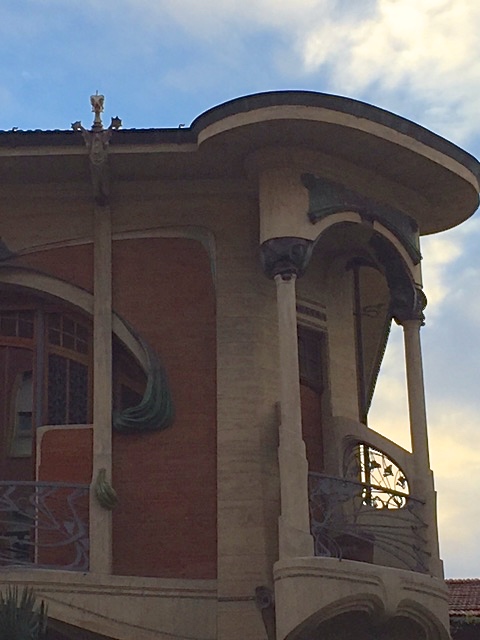
Another piece of art nouveau, but I am afraid, as lovely as it is, it is overshadowed by its next door neighbor.
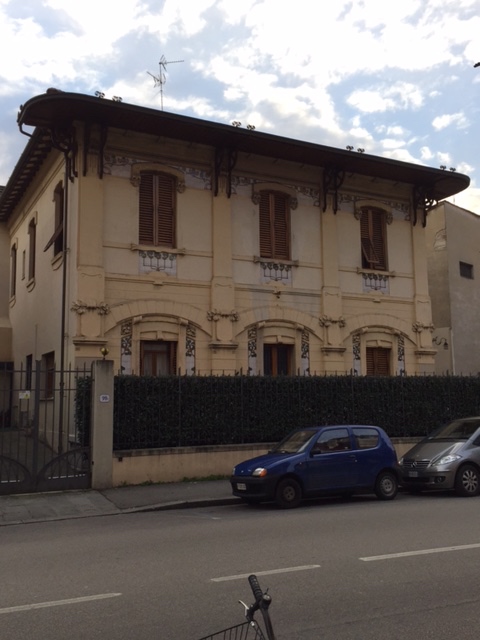
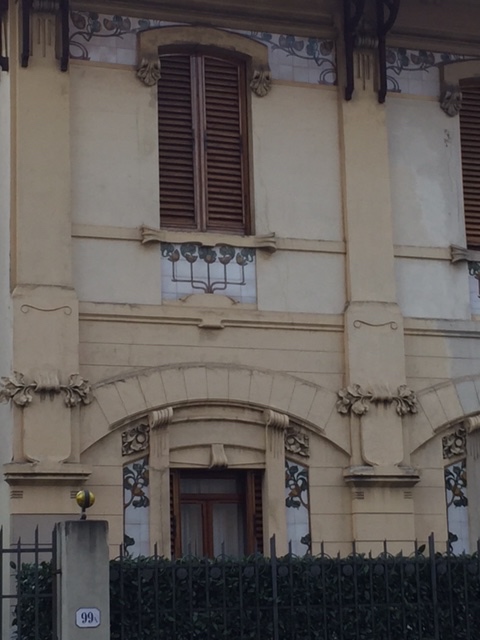
Still, this building is a knock out. I’ll go back for more photos soon.
Another piece of art nouveau, but I am afraid, as lovely as it is, it is overshadowed by its next door neighbor.
Still, this building is a knock out. I’ll go back for more photos soon.
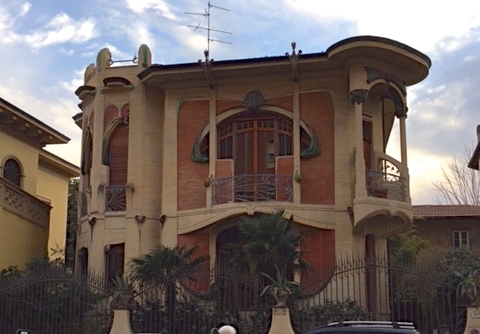
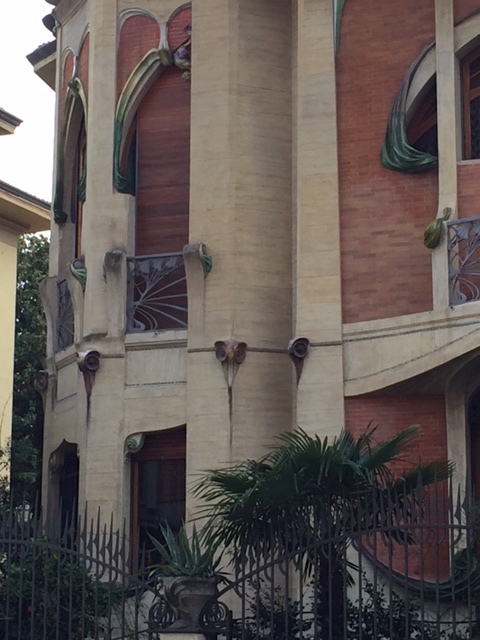
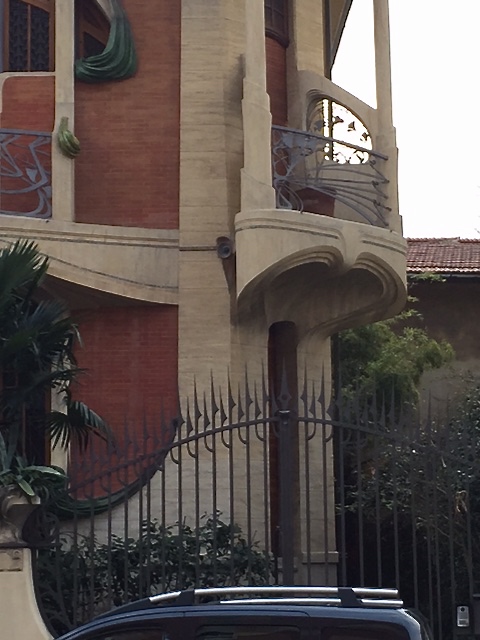
I stumbled upon an architectural gem today in Florence. A living, breathing piece of art nouveau, in situ, complete.
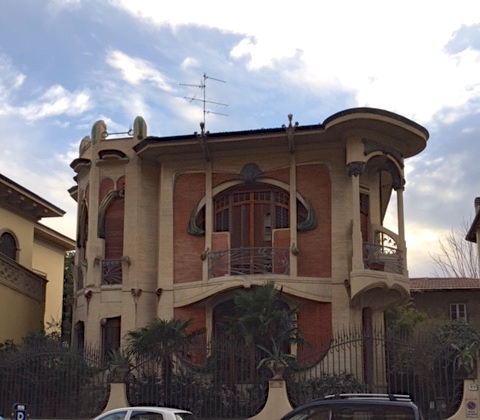
I honestly don’t think that I’ve ever seen art nouveau in any form in Florence. I’ve seen it in Lucca in the so-called “Liberty” style decorating some buildings.
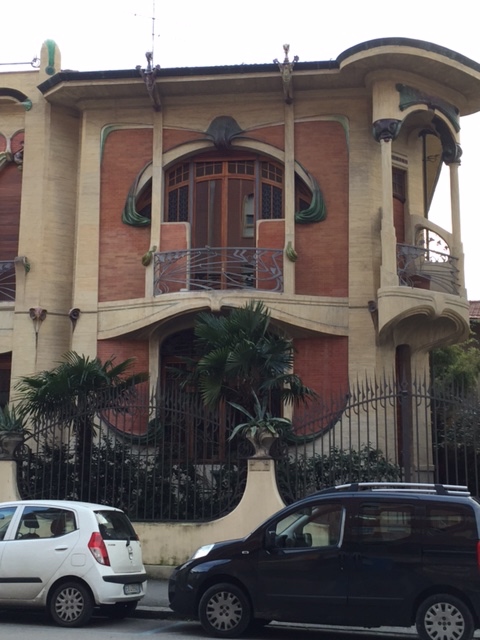

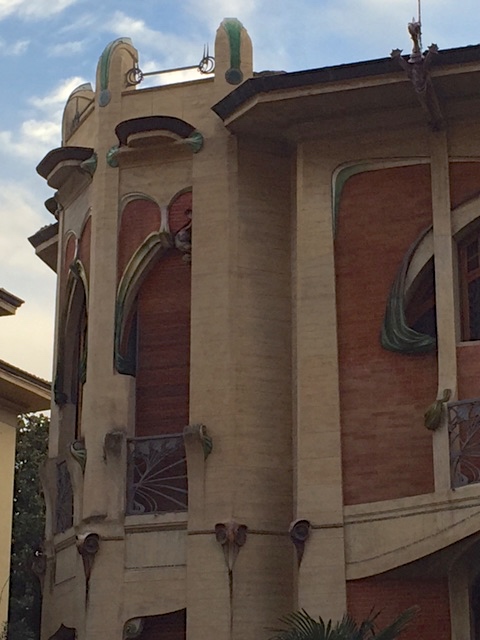
I’ll be going back for more photos soon. Maybe when the sun is out??
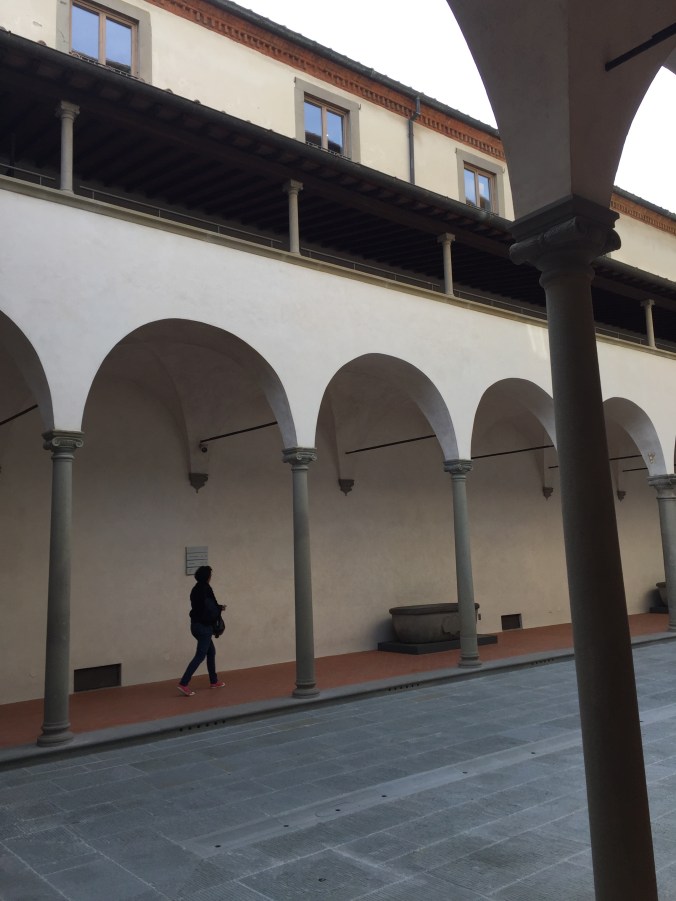
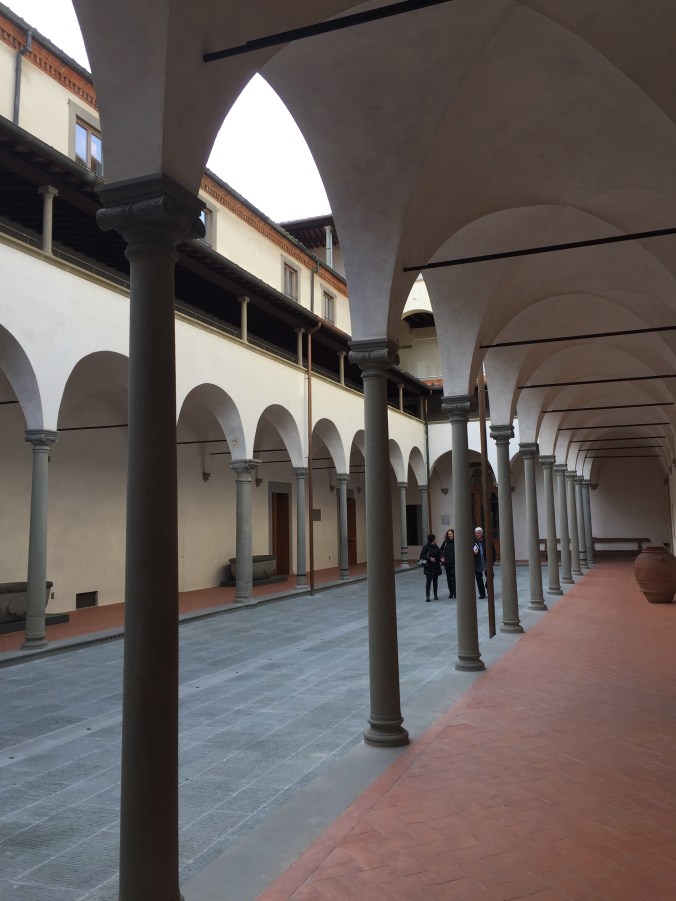
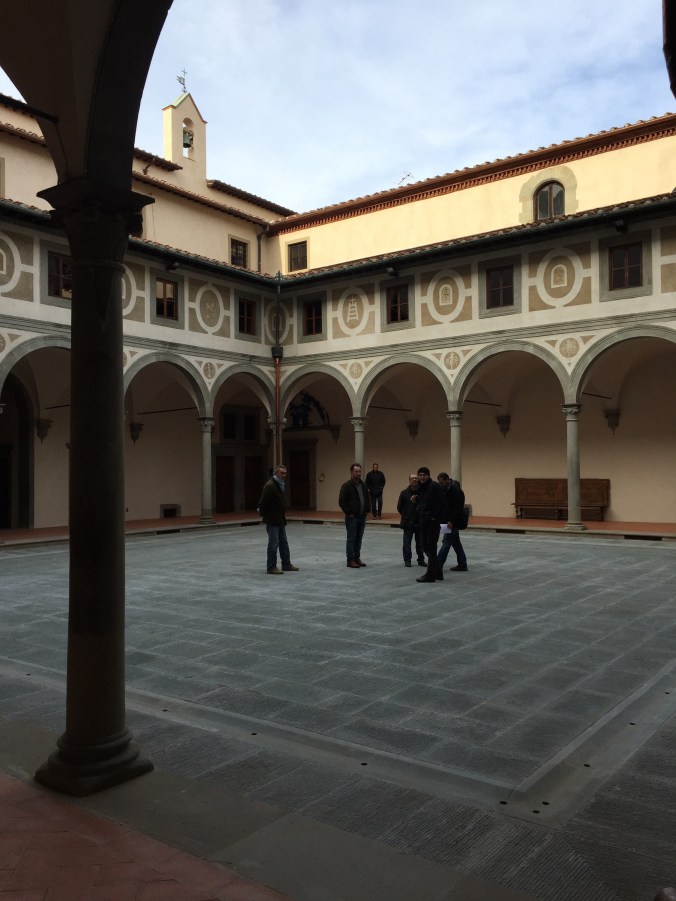
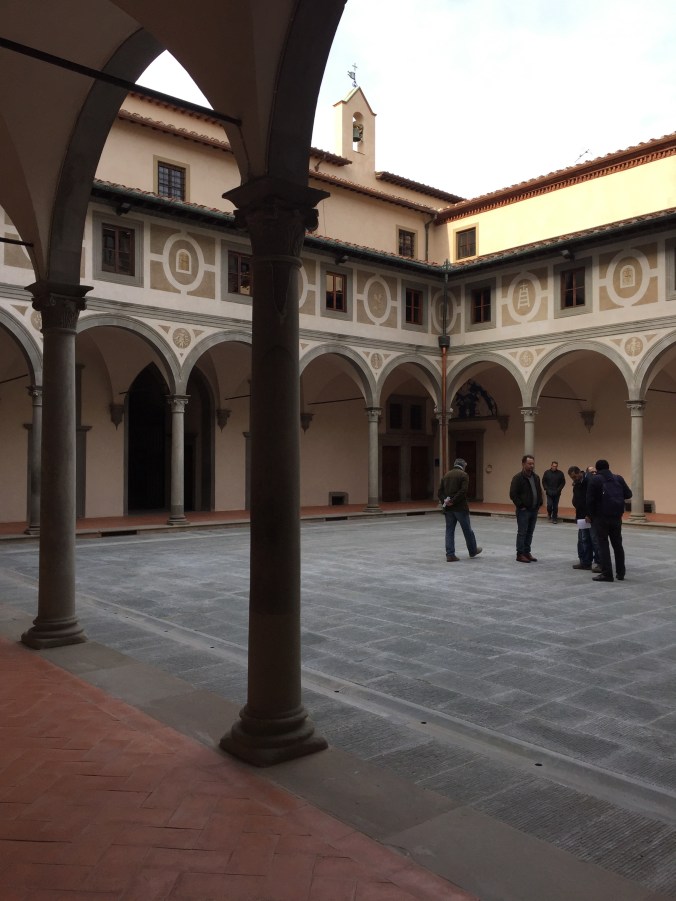
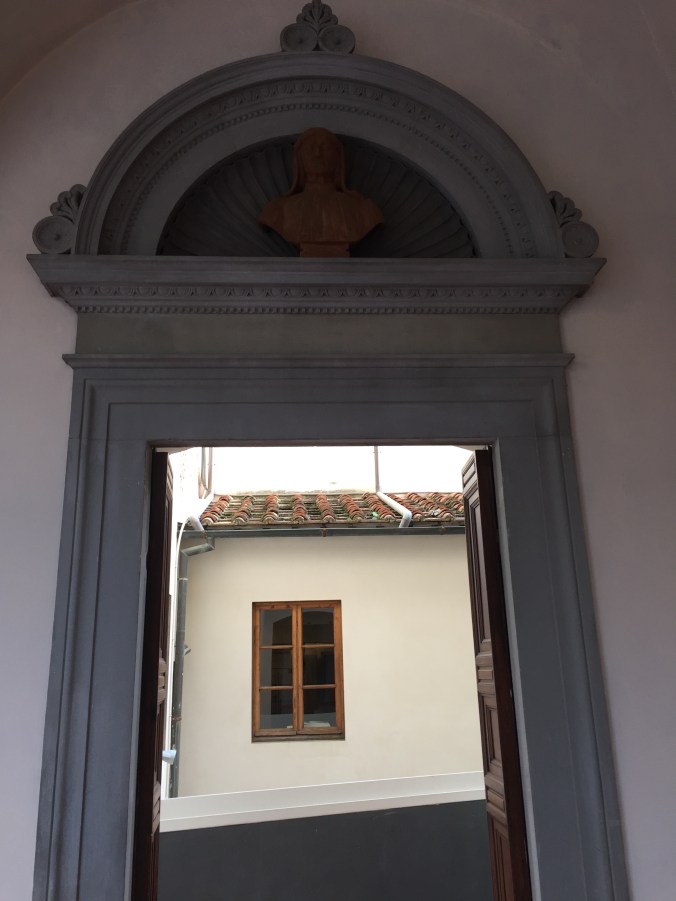
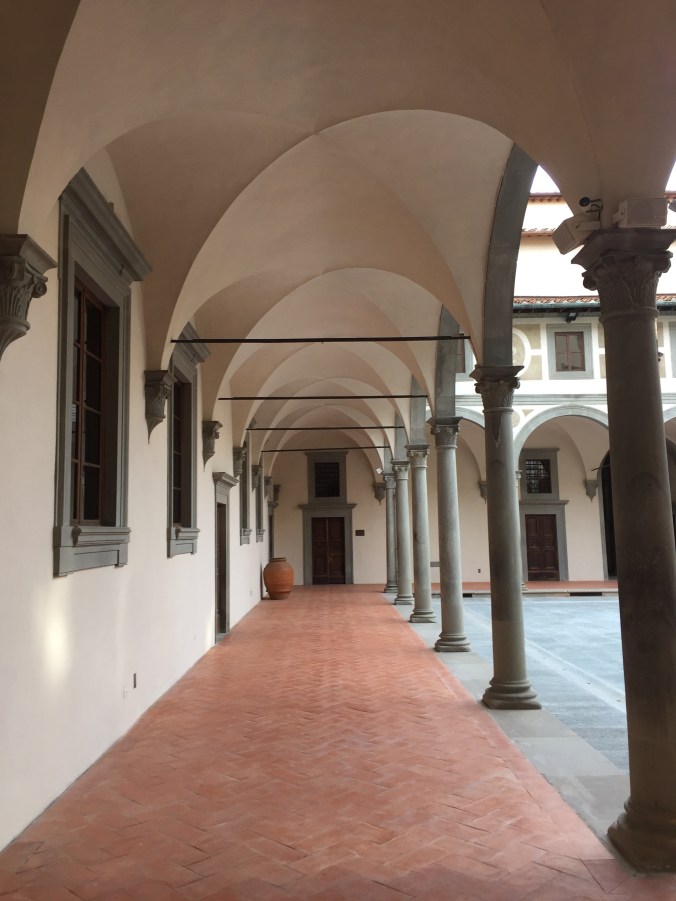
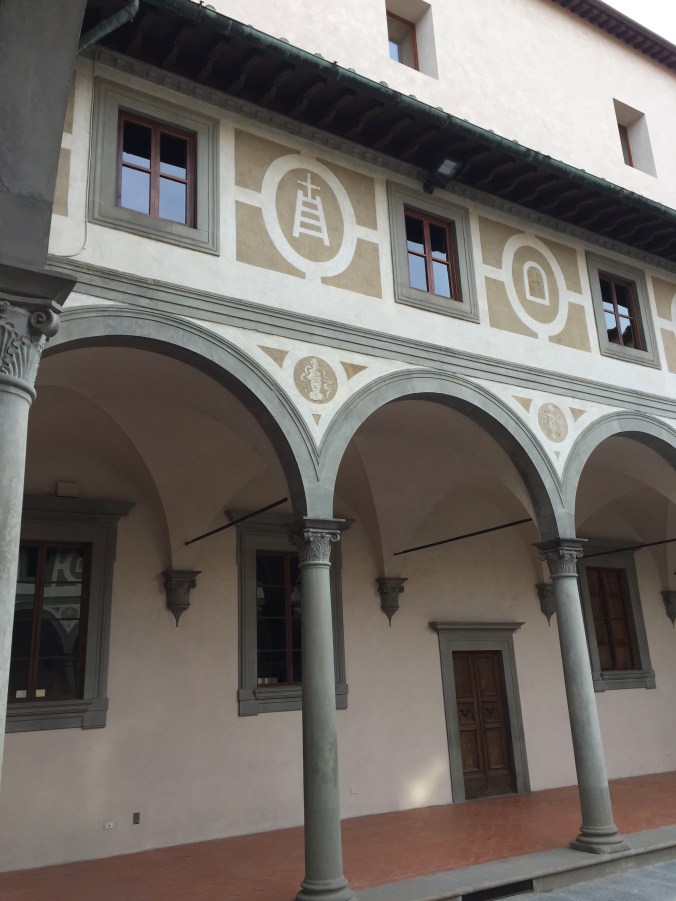
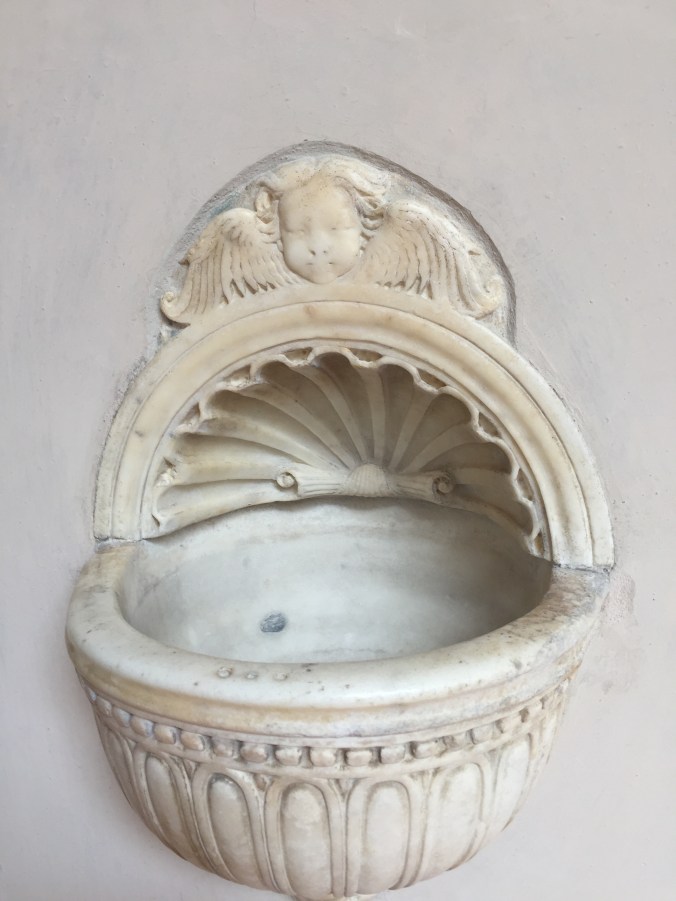
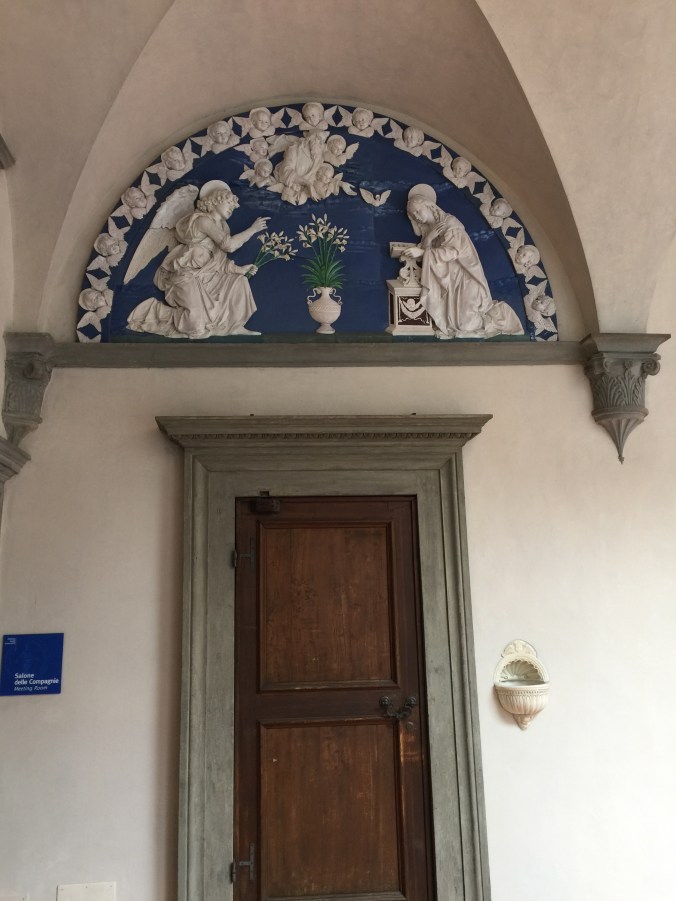
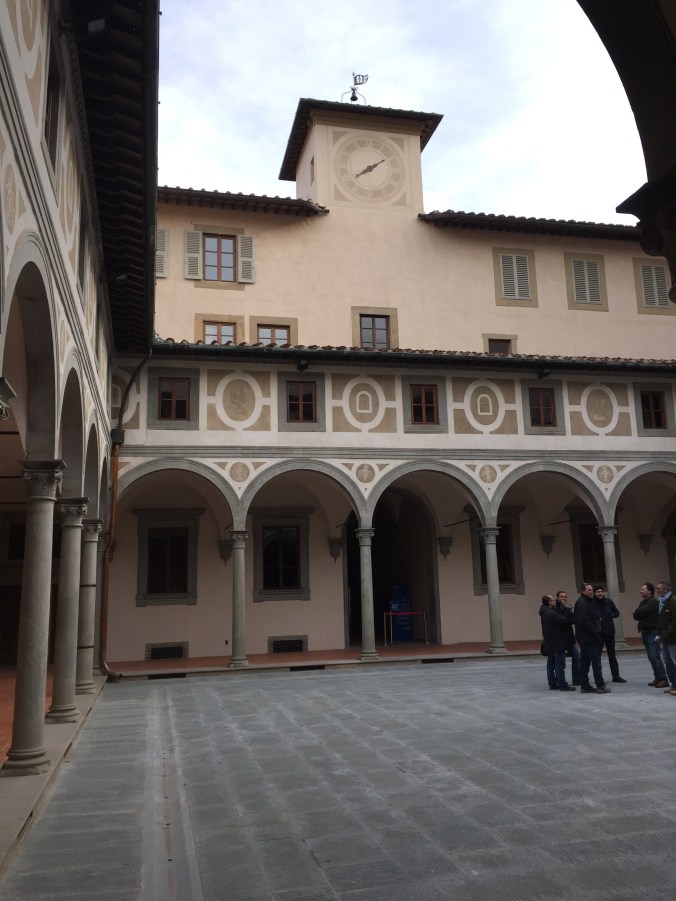
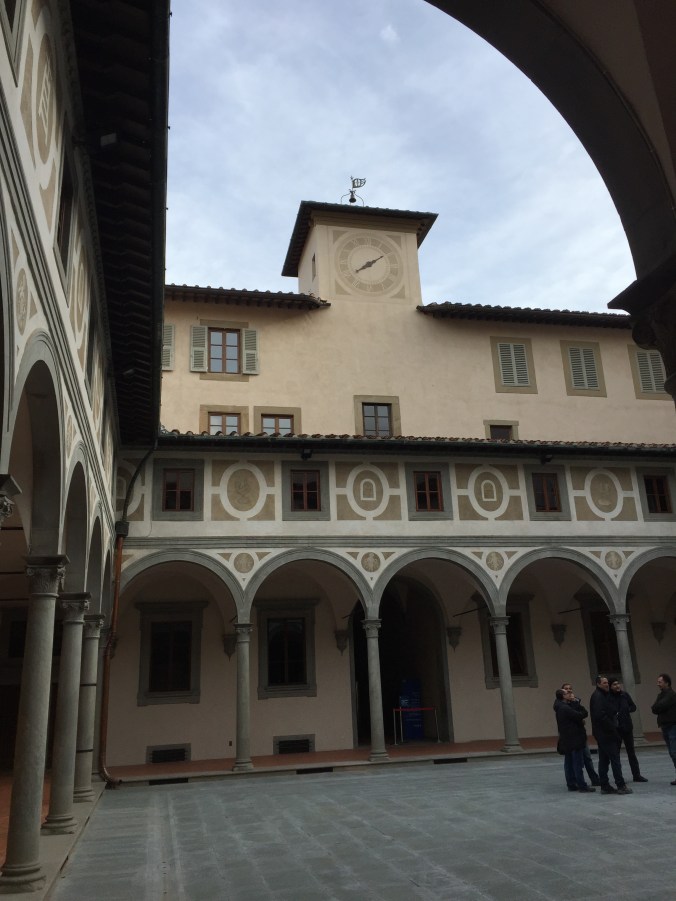
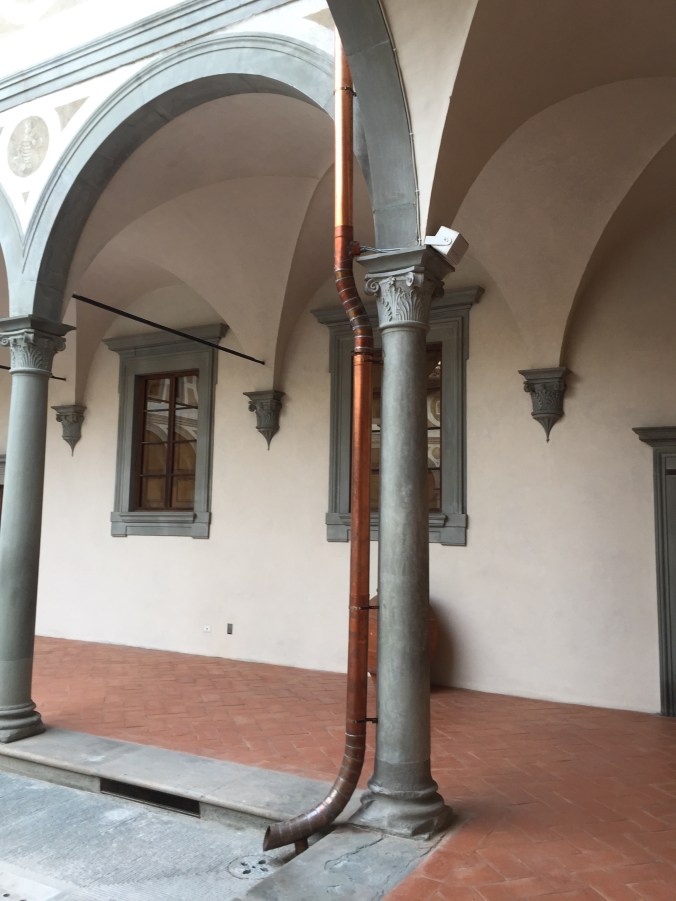
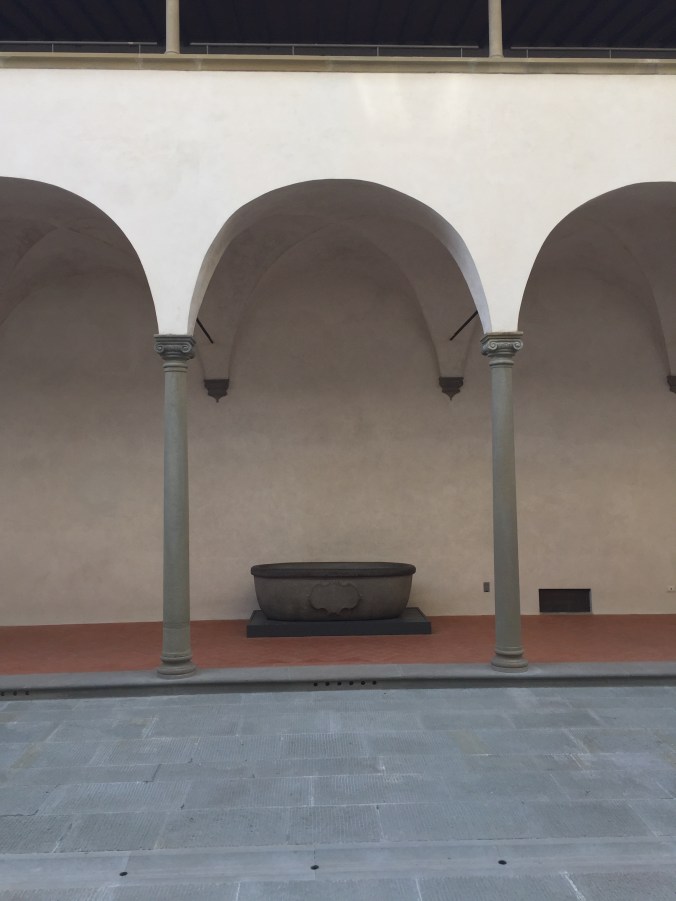
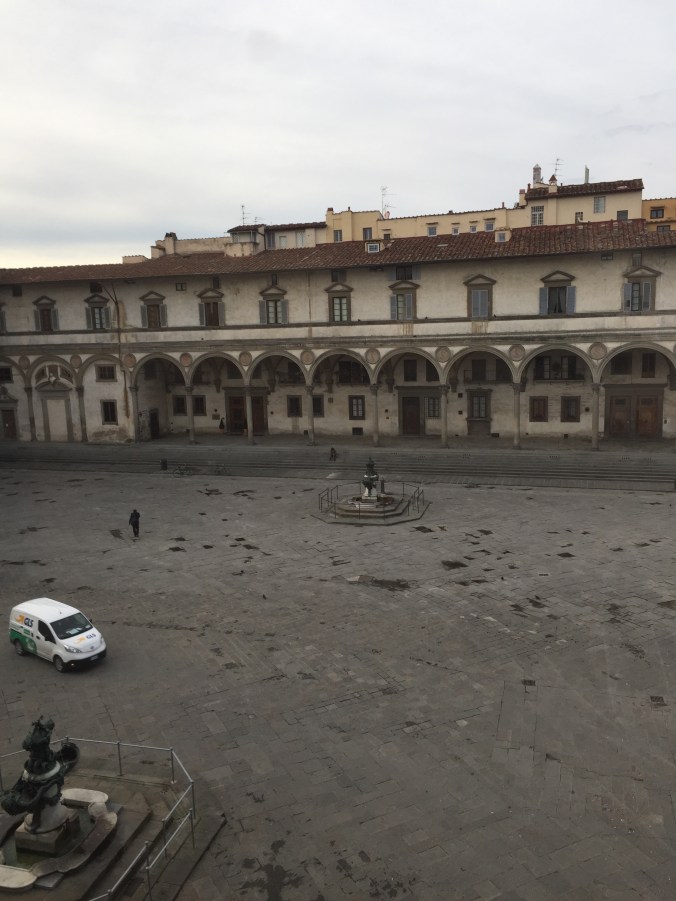
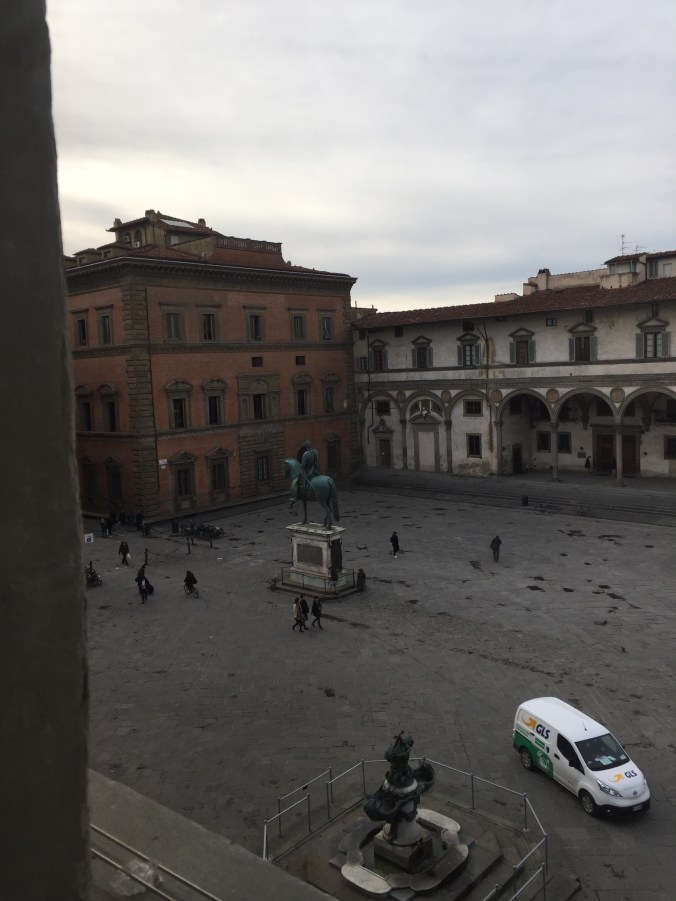
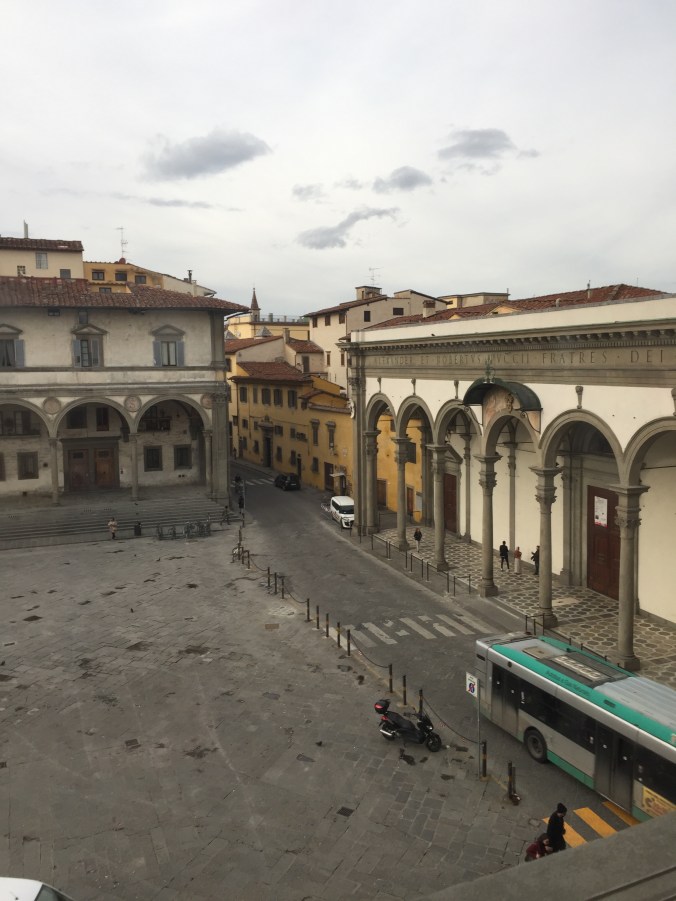
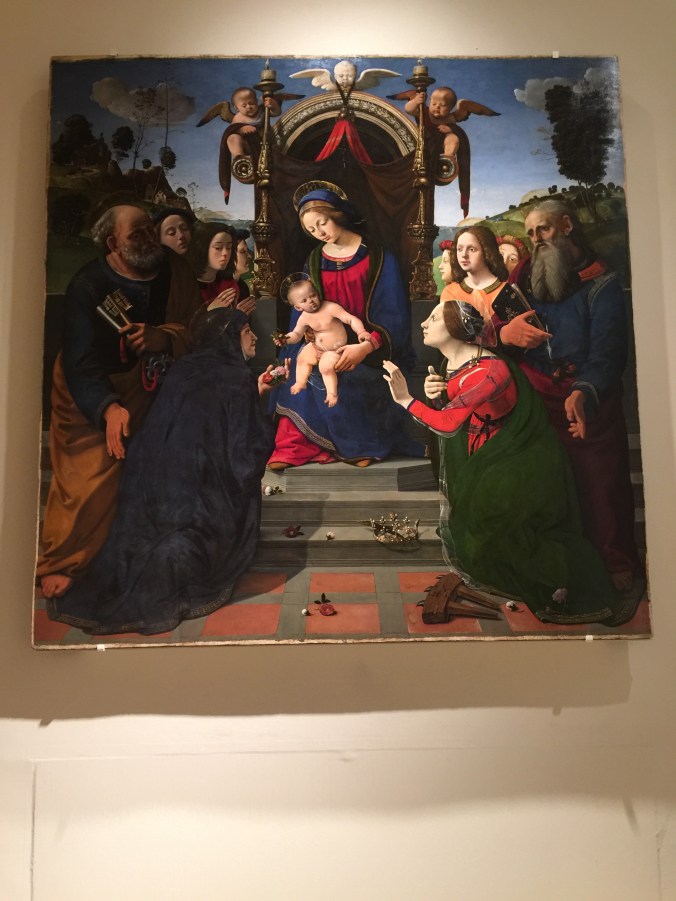
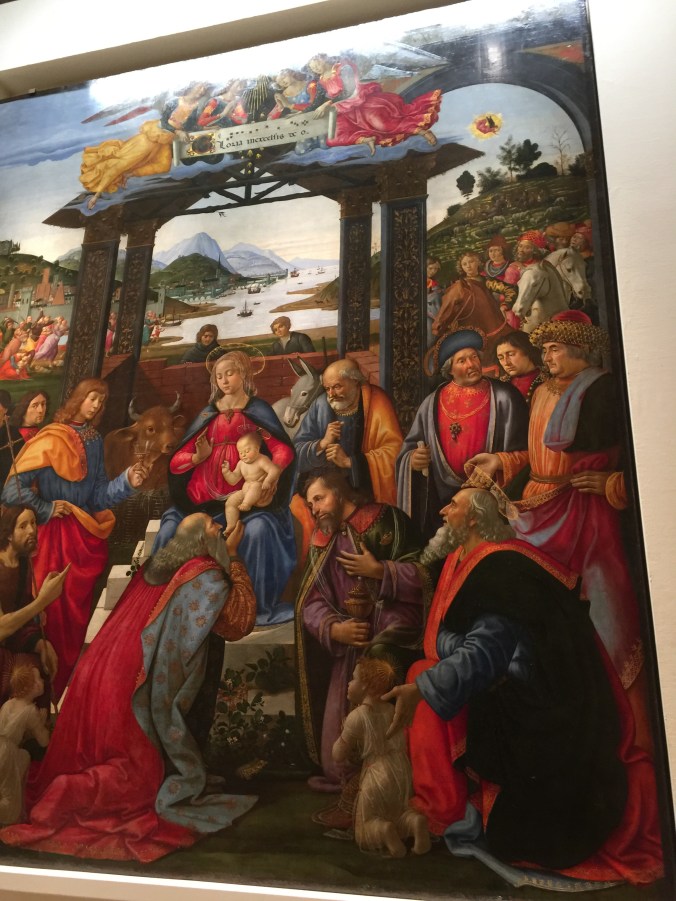
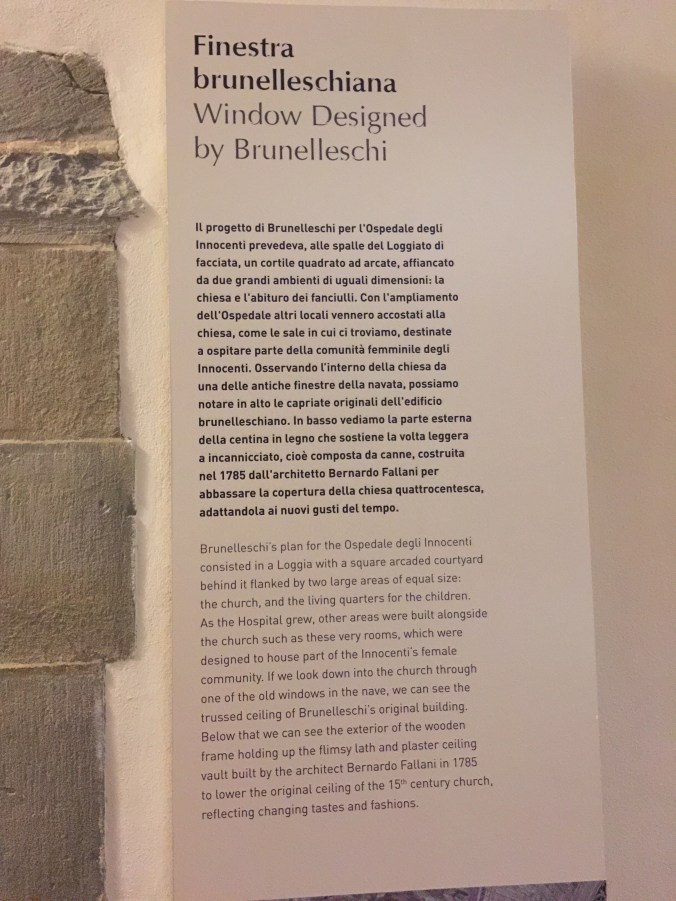
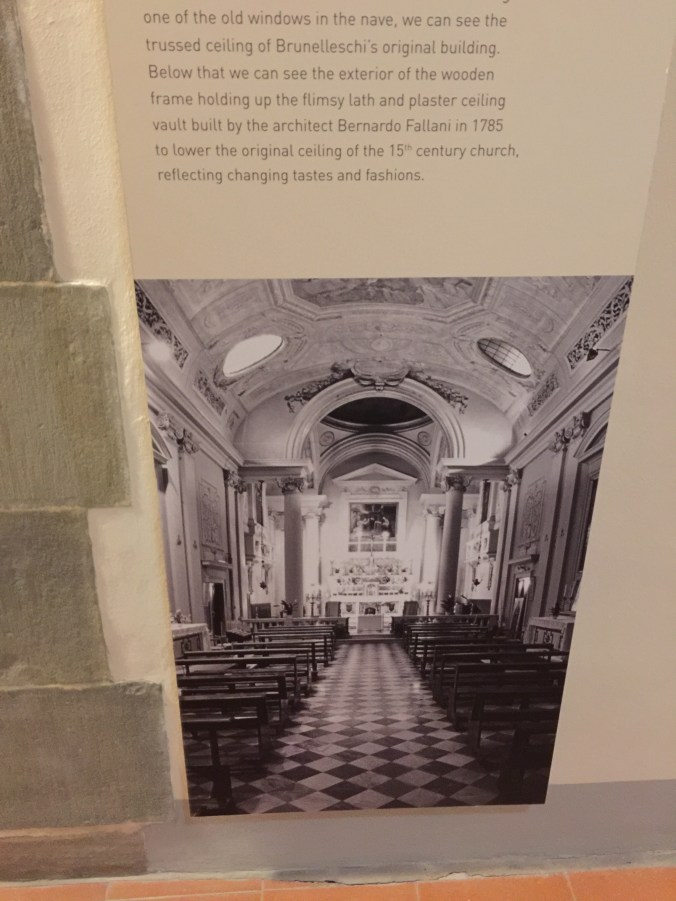
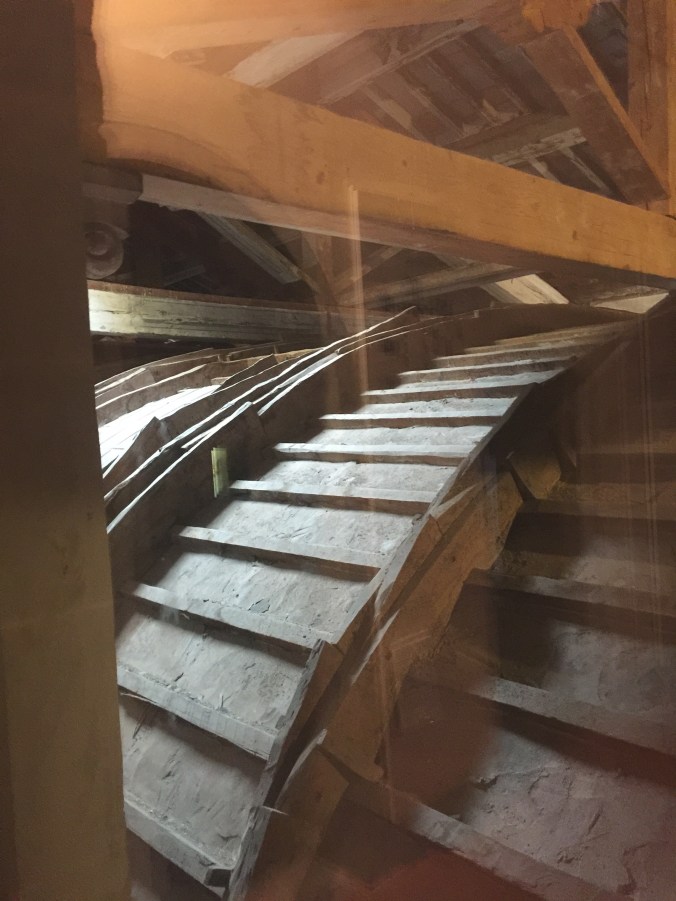
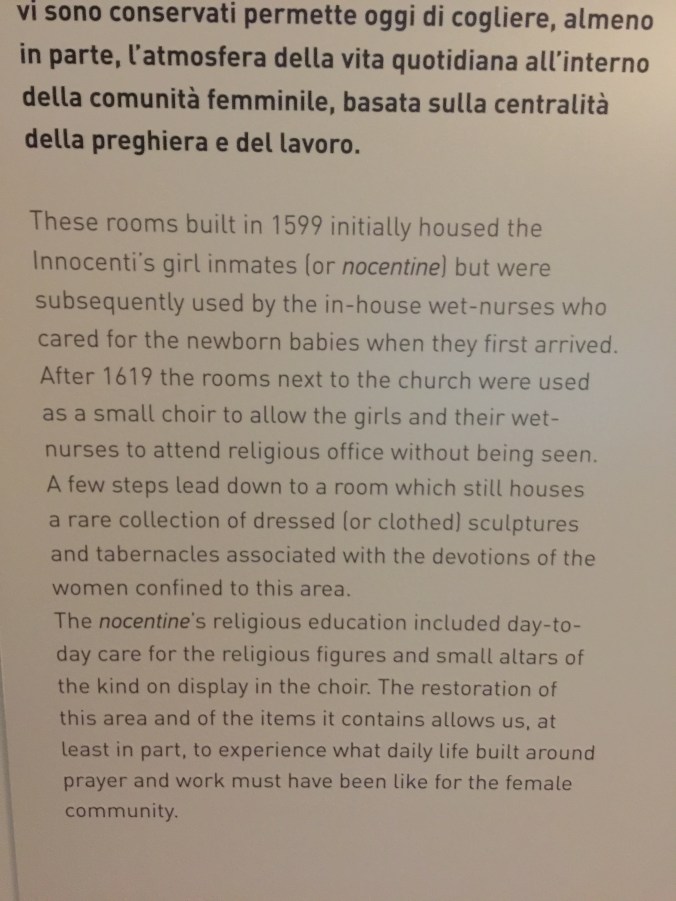
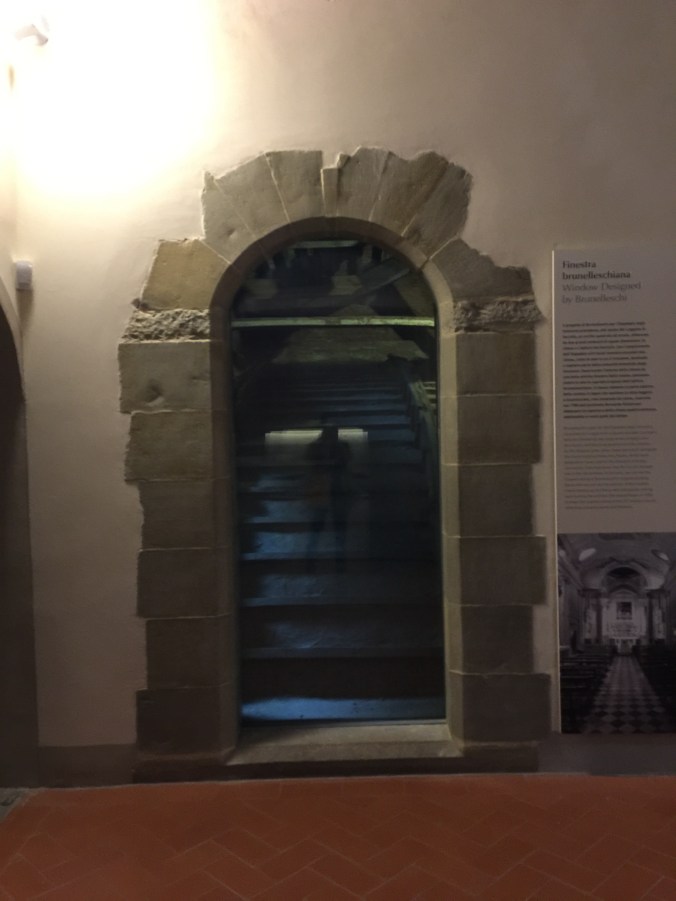
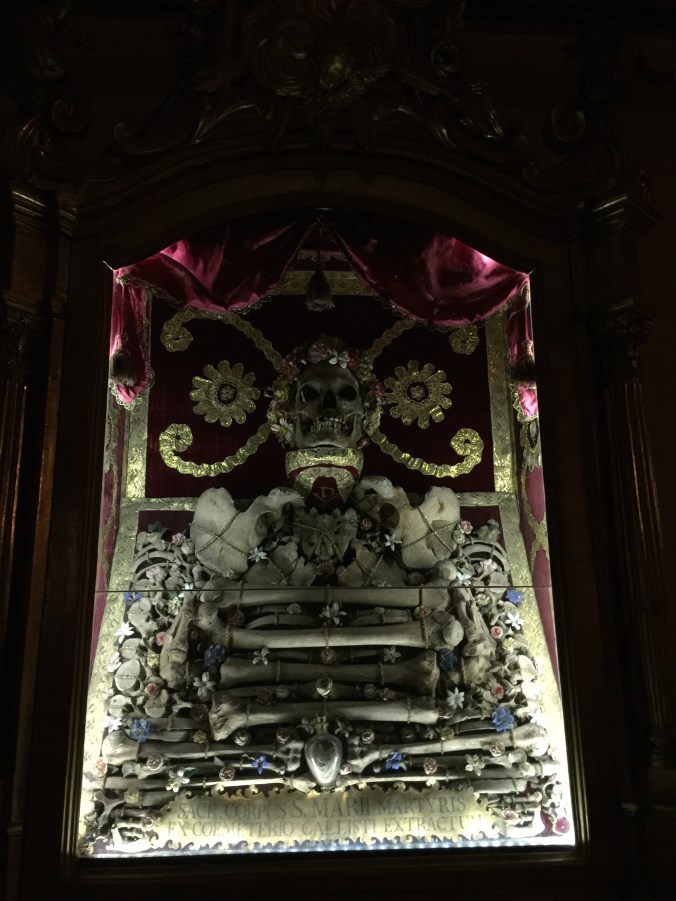
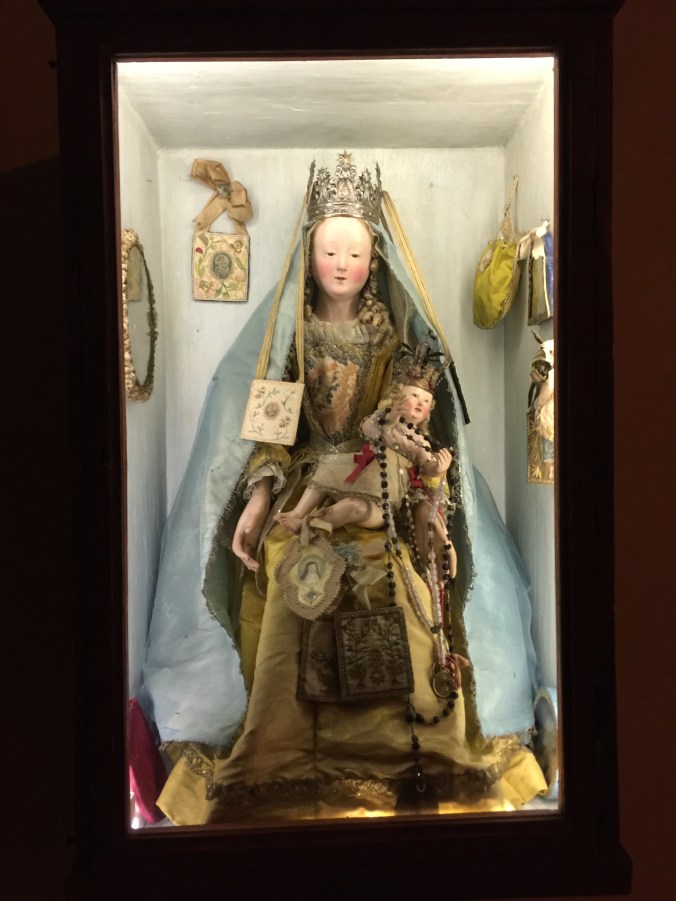
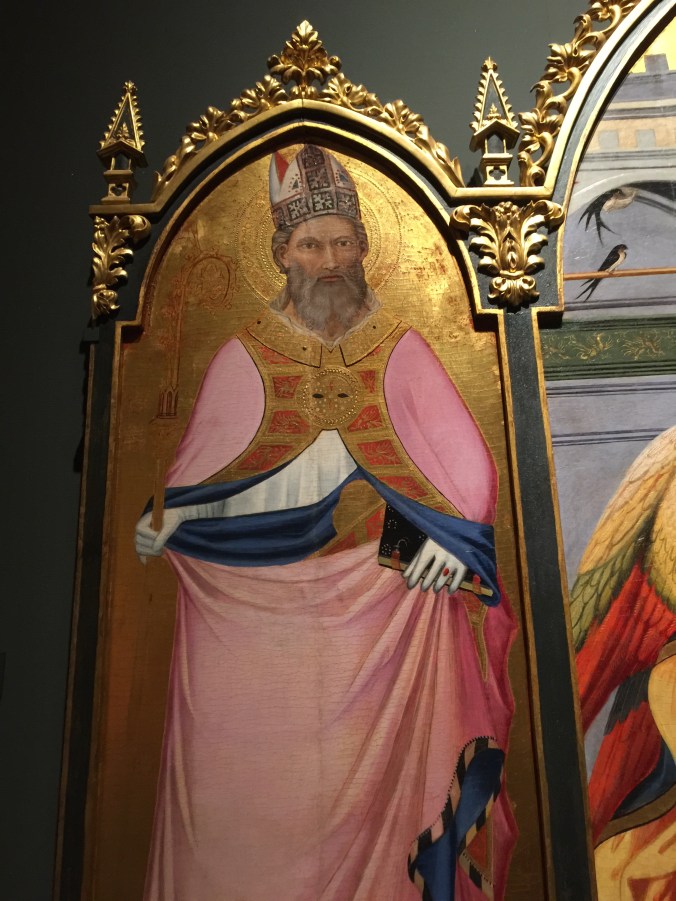
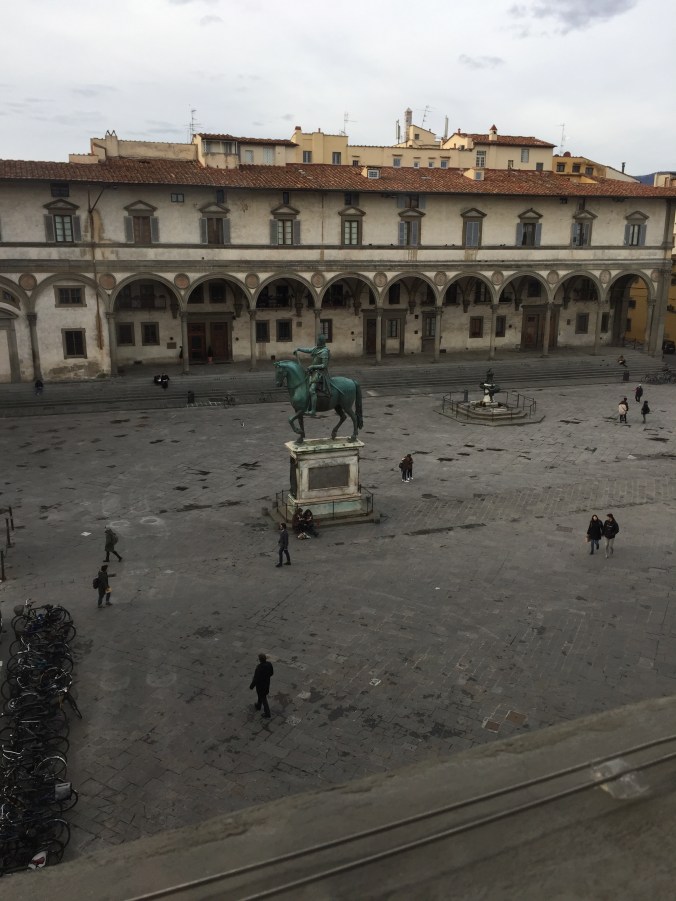
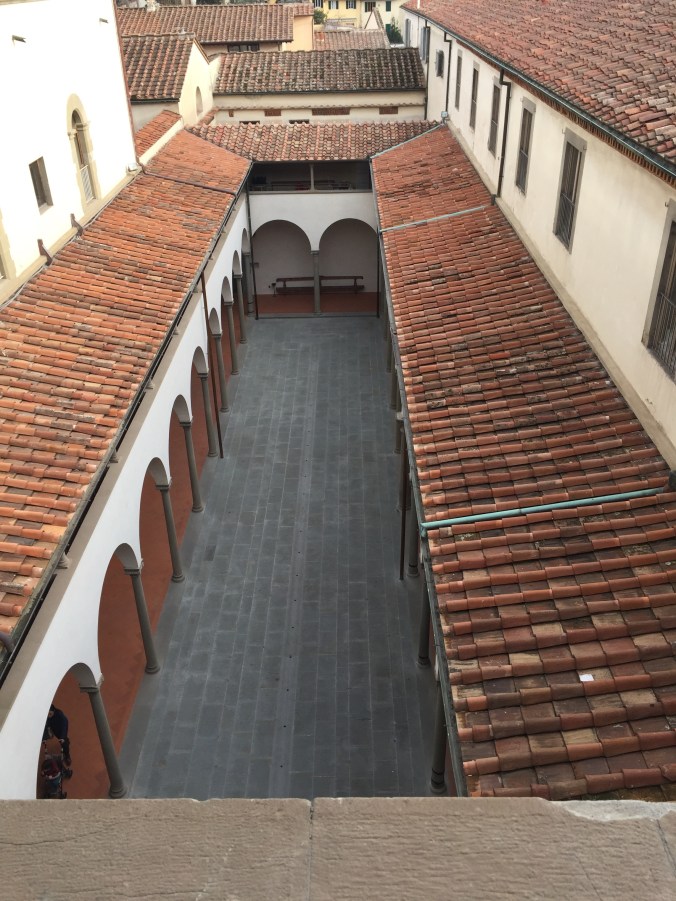
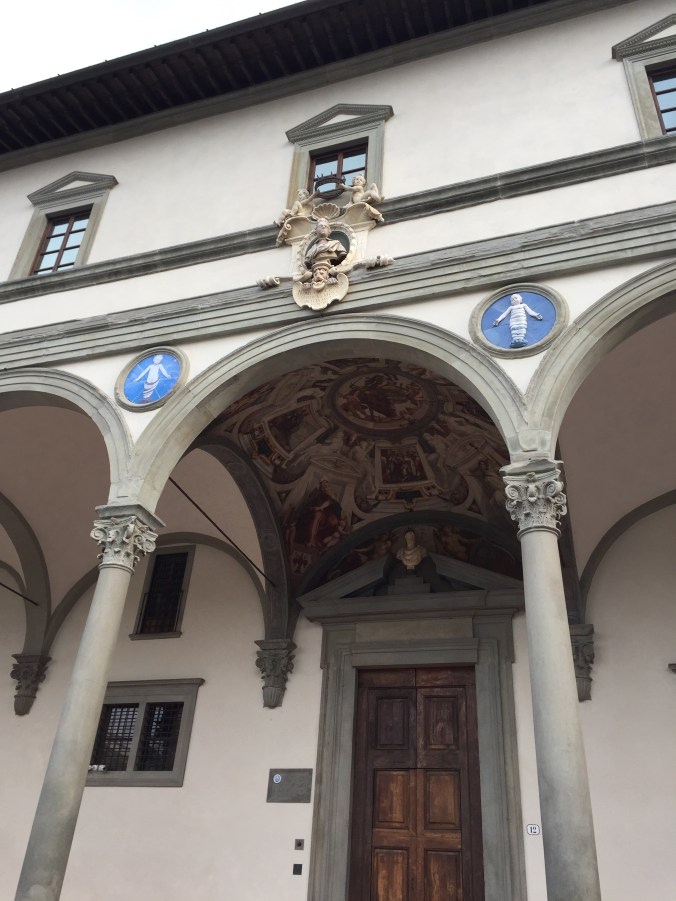
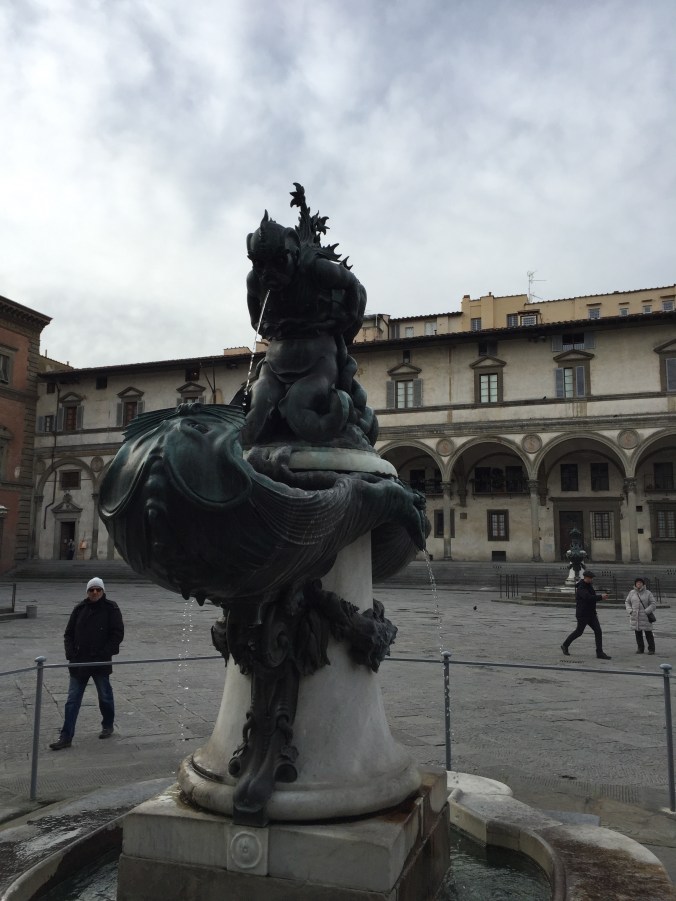
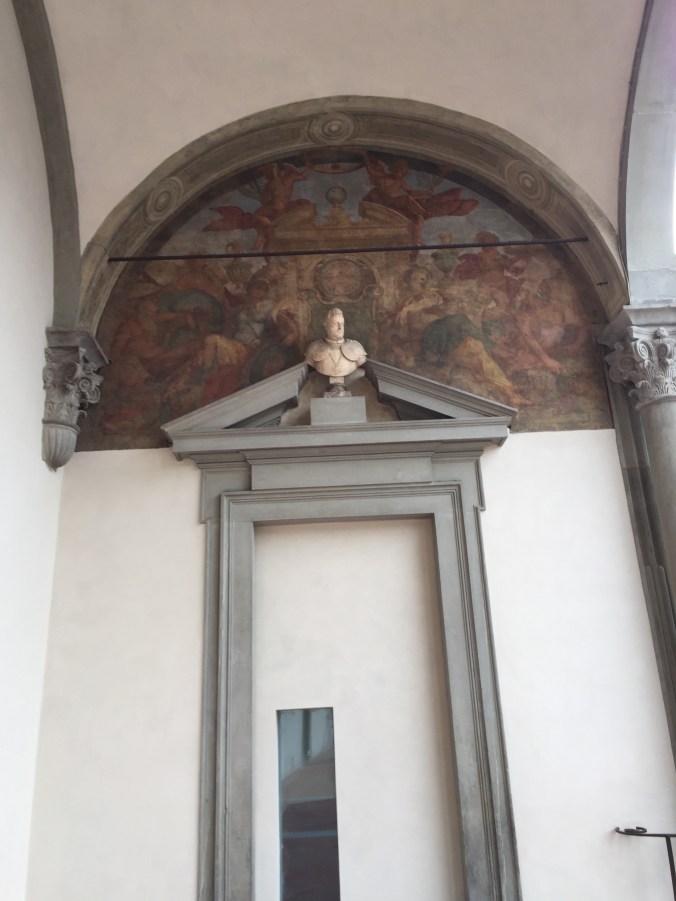
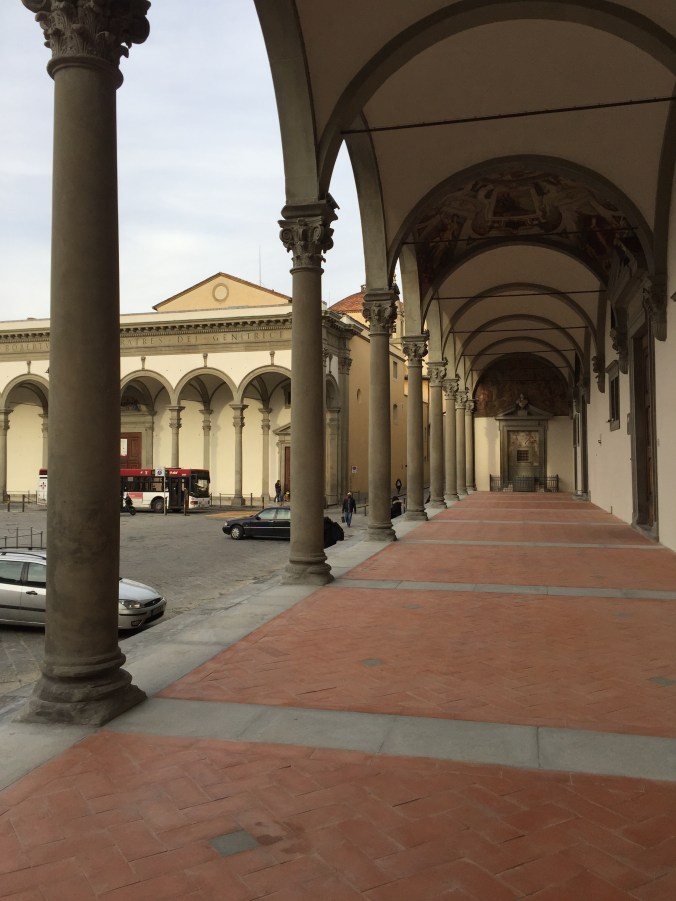
Today I was happy to visit the Renaissance masterpiece by Brunelleschi, the Ospedale deli Innocenti. What a way to spend an afternoon.
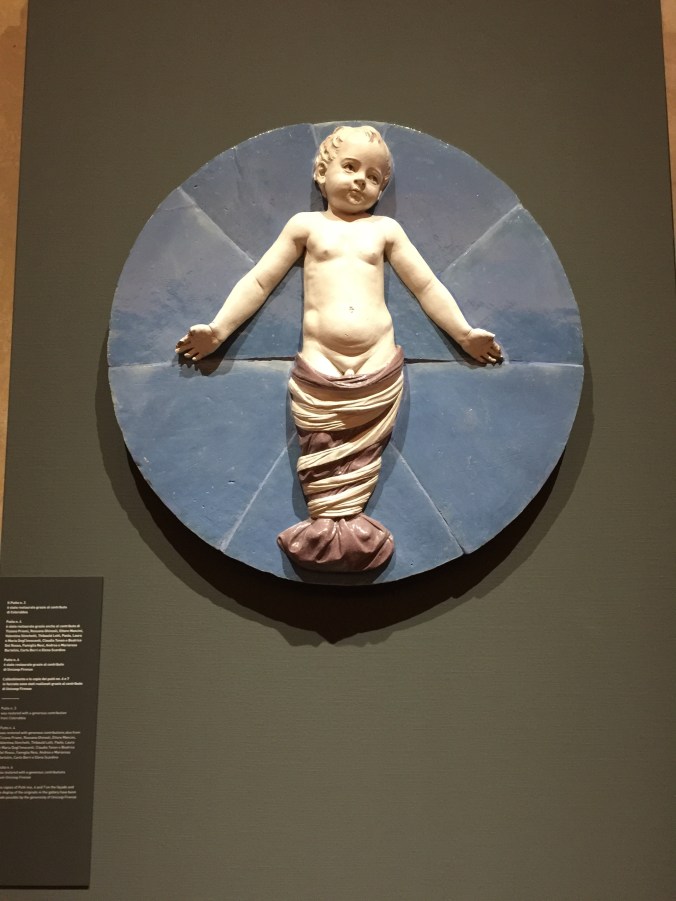
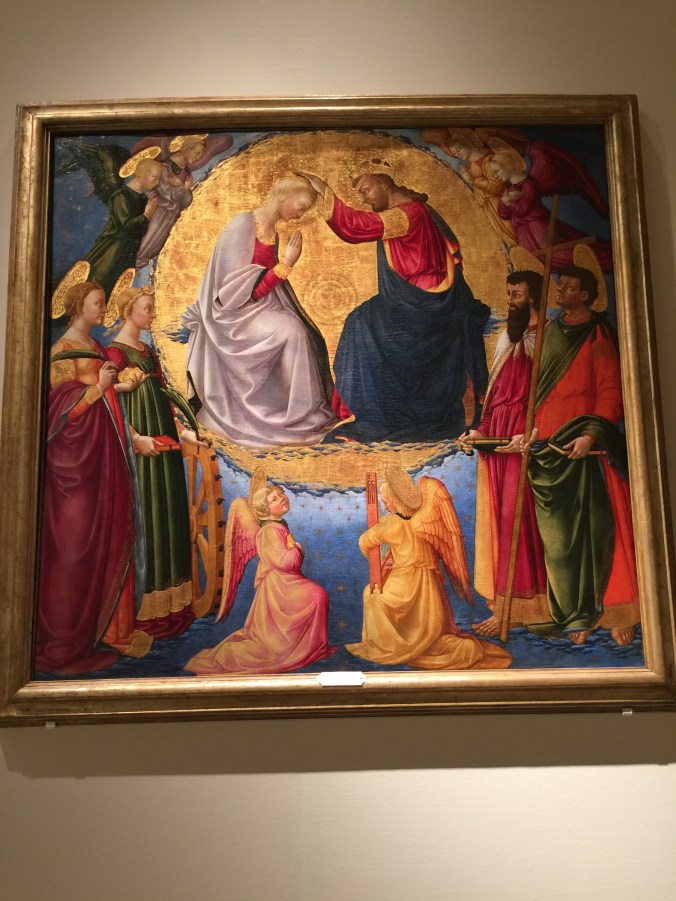
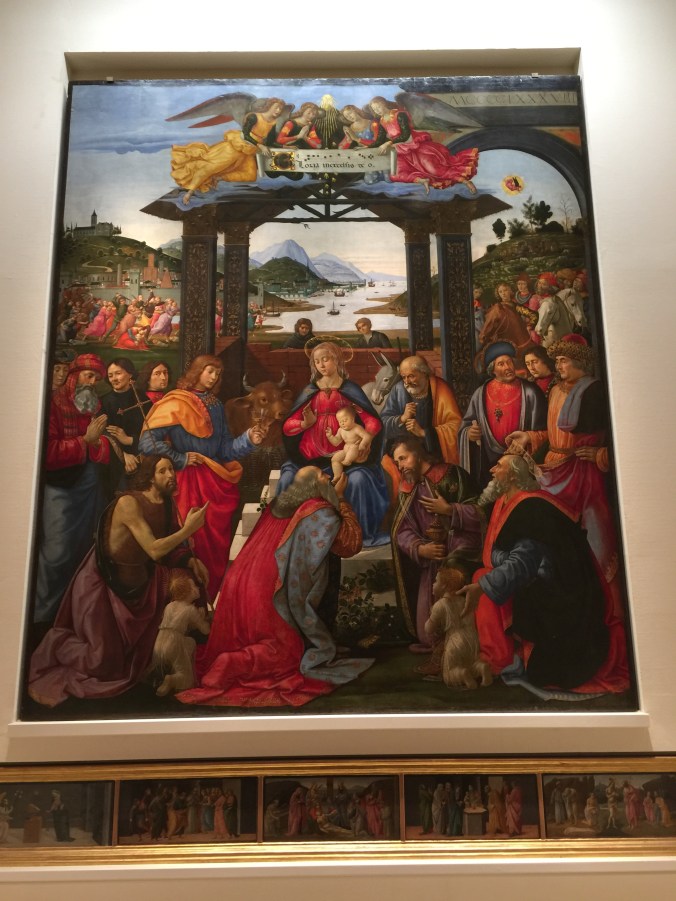
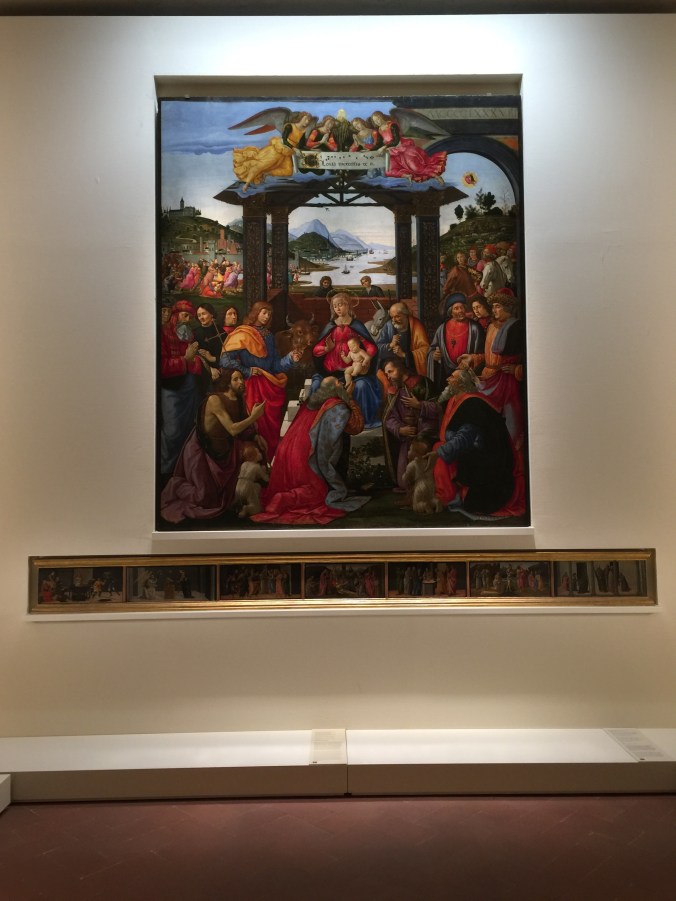
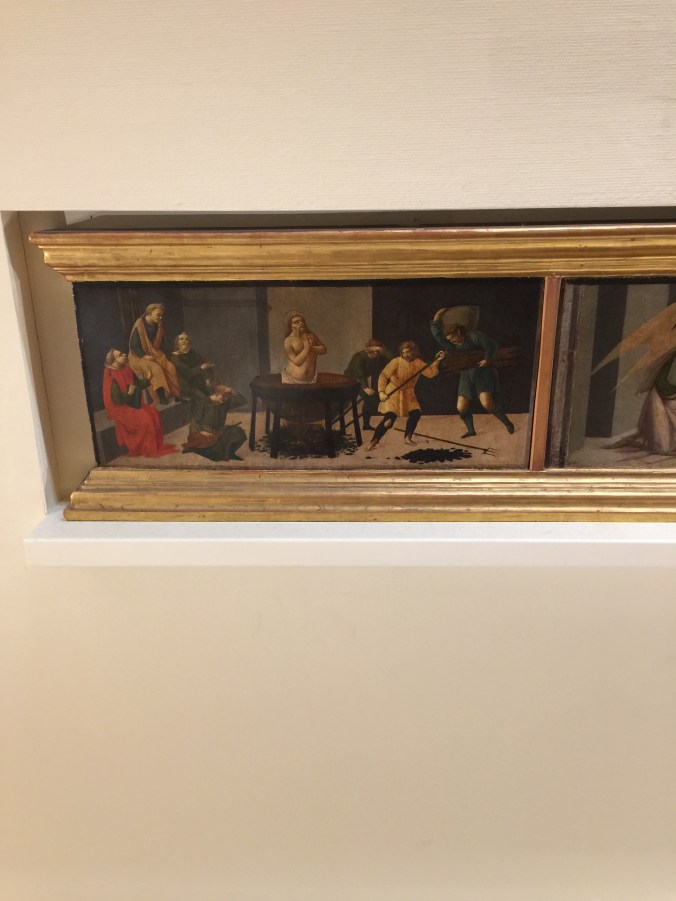
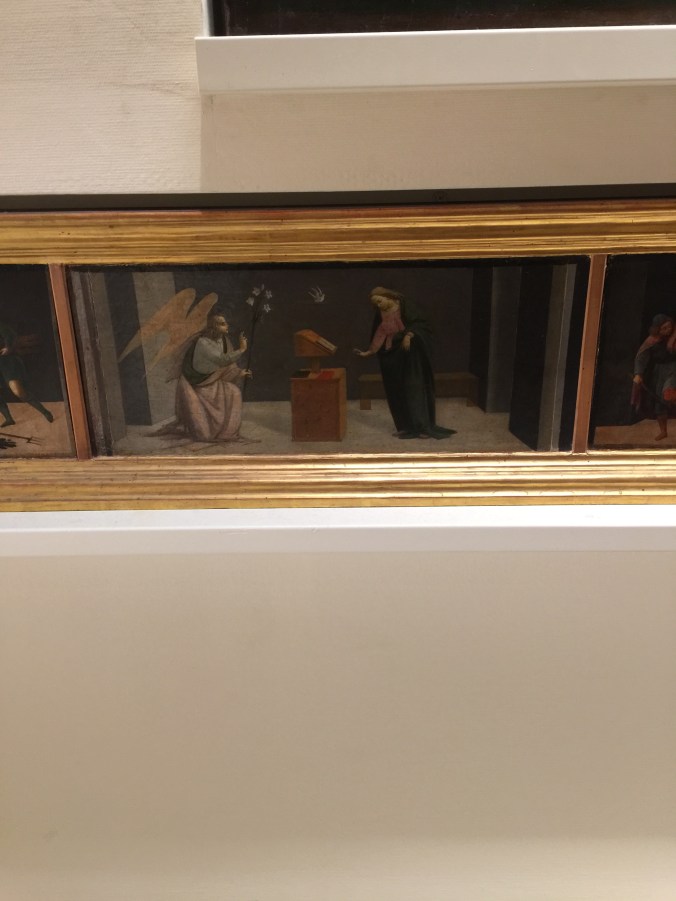
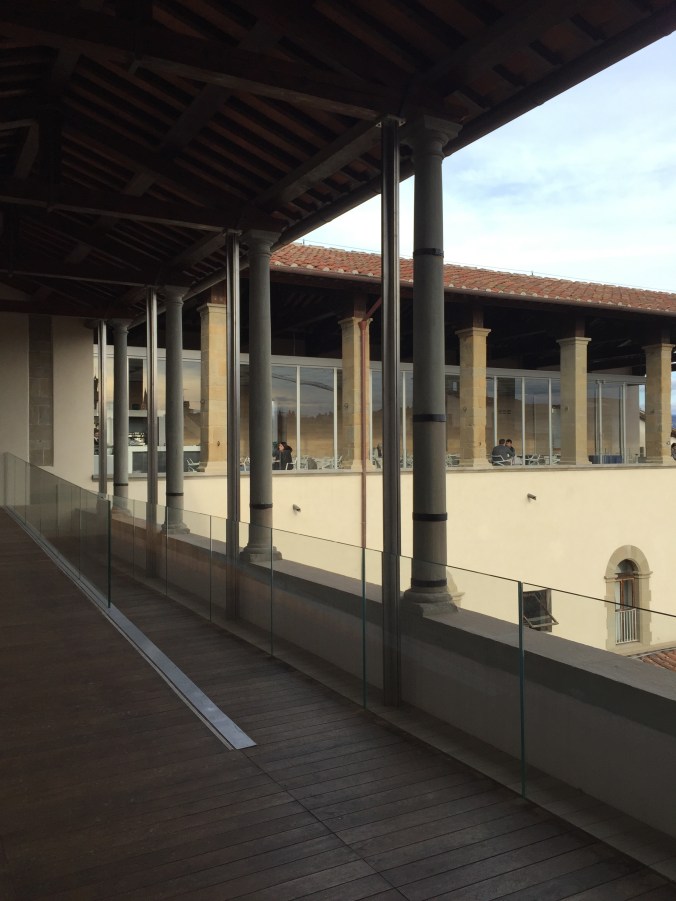
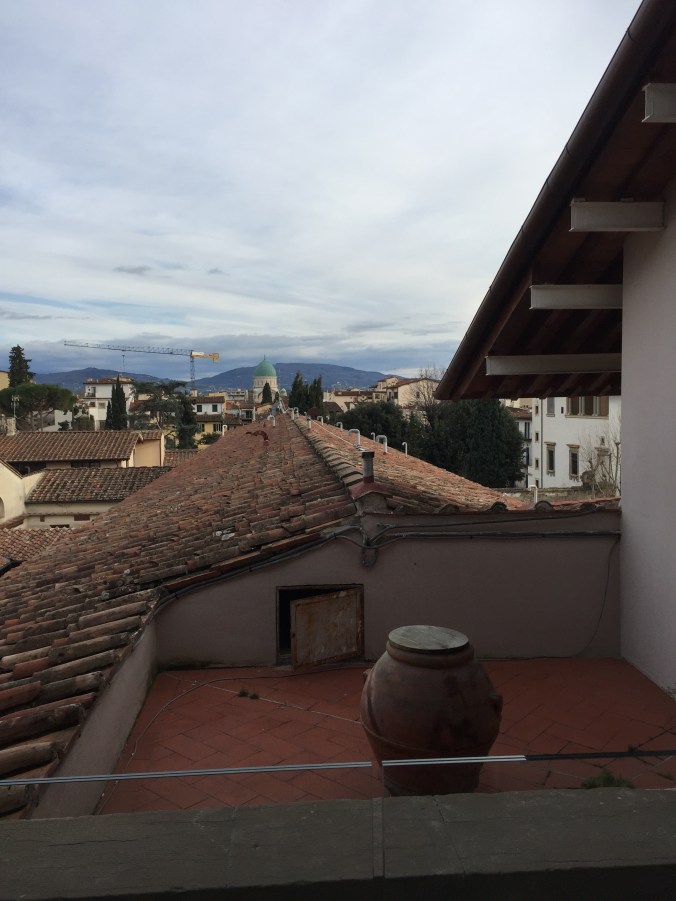
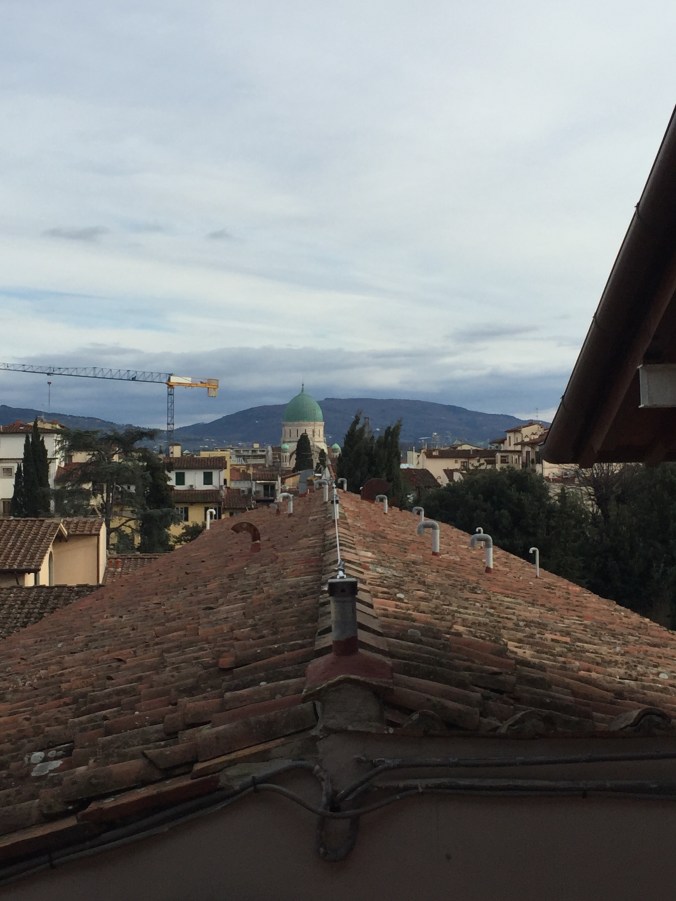
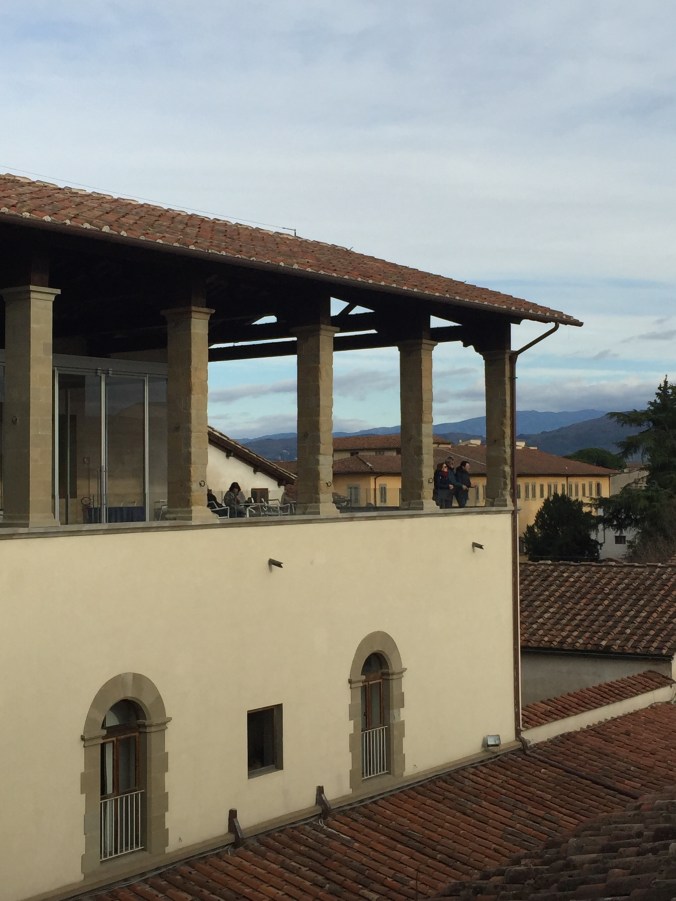
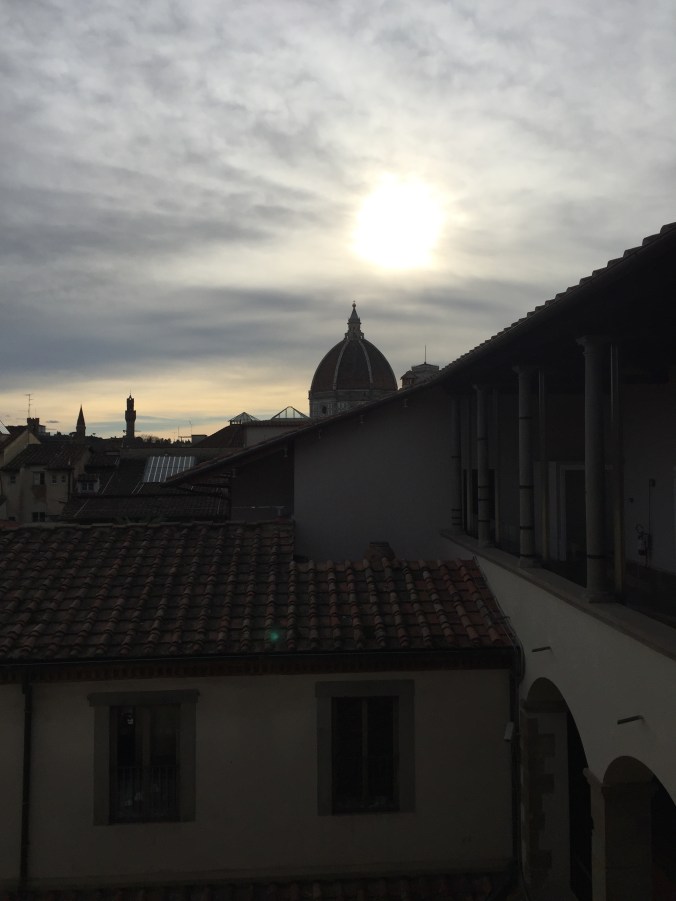
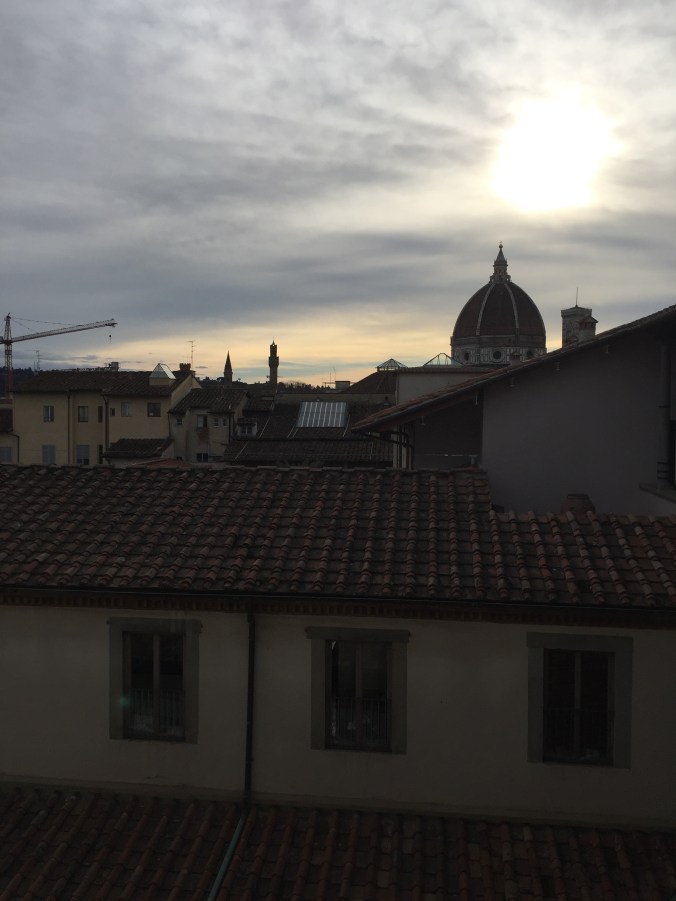
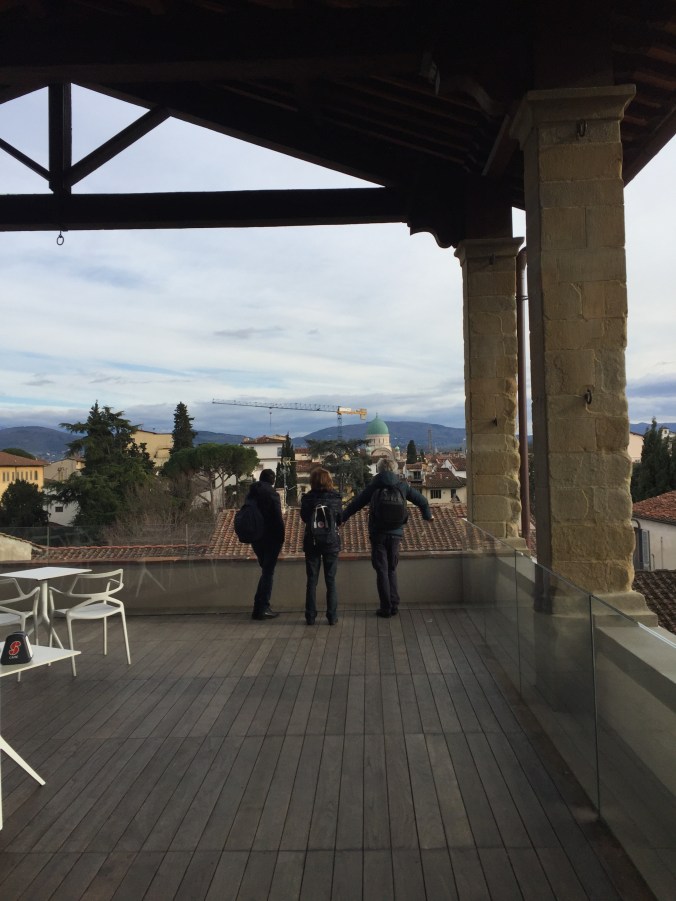
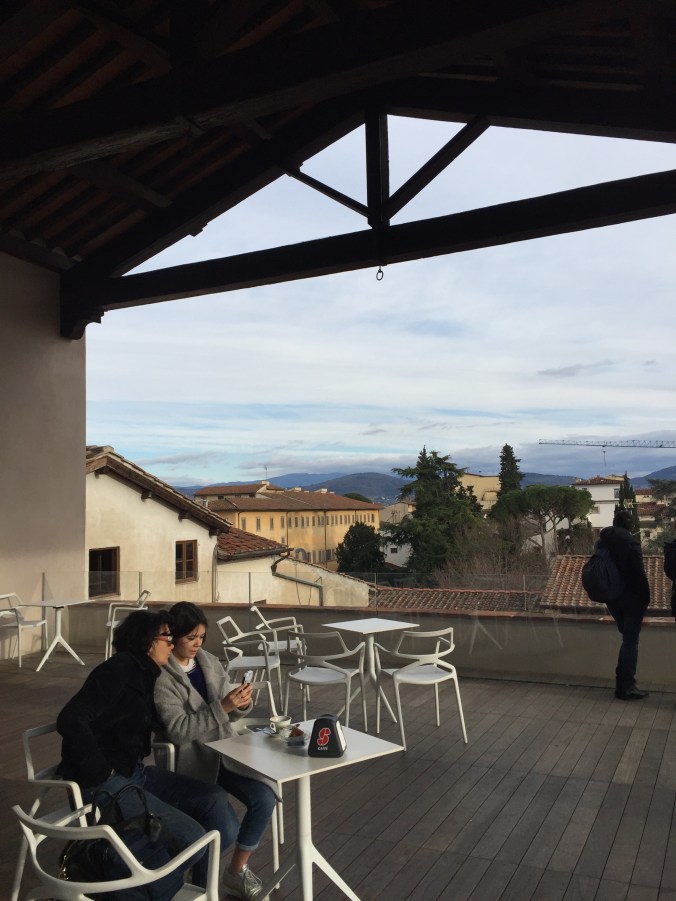
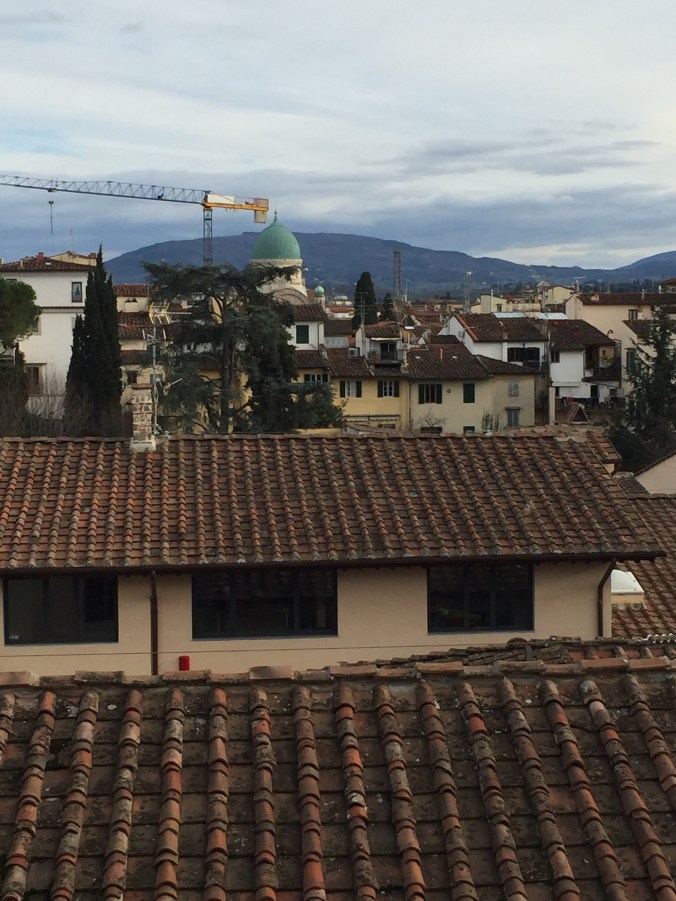
This newly opened museum has something for everyone. Gorgeous Renaissance architecture and the amazing history, beautifully presented with cutting edge museum design, of one of the world’s first orphanages. If that isn’t enough, there is also a small but choice collection of paintings and some sculpture, including a Botticelli. And, as if that isn’t enough, there is a lovely rooftop cafe, serving lovely drinks and coffees, and some nice food! Beautiful views!
I can’t recommend this museum highly enough.

Great technology presents the history of the institution and the building.

The history of the institution is presented in a very understandable and visually interesting manner.

No detail is overlooked.


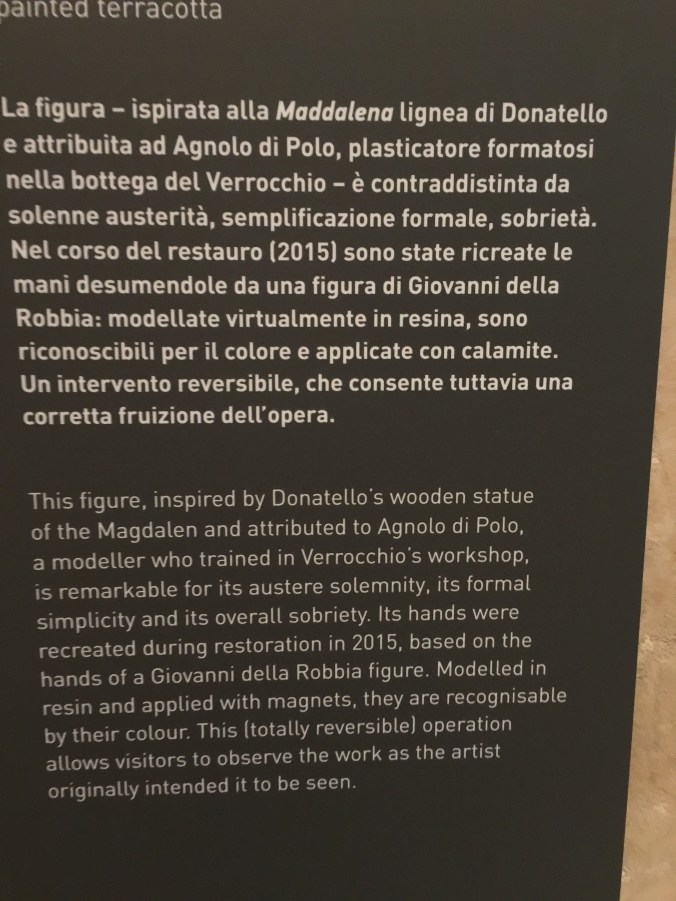
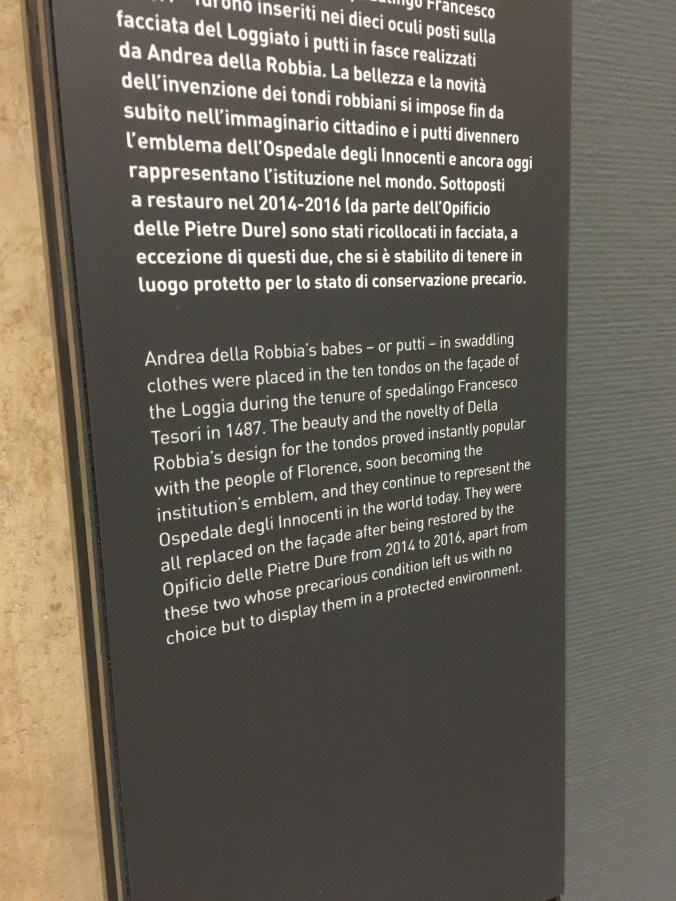
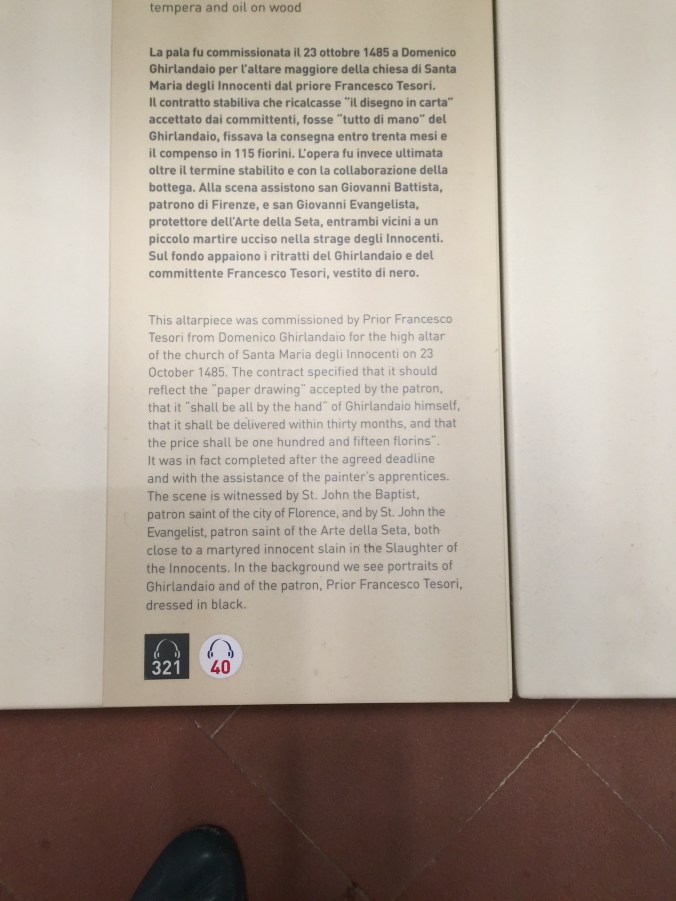
The labels are very understandable. I didn’t listen to the audio available, but you can see on the sign below that the audio tour stops here.


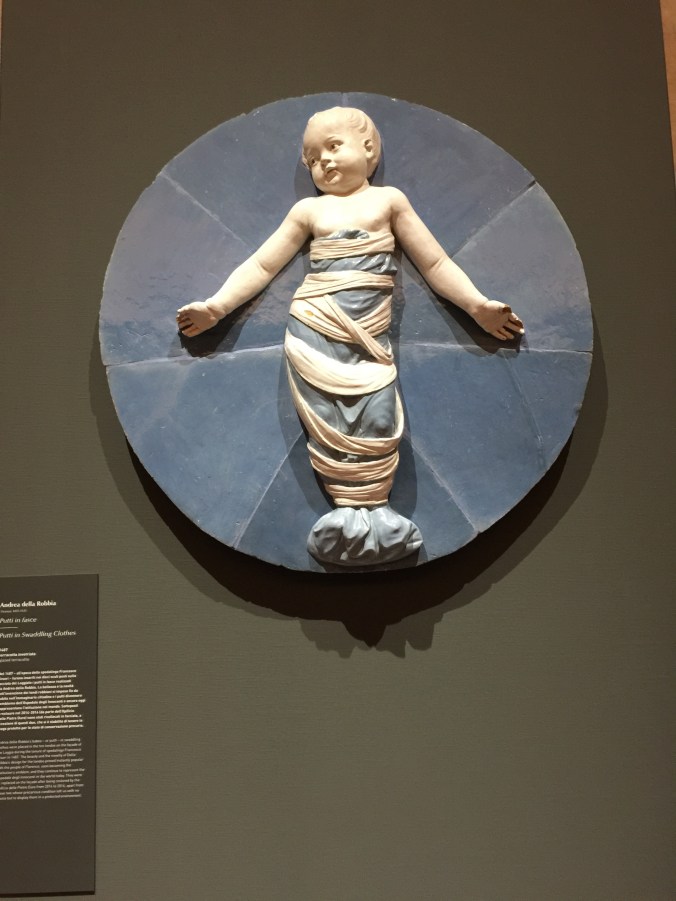
Over time, the ospedale not only took in and cared for orphans, it also provided technical training for many children. This being Florence, of course one of the technical vocations trained for was artist’s assistant!

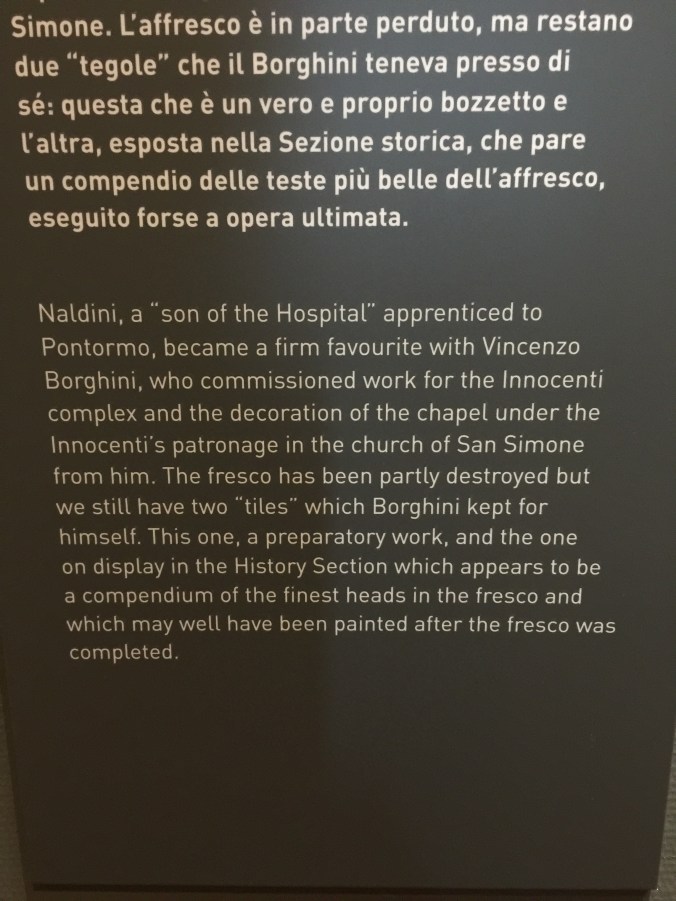
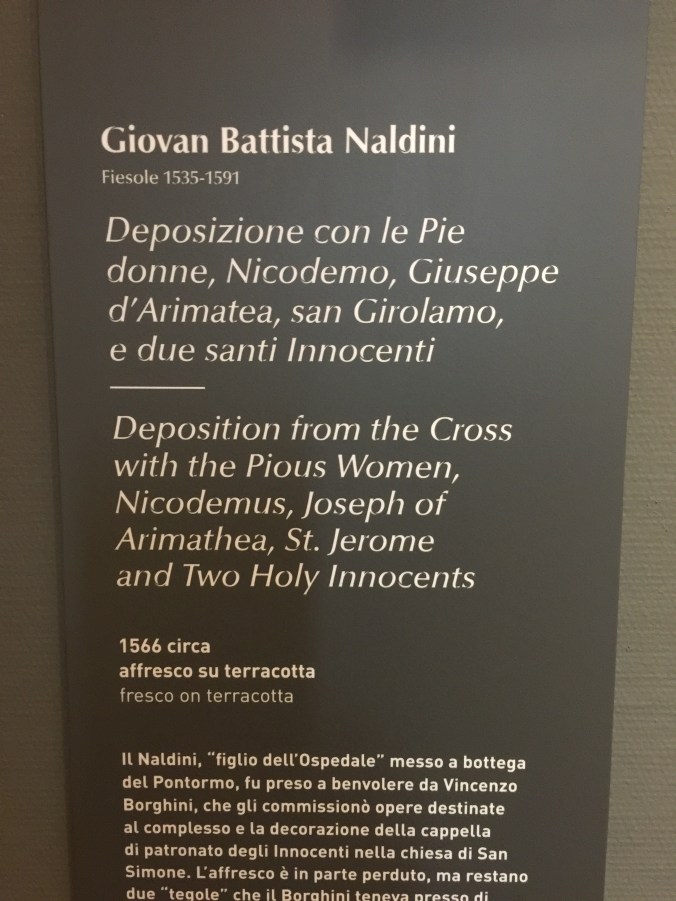
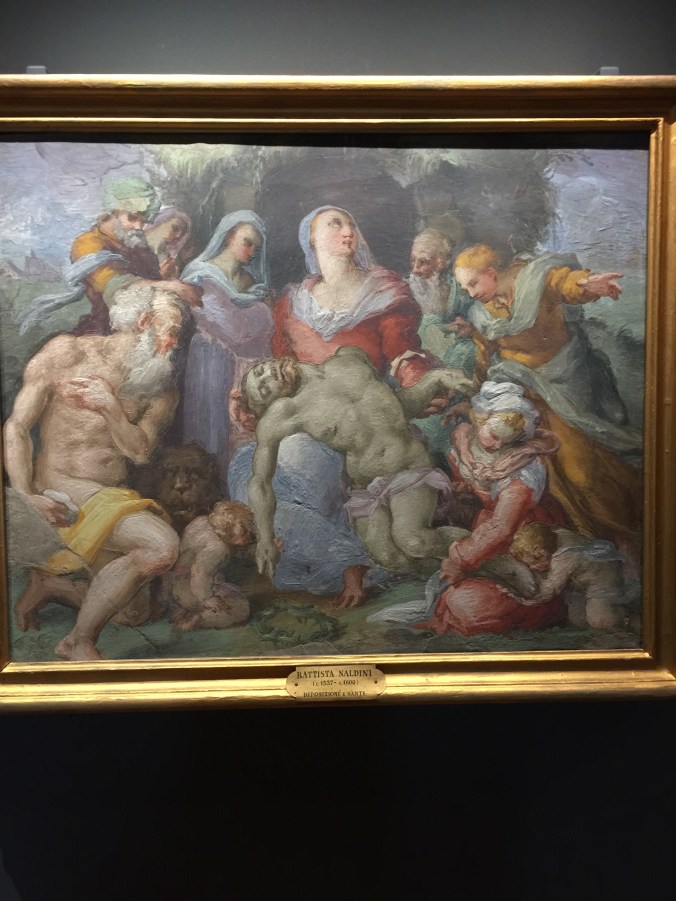
At least one of the children who found support at the ospedale was Giovan Battista Naldini, who had artistic talent which found expression after Pontormo.


One of the rooms in the museum has this amazing display of 140 small objects left with the babies deposited at the ospedale. You can open any of the drawers and see the evocative mementos sometimes left with the babies.


The association of salt — with the preservation of health— survived in Florence: a small supply of salt left with a child dropped anonymously at the Ospedale degli Innocenti, the foundling hospital, meant the infant was unbaptized.
King, Ross (2012-10-30). Leonardo and the Last Supper (p. 235). Bloomsbury Publishing. Kindle Edition.















Just like the numbers above.

Just like the hats, above and below.

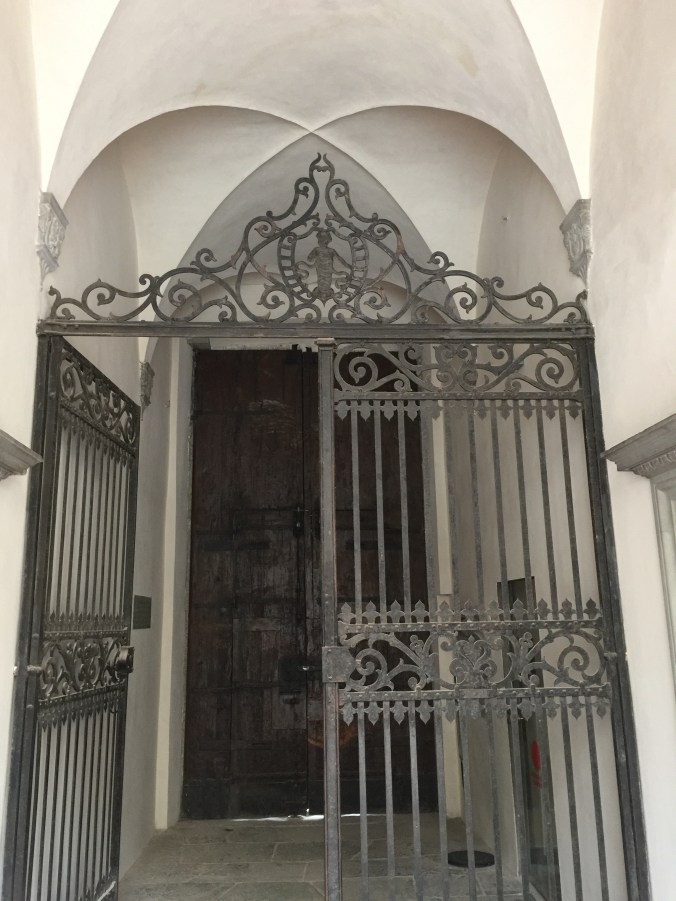
Hardware for the door.

A vase I like below:


From facade of Palazzo Pitti:


The Palazzo Borgherini-Rosselli del Turco is a Renaissance era palace in my neighborhood in Florence, located at Borgo Santi Apostoli 17.
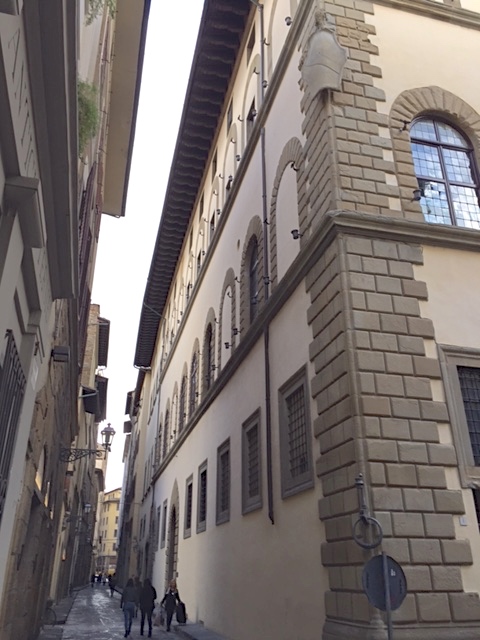
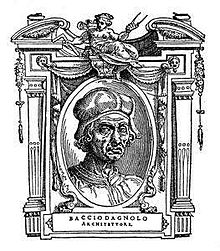
Commissioned by prominent Florentine, Pier Francesco Borgherini, around 1517 (a mere 500 years ago!), the palace was designed by one of the most famous architects of the period, Baccio d’Agnolo.
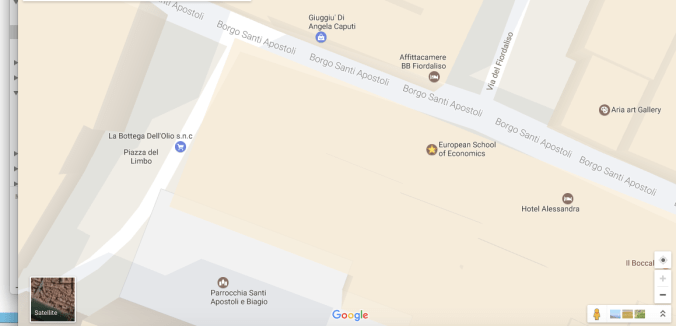
The building, completed by 1530, stands beside the church of Santi Apostoli and faces both the Piazza del Limbo and the Borgo Santi Apostali. In the map below, the palazzo covers the area starting on the right at Hotel Alessandra (which actually is inside part of the palazzo) and the European School of Economics. The palazzo runs continually along the Borgo Santi Apostoli, ending at the Piazza del Limbo. The building is further contained by the Santi Apostoli e Biagio church.
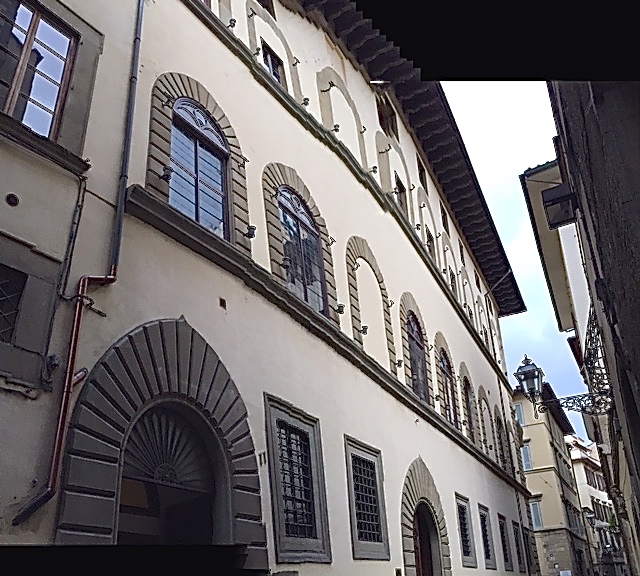
The photos below show the palazzo facing Borgo Santi Apostoli.
Baccio d’Agnolo also designed the nearby Palazzo Bartolini Salimbeni on Piazza Santa Trinita.
The Borgherini family had recently purchased property on which this palace was built, including the last available portion of the existing Limbo cemetery. In order to build this palazzo, the architect had to follow the contour of the left nave and apse chapels of the church, creating an unusual zig-zag profile on the southern side. There is, in fact, a private access to the church from inside the palazzo.
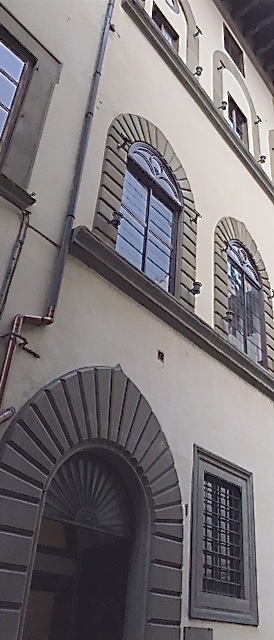
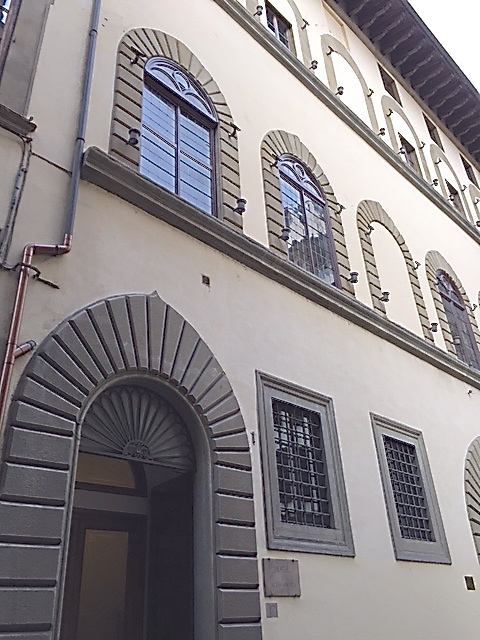
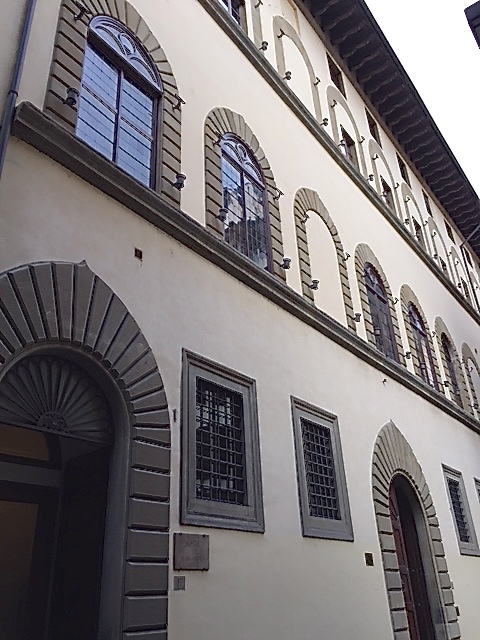
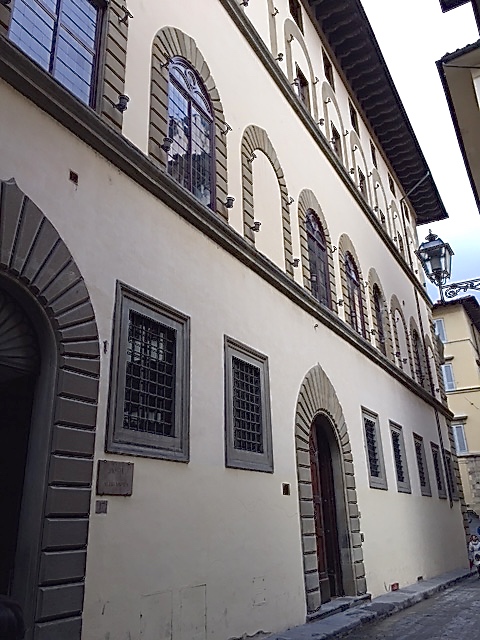

Because of the unusual plot, the architect was unable to create a central colonnaded courtyard typical of Florentine palazzi and instead designed a simpler atrium, which was needed to provide the light and air for the palace’s many rooms. The vestibule on the ground floor was used for commercial activities of the Borgherini family; this atrium has a vaulted ceiling, ending in fine corbels decorated with two bands of acanthus leaves.
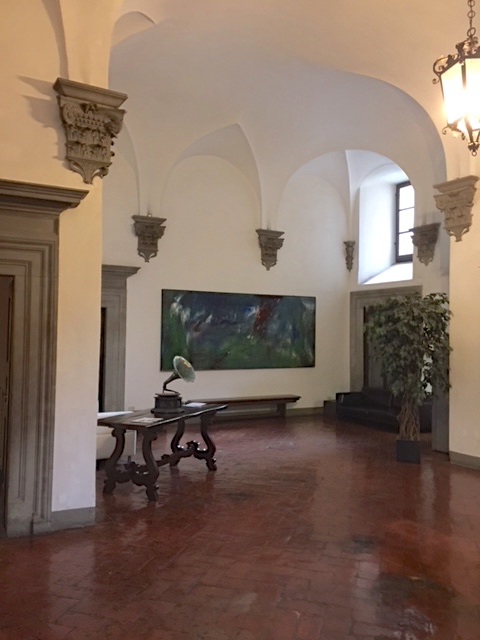
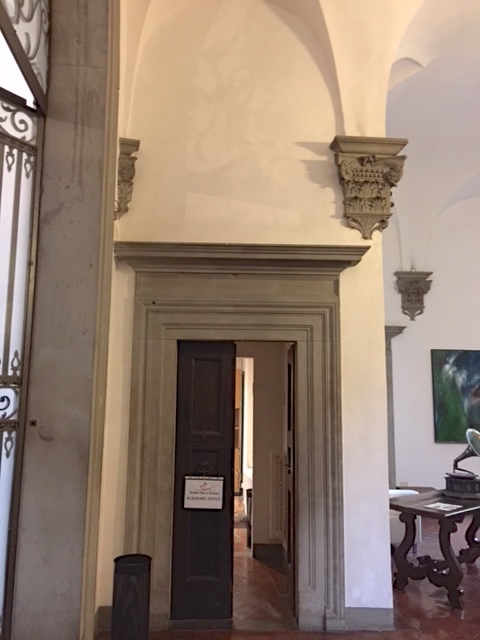
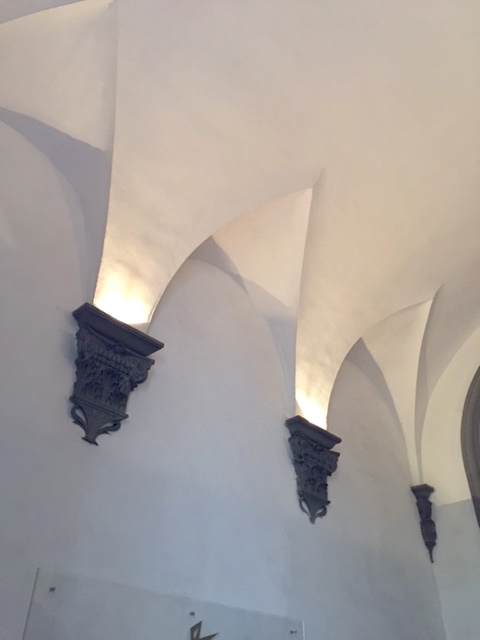
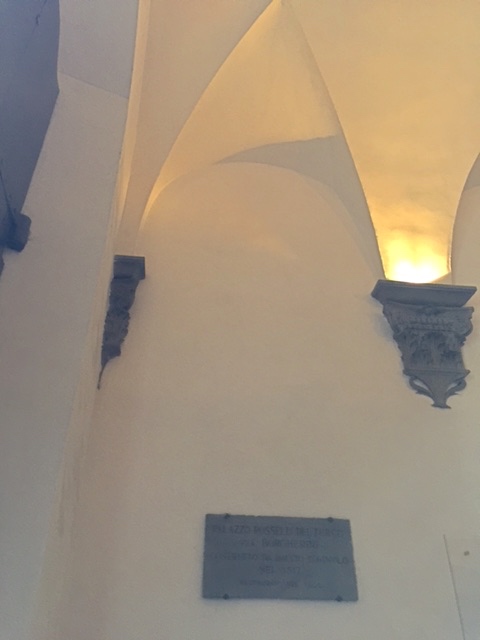
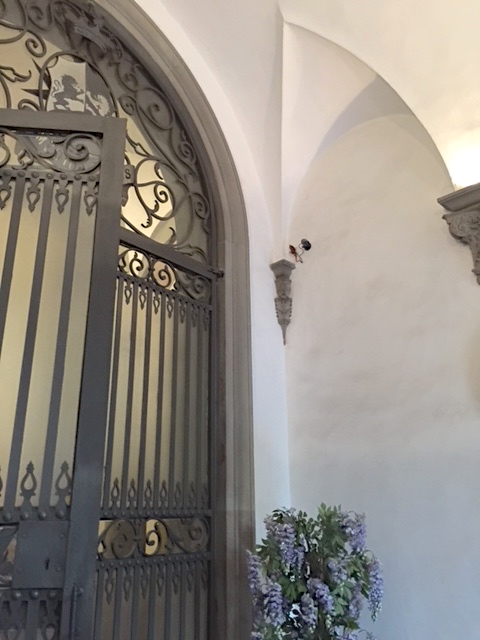
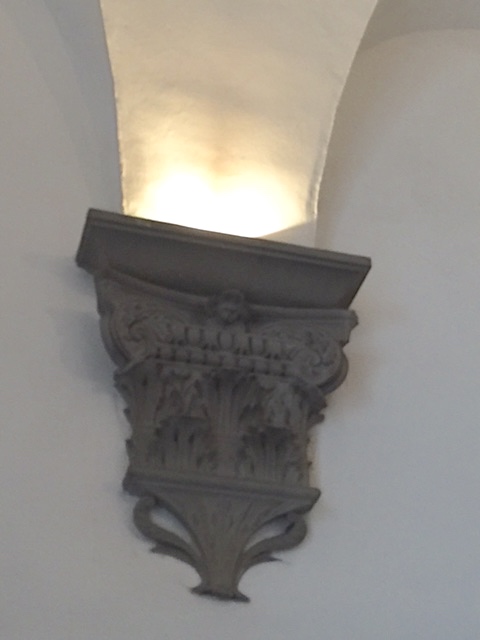
Another nearby room, with a barrel vault, gave access to the Limbo Square.The staircase to the upper floors leads off the atrium and along the wall which accesses the nave of the church. The ceiling of the stairs is made of planks of stone, which is quite unusual in Florentine palazzi designs.
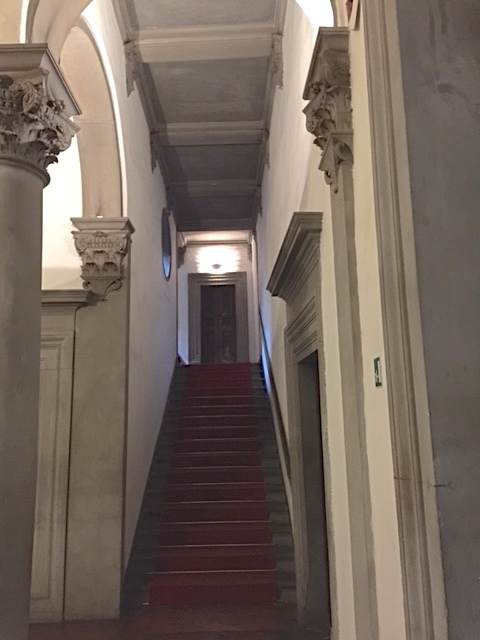
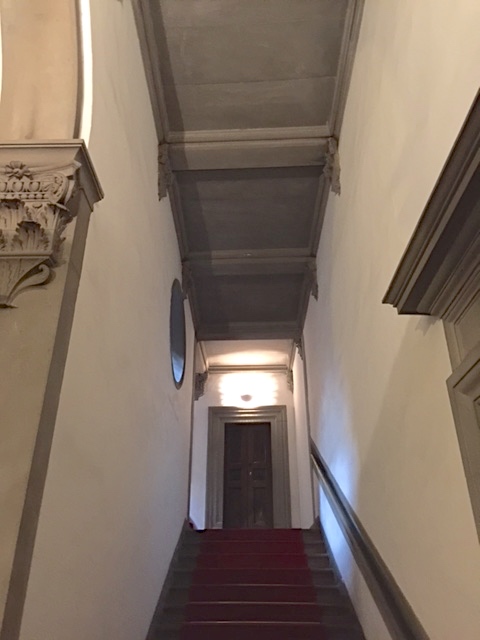
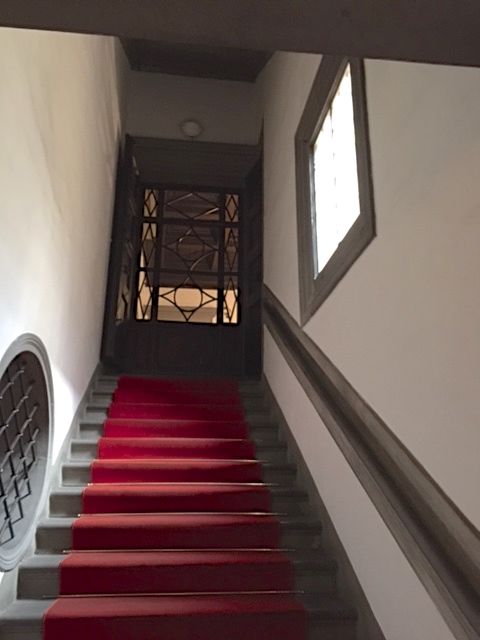
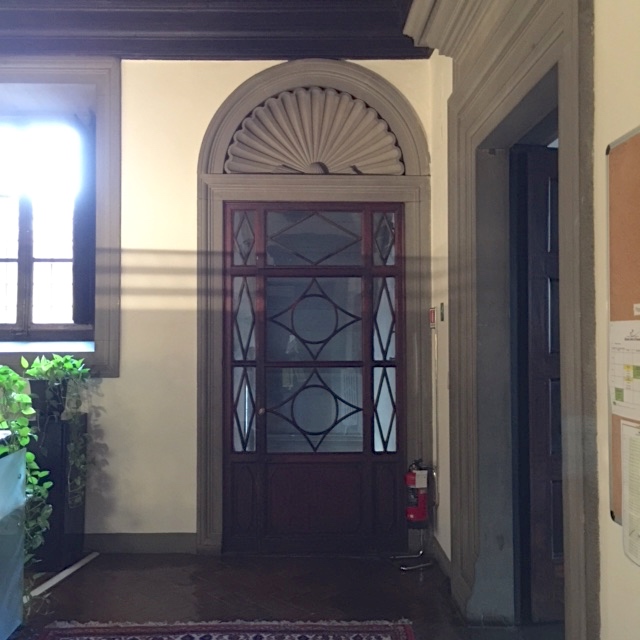
The first floor rooms were used for family life and face the north.
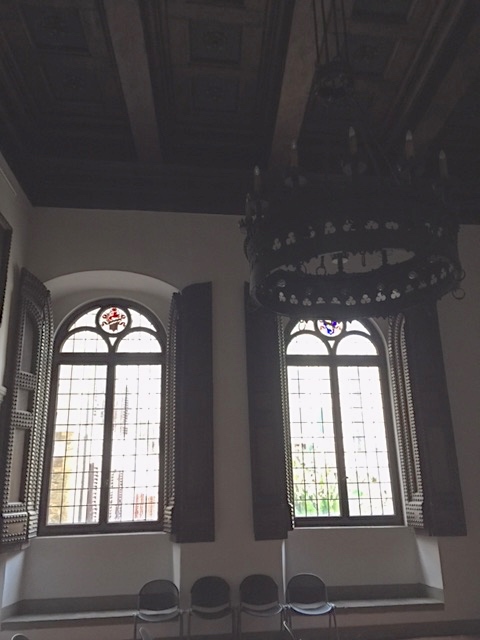
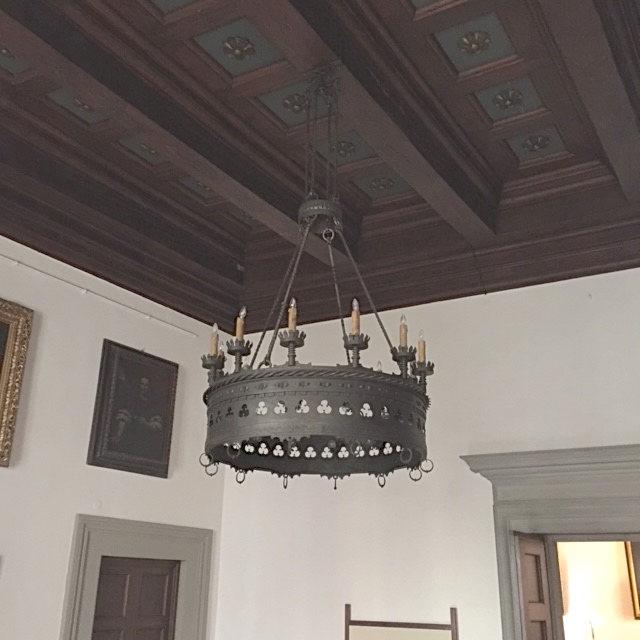
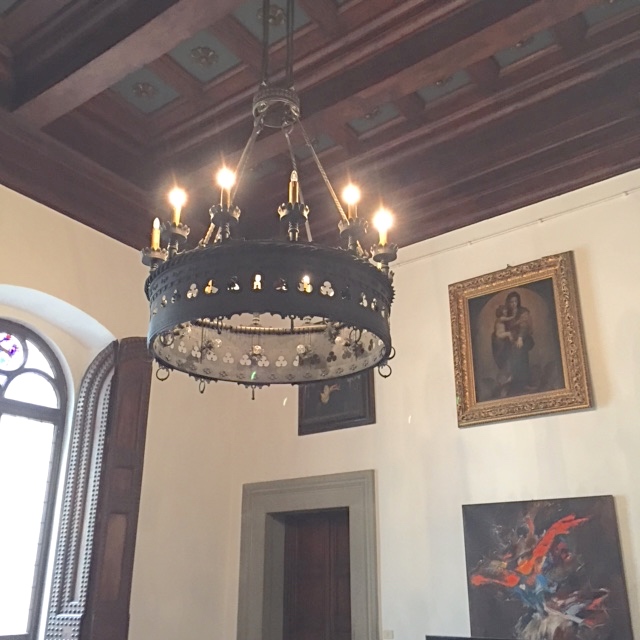
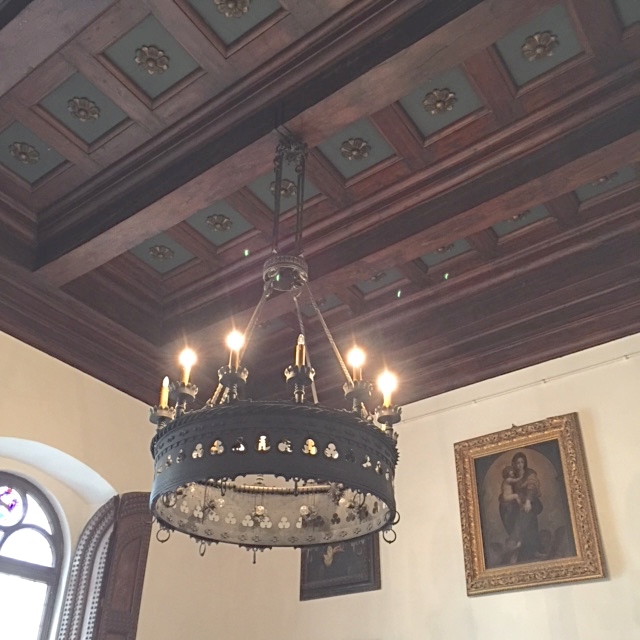
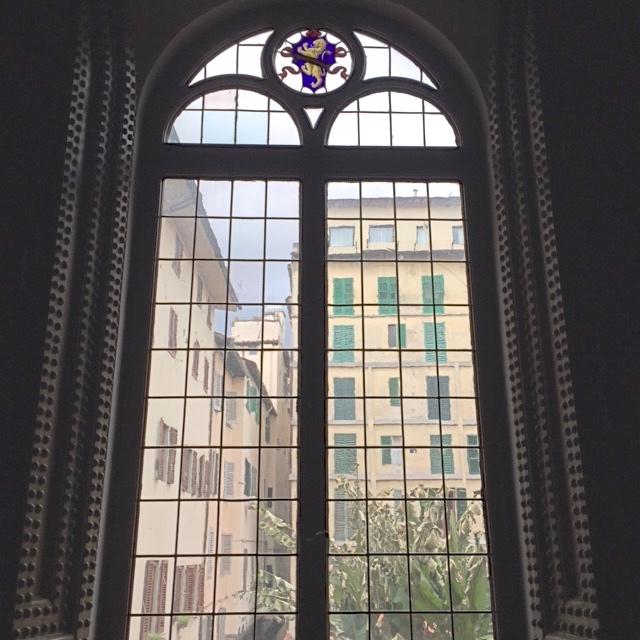
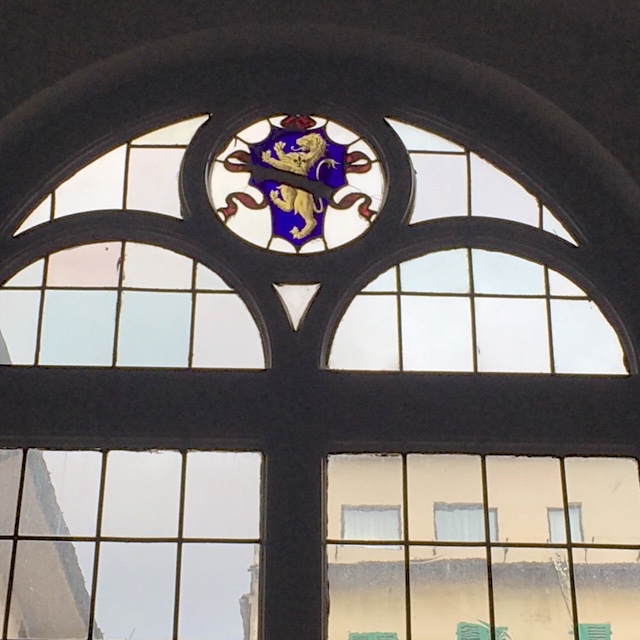
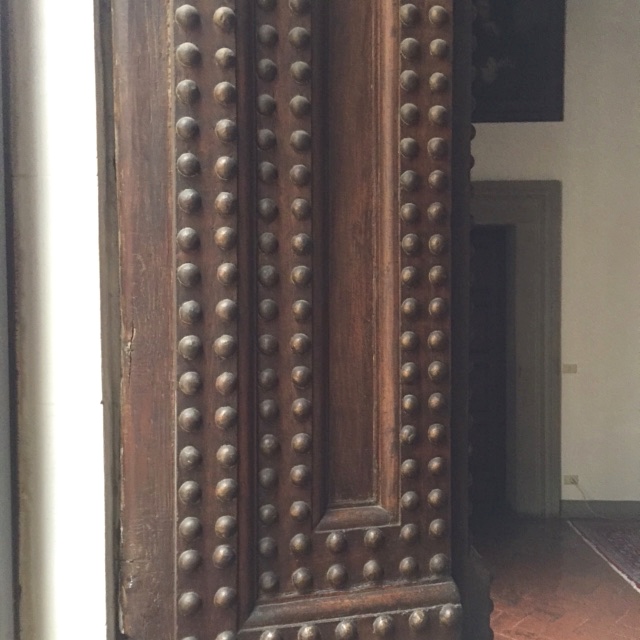
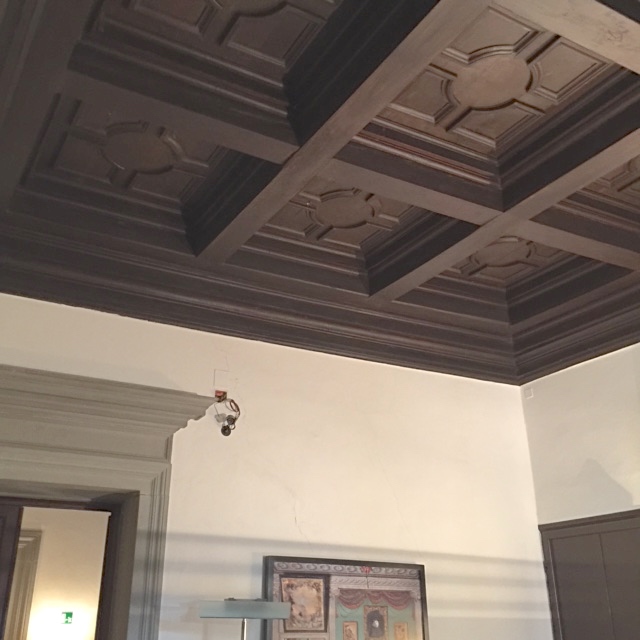
A small chapel (6.40 x 1.60 meters), not illustrated here, had a small window with a grate that opened directly on the clerestory of the left aisle of the church. It was thus possible to attend religious services without leaving home. The interior of the chapel is decorated with paintings in monochrome with cherubs and other religious subjects and the altar has a wooden bust of the Virgin and Child.
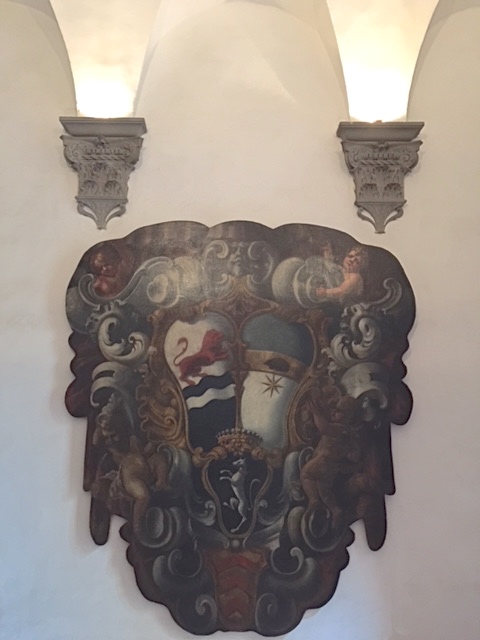
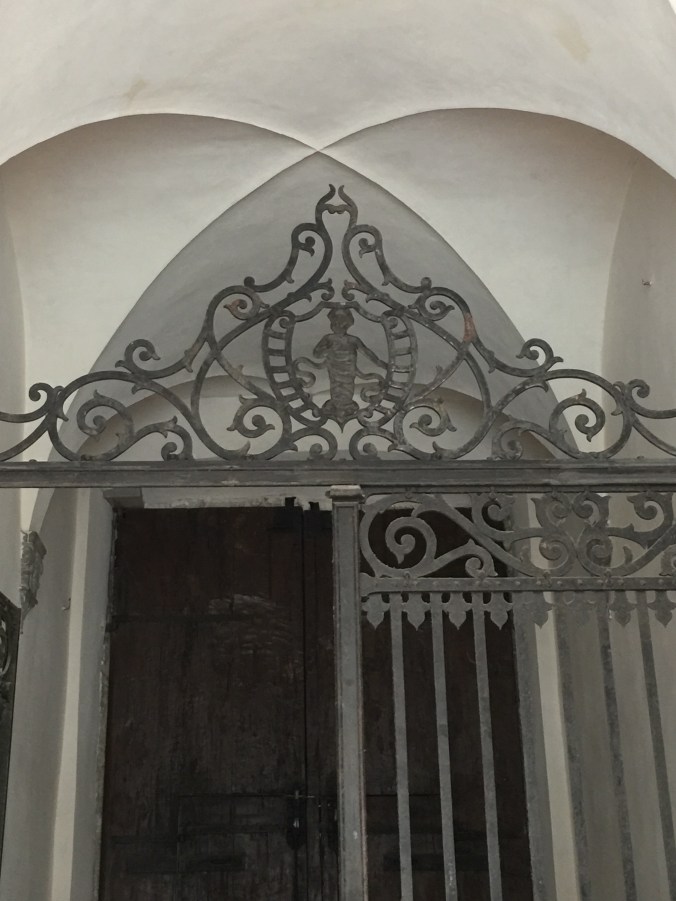
Above is the coat-of-arms for Borgherini family. This beautiful object hangs in the current vestibule to the palace.
The interior of the palazzo was decorated by Benedetto da Rovezzano,* among others. Da Rovezzano was a friend and collaborator of Baccio d’Agnolo; together they were also working on the new portal of the Church of the Holy Apostles. They each designed a fireplace for the Palazzo Borgherini. The one by Benedetto da Rovezzano, with low-relief sculpture, was in the living room; it is now in the National Museum at the Bargello. The other period fireplace is thankfully still in situ in a first floor room. It has the solemn linearity, without decorations, typical of the style of Baccio d’Agnolo.
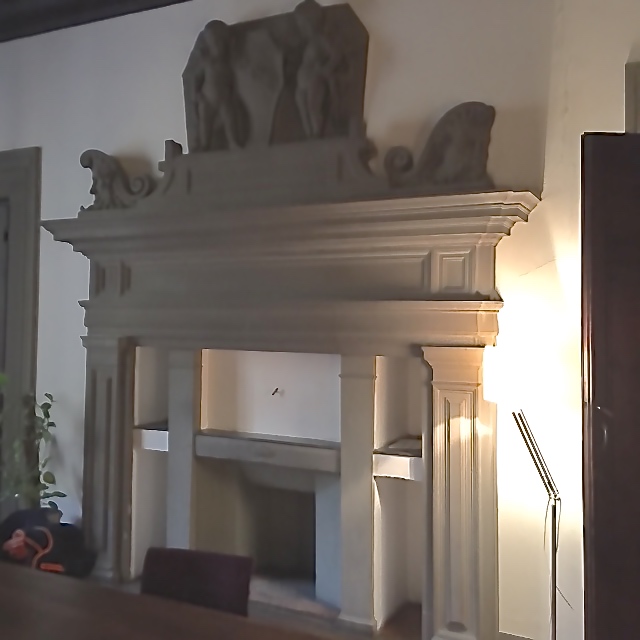
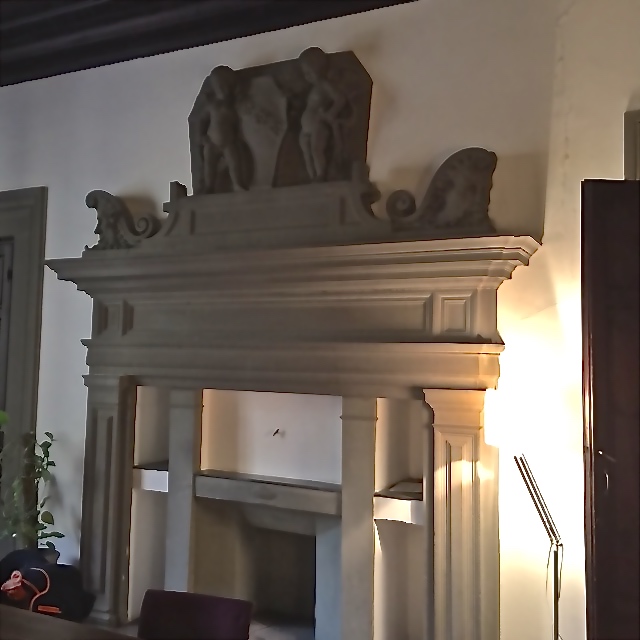
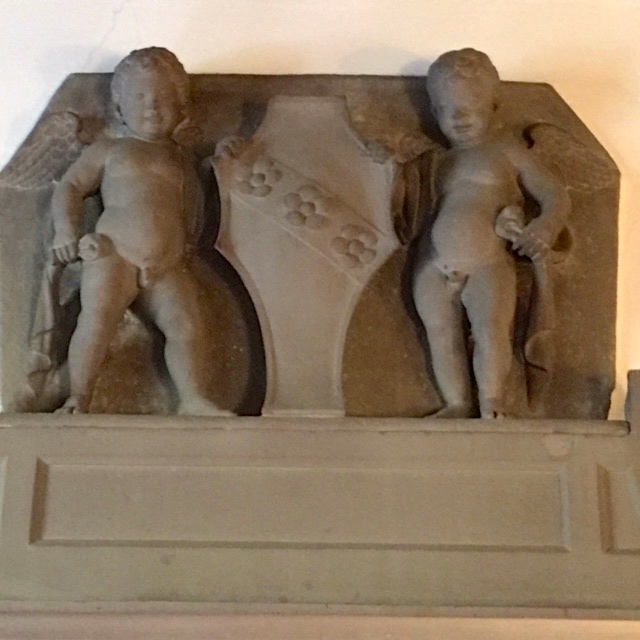
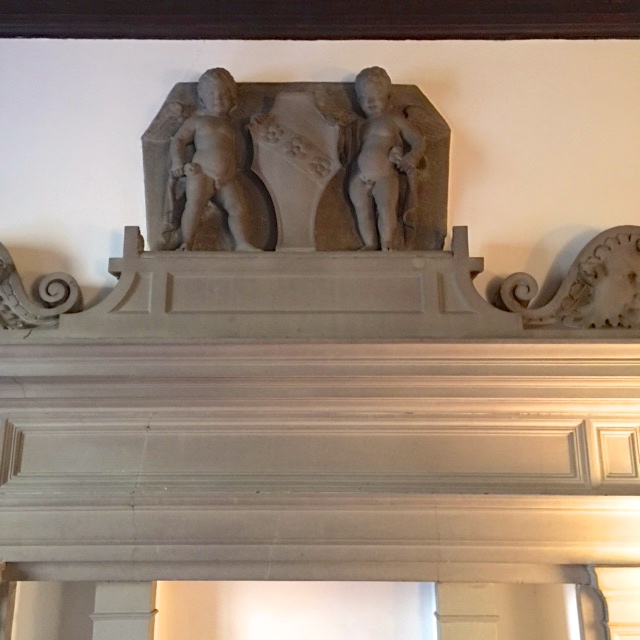
The Borgherini were among the most active supporters of the arts in Florence, and they lavished upon their prominent home many splendors by contemporary artists, including Andrea del Sarto, Pontormo, Bachiacca, and Granacci. Sadly, over the centuries, many of the best pieces by the finest artists have been sold off or confiscated, beginning as early as 1529, when the chests containing panels painted by Jacopo Pontormo for the Borgherini were expropriated. As noted above, the fine fireplace which da Rovezzano created for one of the rooms of the palazzo is now a part of the Bargello museum.
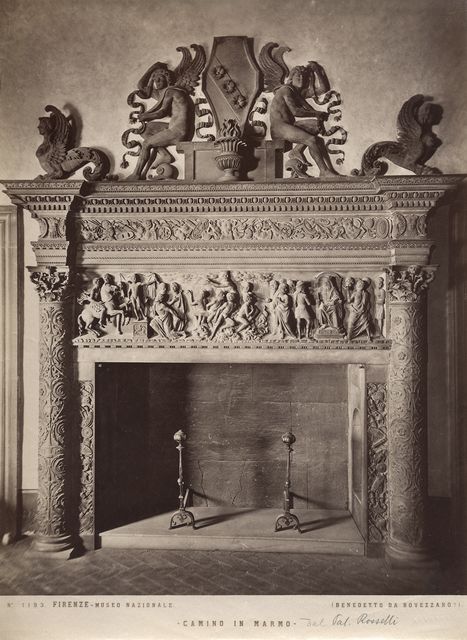
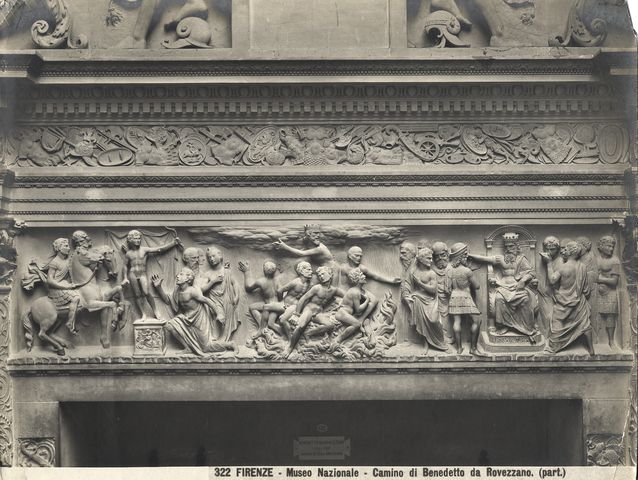
*(Benedetto Grazzini, best known as Benedetto da Rovezzano, was an Italian architect and sculptor who worked mainly in Florence. He was born in Pistoia in 1474, and adopted the name Rovezzano from the quarter of Florence in which he lived. Wikipedia Born: 1474, Pistoia; Died: 1552, Reggello)
No less a personage than Vasari described the luxurious interior of the building, in his work dedicated to the life of Baccio d’Agnolo:
( Lives by Giorgio Vasari [1568])
“He gave Pier Francesco Borgherini drawings of the house inBorgo Santo Apostolo,who at great expense had ornaments brought for the doors and chimneys, and in particular oversaw the creation of the finely carved walnut paneling of the room, which at its termination, was of great beauty.”
Borgherini even had a bridal chamber built in honor of the marriage of his son Pier Francesco and Margherita Acciaiuoli. Baccio d’Agnolo oversaw the wooden decoration of that room, which included painted panels embedded into the architectural design.
Baccio acted as an intermediary between the patron and the most important painters of the time, including Andrea del Sarto, Pontormo, Bachiacca and Granacci, all of whom were commissioned to decorate the panels for this room. The artists created paintings designed to tell the story of Joseph the Jew which probably were meant to allude to the young couple or the patron himself.
The fame and the beauty of this room were such that as early as 1584, some panels had already been sold by the order of Francesco I de’ Medici, who wanted the panels by Andrea del Sarto and Granacci for his own collection.
Today, the panels are scattered across various European museums, including the Uffizi.
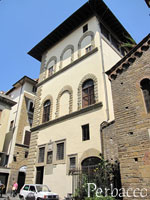
On the exterior, the palace’s solid plaster walls are divided into three floors, with windows and doors decorated with a course of typical bugnato (Florentine ashlar) and elegant wrought iron, which was used to hold torches and banners. For the stone detailing of the palazzo, Baccio d’Agnolo collaborated with Benedetto da Rovezzano on both exterior and interior details.
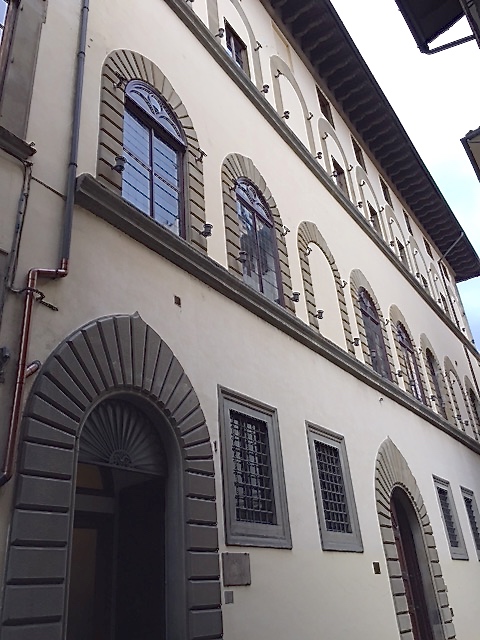
There is also a rooftop terrace, probably designed by Baccio d’Agnolo, although probably built at a later time.
The western, short side of the Palazzo Borgherini faces the Limbo square and has bas-reliefs and inscriptions and several license plates and registration. There can be found a monogram of Christ; two inscriptions in stone; and a small portrait in profile of the Madonna and Child, carved in low relief. The latter has traditionally been attributed to Benedetto da Maiano. (The Marian relief could instead be a copy of a similar work in the Church in San Frediano in Cestello, attributed to Francesco di Simone Ferrucci.)
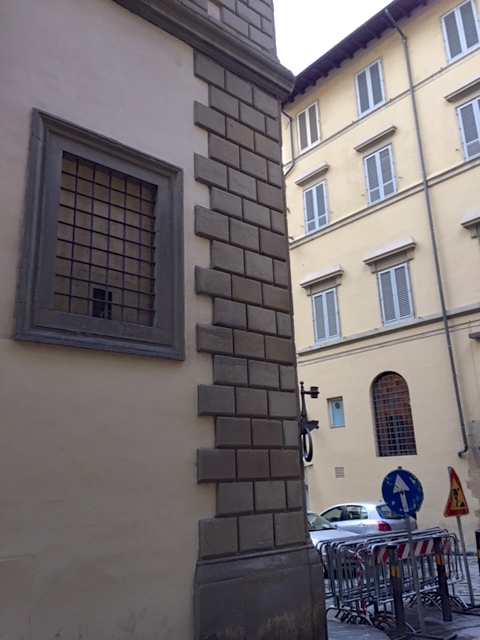
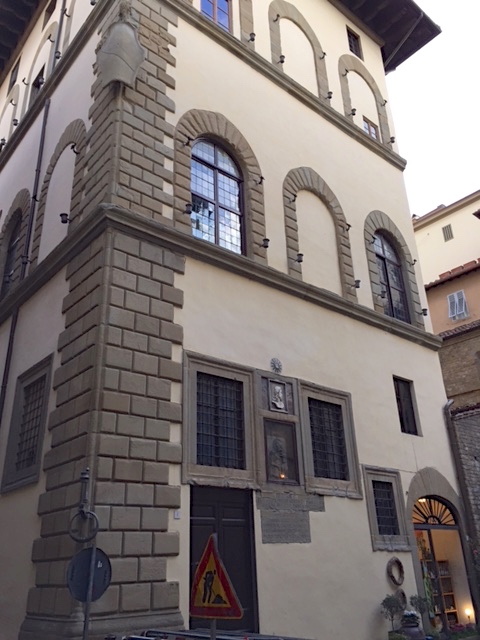
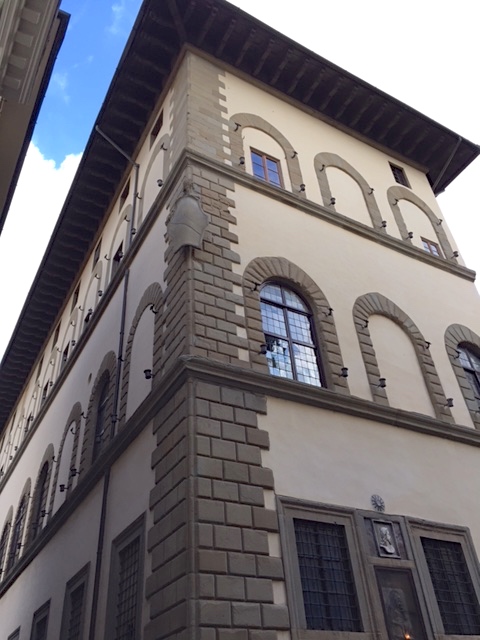
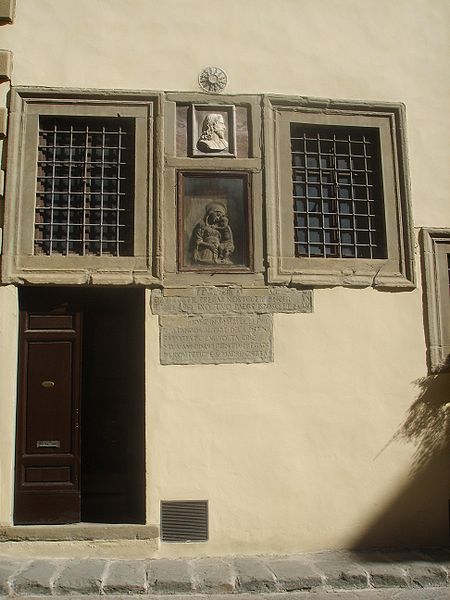
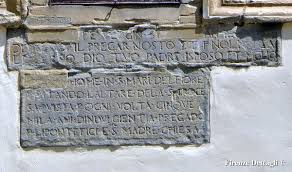
On the corner of the building is the coat of arts of Borgherini.
Soon I will be writing a post on the garden associated with this palazzo.
The Borgherini family lived in the palazzo until the mid-18th century, when the family was implicated in a scandal involving shortages from the Granai dell’Abbondanza granary. The family’s holdings and properties were confiscated by the Lorraine State and sold at judicial auction.
The Rosselli del Turco family acquired the property, which has been in their possession ever since. The Rosselli family was for having produced famous painters, such as Cosimo and Matteo Rosselli, and the antiquities scholar, Stefano Rosselli (1598-1664), author of manuscripts on the works of art found in Florentine churches of the 17th century.
In 1750 the palace was given to Giovanni Antonio, Stephen and Jerome of Turkish Rosselli , together with the garden and other adjacent buildings. This family was responsible for the restoration and conservation of no significant additions subsequent palace. Today it belongs to their descendants as well as one of the venues of the College of Higher Education in UK law European School of Economics , which here holds bachelor and master courses in the economic sector. The palace also houses the headquarters of the association in the World Fiorentini and didactic center of the Arch of Guelph .
Today the building hosts ESE Florence, while the garden is housed by ESE’s partner Aria Art Gallery.
Read more: http://www.eselondon.ac.uk/ese-centres/florence/history-of-palazzo-rosselli-del-turco.html#ixzz4Wbwm4Roi
The flash of hot pink against the brown stone is arresting.
I
Angela Caputti, updated windows. Looks like we’re off to a great new year!


A beautiful, modern ballgown.

Walking down one of my favorite Florentine streets, the Borgo Santi Apostoli:
I discussed this famous old hotel in a recent post.

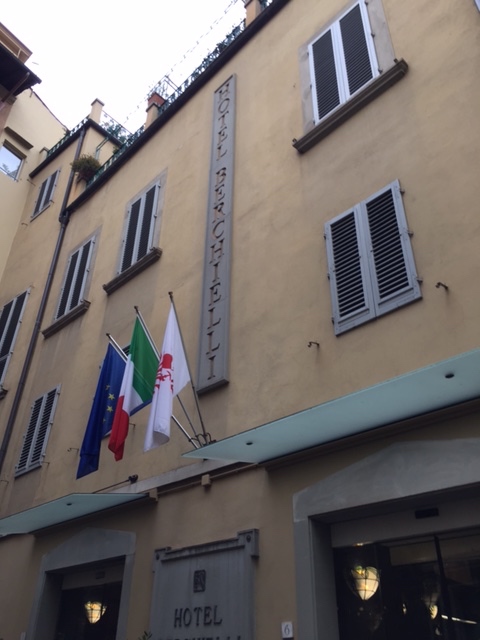
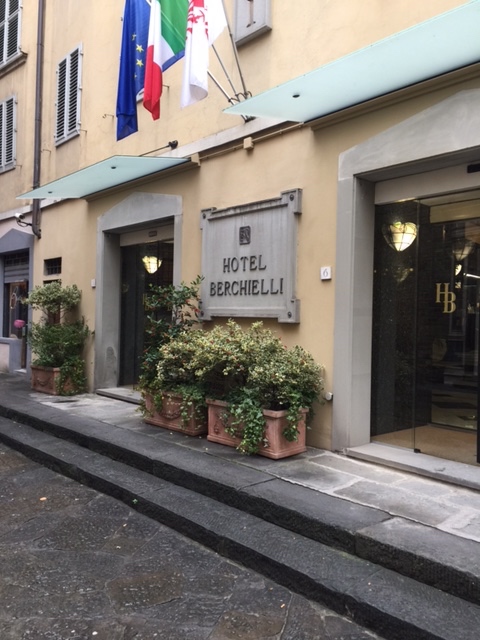
From the entrance to the Hotel, a small passage still exists leading to the Lungarno Acciaiuoli. That would be the Arno just over the wall by the pedestrian in the turquoise jacket.
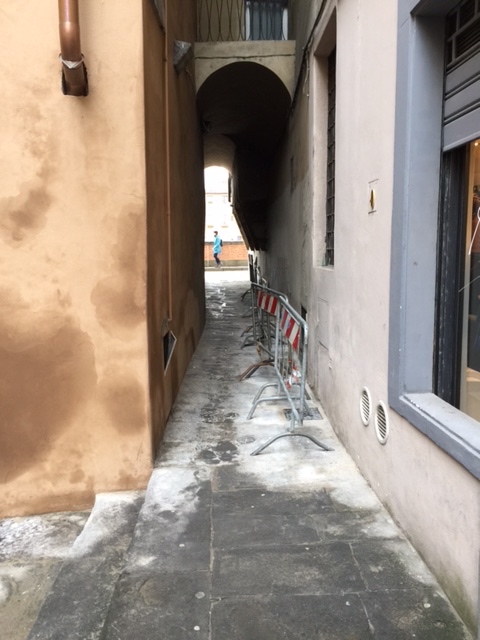
The hotel is located on this wonderful small piazza, the Piazza del Limbo.

And as you can see from this temporary sign, said piazza is closed for work starting on 17 Gennaio 2017. Until when? Sign doesn’t say. :-) Who needs to know, anyhow?

More random shots of spots I’ve passed throughout the past couple of weeks.


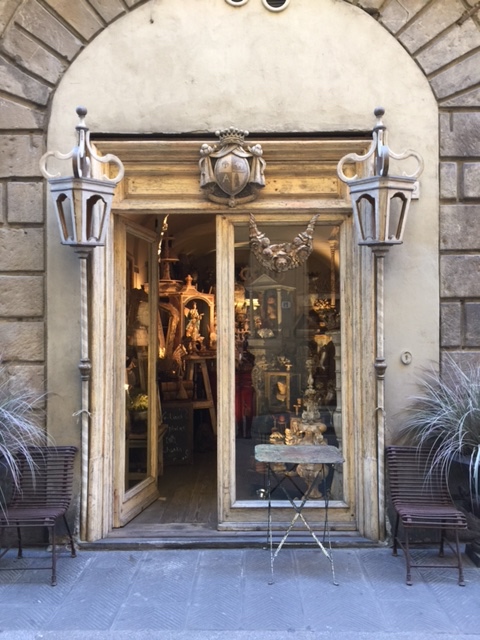


Ah, Florence. You never fail to please!
As seen in a random restaurant today.

On either side of the long, languid Arno River that bisects Florence from east to west, run parallel roads, called the Lungarni. These long roadways are, in typical Florentine fashion, divided up every few blocks or so, with various names.
Italy has a lot of history and Florence in particular has a lot of names to commemorate. The Lungarni passages provide a fertile field for memorializing important names. Here they are:
North shore (from the west):
Lungarno Amerigo Vespucci
Lungarno Corsini
Lungarno Acciaiuoli
Lungarno Archibusieri
Lungarno Anna Maria Luisa de ‘Medici
Lungarno General Armando Diaz
Lungarno delle Grazie
Lungarno della Zecca Vecchia
Lungarno William Galeazzo
Lungarno del Tempio
Lungarno Cristoforo Colombo
Lungarno Aldo Moro
South shore (from the west):
Lungarno Bruno Buozzi (Lastra a Signa)
Lungarno dei Pioppi
Lungarno del Pignone
Lungarno Santa Rosa
Lungarno Soderini
Lungarno Guicciardini
Lungarno Torrigiani
Lungarno Serristori
Lungarno Benvenuto Cellini
Lungarno Francesco Ferrucci
As you can see, a lot of names were used in naming the sections of the Lungarni!
It fills me with some kind strange pride to note that I’ve had the personal good fortune to live on three sections of the Lungarni thus far in this lifetime (who knows about other lifetimes? I can’t remember!): in the Oltrarno I had the pleasure of living for time on the Lungarno Serristori and later the Lungarno Torrigiani. I loved every minute of both locations. There is no better way of exploring a new area of the city than living in it for a while!
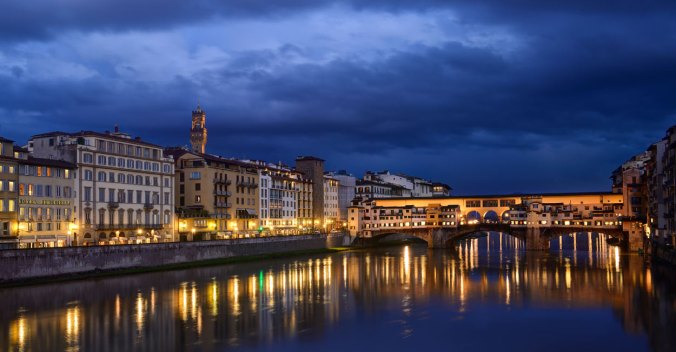
My focus today is on the North side of the river and on the section of the Lungarno on which I currently have the amazing luck to live. The prestigious Lungarno Acciaiuoli is the stretch of the north bank of the Arno River in Florence that runs from the Ponte Vecchio to the Ponte Santa Trinita. This area of Florence is among the most elegant areas in the city.
My short passage of the Lungarno ends at the east end at the storied Ponte Vecchio and overlooks, on its west end, the Torre Consorti, and one side of the Palazzo Spini-Feroni, home of the Salvatore Ferragamo palazzo and museum. It’s a tony avenue.

In olden times, this section of the Lungarno was called i cappellai or “the hatters,” after the Florentine hat makers who located their shops here.
Later, in the 19th C., two of the most important Florentine hotels were located here: the Grand Hotel Royal de l’Arno and the Hotel Royal de la Grande Bretagne. Charles Dickens, Henry James and many others stayed in these famous hotels. Sometimes, when I am walking around Florence on streets where I know for a fact that famous personalities from the past passed over, I imagine for a moment what it would be like to bump into, say Dante Alighieri or Charles Dickens walking around town. I’ve always had this sort of imagination.
Still standing from that era is the Hotel Berchielli, the ancient building that miraculously survived the landlines set by the retreating German army during WWII. This historic building has housed the Hotel Berchielli since 1890 and is among the most famous hotels in the center of Florence.
A marble plaque on the façade recalls the frequent stays of Romain Rolland, a distinguished literary critic and the winner of the Nobel Prize for Literature in 1915. Rolland chose the Hotel Berchielli as his Florentine residence.
ROMAIN ROLLAND
INSIGNE WRITER
AND ART CRITIC
sTAYed HERE
IN 1911
And while you may not be familiar with Rolland, I’m sure you know that guy named Pablo Picasso, who also, several decades later, took up residence in the hotel (fall of 1949).
Also marking the area is a plaque at Red All’84-86, of Palazzo Spini Feroni:
AVSPICIIS. ET. MVNIFICENTIA
Ferdinandi. III. M. D. ETR.
AEDIVM. SPINORVM. partem
ARCV. VIAE. IMPOSITO. FLVMINI. ANTEA. IMPENDENTEM
SERIOUS. PERICVLO. DILAPSVRAM
COMMVNE. FLORENTINORVM
A.D. CIVIVM. SECVRITATEM. ET. Maiorem. AMOENITATEM. LOCI
ONLY. AEQVANDAM. CVRAVIT
YEAR. MDCCCXXIII.
VEXILLIFERO. Iacobo. COMITE. Gvido
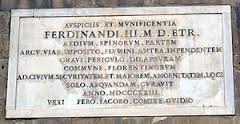
The translation is: “Under the auspices and through the munificence of Ferdinand III, Grand Duke of Tuscany, the City of Florence in the year 1823, being the standard-bearer Count Jacopo Guidi, demolished for safety of citizens, and greater beauty of the place, the part of the houses the Spini who first faced the river on a place at the turn of the bow away and threatened to collapse with grave danger. ”
(reference: Francesco Cesati, the great leader of the streets of Florence, Newton Compton Editori, Rome 2003).
From the Lungarno Acciaiuoli, the world of Florence’s history, culture and elegance are readily available.
On the Lungarno Acciaiuoli, looking towards east to Ponte Vecchio:
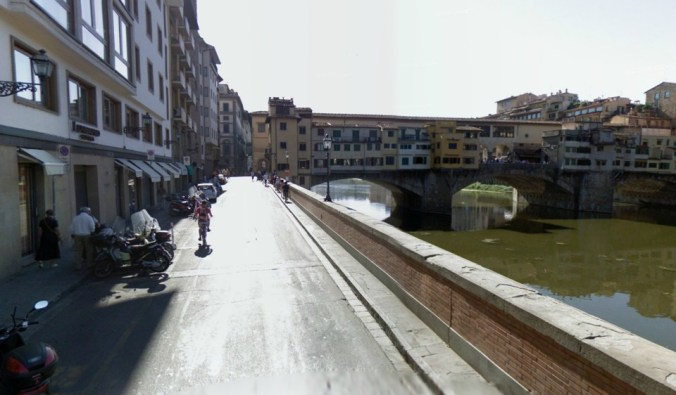
Looking from the embankment in the opposite direction, towards the west, one can admire the graceful Ponte Santa Trinita, about which I will be posting soon. This bridge is considered to be one of the most elegant and refined bridges in Italy in particular or in all of Europe. The line of arches that create the bridge, along with the white scrolls on the summit of each arch, and the four statues placed on the corners to represent the seasons, the bridge is one of a kind. Standing on the bridge provides a unique panorama or the lovely Arno through this area.
The Lungarno Acciaiuioli is considered, along with the current Lungarno Corsini, to be the most ancient road opened along the Arno river. This section of the Lungarni has a varied character, marked as it is by two building from the Middle Ages (the Consorti tower and Palazzo Spini Feroni), as well as restored buildings from the 19th-century and still others rebuilt in the 1950s and 60s with a modern character.
What a street!
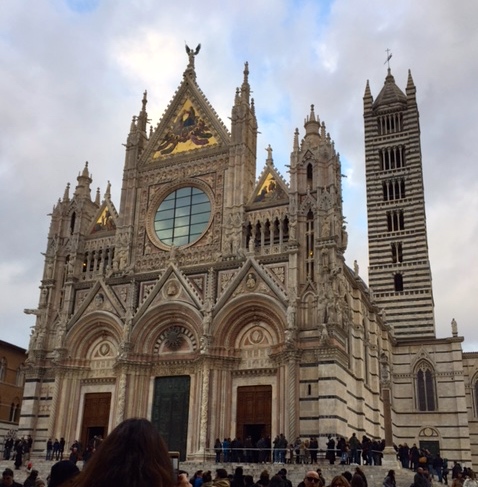


Siena still seems one of the blessed places of the Earth, a town whose beauty alone might justify the claim inscribed on the Camollia Gate: – ‘Siena opens her heart wide to you’. From the shell-shaped Piazza del Campo, the three terzi (districts) spread along the town’s three curving ridges, their harmonious buildings constructed in the bricks of that warm hue known to artists as ‘burnt sienna’. In the prosperous years before the Black Death, ‘the city of the Virgin’, as it was called, had a population of over 50,000 in addition to another 50,000 in its contado, the country districts and small towns it controlled to its south and west. By the time of Lorenzetti’s frescoes, Siena had added Grosseto and Massa Marittima to its domains.
By the 1330s Florence had twice as many inhabitants as Siena, yet it was at this time that the smaller city, already possessor of the striking zebra-striped cathedral we see today, decided to erect the largest church in Christendom. The project was halted by the Black Death, which killed half the town’s population, and was abandoned soon afterwards, but some of its pillars and arches still stand as testament to monumental ambition. The existing cathedral, which is pretty large itself, would have become merely the transept of the greater glory. Siena’s rulers, whom their subjects might
Gilmour, David (2011-10-25). The Pursuit of Italy: A History of a Land, Its Regions, and Their Peoples (Kindle Locations 1226-1230). Farrar, Straus and Giroux. Kindle Edition.
If you’ve ever been to Italy, you know there are a lot of churches! And, Florence is no slacker when it comes to houses of worship. Florence has a lot of churches!
Near the Lungarno Acciaiuoli, about which I will soon be posting, there is a tiny piazza or city square, with the evocative name of Piazza del Limbo. Not only is the small square a beguiling place to wander around, but it is purportedly the home of the oldest religious building in the city: the Chiesa dei Santissimi Apostoli.
The chiesa was built in the 11th century and, though it was remodelled in the 15th and 16th centuries, is one of the few in the city to have maintained its High Middle Ages features.
Tradition says that it was Michelangelo himself who convinced Bindo Altoviti, who planned to raise the ground level, not to rebuild, but to preserve the church.
The church faces the Piazza del Limbo–named because it housed a cemetery for children who died before having been baptized. It is adjacent to the Palazzo Borgherini-Rosselli del Turco.

A slab on the façade attributes the foundation to Charlemagne and his paladin Roland in the year 800. A paladin is any of the twelve peers of Charlemagne’s court, of whom the Count Palatine was the chief. A paladin is a knight renowned for heroism and chivalry. But scholars assign the church to the 11th century. A small bell tower was added by Baccio d’Agnolo in the 16th century.
The simple façade, in Romanesque style, has a portal attributed to Benedetto da Rovezzano. The tabernacle by Giovanni della Robbia and the tomb of Oddo Altoviti.
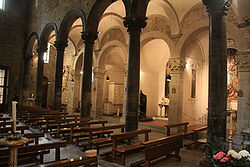
Interior of Santi Apostoli
The church’s layout is the typical basilican plan, with a nave, two aisles, and a semicircular apse, still shows Palaeo-Christian influences. It has green marble columns that come from Prato, with capitals taken from ancient Roman remains. The Corinthian capitals may well have been taken from the Roman baths that existed in the area.
The richly decorated wooden ceiling was added in 1333. Noteworthy is the pavement, with a mosaic from the original edifice which was later restored with the contributions of outstanding Florentine families (Acciaioli, Altoviti and others). The apse area appears to be Romanesque, with undecorated stones visible. The side chapels are from the 16th century.
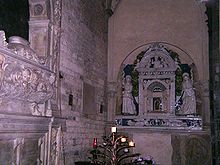
On the left of the apse are a polychrome terracotta tabernacle by Giovanni della Robbia. To right of the entrance is the tomb with the bust of Anna Ubaldi, mother of the Gran Priore del Bene. The bust was sculpted by Giovanni Battista Foggini. The 2nd chapel on the right, chapel of San Bartolomeo was completed in the 16th century. The right wall has a stucco depicting San Paolo, and on the left wall the sepulchral monument of Piero del Bene (1530).
At the end of the nave above the door that leads to the Canon’s hall is the sepulchral monument of Bindi di Stoldo Altoviti (Bindo Altoviti) (1570) with a statue of Faith and two putti by followers of Bartolomeo Ammannati. In the apse, is the monument of Antonio Altoviti and busts of both Charlemagne and Antonio Altoviti by Giovanni Caccini. In the left nave is the monument to Oddo Altoviti (1507-1510 by Benedetto da Rovezzano.
The 4th chapel on the left has an altarpiece with the Adoration of the Shepherds and, on the wall, Archangel Raphael with Tobias and St Andrew Apostle (c. 1560 by Maso da San Friano). The 3rd chapel on the left contains the image of Archangel Michael defeating Lucifer (16th century by Alessandro Fei). The 2nd chapel has frescoes depicting the Glory of San Giovanni di Chantal by Matteo Bonechi. The first chapel has a Madonna, Child and Angels, a copy of a Paolo Schiavo originally on the facade of church.
The church houses three flints (Pietre del Santo Sepolcro) putatively from the Holy Sepulchre in Jerusalem. According to tradition, these flints were used to light the lamps of the tomb when Jesus was buried. Legend holds that they were given in 1101 to Pazzino dei Pazzi, who was among the first Christians to scale the walls of Jerusalem, leading to the capture of that city during the First Crusade.
From then on, the Pazzi included a flaming cup in their coat of arms. The flints are linked to the ceremony of Lo Scoppio del Carro and the lighting of fireworks from the Portafuoco after a celebratory mass.
 get back, lauretta!
You must be logged in to post a comment.