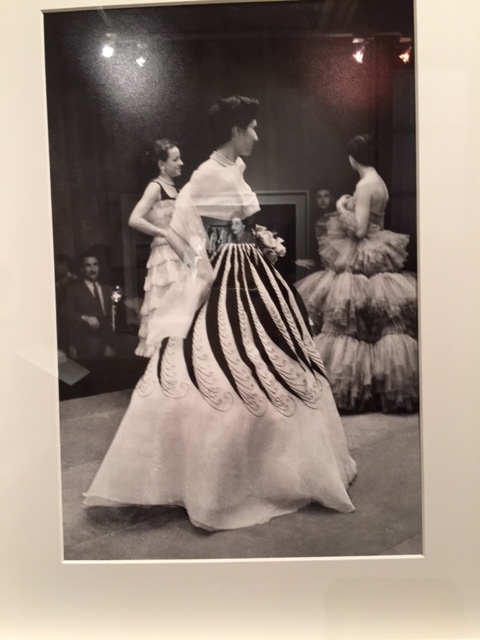
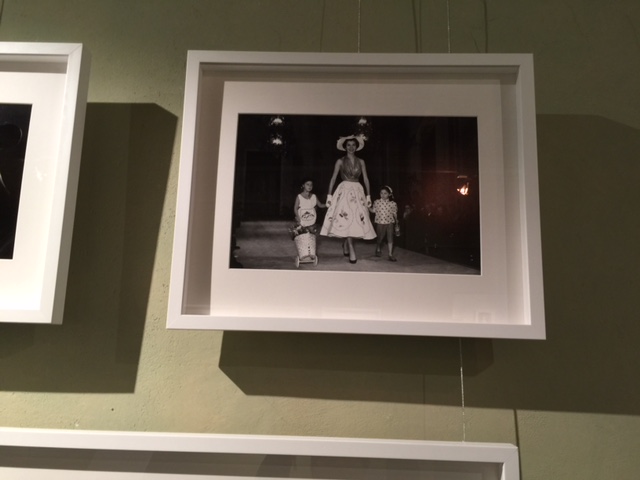
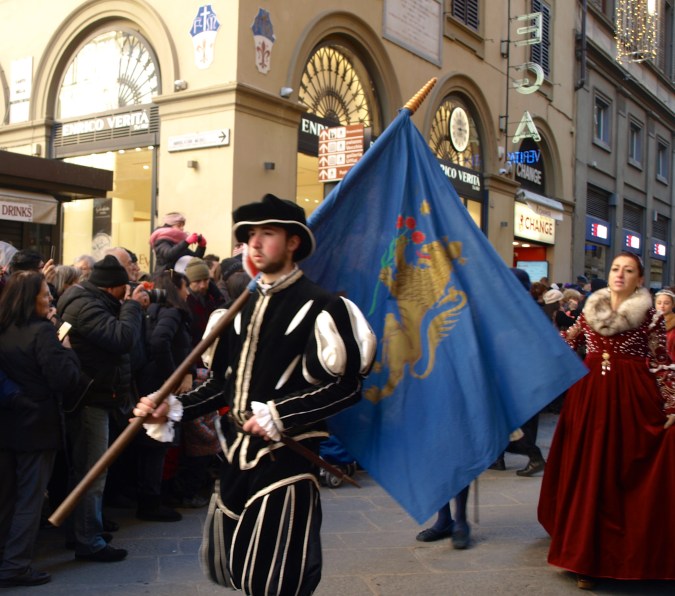
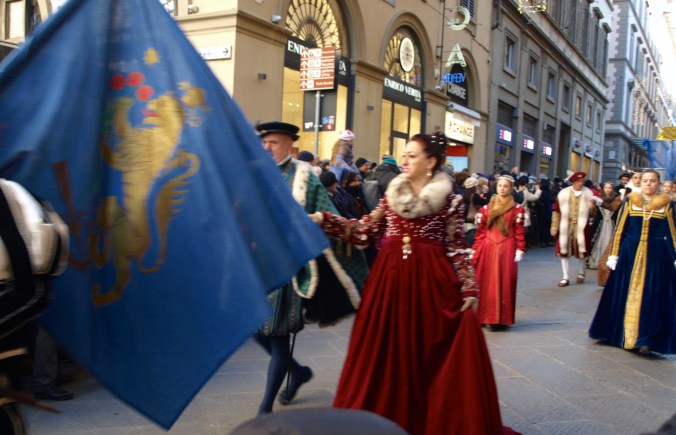
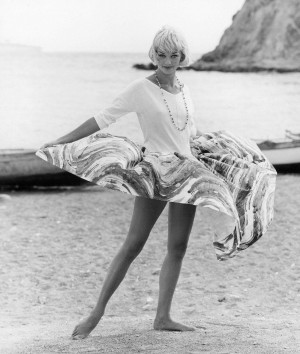
The Palazzo Pitti hosts fashion, then and now.

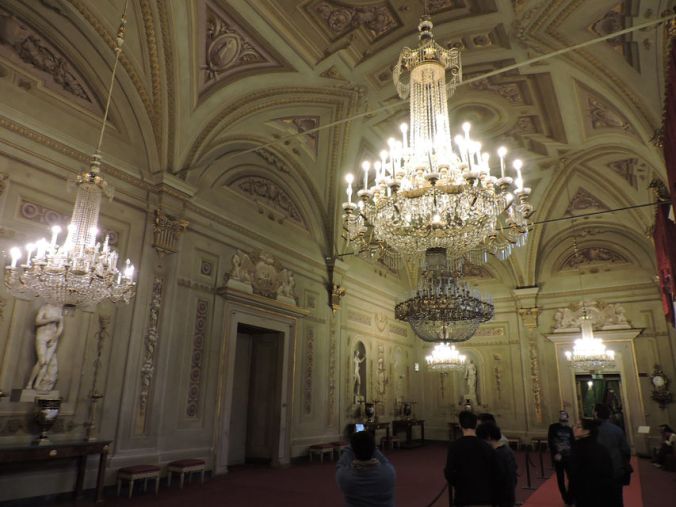
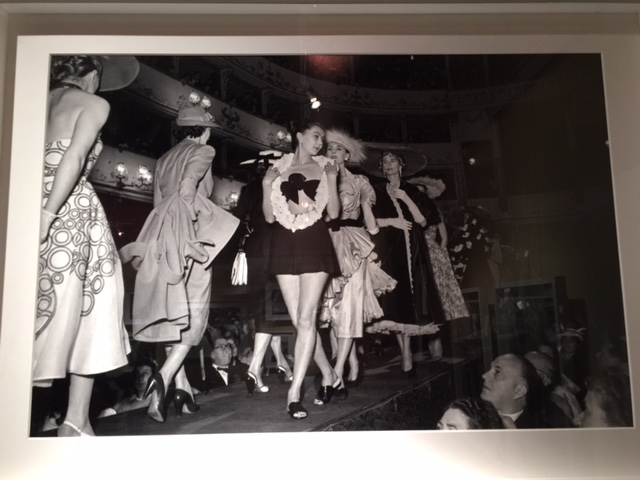
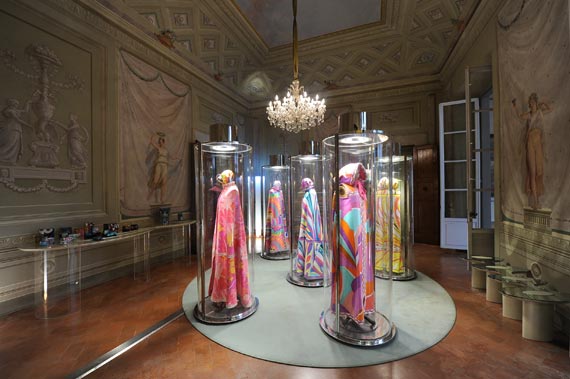
In this beautiful room, the Sala Bianca at the Palazzo Pitti, important fashion shows were held in the 1950s.  Florence’s leading role in the world of haute couture arguably begins in this room.

tour_img-482973-145


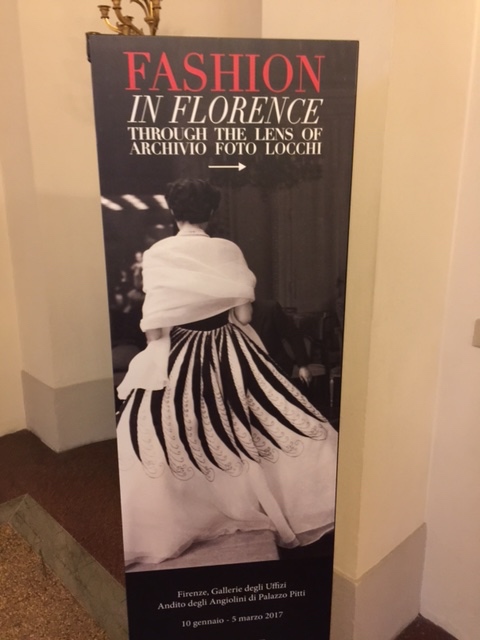
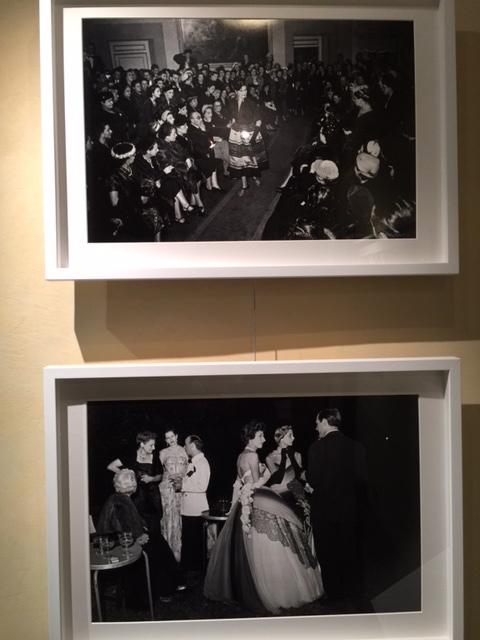
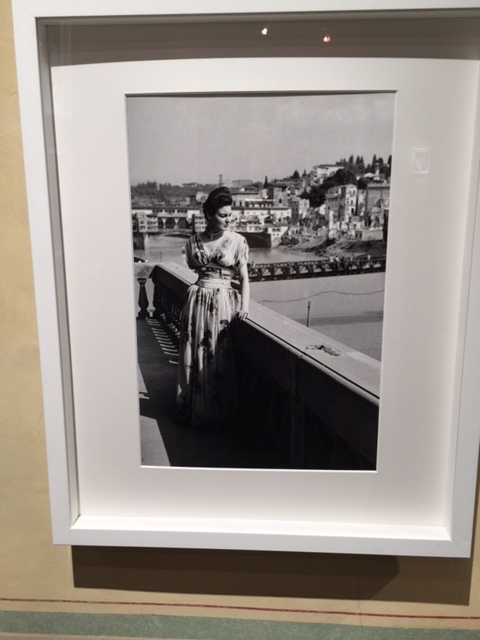
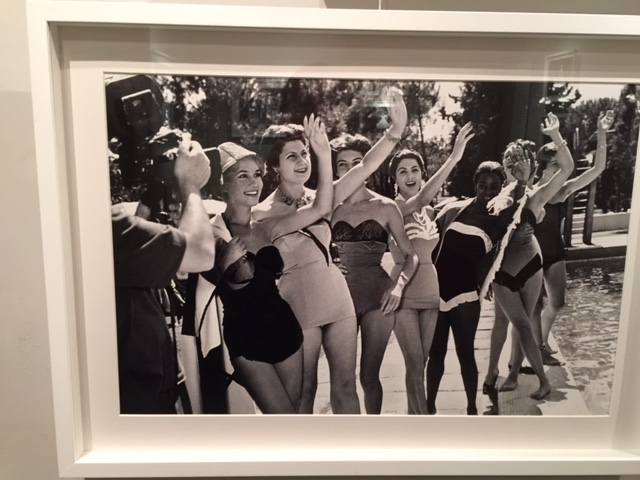
The Pitti is currently hosting a fascinating exhibition of black and white photographs from the Archio Foto Locchi.  The photographs chronicle the fashion moments that transpired in the Bianca.

img_9155


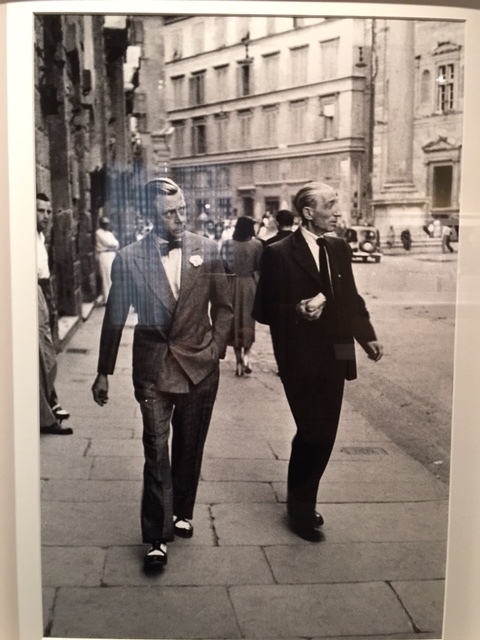
The Duke of Windsor, like many fellow Brits, enjoyed visiting Italy and shopping in Florence. He looks the part of a fashionable dandy as he strolls down the Via dei Tornabuoni.

img_9175img_9163


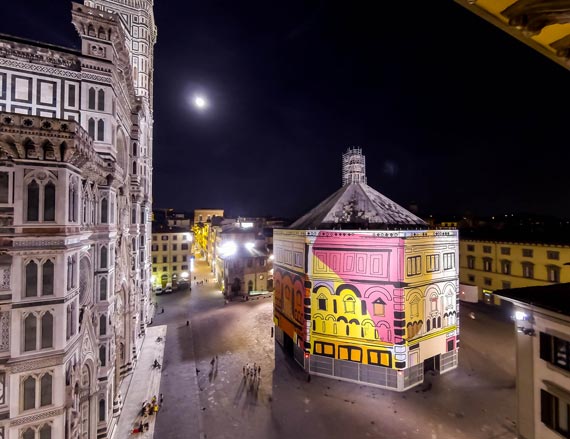
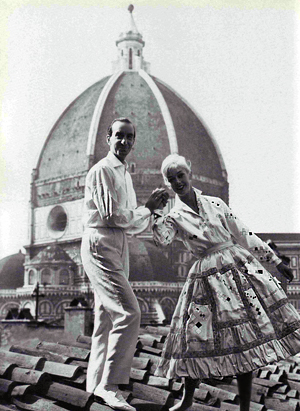
Florence itself is much featured in the photographs, serving as a breathtaking backdrop for the fashion shots.

img_9165img_9174

img_9184


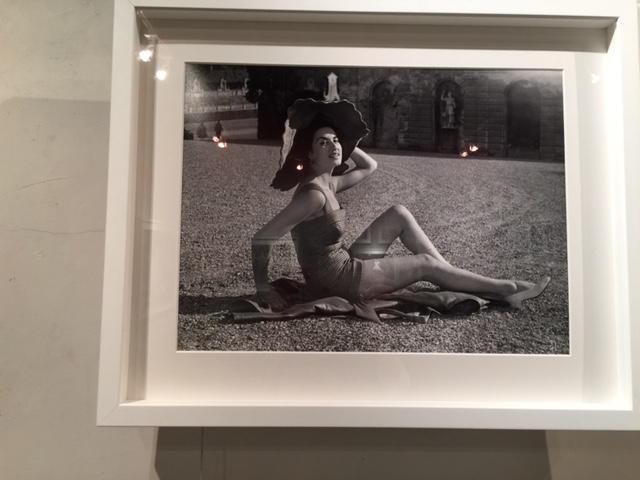
The swimsuit model below sits on gravel in the Boboli Gardens.  Not very comfortable, I should imagine, but pretty great as a setting!


img_9185img_9193img_9194


In the photo below, you can see the magnificent Sala Bianca in all its glory.

img_9204img_9213img_9214

img_9221img_9222


In the photo below we are in the early 1960s.  My mother dressed like this.

img_9282


Below we are in the late 60s.


img_9287


Below, we are in the 1970s.

img_9289


Back to the 50s below.

img_9296


The Boboli featured again.

img_9297


A glimpse of the exhibition.

img_9303


Updated 9 Feb 2017 with the following

Error
This video doesn’t exist

If you love NYC and fashion, you will love…

Bill Cunningham.

images-21


He started his fashion career as a millener, designing hats such as this one:


images-20


Later, and currently, he works for the New York Times:


images-19


For decades he lived in an artist’s studio space in Carnegie Hall:


images-23

Fascinating topic, these artist’s studios in Carnegie Hall.  Read about them here:

http://nymag.com/homedesign/greatrooms/42385/

http://www.carnegieartiststudios.com/portfolio.html


Cunningham has an eye for fashion on the street.  He rides his bike around NYC, shooting what catches his eye.  He says he likes the fashion, not the people or celebrity.

images-18


Find yourself some time and enjoy this documentary on Bill Cunningham.  It is completely delightful.  “He who seeks beauty shall find it” says Bill.


What’s in a word? History, association, description, and sometimes even poetry.

images-7

To me there are certain words that just seem poetic in and of themselves.


5620630676_c3de345b3e


Indigo is one of them.


blog-1-kim-mckechnie_indigo-2_copyright_2014


Indigo. I like the way it sounds.


images-5


I like to say it. Indigo.


Indigo_plant_extract_sample


I like the objects that are made using it.

From the sublime:

images-6


To the indispensable:

images-14


I love to think about where the word comes from and all the associations it carries.  Once the dye was so valuable in the world market that it was known as “blue gold.”


images-3

indigo (n.)

17c. spelling change of indico (1550s), “blue powder obtained from certain plants and used as a dye,” from Spanish indico, Portuguese endego, and Dutch (via Portuguese) indigo, all from Latin indicum “indigo,” from Greek indikon “blue dye from India,” literally “Indian (substance),” neuter of indikos “Indian,” from India (see India).

Replaced Middle English ynde (late 13c., from Old French inde “indigo; blue, violet” (13c.), from Latin indicum). Earlier name in Mediterranean languages was annil, anil (see aniline). As “the color of indigo” from 1620s. As the name of the violet-blue color of the spectrum, 1704 (Newton).

http://www.etymonline.com/index.php?allowed_in_frame=0&search=indigo


images-8


The color indigo was named after the indigo dye derived from the plant Indigofera tinctoria and related species.  Blue dye was hard to achieve. A variety of plants have provided indigo throughout history, but most natural indigo was obtained from those in the genus Indigofera, which are native to the tropics. The primary commercial indigo species in Asia was true indigo (Indigofera tinctoria, also known as I. sumatrana).


Indigofera_tinctoria_Taub115a

Indigofera_tinctoria0_600


A common alternative source of the dye is from the plant Strobilanthes cusia, grown in the relatively colder subtropical locations such as Japan’s Ryukyu Islands and Taiwan. In Central and South America, the two species grown are I. suffruticosa (añil) and dyer’s knotweed (Polygonum tinctorum), although the Indigofera species yield more dye.
India is believed to be the oldest center of indigo dyeing, both in terms of production and processing. The I. tincture species was domesticated in India. It was a primary supplier to the rest of the world of indigo dye.

The dye was in Europe as early as the Greco-Roman era, where it was valued as a luxury product. The Romans used indigo as a pigment for painting and for medicinal and cosmetic purposes.  The extravagant item was imported into the Mediterranean lands from India by Arab merchants.

Indigo remained a rare commodity in Europe throughout the Middle Ages. A chemically identical dye derived from the woad plant (Isatis tinctoria), was used instead. Woad was replaced when true indigo became available through trade routes.

images-13


In the late 15th century, the Portuguese explorer Vasco da Gama discovered a sea route to India.


144621-050-B67E1FE0


This led to the establishment of direct trade with India, the Spice Islands, China, and Japan. Importers could now avoid the heavy duties imposed by Persian, Levantine, and Greek middlemen and the lengthy and dangerous land routes which had previously been used. Consequently, the importation and use of indigo in Europe rose significantly.

Much European indigo from Asia arrived through ports in Portugal, the Netherlands, and England.


spice_route

Spain imported the dye from its colonies in South America.

Many indigo plantations were established by European powers in tropical climates; it was  also a major crop in Jamaica and South Carolina, with much or all of the labor performed by enslaved Africans and African Americans.

Indigo plantations also thrived in the Virgin Islands.

However, France and Germany outlawed imported indigo in the 16th century to protect the local woad dye industry.

So valuable was indigo as a trading commodity, it was often referred to as blue gold.

https://en.wikipedia.org/wiki/Indigo_dye

5620630676_c3de345b3e

Indigo is among the oldest dyes to be used for textile dyeing and printing. Many Asian countries, such as India, China, Japan, and Southeast Asian nations have used indigo as a dye (particularly silk dye) for centuries. In Japan, indigo became especially important in the Edo period, when it was forbidden to use silk, so the Japanese began to import and plant cotton. It was difficult to dye the cotton fiber except with indigo. Even today indigo is very much appreciated as a color for the summer Kimono Yukata, as this traditional clothing recalls nature and the blue sea.

images-16

The dye was also known to ancient civilizations in Mesopotamia, Egypt, Britain, Mesoamerica, Peru, Iran, and Africa.


images-10


The association of India with indigo is reflected in the Greek word for the ‘dye’, which was indikon (ινδικόν). The Romans used the term indicum, which passed into Italian dialect and eventually into English as the word indigo. El Salvador has lately been the biggest producer of indigo.


https://en.wikipedia.org/wiki/Indigo


images-4

The first known recorded use of indigo as a color name in English was in 1289.


images-11

Historically,blue dyes were rare and hard to achieve, so indigo, a natural dye extracted from plants, was important economically. A large percentage of indigo dye produced today – several thousand tons each year – is synthetic. It is the blue often associated with blue jeans.

The primary use for indigo today is as a dye for cotton yarn, which is mainly for the production of denim cloth for blue jeans. On average, a pair of blue jean trousers requires 3–12 g of indigo. Small amounts are used for dyeing wool and silk.

images-14


Indigo carmine, or indigo, is an indigo derivative which is also used as a colorant. About 20 million kg are produced annually, again mainly for blue jeans.[1] It is also used as a food colorant, and is listed in the United States as FD&C Blue No. 2.


images-12
In 1675 Newton revised his account of the colors in a rainbow, adding the color of indigo which he located between the lines of blue and violet.

001989_2

Newton had originally identified five colors, but enlarged his codification to seven in his revised account of the rainbow in Lectiones Opticae.


Indigo, a color in the rainbow.


images-15


Indigo

Dulux-Indigo-Night1-635x391

Van Dyck at the Frick


20161587_0

This beguiling self-portrait was created around 1620 by Anthony van Dyck (1599-1641), one of the most talented portrait painters of all time.  His sitters–poets, duchesses, painters and generals–were the elite of his age.  He painted them in an elegant manner, capturing, in his best works it is often said, the sitter’s inner life.

The Frick Collection in New York has a major new exhibition running currently and, thanks to the internet, we can all take a virtual tour of the show.

And may I say, hat’s off to the Frick for their outstanding use of technology to advance knowledge of the exhibition itself as well as the work of Van Dyck. The Frick’s website is among the most advanced I have seen of all art museums.  The following pictures and text are all modified from the museum’s website.

http://www.frick.org/exhibitions/van_dyck/virtual_exhibition

Born in Antwerp, Van Dyck rose to the top of his field, already assisting Flander’s most acclaimed artist, Peter Paul Rubens, in his late teens. Van Dyck spent the winter of 1620 in England, followed by a six year stay in Italy. By the age of 33, he was back in England, appointed principal painter to Charles I.

vanDyck_cat_2_2000

Self-portrait, c. 1613-15 Van Dyck’s first known self-portrait, painted when he was about fifteen.


vanDyck_cat_17_2000

Genoese Noblewoman, c. 1625-27

Van Dyck spent most of his Italian years in Genoa, a thriving Mediterranean port with an important Flemish community. In the wake of Peter Paul Rubens, who had preceded him there in the first decade of the century, he provided the city’s noble families with grand portraits, many of which still adorn their palaces. This portrait of a luxuriously dressed young woman standing against a loosely defined architectural background is a typical example of such images. Although she remains unidentified, the sash across her torso and the black edges of her cuffs seem to indicate she is a widow.


vanDyck_cat_85_2000

Lady Anne Carey, c. 1636

Anne Carey, later Countess of Clanbrassil, was the daughter of Henry Carey, second Earl of Monmouth, and Martha Cranfield. This portrait was likely painted on the occasion of her engagement to James Hamilton, heir of a Scottish family that had received large land grants in Northern Ireland. Lady Anne strides to the left in an Arcadian landscape, with the boulder behind her framing a woodland vista. Van Dyck reused this backdrop in other portraits, catering to the taste of English aristocrats who sought refuge from an increasingly unstable political situation in pastoral fantasies.


20161570

Mary, wife of Anthony van Dyck, c. 1640

Van Dyck’s wife, Mary Ruthven, came from an aristocratic, if impoverished, family of Scottish Catholics and served as a maid of honor to Queen Henrietta Maria. Van Dyck’s marriage to her in early 1640 marked his social ascent, but the painter died less than two years later, just eight days after the birth of his daughter Justina. Van Dyck’s portrait of his new bride is a sensuously painted autograph work. A cluster of oak leaves bound in Lady van Dyck’s hair may symbolize constancy, while her elegantly splayed fingers call attention to the proscribed Catholic faith that she shared with her husband, symbolized in the crucifix she displays.


20161593

Marie-Claire de Croy & son Phillpe-Eugene, 1634

Descended from one of the most ancient noble families in the Southern Netherlands, Marie-Claire de Croÿ was created Duchess of Havré in her own right by the king of Spain upon her marriage to a cousin in 1627. The child who appears alongside her is likely Philippe-Eugène, the future bishop of Valencia. The painting shows van Dyck’s customarily grandiose and richly colored court portraits.


20161597

Queen Henrietta Maria with Jeffrey Hudson, 1633

Charles I’s queen, Henrietta Maria, was the youngest child of Henri IV of France and Maria de’ Medici. In England, her lifelong devotion to the Catholic faith proved to be a major impediment to her popularity. Nevertheless, she served as the emotional mainstay of her husband’s life and provided an important cultural link among England, France, and the papal court at Rome. This is one of Van Dyck’s earliest portraits of the queen. He assimilates her into an English tradition of depicting queens in hunting dress, and the European practice of representing royalty in the company of dwarves — in this case, Jeffery Hudson, a famous member of the queen’s retinue.


20161594

Pomponne II de Bellievre, c. 1637-40

Pomponne II de Bellièvre, Lord of Grignon, came from a prominent family of French statesmen and twice served as French ambassador to the English court. Van Dyck most likely painted Bellièvre during the latter’s first posting to London.. Van Dyck’s likeness is a study in muted elegance, with Bellièvre’s long brown hair lapping over his floppy collar while a sash of crimson silk accents his otherwise black and white costume.


20161560

Prince William of Orange and Mary, Princess Royal, 1641


The marriage of William of Orange and Mary, daughter of Charles I and Henrietta Maria, provided an important link between the English court and the Dutch Republic. In this smoothly executed formal wedding portrait, Van Dyck depicts the two children with linked hands, calling attention to the princess’s wedding ring.  Account books record William’s many purchases on the occasion of his wedding, including the diamond brooch for Mary and suit of pink silk faithfully reproduced here.


http://www.frick.org/exhibitions/van_dyck/video


What’s beer-making got to do with interior design?

Well, I’m so glad you asked!

You know how you have to break some eggs to make an omelette?  Well, if you want to make beer, you gotta dry some hops.

And where do you dry hops?

Why, in an oast house, of course!

An oasthouse looks something like this one in Kent, England.

Oasthouse_at_Cherry_Tree_Farm,_Frittenden

Kent is here:

2000px-Kent_UK_locator_map_2010.svg


If you know what I’ve been up to lately, you’ll know that the reason I am writing about oasthouses is that some of them have become residences for Brits…

and as we all know, residences must be decorated, and…

well…you know the rest.

images-3

When, oh when will my current obsession end?  Only with the end of the BBC Two series, The Great Interior Design Challenge, comes to an end I fear!  Yes, it is true I love interior design and up cycling old treasures, but what really floats my boat is the tour of fascinating English homes, high and low alike, and the history lessons of British social life and domestic architecture.  I mean, what’s not to love?

The-Great-Interior-Design-Challenge


But, I do have a couple of dilemmas.

Here’s one: whereas Google images usually has a great selection of images for most things a blogger wants to illustrate, whether it is fabrics by Fortuny or drawings of carnations, for some reason there are very few images online anywhere I can find of the various projects used in The Great Interior Design Challenge series on BBC Two.  And the ones I can find won’t copy, as the folks at BBC Two obviously know how to restrict access to their intellectual property.  I respect that.

So, I am unable to show you any images from the show of the oast houses featured on the series, exteriors or interiors.  None of the images in this post are related to the show. But that’s okay!

19970ae3342786266ea362ef015b60af

Oast house, Herefordshire

Stone and timber-frame oast house interior, Leominster, Herefordshire, England.


Okay, now that I have that info out of the way,  let’s look at some of these crazy oasthouses!

Here’s how they were originally used.

diagram of a typical Oast house in original use

Hereford

And here are some examples of how these great old structures have been converted for modern life.

image7178-3


Winbrooks-Oast-House-006_round_bedroom

Kitchen1_2370372cliving-room112kitchen-diner22

images-13

And, for a quick primer of the variations in structural matters:

220px-Oast_House,_Great_Dixter,_Sussex,_UK

220px-Oast2

220px-Oast9


Here are some useful links for more info on British oast houses:

http://www.telegraph.co.uk/finance/property/9612529/How-about-an-oast-house.html

http://looking-at-london.com/2015/09/11/london-workers-22/


1920s British beach huts

OMG!  Who knew?!!

images-2

Having never lived on the British coastline, I had no idea that these so-called huts even existed.  Built in the 1920s, these darling little buildings make an appearance on that tv obsession I currently have, The Great Interior Design Challenge, on BBC Two.

You can watch the episode on Youtube: https://youtu.be/dn0OtnufTC0


images-5

Aren’t they sweet?

So, here are some of the interiors.  I want one.

images-3

images-7

images-9

Want to join me?

Here’s a little more into on the place they inhabit:

https://en.wikipedia.org/wiki/Canford_Cliffs


This is considered to be Britain’s best beach hut:

CO109713_005 hut nb.jpg-pwrt3

Read about it here:  http://www.gazette-news.co.uk/news/13609885.Mersea_Island___s_Betty_is_Britain___s_best_beach_hut/