Are you ready to see some more window displays? Andiamo!
You’ll have visions of Pucci, Armani, Gucci, Dolce & Gabbana, Miu Miu, and many other designers dancing in your head, so get ready!
Hundreds of gold bows drift at the mannequin’s feet.


Are you ready to see some more window displays? Andiamo!
You’ll have visions of Pucci, Armani, Gucci, Dolce & Gabbana, Miu Miu, and many other designers dancing in your head, so get ready!
Hundreds of gold bows drift at the mannequin’s feet.
Enter 1952 if you dare:
There are some shots of Giovanni Battista Giorgini, who started it all in Florence, for those with eagle eyes.
Ciao a tutti!


They both appreciated fine design and they both attended Reed College in Portland, Oregon. How about that!
I’ll be posting on Pucci presto. Steve Jobs is outside my area of expertise though I use nothing but Apple products!
Viva il Reed College!
Resuming the fashion story from Part 1 and all photographs are from the Giorgini Archivio in Florence or from Google Images:
Once Count Giorgini got the Italian high fashion ball rolling on the heels of the highly successful catwalk shows he initiated in Florence in the early 1950s, buyers from all over the world were knocking on the doors of the new Italian ateliers, placing orders around the clock.
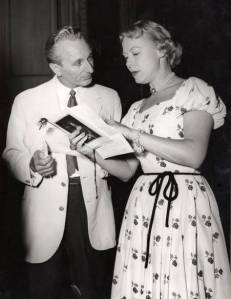
In this photo from the Giorgini Archive in Florence, we have Count Giorgini and the buyer from an American department store, c. 1952. (Is it just me or does everyone wonder how a woman dressed like this could be entrusted as a buyer for a leading American department store? It’s hard to see how her look is one that should be duplicated.)
Simultaneously, Hollywood royalty likewise descended upon Italian fashion houses. Stars such as Audrey Hepburn and Elizabeth Taylor; directors like Alfred Hitchcock; and even politicians including President Harry S. Truman (President of the US from 1945-1951) all found their way to the Italian fashion shows and supported the new ateliers.

The photo above, also in the Giorgini Archivio, Florence, shows Count Giorgini with the American actress Gloria Swanson.

Elizabeth Taylor was seen on and off the set in Rome where she was filming Cleopatra.

Audrey Hepburn filmed Roman Holiday in Rome in 1952 and was a general jetsetter throughout the 1950s and 1960s
The picture below shows Alfred Hitchcock and his wife boarding a plane in Rome in the 1960s.


Above, Hitchcock at a press conference in Rome, mid 60’s.

Above, Hitchcock in Italy. Below he directs Birds, and from the way his actresses are dressed, you know he was highly interested in high fashion from Italy and elsewhere.


Above is President Harry S. Truman and his wife landing with friends in Naples. Below is proof that the President knew how to shop!

Count Giovanni Battista Giorgini played a major role in all the high fashion shows in Italy until 1965. Every year he made sure that new ideas and new talents were showcased in his shows.
The photo below, from Giorgoni Archivio, shows the Count with his models and other principal players in the fashion extravaganzas.

In the 1960s, Giorgini took a gamble on another new challenge, the development of a market for Italian design in Japan. Some of the relationships he began that far back are still important for the Italo-Japanese relationship today. Among the most important Japanese clients is Isetan, one of the largest department stores in that country.

The Isetan flagship store in Shinjuku is considered to be one of the most influential department stores in Japan. The store is often first with showcasing new trends and new products. In particular, the fashion and food floors are thought to be very trendsetting.
Once again, Count Giorgini successfully called the Japanese market place for high western fashion long before any other westerner even thought of the idea. Proof is the fact that Vogue magazine developed a very successful Japanese edition.

The section below attests to the Japanese interest in Italian design:

This stunningly beautiful editorial, La Canzone Del Mare, showcases the latest Dolce and Gabbana Alta Moda collection for Vogue Japan’s October 2014 issue. Photographed by Boo George, it was shot in Capri, Italy – also where the Italian design duo presented their fall collection in July.
The ultra luxurious fashions were modeled by Dalianah Arekion, Nadja Bender and Kinga Raziak, with styling by Anna Dello Russo and Giovanna Battaglia.
Getting back to what 1960s fashion looked like in Italy, the following section is (taken from this site: http://www.moda.com/fashion-history/60s-italian-fashion-1.shtml) a perfect way to enter the period.
1960s Italian Fashion  Red pants and top with black shoes, from 1966. Red pants and top with black shoes, from 1966. White with green and purple flowers dress and coat, from 1960. White with green and purple flowers dress and coat, from 1960. Morning dress of red fuchsia wool, corded silk hat. By Sarli fashion house in Rome. Inspired by the Russian line. Morning dress of red fuchsia wool, corded silk hat. By Sarli fashion house in Rome. Inspired by the Russian line. Evening dress yellow satin, printed big red and pink flowers. By Eleanora Garnett fashion house in Rome. From 1960. Evening dress yellow satin, printed big red and pink flowers. By Eleanora Garnett fashion house in Rome. From 1960. Hot pink wool ensemble. Collarless, cardigan jacket straight-lined and slashed across the hips with a giant bow of pink velvet. By Fontana Sisters’ fashion house in Rome. From 1960. Hot pink wool ensemble. Collarless, cardigan jacket straight-lined and slashed across the hips with a giant bow of pink velvet. By Fontana Sisters’ fashion house in Rome. From 1960. Black dress with multicolored flowers. By Cesare Guidi. From 1960. Black dress with multicolored flowers. By Cesare Guidi. From 1960. Two-piece sports dress, pants of elastic jersey, loose shirt of laminated silk. By Emilio Schuberth fashion house in Rome. From 1960. Two-piece sports dress, pants of elastic jersey, loose shirt of laminated silk. By Emilio Schuberth fashion house in Rome. From 1960. Evening dress, made of pink silk, embroidered with silver paillettes. By Fabiani fashion house in Rome. From 1960. Evening dress, made of pink silk, embroidered with silver paillettes. By Fabiani fashion house in Rome. From 1960.
Afternoon dress, white silk jersey with blue flowers, blue woolen jersey overcoat. By Mirsa fashion house in Rome. From 1960.
Evening dress, emerald-green, golden and black brocade. By Renato Balestra fashion house in Rome. From 1961.
Golden tan cape, made from shantung organdy. By Renato Balstra fashion house in Rome. From 1962. |
||
Ask any fairly sophisticated person you know where the two following photographs were taken, and chances are very good…


that the viewer will know instantaneously that the pictures were taken in Italy. Certo!
And that same person will also no doubt know that in Italy presenting una bella figura is one of the most important aspects of daily life. Italians, male and female, are well known for their sense of style and its major component, fashion. Italy is rightly recognized as a hub of fashion, with many eminent names such as Armani, Dolce & Gabbana, Donatella Versace, Missoni, Prada, Cavalli, Valentino, Taccini, Gucci, Garavanni and Moschino and many more in the mix. These designers are in great local and international demand. But it hasn’t always been this way.
So, how did this situation evolve?

It would seem that one man had a vision to form a world of high Italian fashion to compete with the French haute couture. This new Italian high fashion incentive, first formed in the mind of Giovanni Battista Giorgini, rose like a phoenix out of the ashes of WWII and came to forefront of the world stage.
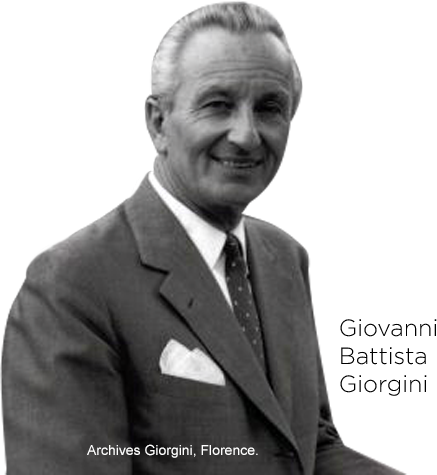
Florentine count, Giovanni Battista Giorgini (1898-1971), was perfectly poised to bring his vision to fruition, for he knew the American market very well, having been involved in exporting Italian fashion goods to North America since 1923. He had been involved in promoting Italian craftsmanship–specifically the “Made in Italy” initiative– in the United States until the 1929 Stock Market Crash and the dastardly political developments in Fascist Italy brought his efforts to a close.

Photo above from Archivio Giorgini in Florence.
Giorgini’s ambitions for Italian fashion were set aside while the world was caught up in chaos and he served in the armed forces of his country during the lead-up to WWII. During the conflict, Giorgini was in the army, in command of a brigade near Bagni di Vinadio in Piedmont.
By the time the last Allies efforts were underway to take Florence from the Germans, Giorgini and his wife and three sons were living in the Oltrarno neighborhood of the city. It was through that neighborhood that the first column of the Allied army approached Florence. The entire Giorgini family were fluent in English and Giorgini offered to make his home the Allies’ headquarters. The Allies command gratefully accepted.
In 1944, Giorgini was appointed director of the Allied Force Gift Shop, a store for the Allied Force troops. Under his management this successful operation was repeated in other Italian cities. When the War ended, Giorgini was able to return to the United States in an effort to reignite his exporting business, which had been on hold for almost twenty years.
Within a few years, Giorgini was supplying the largest American and Canadian importers and distributors with the finest of Italian products. Among his clients were well-known retailers including I. Magnin; B. Altman; Bergdorf Goodman; H. Morgan; Tiffany; Bonwit Teller and others. To these leading department stores Giorgini exported the best Italian products such as home and fashion accessories including knitted and woven textiles, leather, shoes, as well as ceramics and glass.
Giorgini was uniquely qualified in his role as a successful entrepreneur, although he always preferred the artistic end of the enterprise, not the business end. He was not always comfortable in his role as promoter of Italy to North American businesses, for he was first and foremost a passionate collector of art and antiques, as well as being himself a designer.
Despite his reluctance to operate as a businessman, he always was one step ahead of avant-garde trends. His uncanny ability allowed him to guide Italian manufacturers in modifying their products so that they could meet the ever changing new demands from the marketplace.
It was Giorgini’s brilliance that allowed him to intuit that the incredible artisan craftsmanship for which Italy was known could be brought to bear on the damaged fashion world in post war Italy. He knew that craftsmanship was vital, but was not, alone, enough on which to base the fashion renaissance he foresaw.
He rightly believed that it would take two things to launch the dream he had:
#1 the enhanced production of the high quality textiles for which Florence has always been famous
and
#2 brand new ideas from highly talented designers. Giorgini wanted to stimulate the best and brightest in Italy to create and export an entirely new field of high Italian fashion to the world. And indeed he did bring it about.

Prior to this time, Italian fashion and textile businesses were simply copying their French counterparts, but not adding anything beyond fine craftsmanship to the mix. That wasn’t good enough for Giorgini: he foresaw a world in which Italy not only held its own with its French colleagues, but Italy surpassed them. He set about making this new world happen.
Giorgini’s out-going personality coupled with his aristocratic heritage and his inherent good taste, made him ideal for his role in public relations. He knew how to capitalize on his background and interests, as well as how to enhance his orbit of acquaintances.
In the late 1940s and early 1950s, one by one, Giorgini made contact with the leading Italian producers of textiles and clothing, and convinced them to cooperate with his idea. He did the same thing with American buyers and journalists.
Giorgini would often tempt these movers and shakers in the burgeoning field of international fashion by inviting them to share in elegant evenings in his lovely home on Florence’s Via dei Serragli. His beautiful house, furnished with art and antiques, created an environment of elegance and opulence that charmed his foreign guests. There he entertained them with extravagant dinners with concerts and/or dances. It was very hard for anyone to resist. Why would anyone want to?!
Once he had some of the fundamentals in place, Giorgini issued a carefully planned and strategic invitation to European nobility to a big event, a full day of a runway show, held on February 12, 1951 in the ballroom of his beautiful home at #144, Via dei Serragli. One might even be tempted to say that Giorgini had learned some strategies from the U.S. military, so carefully was his initiative planned!
Here’s a photo of the invitation Giorgini and his wife extended
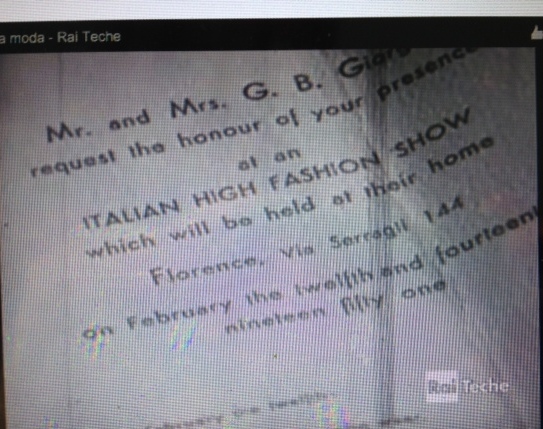
Giorgini’s deep knowledge of the North American markets led him to set his sights on bringing the buyers for American department stores to Florence to show them a series of Italian collections for Spring/Summer 1951. He planned his event so that the American buyers could just pop down to Italy to see what was happening there, right after they had been to Paris catwalk shows. After all, he reasoned, they were already in Europe so perche no? Giovanni Giorgini was a brilliant strategist!
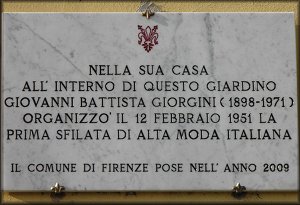
He gave each of his invited guests this challenge: the ladies were kindly requested to wear dresses of pure Italian inspiration. The reason for this unusual request, he further explained, was to present pure Italian fashion as something special to behold.
The first “Italian high fashion show” featured Carosa, Fabiani, Simonetta, the Fontana sisters, Schuberth, Vanna, Noberasco, Marucelli and Veneziani.

In the meantime, the Florentine marquise, Emilio Pucci, had himself already obtained a photo shoot for one of the leading American fashion magazines, Harper’s Bazaar and he invited buyers to see his own collection at Palazzo Pucci. The accessories shown with Pucci’s garments were created by Fratti, Canesi, Proyetti, Gallia & Peter from Milan, the baroness Reutern, Romagnoli, Canessa from Rome and Biancalani from Florence.
Of course Giorgini did not forget to invite the press to his event. Bettina Ballard, then a fashion editor at Vogue, wrote Giorgini a triumphant letter after the event, saying: “Everybody seems interested in Italian fashion, alongside Vogue. I am sure we will be doing something together in the short term.”
Once again, I thank the gods of fortuna for the internet and Youtube. Check out this footage of one of Giorgini’s 1951 fashion shows:
The event at Via dei Serragli was a huge success. Models wore dresses on a single catwalk from the most important Italian designers of the period. Each model carried a number in her hand so that the buyers from I. Magnin, Bergdorf Goodman, B. Altman and other high-end American department stores could identify the maker.
Savvy Giorgini had also invited journalists to his event, including the correspondent for Women’s Wear Daily. Even though the buyers and journalists had just been at the Paris catwalk shows, Italian fashion scored a big win that winter evening in 1951.
American buyers had to wire their firms in the States for increased budgets to purchase from the Italian ateliers; the ateliers themselves were slammed with so many orders that it was almost unbelievable. The American buyers were over the moon with excitement over their new discovery of a previously untapped fashion resource, but were also keen on the price factor. Italian designs at this time were about a third the cost of their Paris equivalents.
It is further said that both Emilio Pucci and Schuberth began their careers that night.
Making the most of the wind under their sales by the fabulous and successful coming-out party at Giorgini’s home, a second fashion event was held the following year at the Grand Hotel in Florence.

These fashion extravaganzas proved to be such a success that Florentine leaders joined the bandwagon and sought a more suitable setting. They enhanced the exhibition of Italian fashion design by hosting it in the Sala Bianca, or the chandeliered and opulently decorated white room, at the famed Palazzo Pitti.
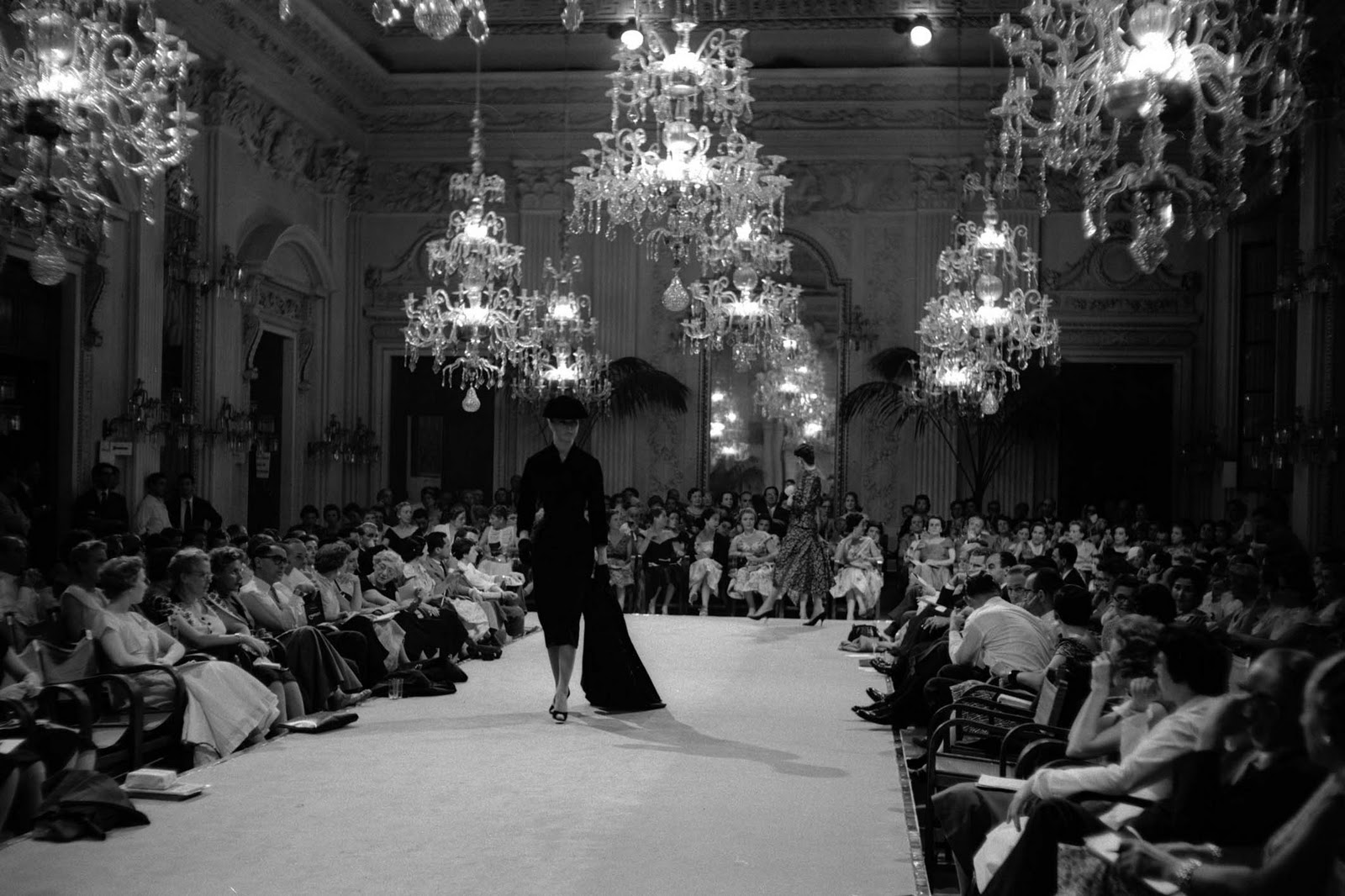


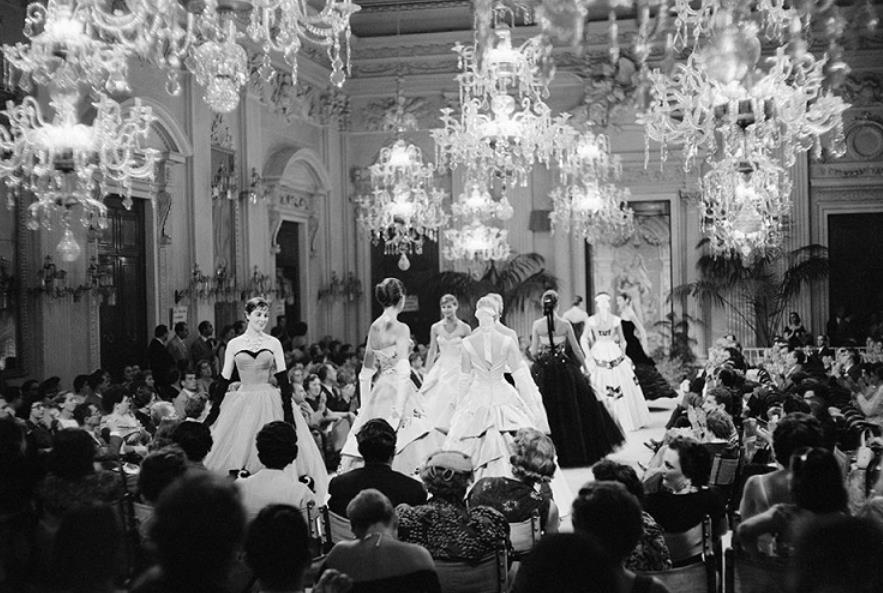
From this beginning in February of 1951, created by Giorgini, new talents were spawned, including Capucci, Galitzine, Krizia, Valentino and Mila Schon.
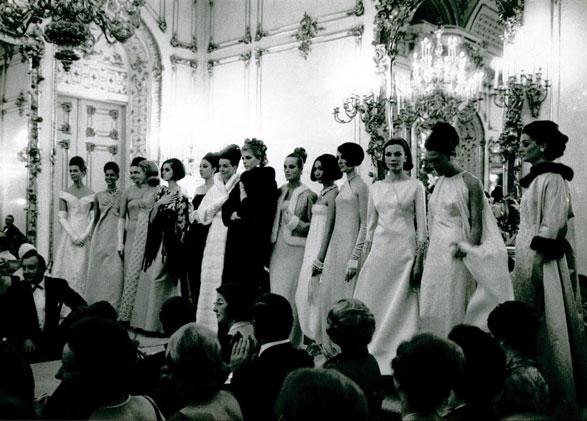

Giorgini continued to work with these shows and each year he increased their excitement by launching new initiatives, such as one year it was all about “textile promotion”.
Giorgini was also the first person to fully understand the potential of the new importance of prêt à porter, or ready-to-wear, and the so-called boutique lines. One could almost call the count a democrat. He was all over making high fashion available to regular people.

It’s a fact: Giovanni Battista Giorgini launched the world of Italian high fashion design! I am sure I speak for aficionado’s everywhere when I exclaim one big grazie a Giorgini!
This story isn’t finished, however, and I’ll be back with a second post presto. Stay tuned!
Updated: Nov. 12, 2014 I would like to thank the Director of the Archivio Giorgini in Florence, Mr. Neri Fadigati, for reading this post and making suggestions for improving it.
But in the meantime, here is a vintage video from 1959, which shows Giorgini speaking about Italian fashion at about 4 minutes in.
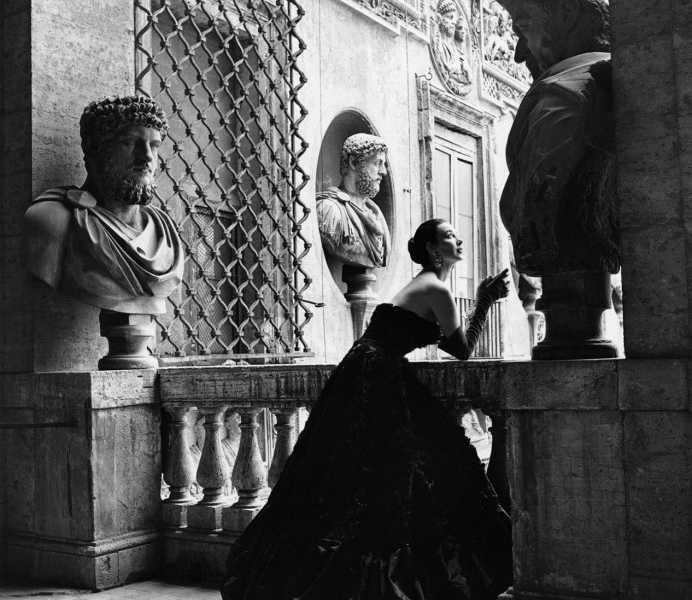
Gown above by Simonetta.
Last summer the V & A in London had an important exhibition on Italian fashion called The Glamour of Italian Fashion 1945 – 2014. Much of this post is taken from the website link, given at the bottom.
Both women’s and menswear were highlighted in the show, with an emphasis on the techniques, materials, and expertise for which Italian fashion is renowned.
The V & A included around 100 ensembles and accessories by leading Italian fashion houses including Simonetta, Pucci, Sorelle Fontana, Valentino, Gucci, Missoni, Giorgio Armani, Dolce & Gabbana, Marni, Fendi, Prada and Versace.
Here’s a video (Click on the “Vimeo” button to see it) about the opening of the show:
The Glamour of Italian Fashion 1945 – 2014 
The Glamour of Italian Fashion 1945 – 2014
Years following WWII:
Following the despair of the 1940s, Italy’s post-war government aimed to reinvigorate a country weakened in spirit and in physical and financial ruin. American aid helped Italy get back up on its feet, with support provided through the Marshall Plan.
Even the fashion world was helped by these conscious efforts to rebuild: the swift retooling of Italian factories alongside efforts by the country’s many entrepreneurs helped fashion become a cornerstone of Italy’s post-war recovery.

As clothing designers and textile manufacturers gradually resumed trading, their stylish designs responded to a hunger for glamor after years of wartime deprivation. Italian high fashion and fine tailoring became one of Italy’s most successful and popular exports.
Return to Luxury post WWII:

The fashion industry gradually built itself a luxury market. Giovanni Battista Giorgini launched Italy’s first internationally recognized fashion shows. In 1952, he secured the use of the Sala Bianca (White Hall), an opulent, chandelier-lit gallery in Florence’s famed Pitti Palace, for the landmark catwalk shows that would be held in the Renaissance city throughout the 50s. This exciting moment propelled Italian fashion onto the world stage, front and center.
Hollywood on the Tiber:
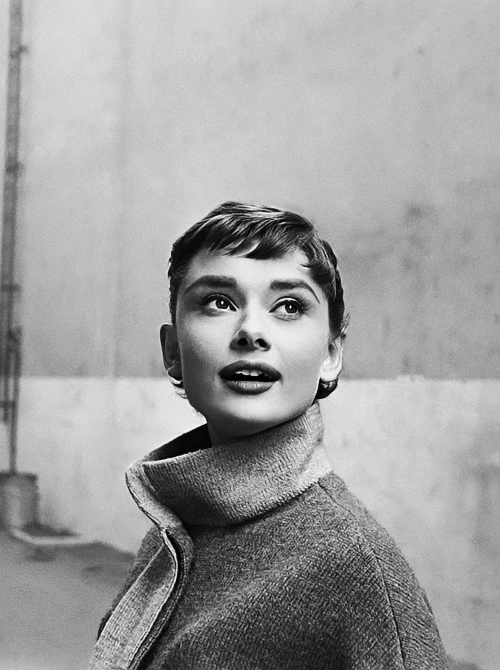
During the 1950s and 1960s, so many Hollywood films were shot on location in Italy that Rome was nicknamed “the Hollywood on the Tiber.” Movie stars like Audrey Hepburn and Elizabeth Taylor became almost ambassadors for Italian fashion, which fueled a keen international appetite for the luxe clothing fabricated in Italy. (Please see my earlier post on Roman Holiday and Funny Face; I am a huge fan of Miss Hepburn.)
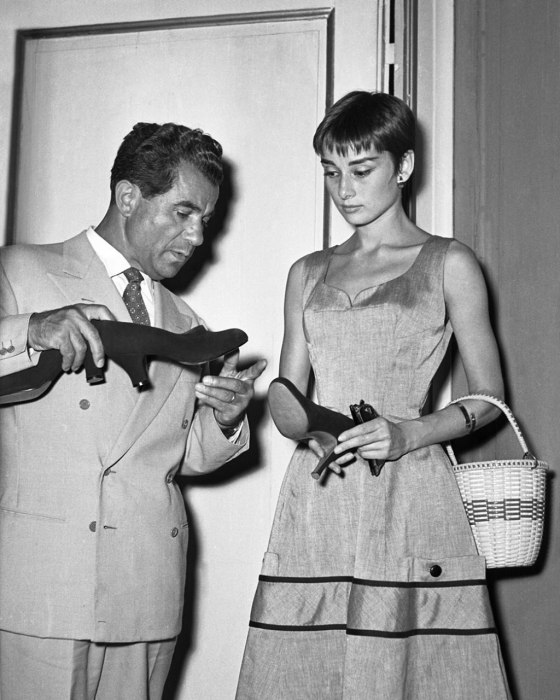
Salvatore Ferragamo discusses shoes with Audrey Hepburn

Throughout the 1950s and 1960s, Italy’s economy had grown rapidly, driven in part by the fashion and textile sectors. In the years that followed, despite social and political instability, Italy’s fashion industry blossomed. Numerous fashion and related manufacturing businesses started up, many of them family-run.
Tailoring
Italy’s reputation for tailored clothing developed internationally thanks to popular images of stylishly dressed Italian actors. Marcello Mastroianni’s trim suits in the 1960 film La Dolce Vita inspired fashion-conscious men everywhere.

That movie alone popularized the men’s Italian suit worldwide. Made to measure suits for an individual client were the launching pad for a growing international clientele, followed by the increasingly popular ready-made suits of later decades.

A well-tailored suit requires precisely cut fabric and exact fit, along with fine finishing details. The smallest design elements, such as the shape of a pocket or sleeve, often differed from region to region. A Neapolitan suit could be distinguished from one produced in Rome.
The emergence of ready to wear:
From the early 1970s, the popularity of couture gave way to enthusiasm for manufactured fashion. Milan – with its fashion press, advertising industry, and nearby clothing and textile factories – became Italy’s new fashion capital.


Made in Italy:
‘Made in Italy’ was a marketing campaign that celebrated a rainbow of premium goods: cinema, art, food, tourism, design and, chief among them, fashion. This decades-long, international promotional campaign ensured that ‘Made in Italy’ became the mark of style.
Cult of the designer:
Since the mid-1990s, fashion has become ever more international. Many more Italian designers have become celebrities in their own right and solidified their country’s reputation as a global tastemaker. These designers sell a universe of goods across continents, from clothing to furniture to hotel interiors. Some have transformed long-established family firms into international luxury brands. All have a devoted following.
The designers in this section are at varying stages on the journey to recognition. Some have the tradition of generations behind them. Others emerged onto Italy’s fashion scene only a few seasons ago. What unites them is a loyal clientele, an emphasis on Italian production, and a place at the top end of fashion, where Italy’s designers continue to find their competitive advantage.
The bright spot in Italy’s generally sober economic outlook is the limitless demand for a taste of Italian style. Italian fashion companies are still influential, even as Italy’s reputation has suffered.
What will ‘Made in Italy’ mean in future?
The years since 2000 have been marked by political scandal, immigration tensions and economic problems. Italy’s once famed networks of textile production and related industries are thinning. Its premium fashion houses are increasingly foreign-owned. Chinese factories, workers and consumers are now intertwined with the destiny of the Italian-made.
Sponsored by Bulgari:
Bulgari is proud to sponsor this exhibition. Bulgari is an emblem of Italian creativity and craftsmanship, renowned for its distinctively Italian style. From the 1960s Bulgari was acclaimed for creative designs incorporating colored gemstones. This exhibition features legendary jewels once owned by Elizabeth Taylor.


A couple of last looks from the exhibition:


The V & A exhibition also asked the question of what the future might hold for Italian fashion, including a short documentary about the future of the Italian fashion industry vis a vis competition from lower-wage markets such as India and Asia and also the marketing power of the established fashion houses, which makes it harder for newcomers to gain a foothold. Thought provoking stuff.
From today’s New York Times.
Down a quiet lane in the San Frediano district of Florence, beyond an iron gate and leafy courtyard, is Antico Setificio Fiorentino, the sole remaining artisan silk workshop in the city. Since moving to this location (Via Lorenzo Bartolini 4) in 1786, the small factory has maintained uninterrupted production, despite wars and floods. The art of silk-making in Florence flourished in the Renaissance, when noble families amassed fortunes and fame by producing exquisite silks. That tradition endures at Antico Setificio Fiorentino, where silks are woven by hand on antique looms using Renaissance patterns.

FLORENCE | A silk loom at Antico Setificio Fiorentino. Credit Stefano Ricci /ASF by Bernardo Conti
~~~~~~~~~~~~~~~~~~~~~~~~~~~~~~~~~~~~~~~~~~~~~~~~~~~
During a recent tour, the designer Maurizio Bonas rattled off the illustrious names of historic Florentine clans — Corsini, Pucci, Strozzi — whose signature patterns are still being produced. “When you go inside many historical houses in Italy, it’s Antico Setificio that did them,” said Mr. Bonas, who noted that the factory’s silks also adorn rooms in the Vatican, the Palazzo Vecchio and the Tribuna degli Uffizi in Florence, and even in the Kremlin in Moscow.
“To make these kinds of fabric, we cannot use the modern machines,” Mr. Bonas said, pulling out a roll of sumptuous blue embroidered silk velvet made with 350,000 stitches per meter. One worker who was weaving a cream-colored damask from a design named for the Renaissance painter Pinturicchio could be expected to complete only 80 to 100 centimeters of the fabric per day. And because the small factory employs only 20 artisans, production is predictably limited — and costly. In the adjoining showroom, walls are lined with bolts of silk, from plush velvets and intricate damasks to diaphanous taffetas, 110 to 1,360 euros (about $135 to $1,670) per meter. Decorative pillows are adorned with hand-woven trims. And, on a table, a basket is filled with sachets made of Ermisino, a shimmering silk taffeta that dates back 500 years. Inside each is potpourri from Officina Profumo-Farmaceutica di Santa Maria Novella, a 400-year-old pharmacy that has partnered with Antico Setificio for, as Mr. Bonas said, “only 250 years.”
A more recent partnership with the Stefano Ricci luxury men’s wear label, which acquired Antico Setificio in 2010, means the designer’s nearby store now stocks wearable wares made with Antico Setificio’s fine silk. INGRID K. WILLIAMS

Do you know what this lovely objet is?
~~~~~~~~~~~~~~~~~~~~~~~~~~~~~~~~~~~~~~~~~~~~~~~
~~~~~~~~~~~~~~~~~~~~~~~~~~~~~~~~~~~~~~~~~~~~~~~
How about now?

~~~~~~~~~~~~~~~~~~~~~~~~~~~~~~~~~~~~~~~~~~~~~~~
~~~~~~~~~~~~~~~~~~~~~~~~~~~~~~~~~~~~~~~~~~~~~~~
Are you stumped? I’ll give you a clue.

Like a lot of the world’s best stuff, it comes from Italy. The objet under discussion actually comes from Venice.
Venice is home to many marvels. One of my favorites among them all is the Fortuny Museum.

If you are lucky enough someday to find yourself in Venice with a little extra free time, then consider yourself fortunate indeed! If this unusual scenario is yours, then you owe it to yourself and to the gods of fortune to get off the typical turista track and hightail it over to this museum in this fabulous old palazzo. Trust me, you’ll be glad you did.
For there you will find lots of this stuff.
Lots and lots of it. It is a textile.
You will find it in dresses.
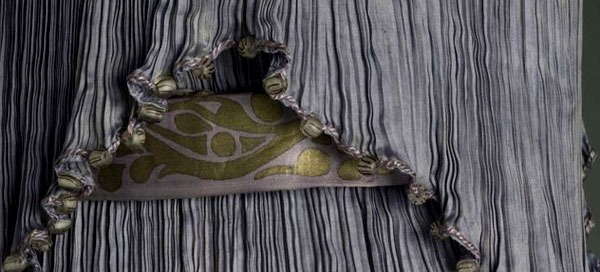
Lots and lots of very amazing dresses:
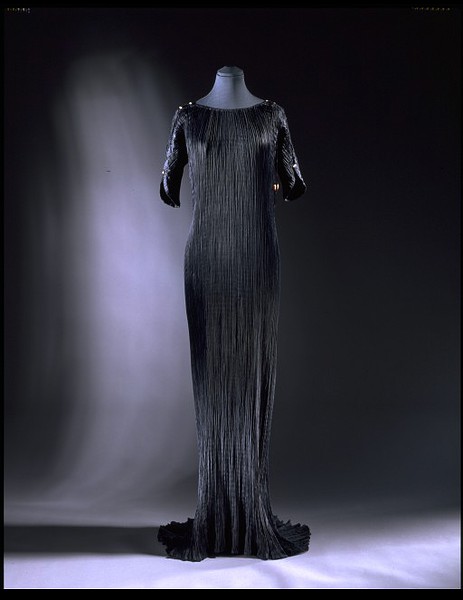


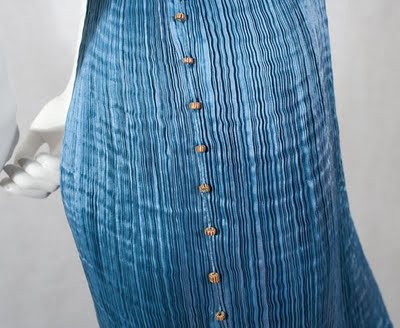


And all of it was designed by this one man, Mariano Fortuny.

Are you familiar with the amazing artistic career of Mariano Fortuny y Madrazo (1871-1949)? If not, you should be! Let’s get to work!

As you can see from this portrait, Fortuny was very “artistic!” Quote unquote! His contemporaries considered him to be a Renaissance man, for he was astoundingly creative and versatile, working in many media.
Fortuny was, like all of us, influenced by the contemporary styles and designs of his day. These fashions were informed by the latest aesthetic and functional concepts promoted by reformers of the applied arts, such as William Morris and Edward Burne-Jones. Leaders of the Arts and Crafts movement, the theories of these men and others called for a modern style freed from the restraints of convention.
Fortuny was born in Spain, the son of the painter Mariano Fortuny y Marsal. His mother was the daughter of another famous painter, Raimundo de Madrazo y Garreta, so Fortuny came by his artistic abilities naturally.
Sadly, Forturny’s father died when he was only three, but his mother supplied him with an extraordinary childhood. She moved her family to Paris after her husband’s death in Spain and in 1889 the family moved again, settling finally in Venice. Lucky Venice!
Fortuny’s mother was an inveterate collector of rich, oriental textiles and had collections of them from the various shops she had visited throughout Europe. Her son spent his childhood around these gorgeous fabrics and adopted his mother’s love for them. It is said that as a child he amused himself by tinting various fabrics to see what effects he could achieve.
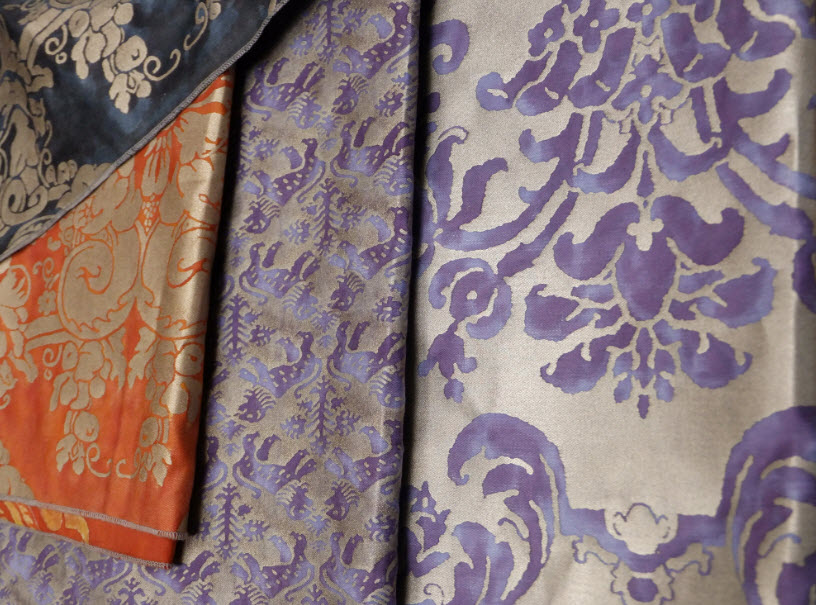
As Fortuny reached his maturity, it became apparent that he was an extremely gifted person with many artistic abilities. He was successful in an astounding number of media, including painting, photography, sculpture, architecture, printmaking and even theatrical stage lighting. His creativity led him to register and patent more than twenty inventions between 1901 and 1934.
The world remembers him mainly, however, for his contributions to fabric design and for a few fabulous garments. He opened his house of couture in 1906.
Fortuny is best remembered for his dress designs, which were fabricated from an innovative pleated silk, produced by machines designed and patented by the artist himself. Modern eyes will see Fortuny’s fabric and usage as a forerunner to Issey Miyake’s designs.
The artist:


These finely pleated fabrics fall to the floor in long vertical lines, while closely following the sleek figure below. This is the Fortuny manner. When you hear someone refer to a Fortuny dress, this is what they mean.


It is a lot of fun to have a Vogue Magazine clipping from 1912 which discusses the current trend of all things Fortuny in America.

It is almost impossible to read the Vogue article here, but you can find it online here: http://www.oldmagazinearticles.com/Mariano_Fortuny_Article_Knossos_Scarf_Vogue_Magazine_1912. Do you take time everyday to thank the gods of fortune for the internet? I do! I really do.
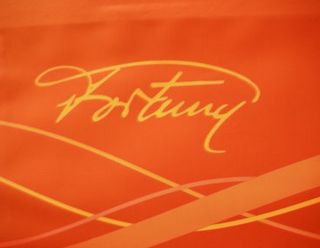
Vintage Fortuny gowns have labels like this:

and this:

Here’s a vintage Fortuny, with one of his jackets on top:

And another:

Every little once in a while, a Fortuny style gown is resurrected for current fashionistas:


Fortuny devoted his life to “Art” with a capital A, and was not only an accomplished dress and fabric designer, but he excelled in stage design as well general interior design.


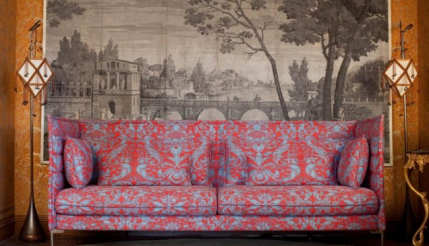


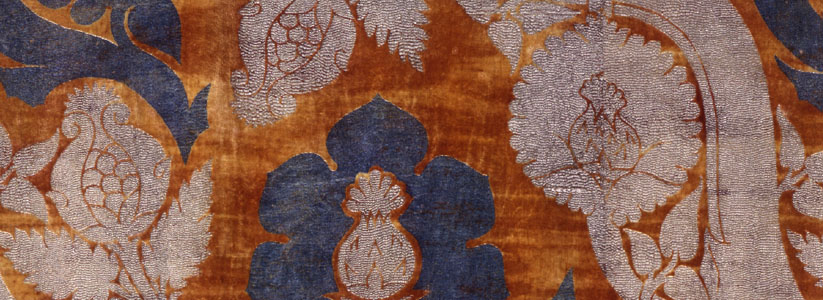
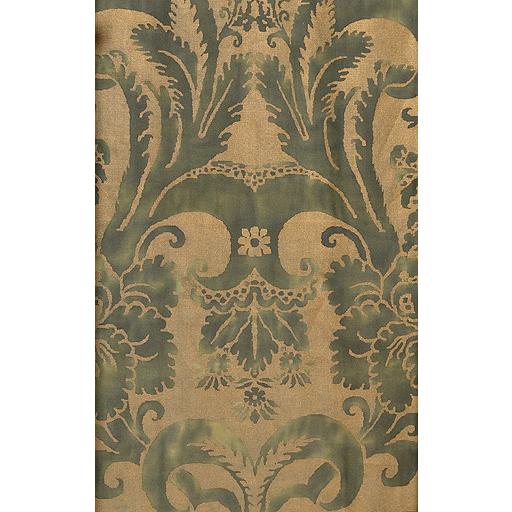
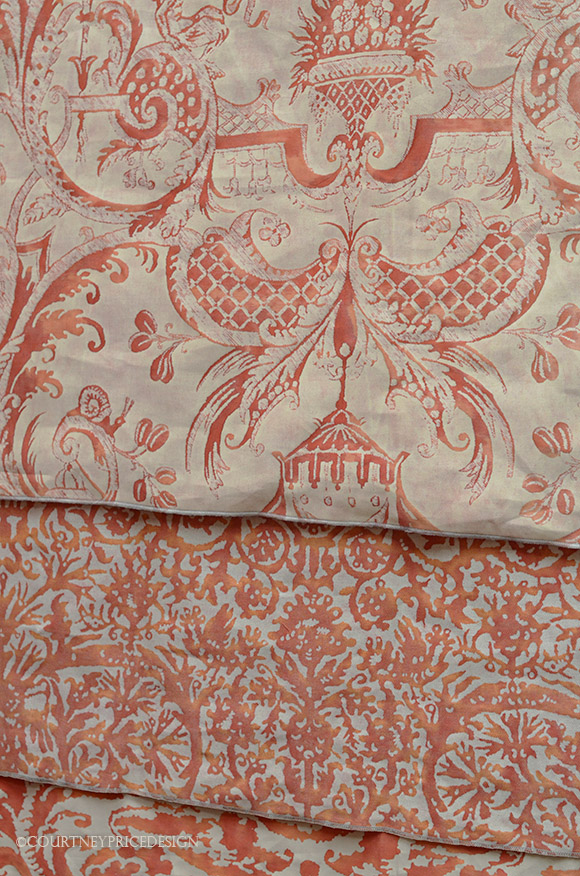
Fortuny invented methods of textile dyeing and printing, which allowed him to reproduce the depth of color and beauty of ancient brocades, velvets, and tapestries. In 1919, he he moved his textile workshop to a former convent on Giudecca, which is one of the many islands in the Venetian lagoon.

Luxe fabrics such as this one are signatures of Fortuny. The rich color is immediately suggestive of Venice in particular and Italy in general.
Here’s another:
And another:

I could go on like this forever:
And ever:


Here is another look at the Fortuny Museo:
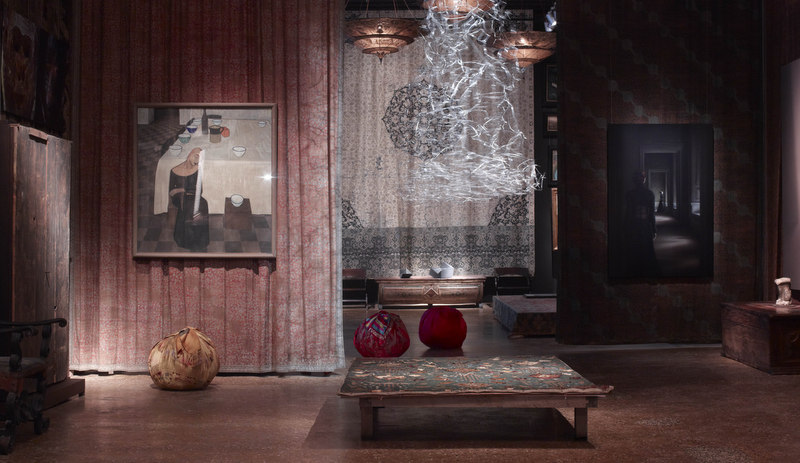
A vintage shot of the artist in his library in his Venetian palazzo:

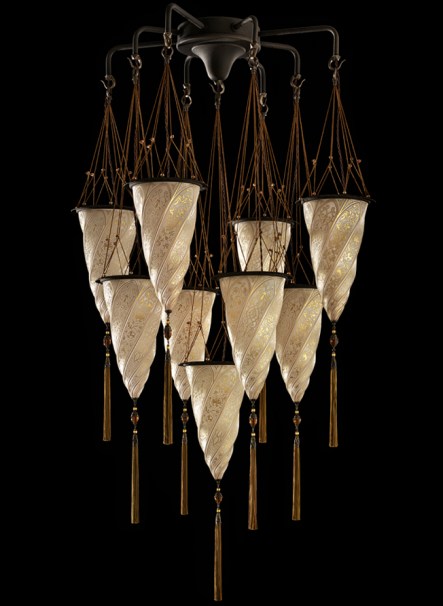
As if all of the above was not enough, Fortuny also created elegant lamps which diffused subtle light through opalescent silk shades, stretched over delicate wire form. The silk was hand-painted with gold motifs inspired by Oriental art and as a finishing touch, the lamps were decorated with glass beads and silk cording.
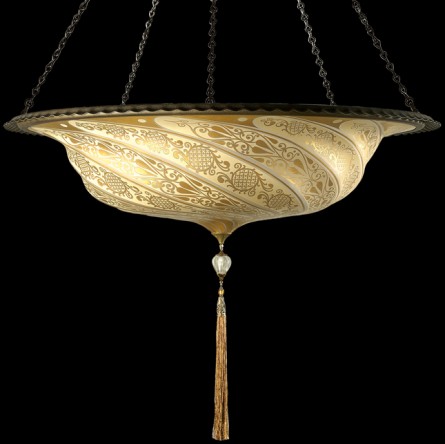
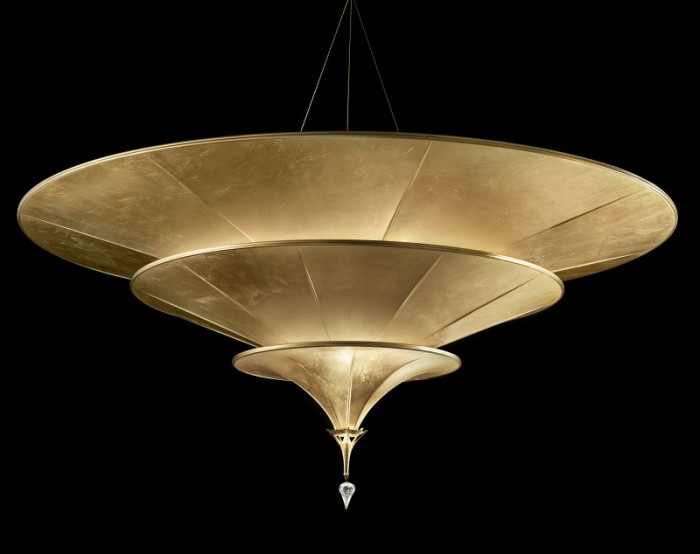
Here are two small lampshades for wall sconces.

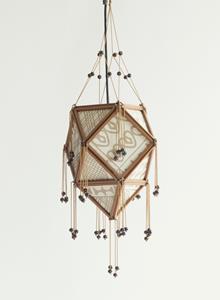
Fortuny’s life and work was a source of inspiration to the French novelist Marcel Proust. Not bad!
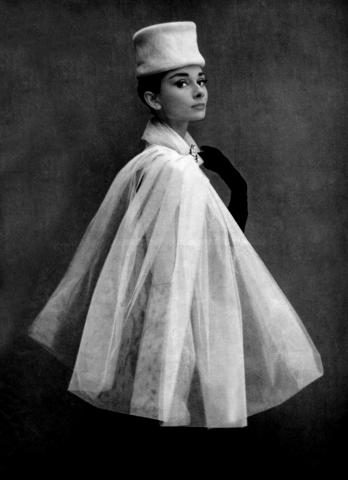
Have you ever seen anything more beautiful than this image?
Synchronicity brought it into being. Hepburn and Givenchy.
As I have been posting, many of actress Audrey Hepburn’s movie costumes were designed by Hubert de Givenchy, the famed French fashion designer.
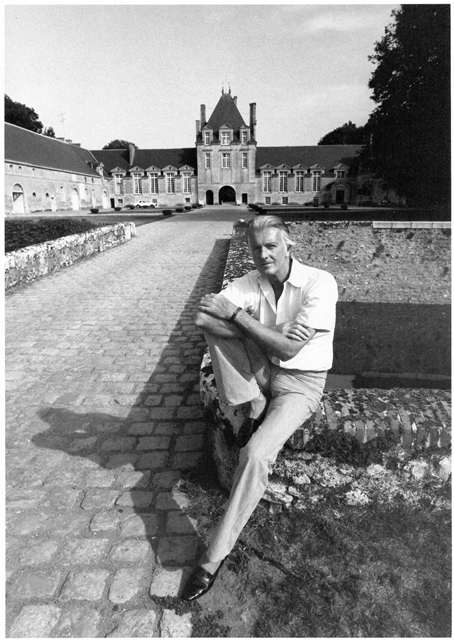
Here we see the fashion designer above.
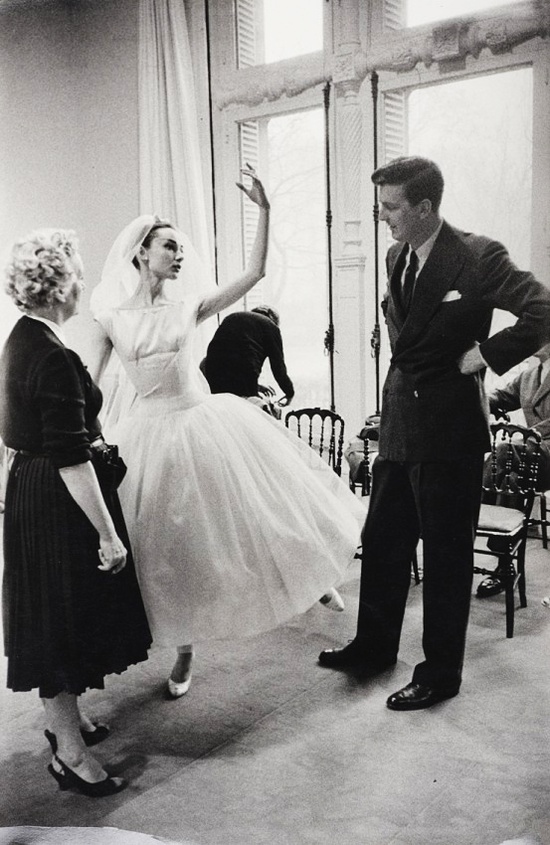
And here, in the photo, above we see a candid still of Audrey with Givenchy. She is modeling the wedding dress she wears in Funny Face and appears to be dancing some ballet steps.
Fortunately, for us and all of posterity, a lot of photos of Audrey and her favorite designer, or Audrey in his clothing, live in the ether net. For me, the photo below is one of the most beautiful pictures ever taken of any person, ever. Beauty personified.
I just can’t get enough of this image. I could look at it for the rest of my life. And I plan to do just that!

But let’s talk a little turkey about Hubert himself.
Count Hubert James Marcel Taffin de Givenchy was born in 1927 and is of course a French aristocrat and the founder of The House of Givenchy in 1952.
He is, as we have been discussing, famous for having designed much of the personal and professional wardrobe of Miss Hepburn:

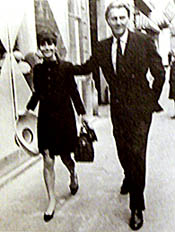
(and the two of them together is a pretty amazing sight)


Givenchy also created clothing for other amazing clients such as Jacqueline Bouvier Kennedy, seen below:


But there was something very special going on between Hepburn and Givenchy.
He even designed a fragrance especially for the actress.
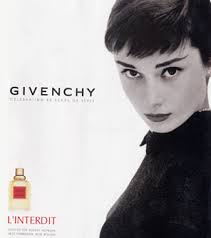
As I said in my recent post on Funny Face, it is obvious that Miss Hepburn became the muse for many amazing artists, including Givenchy but also for the photographer Richard Avedon.
Givenchy, the designer, seen below, is himself is a pretty nice tall drink of water.


Wouldn’t you have loved to receive a personal note from him as below?

And here, to end this post, is a gorgeous Miss Hepburn in an equally gorgeous Givenchy design. Sigh. Absolutely breathtaking.

Au revoir mon ami, happy le weekend!
The year is 1954 and Audrey Hepburn is 25 years old. Following the amazing success of Roman Holiday released in 1953, Hollywood couldn’t wait to produce another film with her. Having won the Oscar and other awards for her role in Roman Holiday, Audrey was seen as solid gold.
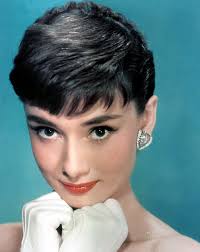
Billy Wilder was the next director to have the good fortune to direct Miss H in a film, and that movie was Sabrina.
In the picture below, Mr. Wilder gives the actress direction near Wall Street in New York.

Sabrina was designed to showcase Miss H, which it most certainly and admirably accomplished.

Unfortunately, the 65 year old Humphrey Bogart (supposedly Cary Grant was offered the role but turned it down) was cast as Sabrina’s love interest, which bends the credulity of even the most rabid fans of the lovely actress. And I like Humphrey Bogart a lot! But she was 25 to his 65. Crazy.

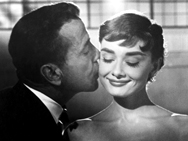


You may freely call me any form of crazy, but I sense in all these stills of Hepburn and Bogart that she was just not comfortable with the roles they were playing opposite of each other.

And I further think that some of the candid shots taken on the set further reveals her discomfort. One of these is above.
And, if you think I am hallucinating, compare the candid shots of Bogart with Miss H to the ones below with William Holden and Miss H. I think you’ll see what I mean!


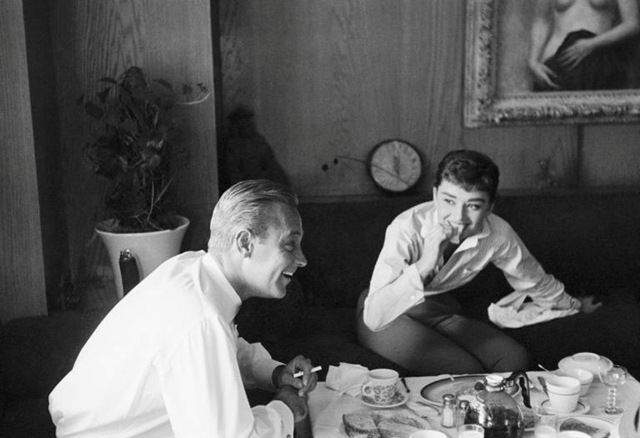
If Audrey H wasn’t enjoying William Holden’s presence, I will eat my hat.
Her confidence with him shows through in the film and in publicity stills.


William Holden played the role of Humphrey Bogarts’s younger brother in the movie. He is much more believable as Miss H’s innamorato, for Holden was only 11 years her senior.

But, whatever. It was what it was. We have another great black and white film on which to gaze at the beautiful, sylph-like star.
Let’s take a look at her in various moments in the film:

In her role as young Sabrina before her trip to Paris. She helps her dad, the chauffeur, wash a car. She has one eye on her unrequited love object, the character played by William Holden.
Ready for a game of indoor tennis in a Givenchy ballgown below.

Waiting for a ride at the Long Island train station after her 2 year sojourn of culinary training in Paris.
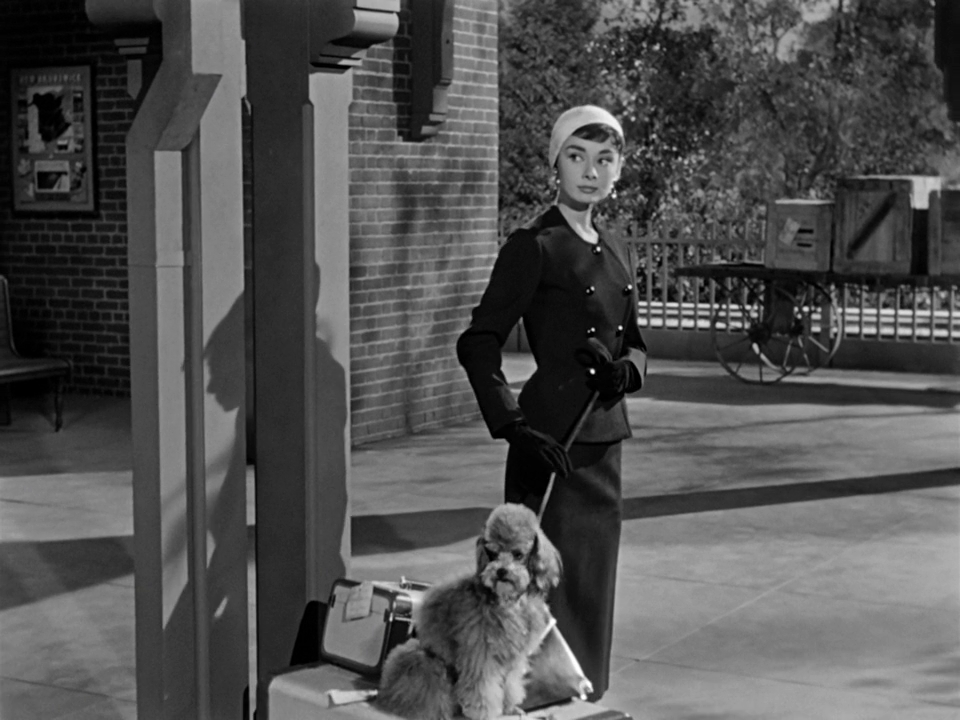

Tres chic, mademoiselle!
Giving new elegance to a Manhattan boardroom:
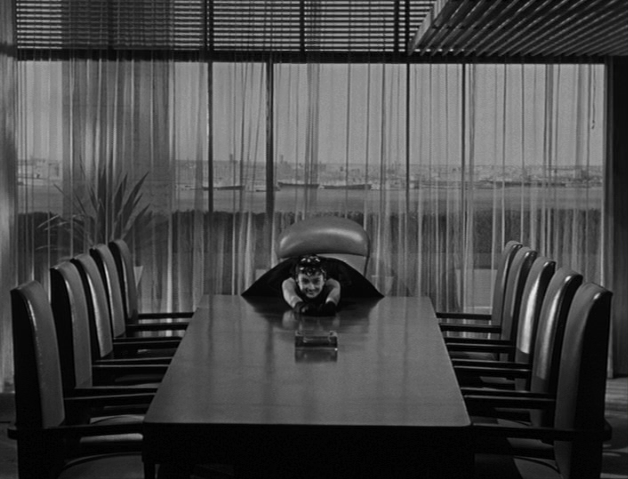
The current television show, Mad Men, could well have used the boardroom from Sabrina as a role model for set design. I bet they did.

My favorite part of the movie are the scenes of her at the Paris culinary school!
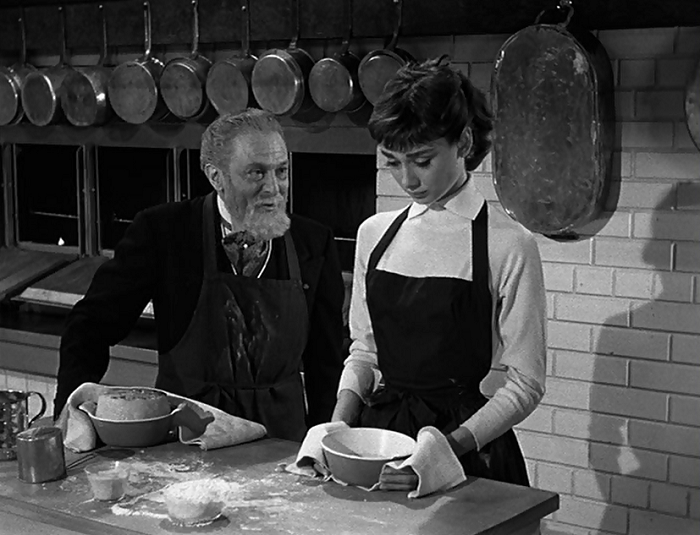

Maybe I love them just because they show the Eiffel Tower in a snowfall out the cooking school window. Nah. It’s because of Audrey.

I mean, look at her!
Once again, Edith Head had the pleasure of overseeing the costumes for Sabrina, as she did for Roman Holiday and Funny Face. However, the film includes gowns designed by the famed French couturier, Hubert de Givenchy, seen here:
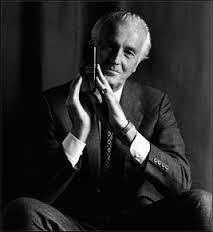
It is said that Miss Hepburn personally chose the dresses she wore in the movie from Givenchy’s choices. Both the designer and Miss H were mutually enchanted with each other, thus beginning a lifelong association.
In fact, Monsieur de Givenchy would specially design a perfume for his glamorous friend and muse, Audrey, in 1957. He named it L’interdit, which means “forbidden” in French. The fragrance became the House of de Givenchy’s first cult scent. The scent has a delicate, floral, powdery aroma, with notes of rose, jasmine, violet and, at the heart, a blend of woods and grasses. The sophisticated classic scent is as elegant and lovely as its original wearer.

But Miss Head won an Oscar for Sabrina, whether or not her role was as large in its production as assumed.


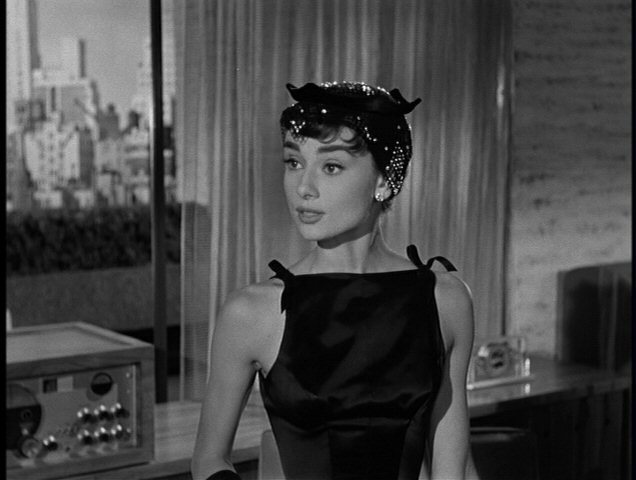
Whatever the real stories behind the making of the film were, we have the vehicle for more Audrey Hepburn, and that is good enough for me!
One last look at the radiant star:
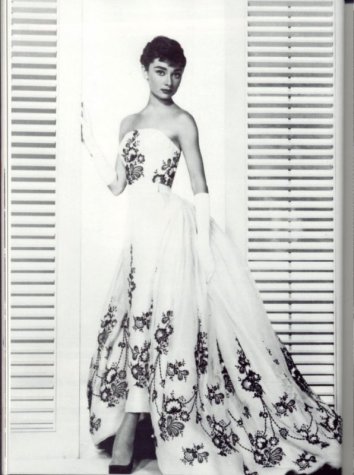
Au revoir!


 get back, lauretta!


You must be logged in to post a comment.