Teatro della Pergola, Florence

The riches of Florence continue to amaze me.  Every week brings a new discovery.  Some things are hidden, others are hiding in plain sight.

The Teatro della Pergola is one of the obvious places one intrinsically knows will be a delight.  One only needs the time to explore.

For me, that time arrived in mid November.  I was fortunate to have a guided tour of the theater with one of the key people in the organization, Claudia. It was easy to set up as 1, 2, 3.  You email Claudia at museo@teatrodellatoscana.it, or check this website: https://www.destinationflorence.com/it/dettagli/5522-pergola-gran-tour. Soon you will be time traveling in a beautiful space ship: a 17th century Baroque theater in the heart of Florence. The street is Via della Pergola, a 5 minute walk from the Duomo.

Screen Shot 2019-11-16 at 10.34.51

For those who can’t get to Florence to view this fantastic place, thank your lucky stars that we are living in the 21st century! You can take a virtual tour of the theater on Google’s Art and Culture platform.

https://artsandculture.google.com/streetview/teatro-della-pergola/ZAEBuIJpzoz0QA?sv_h=-146.45499777856364&sv_p=12.806449561634778&sv_pid=N3SpojGji8LMboRM9u7kUg&sv_lid=4006220043401357886&sv_lng=11.26147461842936&sv_lat=43.77317260396089&sv_z=2.4829477459908875

The Teatro della Pergola in Florence was the first theater in Italy, and the third overall after the Opéra in Paris and the National Theater in London, to be virtually hosted on the Google Cultural platform,making the vast European artistic heritage virtually accessible for aall the world to enjoy.

So, first things first:

Where did the name of the theater come from? Pergola means trellis, or a structure on which climbing or trailing plants can grow. The front of the theater is covered with ivy, which trails down over the small projecting metal and glass canopy over the entrance and lends a pastoral feel to the theater. Claudia told me that when the original building was constructed here, there was already a small vineyard planted, which undoubtedly had some sort of pergola. The name stuck.

A self-formed group of Florentines, calling themselves the Accademia degli Immobili, were dedicated to the cultivation of the arts in their city. While there was already a theater in Florence (the Teatro del Cocomero, later replaced and renamed by the still extant Teatro Niccolini), it was too small for the Accademia’s needs.

They commissioned Ferdinando Tacca (son of Pietro Tacca, who designed the two fountains in Piazza SS. Annunziata), to build them a theater. It was probably inspired by  the courtyards of Renaissance palaces. One possible model is the Cortile Ammannati at Palazzo Pitti. The functionality of these courtyards was in part that they allowed spectators (noble and aristocratic of course) to view all kinds of shows in the square or rectangular spaces within the palazzi.  They could watch games, mock battles and all manner of entertainment, without mixing with the entertainers, one imagines.

The theater commission proved to be notable opportunity for the architect, Tacca.  What he designed for the Accademicians was no less than the first “Italian theater,” whose design, with its incredible acoustics, served as the basis for later theaters built throughout Europe and the world.

Tacca took the basic horseshoe design which the Greeks and Romans had already established as the ideal shape for watching theatrical performances. He constructed the floor of the theater in a spoon shape, with rises at the back of the orchestra and the stage.

One of the most notable aspects of Tacca’s design were the boxes that surround the outline of the theater on 3 levels, with a gallery on the 4th level.  This was the birth of this particular feature of classic Italian theater design.  For the first time, small separate spaces allowed each noble family to admire the show, and to be admired by the fellow theater-goers, from a privileged position.

The boxes are worthy of their own post. Claudia told me that all manner of things happened in these separate spaces, whose doors could be locked from the inside and whose heavy draperies at the front of the box could be drawn closed. Florentines were proverbially argumentative and territorial, and it was hoped that by assigning a box to each family, the continual feuds could be managed. Unfortunately, along with the food, wine, sexual exploits that took place in the boxes, we know that even murders were perpetrated.

The coats-of-arms of the various noble families announced the ownership of each box.  When the theater was renovated in subsequent centuries, the shields were taken down; the extant ones hang in the lobby of the theater.

img_1957

img_1958


There are 25 boxes on each level and, currently, there are only two restricted boxes: the number 1 of the first level, which remained reserved for the last heirs of the founding members of the Accademia, and the box on the opposite side. This box is the 25th on the first level, and is reserved for the theater director. You can see it in the photo below: It is the first box on the first level, just to the right of the stage.  It has pink marble facing it, unlike the other boxes which have white stucco facing.


The photo below was taken from the stage.  You can see the Royal Box in the center taking up the 2nd and 3rd level spaces in the center.  The size of this theater is small and intimate.  I can see how it would be ideal for theatrical or musical performances and I am eager to experience them soon.

img_1929

Together with the large stage, and the boxes and gallery, another distinctive feature of the Pergola are the incredible acoustics. Tacca created a perfect space for hosting theater and music; the voices of the great actors are enhanced, thanks to the horseshoe outline.

One thing Claudia explained to me is that the only things made from metal allowed in the theater design are the necessary brackets for holding electrical stuff, such as the house lights and the stage lights.  Everything else is stone or wood, because metal changes the sound waves in the theater.

The theater was completed in 1661. The inaugural production was the comic opera Il podestà di Colognole by Giovanni Andrea Moniglia.

Once upon a time:

The stage set was hidden from view at the beginning of performances with a large painted curtain depicting Florence and the Arno. The curtain that covers the stage today is itself quite grand.

teatro firenze capodanno 2018-2


Why a windmill?


The Accademia degli Immobili, or the founders of the theater, took for themselves the rather incongruous (to me) Dutch windmill as their theater symbol.  I could not understand this choice until Claudia explained that Florence’s riches were at the time based upon the trade with the north and, I suppose, especially the Netherlands.  The windmill is used throughout the theater in subtle design features. It even appears on the knobs on the box door handles:

copertine


Initially reserved for the court and aristocracy, the theater was reopened from 1718 to the paying public. The operatic works of the great composers, such as Antonio Vivaldi, were staged.

Below are photos of the to-scale model of the theater as it would have originally appeared.  You can see the coats-of-arms over each first level box.  Claudia told me that the benches with backs and cushions were reserved for women, and the benches without backs were for me.


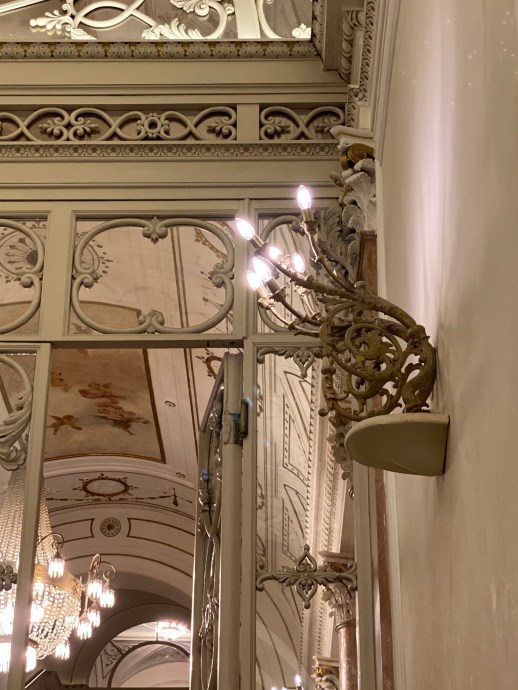
The neoclassical lobby was a later addition.  It provides a grand welcome to all visitors.

The building of La Pergola was remodeled several times. It was enriched with new decorative schemes and enlarged with all of the crafts and skills of the stage art.

In 1801 the Saloncino, a large room with stuccos dedicated to music and dance, was opened on the first floor by architect Luca Ristorini (completely restored in 2000; it is the second hall of the theater).  Ristorini had also,  in 1789, had renovated the great hall, changing the box design to create a very large royal box at the far end of the theater, directly opposite the stage.

The period between 1823 and 1855 were great years for the Pergola, for it was managed by the impresario Alessandro Lanari. Under his direction, Florence became one of the most important stages of Italian classic opera. The most important composers, beginning with Bellini, made important appearances on Via della Pergola and Florentines first hear the music of Giuseppe Verdi when he made his renowned Macbeth debut in 1847. The museum under the main hall has a wooden chair built especially for Verdi to sit upon while directing rehearsals.  He was having problems with his legs and the chair made life better for him.

Locandina_macbeth_a_firenze_1847-1

In 1826, Gasparo Martellini painted the historical curtain depicting the coronation of Petrarca in Campidoglio which is still used at galas. The machinist, Cesare Canovetti, designed and constructed an ingenious wooden machine for lifting the stalls which forms the basis for the museum under the hall. It was used when the hall was converted into a ballroom,  to make the floor a single plane with the stage. The architect, Baccani,  modernized the theater, designing the the “Atrium of the Columns.” And, very notably, a young stage apprentice, Antonio Meucci, experimented with a voice communication system between the attic where the curtains and sets were managed from above and the the stage. Meucci’s invention was the ancestor of the telephone, which Meucci perfected, when he emigrated to the United States.  According to Claudia, Meucci sold the design of his invention to Alexander Graham Bell who went on to produce the first telephone.

In the 19th century:

The theater’s illumination was upgraded to gas lights, and Florence enjoys the rank of capital of Italy. The theater board sells a share of the Academy to the King Vittorio Emanuele II. Later financial problems encountered by the theater were partially solved by the intervention of the Commune.

Electric lighting was incorporated in 1898. The theater underwent drastic changes along with the lighting: plays were substituted for the opera (which moved to the larger Florentine theaters, the Politeama and Pagliano). 

In December 1906, Eleonora Duse arrives at the Pergola with the legendary Rosmersholm by Ibsen. This play was directed by Edward Gordon Craig and a dressing room was designed for the grand dame. This Primo Camerino, is still in use, conveniently located right next to the stage.


In 1925, the Pergola became a national monument. During WWII, the theater was  managed by Aladino Tofanelli. Ownership was ceded to the state in 1942 and it soon became a part of the newly created Ente Teatrale Italiano.

When Tofanelli died, the young, brilliant and innovative Alfonso Spadoni, arrived and revitalized the Pergola, primarily with great dramas. The Pergola is seamlessly woven into the urban fabric of Florence, providing a setting for important cultural events.

Another brilliant young man, Marco Giorgetti, is at the helm now. Since 1999 Giorgetti has been hard at work, reestablishing the ties between the theater and the city.

Today the Pergola is much more than a theater. At the epicenter of the Teatro della Toscana Foundation and a theater of national importance, the Pergola is  a living cultural center, using its history and prestige. It maintains very active programming. The brightest stars in the theater firmament shine at the Pergola. 

Walking in the corridors of the theater is like reading a book sprinkled with immortal names. All the objects tell a story, the individual fibers of fabric or wood particles bear witness to memorable events.


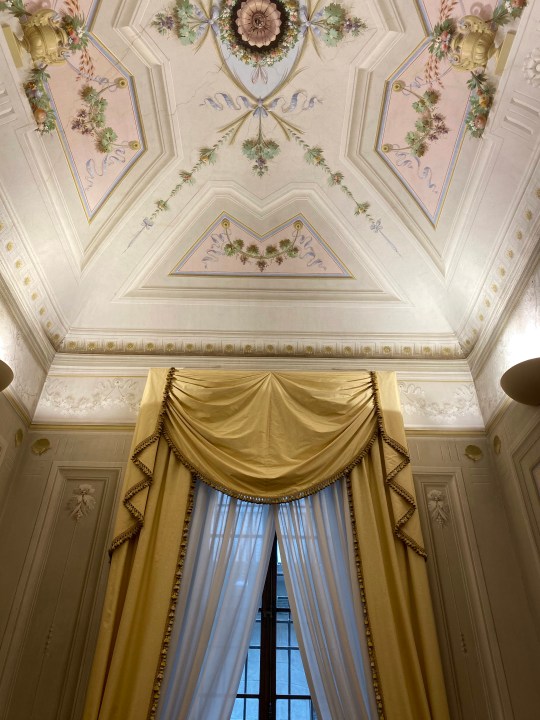
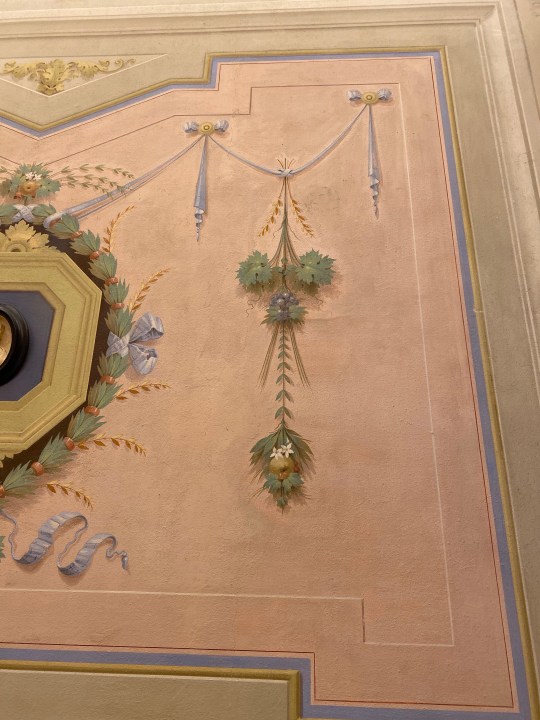
Below: the neoclassical painting on the ceiling of the grand hall.


Backstage at the Pergola:


The stage as it appeared the day I visited:


Some vintage posters in the museum:

teatro-pergola-le-origini-844x580


The (most elaborate?) wine window in Florence

I’ve posted before about the uniquely Florentine custom of  wine windows found in some of the city’s palazzi.  They are found, here and there, all around the city.  This is the most elaborate one I’ve ever noticed.


fullsizeoutput_22f7
The marble plaque above informs customers that the window “It is open from November 1st to April from 10 am to 3 pm pm and in the evening from 5 to 9, from May 1st to the end of October From 10 am to 3 pm E La Sera From 7 to 10.”

The wine windows have their own association in Florence.  Here is the website: http://buchettedelvino.org

You can read more about the windows here: https://www.theflorentine.net/news/2016/04/florence-wine-windows/

Or watch videos here:

Florence’s Duomo: better late than never

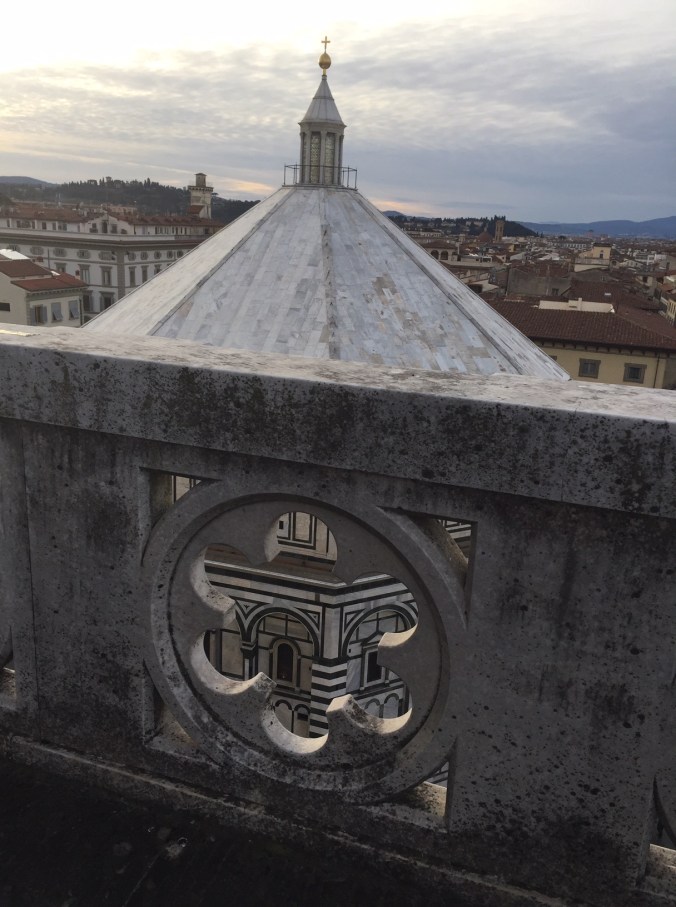
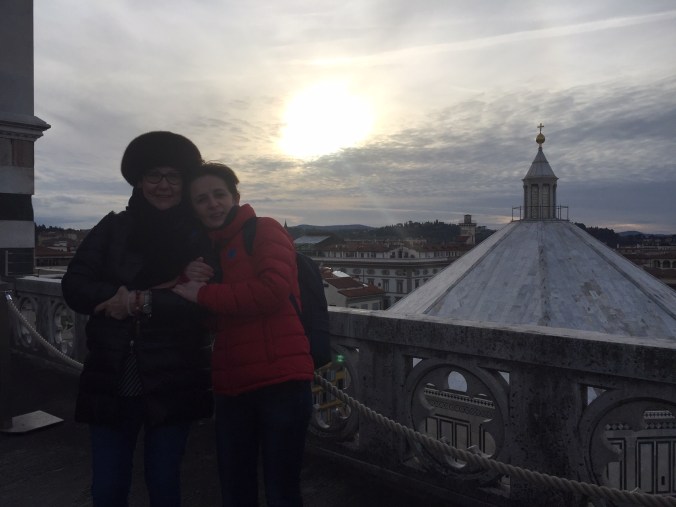
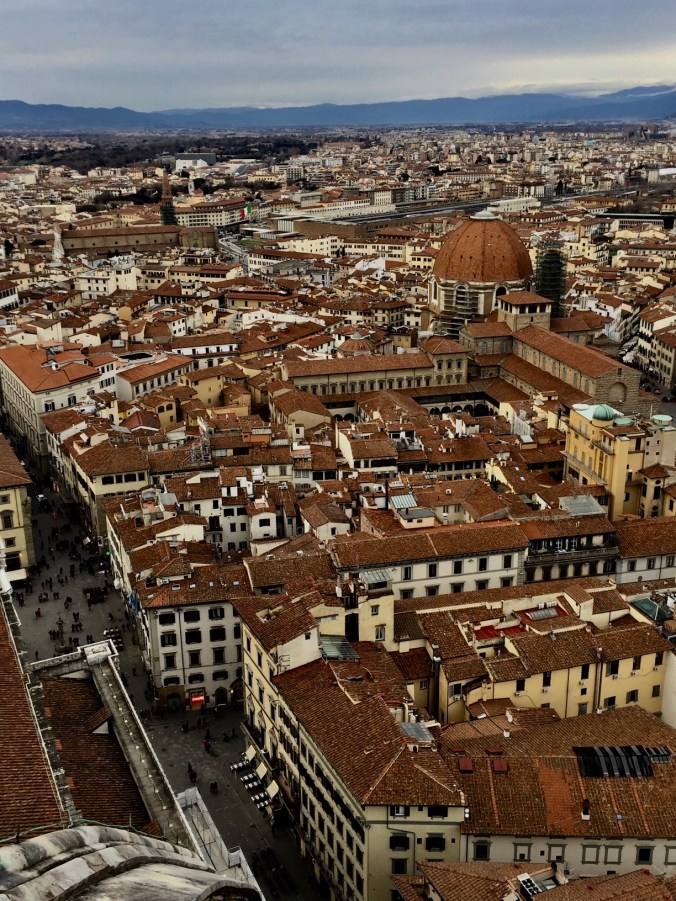
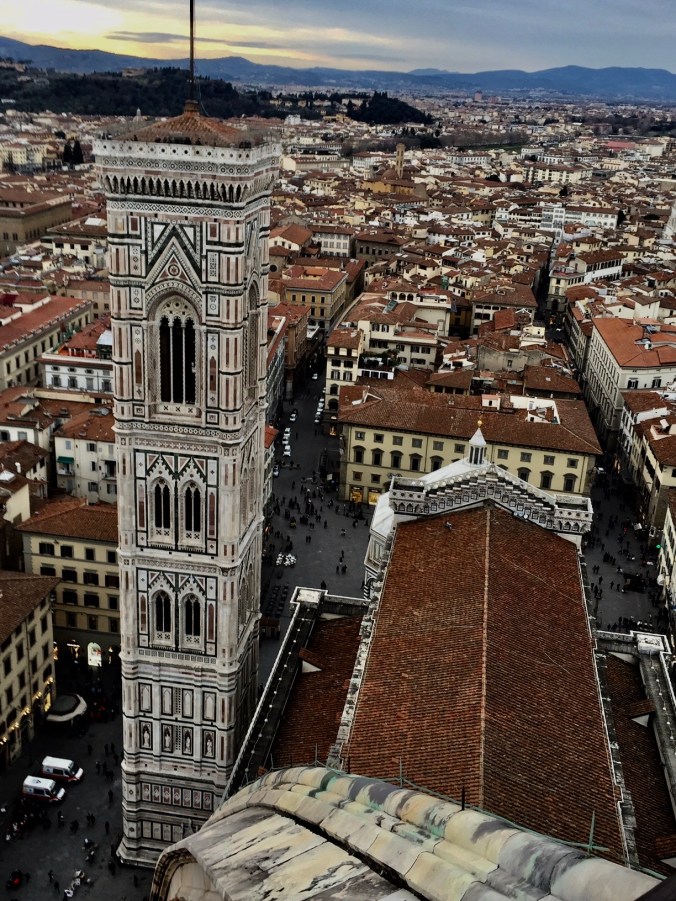
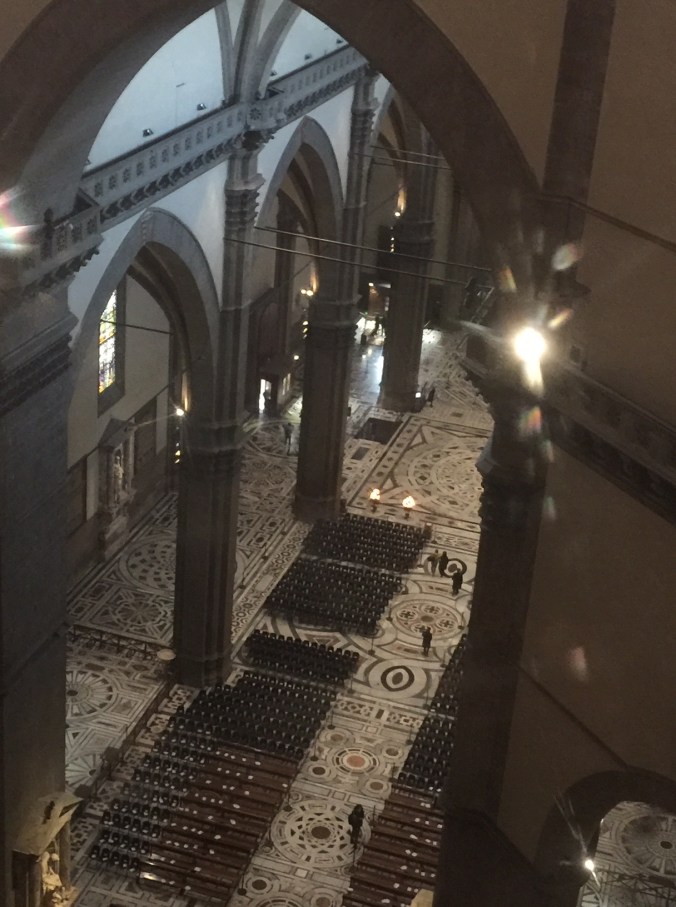
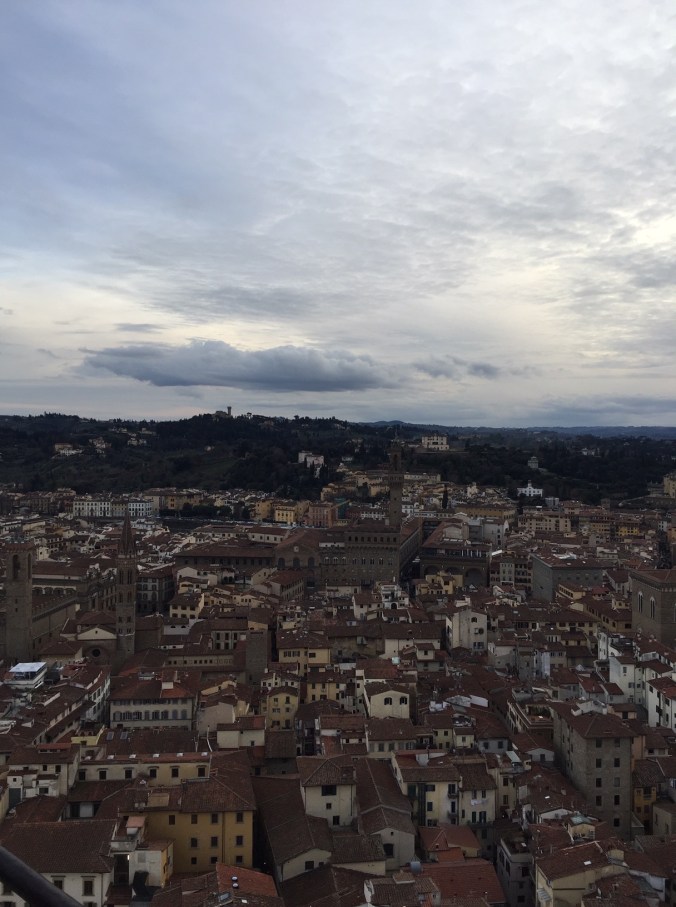
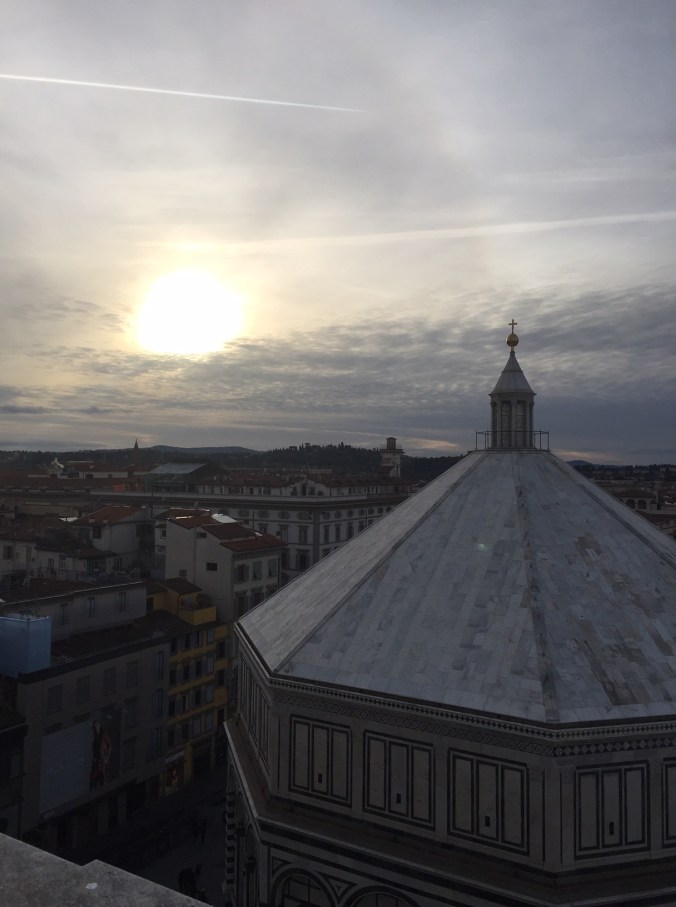
For my last birthday,  I climbed the 1,000,000 steps to the top of Florence’s cathedral with a friend who shares a January birthday.  Even though we live in a world where the word “awesome” is overused to the point of oblivion, I can only describe the duomo experience as awesome.

Unfortunately, I have been negligent in getting my pix and videos posted!  I’m trying to catch up!  I’m only about a year (11.5 months to be exact) late.  Oh well…I’ll try to do better in the future.

First, let me share this Youtube video with you, because it captures how I felt!!


Before ending this very long post, I want to add a photo I came across of a 1940s visitor at the top of the  dome

38292712_1365467610252206_8315175002815070208_n


Opificio delle Pietre Dure, Florence

Spend a little time in Florence, Italy, and you will soon discover that the work of fine arts restoration is very much alive and well in this magnificent city.  It just makes sense.

What you may not realize, is that one of the famous artistic workshops of the Italian Renaissance, the Opificio delle Pietre Dure, established in 1588 at the behest of Ferdinando I de’ Medici, is still functioning today.  Ferdinando sponsored the formation of this workshop to provide the elaborate, inlaid precious and semi-precious stoneworks that he so admired. And you can visit the premises.

And, what is this art of inlay? If you’ve been to Florence, chances are good that you’ve visited the Chapel of Medici Princes in San Lorenzo. That magnificent, opulent chapel is an example of the art of stone inlay at its most excessive.

The overall decoration of the Cappella dei Principi (Chapel of Princes) in the Basilica di San Lorenzo di Firenze takes the art form to a whole new level. The technique, which originated from Byzantine inlay work, was perfected by the Opificio masters under the Medici patronage and the artworks they produced became known as opera di commessi medicei (commesso is the old name of the technique, akin to the ancient craft of inlay) and later as commesso in pietre dure (semi-precious stones inlay).

Screen Shot 2019-11-26 at 08.52.43

The artisans performed the exceptionally skilled and delicate task of inlaying thin veneers of semi-precious stones, especially selected for their color, opacity, brilliance and grain, to create elaborate decorative and pictorial effects. Items of extraordinary refinement were created in this way, from furnishings to all manner of artworks. Today, artisans trained at the Opificio assist many of the world’s museums in their restoration programs.

I recently was introduced to a fantastic workshop in Florence, the Lastrucci. It was there that my interest in this typically Florentine art form originated.

img_2073

The Opificio workshops were originally located in the Casino Mediceo, then in the Uffizi and were finally moved to their present location in Via Alfani in 1796, or you know, slightly after the formation of the United States of America.  At the end of the 19th century, the institute’s activities moved away from the production of works of art and towards the art of restoration. At first specialising in hardstone carving, in which the workshops were and are a world authority, and then later expanding into other related fields (stone and marble sculptures, bronzes, ceramics).

The Opificio delle pietre dure, which literally means “Workshop of semi-precious stones,” is a public institute of the Italian Ministry for Cultural Heritage based in Florence. It is a global leader in the field of art restoration and provides teaching as one of two Italian state conservation schools (the other being the Istituto Superiore per la Conservazione ed il Restauro). The institute maintains also a specialist library and archive of conservation, as well as a very fine, small museum displaying historic examples of pietre dure inlaid  art and artifacts. A scientific laboratory conducts research and diagnostics and provides a preventive conservation service.


img_2055

img_2054


The frescoed halls within the museum are lovely in their own right:

img_2056

img_2057

img_2059

img_2060

img_2061


img_2062


img_2063


img_2064


img_2065


img_2066


img_2067


img_2068


But one comes here, after all, to see the stone work:

img_2069


img_2070


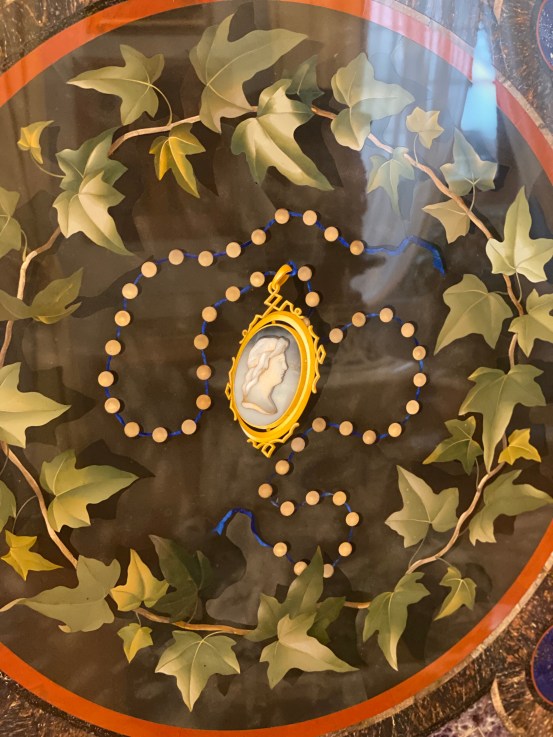
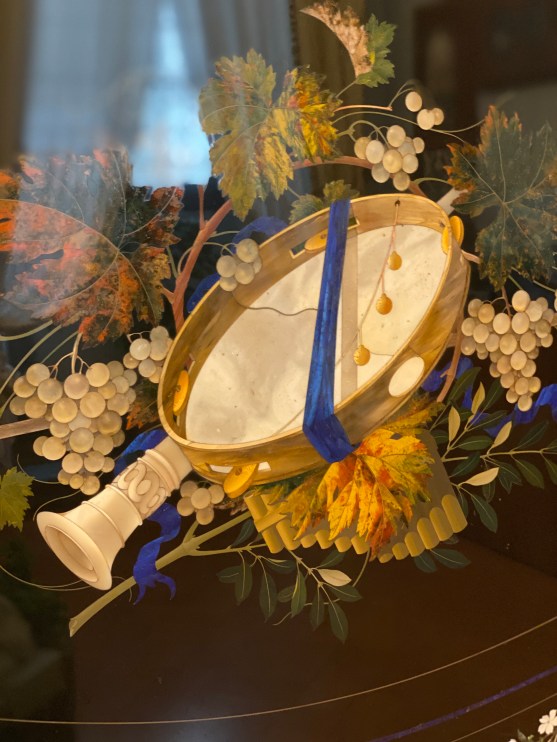
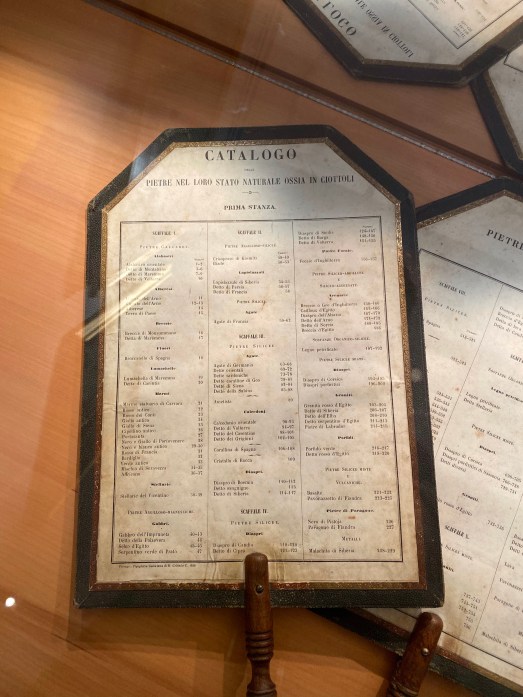
The museum displays extraordinary examples of pietre dure works, including cabinets, table tops and plates, showing an immense repertoire of decoration, usually either flowers, fruits and animals, but also sometimes other picturesque scenes, including a famous view of the Piazza della Signoria.

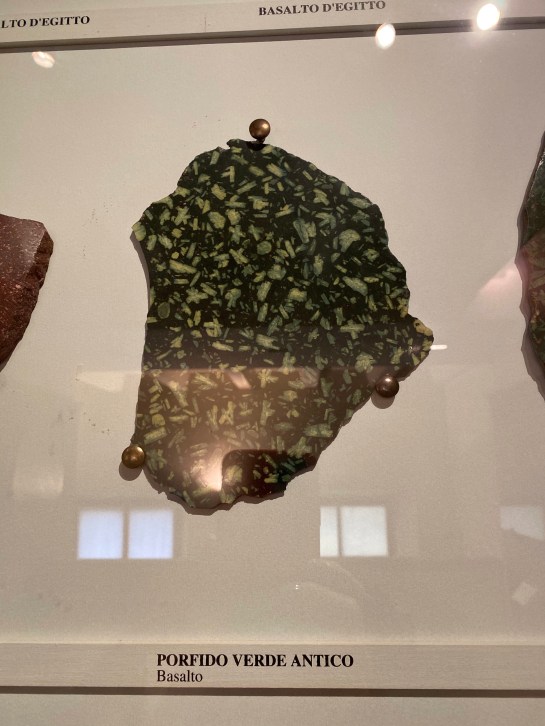
There is also a large baroque fireplace entirely covered in malachite, a dazzling and brilliant green stone as well as copies of painting executed in inlaid stone. Some of the exhibition space is dedicated to particular types of stone, such as the paesina, extracted near Florence, the grain and color of which can be used to create vivid landscapes.

There are vases and furnishings decorated with Art Nouveau designs of the late 19th and early 20th centuries, including a tabletop with a harp and garland by Emilio Zocchi (1849) and another decorated with flowers and birds by Niccolò Betti (1855).

While one is not able to visit the restoration workshops, a visit to the small museum is a must for understanding the fine art of semi precious stone inlay, which is itself a very Florentine tradition.

Here are some examples of pietre dure that caught my eye in the museum.


img_2071


img_2072


img_2073


img_2074


img_2075


Climbing to the museum’s 2nd floor, you know you are in a place that values stone when you see the back of each step: each step got its own stone type.  Extraordinary.

img_2076


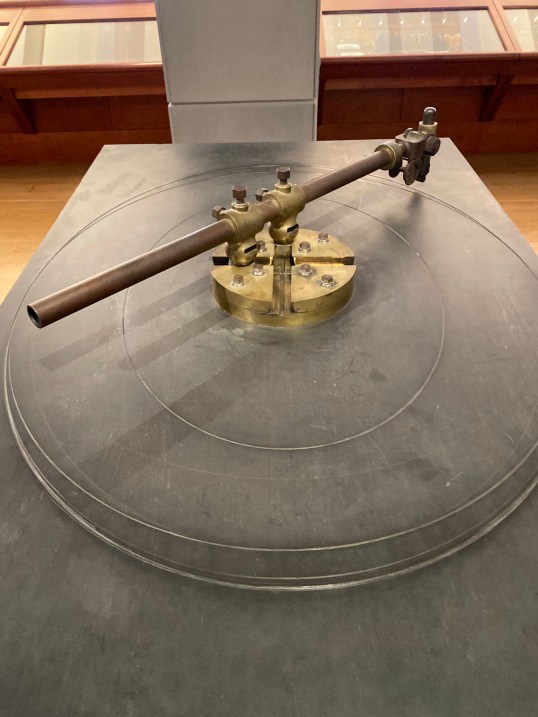
An exhibition of the technical processes of pietre dure works through history is found on the upper floor.

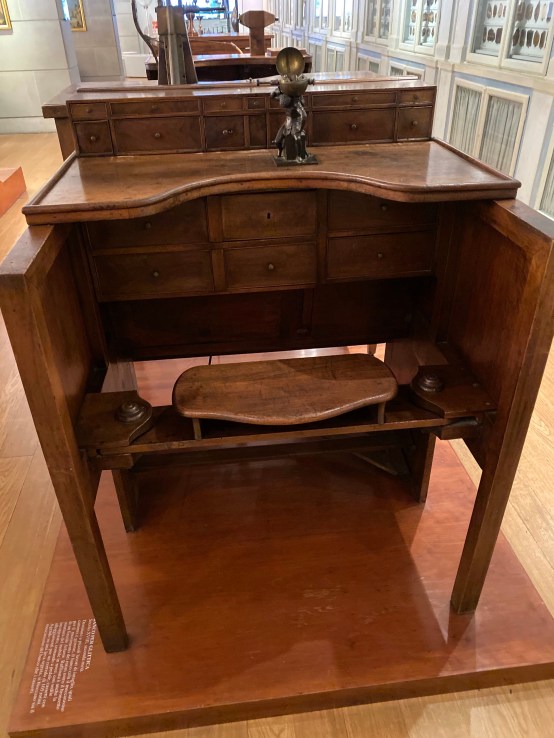
For me, the upper floor was the most interesting.  While I admire the workmanship and skill that goes into these incredible inlaid pieces, usually the artwork itself doesn’t move me.  But the upper floor has amazing didactic information, original casework furniture specifically designed for the artisans, and tools.  There is also a very informative film that tells the story very well.

img_2077


img_2078


img_2079


img_2080


img_2081


img_2082


img_2083


img_2084


img_2085


img_2086


img_2087


img_2088

Below, a few of the dental type tools used in the craft. Dazzling.

img_2089

Casa Martelli, Florence, part 1

Last month, I finally visited the Palazzo Martelli, which I’ve walked by for several years, always hoping to enter. It’s only open a few days of the week and only by guided tour, but it is so worth the visit!  I highly recommend!

For centuries–right up to the 1980s– the the Palazzo Martelli was the residence of one of Florence’s oldest noble families. A visit to this jewel of a museum takes the visitor into a suite of opulent period interiors, including the ground-floor stanze paese (landscape rooms), whose walls and ceilings are painted with trompe-l’œil scenes; an elegant grand staircase leading to the piano nobile; the spaces of the main floor, which include a chapel, a ballroom, fascinating picture galleries, and a great hall and other richly-decorated rooms.

Screen Shot 2019-11-25 at 16.38.01

Palazzo Martelli underwent a series of renovations in the early 18th century, under the care of Niccolò Martelli and his son Giuseppe Maria, who was the archbishop of Florence. Although there had been Martelli family homes on this site from at least the 13th century, it was only in 1738 that the family’s residence was transformed into the palazzo we see today.  It was designed by architect Bernardino Ciurini, and decorated by the painters Vincenzo Meucci, Bernardo Minozzi and Niccolò Contestabile, and the stuccatore (stucco artisan) Giovan Martino Portogalli.  The exterior, as shown above, presents a sober, austere image to the outside world, with only the balcony to soften the hard edges. This hard exterior is the way Florentines presented themselves to the outer world. But, oh, what lies inside is quite the opposite!

Today, Casa Martelli houses the last Florentine example, in public hands, of a well-known art collection formed largely during the 17th and 18th centuries. A visit proceeds through the rooms of the ground floor and the piano nobile, updated according to the tastes of the period, where visitors can enjoy the picture gallery—rich with masterpieces such as Piero di Cosimo’s Adorazione del Bambino, two wedding panels (pannelli nuziali) by Beccafumi, and magnificent paintings by Luca Giordano and Salvator Rosa—as well as the antique furniture, tapestries, and various decorations and objects dispersed throughout the home.

Casa Martelli remained in the Martelli family’s possession until the death of Francesca Martelli in 1986. For a brief period, the residence passed into the hands of the Florentine Curia, to whom Francesca had bequeathed the palazzo in her will, before eventually becoming property of the Italian State.

Two of the most outstanding art works that the Martelli family possessed have now been removed from the palazzo and are in the Bargello and the National Gallery of Art, Washington, D.C. Both are attributed to Donatello. The monumental coat-of-arms that Donatello created for Roberto Martelli is now in the Museo Nazionale del Bargello collection.  Today a copy hangs in the place of honor. You see it below, on the far wall with a red background.

Likewise, a statue of David also attributed to Donatello (see below) once stood in this hall; today the statue is in Washington, D.C.

Screen Shot 2019-11-25 at 16.36.17

Currently the museum is only open to visits a couple of days of the week, and then only with a guided tour.  If you get the chance, you should definitely visit the casa, or palazzo.  It is wonderful.

But, if you can’t wait or can’t get to Florence, you can fortunately take a virtual tour of the museum here: http://www.polomuseale.firenze.it/musei/visita/casamartelli/tour.html

Even accounting for the loss and dispersal of items, the collection remains impressive, including works by Piero di Cosimo, Francesco Francia, Francesco Morandini, Salvator Rosa, Giordano, Beccafumi, Sustermans, Michael Sweerts, Pieter Brueghel the Younger, Orazio Borgianni, Francesco Curradi, and collections of small bronzes, including some by Soldani Benzi. The works are displayed in the crowded arrangement typical of the period.

When you visit the casa today, you enter through large wooden doors and an iron gate, both dating to 1799.  Inside the building, at the far end of a short interior courtyard, is a mural painting with an illusory effect, done in 1802 by Gaspero Bargioni.

 
Screen Shot 2019-11-25 at 16.28.54


One enters a door to the grand staircase from this cortile:


The original ironwood of this staircase is fabulous!


Where you see the neoclassical sculpture of Psyche, imagine a statue of David by Donatello standing there.  That’s the work of art the Martelli family displayed in this place of honor.  The Donatello statue is today in Washington, D.C.

Screen Shot 2019-11-26 at 09.20.56


Below is the copy of the Donatello coat of arts made for the Martelli family.  The original is in the Bargello.


Entering the first gallery off the entrance, you begin to enjoy the art collections for which the Martelli family was renowned, including the many outstanding ceiling frescoes they commissioned over the centuries for this opulent family home.


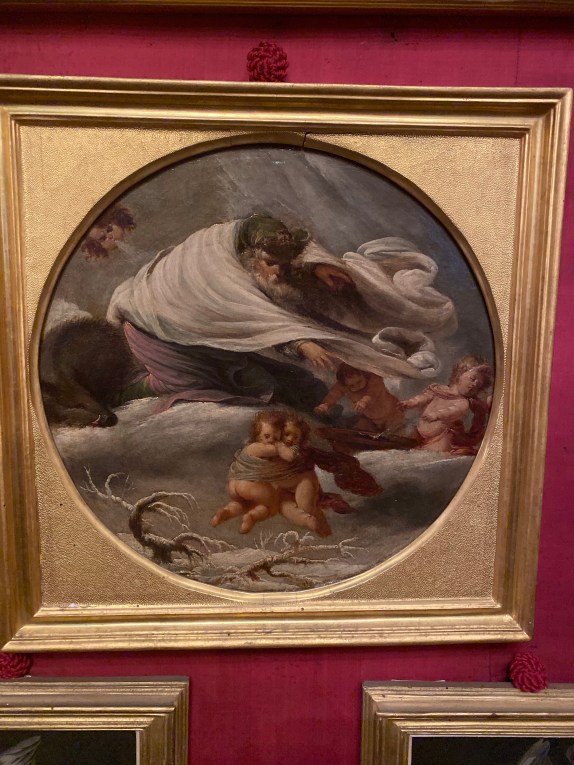
In the painting below, we catch a glimpse of members of the Martelli family in the 17th century. A servant offers them a tray bearing cups of the hot chocolate which were a la mode at the time. Oh, to have been a fly on the wall!


Many of the doors throughout these galleries are embellished with these gilt decorations, every door with a different combination of items:


The artist signed his name on the ceiling mural, as you can see below:


I was interested in these little pops of passamaneria (trimmings) found covering the nailheads that these paintings are hung on.  I’m a huge fan of all things passamaneria, and I’ve never seen anything like these before.  I love it when I experience something completely new!


Now we enter the 2nd gallery, with its own wonderful ceiling mural.  I was enchanted by these 2 little boys in the mural.  They are busily talking pageboys,  holding the lady’s train.  What were they discussing, I need to know!


The door knobs in some of these galleries were fabulous! Butterflies!


The inlaid commesso fiorentino furniture was outstanding as well:


Next we enter the 3rd gallery, with a ceiling fresco treating the subject of Donatello as sculptor to the Martelli family.  The connection was real and it is very entertaining to see its history play out on the ceiling!


That’s Donatello in the yellow smock:


Oops, another shot of my latest obsession.


Below: my other obsession.


Also notable in this room are the very old and very elegant draperies, also with very elegant trim or passamaneria.


And, of course, this family would own some fine Manifattura Richard Ginori ceramics:


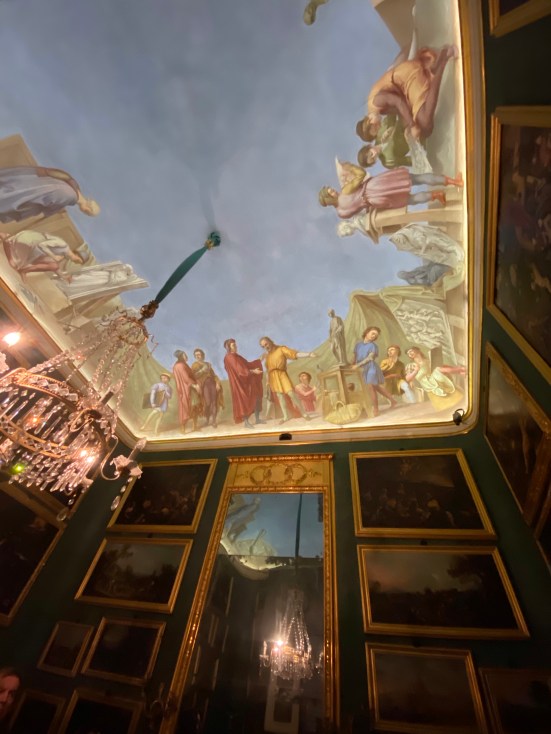
The next gallery, with another fine frescoed ceiling:


In this room, I love the way the 2 drapery rods meet in the middle in a laurel wreath.  The message is clear, the Martelli family was crowned with laurel:


That, of course, is Dante in the red, accompanied by Petrarch and Boccacio. Naturally they are crowned with laurel wreaths and the putto is sailing in with an extra, just in case:


In the next room, a private chapel was built for the last Martelli owner of the home.  It is really quite something in terms of casework.


I don’t remember ever seeing a painting of a swaddled Christchild before.  Another something new.


I’ve still got more to show you, but this post is already too long.  I’ll finish it tomorrow…stay tuned!

A fancy hotel in Florence, with splendid views

A couple of months ago, on a splendid Sunday afternoon, one of Florence’s fanciest hotels (owned by the Ferragamo company) held an open house.  I took advantage of the occasion and took a tour.  My blog isn’t meant as a travel how-to, so I don’t typically recommend hotels or restaurants, etc..

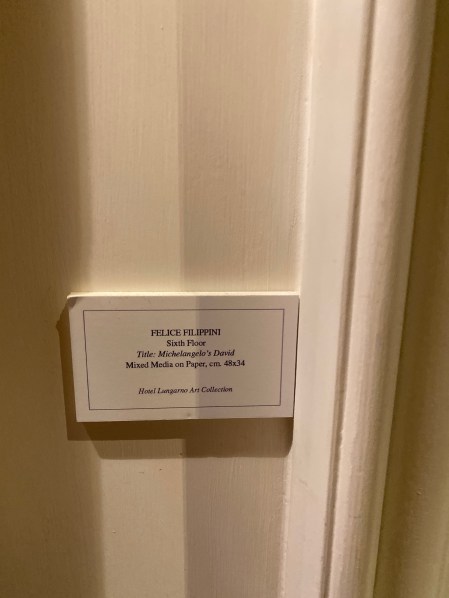
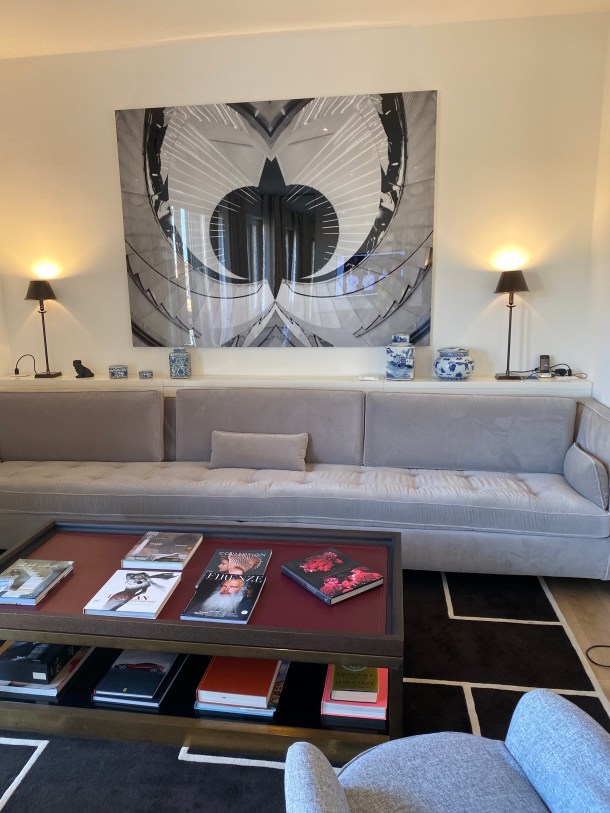
But I got some interesting images from this fine hotel and their art collection, and want to share them with my readers. Here we go:


LzpCiCI6RIyCE7beVvWJAg


Lz6733+EQZCxtoa732xCDg


9STh00rjQIOU0iG+ZF8rvg


sgHDHghdSLyXpSDr1xKCJg


3V+5JTj+V32OpgLvoJg


3cGQh+C2Sw6MesptaB%aGw


NS3swGHAQOy+RQZNc0lYJQ


9Nr25RXIToG7jGAeLvEzKw


QHjFyhG+RcaSSAcJJLt+DQ


Qke0QFeWSRuQXXZ%ONKzzA


oXQPtDzbTvCtCrDxF5Q


KKCQuwejRXuVj7c13088lg


D72kvQyBSwSPFYNjzsIijQ


6JhxIcjmSAyKRF05mCYzvg


6BXGJRmFR4WnSNqMGaxL9Q


q34snvO5R9O3ff9UjvU54w


6PB8sSyS5BC3vt9SJgQ


QwjcJLnfSQ6%olC68MF5AA


z0%FtEPOQsSJSqkS+UOGDg


++e7zxbUS1Gd586cDf0d2g


uK1I8fzRT4qDSTOxGNtyjQ


Yo2UxifFTtqs7WKRr4JlOA


Gv0aSxJVS2Cm59TWVLZ0XQ


K79qPRFgQrioRY2tkJOyww


KXqaNRGaTIyf+zXoESLvrA


lmJmQq4TRSG%n1N5e6cCyg


jYzHYf3jRqyIp637Sngt5A


WasSyDuJR9OPjuZfwIVjZA


ci2tjNAkSoyCJG5ph1fNzQ


p5CFDnIGRHGyBxj%qnZstQ


LyDvDOPNRWiEwRp5fQRFoA


u7e6y3zeRhyG84INUUWFhQ


T0jEFZExRjyk6d1OxxoWxw


dx%dizScRmibCR6Ep6m4Rg


m3q7AI15TPq%E%SJzTxRdA


BC0+tjRZTY6PEz3ueOrpcA


VcTyquQvQ8ujkO2lAUONXw


LNZxDlAYQam2Z2c+a4DcsA


OGtBBL7WR7Or3%Jet0VZ6g


02H5eBTtQhC702kJi6RiMQ


wqbvzivLS7Gi66rOHyCJAw


5KYpm2J8T9SEE75q25ztZA


wGRrMZrJQ72IXt3KE0yj2w


N7JUskGYT1uTgONBWKQ+Ww


lt6k3aQURae6OLqRfxPf8g


2eajbmfdTnSyl%XzF3j4Rw


bhLtzKIRSuqGklrpCWuv7Q


TXMhyLP2QSK83K2nUSN%7g


OQxwlcFFSQG30M2TFkEqGA


GxXIhl1TQMip0KaUnHOaSw


qhGzXGWpSz2V6eElcc9m9Q


dBMWa+CaTgWpFaTAMgI1ZA


jnYgOMjJSdyfpUrBqckKLA


BLqop32zR2mECpKbe9nOyw


%u+pAcezQy2+T9qWx0v9zQ


kWML97WmTS2KRuiCdESyRw


BMnt6M9%QQCoS4Z8UefEsA