It isn’t easy keeping a nearly 700 year old structure looking fresh. But, Florence does an amazing job. This week, Orsanmichele was getting a sprucing up.


It isn’t easy keeping a nearly 700 year old structure looking fresh. But, Florence does an amazing job. This week, Orsanmichele was getting a sprucing up.
The volunteer group of gardeners, of which I am privileged to be a member, at the Boboli Gardens has finally returned to work after suspension for Covid-19. I joined the first session last week and was immediately thrown back into the unbelievable beauty of this time and place. Here are just a few photos which, I hope, capture the moment.


Artist Liu Ruowang has a new installation in Florence, as seen below in the Piazza del Palazzo Pitti.
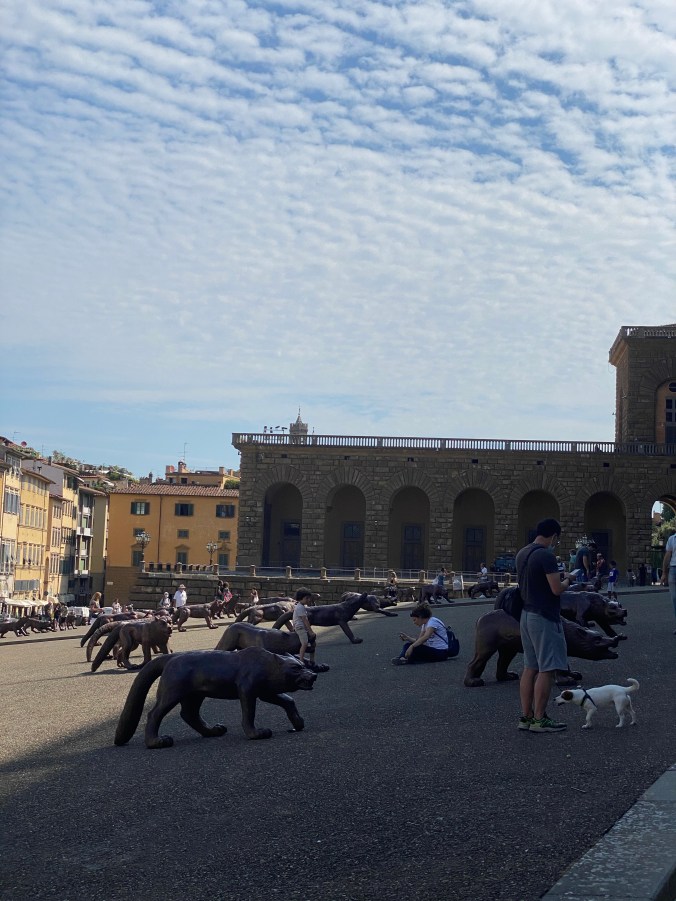
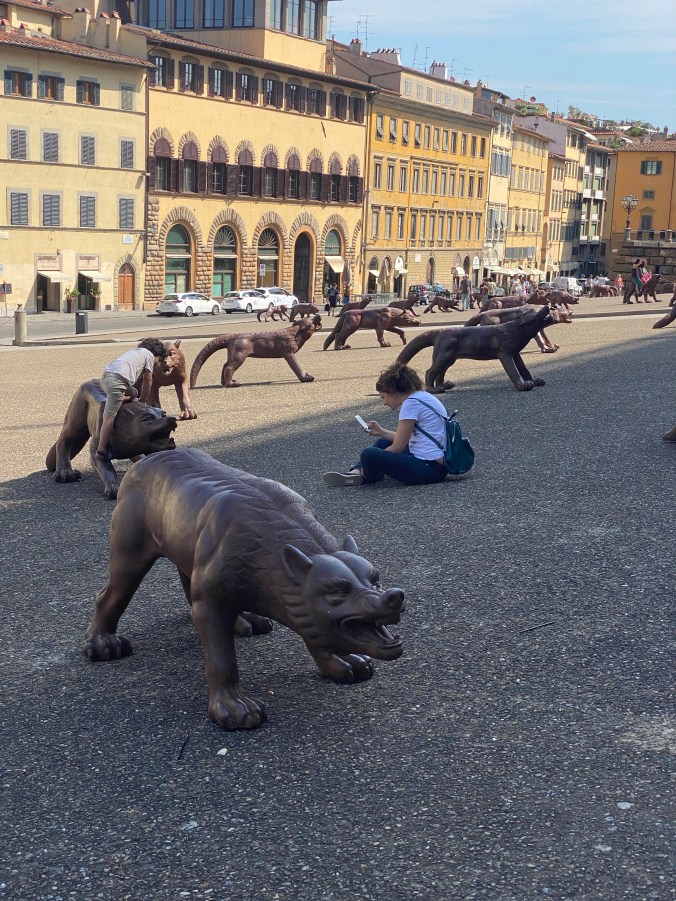


These metal wolves are meant “to protect” both Piazza Pitti and Santissima Annunziata. The monumental installation, named “The wolves on the way,” is possible thanks to the collaboration between the Municipality of Florence and the Uffizi Galleries and will be on view from 13 July and until 2 November. The work reflects on the excesses of progress in contemporary society, and are on view in Florence, symbol of the Renaissance, in dialogue with two masterpieces of urban architecture, Palazzo Pitti and the Spedale degli Innocenti.
Liu Ruowang’s wants you to reflect on man’s predatory attitude towards nature. The threatening pack of wolves composed of a hundred iron castings, each weighing 280 kg, which seems to attack an unseen warrior. It is an allegory of nature’s response to the ravages and predatory behavior of man towards the environment. And it is, at the same time, a reflection on the values of civilization, on the great uncertainty in which we live today – made even more evident by the dramatic effects of covid-19 – and on the actual risks of an irreversible annihilation of the environment.
Organized thanks to Matteo Lorenzelli, owner of the Milanese Lorenzelli Arte gallery, the exhibition aims to establish a physical, intellectual and even playful link with citizenship, stimulating curiosity and participation, so as to bring a wider audience than those who usually attend exhibitions and museums.
The project was conceived on the occasion of the celebrations of 50 years of diplomatic relations between the Italian Republic and the People’s Republic of China – the latter represented by Consul General Weng Wengang – and made possible by the collaboration between Eike Schmidt, Director of the Uffizi Galleries and Tommaso Sacchi, Councilor for Culture of the Municipality of Florence, who have made available two of the most symbolic spaces in Florence. Incoming Wolves interact freely with the city’s architecture, with its inhabitants or with those who are just passing through, thus responding to a specific intention of the author, who claims that “to teach love and respect for art to new generations , the best method is to bring art into everyday life, making museums increasingly accessible and beyond. My sculptures, for example, are placed in the squares: thus art also creates a link with public spaces.
It is important to build a culture of the common good .” Before arriving in Florence, Liu Ruowang’s wolves had “invaded” Naples, where they had been positioned in Piazza del Municipio. The installation in the Tuscan capital marks an ideal relationship between the mayors Luigi De Magistris and Dario Nardella, who have shown that they believe in the powerful message of the great work of the Chinese artist.
The director of the Uffizi Galleries Eike Schmidt says: “In Piazza Pitti, the pack of wolves that is about to enter the palace through the central door immediately reminds us of the dark counterattack of nature in the classic ‘The birds’ by Alfred Hitchcock, but calls to our mind also the recent experience of many wild species that returned to our city during the recent lockdown.
It is the metaphor of the relationship between man and nature. With the presence of Liu Ruowang’s wolves in our squares – elegant wolves, with a chiseled crown as in the ancient Chinese bronzes – we will have many months to think about how to contribute to respecting the balance of the planet. ”
Liu Ruowang (1977) is one of the major contemporary Chinese artists. Sculptor and painter, his is an original path placed in the wake of the Chinese tradition, and which amalgamates transversal elements with peculiar aspects of his tradition. Starting from the consideration that the history of man is also the history of his relationship with nature, the Chinese artist draws, on the one hand, from the culture of his country and on the other to the western one, and through references to globalization, represents the multiplication of the various real and virtual identities. The philosophical dimension of Liu Ruowang is also a real denunciation of the risks caused by the loss of human values, mortified by the oppressive system of contemporary life, theater of pain and violence.
“The upcoming Lupi installation is the result of the production of the last decade which must be considered fully the artistic maturity of Liu Ruowang. Behind the monumentality of the installation, moreover, there is an aspect dear to the East as to the West, the central pivot of all Liu Ruowang’s production, namely the ability to polarize the environment and space through a simple and sublime, which adapts the epic tones of the myth to today’s civilization, dominated by scientific and technological progress, increasingly in conflict with the natural order. ”
I have never seen 4 o’clocks in Italy until today. What a treat!


I love these old-fashioned flowers in any language!
The only way I can cope with Italian summers is by rising early and walking the city in the initial hours of the morning.

A favorite walk starts at the wonderful Piazzale Michelangelo. This morning, even around 8 a.m., the sun was bright and strong.
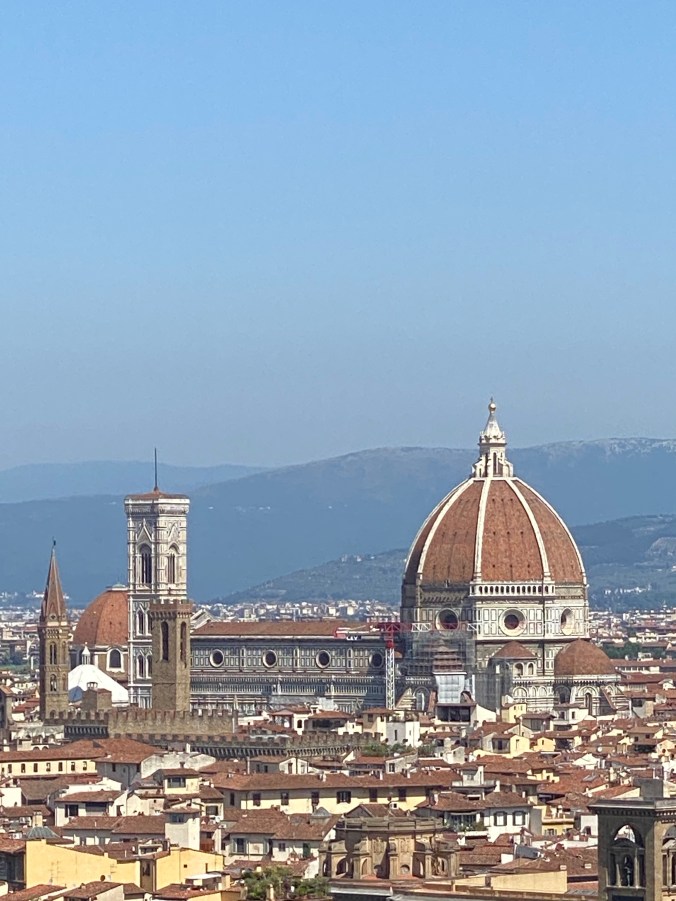
Then, as I walk down the ramps designed by Poggi in the 19th century, I get amazing views of the skyline.

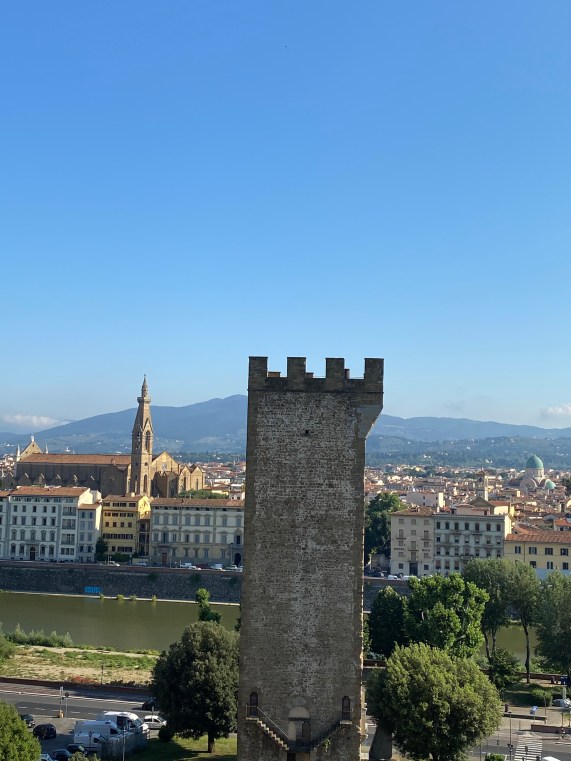
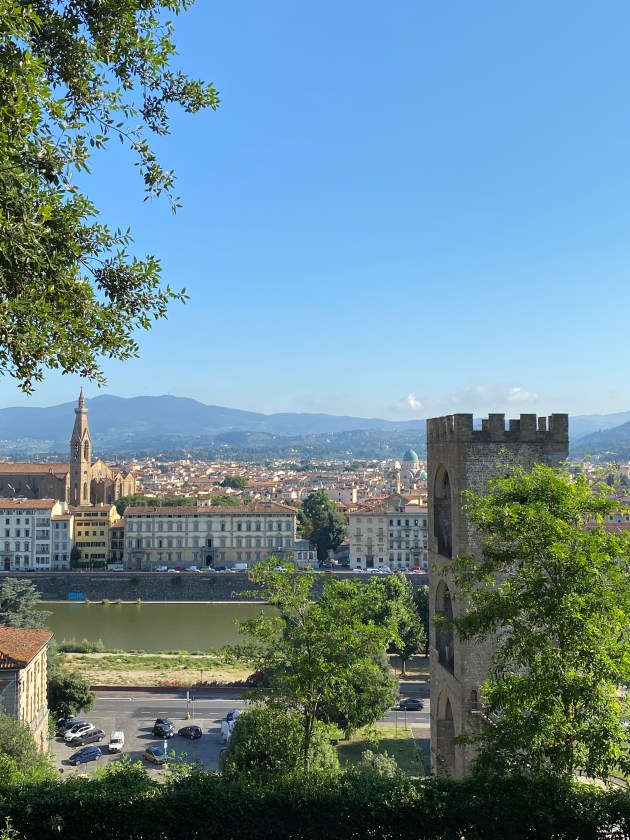
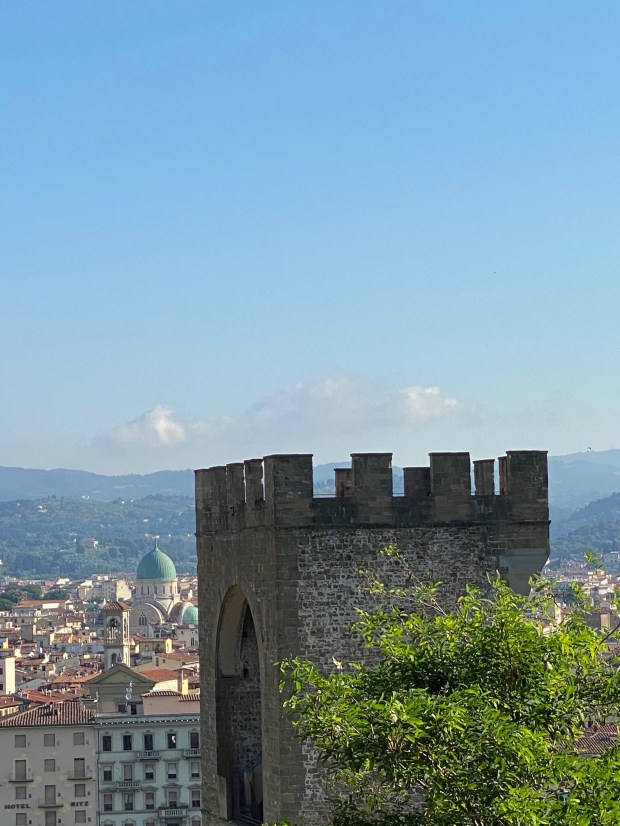
Stop squeezing Florence.


Santa Maria Maddalena dei Pazzi is a Renaissance-style Roman Catholic church and a former convent located in Borgo Pinti in central Florence.
The Pazzi name was added after the Carmelite order nun Maria Maddalena de’ Pazzi, canonized in 1669, whose family patronized the church. The original convent had been dedicated to St. Mary Magdalen delle Convertite, the patron of once-fallen, now converted women. The Cistercian order from Badia a Settimo took control of the site in 1332 and moved to it in 1442, while the convent was transferred to San Donato in Polverosa. However, the church and chapter house were rebuilt between 1481 and 1500, with initial designs in 1492 by Giuliano da Sangallo.
The 13th-century interiors were redecorated in the 17th and early 18th centuries, which removed the altarpieces by masters such as Botticelli, Perugino, Lorenzo di Credi, Domenico Ghirlandaio, and Raffaellino del Garbo. They were replaced by new ones from minor masters such as Carlo Portelli, Alfonso Boschi, Domenico Puligo, Santi di Tito, and Francesco Curradi. In the chapter house is a fresco divided into three lunettes of the Crucifixion and Saints (1493–96) by Pietro Perugino, commissioned by Dionisio and Giovanna Pucci.
The first chapel to the right of the entrance is the Cappella del Giglio (Chapel of St. Mary of the Lily) frescoed with depictions of Saints Filippo Neri, Bernard, Nereo, and Achilleo by the studio of Bernardino Poccetti, with an altarpiece by Domenico Passignano. The fourth chapel on the right has a stained glass window by Isabella, the daughter of Georges Henri Rouault. The choir chapel originally contained a fresco by Domenico Ghirlandaio but was rebuilt from 1685 to 1701 by Ciro Ferri and Pier Francesco Silvani. Ferri painted the altarpiece and Luca Giordano the flanking pieces. The statues of Penitence and Faith on the right were sculpted by Innocenzo Spinazzi, while Innocence and Religion on the left by Giovanni Monatauti. The bronze reliefs on the altar were made by Massimiliano Soldani-Benzi.
The interior also contains works by Giovanni and Cosimo Bizzelli, Jacopo Chiavistelli, Ottavio Vannini, Cosimo Rosselli, Cosimo Gamberucci, Leonardo del Tasso, Giuseppe Servolini, and Giuseppe Piattoli.
This church is home to the Congregazione Agostiniani dell’Assunzione.
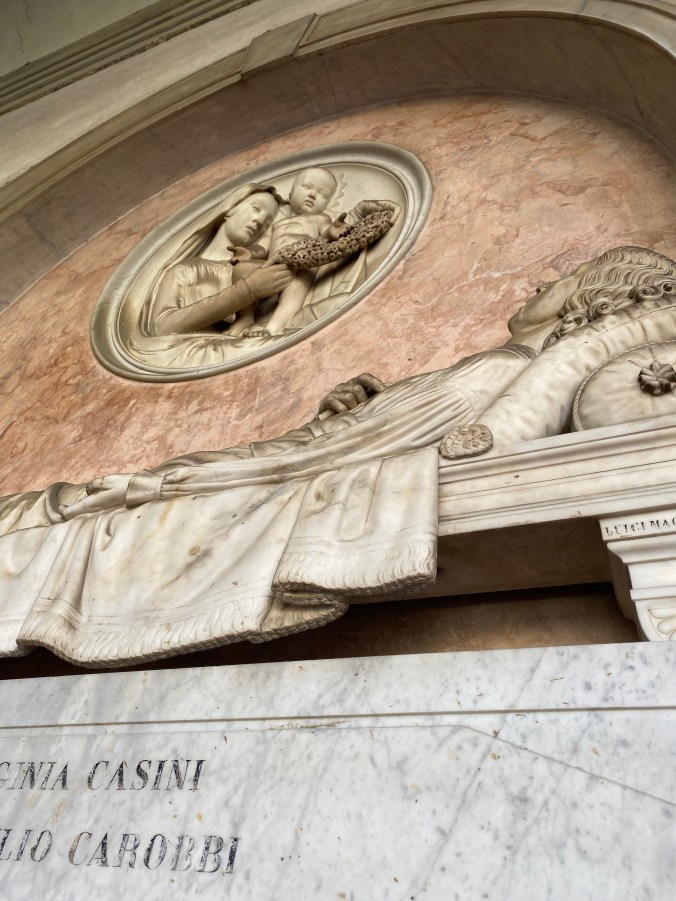
The cortile has some interesting funerary monuments:

Neoclassical sculptures of this type are rarely signed by the artist. I found this interesting signature carved onto the left of the funerary bier.

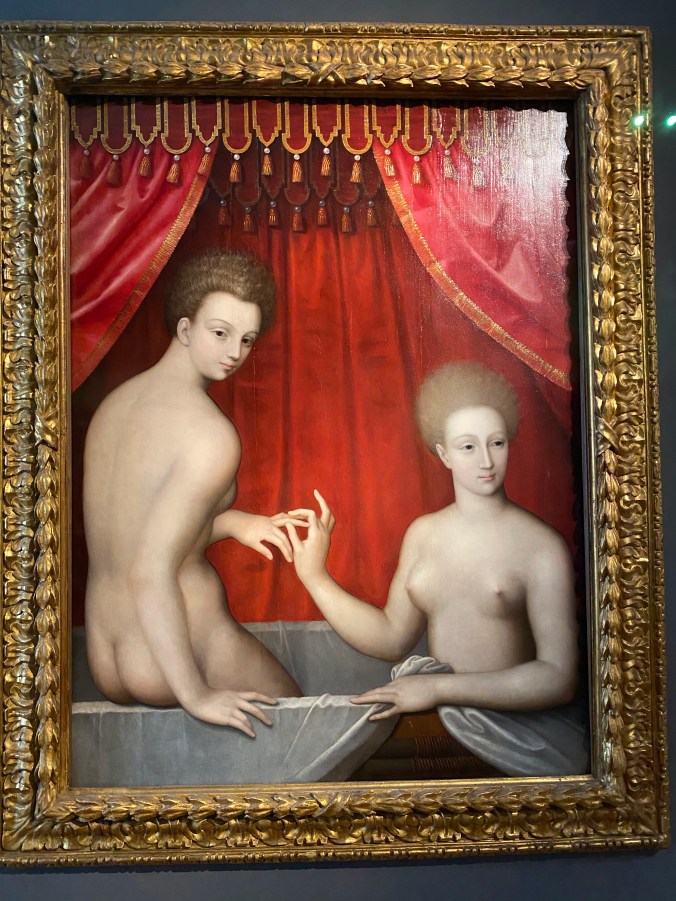
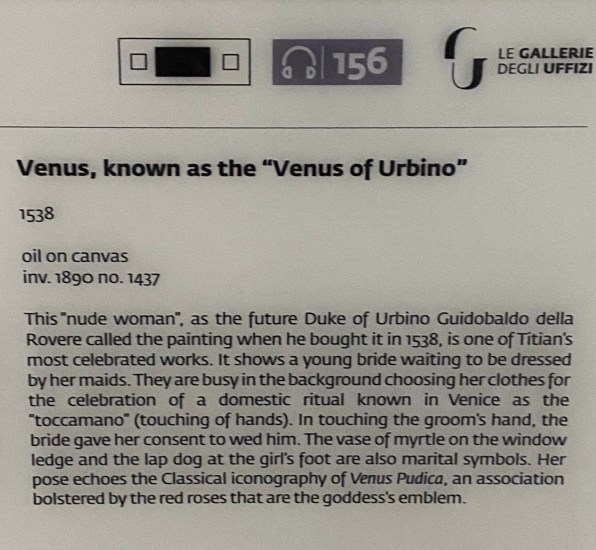
For the past few days, I’ve been posting images from my June visit to the newly re-opened Uffizi. Here are the final photos from that wonderful visit. Labels follow each picture.
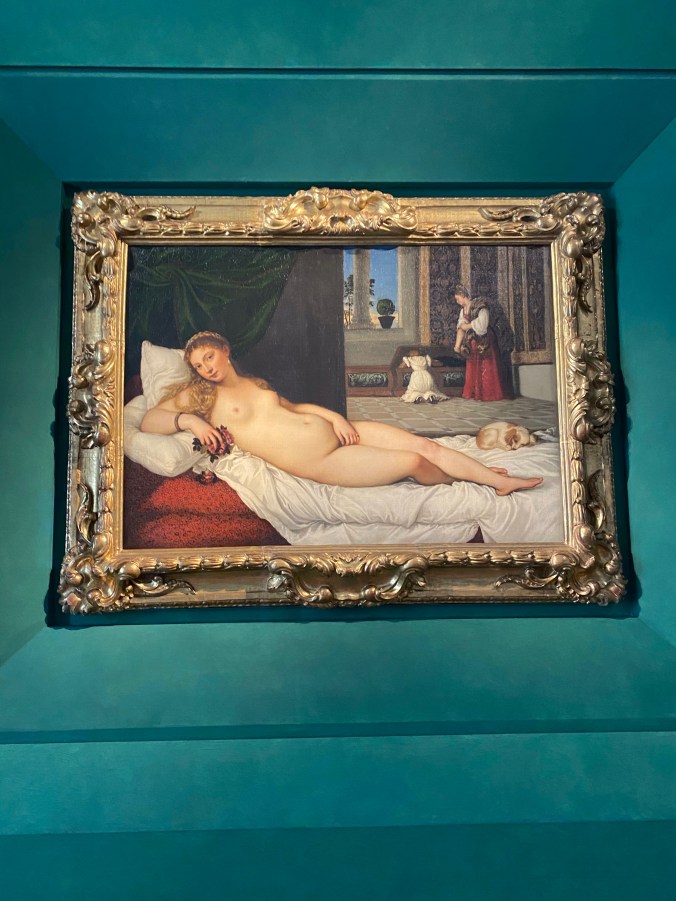
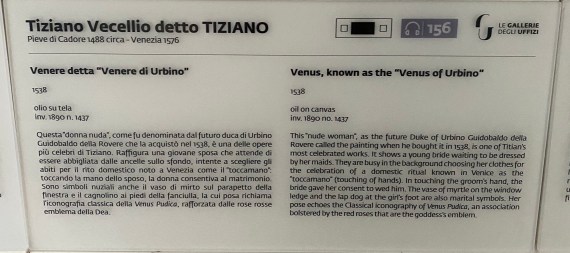
This portrait is by Titian:


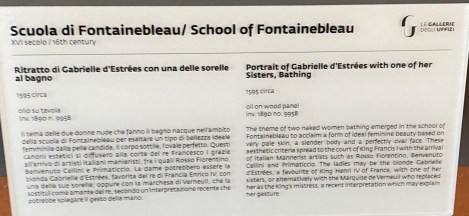
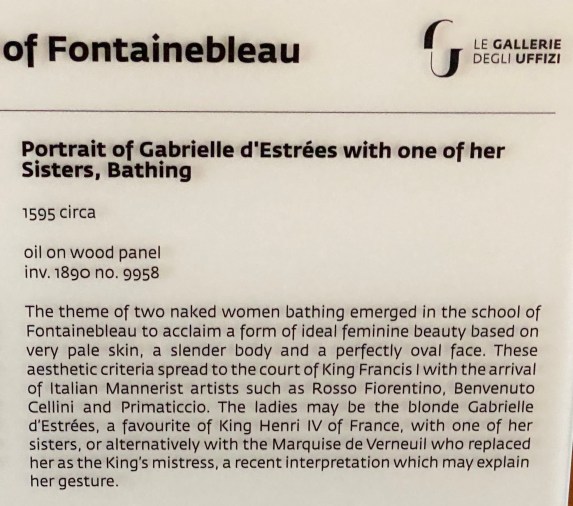
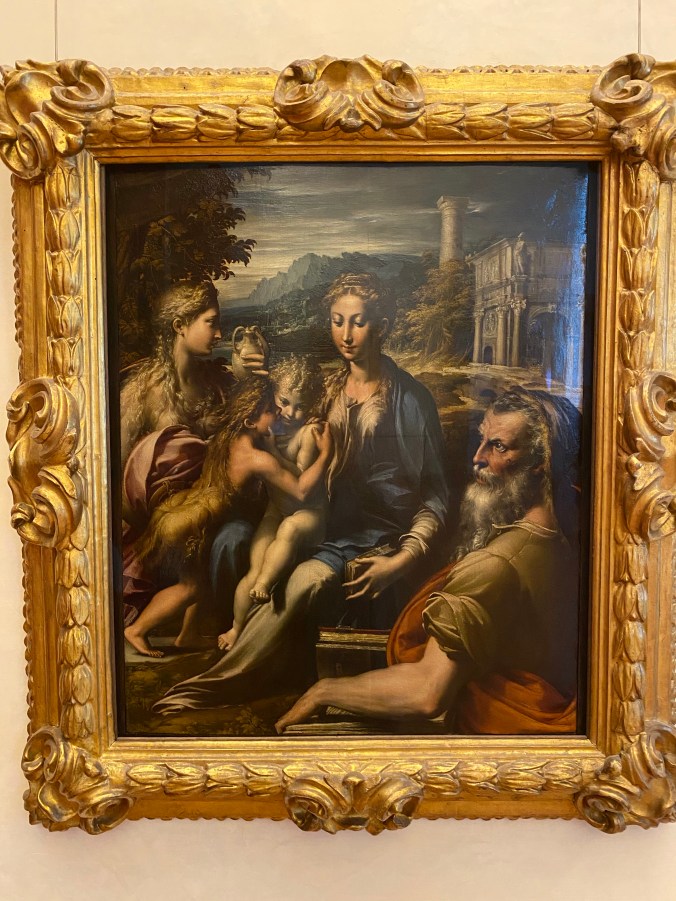
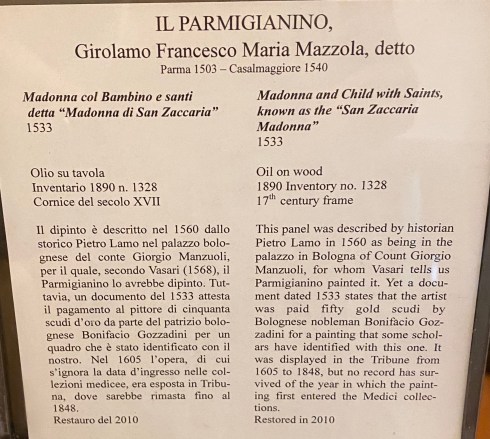
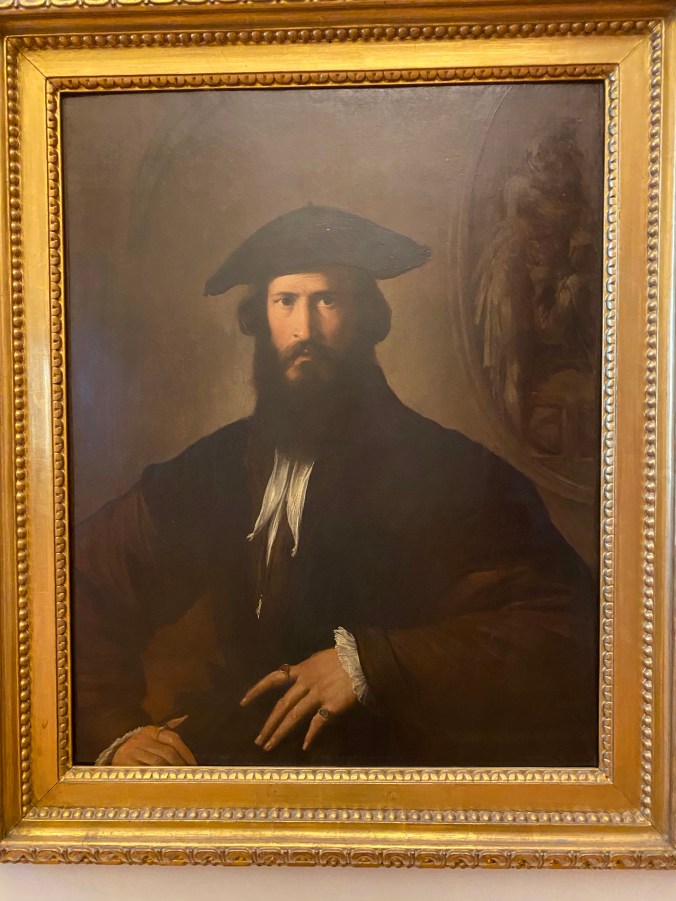
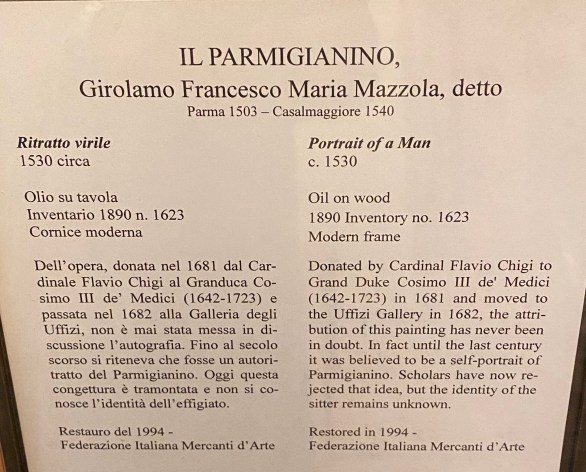
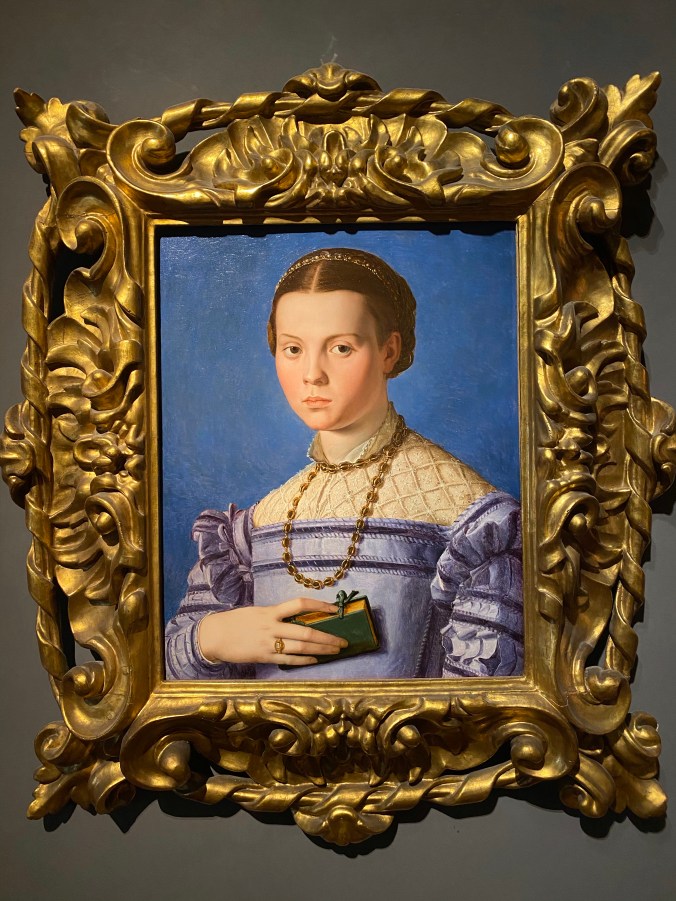
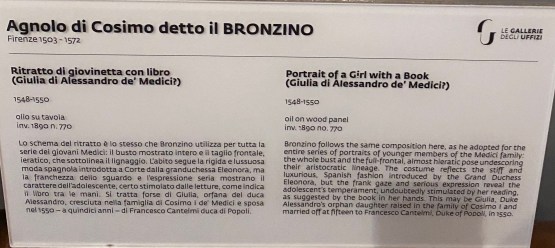
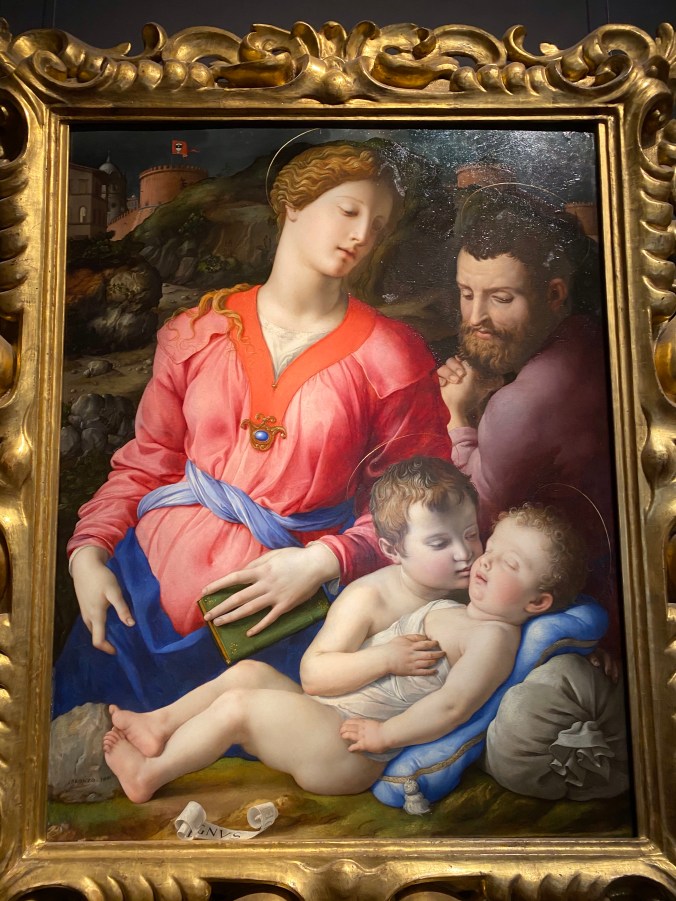
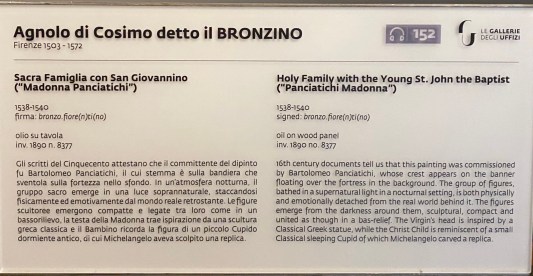
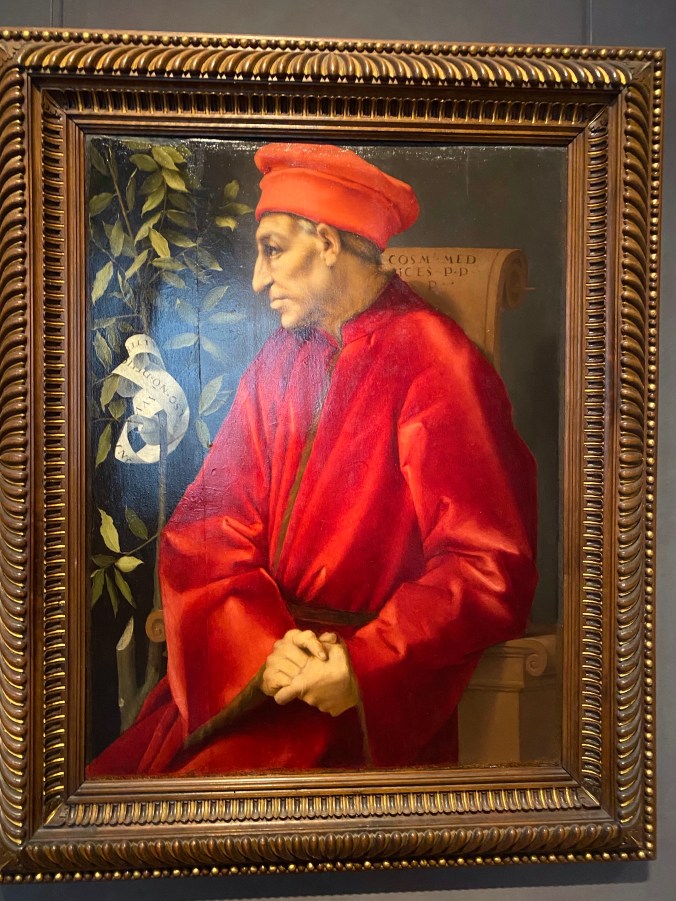
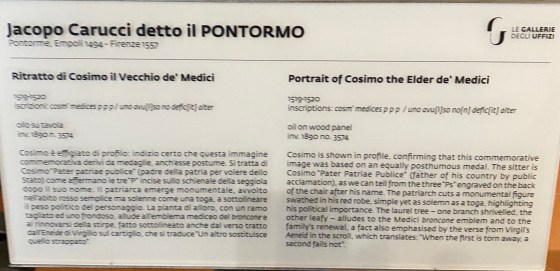
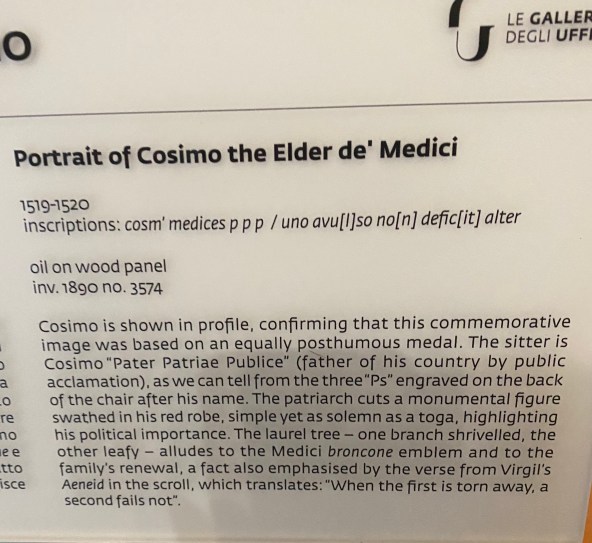
I’m crazy for Mannerist art. Cannot get enough. Here are some treasures from my recent visit to the Uffizi. The labels follow each picture.

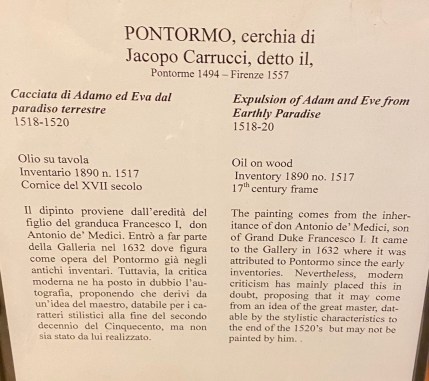
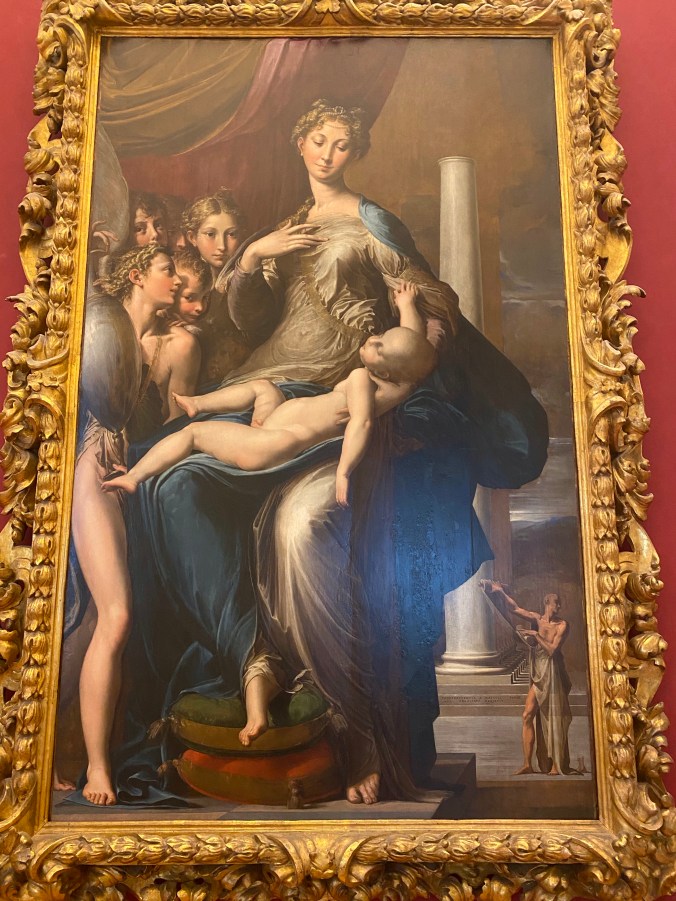
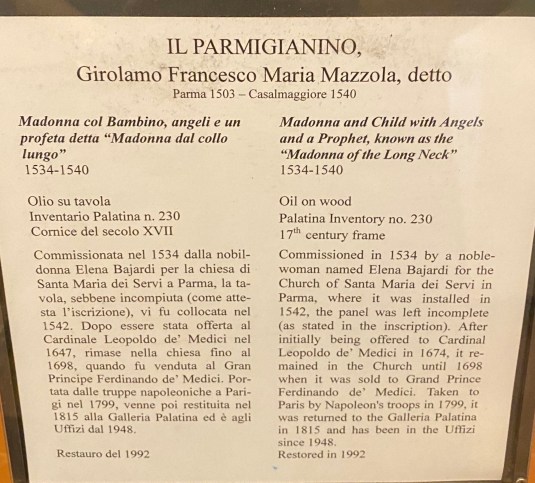
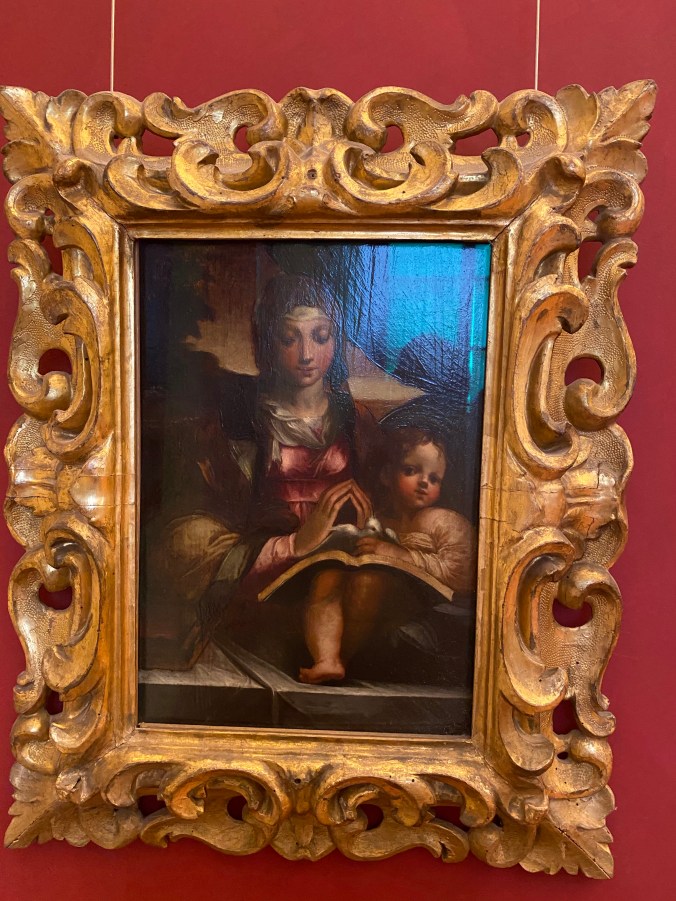

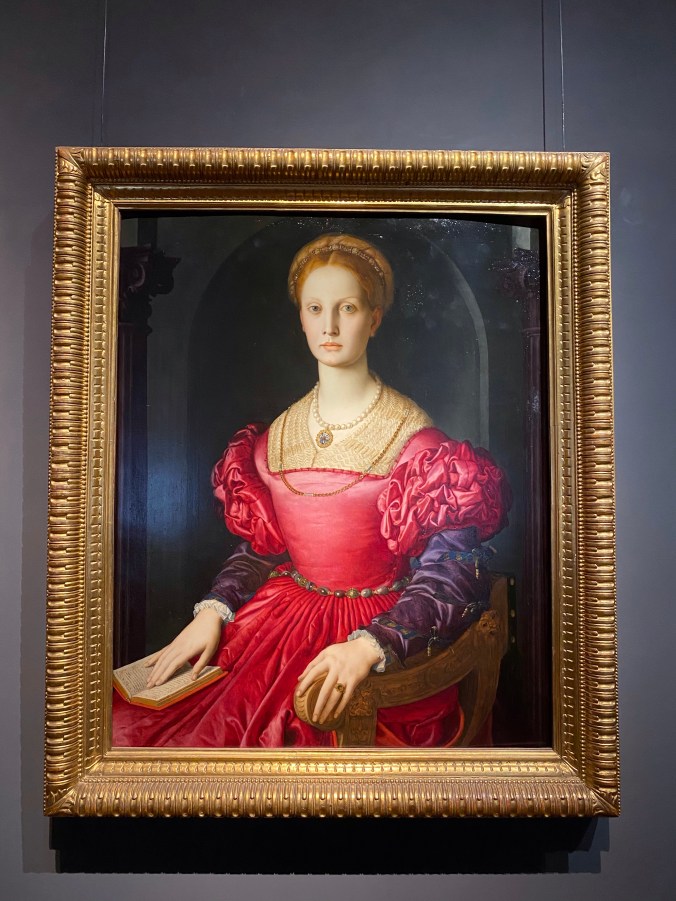

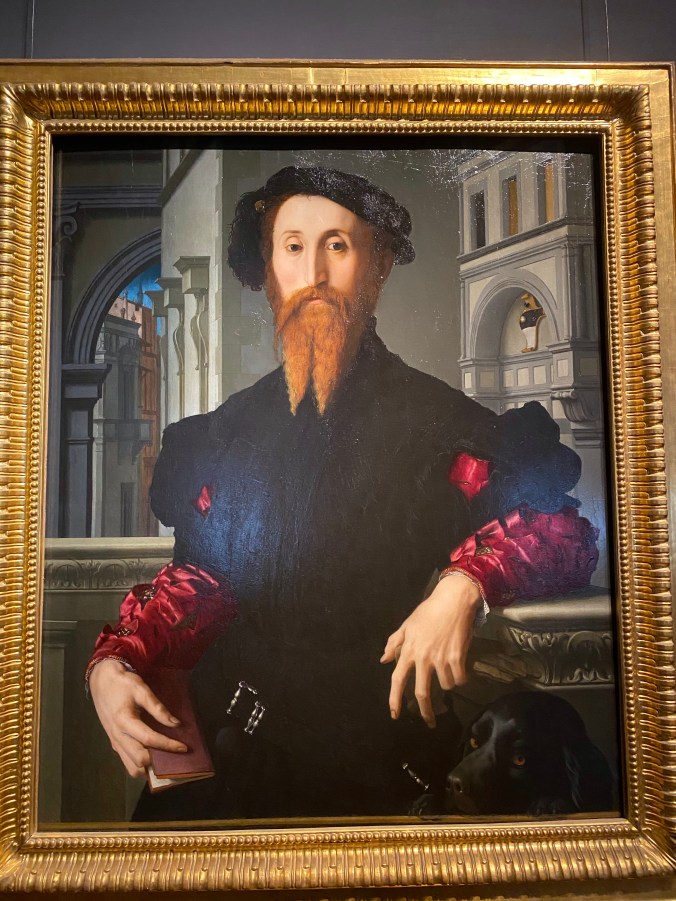
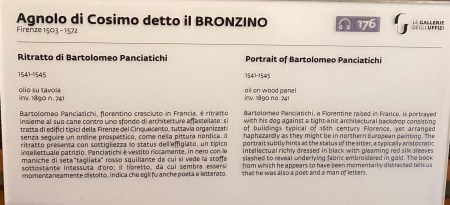


Ovvia s’è finito di sballare tutte le cassette bisogna chiedere il cottimo.!!!!!!
POVERI DIAVOLI, MALEDETTI VOI E CHI V’HA MANDATO !!!!!

Il Sergente Marvin Smith proveniente da Appleton Minnesota, 91 Division, mette una ragazzina dentro una barca sul fiume Arno, 1944.
Manuela Caparrini Sergio Alfaroli Chissà se in qualche rullino di foto fatte dagli americani c’è la foto della mia sorellina morta nel settembre del 1944 ! La mia mamma mi diceva sempre non so che darei x vedere quella foto! Non ne aveva nemmeno una😢❤
Maria Grazia Risso anche io fui portata in collo da un soldato americano di colore per attraversare il ponte alla Vittoria – a firenze – durante i bombardamenti, aiutando mia mamma che teneva per mano mia sorella di 4 ann
 get back, lauretta!
You must be logged in to post a comment.