Dante, the Divine Comedy: “Consider your origins: you were not made to live as brutes, but to follow virtue and knowledge.”
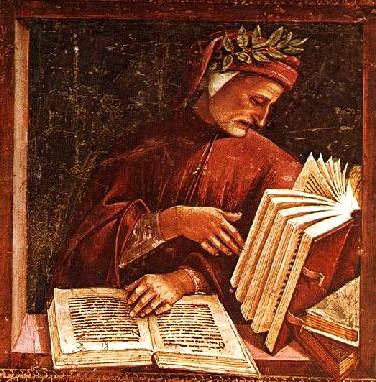
Dante, the Divine Comedy: “Consider your origins: you were not made to live as brutes, but to follow virtue and knowledge.”

Città Nascosta – Via Lungarno B. Cellini 25, 50125 Firenze
Tel. 055.68.02.590 / 055.68.01.680 | info@cittanascosta.it
Fondata nel 1994, Città Nascosta è un’associazione culturale nata per promuovere la conoscenza del patrimonio artistico e storico di Firenze e della Toscana.
Le attività proposte prevedono visite guidate, itinerari ed eventi personalizzati, esperienze uniche e indimenticabili, alla scoperta dei gioielli d’arte più nascosti della città e della regione.
Storici dell’arte, architetti, botanici, restauratori, proprietari e addetti ai lavori accompagnano i visitatori, offrendo sempre una prospettiva originale e privilegiata, con un’attenzione particolare alla qualità dei contenuti e alla modalità della loro divulgazione.
 Marcella Cangioli, storica dell’arte e Presidente dell’Associazione, coordina e gestisce l’associazione.
Maria De Peverelli, storica dell’arte, lavora a Londra e si occupa di collezionismo privato.
Tiziana Frescobaldi, storica, si occupa dell’immagine e comunicazione dell’azienda di famiglia.
 Marcella Cangioli, presidente, storica dell’arte. Si occupa della promozione, del coordinamento e della gestione delle attività dell’associazione, e dei progetti speciali in italiano e in lingua straniera. Contatto: marcella@cittanascosta.it
Arianna Nizzi Grifi, segretario, storica dell’arte. Si occupa del programma dei soci “Percorsi d’Arte”, del coordinamento del programma dei soci “Sostenitori” e dell’organizzazione delle attività per clienti italiani. Contatto: arianna@cittanascosta.it
Sylvie Levantal, consigliere, storica dell’arte. Si occupa dell’organizzazione delle gite, viaggi e delle attività per i clienti stranieri, in particolare francesi. Contatto: info@cittanascosta.it
Emily Grassi, consigliere, storica dell’arte e guida turistica di Firenze e provincia. Si occupa della comunicazione, del coordinamento del programma “Grand tour fiorentino” e dell’organizzazione delle attività per i clienti stranieri, in particolare anglofoni. Contatto: emily@cittanascosta.it
Carlotta Quentin, consigliere, storica dell’arte. Si occupa della segreteria organizzativa e dell’accoglienza dei soci italiani e stranieri, in particolare anglofoni. Contatto: info@cittanascosta.it
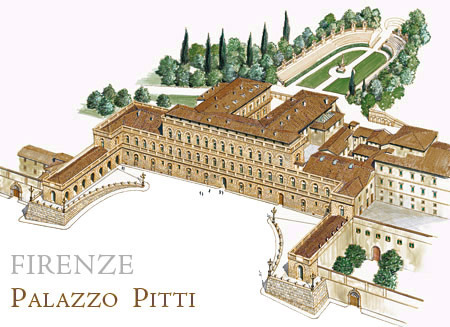
At Palazzo Pitti, the builders had it much easier, since their source [of stone] (the Boboli hill) was right behind the palace. In fact, Palazzo Pitti sits on the hollowed out part of one of these quarries.
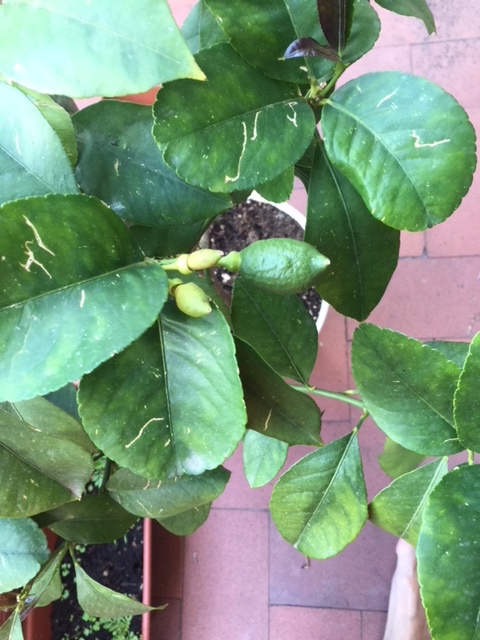
My lovely little lemon tree is still alive and survived the move to my new place. Here are some recent close-ups:
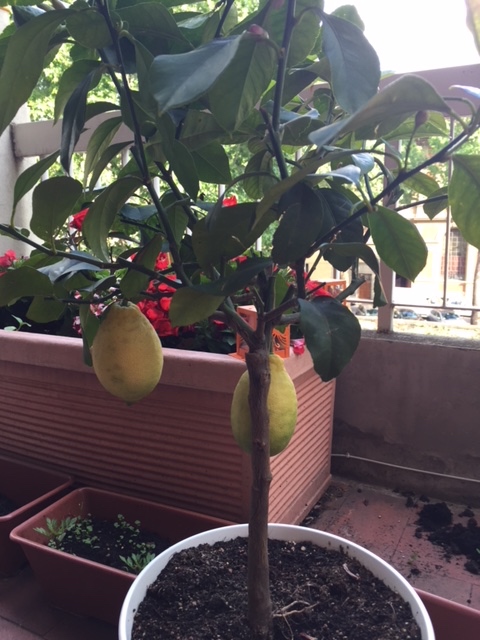
The same 2 original lemons are still hanging on for dear life. I was amazed they didn’t fall off in my recent move.
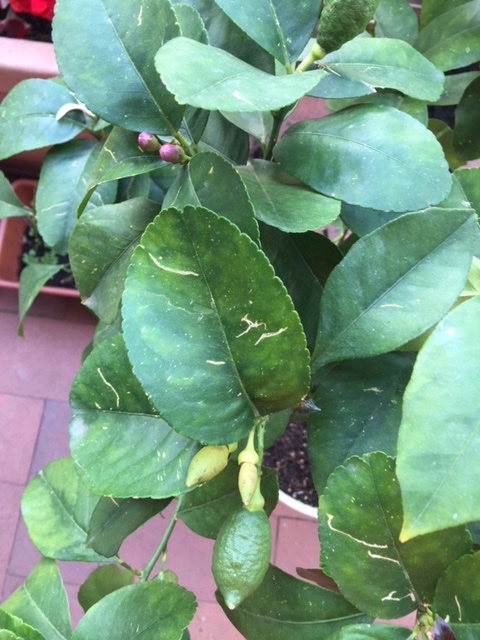
Some baby lemons have started to form.
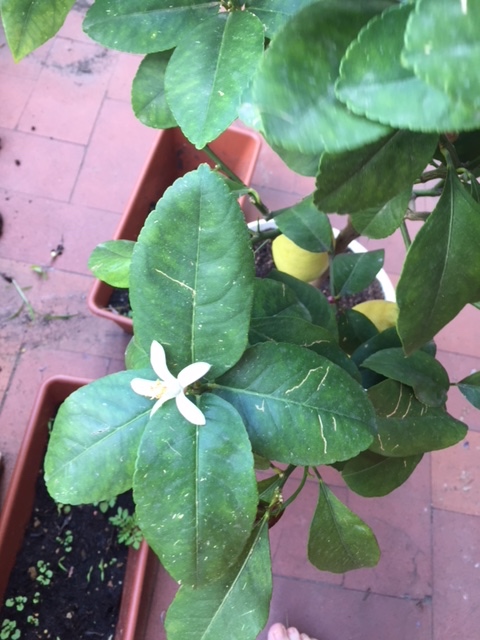
And new blooms still show up from time to time. This tree is very active. Something is happening all of the time!
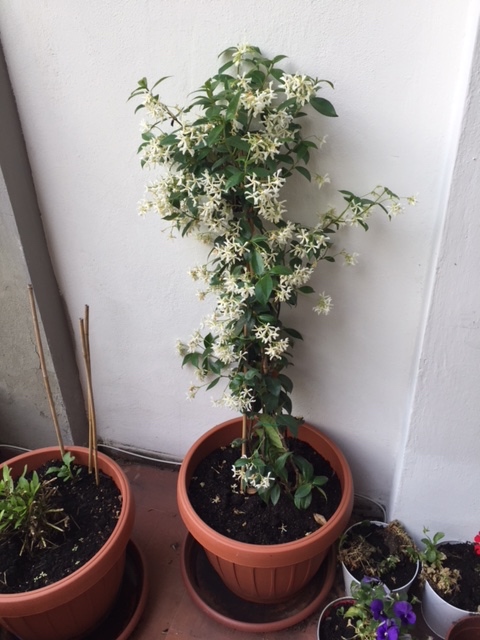
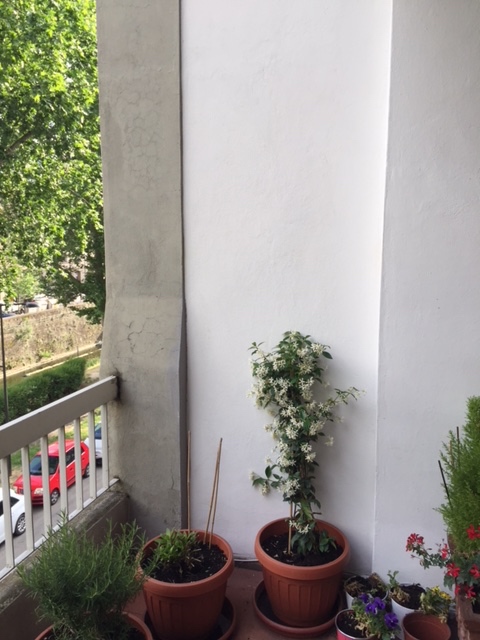
And, may I introduce my new jasmine plant! It came home with me from the recent plant sale at the horticultural garden near my new apartment. It is so fragrant. I have big plans for this vining plant, I have a big terrace to cover!
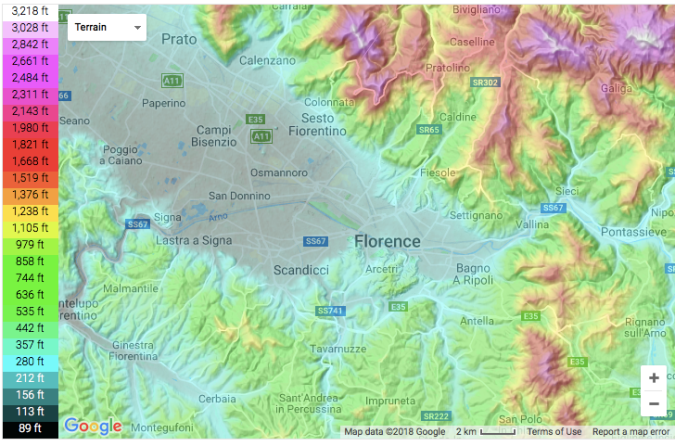
Has it ever occurred to you that the stony city of Florence was literally carved out of the surrounding hills? It’s quite true. Countless local quarries provided the blocks of stone for the walls of medieval and Renaissance churches and palaces, and for the columns and architectural ornaments to decorate them. Pietraforte, a kind of light brown limestone, came from quarries at Costa San Giorgio, in the Boboli hill between Santa Felicità and Porta Romana, at Bellosguardo, and around Marignolle and Le Campore, all south of the Arno. To the north, the hills of Fiesole, Maiano and Settignano provided the blueish-grey sandstone pietra serena.
In the 13th century, load after load of pietraforte was hauled over the Arno to the outskirts of Florence to construct the enormous basilicas of Santa Maria Novella and Santa Croce. Even the piers inside these two churches are of pietraforte. Look at Palazzo Vecchio, the Log-gia dei Lanzi, the Bargello and Orsanmichele, and you are looking at pieces of the southern hills transformed into architecture. The gigantic blocks of rustication that you see on the façades of the 15th-century Palazzo Medici were cut out of pietraforte quarries. Filippo Strozzi, whose palace rivals that of the Medici in size, had endless loads of stone brought from quarries at Boboli and Marignolle. It is said that between November 1495 and March 1497, Strozzi’s heavily-laden carts rattled over the Arno more than a thousand times. At Palazzo Pitti, the builders had it much easier, since their source (the Boboli hill) was right behind the palace. In fact, Palazzo Pitti sits on the hollowed out part of one of these quarries.
If pietraforte was used mainly for the construction of walls, pietra serena was used above all for columns, stairs, doors and windows. The oldest of these quarries, dating back to Etruscan times, were at Monte Ceceri in Fiesole, and they continued to be worked during the Roman and early medieval periods. The demand for pietra serena was so high that in the 13th century new quarries had to be opened further east, around Vincigliata and Settignano. By the 15th century, when Brunelleschi’s architectural style boosted the popularity of pietra serena to unprecedented heights, it was also being extracted at Golfolina, west of Florence.
Brunelleschi chose quarries that would provide enormous blocks of pietra serena from which he could cut entire column shafts. He quarried the stone for the loggia of the Ospedale degli Innocenti at Trassinaia, near Vincigliata. The columns for San Lorenzo came from a site nearby, still known as the Cava delle Colonne.
http://www.theflorentine.net/art-culture/2006/09/quarries-near-florence/
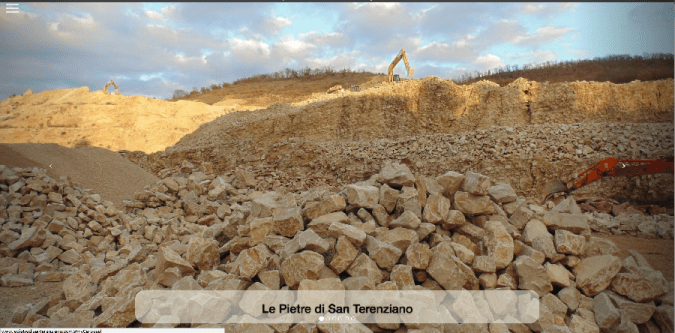
The Settignano quarries yielded macigno, a fine-grained grey sandstone that was much prized in Florence. It is a gravely beautiful material in a range of dark-greenish and bluish greys, fine enough to carve in crisp detail and with a quality of simultaneously absorbing and reflecting the light, producing a paradoxical impression of dark luminosity.
This is the material that Brunelleschi used for the columns and capitals of his buildings. Michelangelo would employ it in the same way in his projects at San Lorenzo in Florence.
The Florentines, being interested in this stone enough to make fine distinctions, gave names to the differing grades, the finest type being pietra del fossato, and the others including pietra serena and pietra forte.
Michelangelo, who had immense sensitivity to stone, went further than these broad categories. He knew that each quarry, every stratum, would produce material of subtly differing character. The contract for the stairs and two doors of the library Michelangelo was building at San Lorenzo in the 1520s stipulated that the pietra serena supplied should be of the same ‘colour and flavour’ (‘ colore et sapore’) as in the sample. ‘Flavour’ is a wonderful word to use of stone: bringing out its sensuous character as if it were actually edible.
When he designed buildings in Rome, Michelangelo was attentive to the qualities of the local material, travertine, a limestone noted for the pits and troughs in its surface – as different in its flavour and colour from Florentine sandstone as roast beef is from pâté de foie gras. His use of travertine for the walls of St Peter’s and the palaces on the Capitoline Hill made the most of its rugged nature.
For sculpture he used only the finest type of pure white marble, known as statuario, found particularly in certain quarries above Carrara. Even this sculptor’s marble, according to the sculptor and goldsmith Benvenuto Cellini, came in at least five or six grades, the first having a ‘very coarse grain’ and the softest, which he describes almost like flesh, ‘the most cohesive, the most beautiful and the tenderest marble in the world to work from’.
Michelangelo was renowned for his ability to discern the quality of a potential piece while it was still in the rockface. When he was engaged from 1516 onwards on large construction projects at San Lorenzo in Florence which involved the quarrying, transport, dressing and carving of huge amounts of both marble and macigno, a majority of the masons he employed were from Settignano.
Gayford, Martin. Michelangelo: His Epic Life (Kindle Locations 803-811). Penguin Books Ltd. Kindle Edition.
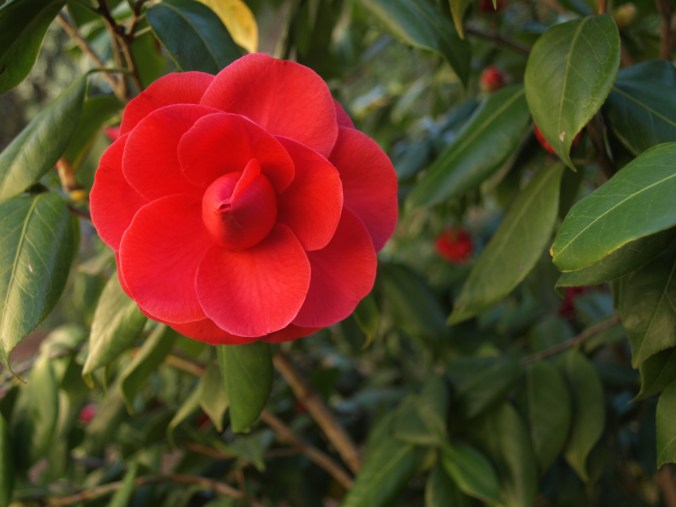
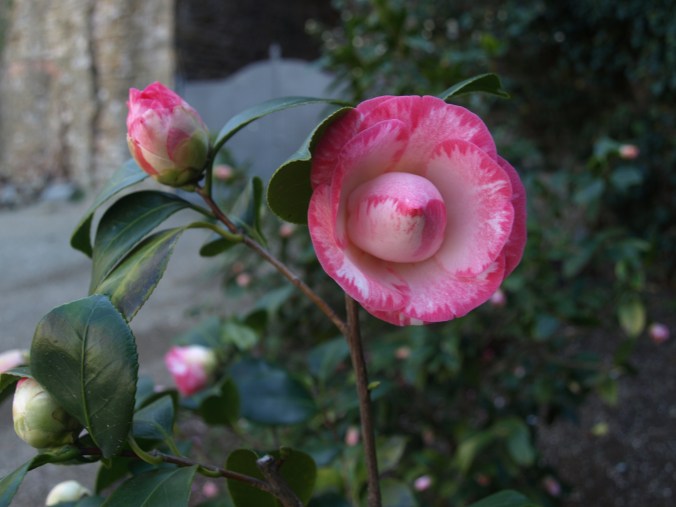
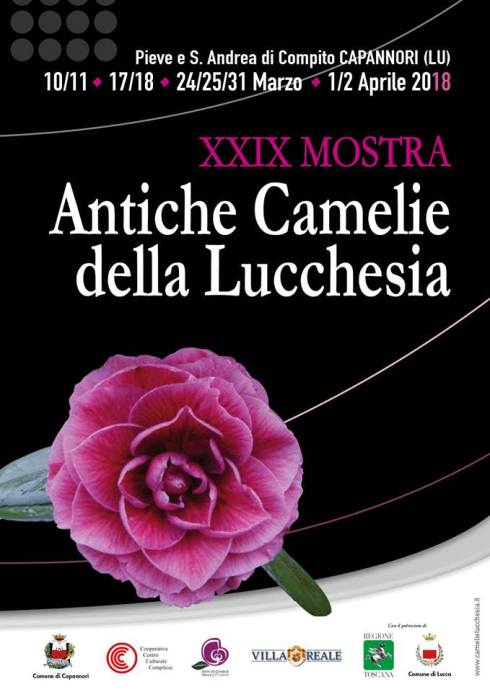
Are you a fan of camellias? I am.
Discover the Gardens in Italy where you can admire them!
OLYMPUS DIGITAL CAMERA

OLYMPUS DIGITAL CAMERA

OLYMPUS DIGITAL CAMERA

OLYMPUS DIGITAL CAMERA

OLYMPUS DIGITAL CAMERA
OLYMPUS DIGITAL CAMERA

OLYMPUS DIGITAL CAMERA
Today, beautiful specimens of Camellias can be admired in many gardens. Between Italy and the Canton of Ticino, from the first weeks of March and throughout April, it is possible to get lost among the colors and the scents of the Camellias in bloom. In Switzerland, in Locarno, a few miles from Lugano, is the Parco delle Camelie, inaugurated in 2005, to fascinate you with its 850 varieties of camellias cataloged, to which are added 70 still unidentified camellias , planted at the southern end of public paths, and 130 double camellias, which form a dividing hedge and are used primarily to provide cut flowers for the annual show held in spring.
In Tuscany the wonderful Viale delle Camelie of the Giardino della Villa Reale di Malia (Capannori, LU) is waiting to give you an unforgettable walk, while in Florence in spring the flowering of the camellia grove of the Giardino Bardini , placed behind the wonderful belvedere on the city.
You can find more info here: http://www.grandigiardini.it/lang_EN/articoli-scheda.php?id=77
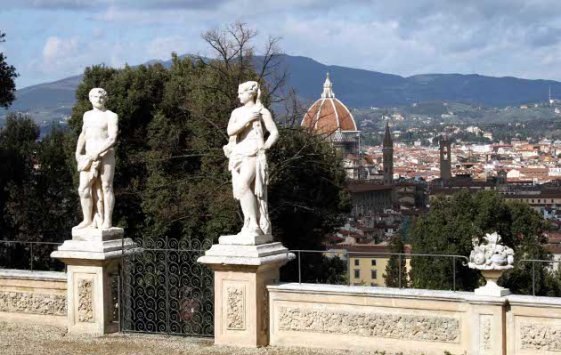
Originally it was an arrangement of walled orchards near Mozzi Palace covering the whole of the hill behind it.
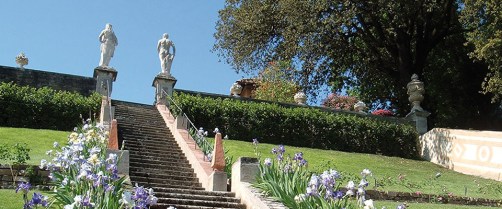
In the 18th century Giulio Mozzi, who loved gardens, enriched the property with a long fountain wall with a multi-material mosaic at the bottom. In the mid-19th century the baroque garden was enlarged through the purchase of the adjoining Anglo-Chinese garden of Villa Manadora, created by Luigi Le Blanc at the beginning of the nineteenth century.
In the second half of the 19th century the Carolath Benten princes acquired the whole property and enriched the garden with Victorian details.
Bardini acted unscrupulously, constructing an avenue to travel by car from the Arno to the villa, destroying the walled gardens of medieval origin, and joining the two existing buildings on Costa San Giorgio.
The death of his son Ugo in 1965 gave rise to a long episode concerning inheritance.
This ended in 1996 thanks to the then minister Paolucci who arranged for the conditions set by the deceased person to be met.
In 2000 the Ente Cassa di Risparmio di Firenze (Florence Savings Corporation), acting through the Fondazione Parchi Monumentali Bardini e Peyron (Bardini and Peyron Monumental Parks Foundation), began the restoration of the complex. It took almost five years to restore the garden’s identity and wealth in terms of composition and plants.
In the agricultural park, in which fruit trees in the Tuscan tradition have been planted, there is a circular viewpoint from which one enters a tunnel of wisteria and comes upon no less than 60 varieties of hydrangea.
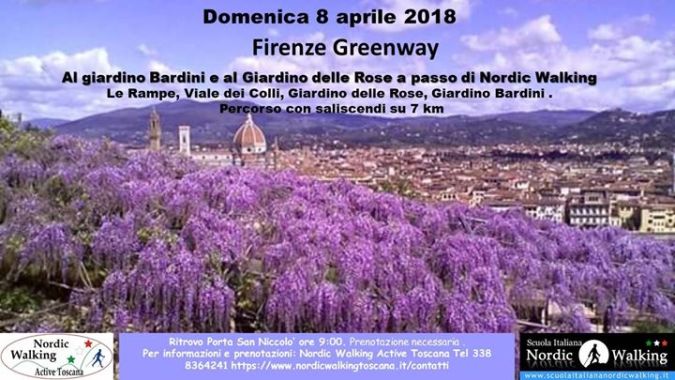
The baroque flight of steps is the most picturesque part of the garden, with its viewpoint over the city and the six fountains with their multi-material mosaic bottoms.
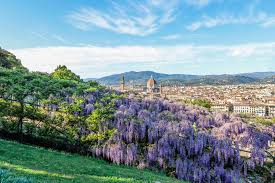
Bourbon roses and remontant irises have been planted along the flight of steps. In the lowest part there is a garden with herbaceous and graminaceous borders and the grassy theatre that makes use of a cavity in the garden.
In the English-style wood, which formed part of the Anglo-Chinese garden, there is a lawn with azeleas where one can also see ferns, vibernums, camellias, and a collection of citrus fruits. From Via de’ Bardi the route winds up towards the villa, offering views of both the garden and the monuments of Florence.
On reaching Villa Bardini you go out into Costa San Giorgio and in a few minutes you reach the Boboli Garden, from which you can descend back towards the city, covering 7 kilometres altogether amid greenery. It’s possibile to book a personal service at a special price, with a shuttle from 7, 16 or 28 seats, which connects the two Great Italian Gardens of Villa Bardini and Villa Peyron.
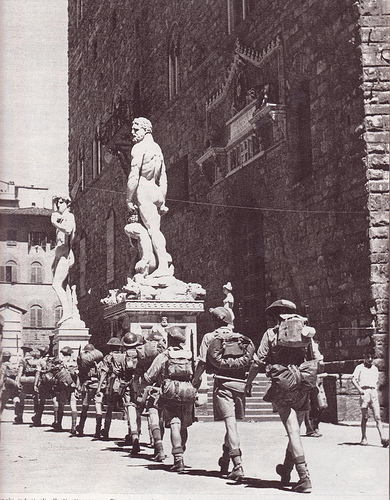
From the safe distance of 2018, it is interesting to think back to the situation in Florence during WWII, especially after the Allied Forces liberated the Renaissance citta’.

The leaders and troops of the Allied Forces are my heroes. There are many to name. General Dwight D. Eisenhower is foremost among them. I recently wrote a post on his directive, which saved many cultural monuments in Italian. Here is a picture of Ike in Italy:

As the Allies liberated region after region in Italy, starting from the southern tip and working their way north, thanks to the farsighted leaders, as many cultural works as were possible were saved.
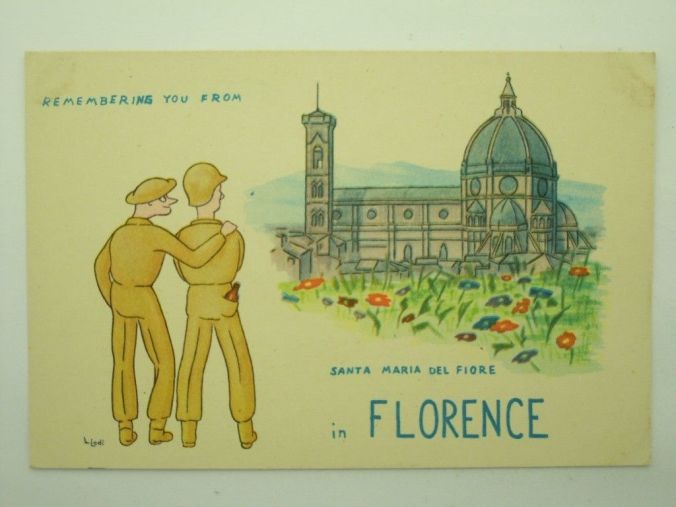
These wonderful postcards, with their simple illustrations of the Florentine architectural masterpieces, tell a poignant story.


 get back, lauretta!
You must be logged in to post a comment.