A marvelous May fair in Florence

300x190

  XXIV EDITION

ARTIGIANATO E PALAZZO 2018

The great tradition of italian craftsmanship
from its origins to the present

The 24th ARTIGIANATO E PALAZZO exhibition (Florence, Corsini Gardens, May 17-20, 2018) gets underway with the history of one of the leading examples of Made in Italy excellence, the “Mostra Principe” dedicated to the Richard Ginori porcelain Manufactory and fundraising for the reopening of the Doccia Museum, recently acquired by MiBACT (Italian Ministry of Cultural Heritage and Activities and Tourism).

“The hundreds of requests to take part that we have received this year represent an excellent sign of recovery in the artisan sector, because craftspeople are the lifeblood of Made in Italy,” said Giorgiana Corsini and Neri Torrigiani who, for over twenty-four years, have been involved in organizing the ARTIGIANATO E PALAZZO event and in promoting Italy’s artisan heritage.

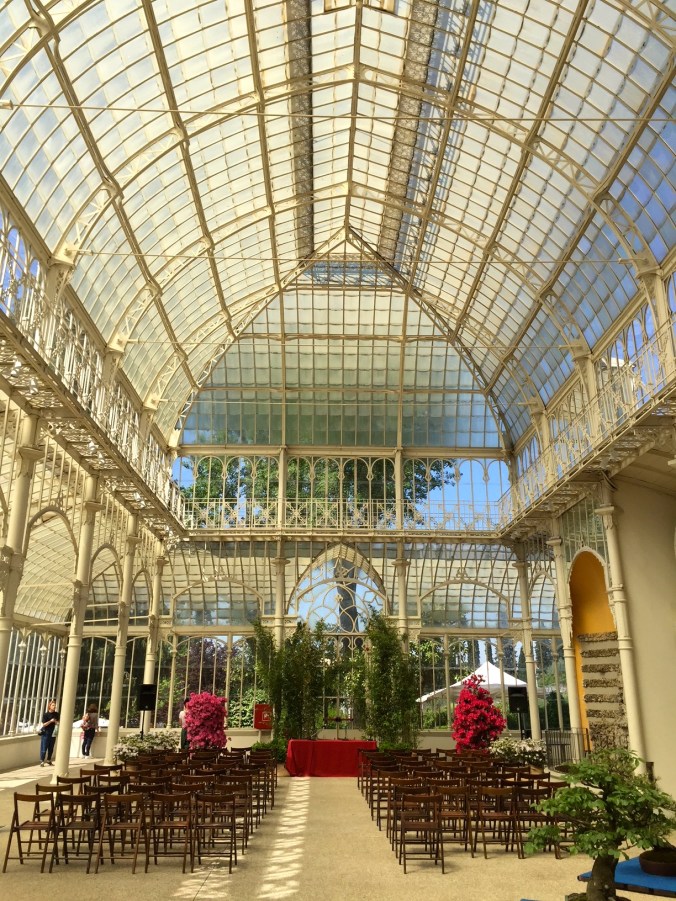
During the four-day event in the Limonaia Piccola of the 17th-century Corsini Gardens (open to the public for this occasion), the Richard Ginori company will recreate various phases in the creative process through which, daily since 1735, it has produced unique porcelain pieces, with special live demonstrations to reveal to the public a story that has survived to the present day with a rich tradition of know-how, innovation and beauty.

For the first time, it will be possible to admire outside the plant in Sesto Fiorentino the Manufactory’s artisans at work in their various areas of expertise: from slip casting to decoration, evidence of a wealth of knowledge that has been handed down without interruption from older to younger generations of craftspeople.

For its part, the Doccia Museum will be the recipient of the major fundraising initiative, “ARTIGIANATO E PALAZZO FOR THE DOCCIA MUSEUM”that Giorgiana Corsini and Neri Torrigiani have decided to launch with this year’s event “so that the priceless collection of the Doccia Museum will once again be open to the public”. 8,000 porcelain, ceramic, majolica, terracotta and lead objects and over 13,000 drawings, engraved metal plates, chromolithograph stones, plaster molds and wax sculptures.

The project involves a series of initiatives that will involve the organizers, public and corporate sponsors of the 24th ARTIGIANATO E PALAZZO exhibition, the full proceeds of which will go to the Associazione Amici di Doccia:
Wartime Florence

In 1565, by connecting the Uffizi and the Pitti and provided the Medici with an escape route in the event of political unrest. Its narrow hallways are decorated with more than a thousand paintings, mostly self-portraits, by many of the artists whose works adorn the walls of the city’s museums and churches. Farther north is the Palazzo Vecchio (the town hall), the Duomo, and the Accademia, home to the world’s most famous piece of marble, Michelangelo’s David.

In the summer of 1944, war placed this legendary city, and centuries of creative achievements, in danger of utter destruction.

ON NOVEMBER 10, 1943, Adolf Hitler remarked to Ambassador Rudolf Rahn, “Florence is too beautiful a city to destroy. Do what you can to protect it: you have my permission and assistance.” Hitler’s affection for the city initially gave Florentine Superintendent Giovanni Poggi and other city officials hope that Florence would be spared the fate of Naples. The fact that Rome and Siena had escaped major damage also encouraged them.

But, as Allied soldiers inched closer each day, a small group of dedicated souls—now seen as guardian angels of Florence—became increasingly concerned that the coming battle would overtake their city. They had few resources and dwindling options. These benefactors’ best hope was to push Germany and the Allies to jointly declare Florence an “open city,” first suggested by the Director of the Kunsthistorisches Institut, Friedrich Kriegbaum.

But for a city to be declared “open,” it had to be undefended; there could be no military targets; and both sides had to have freedom of entry. In Florence, German forces had positioned two artillery batteries in the della Gherardesca and dei Semplici Gardens. They had stationed soldiers at numerous mortar positions in the city.

Additionally, Florence, like Rome before it fell to the Allies, served as a major rail transport hub for the German Army. Even after the Allies’ air attacks on the Santa Maria Novella and Campo di Marte marshaling yards, men and materiel moved through the city.

Undaunted by these facts, German leaders referred to Florence as an “open city,” accusing the Allies of refusing to publicly affirm that designation. For their part, the Allies wouldn’t declare Florence an open city until the Germans removed their guns and soldiers.

The standoff held through the spring and early summer of 1944, while Allied forces were engaged in combat operations hundreds of miles to the south. Things grew much more urgent following the liberation of Rome in June and of Siena in July.

City officials believed that their portable art treasures, tucked away by Poggi in Tuscan villas, were safe. But protecting the city’s architectural treasures still depended upon securing an official, unequivocal declaration of Florence as an open city.

Members of the principal group working toward this designation were the German Consul, Gerhard Wolf; the Archbishop of Florence, Cardinal Elia Dalla Costa; the Extraordinary Envoy and Minister Plenipotentiary of San Marino to the Holy See, Marchese Filippo Serlupi Crescenzi; and the Swiss Consul in Florence, Carlo Alessandro Steinhäuslin. These four men did more to save Florence than anyone else.

After four years of service in the German Army, Gerhard Wolf attended Heidelberg University, where he met Rudolf Rahn, who would become a lifelong friend. In the years following graduation, both would enter Germany’s Foreign Service. Seeking to distance himself from the Nazi Party, Wolf accepted a position as the German Consul to Florence.

Cardinal Dalla Costa, a seventy-two-year-old prelate, was another of the city’s guardians. Soft-spoken yet forceful, he assumed an increasingly visible role in defense of the city. During Hitler’s 1938 visit, he ordered that the windows of his palace be shut in symbolic protest. He declined to participate in the official celebrations, explaining that he did not worship “any other cross, if not that of Christ.”

As the situation became more desperate, the cardinal agreed to issue notices that stated, “His Eminence Cardinal Elia Dalla Costa, Archbishop of Florence, declares that this building and the artworks inside, are under the protection of the Holy See.” While he pleaded with the German commanders to respect Florence as an open city, he did so knowing that, “in order to truly protect Florentine works of art, it would be necessary to place a huge pavilion made of impenetrable steel and unbreakable bronze, to cover the entire city.”

Edsel, Robert M.. Saving Italy: The Race to Rescue a Nation’s Treasures from the Nazis, W. W. Norton & Company. Kindle Edition.


Rose garden, Florence

If you are in Florence in the next 6 months, I recommend you pay a visit to Florence’s Rose Garden (Giardino delle rose), which is a garden park in the Oltrarno district of Florence, located between Viale Giuseppe Poggi, Via di San Salvatore al Monte and Via dei Bastioni and offers a commanding view of the city.

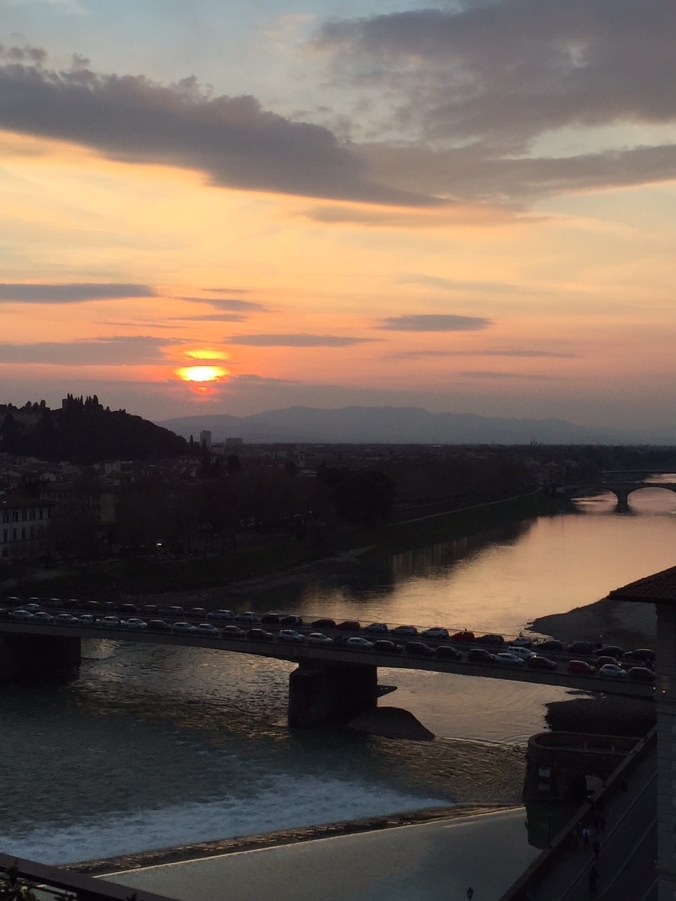
The garden is situated on the southern slopes of the Monte alle Croci, overlooking the Arno river and the historic district of Florence.

The Rose Garden was created by the Florentine architect Giuseppe Poggi in 1865, commissioned by the municipality of Florence to develop the left bank of the Arno River, when the capital of Italy was moved from Turin to Florence that year. Poggi’s contributions include both the Piazzale Michelangelo and the garden.

The Rose Garden is a terraced area of about 1 ha. Once part of the property of the Oratorian Fathers, the area was transformed into a garden by Attilio Pucci, who started the collection of roses.


Error
This video doesn’t exist


Villa Peyron, Fiesole

VILLA PEYRON

The villa, the formal garden and the vast park have a splendid location and enjoy a spectacular view over Florence. The place takes its name from a 16th century spring that flows in a thick wood uphill from the villa and which by gravity supplies the water necessary to work the many fountains in the garden and park.

It is likely that the villa itself was built on top of Etruscan ruins, traces of which can be seen in the underground chambers and the immediate surroundings for example in the cyclopean walls which rise in the park. It was however subjected to a series of renovations and transformations before architect Giovannozzi gave it its present day look in the early twentieth Century.

The garden is built on three terraces that slope southwards and has a wooded parterre parallel to the villa. Paolo Peyron was the creator of the lake and the architectural and monumental structure above it. The prestigious statues that decorate the garden in the place of those which were destroyed during World War II come from the Venetian villas of the Brenta.

http://www.fiesoleforyou.it/en/villa-peyron/

info: www.bardinipeyron.it

https://www.bardinipeyron.it/villa-giardino-peyron/

Signa, Italy and straw hats

Straw hat

Tip your hat to Signa

Signa is a comune (municipality) in the Province of Florence in the Italian region Tuscany, located about 12 kilometres (7 mi) west of Florence. As of 1 July 2013, it had a population of 19571 and an area of 18.8 square kilometres (7.3 sq mi).[1]

The municipality of Signa contains the frazioni (subdivisions, mainly villages and hamlets) Colombaia, Lecore, Sant’Angelo a Lecore and San Mauro a Signa. Signa is a typical Tuscan town. On the day after Easter, there is an important religious festival in honour of the Beata Giovanna. There is a procession that parades in the streets of Signa, and many people wear old costumes.

In Giacomo Puccini‘s Gianni Schicchi, the “molini di Signa” (mills of Signa) are the most coveted by his relatives of Buoso Donati’s properties. The 1875 novel Signa by Ouida (Mary Louise Ramé) is set in Signa.

A quick survey of the Tuscan straw hat town

Opera fanatics may recall Signa’s role in the Giacomo Puccini-penned “Gianni Schicchi,” but Puccini superfans and Florence area residents aside, it remains relatively unknown.

Right at the junction of three key Tuscan rivers—the Arno, Bisenzio and Ombrone Pistoiese—it’s home to a longstanding craft tradition with inextricable ties to the land itself.

Dig into the territory and its top product with these tips.


The signature craft in town is undoubtedly the straw hat, known in Italian as the cappello di paglia and highlighted in the Domenico Michelacci Straw and Weaving Museum. The museum’s namesake, Domenico Michelacci, was an enterprising 18th century man who was among the first to depart from cultivating wheat strictly for dietary purposes: instead, he intentionally set his sights on straw to be used in weaving.

Michelacci worked specifically with grano marzuolo, set apart for its tiny grains and small ears. A watershed moment for the local economy, this change introduced by Michelacci ultimately led the Florentine area to become the West’s first area for high-quality straw hat production, piquing the attention of wealthy clients around the world.

Demands of clients have naturally shifted through the centuries, as have the fashions themselves, but the straw hat remains the icon of Signa. A visit to the museum will illustrate why: each room showcases important elements of this niche market and its role in local history.

Those most interested in the links to the land will enjoy perusing the different types of wheat on display, while the more aesthetically minded might prefer the plethora of hats spanning the early 20th century to the 1970s. An additional room focuses entirely on the various machines and tools used to manually work with straw (although this type of equipment is dispersed throughout the museum).

For more, see http://www.turismo.intoscana.it/allthingstuscany/aroundtuscany/florence-straw-hats/

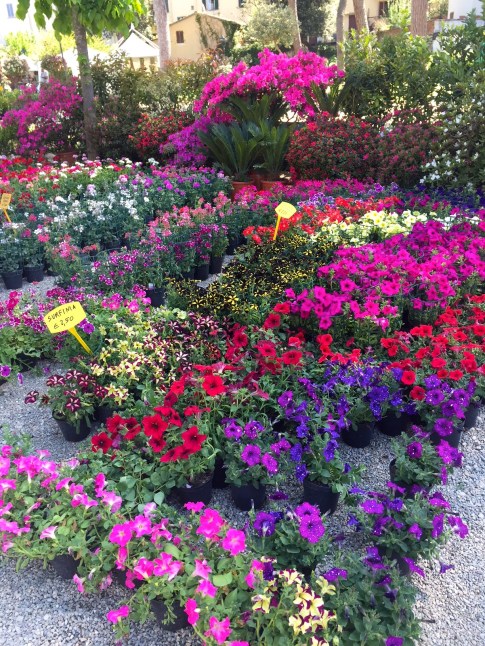
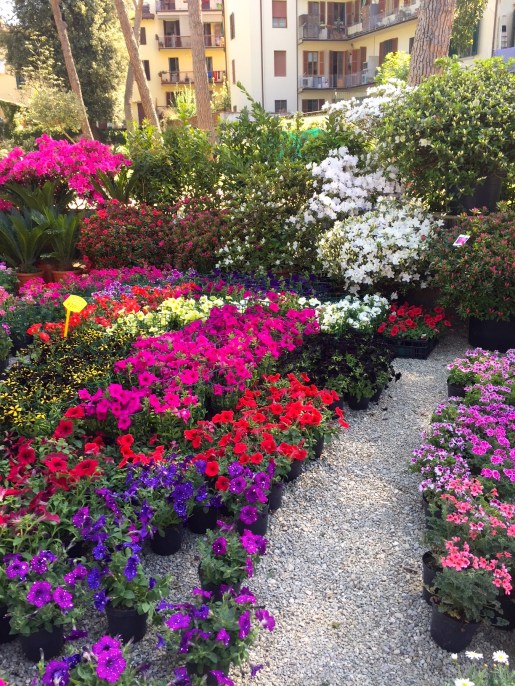
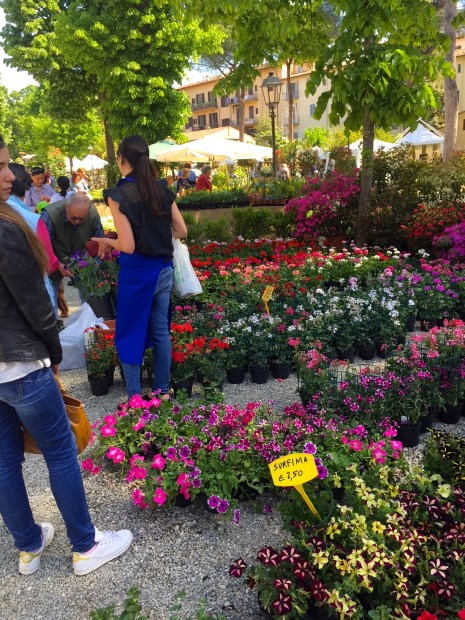
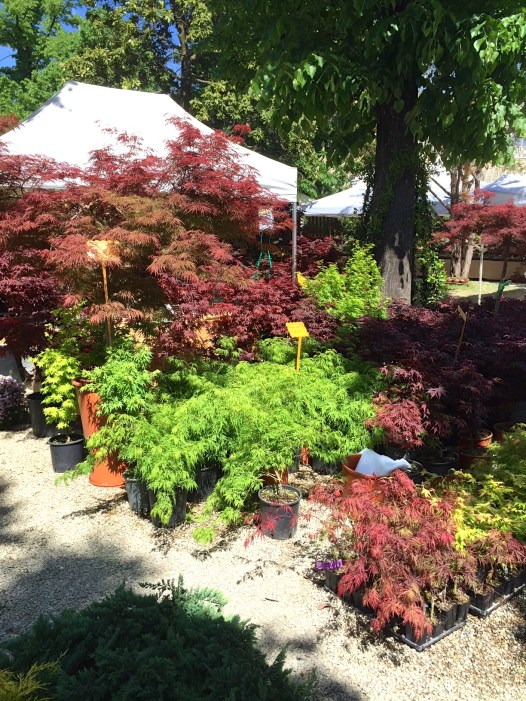
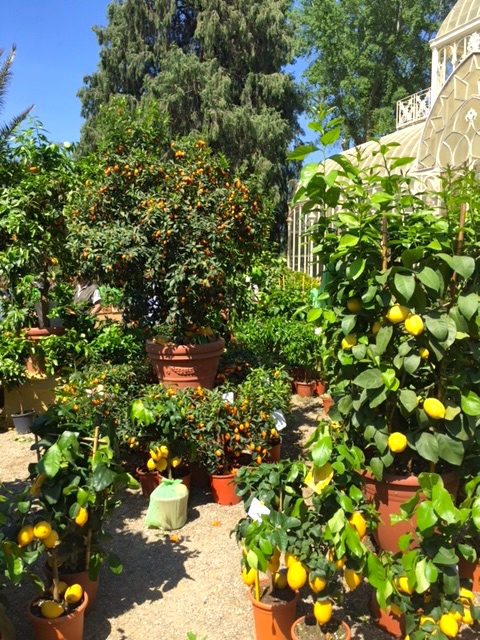
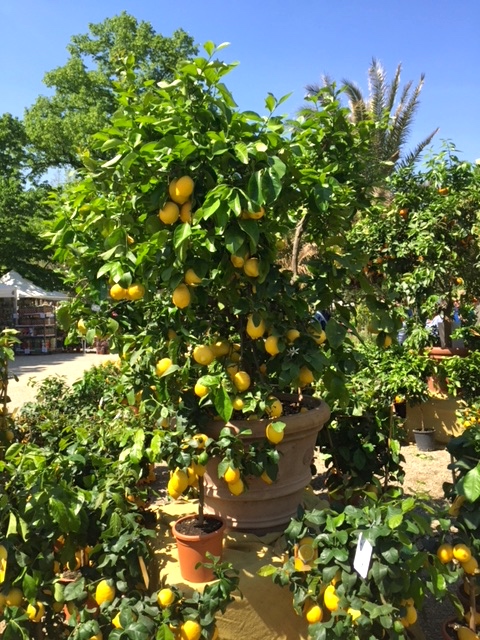
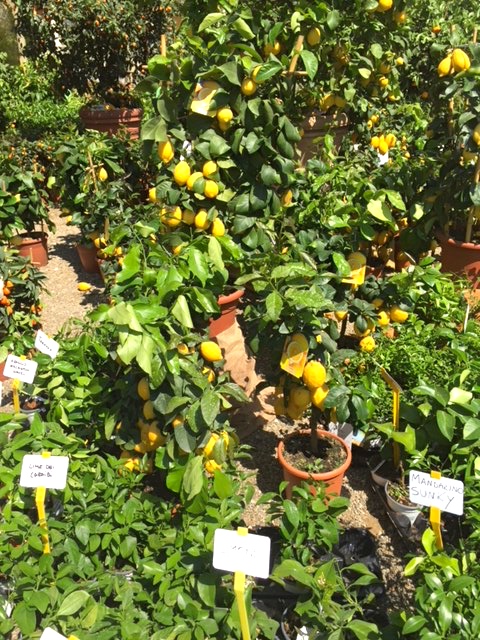
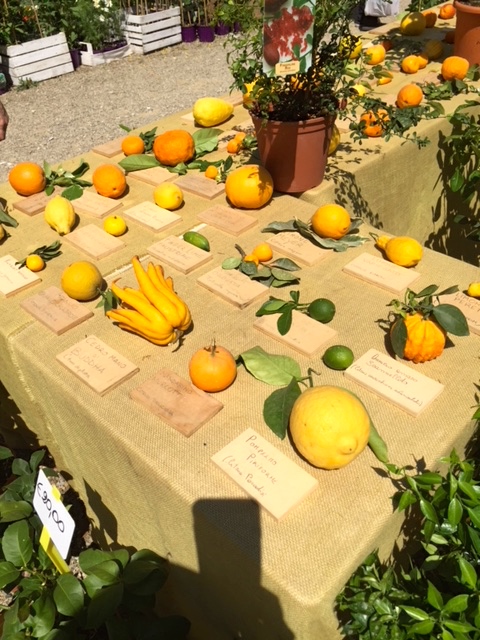
La primavera, i fiori!

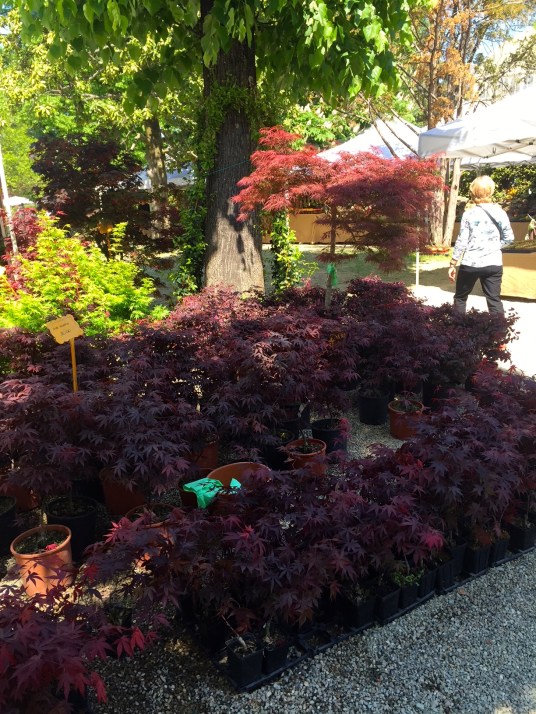
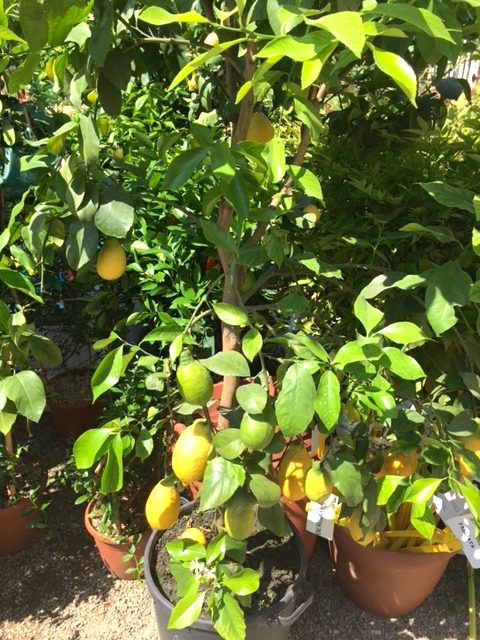
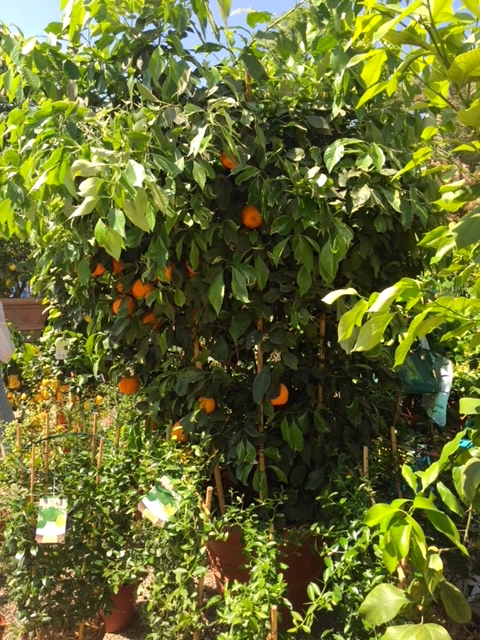
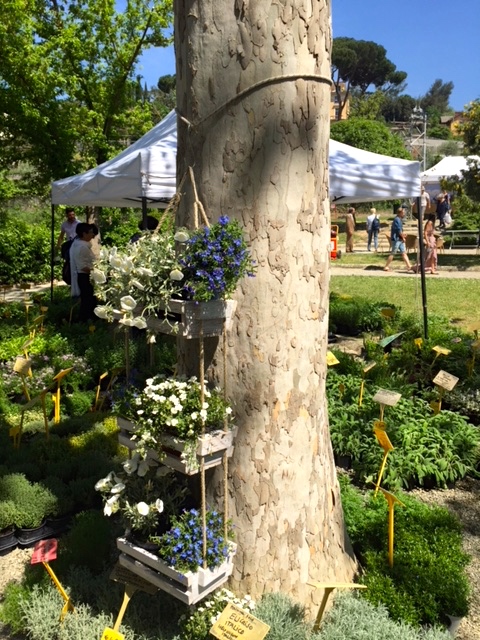
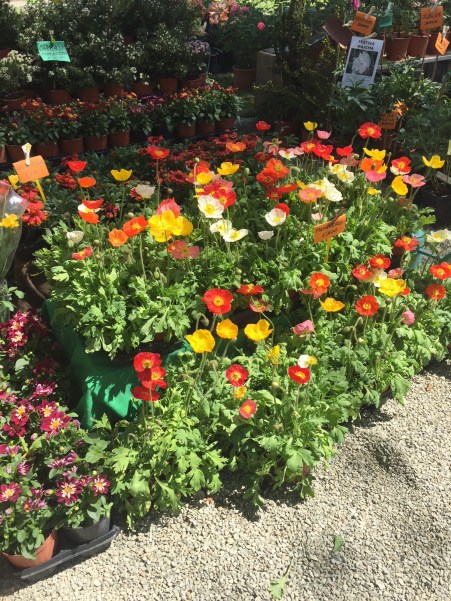
OMG, I’ve been a garden designer, a master gardener, a docent at the Seattle Japanese Garden and so it is fair to say that I’ve been to a few plant sales!

But in all my years in many gardens, I’ve never been to a more beautiful, more inclusive, more accessible, and more affordable sale EVER!

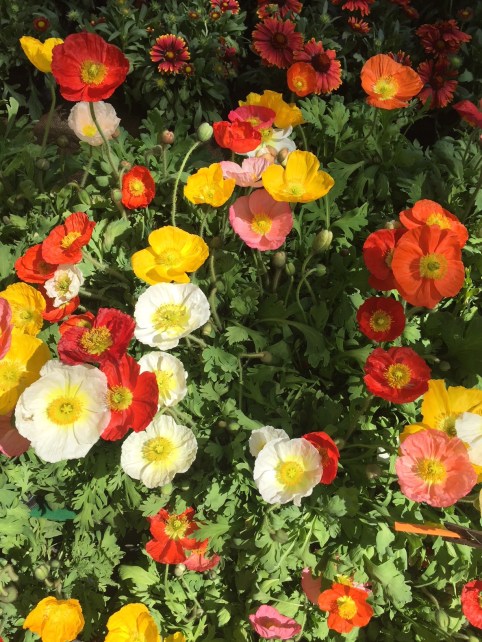
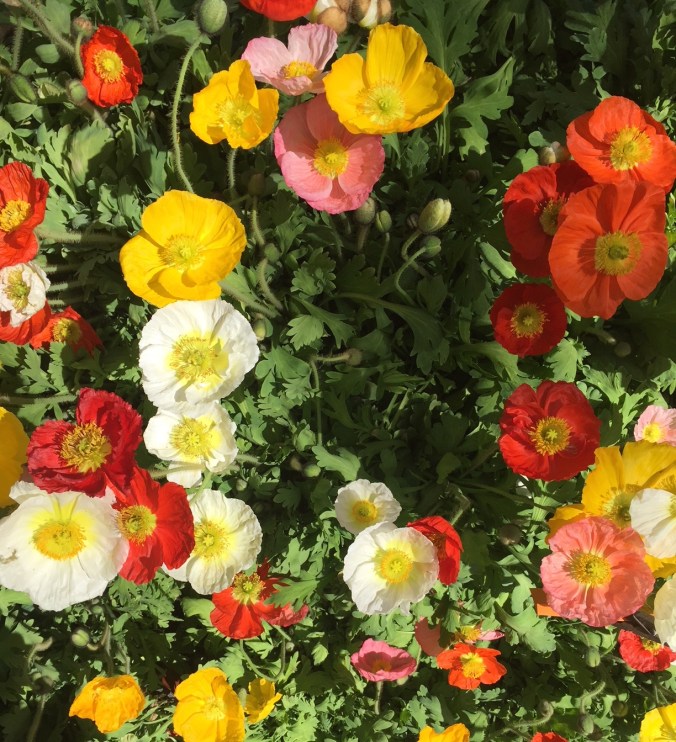
Here are a few pix, I’ll be going back several times in the next few days!

IMG_8721


IMG_8722


IMG_8723


IMG_8724


IMG_8725


IMG_8733


IMG_8734


IMG_8735


IMG_8736


IMG_8737


IMG_8738


IMG_8739


IMG_8741


IMG_8742


IMG_8743


IMG_8744


Galleria Rinaldo Carnielo, Florence

From Wikipedia, the free encyclopedia

 The Galleria Rinaldo Carnielo is a museum encompassing the small palace and studio of the artist Rinaldo Carnielo (1853-1910), located on Piazza Savonarola #3, Florence, region of Tuscany, Italy.

 Facade of Gallery undergoing restoration in 2006.


The eclectic collection consists of nearly 300 works or models, mainly sculptures, by Carnielo, as well as some paintings by Carniello, and some of his colleagues Silvestro Lega, Michele Gordigiani, and Arturo Calosci. Among the works of Carnielo are some macabre sculptures such as Tenax Vitae, Dying Mozart, and Angel of Death.

The small palace is built in the Italian counterpart of Art Nouveau, known as Stile Liberty, and was donated to the commune in 1957 by the sculptor’s son. In October 2015, the museum was temporarily closed.[1]

The design and construction of the palace dates to the 1880s and appears to have involved Rinaldo Carnielo and Enrico Lusini. The facade has various inscriptions including a bust of the artist with the inscription “Non ominis moriar”. A scroll in the center facade states “Onorate l’arte che è vita della vita” (Honor art which is the life of life).[2]


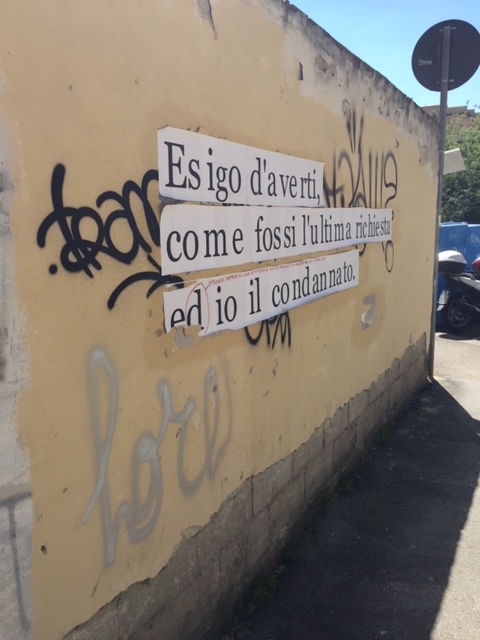
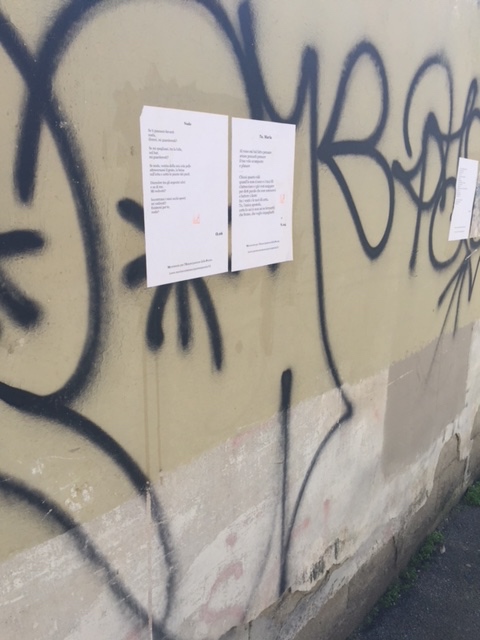
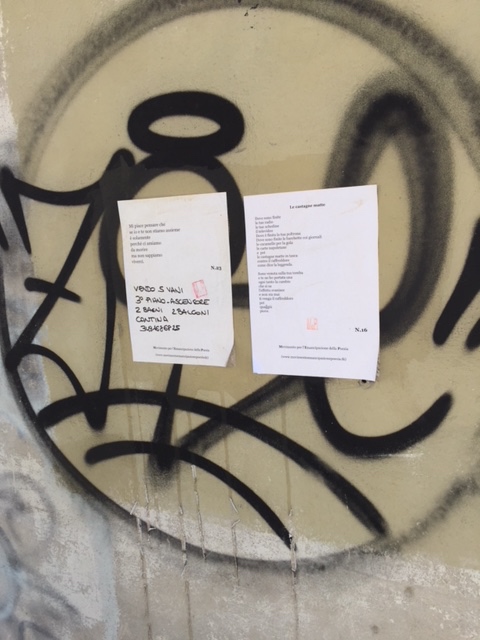
Street art, poetry on the vie of Florence

Graffiti is an unending spectacle on the walls of the streets in Florence.  Then there is Clet and all the other recognizable signmakers and graffiti artists who “decorate” our streets here.

While these things are to be seen all over many urban landscapes, one thing I see here often that I’ve never seen anywhere else is the literal postings of newly minted poetry.  See here:

IMG_8643IMG_8642IMG_8641IMG_8640