Here it is:
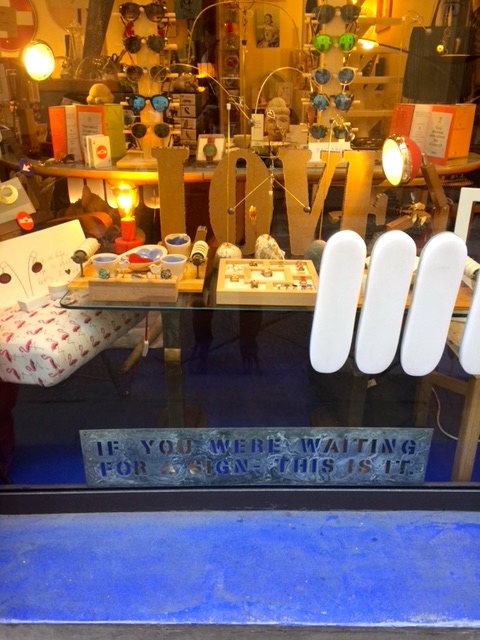
Here it is:
The technique and materials are made clear in this excellent video. Then, all you need is talent!
We all know that Easter is coming. When I was a little girl, Easter was fun because it happened in spring–which meant that the long ghastly winter was on the wane–and usually involved a great new fluffy pastel dress and matching shoes. Sometimes even a hat (or a bonnet?) and gloves were involved. One year I got pale blue patent leather shoes and I loved them so much, I can still remember them!
At this point in life, Easter doesn’t mean much to me. No holiday does, for that matter. Ennui, I suppose.
But Easter is a Really Big Deal in Italy. Really Big.
I came home one day recently to find this notice on the door of my building. It tells me that tomorrow, on Tuesday, 20 February, between 4 and 8 p.m., the parish priest will come to my building to give the blessing to anyone who wants to receive it, in advance of Pasquale.
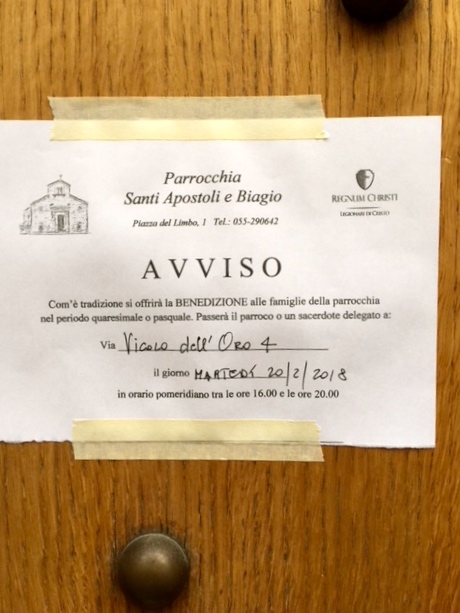
I mean really, the priest comes to my apartment to bless me? I would love to be a party to that!
I may or may not be able to be home for this blessing. I have already rsvp-ed to an invitation to visit Michelangelo’s tomb in Santa Croce with the art restorer who recently finished cleaning the monument and I would hate to miss it. But, I also hate to miss the blessing.
Decisions, decisions! And both are such exquisite offerings only to be found here, in Florence!
As this film says, back in Dante’s day, Florence was a vertical city, from it’s tall walls that circled the citta’ to its many, many towers.
Here are two of my favorite urban climbs in the Renaissance citta’, the Torre di Arnolfo and the Torre San Niccolò.
Wishing you a sweetly filled day!




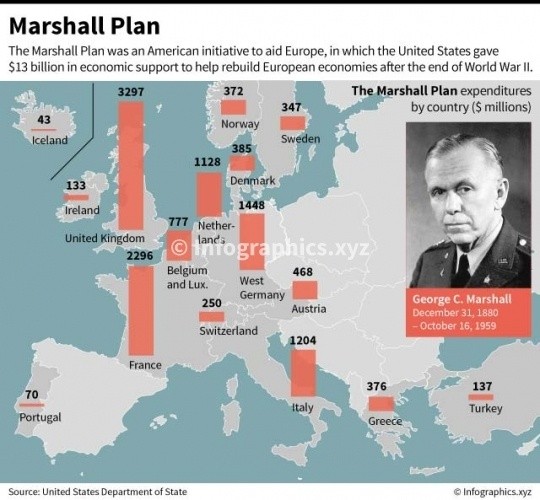
FROM JUNE 1947 to its termination at the end of 1951, the Marshall Plan provided approximately $13 billion to finance the recovery and rehabilitation of war-torn and postwar weary Western Europe.
In today’s dollars that sum equals roughly $100 billion, and as a comparable share of U.S. Gross National Product it would be in excess of $500 billion.
It was a mammoth sum, more than the United States spent to govern itself in the first fifteen years of the twentieth century.
More than the provision of dollars and aid, the Marshall Plan was the cornerstone of American foreign policy for much of those formative and consequential postwar years.
It was a monumental undertaking and—echoing Walt Whitman’s famous lines—it contained multitudes and contradictions.
For, after the war, Europe increasingly found itself looking across the Atlantic to the United States. The United States was the only power whose economy had flourished during the war. Europe needed the goods and natural resources abundant in the United States to fuel its recovery.
But, at the same time, Europe was not able to offer the United States goods or resources in return, nor could it draw on stores of investments or invisible earnings (like shipping or insurance).
Europe had a balance-of-payments problem with the United States: in 1946 Europe’s overseas trade debt was $5 billion and growing. It was known as the “Dollar Gap.” It was the key problem looming behind Europe’s incipient recovery and it was becoming dire.
From 1941 to 1945, American industry had mobilized its prodigious production capacity for the war effort.
By the end of the war, thirteen rationing programs were in effect, covering scarce commodities ranging from gasoline and shoes to sugar and red meat. Consumer goods such as refrigerators and automobiles were largely unavailable. Women were asked to leave the home and enter the workforce. By one count more than a quarter of American wives worked for pay during the war.
Americans were asked to save as never before. In 1940, personal savings amounted to around $4 billion. By 1945, it was $137.5 billion. All of this sacrifice was summoned after a decade-long economic depression.
from Behrman, Greg. The Most Noble Adventure: The Marshall Plan and the Time When America Helped Save Europe. Free Press. Kindle Edition.
“There was [and is] nothing unremarkable about Florence.” I could not agree more!
Taylor, Alan F.. Appointment in Arezzo: My Life with Muriel Spark (Kindle Locations 273-274). Birlinn Ltd. Kindle Edition.
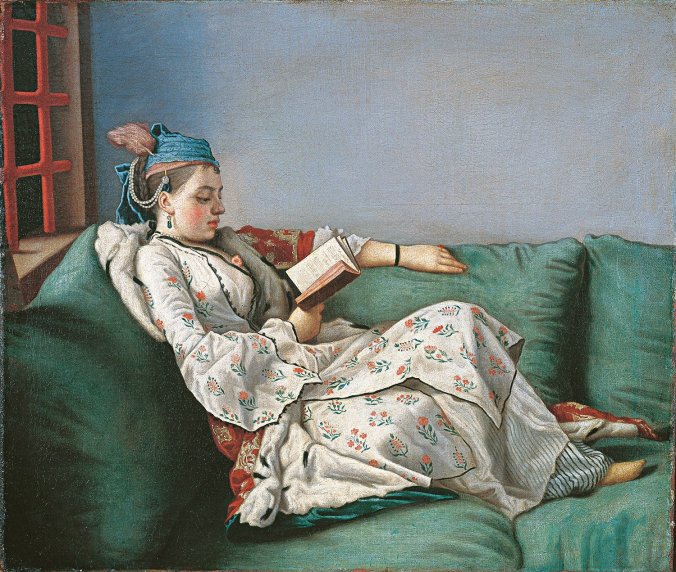
 get back, lauretta!
You must be logged in to post a comment.