Random shots from a hot, random Saturday afternoon.
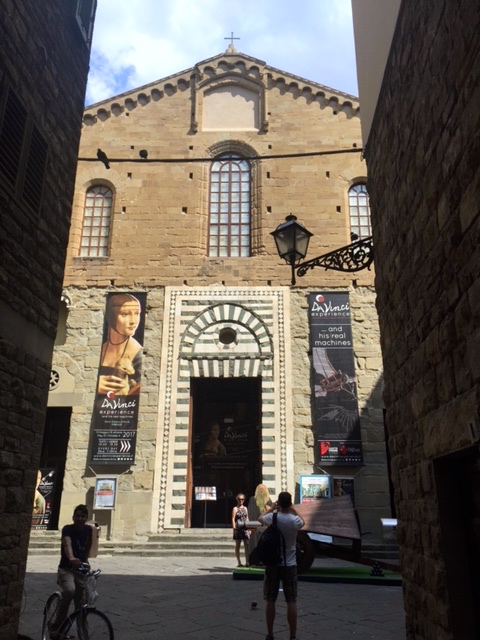
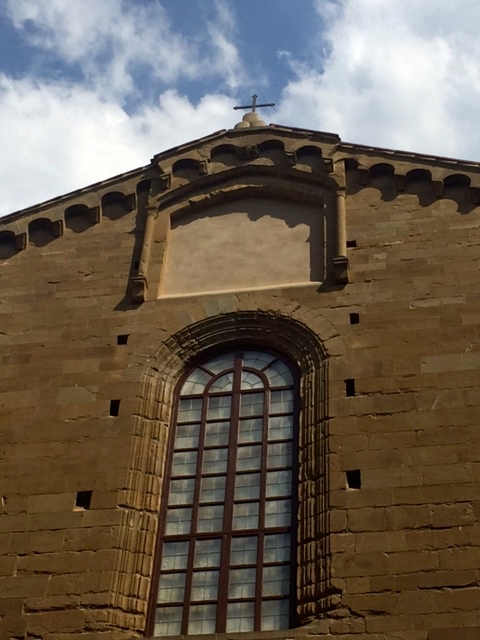
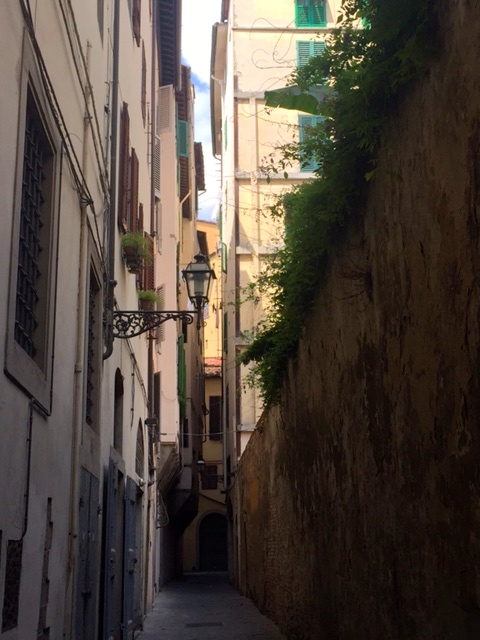
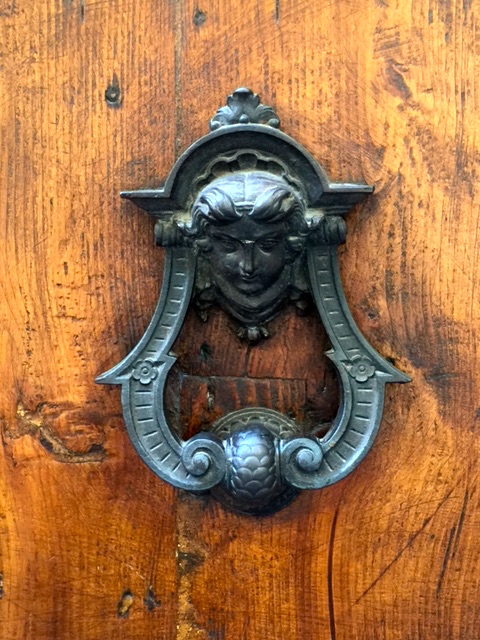
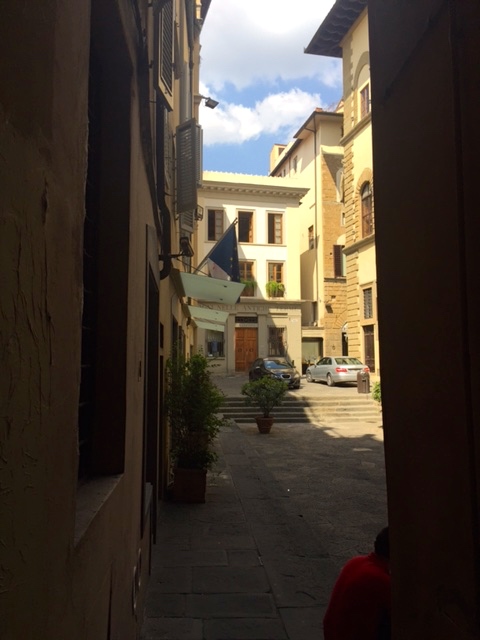
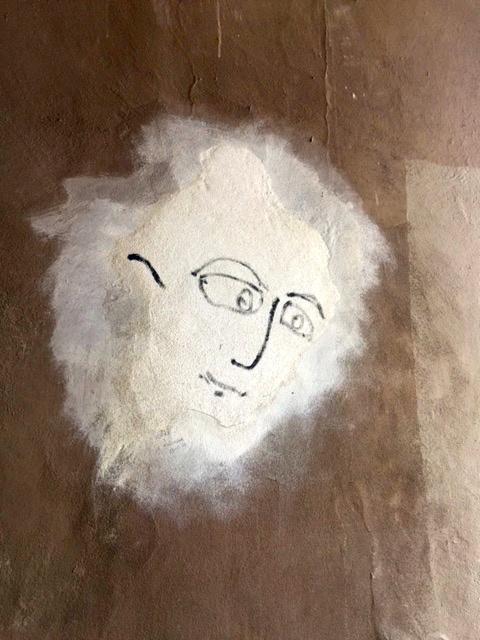
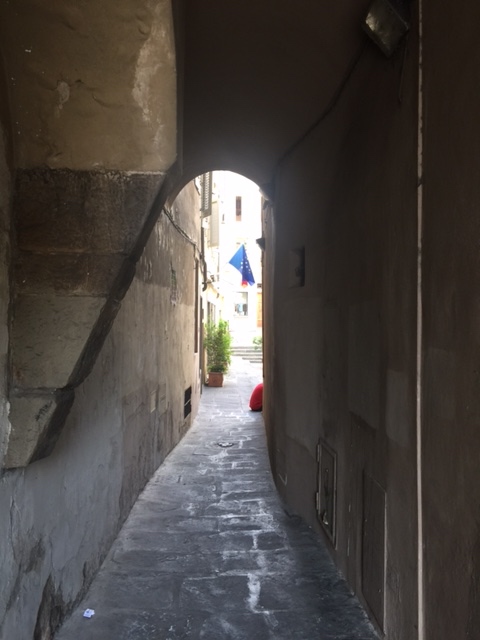
Random shots from a hot, random Saturday afternoon.
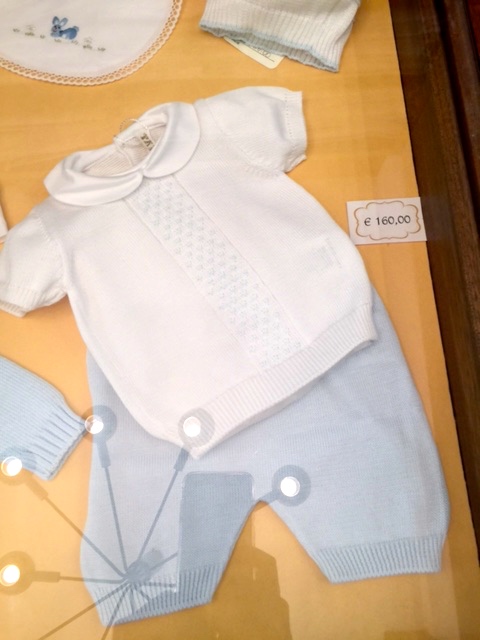
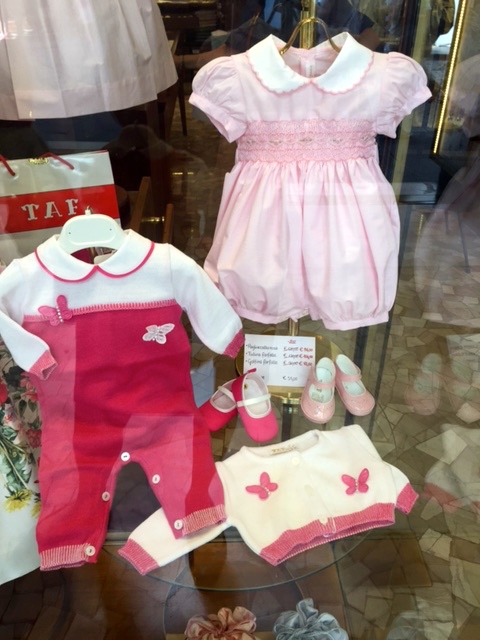
For my money, Italy has the best children’s clothing in the world. I also like French and Japanese i vestiti bambini, but Italy is tops. Here is today’s offering from the venerated TAF.

They have gorgeous frocks for older girls as well:

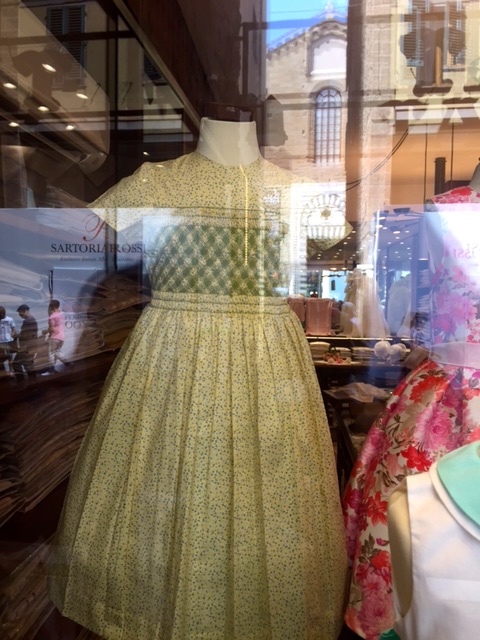
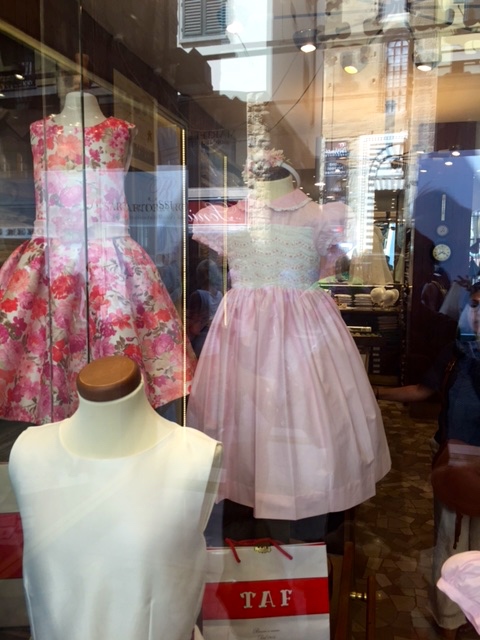
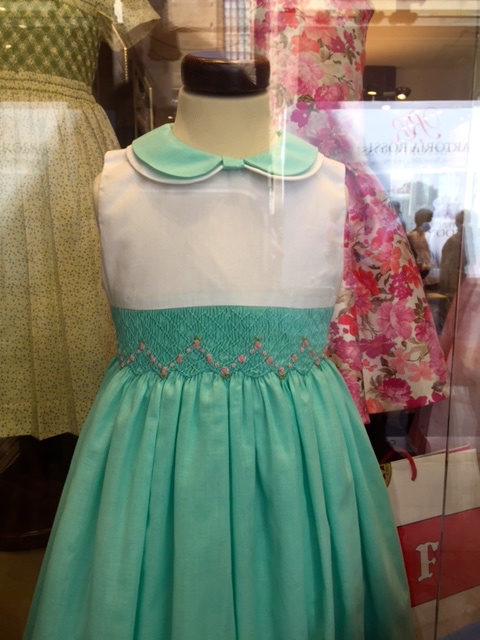
I love the collar and smocking on the dress below.
Outside the ancient church of Santi Apostoli, just down the street from my apartment, I happened upon a wedding today. It was about 3 pm and hotter than hades. All the guests in the church were fanning themselves with their programs.
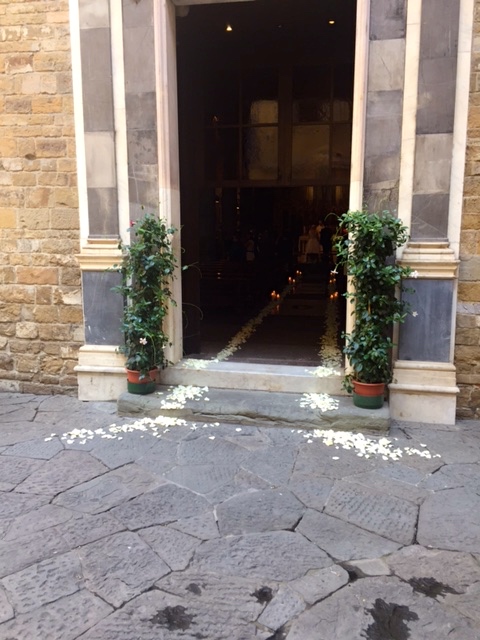
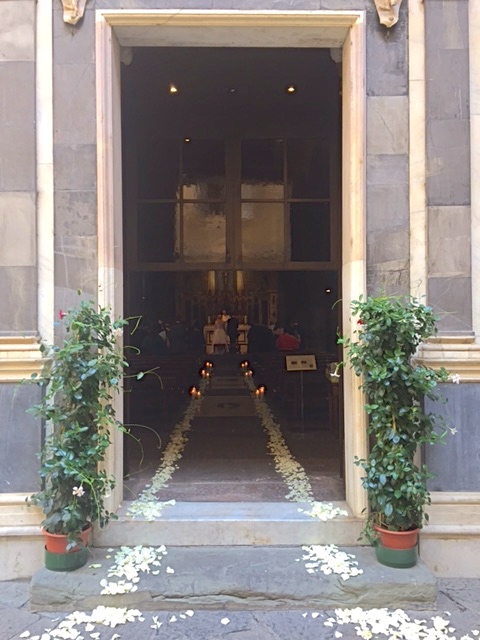
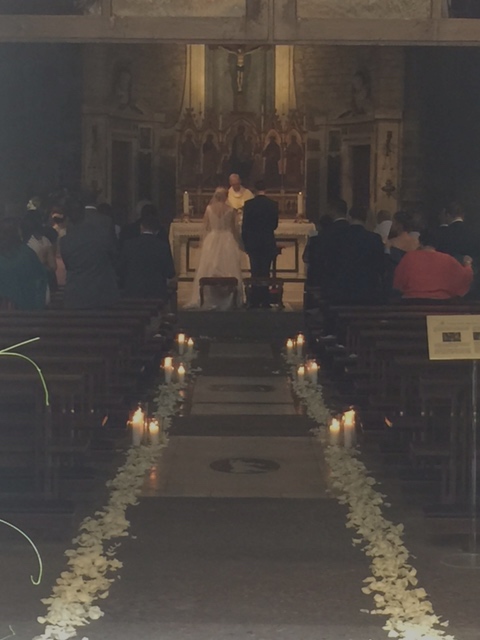
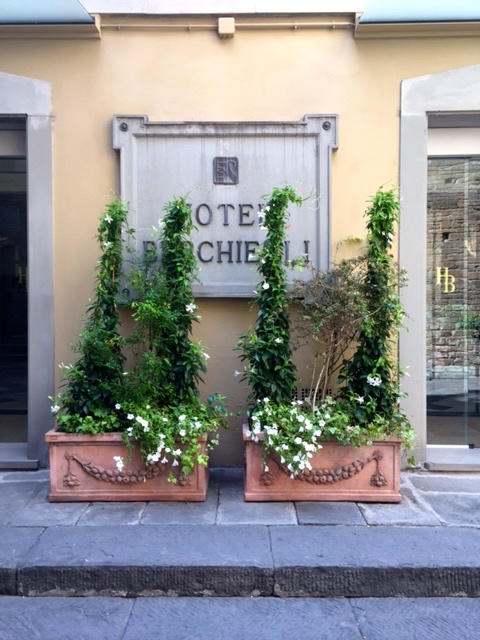
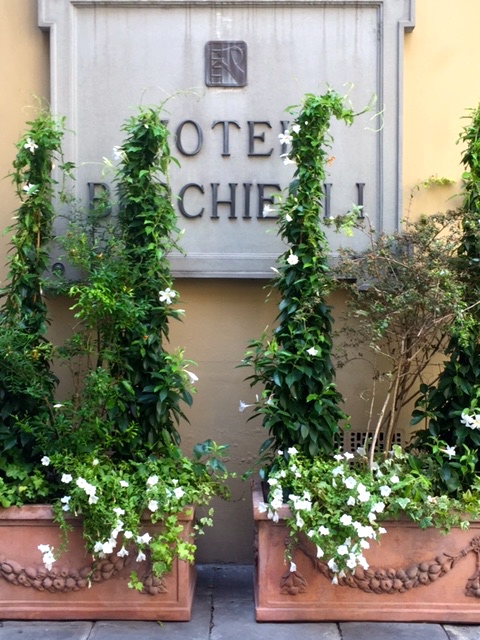
Across the Piazza del Limbo from the church, Hotel Berchielli seemed adorned in white as well. Very pretty!
Mid-August–October 1944
New York Times reporter Herbert Matthews observed that “Florence is no longer the Florence that the world has known for 400 years. . . . the heart of Florence is gone.” Of its six bridges—San Niccolò, alle Grazie, Vecchio, Santa Trinita, alla Carraia, and alla Vittoria, only the Ponte Vecchio survived. In fact, the Germans had rigged it with demolition charges as well. Some among the Allies theorized that the Germans had changed their plans at the last minute, perhaps concerned that the debris caused by the destruction of the two-story bridge would actually have facilitated an Allied crossing by providing enough rubble to form a new foundation in the low water of late summer.
[American Monumnet’s Man, Frederick Hartt described the horrifying scenes during the initial days of liberation:]
In the city there was no water, no light. . . . the mosquitoes came in clouds from the stagnant Arno, the heat was intense and the air suffocating with the odors from the broken sewers and gas mains, the unflushable closets [toilets], and the corpses still buried under the ruins along the Arno.
Fascist snipers from windows all over the town picked off civilians at random. During this period nearly four hundred persons, mostly civilians, were killed by the German batteries which continued to shell the town sporadically from Fiesole.
Edsel, Robert M.. Saving Italy: The Race to Rescue a Nation’s Treasures from the Nazis (pp. 188-189). W. W. Norton & Company. Kindle Edition.
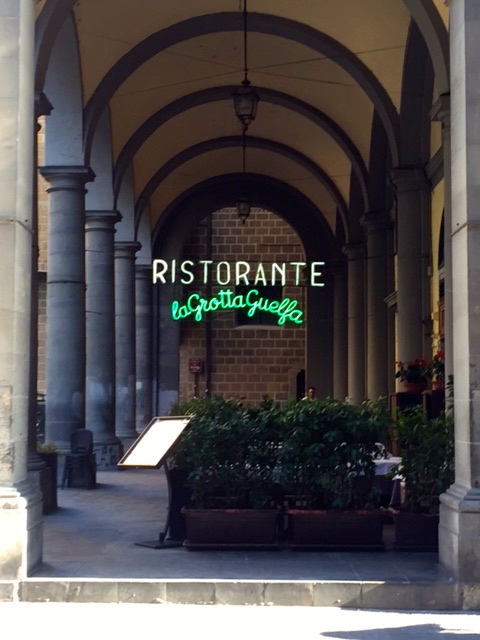
I love this arcaded walk home from yoga in Piazza della Repubblica to my apartment. I’ve always loved this 1950s neon sign; it’s a classic here.
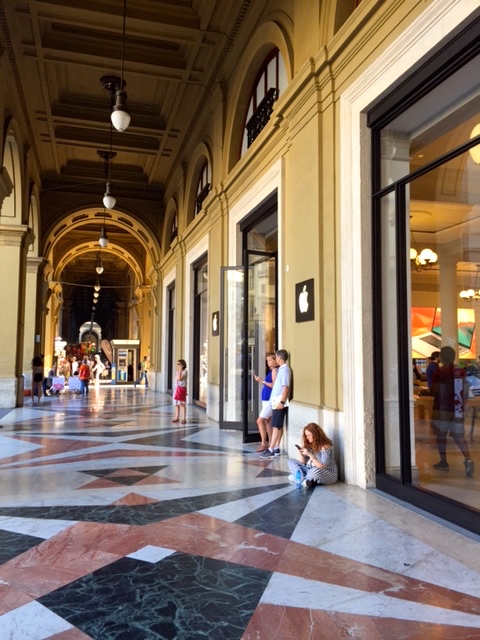
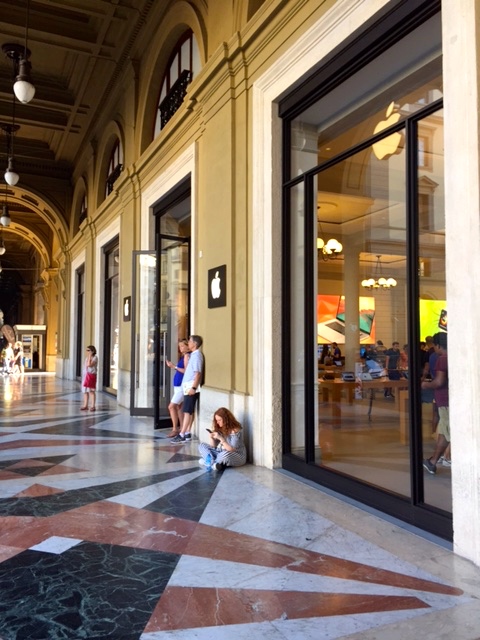
Apple store as well. Another welcome sight. Always busy.


You may look at the photo below and think, that’s not the best shot of Giotto’s Campanile that she’s posted recently.
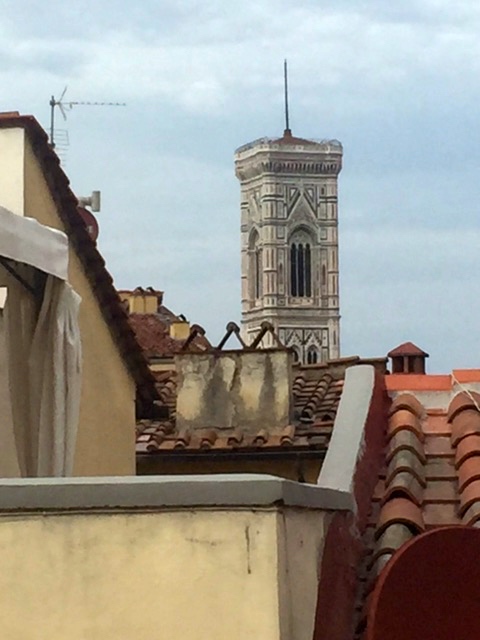
And you’d be right! It isn’t! But, what I’m trying to focus on is the terra cotta chimney topper on the chimney in the middle of the picture. See it?
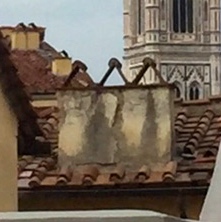
This thing. I’m talking about this chimney topper of 3 upside down V’s.
What I’ve noticed about living up high above historic Florence is that there are all manner of interesting and artistic chimney toppers. I love looking at them.
For example, there’s also this one:
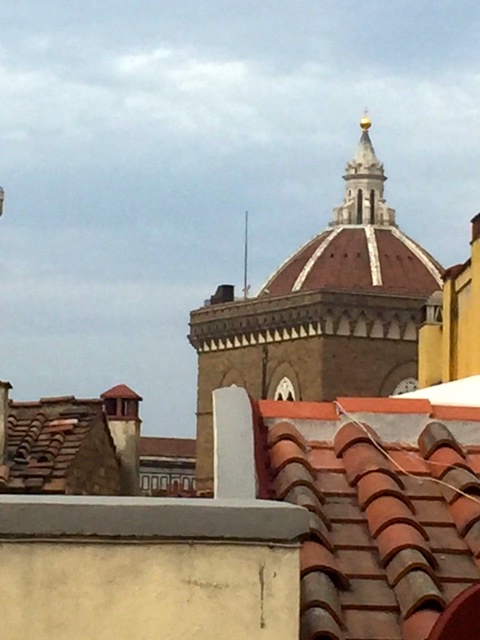
I know, you’re probably looking at the Duomo dome. But I’m focusing right now on this thing:
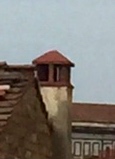
It’s another cool terra cotta chimney topper and it looks like a little Roman temple!
Then there’s this:
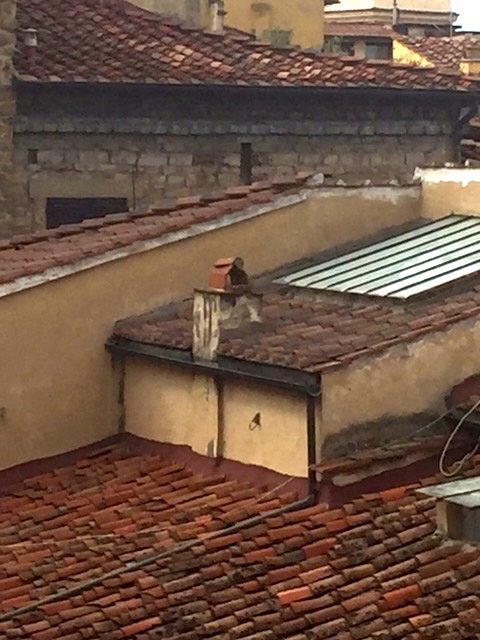
I’m sure that by now your eye is trained and you can focus right on the chimney topper. This one looks like a little barn with a rolled top.
I’ve yet to see any two chimney toppers alike!
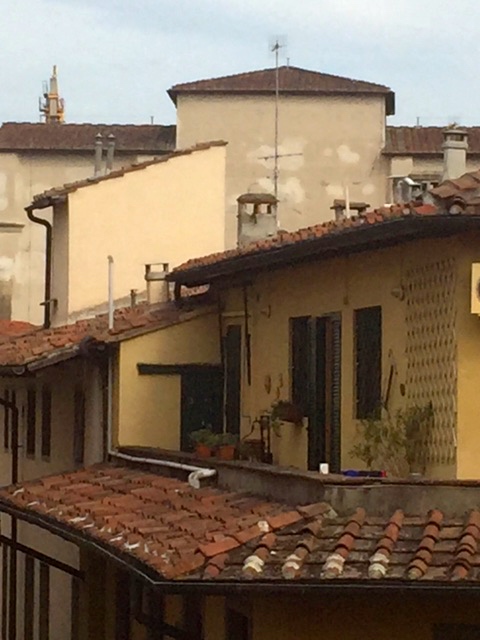
I mean, just look at all the types in any one view! It’s rather amazing.
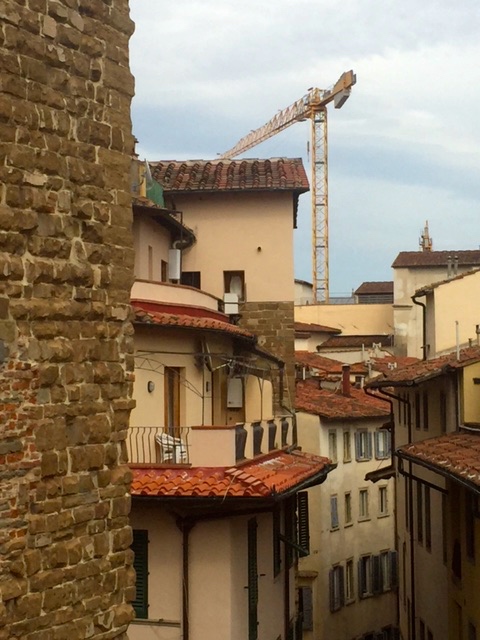
And then I start noticing how people up at this level like to decorate their terraces. Check out the line of matching ceramic pots in the picture above. See them?
There. You got it!
All you have to do is stop from time to time, then you will receive the currents.

In the past 6 months, I’ve said this over and over: “I walk by this landmark…several times a week, a day, a month” and it’s true, I do. In Florence, every inch of earth is covered or filled with history.
About a block from where I live stands this medieval tower, the Torre dei Buondelmonti, from 12 or 13th century. I use the alley way beside it at least daily. I always admire this tower, as I walk by.

It’s so tall and the streets of Florence are so narrow that it is hard to get the tower in one shot.


This appearance of this antique tower is very faithful to the
original 13th century appearance. On the ground floor there
is an opening with a double arch, while on the upper floors
there are five high and narrow windows of different sizes.

The ground floor exhibits a slight use of rusticated ashlar masonry, known in Italian as bugnato; this is among the first examples
of its use in Florence. At the top there is a stone filaretto,
while the topfloor has a simpler brickwork. The tower's left
side, facing the alleyway called the Chiasso delle Misure,
originally had two doors and a window, which were enclosed
at later revision.
In the 14th century, the Buondelmonti family moved from the location of this tower on Via delle Terme, to the newer Palazzo Buondelmonti in Piazza Santa Trinita.
The feud between the Buondelmonti and other Florentine aristocratic families is well known. The famous wedding that ended in Buondelmonti bloodshed took place not 5 minutes away, near the Ponte Vecchio in a particular event during the Guelf and Ghibelline conflicts. In 1215, during a banquet celebrating the ennoblement of a young Florentine, one of the guests, Buondelmonte de’ Buondelmonti, stabbed a rival in the arm. In restitution for the injury and dishonor, the elders decided that young Buondelmonte should wed a girl from the Amidei family. That arranged, the Amidei and Buondelmonti families arranged an engagement ceremony, where Buondelmonte was to publicly pledge troth to the Amidei girl. With the Amidei assembled in the piazza, the young Buondelmonte man rode past the Amidei, and instead asked for the hand of a girl from the Donati family, members of the Guelf faction.
Furious, the Amidei and allies plotted revenge. They debated whether they should scar Buondelmonte’s face, beat him up, or kill him. Mosca di Lamberti took the floor and argued that they should kill him at the place where he had dishonoured them. His famous words, ‘cosa fatta capo ha‘, were recorded in Dante’s Inferno and an earlier chronicle known as Pseudo-Latini. On Easter morning, on his way to marry the Donati girl, as Buondelmonte crossed the Ponte Vecchio, he was waylaid by the Amidei and their allies, and murdered. The Buondelmonte murder and its associated clan rivalry became the legendary origin of the Guelf and Ghibelline conflict in Florence. For more, see https://en.wikipedia.org/wiki/Amidei


At least 3 stickers have been added to the original.
 get back, lauretta!
You must be logged in to post a comment.