Not that they were looking down before.
But now, when I look up, I see this beauty. It’s my ceiling!
Très belle! Even though it’s Italian.


Not that they were looking down before.
But now, when I look up, I see this beauty. It’s my ceiling!
Très belle! Even though it’s Italian.

Convents and monasteries were places of silence. The importance of silence was stressed in the cloister of San Marco, where the first image that greeted friars and visitors alike was Fra Angelico’s fresco of Peter of Verona with his finger to his lips. Silence was preserved in the cloisters, the church, and the dormitory. To keep the friars on their toes, each convent had an officer, the circator, whose job was to move quietly among the brothers “at odd and unexpected moments” to see if they were growing slack.
King, Ross (2012-10-30). Leonardo and the Last Supper (p. 60). Bloomsbury Publishing. Kindle Edition.

Leonardo had a fascination with curly hair. His own hair, as one early biographer attests, was long and curly, and his beard “came to the middle of his breast, and was well-dressed and curled.” He evidently took pride in his appearance.
Besides his well-dressed hair and curled beard, he had a taste for colorful clothing. Florence was renowned for its luxurious textiles— silks and brocades with names like rosa di zaffrone (pink sapphire) and fior di pesco (peach blossom). But most of these exotic fabrics were exported to the harems of Turkey because sumptuary laws— regulations against ostentatious dress— meant Florentines necessarily favored more sober colors. Not so Leonardo, whose wardrobe in later life, an audacious mix of purples, pinks, and crimsons, flouted the dictates of the fashion police.
One list of his clothes itemized a taffeta gown, a rose-colored Catalan gown, a purple cape with a velvet hood, a coat of purple satin, another of crimson satin, a purple coat of camel hair, dark purple hose, dusty-rose hose, black hose, and two pink caps.
King, Ross (2012-10-30). Leonardo and the Last Supper (p. 26). Bloomsbury Publishing. Kindle Edition.

Florence had a thriving cloth industry, and Leonardo designed numerous machines for the textile trade, such as hand looms, bobbin winders, and a needle-making machine that he calculated would produce forty thousand needles per hour and revenues of a mind-boggling sixty thousand ducats per year. All of these inventions he no doubt hoped would find their place in Florentine industry. In about 1494 he drew plans for a weaving machine, and in the same pages he outlined a project for a canal by which, he claimed, Florence’s Guild of Wool Merchants could transport their goods through Tuscany and, by extracting revenues from other users of the canal, boost their profits in the process. These pursuits reveal the breadth of Leonardo’s interests, the scope of his ambitions, and the depth of his conviction that there was no task that could not be improved through technology and invention. None of his plans seems, however, to have tempted the hardheaded merchants of Florence.
King, Ross (2012-10-30). Leonardo and the Last Supper (p. 119). Bloomsbury Publishing. Kindle Edition.

With fifty thousand people, Florence must have been an impressive sight for a young man like Leonardo arriving from Vinci. “Nothing more beautiful or more splendid than Florence can be found anywhere in the world,” the scholar Leonardo Bruni had declared in about 1402. Fifty years later, a Florentine merchant, taking stock of his hometown, believed it even more resplendent than in Bruni’s day, with beautiful new churches, hospitals, and palaces, and with prosperous citizens sauntering through the streets in “expensive and elegant clothing.” Florence at this time could boast fifty-four dealers in precious stones, seventy-four goldsmith shops, and eighty-three silk-weaving firms. There was, the merchant acknowledged, a further attraction: the astonishing proliferation of Florence’s architects, sculptors, and painters. Highly conspicuous by the time Leonardo arrived in Florence were frescoes, statues, and buildings by men like Giotto, Brunelleschi, Masaccio, Donatello, and Lorenzo Ghiberti.

King, Ross (2012-10-30). Leonardo and the Last Supper (pp. 23-24). Bloomsbury Publishing. Kindle Edition.
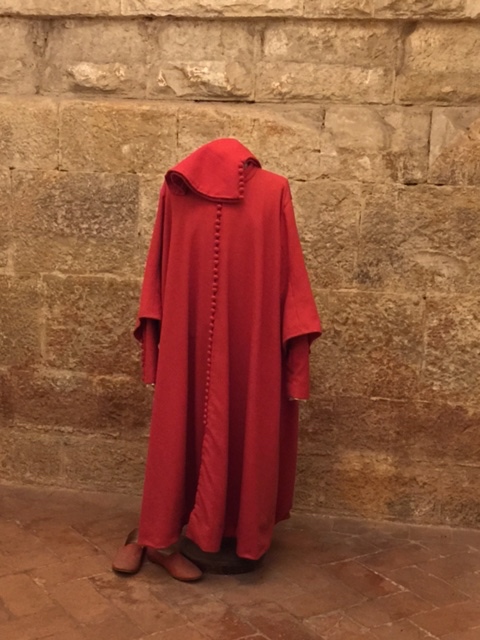
By the Middle Ages, the Florentine republic was ruled by a council, known as the signoria. The signoria was chosen by the gonfaloniere (titular ruler of the city), who was elected every two months by Florentine guild members. Below is the robe and shoes typically worn by the counsil members.

The magnificent Salone dei Cinquecento. Absolutely amazing!


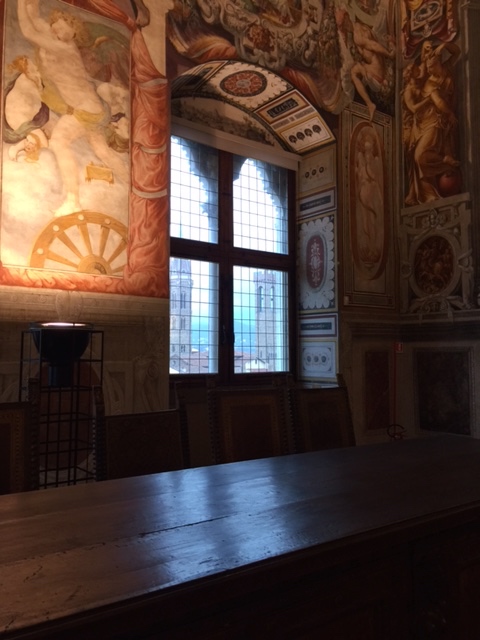
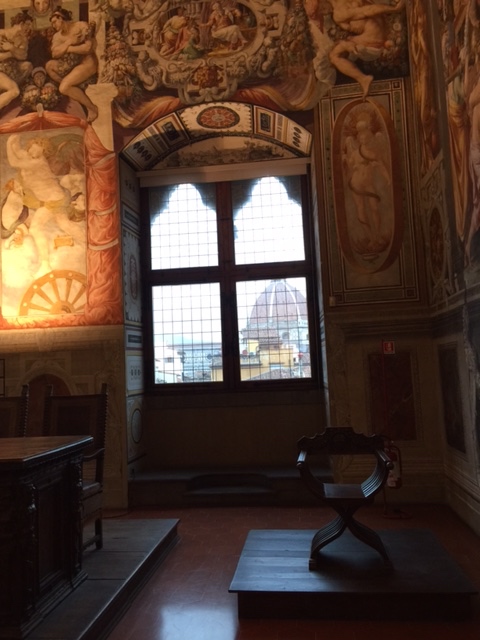

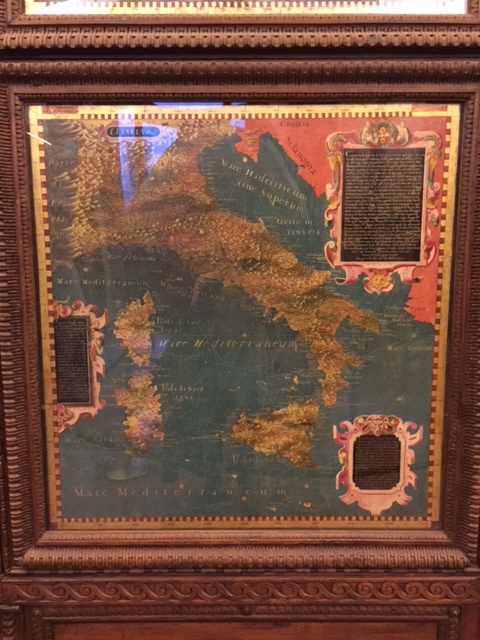


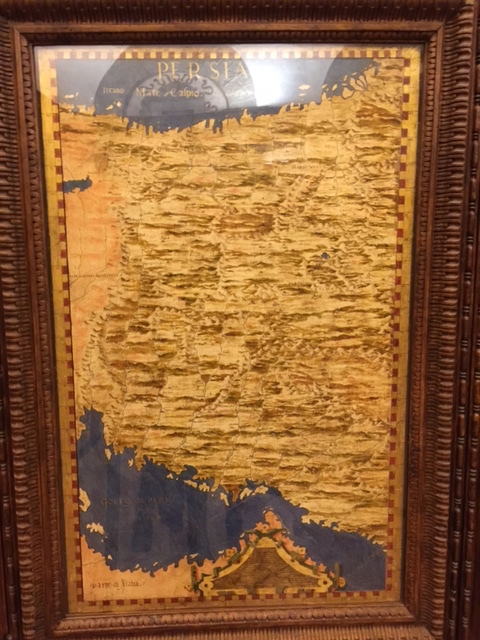
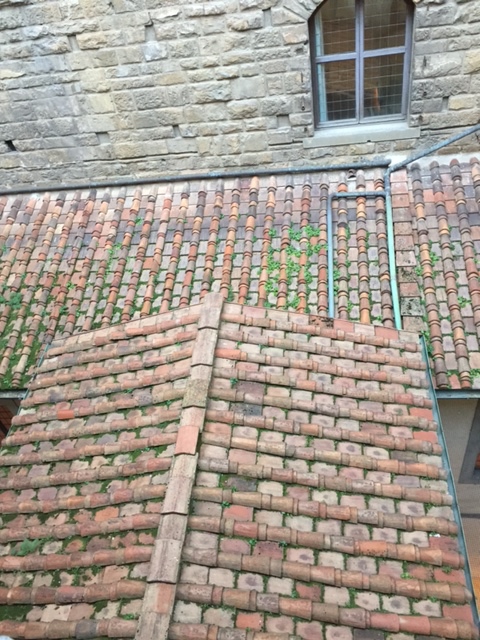


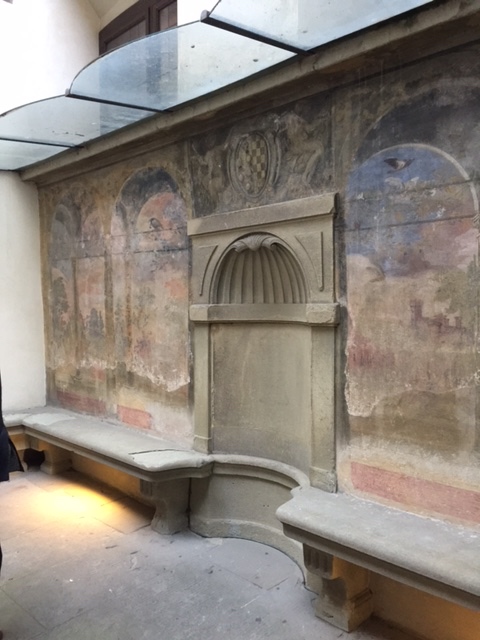
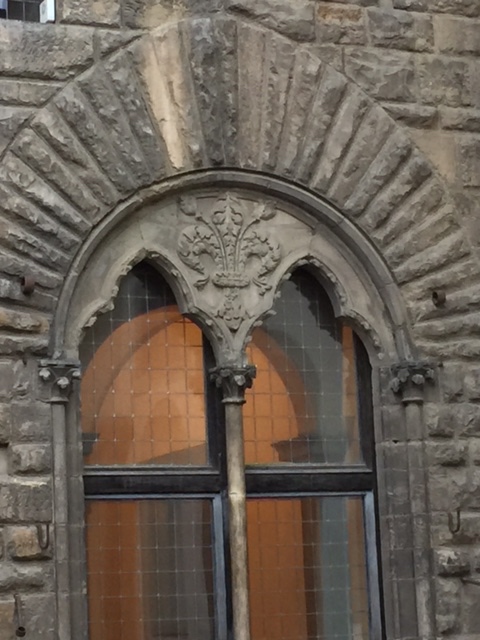
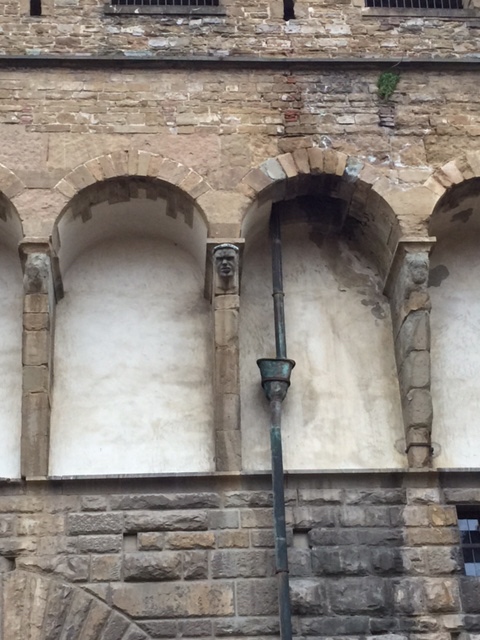
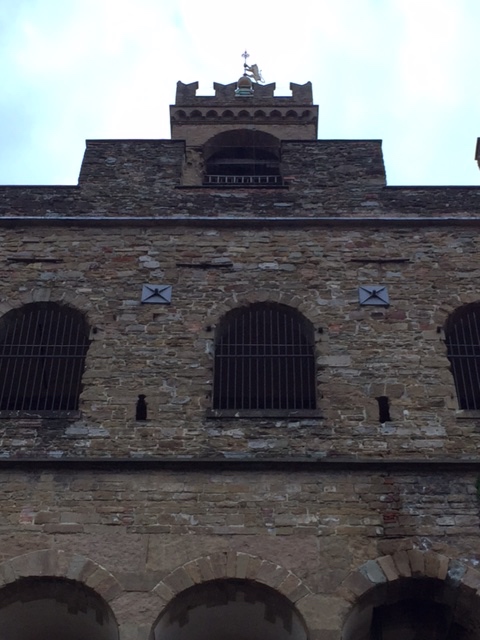
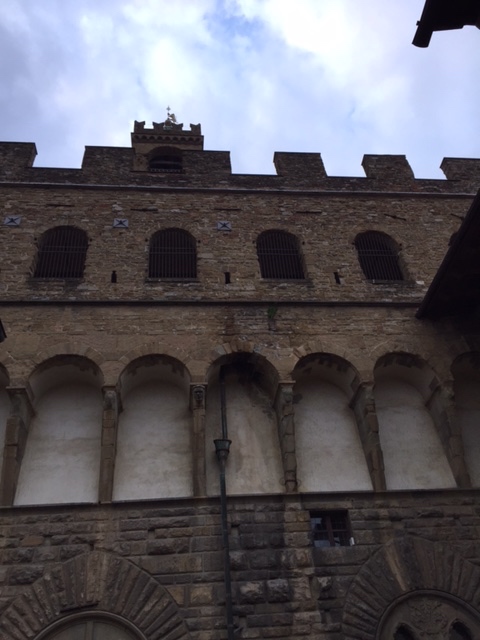
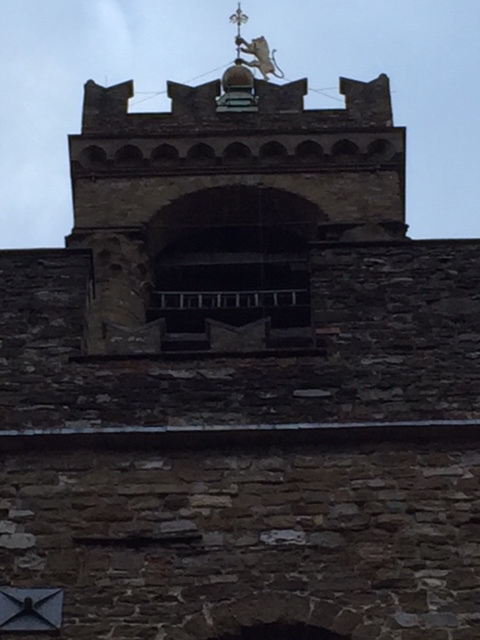
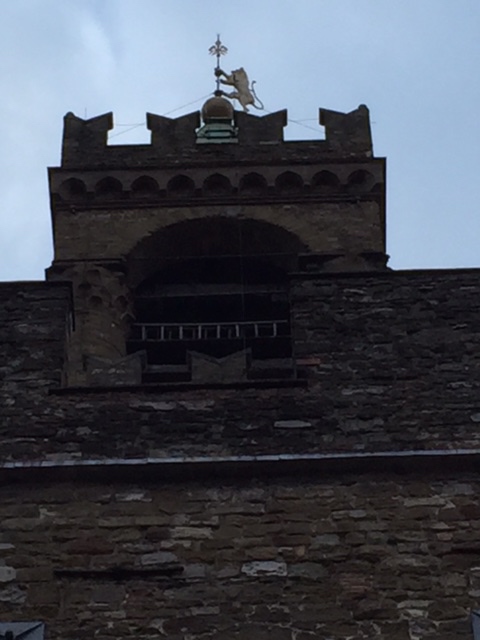


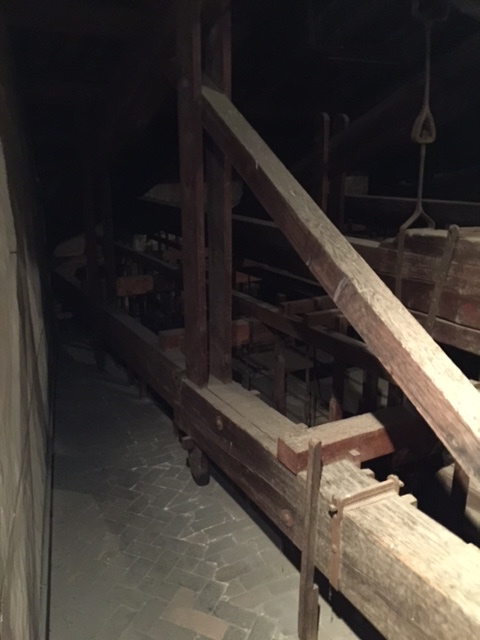
My tour group got to climb into the rafters over the main Salone and marveled not only at the engineering feat, but the fact that most of these timbers were placed in the 14th century. Oh, what this lumber has endured–manmade and natural.


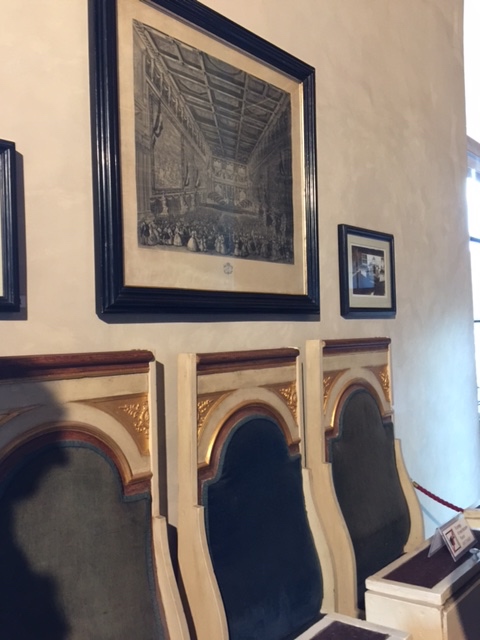
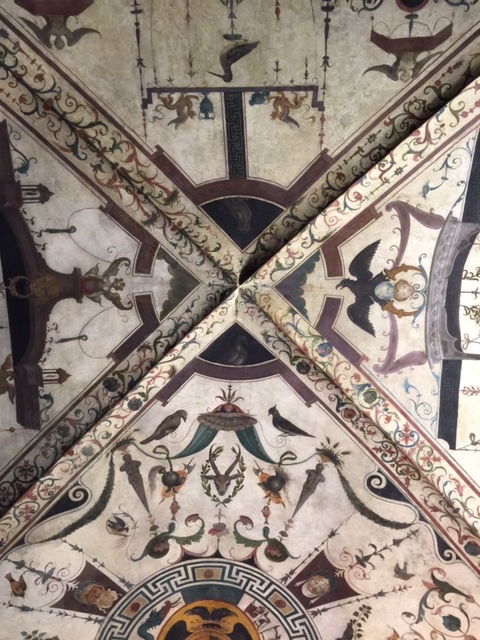
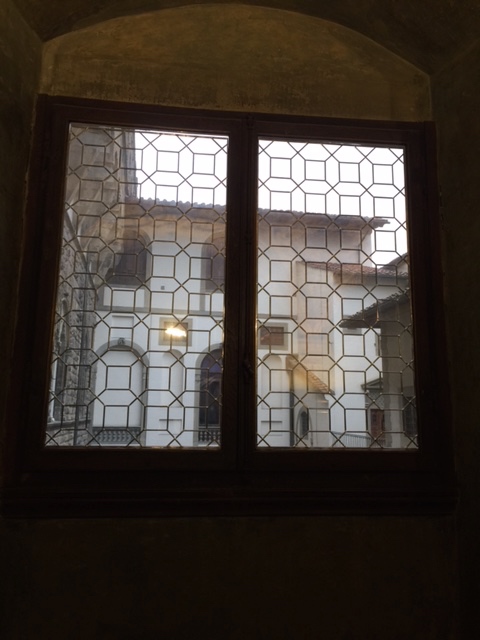
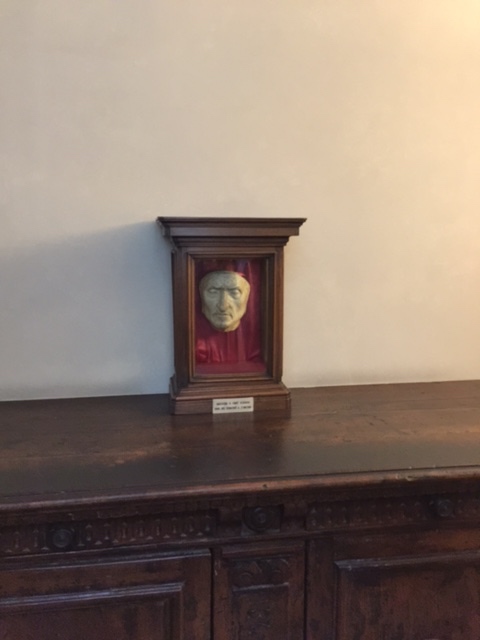
Dante’s death mask below.
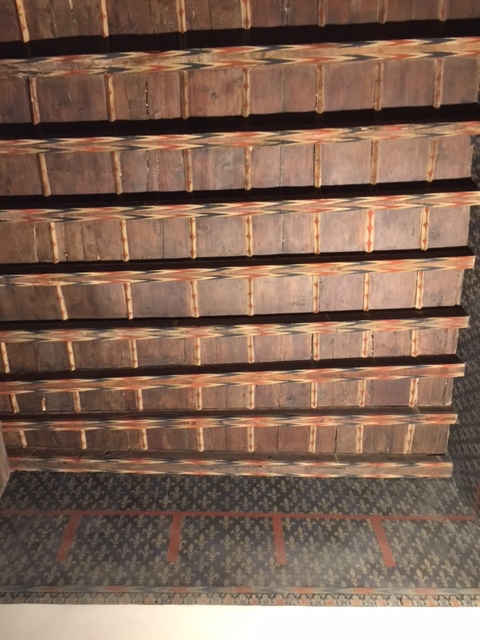
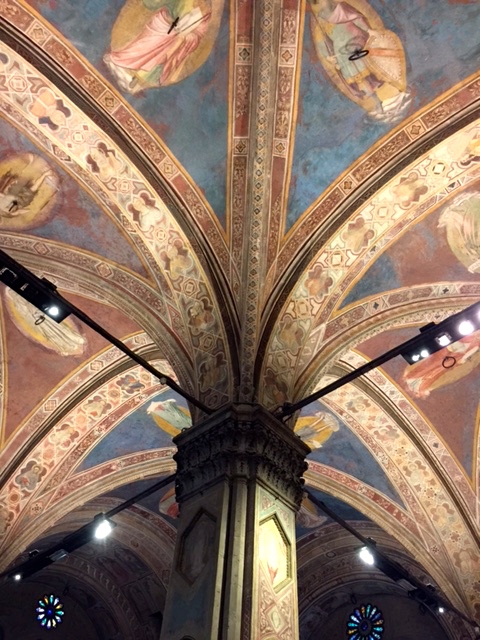
The painted ceiling of the room in which the Dante mask is stored.
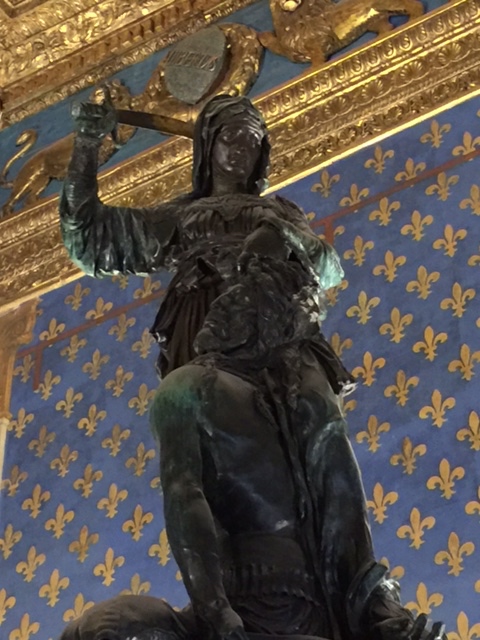

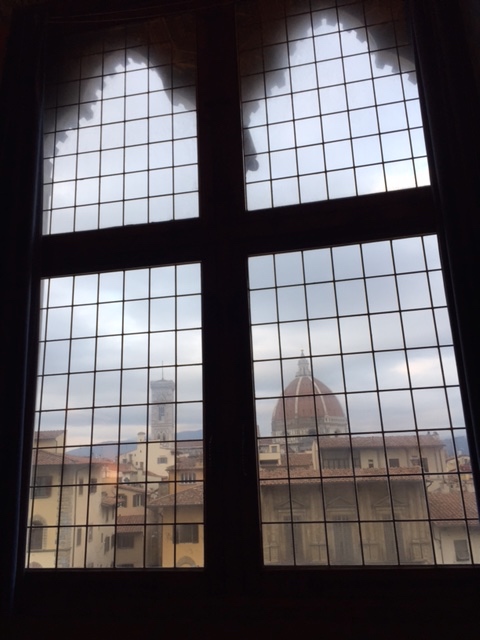
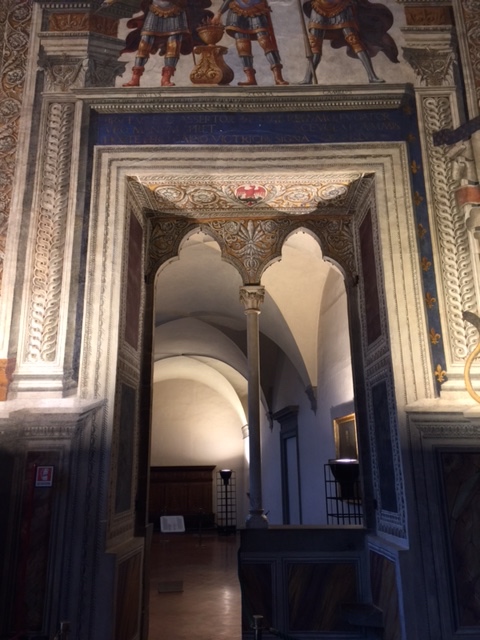


I posted an appetizer for this lovely, historic masterpiece in Florence yesterday. Here’s the real entry.

Inside the church is Andrea Orcagna’s bejeweled Gothic Tabernacle (1355-59) encasing a repainting by Bernardo Daddi’s of an older icon of the Madonna and Child.

The ceiling paintings of the central square interior on the ground floor. This special building in Florence was initially a palazzo, which became the city’s main granary, and later was transformed into this gorgeous church. It is about halfway between the Duomo and the Palazzo Vecchio, occupying a central place in the city and religious spheres of Florence.
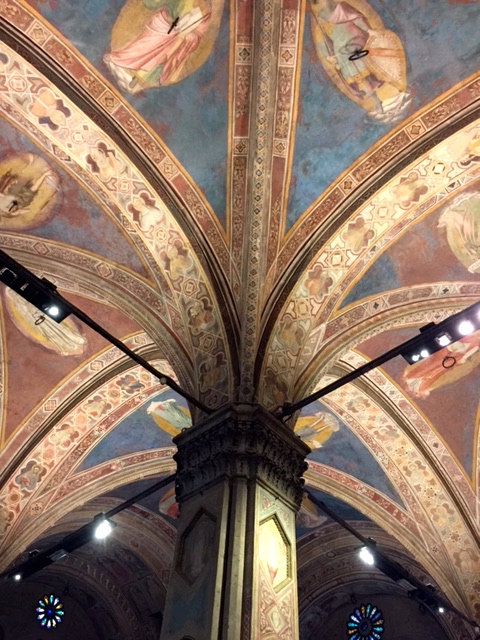

Stained glass doesn’t play a prominent role in Florentine medieval architecture, as it does, for example in France. Yet Orscanmichele has some gorgeous stained glass.
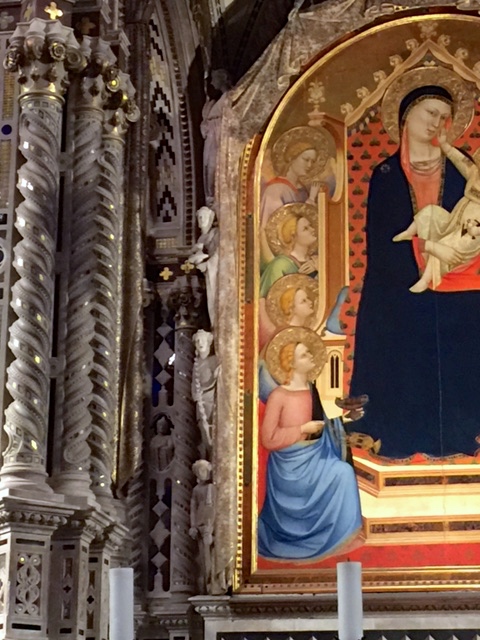
Orcagna’s frame surrounding the beautiful painting is breathtaking in its beauty.

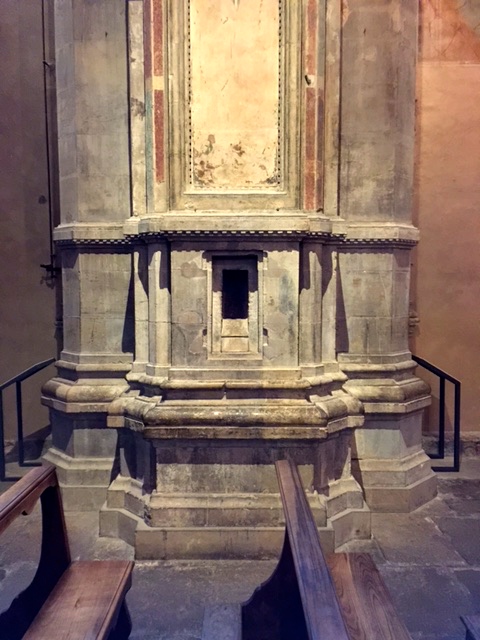
This opening shown below is place in the building from which the grain was distributed.

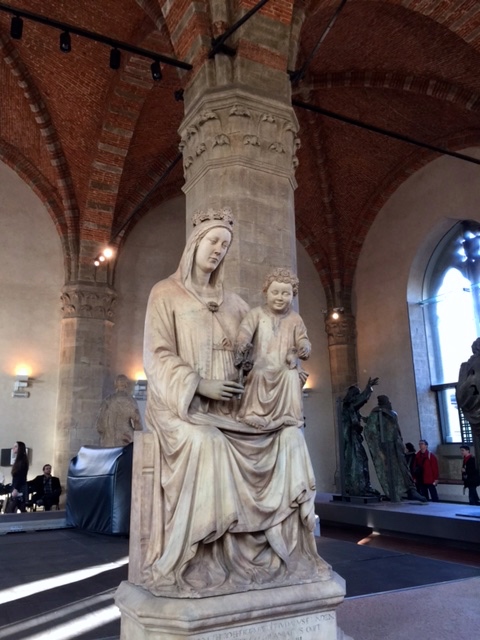
For art historians, Orsanmichele means sculpture. Some of the finest works of late Gothic through Renaissance works were created for this edifice, and remain within its walls.

Verrochio’s masterpiece, Christ with Doubting Thomas, can be appreciated up close, as can all of the sculptural works created for the building’s exterior niches.


The other works are equally accessible and lovely.
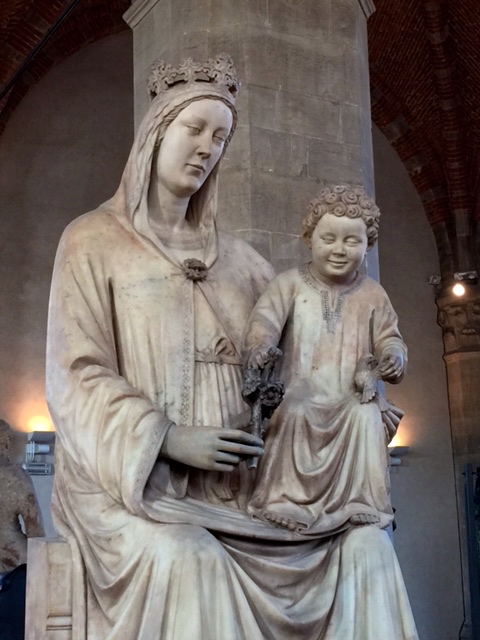
The hike to the 3rd floor is only for the fit. But, what a payoff! The vistas of surrounding Florence will take your breath away as well. Only in a good way.


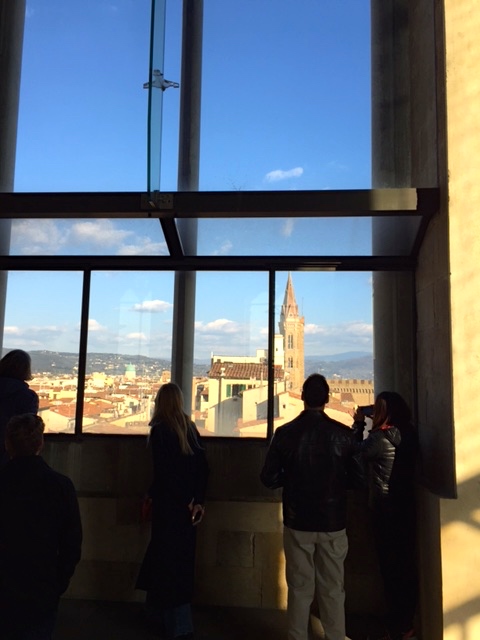
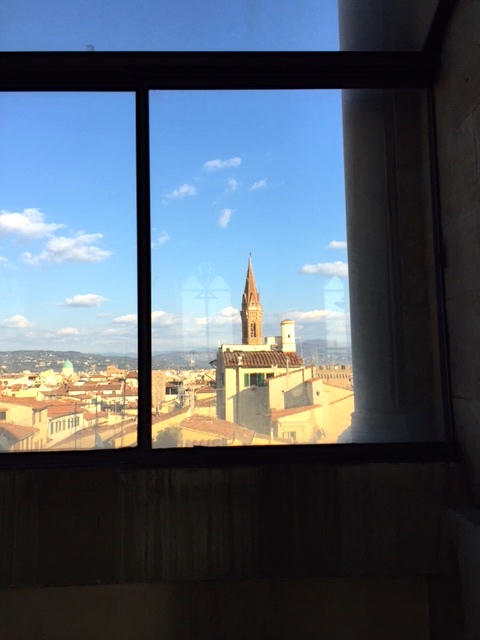


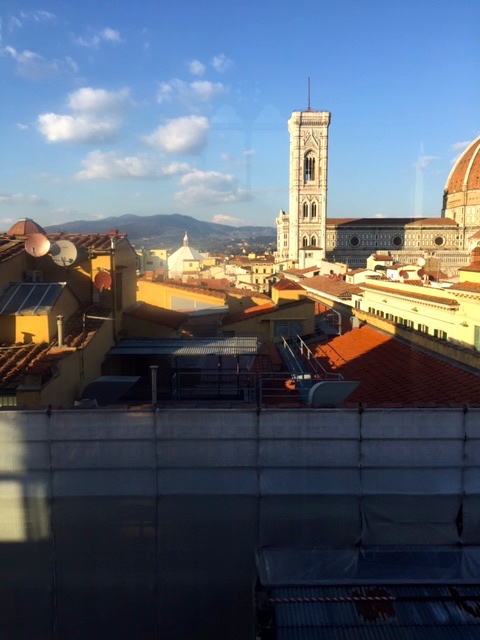
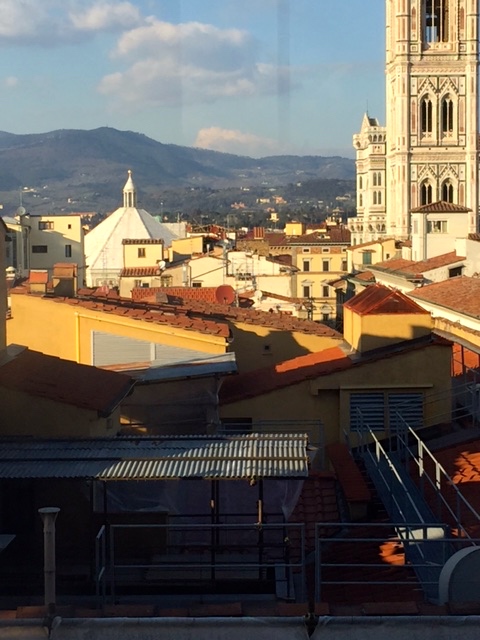
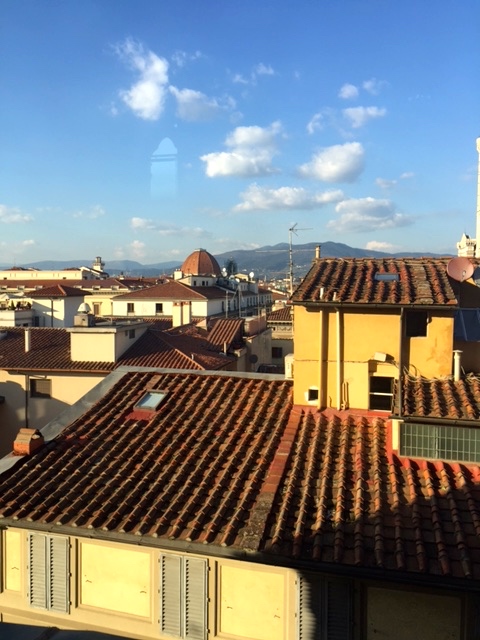

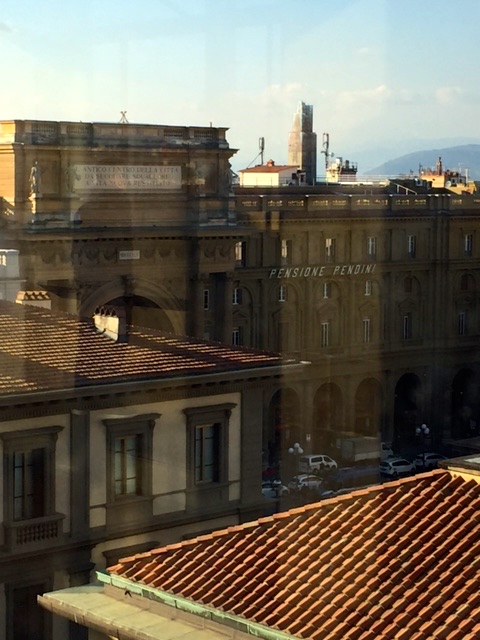
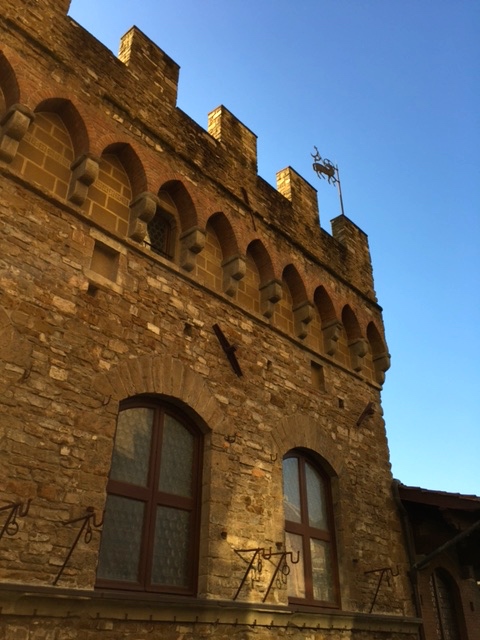


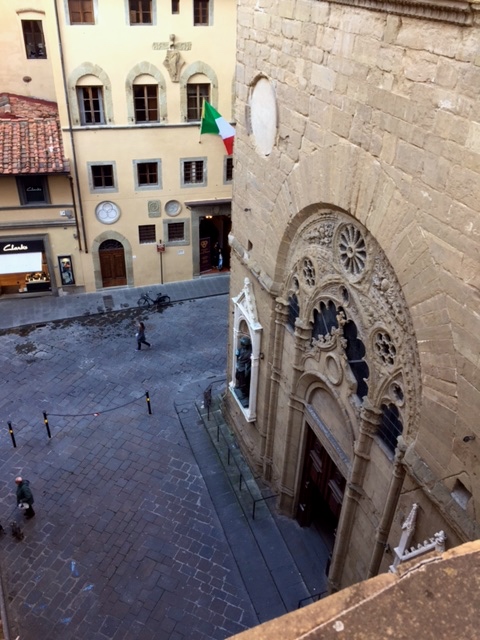
Find the days the church is open and by any means necessary--vai!
To my mind, Caffè Gilli has it down pat. Beautiful surroundings, delicious foods, fine baristas serving superb coffee. What more could you ask for?

The ceiling medallion speaks to the turn-of-the-century (20th, that is) era of its apparent redecoration.

The commemorative over-sized plate marks the Caffè’s 200 year anniversary in 1983.

And the pastries and confections speak for themselves!


The colorful glacée below are decorate with masks for Carnevale.

These glacées tell us springtime is either here, or just around the corner. It felt like spring in Florence yesterday when I took these photos.


And the fine, professional personnel always put on a nice show of bar-keeping.

It’s pretty close to heaven on earth to me.
When I was young, my mother would pick me up from school in the afternoons and stop at the little market in our town on our way home. I was usually famished, and she would typically let me choose a candy bar or some other snack. I almost always had a Snickers bar or a Hersey’s milk chocolate with almonds. If the Hersey’s bar didn’t have almonds, I wouldn’t eat it. It was too sweet for me if it didn’t have the flavor and crunch of almond to break it up.

Now that I am pretty much a grown up, I stop at my own choice of businesses, and the stores that I choose have an array of indulgences I could not have imagined as a child.

There’s tiramisu for when I really need to be picked up.

There are all manner of chocolate goodies. I alway like to look at the ones with the candied violets on top. Horticulture + chocolate = heaven.

An ode to the nuts in the Hersey’s bars I used to eat.


Okay, now we’re talking. A merenda made with fresh berries! Woo hoo!

A couple of amaretti with a caffè macchiato. Perfection.

Meringhe, or in inglese, meringues.


A pretty cake with the Florentine lily on top.


After school or after anything!
And I said to myself, what a wonderful world!
 get back, lauretta!
You must be logged in to post a comment.