The bells of San Lorenzo…from my new home:
Florence (Firenze)
Salumeria.
Otherwise known as charcuterie.
In any language, it is delicious. I am partial to the Italian, as always.


My companion had spinach gunned, which she said was excellent.

Buon appetito!
Enter the past: the oldest church in Florence: Santi Apostoli
I recently had the good fortune to find this old church in Florence (among the oldest) Santi Apostoli, open. Here are my photos of the inside and outside of this lovely, antique space.
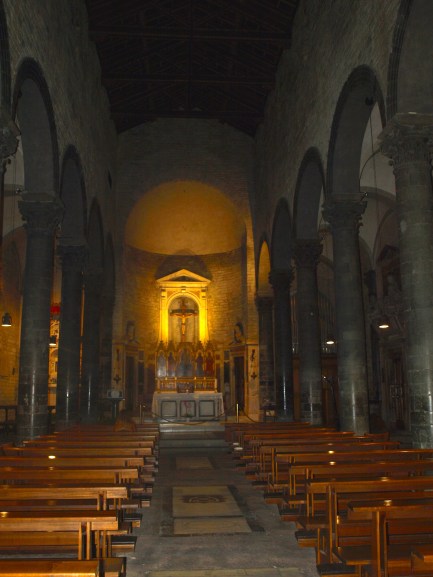
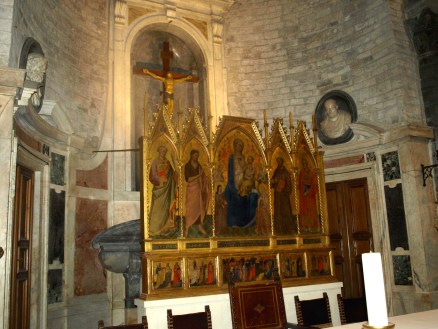
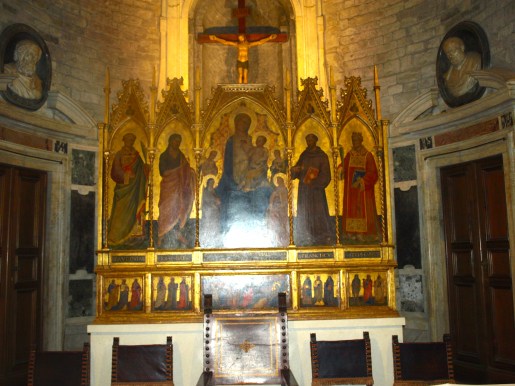
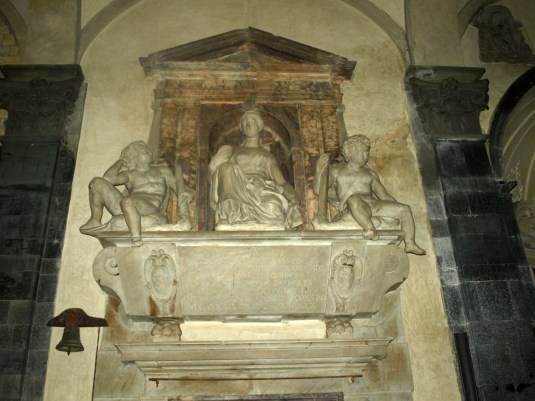
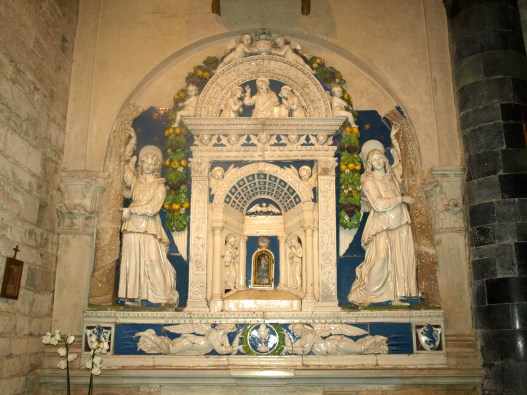
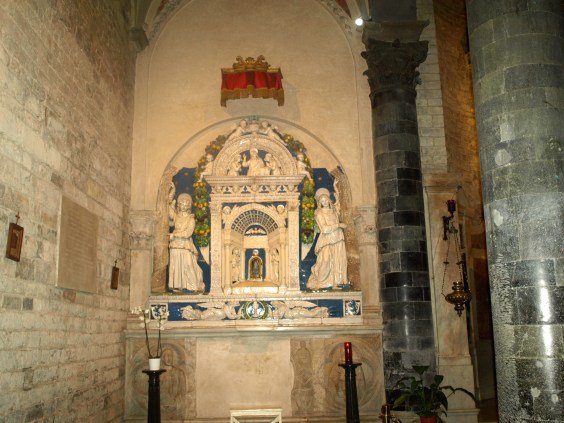
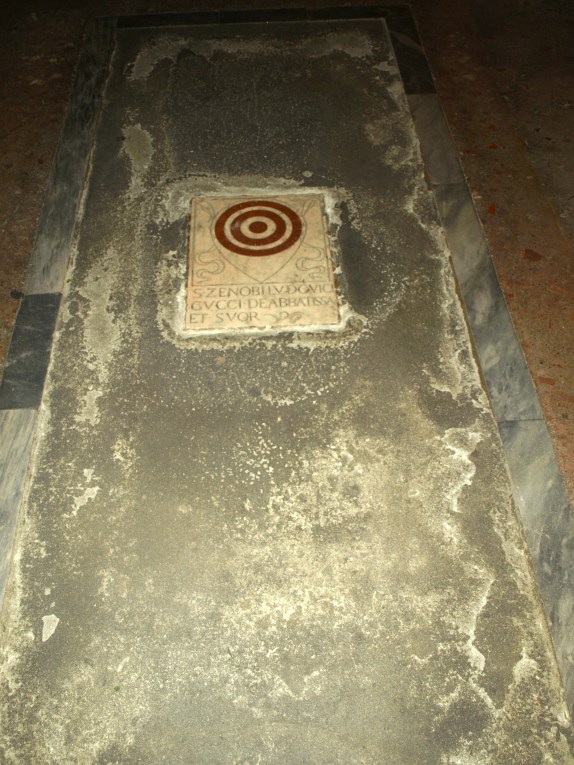
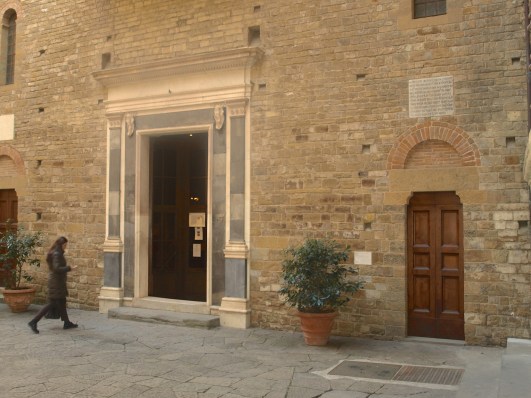


Santi Apostoli sits on the Piazza del Limbo, which as the sign below says, was “Gia Piazza di Apostoli” or formerly the Piazza di Apostoli.

And in this piazza, as in so many places throughout Florence, there is a sign showing how high the water reached during the flood of November 1966. With the water at this height, most of Santi Apostoli would have been under water.

A primer: Where did the Italian language come from, anyway?
The history of the Italian language is naturally incredibly complex.

However, the modern standard of the language was largely shaped by relatively recent events. The earliest surviving texts, dating between 960 and 963, and which can definitely be called Italian, as opposed to its predecessor Vulgar Latin, are legal formulae from the region of Benevento, about 50 km northeast of Naples.

Even more importantly, during the 14th century the Tuscan dialect began to predominate. This was due to at least 2 major factors: 1: the central position of Tuscany in Italy; and 2: the aggressive commerce of Florence, Tuscany’s most important city.
In fact, Florentine culture produced the three literary artists who best summarized Italian thought and feeling of the late Middle Ages and early Renaissance: Petrarca, Boccaccio and, especially, Dante Alighieri. It was Dante who mixed southern Italian languages, especially Sicilian, with his native Tuscan, which was supposedly derived from Etruscan and Oscan, in his epic poem known as the Commedia, to which Giovanni Boccaccio later affixed the adjective Divina.

During the 15th and the 16th centuries, grammarians attempted to codify the pronunciation, syntax, and vocabulary of 14th-century Tuscan. Eventually this classicism, which might have made Italian just another dead language, was widened to include the organic changes inevitable in a living tongue.
In the dictionaries and publications of the Accademia della Crusca, founded in 1583, compromises between classical purism and living Tuscan usage were successfully integrated.

In 1525 the Venetian, Pietro Bembo (1470-1547), set out his proposals (Prose della volgar lingua) for a standardized language and style: Petrarca and Boccaccio were his models and thus became the modern classics.

In fact, the 1st edition of an official Italian vocabulary, published in 1612 by the Accademia della Crusca, was based on the Florentine works: Divina Commedia by Dante, Decameron by Bocaccio and Canzionere by Petrarca. Today, Toscano is still considered the “cleanest” of all Italian dialects, as it is the most similar to the original or classical Latin.

However, it was not until the 19th century that the language spoken by educated Tuscans became the language of a new nation. The unification of Italy in 1861 had a profound impact not only on the political scene but also socially, economically, and culturally. With mandatory schooling, the literacy rate increased, and many speakers abandoned their native dialect in favor of the national language.

Long live Italian!
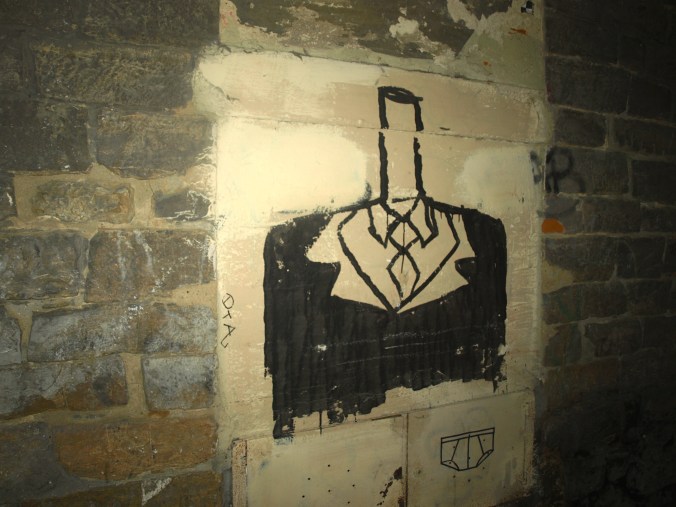
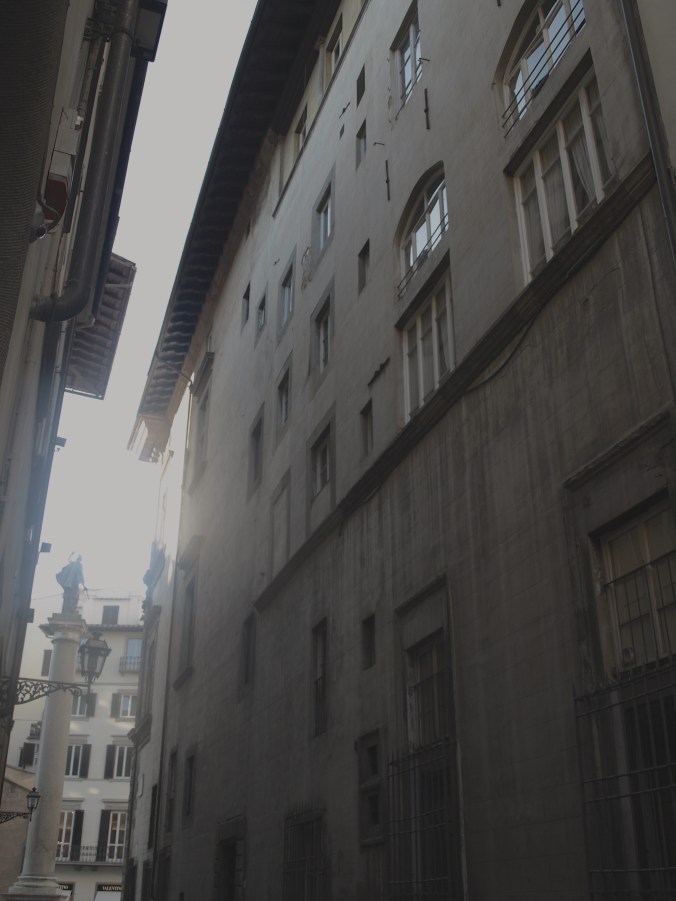
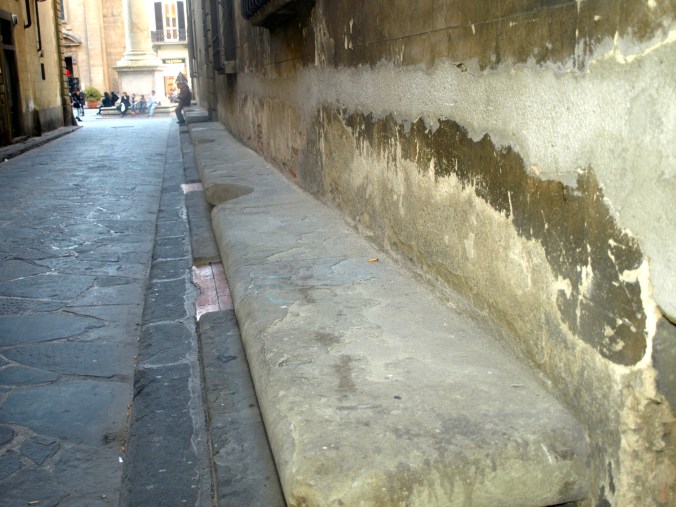
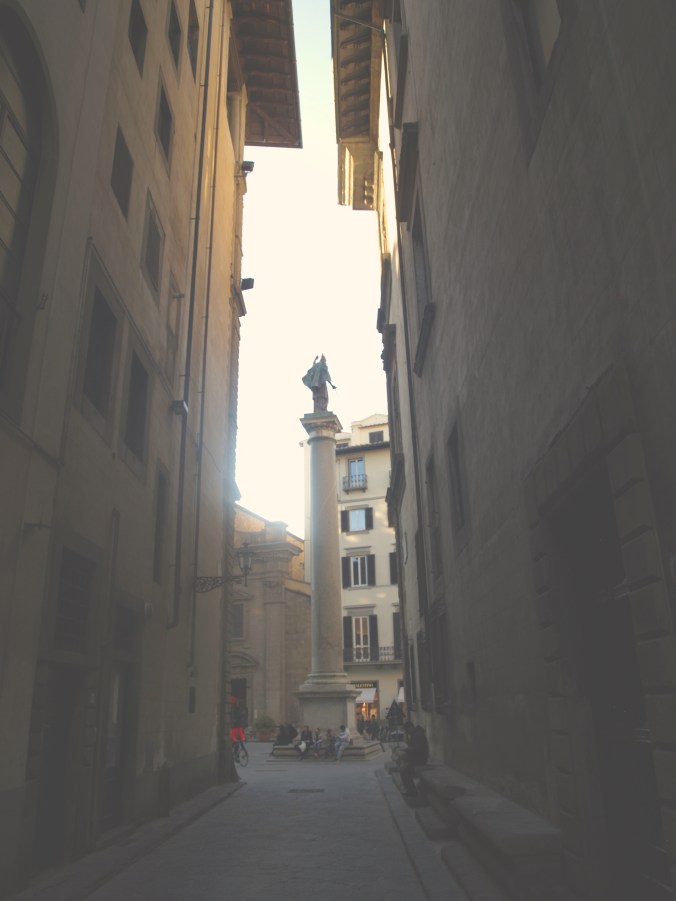
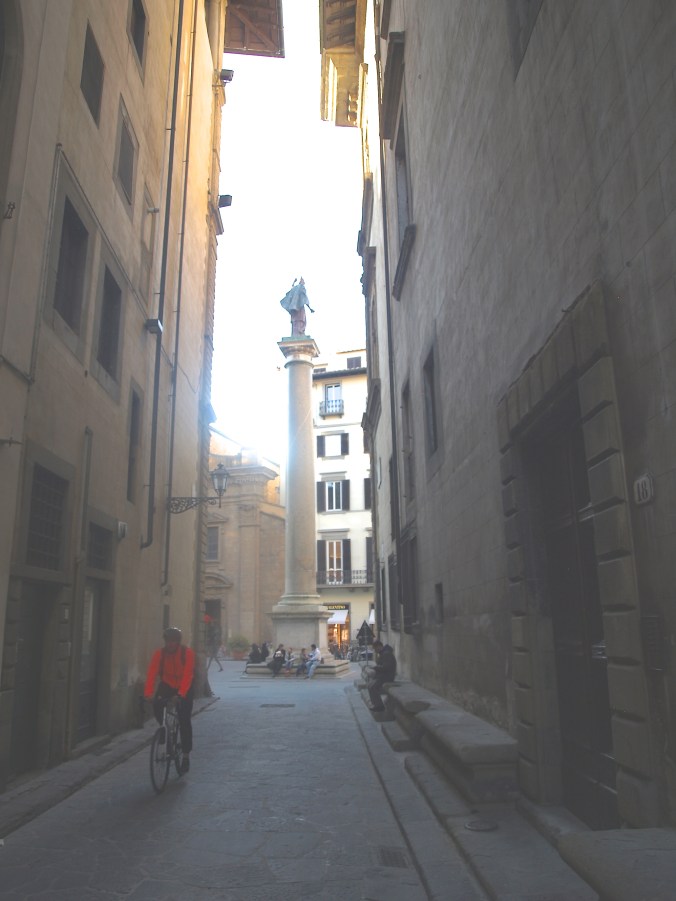
A pictorial walk down Via delle Terme, Florence
A few days back I posted about the Florentine street, the Via delle Terme, that evokes the city’s Roman foundation.
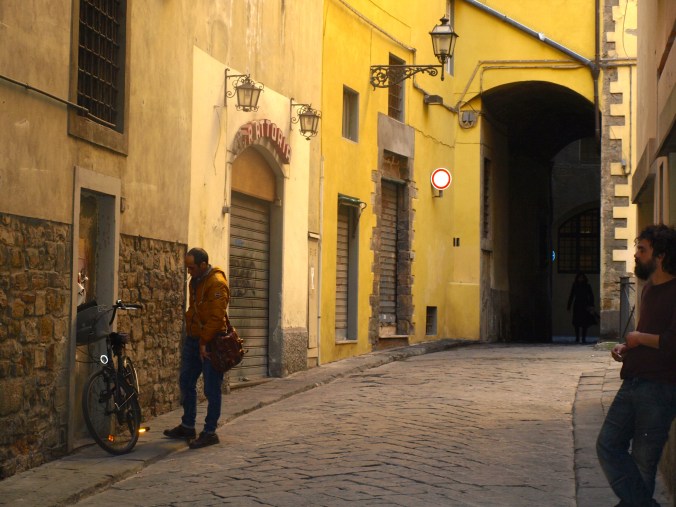
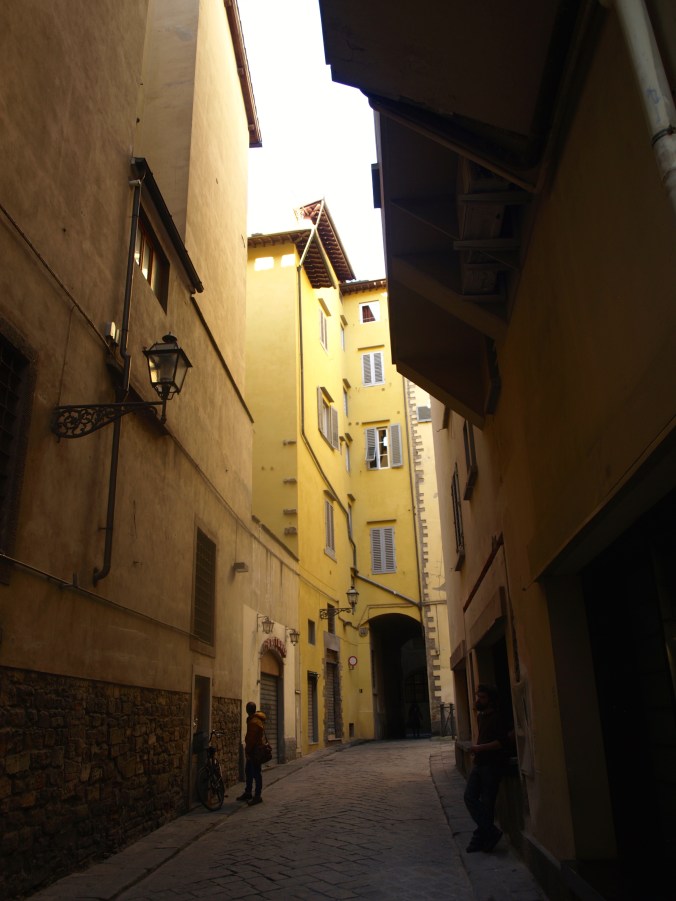
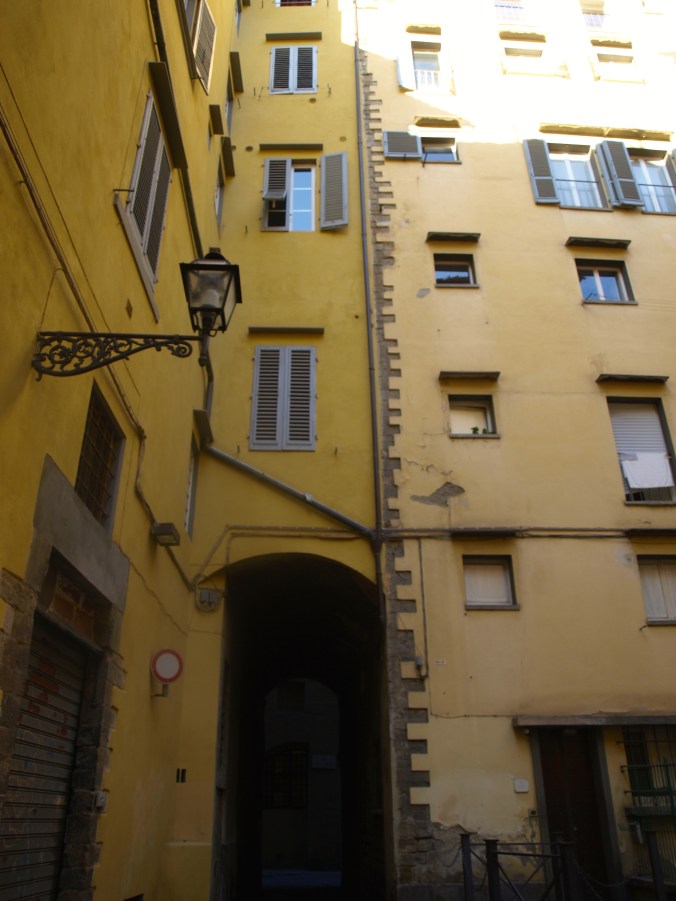
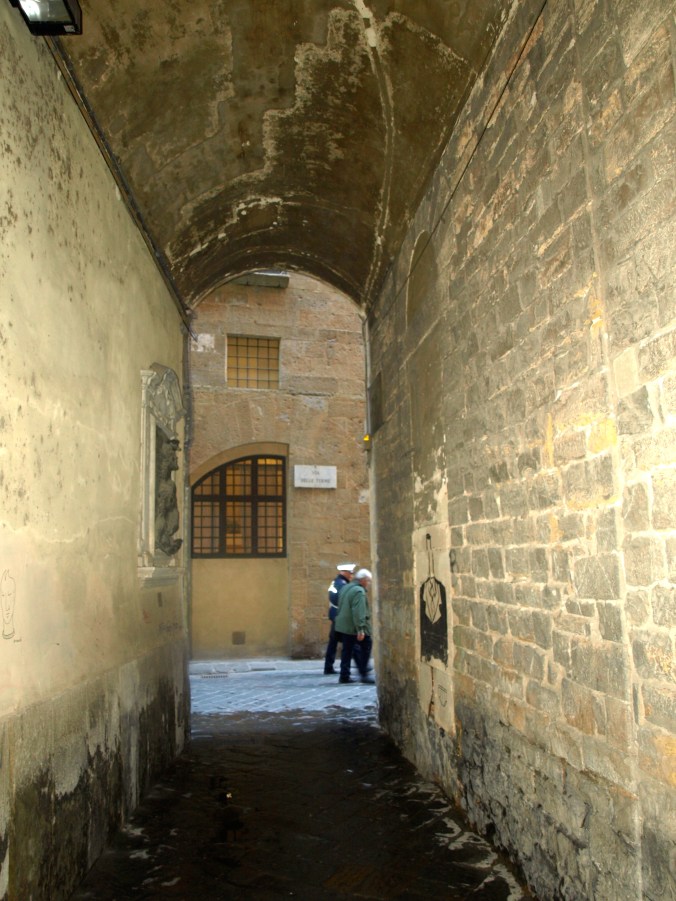
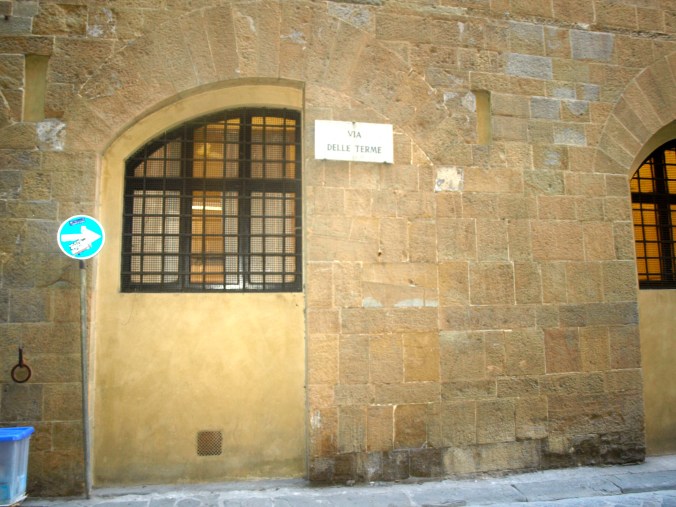
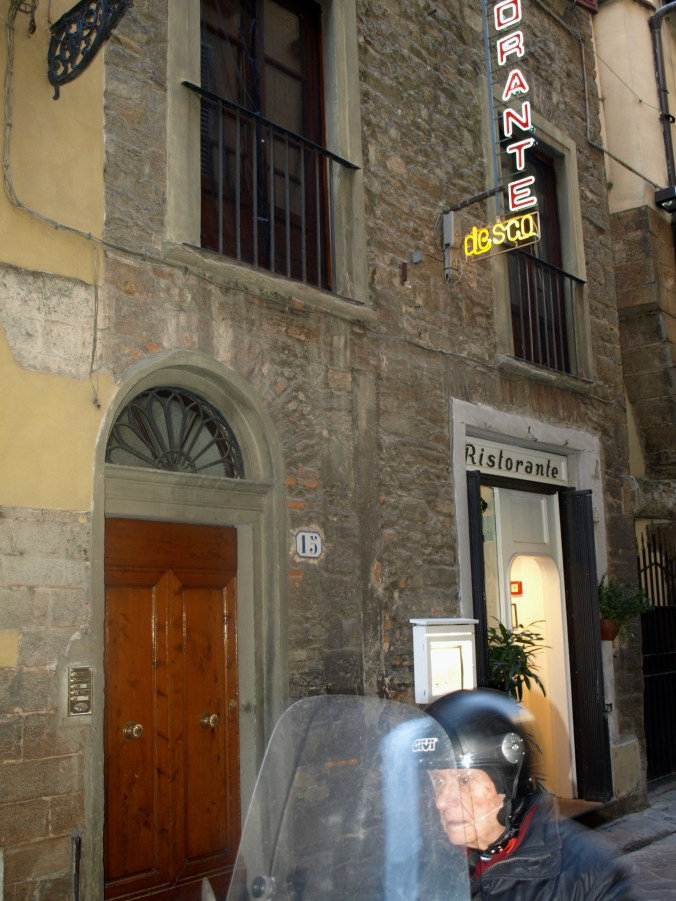
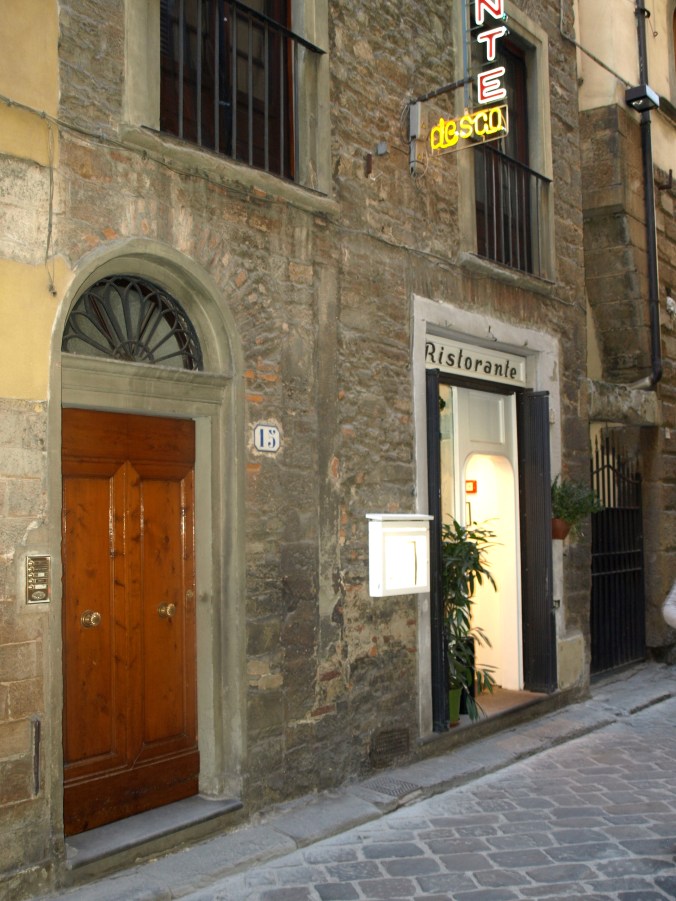
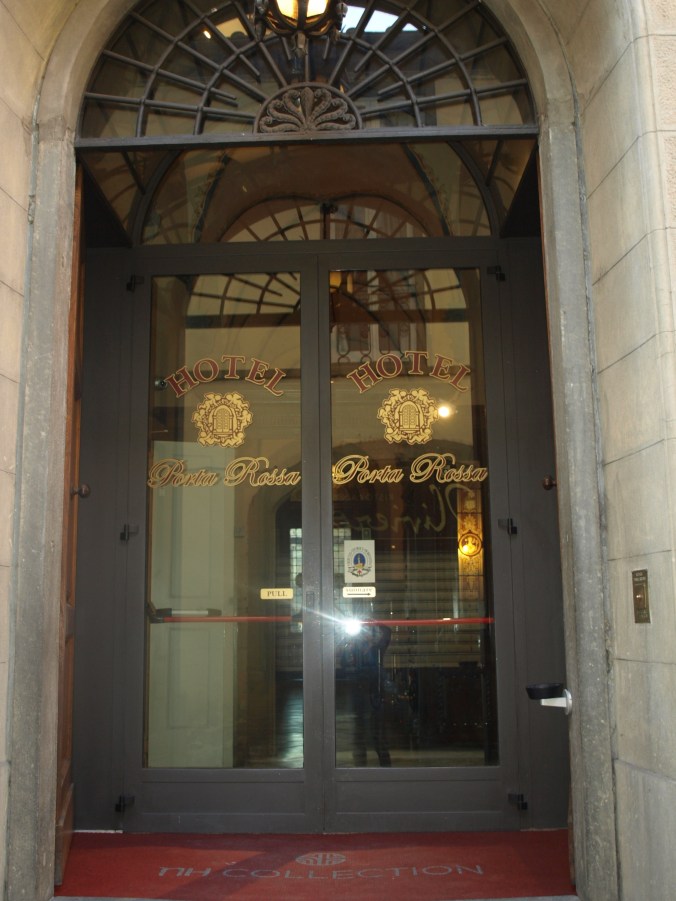
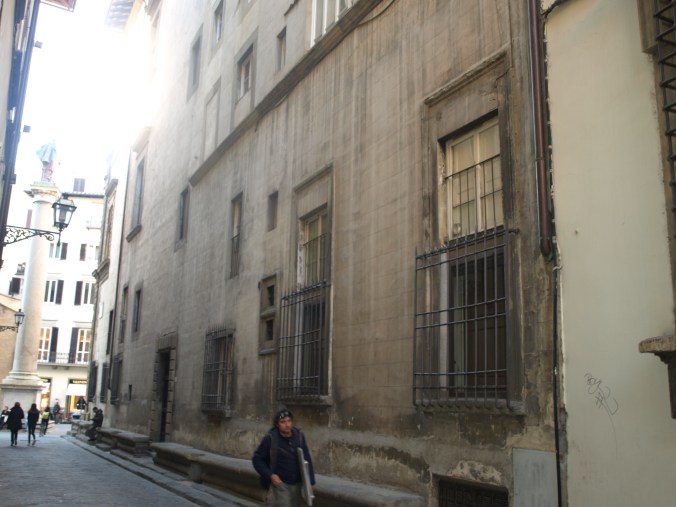
Today I took a long walk down this street from east to west, starting at Por Santa Maria to Piazza Santa Trinita. Here are the pictures I took on this beautiful, sunny, spring day.
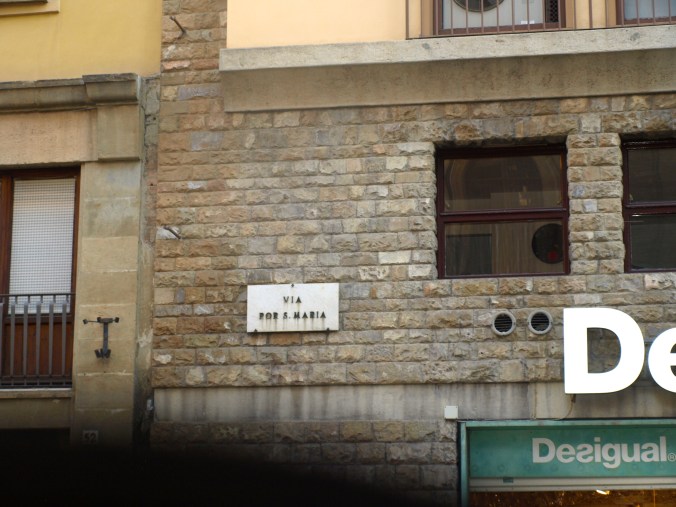
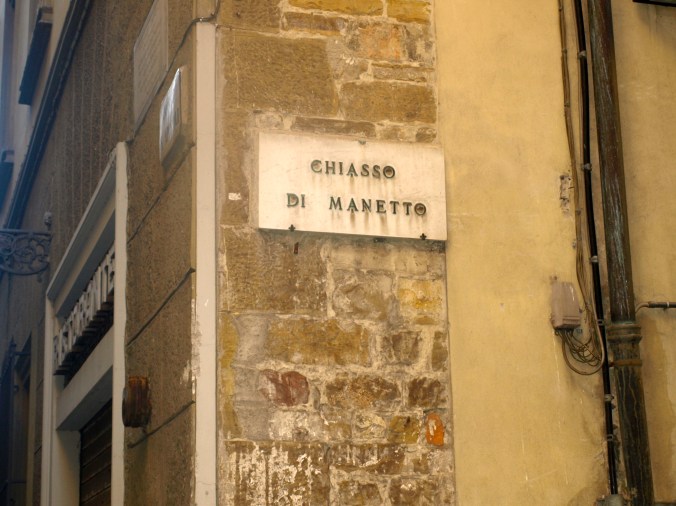
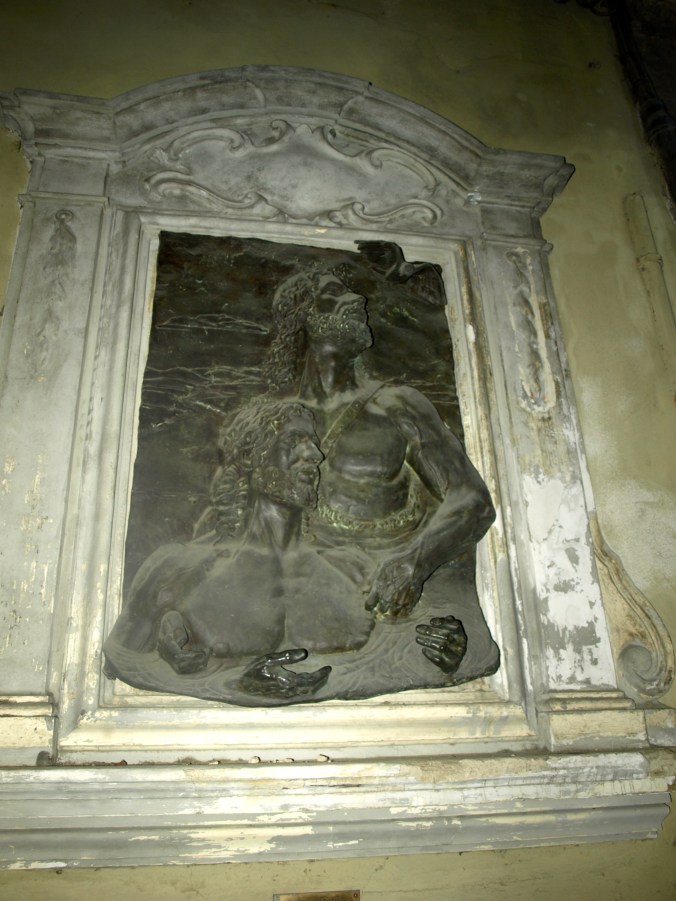
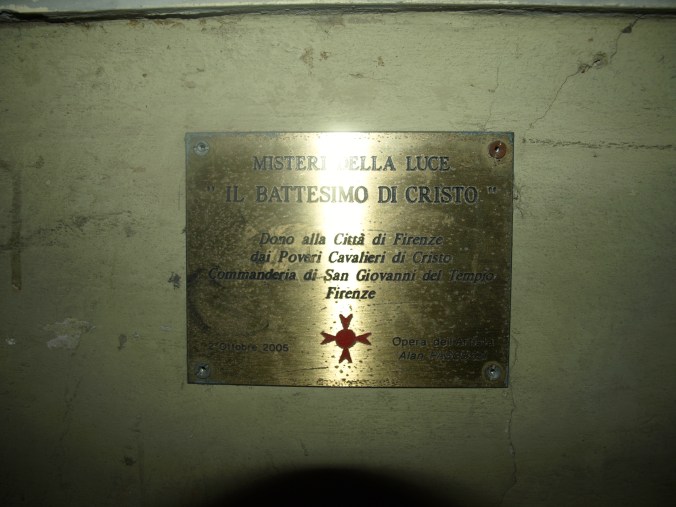
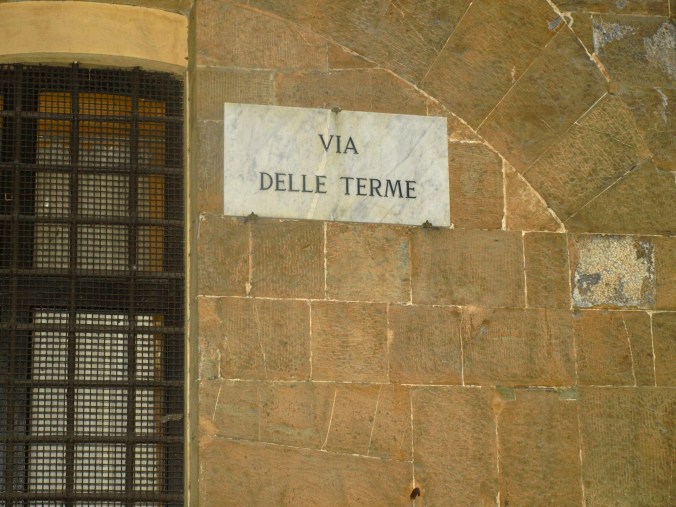
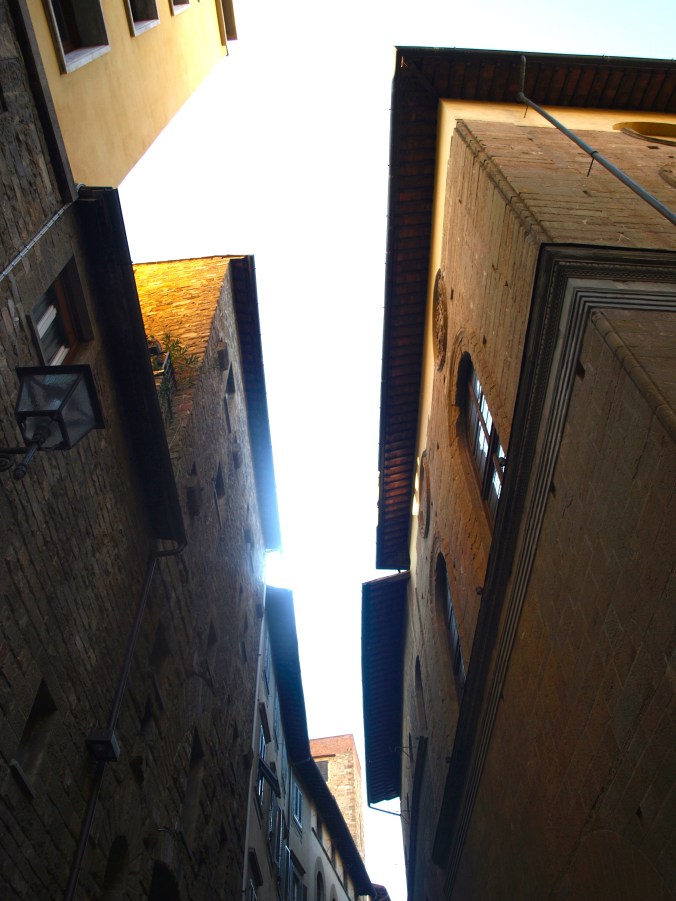
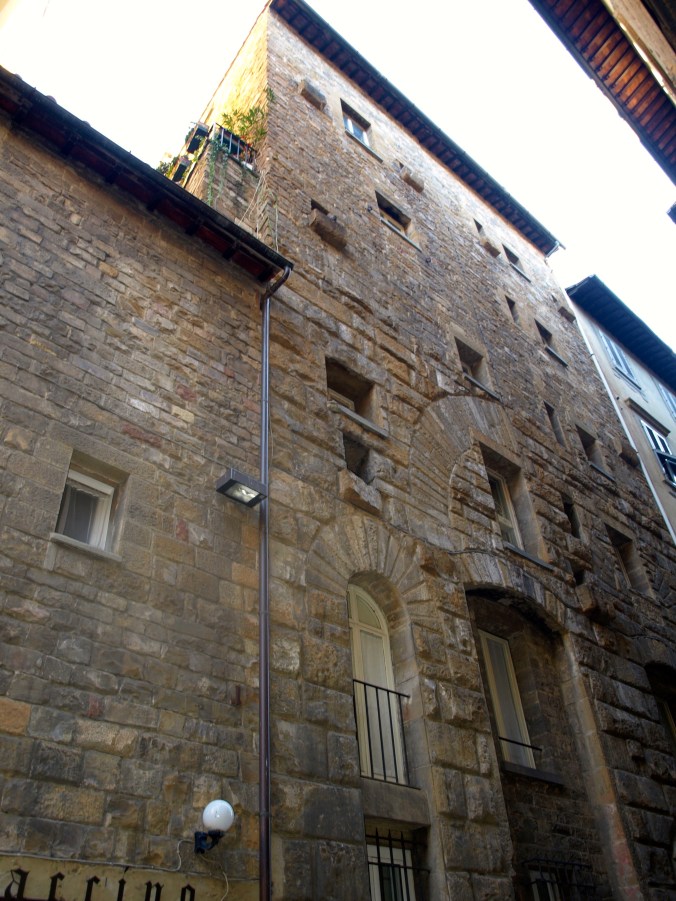
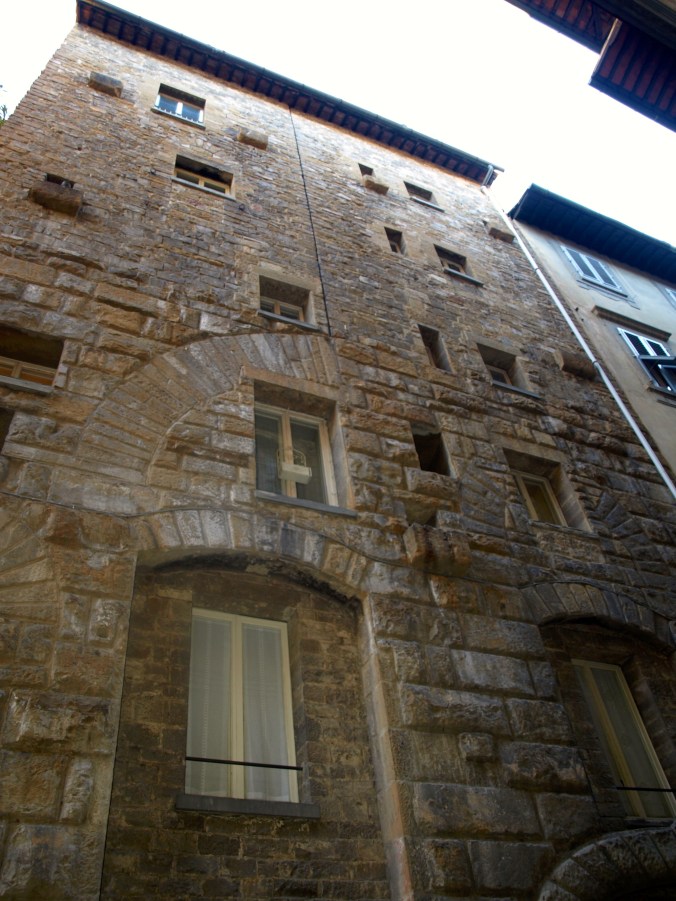
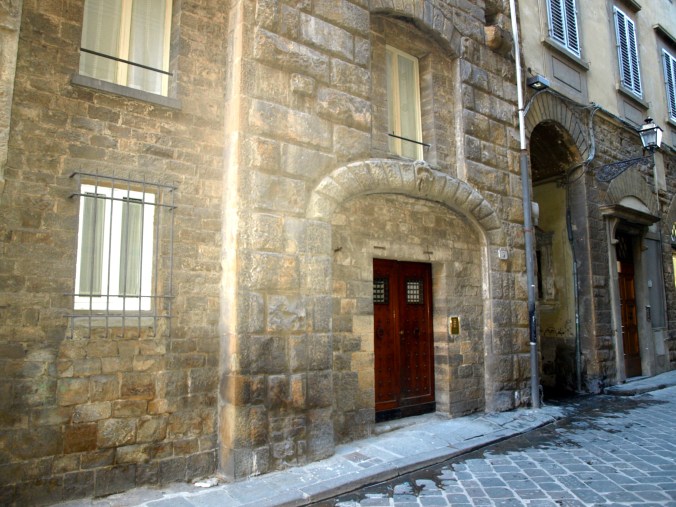
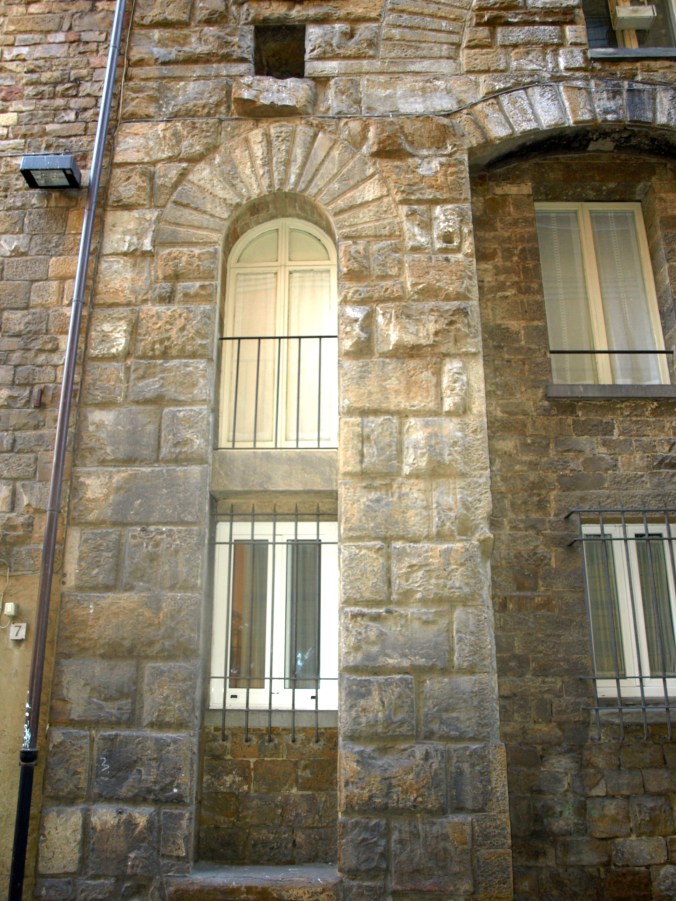
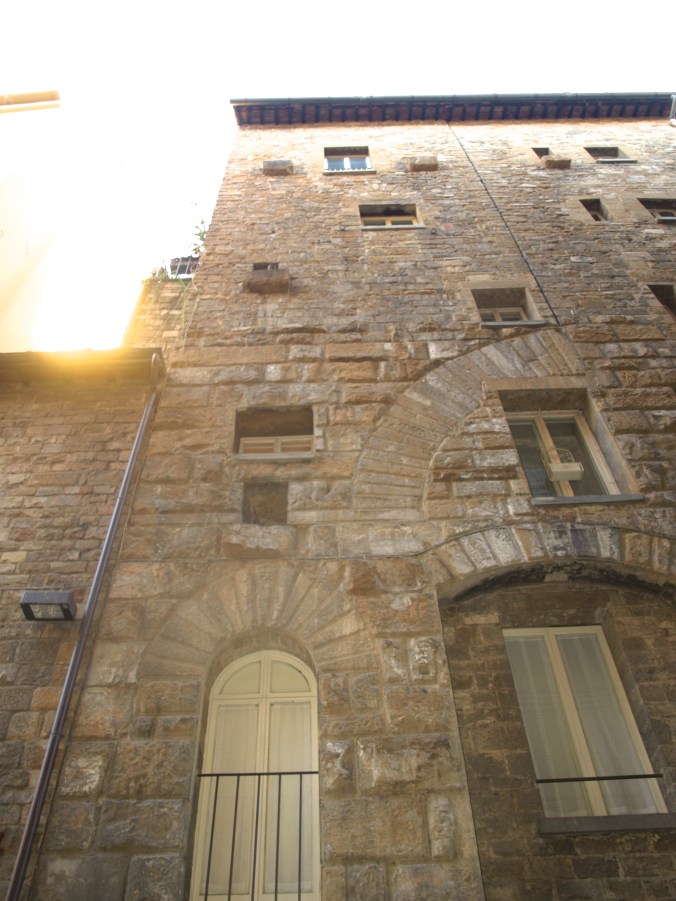
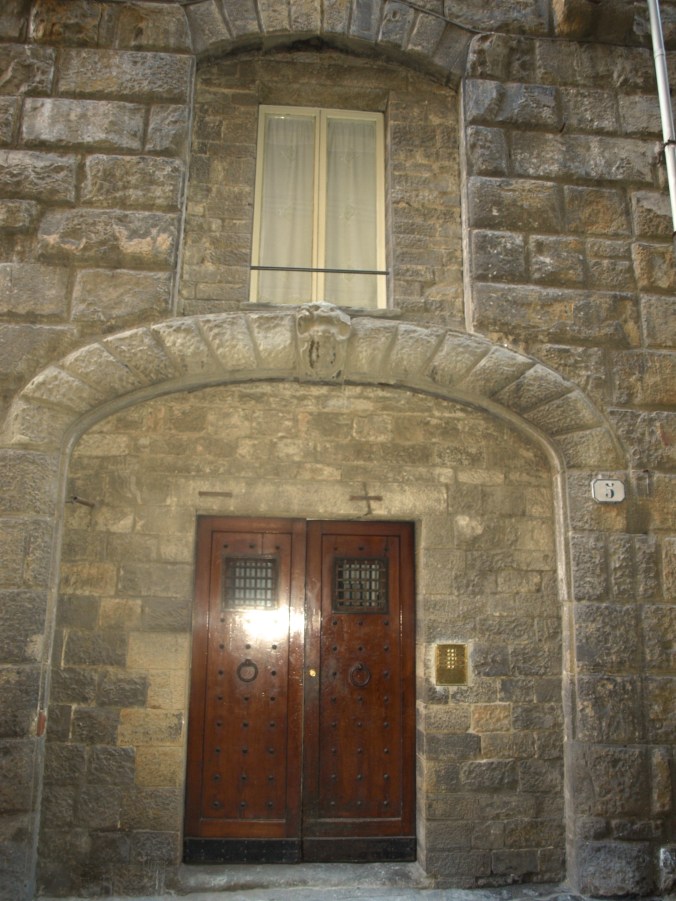
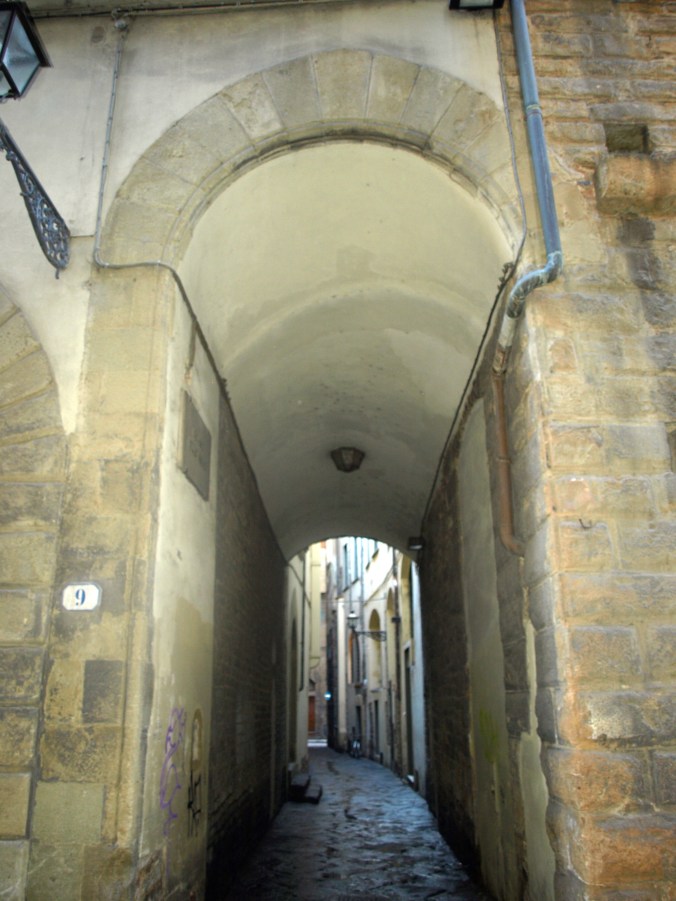
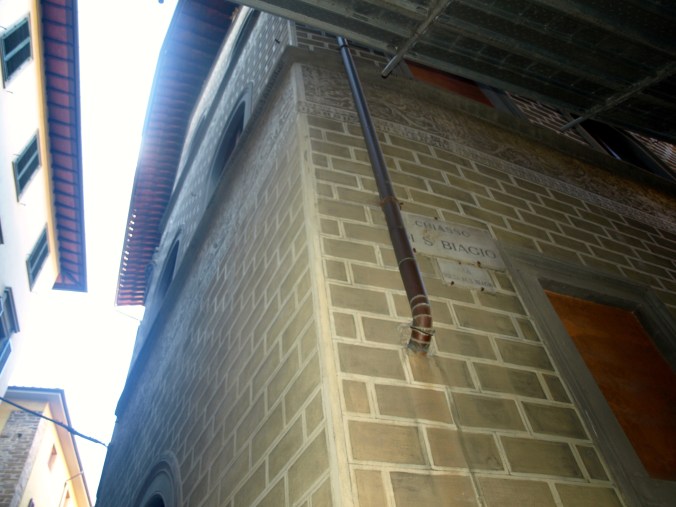
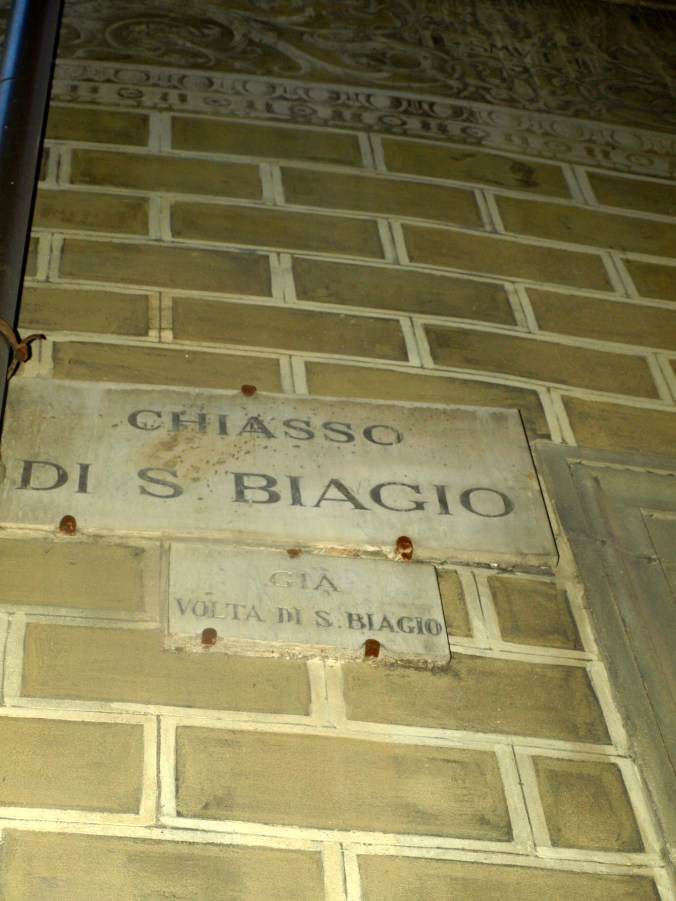
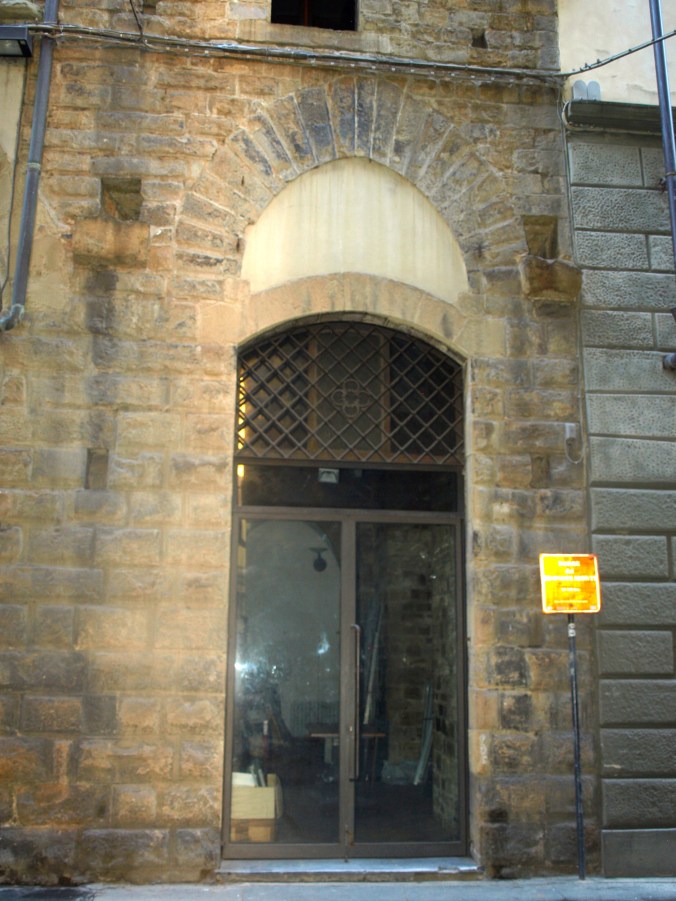
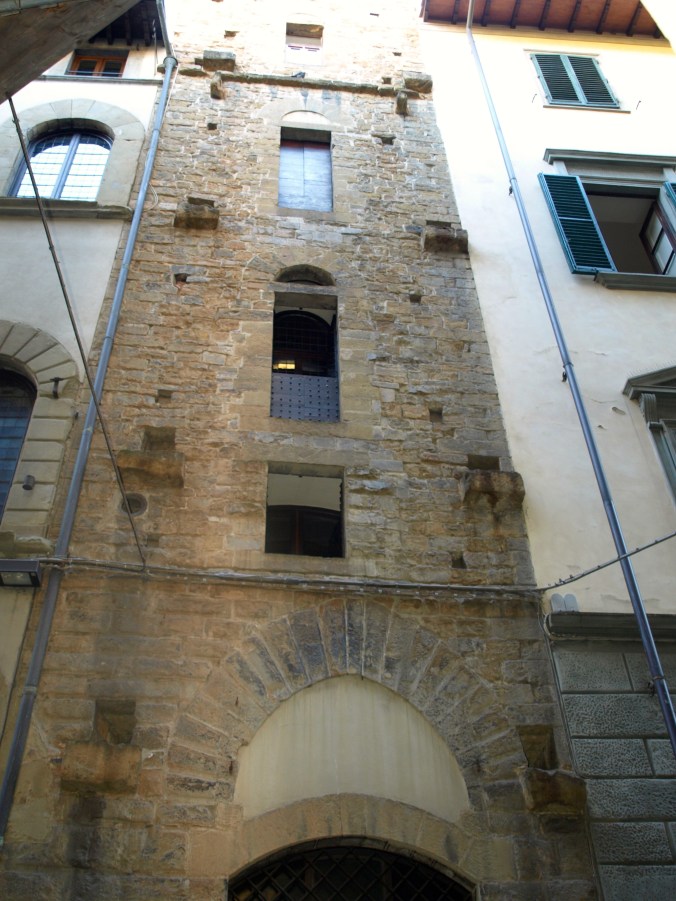
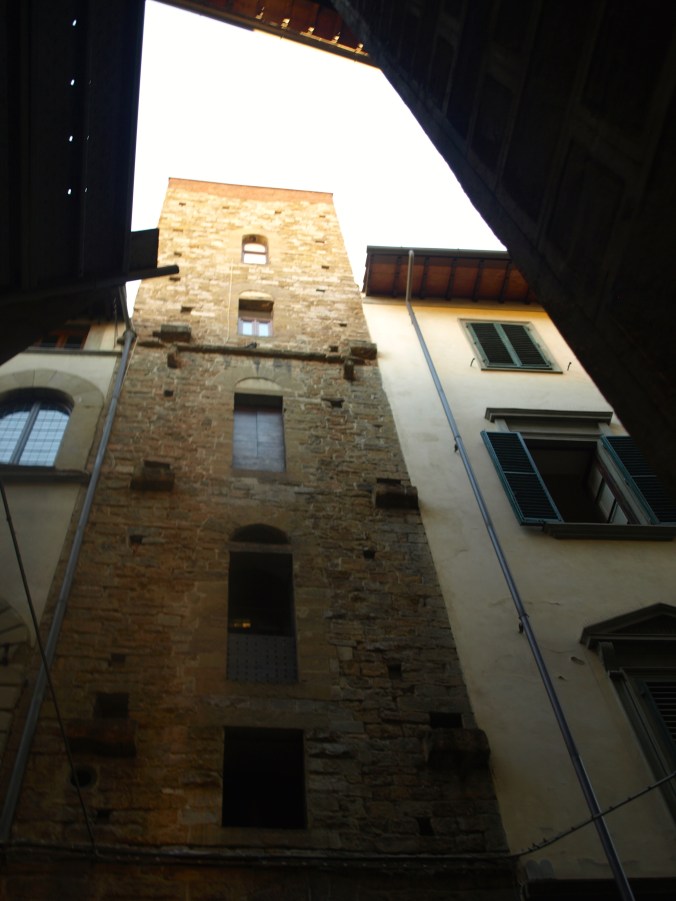
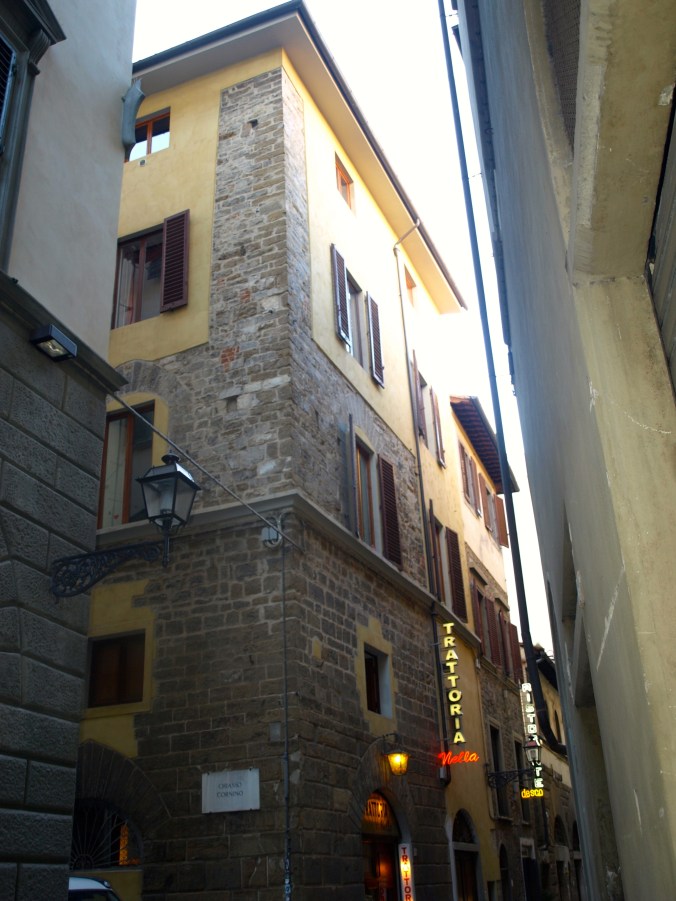
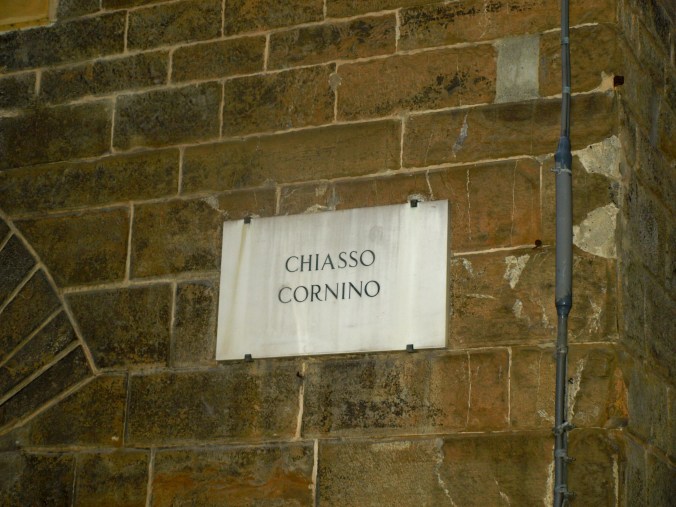
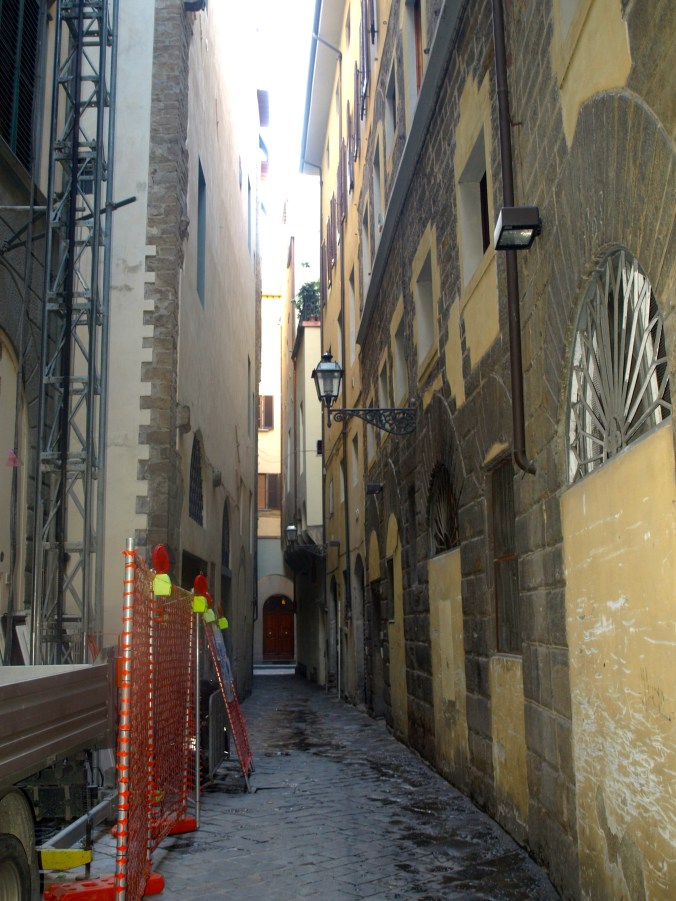
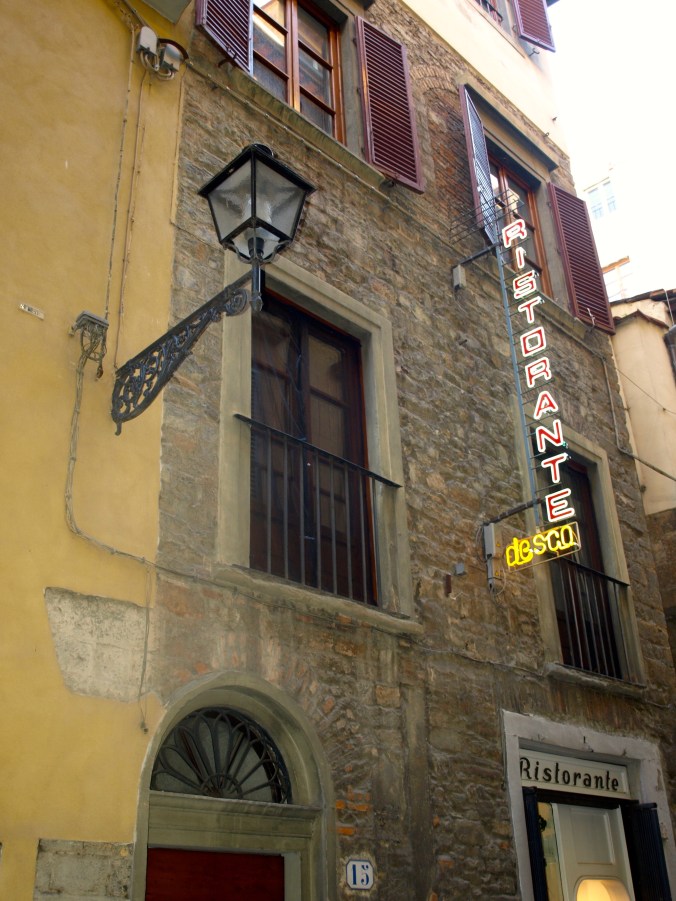
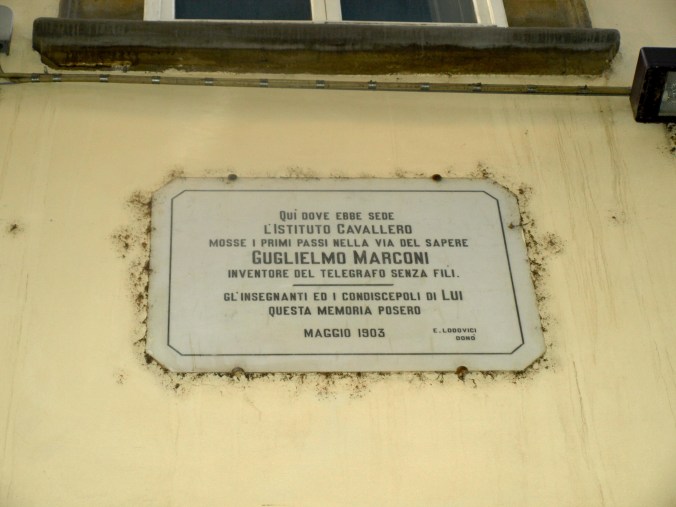
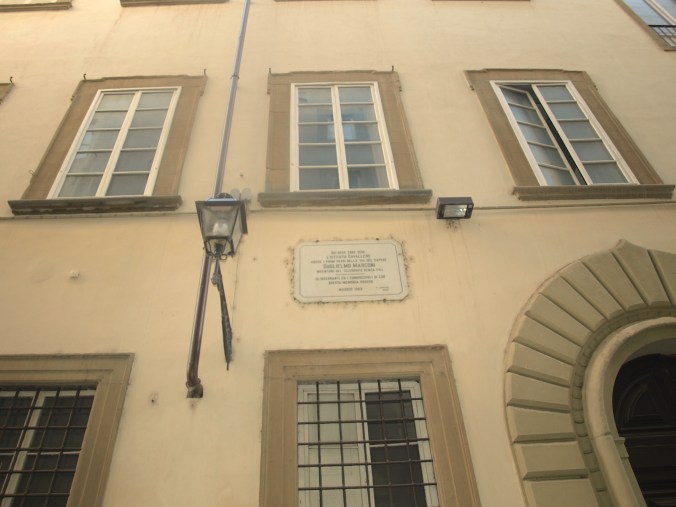
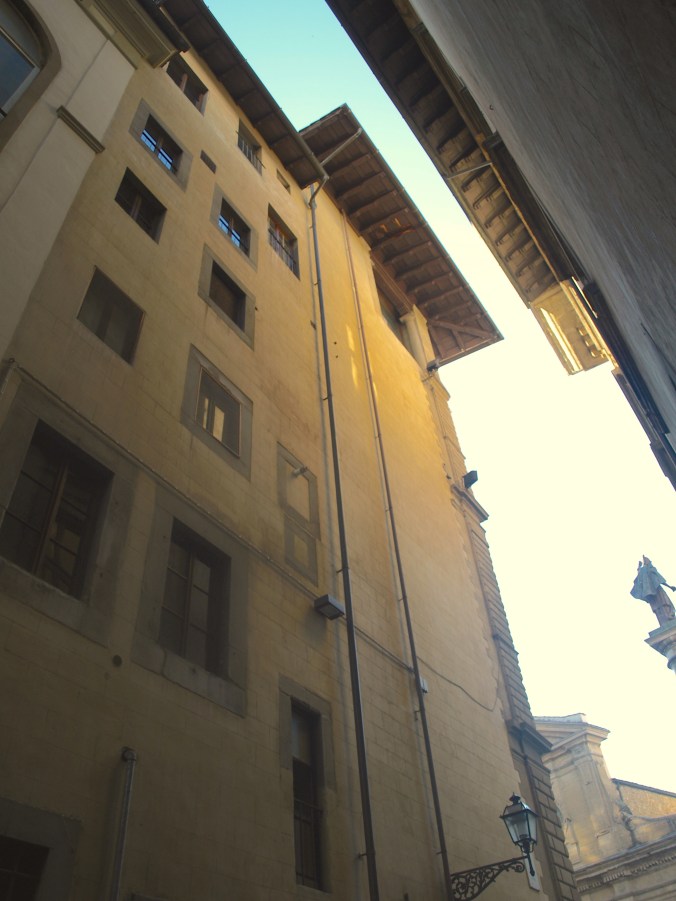
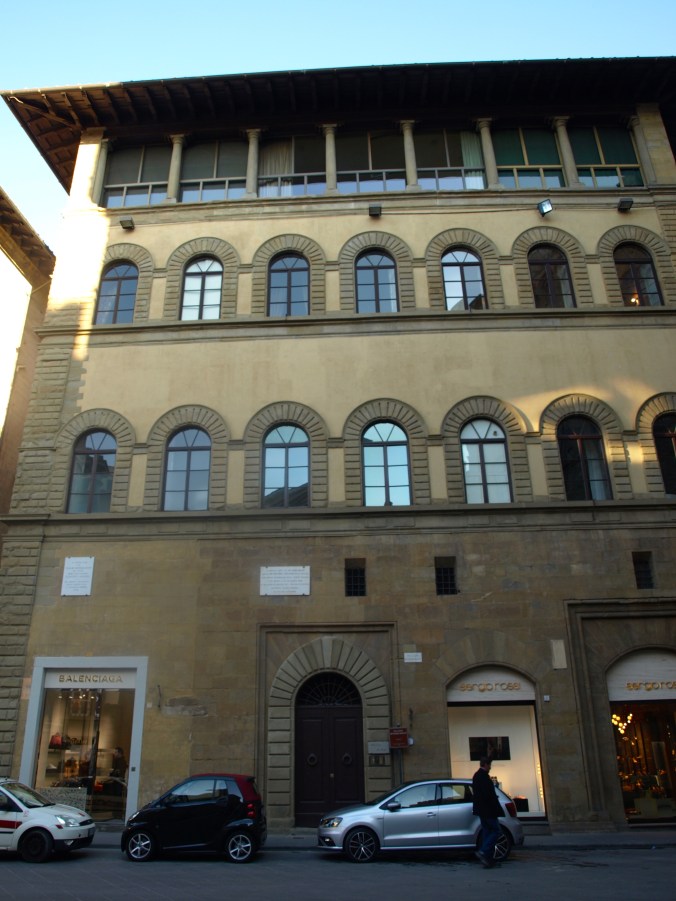
I started my walk on this corner and shot pictures of the fabric of the street as I walked to its western end. I photographed signs of each of the little alleys that lead off the Via delle Terme. There is a lot of Medieval and Renaissance building on this lovely old strada.

Above is the intersection of Via delle Terme and Via Por Santa Maria, the easternmost point of the former street.






La Befana, 2017
I am way, way, way late on posting this topic! Bafana visits Italian children on the evening of 5 January. This is the main day for gift giving and presents are brought for children by La Befana, a kindly old witch who fill children’s stockings in the night with sweets or i dolciumi if they have been good or with coal or il carbone if they have been bad.
I was prompted to finally get this posted because of this very cool poster I saw at random in Venice last Sunday. I love it!


I actually had a close encounter with Befana myself in early January, and here it is. I’m the one in the fur hat:
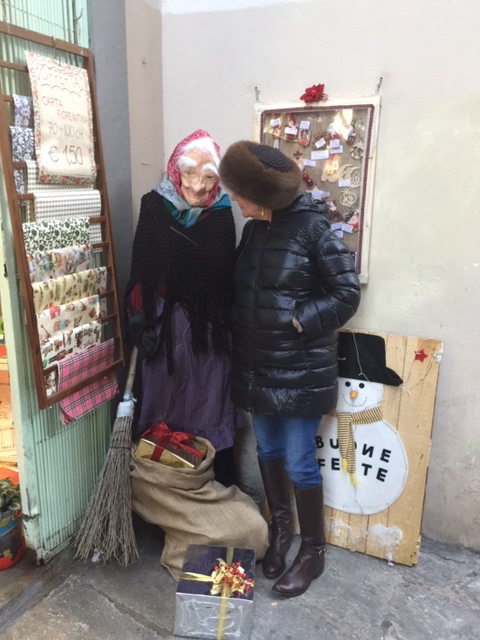
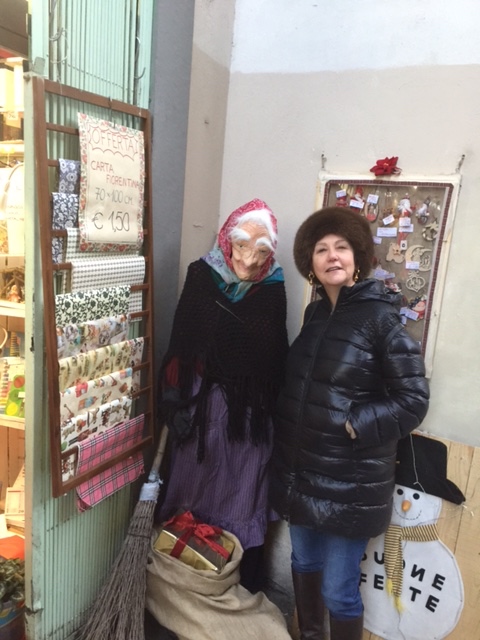
And, btw, she gave me some candy and no coal!
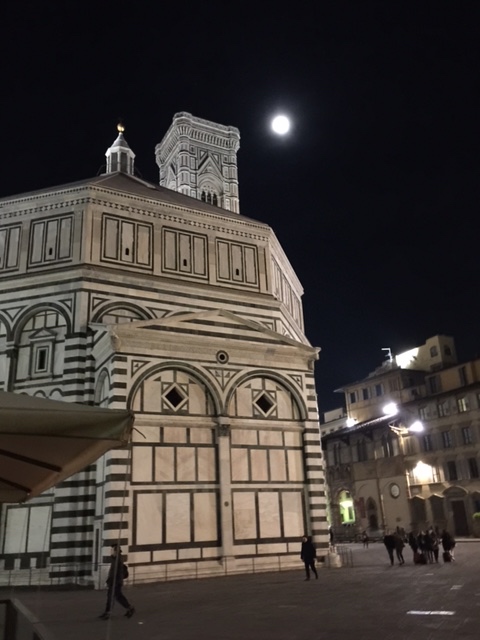
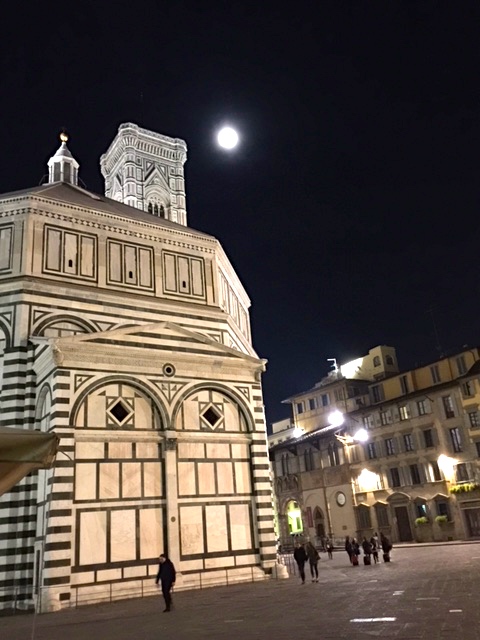
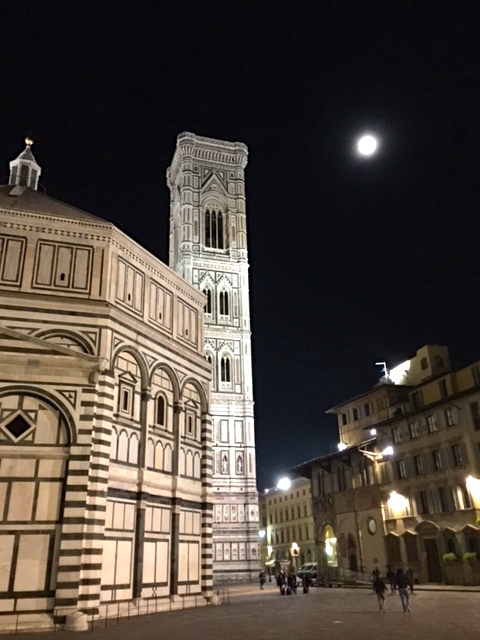
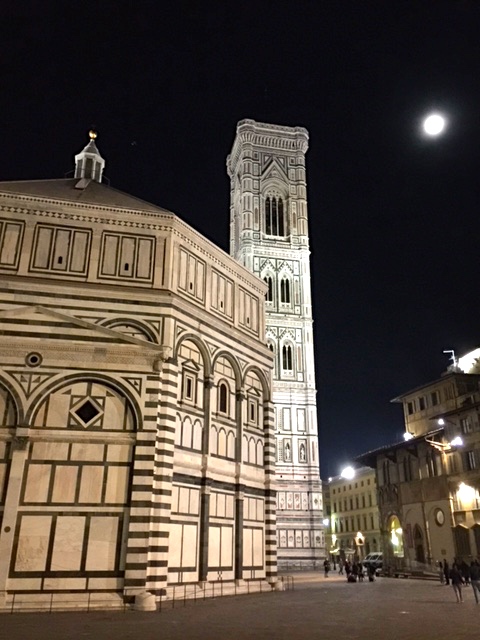
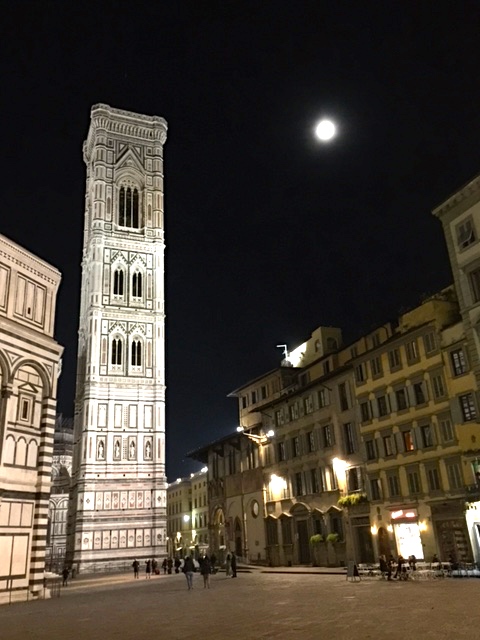
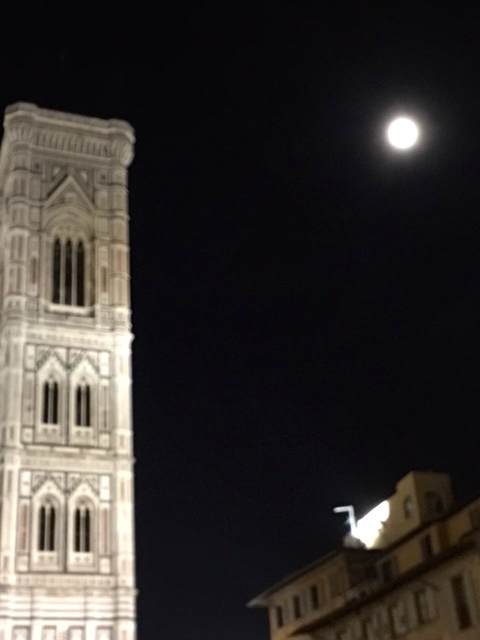
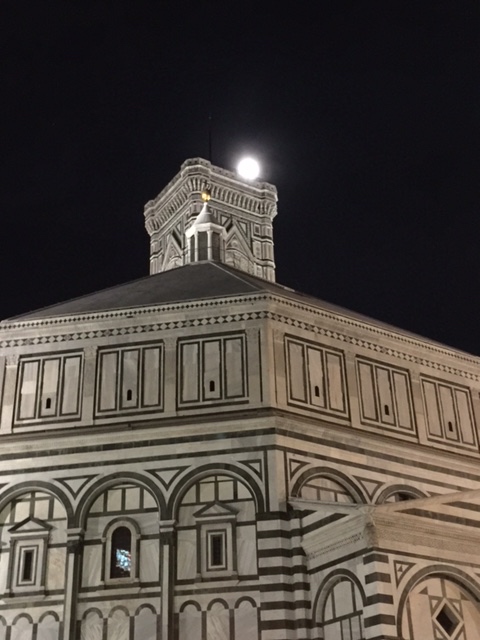
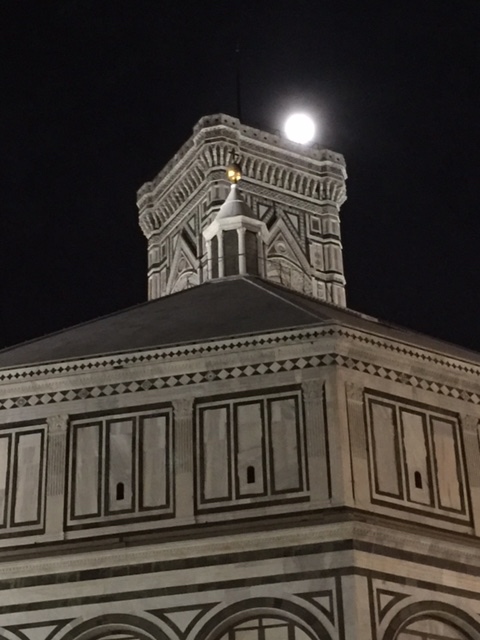
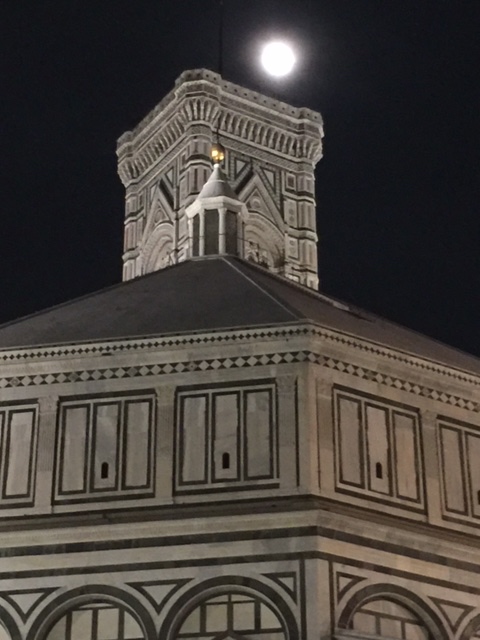
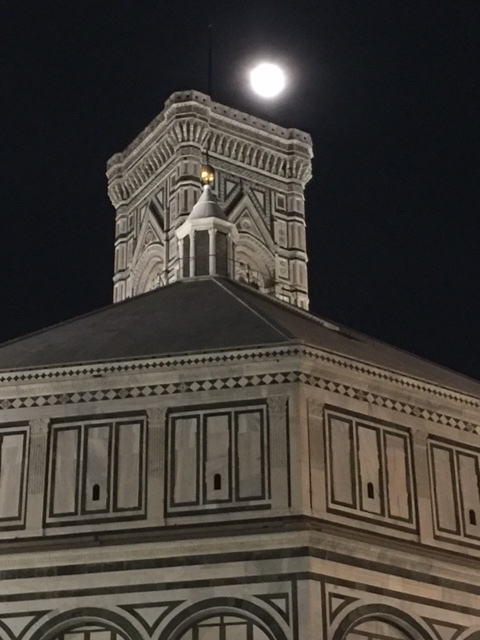
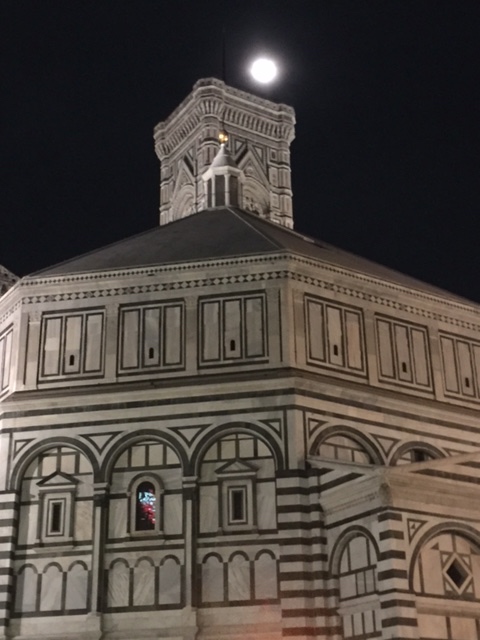
La scorsa notte a Firenze, con la luna piena
After an excessive day of carnevale revelry in Venice yesterday, I got back home to Florence around midnight. How sweet to walk the streets to my home, with the city empty and the moon full. It eased my mind from frenzy to tranquillity and joy. So lucky to call Florence home at this time.
La signora e il suo cane; highly coiffed, both.
I wish I could have gotten out in front of this stylish signora today, but how could I take a photo of her without attracting attention?
Both she and her poodle were coiffed to perfection. She wore a beautiful fur jacket, although today was a warm, springlike day in Florence.


Did I mention that St. Valentine’s Day is coming?
In case you don’t believe me, check this out:
The Annual Chocolate Fair, La Fiera del cioccolato, takes place in Piazza Santissima Annunziata, from February 10-19th, daily from 10am-10pm. There you can find many chocolate ways to show you care.

Take a free class on cooking with chocolate, perhaps?


Or you can simply tell about your great love with a cookie?


I fiori


 get back, lauretta!
You must be logged in to post a comment.