I draw the line when it comes to giving free advertisement to this particular American fast food chain. Suffice it to say, it can be found in Italy, a lot (too much).
But, I will admit, I kinda get a kick out of this particular store of the chain, located near the train station in Florence. For example, I love the fact you can order and pay at a kiosk and then simply pick up your order at the counter:
I love the fact you can order a bun filled with Nutella at this all-American fast food joint. I promise you that this item is not available in the USA, right “Sweety?” (It should be “sweetie” btw.)
And it looks like this, which is very unappetizing to me!
But, I love the fact that this joint has an espresso bar. If only, back in America!
The Palazzo Borgherini-Rosselli del Turco is a Renaissance era palace in my neighborhood in Florence, located at Borgo Santi Apostoli 17.
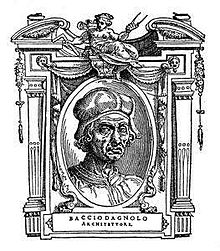
Commissioned by prominent Florentine, Pier Francesco Borgherini, around 1517 (a mere 500 years ago!), the palace was designed by one of the most famous architects of the period, Baccio d’Agnolo.
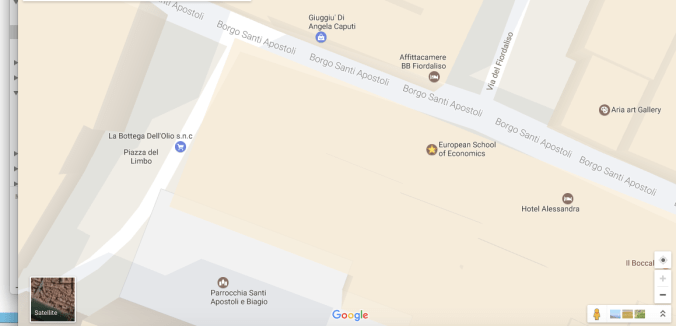
The building, completed by 1530, stands beside the church of Santi Apostoli and faces both the Piazza del Limbo and the Borgo Santi Apostali. In the map below, the palazzo covers the area starting on the right at Hotel Alessandra (which actually is inside part of the palazzo) and the European School of Economics. The palazzo runs continually along the Borgo Santi Apostoli, ending at the Piazza del Limbo. The building is further contained by the Santi Apostoli e Biagio church.
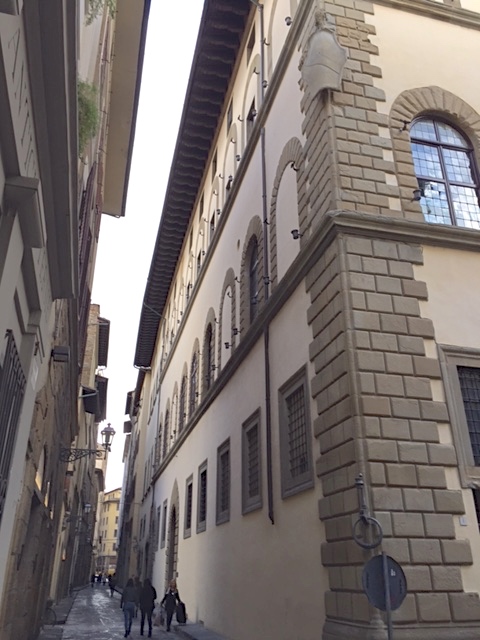
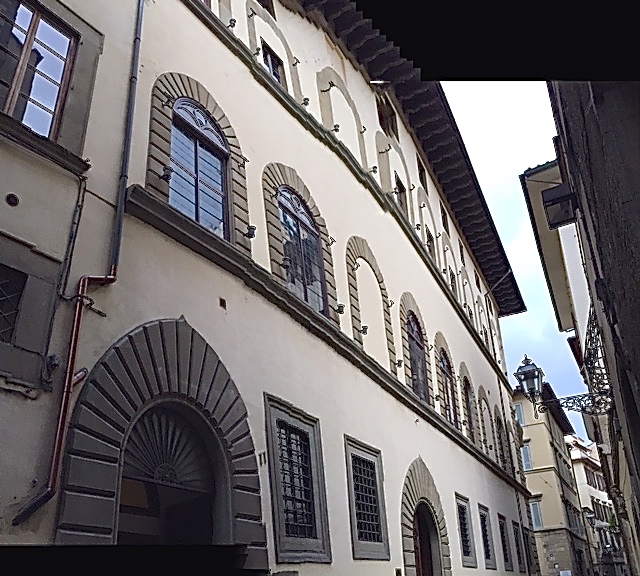
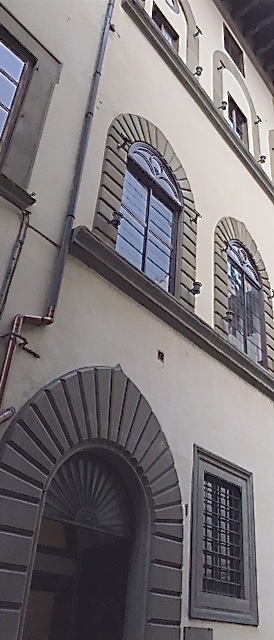
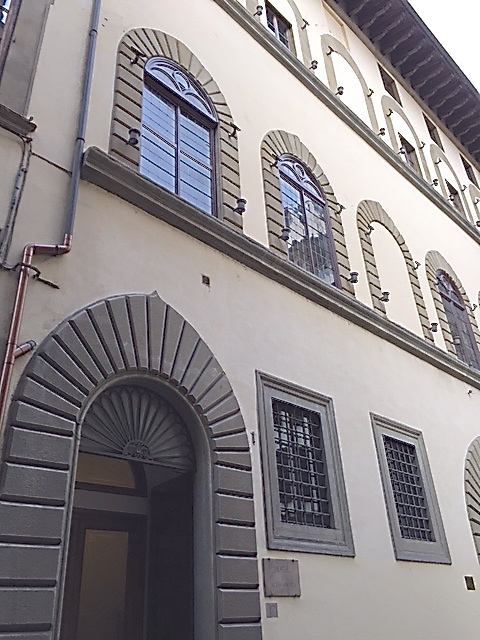
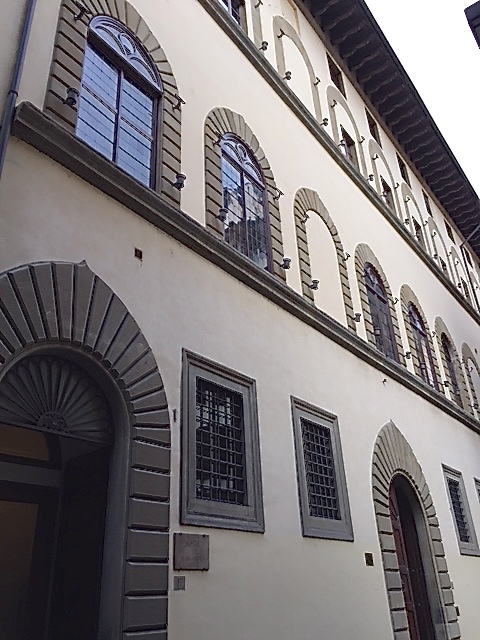
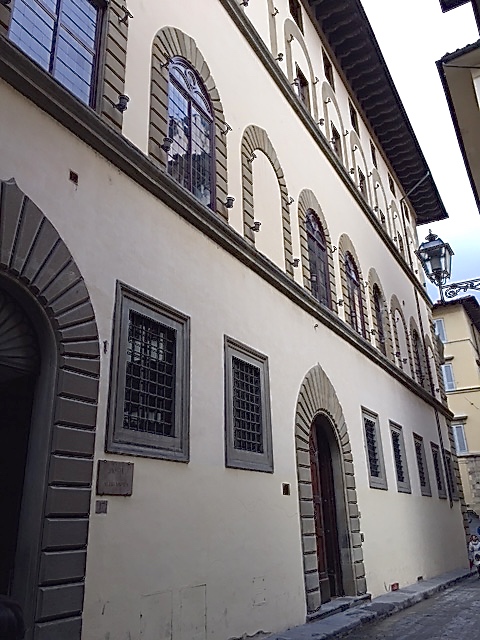
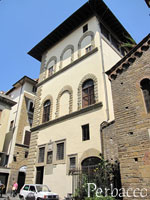
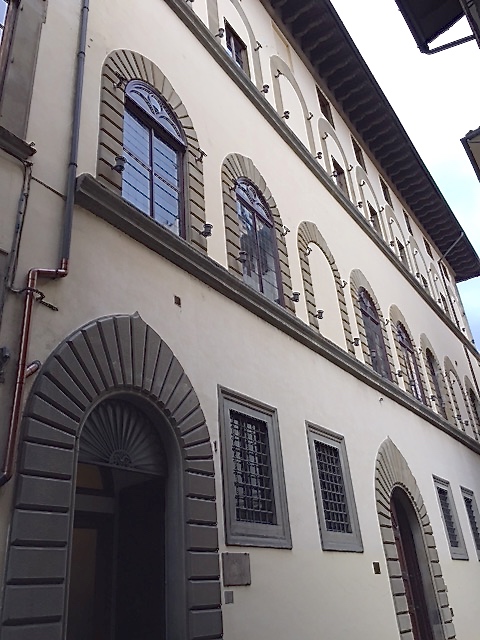
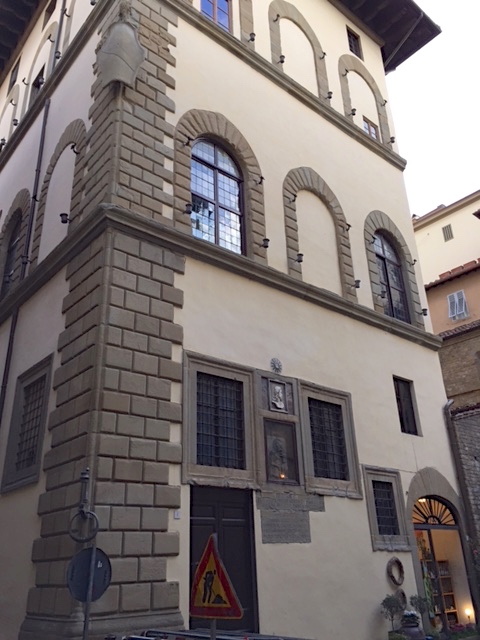
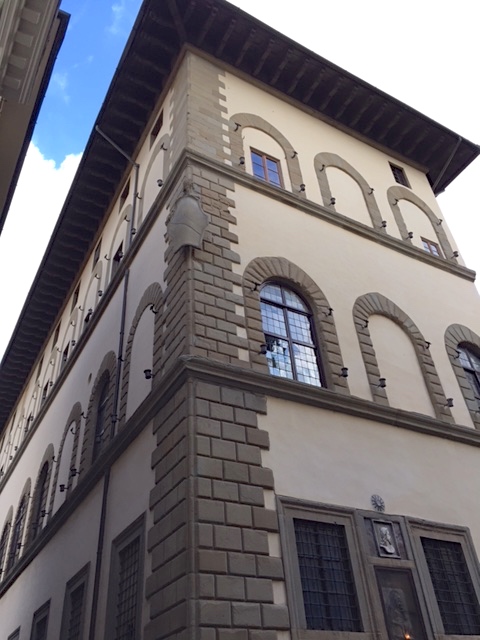
The photos below show the palazzo facing Borgo Santi Apostoli.
Baccio d’Agnolo also designed the nearby Palazzo Bartolini Salimbeni on Piazza Santa Trinita.
The Borgherini family had recently purchased property on which this palace was built, including the last available portion of the existing Limbo cemetery. In order to build this palazzo, the architect had to follow the contour of the left nave and apse chapels of the church, creating an unusual zig-zag profile on the southern side. There is, in fact, a private access to the church from inside the palazzo.
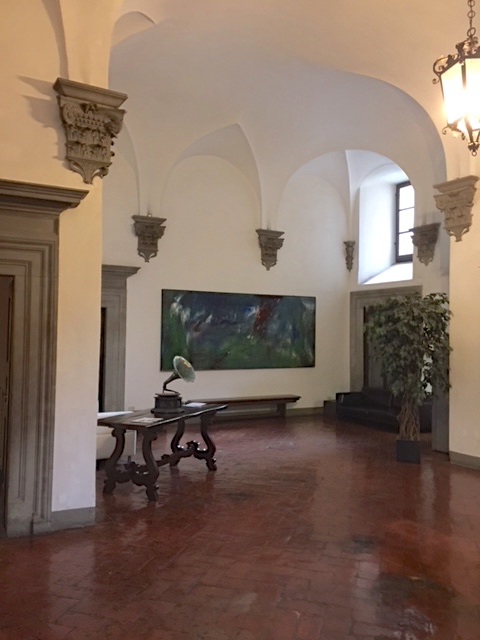
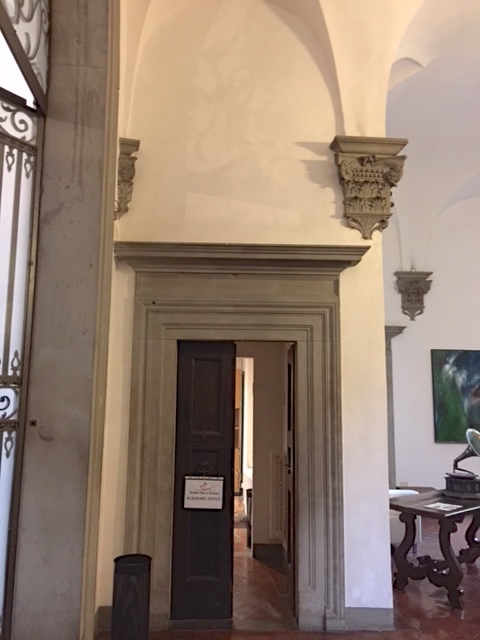
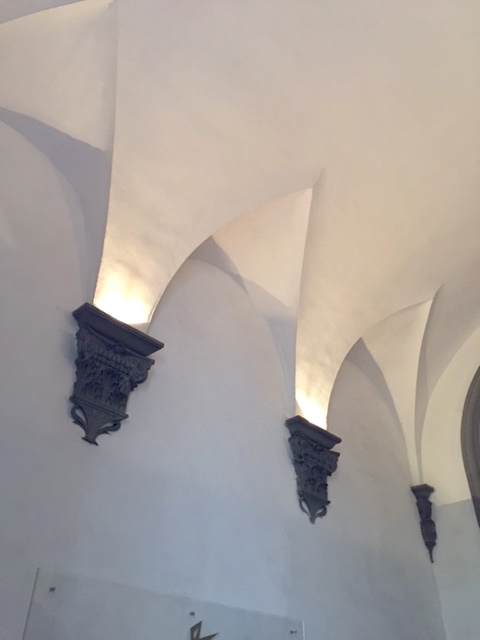
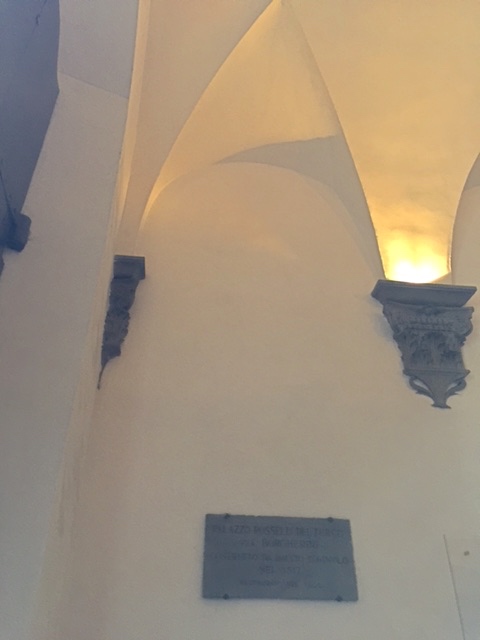
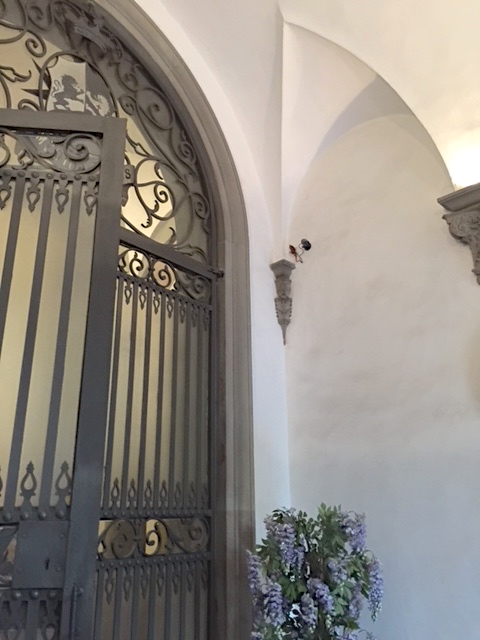
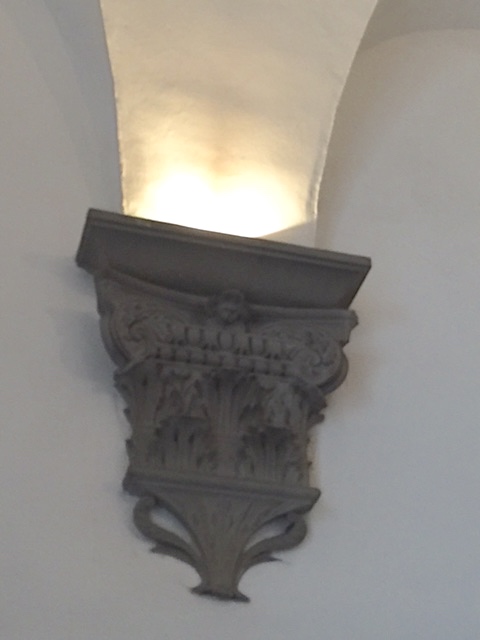
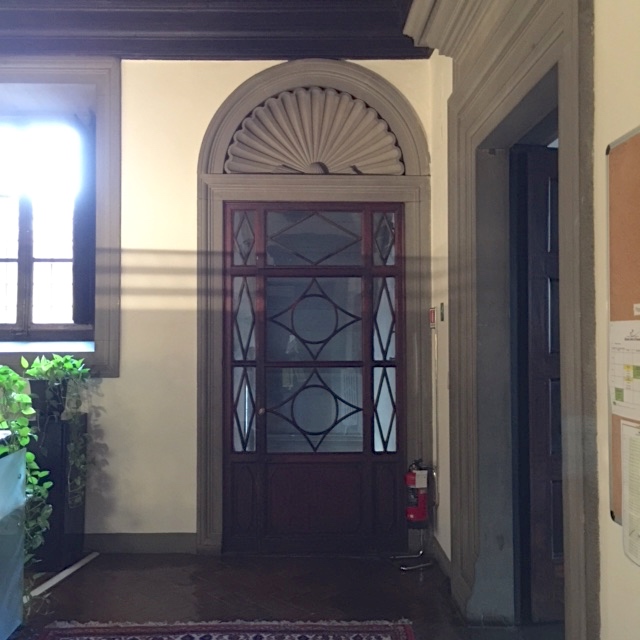
Because of the unusual plot, the architect was unable to create a central colonnaded courtyard typical of Florentine palazzi and instead designed a simpler atrium, which was needed to provide the light and air for the palace’s many rooms. The vestibule on the ground floor was used for commercial activities of the Borgherini family; this atrium has a vaulted ceiling, ending in fine corbels decorated with two bands of acanthus leaves.
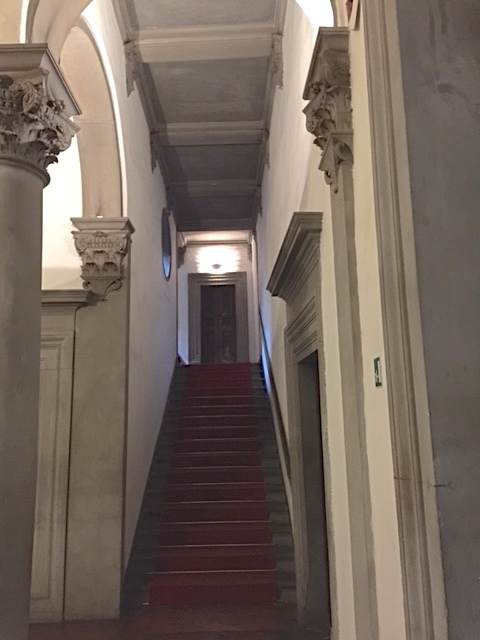
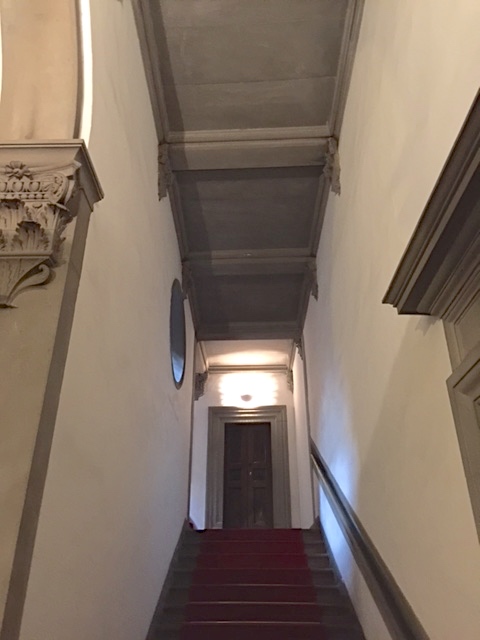
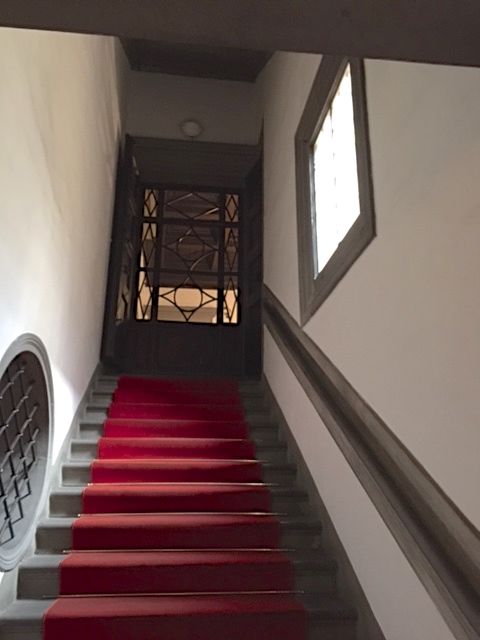
Another nearby room, with a barrel vault, gave access to the Limbo Square.The staircase to the upper floors leads off the atrium and along the wall which accesses the nave of the church. The ceiling of the stairs is made of planks of stone, which is quite unusual in Florentine palazzi designs.
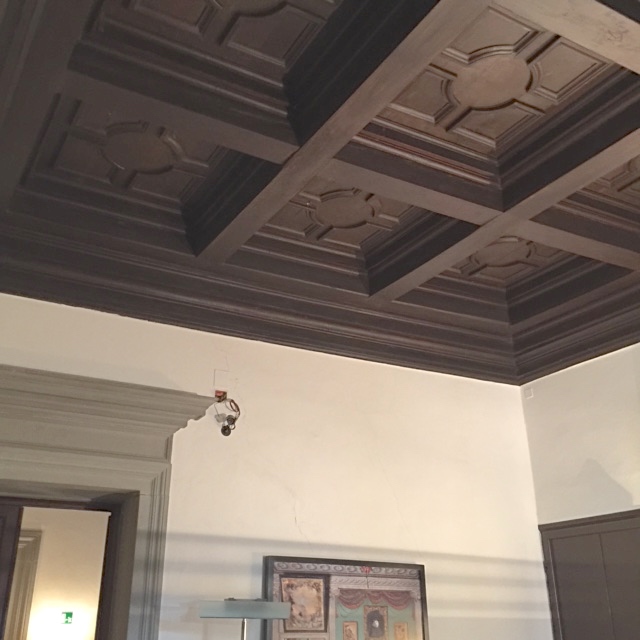
The first floor rooms were used for family life and face the north.
A small chapel (6.40 x 1.60 meters), not illustrated here, had a small window with a grate that opened directly on the clerestory of the left aisle of the church. It was thus possible to attend religious services without leaving home. The interior of the chapel is decorated with paintings in monochrome with cherubs and other religious subjects and the altar has a wooden bust of the Virgin and Child.
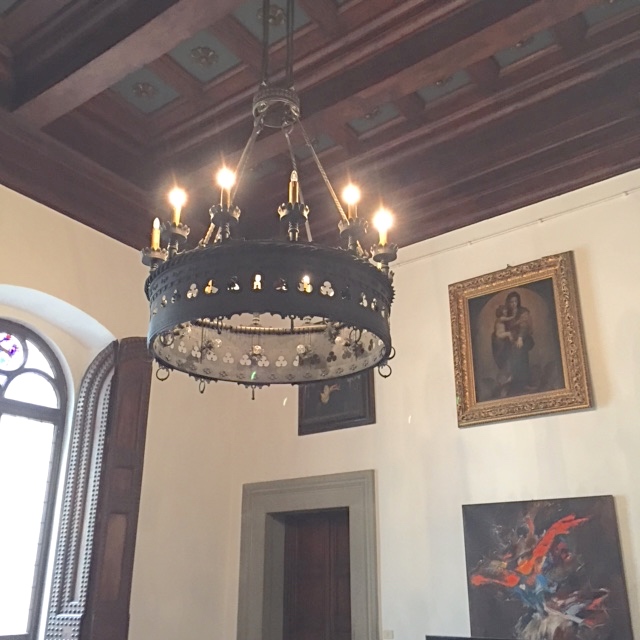
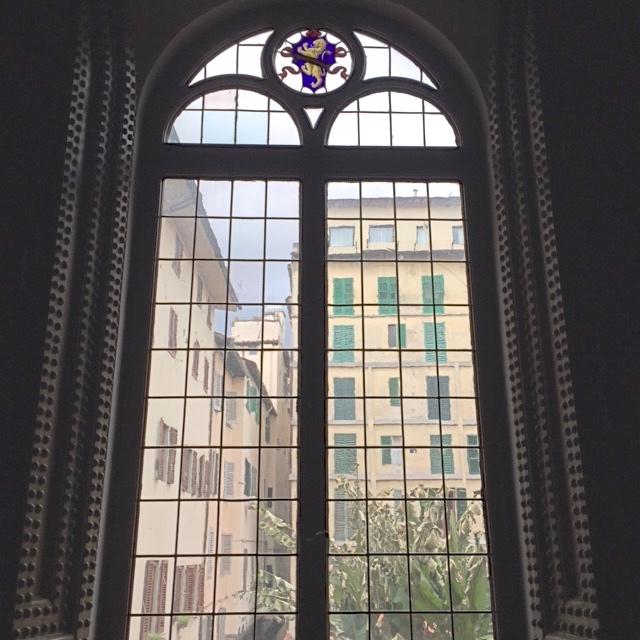
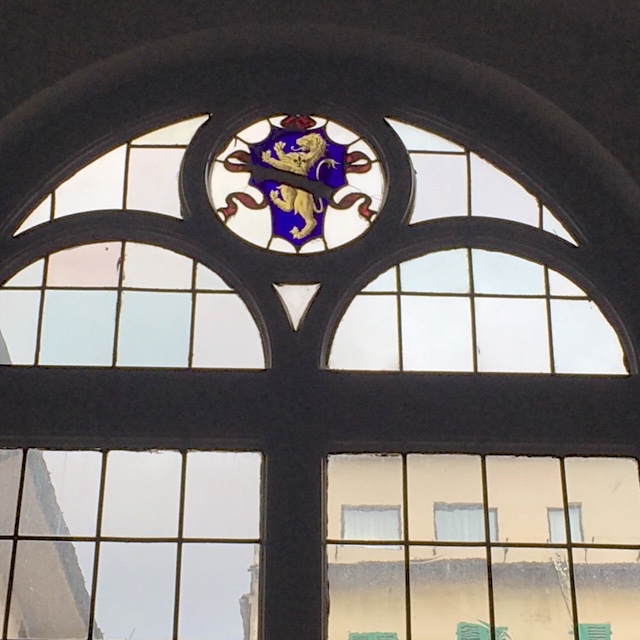
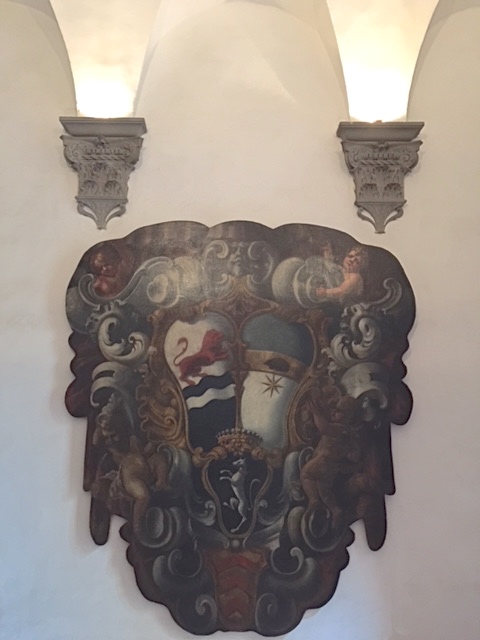
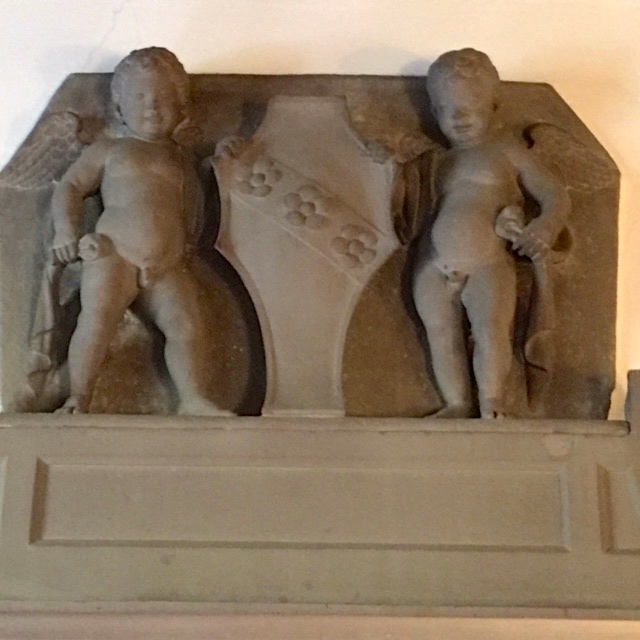
Above is the coat-of-arms for Borgherini family. This beautiful object hangs in the current vestibule to the palace.
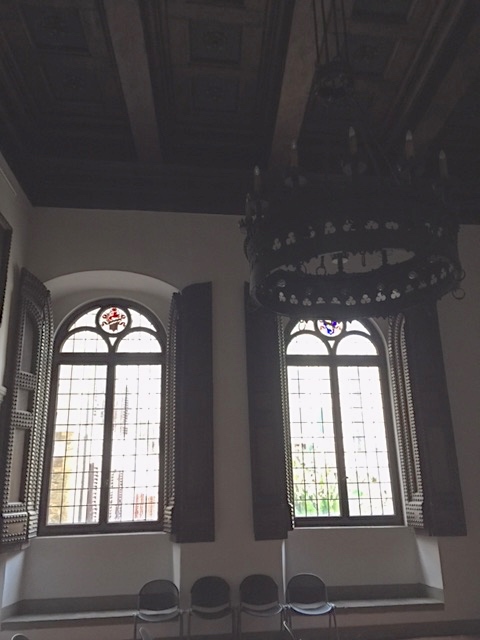
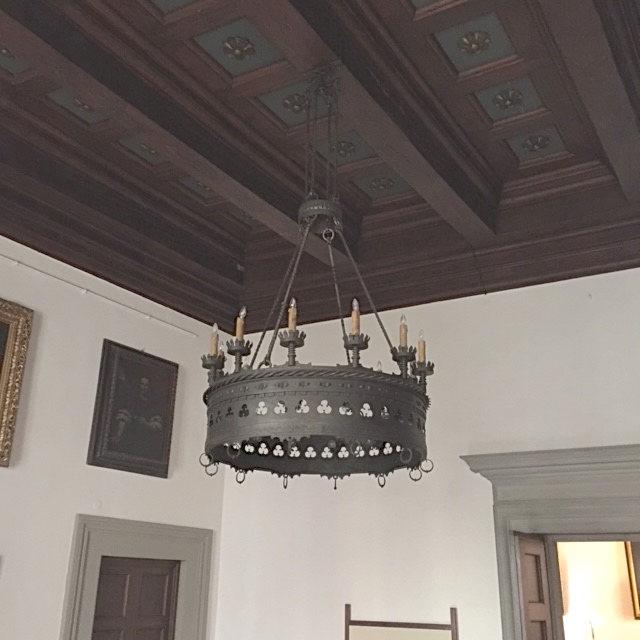
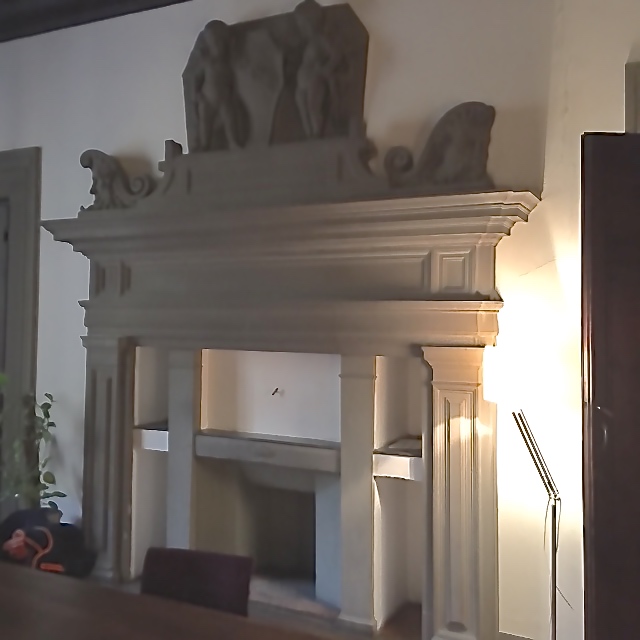
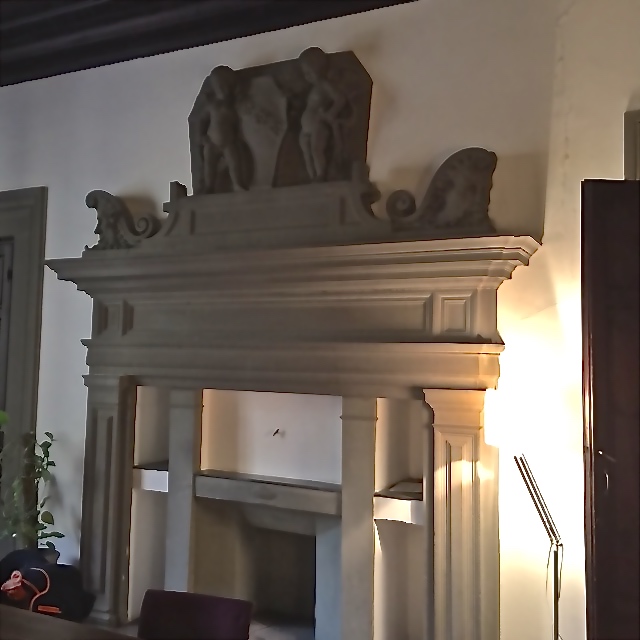
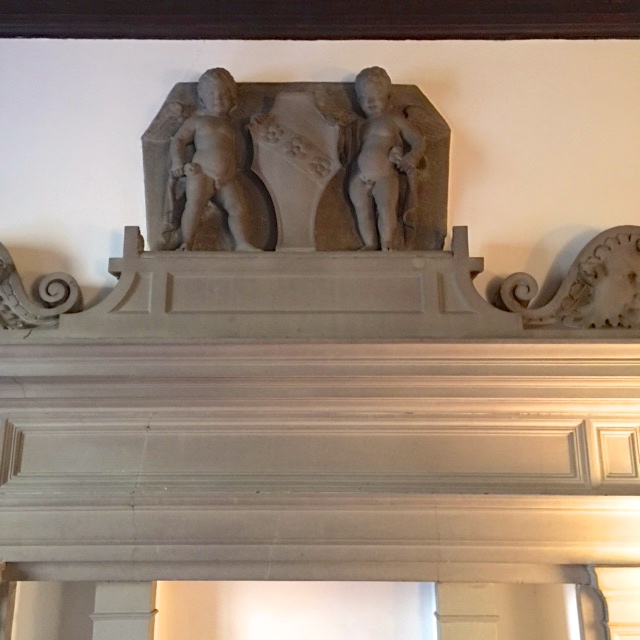
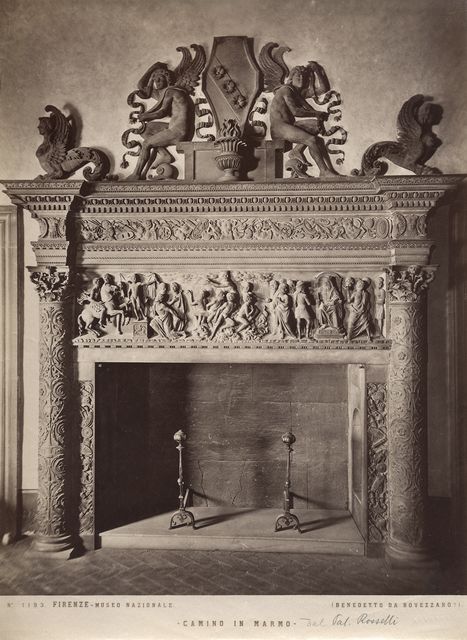
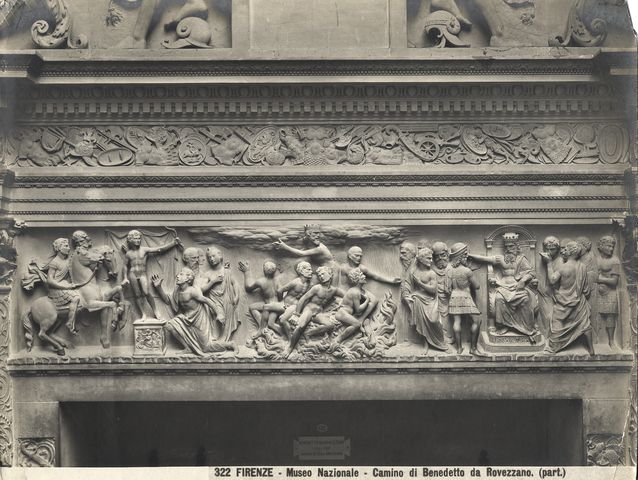
The interior of the palazzo was decorated by Benedetto da Rovezzano,* among others. Da Rovezzano was a friend and collaborator of Baccio d’Agnolo; together they were also working on the new portal of the Church of the Holy Apostles. They each designed a fireplace for the Palazzo Borgherini. The one by Benedetto da Rovezzano, with low-relief sculpture, was in the living room; it is now in the National Museum at the Bargello. The other period fireplace is thankfully still in situ in a first floor room. It has the solemn linearity, without decorations, typical of the style of Baccio d’Agnolo.
The Borgherini were among the most active supporters of the arts in Florence, and they lavished upon their prominent home many splendors by contemporary artists, including Andrea del Sarto, Pontormo, Bachiacca, and Granacci. Sadly, over the centuries, many of the best pieces by the finest artists have been sold off or confiscated, beginning as early as 1529, when the chests containing panels painted by Jacopo Pontormo for the Borgherini were expropriated. As noted above, the fine fireplace which da Rovezzano created for one of the rooms of the palazzo is now a part of the Bargello museum.
*(Benedetto Grazzini, best known as Benedetto da Rovezzano, was an Italian architect and sculptor who worked mainly in Florence. He was born in Pistoia in 1474, and adopted the name Rovezzano from the quarter of Florence in which he lived. Wikipedia Born: 1474, Pistoia; Died: 1552, Reggello)
No less a personage than Vasari described the luxurious interior of the building, in his work dedicated to the life of Baccio d’Agnolo:
( Lives by Giorgio Vasari [1568])
“He gave Pier Francesco Borgherini drawings of the house inBorgo Santo Apostolo,who at great expense had ornaments brought for the doors and chimneys, and in particular oversaw the creation of the finely carved walnut paneling of the room, which at its termination, was of great beauty.”
Borgherini even had a bridal chamber built in honor of the marriage of his son Pier Francesco and Margherita Acciaiuoli. Baccio d’Agnolo oversaw the wooden decoration of that room, which included painted panels embedded into the architectural design.
Baccio acted as an intermediary between the patron and the most important painters of the time, including Andrea del Sarto, Pontormo, Bachiacca and Granacci, all of whom were commissioned to decorate the panels for this room. The artists created paintings designed to tell the story of Joseph the Jew which probably were meant to allude to the young couple or the patron himself.
The fame and the beauty of this room were such that as early as 1584, some panels had already been sold by the order of Francesco I de’ Medici, who wanted the panels by Andrea del Sarto and Granacci for his own collection.
Today, the panels are scattered across various European museums, including the Uffizi.
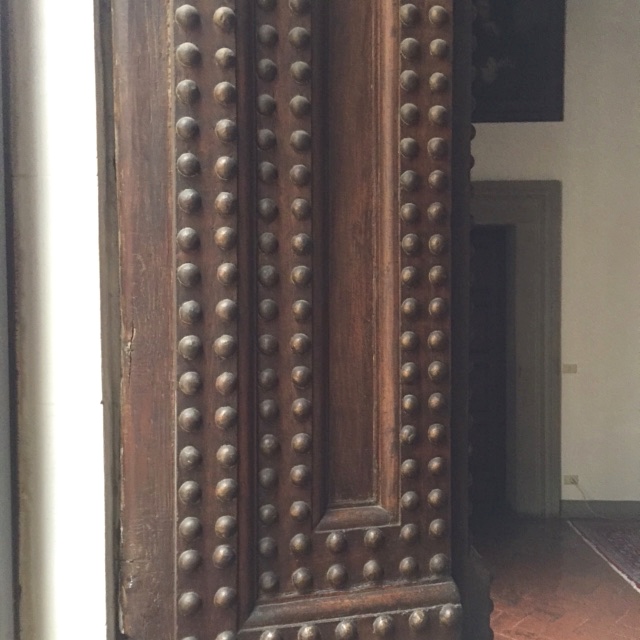
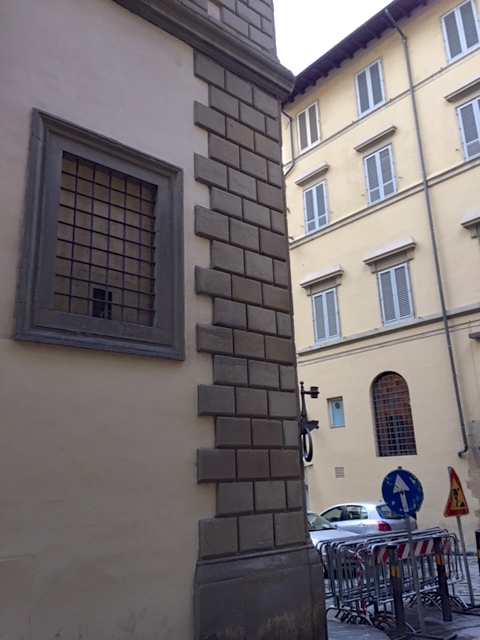
On the exterior, the palace’s solid plaster walls are divided into three floors, with windows and doors decorated with a course of typical bugnato (Florentine ashlar) and elegant wrought iron, which was used to hold torches and banners. For the stone detailing of the palazzo, Baccio d’Agnolo collaborated with Benedetto da Rovezzano on both exterior and interior details.
There is also a rooftop terrace, probably designed by Baccio d’Agnolo, although probably built at a later time.
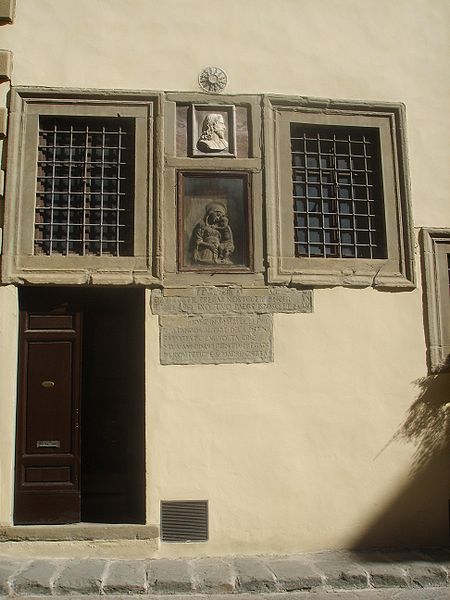
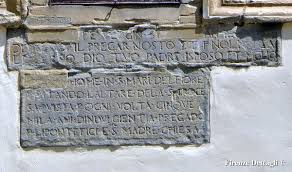
The western, short side of the Palazzo Borgherini faces the Limbo square and has bas-reliefs and inscriptions and several license plates and registration. There can be found a monogram of Christ; two inscriptions in stone; and a small portrait in profile of the Madonna and Child, carved in low relief. The latter has traditionally been attributed to Benedetto da Maiano. (The Marian relief could instead be a copy of a similar work in the Church in San Frediano in Cestello, attributed to Francesco di Simone Ferrucci.)
On the corner of the building is the coat of arts of Borgherini.
Soon I will be writing a post on the garden associated with this palazzo.
The Borgherini family lived in the palazzo until the mid-18th century, when the family was implicated in a scandal involving shortages from the Granai dell’Abbondanza granary. The family’s holdings and properties were confiscated by the Lorraine State and sold at judicial auction.
The Rosselli del Turco family acquired the property, which has been in their possession ever since. The Rosselli family was for having produced famous painters, such as Cosimo and Matteo Rosselli, and the antiquities scholar, Stefano Rosselli (1598-1664), author of manuscripts on the works of art found in Florentine churches of the 17th century.
In 1750 the palace was given to Giovanni Antonio, Stephen and Jerome of Turkish Rosselli , together with the garden and other adjacent buildings. This family was responsible for the restoration and conservation of no significant additions subsequent palace. Today it belongs to their descendants as well as one of the venues of the College of Higher Education in UK law European School of Economics , which here holds bachelor and master courses in the economic sector. The palace also houses the headquarters of the association in the World Fiorentini and didactic center of the Arch of Guelph .
At this lovely restaurant near the Sant’ Ambrogio market, they serve crazy good meats, grilled to absolute perfection. I cannot say enough good things about this restaurant. Excellent chianti as well.
The flash of hot pink against the brown stone is arresting.
I
Angela Caputti, updated windows. Looks like we’re off to a great new year!
A beautiful, modern ballgown.
Walking down one of my favorite Florentine streets, the Borgo Santi Apostoli:
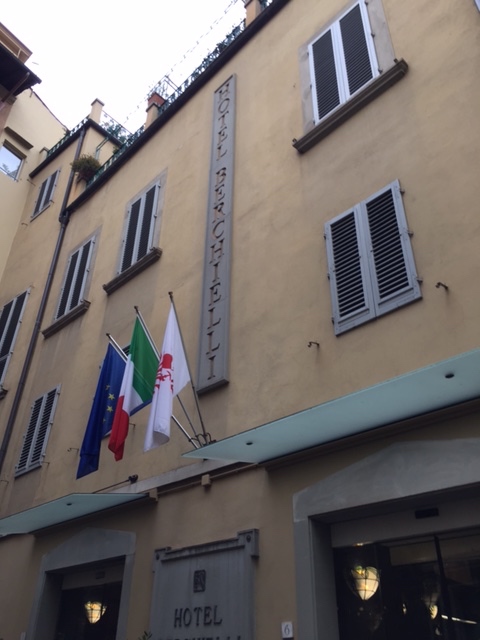
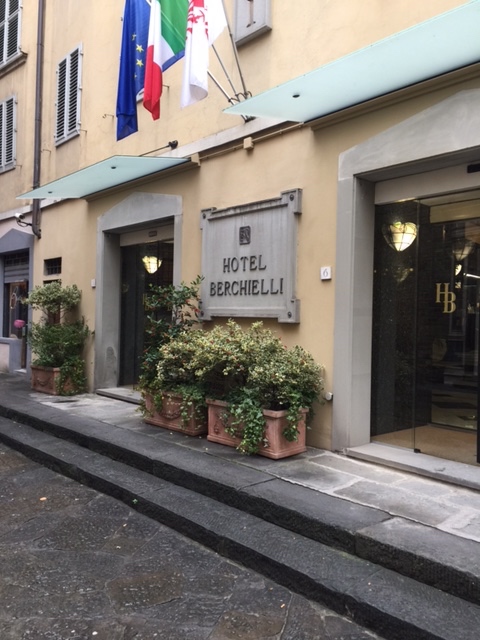
I discussed this famous old hotel in a recent post.
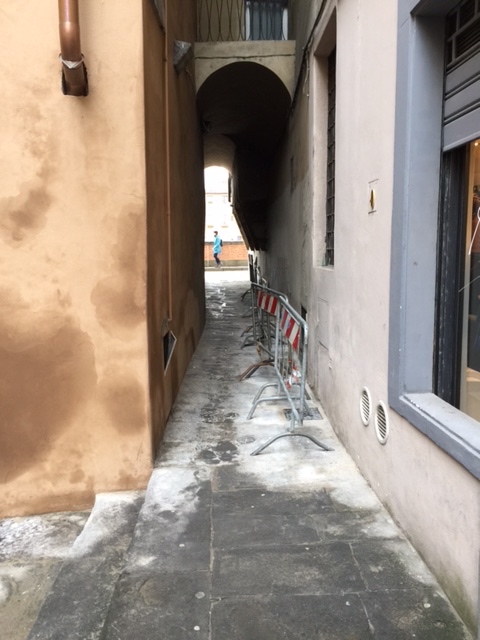
From the entrance to the Hotel, a small passage still exists leading to the Lungarno Acciaiuoli. That would be the Arno just over the wall by the pedestrian in the turquoise jacket.
The hotel is located on this wonderful small piazza, the Piazza del Limbo.
And as you can see from this temporary sign, said piazza is closed for work starting on 17 Gennaio 2017. Until when? Sign doesn’t say. :-) Who needs to know, anyhow?
More random shots of spots I’ve passed throughout the past couple of weeks.
Un mazzo di fiori = a bouquet, in English (borrowed from the French).
There’s a tiny flower shop on one end of Vasari’s Loggia dei Pesce, which used to be in the area of present-day Piazza Republica but was moved and reassembled in its current location in the Piazza dei Ciompi in 1956.
In the photo below, you can see the diminutive Loggia and at the very end, the small kiosk flower shop.
The flower shop looks like this from the front:
I love this little shop. I walk by it at least once a week and I never go by without stopping to admire, and sometimes to buy, some of the beautiful flowers and horticultural wonders. I currently have several forced hyacinth bulbs blooming in my apartment. They were purchased last week at the shop.
Here you will find fresh-cut ranunculus, roses, the prettiest shades of tulips, as well as cyclamens and trellised plants of winter berries.
Carnations as well. Lots of sprays of grasses and even some tropical leaves. It’s a tiny place, but a lot of wonderful things are packed in!










 get back, lauretta!
You must be logged in to post a comment.