8 things I love about Santa Felicita in Florence

Among my favorite churches in Florence is Santa Felicita. I love this church for many, many reasons.  Let me count them.

images

1. Size: It is not too large and not too small.  It feels just right. You can walk in and not feel overwhelmed by the size and scale of architecture, altar, chapels and more.

IMG_5919


2. Location, location, location: Just steps from the world-famous Ponte Vecchio

Screen Shot 2016-04-25 at 12.44.36 PM


3. Little known and under appreciated.  Which means that it is never swarmed with tourists despite its premier location.  At all times of day and every season of the year the Ponte Vecchio seems to be covered with tourists from around the globe, and yet, Santa Felicita is rarely visited by the hordes.  It is an oasis within a sea of chaos.  Which is exactly what churches are meant to be, I think.

Santa Felicita is a jewel, awaiting a visit by cogniscenti. Tourists pass by, thinking the edifice is just a backdrop for their frenzied nearby shopping extravaganza.

images-3


4. Design: The cherry on top it is that the design is as fine as the church is petite.

IMG_5921IMG_5896IMG_5902

But oh, the loveliness that awaits those who enter.

IMG_5895

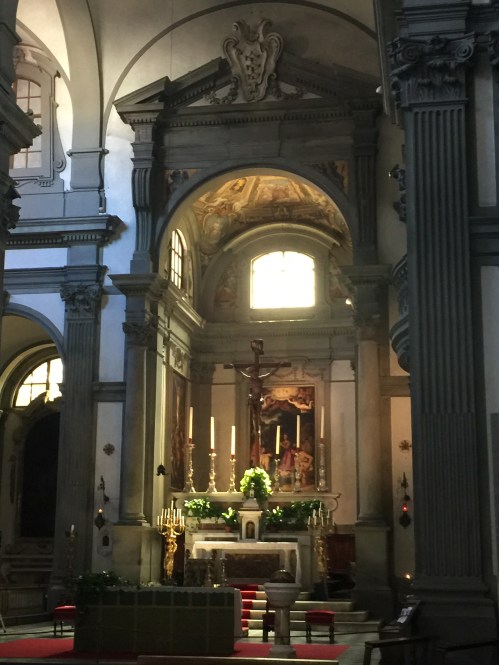
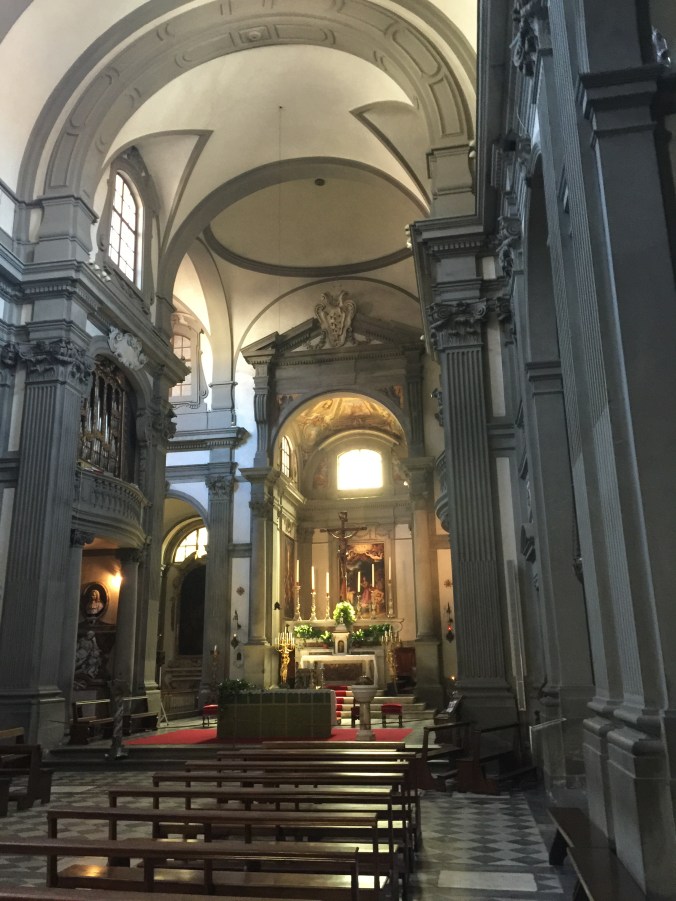
The serene gray hue of Tuscan pietra serena architectural details against the cool white plaster walls work together to create a calm, harmonized interior. The unadorned vaulted ceilings and the black and white marble floors and  provide just the right amount of understated elegance to finish the setting. The interior is flooded with ambient light from the high windows during daytime hours.

5. Another thing that sets this pretty church apart from all the others in town is that it probably the oldest in the city, right after San Lorenzo.  The first church on this site was probably built in the late 4th century and was dedicated to Saint Felicity of Rome. A new church was built in the 11th century and the current church largely dates from 1736–1739, under design by Ferdinando Ruggieri, who turned it into a one nave edifice.  Oh, the history!

IMG_5917IMG_5918IMG_5925


6. The Vasari Corridor passes through the façade of this church and on the inside there is large window, covered by a thick gate, where the Grand Dukes of the Medici family used to listen to the mass without being seen by the people staying at ground level.

images

images-4

The picture above is of the nave shot from the Vasari Corridor.


7. Masterpieces of Mannerist style paintings by Pontormo.  Pontormo is one of my favorite artists but I will admit that, like Campari, Pontormo is an acquired taste.  I love his work so much that I plan to devote a post to him soon.

IMG_5886


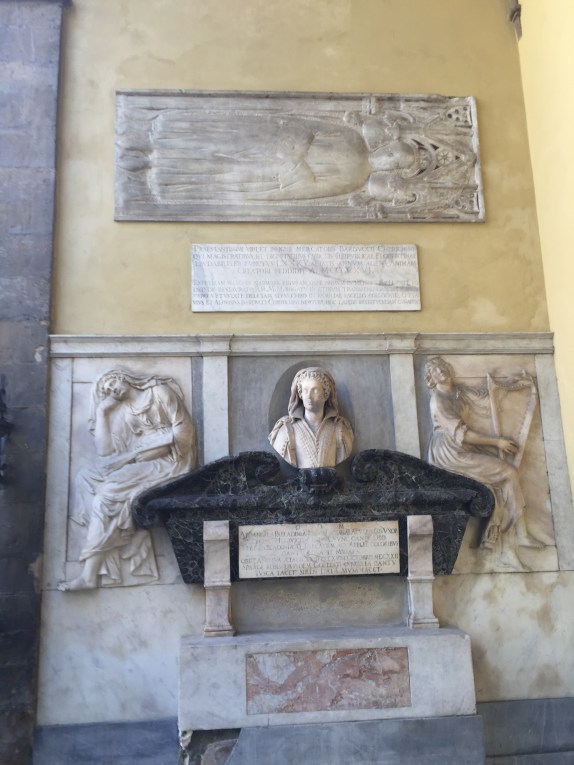
8.  The entry Vestibule is one of my favorite indoor/outdoor spaces in Florence.  It is simple and feels very Tuscan.  Here are some shots of what I love about the vestibule.

IMG_5916

The wrought iron separates the church from the hoi polloi in the the street and piazza outside.


Ever wonder what the walls would look like without a fresco adorning them?  Here’s the answer:

IMG_5899


IMG_5909

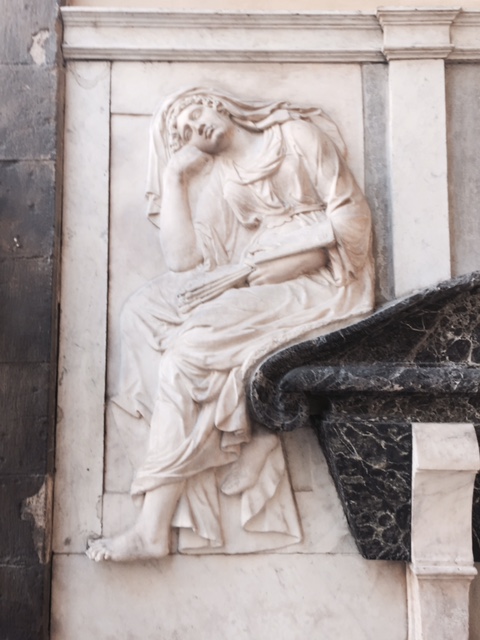
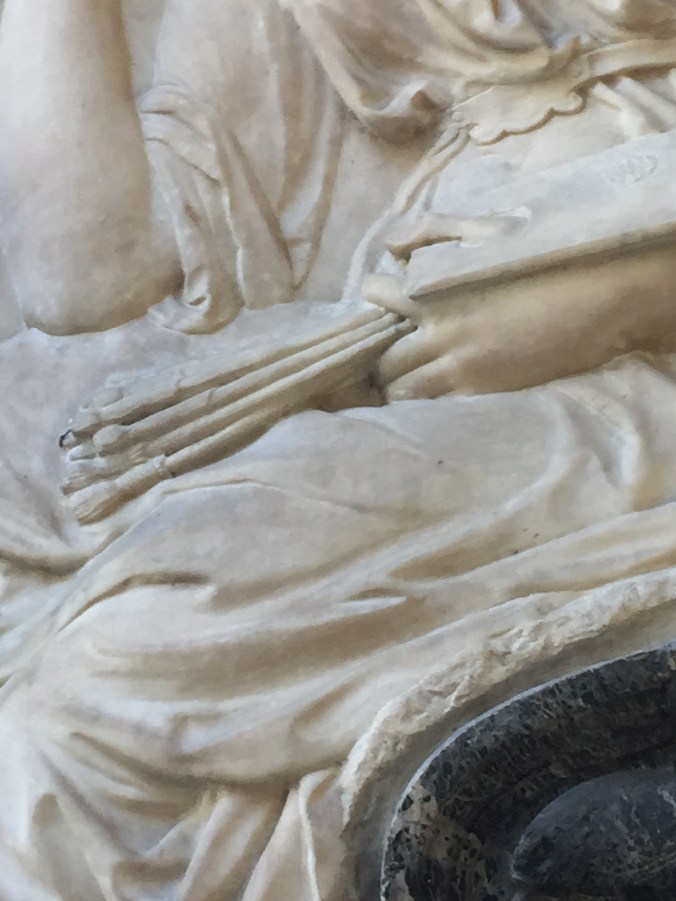
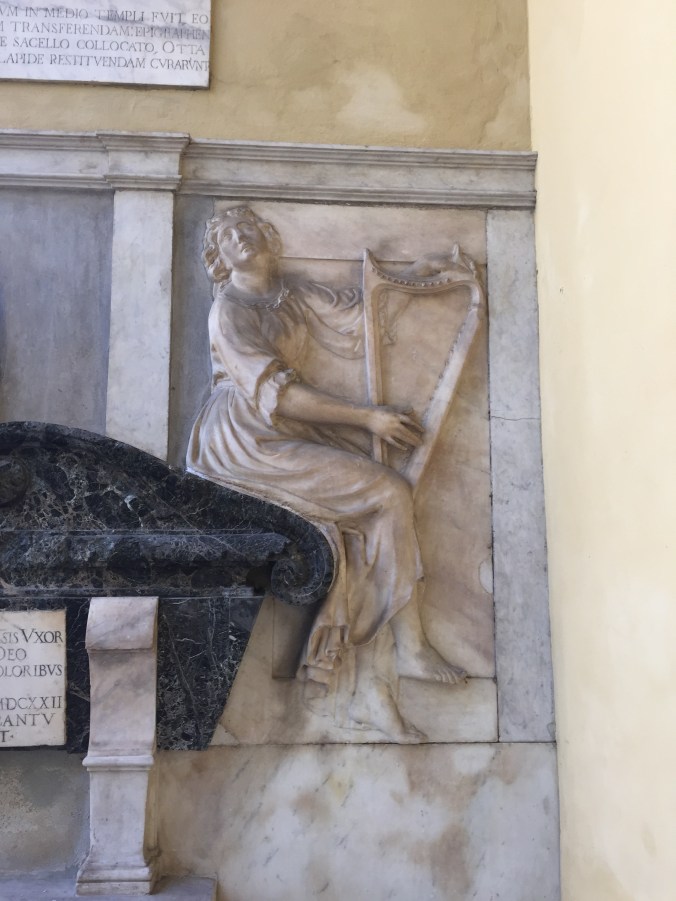
The muse of painting takes a nap while the muse of music plays a soothing tune.

FullSizeRenderIMG_5911IMG_5912

Santa Felicita, a Florentine jewel.

It’s time to get back to some art!

I am in need of an art fix, fast, to get my mind off bonnie Prince George.

So, let’s visit the Museo Bardini in Florence!  Perche no?

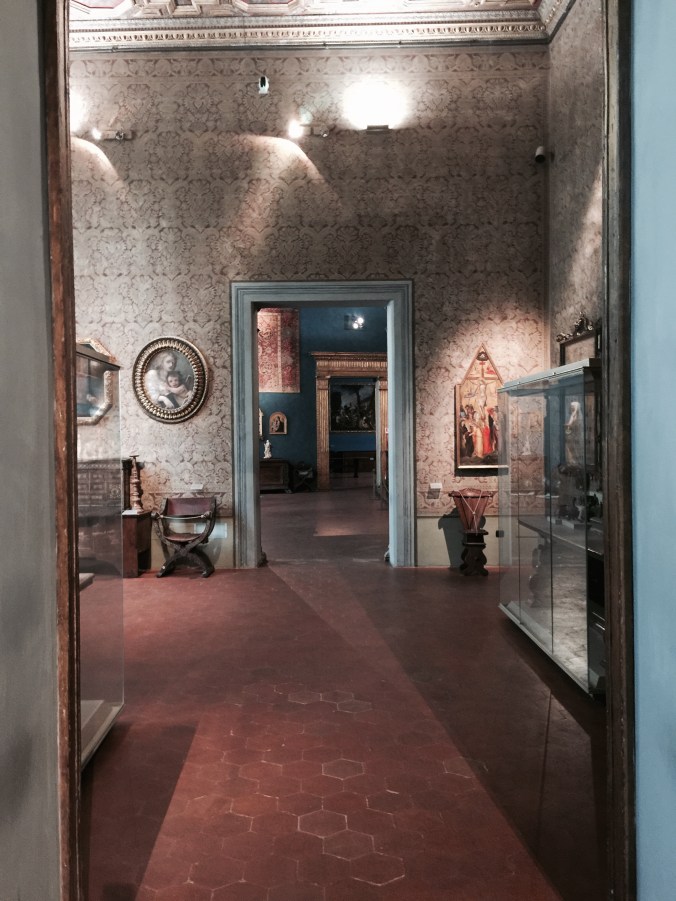
I love this gorgeous museum housed in a former palace right behind my Florentine apartment in the Oltrarno.  It is fantastic place filled with fantastic art.

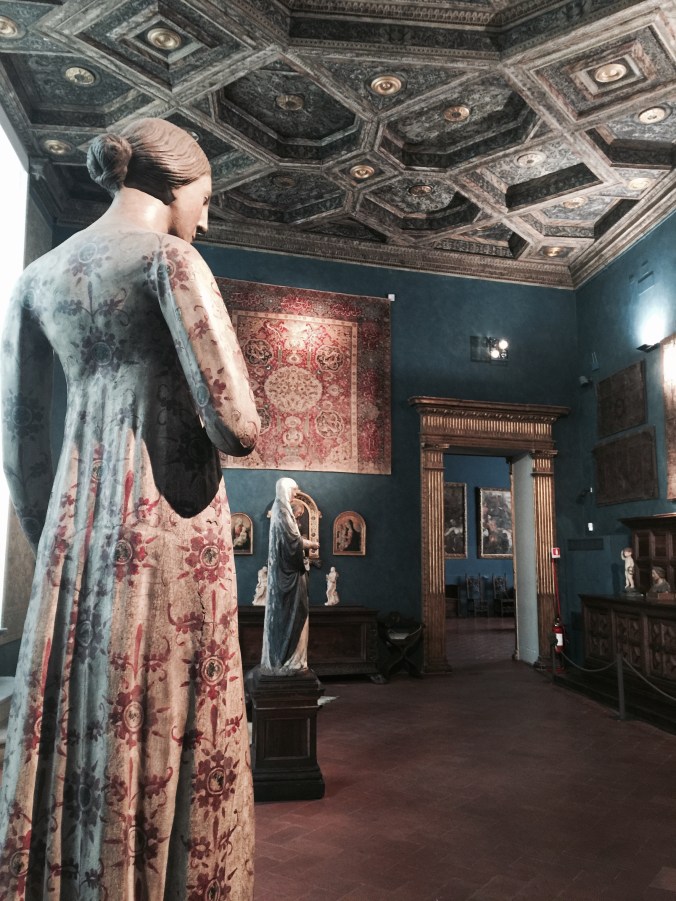
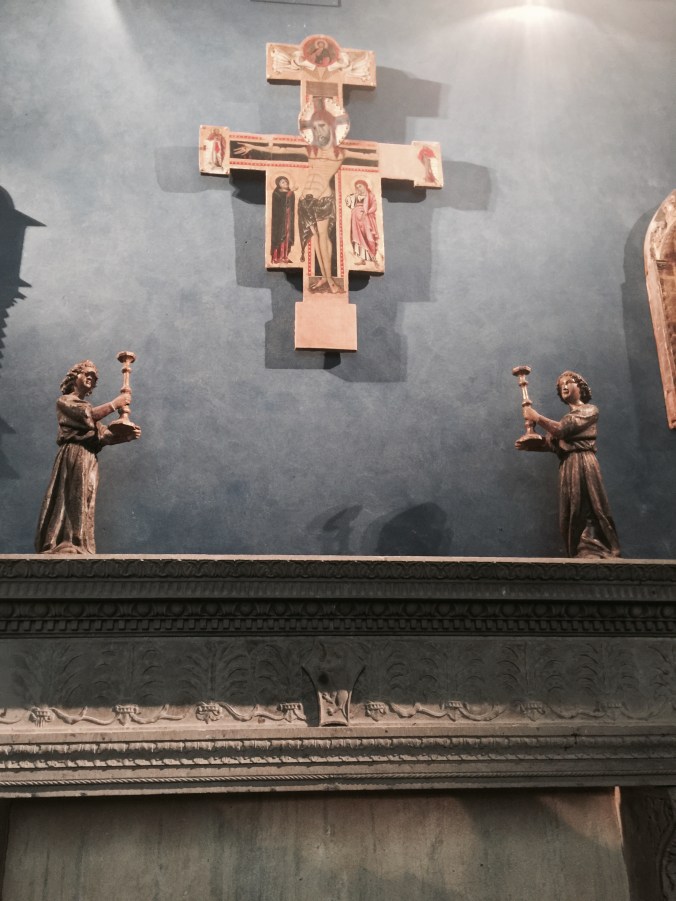
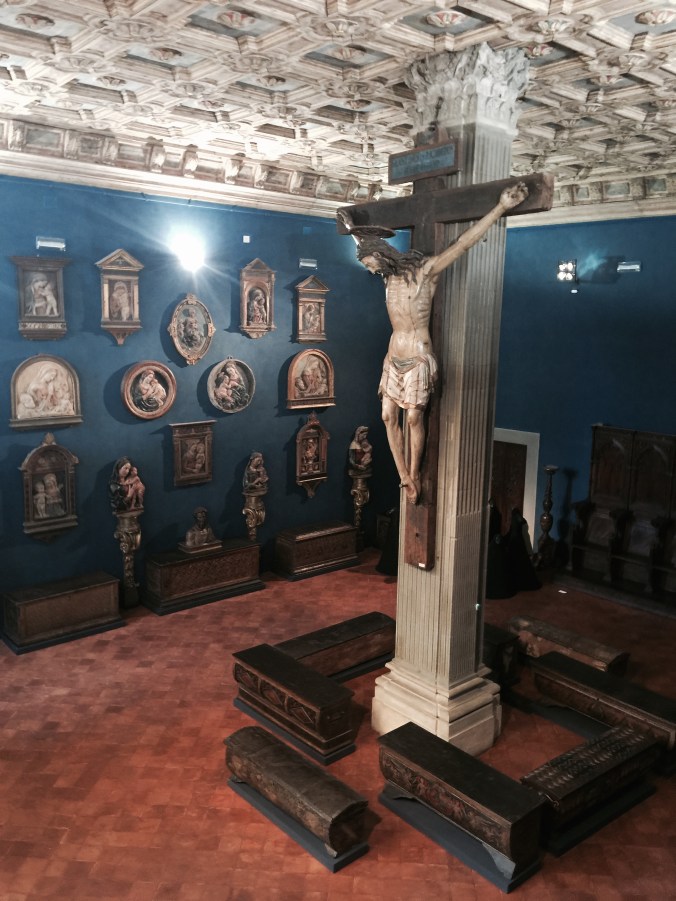
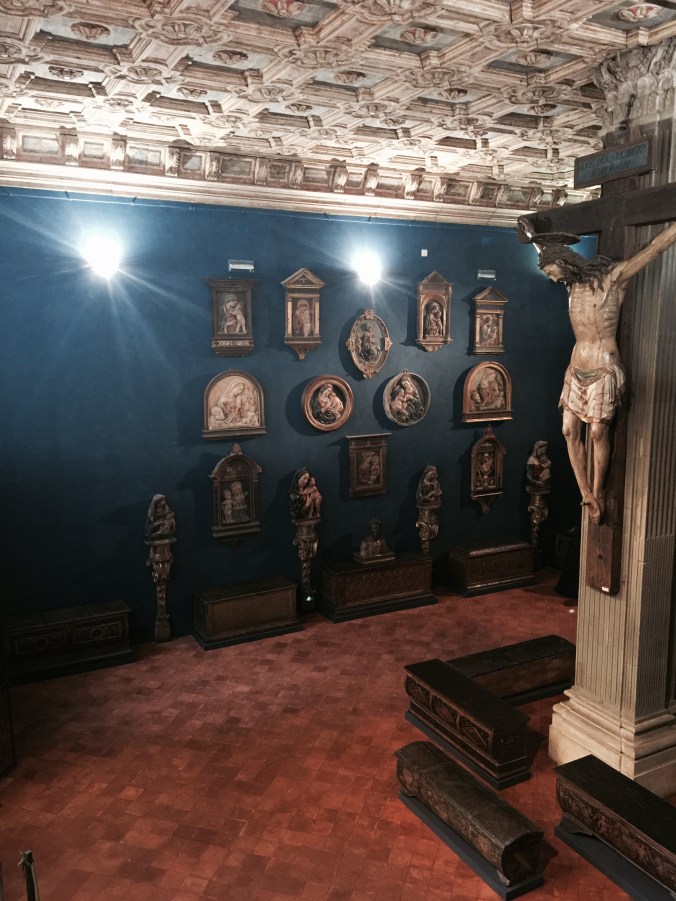
For starters, the walls in the galleries are a beautiful shade of midnight blue, done on Venetian plaster if I am not mistaken.  Gorgeous effect.

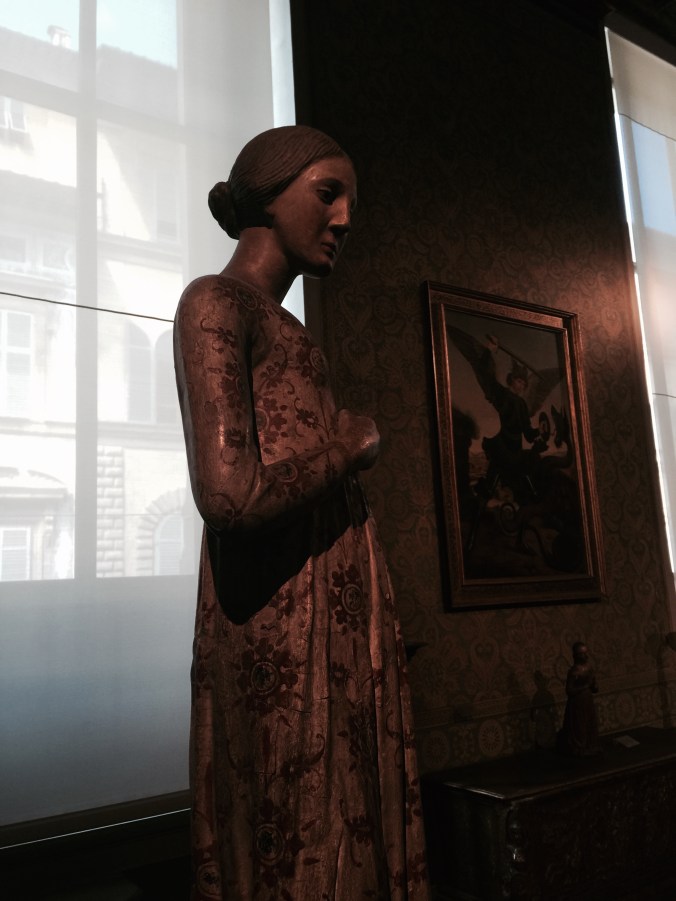
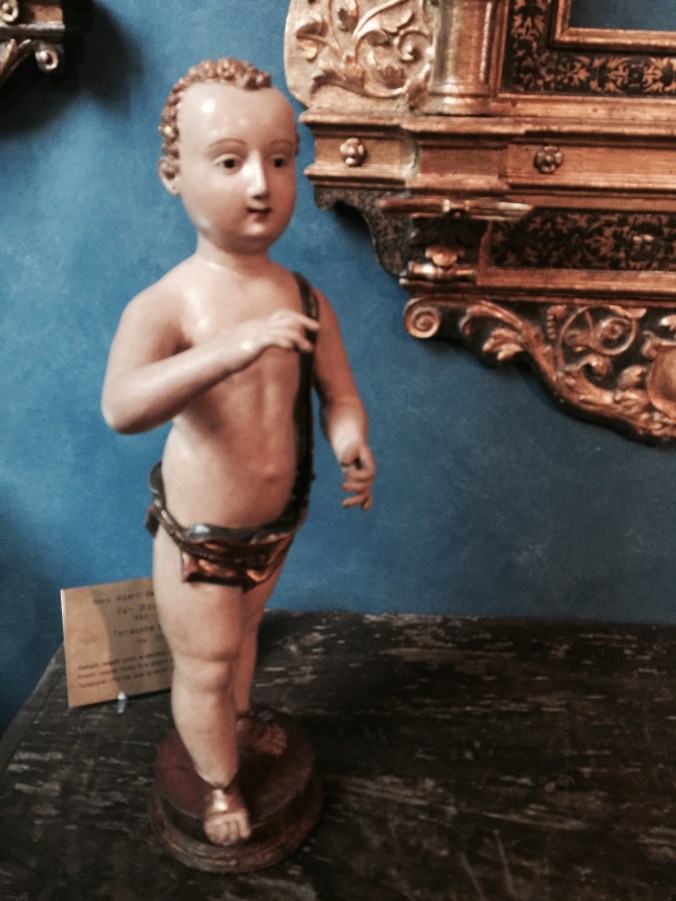
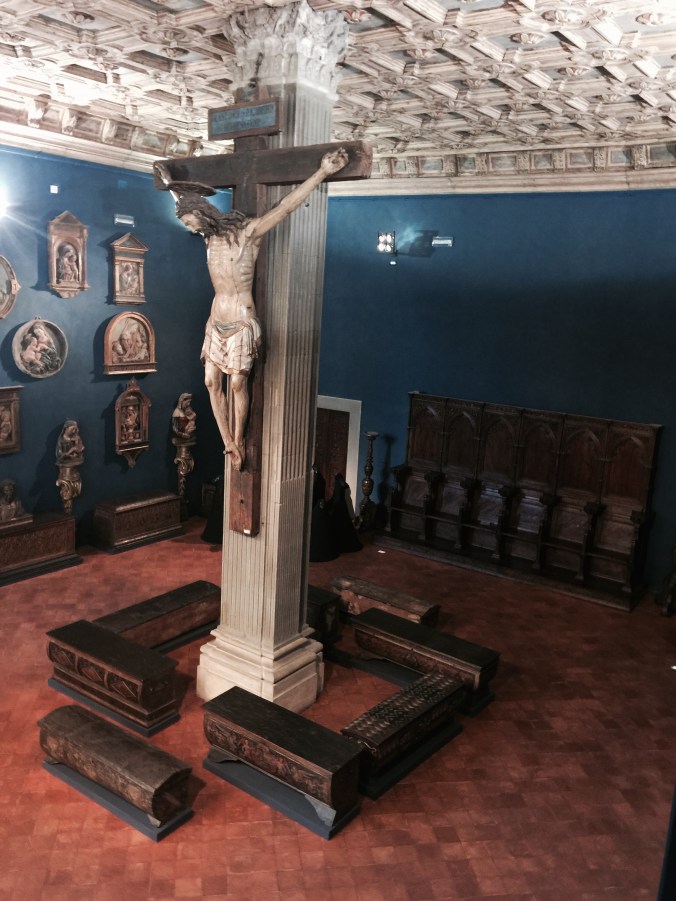
This Renaissance statue in painted wood takes my breath away.

IMG_5373IMG_5374IMG_5375

Isn’t she lovely?

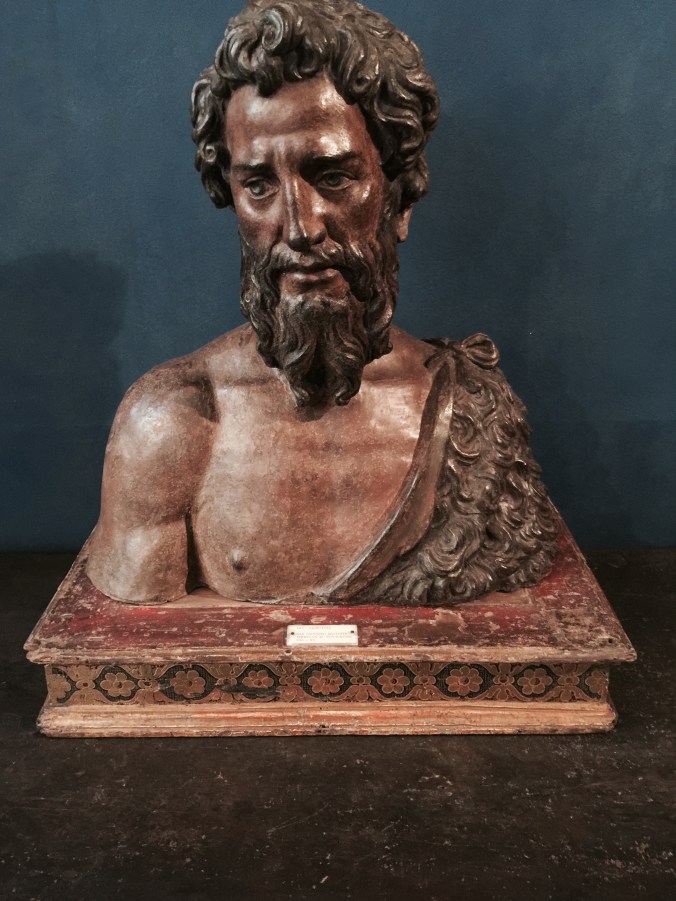
Now, let’s have a look at some other of the masterpieces in the collection.


IMG_5376


IMG_5377


A chair, to rest your weary Renaissance bones upon.

IMG_5378


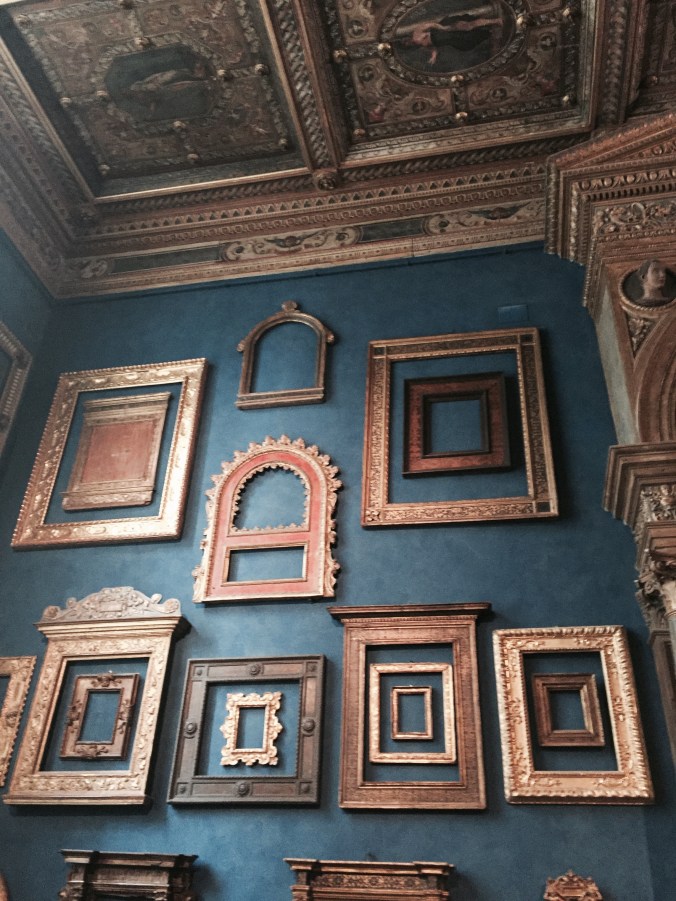
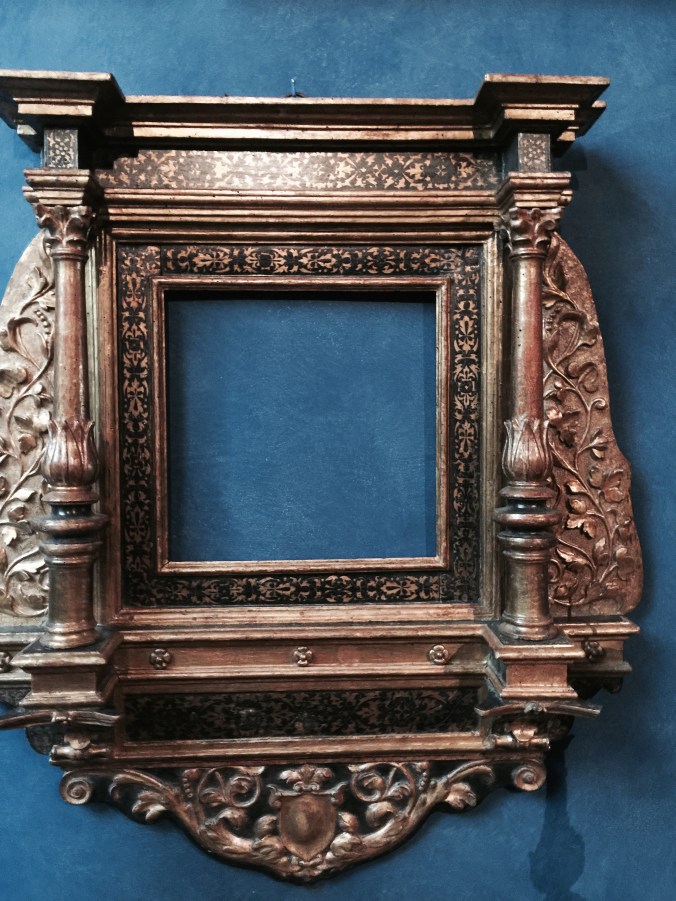
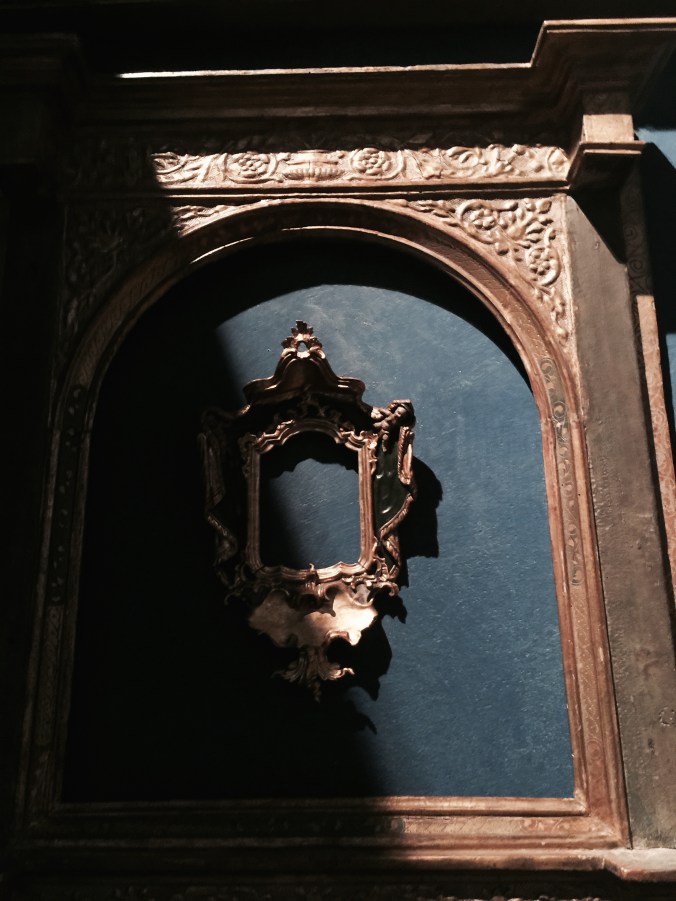
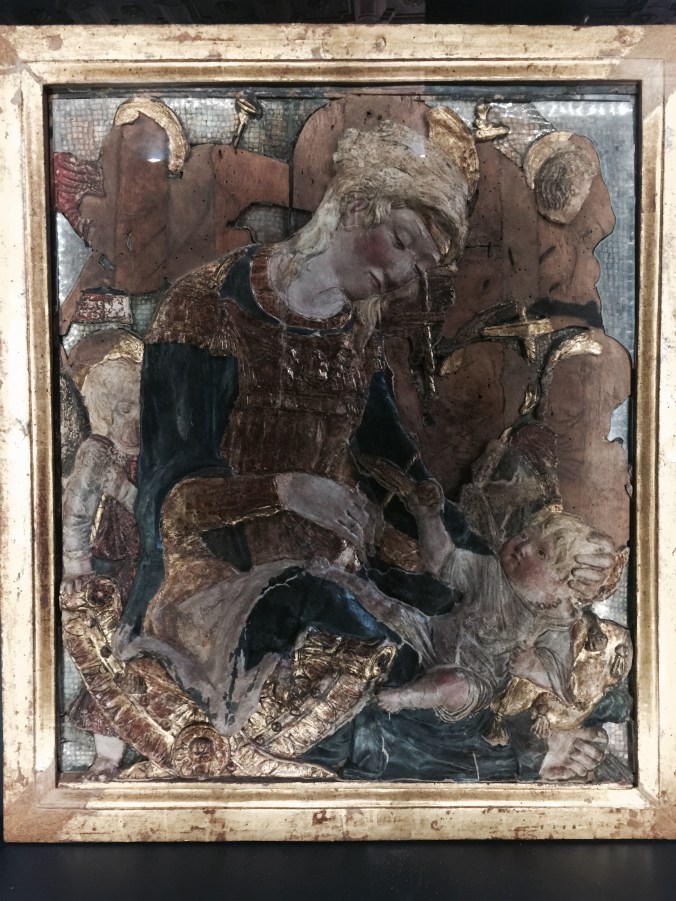
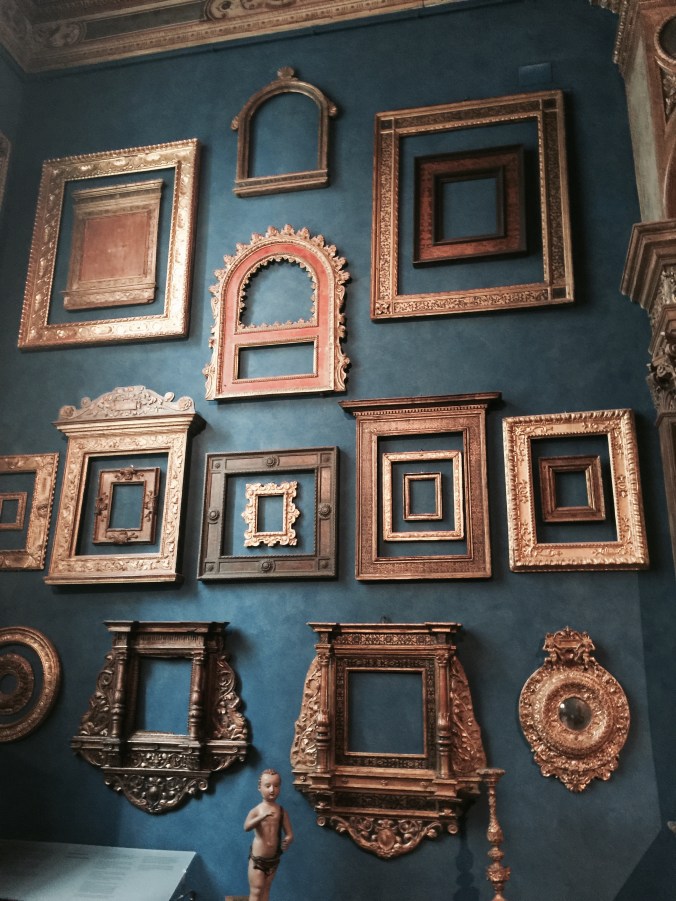
An artful display of fantastic Renaissance frames.  Who needs a painting when you’ve got frames like these?

IMG_5379

IMG_5412


IMG_5395


IMG_5403

IMG_5411IMG_5407


Some Renaissance slippers for the lady.

IMG_5404


And some for her gentleman?

IMG_5405

IMG_5408IMG_5410IMG_5413IMG_5414

IMG_5415IMG_5416IMG_5417IMG_5418IMG_5419IMG_5420IMG_5422IMG_5424

IMG_5425IMG_5426IMG_5427IMG_5428IMG_5429IMG_5430IMG_5431IMG_5432IMG_5433

IMG_5434IMG_5435IMG_5436IMG_5437IMG_5438IMG_5440


Let’s leave the way we came in.

IMG_5441

Ciao for now!

Florence, where the women are all beautiful and the men are noble, chivalrous, agreeable and wise.

biblio

The Florentine writer, Boccaccio, captured the way the populations of Italian city-states viewed one another on a personal level. In his Decameron, Boccacio disparaged citizens of nearly all Italian cities except his own–Florence–and Bologna.

For example, he calls the Sienese credulous and the Venetians untrustworthy, Pisan women are ugly and Perugian men are sodomites, in the Marches the males are uncouth and mean-hearted, like those from Pistoia, who are also rogues.

The south contributes its share of wickedness with assassins from Sicily and thieves and grave-robbers from Naples, but no people rival the ‘rapacious and money-grubbing’ Genoese, who are depicted as pirates, misers and murderers.

Boccaccio’s happy fornicators and shameless adulterers come from all over Italy, but the only consistently good people live in Florence, where the women are all beautiful and the men are noble, chivalrous, agreeable and wise.

Medieval Italians talked of their city as if it were a kind of paradise, its life regulated by sublime statutes framed by lawyers at the new University of Bologna. They were proud of its appearance, especially as culture was then chiefly civic and communal; the great age of individual patronage, both noble and ecclesiastic, came later. Entire populations would turn out with trumpets and pipes to celebrate an artistic event, as the people of Siena did in 1311 when they escorted Duccio’s Maestà from the painter’s workshop outside the city through the gate in the walls and up to the cathedral.

Since things were constructed in their name – and not, as later, in that of the Medici in Florence or the Gonzaga in Mantua – they could take a proprietorial interest in the paving of streets, the laying out of squares, the building of stone bridges.

Nine centuries after their emergence, the city-states remain embedded in Italy’s psyche, the crucial component of its people’s identity and of their social and cultural inheritance. Modern inhabitants of these cities are still proud of their heritage and feel responsibility for its retention. That is why the town centres – though not unfortunately much of the country outside them – are so well preserved today.

Gilmour, David (2011-10-25). The Pursuit of Italy: A History of a Land, Its Regions, and Their Peoples (Kindle Locations 1262-1271) and (Kindle Locations 1250-1256). Farrar, Straus and Giroux. Kindle Edition.

…In the hierarchy of Florentine guilds of the period the most influential were those of judges, bankers, doctors, dealers in silk, traders in wool and furriers, who were much in demand in winter because pelts were cheaper than cloth. Florence’s Arte dei medici e speziali, which included doctors, surgeons, dentists and opticians, had over a thousand members: after passing their exams doctors had to promise to refrain from taverns and brothels and in return they were rewarded by the city with a horse, an attendant and exemption from paying taxes.  Surviving Florentine guildhalls, such as those of the silk makers and the wool merchants, are among the city’s loveliest buildings.

Gilmour, David (2011-10-25). The Pursuit of Italy: A History of a Land, Its Regions, and Their Peoples (Kindle Locations 1313-1319). Farrar, Straus and Giroux. Kindle Edition.


American girl in Italy; marking an advance in women’s liberation

In 1951 a talented American photographer, Ruth Orkin, shot this iconic picture in Florence. She called it “American girl in Italy.”

maxresdefault

The background of the photo is the corner where the Via Roma meets the Piazza della Repubblica, the location of the Belle Epoche Cafe Gilli in Florence that I mentioned recently. In the fabulous black and white photograph, a single, young, very attractive woman passes through a typical group of Florentine men, from young to old, who often gather at such intersections.  Remember that this was shortly after WWII, and unemployment was high.

Any American woman who has traveled in Italy alone will recognize the moment captured in the photo.  You can almost hear the “ciao, bella!” that always accompanies such interactions.  Italian men simply cannot stop themselves from appreciating a lovely female.  It just goes with the territory. As they lean against the wall of the café or sit on a Lambretta motor scooter, the men just cannot not look at the girl.  Let’s be honest, it’s a part of what we all love about Italy!

On the day the picture was created, Orkin noted in her diary: “Shot Jinx in morn in color—at Arno & Piazza Signoria, then got idea for pic story. Satire on Am. girl alone in Europe.”

When Orkin said “Jinx” she was using the nickname of Ninalee Craig who was 23 years old and six foot tall.  Jinx had caught Orkin’s eye on the morning of August 21, 1951 at the Hotel Berchielli, located near the Arno River in Florence.  Not only was Jinx strikingly tall–much taller than the average Italian man of the period–but Orkin described Jinx as “luminescent.”  She certainly appears that way in these photos.

Jinx had recently graduated from Sarah Lawrence College in Yonkers, NY and had gone to Italy to study art and be “carefree.”  Something that earlier generations of American women would not have had the opportunity to do.

In 1951, Craig was a carefree college graduate who had quit her job in New York and bought a third-class ticket on a ship bound for Europe. She spent more than six months making her way through France, Spain and Italy all by herself — something no woman did in the years before World War II.  It was rare indeed for a single woman to tour Europe alone after the war.

Jinx traveled as inexpensively as she could, and when she found a hotel on the Arno where she could stay for $1 per night, she checked in.  As luck would have it, there she met another brave solo female traveler: 29 year old professional photographer Ruth Orkin, who had traveled to Italy after completing an professional assignment during two months in Israel.

Orkin, a freelance photographer, was herself a fearless young woman.  When she was just 17, Orkin journeyed alone from her home in Los Angeles to New York City; she did the whole trip on bike and by hitch-hiking.  This was not your typical female experience by any stretch of the imagination.

When they met in Florence, Jinx and Ruth, both traveling on budgets, compared notes about traveling solo.  They agreed that it was great fun to see Europe on their own, with only a few minor difficulties.

During their conversation in Florence, the two young women came up with an idea: they would wander around Florence the following morning and capture on film what it felt like for a single woman to do the normal tourist activities in fabulous Florence.

As agreed, the following day they set out about 10 a.m. and shot pictures near the Arno, on the Piazza della Signoria, at the straw market (which I wrote about here), and so on. Jinx Allen wore separates of a top and a belted gathered skirt; this was a trendy outfit, named “The New Look” when it was introduced by Christian Dior in 1947.  She accessorized her outfit with a white pendant on a chain around her neck and an orange Mexican rebozo or shawl over her shoulder.

Orkin was on the lookout for great moments to capture with her Contax camera. When she saw the reaction of the 15 men near the Cafe Gilli, she snapped the iconic picture.  She is said to have then asked Allen to retrace her steps and clicked again. Both Orkin and Jinx later said that there was no staging or prearranging.  Jinx herself would later say that “The men were not arranged or told how to look…That is how they were in August 1951.”

Several of Orkin’s photos were published for the first time in the September 1952 issue of Cosmopolitan magazine, as part of a story offering travel tips to young women traveling solo.  Again, this was something the mothers and grandmothers of Jinx and Orkin would never have been allowed to do.  It just was not done.  Even adventurous women never traveled alone.


ss-110917-Ruth-Orkin-NegotiatingwithShopkeeper.grid-4x2

Jinx bargains for straw bags at the straw market.


K17371B009267

Jinx walks out of a shop that has the usual beaded curtains used as a screen to keep insects out.


tumblr_nlsrzbmWun1u4lwbmo8_1280

Jinx is perhaps interrupted (while putting on lipstick?) by a young Italian admirer who has been drinking a Coca Cola and reading the International Herald Tribune.


Estate_of_Ruth_Orkin_At_the_American_Express_Office_Florence_Italy_1951_4427_417

Jinx photographed as if she is reading a letter from home which she has just collected from the Florence American Express office.  Back in the day, before cellphones and the internet, this is how people communicated.


Orkin.Jinxwithstatue_10

A very tired looking Jinx sitting with her guidebook (?) and sunglasses near a famous Florentine fountain.  I think Jinx was play-acting the tired part.  I love the detail of her obviously Italian leather sandals.  This is a beautiful version of the flat sandals one could buy and can still buy in Florence or Capri.


007-ruth-orkin-theredlist

Jinx rides a bicycle around Florence and stops with her tourist map to ask for directions from a uniformed officer.  You can see similar scenes as this in Florence today.


images-3 images-2

Jinx wearing head gear for motoring around Florence with a guy.


Orkin.JinxandCars_04

Jinx wandering through crazy traffic that was already a nuisance in Italy.

Many years later, in 2011, Jinx Allen was living in Toronto when an exhibition of Orkin’s photographs was held there.  Jinx was then known as Ninalee Craig, her real first name and her married last name, and she vividly recalled the day of the shooting. “We were literally horsing around,” she said and, at age 84, she was photographed in standing next to the iconic Orkin photo. Reminiscing about the day itself as well as the bright orange shawl she wore that day, Mrs. Craig wore the shawl she had kept all those years.

110817-kbamericangirl 02-vmed.grid-7x2

Indelible-Ross-Craig-3.jpg__600x0_q85_upscale

“Men who see the picture always ask me: Was I frightened? Did I need to be protected? Was I upset?” Craig said. “They always have a manly concern for me. Women, on the other hand, look at that picture, and the ones who have become my friends will laugh and say, ‘Isn’t it wonderful? Aren’t the Italians wonderful? … They make you feel appreciated!’”

“At no time was I unhappy or harassed in Europe,” says Craig. Her expression in the photo is not one of distress, she says; rather, she was imagining herself as the noble, admired Beatrice from Dante’s Divine Comedy. To this day she keeps a “tacky” postcard she bought in Italy that year—a Henry Holiday painting depicting Beatrice walking along the Arno—that reminds her “of how happy I was.”

Mrs. Craig further related that although none of Orkin’s pictures of her made it into the Herald Tribune, the American Girl in Italy  was published as part of a feature entitled “Don’t Be Afraid To Travel Alone” in 1952 in Cosmopolitan magazine, “by which time I was back in New York. It was also blown up in Grand Central Station, used as part of a promotion by Kodak, which horrified my father. He had no idea I was walking around Italy in that way.”


Orkin.Jinxstarin_08

Of the many photos Orkin took that happy Florentine day in 1951, my favorite is this one of Jinx going crazy for the sculpture of the Rape of the Sabine Women by Giambologna. in the Loggia dei Lanzi, just off the Piazza della Signoria, seen here.

images-4


You can read more about this lovely intersection between art and serendipity, between Orkin and Jinx,  between the new and old ways available for women, on these sites:

http://www.smithsonianmag.com/people-places/an-image-of-innocence-abroad-72281195/#QcUmmWXQ78FYRwmj.99

American Girl in Italy: The Travel Story Behind the Iconic Picture

http://www.today.com/id/44182286/ns/today-today_people/t/subject-american-girl-italy-photo-speaks-out/#.Vrjy8scdfsE

http://www.theguardian.com/artanddesign/2015/jan/30/ninalee-craig-photograph-ruth-orkin-florence-1951

Orkin/Engel Film and Photo Archive

American Girl


Ciao, bella!


The original gold standard, the Florentine Fiorino


images-5

There’s a small shop in Florence, not far from il Duomo, known as Paolo Penko Bottega Orafa.  Paolo Penko himself is a prestigious jeweler who has many famous clients, including the Pope.  He’s had this shop since 1980 and his grandfather was a merchant of fine goods out of the same building before him.

images-6

What I love about Signor Penko’s work is his inspiration.  He has combed Florence’s famous museums and buildings looking for inspiration for his incredible pendants, brooches, etc.  He has designed, for example, his Primavera pendant after a necklace worn by one of the 3 graces in Botticelli’s painting of the same title, complete with gems and pearls.

pittura1_bigpittura2_big

But the goldsmith also has a youthful, playful side: he was cited by Vogue Jewelry as the most innovative jeweler for a video art pendant, a custom made piece with a 30-60 second video loop that he creates.

images-7

What most fascinates me, however, is Mr. Penko’s production of il Fiorino, or the Florin. The florin, of course, was the gold currency that was once Europe’s strongest trade value.  Mr. Penko makes gold florins in his shop, as they are a traditional birth gift.

The Florin has St. John the Baptist on one side and the Florentine Lily (or iris? I’ve heard it called both) on the other.

coins-french-royal-gold-coins-jean-ii-le-bon-1350-1364-monnayage-particulier-pour-le-languedoc-florin-d-or_110440R

Below is a short film showcasing Penko’s workmanship–and a little magic besides including fire–in producing the beautiful 18 karat gold coin.

The video is as artistic in itself as any opera! I hope you enjoy it!
Ciao, ciao.

A relic from the past.

(I posted a version of this yesterday but was not happy with it.  So, I have recast it as follows.)

IMG_6566

This is the story of a strange bottle of an unusual elixir purchased recently in an apothecary shop in Florence.  I love these old-world shops and their mysterious contents. I wish there was enough time to examine and research every single product contained within their sphinx like walls.

I must admit I first purchased this item simply because I was intrigued by it.  I liked the glass bottle, the graphic label, and the color of the liquid.

It’s all very cool, don’t you agree?  I had no idea if I would like the taste of the liquid, but it seemed like a small risk.

I flipped the bottle around and saw that it was made in Florence.  That alone makes it fun to buy and experiment with. What did I have to lose besides a few Euro?

IMG_6564

I got it home and followed the directions.  I mixed a few drops (1/2 a teaspoon is what I used) in a small glass of water and gargled with it.  It tasted herby and earthy and not unpleasant.  It tasted kind of like a Florentine potpourri smells.

Great.  I’m intrigued.

Now, I wonder: what is the history of the potion and why is it labeled in French?  Is it French or is it Italian?

IMG_6563


IMG_6566


0702abcc233c5c79c1883ac822ae4522

The Latin phrase at the top of the graphic label “cui fides vide” would make a good motto for life: “watch whom you trust.”  Hmmmm.  Interesting.  A warning on a bottle of a strange liquid.

The back label explains that this tincture was “invented in 1755 by Dr. Julien Botot for Louis XV, the king of France.”  Now this is getting really interesting!

Louis_XV_France_by_Louis-Michel_van_Loo_002

So, let’s remind ourselves a little bit about who Louis XV:  king of France from 1715 to  and best known for contributing to the decline of royal authority that led to the French Revolution in 1789. Ouch!  Madame de Pompadour was his mistress.

It is clear from paintings of the guy that he enjoyed some royal splendor, that’s for sure!

For the intrepid blog reader, here’s a video on Louis:


We must recall the state of royal hygiene in the 18th century.  Bathing was optional and dental care unheard of.  Oral hygiene, heretofore, consisted of an occasional borax scrub with some twigs, which was very hard on the enamel.

King Louis XV would have depended upon perfumes and powders to conceal the consequences of his very infrequent bathing.  Moreover, history regales us with stories of Louis XV’s debauchery, so one can imagine he might have liked to tidy up his person.

His royal highness turned to his trusty physician, Dr. Edme François Julien Botot, for advice on freshening up his imperial mouth. In 1755 the good doctor designed the potent herbal rinse now under our examination, made with cinnamon, ginger, anise and a natural gillyflower (part of the clove family) base.

Thus “eau de Botot” is considered to be the world’s first antiseptic mouthwash, produced not in France as one would expect but instead for some reason I cannot discern in Florence. But, for me that just makes it more interesting since I pretty much love anything produced in Florence!

Dr. Botot also created a toothpaste for Louis XV, which is still available today as well.  I just happen to prefer a glass bottle to a tube when I am choosing products. Both the mouthwash and the toothpaste are still produced by world-famous Manetti and Roberts.


IMG_6563

It is worth recalling that days after Louis XV’s grandson, Louis XVI, gave Botot a royal endorsement, the revolutionaries stormed the Bastille.  While the monarchy went down in a series of swift severings, Botot mouthwash lived on!  Crazy product from pre-revolutionary France lives on today!

Botot “eau de bouche” is still made from the original French formula.  The recipe hasn’t changed since it received its nod of approval as a Superior Natural Product from the Royal Society of Medicine of France in 1785.

Botot products (these along with powder and soap) have clearly enjoyed a long life in France and Italy and here are just a few of some of their historical adverts.

yhst-96829732451264_2267_4472857475b2888a7a83a345f210ba617e5a3168       Dental-Poster-Botot-2


botot_26a_1926__2

Who knew that a bottle of a brown liquid produced in Florence with a label in French would tie my daily life into pre-revolutionary France.  Wonders never cease!