Old wine, I mean really old wine!

Deep inside Monte Kronio on Sicily seen above, an ancient secret has been kept for millennia in the hot, humid and sulfurous caves.


People have been visiting the caves of Monte Kronio since as far back as 8,000 years ago. They’ve left behind vessels from the Copper Age (early 6th to early 3rd millennium B.C.) as well as various sizes of ceramic storage jars, jugs and basins. In the deepest cavities of the mountain these artifacts sometimes lie with human skeletons.

One of the most puzzling of questions around this prehistoric site has been what those vessels contained. What substance was so precious it might mollify a deity or properly accompany dead chiefs and warriors on their trip to the underworld?

Using tiny samples, scraped from these ancient artifacts, the analysis of scientists revealed a surprising answer: wine. And that discovery has big implications for the story archaeologists tell about the people who lived in this time and place.

How the discovery of prehistoric wine in Italian caves made us rethink ancient Sicilian culture


In November 2012, a team of expert geographers and speleologists ventured into the dangerous underground complex of Monte Kronio. They escorted archaeologists from the Superintendence of Agrigento, going down more than 300 feet to document artifacts and to take samples. The scientists scraped the inner walls of five ceramic vessels, removing about 100 mg (0.0035 ounces) of powder from each.

It was found that 4 of the 5 Copper Age large storage jars contained an organic residue. Two contained animal fats and another held plant residues, thanks to what was believed to be a semi-liquid kind of stew partially absorbed by the walls of the jars.

But the 4th jar held the greatest surprise: pure grape wine from 5,000 years ago, and these Monte Kronio samples are some of the oldest wines known so far for Europe and the Mediterranean region.

This is an incredible surprise, considering that the Southern Anatolia and Transcaucasian region were traditionally believed to be the cradle of grape domestication and early viticulture. Later studies used Neolithic ceramic samples from Georgia, and pushed back the discovery of traces of pure grape wine even further, to 6,000-5,800 B.C.

There are tremendous historical implications for how archaeologists can now understand Copper Age Sicilian cultures.

From an economic standpoint, the evidence of wine implies that people at this time and place were cultivating grapevines. Viticulture requires specific terrains, climates and irrigation systems.

Archaeologists hadn’t, up to this point, included all these agricultural strategies in their theories about settlement patterns in these Copper Age Sicilian communities. It looks like researchers need to more deeply consider ways these people might have transformed the landscapes where they lived.

The discovery of wine from this time period has an even bigger impact on what archaeologists knew about commerce and the trade of goods across the whole Mediterranean at this time. For instance, Sicily completely lacks metal ores. But the discovery of little copper artifacts – things like daggers, chisels and pins had been found at several sites – shows that Sicilians somehow developed metallurgy by the Copper Age.

The traditional explanation has been that Sicily engaged in an embryonic commercial relationship with people in the Aegean, especially with the northwestern regions of the Peloponnese. But that doesn’t really make a lot of sense because the Sicilian communities didn’t have much of anything to offer in exchange for the metals. The lure of wine, though, might have been what brought the Aegeans to Sicily, especially if other settlements hadn’t come this far in viticulture yet.

Wine has been known as a magical substance since its appearances in Homeric tales. As red as blood, it had the unique power to bring euphoria and an altered state of consciousness and perception.

All of this is taken from https://www.thelocal.it/20180215/prehistoric-wine-italy-inaccessible-caves-rethink-ancient-sicilian-culture

20 types of Prosecco on offer in London bar

This wasn’t the opening of any new bar, but the UK’s first prosecco house, and if anything will inspire us to leave the warmth of our homes on a cold February nights, it’s the thought of being in the same room as a jeroboam of the fizzy stuff.

Collectively, the nation guzzled a third of the world’s prosecco last year, when more than 410 million bottles were produced. We sipped, slurped and sloshed more of the Italian bubbles than any other country and woke up feeling flat the next day, saying we’d never do it again. Then we did. Again and again.

Now, proseccoheads can drink more than 20 different types in one bar, as long as they can stay upright. Prosecco House is serving extra brut, extra dry, millesimato, cuvée, rose and even sugar-free bottles ranging from £30 to £70 (with cheaper takeaway options, too). Just don’t ask for a flute; it’s all served in wine glasses – “properly” – with lumps of Parmesan instead of crisps.

Following the trend for one dish restaurants serving only hotdogs, say, or burgers (and lobster), one drink bars are now cropping up everywhere. For the first time we’re choosing what we want to drink before we even choose the bar, then working out where we need to go. Gin palaces might have started the trend, but now there are bars serving only whisky, Japanese whisky, sherry, tequila and rum.

images-2


Article from: http://www.telegraph.co.uk/men/style/gin-palaces-prosecco-houses-one-drink-bar-rise/

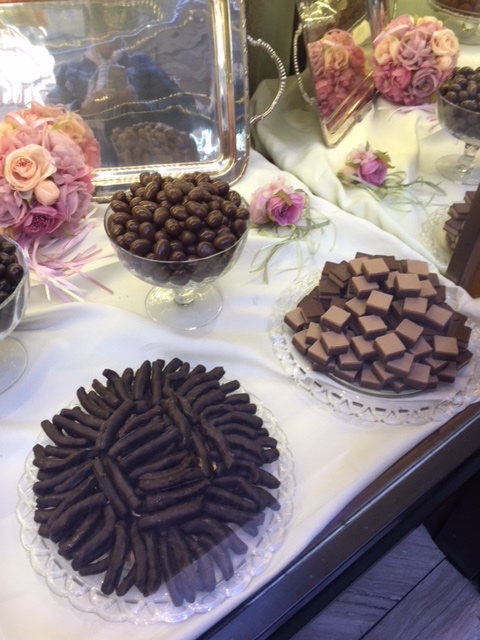
Chocolates and Valentines

IMG_7548

For a fun history of how chocolate became a Valentine’s treat, see this article:

https://www.washingtonpost.com/news/retropolis/wp/2018/02/14/we-owe-our-sinful-valentines-day-chocolates-to-the-prudish-self-denying-cadburys/?hpid=hp_hp-more-top-stories-2_retro-valentinesday-746am%3Ahomepage%2Fstory&utm_term=.ccf5c5b84d4b 

And for a terrific history of the paper Valentines, see the New York Times:


Coffee addiction?

You Know You’re Addicted to Coffee When…

1- you grind your coffee beans in your mouth.

2-you sleep with your eyes open.

3- you have to watch videos in fast-foward.

4- the only time you’re standing still is during an earthquake.

5- you can take a picture of yourself from ten feet away without the timer.

6-you’ve worn out your third pair of tennis shoes this week.

7-your eyes stay open when you sneeze.

8- you chew on other people’s fingernails.

9- the nurse needs a scientific calculator to take your pulse.

10- you can type sixty words a minute with your feet.

11-you can jump-start your car without cables.

12-you don’t sweat, you percolate.

13-you walk twenty miles on your treadmill before you realize it’s not plugged in.

14-you forget to unwrap candy bars before eating them.

15- you’ve built a miniature city out of little plastic stirrers.

16- Espresso coffee takes too long.

17- you channel surf faster without a remote.

18- you have a picture of your coffee mug on your coffee mug.

19- you short out motion detectors.

20- you don’t even wait for the water to boil anymore.

21- you help your dog chase its tail.

22- you soak your dentures in coffee.

23- your first-aid kit contains two pints of coffee and an IV hook-up.

24- you get a speeding ticket even when you’re parked.

25- you answer the door before people knock.

Did you know?–Nutella

The amount of Nutella produced in a year weighs as much as the Empire State building, and the hazelnuts used to make the spread over a two-year period could fill a basket of the size of the Colosseum.

And the way that Ferrero sources its two main ingredients, hazelnuts and cocoa, exemplifies the philosophy of the entire company.

The hazelnut are cultivated in Italy and Turkey, and the company also invests in the growing economies of countries such as Georgia, Chile, South Africa and Australia as the next growers.

Cocoa is mainly produced in Western Africa and Equador, and because Ferrero uses almost 120.000 tonnes of cocoa beans every year, they stress the importance of preserving the production as well as the environment. For this reason, Ferrero joined the “World Cocoa Association” for the control of the sustainable development and for the good of the indigenous civilisations.


Info above is from https://www.thelocal.it/20170420/nutella-anniversary-history-curious-facts

Artichoke season!

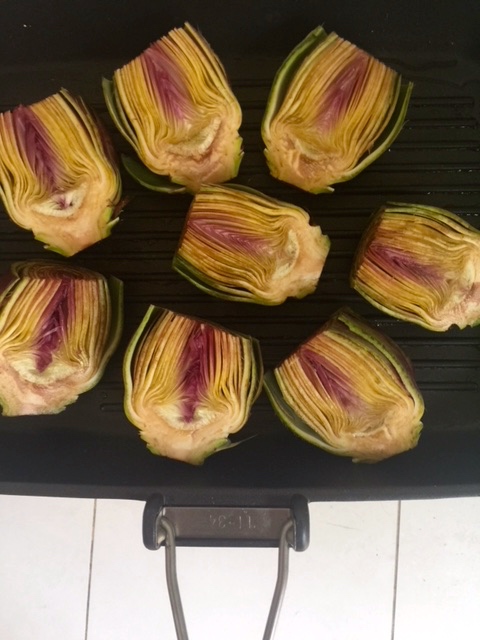
And I am learning how to prepare them!  For years I have steamed them and eaten them with tons of melted butter.  The butter seems to outweigh the benefit of consuming the veg.

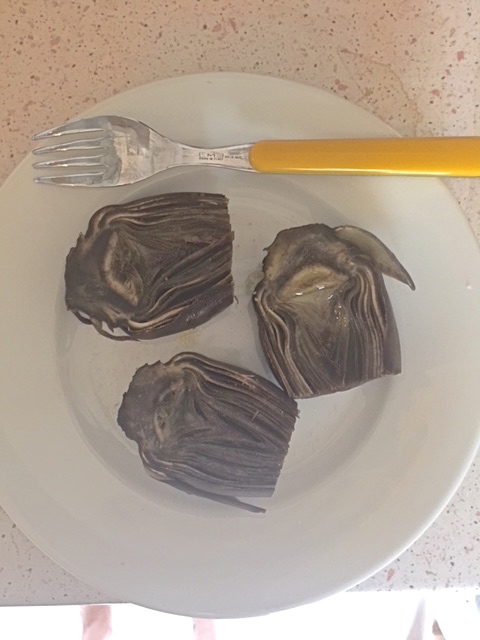
But a friend showed me how to roast them and you can see my first attempt below.  The cooked chokes don’t look like much, but the taste is divine, with fresh olive oil and no butter!


IMG_7524

IMG_7526

Persimmons in Arezzo

I love a pretty garden, even in the winter.  I was in Arezzo recently and paid a visit to the Vasari Casa museum.  If you know Vasari’s monumental book on Italian artists (the first of its kind, published in the 16th century), you know how important he is for more or less beginning the field of art history.  As such, he is sort of my patron saint, with lower case letters.

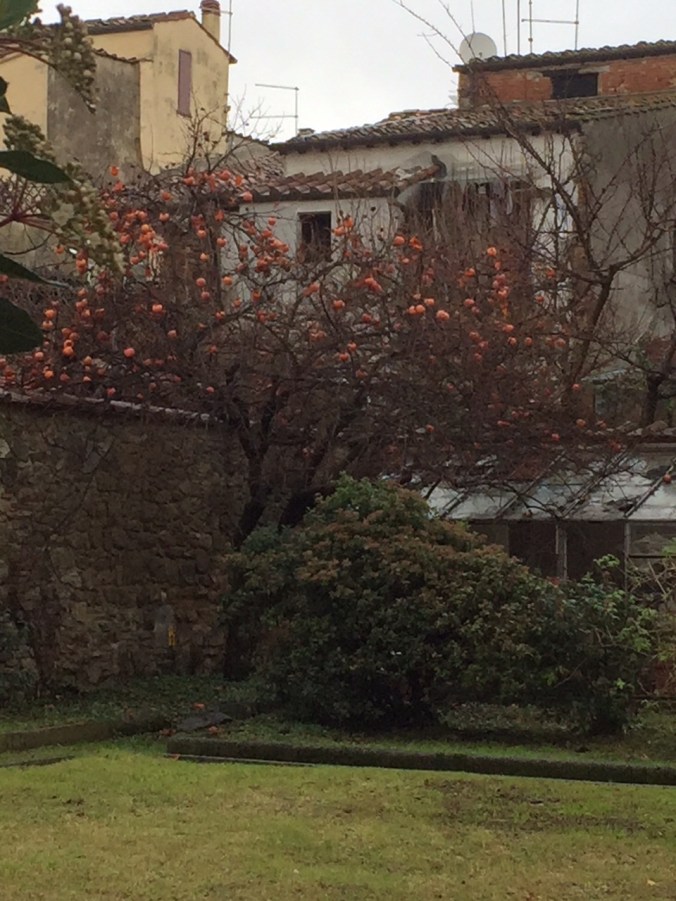
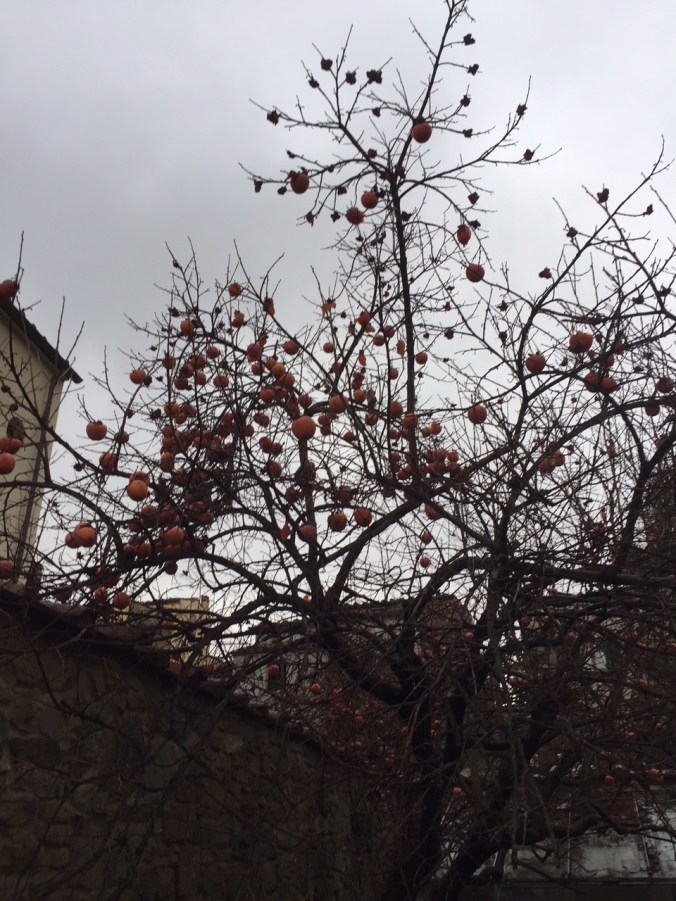
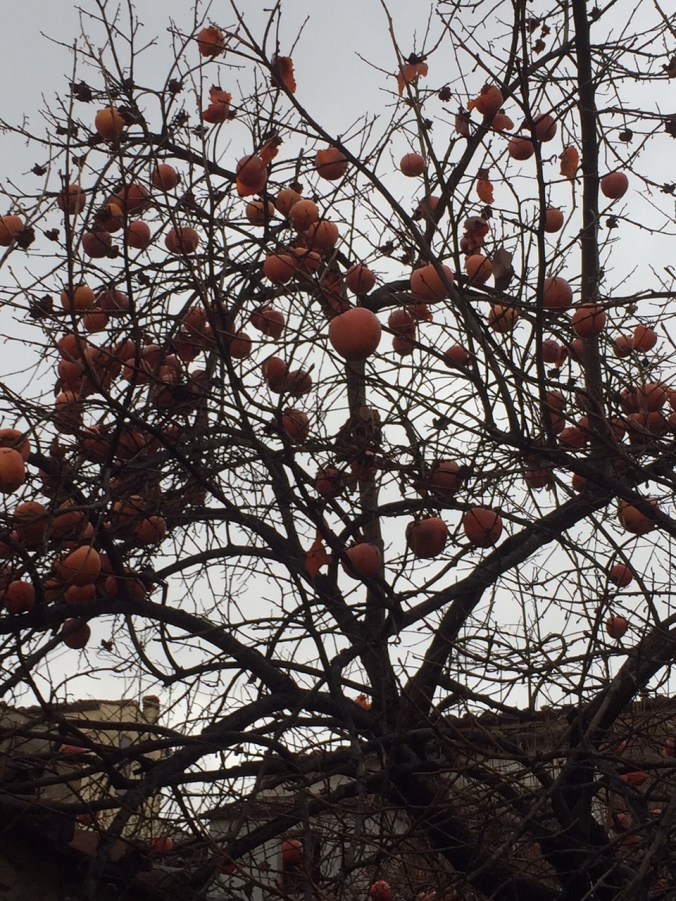
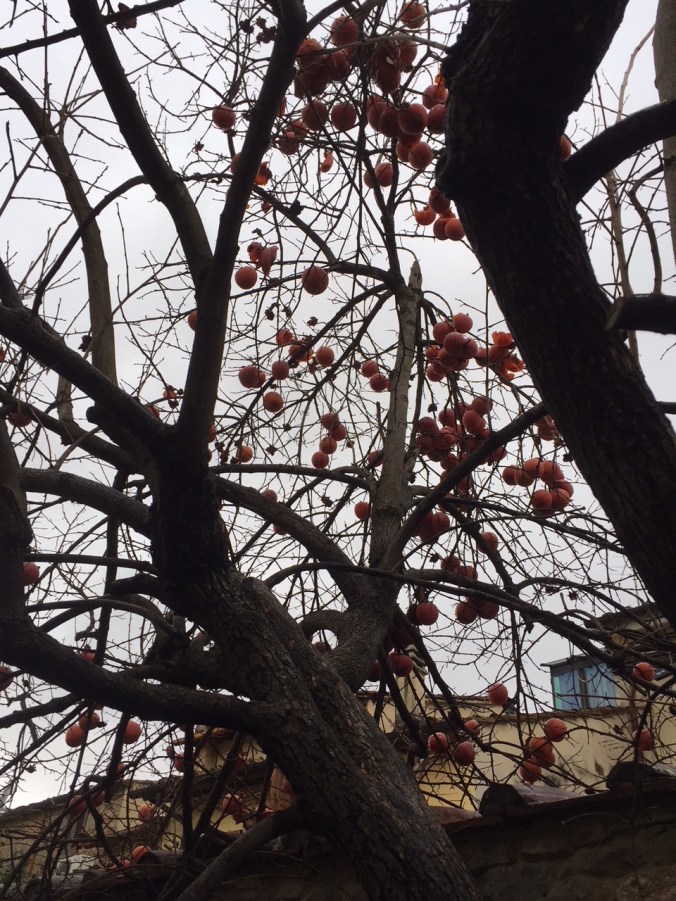
IMG_7190IMG_7158IMG_7159IMG_7160IMG_7161

So I was delighted to visit Vasari’s home in Arezzo, and ponder how it was his refuge from the busy life he led in Florence. But, as often happens for me, while I found his modest palazzo to be interesting for it’s structure and fresco decorations (much of it Vasari himself), it was the garden that drew me like a magnet.

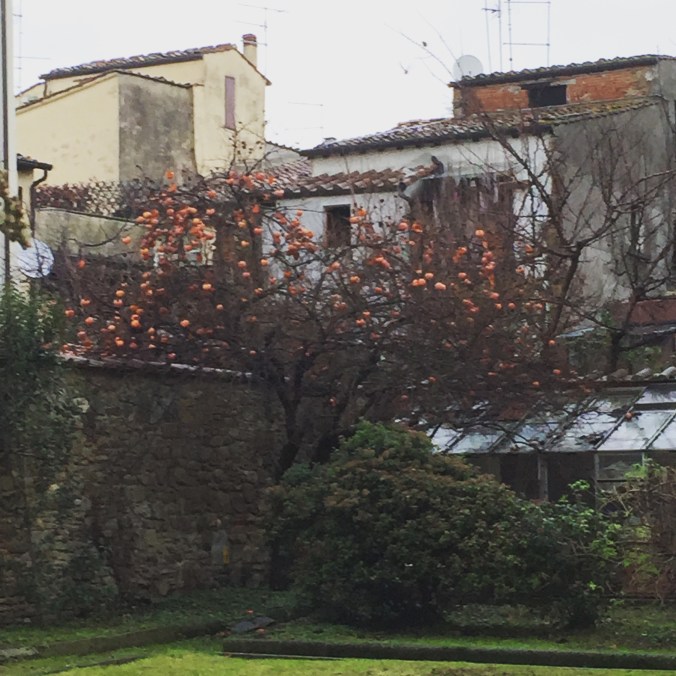
And in his garden I spied this beautiful, ancient persimmon tree.  I love how the tree looks without any leaves: only brown bark, branches, and the fruit that look like Christmas decorations.

It’s a no-go on to-go coffee in Italy

I’m delighted to report that there is (are) no Starbucks in Florence.  I have nothing against Starbucks in general, but Italy has an old and established coffee culture of its own and I am so happy that no New World influence has not been able to change that, at least so far.

Once in a while around Florence I see college co-eds walking around with a to-go coffee that they purchased in the handful of bars that will sell their brew in a styrofoam cup.  There are a couple of New World type coffee houses here, but they don’t seem to be very popular.

Why is that?  This video tells the story:

http://www.bbc.com/news/av/world-europe-42750584/why-italians-are-saying-no-to-takeaway-coffee

Five ways to drive an Italian waiter crazy, plus 1

The following post was written by my new friend, Susan, and is so fresh and honest that I just want to reblog it. I would only add one other thing at the end, so it is now 6 easy things you can do to quickly offend your server!

From Susan’s blog: Americans in Umbria:

Monday, September 26, 2011

5 things to do to drive an Italian waiter crazy

Rule number 1 to make the waitress crazy.
1.  Talk to your waitress in English in a loud voice even though she has addressed you in Italian.  Here’s the thing.  If someone speaks Italian to you it is because they don’t know English!  They know you are not Italian.  Trust me, they know.  If the waitress is young and doesn’t know English she will be embarrassed because she thinks she ought to know English.  If the waitress is older, she may be defensive and rude because she thinks you should know Italian. Speaking to them loudly in pidgin English won’t help either.  The waitress will just look shell shocked and not know what to do.

What you should do is ask, “Parla Inglese?”  If the waitress does not, she is more likely to find you someone who can.

2.  Order items out of order.  Italians may look like there is no order or system in their lives, but it isn’t true.  It is just different from Americans.  Italians are very ordered around food.  They are very serious about food.  To them, eating is not just putting calories in your system that will later be burned off.  So, there is an order in giving your order.  You will first be asked about water.  Do you want water with gas or natural.  This question needs to be answered first and then the waitress disappears while you look at the menu.  If someone shouts out beer, and someone else shouts out spaghetti, the waitress will get the same shell shocked look and god knows what you will get.  Probably the owner.  So allow the waitress to take your order in her manner.  People should go one at a time and stay on the same course.

3.  The next things that will drive her crazy.  At a table of 4 have one person order an antipasta, one person order a primi, the other person order a secondi and the last person orders a salad, which oh by the way is not on the menu.  So the American asks, “Do you have a mixed salad?” to the owner.  (The waitress has now high tailed it to the kitchen.) The owner says, “Yes, of course.”  The American says, “Where is it on the menu?”  The owner says, “It isn’t on the menu.”  The American says,”What’s in it?”  The owner says, “We make it for you what do you want in it?” The American says how many Euros?  The owner says 3.  The American says, ok my husband and I will split it.”  Now everything is out of order.  The salad, which usually comes last, is expected first.  The antipasti which should arrive first is now matched up with the primi and the secondi.  There is confusion everywhere, and everyone seems unhappy.

4.  Walk into a ristorante that offers “Typical Umbrian food” and expect a full menu of things you would eat in the states.  Oh by the way, Umbrians do not think their food is Italian.  It is Umbrian. It is different from the food in Tuscany, way different from the food in Rome and Naples.  It is generally grilled meat and meat sauce with pasta.  Very little tomatoes and very little butter.  Cheese is big.  It is usually made in house.  It is good, but unless you are at a large city, like Perugia, you are going to see pretty much the same thing on the menus because Umbrian food is pretty much the same thing, if you get my drift.

5.  The final thing to do to make your waitress crazy is to order a pizza at lunch.  Italians eat their pizza for dinner and it isn’t available at lunch.  Why is this? The wood pizza ovens are too hot to heat up during the day. There are some places that sell pizza by the slice at lunch, like in the grocery mall.  Need I say more?  One last thing once if you order pizza for dinner, ask for your left over pizza to go home with you.  The Italians are horrified by this.  Why?  Because they think warmed over pizza is disgusting and why would you do that to a food you can go and get fresh.

How do I know all of these things?  I have done everyone of them.

Thanks, Susan.  You are soooooo right!

And now, for my additional thing:

6.  The best way that I know of to convince your Italian server or manager/owner that you are a heathen from another country is to order a cappuccino after a meal.  Unless it is breakfast, or a mid-morning merenda, do not order any coffee drink with any milk in it after 12:00 p.m.  You may order a cappuccino and they will begrudgingly serve it to you, but just know that deep down inside they think you are uncivilized and know nothing about  how to enjoy food and drink.  You may order un caffe’ without a problem–in fact Italians think that an espresso after a meal helps with digestion–but never, never order a cappuccino. If you absolutely, positively must have milk in your coffee and it is after noon, you can order a macchiato with approbation, but I’m willing to bet that if what you really want is a cappuccino, you will not be satisfied with a macchiato.  Just sayin  My recommendation to you is to simply wait for morning!