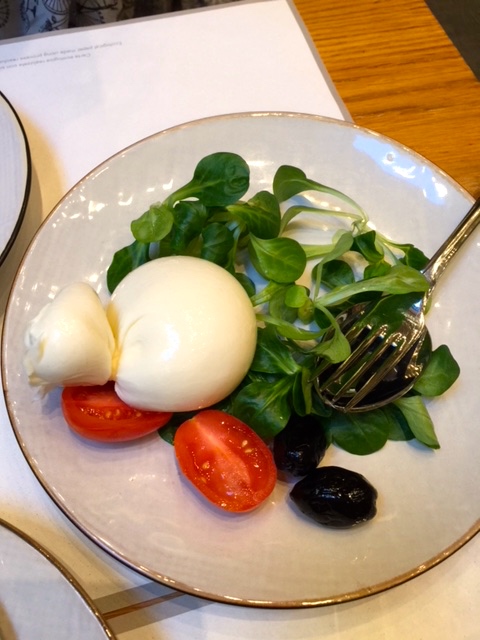
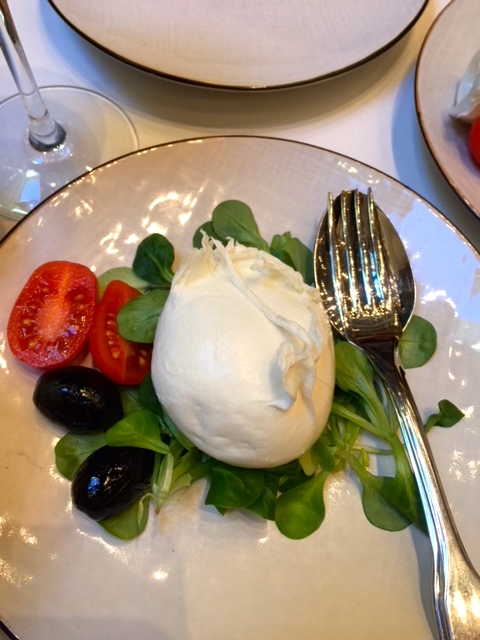
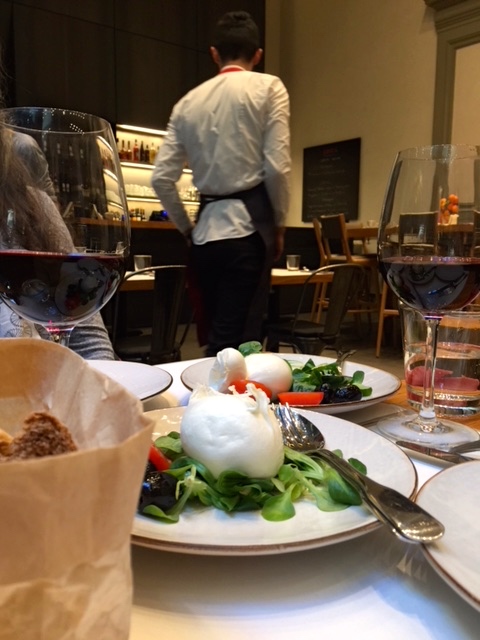
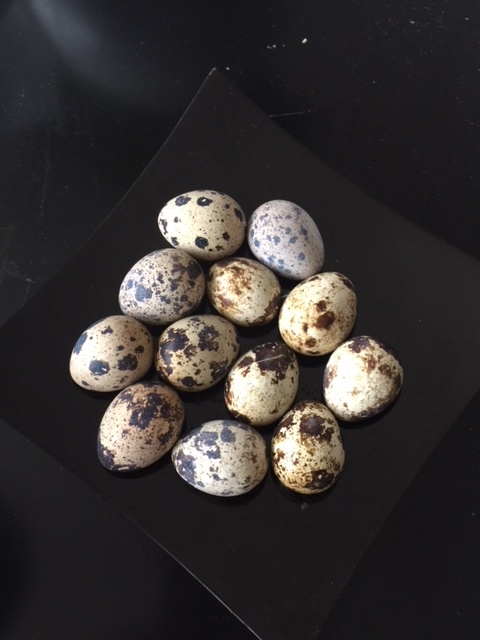
Birthday lunch!

My new friend, Jen, traveled to Florence from Umbertide in Umbria this morning to join me in celebrating my birthday!  It was a long trip by bus and train for her to get here and I am so happy that she came!

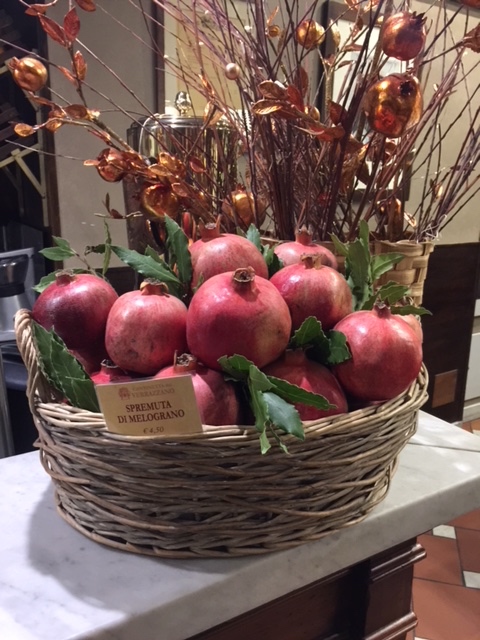
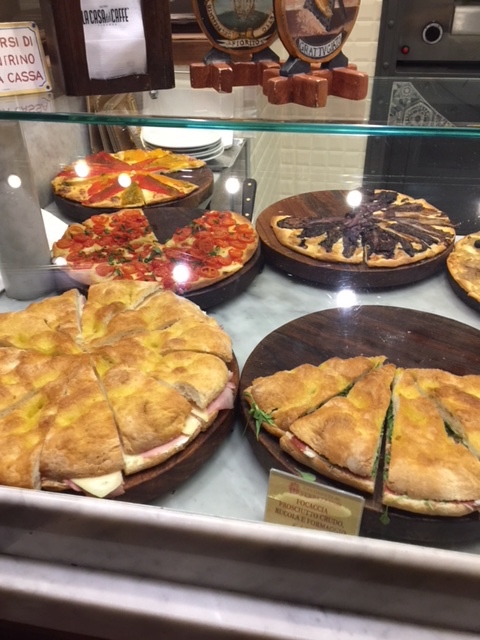
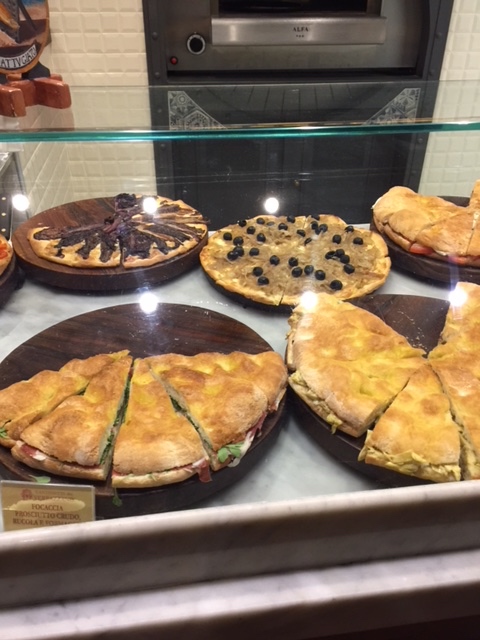
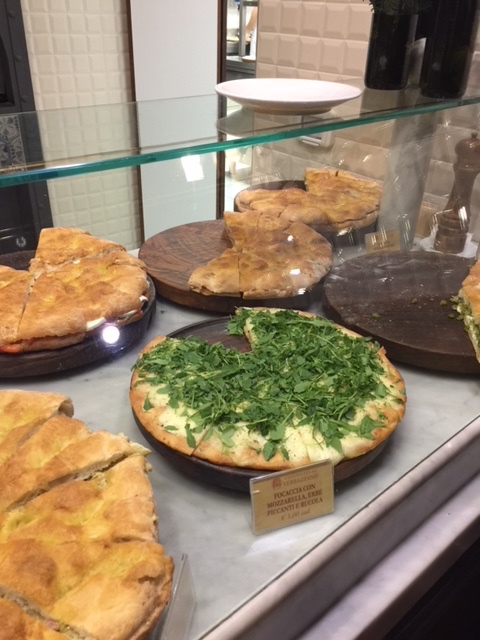
We had lunch at Obica’, where handmade mozzarella is the star of the menu.  We loved the cheese, and the wine and rest of the lunch weren’t bad either!


IMG_7372

IMG_7373


IMG_7374

How Italians drink coffee

In Italy coffee is not a social drink—it is a drug. It is not drunk; it’s mainlined. No sooner does the tiny espresso cup and saucer touch the counter than whoosh, in goes a quarter-pound of sugar, and whoosh the thing is downed in one gulp, and the caffeine is racing through your veins and you’re ready to attack—literally—the world.

From Máté, Ferenc. The Hills of Tuscany: A New Life in an Old Land (Augustana Historical Society Publication) (p. 38). Albatross. Kindle Edition.

In Italy, the sound of coffee in a bar is clinking porcelain. It is cacophony, racket, loud voices arguing and laughing over the ssssshhhh of the espresso machine. These sounds, a prelude to the hit of that syrupy black nectar that is called caffè, remind me that everything is possible. I can fight the good fight.

I think the fundamental difference between the experiences of coffee in the United States and coffee in Italy comes down to the concept of “to go.”

In America, coffee is taken to go because there’s a lot of liquid to be consumed. It accompanies you as you go about your morning. There is comfort in the feel of large quantities of lava-hot liquid under your fingers, of knowing that this coffee will be with you for hours. Your big hot cup of American coffee or latte or macchiato or whatever else Starbucks has decided to name it, will be held close, cuddled and nursed. Your very own grown-up sippy cup, thanks to that marvelous plastic mouthpiece (a beccuccio, or little beak, they would call it in Italian), which enables you to sip without spilling or scalding your mouth. Sipped and dripped. American coffee is sippy and drippy. It is like the saline bags that are linked to an intravenous drip: the level of fluid in your bloodstream never drops below a certain level.

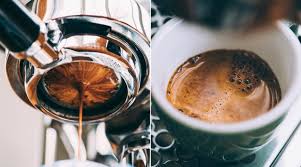
Italian espresso, on the other hand, is a hit. A fast, intense bang to your veins. It is a one-gulp switch of the wrist that wakes and revs you up in an instant. For this reason, Italian coffee to go makes no sense.  You can get your one-gulp hit somewhere other than the bar as long as it’s close by and the whole endeavor is performed quickly.

From Wilson, Katherine. The Mother-in-Law Cure (Originally published as Only in Naples): Learning to Live and Eat in an Italian Family (p. 136). Random House Publishing Group. Kindle Edition.


Italian coffee magic

images-7

We know that coffee culture is supreme in Italy.  I just came across this funny take on a comparison of Italian with French coffee:

ASK HIM FOR A CAFE AU LAIT ONLY IF YOU WOKE UP WITH HIM

It’s almost impossible to find a drinkable cup of coffee in Paris: the coffee here is among the worst I’ve ever had. Before Francophiles race to chime in about how bad American coffee is, yes, I agree with you. There’s a lot of bad coffee in America. The difference is there’s the possibility of finding a good cup in the States.

Plus North Americans have an excuse: we don’t share a border with Italy, that magical kingdom of coffee, where each tiny sip is a multisensory explosion of flavor.

From the moment the barman puts that little cup under the spigot, until I polish off the last of the syrupy espresso that trickles out of the tiny cup, my mind can’t concentrate on anything but that intense dose of masterfully extracted coffee. Ah—il espresso perfetto.

In a country where there’s such an emphasis on fine dining, whose good food is celebrated not just here, but around the world, it’s stupefying why Parisian coffee is so vile that fed-up French food writer Sophie Brissard described it as “donkey piss.” The only good coffee I’ve found in Paris has been in places run by Italians. To them, serving bad coffee would be an insult to their entire culture. When I asked the woman at the Italian tourism office how she was able to live in Paris and subsist on the coffee served here, she looked as if I’d made her queasy just by mentioning it. “I will not drink coffee in France,” she responded. “I only drink tea.”

Lebovitz, David. The Sweet Life in Paris: (pp. 165-166). Crown/Archetype. Kindle Edition.

The wine windows of Florence.

Anyone with a careful eye can spot interesting little windows, set in century’s old palazzi, all around Florence.  There are allegedly 130 of them in the city.
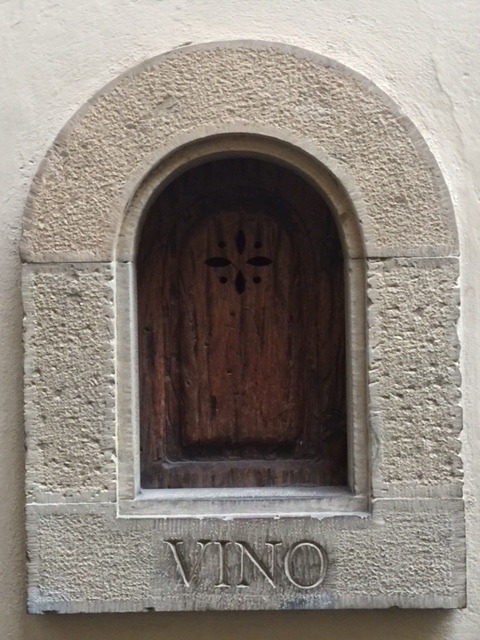
IMG_6673


These little windows, known as the bucchette del vino, are relics of Florence’s wine trade in the medieval period.
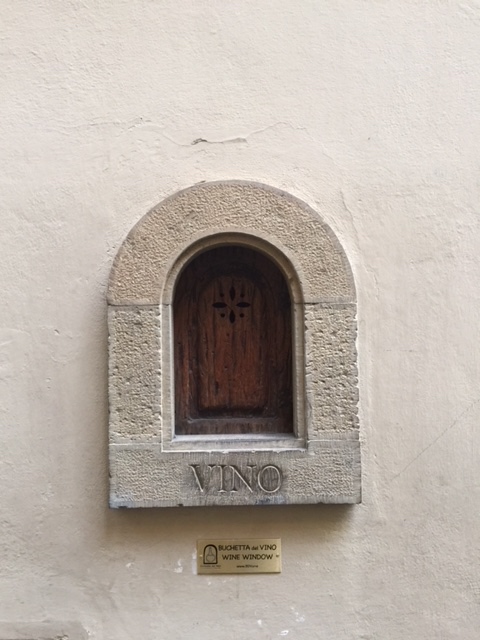
IMG_6672

Whenever such a window appeared, indicating the home of a wine producer, a customer could knock on the nearby door of the palazzo, order the amount, and collect their merchandise from the small window.  The windows thus served as a counter for the exchange of the product and the money.  The small openings were a crucial component of how local wines were bought and sold, directly from producer to consumer.

Customers typically brought their own jug, bottle or glass, placed it through the window, waited for a servant inside to fill it, and then passed money through to complete the transaction.

A typical window featured a small door, and when the customer knocked, it was opened for business.

Windows were generally large enough to accommodate a fiasco, the straw-bottomed bottle traditionally used for Tuscan wines.

Millions of bottles were passed through the windows without the need for “go-between” taverns or wine vendors: this intriguing commercial enterprise was unique to Florence.

Of course there is an association devoted to preserving the historical heritage of Florence’s wine windows: http://www.magentaflorence.com/association-ancient-wine-windows/ You might be surprised to learn the the Association was formed formed only last year, but has the mission of  acquainting the modern world with the story of the wine windows.

Of the more than 130 extant wine windows in Florence, most of them belonged to prominent dynasties such as the Ricasoli, Antinori, Niccolini and Martelli families.  The wine producing family would bring wine produced on their Tuscan estates to their city homes and market it in the city using this informal manner, a forerunner to the ever-present vinaio (wine and sandwich counters) of today.