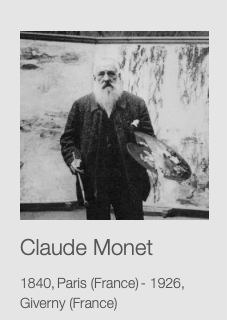
Claude Monet is known as one of the most famous painters of the Impressionist movement, which took its name from one of his paintings, Impression, soleil levant [Impression, Sunrise], dated 1872 (Musée Marmottan, Paris).
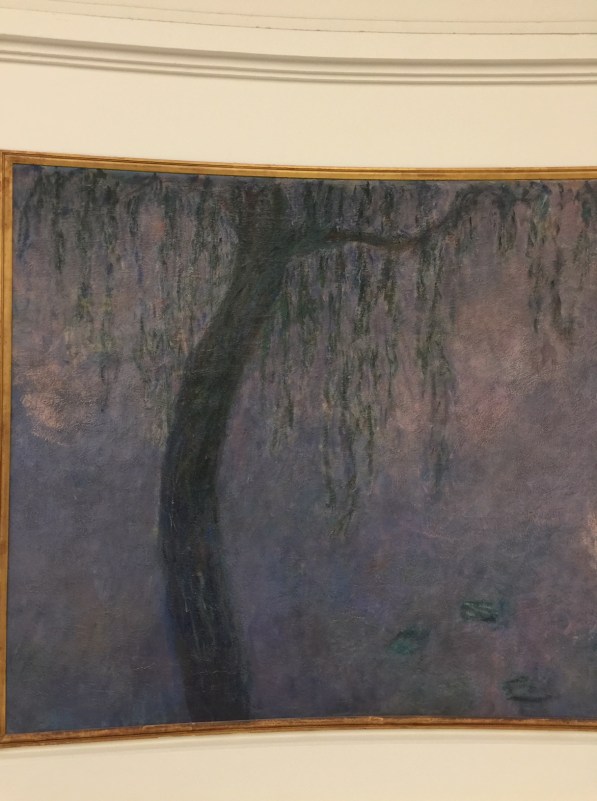
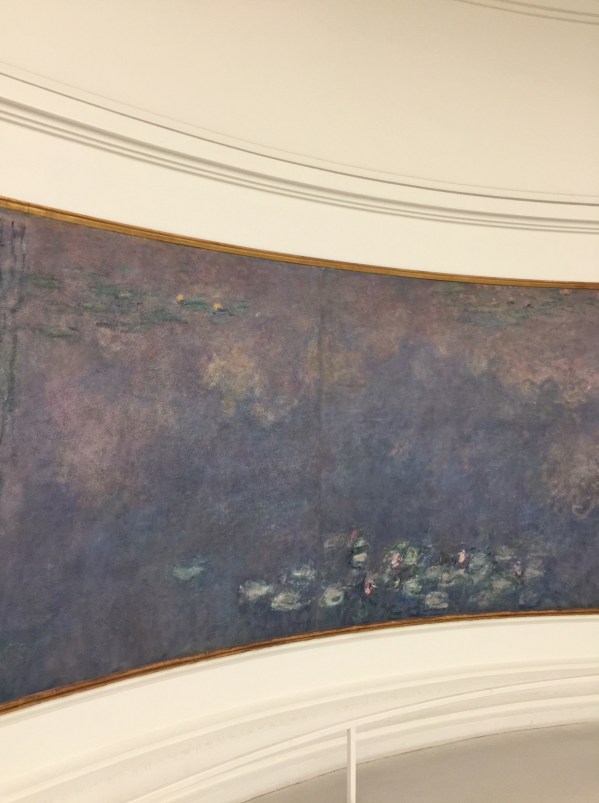
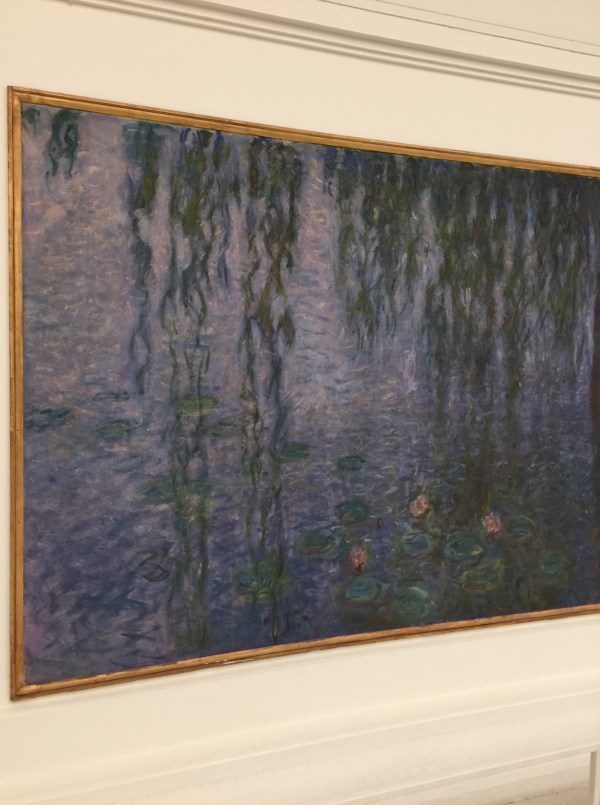
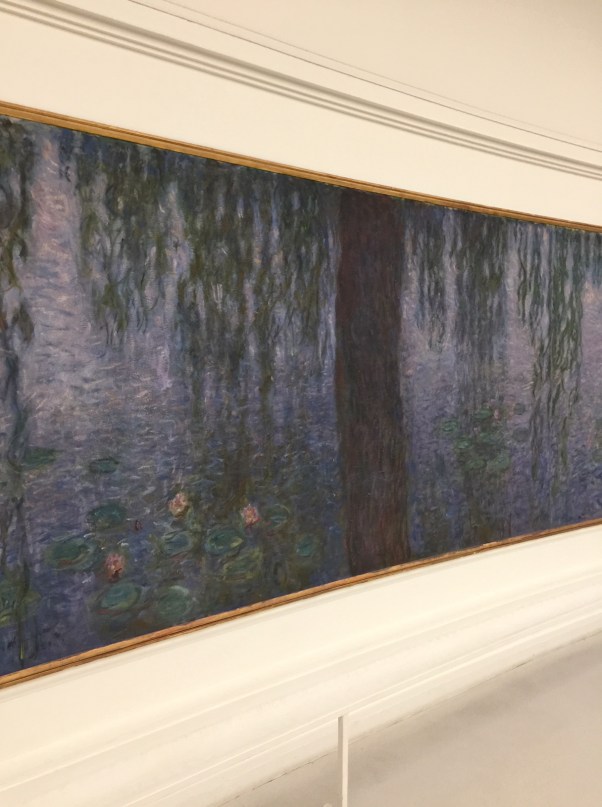
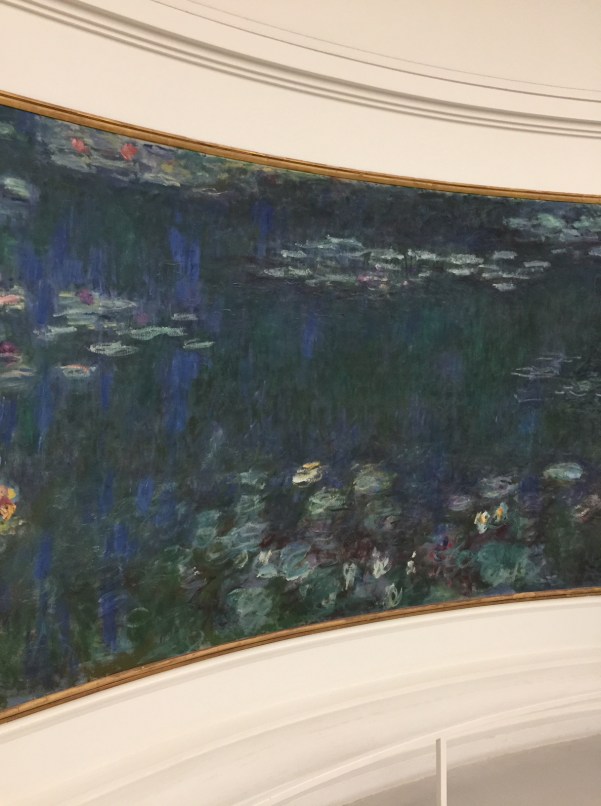
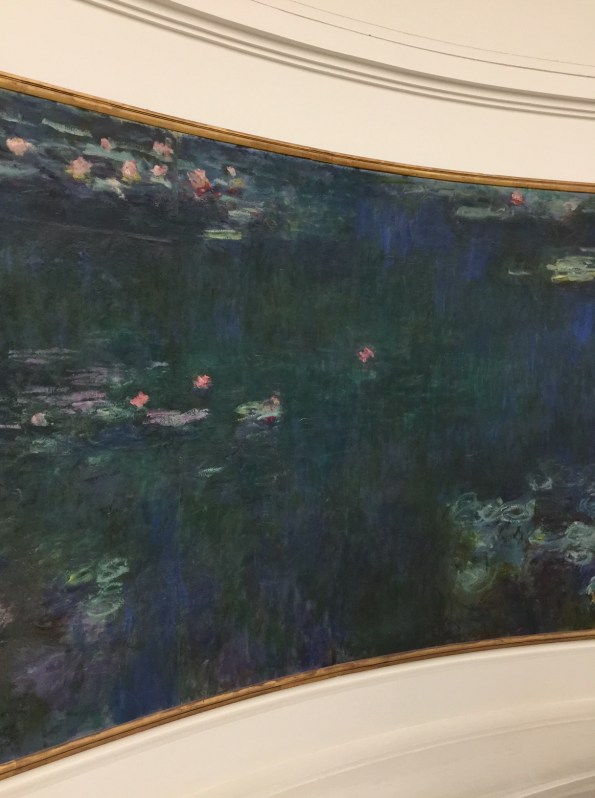
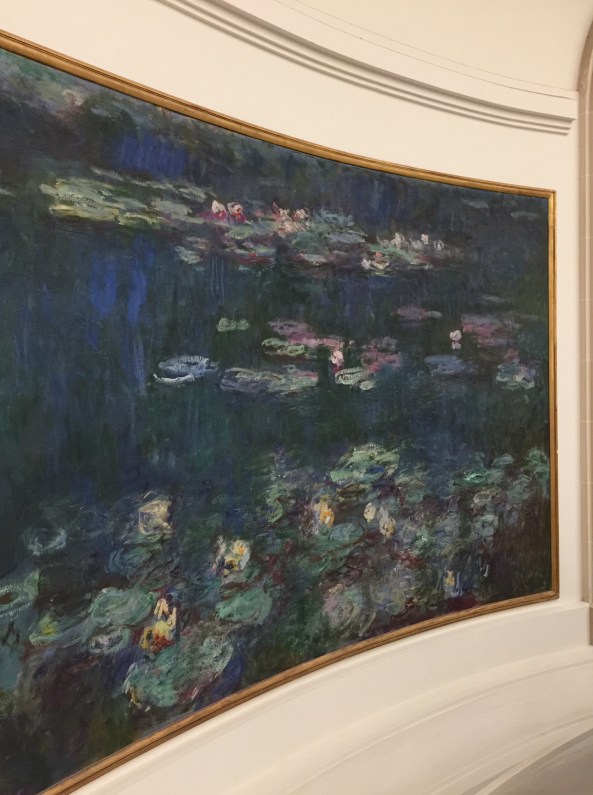
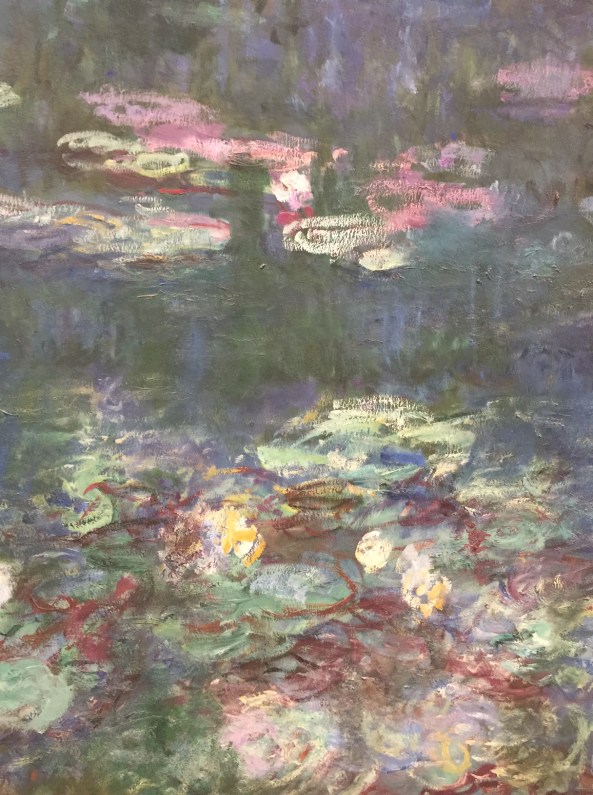
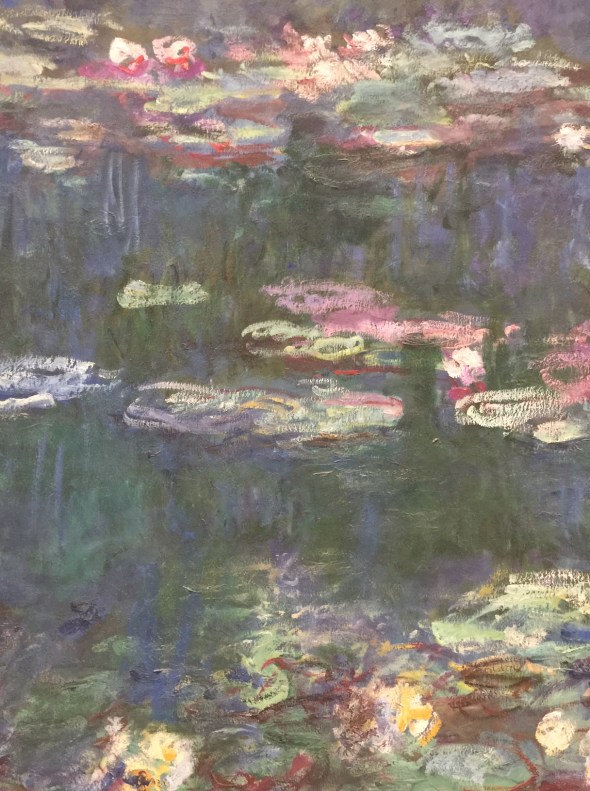
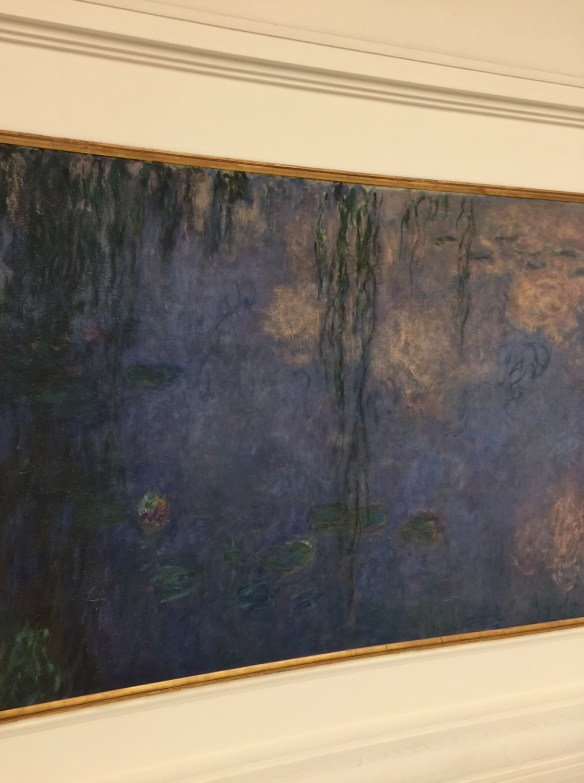
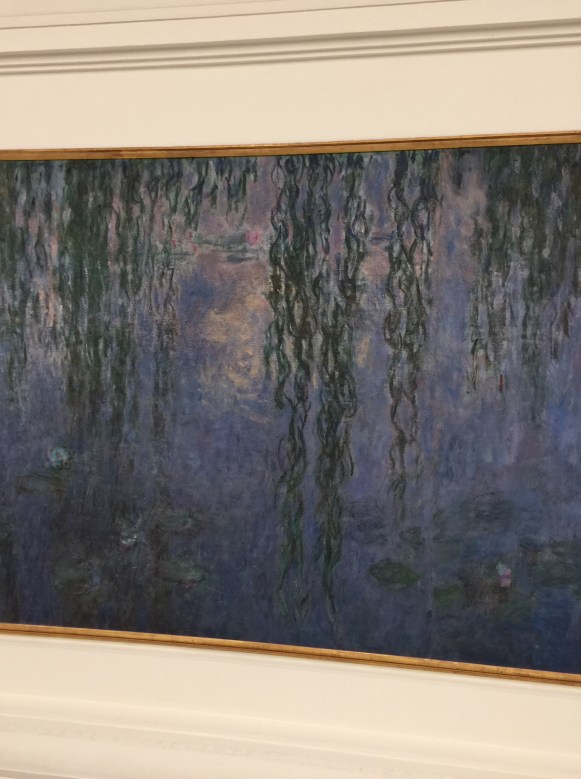
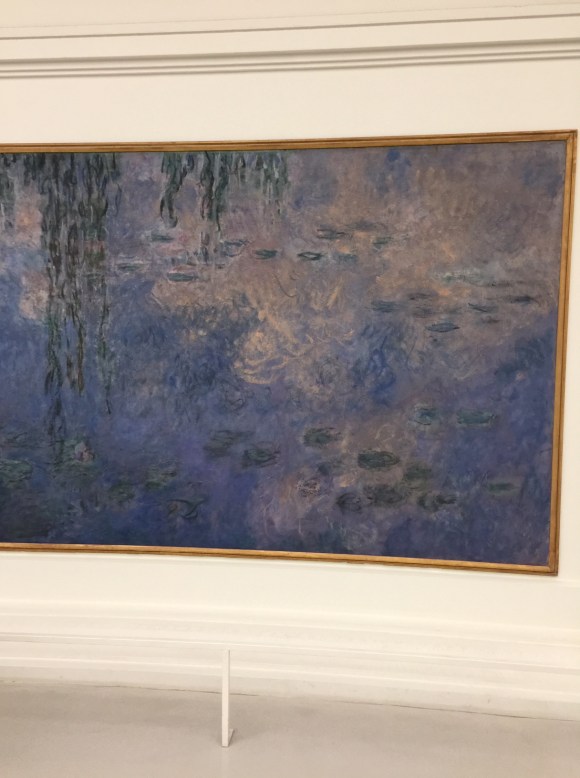
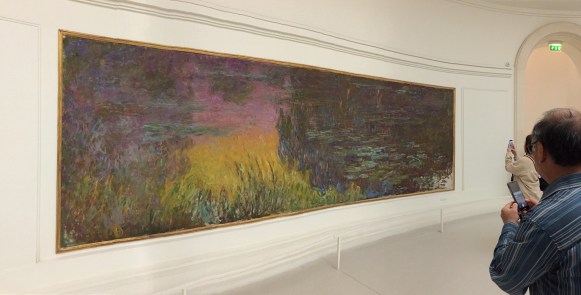
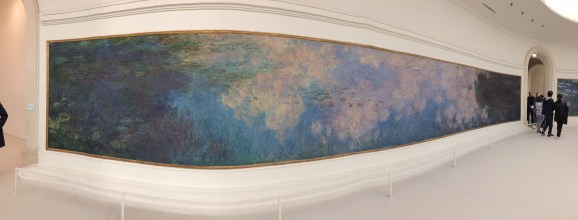
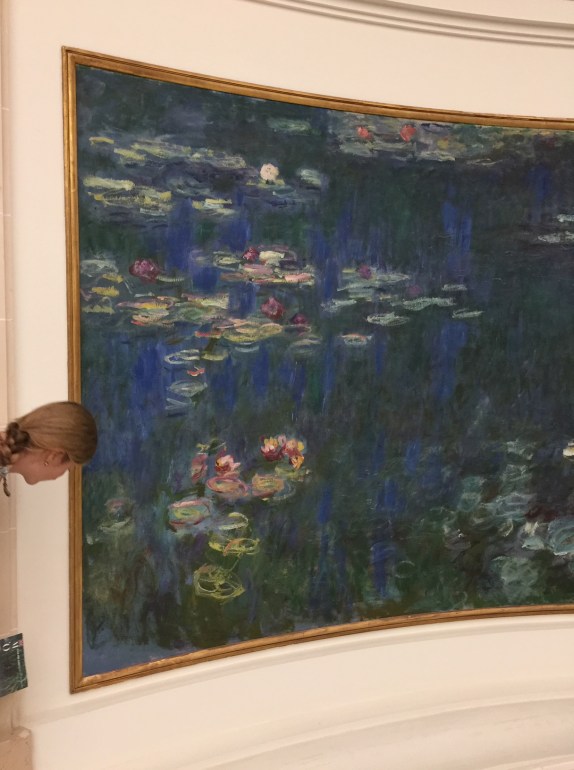
From the late 1890s to his death in 1926, the painter devoted himself to the panoramic series of Water Lilies, of which the Musée de l’Orangerie has a unique series. In fact, the artist designed several paintings specifically for the building, and donated his first two large panels to the French State as a symbol of peace on the day following the Armistice of 12 November 1918.
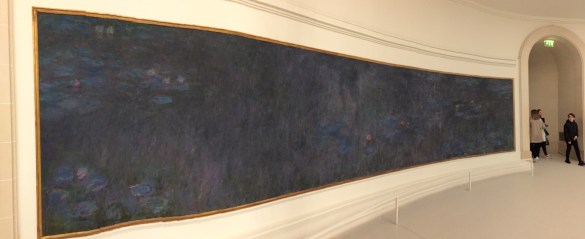
He also designed a unique space consisting of two oval rooms within the museum, giving the spectator, in Monet’s own words, “an illusion of an endless whole, of water without horizon and without shore,” and making the museum’s Water Lilies a work that is without equal anywhere in the world. Monet’s eight compositions were set out in the two consecutive oval rooms, both of which have the advantage of natural light from the skylights, and are oriented from west to east, following the course of the sun and one of the main routes through Paris along the Seine. The two ovals evoke the symbol of infinity, whereas the paintings represent the cycle of light throughout the day.
Monet greatly increased the dimensions of his initial project, started before 1914. The painter wanted visitors to be able to immerse themselves completely in the painting and to forget about the outside world. The end of the First World War in 1918 reinforced his desire to offer beauty to wounded souls.
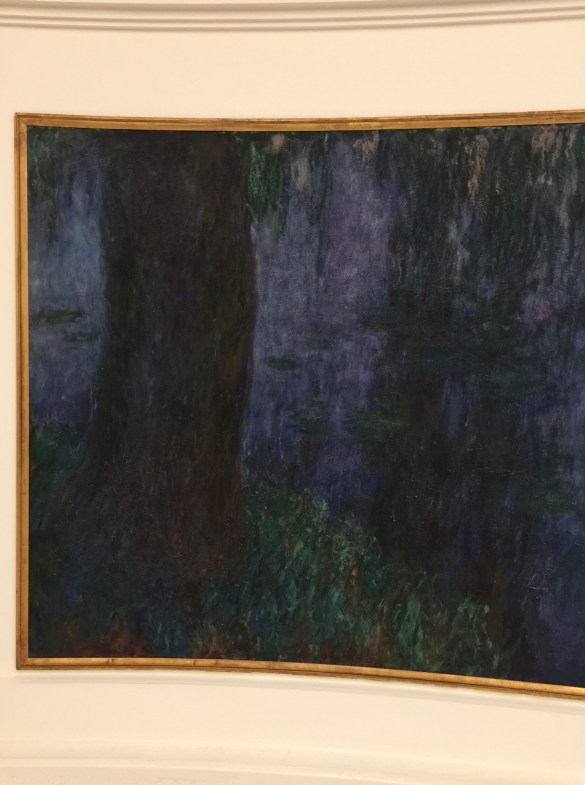
The first room brings together four compositions showing the reflections of the sky and the vegetation in the water, from morning to evening, whereas the second room contains a group of paintings with contrasts created by the branches of weeping willow around the water’s edge.
The Water Lilies were installed according to plan at the Musée de l’Orangerie in 1927, a few months after Monet’s death. This unique set of canvases were designed as a real environment and crowns the Water Lilies cycle begun nearly thirty years before.
The setting for the paintings is one of the largest monumental achievements of early twentieth century painting. The dimensions and the area covered by the paint surrounds and encompasses the viewer on nearly one hundred linear meters which unfold a landscape dotted with water lilies water, willow branches, tree and cloud reflections, giving the “illusion of an endless whole, of a wave with no horizon and no shore” in the words of Monet. This unique masterpiece has no equivalent worldwide.
You can take a virtual tour of the Water Lilies cycle here:
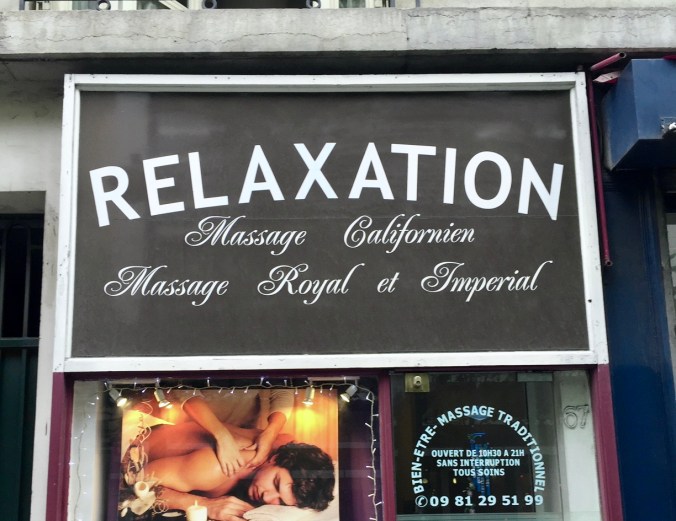
Wandering through the streets of Paris, I came upon this massage business. The Bien-Etre Massage Traditionnel is some type of massage parlor, but what caught my eye was the fact that patrons can apparently receive either a “Californian style massage” or a “Royal and Imperial massage.” I’m kind of afraid to ask what either type is like!
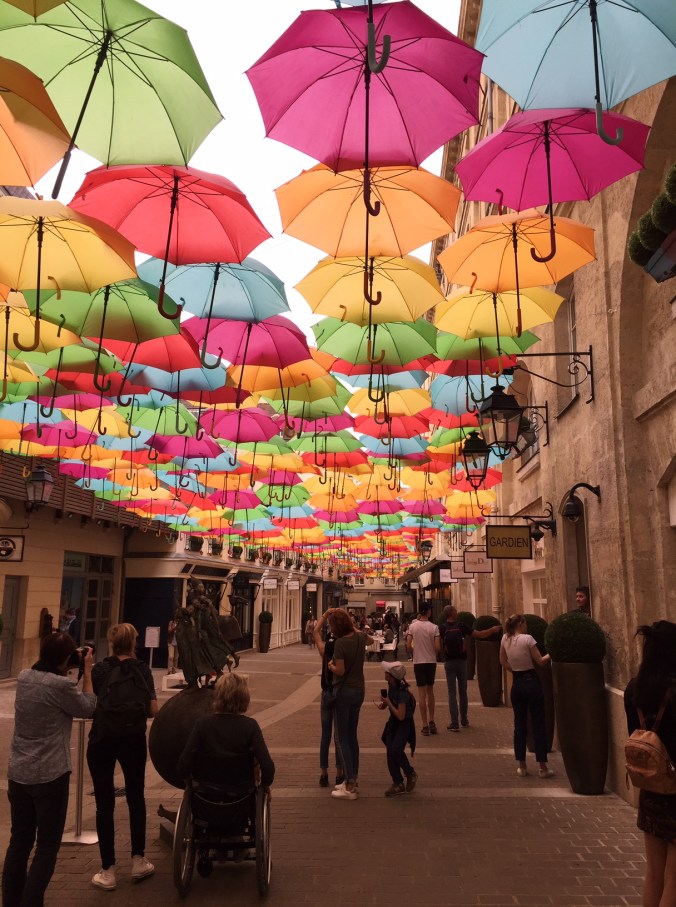
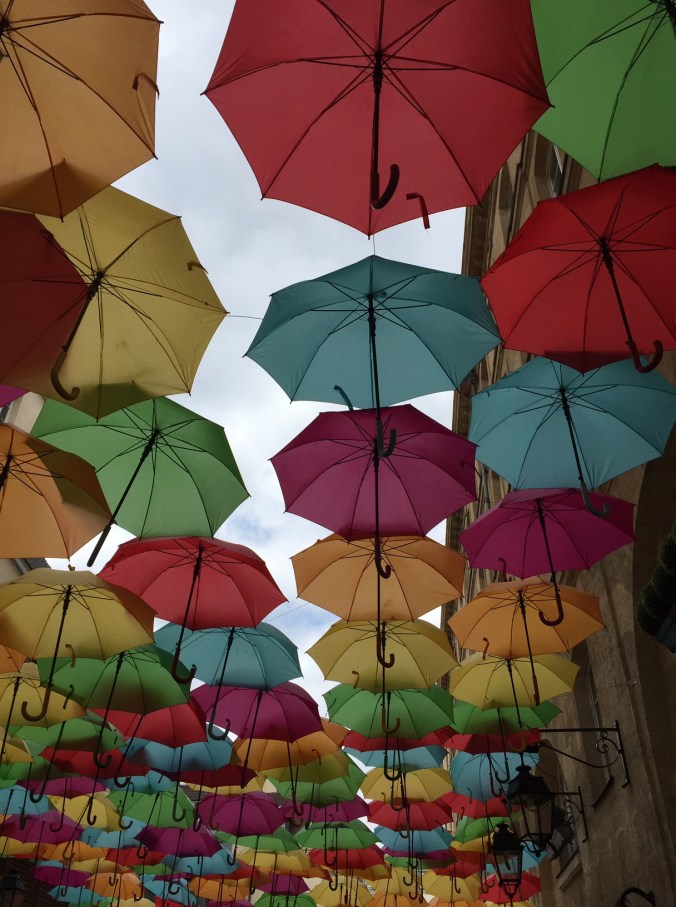
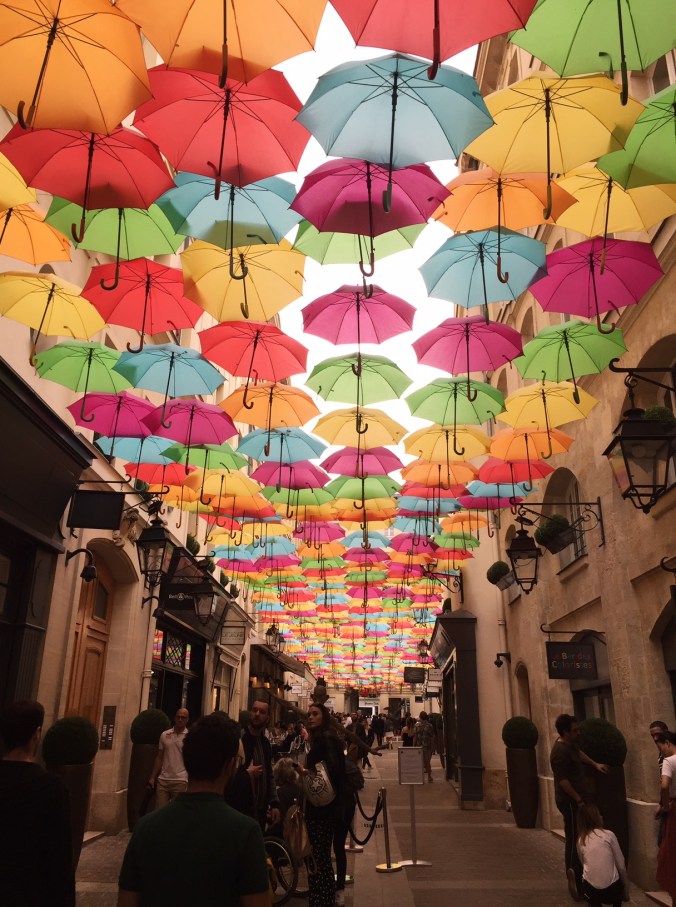
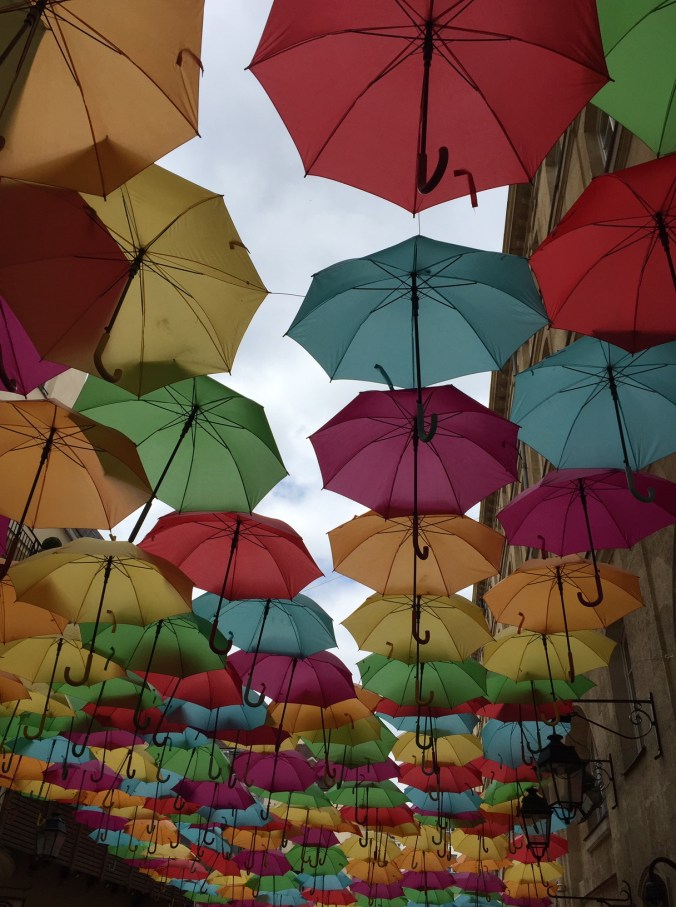
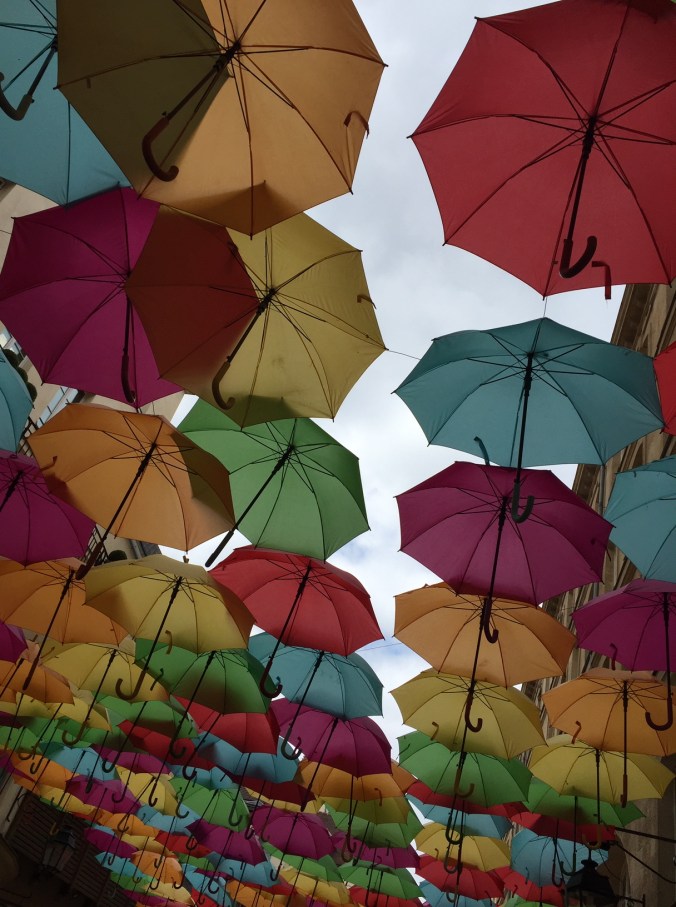
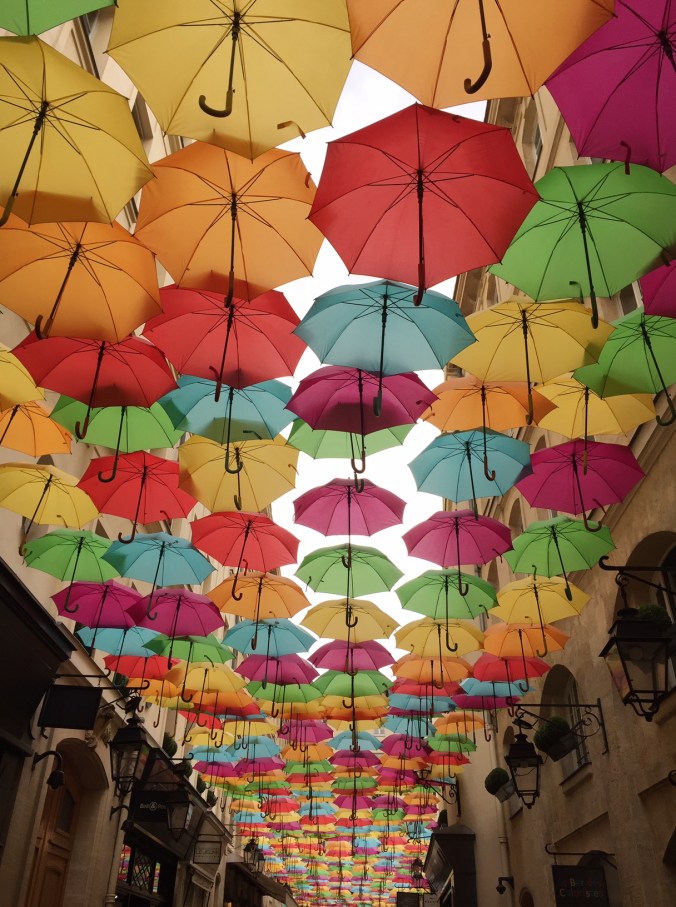
In Le Village Royal, a boutique-lined passageway in Paris, is an awe-inspiring installation of colorful umbrellas by Sextafeira Produções. The passageway is always popular with shoppers and window shoppers, but now this high-end alleyway is attracting foot traffic from all walks of life, thanks to the art installation.
Featuring 800 polychromed parapluies (umbrellas) floating overhead, the Umbrella Sky Project takes public art to new heights. Entering Le Village Royal, one is dazzled by a magical, multicolored canopy of open umbrellas. As sunlight illuminates the shades, the passageway is transformed into a colorful space.
This is not the first time the Umbrella Sky Project has saturated city streets in color. From a Portuguese town to Pittsburgh, Pennsylvania, over 25 locations all over the world have gotten the Umbrella Sky Project’s Technicolor treatment. Intended to “bring color and joy and promote places and their surroundings,” these installations are hugely successful.
One of the most charming things about Paris are the riverside kiosks selling books and posters. It is said that within a generation, these will no longer survive. Catch them while you can!
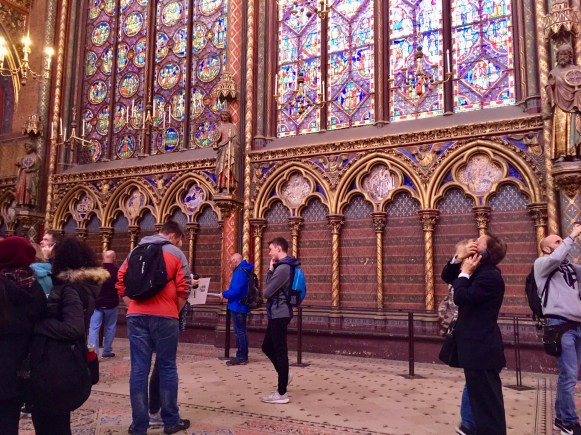
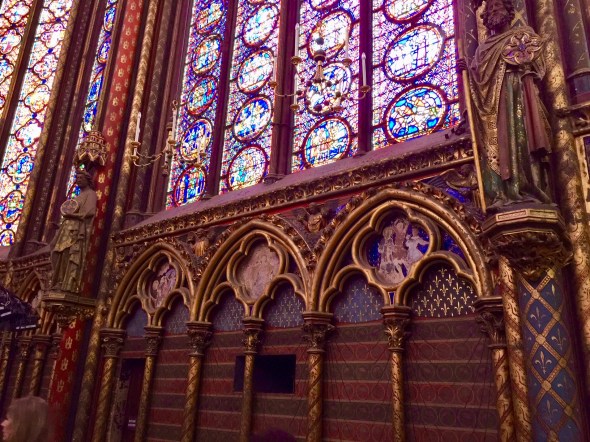
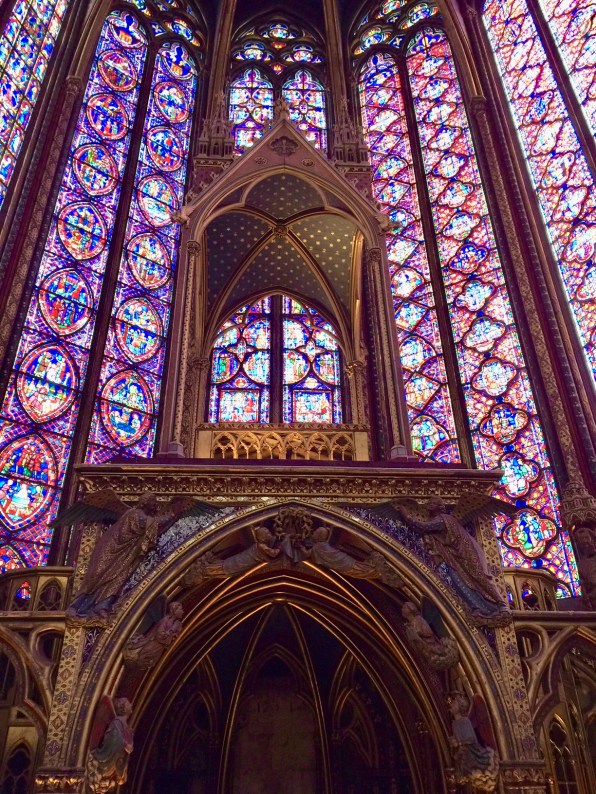
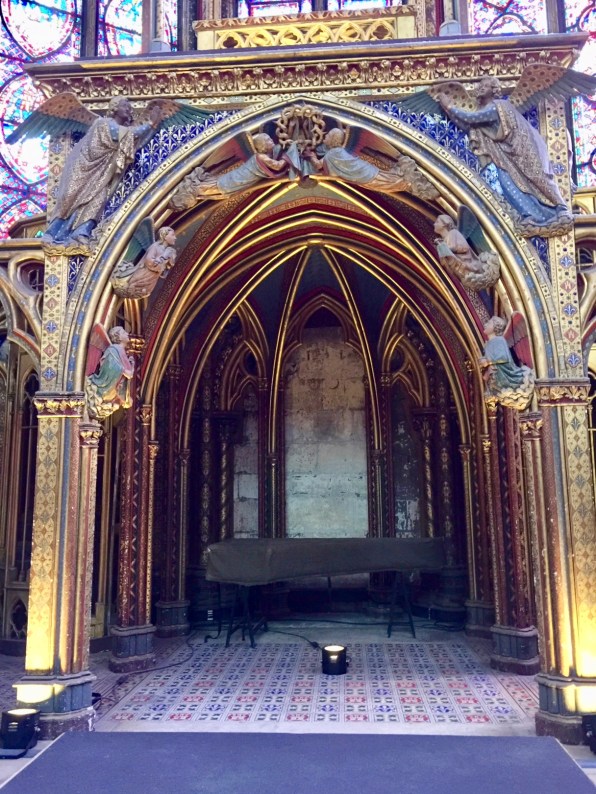
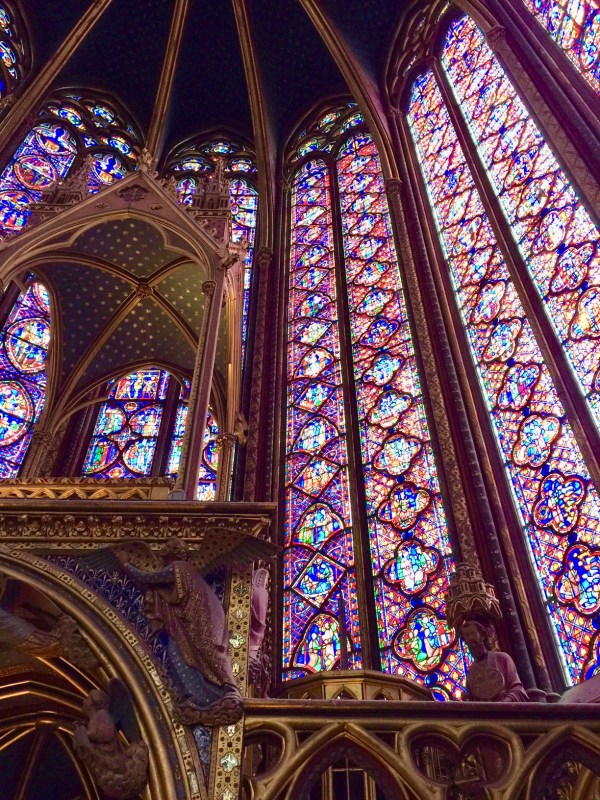
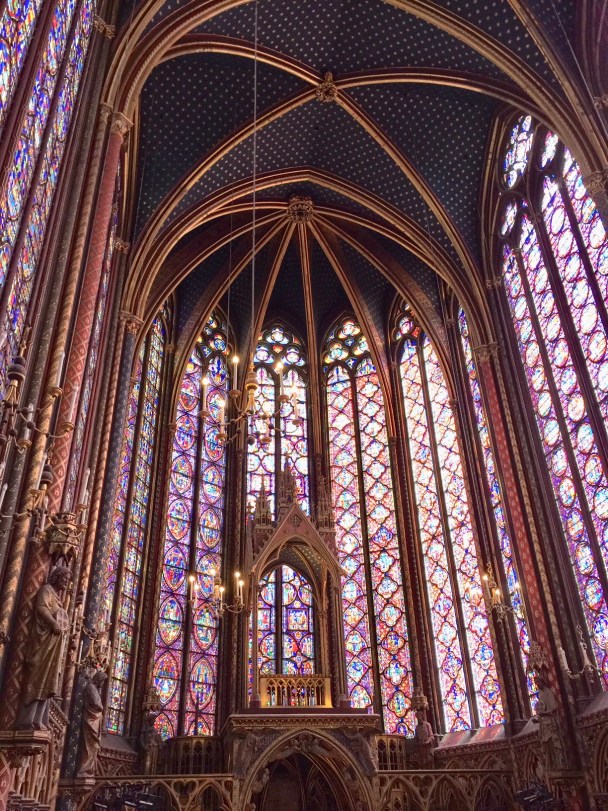
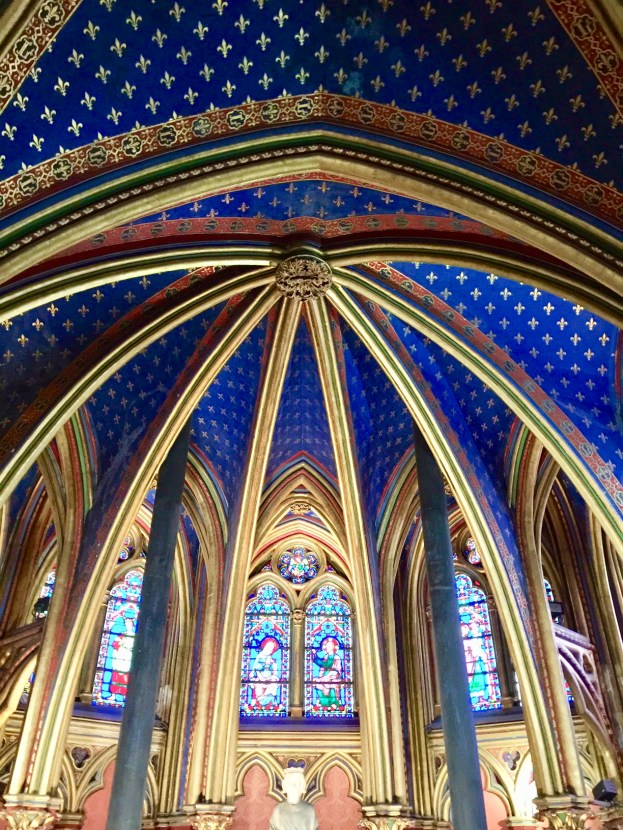
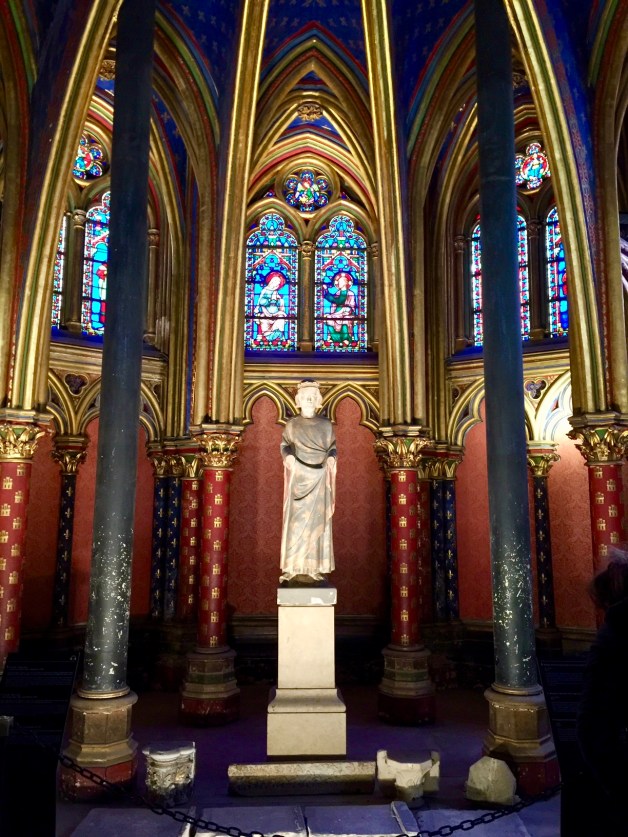
If there is a more beautifully constructed space on earth than Sainte-Chapelle, then I have yet to find it! Glass and color and stone have never been more masterfully combined than in this place. It’s alchemy.
Feast your eyes!
The Sainte-Chapelle, an architectural gem set within the Palais de la Cité, was founded by King Louis IX (later to become Saint Louis) in the mid-13th century to house the relics of the Passion.
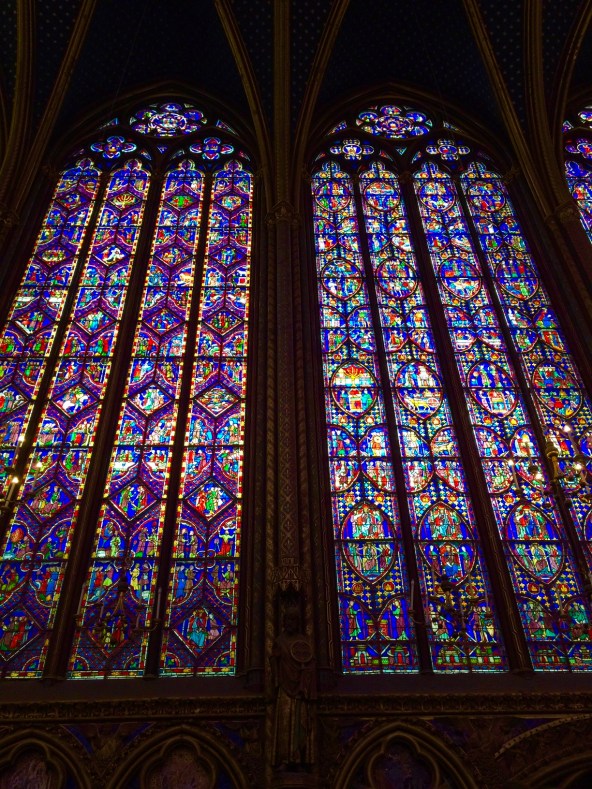
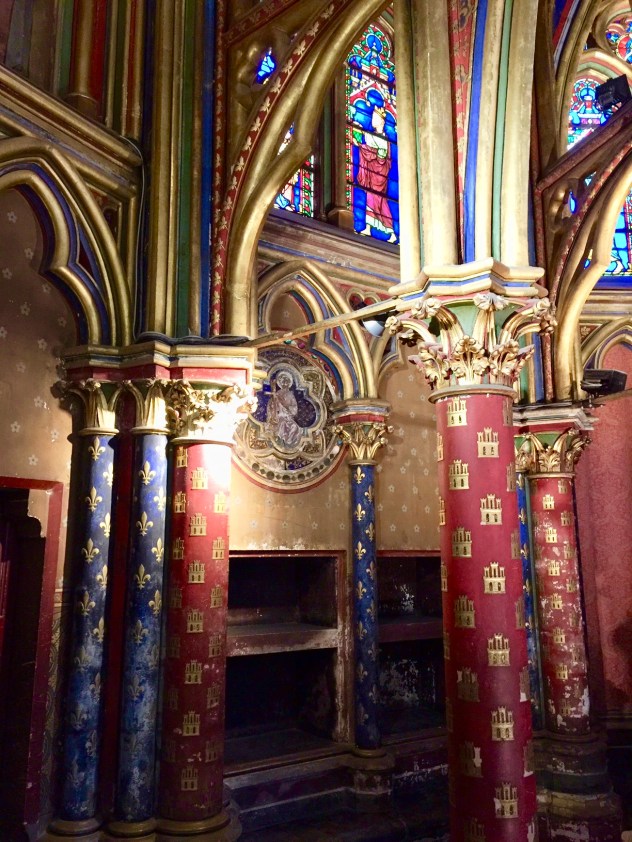
Originally at the service of the monarchy, the building is composed of the lower chapel, used by the Palace staff, and the upper chapel, reserved to the King and his entourage, where the relics were kept. The stained glass windows, set in the Flamboyant Gothic architecture, are one of a kind.
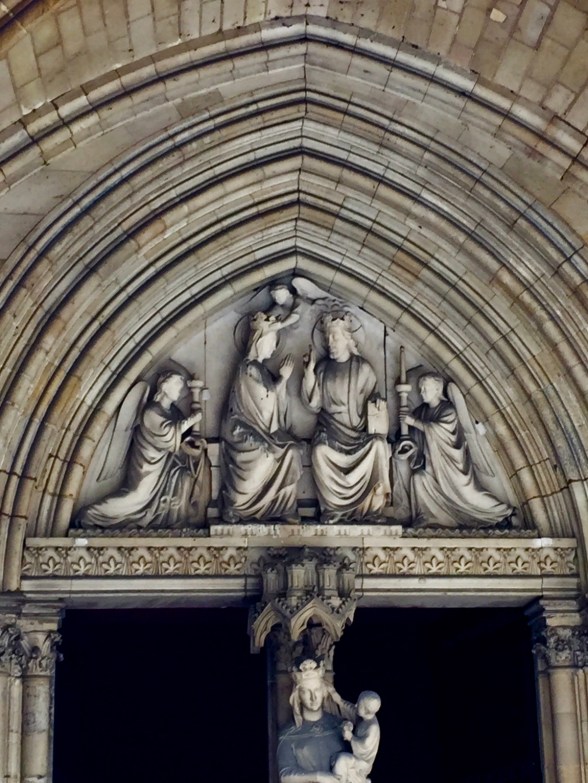
Sainte-Chapelle (Holy Chapel) – Upper Chapel, Paris, France
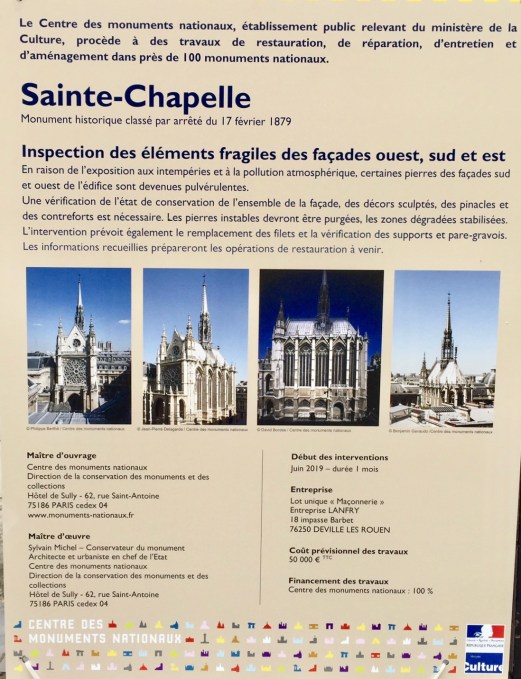
First, I take you on a guided tour starting at the facade and going into the upper and lower chapels, ending with a video of the exterior work that is going on now. For you history buffs, my usual spiel is at the end. :-)
The Sainte-Chapelle (holy chapel) is the royal chapel in the Gothic style, within the medieval Palais de la Cité, the residence of the Kings of France until the 14th century, on the Île de la Cité in the River Seine in Paris.
Construction began after 1238; the chapel was consecrated on 26 April 1248. The Sainte-Chapelle is considered among the highest achievements of the Rayonnant period of Gothic architecture. It was commissioned by King Louis IX of France to house his collection of Passion relics, including Christ’s Crown of Thorns – one of the most important relics in medieval Christendom, later hosted in the nearby Notre-Dame Cathedral until the 2019 fire, which it survived.
Along with the Conciergerie, the Sainte-Chapelle is one of the earliest surviving buildings of the Capetian royal palace on the Île de la Cité. Although damaged during the French Revolution, and restored in the 19th century, it has one of the most extensive 13th-century stained glass collections anywhere in the world.
The royal chapel is a prime example of the phase of Gothic architectural style called “Rayonnant,” marked by the feeling of weightlessness and strong vertical emphasis. It stands squarely upon a lower chapel, which served as parish church for all the inhabitants of the palace, which was the seat of government. The King Louis IX was later recognized as a saint by the Catholic Church. His title became Saint Louis.
The Sainte-Chapelle, in the courtyard of the royal palace on the Île de la Cité (now part of a later administrative complex known as La Conciergerie), was specifically built to house Louis IX’s collection of relics of Christ, which included the Crown of Thorns, the Image of Edessa and some thirty other items.
Louis purchased his Passion relics from Baldwin II, the Latin emperor at Constantinople, for the sum of 135,000 livres, though this money was actually paid to the Venetians, to whom the relics had been pawned. The relics arrived in Paris in August 1239, carried from Venice by two Dominican friars.
Upon arrival, King Louis hosted a week-long celebratory reception for the relics. For the final stage of their journey they were carried by the King himself, barefoot and dressed as a penitent, a scene depicted in the Relics of the Passion window on the south side of the chapel.
The relics were stored in a large and elaborate silver chest, the Grand-Chasse, on which Louis spent a further 100,000 livres.
The entire chapel, by contrast, cost 40,000 livres to build. In 1246, fragments of the True Cross and the Holy Lance were added to Louis’ collection, along with other relics. The chapel was consecrated on 26 April 1248 and Louis’ relics were moved to their new home with great ceremony.
As well as serving as a place of worship, the Sainte-Chapelle played an important role in the political and cultural ambitions of King Louis and his successors. With the imperial throne at Constantinople occupied by a mere Count of Flanders, and with the Holy Roman Empire in uneasy disarray, Louis’ artistic and architectural patronage helped to position him as the central monarch of western Christendom. In this way, the Sainte-Chapelle fit into a long tradition of prestigious palace chapels.
Just as the Emperor could pass privately from his palace into the Hagia Sophia in Constantinople, so now Louis could pass directly from his palace into the Sainte-Chapelle.
More importantly, the two-story palace chapel had obvious similarities to Charlemagne’s palatine chapel at Aachen (built 792–805)—a parallel that Louis was keen to exploit in presenting himself as a worthy successor to the first Holy Roman Emperor.
The contemporary visitor entering the courtyard of the Royal Palace would have been met by the sight of a grand ceremonial staircase (Grands Degres) to their right and the north flank and eastern apse of the Sainte-Chapelle to their left.
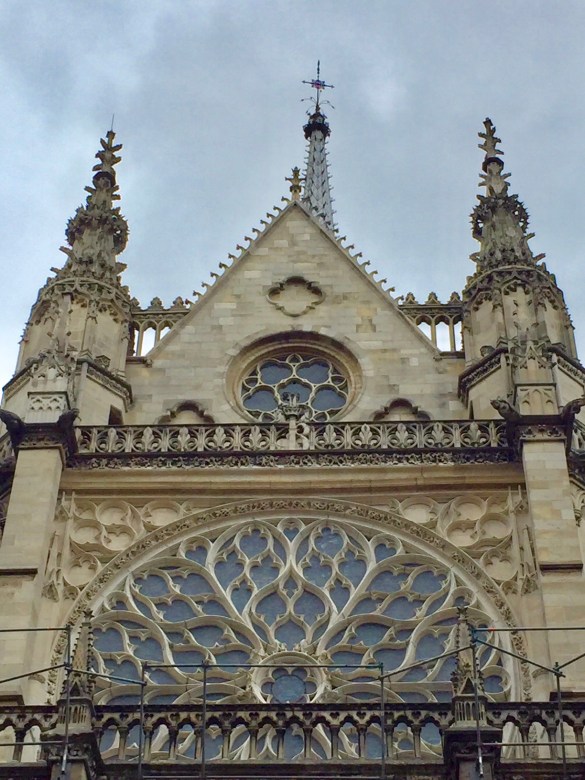
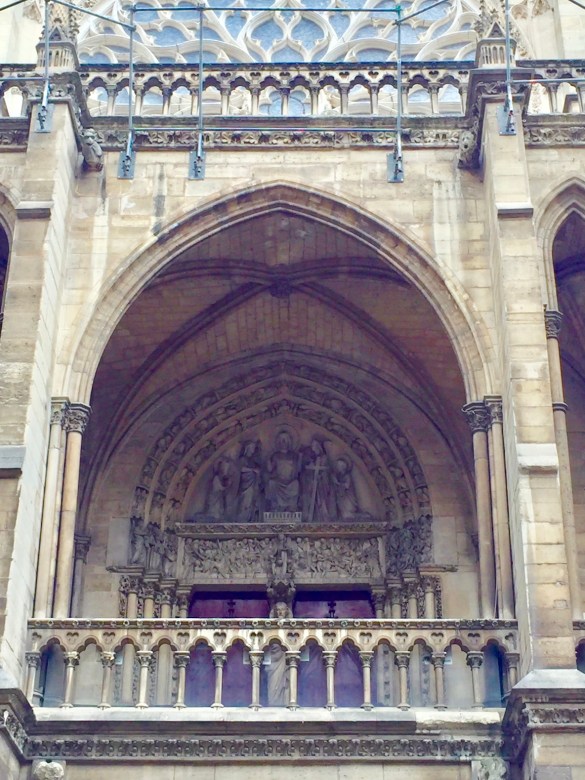
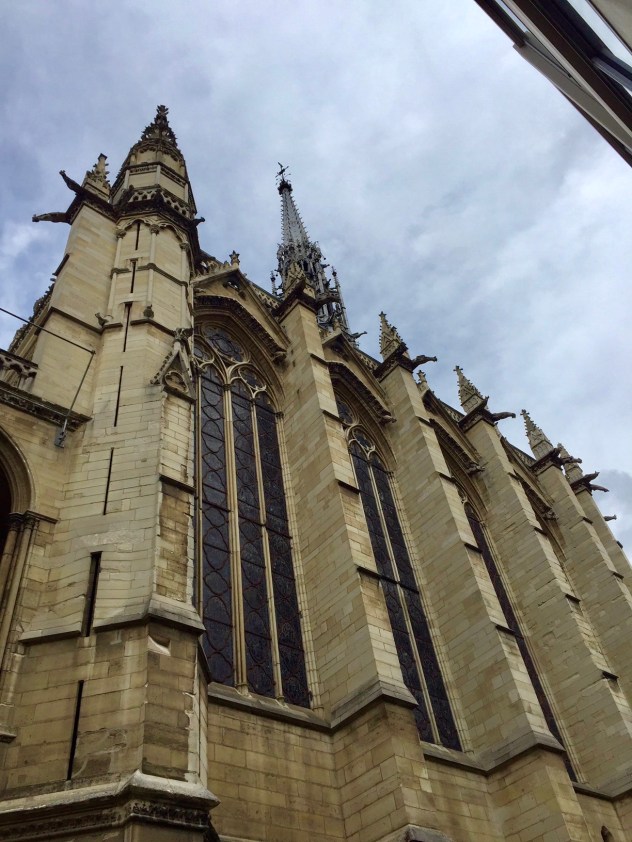
The chapel exterior shows many of the typical characteristics of Rayonnant architecture—deep buttresses surmounted by pinnacles, crocketted gables around the roof-line and vast windows subdivided by bar tracery.
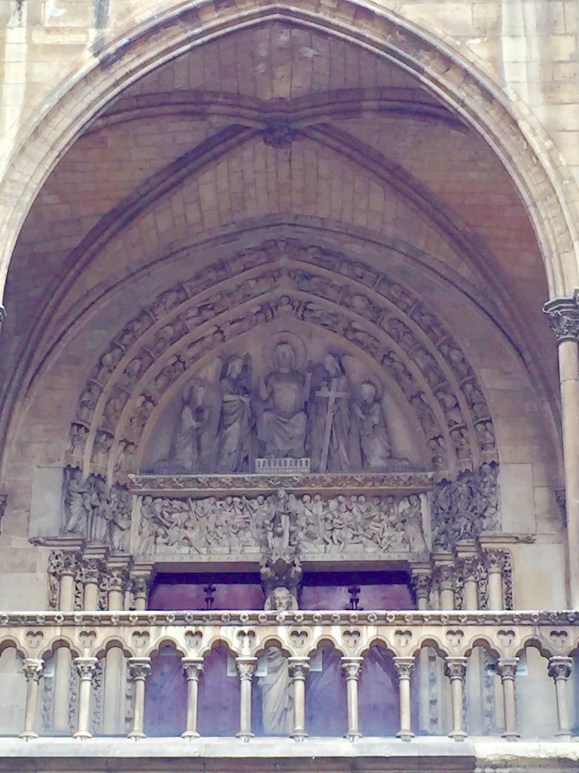
The internal division into upper and lower chapels is clearly marked on the outside by a string-course, the lower walls pierced by smaller windows with a distinctive spherical triangle shape. Despite its decoration, the exterior is relatively simple and austere, devoid of flying buttresses or major sculpture and giving little hint of the richness within.
No designer-builder is named in the archives concerned with the construction. In the 19th century it was assumed (as with so many buildings of medieval Paris) to be the work of the master mason Pierre de Montreuil, who worked on the remodelling of the Royal Abbey of Saint-Denis and completed the south transept façade of Notre-Dame Cathedral in Paris. Modern scholarship rejects this attribution in favor of Jean de Chelles or Thomas de Cormont, and the hand of an unidentified master mason from Amiens.
The Sainte-Chapelle’s most obvious architectural precursors include the apsidal chapels of Amiens Cathedral, which it resembles in its general form, and the Bishop’s Chapel (c. 1180s) of Noyon Cathedral, from which it borrowed the two-story design. As has often been argued, however, the major influence on its overall design seems to have come from contemporary metalwork, particularly the precious shrines and reliquaries made by Mosan goldsmiths.
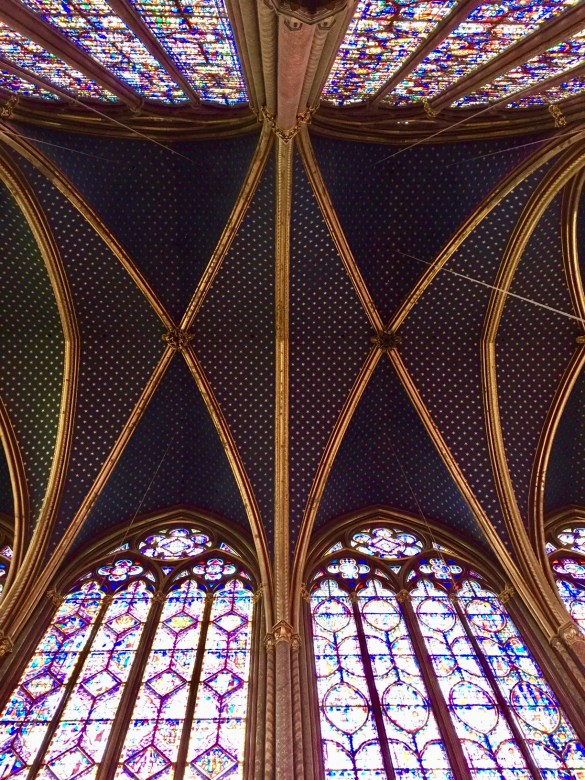
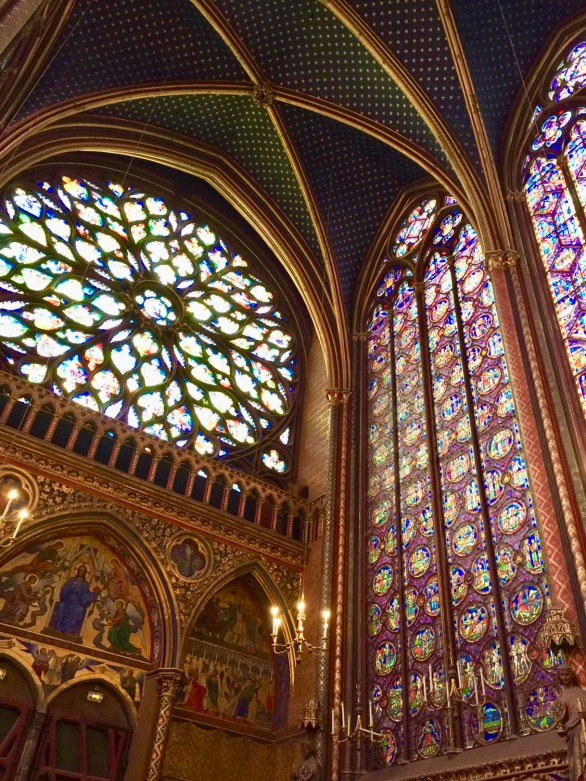
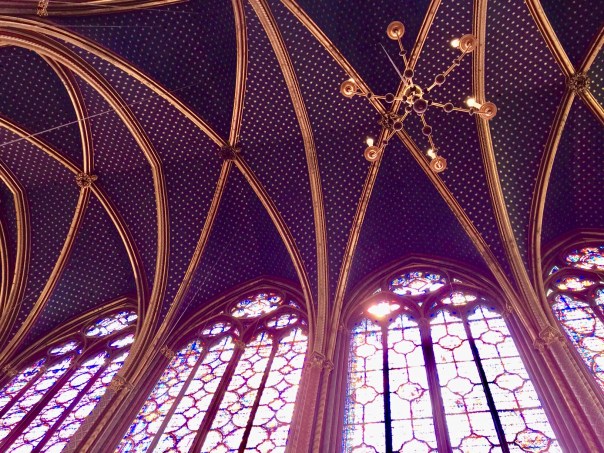
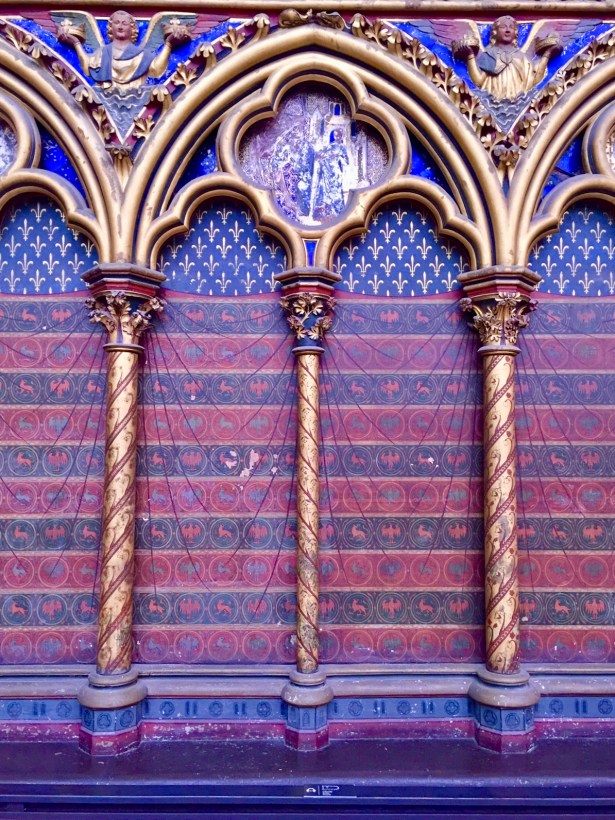
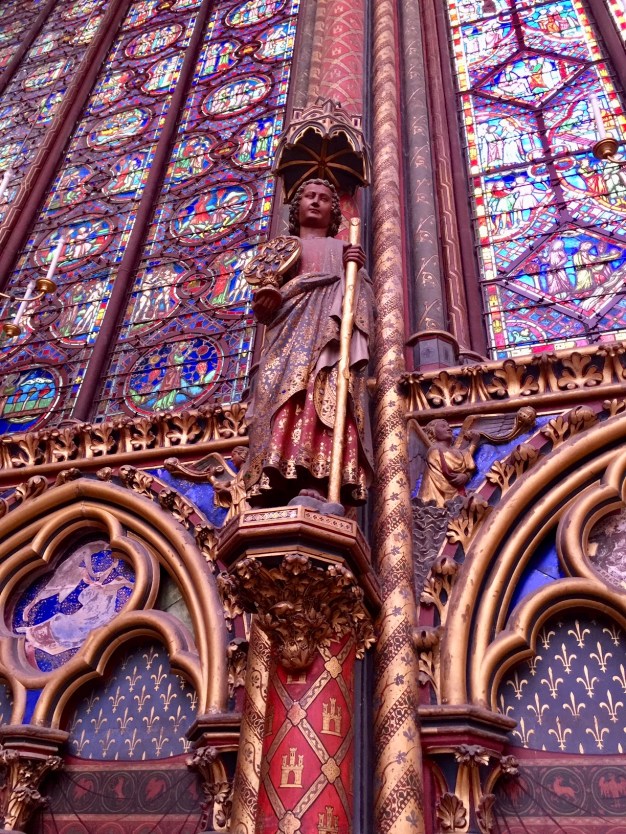
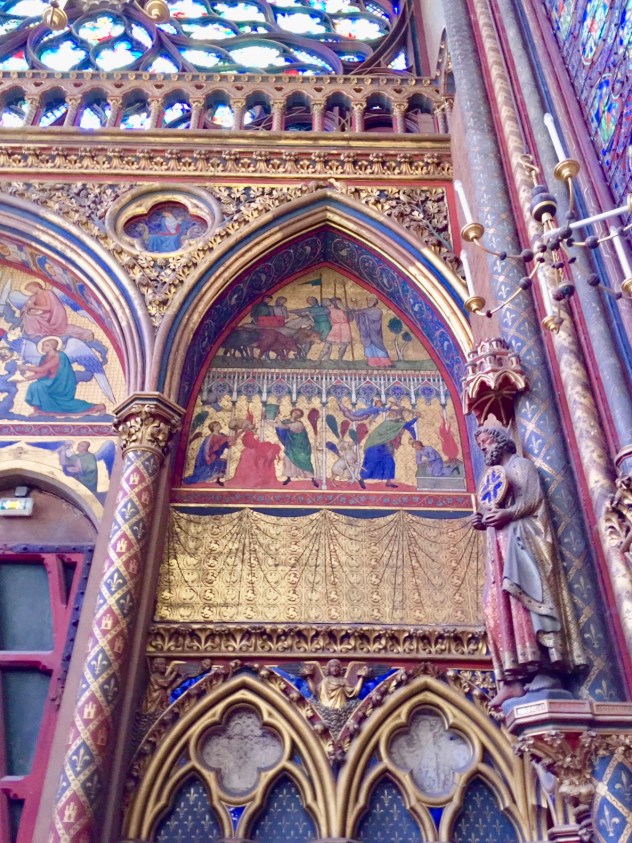
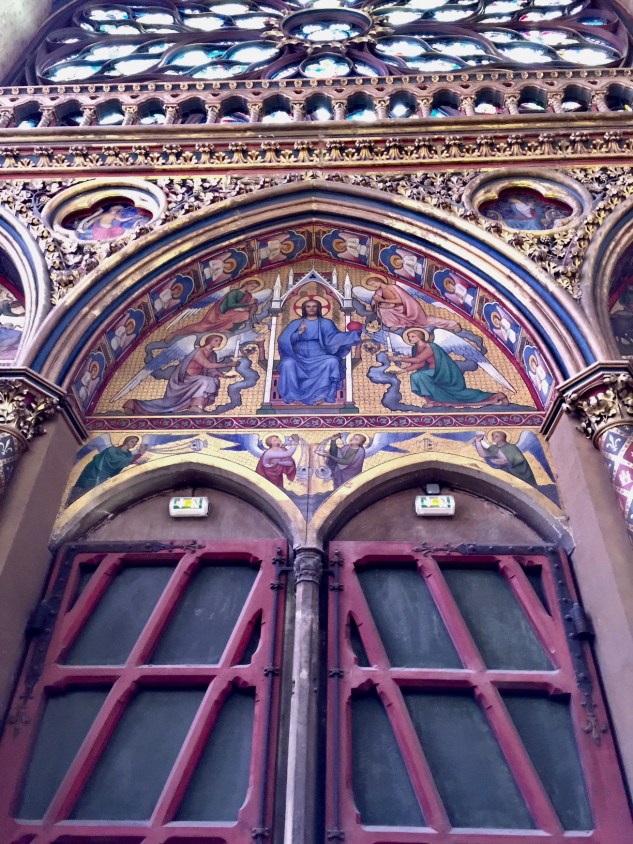
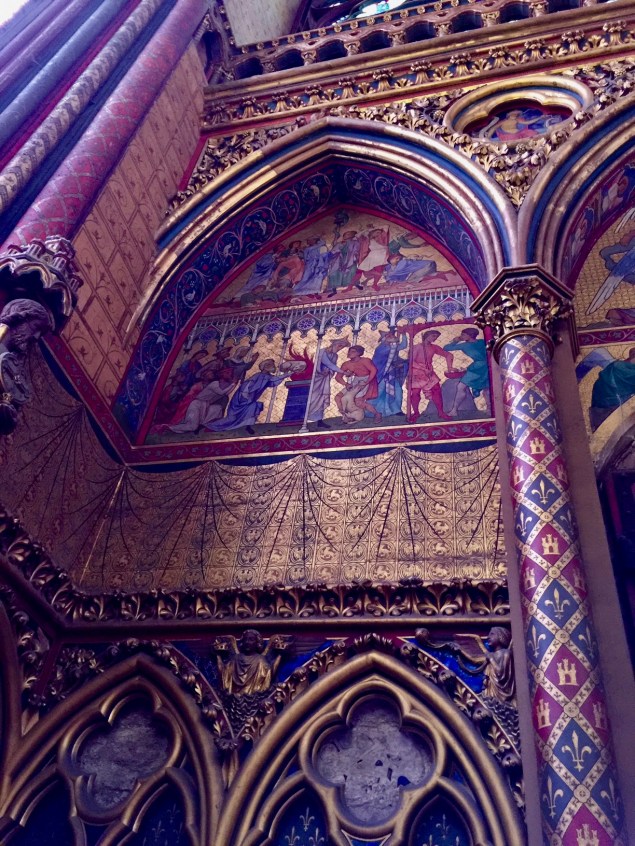
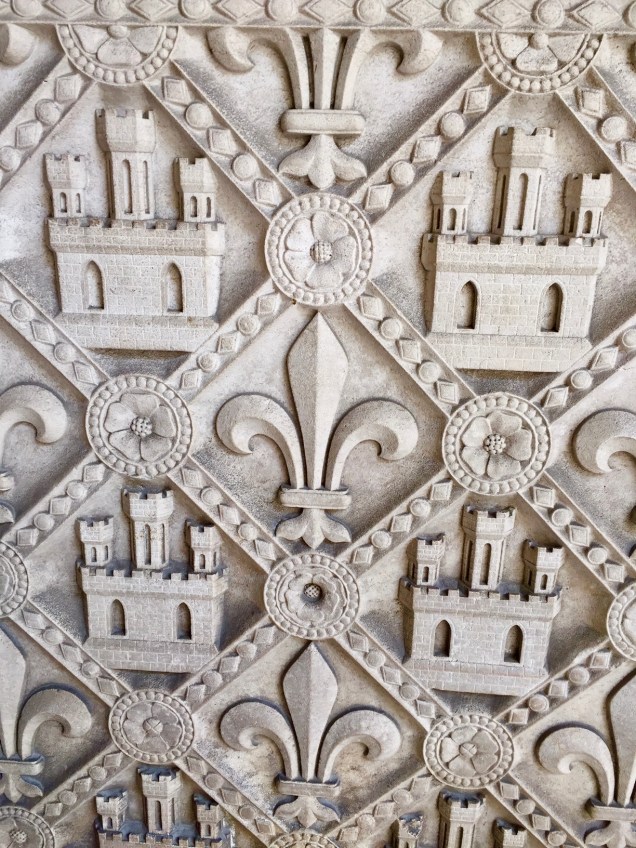
The Parisian palatine chapel, built to house a reliquary, was itself like a precious reliquary turned inside out (with the richest decoration on the inside). Although the interior is dominated by the stained glass, every inch of the remaining wall surface and the vault was also richly colored and decorated. Analysis of remaining paint fragments reveals that the original colours were much brighter than those favoured by the 19th-century restorers and would have been close to the colors of the stained glass. The quatrefoils of the dado arcade were painted with scenes of saints and martyrs and inset with painted and gilded glass, emulating Limoges enamels, while simulated rich textiles hangings added to the richness of the interior.
Above the dado level, mounted on the clustered shafts that separate the great windows, are 12 larger-than-life-sized sculpted stone figures representing the 12 Apostles (six of these are replicas—the damaged originals are now in the Musée du Moyen Age). Each carries a disk marked with the consecration crosses that were traditionally marked on the pillars of a church at its consecration. Niches on the north and south sides of the chapel are the private oratories of the king and of his mother, Blanche of Castile.
The most famous features of the chapel, among the finest of their type in the world, are the great stained-glass windows, for whose benefit the stone wall surface is reduced to little more than a delicate framework. Fifteen huge mid-13th-century windows fill the nave and apse, while a large rose window with Flamboyant tracery (added to the upper chapel c. 1490) dominates the western wall.
Arranged across 15 windows, each 15 metres high, the stained glass panes depict 1,113 scenes from the Old and New Testaments recounting the history of the world until the arrival of the relics in Paris.
Despite some damage, the windows display a clear iconographical program. The three windows of the eastern apse illustrate the New Testament, featuring scenes of The Passion (center) with the Infancy of Christ (left) and the Life of John the Evangelist (right). By contrast, the windows of the nave are dominated by Old Testament exemplars of ideal kingship/queenship in an obvious nod to their royal patrons. The cycle starts at the western bay of the north wall with scenes from the Book of Genesis (heavily restored).
The next ten windows of the nave follow clockwise with scenes from Exodus, Joseph, Numbers/Leviticus, Joshua/Deuteronomy, Judges, (moving to the south wall) Jeremiah/Tobias, Judith/Job, Esther, David and the Book of Kings.
The final window, occupying the westernmost bay of the south wall brings this narrative of sacral kingship right up to date with a series of scenes showing the rediscovery of Christ’s relics, the miracles they performed, and their relocation to Paris in the hands of King Louis himself.
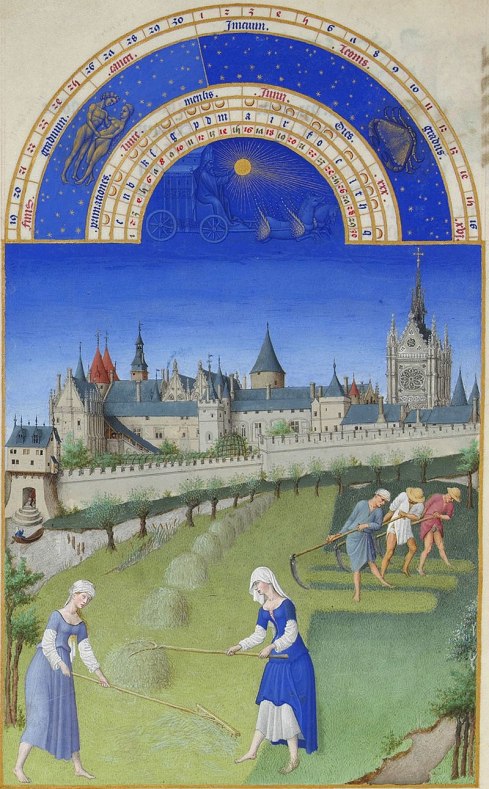
Above, the Sainte-Chapelle rises above the rooflines of the royal palace. Miniature by the Limbourg brothers, c. 1400
Much of the chapel as it appears today is a re-creation, although nearly two-thirds of the windows are authentic. The chapel suffered its most grievous destruction in the late eighteenth century during the French Revolution, when the steeple and baldachin were removed, the relics dispersed (although some survive as the “relics of Sainte-Chapelle” in the treasury of Notre Dame de Paris), and various reliquaries, including the grande châsse, were melted down.
The Sainte-Chapelle was requisitioned as an archival depository in 1803. Two metres’ worth of glass was removed to facilitate working light and destroyed or put on the market. Its well-documented restoration, completed under the direction of Félix Duban in 1855, was regarded as exemplary by contemporaries and is faithful to the original drawings and descriptions of the chapel that survive.
The Sainte-Chapelle has had various stages of restoration from the 1970s onwards. Air pollution, the elements, and the large number of visitors all cause damage to the stained glass windows. Also, in 1945 a layer of external varnish had been applied to protect the glass from the dust and scratches of wartime bombing. This had gradually darkened, making the already fading images even harder to see.
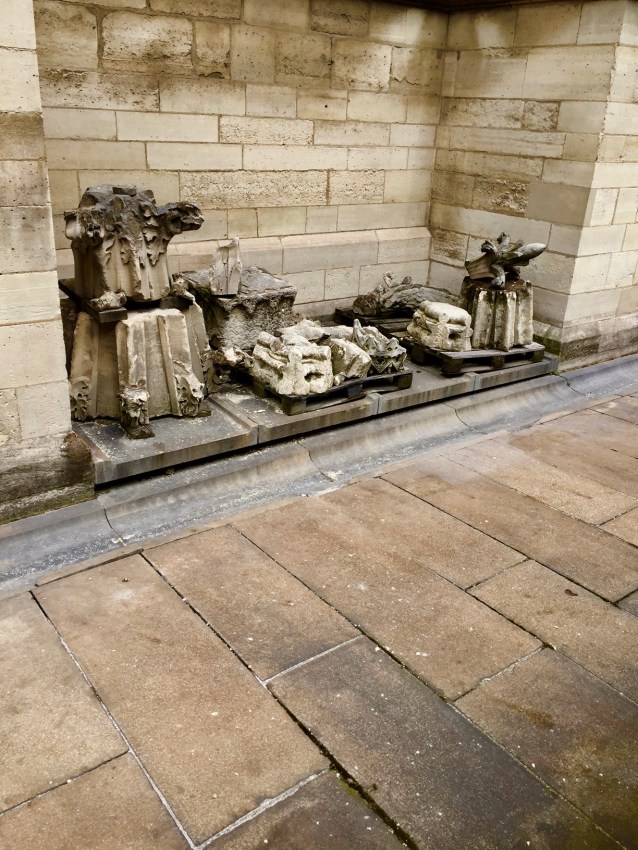
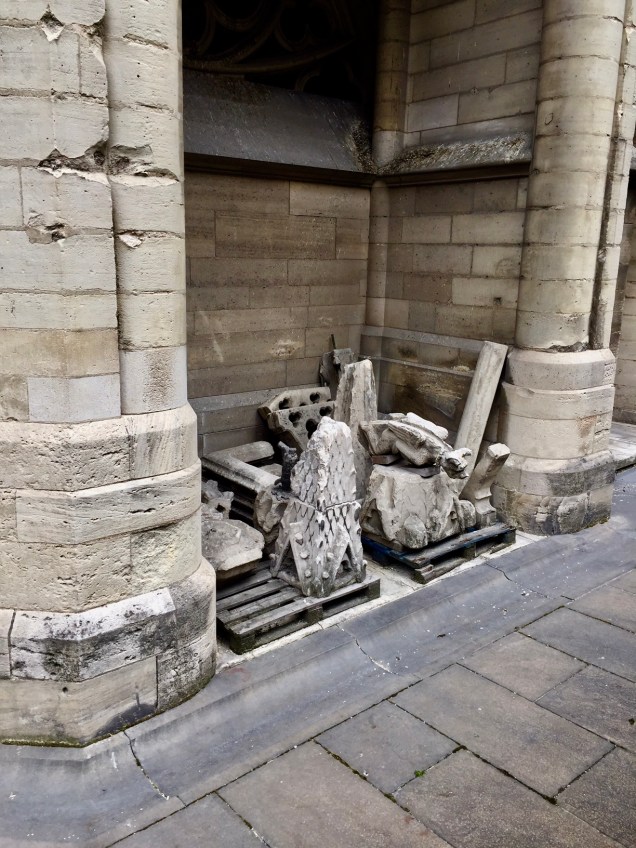
In 2008, a more comprehensive seven-year programme of restoration was begun, costing some €10 million to clean and preserve all the stained glass, clean the facade stonework and conserve and repair some of the sculptures. Half of the funding was provided by private donors, the other half coming from the Villum Foundation.
Included in the restoration was an innovative thermoformed glass layer applied outside the stained glass windows for added protection. The project was completed in 2015 in time for the 800th anniversary of the birth of St. Louis, who had ordered the construction of the chapel.
I love to visit this beautiful shop in Paris! I may not wear tutus anymore, but I still love them! And toe shoes, and tights. Tutus and toe shoes and leotards, oh my!
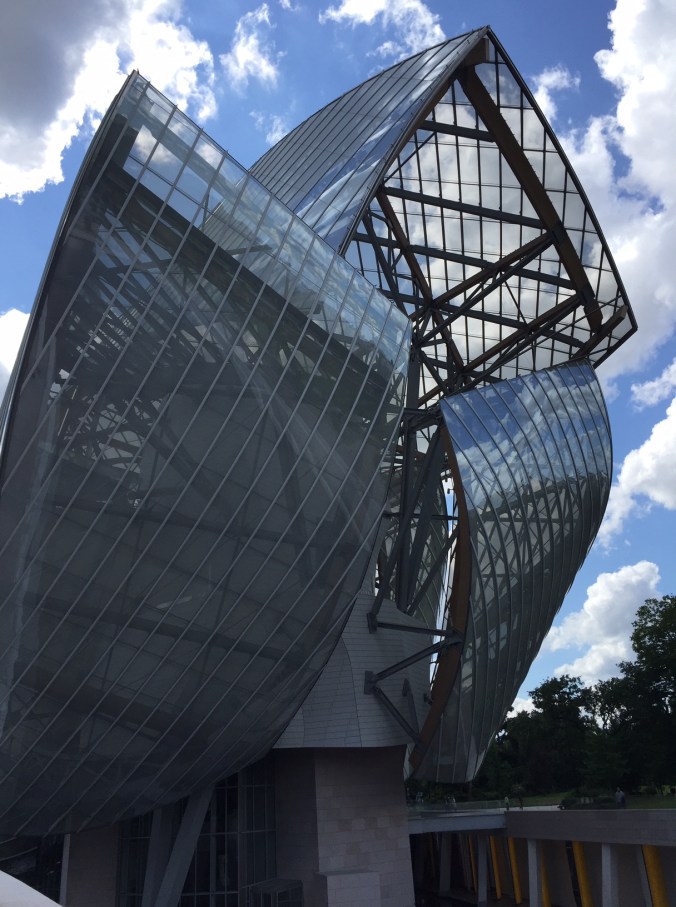
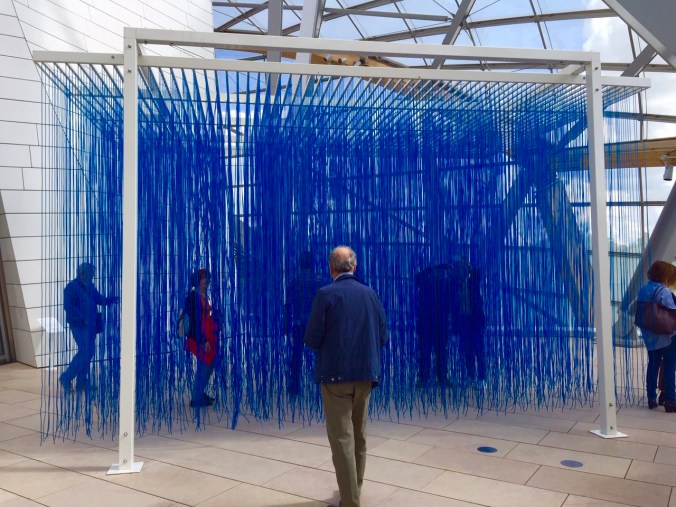
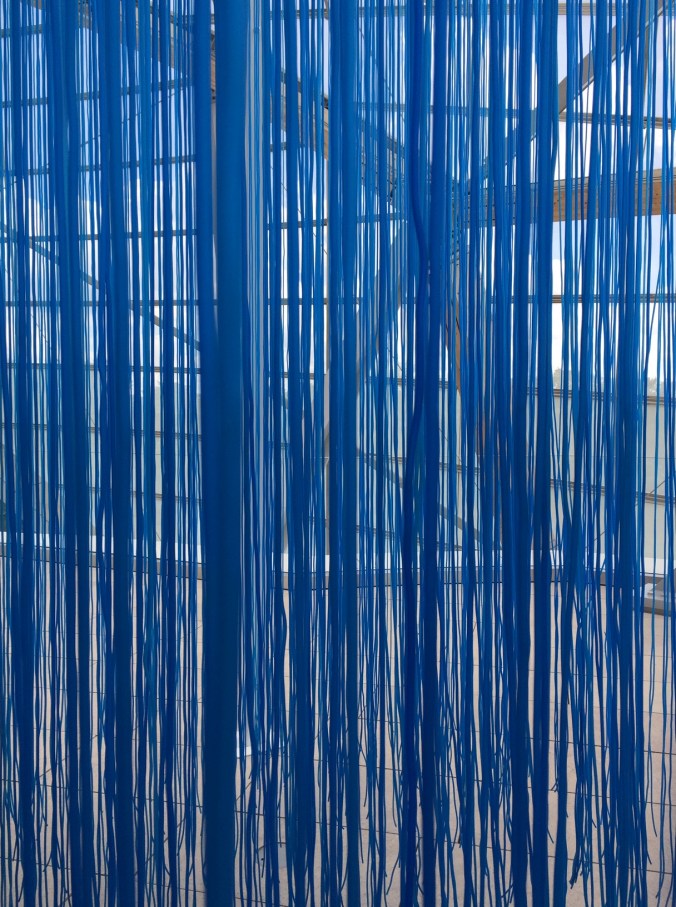
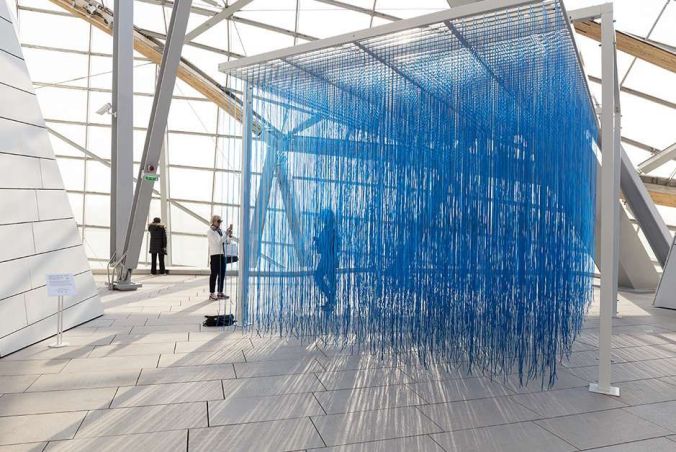
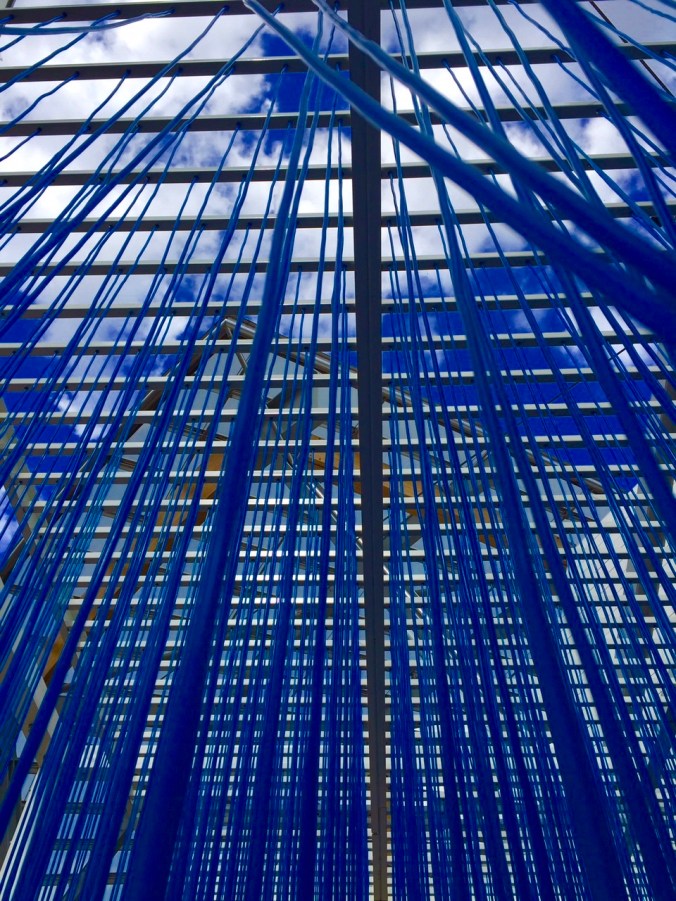
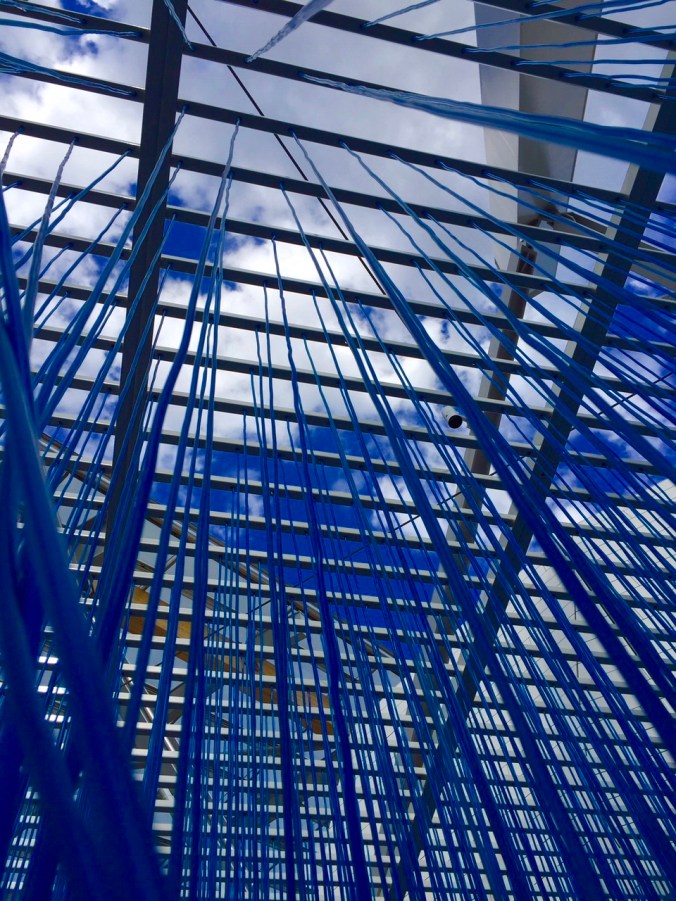
Earlier this month I had the good fortune to visit Paris and the Fondation Louis Vuitton in the Bois de Boulogne. While there, I had the best kind of close encounter: Soto’s kinetic creation, Pénétrable BBL Bleu.
Soto’s striking installation was on an open level of the Frank Gehry building, which suited it perfectly.
In case you didn’t know, Jesús Rafael Soto was a Venezuelan artist who was best known for his kinetic sculptures and large scale optical installations. Born in 1923 in Ciudad Bolivar, Soto remained in Venezuela for his formative years, before moving to Paris in 1950 where he would remain for the rest of his life, while keeping a workshop in Caracas from 1975 onwards.
Very early on, he attached himself to post-war avant-garde modernism and became part of the abstract art circles. His participation in the Salon des Réalités Nouvelles in 1951, followed by his involvement in the celebrated exhibition Le Mouvement at the Galerie Denise René in Paris in 1955 alongside Marcel Duchamp, Alexander Calder, and Victor Vasarely, bears witness to this commitment.
By the late 1960s, Soto was known as a leader in kinetic art, with works that were remarkable for their illusions of sensory vibrations.
Soto’s Pénétrable BBL Bleu is what I saw and experienced in Paris.







 Sainte-Chapelle (Holy Chapel) – Upper Chapel, Paris, France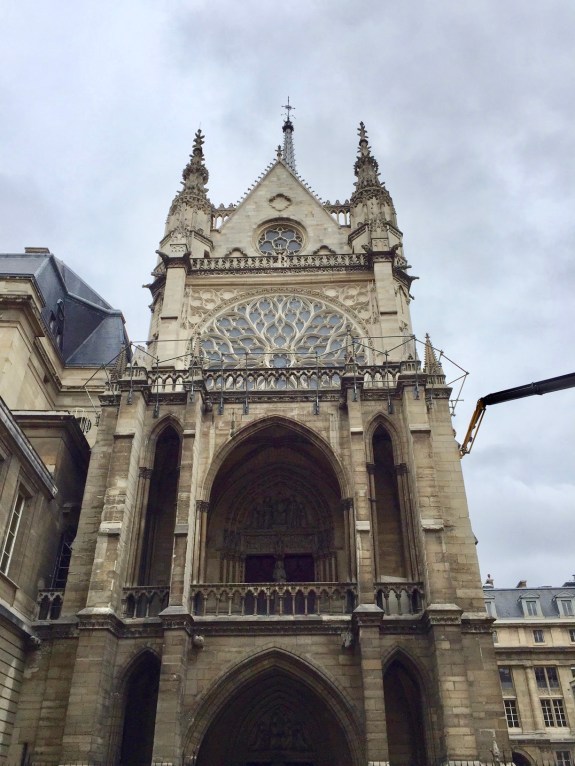













 get back, lauretta!
You must be logged in to post a comment.