
A worker hangs from Thomas Jefferson’s eye during the carving of Mount Rushmore, 1936.
History
Galileo Museum, Florence
In all the time I’ve spent in Florence over the years, I have never, ever set foot in the Galileo Museum. So, today I finally went. Science in general is not my cup of tea, but this museum is much more than a science museum.
 Love the “g” made out of stars!
For starters, here’s the view from the museum. Hello up there, San Miniato!


Not bad, right?! I know.
You also can enjoy the tower of the Palazzo Vecchio from the museum:

So, here’s how my visit went today.
For starters, I learned right off the bat that the basis for this incredible collection of scientific instruments and realia is courtesy of the Medici family. No surprise there, I suppose; I had just never thought about it. In the case of this scientific collection, it is one of the later Medici (not the Renaissance era family) who put these amazing things together and bequeathed them to Firenze. Here is Grand Duke Peter Leopold’s very interesting “chemistry cabinet.” I’ve seen a lot of bunsen burners in my school days, but I’ve never seen a cabinet made of the finest woods and high quality finishing. It is quite something.

Neither of the pictures below do the cabinet justice. There were just too many attractions in this room for me to focus on the cabinet itself.


Here’s some interesting information about the collection and Grand Duke.

Now, what I hadn’t known before today is that many scientific discoveries were performed for the European elite at their evening parties. Read the English text in the following slide, which discusses how these soirees would feature chemistry tricks, etc.

I think the following panel tells the story most succinctly: electricity took the place of the quadrille. Who needs to dance when you can be amazed when things light up and other “magical” effects.

The 18th century was truly an age of discovery, as the following quote lays out:

And, of course, if you are going to present scientific parlor tricks to the upper crust, you have to have some impressive and attractive equipment. To wit: this label in English:

Indeed, and here is a sampling of some of them. They are presented in a very effective exhibition manner in this very handsome museum.


Check out this portrait of an Italian scientist named Giovanni Battista Amici. What I immediately noticed was his unusual hairdo. I wonder if he or his portraitist considered maybe combing his hair?


Giovanni Battista Amici (1786-1863) was an Italian astronomer, microscopist, and botanist. He was the director of the observatory at Florence, where he also lectured at the museum of natural history. Amici died in Florence in 1863.
Amici is best known for the improvements he effected in the mirrors of reflecting telescopes and especially in the construction of the microscope. He was also a diligent and skillful observer, and busied himself not only with astronomical subjects, such as the double stars, the satellites of Jupiter and the measurement of the polar and equatorial diameters of the sun, but also with biological studies of the circulation of the sap in plants, the fructification of plants, infusoria etc. He was the first to observe the pollen tube. He invented the dipleidoscope and also the direct vision prism and the “Amici crater” on the Moon is named in his honor.
Back to the exquisite instruments. These glass objects were mind-blowing in that they are hundreds of years old and fragile and some of these delicate vials and decanters are really large.


As the museum exhibition makes clear, there was a boon for the manufacturers of these delicate and finely calibrated pieces of equipment. The high echelon of society that enjoyed watching evening entertainments composed of science demonstrations often wanted to have some of their own objects. Hence: a boom in the manufacturing.


Here’s how you weighed yourself if you were uppercrust:

 ‘
‘

And then there was the advancements in clock-making.


Another genre of objets produced to amaze high society were paintings contrived so that you see one picture (a gentleman) when you look at it straight on, and you see a second picture (the gentleman’s wife?) when you look at the mirror attached to the top of the painting. I’m an art historian and I’ve never seen anything like this. Italy has a way of amazing me, almost daily.


And then there are the armillary spheres and globes! The next set of pix are all of one spectacular Florentine 16th-century armillary sphere:


And then there are the globes, both terrestrial and celestial:


And the maps! The elaborate 15th-century map below shows the known world. Asia is a land mass to the west of Europe here. The New World had not yet been imagined.


And did you know, because I didn’t until today, that the Medici had plans to get involved in the great age of discovery:

And then there are the atlases:


And who might this be?

Amerigo Vespucci, don’t you know. He was a Florentine of course. I’ve seen his tomb in the Chiesa Di San Salvatore di Ognissanti. (FYI: Sandro Botticelli is buried there too.)


More instruments, beautifully displayed:


The cabinet pieces:

I’ve saved my favorite objets for last: the thinest, most beautiful glass vessels:


See those tall, thin extensions of certain glass pieces above? Those are glass and a part of the object. It is absolutely stunning. And they are old! How did they survive?

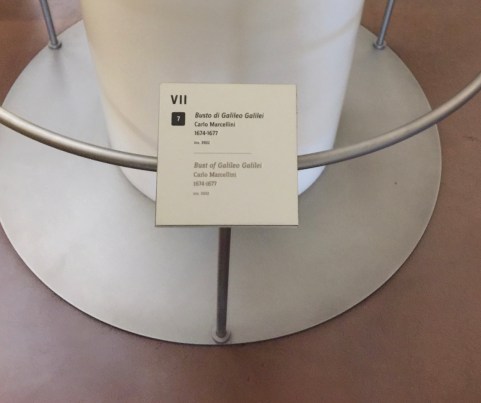
And finally, the important man for whom this collection is named:

Fra Fillipo Lippi fresco cycle in Prato duomo; Prato cathedral Part 2
Late last week I had the great pleasure of visiting Prato with a new friend who was born and raised there. There is nothing like visiting a lovely small Italian town with someone who knows their way around. My friend showed me things I would have found on my own!


I wrote a post on the Duomo of Prato, where I discussed the architecture and sculpture. The Duomo is such a rich repository of masterworks that it needs several posts. Today I will deal only with the Far Fillips Lippi frescoes created between 1452-66.
Let’s start with this basic premise: these paintings are gorgeous and in excellent condition! I have waited an art historian’s lifetime to see them and they did to disappoint.
This is the apse end of the basilica in all of its glory. The Far Fillipo Lippi frescoes are in the chapel in the center:

These frescoes show the master, Fra Filippo Lippi, at his finest. They were produced slowly and sporadically between 1452 and 1466.
The enormous scale of the choir, and consequently the painted subjects, were a far cry from the intimacy of the Brancacci Chapel. The cycle has been restored recently, revealing powerful yet sensitive images produced with verve and facility during a late period in Lippi’s development.
The Prato frescoes were both an artistic and a physical challenge for the aging painter, and, particularly in the large scenes on either side of the choir with stories of St John the Baptist and St Stephen, scholars believe that a significant share of the execution may be attributed to workshop assistants.
Below: View of the chapel filled with the fresco cycle


South Wall
Below: overview of the right (south) wall of the main chapel

Beginning at top, coming down, we begin with “The Birth and Naming St John”
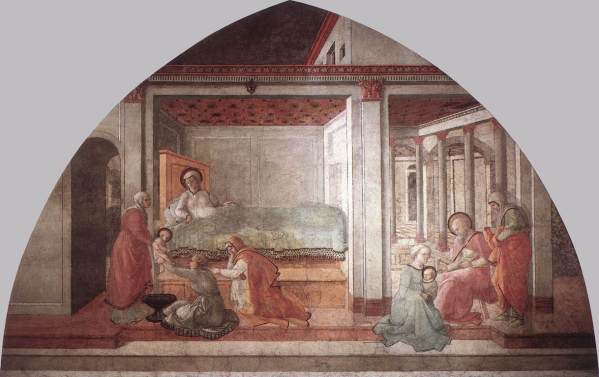
The Birth and Naming St John (detail)

The 2nd fresco down from the top: “St. John Taking Leave of His Parents”
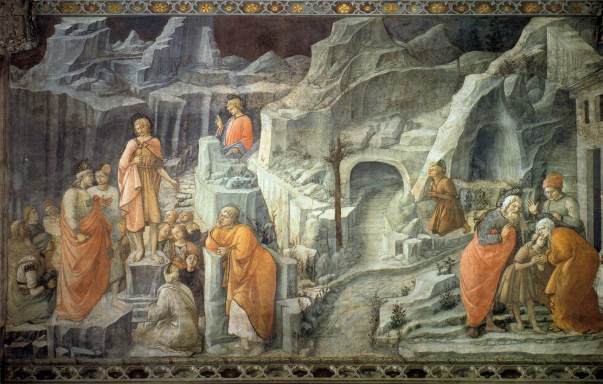
St. John Taking Leave of his Parents (detail)

St. John Taking Leave of His Parents (detail)

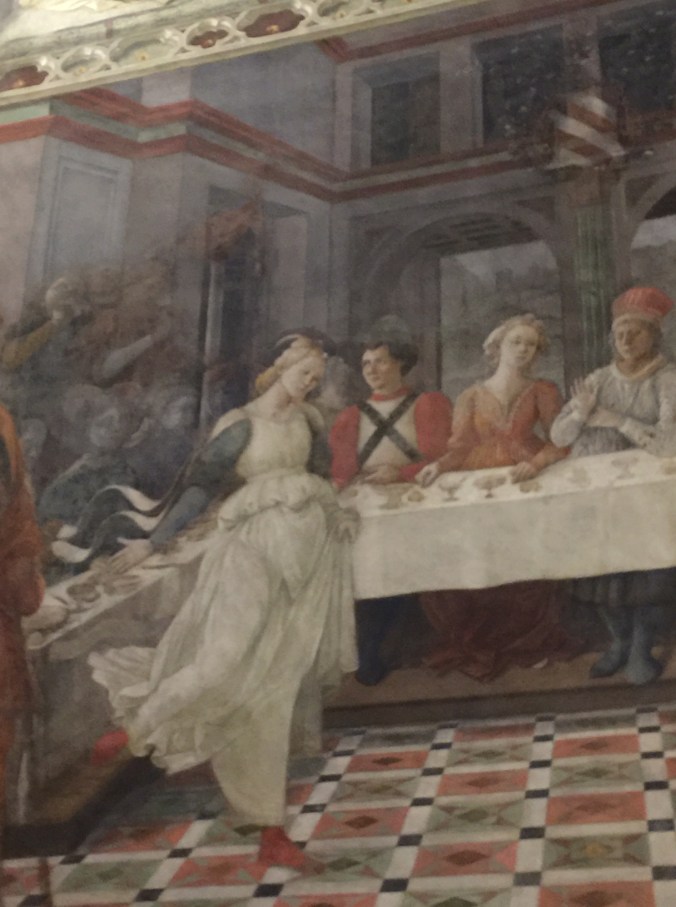
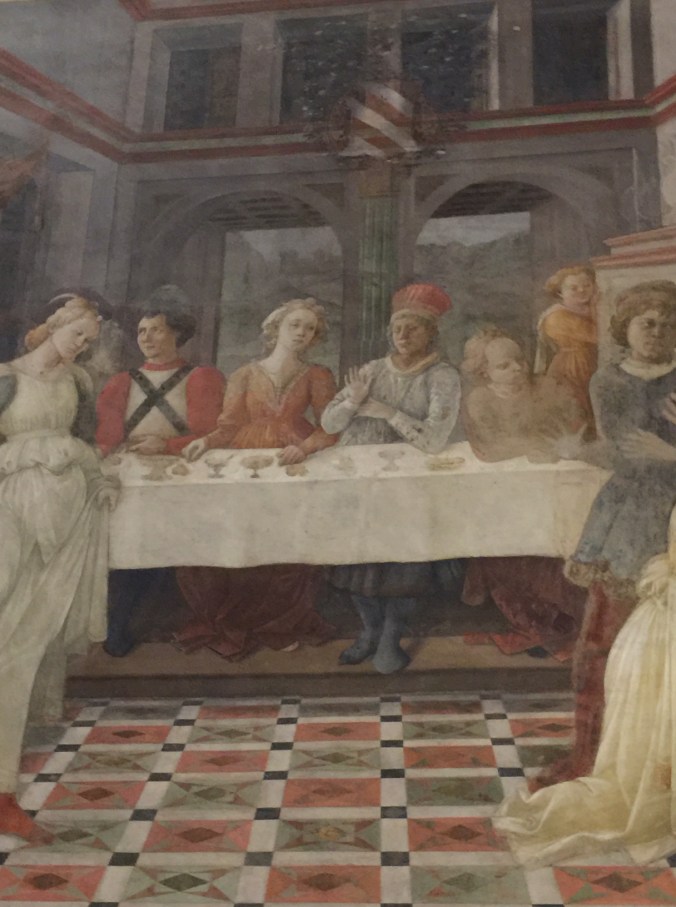
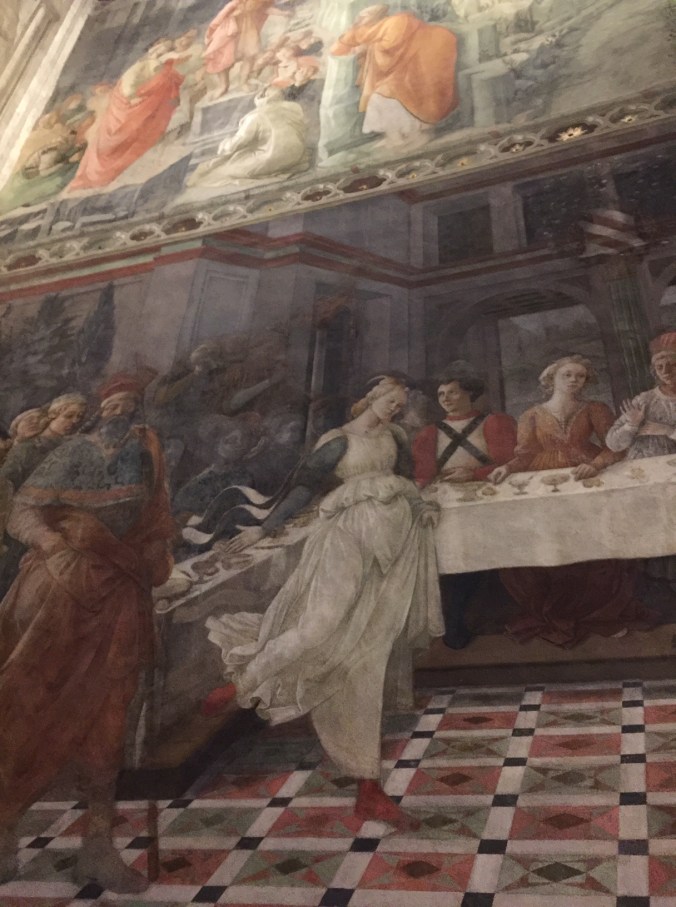
Third scene down from the top: Herod’s Banquet

Herod’s Banquet (detail)
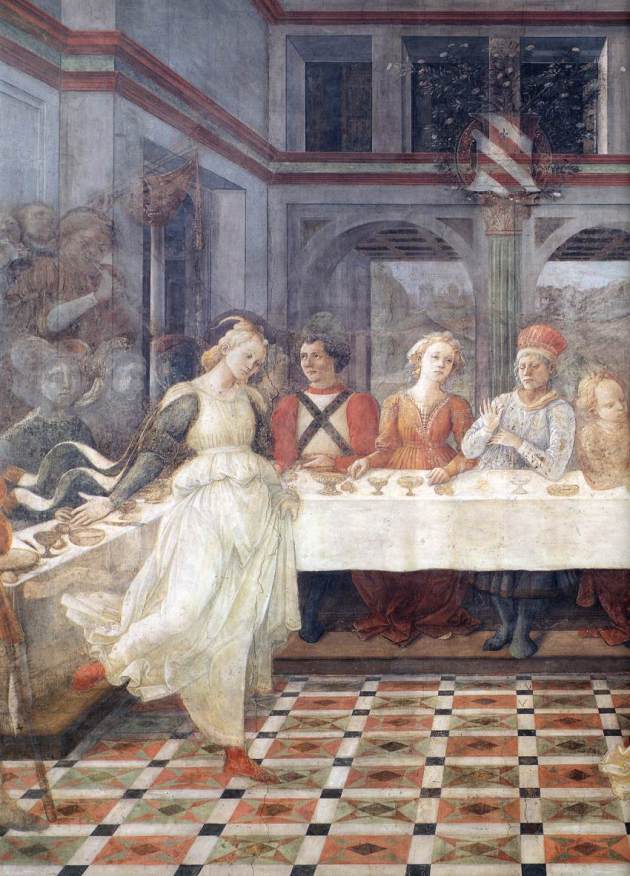
Herod’s Banquet (detail)
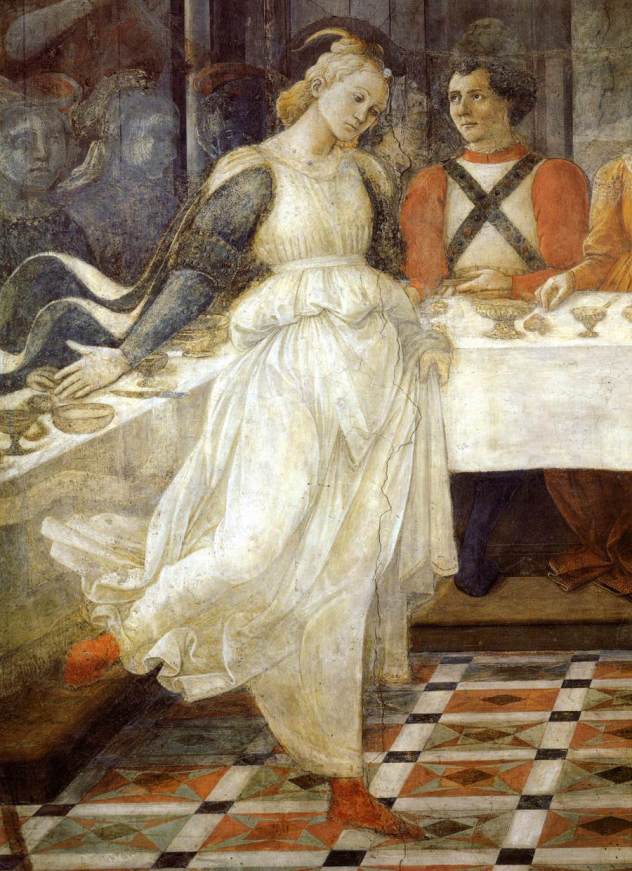
Herod’s Banquet (detail)

Herod’s Banquet (detail)

Herod’s Banquet (detail)

The Beheading of John the Baptist, scene to the far left of the main fresco

North Wall:
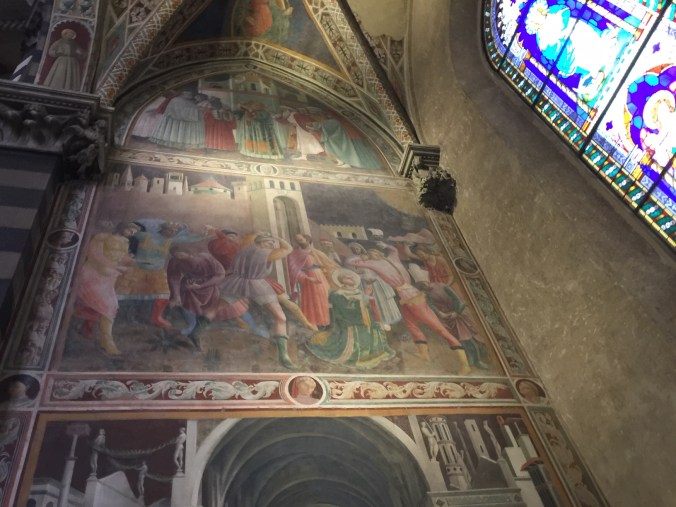
View of the left (north) wall of the main chapel
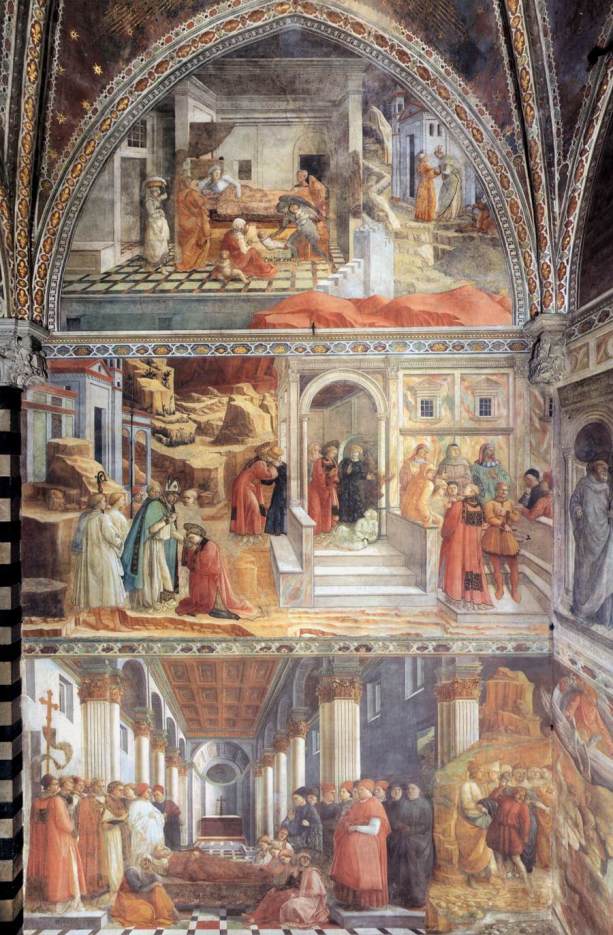
Beginning at top of fresco on North wall: St Stephen is Born and Replaced by Another Child

St Stephen is Born and Replaced by Another Child (detail)

St Stephen is Born and Replaced by Another Child (detail)

2nd Fresco down from top, The Disputation in the Synagogue
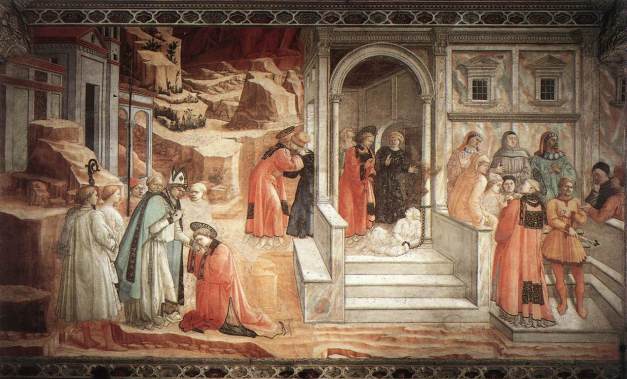
The Disputation in the Synagogue (detail)
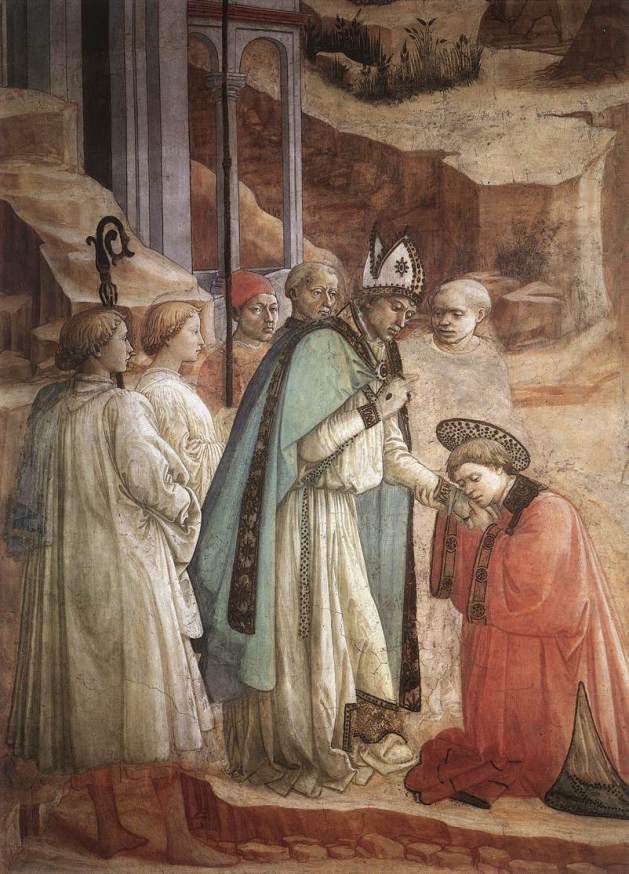
The Disputation in the Synagogue (detail)

The Disputation in the Synagogue (detail)

The Disputation in the Synagogue (detail)
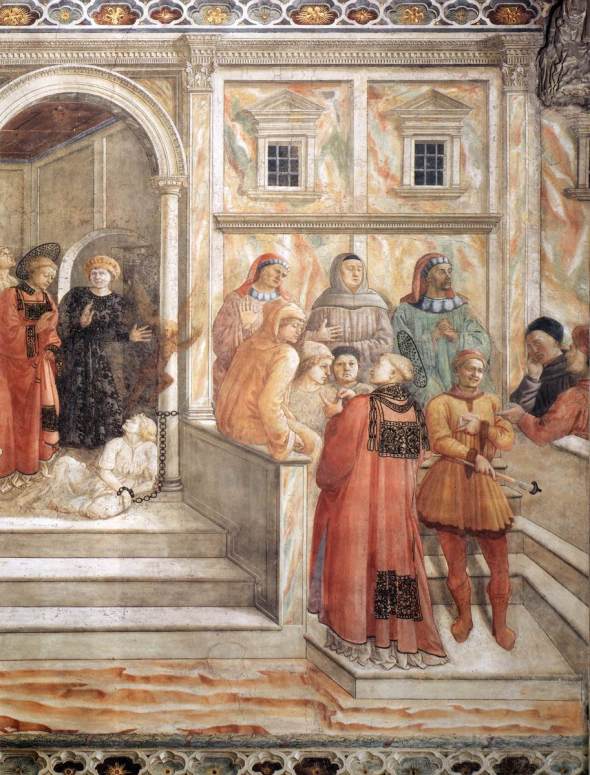
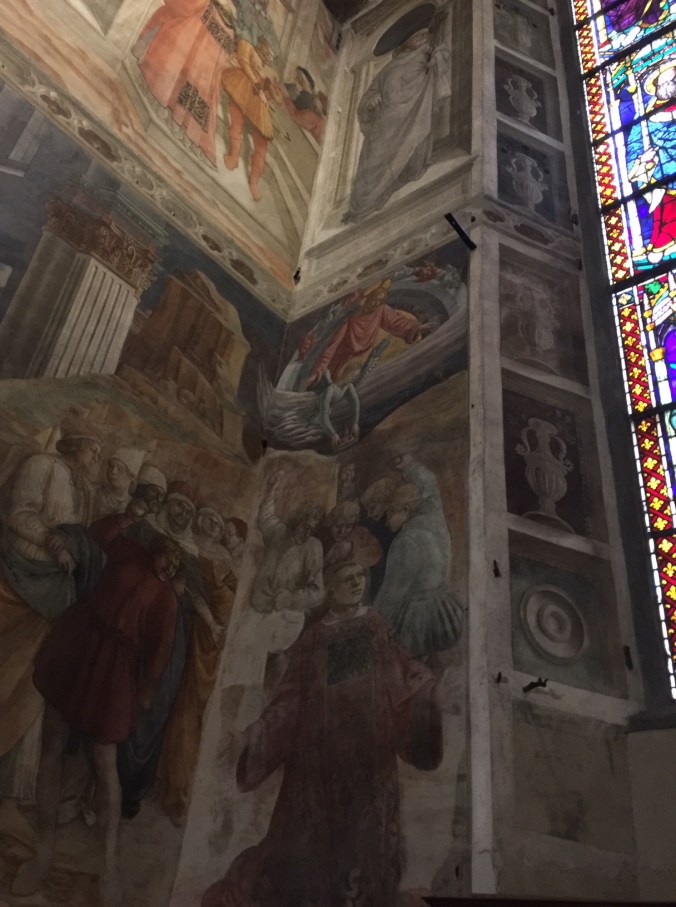
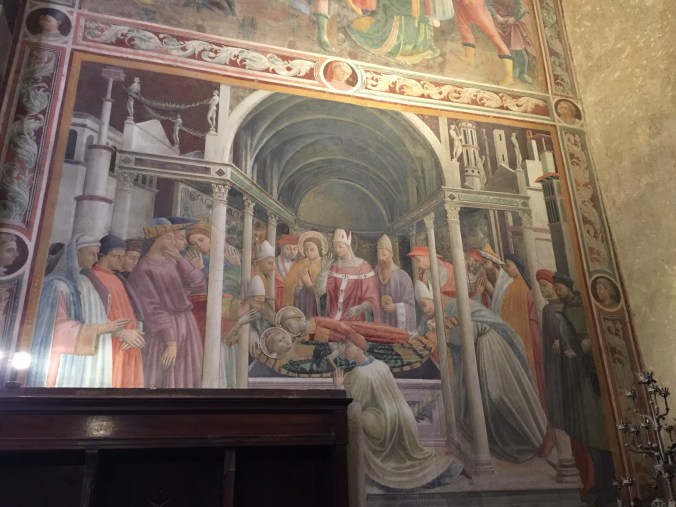
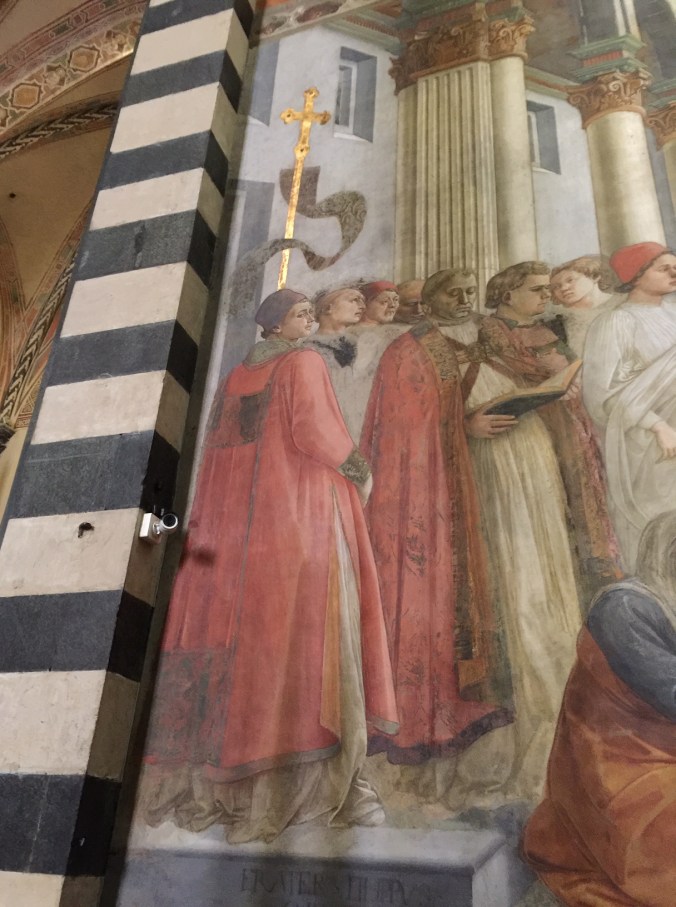
Third fresco down from the top: The Funeral of St Stephen
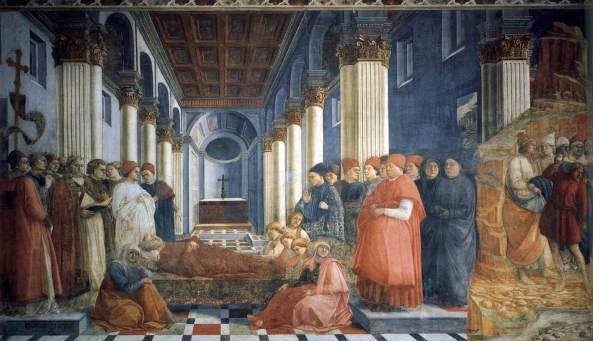
The Funeral of St Stephen (detail)
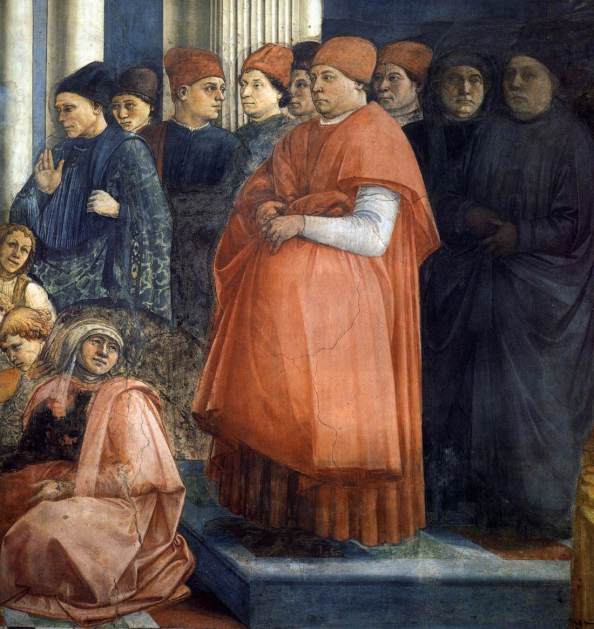
The Funeral of St Stephen (detail)

The Funeral of St Stephen (detail)

The Funeral of St Stephen (detail)
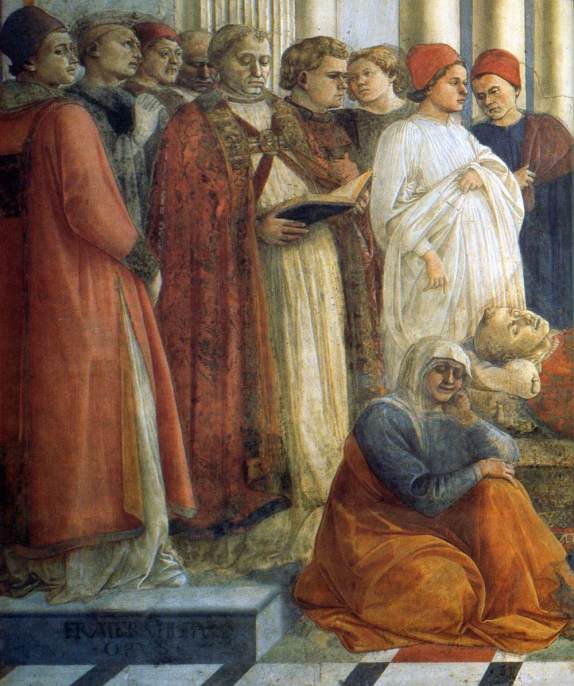
The Funeral of St Stephen (detail)

Scene to the far right of the main fresco: The Martyrdom of St Stephen

St Alberto of Trapani

St Alberto of Trapani

Allora, I have shown you the main paintings within this fresco cycle and explained the location. Now let me simply share the pictures I took with my phone. My phone was never pointed at anything more beautiful…and that is saying something!









A German hero in Florence during WWII
When I walk across the Ponte Vecchio, I often notice this marble plaque.
Who, I always wonder, was Gerhard Wolf?

Knowing that Germany occupied Florence during the war, I’ve been puzzled to find a German commemorated on the one bridge in Florence that wasn’t destroyed by German forces when they departed the city as the Allied Forces moved ever northward during the war.
It turns out that Wolf was the Consul in Florence and was a reluctant member of the Nazi Party. I read that he only joined the Party because it was necessary in order to be in the diplomatic corps.
Despite being German and a Nazi, Wolf risked his life while he rescued political prisoners and Jews during the barbarism of the War. Apparently he assisted the famous American, Bernard Berenson, who was Jewish, making it possible for Berenson to successfully hide from the Nazis. The plaque also says that Wolf was instrumental in the saving of the Ponte Vecchio.
Interestingly enough, I’ve read quite a lot about Florence during the war and, outside of this plaque, I’ve never read anything about the fact that Gerhard Wolf helped Berenson specifically or that he played a role in saving the Ponte Vecchio when the retreating Germans blew up all of the other Florentine bridges. I have no reason to not believe Wolf’s role in these things, but I am surprised I’ve never found this information anywhere else. Oh, well…live and learn. I’ll keep my eyes pealed for future references.
So, here’s a translation of what the plaque says: “Gerhard Wolf (1886–1971). German consul, born at Dresden—subsequently twinned with the city of Florence—played a decisive role in saving the Ponte Vecchio (1944) from the barbarism of WWII and was instrumental in rescuing political prisoners and Jews from persecution at the height of the Nazi occupation. The commune places this plaque on 11 April 2007 in memory of the granting of honorary citizenship.”
Here’s what Wikipedia adds to the Wolf story:
Wolf was born in Dresden, the 7th child of an attorney of family law. After serving in the military, he studied philosophy, art history and literature, and completed a doctorate in philosophy. In 1927, he joined the foreign ministry and was posted to Rome at the time Adolf Hitler came to power in 1933. He was first invited to join the Nazi Party that year, but he declined and did not join until 1 March 1939, after it became clear that his diplomatic work would be impossible otherwise.
Between 1940 and 1944, Wolf was the German Consul in Florence. After the German occupation of Italy in 1943, he worked to save many Jews from the Holocaust, including the famous art historian Bernard Berenson, who testified to that in 1946. In his efforts, he was supported by Rudolf Rahn, the deputy ambassador at Rome. Wolf, along with Ludwig Heinrich Heydenreich, director of the Kunsthistorisches Institut in Florenz, also saved many artworks from being spirited off to Germany. He also prevented the Ponte Vecchio from being destroyed.
In 1955, Wolf was made an honorary citizen of Florence. Ten years after his retirement, he died in Munich. In 2007, a marble plaque in his honour was unveiled on the Ponte Vecchio by the acting mayor of Dresden.
Palazzo Medici-Riccardi, Firenze

The palace of the De’ Medici Family has a troubled history.
When Filippo Brunelleschi presented his project of a palazzo to Cosimo De’ Medici, the latter considered it to be too fancy and gave up the idea.
Then came the draft by Michelozzo Michelozzo, Donatello’s pupil, but this time the Florentines said ‘No’ to what at the time must have seemed an urban mess in the San Lorenzo district.
Finally, the works began with the erection of the famous ashlar walls (with protruding stones), the small and narrow windows with grates, heavy doors, all aimed at intimidating everyone who passed or entered the building.
However, beyond the heavy door, the building takes on a much kinder style, with a courtyard that is a real open-air museum with sarcophagi, inscriptions and statues.
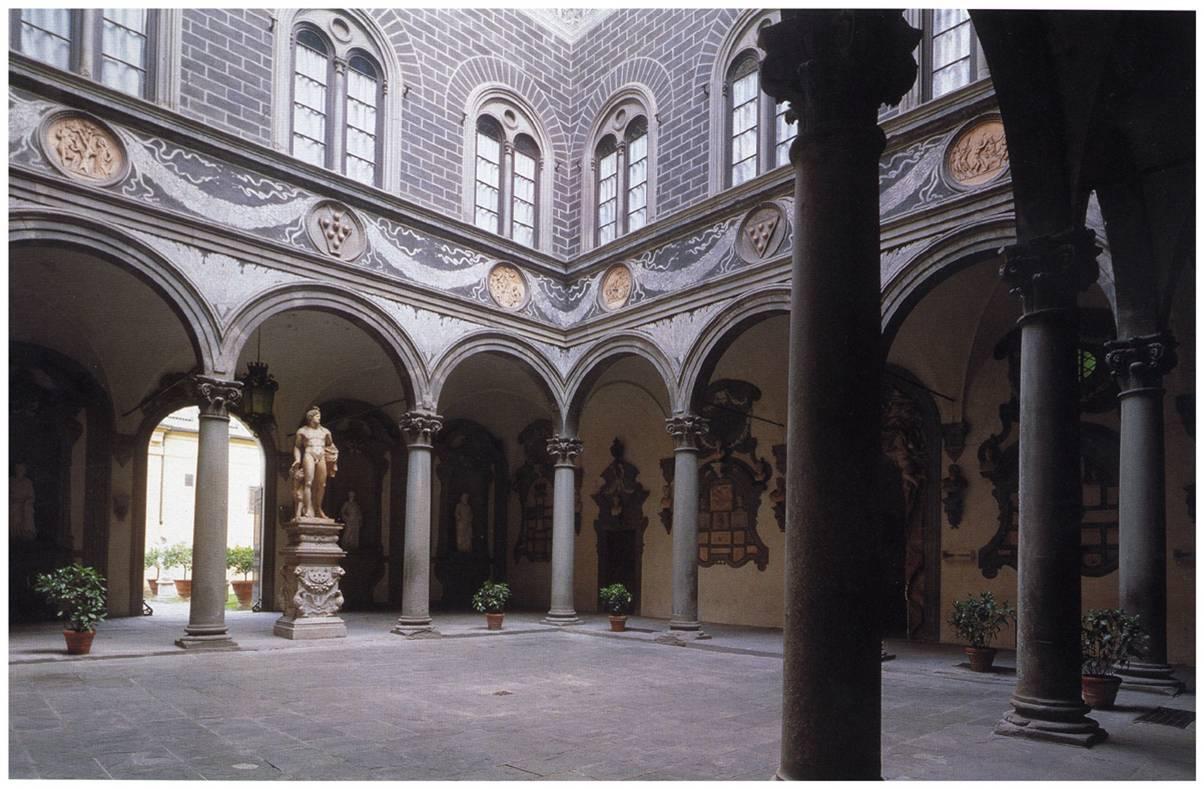
In 1659, Gabbriello Riccardi, Marquis of Chianti, became the owner of Palazzo Medici and sold it to the Lorenas, the Grand Dukes of Tuscany, in 1814. After many renovations, it became the seat of the administrative offices and headquarters of the Interior Ministry, in the period when Florence was capital of Italy, between 1865 and 1870.
Since 1874, the Medici Palace is the seat of the Province of Florence and also a museum with works such as the Magi Chapel with frescoes by Benozzo Gozzoli.
Les Marais, deuxième partie (2); Jewish quarter and the Jardin des Rosiers – Joseph-Migneret
As I mentioned in my last post on Le Marais, this area is also the most famous Jewish quarter in Paris and, in fact, in much of Europe, still maintaining strong traditions.
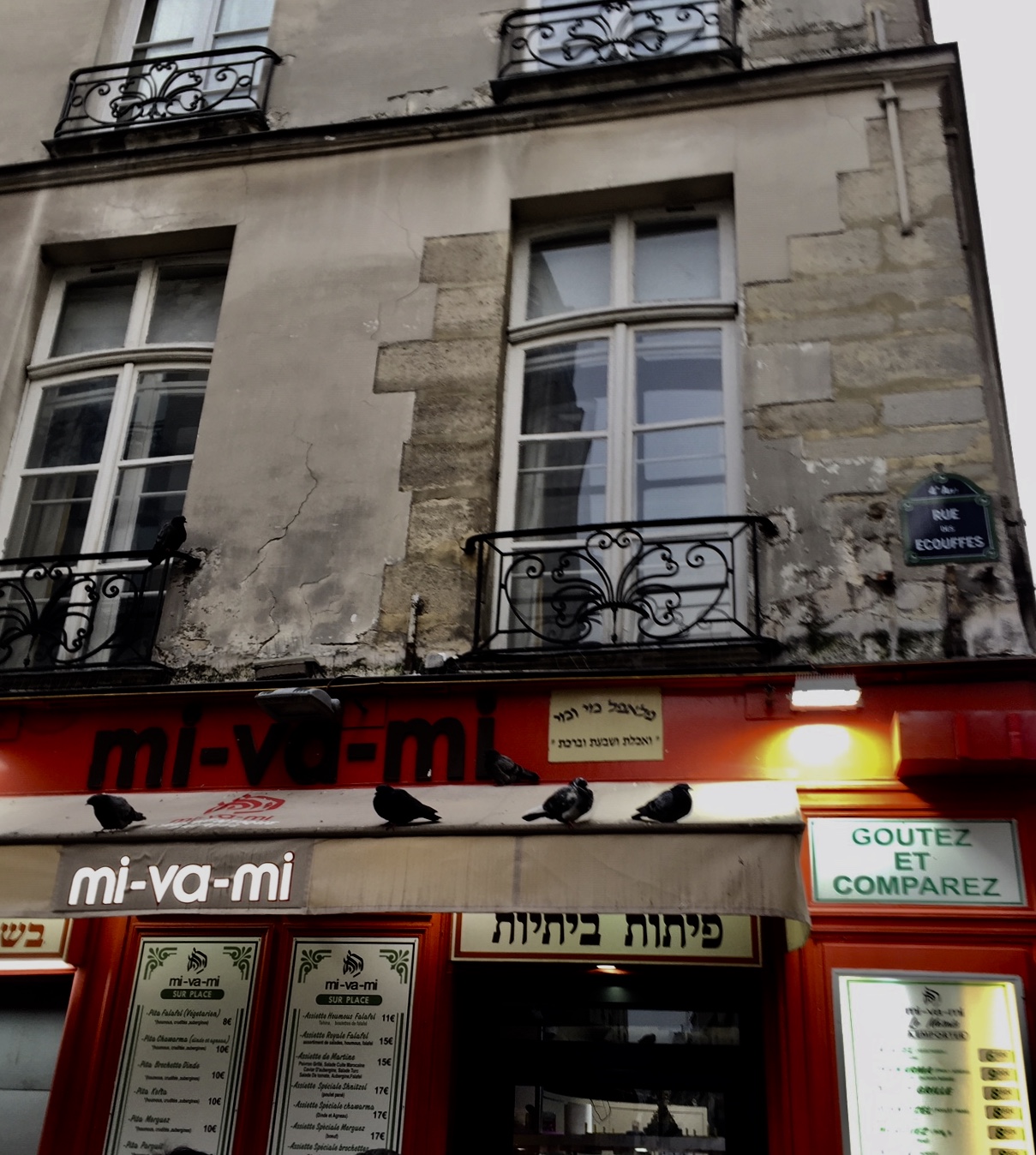
There have been Jews living in Paris on and off since the region was conquered by Rome in the first century BC.
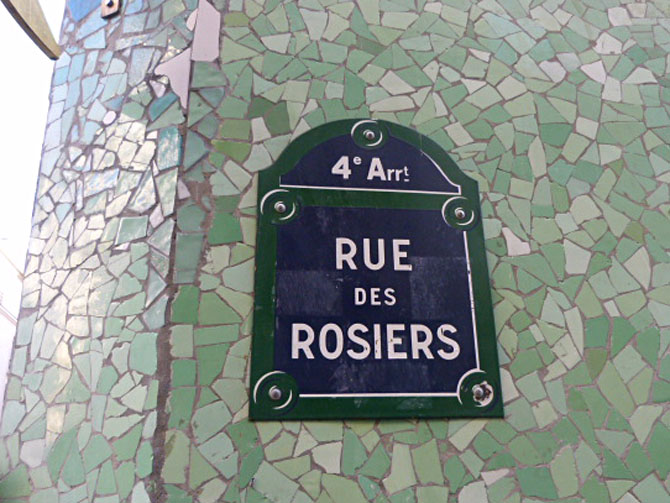
The Rue Rosiers is a key street in the historical Jewish center of Paris; it is a charming pedestrian road and is known as the Pretzl or “little place” in Yiddish. The rue des Rosiers name refers to the “street of the rosebushes.”
Jews have a long history in France (full of prosperity as well as expulsions and persecution), but in Le Marais in particular. This area became the center of Jewish life in Paris in the 19th and early 20th centuries as Sephardic Jews came over from Eastern Europe.
And, while Paris has been a place of Jewish prosperity, scholarship, and greatness, it has also seen a lot of sorrow. For centuries, the Jewish community lived within France only at the sufferance of the king. Expulsions were common, and it was not until the French Revolution and then Napoleon Bonaparte that Jews finally had some measure of civil and religious freedom.
In Paris, in Le Marais, you will find kosher and Jewish style restaurants cheek by jowl with Jewish bookshops, small synagogues, prayer rooms, and kosher boulangeries and charcuteries. You will also see trendy shops, a sign of the increasingly gentrified nature of the neighborhood.
There’s an interesting pinkish building with “Hammam Saint Paul” written on it. Today the building houses a fashionable boutique, not a Turkish bathhouse.
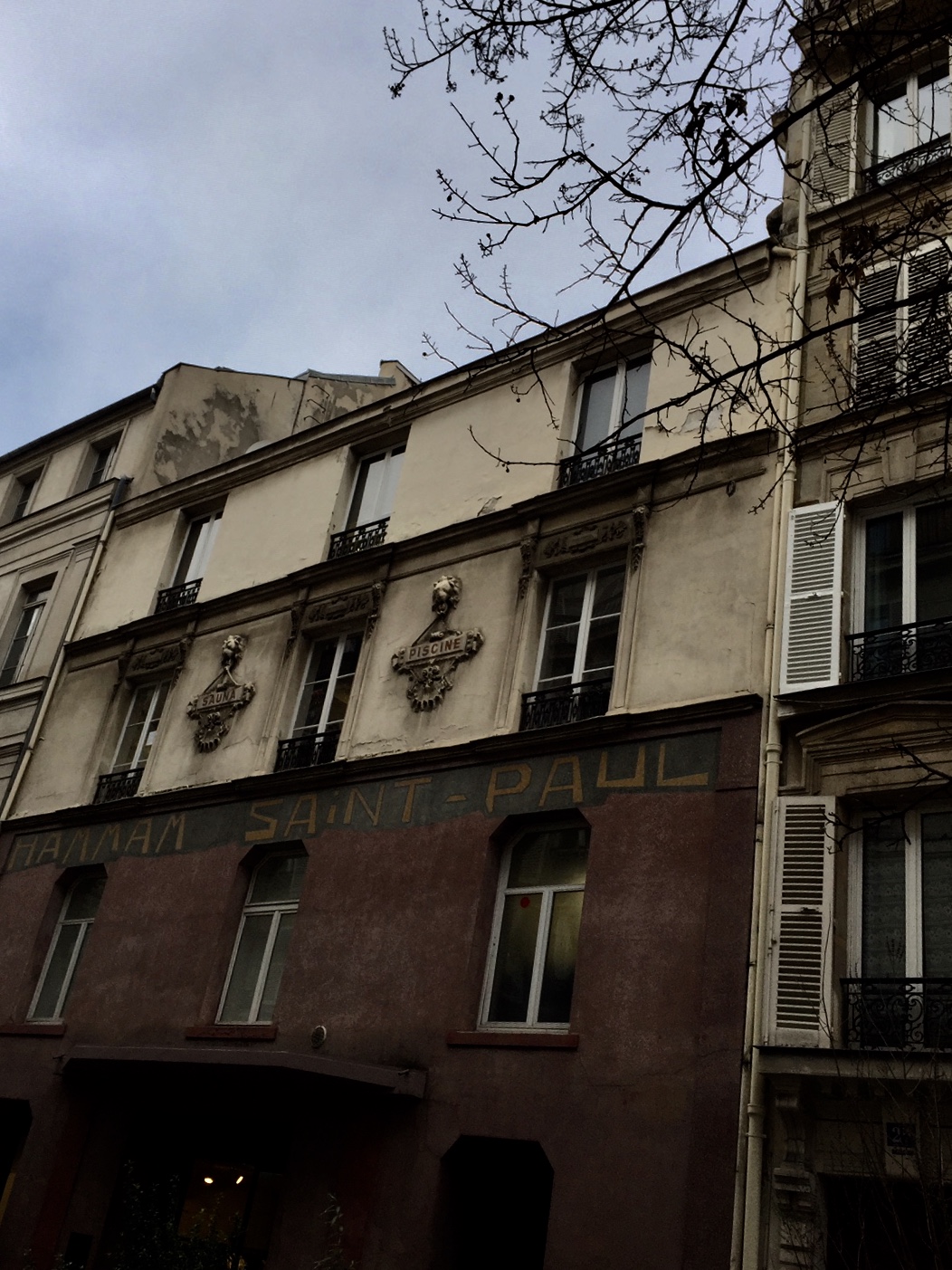
The building dates to 1856 on the Rue des Rosiers and this bathhouse survived for 130 years, give or take. The hammam closed its doors in 1990. You can still see the painted name of the building in yellow on a blue background, dating from 1928, work by architects Boucheron and Jouhaud.
On the second floor are two sculptures on the piers, decorated with lion heads and stating the words Sauna and Pool. These date from 1901.
In an earlier post, I talked about 2 falafel restaurants; both are located on Rue des Rosiers: https://laurettadimmick.com/2018/12/29/a-little-friendly-competition/
Jardin des Rosiers – Joseph-Migneret
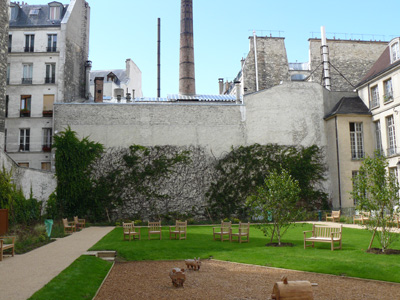
And then we come to a lovely small park, known as the Jardin des Rosiers – Joseph-Migneret.
During World War II, Joseph Migneret was the principal of the elementary school of Hospitaliers St. Gervais, located nearby at 10 rue des Hospitalières-Saint-Gervais.
During the round-ups of 1942, 165 Jewish children from this school were deported, mostly of them to Auschwitz, and not a single one survived. The school now bears a plaque that reads “165 enfants juifs de cette école déportés en Allemagne durant la Seconde Guerre mondiale furent exterminés dans les camps nazis. N’oubliez pas!” (In English: 165 Jewish children of this school deported to Germany during WWII were exterminated in the Nazi camps. Do not forget!”)
After the loss of so many of his students–only 4 students returned to school on October 1, 1942–Joseph Migneret dedicated himself to the Resistance and to helping the Jewish families escape further round-ups and persecution. He hid many of them in his own home. He died shortly after the end of the war; it is said he died of sadness on account of everything his students endured.
Jardin des Rosiers
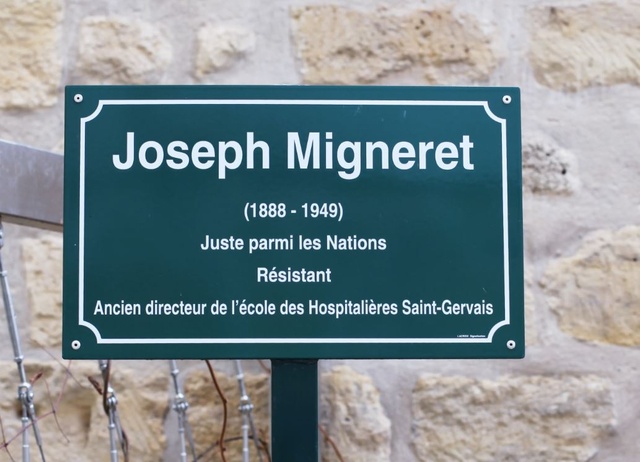
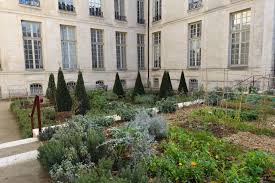
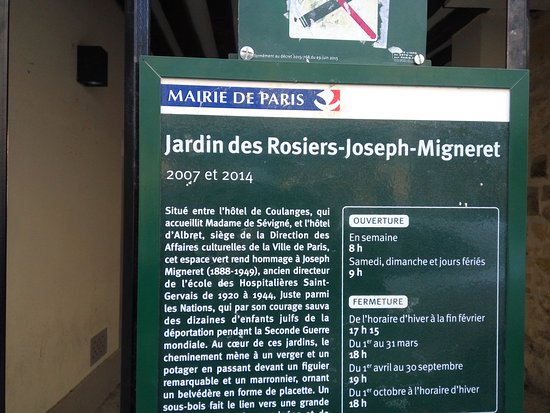
And, an equally heinous history is what happened to Jewish infants in the same city. There is a plaque imprinted with the names of 101 infants of the fourth arrondissement in Paris, who were arrested by French police of the Vichy Regime and handed over to the Nazis for extermination.
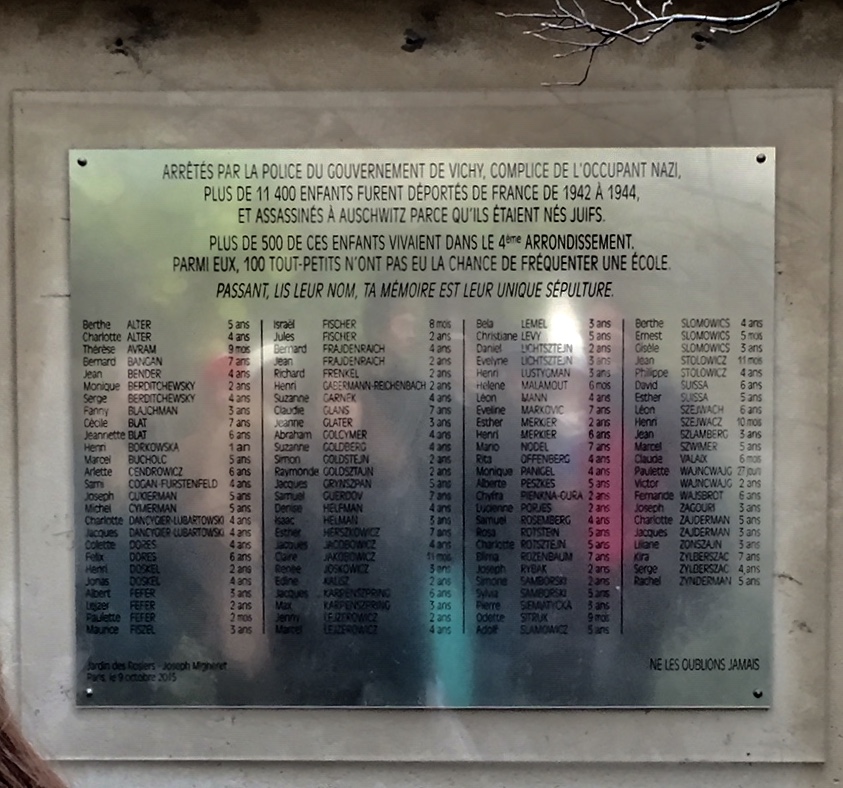
They were all too young to attend school. (If they had been old enough, their names would already have been placed on plaques at the schools they attended at the time of their arrest.)
The youngest was 27 days old.
The five lines at the top of the plaque set out their common fate:
“Arrested by the police of the Vichy government, accomplice of the Nazi occupation forces, more than 11,000 children were deported from France and murdered in Auschwitz because they were born Jewish. More than 500 of these children used to live in the fourth arrondissement. Among them, 101 were so young that they didn’t have a chance to go to school.
“These lines are followed by a message to passersby, who will pause to glimpse into the ugly past:
“Passerby, read their names. Your memory is their only tombstone. We must never forget them.”
Next up: Jardin Saint Gilles Grand-Veneur
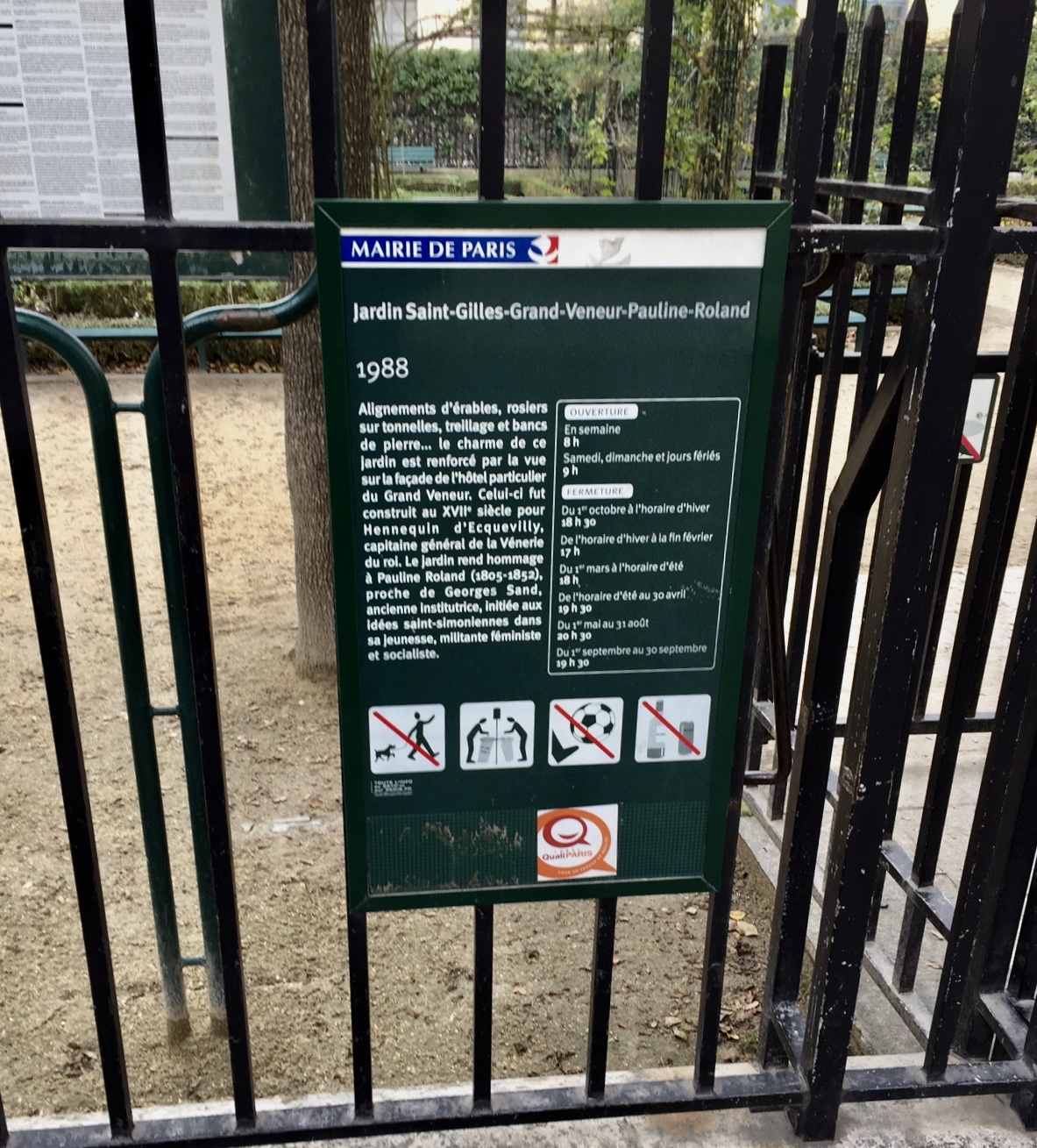
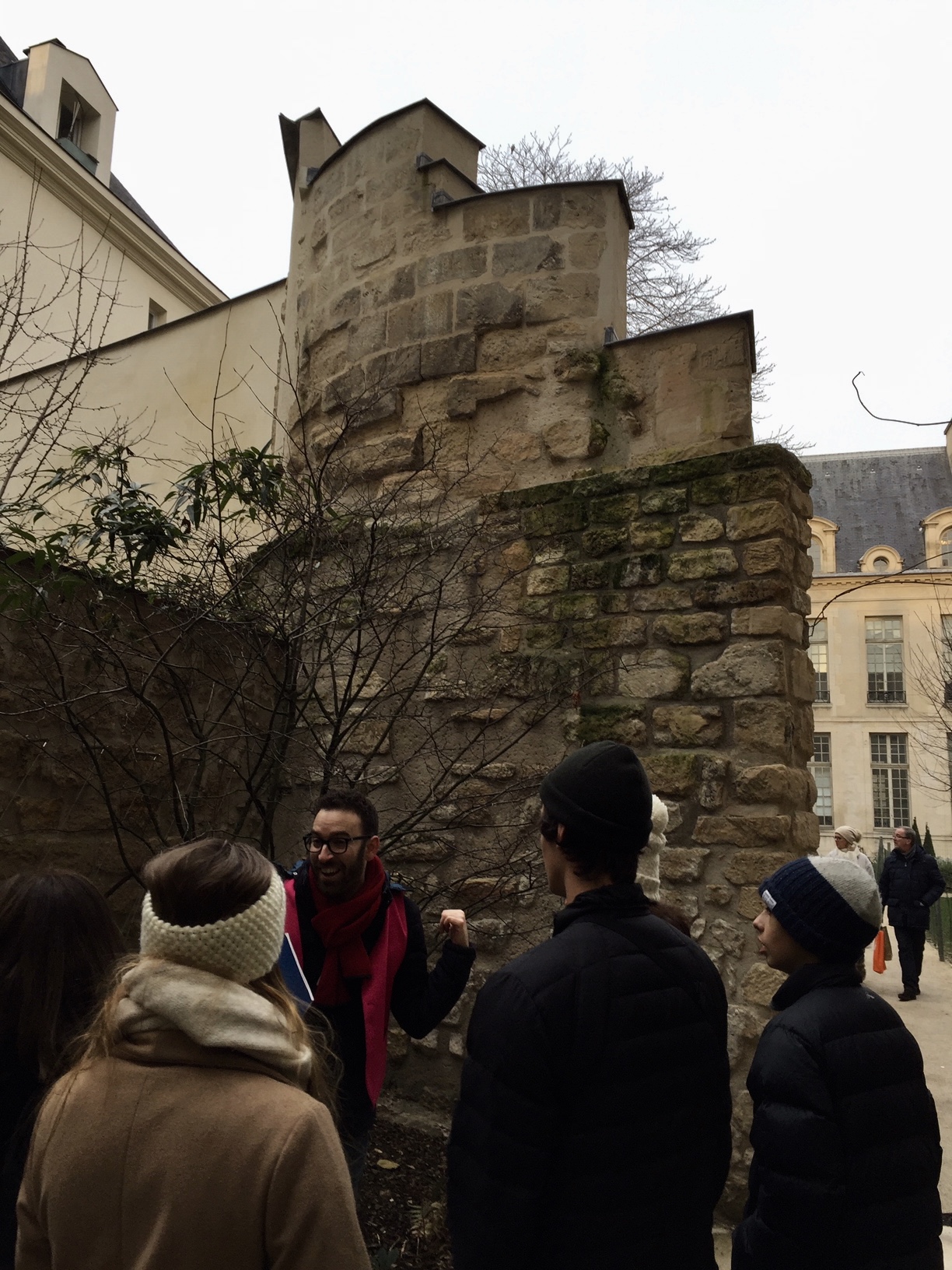
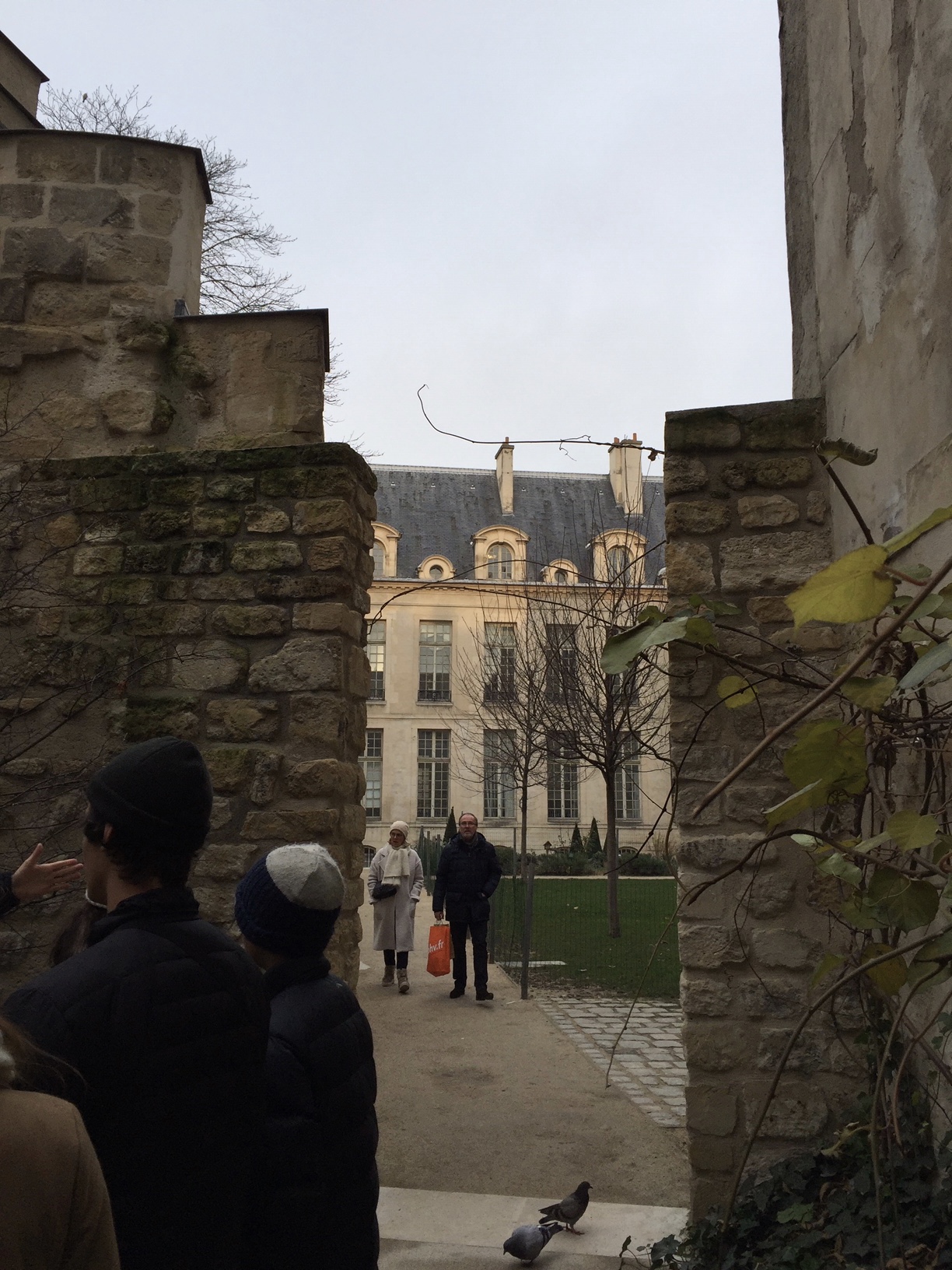
The Grand-Veneur hotel was built in the 17th century for Hennequin d’Ecquevilly, captain general of the King’s Vénerie: he was in charge of organizing the court hunts of the king. This square occupies the garden of this mansion.
The garden, built in 1988, pays tribute since 2010 to Pauline Roland (1805-1852), close to Georges Sand, former teacher, initiated to Saint-Simonian ideas in his youth, feminist and socialist activist.
.
Along the rue de Rosiers, you’ll find the best Falafel in town and a few remaining orthodox eateries. The best falafel is apparently at L’as du Falafel. That said, I assure you, they’re all good.
https://www.algemeiner.com/2015/10/08/paris-to-unveil-memorial-for-infant-victims-of-the-holocaust/
Fascist Italy, 1930s

FVQ-F-119688-0000
Student of the Orvieto Fascist Academy of Orvieto on the snow fields
Mandatory photo credit:
Archivi Alinari, Firenze
WARNING:
Permission must be required for non editorial use. Please contact Alinari Archives
Photographer:
Image date:
1930-1940
Place of photography
Italy
Collection:
Fratelli Alinari Museum Collections, Florence
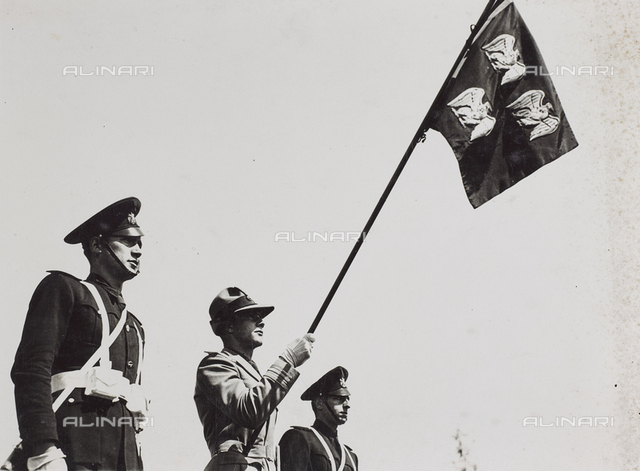
FVQ-F-119639-0000
“The fascist Academy pennant”
Mandatory photo credit:
Archivi Alinari, Firenze
WARNING:
Permission must be required for non editorial use. Please contact Alinari Archives
Photographer:
Image date:
1930-1940
Place of photography
Italy
Collection:
Fratelli Alinari Museum Collections, Florence
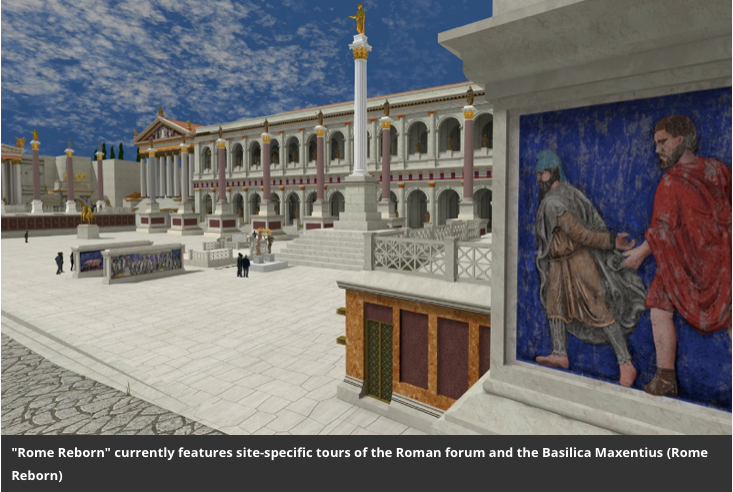
A new way to see Ancient Rome
Ambitious VR Experience Restores 7,000 Roman Buildings, Monuments to Their Former Glory
You can take an aerial tour of the city circa 320 A.D. or stop by specific sites for in-depth exploration
Read more:
Le Marais, Paris, partie un (1): Place des Vosges
Behold Le Marias!
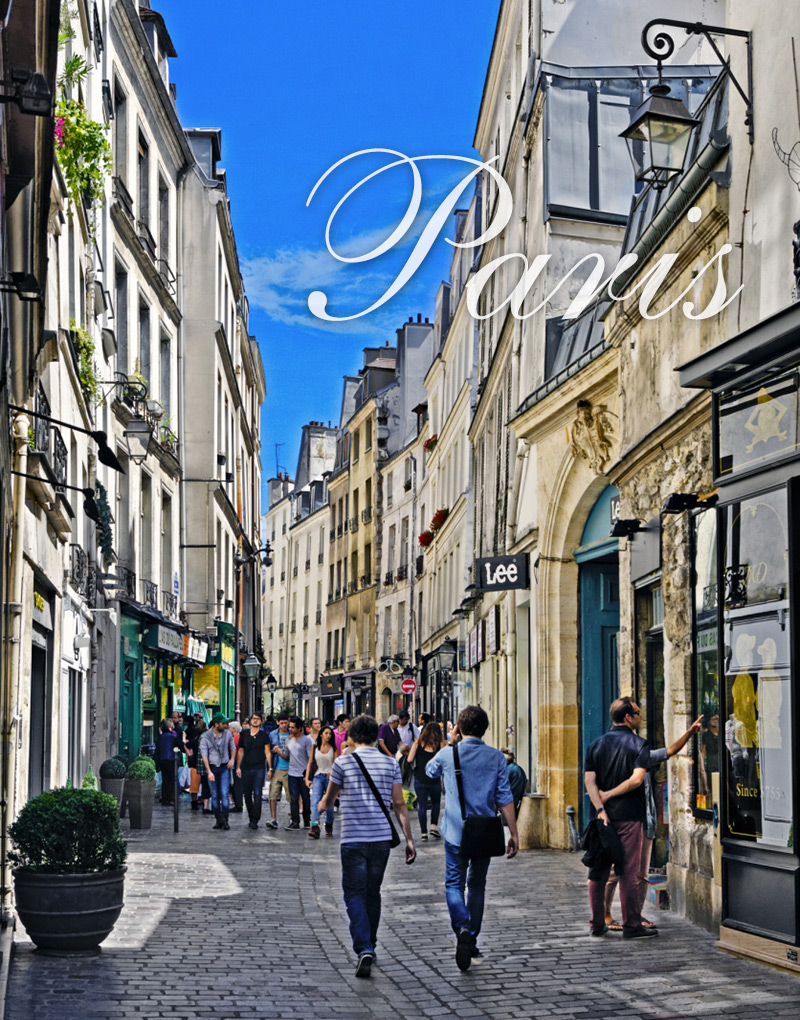
This famous district began its life in the history of Paris as the home of the king and the capitol city’s many aristocrats. Le Marais spreads across parts of the 3rd and 4th arrondissements in Paris, on the Rive Droite.

Today Le Marais is enjoying the latest of its many incarnations as the trendiest shopping district in Paris with the top stores in Rue des Francs-Bourgeois and Rue des Rosiers. The most famous stores are BHV Marais, Merci, and Uniqlo Le Marais.
From the 13th century forward, Le Marais was developed as the French nobility’s favorite place of residence. Things reached a crescendo in 1605 when King Henri IV of France built Place Royale (today called the Place des Vosges), and subsequently French nobles built their urban mansions, or hôtels particuliers, such as the Hôtel de Sens, the Hôtel de Sully, and the Hôtel de Beauvais, throughout the district, so they could be near the seat of power.

The Royal Square is also notable because it was the oldest planned square in Paris. Comprised as a true square (140 m × 140 m), the Place embodied the first European program of royal city planning.

One of the many new aspects about the Place Royale in 1612 was that the house fronts were all built to the same design, probably by Jean Baptiste Androuet du Cerceau.

The facades are all composed of red brick with strips of stone quoins over vaulted arcades that stand on square pillars. The steeply-pitched blue slate roofs are pierced with discreet small-paned dormers above the pedimented dormers that stand upon the cornices.

One section of the square’s 4 long vaulted arcades:

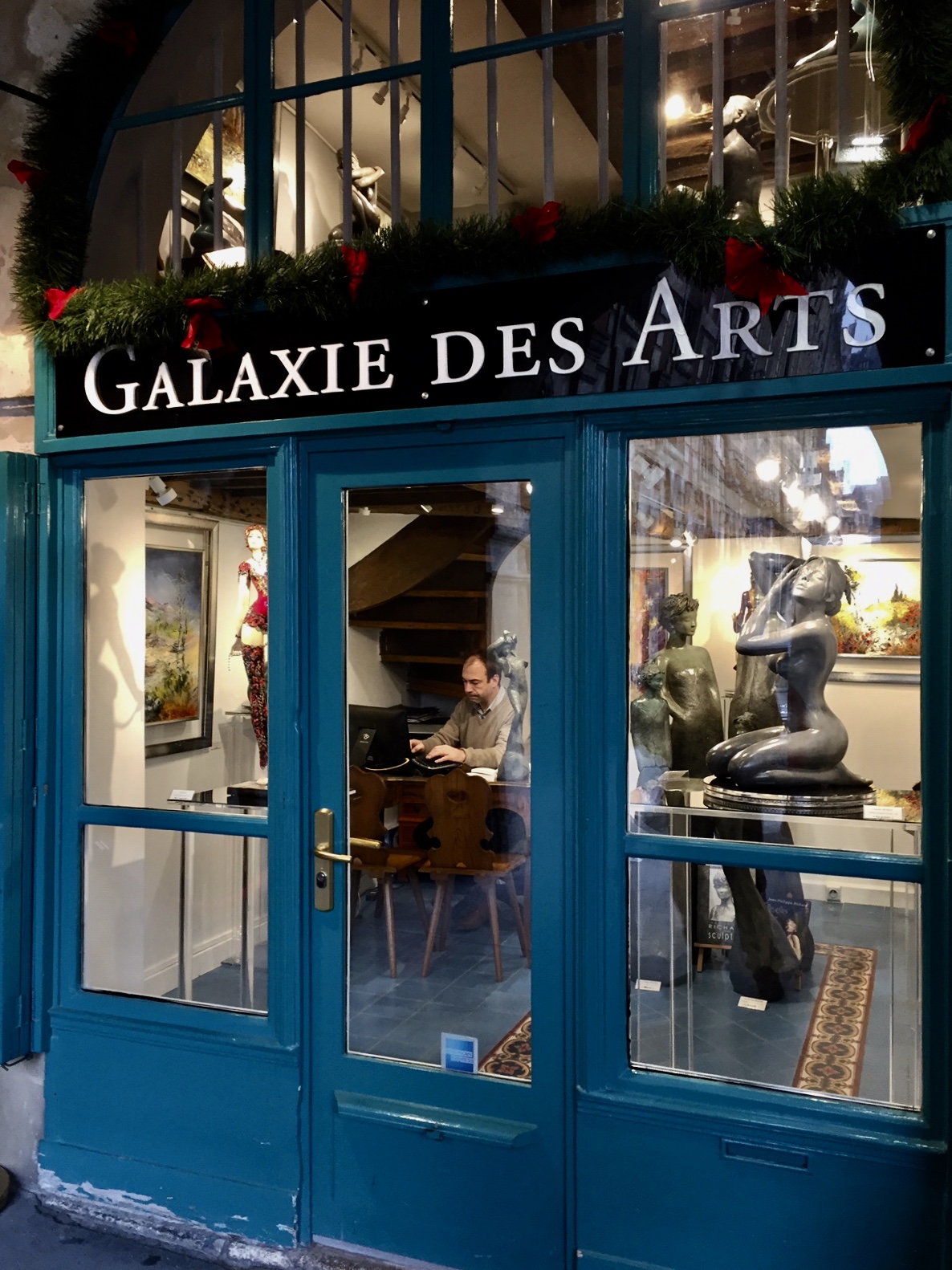
This section of the arcade is the home to this small but fine art gallery:
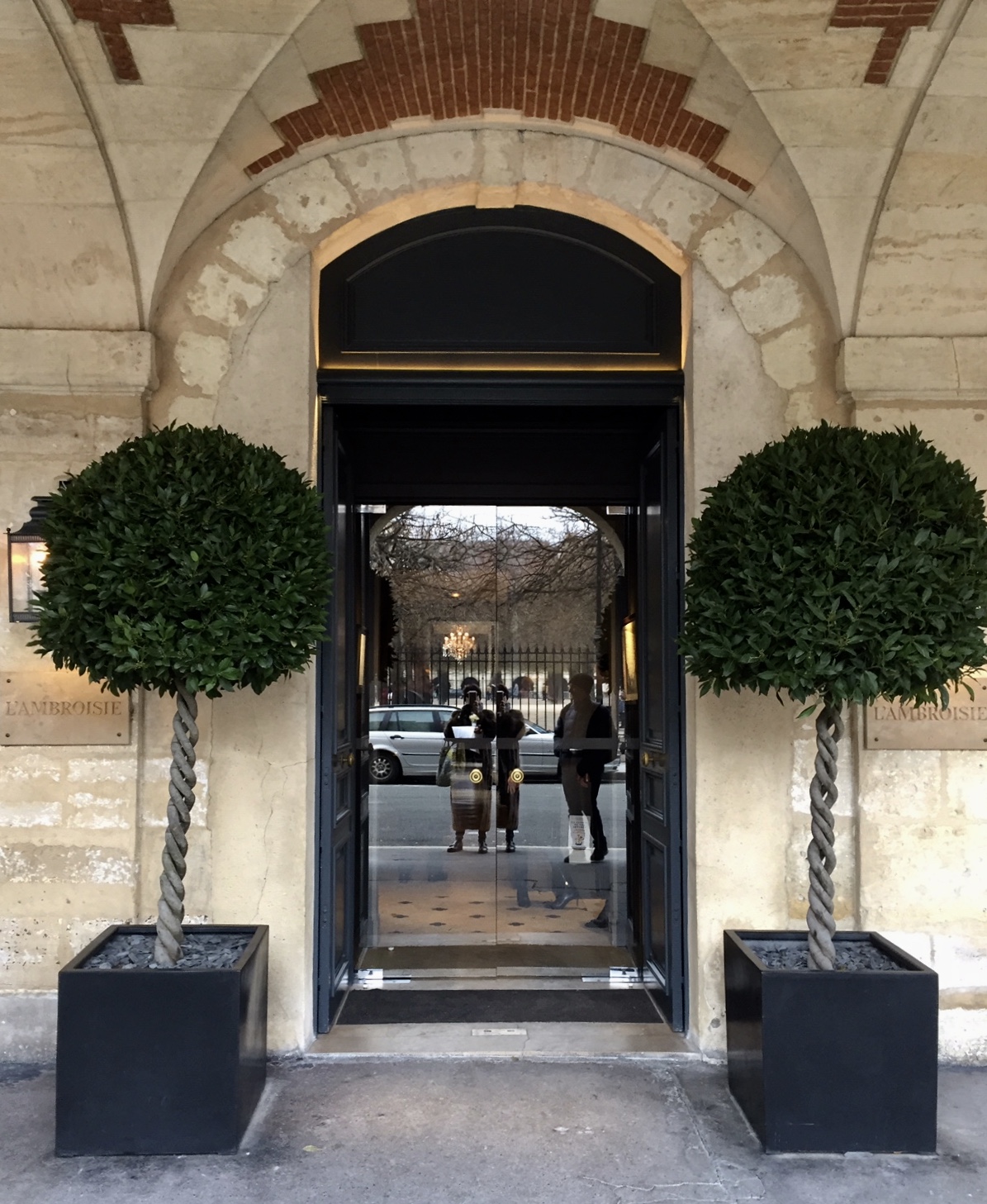
This section of the arcade is also home to one of the city’s most exclusive restaurants. Our guide told us that Michelle and Barack Obama were taken here during their state visit. He promised us that they won’t let Trump come there…just checking to see that you are still reading my text!

Le Marais is the closest you will get to the feel of medieval Paris and has more pre-revolutionary buildings and streets left intact than any other area in Paris. A glance at some of the beautiful buildings and houses indicates the wealthy status of the former residents. After the French Revolution, much of the area was abandoned by the rich, and poor bohemian types moved in. You should keep in mind that before Napoleon showed up the Marais is what most of Paris looked like— a labyrinth of cobblestone alleys.
The rest of Paris was razed by Napoleon and Haussman who wanted to build huge avenues and gigantic squares such as the Place Concorde. These are now the glory of Paris, but they were originally conceived so that armies and artillery could be moved around the city to keep the poor in check and defeat invaders.
On a more metaphysical level, the purpose of such broad space is to make the citizen feel small and powerless when faced with the giant civic machine of government, or an obedient army. In the Marais we are privy to the small and approachable Paris of the past, the place to wander in maddening circles and never find your way, the place to hole up and read Sartre or Camus in a café window or watch the Parisian life go by.
The Marais is also the most famous Jewish quarter in Paris and in much of Europe, still maintaining strong traditions.
The area was considered so squalid at this point it was nearly destroyed by city officials who wanted to modernize Paris. (A huge avenue cutting through the center of the Marais was only avoided by the start of WWI.) Fortunately, Le Marais was one of the first areas in Paris to establish very strict preservation laws. Beginning in the 1960’s, efforts have been made to restore and preserve the façades of historically important (in the case of The Hotel Albert for instance) and typically Parisian (in the case of charming early 20th-century boulangeries for instance). That’s why in this neighborhood, you’ll see bars with Boulangerie signs and a Nike store that looks like a bookstore from the outside.
.
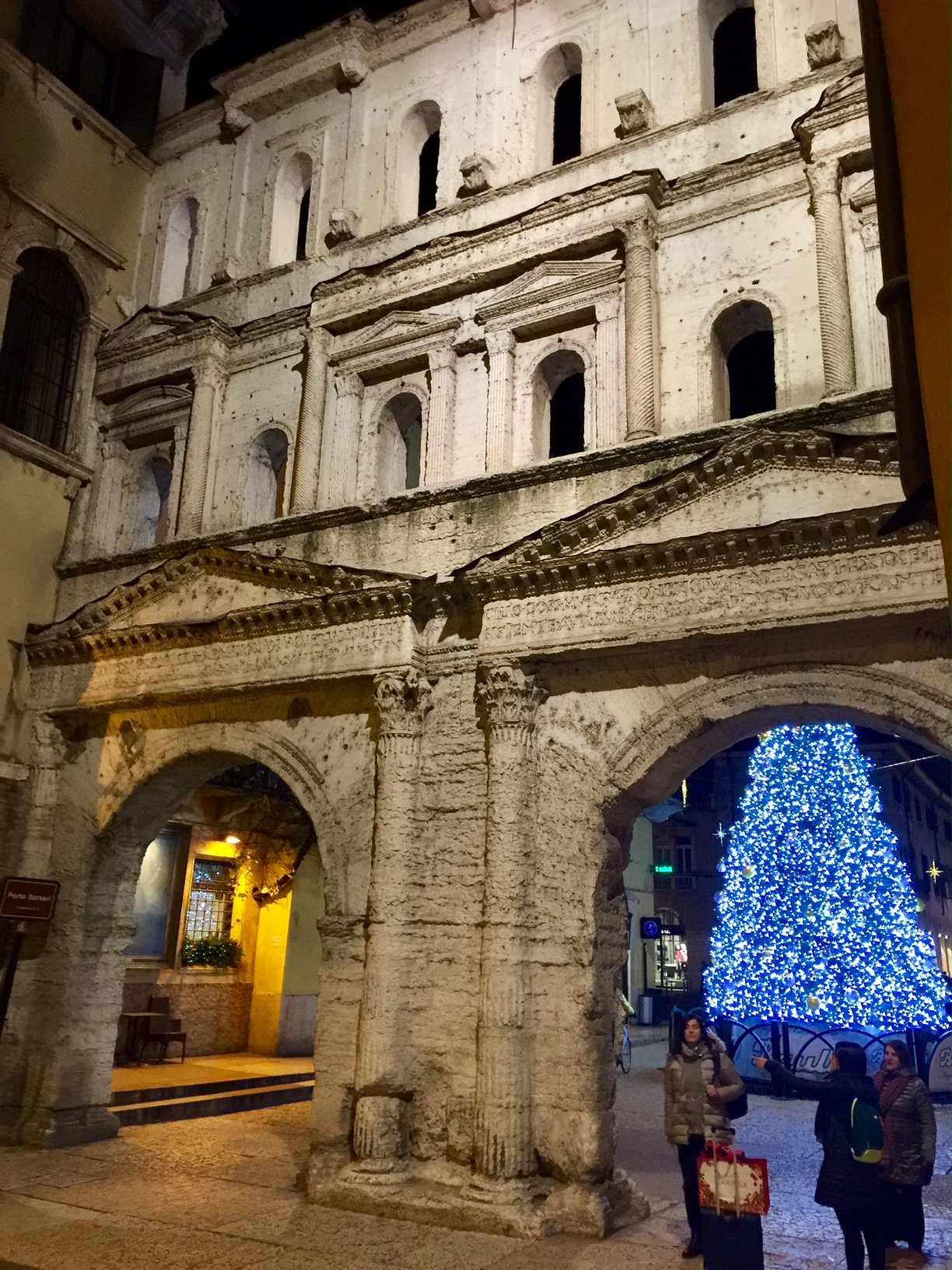
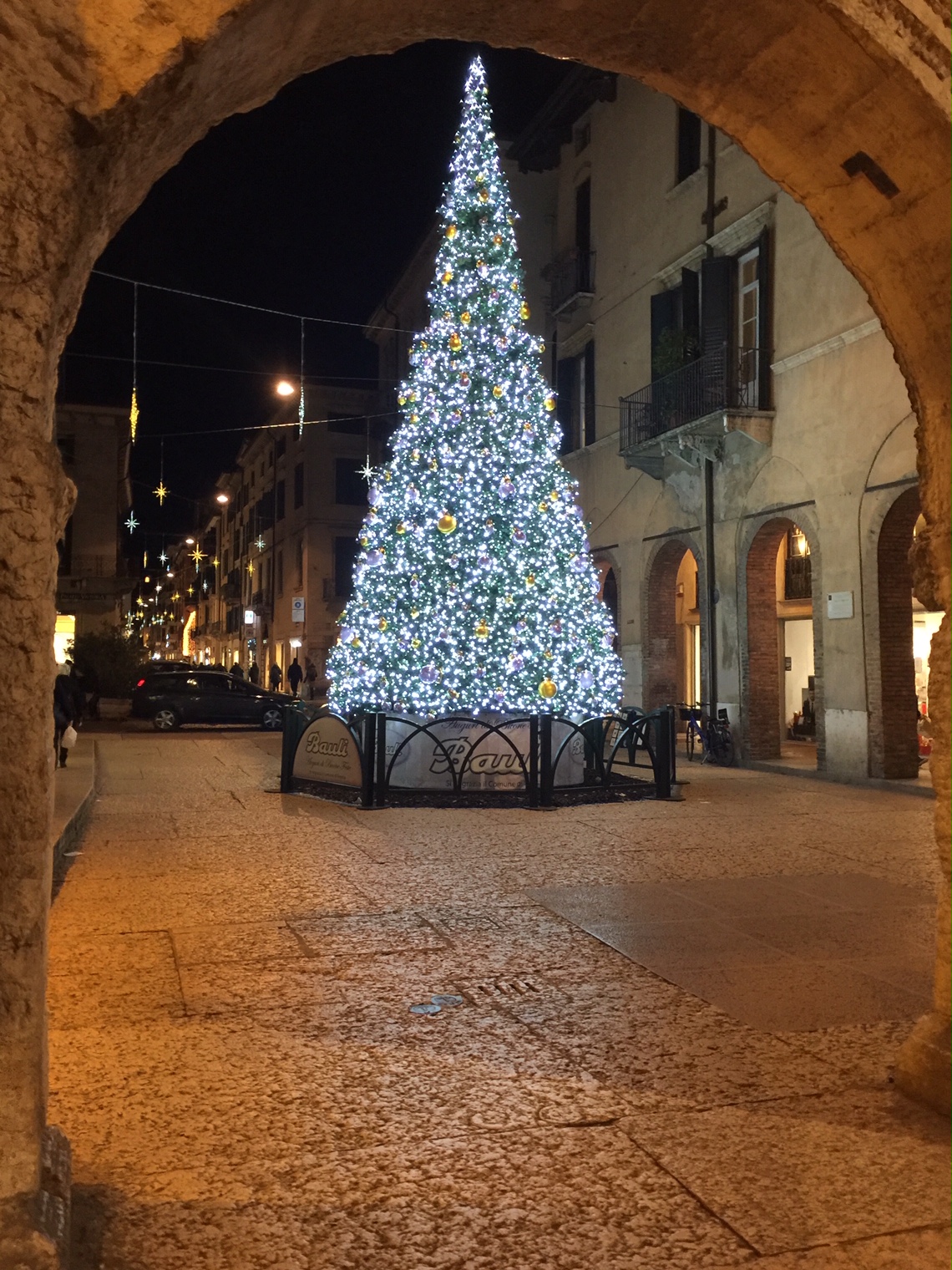
Verona, Italy in December
What a lovely small city is Verona. I understand why Shakespeare chose it as his setting for Romeo and Juliet!
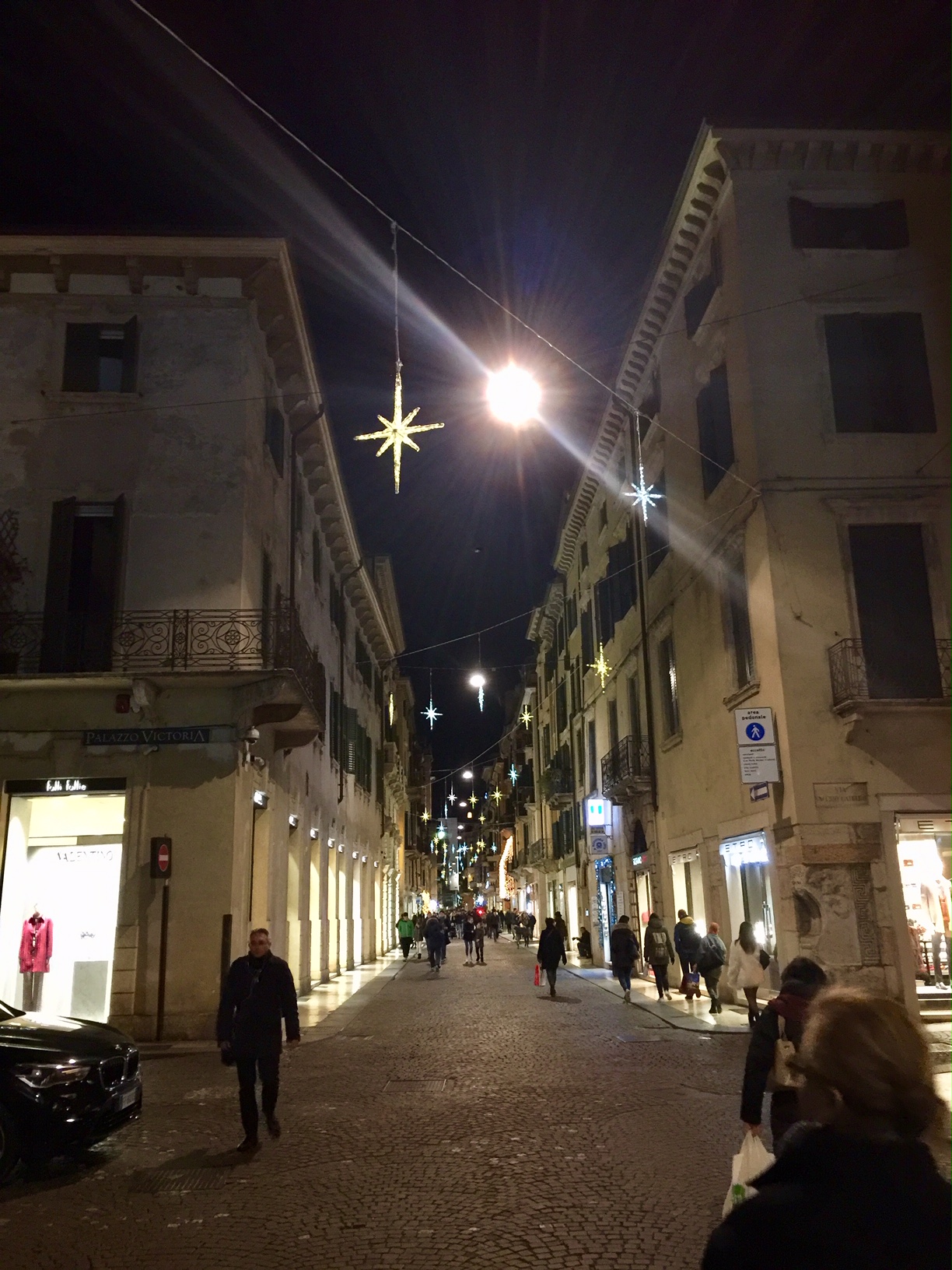
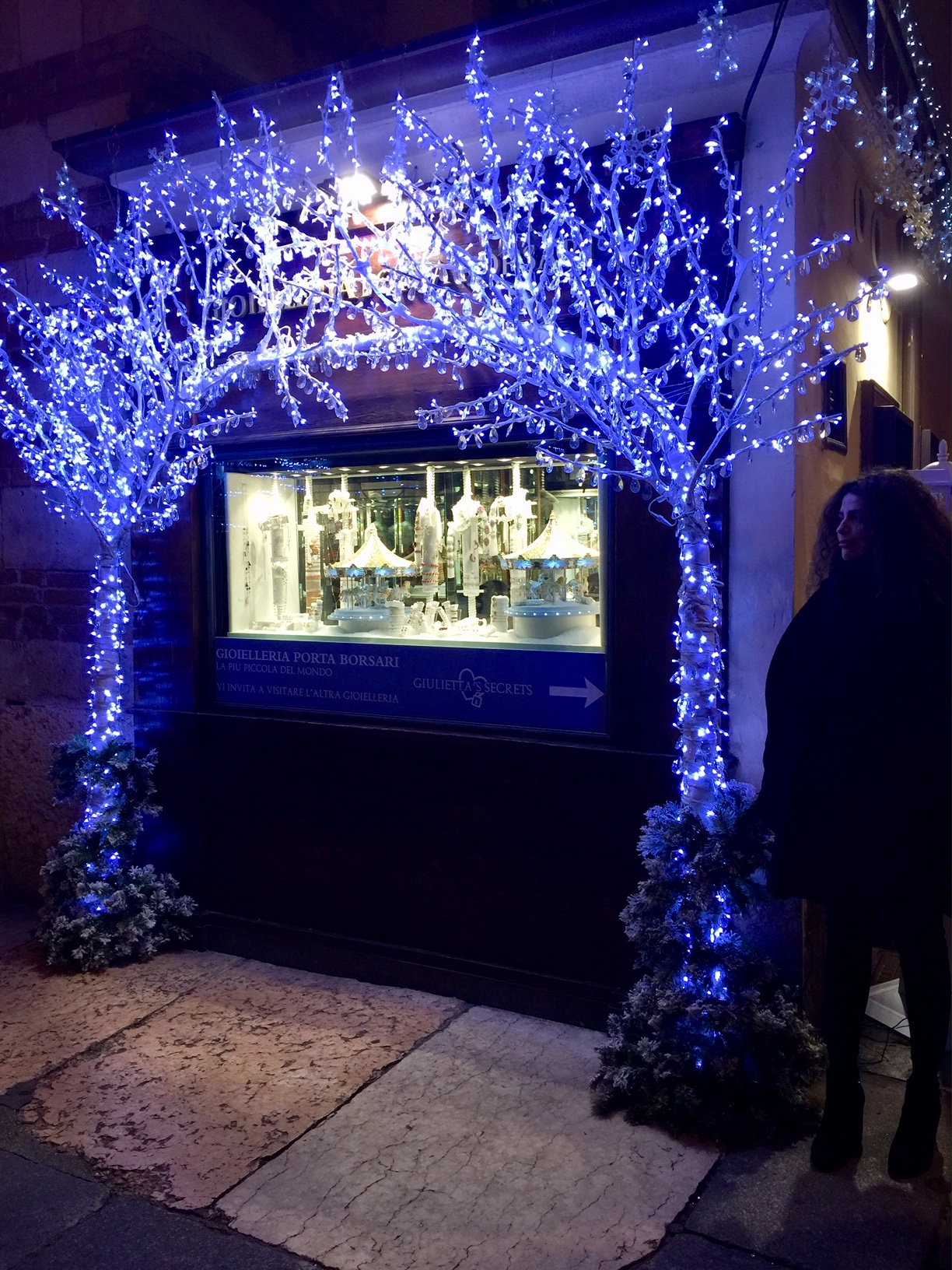
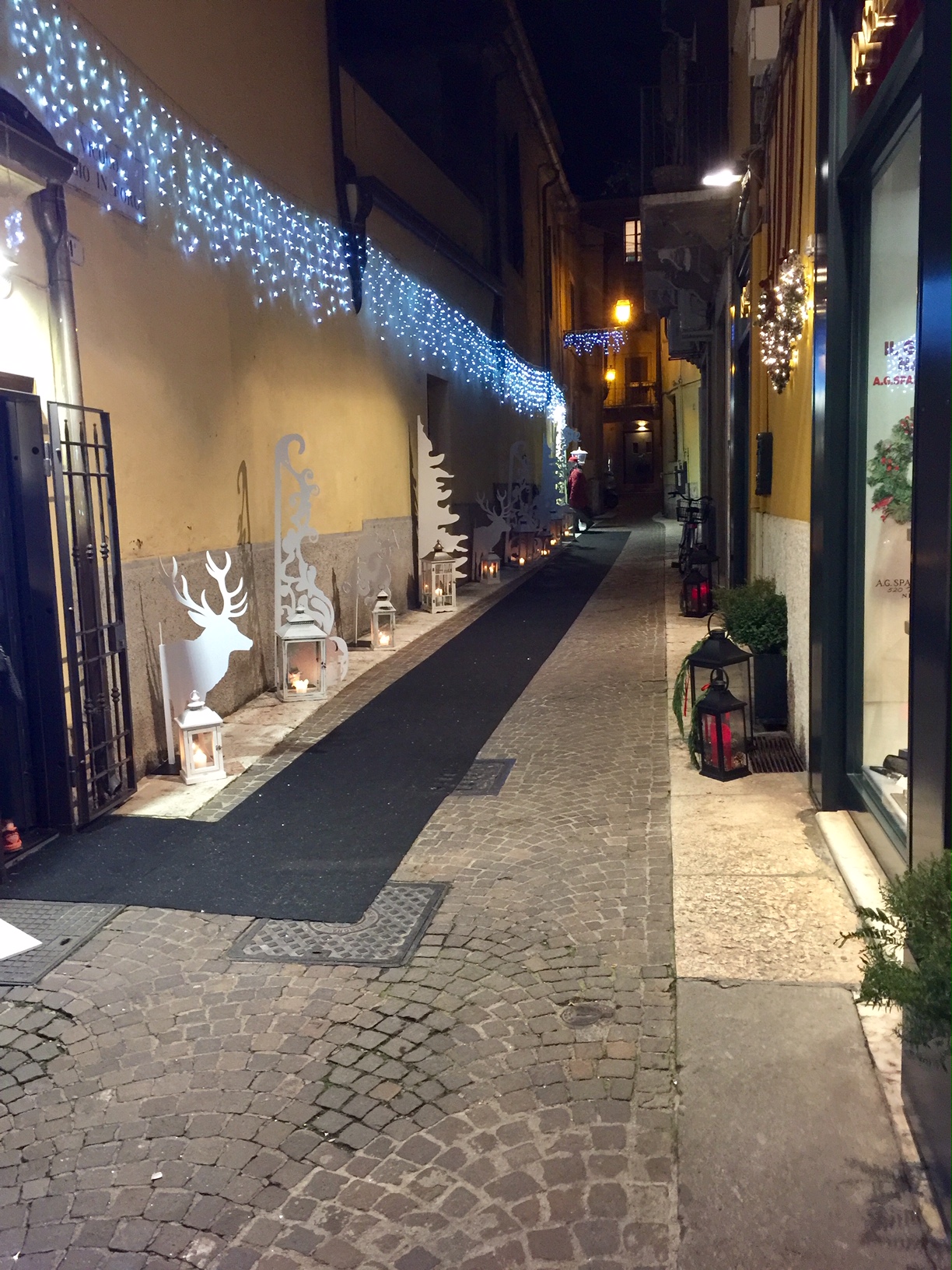
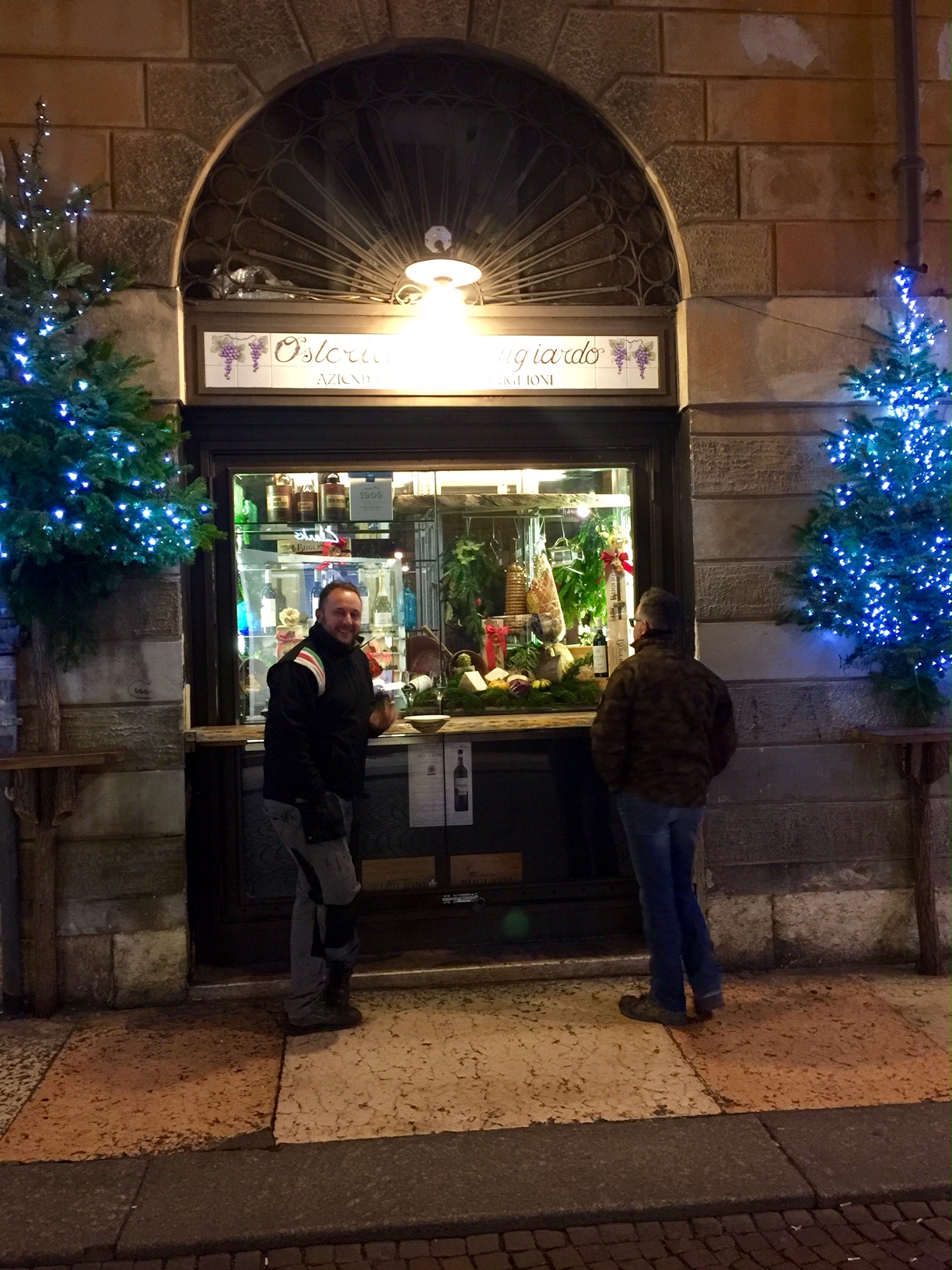
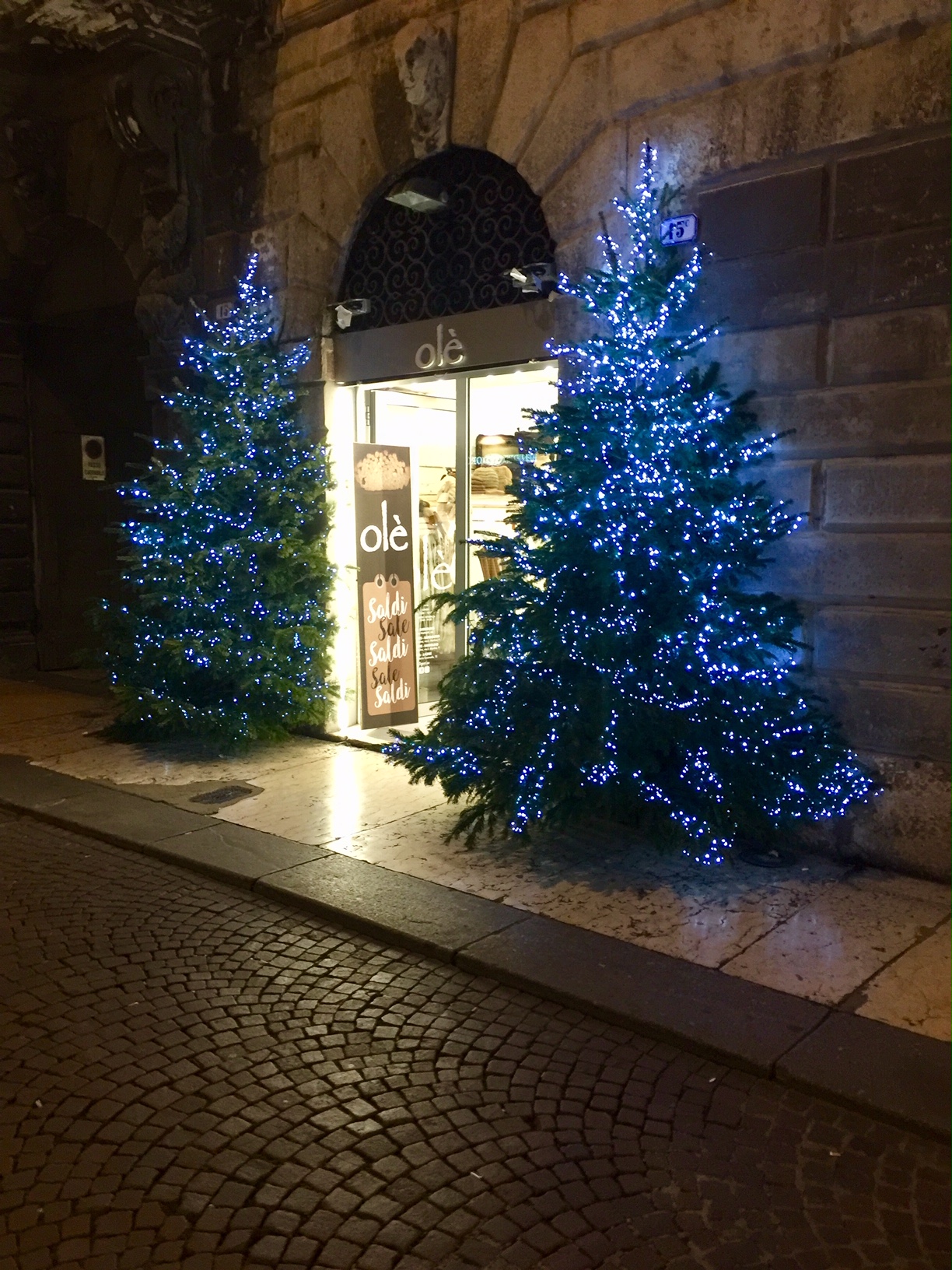
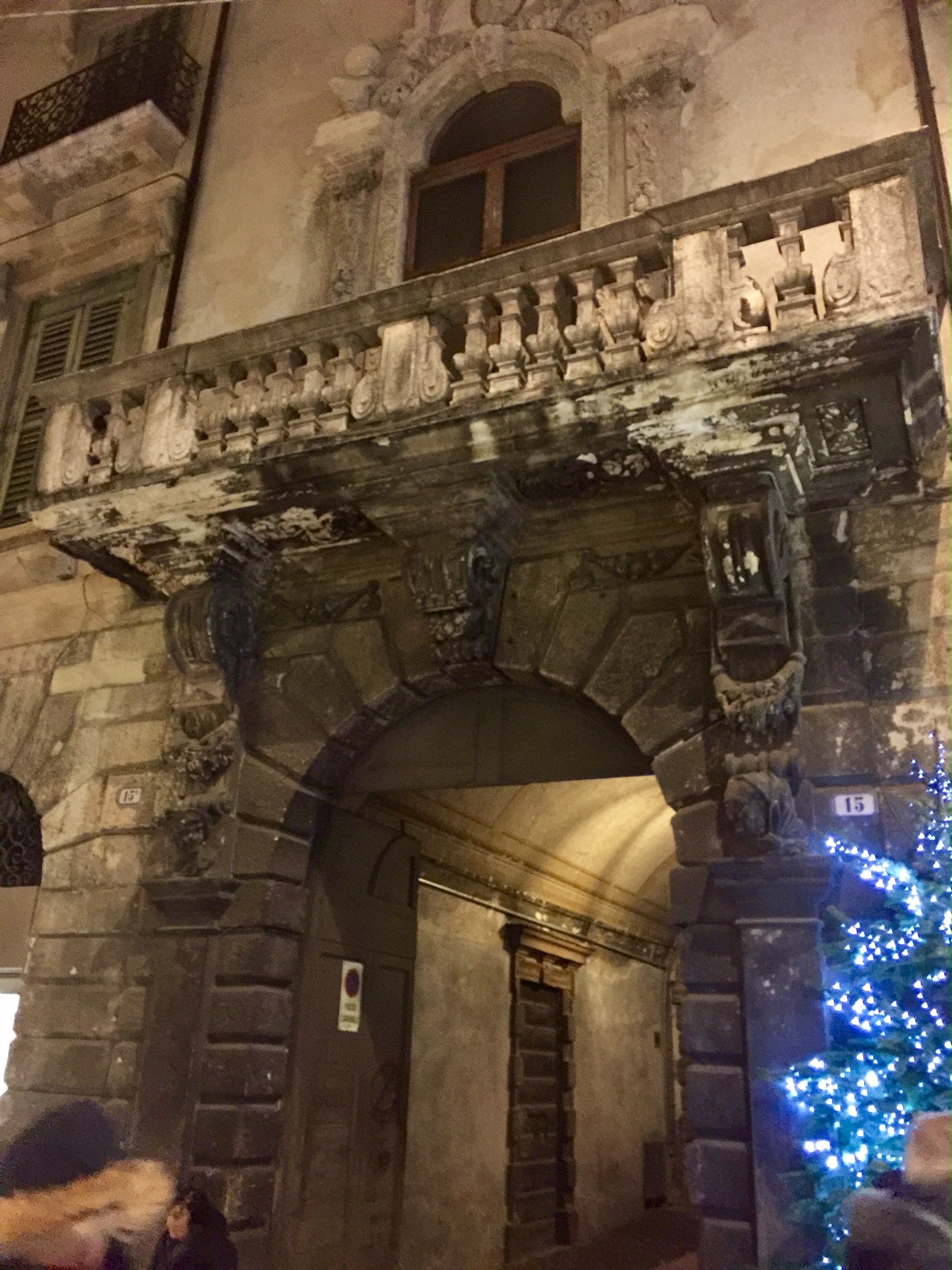
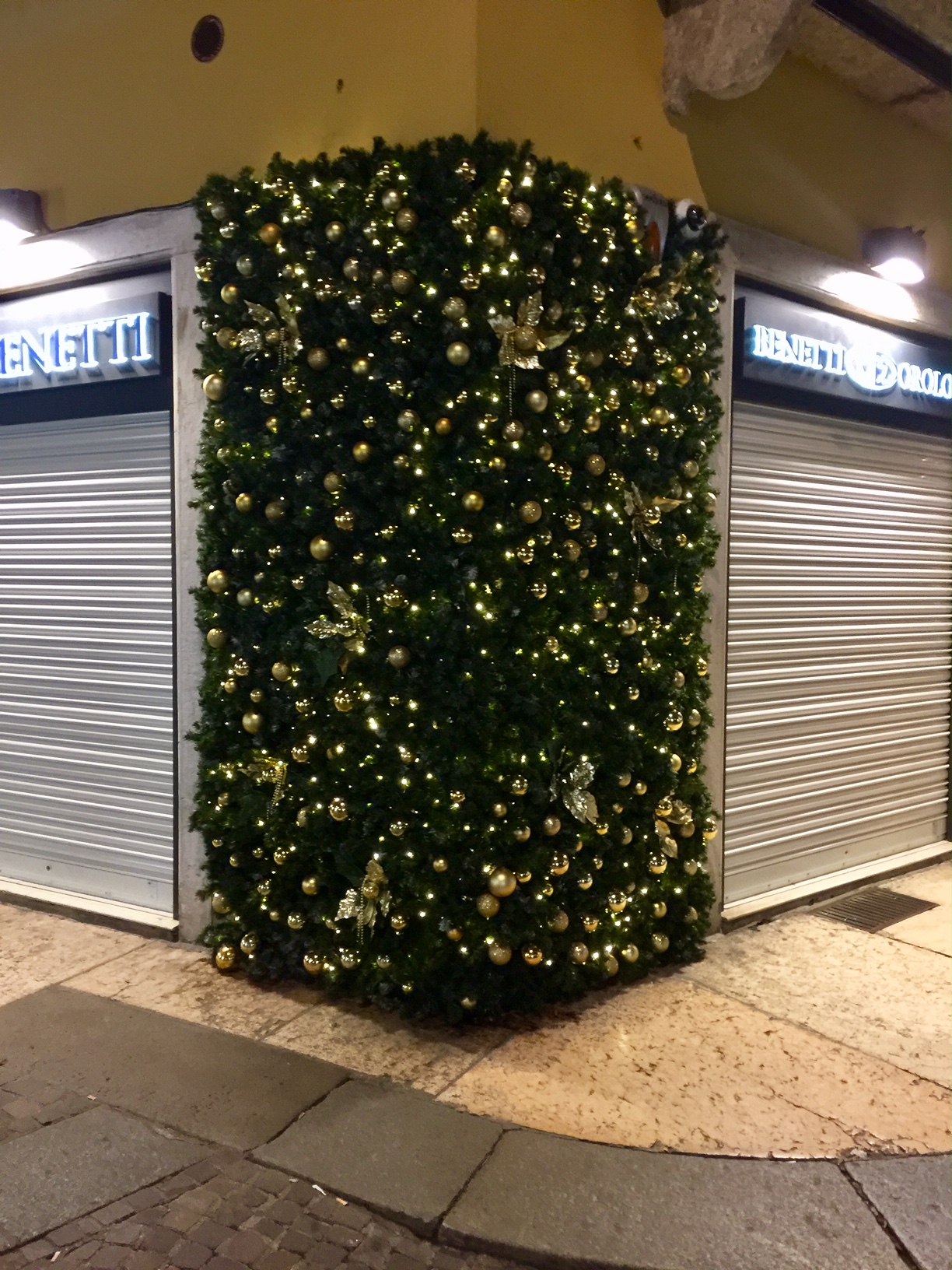
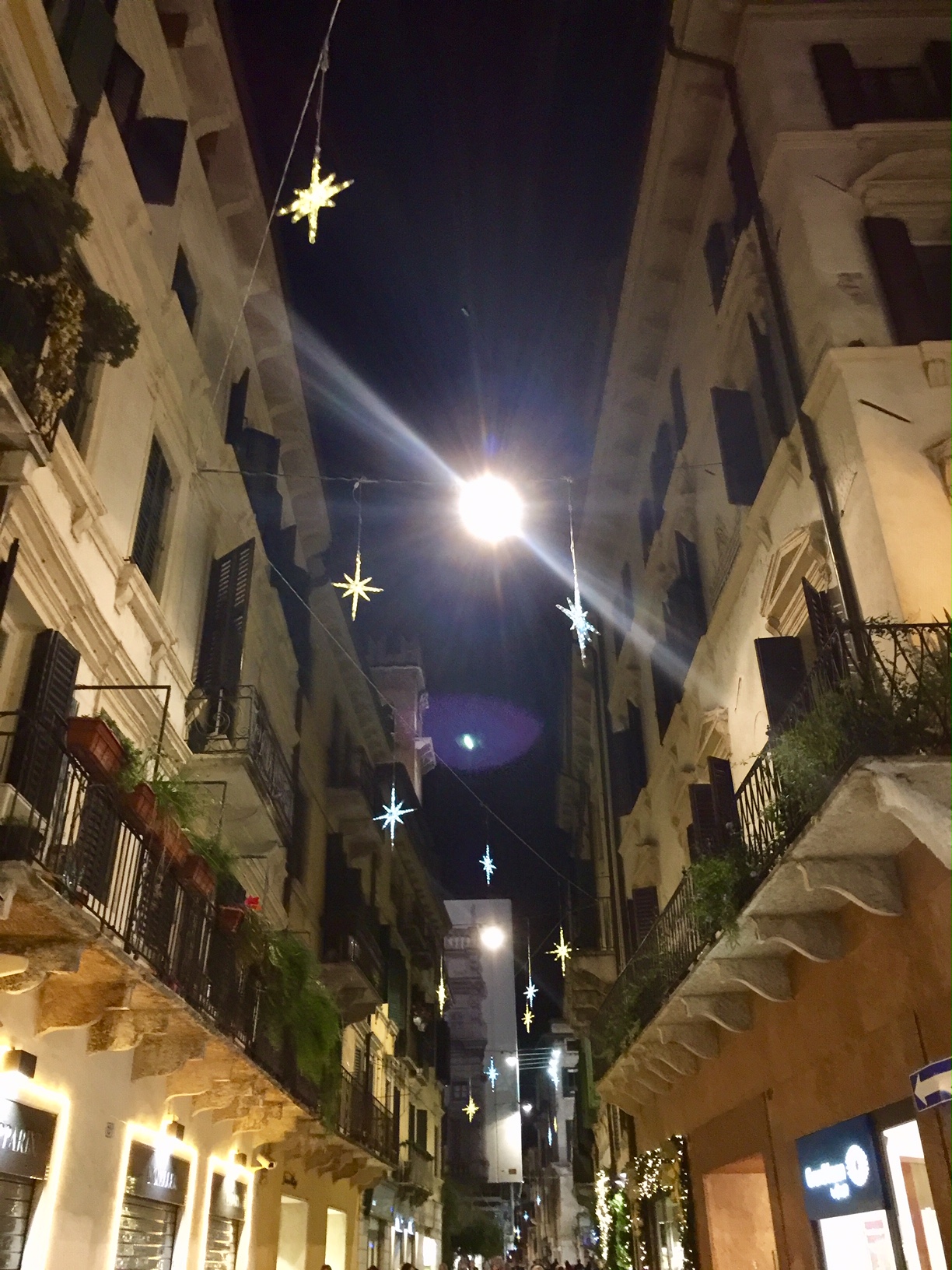
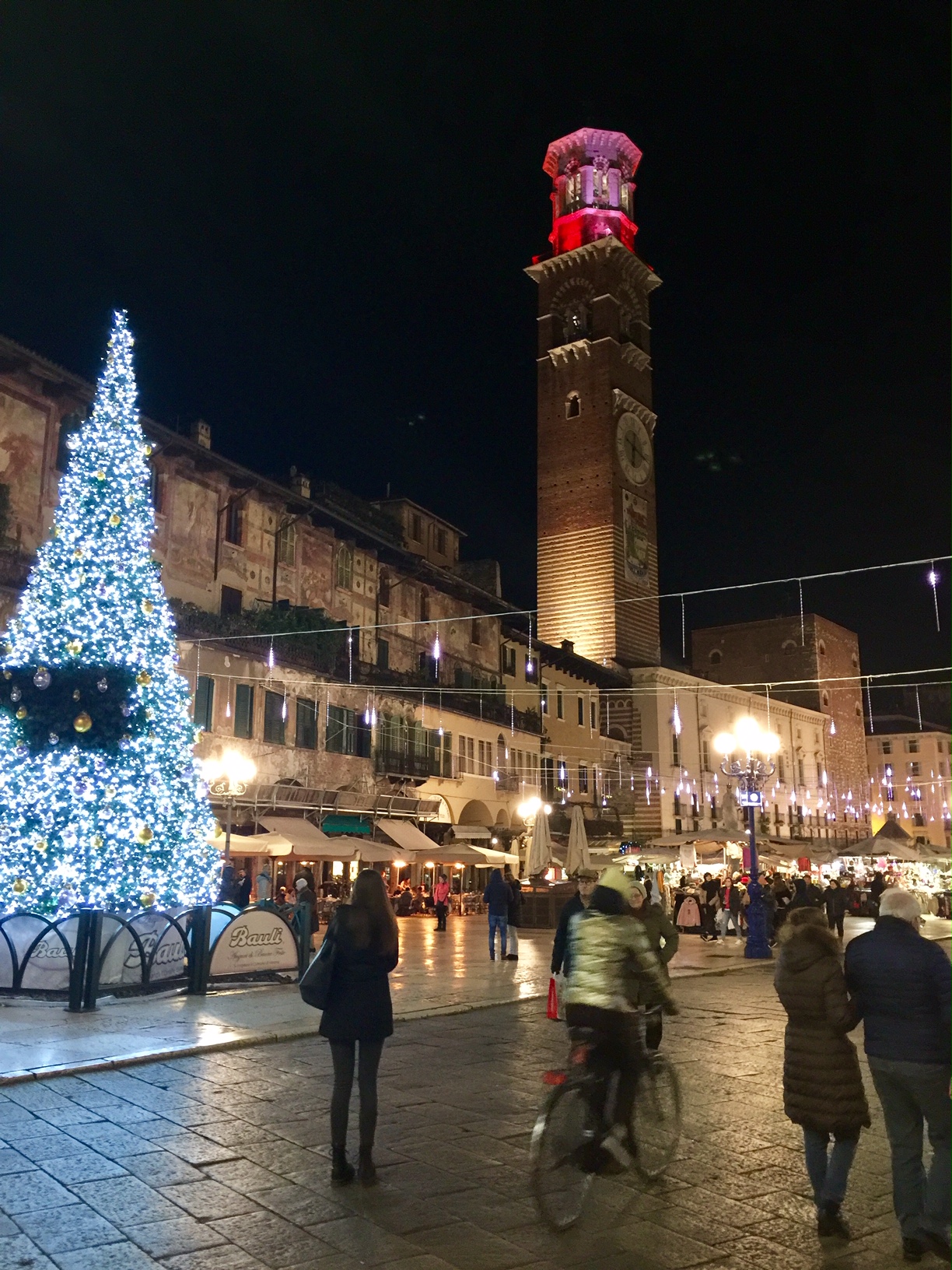
I had the good fortune to spend a few days in Verona recently and the city was all decked out for Christmas.
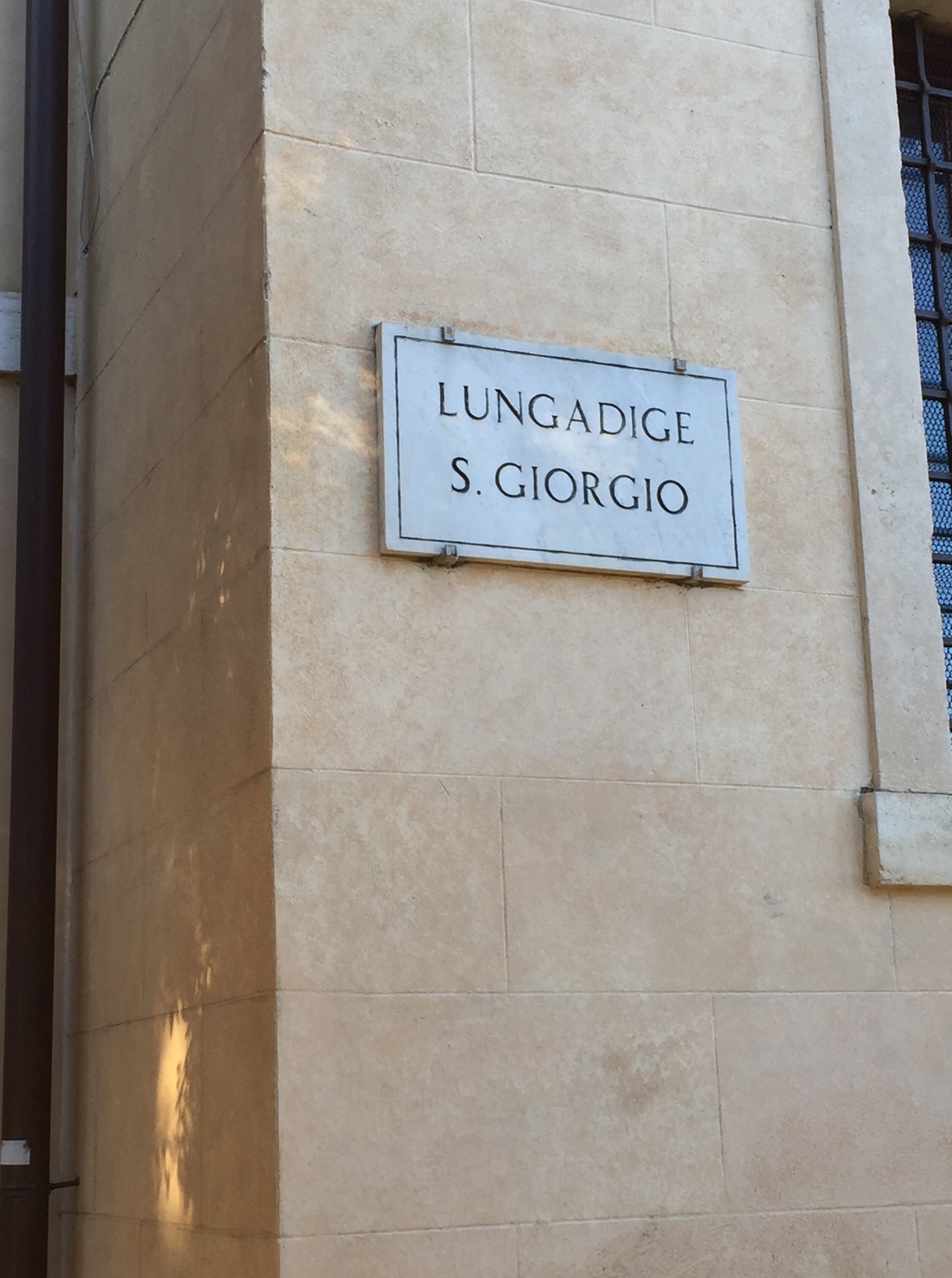
To begin, here is our home away from home, with a beautiful terrace next to the Adige River. A large persimmon (cachi in Italiano) tree attracted many local ucelli!
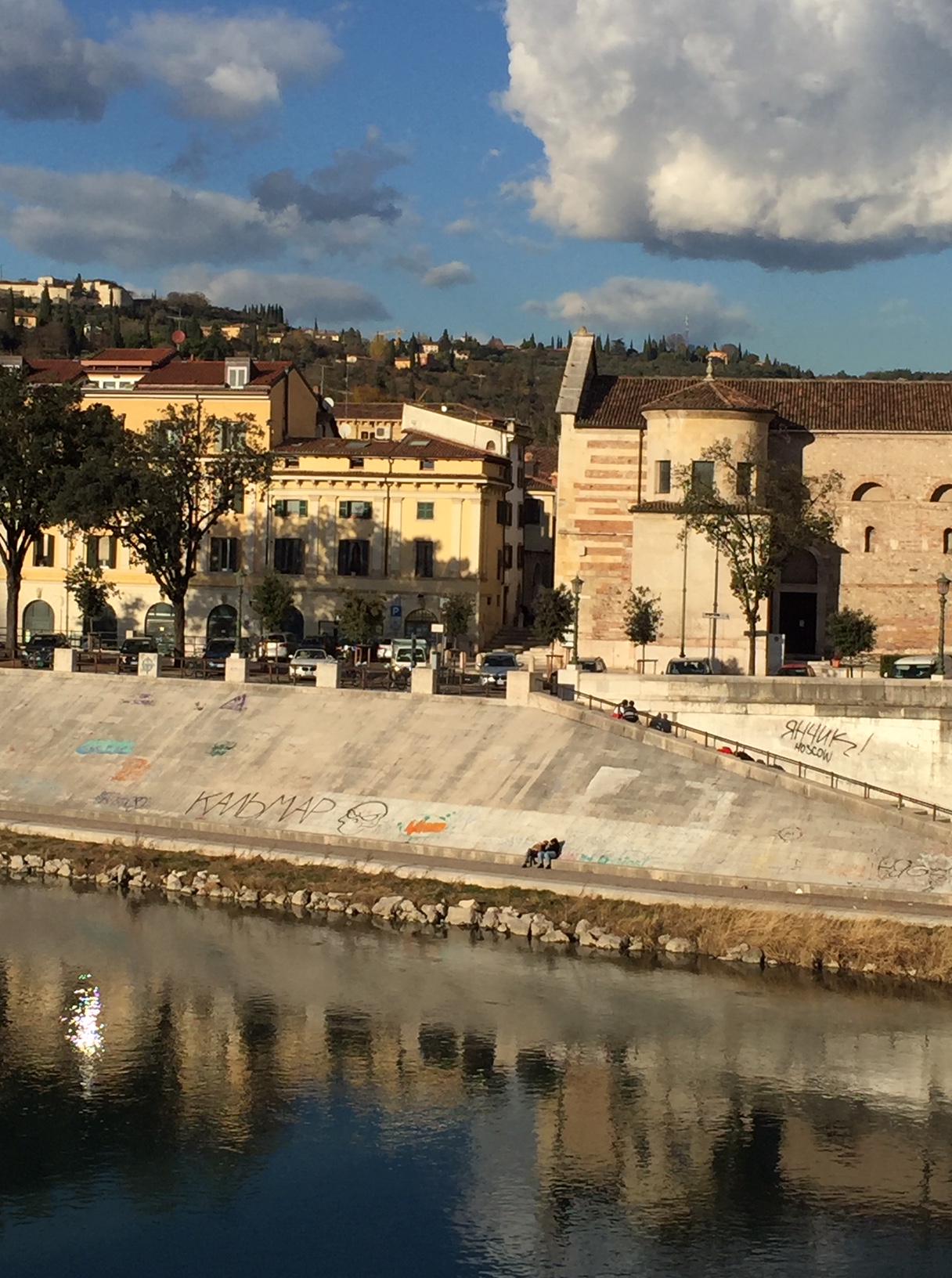
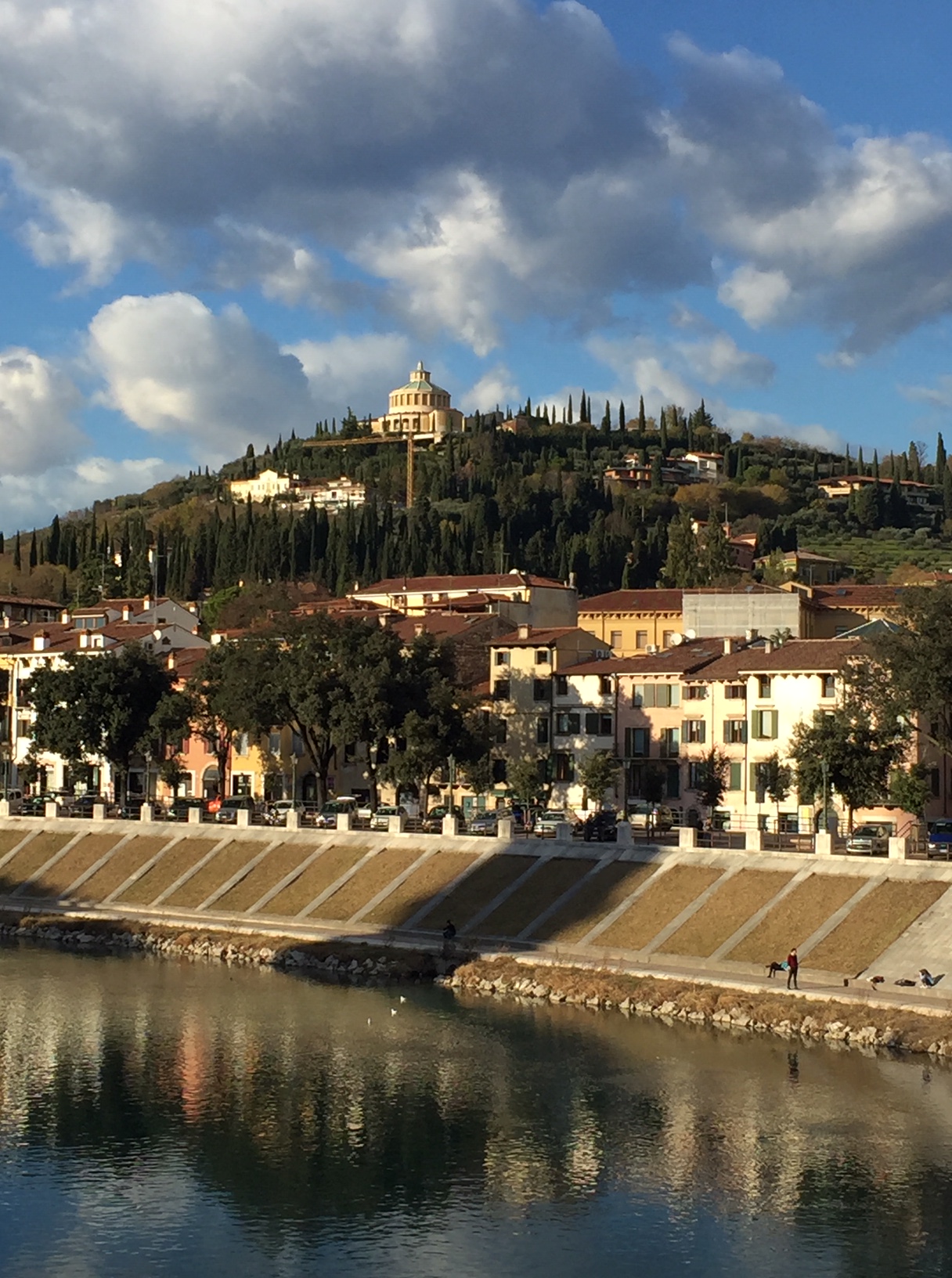
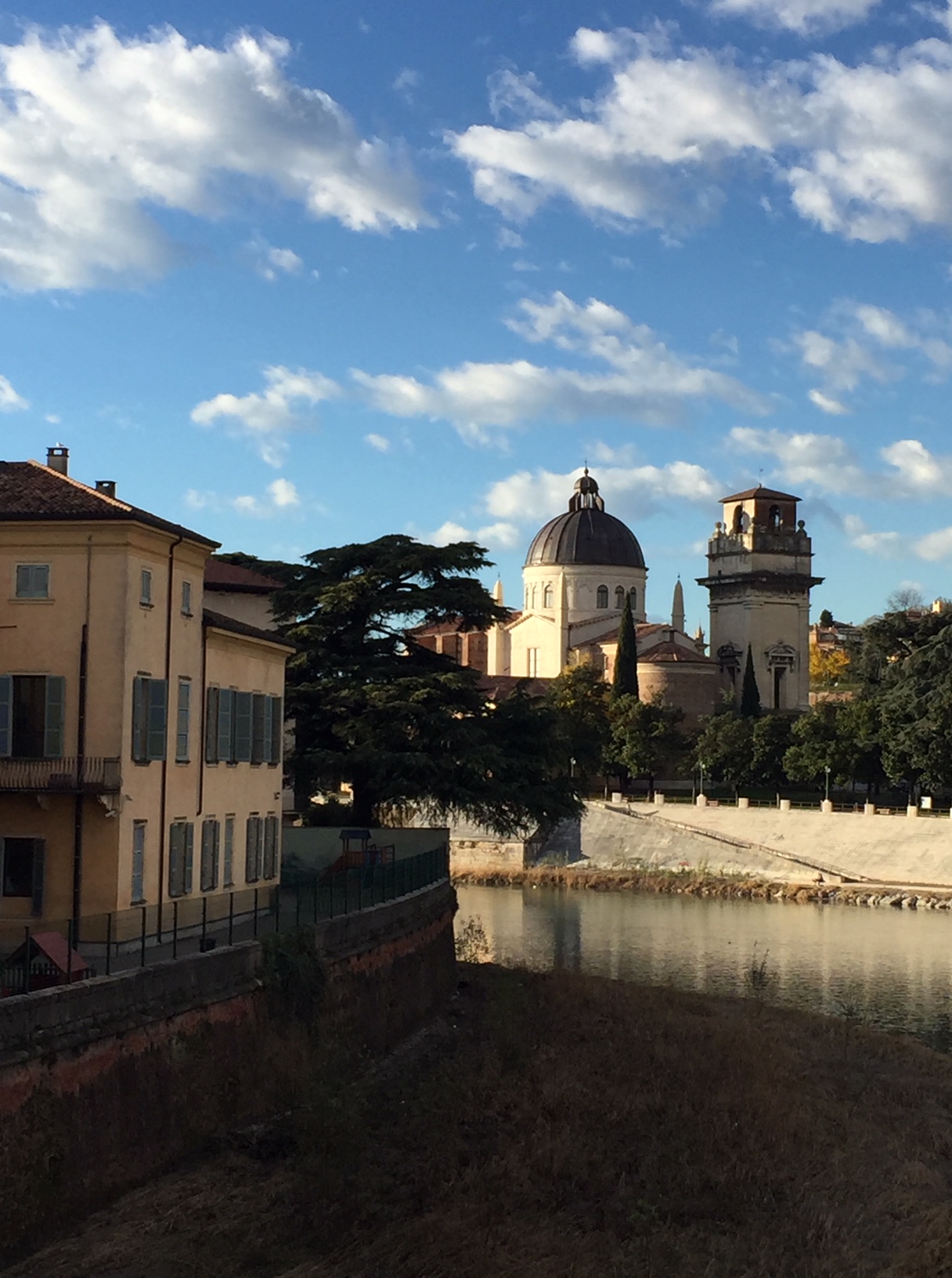
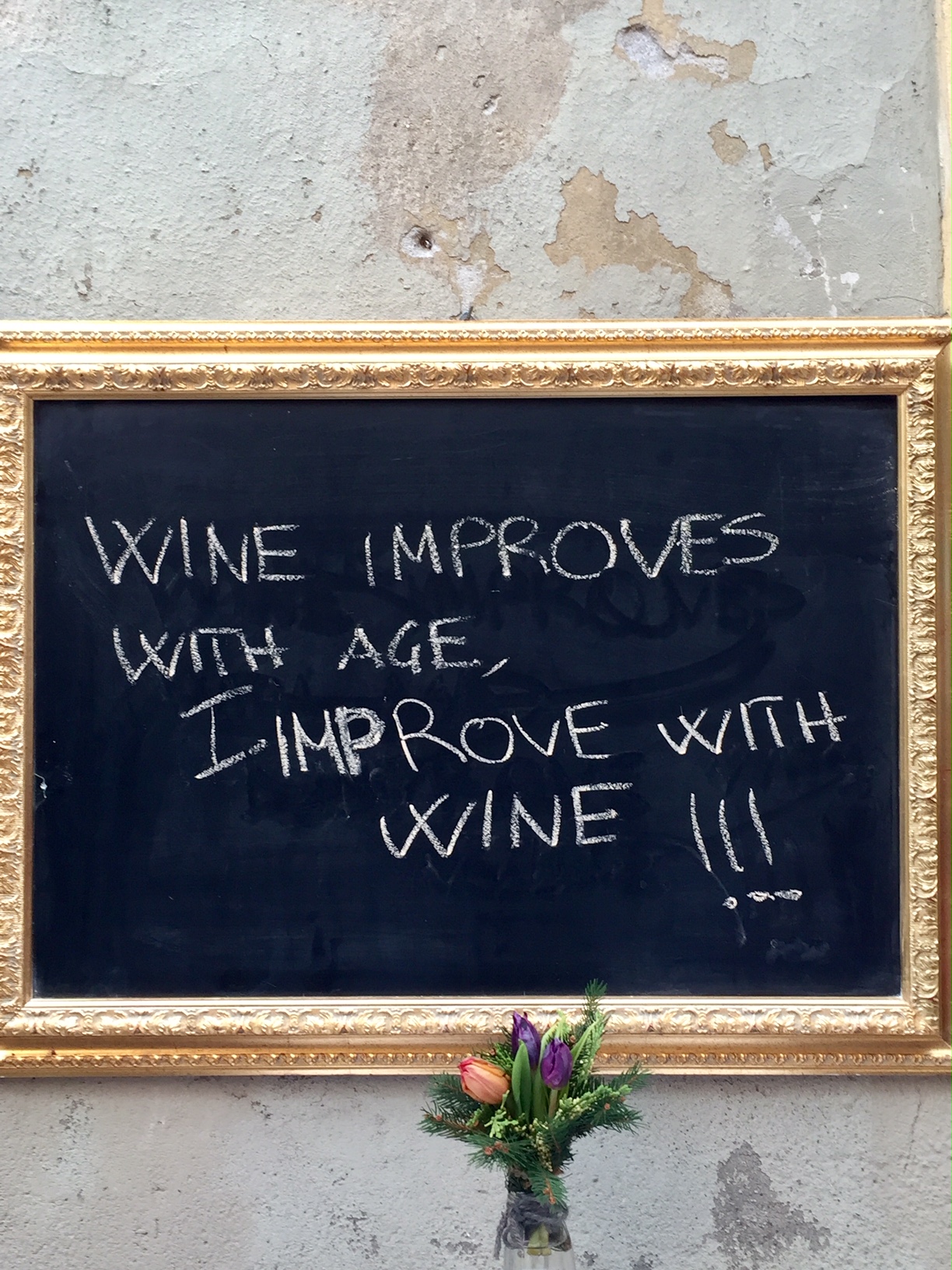
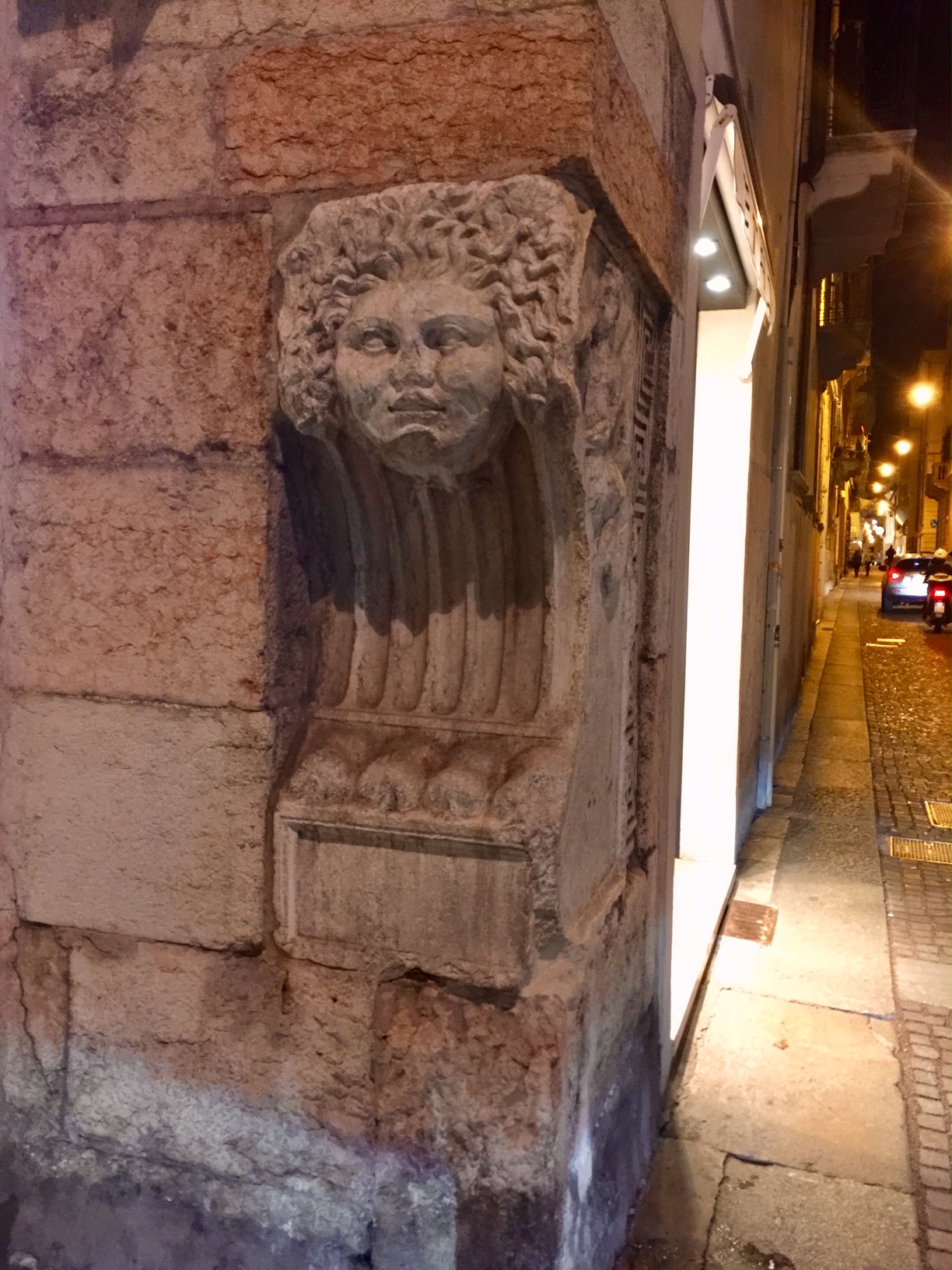
Here are some of my favorite pictures:
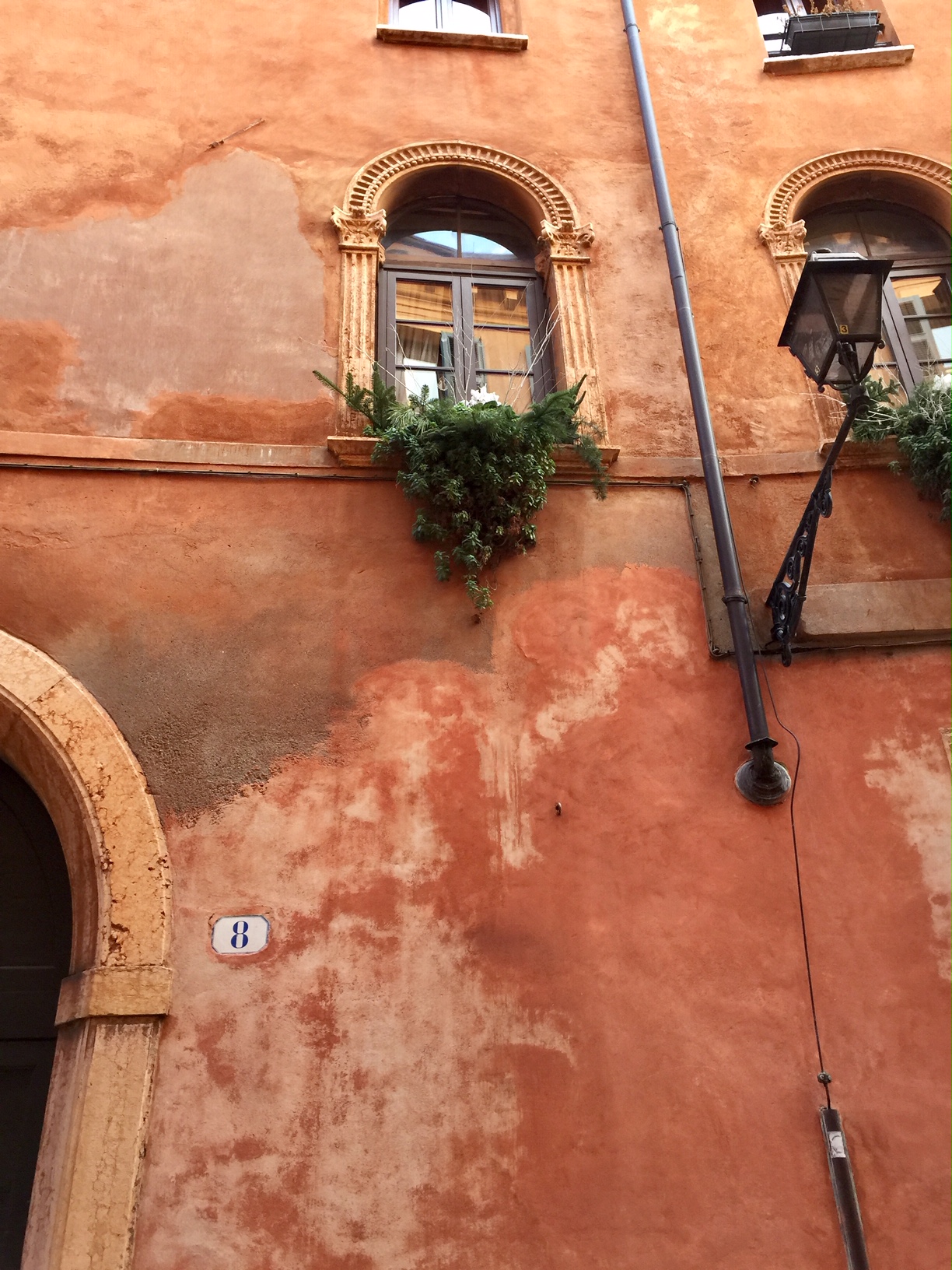
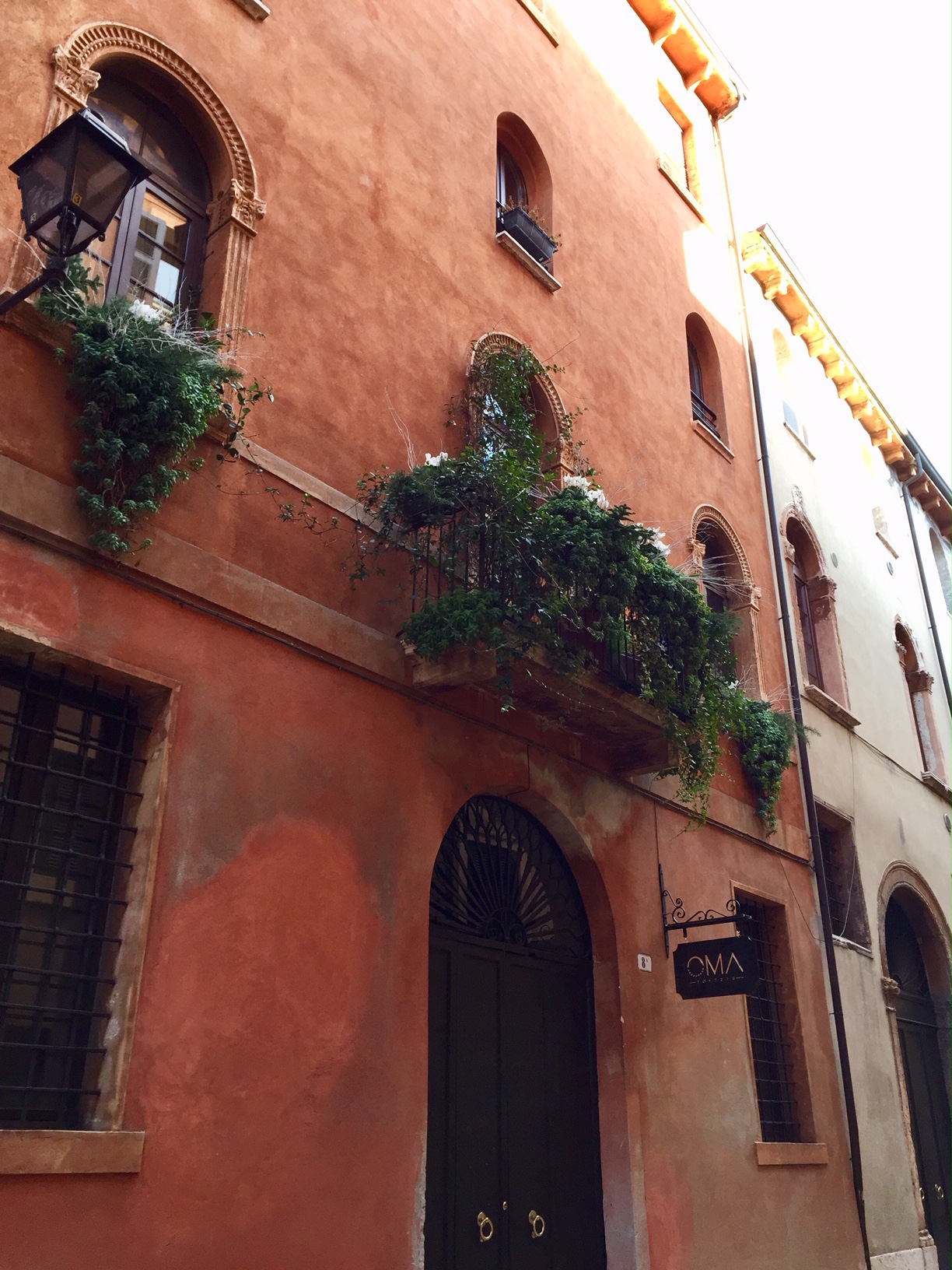
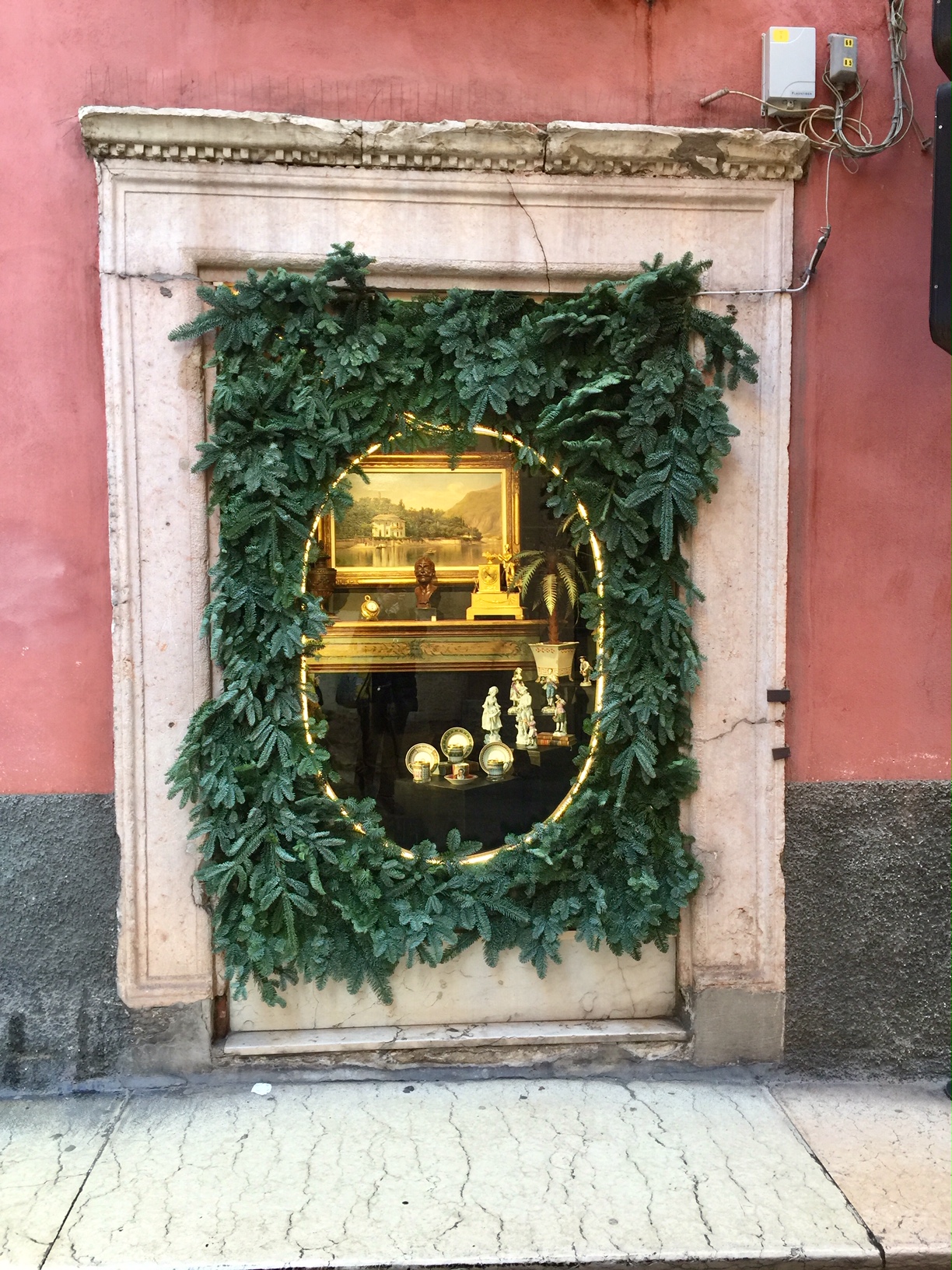
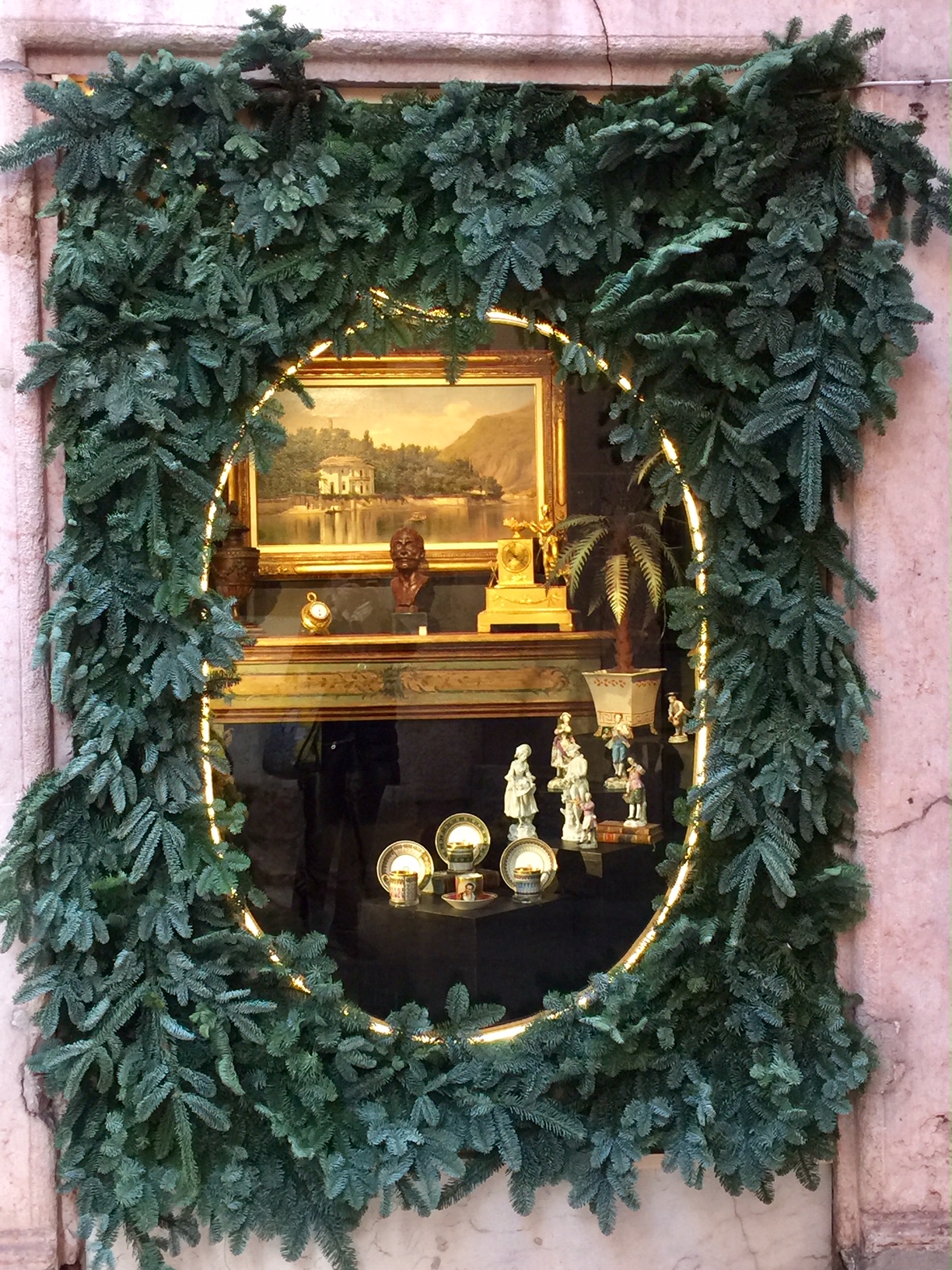
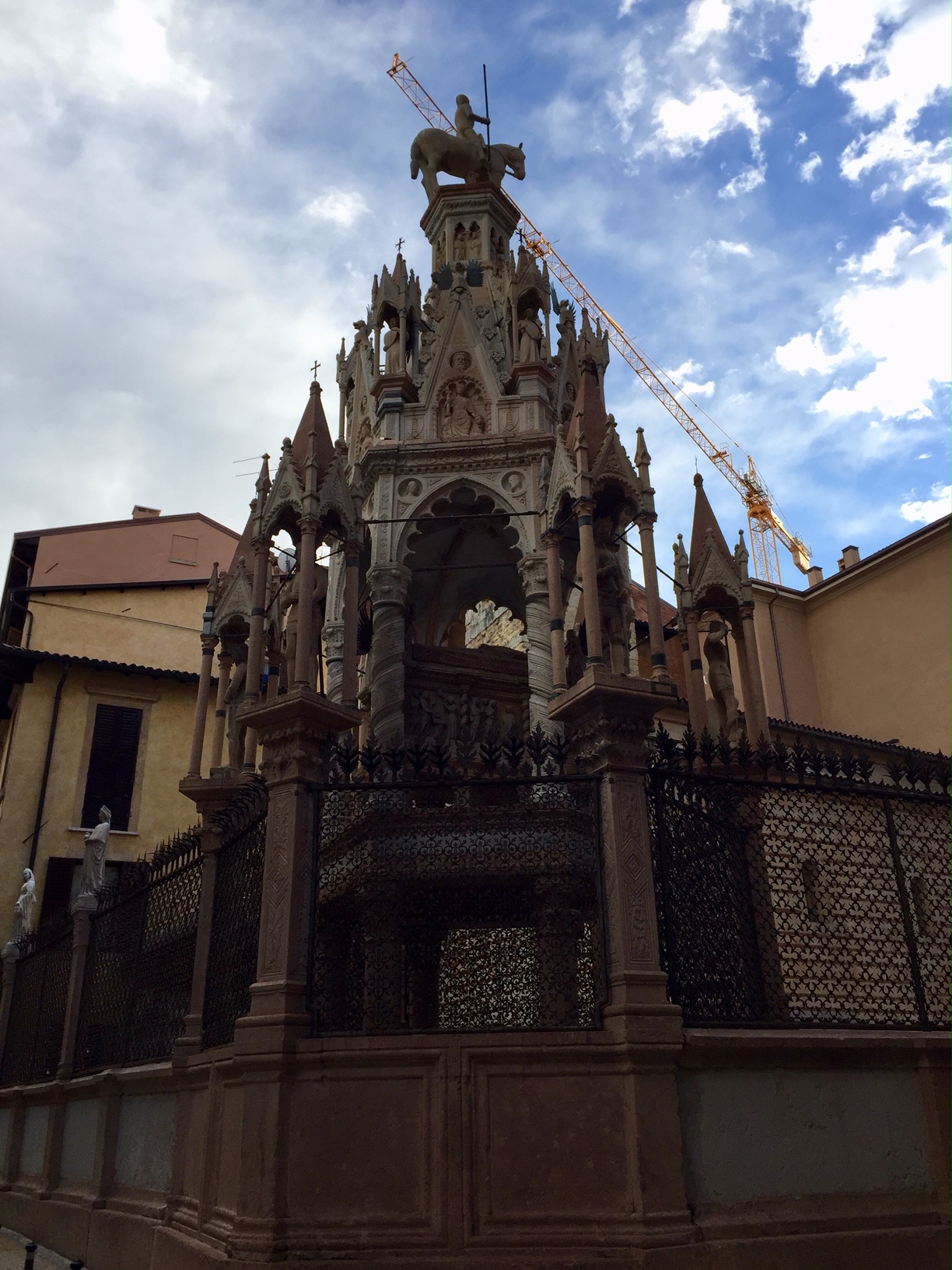
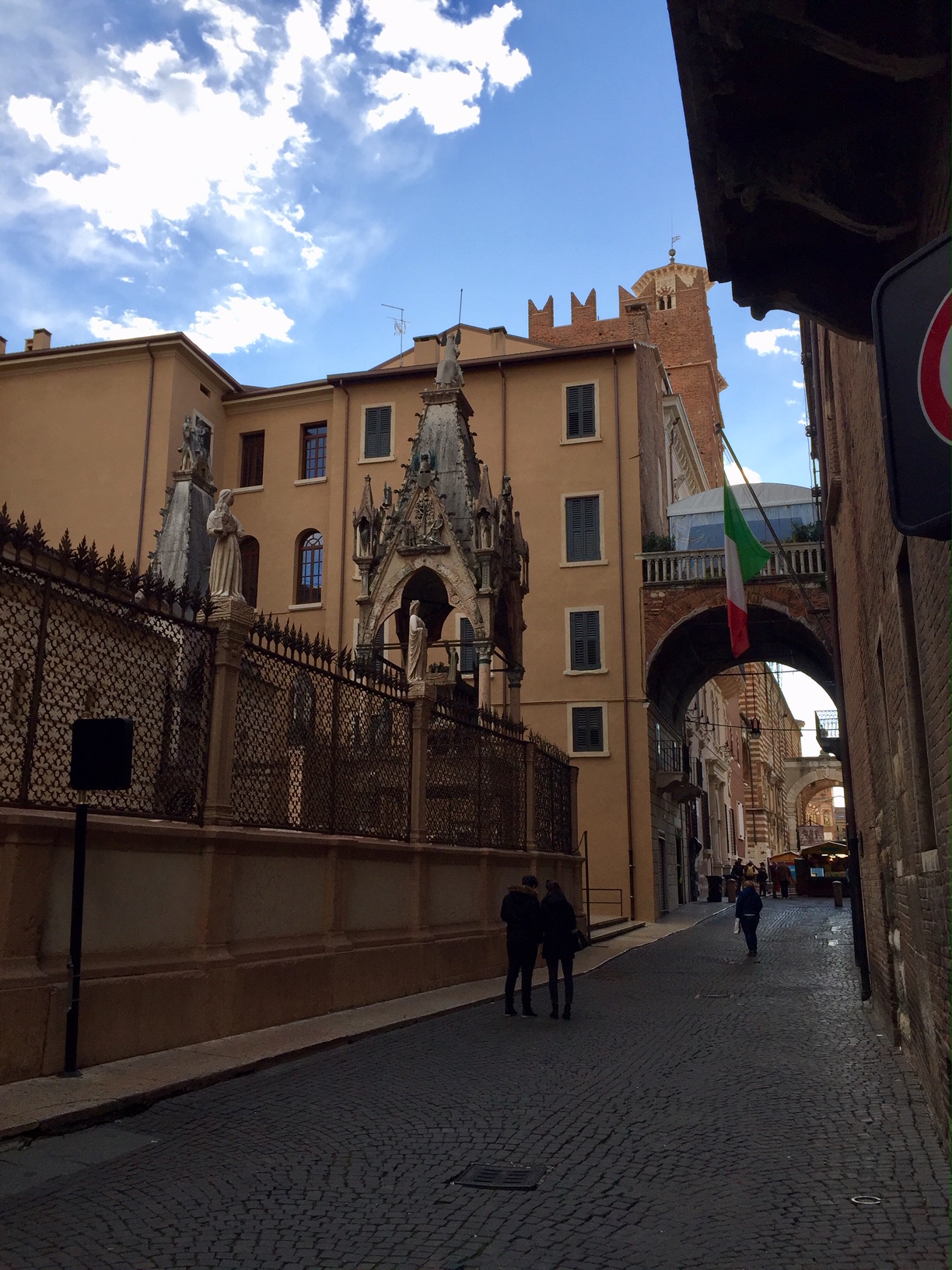
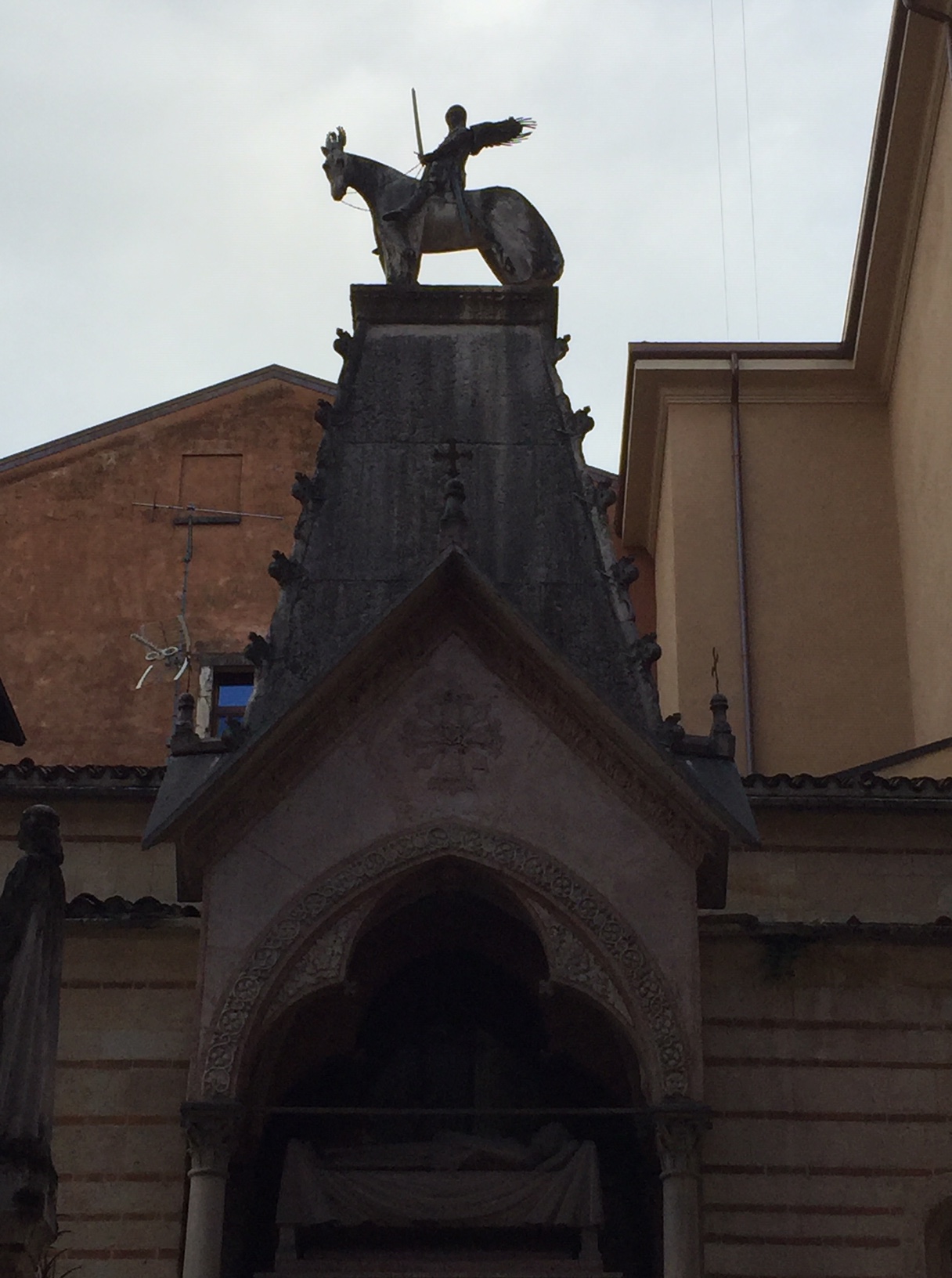
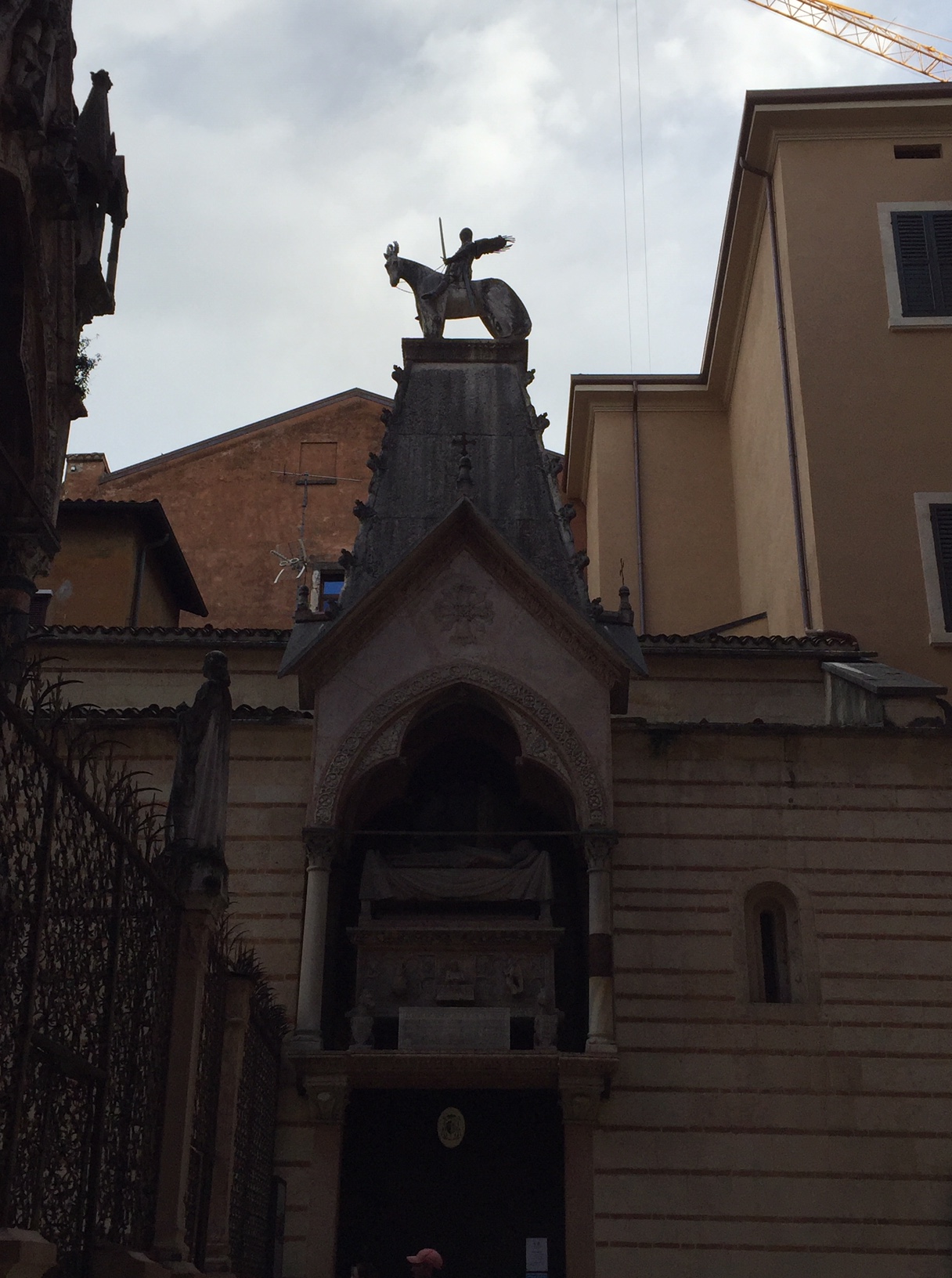
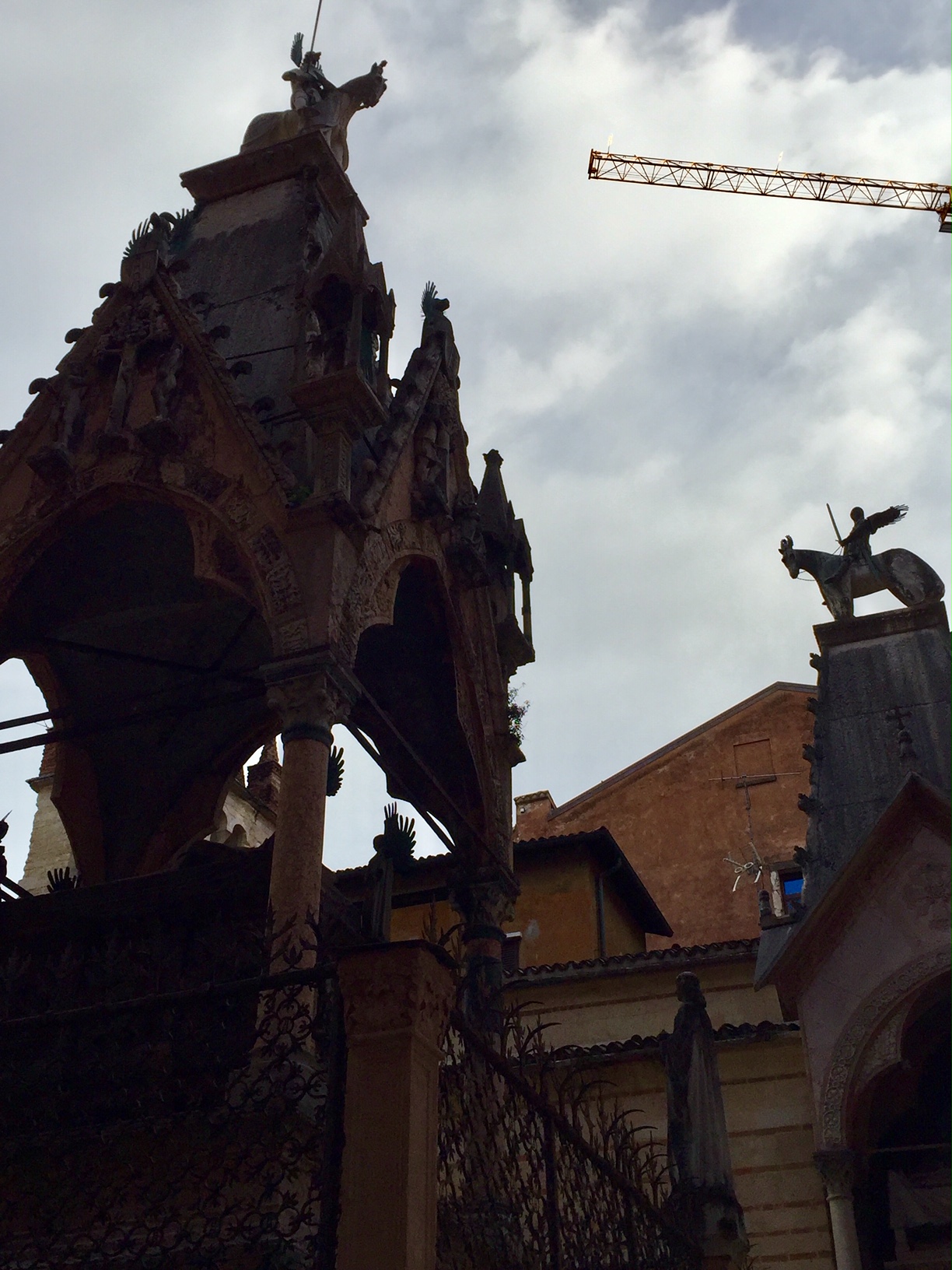
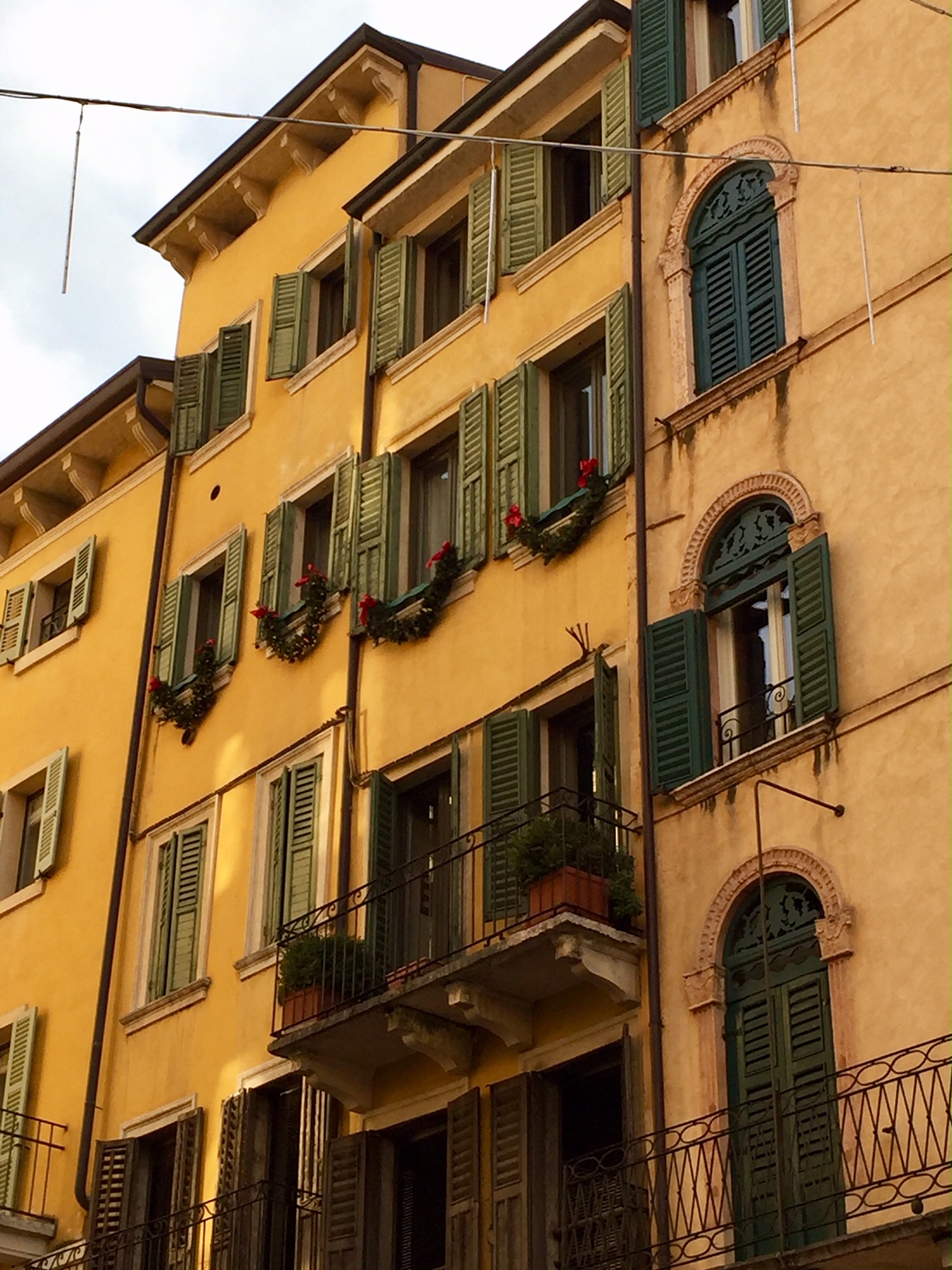
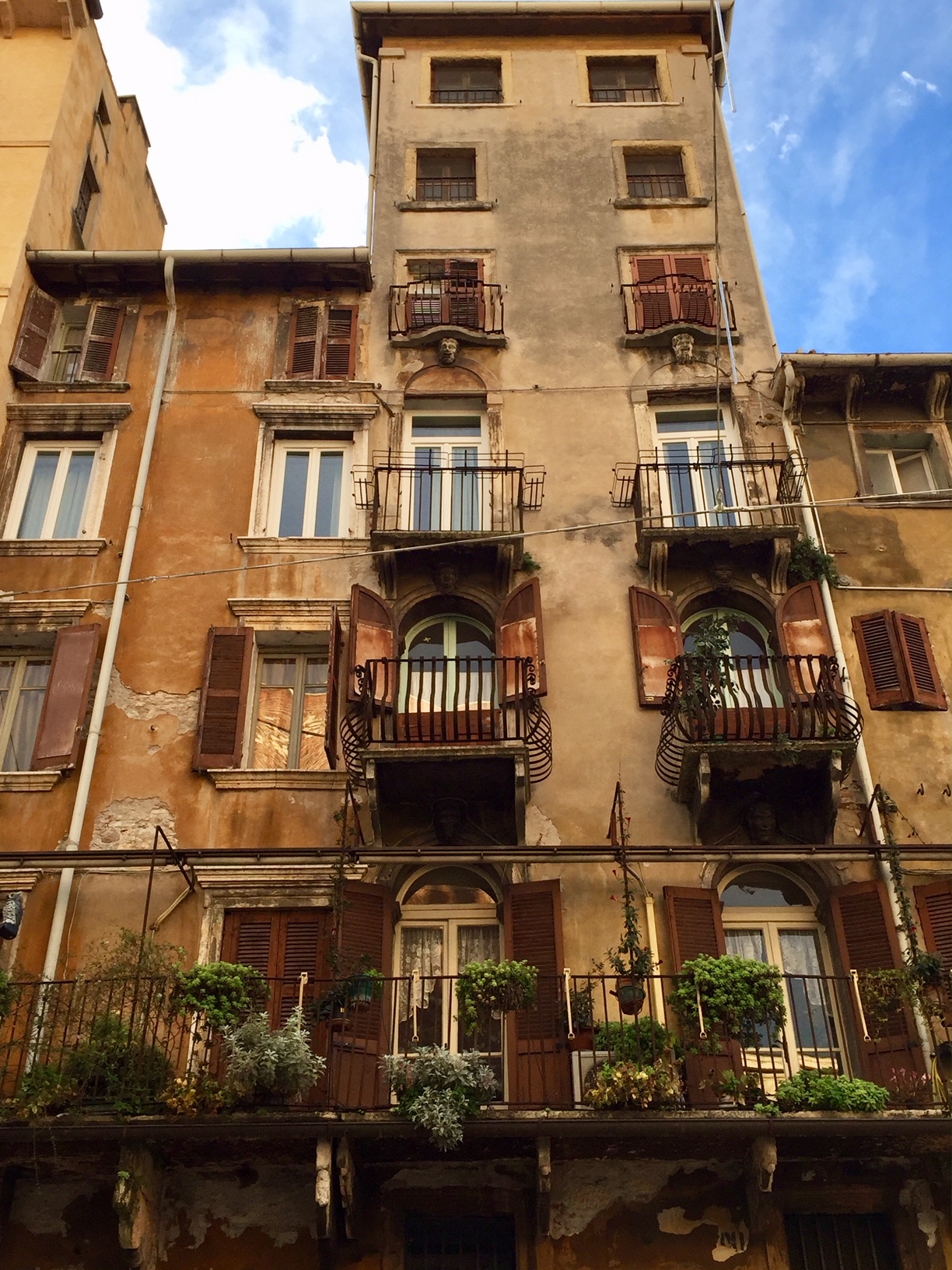
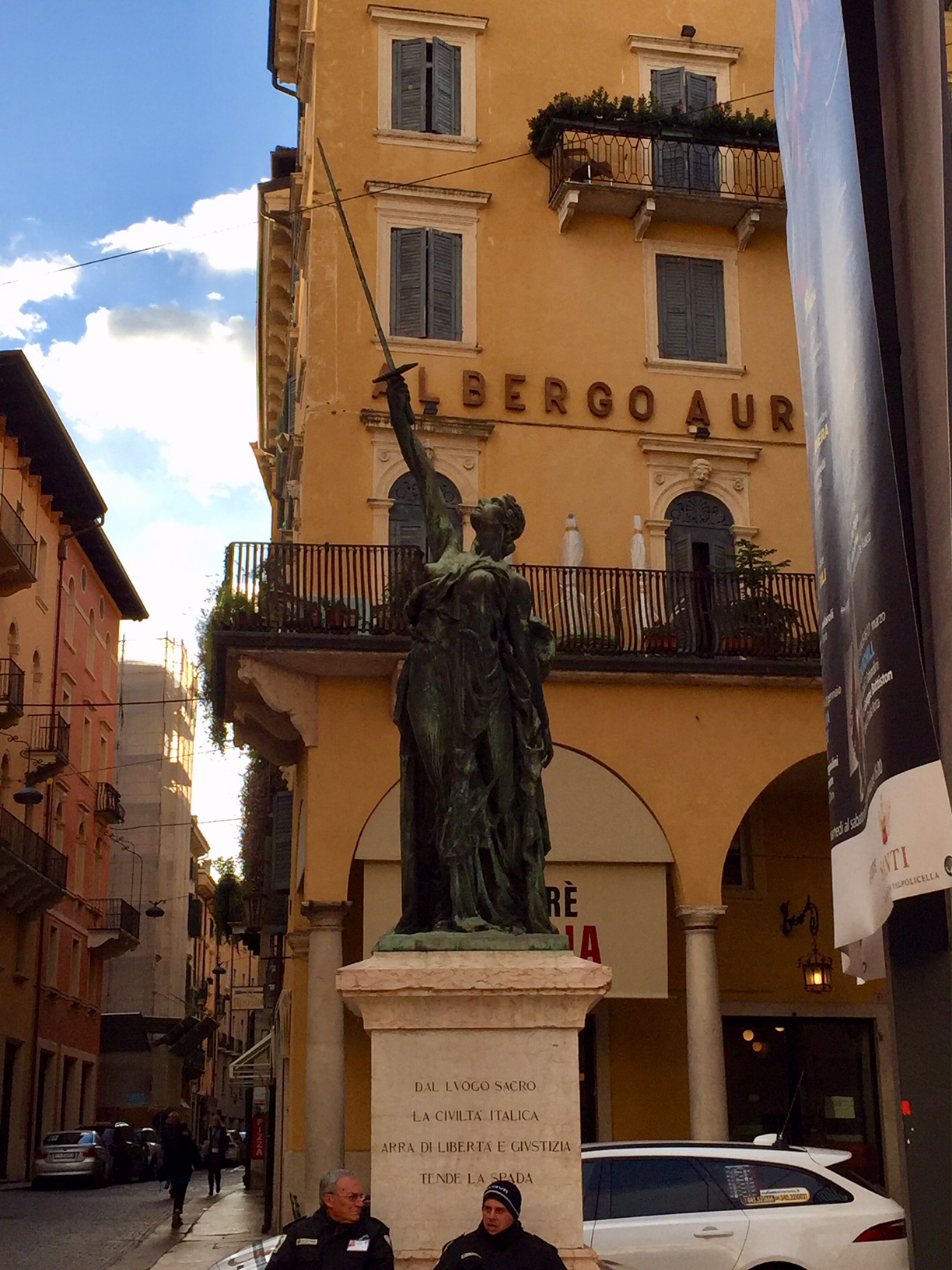
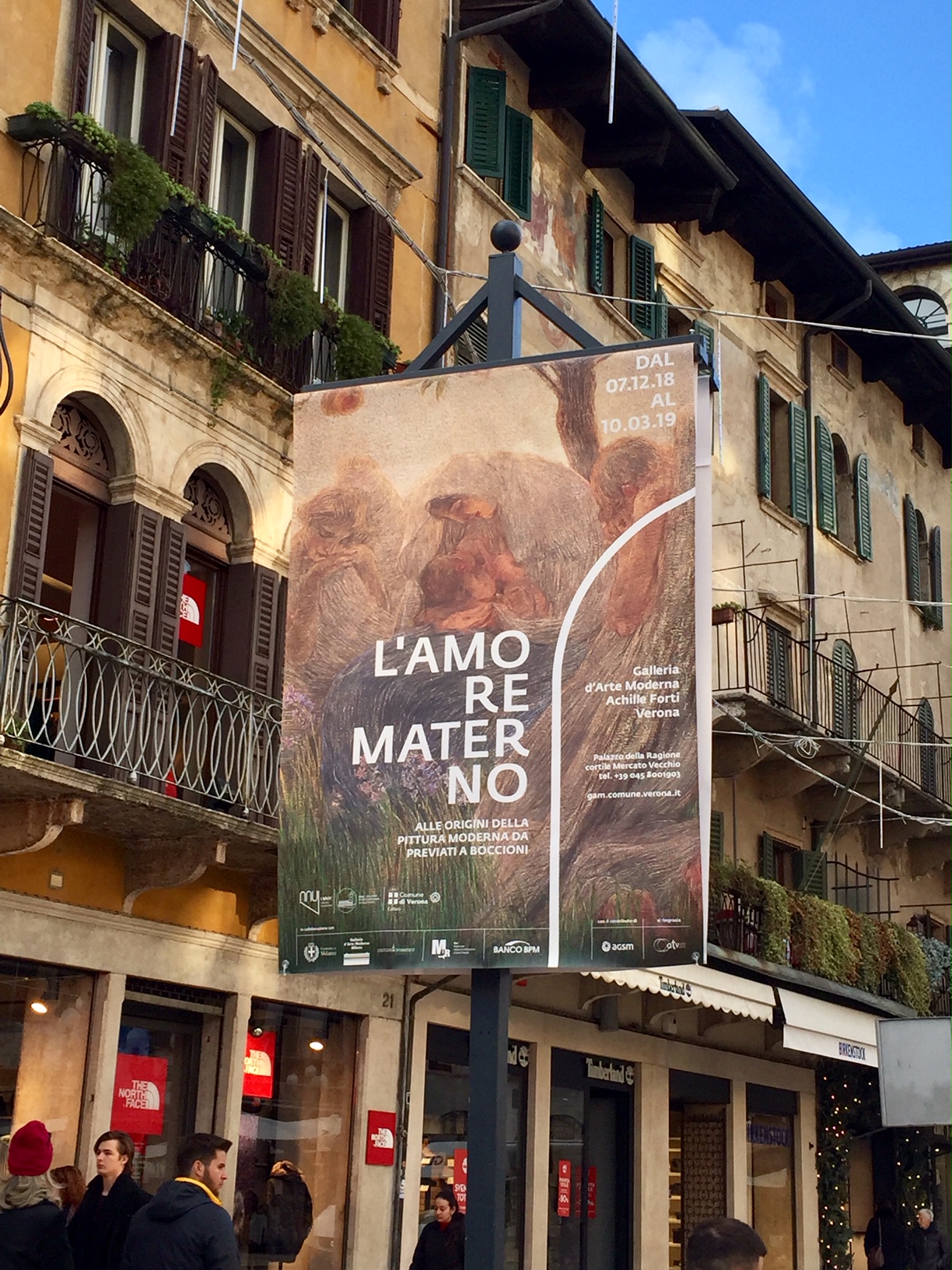
L’amore materno–Mother Love
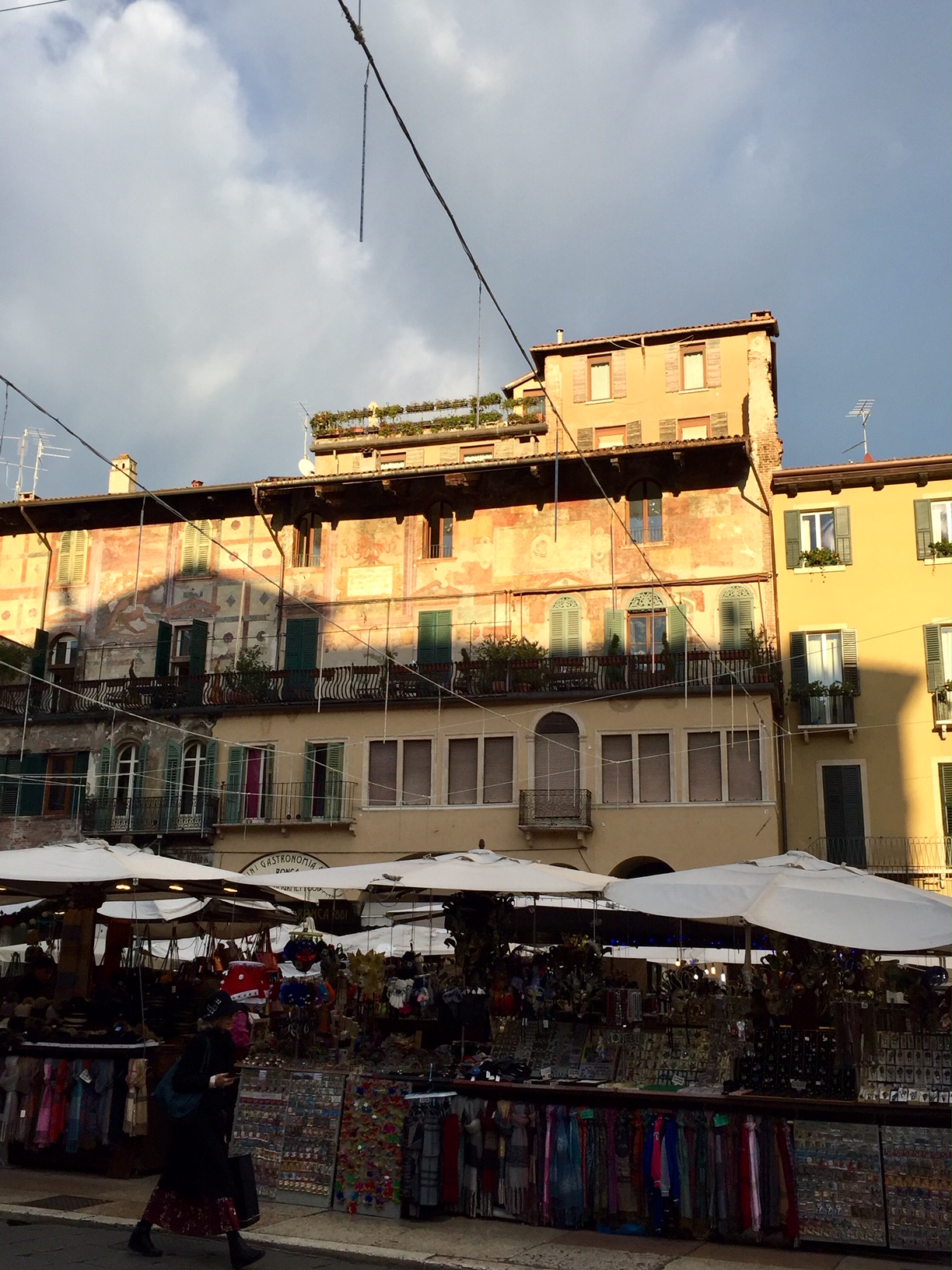
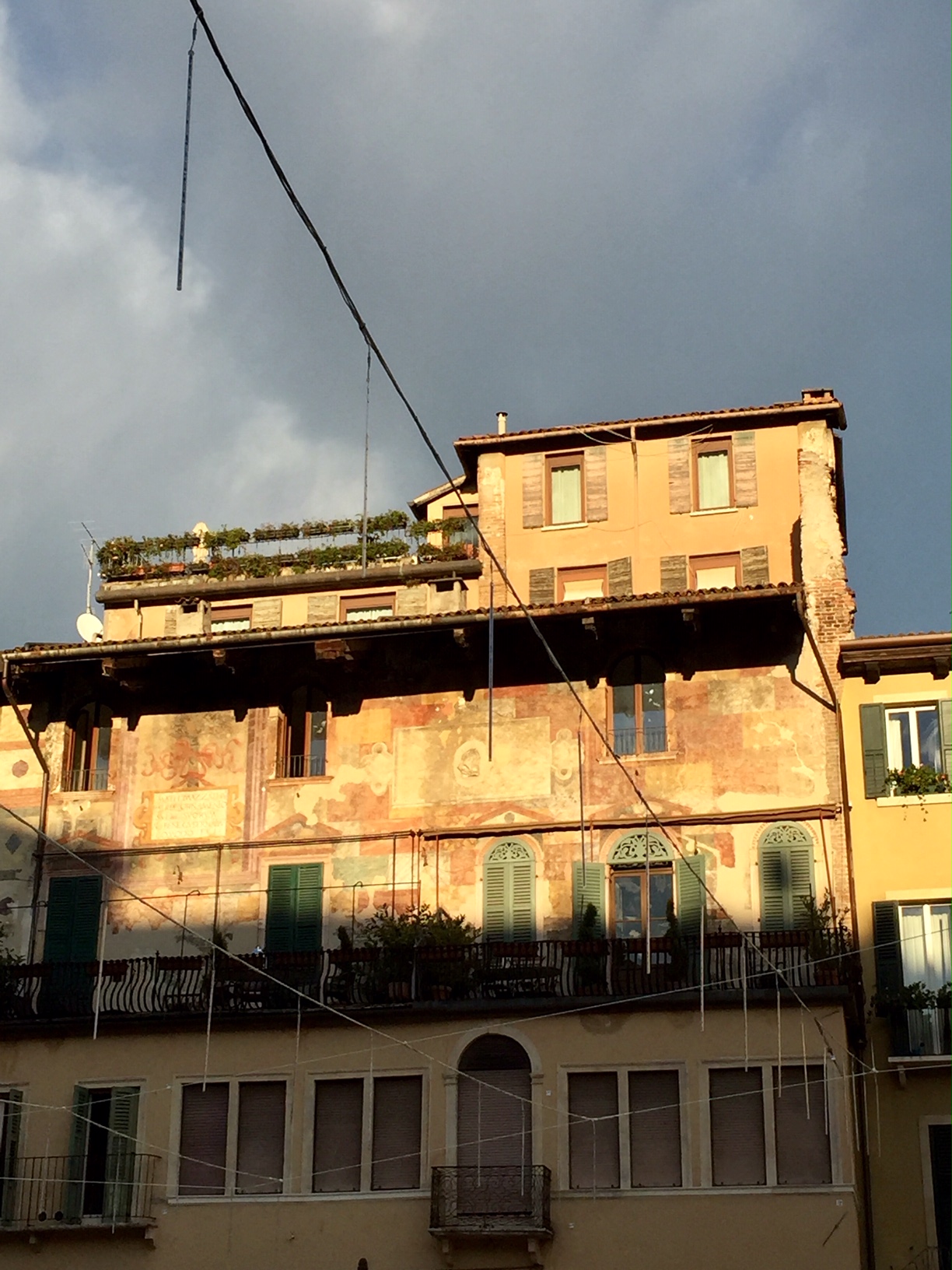
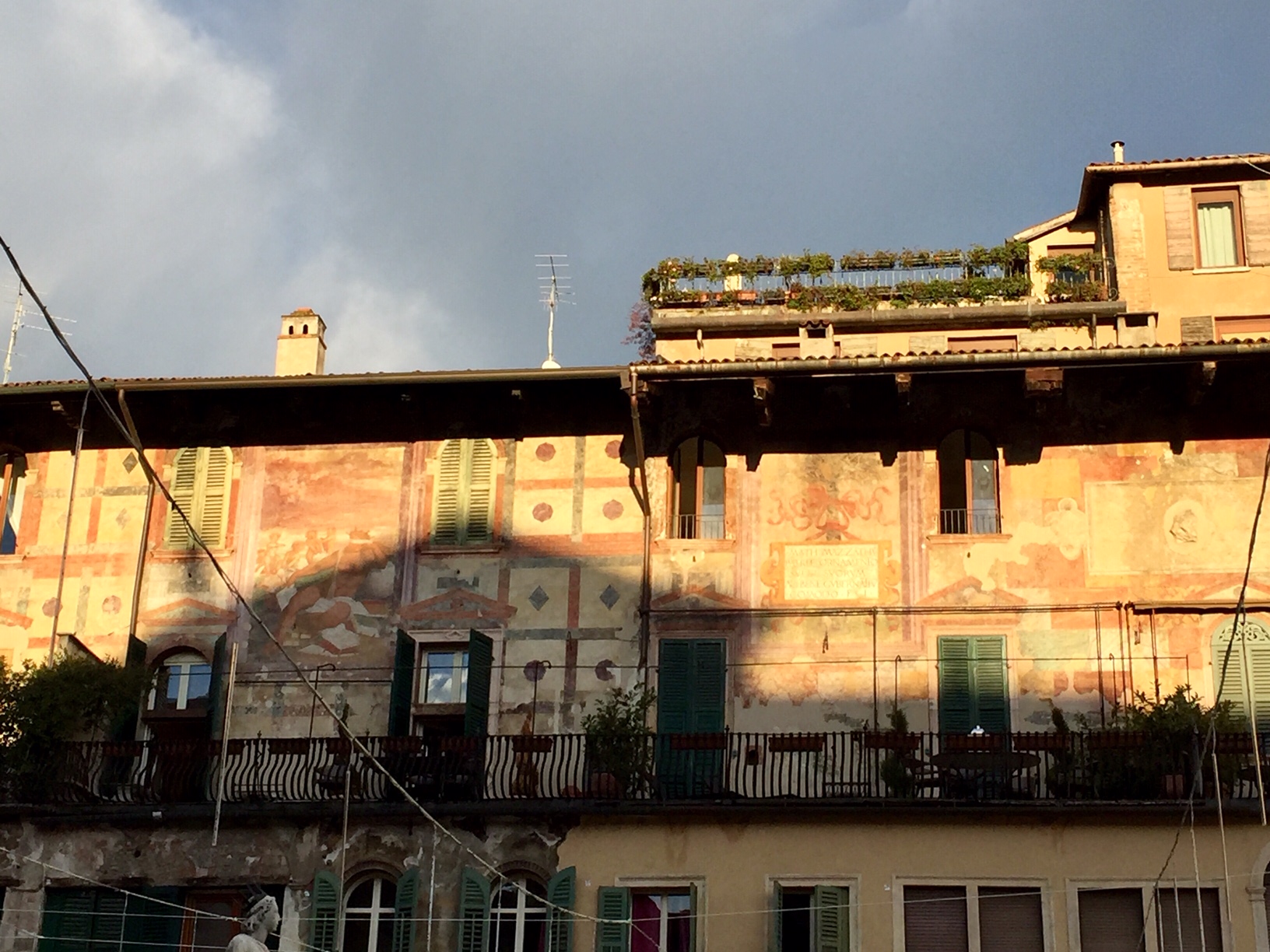
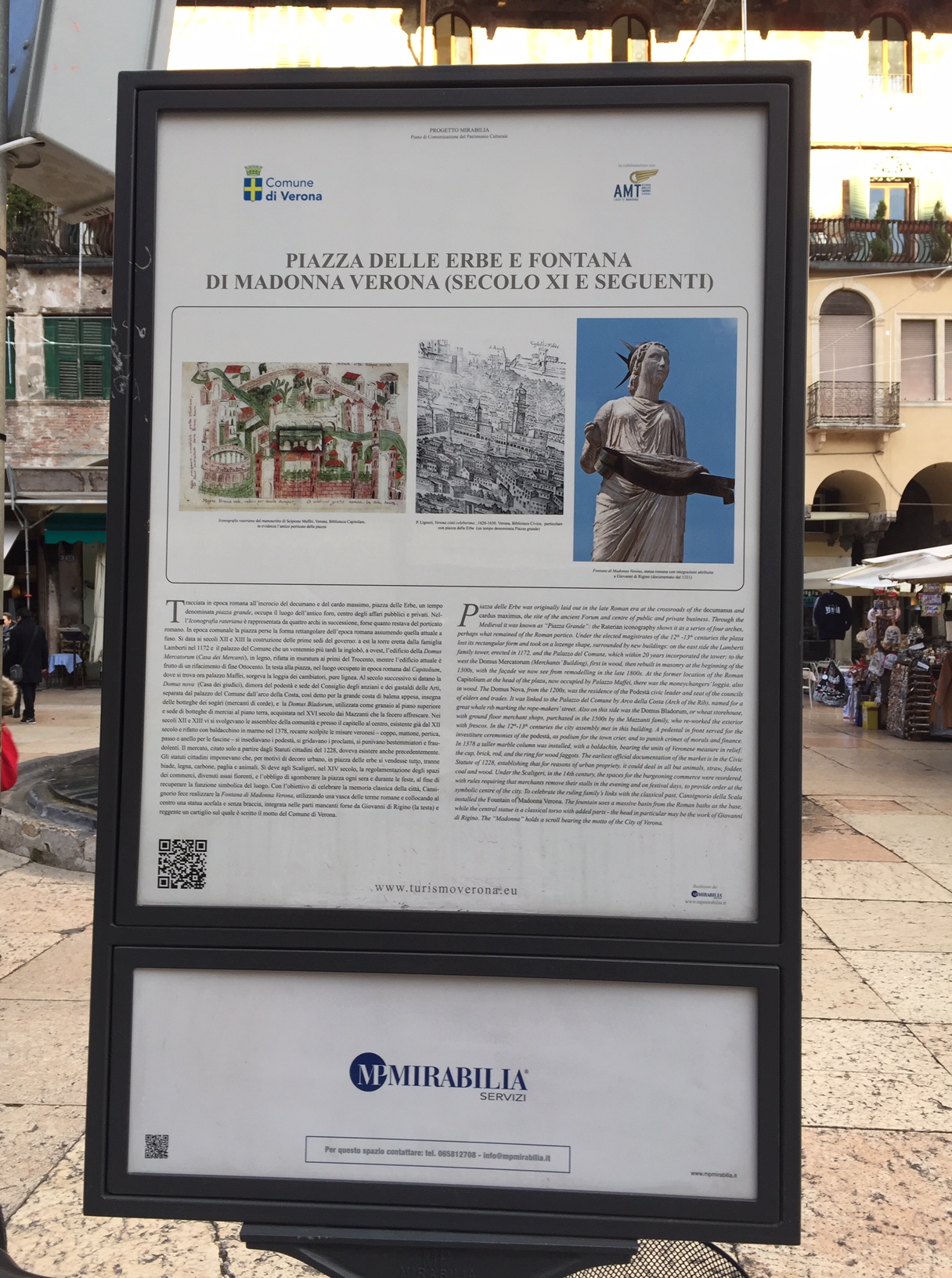
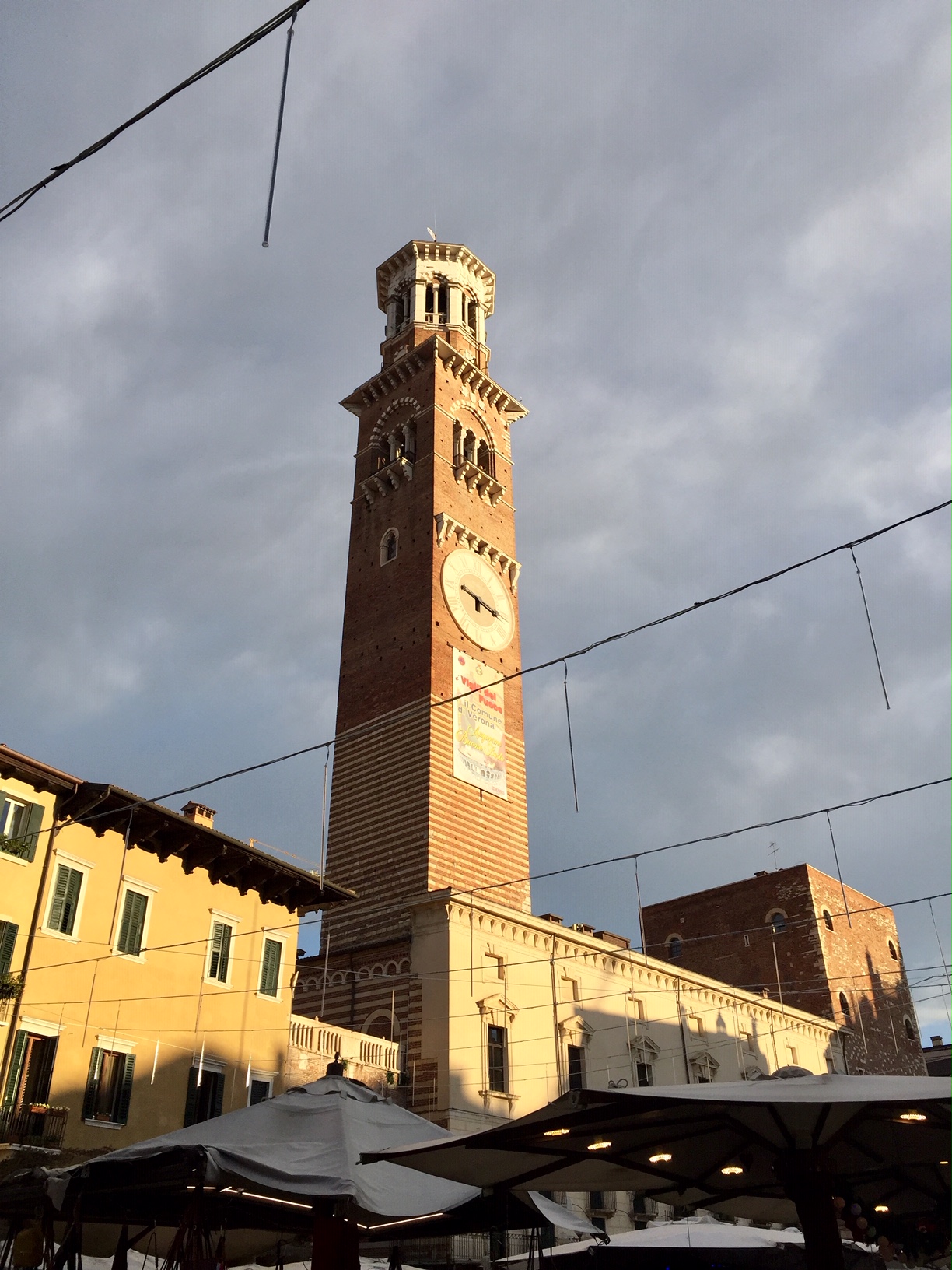
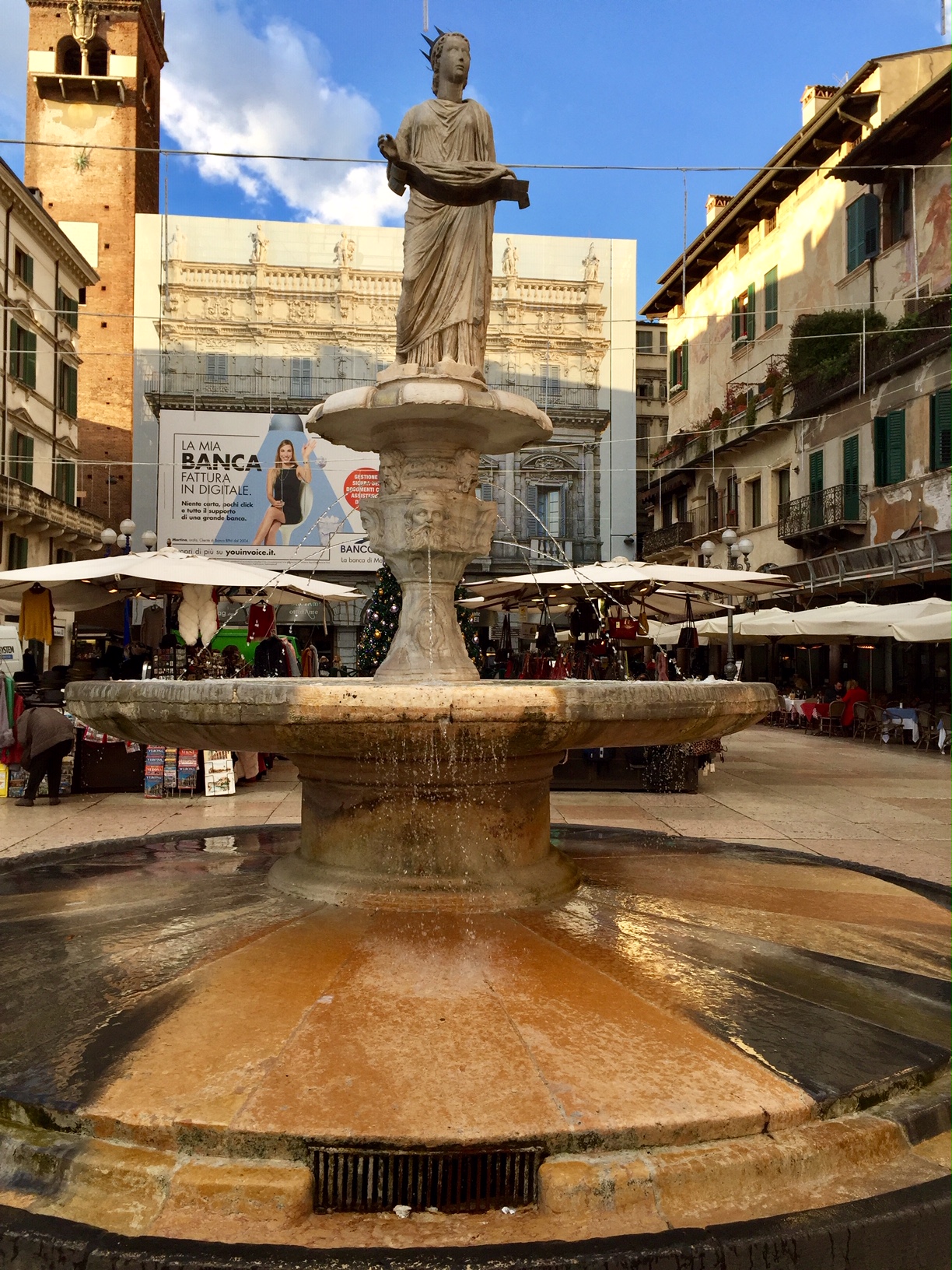
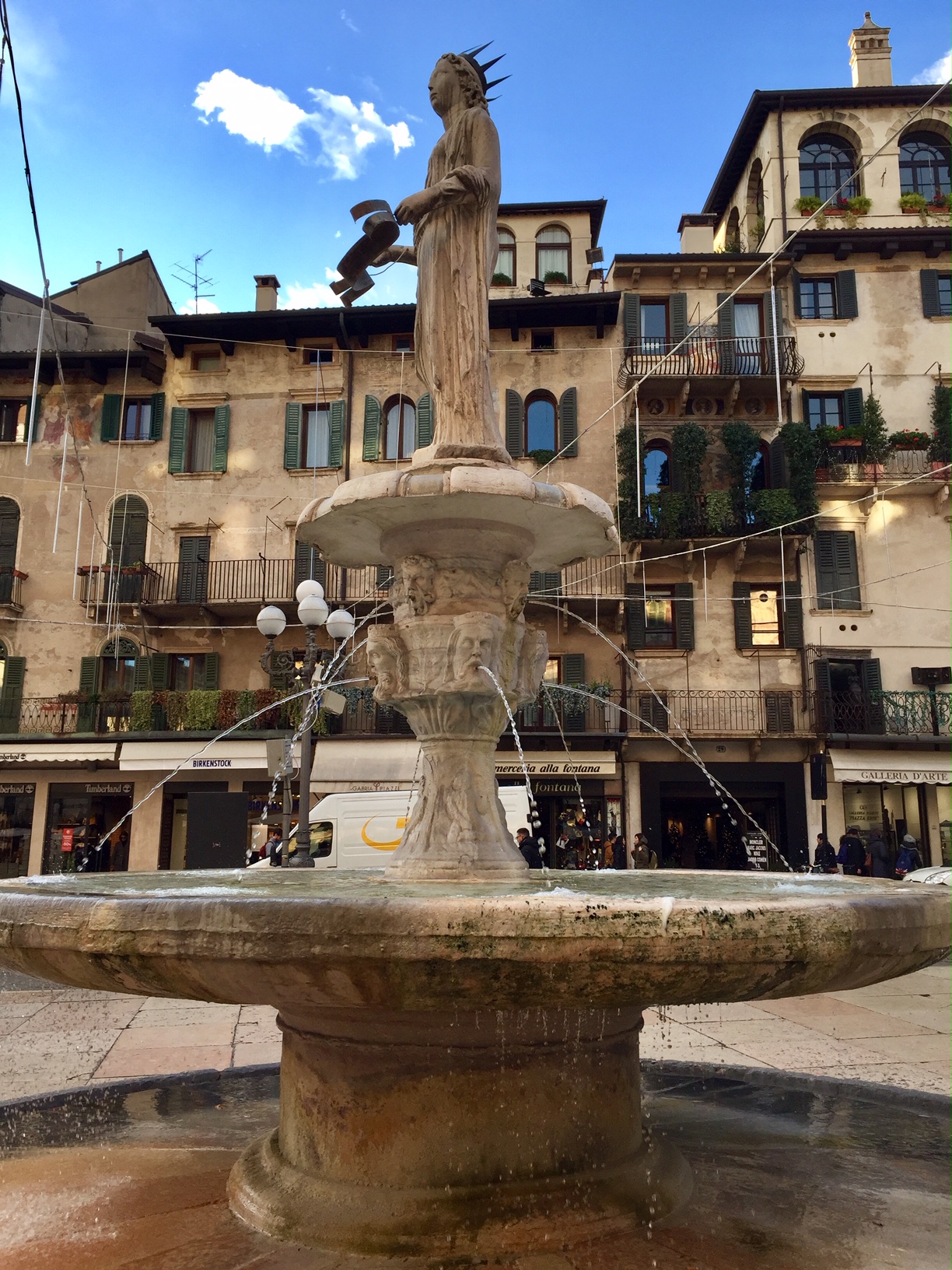
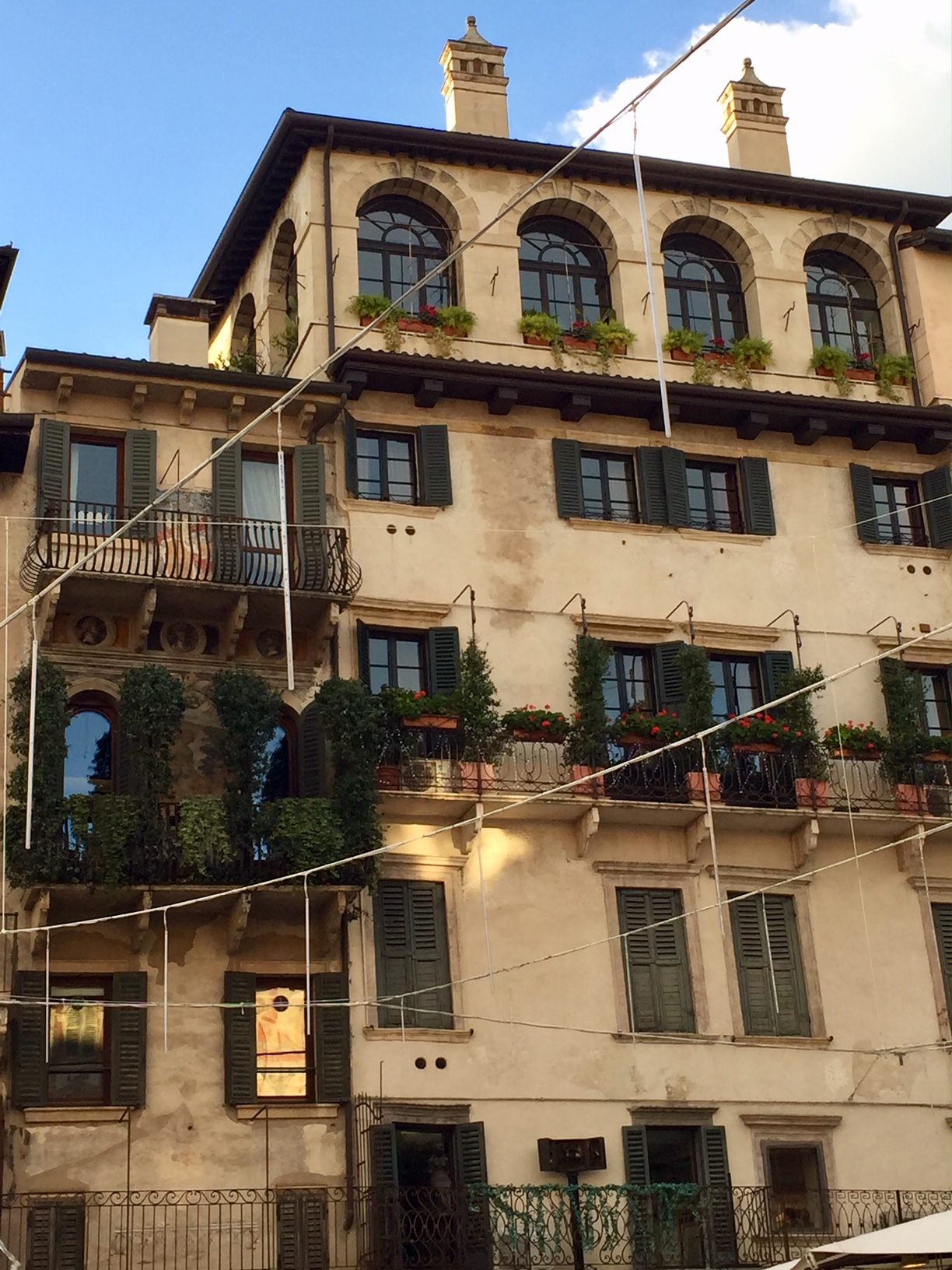
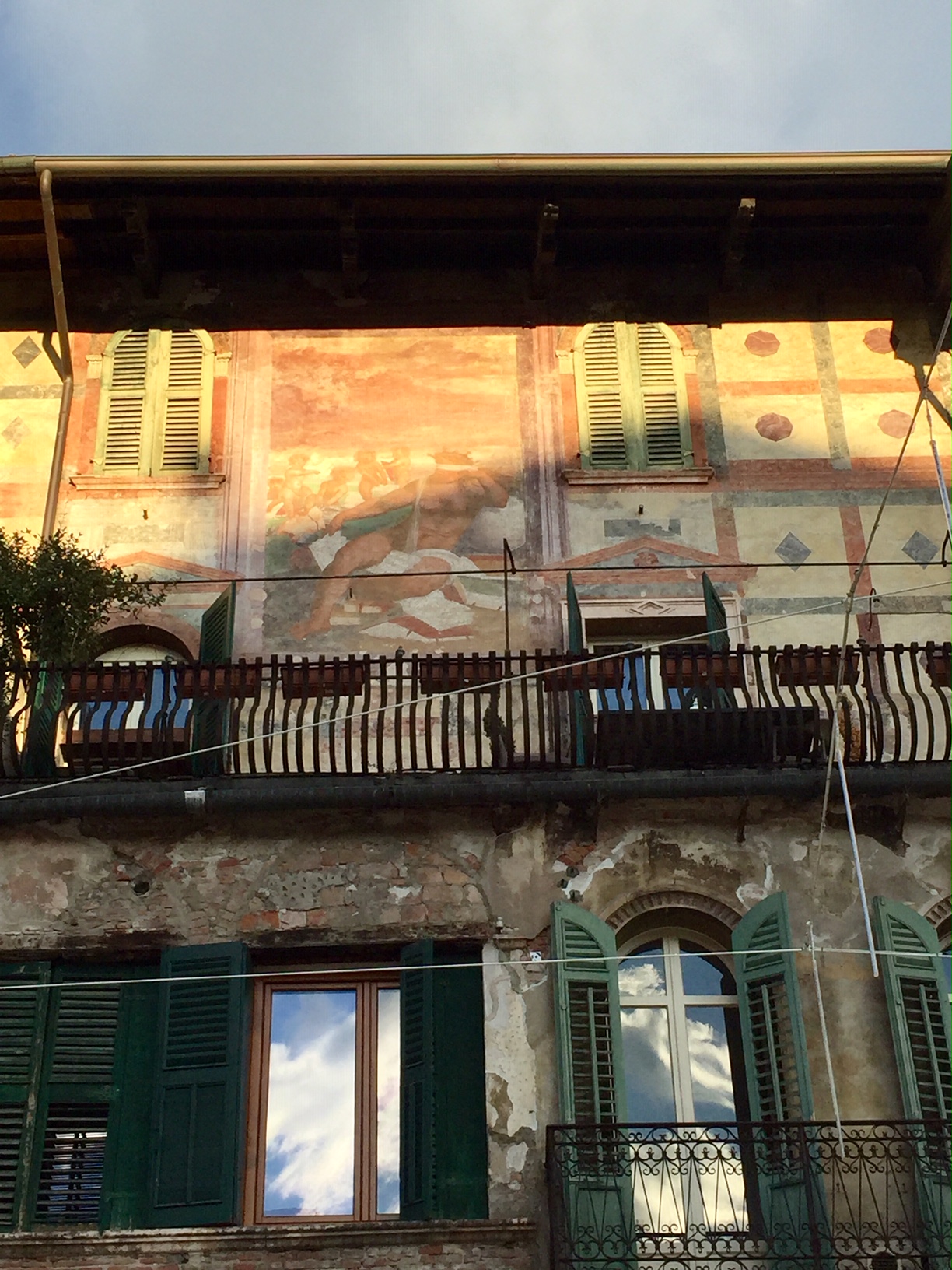
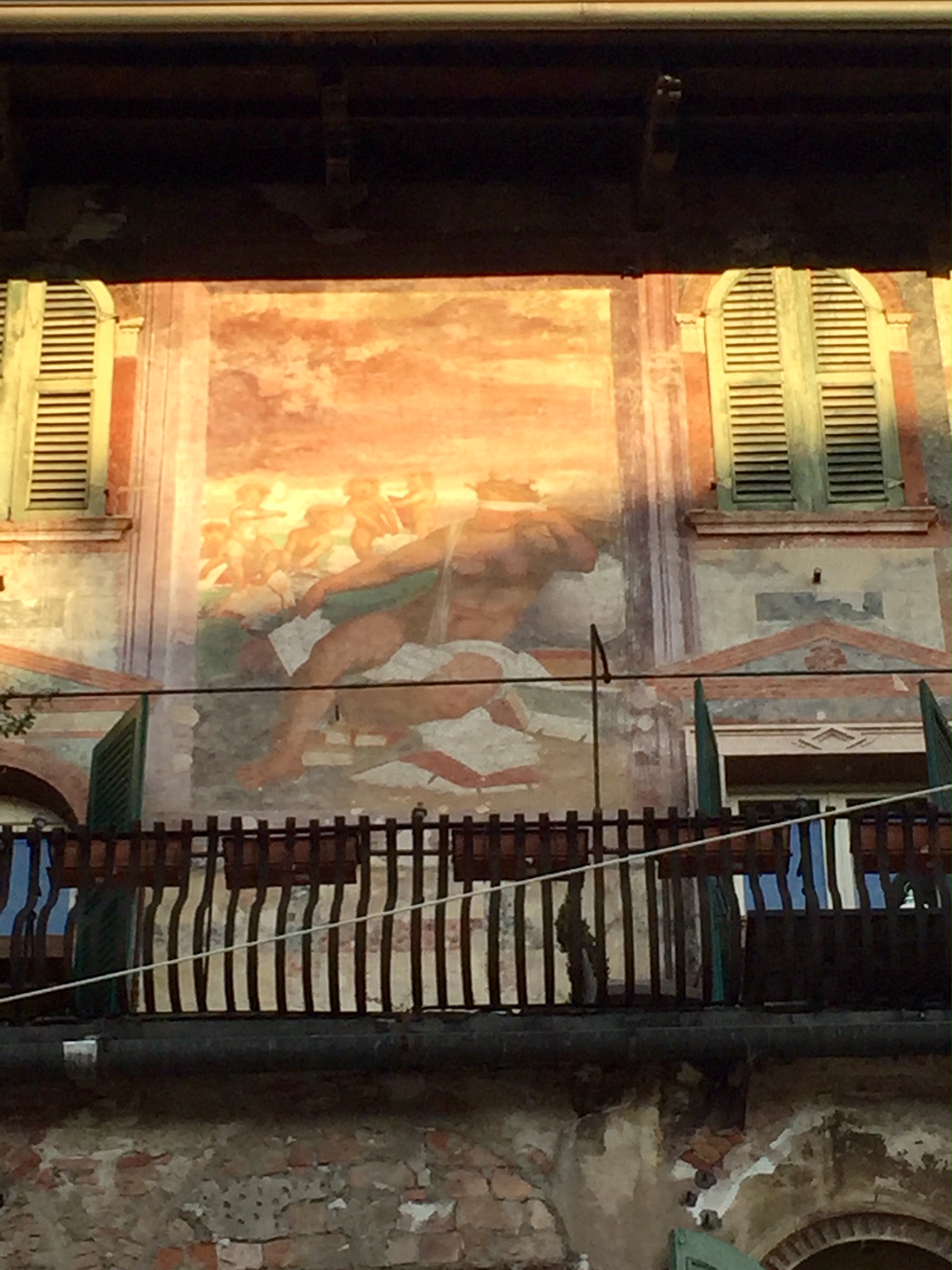
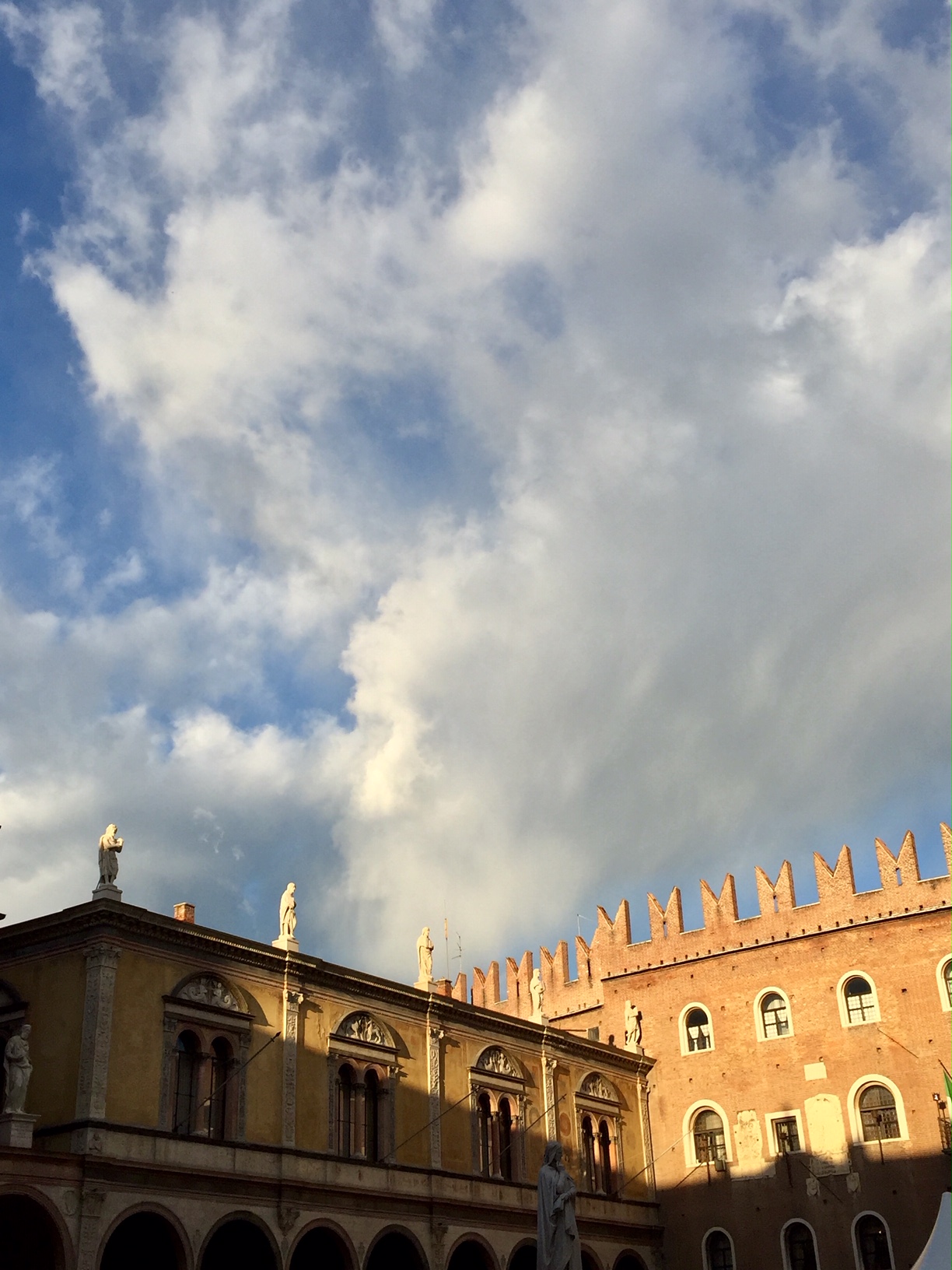
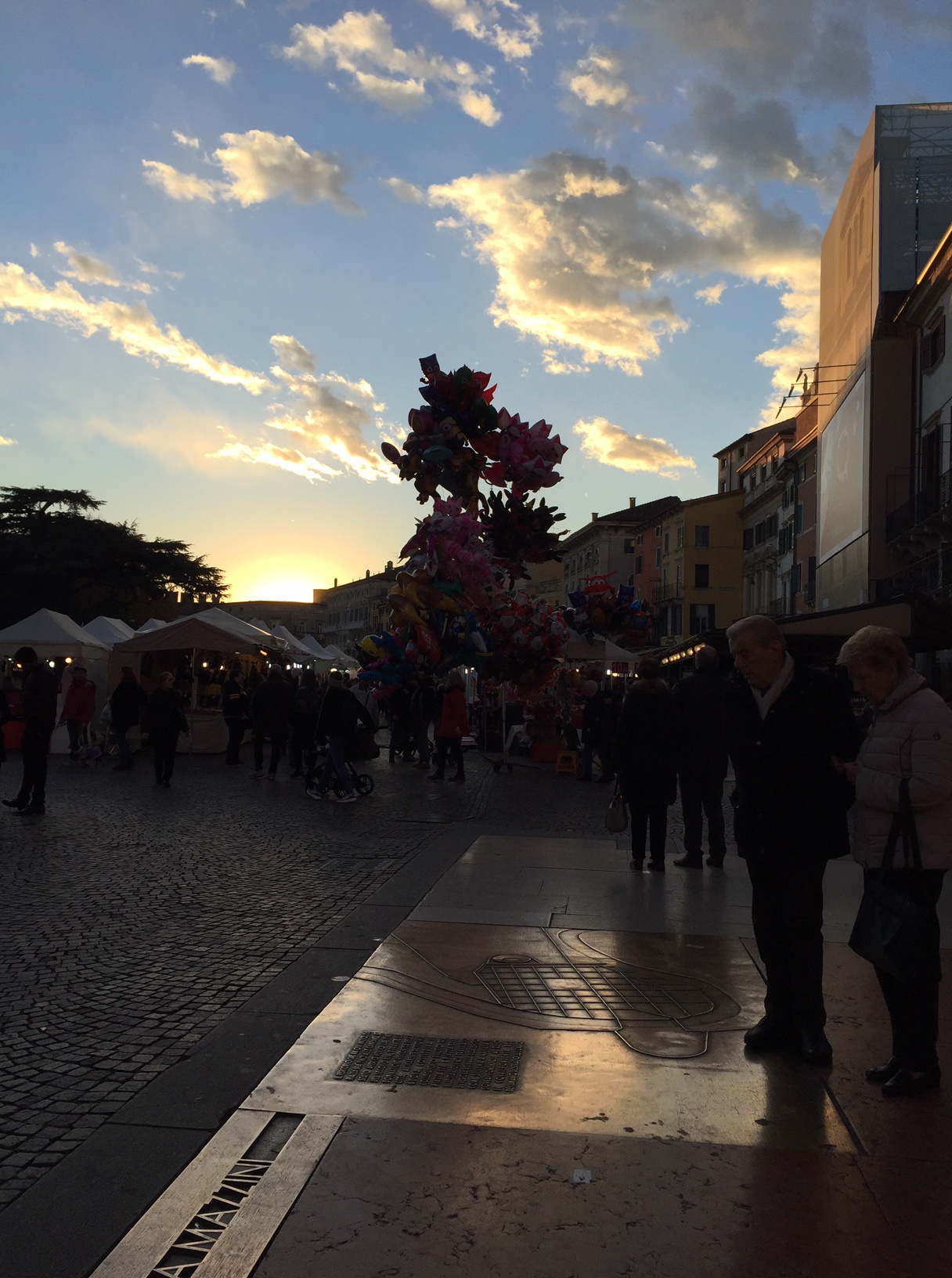
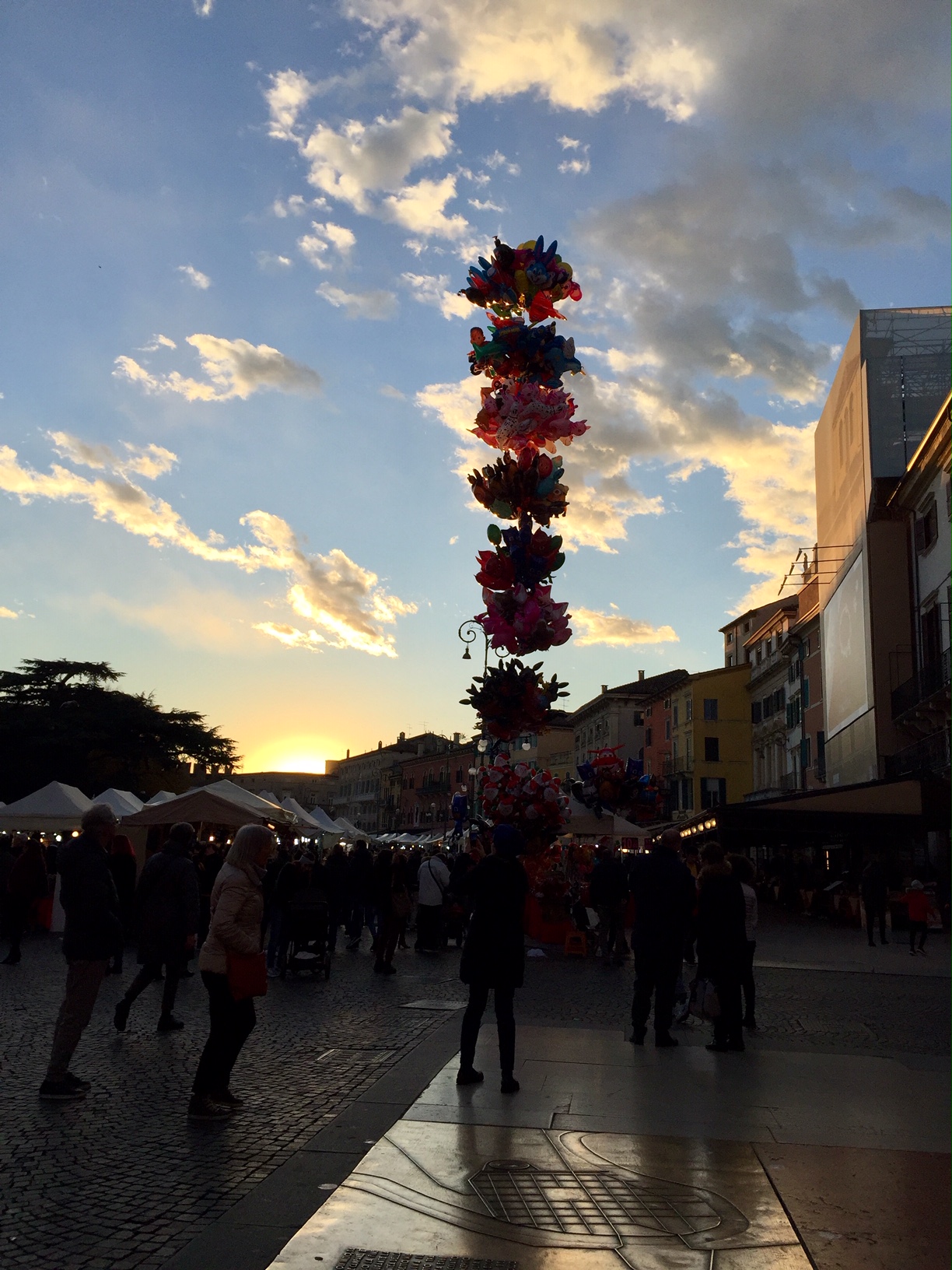
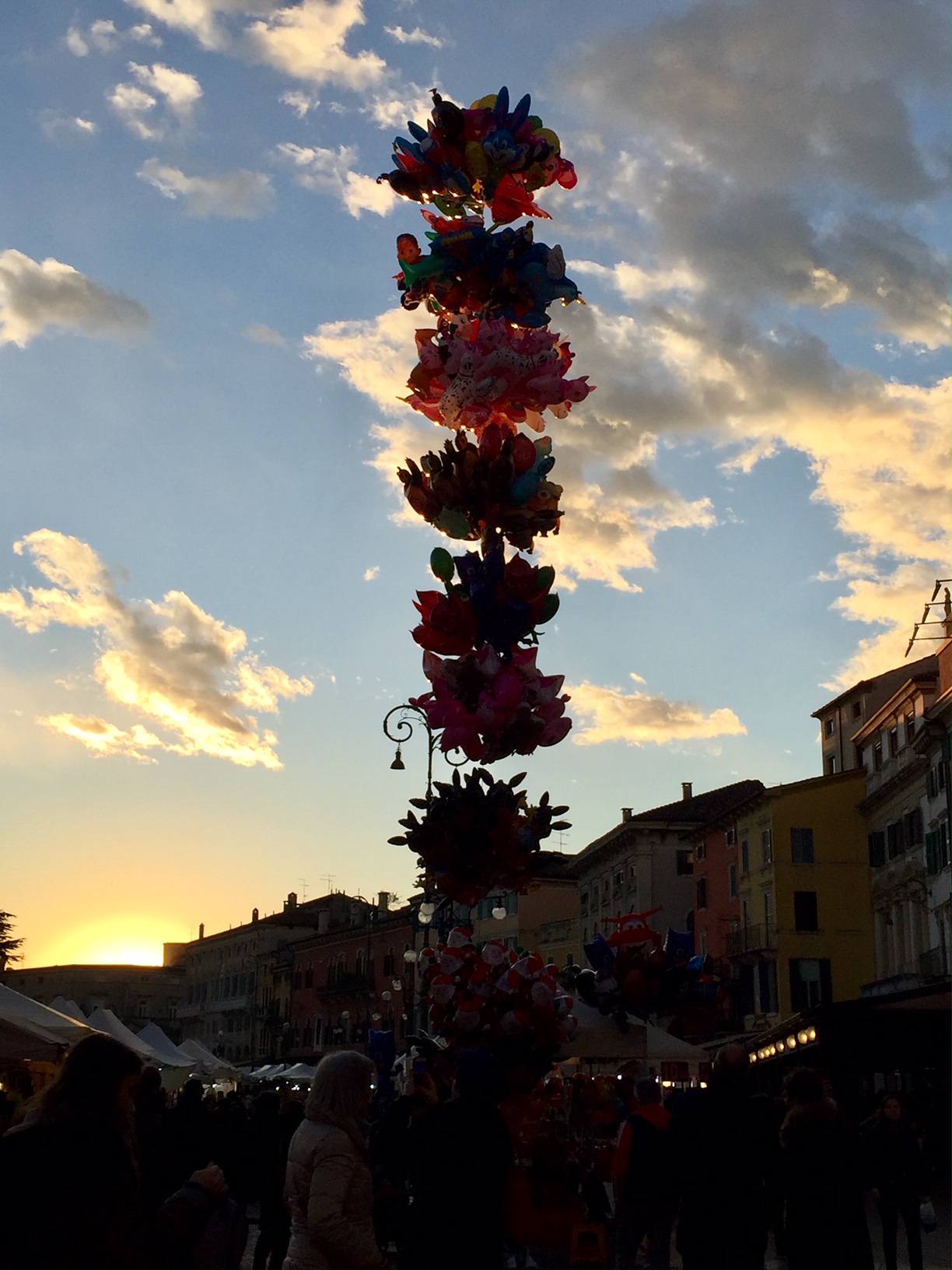
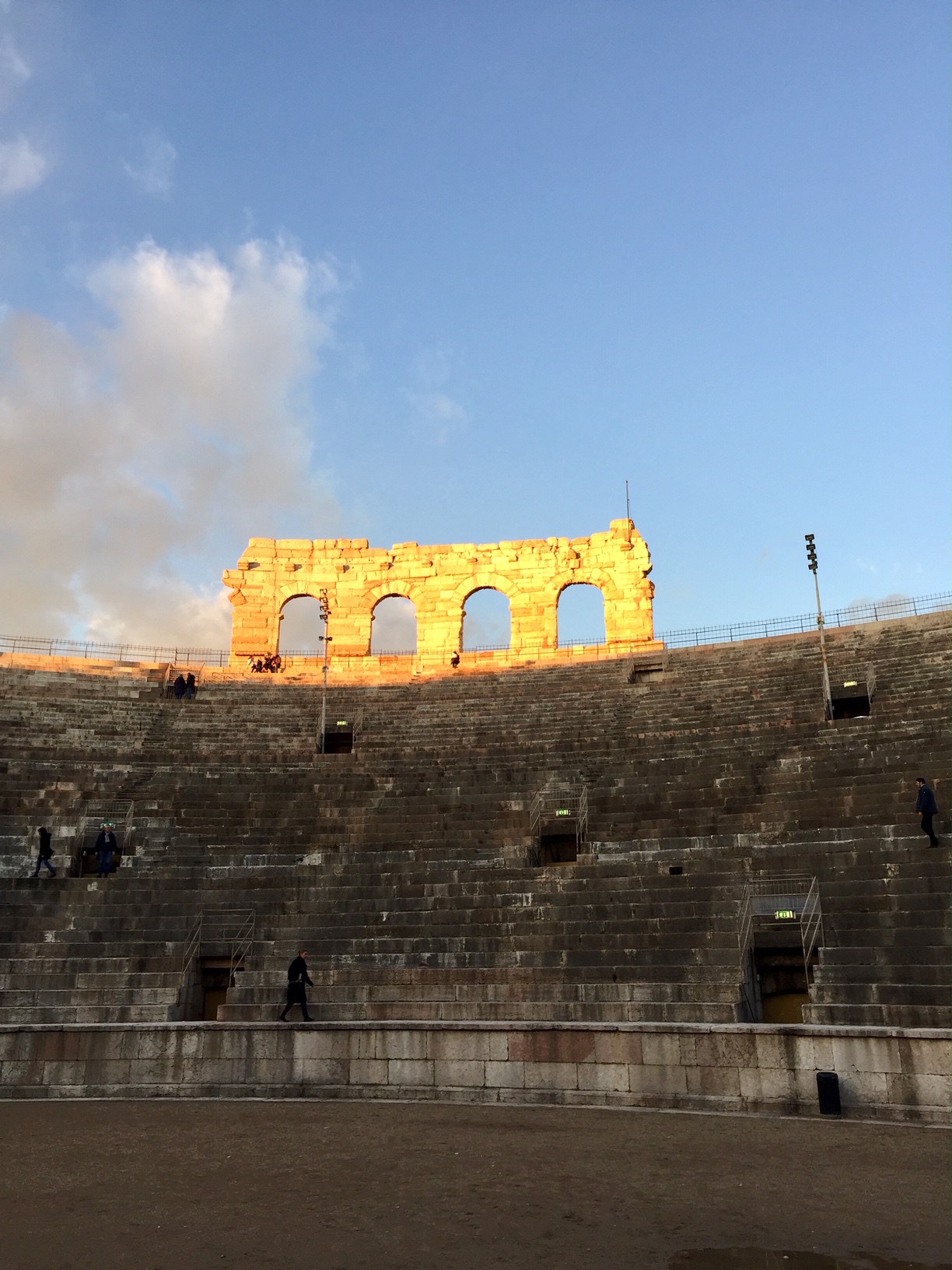
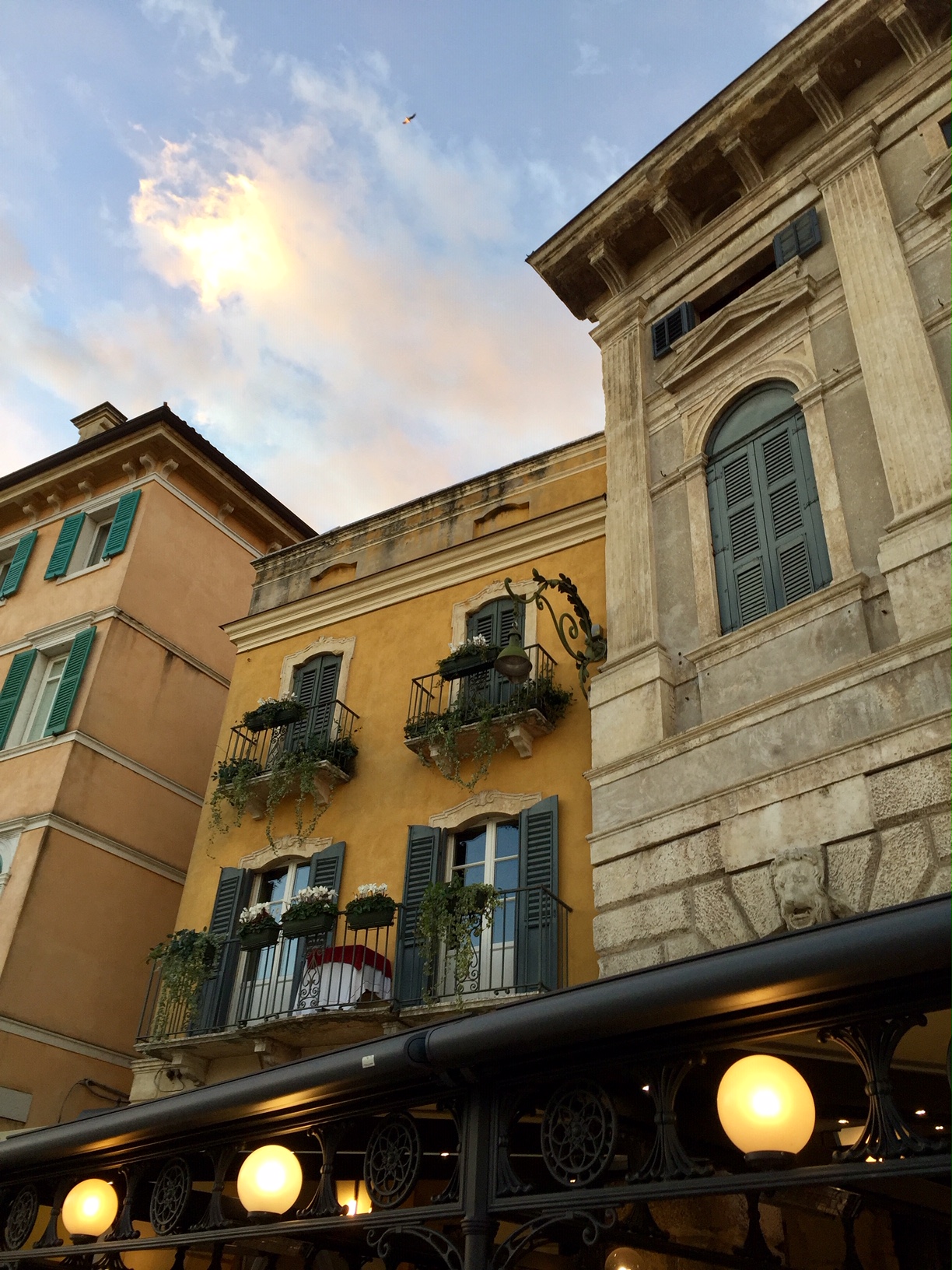
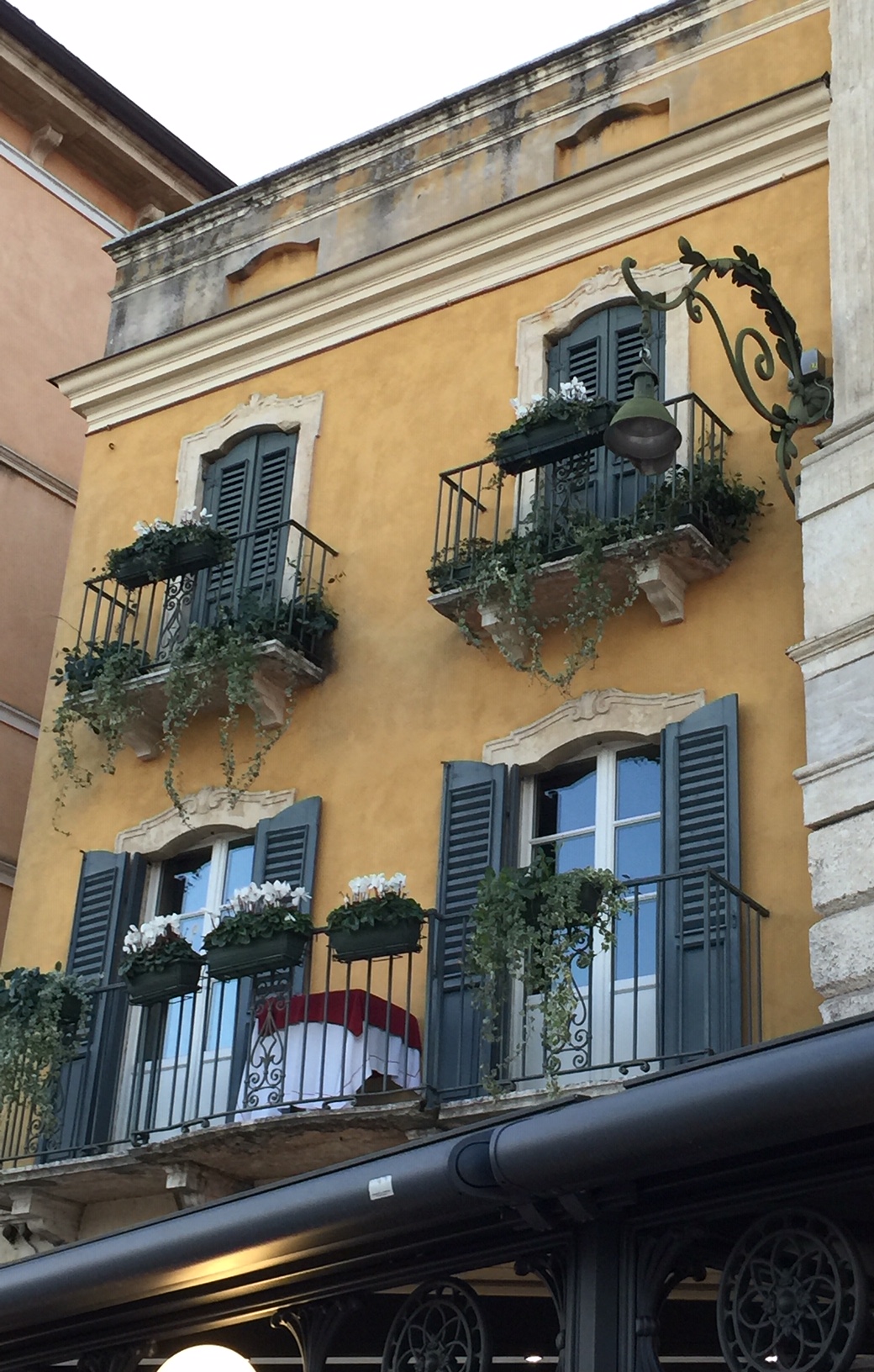
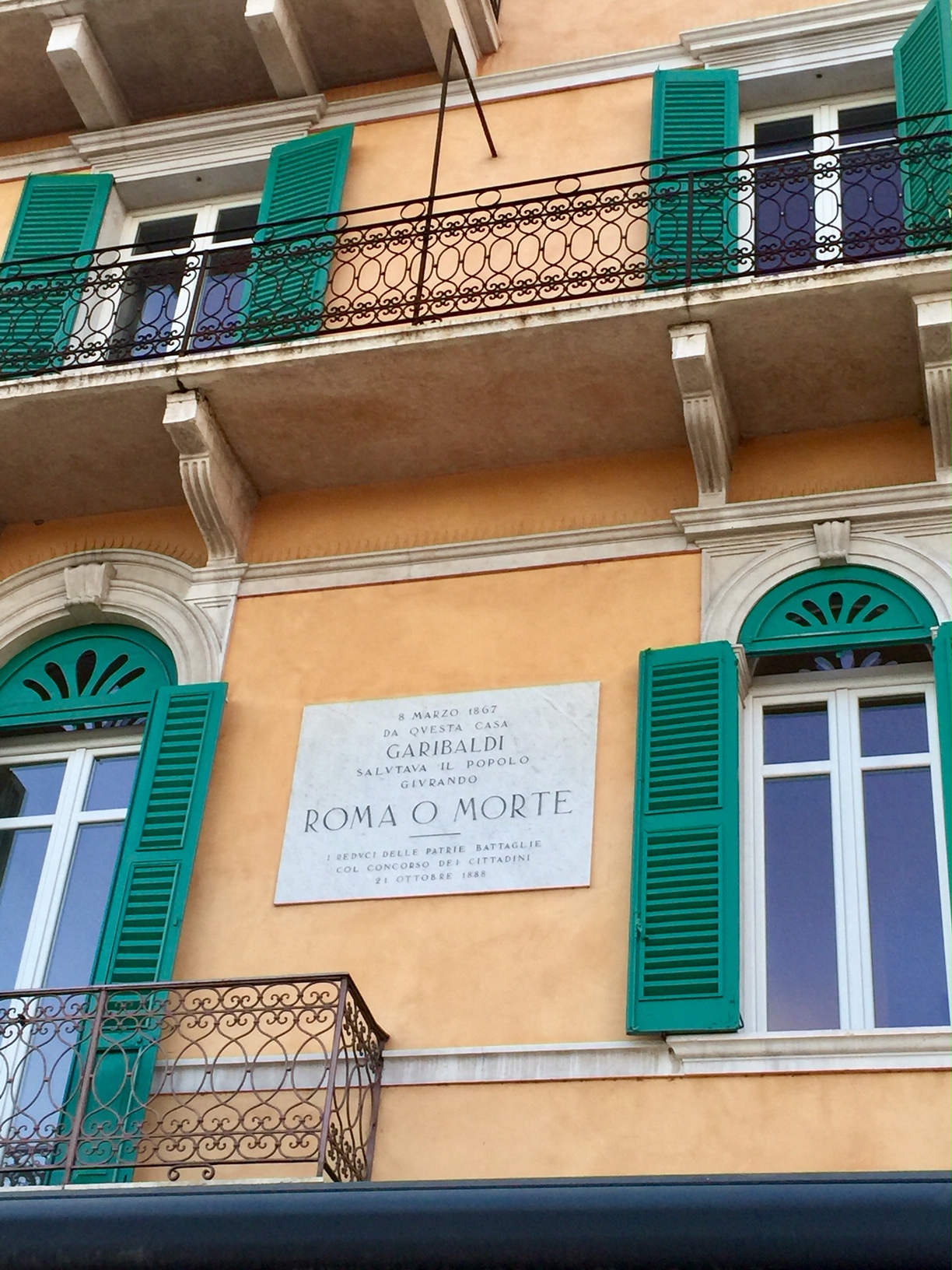
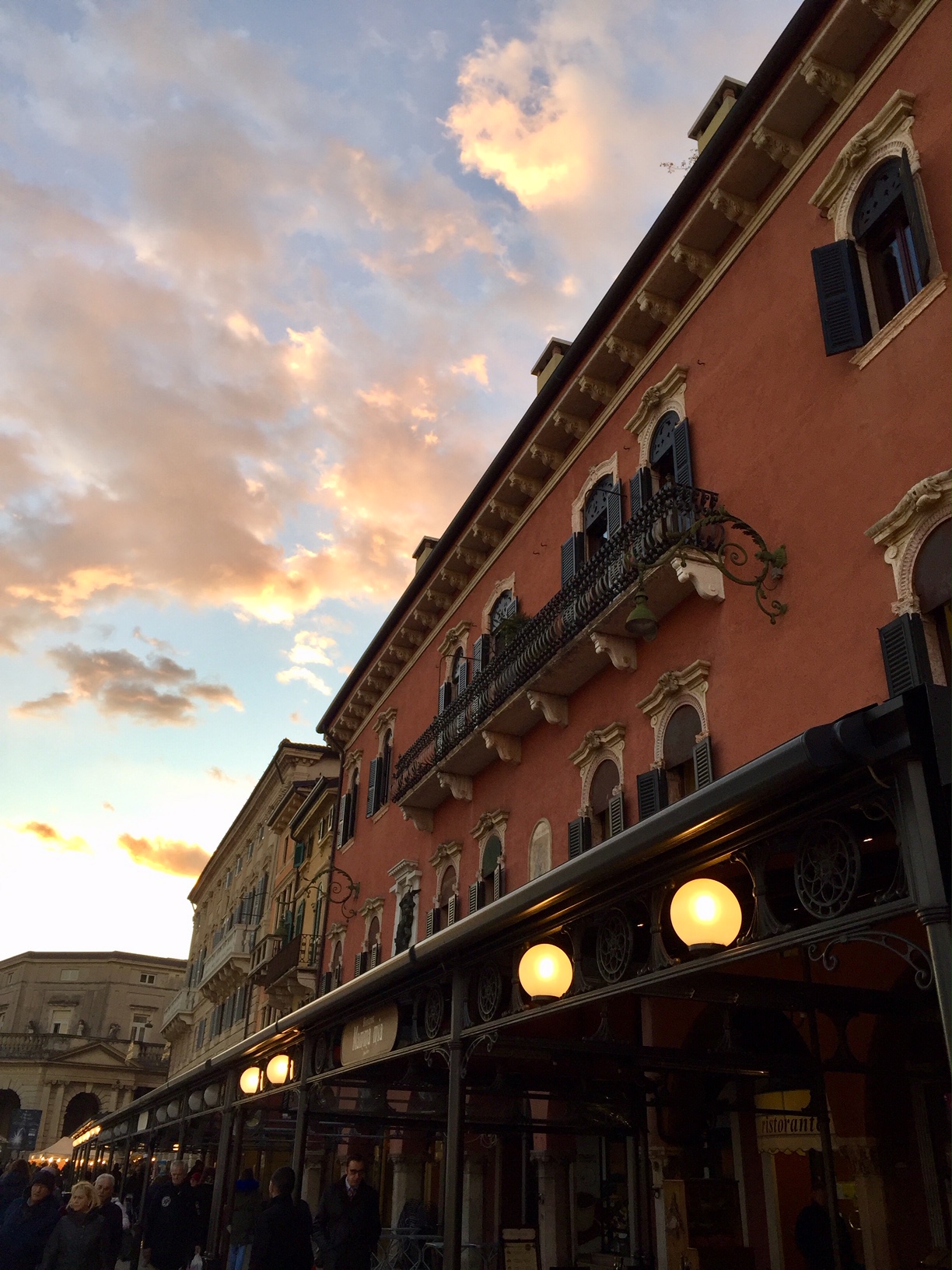
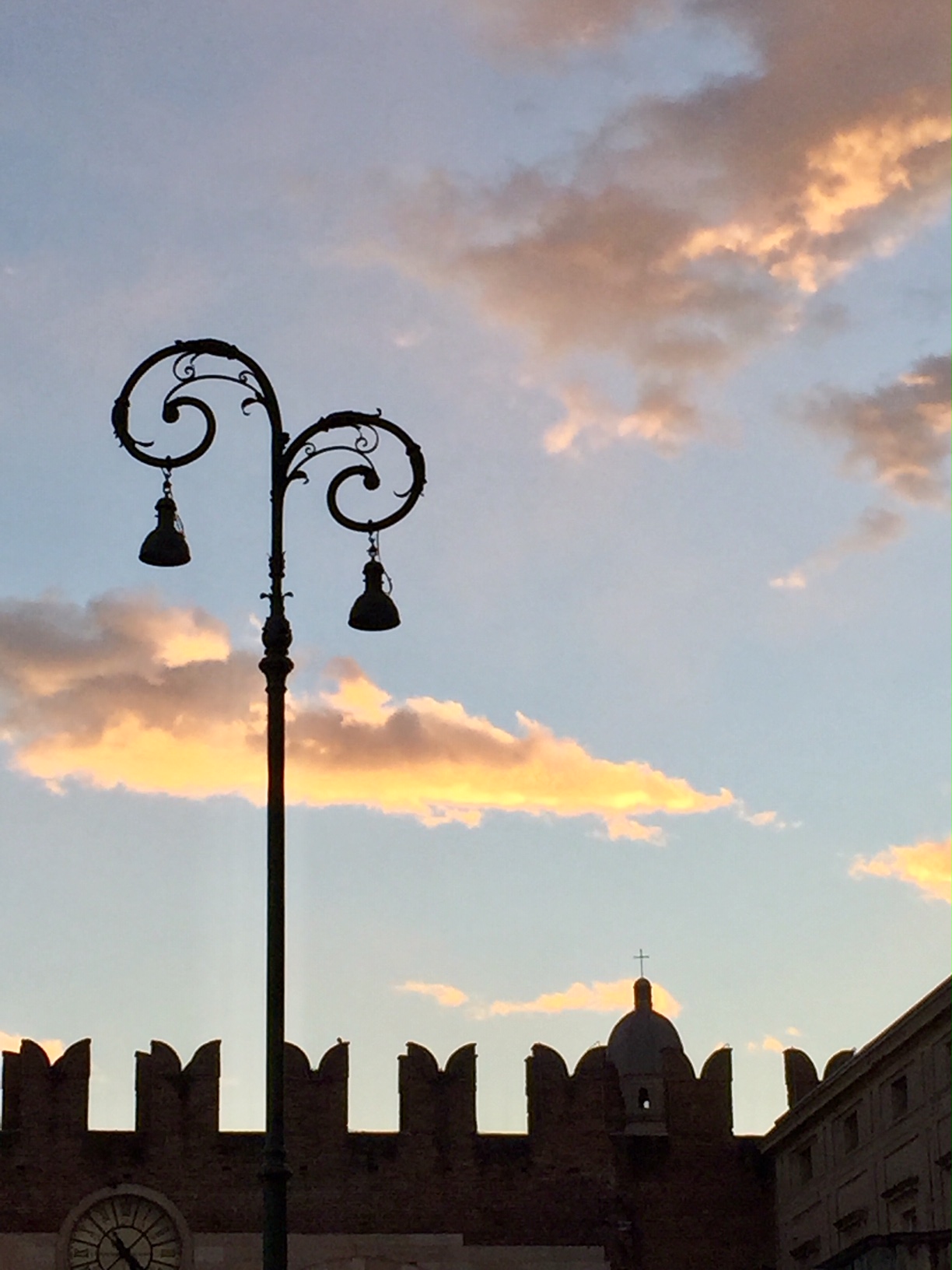
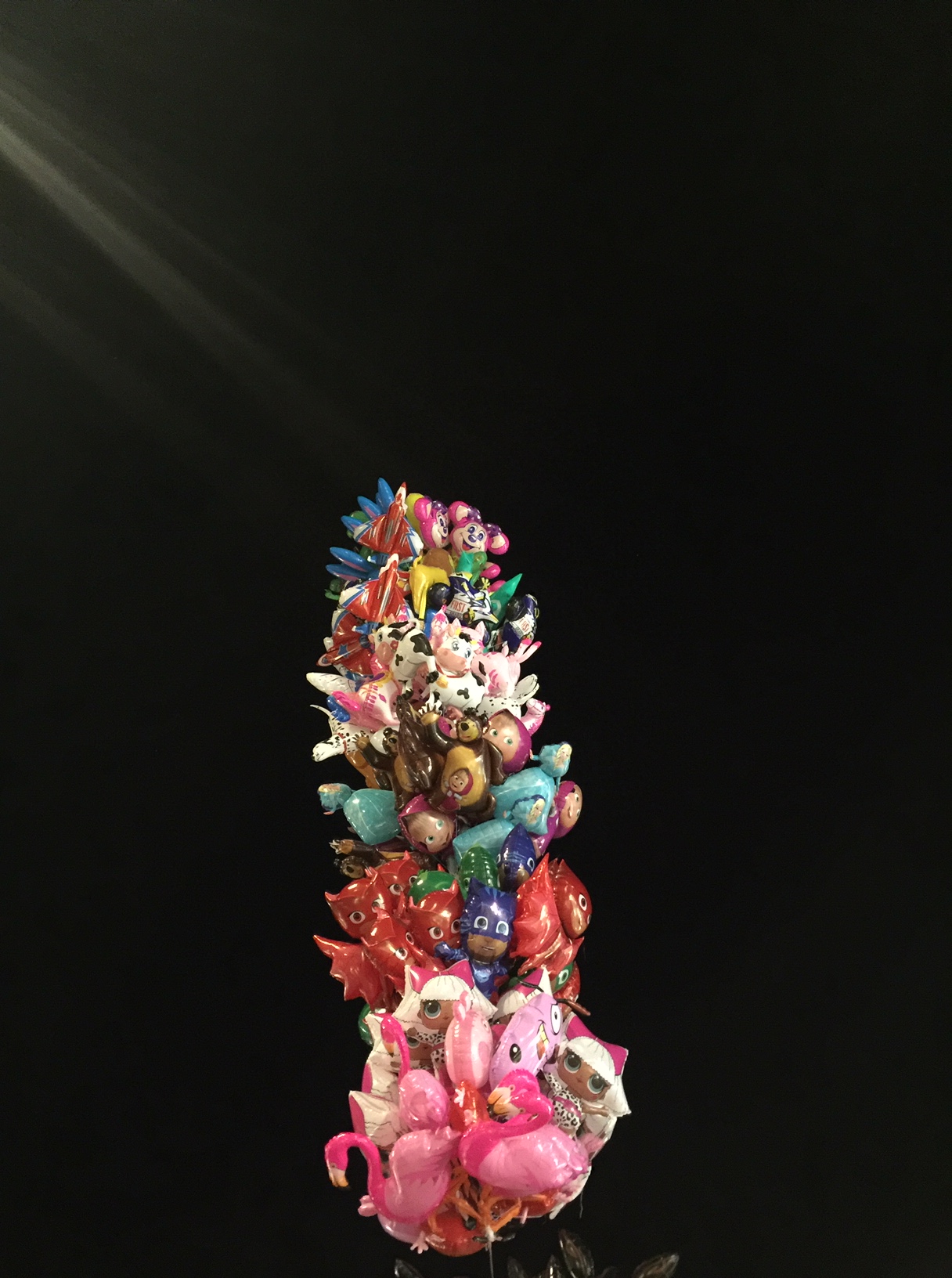
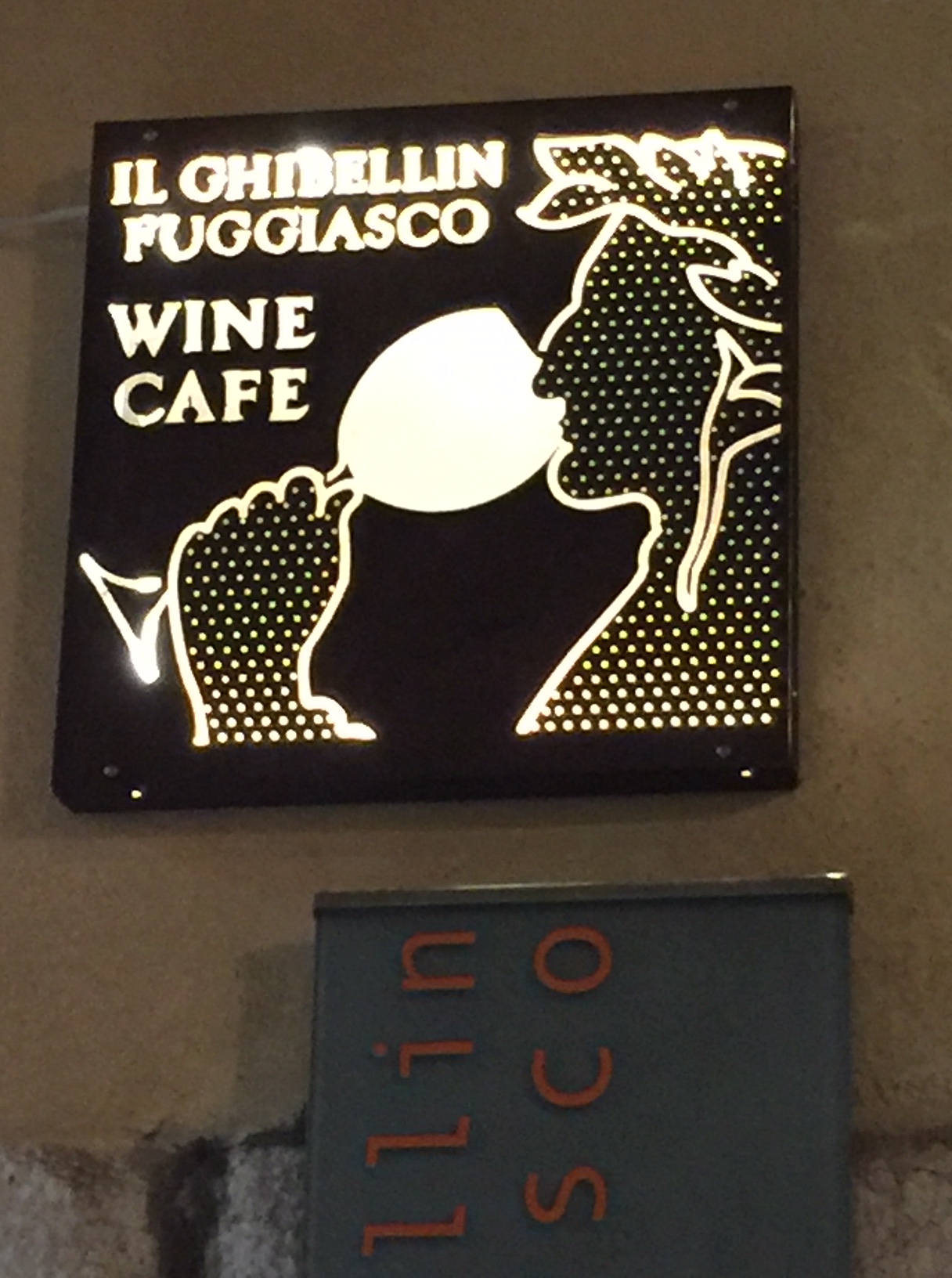
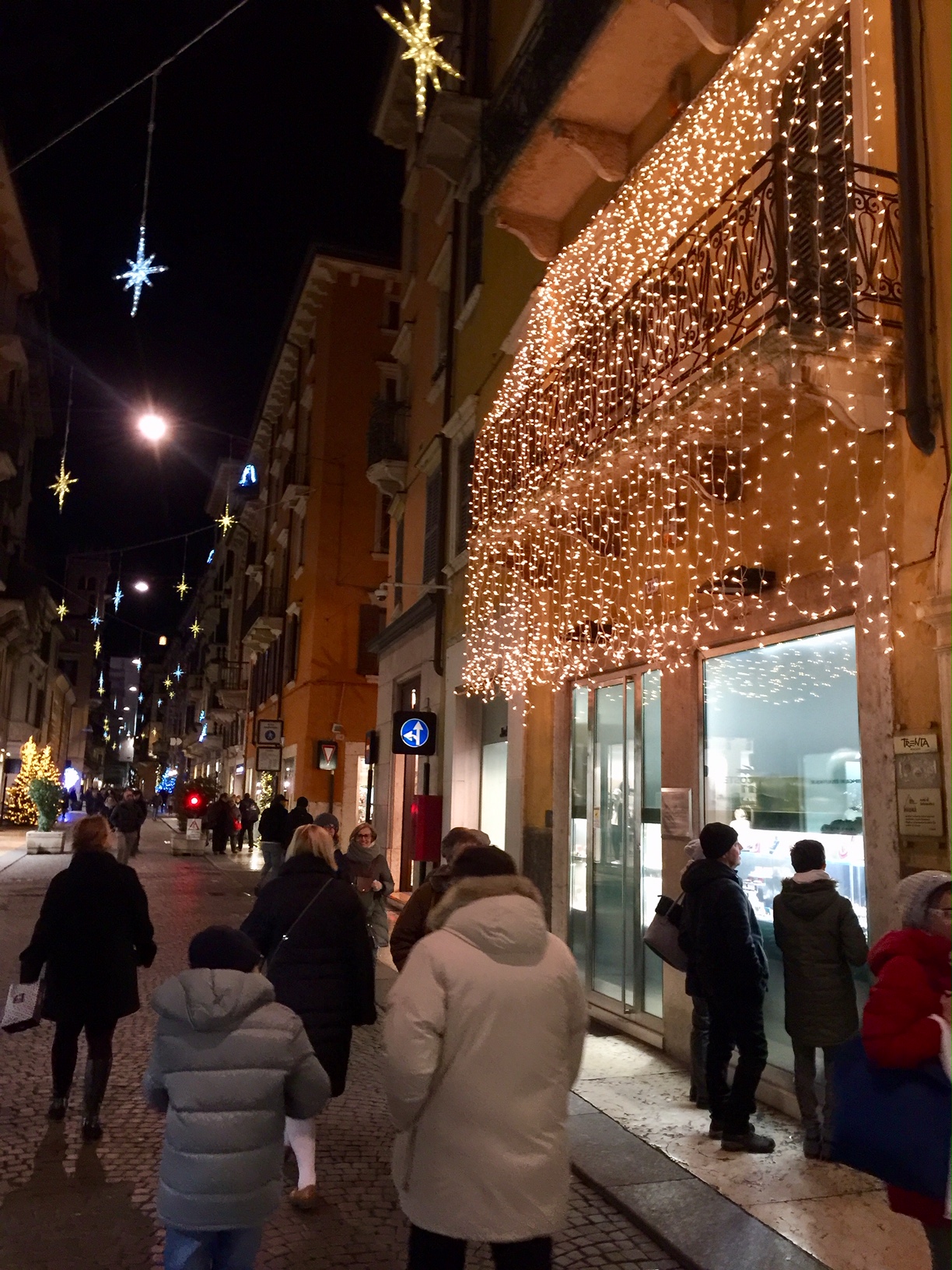
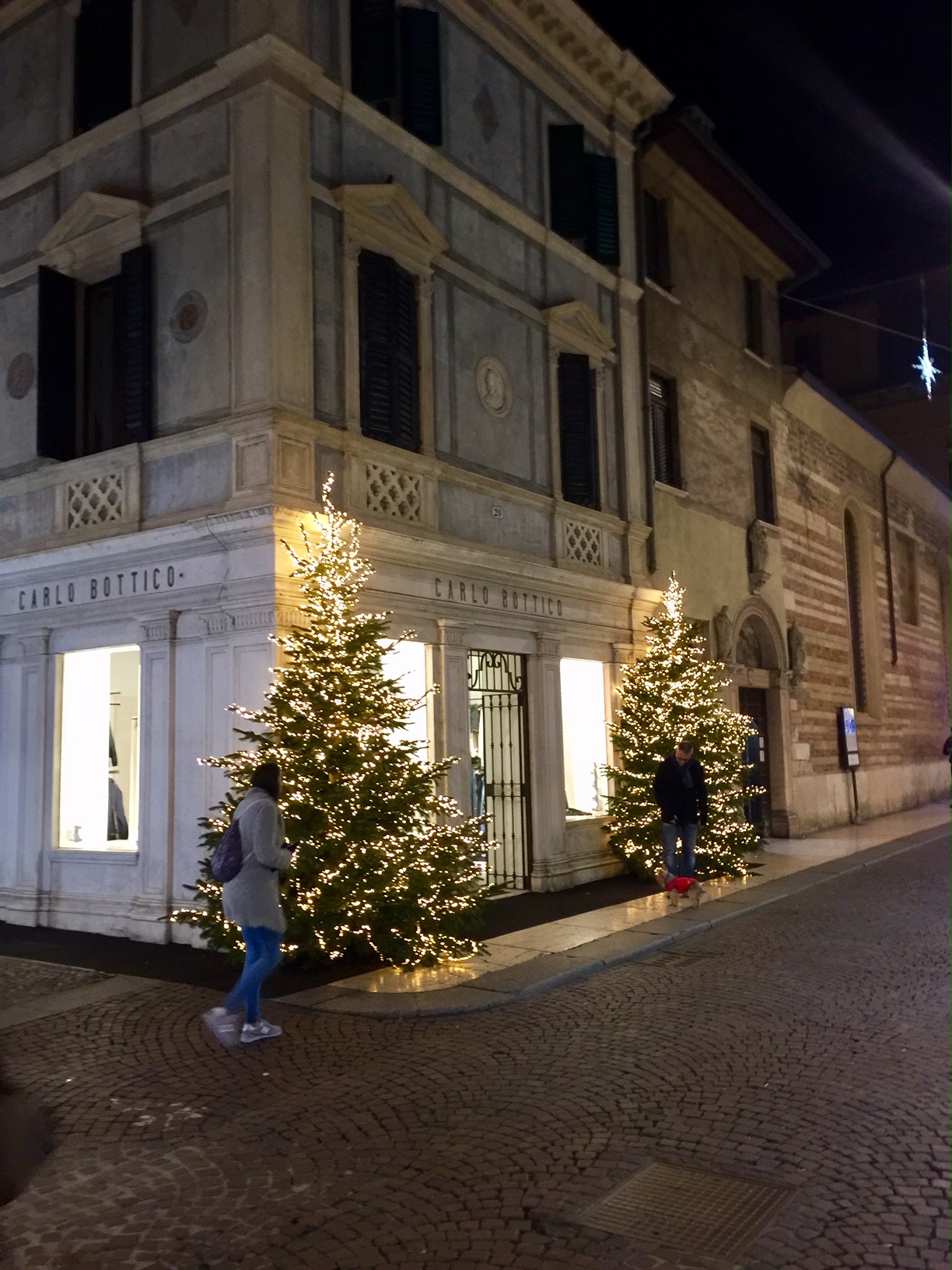
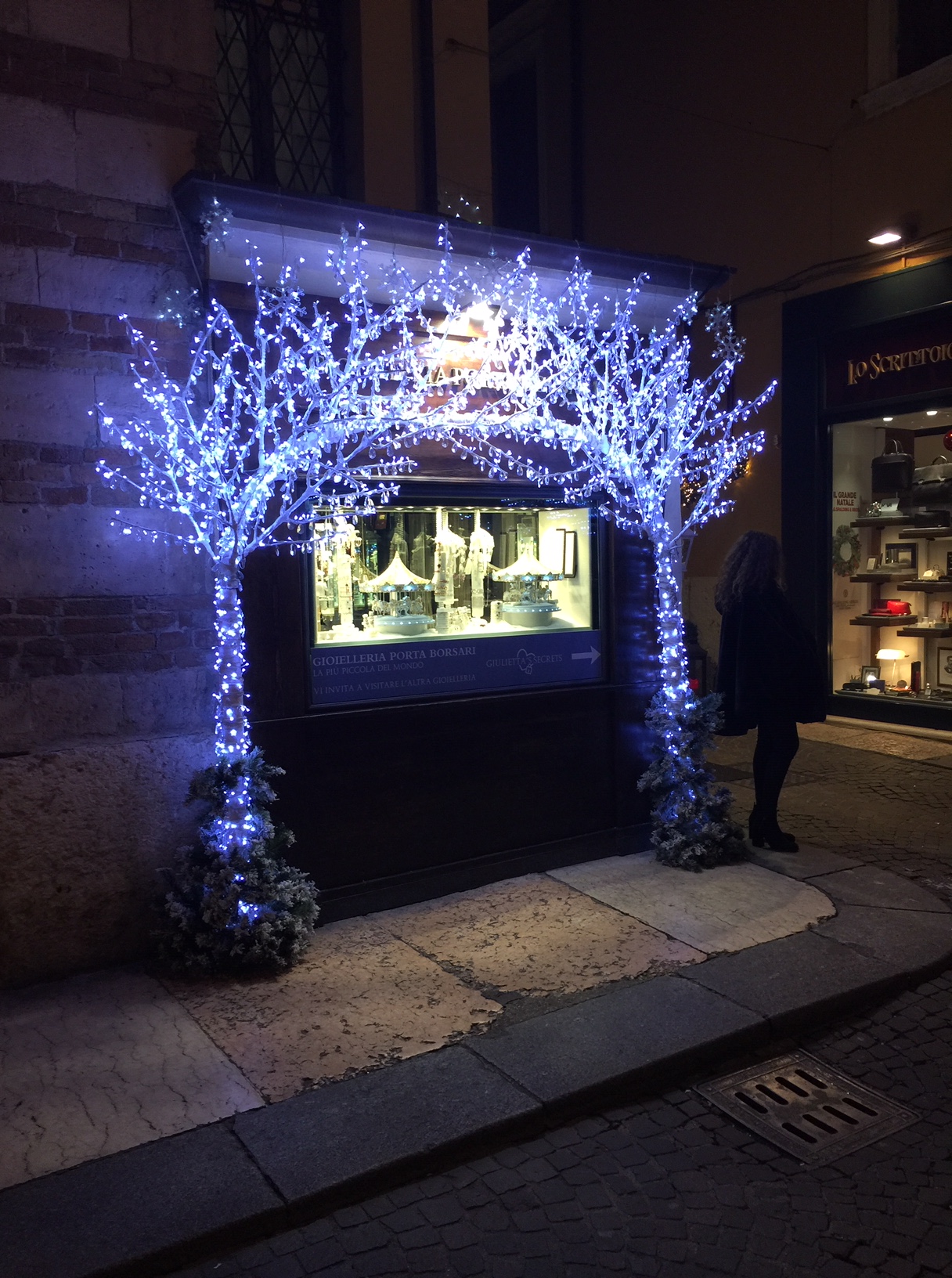
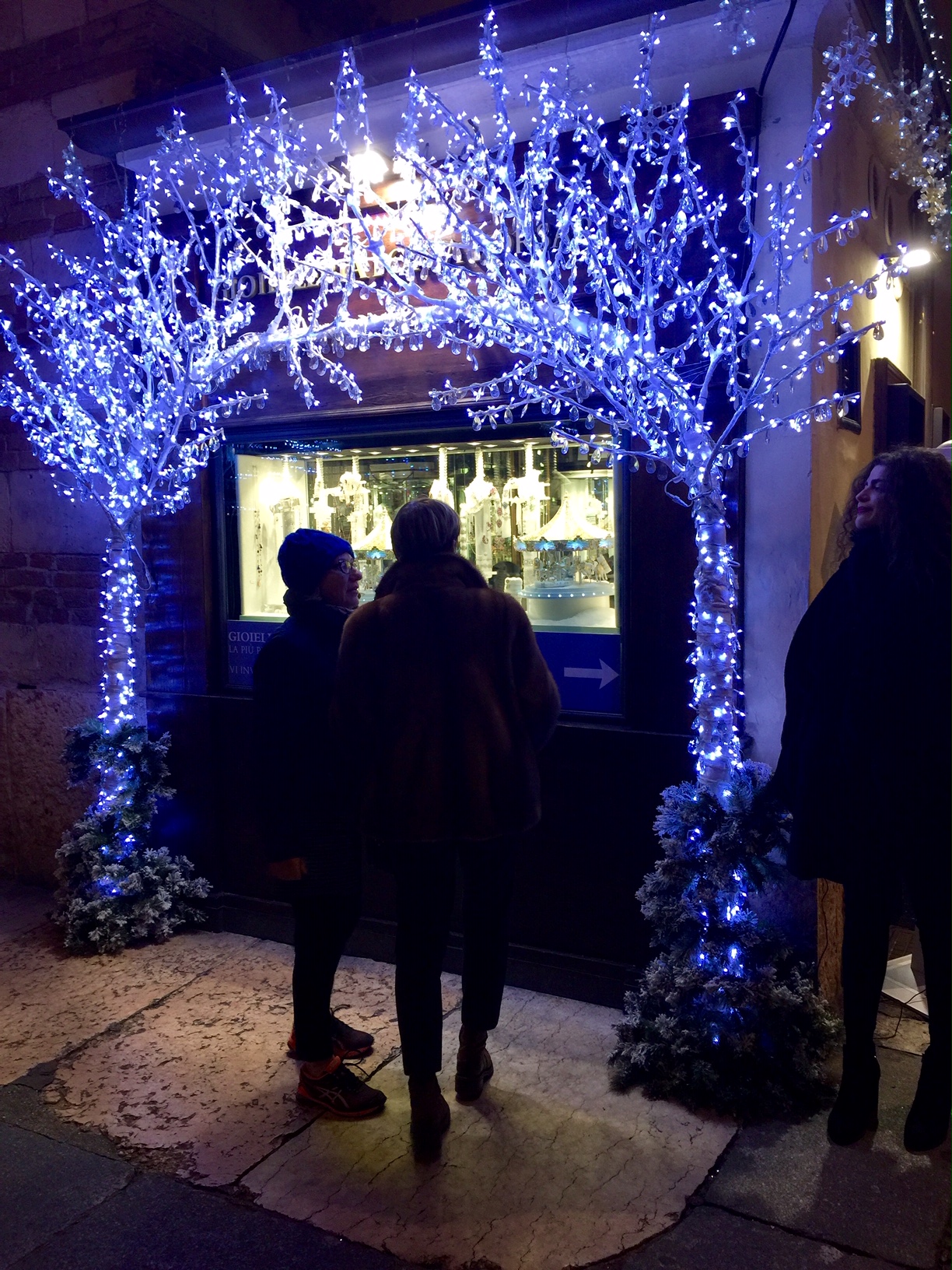
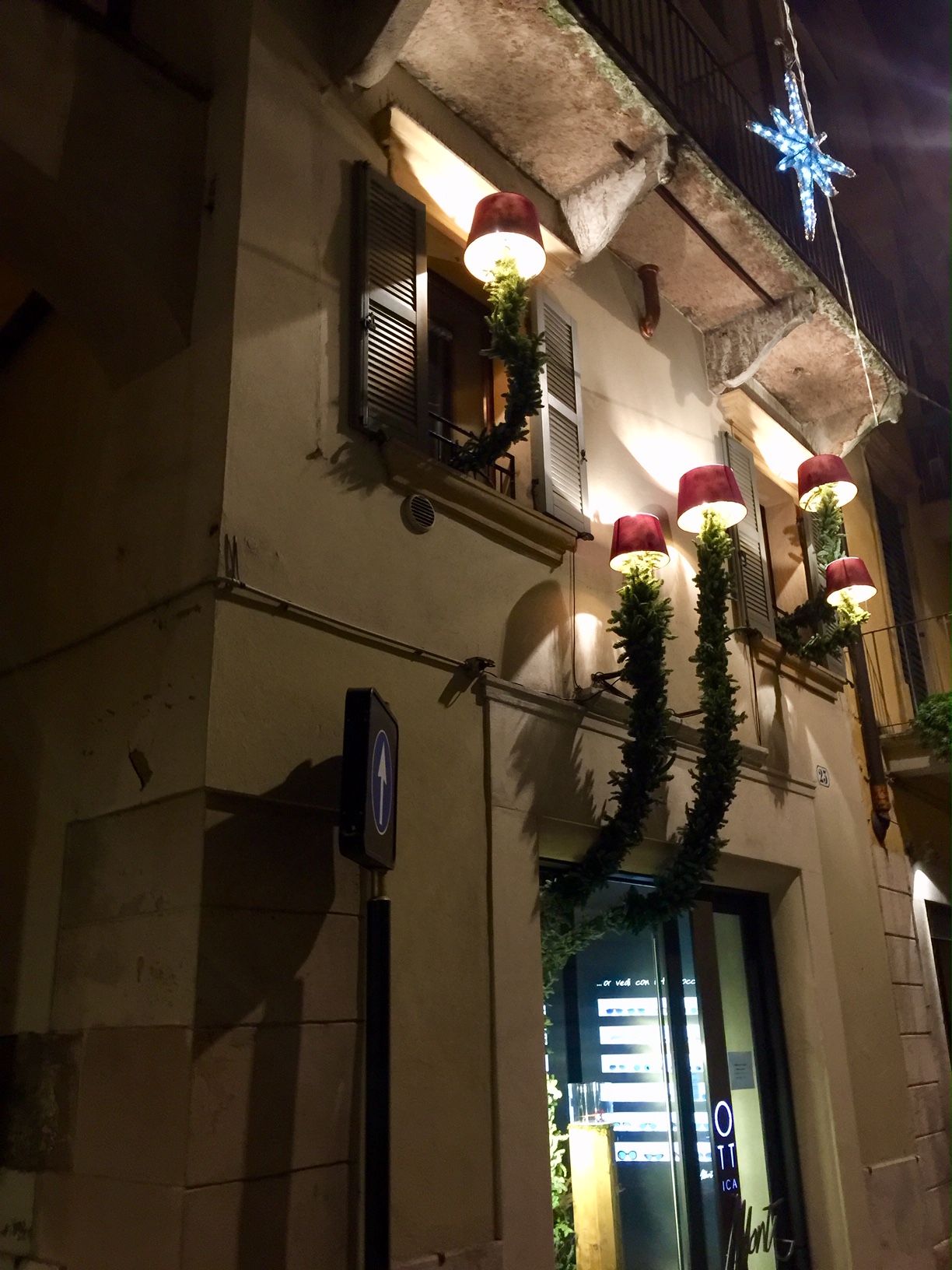
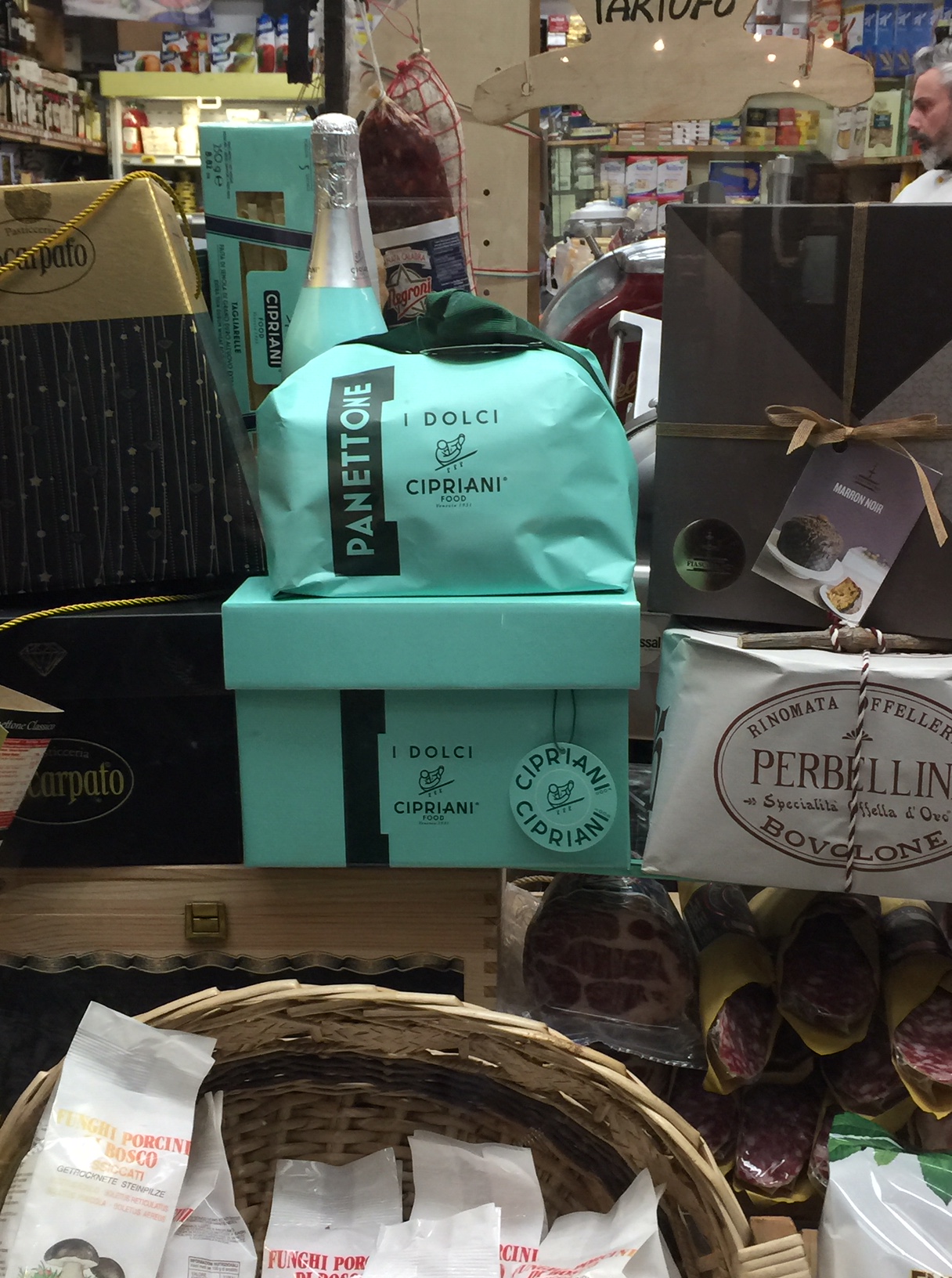
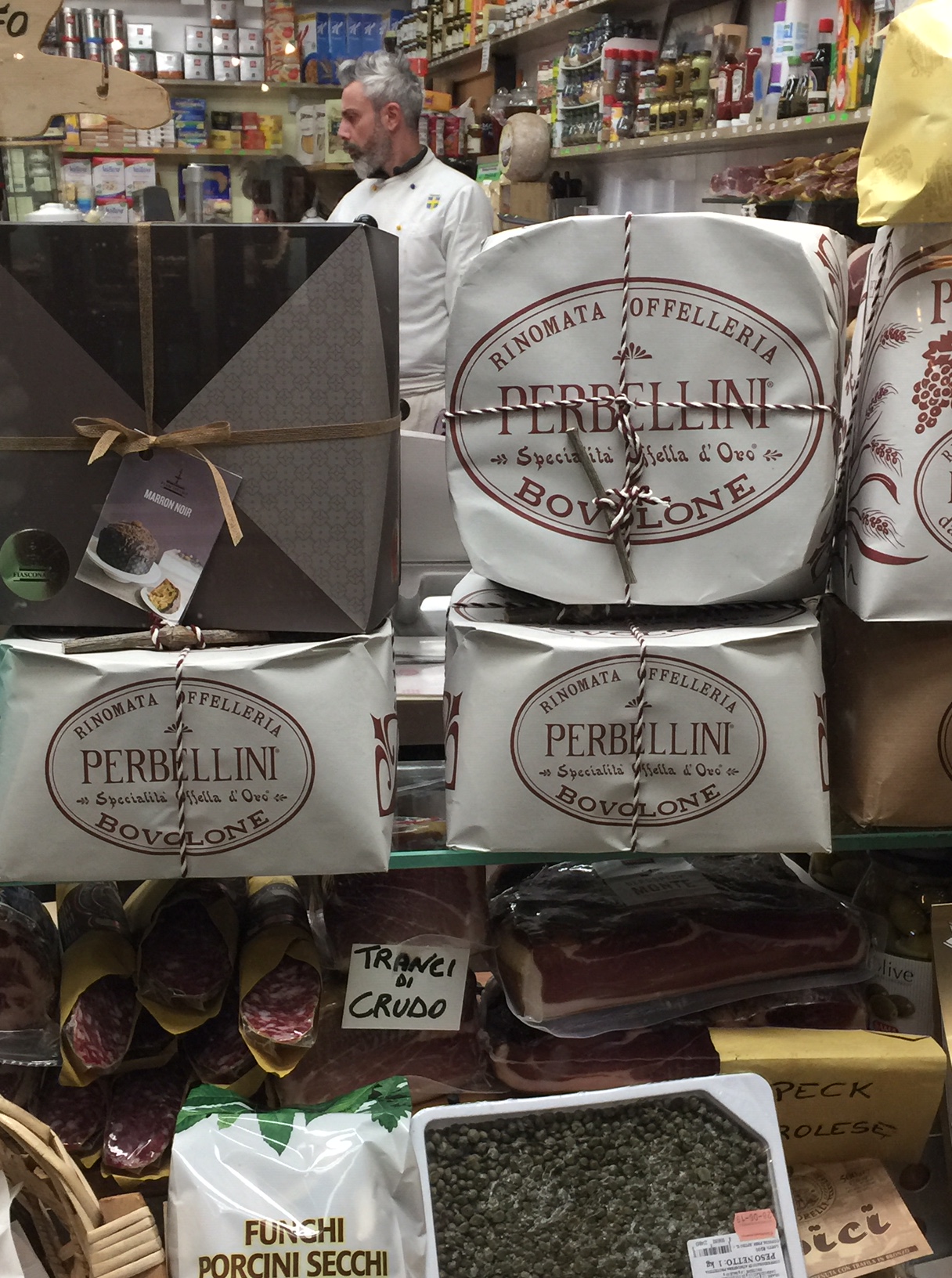
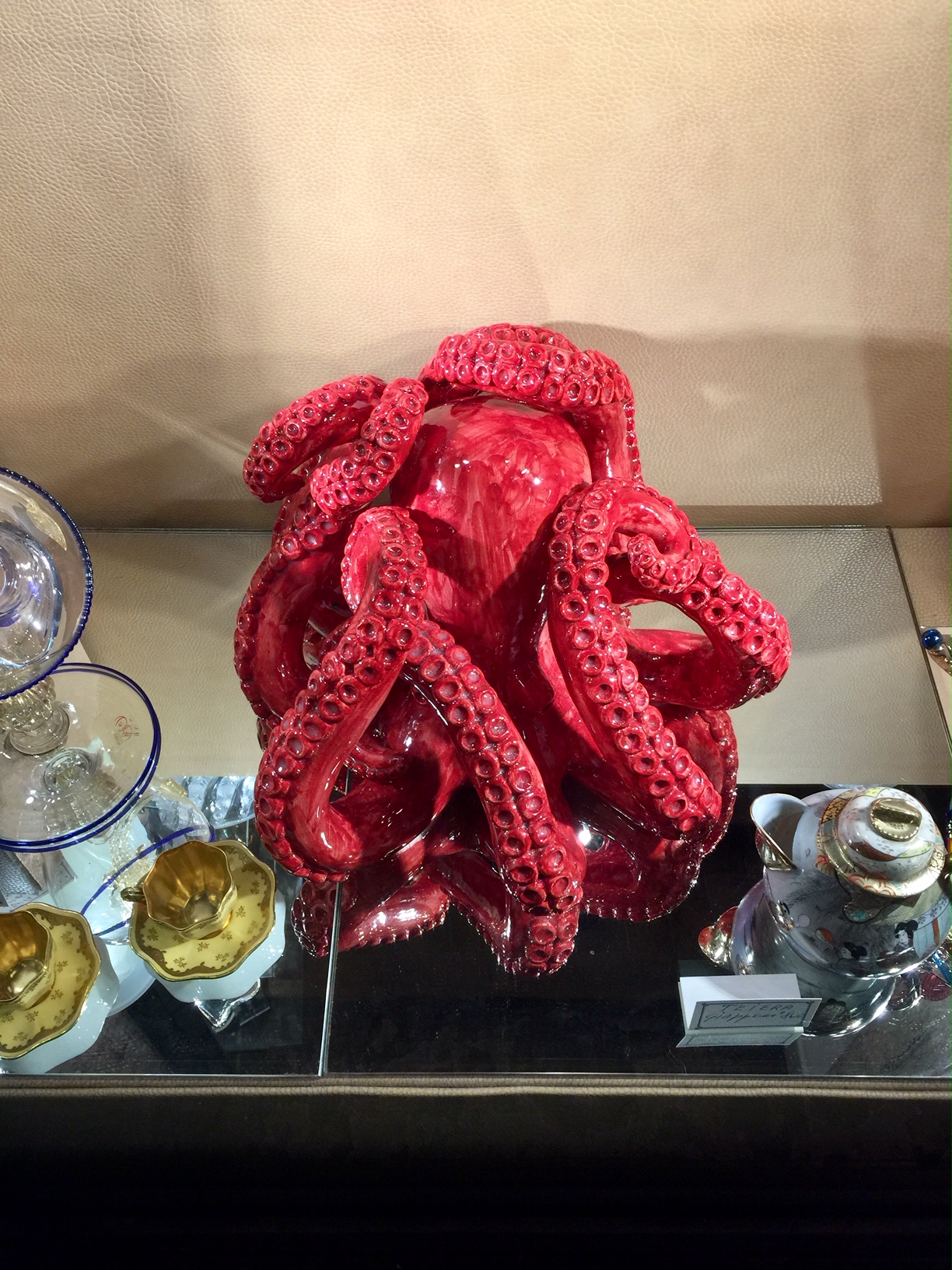
I love a decorative octopus!
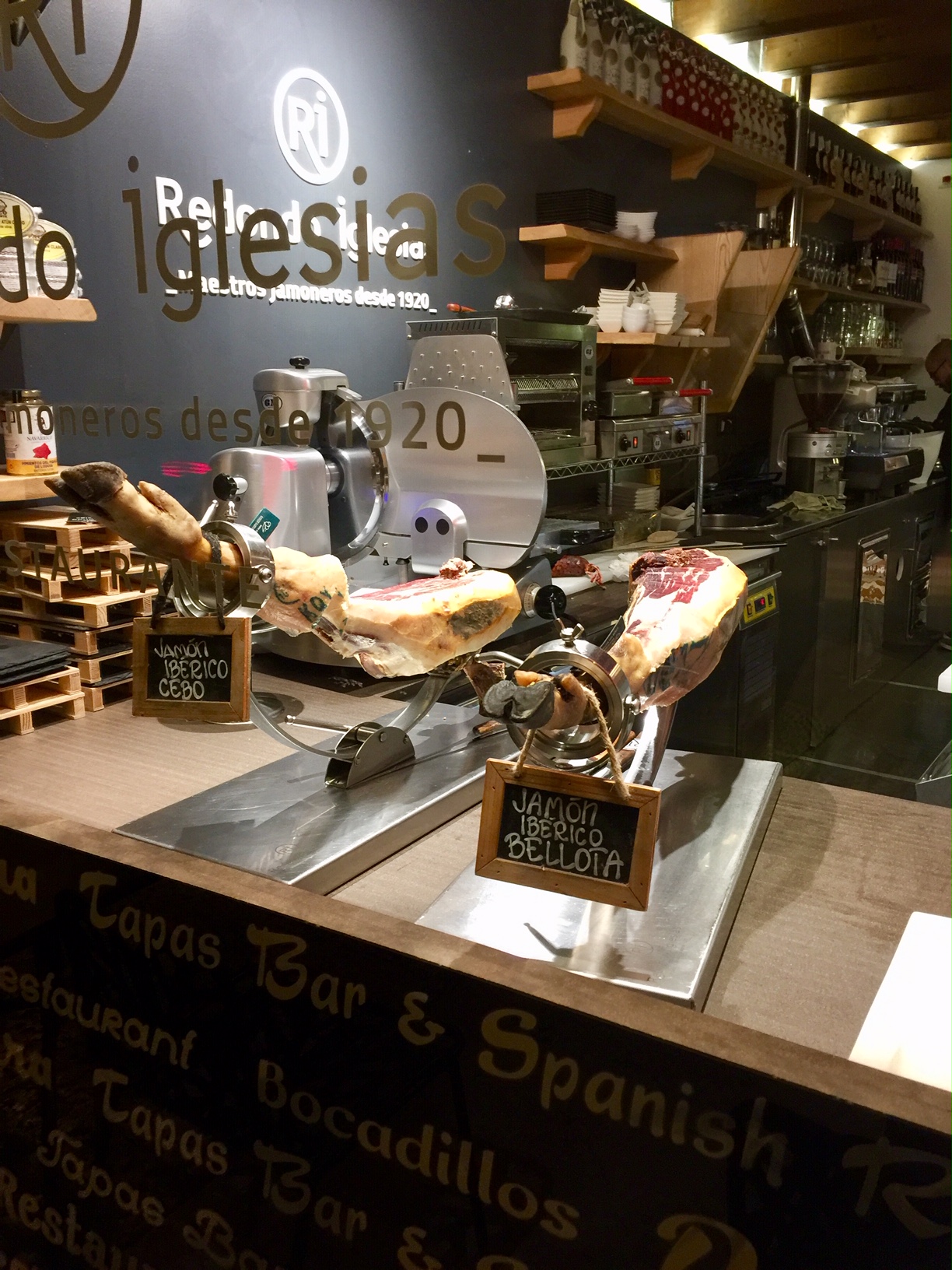
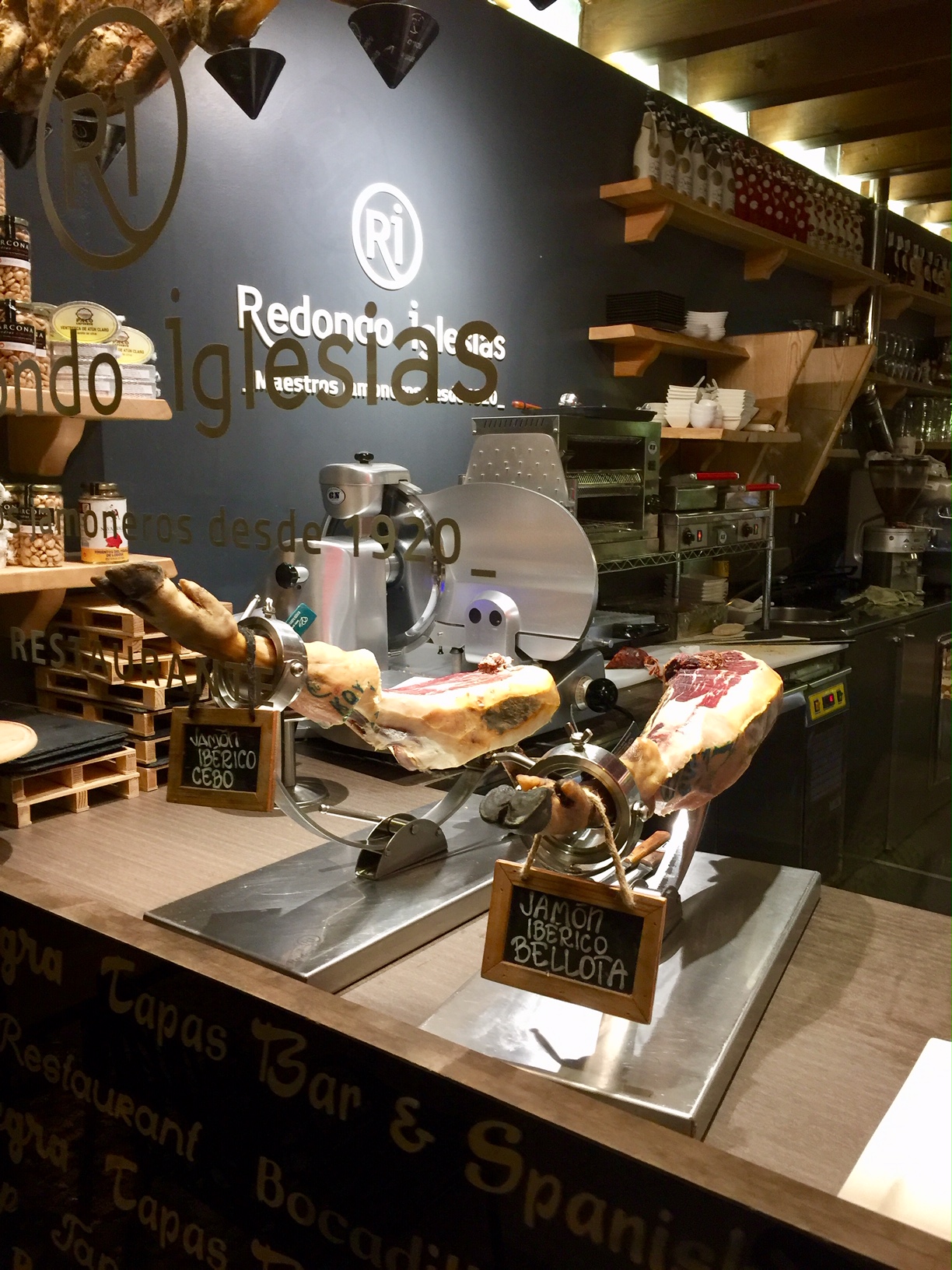
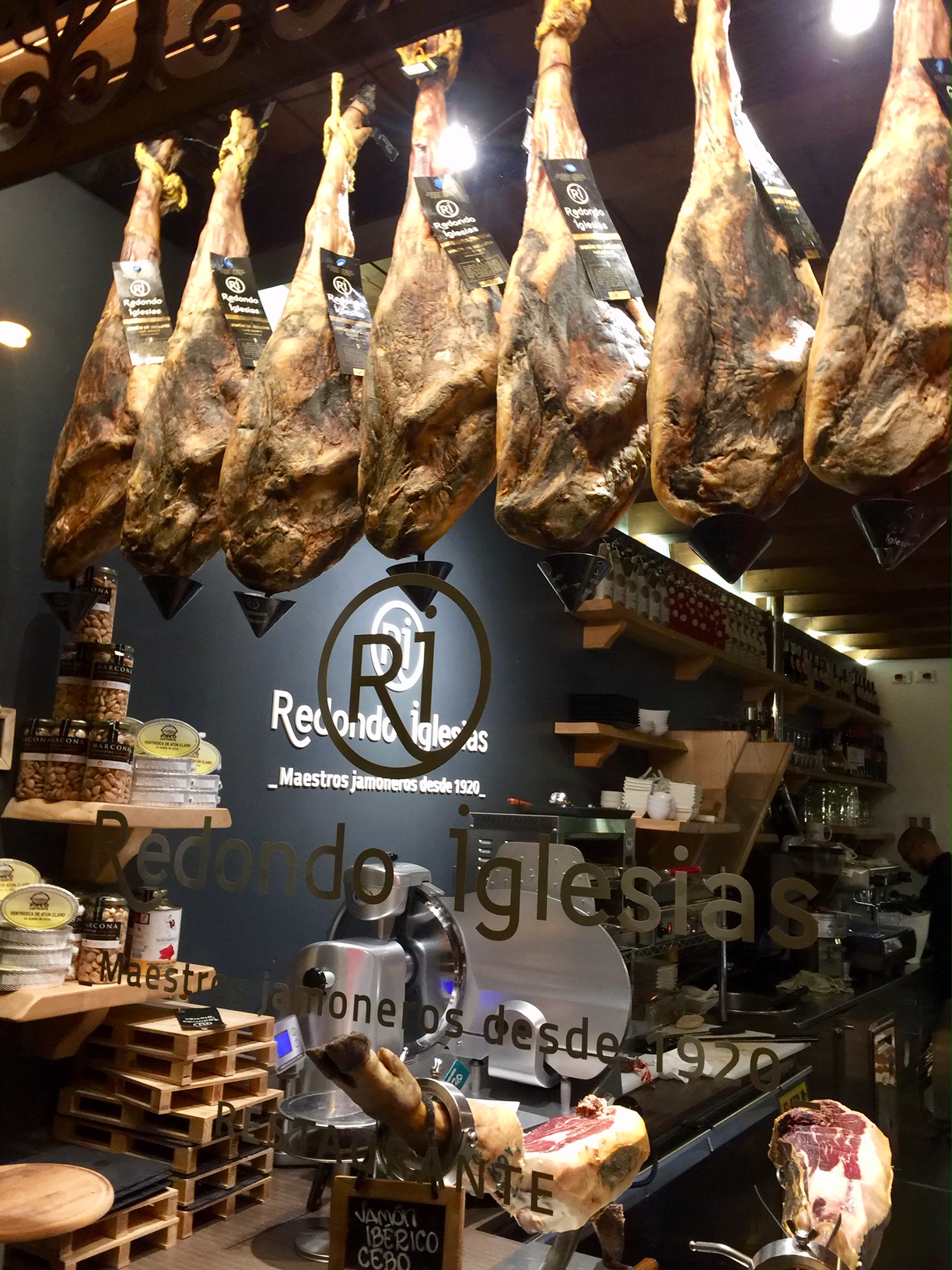
Check out the foot still attached to this prosciutto! OMG!
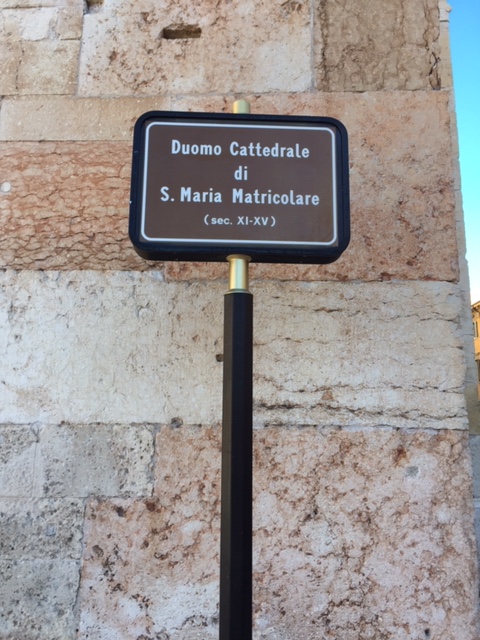
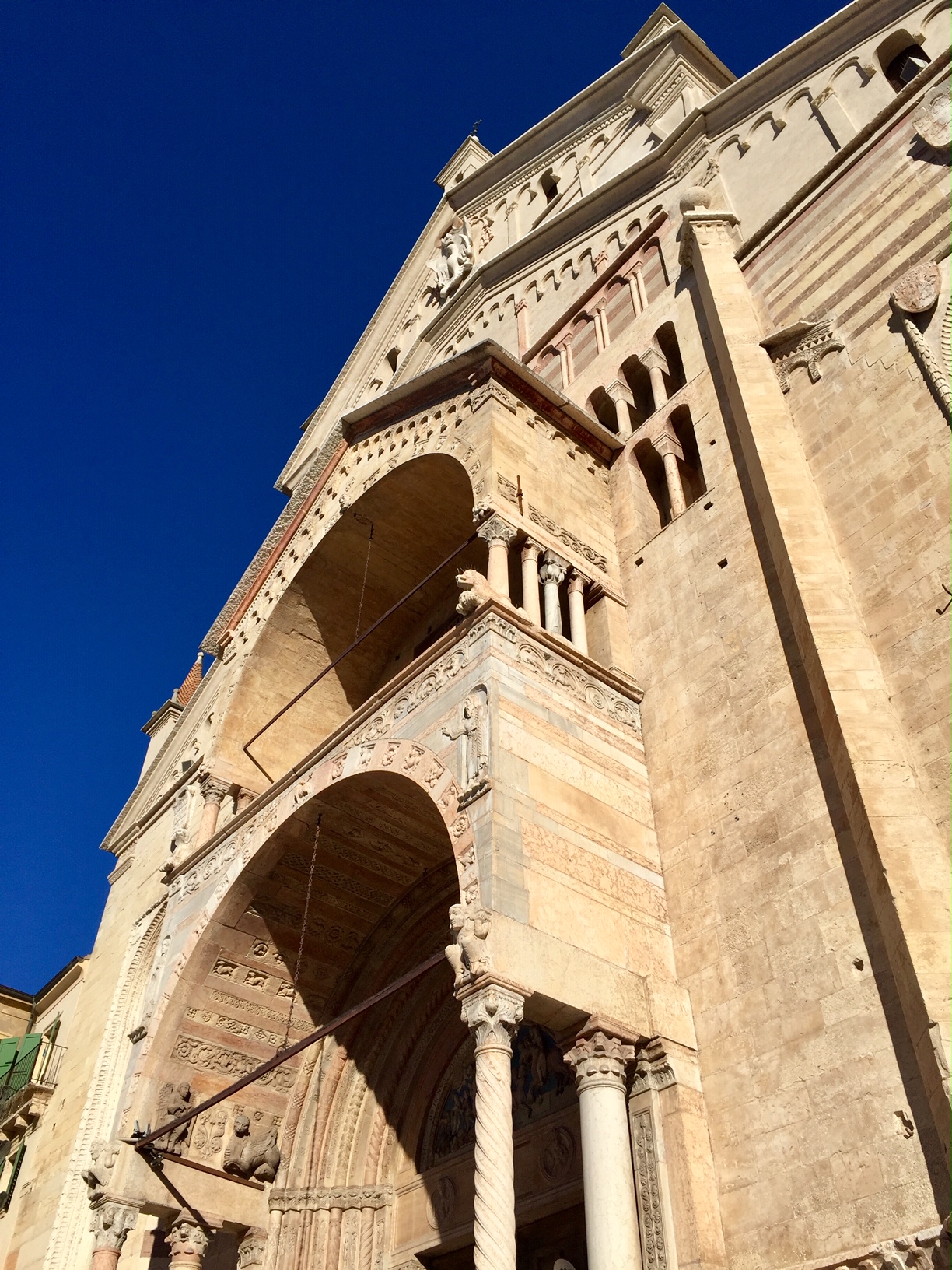
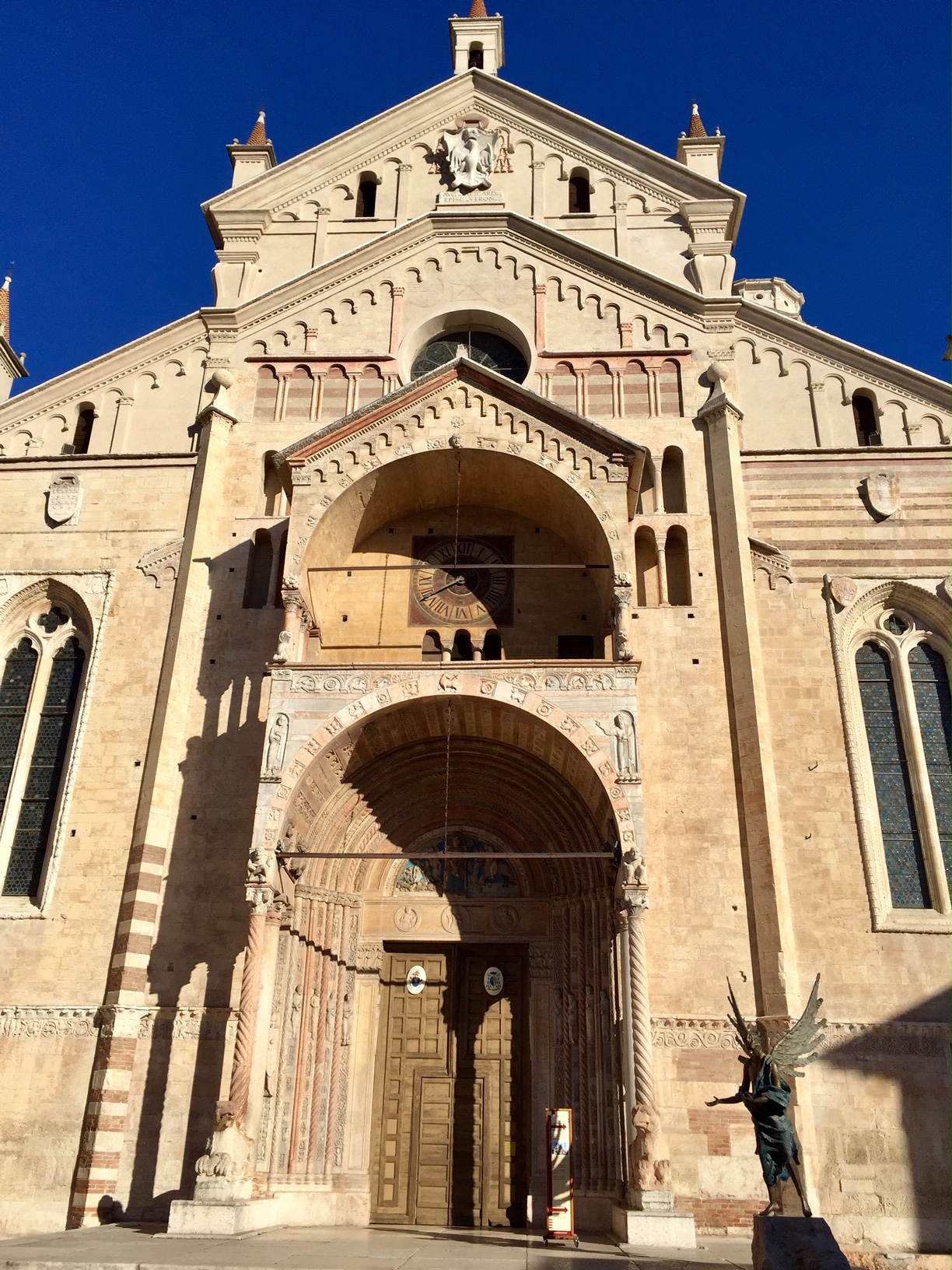
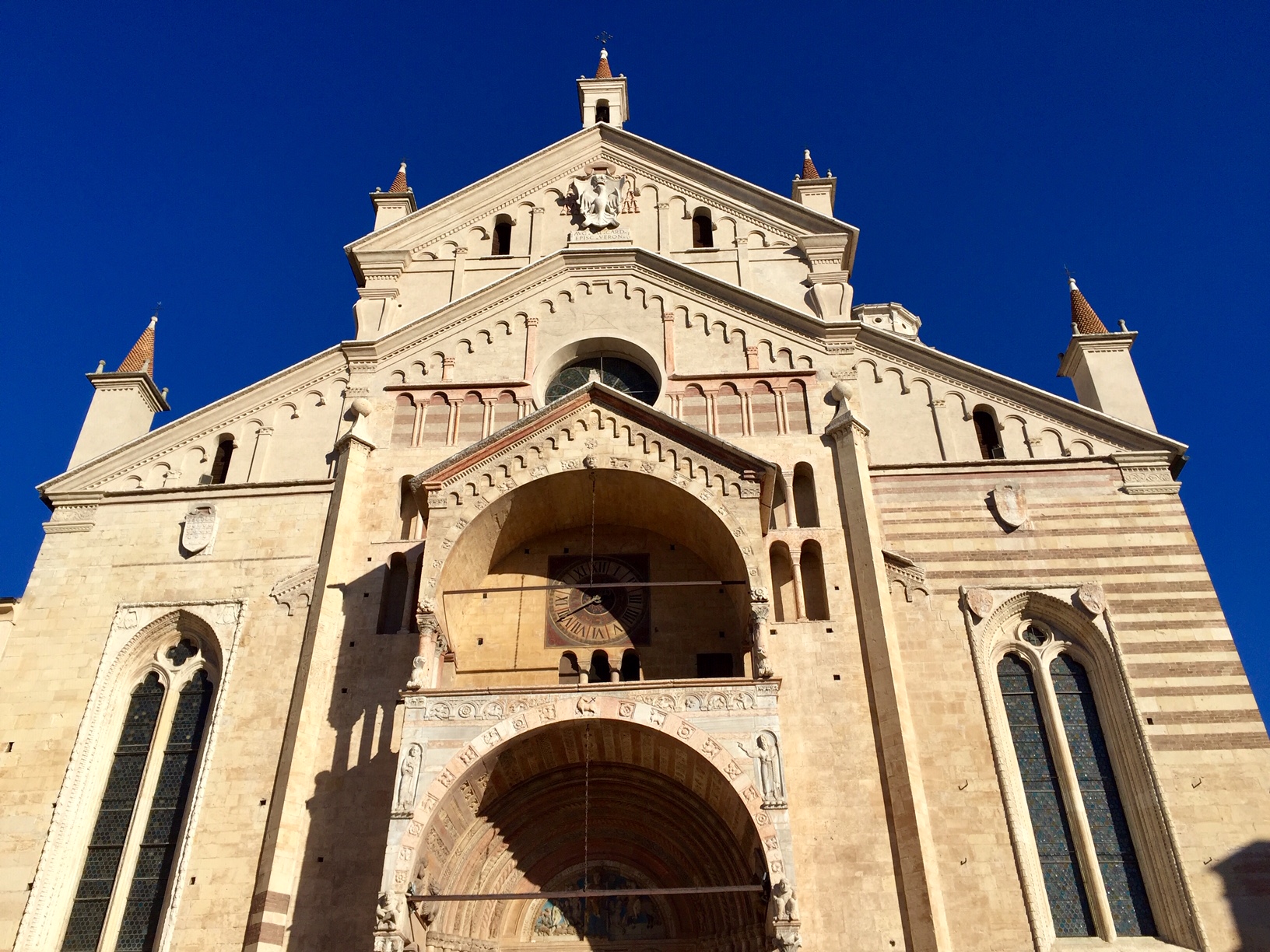
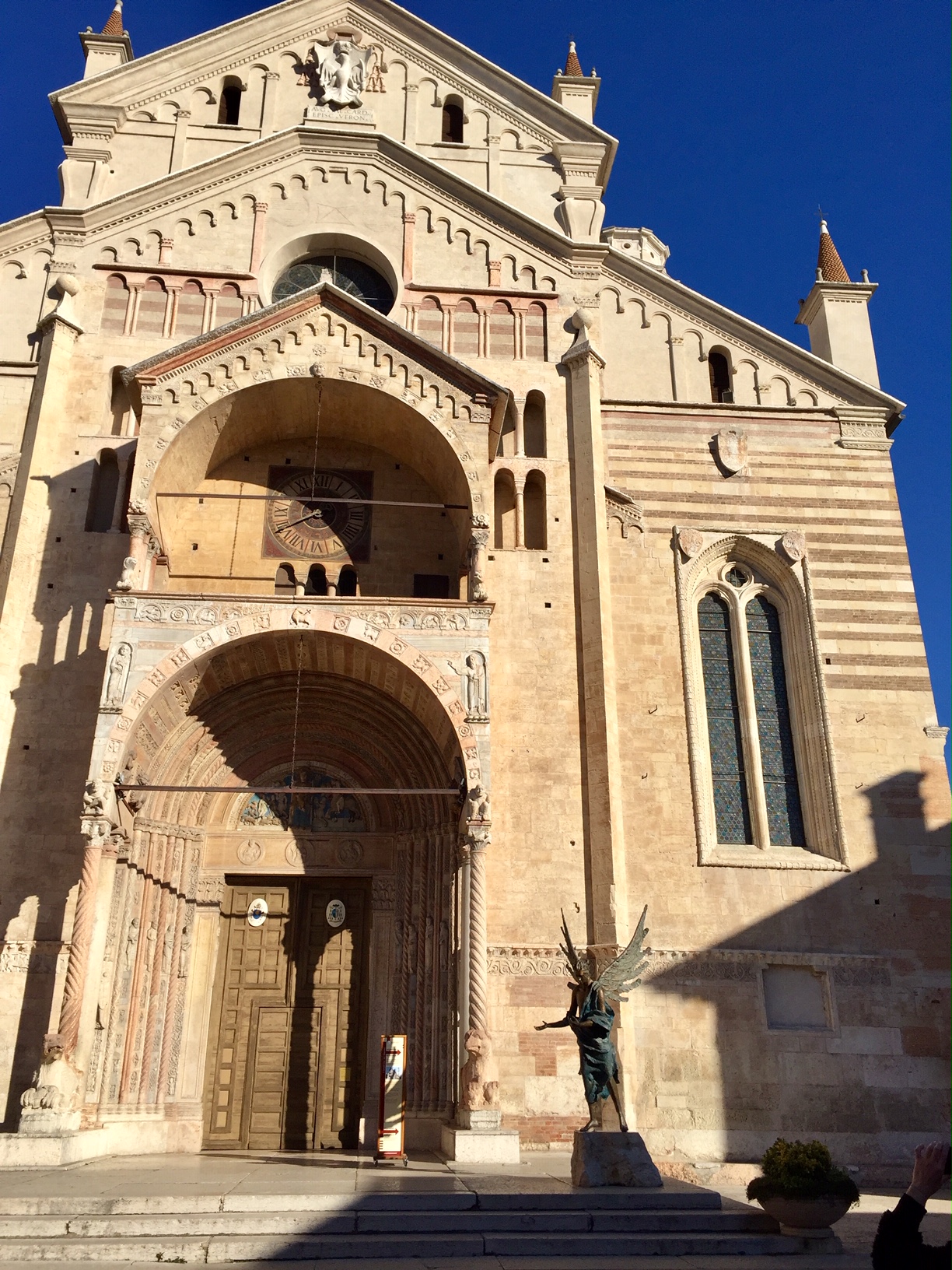
Verona’s magnificent Duomo below:
The bell tower: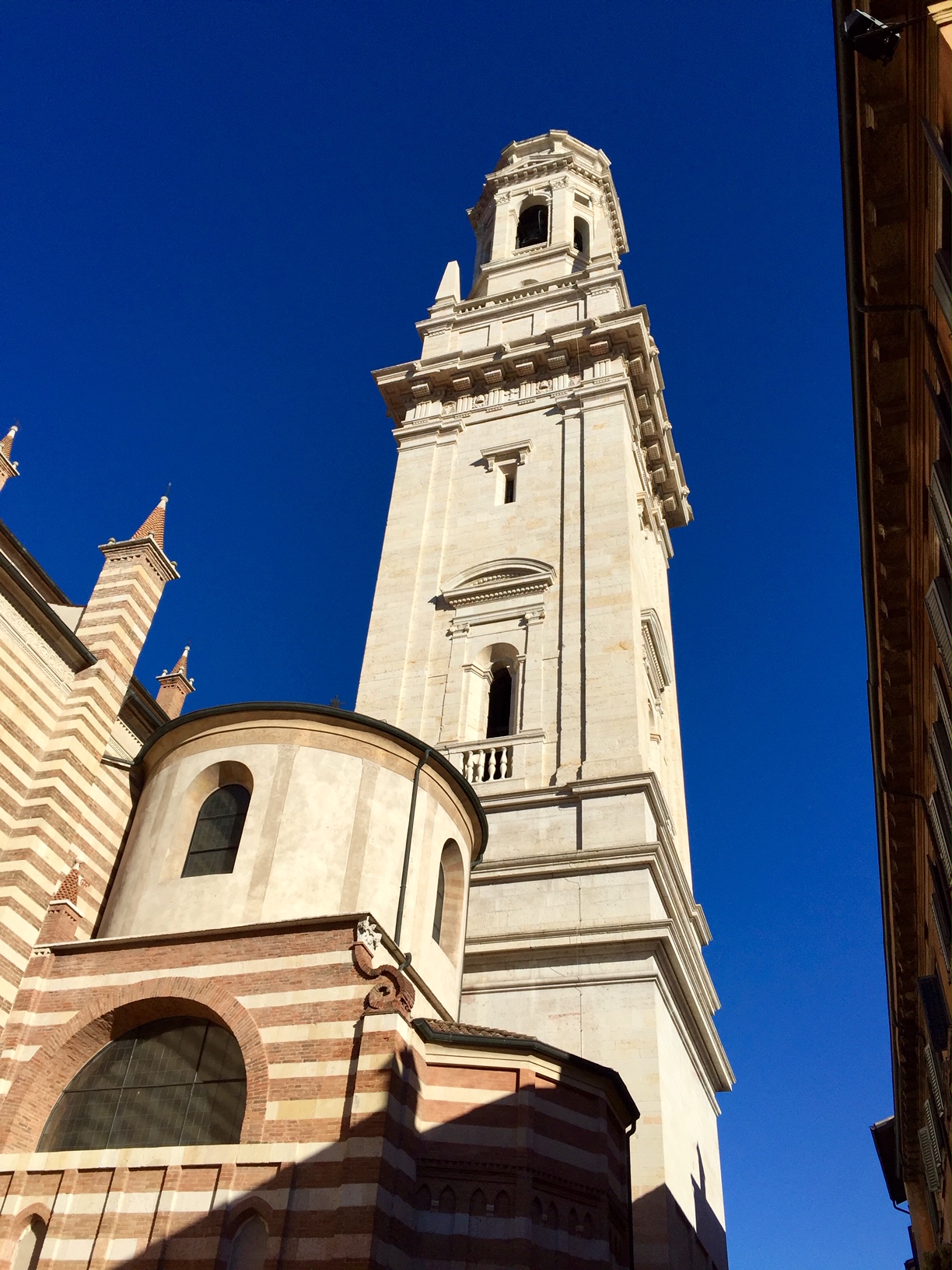
The apron front of the facade reminded me of church architecture in Lucca.
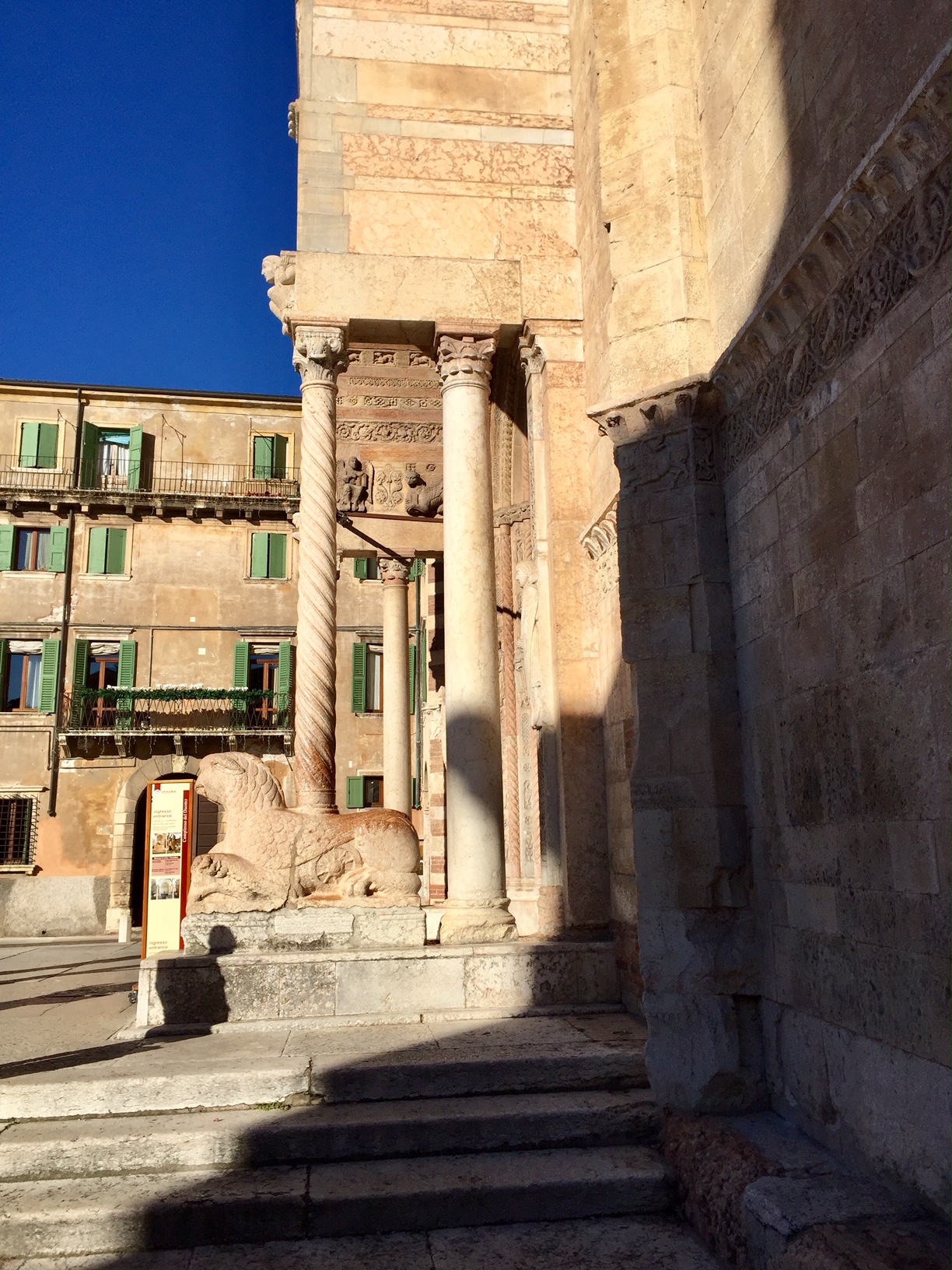
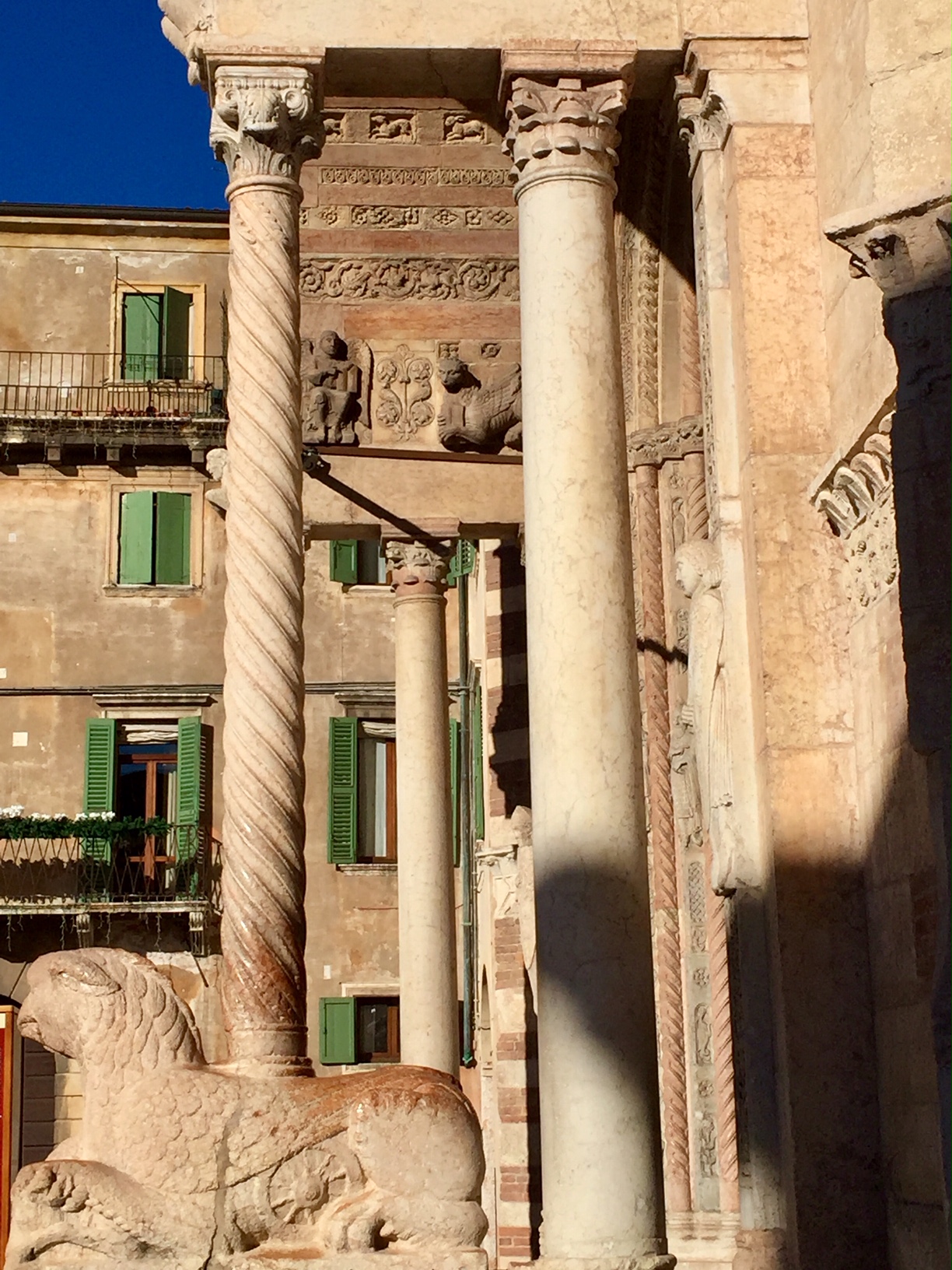
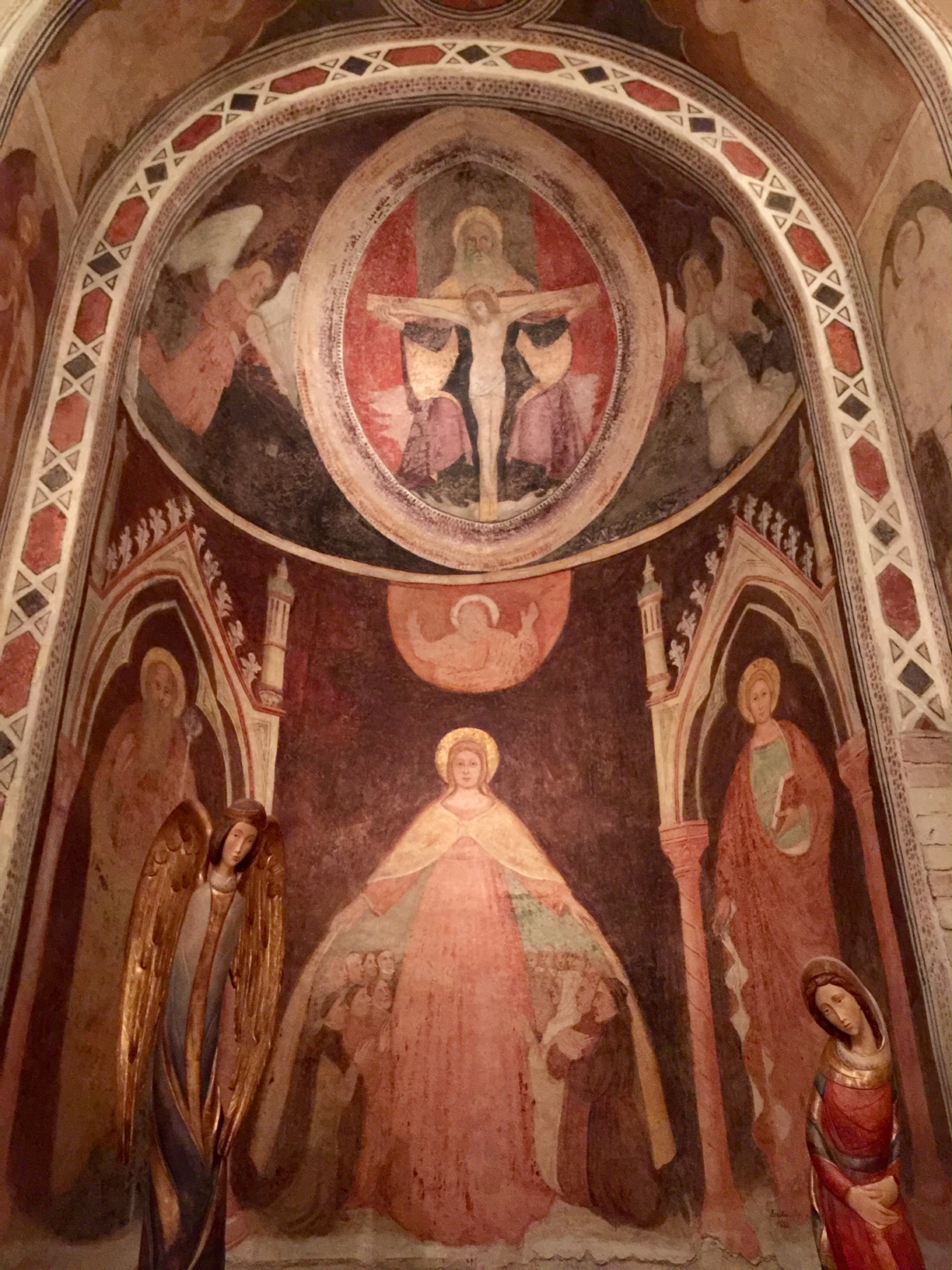
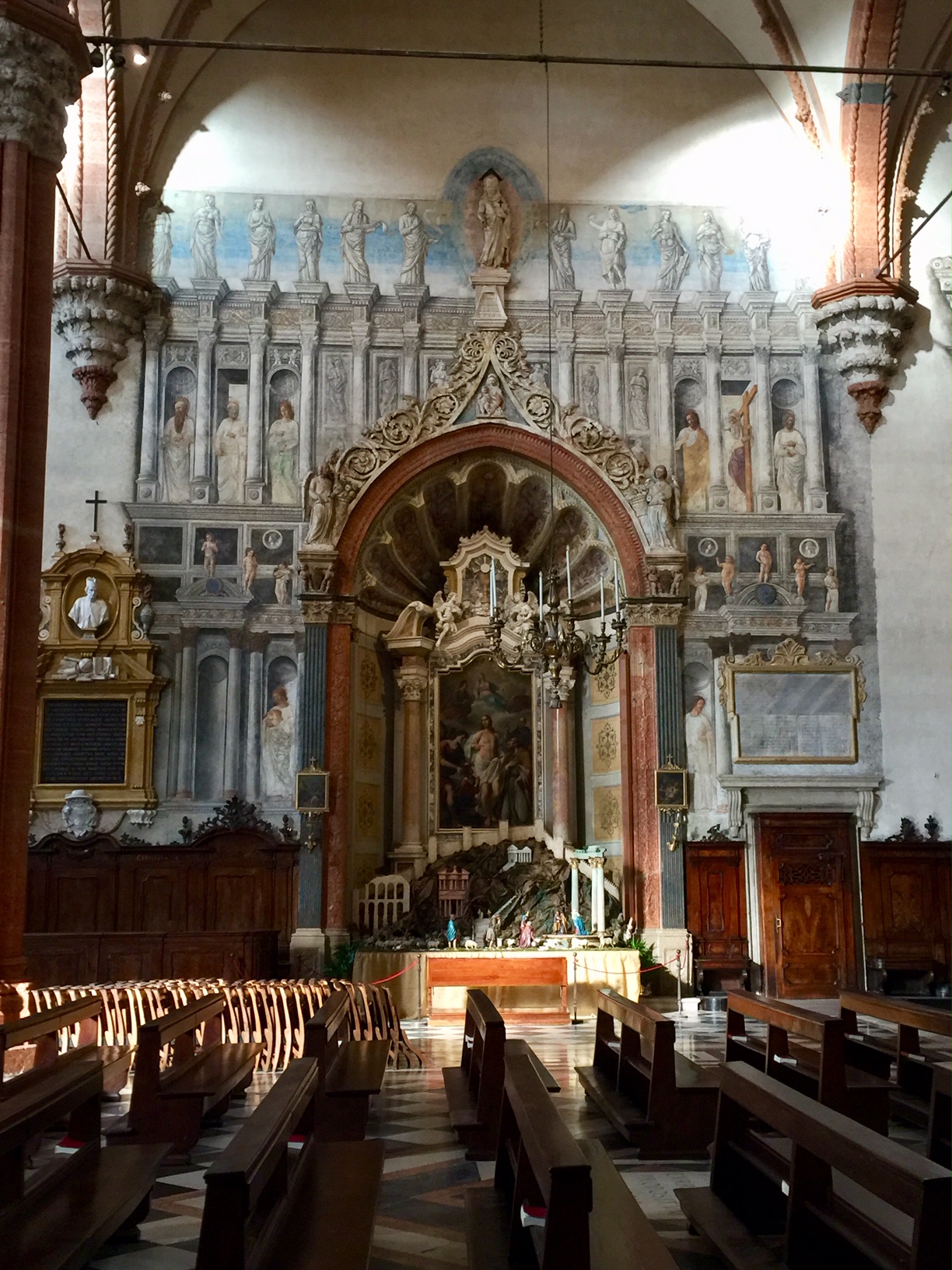
The altar below is painted and has matching sculptures in front. I’d never seen anything like this before.
The altar below beckons from across the church. Such lavish gold, again, I’ve never seen anything quite like this and I’ve seen a lot of altars in my day. I love that Italy is always surprising me.
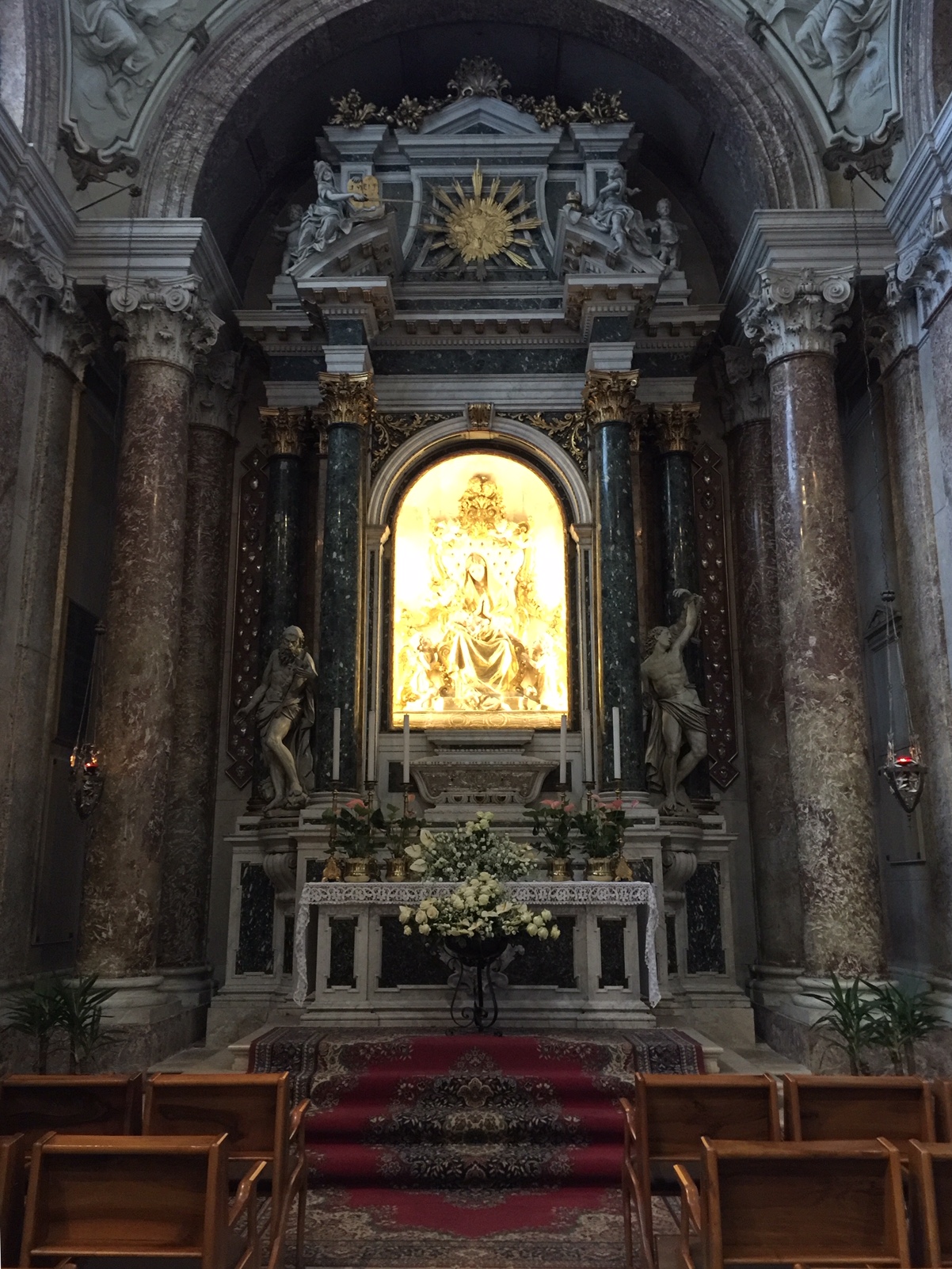
See what I mean below:
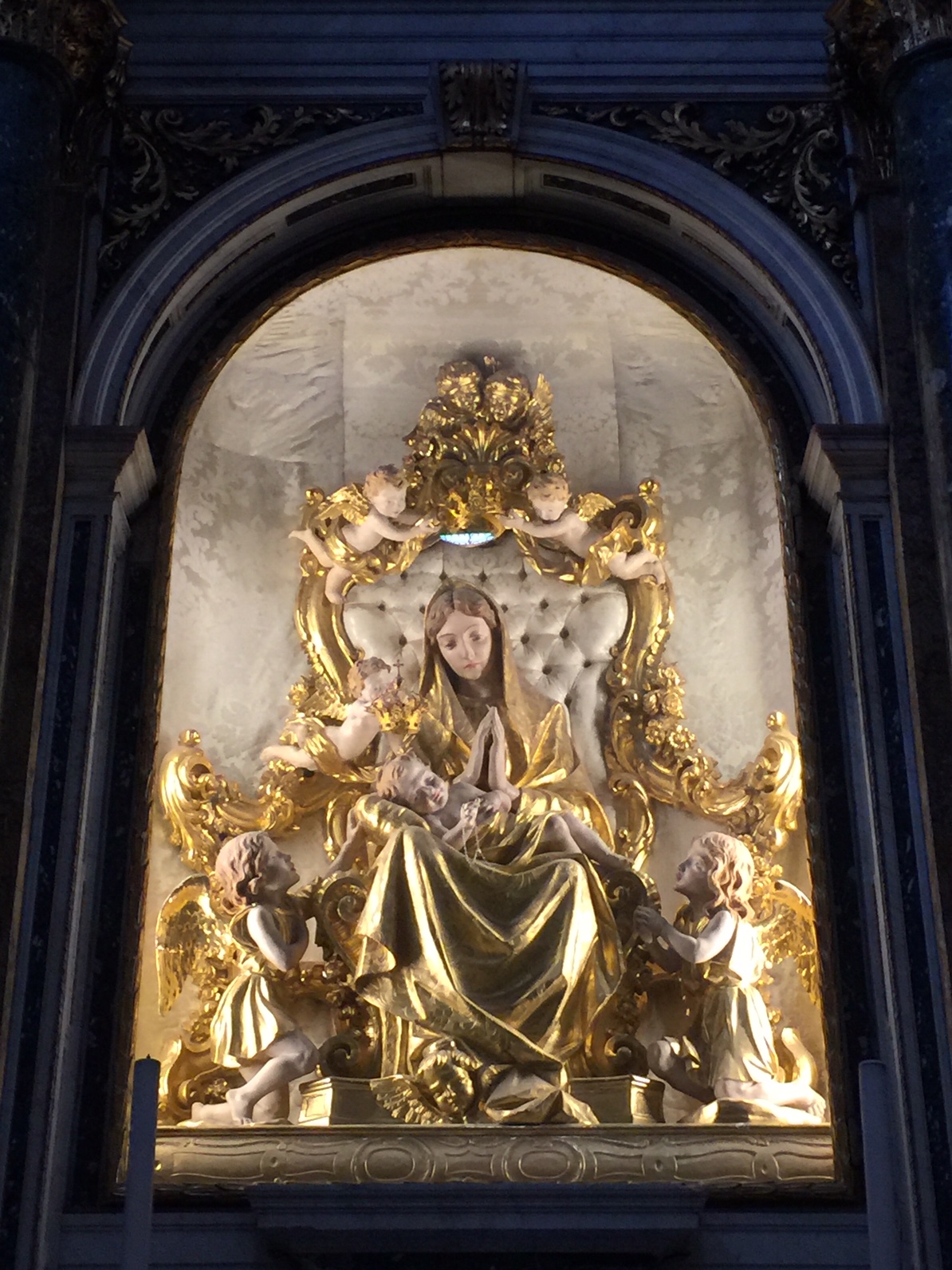
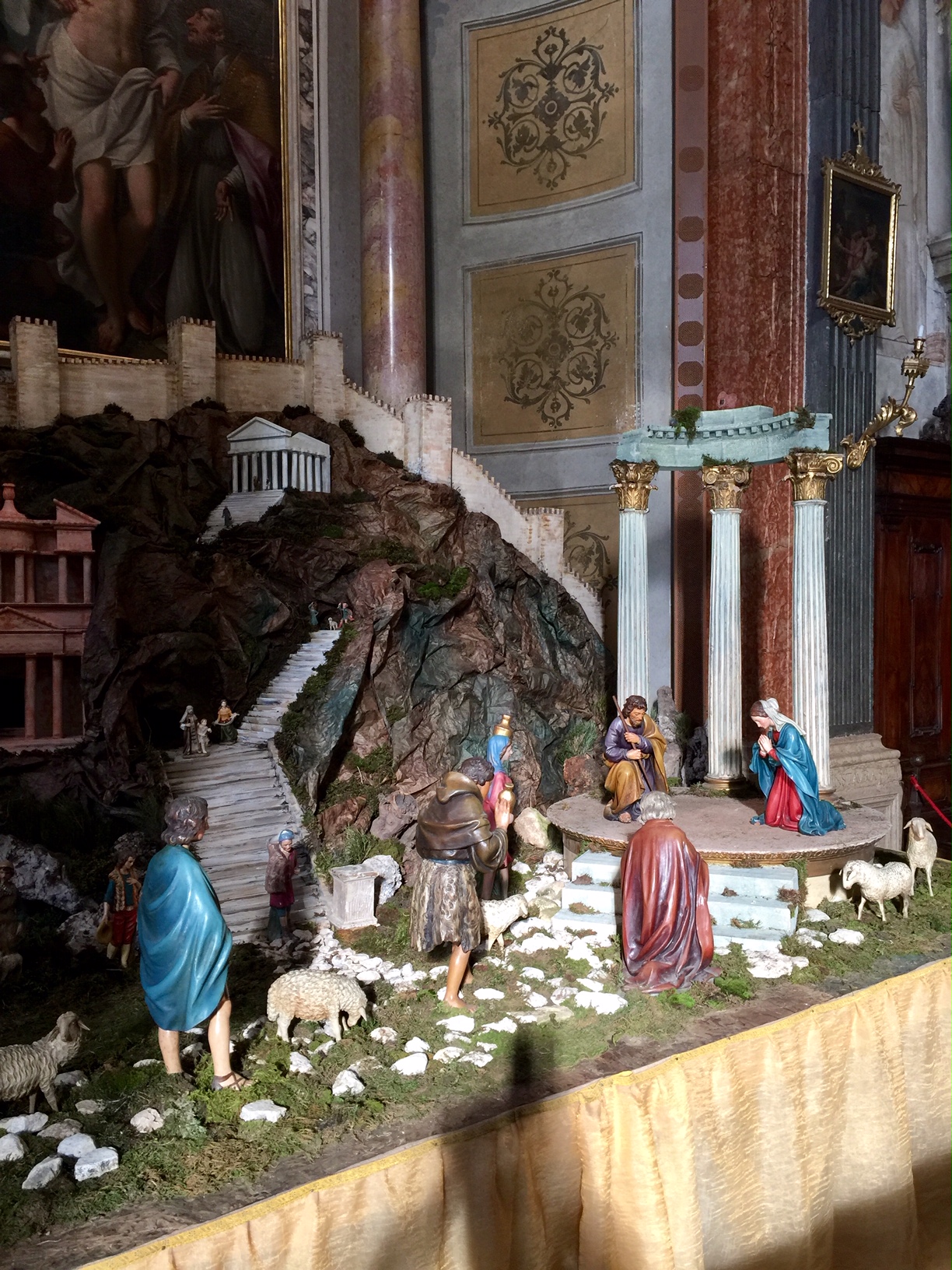
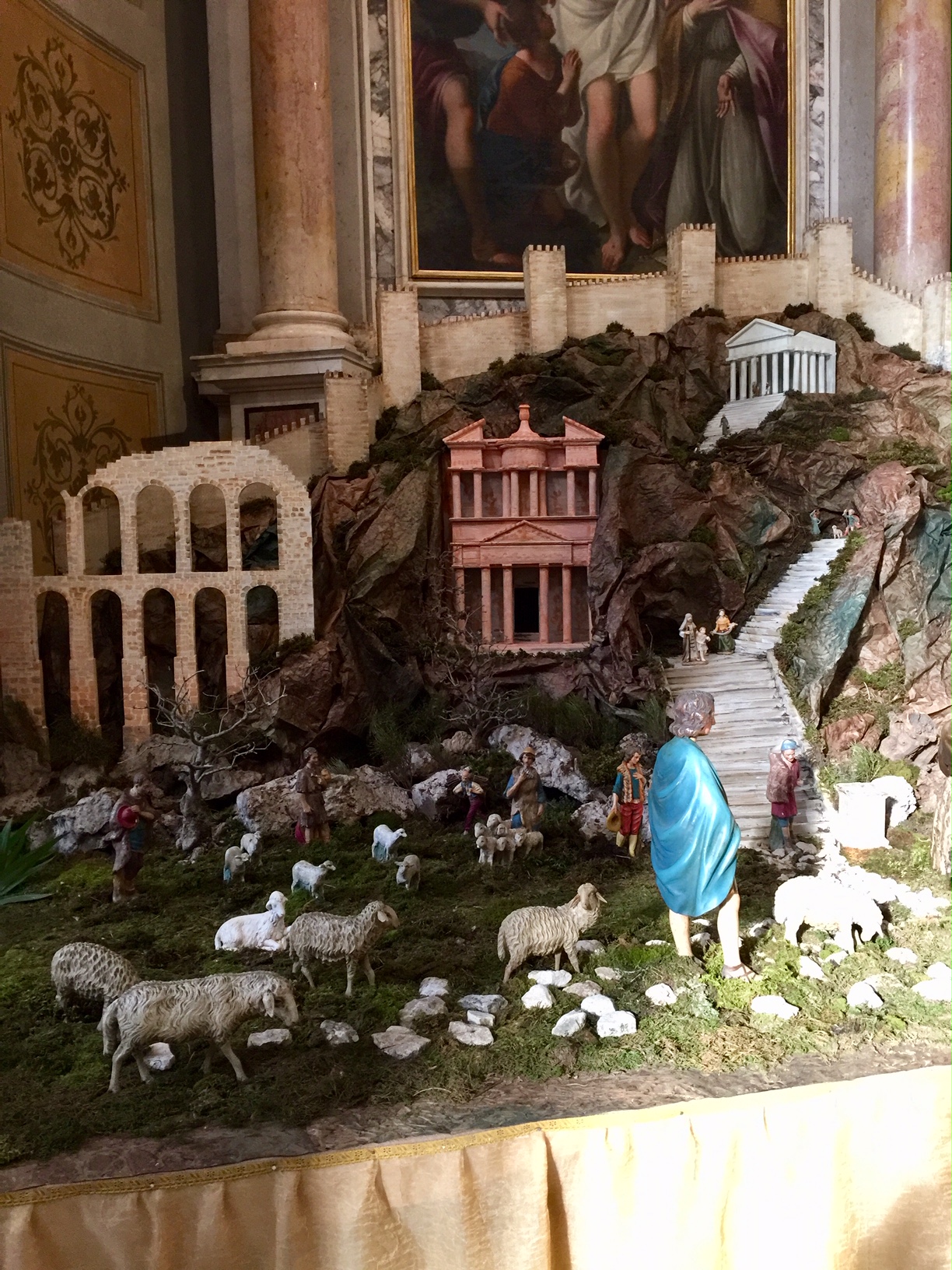
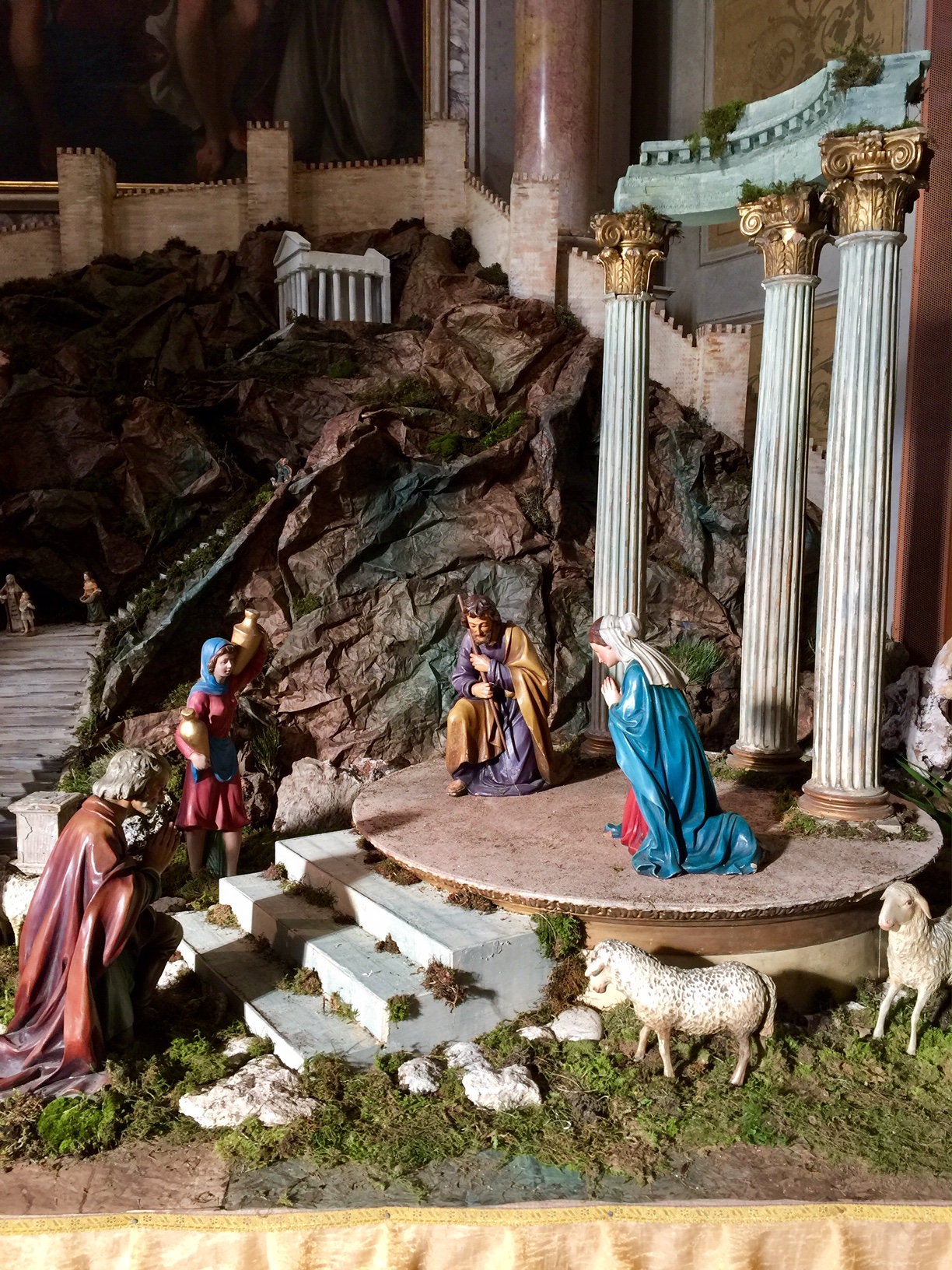
The ubiquitous December creche scene: the figure of the baby Jesus will not appear until midnight of the 25th.
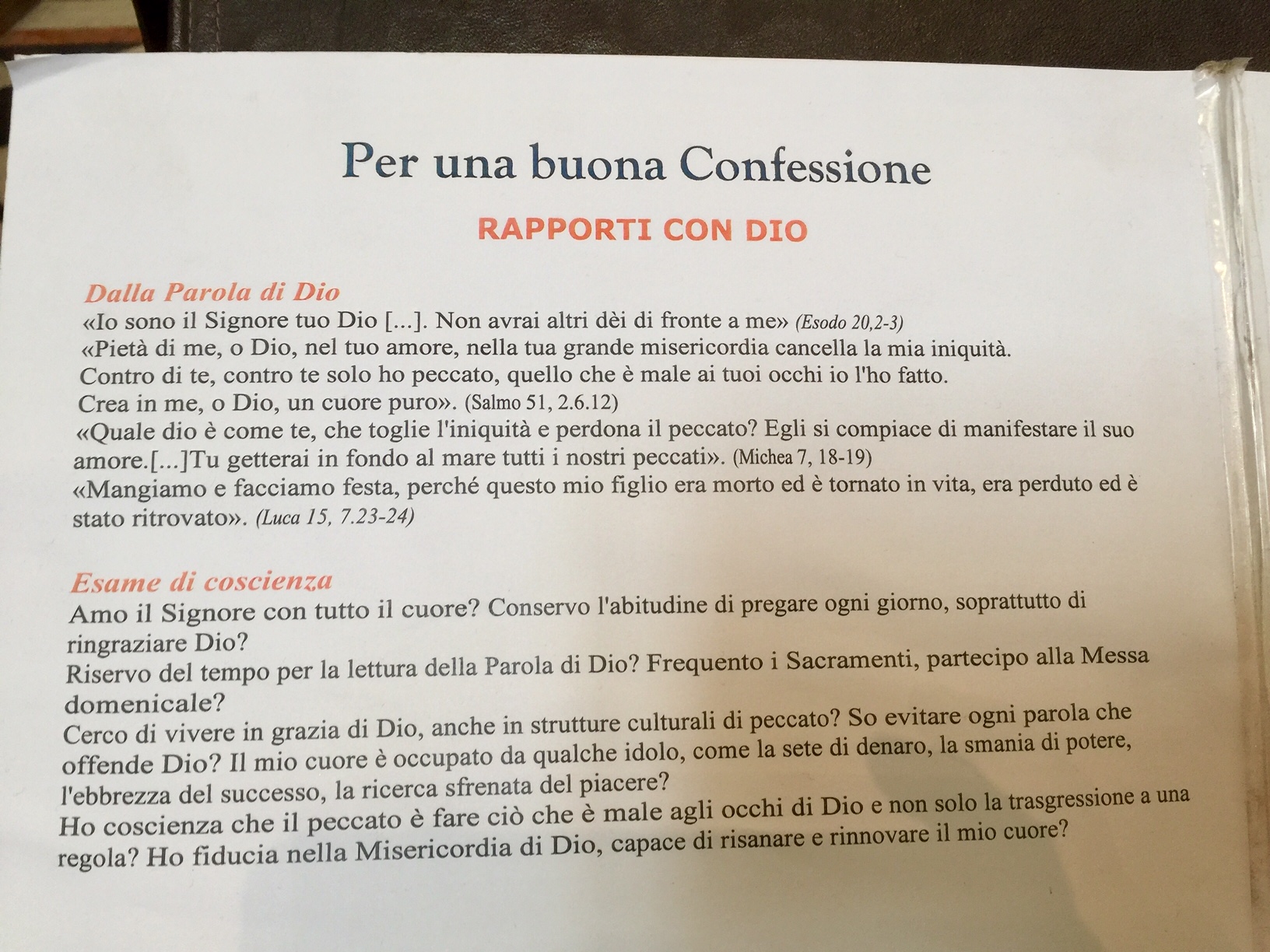
I guess the placard below is for those sinners who don’t remember or know how to confess.
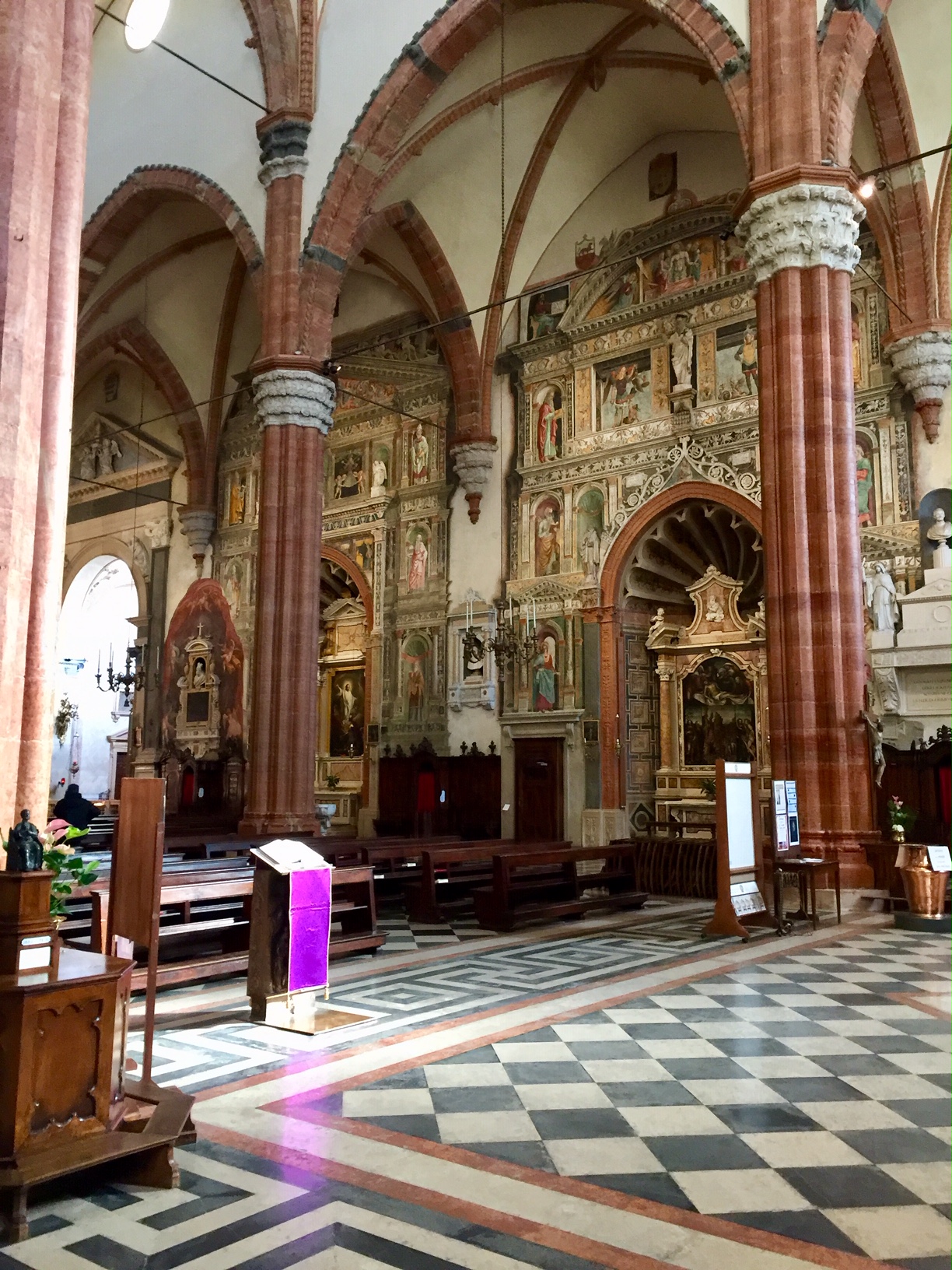
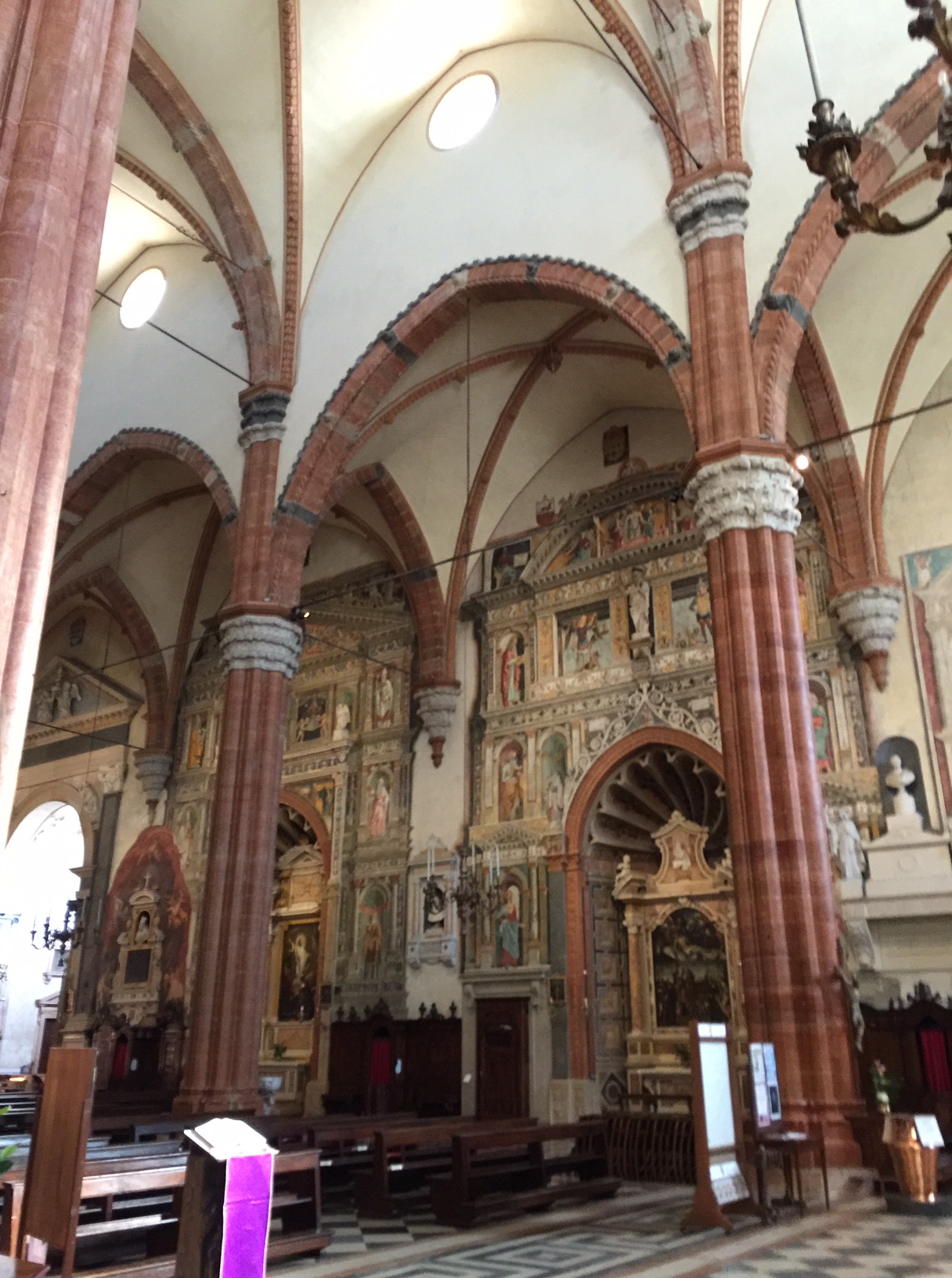
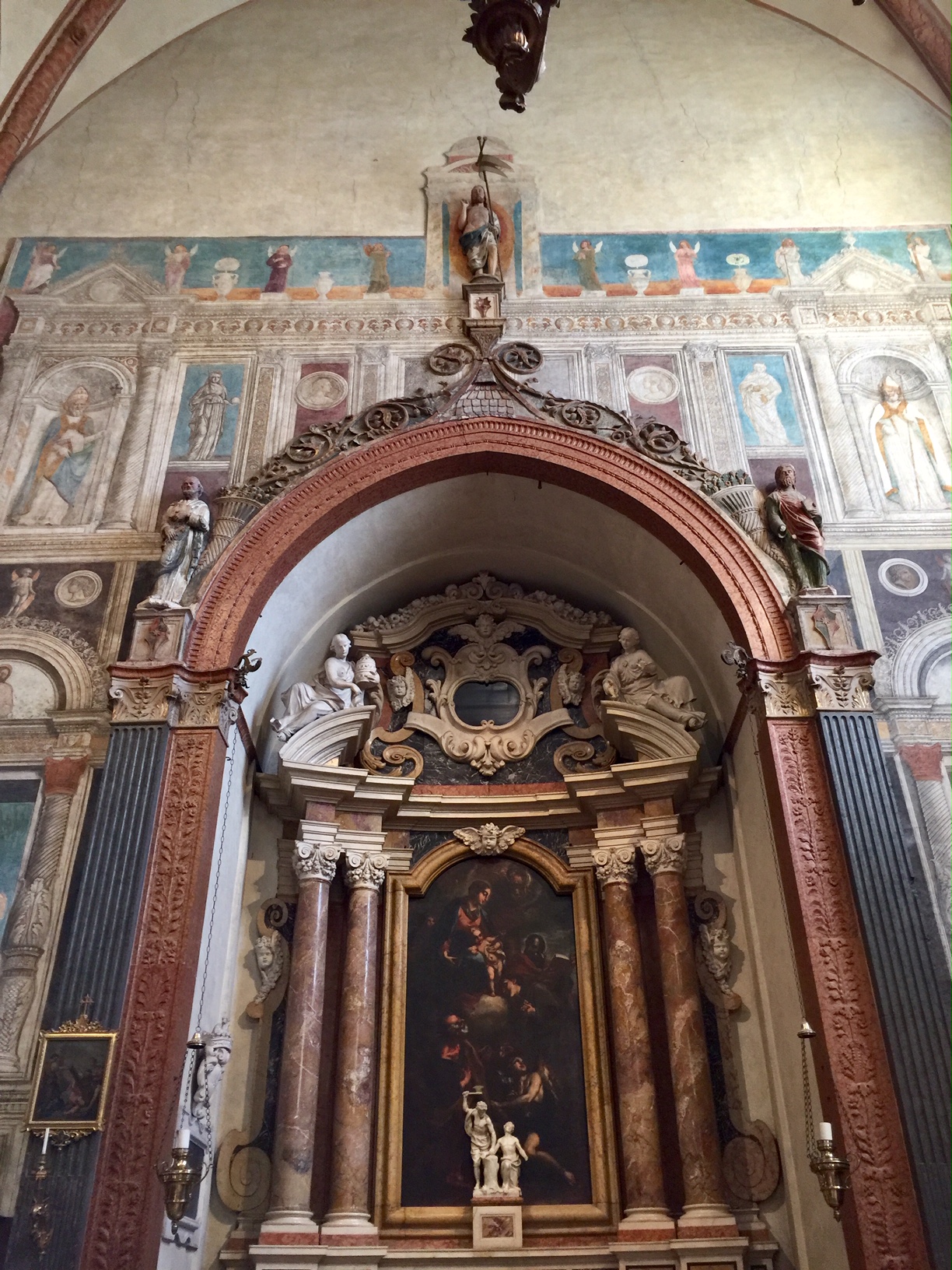
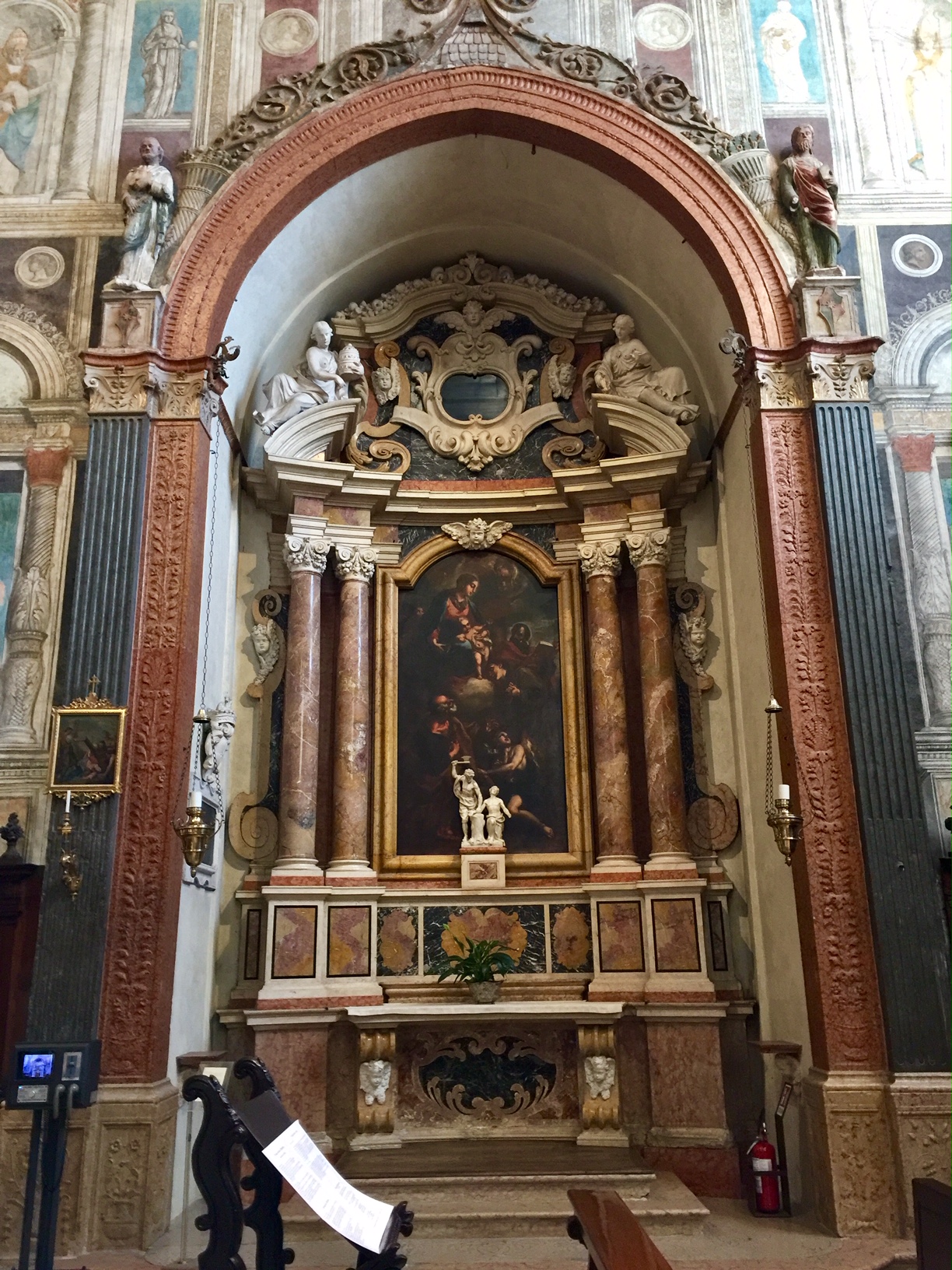
These pictures are from the interior of the duomo in Verona. It is a beautiful church. Verona was obviously a wealthy city during the Renaissance and after, as it still is today.
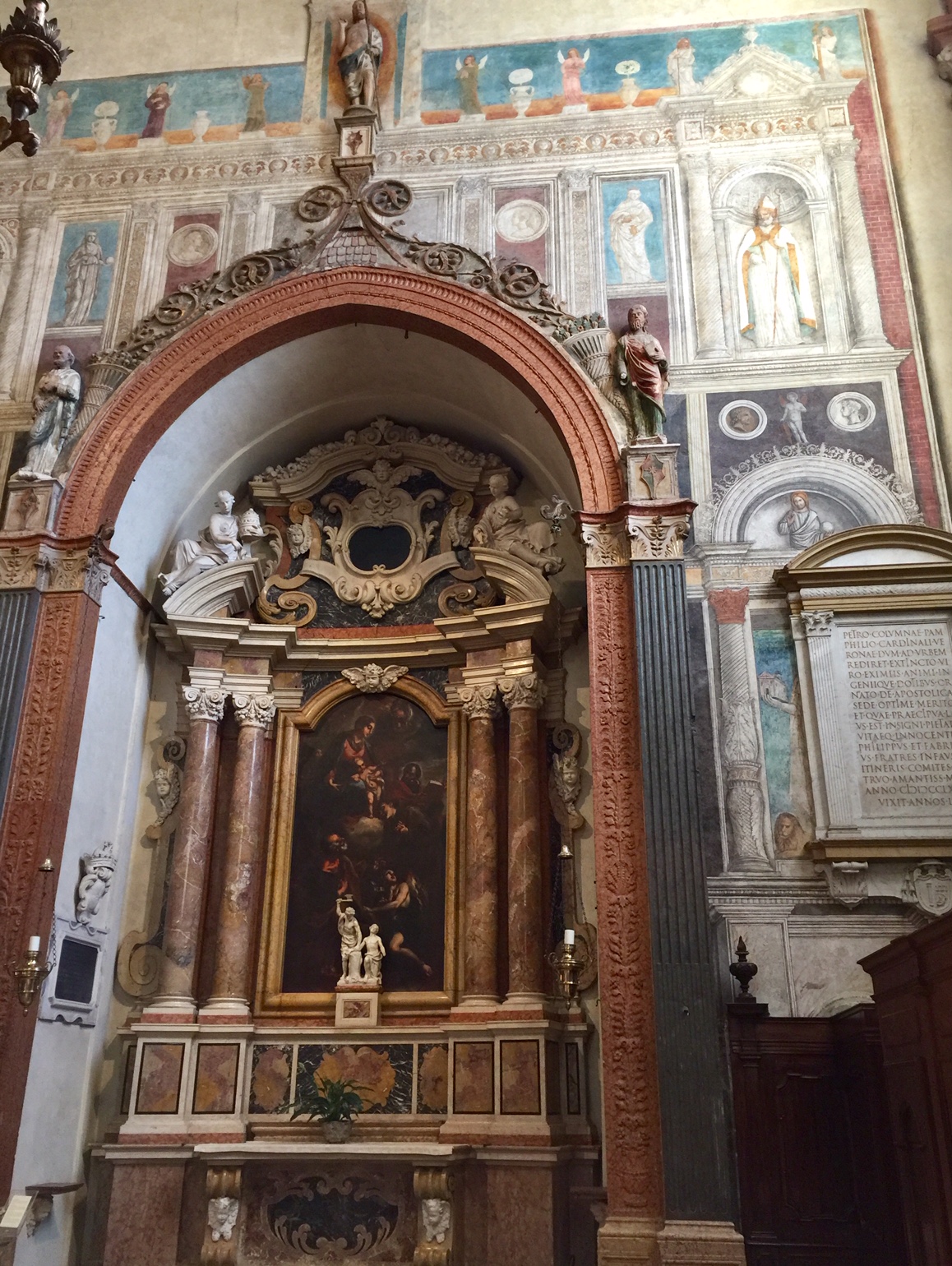
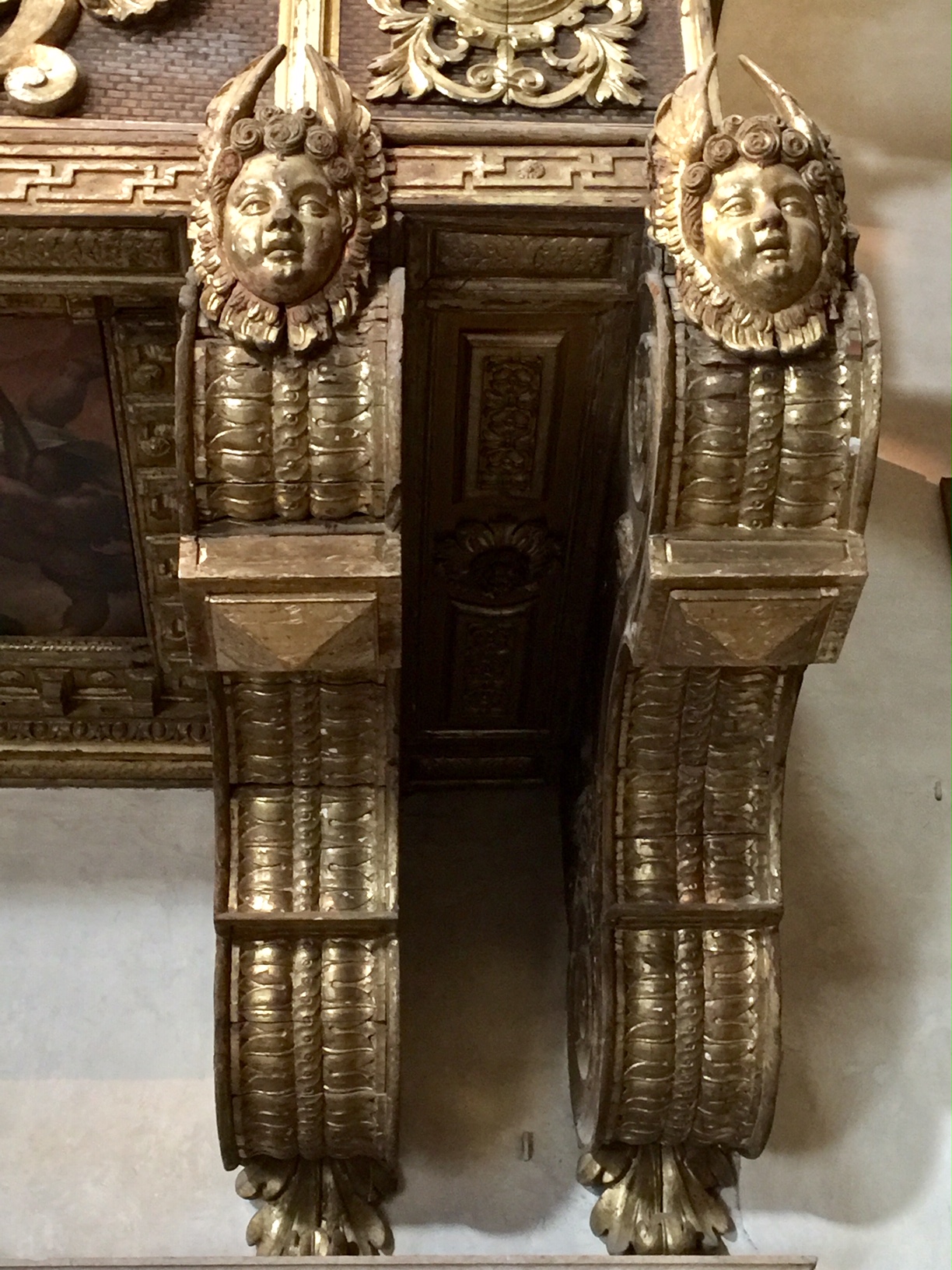
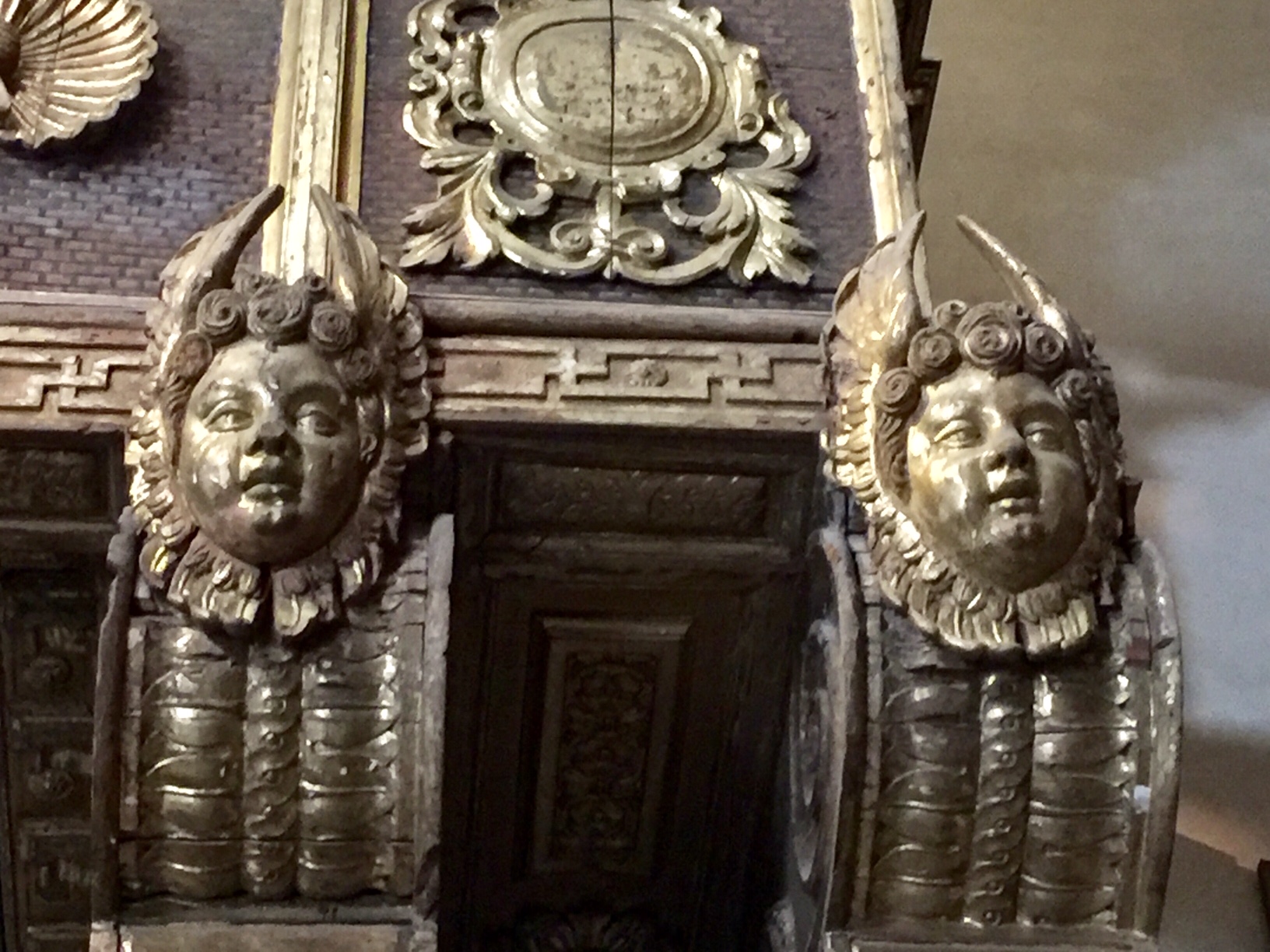
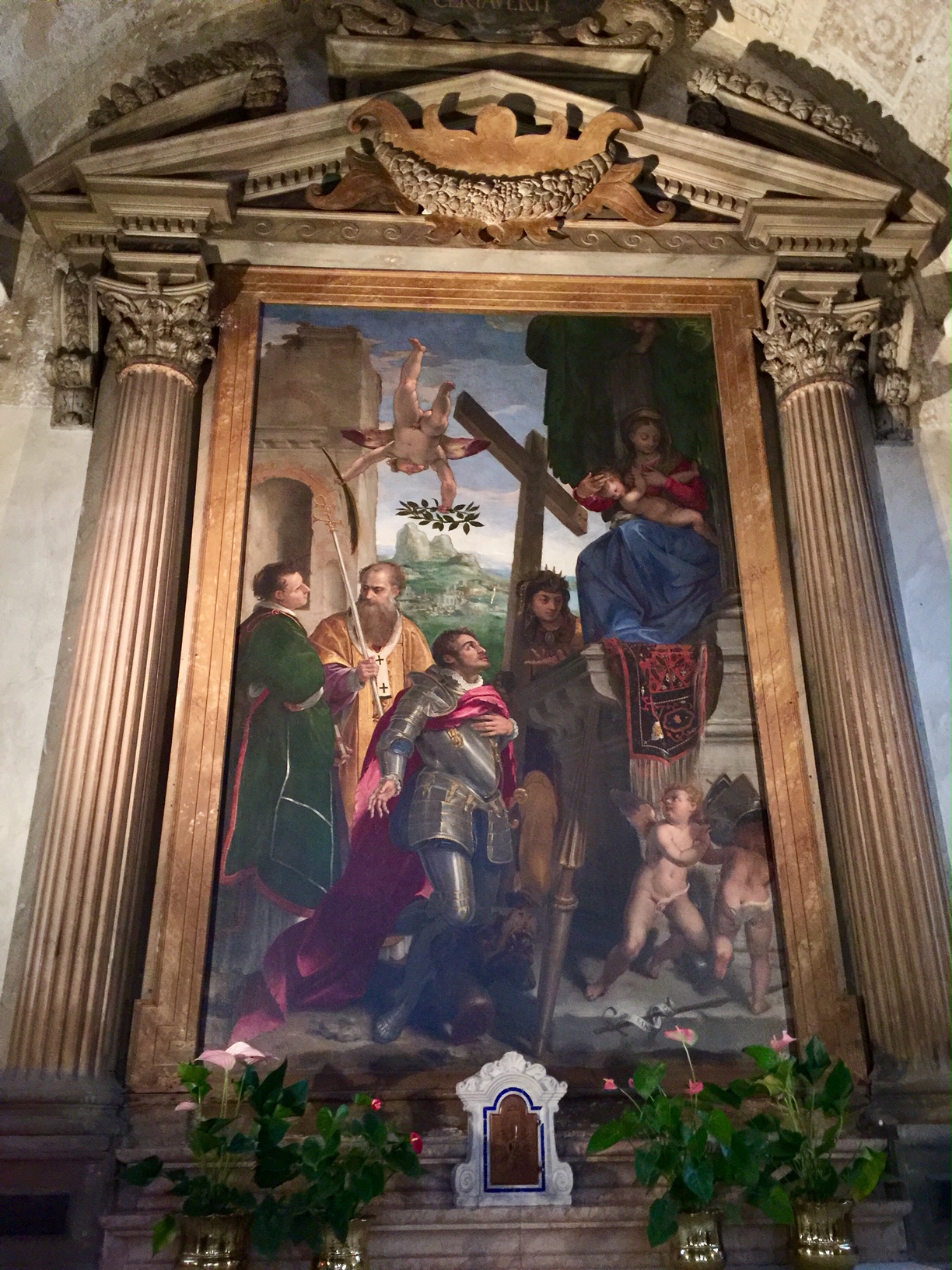
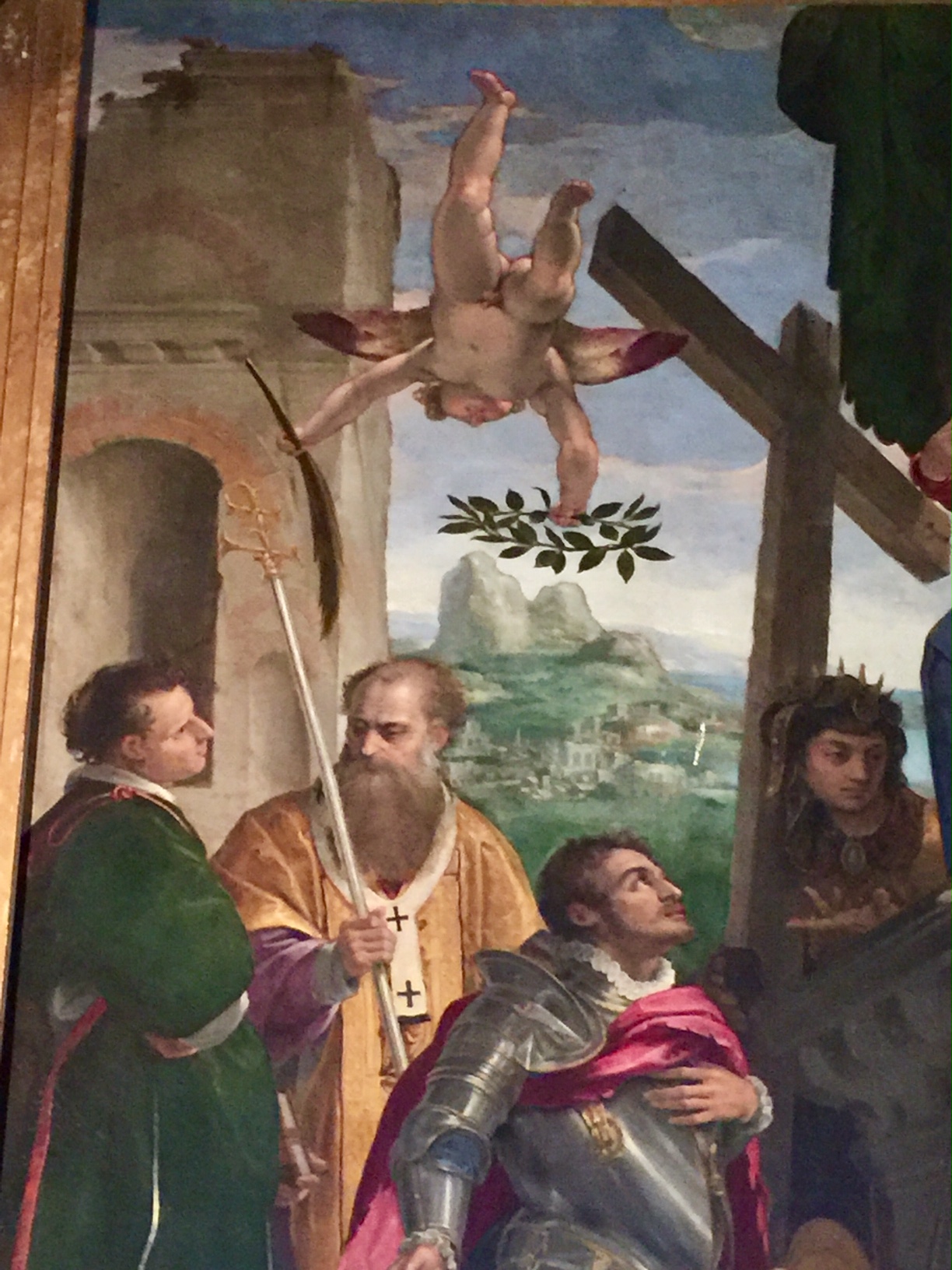
I’ve looked at a lot of paintings in my day, but I’ve never seen such a foreshortened putto flying in from this angle, to crown with laurel the knight in armor.
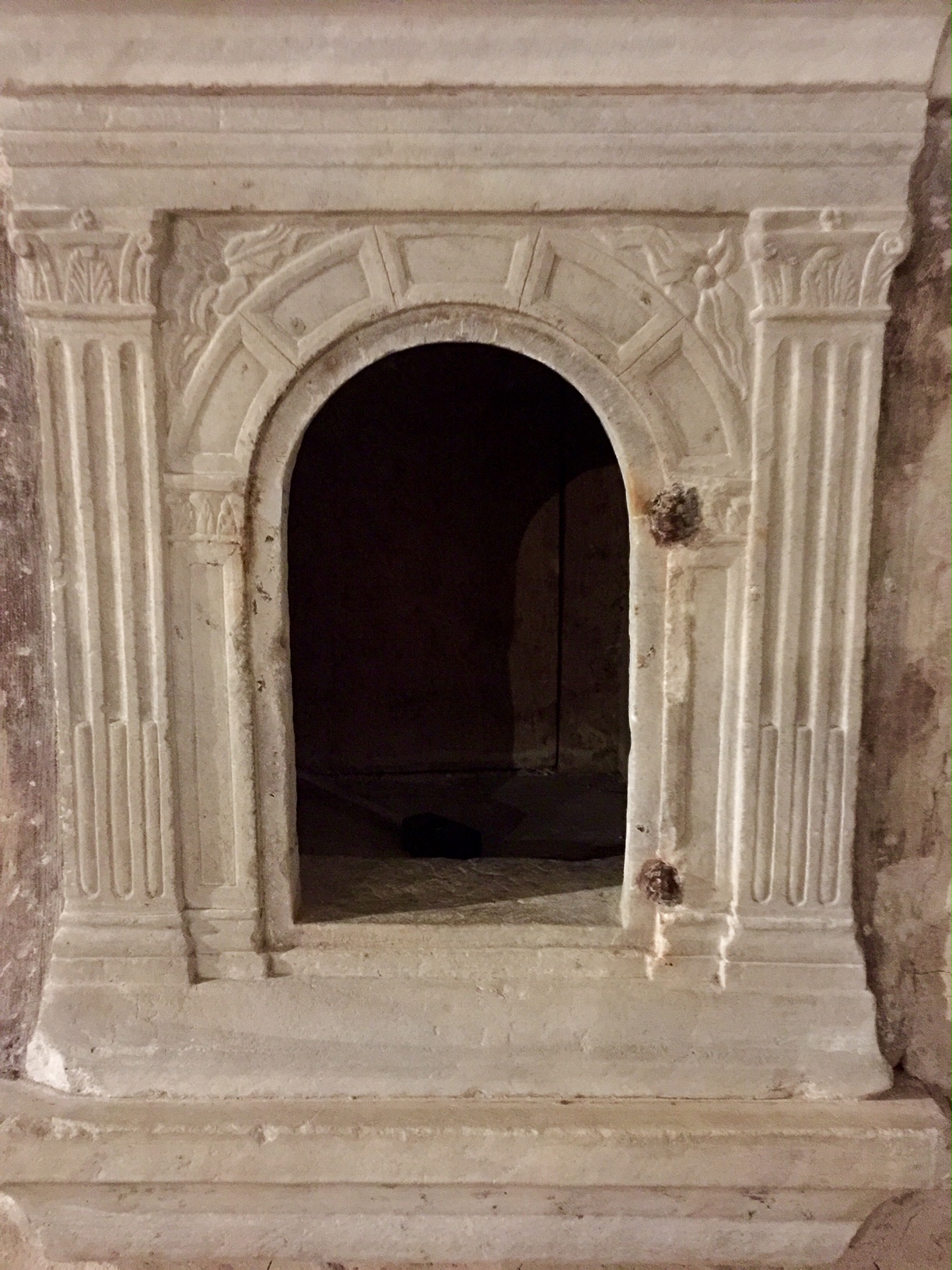
While this sculpted doorway below looks to be monumental, it was actually at my eye level on a wall in the duomo, and measured about 12 inches tall.
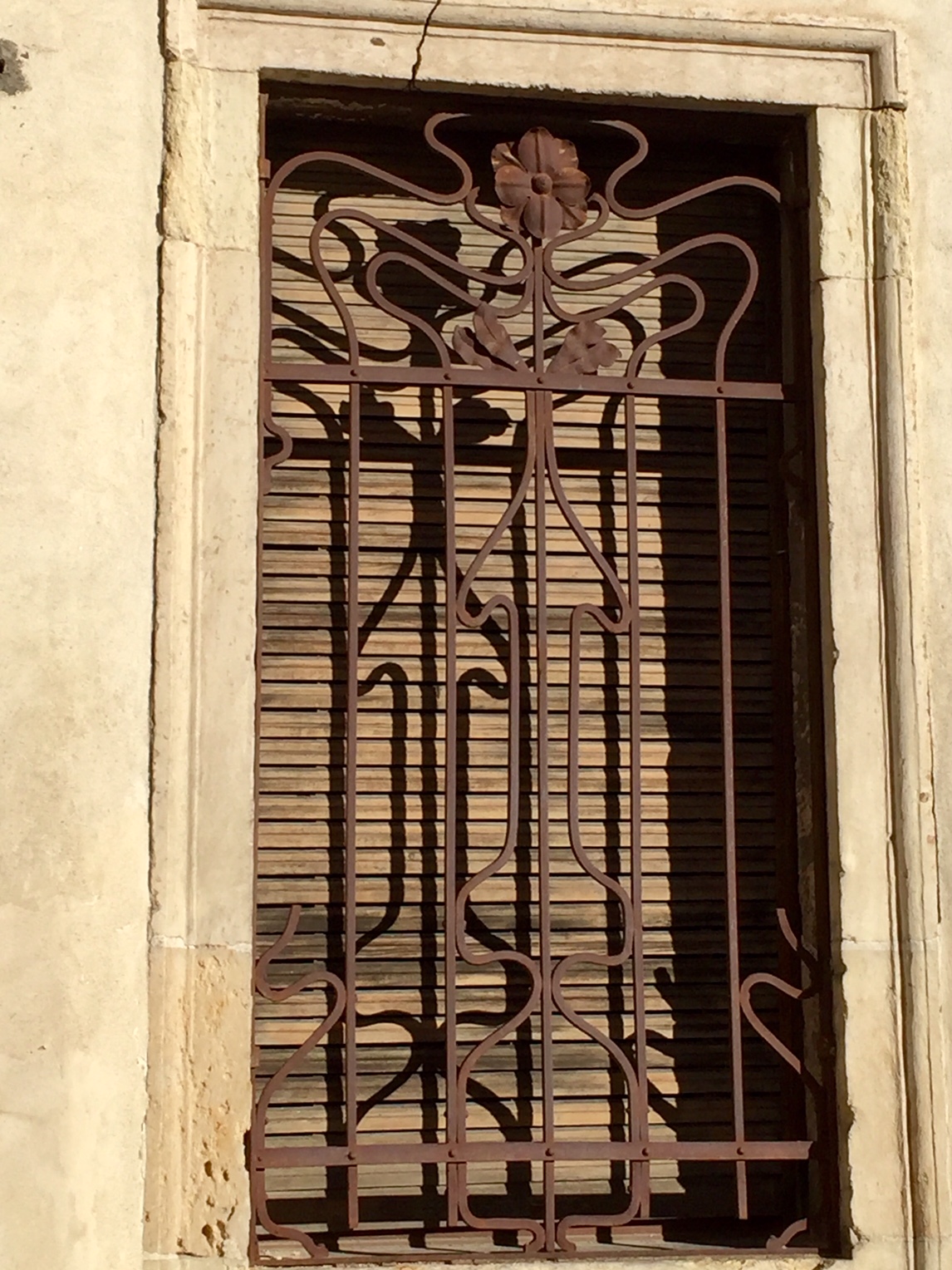
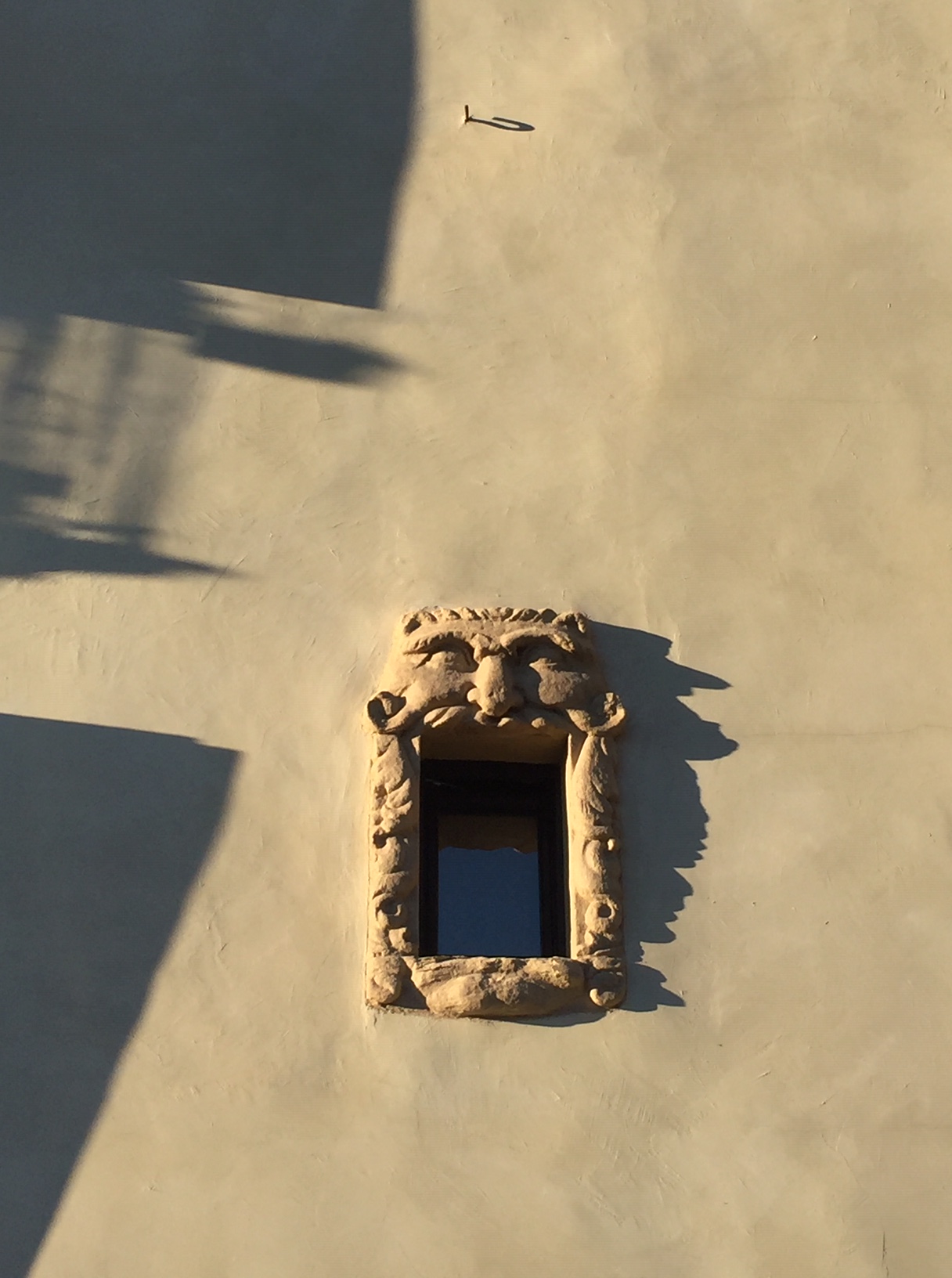
Back out in the lovely streets of Verona, I admired this art nouveau wrought iron in a window. It’s unusual for Italy and I love it.
Below is the gorgeous facade of the duomo.
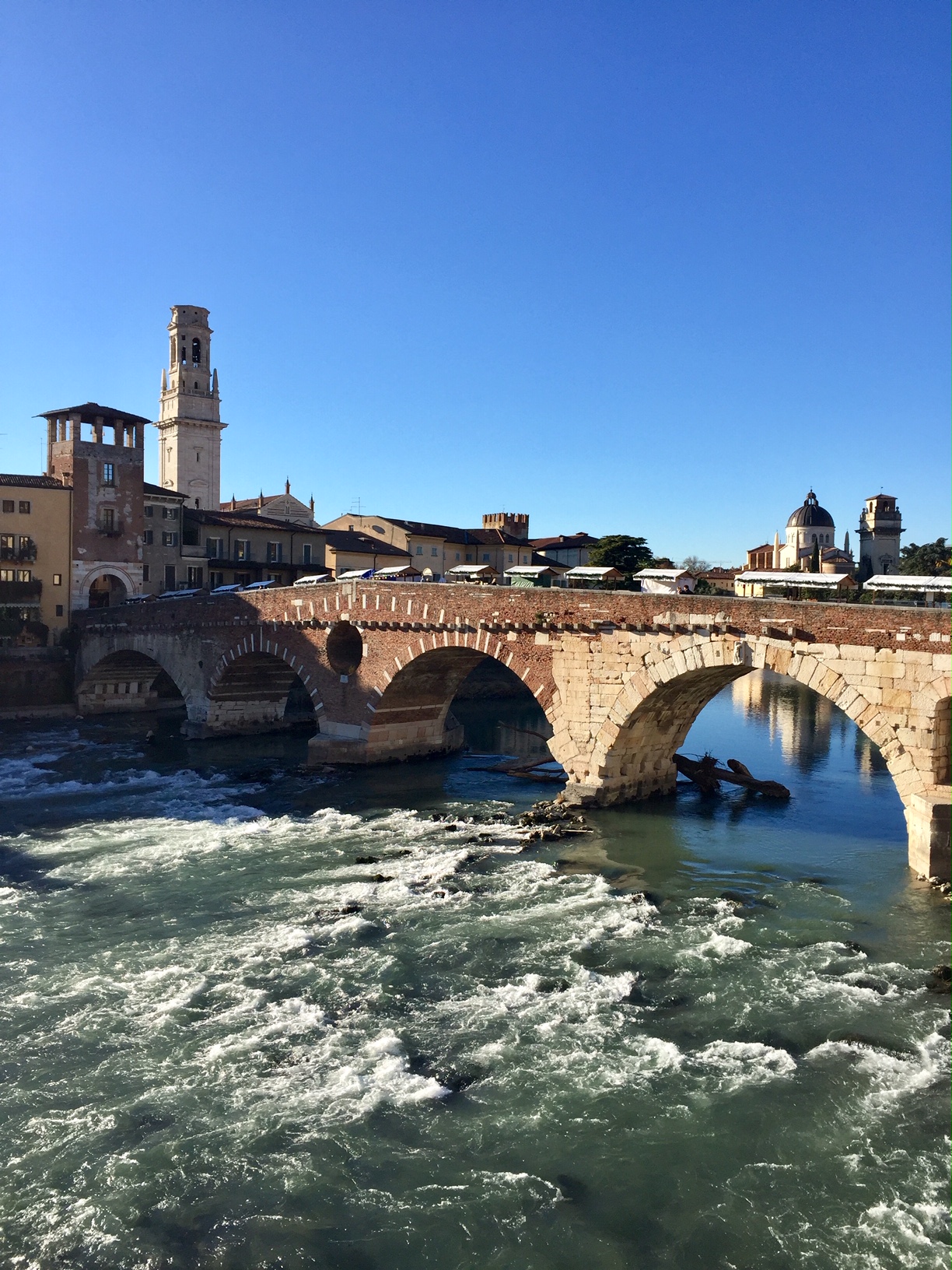
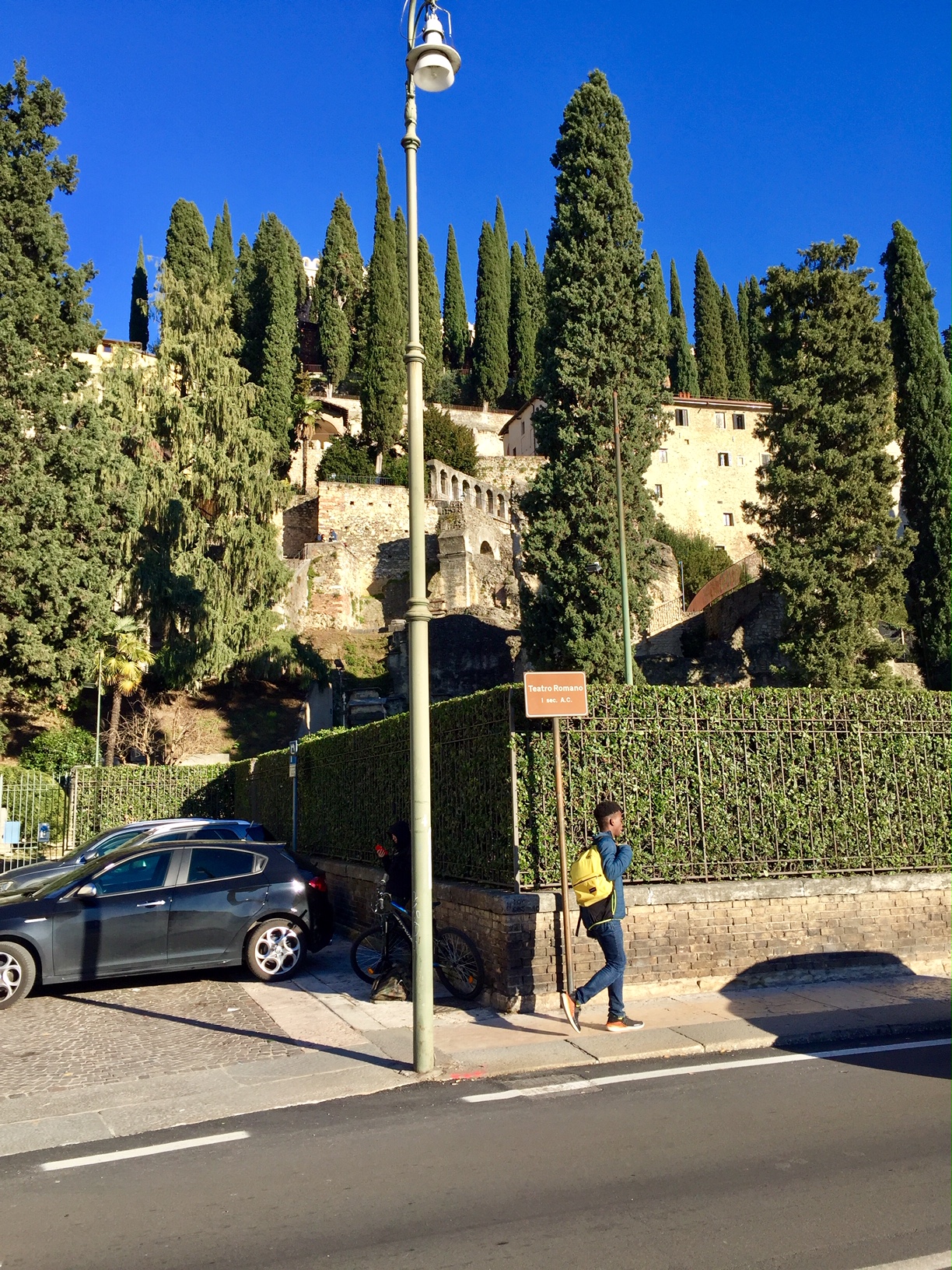
There are Roman ruins on the hillsides in Verona. I took this picture to remind me of this new (to me) fact: I want to go back and see more of the town.
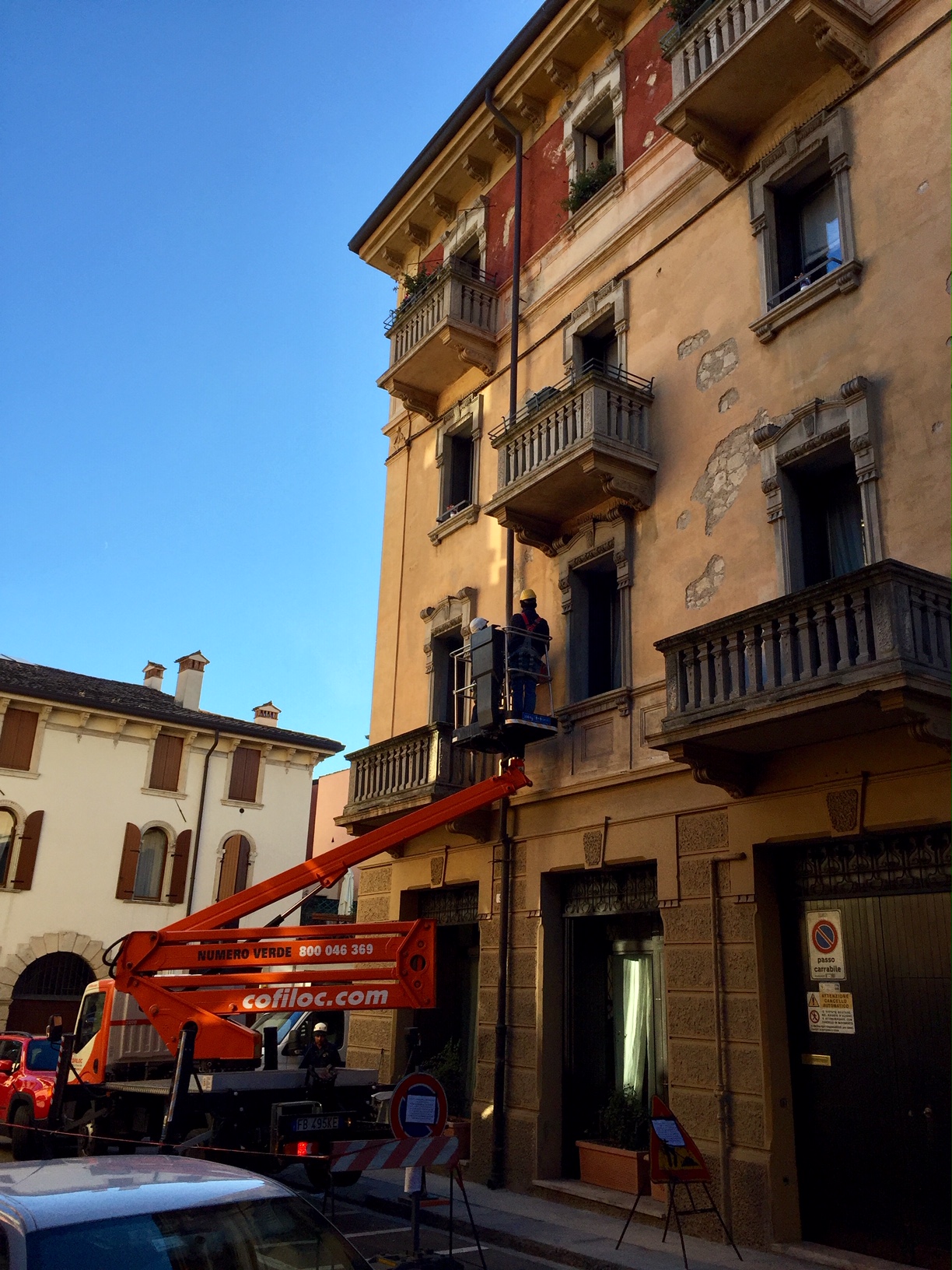
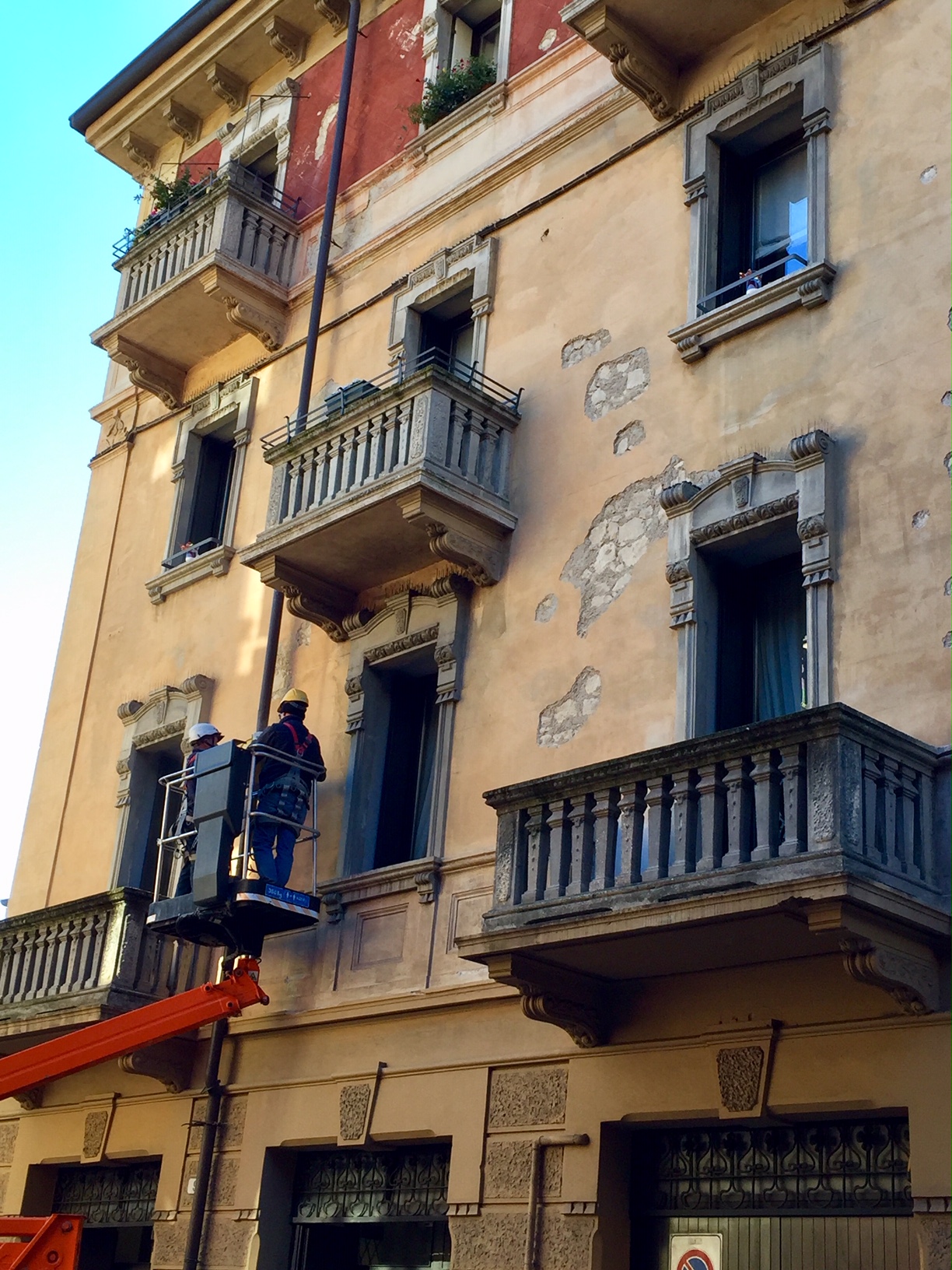
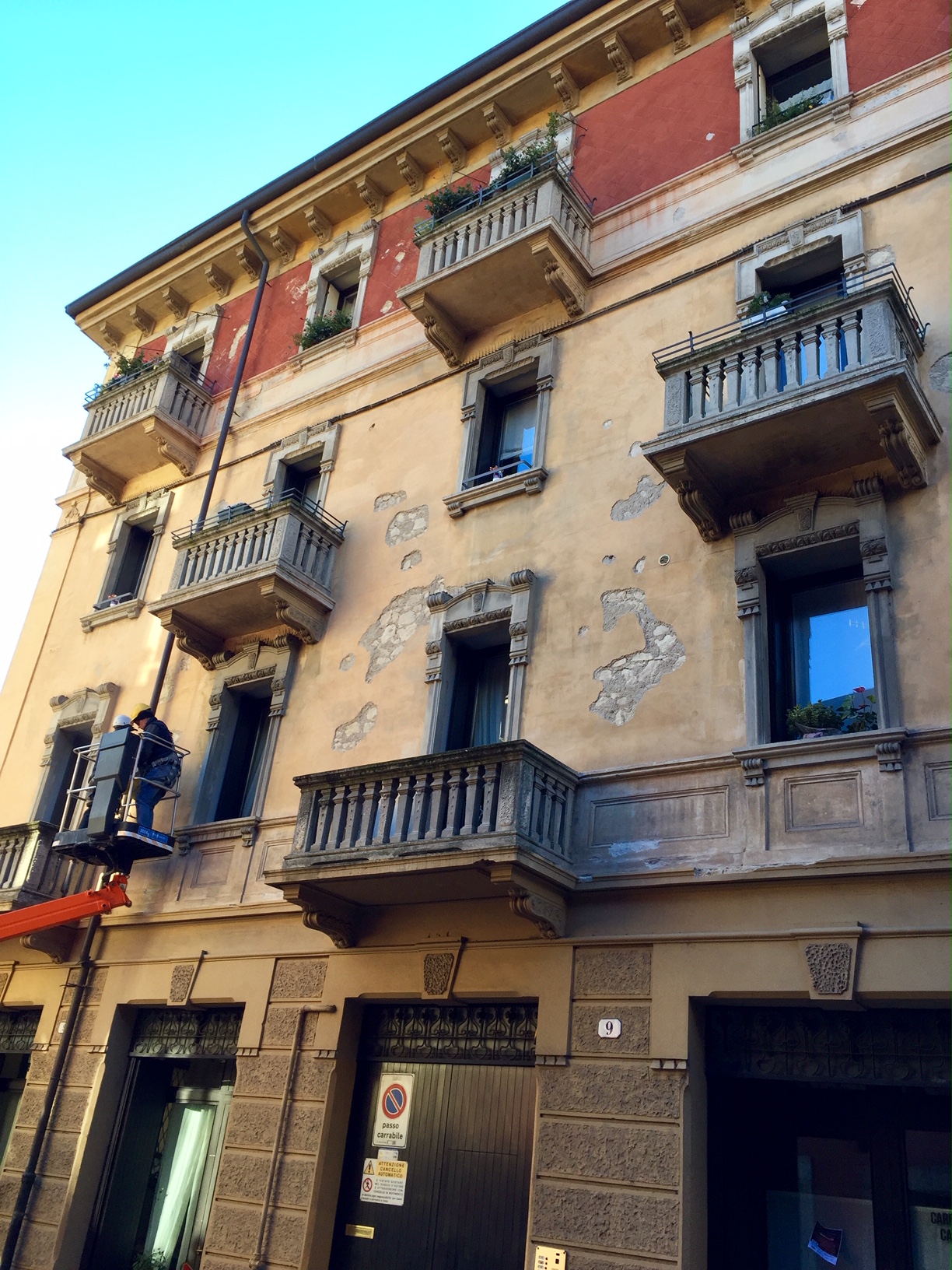
The facade below is getting some TLC.
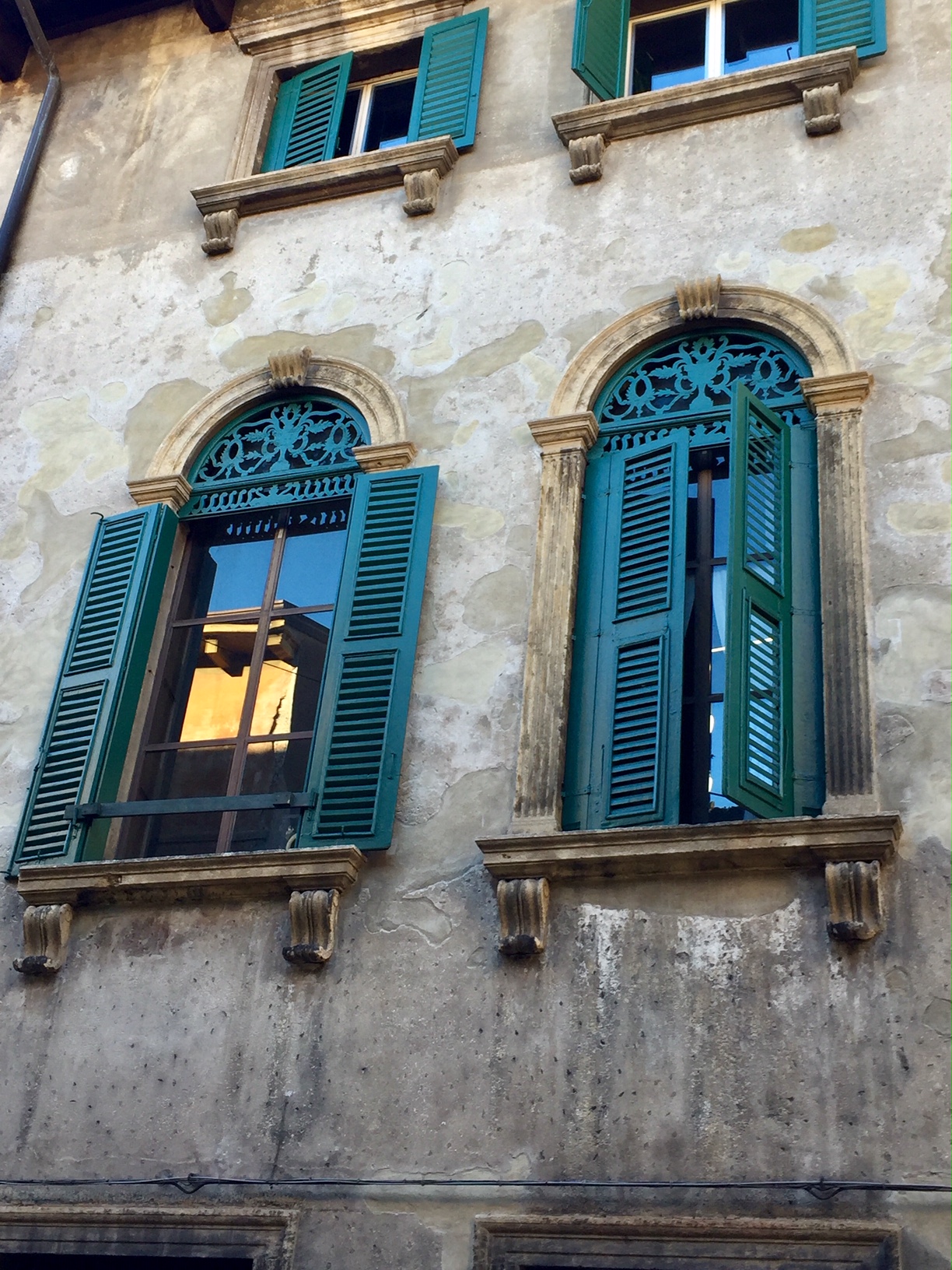
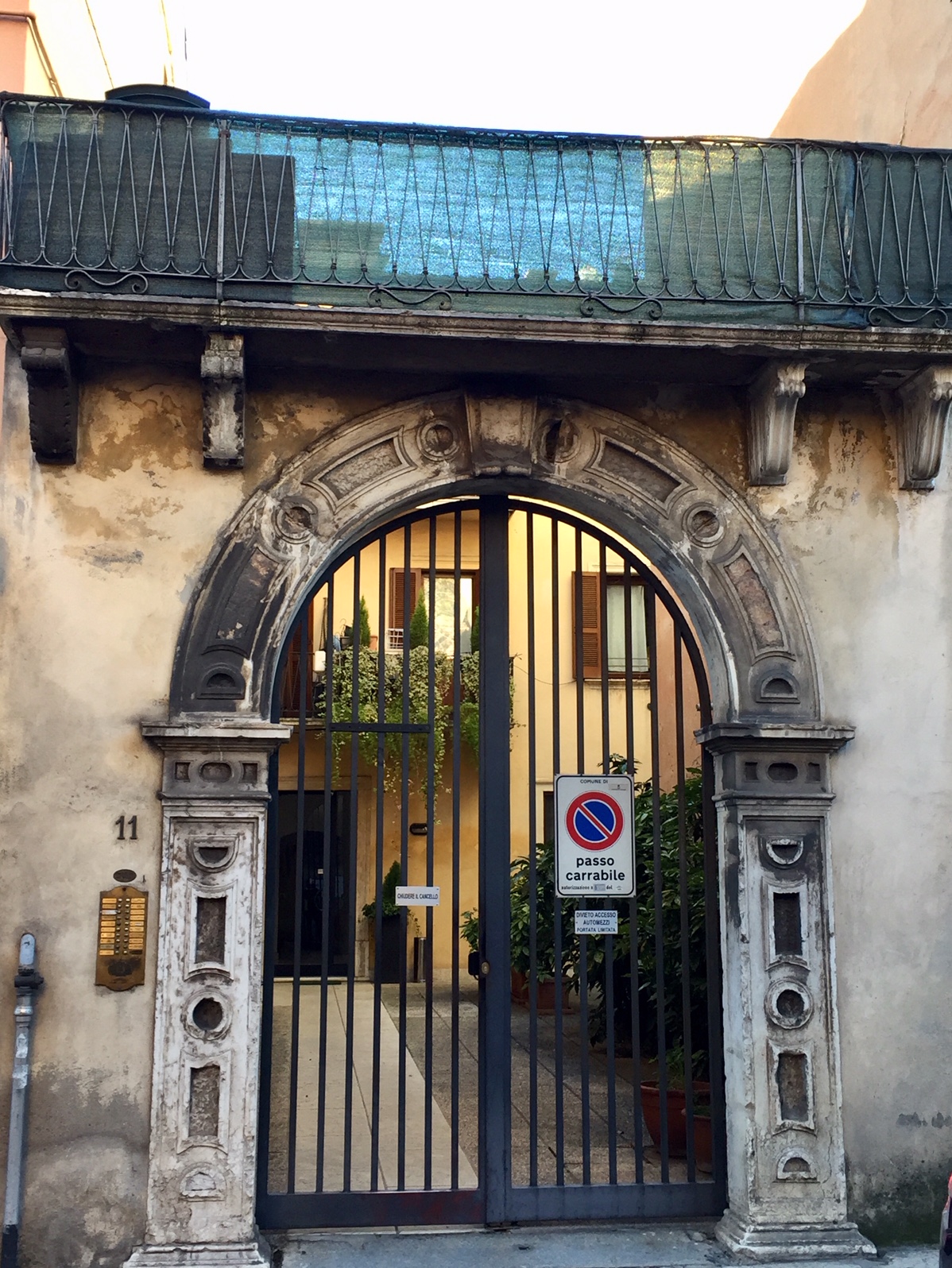
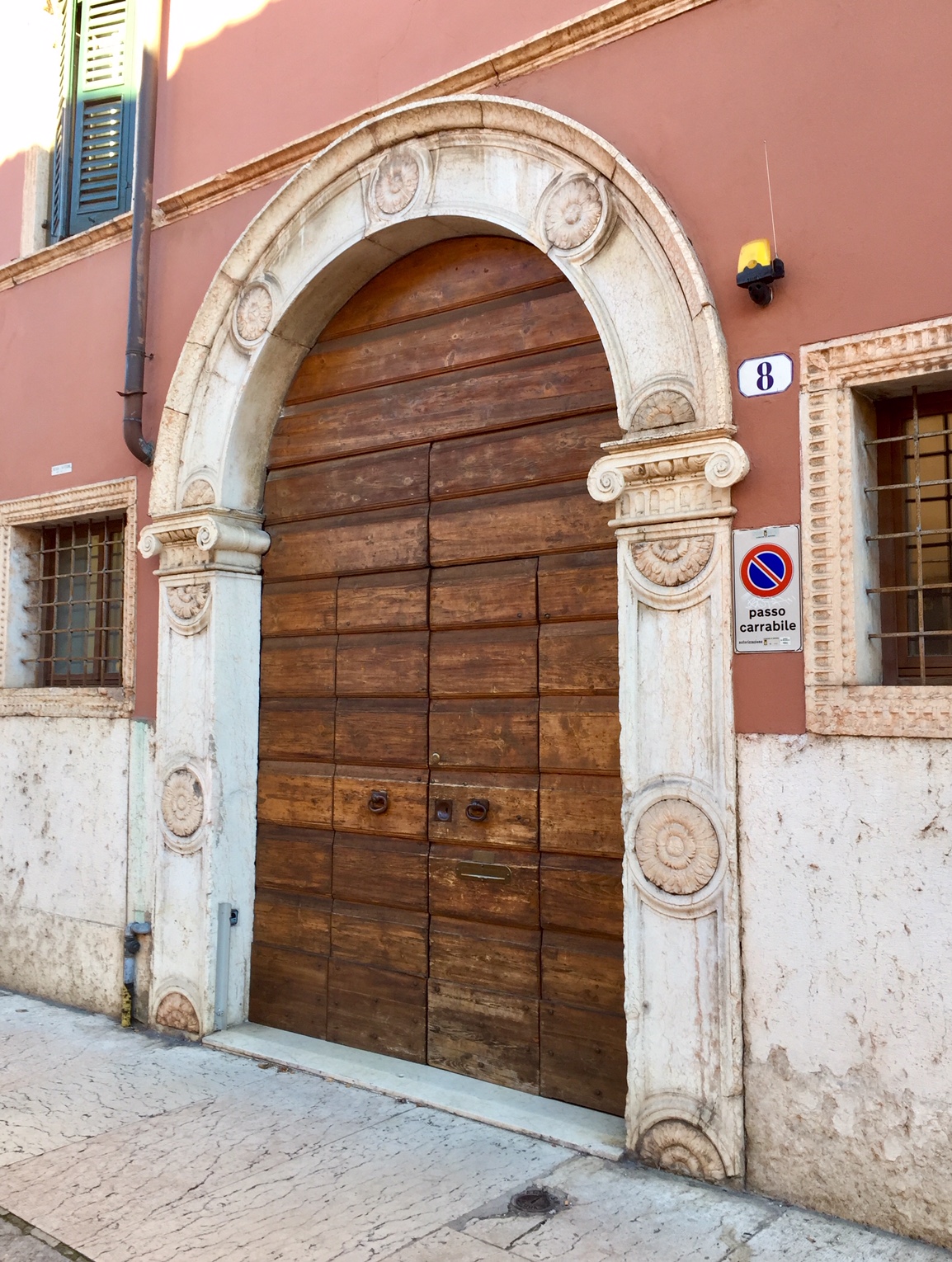
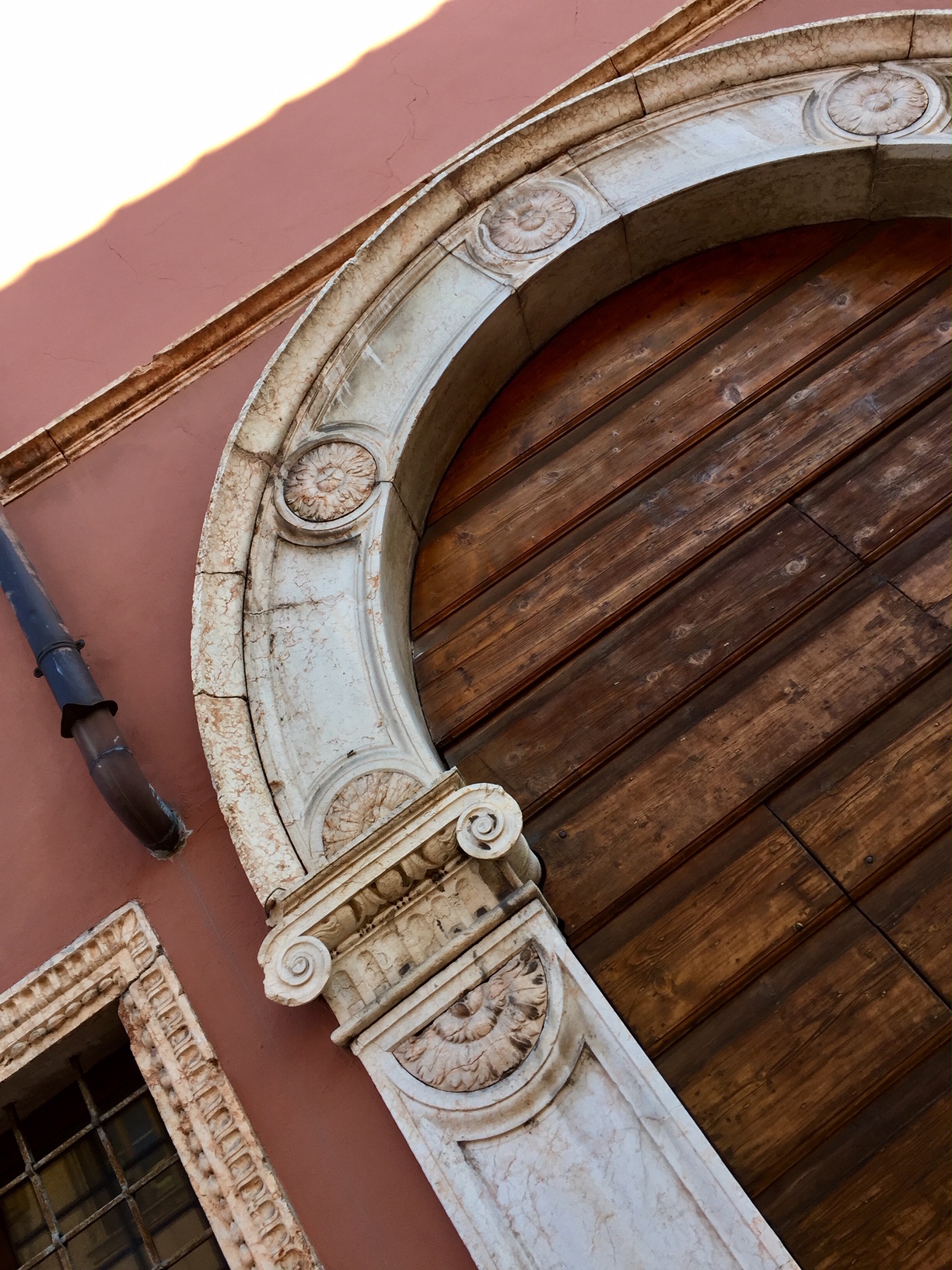
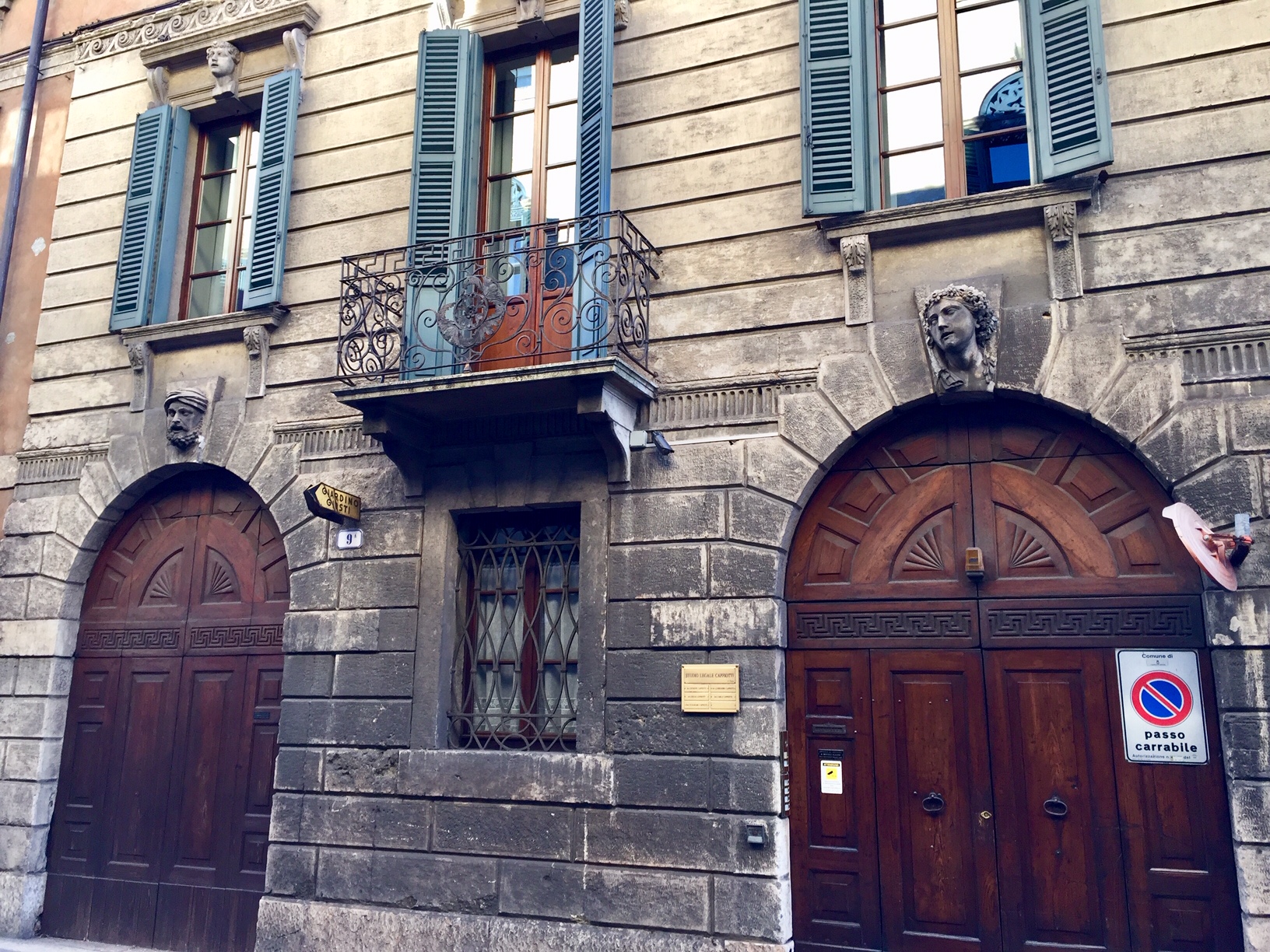
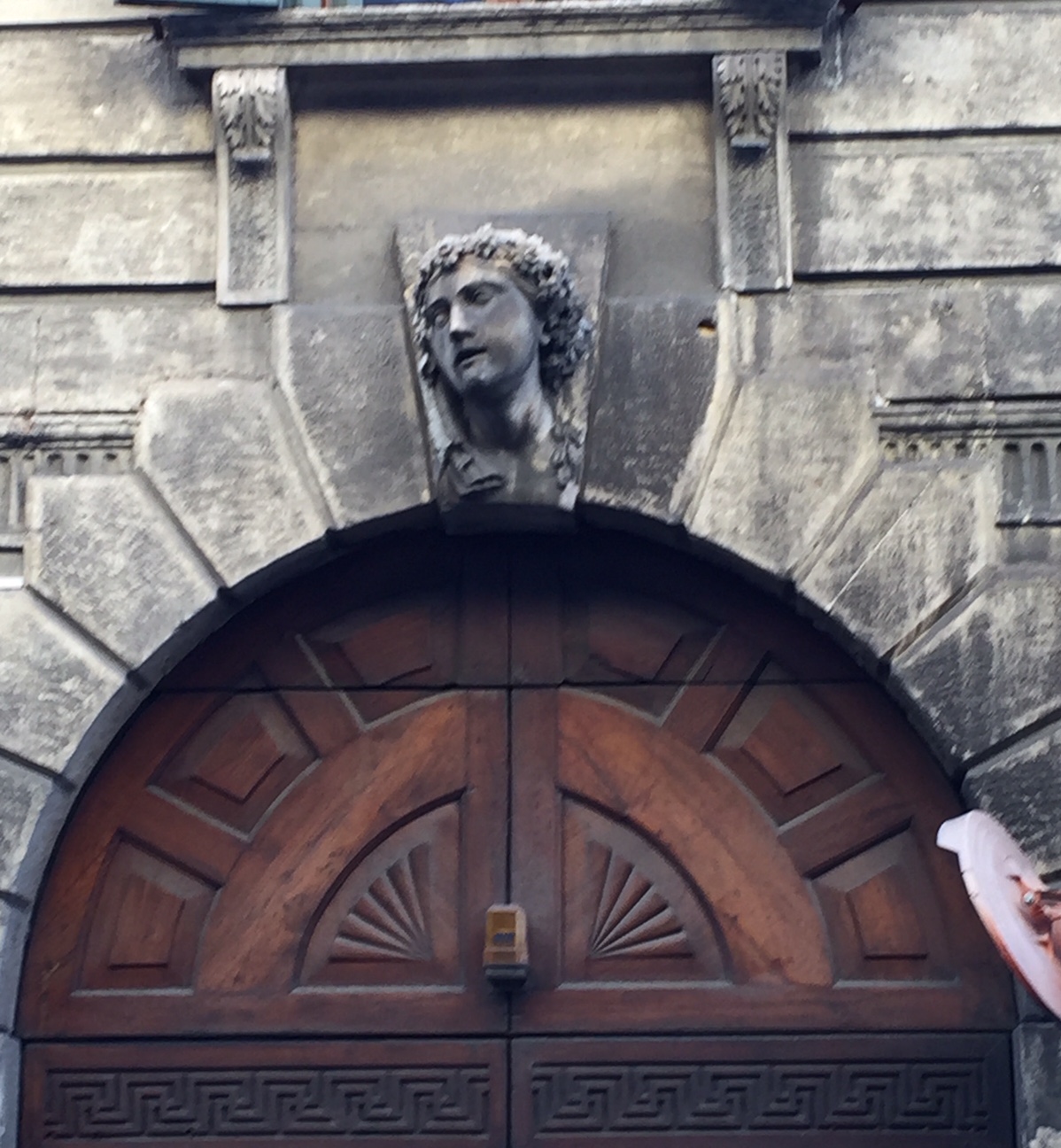
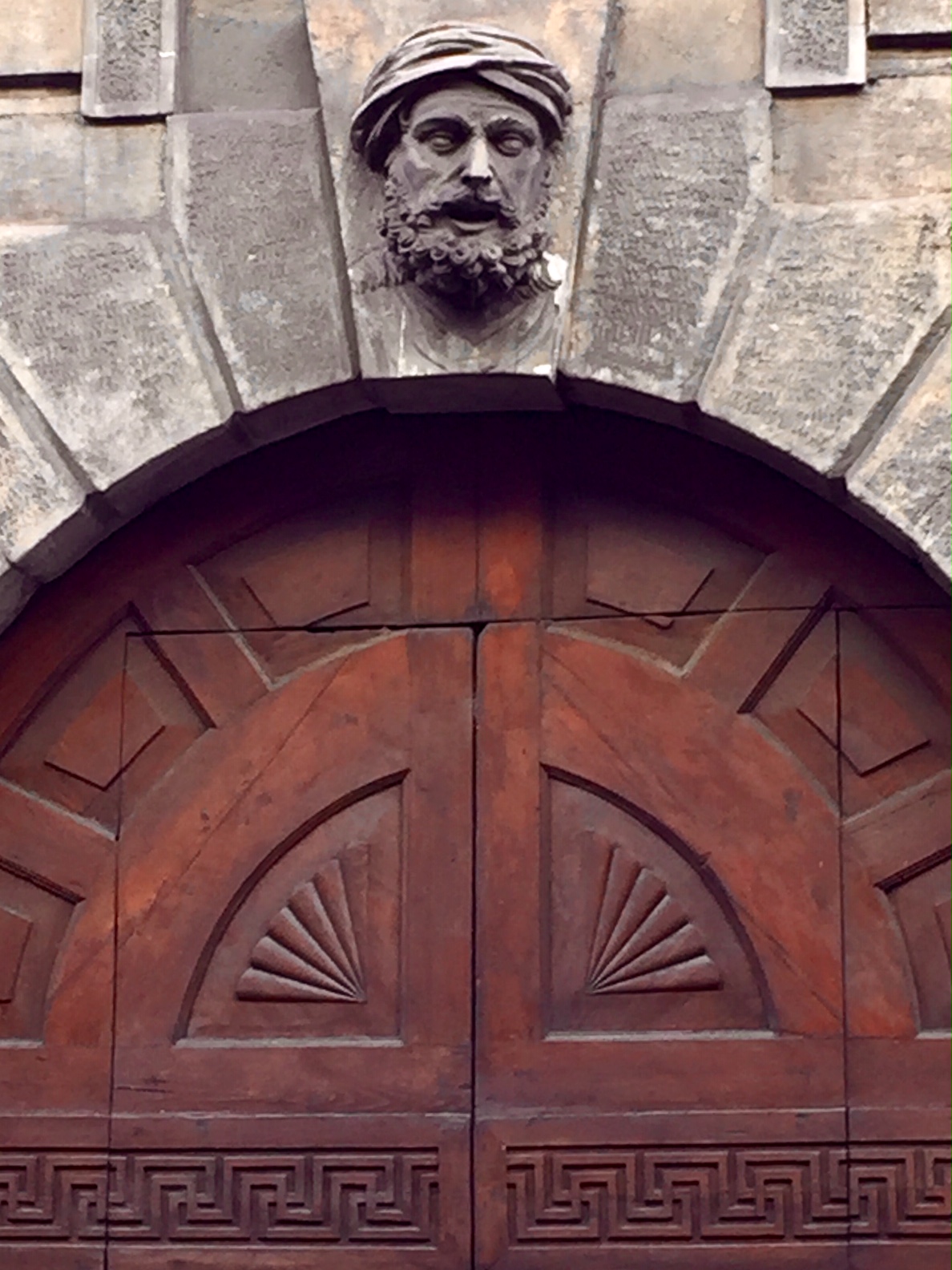
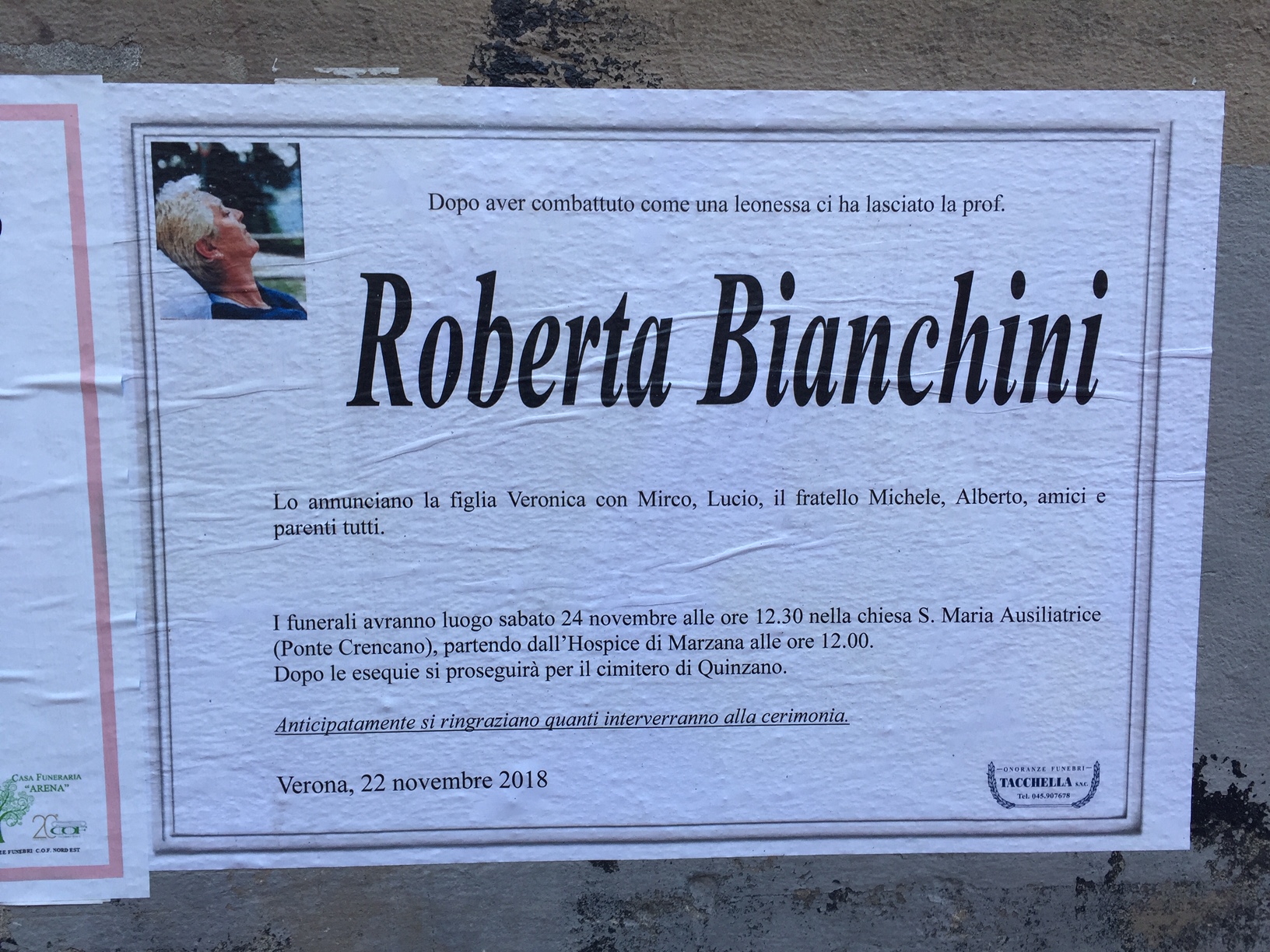
Walking along on the sidewalk along a wall, there are death notices posted. I find these fascinating.
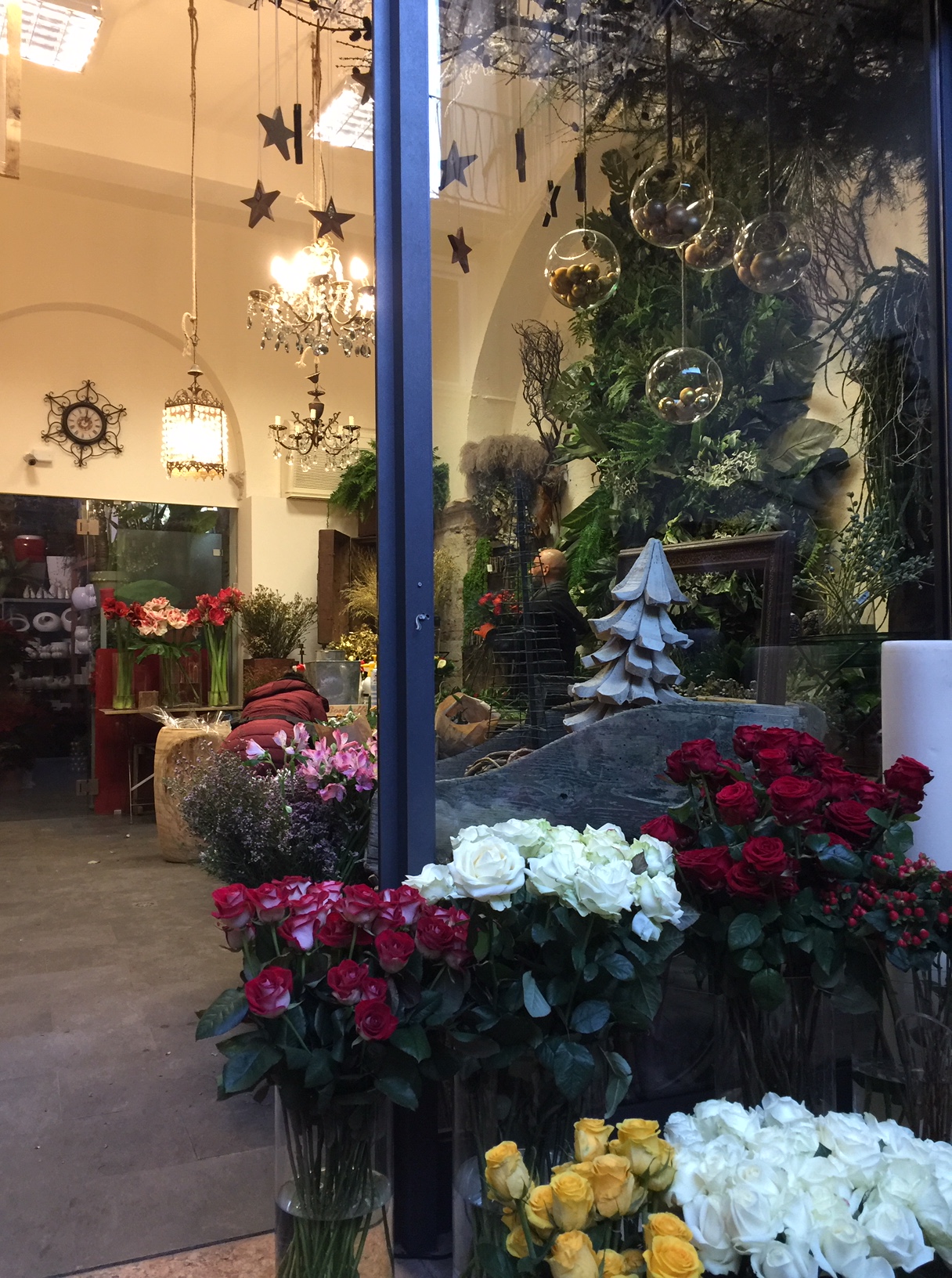
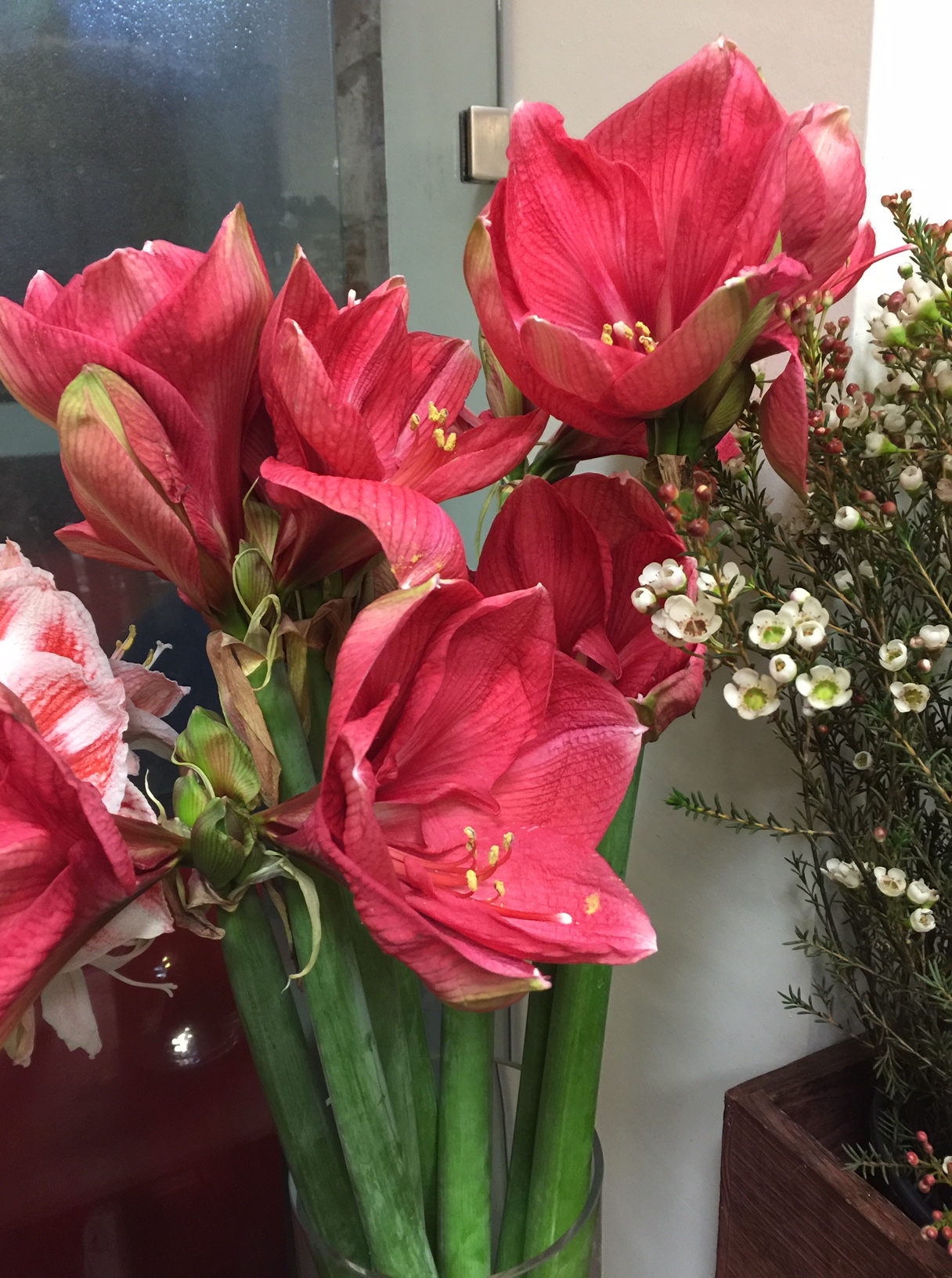
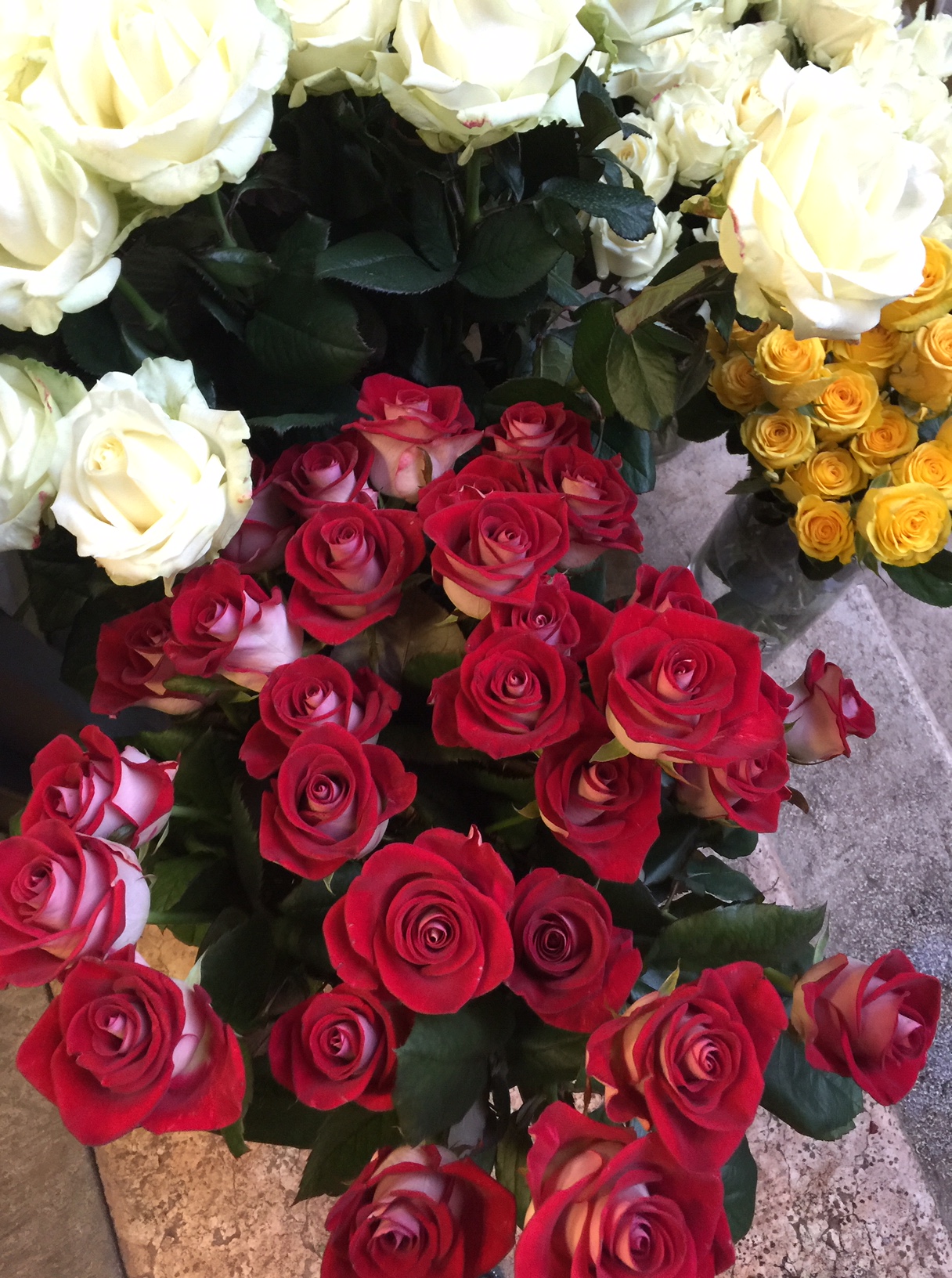
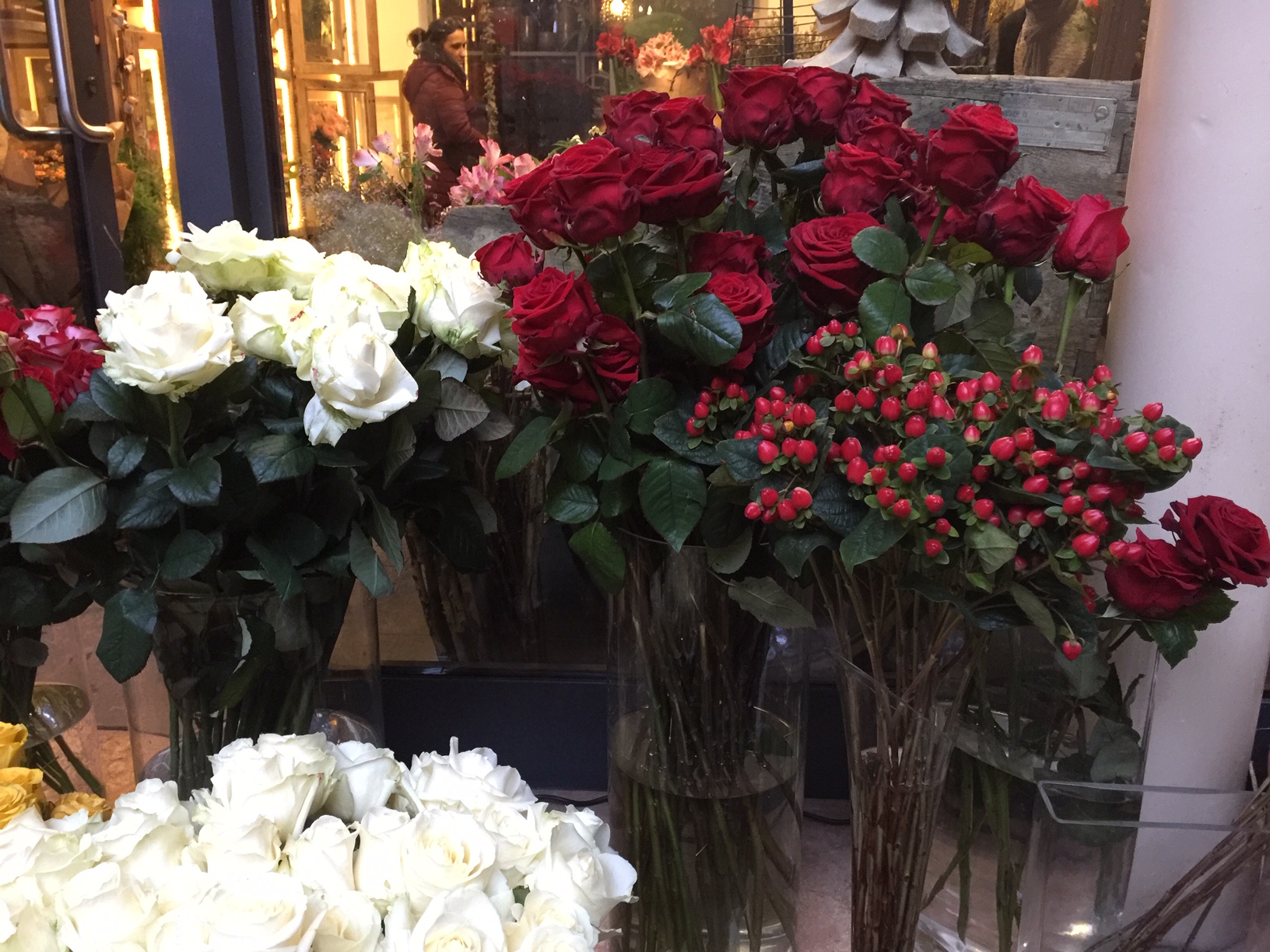
Flower shops are magnets to me:
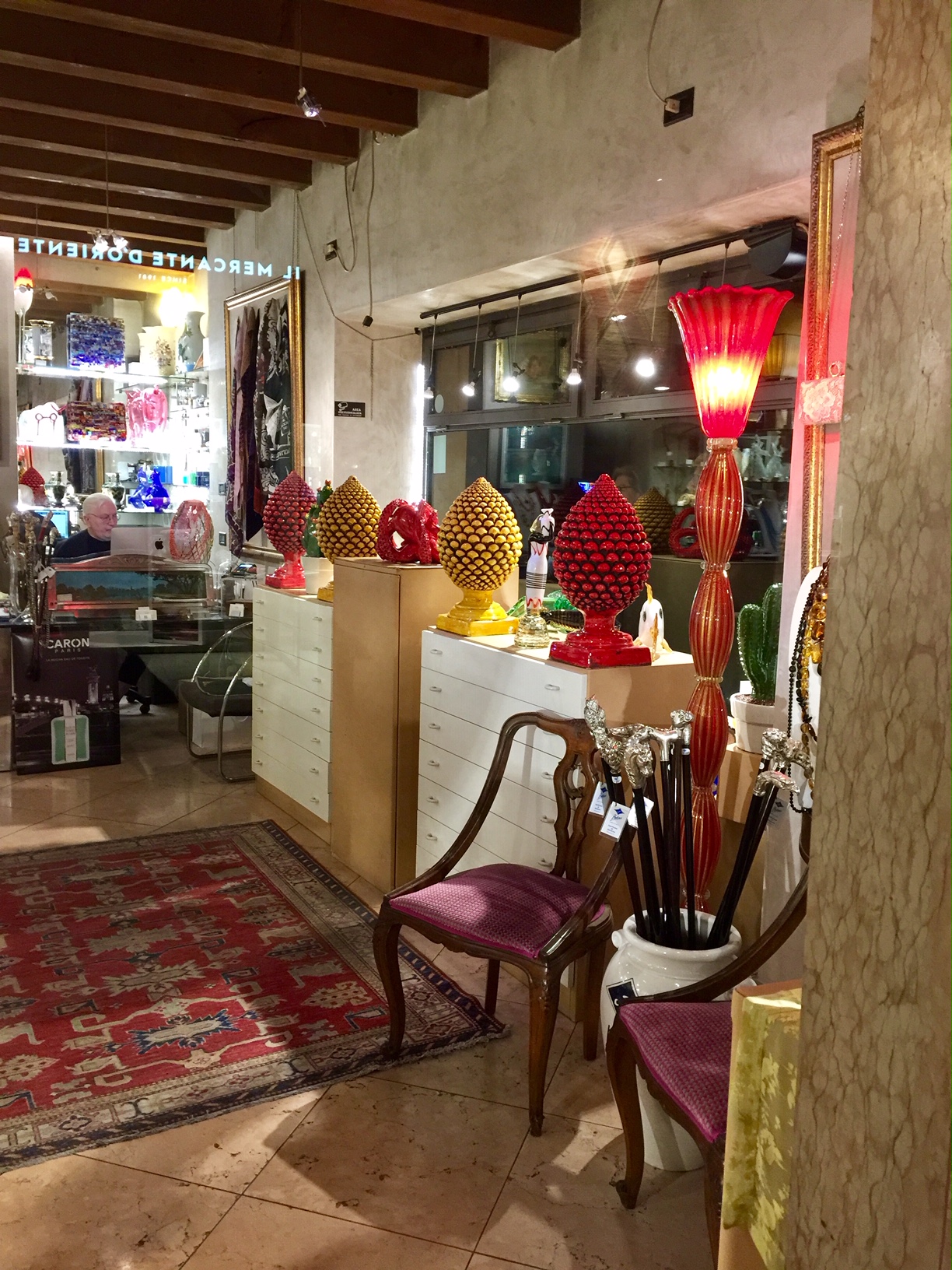
I am obsessed with this crystal lamp with the red tassels. Obsessed.
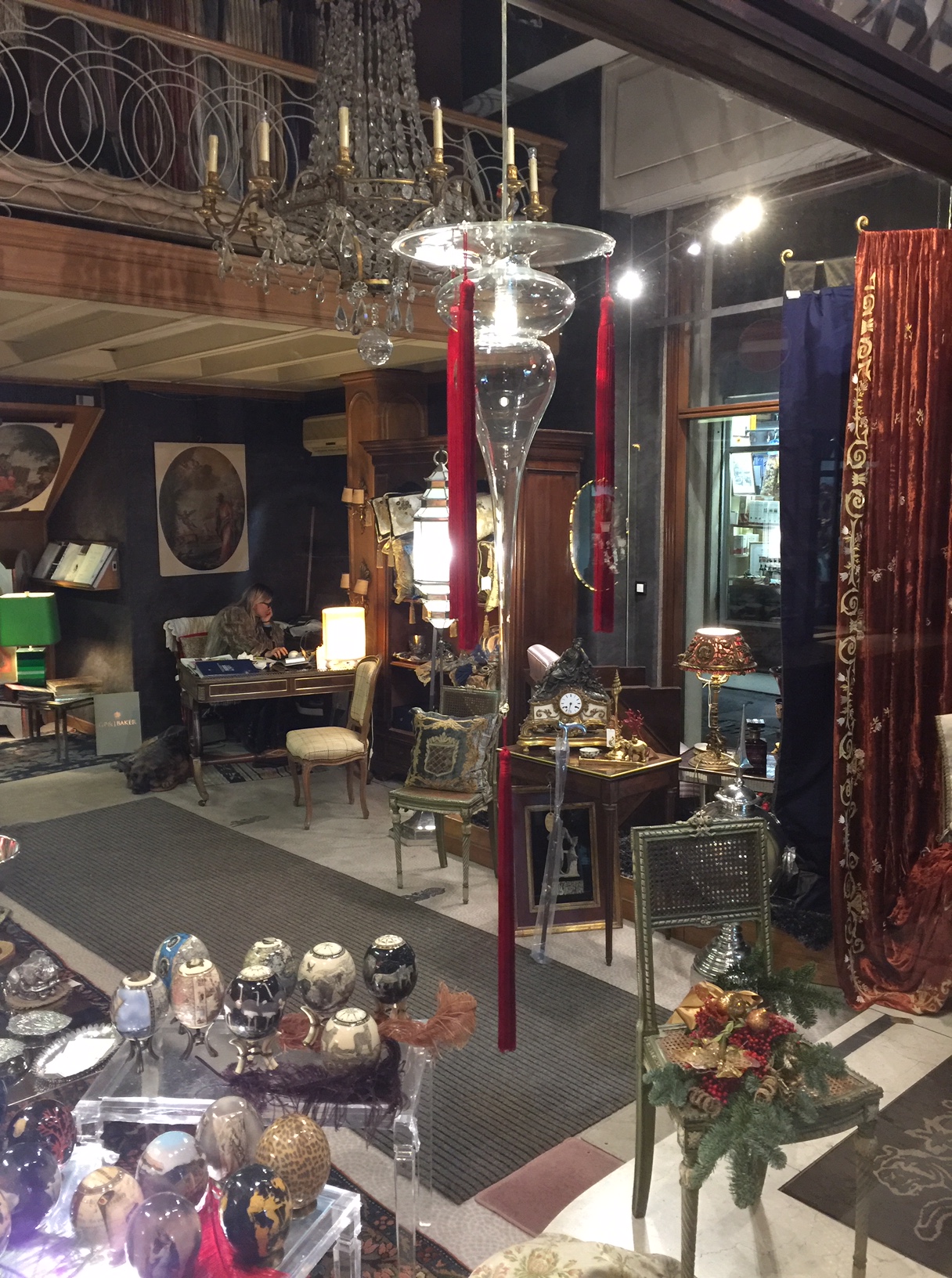
Obsessed I tell you!
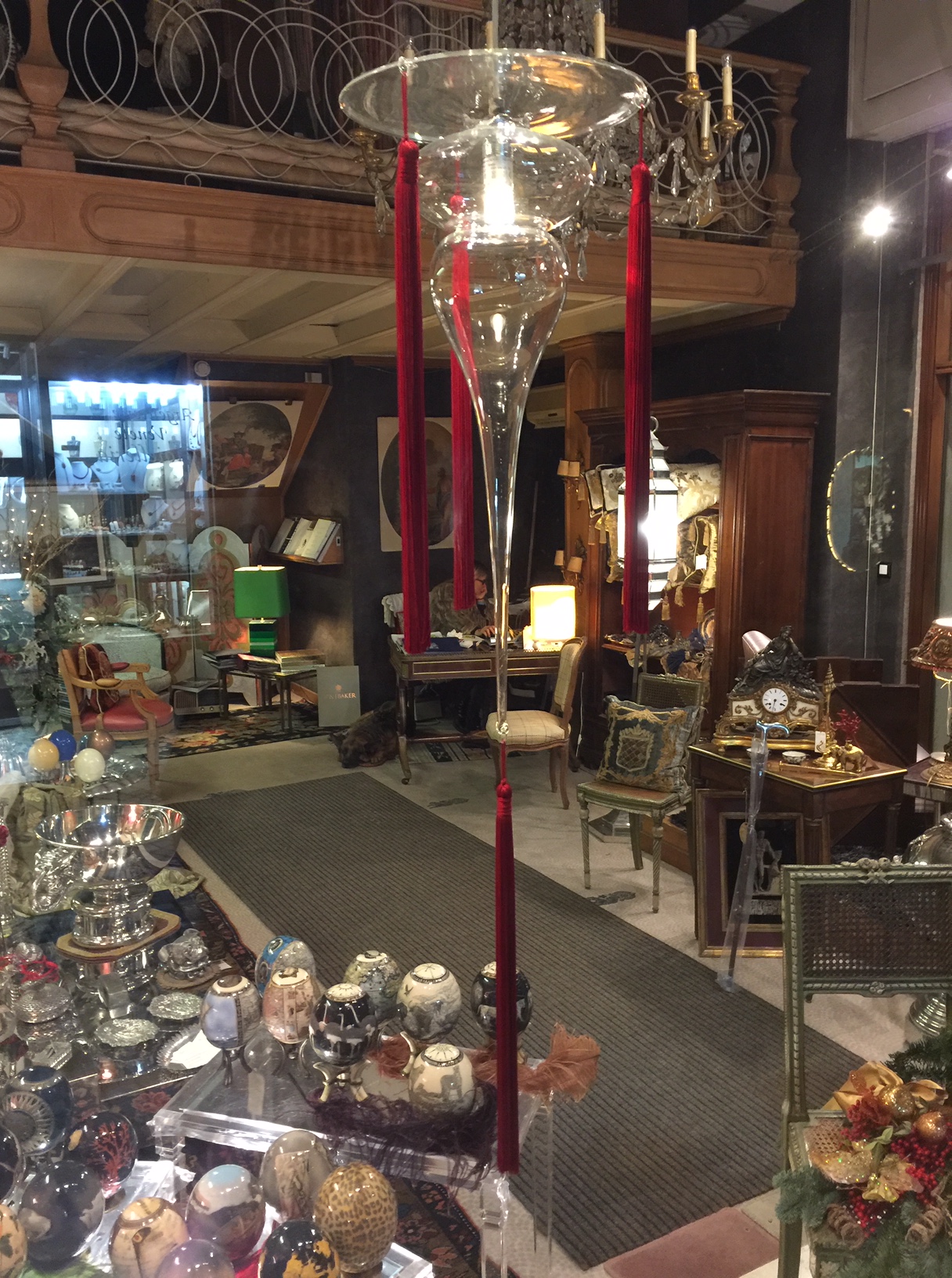
Finally, the end. A shout out to my girl, Jenny, for being an awesome traveling companion. More to come, I am sure!
Oh, and p.s., I have a few more Verona posts coming, including Giardino Giusti. Watch this space!
 get back, lauretta!
You must be logged in to post a comment.