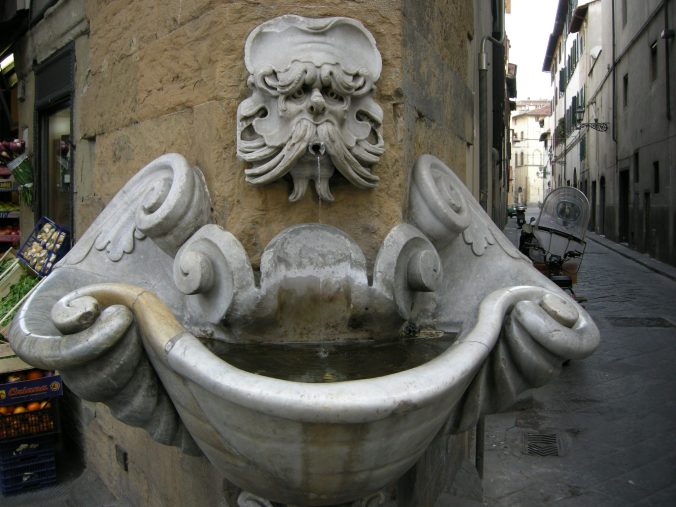
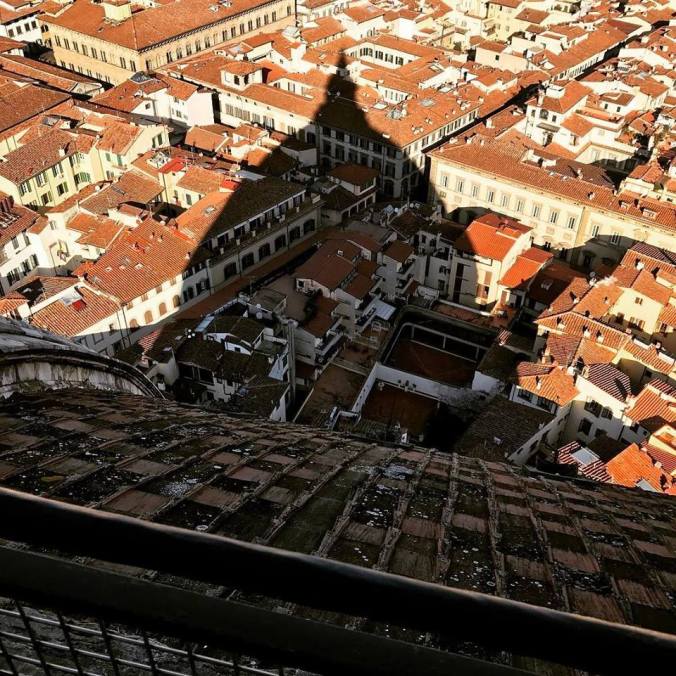
You can count on one hand the famous fountains of Florence. Here’s a good survey of them.
http://www.theflorentine.net/art-culture/2018/04/fountains-in-florence-italy/
You can count on one hand the famous fountains of Florence. Here’s a good survey of them.
http://www.theflorentine.net/art-culture/2018/04/fountains-in-florence-italy/

Città Nascosta – Via Lungarno B. Cellini 25, 50125 Firenze
Tel. 055.68.02.590 / 055.68.01.680 | info@cittanascosta.it
Fondata nel 1994, Città Nascosta è un’associazione culturale nata per promuovere la conoscenza del patrimonio artistico e storico di Firenze e della Toscana.
Le attività proposte prevedono visite guidate, itinerari ed eventi personalizzati, esperienze uniche e indimenticabili, alla scoperta dei gioielli d’arte più nascosti della città e della regione.
Storici dell’arte, architetti, botanici, restauratori, proprietari e addetti ai lavori accompagnano i visitatori, offrendo sempre una prospettiva originale e privilegiata, con un’attenzione particolare alla qualità dei contenuti e alla modalità della loro divulgazione.
 Marcella Cangioli, storica dell’arte e Presidente dell’Associazione, coordina e gestisce l’associazione.
Maria De Peverelli, storica dell’arte, lavora a Londra e si occupa di collezionismo privato.
Tiziana Frescobaldi, storica, si occupa dell’immagine e comunicazione dell’azienda di famiglia.
 Marcella Cangioli, presidente, storica dell’arte. Si occupa della promozione, del coordinamento e della gestione delle attività dell’associazione, e dei progetti speciali in italiano e in lingua straniera. Contatto: marcella@cittanascosta.it
Arianna Nizzi Grifi, segretario, storica dell’arte. Si occupa del programma dei soci “Percorsi d’Arte”, del coordinamento del programma dei soci “Sostenitori” e dell’organizzazione delle attività per clienti italiani. Contatto: arianna@cittanascosta.it
Sylvie Levantal, consigliere, storica dell’arte. Si occupa dell’organizzazione delle gite, viaggi e delle attività per i clienti stranieri, in particolare francesi. Contatto: info@cittanascosta.it
Emily Grassi, consigliere, storica dell’arte e guida turistica di Firenze e provincia. Si occupa della comunicazione, del coordinamento del programma “Grand tour fiorentino” e dell’organizzazione delle attività per i clienti stranieri, in particolare anglofoni. Contatto: emily@cittanascosta.it
Carlotta Quentin, consigliere, storica dell’arte. Si occupa della segreteria organizzativa e dell’accoglienza dei soci italiani e stranieri, in particolare anglofoni. Contatto: info@cittanascosta.it

In its heyday, Bagni di Lucca, with its cool climate and great variety of hot springs had been a very fashionable European holiday resort and spa town. Beautiful elegant hotels had been built all around the spas. Villas, owned by heads of state and various ambassadors and dignitaries were crammed with antique furniture, musical instruments and rare books.

There were cultural centres, casinos, Anglican churches and cemeteries, restaurants and theatres. Famous poets, singers, playwrights, writers, actors and actresses used to flock there in the summer months. Presumably, many wars and marriages were arranged and important state decisions taken inside those thick stone walls, so far from indiscreet ears.

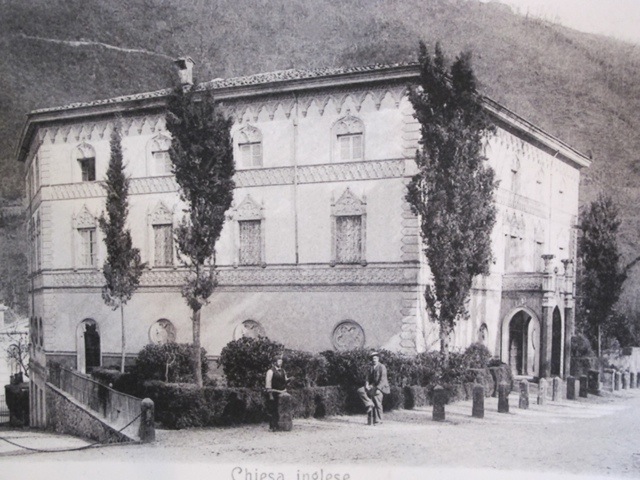
With the advent of fascism in Italy, renewed nationalism and World War Two, the “guests” of Bagni di Lucca suddenly became completely undesirable, and were later either deported or forced to flee.
Their properties were confiscated which meant that the local fascist bosses, for the most part rude uneducated thugs, suddenly had access to and became owners of luxurious properties full of rare works of art. There are tales of grand pianos being chopped up for firewood, rare books being transported to the local paper mills and being sold by the kilo, manuscripts being burnt on bonfires, and paintings being thrown out on to the grass where rain and sun eventually got the better of them.
Some of the villas miraculously passed into the hands of new owners. Deeds were drawn up, and illiterate mountain folk suddenly felt like princes and princesses. Some were used for more sinister purposes, housing torture and detention centres for political opponents, intellectuals and partisans or worse, boarding houses for Jewish and gypsy children before they left for their final destinations.
The grand rooms and theatres, which had housed great composers and musicians, were turned almost overnight into brothels or barracks for Mussolini’s troops.
At last! Many dignitaries thought that law and order has been restored. We are in charge again and those foreigners got what they deserved!
Of course, things didn’t quite turn out as expected. Italy did not get its empire, but instead a humiliating loss in which not only did it once again have to bow down to the overwhelming power of the Anglo-American armies, but it also had to sign really unfair future agreements, thus becoming a near slave to the foreign oil barons, military-industrial complexes, big Pharma religion and cars and motorways.
After the war there was no money for the upkeep and maintenance of the once magnificent hotels and spa complexes and anyway the whole of Italy was busy doing other things. People were emigrating in hordes, abandoning villages, hilltops and mountains for large industrial cities in the north, going to work in the booming car industries or in foreign cities.
The people were all working like busy bees for their new masters, building motorways and high rise blocks of flats, spraying clean fields, vineyards and fruit farms with toxic pesticides, getting rich and watching TV.
Bagni di Lucca became a ghost town. Gone were the shepherds and their flocks, the orderly rows of vegetables, the pigs, cows, geese and ducks, the large families and old traditions. Winters passed and vegetation covered the villages and country lanes. Vines grew over and smothered the beautiful old buildings until there was nothing left, except memories in books which no one ever opened.
Small factories sprang up in Bagni di Lucca: paper mills spewing out clouds of black smoke and colouring the rivers pink and blue, and the souvenir industry which exported plastic figurines to many parts of the world. The owners of these businesses became very wealthy and the only people left who had not emigrated elsewhere worked entirely for the “benefactors” who could therefore pay as little or as much as they liked, as people had no other alternative.
In the 1960s and 70s, people had started to talk about the possibility of starting up the tourist business once more but this was generally discouraged by the benefactors as it would have meant distraction for their workers. So by the time the international association arrived in town they were entering a world which might as well have been in a time warp.
Actually, as we later found out, they, being mostly highly intelligent and educated people, had vision and they had realised back then that it was time to flee the big cities before globalisation, the de-industrialisation of Italy, mass unemployment, climate change, wars for oil and water and social unrest hit us all. They were right about that, they just chose the wrong place.
Welcome to Tuscany.
Lord, Anna. Welcome to the Tuscan Dream: Italy’s Broken Heart (p. 63). Scribo Srl. Kindle Edition.
Before Charles Eliot Norton had become Harvard’s first professor of that discipline, art history had, in general, been considered, not a field of study, but a matter of craft and technique to be taught by painters to other painters.
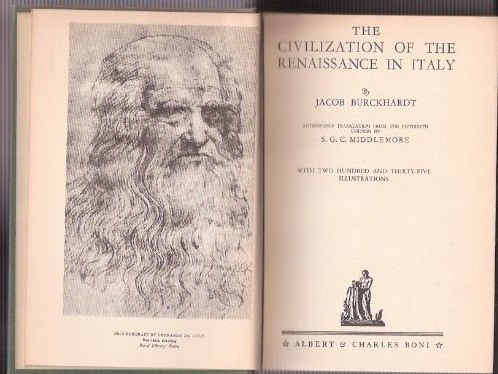
Scholarship about art, and especially about Italian art, entered a new era as the German universities began developing large-scale historical studies like those of Swiss scholar Jacob Burckhardt, whose Civilization of the Renaissance in Italy was published in English in 1878.
In Great Britain, tastes were influenced by the work of Norton’s close friend Ruskin in books like The Stones of Venice (1851–1853) and The Seven Lamps of Architecture (1849).

Following Ruskin, Norton loved best in Italy the powerful moral uplift of Dante and of Italy’s medieval Gothic architecture. In Norton’s art history courses, the Renaissance was the unhappy termination of the Middle Ages, which had been the last great era of spiritual unity and well-being.
There was a joke current among Harvard undergraduates that Norton had died and was just being admitted to Heaven, but at his first glimpse staggered backward exclaiming, “Oh! Oh! Oh! So Overdone! So garish! So Renaissance!”
“Norton,” Bernard Berenson commented drily years later, had done what he could at Harvard to restrain “all efforts toward art itself.”
Rachel,Cohen. Bernard Berenson (Jewish Lives) (p. 45). Yale University Press. Kindle Edition.
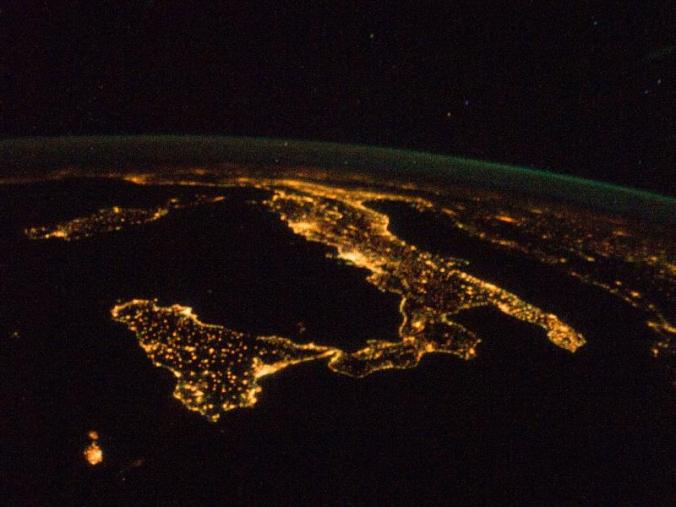
“Trapani! Trapani, don’t you see?” [British] Capt. Edward Croft-Murray exclaimed as the skyline of the Sicilian coastal town first appeared through the porthole of the Allied aircraft. [The Brit] Sitting next to him, Maj. Lionel Fielden, who had been drifting off into daydream for much of the flight from Tunis, opened his eyes to the landscape below. “And there, below us,” Fielden later wrote, “swam through the sea a crescent of sunwashed white houses, lavender hillsides and rust red roofs, and a high campanile whose bells, soft across the water, stole to the mental ear. No country in the world has, for me, the breathtaking beauty of Italy.”
…As soon as the first Monuments Officers reached Sicily, the implications of such a mandate [to preserves as many cultural works as possible] proved as difficult as its scope was vast. The Italian campaign, predicted to be swift by Allied commanders, turned into a 22-month slog. The whole of Italy became a battlefield. In the path of the Allied armies, as troops slowly made their ascent from Sicily to the Alps, lay many beautiful cities, ancient little towns and innumerable masterpieces. As General Mark Clark declared with frustration, fighting in Italy amounted to conducting war “in a goddamn museum.”
Check it out!

The Lady Vanishes, released in 1938, was Hitchcock’s last British film (until the 1970s), and is considered to be his finest. Hitchcock’s 3 previous films had not done well at the box office, but The Lady was extremely successful in both the U.K. and the U.S.A. and helped launch Hitchcock in Hollywood.
The plot of The Lady Vanishes has clear references to the political situation leading up to World War II. It is hard to imagine yourself back in 1938, before the world would experience the atrocities of the 2nd World War. Spies on trains and coded messages drive the plot.
I recently watched the film and was surprised by how slowly the plot moves in the first third of the film. Even though this film is always rated in the top 40 best British films, for me it was surprising that Hitchcock directed it. But, that is just my opinion and I am no expert! For a more positive assessment of the movie, see this source: https://www.theguardian.com/film/filmblog/2012/jul/24/my-favourite-hitchcock-lady-vanishes

People have been visiting the caves of Monte Kronio since as far back as 8,000 years ago. They’ve left behind vessels from the Copper Age (early 6th to early 3rd millennium B.C.) as well as various sizes of ceramic storage jars, jugs and basins. In the deepest cavities of the mountain these artifacts sometimes lie with human skeletons.

One of the most puzzling of questions around this prehistoric site has been what those vessels contained. What substance was so precious it might mollify a deity or properly accompany dead chiefs and warriors on their trip to the underworld?
Using tiny samples, scraped from these ancient artifacts, the analysis of scientists revealed a surprising answer: wine. And that discovery has big implications for the story archaeologists tell about the people who lived in this time and place.

In November 2012, a team of expert geographers and speleologists ventured into the dangerous underground complex of Monte Kronio. They escorted archaeologists from the Superintendence of Agrigento, going down more than 300 feet to document artifacts and to take samples. The scientists scraped the inner walls of five ceramic vessels, removing about 100 mg (0.0035 ounces) of powder from each.

It was found that 4 of the 5 Copper Age large storage jars contained an organic residue. Two contained animal fats and another held plant residues, thanks to what was believed to be a semi-liquid kind of stew partially absorbed by the walls of the jars.
But the 4th jar held the greatest surprise: pure grape wine from 5,000 years ago, and these Monte Kronio samples are some of the oldest wines known so far for Europe and the Mediterranean region.
This is an incredible surprise, considering that the Southern Anatolia and Transcaucasian region were traditionally believed to be the cradle of grape domestication and early viticulture. Later studies used Neolithic ceramic samples from Georgia, and pushed back the discovery of traces of pure grape wine even further, to 6,000-5,800 B.C.
There are tremendous historical implications for how archaeologists can now understand Copper Age Sicilian cultures.
From an economic standpoint, the evidence of wine implies that people at this time and place were cultivating grapevines. Viticulture requires specific terrains, climates and irrigation systems.
Archaeologists hadn’t, up to this point, included all these agricultural strategies in their theories about settlement patterns in these Copper Age Sicilian communities. It looks like researchers need to more deeply consider ways these people might have transformed the landscapes where they lived.
The discovery of wine from this time period has an even bigger impact on what archaeologists knew about commerce and the trade of goods across the whole Mediterranean at this time. For instance, Sicily completely lacks metal ores. But the discovery of little copper artifacts – things like daggers, chisels and pins had been found at several sites – shows that Sicilians somehow developed metallurgy by the Copper Age.
The traditional explanation has been that Sicily engaged in an embryonic commercial relationship with people in the Aegean, especially with the northwestern regions of the Peloponnese. But that doesn’t really make a lot of sense because the Sicilian communities didn’t have much of anything to offer in exchange for the metals. The lure of wine, though, might have been what brought the Aegeans to Sicily, especially if other settlements hadn’t come this far in viticulture yet.
Wine has been known as a magical substance since its appearances in Homeric tales. As red as blood, it had the unique power to bring euphoria and an altered state of consciousness and perception.
All of this is taken from https://www.thelocal.it/20180215/prehistoric-wine-italy-inaccessible-caves-rethink-ancient-sicilian-culture

Giovanni Botero (1544—1617), an eye-witness, wrote of Venice:
Not only is there bread in abundance; there is also an incalculable wealth of all goods and delicacies, which are brought hither, not only by the rivers and canals of the mainland, but also by the sea, from as far afield as Egypt, Syria, the Archipelago, Constantinople and the Black Sea.
To Venice come the oils of Apulia, the saffrons of the Abruzzo, the malmseys of Crete, the raisins of Zante, the cinnamon and pepper of the Indies, the carpets of Alexandria, the sugar of Cyprus, the dates of Palestine, the silk, wax and ashes of Syria, the cordovans of the Morea, the leathers, moronelle, and caviar of Caffa.
There is such a variety of things here, pertaining both to man’s well-being and to his pleasure, that, just as Italy is a compendium of all Europe, because all the things scattered through the other parts are happily concentrated in her, even so Venice may be called a summary of the universe, because there is nothing originating in any far-off country but it is found in abundance in this city.
The Arabs say that, if the world were a ring, then Ormuz, by reason of the immeasurable wealth that is brought thither from every quarter, would be the jewel in it.
The same can be said of Venice, but with much greater truth, for she not only equals Ormuz in the variety of all merchandise and the plenty of all goods, but surpasses her in the splendor of her buildings, in the extent of her empire, and, indeed in everything else that derives from the industry and providence of men.
Scotti, Dom Paschal. Galileo Revisited: The Galileo Affair in Context (p. 28). Ignatius Press. Kindle Edition.
 get back, lauretta!
You must be logged in to post a comment.