Florence in the 1930s

38451352_281168199358008_6363169605812224000_n-2

Piazza del Duomo e via Martelli negli anni 30, il tram 8 che andava a Campo di Marte. Piazza del Duomo and via Martelli in the 1930s.  The tram #8 was going to Campo di Marte.

39145043_291154088359419_1043258143292784640_n

Festa dell’Uva, grande corteo da via Cavour nel 1938. Grape festival, great procession on Via Cavour in 1938.

39441563_294865881321573_5580196238822735872_n
Le pecore fiorentine e aldilà d’Arno la Biblioteca Nazionale inaugurata nel 1935. Bella immagine di un mondo scomparso.
Florentine sheep with the facade of the National Library in background.  The library was opened in 1935.  A beautiful image of a lost world.

Stop and think: the handkerchief

41990851_2670332576525650_8401377478936887296_n

Today everyone uses disposable paper tissues and almost all mothers carry them in their handbags for everyone in the family to use.

But, what preceded the lowly “kleenex?”

Well, according to Professor M. Fanfani, the handkerchief was invented in Italy, just like the fork and the napkin.  I tend to think that the napkin and handkerchief both were created in various cultures because humans need these objects and surely someone would have thought of a good product solution.
41866265_2670332319859009_5681710689966620672_n

But readers know I love all things Italian and so of course I am going to go along with the professore and accept the fact that while various cultures no doubt had their own objects for cleaning the face and nose, the first rarified version no doubt was of Italian origin.  Most good things were. :-)

41980164_2670331053192469_8167817707136221184_n

So, let’s read and consider his thesis on the handkerchief.
 

42058762_2670331466525761_2434507615082905600_n


The use of the handkerchief, like that of the fork and napkin, was born in Italy and its use had more to do with the prestige of its possession, than its strictly hygienic reasons.
 

42134387_2670330646525843_9011099974103990272_n

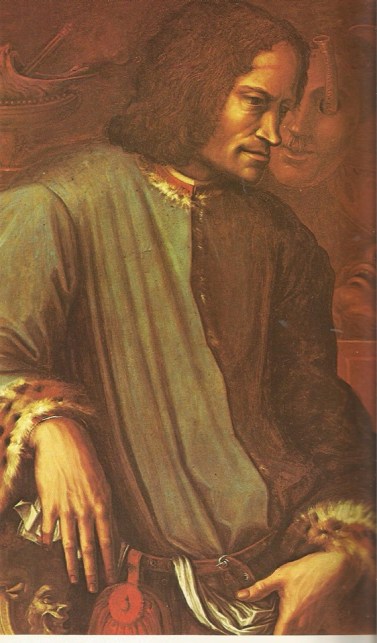
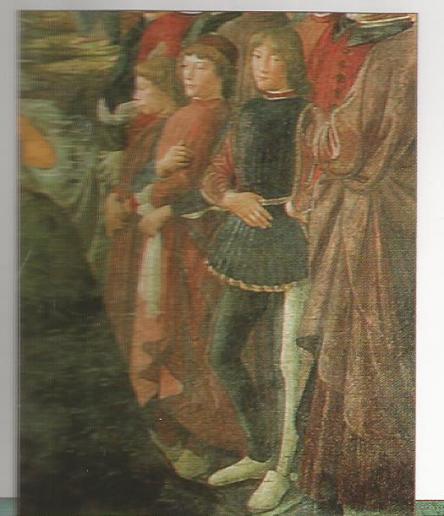
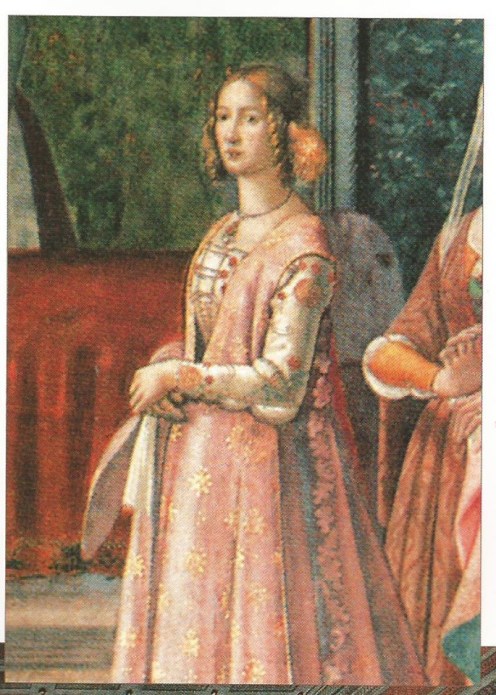
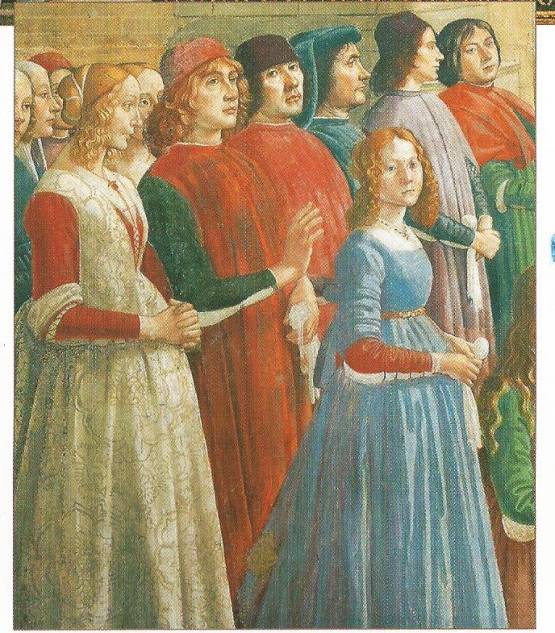
As with so many details about life in Italy, paintings from the period give us a window into the daily life of some Italians.

In the works of Ghirlandaio, an attentive chronicler of the Florentine costume, this delicate accessory is a standout.

Handkerchiefs were rare and expensive; for example, we know that King Henry IV had only five of them in 1594.

We learn that blowing one’s  nose with the handkerchief (instead of with your fingers, or with the wide sleeves of a shirt) was a refined sign of nobility or high social standing.


41990528_2670330416525866_3928806189961314304_n

Ghirlandaio often recorded in paint the upper bourgeoisie in Florence. The possession and showing of an embroidered kerchief indicated status.

Who knew?


This text (which I’ve modified in English) appeared on a Facebook post recently
written by Prof. M: Fanfani.
What to wear for the monsoon

Having lived all of my life outside of India and other countries that experience a monsoon season, I never really thought about living in a monsoon, let alone what one would wear for that experience!

I really enjoy blogging.  It’s a good thing to like, because otherwise, it would be very easy to stop.

The occasional response from a reader is one of the most enjoyable parts of blogging.  For example, I just got this notification from my WordPress host that someone in India liked a recent post of mine (the last one on Grace Kelly) and made a comment. It is up to me to decide if I approve the comment or not.  I did.

But what was really funny to me is this notification:

(name omitted by me) liked your post on get back, lauretta!

They thought Grace Kelly, a selection was pretty awesome.

You should go see what they’re up to. Maybe you’ll like their blog as much as they liked yours!
Great posts worth seeing from (name omitted by me):

Shortlisted #1
Daily Essentials for Workplace
Here is the Most Fashionable Piece to wear in the Monsoon


Had I been somewhat older when I was younger…

“The thought strikes me, as it has so often in thinking things over, that had I been somewhat older when I was younger, how much more I could have profited by my opportunities” said by artist Elihu Vedder.


Vedder, Elihu. The Digressions of “V”: Written for His Own Fun and That of His Friends. Boston: Houghton, 1910

Sirpa Salenius. Sculptors, Painters, and Italy: Italian influente on Nineteenth American Art: 3 (OltreOceano) (Kindle Locations 1805-1807). Simplicissimus. Kindle Edition.