Dante, the Divine Comedy: “Consider your origins: you were not made to live as brutes, but to follow virtue and knowledge.”
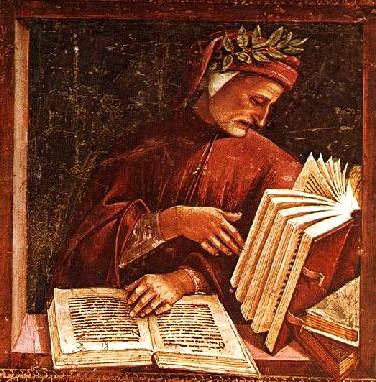
Dante, the Divine Comedy: “Consider your origins: you were not made to live as brutes, but to follow virtue and knowledge.”
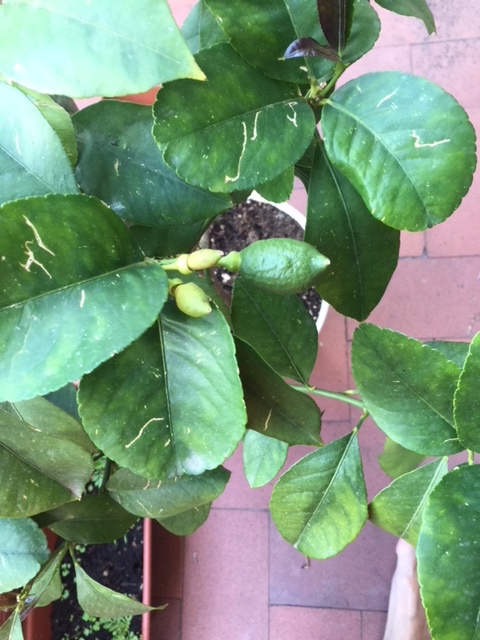
My lovely little lemon tree is still alive and survived the move to my new place. Here are some recent close-ups:
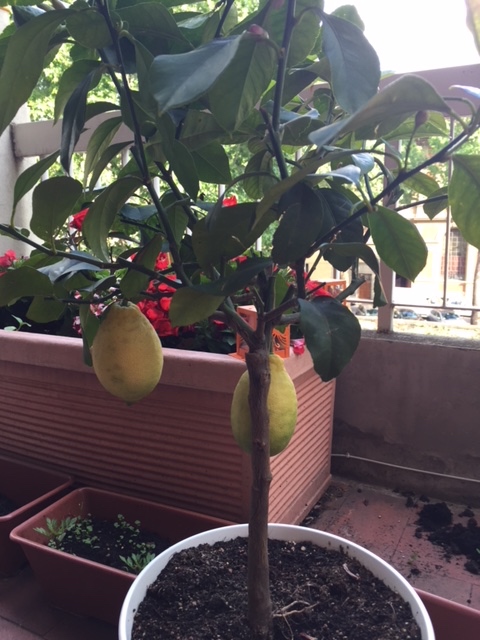
The same 2 original lemons are still hanging on for dear life. I was amazed they didn’t fall off in my recent move.
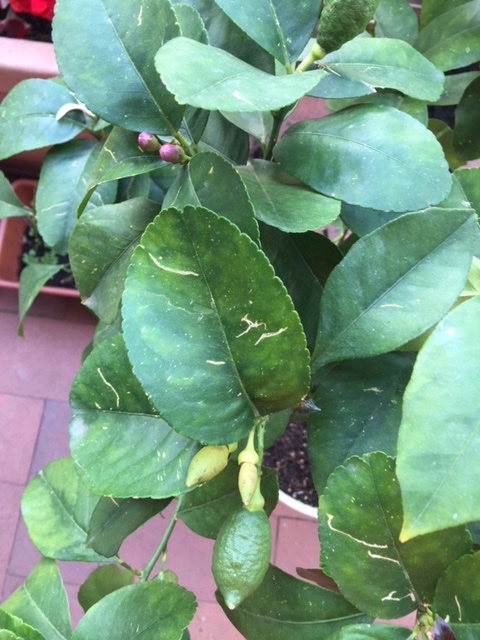
Some baby lemons have started to form.
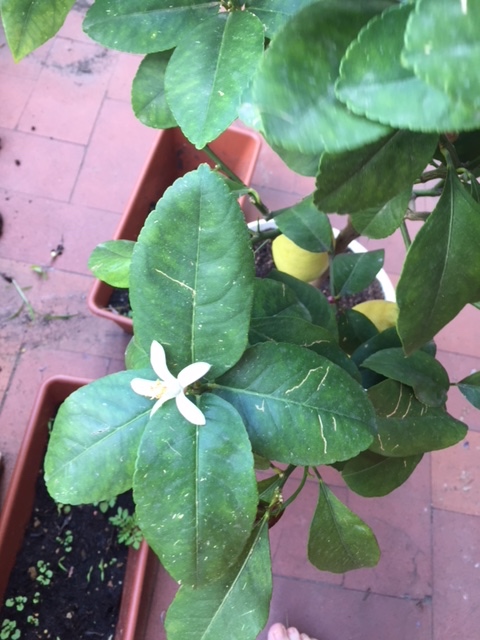
And new blooms still show up from time to time. This tree is very active. Something is happening all of the time!
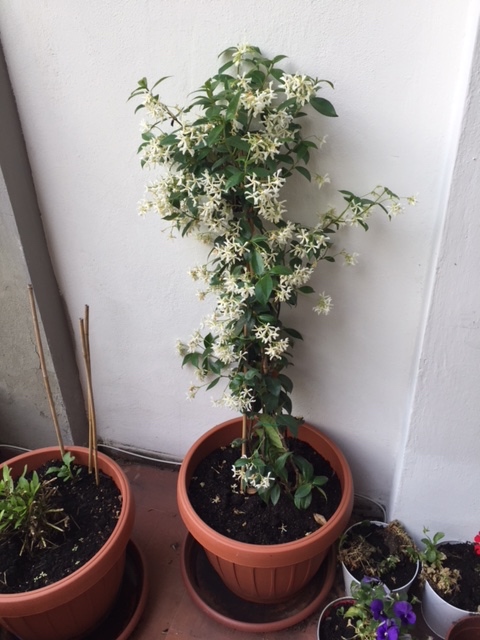
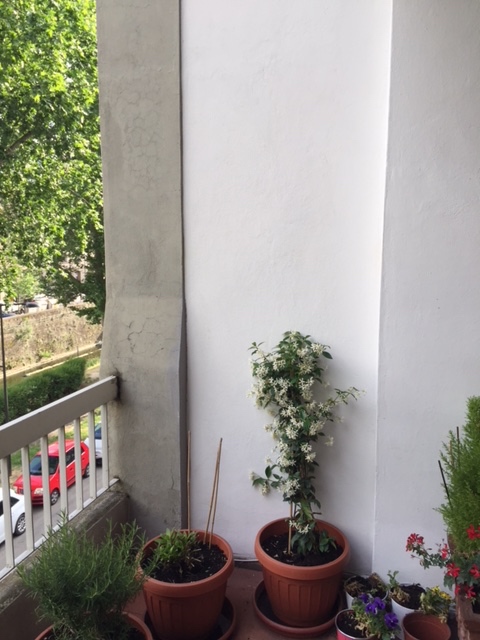
And, may I introduce my new jasmine plant! It came home with me from the recent plant sale at the horticultural garden near my new apartment. It is so fragrant. I have big plans for this vining plant, I have a big terrace to cover!


The 24th ARTIGIANATO E PALAZZO exhibition (Florence, Corsini Gardens, May 17-20, 2018) gets underway with the history of one of the leading examples of Made in Italy excellence, the “Mostra Principe” dedicated to the Richard Ginori porcelain Manufactory and fundraising for the reopening of the Doccia Museum, recently acquired by MiBACT (Italian Ministry of Cultural Heritage and Activities and Tourism).
“The hundreds of requests to take part that we have received this year represent an excellent sign of recovery in the artisan sector, because craftspeople are the lifeblood of Made in Italy,” said Giorgiana Corsini and Neri Torrigiani who, for over twenty-four years, have been involved in organizing the ARTIGIANATO E PALAZZO event and in promoting Italy’s artisan heritage.
During the four-day event in the Limonaia Piccola of the 17th-century Corsini Gardens (open to the public for this occasion), the Richard Ginori company will recreate various phases in the creative process through which, daily since 1735, it has produced unique porcelain pieces, with special live demonstrations to reveal to the public a story that has survived to the present day with a rich tradition of know-how, innovation and beauty.
For the first time, it will be possible to admire outside the plant in Sesto Fiorentino the Manufactory’s artisans at work in their various areas of expertise: from slip casting to decoration, evidence of a wealth of knowledge that has been handed down without interruption from older to younger generations of craftspeople.
For its part, the Doccia Museum will be the recipient of the major fundraising initiative, “ARTIGIANATO E PALAZZO FOR THE DOCCIA MUSEUM”that Giorgiana Corsini and Neri Torrigiani have decided to launch with this year’s event “so that the priceless collection of the Doccia Museum will once again be open to the public”. 8,000 porcelain, ceramic, majolica, terracotta and lead objects and over 13,000 drawings, engraved metal plates, chromolithograph stones, plaster molds and wax sculptures.
The project involves a series of initiatives that will involve the organizers, public and corporate sponsors of the 24th ARTIGIANATO E PALAZZO exhibition, the full proceeds of which will go to the Associazione Amici di Doccia:
If you are in Florence in the next 6 months, I recommend you pay a visit to Florence’s Rose Garden (Giardino delle rose), which is a garden park in the Oltrarno district of Florence, located between Viale Giuseppe Poggi, Via di San Salvatore al Monte and Via dei Bastioni and offers a commanding view of the city.
The garden is situated on the southern slopes of the Monte alle Croci, overlooking the Arno river and the historic district of Florence.
The Rose Garden was created by the Florentine architect Giuseppe Poggi in 1865, commissioned by the municipality of Florence to develop the left bank of the Arno River, when the capital of Italy was moved from Turin to Florence that year. Poggi’s contributions include both the Piazzale Michelangelo and the garden.
The Rose Garden is a terraced area of about 1 ha. Once part of the property of the Oratorian Fathers, the area was transformed into a garden by Attilio Pucci, who started the collection of roses.

Signa is a comune (municipality) in the Province of Florence in the Italian region Tuscany, located about 12 kilometres (7 mi) west of Florence. As of 1 July 2013, it had a population of 19571 and an area of 18.8 square kilometres (7.3 sq mi).[1]
The municipality of Signa contains the frazioni (subdivisions, mainly villages and hamlets) Colombaia, Lecore, Sant’Angelo a Lecore and San Mauro a Signa. Signa is a typical Tuscan town. On the day after Easter, there is an important religious festival in honour of the Beata Giovanna. There is a procession that parades in the streets of Signa, and many people wear old costumes.
In Giacomo Puccini‘s Gianni Schicchi, the “molini di Signa” (mills of Signa) are the most coveted by his relatives of Buoso Donati’s properties. The 1875 novel Signa by Ouida (Mary Louise Ramé) is set in Signa.
Opera fanatics may recall Signa’s role in the Giacomo Puccini-penned “Gianni Schicchi,” but Puccini superfans and Florence area residents aside, it remains relatively unknown.
Right at the junction of three key Tuscan rivers—the Arno, Bisenzio and Ombrone Pistoiese—it’s home to a longstanding craft tradition with inextricable ties to the land itself.
Dig into the territory and its top product with these tips.
The signature craft in town is undoubtedly the straw hat, known in Italian as the cappello di paglia and highlighted in the Domenico Michelacci Straw and Weaving Museum. The museum’s namesake, Domenico Michelacci, was an enterprising 18th century man who was among the first to depart from cultivating wheat strictly for dietary purposes: instead, he intentionally set his sights on straw to be used in weaving.
Michelacci worked specifically with grano marzuolo, set apart for its tiny grains and small ears. A watershed moment for the local economy, this change introduced by Michelacci ultimately led the Florentine area to become the West’s first area for high-quality straw hat production, piquing the attention of wealthy clients around the world.
Demands of clients have naturally shifted through the centuries, as have the fashions themselves, but the straw hat remains the icon of Signa. A visit to the museum will illustrate why: each room showcases important elements of this niche market and its role in local history.
Those most interested in the links to the land will enjoy perusing the different types of wheat on display, while the more aesthetically minded might prefer the plethora of hats spanning the early 20th century to the 1970s. An additional room focuses entirely on the various machines and tools used to manually work with straw (although this type of equipment is dispersed throughout the museum).
For more, see http://www.turismo.intoscana.it/allthingstuscany/aroundtuscany/florence-straw-hats/
and her big brother. I, like millions, can’t wait to see her new baby brother!

Italy was a place where art was part of daily routine. It was in the fabric and facades of the buildings and in the way towns and villages. Aestheticism was instinctive, a common trait, as if it were one of the senses. Artfulness was ubiquitous, from the wrapping of one’s purchases in a shop to the arrangement of food on a plate.
The most common word in the language appeared to be bella, which prefixed everything from the morning espresso to the design of a dress. Great effort – and great importance – was placed on how things looked. Tuscany’s landscape was the ultimate expression of this. It was the view that travellers dreamt of, composed who knew how by diverse hands over centuries.
It even smelled wonderful, of clean air and woodsmoke, of rosemary and new leather, of frying garlic and pungent parmigiano.
Taylor, Alan F.. Appointment in Arezzo: My Life with Muriel Spark (Kindle Locations 859-865). Birlinn Ltd. Kindle Edition.
If you are accustomed to buying flour in the USA, you will encounter some unusual products when you peruse the baking aisle of a grocery store in Italy. The first thing you might notice is the packages are much smaller than in America. And then there is the milling process and wheat berry type to consider.
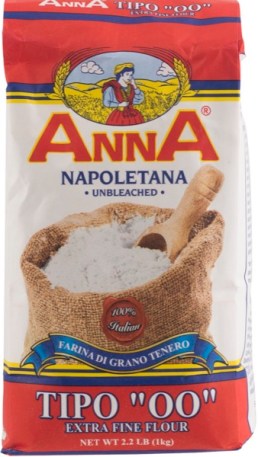
For one thing, you will have a lot more choices in the grinding of the wheat berry: the names 00 and 0 Flour refer to specifically Italian milled flour that is used for pasta making. You will find that this is also called Doppio Zero, just meaning double zero.
The grading system is 2, 1, 0 or 00 and indicates to how finely ground the flour is and how much of the bran and germ has been removed. 2 for instance is a wholemeal flour while 00 is the most refined of the three and has the lowest level of bran. It is similar to unbleached all purpose/plain flour, which is a mix of hard and soft wheat, and though while finer, it creates a dough that is silkier and maintains a chewiness when the pasta is cooked.
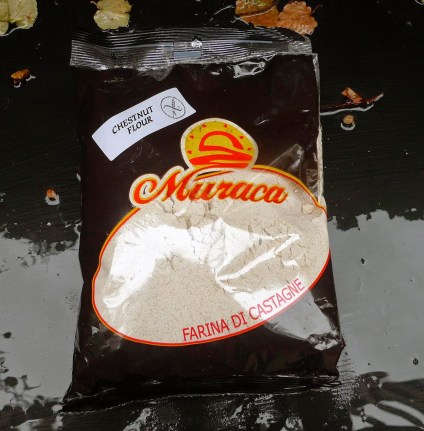
If you are looking for pasta, bread flour or baking flour, 00 will work for all and you can substitute 00 flour if you run out mid way through pasta making with just plain old high-grade flour. Again this has been refined more so than standard flour making it higher in protein. Pizza dough is perfect with single 0 flour but again it is interchangeable.

The French grade their flours as well with a similar system.
To make life more confusing the terms hard and soft get used to also explain flours so to try and put it simply:
Low Protein + Low Starch + Low Gluten = soft flour – 00 flour or high grade flour – use this for pasta, pizza and cakes as you would any high grade flour
High Protein +High Starch + High Gluten = hard flour – semolina flour or standard flour – perfect for bread doughs and most other uses.
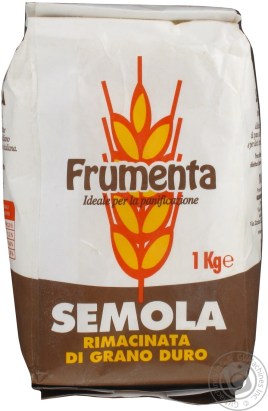
Italian millers will also combine different wheat varieties to make flour to suit different purposes. So you can buy a ‘00’ flour suitable for pasta with a very golden color, and a ‘00’ flour suitable for plain white bread.
The packaging will usually suggest what items you can make with any particular flour to get the best result.
Much of this post is based upon: virtuousbread in Bread and conversation, Flour and milling, International bread adventures
For those looking for additional info, here you go:
Bake the same recipe in the same way with 00 flour and with stong white flour and you will see that the 00 loaf is flatter and the crumb has holes that are different sizes and are not evenly distributed.
Bake the same recipe in the same way with 00 flour and with strong white flour that has been stone milled and you will see that the 00 loaf is white white white and the stone ground loaf is a bit beige.
This is because the stone milling mills for whole meal flour first grind and then and seive it to separate the bran and the germ. Industrially milled flour (of whatever strength) has the bran and the germ milled out at a very early stage because industrial millers want white flour.
The lesson is that if you want the very white, soft, holey bread from your childhood you need to get the flour from your childhood.
The big difference, in addition to texture and look, is that the stone ground white flour is higher in the naturally found nutrients because the white flour absorbs some of the nutrients from the bran and the germ before they are seived off. Industrially milled flour is rather bereft of these nutrients because the bran and the germ are removed so early in the process. For a more comprehensive discussion about this, please click here.
The Casa Guidi, as we see it today, has the same number of rooms and the same plan as it was when the Robert and Elizabeth Barret Browningrented it in 1847. The Brownings lived here happily for many years, and Elizabeth died there in 1861.
The Brownings took two years to furnish the apartment, buying at high cost one or two precious pieces such as the golden mirror of the living room, while most of the paintings and other furniture was found in small Florentine shops.
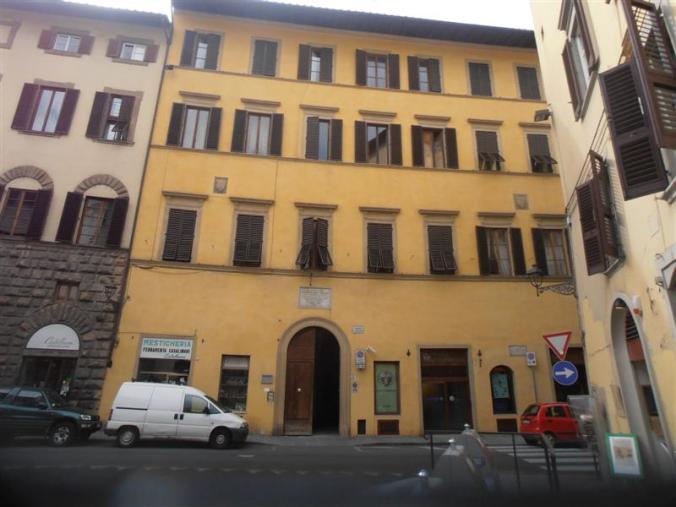
https://www.visittuscany.com/it/attrazioni/casa-guidi-firenze/


In restoring the property, the Landmark Trust and Eton College tried to maintain the original atmosphere, preventing the apartment from   looking like a museum.


There are currently some paintings and furniture that belonged to    both the Barrett family and the Browning family and that have been   generously donated to Casa Guidi, but overall the furnishings remain similar to those of the 19th century. The walls and ceilings in the  living room and main bedroom and the ceiling of the poet's studio    have been restored with the original colors of the period. All doors and fireplaces are original.


After the poet's death, the Commune commemorated her life placed an  inscription on the door (composed by Niccolò Tommaseo) according to  which her poetry had created a golden ring that binds Italy and      England.
Accesso handicap:
Non accessibile a persone su sedia a ruote
Contatti:
P.zza San Felice, 8
Telefono: 055 354457
E-mail: elena.capolino@fastwebnet.it
 get back, lauretta!
You must be logged in to post a comment.