In many ways, my life didn’t begin until this miracle arrived in 1993. I have never seen a more beautiful Letter J in my lifetime.
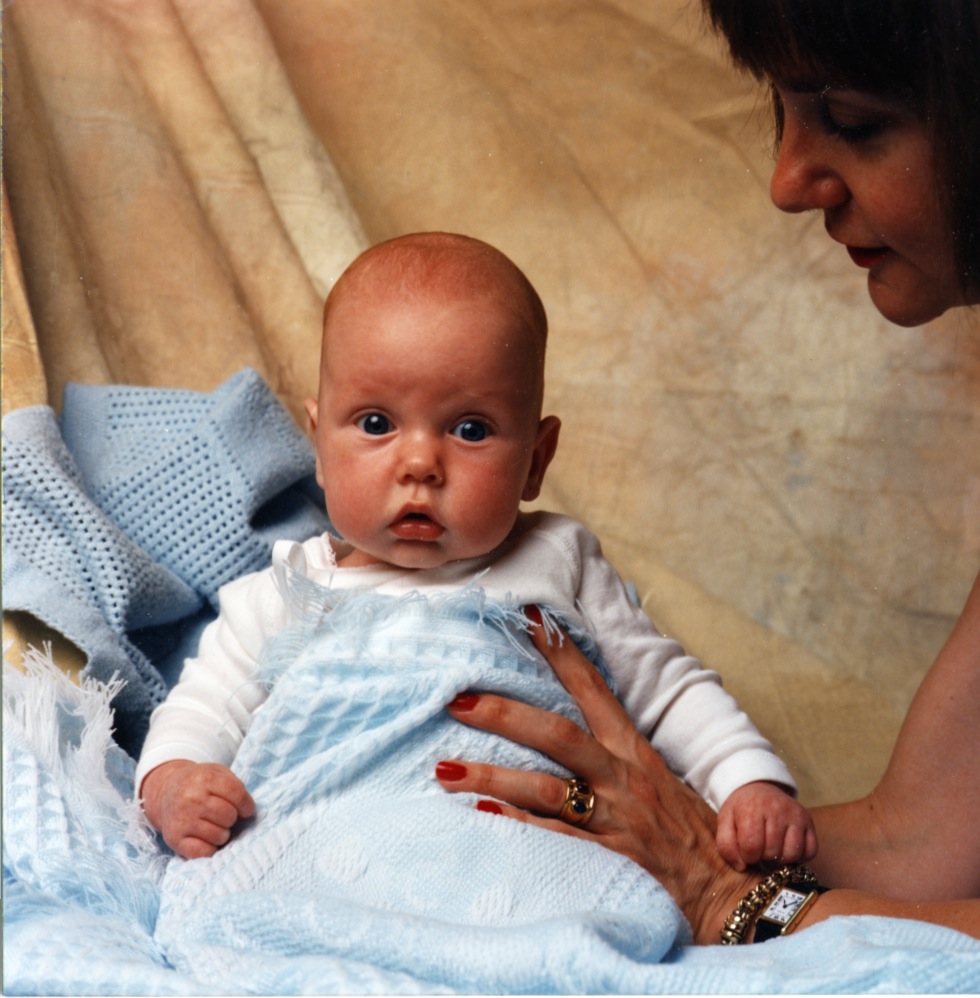
My very own little putto! Grazie a dio!
In many ways, my life didn’t begin until this miracle arrived in 1993. I have never seen a more beautiful Letter J in my lifetime.
My very own little putto! Grazie a dio!

James jumps into Lake Washington at Madrona Beach. Fun times in Lake Washington!

Preceded by an excellent dinner at Cascina Spinasse. Here’s a shot of the pasta being made just before being cooked with butter and sage. OMG, can you spell delizioso?
See those sheets of yellow paper or fabric hanging on rods at right? Those are sheets of egg pasta made right before our eyes. Amazing (strabiliante)!
Ciao, tutti!
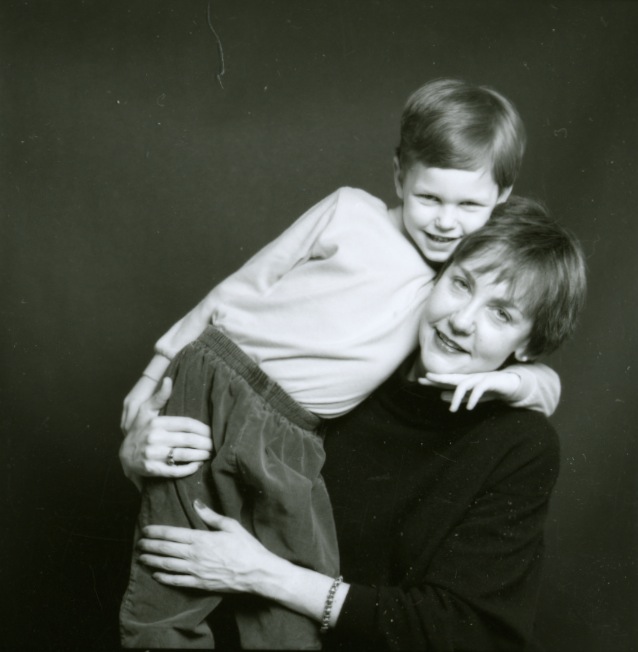
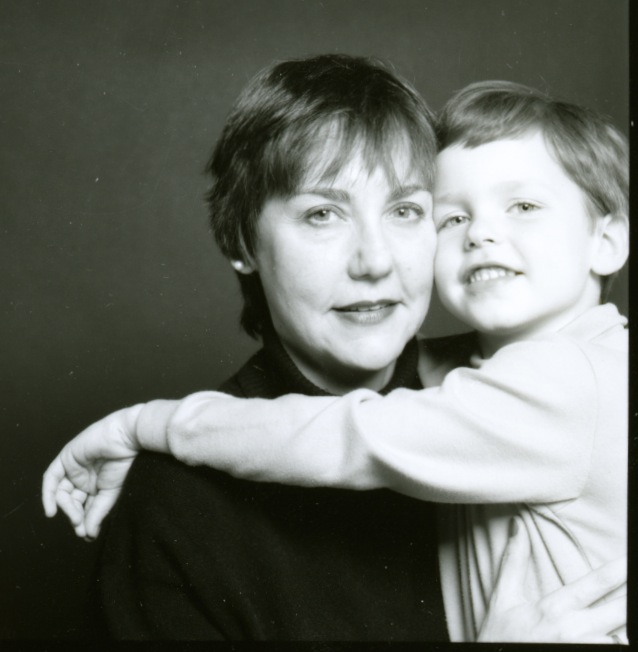
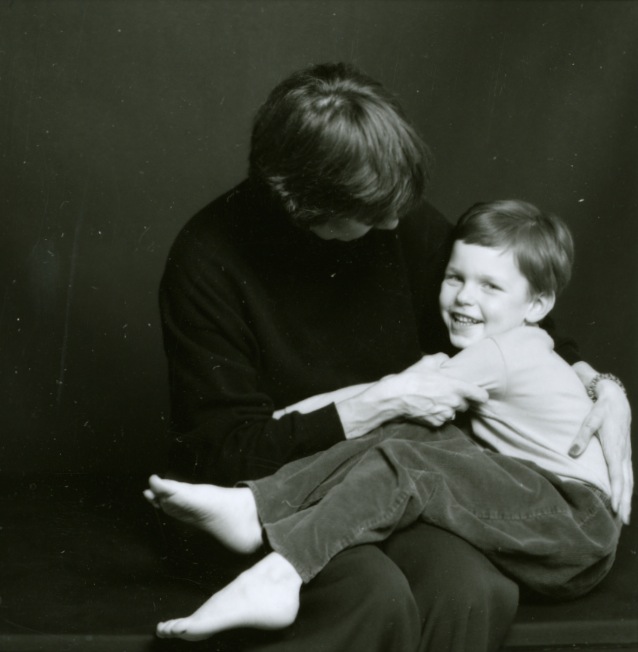
I admit, I am biased, but really, some kids just can’t take a bad photograph. Heart you J.

The year is 1955 and this is my mother and me. Apparently the candy was a big, if messy, hit! My mother, who had 4 kids and worked full-time both in and out of the home, found time to label this photo. Thanks mom! You were wonderful and I miss you.
Like many others from around the world, I have no words to talk about yesterday’s unspeakable horror in Boston. In the hope of finding some solace from this grief, I find myself thinking of some beautiful memories I have of the Public Garden in Boston.

Many years ago, I had the pleasure of living in Boston for three years. Through my work as a curator at the Museum of Fine Arts in Boston, and in particular because of an article I was researching a monument in Mount Auburn cemetery by sculptor Thomas Crawford in Cambridge, I came to know a very distinct landscape architect, who had helped save the Public Garden when it was almost lost. This fascinating person introduced me not only to her work in rescuing the fine Boston Public Garden, but to the field of horticulture in general. Polly Wakefield and I became friends as we studied her illustrious family’s history and in particular, the marker in Cambridge to her ancestor, Amos Binney. (For my article see, L. Dimmick, “Thomas Crawford’s Monument for Amos Binney in Mount Auburn Cemtery: A Work of Rare Merit” in the Association for Gravestone Studies journal, MARKERS IX, pages 158 – 195.)
Through our friendship, I was privileged to live on Polly’s family estate in the “farm house” in Milton. We causally shared many summer Sunday afternoon teas on her magnificent veranda overlooking her gardens, as well as a couple of Christmas Days in her Isaac Davenport mansion. My cocker spaniel, Samantha, was best friends with Polly’s corgi, Sally, and we happily watched them romp through the lovely gardens that she designed on the estate too many times to remember. If you want to read about the very impressive Mary May Binney Wakefield, more information is available here: http://www.wakefieldtrust.org/site/about-us/polly-wakefield-a-brief-story-of-her-life.html.
I am thinking of you today, Polly Wakefield. You opened my eyes to the practice of your profession and to many wonderful horticultural experiences, which eventually changed the focus of my professional life. Horticulture has become the thing that (after my child, obviously) makes my heart beat the fastest, and you inspired me to become a lifelong learner and doer.
These pictures are offered in Polly Wakefield’s memory, as well as to those who were hurt yesterday. Let us honor the ones who died.


How we all love the Boston Public Garden’s sculptural group entitled Make Way for Ducklings, based on the charming children’s book of the same title by Robert McCloskey.

It is also sweet to remember E.B. White‘s affection for the Public Garden, captured in his children’s novel, The Trumpet of the Swan. I don’t know if this is a fact or just an fantasy I had, but I believe White lived in The Ritz Hotel across the street from the Garden. Maybe a reader will correct me if I am wrong?
My thoughts are with Boston today and always.
Added later: this was good to see in the paper: http://www.bostonglobe.com/arts/theater-art/2013/04/16/museums-offer-free-admission-response-marathon-bombings/OZ3Y0QEXmbD0AqgCWq4FVM/story.html

With the arrival of spring this week, it is time to clean out and consolidate the stuff in my storage locker(s) at the EA. This is almost as much fun as going to the dentist. Only much more tiring and I am still cursing all of the stuff that I moved here from Denver.
Also, my boy is coming on Friday for 10 day spring break. So lucky he wants to spend it with his mom!

This wonderful and aged camellia is still blooming. It has been blooming its sweet heart out for about 6 weeks now.


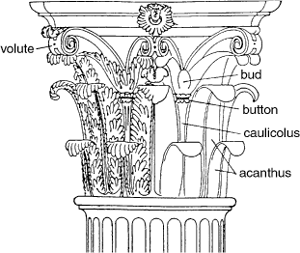
Here is a picture of the acanthus plant that grows with ease here in this temperate, moist climate. I love acanthus because its leaves were the inspiration for the order of ancient Greek capitals known as Corinthian, see above and below. If you remember Art History 101 you will recall Doric, Ionian, and Corinthian capitals. It still amazes me that I am living in a place I can grow acanthus, and I have recently planted three of them in my “experimental gardens” at the EA.
By the way, have you taken an online course with Coursera yet? I just enrolled in four courses on a range of topics from English common law to Greek civilization. The course on Greece was launched yesterday, and I am one of 30,000 online students taking the course taught by a prof from Weslyan University in Connecticut. Some of us are busy introducing ourselves online, and we have students of all adult ages from Manilla, Russia, Australia, Spain, India, just to name a few, and students from all over the U.S. (including, incredibly, at least one mensa student of the ripe age of 11). The lectures are online, as are the readings. I finished the first unit on Minoan and Mycenaean cultures yesterday, and took the quizzes. Eventually, if I pass all the quizzes (ha ha), I will get a certificate of course completion. Obviously I am not working toward another degree, but it is very interesting and a brave new world.
Here’s some dope on the course, and visit here for more info: https://www.coursera.org/
Current Session:
Mar 18th 2013 (7 weeks long) Go to class Enroll in Signature Track
Workload: 2-4 hours/week
About the Course
This course is a survey of ancient Greek history, covering the roughly 13 centuries that extended from the Minoan / Mycenaean Bronze Age (ca. 1800-1200 BCE) down to the death of Socrates in 399 BCE. Along with studying the most important events and personalities, we will consider broader issues such as political and cultural values and methods of historical interpretation.
Some of the topics we will cover include: relations between the Greeks and their neighbors to the East; Homer and the heroic ideal; the development of the type of community called the “polis”; the diffusion of Greek civilization from Southern Italy to the shores of the Black Sea; gods and mortals in myth, religion and ritual; the roles of women; Athenian drama; the treatment of slaves and foreigners; and the birth and evolution of democracy. We will strive to get as full an understanding as we can of this extraordinary, and extraordinarily influential, society.
Almost all the reading assignments are from ancient sources in translation. No previous knowledge of ancient history is assumed.

Love this walkway and I always plan to imitate it on a small scale at home. Never do it, but always plan to! I saw many similar patterns in Japan many years ago.
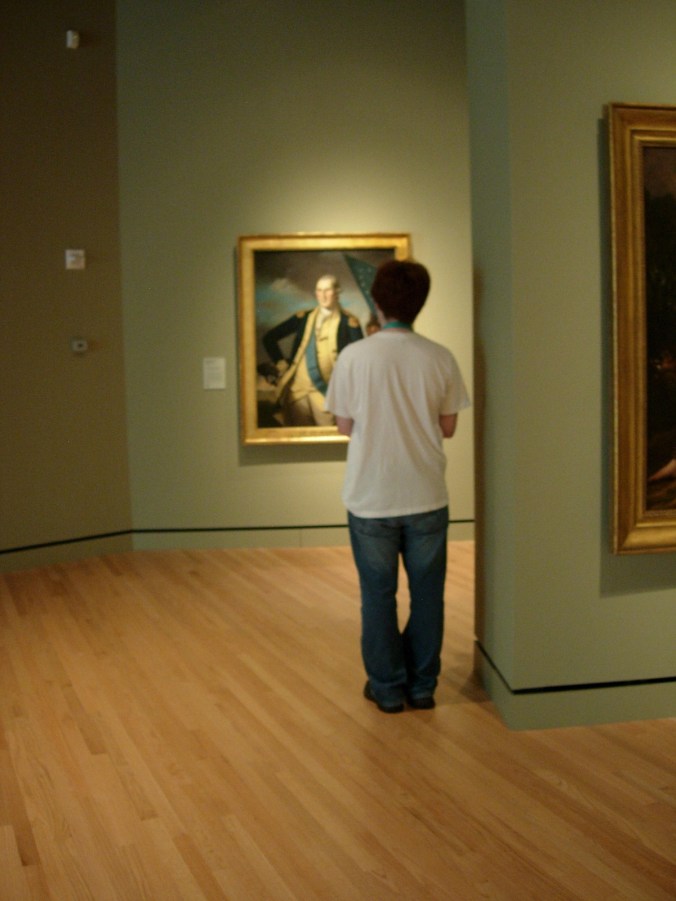
James at Crystal Bridges in Arkansas in March 2012. We drove there from Denver to see the new museum. It was well worth the drive, and that is saying something!
 get back, lauretta!
You must be logged in to post a comment.