Jasmine

Aka gelsomino in italiano.

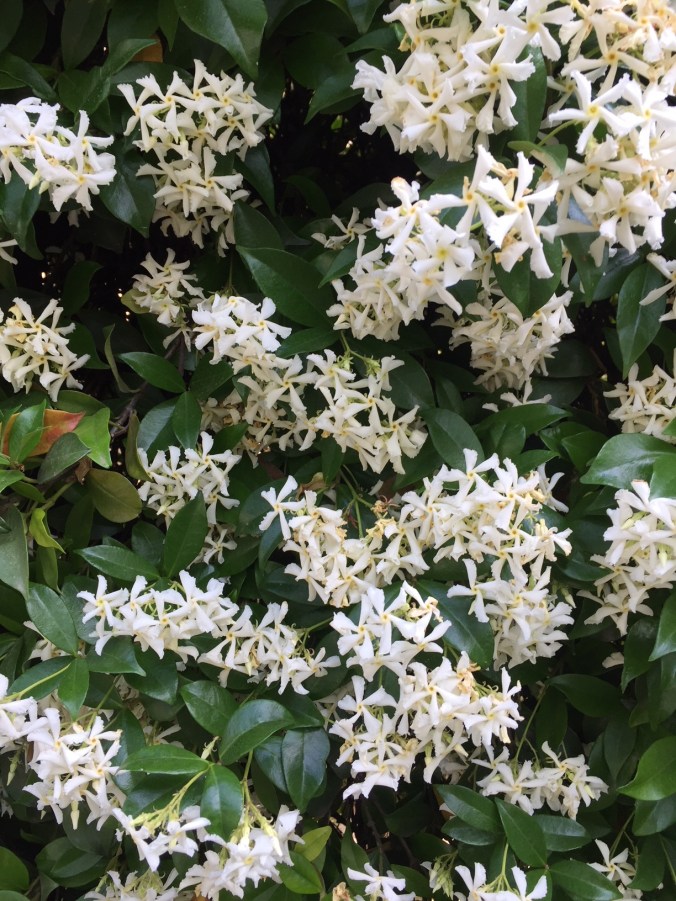
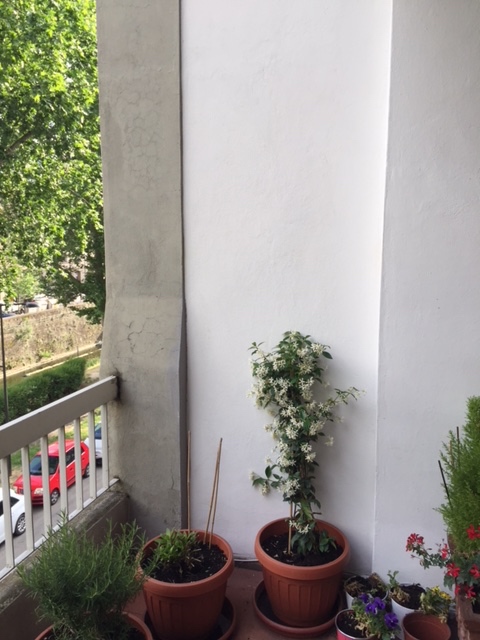
In any language, I love this hardy plant!  Below is my new pot filled with this very fragrant vining shrub.

IMG_8891


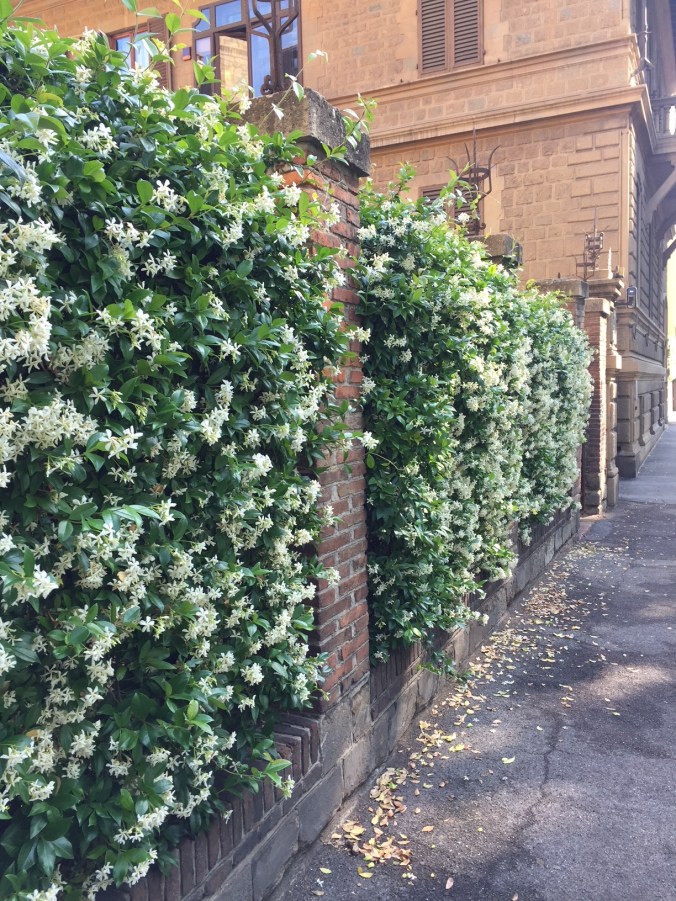
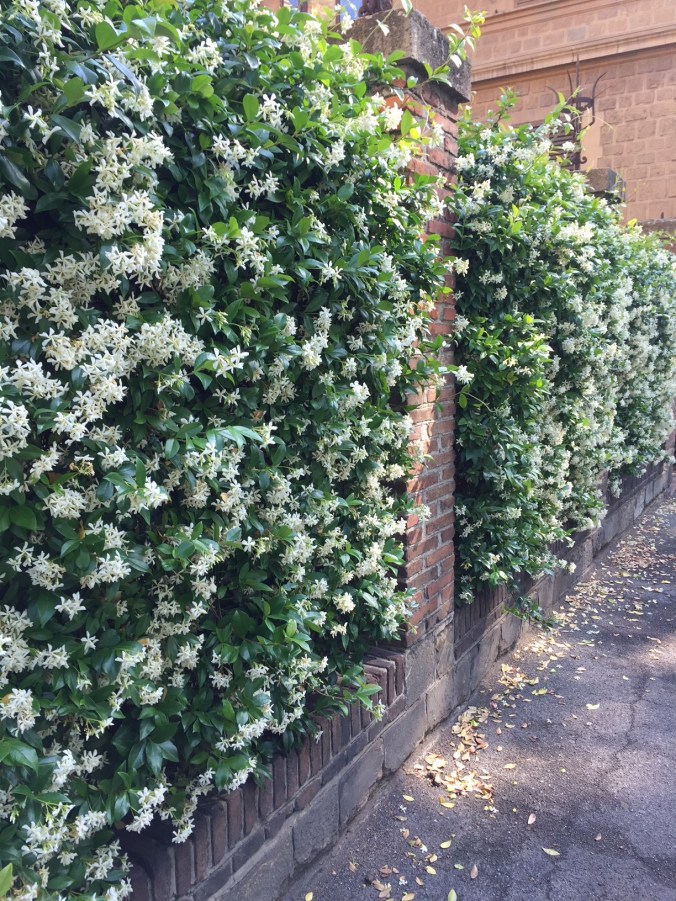
And, here is gelsomino growing next door to my building:  wow, I can’t wait for mine to grow!  Just walking down the street near these flowers is like being in a garden!

IMG_9221IMG_9220IMG_9222

Ironwork and horticulture

I was walking along a new to me street in Florence last Friday, and when I walked by this  arresting view of a gigantic succulent fenced in by brightly painted iron work, I must say it stopped me in my tracks!

IMG_9092


I mean, the sheer size of the plant was overwhelming…it felt kind of Jurassic parklike. So cool!

IMG_9093IMG_9094

Unpredictable Florentine weather

img_3172

We all grew up saying that “April showers bring May flowers.”  And they do!

But, this year it is raining well into May as well.  The weather has been very unsettled. Cold and raining one day, warm and clear the next.  However, I am not complaining.  The hot summer temperatures can wait as long as possible to arrive.  When they hit, they are not unsettled in the valley that surrounds lovely Firenze.  They arrive and stay, well past their welcome.

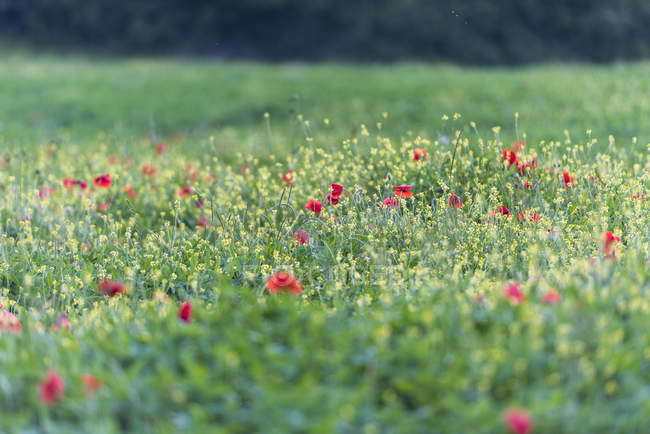
But, all this rain has the fields and hills around Florence alive with flowers!  Yes, we do have flowers!  Bright red poppies are everywhere, they grow wild and are a welcome sign that the fields are not being sprayed with pesticides or herbicides. On the train from Rome to Florence, this view below is a constant right now.
focused_165569702-Poppies-blooming-in-the-fields

The grape vines are looking incredible, maybe this will be a great year for wine production.

However, the olive oil forecast is not as great. Local olive oil makers are already are warning that it looks like there will be little no oil this year.  The olive trees should already be blossoming and they aren’t.

The-olio-novo-olive-oil-making-process

Olive+Harvest

Maybe it will just be a late harvest.  Olive harvest in the past was done in late November and through December. But, recently, due to the changes in the weather conditions, harvest now happens earlier.

Last weekend, was another religious holiday in Tuscany. It was Ascension Sunday which falls 43 days after Easter is often celebrated with flowers. Some towns decorate streets with designs created with petals, and others have large celebrations where you can buy lovely plants.  Plus, great food and drink accompanies any holiday!

If you want to learn more about this moveable feast, then here you go:

The Ascension of Our Lord, which celebrates the day on which the risen Christ, in the sight of His apostles, ascended bodily into Heaven (Luke 24:51; Mark 16:19; Acts 1:9-11), is a moveable feast. When is Ascension?

How Is the Date of Ascension Determined?

Like the dates of most other moveable feasts, the date of the Ascension depends on the date of Easter. Ascension Thursday always falls 40 days after Easter (counting both Easter and Ascension Thursday), but since the date of Easter changes every year, the date of Ascension does as well.

Ascension Thursday Versus Ascension Sunday

Determining the date of Ascension is also complicated by the fact that, in many dioceses the celebration of Ascension has been transferred from Ascension Thursday (40 days after Easter) to the following Sunday (43 days after Easter).

Since Ascension is a Holy Day of Obligation, it is important for Catholics to know on which date Ascension will be celebrated in their particular diocese.

(See Is Ascension a Holy Day of Obligation? to find out which ecclesiastical provinces continue to celebrate Ascension on Ascension Thursday, and which have transferred the celebration to the following Sunday.)


https://www.thoughtco.com/when-is-ascension-541611


Lemon tree update and meet the newest member of my garden

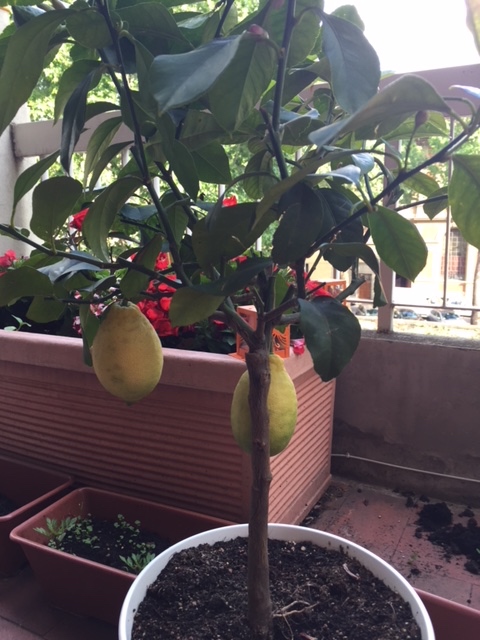
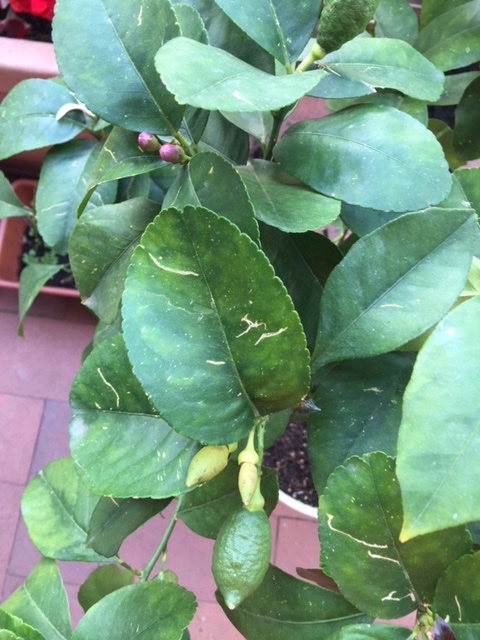
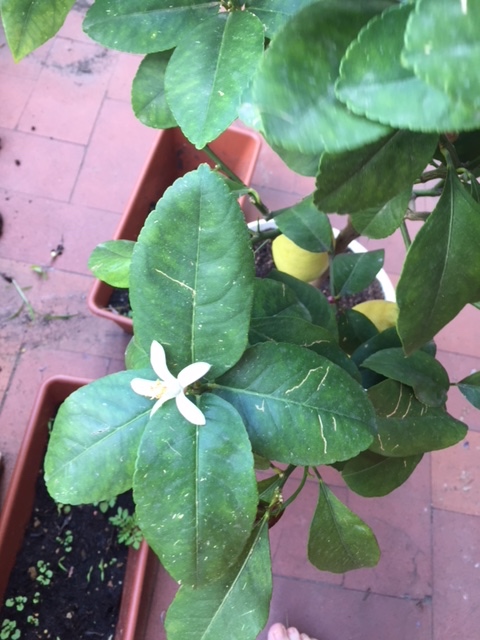
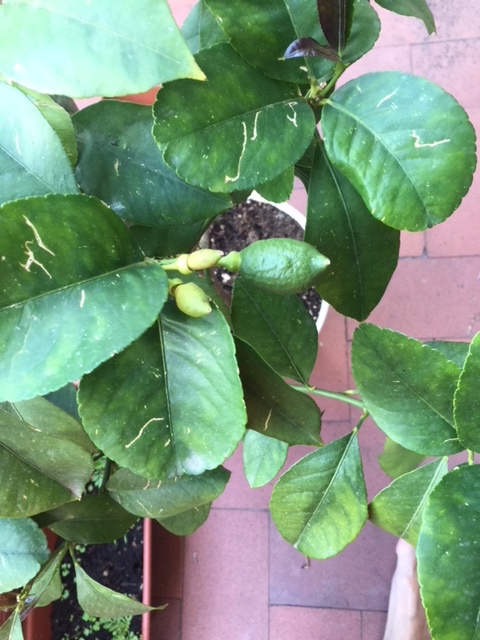
My lovely little lemon tree is still alive and survived the move to my new place.  Here are some recent close-ups:

IMG_8886

The same 2 original lemons are still hanging on for dear life.  I was amazed they didn’t fall off in my recent move.


IMG_8887

Some baby lemons have started to form.


IMG_8888

And new blooms still show up from time to time.  This tree is very active.  Something is happening all of the time!


IMG_8890


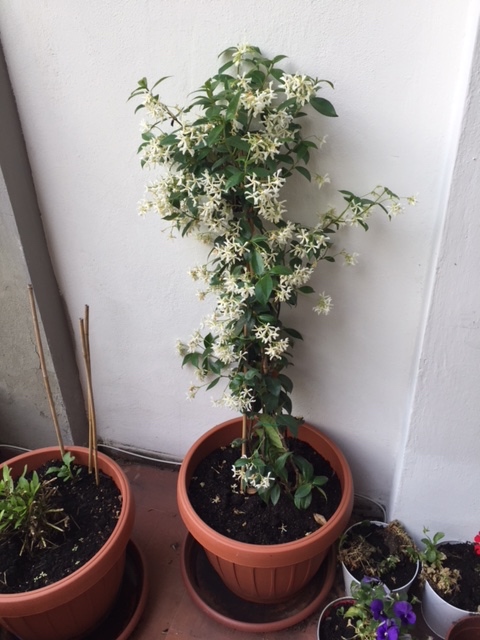
And, may I introduce my new jasmine plant!  It came home with me from the recent plant sale at the horticultural garden near my new apartment.  It is so fragrant.  I have big plans for this vining plant, I have a big terrace to cover!

IMG_8891

IMG_8892

2018 Gardens in Italy

The Italian Garden Guide 2018

italian-garden-scarborough

A pocket guide to discover more than 130 among most beautiful gardens created in Italy with beautiful photos!

The Italian Garden Guide is a bilingual guide (Italian and English languages) to discover the most beautiful gardens created in Italy.

Inside the guide you can find updated informations on opening hours and services offered by 130 gardens of the network Grandi Giardini Italiani, that is present in 14 regions of Italy, in addition to Vatican State, Switzerland and Malta.

The Italian Garden Guide 2018 is enriched by more than 250 beautiful photos of gardens and from the section dedicated to ”Designers, creators, and plantsmen at Italy’s top gardens”. Their biographies and works reveals the full richness of the history of the art of gardens over the centuries, and casts a little light on the mistery of the beauty of every

A fascinating journey through history, art and nature in a pocket guide!

The Italian Garden Guide
Pag. 288 + color images

Publisher Grandi Giardini Italiani
Language Italian and English
Edition February, 2018
Size 13×21 cm
ISBN Code: 978-88-909861-7-8
Price € 14,00

The Italian Garden Guide can be purchased with payment by bank transfer of euro 14,00, the beneficiary Grandi Giardini Italiani, Intesa San Paolo

IBAN: IT 71 H 07601 10900 001036565974

News
The guide is now also available on the Amazon e-commerce portal. To purchase your copy click here.

http://www.grandigiardini.it/lang_EN/sponsor.php?id=18


Spring equal camellias

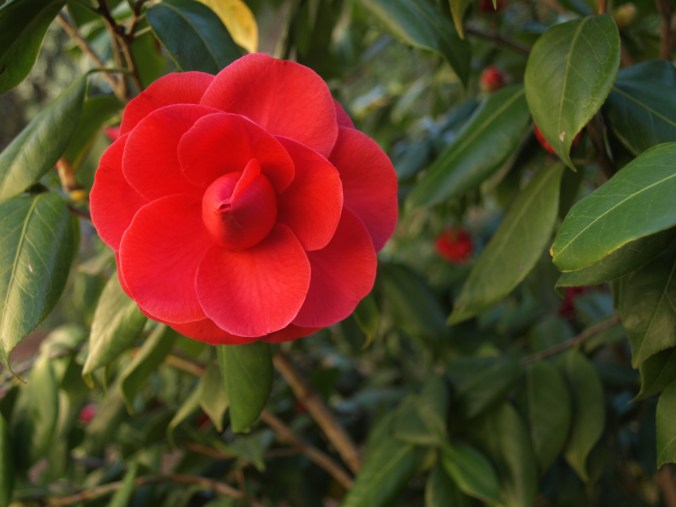
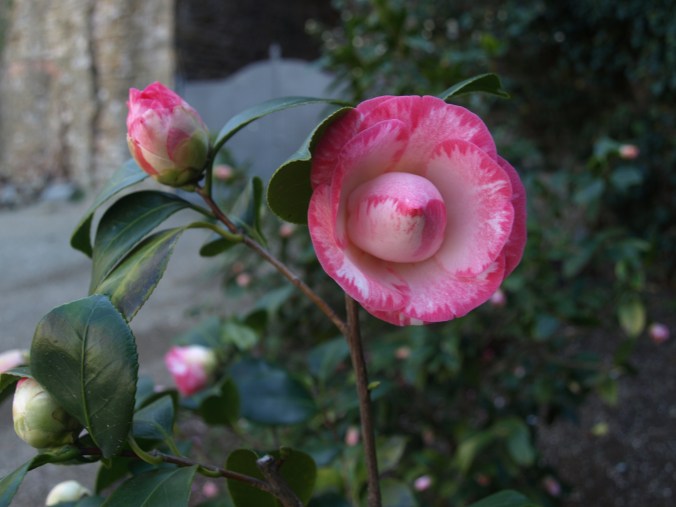
Are you a fan of camellias? I am.

Discover the Gardens in Italy where you can admire them!

OLYMPUS DIGITAL CAMERA

OLYMPUS DIGITAL CAMERA

OLYMPUS DIGITAL CAMERA

OLYMPUS DIGITAL CAMERA

OLYMPUS DIGITAL CAMERA

OLYMPUS DIGITAL CAMERA

OLYMPUS DIGITAL CAMERA

OLYMPUS DIGITAL CAMERA

OLYMPUS DIGITAL CAMERA

OLYMPUS DIGITAL CAMERA

OLYMPUS DIGITAL CAMERA

OLYMPUS DIGITAL CAMERA

OLYMPUS DIGITAL CAMERA

OLYMPUS DIGITAL CAMERA

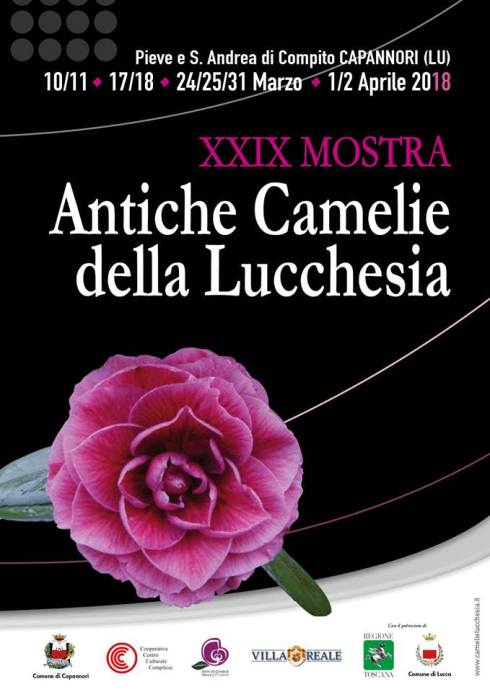
Today, beautiful specimens of Camellias can be admired in many gardens. Between Italy and the Canton of Ticino, from the first weeks of March and throughout April, it is possible to get lost among the colors and the scents of the Camellias in bloom. In Switzerland, in Locarno, a few miles from Lugano, is the Parco delle Camelie, inaugurated in 2005, to fascinate you with its 850 varieties of camellias cataloged, to which are added 70 still unidentified camellias , planted at the southern end of public paths, and 130 double camellias, which form a dividing hedge and are used primarily to provide cut flowers for the annual show held in spring.
In Tuscany the wonderful Viale delle Camelie of the Giardino della Villa Reale di Malia (Capannori, LU) is waiting to give you an unforgettable walk, while in Florence in spring the flowering of the camellia grove of the Giardino Bardini , placed behind the wonderful belvedere on the city.

27336333_10156132894363588_2775332094118318956_n

You can find more info here:  http://www.grandigiardini.it/lang_EN/articoli-scheda.php?id=77

Giardino Bardini

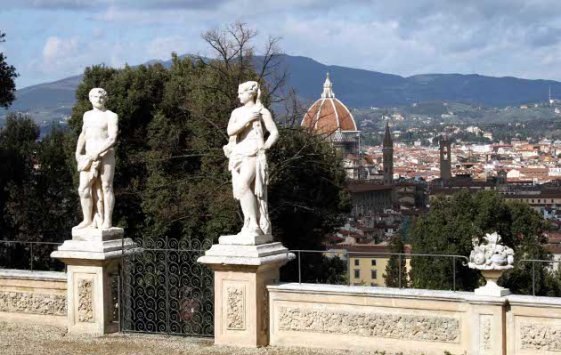
Giardino Bardini offers wonderful views of Florence from its 4 hectares of parkland between the left bank of the Arno River, Montecuccoli Hill and the medieval wall.
panorama-di-firenze

Originally it was an arrangement of walled orchards near Mozzi Palace covering the whole of the hill behind it.

giardino-bardini.ok-da-sito-1

In the 18th century Giulio Mozzi, who loved gardens, enriched the property with a long fountain wall with a multi-material mosaic at the bottom. In the mid-19th century the baroque garden was enlarged through the purchase of the adjoining Anglo-Chinese garden of Villa Manadora, created by Luigi Le Blanc at the beginning of the nineteenth century.

In the second half of the 19th century the Carolath Benten princes acquired the whole property and enriched the garden with Victorian details.

In 1913 the antiquarian Stefano Bardini purchased the complex consisting of Mozzi Palace, the baroque garden and the Anglo-Chinese garden with a remaining agricultural portion and Manadora Villa.

Bardini acted unscrupulously, constructing an avenue to travel by car from the Arno to the villa, destroying the walled gardens of medieval origin, and joining the two existing buildings on Costa San Giorgio.

The death of his son Ugo in 1965 gave rise to a long episode concerning inheritance.
This ended in 1996 thanks to the then minister Paolucci who arranged for the conditions set by the deceased person to be met.

In 2000 the Ente Cassa di Risparmio di Firenze (Florence Savings Corporation), acting through the Fondazione Parchi Monumentali Bardini e Peyron (Bardini and Peyron Monumental Parks Foundation), began the restoration of the complex. It took almost five years to restore the garden’s identity and wealth in terms of composition and plants.

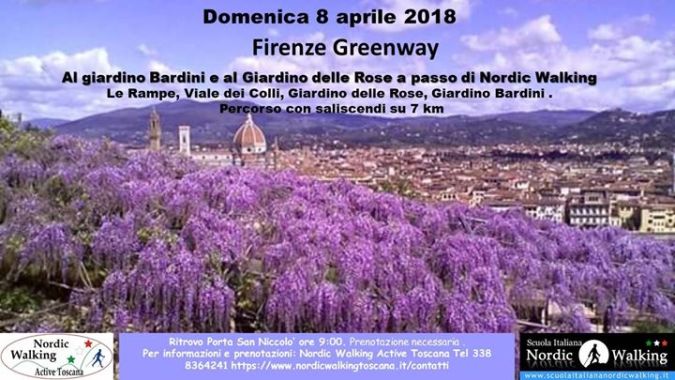
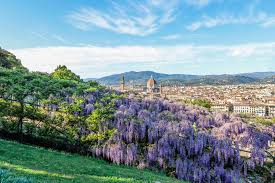
In the agricultural park, in which fruit trees in the Tuscan tradition have been planted, there is a circular viewpoint from which one enters a tunnel of wisteria and comes upon no less than 60 varieties of hydrangea.

b2402b8202

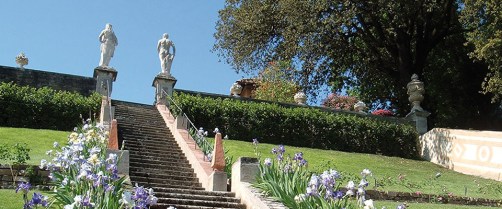
The baroque flight of steps is the most picturesque part of the garden, with its viewpoint over the city and the six fountains with their multi-material mosaic bottoms.

images-2

Bourbon roses and remontant irises have been planted along the flight of steps. In the lowest part there is a garden with herbaceous and graminaceous borders and the grassy theatre that makes use of a cavity in the garden.

In the English-style wood, which formed part of the Anglo-Chinese garden, there is a lawn with azeleas where one can also see ferns, vibernums, camellias, and a collection of citrus fruits. From Via de’ Bardi the route winds up towards the villa, offering views of both the garden and the monuments of Florence.

On reaching Villa Bardini you go out into Costa San Giorgio and in a few minutes you reach the Boboli Garden, from which you can descend back towards the city, covering 7 kilometres altogether amid greenery. It’s possibile to book a personal service at a special price, with a shuttle from 7, 16 or 28 seats, which connects the two Great Italian Gardens of Villa Bardini and Villa Peyron.

A marvelous May fair in Florence

300x190

  XXIV EDITION

ARTIGIANATO E PALAZZO 2018

The great tradition of italian craftsmanship
from its origins to the present

The 24th ARTIGIANATO E PALAZZO exhibition (Florence, Corsini Gardens, May 17-20, 2018) gets underway with the history of one of the leading examples of Made in Italy excellence, the “Mostra Principe” dedicated to the Richard Ginori porcelain Manufactory and fundraising for the reopening of the Doccia Museum, recently acquired by MiBACT (Italian Ministry of Cultural Heritage and Activities and Tourism).

“The hundreds of requests to take part that we have received this year represent an excellent sign of recovery in the artisan sector, because craftspeople are the lifeblood of Made in Italy,” said Giorgiana Corsini and Neri Torrigiani who, for over twenty-four years, have been involved in organizing the ARTIGIANATO E PALAZZO event and in promoting Italy’s artisan heritage.

During the four-day event in the Limonaia Piccola of the 17th-century Corsini Gardens (open to the public for this occasion), the Richard Ginori company will recreate various phases in the creative process through which, daily since 1735, it has produced unique porcelain pieces, with special live demonstrations to reveal to the public a story that has survived to the present day with a rich tradition of know-how, innovation and beauty.

For the first time, it will be possible to admire outside the plant in Sesto Fiorentino the Manufactory’s artisans at work in their various areas of expertise: from slip casting to decoration, evidence of a wealth of knowledge that has been handed down without interruption from older to younger generations of craftspeople.

For its part, the Doccia Museum will be the recipient of the major fundraising initiative, “ARTIGIANATO E PALAZZO FOR THE DOCCIA MUSEUM”that Giorgiana Corsini and Neri Torrigiani have decided to launch with this year’s event “so that the priceless collection of the Doccia Museum will once again be open to the public”. 8,000 porcelain, ceramic, majolica, terracotta and lead objects and over 13,000 drawings, engraved metal plates, chromolithograph stones, plaster molds and wax sculptures.

The project involves a series of initiatives that will involve the organizers, public and corporate sponsors of the 24th ARTIGIANATO E PALAZZO exhibition, the full proceeds of which will go to the Associazione Amici di Doccia:

Rose garden, Florence

If you are in Florence in the next 6 months, I recommend you pay a visit to Florence’s Rose Garden (Giardino delle rose), which is a garden park in the Oltrarno district of Florence, located between Viale Giuseppe Poggi, Via di San Salvatore al Monte and Via dei Bastioni and offers a commanding view of the city.

The garden is situated on the southern slopes of the Monte alle Croci, overlooking the Arno river and the historic district of Florence.

The Rose Garden was created by the Florentine architect Giuseppe Poggi in 1865, commissioned by the municipality of Florence to develop the left bank of the Arno River, when the capital of Italy was moved from Turin to Florence that year. Poggi’s contributions include both the Piazzale Michelangelo and the garden.

The Rose Garden is a terraced area of about 1 ha. Once part of the property of the Oratorian Fathers, the area was transformed into a garden by Attilio Pucci, who started the collection of roses.


Error
This video doesn’t exist