


Fate is truly fickle.
You take 2 historic pharmacies, founded in Florence long, long ago. I’m speaking of the le farmacie di San Marco and di Santa Maria Novella. Santa Maria is still going strong, while the farmacia di San Marco shuttered its doors in 1995. It obviously had a good run!
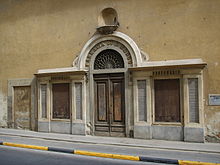
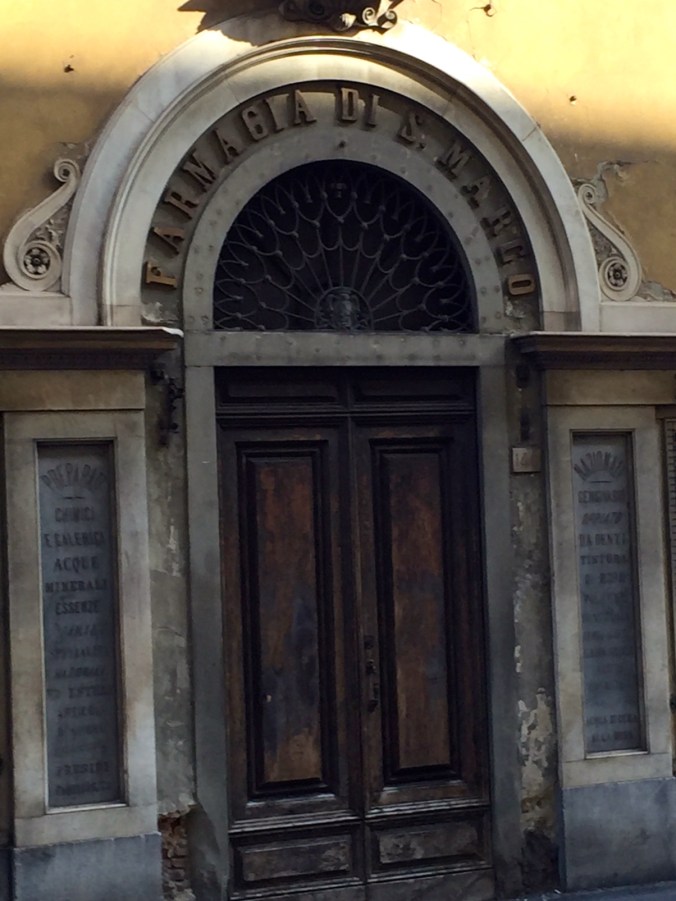
I’ll be discussing the components of the facade below, but first please notice the little niche with a shelf above the lunette over the door. There was once a small marble statue, depicting the lion of San Marco, placed there.
I’d never heard anything about the San Marco pharmacy, although I wasn’t surprised to learn the there once was a farmacia attached to this church complex. It was customary for conventi (in Italian, a convent denotes what in English we would call a monastery) to have a farmacia, selling medicinal products that the monks created.
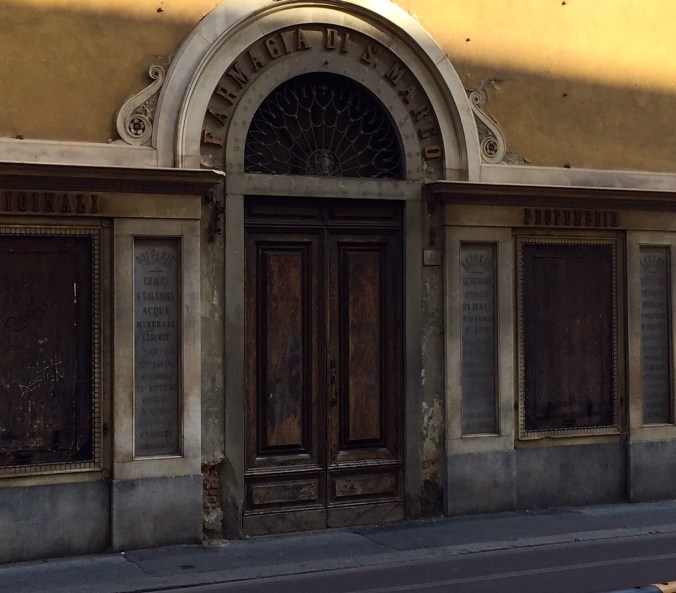
But, many times a week I ride or walk by the old entrance to the pharmacy of San Marco on Via Cavour in Florence. The pharmacy is now defunct, but it is lovely that the authorities who closed the shop in 1995 left the old, 19th-century facade. It speaks volumes and is a charming relic of days gone by.

The San Marco pharmacy was established in 1450 by the Dominican friars, along with its twin, the still operating Farmacia di Santa Maria Novella. Cosimo de’ Medici had a particular interest in San Marco and there is little doubt that his patronage helped the church in all of its endeavors.
The Dominicans were known to be people with considerable culture. The medicinal preparations they created inspired confidence.
What were the medicines they had on offer? We know they sold at least the following:
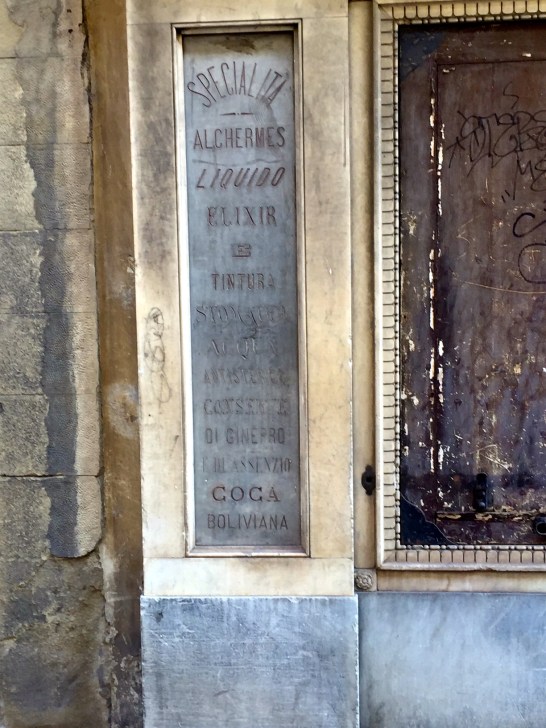
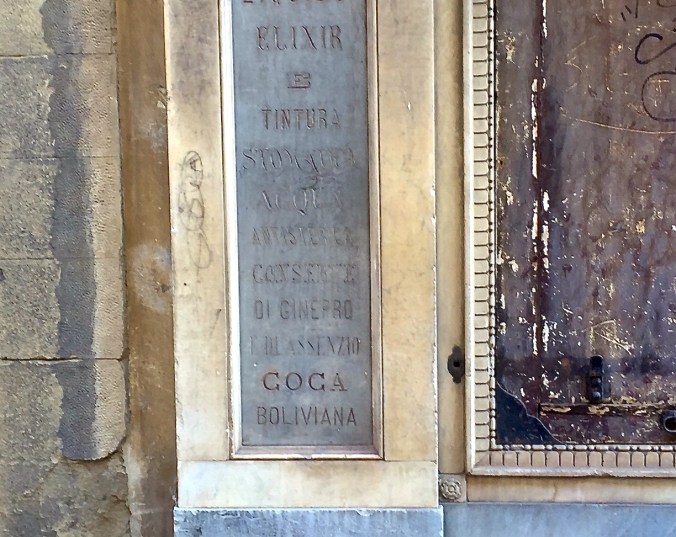
My favorite product listed on the engraved stone menus is “Coca.” This would indicate coca cola, which was invented as a medicinal elixir by a pharmacist in Georgia, USA, in the 1880s. So, that gives us a date for the facade of the old pharmacy. Would that we could see the earlier versions, now long lost.
I just love the concept of an American elixir on sale in the Florentine pharmacy.

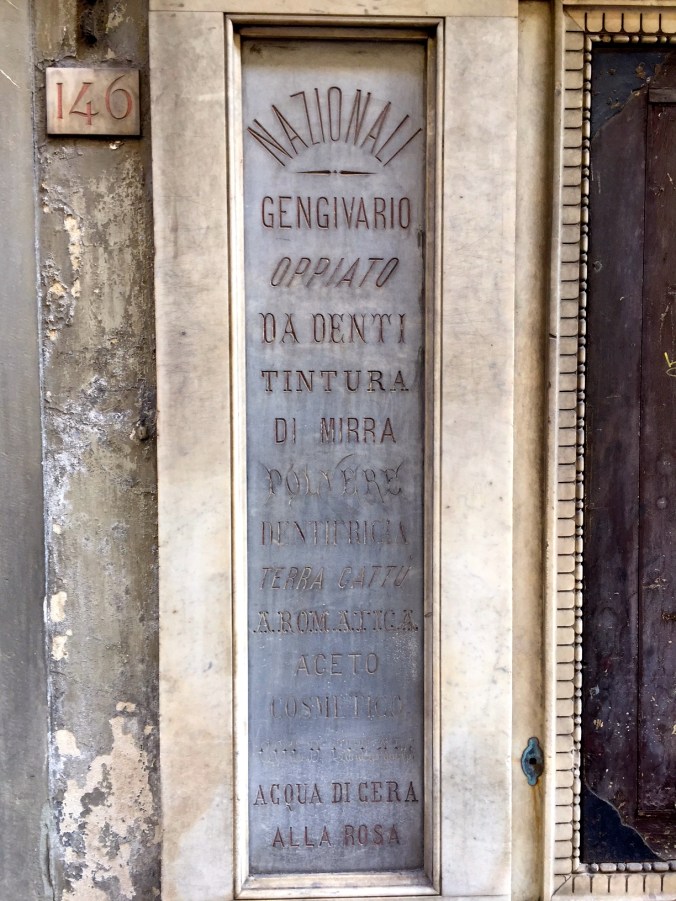
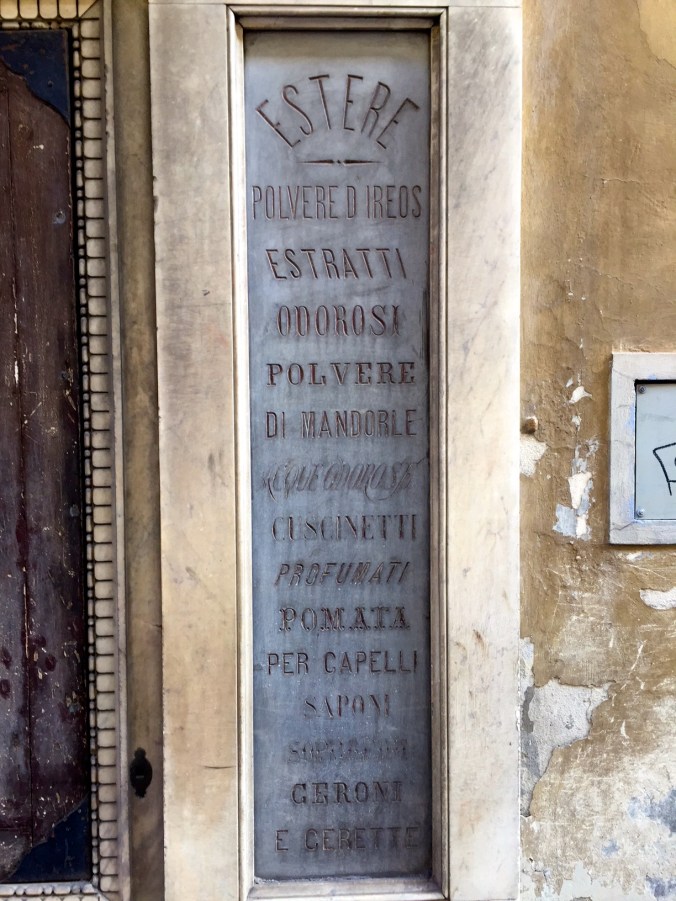
If you can, like I can, picture how this pharmacy must have seemed when these engraved stone tablets were new, then let your mind wander back in time.
The following info on the farmacia comes from: http://socialdesignzine.aiap.it/topografie/9172
The Ancient Pharmacy of San Marco was established by friar Antonino, with the generous support of Cosimo de ‘Medici, called il Vecchio, during the reconstruction of the San Marco complex in 1435. From 1450 the pharmacy, whose production was initially reserved for use inside the convent (monastery), was open to the public. The stone lintel of the ancient entrance, is one of the oldest examples of commercial signage with the logo “Fonderia: e: S. Marco pharmacy”, with a minimalist setting in a beautiful pre-humanistic character characterized by broken bar of A.
Among the most famous productions of the pharmacy was an alchermes, particularly appreciated by Lorenzo the Magnificent, and antihysteric water. In 1498 the stomatologic elixir, the Dominican liqueur, the herbal tea, elastin and Scots pine syrup were created.
Then rose water from 1700, about which the Dominicans wrote: <<Thanks to the peculiarity of the singular Rose of Bulgaria, from which it is directly distilled, rose water is miraculous to delay the sad prodromes of old age: wrinkles. Warmed up in a bain-marie, it will restore tiredness and vivacity to your eyes ».
Later, absinthe and the “Bolivian” coca were included among the specialties of the pharmacy. (If this writer is correct, then my assumption about Coca Cola is incorrect.) The pharmacy was closed in 1995.
The series of gray marble signs of the mid-19th century that surround the entrances give account of the many products of the pharmacy with a composition that incorporates a real typographic sample with graceful, linear, Tuscan, italics and ornate characters.
Based upon my scientific observations, this species appears to travel in pairs or in small groups. More study is needed.
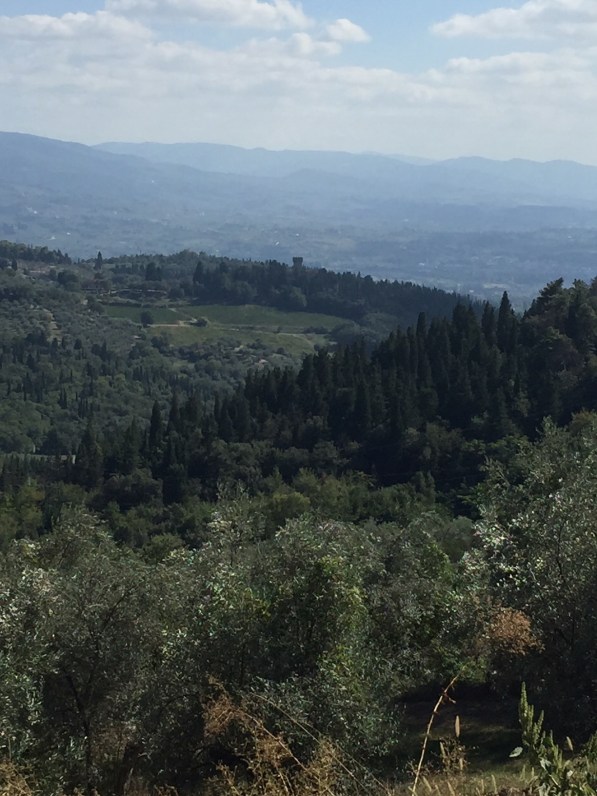
Last Sunday was beautiful; it was sunny, not too hot, and I found myself deep within the hills outside of Fiesole. I love these random wanderings and the things I see.
It’s hunting season now and wild boar is a usual casualty. Florentines love dining on these cinghiale, and I saw this advertisement in an osteria making good use of the hunt.
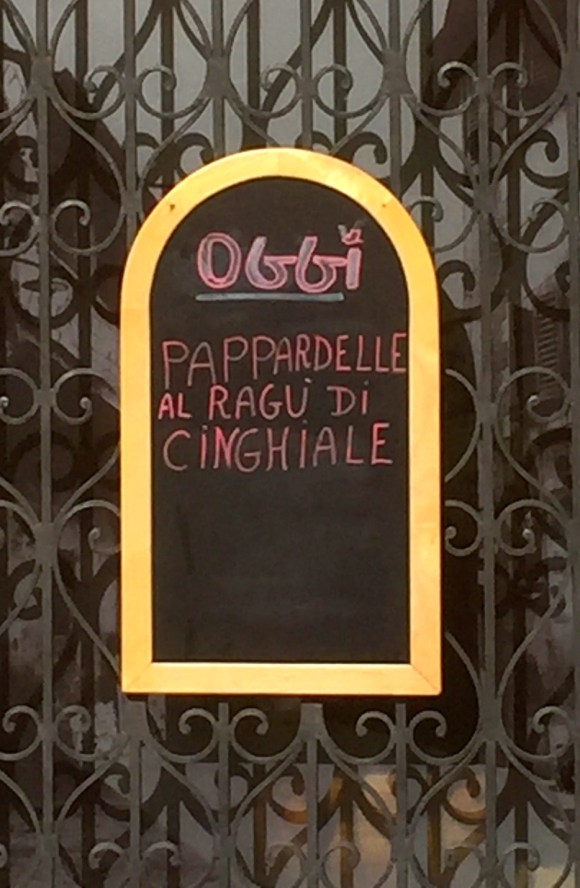
The colors of fall on the trees are just beginning to reveal themselves in these lovely hills, but pyracantha is almost shining, it is so bright. Very pretty!

Edible crops are alive and well in the hills near Fiesole, and I never, ever tire of seeing pomegranate trees bearing fruit.
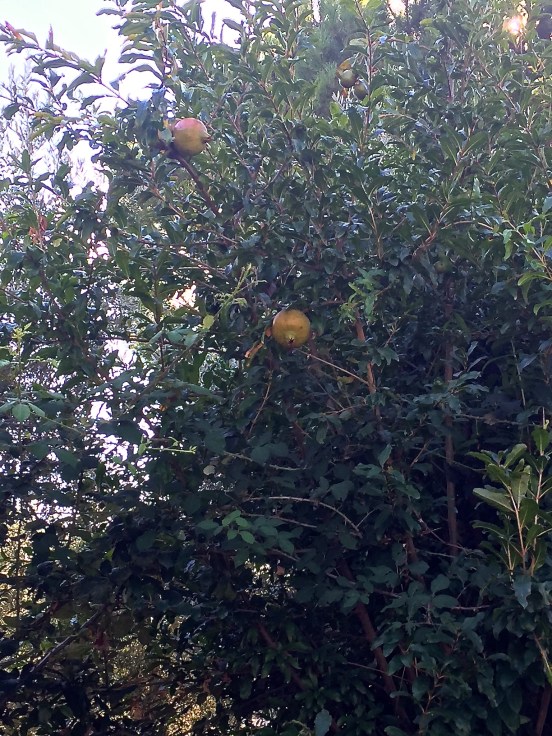
The olive harvest this year looks to be very good and I encountered many trees heavily laden with these green fruit.
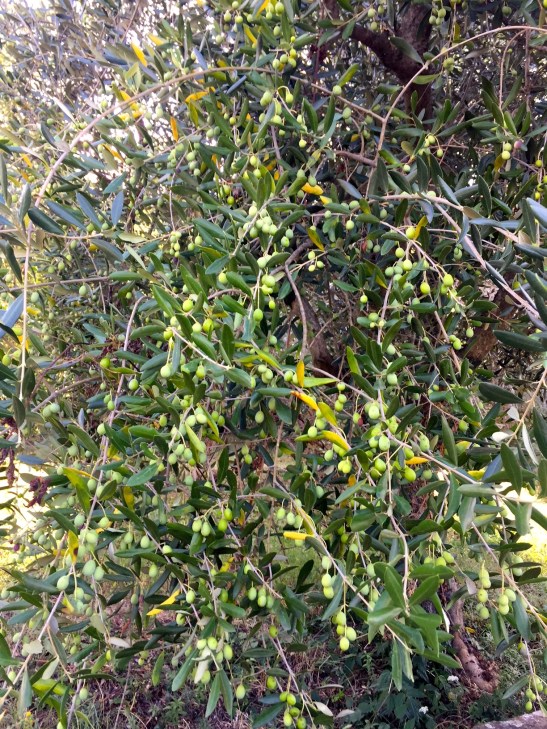
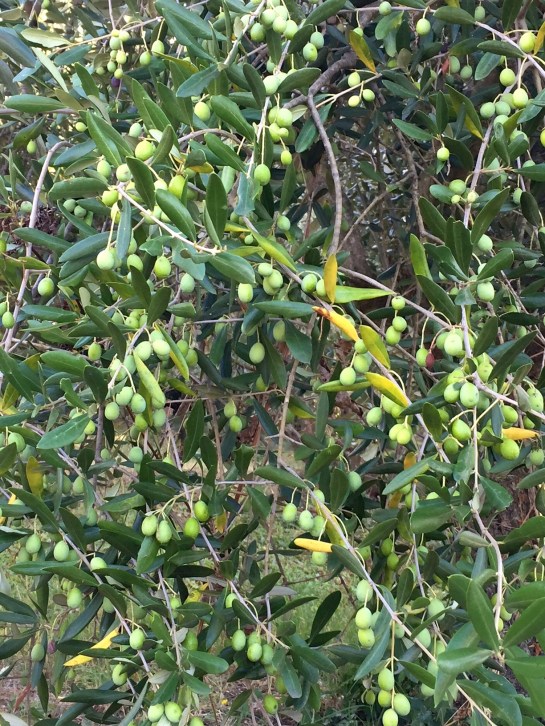
There are olive orchards all through these hills, but there are also fig trees, plum trees and, as below, plenty of apple trees.
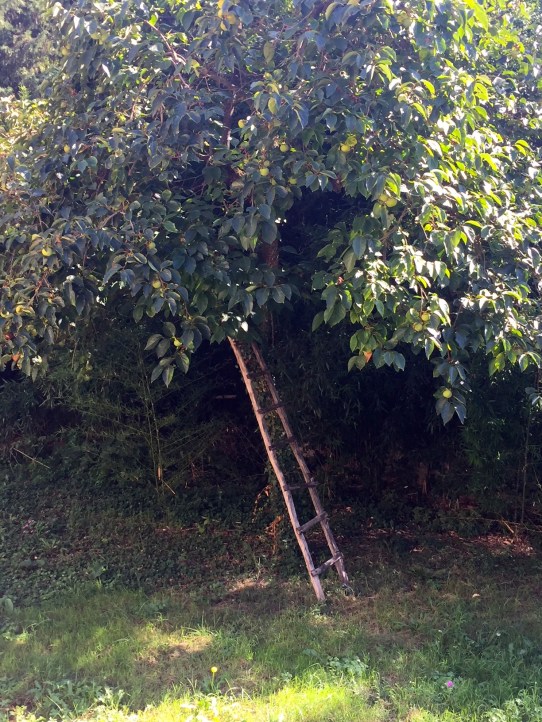
I loved looking at this particular apple tree and I will admit that I was sorely tempted to climb the ladder that was already in place to access the apples high up. I contained myself and didn’t do it!
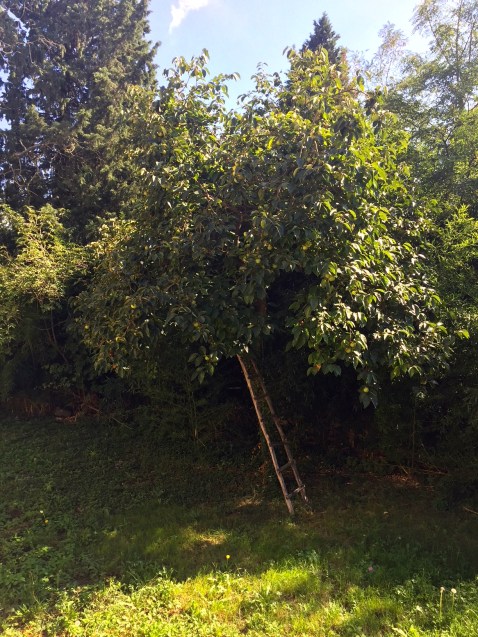
The views and vistas on all sides of me were attractive and beckoning. Another day I’ll climb other of these hills.
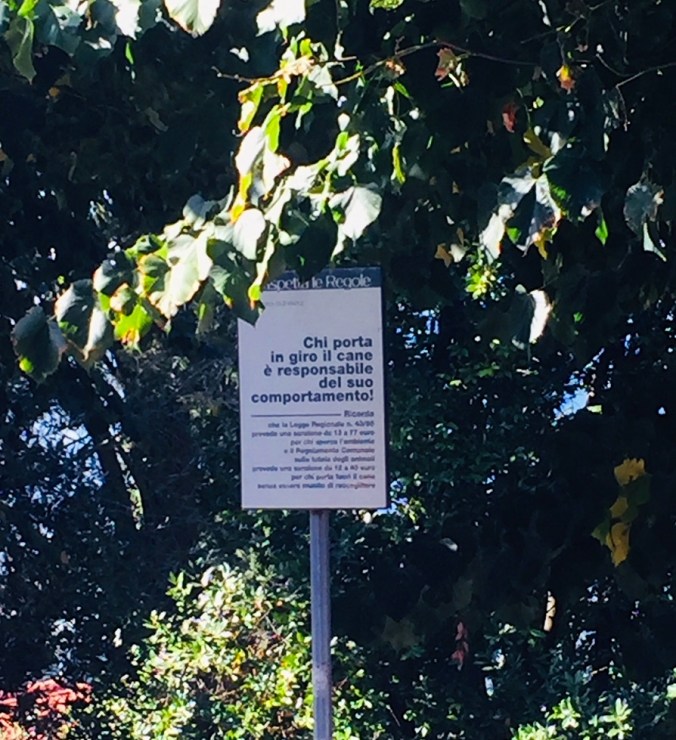
In the village of Fiesole itself I smiled when I saw this sign. “Whoever takes a dog on a walk is responsible for the dog’s comportment.” Hear hear!

Today everyone uses disposable paper tissues and almost all mothers carry them in their handbags for everyone in the family to use.
But, what preceded the lowly “kleenex?”
Well, according to Professor M. Fanfani, the handkerchief was invented in Italy, just like the fork and the napkin. I tend to think that the napkin and handkerchief both were created in various cultures because humans need these objects and surely someone would have thought of a good product solution.
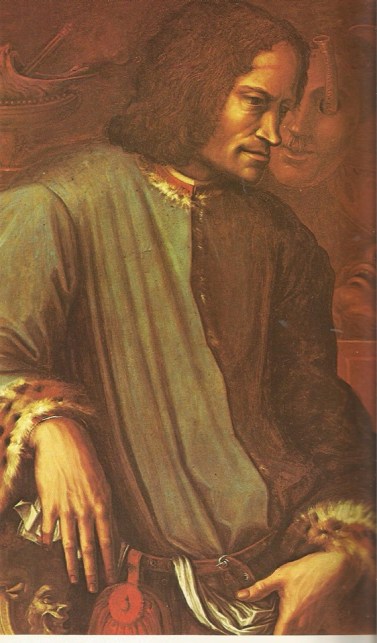
But readers know I love all things Italian and so of course I am going to go along with the professore and accept the fact that while various cultures no doubt had their own objects for cleaning the face and nose, the first rarified version no doubt was of Italian origin. Most good things were. :-)

So, let’s read and consider his thesis on the handkerchief.
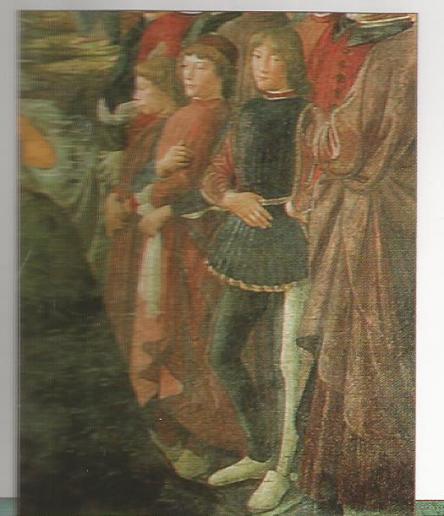
The use of the handkerchief, like that of the fork and napkin, was born in Italy and its use had more to do with the prestige of its possession, than its strictly hygienic reasons.
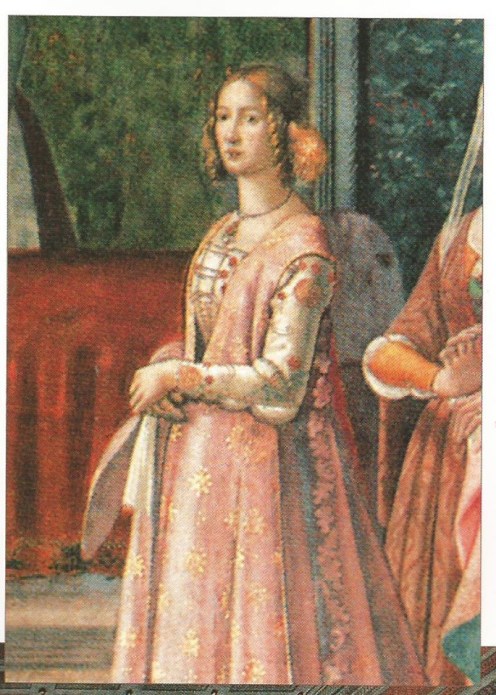
As with so many details about life in Italy, paintings from the period give us a window into the daily life of some Italians.
In the works of Ghirlandaio, an attentive chronicler of the Florentine costume, this delicate accessory is a standout.
Handkerchiefs were rare and expensive; for example, we know that King Henry IV had only five of them in 1594.
We learn that blowing one’s nose with the handkerchief (instead of with your fingers, or with the wide sleeves of a shirt) was a refined sign of nobility or high social standing.
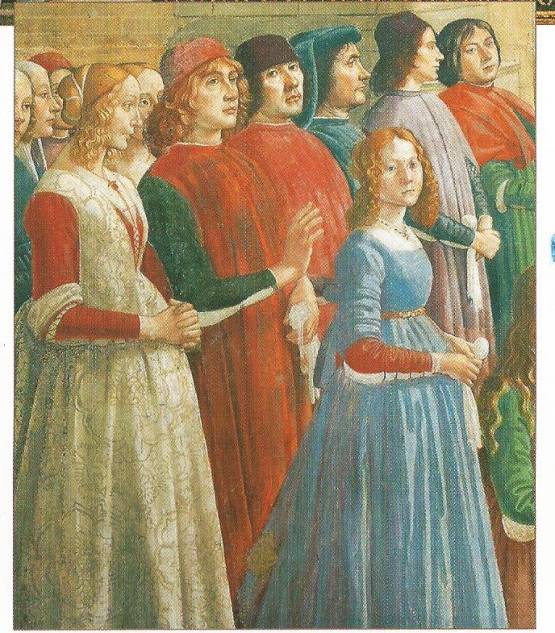
Ghirlandaio often recorded in paint the upper bourgeoisie in Florence. The possession and showing of an embroidered kerchief indicated status.
Who knew?
This text (which I’ve modified in English) appeared on a Facebook post recently
written by Prof. M: Fanfani.
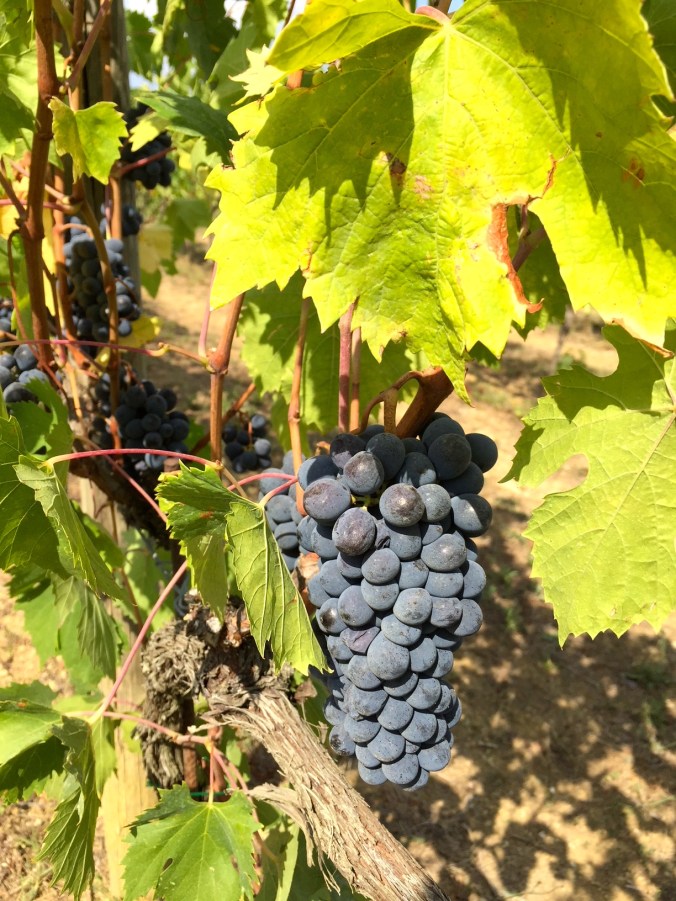
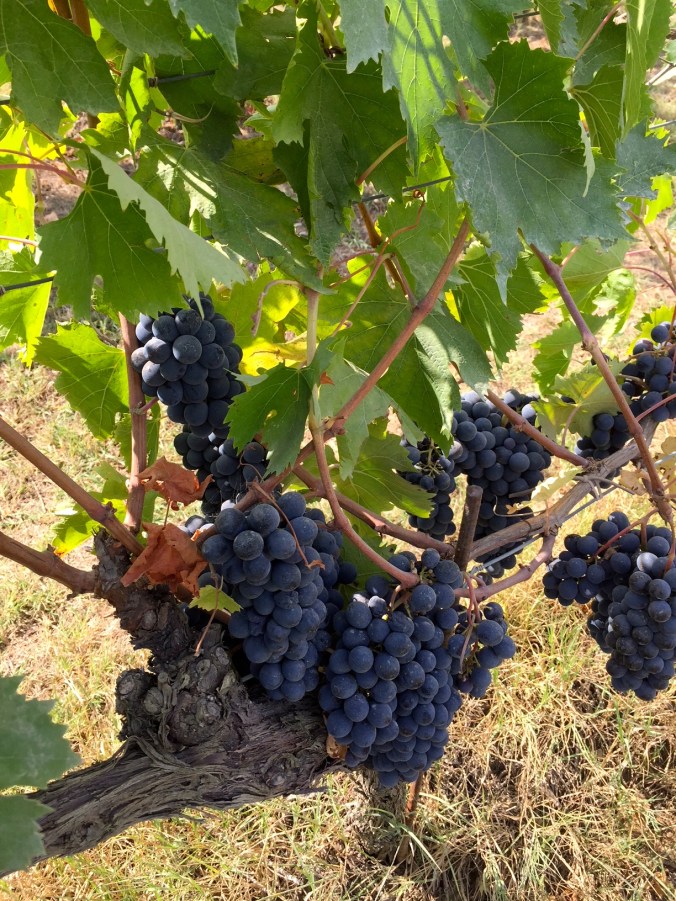
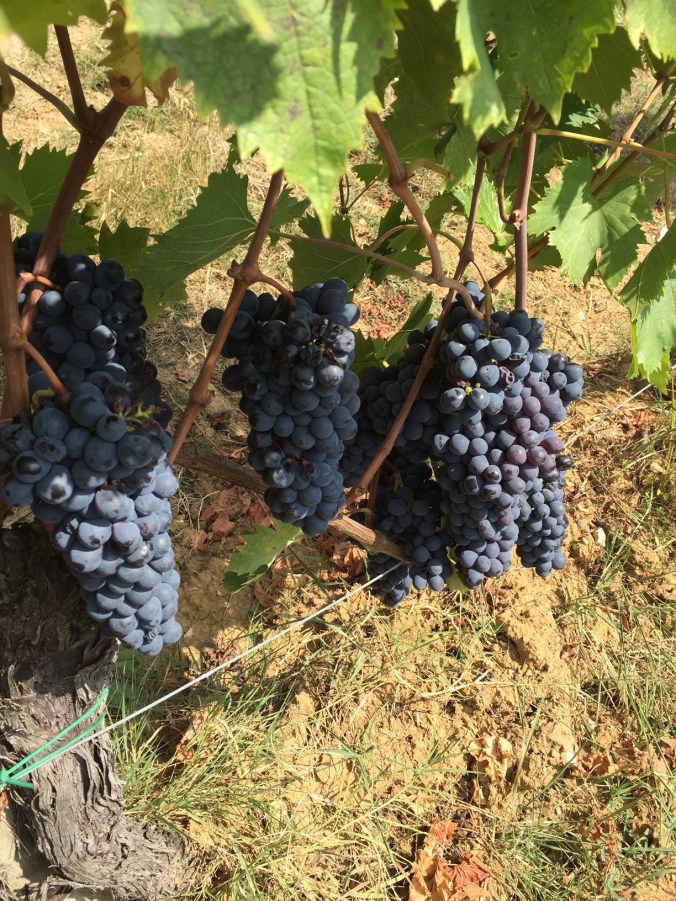
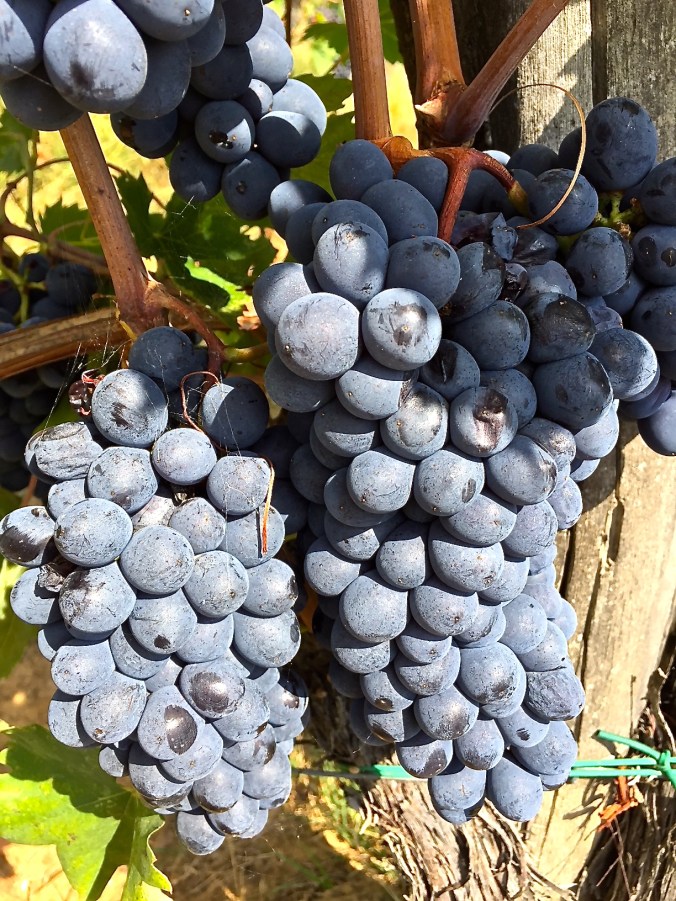
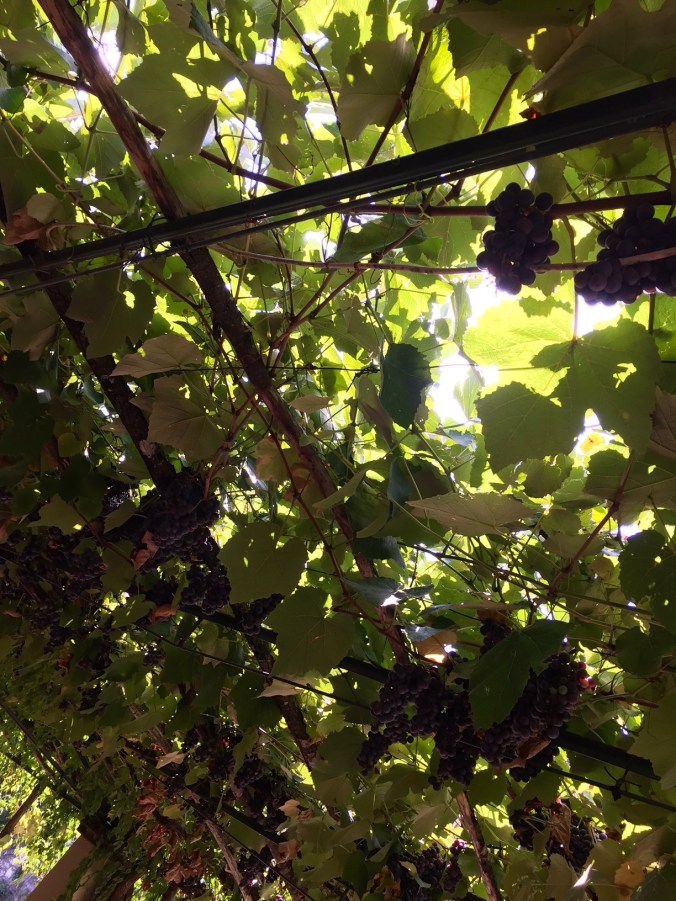
It’s that time again! Grape harvest all over the vineyards in Italia!
(And the news is excellent coming from France too:) https://www.independent.co.uk/news/world/europe/french-champagne-makers-record-harvest-quality-grapes-vintage-wine-a8507911.html

In the common imagination the idea of feet crushing is well rooted, a ritual still done by some wine estate just because it keeps a sort of ancient fascination.
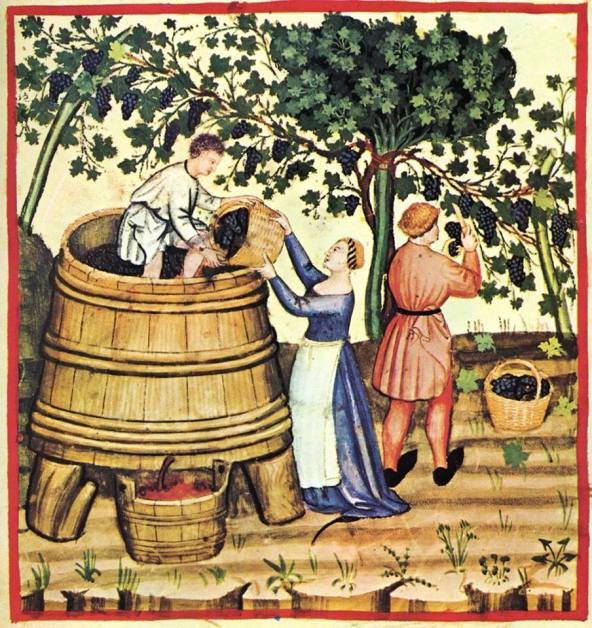
(Foto proveniente dall’archivio privato della famiglia Colombini. -1945, Neutro Martini, guardiacaccia della Fattoria dei Barbi, con un bigonzo di uva in spalla durante la vendemmia nella vigna dei podernovi.)




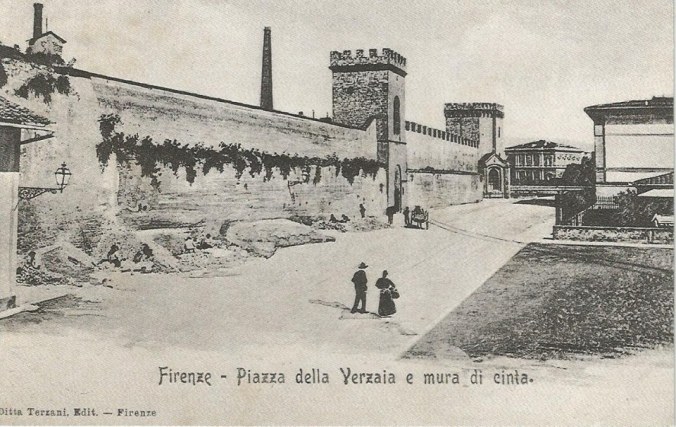
An old view of Florence on a postcard of the Piazza della Verzaia, showing the medieval walls that still surrounded Florence. The photo would have had to be made before c. 1865, for when Florence was the Capital of Italy (1865-1871), the city walls were demolished.
You can find great info on Florence’s walls here: http://www.firenze-oltrarno.net/english/arte/mura.php
Today’s Excelsior Hotel in Florence looks like this
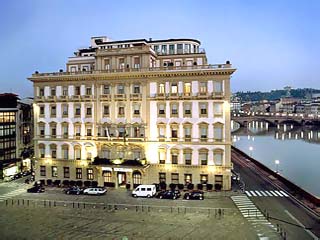
It was originally named the Grand Hotel de la Ville, seen here in an old postcard from the late 19th-century.
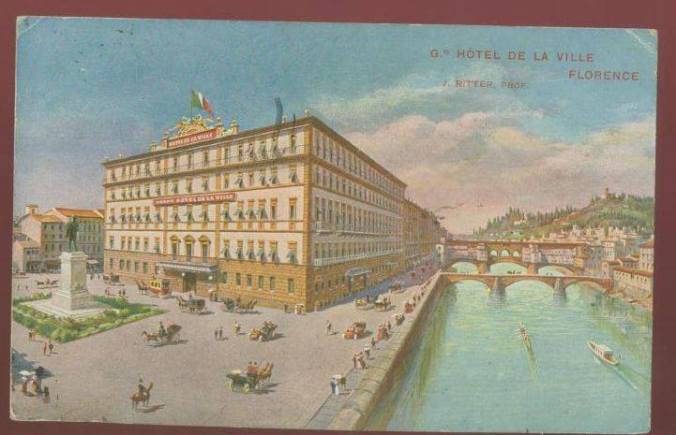
The location of the palazzo which has housed hotels with several names, has always been prime real estate in beautiful Firenze.
A proposito di tranvia, 1891 inaugurazione della tratta Firenze -San Casciano. La tranvia fu principalmente voluta da Emanuele Orazio Fenzi, banchiere ed esponente di una famiglia con interessi ne campo ferroviario, e da Sidney Sonnino, uomo politico rappresentante in parlamento nel collegio del Chiant.
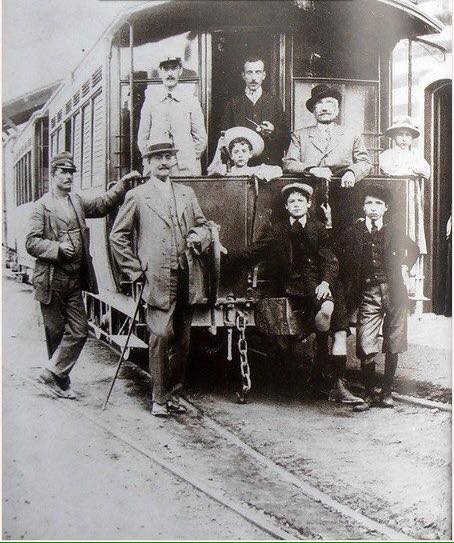
A picture of the 1891 inauguration of the Florence-San Casciano tram-way. The tram was built primarily thanks to Emanuele Orazio Fenzi, banker and from a family with railway interests, and Sidney Sonnino, representative in parliament in the Chianti college.
 get back, lauretta!
You must be logged in to post a comment.