We chose Livorno as our Sunday getaway. Livorno is a bustling port town and the 2nd largest city in Tuscany. We were lured by its history and its unparalleled seafood.
Livorno, not so well known outside of Italy, boasts a picturesque system of canals, an authentic urban character, an attractive waterfront along with a fine collection of historical and cultural sites.
But the main advantage for us was that we had Francesca with us, a lovely woman who lived in Livorno when she was growing up. We had our own personal tour guide! She guided us here and there and took us to an outstanding restaurant, but I’m getting ahead of myself.
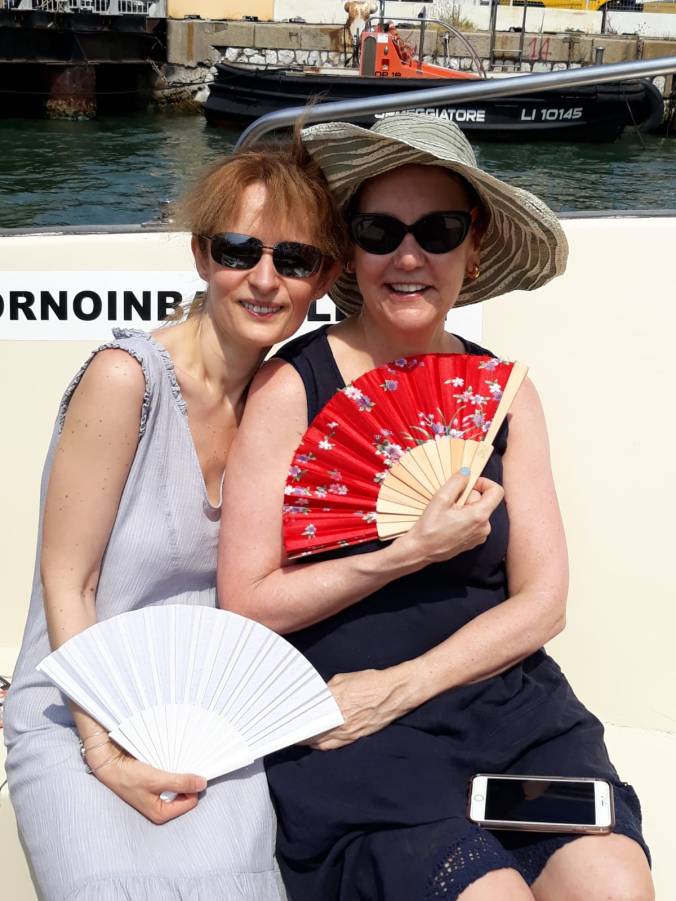
We started here: a monument to the Medici family (they were everywhere in Tuscany) with 4 Moors depicted on the lower level. I show it here with 2 sweet sisters and good friends (of each other and of me). We were ready for an adventure!

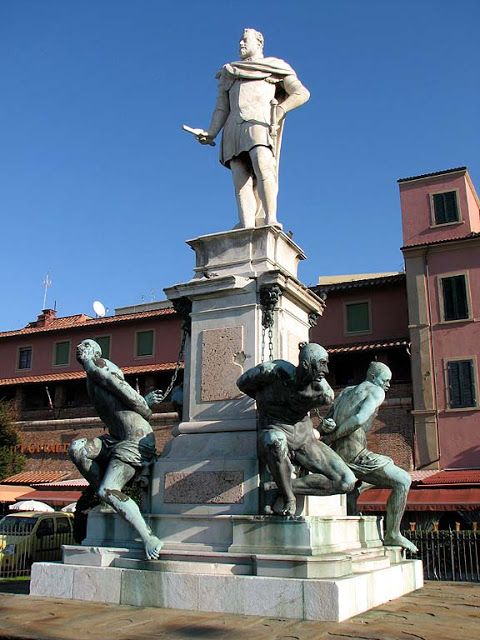
Sketching this monument was a local painter:

I thought he was very able, here’s his start above and below:
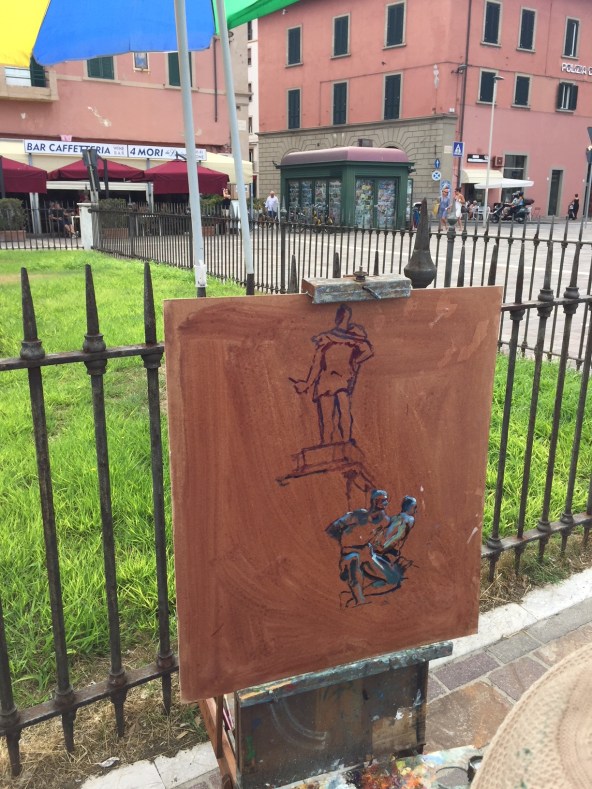
The painter is a colorful local with a lot of painterly skill. Pay attention to his sketch because we will come back later and see how far he got.

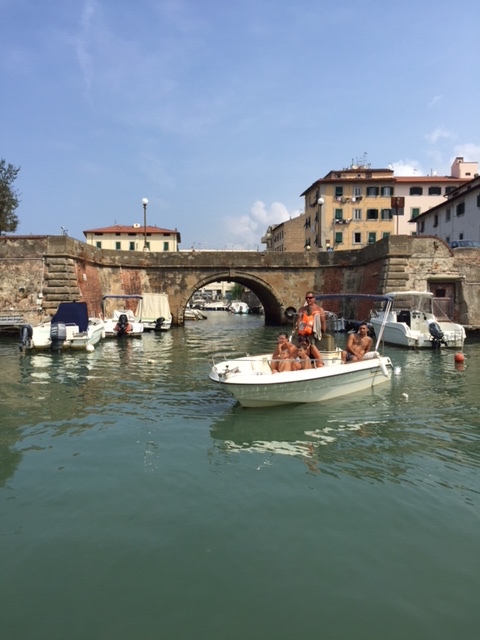
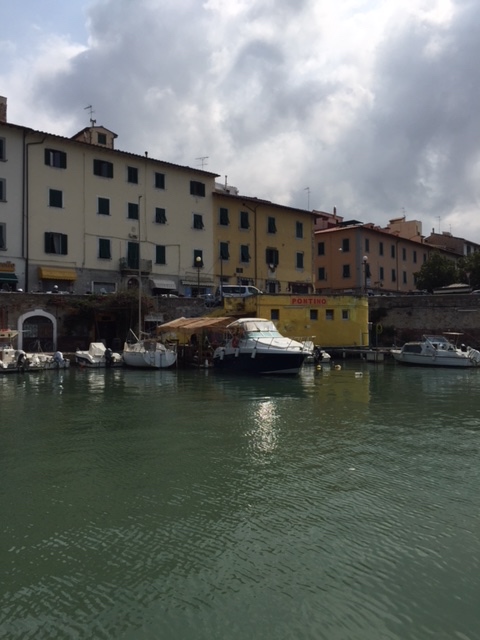
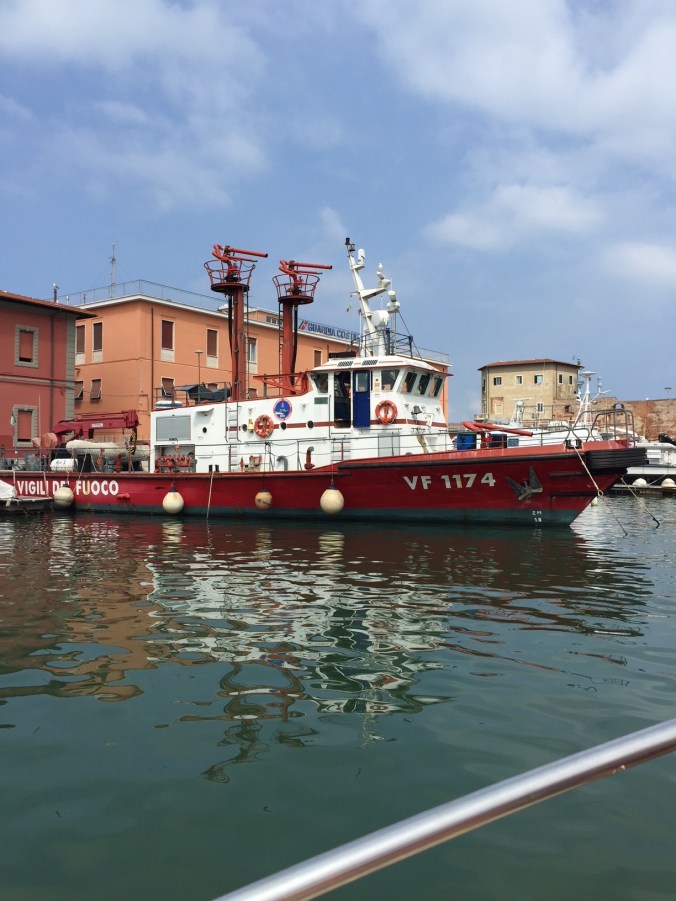
We boarded a boat for a watery tour of Livorno. The barca took us through and around the city, including the most picturesque quarter of Livorno, the Venezia Nuova, aka “Little Venice,” with its canals, arching bridges, and ornate merchant palaces.

This city is simply unique, rich in history, and built upon the water by Venetian engineers who were hired to carry out a Medicean dream. Cosmopolitan Livorno was full with rich merchant palazzi during the 17th & 18th centuries. Merchants from all over the world arrived in Livorno, all of whom wanted to get in on what was a very lucrative trade.
These merchants petitioned the Grand Duke to grant them space to construct palaces and warehouses in order to furnish the port with an almost endless supply of provisions and luxuries. By the 17th century, Livorno was becoming one of the most important ports in the Mediterranean.
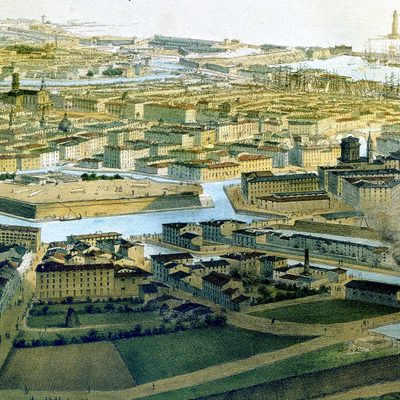 A 19th-century map of the city.
The canals of Livorno were constructed over waters reclaimed from the sea north of Livorno between 1629 and 1700.

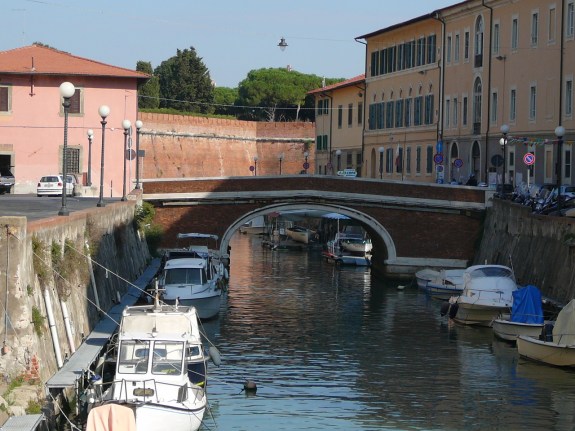
Protected from the west and east by its two Medicean fortresses, we glided in our boat through the many sectors of the city, a once rich city which had become the coffer of the riches of all the world.


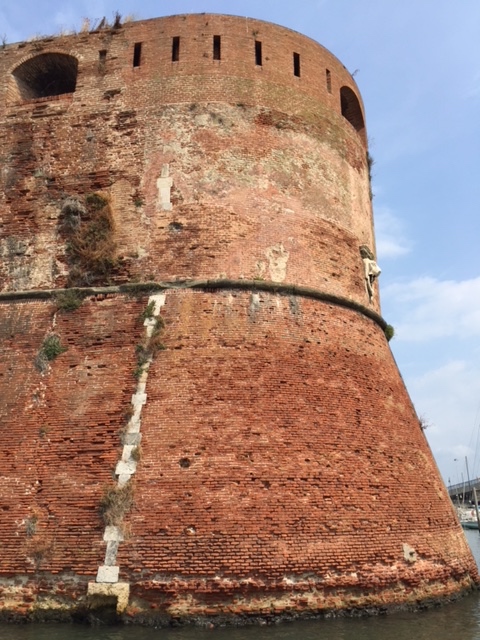
The Medici fortified the city and its water lanes with these massive walls.
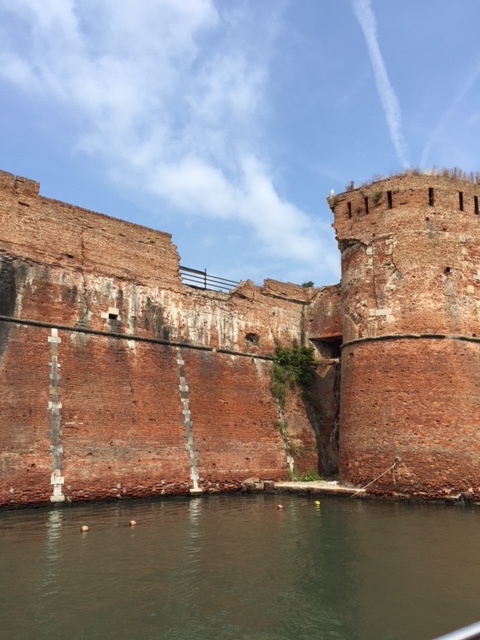

“New Venice” was very much admired by intelligentsia and aristocrats on the 18th century “Grand Tour.” That atmosphere lingers today, with canals, shops and cellars on the water, and an architectural system tailor-made for commerce.
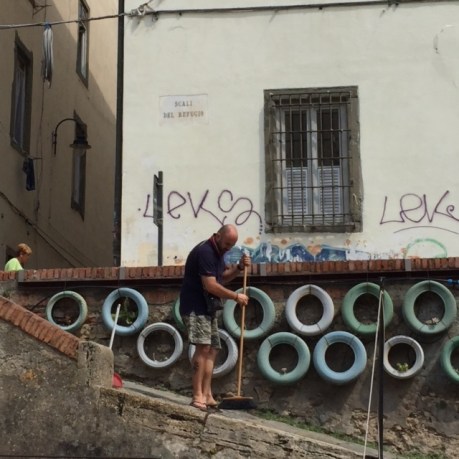
Gliding through the man-made canals, we saw evidence of the old artisanal traditions of the boatmen, sailors, barrel-makers, and porters who lived, worked, and traded secrets in “Little Venice.” We heard many stories, and became acquainted with Livorno’s lively and charismatic inhabitants, among whom were smugglers and pirates in the pay of the Grand Tuscan Dukes. Inside these palazzi, the city’s rich merchants and noblemen rubbed shoulders with the Grand Dukes, and, often, other random members of European aristocracy.
On the water we passed under the shadow of the octagonal dome of the church of Saint Catherine of Siena, which for 3 centuries has graced the Livornese skyline. We also saw the entrance of the so-called “New Fortress” of Livorno, an island completely surrounded by the city’s principal moat and canal, the Fosso Reale, and last remnant of the 5 original bulwarks of this fortified city, the famous pentagon of Bernardo Buontalenti.
source: https://www.livornotour.com/senza-categoria-en/la-piccola-venezia-toscana.php?lang=en
Livorno is also the home of Casa Modigliani, the birthplace and childhood home of Amedeo Modigliani. The Museo Fattori, Livorno’s art museum, contains artwork from Modigliani and 19th century Italian Impressionists. I am sad to report that we didn’t look at any of the many interesting museums. It was a Sunday and we were on holiday! We wanted to stay out doors and enjoy the city and the coast, not go inside a darkened space.
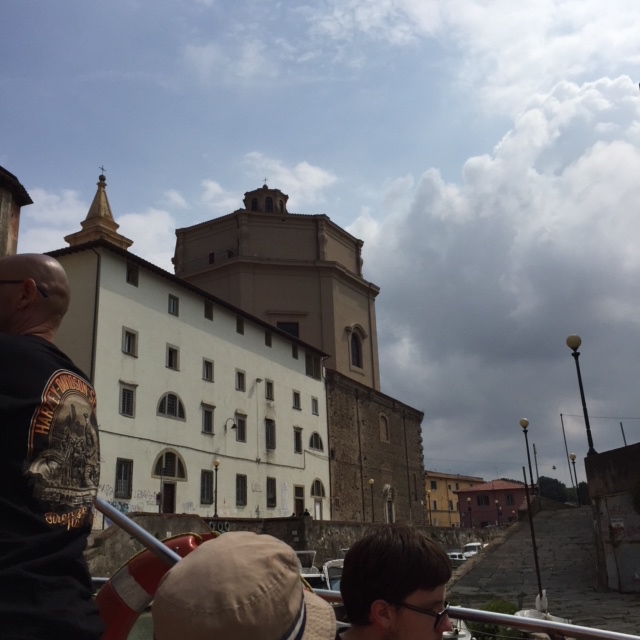
Santa Caterina church ahead on left.

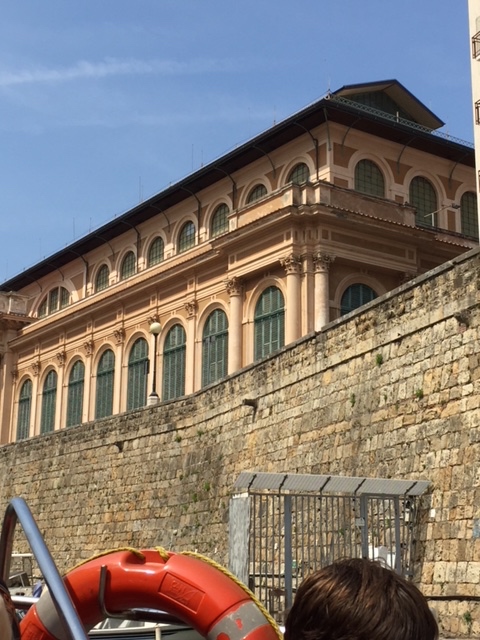
Above is the 19th century mercato centrale. It reminded me of the same type of structure in Florence.
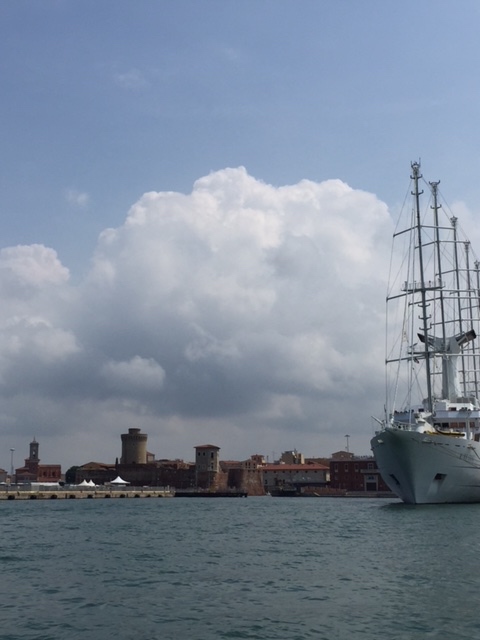
Our boat ride lasted about an hour, and took us under the Piazza Repubblica, along the canals, to the harbour of the fishing boats, the harbour of the yachts, as well as past the fortress.
It was a beautiful way to enjoy a fascinating city. I am looking forward to returning to this intriguing place, which so often lives in the shadow of other Tuscan known cities. I’d like to return in the fall or spring, or even the winter, because the height of summer is a brutal time to visit.
Here we are, roasting in the heat!
N. tried to keep Free (that’s his name, in English!) cool, but it was a losing battle.

Walking back to the car after the marina, we passed the artist and here is the sketch:

He had made a lot of progress and I tried to buy the sketch, but he said it wasn’t for sale because it wasn’t good enough. No matter how I protested, he wouldn’t give. He was in the process of loading up his supplies because it was just too hot and I thought he might like to lighten his load. No go.
After the boat ride and a drive along the lengthy waterfront, we settled in at a ristorante chosen by Francesca for a long, leisurely lunch. It’s Sunday and we’re in Italy, so of course it will be a long, leisurely lunch! That’s what they do best here!
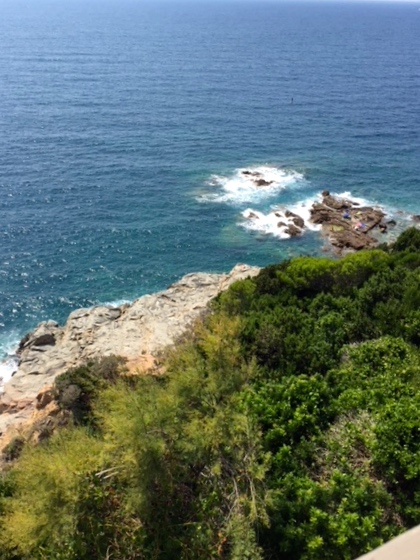
This was the view.
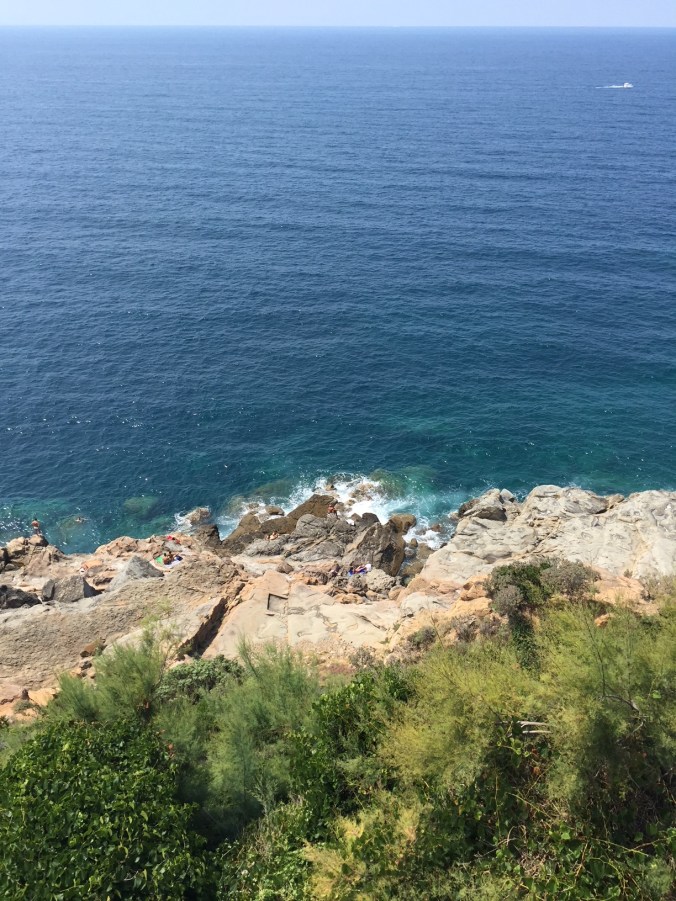
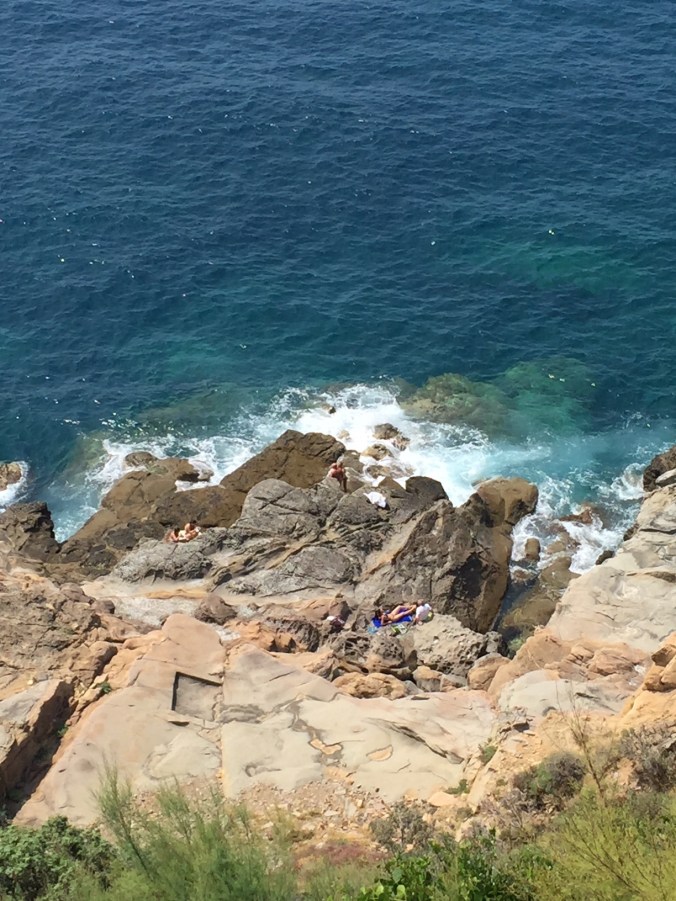
This was the food: A small plate (ha ha) of mussels for antipasto.
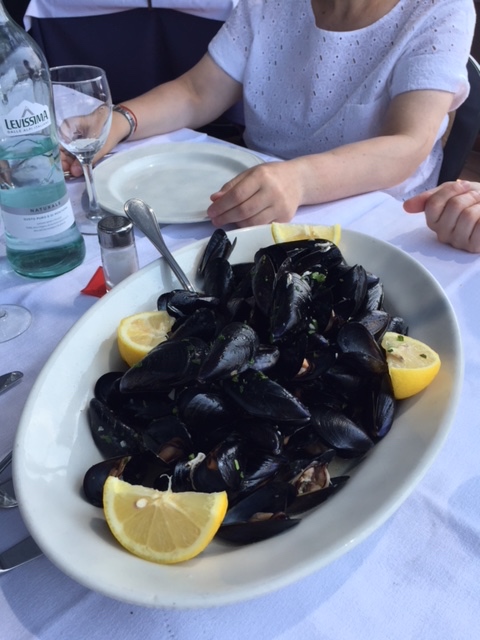
A pasta of spaghetti vongole veraci for pasta. Grilled fish for main.

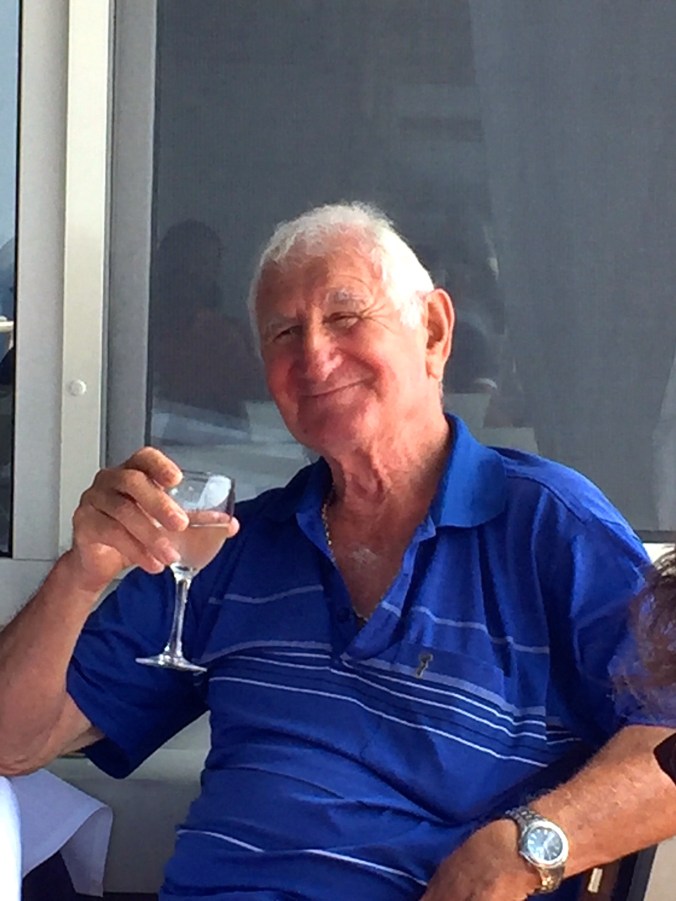
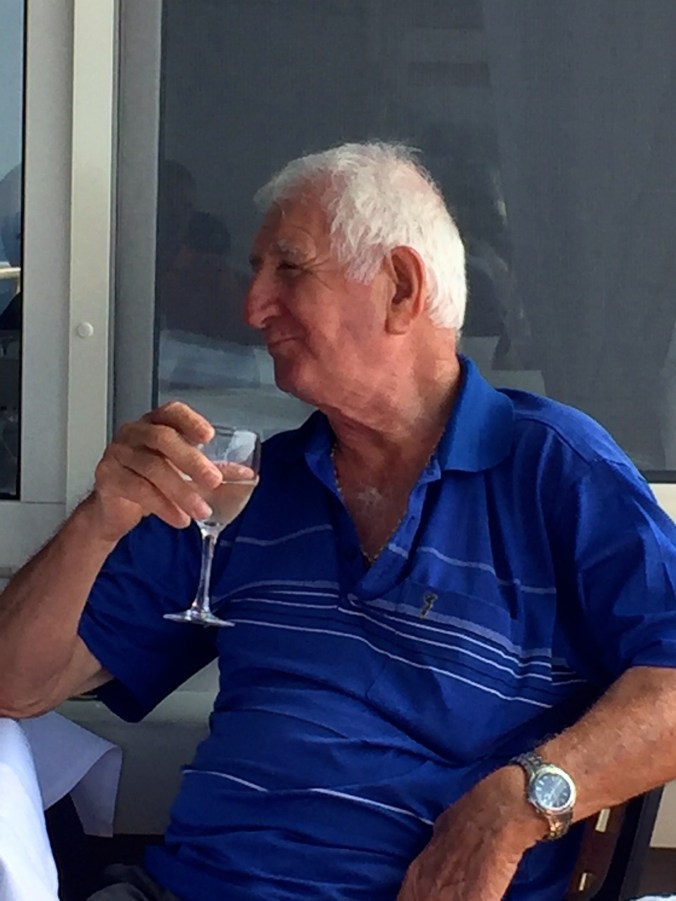
When you put 2 or more Italians into the same space, you’ve created a party. This charming gentleman joined our lively lunch. He lives near Livorno and worked for 40 years for Coca Cola company. He loves America and Americans. He was sweet, can’t you just tell from his beautiful face?
Much later on, it was time for le dolce. We tried a few. I started this course with a limone sorbet served with vodka:

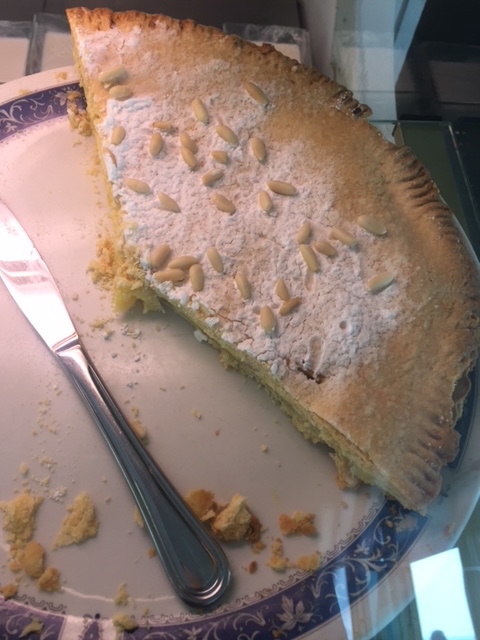
We ordered a torta della nonna, which despite being called a cake is more like a cream pie. The pastry was delicious, like a shortbread, and there was a vanilla creme patisserie in the center, plus pine nuts and powdered sugar on top. We had to have a 2nd piece brought to the table. Here’s a recipe if you are inspired (you can translate with Google Translate):
https://www.tavolartegusto.it/ricetta/torta-della-nonna-la-ricetta-perfetta/

Some members of our party skipped the torta and went straight in for the gelato.

All the while I looked towards America. Can you see it? Way over there to the west? Hi America! I’m worried about you.


After a couple of hours, out party had expanded like so:
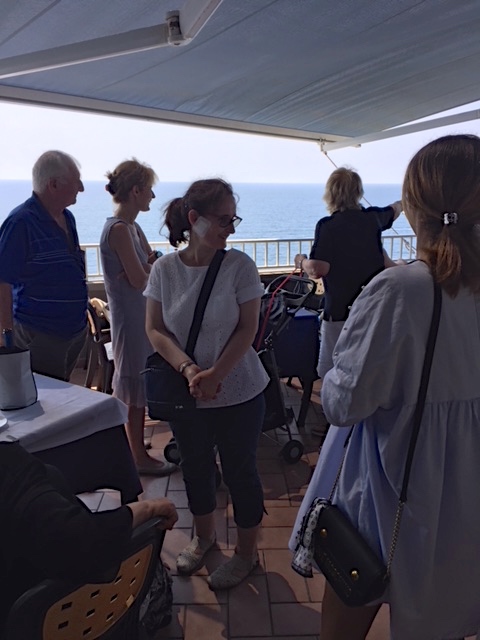
And so:


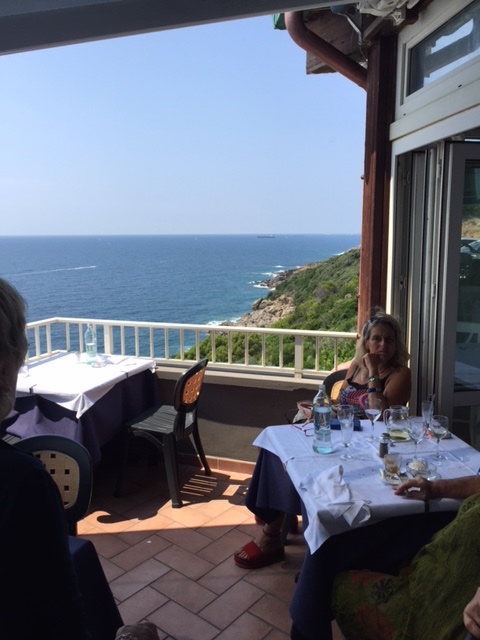
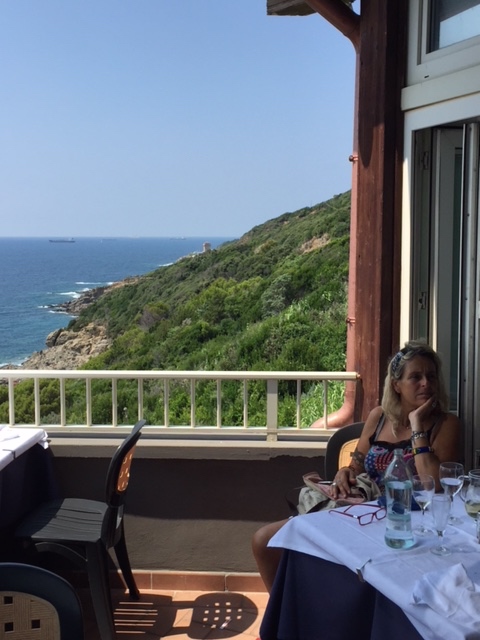
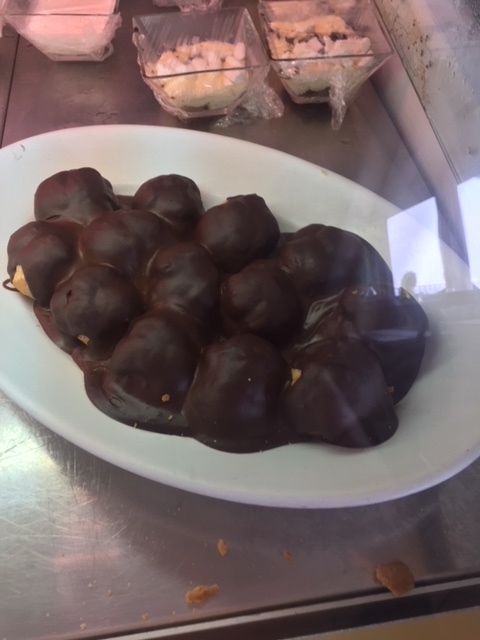
As I was leaving the restaurant, I took a couple of shots of dolce I want to try in the future at this locale:
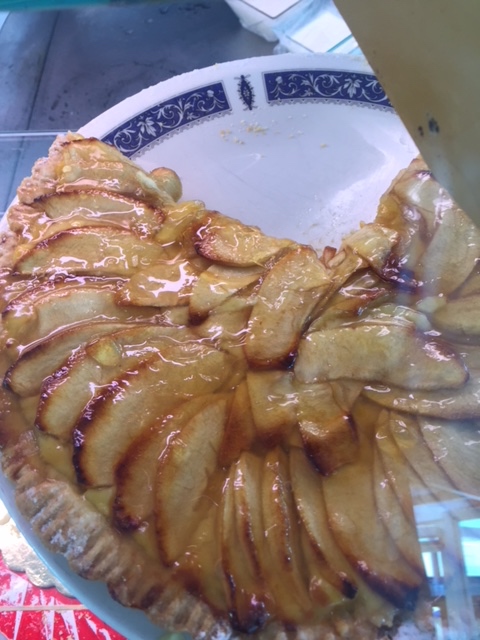

Below: profiteroles smothered in chocolate.
And no, the day wasn’t finished.
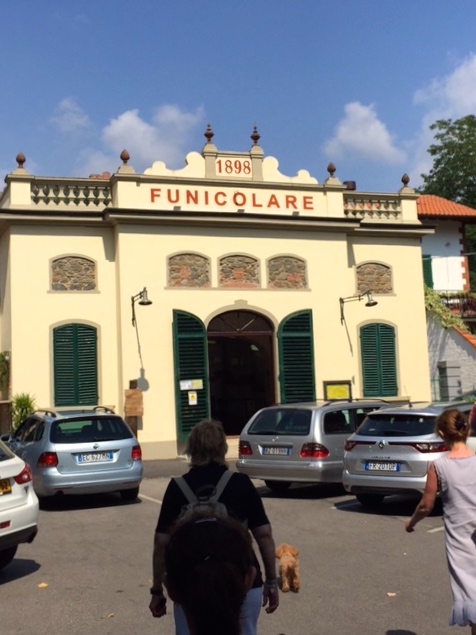
Next we drove to Montecatini, which has both lower and an upper versions. You start in the lower level and ride the funicular up the the side of a mountian. Charming beyond words is the station, built in 1898, and the cable cars with their wooden seats.
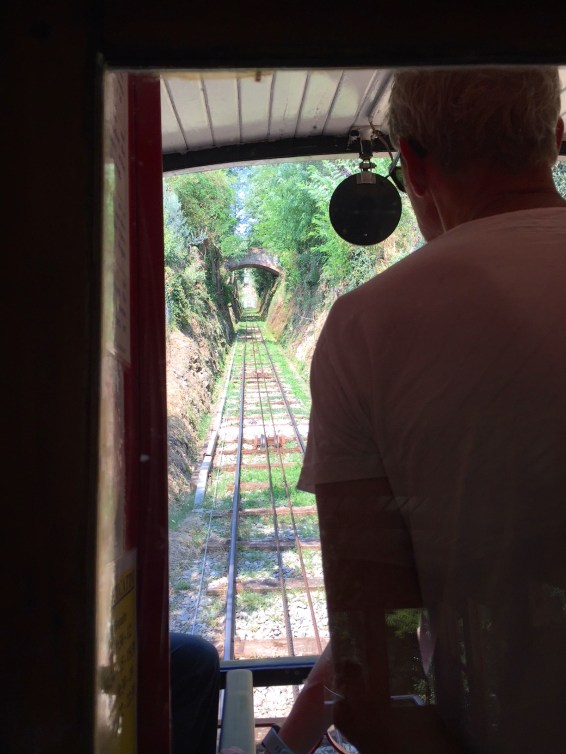
And yes, here we go, up this mountain side. The picture lacks the drama of the real ride.
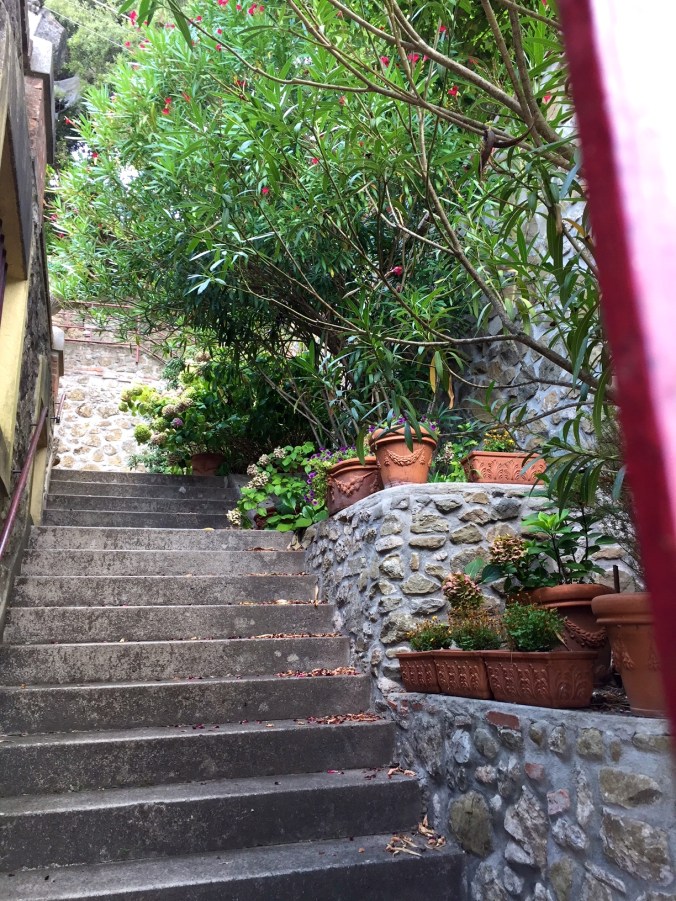
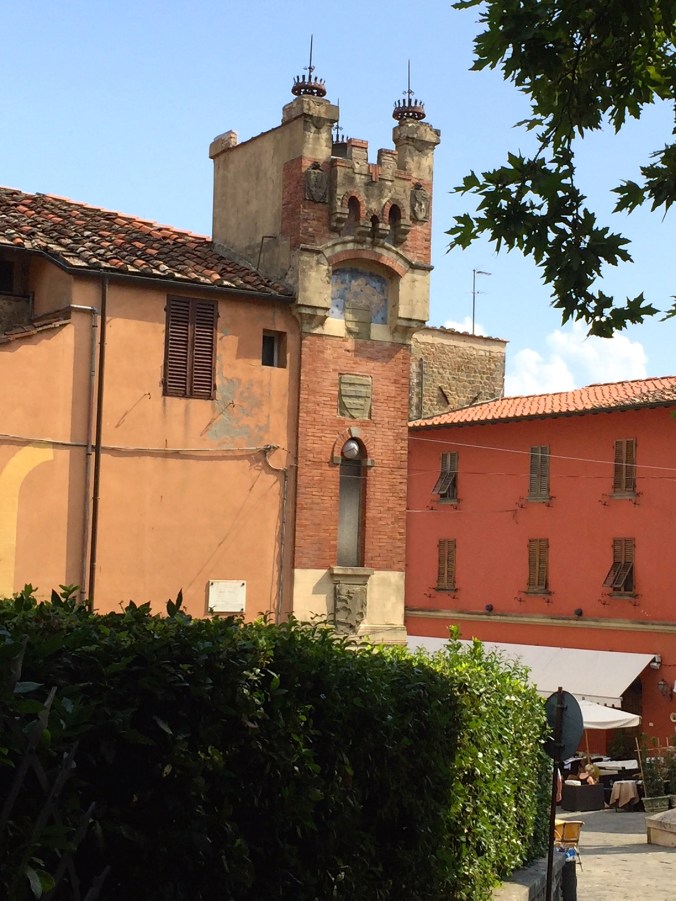
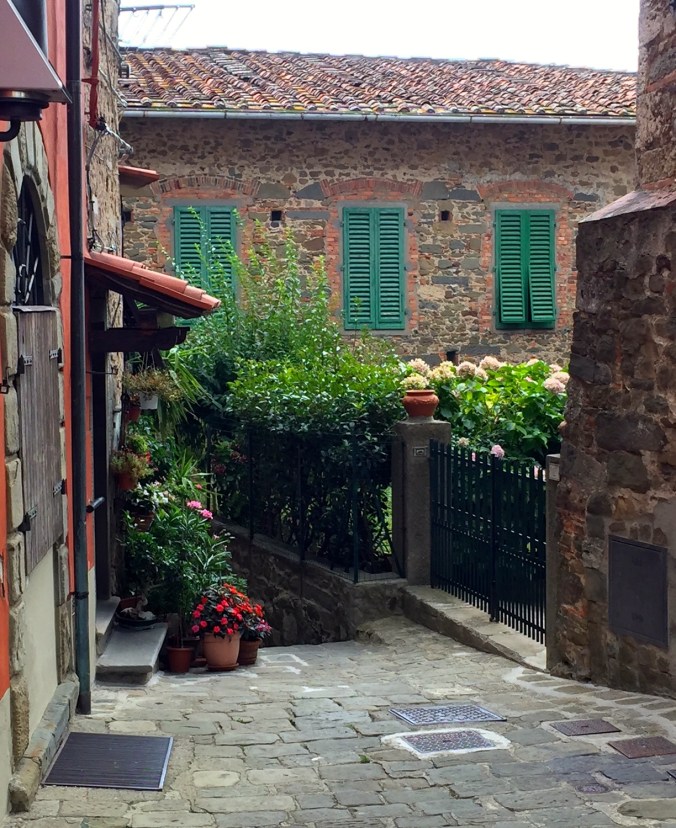
Once we arrived in Alto Montecatini, I was bowled over by yet another amazing little hilltop Italian village. Each one has its own flavor, but they all go into the category of “wonderful.”
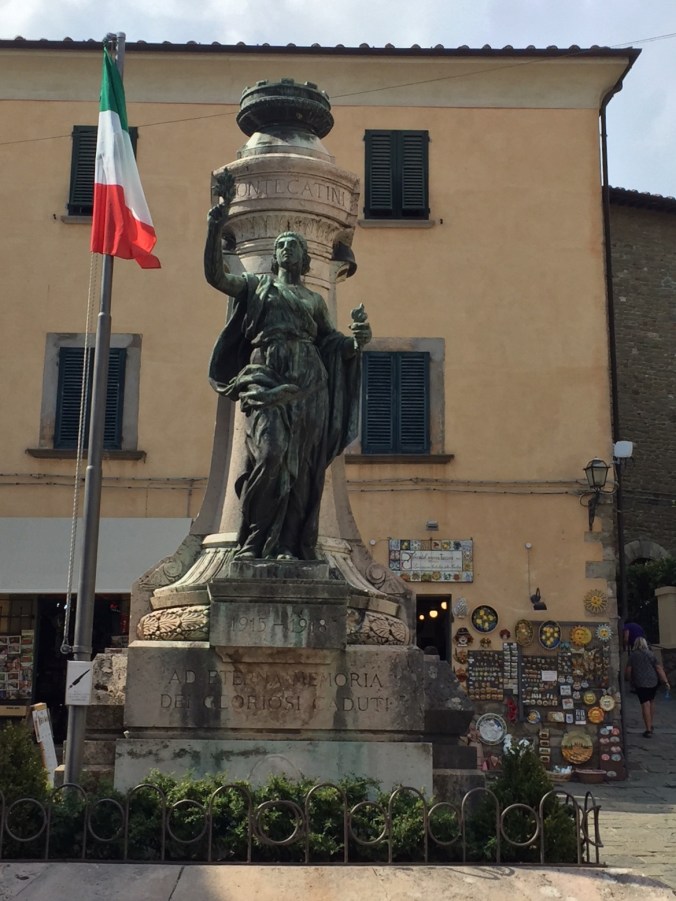
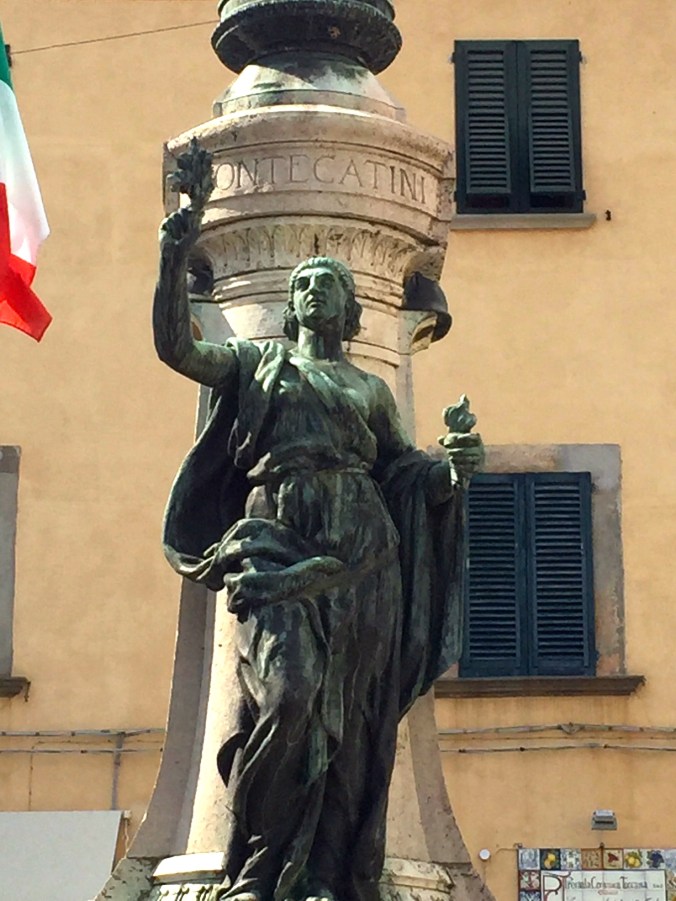

This castle looking structure is the movie theater!!
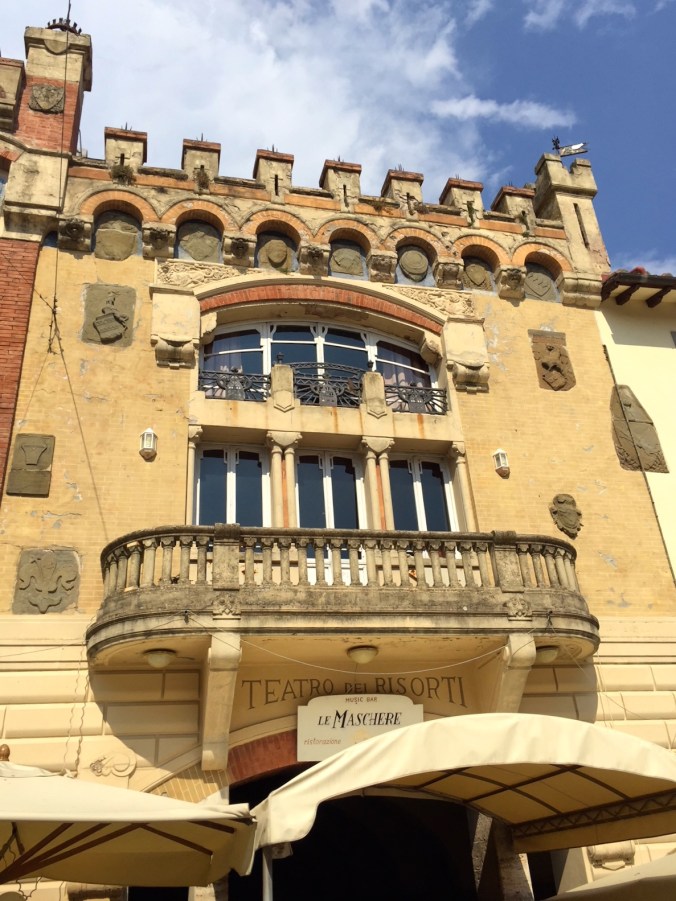
Table set for dinner:

Random beauties:

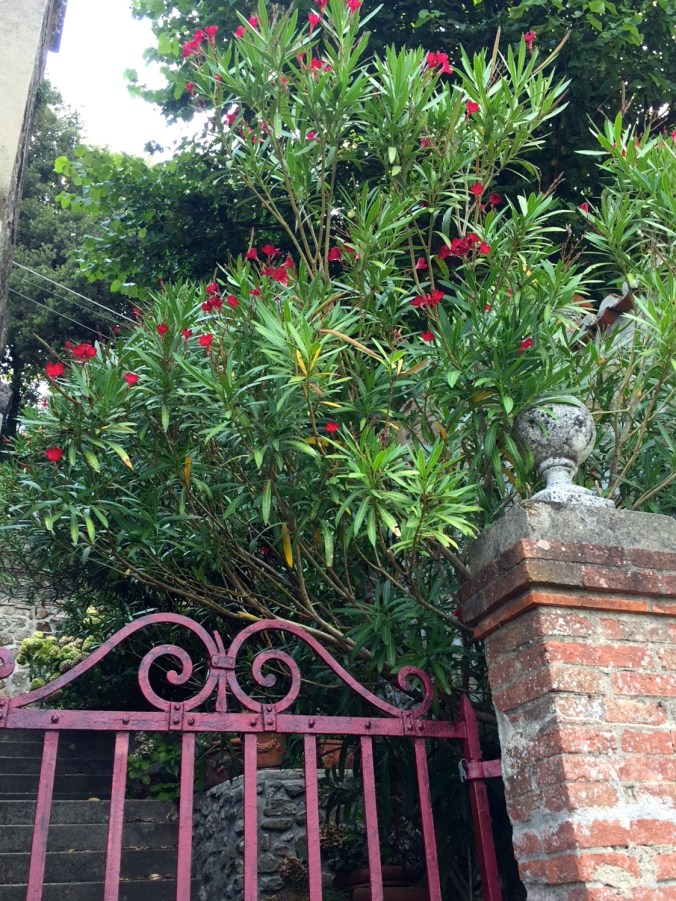
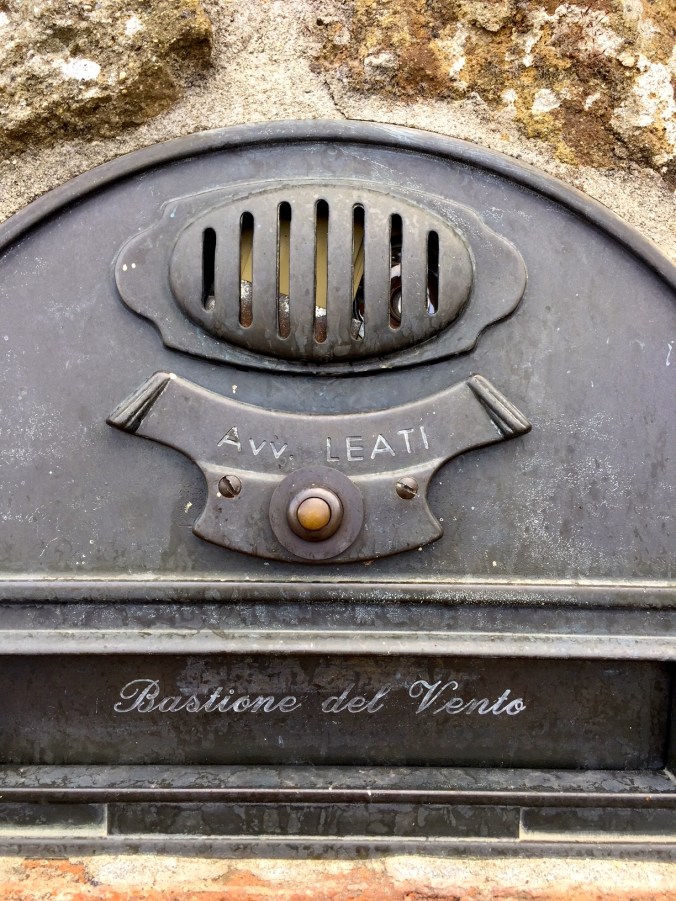

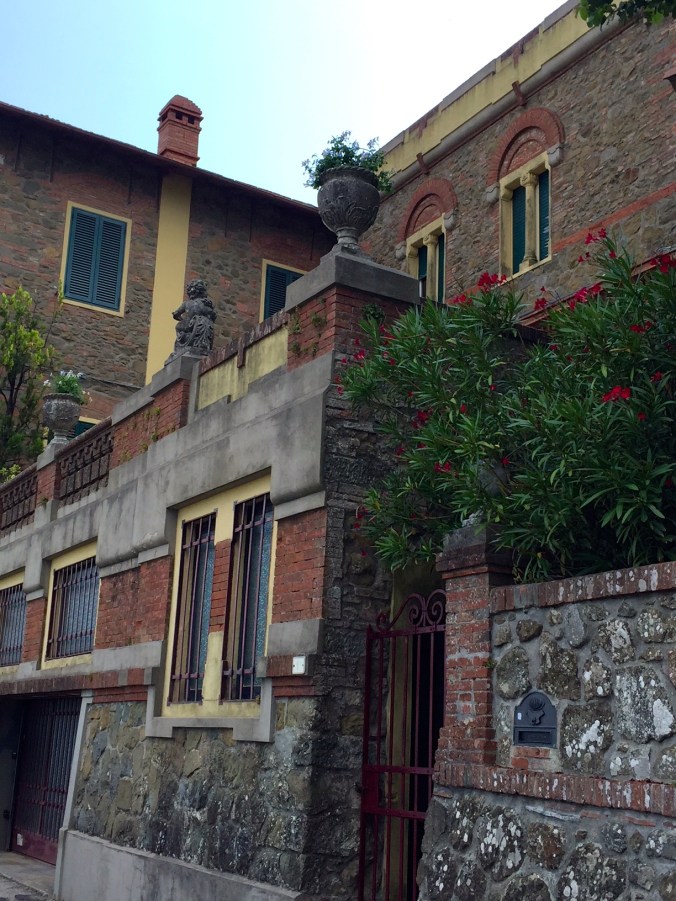

Free had cooled off and now was enjoying his stroller. He is as sweet as he is cute!

What a perfect day!

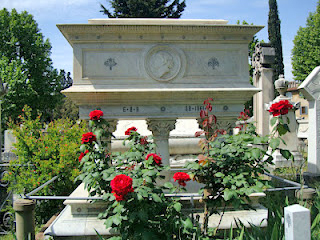 Tomb of Elizabeth Barrett Browning, Florence







 get back, lauretta!
You must be logged in to post a comment.