Florence used to have a palio too!

Do you know about the annual horserace in the heart of Siena?  Have you been?  I have and it is crazy and wonderful, and, for the horses and riders, quite dangerous.

But, did you know that Florence had its own Palio?

Above: The Florentine palio in a print by Jacques Callot

It did and the race was called the Palio dei Berbieri.  And, there were other horse races as well in Firenze.

This jockeyless horse race was held until 1870, with the course running from via Ponte alle Mosse to porta alla Croce, the site of the present day Piazza Beccaria. The empty stables and antique carriages still exist within an old palazzo, but are unfortunately closed to the public.  They are a reminder to us of those lost, glorious equestrian days, in Firenze.

Here’s what Wiki has to say about the race: (Google translation)

Race of the barberi

 The Palio dei Barberi or the Barberi race was a horse race and a popular festival in various cities, including Rome , Florence , Padua , Chieti , Pistoia (today the bear’s joust ). A version is still held today in Ronciglione .

In Florence [ edit | wikitesto change ]

The race has very ancient origins, certainly medieval, as also testified by Dante Alighieri , who in the Paradiso tells the great-great-grandfather Cacciaguida :
“My ancients and I were born on the spot
where the last sixth is to be found
from what runs our annual game. »
( Paradise XXVI , 40-42 )

Traditionally it was held on June 24, the day of St. John the Baptist and was one of the many palios that animated the Italian festivals. In particular, similar to the Palio of Siena, a specific type of equine breed was run, the Berber (the name later transformed into a barbero by the people), but did not include any participation of jockeys.

The race started from via Ponte alle Mosse, which owes its name to the fact that it was the starting point, that is, the moves were made, to pass from the Porta al Prato along the Prato’s clearing, where the race was staged for the Grand Duke , the Royal Lodge. From the nearby Palazzo Corsini al Prato, nobles could watch the race from the specially built terrace.

The race continued through the streets of the center, with Via Palazzuolo, then Via degli Strozzi, then Via del Corso (which perhaps is called so for the course of the race), then to the arch of San Pierino and the door to the Cross, where the finish line was and the horses were “sheltered.”

An ingenious system got the race results reported back to the Grank Duke, through a system of colored smoke and messengers with mirrors who were placed upon the rooftops and city bell towers.  The Grand Duke in the stands in Via il Prato and the rest of Florence didn’t have to wait long to hear the news of the winning horse.

The ambitious prize for the winner consisted of a cloth of considerable value (the “palio”), decorated with the Florentine lily and the red cross of the people.

The race took place regularly until 1858. When Florence was later made the capitol city of the newly formed Italy,  demolition took place in the city center, and thus compromised the route. Thus, the long-running Florentine race came to an end.

The race used a particular breed of horses, the Berber, who – in the vernacular became  “Barbera” – gave the name to the competition: Palio dei Barberi, in fact, also called the race of the Barberi .

According to several sources, the origin would be medieval: even Dante quotes this game in the 26th canto of Paradiso.

The departure was always in the same spot, Ponte alle Mosse (the little bridge on the Mugnone from which the street of the same name took its name): from here the race took off .

The route of the palio passed from Porta a Prato, then winding along the streets of the center (via Palazzuolo, via degli Strozzi, via del Corso, arch of San Pierino). The finish line was at Porta alla Croce , in the center of Piazza Beccaria. Those who arrived first received as prizes an expensive cloth decorated with lily, which was replaced with a cash prize since the 18th century.

The Palio of Sant’Anna in Florence

Less well-known, but equally ancient, is the palio that was held in honor of Sant’Anna, every year on July 26th . The celebrations were decided, as our Mattia wrote in a post dedicated to the Florentine festival of Sant’Anna , to commemorate the expulsion of the Duke of Athens Gualtieri di Brienne, on 26 July 1343, the day of Sant’Anna.

The Saint was proclaimed protector of the city and the day became a party, with the celebrations that took place around Orsanmichele and with a prize that included a prize of 32 gold florins.

Feast and Palio of Sant'Anna in Florence - Orsanmichele

And the other palios of Florence

Florence was full of horse racing : they represented one of the greatest entertainments for popular festivals. Palios were held for June 11 (San Barnaba), eight days later for the feast of Santo Noferi. And again on 29 June for San Pietro and Paolo, on 12 July in honor of San Gualberto, on 29 July for San Vittorio, on 10 August on the occasion of the feast of San Lorenzo , co-patron of Florence.

During the summer there were other types of races. On June 23rd, on the eve of San Giovanni, there was the Palio dei Cocchi , a race between 4 wooden carriages along an oval path set up in Piazza Santa Maria Novella, around the two obelisks that still exist today.

Palio dei Cocchi - Giovanni Signorini (Florence 1808-1862) The Palio dei Cocchi in Santa Maria Novella, 1844, oil on canvas

On July 25, San Jacopo, was instead the day of the Palio dei Navicelli : since 1250 the boatmen competed in a “regatta” on the Arno, between Ponte Vecchio and the fishing of Santa Rosa. Departure from the Church with the ass in the Arno , as the church of San Jacopo Soprarno is called in Florence.

http://www.teladoiofirenze.it/storie-firenze-2/anche-a-firenze-si-correva-un-palio-anzi-10/
“Betta getta Vespa,” the history of the Vespa in 10 pictures

Screen Shot 2018-05-12 at 9.46.08 AM

The Italian brand of scooter, the iconic Vespa, is manufactured by Piaggio. The name means wasp in Italian. The Vespa has evolved from a single model motor scooter manufactured in 1946 by Piaggio & Co. to a full line of scooters and one of seven companies today owned by Piaggio.

From their inception, Vespa scooters have been known for their painted, pressed steel unibody which combines a complete cowling for the engine (enclosing the engine mechanism and concealing dirt or grease), a flat floorboard (providing foot protection), and a prominent front fairing (providing wind protection) into a structural unit.

Post World War II Italy, in light of its agreement to cessation of war activities with the Allies, had its aircraft industry severely restricted in both capability and capacity.

Piaggio emerged from the conflict with its Pontedera fighter plane plant demolished by bombing. Italy’s crippled economy and the disastrous state of the roads did not assist in the re-development of the automobile markets. Enrico Piaggio, the son of Piaggio’s founder Rinaldo Piaggio, decided to leave the aeronautical field in order to address Italy’s urgent need for a modern and affordable mode of transportation for the masses.

A masterpiece was born!


Screen Shot 2018-05-12 at 9.46.08 AM

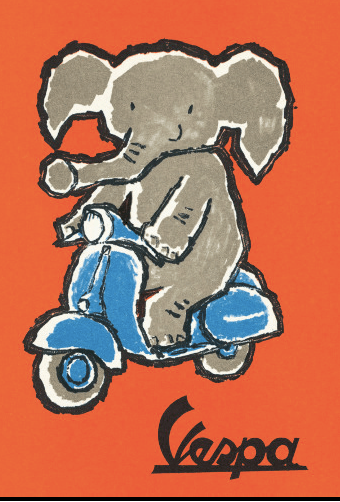
An early Vespa poster above.


Screen Shot 2018-05-12 at 9.47.12 AM

The UK is Vespa’s second largest market, see above.

For more on Vespa, see:

https://en.wikipedia.org/wiki/Vespa

https://www.thelocal.it/galleries/culture/in-pictures-the-history-of-the-vespa-scooter-italy-italian-piaggio-photos-style-/10

Unpredictable Florentine weather

img_3172

We all grew up saying that “April showers bring May flowers.”  And they do!

But, this year it is raining well into May as well.  The weather has been very unsettled. Cold and raining one day, warm and clear the next.  However, I am not complaining.  The hot summer temperatures can wait as long as possible to arrive.  When they hit, they are not unsettled in the valley that surrounds lovely Firenze.  They arrive and stay, well past their welcome.

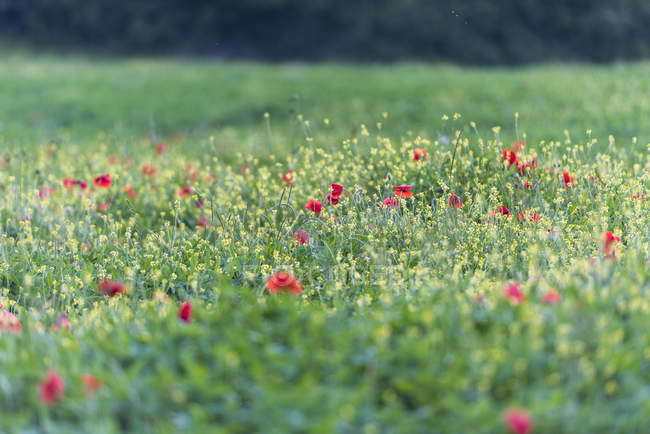
But, all this rain has the fields and hills around Florence alive with flowers!  Yes, we do have flowers!  Bright red poppies are everywhere, they grow wild and are a welcome sign that the fields are not being sprayed with pesticides or herbicides. On the train from Rome to Florence, this view below is a constant right now.

focused_165569702-Poppies-blooming-in-the-fields

The grape vines are looking incredible, maybe this will be a great year for wine production.

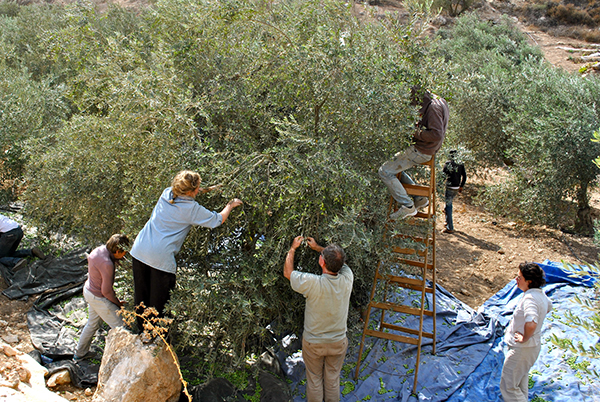
However, the olive oil forecast is not as great. Local olive oil makers are already are warning that it looks like there will be little no oil this year.  The olive trees should already be blossoming and they aren’t.

The-olio-novo-olive-oil-making-process

Olive+Harvest

Maybe it will just be a late harvest.  Olive harvest in the past was done in late November and through December. But, recently, due to the changes in the weather conditions, harvest now happens earlier.

Last weekend, was another religious holiday in Tuscany. It was Ascension Sunday which falls 43 days after Easter is often celebrated with flowers. Some towns decorate streets with designs created with petals, and others have large celebrations where you can buy lovely plants.  Plus, great food and drink accompanies any holiday!

If you want to learn more about this moveable feast, then here you go:

The Ascension of Our Lord, which celebrates the day on which the risen Christ, in the sight of His apostles, ascended bodily into Heaven (Luke 24:51; Mark 16:19; Acts 1:9-11), is a moveable feast. When is Ascension?

How Is the Date of Ascension Determined?

Like the dates of most other moveable feasts, the date of the Ascension depends on the date of Easter. Ascension Thursday always falls 40 days after Easter (counting both Easter and Ascension Thursday), but since the date of Easter changes every year, the date of Ascension does as well.

Ascension Thursday Versus Ascension Sunday

Determining the date of Ascension is also complicated by the fact that, in many dioceses the celebration of Ascension has been transferred from Ascension Thursday (40 days after Easter) to the following Sunday (43 days after Easter).

Since Ascension is a Holy Day of Obligation, it is important for Catholics to know on which date Ascension will be celebrated in their particular diocese.

(See Is Ascension a Holy Day of Obligation? to find out which ecclesiastical provinces continue to celebrate Ascension on Ascension Thursday, and which have transferred the celebration to the following Sunday.)


https://www.thoughtco.com/when-is-ascension-541611


Florence was literally carved out of the surrounding rocky hills

Screen Shot 2018-05-13 at 12.46.33 PM

Quarries and their role in the construction of Florence

An itinerary through Tuscany’s ‘cave’

Sabine Eiche
The Florentine, SEPTEMBER 8, 2006

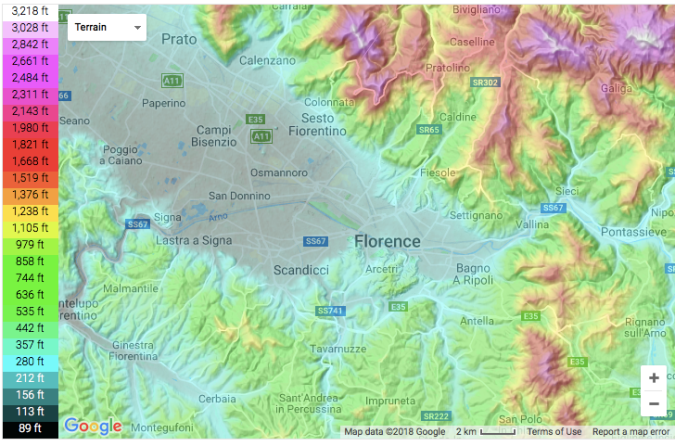
Has it ever occurred to you that the stony city of Florence was literally carved out of the surrounding hills?  It’s quite true. Countless local quarries provided the blocks of stone for the walls of medieval and Renaissance churches and palaces, and for the columns and architectural ornaments to decorate them. Pietraforte, a kind of light brown limestone, came from quarries at Costa San Giorgio, in the Boboli hill between Santa Felicità and Porta Romana, at Bellosguardo, and around Marignolle and Le Campore, all south of the Arno. To the north, the hills of Fiesole, Maiano and Settignano provided the blueish-grey sandstone pietra serena.

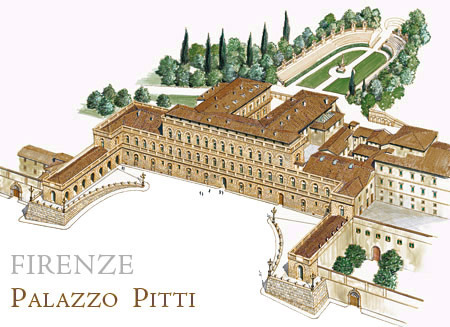
In the 13th century, load after load of pietraforte was hauled over the Arno to the outskirts of Florence to construct the enormous basilicas of Santa Maria Novella and Santa Croce. Even the piers inside these two churches are of pietraforte. Look at Palazzo Vecchio, the Log-gia dei Lanzi, the Bargello and Orsanmichele, and you are looking at pieces of the southern hills transformed into architecture. The gigantic blocks of rustication that you see on the façades of the 15th-century Palazzo Medici were cut out of pietraforte quarries. Filippo Strozzi, whose palace rivals that of the Medici in size, had endless loads of stone brought from quarries at Boboli and Marignolle. It is said that between November 1495 and March 1497, Strozzi’s heavily-laden carts rattled over the Arno more than a thousand times. At Palazzo Pitti, the builders had it much easier, since their source (the Boboli hill) was right behind the palace. In fact, Palazzo Pitti sits on the hollowed out part of one of these quarries.


If pietraforte was used mainly for the construction of walls, pietra serena was used above all for columns, stairs, doors and windows. The oldest of these quarries, dating back to Etruscan times, were at Monte Ceceri in Fiesole, and they continued to be worked during the Roman and early medieval periods. The demand for pietra serena was so high that in the 13th century new quarries had to be opened further east, around Vincigliata and Settignano. By the 15th century, when Brunelleschi’s architectural style boosted the popularity of pietra serena to unprecedented heights, it was also being extracted at Golfolina, west of Florence.


Brunelleschi chose quarries that would provide enormous blocks of pietra serena from which he could cut entire column shafts. He quarried the stone for the loggia of the Ospedale degli Innocenti at Trassinaia, near Vincigliata. The columns for San Lorenzo came from a site nearby, still known as the Cava delle Colonne.


http://www.theflorentine.net/art-culture/2006/09/quarries-near-florence/

Bagni di Lucca


bagni-di-lucca-artfestival-1024x683

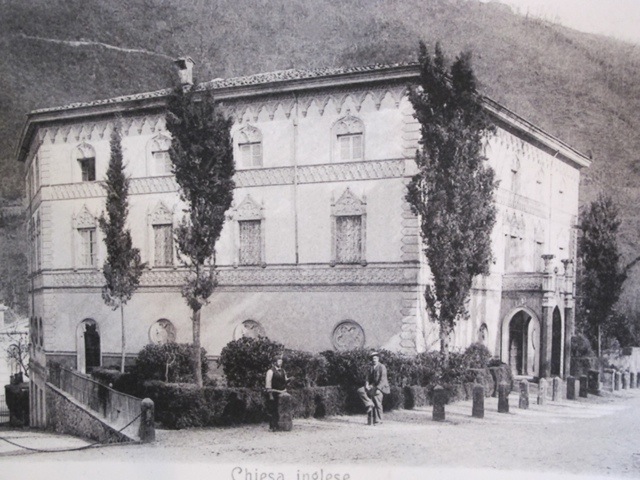
In its heyday, Bagni di Lucca, with its cool climate and great variety of hot springs had been a very fashionable European holiday resort and spa town. Beautiful elegant hotels had been built all around the spas. Villas, owned by heads of state and various ambassadors and dignitaries were crammed with antique furniture, musical instruments and rare books.

Ponte della Maddalena, Tuscany

There were cultural centres, casinos, Anglican churches and cemeteries, restaurants and theatres. Famous poets, singers, playwrights, writers, actors and actresses used to flock there in the summer months. Presumably, many wars and marriages were arranged and important state decisions taken inside those thick stone walls, so far from indiscreet ears.

70

20120218-025200

With the advent of fascism in Italy, renewed nationalism and World War Two, the “guests” of Bagni di Lucca suddenly became completely undesirable, and were later either deported or forced to flee.

Their properties were confiscated which meant that the local fascist bosses, for the most part rude uneducated thugs, suddenly had access to and became owners of luxurious properties full of rare works of art. There are tales of grand pianos being chopped up for firewood, rare books being transported to the local paper mills  and being sold by the kilo, manuscripts being burnt on bonfires, and paintings being thrown out on to the grass where rain and sun eventually got the better of them.

Some of the villas miraculously passed into the hands of new owners. Deeds were drawn up, and illiterate mountain folk suddenly felt like princes and princesses. Some were used for more sinister purposes, housing torture and detention centres for political opponents, intellectuals and partisans or worse, boarding houses for Jewish and gypsy children before they left for their final destinations.

The grand rooms and theatres, which had housed great composers and musicians, were turned almost overnight into brothels or barracks for Mussolini’s troops.

At last! Many dignitaries thought that law and order has been restored. We are in charge again and those foreigners got what they deserved!

Of course, things didn’t quite turn out as expected. Italy did not get its empire, but instead a humiliating loss in which not only did it once again have to bow down to the overwhelming power of the Anglo-American armies, but it also had to sign really unfair future agreements, thus becoming a near slave to the foreign oil barons, military-industrial complexes, big Pharma religion and cars and motorways.

After the war there was no money for the upkeep and maintenance of the once magnificent hotels and spa complexes and anyway the whole of Italy was busy doing other things. People were emigrating in hordes, abandoning villages, hilltops and mountains for large industrial cities in the north, going to work in the booming car industries or in foreign cities.

The people were all working like busy bees for their new masters, building motorways and high rise blocks of flats, spraying clean fields, vineyards and fruit farms with toxic pesticides, getting rich and watching TV.

Bagni di Lucca became a ghost town. Gone were the shepherds and their flocks, the orderly rows of vegetables, the pigs, cows, geese and ducks, the large families and old traditions. Winters passed and vegetation covered the villages and country lanes. Vines grew over and smothered the beautiful old buildings until there was nothing left, except memories in books which no one ever opened.

Small factories sprang up in Bagni di Lucca: paper mills spewing out clouds of black smoke and colouring the rivers pink and blue, and the souvenir industry which exported plastic figurines to many parts of the world. The owners of these businesses became very wealthy and the only people left who had not emigrated elsewhere worked entirely for the “benefactors” who could therefore pay as little or as much as they liked, as people had no other alternative.

In the 1960s and 70s, people had started to talk about the possibility of starting up the tourist business once more but this was generally discouraged by the benefactors as it would have meant distraction for their workers. So by the time the international association arrived in town they were entering a world which might as well have been in a time warp.

Actually, as we later found out, they, being mostly highly intelligent and educated people, had vision and they had realised back then that it was time to flee the big cities before globalisation, the de-industrialisation of Italy, mass unemployment, climate change, wars for oil and water and social unrest hit us all. They were right about that, they just chose the wrong place.

Welcome to Tuscany.

Lord, Anna. Welcome to the Tuscan Dream: Italy’s Broken Heart (p. 63). Scribo Srl. Kindle Edition.