Flowers at the base of the Column of Saint Zenobius, Florence

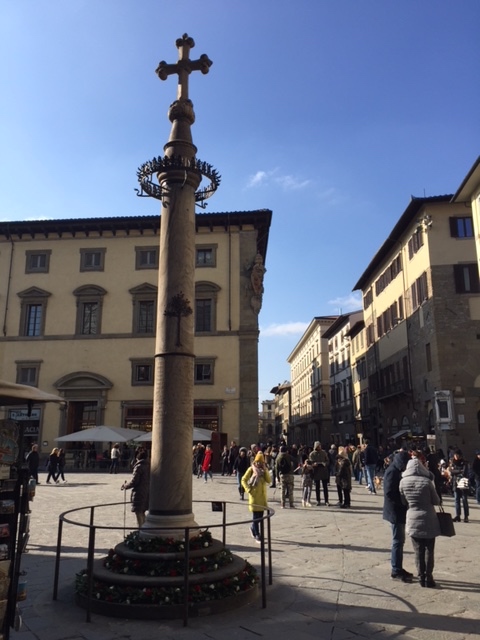
The Colonna di San Zanobi is a monumental marble column, surmounted by a cross above a crown of fire, located just north of the Baptistery of San Giovanni in Florence.
IMG_7547

The column was placed to memorialize a miracle by the former Florentine Bishop, who had died circa 430. In the 9th-century, San Zenobi’s remains, held in an urn, were being transferred from the church of San Lorenzo to the then Cathedral of Santa Reparata (later enlarged and renamed as Santa Maria del Fiore or, il Duomo).
IMG_7546

It’s hard to believe today, but in the 9th century, the church of San Lorenzo was outside the fortified city walls of the town. The move was prompted because anything outside the city was was under threat of Hungarian invasions.

IMG_7546

As the remains were being moved, tradition holds they brushed against an elm tree that grew in the spot where the column now stands.  It happened in winter, when the tree of course was leafless.  However, by being brushed by the relics of the saint, the tree miraculously became leafy.

So every year I Fiorentini celebrate this miracle of San Zanobi on January 27, and decorate the base with flowers and greenery in his honor.  I happened to walk past the monument today, and the flowers are still fresh.  I wonder how many people even notice!

IMG_7544IMG_7545

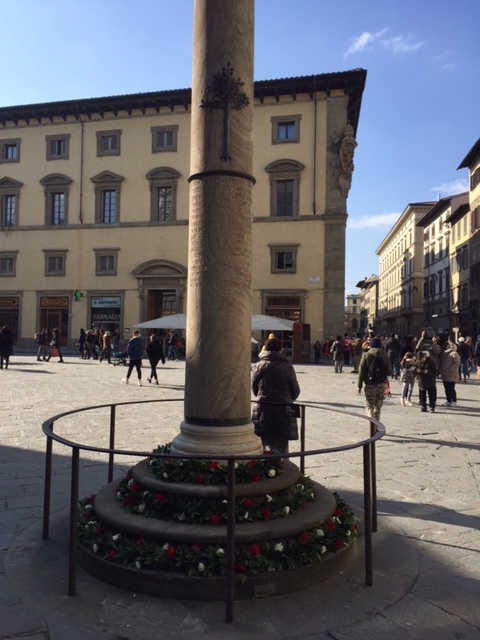
It is not known when the column was erected, but it was in place by the year 1333. The column has a metal tree image affixed, which you can see in the photo below.
IMG_7546

Things you wouldn’t automatically think of…

…when moving to Italy.

For example: Internet infrastructure is a big issue in Tuscany, specially Florence. The city regulations and archeological sites make it very hard to dig and build, and the narrow architecture messes with wireless signals.

Generally speaking, I can’t complain about my internet or phone connections in my apartment, but then I live on the top floor of my palazzo (large building), where there isn’t, I would assume, as much interference.  But the second I step outside, all bets are off.

Still, it’s a lot better than it was even a few years ago.  A small price to pay to live in such an incredible place.

Persimmons in Arezzo

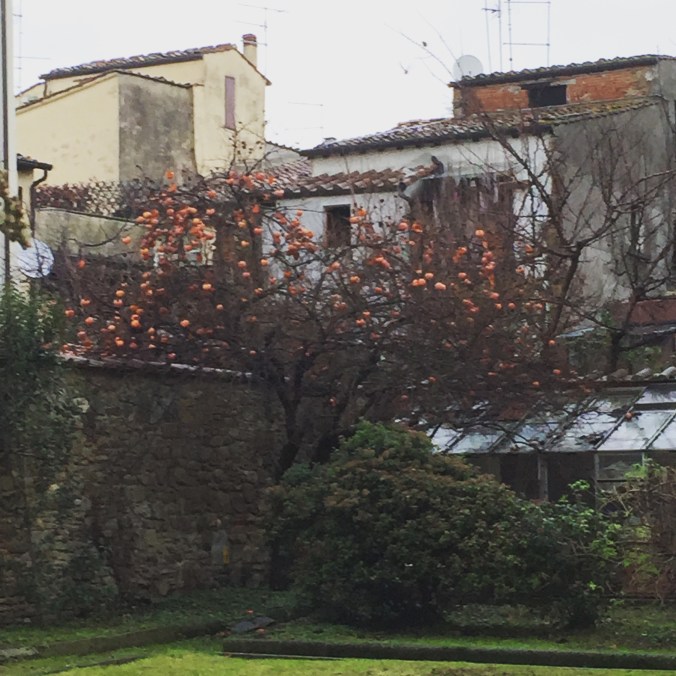
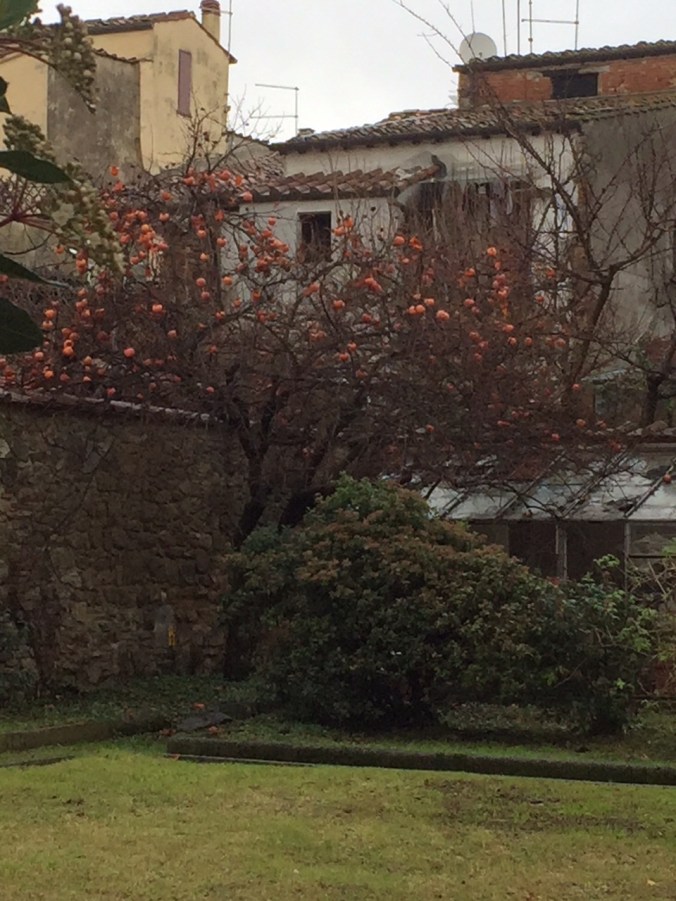
I love a pretty garden, even in the winter.  I was in Arezzo recently and paid a visit to the Vasari Casa museum.  If you know Vasari’s monumental book on Italian artists (the first of its kind, published in the 16th century), you know how important he is for more or less beginning the field of art history.  As such, he is sort of my patron saint, with lower case letters.

IMG_7190IMG_7158IMG_7159IMG_7160IMG_7161

So I was delighted to visit Vasari’s home in Arezzo, and ponder how it was his refuge from the busy life he led in Florence. But, as often happens for me, while I found his modest palazzo to be interesting for it’s structure and fresco decorations (much of it Vasari himself), it was the garden that drew me like a magnet.

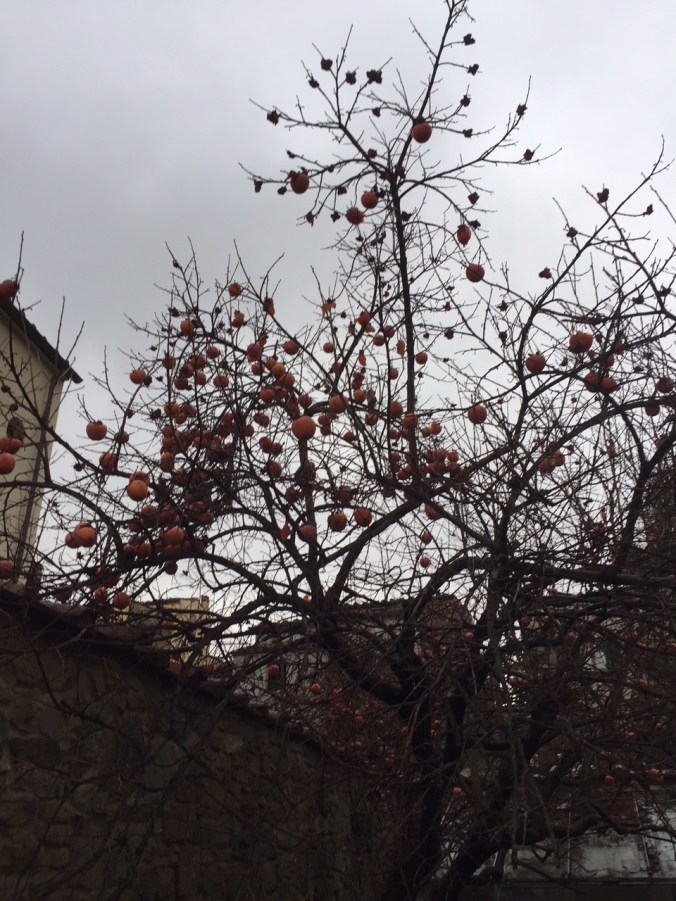
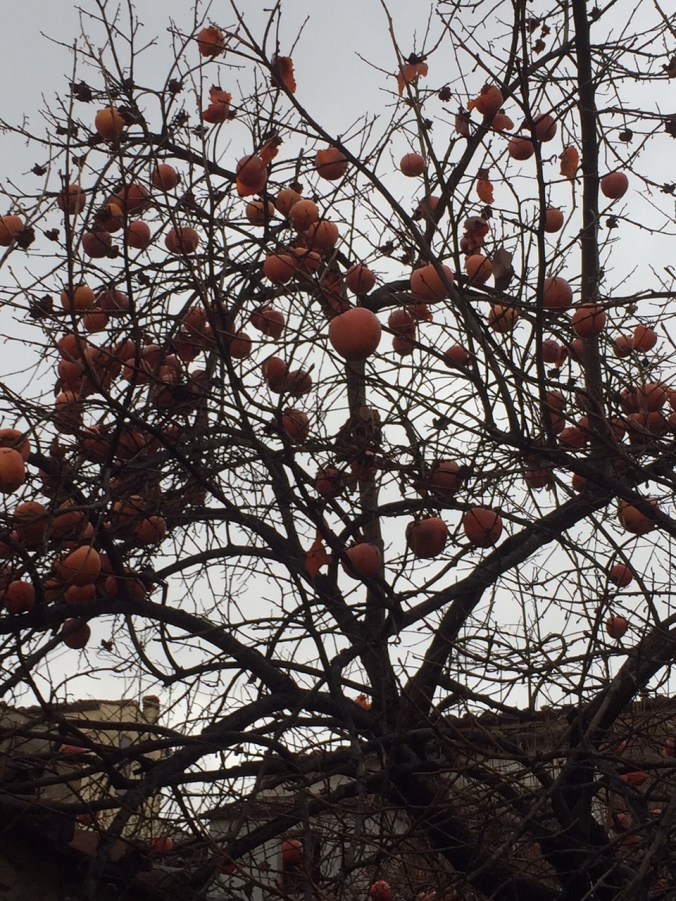
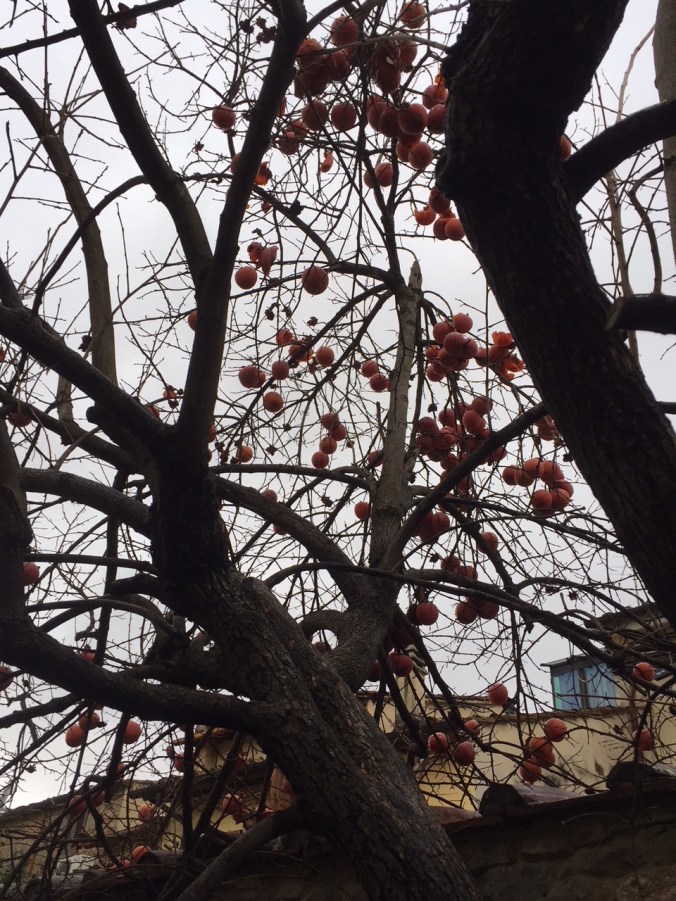
And in his garden I spied this beautiful, ancient persimmon tree.  I love how the tree looks without any leaves: only brown bark, branches, and the fruit that look like Christmas decorations.

It’s a no-go on to-go coffee in Italy

I’m delighted to report that there is (are) no Starbucks in Florence.  I have nothing against Starbucks in general, but Italy has an old and established coffee culture of its own and I am so happy that no New World influence has not been able to change that, at least so far.

Once in a while around Florence I see college co-eds walking around with a to-go coffee that they purchased in the handful of bars that will sell their brew in a styrofoam cup.  There are a couple of New World type coffee houses here, but they don’t seem to be very popular.

Why is that?  This video tells the story:

http://www.bbc.com/news/av/world-europe-42750584/why-italians-are-saying-no-to-takeaway-coffee

Santa Maria Novella, Firenze: fruits and vegetables

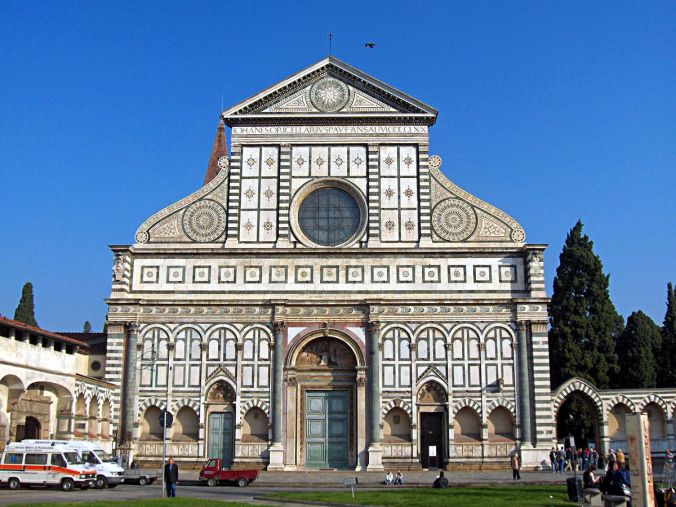
If you’ve ever been to Florence and walked around the city enjoying architectural masterpieces, you have no doubt spent time appreciating the gorgeous green and white marble exterior of the church of Santa Maria Novella.

1200px-Santa_Maria_Novella

I was meeting a friend recently and we agreed to rendezvous in front of the center door of the church. I got there early and had time to study the high-quality marble carving of the panels to either side of the main door.

IMG_7179

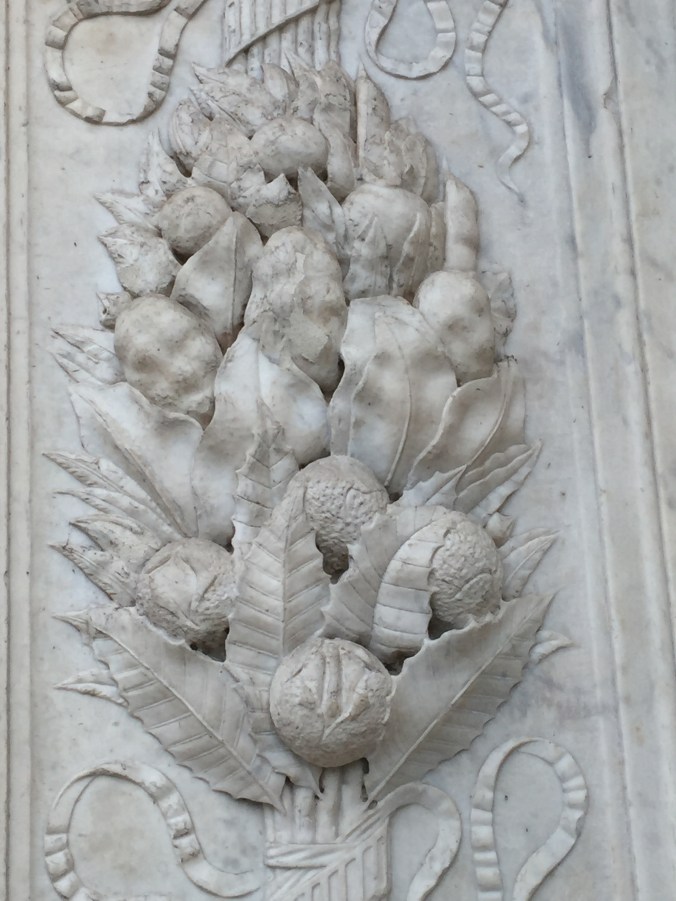
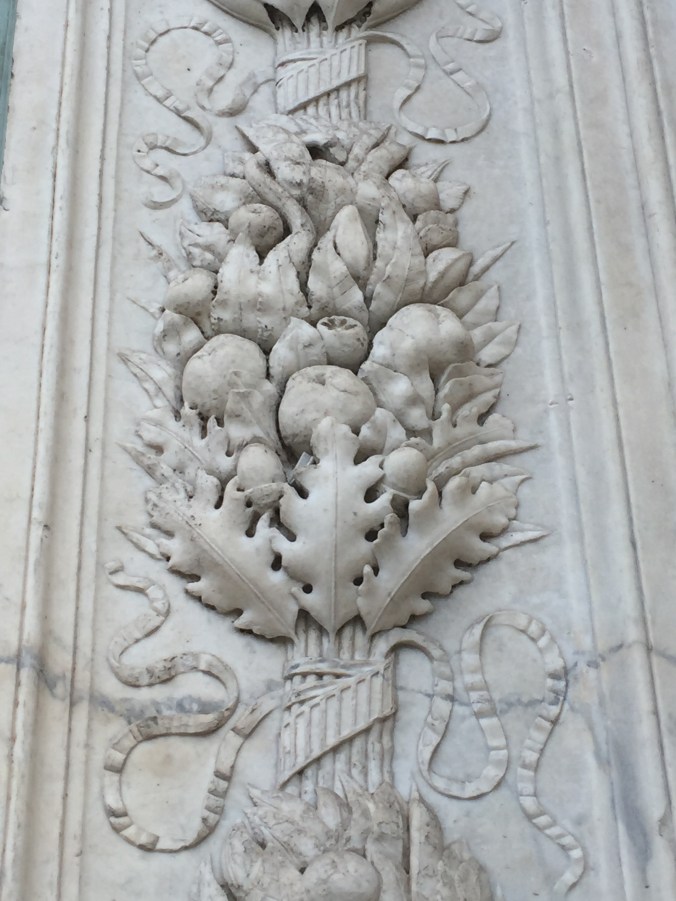
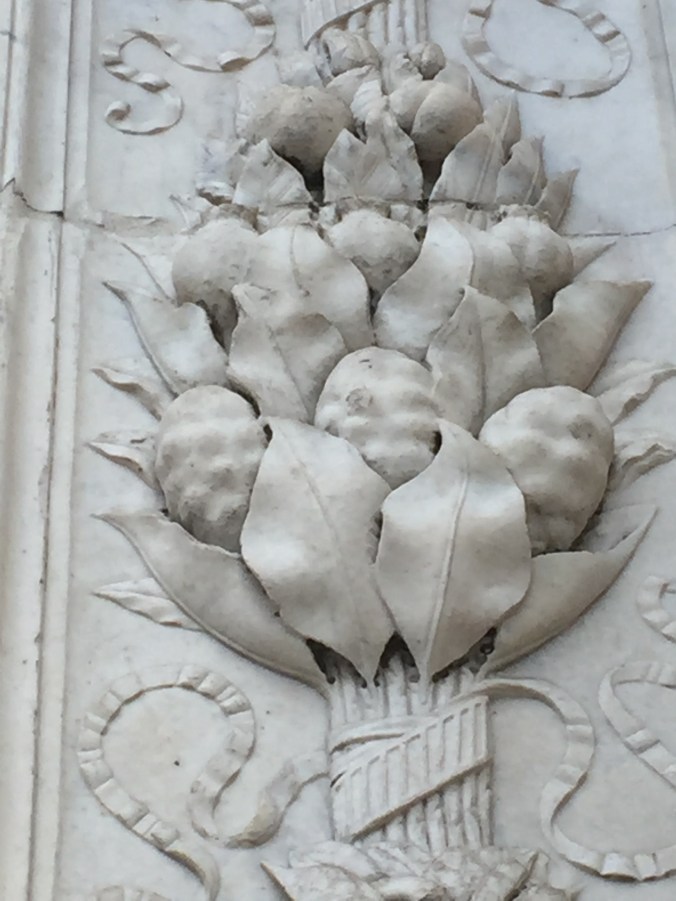
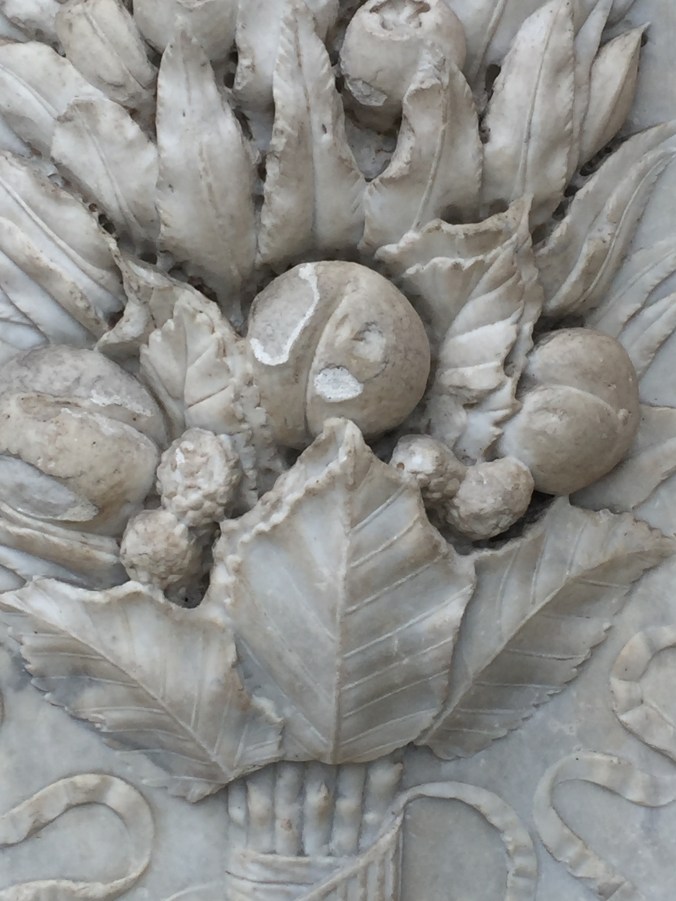
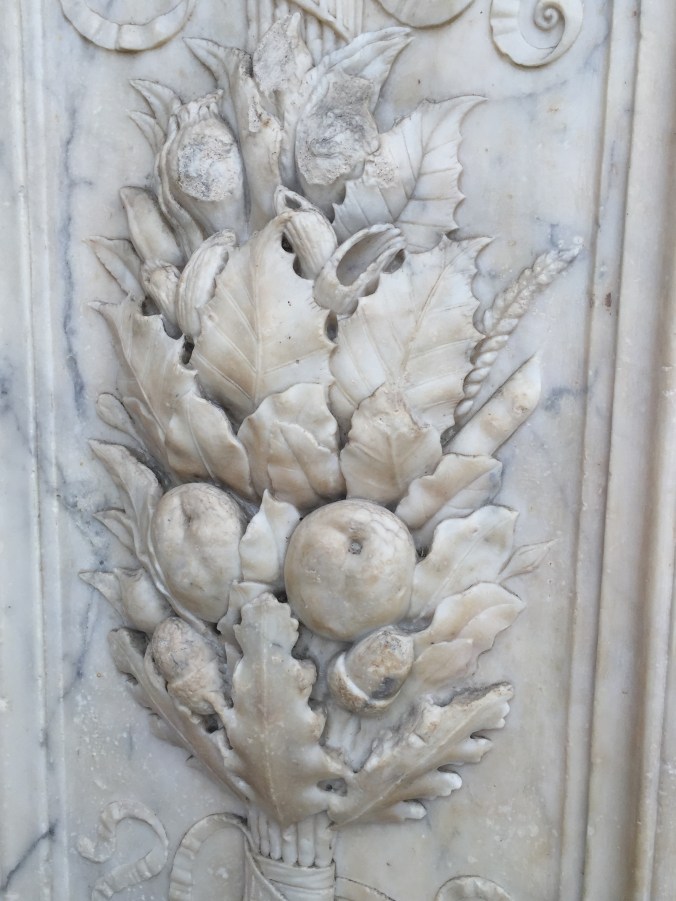
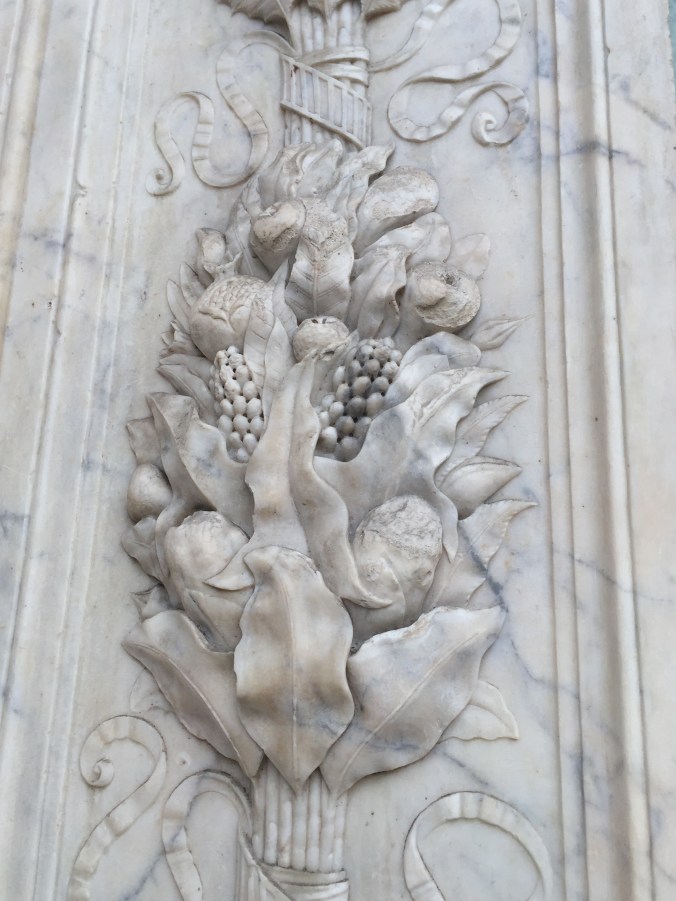
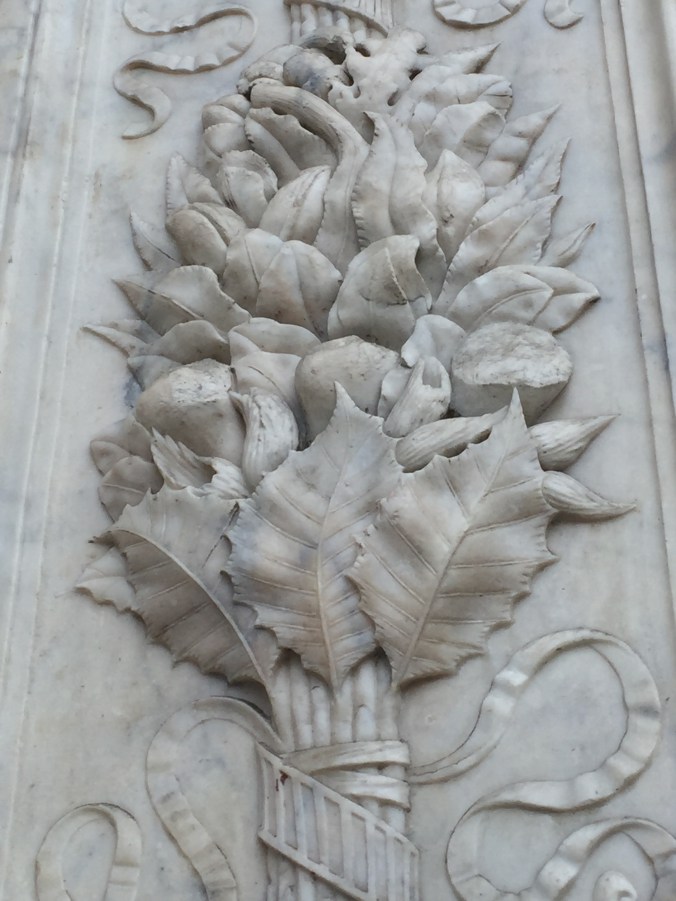
These white marble panels were clearly carved by a master sculptor, for the quality of the carving is very high.  A variety of leaf types are depicted in the stone, as well as many recognizable fruits and even some vegetables. The background of each grouping of edible plant parts is a grouping of fasces, tied with a ribbon to create the bundle of rods, a symbol utilized in the Roman empire and reused ever since.

IMG_7180

In the grouping above you can clearly see oak leaves, plums, and apples.

IMG_7181

The relief above looks like laurel leaves are depicted as well as what look like potatoes.  Potatoes?  I’m not sure.

IMG_7182

I think the fruits above might be peaches?


IMG_7183

In this picture, I think I see acorns, oak leaves, and apples. Perhaps those are poppy heads at the top?

IMG_7184

This picture seems to include grapes.

IMG_7185

I hope you will tell me what you see.  I’m sure I’ve missed many things!