The Lungarno Acciaiuoli (or, how many vowels can you actually put in the center of one word?).

On either side of the long, languid Arno River that bisects Florence from east to west, run parallel roads, called the Lungarni.  These long roadways are, in typical Florentine fashion, divided up every few blocks or so, with various names.
veduta-arno-iv

Italy has a lot of history and Florence in particular has a lot of names to commemorate.  The Lungarni passages provide a fertile field for memorializing important names.   Here they are:

North shore (from the west):

Lungarno Amerigo Vespucci
Lungarno Corsini
Lungarno Acciaiuoli
Lungarno Archibusieri
Lungarno Anna Maria Luisa de ‘Medici
Lungarno General Armando Diaz
Lungarno delle Grazie
Lungarno della Zecca Vecchia
Lungarno William Galeazzo
Lungarno del Tempio
Lungarno Cristoforo Colombo
Lungarno Aldo Moro


South shore (from the west):

Lungarno Bruno Buozzi (Lastra a Signa)
Lungarno dei Pioppi
Lungarno del Pignone
Lungarno Santa Rosa
Lungarno Soderini
Lungarno Guicciardini
Lungarno Torrigiani
Lungarno Serristori
Lungarno Benvenuto Cellini
Lungarno Francesco Ferrucci

As you can see, a lot of names were used in naming the sections of the Lungarni!

It fills me with some kind strange pride to note that I’ve had the personal good fortune to live on three sections of the Lungarni thus far in this lifetime (who knows about other lifetimes?  I can’t remember!): in the Oltrarno I had the pleasure of living for time on the Lungarno Serristori and later the Lungarno Torrigiani.  I loved every minute of both locations.  There is no better way of exploring a new area of the city than living in it for a while!

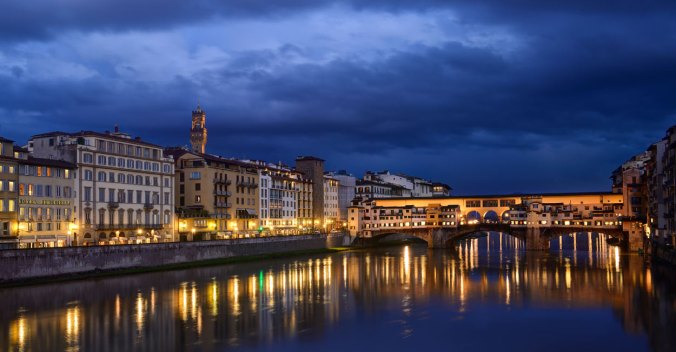
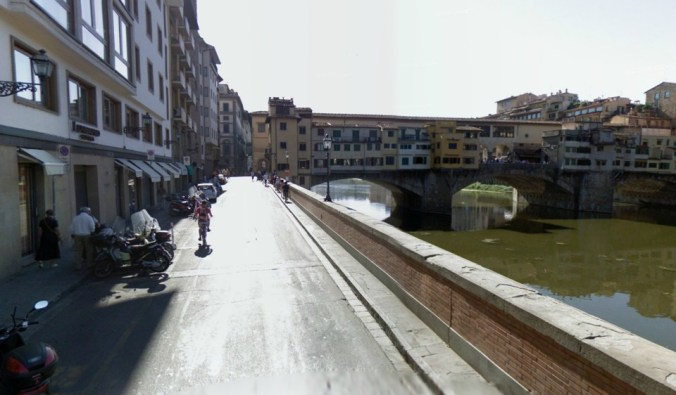
My focus today is on the North side of the river and on the section of the Lungarno on which I currently have the amazing luck to live. The prestigious Lungarno Acciaiuoli is the stretch of the north bank of the Arno River in Florence that runs from the Ponte Vecchio to the Ponte Santa Trinita.  This area of Florence is among the most elegant areas in the city.

My short passage of the Lungarno ends at the east end at the storied Ponte Vecchio and overlooks, on its west end, the Torre Consorti, and one side of the Palazzo Spini-Feroni, home of the Salvatore Ferragamo palazzo and museum.  It’s a tony avenue.

screen-shot-2017-01-28-at-7-18-01-pm

In olden times,  this section of the Lungarno was called i cappellai or “the hatters,” after the Florentine hat makers  who located their shops here.

Later, in the 19th C.,  two of the most important Florentine hotels were located here: the Grand Hotel Royal de l’Arno and the Hotel Royal de la Grande Bretagne.  Charles Dickens, Henry James and many others stayed in these famous hotels.  Sometimes, when I am walking around Florence on streets where I know for a fact that famous personalities from the past passed over, I imagine for a moment what it would be like to bump into, say Dante Alighieri or  Charles Dickens walking around town.  I’ve always had this sort of imagination.

Still standing from that era is the Hotel Berchielli, the ancient building that miraculously survived the landlines set by the retreating German army during WWII. This historic building has housed the Hotel Berchielli since 1890 and is among the most famous hotels in the center of Florence.

A marble plaque on the façade recalls the frequent stays of Romain Rolland, a distinguished literary critic and the winner of the Nobel Prize for Literature in 1915.  Rolland chose the Hotel Berchielli as his Florentine residence.

ROMAIN ROLLAND
INSIGNE WRITER
AND ART CRITIC
sTAYed HERE
IN 1911

And while you may not be familiar with Rolland, I’m sure you know that guy named Pablo Picasso, who also, several decades later, took up residence in the hotel (fall of 1949).

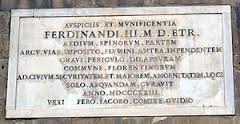
Also marking the area is a plaque at Red All’84-86, of Palazzo Spini Feroni:

AVSPICIIS. ET. MVNIFICENTIA
Ferdinandi. III. M. D. ETR.
AEDIVM. SPINORVM. partem
ARCV. VIAE. IMPOSITO. FLVMINI. ANTEA. IMPENDENTEM
SERIOUS. PERICVLO. DILAPSVRAM
COMMVNE. FLORENTINORVM
A.D. CIVIVM. SECVRITATEM. ET. Maiorem. AMOENITATEM. LOCI
ONLY. AEQVANDAM. CVRAVIT
YEAR. MDCCCXXIII.
VEXILLIFERO. Iacobo. COMITE. Gvido
images

The translation is: “Under the auspices and through the munificence of Ferdinand III, Grand Duke of Tuscany, the City of Florence in the year 1823, being the standard-bearer Count Jacopo Guidi, demolished for safety of citizens, and greater beauty of the place, the part of the houses the Spini who first faced the river on a place at the turn of the bow away and threatened to collapse with grave danger. ”

(reference: Francesco Cesati, the great leader of the streets of Florence, Newton Compton Editori, Rome 2003).

From the Lungarno Acciaiuoli, the world of Florence’s history, culture and elegance are readily available.

On the Lungarno Acciaiuoli, looking towards east to Ponte Vecchio:
lungarno-acciaiuoli-ponte-vecchio

Looking from the embankment in the opposite direction, towards the west, one can admire the graceful Ponte Santa Trinita, about which I will be posting soon. This bridge is considered to be one of the most elegant and refined bridges in Italy in particular or in all of Europe. The line of arches that create the bridge, along with the white scrolls on the summit of each arch, and the four statues placed on the corners to represent the seasons, the bridge is one of a kind. Standing on the bridge provides a unique panorama or the lovely Arno through this area.

The Lungarno Acciaiuioli is considered, along with the current Lungarno Corsini, to be the most ancient road opened along the Arno river.  This section of the Lungarni has a varied character, marked as it is by two building from the Middle Ages (the Consorti tower and Palazzo Spini Feroni), as well as restored buildings from the 19th-century and still others rebuilt in the 1950s and 60s with a modern character.

What a street!


Epiphany in Florence, 2017

Before the month of January slips entirely through my fingers, I want to get the rest of my Epiphany photos posted.

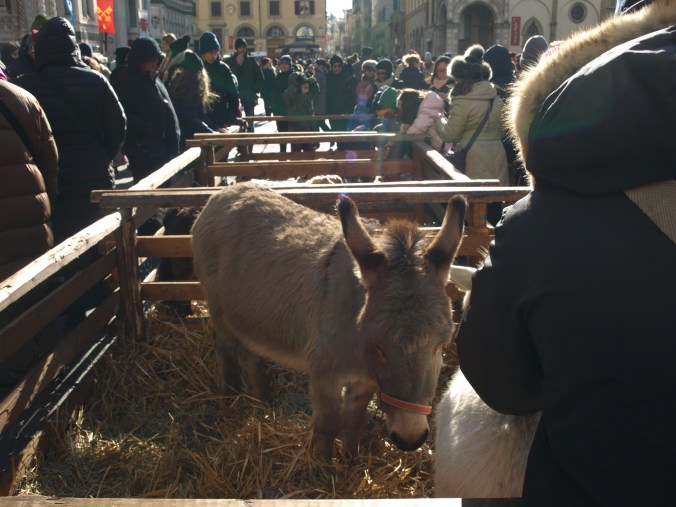
Here are the animals waiting patiently at the creche scene at the Duomo. They await the three Wise Men and their entourages,  marking the end of the long, ceremonious cavalcade.


OLYMPUS DIGITAL CAMERAOLYMPUS DIGITAL CAMERAOLYMPUS DIGITAL CAMERAOLYMPUS DIGITAL CAMERAOLYMPUS DIGITAL CAMERA


Once the Wise Men appear with their gifts, they are received by the magistrates of the city in a spectacular blending of church and state!

epifania_10

15823145_10155020962426614_8079433654972199975_n


The gifts are taken to the living creche scene.

epifania_11

After all the enactment, the hundreds of balloons, something I doubt Mary and Joseph ever imagined let alone saw, are set free!

OLYMPUS DIGITAL CAMERAOLYMPUS DIGITAL CAMERAOLYMPUS DIGITAL CAMERA


21

The entire day is a spectacle not to be missed!  I am so glad I got to see it!

Let’s bake a cake!

Facciamo cuocere una torta!  A torta margherita is a traditional Italian cake. One of the most popular cakes in Italy, it was named after the country’s first Italian queen: Margherita di Savoia.

The first recorded  recipe for the torta was in the 19th century, but it probably had been handed down from mother to daughter for centuries earlier.

I recently baked a yummy torta margherita from a box mix in my Florentine kitchen and next I wanted to try one from scratch.  Here’s my guide.


If you want to try one too, here’s the modern recipe:

5 eggs

180 grams sugar

zest of a lemon to taste

150 grams flour

150 grams potato starch

1/2 teaspoon baking powder

vanilla, 1 Tablespoon I’m guessing

salt

80 grams melted butter, cooled

powdered sugar to sprinkle on top of baked cake

Beat eggs, sugar and zest of a lemon on high until you get a light mixture that looks like the example in the Youtube video.  The mixture should be a pale yellow and hold its form enough that you can “write with it” as la signora says.

Next, with mixer on low, add flour and starch, baking powder, salt and vanilla.  The vanilla in the video is a powdered form available in Italy.  La signora reminds us to only mix the flours, etc., in; you don’t want to lose the lift you got by beating the eggs.

Last, slowly mix in the melted butter.

Pour mixture into a round baking tin, buttered, floured and lined with parchment paper.  Bake at 180 degrees C. for 40 – 50 min.  Sprinkle the cooled cake with powdered sugar.

It worked!  My yummy cake looks like this:

img_9086

And I eat it like this:

img_9090


But, you want to make it without potato flour?

Since we, in our American kitchens, don’t typically have potato starch on hand, I believe it is possible to change the recipe slightly, by adding an additional 100 grams of 00 flour.  Here’s another recipe I found on the internet for a Torta Margherita sensa fecola di patate. I haven’t tried it yet, but probably will soon.
Tempo di preparazione: 20 minuti, Tempo di cottura: 40 minuti, Tempo totale: 1 ora
Ingredienti per Torta Margherita senza fecola da 22 cm di diametro
250 g di farina 00)
200 g di zucchero
80 g di burro
4 uova
1 bustina di vanillina
1 bustina di lievito per dolci Paneangeli
120 ml di latte
zucchero a velo vanigliato q.b.

Buona fortuna!

Always on the search for history, I found the following article in the August 2015 issue of BBC History Magazine.

In every issue of BBC History Magazine, picture editor Sam Nott brings you a recipe from the past. In this article, Sam recreates Torta Margherita, a 19th-century cake from Italy that is both gluten and dairy-free.

This recipe comes from Pellegrino Artusi’s 1891 cookbook La Scienza in Cucina e l’Arte di Mangiare Bene (The Science of Cooking and the Art of Fine Dining), and is a cake that has been enjoyed in many Italian households.

Artusi’s introduction to his cookbook gives an insight into the origins of the cake. He originally made it for a friend of his, Antonio Mattei, who took the recipe and, after making a few changes, sold it in his restaurant.

The cake was such a success that it soon became the norm to finish a meal with Torta Margherita. The moral of the story, according to Artusi, is that if you grab opportunities when they arise (as Mattei did) fortune will favour you above someone who merely sits back and waits.

Ingredients
120g of potato starch, sifted
120g of fine white sugar (caster sugar)
4 eggs
Juice or zest of a lemon (optional)
Butter and baking paper (to line the baking tin)

Method
Separate the yolks from the whites and beat the yolks together with the sugar until pale and creamy. Add the lemon (optional) and the potato starch and beat.

In a separate bowl, whisk the egg whites until stiff peaks form, then delicately fold the whites through the batter. Place the mixture into a round cake tin (buttered and lined with baking paper). Bake at a moderate heat for about an hour or until golden on top and firm to the touch.

Time: 60 minutes

Verdict:
When I found this recipe I was intrigued: a gluten and dairy-free cake that tastes nice? And with only three ingredients? But the picture in the recipe book looked very enticing so I gave it a try.

And I’m glad I did! I ended up making several of these as they were so delicious; friends and family devoured them all. The cake is incredibly light, goes well with tea or coffee, and takes just an hour to make.
And, alternatively, there is this: http://www.academiabarilla.com/italian-recipes/desserts-fruit/margherita-cake.aspx

Buon anno! Auguri!

Wherever you are, whatever you are doing to celebrate the arrival of 2017, I send you auguri!

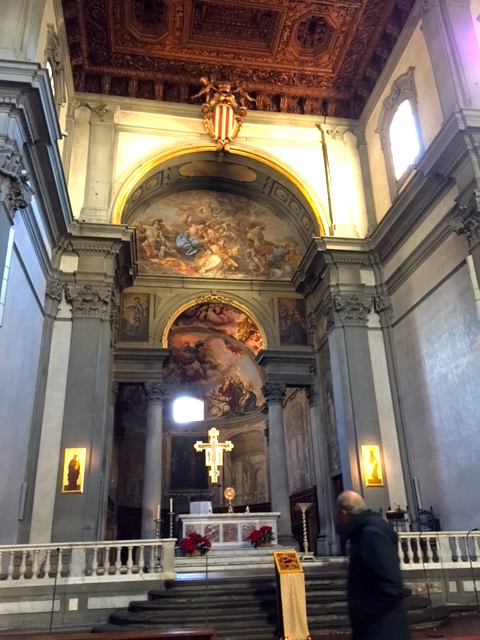
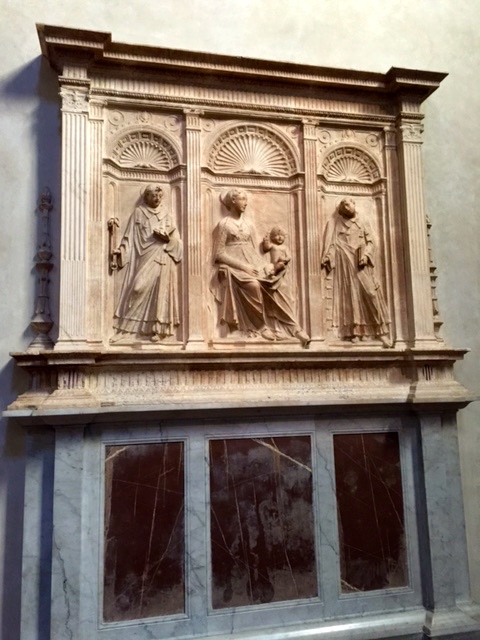
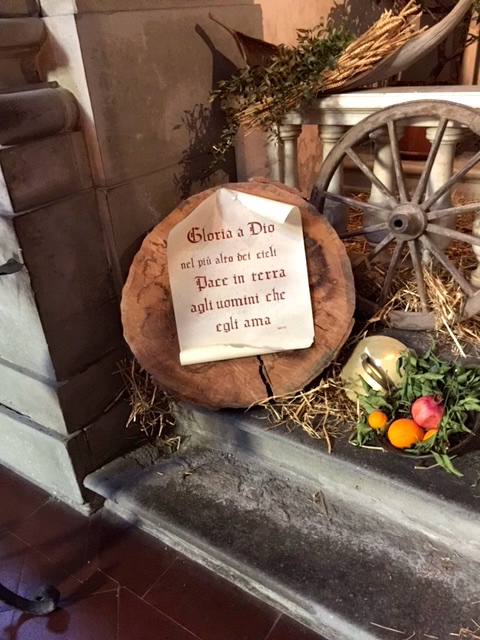
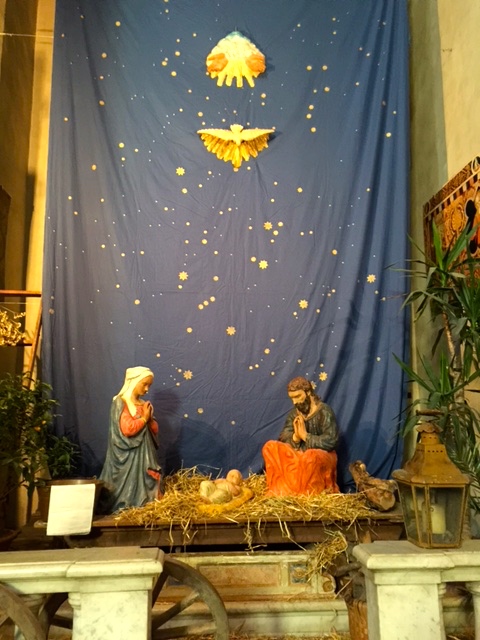
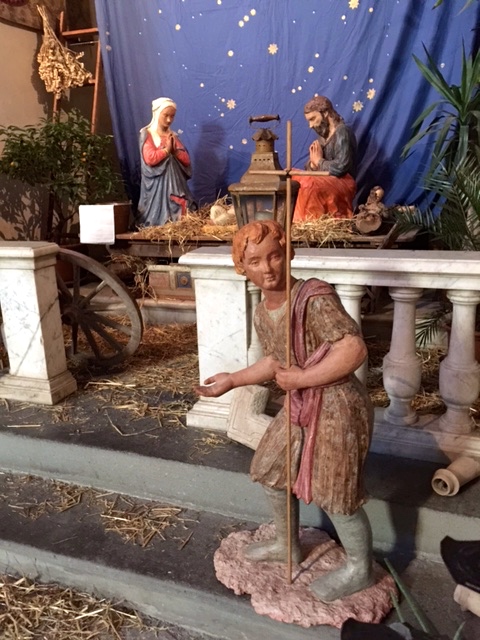
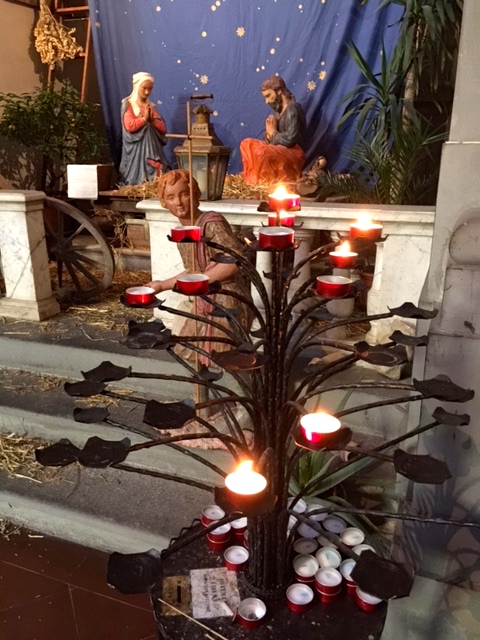
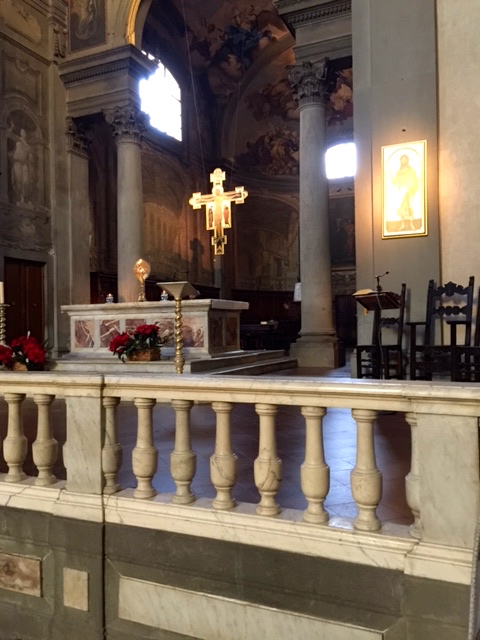
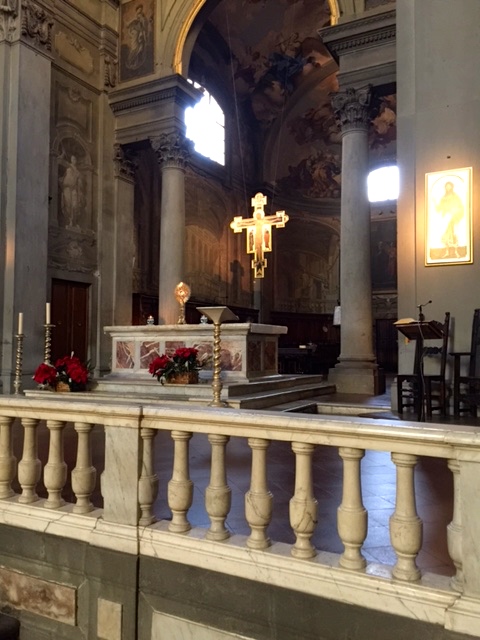
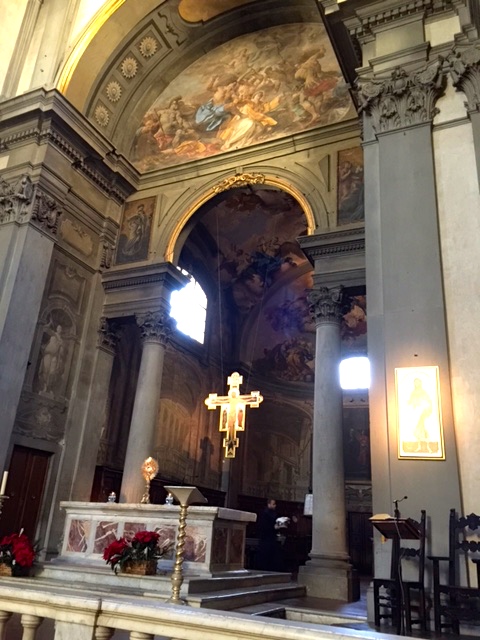
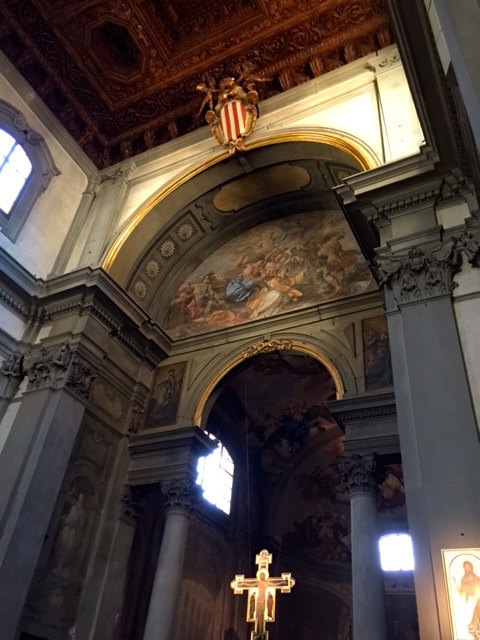
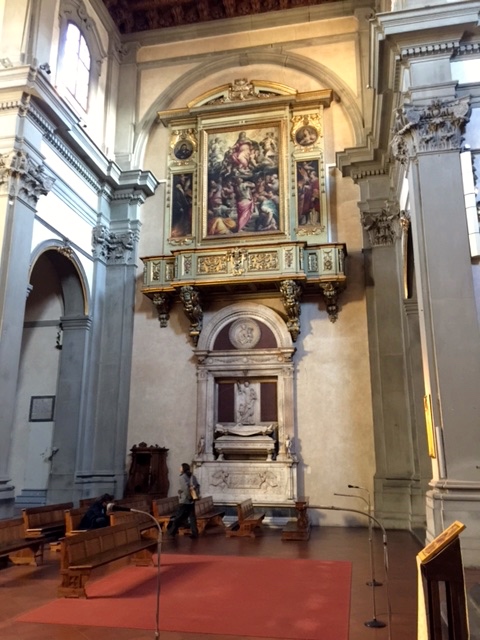
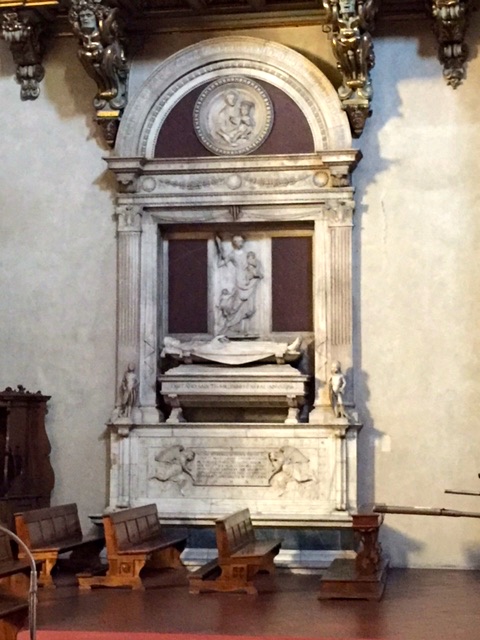
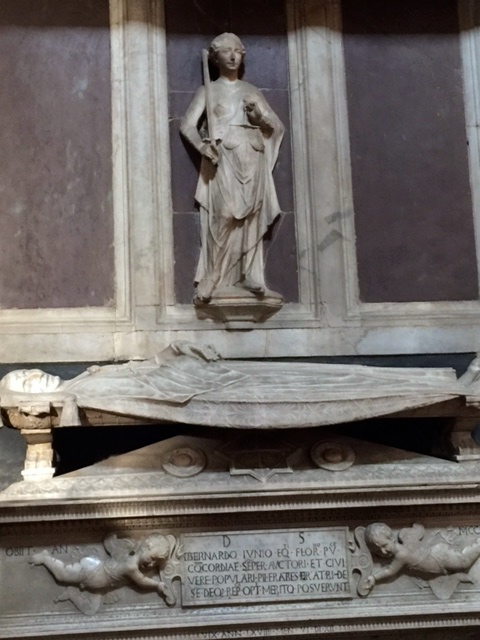
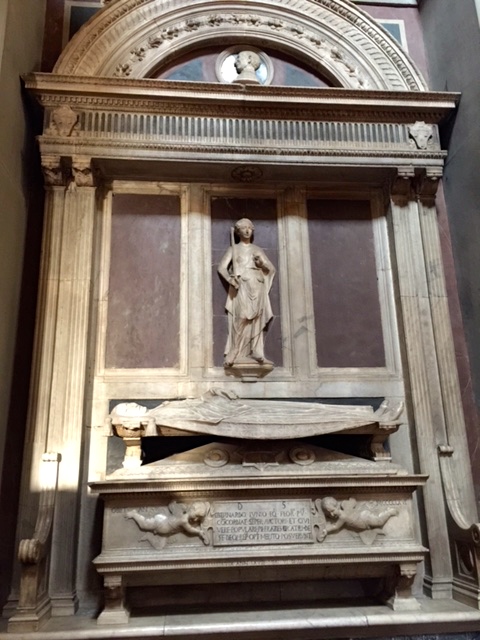
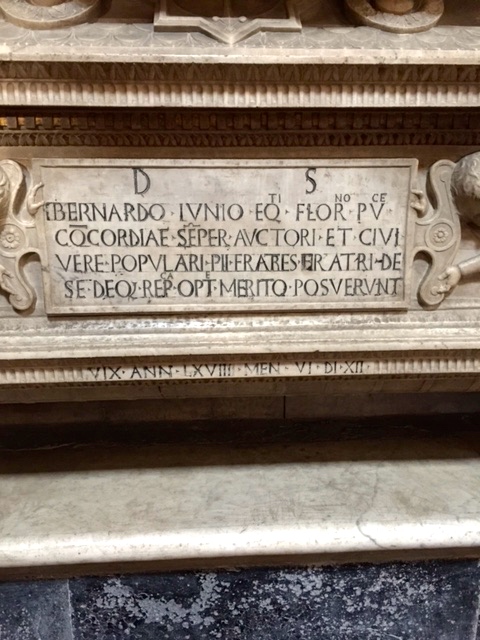
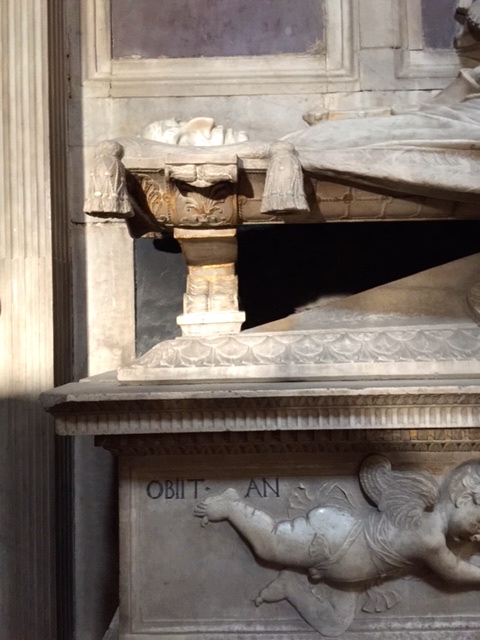
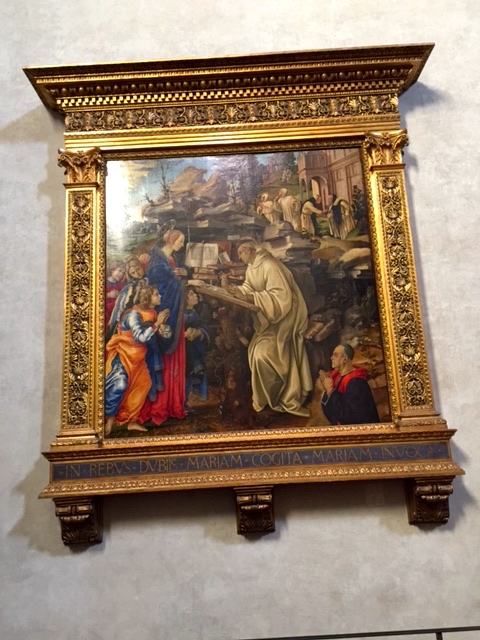
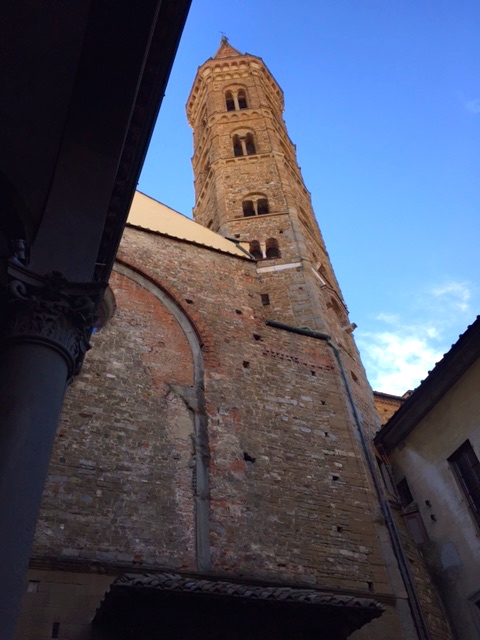
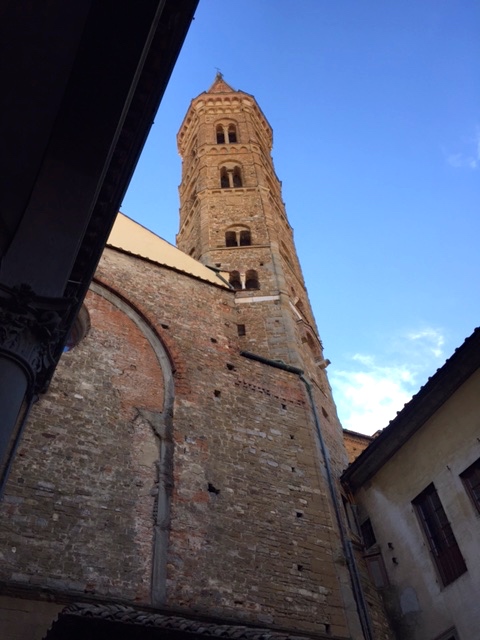
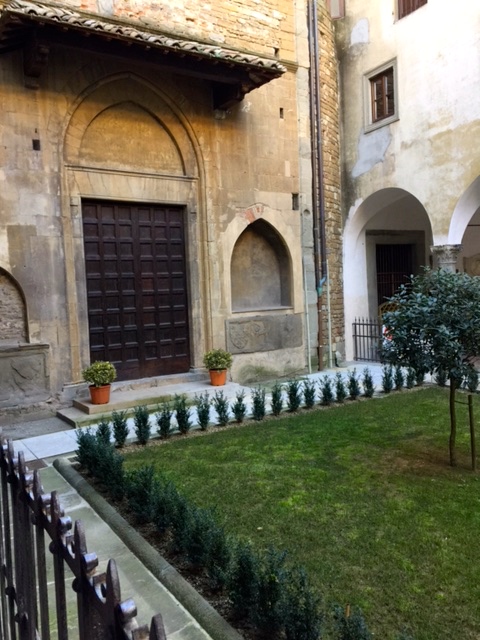
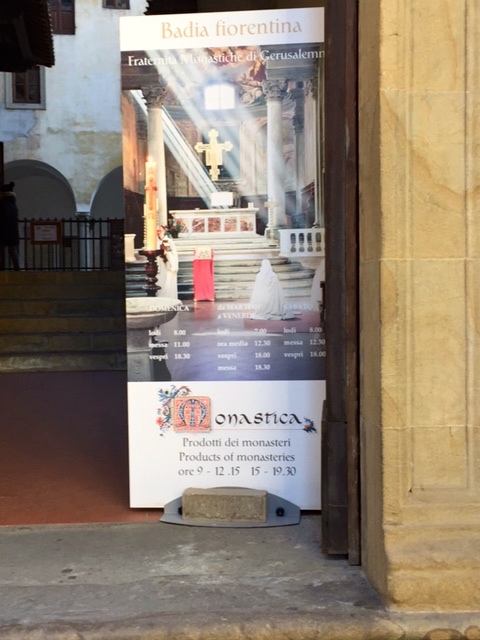
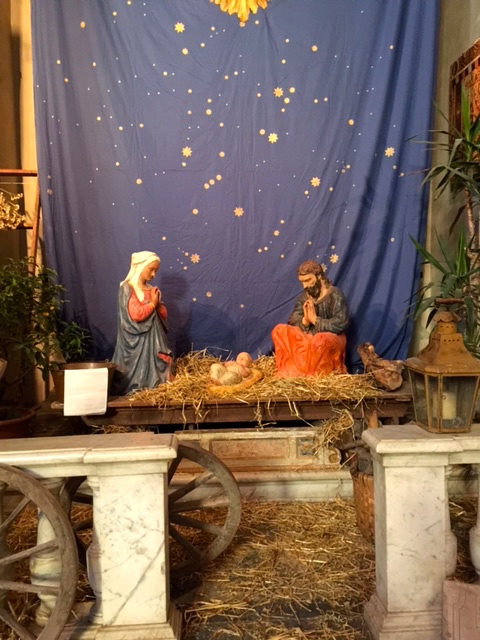
I’ve been busy, although I haven’t been posting much this past week.  But today I share with you the photos I took today of the Badia fiorentina, complete with its Nativity scene.  Two major tombs are part of the interior of this fine, ancient church in Florence, as well as a gorgeous coffered wood ceiling.  Also, a fine altarpiece by Fra Filippo Lippi is still in situ.

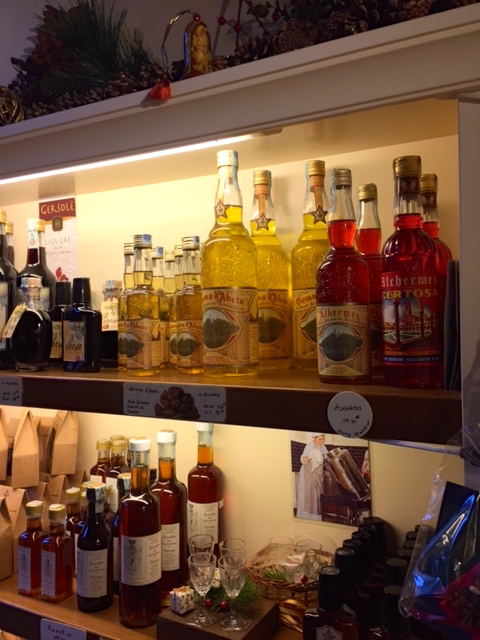
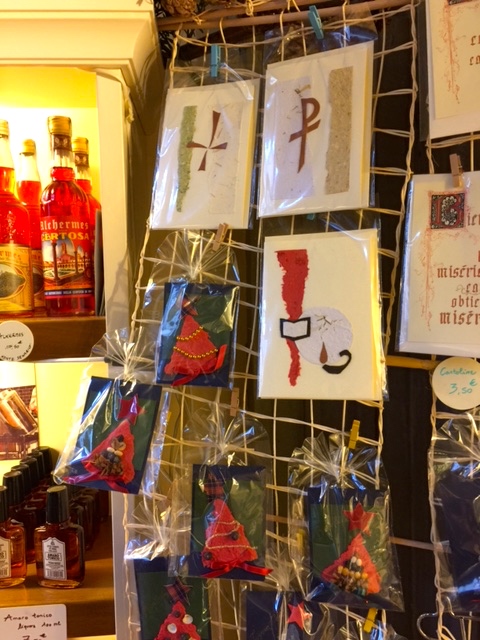
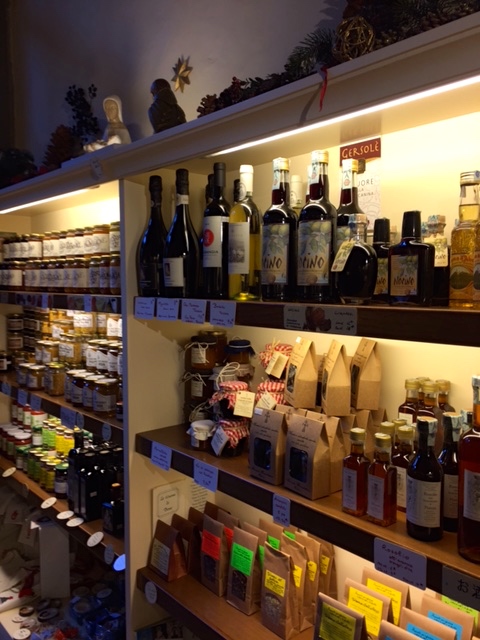
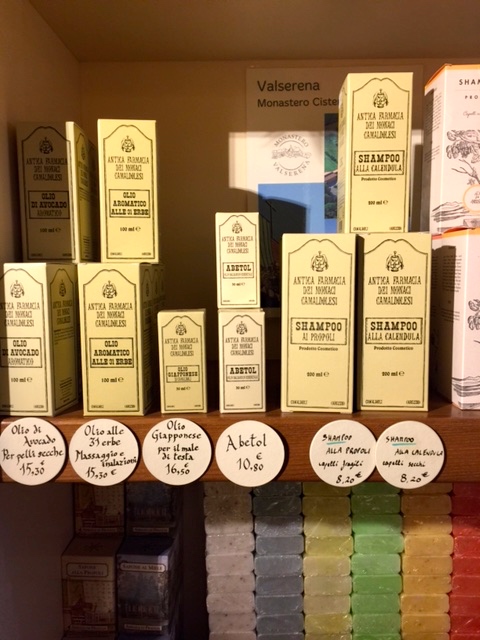
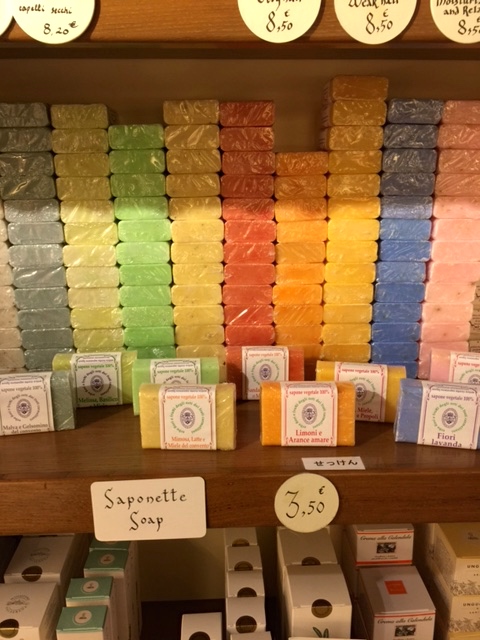
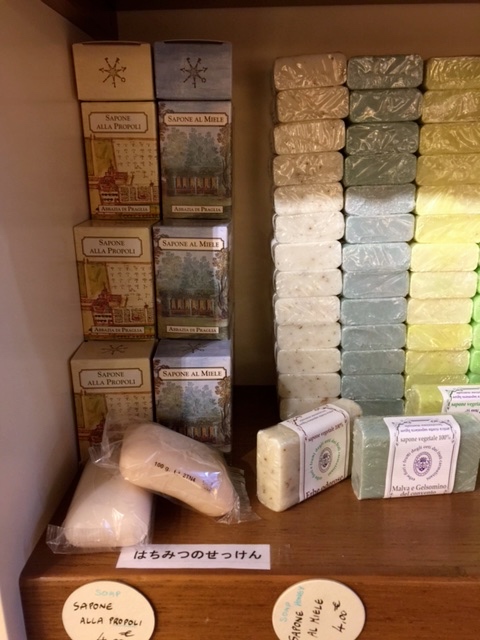
At the end of the pictures, I’ve included the offerings from the shop attached to the church.  Here one may buy jams and jellies, spirits and wines, soaps and lotions, all made by the monastic orders.

Please enjoy!

img_8764img_8766

img_8768img_8769img_8770img_8771img_8772img_8773img_8775img_8776img_8777

img_8778img_8779img_8780img_8781img_8782img_8783img_8784img_8785img_8786

img_8787img_8788img_8789img_8790img_8791img_8792img_8793img_8794

Bel Paese, the beautiful country and an everyday pleasure


a1a538b29182fa773dc0304fbd651a85


What a gorgeous, elegant, art deco image!


And it was designed by R. F Quillio in 1928 to advertise, of all the humble things in the world, an Italian cheese.


Ah, Italy!  You never fail me.

2128


Have you ever had slivers of Bel Paese paired with slices of ripe pear and/or a glass of hearty red wine?  If not, you must!  You owe yourself this essential everyday pleasure.

images-9                     Wine-and-Cheese-Desktop-Wallpaper

Bel Paese is a very common product in Italy, a semi-soft cheese made from cow’s milk with a mild, buttery taste. Made in small discs, the cheese matures in six to eight weeks, and finishes with a pale, creamy yellow color.

ch-004

Bel Paese was created in 1906 by Egidio Galbani in Melzo, a small village near Milan, in the Lombardy region of Italy. Galbani wanted to produce a mild and delicate cheese to sell mainly in Italy, but to compete with the fine French cheeses such as brie.

images-3

Once Galbani was satisfied with his final recipe and brought it into production, he named his cheese after a popular 1876 book written by Antonio Stoppani, the well-known Italian geologist and paleontologist.  Stoppani was very important as a popularizer of science. In his most popular work, Il Bel Paese, he presented – by means of 32 didactical/scientific conversations in front of a fireplace – ideas and concepts of the natural sciences, with a language that was accessible to the average 19th-century reader, and particularly deals with geology and the beauties of the Italian landscape.  Coming of age at the same time as the formation of the modern Italian nation, patriotic fever inspired both Stoppani and Galbani.

240_002


Today Bel Paese the cheese is produced both in Italy and in the USA.  The Italian product is packaged with a map of Italy and an image of Antonio Stoppani on the top.

1bdff3fec939c51a8cd3088e890bbab2

While the wrapping of the cheese made in the U.S. has a map of the Americas.

2128

There were several good advertising images created to market this simple cheese in Italy, including these


9590d73446df61f1ad30683402669518


images

images-6


images


But never, I think, has an ad been as successful and gorgeous as the one below.  Let’s have another look!

a1a538b29182fa773dc0304fbd651a85

It melts my heart with its beauty!