





The Brenta is an Italian river that runs from Trentino to the Adriatic Sea just south of the Venetian lagoon in the Veneto region.
During the Roman era, it was called Medoacus and near Padua it divided in two branches, Medoacus Maior and Medoacus Minor. The river changed its course in the early Middle Ages, and its former bed through Padua was by then occupied by the Bacchiglione.
The 108 mile long stretch was first channelled by the Venetian Republic in the 16th century, when a canal was built from the village of Stra to the Adriatic Sea, bypassing the Venetian lagoon.

The Brenta canal made use of the system of rivers and canals that had connected the Venetian cities with each other and with the Venice lagoon since ancient times. The goods directed from the hinterland to the Serenissima Republic of Venice passed on these river routes: building materials such as wood, marble, stones from the Vicentine Hills and trachyte from the Euganean Hills as well as grains and other agricultural products. The transport took place with barges called bùrci pulled along the horse banks.

In construction the canal, the Republic of Venice imposed hydraulic changes (which several times required the engineering advise of Leonardo Da Vinci) which diverted the main river course further south, moving it away from the Venetian lagoon and leading it to flow directly into the Adriatic Sea. These hydraulic works are represented by the cuts of the Brenta Nuova and the Brenta Nuovissima, and consist of sluices and mobile bridges that have made the river navigable.
A branch of the Brenta, named Naviglio del Brenta, was left to connect directly Venice and Padova (which was a kind of second capital of the Venice Republic). The Brenta canal runs through Stra, Fiesso d’Artico, Dolo, Mira, Oriago and Malcontenta to Fusina, which is part of the comune of Venice.
With this new stretch of the Brenta connecting Venice with Padua, it came to be called the Riviera del Brenta by the 16th century. Wealthy Venetian families began to build elaborate river houses which they called villa (“villa” in the language of the time meant “country”). This was a perfect situation for these patrician families because there new homes could be easily reached from Venice with their gondolas. In fact, it has been said that with all the new building along the Canal, it was almost as if the Brenta canal was an extension of Venice’s Grand Canal.

It also became the custom of aristocratic Venetian families to spend summer holidays in their new country houses. These homes could be reached by richly decorated, luxurious wooden burchielli, or ships.

These vessels had elegant cabins, with three or four balconies. The interiors were finely decorated and adorned with mirrors, paintings and precious carvings. On the way to the lagoon they were propelled by wind or oars, while on the route from Fusina to Padua along the Brenta Riviera, they could be pulled by horses.
Cargo was carried on traditional barges known as burci.
After 1797 , with the fall of the Venetian Republic and the consequent decline of the Venetian patriciate, the burchielli fell into disuse.

Among the first villas to be built, and one of the most important, is Casa Foscari designed by Andrea Palladio at Malcontenta (located shortly after the gates of the Moransani). The illustrious Foscari family was established by the 15th century, when a Foscari was a popular doge in the Venetian Republic for 34 years.
Another Palladian villa, which was built for Senator Leonardo Mocenigo around 1560-61, was destroyed. But its very existence, along with Casa Foscari, shows how quickly patrician settlements multiplied on the shores of the Brenta Canal. In the Mocenigo Villa, the architect created a rather original design with respect to the typical pattern of Venetian villas, which he later published in the second of his Four Books of Architecture. Sadly, that villa fell into disrepair by the late 18th century and was demolished.
After the Foscari and Mocenigo ville, most new homes along the canal were not as important architecturally. They were mostly homes of modest size. But the trend for vacationing along the canal, and the taste for villa life, was well established. Homes known as barchesse contained large rooms and were almost always ornamented with decorative frescoes. Extant examples include buildings of the Villa Valmarana, the Villa Contarini Venier in Mira (currently the seat of the Regional Institute for Venetian Villas), and the Villa Foscarini Rossi in Stra.
Thus, the villeggiatura (life of the villas) understood in its original meaning, the Riviera del Brenta has become other than a residential and productive facility, a touristic infrastructure of great importance that ideally links the Euganean Hills to the Laguna, the thermal baths of Abano to the beaches of the Lido, and again, Padua toVenice.
https://it.wikipedia.org/wiki/Naviglio_del_Brenta
http://lamalcontenta.com/index.php/en/riviera-of-brenta/description
Antonio Foscari, Acque, Terre e Ville, in “Ville Venete: la Provincia di Venezia”, I.R.V.V, Marsilio, Venezia 2005, pp. XXX-XLII
Antonio Foscari, Tumult and Order, Lars Mueller Publisher Zurigo, 2011
There’s an interesting place in Florence that was, when it was founded in 1828, an extremely bucolic locale.

Today, it stands isolated as an island (Piazzale Donatello) in a ring road system, which is really too bad. Nevertheless, knowing how land development works all over the world, it is a comfort that the place still survives.


The cemetery was founded to provide a solution to a very real problem. Before 1827, non-Catholics who died in Florence had to be buried in Livorno. The cemetery acquired the name ‘English’ because Protestants, most of whom were English, had to be buried outside the medieval city walls.


The English Cemetery was officially closed in 1877, when the medieval walls of Florence came down, making burials within the city boundary illegal, and for a century and a quarter the mini-necropolis remained locked and neglected.
Fortunately, Julia Bolton Holloway, a literary scholar specialising in the works of Elizabeth Barrett Browning – whose Penguin Classic Anthology she co-edited – took on responsibility for the cemetery. It was reopened to the public in 2003 for the reception of ashes but not bodies, and Holloway is actively raising restoration funds.
Ted Jones, wrote the following in his book, Florence and Tuscany: A Literary Guide for Travellers:
When I called, she [Julia Bolton Holloway] was re-lettering a gravestone, and she has set up a number of charitable institutions to ensure its future maintenance. Today, with the gardens replanted and well-maintained and the memorials inscribed and re-erected, it is a pleasure to visit, and well worth the slalom through the traffic – safe in the knowledge that if you don’t make it to the cemetery, there is a hospital next door.
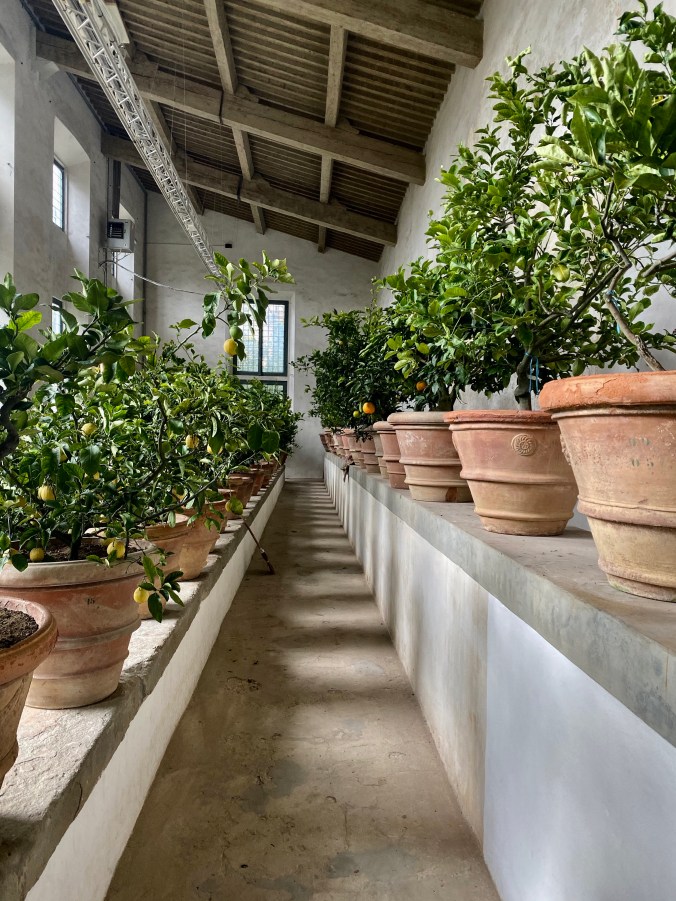
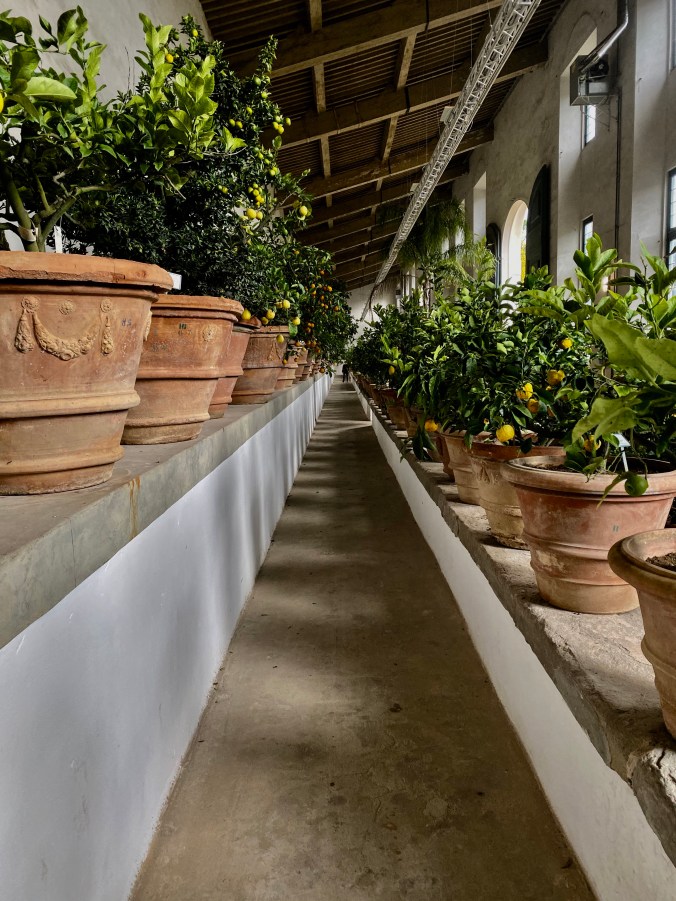
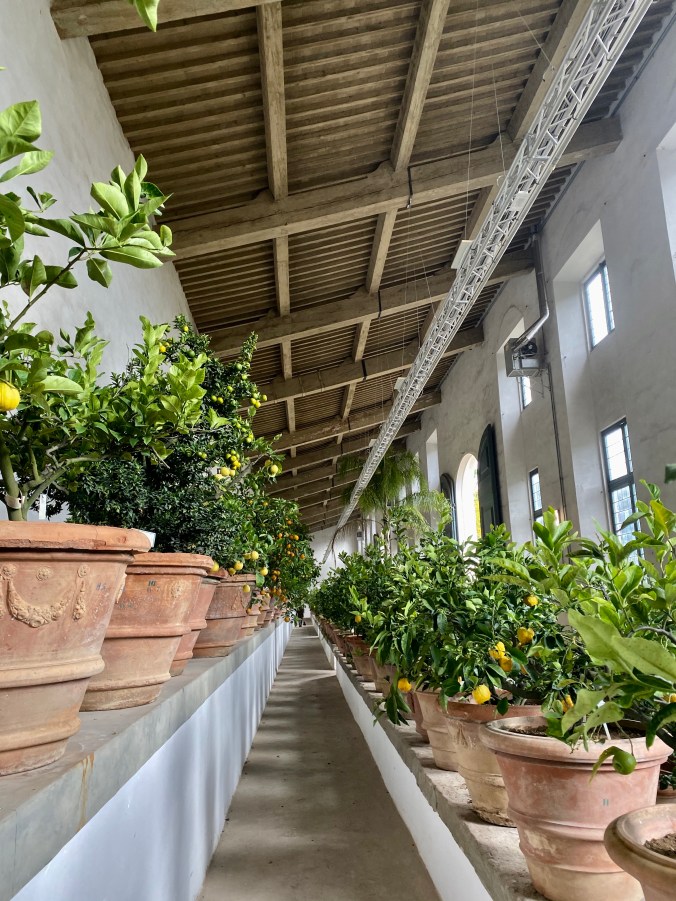
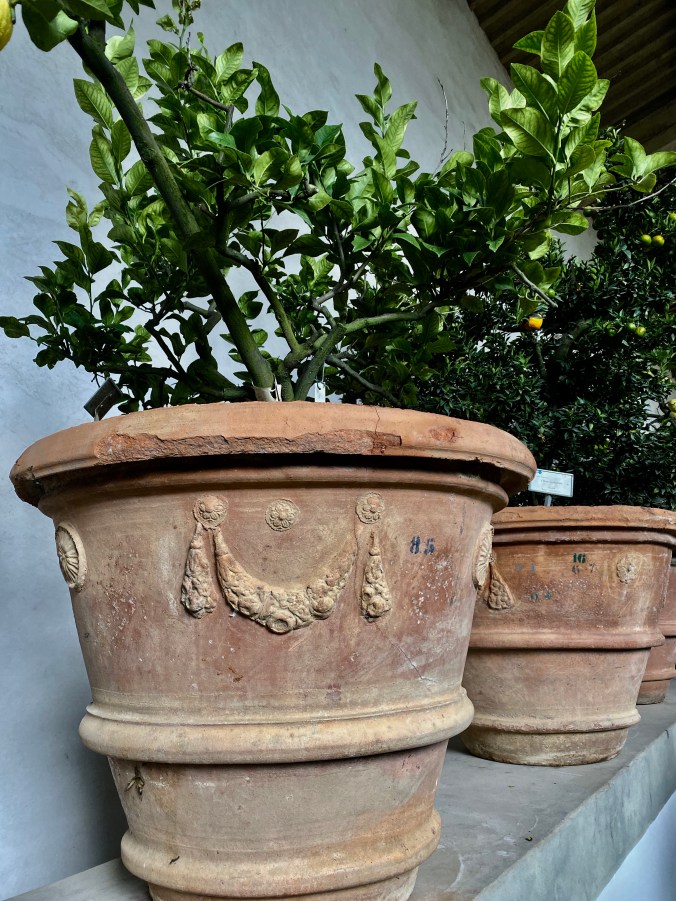

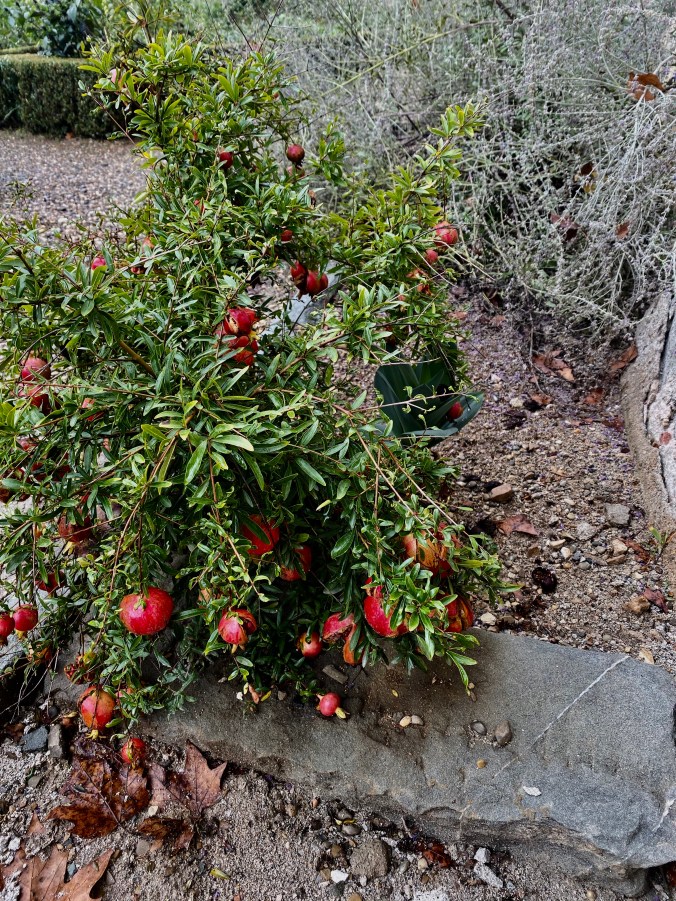



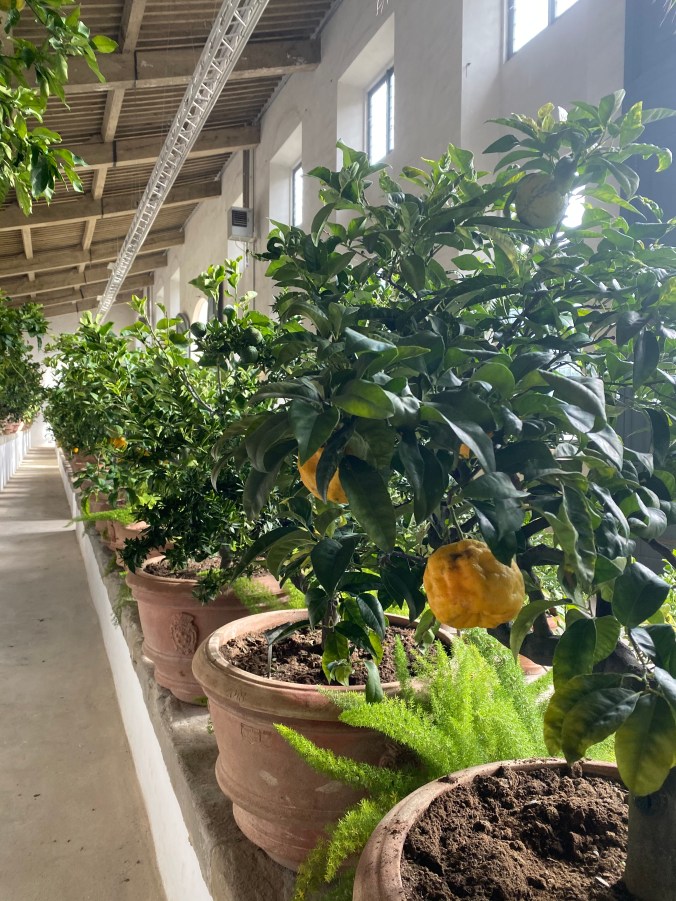
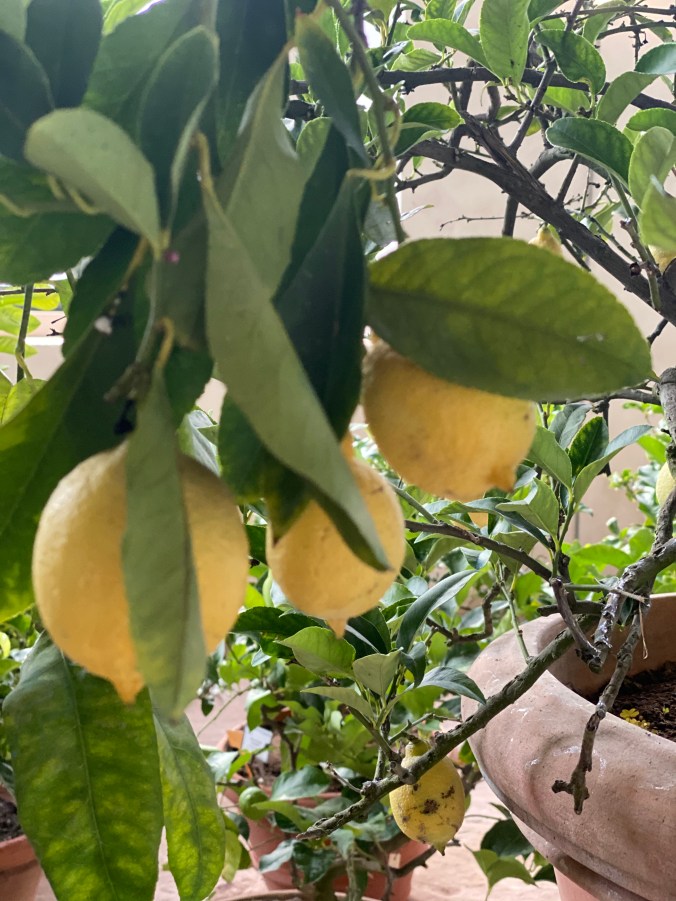


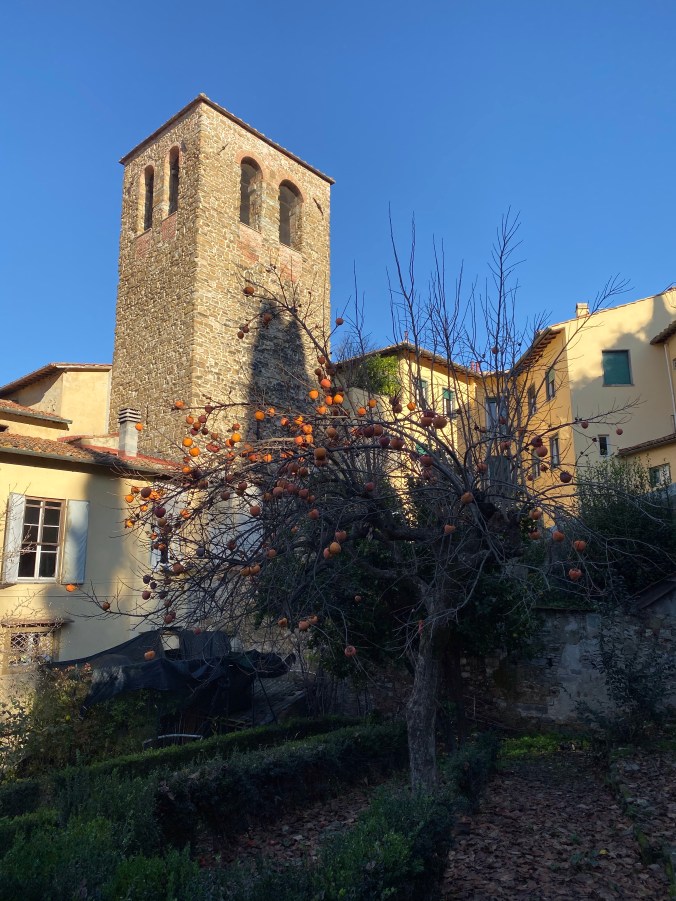
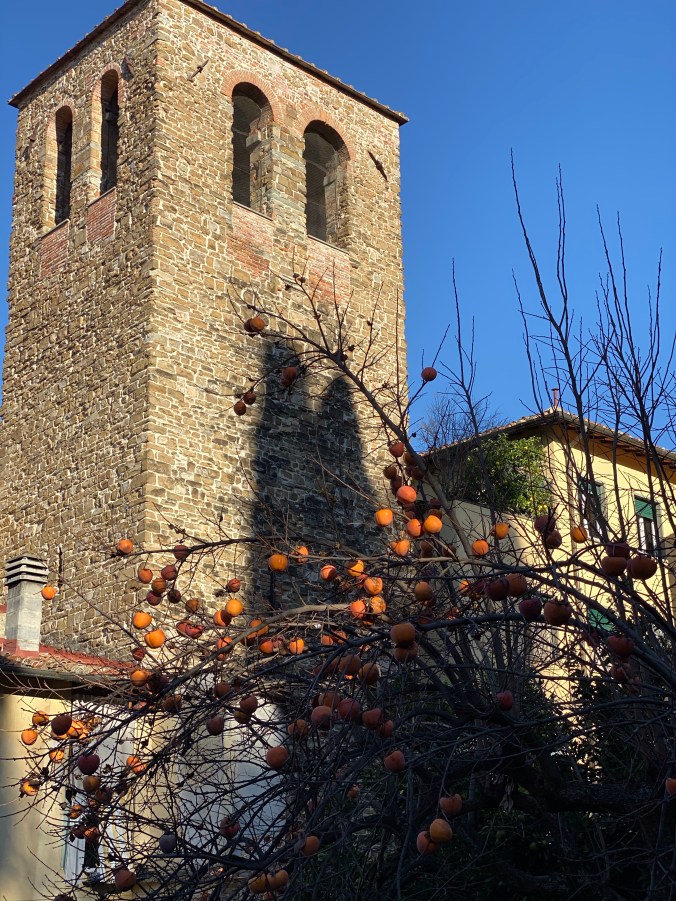
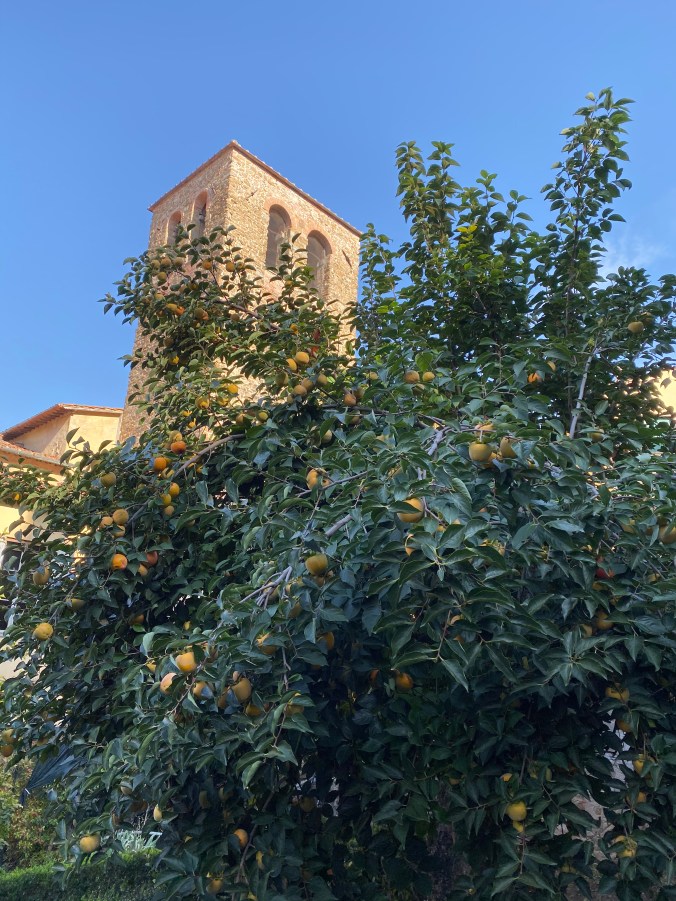
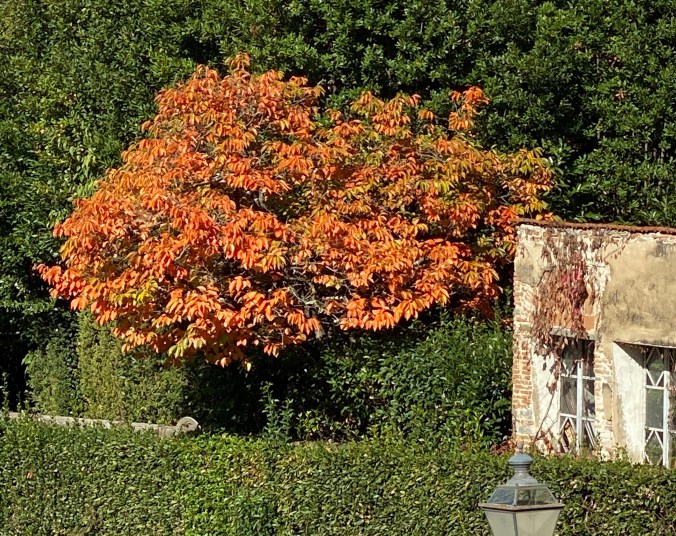
The persimmons are beginning to ripen in shades of yellow, gold and coral.

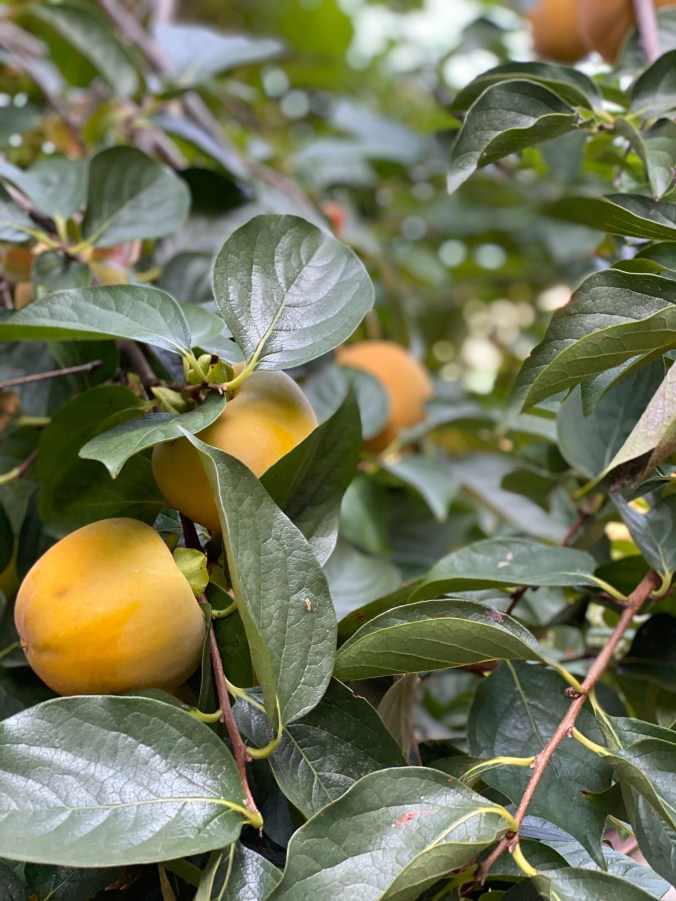
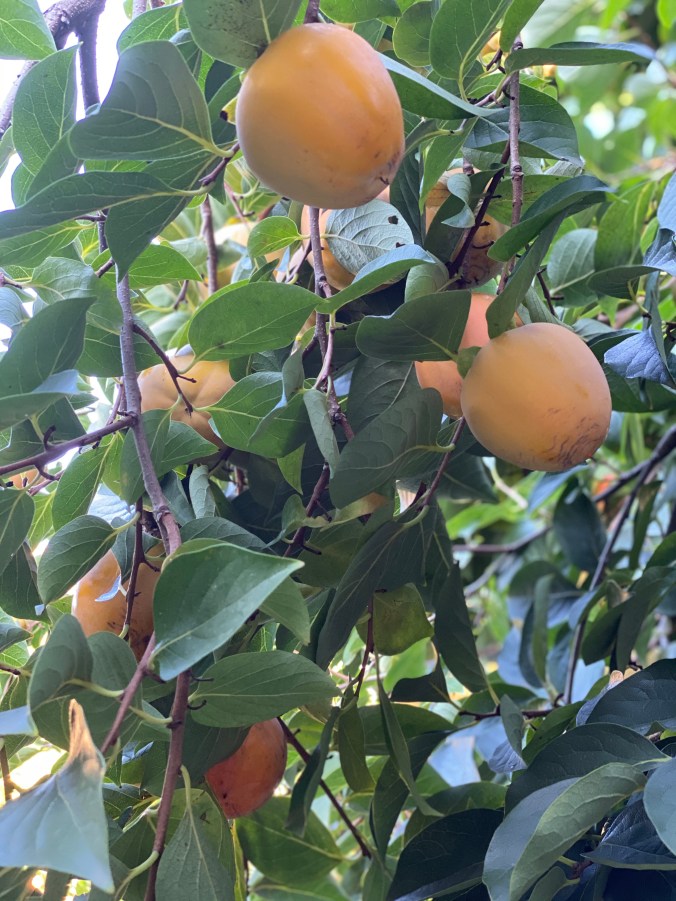
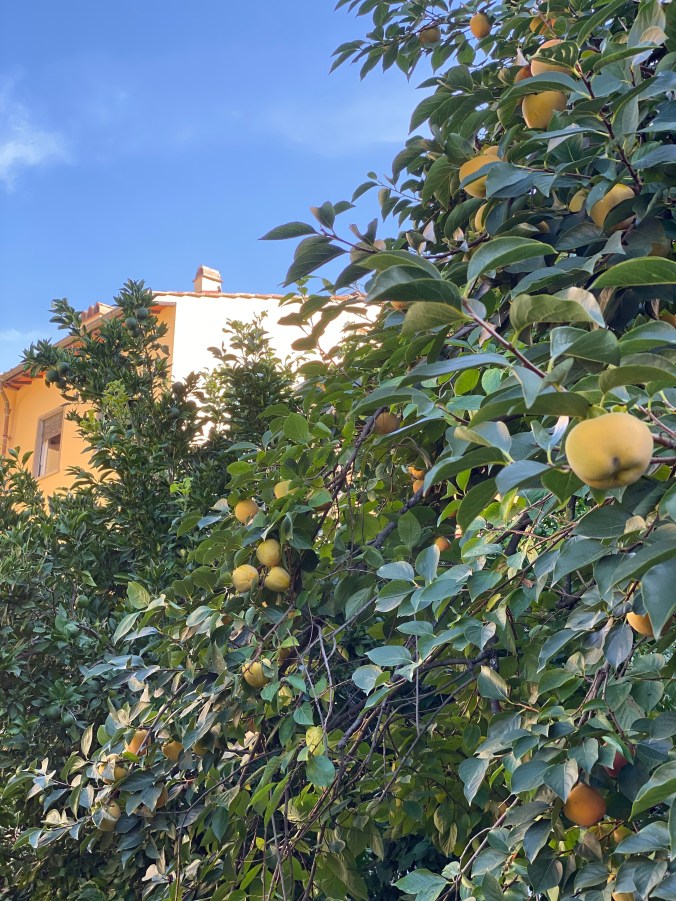


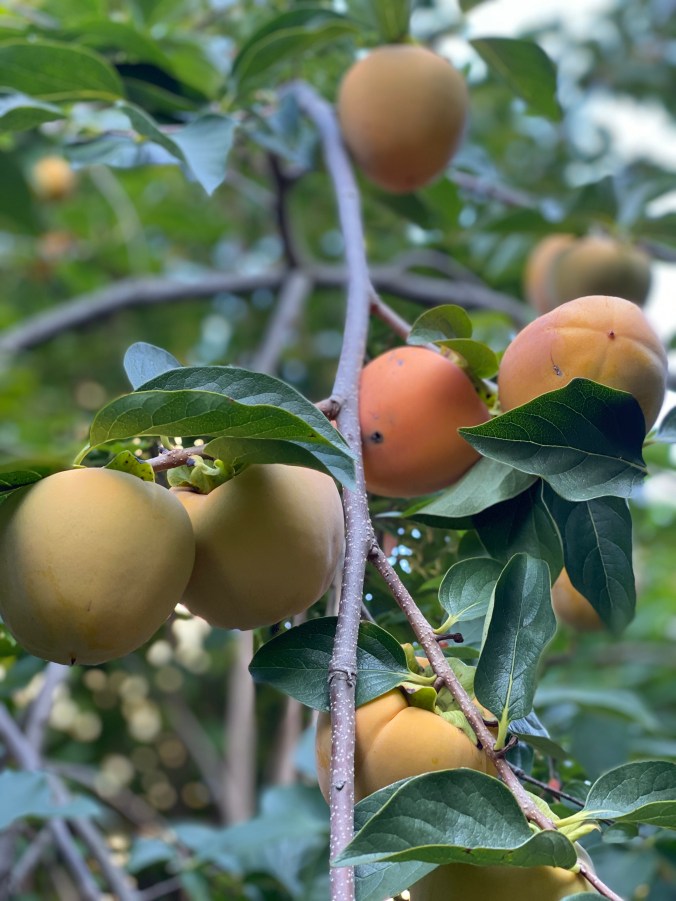

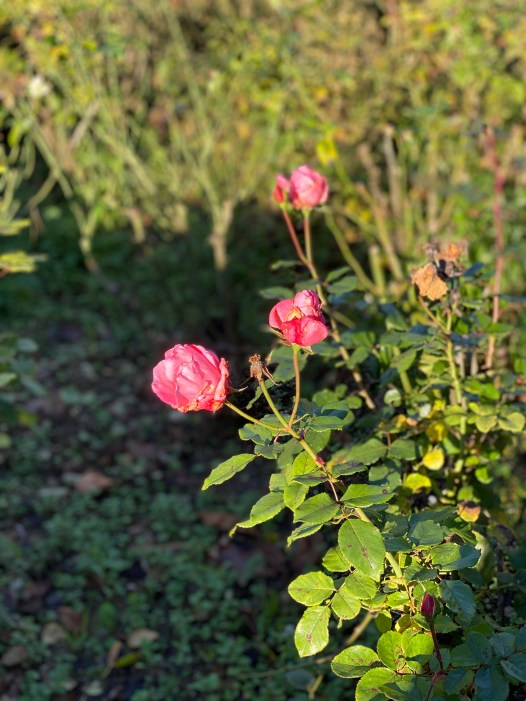
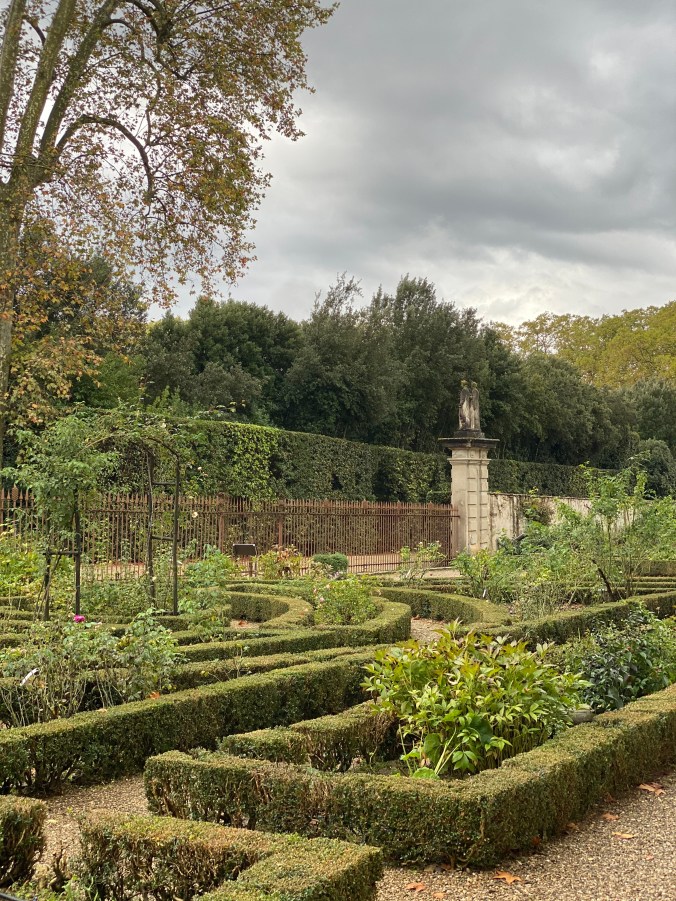
What a beautiful place to visit, any time of year. Somehow the blooming roses are more poignant and beautiful in late fall.
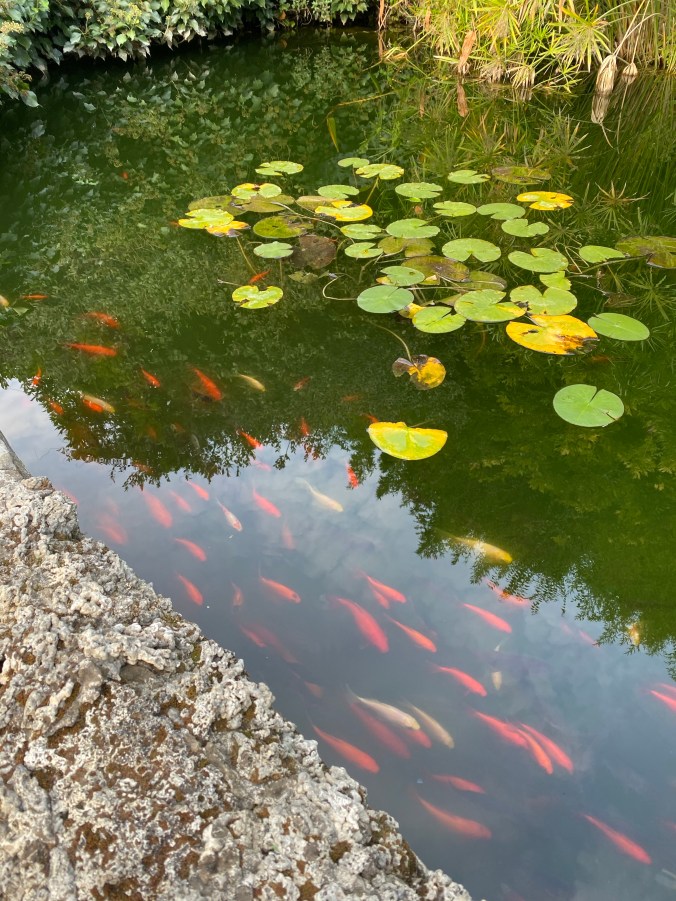
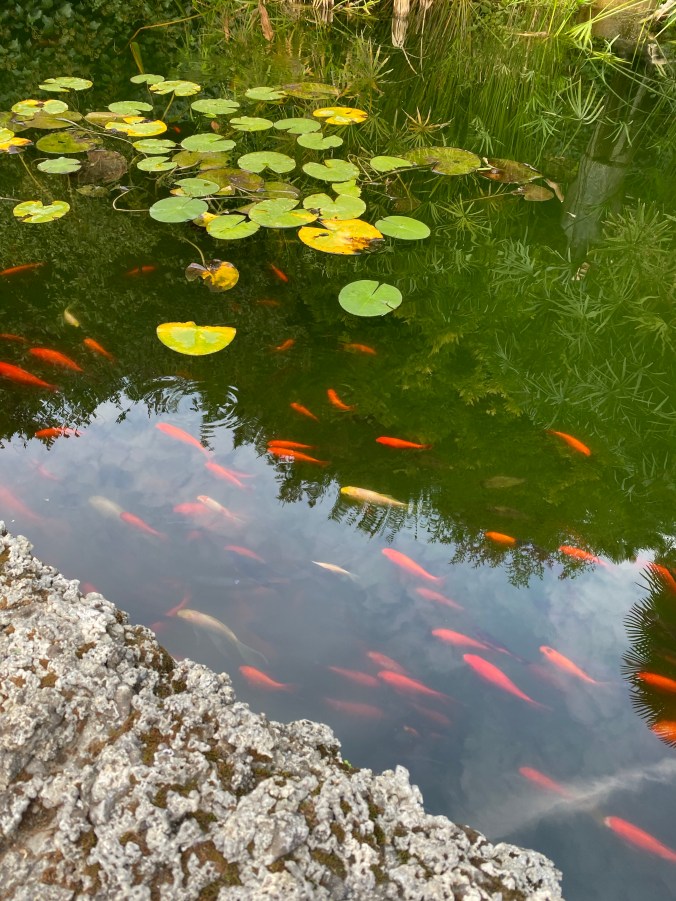
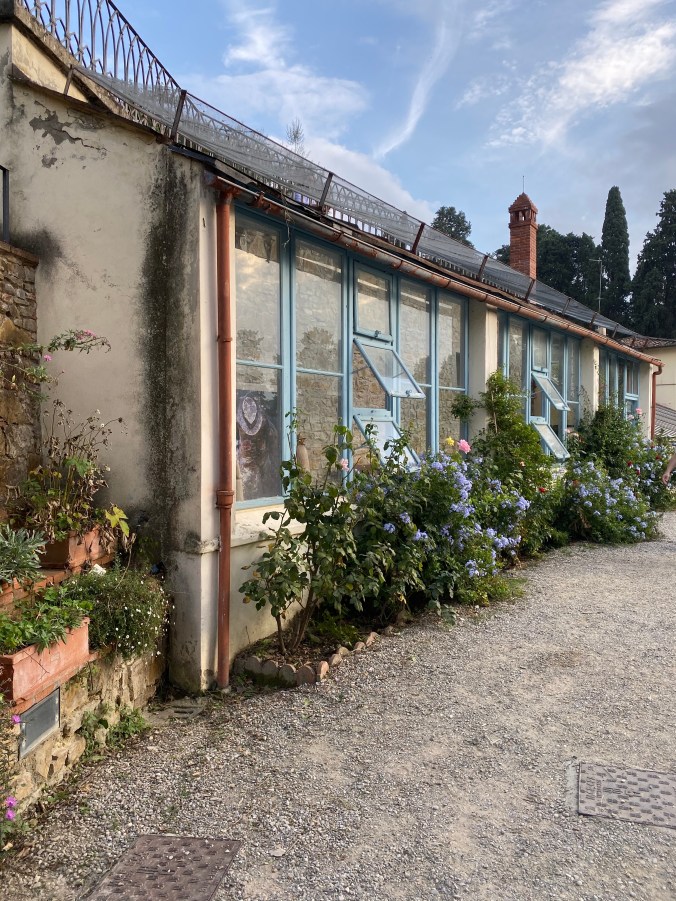

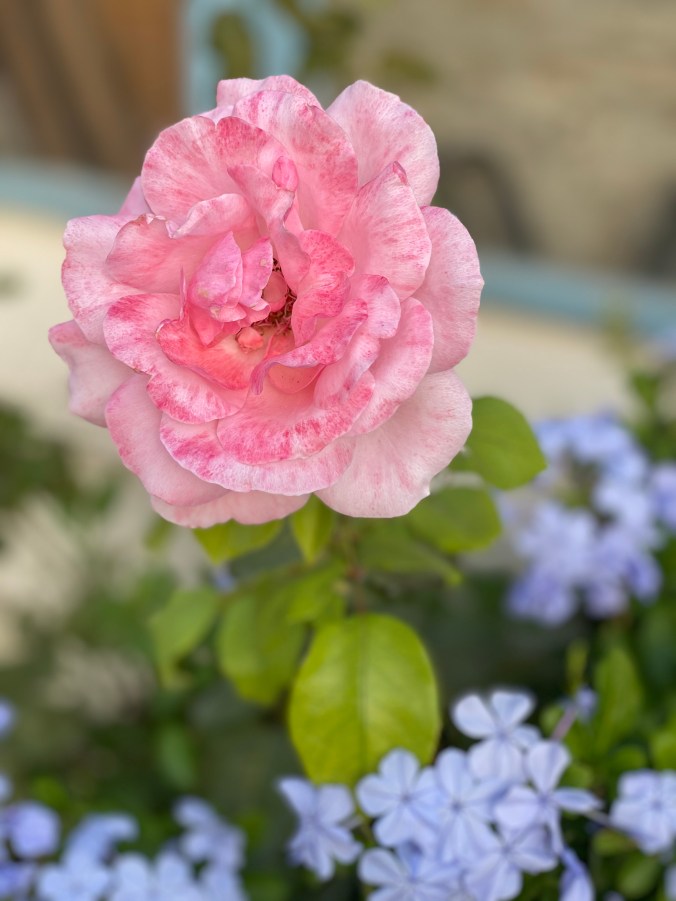

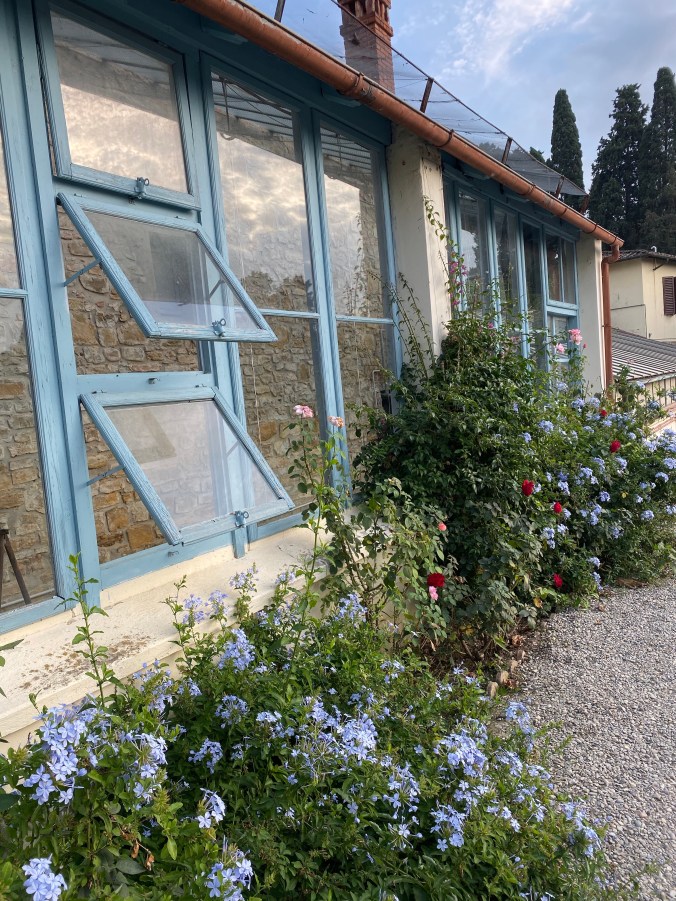
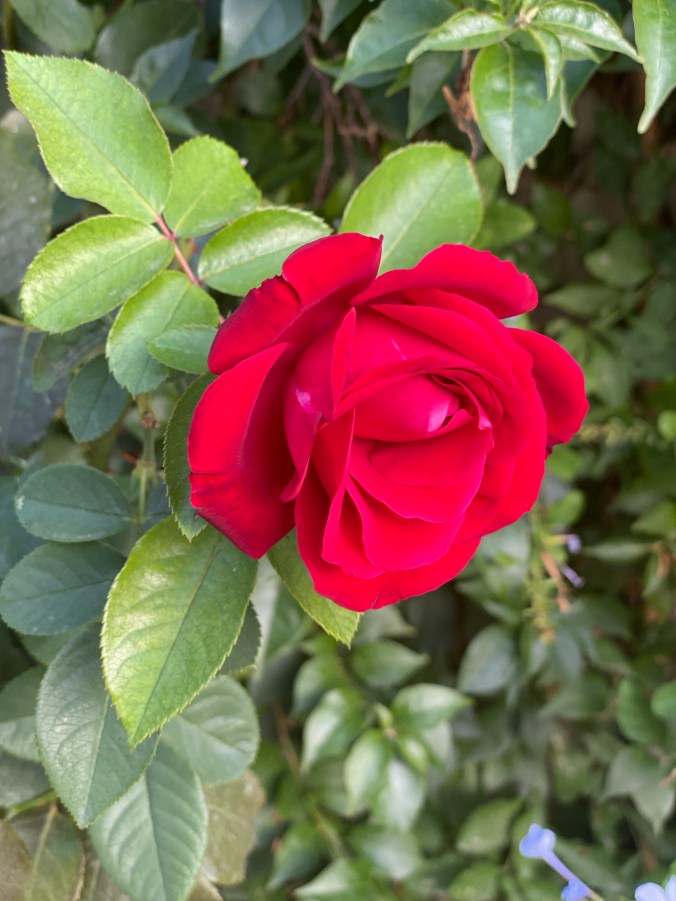
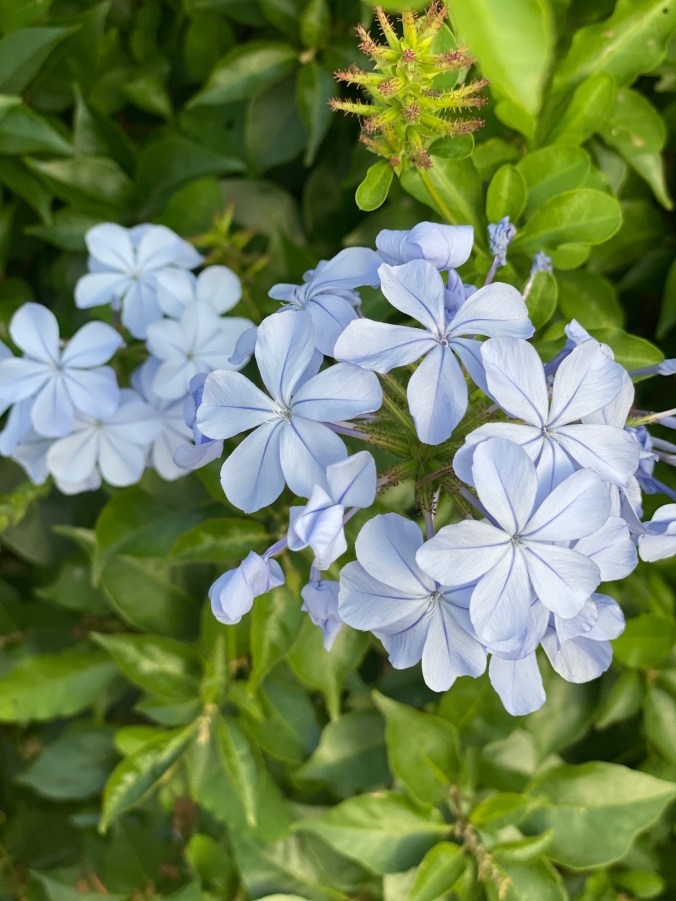

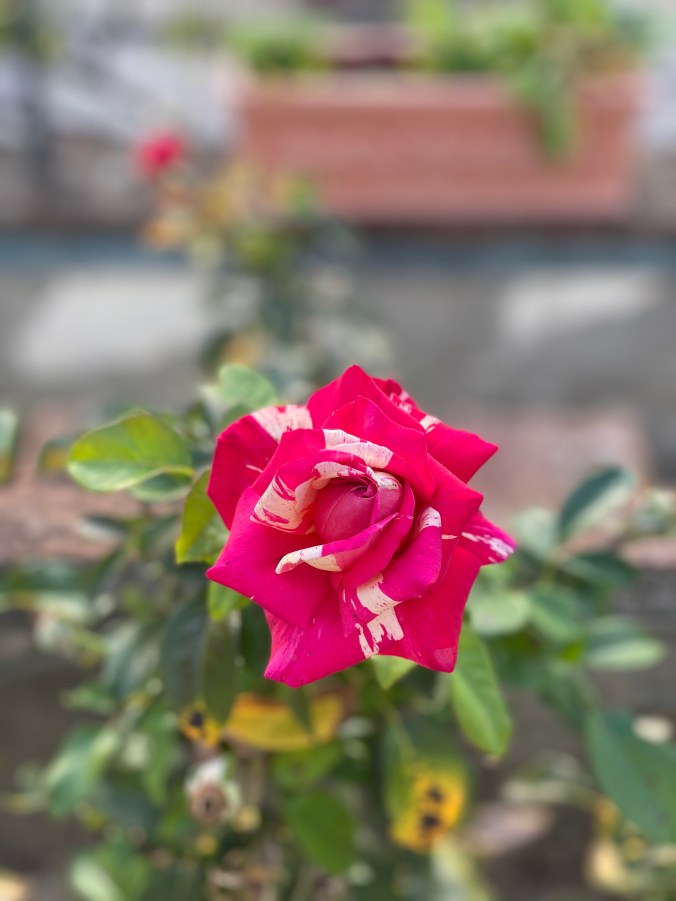

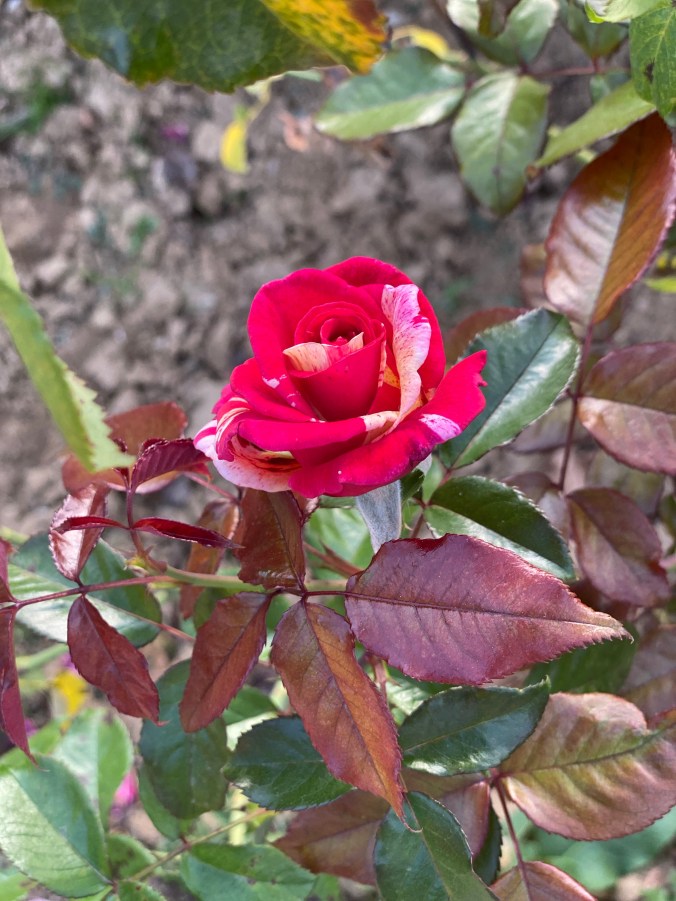

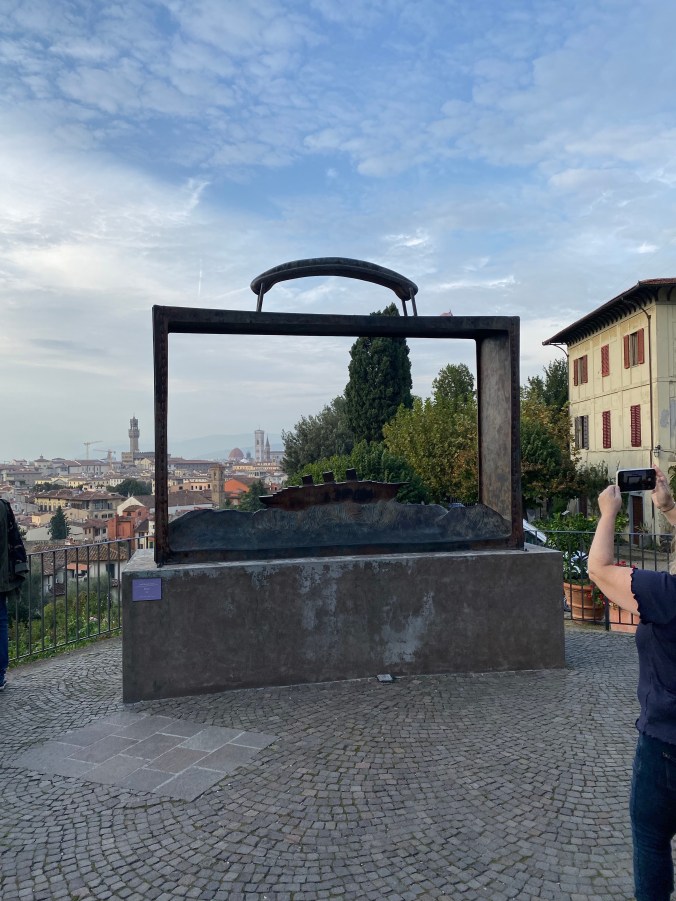


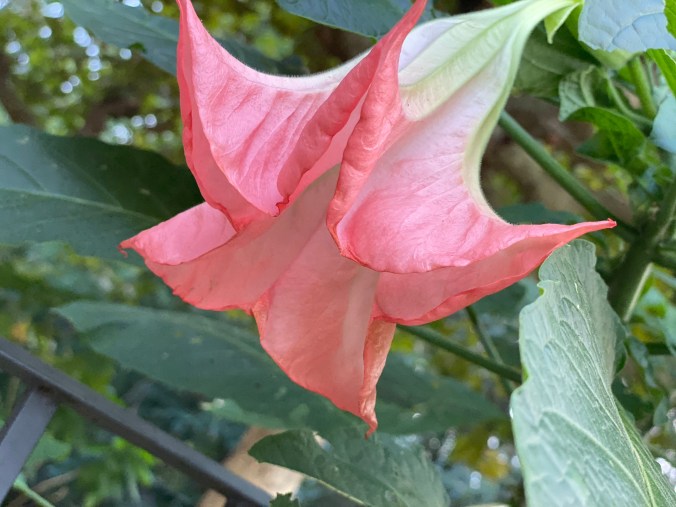
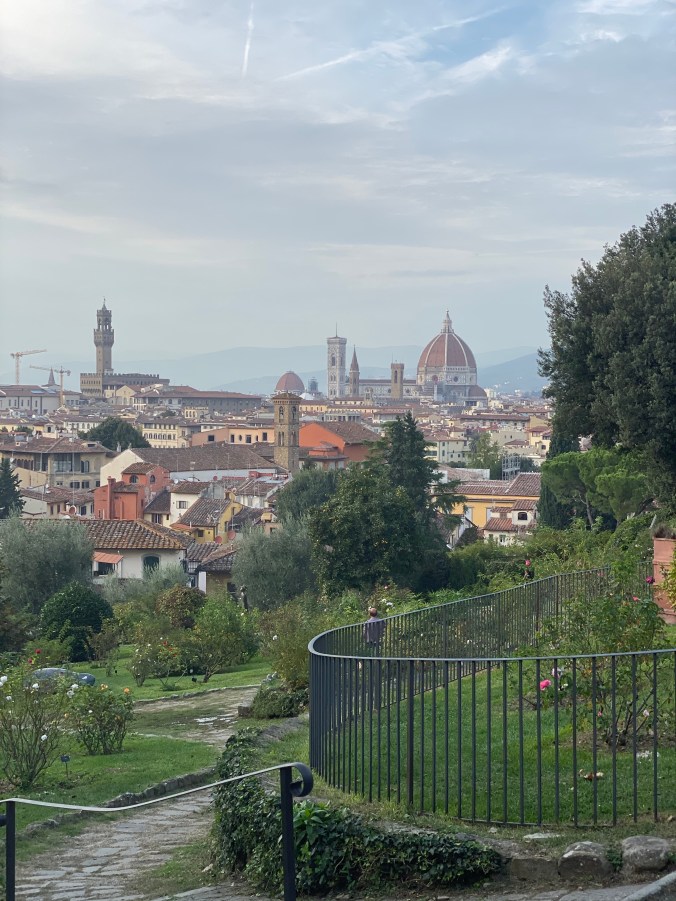
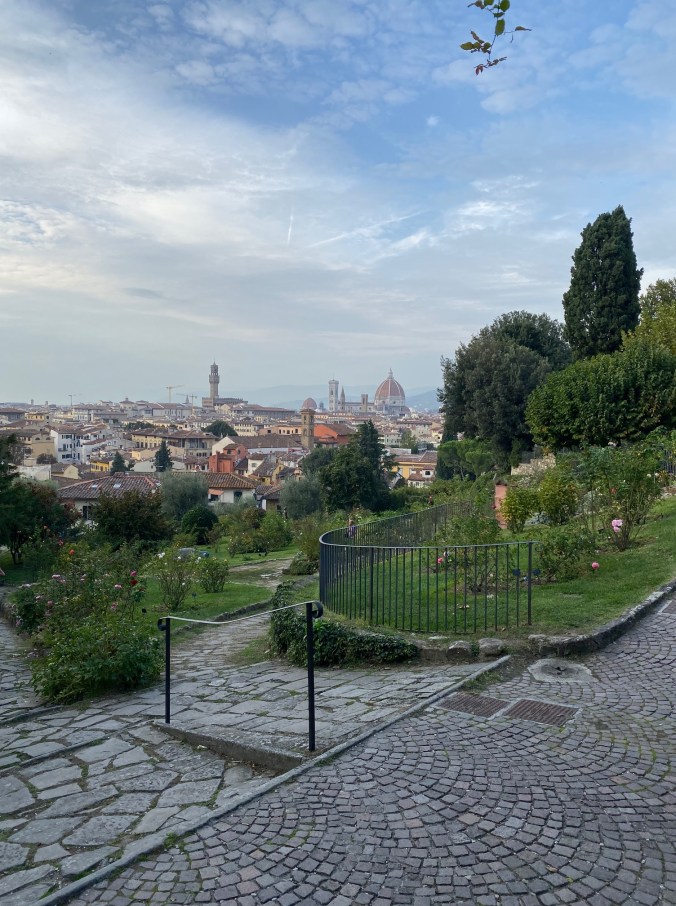
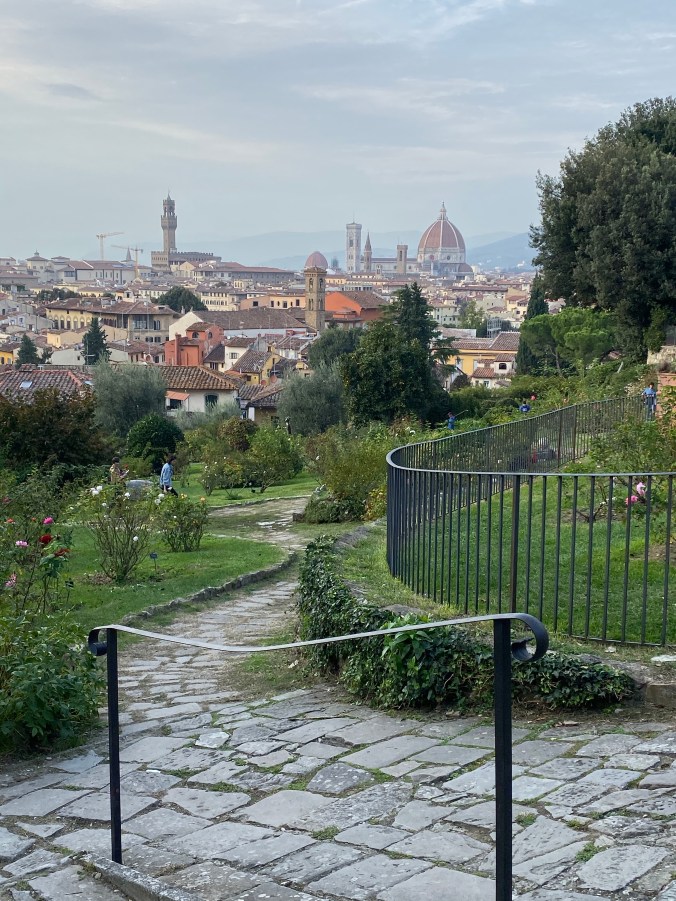
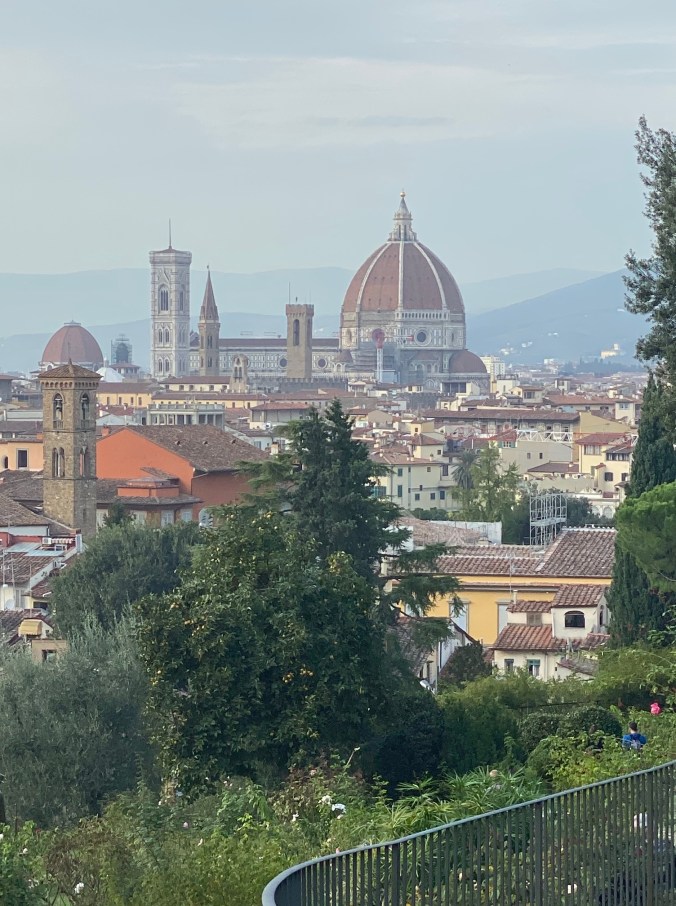
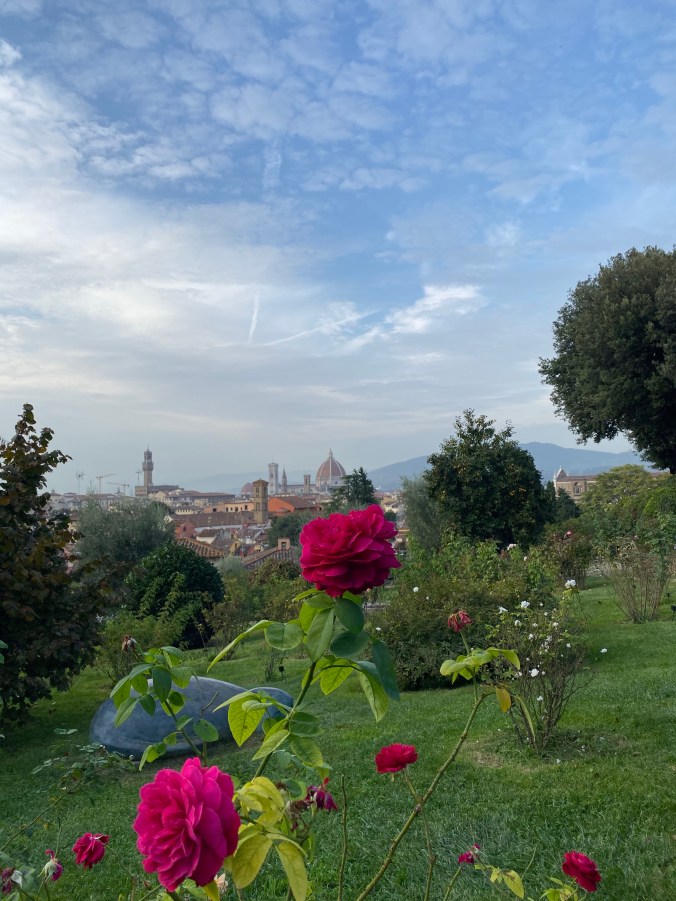
On an early October weekend in Florence, once of the city’s best semi-annual events take place, right in my neighborhood. Florence’s Horticulture Garden (Giardino dell’Orticultura), located at Via Vittorio Emanuele II, 4, is a great place to witness fall’s bounty in the shape of plants and flowers at the Mostra dei Fiori, or the flower fair.
True Florentines are well-acquainted with these fairs which are held every fall and spring. They have been organized almost every year since 1855, and are always attended with great enthusiasm.
You may read all about the place here: www.societatoscanaorticultura.it.
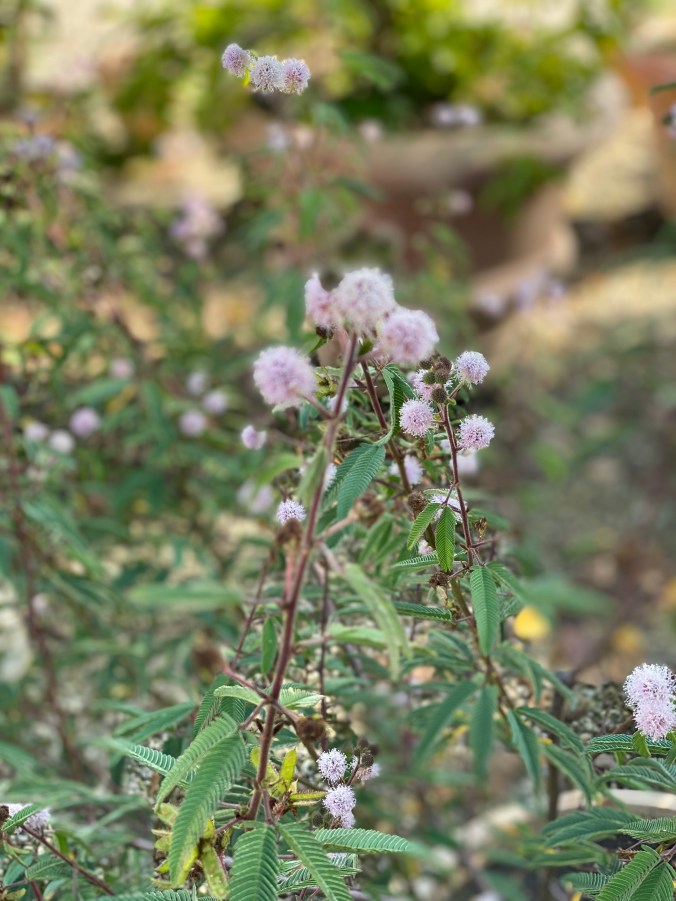
I eagerly await the fall and spring sales and this year was no exception. I was greeted by this beautiful blooming plant, and couldn’t resist taking a picture of it and also a close-up. Wow! What a specimen!


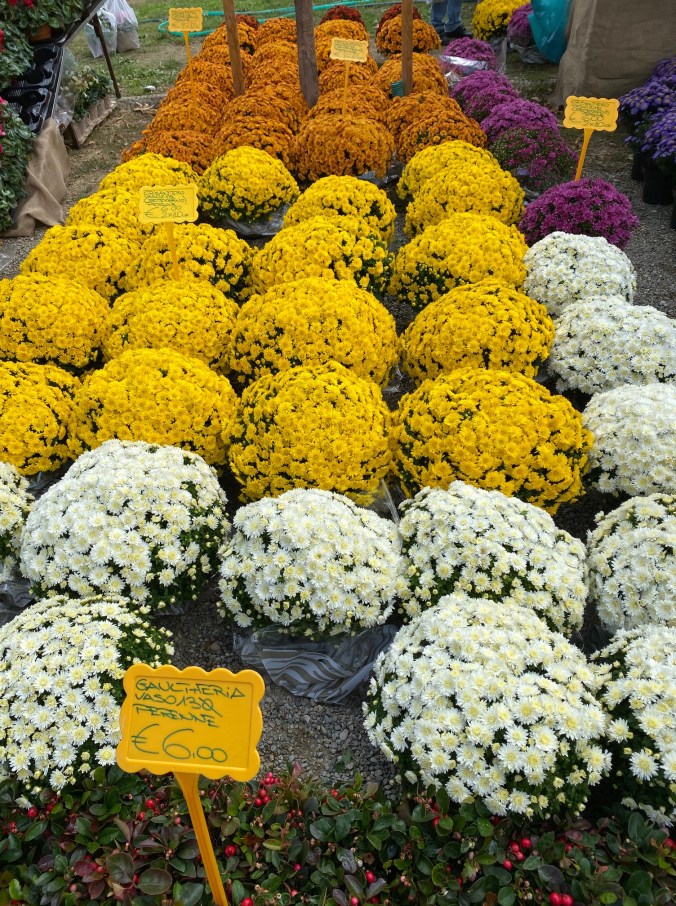
Next up were the glorious displays of chysanthemum (crisantemo in Italian) and cyclamen:

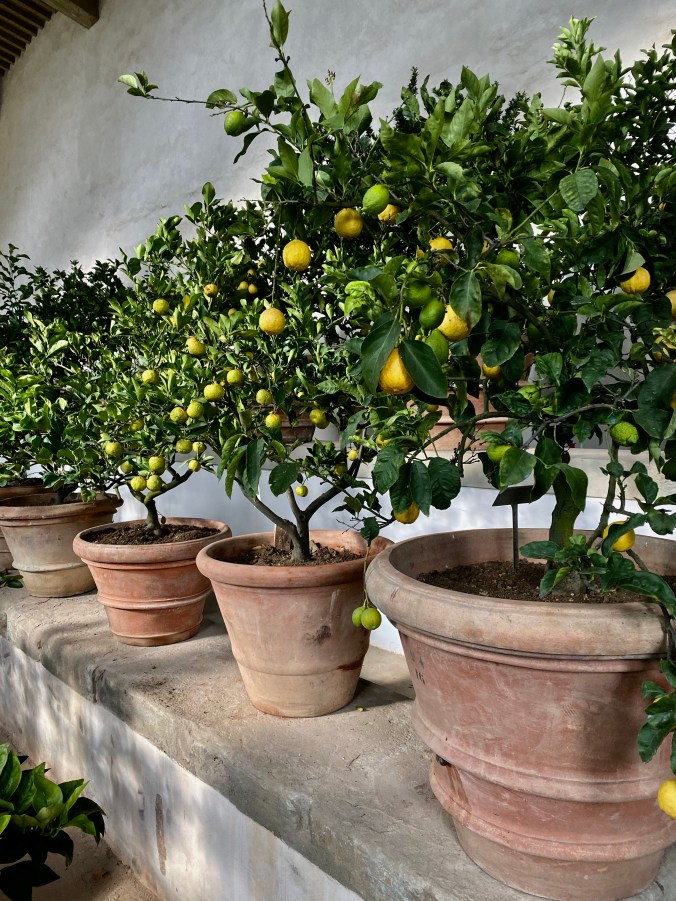
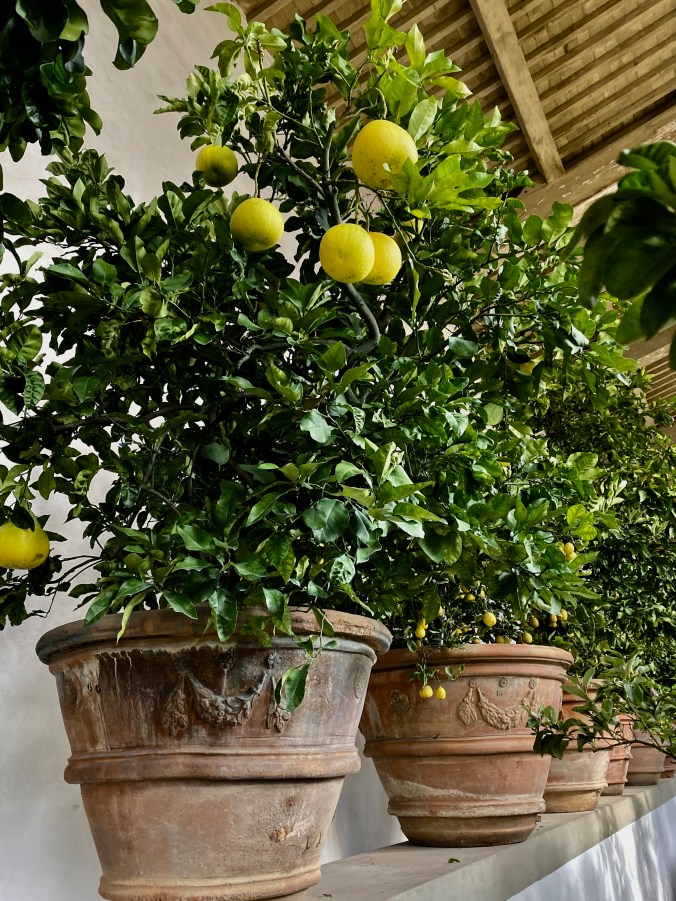
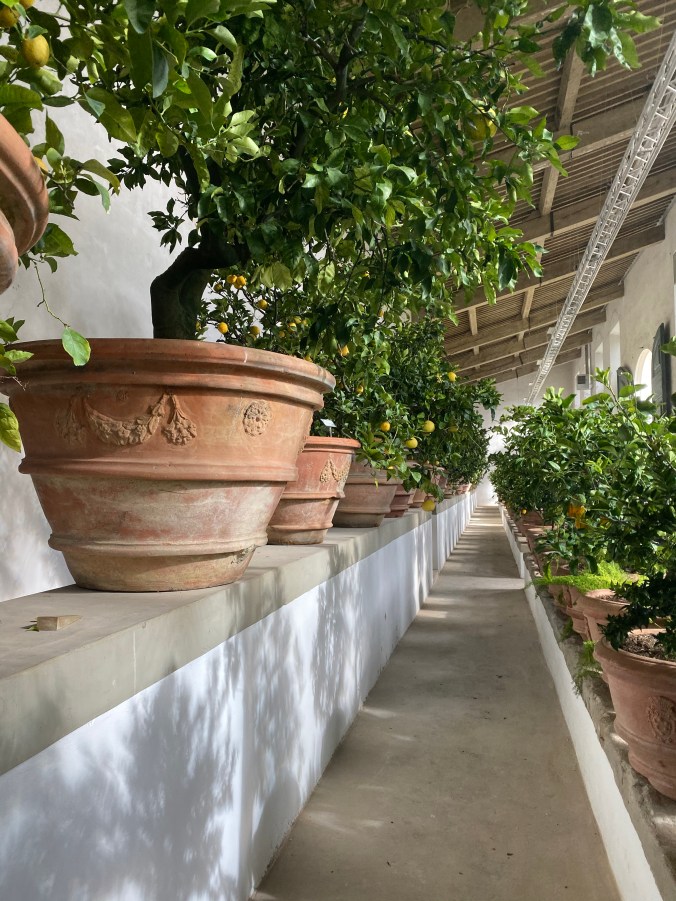
This year one of the exhibitors had a fabulous showing of Italian lemons in their many forms:


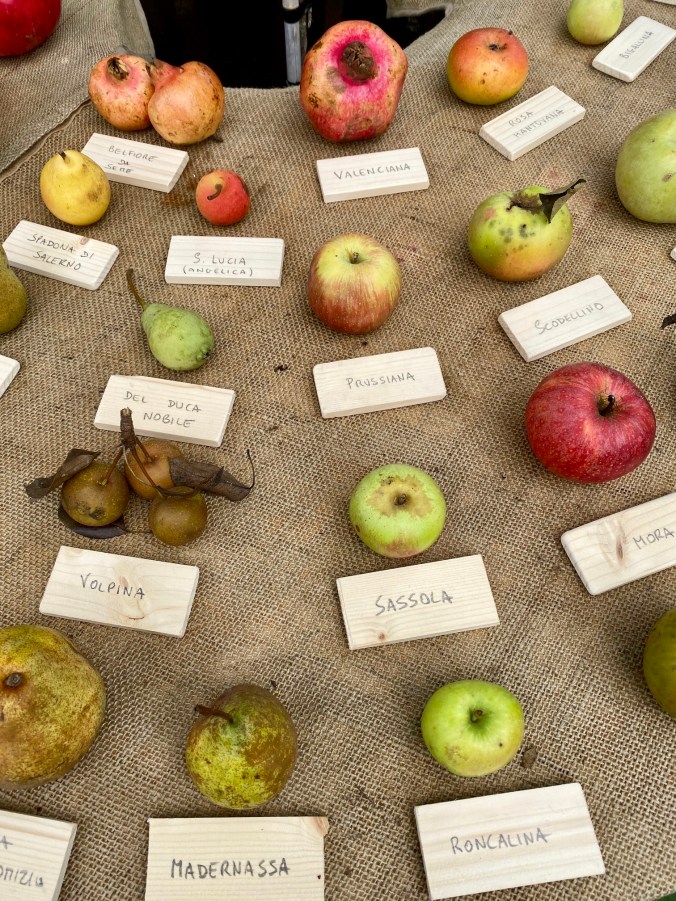
Another exhibitor did the same with grapes, apples and nuts! What a display!


I took home a smallish fig tree to grow inside my home, and a couple of perennials to add color to my fall terrace garden! I eagerly await the spring sale!
All of this botanical splendor serves to remind me that, at heart, I am simply a farmer’s daughter.
The following is for die-hards:
Taken from Italian Wikipedia, with my own translation. You’ve been warned!
Nel 1852, constatato il diffondersi della pratica per l’arte del giardinaggio, l’Accademia dei Georgofili nominò una commissione con l’incarico di formare in Toscana una società d’orticoltura: la Società Toscana di Orticoltura. Da qui nasce l’esigenza dell’attivazione di un orto o giardino sperimentale, che si concretizzò nel 1859, anno in cui alla Società, venne concesso in enfiteusi un terreno posto fuori porta San Gallo all’inizio di via Bolognese di proprietà del marchese Ludovico Ginori Lisci e della marchesa Marianna Venturi.
Dopo tre anni di lavoro la Società aveva realizzato un piantatoio, una vigna ed un pomerio ed aveva impiantato nella parte bassa, verso la città, eccentriche e rare piante ornamentali.
Un radicale riordinamento del giardino si ebbe a partire dal 1876 con lo scopo principale di poter ospitare future esposizioni nazionali e mostre prestigiose. Nel 1880 la Federazione orticola italiana organizzò a Firenze la prima esposizione nazionale e proprio per onorare degnamente l’incarico, la Società toscana decise di completare il proprio giardino con la costruzione di un tepidario (serra in ferro e vetro) di grandi dimensioni che non aveva precedenti in Italia. Fu promossa una sottoscrizione fra i soci al fine di trovare i fondi necessari alla nuova costruzione. L’incarico di redigere il progetto fu affidato all’ingegnere e architetto Giacomo Roster e realizzato dalle Officine Michelucci di Pistoia, con le colonnine in ghisa della fonderia Lorenzetti, sempre di Pistoia. Il tepidarium è a base rettangolare e misura 38,50×17 metri, con una superficie coperta che tocca il 650 m2. L’interno, che era riscaldato da stufe, è abbellito da due vasche con nicchie decorate da rocce spugnose, un omaggio all’architettura manierista, opera dell’intagliatore fiorentino Francesco Marini. In totale vennero assemblati ben 9.700 pezzi, con otto tonnellate di ferro cilindrato che sostengono la struttura. Dopo l’inaugurazione del 19 maggio 1880, il cronista de La Nazione lo definì “palazzo di cristallo.”
L’attività promotrice della Società s’intensificò ulteriormente con l’esposizione organizzata nel 1887, in questa occasione il giardino venne arricchito dalla presenza di un caffè restaurant e da una seconda serra, proveniente dal giardino Demidoff di San Donato.
Nel 1911, il giardino fu nuovamente teatro di una grande mostra internazionale di floricoltura per le celebrazioni promosse dal comune di Firenze nell’ambito del cinquantenario dell’Unità d’Italia. In tale occasione furono operate delle considerevoli modifiche alcune delle quali si conservano tutt’oggi, il cavalcavia sulla ferrovia, l’ingrandimento del viale d’accesso, la decorazione del cancello con stendardi e la costruzione della Loggetta Bondi da parte della Manifattura di Signa. Con nuovi padiglioni addossati al muro si poterono accogliere le esposizioni di libri, ceramiche, attrezzi da giardino e fotografie dell’epoca. alcuni padiglioni erano dedicati alle piante ad alto fusto ed uno unicamente alle rose. Oltre ai numerosi ospiti stranieri, per la prima volta a Firenze, fecero la parte del leone gli esemplari provenienti dalle collezioni dei fiorentini Carlo Ridolfi e Carlo Torrigiani.
Con la prima guerra mondiale cominciò un lento ma inesorabile declino dell’attività della Società toscana d’orticoltura: perciò, nel 1930 il giardino venne acquistato dal Comune, che lo destinò a giardino pubblico. Il grande tepidario del Roster denunciava un grave stato di abbandono, tanto che il Comune stanziò, fra il 1933 e il 1936, dei fondi speciali per il restauro di questo. Il tepidario subì di nuovo alcuni danni, specialmente durante la seconda guerra mondiale; recentemente, nel 2000, è stato restaurato, tornando all’antico splendore.
Attraverso un passaggio pedonale oltre la ferrovia si accede al cosiddetto “giardino degli orti del Parnaso”, una piccola area verde posta su un dislivello panoramico, dove spicca una fontana a forma di serpente o drago, che si snoda fantasiosamente sulla scalinata. Questo giardino, in particolare la zona vicino all’ingresso da via Trento, è uno dei migliori punti della città per vedere “I Fochi di San Giovanni”, lo spettacolo pirotecnico che si tiene ogni anno il 24 giugno per la festa di San Giovanni, patrono di Firenze. In questo giardino ha sede il Giardino dei Giusti sulla falsariga di quello esistente a Gerusalemme.
La serra oggi è utilizzata per eventi, aperitivi, party ed attività culturali, come per esempio l’iniziativa Un tè con le farfalle.
Mentre il Giardino ospita anche la Biblioteca comunale dell’Orticoltura.
Nel giardino sono state girate alcune scene dei film Amici miei – Atto IIº (1982) di Mario Monicelli e Sotto una buona stella (2014) di Carlo Verdone.
In 1852, the l’Accademia dei Georgofili established a committee to consider establishing a society for horticulture in Tuscany: la Società Toscana di Orticoltura. From that origin, came the formation of an experimental garden was established in 1859, the year in which the committee was given lease on land outside of the Porta San Gallo at the beginning of Via Bolognese, [the land] owned by the landowner of the Marquis Ludovico Ginori Lisci and of the Marquise Marianna Venturi.
After 3 years work the Societa had built a garden with a vineyard and a tomato house and had planted rare ornamental plants in the lower part [of the plot], towards the city.
From 1876 the garden was radically reorganized in order to become a suitable place to host future national expositions and prestigious exhibits. In 1880 the Italian Horticulture Federation organized in Florence the first national exposition and, in honor of that, the Tuscan Societa decided to complete its garden by construction a large tepidarium (greenhouse in iron and glass), which was without precedent in Italy.
A subscription was formed to finance the work of the new construction. The project was drawn up by the engineer and architect Giacomo Roster and carried out by the Offices of Michelucci of Pistoia, with the cast iron columns from the Lorenzetti foundry, also from Pistoia. The tepidarium has a rectangle base and measures 38.50 x 17 meters, with a covered area that is 650 square meters.
The interior was heated by 2 stoves, is adorned with niches decorate with red spongy stone, a tribute to Mannerist architecture, the work of the master Florentine stone cutter, Franscesco Marini. The entire building is made up of more than 9,700 pieces with 8 tons of cylindrical cast iron supporting the structure. After the inauguration on 19 May 1880, the reporter of La Nazione called it a “Palace of Crystal.”
The Society’s promotion of its work intensified with the exhibition organized in 1887, on this occasion the garden was outfitted with a caffe restaurant and a second greenhouse, supplied by the Demidoff garden of San Donato.
In 1911, the garden was once again the site of a great international floriculture exhibition for the celebrations promoted by the municipality of Florence to commemorate the 50th anniversary of the Italian Unification. On this occasion, modifications, some of which are still preserved today, the railway overpass, the enlargement of the driveway, the decoration of gate, and the construction of the Bondi Loggia by the Signa Manufacture.
With new pavilions inside the wall, exhibitions of books, ceramics, garden tools and period photography, could be accommodated. Some pavilions were dedicated to tall trees and one dedicated to roses. In addition to the numerous foreign guests, for the first time in Florence, the lion’s share of specimens came from the Florentine collections of Carlo Ridolfi and Carlo Torrigiani.
With the beginning of WWI the Society’s activities slowed and declined; therefore, in 1930 the garden was purchased by the Municipality, which turned it into a public garden. The large tepidarium of the Roster denounced he grave state of disrepair, so that the Commune allocated, between 1933 and 1936, special funds for its restoration. The tepidarium again suffered damage, especially during the WWII; recently, in 2000, it was restored and returned to its former glory.
A pedestrian walkway leads to the so-called “garden of the Parnassus” a small green area on a leveled panoramic site, where a snake or dragon-shaped fountain plays, winding imaginatively up the stairs. This garden, in particular the zone near the entrance of Via Trento, is one of the best spots in the city to see the Fireworks of St. John, the fireworks display held every year on 24 June for the holiday of San Giovanni, patron of Florence. In this garden is the “Garden of the Righteous” along the lines of the one in Jerusalem.
Today the greenhouse is used for events, aperitifs, parties and cultural activities, such as the initiative “A tea with butterflies.”
The Garden also houses the municipal Horticultural Library.
In the garden some scenes of the films Amici miei – Atto IIº (1982) by Mario Monicelli and “Under a good star” Sotto una buon stella (2014) by Carlo Verdone were shot.
I recently posted about this day-long cruise here (here, here and here) and now I pick up where I left off. Our first stop on the cruise after leaving Padua was in Stra at Villa Pisani. This incredible villa is now a state museum and very much work a visit. It was built by a very popular Venetian Doge.

The facade of the Villa is decorated with enormous statues and the interior was painted by some of the greatest artists of the 18th century.

Villa Pisani at Stra refers is a monumental, late-Baroque rural palace located along the Brenta Canal (Riviera del Brenta) at Via Doge Pisani 7 near the town of Stra, on the mainland of the Veneto, northern Italy. This villa is one of the largest examples of Villa Veneta located in the Riviera del Brenta, the canal linking Venice to Padua. It is to be noted that the patrician Pisani family of Venice commissioned a number of villas, also known as Villa Pisani across the Venetian mainland. The villa and gardens now operate as a national museum, and the site sponsors art exhibitions.
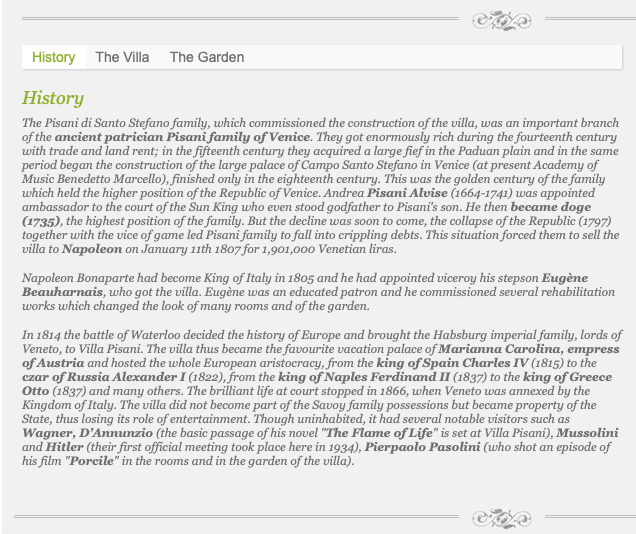

Construction of this palace began in the early 18th century for Alvise Pisani, the most prominent member of the Pisani family, who was appointed doge in 1735.
The initial models of the palace by Paduan architect Girolamo Frigimelica still exist, but the design of the main building was ultimately completed by Francesco Maria Preti. When it was completed, the building had 114 rooms, in honor of its owner, the 114th Doge of Venice Alvise Pisani.
In 1807 it was bought by Napoleon from the Pisani Family, now in poverty due to great losses in gambling. In 1814 the building became the property of the House of Habsburg who transformed the villa into a place of vacation for the European aristocracy of that period. In 1934 it was partially restored to host the first meeting of Adolf Hitler and Benito Mussolini, after the riots in Austria.


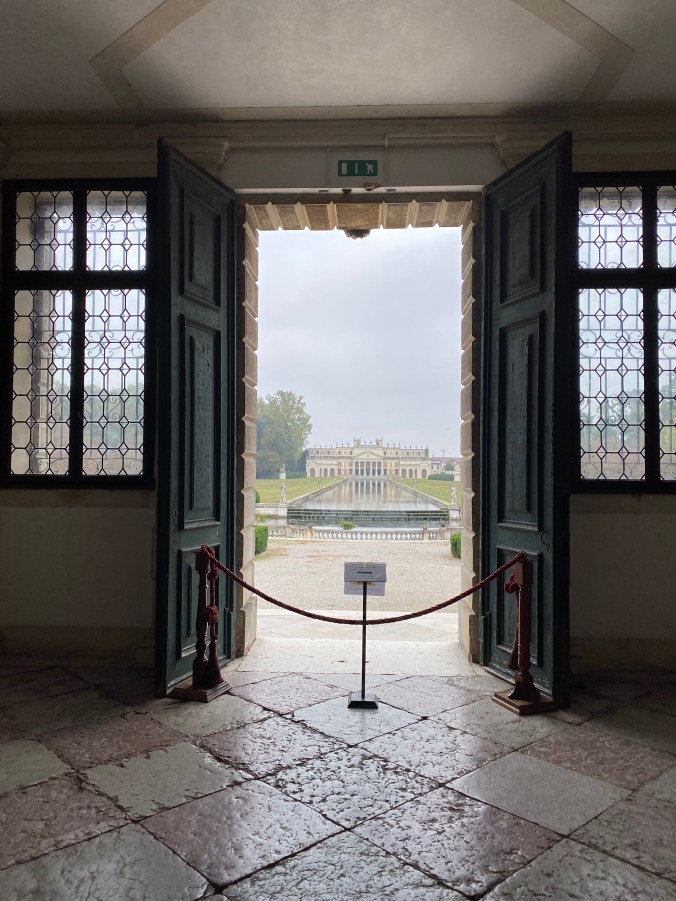
From the outside, the facade of the oversized palace appears to command the site, facing the Brenta River some 30 kilometers from Venice. The villa is of many villas along the canal, which the Venetian noble families and merchants started to build as early as the 15th century. The broad façade is topped with statuary, and presents an exuberantly decorated center entrance with monumental columns shouldered by caryatids. It shelters a large complex with two inner courts and acres of gardens, stables, and a garden maze.
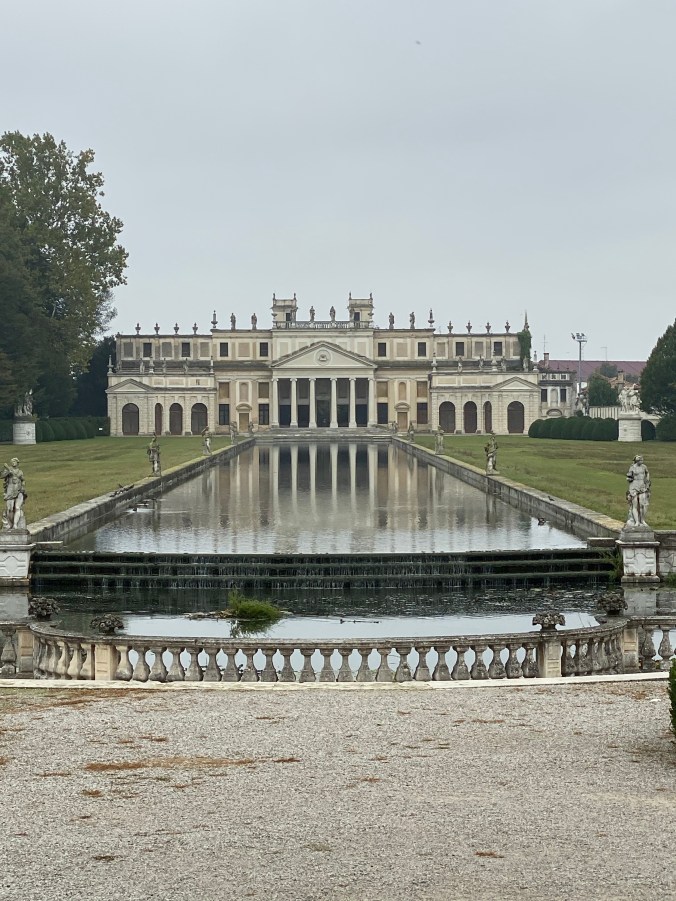
The largest room is the ballroom, where the 18th-century painter Giovanni Battista Tiepolo frescoed the two-story ceiling with a massive allegorical depiction of the Apotheosis or Glory of the Pisani family (painted 1760–1762).[2] Tiepolo’s son Gian Domenico Tiepolo, Crostato, Jacopo Guarana, Jacopo Amigoni, P.A. Novelli, and Gaspare Diziani also completed frescoes for various rooms in the villa. Another room of importance in the villa is now known as the “Napoleon Room” (after his occupant), furnished with pieces from the Napoleonic and Habsburg periods and others from when the house was lived by the Pisani.
The most riotously splendid Tiepolo ceiling would influence his later depiction of the Glory of Spain for the throne room of the Royal Palace of Madrid; however, the grandeur and bombastic ambitions of the ceiling echo now contrast with the mainly uninhabited shell of a palace. The remainder of its nearly 100 rooms are now empty. The Venetian playwright Carlo Goldoni described the palace in its day as a place of great fun, served meals, dance and shows.


Check out this sunken bathtub below:


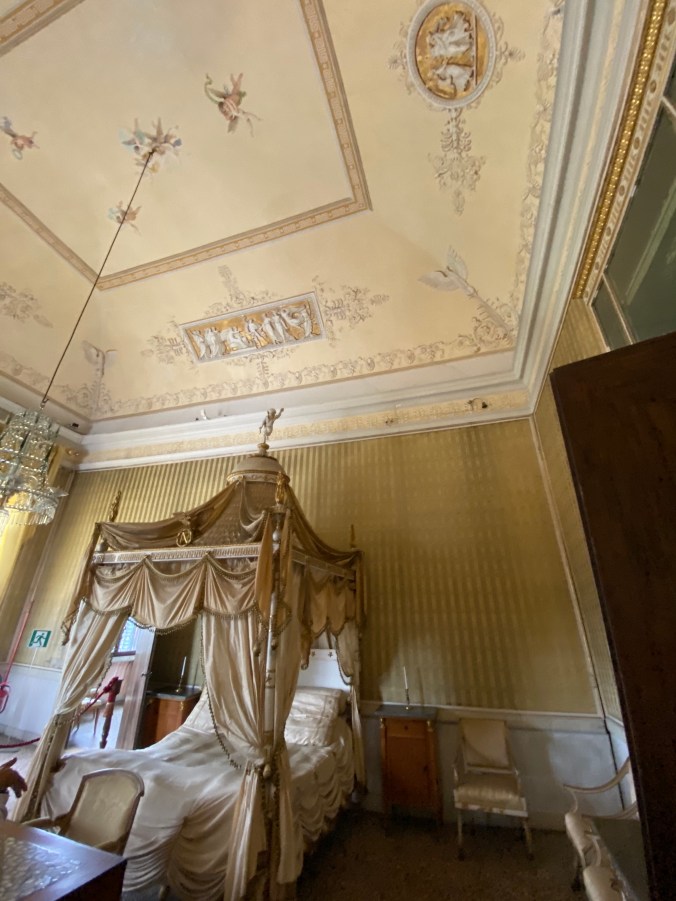
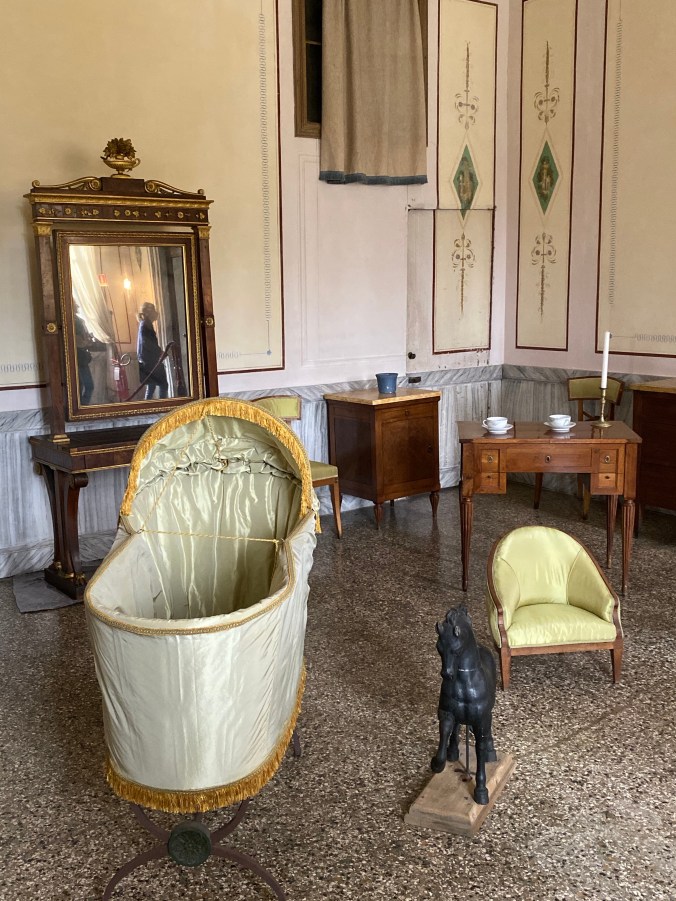


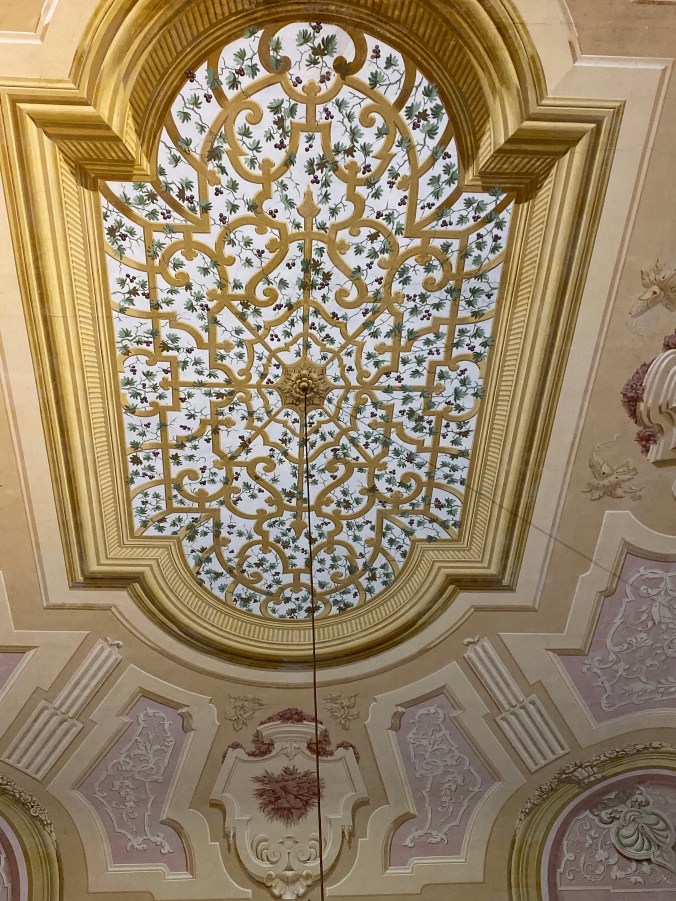


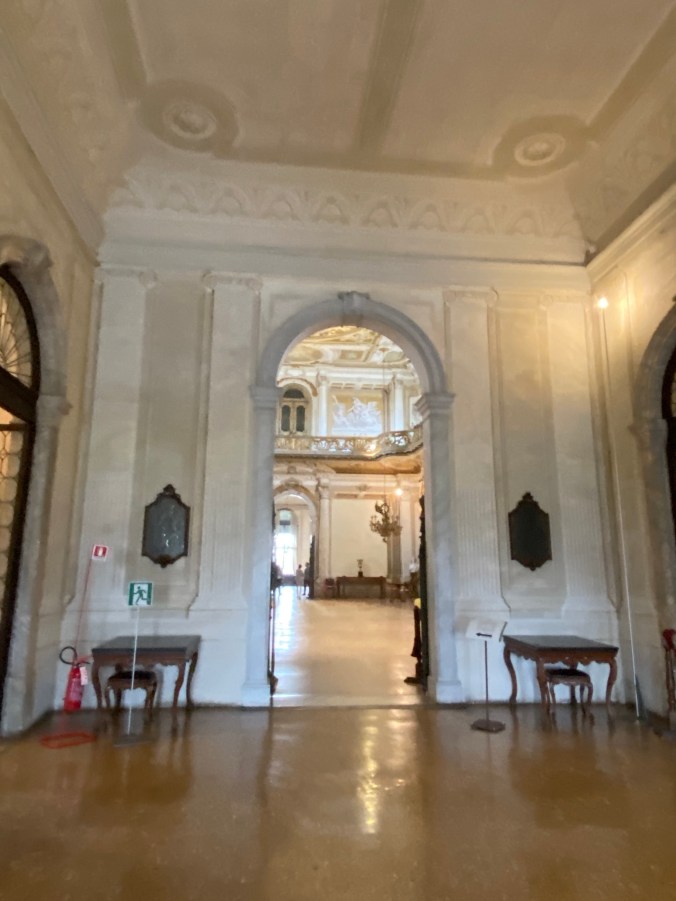


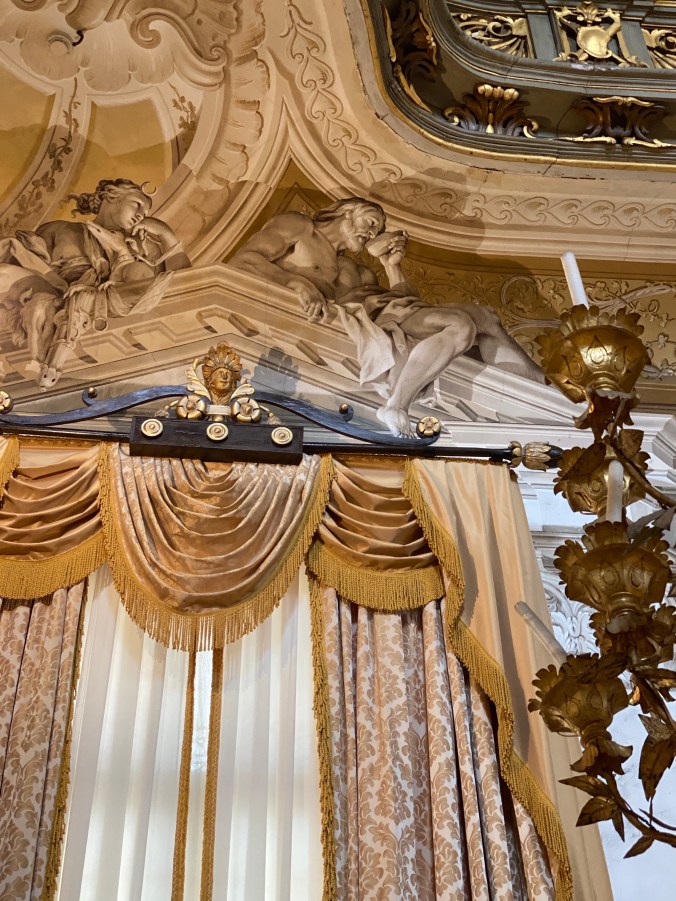


Bear with me: in the next few photos I am trying out all of the fancy settings on my new camera:


To be continued.
Would you ever want to sail down a canal in Northern Italy that was built during the Renaissance? I really wanted to and I did!
The Brenta Canal stretches for many miles between Chioggia on the coast, to Padua where it turns into the Brenta River. Created in the 15th century, the canal expanded trading routes for Venice and the other major cities in Northern Italy.
I was lucky enough to cruise through the canal last week, beginning at Porta Portello in Padova and ending at San Marco, Venezia. A day to remember! It was a beautiful fall day with mild temperatures. A great day to be on the water. And, what waters! OMG.


My cruising companions and I met our boat, il Burchiello, on the stairway at Porta Portello, the ancient river port of Padua. We would cruise along the original course of the old Venetian Burchielli of the 18th century, passing in front of the beautiful Villa Giovanelli at Noventa Padovana.
Below: we are departing Padua itself, just outside the Renaissance era city walls:


Below, coming upon the first of so many villas located along the canal.

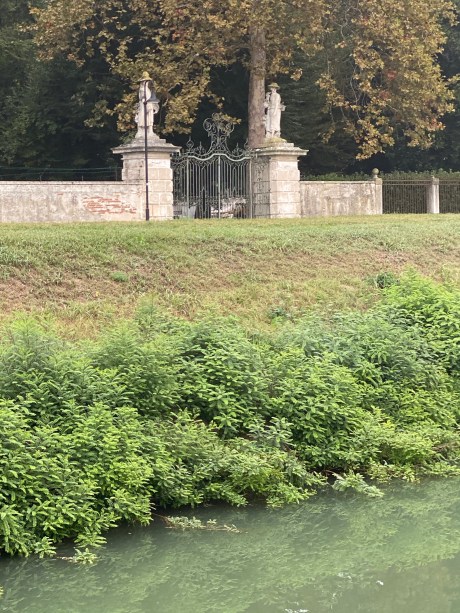


We glided through the Noventa Padovana and Stra lock systems. This system of locks on the canal were really interesting to experience and to watch from the boat. The next 2 videos show the locks closing behind the boat.
We passed under some low bridges and buildings! Watch you head!


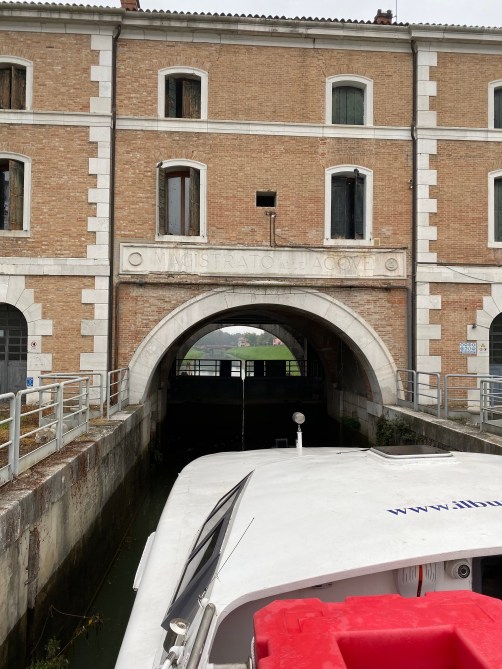
Now, at the front of the boat, the locks are opening:
Scenes along the canal on such a peaceful September Sunday morning. A lot of fishing going on:


A sighting of the next villa:
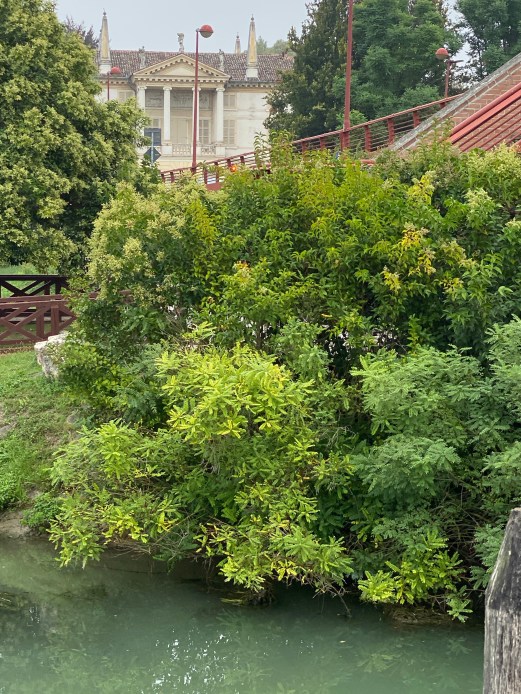


My next post will talk about the villa seen below:


To be continued, here, here and here.
 get back, lauretta!
You must be logged in to post a comment.