Last weekend I returned to Padua for another opportunity to see the Giotto frescoes at the Scrovegni Chapel. Since the visits are only 20 minutes long, it takes me more than one trip to Padua to really see the frescoes as I want to see them.
But, I also wanted to return to Padua to enjoy more of the city, now that I have discovered it fully. I went armed with my new fancy smartphone and its powerful camera. Some of the pictures below are of pretty Padova and some are just experiments with my camera.
I love any city with a street named for one of my favorite sculptors, Donatello.
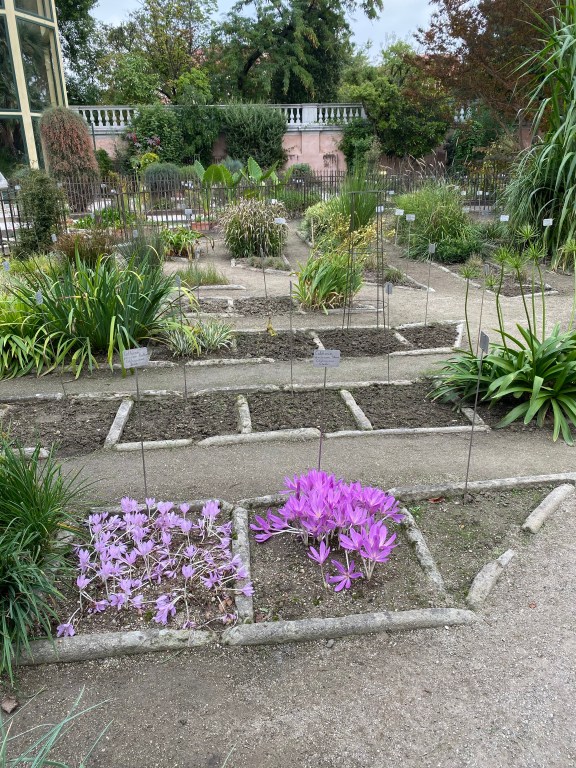
The Botanic Garden of Padua dates back to 1545 and is regarded as the most ancient university garden in the world. Founded to foster the growth of medicinal plants, in Italian called semplice, since the remedies were obtained directly from nature without any manipulation. The garden was named Hortus Simplicium. The first keeper of the garden was Luigi Squalermo called Anguillara.
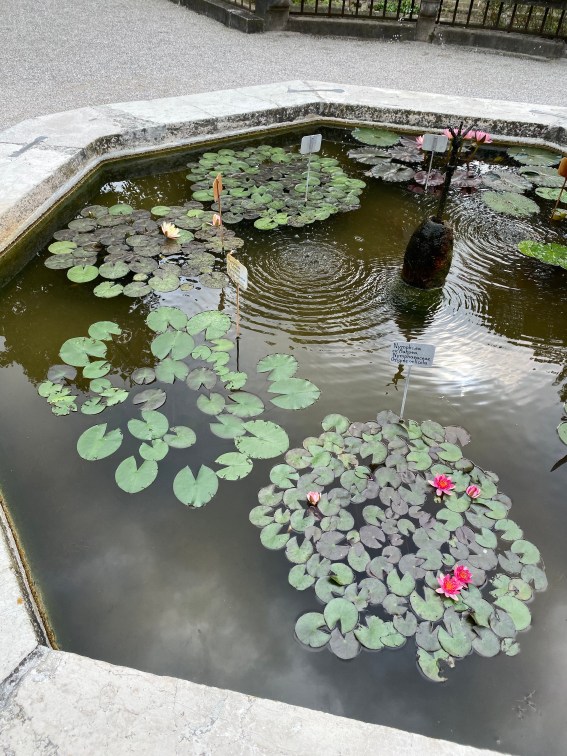
Nymphaea:
‘
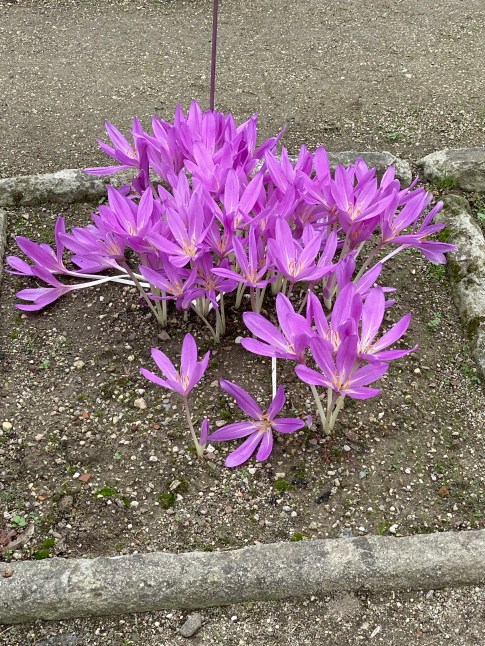
Below, fall blooming crocus:
More water lilies:
Random plant life:
Nature with a background of Italian church bells:
Gigantic lily pads:
The horticultural complex in Padua is very impressive and state of the art.
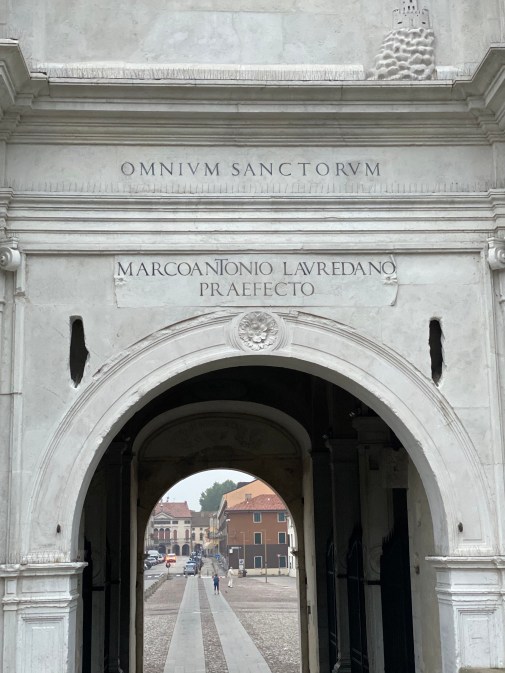
Porta Portello:
Reminders of the influence of Venice on Padua are everywhere in this city:
Padova is surrounded by water. The canals make lovely views. I love to think back to the times when people and goods moved here by gondole, burci and mascarete, all typical boats, along internal canals, following the waterways and floating under bridges.
Padua has a lot of beautiful architecture. I want to make another trip there to enjoy and photograph all the great sculptural embellishments on the palazzi.
Padova or Padua is a big subject! I’ve recently posted 2 times about it, here, here, here and here. And, still, I am far from done!
This post includes a list of the major features that grace this lovely, historic town. But first, a sweet little video about the town itself:
Undoubtedly the most notable things about Padova is the Giotto masterpiece of fresco painting in the The Scrovegni Chapel (Cappella degli Scrovegni). This incredible cycle of frescoes was completed in 1305 by Giotto.
It was commissioned by Enrico degli Scrovegni, a wealthy banker, as a private chapel once attached to his family’s palazzo. It is also called the “Arena Chapel” because it stands on the site of a Roman-era arena.
The fresco cycle details the life of the Virgin Mary and has been acknowledged by many to be one of the most important fresco cycles in the world for its role in the development of European painting. It is a miracle that the chapel survived through the centuries and especially the bombardment of the city at the end of WWII. But for a few hundred yards, the chapel could have been destroyed like its neighbor, the Church of the Eremitani. The Palazzo della Ragione, with its great hall on the upper floor, is reputed to have the largest roof unsupported by columns in Europe; the hall is nearly rectangular, its length 267.39 ft, its breadth 88.58 ft, and its height 78.74 ft; the walls are covered with allegorical frescoes. The building stands upon arches, and the upper story is surrounded by an open loggia, not unlike that which surrounds the basilica of Vicenza.
The Palazzo was begun in 1172 and finished in 1219. In 1306, Fra Giovanni, an Augustinian friar, covered the whole with one roof. Originally there were three roofs, spanning the three chambers into which the hall was at first divided; the internal partition walls remained till the fire of 1420, when the Venetian architects who undertook the restoration removed them, throwing all three spaces into one and forming the present great hall, the Salone. The new space was refrescoed by Nicolo’ Miretto and Stefano da Ferrara, working from 1425 to 1440. Beneath the great hall, there is a centuries-old market.
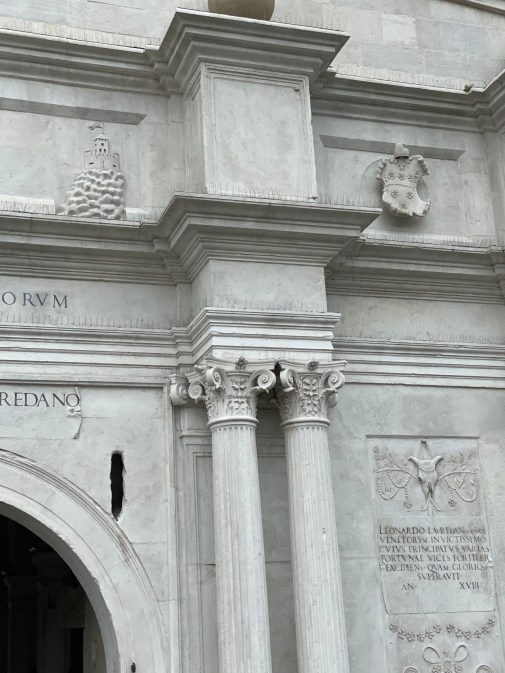
In the Piazza dei Signori is the loggia called the Gran Guardia, (1493–1526), and close by is the Palazzo del Capitaniato, the residence of the Venetian governors, with its great door, the work of Giovanni Maria Falconetto, the Veronese architect-sculptor who introduced Renaissance architecture to Padua and who completed the door in 1532.
Falconetto was also the architect of Alvise Cornaro’s garden loggia, (Loggia Cornaro), the first fully Renaissance building in Padua.
Nearby stands the il duomo, remodeled in 1552 after a design of Michelangelo. It contains works by Nicolò Semitecolo, Francesco Bassano and Giorgio Schiavone.
The nearby Baptistry, consecrated in 1281, houses the most important frescoes cycle by Giusto de’ Menabuoi.
The Basilica of St. Giustina, faces the great piazza of Prato della Valle.
The Teatro Verdi is host to performances of operas, musicals, plays, ballets, and concerts.
The most celebrated of the Paduan churches is the Basilica di Sant’Antonio da Padova. The bones of the saint rest in a chapel richly ornamented with carved marble, the work of various artists, among them Sansovino and Falconetto.
The basilica was begun around the year 1230 and completed in the following century. Tradition says that the building was designed by Nicola Pisano. It is covered by seven cupolas, two of them pyramidal.
Donatello’s equestrian statue of the Venetian general Gattamelata (Erasmo da Narni) can be found on the piazza in front of the Basilica di Sant’Antonio da Padova. It was cast in 1453, and was the first full-size equestrian bronze cast since antiquity. It was inspired by the Marcus Aurelius equestrian sculpture at the Capitoline Hill in Rome.
Not far from the Gattamelata are the St. George Oratory (13th century), with frescoes by Altichiero, and the Scuola di S. Antonio (16th century), with frescoes by Tiziano (Titian).
One of the best known symbols of Padua is the Prato della Valle, a large elliptical square, one of the biggest in Europe. In the center is a wide garden surrounded by a moat, which is lined by 78 statues portraying illustrious citizens. It was created by Andrea Memmo in the late 18th century.
Memmo once resided in the monumental 15th-century Palazzo Angeli, which now houses the Museum of Precinema.
The Abbey of Santa Giustina and adjacent Basilica. In the 5th century, this became one of the most important monasteries in the area, until it was suppressed by Napoleon in 1810. In 1919 it was reopened.
The tombs of several saints are housed in the interior, including those of Justine, St. Prosdocimus, St. Maximus, St. Urius, St. Felicita, St. Julianus, as well as relics of the Apostle St. Matthias and the Evangelist St. Luke.
The abbey is also home to some important art, including the Martyrdom of St. Justine by Paolo Veronese. The complex was founded in the 5th century on the tomb of the namesake saint, Justine of Padua.
The Church of the Eremitani is an Augustinian church of the 13th century, containing the tombs of Jacopo (1324) and Ubertinello (1345) da Carrara, lords of Padua, and the chapel of SS James and Christopher, formerly illustrated by Mantegna’s frescoes. The frescoes were all but destroyed bombs dropped by the Allies in WWII, because it was next to the Nazi headquarters.
The old monastery of the church now houses the Musei Civici di Padova (town archeological and art museum).
Santa Sofia is probably Padova’s most ancient church. The crypt was begun in the late 10th century by Venetian craftsmen. It has a basilica plan with Romanesque-Gothic interior and Byzantine elements. The apse was built in the 12th century. The edifice appears to be tilting slightly due to the soft terrain.
Botanical Garden (Orto Botanico)
The church of San Gaetano (1574–1586) was designed by Vincenzo Scamozzi, on an unusual octagonal plan. The interior, decorated with polychrome marbles, houses a Madonna and Child by Andrea Briosco, in Nanto stone.
The 16th-century Baroque Padua Synagogue
At the center of the historical city, the buildings of Palazzo del Bò, the center of the University.
The City Hall, called Palazzo Moroni, the wall of which is covered by the names of the Paduan dead in the different wars of Italy and which is attached to the Palazzo della Ragione
The Caffé Pedrocchi, built in 1831 by architect Giuseppe Jappelli in neoclassical style with Egyptian influence. This café has been open for almost two centuries. It hosts the Risorgimento museum, and the near building of the Pedrocchino (“little Pedrocchi”) in neogothic style.
There is also the Castello. Its main tower was transformed between 1767 and 1777 into an astronomical observatory known as Specola. However the other buildings were used as prisons during the 19th and 20th centuries. They are now being restored.
The Ponte San Lorenzo, a Roman bridge largely underground, along with the ancient Ponte Molino, Ponte Altinate, Ponte Corvo and Ponte S. Matteo.
There are many noble ville near Padova. These include:
Villa Molin, in the Mandria fraction, designed by Vincenzo Scamozzi in 1597.
Villa Mandriola (17th century), at Albignasego
Villa Pacchierotti-Trieste (17th century), at Limena
Villa Cittadella-Vigodarzere (19th century), at Saonara
Villa Selvatico da Porto (15th–18th century), at Vigonza
Villa Loredan, at Sant’Urbano
Villa Contarini, at Piazzola sul Brenta, built in 1546 by Palladio and enlarged in the following centuries, is the most important
Padua has long been acclaimed for its university, founded in 1222. Under the rule of Venice the university was governed by a board of three patricians, called the Riformatori dello Studio di Padova. The list of notable professors and alumni is long, containing, among others, the names of Bembo, Sperone Speroni, the anatomist Vesalius, Copernicus, Fallopius, Fabrizio d’Acquapendente, Galileo Galilei, William Harvey, Pietro Pomponazzi, Reginald, later Cardinal Pole, Scaliger, Tasso and Jan Zamoyski.
It is also where, in 1678, Elena Lucrezia Cornaro Piscopia became the first woman in the world to graduate from university.
The university hosts the oldest anatomy theatre, built in 1594.
The university also hosts the oldest botanical garden (1545) in the world. The botanical garden Orto Botanico di Padova was founded as the garden of curative herbs attached to the University’s faculty of medicine. It still contains an important collection of rare plants.
The place of Padua in the history of art is nearly as important as its place in the history of learning. The presence of the university attracted many distinguished artists, such as Giotto, Fra Filippo Lippi and Donatello; and for native art there was the school of Francesco Squarcione, whence issued Mantegna.
Padua is also the birthplace of the celebrated architect Andrea Palladio, whose 16th-century villas (country-houses) in the area of Padua, Venice, Vicenza and Treviso are among the most notable of Italy and they were often copied during the 18th and 19th centuries; and of Giovanni Battista Belzoni, adventurer, engineer and egyptologist.
The sculptor Antonio Canova produced his first work in Padua, one of which is among the statues of Prato della Valle (presently a copy is displayed in the open air, while the original is in the Musei Civici).
The Antonianum is settled among Prato della Valle, the Basilica of Saint Anthony and the Botanic Garden. It was built in 1897 by the Jesuit fathers and kept alive until 2002. During WWII, under the leadership of P. Messori Roncaglia SJ, it became the center of the resistance movement against the Nazis. Indeed, it briefly survived P. Messori’s death and was sold by the Jesuits in 2004.
Paolo De Poli, painter and enamellist, author of decorative panels and design objects, 15 times invited to the Venice Biennale was born in Padua. The electronic musician Tying Tiffany was also born in Padua.
You might know that almost the first place I would go once I got to London would be the “Italian Gardens!” Ma, certo! Like a bee to honey.
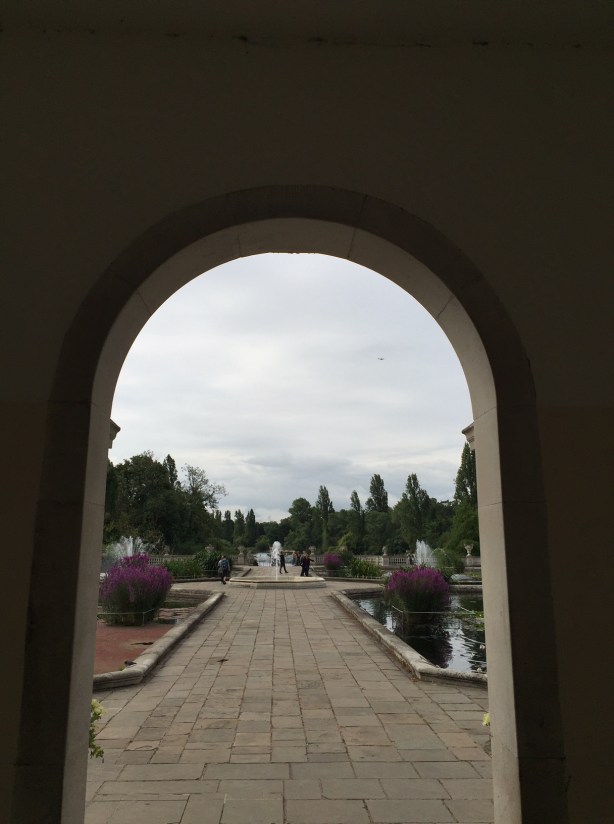
This lovely, smallish ornamental water garden was created in the 1860s and is to be found on the north side of park, near Lancaster Gate. It is believed the garden was a gift from Prince Albert (he died 1861) to his beloved wife, Queen Victoria. Regardless of the why, they are now recognized as a site of particular importance and are listed Grade II by Historic England.
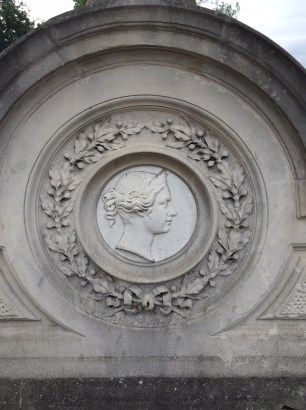
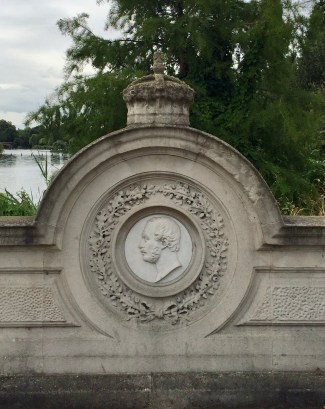
Portraits of Victoria and Albert flank the 2 sides of the balustrades overlooking the lake.
BTW, about once every six months while I am living in Italy I will see something in some work of art that causes me to say: “that’s a new one–I’ve never seen that before.” I love it when that happens.
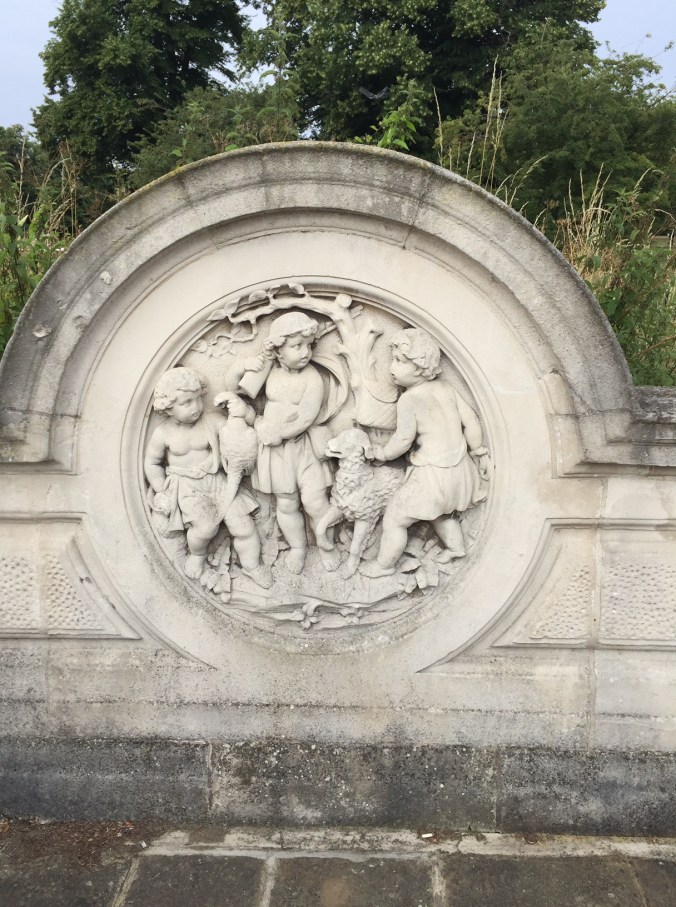
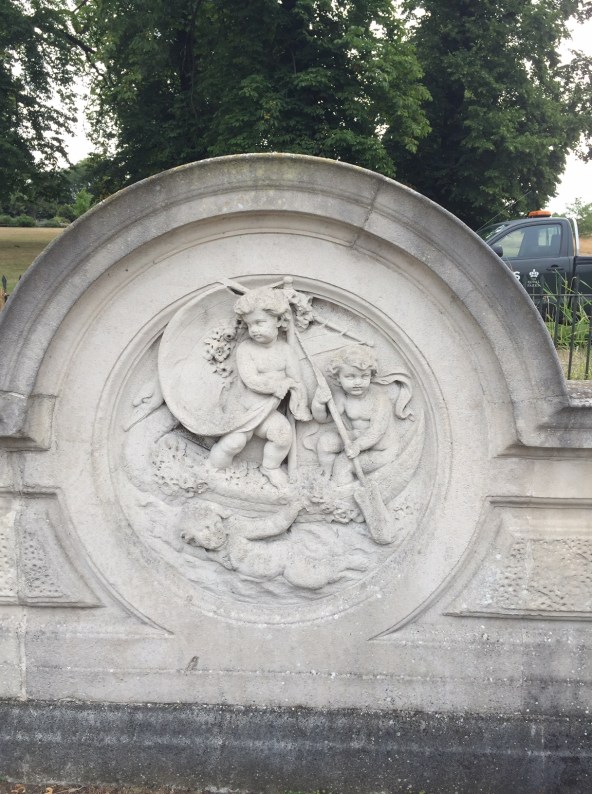
But, today, at the Italian Gardens, I had one of those moments, caused by the bas-relief below:
I’ve seen a lot of weird images captured in marble sculpture, especially in the form of putti of various stripes, but I have never seen a rifle in a Neo-classical sculpture before today! A detail of it is below:
The Italian Gardens are found within the grounds of Kensington Gardens; you can locate them at the top of the Serpentine River in the map below:
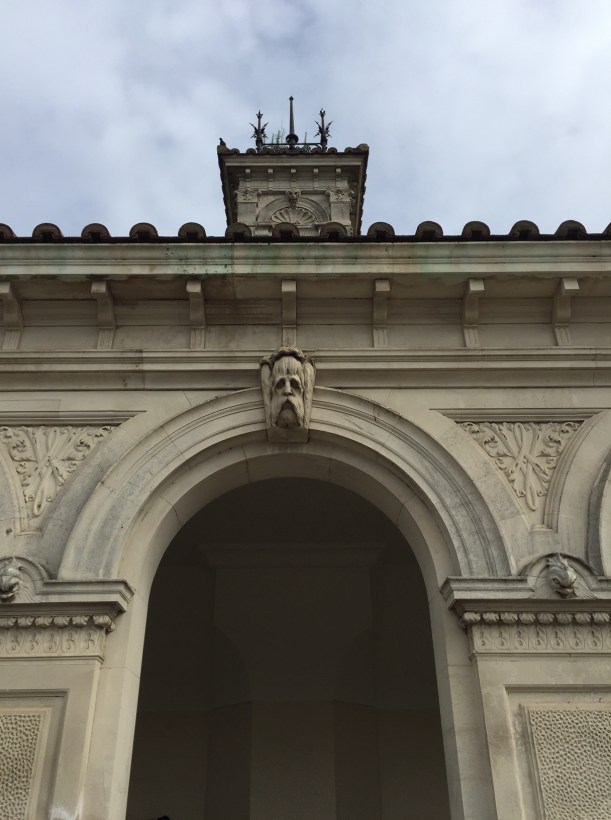
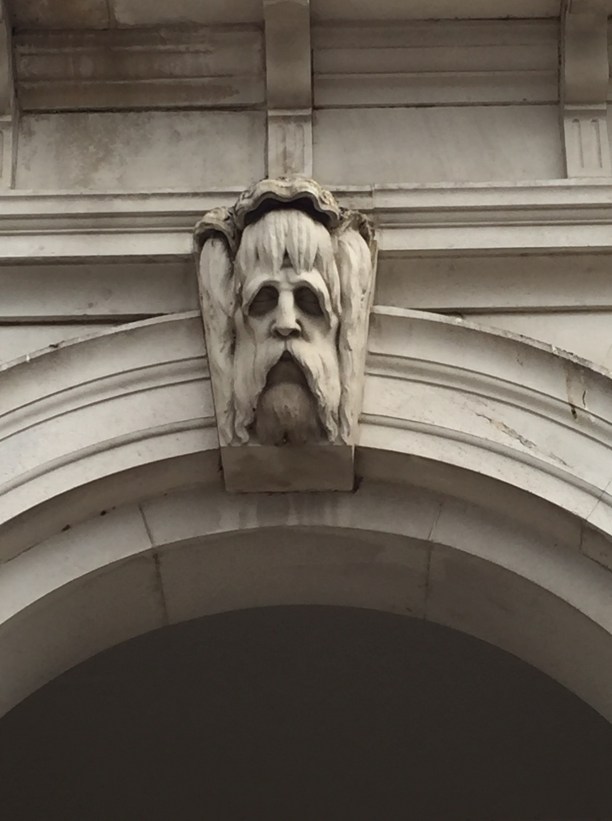
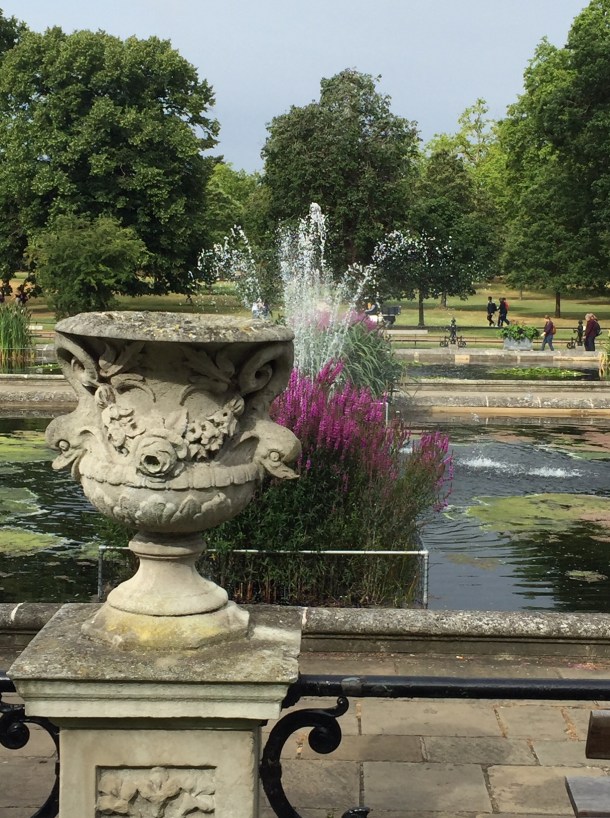
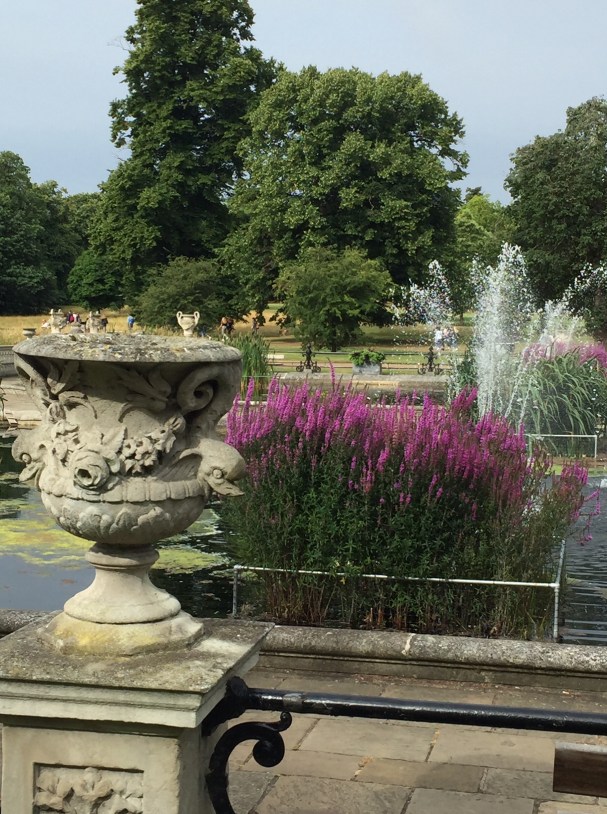
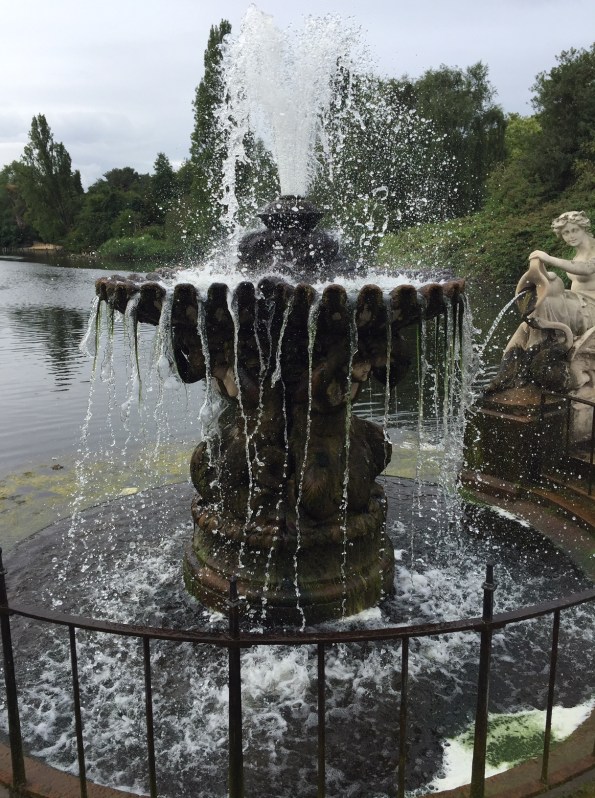
The Italian Gardens are an elaborate mix of four main basins. They feature central rosettes carved in Carrara marble, the Portland stone and white marble Tazza Fountain, and a collection of stone statues and urns. It’s fun to see if you can spot the five main urn designs – a swan’s breast, woman’s head, ram’s head, dolphin and oval.
Strengthening the supposition that this decorative complex was commissioned by Prince Albert is the fact that the layout of the Italian Gardens is very similar to that of Osborne House on The Isle of Wight, where the royal family spent holidays. Prince Albert was a keen gardener and took charge of the gardens at Osborne House, where he introduced an Italian garden with large raised terraces, fountains, urns and geometric flower beds.
It’s thought that in 1860 he brought the idea to Kensington Gardens. The design by James Pennethorne includes many features of the Osborne garden.
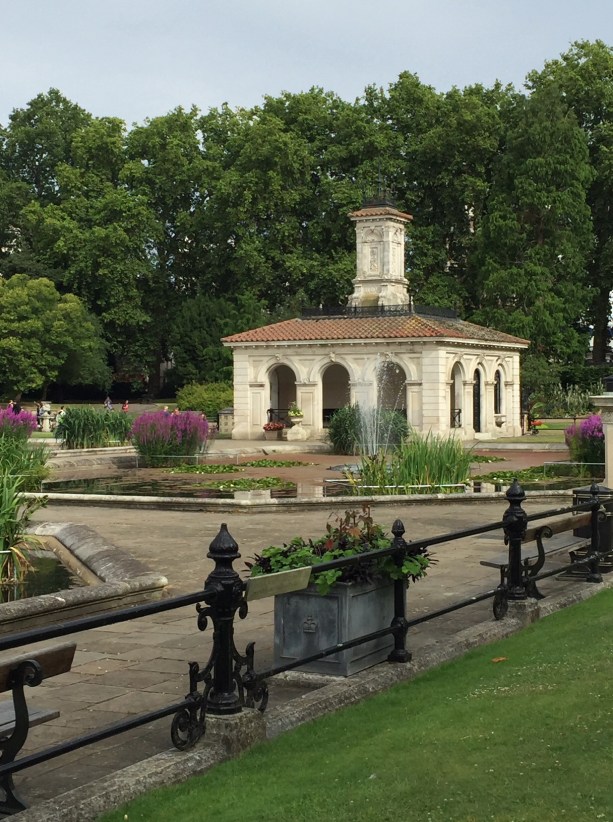
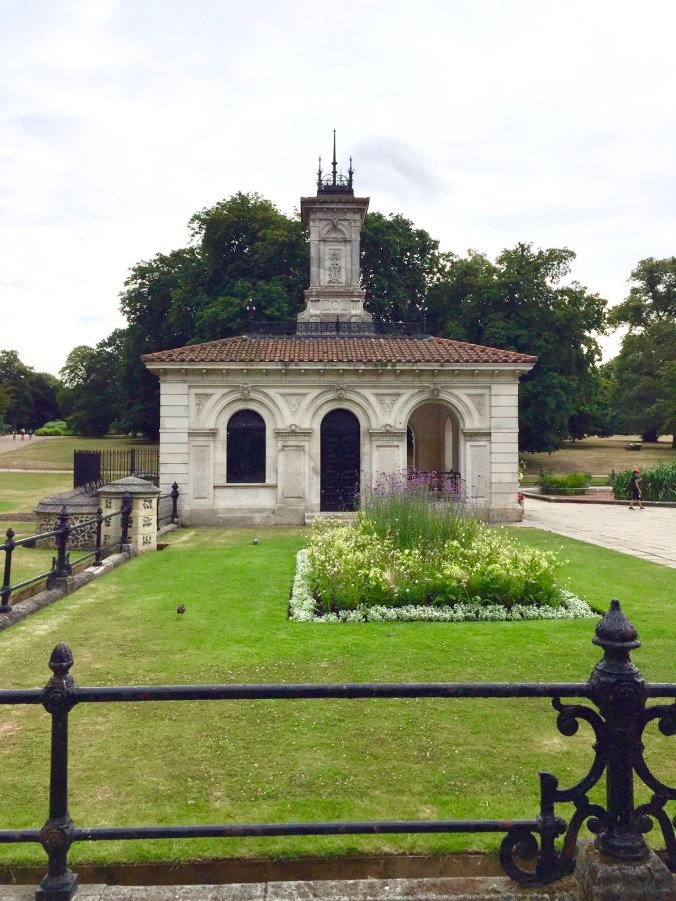
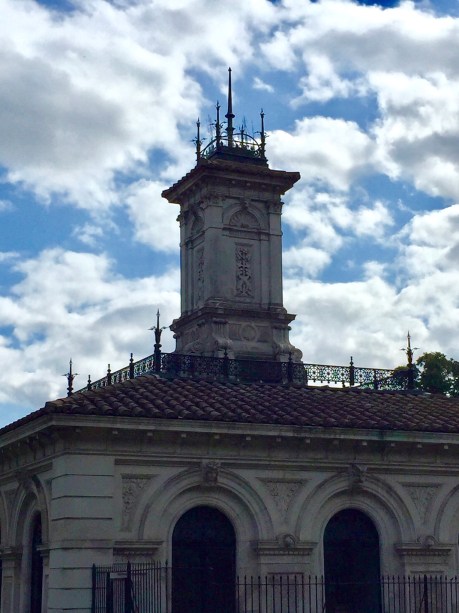
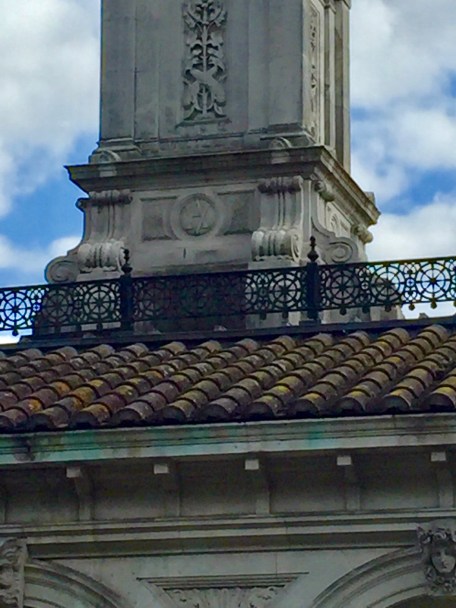
The initials of Queen Victoria and Prince Albert can be found on one of the walls of the Pump House, at the north of the gardens.
You can see the V & A monogram in this photo.
This building once contained a steam engine which operated the fountains – the pillar on the roof is a cleverly-disguised chimney. A stoker kept the engine running on Saturday nights to pump water into the Round Pond, so on Sundays there was enough water pressure to run the fountains.
In 2011, the gardens were restored to their original splendour. The project involved:
Restoring the original stonework. This included carving eight life-sized swan heads and necks as replacement handles on some of the urns.
Restoring the Tazza Fountain. Fine stone carving was carried out on-site. The central rosettes also needed careful cleaning and some sections were replaced with newly-carved marble.
A new planting scheme to recapture the Victorian vision and help maintain water quality. Native water lilies, yellow flag iris, flowering rush and purple loosestrife are rooted in cages just below the water. New walkways help ducks get in and out of the water.
A new cleaner water system and water quality improvements. 13 tons of silt were removed from the fountain basins during the restoration. The fountains are now fed with fresh water from a borehole. The water is aerated and its temperature raised as it leaps in the air, before flowing out into the Long Water. Happily, this improves the ecology of the lake.
The restoration was funded by The Tiffany and Co. Foundation as part of a project to restore ornamental and drinking fountains across the eight Royal Parks, and known as Tiffany – Across the Water.
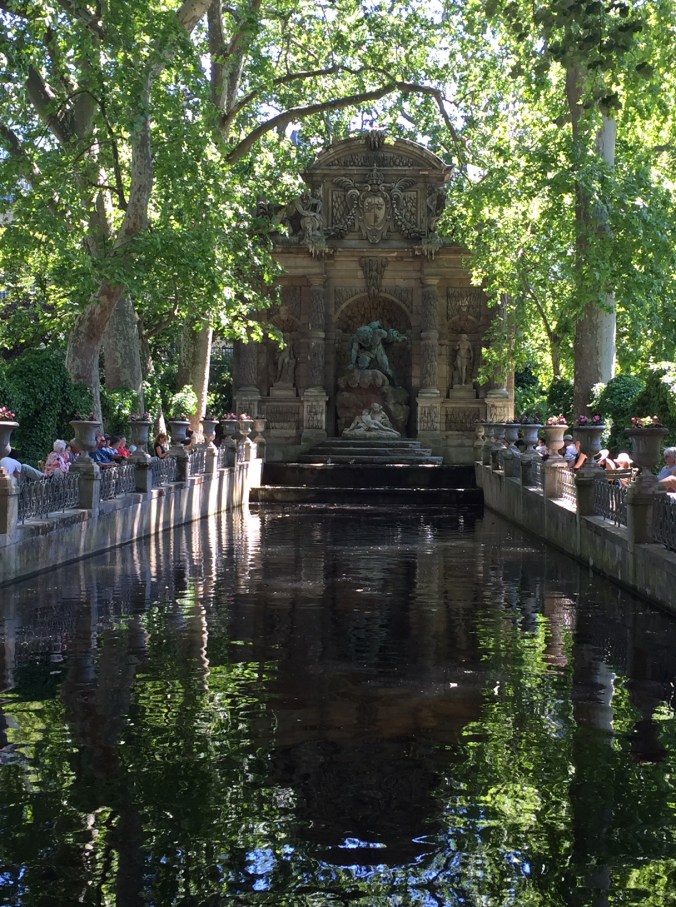
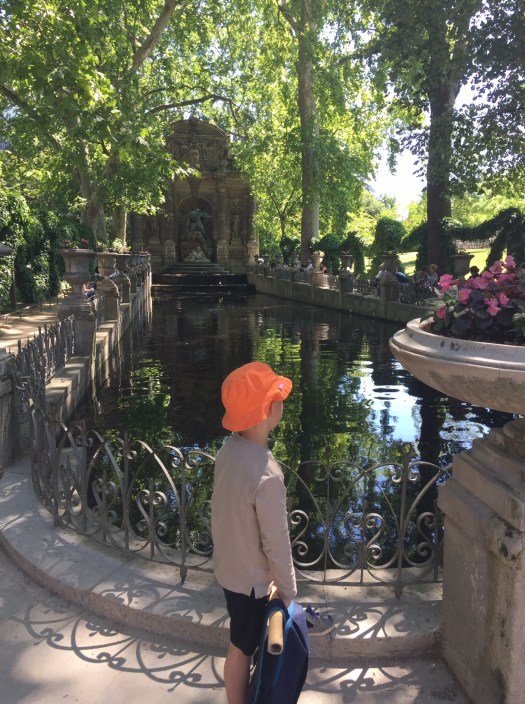
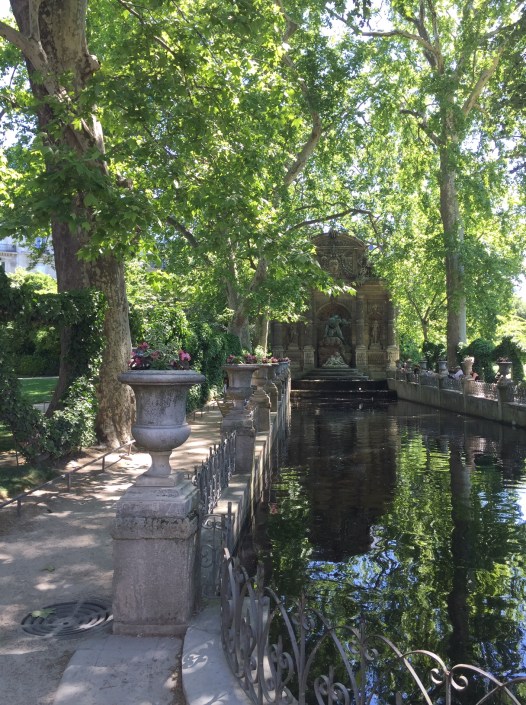
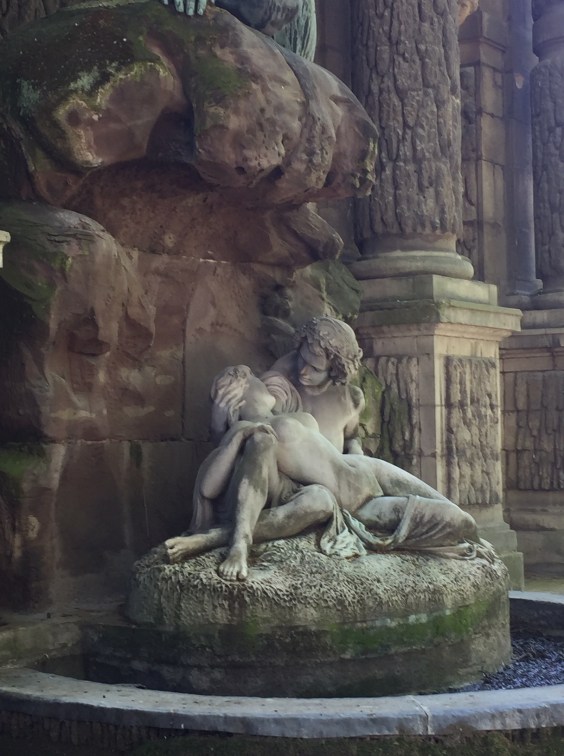
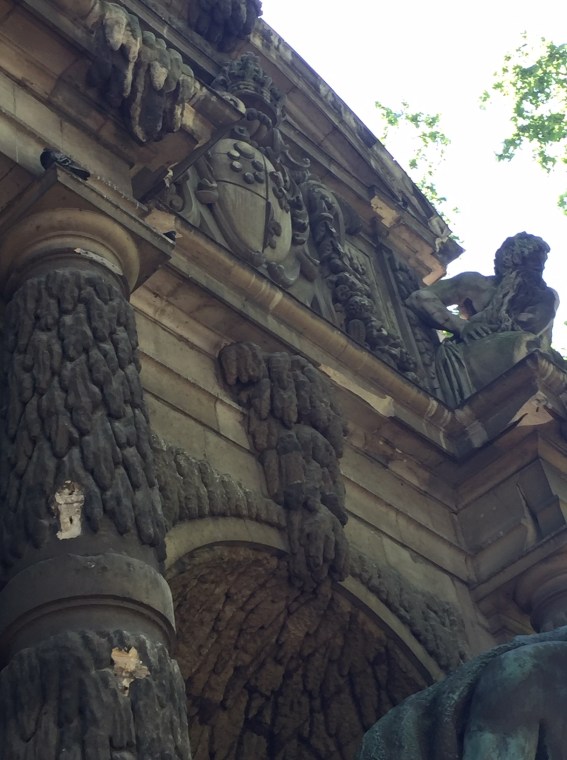
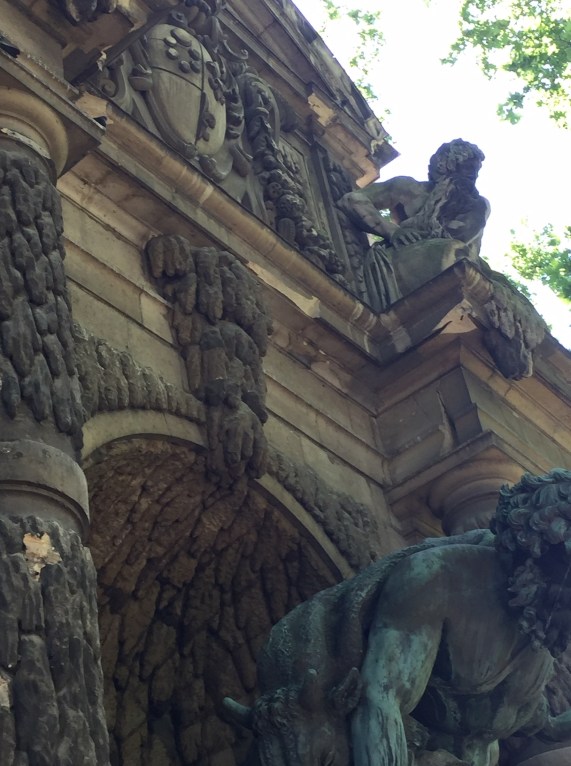
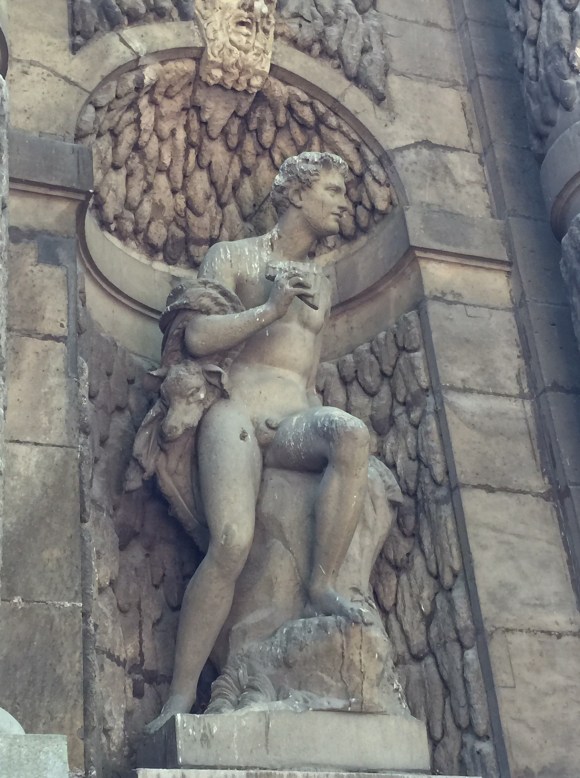
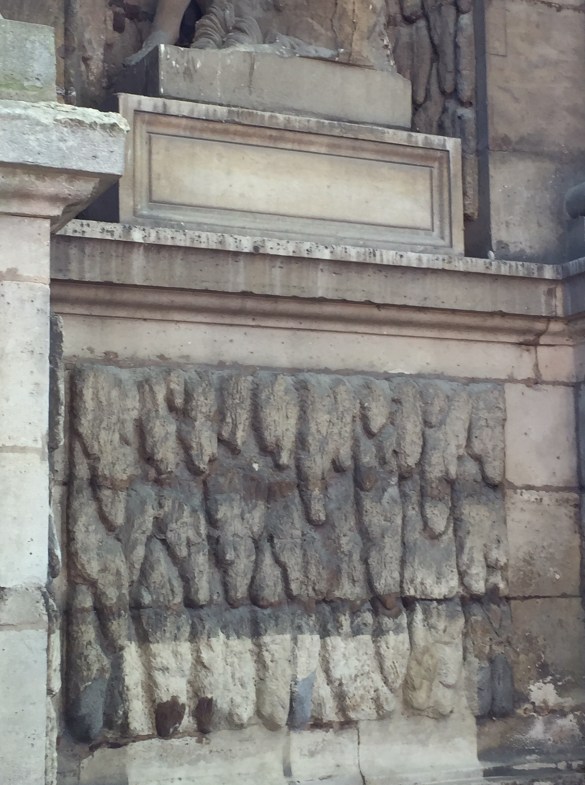
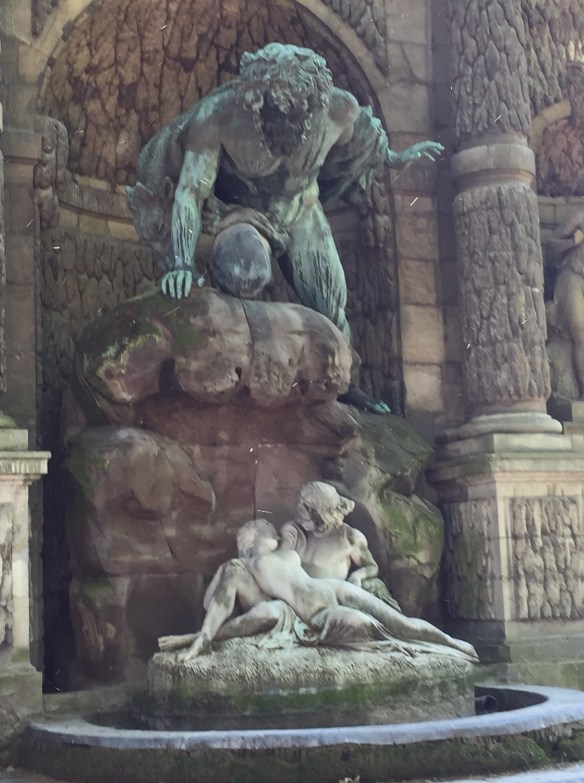
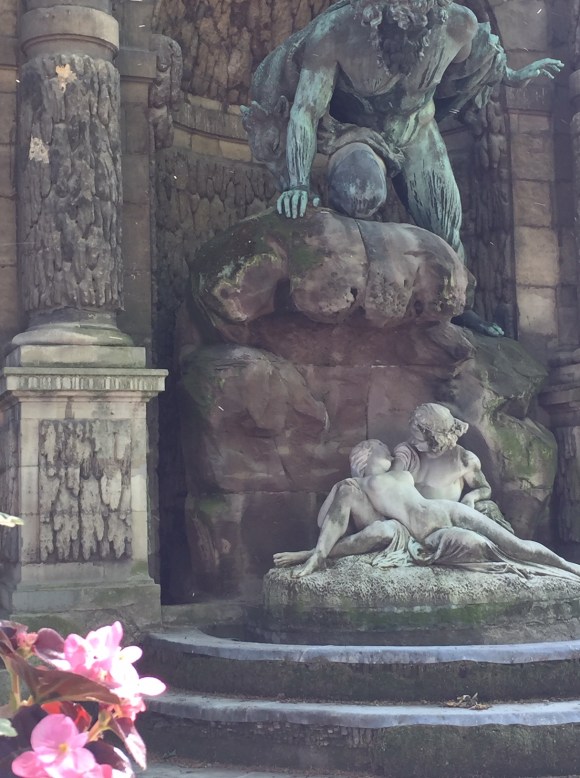
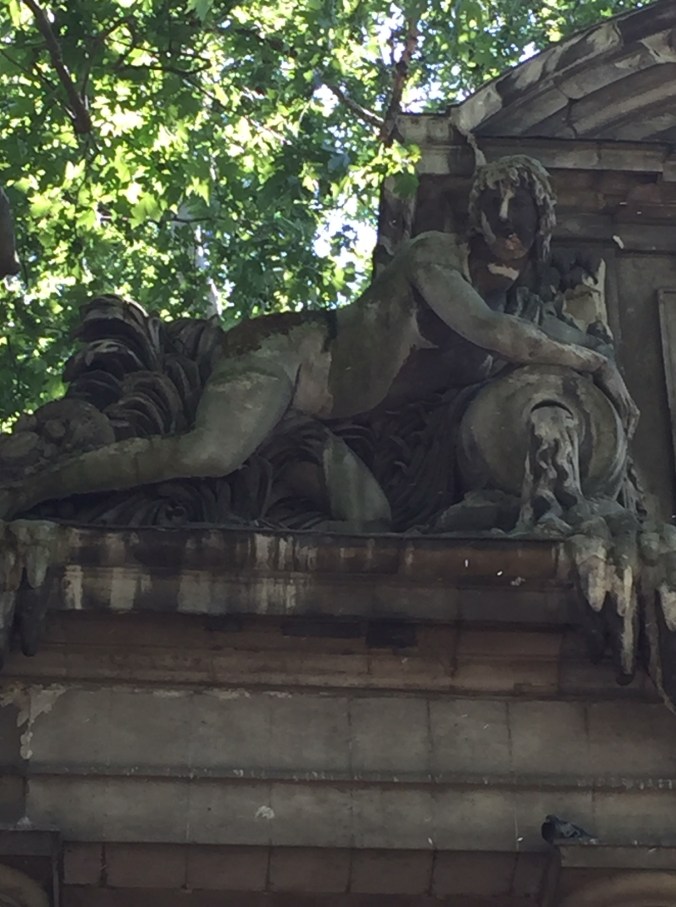
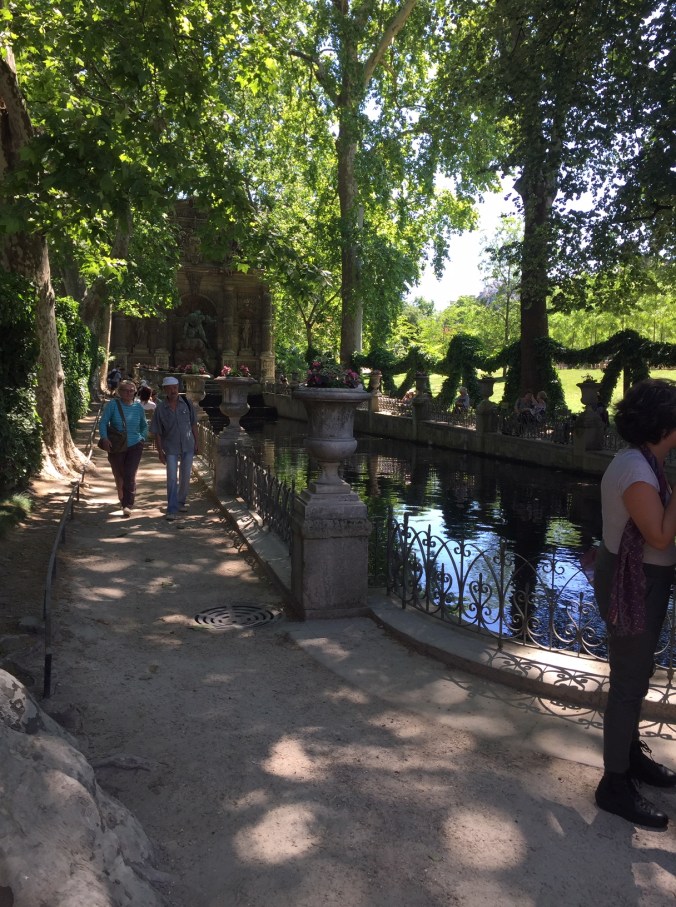
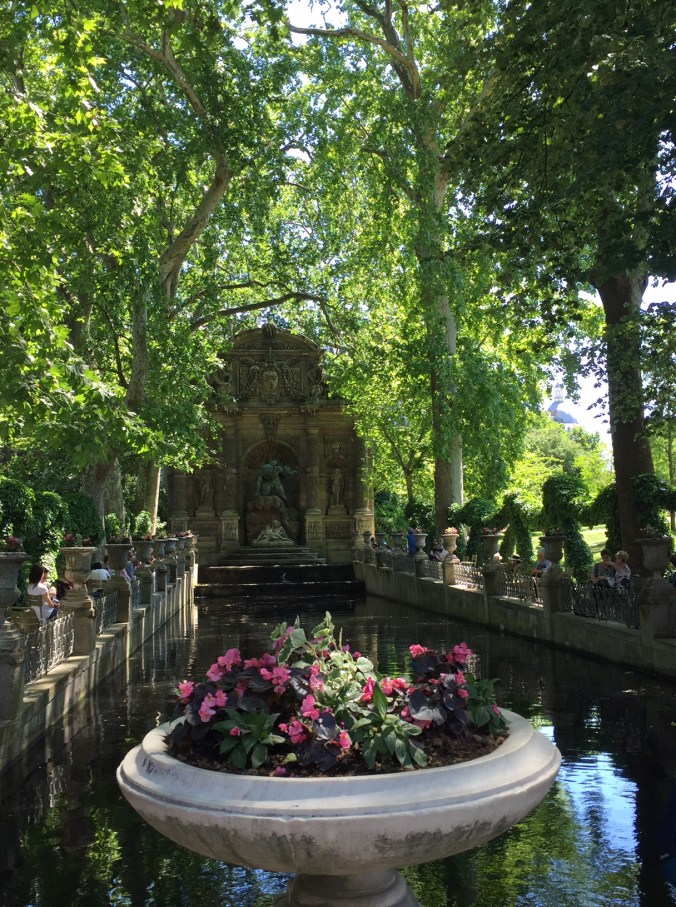
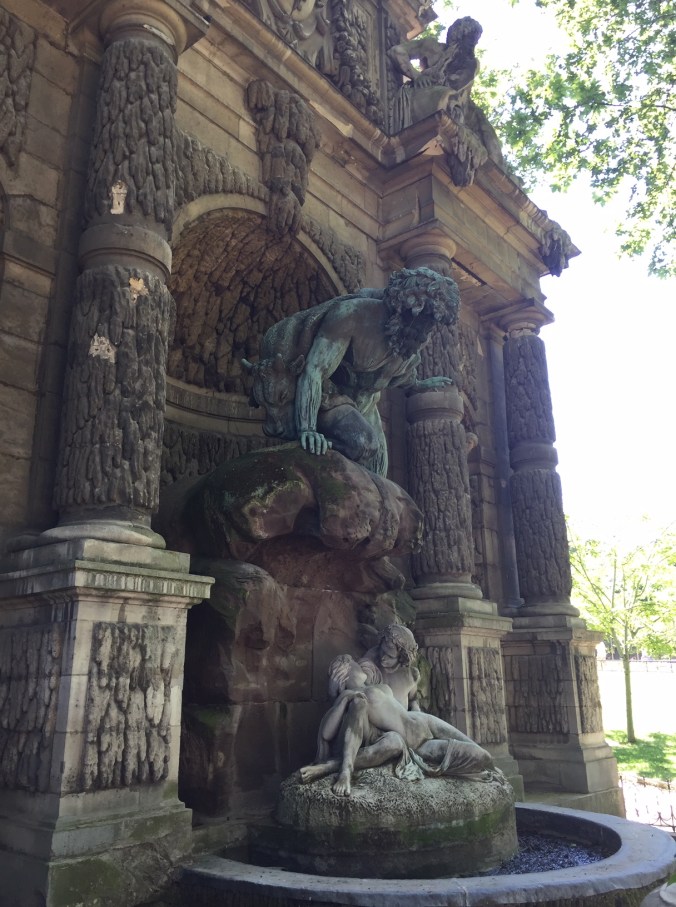
The artistic interchanges between Italy and France form a fascinating story. No where are they better expressed, at least to my mind, than in the Medici Fountain, commissioned by Marie de’ Medici at in the Luxembourg Garden in 1630. The fountain has a 3-part history: 1. its original construction; 2. its restoration by Napoleon; and 3. the relocation and additions of sculpture in 1866.
Marie de’ Medici was the widow of France’s King Henry IV and the regent of King Louis XIII of France.
The fountain in the Luxembourg garden was designed by Tommaso Francini, a Florentine fountain maker and hydraulic engineer who was brought from Florence to France by King Henry IV. The fabulous fountain was constructed in the form of a grotto, a popular feature of the Italian Renaissance garden.
The French queen was born as Maria at the Palazzo Pitti in Florence, Italy. She was the sixth daughter of Francesco I de’ Medici, Grand Duke of Tuscany, and Archduchess Joanna of Austria. Marie was not a male-line descendant of Lorenzo the Magnificent but from Lorenzo the Elder, a branch of the Medici family sometimes referred to as the ‘cadet’ branch. She did descend from Lorenzo in the female-line however, through his daughter Lucrezia de’ Medici. She was also a Habsburg through her mother, who was a direct descendant of Joanna of Castile and Philip I of Castile.
Although Marie was one of seven children, only she and her sister Eleonora survived to adulthood.
She married Henry IV of France in October 1600 following the annulment of his marriage to Margaret of Valois. The wedding ceremony was held in Florence, and was celebrated by four thousand guests with lavish entertainment, including examples of the newly invented musical genre of opera, such as Jacopo Peri’s Euridice. Henry did not attend the ceremony, and the two were therefore married by proxy. Marie brought as part of her dowry 600,000 crowns. Her eldest son, the future King Louis XIII, was born at Fontainebleau the following year.
Her husband was almost 47 at the time of the marriage and had a long succession of mistresses. Dynastic considerations required him to take a second wife, his first spouse Margaret of Valois never having produced children by Henry or by her lovers. Henry chose Marie de’ Medici because Henry owed the bride’s father, Francesco de’ Medici, Grand Duke of Tuscany, who had helped support his war effort, a whopping 1,174,000 écus and this was the only means Henry could find to pay back the debt.
The marriage was successful in producing children, but it was not a happy one. The queen feuded with Henry’s mistresses in language that shocked French courtiers. She quarreled mostly with her husband’s leading mistress, Catherine Henriette de Balzac d’Entragues, whom he had promised he would marry following the death of his former “official mistress”, Gabrielle d’Estrées. When he failed to do so, and instead married Marie, the result was constant bickering and political intrigues behind the scenes.
Catherine referred to Maria as “the fat banker’s daughter”; Henry used Maria for breeding purposes exactly as Henry II had treated Catherine de’ Medici. Although the king could have easily banished his mistress, supporting his queen, he never did so. She, in turn, showed great sympathy and support to her husband’s banished ex-wife Marguerite de Valois, prompting Henry to allow her back into the realm.
Marie was crowned Queen of France on 13 May 1610, a day before her husband’s death. Hours after Henry’s assassination, she was confirmed as regent by the Parliament of Paris. She immediately banished his mistress, Catherine Henriette de Balzac, from the court.
The construction and furnishing of the Palais du Luxembourg, which she referred to as her “Palais Médicis”, formed her major artistic project during her regency. The site was purchased in 1612 and construction began in 1615, to designs of Salomon de Brosse.
It was well known that Henry of Navarre (her husband) was not wealthy. She brought her own fortune from Florence to finance various construction projects in France. But more importantly, she contributed to the financing of several expeditions including Samuel de Champlain’s to North America, which saw France lay claim to Canada.
In 1612 Marie de’ Medici had 2,000 elm trees planted, and directed a series of gardeners, most notably Tommaso Francini, to build a park in the style she had known as a child in Florence.
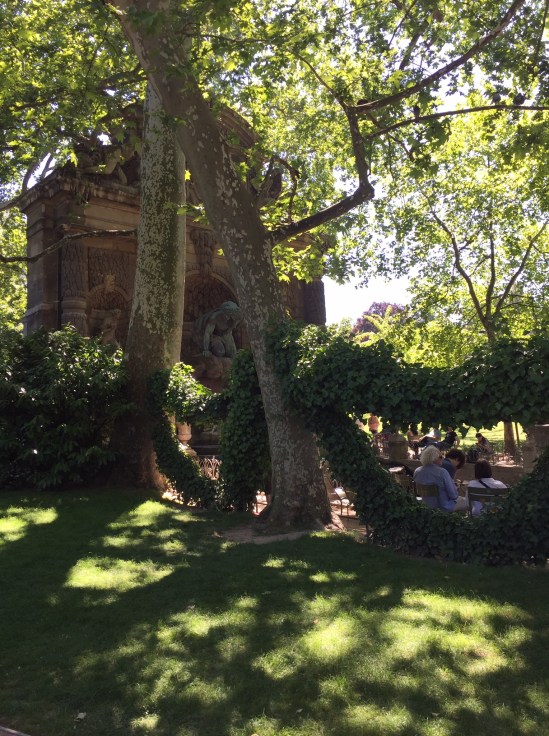
Francini planned two terraces with balustrades and parterres laid out along the axis of the chateau, aligned around a circular basin. He also built the Medici Fountain to the east of the palace as a nympheum, an artificial grotto and fountain, without its present pond and statuary.
The Medici Fountain fell into ruins during the 18th century, but in 1811, at the command of Napoleon Bonaparte, the fountain was restored by Jean Chalgrin, the architect of the Arc de Triomphe.
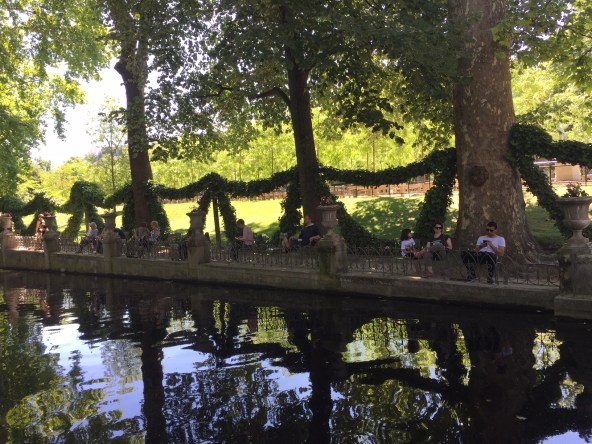
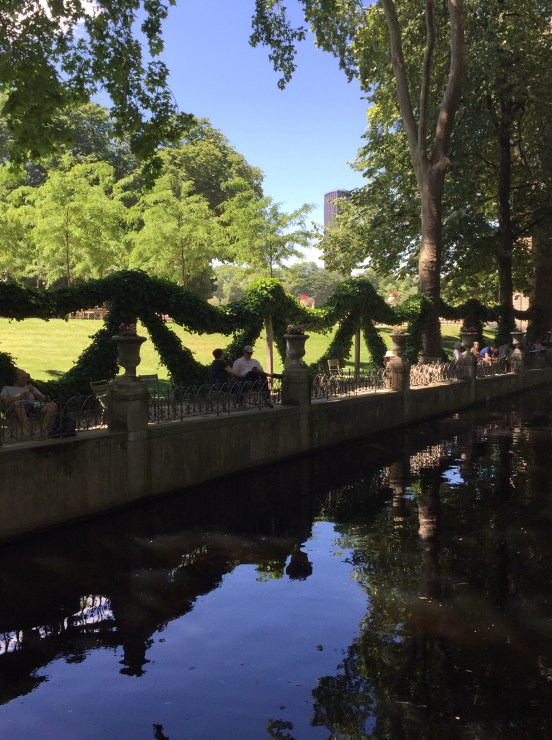
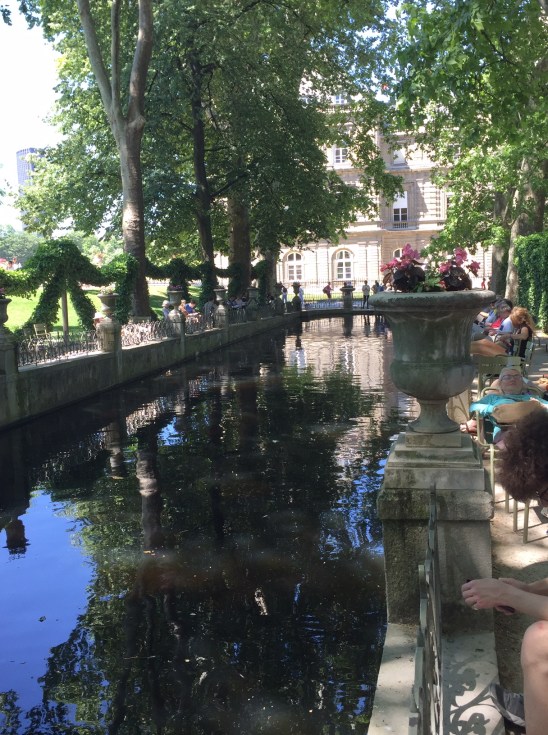
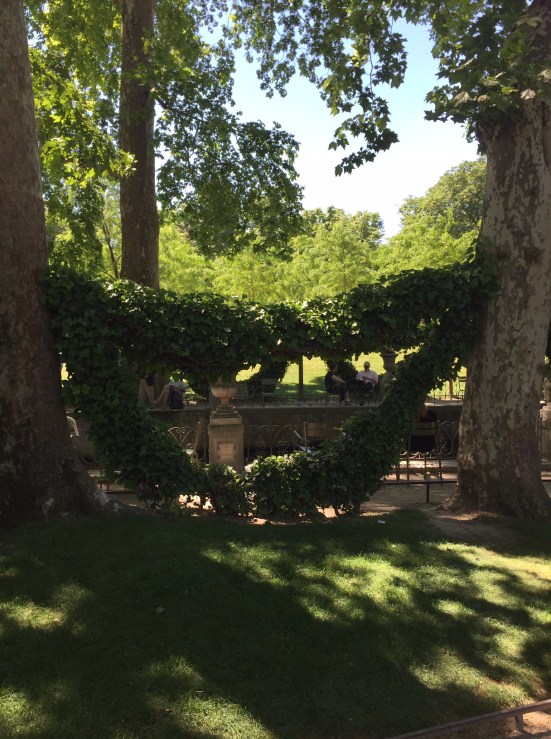
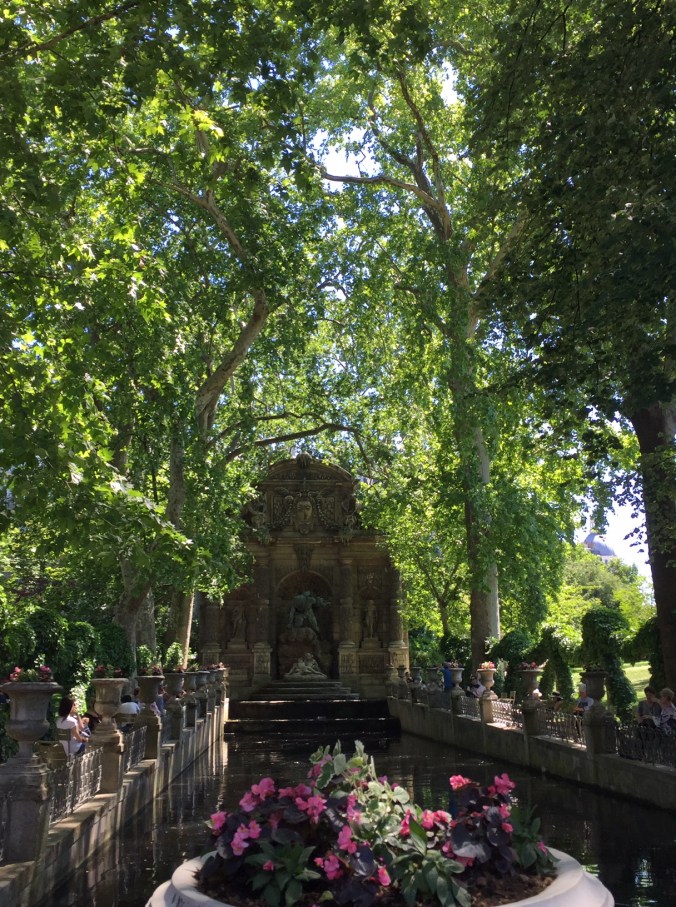
In 1864-66, the fountain was moved to its present location, centered on the east front of the Palais du Luxembourg. The long basin of water was built and flanked by plane trees, and the sculptures of the giant Polyphemus surprising the lovers Acis and Galatea, by French classical sculptor Auguste Ottin, were added to the grotto’s rockwork.
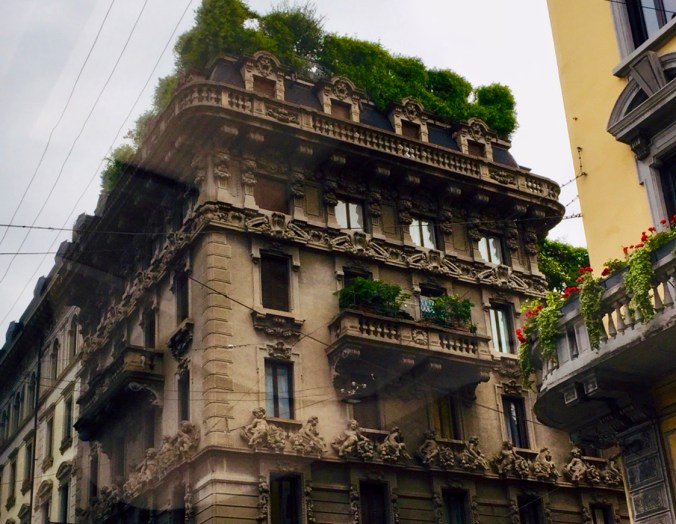
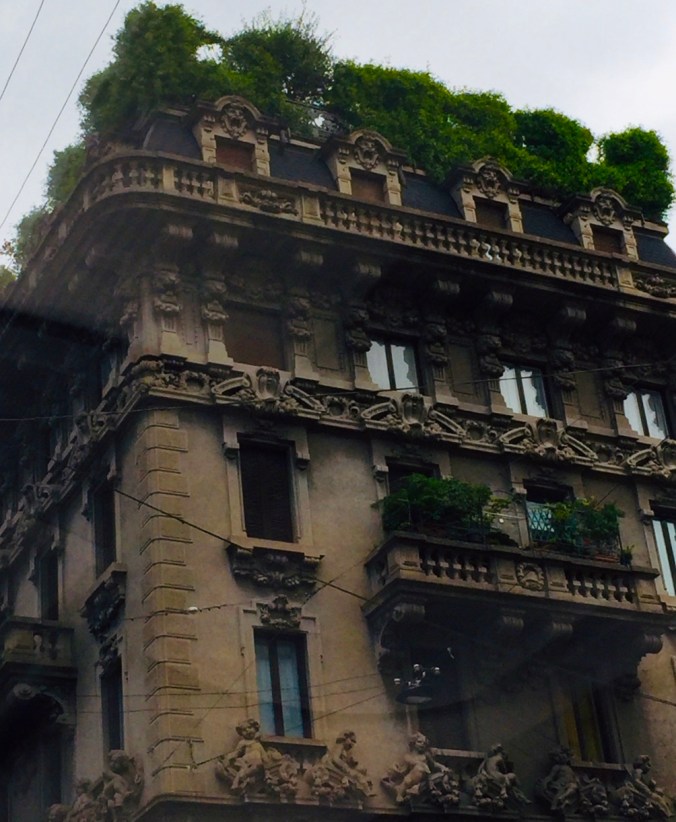
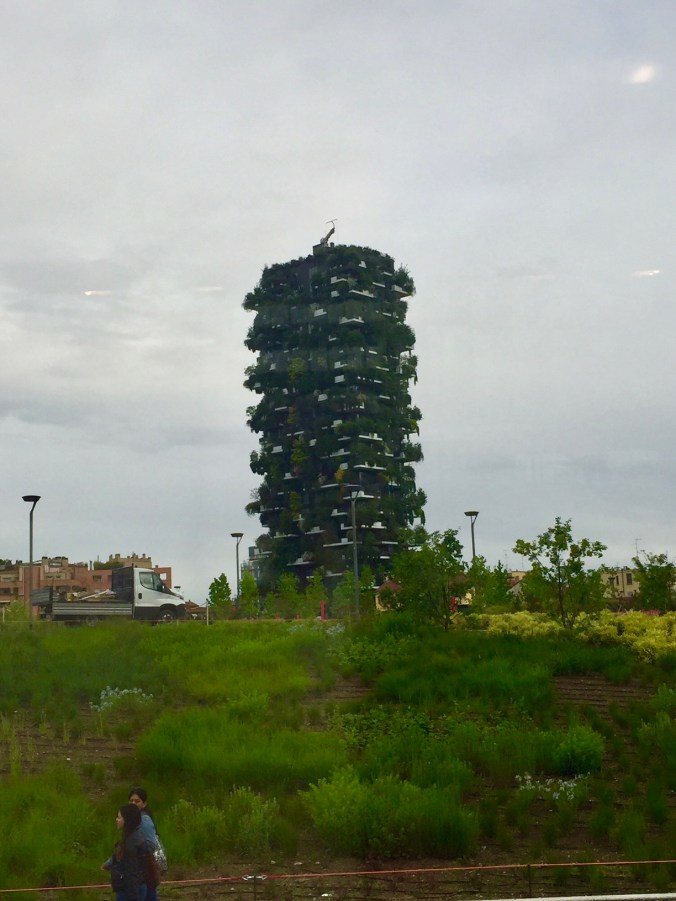
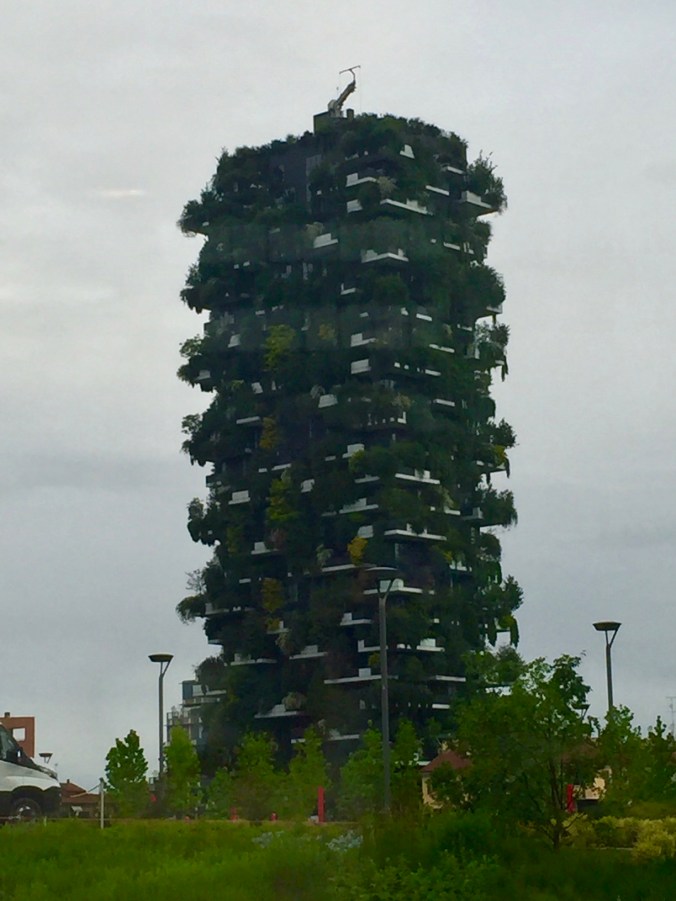
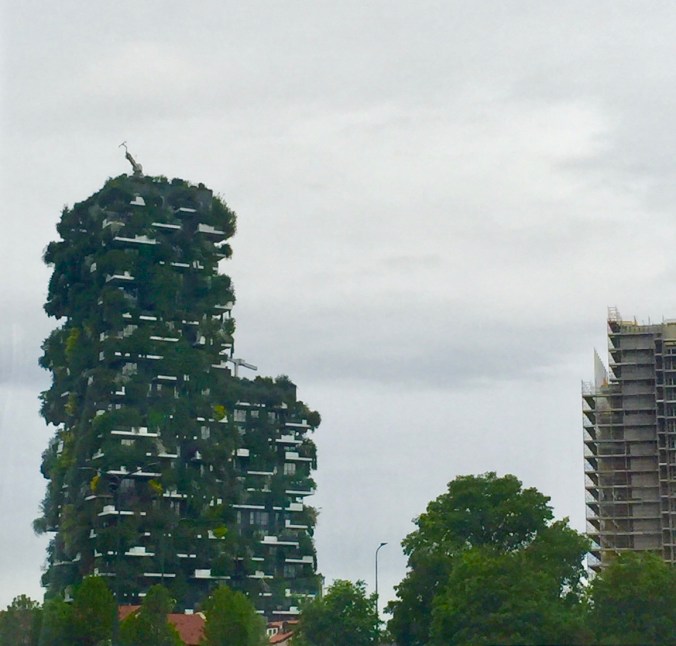
I was told that the tall narrow apparatus that looks like a crane, on the top of both sections of the high rise, is actually a part of the irrigation system that keeps all this plant material alive.
Apparently the first high rise has been quite successful, for as you can see, a second high rise is going up nearby.
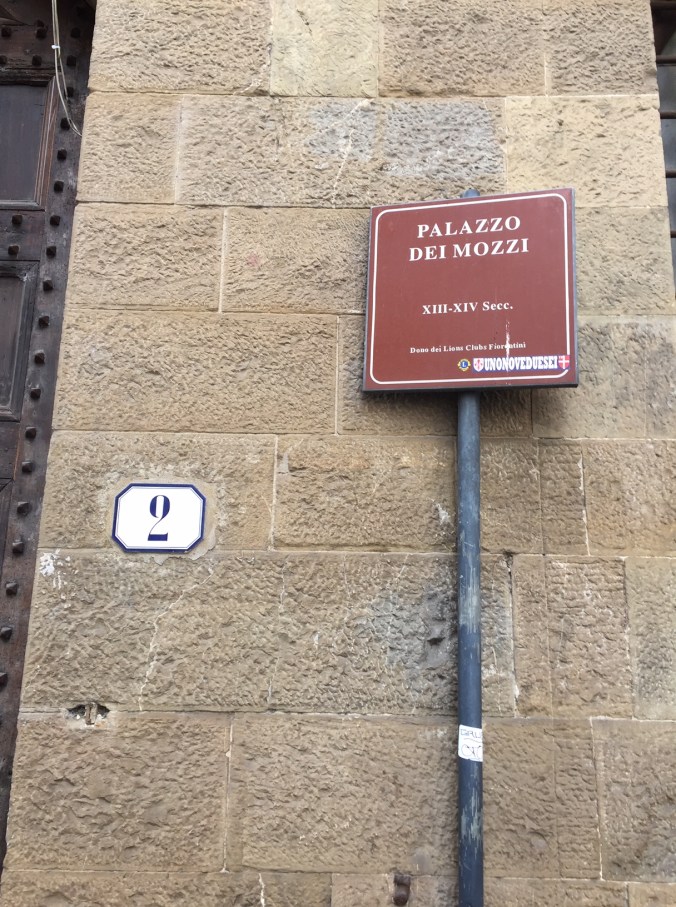
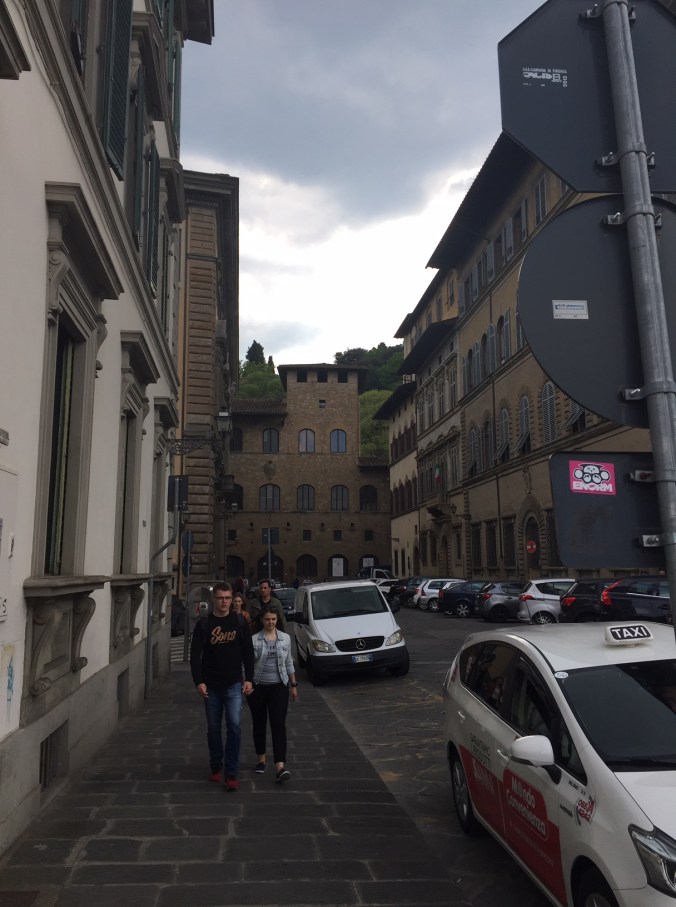
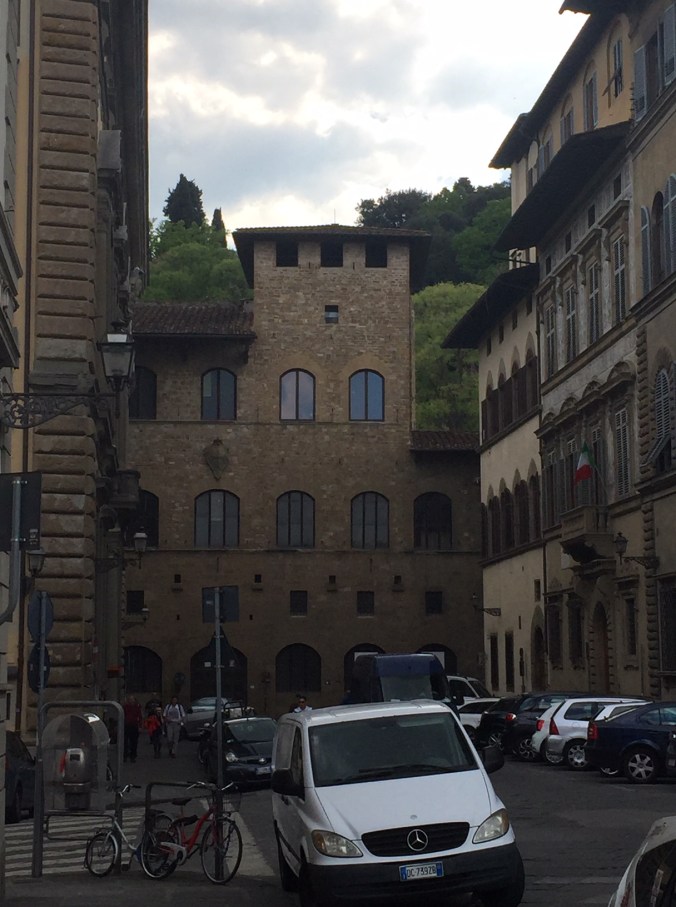
The Palazzo dei Mozzi is a grand old palace beautifully situated on the piazza of the same name, in the Oltrarno section of Florence. It was built around the middle of 13th century as a part of the fortifications guarding the old Ponte di Rubaconte (today’s Ponte alle Grazie): hence its fortress-like structure.
The palazzo is an early Renaissance building, located at the south end of the Piazza dei Mozzi that emerges from Ponte alle Grazie and leads straight to the palace where via San Niccolò becomes via de’ Bardi in the Quartiere of Santo Spirito (San Niccolò).
The Mozzi family was among the most important and powerful families in the city in the Medieval period, and many important persons were received in the palace during their official visits in Florence; Pope Gregory X, for example, visited the palazzo in 1273.
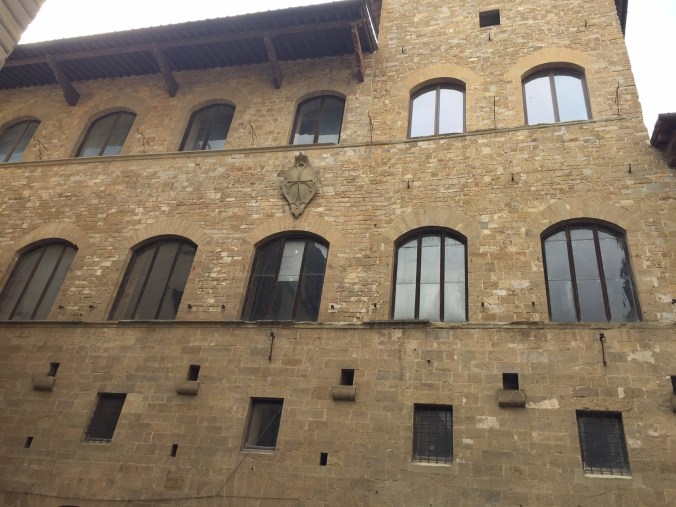
On the facade facing the Via de’ Bardi, we see the tower and the large coat-of-arms of the Mozzi family. Also note the tower’s crenellation, covered nowadays by a roof.
The large garden on the rear of the palace was built in 16th century, when the Mozzi bought a wide plot of ground in order to transform it into an olive-grove.
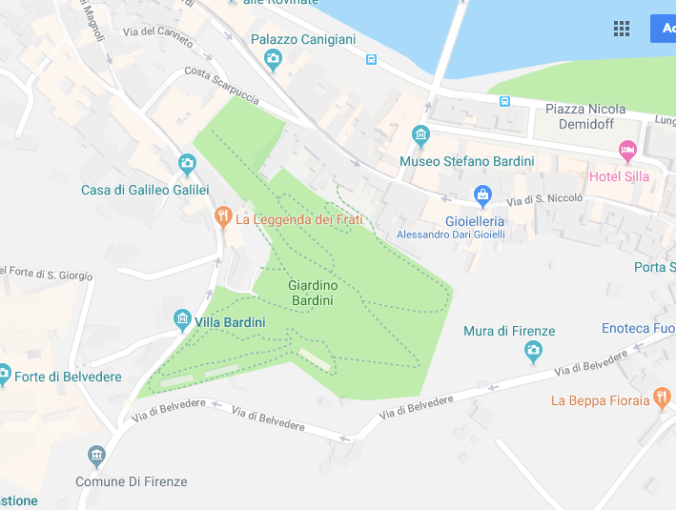
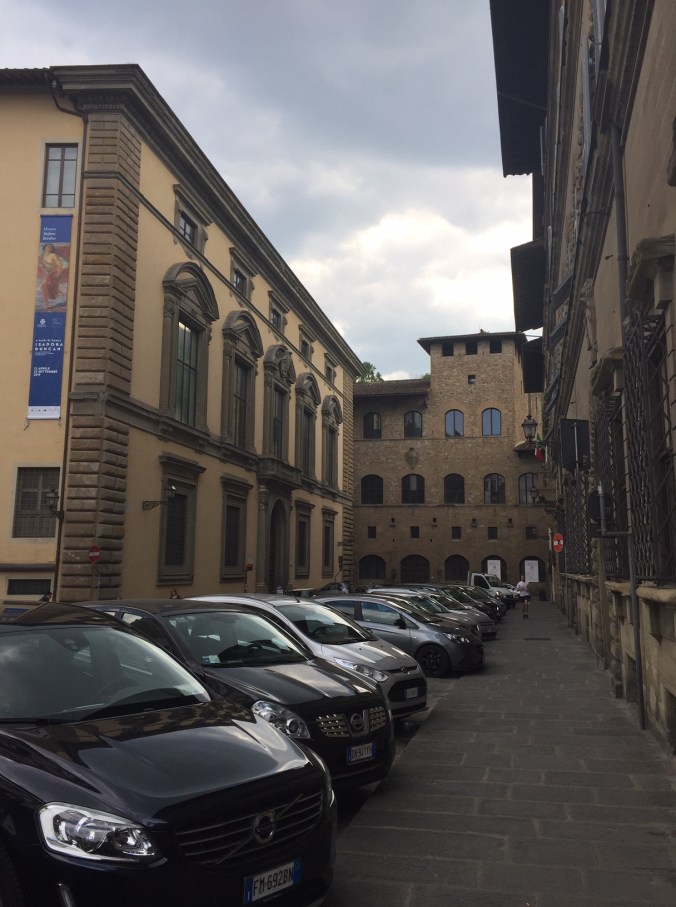
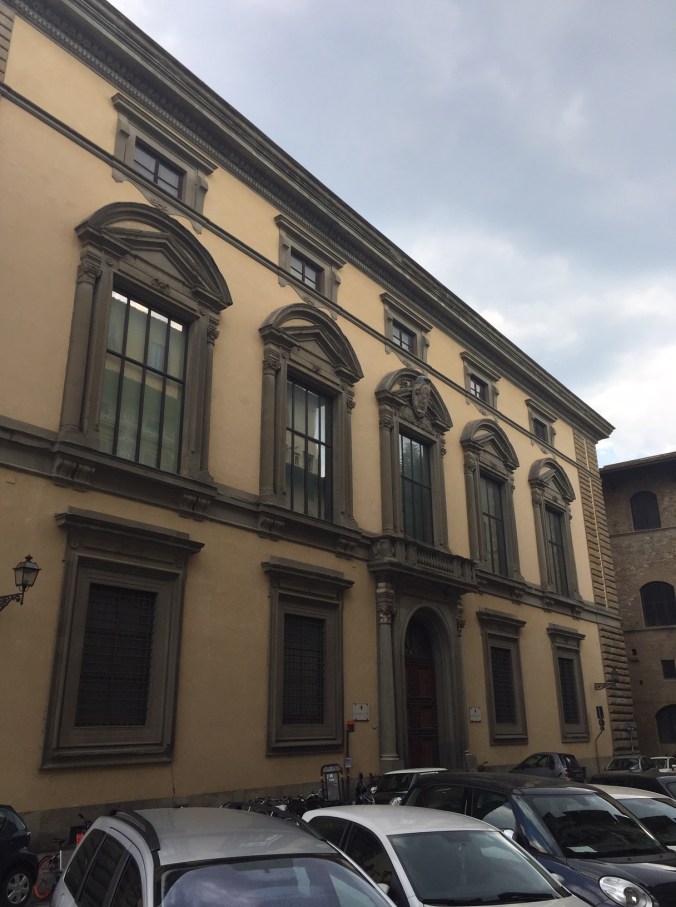
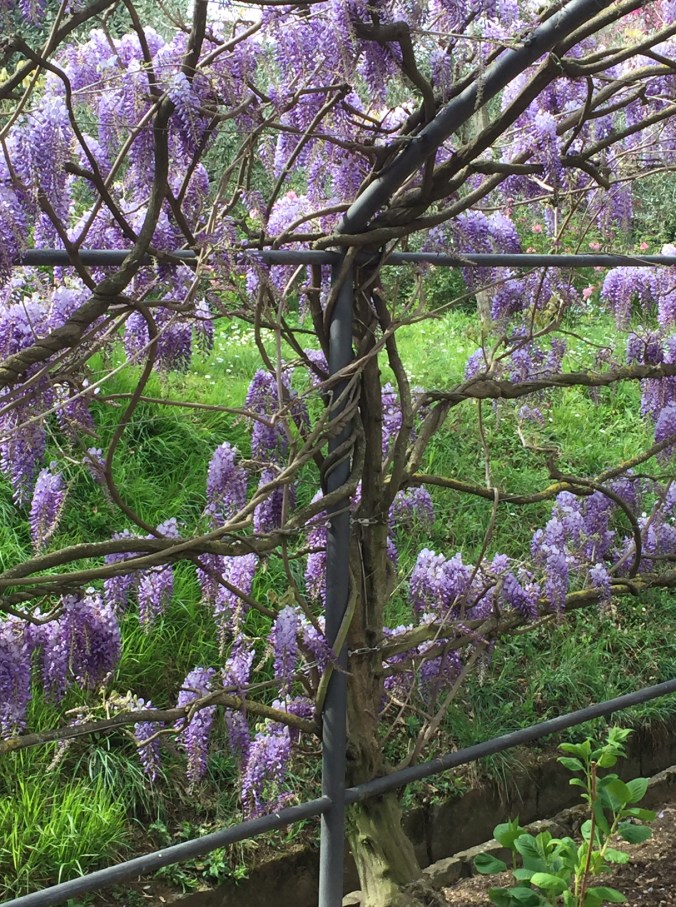
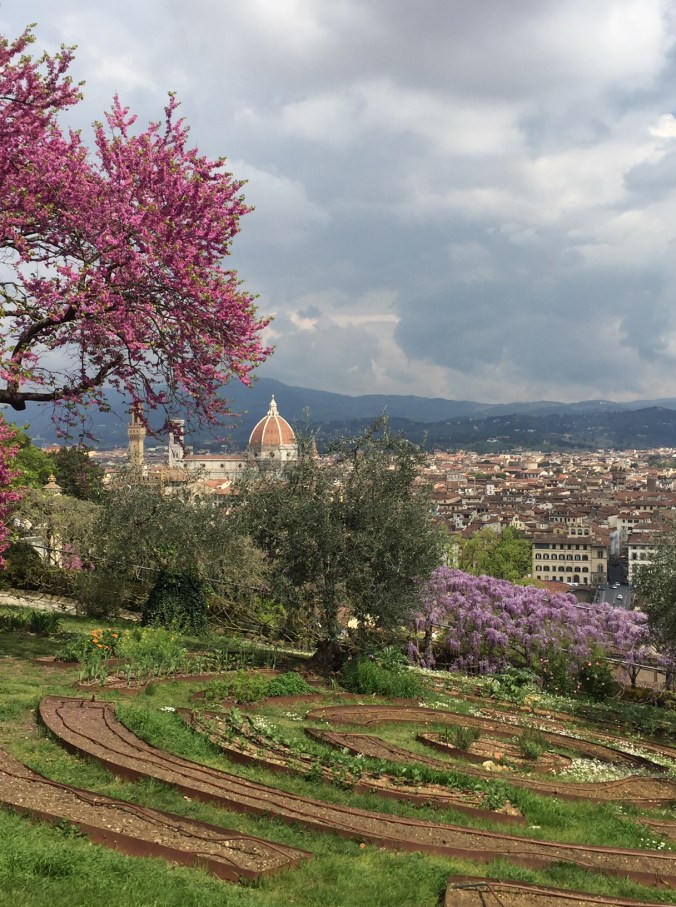
Around the middle of 19th century, the palace was purchased by the antiquarian Stefano Bardini, who owned another palazzo across the street (see pictures below). Today that amazing garden is open to the public as a part of the Museo Bardini complex. It is one of the most spectacular gardens in all of Florence, especially in spring when the trees and wisteria are in full bloom!
Bardini transferred his extensive art collections and laboratories to the Palazzo dei Mozzi and changed the olive-grove into a garden; he decorated the garden with statues and elements he saved from the demolition of ancient buildings in the center of Florence. In a subsequent time the garden was futher decorated with a loggia and big stairs.
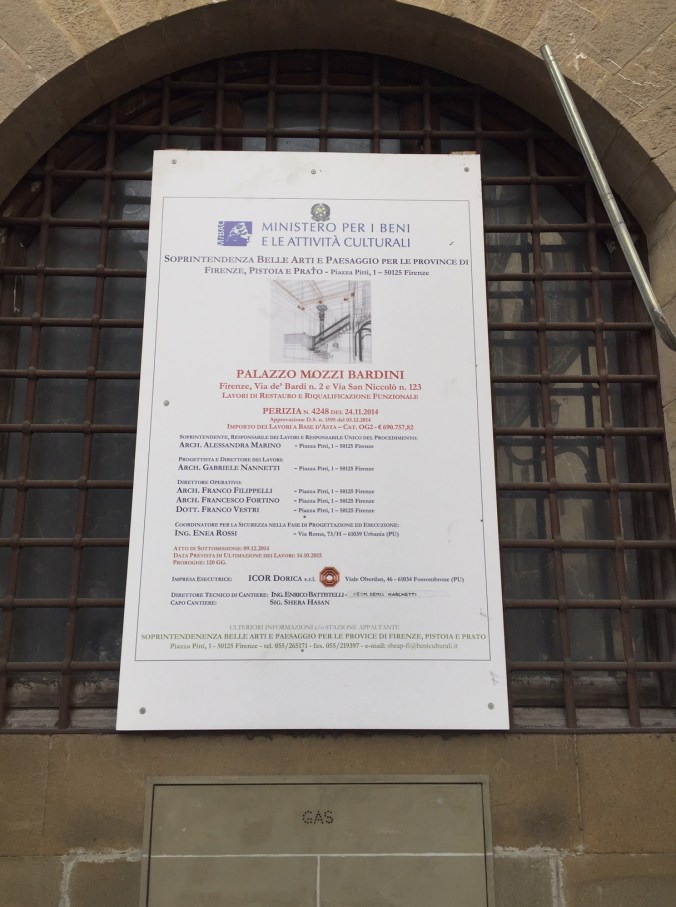
After the death of Ugo Bardini, the son of Stefano, the palace remained closed for a long time, until it was bought by the Italian State; it is currently under restoration and will become a centre for exhibitions and cultural events.
Palazzo Bardini on left, Palazzo dei Mozzi at far end.
Below, another view of facade of Palazzo dei Mozzi, looking eastward along via San Niccolò.












 You can see the V & A monogram in this photo.


















 get back, lauretta!
You must be logged in to post a comment.