Villa Medici at Fiesole

I was in Fiesole this morning, to catch a breath of fresher, cooler air than at home in Florence and also to see a Medici Villa.  I had an appointment to see the grounds of the Villa Medici at Fiesole; the villa itself can’t be visited as it is a private residence.
IMG_0764

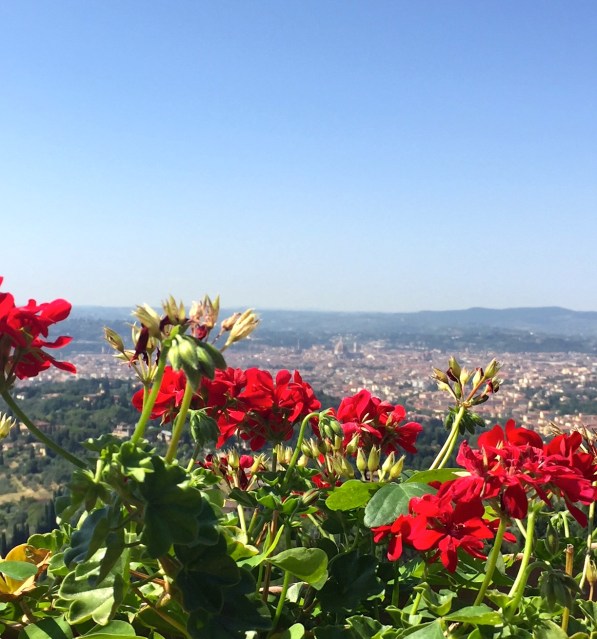
Can you see the tiny Duomo of Florence over the red geraniums, right in the middle?

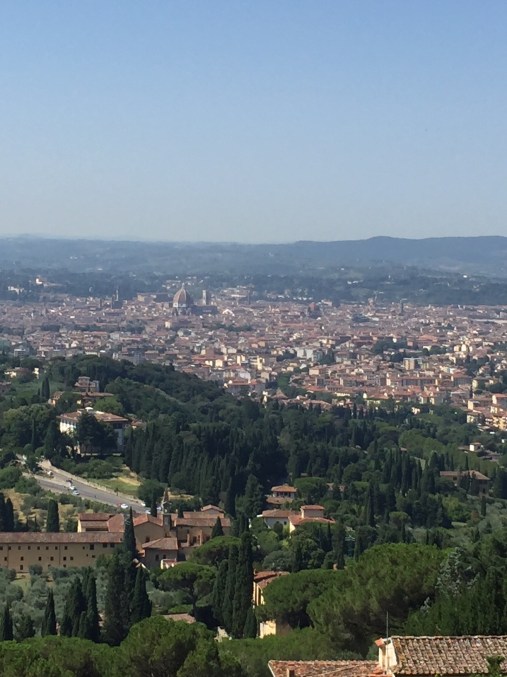
This is a view you would have of Florence if you were a Medici.

IMG_0760

It’s a pretty well-known fact that Florence tends to get a little hot in the summer.  That is actually an understatement.  Today it was 33 Celsius, with is pretty darn hot.

It is cooler in Fiesole, high above on the hills north of Florence. That is why the Medici had this villa constructed.
IMG_0761

Located on the via Beato Angelico 2 stands one of the oldest villas belonging to the Medici family, the 4th, after the 2 villas in Mugello (Cafaggiolo and Il Trebbio) and the Villa at Careggi. Sometimes called Belcanto or the Palagio di Fiesole, this villa is among the best preserved of the many Medici villas, but at the same time it is also among the less well-known.

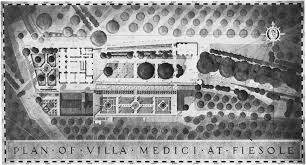
Here is a Google earth view of the Villa.
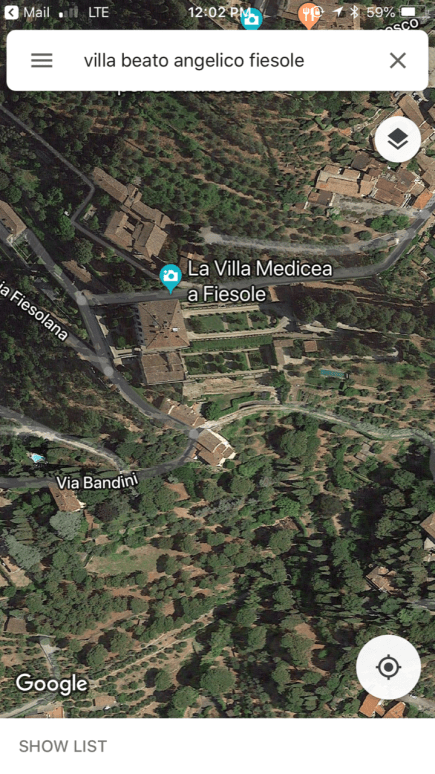
IMG_0926IMG_0927IMG_0928

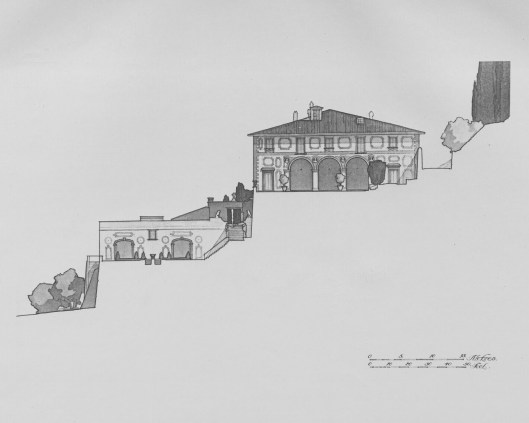
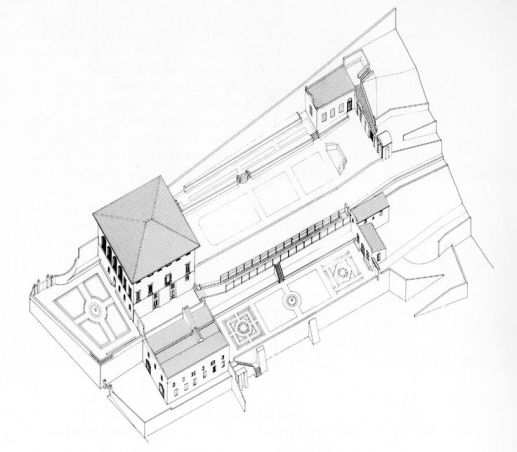
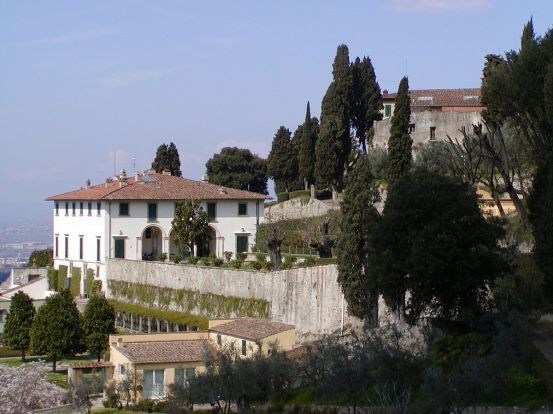
The villa was built between 1451-57. The site was obviously chosen for its panoramic views, despite the fact that the site is on a very steep slope.  It was necessary to make a large terrace, to support the palazzo, the out buildings and the vast gardens.
KIC000148

Villa Medici at Fiesole by Michelozzi in 1460
8d8e5e742d0b6afe3ee4495bf1f358ce--medici-villas


images

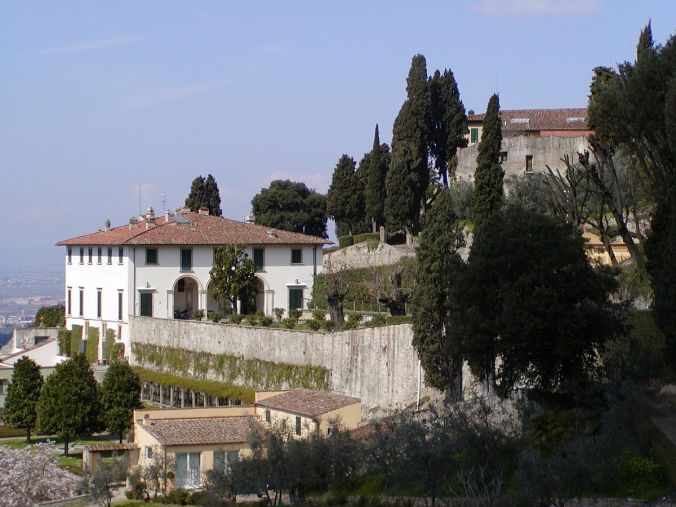
Michelozzo was not bound by pre-existing buildings and built a sober quadrangular palazzo which was whitewashed and had windows framed by stone cornices. Large open galleries, with incredible views of the landscape, were a main feature of the design.
1200px-Villa_Medici_a_Fiesole_1

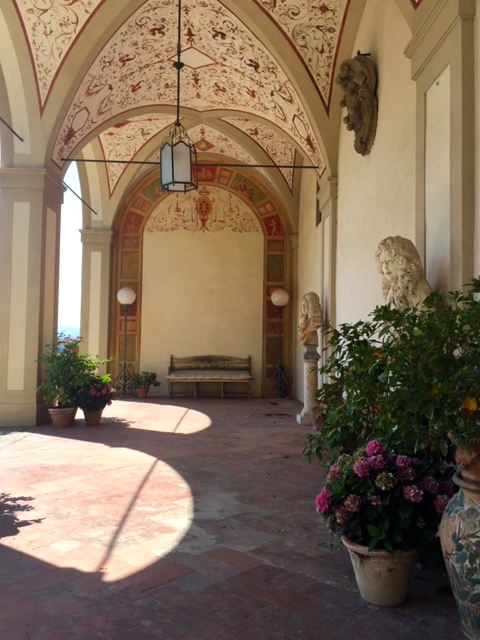
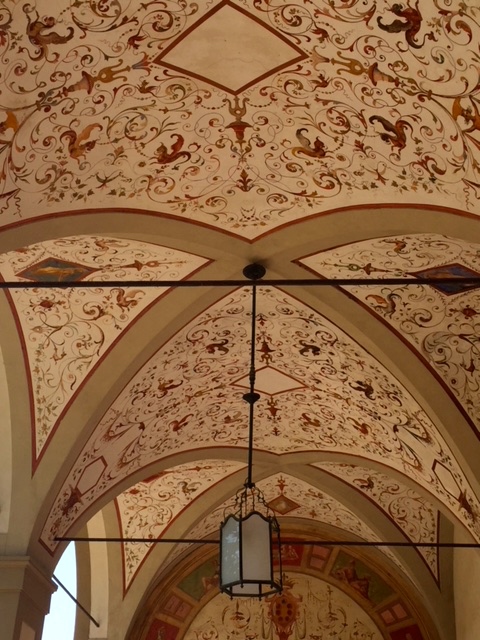
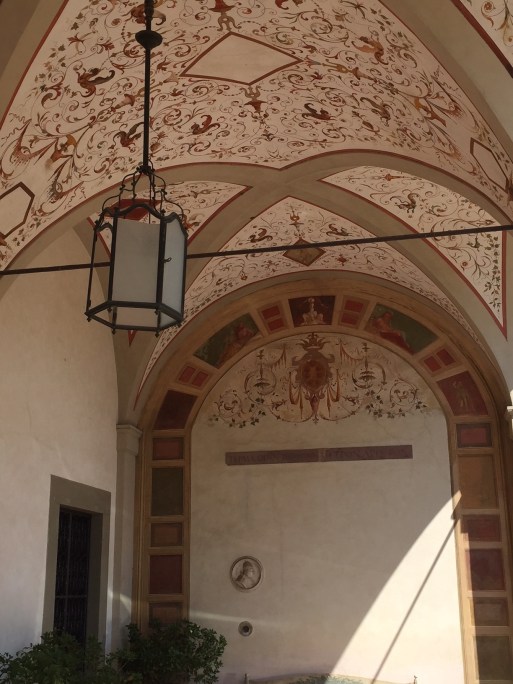
Here are some views of the main loggia at the front of the palazzo.
IMG_0765

IMG_0768

IMG_0785IMG_0789IMG_0775

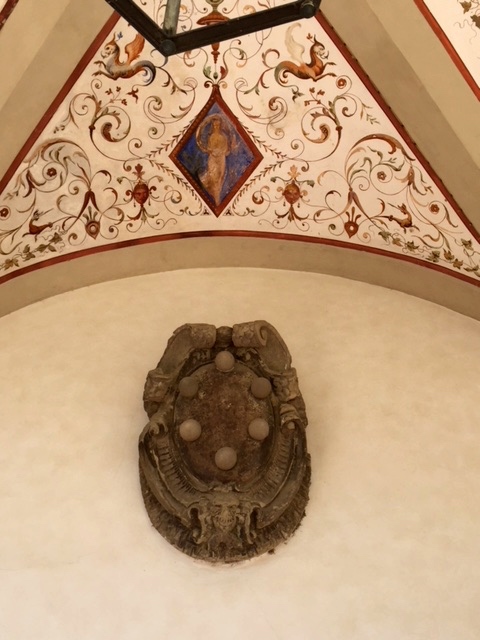
You know you are in Medici country when you see the coat-of-arms with the Medici palle in a prominent position within the loggia.

IMG_0776


This villa was very different from previous Medici villas: it is much more open to the outer world than any previous villa, and it has no central courtyard.

There are no defensive-military components, meaning there are no turrets, no elevated walkways supported by corbels, or any moats.

The formal and functional innovations of the villa in Fiesole revealed new aesthetic values; including, above all, a new attention to the landscape and the visual domain.

Likewise, the agricultural and productive components of villa design were essentially elminated, in favor of a total dedication to leisure and physical activity that favored contemplation and intellectual activity.

It was, in fact, the first time that a rural residence had only a garden, instead of being surrounded by an agricultural estate.

These factors, combined with the lack of military structures, are the significant characteristics that make this villa one of the clearest prototypes for later Renaissance villa design.
1200px-Villa_Medici_a_Fiesole_1

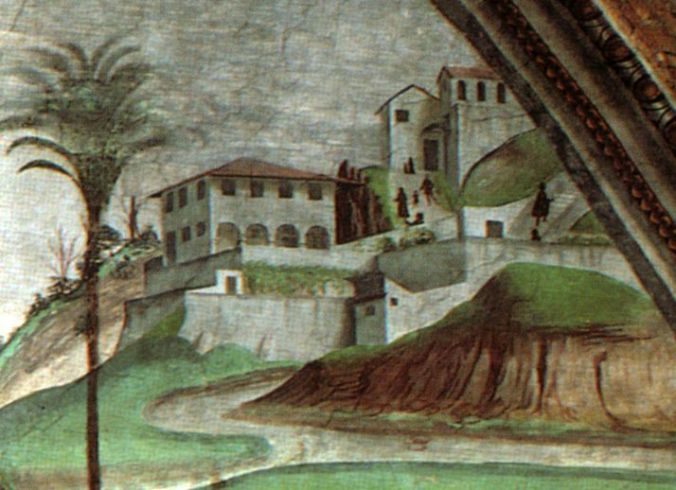
Amazingly, we have a contemporary Renaissance-era view of the villa, as depicted in this fresco by Domenico Ghirlandaio in the Cappella Tornabuoni  at the church of Santa Maria Novella, painted between 1485 and 1490. Art historians live for moments like this. It is very rewarding to have a painted picture to give us an idea about how the villa originally looked and it is just plain fun to have such a record of an extant Renaissance building.
07434f395cdf87f87d3c7cf76a64c362-2

The Villa Medici is linked to one of the most dramatic events of the Medici family history: the Pazzi Conspiracy (1478), when some members of the Pazzi family, along with Francesco Salivate and Cardinal Girolamo Riario, and supported by Pope Sixtus IV, designed a plot to get rid of what they considered to be the increasingly oppressive growth of the power of the Medici within the Florentine Republic. 

Originally, the plan was to kill the two scions of the Medici family, Lorenzo and Giuliano, during a banquet organized at this Medici Villa at Fiesole on April 25, 1478, through the use of poison that Jacopo de’ Pazzi and Cardinal Riario would surreptitiously place in the drinks meant for the two brothers.

The plot was foiled when Giuliano became suddenly ill.  The dinner was canceled and made the enterprise useless.  Undiverted from their aim, the murderers were postponed until the following day, during the Mass at the Florence Cathedral. Of course, we know that while Giuliano was killed, Lorenzo was able to save himself by bolting himself into the sacristy.

It is so interesting to walk around the palazzo and out buildings, thinking about the history that happened here, and who was walking these paths 500 years and more ago.  That is not to even mention the connected gardens, about which I’ll be writing a separate post soon.


.


Magnolia trees in Florence

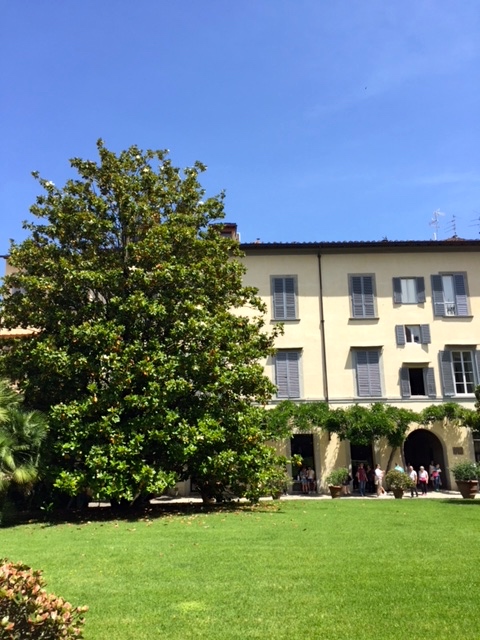
After living in Seattle for a few years, I’ve yet to see any other micro-climate produce the  the amazing magnolia trees that grow there.  But, Florence is no slouch when it comes to these monumental trees.

IMG_9481


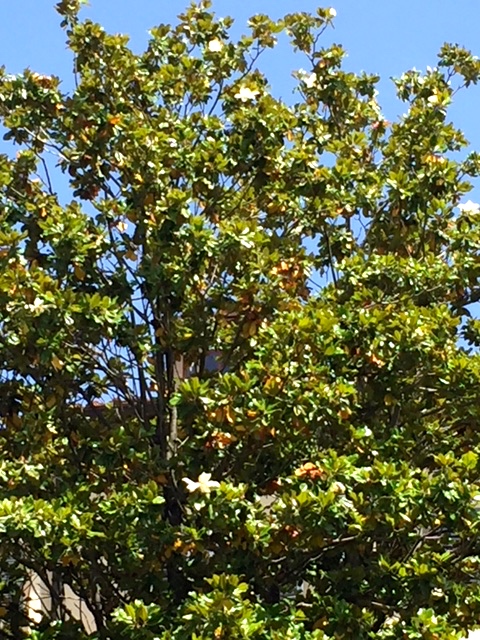
Last weekend I was in the lovely garden behind the Palazzo Guicciardini, and this beautiful speciman was putting on a pretty show.  My pictures, unfortunately, do not capture the majesty or the beauty of the big white blossoms, but I hope you get the picture.  Look at the top section in this picture below and you will see some of the white blooms.

IMG_9482

Another closer view:

IMG_9484


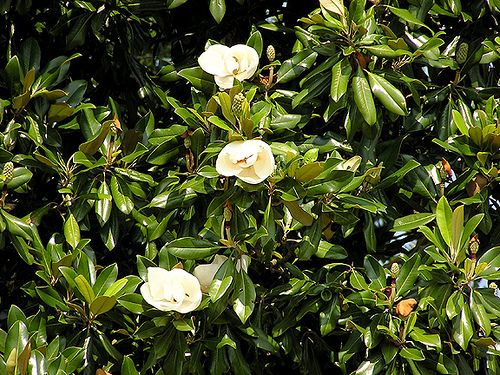
Here’s a view I found on the internet to better show the white blooms.

c89e99cfe9a5ef23799b1911df9060e1


And yes, the blooms are gorgeous, but even the foliage of this tree is lovely.

fotolia_2803074_XS

Where ironwork meets horticulture

IMG_9546


I make a weekly walk through a lovely residential neighborhood in an outer area of Florence.  You see all Florentines and Italians here.  I’ve never ever seen a tourist in this area, which is kind of amazing if you understand the waves of tourists that swarm this amazing city.

IMG_9538

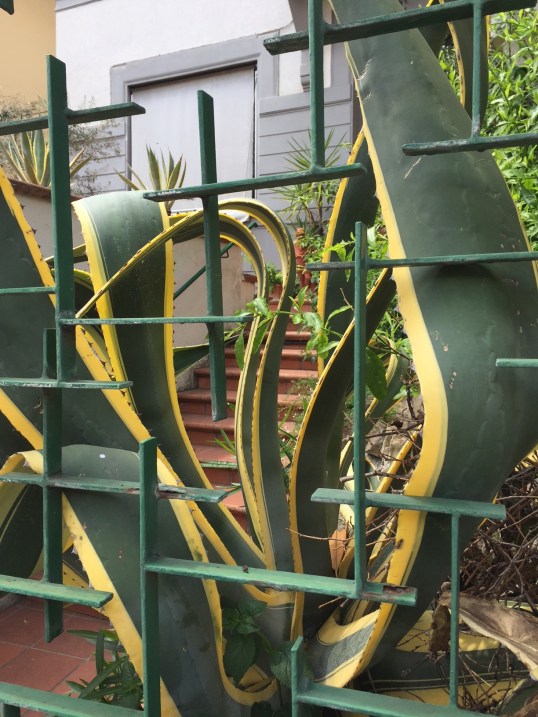
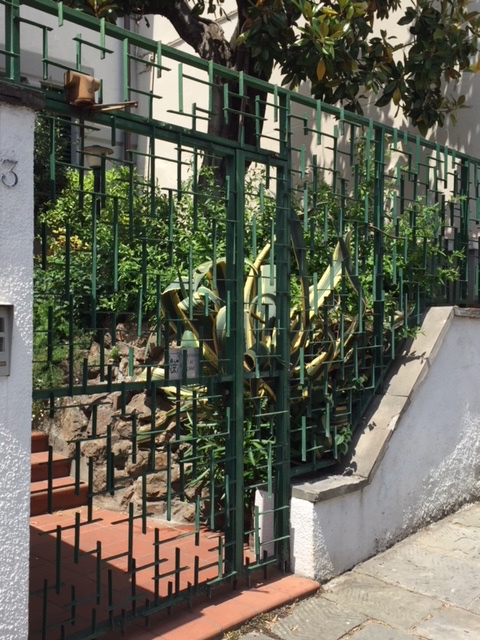
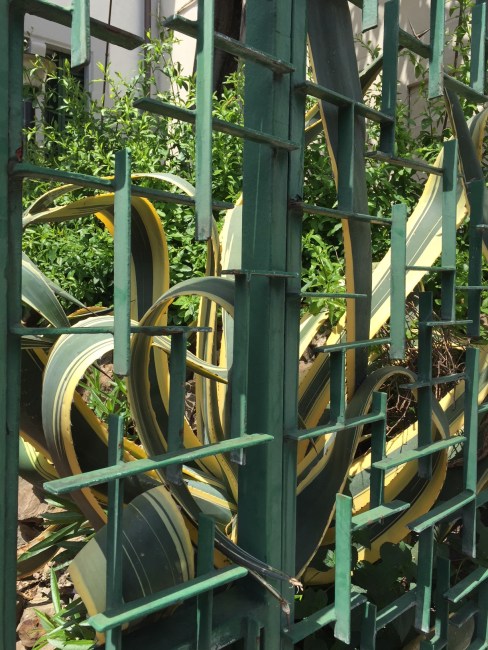
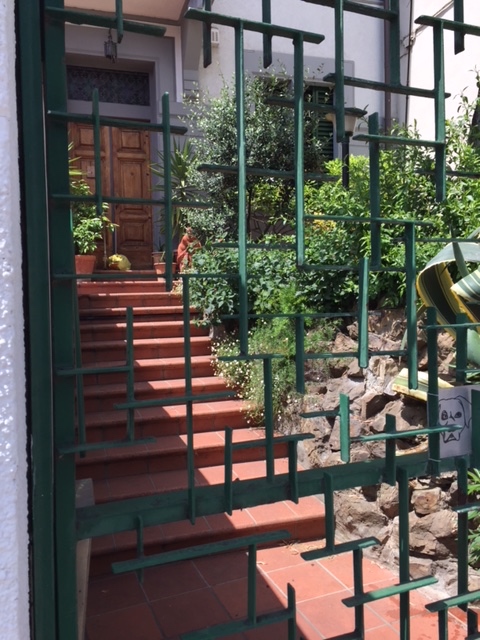
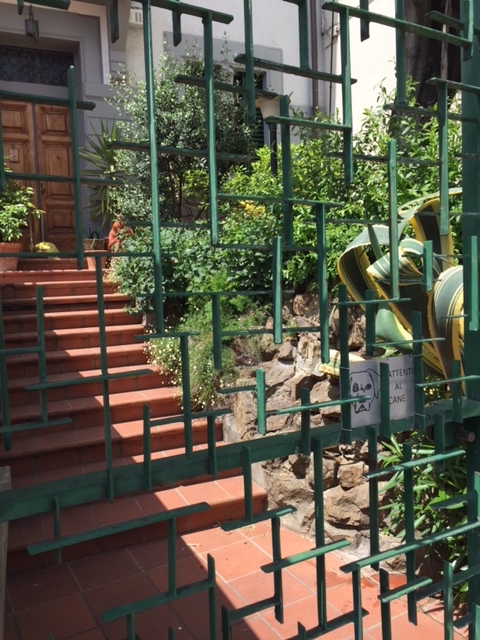
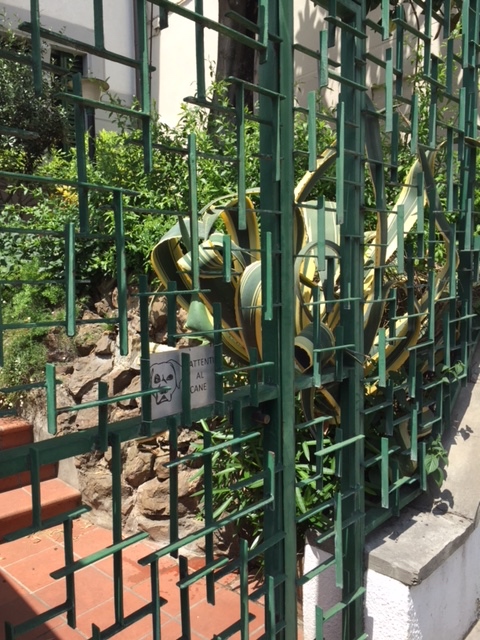
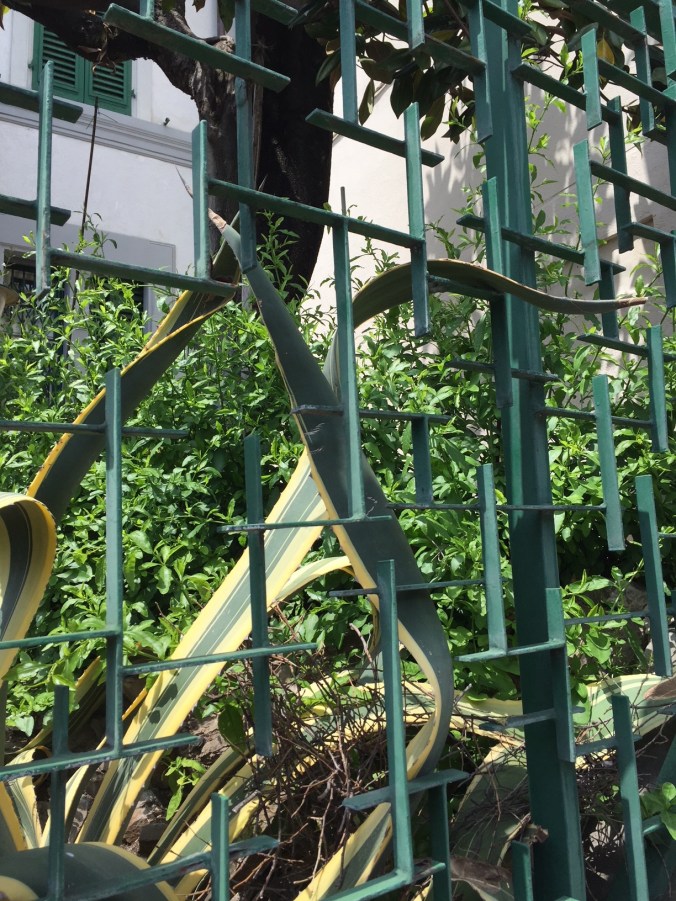
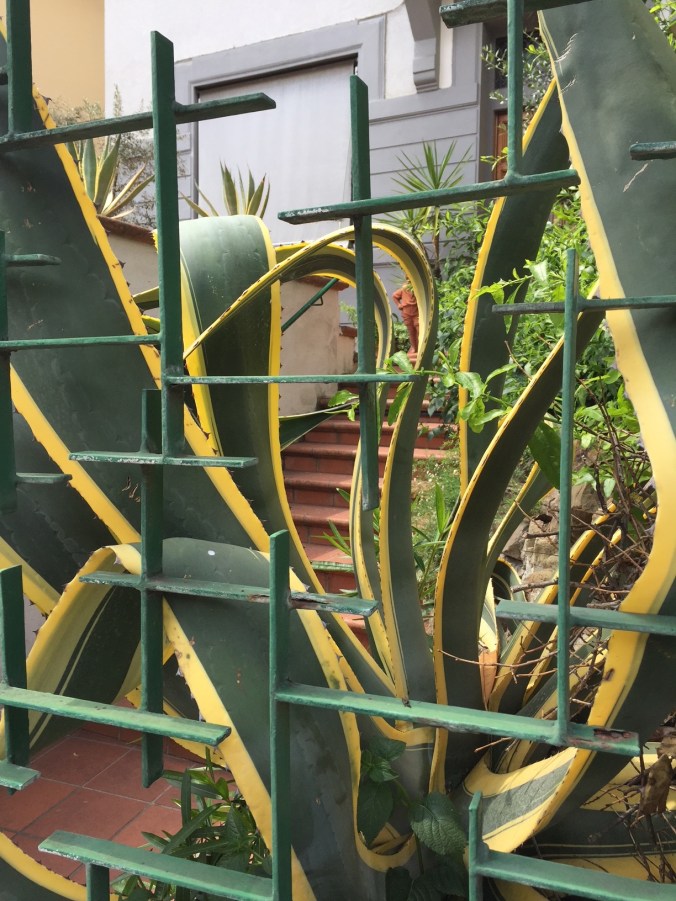
My weekly walk takes me by a very interesting front garden of one of the many villinos in the neighborhood.  The first time I saw this large cactus (I don’t actually know what the plant is, if I’m wrong, please leave a comment!) it looked like a caged animal to me, one that was trying to work its way out of the surrounding metal enclosure.

IMG_9543


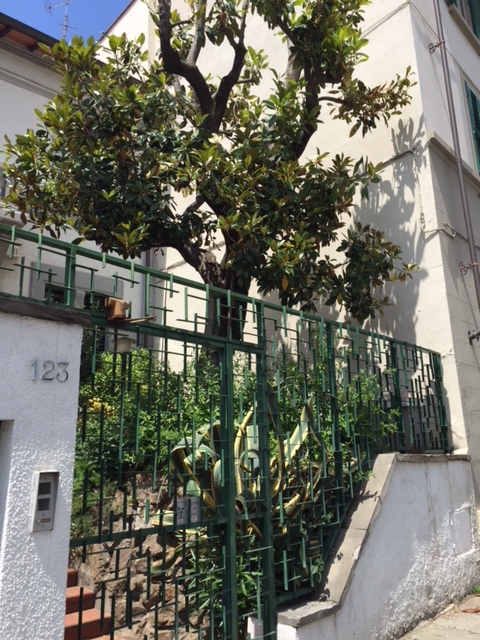
Yesterday I walked through the area again and wanted to take more inclusive pictures to show how this front garden is organized.  Here they are:

IMG_9539

As you can see, the cactus has a fantastic magnolia tree behind it.


Here is how the entrance to the home is organized and decorated.  Very lovely to my eyes,

IMG_9540


IMG_9541


IMG_9542


And then, here’s that massive plant!  Love it!

IMG_9544IMG_9545IMG_9546

Lorenzo de’ Medici’s sculpture garden

Lorenzo de' Medici and His Artists in the Sculpture Garden


Ottavio Vannini – Michelangelo Showing Lorenzo il Magnifico the Head of a Faun, surrounded by the other sculpture students


Young Michelangelo Carving a Faun's Head


Young Michelangelo Carving a Faun’s head by Emilio Zocchi


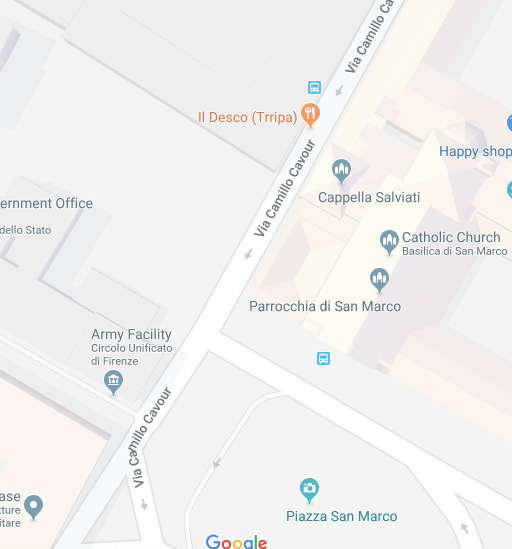
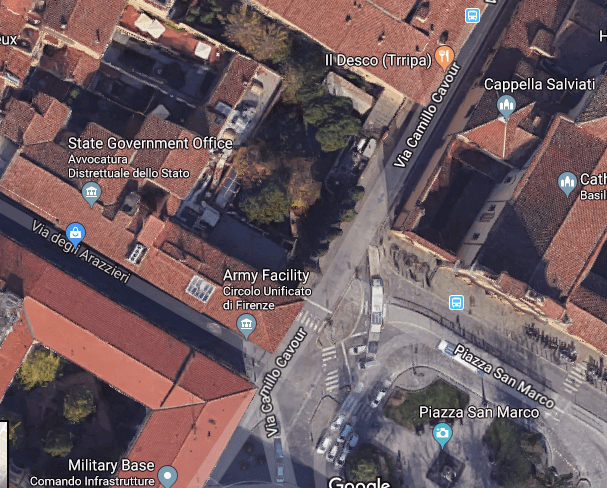
The Piazza San Marco on the former Via Larga, which is now Via Camillo Cavour, was where Lorenzo de’ Medici’s Sculpture Garden was situated in Florence. In the map below, you can get a sense of where the garden was in relationship to Piazza San Marco. The sculpture garden would have been where the words “Army Facility” show below.


Screen Shot 2018-05-29 at 6.34.27 PM


The Google map showing a satellite view, gives an even better sense of this former garden area.  Think away the Army building to the south end of the space, where Via Cavour and Via degli Arazzieri intersect, and you can see that there is still garden area in the site of the former Medici garden.

Screen Shot 2018-05-29 at 6.37.12 PM


Created with the hopes of becoming a great educational institution for studying art, Lorenzo de’ Medici curated a garden full of antique sculptures for artists to come and sketch as part of their artistic practice. Lorenzo also added sleeping and dining quarters so that students could easily live among the work they were studying. Francesco Granacci and Bertoldo di Giovanni are two of the many people to enter through its doors.

The most famous story of Michelangelo’s time in the Garden surrounds Michelangelo’s Faun statue. When Lorenzo saw this statue, he jokingly told Michelangelo that he looked too perfect to be an old faun. Michelangelo than took his drill and knocked out one of the teeth in the mouth of the Faun.

He showed his subtraction to Lorenzo who gained much amusement and pleasure from Michelangelo’s ability to listen and act on his critique.  Although the Faun statue has not been found, the two works of Michelangelo’s attributed to this time period are the Battle of the Centaurs and the Madonna of the Stairs. 


Villa Salviati

IMG_8979

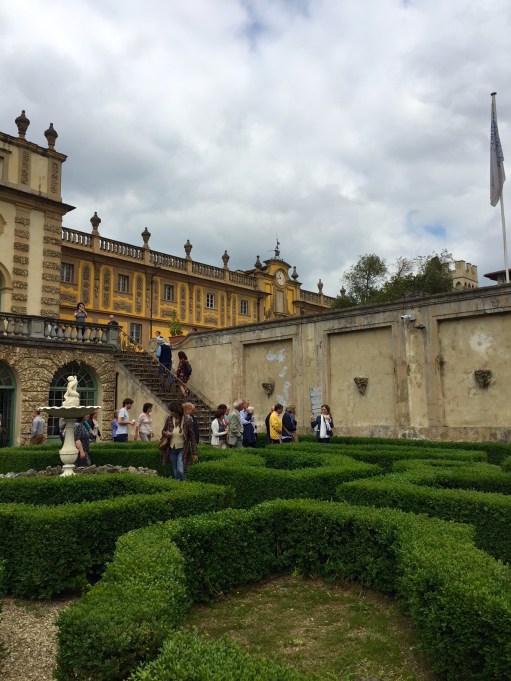
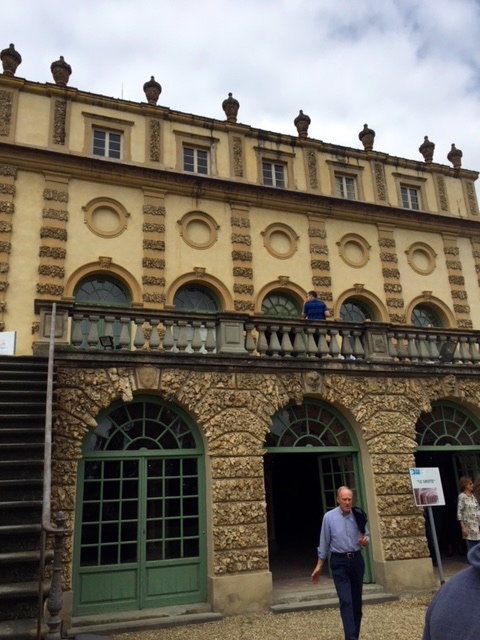
A couple of weekends ago, I had the pleasure of visiting a famous villa in Fiesole, the Villa Saliviati.

IMG_8980

IMG_8978

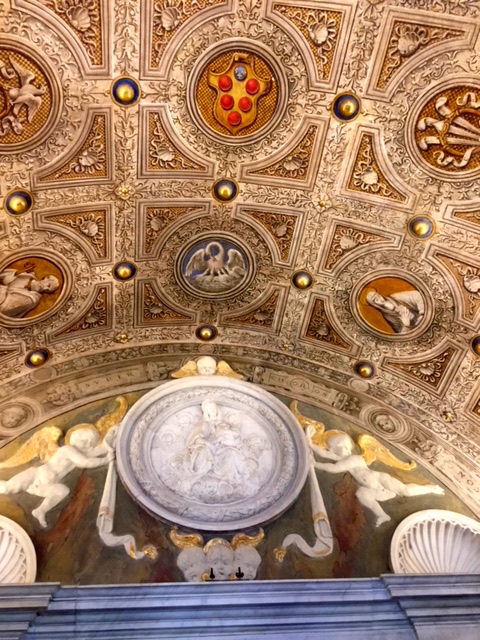
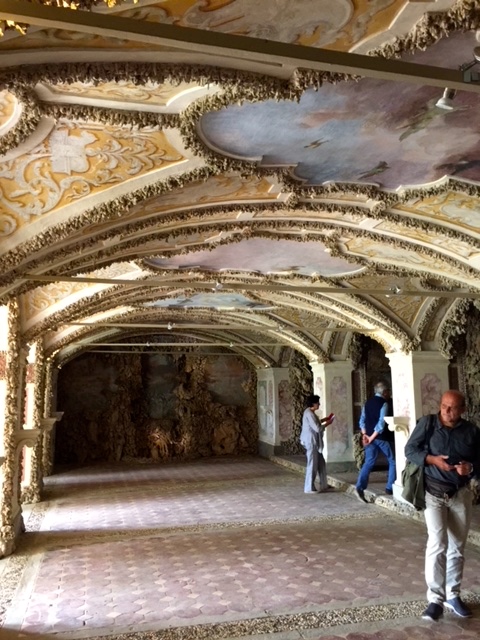
Of course the villa has its own (gorgeous) chapel; here is a detail of the ceiling:

IMG_8965


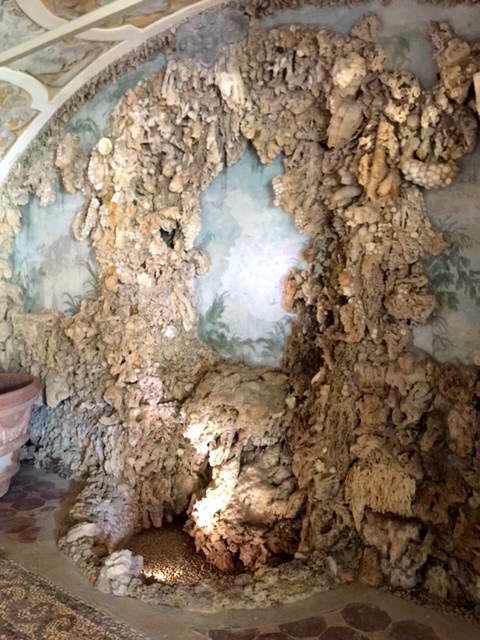
And the villa also has a grotto:

IMG_8972IMG_8973


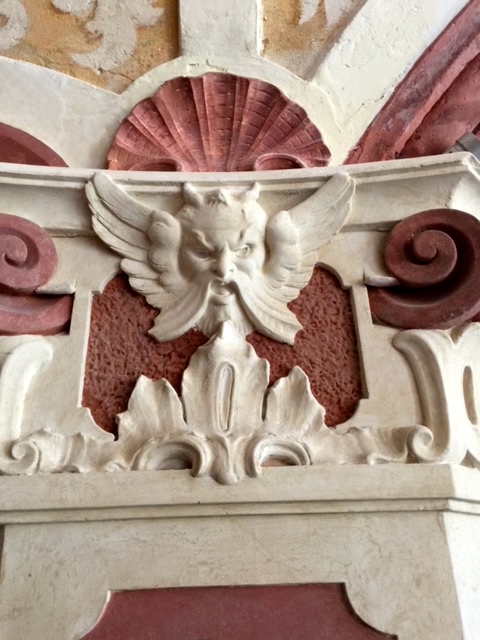
There is a lot of interesting interior detailing:

IMG_8971


So, now you’ve seen my pictures, let’s get some info from Wiki on the Villa:
From Wikipedia, the free encyclopedia.

History [ edit | wikitesto change ]

In the 14th century, the castle of the Montegonzi was built on this property land already belonged to the Del Palagio. In 1445, Arcangelo Montegonzi sold it to Alamanno Salviati , the man who introduced the cultivation of salamanna and jasmine grapesin Tuscany.


Alamanno commissioned Mielcozzian workers to reduce the castle to a villa, with a garden and woods . In 1490, the nephews of Alamanno, dividing their uncle’s assets, and gave the villa to Jacopo, who was related to Lorenzo de ‘Medici.


In 1493, new, considerable renovations were undertaken, to which perhaps Giuliano da Sangallo took part and which lasted about a decade.


Giovan Francesco Rustici also took part in the works. Between 1522 and 1526 he created for the villa a series of terracotta roundels with mythological subjects (such as Apollo and Marsyas or Jupiter and Bellerophon ).

Today the Villa’s  Limonaia is the the headquarters of the Historical Archives of the European Union.

In 1529, the house was sacked by the anti-cult faction and between 1568 and 1583 Alamanno di Jacopo Salviati and his son Jacopo further enlarged and embellished the villa, with the gardens ( 15701579 ) and the buildings that border the northern border and create a scenic backdrop connected to the villa.

New Year’s eve, 1638, was an event to remember. That evening, in this villa, the severed head of the lover of Caterina Canacci, was brought to the villa, hidden under the linen that the wife of Salviati, Veronica Cybo, sent him weekly.

The villa then passed to the AldobrandiniBorghese and on December 30th 1844 it was bought “with a closed gate” (ie with all the furnishings) from the Englishman Arturo Vansittard.

Then came the tenor Giovanni Matteo De Candia aka Mario, who lived there with his wife, the soprano Giulia Grisi , the Swedish banker Gustave Hagerman and finally, in 1901, the Turri.

The grotto: 

During the WWII, the grotto was used as the post of an allied command: Lensi Orlandi recounted the memory of nocturnal visits of “kind and rich Florentine, often mature matrons”, who “crossed the threshold of those rooms to give honor to the admired winners” [2 ] .

There followed a long semi-abandonment, in which the villa was not accessible even to scholars (he visited Lensi-Orlandi in 1950, but could not Harold Acton in 1973 ).

In 2000 the monumental complex, together with its gardens, was purchased by the Italian Government to be destined for the European University Institute , which made it the seat of the Historical Archives of the European Union ; one can mention, among the various documents contained in them, the personal papers of the founding fathers, such as Alcide De Gasperi , Paul-Henri Spaak , Altiero Spinelli and Ernesto Rossi .

The end of the renovations took place in October 2009 and on December 17, 2009 the President of the Republic Giorgio Napolitanoinaugurated the Historical Archives of the European Union .

This villa was in communication with Villa Emilia (which was higher up) – which in ancient times was a convent of Cistercian nuns suppressed in 1453 – through an underground gallery : hence the other name with which the villa is known, “del Ponte at the Badia “.

Architecture [ edit | wikitesto change ]

The courtyard

The main body of the villa reveals its military origins, especially in the two crenellated turrets, in the corner, and in the crowning with the walkway on corbels , very similar, for example, to that of the villa of Careggi . It is made up of two adjacent buildings, but with similar architectural features: the east one is more massive and tall, the west one is of smaller volume and height.

The building is arranged around the central courtyard, portico on three sides with columns in pietra serena with Corinthian capitals ;the entablature towards the inside is decorated with graffito friezes, with the rounds of the Rustici inserted into this strip in correspondence with the round arches.

The interiors are often covered by vaulted , barrel and cross vaults .

Gardens [ edit | wikitesto change ]

The gardens

You get to the south facing of the villa through a long cypress avenue that once led to the Via Faentina and that after the construction of the railway was modified, creating a passage on it.

The Italian garden , in front of the villa, is built on three terraces at different levels and, although it is being restored, it is made up of geometric flower beds in boxwood with flowery essences. The property is then surrounded by a large English park , where there are, among other things, a bamboo grove, two ponds and, scattered here and there, various items of furniture, such as statues, temples, caves, fountains, pavilions and more.

Villa Salviati , or villa of the Ponte alla Badia , is located along the homonymous street near via Bolognese in Florence , [1]


When I grow up…

I want to live here, in Florence:

IMG_9421IMG_9422


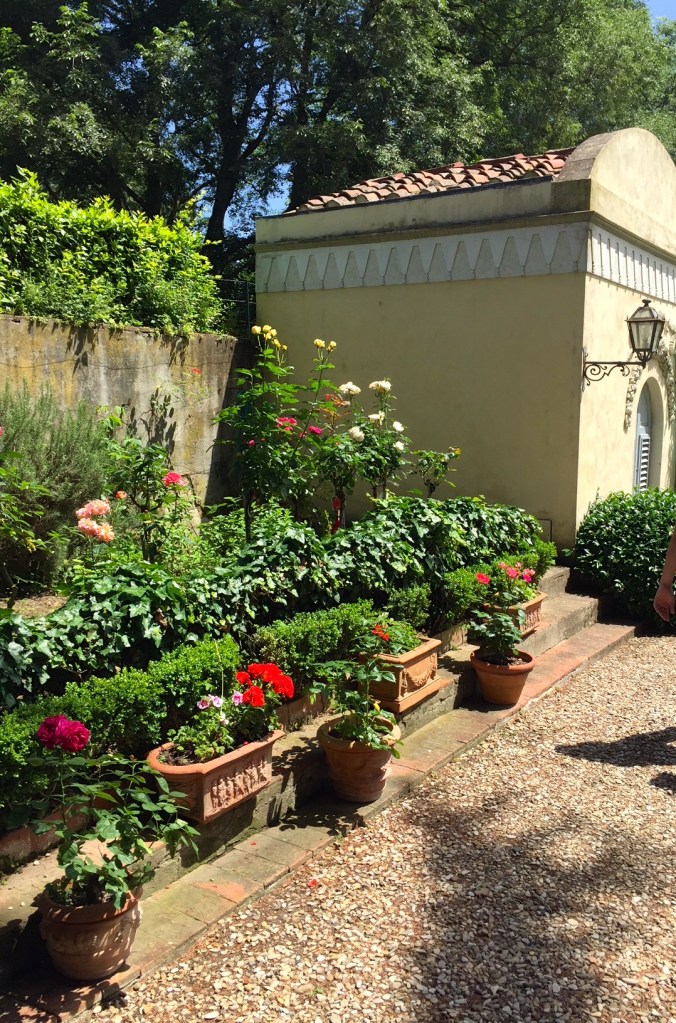
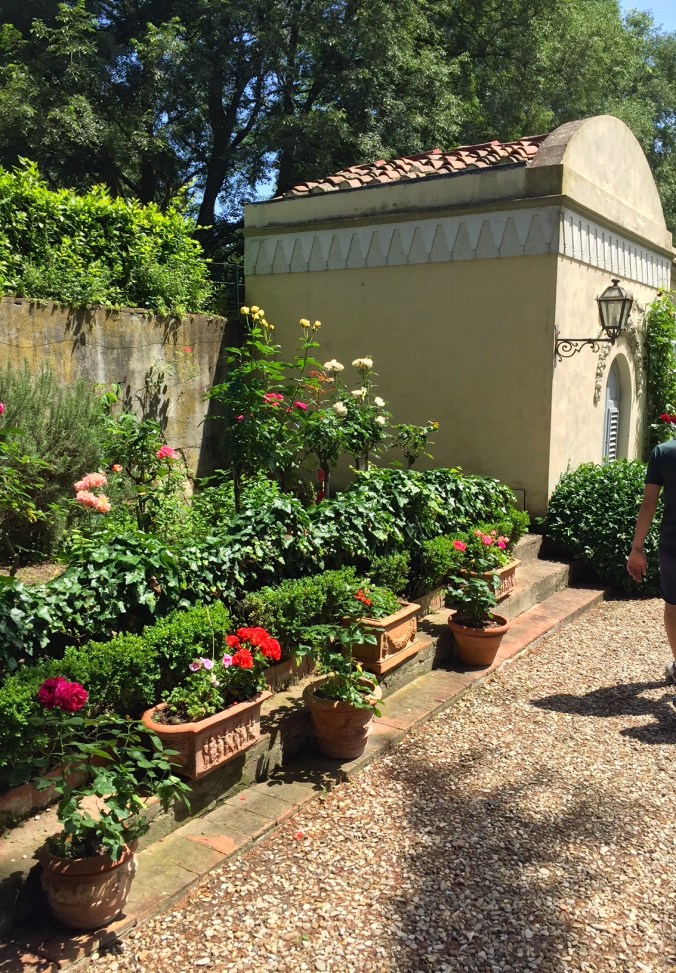
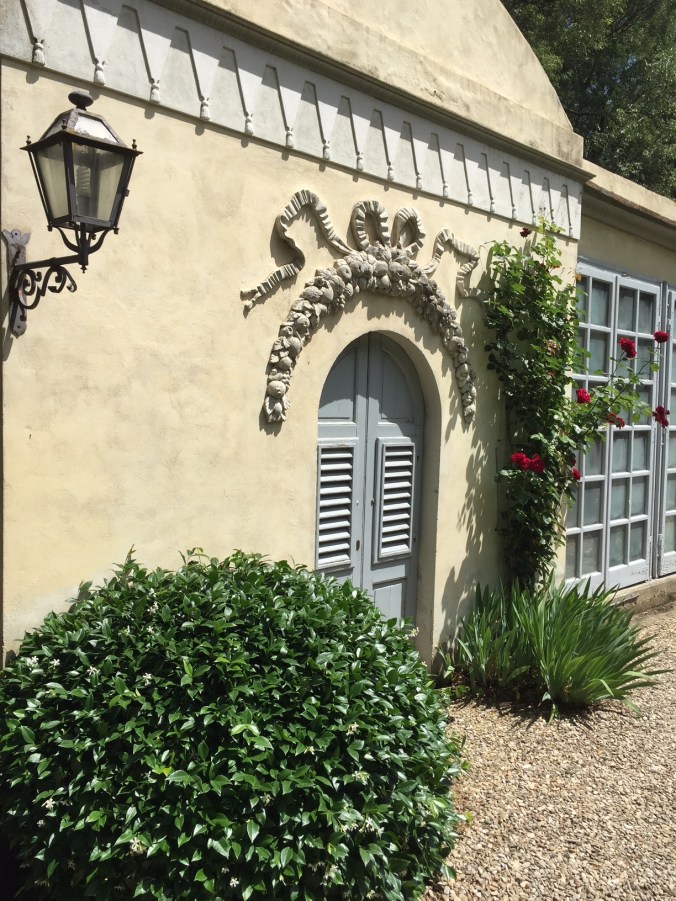
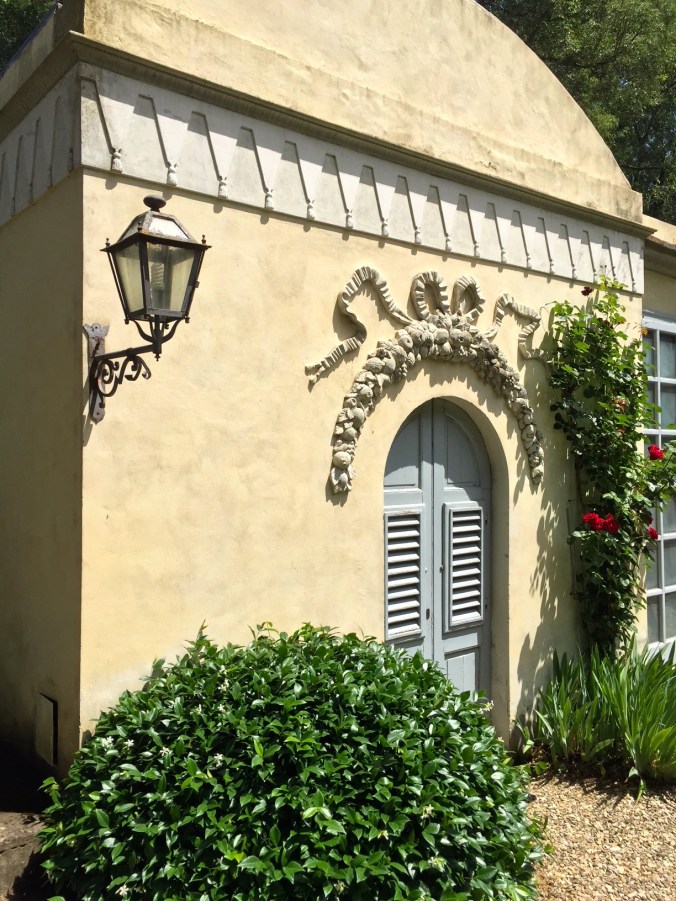
Or, maybe I’ll live here, which is right next door:

IMG_9405IMG_9406IMG_9407IMG_9408IMG_9410

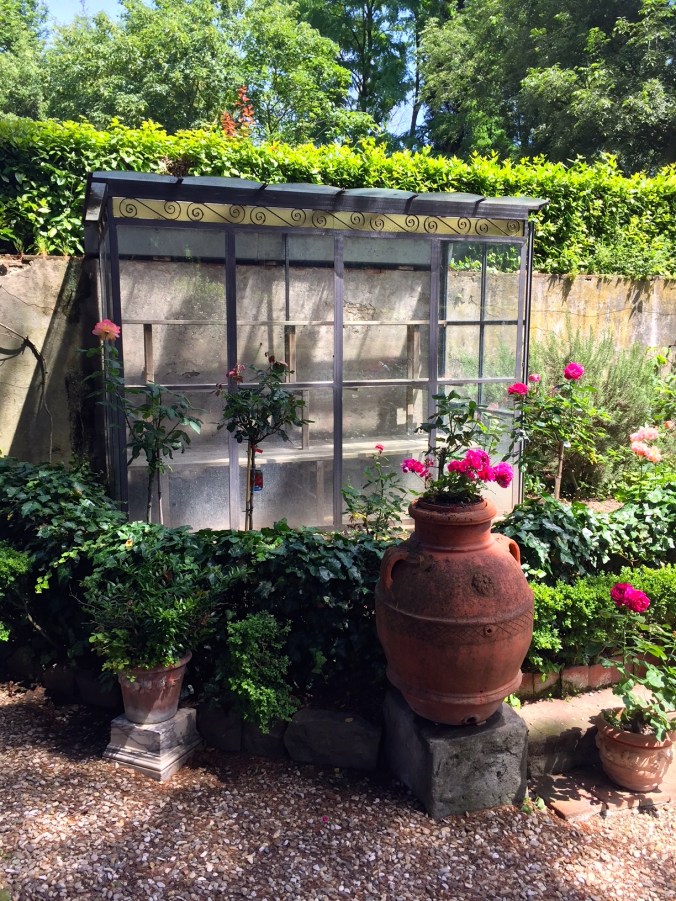
Yes, I think I’ll choose the 2nd one, because it has a fantastic glass house and room to garden right next to it:

IMG_9404


If I can live in Florence, in one of these 2 neighboring houses, I think I could just spend my days reading and writing and gardening and listening to the birds, inhaling the roses and jasmine. It looks to me like paradise.

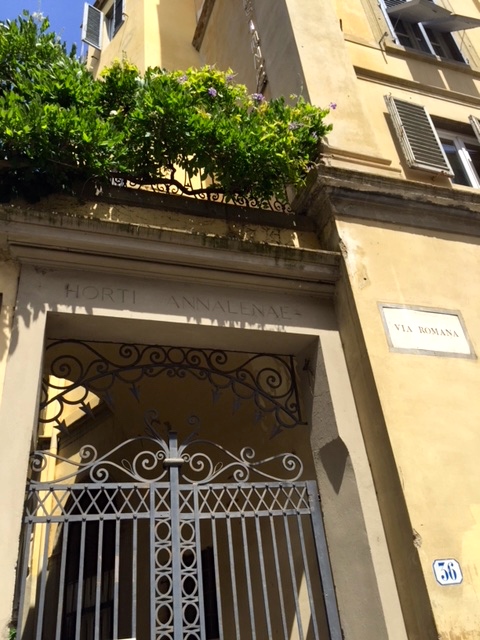
And, lest I forget where I found this place, which could happen because every day brings new wonders and it is hard to keep track of all this splendid stuff:

IMG_9457


Jasmine

Aka gelsomino in italiano.

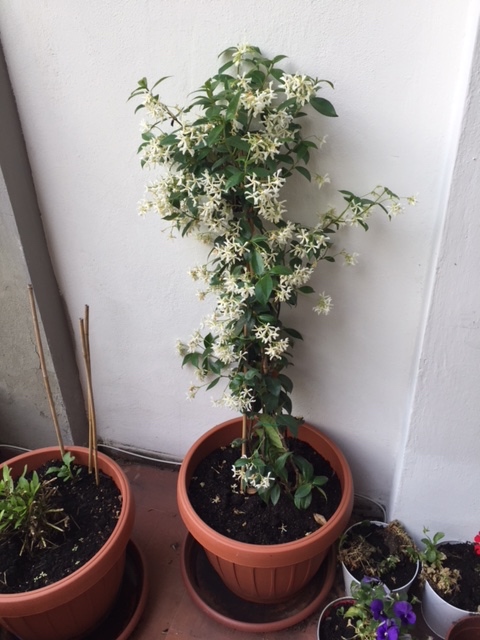
In any language, I love this hardy plant!  Below is my new pot filled with this very fragrant vining shrub.

IMG_8891


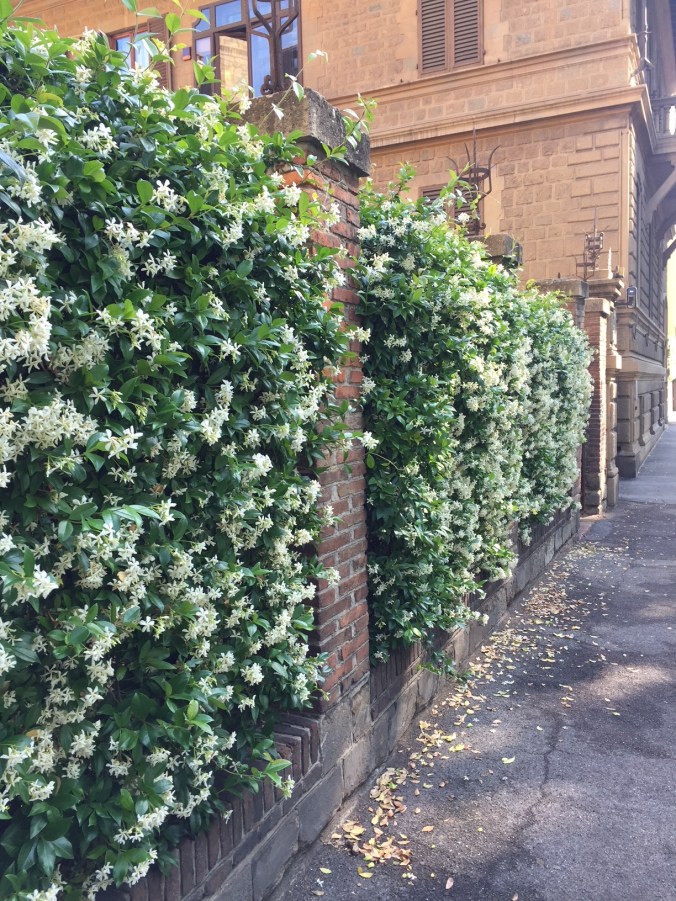
And, here is gelsomino growing next door to my building:  wow, I can’t wait for mine to grow!  Just walking down the street near these flowers is like being in a garden!

IMG_9221IMG_9220IMG_9222