Ognissanti, Firenze

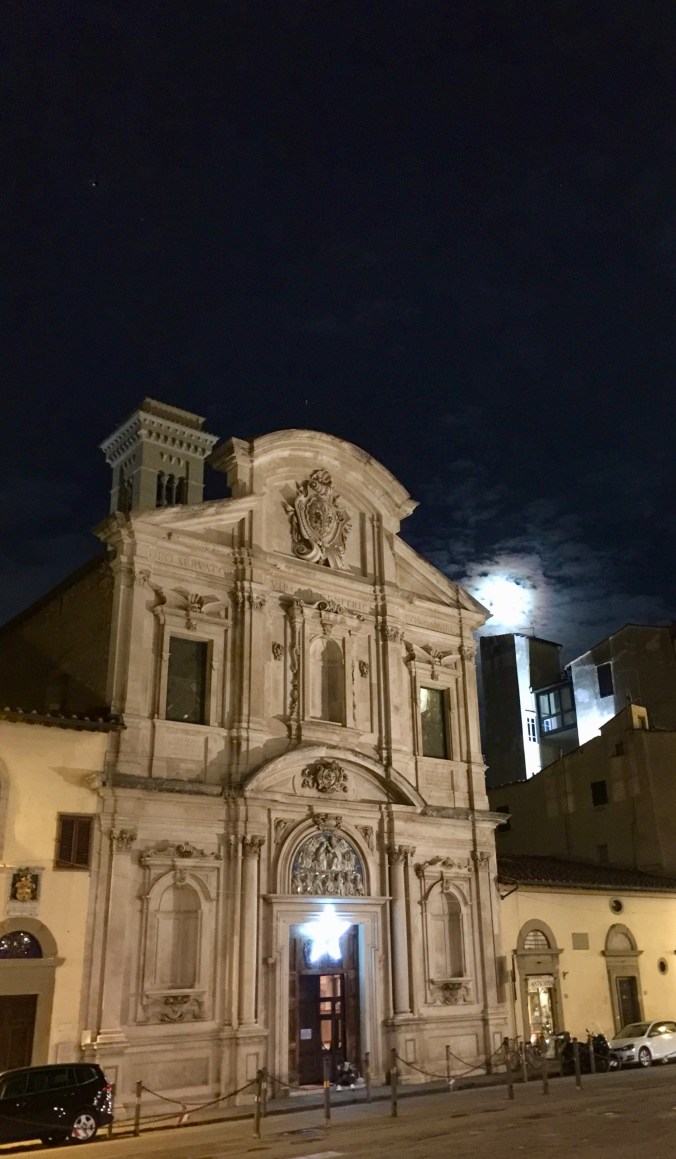
The moon shone brightly last night (which was Thanksgiving night, in the United States) over the Renaissance city.
fullsizeoutput_674

Earlier today I posted about a concert I once heard at the Franciscan church called Ognissanti.  As luck would have it, I had the chance to spend some time last night admiring the interior of the church when it was beautifully lit up in the early evening.
IMG_3023

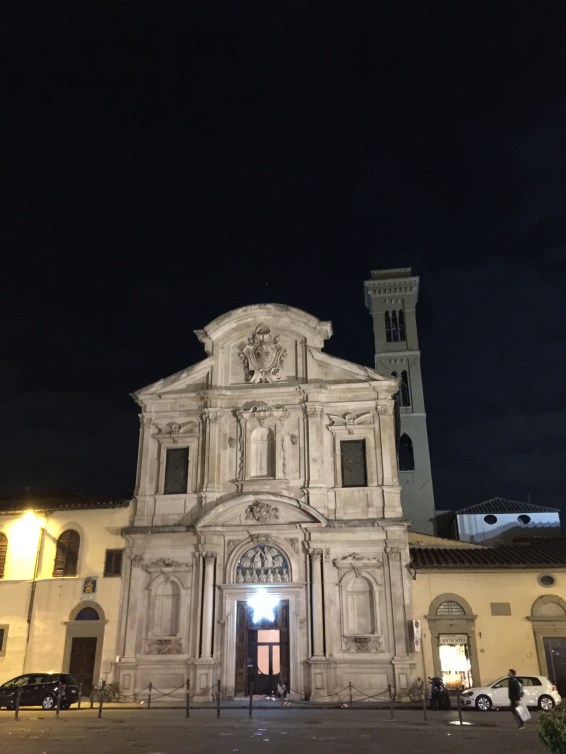
Ognissanti has a harmonious Baroque facade, as seen from the piazza that separates it from the Arno river. The chiesa was originally built in the 1250s by the Umiliati, but it later became a Franciscan church.  It was renovated c. 1627 in the Baroque style, by architect Bartolomeo Pettirossi.

Here’s how it looks in the daytime:

ognissanti700

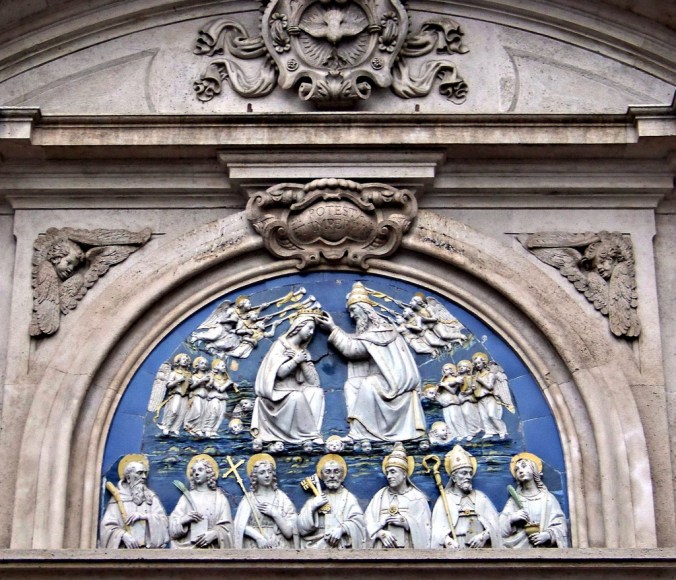
In 1637 the church was given this façade, based up designs by Matteo Nigetti. Fortunately, the glazed terracotta lunette depicting the Coronation of the Virgin and placed over the central doorway was conserved. While the lunette resembles the work of Luca Della Robbia, it is now attributed to Benedetto Buglioni. Buglioni was almost the only artist working in the glazed terra-cotta style made famous by the Della Robbia workshop after that enterprise ended.
5171953494_dab769d8cb_b

Ognissanti was among the first examples of Baroque architecture to penetrate this Renaissance city. Its two orders of pilasters enclose niches and windows with elaborate cornices. The campanile, of  late 13th and early 14th-century construction, sits back from the front of the church, on the east side.

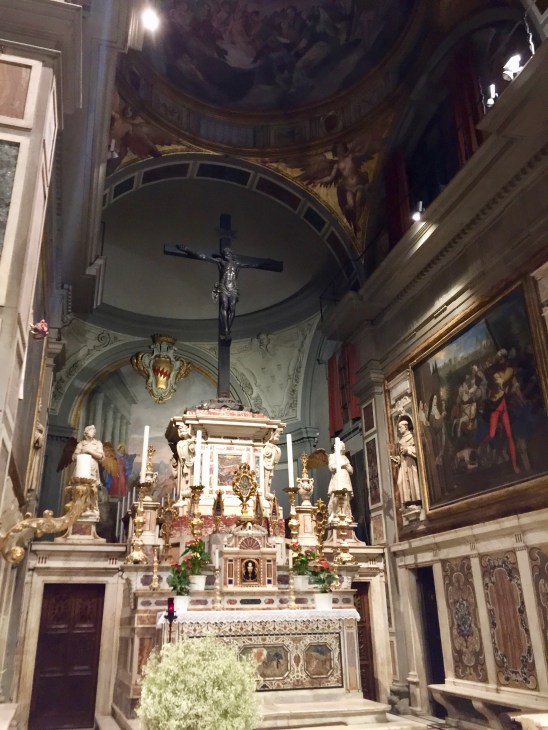
The church’s interior is equally grand and richly ornamented.  It received the same Baroque style remodeling as the exterior in the early 17th-century, when the apse was rebuilt with a pietre dure high altar and, later, in 1770, the incredible sotto in su perspective painting was added to the vaulted nave ceiling.

fullsizeoutput_68a

fullsizeoutput_679

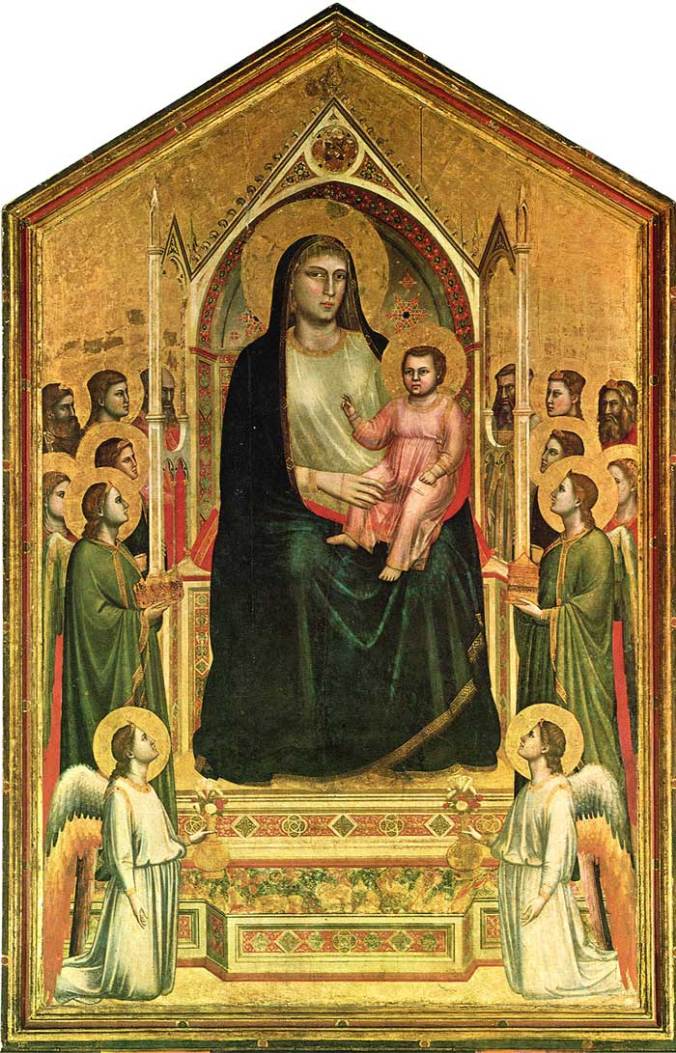
To start with the perhaps the most important aspect of this venerated church, we turn to Giotto’s celebrated Madonna and Child with Angels (c. 1310), which was painted for the high altar of this church.
ognissantimadonna700

This outstanding painting by Giotto was completed in Florence. Today, if you wish to see the masterpiece, you will find it in the collection of the Uffizi.  Giotto’s capolavoro is not only one of the finest works in the Uffizi, but it shows the exact moment when painting in Italy turned from Gothic to a proto-Renaissance style.
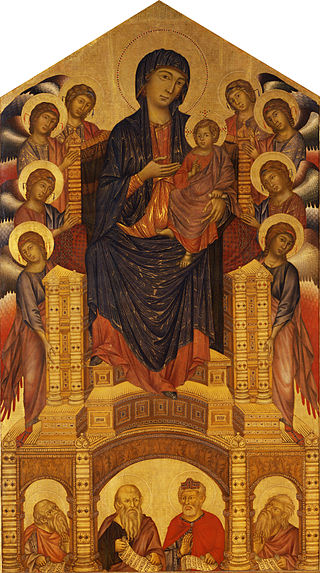
Cimabue_-_Maestà_di_Santa_Trinita_-_Google_Art_Project  In the Uffizi galleries, Cimabue’s celebrated altarpiece (above), which was created for the same type of setting and dealing with the same subject matter as Giotto’s altarpiece, one can witness the changes in artistic approach.

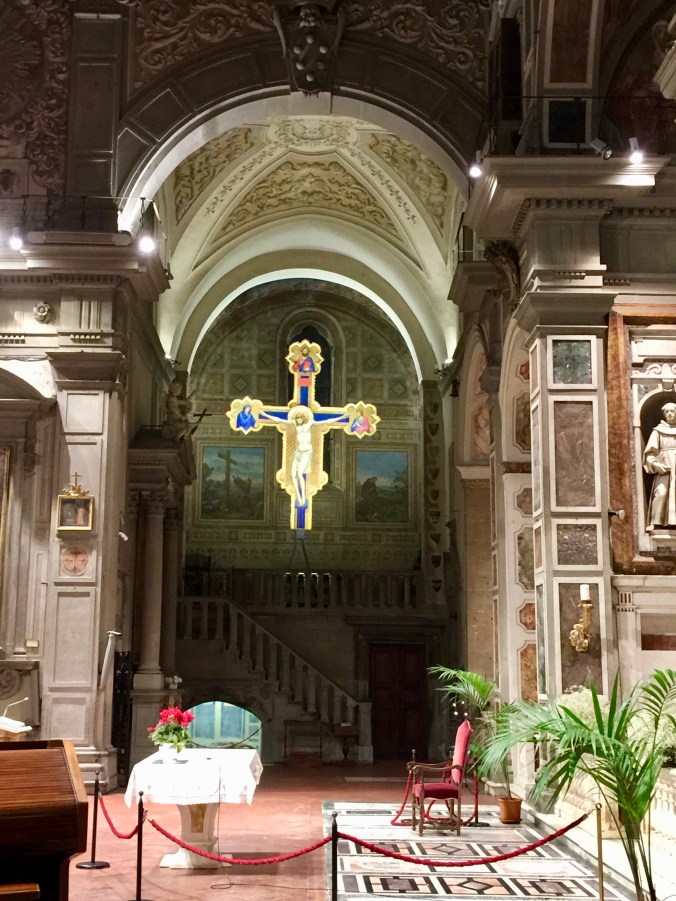
But, although the Ognissanti is missing its famous and beautiful altarpiece, it is fortunate to have another work now attributed by Italian scholars to Giotto: the large crucifixion. Giotto painted this large-scale (15 feet tall) cross c. 1315 for the Umilati friars who then held this church.

fullsizeoutput_67bfullsizeoutput_683

The Crucifixion is displayed under the Medici coat of arms in the left transept of the church.
fullsizeoutput_68e

Only recently was this Crucifixion recognized as a work by Giotto. For decades it sat, unappreciated, in the storerooms of Ognissanti. There was a rumor that it was by Giotto, but no one was certain.  But then, it was restored!

The restoration of Giotto’s Ognissanti Crucifix was started by Paola Bracco in 2002. The majestic tempera on panel, now believed to have been painted by Giotto and his workshop around 1310-1320, had been sadly neglected for centuries. Kept in the sacristy of the church of Ognissanti, it was rarely seen and the vigorous modelling of the flesh tones of the figures, and the many precious details of the pictorial surface, were hidden by layers of varnish from previous “restorations” and centuries-old grime.

Fortunately, this monumental work is now back in the Florentine church, after a careful 8-year restoration.
crucifixognissanti700

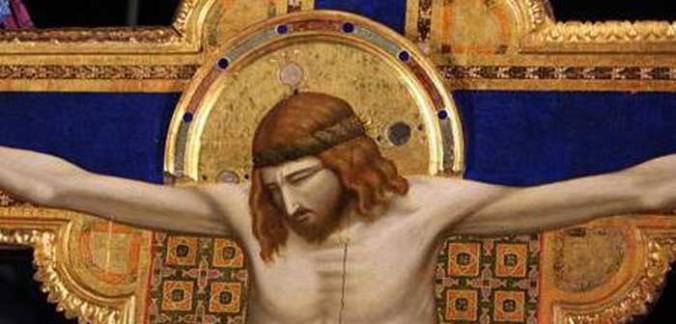
In the Crucifix (painted in egg tempera), Christ is represented as Christus patiens, suffering, about to expire. The tension in the muscles of the arms is treated with delicacy, and the ashen flesh colors are very impressive. The body hangs on a very decorative Cross, an overflowing mosaic of starred crosses, squares and ellipses. The ‘beams’ of the Cross are painted in bright, but deep and intense blue, the precious lapis lazuli inlaid with greater or lesser amounts of lead white, as in the sloping pedestal to which Christ’s feet are pinned (by a single nail). The blue is crossed by thin red lines, cinnabar blood with more purplish glazes. On the forehead are a few drops of “pure red lacquer,” the color of blood, which springs from Christ’s flesh in response to the crown of thorns.

Here are some other fascinating artifacts from Ognissanti:
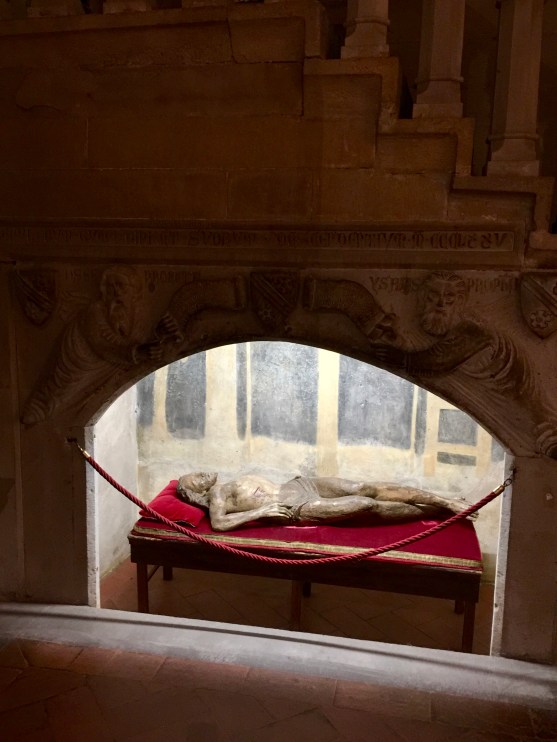
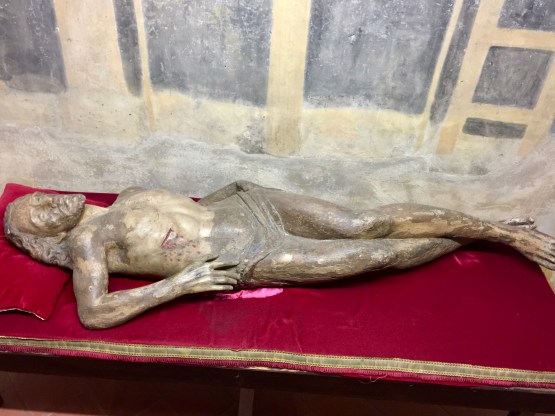
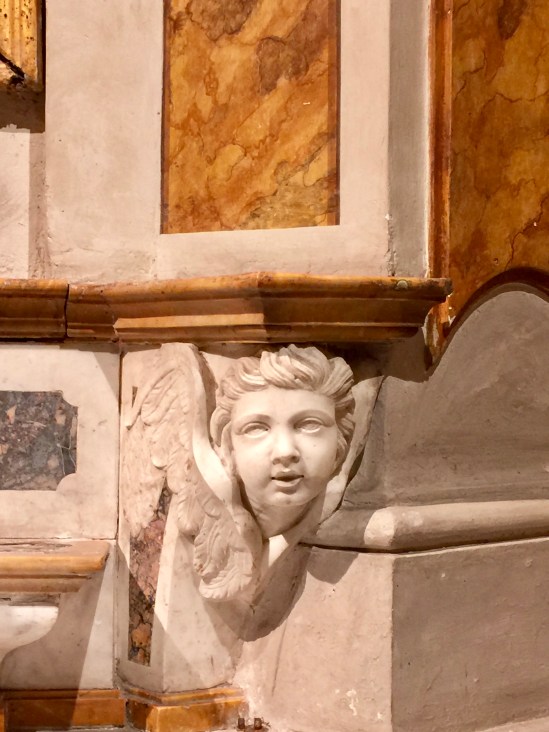
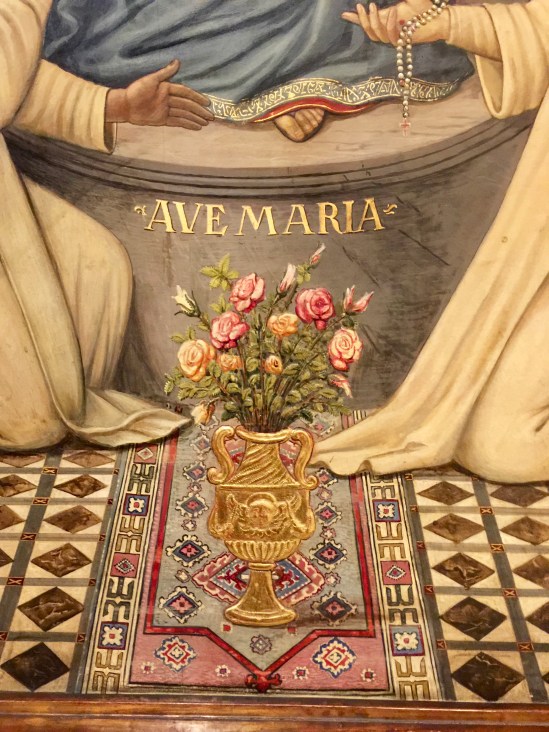
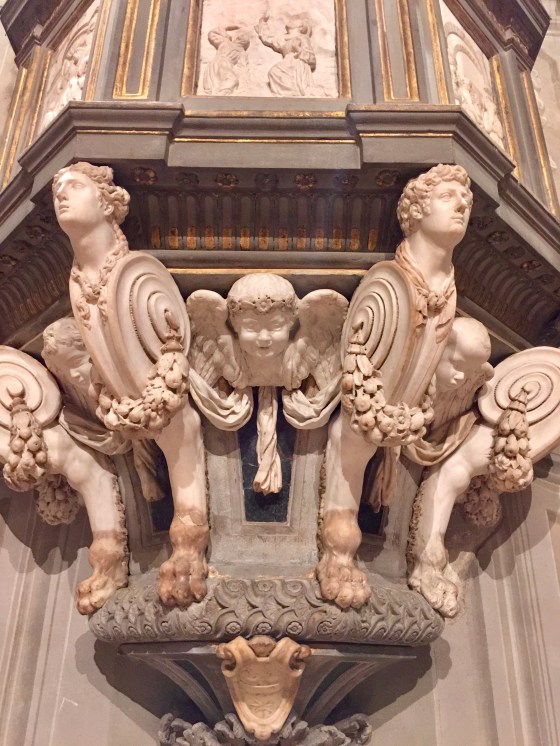
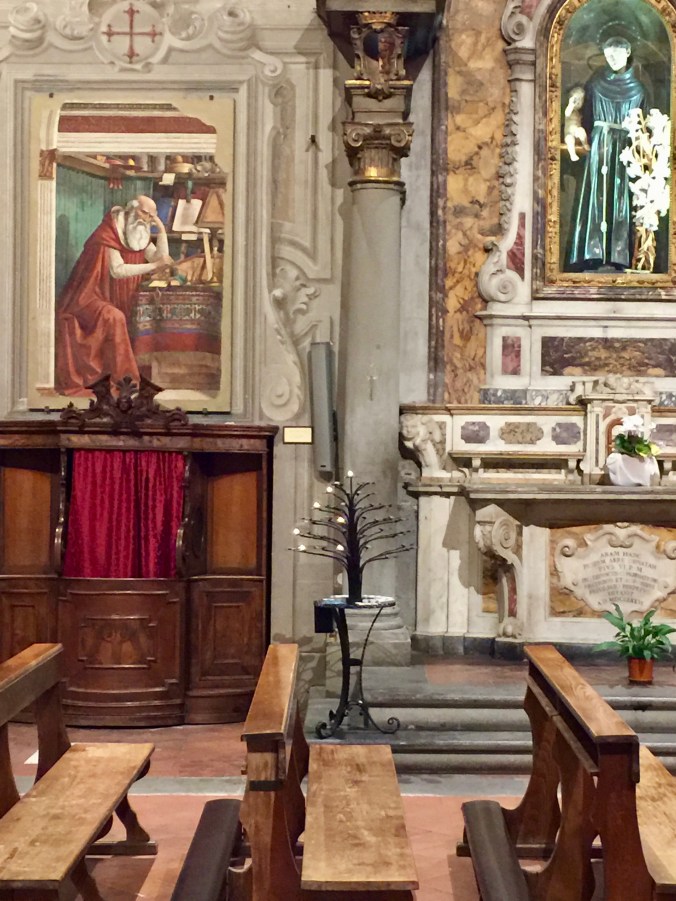
fullsizeoutput_67cfullsizeoutput_680fullsizeoutput_681fullsizeoutput_682fullsizeoutput_684fullsizeoutput_686fullsizeoutput_689fullsizeoutput_68b

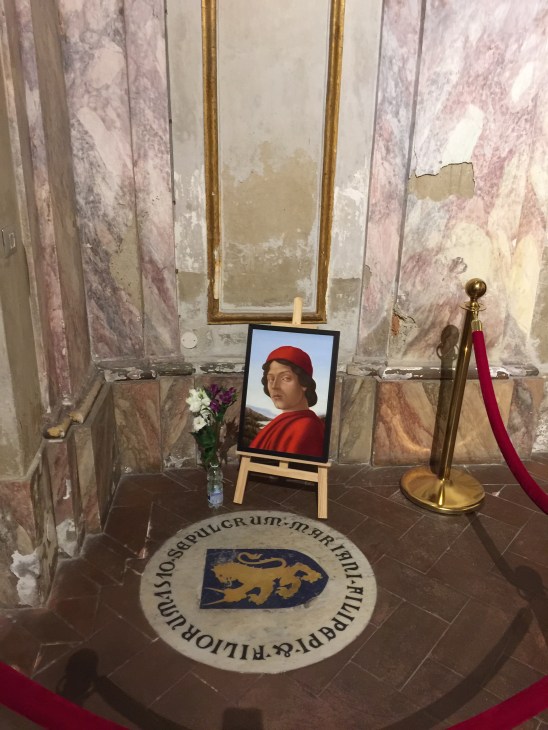
Last night I discovered that Sandro Botticelli is buried within the church, near his beloved Simonetta Vespucci.
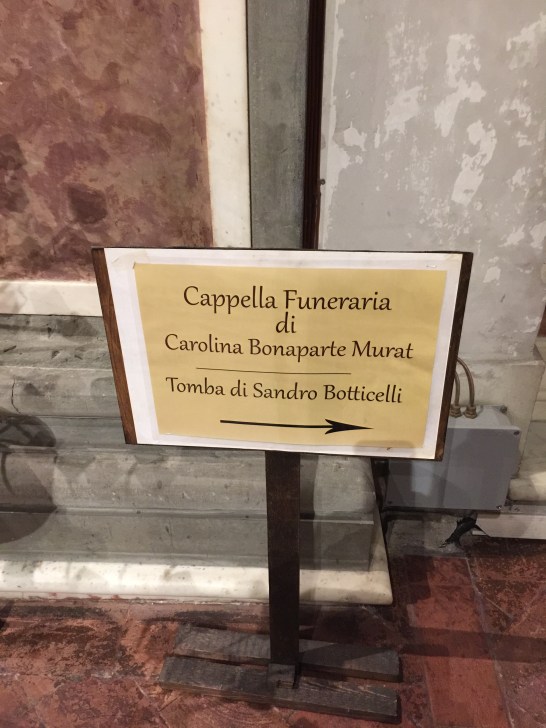
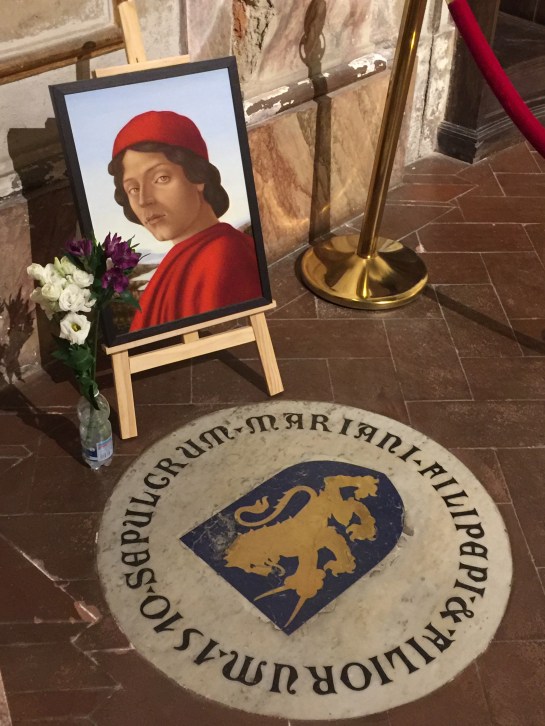
IMG_3047IMG_3049IMG_3051

Botticelli who is buried in the church near his beloved, Simonetta Vespucci.

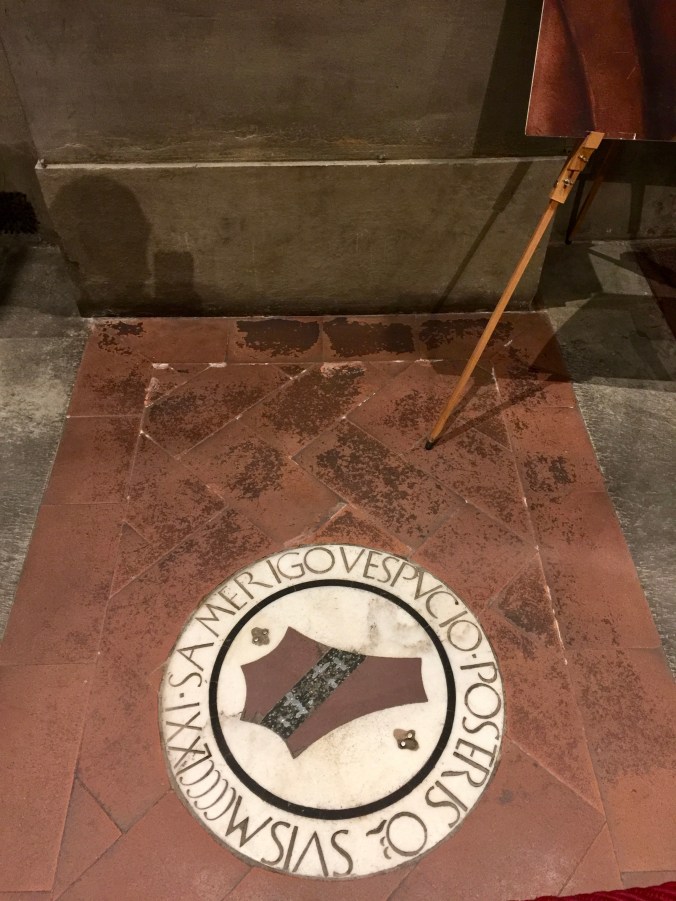
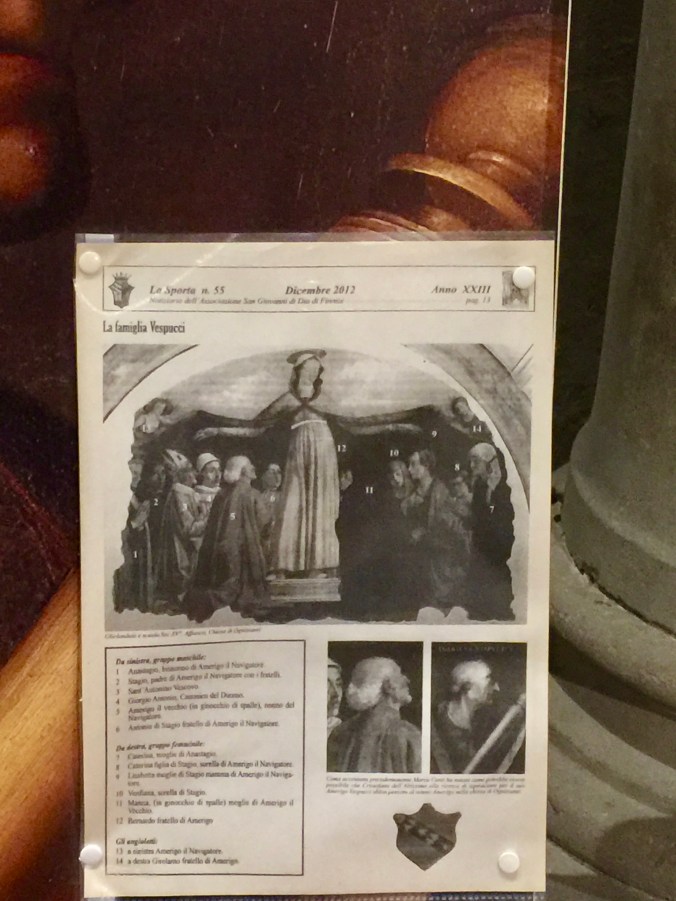
Amerigo Vespucci is also interred here:

fullsizeoutput_695fullsizeoutput_694fullsizeoutput_696

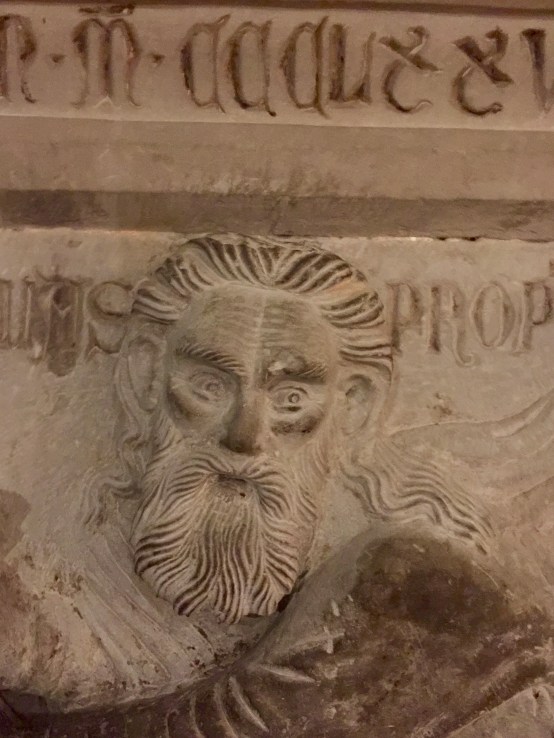
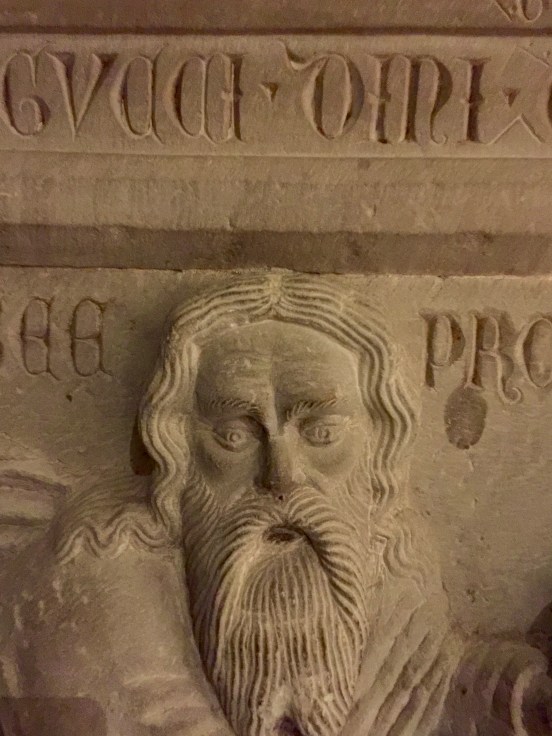
Here’s an unusual funerary monument found within the church.  I am not certain whose head this portrays…
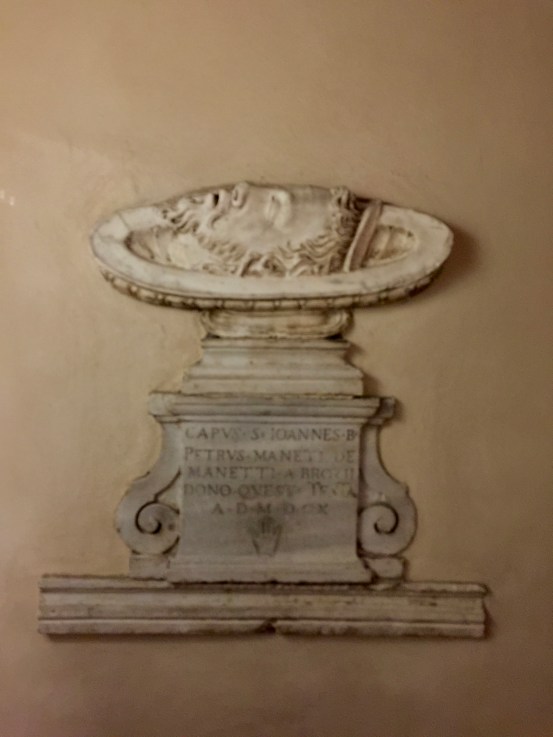
fullsizeoutput_68cfullsizeoutput_690fullsizeoutput_693

And I end this long post with a photo of a significant Neoclassical funerary monument, found within the center of this important church.
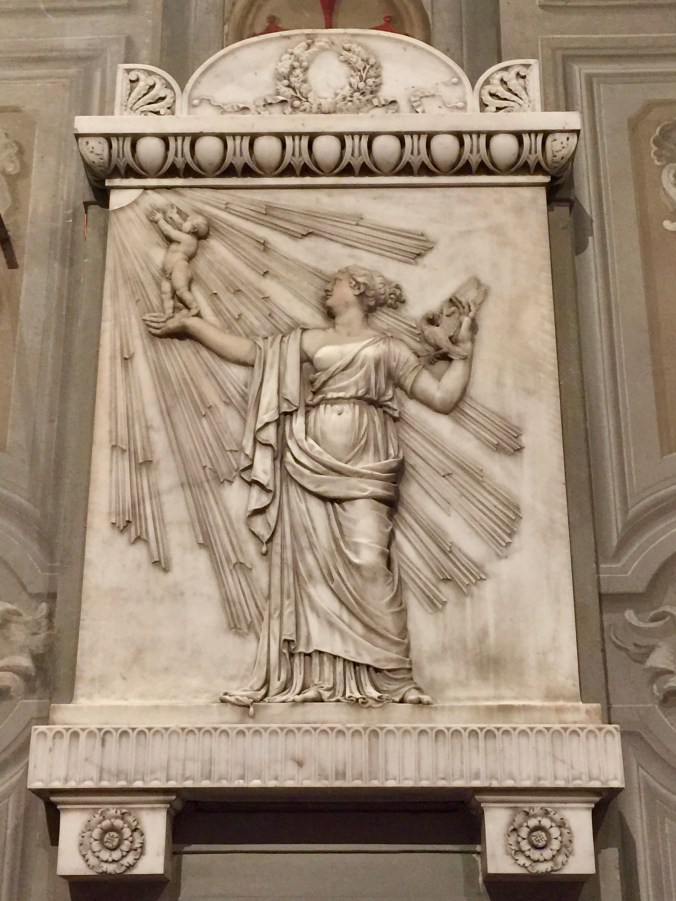
fullsizeoutput_675

Bernini, the film

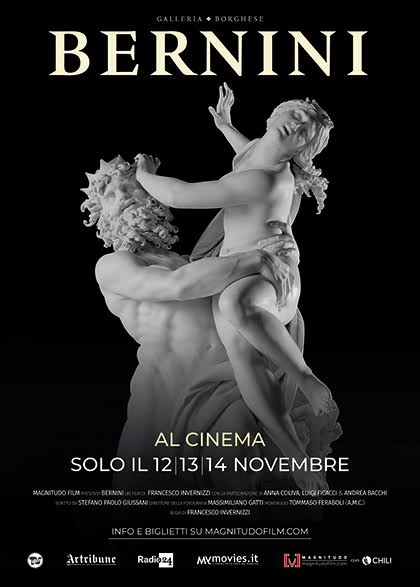
I was fortunate enough to see the newly-released film, Bernini, in the Odeon Theatre in Florence this week.  OMG, it is fantastic.

images
The director of this beautiful guided tour through the Villa Borghese in Rome was directed by Francesco Invernizzi; Anna Coliva, Luigi Ficacci, and Andrea Bacchi are key presenters. Titolo originale: Bernini. Genere Documentario – Italia, 2018.

stagione_900x500

From the movie release, we are informed: La selezione di oltre 60 capolavori in esposizione alla Villa Borghese di Roma è stata definita dagli esperti di arte come il ritorno a casa di Bernini. A cinque secoli dalla nascita dei maestosi gruppi scultorei dell’artista, attraverso riprese inedite ed esclusive, i protagonisti di questa grande Mostra raccontano ed analizzano i dettagli delle opere giunte dai più prestigiosi musei del mondo per questa straordinaria occasione.

The selection of more than 60 masterworks on exhibition at the Villa Borghese in Rome has been defined by experts as a return to the home of Bernini. Five centuries after his  birth, we appreciate the majestic sculptural groups Bernini created, through the unprecedented and exclusive shots. Experts of this great exhibition recount and analyze the infinite details of the sculpture, with Bernini works borrowed from the most prestigious museums in the world for this extraordinary event.

bernini-gian-lorenzo-apollo-everett
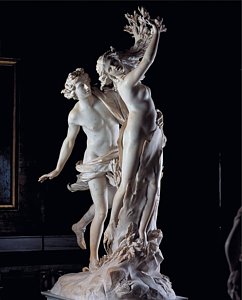
“No artist defined 17th-century Rome more than Gian Lorenzo Bernini did, working under nine popes and leaving an indelible mark on the Eternal City. And there is probably no better place to appreciate his talent and genius than the Borghese Gallery in Rome, the villa — now a museum — built by his first patron, Cardinal Scipione Borghese, where Bernini revealed his talent for capturing tension and drama in stone. But during the remarkable exhibition titled “Bernini,” visiting may be a once-in-a-lifetime experience.” The New York Times

The Neptune Fountain in Florence is disassembled for restoration

Nine bronze statues, depicting nymphs, fauns and satyrs, were removed with a crane and taken to a workshop in via Livorno, where they will be restored by Ires e Nicola Salvioli Restauri. Work on the fountain began in February 2017, using funds donated by the Salvatore Ferragamo fashion house, which is providing 1.5 million euro throughout the project. The bronze statues will be restored not only on the outside but on the inside as well, which has deteriorated substantially due to water and atmospheric agents.


In 1559, Cosimo I de’ Medici held a competition for the creation of the city’s first public fountain, with Bartolomeo Ammannati and his Neptune design eventually taking the prize, judged the best for its clear exaltation of the Grand Duchy of Tuscany’s glorious seafaring achievements. The sculpture was completed in 1565 and inaugurated for the wedding of Francesco I de’ Medici and the Grand Duchess Giovanna d’Austria on December 10 of that year. Close observers might notice that Ammannati used Cosimo I’s features to depict the strapping Neptune rising above the other figures.

http://www.theflorentine.net/news/2018/11/restoration-continues-neptune-fountain/

La melegrana, the pomegranate

This is the season of this beautiful fruit and pomegranates are spilling over the counters in markets and alimentare all over Italy.

45069618_1048206598684155_3602232549109137408_n

In this splendid painting by Botticelli in the Uffizi, we encounter a seasonal fruit, beautifully portrayed. According to the Facebook page of Conosci i luoghi di culto della Toscana:

La melagrana è un frutto tipico di questo periodo dell’anno, in cui tradizionalmente il confine tra il mondo dei vivi e il regno dei morti si assottiglia, l’ombra si impadronisce degli ultimi spazi luminosi e tutti noi iniziamo un cammino di riflessione e ripiegamento verso l’interno. L’involucro della melagrana è come uno scrigno che custodisce qualcosa di molto prezioso: tantissimi chicchi di un color rosso brillante che non può non far pensare al sangue e a tutta la sua simbologia. Frutto sacro a Venere e a Giunone e simbolo del percorso iniziatico di Persefone, la melagrana è spesso raffigurata come attributo delle grandi dee madri, coloro che presiedono al ciclo nascita-vita-morte-resurrezione. Colei che dà la vita, colei che la toglie.

Translated to English: The pomegranate is a typical fruit of this time of year, a time in which the border between the world of the living and the kingdom of the dead is less obvious (i.e. today is All Soul’s Day). The shadows overtake the last of summer and fall’s bright spaces and we all begin a journey of inward reflection. The tough skin of the pomegranate is like a casket that holds something very precious: many grains of a bright red color that make us think of blood and its symbolism. Pomegranate is the fruit sacred to Venus and to Juno and symbol of the journey of Persephone. Moreover, the pomegranate is often portrayed as the attribute of the great mothers, the goddesses who preside over the cycle of birth-life-death-resurrection.


The statue of Dovizia, Firenze

I love to let my mind wander into the distant past, trying to picture the way things might have been.

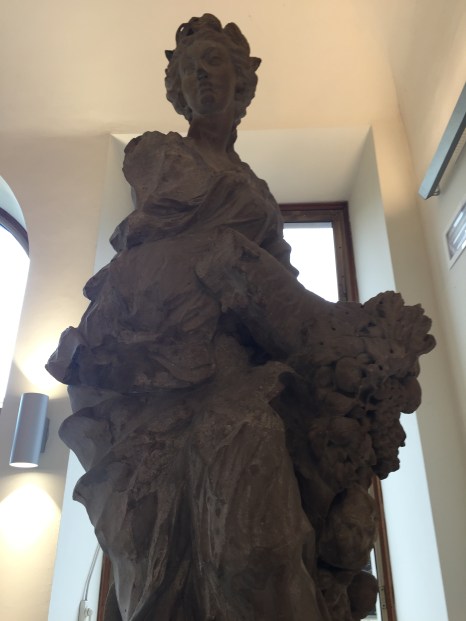
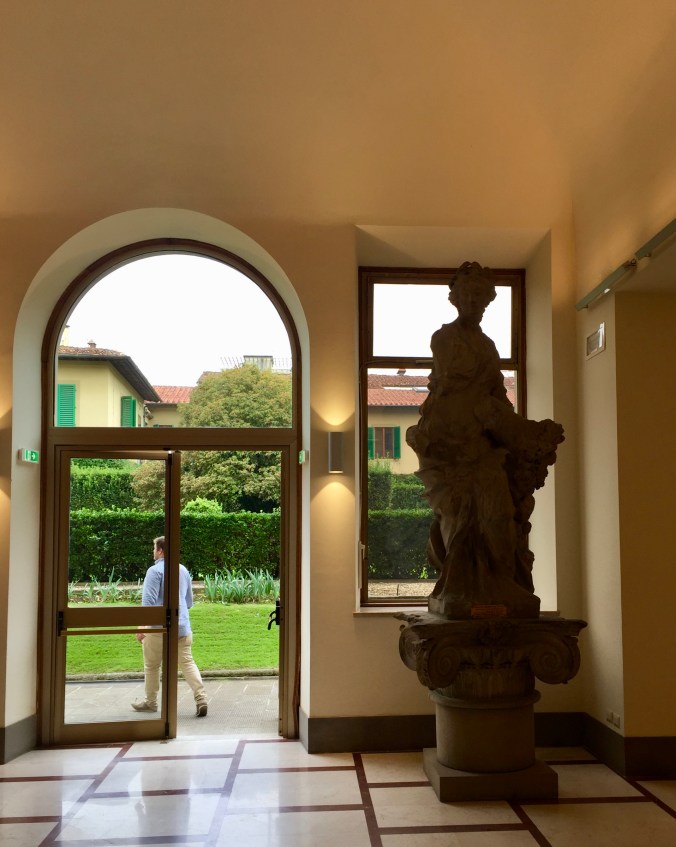
Last week I was invited to visit a show in the beautiful exhibition space of the Fondazione Cassa di Risparmio di Firenze on via Bufalini.  There I bumped into a heroically-sized statue of a somewhat recognisable woman.  “Hey, I know you!” I thought to myself.

IMG_2502

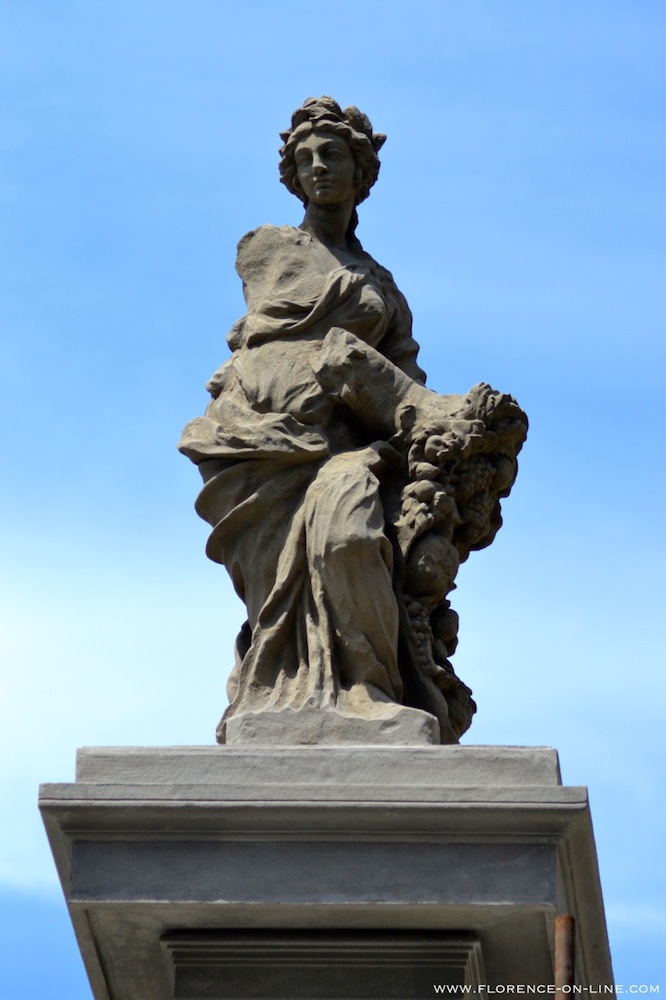
She certainly looked familiar.  I wondered if she was related to one of the four allegorical statues of the seasons occupying the corners of the Ponte Santa Trinita. (Those four statues were done by Pietro Francavilla [Spring], Taddeo Landini [Winter] and Giovanni Caccini [Summer and Autumn] and placed on the bridge in 1608.)

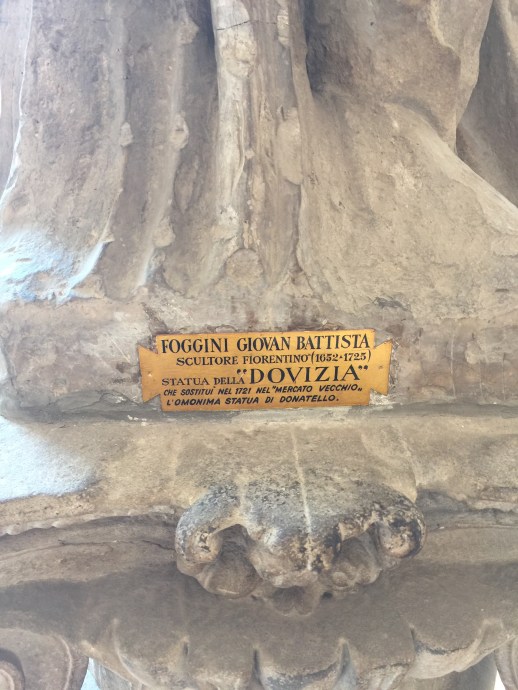
Fortunately, a label attached to the statue revealed the figure and the sculptor: La Dovizia (Abundance) by Giovan Battista Foggini:

IMG_2501

Ah ha! I now knew exactly what I was looking at!  My mind zinged back into two places almost simultaneously, first to the camp and later the Forum of Roman Florence. and then to the Renaissance placement of a statue of Abundance by Donatello.

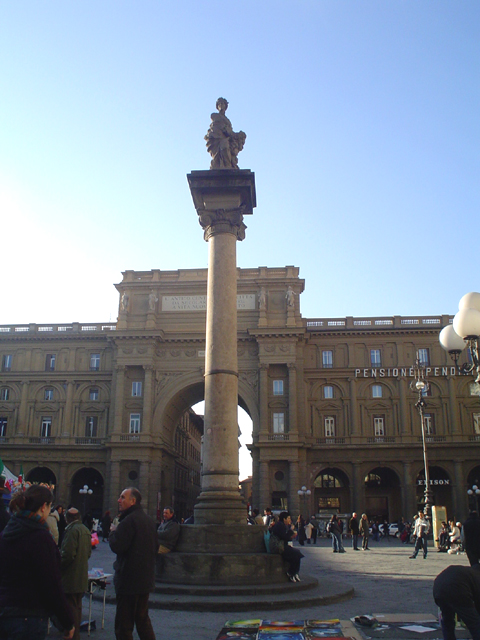
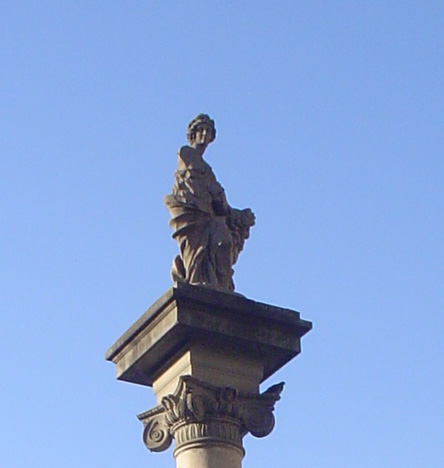
Both of these past moments happened in the space now occupied by the Piazza della Repubblica in Florence. The giant woman I encountered last week on the Via Bufalini was the statue of Abundance that replaced Donatello’s (now lost) figure on the same column, a replacement which occurred in 1721 (according to the label).

colonna_abbondanza

The column, still topped by a statue, sits at the exact point where the two Roman roads intersected in ancient Florence, the cardo (now via Roma and via Calimala) and decumanus (now via degli Strozzi, via degli Speziali, and via del Corso).


donatello-statue

statua_piazza_repubblica


Now I needed to find out more about Giovanni Battista (Giambattista) Foggini, to satisfy my curiosity.  He was an artist in Florence (1652 – 1725) who became, in 1676, the court sculptor for Cosimo III. He went on to become the Medici’s Architetto Primario e Primo scultore della Casa Serenissima as well as Soprintendente dei Lavori (1687–1725).

Foggini is best known today as the creator of many small bronze statuary figures and groups. In 1687, Foggini acquired the foundry in Borgo Pinti that had once belonged to the sculptor Giambologna. This allowed him to specialise in small bronzes, produced mainly and profitably for export. His adaptation of Pietro Tacca’s Moors was, for example, the basis of the bronze and ceramic reproductions for the connoisseur market well into the 18th century.

220px-Giovan_battista_foggini,_corsaro_legato_02


fullsizeoutput_49a


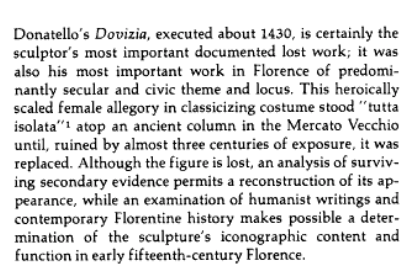
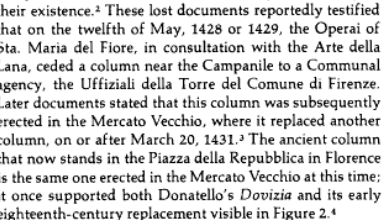
One of my grad school professors published an article on the Donatello Abundance (“Donatello’s Lost Dovizia for the Mercato Vecchio: Wealth and Charity as Florentine Civic Virtues by David G. Wilkins).  Here are couple of excerpts from that scholarly publication:

Screenshot 2018-10-15 at 09.49.23

Screenshot 2018-10-15 at 09.52.01

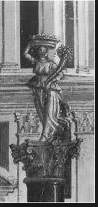
Here is an image of what Donatello’s lost sculpture might have looked like:   Screenshot 2018-10-15 at 11.08.14

You just never know who or what you will bump into in this fascinating city of Florence.


Villa la Quiete, Firenze

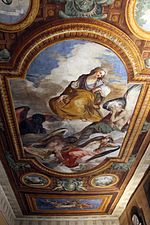
I recently visited, on a lovely parcel of land just outside of beautiful Firenze, a once-magnificent villa known as Villa la Quiete. Located upon the Castello hill, at the foot of the Monte Morello, this villa is considered to be among the most important settings of its kind.  It takes its name from a fresco by Giovanni da San Giovanni entitled, La Quiete, which dominates the winds (see below).

Villa_la_quiete_01

IMG_1472IMG_1470

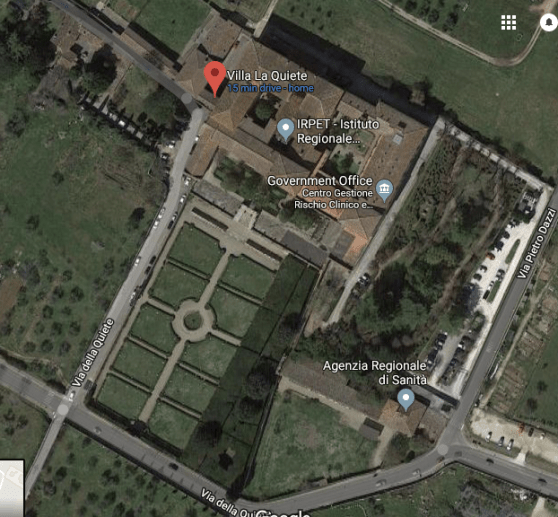
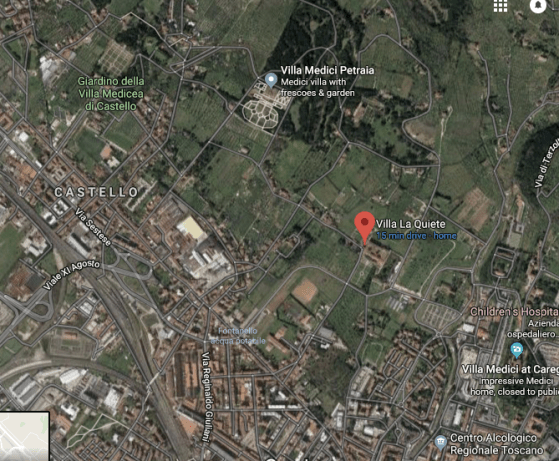
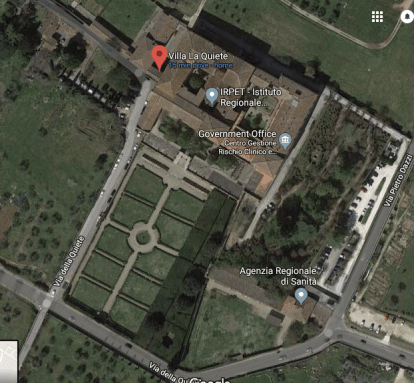
The Medici family particularly loved this area and owned some of its most beautiful residences, including the Villa di Careggi, Villa di Castello, and the Villa della Petraia. You can locate Villa la Quiete on these 2 Google Earth slides below and, in the last one, also locate the 3 Medici villas just mentioned.

Screen Shot 2018-08-27 at 12.23.18 PM

Screen Shot 2018-08-27 at 12.23.38 PM

This parcel of land has lots of history, naturally.  In 1438 it was given by the Florentine Republic to the condottiere Niccola da Tolentino, for his military services. In 1453 the Medici acquired the land, and later Cosimo I passed it to the commander of the Order of Santo Stefano.

220px-Villa_la_quiete,_giardino_02

In 1627 the property was again acquired by a Medici, this time by Cristina di Lorena.  She had the palazzo rebuilt, and had a suspended passage constructed (a small variant of the Vasari Corridor), connecting the villa to a nearby Camaldolese monastery.  Cristina also commissioned the painting of la quiete che pacifica i venti, by Giovanni da San Giovanni in 1632.

Giovanni_da_san_giovanni,_la_quiete_che_pacifica_i_venti,_1632,_01

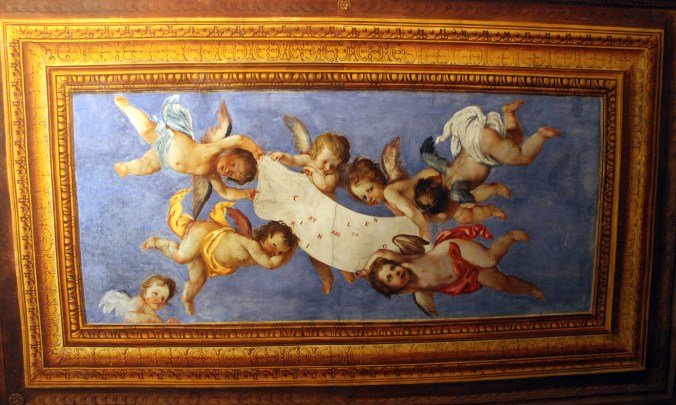
Cristina’s name even appears in another fresco, by Giovanni da San Giovani. in which curious anagram masquerading as a hymn inscribed on a scroll supported by putti in flight.

The villa has, thereafter, been known as Villa la Quiete.

Giovanni_da_san_giovanni,_la_quiete_che_pacifica_i_venti,_1632,_putti_in_alto_01


The complex was bequeathed to Cristina’s grandson, the Grand Duke Ferdinando II. Later on, in 1650, the villa was sold to Eleonora Ramirez de Montalvo, who dedicated it as a country retreat for a congregation she founded, the Montalves.  At that time the villa was called Istituto della Quiete.

IMG_1485

After Eleonora’s death, her friend the Grand Duchess Vittoria della Rovere administered the Institute, and sponsored the construction of the Montalve church, completed in 1688.

Anna Maria Luisa de’ Medici, the last descendant of the Medici family, resided in the villa between 1720 and 1730 and she furnished it with objects from the Palazzo Vecchio and Palazzo Pitti.

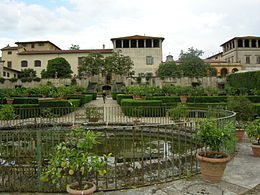
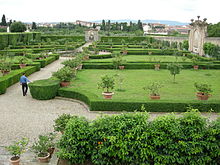
Anna Maria had the villa renovated and redecorated and she installed a beautiful grand garden, bringing water to it by a pipe to the nearby Fonte delle Lepricine.

Villa_la_quiete_01

The director of this new, vast garden was the botanist Sebastiano Rapi, who just happened to be the person in charge of the Giardino Boboli.  Rapi, with the support of Anna Maria, brought the best botanical and fruit species from the various Medici villas.

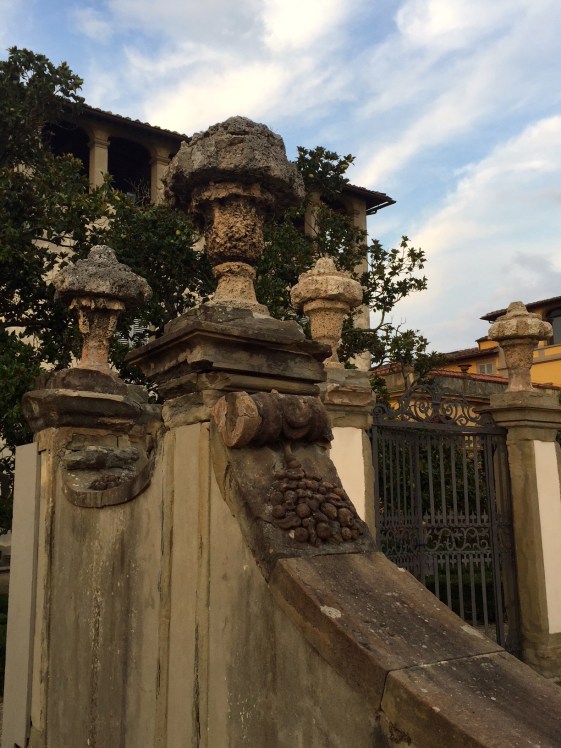
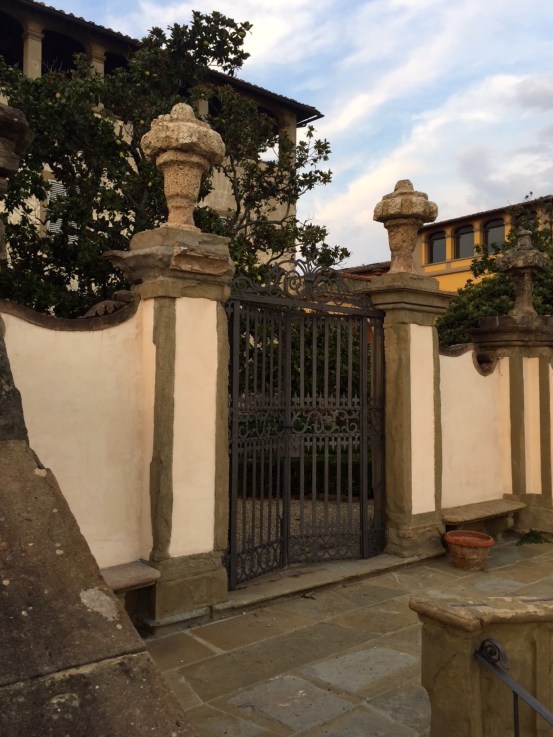
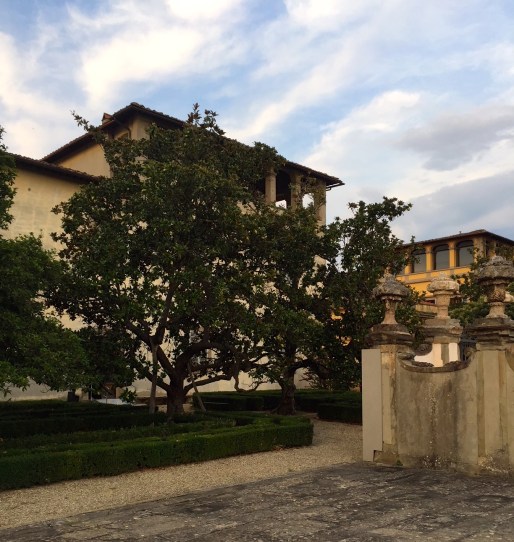
Even today, the specimen magnolia trees they selected still grow in a courtyard connecting the garden to the palazzo.

IMG_1481


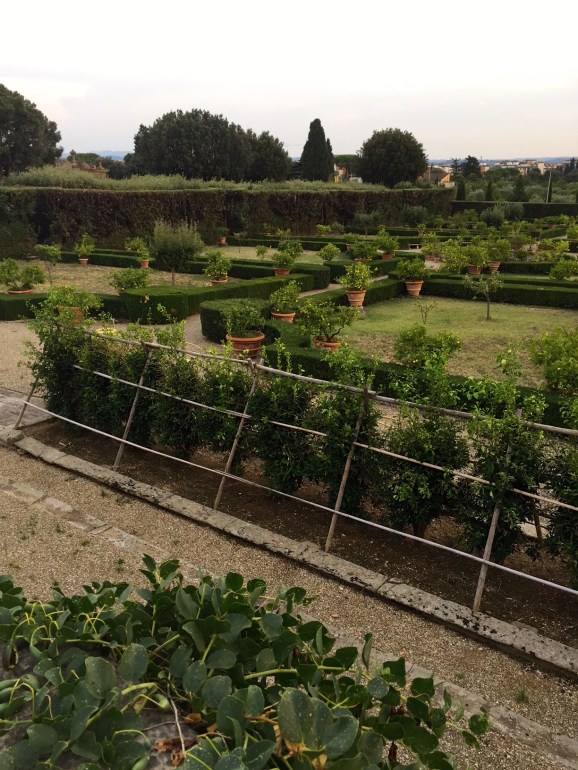
The garden today remains one of the rare examples of an 18th-century garden, with no changes in the plantings, other than refreshing them.  You can see the layout of the formal, rectangular gardens, lined with pots of lemon trees, in the Google slide:

Screen Shot 2018-08-27 at 12.23.18 PM


The secular order of Montalve, dedicated to the education of girls of good family, only had to abandon their church of San Jacopo di Ripoli in 1886, and they brought their numerous furnishings and works of art with them to the Villa la Quiete.

It was only in 1937 that the order became religious. The villa complex remained for a long time the seat of the education institute, ending only in 1992. The last pupil graduated in 2001.

In February 1992 the villa, together with the entire real estate of the Conservatory of the Montalve alla Quiete, passed University of Florence. A small part of the villa has been used by the University for the Center for Culture for Foreigners and Polo offices. 

It is possible to visit the villa, as I did, only by appointment and in the months of July and August on Tuesday and Thursday evenings. To arrange a visit, contact the Ufficio Servizi Didattico Divulgativi, Sistema Museale D’Ateneo, tel 055-2756444 or by email to edumsn@unifi.it.
In a few days I will be writing a post about the artworks located in the villa.

IMG_1477