If you want to see Renaissance clothing come to life….
You must see the 2008 film, The Other Boleyn Girl. It is gorgeous!


If you want to see Renaissance clothing come to life….
You must see the 2008 film, The Other Boleyn Girl. It is gorgeous!
Travel can be good for your health. Recently a good friend and I, at the end of a week that for both of us was filled with stress and problems, decided to get the heck out of Dodge for a day.
We left home for a day to wander in the wider, wondrous world of the outer sections of the province of Firenze.
We landed in Vinci, to see the village near the farmhouse where Leonardo was born.
For us, it was just what the doctor ordered.
Vinci is a very, very charming borgo:
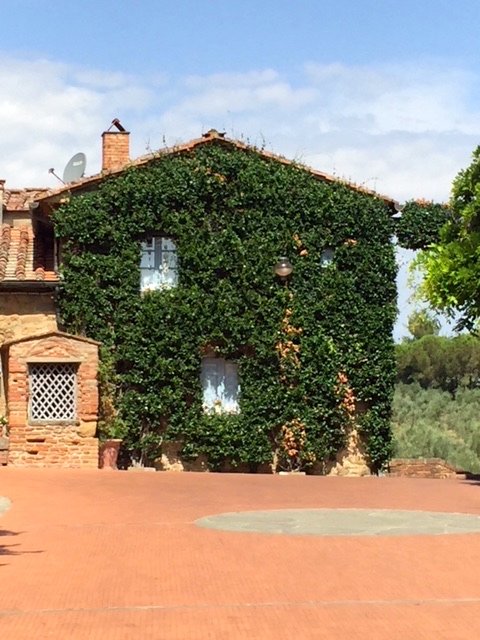
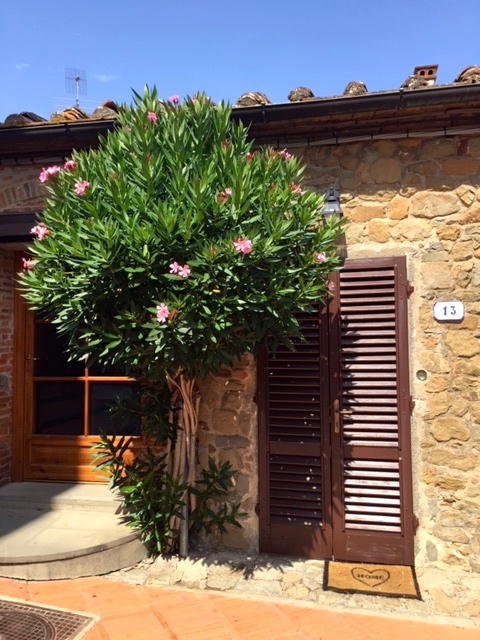
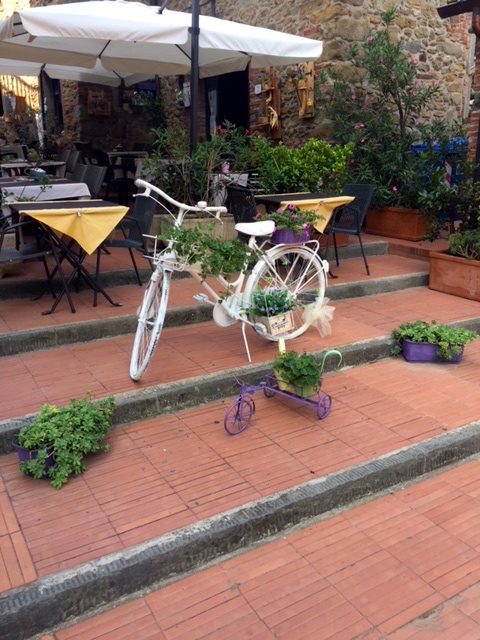
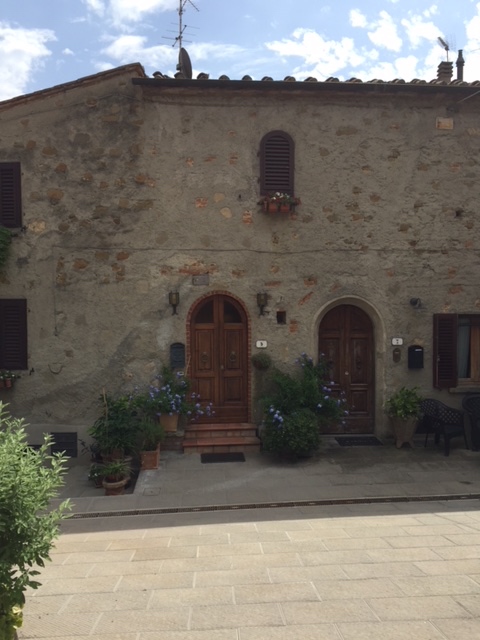
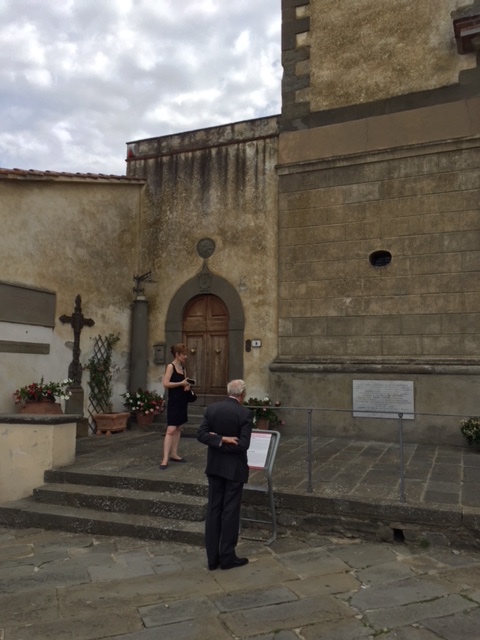
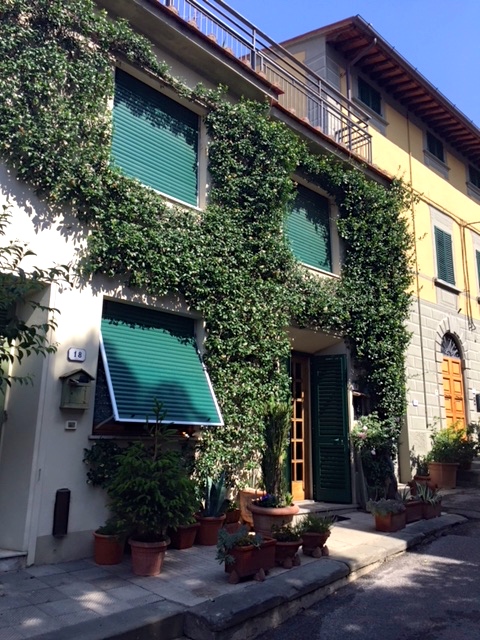
Of course the town is famous because the legendary genius Leonardo da Vinci was born in a nearby farmhouse. Every inch of this little village proclaims “Leonardo!”
The main attraction in the village is the Museo Leonardino, housed inside the building that was formerly the Castello dei Conti Guidi, originally built in the 12th century.
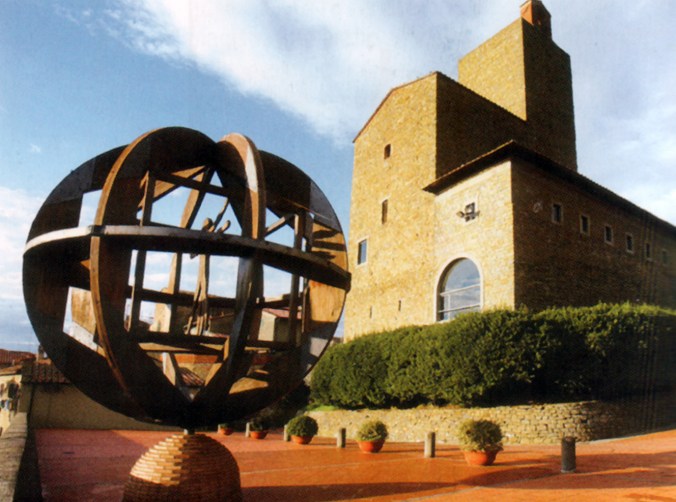
The castle is located high atop the town’s highest hill. Inside the museo, you encounter a hologram of Leonardo:
The museum takes up 3 floors of the castle, showcasing a collection of the original designs found in Leonardo’s notebooks as well as 40 different models of various machines that were he designed.
Most interesting of all of these, to me, was the wooden paraglider that Leonardo created.
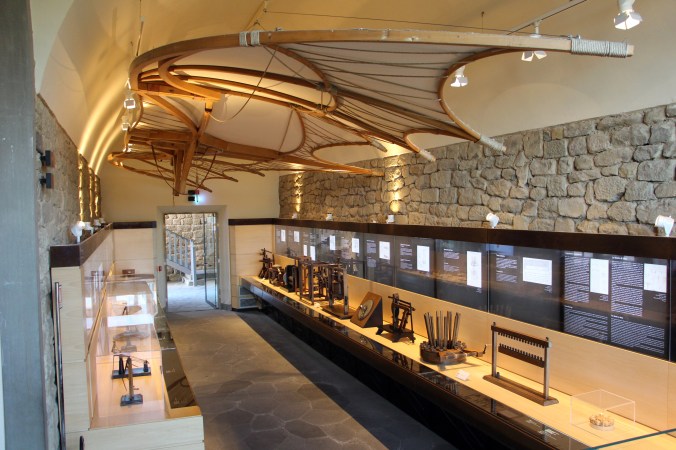
Vinci is surrounded by the Tuscan hills and there are various vineyards and olive groves around the town which have remained the same since ancient times.
The town is spread over an area of 54 sq km and the population is close to 14,000. The economy of Vinci is based on agriculture, production of wine and olive oil, pottery and items like paper, clothes and furniture.
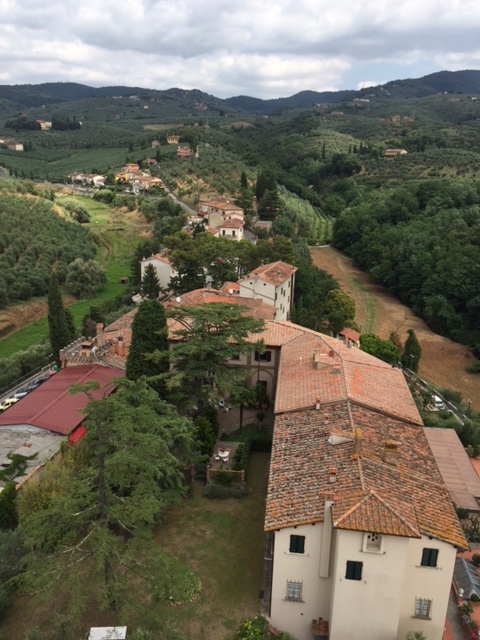

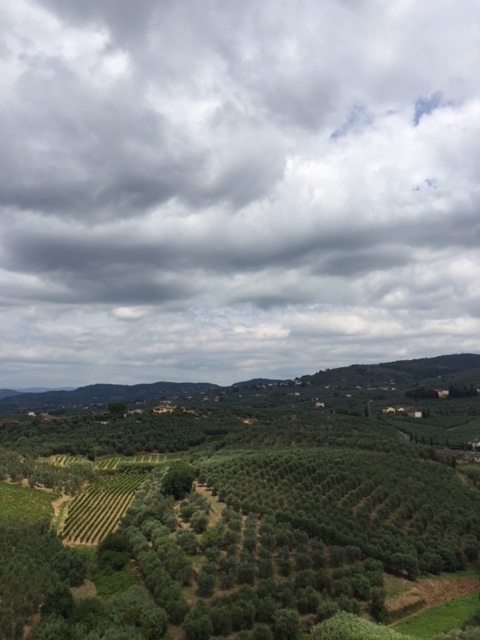
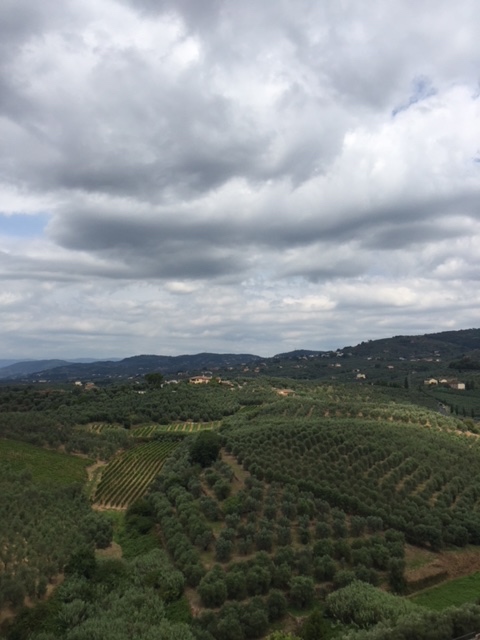
After seeing the main exhibition space, you can also climb up to the top of the castle and view the surrounding countryside.
Before you are afforded the spectacular views, however, you must climb an endless set of stairs leading up, up and up.
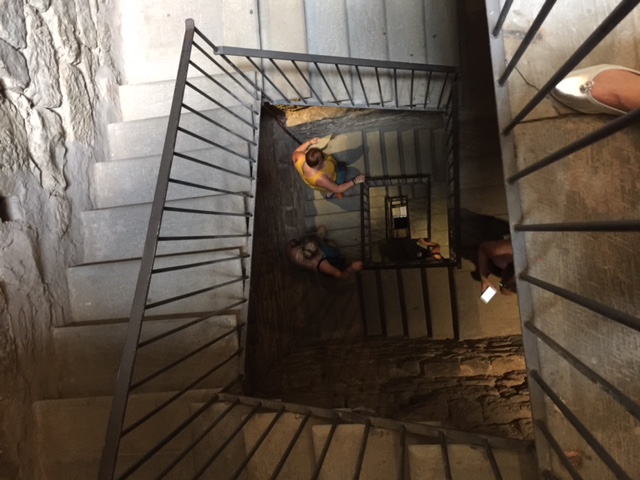
Trust me, the view above does not begin to capture the length and height of this stairway. Several stops are needed on the way up to catch your breath.
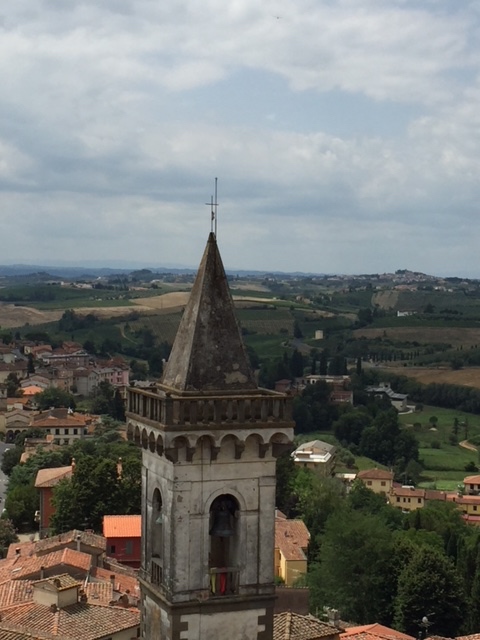
The views from the top terrazzo of the Museo di Leonardo are as vast as they are gorgeous. What a perfectly farmed section of Tuscany, filled with groves and groves of olives and grapes. The groves are in perfectly formed lines, such as you never see anywhere else. Wonder how that happened?
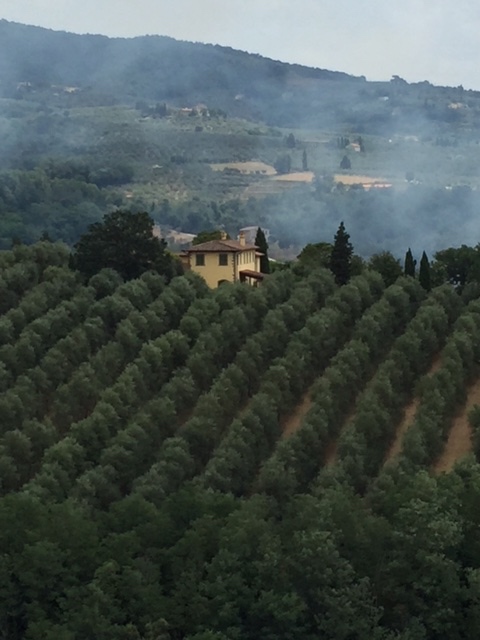
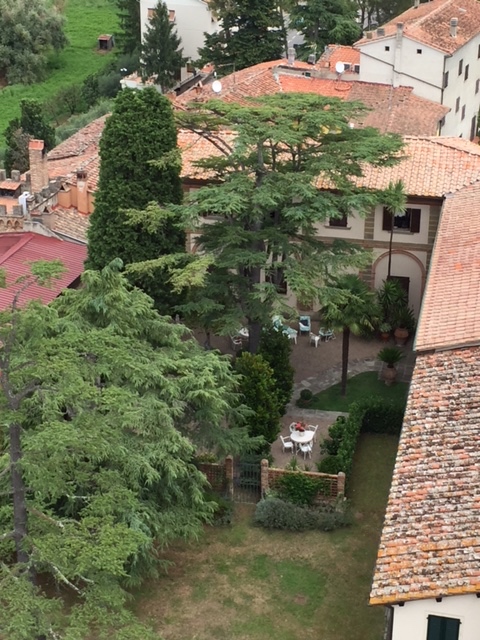
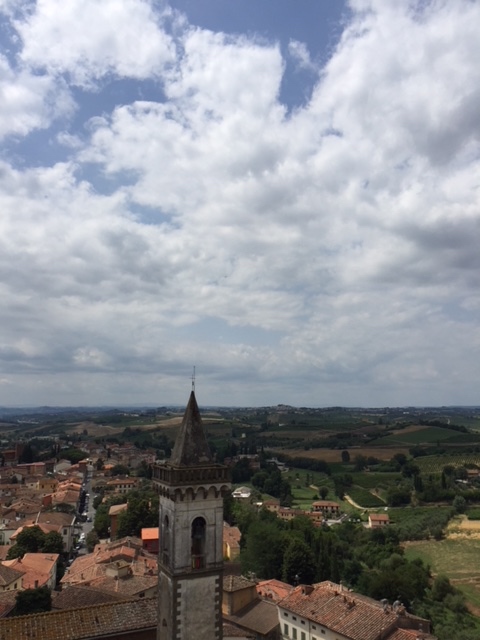
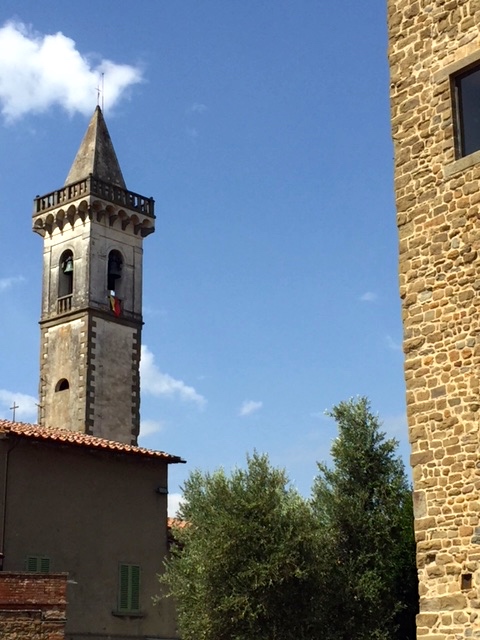
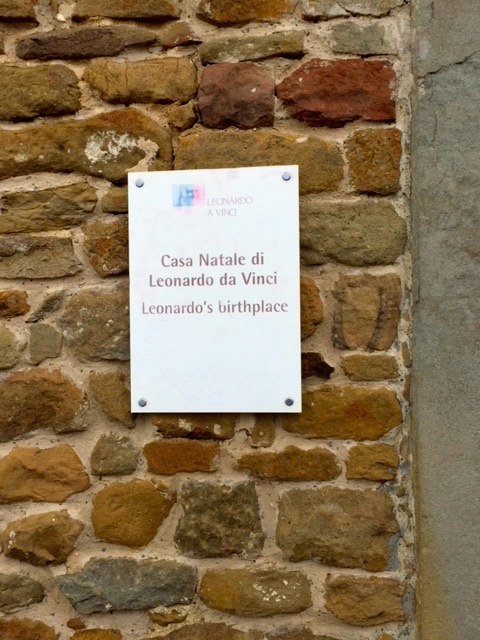
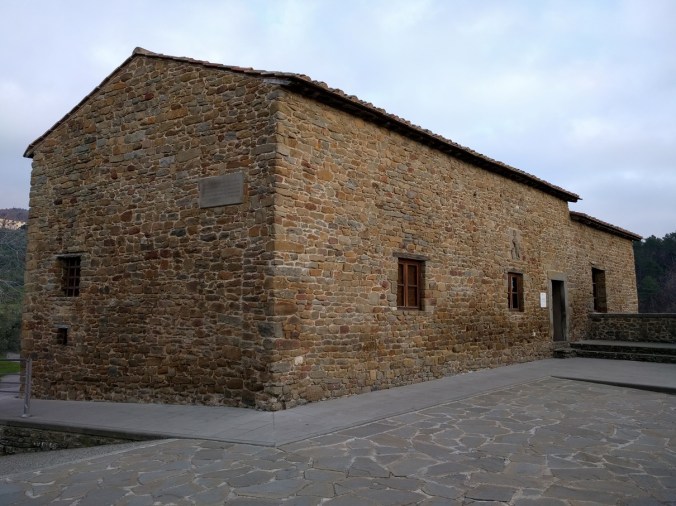
Leonardo Da Vinci was born in a small farmhouse which is located just 3 km from the center of the town. You could walk it, if you have a lot of stamina. On a day of 30 C., I didn’t. We drove.
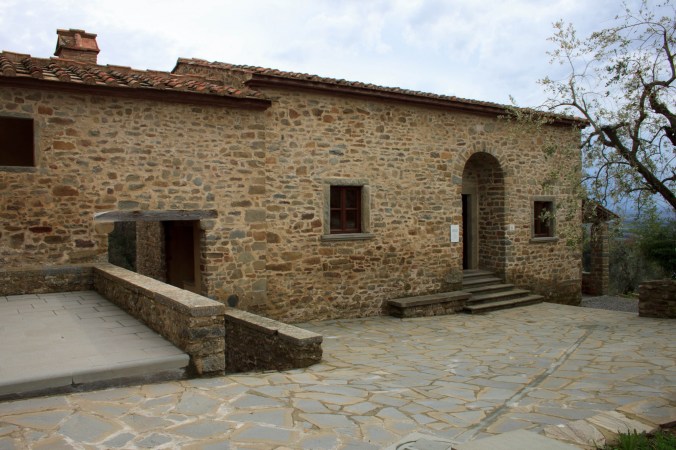

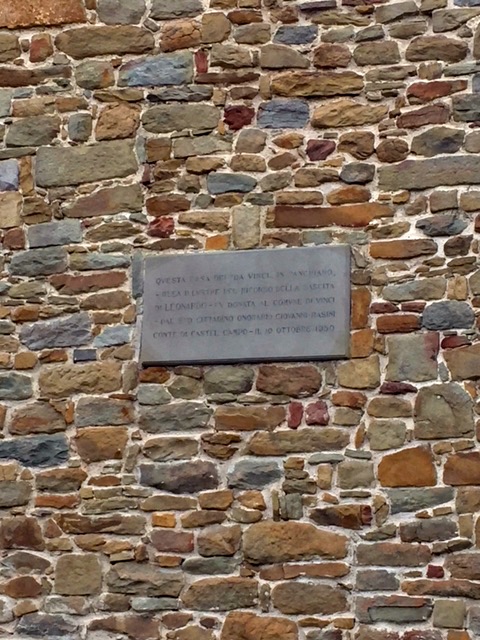
A good source of info on Vinci is this:
I recently posted an intriguing video about The Mona Lisa. Now, here is a further mystery, utilizing some of the same experts and scholars, the same scientific techniques.
This 2015 video from the BBC is quite interesting, especially for any student of art history. The video is an hour long, not the 1.5 hours the video says it lasts (the last 30 minutes of the video is a repeat). You will come away from watching this video with new questions, and maybe some new answers.
I was in Fiesole this morning, to catch a breath of fresher, cooler air than at home in Florence and also to see a Medici Villa. I had an appointment to see the grounds of the Villa Medici at Fiesole; the villa itself can’t be visited as it is a private residence.
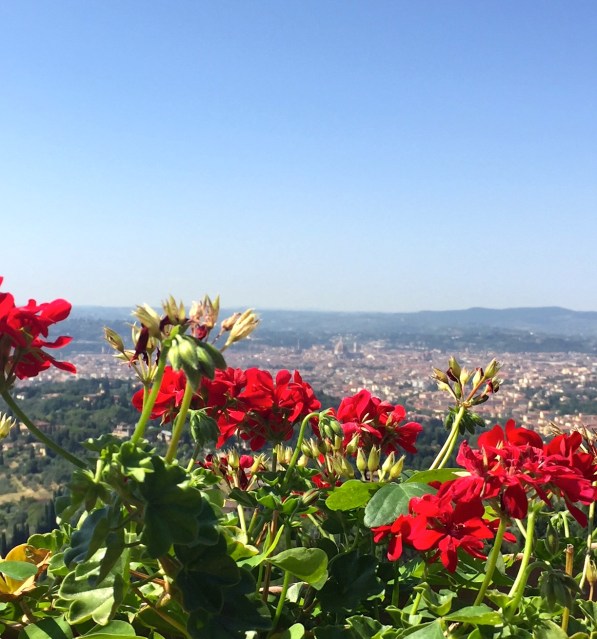
Can you see the tiny Duomo of Florence over the red geraniums, right in the middle?
This is a view you would have of Florence if you were a Medici.

It’s a pretty well-known fact that Florence tends to get a little hot in the summer. That is actually an understatement. Today it was 33 Celsius, with is pretty darn hot.
It is cooler in Fiesole, high above on the hills north of Florence. That is why the Medici had this villa constructed.
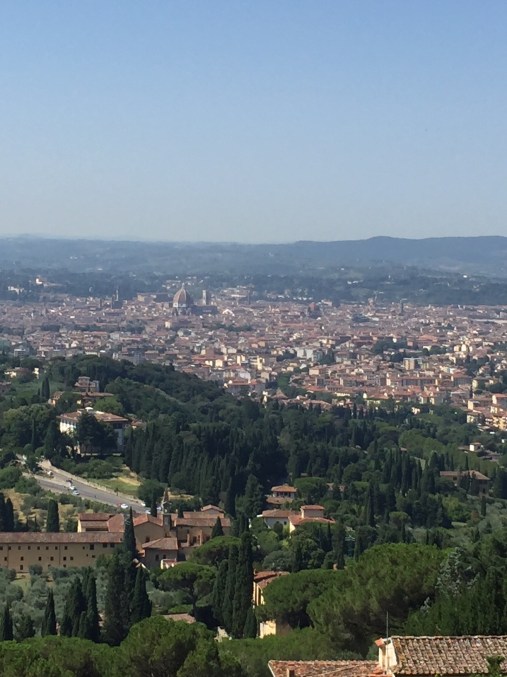
Located on the via Beato Angelico 2 stands one of the oldest villas belonging to the Medici family, the 4th, after the 2 villas in Mugello (Cafaggiolo and Il Trebbio) and the Villa at Careggi. Sometimes called Belcanto or the Palagio di Fiesole, this villa is among the best preserved of the many Medici villas, but at the same time it is also among the less well-known.
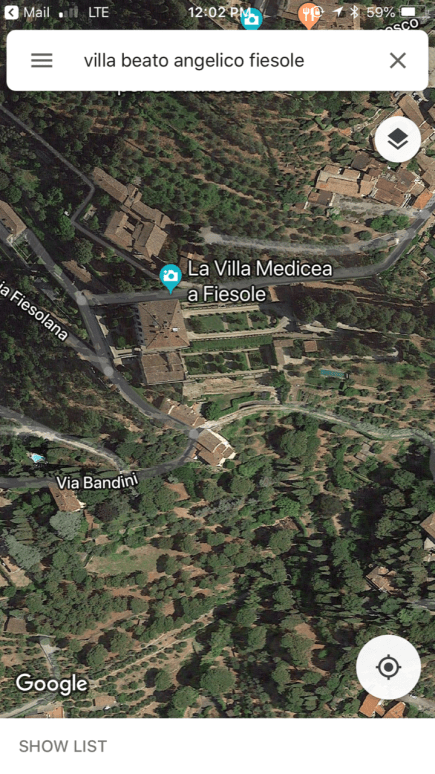
Here is a Google earth view of the Villa.
The villa was built between 1451-57. The site was obviously chosen for its panoramic views, despite the fact that the site is on a very steep slope. It was necessary to make a large terrace, to support the palazzo, the out buildings and the vast gardens.
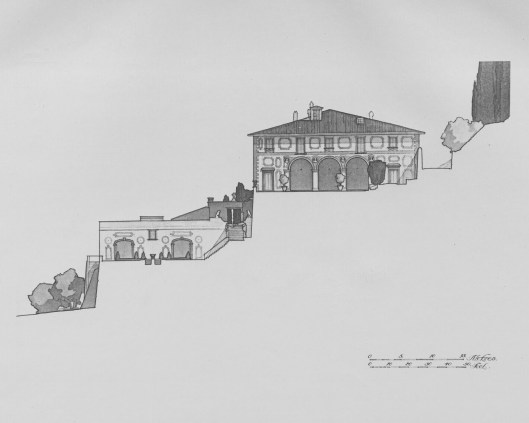
Villa Medici at Fiesole by Michelozzi in 1460
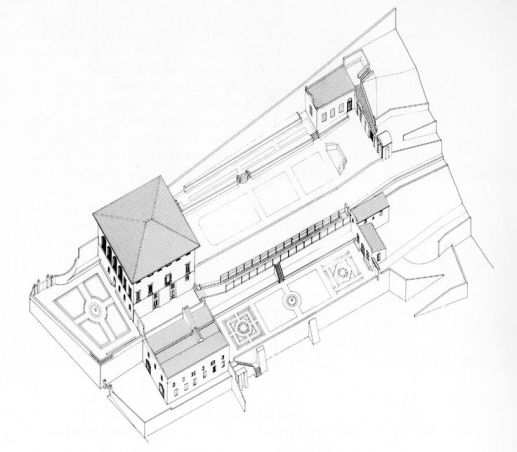
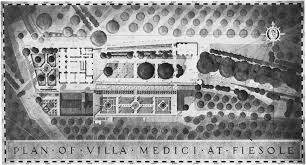
Michelozzo was not bound by pre-existing buildings and built a sober quadrangular palazzo which was whitewashed and had windows framed by stone cornices. Large open galleries, with incredible views of the landscape, were a main feature of the design.
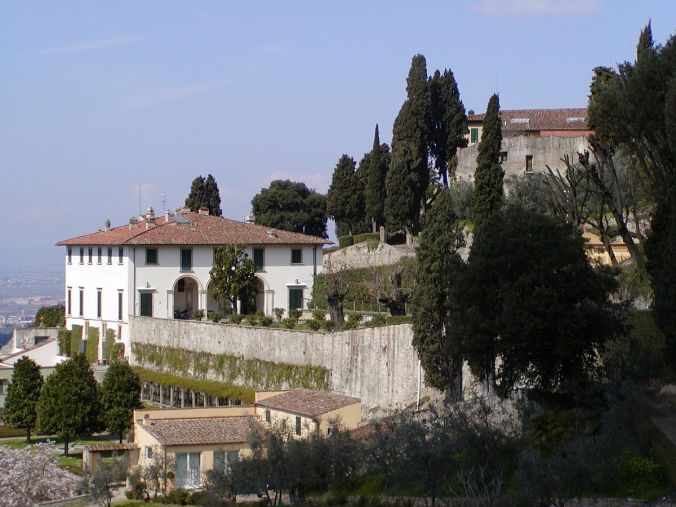
Here are some views of the main loggia at the front of the palazzo.
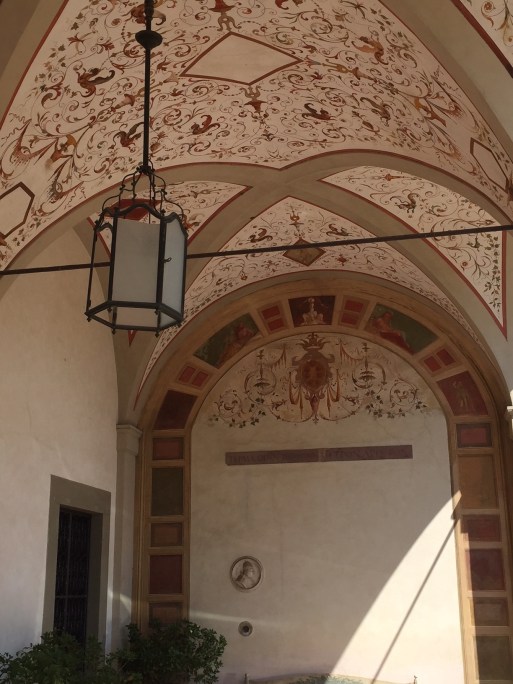

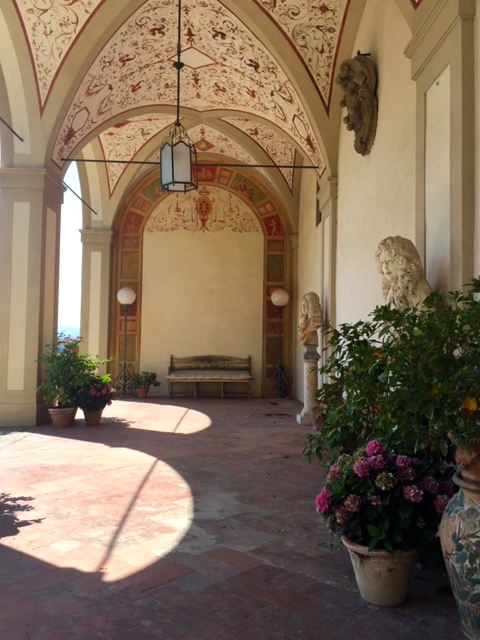
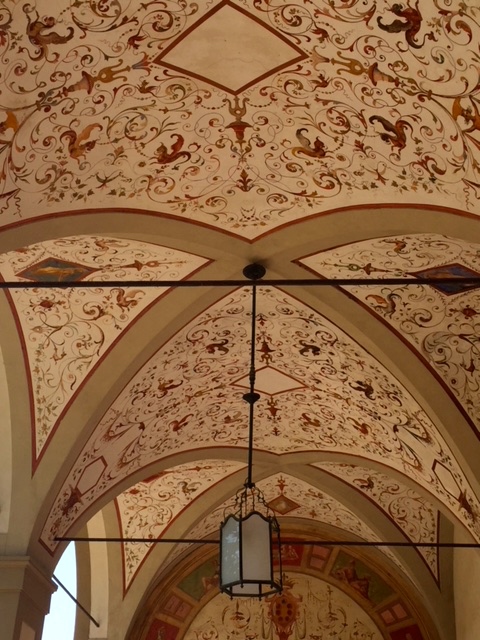
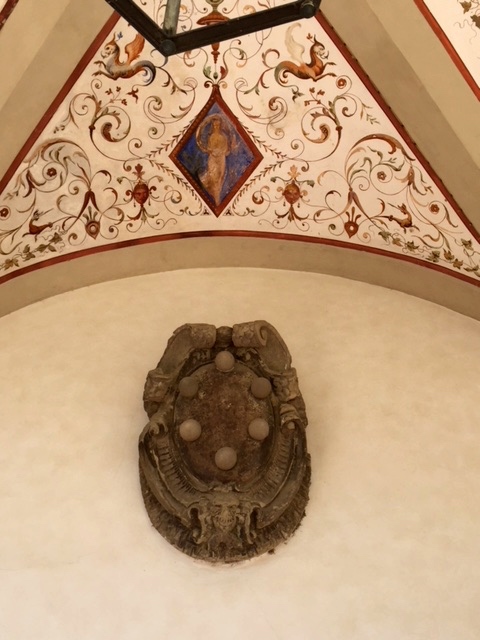
You know you are in Medici country when you see the coat-of-arms with the Medici palle in a prominent position within the loggia.

This villa was very different from previous Medici villas: it is much more open to the outer world than any previous villa, and it has no central courtyard.
There are no defensive-military components, meaning there are no turrets, no elevated walkways supported by corbels, or any moats.
The formal and functional innovations of the villa in Fiesole revealed new aesthetic values; including, above all, a new attention to the landscape and the visual domain.
Likewise, the agricultural and productive components of villa design were essentially elminated, in favor of a total dedication to leisure and physical activity that favored contemplation and intellectual activity.
It was, in fact, the first time that a rural residence had only a garden, instead of being surrounded by an agricultural estate.
These factors, combined with the lack of military structures, are the significant characteristics that make this villa one of the clearest prototypes for later Renaissance villa design.
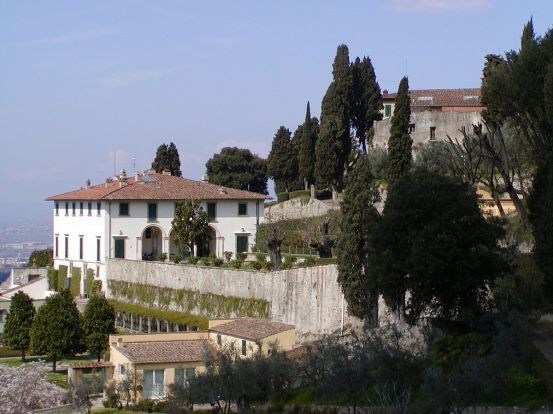
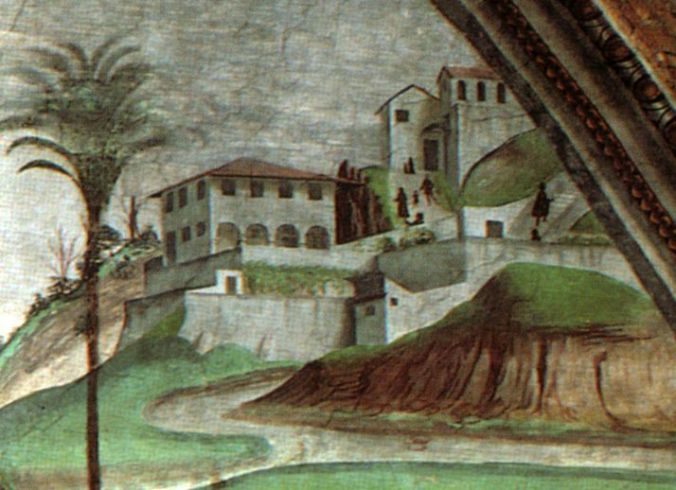
Amazingly, we have a contemporary Renaissance-era view of the villa, as depicted in this fresco by Domenico Ghirlandaio in the Cappella Tornabuoni at the church of Santa Maria Novella, painted between 1485 and 1490. Art historians live for moments like this. It is very rewarding to have a painted picture to give us an idea about how the villa originally looked and it is just plain fun to have such a record of an extant Renaissance building.
The Villa Medici is linked to one of the most dramatic events of the Medici family history: the Pazzi Conspiracy (1478), when some members of the Pazzi family, along with Francesco Salivate and Cardinal Girolamo Riario, and supported by Pope Sixtus IV, designed a plot to get rid of what they considered to be the increasingly oppressive growth of the power of the Medici within the Florentine Republic.
Originally, the plan was to kill the two scions of the Medici family, Lorenzo and Giuliano, during a banquet organized at this Medici Villa at Fiesole on April 25, 1478, through the use of poison that Jacopo de’ Pazzi and Cardinal Riario would surreptitiously place in the drinks meant for the two brothers.
The plot was foiled when Giuliano became suddenly ill. The dinner was canceled and made the enterprise useless. Undiverted from their aim, the murderers were postponed until the following day, during the Mass at the Florence Cathedral. Of course, we know that while Giuliano was killed, Lorenzo was able to save himself by bolting himself into the sacristy.
It is so interesting to walk around the palazzo and out buildings, thinking about the history that happened here, and who was walking these paths 500 years and more ago. That is not to even mention the connected gardens, about which I’ll be writing a separate post soon.
.
You’ll need an hour to watch this, but it is well worth it.
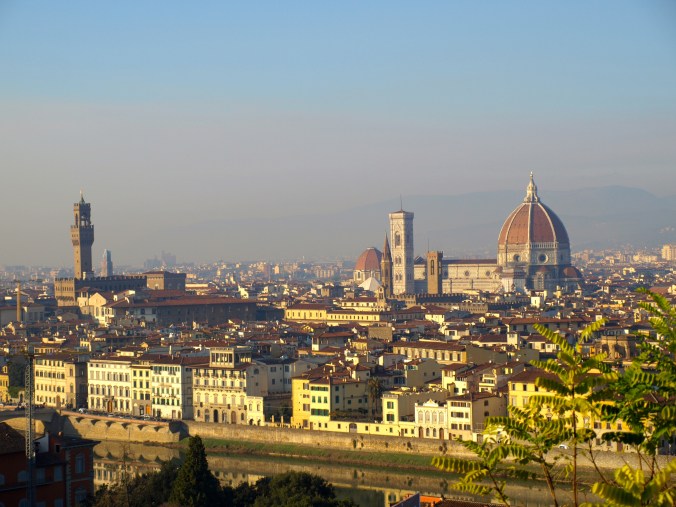
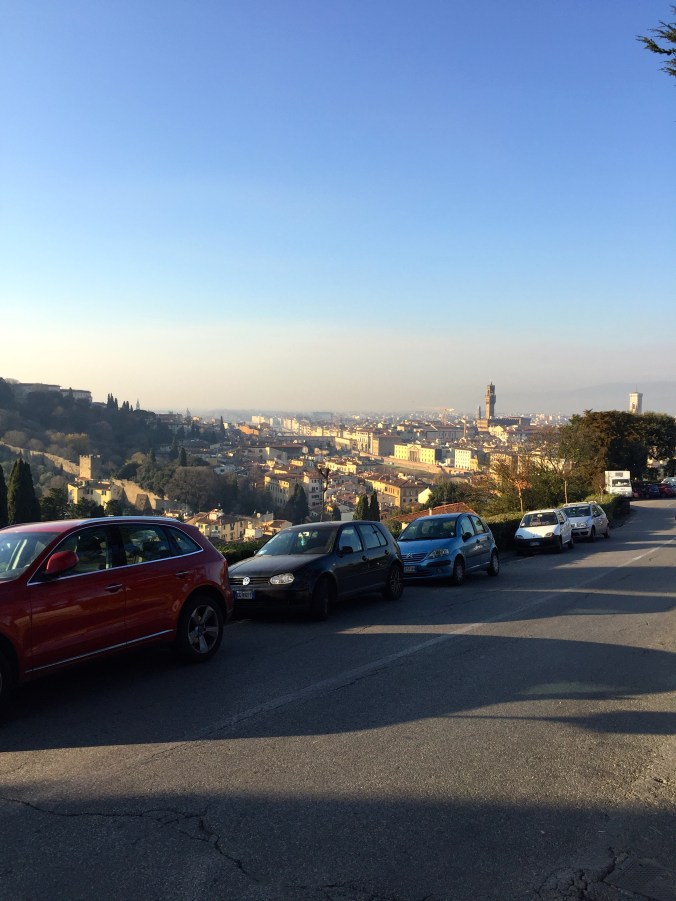
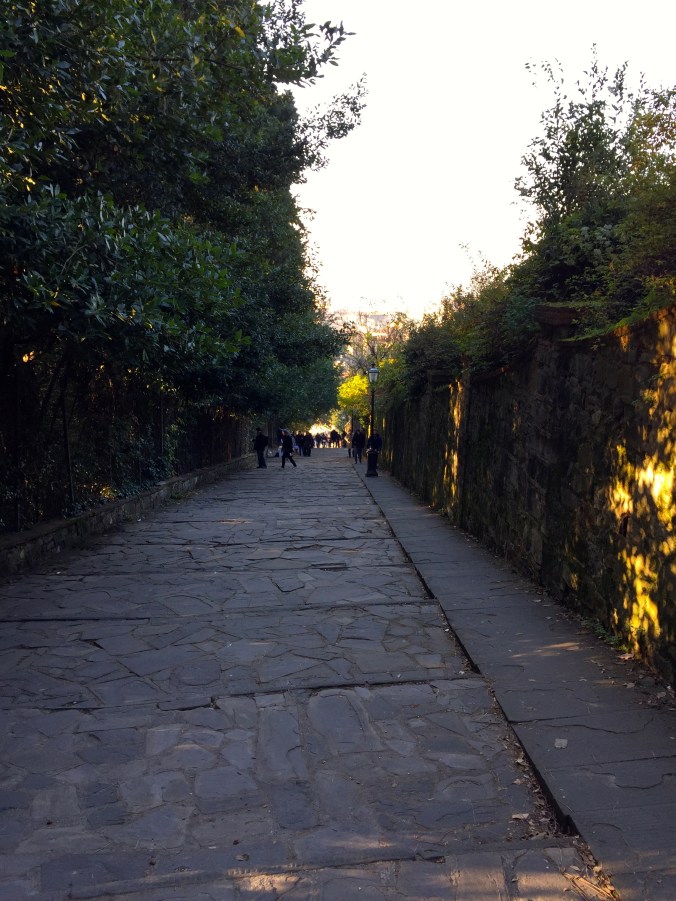
On one of the beautiful hills surrounding Florence sits this masterpiece of Italian Gothic architecture. It is perfect. Here are some pictures taken last winter. I’m a little late in getting posts written!
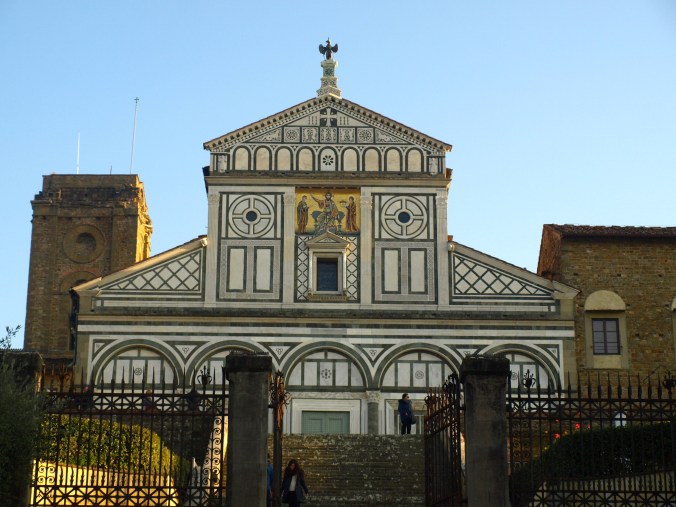
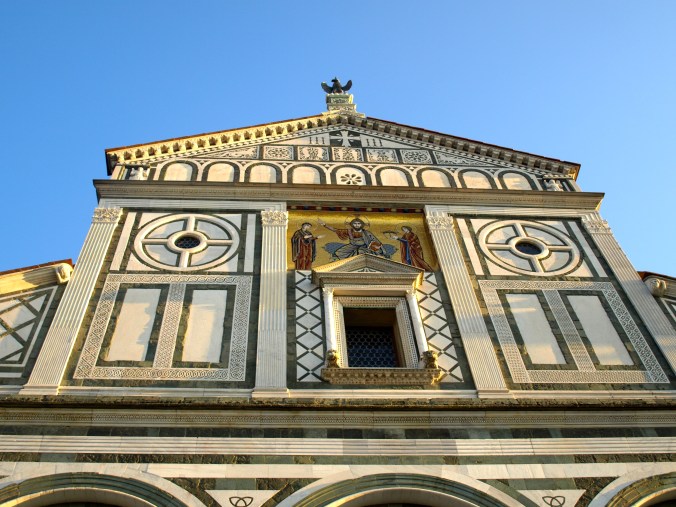
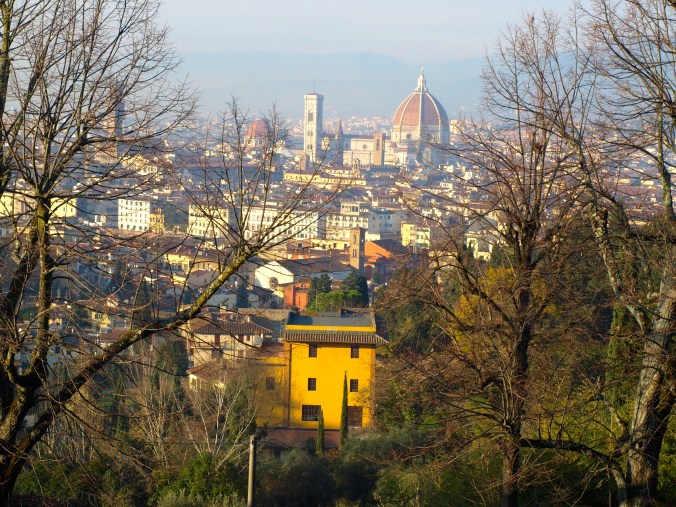
Not only is the hike to the church worthwhile, but the views of lovely Florence are breathtaking as well.
Yesterday I posted about Andrea del Sarto’s Last Supper in Florence. Attached to the same building is a small but fine museum of 15th and 16th century art, in addition to the main event of the Last Supper.
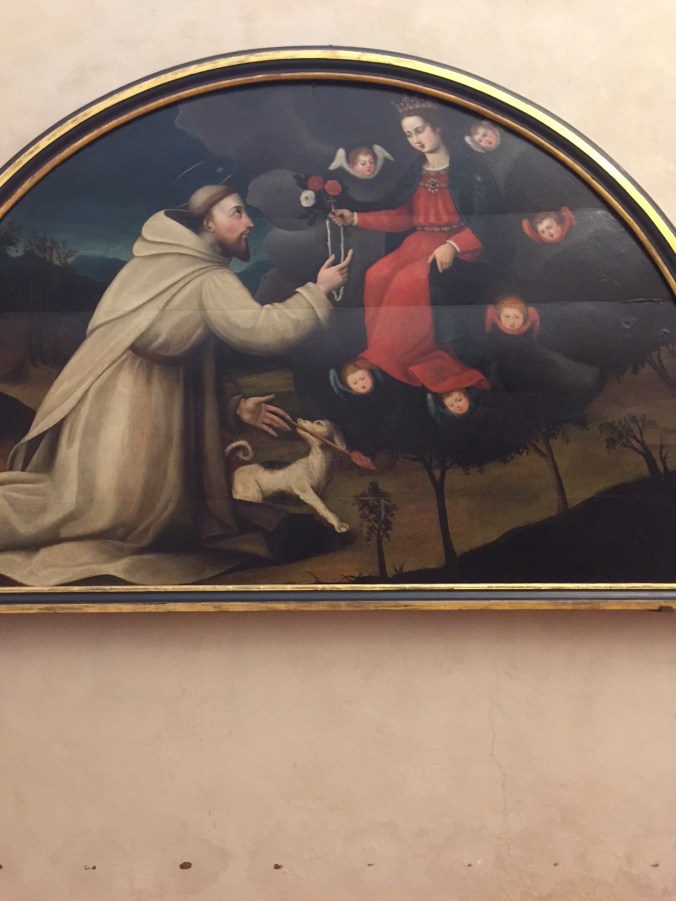
I might lose my membership in the world of art historians because while I took pictures of a few of the artworks that grabbed my attention in this smallish museum, I didn’t take adequate pictures (or, god forbid, hand-written notes) of the labels that identify the artist. From the depths of my heart, I apologize. It was a hot, hot, hot day in Florence and I simply failed to live up to my creed. :-)
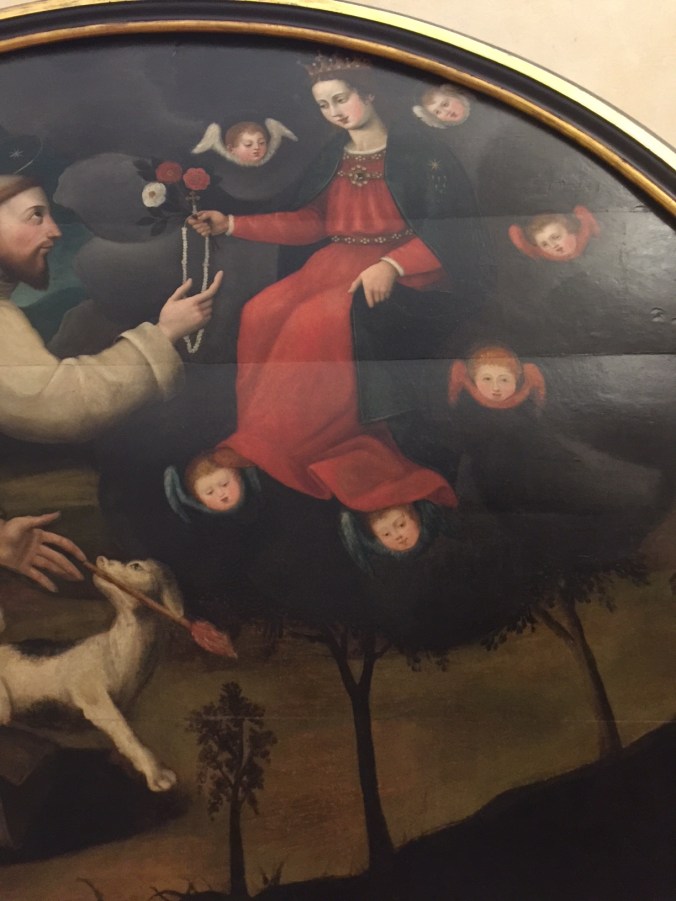
But this odd painting certainly did grab my attention! It is, I assume, a vision of Saint Mary in heaven, bestowing a string of pearls? beads? to someone below her on earth, I would guess?
Anyway, what I liked is the bodiless angels floating around Mary in the shape of a mandorla (almond). Their heads and wings are kind of creepy, floating as they do around Mary.
And, speaking of being surrounded by cherubim and seraphim, look at this oil painting!

Again, I would be fired as a curator, but I don’t know who painted this work. (But I know where the label is if I need the info; it’s right beside the painting for goodness sake! My art historical training is playing out in this post, as a kind of Catholic guilt. I am smiling as I write this silly thing.)
But, check out the multitudes surrounding Christ on the cross, above whom is God the Father, and below is Mary and 2 others.
But, as entertaining to me as the 2 works above were, the one that really gave me a jolt was this:
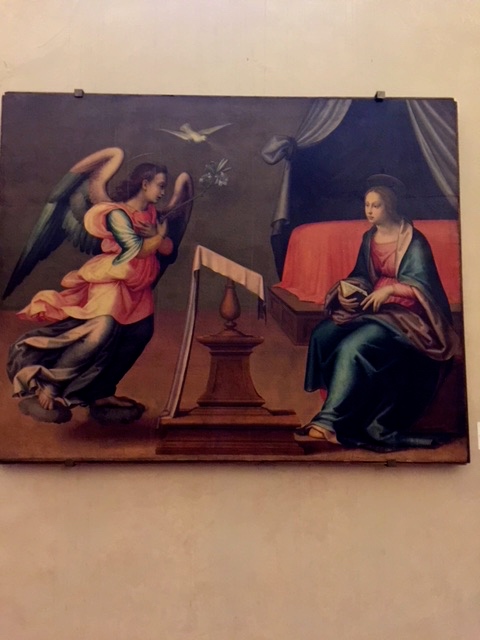
It represents, of course, the Annunciation, when the angel Gabriele tells the Virgin Mary that she will bear the Son of God. I’ve seen thousands of renditions of this scene, which one of the most hopeful moments in Christian art.
But, what I have never seen before is Gabriel standing on 2 little clouds, one for each foot, that makes it look like he is hover-boarding up to Mary!

Crazy funny to me!
There are many fine works of painting and some sculpture in this fine museum.
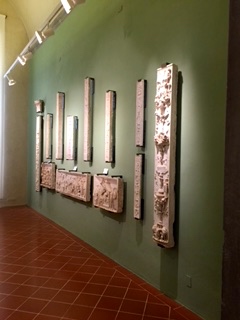
Vai! You’ll be glad you did!
 get back, lauretta!
You must be logged in to post a comment.