How to beat the heat & crowds in Florence & have a major Renaissance painting all to yourself

I don’t usually give this kind of advice or information.

Typically I write my impressions of places I visit, without giving away too much info, mainly because Florence is so heavily visited and information is easily obtainable.

But today I will share a secret. It is good for any time of year, but in summer, it serves 2 purposes.  You will be in peace, perhaps even alone, and you can appreciate an under-known masterwork by a well-known artist.
IMG_0078


So, let’s say it’s over 90 degrees F.; you are in Florence; you love Renaissance art; you’ve visited all of the usual venues (museums/churches/artworks); and you’ve had it up to your eyebrows with the swarms of tourists that engulf this city.  What to do?
IMG_0073

Head yourself over to an empty, cool, beautiful former refectory on the east end of Florence.  It’s easy to get to by taxi or by bus and when you get there you will probably be alone, like I was last week, in the space.


Screen Shot 2018-07-11 at 11.38.29 AM

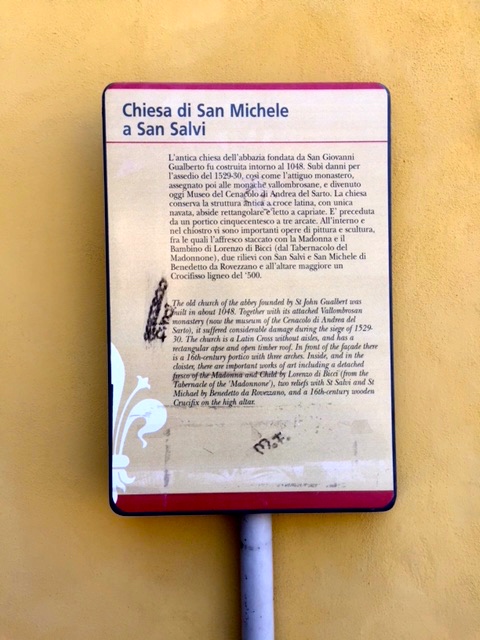
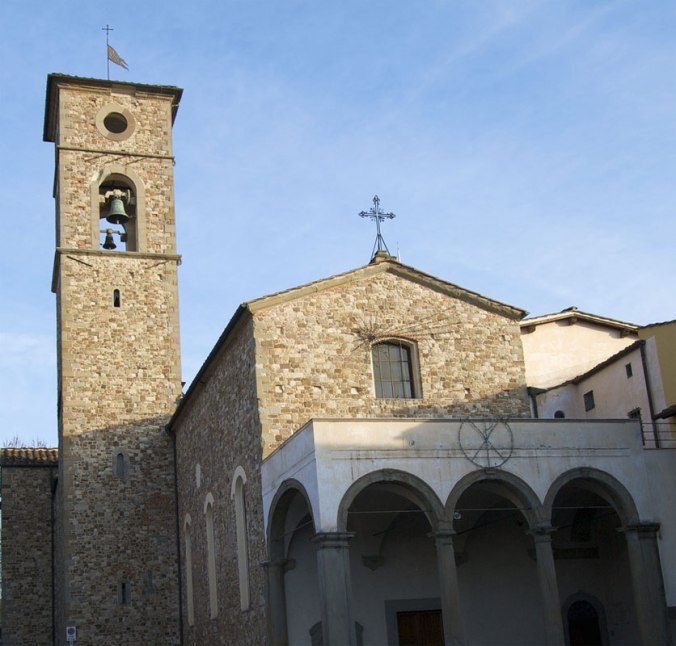
This church of San Michele a San Salvi is one of the most important ancient churches located outside Florence’s (former) circle of medieval walls. The adjacent Cenacle of San Salvi is a real hidden gem of the city.

You can find the location on the right side of this Google map screen shot. It is marked with a pin and titled “Cenacolo di Andrea del Sarto.”
8


IMG_0074

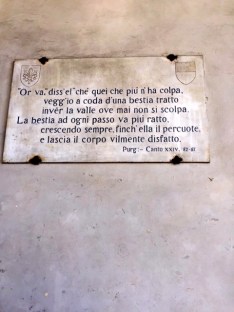
(For some reason I am not educated enough to understand, the picture above shows the plaque with a citation from Dante’s Purgatorio, which is placed on a wall near the church’s facade.  If you know why it’s there, please leave me a comment!  Grazie!!)

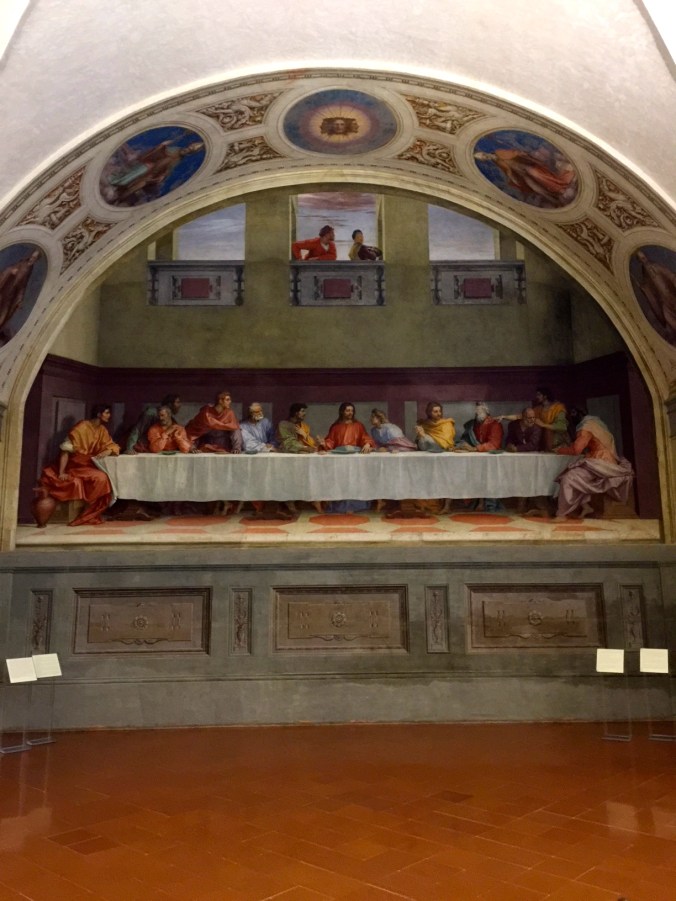
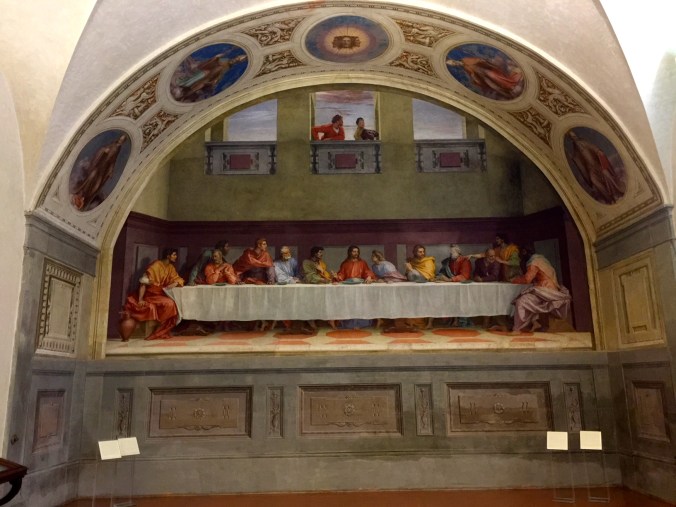
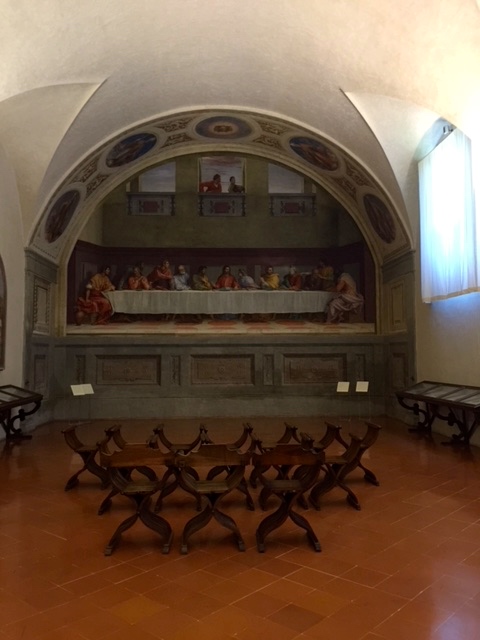
By traveling to this location, you will be rewarded not only with a coolish tranquility but also with a masterpiece:  Andrea del Sarto’s fresco of The Last Supper (called Cenacoli in Italian), which is as monumental as it is beautiful.

You walk into this calm typically Tuscan space (pale walls, red floor, accents of gray pietra serena stone) and this is what you see.  For me, this is where my blood pressure begins to regulate; soon I will be lost in the experience of the painting.
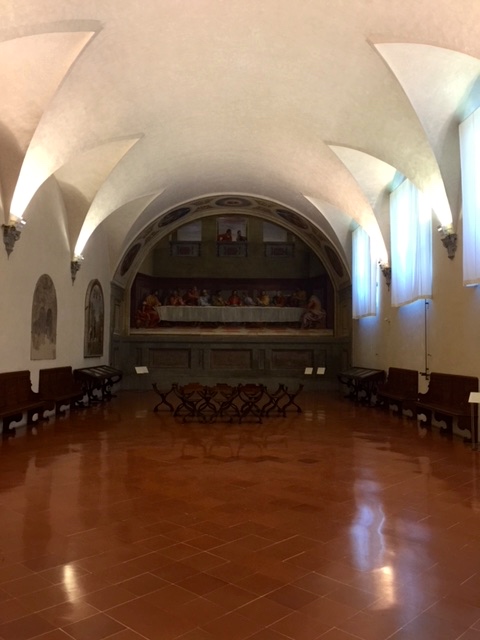
IMG_0075IMG_0076IMG_0077

This relatively unknown jewel of the art of fresco was lovingly described by none other than the world’s first true art historian, Giorgio Vasari. About it he said: “Andrea del Sarto, the flawless painter, is the author of the Last Supper kept in the Great Refectory of the San Salvi convent. [The fresco has] endless majesty with its absolute grace of all the painted figures.”

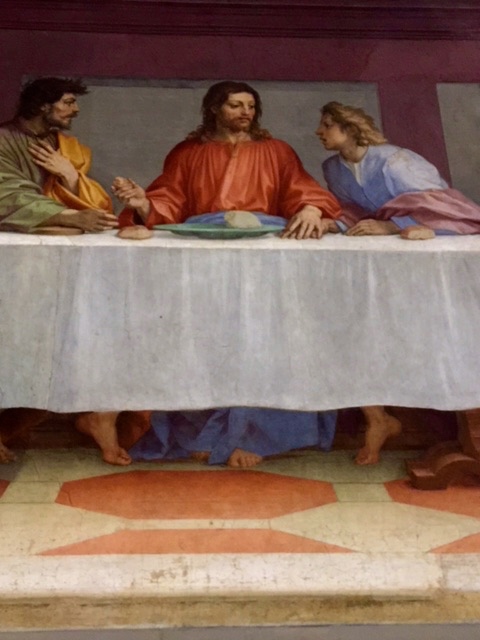
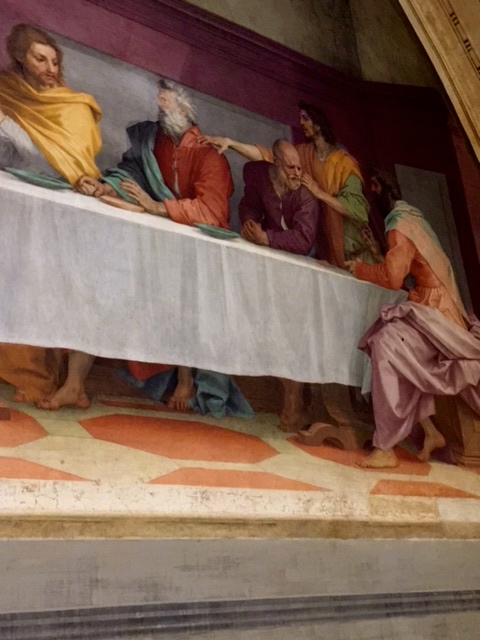
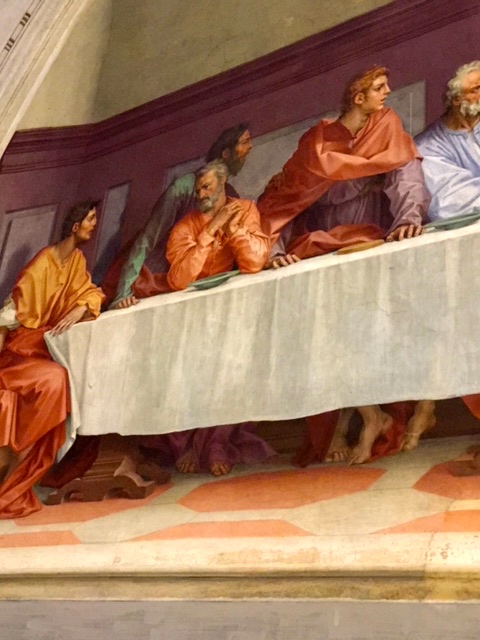
Here are some details of the glorious painting:
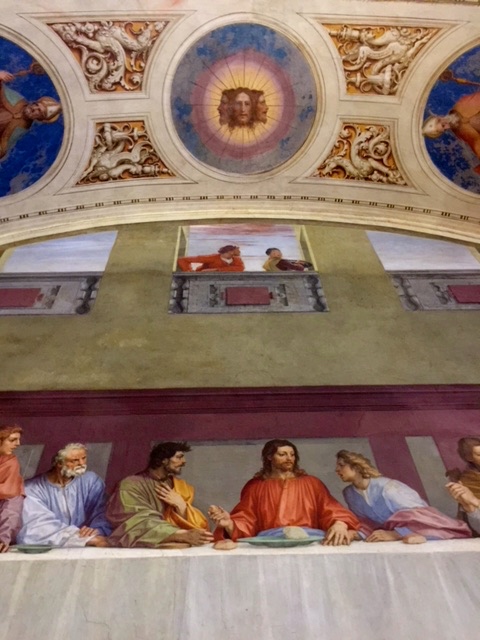
IMG_0080IMG_0081IMG_0082IMG_0083

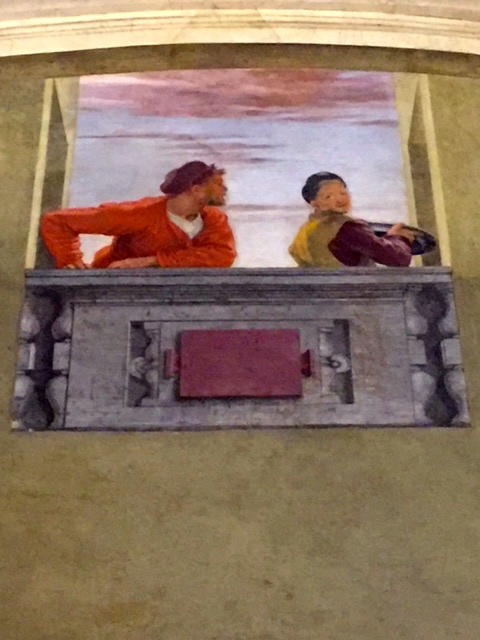
I simply adore this casual slice of everyday Florentine life captured by Andrea del Sarto in the top of the lunette over the last supper.  One man appears to just be hanging out on a balcony over the people eating, while the other, possibly a server for the dinner, seems to be walking away.
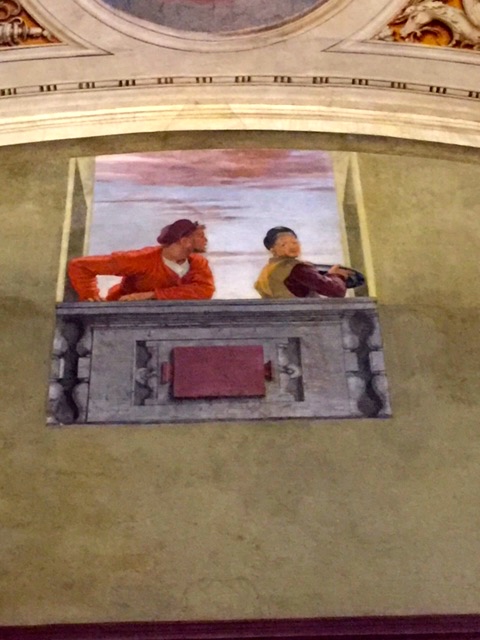
IMG_0086IMG_0085


Not pictured here, but to the right and left of the room, along the walls in glass topped cases, are many sketches for the fresco by Andrea del Sarto.  It is a rare opportunity to see sketches by an artist from this period.  And, to see them in conjunction with the final work is an extraordinary opportunity.
 

IMG_0079

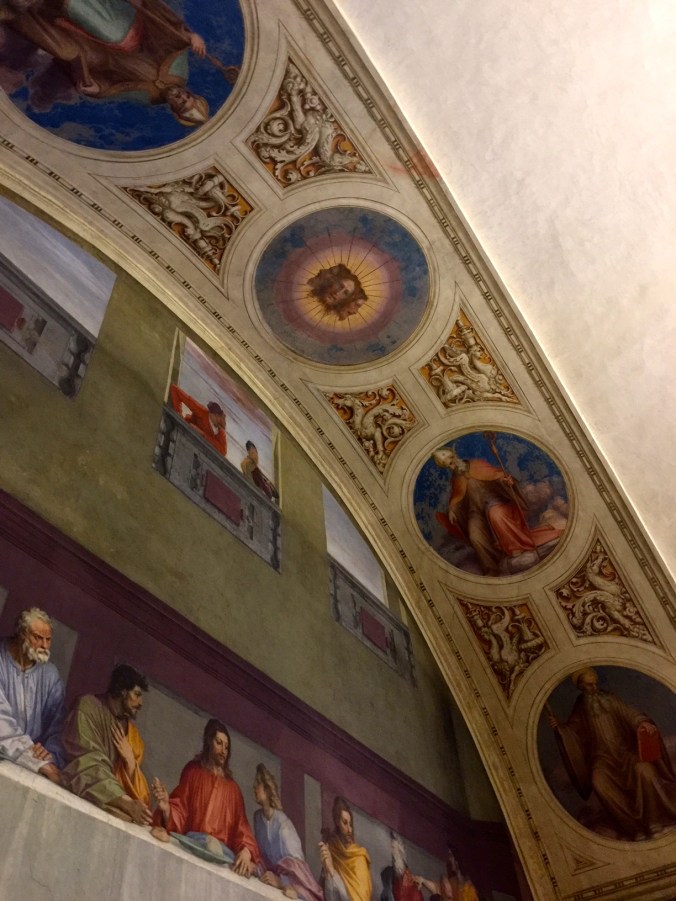
Notice in the picture above, Andrea del Sarto’s treatment of the Trinity.  A 3-faced head shot of sorts.

Who knows!? You might be as lucky as I was and have the place all to your self on the middle of a Saturday in July.  This is almost unheard of in Firenze!

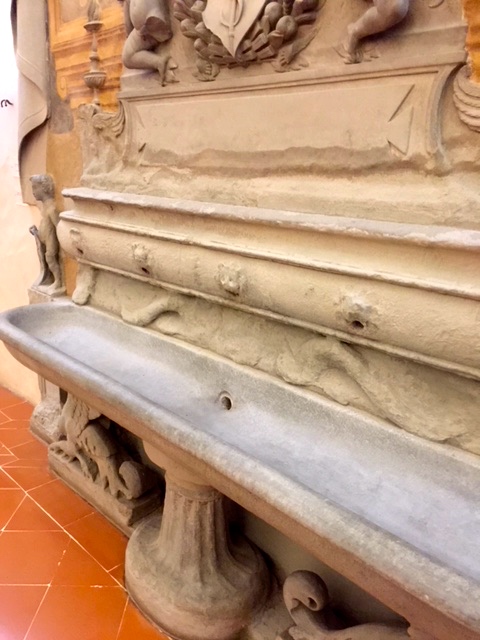
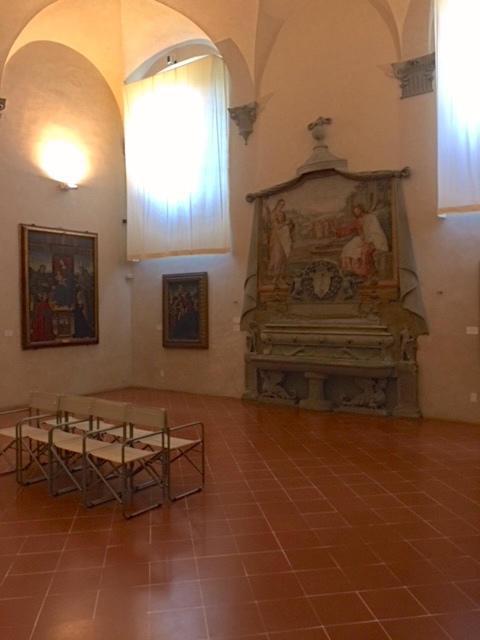
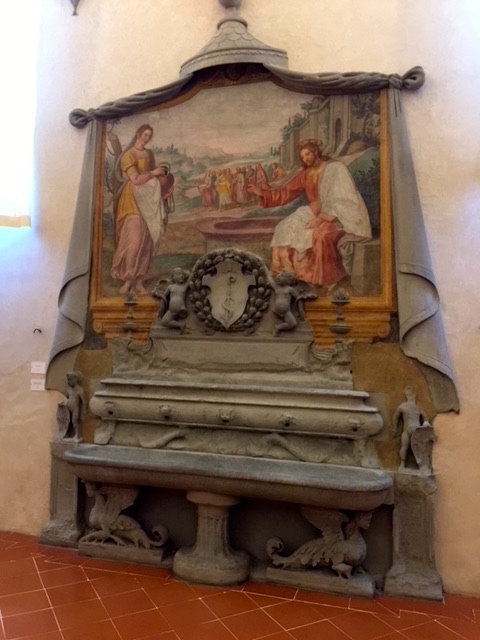
Just outside the refectory is a fountain where the convent members could wash their hands before entering the refectory to dine.
IMG_0093IMG_0094IMG_0095

Utilitarian yet artistic.


Here is some info about the venue: http://www.polomusealetoscana.beniculturali.it/index.php?it/177/firenze-cenacolo-di-andrea-del-sarto

Giorgio Vasari, a new film

A new film, Le memorie di Giorgio Vasari, premiered at the Bari International Film Festival in April of this year. Vasari, the painter, architect, and historian of art, was an eclectic figure of the Italian Renaissance.  I got to see the film today at the best movie theater in the world, the Odeon in Florence’s historic center.  It was a feast for the eyes!


Luca Verdone directed the film and captured, together with the cinematographer, Gianluca Gallucci,  the deep, rich, saturated colors of the Italian world in which Vasari lived. The story is told in first person, with Vasari himself telling us rather idiosyncratic events in Vasari’s life and the works of art he created using the stylistic themes and content he learned from his masters, Michelangelo and Andrea Del Sarto.

Vasari's greatest fame today is not so much linked to his works as tohis treatise, The Lives of the most excellent Italian painters, sculptors and architects, from Cimabue to the present time, published in  1550 and reissued with additions in 1568. A treatise "of a technical and historical-critical nature on the 3 major arts (architecture, sculpture and painting) was a milestone in the study of the life and    works of the more than 160 artists included. 

Luca Verdone has brought to life the story of an important artist anddesigner, one who has never before been brought to the big screen.


If Vasari isn’t playing at a theater near you, you can learn about him in these two fine BBC documentaries.


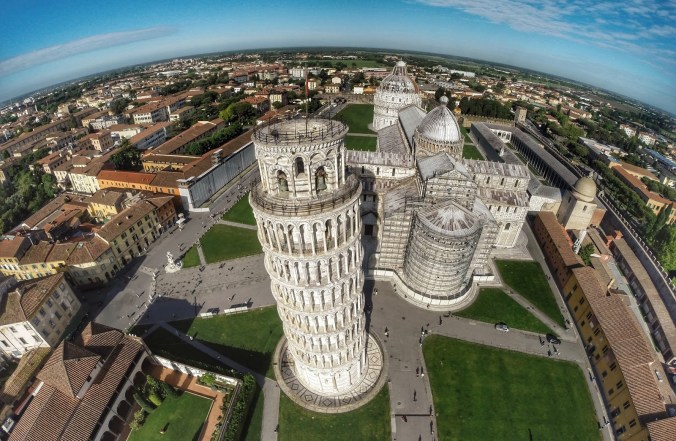
Why doesn’t the Leaning Tower of Pisa fall over?

The Leaning Tower of Pisa has withstood earthquakes for centuries. Now, scientists know why.
image1
Yes, the Leaning Tower of Pisa is still standing. Here’s why it’s earthquake-proof.
The tower and its 5.5 degree lean have vexed engineers for centuries.  

Partially constructed on unexpectedly soft soil, the ancient bell tower began to lean before it was even finished, a historical goof that went on to become one of the world’s historical oddities — and made the tower a UNESCO World Heritage site.

How can something so obviously structurally unsound endure in an earthquake-prone region for hundreds of years? People who assemble an IKEA cabinet and have 18 pieces left over don’t expect to pass a wobbly Hemnes down to their great-grandchildren.

Professor George Mylonakis wanted to know why.

You can read all about it here:

https://www.washingtonpost.com/news/speaking-of-science/wp/2018/06/07/the-leaning-tower-of-pisa-has-withstood-earthquakes-for-centuries-now-scientists-know-why/?utm_term=.f83e68b12400&wpisrc=nl_rainbow&wpmm=1

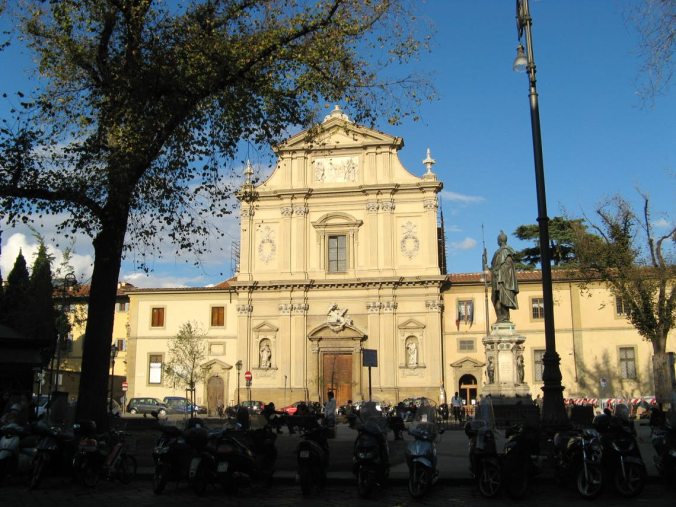
San Marco, Firenze

The monastery of San Marco, which stood just two blocks north of the Palazzo Medici, had been founded in the thirteenth century. However, it had been completely renovated and considerably expanded by Lorenzo the Magnificent’s grandfather, Cosimo de’ Medici in the 1450s.

san-marco

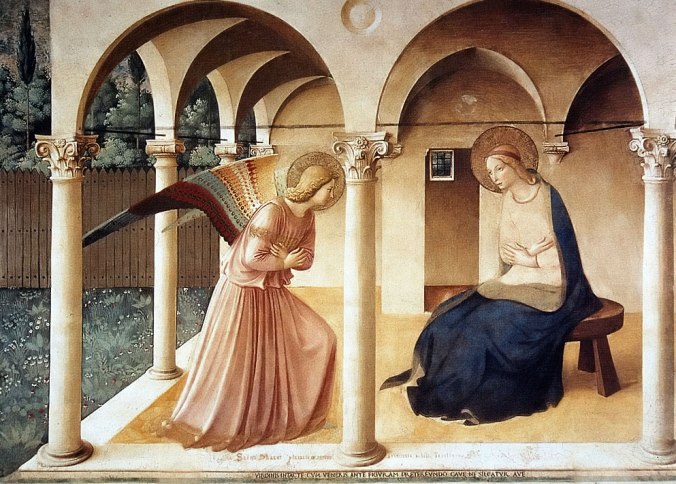
Cosimo had used his favourite architect Michelozzo Michelozzi, and incorporated the work of the resident monk Fra Angelico, one of the great early Renaissance artists.

annunciazione

Michelozzi would be responsible for some of the finest early Renaissance architecture in Florence, including the renovation of the Palazzo della Signoria and the design of the Medici villa at Careggi.

For his part, Fra Angelico’s ethereal paintings would heavily influence Michelangelo, whose depiction of God’s finger passing on life to Adam in the Sistine Chapel was directly inspired by the artist-monk.

The work of Fra Angelico and Michelozzi came together at San Marco in the delightful shaded San Antonio cloister, whose delicate pillars and colourful frescoes enclosed a tranquil green garden in the midst of the monastery.

Cosimo de’ Medici had undertaken the renovation of San Marco late in his life, intending it as absolution for the sin of usury, which had enabled him to accumulate his fortune as a banker. Yet there had also been a less manifest reason for Cosimo’s benevolence, one that explained why in particular he chose to lavish his wealth on San Marco, rather than other similarly prestigious monasteries in the city.

Before the 1433 coup which had removed Cosimo from power in Florence, almost costing him his life, he had managed in the nick of time to transfer secretly to San Marco a large quantity of the funds held in the Medici bank in Florence.

After Cosimo’s banishment into exile, his enemies had raided all Medici premises, as well as those of known supporters, but had been unable to discover the whereabouts of these funds, which had been held on trust, without a word, by the monks at San Marco.

In consequence, Cosimo had spared no expense on the rebuilding of San Marco, which eventually cost 30,000 florins – an unprecedented sum at the time.

The monastery had been furnished with a library, together with many hundreds of religious manuscripts, intended for public use – the first lending library in Europe.

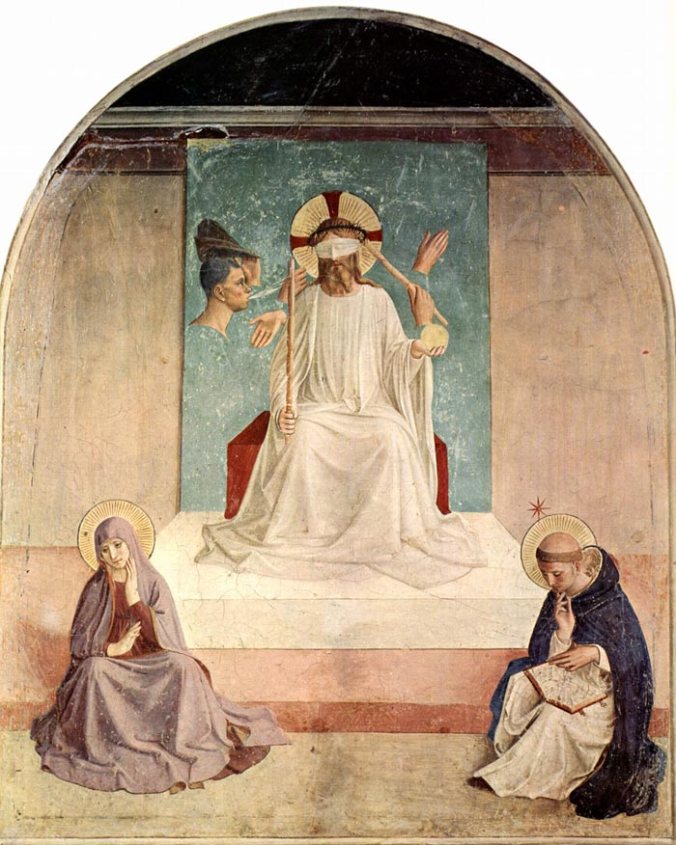
Instead of the usual communal dormitory, each monk was assigned his own cell, many of which contained frescoes painted by Fra Angelico and his assistants. These were mainly portrayals of angels and biblical scenes.

mockingofchrist700

A special double cell, sumptuously frescoed, had been created for Cosimo’s personal use, to which he would often retire for periods of contemplation.

However, he had taken a more active role in the creation of the gardens across the street from San Marco: as a man who delighted in retiring to the countryside, he had done his best to create a pastoral space here within the walls of the city. These gardens would in turn become a favourite spot of Lorenzo the Magnificent, who began decorating the shady spaces with pieces of ancient classical sculpture.

.

Strathern, Paul. Death in Florence: The Medici, Savonarola, and the Battle for the Soul of a Renaissance City, Pegasus. Kindle Edition.

\

Un concerto in Fiesole

On a recent beautiful weekend, I had the chance to visit Villa Salviati, a gorgeous locale in the hills outside of Florence.  Singers from a Florentine operatic school performed in the main building’s cortile.  It was so beautiful and here’s a sample.


Villa Salviati

VillaSalviati

Villa Salviati is home to the Historical Archives of the European Union, a unique resource for researchers at the EUI and far beyond.

By housing the European Union archives, the long international tradition of this villa is continued. Over the centuries this villa had Italian, French, Swedish and American owners.

The estate has naturally strong ties to Florence as well, as the original owners, the Salviati family, wealthy wool merchants and bankers, were in the 15th century closely connected to the Medici that held great power and influence in the city.

The Salviati family’s fortune grew and they went on to add grottos to the site which still stand today. The grottos are made up of frescoes and elaborate stonework that hark back to an era of affluence.

https://www.eui.eu/ServicesAndAdmin/LogisticsService/EUICampus/VillaSalviati

Florence, an open-air museum and a protected UNESCO site

I think it is always worth reminding ourselves that Florence, the Renaissance city, is one of the most beautiful and visited art cities in the world. It is truly an open-air museum, placed in the UNESCO’s World Heritage List in 1982. Let’s make a quick rundown of some of the major sites within the city.

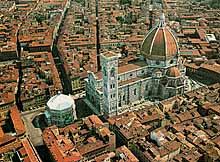
Piazza Duomo is the religious centre of the city, featuring the Cathedral of Santa Maria del Fiore and the majestic Brunelleschi’s Dome, Giotto’s Bell Tower, and the Baptistery of St. John the Baptist, with its world renowned bronze doors.

ub
The square is surrounded by wonderful palaces, such as the Archbishop’s Palace, the 14th-century Loggia del Bigallo and the recently renovated Museo dell’Opera del Duomo (Museum of the Works of the Cathedral) which recreates the original feeling of the 14th-century façade according to the first project by Arnolfo di Cambio with great technical virtuosity.

The absolute masterpiece housed within the Museo dell’ Opera is the Deposition (or Pietà) sculpted by Michelangelo for his own grave.

250px-Pieta_Bandini_Opera_Duomo_Florence_n01

In the sculpture, Nicodemo, represented at the top centre, has Michelangelo’s facial features. Some parts of this marble sculpture are unfinished, as Michelangelo often did in order to witness the spirit struggling to break free from block of stone. In 1555, in an outburst of rage, the same artist partially damaged his own sculpture with a hammer.

Piazza della Signoria is the heart of the socio-political life, as well as the seat of civil power with Palazzo Vecchio (previously known as dei Priori and della Signoria). The square hosts important works of art such as the equestrian monument of Cosimo I de’ Medici, by Giambologna. Next to the palace, you can admire the fountain of Neptune by Bartolomeo Ammannati, also called the ‘Biancone’ due to the huge white marble statue of the sea god at the centre of the fountain, riding in a chariot roomed by four horses.

In front of the main entrance of Palazzo Vecchio, you will find copies of two sculptures by Donatello: Marzocco (the lion symbolising the city of Florence) and Judith Beheading Holofernes, in addition to a copy of the David by Michelangelo, whose original statue is preserved inside the Galleria dell’Accademia (Gallery of the Academy of Florence). Next to David, the statue of Hercules and Cacus by Baccio Bandinelli, symbolises strength and ingenuity prevailing over evil.

On the right, facing Palazzo della Signoria, you will find the Uffizi Gallery, one of the most important museums in the world, which once hosted the offices and the state archives of the Grand-Duke. The museum boasts an incomparable collection of Italian and European art from the 13th century on.

In addition to masterpieces by Cimabue, Giotto, Masaccio, Botticelli, Leonardo, Piero della Francesca, Michelangelo, Raphael, Titian, Caravaggio, Dürer, and many others, there is also a remarkable collection of ancient sculptures.

The Vasarian Corridor is a spectacular elevated enclosed passageway, connecting Palazzo Vecchio with Palazzo Pitti and offering, from above Ponte Vecchio, a breath-taking view on monuments and on the Arno with its bridges. The corridor hosts a collection of self-portraits, in addition to an important 17th and 18th-century collection of paintings.
The Galleria dell’Accademia hosts the highest number of sculptures by Michelangelo, such as the Prisoners, St. Matthew and the famous David, in addition to important paintings from the second half of 13th century to the end of 16th century, as well as the Musical Instruments Museum.

The National Museum of the Bargello, located inside a palace built in mid-13th century for the Capitano del Popolo (Captain of the People), boasts some of the most important statues of the Renaissance by Ghiberti, Donatello, Verrocchio, the Della Robbia family, Michelangelo, Giambologna, and others. Do not miss the prestigious collections of little bronze statues, maiolica, wax models, enamels, medals, ivory, tapestry, furniture, seals and textiles coming from the Medicean collections or donated by private collectors.

Palazzo Pitti, with its wonderful Boboli Gardens, represents one of the most important monumental complexes with its museums – the Palatine Gallery, the Monumental Apartments, the Silver Museum, the Modern Art Gallery, the Costume Gallery, the Porcelain Museum and the Carriages Museum.

Among the most representative testimonies of the Florence Renaissance, the city boasts some masterpieces planned by Filippo Brunelleschi (in addition to his world renowned Dome) – the Ospedale degli Innocenti (Hospital of the Innocents) and the two churches of San Lorenzo and Santo Spirito – and by Leon Battista Alberti – the façade of the Santa Maria Novella church and Palazzo Rucellai.
Piazza della Repubblica is the “élite square” of the city, with its great historic cafés and 19th-century buildings. The historic centre of Florence is a shopping and entertainment paradise, with the most famous fashion designer boutiques, traditional handicraft workshops, historical markets and typical restaurants, as well as American bars, lounge bars and discos.
Do not miss the churches of San Miniato al Monte, Santa Croce and Santa Maria Novella, as well as the great masterpieces of Italian 20th -century architects, such as the Central Railway Station of Santa Maria Novella and the Artemio Franchi football stadium, respectively by Giovanni Michelucci and Pier Luigi Nervi.

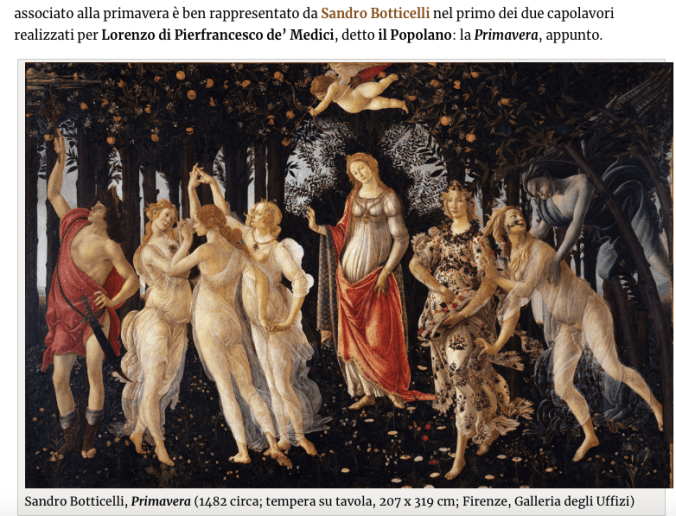
Botticelli’s plant world

Screen Shot 2018-05-14 at 10.29.30 AMScreen Shot 2018-05-14 at 10.28.43 AM

conservato agli Uffizi, non faccia accenno al fatto che Botticelli vi ha rappresentato centinaia di esemplari tra fiori, arbusti, erbe, alberi e vegetali in generale. Una così cospicua presenza di piante risponde a diverse esigenze: la prima è ovviamente circoscrivere il periodo dell’anno oggetto dell’opera, perché le specie rappresentate da Botticelli, com’è lecito immaginare, fioriscono, crescono e germogliano tutte in primavera. La seconda è suggerire rimandi simbolici: in tal modo si spiega, per esempio, la presenza degli alberi d’arancio che sì presentano le loro zagare, i fiori bianchi tipici degli agrumi, ma sono anche carichi di frutti, quando è noto che l’arancio dà i suoi frutti verso la fine dell’autunno. L’arancio è infatti un emblema mediceo: facile comprendere perché se si conosce la denominazione latina citrus medica, che oggi designa scientificamente il cedro ma che anticamente, almeno secondo il botanico ottocentesco Giorgio Gallesio, era utilizzata per indicare anche l’arancio. Inoltre, l’agrume è anche simbolo di matrimonio, perché secondo la mitologia antica la dea Giunone avrebbe donato al marito Giove piante d’arancio come dote nuziale. Se peraltro si prende per buona la pur discussa datazione che vorrebbe la Primavera dipinta nel 1482, la realizzazione dell’opera cadrebbe nell’anno del matrimonio tra Lorenzo di Pierfrancesco de’ Medici e Semiramide Appiani.

https://www.finestresullarte.info/659n_specie-vegetali-della-primavera-di-sandro-botticelli.php