Palazzo Strozzi: an incredible, historic building now repurposed as a superb exhibition space

The Palazzo Strozzi is a superb example of Renaissance civil noble residential architecture in the historic center of Florence.  And it has been repurposed to delightful service of the modern world.

220px-Palazzo_Strozzi_2


Today the palace is used for temporary international expositions, like the one I viewed yesterday, devoted to Bill Viola.


banner-pg2-ing


Before looking at the exhibition, let’s discuss the incredible building:

Filippo Strozzi the Elder (1428 – 1491), the banker and statesman, commissioned the structure after his return to Florence in November of 1466.

Stile_di_niccolò_fiorentino,_filippo_strozzi_(1426-91),_1489,_recto

As a major Medici rival, Strozzi wanted to build the most magnificent home in the city to assert his family’s prominence.  The palace may as well have been intended as a political statement of his own status.  Based on the wishes of Strozzi himself, the palazzo would be built to look like a small fortress in the heart of the city.

The palace was begun in 1489 and designed by Benedetto da Maiano.

250px-Palazzo_Strozzi_03

The Strozzi palace was clearly inspired by the Palazzo Medici, with its rusticated stone exterior, but it is much larger and has more harmonious proportions than its predecessor.  Whereas the Palazzo Medici was sited on a corner lot and thus has only two main sides, the Stozzi is surrounded on all four sides by streets. The Strozzi palace faces the historical  and fashionable Via de’ Tornabuoni, as well as the Piazza Strozzi and on Via Strozzi. The building thus required three imposing entranceways, each flanked by rectangular windows. The Strozzi family’s coat of arms is found in the upper floors.

The siting of the Strozzi in the center major streets provided the challenge of how to integrate a cross-axis in keeping with the Renaissance desire for strict internal symmetry.  As a result, the ground plan of Palazzo Strozzi is rigorously symmetrical on its two axes.

The Strozzi family acquired a great number of buildings in this area were acquired during the 70s and demolished them all to to provide enough space for his new home.

The original architect, Benedetto da Maiano, died in 1497; Simone del Pollaiolo (il Cronaca) took over and was responsible for the completion of the palace. Pollaiolo died in Florence in 1508, but is credited with the design and finish of the central courtyard or cortile, surrounded by an arcade inspired by Michelozzo.

The external facade is adnorned with splendid torch holders, flag holders and rings to tie horses made by Niccolò di Nofri, an iron-worker known as il Caparra.

Unfortunately, Filippo Strozzi died in 1491, long before the construction’s completion in 1538.  Strozzi’s children were the first to live in the palazzo, moving in around 1505.  Ironically, Duke Cosimo I de’ Medici confiscated the palazzo in the same year, not returning it to the Strozzi family until thirty years later.

The palazzo remained the seat of the Strozzi family. Although the family lived in Rome for centuries, the palazzo was returned to its original splendour in the mid-1800s with the Princess Antonietta, and then with Prince Piero, who, from 1886 to 1889, had the building renovated by architect Pietro Berti.  In 1937 the family sold the building to the Istituto Nazionale delle Assicurazioni, and many changes were made to the edifice.  It was later given to the city of Florence in 1999. It is now home to the Institute of Humanist Studies and to the Fondazione Palazzo Strozzi.

Since July 2006, the Fondazione Palazzo Strozzi has been able to create a rich and innovative calendar of events and exhibits, in these areas of the building: Piano Nobile, la Strozzina and Il Cortile.

The Gabinetto G.P. Viesseux and the Renaissance Studies Institute both have also occupied the building since 1940.  Here also is the seat of the Istituto Nazionale del Rinascimento and the noted Gabinetto Vieusseux, with a library and reading room.

Today the palace is used for temporary international expositions like the now-annual antique show, founded as the Biennale dell’Antiquariato in 1959, fashion shows and other cultural and artistic events.


Allora, on to Bill Viola and his video art.

In the exhibition “Electric Renaissance,” Viola seems to have taken certain Renaissance masterpieces and created video dialogues with them.  I would say he is tremendously fortunate to have been able to borrow the original Italian artworks and, even if you don’t love Viola’s work, you will be rewarded with a small, select group of historic masterworks.  For example:

Here’s his dialogue between his video of 3 contemporary women greeting each other, in relationship to Pontormo’s

IMG_3759


IMG_3758  IMG_3757


Other installations stand on their own.  This screen is about 200 feet long by 15 feet high.

IMG_3761


IMG_3766IMG_3767IMG_3768IMG_3769IMG_3770IMG_3771


Summer reading.

I know, the calendar hasn’t officially cleared summer for take off.  But, as I write this in Florence on Saturday evening at 6:30 p.m., the temperature is 91 degrees F.  Summer has arrived, secondo me. If it gets much hotter than this, I may have to move way way up north to Scotland.

Keeping cool for me requires a lot of good reading material.  My latest enjoyment has been found in this great non-fiction tome, filled with art intrigue, a connection between Italy and the US, and historical context of the 1960s and 1970s.  A fun book to read, and not just for art historians, I promise!


51dYJhPEQ5L._AC_US218_


The Boston Raphael: A Mysterious Painting, an Embattled Museum in an Era of Change & A Daughter’s Search for the Truth by Belinda Rathbone

Great summer reading.

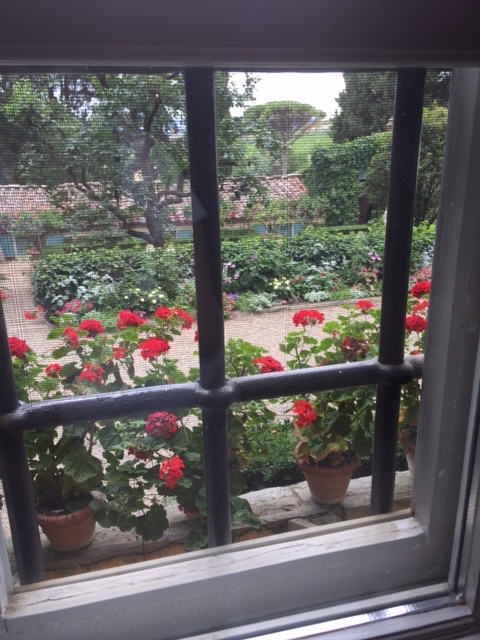
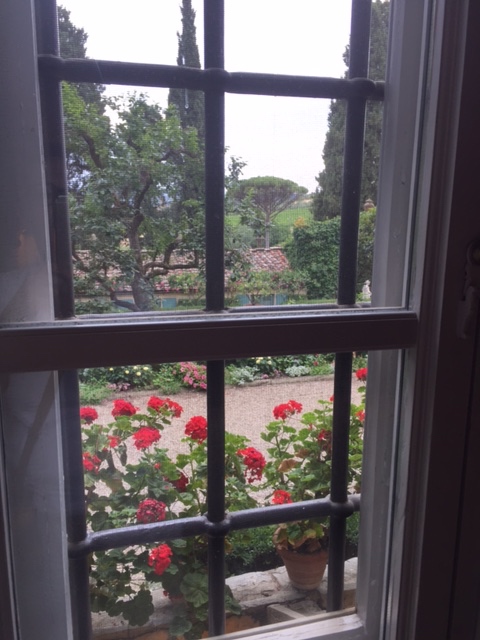
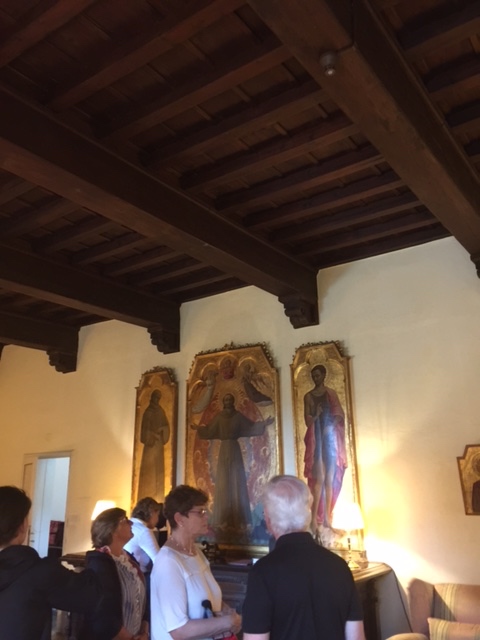
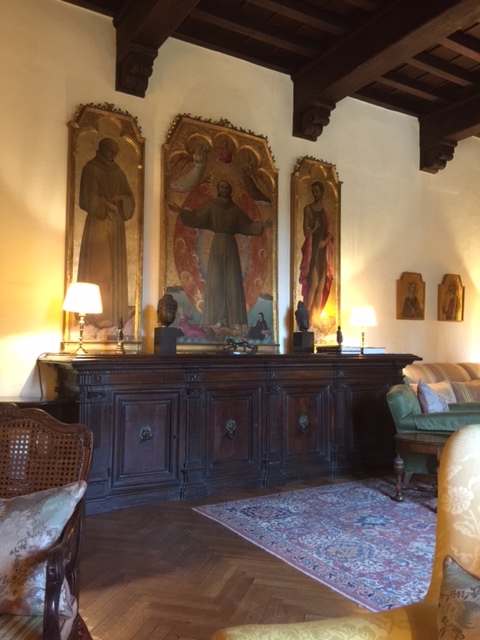
Villa i Tatti; inside the palazzo and library

IMG_3417

I’m a rule breaker and a rebel.

The following pictures were not allowed.

I’m not sorry. :-)


Somehow I feel Bernard Berenson would understand me.  I mean, he took a few liberties (ahem) in his gathering and collecting of Italian paintings.  Ahem.

If the Villa would like to lock me up for having snapped these pictures (with no flash), I’d be happy to do time at the Villa.  Just let me know.  I’ll be right over to start my incarceration.


IMG_3418

IMG_3419

IMG_3420

IMG_3421

IMG_3422

IMG_3423

IMG_3424

IMG_3425


IMG_3426

IMG_3427

IMG_3428

IMG_3429

IMG_3430

IMG_3431

IMG_3432

IMG_3433

IMG_3434

IMG_3435

IMG_3436

IMG_3437

IMG_3438

IMG_3439

IMG_3440

IMG_3441

IMG_3442

IMG_3443

IMG_3444

IMG_3445

IMG_3446

IMG_3447

IMG_3448

IMG_3449

IMG_3450

Villa Farnesina

Well, darn it!  I made a big mistake.  I left my camera cord in Florence so I can’t transfer my photos from my camera to my computer for another couple of weeks.  So, I am going to have some big holes in my posts until I get back home to Florence.  Oh well, what can you do?

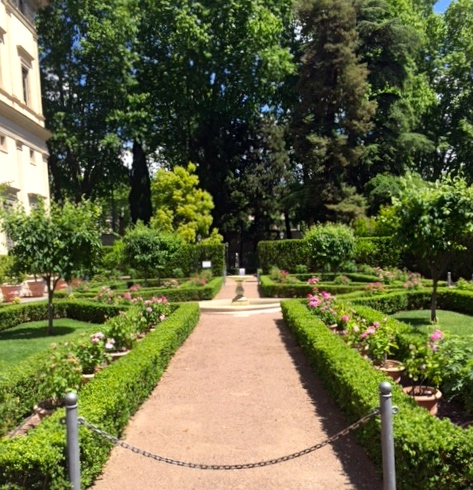
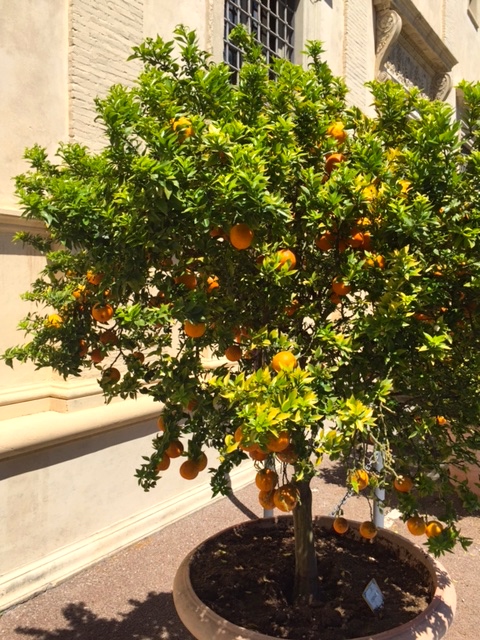
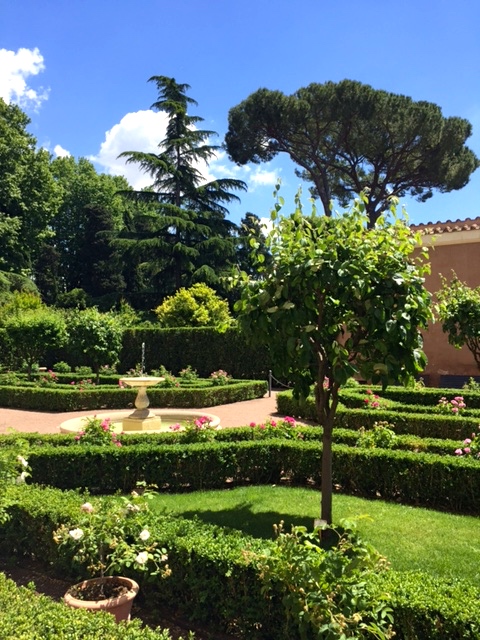
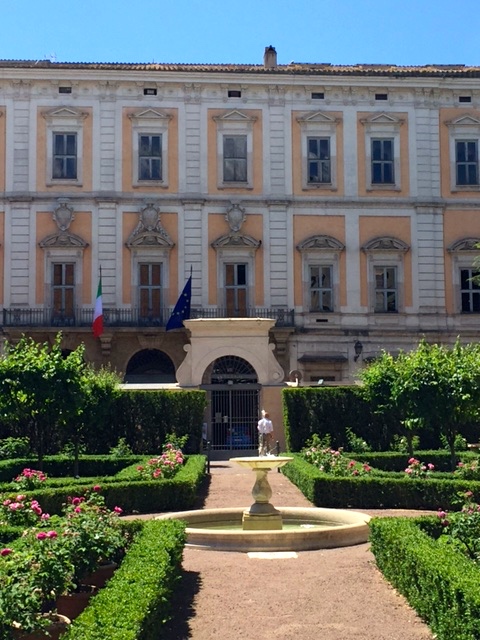
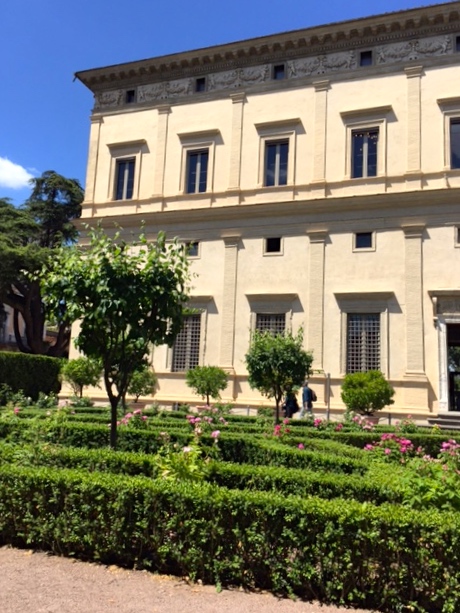
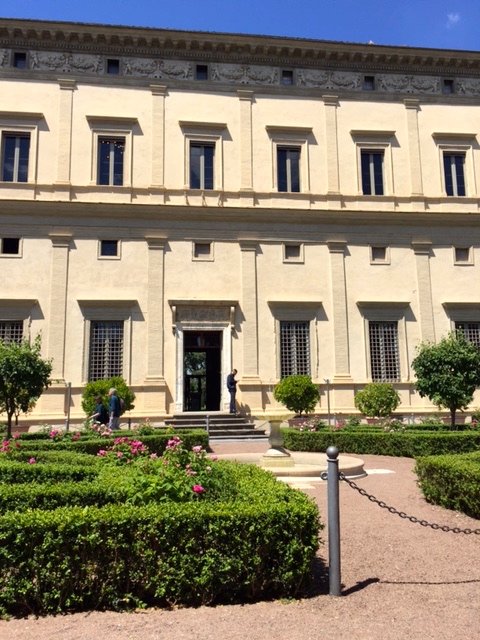
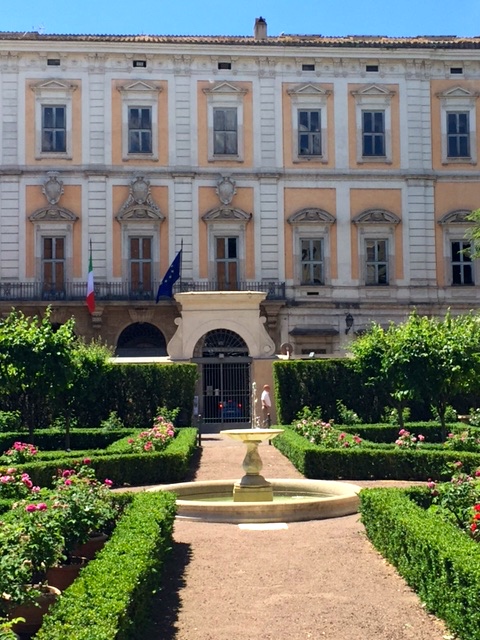
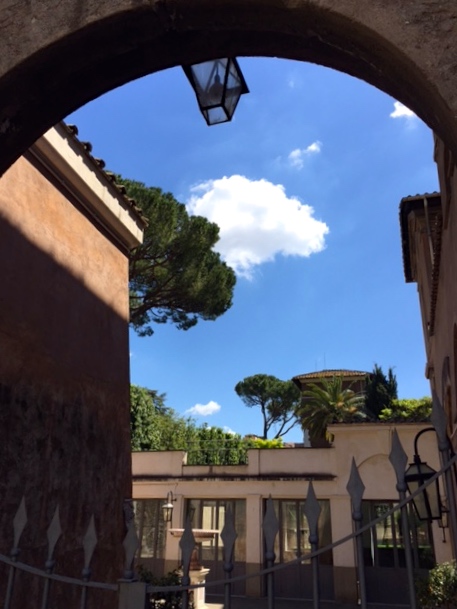
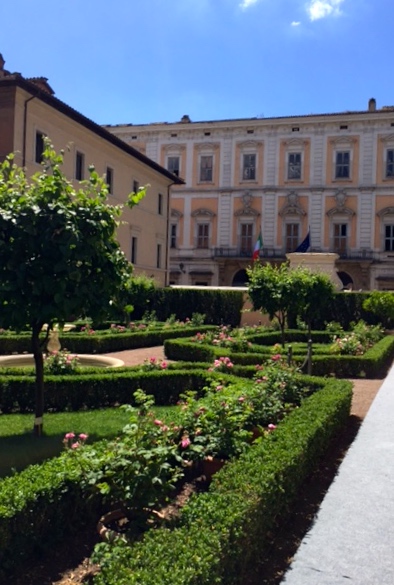
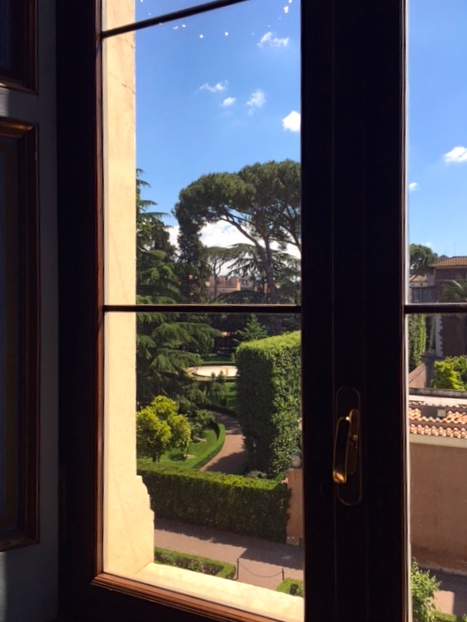
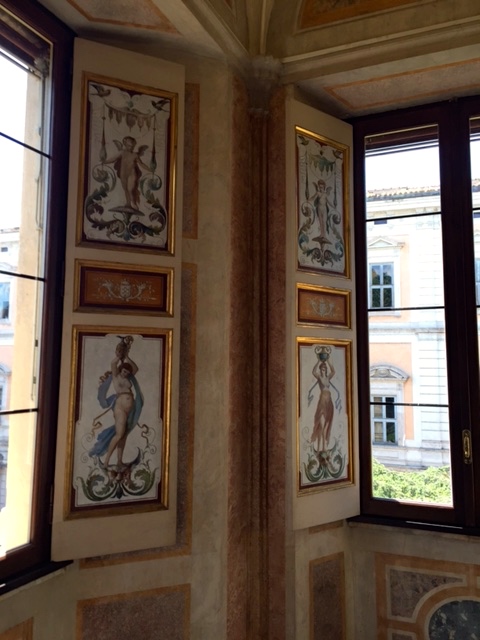
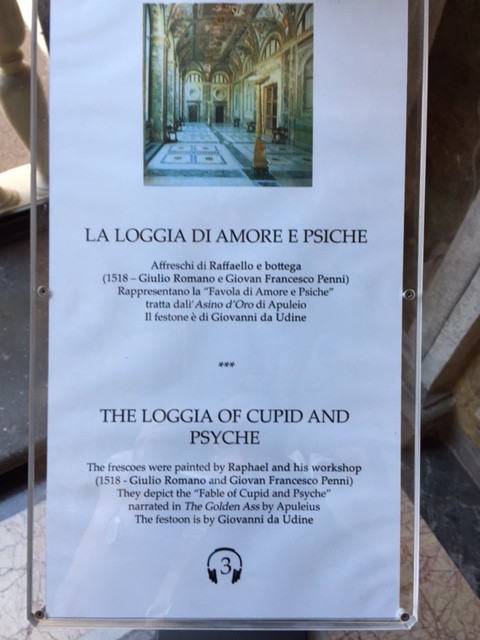
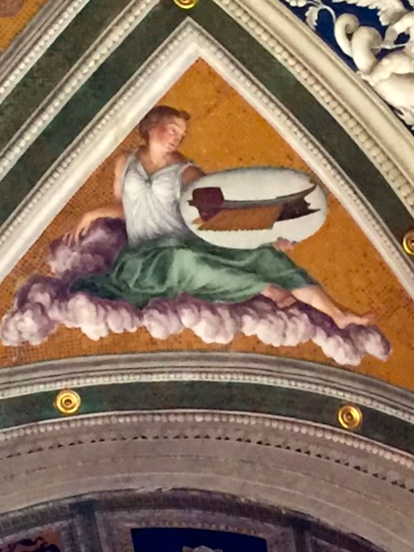
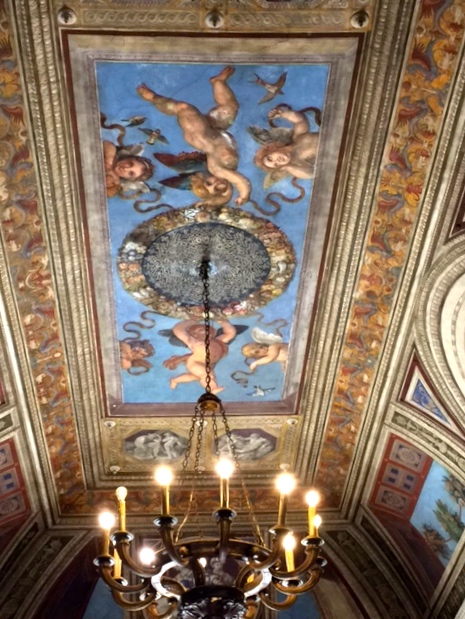
Until then, here are some shots I snapped with my phone camera at the gorgeous Villa Farnesina today.  The place is so amazing, even the phone shots are pretty great!  Also, the weather….70 degrees and sunny skies.

Allora, on to the Villa, the quintessential Renaissance palazzo.

The Villa’s exterior:

IMG_2613


IMG_2614


IMG_2615


IMG_2637


IMG_2640


IMG_2639


IMG_2638


IMG_2637


IMG_2641


IMG_2636


IMG_2635


IMG_2634


IMG_2633


IMG_2632


IMG_2631


IMG_2630


Before we head inside, let’s have a history lesson.

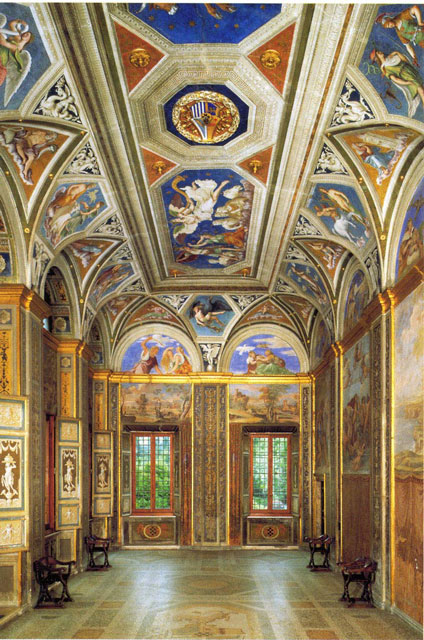
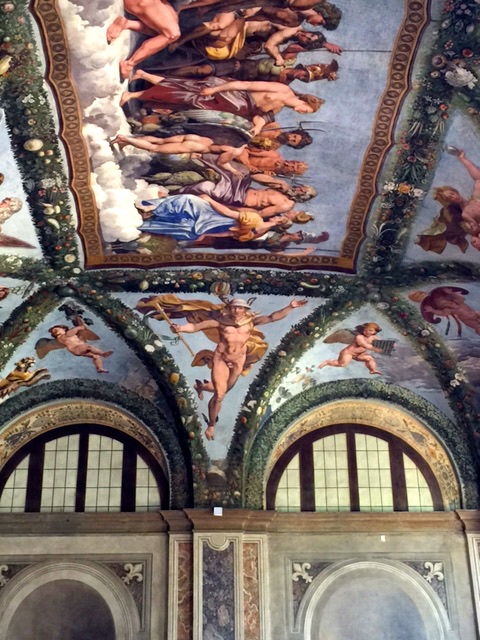
Sala-Galatea-villa-farnesin

Villa Farnesina: a Renaissance suburban villa in the Via della Lungara, in the district of Trastevere in Rome.

The villa was built for Agostina Chigi, a rich Sienese banker and the treasurer of  Pope Julius II.  Between 1506–1510, the Sienese artist and pupil of Bramante, Baldassarre Peruzzi, aided perhaps by Giuliano da Sangallo, designed and erected the villa.

The novelty of this suburban villa design can be discerned from its differences from that of a typical urban palazzo (palace). Renaissance palaces typically faced onto a street and were decorated versions of defensive castles: rectangular blocks with rusticated ground floors and enclosing a courtyard.

This villa, intended to be an airy summer pavilion, presented a side towards the street and was given a U shaped plan with a five bay loggia between the arms. In the original arrangement, the main entrance was through the north facing loggia which was open. Today, visitors enter on the south side and the loggia is glazed.

Chigi also commissioned the fresco decoration of the villa by artists such as Raphael, Sebastian del Piombo, Giulio Romano, and Il Sodoma. The themes were inspired by the Stanze of the poet Angelo Poliziano, a key member of the circle of  Lorenzo de Medici.

Best known are Raphael’s frescoes on the ground floor; in the loggia depicting the classical and secular myths of Cupid and Psyche, and The Triumph of Galatea. This, one of his few purely secular paintings, shows the near-naked nymph on a shell-shaped chariot amid frolicking attendants and is reminiscent of Botticelli’s The Birth of Venus.

This same “Galatea” loggia has a horoscope vault that displays the positions of the planets around the zodiac on the patron’s birth date, 29 November 1466. The two main ceiling panels of the vault give his precise time of birth, 9:30 pm on that date.

On the piano nobile, Peruzzi painted the main salone with troupe l’oeil frescoes of a painted grand open loggia with city and countryside views beyond. The perspective view only works from a fixed point in the room otherwise the illusion is broken.

In the adjoining bedroom, Sodoma painted scenes from the life of Alexander the Great, the marriage of Alexander and Roxana, and Alexander receiving the family of Darius.

The villa became the property of the Farnese family in 1577 (hence the name of Farnesina). The Villa’s second owner, Cardinal Alessandro Farnese, became Pope Paul III in 1534, and the Farnese family’s wealth and influence continued to soar. Also in the 16th century, Michelangelo proposed linking the Palazzo Farnese on the other side of the Tiber River, where he was working, to the Villa Farnesina with a private bridge. This was initiated, remnants of a few arches are in fact still visible in the back of Palazzo Farnese towards via Giulia on the other side of the Tiber, but was never completed.

Today, the Villa is owned by the Italian State; it accommodates the Accademia dei Lincei,  a long-standing and renowned Roman academy of sciences. Until 2007 it also housed the Gabinetto dei Disegni e delle Stampe (Department of Drawings and Prints) of the Istituto Nazionale per la Grafica, Roma.

The Villa’s interior (better photos are coming, in about 2 weeks; see above):

IMG_2618


IMG_2619


IMG_2624


IMG_2627


IMG_2628


IMG_2629


You knew I would soon veer to art, didn’t you?

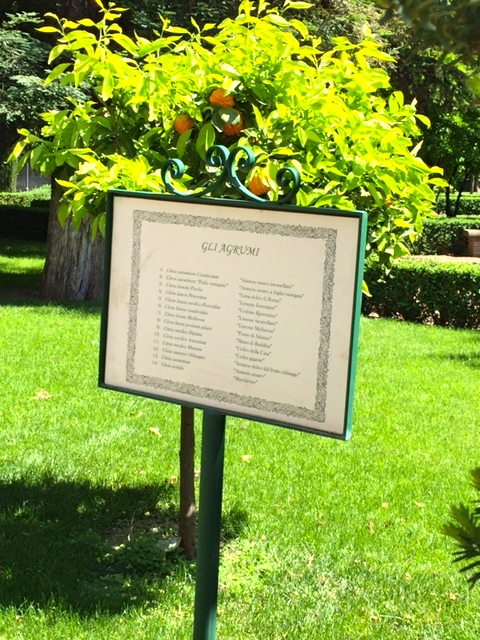
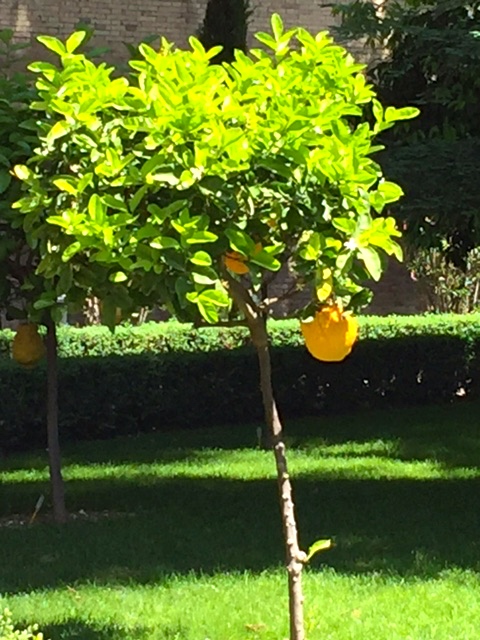
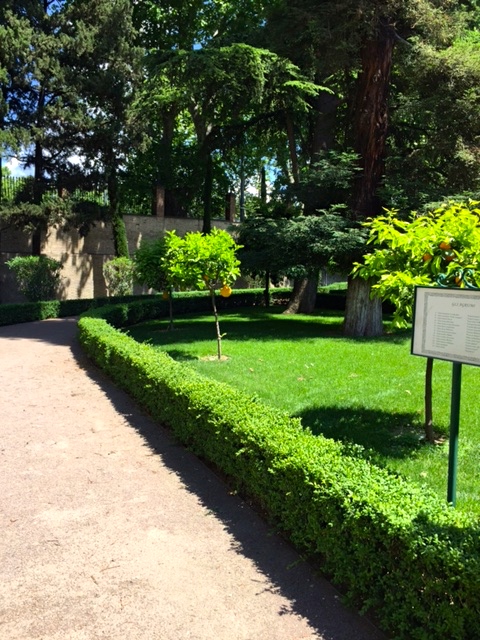
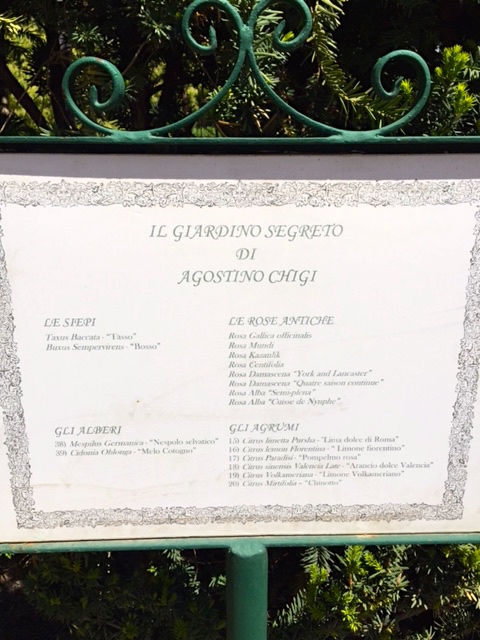
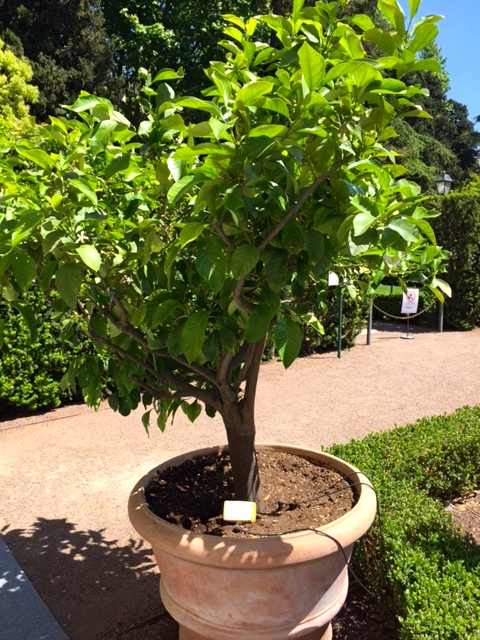
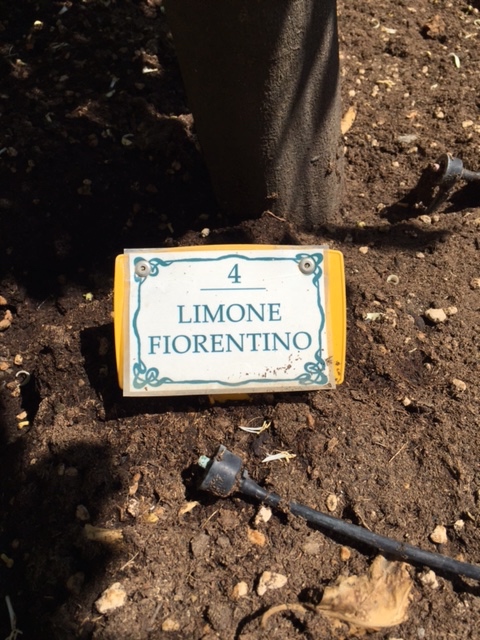
Oranges and Italian art:

Because of a combination of new artistic techniques and some apparently reasonable, but mistaken, assumptions about the history of citrus, oranges appeared frequently in paintings by any number of the great masters of the Italian Renaissance.

In making the break from Byzantine scholasticism to the new humanism of the Renaissance, artists began setting their religious figures against naturalistic backgrounds. Not having seen the Holy Land, they glibly set their Annunciations and Resurrections in Italian villas and on Italian hills.

Crusaders, among others, had long since reported that orange trees flourished in Palestine, so, as a kind of hallmark of authenticity, the painters slipped orange trees into masterpiece after masterpiece, remaining ignorant to their deaths that in the time of Christ there were no orange trees in or near the Holy Land.

In his “Maestà,” the Sienese painter Duccio di Buoninsegna showed Jesus entering Jerusalem through the streets of Siena, past orange trees in full fruit.

Fra Angelico painted Jesus resting under an orange tree.

It was almost unthinkable for a great master to do a “Flight into Egypt” without lining the route with orange trees.

A “Last Supper” was incomplete without oranges on the table, although there is no mention of oranges in the Bible.

Titian’s “Last Supper,” which hangs in the Escorial, shows oranges with fish.

A Domenico Ghirlandaio “Last Supper” goes further: a mature orange grove is depicted in murals behind the Disciples.

The deterioration of Leonardo’s “Last Supper” has been too extensive for any oranges in it to be identified, but in all likelihood, according to Tolkowsky, they were there.
Most painters thought of the Annunciation as occurring indoors, and Paolo Veronese, for one, moved orange trees indoors to authenticate the scene, setting the plants in trapezoidal pots, of the type in which orange trees were grown in his time in northern Italy.

Fra Angelico also used orange trees to give a sense of the Holy Land to his “Descent from the Cross,” which was otherwise set against the walls of Florence, and, like many of his contemporaries, when he painted the Garden of Eden he gave it the appearance of a citrus grove.

Benozzo Gozzoli’s frescoes in a family chapel of the Medici show Melchior, Balthasar, and Gaspar looking less like three wise kings from the East than three well-fed Medici, descending a hill that is identifiable as one near Fiesole, dressed as an Italian hunting party, and passing through stands of orange trees bright with fruit.

Actually, Gozzoli’s models for the magi were Lorenzo de’ Medici; Joseph, Patriarch of Constantinople; and John Palaeologus, Emperor of the East.


~~~~~~~~~~~~~~~~~

The orange tree was more than a misplaced landmark. It was also a symbol of the Virgin, erroneously derived from an earlier association that medieval theologians had established between Mary and the tall cedars of Lebanon.

Thus, countless paintings of the Madonna or of the Madonna and Child were garlanded with orange blossoms, decorated with oranges, or placed in a setting of orange trees.

Mantegna, Verrochio, Ghirlandaio, Correggio, and Fra Angelico all complemented their Madonnas with oranges.

Sandro Botticelli, in his “Madonna with Child and Angels,” set his scene under a tentlike canopy thickly overhung with the branches of orange trees full of oranges.

In the Neo-Latin of the Renaissance, oranges were sometimes called medici— an etymological development that had begun with the Greek word for citron, or Median apple.

It is no wonder, therefore, that in art and interior decoration the Medici themselves went in heavily for oranges. In Florence, oranges are painted all over the ceilings of the Medici’s Pitti Palace.

The Grand Duke Francesco de’ Medici was one of the world’s earliest collectors of citrus trees, and in Tolkowsky’s view the five red spheres on the Medici coat of arms were almost certainly meant to represent oranges.

When Botticelli painted his “Primavera,” under a commission from the family, he shamelessly included Giuliano de’ Medici as the god Mercury, picking oranges.

Botticelli also painted his “Birth of Venus” for the Medici.

It was Venus, and not the Hesperides, according to a legend current at the time, who had brought oranges to Italy.

Botticelli’s model was Simonetta dei Cattanei, wife of Marco Vespucci and Giuliano de’ Medici’s Platonic love. Simonetta came from Porto Venere, where Venus was alleged to have landed with the original oranges, so Botticelli painted her in the celebrated scallop shell bobbing on the gentle swells off Porto Venere, and lined the coast behind her with orange trees.

Giuliano’s son, Giulio de’ Medici, who became Pope Clement VII, commissioned Raphael to design a villa for him with a great double stairway leading to a sunken garden full of orange trees.

All this was bound to engage the envy of royalty in the north, and at the end of the fifteenth century, in an expedition often said to mark the dividing point between medieval and modern history, Charles VIII of France went to Italy intending to subdue the peninsula by force of arms. Instead, he fell in love with Italian art, architecture, and oranges. When he returned to France, every other man in his retinue was an Italian gardener, an Italian artist, or an Italian architect. Charles was going to transform the castles and gardens of France.

McPhee, John (2011-04-01). Oranges. Farrar, Straus and Giroux. Kindle Edition.


1 Maggio, Labor Day in Italy

IMG_2459


IMG_2460


IMG_2461


IMG_2462


IMG_2463


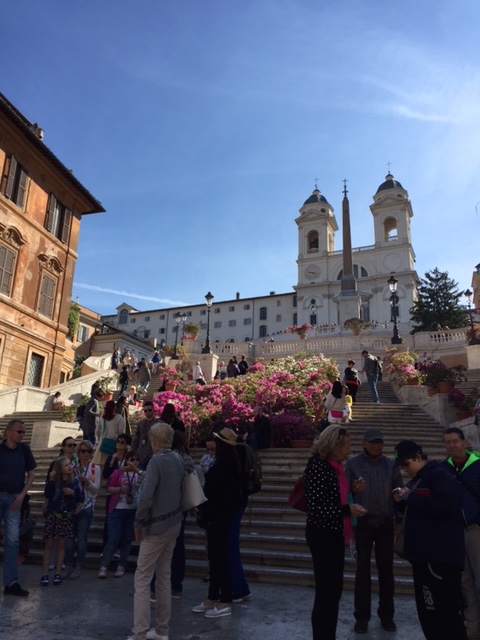
Piazza di Spagna

IMG_2467


Breakfast

IMG_2469


IMG_2471


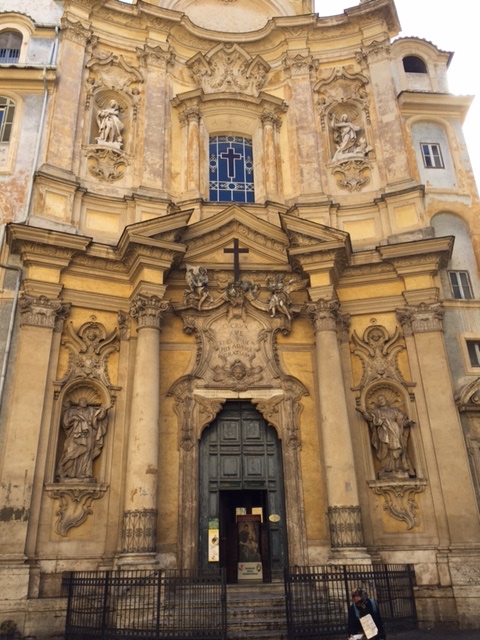
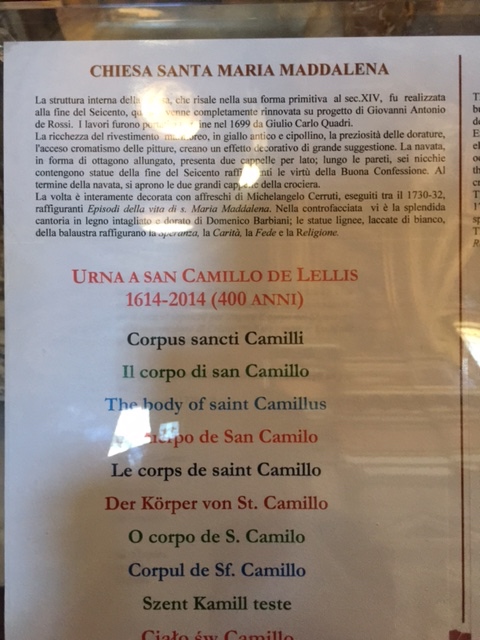
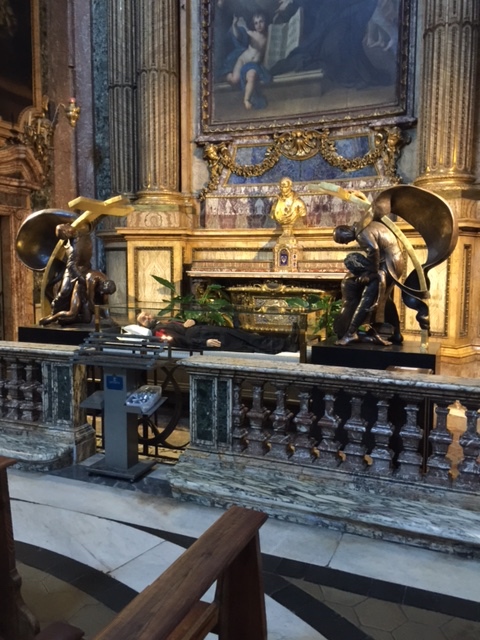
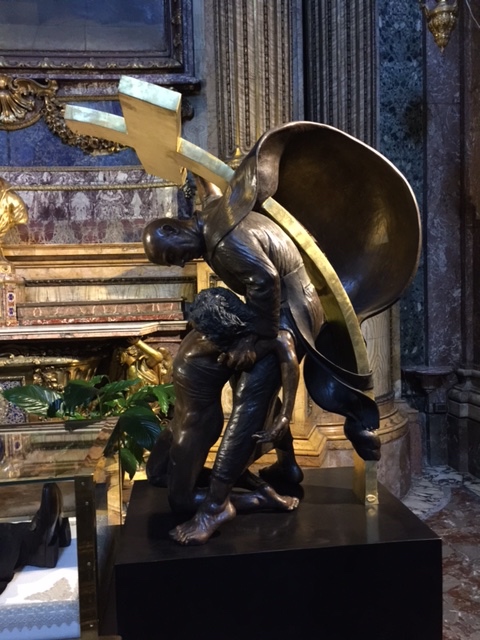
Chiesa Santa Maria Maddalena

IMG_2472


IMG_2478


IMG_2474


IMG_2475


IMG_2476


IMG_2477


IMG_2479


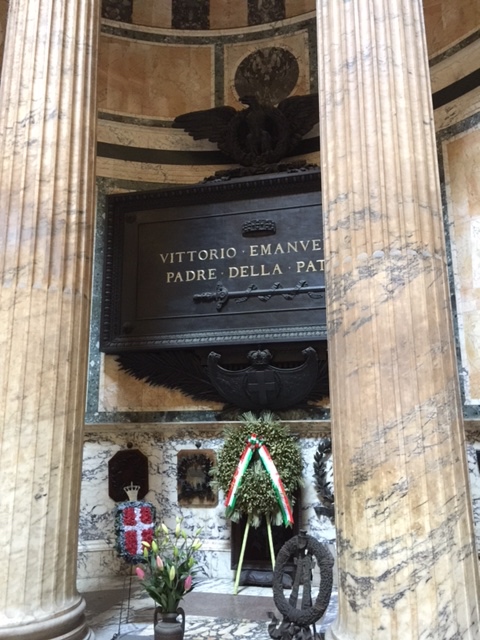
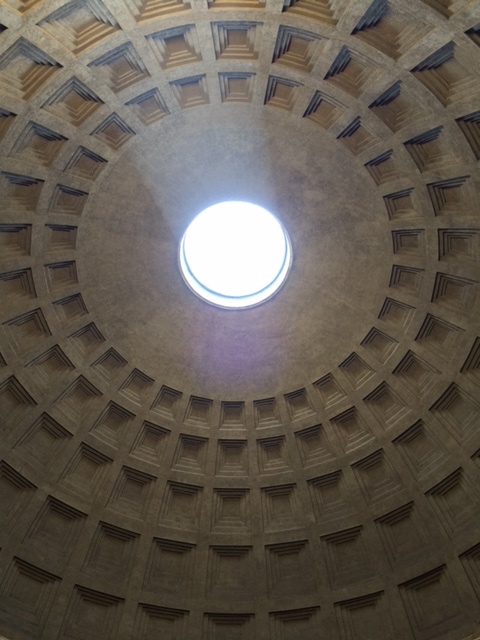
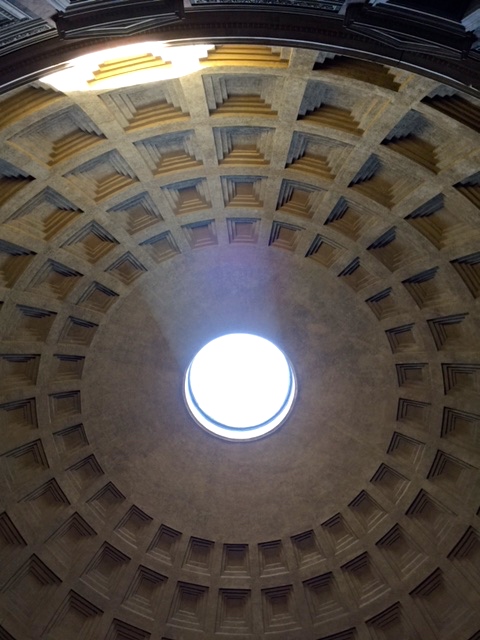
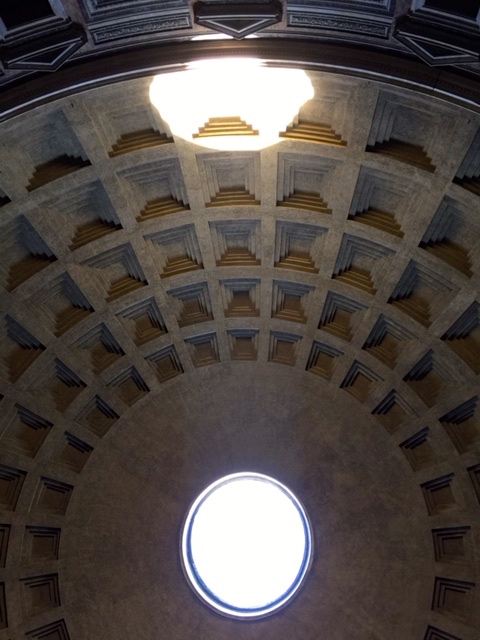
Pantheon

IMG_2480


IMG_2481


IMG_2482


IMG_2483


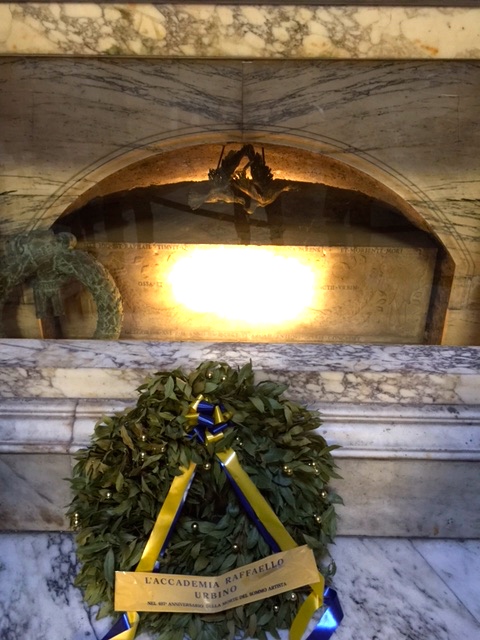
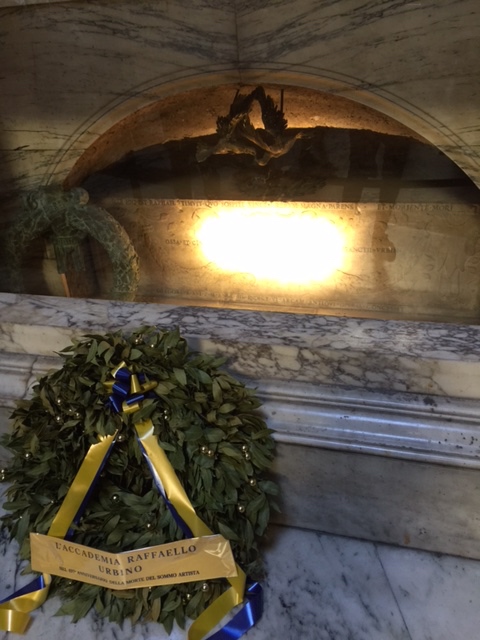
Tomb of Raphael

IMG_2484

IMG_2485


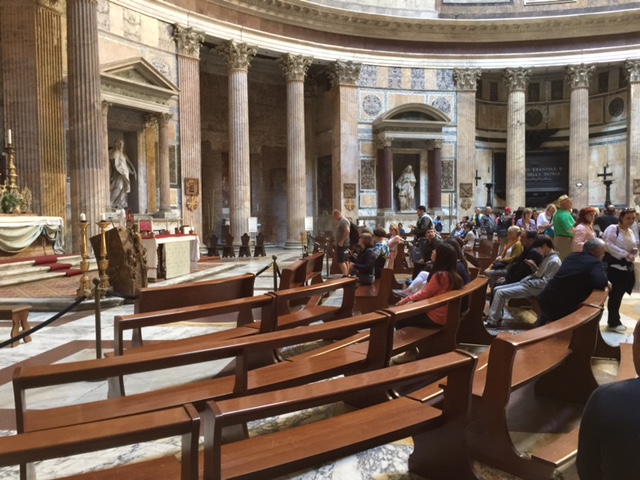
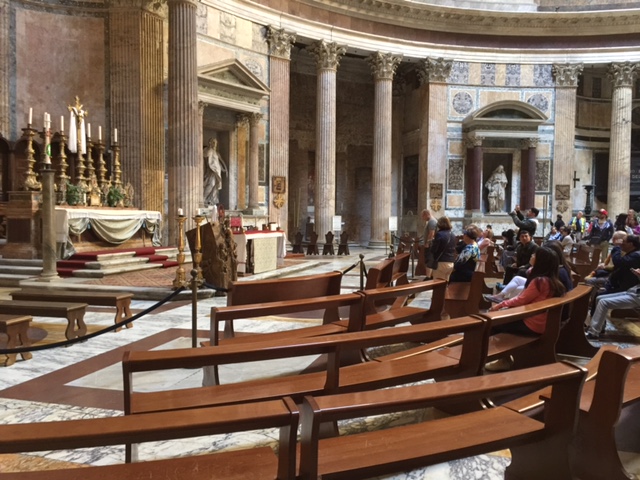
The Pantheon is a church after all.  Here is how it is set up for mass.

IMG_2486IMG_2487


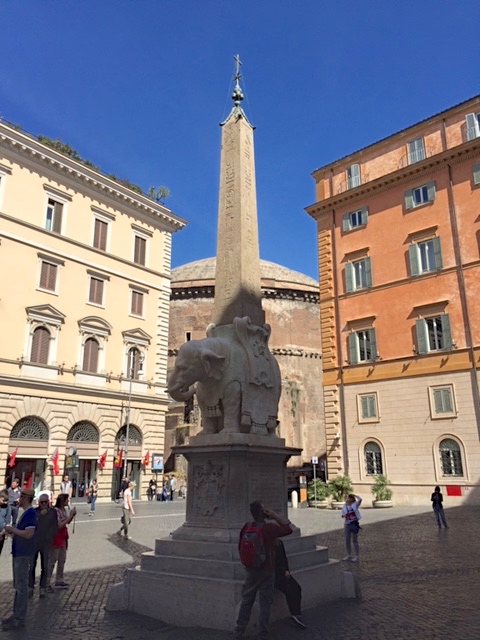
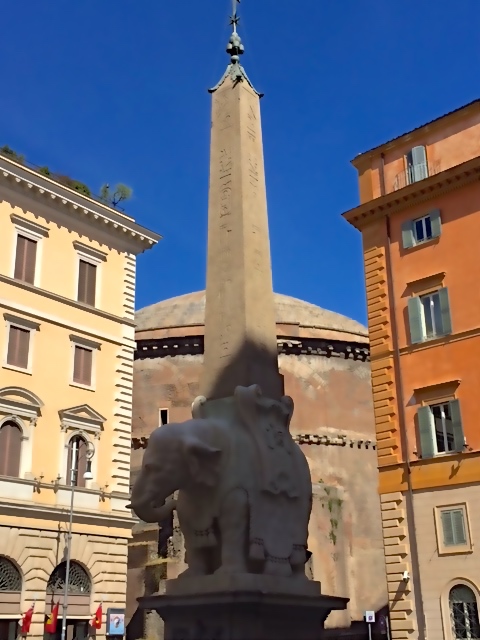
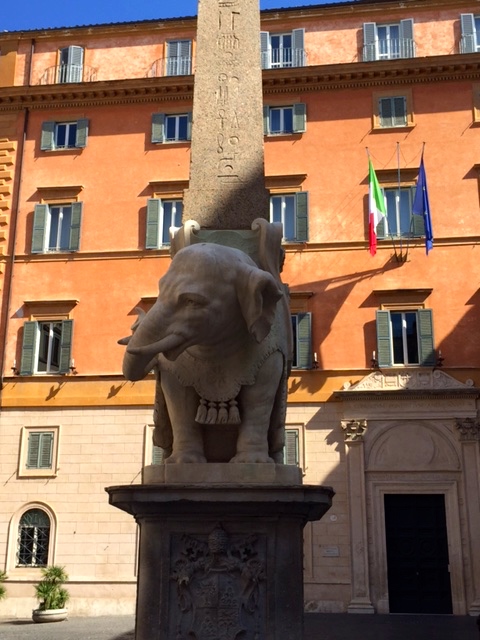
Bernini’s elephant.  My favorite sculpture in Rome!

IMG_2488


IMG_2489


IMG_2490


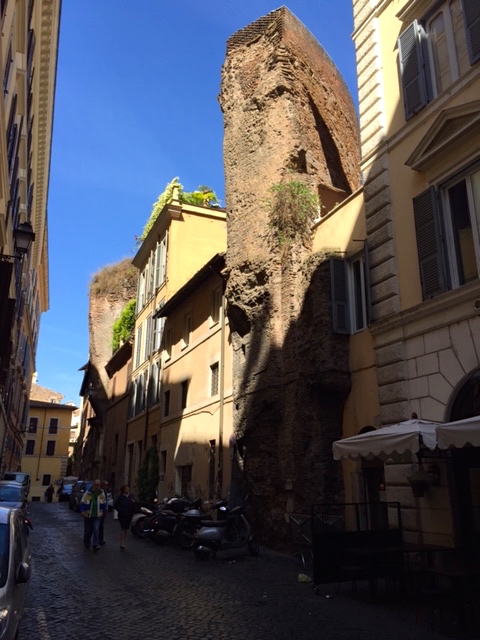
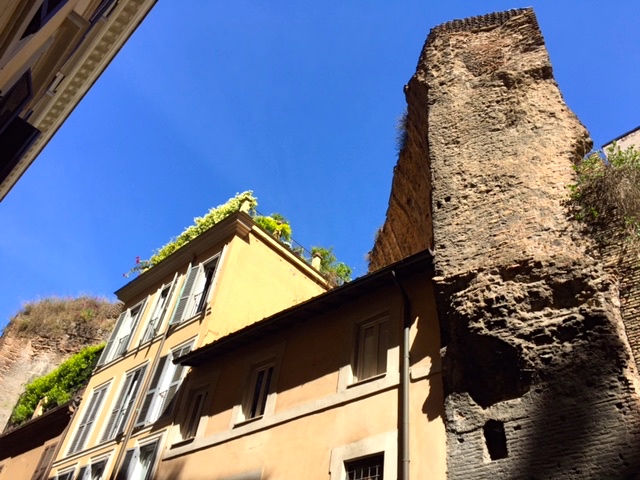
In a future life, I want to live in a palazzo built into Roman city walls.

IMG_2491IMG_2492


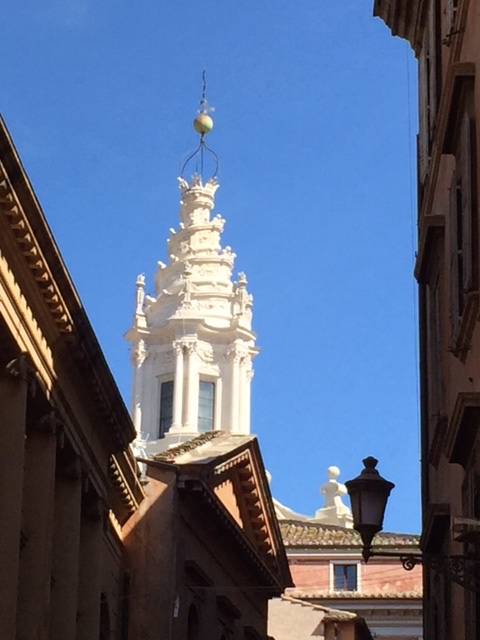
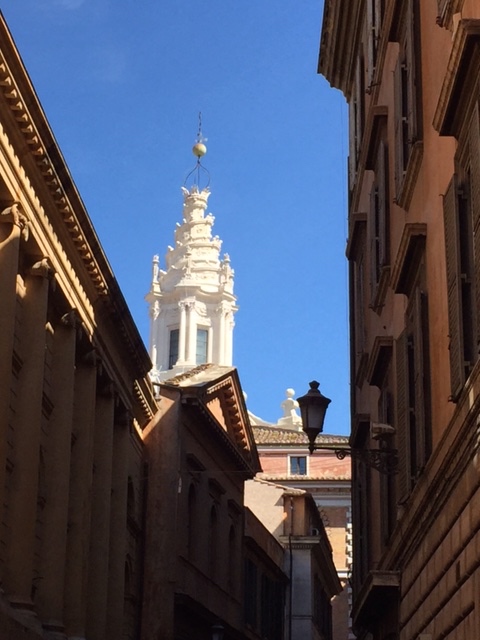
Borromini.  Perfection.

IMG_2493IMG_2494


Just for fun.

IMG_2497


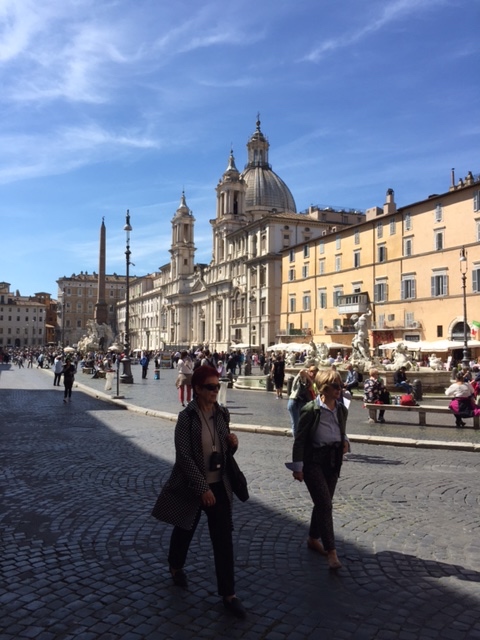
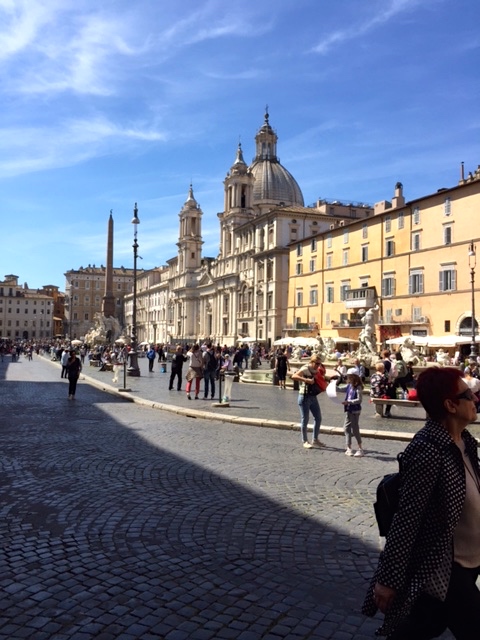
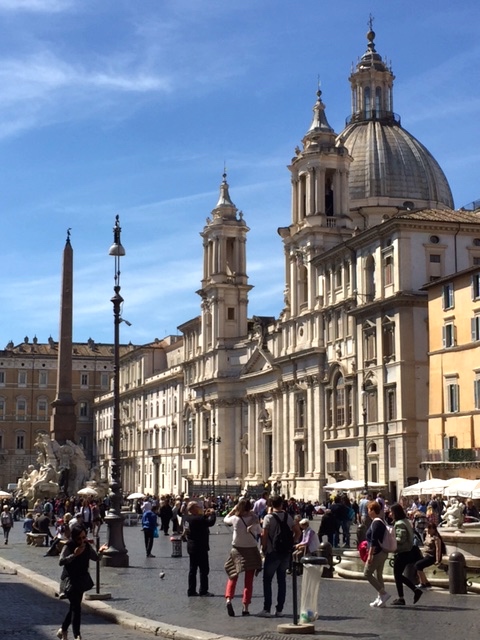
Piazza Navona, certo!

IMG_2502

IMG_2503

IMG_2504


Going home.

IMG_2506

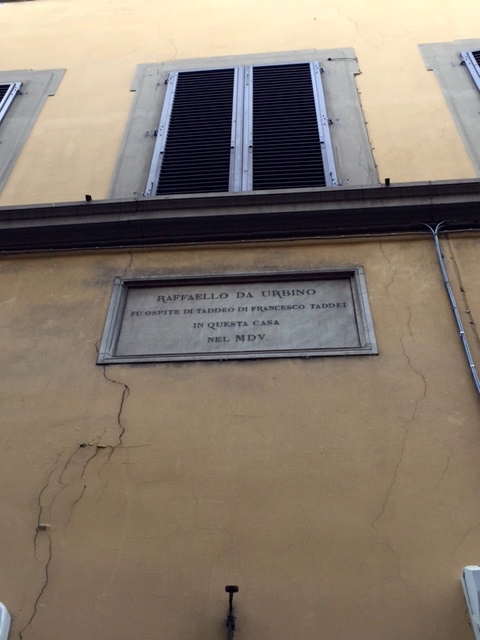
Amazing. Raffaelo da Urbino.

IMG_2383

I walk up and down this street every day, sometimes many times each day.  And only today did I notice that I’m neighbors with Raphael!  According to this sign on Via de’ Ginori, roughly a block from my current street (where Ammannati lived), “Raffaelo da Urbino. Fu ospite Taddeo di Francesca Taddei, in Questa Casa, Nel MDV.”  Or, in inglese, “Raphael, was the guest of Taddeo di Francesca Taddei in this house in 1505.”  This city never ceases to amaze me!!