Della Robbia in America

The 19th-century aesthete, Walter Pater, once likened Luca della Robbia’s sculptures to “fragments of the milky sky itself, fallen into the cool streets, and breaking into the darkened churches.” These appealing creations, which still brighten the penumbras of Tuscan chapels, are highlighted in an exhibition now on view (through June 4) in D.C.. Della Robbia: Sculpting With Color in Renaissance Florence, at the National Gallery of Art, nga.gov

http://www.nga.gov/content/ngaweb/press/exh/4848.html

Around 1440, Luca della Robbia, the talented Florentine sculptor in marble and bronze, turned his attention to creating in glazed terra cotta. He achieved a result that has been a part of the ambience of Tuscany ever since. This special work was a brand of glazed terra-cotta sculpture that was physically durable, graphically strong and technologically inimitable. (The exact methods for producing it remain a mystery to this day.)

Luca, the art dynasty’s founder, was accustomed to praise. In 1436, when Luca was in his mid-30s, Leon Battista Alberti ranked him one of the five most inventive Florentines, along with Brunelleschi, Donatello, Lorenzo Ghiberti and Masaccio. At the time, Luca was coming off the triumph of his “Cantoria,” a set of carved marble panels of singing children done for the organ loft of the Florence cathedral. What Alberti couldn’t know was that Luca would soon shift from sculpting figures in stone to molding them in clay, and with that to even greater fame. And by using a medium no one else was interested in, Luca could invent an instantly recognizable brand.

images-9

images-10


The Della Robbia technique involved firing the clay twice, the second time with glazes that produced a smooth, shiny, opaque and often brilliant palette of white, blue, green, yellow and purple.
 

images-8

Luca the elder, who lived to be over 80 years old, invited his nephew Andrea into the business, and Andrea’s children continued the family tradition, some of them in France, well into the middle of the 16th century. Glazed terra cotta was made into free-standing sculptures in the round relief; relief sculptures that could be hung on a wall; flat plaques sturdy enough to be placed outdoors; and small household objects that were affordable to a wide range of consumers. Production of sculpture using this technique lasted only about a century before its secrets were lost. Some of the most familiar images today of Renaissance Italy, Della Robbia sculptures have retained their original color and shine over the centuries.

Visitors to Tuscany will be familiar with the look of the Della Robbia, especially the rich cerulean blue and fine-porcelain whites of the early pieces by Luca and Andrea. More colors were added as different members of the family expanded the range and ambition of the shop, responding in particular to the styles and expressive language of contemporary painters.

But there is a habit of putting the Della Robbia family production into a neat little box, separating their work from the mainstream of Italian Renaissance art as not quite fully sculpture such as those that Michelangelo would produce, nor as expressive or fine as paintings by Filippo Lippi, Fra Bartolommeo, Andrea del Sarto or Leonardo da Vinci — all of whom may have influenced or inspired Della Robbia designers.

The same thing happens when visiting American museums, where one often encounters a stray Della Robbia piece in the Renaissance galleries. The eye notes its presence with pleasure, but rarely engages with it as deeply as with other works of the period. Part of this, no doubt, has to do with the longer history of glazed ceramics, the tchotchke effect of associating cheap figurines from lesser antique stores with these early and often magisterial essays in the form. Even Michelangelo, who considered sculpture proper to be about the removal of material to find form rather than the building up and modeling characteristic of working with clay, disparaged the medium.

The current exhibition in Washington, D. C. provides a context for the della Robbia style, and provides an excellent opportunity to see the full range of what the Della Robbia artists and their competitors produced.

This exhibition, which opens Sunday and is billed as the first major U.S. show devoted to Della Robbia, began in Boston and features some 40 works, across the full range of what was made.

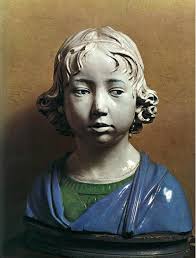
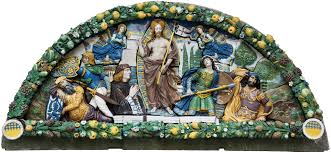
Above a door frame in the main corridor of the National Gallery’s West Building is a spectacular lunette by Giovanni Della Robbia, showing the Resurrection of Christ; outside the entrance to the exhibition, in protective cases, are smaller statuettes that demonstrate how powerfully these works can speak at a more domestic scale, including a touching bust of a boy by Andrea, whose depictions of children are exceptional among artists of the age.

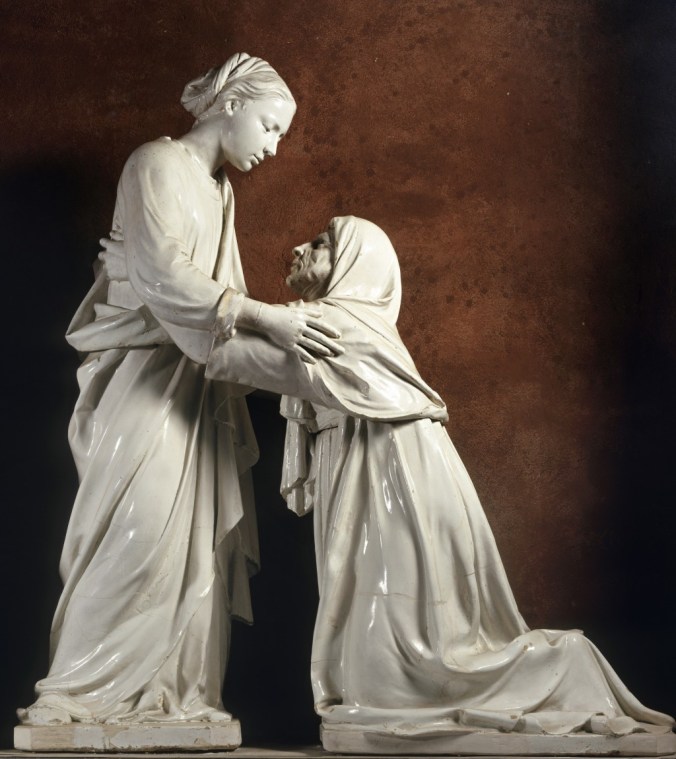
But it’s in the first room of the exhibition proper that you encounter the full continuum of artistic expression and decorative functionality that is one of the most difficult facts to process for modern audiences grappling with the Renaissance. On the walls are two coats of arms, which weren’t exactly mass-produced, but were made in great numbers, with purchasers requesting their institution’s logo or insignia as a custom order, and then adding to it standard moldings or decorative garlands to fancy it up. The use of ceramic molds, the easy workability and the relative cheapness of clay, meant that glazed terra cotta was an accessible, durable, mass-market form. But these two functional works keep company with what is a masterpiece in the medium, a masterpiece by any definition in any age: Luca della Robbia’s “The Visitation,” made around 1445 for a church in Pistoia, not far from Florence.

“The Visitation” was made for the Church of San Giovanni Fuorcivitas in Pistoia, about 30 miles from Florence, it’s a three-dimensional, near-lifesize two-figure tableau illustrating the moment in the Gospel of Luke when Mary, pregnant with Jesus, meets her elderly cousin, Elizabeth, also miraculously pregnant, her child being John the Baptist. In the story, Elizabeth feels the child in her womb stir with joy. In the sculpture, she kneels before Mary to acknowledge her as the mother of God.
4848-004

Assembled from four pieces, “The Visitation” depicts a standard scene for artists of the day, the story of the Virgin Mary’s encounter with her older cousin Elizabeth, both miraculously pregnant. The older woman kneels in front of Mary, who looks down tenderly and embraces her kinswoman, who will bear St. John the Baptist.

Luca’s depiction of the women, rendered in white, is deeply touching, and the impact is only heightened by the drama embedded in the construction of the statues. This image of two women, who share a human present (sorority, maternity) and cosmic future that only they — and now we, as witnesses — know, has layered religious and secular implications. But psychological subtly is what makes it moving, conveyed by posture and exchanges of touch, and by the contrast between Mary’s dreamy, half-seeing glance and the older woman’s beseechingly earnest effort to make their eyes meet.

And with this work Luca establishes a formal look that will be his signature: naturalistic figures covered in a creamy-white glaze that glows like moist skin and projects an impression of purity. The flawless coating also helps disguise the fact that this sculpture, which looks so completely of a piece, was too large to be fired whole in a kiln, and was composed in four sections, which can still be disassembled and then seamlessly interlocked.

Fired in four pieces and expertly fitted together, the two forms divide the embracing arms and hands so that Mary’s hands are attached to the sleeves of Elizabeth’s dress, and Elizabeth’s hands encircle the back of Mary’s gown. When they are placed next to each other, you hardly notice the gap between the arms and hands; but even if separated, each woman bears the impress of the other, as if the moment of their greeting has bound them together for eternity, no matter the vicissitudes of the four pieces of terra cotta over the years.

The exhibition also shows how, as the workshop continued to keep up with fashions and changing markets, it took a colorful direction, with unglazed clay standing in for skin, and a profusion of colors and details aiming at the narrative and dramatic power of painting. A set of three saints from around 1550, by Santi Buglioni (who headed a competing shop that also made glazed terra cotta), is presented as the “swan song” of the form, a late tour de force that captures the veins in their hands and the wrinkles around their eyes, creating an ensemble of charismatic and passionate forms. A tabernacle from the 1470s, with a small metal door for the sacramental bread in the center, creates a genuinely illusionist architectural space, with two angels present on both sides.

The exhibition ends with the figure of an adoring angel, reminiscent of Leonardo, made by Luca della Robbia the Younger, around 1510 or 1515. The exhibition emphasizes the Della Robbia connection to other artists, and how far the shop had come since Luca’s early designs in white and blue.
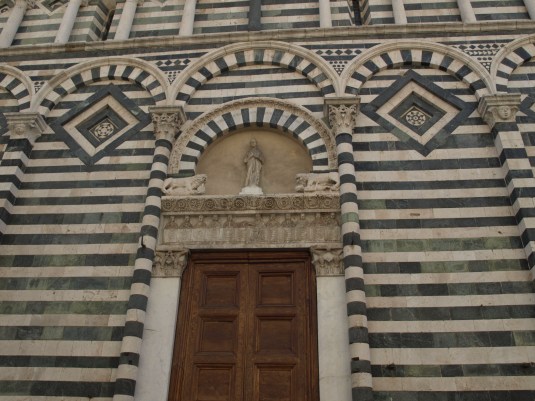
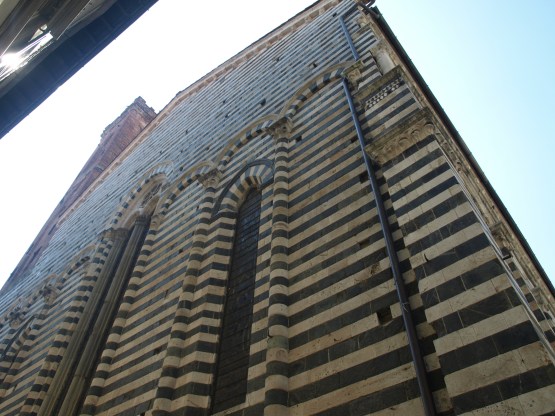
The Tuscan stripe, Pistoia and beyond

I love the dark green and cream colored striped churches found throughout Tuscany!

This past weekend I went to Pistoia for the first time and look what I saw!

OLYMPUS DIGITAL CAMERA

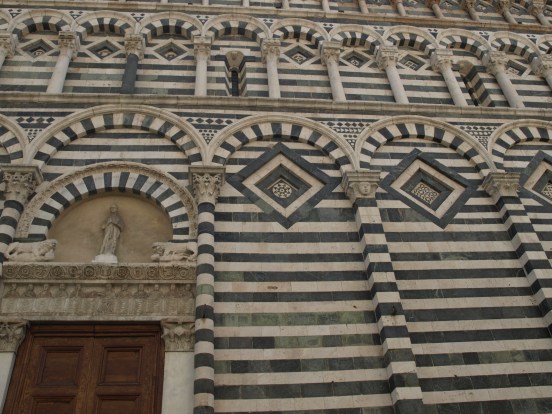
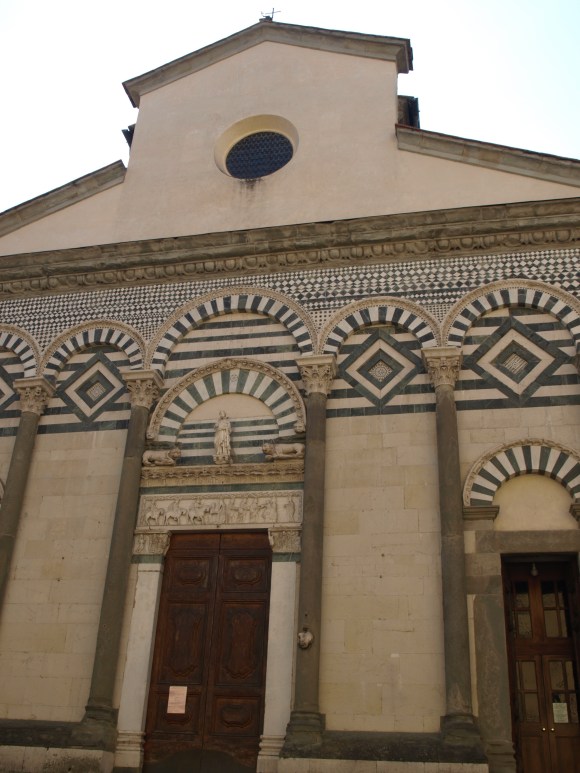
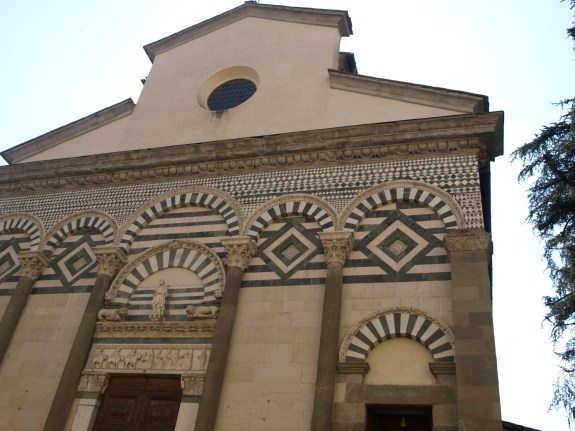
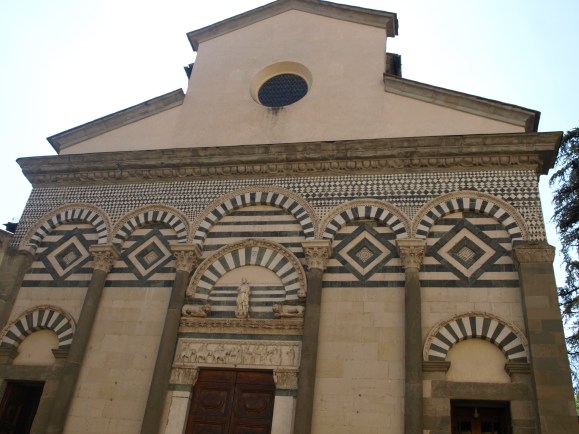
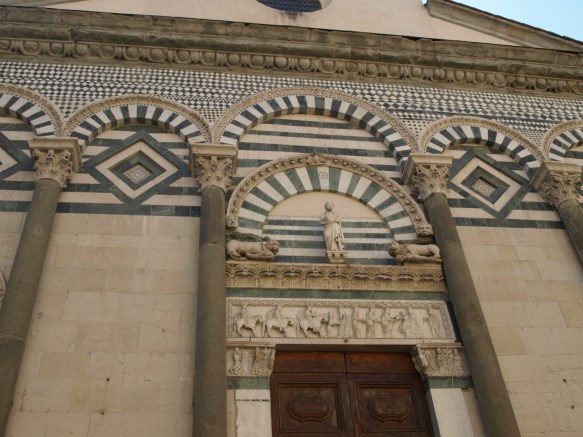
San Giovanni Fuoricivitas

Above and below, the Romanesque church of San Giovanni Fuoricivitas, (12th–14th century)

OLYMPUS DIGITAL CAMERAOLYMPUS DIGITAL CAMERA


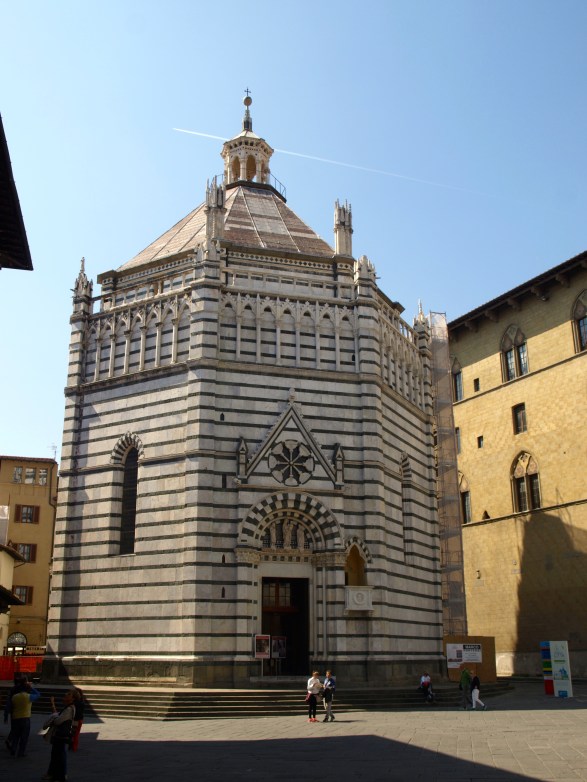
Then there is the Duomo and the beautiful 14th century Baptistry in the Piazza.

OLYMPUS DIGITAL CAMERA

Baptistry, Pistoia


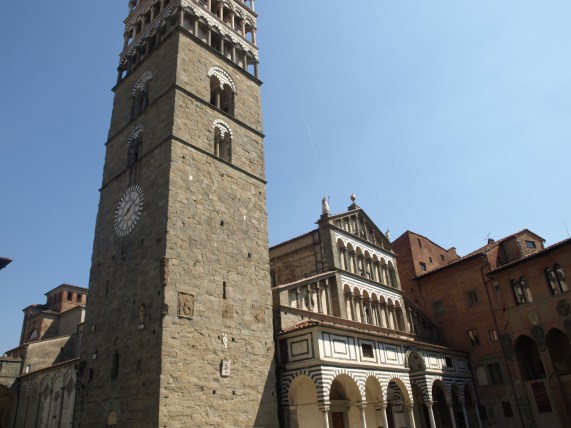
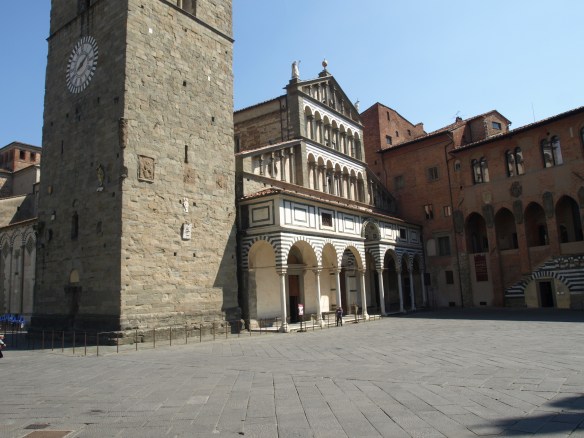
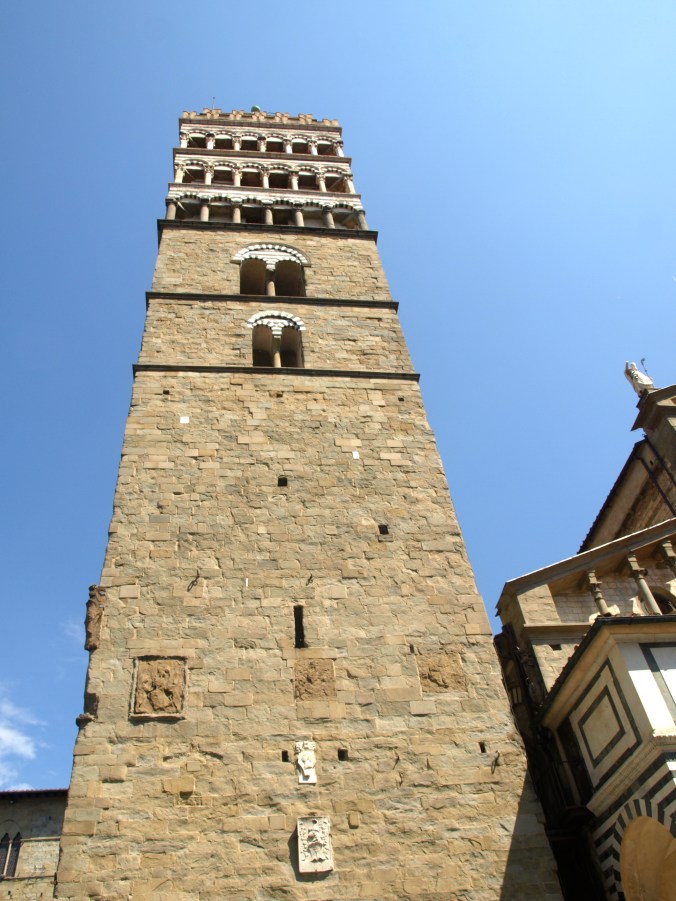
Across the Piazza del Duomo sits Il Duomo with its beautiful campanile.

OLYMPUS DIGITAL CAMERAOLYMPUS DIGITAL CAMERAOLYMPUS DIGITAL CAMERA

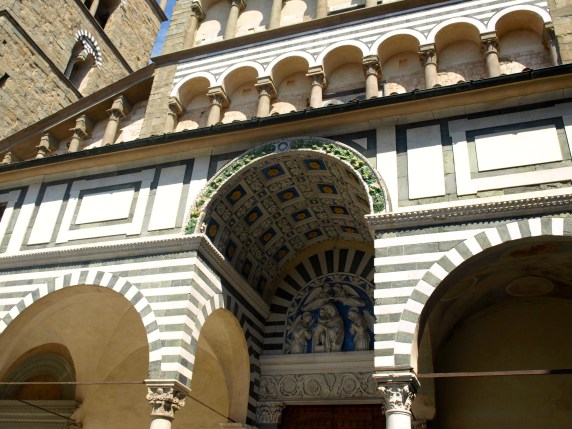
The Cathedral of San Zeno was started in the 5th century, but the building we see today took shape in the 12th century.  While the facade is Romanesque, the duomo’s interior is all Baroque.
The iconic Romanesque campanile, standing at some 67 metres (220 ft), was erected over an ancient Lombard tower.

OLYMPUS DIGITAL CAMERA

Andrea della Robbia designed the beautiful and prominent glazed ceramic sculptures over the central doorway.

OLYMPUS DIGITAL CAMERAOLYMPUS DIGITAL CAMERAOLYMPUS DIGITAL CAMERAOLYMPUS DIGITAL CAMERA

As you walk through the lovely, medieval city center, you run across several typical Tuscan Gothic/Romanesque churches.  The one above is Sant’ Andrea.  I’ll be writing more about it soon.


Prato and Michelozzo and Donatello, oh my! And don’t forget Fra Filippo Lippi either!

I had the great pleasure of visiting Prato for the first time yesterday.  I am so sorry I waited so long to go!  It is a hop, skip and a jump from Florence by train, for the high cost of 2.50 Euro! Best of all, it is a city full of great art!  Va se può!  

Yes, there is a large Chinatown in Prato and that development gets all of the attention for this fine, large city that is a neighbor of Florence.  I’m here to talk about the art, come sempre!

IMG_1649

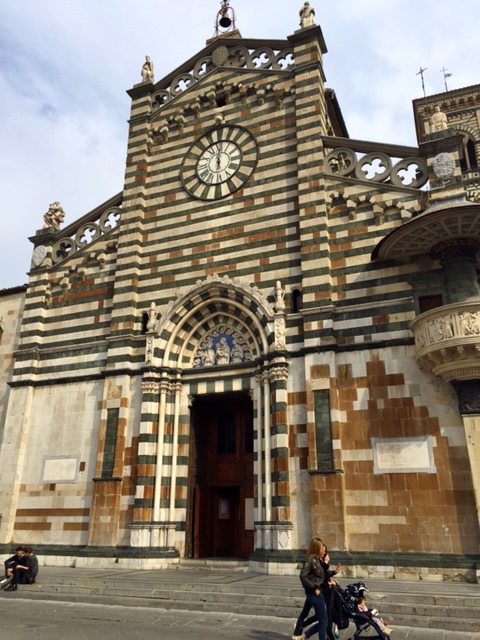
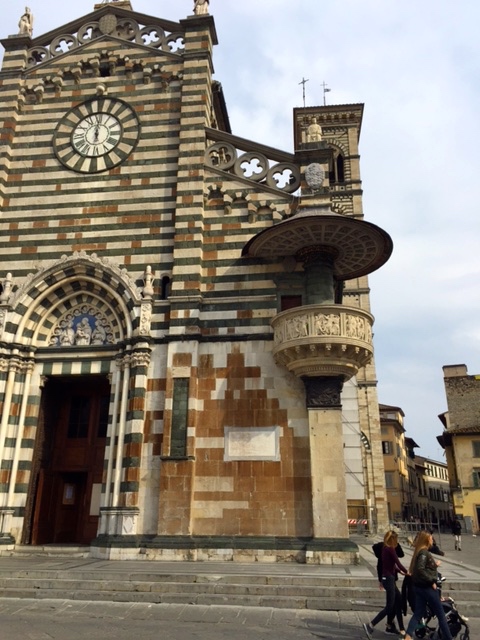
The duomo, or Cattedrale di San Stefano, is a lyrical design in the Gothic/Romanesque Tuscan vein.  I found it beautiful!  I am a huge aficionado of the striped marble facing many Tuscan churches.

IMG_1649

The façade has a single central portal, surmounted by a lunette in glazed terra-cotta sculpture by Andrea della Robbia, depicting the Madonna with Saints Stephen and John.


IMG_1650

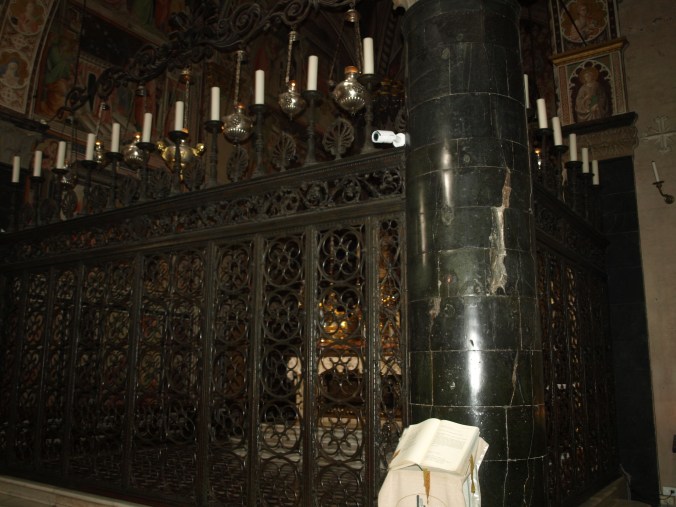
San Stefano has a very important relic, the Sacra Cintola or belt of the Virgin Mary, acquired during the 14th century. To house such an important relic, the church added a transept attributed to Giovanni Pisano, but probably the work of a pupil of Giovanni’s father, Nicola Pisano. The lavish interior Capella Cintola was also built at this time to house the relic.

The picture below does no justice to this grand Capella.  You notice it the second you walk into the lovely church.

OLYMPUS DIGITAL CAMERA

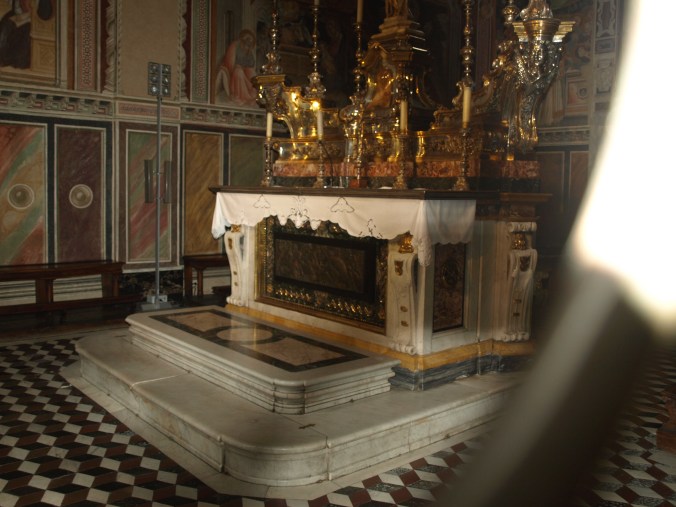
The picture below is of the interior of the Capella.  Still no justice is done!  The chapel was designed by Lorenzo di Filippo between 1386 and 1390.

The Sacra Cintola is a knotted textile cord meant to be used as a belt.  According to a medieval legend, the belt was dropped by the the Virgin Mary as she lifted into heaven.  She wanted Thomas the Apostle to have the belt, to prove to him (doubting Thomas) as proof of her assumption.

 The Sacra Cintola or Sacro Cingolo is an 87-centimeter-long strip of fine material made from goat’s hair dyed green and embroidered with gold thread.  It is encased in a glass and gold reliquary, and the reliquary is kept inside a silver casket within the altar of the special chapel.

(For more on the miraculous belt, see https://en.wikipedia.org/wiki/Girdle_of_Thomas).

The legend of the belt dropping by Mary was frequently depicted in the art of Florence and indeed, all of Tuscany,  and the keeping and display of the relic at Prato generated commissions for several important artists of the early Italian Renaissance.

OLYMPUS DIGITAL CAMERA

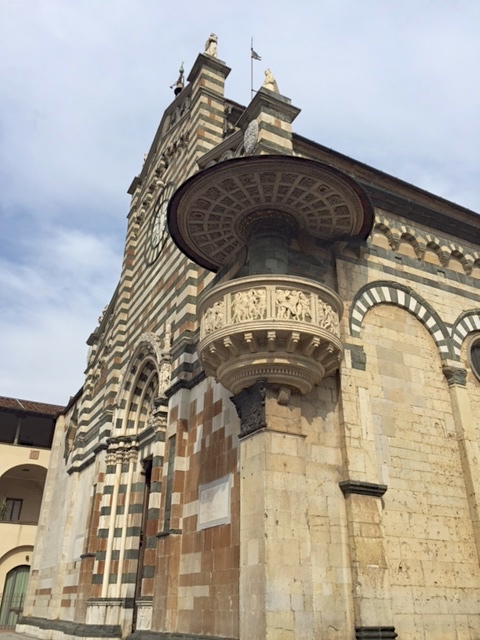
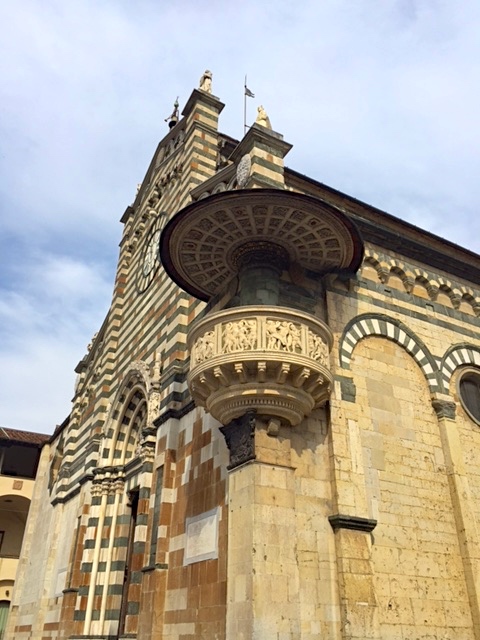
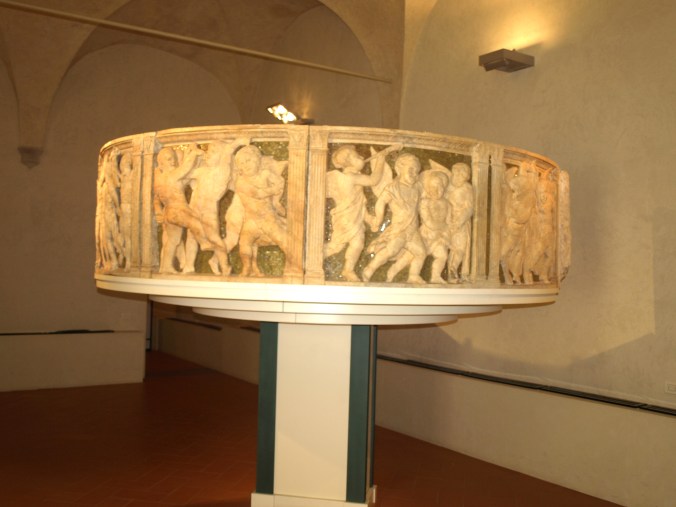
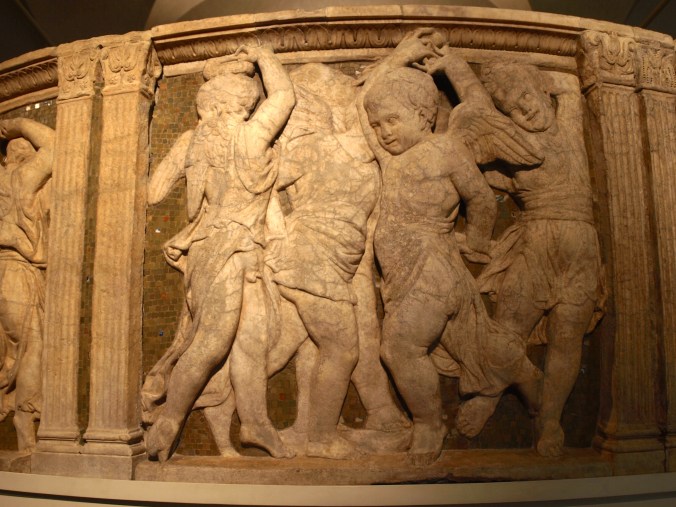
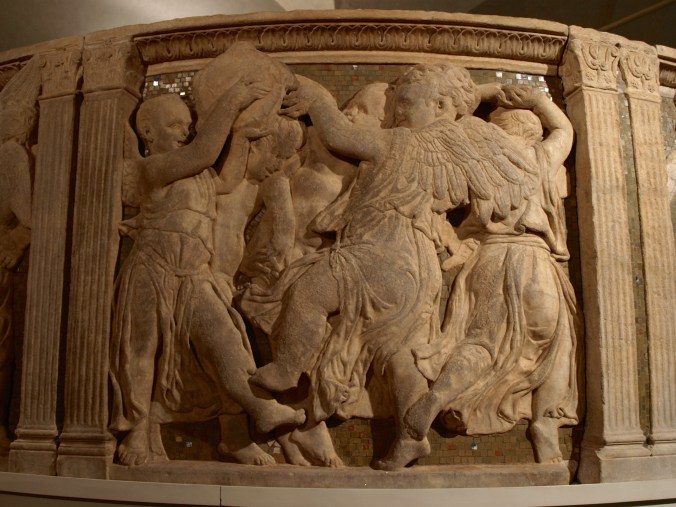
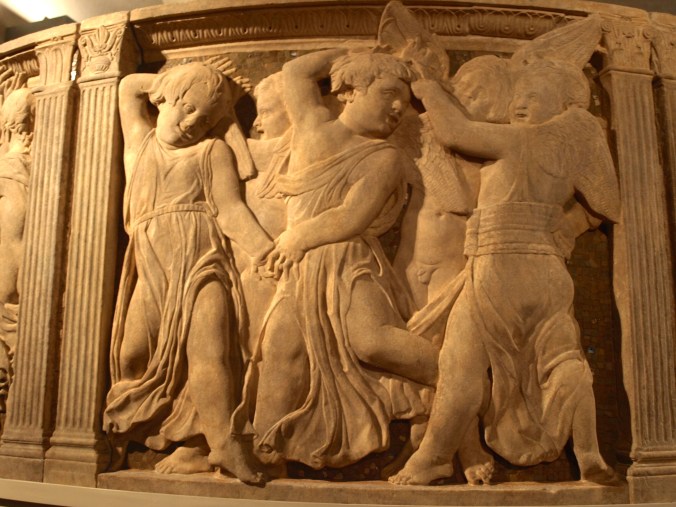
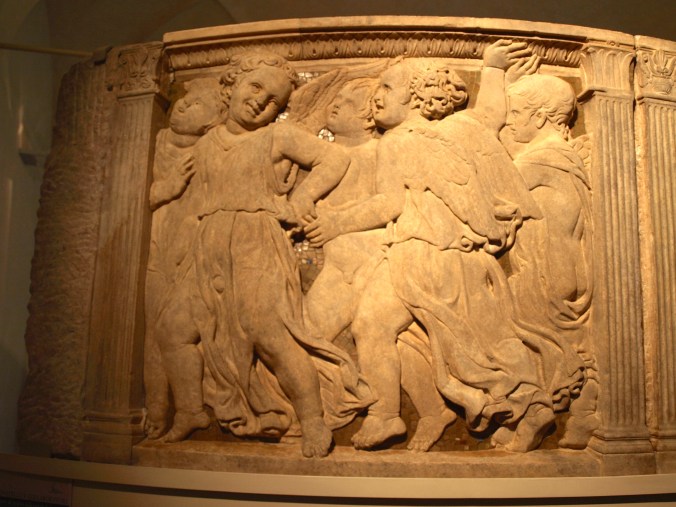
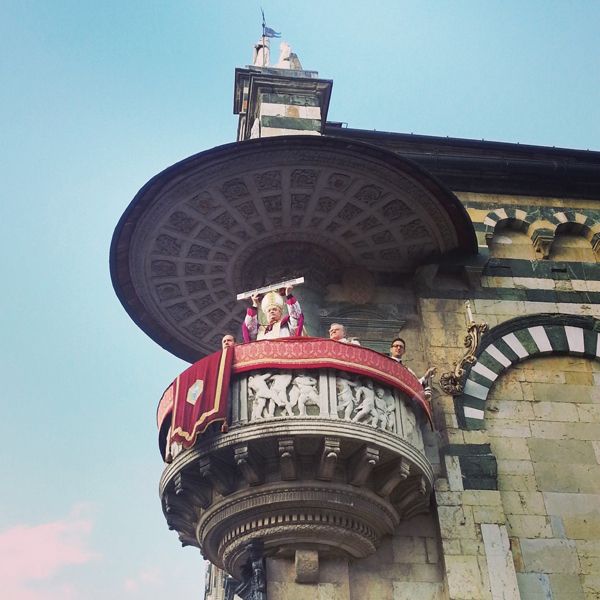
One of the most interesting aspects of the the duomo is the exterior pulpit on the facade.  I have never seen such a feature on any other church.  It was designed by Michelozzo and decorated by Donatello with seven relief sculptures between 1428 and 1438.

IMG_1650


IMG_1647


IMG_1648

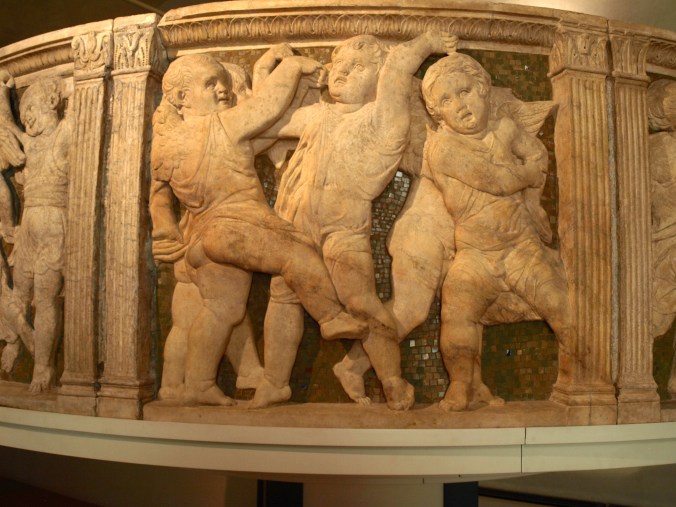
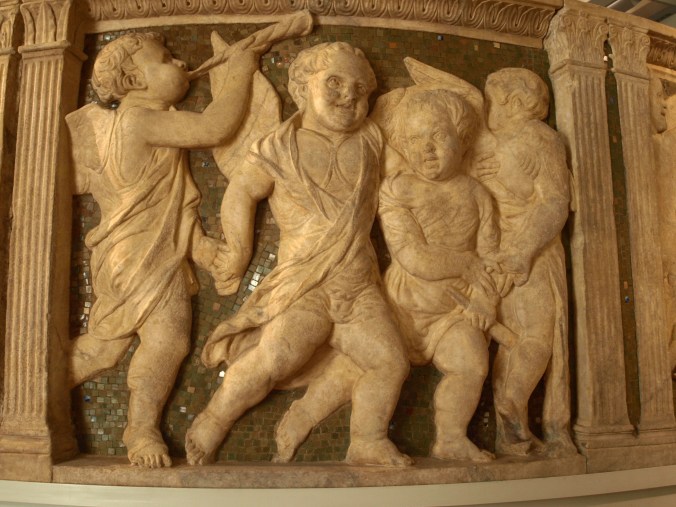
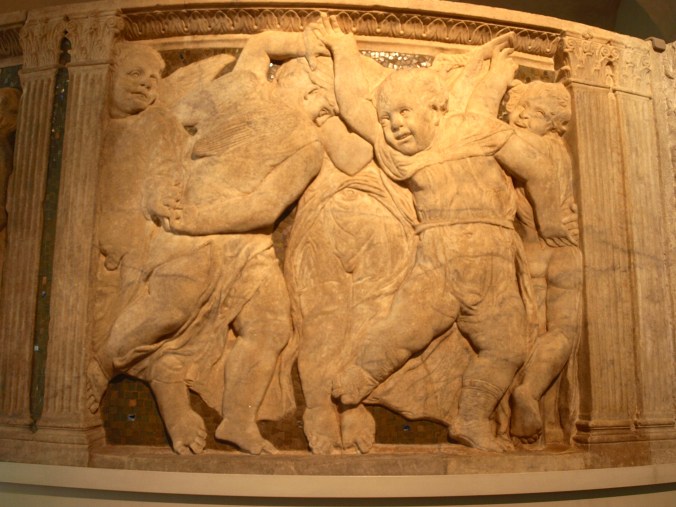
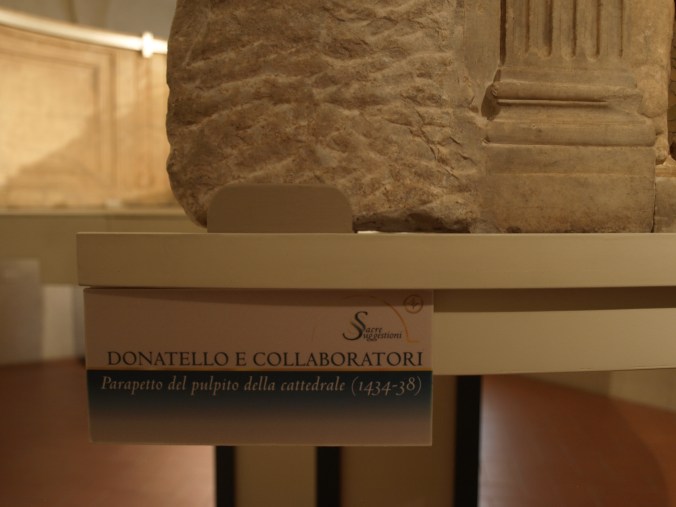
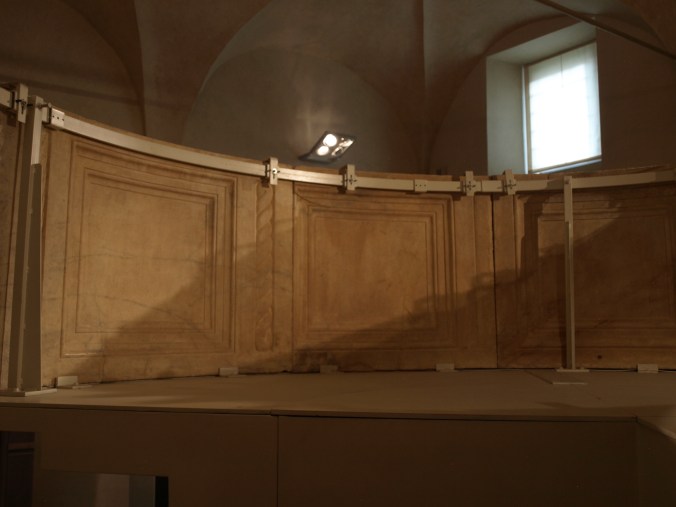
The seven original reliefs of the parapet were removed from the pulpit in 1967 and can be seen today in cathedral museum.  This is a rather fortunate development for students of art history, because we can get up close and personal with the stunning sculptures by Donatello.  It is possible to study the forms so closely you can sometimes see where the chisel landed on the marble.

OLYMPUS DIGITAL CAMERA


The subtle inlay of mosaic behind the shallow relief sculptures adds life to the forms.

OLYMPUS DIGITAL CAMERA


OLYMPUS DIGITAL CAMERA


OLYMPUS DIGITAL CAMERA


OLYMPUS DIGITAL CAMERA


OLYMPUS DIGITAL CAMERA


OLYMPUS DIGITAL CAMERA


OLYMPUS DIGITAL CAMERA


OLYMPUS DIGITAL CAMERA

Another nice aspect about having the pulpit on display at eye level in the museum is the fact that one can see the interior of the pulpit as well, as below.

OLYMPUS DIGITAL CAMERA

In the Middle Ages, few items of clothing were more symbolic than the belt from which important objects were hung, including a sword and keys. As the story of Mary’s belt in Prato spread, from about 1270 onwards, it prompted some of the most extraordinary iconography in the history of Renaissance art.

One such painting is Filippo Lippi’s Madonna of the Sacred Belt, in the collection of the Prato Civic Museum. Likewise, over the centuries, many illustrious pilgrims have visited Prato’s shrine, including Saint Francis of Assisi, Maria de’ Medici and several popes, including the late Pope John Paul II in 1986.

 Each December 25, people flock to Prato to see the ceremony, which is repeated on four other occasions during the year as part of the Roman Catholic calendar:

Easter;

May 1, marking the month dedicated to the Virgin;

August 15, in celebration of Mary’s assumption;

and September 8, the day devoted to her nativity.

Following a procession through the city streets led by musicians and other people dressed in Renaissance costumes, a solemn mass is held in the cathedral, during which the archbishop of Prato will retrieve the Sacra Cintola from the casket using three keys (one key is always in his possession while the other two are kept in the mayor’s custody).

After passing an incense-burning censor over the relic, the prelate will then display it three times from Ghirlandaio’s loggia to the faithful seated inside the basilica before moving outside to the beautiful external pulpit decorated by Donatello. Here, he will hold it up high for the public in the piazza below to see, exhibiting it three times in three different directions.

x2013-051.jpg.pagespeed.ic.Rrgjnk7YSk

Finally, before the relic is returned to its vault, worshippers are invited to line up and kiss the reliquary. 


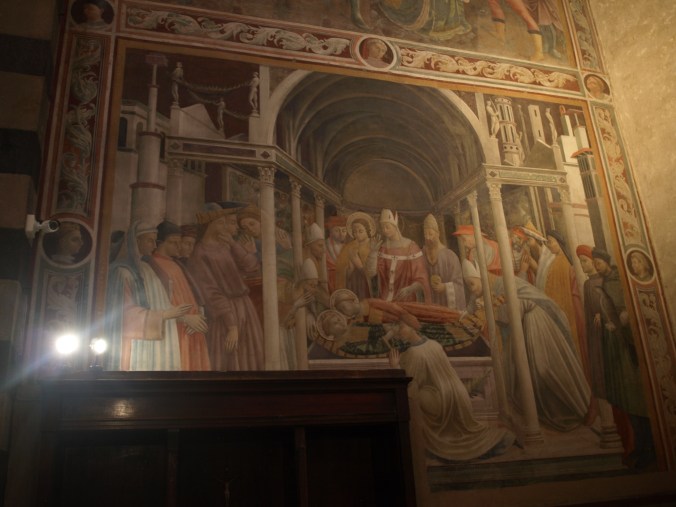
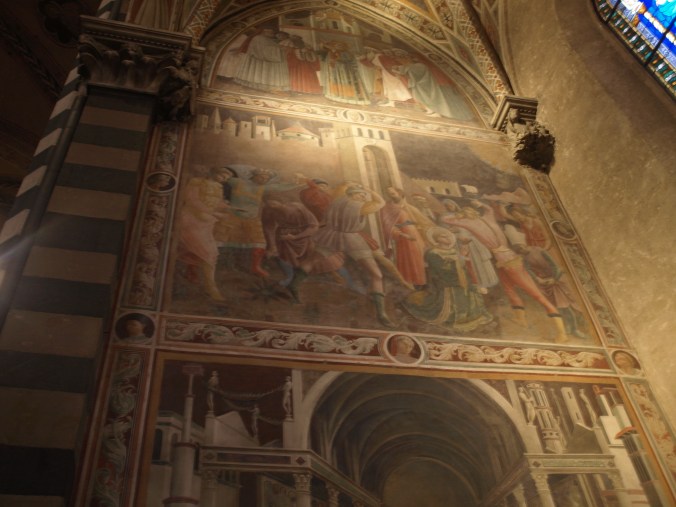
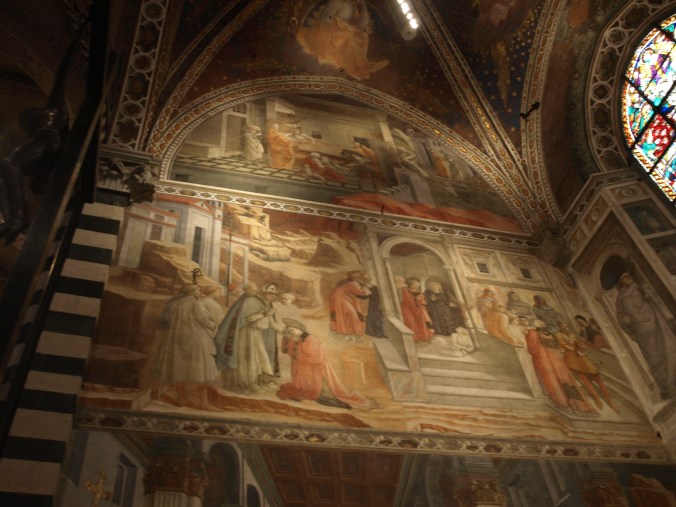
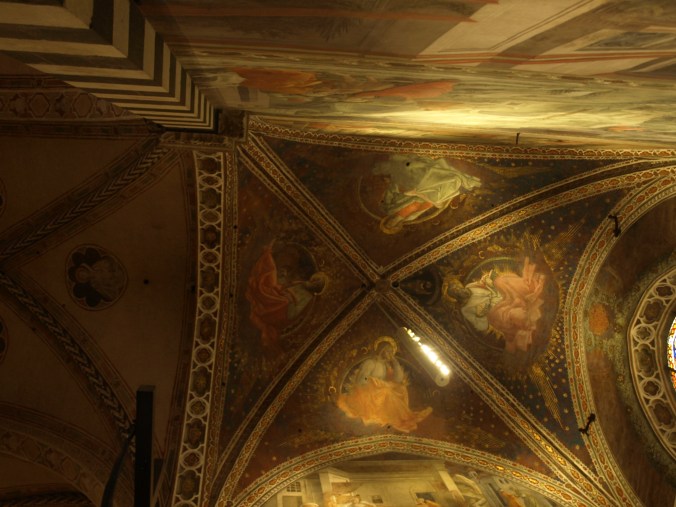
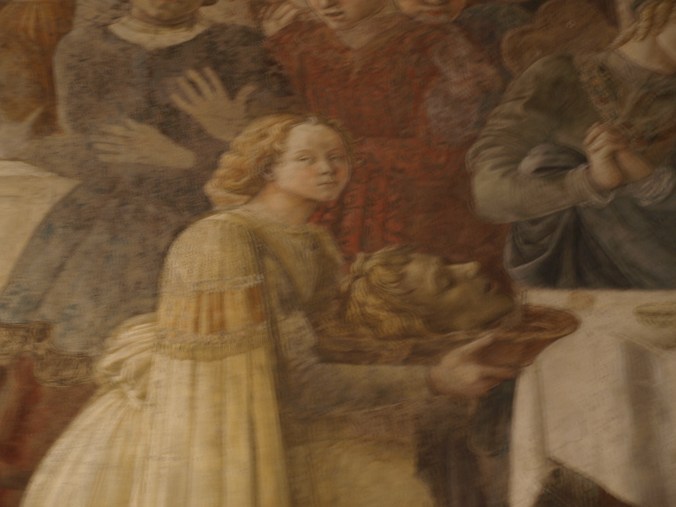
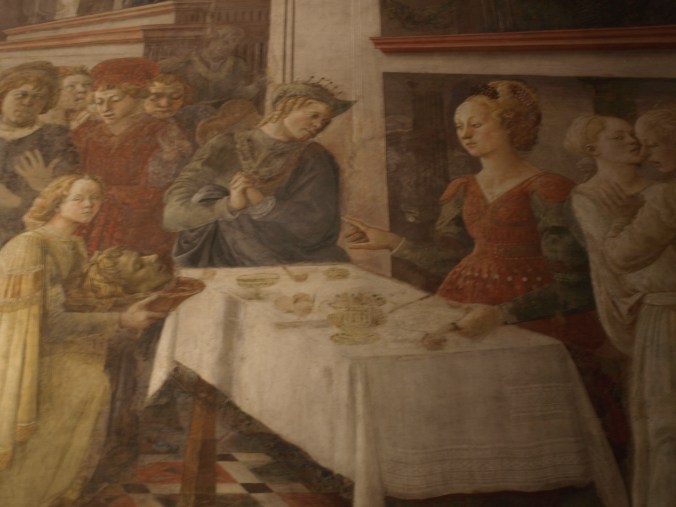
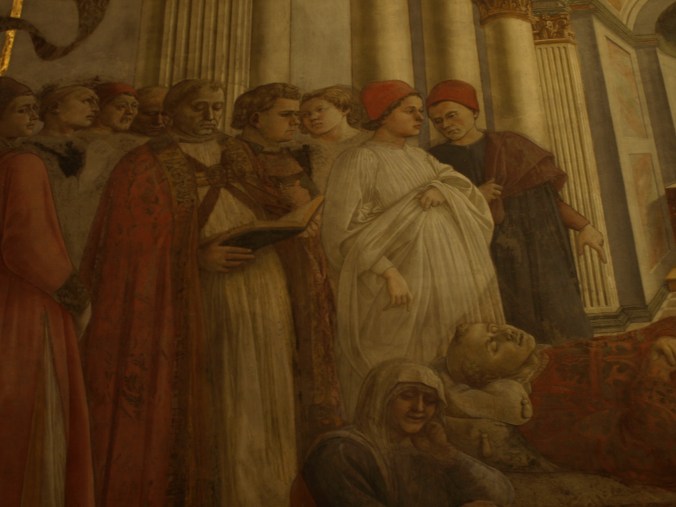
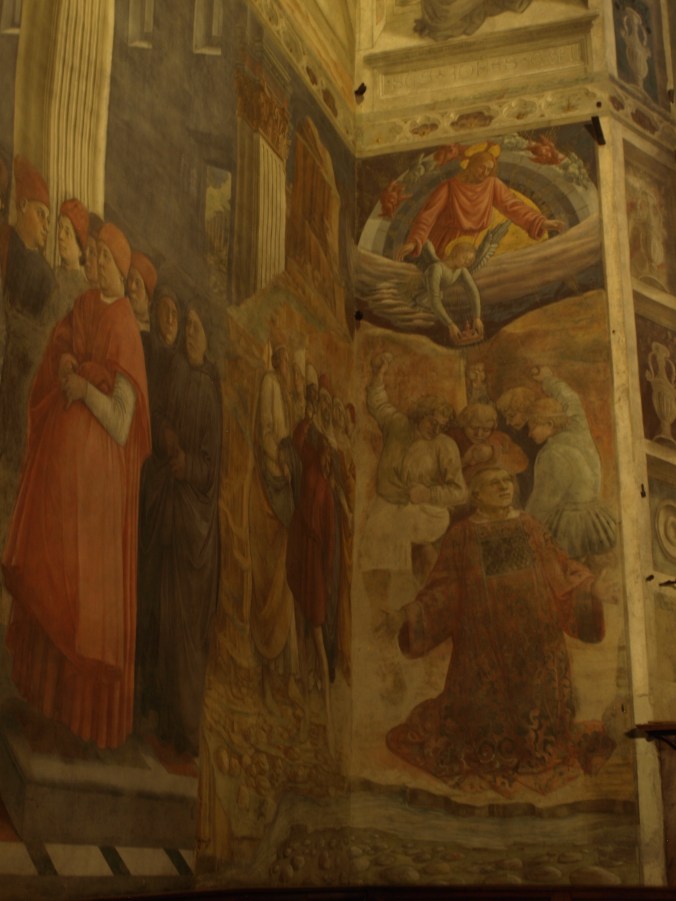
The Duomo houses yet another important treasure: a glorious fresco cycle depicting the stories of San Stefno and Saint John the Baptist by Filippo Lippi and his workshop from 1452 to 1465. The magnificent frescoes, which flank the main altar area, were restored in 2008.

OLYMPUS DIGITAL CAMERAOLYMPUS DIGITAL CAMERA

OLYMPUS DIGITAL CAMERAOLYMPUS DIGITAL CAMERA

OLYMPUS DIGITAL CAMERAOLYMPUS DIGITAL CAMERAOLYMPUS DIGITAL CAMERAOLYMPUS DIGITAL CAMERA


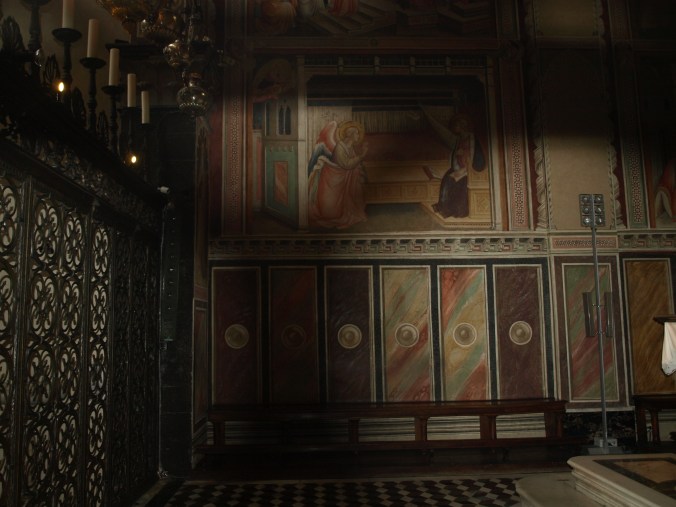
Scenes from the Madonna’s life and the story of the relic cover the chapel’s walls, frescoes done by Agnolo Gaddi in 1392-1395. Behind the additional protection of magnificent bronze gates created by Maso di Bartolomeo, Giovanni Pisano’s statue of the Madonna with Child looks down from the chapel’s altar.

OLYMPUS DIGITAL CAMERA

A different perspective.

One of my favorite passageways in Florence is not well-traveled.

It is where you enter the Boboli Gardens from the the Bardini Gardens.

To do this, you enter the Bardini at Costa San Giorgio # 2, purchase a ticket good for both the Bardini and adjoining Boboli gardens, and enter the Bardini.  

After enjoying this spectacularly-sited and maintained garden to its fullest (you will at least an hour), exit the Bardini and traipse across some back streets until you find this pictured below.

OLYMPUS DIGITAL CAMERAOLYMPUS DIGITAL CAMERAOLYMPUS DIGITAL CAMERAOLYMPUS DIGITAL CAMERA


These signs let you know you are on the right path.  After being lost for a little while, you will eventually spot the place where you may enter the Boboli.

You will immediately gain an interesting and entirely different vantage on the Boboli, so different than when you enter from the courtyard of the Palazzo Pitti.  You will enter through leafy greens, and follow secretive paths with unexpected vistas.

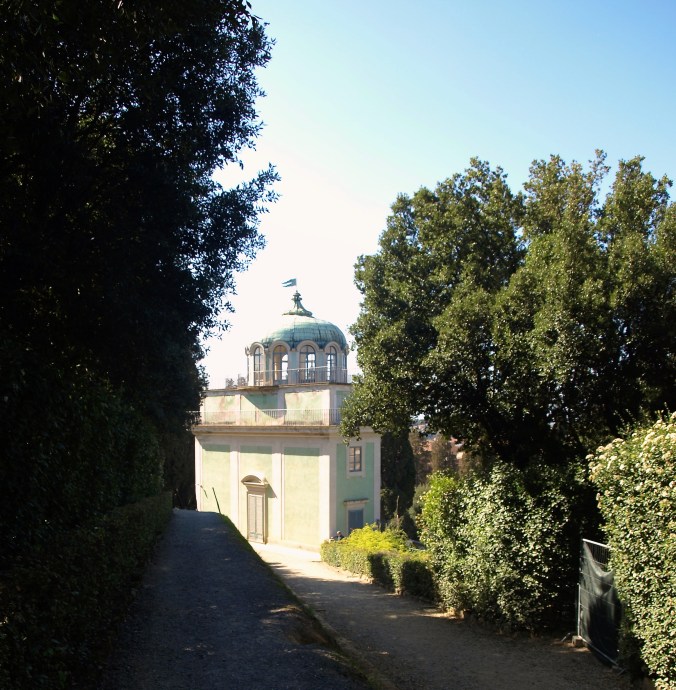
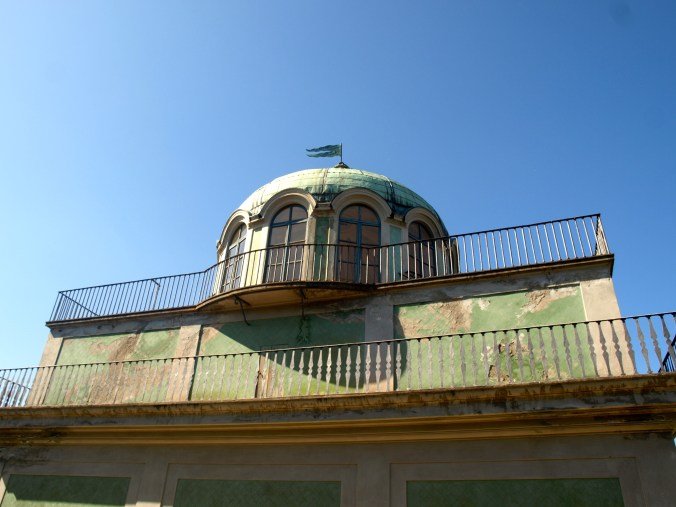
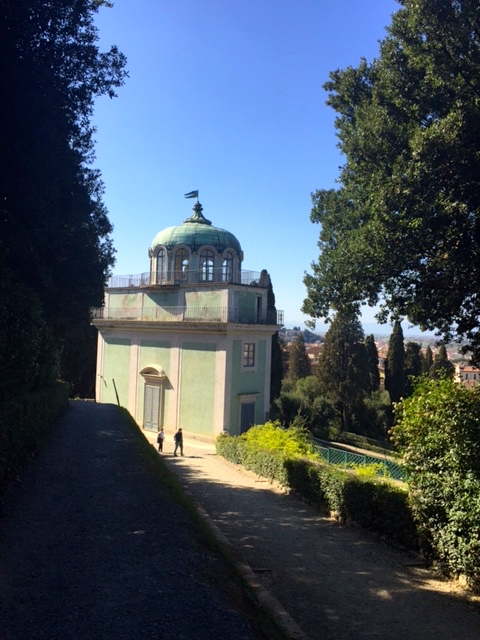
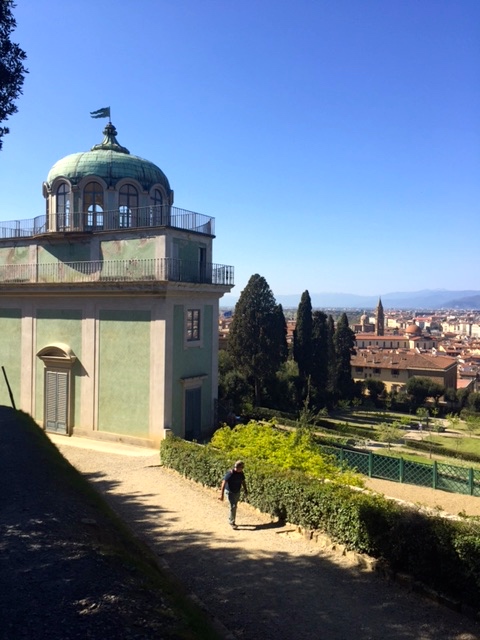
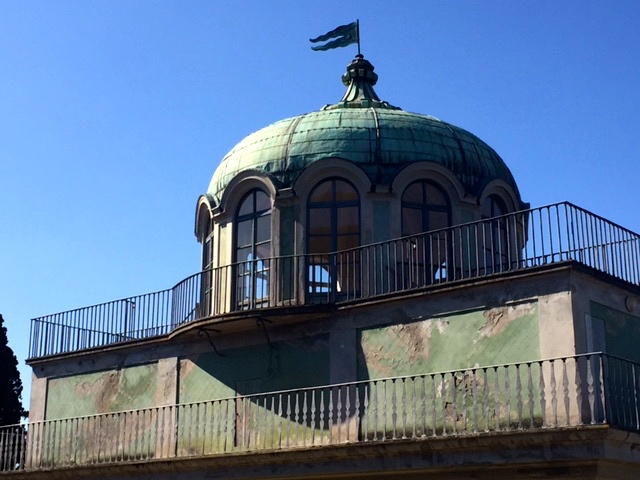
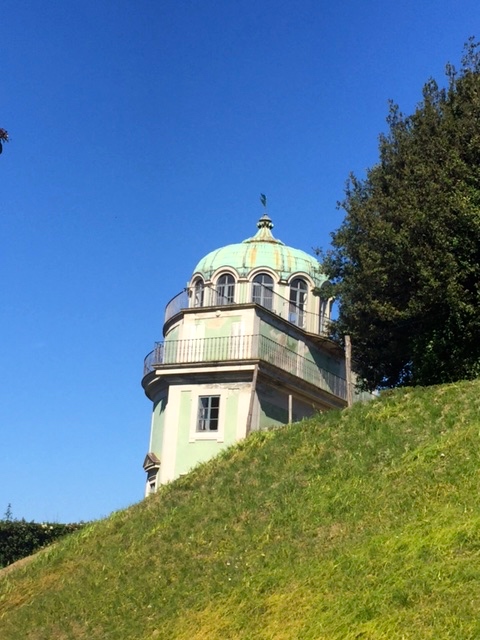
For example, after walking for a little while in the Boboli, you will see this lovely little folly, where I’d be happy to live for the rest of my life if only Florence would let me. :-)


OLYMPUS DIGITAL CAMERAOLYMPUS DIGITAL CAMERA

The perfect “green house” to my way of thinking!

IMG_1588IMG_1590IMG_1592IMG_1594

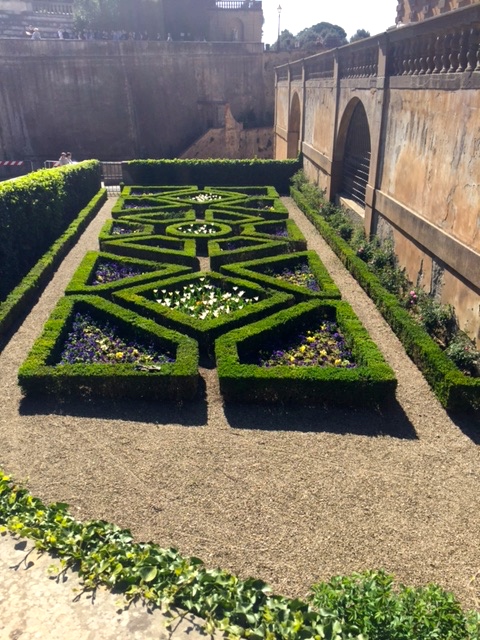
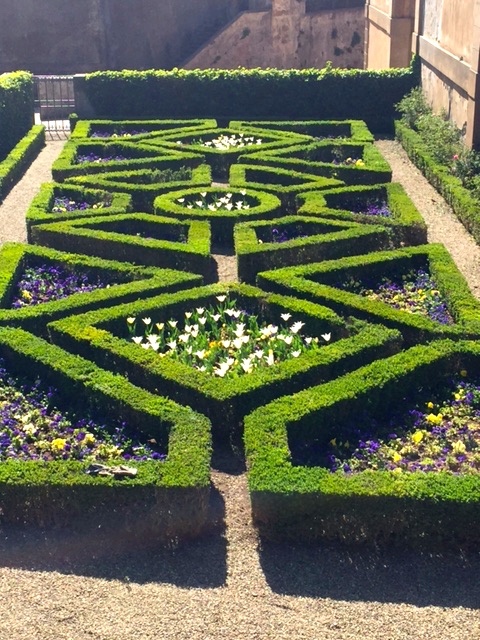
At the entrance to the Boboli from the Palazzo Pitti is this wonderful, immaculate knot-garden.  It is at its finest right now, when the eye is starved for the green and blossoms of spring.

IMG_1596IMG_1598

Just how poor was poor Michelangelo?

Well, it turns out that he wasn’t poor at all!

If you read about the life of this tormented artist, you will soon discover that he lived like a miser and lamented his poverty, among many other things.  While this image perfectly aligns with our modern-day notion of a struggling artist, the truth is, Michelangelo achieved riches.  In fact, he was one of the richest men of his time.  So, at least some of his misery he wallowed in was chosen.  What modern psychotherapist wouldn’t love to work with the great artist?!

In his book, The Riches of Michelangelo: How a Great Artist Deceived the Papacy, author Robert Hatfield reveals from his extensive research, the vast sums that Michelangelo earned over his lifetime, and how he wisely chose to invest his money in real estate, both in Florence and in Settignano.

518EDNQ7KBL._AC_US160_

I’m certainly not a psychologist, but even I can see that Michelangelo had daddy issues.  He and his father had a rocky relationship at best, and from what I’ve read, it would seem that Michelangelo was always trying to please his father, even hoping to restore the Buonarroti family to its former, lost, patrician status.  The artist purchased property around his family’s ancestral home in Settignano, which not only was a wise financial investment, but also revealed the artist’s consistent efforts to please his father.

The following paragraphs are taken from this fine article in The Florentine:

http://www.theflorentine.net/art-culture/2006/03/behind-the-agony-and-the-ecstacy/

“In 1508, using money that he had earned as a sculptor, together with what he expected to receive for the Sistine Ceiling, Michelangelo purchased three houses on via Ghibellina, core of the present Casa Buonarroti. His father and brothers, who had been renting a house in via San Procolo, promptly moved in. Michelangelo did some improvements in 1514 and purchased a fourth adjacent house.

“He joined his relatives when he returned to Florence in 1516, and things would have continued comfortably if only they had shared Michelangelo’s penchant for thriftiness. In 1523, because they failed to repay what he had loaned them, Michelangelo forced his father and brothers to cede to him their rights to t he entire Buonarroti family estate and make him the sole owner.

“Michelangelo’s father became hysterical, and together with his other sons promptly departed from via Ghibellina. Michelangelo moved out a year later and put the property up for rent. It was Michelangelo the Younger, son of Michelangelo’s nephew and heir, who nearly a hundred years later transformed the property into the Casa Buonarroti as it stands today.

“Michelangelo, acting through agents, acquired several farms to the south and west of Florence between 1506 and 1549, but his prime interest was the Buonarroti’s ancestral home south of Settignano, which had been in their possession since the fourteenth century.

“For fifty-five years, between 1507 and 1562, he steadily increased the size of the estate until he owned an unbroken sweep of land running down the hill as far as Rovezzano. It was approximately three-quarters of a kilometre long and measured a half kilometre at its widest point. The main house, now Villa Michelangelo, stands on the original part of the property, and although the villa has been altered in recent centuries, a few of its architectural features, such as the front loggia, probably date from Michelangelo’s lifetime.

“To the south is a property today called La Porziuncola (it was known as Scopeto in 1515 when Michelangelo bought it), which became Eleonora Duse’s home in 1902. A stroll down via Capponcina will take you past these villas and all along the western border of the former Buonarroti estate.

“Take the #10 bus, get off at Fermata 17, walk straight ahead, turn right into via Capponcina and continue down the hill. For a panoramic view, walk through Settignano and turn right into via Rossellino. When you are within a stone’s throw of Villa Gamberaia, look west and you’ll see Villa Michelangelo (with a squat white tower) on the crest of the hill in the middle distance.

“In 1534 Michelangelo left for Rome and never returned to Florence. Two years earlier he had bought the house in Rome where he’d lived and worked, on and off, since 1513. Located across from S.Maria del Loreto, it was demolished in 1902 to make way for the Vittorio Emanuele II monument, but the courtyard façade is believed to survive, reconstructed near Porta San Pancrazio on the Janiculum.

“Michelangelo died in February 1564. His house was found to be bare but for two beds, glasses, three barrels (two empty), twenty-four shirts, mostly old, a few of his own works of art and one horse, the latter a surprising luxury since most people rode around town on a mule. But what was discovered in his bedroom was even more mind boggling – a locked and sealed chest containing 8,289 gold ducats, a tidy sum to keep around the house, equal to about 66 pounds of solid gold in present terms.

“The fortune in cash, credit and property that Michelangelo’s nephew Lionardo inherited was enormous, greater than that amassed by any other artist up to that time. According to Hatfield’s calculations, Michelangelo’s salaries were staggeringly high. Moreover, he demanded, and got, huge advances. While he was engaged on the Laurentian Library, Clement VII paid him the equivalent of $600,000 a year.

“During the decades when he was working on the tomb of Julius II, which he never finished, the equivalent of millions of dollars flowed into his pocket. Hatfield neatly sums it up when he points out that Michelangelo’s lifetime earnings equalled five and a half times the value of the mid-16th-century Palazzo Pitti.”


Bella Firenze da Settignano, ieri

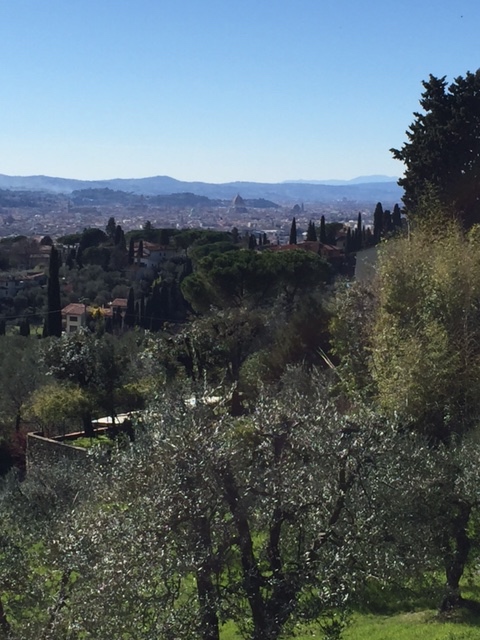
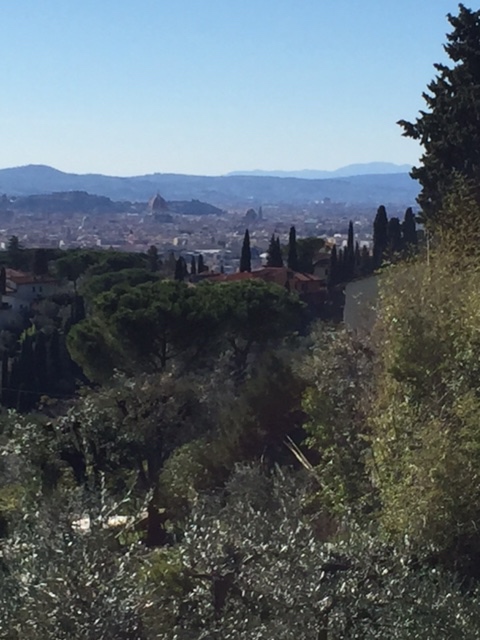
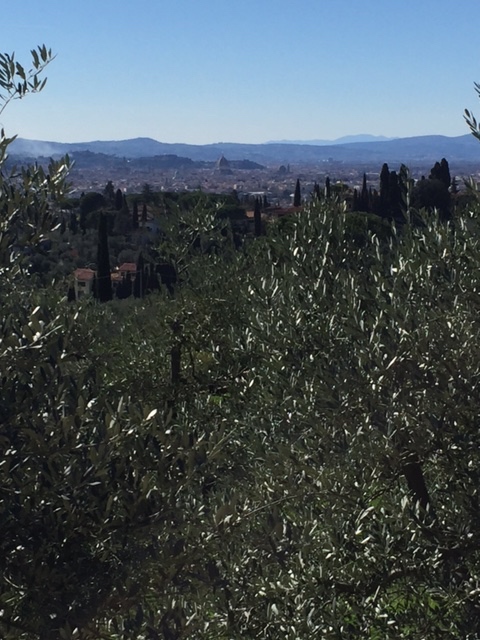
A perfect day in spring.  The temperature warm enough that not even a sweater is needed, the sun bright, the sky blue, the birds singing (I never hear this sound in Florence herself, not enough trees and too urban), the views majestic.

Settignano = the perfect day trip.

IMG_1162


Florence, with her unmistakable dome, as seen from the hilltops of Settignano.

IMG_1157IMG_1158


Back in piccola, picturesque, Settignano.

IMG_1160


IMG_1144

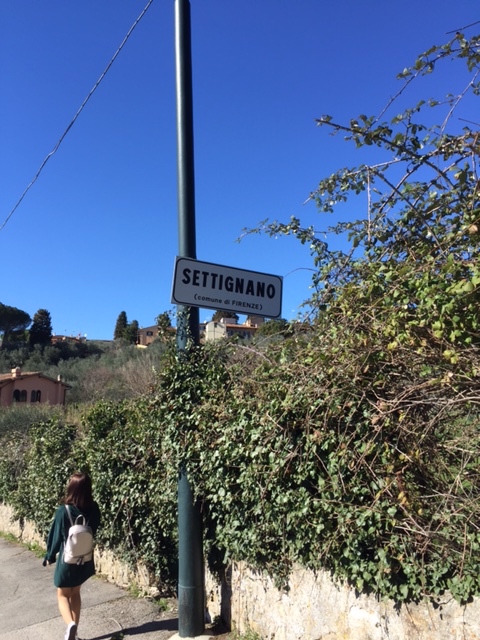
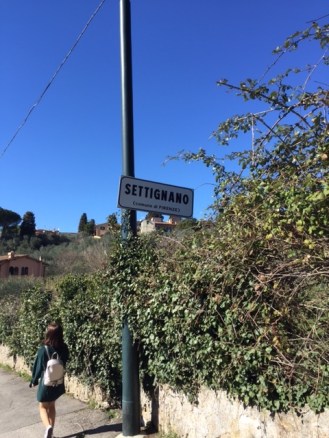
Settignano is a picturesque frazione ranged on a hillside just northeast of Florence, Italy, easy to get to by bus from San Marco (#10). With spectacular views, Settignano has attracted visitors for generations.

The little borgo of Settignano carries a familiar name for having produced three sculptors of the Florentine Renaissance, Desiderio da Settignano and the Gamberini brothers, better known as Bernardo Rossellino and Antonio Rossellino.  It’s a rather romantic to think we are following in the footsteps of inspiring artists who walked these tiny, bendy streets.

The young Michelangelo lived with a sculptor and his wife in Settignano—in a farmhouse that is now the “Villa Michelangelo”— where his Michelangelo’s father owned a marble quarry.

In 1511, another sculptor was born there, Bartolomeo Ammannati.

It is rather amazing to consider that the marble quarries of Settignano produced this amazing series of sculptors.

But it was not only Renaissance sculptors who lived here; the Italian poet, writer and prince Gabriele D’Annunzio called this place home for a while. In 1898, d’Annunzio purchased the trecento Villa della Capponcina on the outskirts of Settignano, in order to be nearer to his lover Eleonora Duse, at the Villa Porziuncola.

The American humorist, Mark Twain, stayed here at Villa Viviani for the good part of a year in 1892-1893. Twain was very productive here, writing 1,800 pages including a first draft of Pudd’nhead Wilson. Twain said of  Settignano: it “affords the most charming view to be found on this planet, and with it the most dreamlike and enchanting sunsets to be found in any planet or even in any solar system.”  High praise indeed!

In fact, the borgo has Roman remains which claim connections to Septimius Severus, in whose honor a statue was erected in the oldest square in the 16th century.  Unfortunately, the statue was destroyed in 1944.

It is known that this area was inhabited long preceded the Roman emperor.

During the Medieval and Renaissance periods, Settignano was a secure refuge for members of the Guelf faction of Florence.

Giovanni Boccaccio and Niccolò Tommaseo both appreciated its freshness, amidst the vineyards and olive groves that are the preferred setting for even the most formal Italian gardens.

Near Settignano are the Villa Gamberaia, a 14th-century villa famous for its 18th-century terraced garden, and secluded Villa I Tatti, the villa of Bernard Berenson, now a center of Italian Renaissance studies run by Harvard University.


IMG_1162
If you’ve come by bus from the centre of Florence, you’ll be dropped off right in the piazza next to the post office. Head down via della Capponina, which is to the right of the church entrance. A handsome street with pot plants and high walls, it will take you down to an intersection where you can turn left on via del Pianerottolo and wander another pretty street with views overlooking the hills and Florence’s southern neighborhoods. You will pass down towards the town cemetery, past olive groves and rampant blackberry bushes to the cypress-lined park, where you’ll see the sign for the hiking trail. If you’re the hiking type, you can also get to Settignano by hiking from Fiesole over Montececeri (or vice versa). The Sentiero degli Scalpellini follows in the footsteps of the stone-cutters who carved blocks of pietra serena and pietra forte for Florence’s palazzi and streets.  It’s a walk of over 6 km that climbs over Montececeri, where Leonardo da Vinci tested his flying experiments. In la primavera, you might spot wild asparagus.

And if you want to experience this romantic view of Florence twinkling below that Twain would have seen, head down from the main piazza, on via Simone Mosca, a 2 minute walk away, for a great panoramic spot.
Settignano’s main square, Piazza Tommaseo, has all the essentials: a church, a post office, a bar, a tabacchi, an alimentari, and an enoteca.