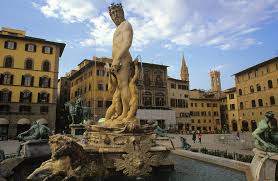
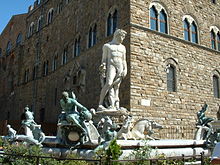
Ammannati’s huge white marble statue of Neptune, surrounded by rearing seahorses and frolicking bronze satyrs, towers over visitors to Piazza della Signoria. Despite its imposing character and lavish design, Bartolomeo Ammannati’s Fountain of Neptune has not always been well received. Almost as soon as it was unveiled on December 10, 1574, it was criticised by Florentines as a waste of marble: “Ammannato Ammannato, quanto marmo hai sciupato!” residents are said to have chanted.
Now, however, 1.5 million euro was being spent to restore the fountain, once considered barely worth the raw materials used to create it. The money, donated by Salvatore Ferragamo SpA thanks to the Italian Art Bonus legislation that promotes cultural patronage through tax breaks, will finance a new pump system, allowing water to circulate through the fountain for the first time in years. The donation also goes towards repairing the damaged marble, returning it to its original white brilliance. The restoration project is set to take just over two years; the plan is to unveil the fountain anew on December 10, 2018, the same day it was originally unveiled in 1574.
In 1559, Cosimo I de’ Medici launched a competition to design the first public fountain in Florence. This followed technical innovations in the water systems of the city and the construction of a new aqueduct. The figure of Neptune, god of the sea, is likely to have been chosen to symbolise Florence’s maritime prowess at the time. It was said that the sculpted Neptune’s face, fierce and bearded, actually resembled that of the Grand Duke Cosimo himself.
Baccio Bandinelli, who had recently worked on the Hercules and Cacus statue also in Piazza della Signoria, was chosen for the commission, but managed to complete only the design before he died. Ammannati was drafted in to take over the job, much to the annoyance of competitor Benvenuto Cellini, who wrote a satirical poem expressing his pity for the marble in Ammannati’s hands.
It was hoped that the fountain would be completed in time for the wedding procession of Francesco I de’ Medici and Joanna of Austria in 1565, which was to pass through the piazza, but a series of unfortunate events—“porcherie” as Ammannati described them in his letters to the Duke—delayed the completion date again and again. The arrival of the marble, from the quarries of Seravezza and Carrara, was postponed many times; when it finally did arrive, the marble cutter damaged it so much that it could not be used. As a result, for the wedding ceremony Ammannati had to cobble together the horses and river gods out of painted stucco, which promptly disintegrated in the water.
When the statue was completed in 1574, it was greeted by Florentines with a mixture of amusement and bewilderment. It certainly wasn’t the fearsome emblem of Florentine might that had been intended. The statue of Neptune was swiftly dubbed Il Biancone (“the white giant”), a nickname still used now with a certain affection. Residents decided to wash clothes and inkpots in the basin almost as soon as the fountain was unveiled, and still today we can read the plaque dated 1720 on the wall of the Palazzo Vecchio, which forbids such irreverent activities. The sculptures have been vandalised many times over the years, most recently in 2005.
Perhaps the new restoration project for the Fountain of Neptune will bring with it a fresh respect for this late Renaissance monument. Let’s hope these works do not face the same delays as those of the poor Ammannati, and that the fountain will be ready for our appraisal by the end of 2018.
You must pardon my astonishment, but my mind is blown!
Bartolomeo Ammannati (1511 – 1592), was the Italian architect and sculptor, who is perhaps best known today for his giant Fontana del Nettuno on the Piazza della Signoria in Florence. Ammannati was born at Settignano, near Florence, and studied with Baccio Bandinelli and Jacopo Sansovino. He carved statues for various Italian cities during the 1530s and 40s.
Although he is best known to us as a sculptor, during his lifetime he was more known for his architecture. He was called to Rome in 1550 by Pope Julius III on the advice of fellow-Florentine, the architect and art historian, Giorgio Vasari. Ammannati’s most important work in Rome was in collaboration with Vasari and Giacomo da Vignola on the villa of Pope Julius, the Villa Giulia (begun 1551).
He also worked in Lucca. We know he assisted Jacopo Sansovino on the design of the Biblioteca Marciana, in Venice, which closely imitated the style of Michelangelo.
Cosimo de’ Medici (Cosimo I) brought Ammannati back to Florence in 1555; he was to spend almost all of his remaining career in service to the Medicis. His first commission was to finish the Laurentian Library, begun by Michelangelo. Ammannati interpreted a clay model sent him by Michelangelo in 1558 to produce the especially impressive staircase, leading from the vestibule into the library proper.
Ammannati’s masterpiece in Florence is the Palazzo Pitti, where, beginning in 1560 (and through 1570), he enlarged the basic structure by Filippo Brunelleschi, designing a courtyard and facade opening onto the Boboli Gardens. The facade overlooking the courtyard is very unusual in its heavily rusticated (rough-hewn) treatment of successive levels of Doric, Ionic, and Corinthian attached columns. At the Pitti Palace, this rustication provides an appropriately rural yet impressive backdrop for the gardens.
Garden entrance of the Ammannati Courtyard in the Pitti Palace.
Ammannati was named Consul of Academia delle Arti del Disegno in Florence, which was founded by the Duke Cosimo I in 1563.
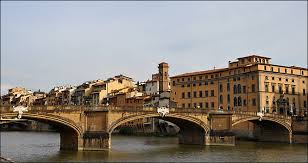
In 1569, Ammanati was commissioned to build the Ponte Santa Trinita, a bridge over the Arno River.
The bridge’s three arches are elliptic, and though very light and elegant, it has survived even when floods had damaged other Arno bridges at different times. Santa Trinita was destroyed in 1944, during World War II, and rebuilt in 1957.
Ammannati designed what is considered a prototypic mannerist sculptural ensemble in the Fountain of Neptune (Fontana del Nettuno), prominently located in the Piazza della Signoria in the center of Florence. The commission was originally given to the aged Bartolommeo Bandinelli; however when Bandinelli died, Ammannati’s design bested the submissions of Benvenuto Cellini and Vincenzo Danti and Ammannati was awarded the commission.
From 1563 and 1565, Ammannati and his assistants, among them Giambologna, sculpted the block of marble that had been chosen by Bandinelli. He took Grand Duke Cosimo I as model for Neptune’s face. The statue was meant to highlight Cosimo’s goal of establishing a Florentine Naval force. When the work on the ungainly sea god was finished, and sited at the other corner of the Palazzo Vecchio of Michelangelo David statue, the then 87-year-old irascible elder sculptor, is said to have scoffed at Ammannati that he had ruined a beautiful piece of marble, with the ditty: “Ammannati, Ammanato, che bel marmo hai rovinato!”
Ammannati continued work on this fountain for a decade, adding around the perimeter a cornucopia of demigod figures: bronze reclining river gods, laughing satyrs and marble sea horses emerging from the water.
In 1550 Ammannati married Laura Battiferri, an elegant poet and an accomplished woman. In his old age, Ammannati was strongly influenced by the Counter-Reformation philosophy of the Jesuits. He repudiated his earlier nude sculptures as lustful, and he designed several austere buildings for the Jesuits.
But what is it, exactly, and where did it come from?
Well, like so many of the great things in life, it comes from Renaissance Italy. Its influence was pervasive and all modern fonts are based upon it.
Italic script, also known as chancery cursive, is a semi-cursive, slightly sloped style of handwriting and calligraphy that was developed during the Renaissance in Italy. It is one of the most popular styles used in contemporary Western calligraphy.
Let’s get into the weeds, shall we? Italian weeds are my favorite place to be.
Italic script is based largely on Humanist minuscule. The capital letters in Italic script are the same as the Humanist capitals, modeled on Roman square capitals. The Italian scholar Niccolò de’ Niccoli was dissatisfied with the lowercase forms of Humanist minuscule, finding it too slow to write. So, he created the Italic script, which incorporates features and techniques characteristic of a quickly written hand: oblique forms, fewer strokes per character, and the joining of letters.
Perhaps the most significant change to any single character was to the form of the a, which he simplified from the two-story form to the one-story form ⟨ɑ⟩ now ubiquitous to most handwriting styles.
Under the influence of Italic movable type used with printing presses, the style of handwritten Italic script moved towards disjoined, more mannered characters. By the 1550s the Italic script had become so laborious that it fell out of use with scribes.
The style became increasingly influenced by the development of Copperplate writing styles in the eighteenth century. The Italic script style used today is often heavily influenced by developments made as late as the early 20th century. In the past few decades, the italic script has been promoted in English-speaking countries as an easier-to-learn alternative to traditional styles of cursive handwriting. In the UK this revival was due in part to Alfred Fairbank’s book A Handwriting Manual (1932).
A modern version called Getty-Dubay was introduced in 1976.
During the Renaissance the color of red was achieved in painting with the use of vermilion.
“Vermilion was made from cinnabar, a brick-red mineral the ancient Romans believed came from the blood of dragons crushed to death under the weight of elephants.”**
So silly and yet so specific!
**King, Ross (2012-10-30). Leonardo and the Last Supper (p. 149). Bloomsbury Publishing. Kindle Edition.
Convents and monasteries were places of silence. The importance of silence was stressed in the cloister of San Marco, where the first image that greeted friars and visitors alike was Fra Angelico’s fresco of Peter of Verona with his finger to his lips. Silence was preserved in the cloisters, the church, and the dormitory. To keep the friars on their toes, each convent had an officer, the circator, whose job was to move quietly among the brothers “at odd and unexpected moments” to see if they were growing slack.
King, Ross (2012-10-30). Leonardo and the Last Supper (p. 60). Bloomsbury Publishing. Kindle Edition.
With fifty thousand people, Florence must have been an impressive sight for a young man like Leonardo arriving from Vinci. “Nothing more beautiful or more splendid than Florence can be found anywhere in the world,” the scholar Leonardo Bruni had declared in about 1402. Fifty years later, a Florentine merchant, taking stock of his hometown, believed it even more resplendent than in Bruni’s day, with beautiful new churches, hospitals, and palaces, and with prosperous citizens sauntering through the streets in “expensive and elegant clothing.” Florence at this time could boast fifty-four dealers in precious stones, seventy-four goldsmith shops, and eighty-three silk-weaving firms. There was, the merchant acknowledged, a further attraction: the astonishing proliferation of Florence’s architects, sculptors, and painters. Highly conspicuous by the time Leonardo arrived in Florence were frescoes, statues, and buildings by men like Giotto, Brunelleschi, Masaccio, Donatello, and Lorenzo Ghiberti.
King, Ross (2012-10-30). Leonardo and the Last Supper (pp. 23-24). Bloomsbury Publishing. Kindle Edition.
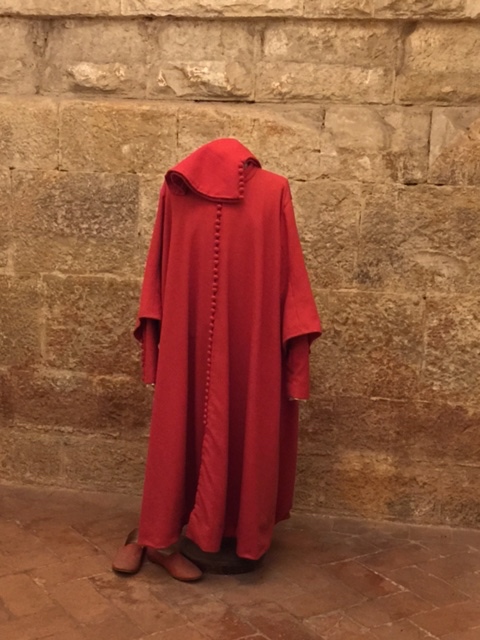
By the Middle Ages, the Florentine republic was ruled by a council, known as the signoria. The signoria was chosen by the gonfaloniere (titular ruler of the city), who was elected every two months by Florentine guild members. Below is the robe and shoes typically worn by the counsil members.
The magnificent Salone dei Cinquecento. Absolutely amazing!
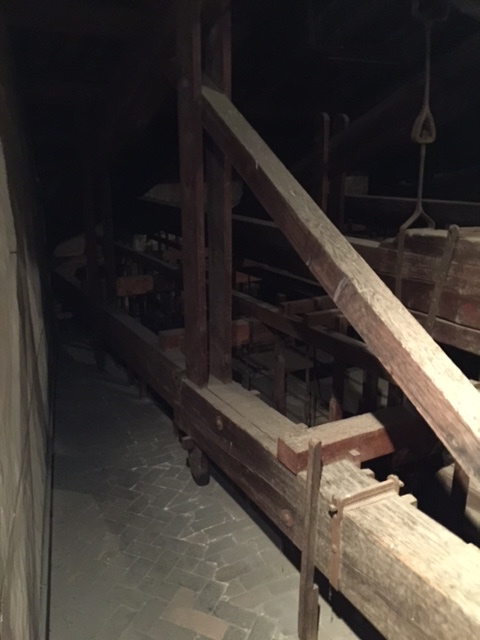
My tour group got to climb into the rafters over the main Salone and marveled not only at the engineering feat, but the fact that most of these timbers were placed in the 14th century. Oh, what this lumber has endured–manmade and natural.
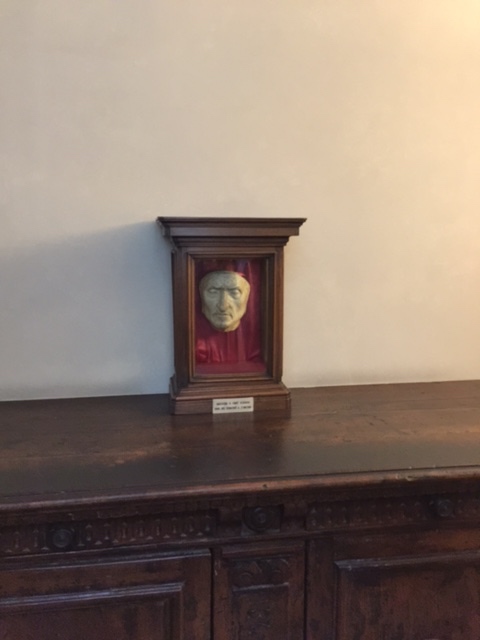
Dante’s death mask below.
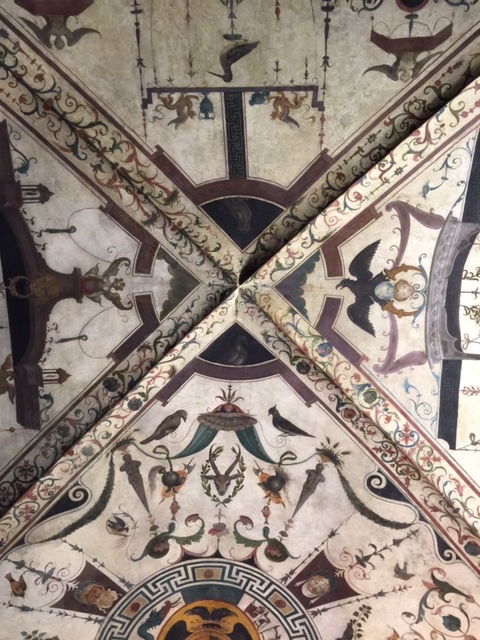
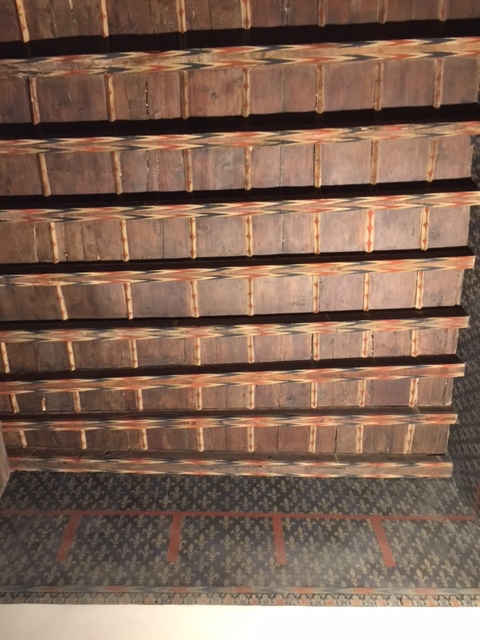
The painted ceiling of the room in which the Dante mask is stored.
I posted an appetizer for this lovely, historic masterpiece in Florence yesterday. Here’s the real entry.
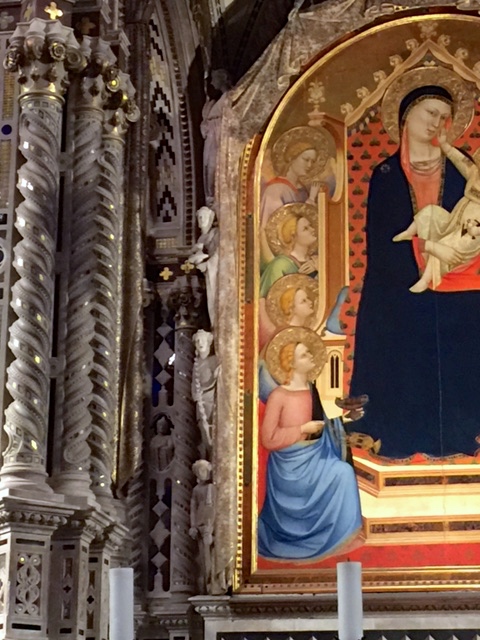
Inside the church is Andrea Orcagna’s bejeweled Gothic Tabernacle (1355-59) encasing a repainting by Bernardo Daddi’s of an older icon of the Madonna and Child.
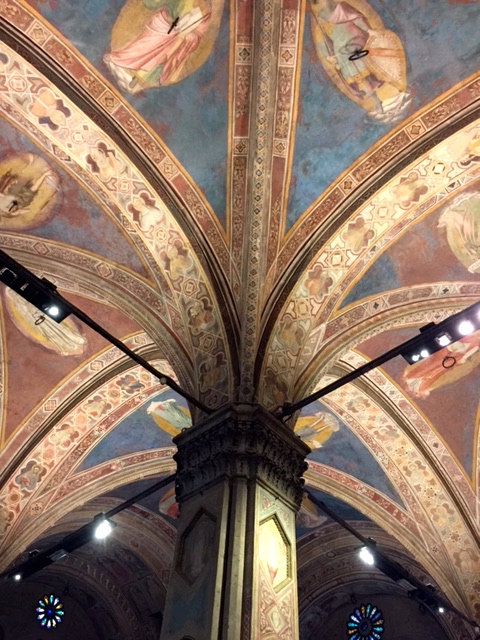
The ceiling paintings of the central square interior on the ground floor. This special building in Florence was initially a palazzo, which became the city’s main granary, and later was transformed into this gorgeous church. It is about halfway between the Duomo and the Palazzo Vecchio, occupying a central place in the city and religious spheres of Florence.
Stained glass doesn’t play a prominent role in Florentine medieval architecture, as it does, for example in France. Yet Orscanmichele has some gorgeous stained glass.
Orcagna’s frame surrounding the beautiful painting is breathtaking in its beauty.
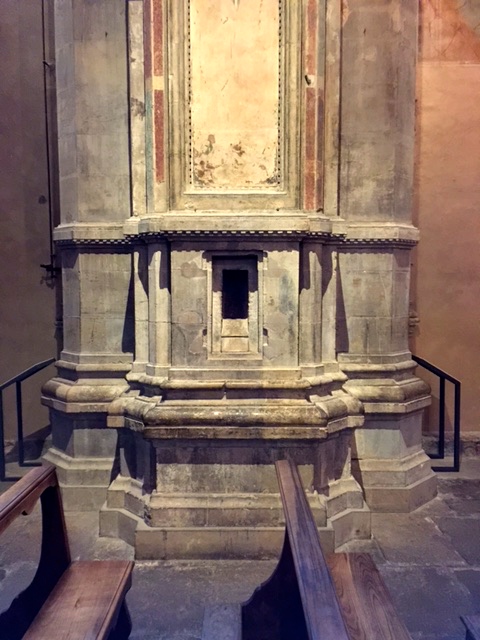
This opening shown below is place in the building from which the grain was distributed.
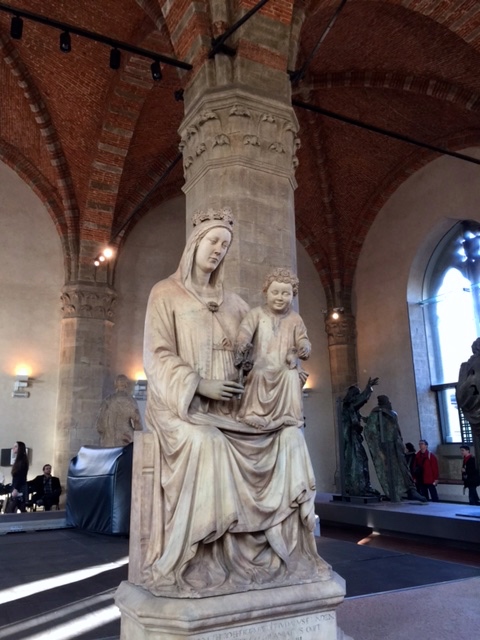
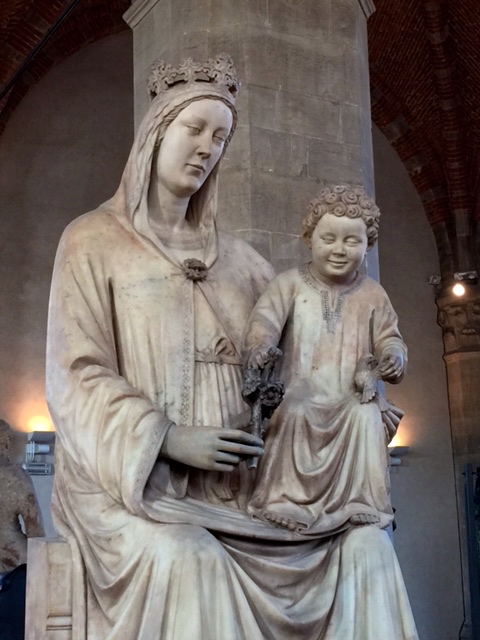
For art historians, Orsanmichele means sculpture. Some of the finest works of late Gothic through Renaissance works were created for this edifice, and remain within its walls.
Verrochio’s masterpiece, Christ with Doubting Thomas, can be appreciated up close, as can all of the sculptural works created for the building’s exterior niches.
The other works are equally accessible and lovely.
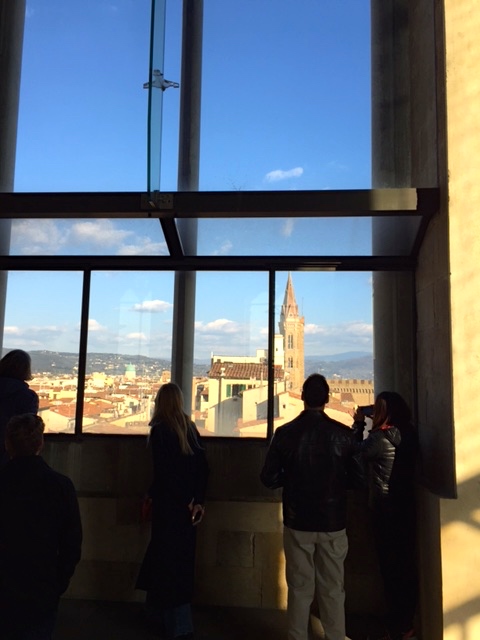
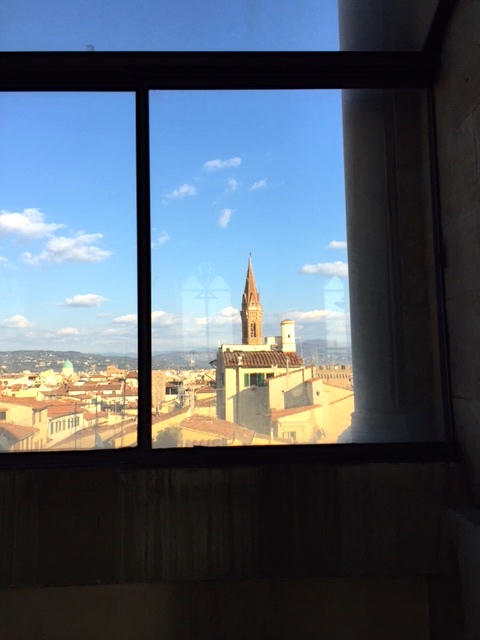
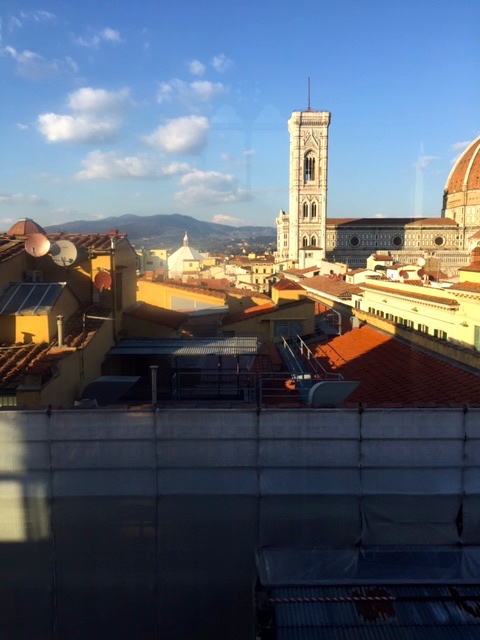
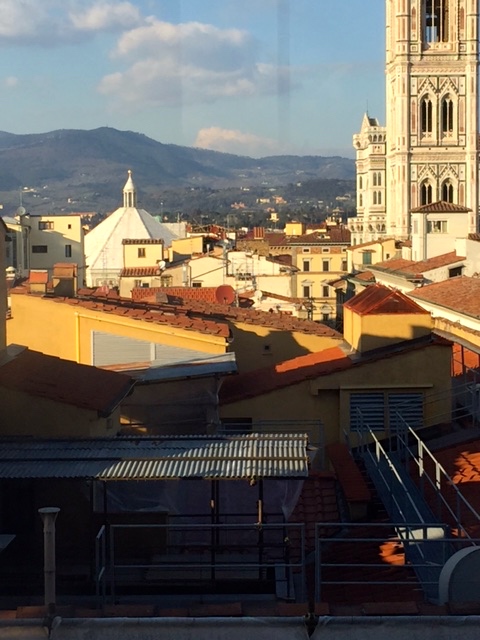
The hike to the 3rd floor is only for the fit. But, what a payoff! The vistas of surrounding Florence will take your breath away as well. Only in a good way.
Find the days the church is open and by any means necessary--vai!
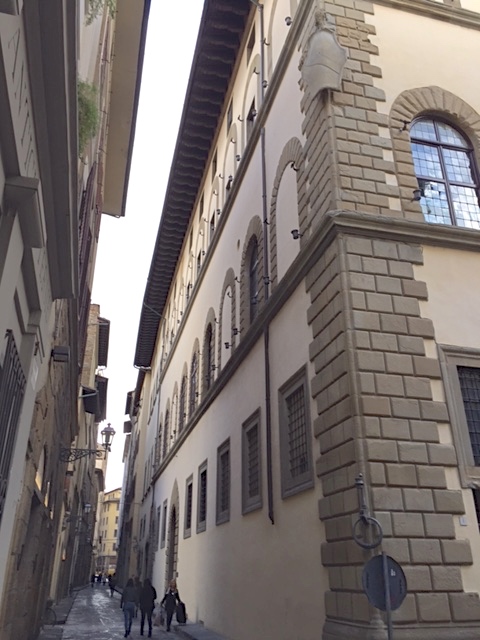
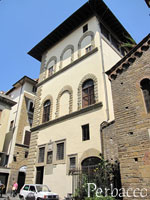
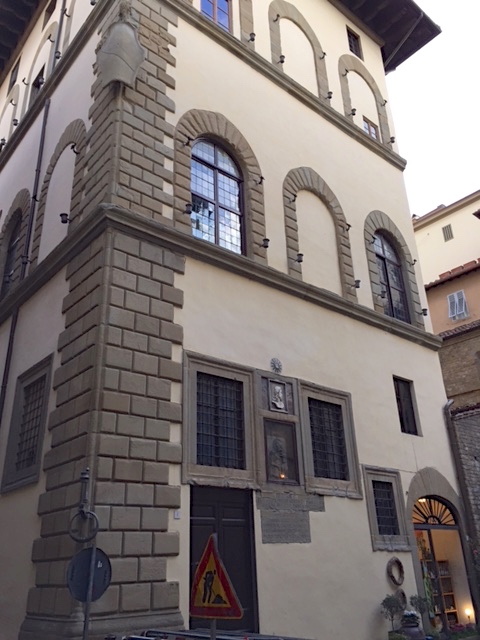
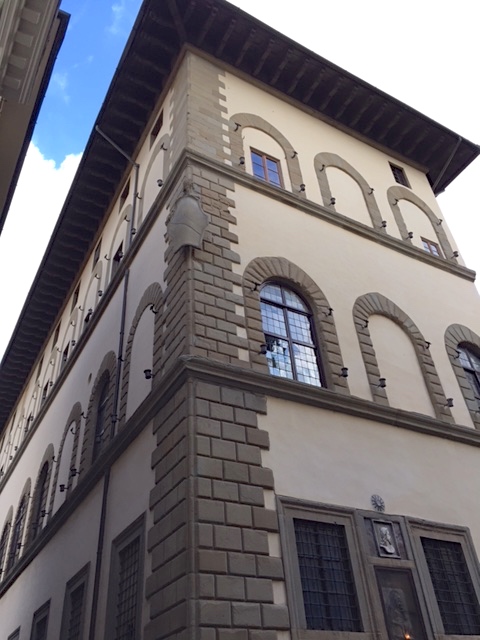
The Palazzo Borgherini-Rosselli del Turco is a Renaissance era palace in my neighborhood in Florence, located at Borgo Santi Apostoli 17.
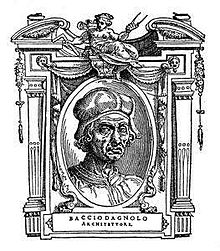
Commissioned by prominent Florentine, Pier Francesco Borgherini, around 1517 (a mere 500 years ago!), the palace was designed by one of the most famous architects of the period, Baccio d’Agnolo.
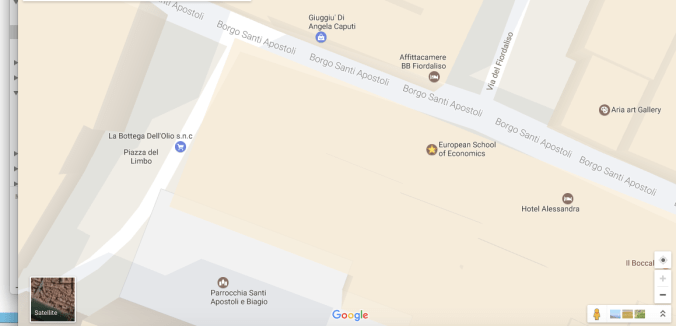
The building, completed by 1530, stands beside the church of Santi Apostoli and faces both the Piazza del Limbo and the Borgo Santi Apostali. In the map below, the palazzo covers the area starting on the right at Hotel Alessandra (which actually is inside part of the palazzo) and the European School of Economics. The palazzo runs continually along the Borgo Santi Apostoli, ending at the Piazza del Limbo. The building is further contained by the Santi Apostoli e Biagio church.
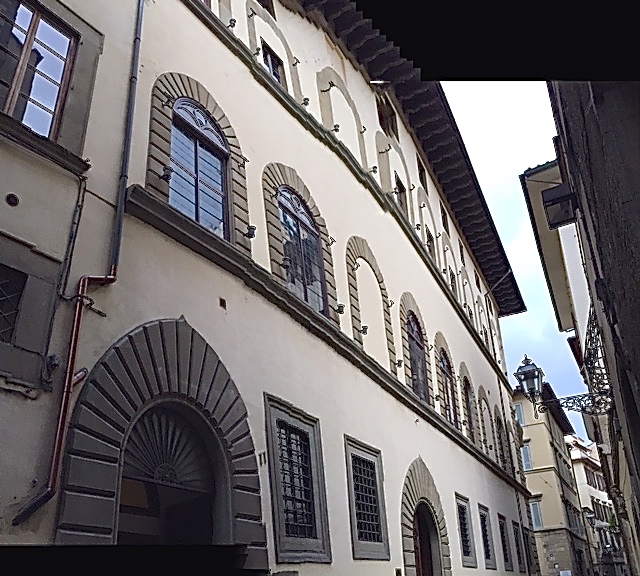
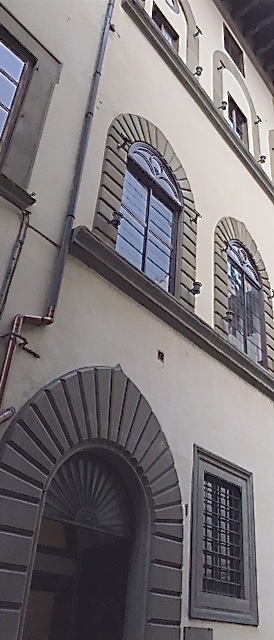
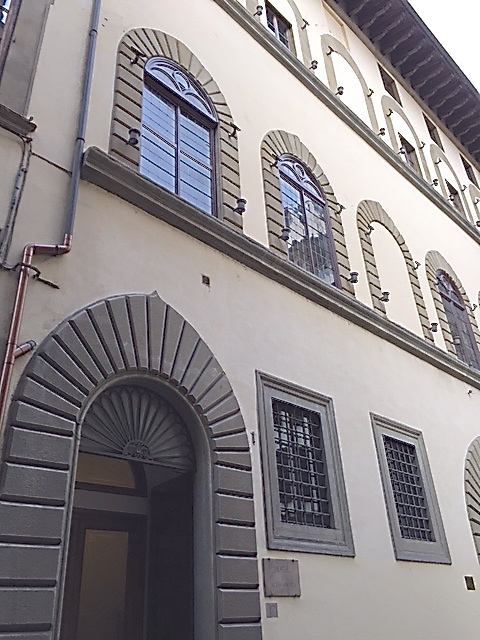
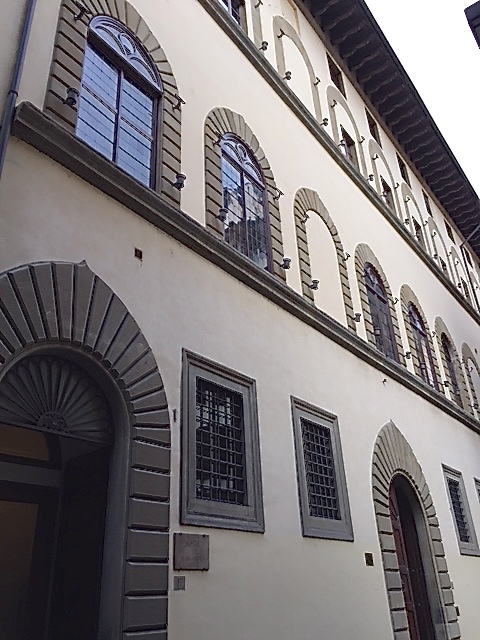
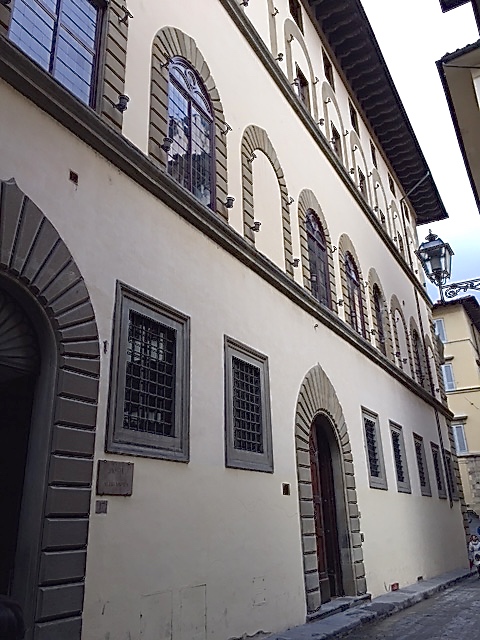
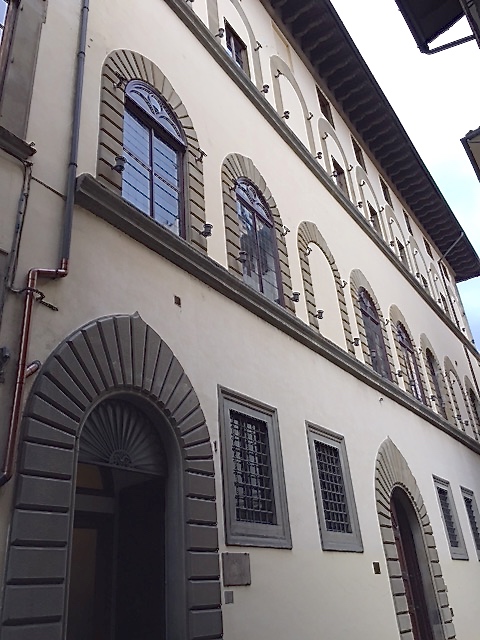
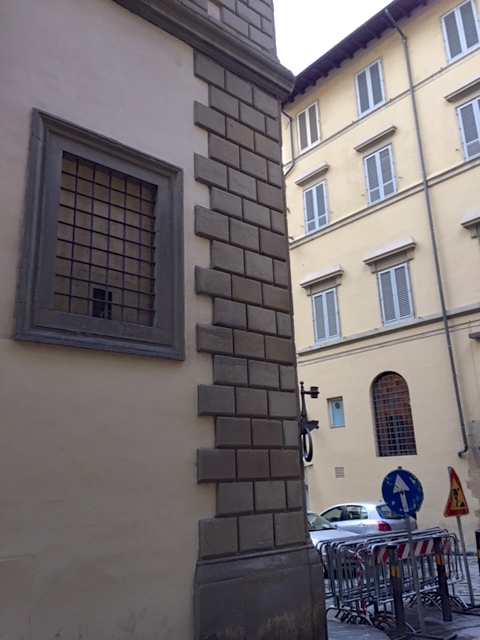
The photos below show the palazzo facing Borgo Santi Apostoli.
Baccio d’Agnolo also designed the nearby Palazzo Bartolini Salimbeni on Piazza Santa Trinita.
The Borgherini family had recently purchased property on which this palace was built, including the last available portion of the existing Limbo cemetery. In order to build this palazzo, the architect had to follow the contour of the left nave and apse chapels of the church, creating an unusual zig-zag profile on the southern side. There is, in fact, a private access to the church from inside the palazzo.
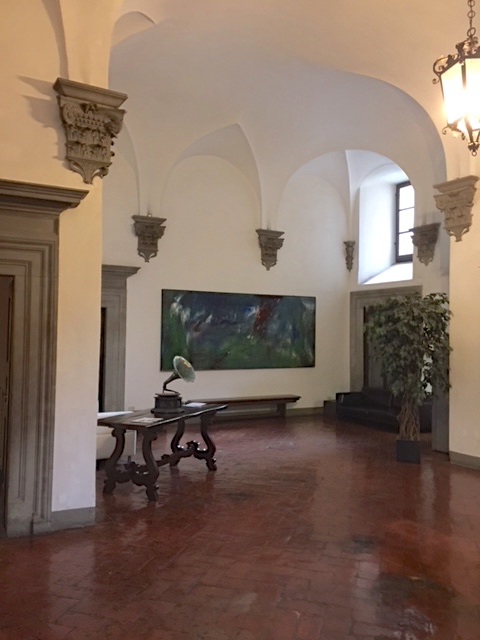
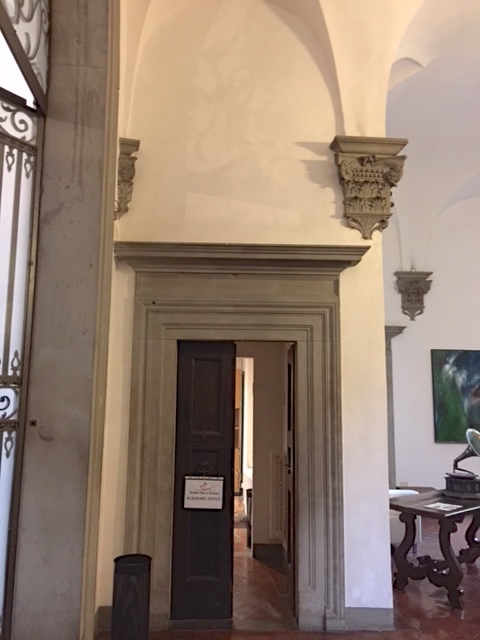
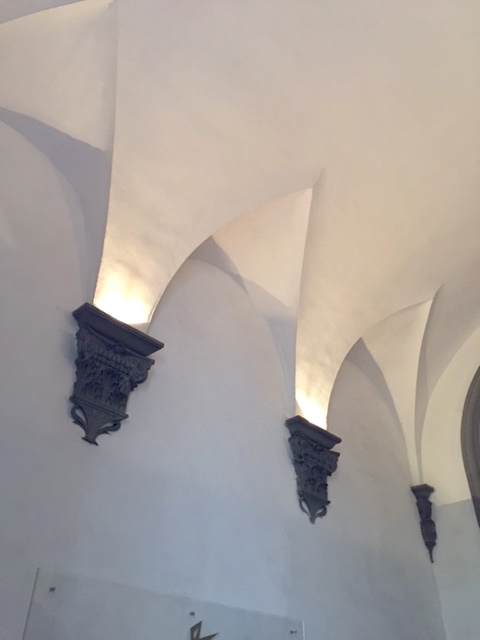
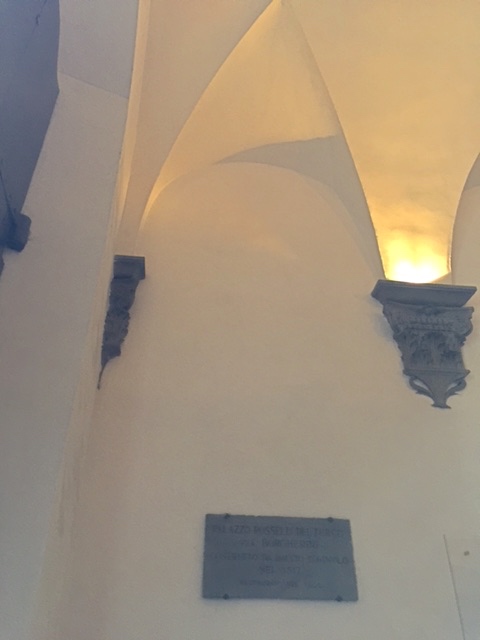
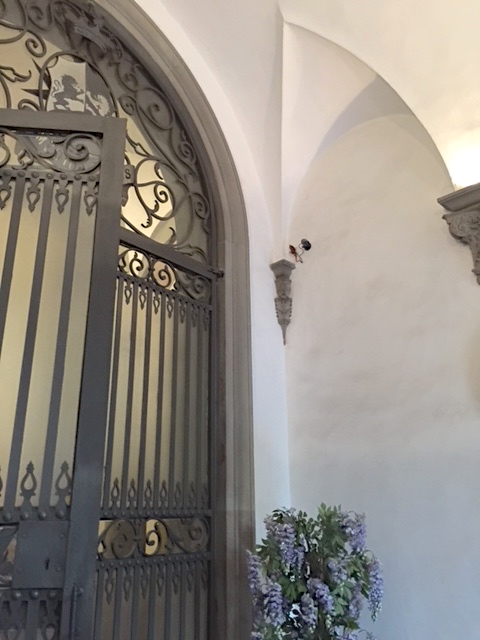
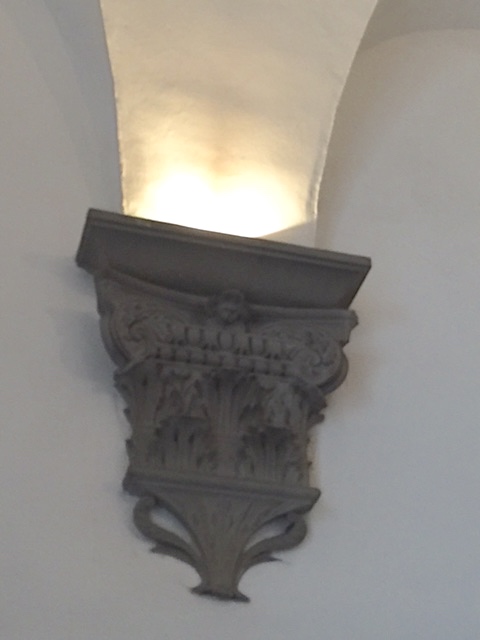
Because of the unusual plot, the architect was unable to create a central colonnaded courtyard typical of Florentine palazzi and instead designed a simpler atrium, which was needed to provide the light and air for the palace’s many rooms. The vestibule on the ground floor was used for commercial activities of the Borgherini family; this atrium has a vaulted ceiling, ending in fine corbels decorated with two bands of acanthus leaves.
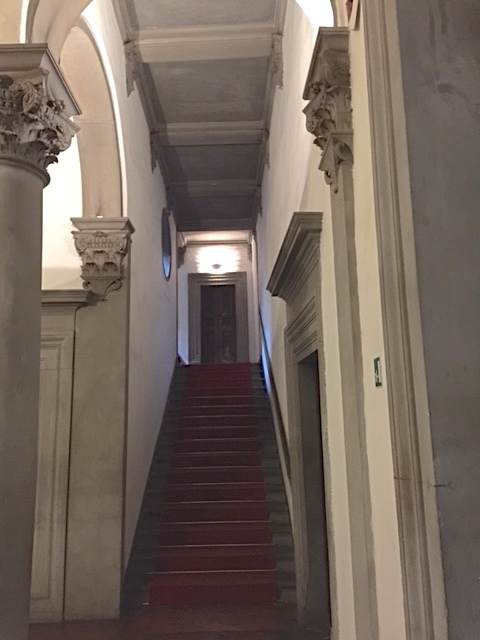
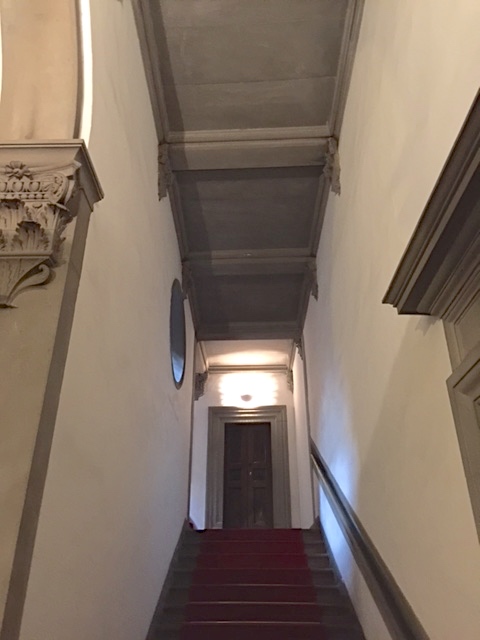
Another nearby room, with a barrel vault, gave access to the Limbo Square.The staircase to the upper floors leads off the atrium and along the wall which accesses the nave of the church. The ceiling of the stairs is made of planks of stone, which is quite unusual in Florentine palazzi designs.
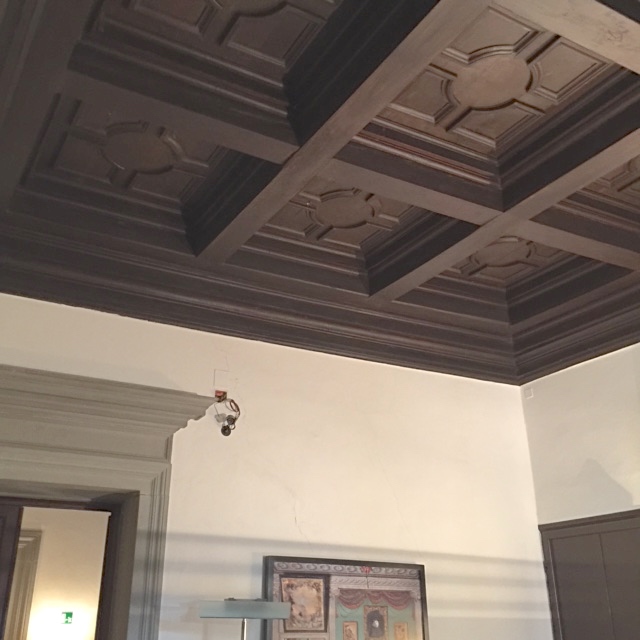
The first floor rooms were used for family life and face the north.
A small chapel (6.40 x 1.60 meters), not illustrated here, had a small window with a grate that opened directly on the clerestory of the left aisle of the church. It was thus possible to attend religious services without leaving home. The interior of the chapel is decorated with paintings in monochrome with cherubs and other religious subjects and the altar has a wooden bust of the Virgin and Child.
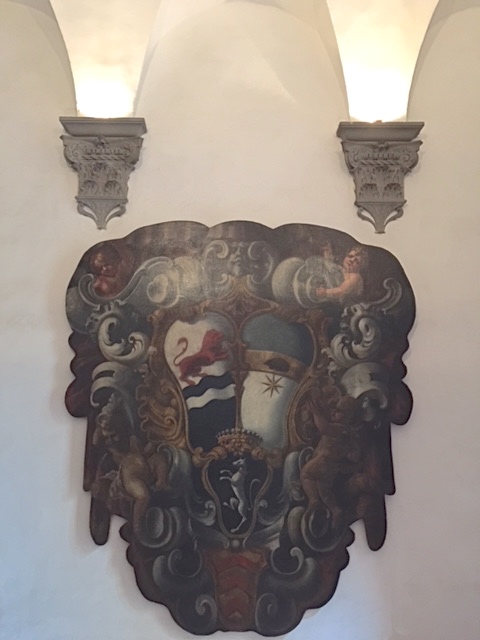
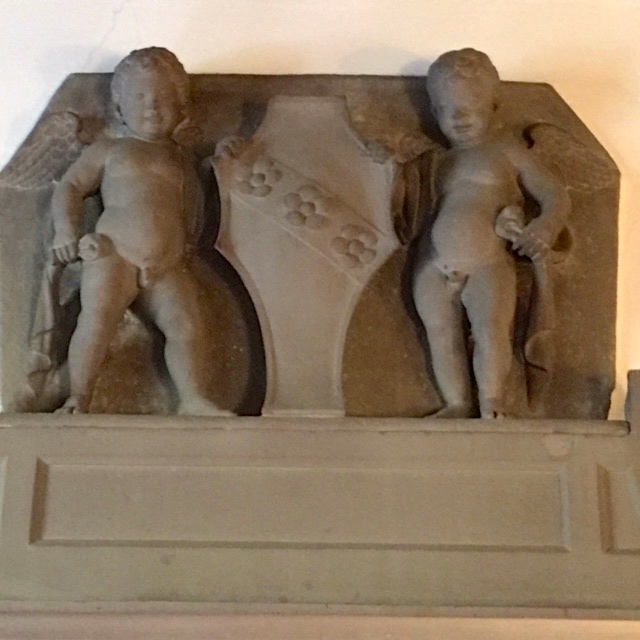
Above is the coat-of-arms for Borgherini family. This beautiful object hangs in the current vestibule to the palace.
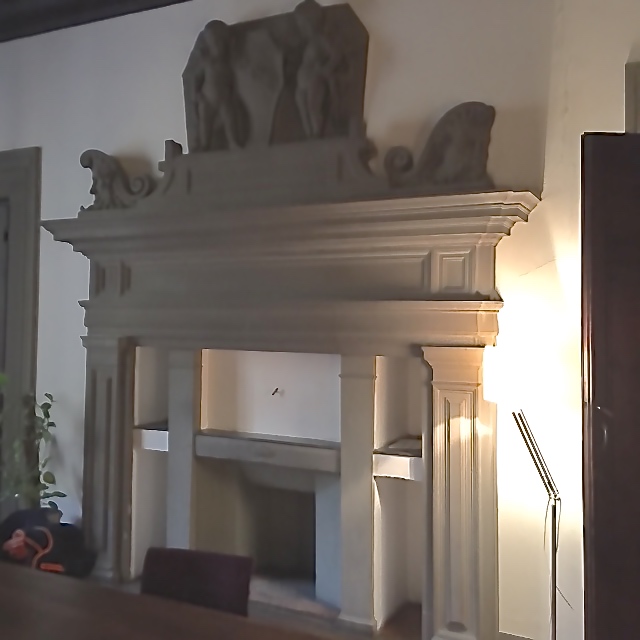
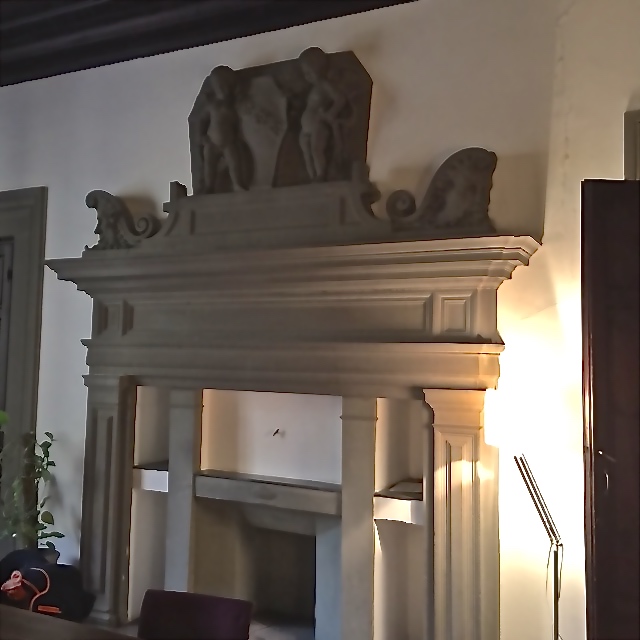
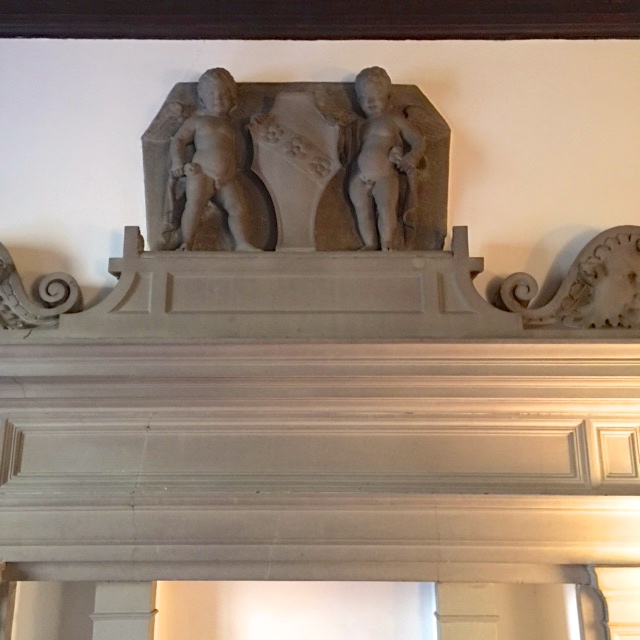
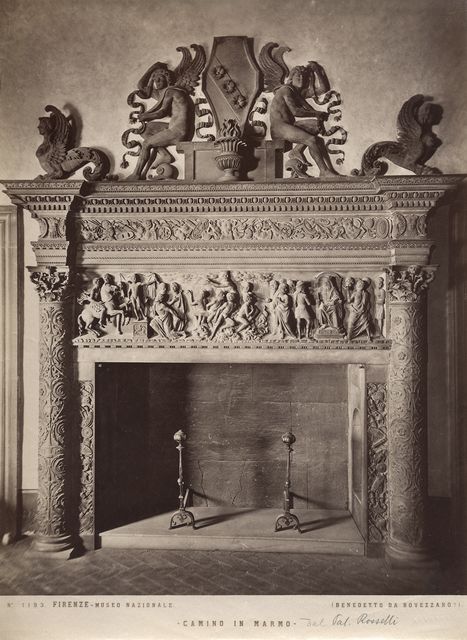
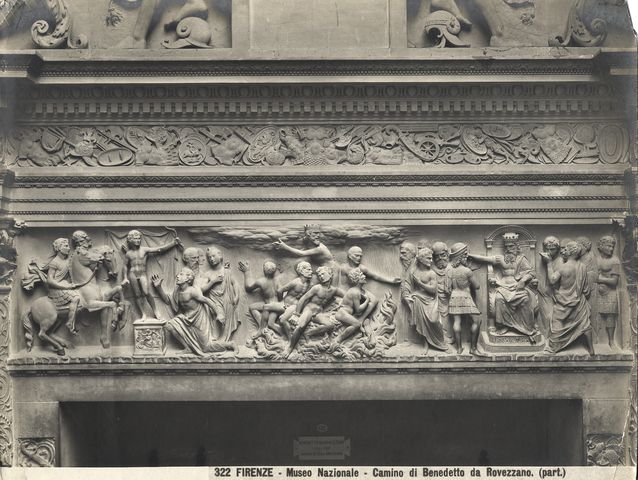
The interior of the palazzo was decorated by Benedetto da Rovezzano,* among others. Da Rovezzano was a friend and collaborator of Baccio d’Agnolo; together they were also working on the new portal of the Church of the Holy Apostles. They each designed a fireplace for the Palazzo Borgherini. The one by Benedetto da Rovezzano, with low-relief sculpture, was in the living room; it is now in the National Museum at the Bargello. The other period fireplace is thankfully still in situ in a first floor room. It has the solemn linearity, without decorations, typical of the style of Baccio d’Agnolo.
The Borgherini were among the most active supporters of the arts in Florence, and they lavished upon their prominent home many splendors by contemporary artists, including Andrea del Sarto, Pontormo, Bachiacca, and Granacci. Sadly, over the centuries, many of the best pieces by the finest artists have been sold off or confiscated, beginning as early as 1529, when the chests containing panels painted by Jacopo Pontormo for the Borgherini were expropriated. As noted above, the fine fireplace which da Rovezzano created for one of the rooms of the palazzo is now a part of the Bargello museum.
*(Benedetto Grazzini, best known as Benedetto da Rovezzano, was an Italian architect and sculptor who worked mainly in Florence. He was born in Pistoia in 1474, and adopted the name Rovezzano from the quarter of Florence in which he lived. Wikipedia Born: 1474, Pistoia; Died: 1552, Reggello)
No less a personage than Vasari described the luxurious interior of the building, in his work dedicated to the life of Baccio d’Agnolo:
( Lives by Giorgio Vasari [1568])
“He gave Pier Francesco Borgherini drawings of the house inBorgo Santo Apostolo,who at great expense had ornaments brought for the doors and chimneys, and in particular oversaw the creation of the finely carved walnut paneling of the room, which at its termination, was of great beauty.”
Borgherini even had a bridal chamber built in honor of the marriage of his son Pier Francesco and Margherita Acciaiuoli. Baccio d’Agnolo oversaw the wooden decoration of that room, which included painted panels embedded into the architectural design.
Baccio acted as an intermediary between the patron and the most important painters of the time, including Andrea del Sarto, Pontormo, Bachiacca and Granacci, all of whom were commissioned to decorate the panels for this room. The artists created paintings designed to tell the story of Joseph the Jew which probably were meant to allude to the young couple or the patron himself.
The fame and the beauty of this room were such that as early as 1584, some panels had already been sold by the order of Francesco I de’ Medici, who wanted the panels by Andrea del Sarto and Granacci for his own collection.
Today, the panels are scattered across various European museums, including the Uffizi.
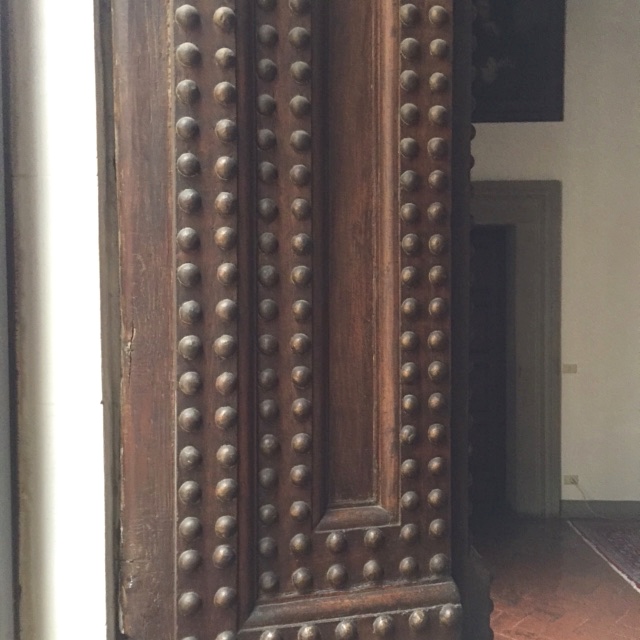
On the exterior, the palace’s solid plaster walls are divided into three floors, with windows and doors decorated with a course of typical bugnato (Florentine ashlar) and elegant wrought iron, which was used to hold torches and banners. For the stone detailing of the palazzo, Baccio d’Agnolo collaborated with Benedetto da Rovezzano on both exterior and interior details.
There is also a rooftop terrace, probably designed by Baccio d’Agnolo, although probably built at a later time.
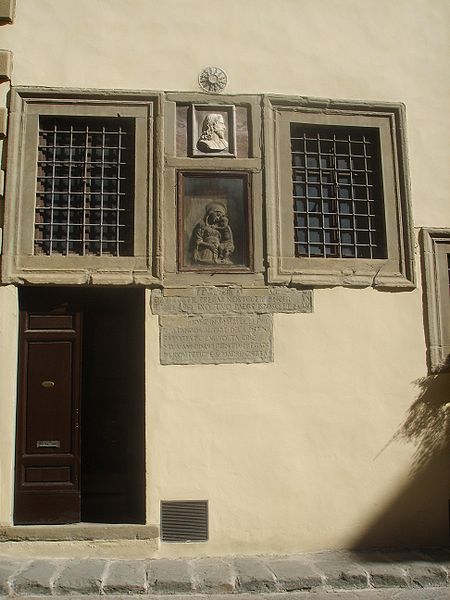
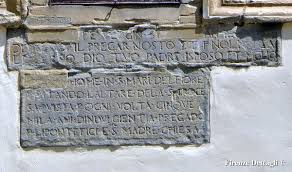
The western, short side of the Palazzo Borgherini faces the Limbo square and has bas-reliefs and inscriptions and several license plates and registration. There can be found a monogram of Christ; two inscriptions in stone; and a small portrait in profile of the Madonna and Child, carved in low relief. The latter has traditionally been attributed to Benedetto da Maiano. (The Marian relief could instead be a copy of a similar work in the Church in San Frediano in Cestello, attributed to Francesco di Simone Ferrucci.)
On the corner of the building is the coat of arts of Borgherini.
Soon I will be writing a post on the garden associated with this palazzo.
The Borgherini family lived in the palazzo until the mid-18th century, when the family was implicated in a scandal involving shortages from the Granai dell’Abbondanza granary. The family’s holdings and properties were confiscated by the Lorraine State and sold at judicial auction.
The Rosselli del Turco family acquired the property, which has been in their possession ever since. The Rosselli family was for having produced famous painters, such as Cosimo and Matteo Rosselli, and the antiquities scholar, Stefano Rosselli (1598-1664), author of manuscripts on the works of art found in Florentine churches of the 17th century.
In 1750 the palace was given to Giovanni Antonio, Stephen and Jerome of Turkish Rosselli , together with the garden and other adjacent buildings. This family was responsible for the restoration and conservation of no significant additions subsequent palace. Today it belongs to their descendants as well as one of the venues of the College of Higher Education in UK law European School of Economics , which here holds bachelor and master courses in the economic sector. The palace also houses the headquarters of the association in the World Fiorentini and didactic center of the Arch of Guelph .
If you’ve ever been to Italy, you know there are a lot of churches! And, Florence is no slacker when it comes to houses of worship. Florence has a lot of churches!
Near the Lungarno Acciaiuoli, about which I will soon be posting, there is a tiny piazza or city square, with the evocative name of Piazza del Limbo. Not only is the small square a beguiling place to wander around, but it is purportedly the home of the oldest religious building in the city: the Chiesa dei Santissimi Apostoli.
The chiesa was built in the 11th century and, though it was remodelled in the 15th and 16th centuries, is one of the few in the city to have maintained its High Middle Ages features.
Tradition says that it was Michelangelo himself who convinced Bindo Altoviti, who planned to raise the ground level, not to rebuild, but to preserve the church.
The church faces the Piazza del Limbo–named because it housed a cemetery for children who died before having been baptized. It is adjacent to the Palazzo Borgherini-Rosselli del Turco.
A slab on the façade attributes the foundation to Charlemagne and his paladin Roland in the year 800. A paladin is any of the twelve peers of Charlemagne’s court, of whom the Count Palatine was the chief. A paladin is a knight renowned for heroism and chivalry. But scholars assign the church to the 11th century. A small bell tower was added by Baccio d’Agnolo in the 16th century.
The simple façade, in Romanesque style, has a portal attributed to Benedetto da Rovezzano. The tabernacle by Giovanni della Robbia and the tomb of Oddo Altoviti.
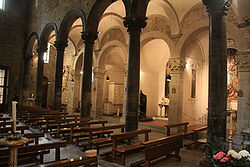
Interior of Santi Apostoli
The church’s layout is the typical basilican plan, with a nave, two aisles, and a semicircular apse, still shows Palaeo-Christian influences. It has green marble columns that come from Prato, with capitals taken from ancient Roman remains. The Corinthian capitals may well have been taken from the Roman baths that existed in the area.
The richly decorated wooden ceiling was added in 1333. Noteworthy is the pavement, with a mosaic from the original edifice which was later restored with the contributions of outstanding Florentine families (Acciaioli, Altoviti and others). The apse area appears to be Romanesque, with undecorated stones visible. The side chapels are from the 16th century.
On the left of the apse are a polychrome terracotta tabernacle by Giovanni della Robbia. To right of the entrance is the tomb with the bust of Anna Ubaldi, mother of the Gran Priore del Bene. The bust was sculpted by Giovanni Battista Foggini. The 2nd chapel on the right, chapel of San Bartolomeo was completed in the 16th century. The right wall has a stucco depicting San Paolo, and on the left wall the sepulchral monument of Piero del Bene (1530).
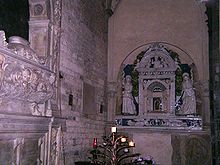
At the end of the nave above the door that leads to the Canon’s hall is the sepulchral monument of Bindi di Stoldo Altoviti (Bindo Altoviti) (1570) with a statue of Faith and two putti by followers of Bartolomeo Ammannati. In the apse, is the monument of Antonio Altoviti and busts of both Charlemagne and Antonio Altoviti by Giovanni Caccini. In the left nave is the monument to Oddo Altoviti (1507-1510 by Benedetto da Rovezzano.
The 4th chapel on the left has an altarpiece with the Adoration of the Shepherds and, on the wall, Archangel Raphael with Tobias and St Andrew Apostle (c. 1560 by Maso da San Friano). The 3rd chapel on the left contains the image of Archangel Michael defeating Lucifer (16th century by Alessandro Fei). The 2nd chapel has frescoes depicting the Glory of San Giovanni di Chantal by Matteo Bonechi. The first chapel has a Madonna, Child and Angels, a copy of a Paolo Schiavo originally on the facade of church.
The church houses three flints (Pietre del Santo Sepolcro) putatively from the Holy Sepulchre in Jerusalem. According to tradition, these flints were used to light the lamps of the tomb when Jesus was buried. Legend holds that they were given in 1101 to Pazzino dei Pazzi, who was among the first Christians to scale the walls of Jerusalem, leading to the capture of that city during the First Crusade.
From then on, the Pazzi included a flaming cup in their coat of arms. The flints are linked to the ceremony of Lo Scoppio del Carro and the lighting of fireworks from the Portafuoco after a celebratory mass.































 get back, lauretta!
You must be logged in to post a comment.